Verbal scripts and self-advocacy strategies for identifying when to request assistance and selecting appropriate communication partners. Addresses timing, tone, and persistence across academic and social environments.
A four-part emotional intelligence sequence for 3rd graders with learning disabilities, focusing on self-awareness of energy levels, verbalizing emotions through 'I feel' and 'I need' statements, and building a personalized coping skills toolbox.
A comprehensive 12-session social skills program designed for a 1st-grade student with Autism, focusing on social norms, personal boundaries, and school safety through the engaging themes of Toy Story and NumberBlocks.
A 4-session individualized intervention sequence designed to help students with communication and behavioral challenges replace physical aggression with verbal expression and self-regulation techniques.
A 5-session sequence for K–2 students on IEPs to learn how to recognize and interpret facial expressions, gestures, and tone of voice through hands-on detective-themed activities.
A 10-session social skills curriculum designed for 1st graders with autism and ADHD, focusing on social behaviors, boundaries, and emotional regulation using a "Social Stars" space quest theme.
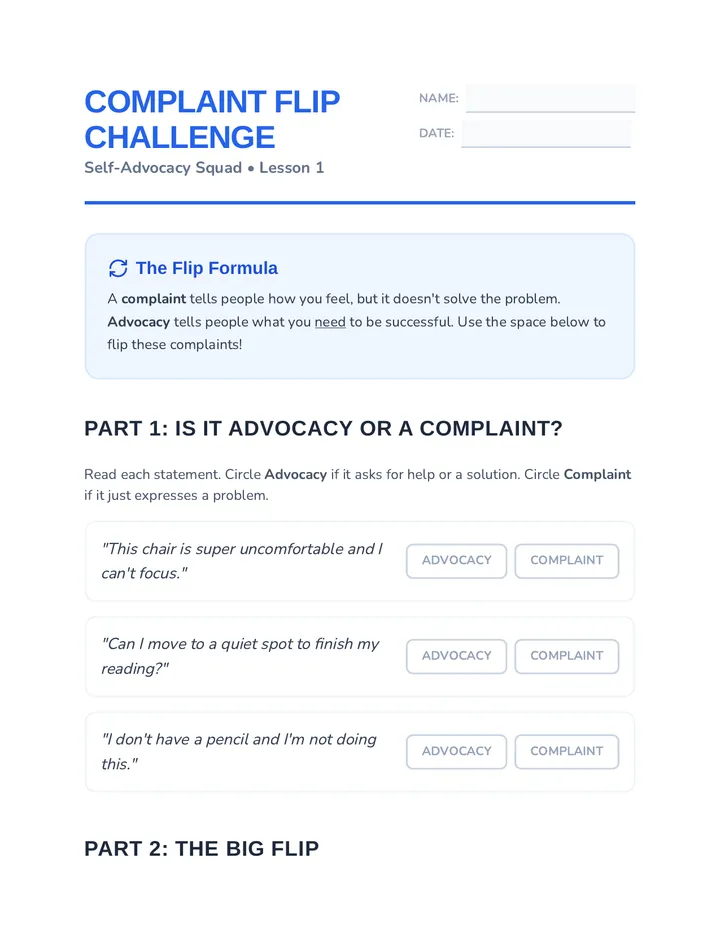
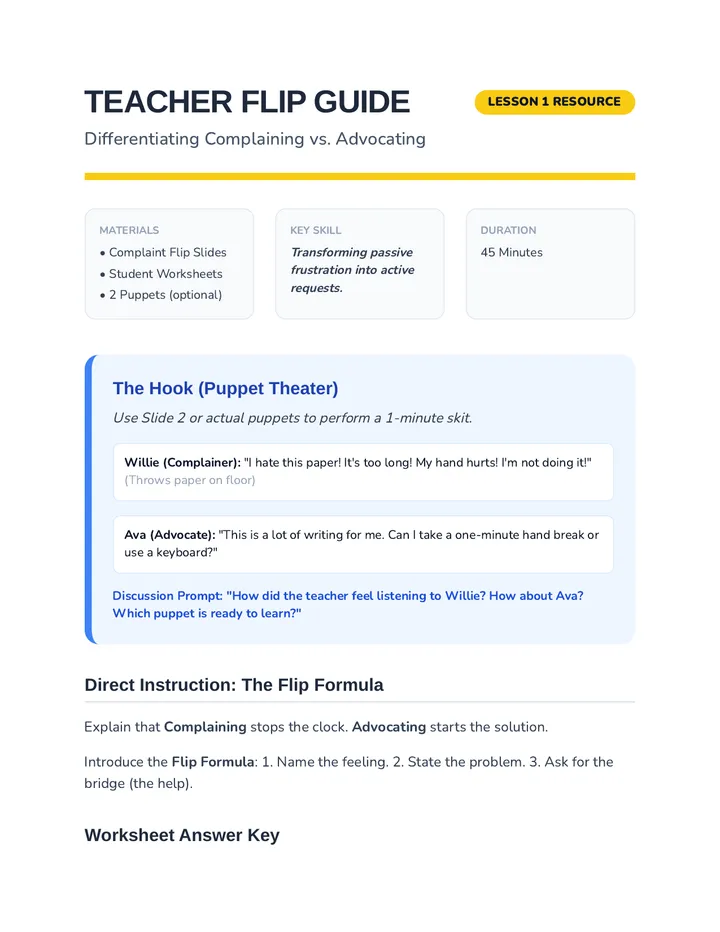
A 5-lesson sequence designed for 3rd-grade students to transition from general problem-solving to self-advocacy. Students learn to distinguish between complaining and advocating, identify appropriate sources of help, draft personal advocacy scripts, and create a physical 'Help Menu' tool for daily use.
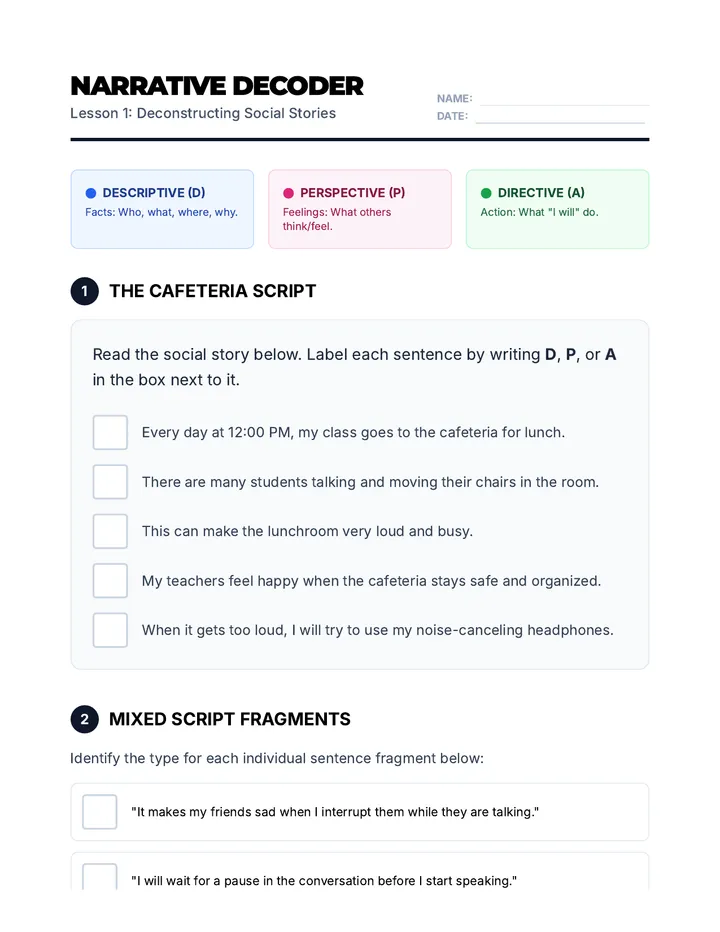
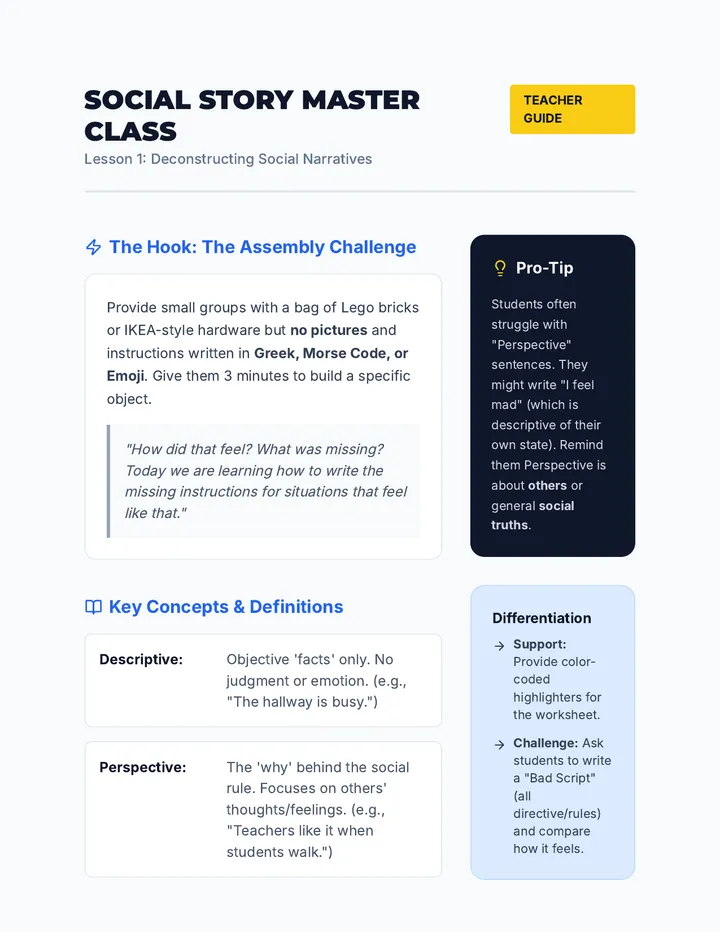
A comprehensive workshop-style sequence where 8th-grade students learn to analyze, draft, and implement personal social narratives to manage behavioral triggers and promote self-regulation. Students move from understanding the components of a social story to creating their own portable scripts for academic and social success.
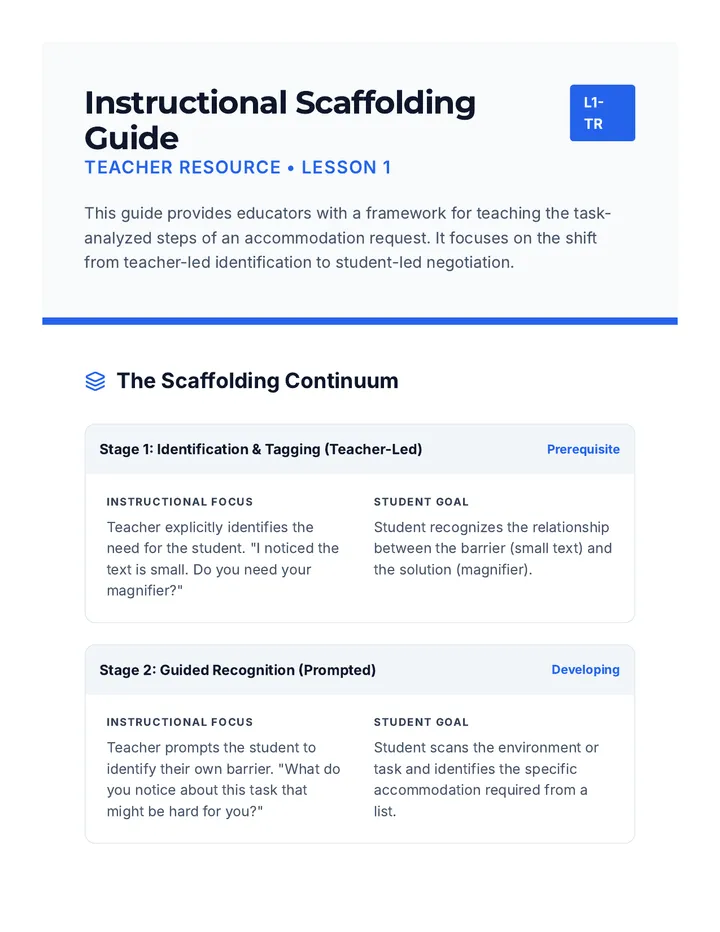
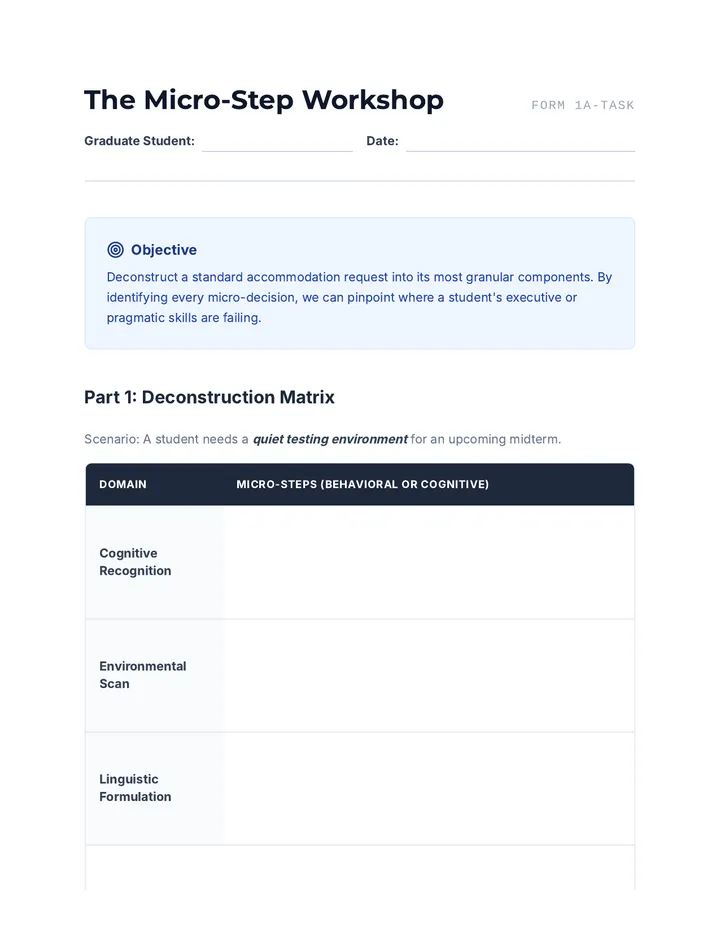
A graduate-level sequence focused on the instructional methodology for teaching self-advocacy skills, specifically requesting accommodations. Graduate students will learn to task-analyze requests, design tiered scripts, facilitate behavioral rehearsals, collect data on advocacy behaviors, and plan for generalization.
A sequence for 2nd Grade students focused on using proprioceptive input (heavy work) to regulate the nervous system and improve focus. Students learn to identify how muscle work affects their brain and transition from teacher-led activities to functional classroom routines.
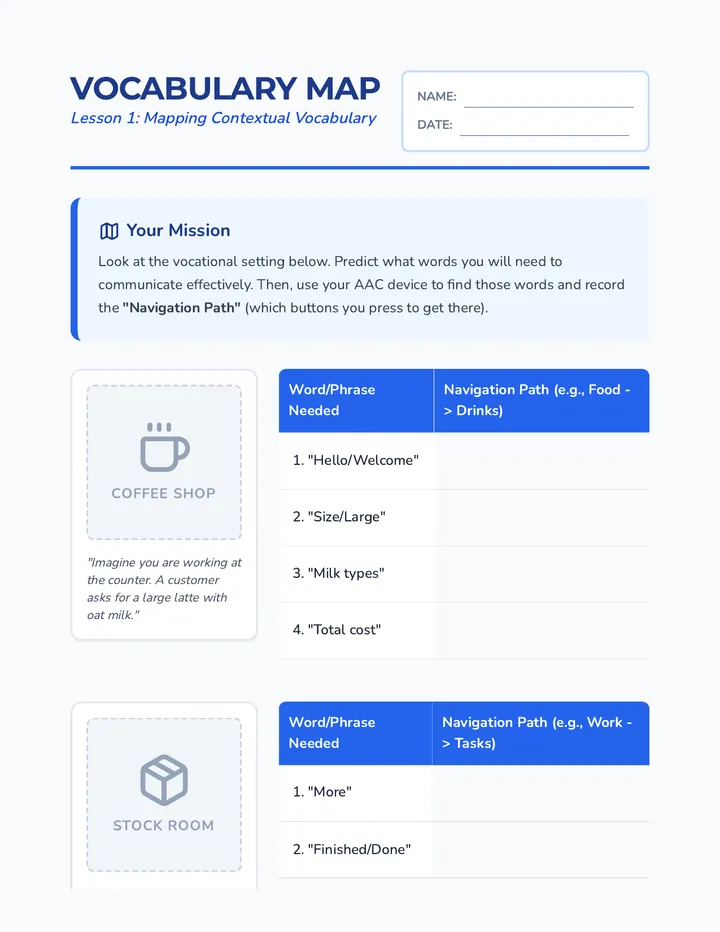
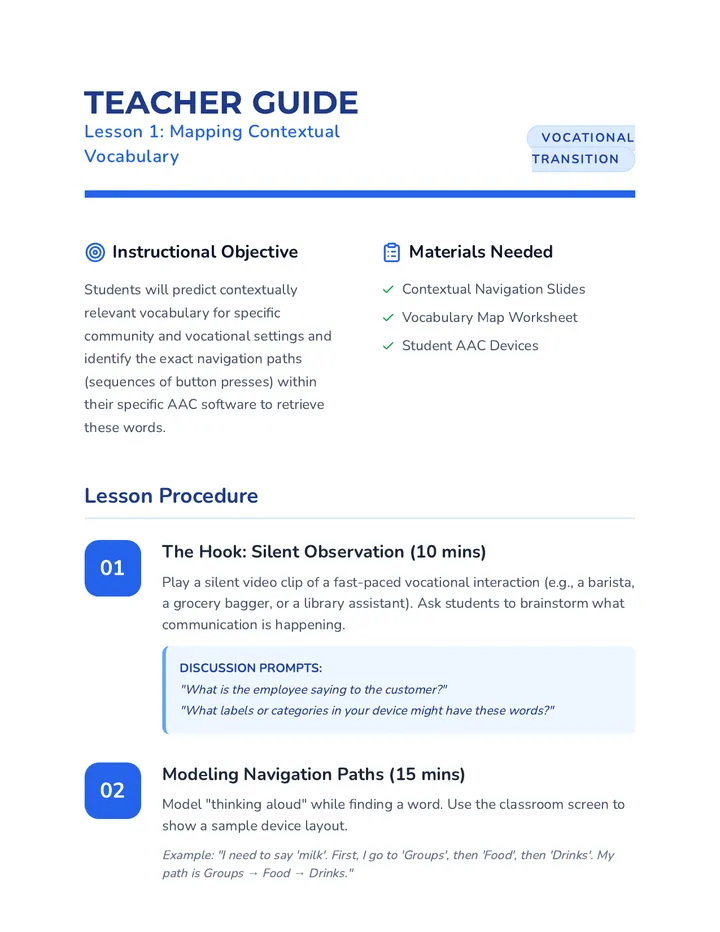
This sequence prepares 10th-grade students for the transition to community and vocational life by mastering the navigation of Augmentative and Alternative Communication (AAC) devices. Students progress from identifying context-specific vocabulary to navigating complex, multi-folder social and professional interactions.
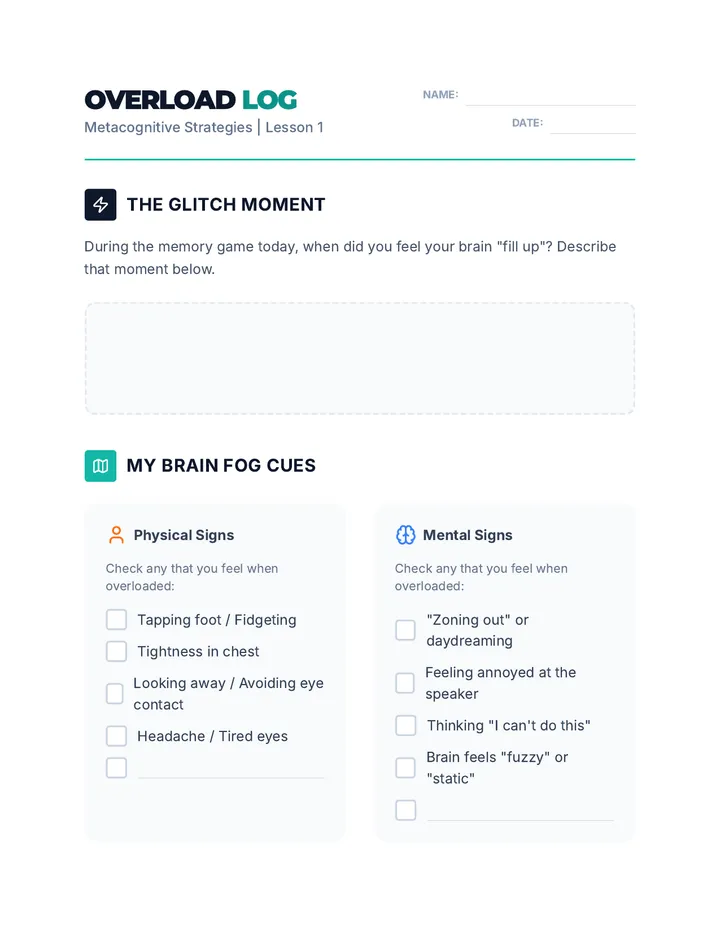
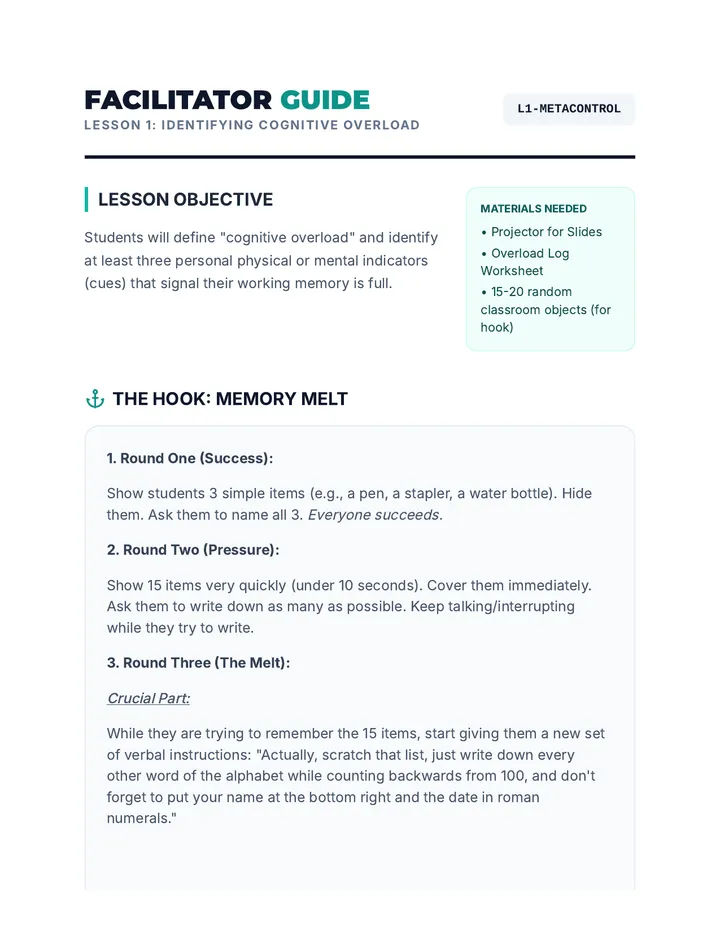
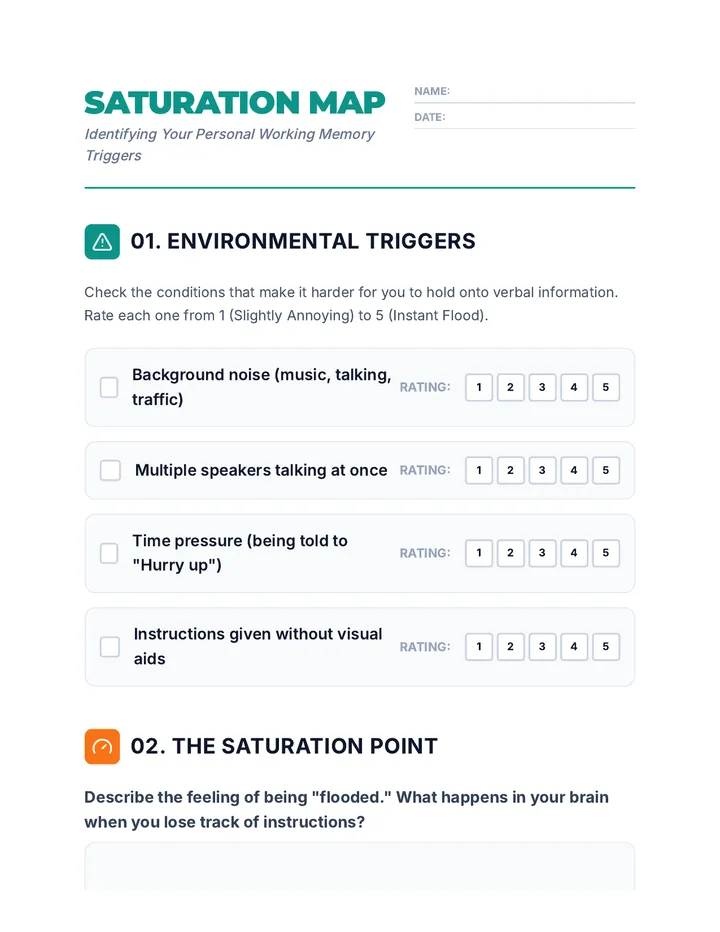
This sequence empowers 8th-grade students with metacognitive strategies to recognize cognitive overload and advocate for single-step directions. It covers identifying personal cues of overload, deconstructing complex instructions, and practicing self-advocacy scripts.
A self-advocacy sequence for 11th-grade students to manage working memory challenges by requesting single-step directions and professional modifications in fast-paced environments.
A 15-minute, Tier 3 individual lesson for Kindergarten students with ASD focused on personal space, identifying safe adults, and recognizing appropriate touch.
A concise 15-minute Tier 3 session designed for a 17-year-old male student with autism to build self-advocacy skills. This lesson equips the student with strategies to express needs and request support effectively, fostering independence and confidence.
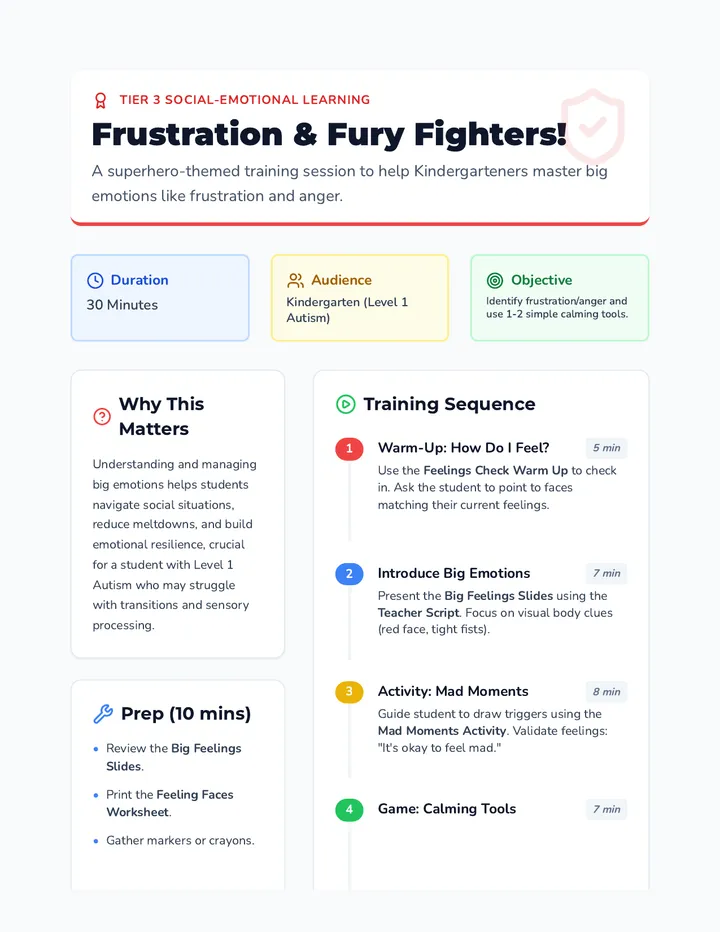
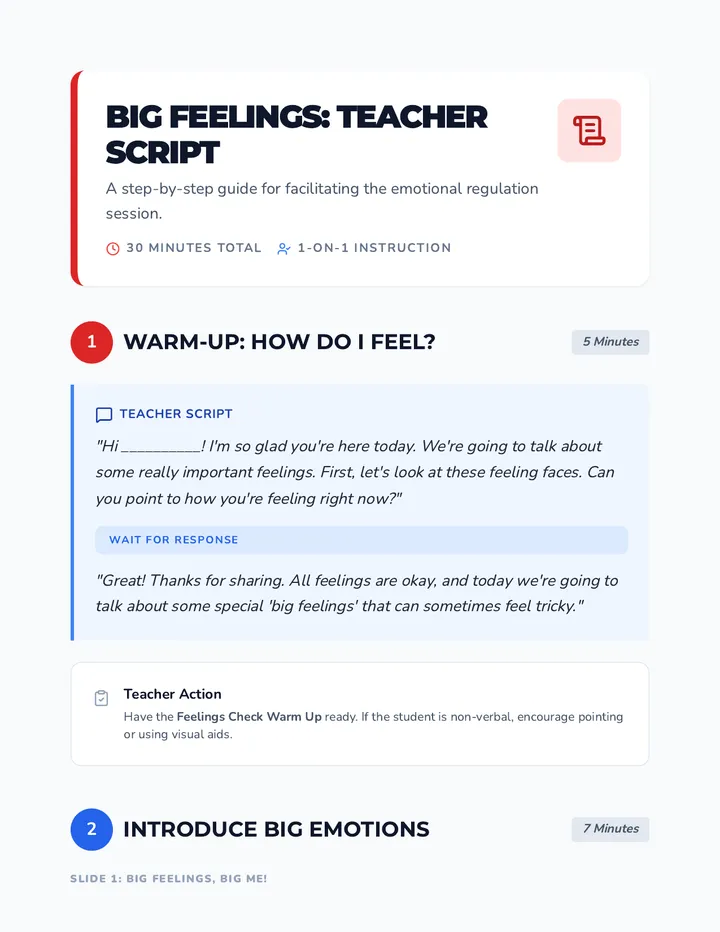
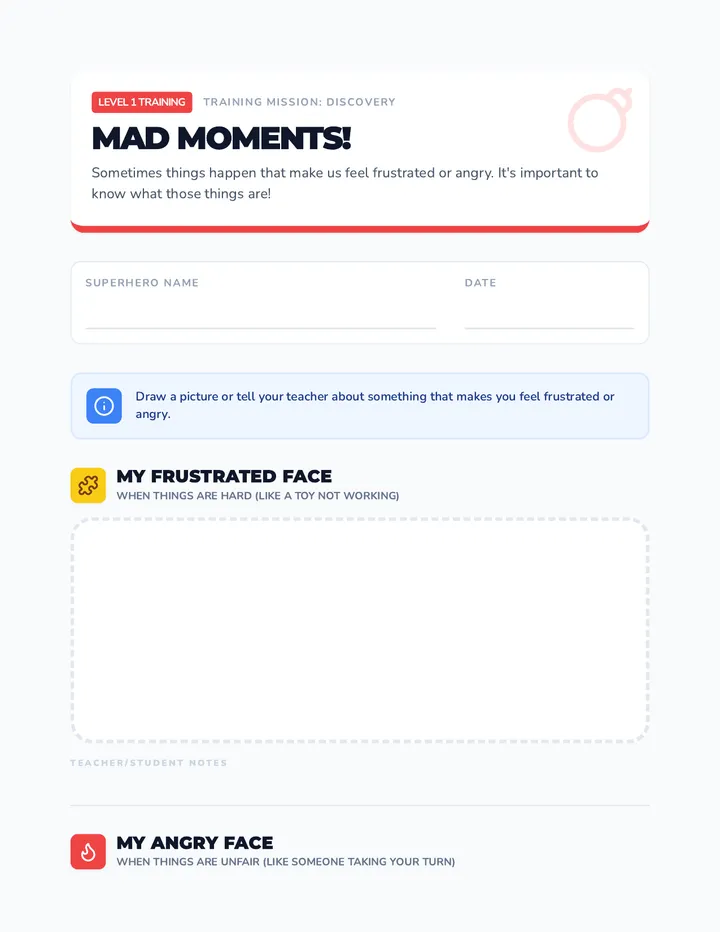
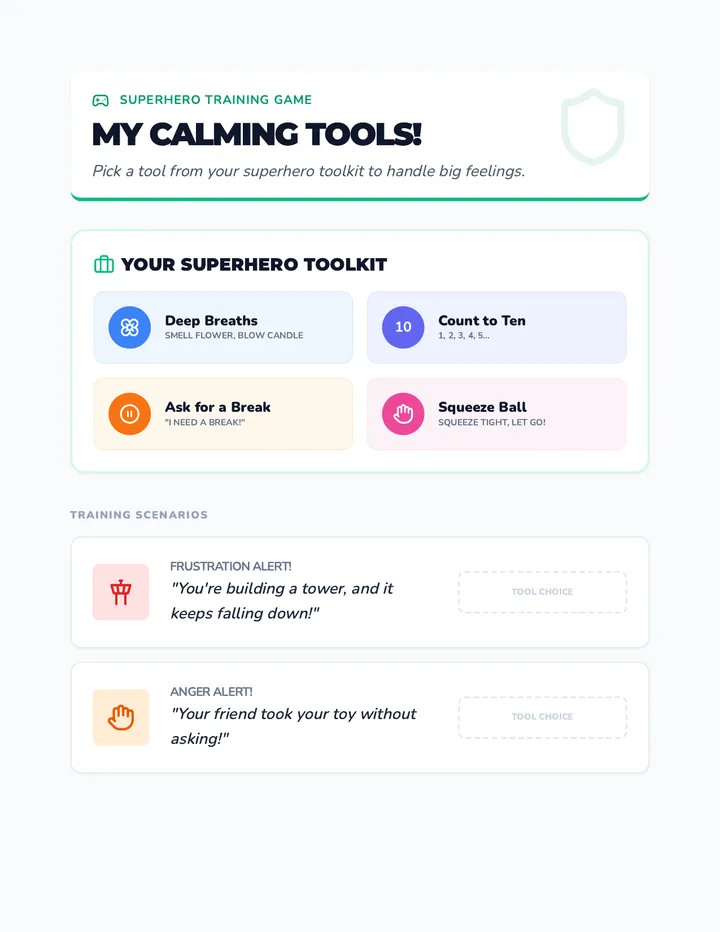
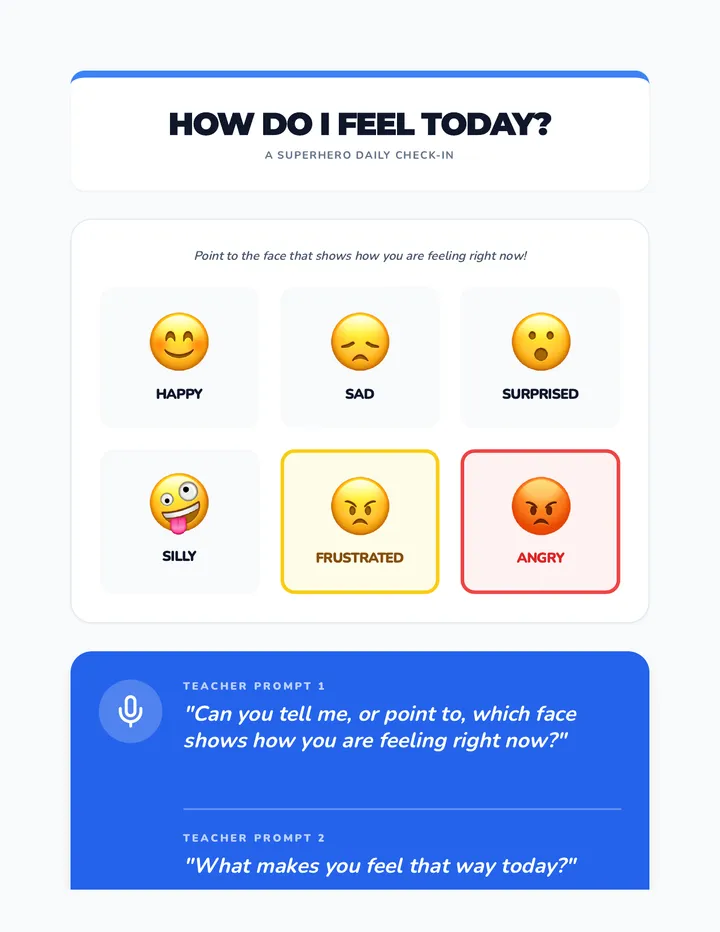
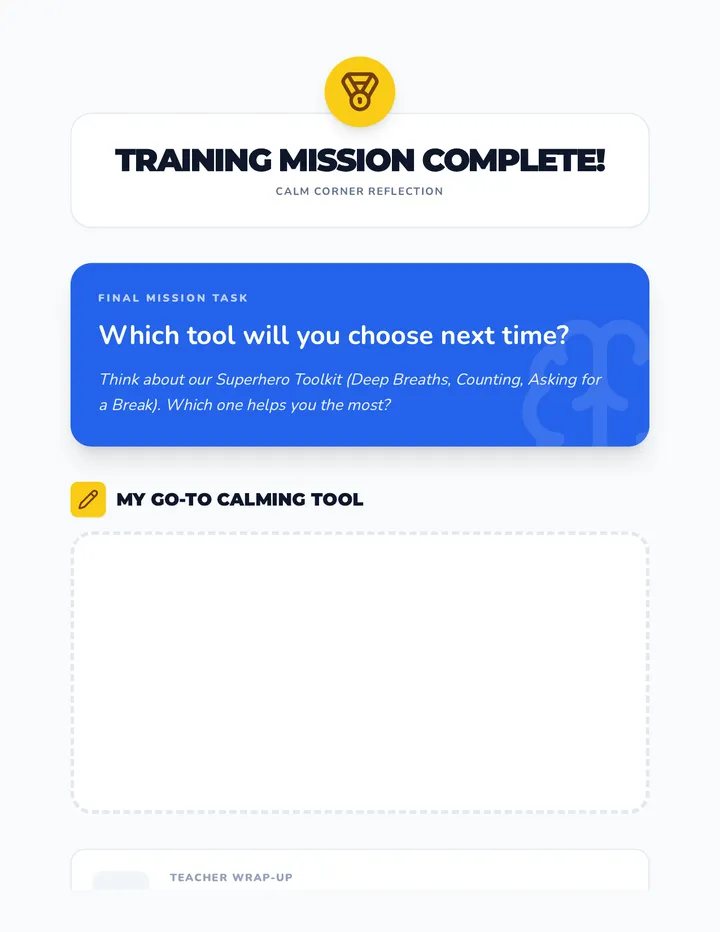
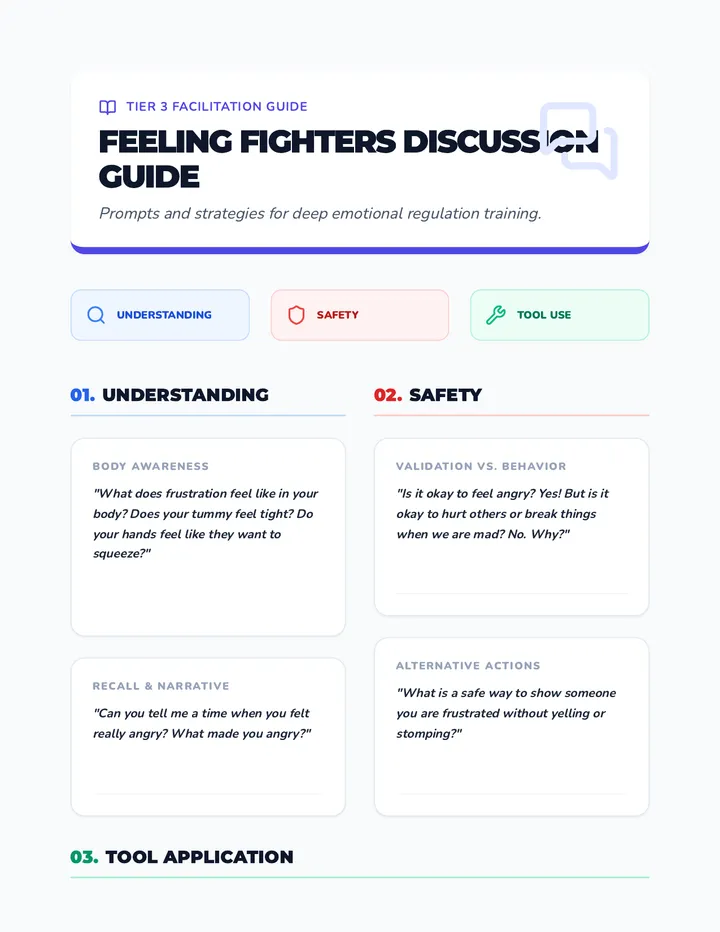
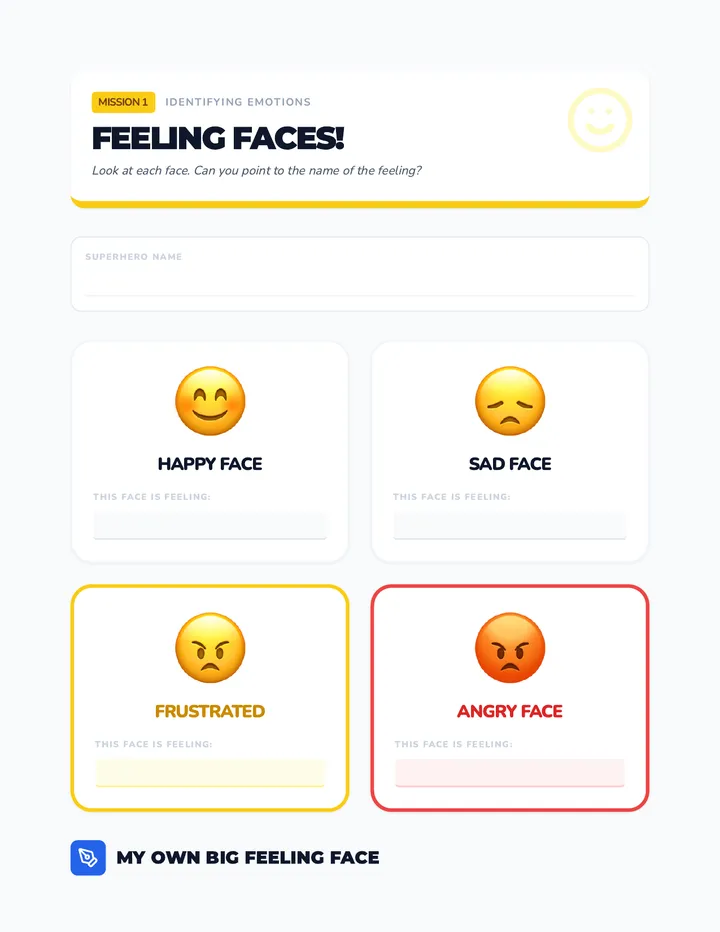
A 30-minute individual Tier 3 lesson for Kindergarten students with Level 1 Autism, focusing on identifying frustration and anger and learning foundational calming strategies.
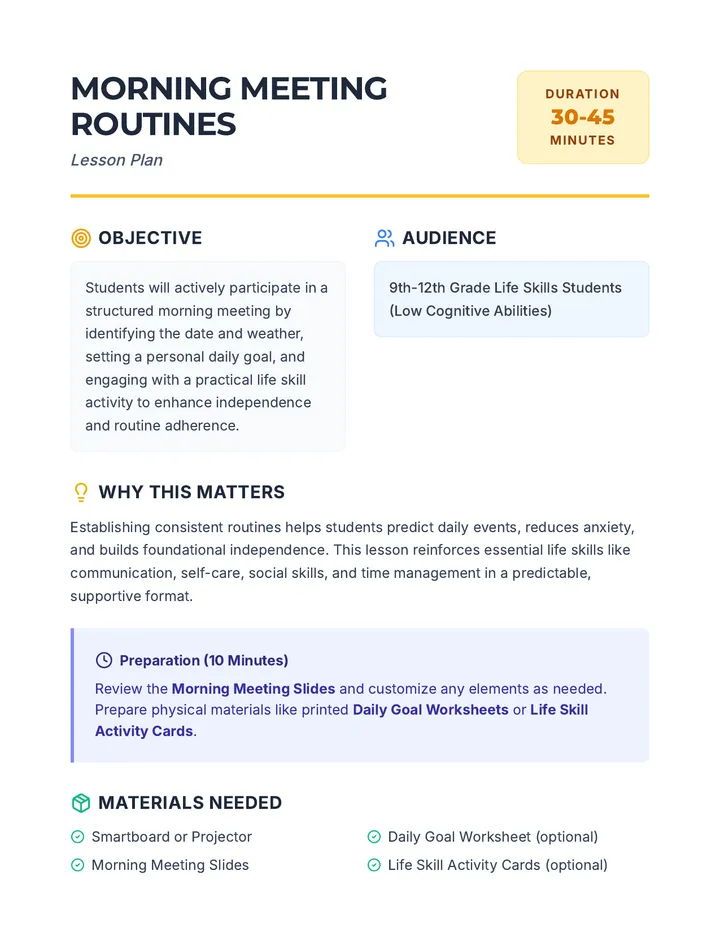
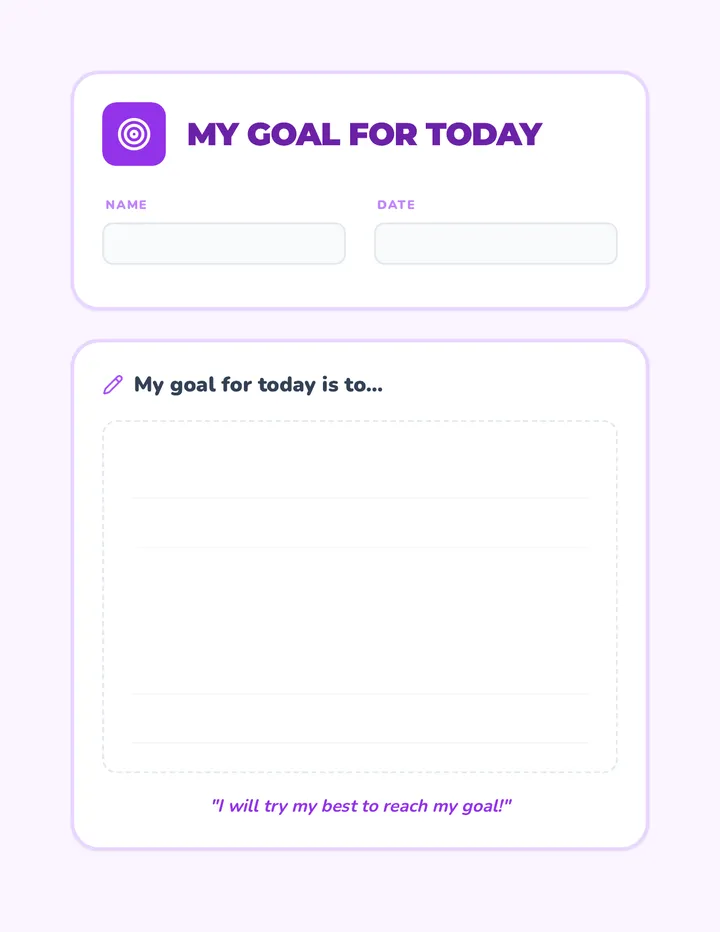
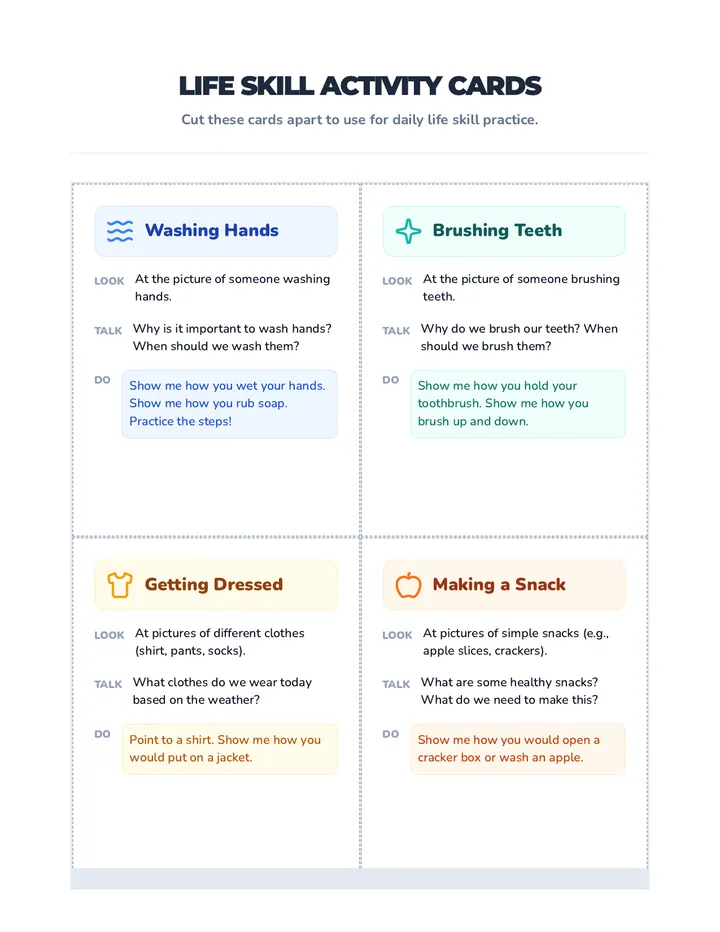
A structured morning meeting routine for 9th-12th grade life skills students focusing on communication, calendar, weather, goal setting, and practical life skills practice.
This lesson helps 3rd-grade students understand the difference between expected and unexpected behaviors through personalized discussion, role-playing, and reflection. It is designed for individual (Tier 3) support to help students improve their social skills and classroom interactions.
A middle school lesson designed for students with moderate disabilities to develop self-advocacy skills through video analysis, scenario-based practice, and reflective discussion.
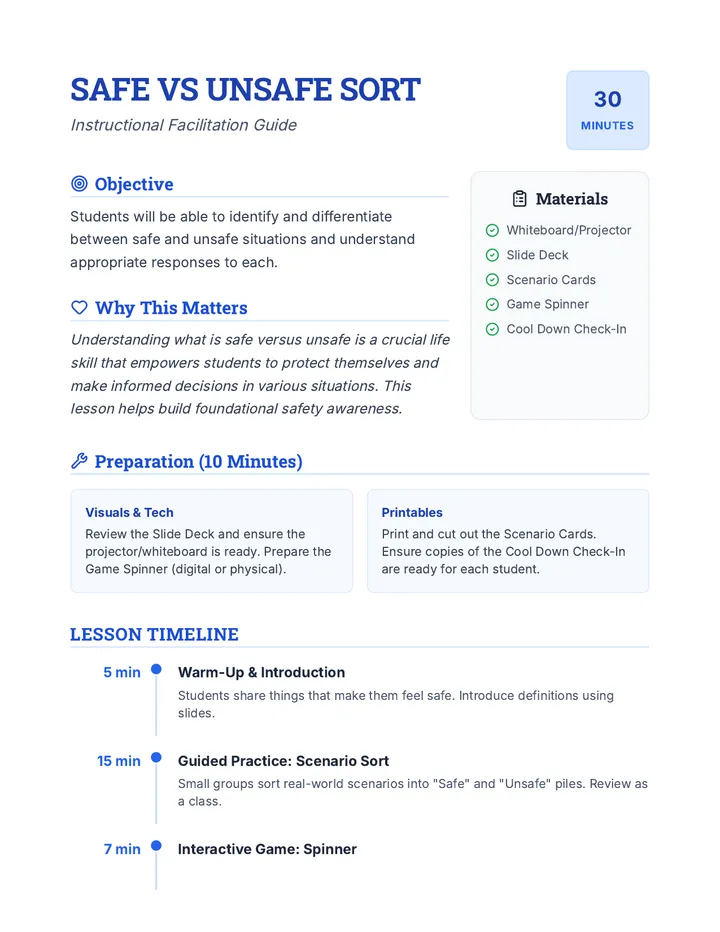
A 30-minute lesson for special education students to identify and distinguish between safe and unsafe situations through sorting, discussion, and games.
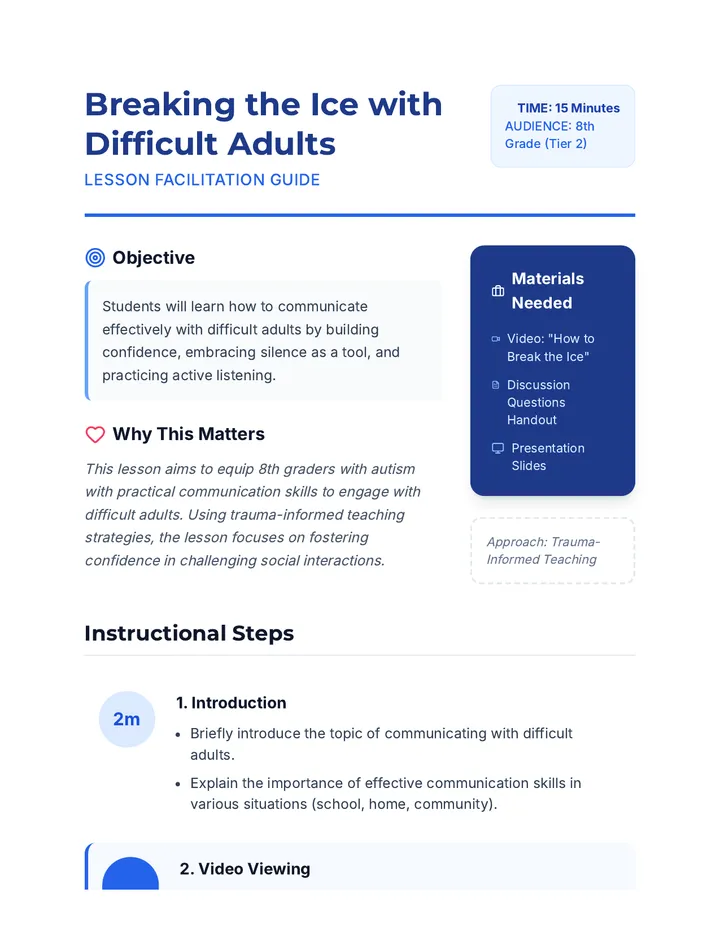
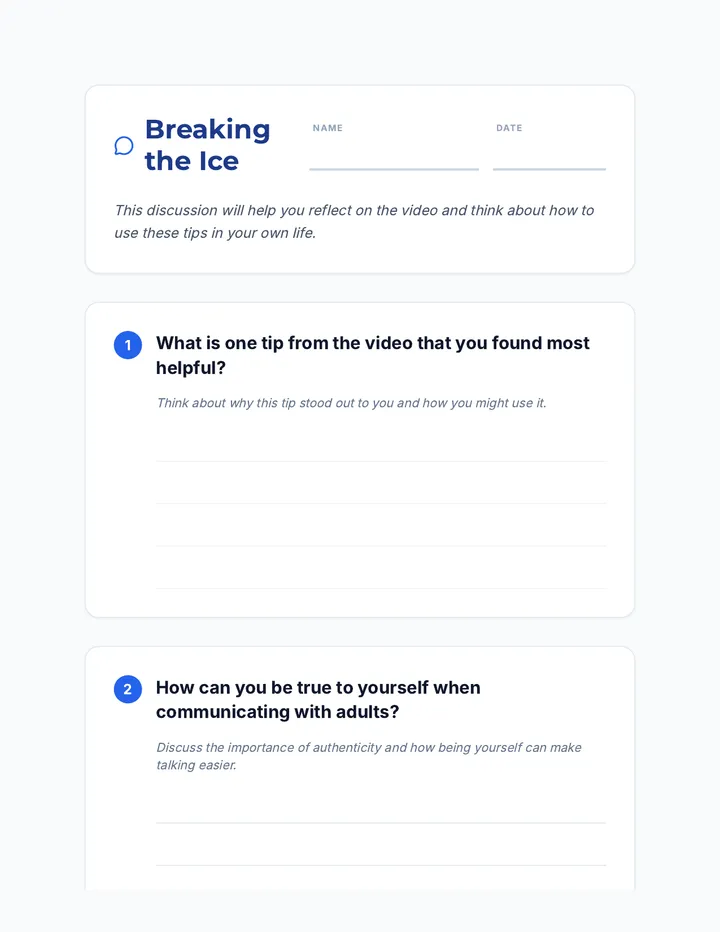
A trauma-informed lesson for 8th graders with autism focused on building confidence and practical communication skills when interacting with difficult adults.
A Tier 3 intervention lesson for nonverbal 2nd grade students with ASD, focusing on using AAC devices and visual cues to communicate distress and request help during transitions to reduce aggressive behaviors.
A 30-minute interactive lesson for 9th-grade students with cognitive disabilities focused on privacy, identifying trustworthy content, and responding to cyberbullying.
An individualized Tier 3 lesson designed to re-engage a 5th-grade student by addressing refusal behaviors and building a collaborative plan for success.
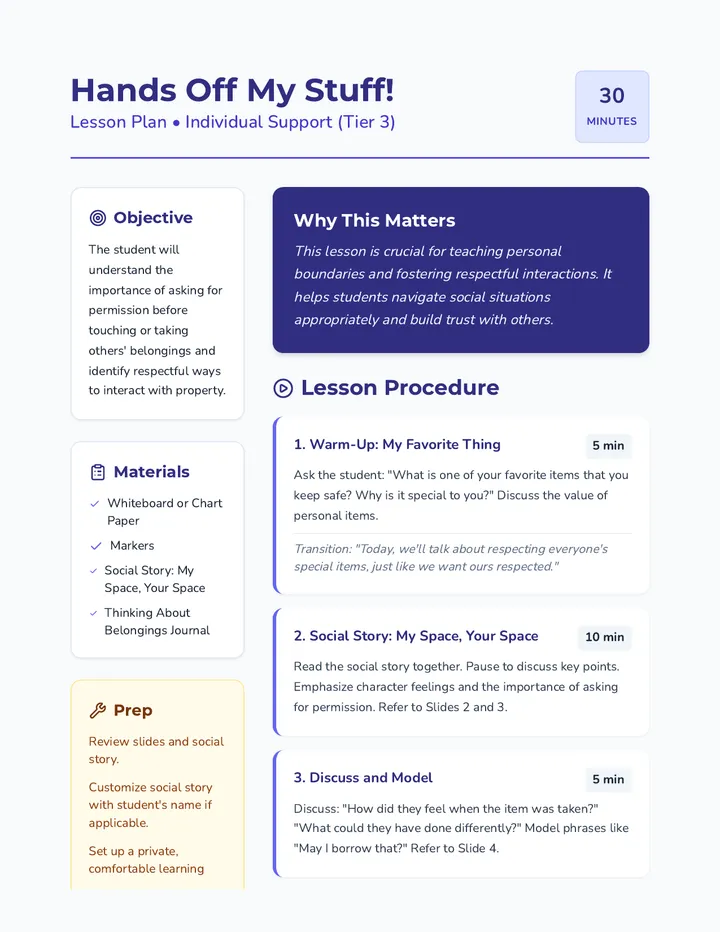
This Tier 3 lesson provides individualized support for a 4th-grade student on understanding personal boundaries and respecting others' belongings. It features a personalized social story and reflective journaling to help the student develop respectful social habits.