Muscle Magic Slides Muscle Magic
Using Heavy Work to Help Your Brain Focus
Lesson 1 Heavy Work Heroes
The Wall Challenge
Step 1: Push!
Can we push the classroom wall down? Use all your strength for 10 seconds!
Step 2: Statue!
Freeze like a statue. Notice how your arms, shoulders, and legs feel.
What is Heavy Work?
Pushing
Walls, floor, or your own chair.
Pulling
Heavy doors or stretchy bands.
Carrying
Books, bins, or heavy bags.
Heavy work wakes up your muscles and calms down your brain!
Chair Dips
1
Put your hands on the sides of your chair.
2
Push down through your hands to lift your bottom up just a tiny bit.
3
Hold for 5 seconds and breathe slowly.
Do your muscles feel "tight" and strong?
The Brain Power Secret
When I'm "Wiggly"
My brain is bouncing around. It's hard to listen or focus.
After Heavy Work
My brain feels organized. My body feels calm and ready.
Muscle Check In Worksheet Muscle Check-In
Heavy Work Hero Training
Name:
Date:
The Mission
How does your brain feel today? We are going to test our Muscle Magic ! Use this sheet to track how your muscles help your brain get ready to learn.
1
Before we start...
How do you feel right now? (Circle one)
Wiggly
Tired
Ready
2
Do the Muscle Magic!
Wall Push
Push the wall for 10 seconds.
Done!
Chair Dips
Lift your bottom 5 times.
Done!
3
After the heavy work...
How do your muscles feel?
Strong & Tight
Soft & Floppy
My brain feels more...
Organized / Ready
Still Wiggly
Notes for the Hero:
Muscle Magic Teacher Guide Teacher Guide
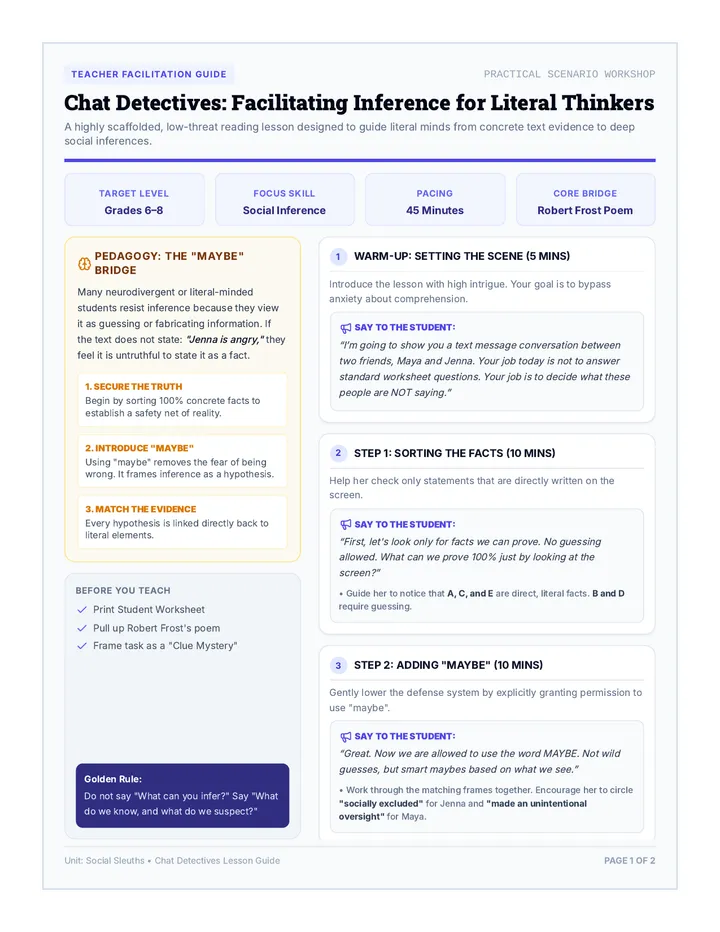
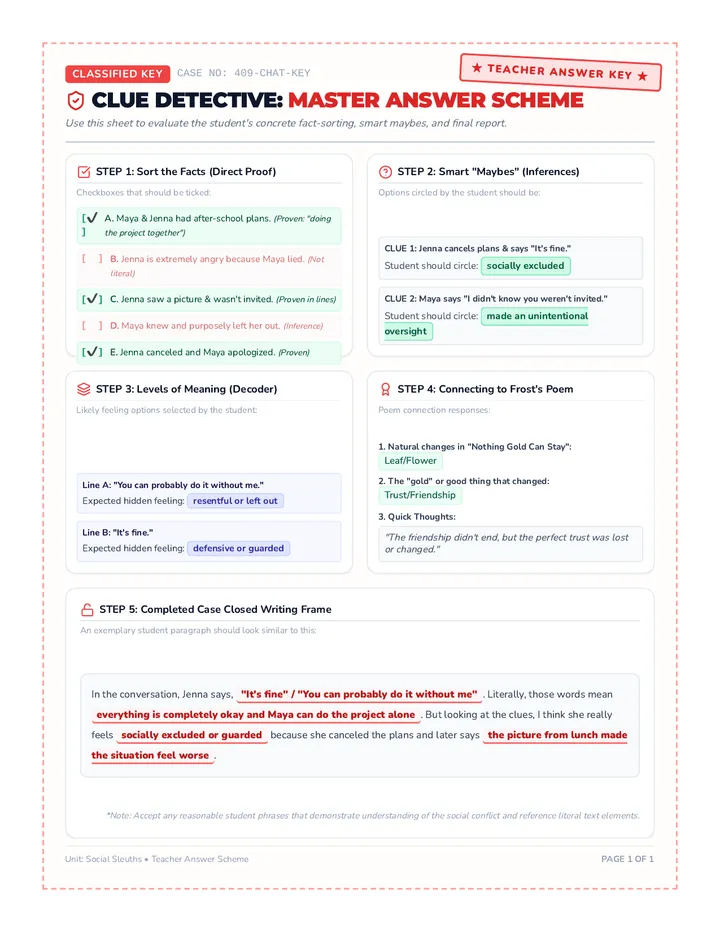
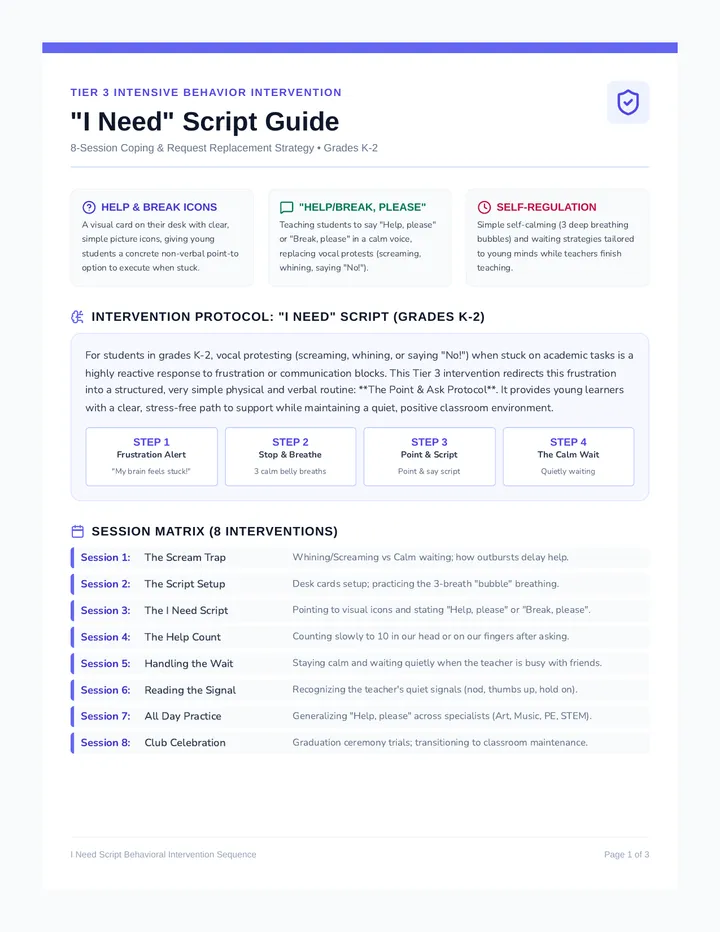
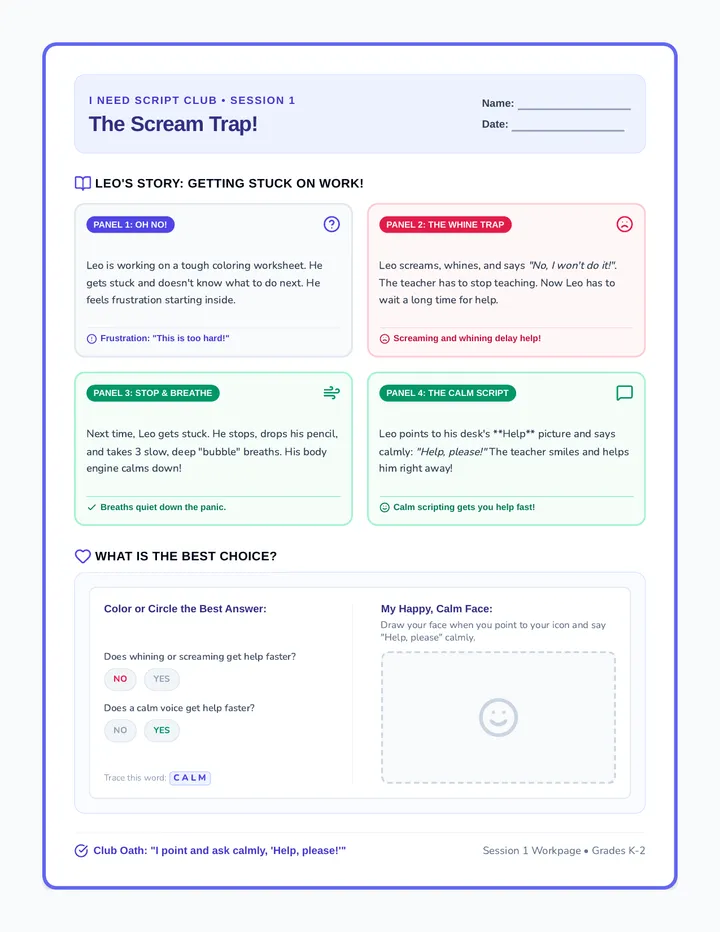
Muscle Magic Basics
Lesson 1: Introduction to Proprioception
Duration: 30-40 min
Target: 2nd Grade / SPED
Objective
Students will define "heavy work" and identify how proprioceptive input (deep pressure) affects their body awareness and ability to focus.
The Hook: The Wall Challenge
"Class, I need your help! I think the classroom wall is leaning. Do you think we are strong enough to push it back into place?"
Have students stand with hands flat against a sturdy wall.
Count down: 3... 2... 1... PUSH!
Encourage them to push with all their might for 10 full seconds.
The Freeze: Shout "STATUE!" and have everyone freeze immediately.
Vocabulary
Heavy Work
Activities that use our big muscles to push, pull, or carry.
Proprioception
Our "sixth sense"—the brain knowing where the body is.
Regulation
Keeping our energy just right for the activity we are doing.
Discussion Prompts
Physical Sensation
"After pushing the wall, do your arms feel 'tight' or 'soft'? Do they feel 'warm' or 'cold'?"
Mental Connection
"Before we pushed, was your brain thinking about a million things? What about now?"
Lesson Sequence
1
Slide 1-2: Conduct the Hook (Wall Push). Use the Muscle Check-In Worksheet (Step 1) before the hook.
2
Slide 3: Define Heavy Work. Ask students for examples in their lives (carrying groceries, pushing a swing).
3
Slide 4: Introduce Chair Dips. Model safety (don't tip the chair). Practice 3 sets of 5 repetitions.
4
Slide 5: Explain the brain connection. Help students understand that "heavy work" provides the "noise" muscles need to send a clear signal to the brain.
5
Wrap Up: Complete the Muscle Check-In Worksheet (Step 3). Reflect on who feels "organized" and ready to work.
Differentiation & Support
For Students with Low Tone:
Focus on shorter bursts of resistance. Instead of a full lift, focus on just pushing through the palms to engage the triceps and shoulders.
For Sensory Seekers:
They may need more intensity. Offer a "Weighted Lap Pad" or allow them to push against the floor with their feet while seated to increase input.
Heavy Animal Parade Slides Heavy Animal Parade
Wake Up or Calm Down? Moving Like the Jungle's Strongest!
Lesson 2 Heavy Work Heroes
The Strong Bear
How to Move:
Walk on your hands and feet. Keep your knees off the ground! Keep your back strong like a mountain.
Input: WAKES YOU UP!
Heavy & Steady
The Beach Crab
Belly to the Sky
How to Move:
Sit on the floor. Put your hands behind you. Lift your belly up high and scuttle on your hands and feet!
Input: GROUNDS YOU!
The Jumping Frog
How to Move:
Squat low like a frog. Touch the floor with your hands. BOING! Jump up high and land softly on your feet.
Input: HIGH ENERGY!
Big Explosive Power
The Zoo Keeper's Secret
Need to Wake Up?
If you feel sleepy or bored, try movements that are fast and jumpy.
Frog Jumps Bear Crawl
Need to Calm Down?
If you feel wiggly or frustrated, try movements that are slow and pushy.
Crab Walk Wall Push
Animal Power Cards The Strong Bear
Hands and feet on the floor. Keep your back strong!
Power: Wake Up!
The Beach Crab
Belly to the sky. Scuttle on your hands and feet!
Power: Calm Down
The Jumping Frog
Squat low, touch the floor, and jump high!
Power: High Energy
The Heavy Elephant
Take slow, heavy steps. Swing your "trunk" arms!
Power: Get Grounded
The Slow Inchworm
Walk hands forward, then walk feet to hands.
Power: Concentration
The Wall Hero
Push the wall with all your strength. 10 seconds!
Power: Organizing
How to Use the Power Cards
1
Cut out the cards and laminate them for durability.
2
Use them as visual cues during the "Zoo Keeper" game.
3
Place them in a "Sensory Choice" bin for independent breaks.
Zoo Keeper Games Guide Teacher Guide
Zoo Keeper Games
Lesson 2: Animal Walks for Regulation
Active Gameplay
Sensory Safety First
The Big Idea
Animal walks are a fun, age-appropriate way to provide proprioceptive input . By varying the speed and type of walk, we can help students either "wake up" their nervous system or "ground" themselves when they feel over-stimulated.
Safety Watch
Wrist Safety: Ensure students aren't "locking" elbows.
Space: Ensure a clear path. No running.
Crash Zone: If available, use mats for Frog Jumps.
Self-Regulation: Remind students: "If it hurts, stop."
Game 1: The Zoo Keeper Says
A variation of "Simon Says" using the Animal Power Cards .
Instructions:
The Teacher (or a student leader) is the "Zoo Keeper."
Hold up an Animal Power Card .
If the Keeper says "The Zoo Keeper says... walk like a Bear," students perform the movement.
If the Keeper just says "Walk like a Bear," students must stay in a "Statue Freeze."
Sensory Twist: Call out "Heavy Power!" to make students move slower and harder, or "Light Power!" for faster, lighter movements.
Game 2: The Energy Match
"I'm feeling a bit sleepy. Which animal should I be to wake up my brain?"
The Challenge:
The teacher describes a feeling (e.g., "wiggly," "bored," "frustrated"). Students must pick the correct animal walk from their cards to match that energy need.
The Goal:
Develops metacognition —students start to associate specific movements with specific emotional/physical states.
Reflective Closing
Ask: "Which animal felt the hardest to do? Which one made your brain feel the quietest?"
Heavy Job Fair Slides Heavy Job Fair
Helping Our Class While Building Our Brains!
Lesson 3 Heavy Work Heroes
The "Heavy Lifter" Secret
Helping the Community
Our classroom is a team. Everyone has a part to play!
Feeding the Brain
Pushing, pulling, and carrying tells your brain exactly where your body is.
Doing a job =
A Sensory Break!
Job #1: Library Lifter
The Mission:
Carrying bins of books to the shelf or organizing heavy textbooks.
Muscle Focus: ARMS & SHOULDERS
Push the bins with your whole body!
Job #2: Table Technician
Push DOWN to scrub!
The Mission:
Wiping down tables with a wet cloth or sponge using big, circular motions.
Muscle Focus: UPPER BODY
Join the Squad
We need strong heroes like YOU to keep our classroom running. Are you ready to apply for your "Heavy Work" job?
1
Pick a Job
2
Fill out Form
3
Get to Work!
Heavy Lifter Application Form Heavy Lifter Application
Official Recruitment Form
Applicant Name:
Today's Date:
Section 1: Hero Strength Check
Which of these "Heavy Work" tasks are you the best at? (Check all that apply)
Pushing Heavy Boxes
Carrying Book Bins
Scrubbing Tables
Stacking Chairs
Section 2: Job Selection
Choose ONE job you want to apply for today:
Library Lifter
Carry and organize heavy books
Table Tech
Scrub and wipe desks clean
Supply Mover
Carry supply bins across the room
Section 3: Why should we hire you?
"I would be a great Heavy Lifter because..."
Hero Agreement:
"I promise to use my muscles safely and help my brain focus while I work."
Hero Signature:
Classroom Job Menu Reference Chart Heavy Hero Job Menu
Helping our class, one muscle at a time!
Library Lifter
"I carry heavy book bins and put textbooks back in their homes."
Input Type: Carrying
Table Technician
"I use big muscle power to scrub and wipe the tables clean."
Input Type: Pushing
Supply Mover
"I move heavy supply bins or sharpen the big box of pencils."
Input Type: Pulling
Chair Captain
"I help stack the chairs or push them in so the room is tidy."
Input Type: Pushing
"Working Muscles make a focused brain!"
Secret Muscle Powers Slides Secret Muscle Powers
Mastering the Invisible Workout at Your Desk
Lesson 4 Heavy Work Heroes
The Invisible Challenge
Can you move... without moving?
Sometimes we need to stay in our seats. But our muscles still need to work! This is called ISOMETRICS .
Your Mission: Workout so quietly that no one can see!
Stay Seated. Stay Silent. Stay Strong.
Power #1: The Hand Press
1
Press your palms together.
2
Push as hard as you can.
3
Hold for 10 seconds.
FEEL THE POWER
In your chest and arms!
Power #2: The Desk Push
Down and Steady
Use your big shoulder muscles!
"Put your hands flat on the desk. Push DOWN through your palms. Try to push your chair through the floor!"
Hold for 5 Slow Breaths
Power #3: The Deep Hug
Wrap your arms around yourself. Squeeze your shoulders and ribs. This is like a "Reset Button" for your brain when things feel too loud or fast.
Calm & Organized
Invisible Workout Checklist Invisible Tracker
Secret Muscle Powers
Agent Name:
"Can you complete the mission without anyone seeing you move?"
The Hand Press
Push palms together for 10 seconds
The Desk Push
Push DOWN on your desk surface
The Self-Hug
A deep, strong squeeze to reset
Toe Pushes
Push your toes into the floor
Mission Debrief
How does your body feel after your secret mission?
Ready to Listen
Strong Muscles
Still Wiggly
Discreet Regulation Teacher Guide Teacher Guide
Discreet Regulation Tips
Lesson 4: Desk Isometrics & Quiet Regulation
Invisible Support
Zero Pacing Cost
Why Isometrics?
Isometric exercises involve muscle contraction without joint movement. They are powerful because they provide significant proprioceptive input without requiring students to leave their seats or disrupt the flow of a lesson.
"Ideal for story time, direct instruction, or independent testing."
Implementation Strategy
1. The Hook
Frame the lesson as "Secret Agent Training." Students are learning to regulate their own "engines" so quietly that even the teacher can't tell they are working out.
2. Visual Cues
Use a non-verbal cue (like a hand press or a self-hug) to remind students to check in with their bodies during long periods of sitting.
Exercise Quick-Guide
A
Hand Presses
Focus on the triceps and chest. Hold for 10 counts.
B
Desk Pushes
Palms flat on desk. Push down to engage shoulders and lats.
C
Chair Pulls
Grip sides of chair and pull UP as if trying to lift the chair while sitting in it.
D
Toe Pushes
Press big toes into the floor while seated. Great for "wiggly legs."
Pro-Tips for Success
Timing:
Do these 5 minutes before you expect a transition. It "organizes" the brain so students are ready for the next set of instructions.
Modeling:
Narrate your own need: "I'm feeling a bit sleepy, so I'm going to do 3 secret desk pushes to wake up my brain."
Circuit Designer Slides The Ultimate Circuit
Architects of Movement: Designing the Perfect Sensory Path
Lesson 5 Heavy Work Heroes
What is a Sensory Circuit?
A circuit is a path of 3 specialized stations that help your brain and body work together.
The Recipe:
1. Alerting (Wake Up!)
2. Organizing (Work Hard!)
3. Calming (Quiet Down!)
Station 1: Alerting
The Goal: WAKE UP!
This station gets your brain noticing your body. It should be fast and bouncy!
Frog Jumps Star Jumps
Station 2: Organizing
The Goal: FOCUS!
This station requires hard work and balance. It should be slow and heavy!
Bear Crawl Wall Push
Station 3: Calming
The Goal: READY!
This station settles your nervous system. It should be quiet and steady!
Self-Hug Slow Breaths
Circuit Blueprint Worksheet Circuit Blueprint
Official Design Document
Design Team:
1
Station: Alerting
Goal: Wake Up the Brain!
Describe the activity or draw a picture:
2
Station: Organizing
Goal: Hard Work & Focus!
Describe the activity or draw a picture:
3
Station: Calming
Goal: Settle Down & Ready!
Describe the activity or draw a picture:
Equipment Needed:
Chairs
Floor Tape / Mats
Book Bins
Animal Power Cards
Input Type Reference Card Alerting
Wake Up!
These movements are fast, bouncy, and get your heart pumping.
Jump Bounce Spin
Organizing
Focus!
These movements are heavy, slow, and use your big muscles.
Push Pull Carry
Calming
Reset!
These movements are quiet, steady, and help you feel safe.
Squeeze Breathe Press
Station Markers
Print and laminate these cards to use as actual markers for your circuit stations. They help students remember the goal of each part of the course.
Cut along the borders.