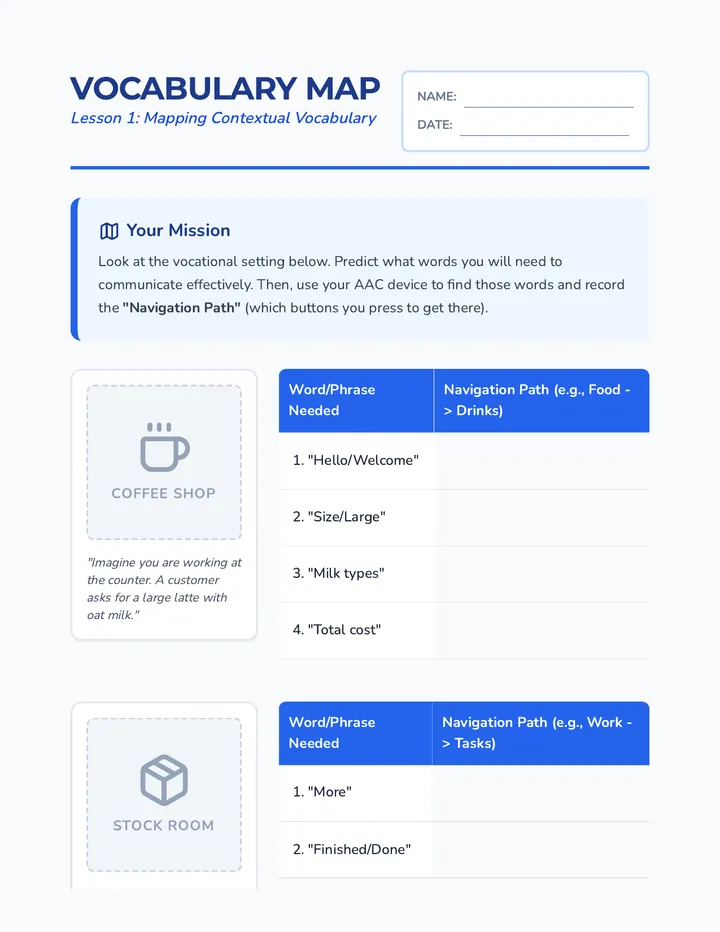
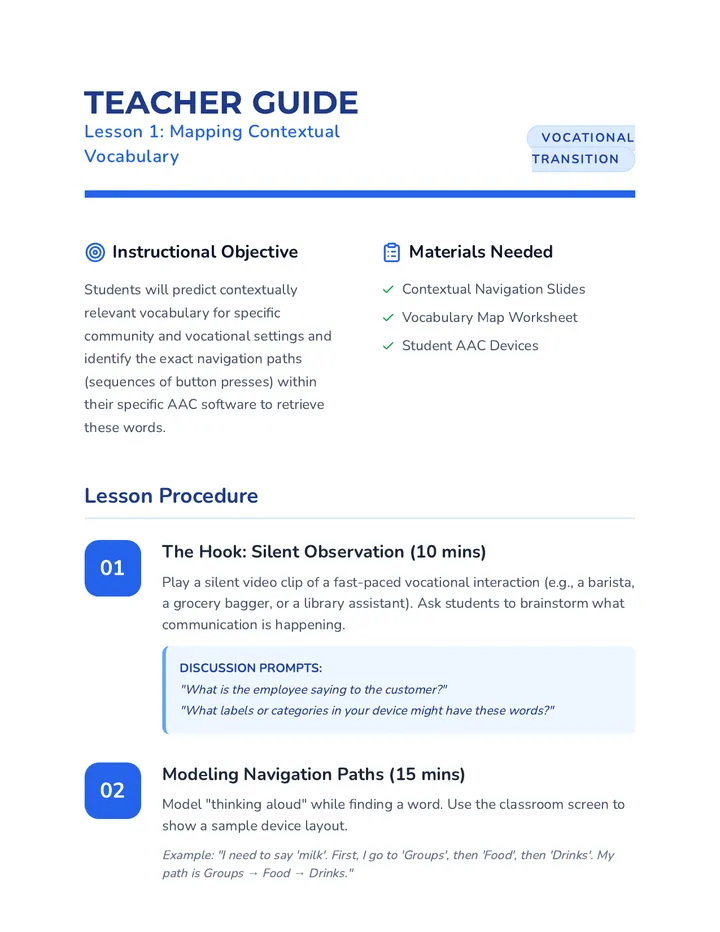
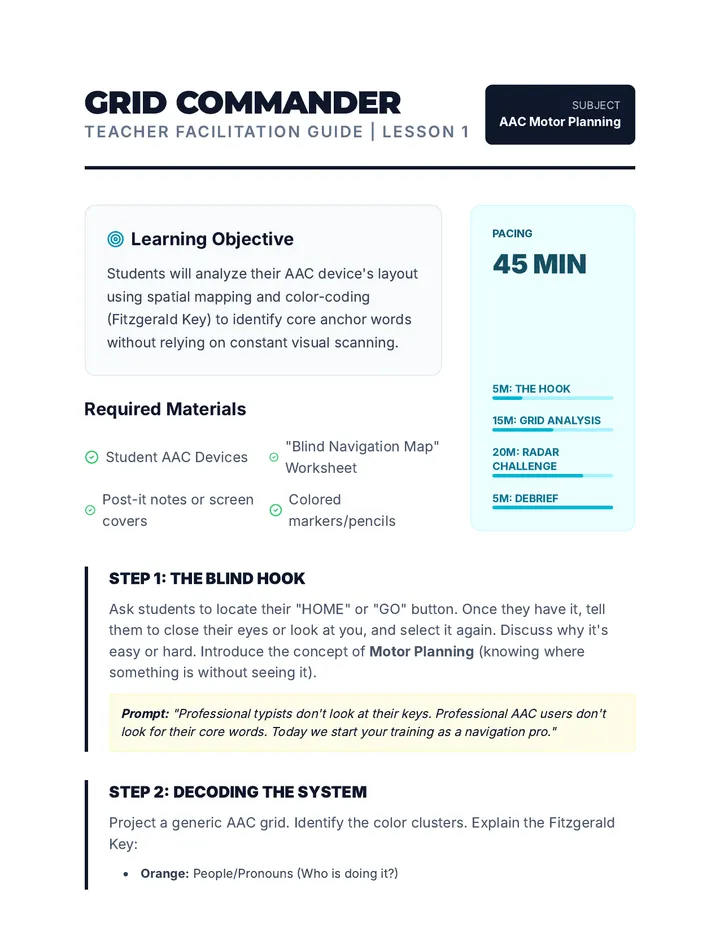
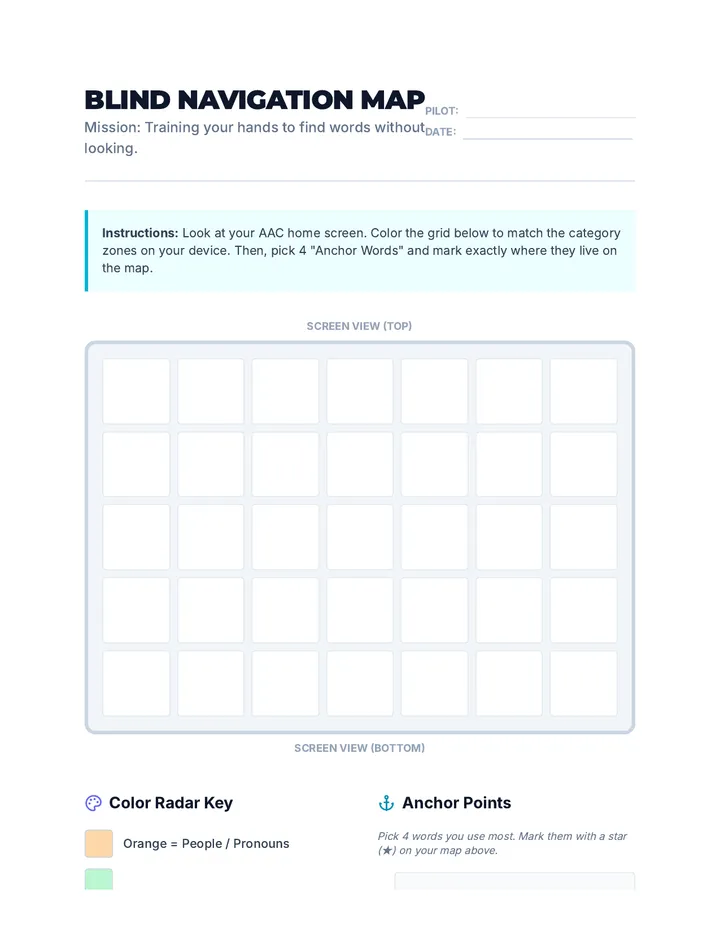
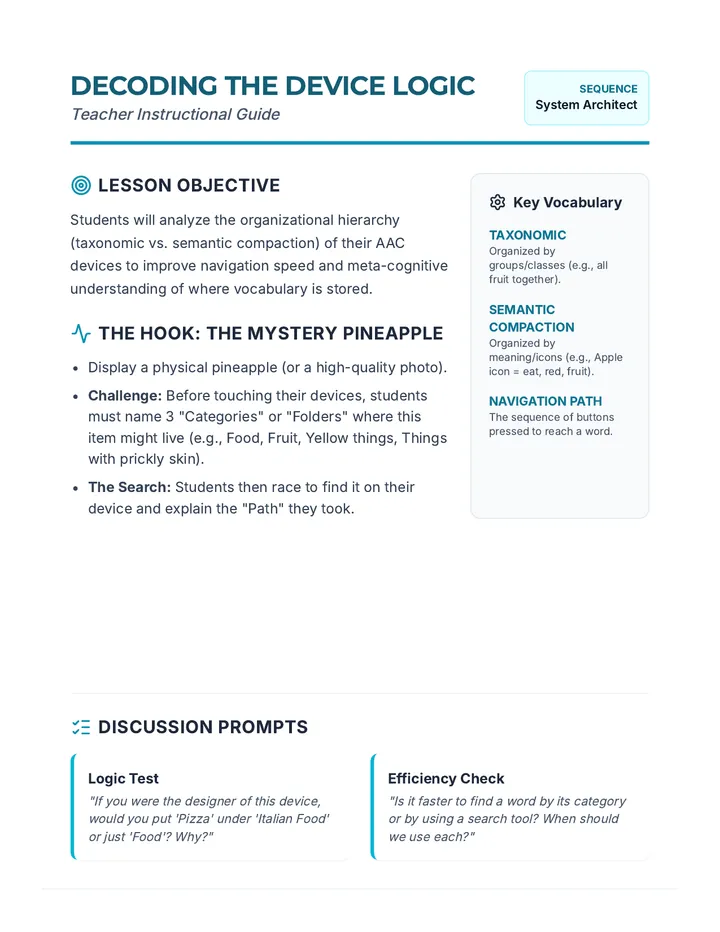
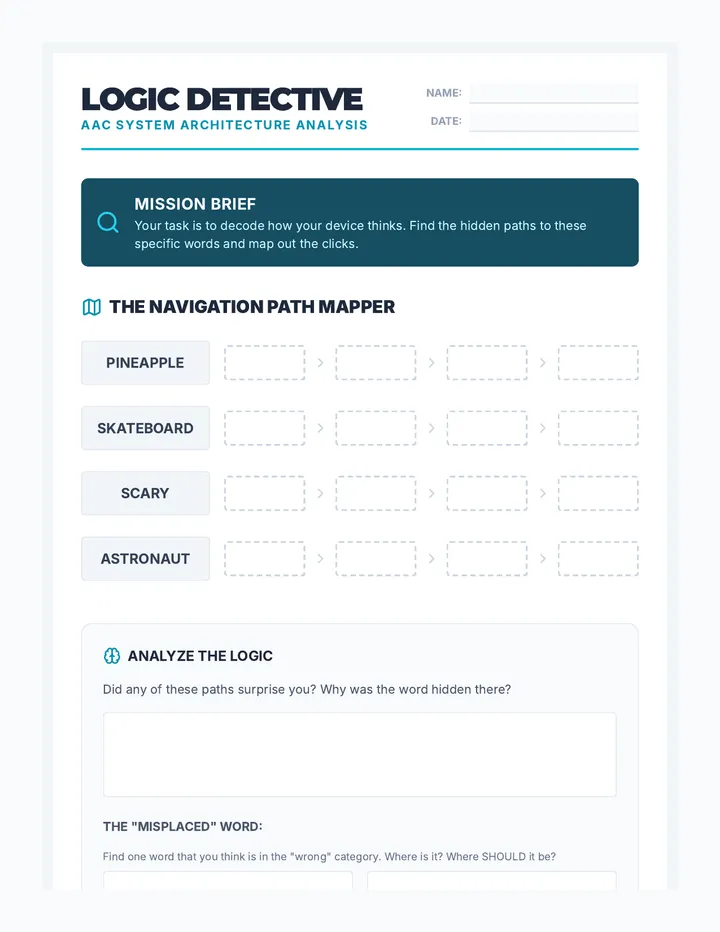
Motor planning, symbol hierarchies, and folder organization for high-tech communication tools. Develops speed and accuracy in locating vocabulary across diverse page sets.
This sequence prepares 10th-grade students for the transition to community and vocational life by mastering the navigation of Augmentative and Alternative Communication (AAC) devices. Students progress from identifying context-specific vocabulary to navigating complex, multi-folder social and professional interactions.
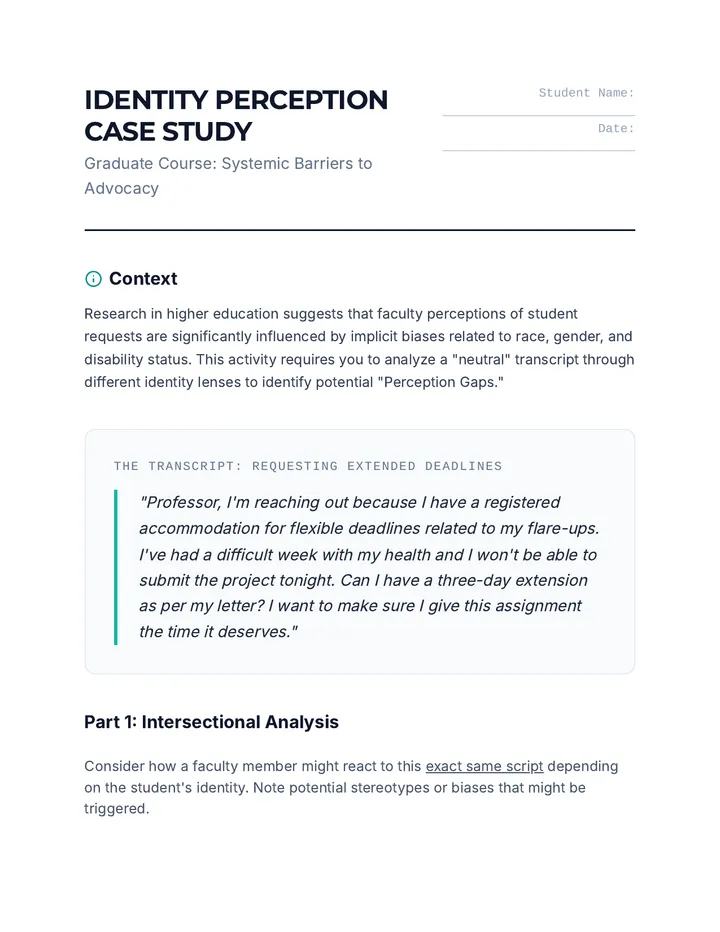
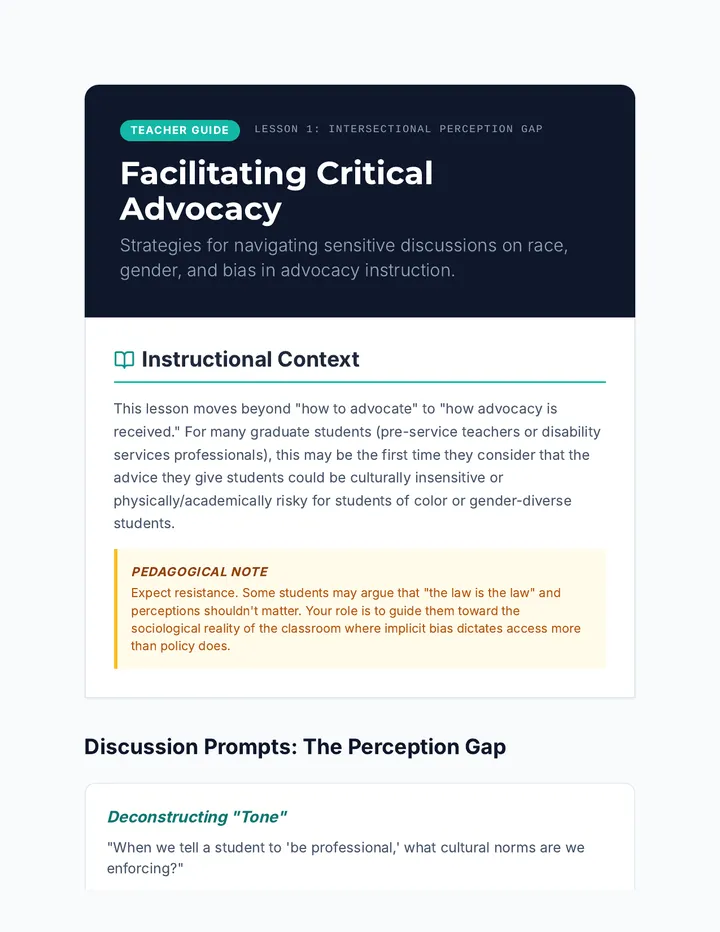
An advanced graduate-level course exploring the intersectional barriers to student self-advocacy. This sequence critiques traditional advocacy models through the lenses of Critical Race Theory and Disability Studies to develop culturally responsive strategies.
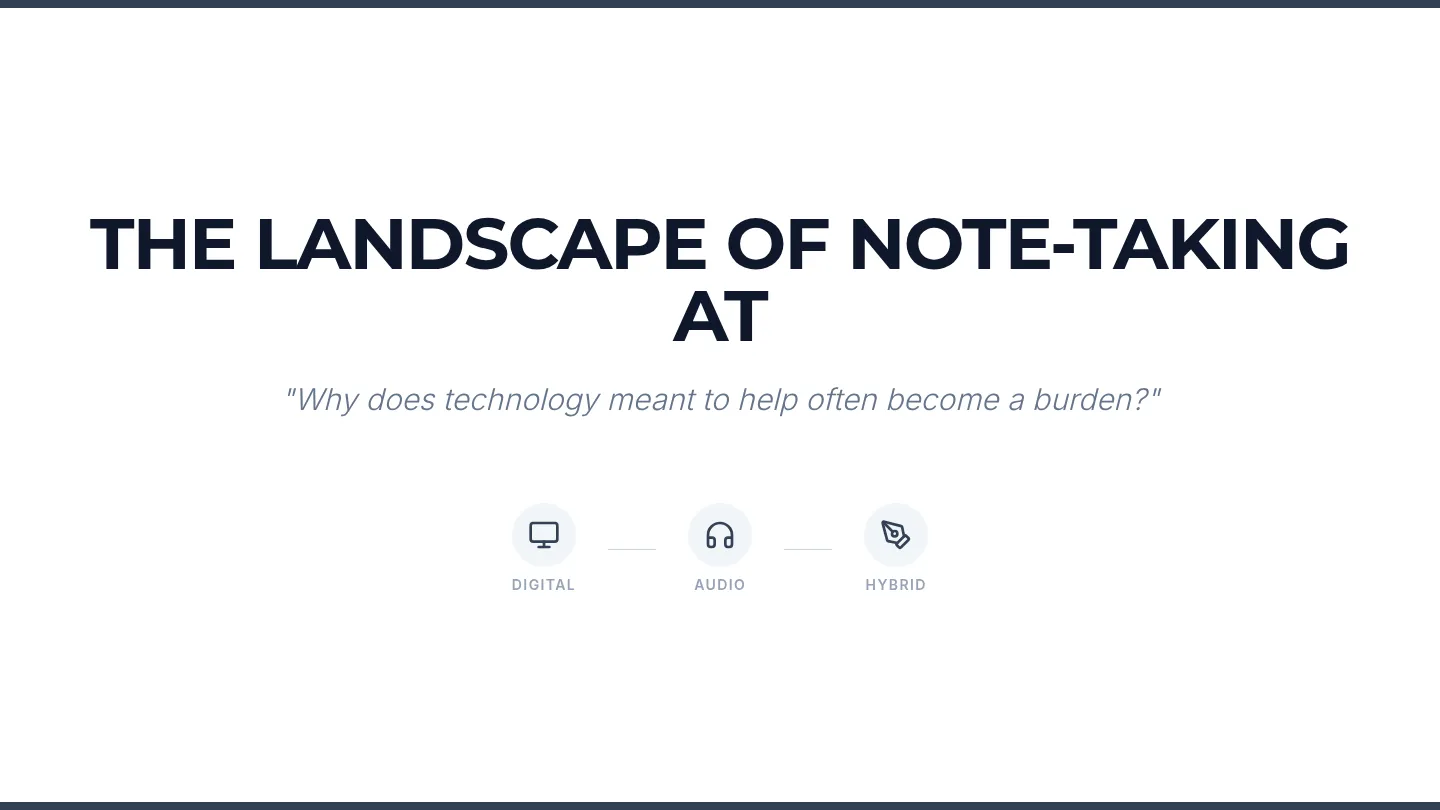
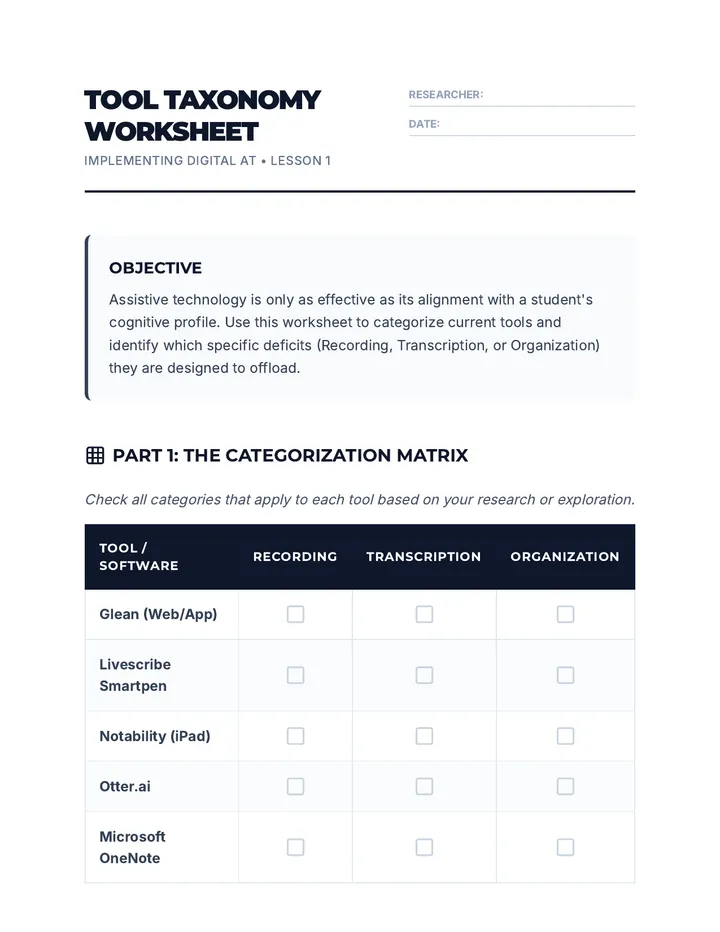
A comprehensive graduate-level sequence on implementing digital assistive technology for note-taking. It covers the transition from traditional methods to audio-synchronization, AI-driven summarization, and executive function-focused organization, concluding with IEP documentation.
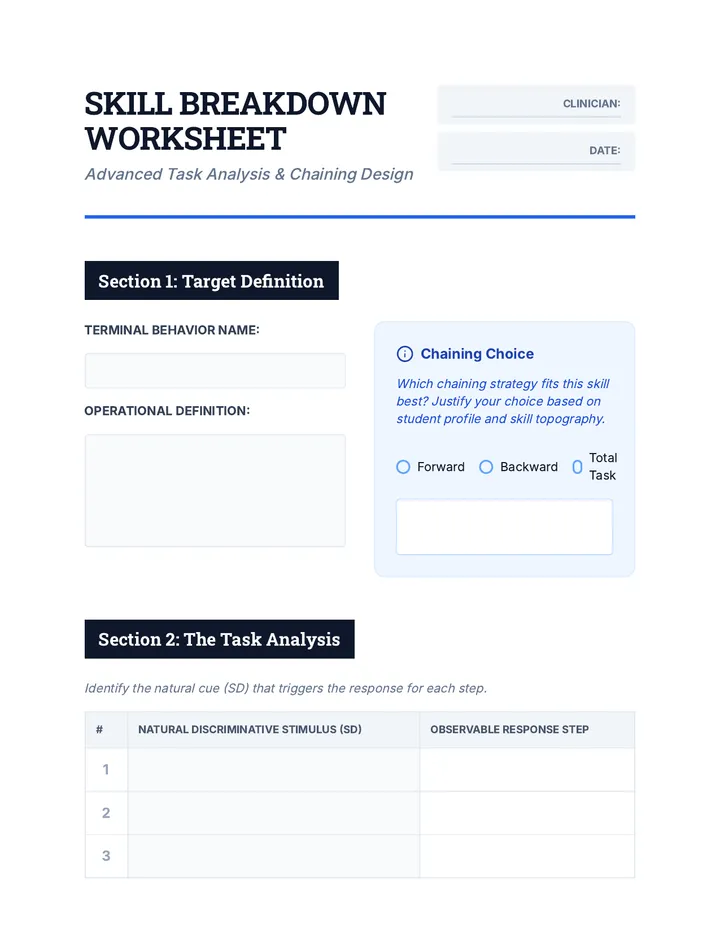
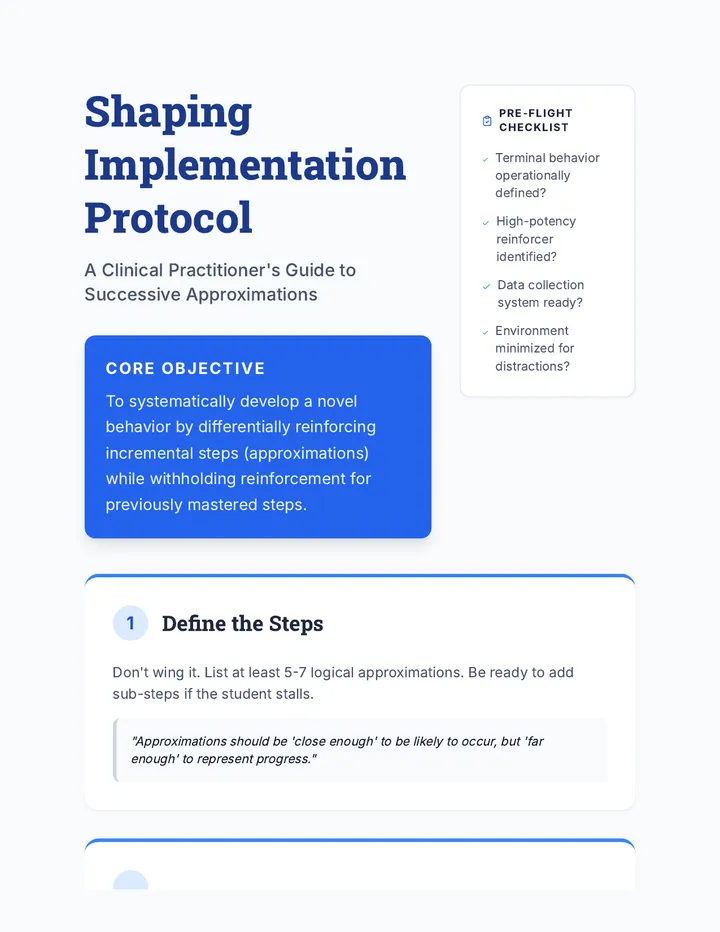
A graduate-level course on the systematic instruction of replacement behaviors within a function-based framework. Students master shaping, chaining, FCT, DTT, and naturalistic teaching, culminating in advanced generalization and maintenance planning for long-term clinical success.
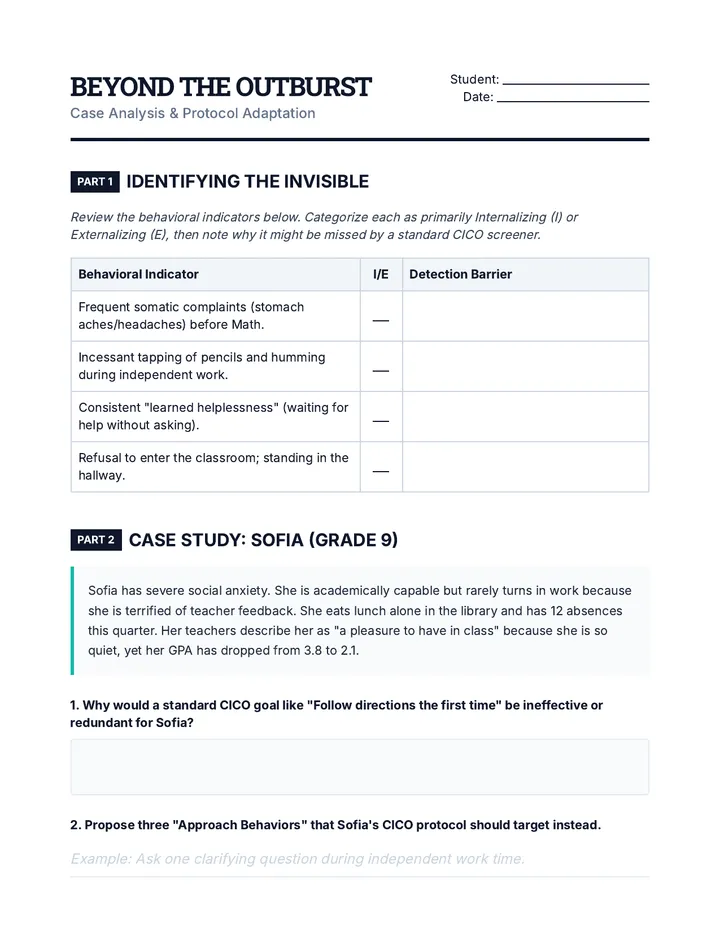
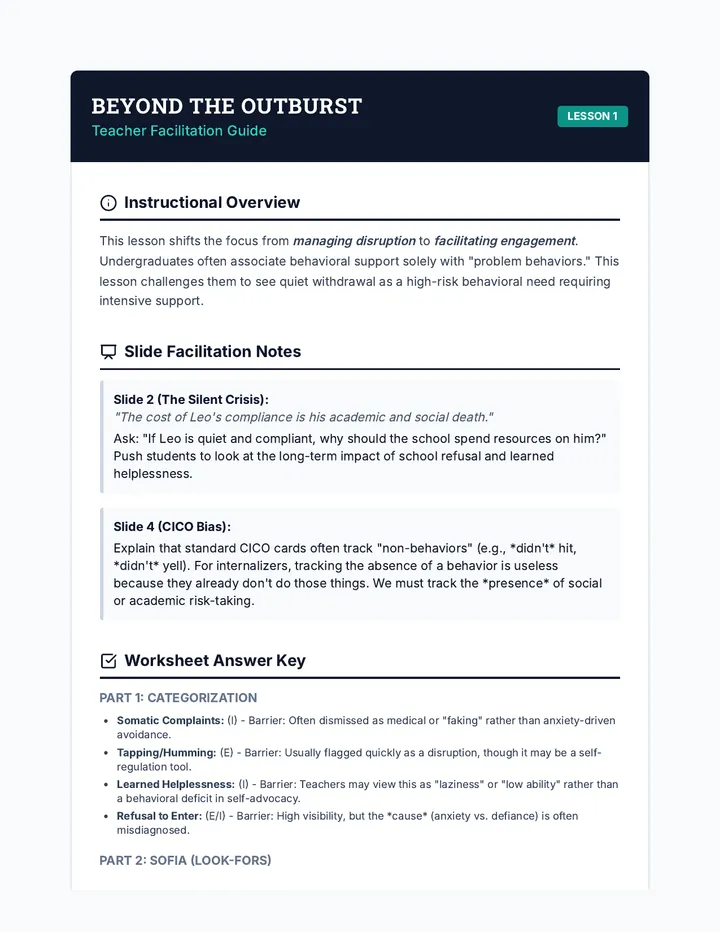
This sequence challenges undergraduate students to adapt standard behavioral check-in protocols for diverse student populations, focusing on developmental, cultural, and neurological differences. Students move beyond a one-size-fits-all approach to design equitable and effective behavioral supports.
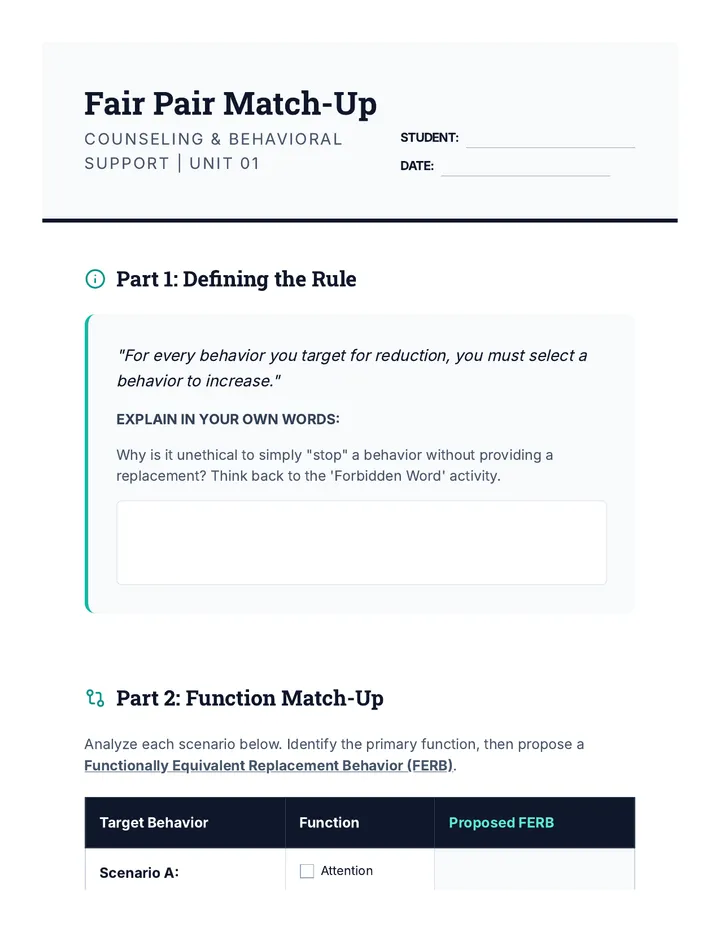
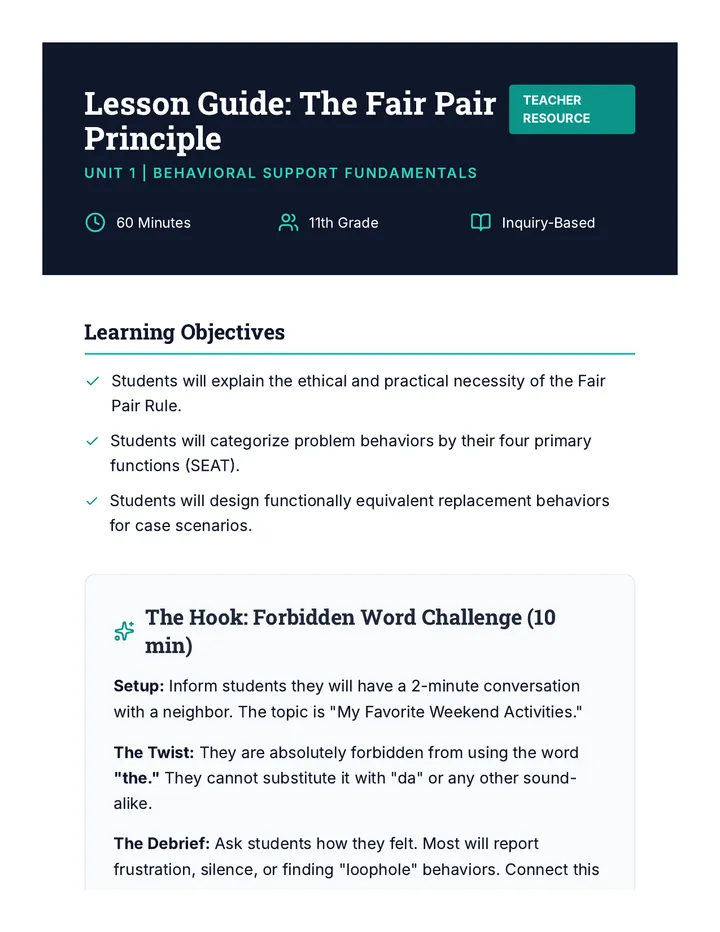
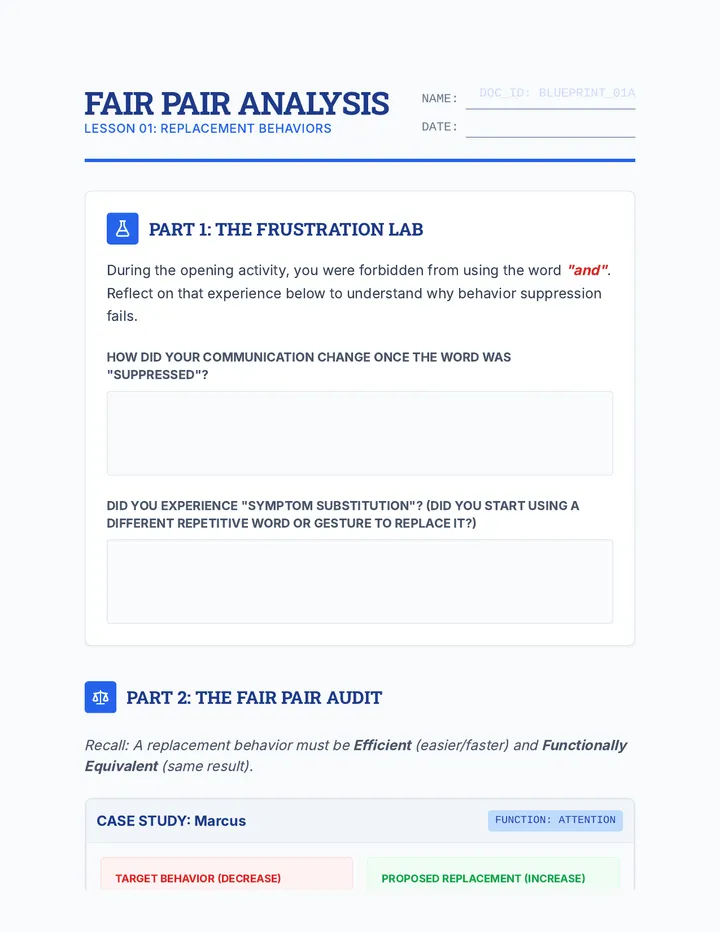
A comprehensive sequence for 11th-grade students on behavioral support, focusing on the 'Fair Pair' rule. Students learn to identify, design, and implement functionally equivalent replacement behaviors (FERBs) to empower individuals to meet their needs pro-socially.
A comprehensive unit for high school students on the ethical and technical aspects of teaching replacement behaviors. Students move from the core philosophy of the 'Fair Pair' rule to technical skills like FCT, task analysis, and generalization planning.
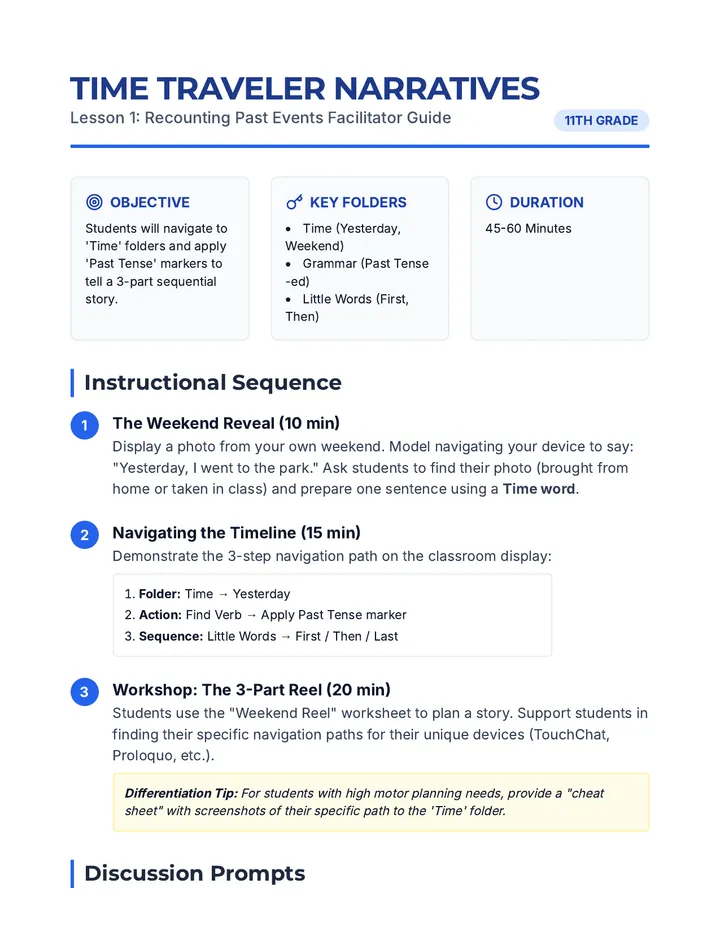
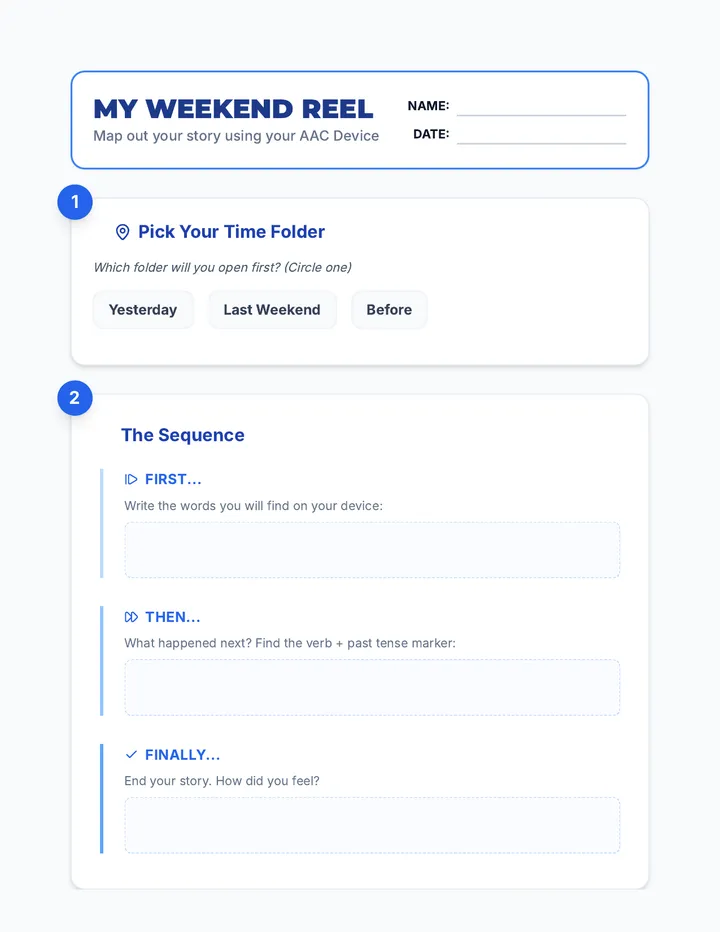
A specialized sequence for 11th-grade AAC users focused on transitioning from basic needs-based communication to complex social interaction, storytelling, and peer connection through advanced device navigation.
This sequence focuses on developing motor automaticity for AAC device navigation through gamified drills and repetitive motor planning exercises. 11th-grade students will progress from single-word retrieval to complex, fluent sentence construction, reducing cognitive load for more authentic communication.
A comprehensive sequence for 11th-grade AAC users to transition from passive users to active system administrators by mastering folder logic, personalization, and system maintenance.
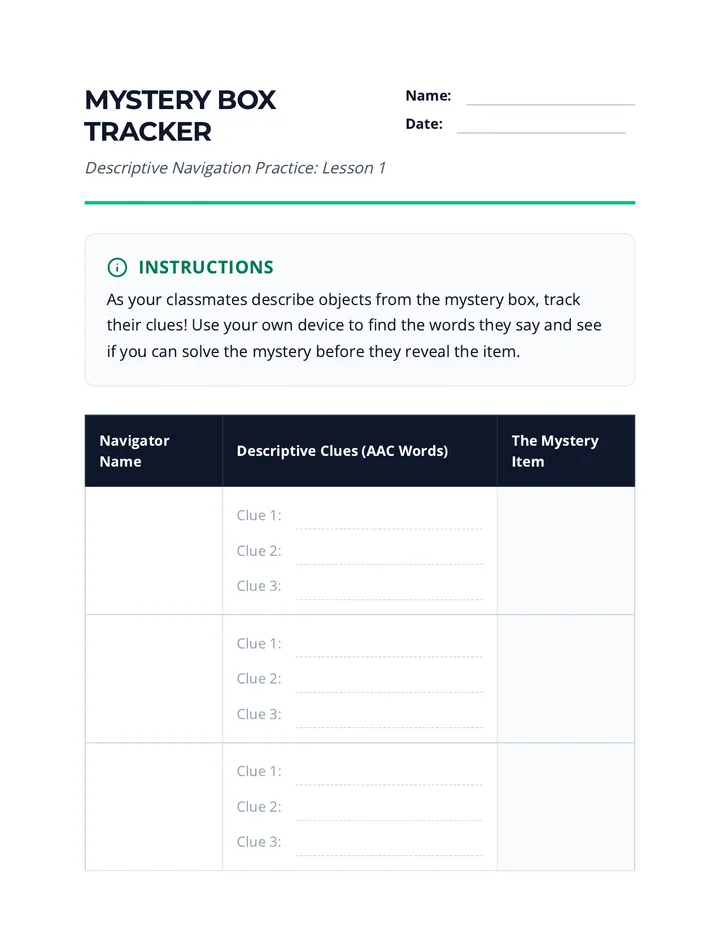
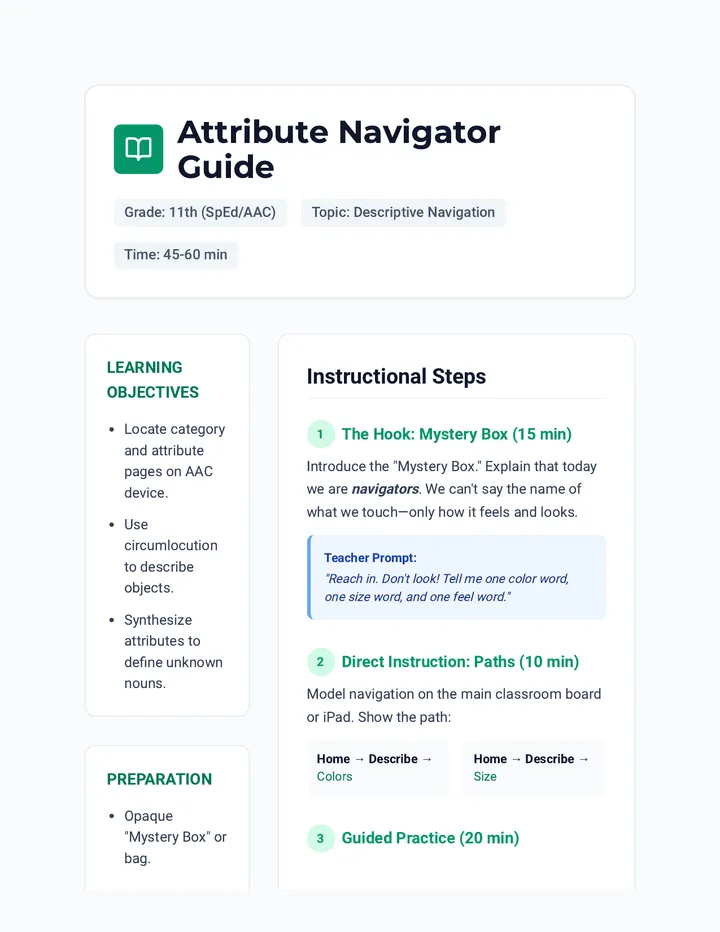
This 11th-grade sequence focuses on 'Descriptive Teaching' for AAC users. Students learn to navigate their devices strategically, using core vocabulary (adjectives, verbs, negation) to describe concepts and repair communication breakdowns rather than relying on specific fringe nouns.
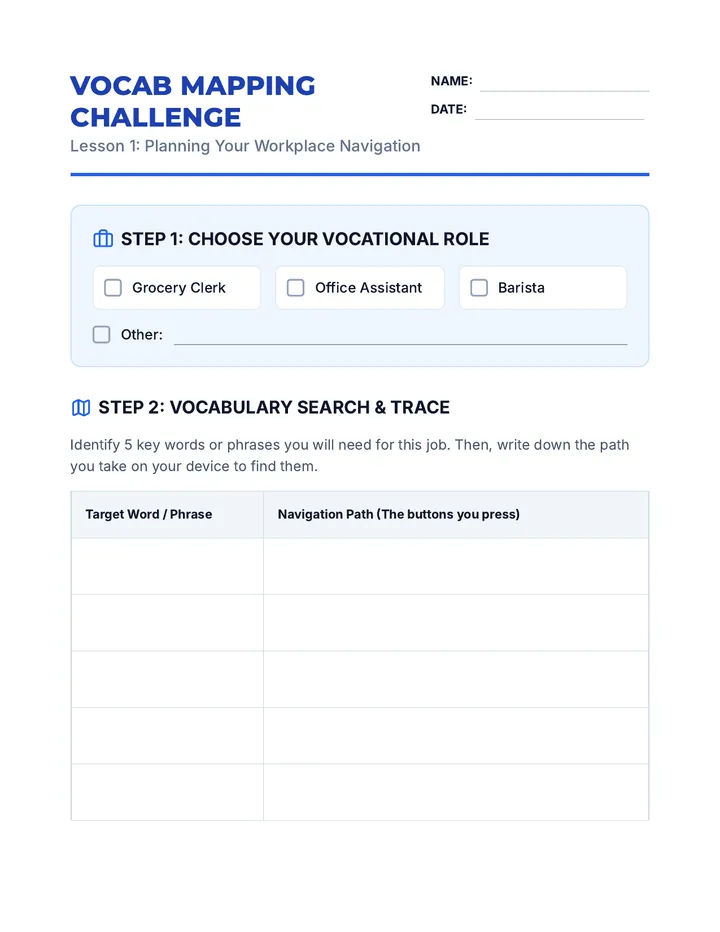
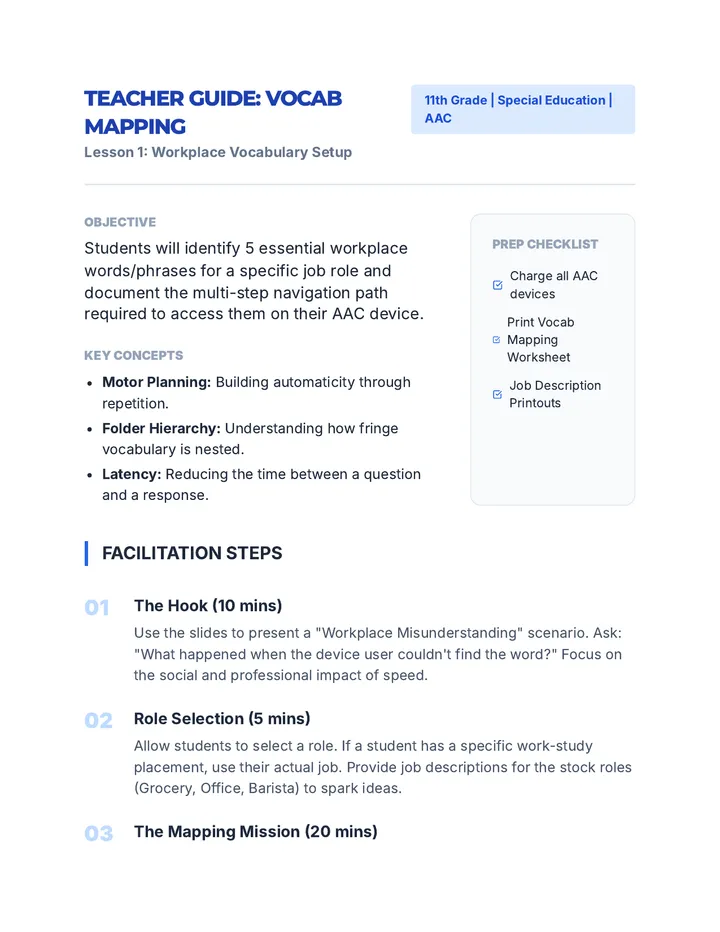
A comprehensive 5-lesson sequence designed for 11th-grade AAC users to master device navigation within vocational settings. Students progress from vocabulary mapping to high-stakes workplace simulations, focusing on speed, accuracy, and professional communication strategies.
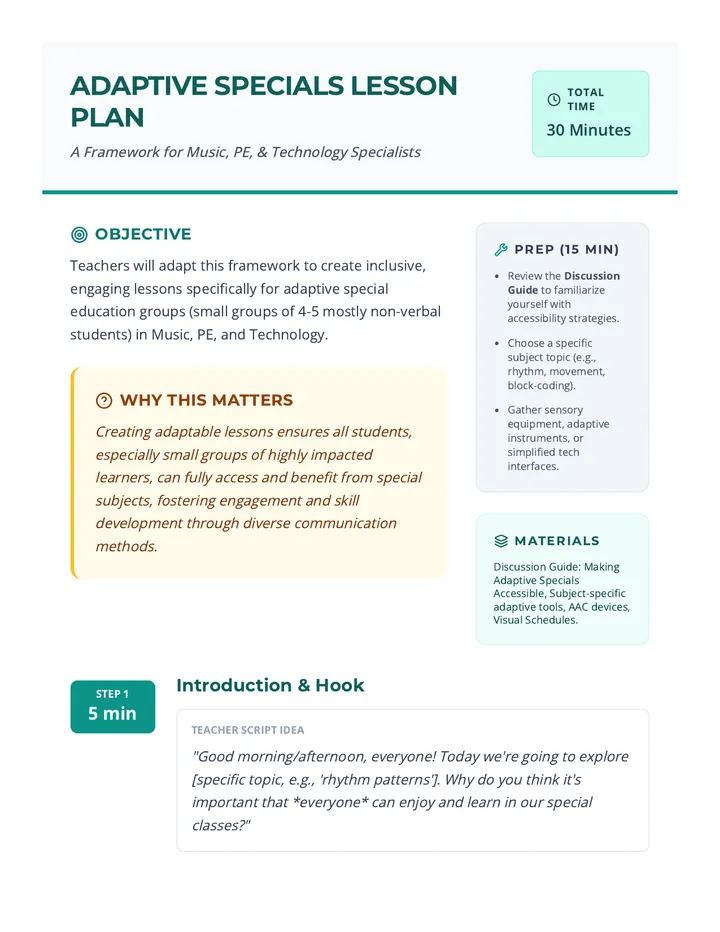
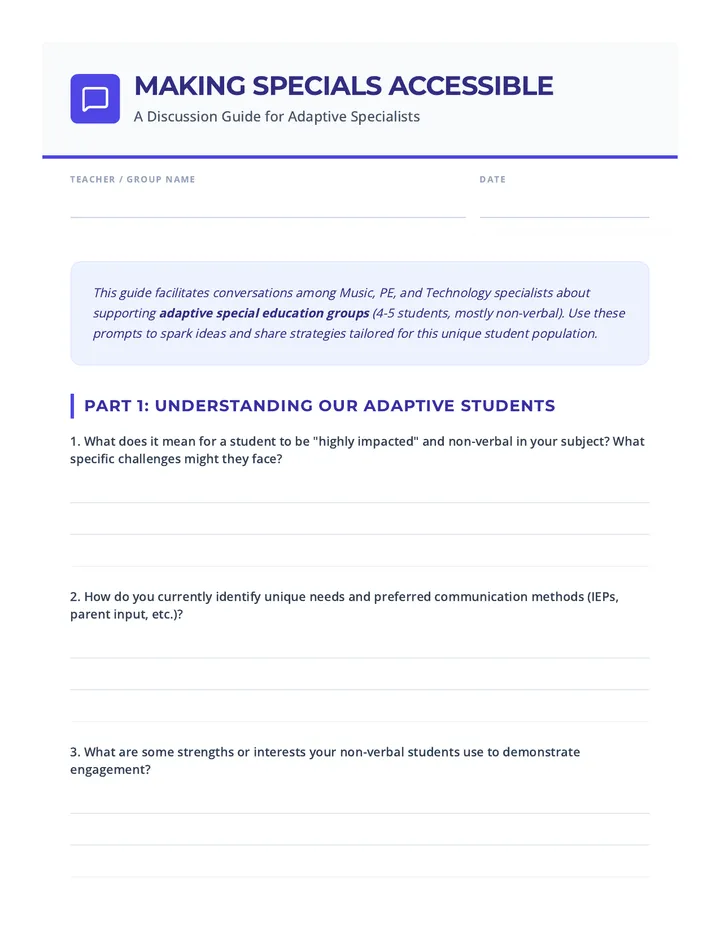
A 30-minute professional development session for teachers focused on universal design principles to create inclusive Music, Physical Education, and Technology lessons for highly impacted, non-verbal students.
A 30-minute small group lesson for 2nd-5th grade students with ASD focused on selecting three personal strategies for each of the four Zones of Regulation. The lesson uses a superhero theme to empower students to build their own 'strategy superpower' toolkit.
A structured, interactive morning meeting routine for middle school students with significant cognitive disabilities, focusing on communication, temporal concepts, and social-emotional check-ins.
An individualized 90-minute lesson for adult students exploring the vital concept of communication accessibility, barriers, and inclusive strategies.
A Tier 2 group lesson for middle school students with intellectual disabilities focused on social communication skills for holiday gatherings, including specific supports for AAC users.
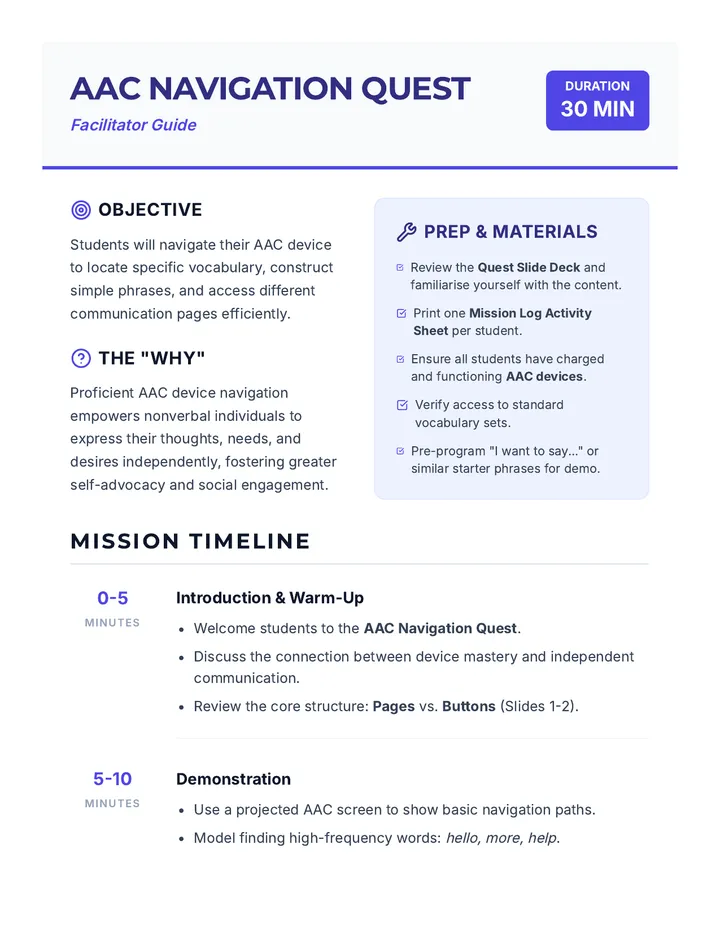
An empowering, gamified session for young adult AAC users to build confidence and speed in navigating their communication devices. Students will complete a 'navigation quest' to master core vocabulary, category pages, and sentence construction.
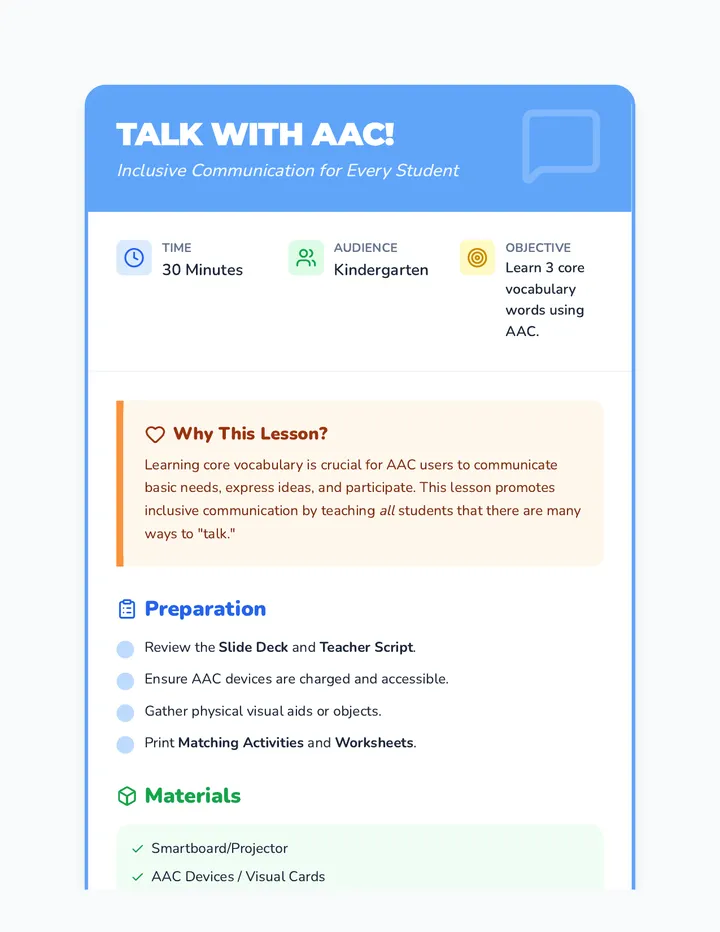
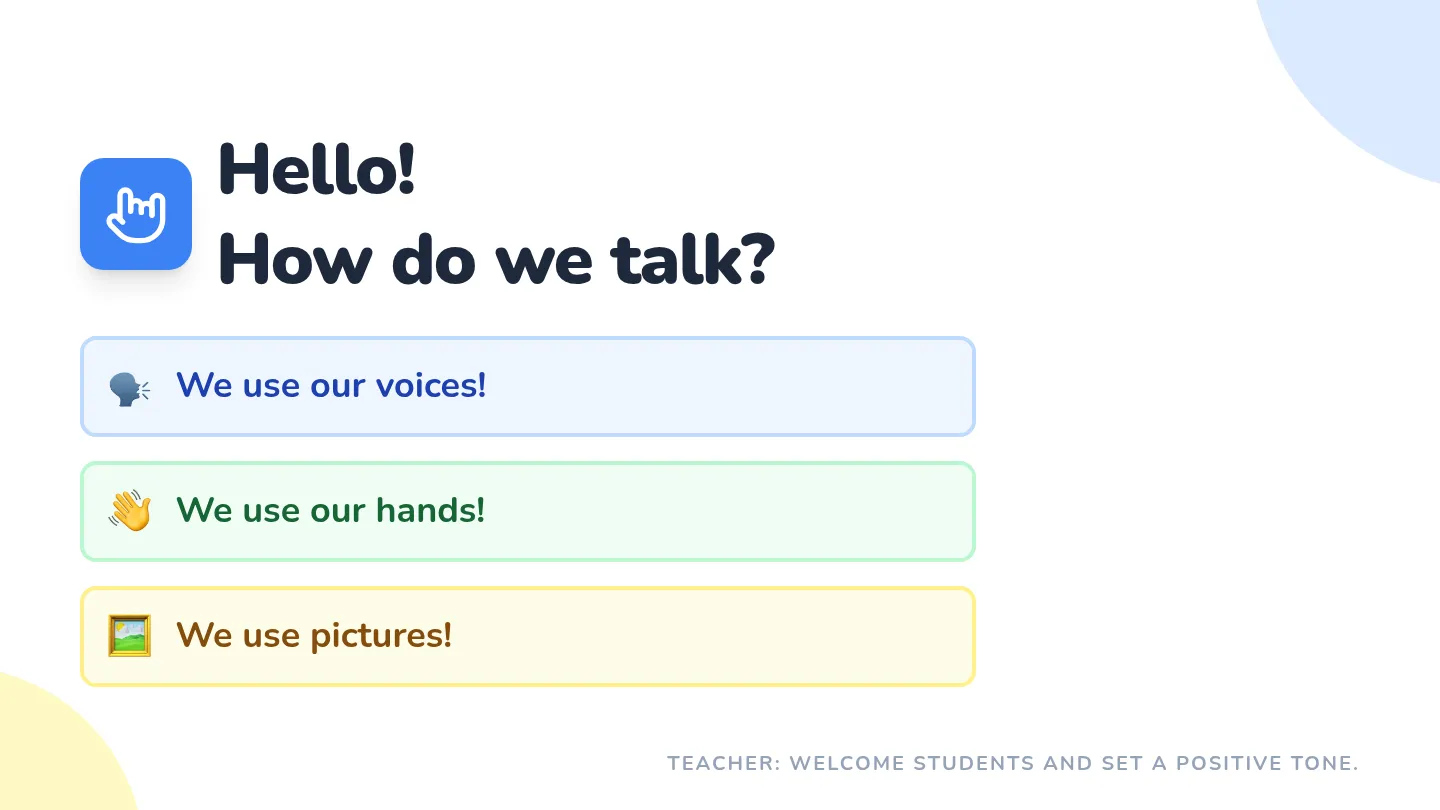
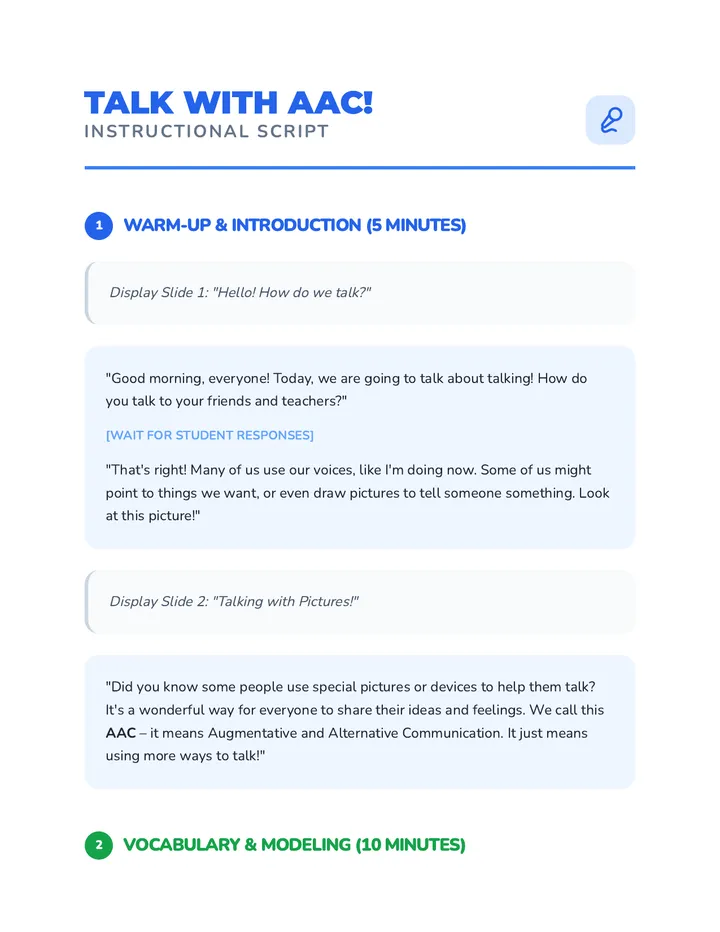
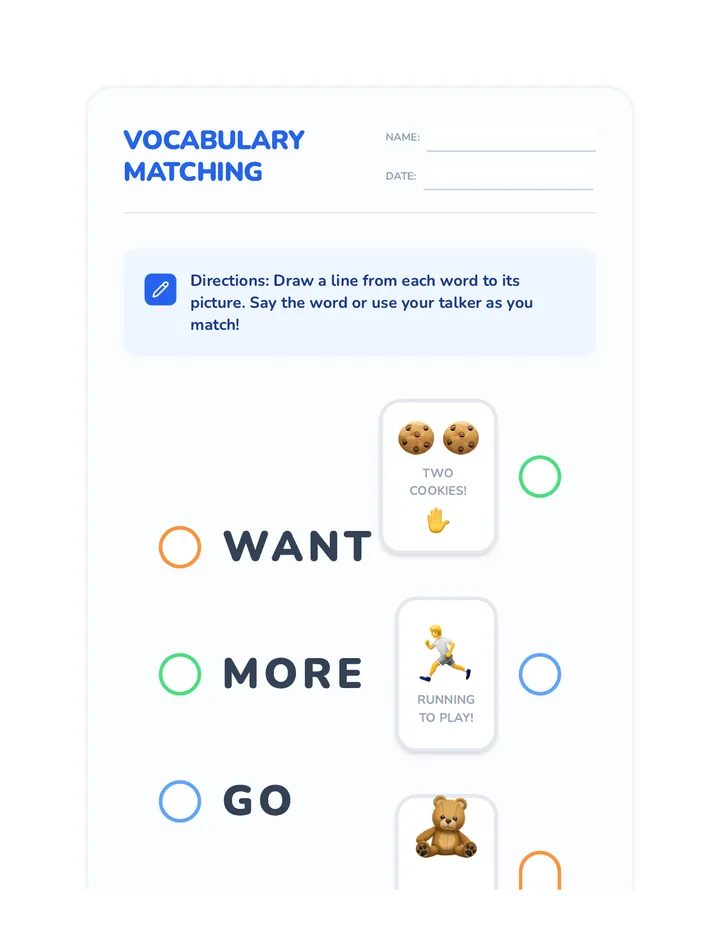
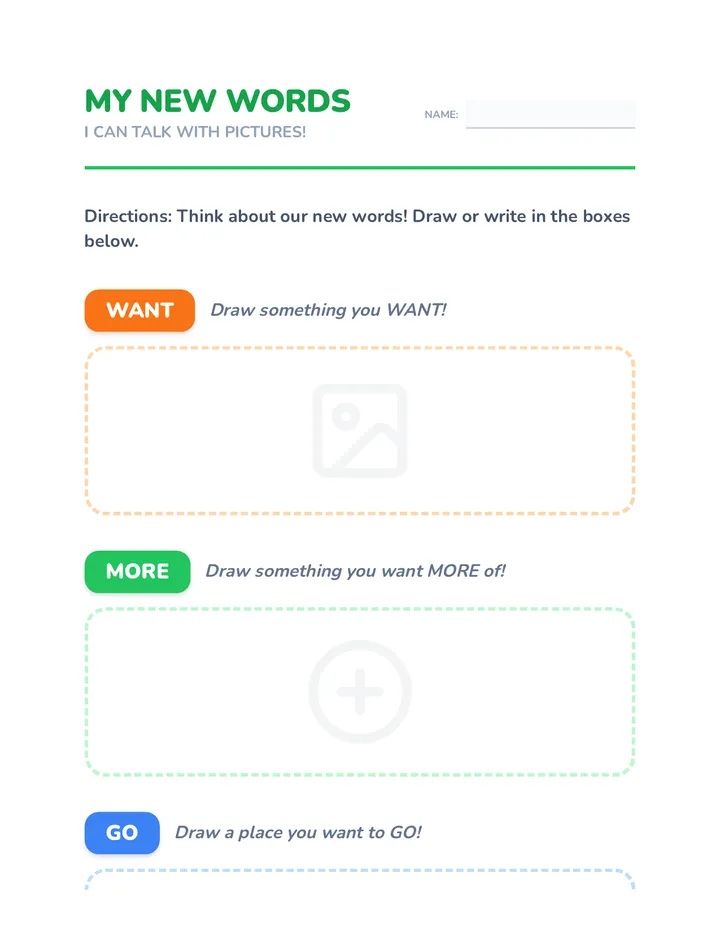
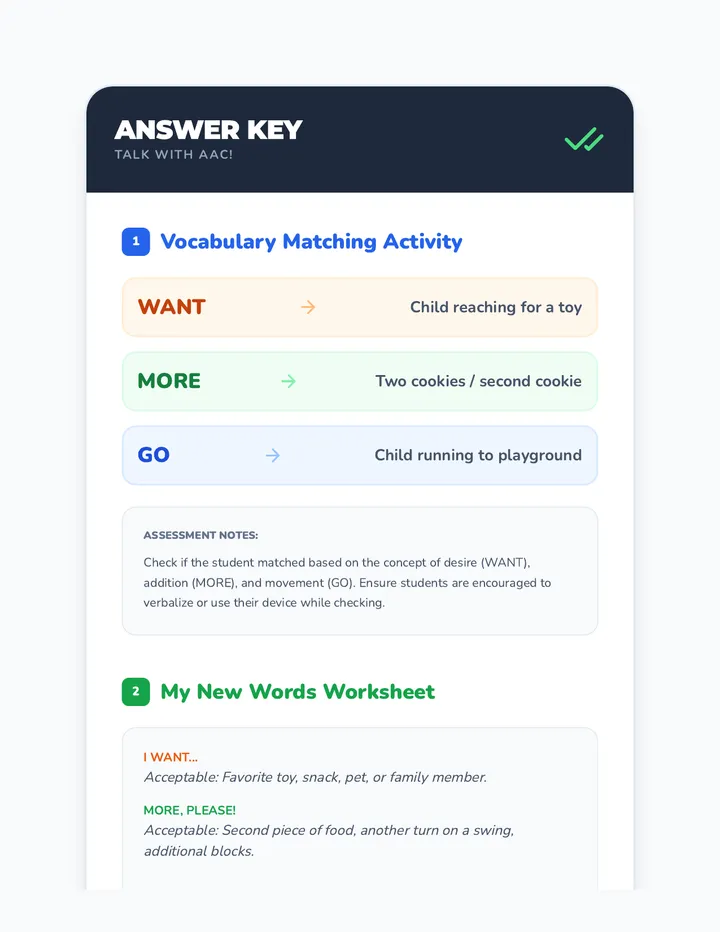
A 30-minute introductory lesson for Kindergarten students to learn essential core vocabulary (WANT, MORE, GO) using AAC supports, fostering an inclusive communication environment.
A 15-minute individualized Tier 3 lesson for a 6th-grade nonverbal student, focusing on identifying and communicating emotions through visual aids and AAC strategies.
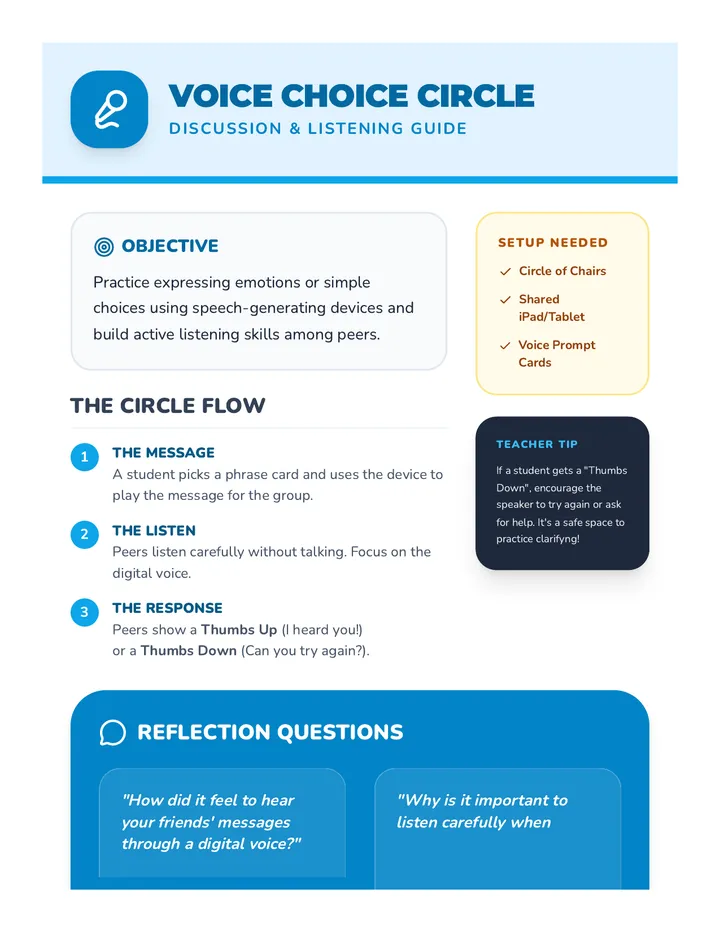
In this 45-minute Tier 1 special education lesson, 3rd graders explore augmentative and alternative communication (AAC) tools like picture boards and speech devices to foster empathy and inclusive classroom interactions.
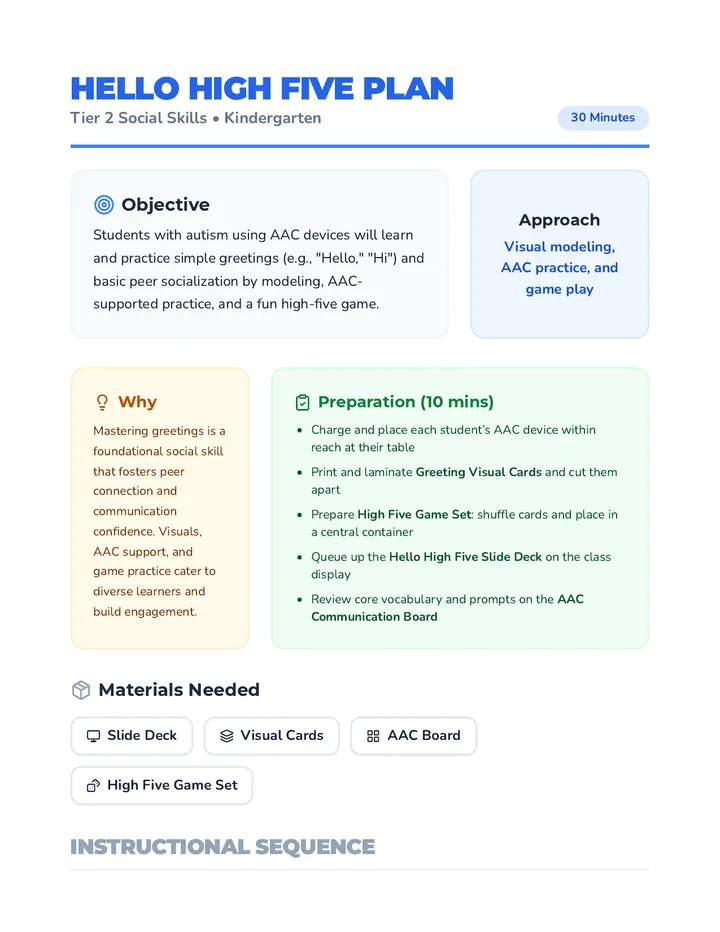
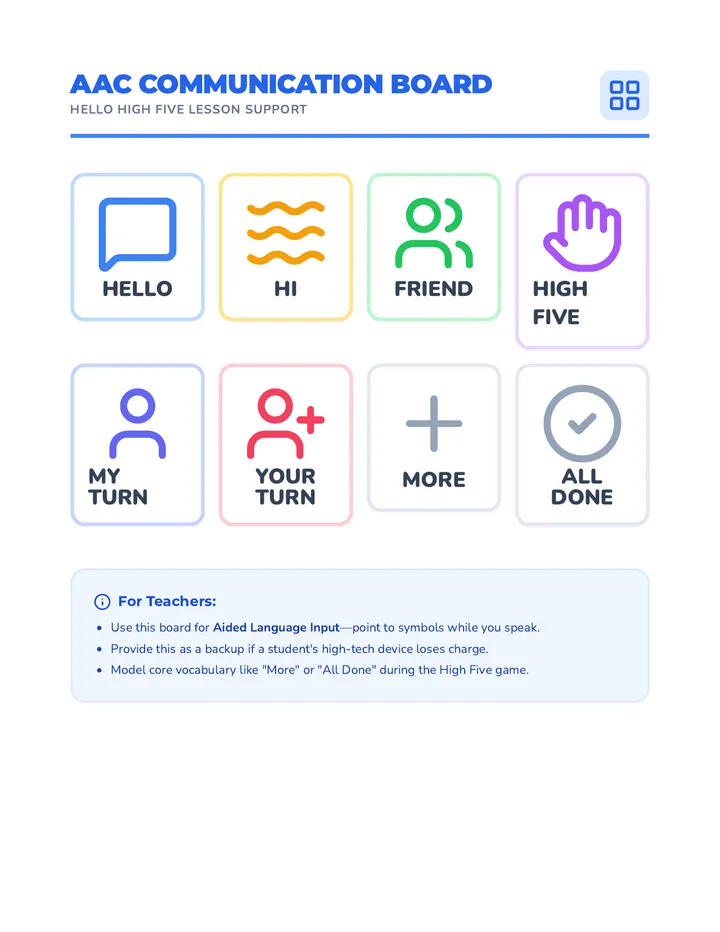
A 30-minute Tier 2 social skills lesson for kindergarten students with autism, focusing on using AAC devices for greetings and peer interaction through modeling and a high-five game.
A 30-minute personalized Tier 3 lesson designed for a 3rd-grade student to practice yes/no communication using high-tech devices and verbal responses, themed around dinosaurs, sea animals, and favorite movies.
A Tier 3 intervention lesson for nonverbal 2nd grade students with ASD, focusing on using AAC devices and visual cues to communicate distress and request help during transitions to reduce aggressive behaviors.