Speech-to-text, word prediction, and digital graphic organizers to support students with dysgraphia or motor impairments. Targets independence in drafting, editing, and organizing written compositions.
A 5-lesson sequence designed for 6th-grade students, focusing on assistive technology through browser-based keyboard shortcuts. Students progress from basic interface navigation to complex, mouse-free research workflows.
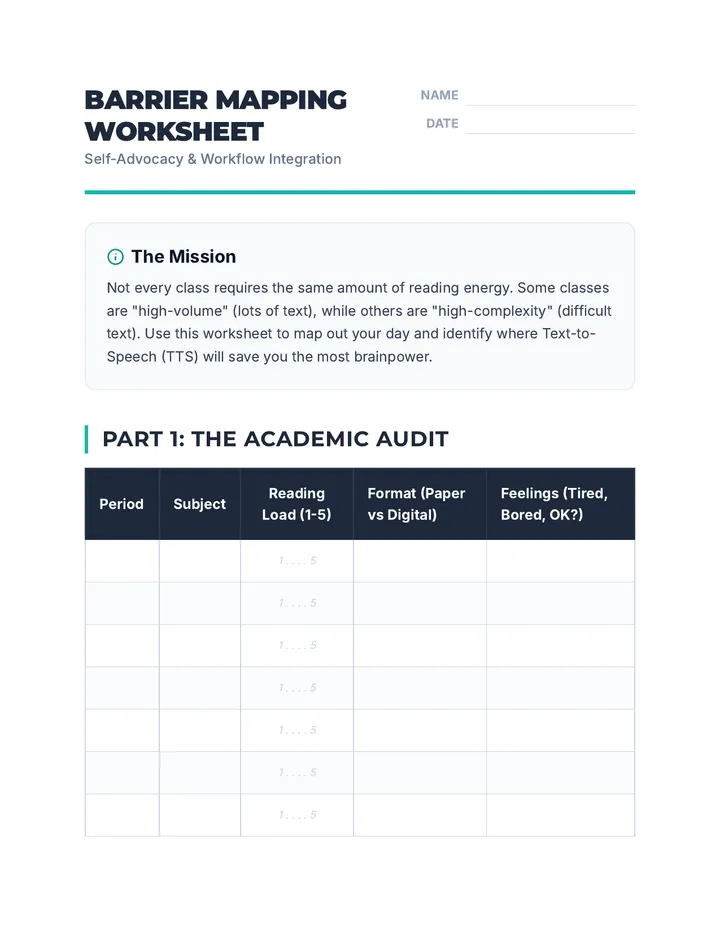
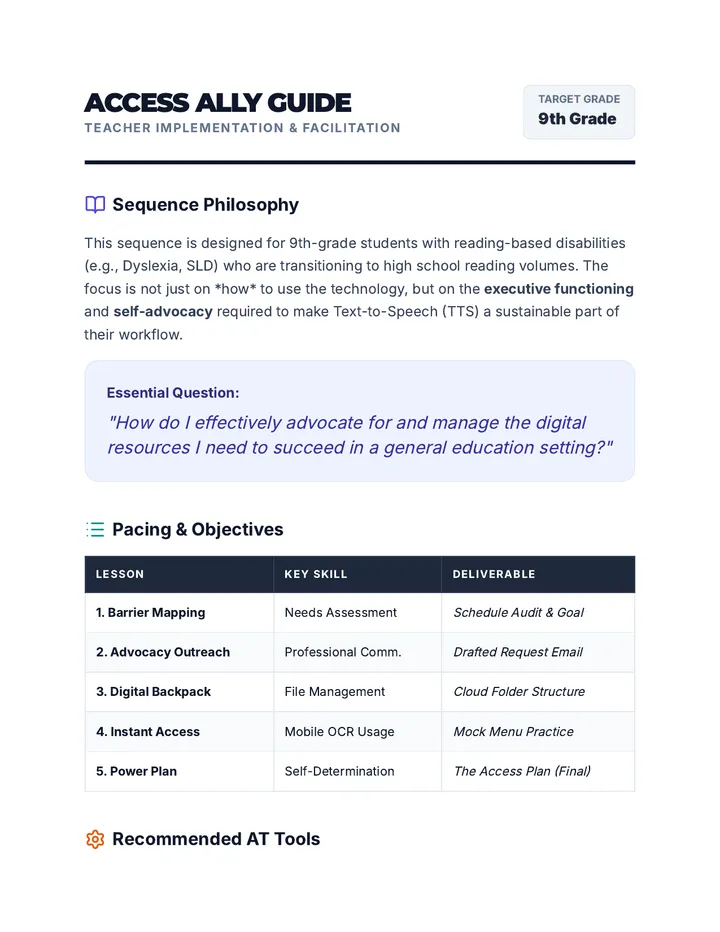
This sequence empowers 9th-grade students to integrate Text-to-Speech (TTS) into their high school workflows through self-advocacy and digital organization. Students move from identifying reading barriers in their schedules to creating a professional Access Plan for their teachers.
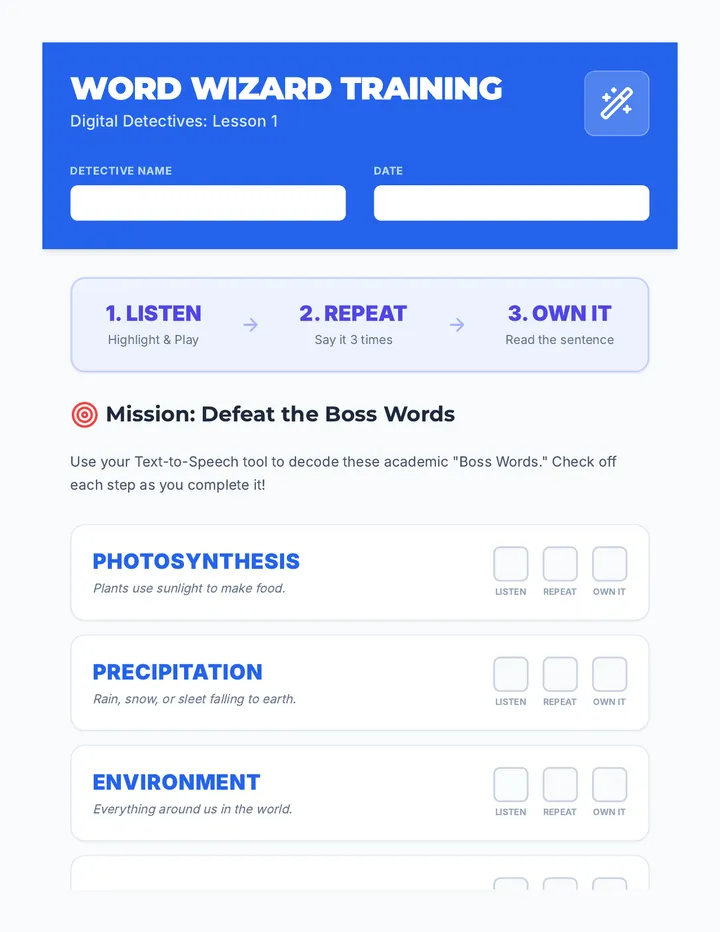
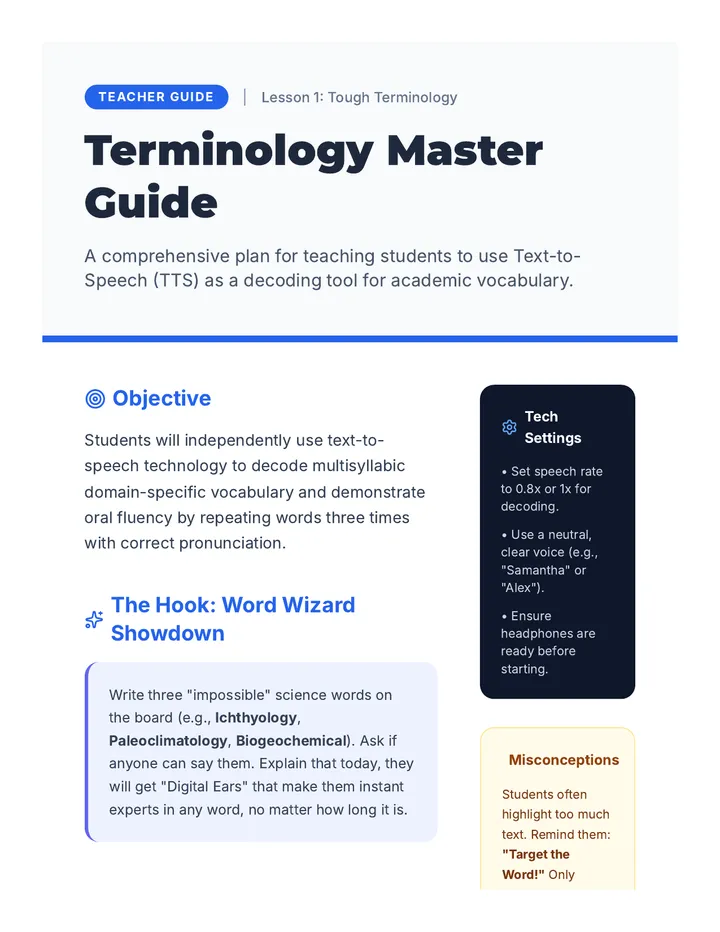
A 5-lesson sequence designed for 3rd-grade students to master the use of text-to-speech (TTS) technology for decoding informational texts, academic vocabulary, and non-linear text features like captions and sidebars. Students progress from decoding individual words to synthesizing information from multiple sources for research and presentation.
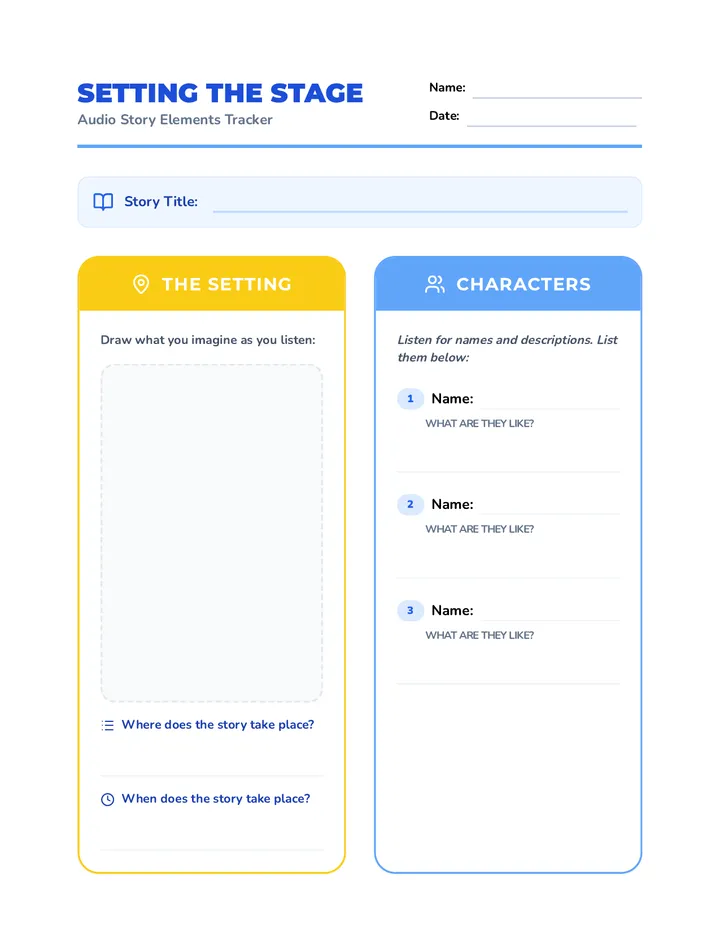
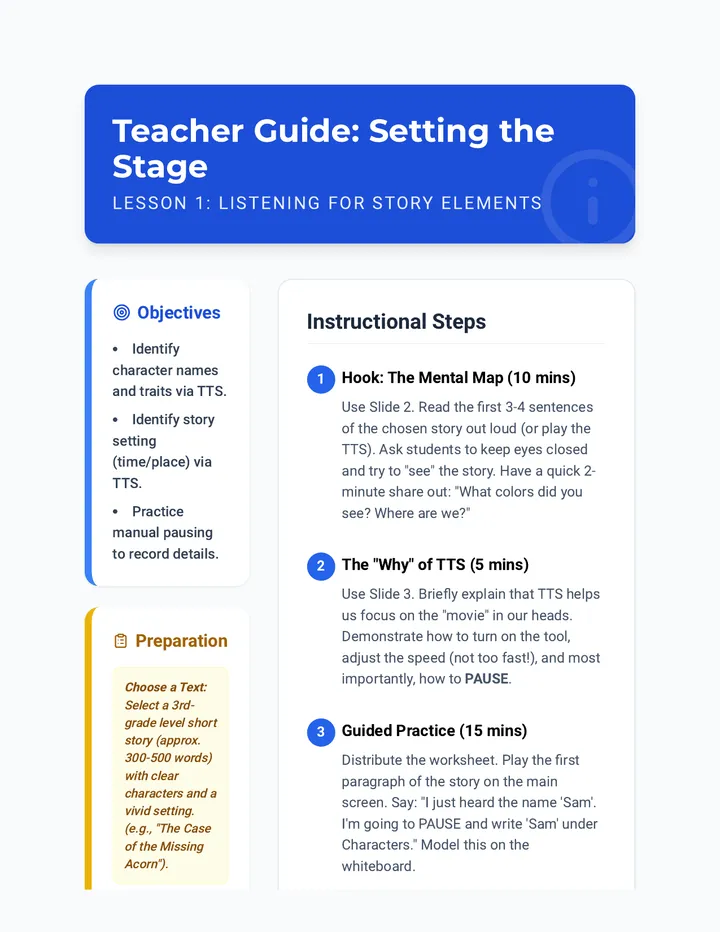
This sequence teaches 3rd-grade students how to use text-to-speech (TTS) as a strategic tool for narrative comprehension. Students learn to use audio for identifying story elements, summarizing via the 'Listen-Stop-Think' routine, citing evidence by re-listening, and visualizing descriptive text.
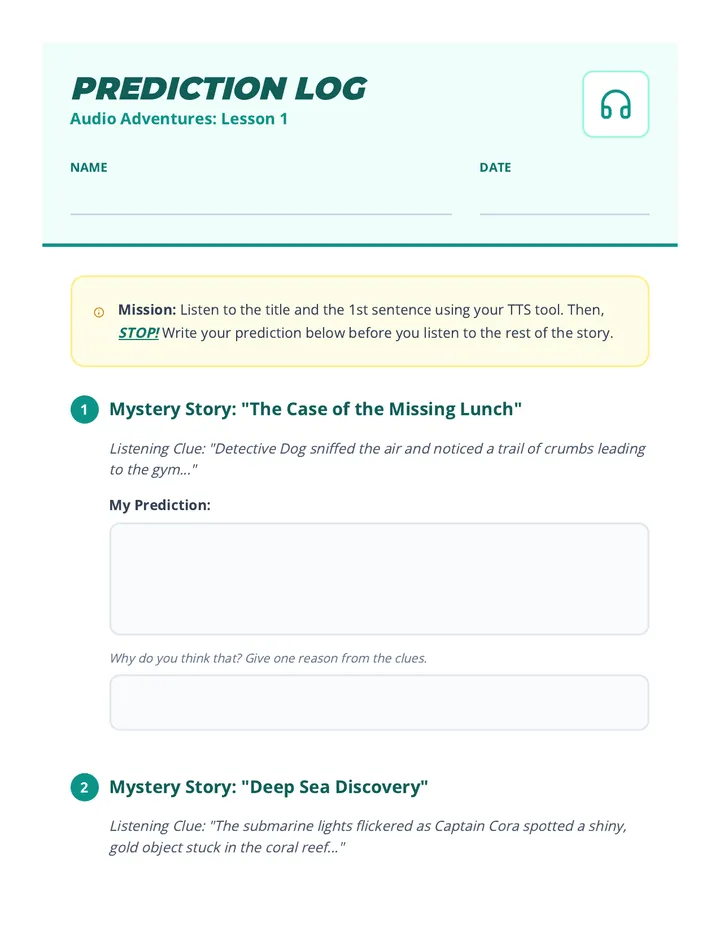
A sequence for 2nd Grade students to master text-to-speech (TTS) as a tool for reading comprehension. Students transition from decoding mechanics to deep understanding by using auditory support to predict, pause, answer questions, visualize, and sequence stories.
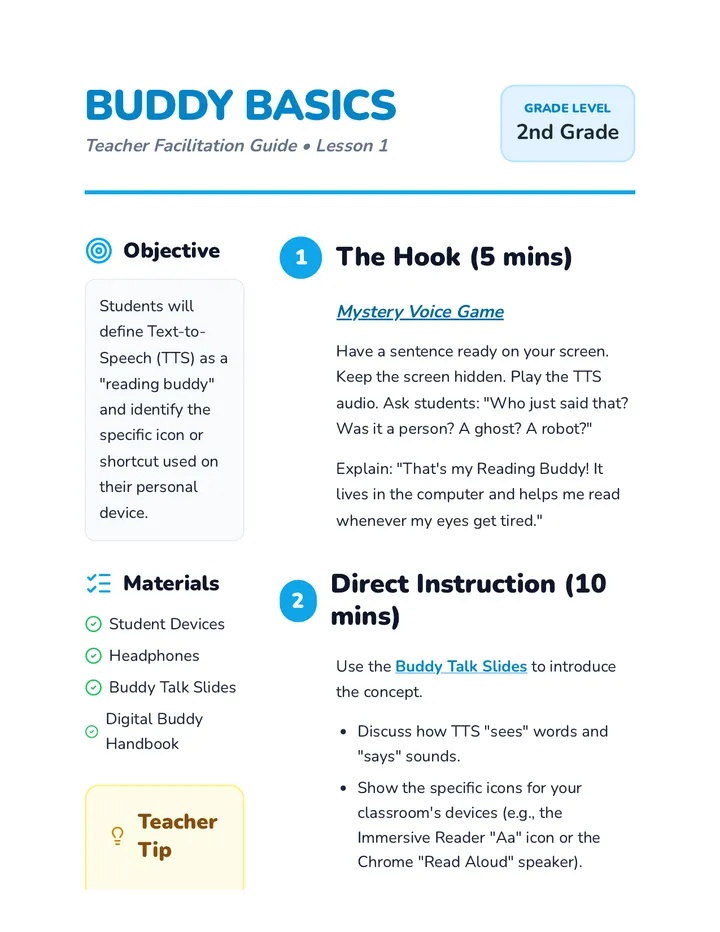
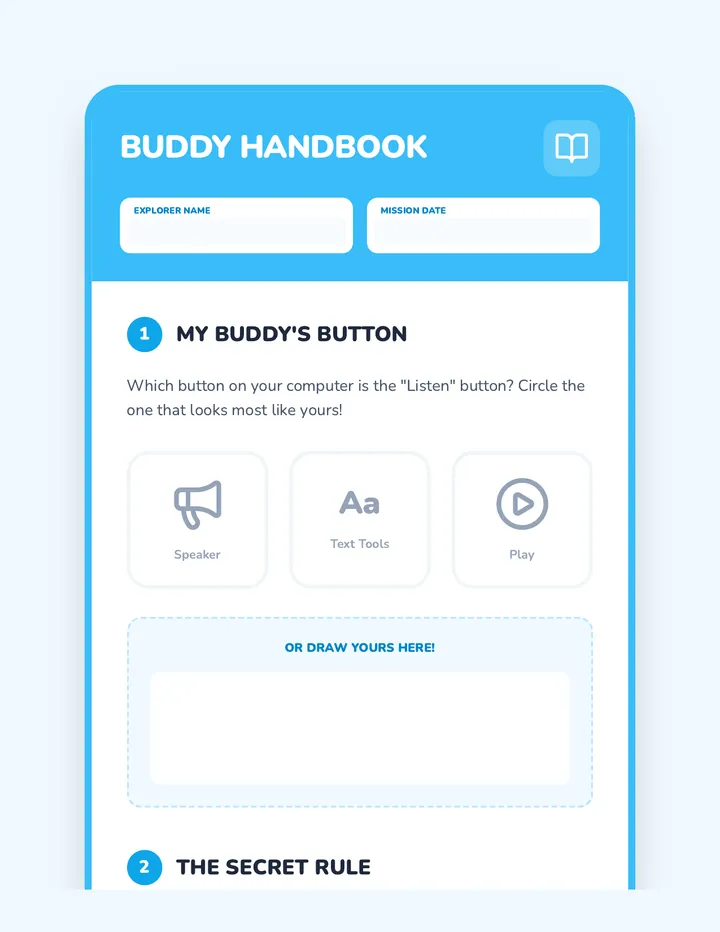
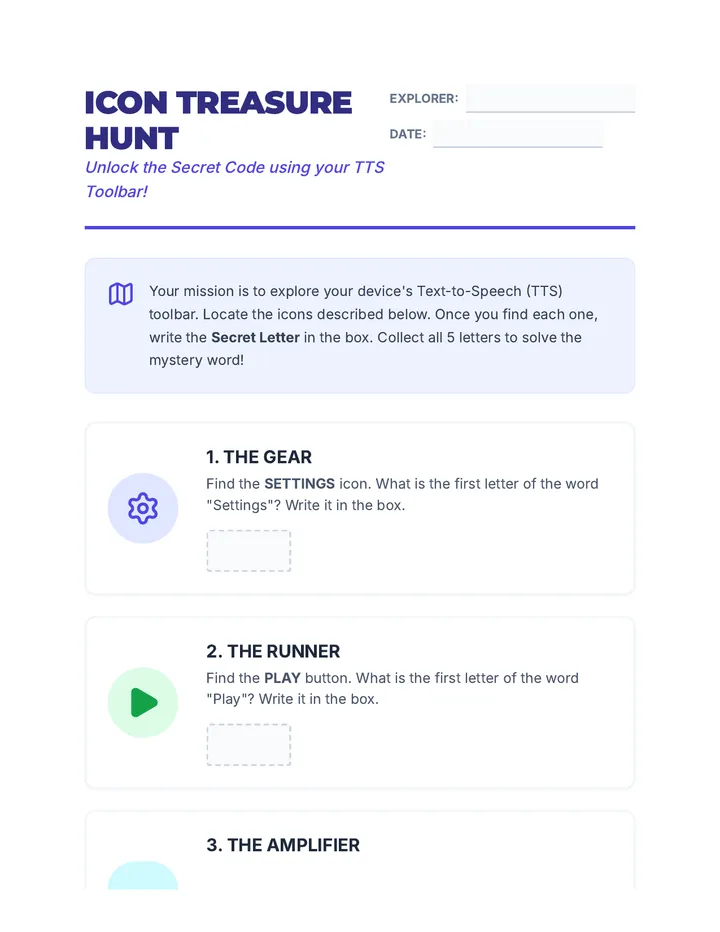
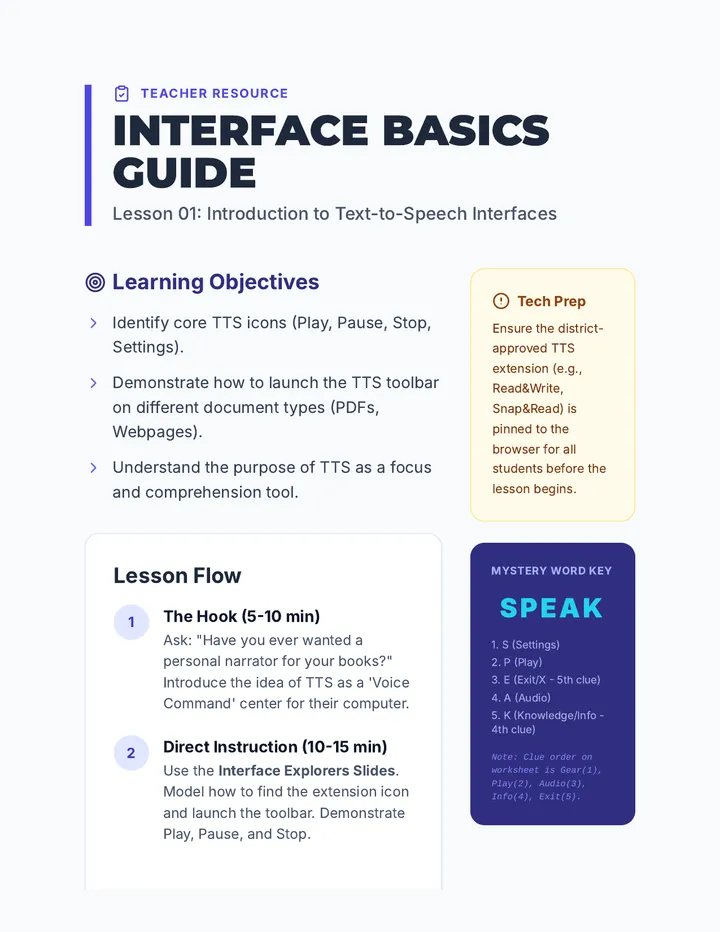
A sequence designed for 2nd grade students to master the use of text-to-speech (TTS) technology. Students move from basic identification of tools to independent navigation and troubleshooting, viewing TTS as a helpful 'reading buddy'.
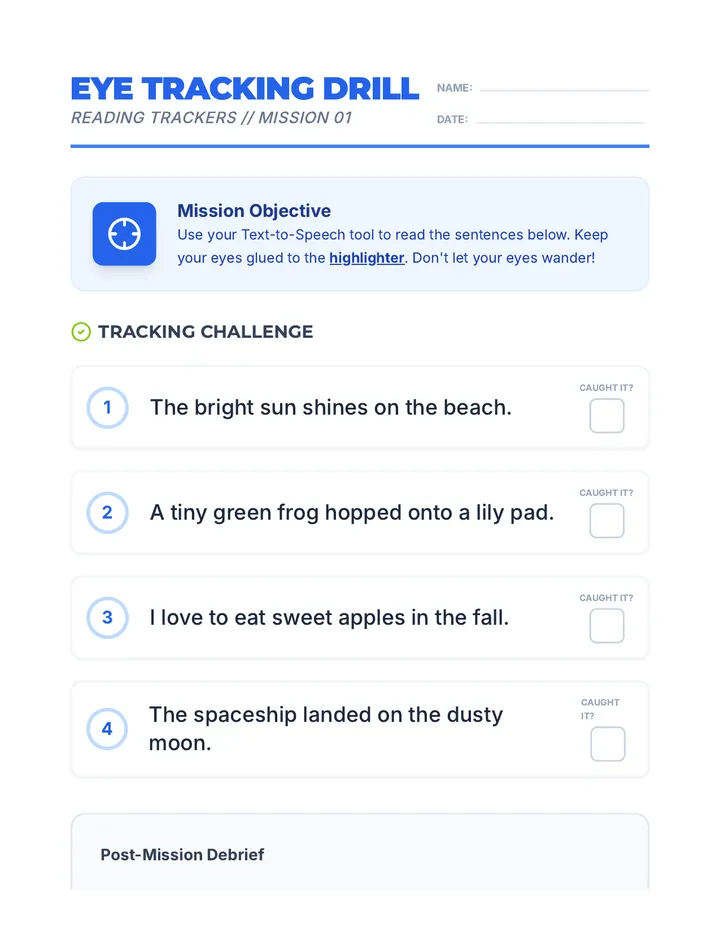
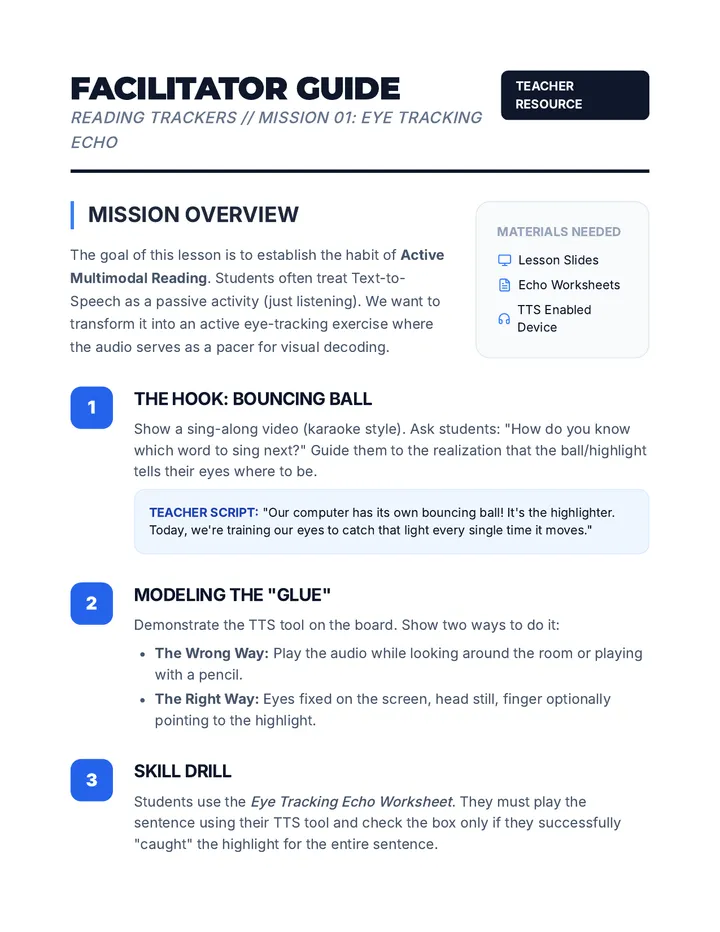
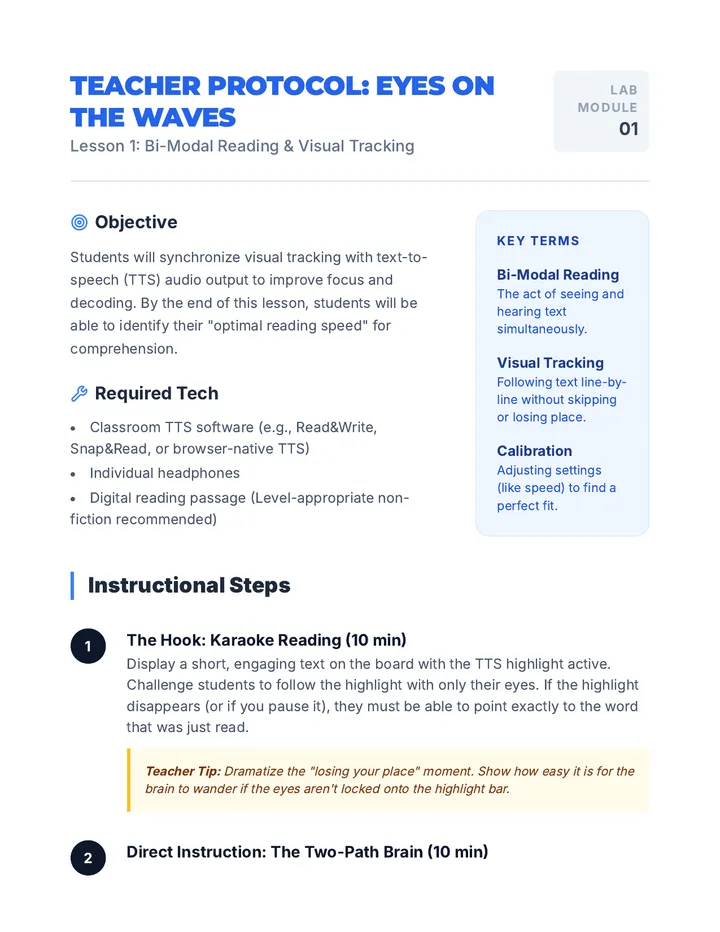
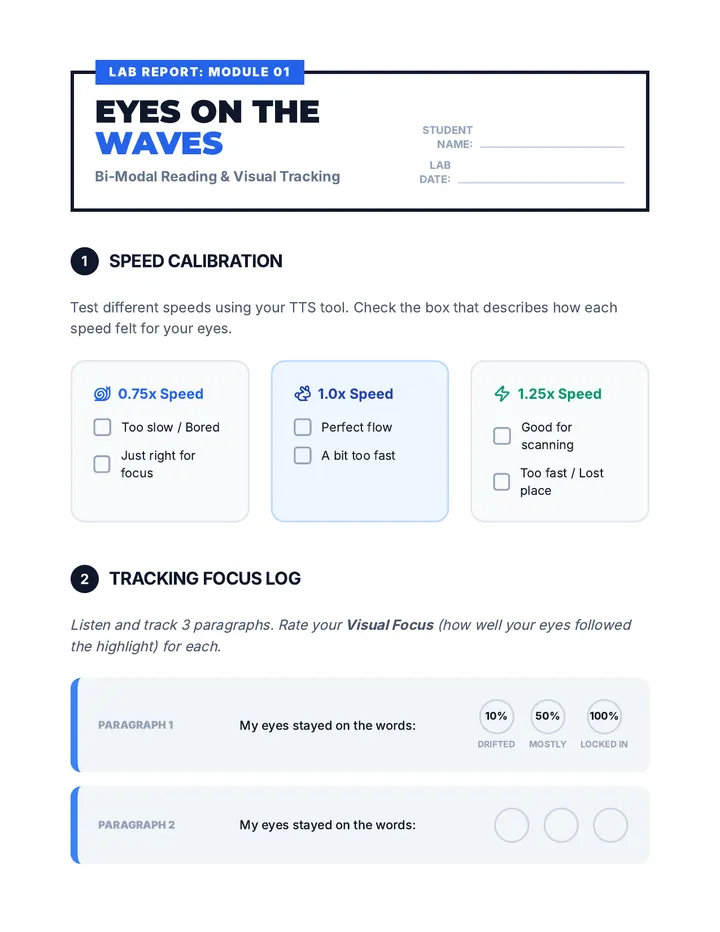
A comprehensive 2nd-grade sequence focused on mastering Text-to-Speech (TTS) tools. Students learn to synchronize visual tracking with audio, adjust speech rates for optimal processing, and use digital tools to support decoding and fluency.
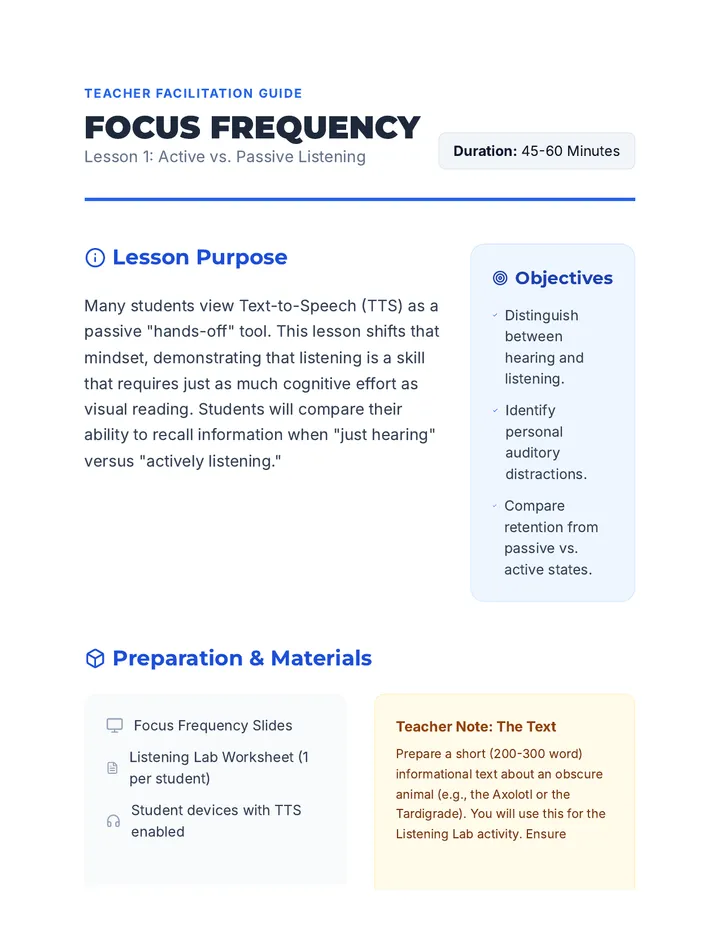
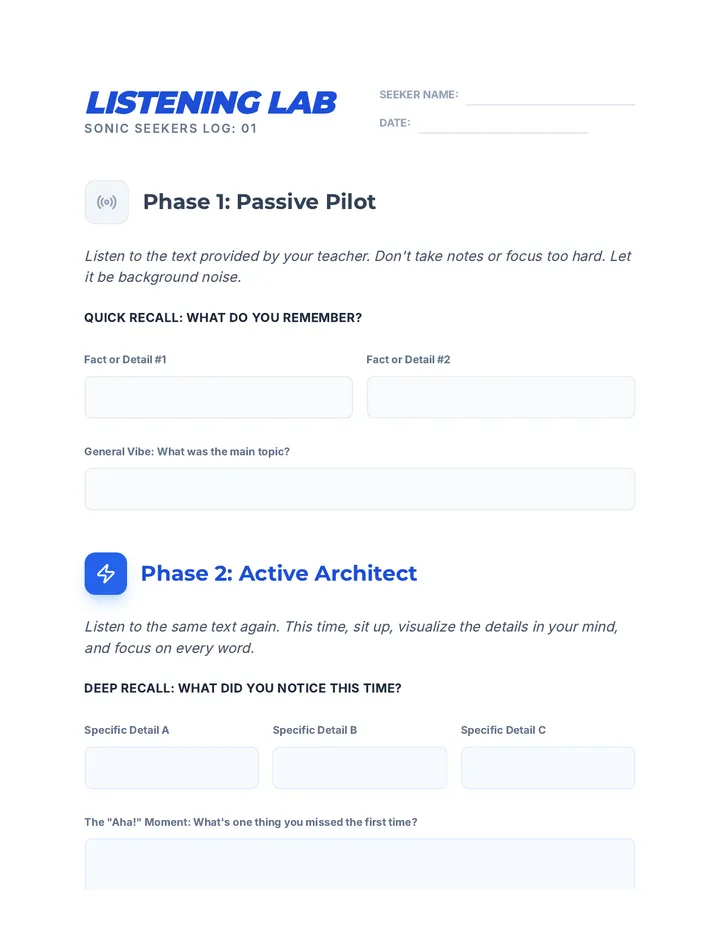
This sequence shifts the focus from assistive technology to the cognitive strategies required for auditory learning. Students engage in inquiry-based activities to distinguish between passive hearing and active listening, applying specific comprehension strategies while using text-to-speech (TTS) to access grade-level texts.
This sequence guides 6th-grade students through the technical mastery of text-to-speech (TTS) tools. It moves from basic navigation to personalized configuration, empowering students to treat assistive technology as a custom scaffold for their unique learning styles.
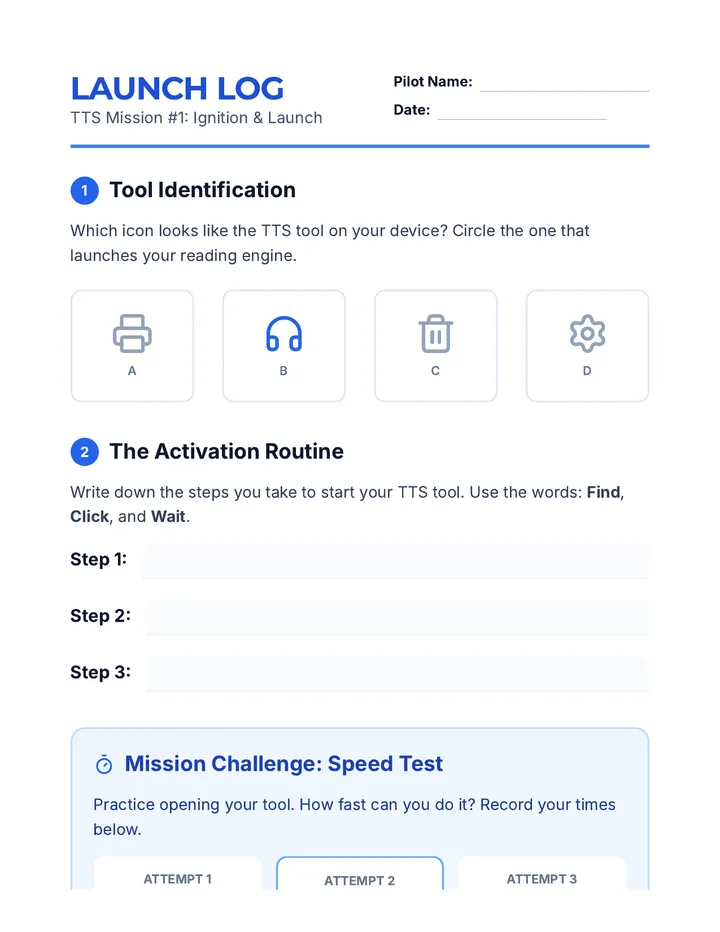
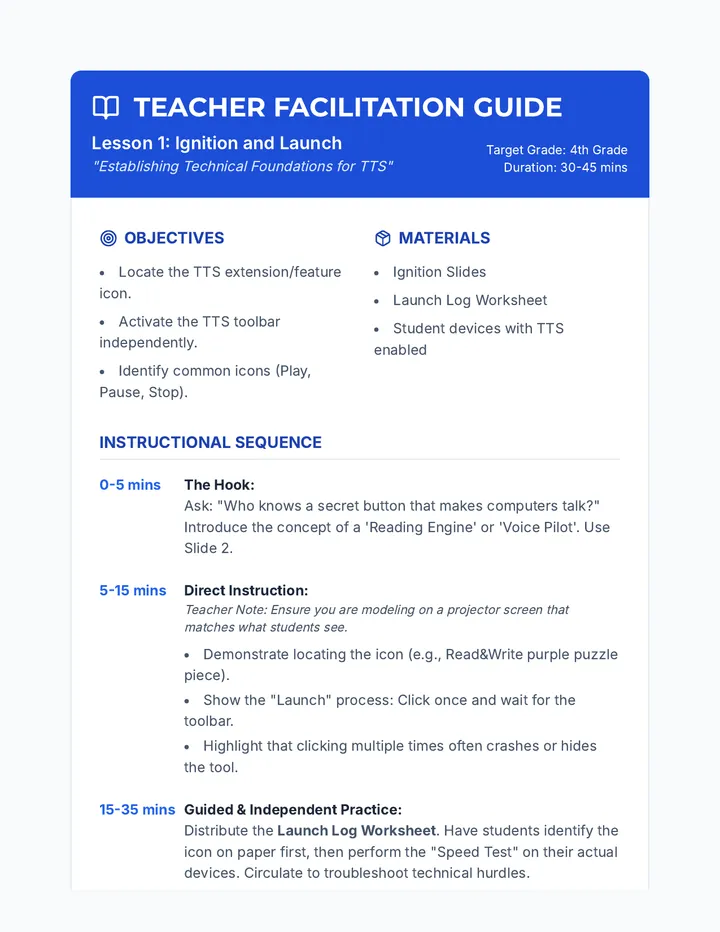
A comprehensive sequence for 4th-grade students to master the technical controls of text-to-speech (TTS) assistive technology. Students progress from basic activation to independent navigation and selection, building technical fluency for accessible reading.
A 5th-grade sequence focused on using Text-to-Speech (TTS) technology as a cognitive strategy for reading comprehension. Students learn bi-modal reading, text chunking, evidence collection, and active annotation to transition from passive listening to active engagement with digital text.
This technical foundation sequence introduces 5th-grade students to text-to-speech (TTS) software, focusing on interface navigation, customization of voice settings, selective reading strategies, and independent troubleshooting. Students develop the skills to personalize digital tools to meet their individual sensory and learning needs.
An introductory 15-minute lesson for 6th-grade students exploring long division through the lens of accessibility and UEB Braille. Students learn the DMSB steps while understanding how math is represented tactually for blind learners.
A 30-minute introduction for school librarians to Bookshare, an accessible online library for students with reading barriers. Librarians will learn about eligibility, accessible formats, and their role as organizational sponsors.
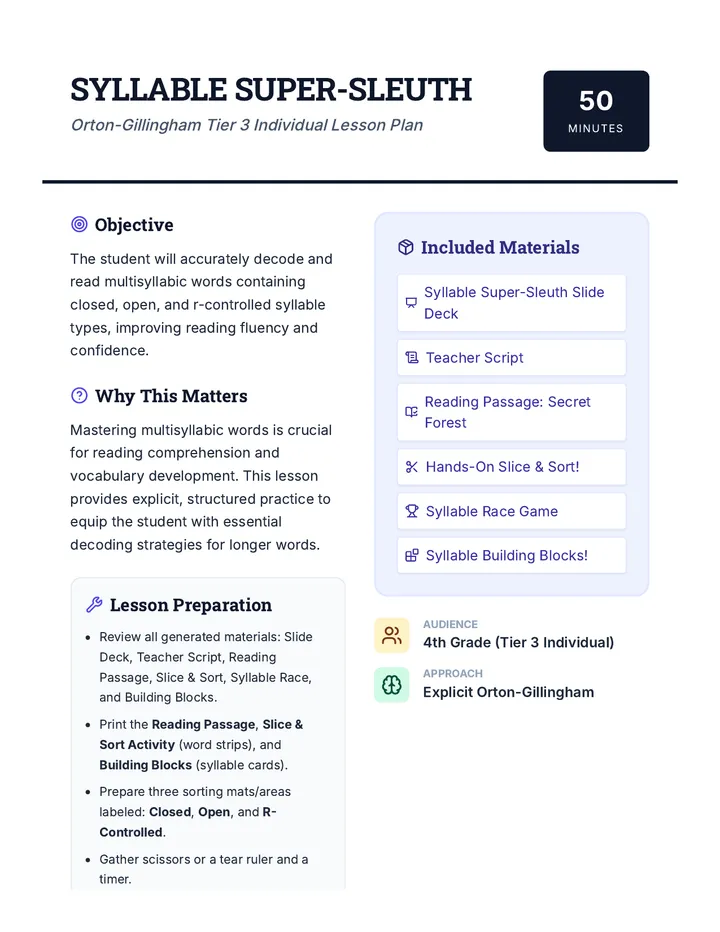
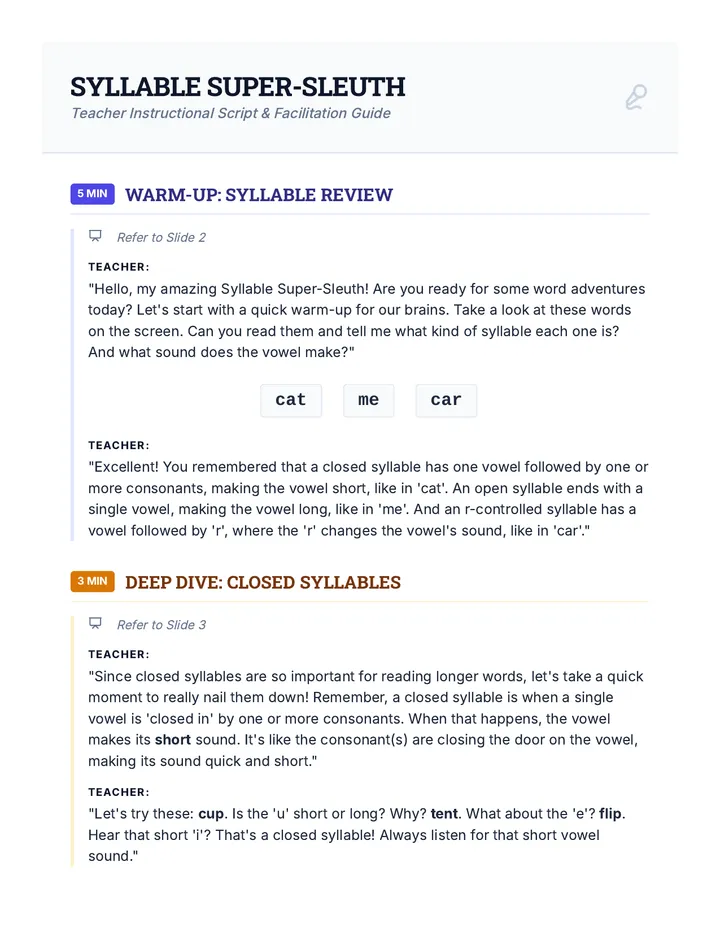
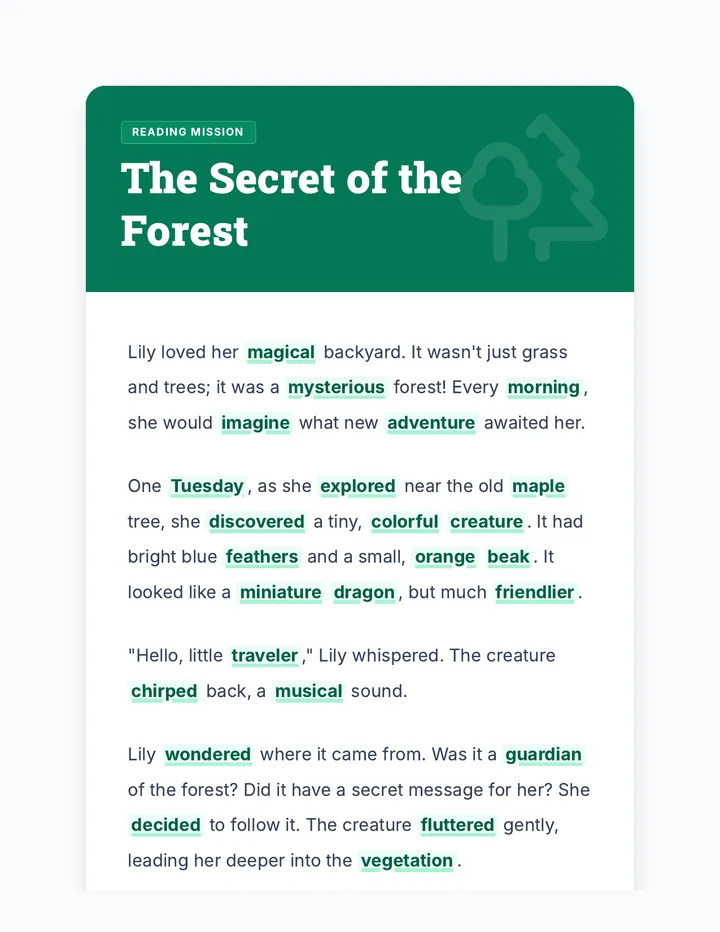
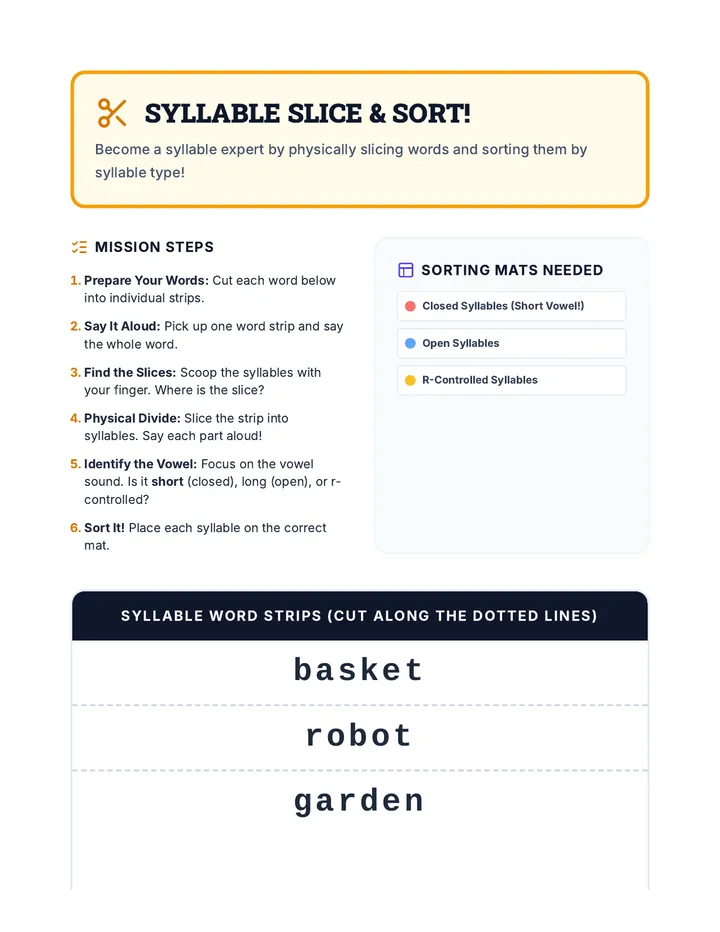
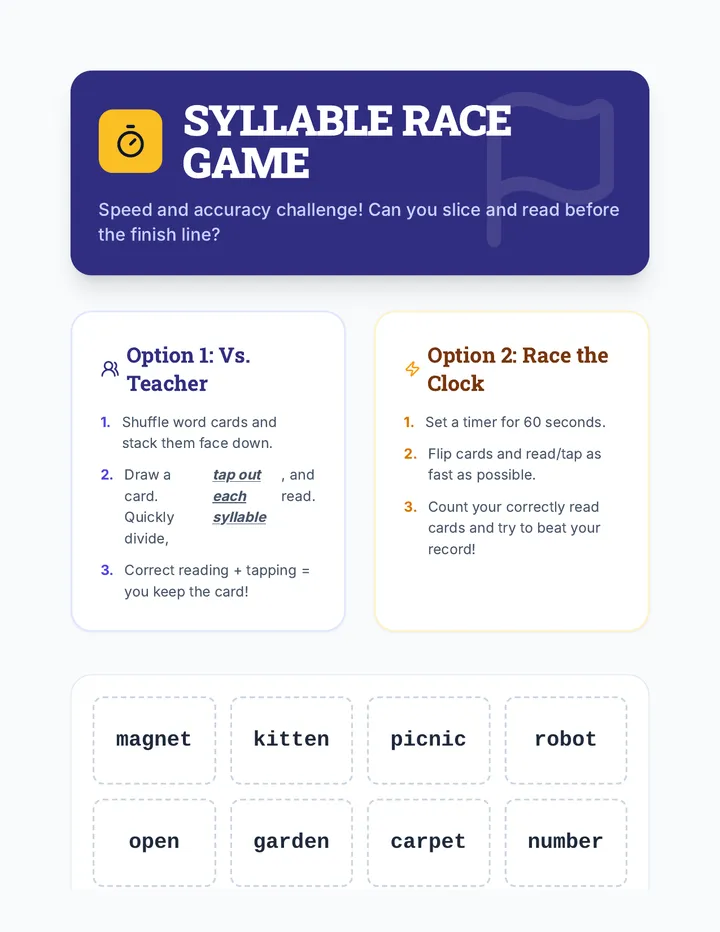
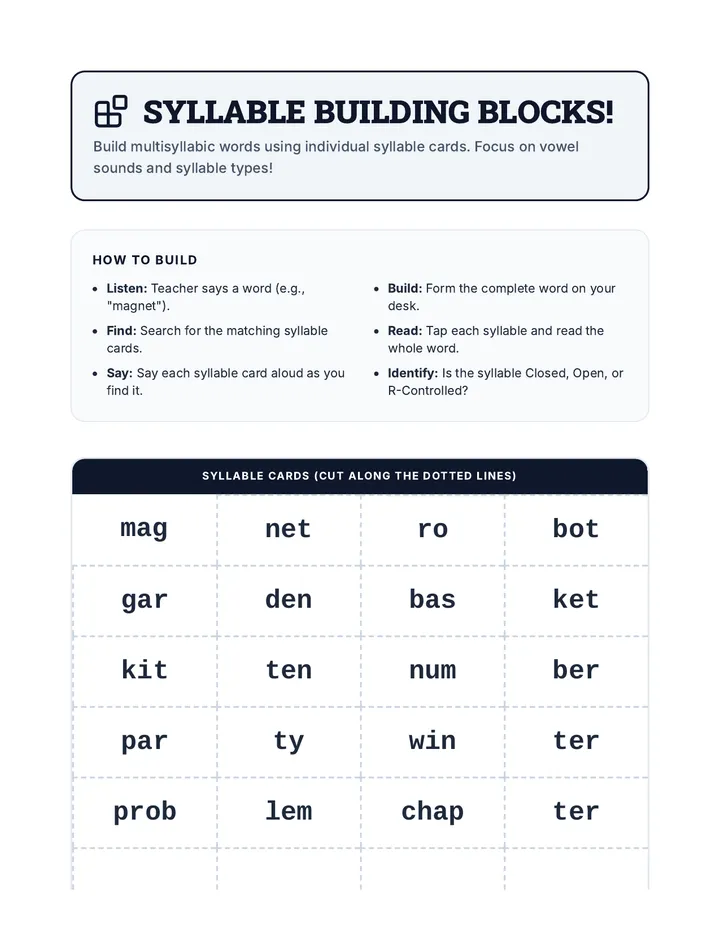
A 50-minute individualized Orton-Gillingham lesson for 4th-grade students with dyslexia, focusing on decoding multisyllabic words through syllable division rules for closed, open, and r-controlled syllables.
A 30-minute one-on-one lesson teaching students how to use JAWS 2026 to navigate and edit Google Docs, focusing on the Virtual PC Cursor and essential keyboard shortcuts.
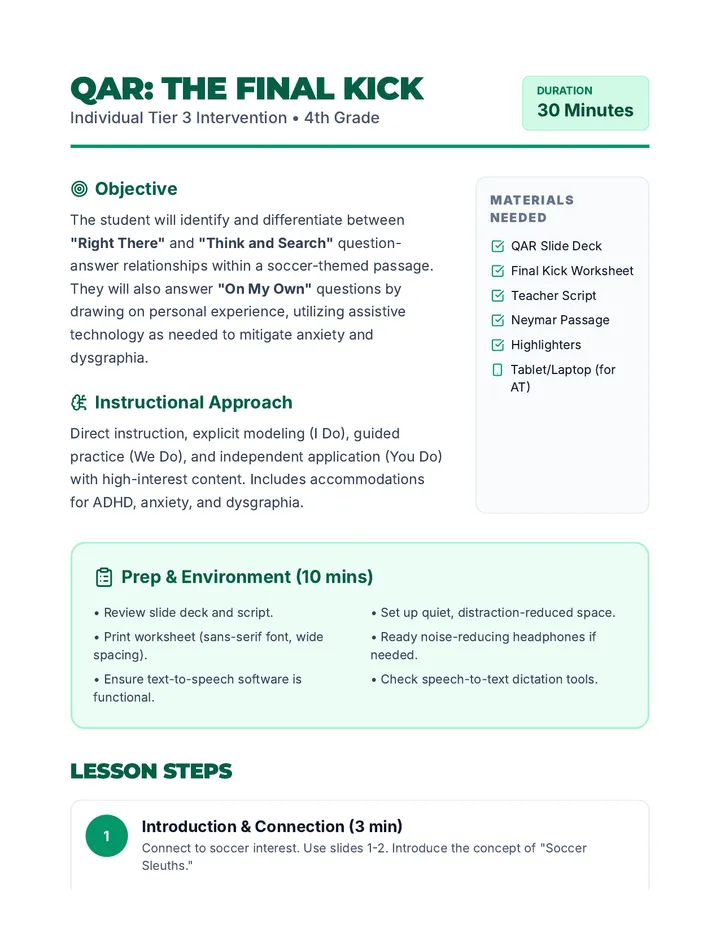
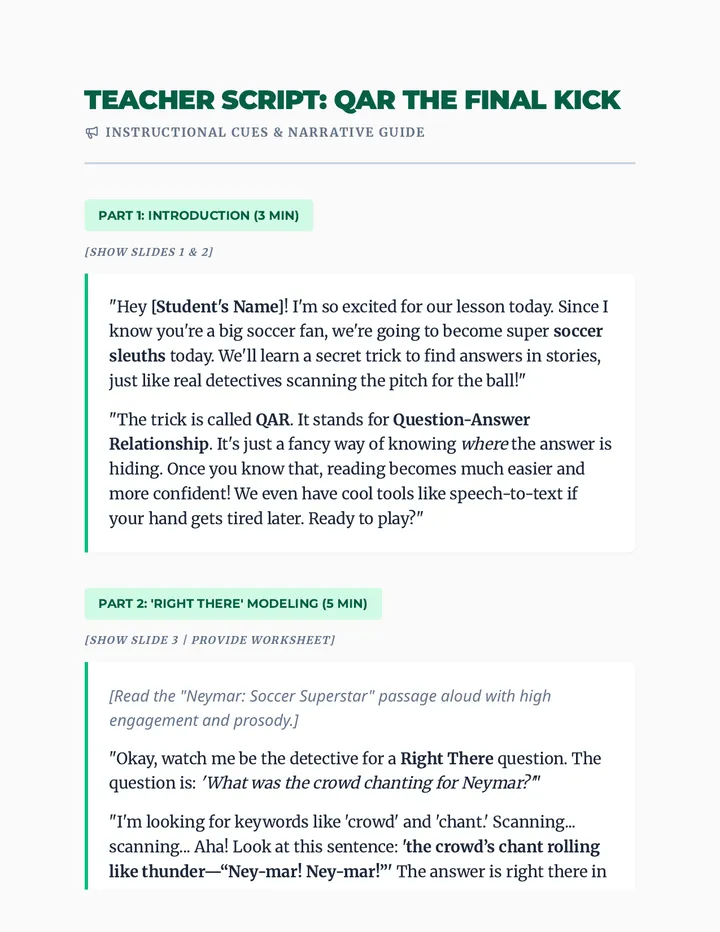
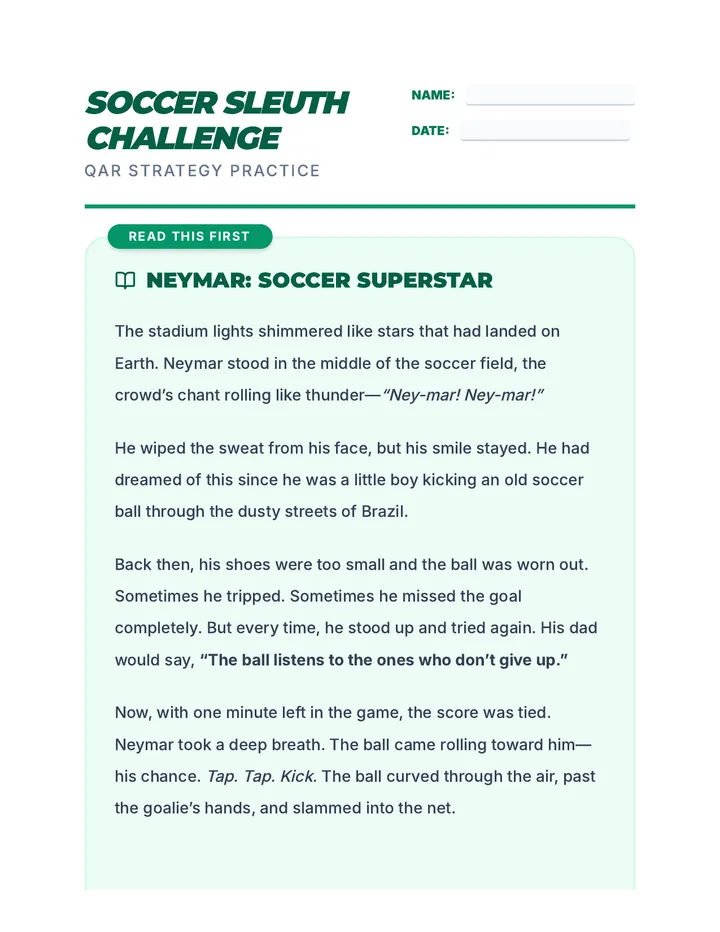
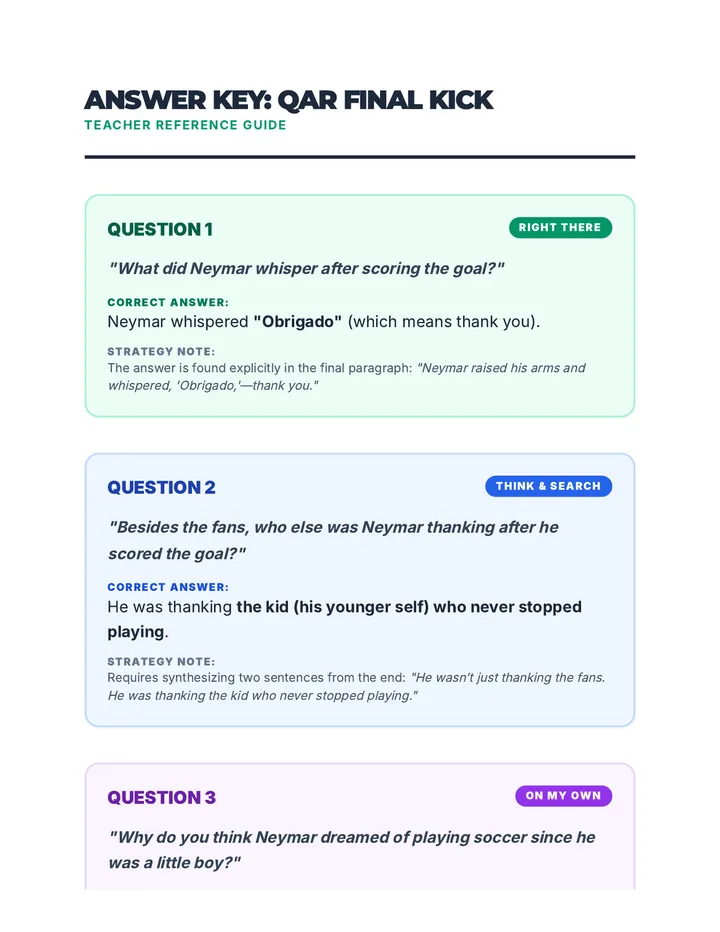
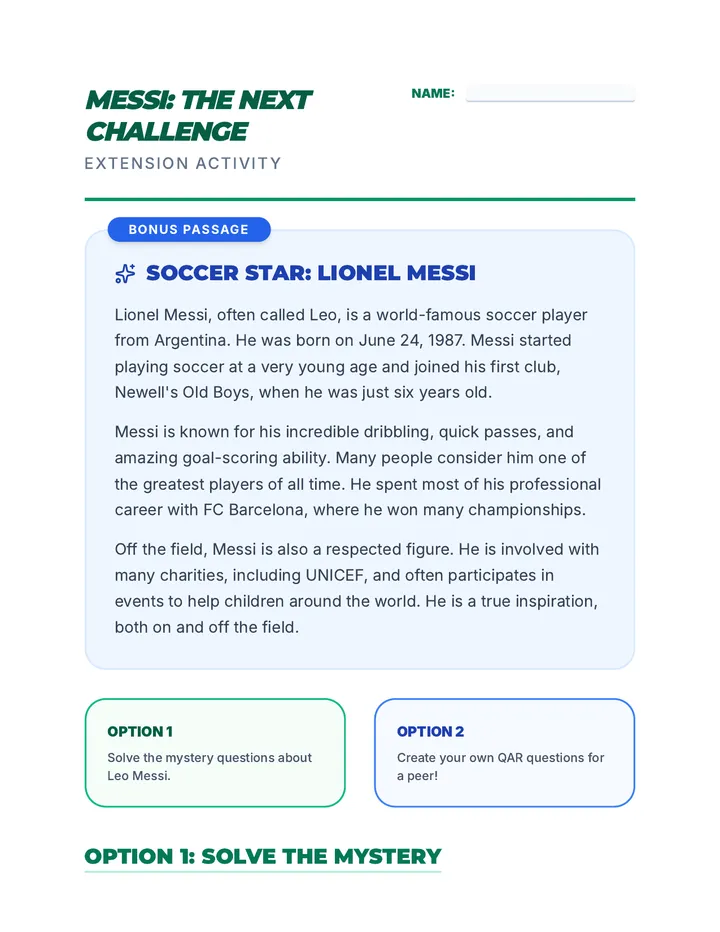
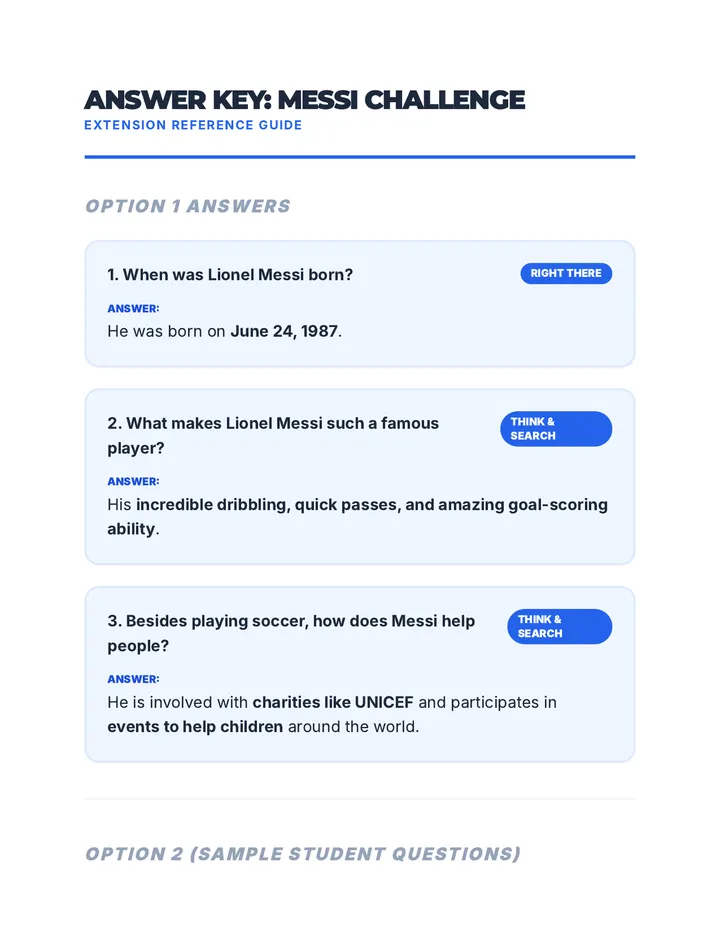
A 30-minute Tier 3 lesson for 4th grade focusing on reading comprehension using the Question-Answer Relationship (QAR) strategy with high-interest soccer content. Designed for students with ADHD, dysgraphia, and anxiety.
This Tier 3 individual lesson introduces a 4th-grade student with ADHD, anxiety, and dysgraphia to the Question-Answer Relationship (QAR) strategy using high-interest soccer content. It focuses on 'Right There', 'Think and Search', and 'On My Own' question types through explicit modeling and scaffolded practice.
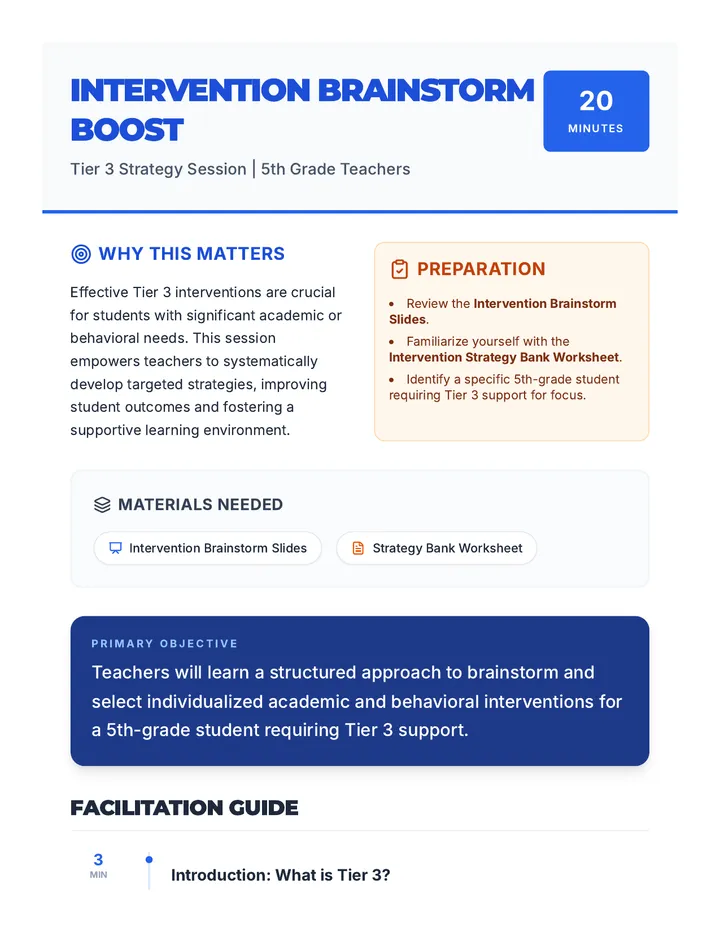
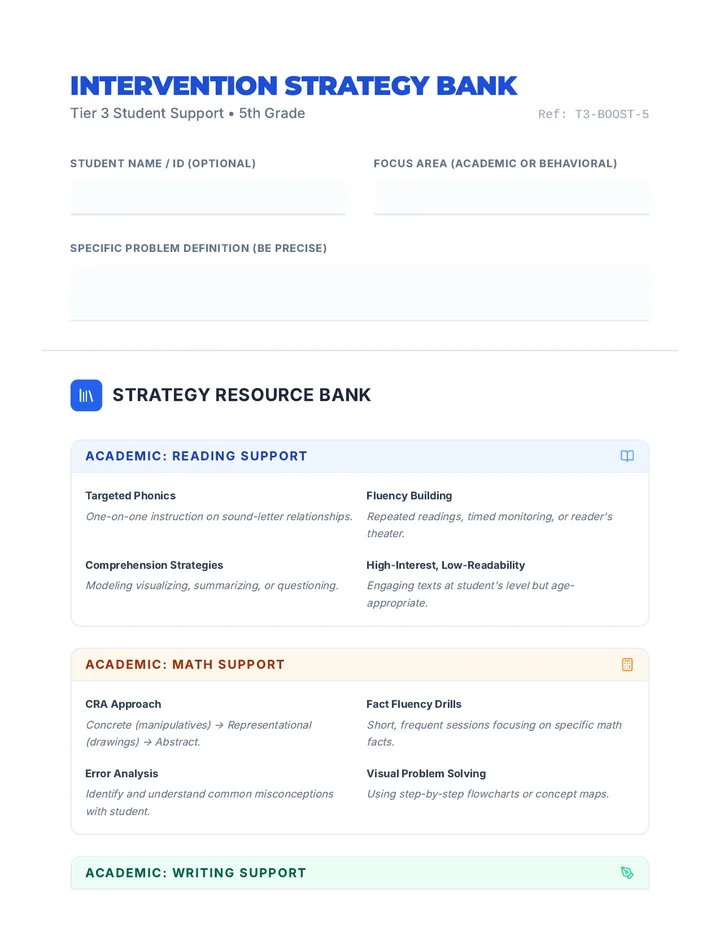
A 20-minute workshop for 5th-grade teachers to brainstorm and develop targeted Tier 3 academic and behavioral interventions for individual students.
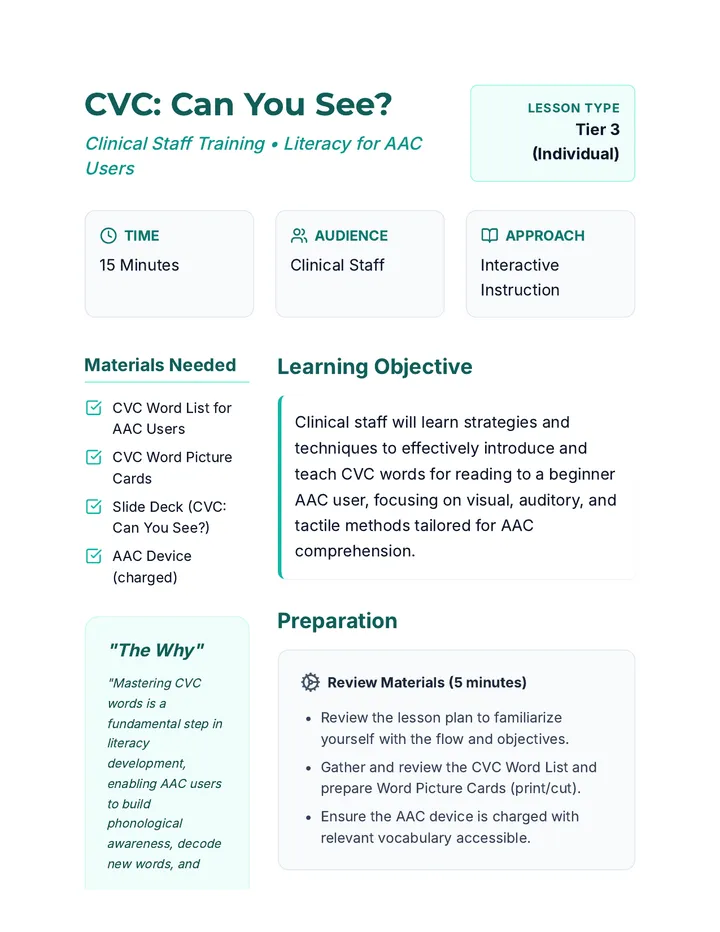
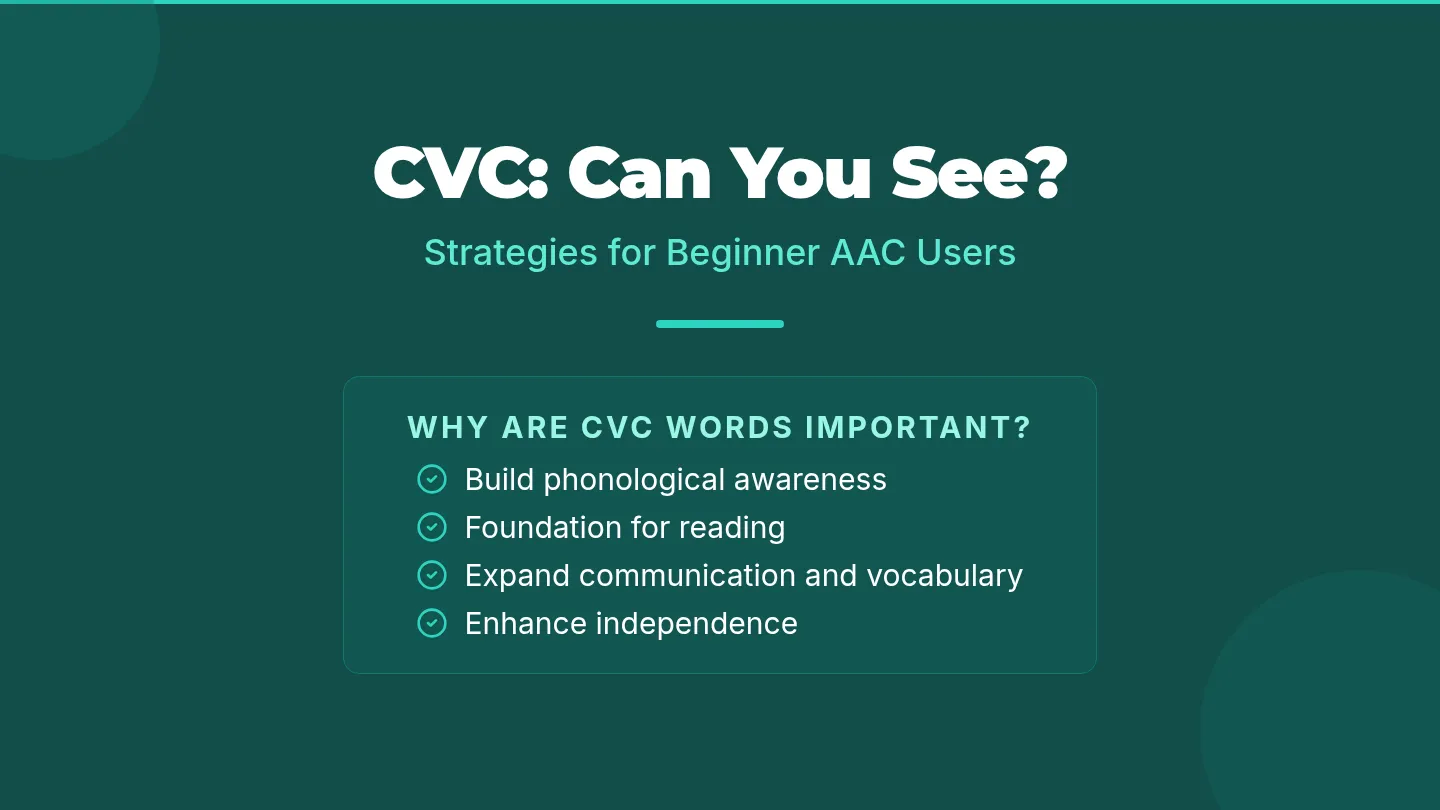
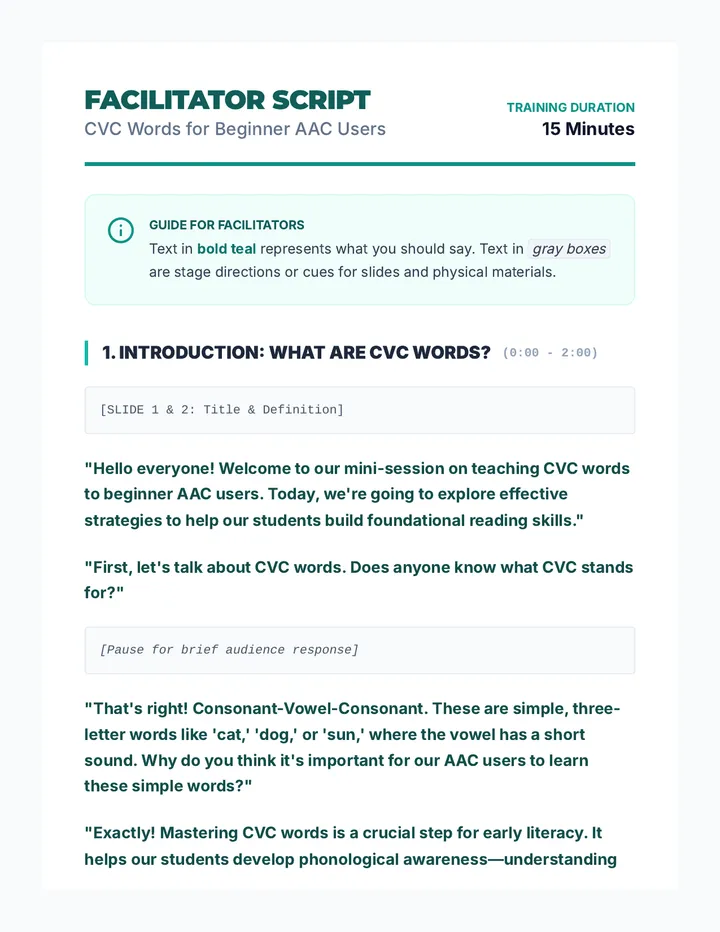
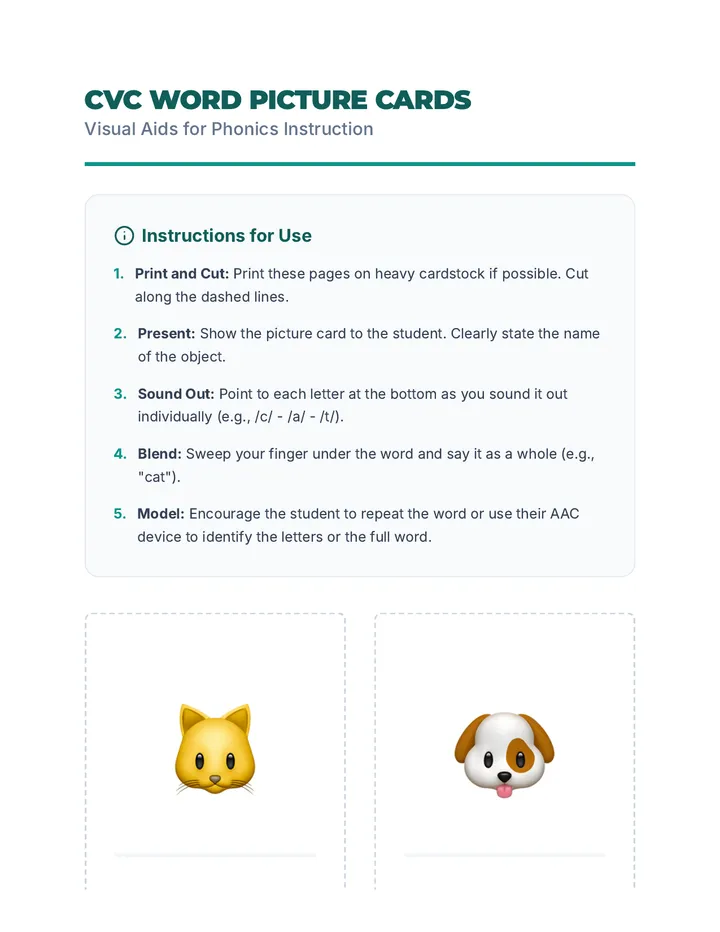
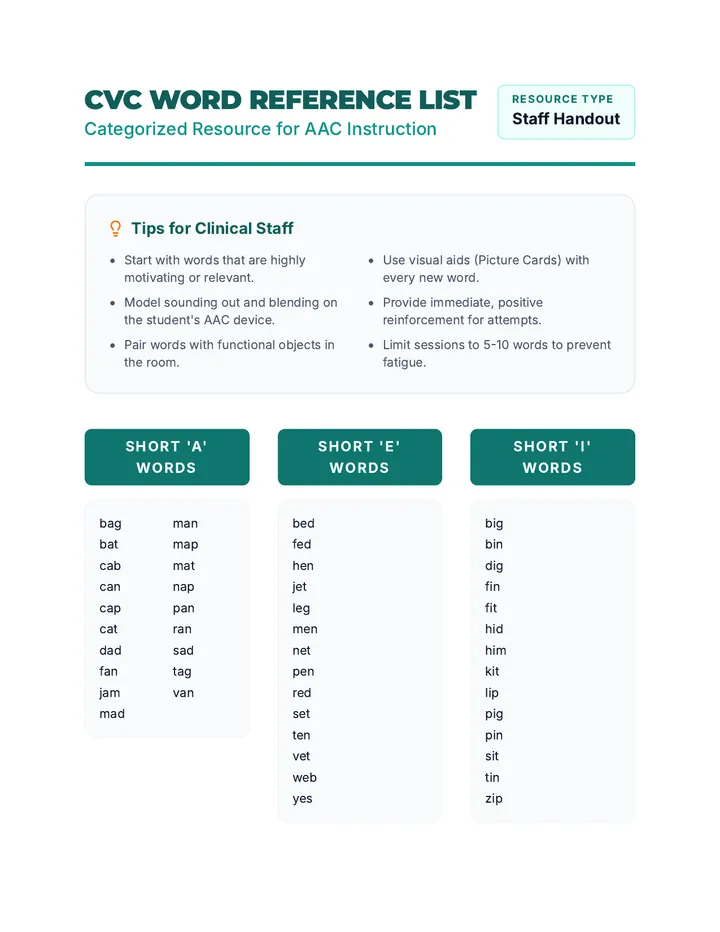
This 15-minute Tier 3 clinical training lesson equips staff with strategies to teach CVC word recognition and phonological awareness to beginner AAC users through visual, auditory, and tactile adaptations.
An individual coaching plan introducing and practicing assistive technologies (TTS, highlighting, dictation) to empower a 7th grade student with reading challenges.
A 60-minute individual lesson designed to empower a student with cerebral palsy to build confidence and skills in public speaking using accessible, multisensory materials.
A 15-minute Tier 3 individual support session for 8th-grade students with dyslexia to overcome assignment refusal through personalized strategies and goal-setting.
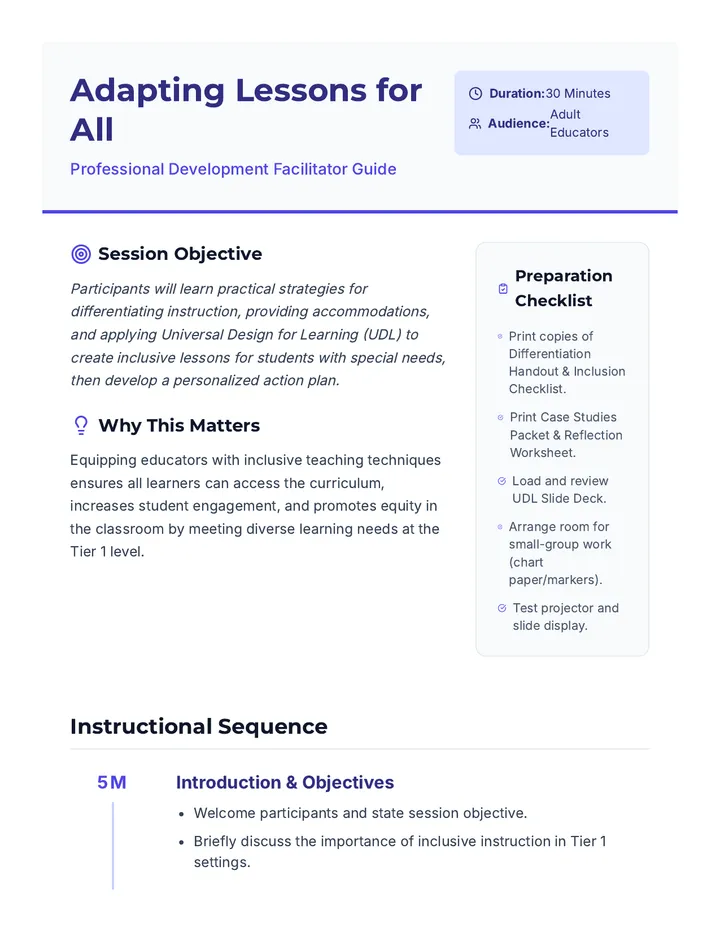
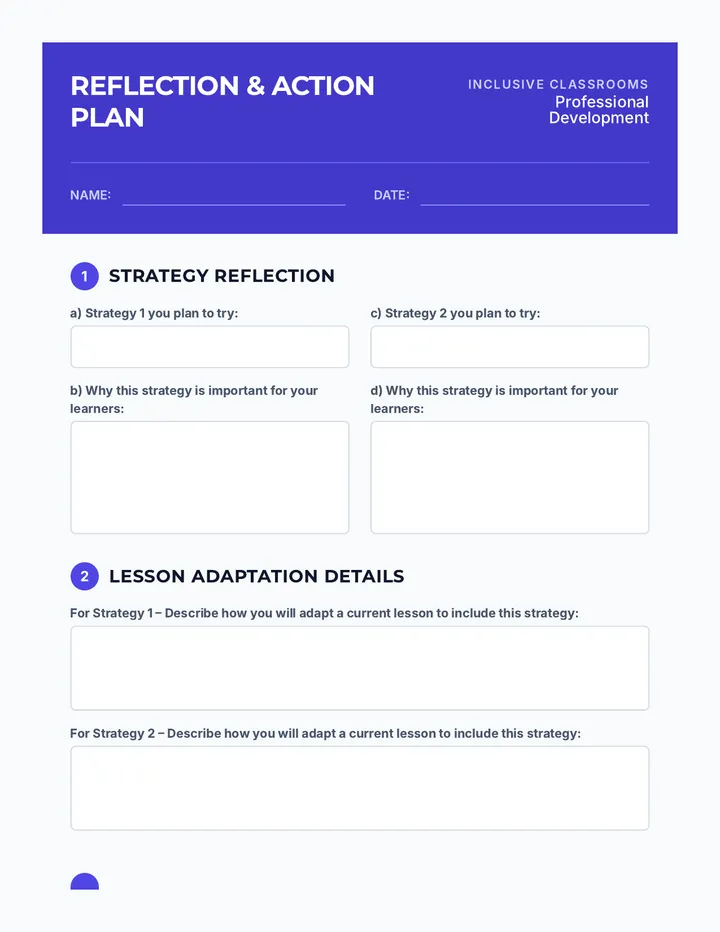
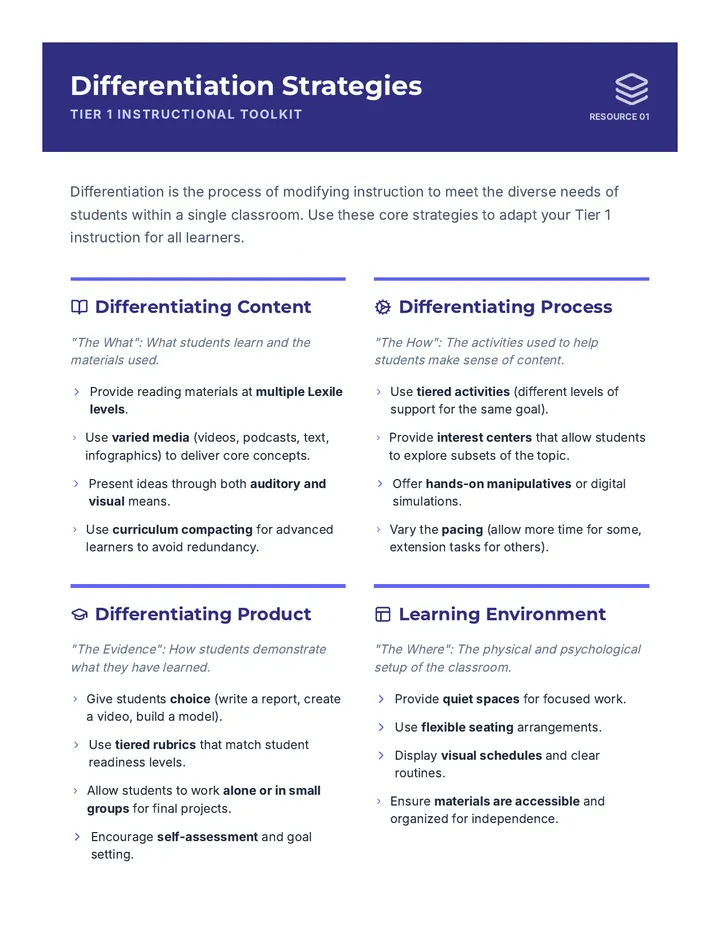
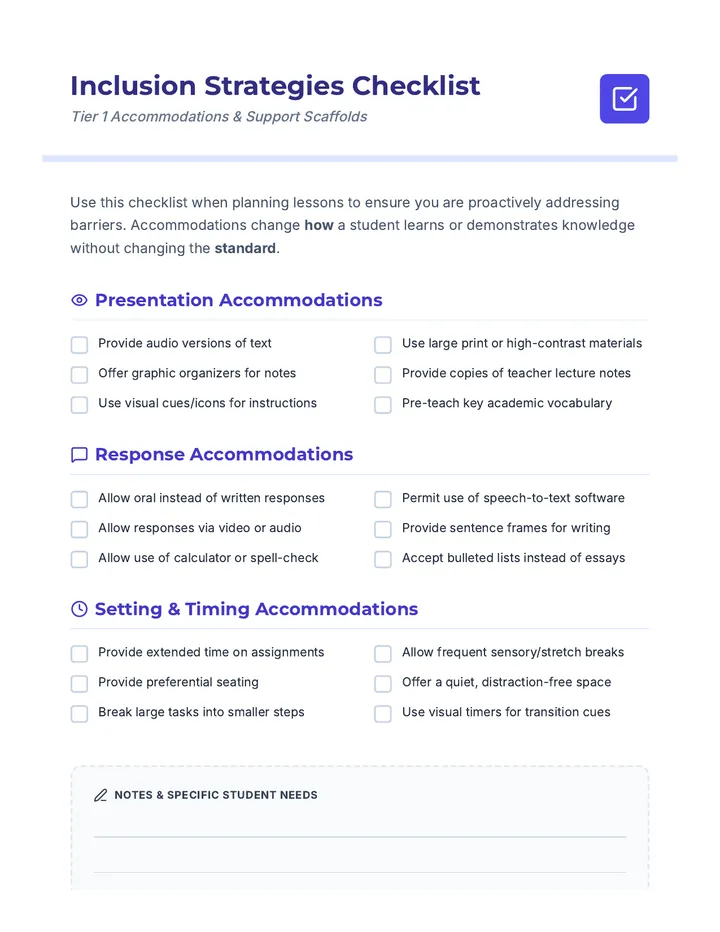
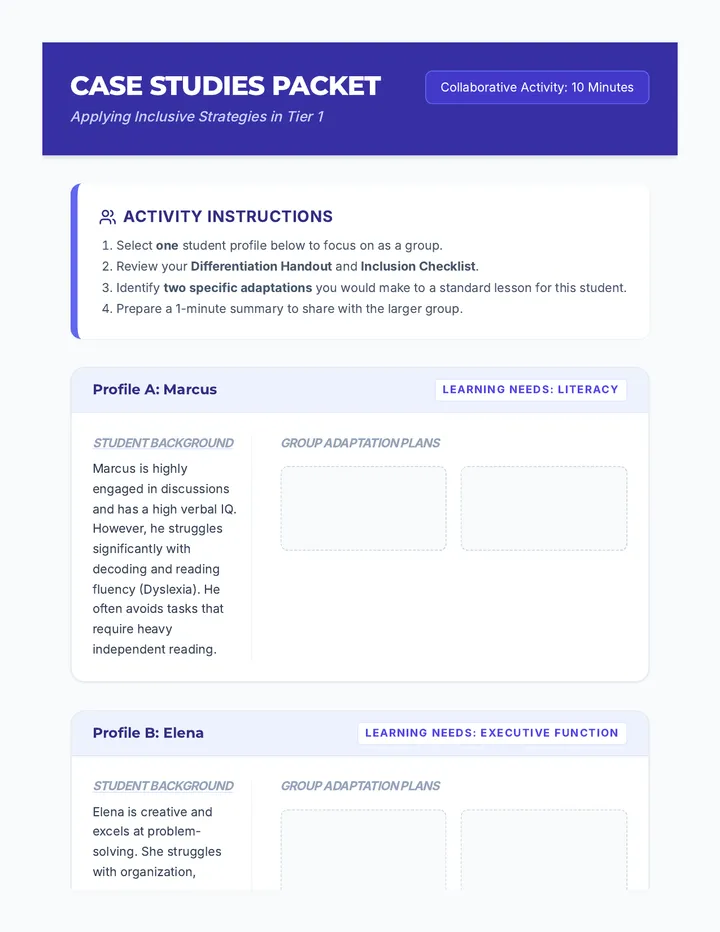
A 30-minute professional development session for adult educators focused on inclusive lesson design, practical accommodations, and Universal Design for Learning (UDL) principles. Participants will explore strategies for supporting students with special needs and develop a personalized action plan.