Lenny LearningLenny
Create
Explore
Workspace
LoginSign up
MathEnglish Language ArtsScience & EngineeringSocial StudiesGlobal LanguagesHealth & Physical EducationSpecial EducationCounseling & Life SkillsArts & CreativityESL
Lenny LearningLenny
Lenny Learning
About
Training
Pricing
Support
Contact
© 2026 Lenny Learning Inc.
Special EducationSensory Processing & RegulationSensory Preferences IdentificationSensory Tool UseCommunicating Sensory NeedsSensory Overload RecognitionDeep Breathing PracticeMovement Break UtilizationIndependent Calming Strategy UsePersonalized Calming RoutinePersonal Sensory Diet CreationProactive Sensory BreaksEmotion Intensity RecognitionDysregulation RecoveryPositive Behavior SupportUnderstanding Social StoriesPersonal Social Story CreationEmotional Regulation FrameworksPersonal Trigger IdentificationSelecting Regulation StrategiesReinforcement System ResponseSelf-Monitoring & RewardsLearning Positive AlternativesCross-Setting Skill GeneralizationSocial CommunicationEye Contact & Personal SpaceContext-Appropriate GreetingsAppropriate Volume & ToneConversation Turn-TakingTopic Maintenance in DiscussionEffective Help-SeekingBody Language InterpretationFacial Expression RecognitionIdioms & Figurative LanguageSocial Problem IdentificationSocial Solution GenerationSocial Decision EvaluationTask ManagementMinimal Prompting Task StartSelf-Talk for StartingStarter Strategies for Difficult TasksAge-Appropriate Task PersistenceStrategic Break ManagementSmooth Task TransitionsAdapting to Plan ChangesObstacle Problem-SolvingMulti-Day Project CompletionPlanning & OrganizationPhysical Material OrganizationVisual Schedule & Timer UseSequential Task BreakingTime Estimation SkillsTask PrioritizationDigital & Physical Workspace ManagementPersonalized Organization StrategiesDetailed Project PlanningMultiple Commitment BalancingAcademic Support StrategiesMath Manipulative UseVisual Math Problem RepresentationComplex Math Problem BreakdownText Highlighting & AnnotationVisualization While ReadingPredictions & Inferences from TextText Structure Graphic OrganizersWriting Graphic OrganizersSentence Frames & TemplatesStudy Guide CreationSpaced Repetition for MemoryAssistive Writing TechnologyWorking Memory SupportSingle-Step Direction FocusMulti-Step Direction FollowingInformation Chunking PracticeVisual Support Memory AidsMnemonic Device ApplicationEfficient Note-Taking SystemsGraphic Organizer Note-TakingNote Review & OrganizationSustained Complex Task AttentionAssistive TechnologySymbol-Word CommunicationAAC Device NavigationSpeech Recognition DictationDictation Text EditingText-to-Speech for ReadingDigital Calendar UseKeyboard Shortcuts NavigationProductivity App ManagementSelf-Advocacy SkillsCommunicating Learning NeedsRequesting AccommodationsAdvocating for Appropriate SupportsIEP & Student RightsUnderstanding IEP ComponentsMeaningful IEP Meeting ParticipationIDEA & Section 504 RightsProgress MonitoringTracking IEP Goal ProgressReflecting on AchievementData-Informed Instructional AdjustmentTransition PlanningCareer & Vocational Goal SettingExploring Post-Secondary OptionsIndependent Living Skills Planning

Academic Support Strategies

SequencesLessonsMaterialsVideos
  1. Special Education

Academic Support Strategies

SequencesLessonsMaterialsVideos

Multi-sensory math manipulatives, visual problem-solving, and text annotation strategies for literacy and numeracy. Employs graphic organizers, sentence frames, and assistive technology to support memory, comprehension, and writing development.
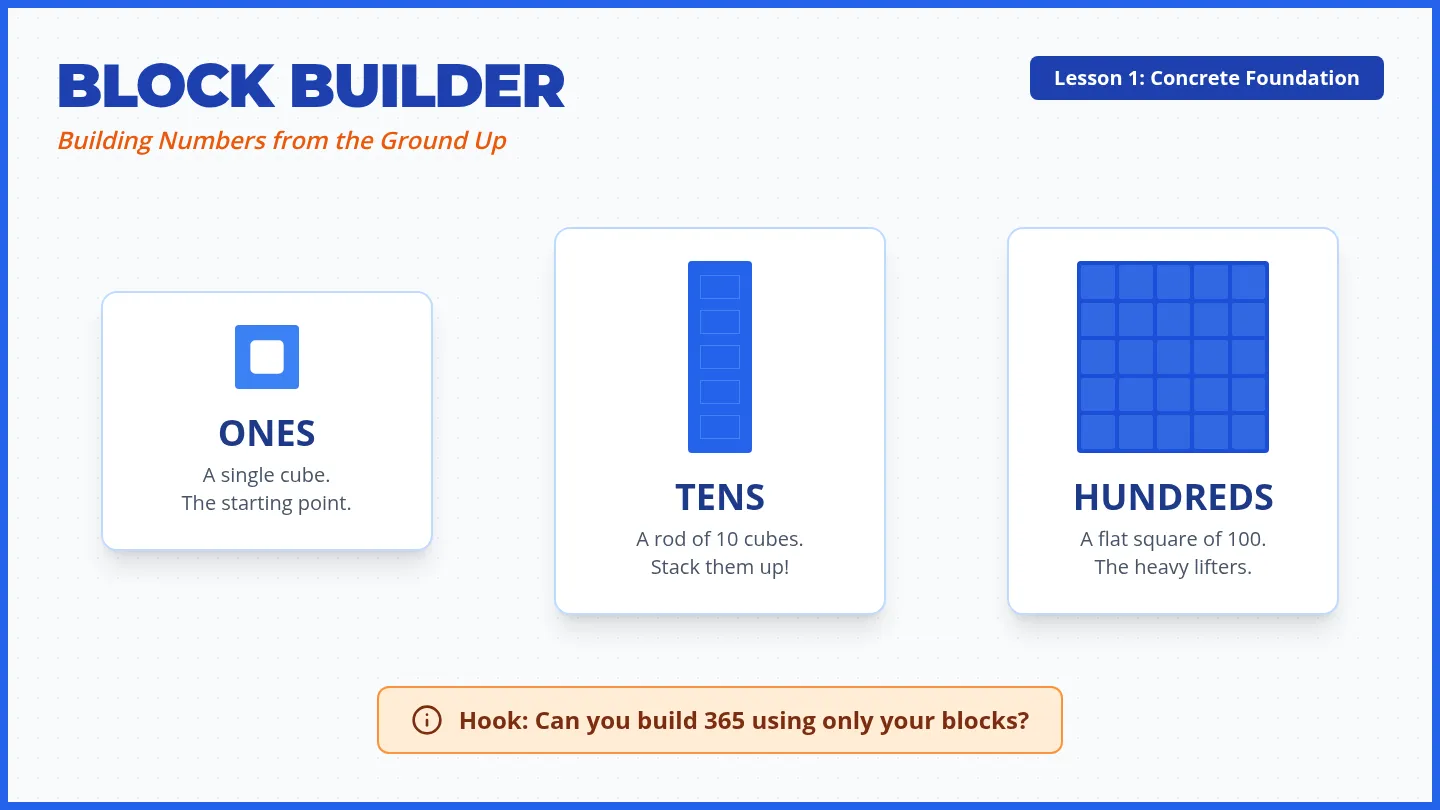
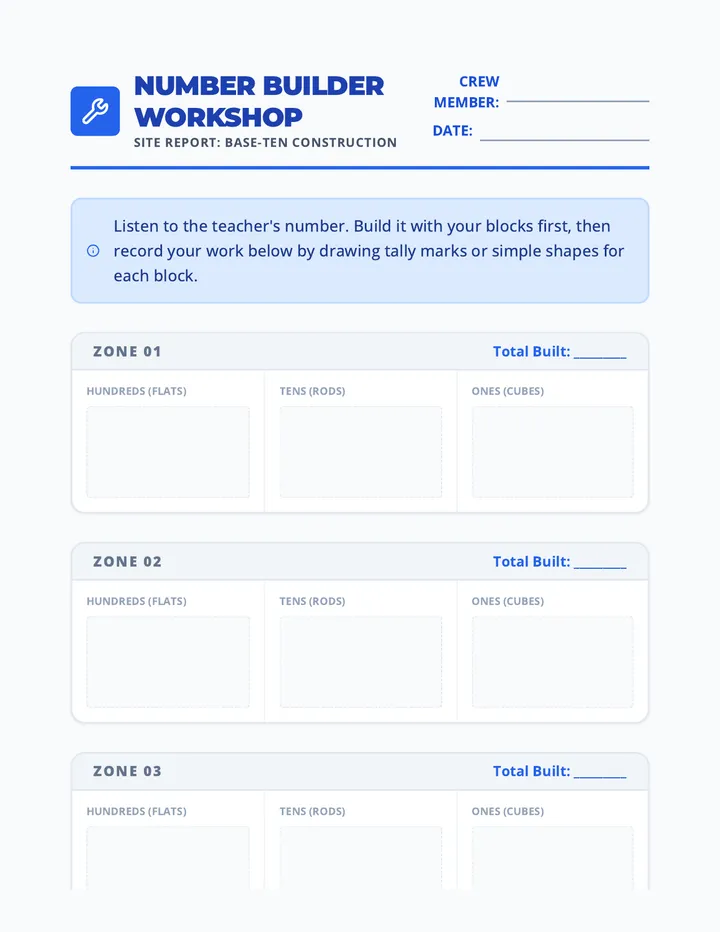
Math Manipulative UseIntegrates base-ten blocks, counters, and virtual tools to scaffold the Concrete-Representational-Abstract (CRA) sequence. Targets conceptual understanding of arithmetic, place value, and fractions for students with learning disabilities.
Visual Math Problem RepresentationTranslates abstract word problems into concrete visual models using bar diagrams, number lines, and manipulative sketches. Supports cognitive processing and multi-step problem solving for students with diverse learning needs.
Complex Math Problem BreakdownScaffolding techniques like task analysis, visual representations, and checklist-based decomposition for multi-step mathematical operations. Targets executive function barriers to improve problem-solving independence for students with learning disabilities.
Text Highlighting & AnnotationSystematic color-coding and marginalia techniques to support active reading and information retention. Targets skills in isolating key concepts and organizing textual evidence for students with diverse learning needs.
Visualization While ReadingMental imagery techniques and sensory mapping to bridge the gap between decoding and comprehension. Supports memory retention through sketching, verbalizing scenes, and identifying descriptive language.
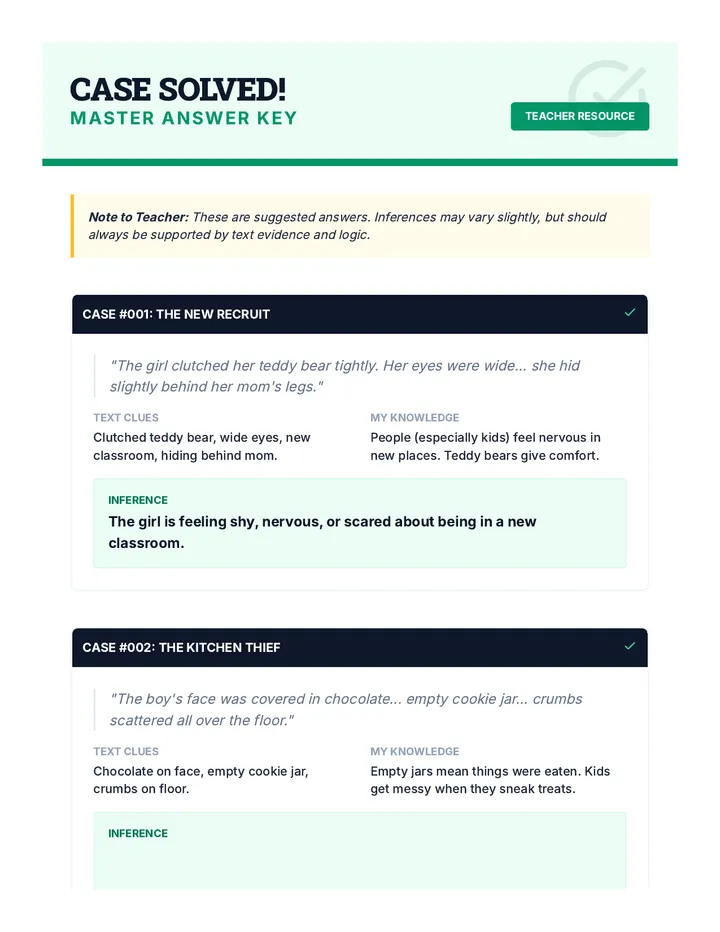
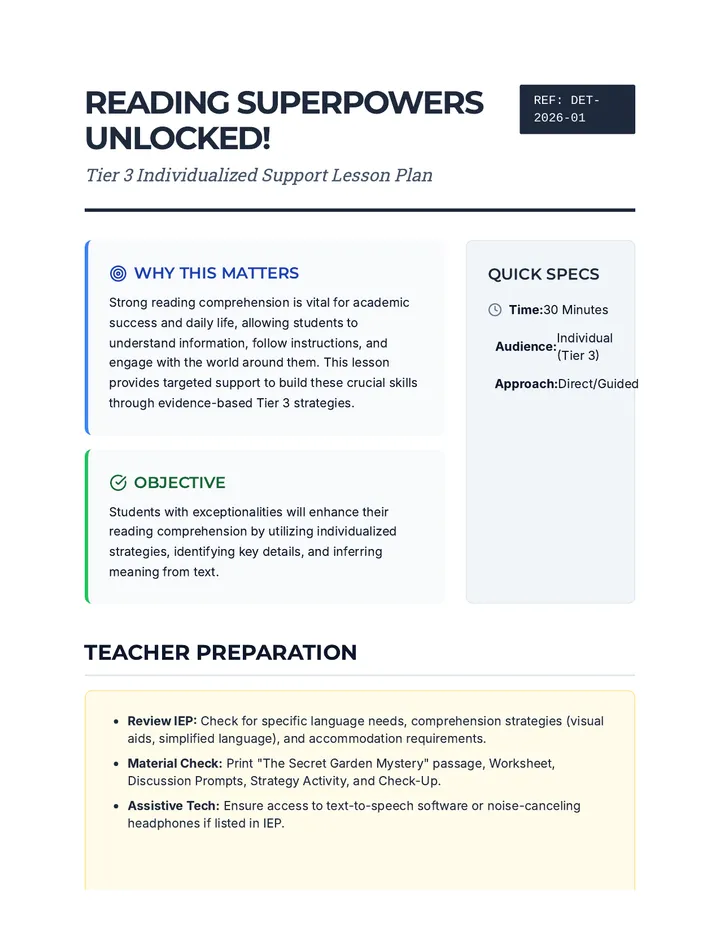
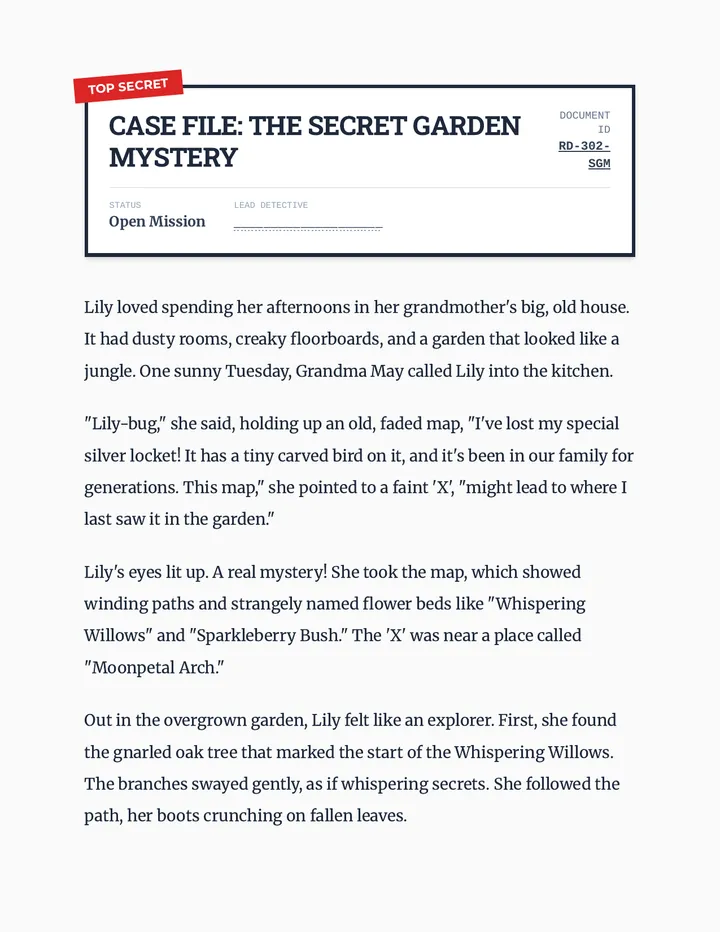
Predictions & Inferences from TextEvidence-based scaffolds and explicit modeling techniques for synthesizing textual clues with prior knowledge. Includes graphic organizers and guided prompts to build critical thinking and reading comprehension.
Text Structure Graphic OrganizersVisual scaffolds for identifying cause-effect, comparison, and sequential patterns within informational texts. Supports reading comprehension and pre-writing organization for students requiring targeted academic interventions.
Writing Graphic OrganizersVisual frameworks for brainstorming, outlining, and structuring multi-paragraph essays. Supports students with executive functioning challenges through sequential planning tools and sentence starters.
Sentence Frames & TemplatesLinguistic scaffolds and fill-in-the-blank structures support students in organizing complex thoughts and formulating academic responses. Facilitates written and oral expression across various subject areas and genres.
Study Guide CreationScaffolded templates, graphic organizers, and mnemonic techniques for designing accessible study materials. Enhances memory retention and independent review skills for students with diverse learning needs.
Spaced Repetition for MemoryScheduled review intervals and active recall techniques to improve long-term retention for students with learning differences. Targets core academic facts, vocabulary acquisition, and procedural memory through strategic timing.
Assistive Writing TechnologySpeech-to-text, word prediction, and digital graphic organizers to support students with dysgraphia or motor impairments. Targets independence in drafting, editing, and organizing written compositions.
Sequence
Tool Suite Slides
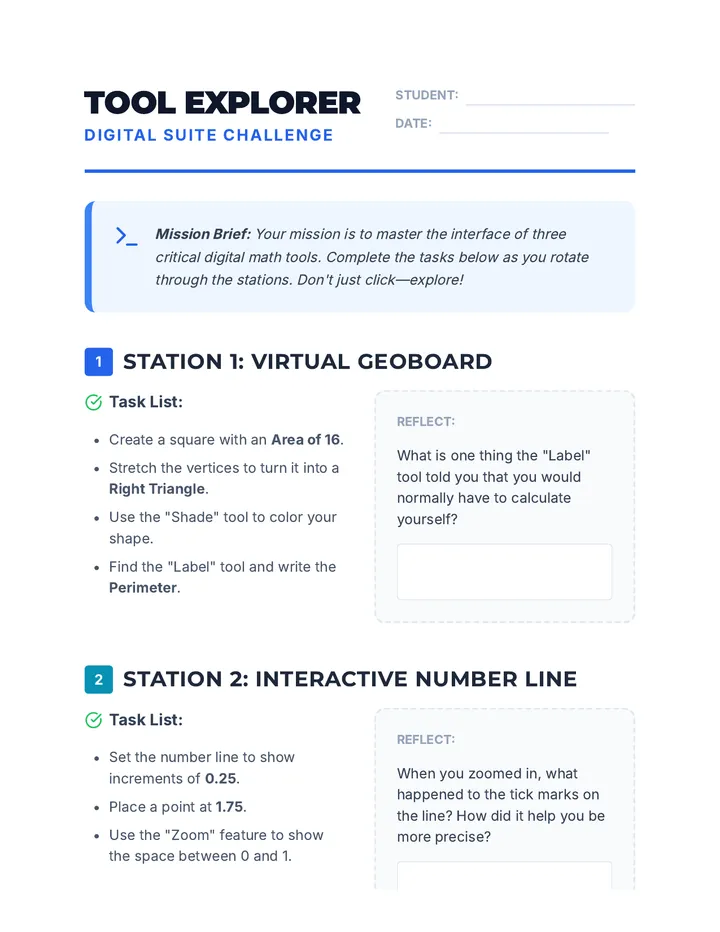
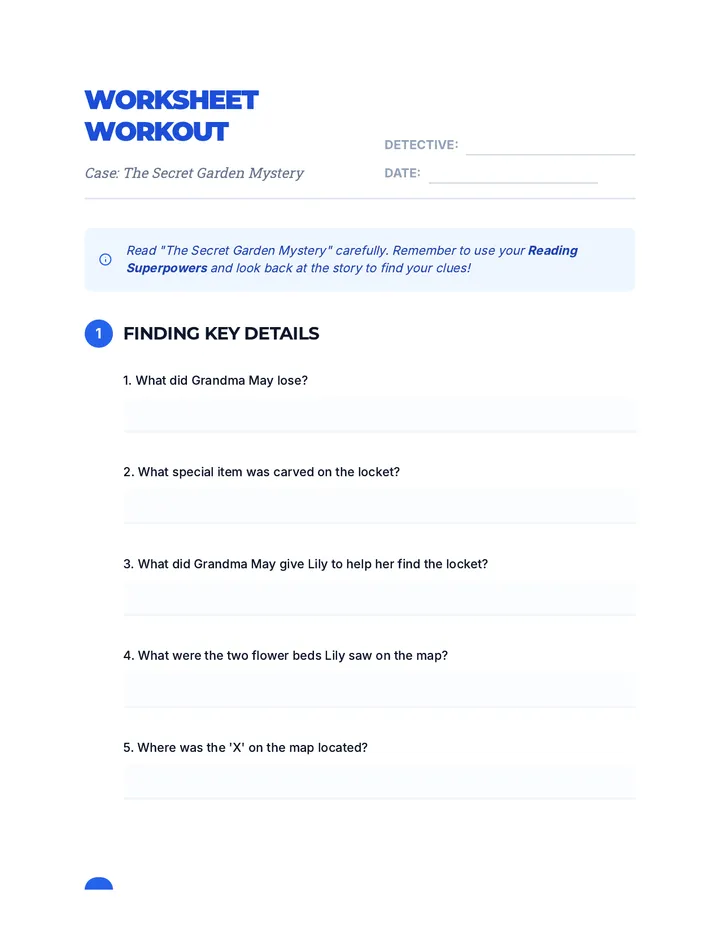
Tool Explorer Worksheet
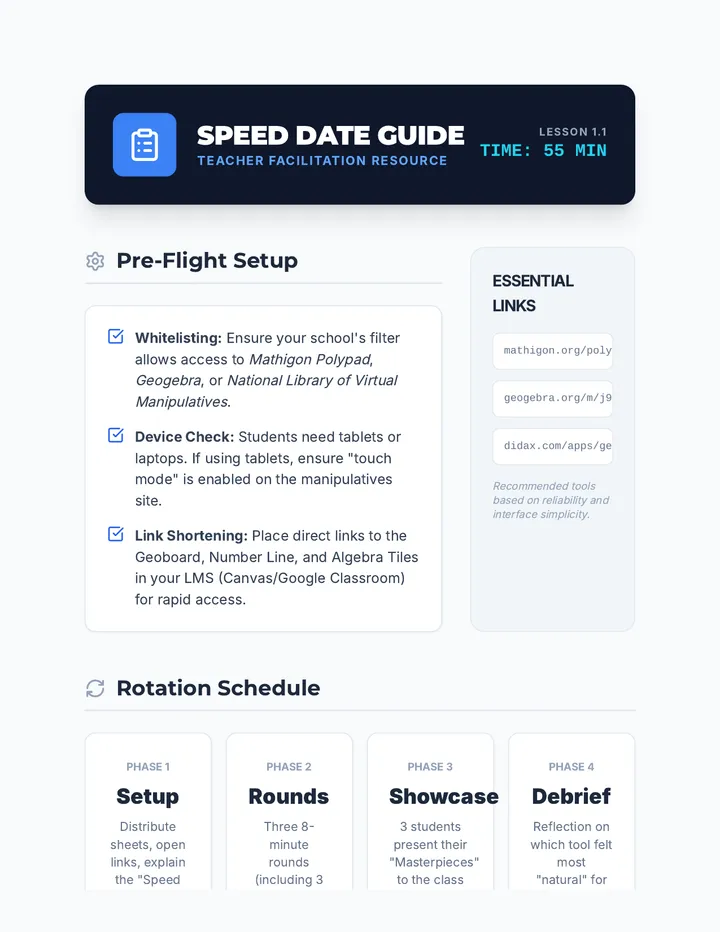
Speed Date Guide

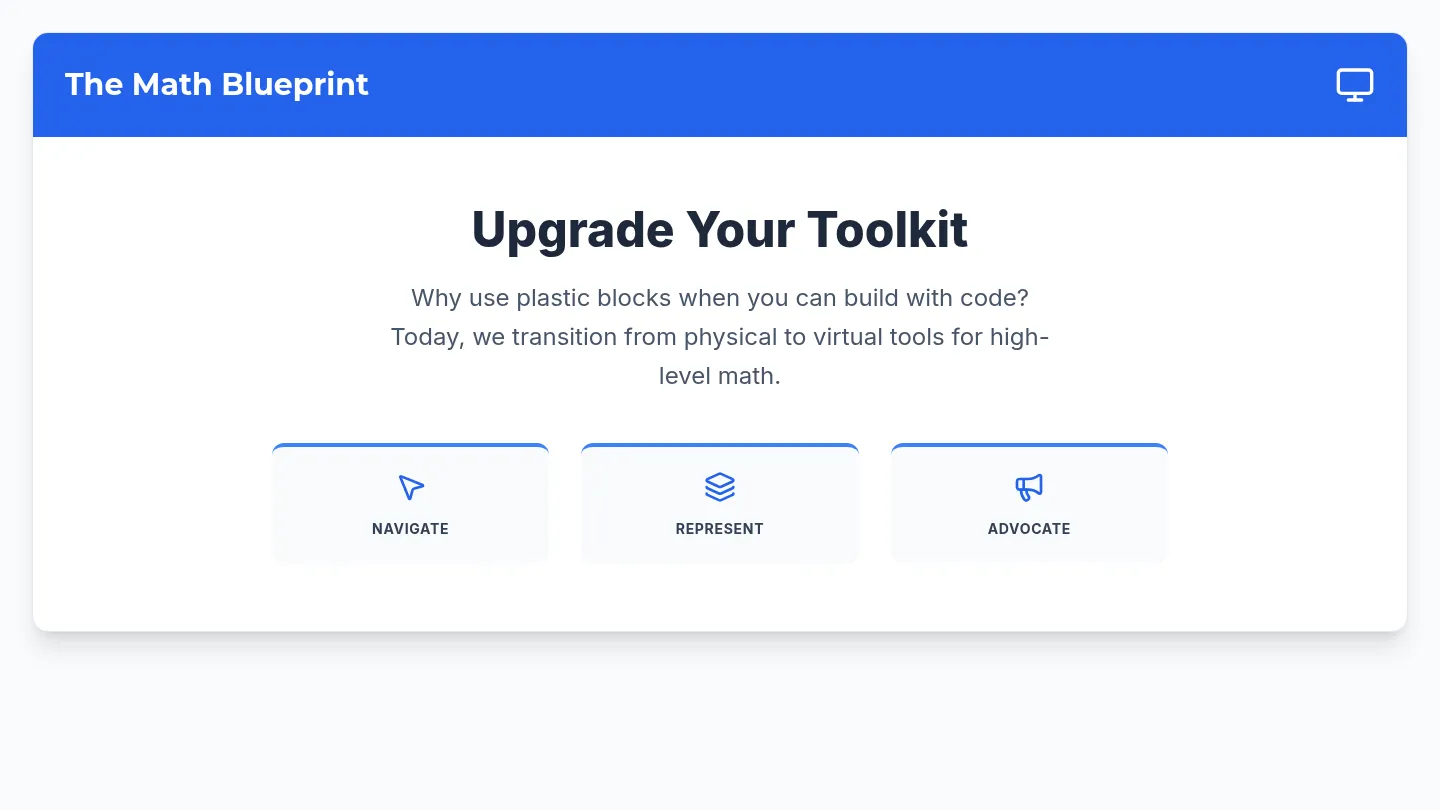
Strategic Application of Virtual Manipulatives

A 10th-grade special education sequence focused on the strategic use of virtual manipulatives to bridge the gap between concrete modeling and abstract algebraic reasoning. Students progress from tool exploration to independent selection and justification.

Lenny Avatar
Lenny
1/18
Sequence
Digital Toolset Slides
Scavenger Hunt Worksheet

Digital Math Architect

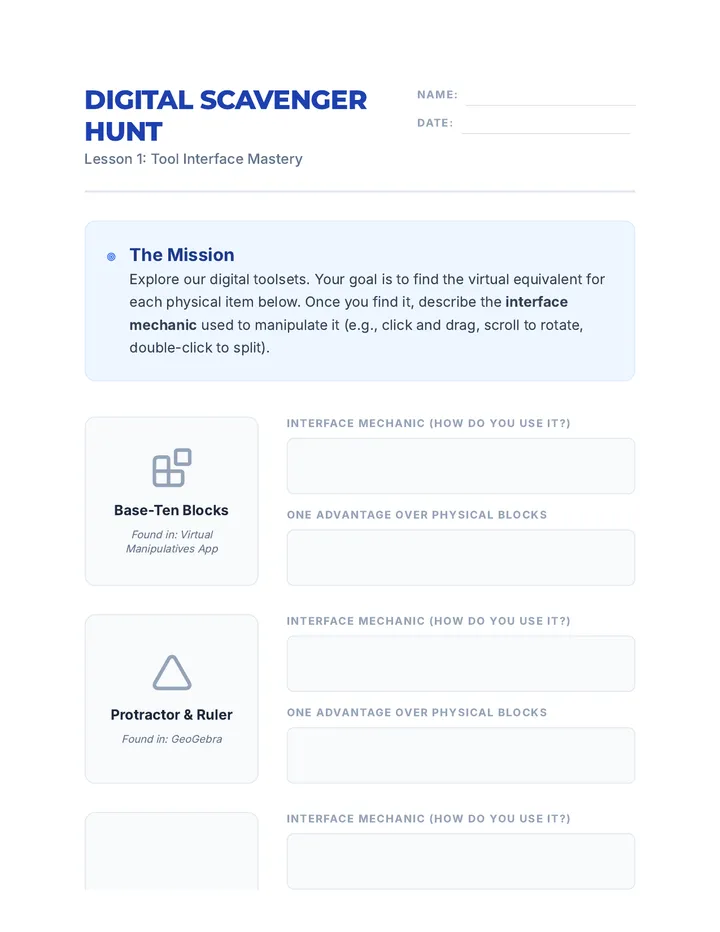
A 5-lesson sequence for 11th-grade students transitioning from physical math manipulatives to virtual tools. The curriculum emphasizes digital literacy, strategic tool selection, and self-advocacy to prepare students for post-secondary academic environments.

Lenny Avatar
Lenny
1/18
Sequence
Decimal Workshop Slides
Decimal Building Worksheet
Redefining Whole Teacher Guide

Decimal Blueprints

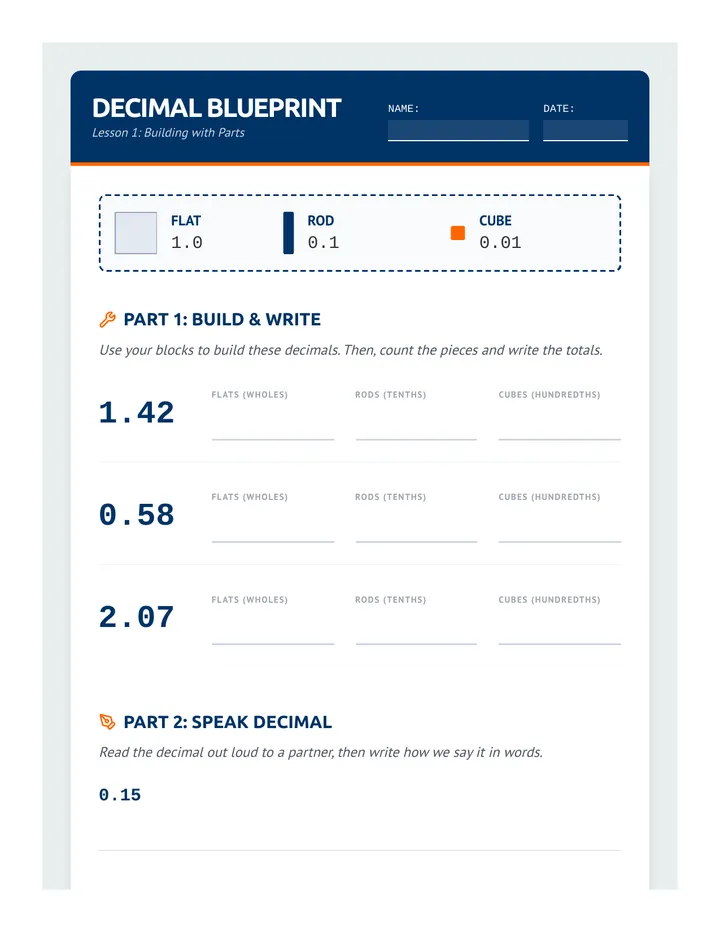
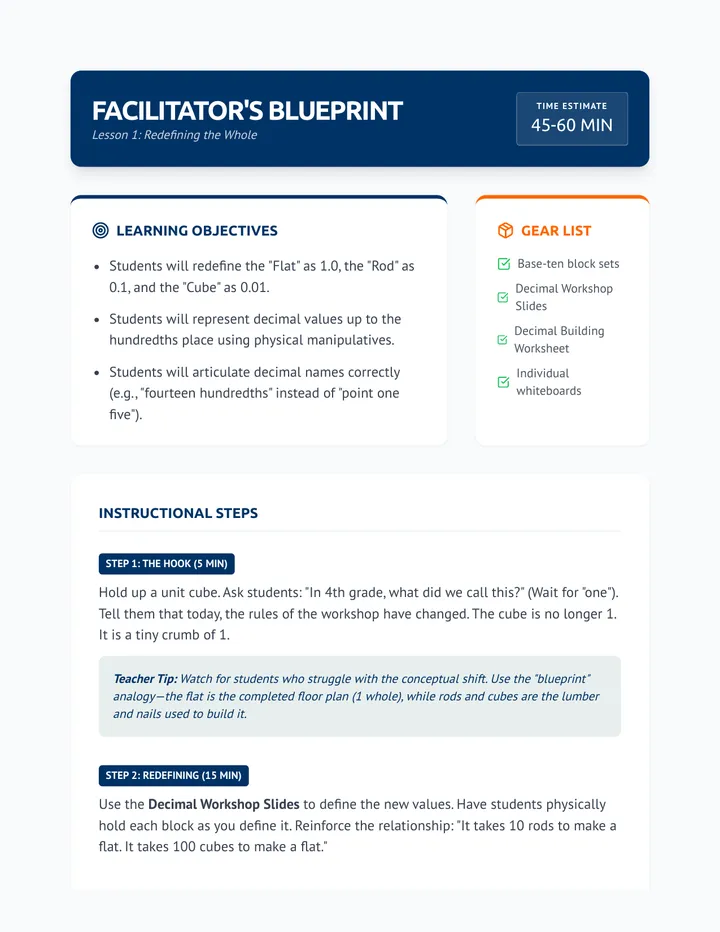
This sequence uses base-ten blocks to help 6th-grade students with learning disabilities visualize decimal place value and operations. By redefining the 'flat' as one whole, students tactilely explore tenths and hundredths to build a concrete foundation for addition and subtraction.

Lenny Avatar
Lenny
1/18
Sequence
Block Builder Slides
Number Builder Worksheet
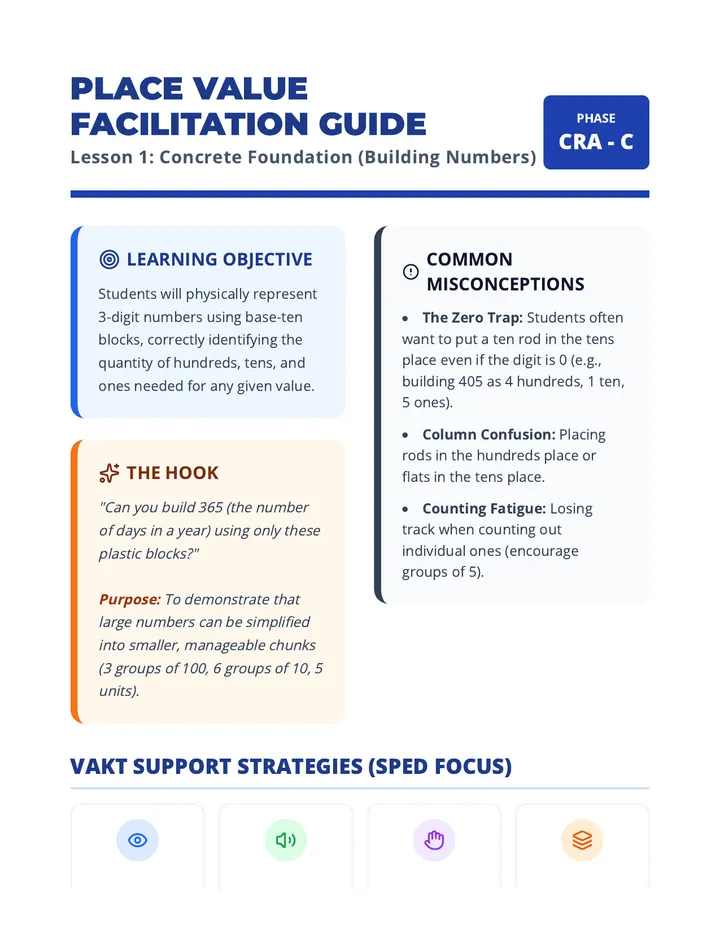
Place Value Facilitation Guide

Mastering Regrouping Strategies

This sequence uses a Concrete-Representational-Abstract (CRA) approach to help 3rd-grade students in special education master multi-digit addition and subtraction. It moves from physical base-ten blocks to shorthand drawings and finally to the standard numeric algorithm, emphasizing the conceptual 'why' behind regrouping.

Lenny Avatar
Lenny
1/18
Sequence
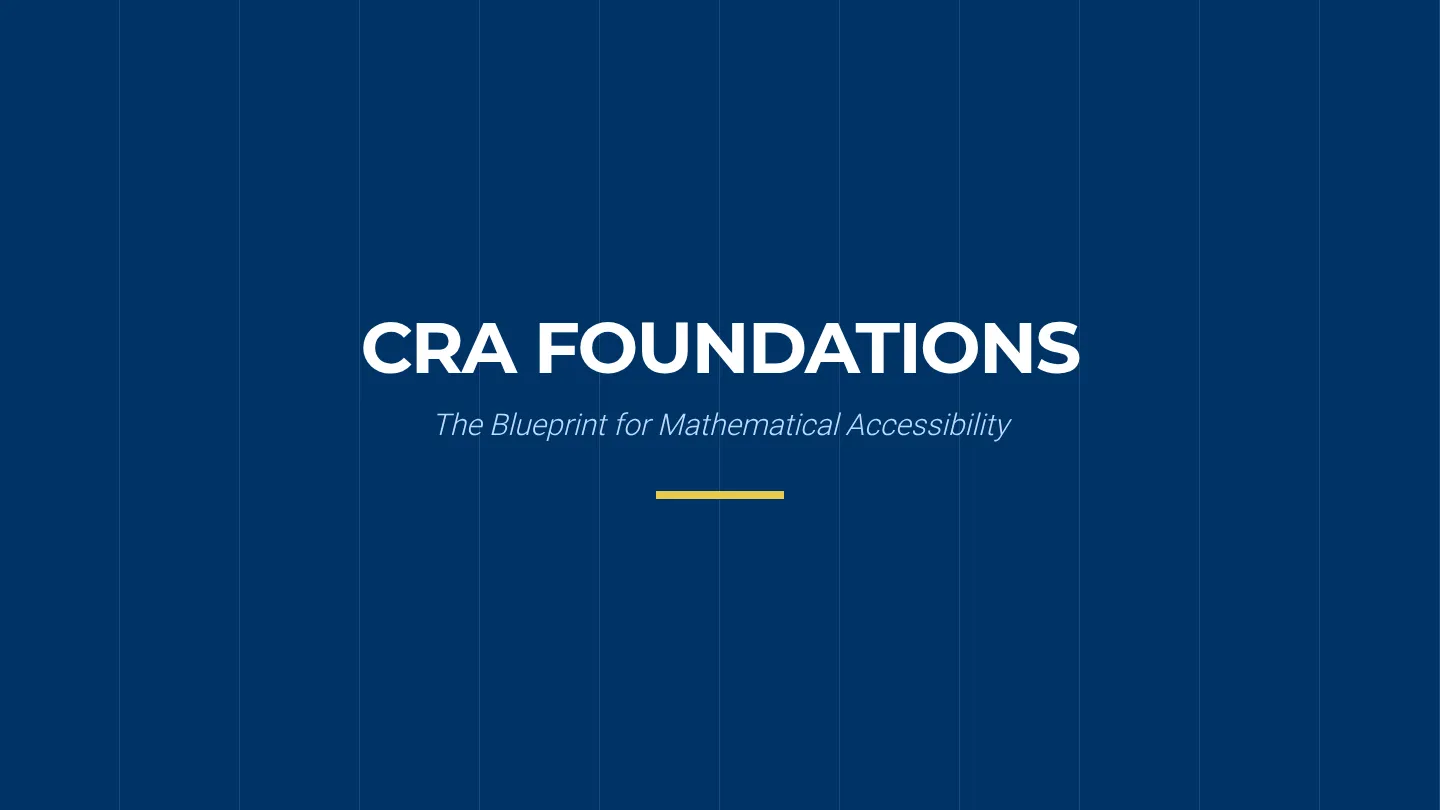
CRA Foundations Slides
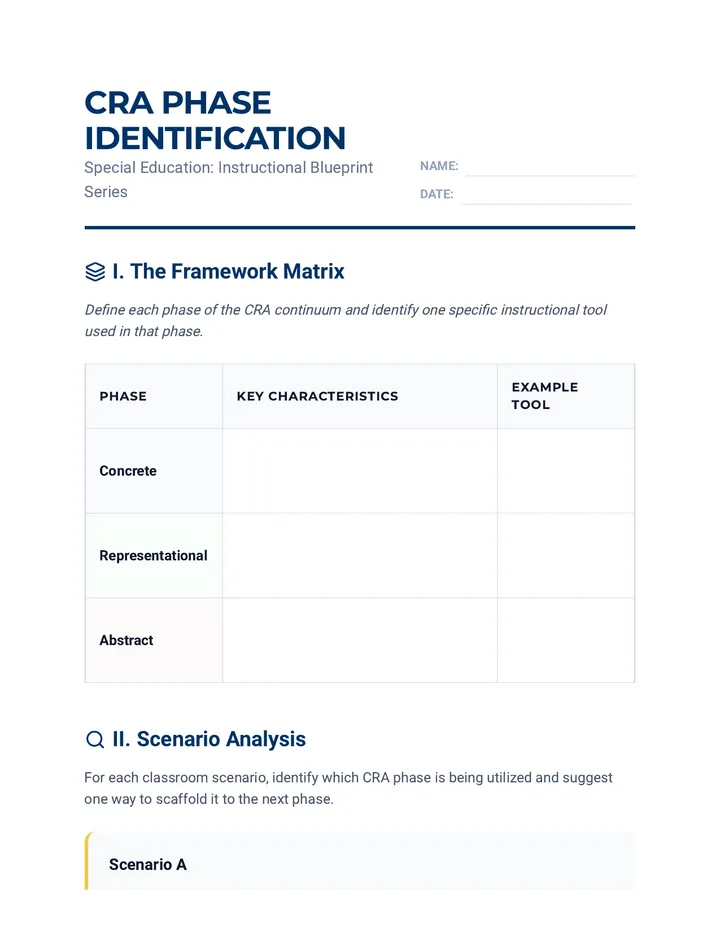
CRA Phase Worksheet
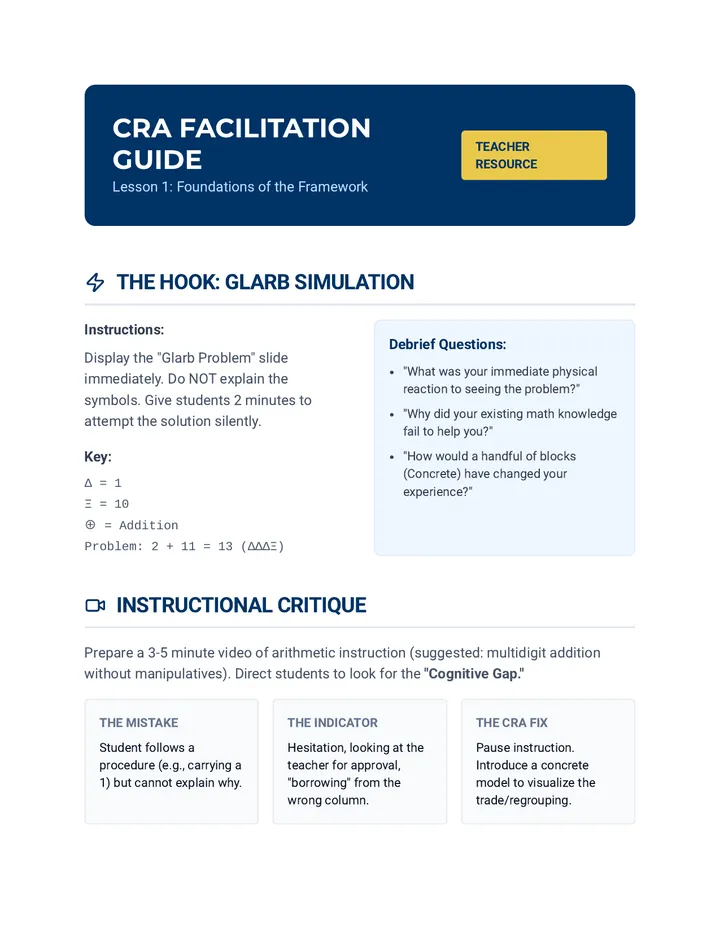
CRA Facilitation Guide

Mastering the CRA Framework

A comprehensive sequence for pre-service teachers on the Concrete-Representational-Abstract (CRA) framework. This unit covers place value, multi-digit addition, subtraction, and multiplication, focusing on explicit instruction and scaffolding for students with learning disabilities.

Lenny Avatar
Lenny
1/18
Sequence
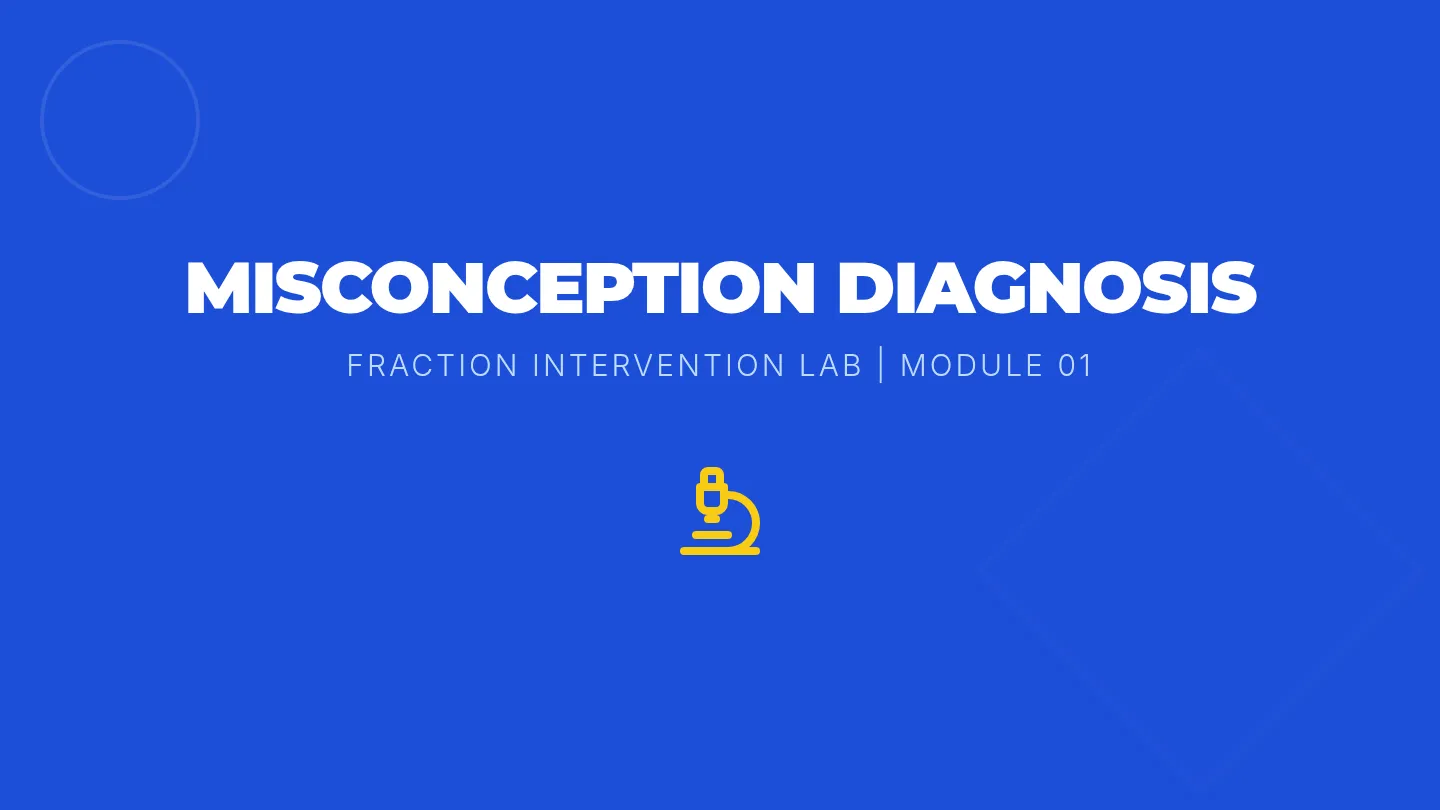
Misconception Briefing Slides
Error Analysis Lab Worksheet

Fraction Intervention Lab

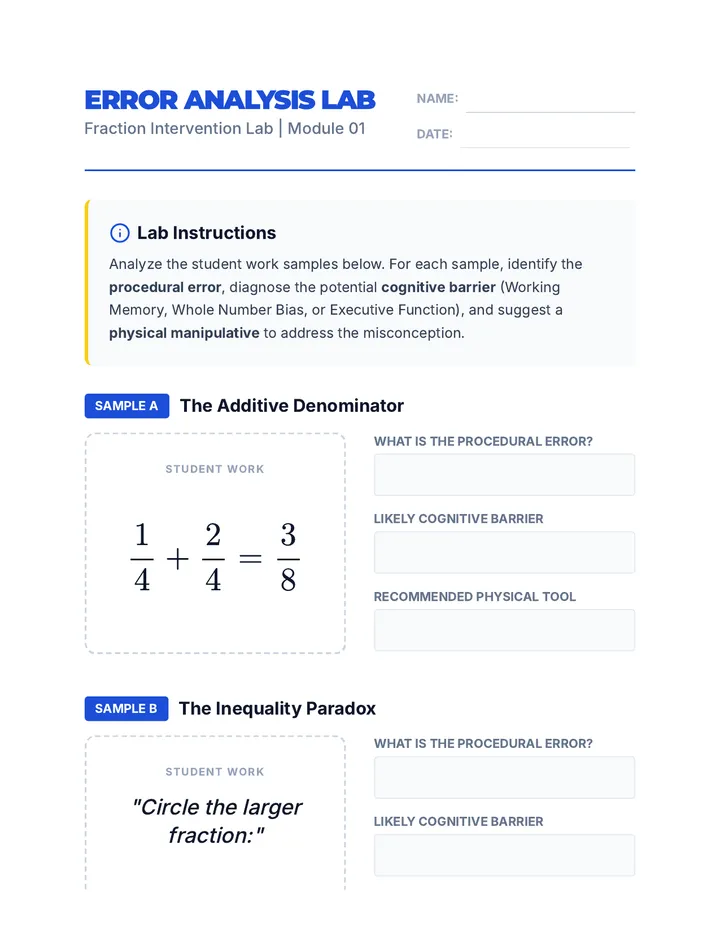
A comprehensive sequence for pre-service special education teachers focusing on diagnosing fraction misconceptions and implementing hybrid intervention strategies using physical and virtual manipulatives. Students move from error analysis to designing technology-integrated support plans for learners with disabilities.

Lenny Avatar
Lenny
1/18
Sequence
CRA Foundations Slides
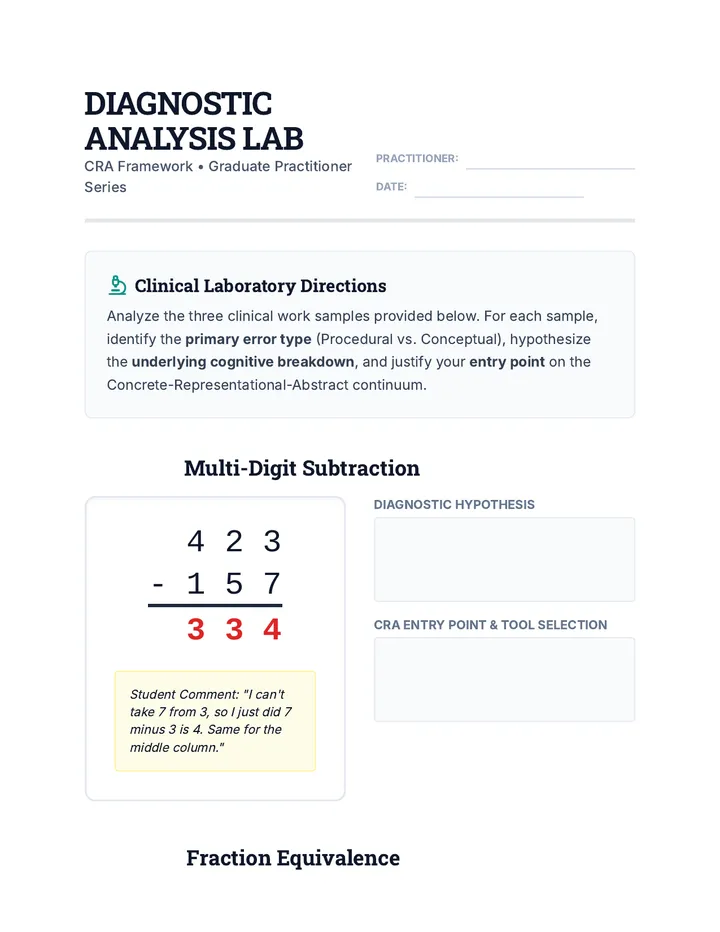
Error Analysis Lab Worksheet
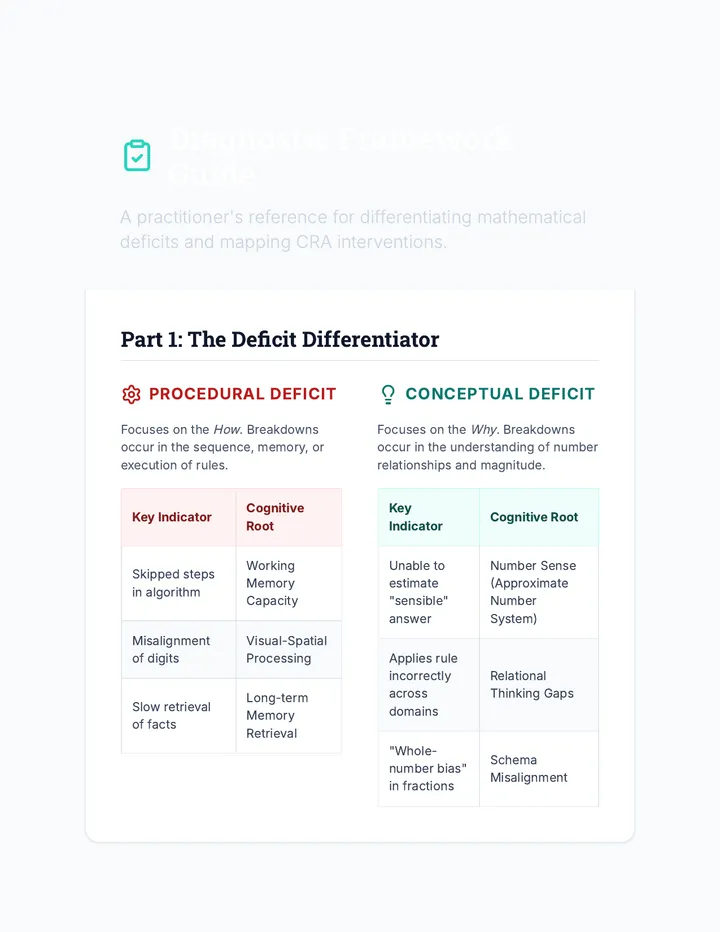
Diagnostic Framework Guide

Advanced Application of the CRA Framework

This advanced graduate sequence focuses on the design and implementation of the Concrete-Representational-Abstract (CRA) framework for learners with mathematics disabilities. Students will move from diagnostic error analysis to the creation of comprehensive, evidence-based intervention plans.

Lenny Avatar
Lenny
1/18
Sequence
Organizer Roast Slides
Organizer Audit Worksheet

Blueprint for Better Note-Taking

A project-based sequence for 10th-grade students to design personalized graphic organizers, focusing on working memory support and self-advocacy. Students transition from critiquing generic templates to creating a custom 'toolkit' for STEM and Humanities subjects.

Lenny Avatar
Lenny
1/18
Sequence
Bar Builder Slides
Blueprint Sketchpad Worksheet
Bar Builder Answer Key

Blueprint Algebra

A 5-lesson sequence for 9th-grade special education students transitioning from arithmetic to algebra using tape diagrams and area models to visualize linear relationships.

Lenny Avatar
Lenny
1/18
Sequence
Math Detective Slides
Math Detective Worksheet
Diagnostic Artifact Guide

Visual Math Diagnostics

A graduate-level sequence focused on using visual mathematical representations as both a diagnostic lens for identifying student misconceptions and a scaffold for solving multi-step word problems. Students will move from error analysis to designing technology-integrated intervention plans.

Lenny Avatar
Lenny
1/18
Sequence
Cognitive Load Slides
Cognitive Load Case Study Worksheet
Visual Math Facilitator Guide

Visual Math Blueprints

This graduate-level sequence prepares educators to implement the Concrete-Representational-Abstract (CRA) framework and Schema-Based Instruction (SBI) to support students with mathematical learning disabilities. Participants will bridge cognitive science with practical pedagogical strategies, focusing on reducing cognitive load through visual modeling.

Lenny Avatar
Lenny
1/18
Sequence
Keyword Trap Worksheet
Keyword Trap Slides
SBI Discussion Guide

Logic Lab Schema Based Instruction

This sequence trains pre-service teachers in Schema-Based Instruction (SBI), moving from the pitfalls of keyword strategies to the mastery of additive and multiplicative schematic diagramming. Students explore how to map word problems to visual blueprints, use open number lines for measurement, and leverage assistive technology for students with diverse needs.

Lenny Avatar
Lenny
1/18
Sequence
Cognitive Load Slides
Auditory Math Activity
Math SLD Profiles Handout

Mastering the CRA Framework

A comprehensive training sequence for pre-service teachers on the Concrete-Representational-Abstract (CRA) framework. This sequence bridges cognitive science with practical instructional strategies to support students with math learning disabilities through visual scaffolding.

Lenny Avatar
Lenny
1/18
Sequence
Profiles Reading Difficulties Slides
Dyslexia Simulation Activity
Simple View Handout

Intervention Strategies for Struggling Readers

Focuses on students with persistent difficulties in blending and segmenting, such as those with dyslexia. Covers the neurobiology of reading disabilities and advanced multi-sensory interventions for future special education and reading intervention specialists.

Lenny Avatar
Lenny
1/18
Sequence
Nonsense Word Challenge Activity
Screener Basics Slides
Screener Protocols Handout

Literacy Data Lab

This sequence prepares undergraduate education students to administer, score, and analyze phonemic awareness assessments. Students learn to use data from screeners like PSF and NWF to identify student needs, diagnose error patterns, and form instructional groups.

Lenny Avatar
Lenny
1/18
Sequence
Scene Stealer Slides
Math Stage Mat Student Activity
Director Script Teacher Guide

Blueprint Builders Math Sequence

A 3rd-grade special education sequence focused on decomposing multi-step math word problems through visualization techniques. Students progress from physical acting with manipulatives to creating sophisticated bar models for two-step problems.

Lenny Avatar
Lenny
1/18
Sequence
Tower Tales Slides
Tower Height Tracker
Balance Basics Teacher Guide

Maker Hands

This sequence focuses on developing fine motor skills in Pre-K students through construction-based play. Students will explore stacking, twisting, snapping, and threading to improve dexterity, wrist rotation, and hand-eye coordination.

Lenny Avatar
Lenny
1/18
Sequence
Tool Tasting Slides
Tool Tasting Menu Worksheet
Station Setup Guide Teacher Resource

Math Independence Toolkits

A project-based sequence for 10th-grade students to develop personalized physical or digital math toolkits, focusing on self-assessment, mnemonic creation, and procedural documentation to foster independence in complex problem-solving.

Lenny Avatar
Lenny
1/17
Sequence
Support Strategy Slides
Support Sorting Worksheet
Grading Dilemma Facilitator Guide

Equity through Design

This workshop-style sequence for pre-service teachers bridges the gap between identifying student needs and designing instructional supports, focusing on the critical distinctions between accommodations, modifications, and Specially Designed Instruction (SDI). Students will move from theoretical definitions to practical application, culminating in the creation of a service delivery matrix.

Lenny Avatar
Lenny
1/17
Sequence
Case File Student X Document
Diagnostic Lab Slides
Diagnostic Facilitation Guide

Designing Integrated Math Interventions

This project-based sequence prepares undergraduate students to design data-driven math interventions. Students analyze diagnostic data, select evidence-based strategies, and create comprehensive intervention plans for students with math-related disabilities.

Lenny Avatar
Lenny
1/17
Sequence
Tool Suite Slides
Tool Explorer Worksheet
Speed Date Guide

Strategic Application of Virtual Manipulatives

A 10th-grade special education sequence focused on the strategic use of virtual manipulatives to bridge the gap between concrete modeling and abstract algebraic reasoning. Students progress from tool exploration to independent selection and justification.

Lenny Avatar
Lenny
1/18
Sequence
Digital Toolset Slides
Scavenger Hunt Worksheet

Digital Math Architect

A 5-lesson sequence for 11th-grade students transitioning from physical math manipulatives to virtual tools. The curriculum emphasizes digital literacy, strategic tool selection, and self-advocacy to prepare students for post-secondary academic environments.

Lenny Avatar
Lenny
1/18
Sequence
Decimal Workshop Slides
Decimal Building Worksheet
Redefining Whole Teacher Guide

Decimal Blueprints

This sequence uses base-ten blocks to help 6th-grade students with learning disabilities visualize decimal place value and operations. By redefining the 'flat' as one whole, students tactilely explore tenths and hundredths to build a concrete foundation for addition and subtraction.

Lenny Avatar
Lenny
1/18
Sequence
Block Builder Slides
Number Builder Worksheet
Place Value Facilitation Guide

Mastering Regrouping Strategies

This sequence uses a Concrete-Representational-Abstract (CRA) approach to help 3rd-grade students in special education master multi-digit addition and subtraction. It moves from physical base-ten blocks to shorthand drawings and finally to the standard numeric algorithm, emphasizing the conceptual 'why' behind regrouping.

Lenny Avatar
Lenny
1/18
Sequence
CRA Foundations Slides
CRA Phase Worksheet
CRA Facilitation Guide

Mastering the CRA Framework

A comprehensive sequence for pre-service teachers on the Concrete-Representational-Abstract (CRA) framework. This unit covers place value, multi-digit addition, subtraction, and multiplication, focusing on explicit instruction and scaffolding for students with learning disabilities.

Lenny Avatar
Lenny
1/18
Sequence
Misconception Briefing Slides
Error Analysis Lab Worksheet

Fraction Intervention Lab

A comprehensive sequence for pre-service special education teachers focusing on diagnosing fraction misconceptions and implementing hybrid intervention strategies using physical and virtual manipulatives. Students move from error analysis to designing technology-integrated support plans for learners with disabilities.

Lenny Avatar
Lenny
1/18
Sequence
CRA Foundations Slides
Error Analysis Lab Worksheet
Diagnostic Framework Guide

Advanced Application of the CRA Framework

This advanced graduate sequence focuses on the design and implementation of the Concrete-Representational-Abstract (CRA) framework for learners with mathematics disabilities. Students will move from diagnostic error analysis to the creation of comprehensive, evidence-based intervention plans.

Lenny Avatar
Lenny
1/18
Sequence
Brain Overload Slides
Verb Hunter Lab Worksheet
Action Verb Hunter Guide

Mission Break Down

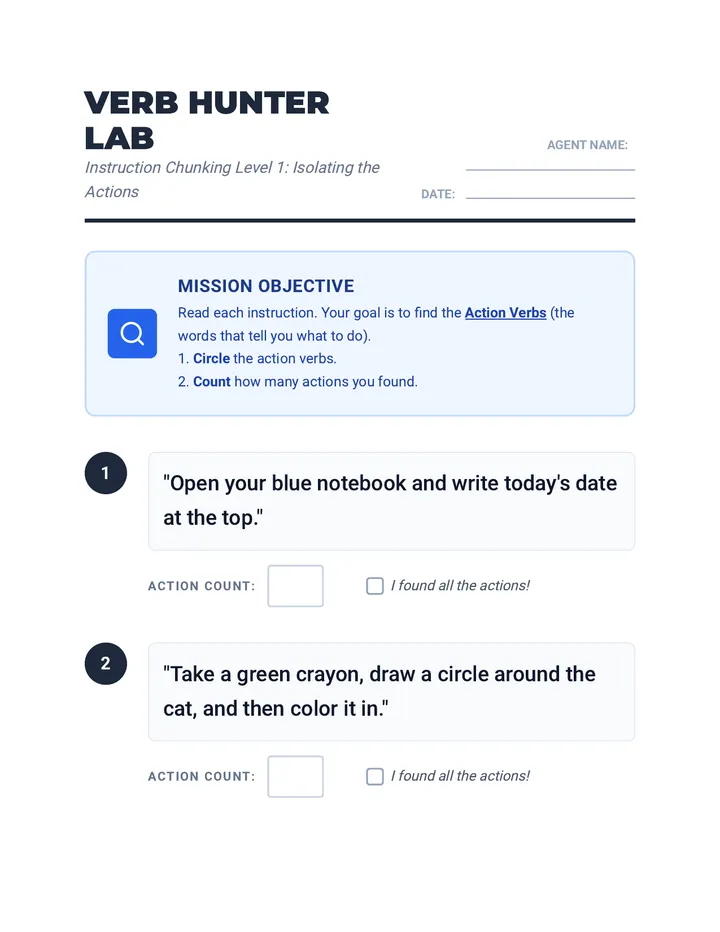
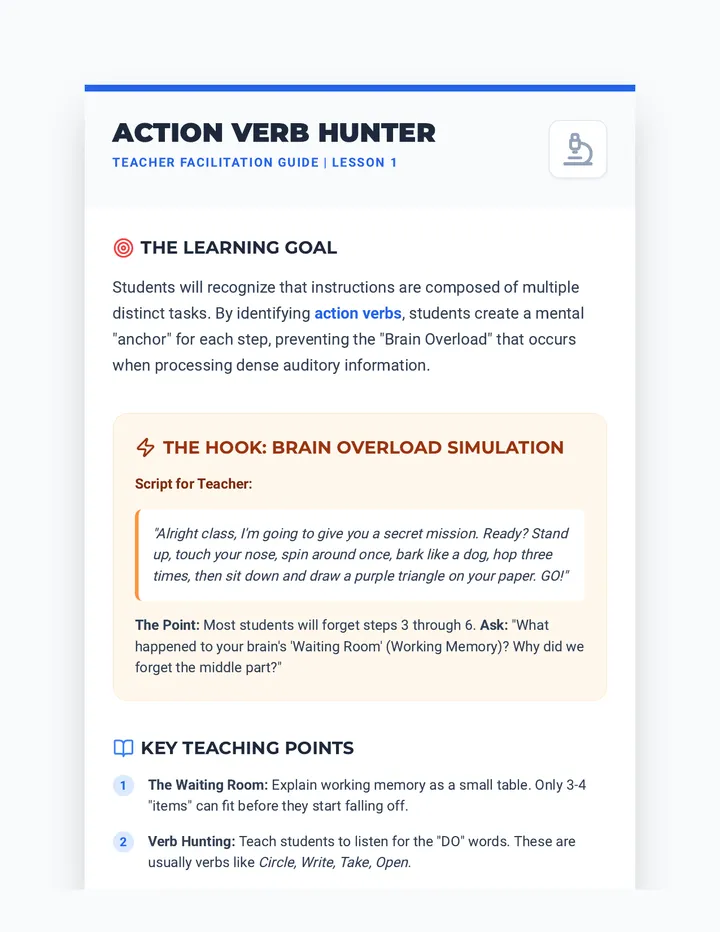
This sequence teaches 3rd-grade students with working memory challenges how to decompose multi-step instructions into manageable 'chunks' using action verbs, sequencing, and visualization techniques. Students progress from identifying cognitive overload to independently managing complex academic tasks using self-created checklists.

Lenny Avatar
Lenny
1/18
Sequence
Memory Glitch Slides
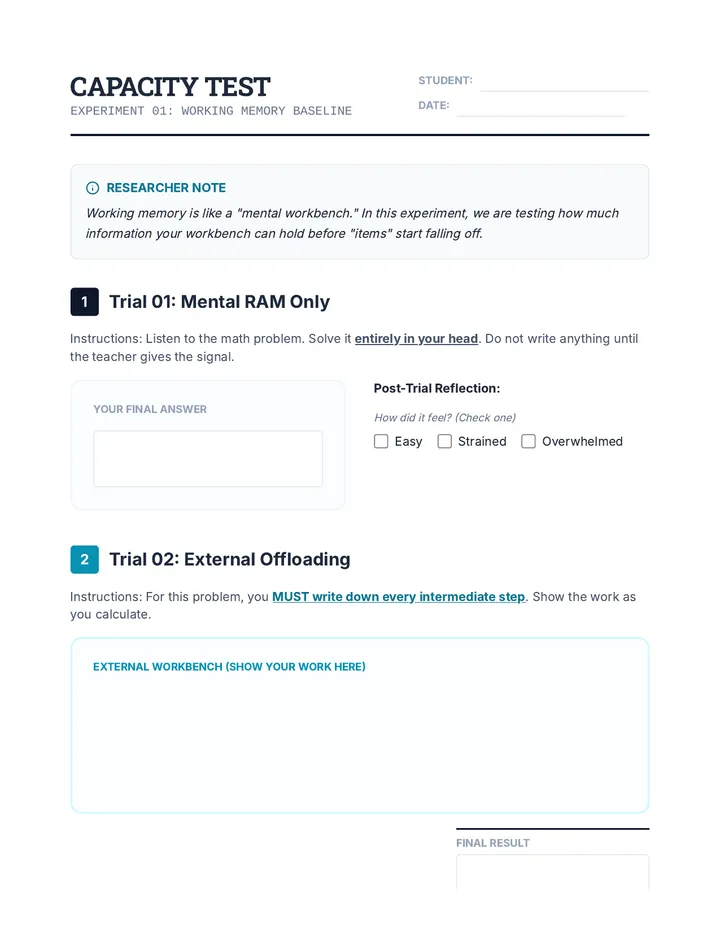
Capacity Test Worksheet
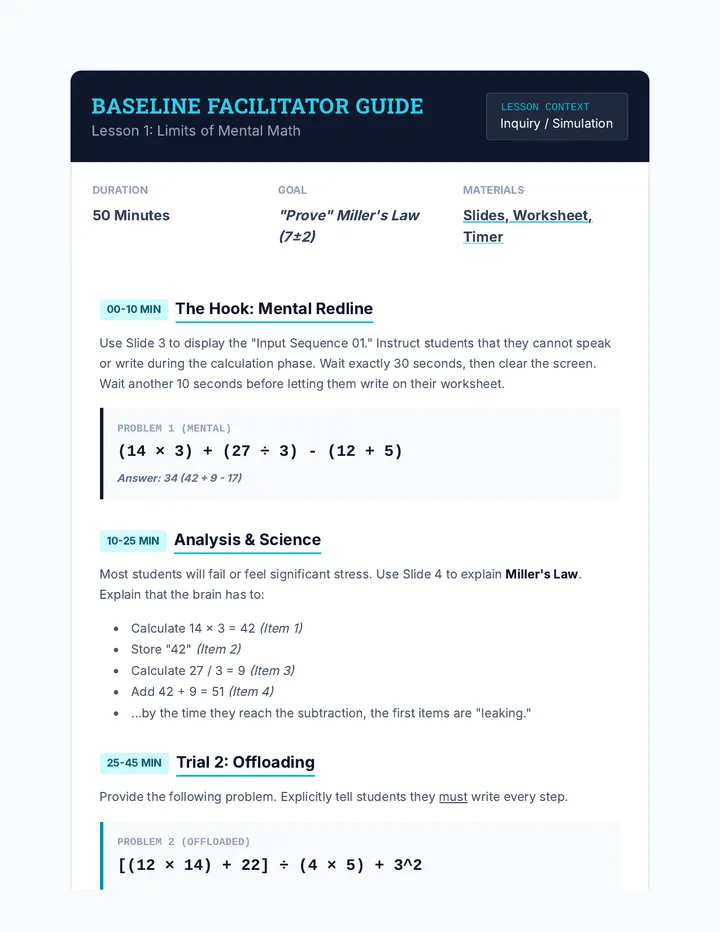
Baseline Facilitator Guide

Strategic Cognitive Offloading

A 5-lesson sequence for 11th-grade students focused on working memory support through cognitive offloading. Students learn to externalize complex STEM processes using flowcharts, reference anchors, and error analysis to reduce mental load and improve accuracy.

Lenny Avatar
Lenny
1/18
Sequence
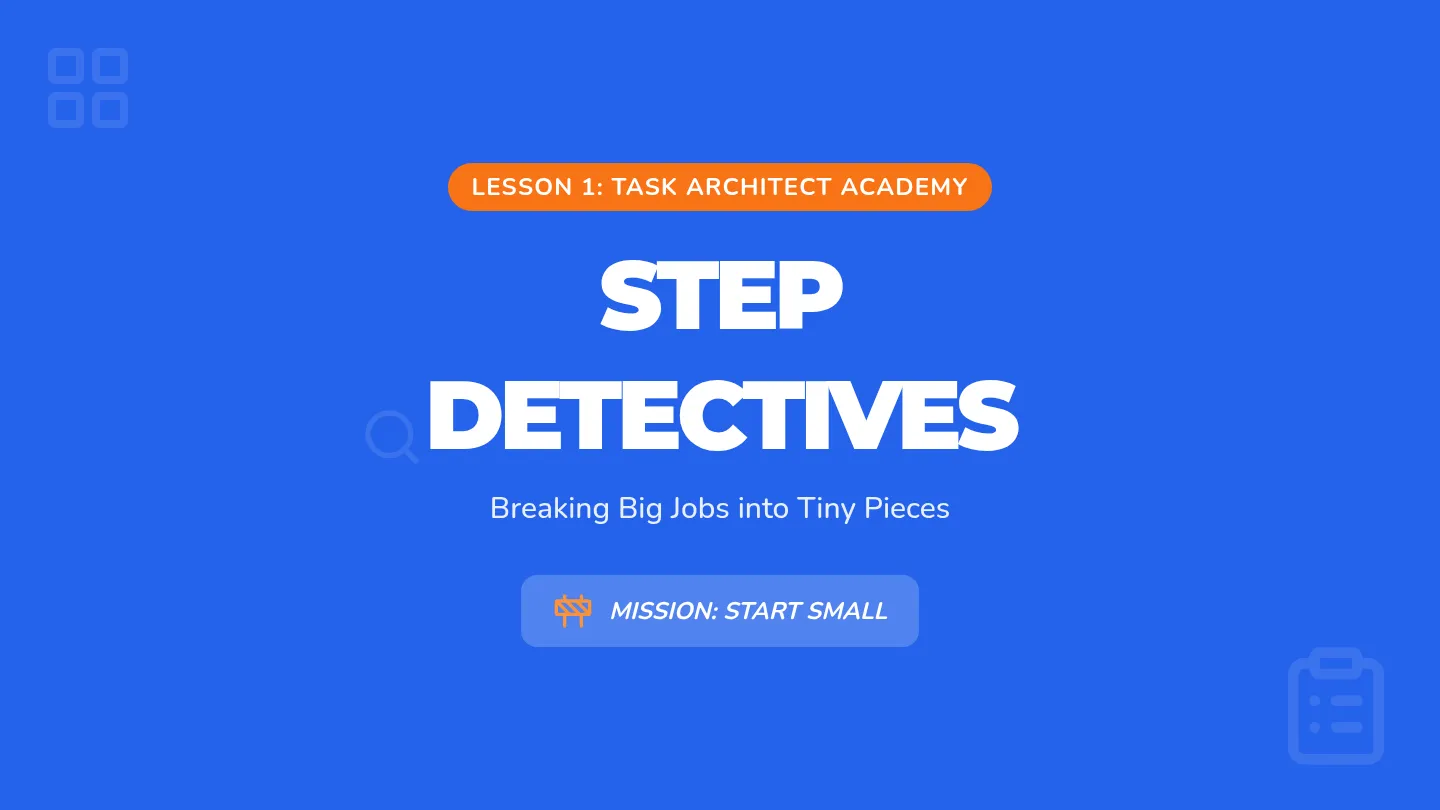
Step Detectives Slides
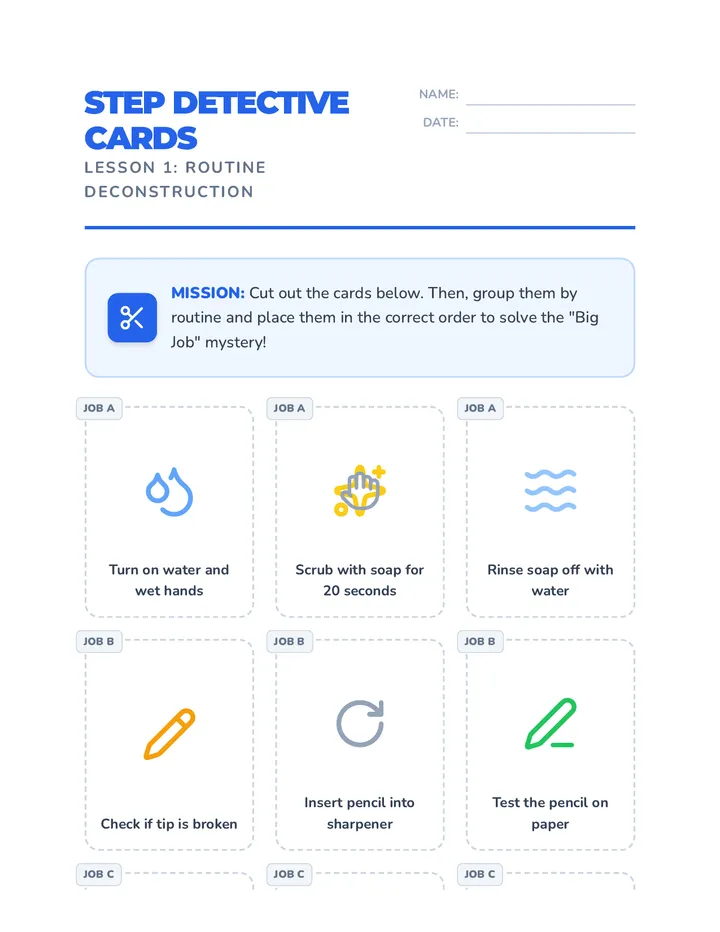
Step Detective Cards Activity
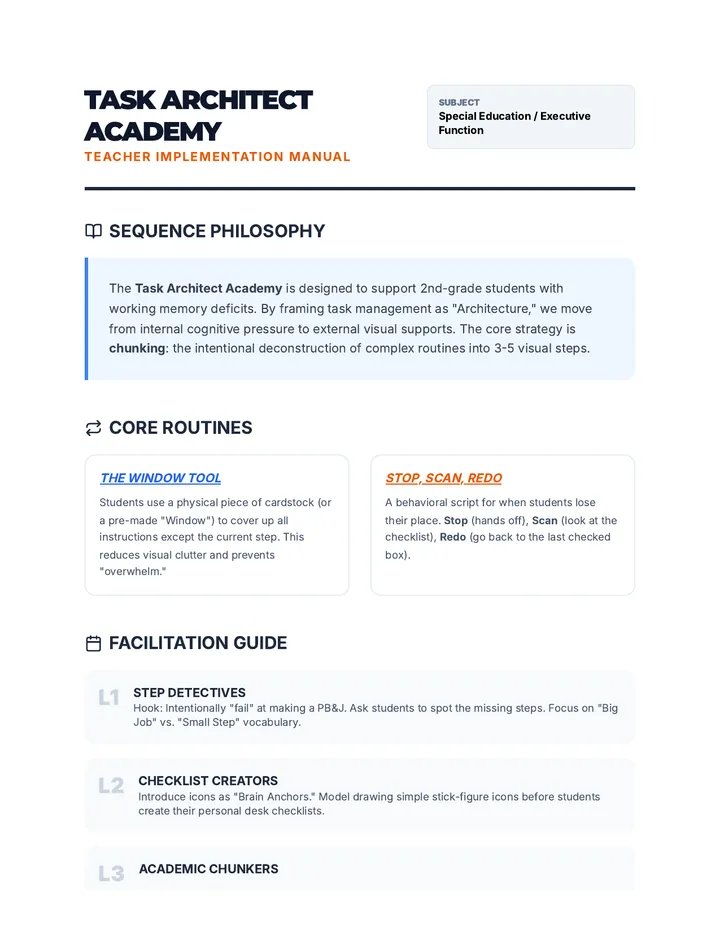
Task Architect Teacher Manual

Task Architect Academy

This sequence teaches 2nd-grade students how to use visual checklists and 'chunking' strategies to manage multi-step tasks. By breaking large goals into manageable steps, students develop the working memory supports needed for academic success and daily routines.

Lenny Avatar
Lenny
1/18
Sequence
Sorting Circles Slides
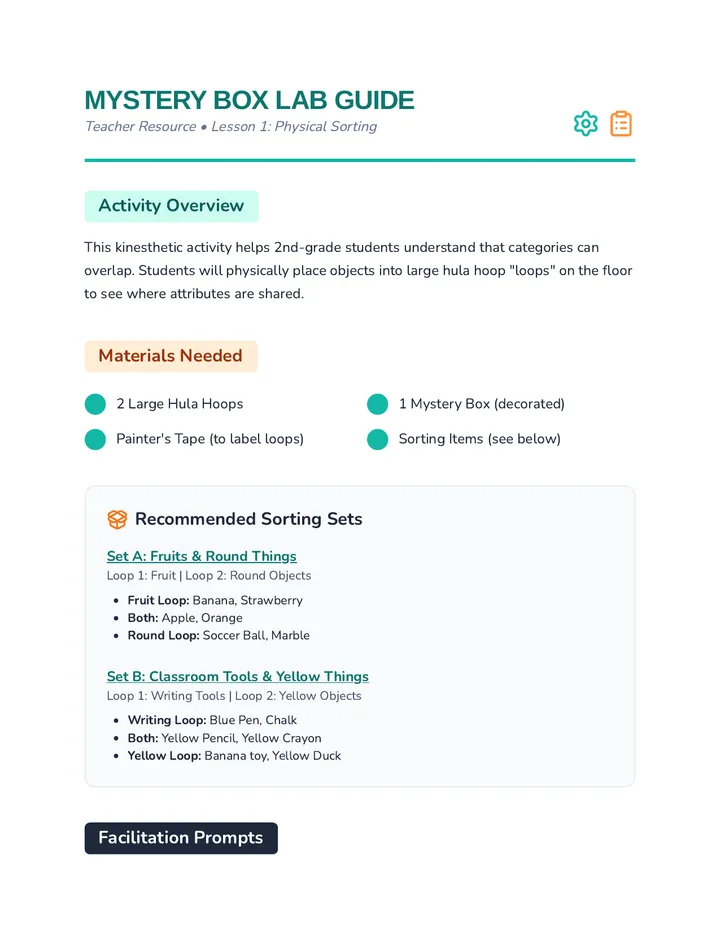
Mystery Box Lab Guide
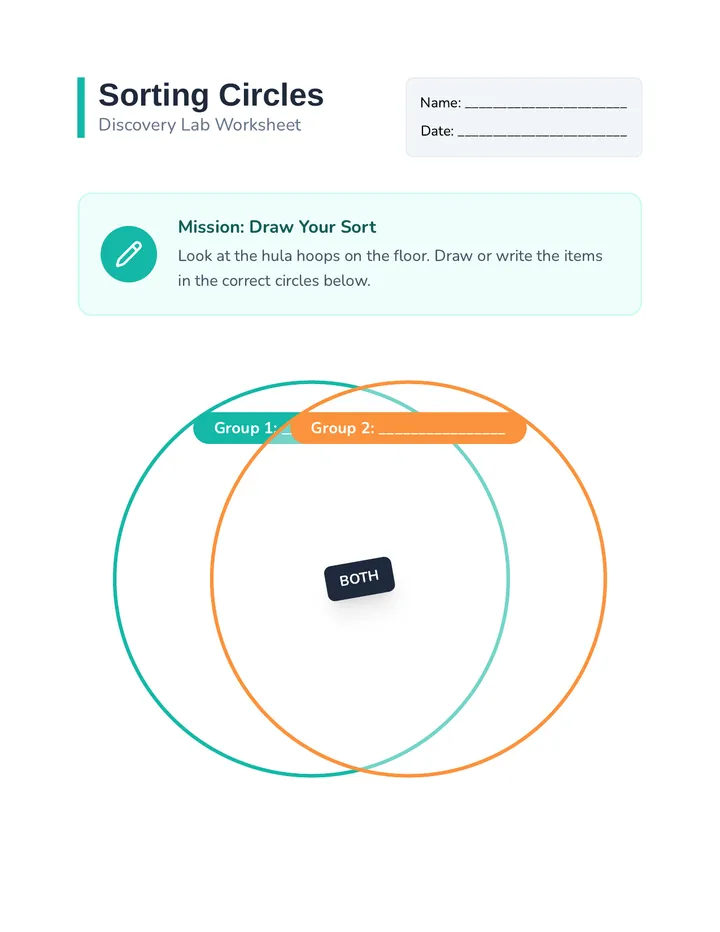
Sorting Circles Worksheet

Venn Discovery Lab

A 2nd-grade sequence designed for special education support, focusing on the compare and contrast text structure through the use of Venn diagrams. Students progress from sorting physical objects to comparing images, identifying signal words, and ultimately extracting information from text to populate diagrams and write comparative sentences.

Lenny Avatar
Lenny
1/18
Sequence
Mental Movie Slides Presentation
Director Notes Teacher Guide
Script to Screen Worksheet

Mind Blueprints Visualization Strategies

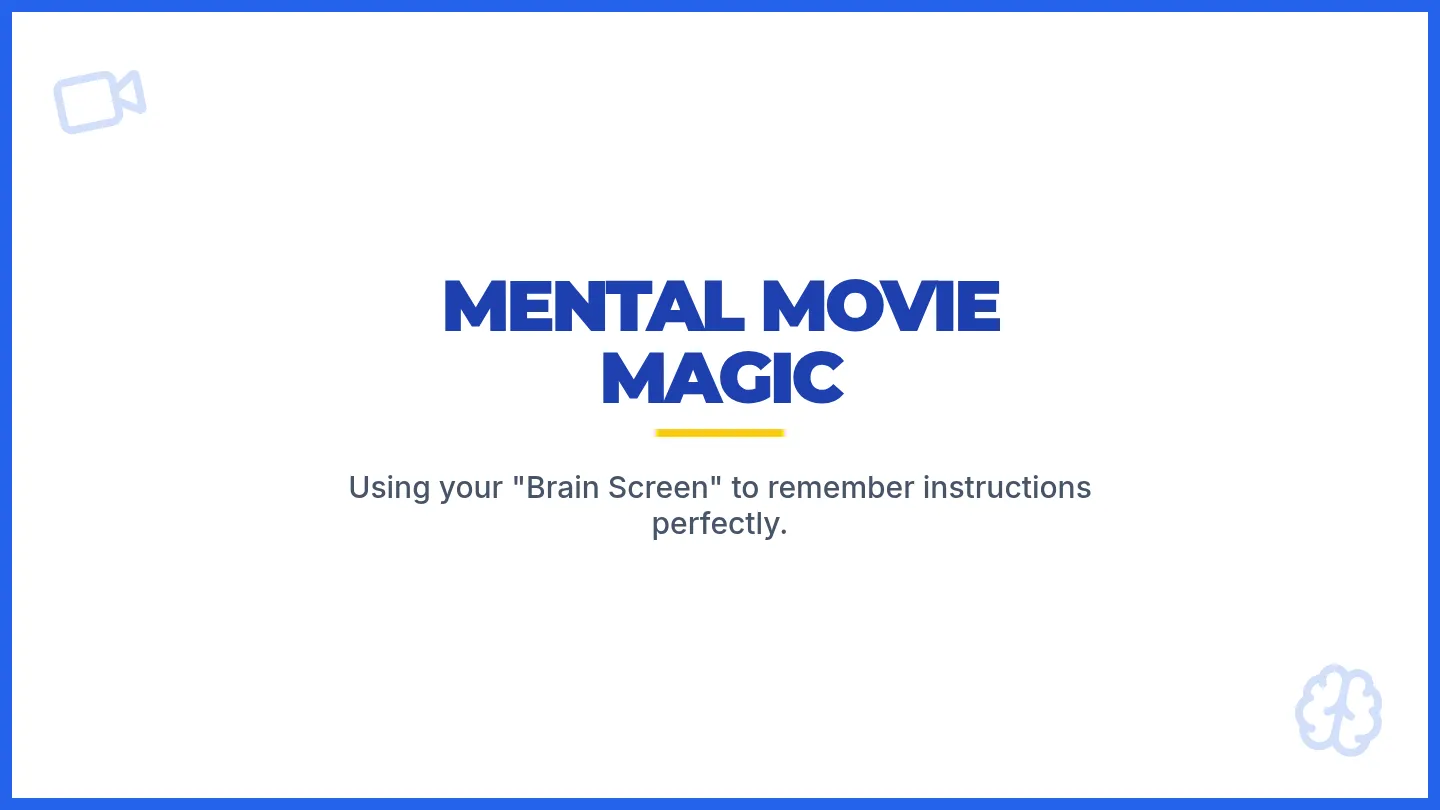
A specialized sequence designed for 9th-grade students needing working memory support. It focuses on using visualization and spatial mapping to follow multi-step instructions in academic settings.

Lenny Avatar
Lenny
1/18
Sequence
Paycheck Pieces Slides
Ratio Ruler Worksheet

Visual Models for Financial Decision Making

A sequence of five lessons designed for 12th-grade students in special education, focusing on using visual models like bar diagrams, area models, and double number lines to demystify financial math. Students transition from abstract calculations to concrete visual representations of wages, budgeting, savings, and loan comparisons.

Lenny Avatar
Lenny
1/18
Sequence
Bar Builder Slides
Blueprint Sketchpad Worksheet
Bar Builder Answer Key

Blueprint Algebra

A 5-lesson sequence for 9th-grade special education students transitioning from arithmetic to algebra using tape diagrams and area models to visualize linear relationships.

Lenny Avatar
Lenny
1/18
Sequence
Math Detective Slides
Math Detective Worksheet
Diagnostic Artifact Guide

Visual Math Diagnostics

A graduate-level sequence focused on using visual mathematical representations as both a diagnostic lens for identifying student misconceptions and a scaffold for solving multi-step word problems. Students will move from error analysis to designing technology-integrated intervention plans.

Lenny Avatar
Lenny
1/18
Sequence
Cognitive Load Slides
Cognitive Load Case Study Worksheet
Visual Math Facilitator Guide

Visual Math Blueprints

This graduate-level sequence prepares educators to implement the Concrete-Representational-Abstract (CRA) framework and Schema-Based Instruction (SBI) to support students with mathematical learning disabilities. Participants will bridge cognitive science with practical pedagogical strategies, focusing on reducing cognitive load through visual modeling.

Lenny Avatar
Lenny
1/18
Sequence
Keyword Trap Worksheet
Keyword Trap Slides
SBI Discussion Guide

Logic Lab Schema Based Instruction

This sequence trains pre-service teachers in Schema-Based Instruction (SBI), moving from the pitfalls of keyword strategies to the mastery of additive and multiplicative schematic diagramming. Students explore how to map word problems to visual blueprints, use open number lines for measurement, and leverage assistive technology for students with diverse needs.

Lenny Avatar
Lenny
1/18
Sequence
Cognitive Load Slides
Auditory Math Activity
Math SLD Profiles Handout

Mastering the CRA Framework

A comprehensive training sequence for pre-service teachers on the Concrete-Representational-Abstract (CRA) framework. This sequence bridges cognitive science with practical instructional strategies to support students with math learning disabilities through visual scaffolding.

Lenny Avatar
Lenny
1/18
Sequence
Memory Capacity Lab Worksheet
Power of Seven Slides

Strategic Text Architecture

A 5-lesson sequence designed for 10th-grade students with working memory needs. This sequence focuses on teaching 'chunking' strategies to manage cognitive load, categorize academic vocabulary, deconstruct dense text, and create visual study maps.

Lenny Avatar
Lenny
1/18
Sequence
Nonsense Word Challenge Activity
Screener Basics Slides
Screener Protocols Handout

Literacy Data Lab

This sequence prepares undergraduate education students to administer, score, and analyze phonemic awareness assessments. Students learn to use data from screeners like PSF and NWF to identify student needs, diagnose error patterns, and form instructional groups.

Lenny Avatar
Lenny
1/18
Sequence
Audio Adventurers Slides
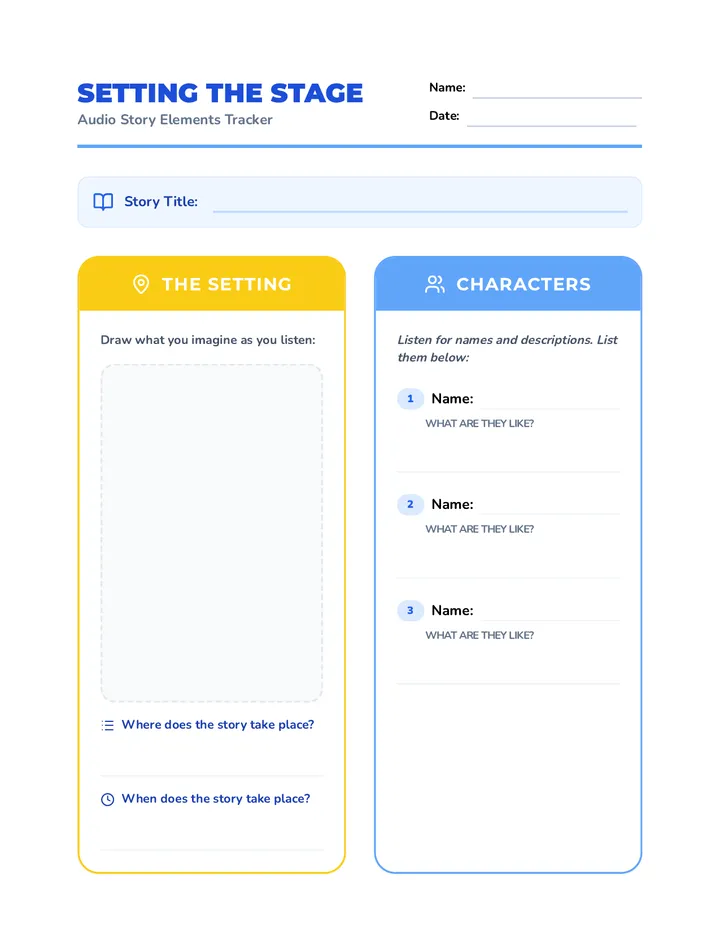
Setting the Stage Worksheet
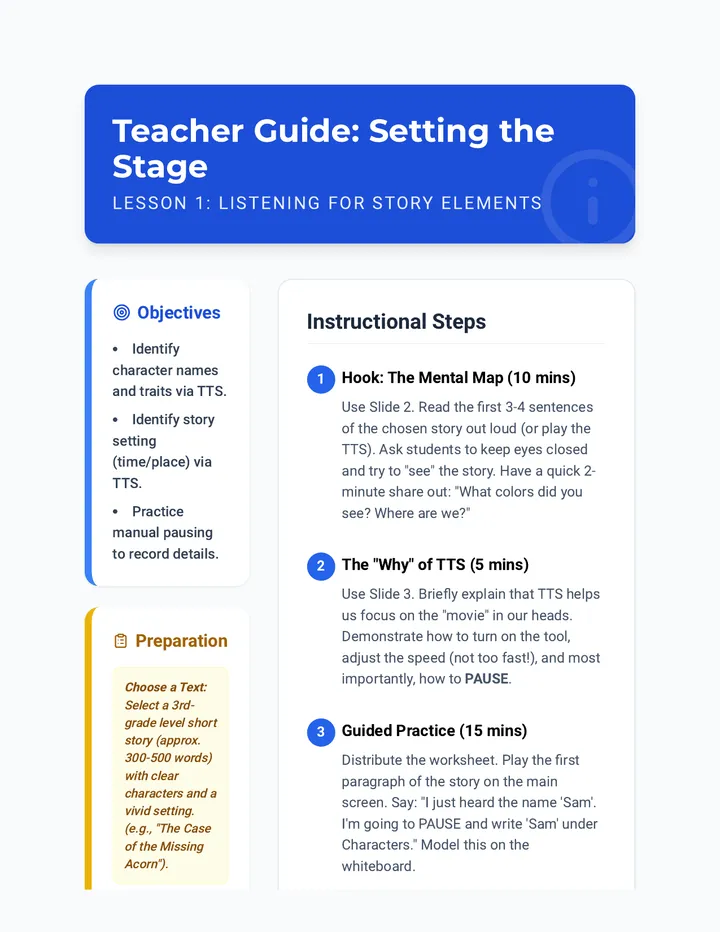
Story Elements Teacher Guide

Audio Narrative Adventurers

This sequence teaches 3rd-grade students how to use text-to-speech (TTS) as a strategic tool for narrative comprehension. Students learn to use audio for identifying story elements, summarizing via the 'Listen-Stop-Think' routine, citing evidence by re-listening, and visualizing descriptive text.

Lenny Avatar
Lenny
1/18
Sequence
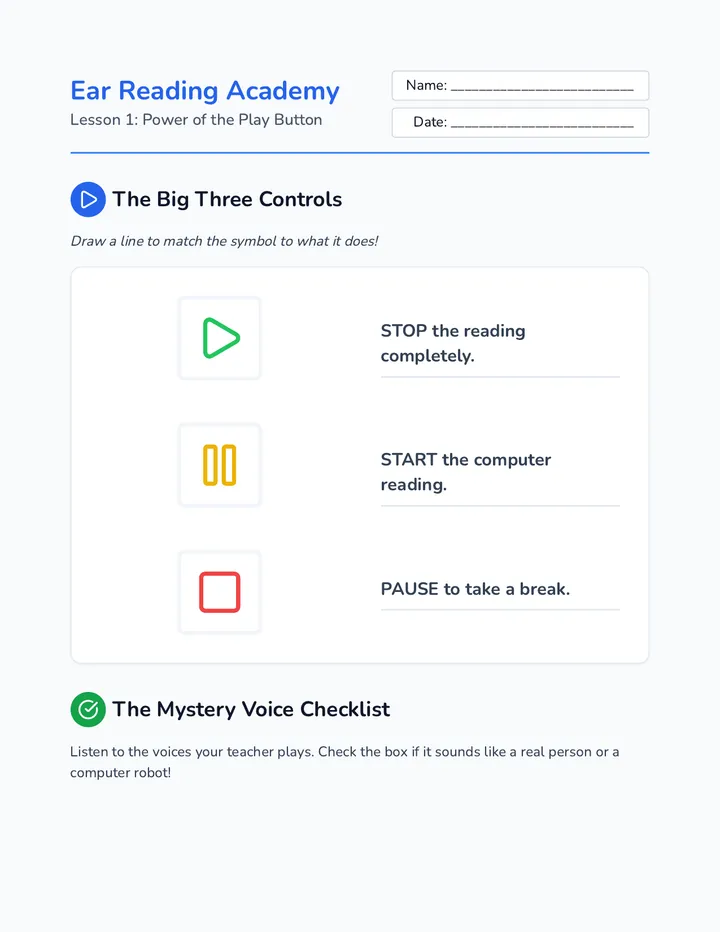
TTS Controls Worksheet
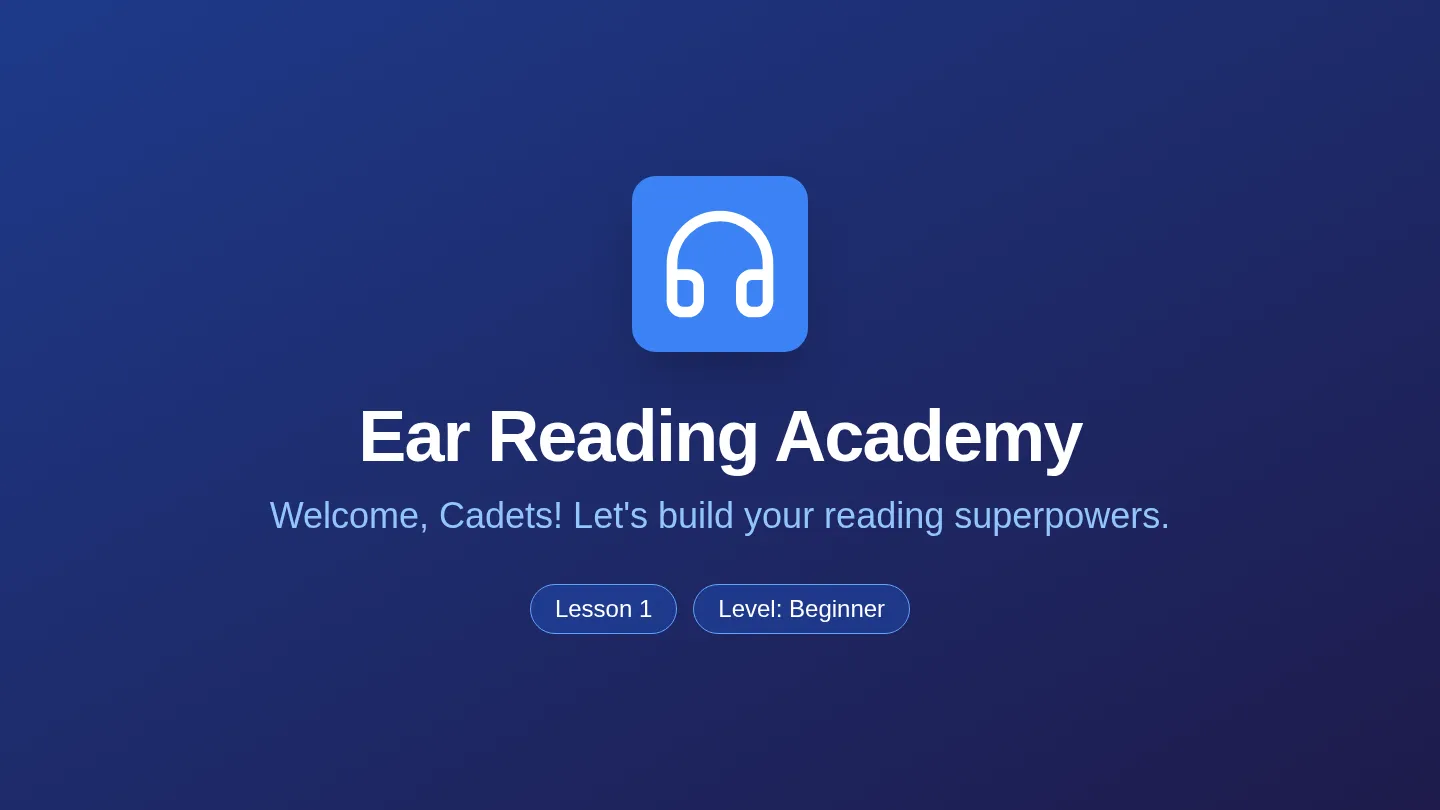
TTS Tools Slides
Lesson 1 Teacher Guide

Ear Reading Academy

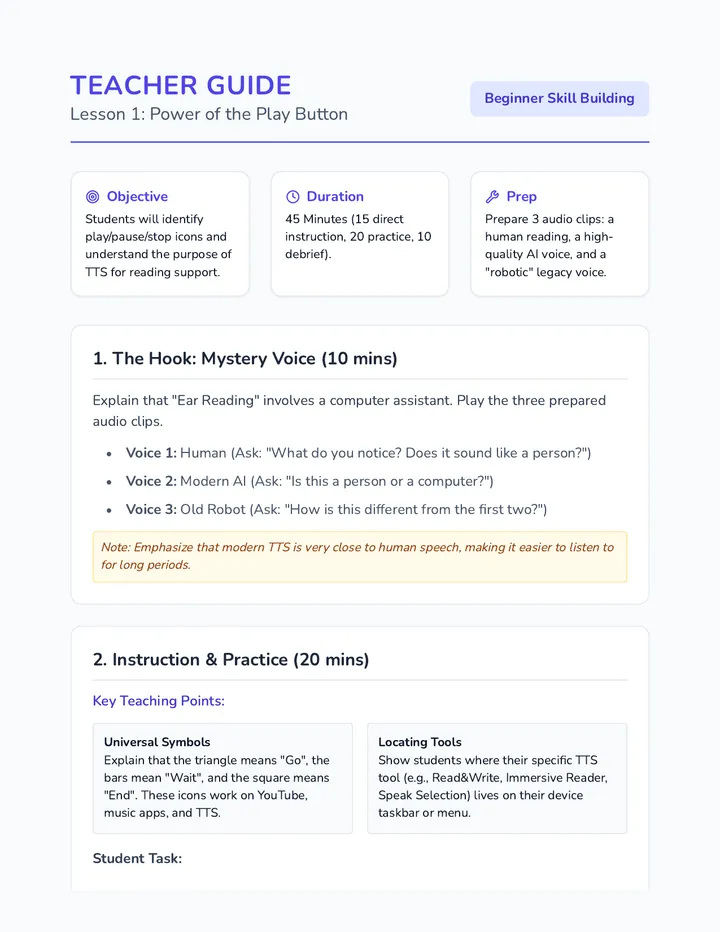
A 5-lesson sequence for 3rd graders to master text-to-speech (TTS) technology. Students progress from identifying basic controls to independent 'ear reading' with grade-level digital texts.

Lenny Avatar
Lenny
1/18
Sequence
Prediction Pilot Slides
Prediction Log Worksheet

Audio Adventures

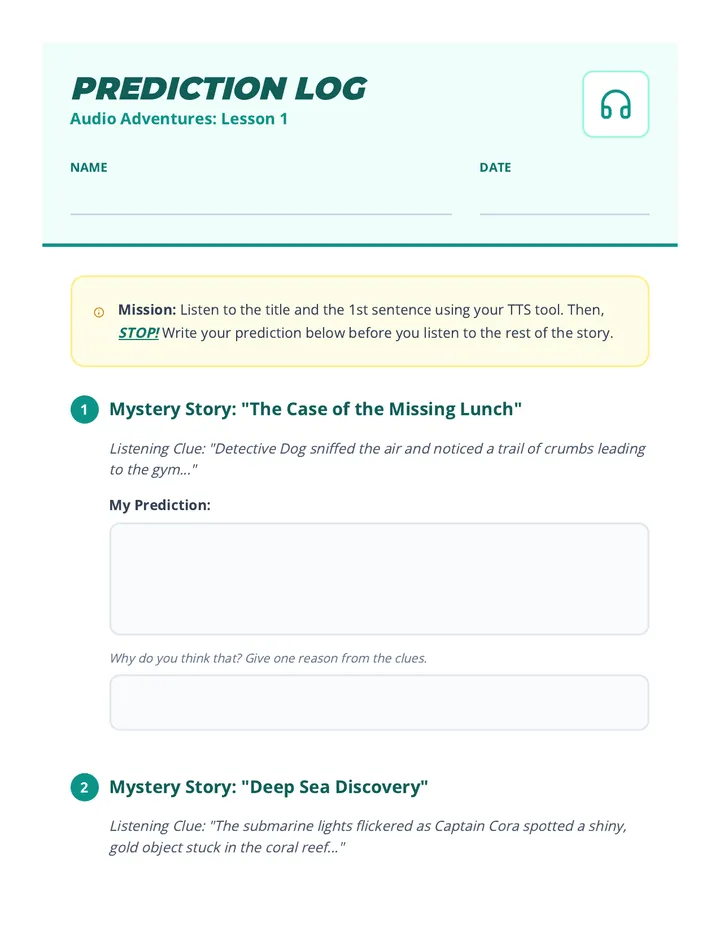
A sequence for 2nd Grade students to master text-to-speech (TTS) as a tool for reading comprehension. Students transition from decoding mechanics to deep understanding by using auditory support to predict, pause, answer questions, visualize, and sequence stories.

Lenny Avatar
Lenny
1/18
Sequence
Tech Unlock Slides
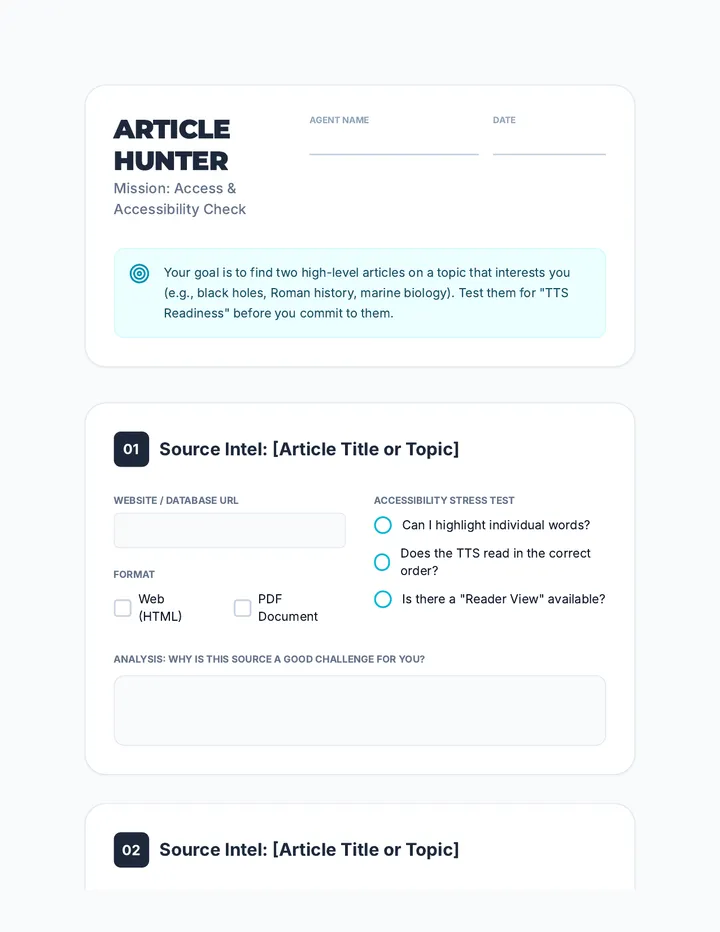
Source Scouting Guide Teacher
Article Hunter Worksheet Student

Researching Complex Topics Using Auditory Support

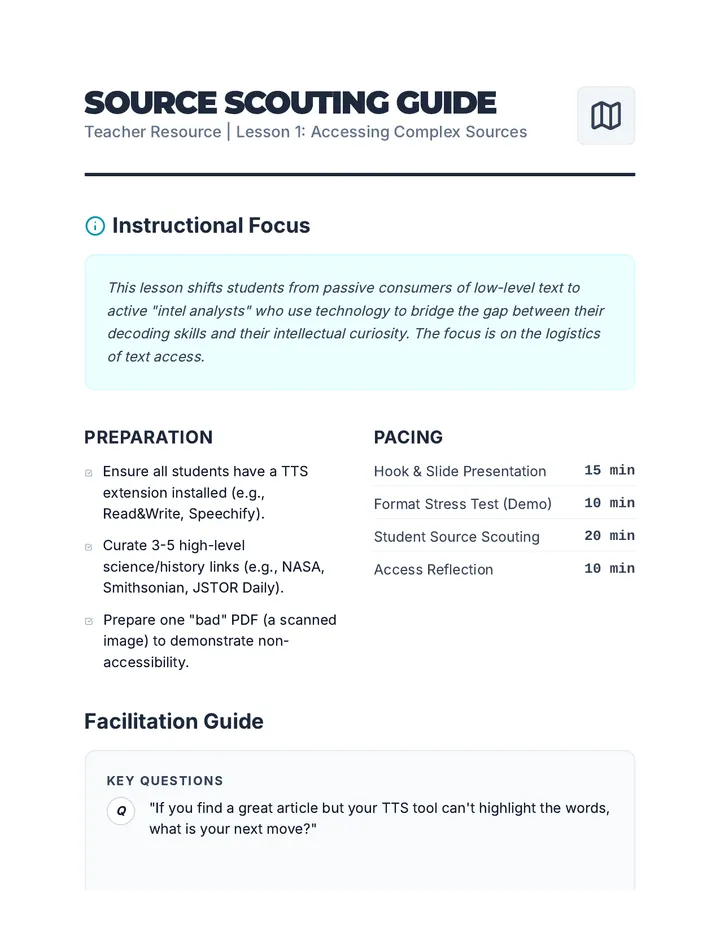
A project-based unit where 6th-grade students use text-to-speech technology to access and analyze complex informational texts. Students develop research skills, digital literacy, and metacognitive awareness of their own learning tools.

Lenny Avatar
Lenny
1/18
Sequence
Focus Frequency Slides
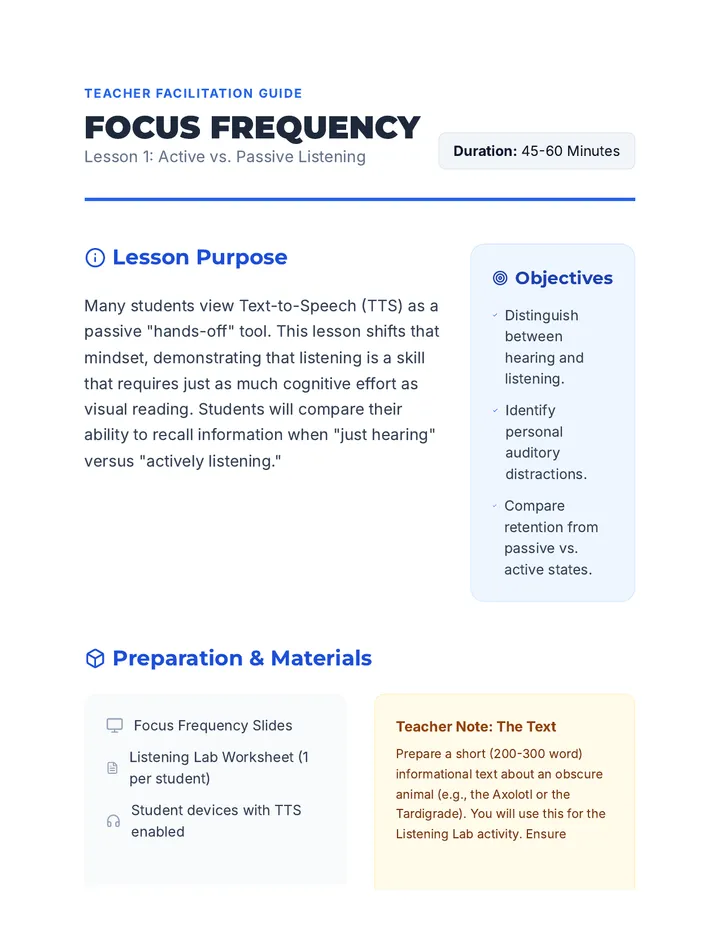
Focus Frequency Teacher Guide
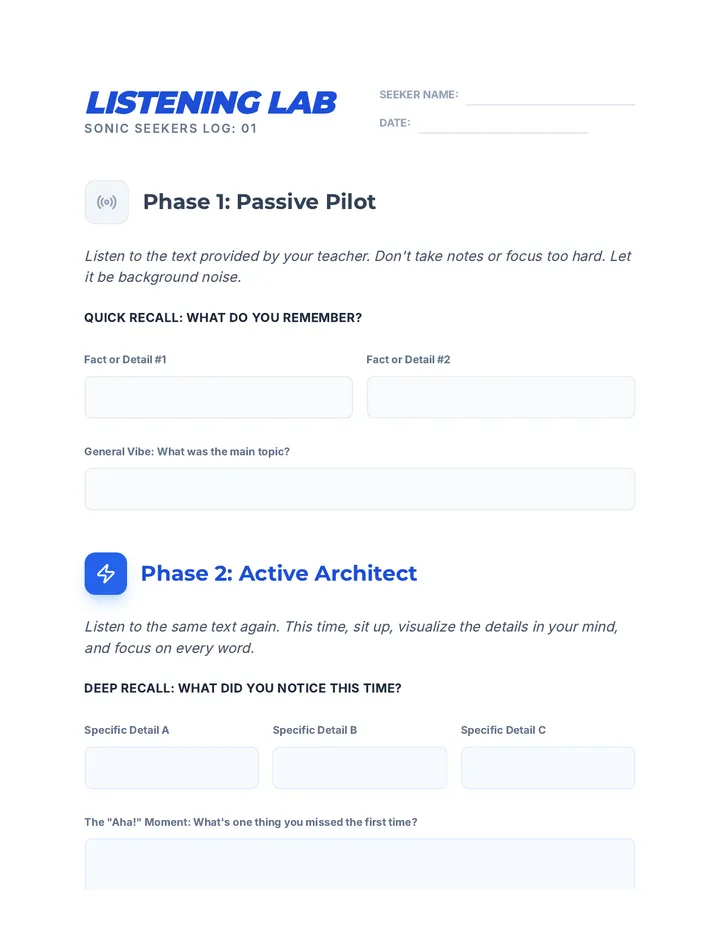
Listening Lab Worksheet

Sonic Seekers Auditory Mastery

This sequence shifts the focus from assistive technology to the cognitive strategies required for auditory learning. Students engage in inquiry-based activities to distinguish between passive hearing and active listening, applying specific comprehension strategies while using text-to-speech (TTS) to access grade-level texts.

Lenny Avatar
Lenny
1/18
Sequence
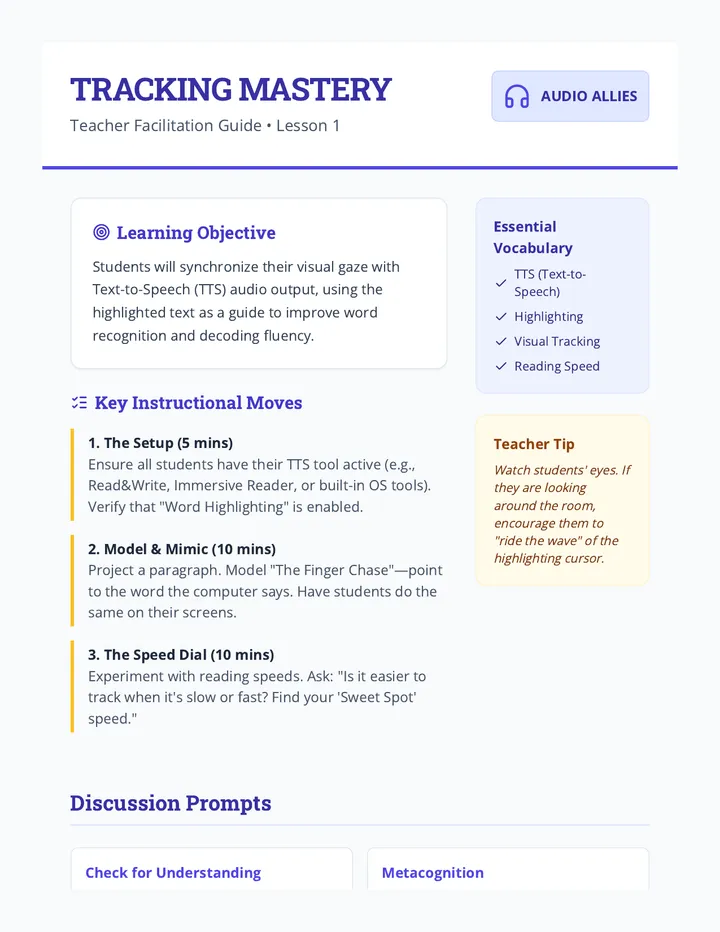
Tracking Mastery Teacher Guide
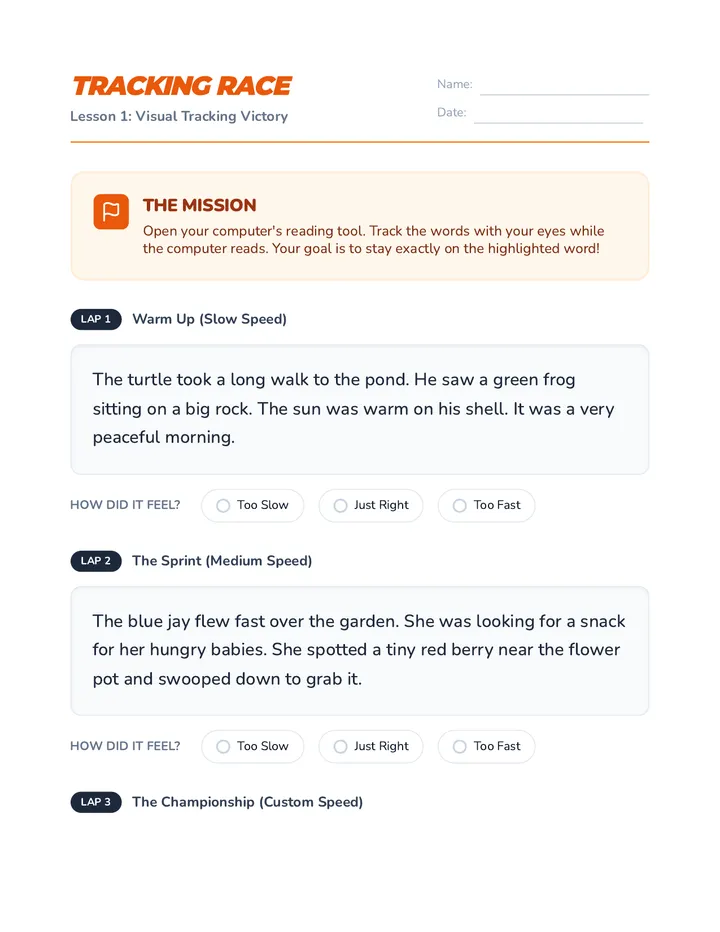
Tracking Race Worksheet

Audio Allies Comprehension

A 4th-grade sequence focused on using Text-to-Speech (TTS) technology as a multi-sensory reading comprehension tool. Students learn to synchronize visual tracking with audio, visualize content through pauses, clarify vocabulary, re-read for evidence, and summarize narratives.

Lenny Avatar
Lenny
1/18
Sequence
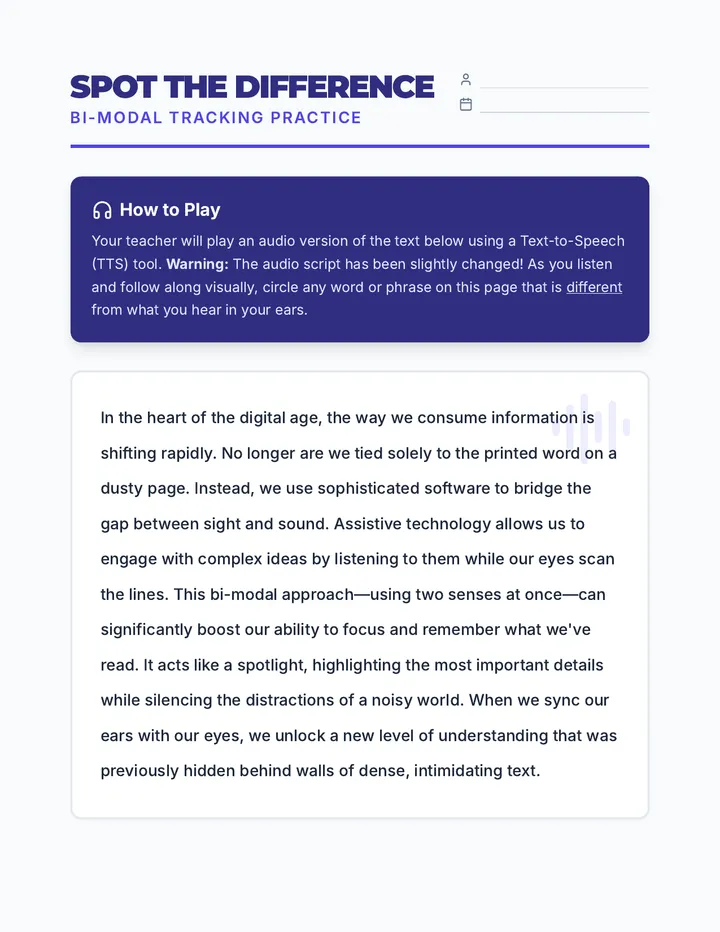
Spot the Difference Worksheet
Syncing Eyes and Ears Slides
Syncing Eyes Teacher Guide

Sound Waves and Sentences

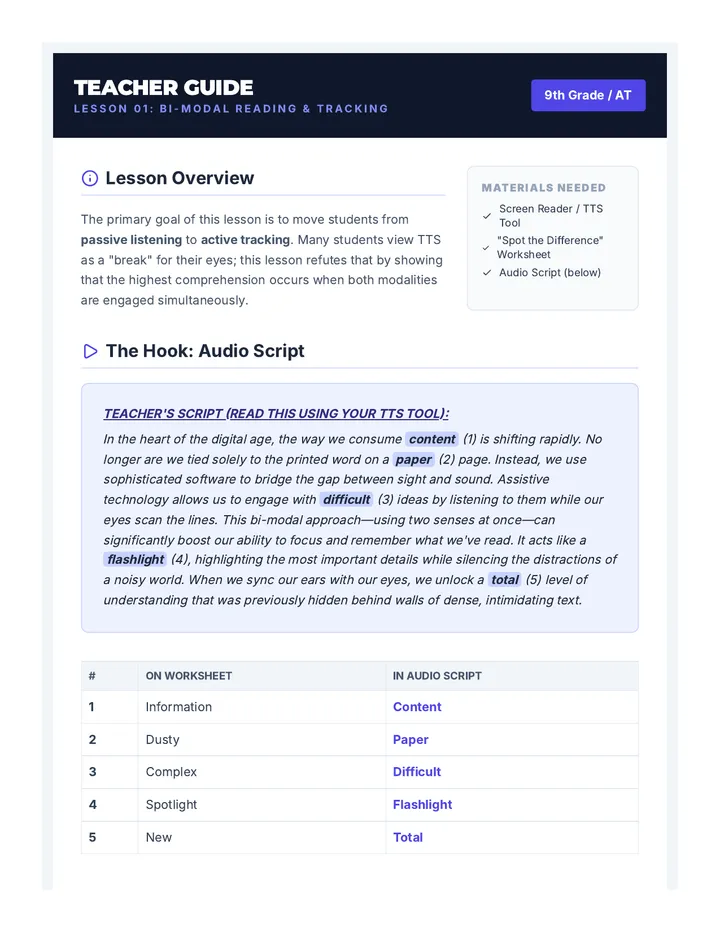
This sequence guides 9th-grade students through the cognitive strategies of using Text-to-Speech (TTS) for deep comprehension. It moves from basic bi-modal tracking to advanced digital annotation and genre-specific strategy adaptation, culminating in a rigorous auditory comprehension assessment.
Lenny Avatar
Lenny
1/18
Sequence
Manual Mastery Slides
Operational Protocol Guide
TTS Troubleshooting Kit

Voice of Independence TTS Integration

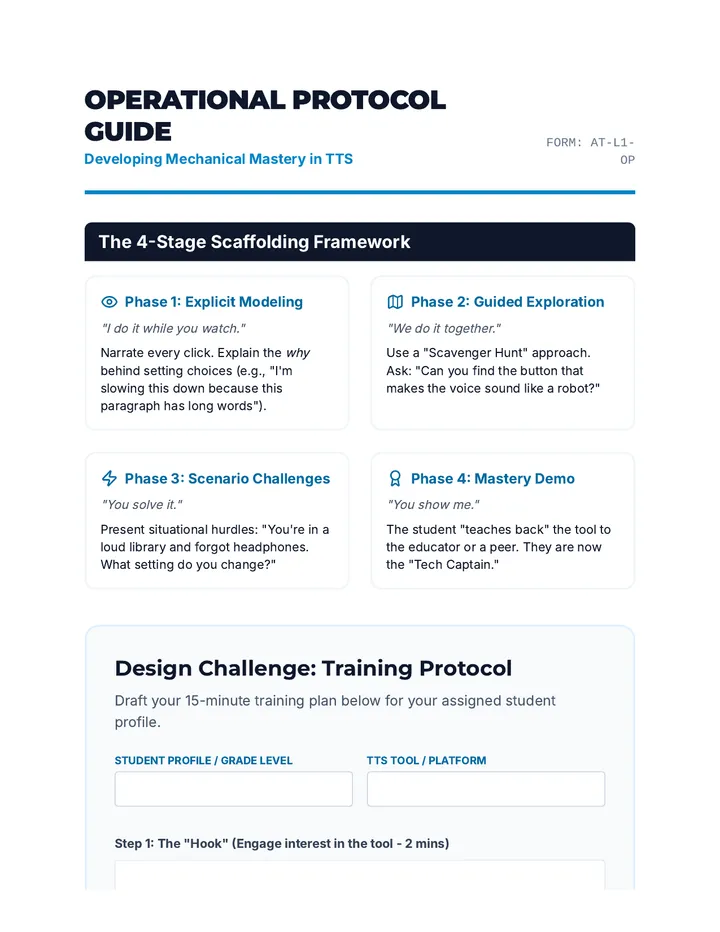
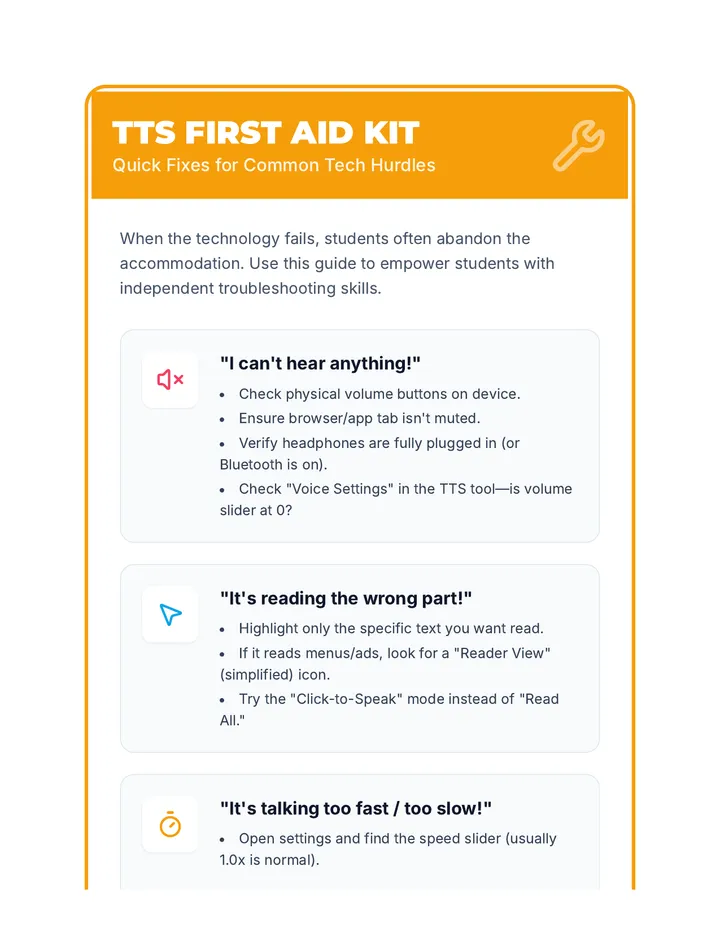
This sequence equips graduate students with the pedagogical and administrative skills to integrate text-to-speech (TTS) effectively within K-12 settings. It moves from mechanical operational training to strategic metacognitive instruction, psychosocial management, and data-driven evaluation, culminating in a school-wide implementation plan.

Lenny Avatar
Lenny
1/18
Sequence
Digital Tools Slides
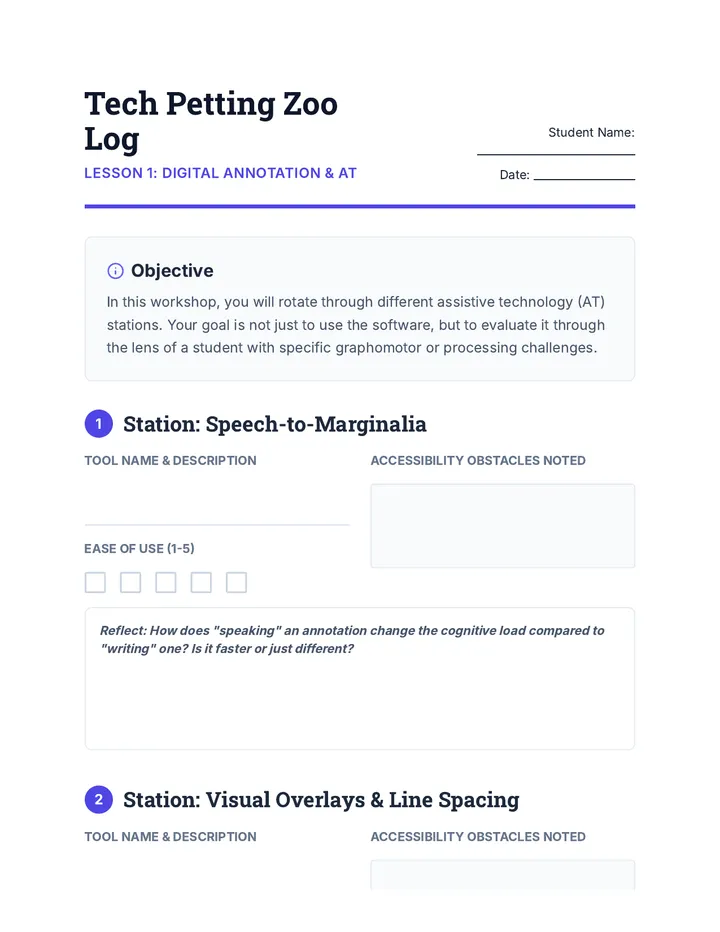
Tech Petting Zoo Log

Differentiating Text Engagement

A comprehensive sequence for undergraduate special education students focused on tailoring text engagement and annotation strategies for learners with SLD, ADHD, and visual processing needs. Students analyze case studies, evaluate assistive technologies, and design bespoke support plans.

Lenny Avatar
Lenny
1/18
Sequence
Digital Toolset Slides
Scavenger Hunt Worksheet

Digital Math Architect

A 5-lesson sequence for 11th-grade students transitioning from physical math manipulatives to virtual tools. The curriculum emphasizes digital literacy, strategic tool selection, and self-advocacy to prepare students for post-secondary academic environments.

Lenny Avatar
Lenny
1/18
Sequence
Story Board Intro Slides
Nursery Rhyme Modeling Guide
My First Storyboard Worksheet

Story Map Explorers

A Kindergarten sequence designed to support academic working memory by using 'First, Next, Last' graphic organizers. Students learn to structure narratives visually, reducing the cognitive load of retelling stories.

Lenny Avatar
Lenny
1/18
Sequence
Mental Movie Magic Slides
Visualization Practice Worksheet
Mental Movie Facilitation Guide

Visual Encoding and Graphic Support Systems

A specialized sequence for 6th-grade students focusing on working memory support through visual encoding. Students learn to transform auditory single-step directions into mental images and physical sketches to improve recall and task execution.

Lenny Avatar
Lenny
1/18
Sequence
Who and Where Slides
Who and Where Teacher Guide
Who and Where Activity Cards

Story Builders Sequence

A 5-lesson sequence for Pre-K students focusing on visual supports and graphic organizers to aid working memory in narrative sequencing. Students use tactile and visual aids like story stones and picture cards to categorize elements, sequence events, and retell stories.

Lenny Avatar
Lenny
1/18
Sequence
Vomit Draft Slides
Voice Typo Worksheet
Vomit Draft Teacher Guide

Voice to Text Mastery

This undergraduate sequence explores the pedagogical shifts required when teaching speech-to-text (STT) technology. It focuses on the crucial 'post-production' phase of writing, moving from raw 'vomit drafts' to polished academic prose through specific error analysis, visual formatting, multimodal feedback (TTS), and hybrid editing workflows.

Lenny Avatar
Lenny
1/18
Sequence
Bottleneck Challenge Worksheet
Bottleneck Intro Slides
Bottleneck Facilitator Guide

External Brain Blueprint

This inquiry-based sequence teaches 10th-grade students with working memory challenges how to use visual note-taking strategies to capture spoken information. Students explore the 'cognitive bottleneck,' practice spatial page segmentation, develop a personal visual shorthand, and use their notes for retrieval practice.

Lenny Avatar
Lenny
1/18
Sequence
Picture Detectives Teacher Guide
Picture Detectives Slides
Picture Detective Mat

Story Builder Workshop

A 5-lesson sequence for 2nd-grade neurodivergent learners focused on using story maps to compartmentalize narrative elements (Characters, Setting, Problem, Solution). The sequence builds working memory by moving from visual identification to oral retelling and creative planning.

Lenny Avatar
Lenny
1/18
Sequence
Signal Word Bingo Worksheet
Detective Work Slides
Structure Sleuth Worksheet
Detective Work Teacher Guide

Map Your Mind

A specialized sequence for 6th-grade students with working memory challenges, focusing on transforming linear information into visual maps. Students learn to identify text structures through signal words, develop personal iconography, and master non-linear note-taking techniques to improve comprehension and recall.

Lenny Avatar
Lenny
1/18
Sequence
Brain Blueprints Teacher Guide
Brain Blueprints Slides
Brain Blueprint Audit Worksheet

Mapping the Mind

A comprehensive sequence designed for undergraduate students with working memory deficits, focusing on externalizing cognitive load through structural text analysis and visual mapping techniques. Students learn to match academic text structures with specific graphic organizers to enhance comprehension and retention.

Lenny Avatar
Lenny
1/18
Sequence
Double Channel Presentation
Memory Lab Worksheet
Double Channel Facilitator Guide

Mind Blueprint Visual Memory

This sequence teaches 11th-grade students with working memory challenges how to use Dual Coding Theory and visual organization to improve information retention. Students progress from basic memory strategies to advanced concept mapping, infographic design, and real-time sketch-noting.

Lenny Avatar
Lenny
1/18
Sequence
Rehearsal Loop Slides
Rehearsal Loop Lab Sheet
Rehearsal Loop Teacher Guide

Brain Training Lab

A specialized sequence designed for 5th-grade students to strengthen auditory working memory and sustained attention through evidence-based strategies like verbal rehearsal, keyword extraction, visualization, and the teach-back technique.

Lenny Avatar
Lenny
1/18
Sequence
Reading Radar Slides
Reading Radar Worksheet
Reading Radar Teacher Guide

Tech Tools for Learning

A comprehensive sequence for 4th-grade students to master Text-to-Speech (TTS) assistive technology. Students learn to navigate complex text features, clean up cluttered webpages, tackle math word problems, conduct research, and take effective notes using auditory tools.

Lenny Avatar
Lenny
1/18
Sequence
Fixed Constraints Slides
Big Rocks Blueprint Worksheet
Fixed Constraints Guide

Scheduling Architects

A comprehensive sequence for 11th-grade students to master the logistical and strategic elements of building a Special Education master schedule. Students progress from identifying fixed school-wide constraints to managing personnel and grouping students for maximum instructional impact.

Lenny Avatar
Lenny
1/18
Sequence
Tool Suite Slides
Tool Explorer Worksheet
Speed Date Guide

Strategic Application of Virtual Manipulatives

A 10th-grade special education sequence focused on the strategic use of virtual manipulatives to bridge the gap between concrete modeling and abstract algebraic reasoning. Students progress from tool exploration to independent selection and justification.

Lenny Avatar
Lenny
1/18
Sequence
Digital Toolset Slides
Scavenger Hunt Worksheet

Digital Math Architect

A 5-lesson sequence for 11th-grade students transitioning from physical math manipulatives to virtual tools. The curriculum emphasizes digital literacy, strategic tool selection, and self-advocacy to prepare students for post-secondary academic environments.

Lenny Avatar
Lenny
1/18
Sequence
Decimal Workshop Slides
Decimal Building Worksheet
Redefining Whole Teacher Guide

Decimal Blueprints

This sequence uses base-ten blocks to help 6th-grade students with learning disabilities visualize decimal place value and operations. By redefining the 'flat' as one whole, students tactilely explore tenths and hundredths to build a concrete foundation for addition and subtraction.

Lenny Avatar
Lenny
1/18
Sequence
Brain Shortcuts Slides
Visual Anchor Analysis Worksheet
Brain Shortcuts Teacher Guide

Visual Anchors Sequence

A project-based sequence for 10th-grade students to create external memory aids and visual anchors that compensate for working memory limitations. Students explore visual processing, color-coding, and linear design to build a personalized 'Visual Toolkit' for managing single-step directions.

Lenny Avatar
Lenny
1/18
Sequence
Recipe Shredder Slides
Recipe Shredder Worksheet

Step Success Independent Living

A specialized instructional unit for 12th-grade students focusing on overcoming working memory challenges through single-step task execution. This sequence teaches students to use 'masking', task deconstruction, and binary decision-making to master complex home maintenance and independent living tasks.

Lenny Avatar
Lenny
1/18
Sequence
Block Builder Slides
Number Builder Worksheet
Place Value Facilitation Guide

Mastering Regrouping Strategies

This sequence uses a Concrete-Representational-Abstract (CRA) approach to help 3rd-grade students in special education master multi-digit addition and subtraction. It moves from physical base-ten blocks to shorthand drawings and finally to the standard numeric algorithm, emphasizing the conceptual 'why' behind regrouping.

Lenny Avatar
Lenny
1/18
Sequence
Focus Detective Slides
Reading Window Craft
Window Training Worksheet

Focus Detective Academy

This sequence helps 2nd-grade students with working memory challenges transfer single-step focus strategies to academic tasks. Students learn to use visual tools like reading windows, highlighters, and information filtering to prevent cognitive overwhelm in reading and math.

Lenny Avatar
Lenny
1/18
Sequence
First Step Focus Slides
First Action Hunt Worksheet

Focus Blueprint Sequence

A sequence for 9th-grade students focused on reducing cognitive load by deconstructing complex academic assignments into single-step actions. Students learn to isolate tasks visually, create checklists, and use verbal self-cueing to improve accuracy and independence.

Lenny Avatar
Lenny
1/18
Sequence
Action Markup Slides
Action Markup Worksheet
Action Markup Teacher Guide

Blueprint Builders Task Mastery

A 5-lesson sequence for 7th-grade students to support working memory by teaching them how to deconstruct complex academic instructions into actionable, single-step checklists. Students learn markup strategies, vertical listing, and compound task decomposition.

Lenny Avatar
Lenny
1/18
Sequence
Task Analysis Slides
Task Analysis Facilitator Guide
Task Analysis Breakdown Worksheet

Scaffold Success Sequence

A graduate-level course on scaffolding complex, multi-day projects for students with executive functioning deficits. Participants learn to apply task analysis, backward design, and metacognitive prompting to reduce executive load while maintaining academic rigor.

Lenny Avatar
Lenny
1/18
Sequence
CRA Foundations Slides
CRA Phase Worksheet
CRA Facilitation Guide

Mastering the CRA Framework

A comprehensive sequence for pre-service teachers on the Concrete-Representational-Abstract (CRA) framework. This unit covers place value, multi-digit addition, subtraction, and multiplication, focusing on explicit instruction and scaffolding for students with learning disabilities.

Lenny Avatar
Lenny
1/18
Sequence
Misconception Briefing Slides
Error Analysis Lab Worksheet

Fraction Intervention Lab

A comprehensive sequence for pre-service special education teachers focusing on diagnosing fraction misconceptions and implementing hybrid intervention strategies using physical and virtual manipulatives. Students move from error analysis to designing technology-integrated support plans for learners with disabilities.

Lenny Avatar
Lenny
1/18
Sequence
Memory Lab Report
Cognitive Load Slides

Blueprint for Success

A comprehensive sequence for 9th-grade students to master working memory compensation through visual supports. Students move from understanding cognitive load to designing and applying personalized checklists, graphic organizers, and environmental cues to their actual schoolwork.

Lenny Avatar
Lenny
1/18
Sequence
CRA Foundations Slides
Error Analysis Lab Worksheet
Diagnostic Framework Guide

Advanced Application of the CRA Framework

This advanced graduate sequence focuses on the design and implementation of the Concrete-Representational-Abstract (CRA) framework for learners with mathematics disabilities. Students will move from diagnostic error analysis to the creation of comprehensive, evidence-based intervention plans.

Lenny Avatar
Lenny
1/18
Sequence
Memory Bottleneck Slides
Memory Audit Teacher Guide
Memory Audit Worksheet

External Brain Architecture

A metacognitive sequence for 10th-grade students to identify working memory bottlenecks and design personalized visual support systems to enhance academic independence. Students transition from being accommodation recipients to active cognitive architects.

Lenny Avatar
Lenny
1/18
Sequence
Orthographic Mapping Slides
Dyslexia Simulation Teacher Guide
Multisensory Card Designer Worksheet

Adaptive Spaced Repetition Strategies

This graduate-level sequence examines how to adapt spaced repetition systems (SRS) for students with diverse learning needs, including Dyslexia, ADHD, and Dyscalculia. Students will learn to modify content, timing, and engagement strategies to bypass cognitive barriers and support long-term memory.

Lenny Avatar
Lenny
1/18
Sequence
Sticky Spots Slides
Sticky Spots Worksheet
Sticky Spots Teacher Guide

Brain Gear Mechanics

A sequence focused on teaching 5th-grade students with academic support needs how to apply spaced repetition and interleaving strategies to master complex procedural skills like multi-step math and grammar. Students learn to diagnose errors, manage practice intervals, and mix problem types to build long-term retention.

Lenny Avatar
Lenny
1/18
Sequence
Organizer Roast Slides
Organizer Audit Worksheet

Blueprint for Better Note-Taking

A project-based sequence for 10th-grade students to design personalized graphic organizers, focusing on working memory support and self-advocacy. Students transition from critiquing generic templates to creating a custom 'toolkit' for STEM and Humanities subjects.

Lenny Avatar
Lenny
1/18
Sequence
Mapping the Page Slides
Map the Text Worksheet

Text Detectives Unit

A 3rd-grade sequence focused on teaching students with processing difficulties how to navigate informational texts using annotation and highlighting techniques. Through a 'text detective' theme, students analyze informational articles as 'specimens' to identify features, vocabulary, and main ideas.

Lenny Avatar
Lenny
1/18
Sequence
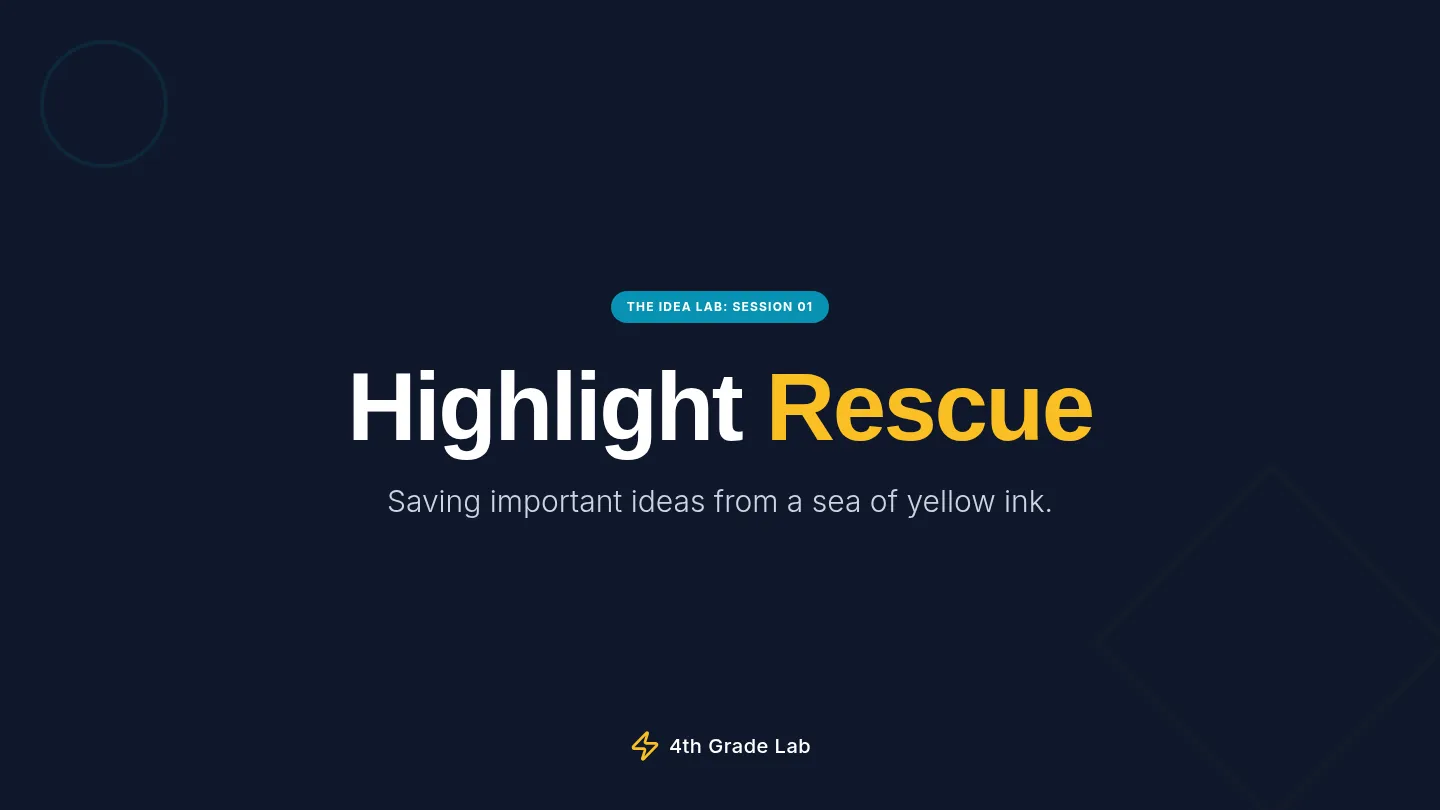
Highlight Rescue Slides
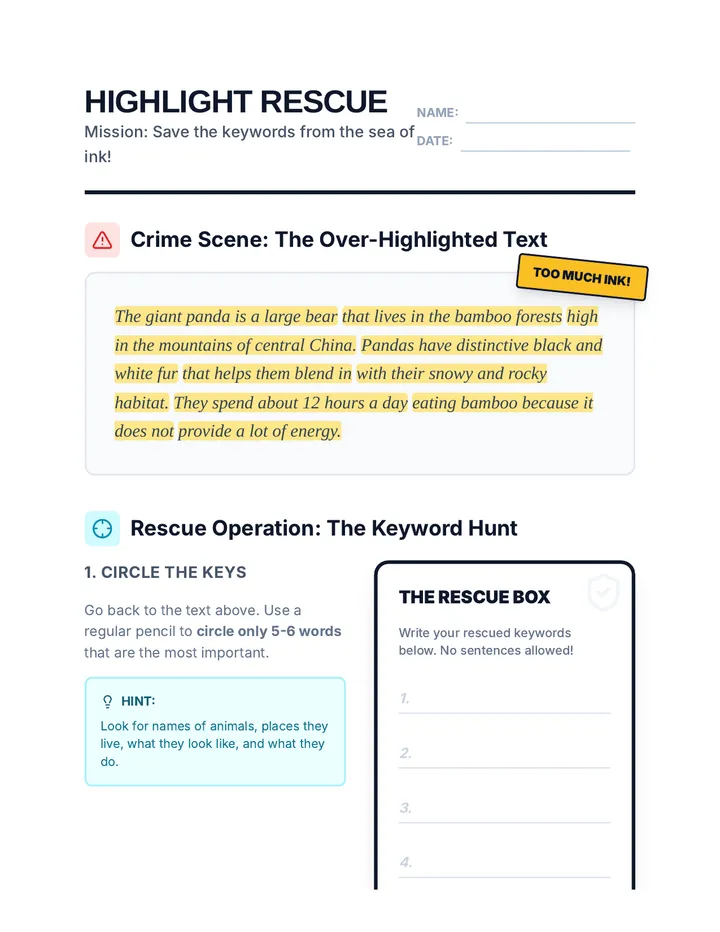
Highlight Rescue Worksheet
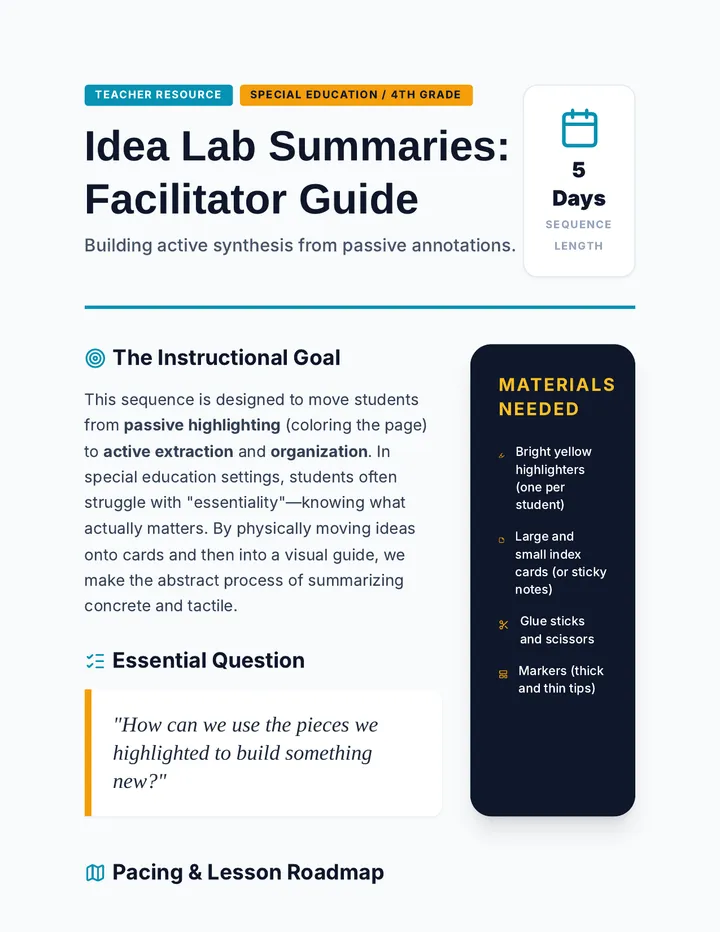
Idea Lab Facilitator Guide

Idea Lab Summaries

A project-based sequence for 4th-grade students in special education settings, focusing on moving from passive highlighting to active extraction, organization, and synthesis. Students learn to refine highlights, extract them onto cards, sort ideas logically, and create a visual 'One-Page Expert Guide' as a summary tool.

Lenny Avatar
Lenny
1/18
Sequence
Think-Aloud Blueprint Slides
Think-Aloud Scripting Template
Cognitive Modeling Facilitator Notes

Explicit Instruction of Annotation Strategies

This graduate-level sequence focuses on the explicit instruction of text highlighting and annotation strategies. It prepares future special educators and coaches to move beyond 'assigning' annotation toward systematically 'teaching' it through cognitive modeling, guided practice, and implementation fidelity monitoring.

Lenny Avatar
Lenny
1/18
Sequence
Fluency Illusion Experiment
Cognitive Science Slides
Cognitive Load Teacher Guide

Systematic Annotation Protocols

This sequence equips pre-service teachers with evidence-based frameworks for teaching text interaction to students with executive function deficits. It moves from cognitive science foundations to the practical design and assessment of systematic annotation protocols.

Lenny Avatar
Lenny
1/18
Sequence
Story Board Intro Slides
Nursery Rhyme Modeling Guide
My First Storyboard Worksheet

Story Map Explorers

A Kindergarten sequence designed to support academic working memory by using 'First, Next, Last' graphic organizers. Students learn to structure narratives visually, reducing the cognitive load of retelling stories.

Lenny Avatar
Lenny
1/18
Sequence
Sorting Color Teacher Guide
Rainbow Monster Slides
Color Island Mats Printable

Organizing Information with Sorting Mats

A 5-lesson sequence for Pre-K students designed to support working memory through visual organization and sorting. Students learn to chunk information using color, category, and environmental cues to reduce cognitive load.

Lenny Avatar
Lenny
1/18
Sequence
Who and Where Slides
Who and Where Teacher Guide
Who and Where Activity Cards

Story Builders Sequence

A 5-lesson sequence for Pre-K students focusing on visual supports and graphic organizers to aid working memory in narrative sequencing. Students use tactile and visual aids like story stones and picture cards to categorize elements, sequence events, and retell stories.

Lenny Avatar
Lenny
1/18
Sequence
Focus Detective Slides
Reading Window Craft
Window Training Worksheet

Focus Detective Academy

This sequence helps 2nd-grade students with working memory challenges transfer single-step focus strategies to academic tasks. Students learn to use visual tools like reading windows, highlighters, and information filtering to prevent cognitive overwhelm in reading and math.

Lenny Avatar
Lenny
1/18
Sequence
Memory Lab Report
Cognitive Load Slides

Blueprint for Success

A comprehensive sequence for 9th-grade students to master working memory compensation through visual supports. Students move from understanding cognitive load to designing and applying personalized checklists, graphic organizers, and environmental cues to their actual schoolwork.

Lenny Avatar
Lenny
1/18
Sequence
Memory Bottleneck Slides
Memory Audit Teacher Guide
Memory Audit Worksheet

External Brain Architecture

A metacognitive sequence for 10th-grade students to identify working memory bottlenecks and design personalized visual support systems to enhance academic independence. Students transition from being accommodation recipients to active cognitive architects.

Lenny Avatar
Lenny
1/18
Sequence
Argument Blueprints Slides
Argument Blueprint Worksheet
Argument Mapping Guide

Information Architects

This sequence teaches 11th-grade students with working memory challenges how to use visual graphic organizers to synthesize complex, conflicting information from multiple sources for research and presentations.

Lenny Avatar
Lenny
1/18
Sequence
Organizer Roast Slides
Organizer Audit Worksheet

Blueprint for Better Note-Taking

A project-based sequence for 10th-grade students to design personalized graphic organizers, focusing on working memory support and self-advocacy. Students transition from critiquing generic templates to creating a custom 'toolkit' for STEM and Humanities subjects.

Lenny Avatar
Lenny
1/18
Sequence
Structure Blueprints Slides
Structure Blueprints Worksheet

Blueprint Note Taking

A sequence focused on reducing cognitive load for 10th-grade students by teaching them to align graphic organizers with informational text structures. Students learn to recognize structures, filter noise, and select visual scaffolds that support working memory during complex reading tasks.

Lenny Avatar
Lenny
1/18
Sequence
Mystery Object Slides
Mystery Web Worksheet
Mystery Box Teacher Guide

Bubble Map Brains

A 5-lesson sequence for 2nd grade students focused on using concept webs to organize descriptive vocabulary and support working memory. Students progress from concrete sensory observations to abstract character traits and hierarchical sorting, culminating in using their webs for oral presentations.

Lenny Avatar
Lenny
1/18
Sequence
Picture Detectives Teacher Guide
Picture Detectives Slides
Picture Detective Mat

Story Builder Workshop

A 5-lesson sequence for 2nd-grade neurodivergent learners focused on using story maps to compartmentalize narrative elements (Characters, Setting, Problem, Solution). The sequence builds working memory by moving from visual identification to oral retelling and creative planning.

Lenny Avatar
Lenny
1/18
Sequence
Sorting Scientists Teacher Guide
Sorting Scientists Slides
Sorting Station Worksheet

Memory Lab Sorting Sequence

A 5-lesson sequence for 2nd-grade students focusing on working memory support through graphic organizers. Students move from physical sorting to auditory classification and finally to independent T-chart note-taking to aid information recall.

Lenny Avatar
Lenny
1/18
Sequence
Routine Roadmap Slides
Morning Mission Roadmap Worksheet
Routine Roadmap Teacher Guide

Sequence Squad Flow Charts

This sequence helps 2nd-grade students with working memory challenges master linear sequencing using flow charts and arrow-based diagrams. By visualizing "First, Next, Then, Last" progressions, students learn to offload cognitive demand and focus on procedural and narrative content.
Lenny Avatar
Lenny
1/18
Sequence
Signal Word Bingo Worksheet
Detective Work Slides
Structure Sleuth Worksheet
Detective Work Teacher Guide

Map Your Mind

A specialized sequence for 6th-grade students with working memory challenges, focusing on transforming linear information into visual maps. Students learn to identify text structures through signal words, develop personal iconography, and master non-linear note-taking techniques to improve comprehension and recall.

Lenny Avatar
Lenny
1/18
Sequence
Brains Workspace Slides
Memory Olympics Teacher Guide
Memory Olympics Student Lab Sheet

Note Taking Navigators

A 5-lesson sequence for 6th-grade students focused on using graphic organizers as a cognitive 'offloading' strategy to support working memory. Students learn to match specific visual templates (Venn, T-chart, Flow Chart, Tree Map) to different types of information to reduce mental effort and improve retention.

Lenny Avatar
Lenny
1/18
Sequence
Brain Blueprints Teacher Guide
Brain Blueprints Slides
Brain Blueprint Audit Worksheet

Mapping the Mind

A comprehensive sequence designed for undergraduate students with working memory deficits, focusing on externalizing cognitive load through structural text analysis and visual mapping techniques. Students learn to match academic text structures with specific graphic organizers to enhance comprehension and retention.

Lenny Avatar
Lenny
1/18
Sequence
Prediction Pilot Slides
Prediction Log Worksheet

Audio Adventures

A sequence for 2nd Grade students to master text-to-speech (TTS) as a tool for reading comprehension. Students transition from decoding mechanics to deep understanding by using auditory support to predict, pause, answer questions, visualize, and sequence stories.

Lenny Avatar
Lenny
1/18
Sequence
Tracking Mastery Teacher Guide
Tracking Race Worksheet

Audio Allies Comprehension

A 4th-grade sequence focused on using Text-to-Speech (TTS) technology as a multi-sensory reading comprehension tool. Students learn to synchronize visual tracking with audio, visualize content through pauses, clarify vocabulary, re-read for evidence, and summarize narratives.

Lenny Avatar
Lenny
1/18
Sequence
Digital Toolset Slides
Digital Scavenger Hunt Worksheet
Annotation Toolbox Teacher Guide

Screen Thinkers Digital Annotation Masterclass

A 5-lesson sequence designed for 9th-grade students in an academic support setting to master digital annotation, highlighting, and collaborative text analysis tools. The sequence focuses on transitioning traditional paper-based strategies to digital environments like Google Docs and PDFs, emphasizing visible thinking and peer collaboration.

Lenny Avatar
Lenny
1/18
Sequence
Pause Power Slides
Stop and Jot Worksheet
Listening Launch Guide

Strategic Comprehension with Audio Support

This sequence teaches 7th-grade students how to use text-to-speech (TTS) tools strategically to improve reading comprehension. Students progress from basic active listening habits to advanced multi-tasking and synthesis, transforming TTS from a passive hearing aid into a powerful active reading strategy.

Lenny Avatar
Lenny
1/18
Sequence
Symbolic Secrets Handout
Symbolic Secrets Slides
Symbolic Secrets Guide

Text Talkers Annotation Skills

This sequence teaches 6th-grade students with diverse learning needs how to move beyond passive highlighting to active text annotation. Using a metacognitive approach, students learn to 'talk back' to text through symbolic shorthand, inquiry questions, synthesis summaries (gists), and personal connections to improve comprehension and memory.

Lenny Avatar
Lenny
1/18
Sequence
Who and Where Slides
Who and Where Teacher Guide
Who and Where Activity Cards

Story Builders Sequence

A 5-lesson sequence for Pre-K students focusing on visual supports and graphic organizers to aid working memory in narrative sequencing. Students use tactile and visual aids like story stones and picture cards to categorize elements, sequence events, and retell stories.

Lenny Avatar
Lenny
1/18
Sequence
Sorting Scientists Teacher Guide
Sorting Scientists Slides
Sorting Station Worksheet

Memory Lab Sorting Sequence

A 5-lesson sequence for 2nd-grade students focusing on working memory support through graphic organizers. Students move from physical sorting to auditory classification and finally to independent T-chart note-taking to aid information recall.

Lenny Avatar
Lenny
1/18
Sequence
Imagery Audit Worksheet
Sensory Density Slides
Mentor Text Bibliography Guide

Sensory Integration and Language Analysis

A comprehensive sequence for pre-service teachers on teaching visualization strategies through sensory mapping. This sequence covers text selection, instructional gamification, inference-building, ELL support, and higher-order comprehension.

Lenny Avatar
Lenny
1/18
Sequence
Mental Movies Slides
Director's Notes Worksheet
Facilitator Analysis Guide

Mental Movies Sequence

A comprehensive sequence for pre-service teachers on mastering the art of the 'Think-Aloud' protocol to teach visualization. Students progress from analyzing expert models to scripting sensory prompts and designing a full gradual release lesson plan.

Lenny Avatar
Lenny
1/18
Sequence
VVIQ Scoring Matrix
Aphantasia Background Slides
Aphantasia Discussion Guide

Neurodiverse Visualization Strategies

A graduate-level sequence exploring how to adapt visualization strategies for neurodiverse learners, specifically addressing Aphantasia, ASD, and ADHD to create inclusive academic support.

Lenny Avatar
Lenny
1/18
Sequence
Decoding Paradox Teacher Guide
Paradox Slides
Profile Divergence Worksheet

Diagnostic Imagery Lab

This graduate-level sequence focuses on the clinical diagnosis and assessment of visualization deficits in students with comprehension challenges. Participants will learn to differentiate between decoding and imagery-based deficits, conduct clinical think-aloud interviews, and develop qualitative rubrics for sensory recall and non-verbal representations.

Lenny Avatar
Lenny
1/18
Sequence
Dialogue Workshop Teacher Guide
Imagery Prompting Cheat Sheet

Mental Blueprint Workshop

A professional development sequence for graduate-level educators on implementing explicit imagery instruction protocols to support reading comprehension. This sequence covers the progression from basic questioning to independent student visualization.

Lenny Avatar
Lenny
1/18
Sequence
Sensory Anchor Guide
Anchor Hunt Worksheet

Mental Movie Studio

A specialized literacy sequence for 12th-grade students focused on using visualization strategies to decode and analyze complex narrative texts. Students adopt the persona of film directors to translate descriptive language into vivid mental imagery, enhancing comprehension, memory retention, and inference skills.

Lenny Avatar
Lenny
1/18
Sequence
Fast Draw Slides
Sketch Sprint Worksheet
Quick Sketch Teacher Guide

Sketch to Stretch Strategy

A specialized reading comprehension sequence for 6th-grade students needing academic support. It focuses on the 'Sketch-to-Stretch' strategy, teaching students to reduce cognitive load by translating complex text into simple visual sketches and storyboards.

Lenny Avatar
Lenny
1/18
Sequence
Silent Clues Slides
Action Decoder Worksheet
Emotion Charades Cards

Character Clue Detectives

A 5-lesson sequence for 6th Grade SpEd students focusing on inferring character feelings, motivations, and changes using a 'Detective' theme. Students move from decoding physical body language to writing complex internal monologues.

Lenny Avatar
Lenny
1/18
Sequence
Headline Detective Slides
Headline Analysis Worksheet
Headline Detective Teacher Key

Implicit Meaning Decoders

A 6th-grade special education sequence focusing on inferring meaning from informational texts, including headlines, advertisements, historical documents, and scientific data. Students move from decoding word choice to creating their own implicit messaging in a final project.

Lenny Avatar
Lenny
1/18
Sequence
Inference Formula Slides
Schema Connection Worksheet
Mystery Bag Teacher Guide

Constructing Inferences Sequence

A 6th-grade Special Education sequence focused on breaking down the inference process into a concrete formula: Text Clues + Schema = Inference. Includes structured graphic organizers, prediction vs. inference differentiation, and evidence-based synthesis activities.

Lenny Avatar
Lenny
1/18
Sequence
Detective Training Slides
Schema Search Worksheet
Inference Anchor Chart Resource

Text Detective Citing Evidence

A 3rd-grade Special Education sequence focused on making inferences and citing evidence using a 'Text Detective' theme. Students learn the 'It Says... I Say... And So...' strategy to synthesize text clues with background knowledge (schema) to form valid conclusions.

Lenny Avatar
Lenny
1/18
Sequence
Detective Basics Slides
Clue vs Guess Worksheet
Sleuth Academy Teacher Guide

Story Sleuths Prediction Academy

A 5-lesson sequence for 3rd-grade special education students focusing on evidence-based predictions in narrative texts. Students progress from distinguishing guesses from predictions to using formal sentence stems, verifying their thinking, and tracking plot development across serial stories.

Lenny Avatar
Lenny
1/18
Sequence
Visual Clue Slides
Visual Evidence Worksheet
Visual Clue Teacher Guide

Clue Quest Predictions and Inferences

A 4th Grade Special Education sequence focusing on the critical distinction between making predictions (future events) and inferences (current hidden meanings). Students progress from visual analysis of images and wordless narratives to identifying textual clues and using structured sentence stems to articulate their reasoning.

Lenny Avatar
Lenny
1/18
Sequence
Reading Radar Slides
Reading Radar Worksheet
Reading Radar Teacher Guide

Tech Tools for Learning

A comprehensive sequence for 4th-grade students to master Text-to-Speech (TTS) assistive technology. Students learn to navigate complex text features, clean up cluttered webpages, tackle math word problems, conduct research, and take effective notes using auditory tools.

Lenny Avatar
Lenny
1/18
Sequence
Organizer Blueprint Slides
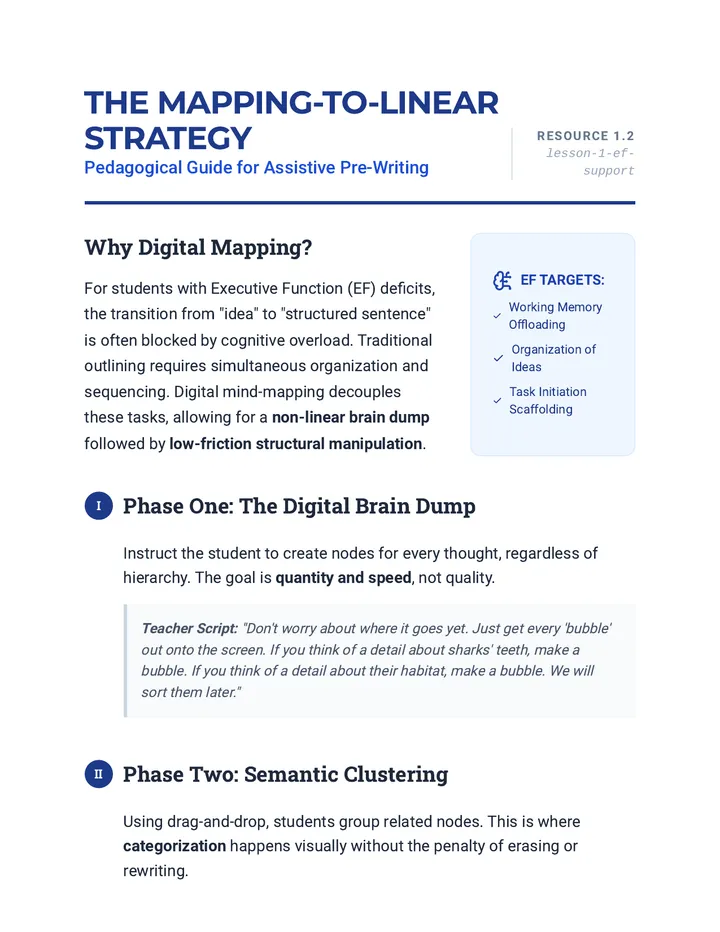
Mapping to Linear Handout
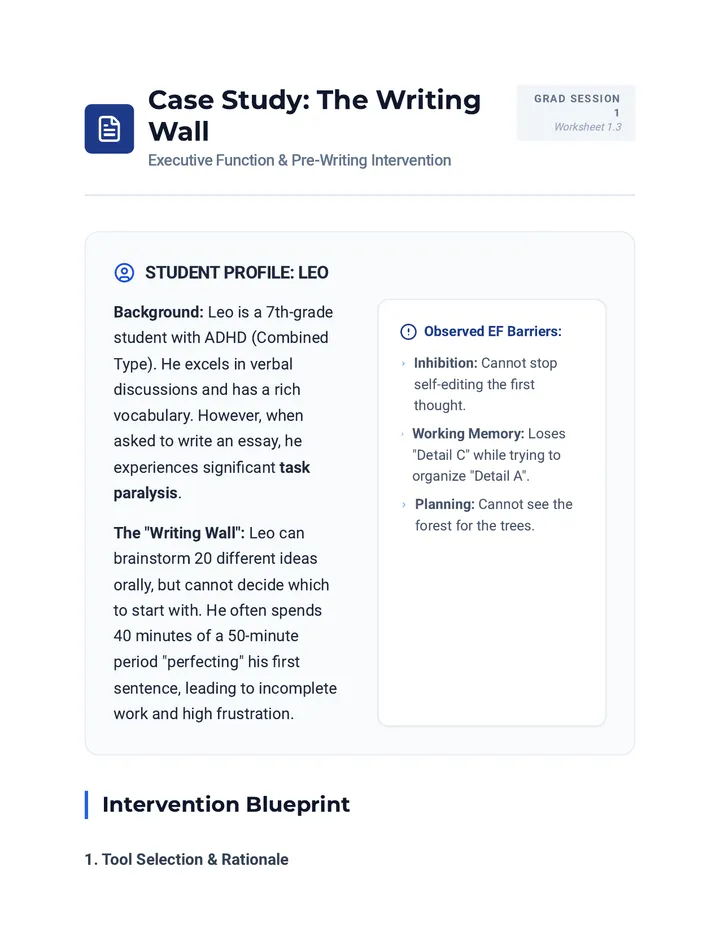
Executive Function Case Study

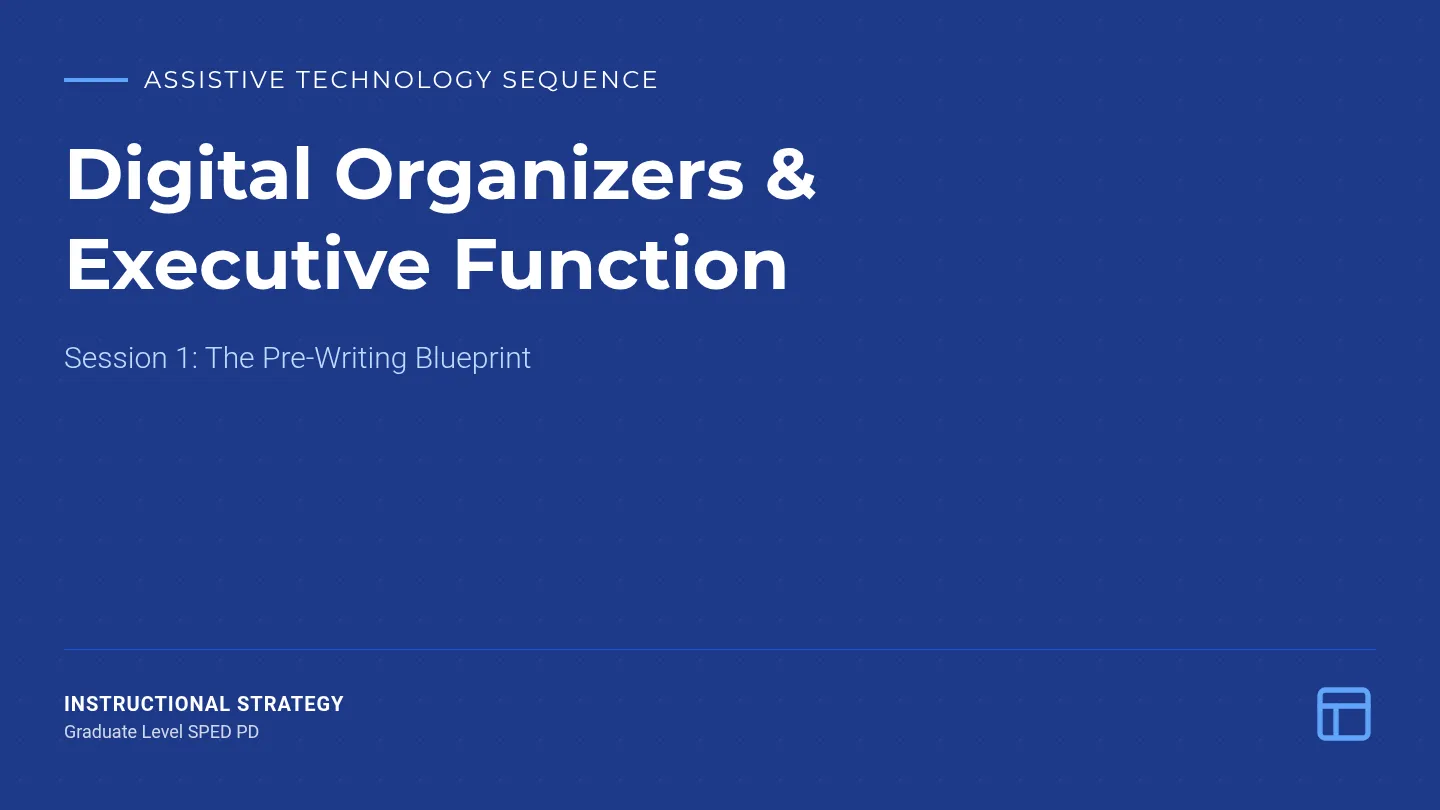
Integrating Assistive Technology into Writing Instruction

A comprehensive graduate-level sequence focused on the pedagogical implementation of assistive writing technology. It shifts the focus from tool selection to instructional methodologies that scaffold digital organizers, dictation, and text-to-speech for student autonomy.

Lenny Avatar
Lenny
1/18
Sequence
Writing Breakthrough Slides
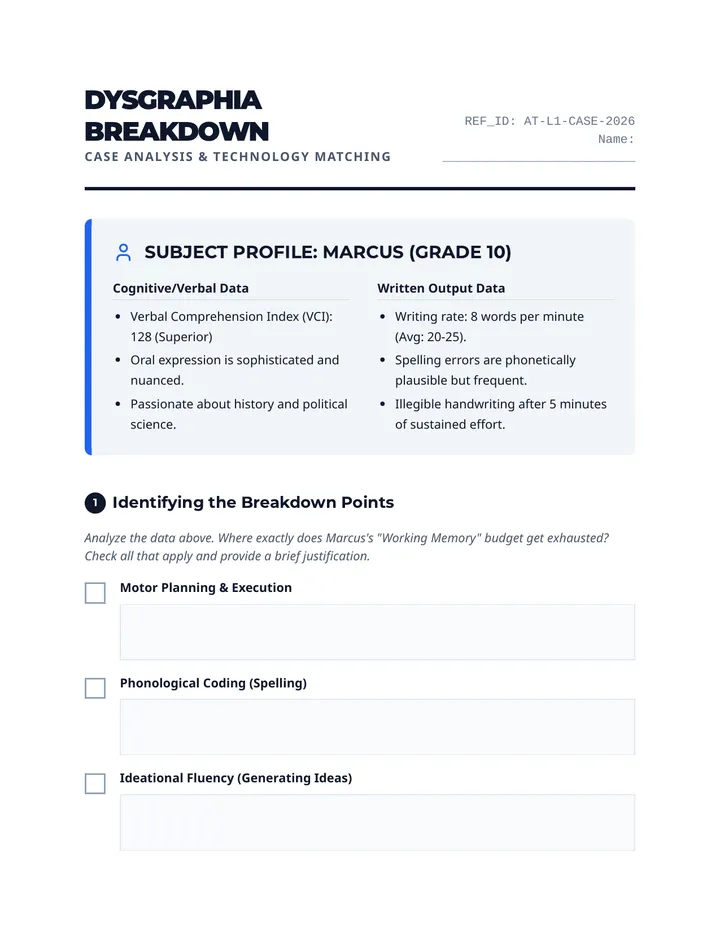
Dysgraphia Case Analysis Worksheet
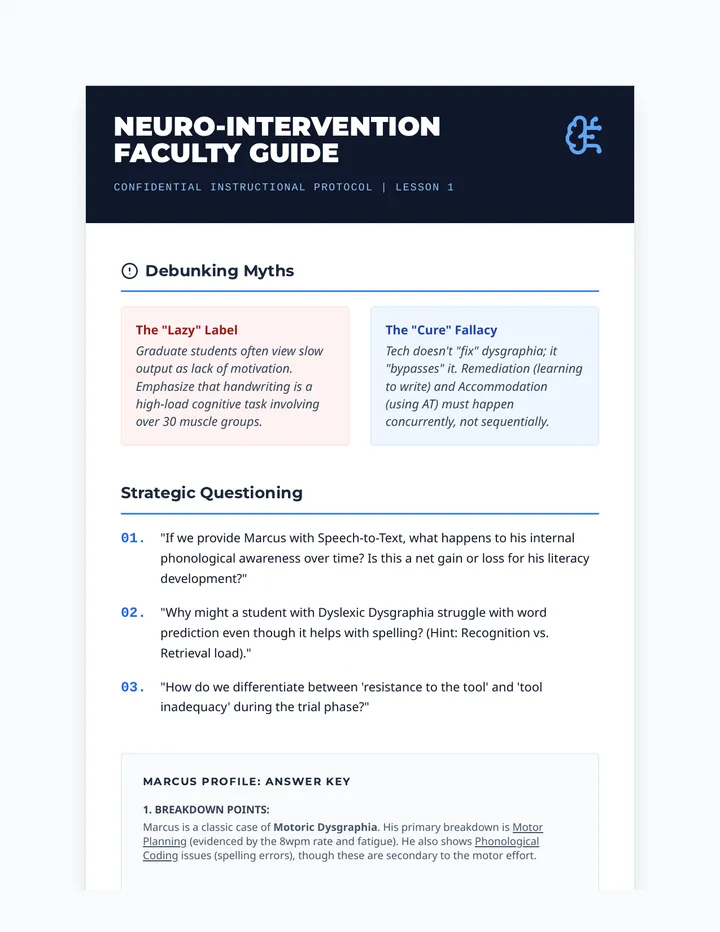
Neuroscience Intervention Guide

Writing Breakthroughs Assistive Technology Evaluation

This graduate-level sequence prepares educators to evaluate and select assistive writing technologies using evidence-based frameworks like SETT. It covers the neurology of dysgraphia, technical analysis of speech-to-text and word prediction, and the legal requirements for IEP implementation.

Lenny Avatar
Lenny
1/18
Sequence
Highlight Rescue Slides
Highlight Rescue Worksheet
Idea Lab Facilitator Guide

Idea Lab Summaries

A project-based sequence for 4th-grade students in special education settings, focusing on moving from passive highlighting to active extraction, organization, and synthesis. Students learn to refine highlights, extract them onto cards, sort ideas logically, and create a visual 'One-Page Expert Guide' as a summary tool.

Lenny Avatar
Lenny
1/18
Sequence
Truth Seekers Slides
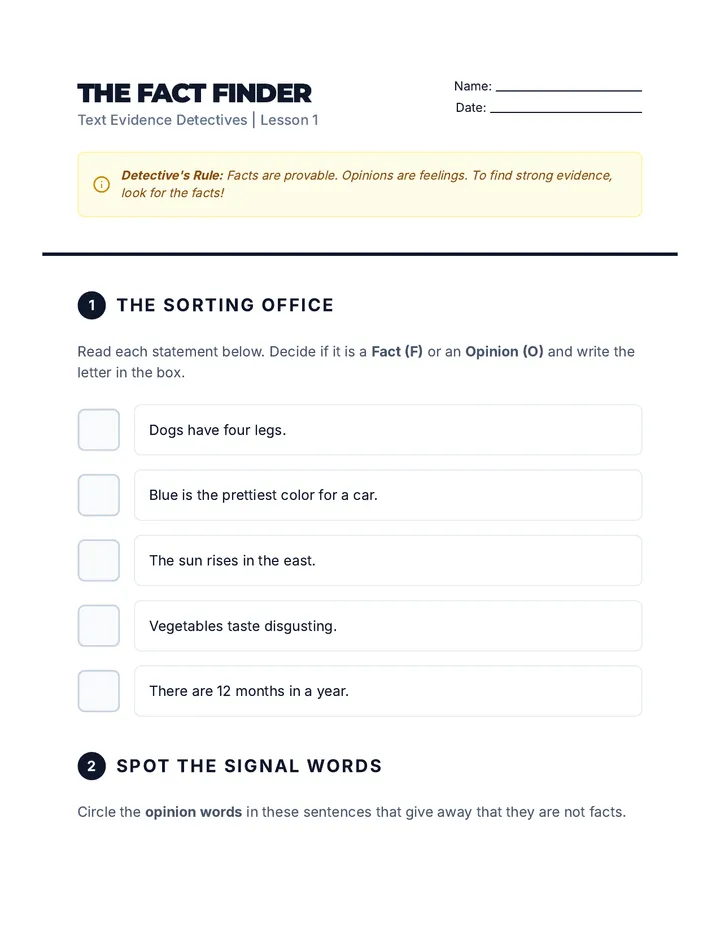
Fact Finder Worksheet

Text Evidence Detectives

A 5-lesson sequence designed for 6th-grade special education students to master text highlighting and annotation. Students act as 'Text Detectives' to identify, scan, categorize, and evaluate textual evidence to support argumentative writing.

Lenny Avatar
Lenny
1/18
Sequence
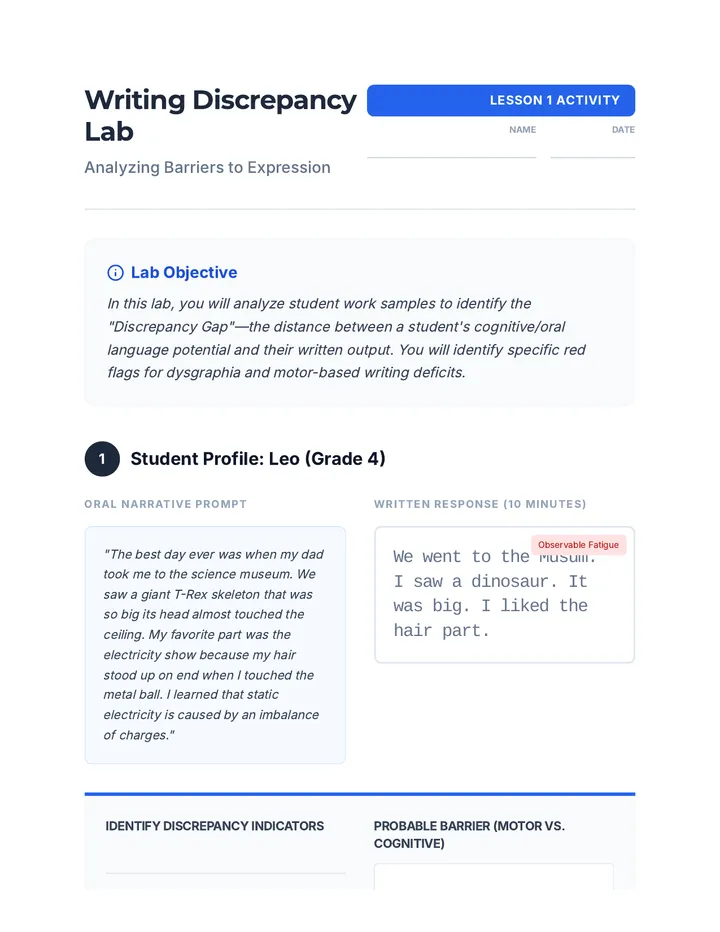
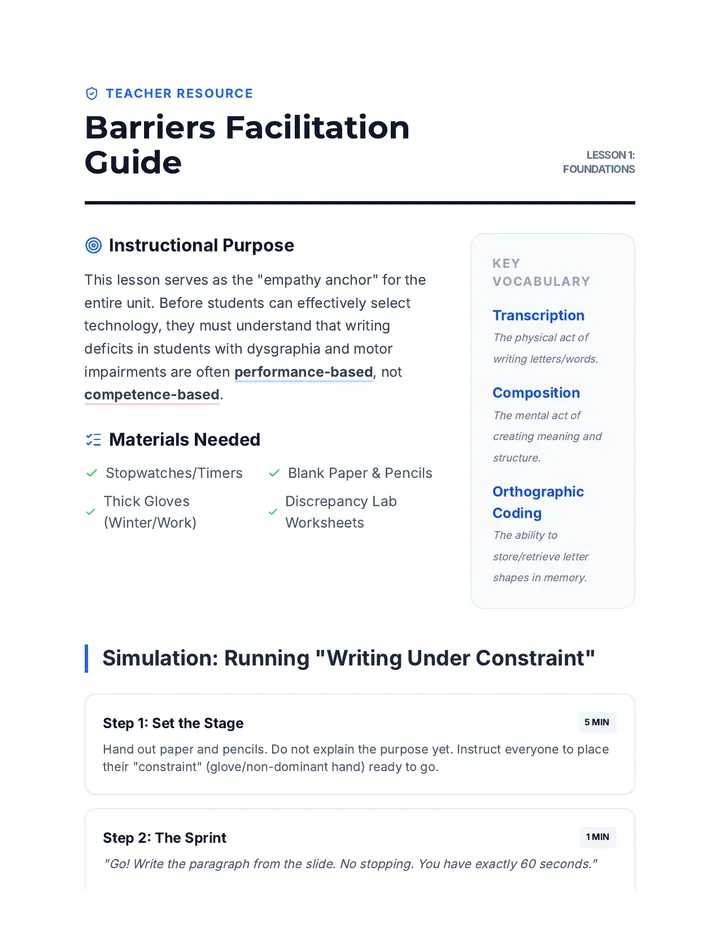
Barriers Slides
Discrepancy Lab Worksheet
Barriers Teacher Guide

Writing Without Walls

This sequence prepares pre-service teachers to evaluate, select, and implement assistive technology (AT) tools specifically designed for students with dysgraphia and physical motor impairments. Students will move from understanding neurological barriers to designing comprehensive, data-driven AT implementation plans.

Lenny Avatar
Lenny
1/18
Sequence
Voice Power Slides
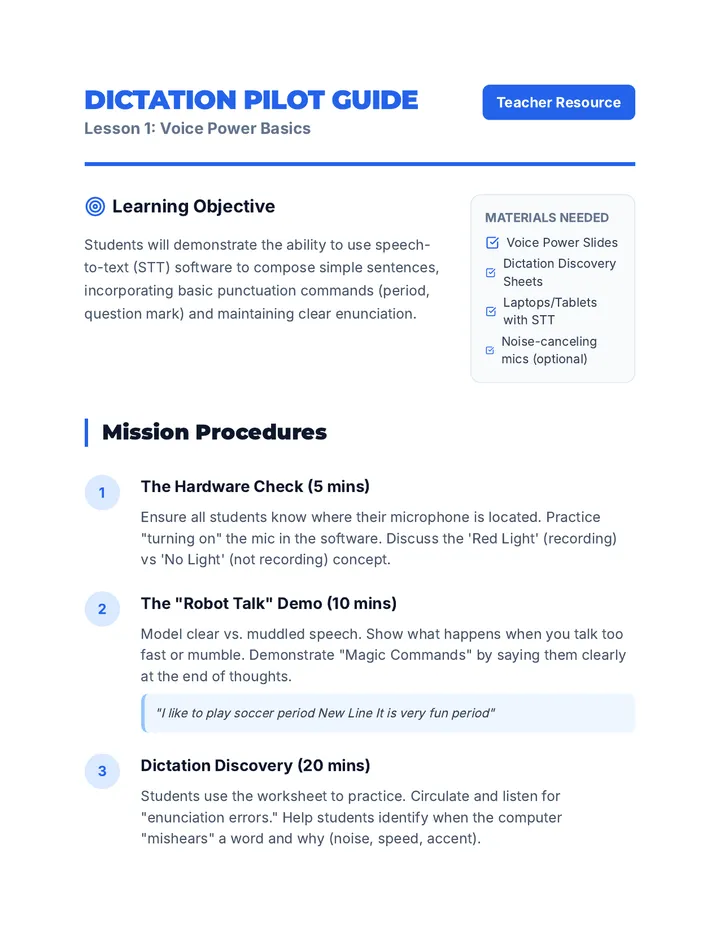
Dictation Pilot Teacher Guide
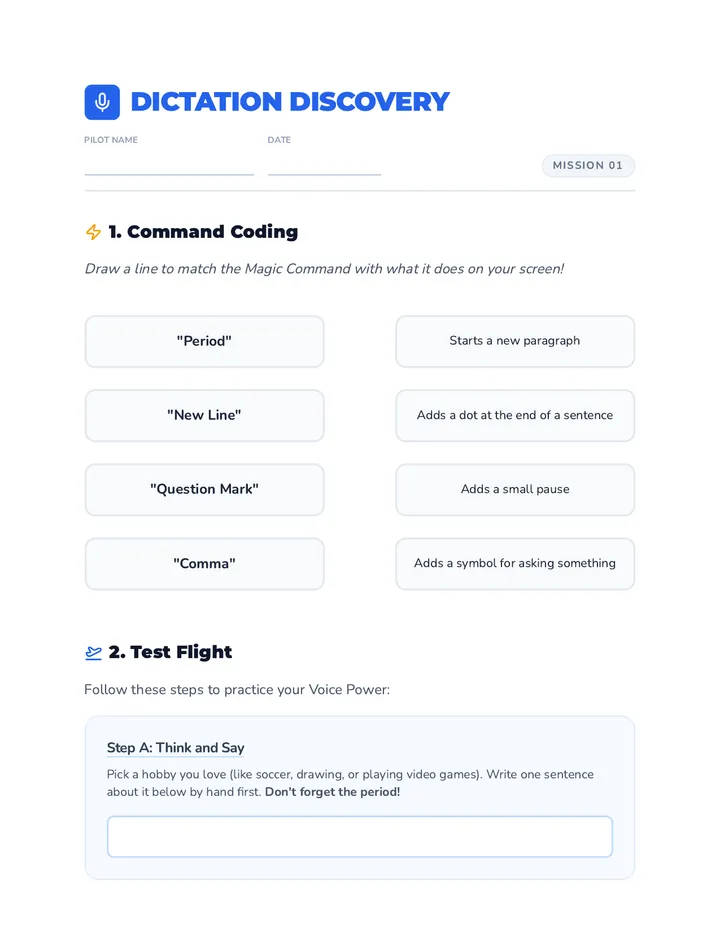
Dictation Discovery Worksheet

Developing Narrative Writing Skills Through Assistive Technology

This sequence empowers 3rd-grade students to bypass physical writing barriers using assistive technology tools like speech-to-text, digital organizers, and word prediction. Students progress from basic dictation mechanics to publishing a fully edited personal narrative, fostering independence and confidence in their writing abilities.

Lenny Avatar
Lenny
1/18
Sequence
Toolkit Exploration Slides
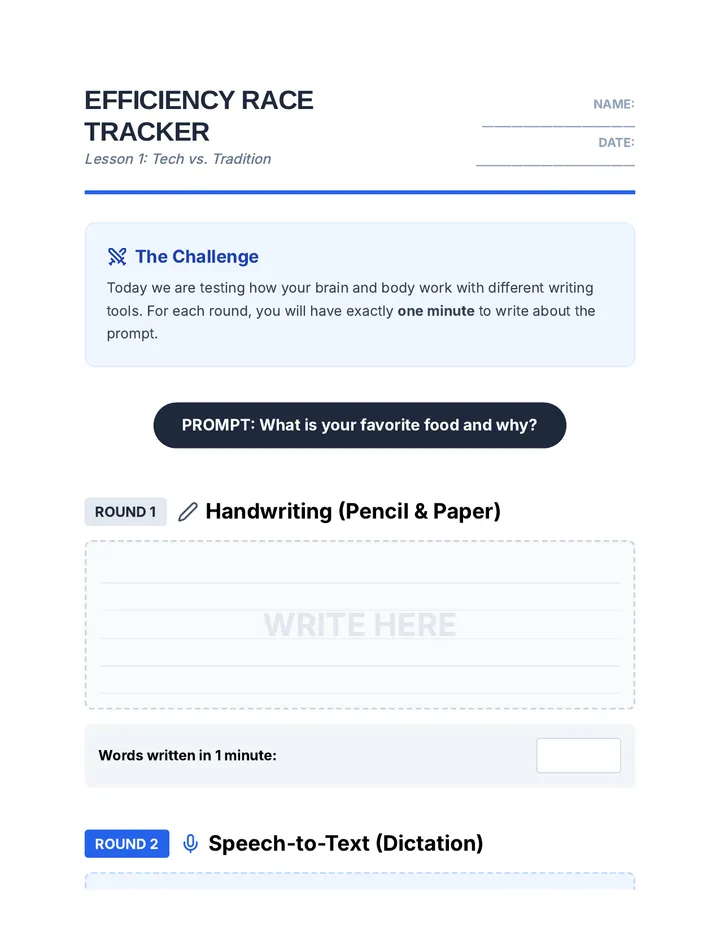
Efficiency Race Tracker Worksheet
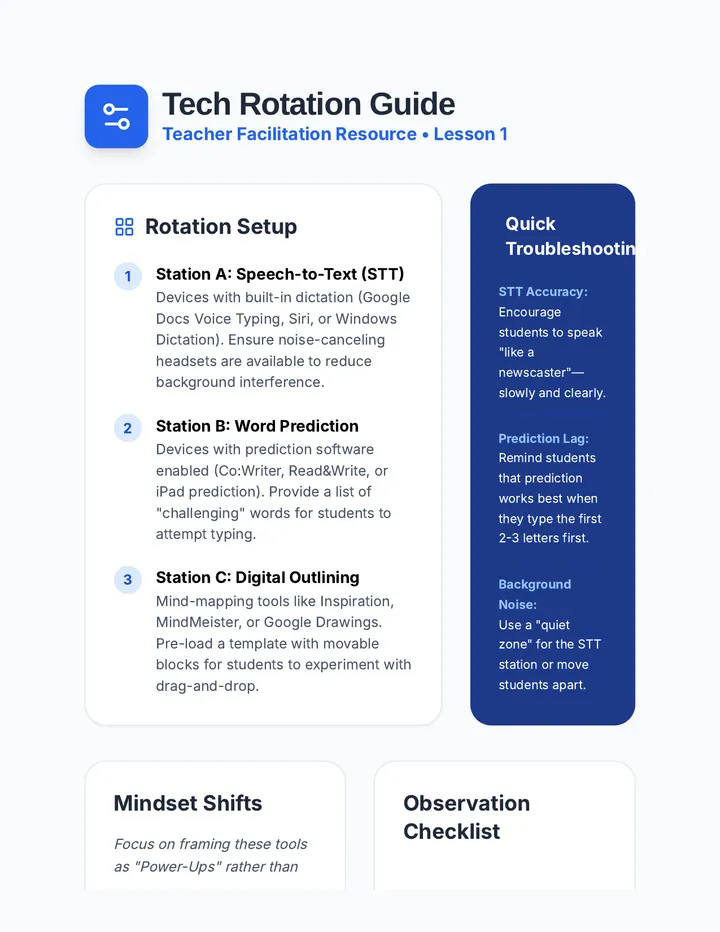
Tech Rotation Teacher Guide

Developing Writing Independence with Assistive Tools

A 5-lesson unit for 6th-grade students focused on mastering assistive writing technologies, including speech-to-text, word prediction, and digital graphic organizers, culminating in a personal narrative and a self-advocacy tech plan.

Lenny Avatar
Lenny
1/18
Sequence
Voice Power Slides
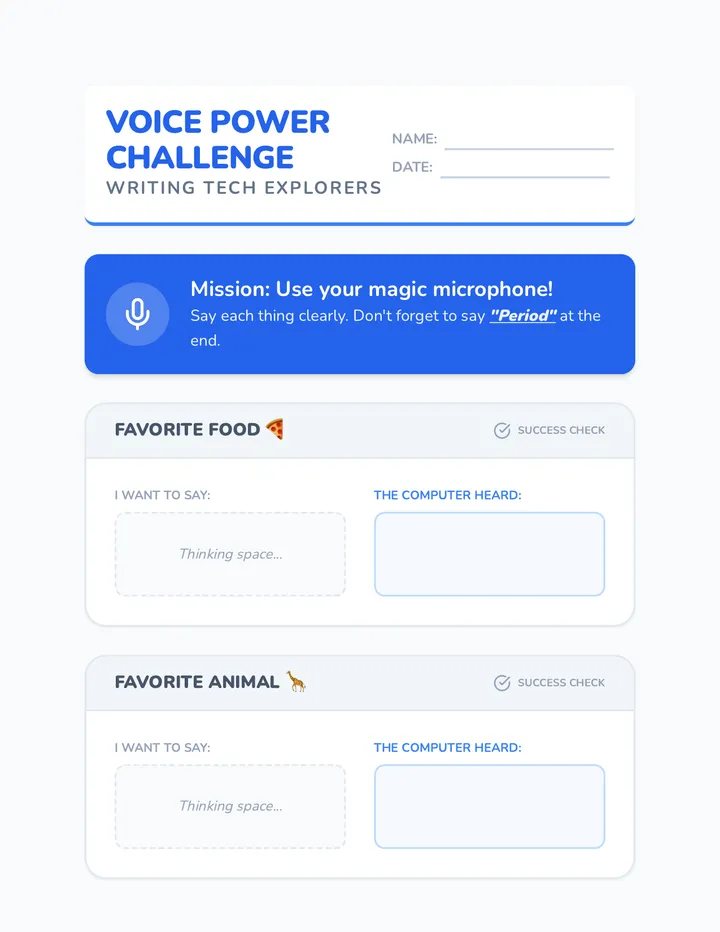
Voice Power Worksheet
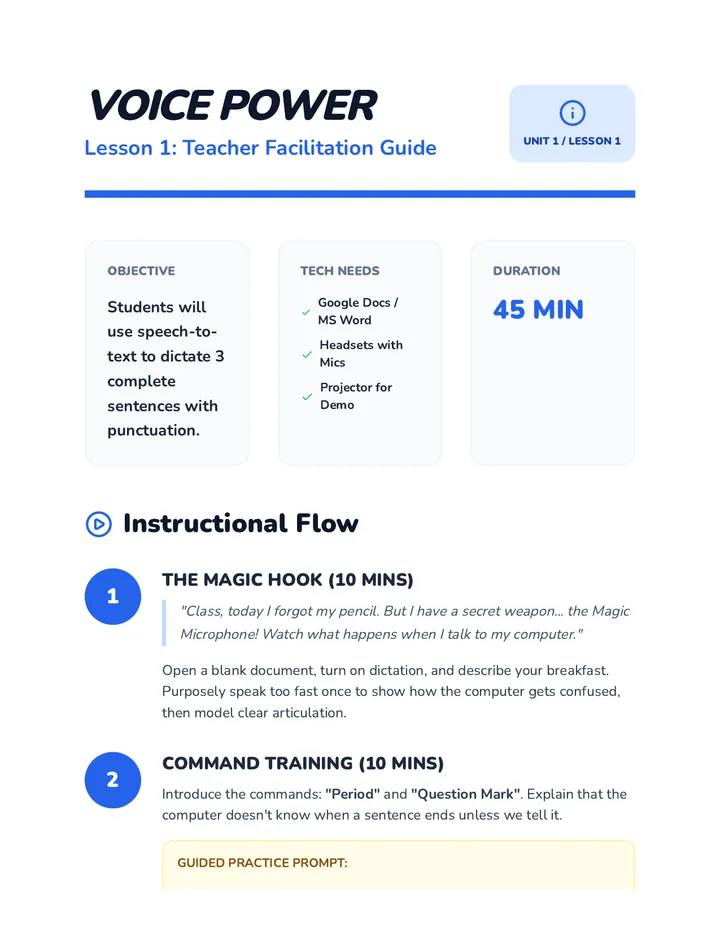
Voice Power Teacher Guide

Writing Tech Explorers

This sequence introduces 2nd-grade students to assistive writing technology, including speech-to-text, digital organizers, word prediction, and text-to-speech, to foster independence in writing.

Lenny Avatar
Lenny
1/18
Sequence
Essential vs Extra Slides
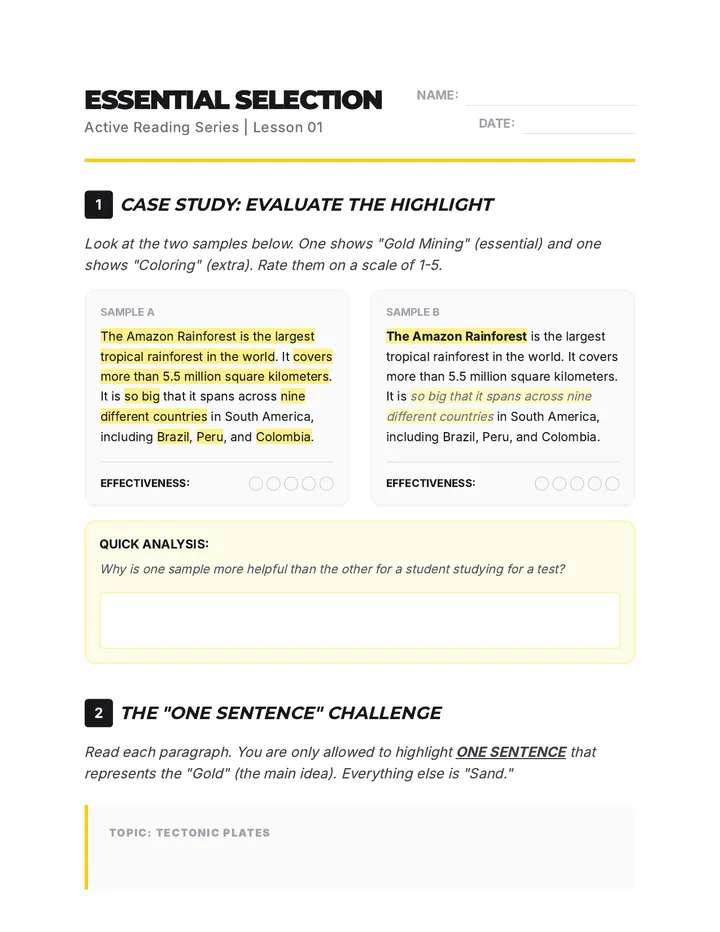
Essential Selection Worksheet
Annotation Facilitation Guide

Active Reading Annotation Sequence

This sequence transitions students from passive reading to active engagement using systematic annotation strategies designed for diverse learners. Students learn to distinguish essential information, apply a color-coding system, use marginalia, and extract evidence for writing.

Lenny Avatar
Lenny
1/18
Sequence
Brain Shortcuts Slides
Visual Anchor Analysis Worksheet
Brain Shortcuts Teacher Guide

Visual Anchors Sequence

A project-based sequence for 10th-grade students to create external memory aids and visual anchors that compensate for working memory limitations. Students explore visual processing, color-coding, and linear design to build a personalized 'Visual Toolkit' for managing single-step directions.

Lenny Avatar
Lenny
1/18
Sequence
Implicit Hunter Slides
Verb Hunt Worksheet
Hunter Teacher Guide

Task Decoders

A cognitive strategy sequence for 10th-grade students focused on deconstructing complex academic prompts into manageable single-step tasks to support working memory and executive function.

Lenny Avatar
Lenny
1/18
Sequence
First Step Focus Slides
First Action Hunt Worksheet

Focus Blueprint Sequence

A sequence for 9th-grade students focused on reducing cognitive load by deconstructing complex academic assignments into single-step actions. Students learn to isolate tasks visually, create checklists, and use verbal self-cueing to improve accuracy and independence.

Lenny Avatar
Lenny
1/18
Sequence
Task Analysis Slides
Task Analysis Facilitator Guide
Task Analysis Breakdown Worksheet

Scaffold Success Sequence

A graduate-level course on scaffolding complex, multi-day projects for students with executive functioning deficits. Participants learn to apply task analysis, backward design, and metacognitive prompting to reduce executive load while maintaining academic rigor.

Lenny Avatar
Lenny
1/18
Sequence
Fairness Lab Slides
Fairness Lab Worksheet

Learning Tool Lab

A 5-lesson sequence for 3rd-grade students to understand equity versus equality and identify the specific tools (accommodations) they need to succeed in the classroom. Students shift their perspective from seeing accommodations as 'special treatment' to viewing them as essential tools for learning.

Lenny Avatar
Lenny
1/18
Sequence
Memory Lab Report
Cognitive Load Slides

Blueprint for Success

A comprehensive sequence for 9th-grade students to master working memory compensation through visual supports. Students move from understanding cognitive load to designing and applying personalized checklists, graphic organizers, and environmental cues to their actual schoolwork.

Lenny Avatar
Lenny
1/18
Sequence
Cognitive Load Slides
Cognitive Task Analysis Worksheet
Rambling Email Hook Guide

Dictation Design Protocols

A graduate-level sequence focused on the pedagogy of speech recognition. Students shift from learning the technology to designing instructional protocols that address the cognitive demands of oral composition, specifically for K-12 learners with executive function challenges.

Lenny Avatar
Lenny
1/18
Sequence
Voice Pilots Slides
Ramble Rescue Worksheet
Think Then Speak Teacher Guide

Voice Pilots

This sequence teaches 3rd Grade students how to effectively plan and organize their thoughts before using speech-to-text assistive technology. By moving from visual brainstorming to structured speaking, students learn to avoid 'rambling' and produce clear, organized drafts.

Lenny Avatar
Lenny
1/18
Sequence
Voice Dumping Slides
Voice Dumping Teacher Guide
Idea Waterfall Worksheet

Voice Tech Lab

A 5-lesson sequence for 5th-grade students on using assistive technology (speech-to-text) to overcome writing barriers and produce a narrative draft entirely through dictation.

Lenny Avatar
Lenny
1/18
Sequence
Memory Bottleneck Slides
Memory Audit Teacher Guide
Memory Audit Worksheet

External Brain Architecture

A metacognitive sequence for 10th-grade students to identify working memory bottlenecks and design personalized visual support systems to enhance academic independence. Students transition from being accommodation recipients to active cognitive architects.

Lenny Avatar
Lenny
1/18
Sequence
Speed Racer Slides
Speed Racer Worksheet
Speed Racer Teacher Guide

Tech Lab TTS

A sequence focused on empowering 3rd-grade students to customize their text-to-speech settings. Students experiment with speed, voice, and visual highlighting to create a personalized 'Assistive Tech Profile' for better reading retention and comfort.

Lenny Avatar
Lenny
1/18
Sequence
Reading Radar Slides
Reading Radar Worksheet
Reading Radar Teacher Guide

Tech Tools for Learning

A comprehensive sequence for 4th-grade students to master Text-to-Speech (TTS) assistive technology. Students learn to navigate complex text features, clean up cluttered webpages, tackle math word problems, conduct research, and take effective notes using auditory tools.

Lenny Avatar
Lenny
1/18
Sequence
Eyes on the Waves Slides
Eyes on the Waves Teacher Guide
Eyes on the Waves Worksheet

Reading Frequency Lab

A 5th-grade sequence focused on using Text-to-Speech (TTS) technology as a cognitive strategy for reading comprehension. Students learn bi-modal reading, text chunking, evidence collection, and active annotation to transition from passive listening to active engagement with digital text.

Lenny Avatar
Lenny
1/18
Sequence
Calibration Slides
WPM Tracker Worksheet
Calibration Teacher Guide

TTS Mastery Workflow

This sequence equips 12th-grade students with advanced technical skills in Text-to-Speech (TTS) technology. It moves beyond basic tool usage to professional-grade workflows, including auditory calibration, OCR conversion, immersion reading, mobile synchronization, and technical troubleshooting, preparing students for the heavy reading demands of post-secondary environments.

Lenny Avatar
Lenny
1/18
Sequence
Mapping the Page Slides
Map the Text Worksheet

Text Detectives Unit

A 3rd-grade sequence focused on teaching students with processing difficulties how to navigate informational texts using annotation and highlighting techniques. Through a 'text detective' theme, students analyze informational articles as 'specimens' to identify features, vocabulary, and main ideas.

Lenny Avatar
Lenny
1/18
Sequence
Digital Toolset Slides
Digital Scavenger Hunt Worksheet
Annotation Toolbox Teacher Guide

Screen Thinkers Digital Annotation Masterclass

A 5-lesson sequence designed for 9th-grade students in an academic support setting to master digital annotation, highlighting, and collaborative text analysis tools. The sequence focuses on transitioning traditional paper-based strategies to digital environments like Google Docs and PDFs, emphasizing visible thinking and peer collaboration.

Lenny Avatar
Lenny
1/18
Sequence
Highlighting Audit Worksheet
Painted Page Slides
Highlighting Habits Teacher Guide

Highlighter Blueprint

A 5-lesson sequence for 9th-grade students to master a systematic, three-color highlighting strategy, moving from identifying 'over-highlighting' pitfalls to independent application on non-fiction texts.

Lenny Avatar
Lenny
1/18
Sequence
Highlight Rescue Slides
Highlight Rescue Worksheet
Idea Lab Facilitator Guide

Idea Lab Summaries

A project-based sequence for 4th-grade students in special education settings, focusing on moving from passive highlighting to active extraction, organization, and synthesis. Students learn to refine highlights, extract them onto cards, sort ideas logically, and create a visual 'One-Page Expert Guide' as a summary tool.

Lenny Avatar
Lenny
1/18
Sequence
Toolbox Training Slides
Toolbox Training Teacher Guide
Toolbox Scavenger Hunt Worksheet

Digital Text Hacking

This sequence teaches 4th-grade students how to use digital annotation tools—like highlighting, commenting, and text-to-speech—to support reading comprehension and prepare for computer-based assessments. It is designed specifically for students needing academic support or accommodations.

Lenny Avatar
Lenny
1/18
Sequence
Spot the Difference Worksheet
Syncing Eyes and Ears Slides
Syncing Eyes Teacher Guide

Sound Waves and Sentences

This sequence guides 9th-grade students through the cognitive strategies of using Text-to-Speech (TTS) for deep comprehension. It moves from basic bi-modal tracking to advanced digital annotation and genre-specific strategy adaptation, culminating in a rigorous auditory comprehension assessment.
Lenny Avatar
Lenny
1/18
Sequence
Think-Aloud Blueprint Slides
Think-Aloud Scripting Template
Cognitive Modeling Facilitator Notes

Explicit Instruction of Annotation Strategies

This graduate-level sequence focuses on the explicit instruction of text highlighting and annotation strategies. It prepares future special educators and coaches to move beyond 'assigning' annotation toward systematically 'teaching' it through cognitive modeling, guided practice, and implementation fidelity monitoring.

Lenny Avatar
Lenny
1/18
Sequence
Strategy Selection Slides
Data Interpretation Worksheet

Design Individualized Annotation Protocols

A graduate-level professional development sequence focused on designing customized text annotation and highlighting protocols for students with diverse learning needs, specifically targeting executive function and processing speed deficits.

Lenny Avatar
Lenny
1/18
Sequence
Tool Landscape Slides
Digital Annotation Matrix

Assistive Technology for Digital Text Engagement

This sequence explores how graduate students can leverage assistive technology for digital annotation, moving from basic tool audits to advanced data extraction and AI integration to support students with disabilities.

Lenny Avatar
Lenny
1/18
Sequence
Cognitive Load Slides
Reading Overload Simulation Handout

Cognitive Foundations of Active Reading Interventions

A graduate-level sequence exploring the cognitive science of text highlighting and annotation, focusing on memory, cognitive load, and evidence-based interventions for students with learning disabilities.

Lenny Avatar
Lenny
1/18
Sequence
Metacognitive Audit Slides
Metacognitive Audit Worksheet
Metacognitive Audit Teacher Guide

Text Architect Sequence

An advanced workshop sequence for high school seniors to transition from passive reading to active text analysis. Students develop personalized systems for color-coding, marginalia, and strategic filtering to navigate complex academic texts.

Lenny Avatar
Lenny
1/18
Sequence
Voice Interface Pilot Slides
TTS Test Drive Worksheet
Voice Interface Pilot Teacher Guide

TTS Research Architect

A comprehensive sequence for 11th-grade students to master Text-to-Speech (TTS) technology for high-level academic research. Students progress from software evaluation and auditory optimization to advanced annotation strategies and troubleshooting complex document formats.

Lenny Avatar
Lenny
1/18
Sequence
Symbolic Secrets Handout
Symbolic Secrets Slides
Symbolic Secrets Guide

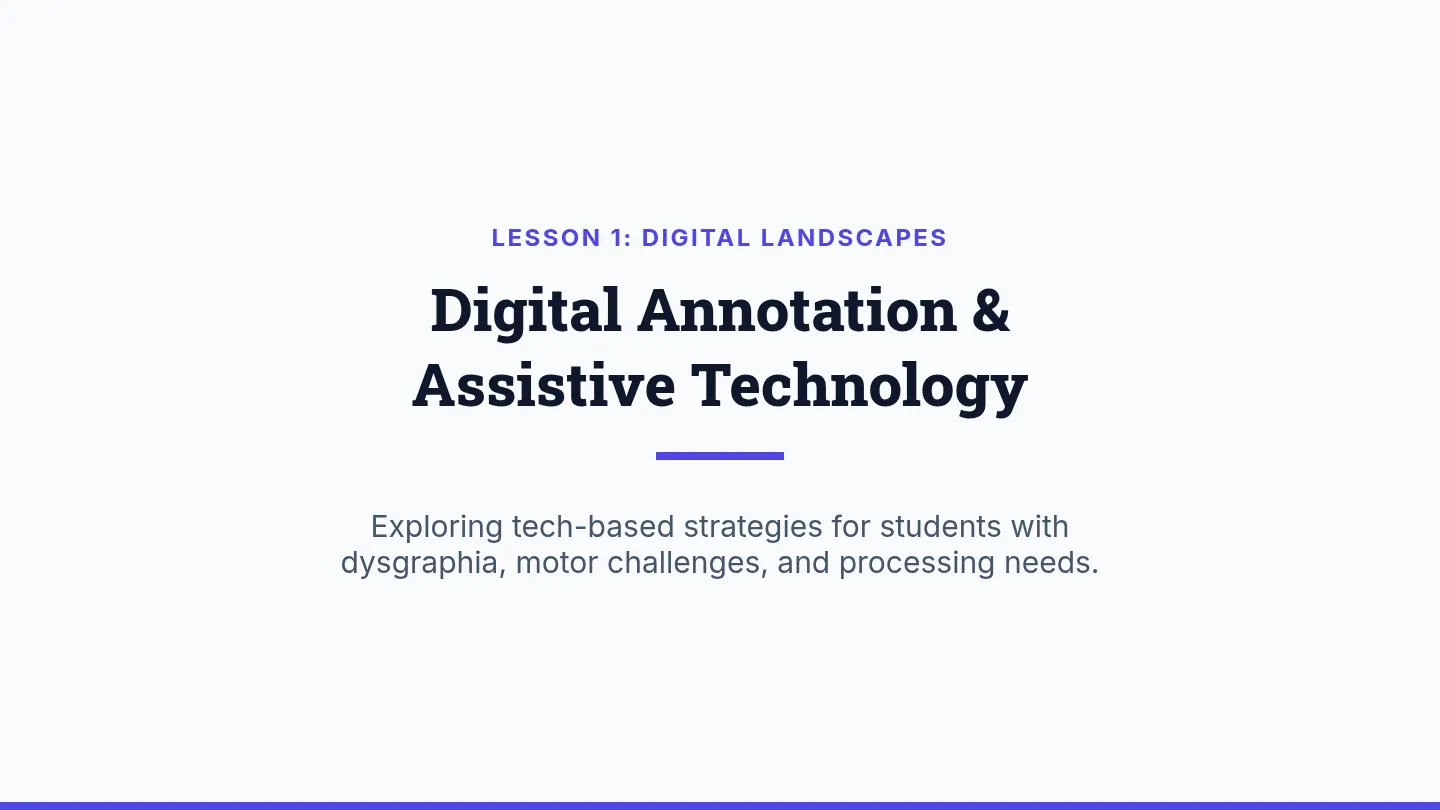
Text Talkers Annotation Skills

This sequence teaches 6th-grade students with diverse learning needs how to move beyond passive highlighting to active text annotation. Using a metacognitive approach, students learn to 'talk back' to text through symbolic shorthand, inquiry questions, synthesis summaries (gists), and personal connections to improve comprehension and memory.

Lenny Avatar
Lenny
1/18
Sequence
Truth Seekers Slides
Fact Finder Worksheet

Text Evidence Detectives

A 5-lesson sequence designed for 6th-grade special education students to master text highlighting and annotation. Students act as 'Text Detectives' to identify, scan, categorize, and evaluate textual evidence to support argumentative writing.

Lenny Avatar
Lenny
1/18
Sequence
Fluency Illusion Experiment
Cognitive Science Slides
Cognitive Load Teacher Guide

Systematic Annotation Protocols

This sequence equips pre-service teachers with evidence-based frameworks for teaching text interaction to students with executive function deficits. It moves from cognitive science foundations to the practical design and assessment of systematic annotation protocols.

Lenny Avatar
Lenny
1/18
Sequence
Digital Tools Slides
Tech Petting Zoo Log

Differentiating Text Engagement

A comprehensive sequence for undergraduate special education students focused on tailoring text engagement and annotation strategies for learners with SLD, ADHD, and visual processing needs. Students analyze case studies, evaluate assistive technologies, and design bespoke support plans.

Lenny Avatar
Lenny
1/18
Sequence
Word Wizard Slides
Word Wizard Training Worksheet
Terminology Master Guide

Digital Detectives Reading Tools

A 5-lesson sequence designed for 3rd-grade students to master the use of text-to-speech (TTS) technology for decoding informational texts, academic vocabulary, and non-linear text features like captions and sidebars. Students progress from decoding individual words to synthesizing information from multiple sources for research and presentation.

Lenny Avatar
Lenny
1/18
Sequence
Focus Frequency Slides
Focus Frequency Teacher Guide
Listening Lab Worksheet

Sonic Seekers Auditory Mastery

This sequence shifts the focus from assistive technology to the cognitive strategies required for auditory learning. Students engage in inquiry-based activities to distinguish between passive hearing and active listening, applying specific comprehension strategies while using text-to-speech (TTS) to access grade-level texts.

Lenny Avatar
Lenny
1/18
Sequence
Reading Radar Slides
Reading Radar Worksheet
Reading Radar Teacher Guide

Tech Tools for Learning

A comprehensive sequence for 4th-grade students to master Text-to-Speech (TTS) assistive technology. Students learn to navigate complex text features, clean up cluttered webpages, tackle math word problems, conduct research, and take effective notes using auditory tools.

Lenny Avatar
Lenny
1/18
Sequence
Organizer Blueprint Slides
Mapping to Linear Handout
Executive Function Case Study

Integrating Assistive Technology into Writing Instruction

A comprehensive graduate-level sequence focused on the pedagogical implementation of assistive writing technology. It shifts the focus from tool selection to instructional methodologies that scaffold digital organizers, dictation, and text-to-speech for student autonomy.

Lenny Avatar
Lenny
1/18
Sequence
Writing Breakthrough Slides
Dysgraphia Case Analysis Worksheet
Neuroscience Intervention Guide

Writing Breakthroughs Assistive Technology Evaluation

This graduate-level sequence prepares educators to evaluate and select assistive writing technologies using evidence-based frameworks like SETT. It covers the neurology of dysgraphia, technical analysis of speech-to-text and word prediction, and the legal requirements for IEP implementation.

Lenny Avatar
Lenny
1/18
Sequence
Barrier Mapping Slides
Barrier Mapping Worksheet
Access Ally Teacher Guide

Access Ally Sequence

This sequence empowers 9th-grade students to integrate Text-to-Speech (TTS) into their high school workflows through self-advocacy and digital organization. Students move from identifying reading barriers in their schedules to creating a professional Access Plan for their teachers.

Lenny Avatar
Lenny
1/18
Sequence
Proof Listening Slides
Glitch Hunt Worksheet
Proof Listening Teacher Guide

Audio Advantage

A 5-lesson sequence for 7th-grade students focusing on text-to-speech (TTS) as a tool for writing revision and a foundation for self-advocacy. Students progress from technical editing skills to understanding neurodiversity and communicating their accommodation needs to others.

Lenny Avatar
Lenny
1/18
Sequence
Tool Landscape Slides
Digital Annotation Matrix

Assistive Technology for Digital Text Engagement

This sequence explores how graduate students can leverage assistive technology for digital annotation, moving from basic tool audits to advanced data extraction and AI integration to support students with disabilities.

Lenny Avatar
Lenny
1/18
Sequence
Bumpy Road Slides
Stuck Signals Worksheet
Stuck Signals Teacher Guide

Obstacle Detectives

A 2nd-grade special education unit focused on executive function. Students learn to recognize the physical signs of being 'stuck' and categorize barriers into materials, comprehension, and environment.

Lenny Avatar
Lenny
1/18
Sequence
Ear Editing Slides
Syntax Sound Check Worksheet
Proofreading Protocol Teacher Guide

Auditory Strategies Sequence

A 10th-grade sequence focusing on the cognitive and analytical applications of Text-to-Speech (TTS). Students transition from using TTS as a basic accommodation to leveraging it as a sophisticated tool for proofreading, literary analysis, and research efficiency, culminating in a self-advocacy project.
Lenny Avatar
Lenny
1/18
Sequence
Truth Seekers Slides
Fact Finder Worksheet

Text Evidence Detectives

A 5-lesson sequence designed for 6th-grade special education students to master text highlighting and annotation. Students act as 'Text Detectives' to identify, scan, categorize, and evaluate textual evidence to support argumentative writing.

Lenny Avatar
Lenny
1/18
Sequence
Barriers Slides
Discrepancy Lab Worksheet
Barriers Teacher Guide

Writing Without Walls

This sequence prepares pre-service teachers to evaluate, select, and implement assistive technology (AT) tools specifically designed for students with dysgraphia and physical motor impairments. Students will move from understanding neurological barriers to designing comprehensive, data-driven AT implementation plans.

Lenny Avatar
Lenny
1/18
Sequence
Voice Power Slides
Dictation Pilot Teacher Guide
Dictation Discovery Worksheet

Developing Narrative Writing Skills Through Assistive Technology

This sequence empowers 3rd-grade students to bypass physical writing barriers using assistive technology tools like speech-to-text, digital organizers, and word prediction. Students progress from basic dictation mechanics to publishing a fully edited personal narrative, fostering independence and confidence in their writing abilities.

Lenny Avatar
Lenny
1/18
Sequence
Toolkit Exploration Slides
Efficiency Race Tracker Worksheet
Tech Rotation Teacher Guide

Developing Writing Independence with Assistive Tools

A 5-lesson unit for 6th-grade students focused on mastering assistive writing technologies, including speech-to-text, word prediction, and digital graphic organizers, culminating in a personal narrative and a self-advocacy tech plan.

Lenny Avatar
Lenny
1/18
Sequence
Essential vs Extra Slides
Essential Selection Worksheet
Annotation Facilitation Guide

Active Reading Annotation Sequence

This sequence transitions students from passive reading to active engagement using systematic annotation strategies designed for diverse learners. Students learn to distinguish essential information, apply a color-coding system, use marginalia, and extract evidence for writing.

Lenny Avatar
Lenny
1/18
Sequence
Silent Simon Cards
Silent Simon Presentation
Silent Simon Worksheet

Memory Mission Mastery

A Kindergarten sequence focused on reducing cognitive load for multi-step directions using visual supports. Students move from teacher-led cues to self-directed visual sequencing through movement-based activities and games.

Lenny Avatar
Lenny
1/18
Sequence
Audit Intro Slides
Memory Glitch Tracker Handout
Audit Facilitation Guide

Memory Architects

A metacognitive sequence for 11th-grade students to audit their own working memory challenges and design personalized visual support aids. Students transition from passive recipients of support to active designers and advocates for their own learning environments.

Lenny Avatar
Lenny
1/18
Sequence
Mental Movie Magic Slides
Visualization Practice Worksheet
Mental Movie Facilitation Guide

Visual Encoding and Graphic Support Systems

A specialized sequence for 6th-grade students focusing on working memory support through visual encoding. Students learn to transform auditory single-step directions into mental images and physical sketches to improve recall and task execution.

Lenny Avatar
Lenny
1/18
Sequence
Brain Shortcuts Slides
Visual Anchor Analysis Worksheet
Brain Shortcuts Teacher Guide

Visual Anchors Sequence

A project-based sequence for 10th-grade students to create external memory aids and visual anchors that compensate for working memory limitations. Students explore visual processing, color-coding, and linear design to build a personalized 'Visual Toolkit' for managing single-step directions.

Lenny Avatar
Lenny
1/18
Sequence
Implicit Hunter Slides
Verb Hunt Worksheet
Hunter Teacher Guide

Task Decoders

A cognitive strategy sequence for 10th-grade students focused on deconstructing complex academic prompts into manageable single-step tasks to support working memory and executive function.

Lenny Avatar
Lenny
1/18
Sequence
Focus Frequency Slides
Focus Frequency Teacher Guide
Listening Lab Worksheet

Sonic Seekers Auditory Mastery

This sequence shifts the focus from assistive technology to the cognitive strategies required for auditory learning. Students engage in inquiry-based activities to distinguish between passive hearing and active listening, applying specific comprehension strategies while using text-to-speech (TTS) to access grade-level texts.

Lenny Avatar
Lenny
1/18
Sequence
Memory Bottleneck Slides
Memory Audit Teacher Guide
Memory Audit Worksheet

External Brain Architecture

A metacognitive sequence for 10th-grade students to identify working memory bottlenecks and design personalized visual support systems to enhance academic independence. Students transition from being accommodation recipients to active cognitive architects.

Lenny Avatar
Lenny
1/18
Sequence
Bottleneck Challenge Worksheet
Bottleneck Intro Slides
Bottleneck Facilitator Guide

External Brain Blueprint

This inquiry-based sequence teaches 10th-grade students with working memory challenges how to use visual note-taking strategies to capture spoken information. Students explore the 'cognitive bottleneck,' practice spatial page segmentation, develop a personal visual shorthand, and use their notes for retrieval practice.

Lenny Avatar
Lenny
1/18
Sequence
Signal Word Bingo Worksheet
Detective Work Slides
Structure Sleuth Worksheet
Detective Work Teacher Guide

Map Your Mind

A specialized sequence for 6th-grade students with working memory challenges, focusing on transforming linear information into visual maps. Students learn to identify text structures through signal words, develop personal iconography, and master non-linear note-taking techniques to improve comprehension and recall.

Lenny Avatar
Lenny
1/18
Sequence
Repetition Power Slides
Repetition Games Guide
Echo Ears Worksheet

Memory Lab Academy

This sequence teaches 3rd-grade students verbal rehearsal strategies to improve auditory working memory. Students progress from vocal repetition to whispered self-talk and finally silent inner speech, using games and mnemonics to hold information active while completing complex tasks.

Lenny Avatar
Lenny
1/18
Sequence
Double Channel Presentation
Memory Lab Worksheet
Double Channel Facilitator Guide

Mind Blueprint Visual Memory

This sequence teaches 11th-grade students with working memory challenges how to use Dual Coding Theory and visual organization to improve information retention. Students progress from basic memory strategies to advanced concept mapping, infographic design, and real-time sketch-noting.

Lenny Avatar
Lenny
1/18
Sequence
Memory Challenge Worksheet
Memory Lab Slides
Lesson 1 Teacher Guide

Visual Note-Taking Strategies

This sequence guides 7th-grade students through using graphic organizers to reduce cognitive load and enhance working memory. Students learn to identify text structures and select appropriate visual scaffolds to externalize thinking and improve retention.

Lenny Avatar
Lenny
1/18
Sequence
Tech Speed Dating Slides
Tool Tester Worksheet
Accessibility Power Reference

Digital Study Tools

A project-based sequence for 11th-grade students to master digital accessibility tools and create professional-grade, multi-modal study materials. Students learn to leverage assistive technology like text-to-speech and digital organizers to bypass executive function barriers.

Lenny Avatar
Lenny
1/18
Sequence
Mind Design Slides
Mind Design Teacher Guide
Memory Challenge Worksheet

Visual Synthesis Mastery

This sequence transforms passive reading into active visual synthesis for 11th-grade students. Students will master graphic organizers like concept maps, flowcharts, and comparison matrices to deconstruct complex texts into functional study guides.

Lenny Avatar
Lenny
1/18
Sequence
Word Weaver Slides
Word Weaver Worksheet
Mind Hacker Teacher Guide

Mind Hacker Mnemonics

A comprehensive sequence designed to equip 9th-grade students with creative memory strategies. Students will master acronyms, acrostics, rhythmic mnemonics, visual associations, and the Method of Loci to enhance academic retention.

Lenny Avatar
Lenny
1/18
Sequence
Flashcard Power Slides
Card Creator Checklist
Digital Deck Teacher Guide

Tech Savvy Study Hub

A 5-lesson sequence for 9th-grade Special Education students focusing on using digital tools and assistive technology to create accessible, interactive study materials. Students progress from digital flashcards to comprehensive multimedia study hubs and personalized tech plans for exam prep.

Lenny Avatar
Lenny
1/18
Sequence
Chunking Blueprint Slides
Information Architect Teacher Guide
Chunking Blueprint Worksheet

Visual Architects Study Sequence

A 5-lesson sequence for 9th-grade students on transforming complex academic information into visual study guides. Students learn chunking, comparison matrices, flowcharts, and concept maps to improve comprehension and memory.

Lenny Avatar
Lenny
1/18
Sequence
Cognitive Load Science Slides
Cognitive Load Teacher Guide
Breaking Point Report Worksheet

Designing Visual Frameworks

A project-based sequence for 10th graders focusing on 'offloading' cognitive load through visual frameworks and external tools. Students act as 'process engineers' to design systems that support working memory and sustained attention during complex tasks.

Lenny Avatar
Lenny
1/18
Sequence
Chunking the Code Teacher Guide
Chunking the Code Slides
Chunking the Code Worksheet

Study Architect Visual Guides

A 5-lesson series designed to help 6th-grade students in special education settings transform dense text into organized, visual study guides. Students progress from basic chunking to independently selecting the best visual structure (hierarchy, sequence, or comparison) for different types of academic content.
Lenny Avatar
Lenny
1/18
Sequence
Memory Hook Lab Slides
Crazy Hook Creator Worksheet
Hook Em Teacher Guide

Memory Mastery Lab

A 5-lesson sequence for 3rd-grade students in special education settings to master mnemonic strategies and auditory techniques for improved memory retention. The sequence uses a 'Brain Lab' theme to make abstract memory strategies concrete and engaging through games, movement, and creative expression.

Lenny Avatar
Lenny
1/18
Sequence
Fact Detective Slides
Fact Detective Worksheet
Fact Detective Teacher Guide

Brain Blueprint Organizers

A 5-lesson sequence for 3rd-grade students in academic support settings, teaching how to translate text into visual graphic organizers like bubble maps, flow charts, and Venn diagrams to improve memory and understanding.

Lenny Avatar
Lenny
1/18
Sequence
Cognitive Overload Teacher Guide
Cognitive Load Presentation Slides
Redline Review Worksheet

Designing Accessible Study Materials

A comprehensive sequence for pre-service teachers on designing study aids for students with disabilities, focusing on Cognitive Load Theory, visual organization, mnemonics, and digital accessibility.

Lenny Avatar
Lenny
1/18
Sequence
Stoplight Highlights Slides
Brain Filter Lab Worksheet
Stoplight Highlights Teacher Guide

Brain Hacks Study Guide Superpowers

A comprehensive 5-lesson unit designed for 4th-grade students with diverse learning needs. This sequence transforms study habits from passive reading to active creation using color-coding, graphic organizers, mnemonics, and interactive foldables.

Lenny Avatar
Lenny
1/18
Sequence
Sticky Images Slides
Sticky Images Worksheet

Mind Movies Retention Sequence

A sequence for 3rd-grade special education students focusing on visualization strategies to improve memory retention and recall. Students learn to create 'sticky' mental images, link concepts, and sequence information using mental imagery.

Lenny Avatar
Lenny
1/18
Sequence
Word Wizard Slides
Word Wizard Training Worksheet
Terminology Master Guide

Digital Detectives Reading Tools

A 5-lesson sequence designed for 3rd-grade students to master the use of text-to-speech (TTS) technology for decoding informational texts, academic vocabulary, and non-linear text features like captions and sidebars. Students progress from decoding individual words to synthesizing information from multiple sources for research and presentation.

Lenny Avatar
Lenny
1/18
Sequence
Audio Adventurers Slides
Setting the Stage Worksheet
Story Elements Teacher Guide

Audio Narrative Adventurers

This sequence teaches 3rd-grade students how to use text-to-speech (TTS) as a strategic tool for narrative comprehension. Students learn to use audio for identifying story elements, summarizing via the 'Listen-Stop-Think' routine, citing evidence by re-listening, and visualizing descriptive text.

Lenny Avatar
Lenny
1/18
Sequence
Prediction Pilot Slides
Prediction Log Worksheet

Audio Adventures

A sequence for 2nd Grade students to master text-to-speech (TTS) as a tool for reading comprehension. Students transition from decoding mechanics to deep understanding by using auditory support to predict, pause, answer questions, visualize, and sequence stories.

Lenny Avatar
Lenny
1/18
Sequence
Buddy Talk Slides
Buddy Basics Teacher Guide
Digital Buddy Handbook Worksheet

Digital Navigators Mastering TTS

A sequence designed for 2nd grade students to master the use of text-to-speech (TTS) technology. Students move from basic identification of tools to independent navigation and troubleshooting, viewing TTS as a helpful 'reading buddy'.

Lenny Avatar
Lenny
1/18
Sequence
Eye Tracking Echo Slides
Eye Tracking Echo Worksheet
Eye Tracking Echo Teacher Guide

Reading Trackers

A comprehensive 2nd-grade sequence focused on mastering Text-to-Speech (TTS) tools. Students learn to synchronize visual tracking with audio, adjust speech rates for optimal processing, and use digital tools to support decoding and fluency.

Lenny Avatar
Lenny
1/18
Sequence
Focus Frequency Slides
Focus Frequency Teacher Guide
Listening Lab Worksheet

Sonic Seekers Auditory Mastery

This sequence shifts the focus from assistive technology to the cognitive strategies required for auditory learning. Students engage in inquiry-based activities to distinguish between passive hearing and active listening, applying specific comprehension strategies while using text-to-speech (TTS) to access grade-level texts.

Lenny Avatar
Lenny
1/18
Sequence
Interface Explorer Slides
Interface Explorer Worksheet
Interface Explorer Teacher Guide

TTS Power Up

This sequence guides 6th-grade students through the technical mastery of text-to-speech (TTS) tools. It moves from basic navigation to personalized configuration, empowering students to treat assistive technology as a custom scaffold for their unique learning styles.

Lenny Avatar
Lenny
1/18
Sequence
Ignition Slides
Launch Log Worksheet
Ignition Teacher Guide

Voice Control Pilot

A comprehensive sequence for 4th-grade students to master the technical controls of text-to-speech (TTS) assistive technology. Students progress from basic activation to independent navigation and selection, building technical fluency for accessible reading.

Lenny Avatar
Lenny
1/18
Sequence
Eyes on the Waves Slides
Eyes on the Waves Teacher Guide
Eyes on the Waves Worksheet

Reading Frequency Lab

A 5th-grade sequence focused on using Text-to-Speech (TTS) technology as a cognitive strategy for reading comprehension. Students learn bi-modal reading, text chunking, evidence collection, and active annotation to transition from passive listening to active engagement with digital text.

Lenny Avatar
Lenny
1/18
Sequence
Interface Explorers Slides
Icon Treasure Hunt Worksheet
Interface Basics Teacher Guide

Voice Command

This technical foundation sequence introduces 5th-grade students to text-to-speech (TTS) software, focusing on interface navigation, customization of voice settings, selective reading strategies, and independent troubleshooting. Students develop the skills to personalize digital tools to meet their individual sensory and learning needs.

Lenny Avatar
Lenny
1/18
Sequence
Calibration Slides
WPM Tracker Worksheet
Calibration Teacher Guide

TTS Mastery Workflow

This sequence equips 12th-grade students with advanced technical skills in Text-to-Speech (TTS) technology. It moves beyond basic tool usage to professional-grade workflows, including auditory calibration, OCR conversion, immersion reading, mobile synchronization, and technical troubleshooting, preparing students for the heavy reading demands of post-secondary environments.

Lenny Avatar
Lenny
1/18
Sequence
Digital Toolset Slides
Digital Scavenger Hunt Worksheet
Annotation Toolbox Teacher Guide

Screen Thinkers Digital Annotation Masterclass

A 5-lesson sequence designed for 9th-grade students in an academic support setting to master digital annotation, highlighting, and collaborative text analysis tools. The sequence focuses on transitioning traditional paper-based strategies to digital environments like Google Docs and PDFs, emphasizing visible thinking and peer collaboration.

Lenny Avatar
Lenny
1/18
Sequence
Organizer Blueprint Slides
Mapping to Linear Handout
Executive Function Case Study

Integrating Assistive Technology into Writing Instruction

A comprehensive graduate-level sequence focused on the pedagogical implementation of assistive writing technology. It shifts the focus from tool selection to instructional methodologies that scaffold digital organizers, dictation, and text-to-speech for student autonomy.

Lenny Avatar
Lenny
1/18
Sequence
Writing Breakthrough Slides
Dysgraphia Case Analysis Worksheet
Neuroscience Intervention Guide

Writing Breakthroughs Assistive Technology Evaluation

This graduate-level sequence prepares educators to evaluate and select assistive writing technologies using evidence-based frameworks like SETT. It covers the neurology of dysgraphia, technical analysis of speech-to-text and word prediction, and the legal requirements for IEP implementation.

Lenny Avatar
Lenny
1/18
Sequence
Toolbox Training Slides
Toolbox Training Teacher Guide
Toolbox Scavenger Hunt Worksheet

Digital Text Hacking

This sequence teaches 4th-grade students how to use digital annotation tools—like highlighting, commenting, and text-to-speech—to support reading comprehension and prepare for computer-based assessments. It is designed specifically for students needing academic support or accommodations.

Lenny Avatar
Lenny
1/18
Sequence
Barrier Mapping Slides
Barrier Mapping Worksheet
Access Ally Teacher Guide

Access Ally Sequence

This sequence empowers 9th-grade students to integrate Text-to-Speech (TTS) into their high school workflows through self-advocacy and digital organization. Students move from identifying reading barriers in their schedules to creating a professional Access Plan for their teachers.

Lenny Avatar
Lenny
1/18
Sequence
Proof Listening Slides
Glitch Hunt Worksheet
Proof Listening Teacher Guide

Audio Advantage

A 5-lesson sequence for 7th-grade students focusing on text-to-speech (TTS) as a tool for writing revision and a foundation for self-advocacy. Students progress from technical editing skills to understanding neurodiversity and communicating their accommodation needs to others.

Lenny Avatar
Lenny
1/18
Sequence
Pause Power Slides
Stop and Jot Worksheet
Listening Launch Guide

Strategic Comprehension with Audio Support

This sequence teaches 7th-grade students how to use text-to-speech (TTS) tools strategically to improve reading comprehension. Students progress from basic active listening habits to advanced multi-tasking and synthesis, transforming TTS from a passive hearing aid into a powerful active reading strategy.

Lenny Avatar
Lenny
1/18
Sequence
Interface Command Teacher Guide
Icon Hunter Worksheet
Interface Command Slides

TTS Tech Lab

A comprehensive sequence for 7th-grade students to master text-to-speech (TTS) technology. Students progress from basic interface navigation to advanced customization and troubleshooting, ultimately creating a personalized settings profile for optimal learning.

Lenny Avatar
Lenny
1/18
Sequence
Memory Loop Slides
Memory Loop Worksheet
Loop Commander Teacher Guide

Memory Lab Auditory Retention

A 5-lesson sequence designed for 8th-grade students to improve working memory and auditory processing. Students learn verbal rehearsal, active listening, and self-advocacy strategies to effectively manage and execute single-step instructions.

Lenny Avatar
Lenny
1/18
Sequence
Audit Study Habits Slides
Study Habit Audit Worksheet
Cost of Cramming Case Study

Strategic Planning for Long Term Retention

This mastery-based sequence focuses on the executive functioning required to sustain spaced repetition for academic success. Students move from auditing habits to designing a self-regulated 'Spaced Retrieval Calendar' integrated with their curriculum.

Lenny Avatar
Lenny
1/18
Sequence
Metric Mastery Slides
Data Diagnostic Worksheet

Memory Data Analytics

This sequence empowers graduate students to utilize Spaced Repetition Systems (SRS) as robust data generation tools. Students learn to interpret the backend analytics of SRS platforms—viewing retention rates, ease factors, and response times—to diagnose learning bottlenecks and make data-driven instructional adjustments.

Lenny Avatar
Lenny
1/18
Sequence
Orthographic Mapping Slides
Dyslexia Simulation Teacher Guide
Multisensory Card Designer Worksheet

Adaptive Spaced Repetition Strategies

This graduate-level sequence examines how to adapt spaced repetition systems (SRS) for students with diverse learning needs, including Dyslexia, ADHD, and Dyscalculia. Students will learn to modify content, timing, and engagement strategies to bypass cognitive barriers and support long-term memory.

Lenny Avatar
Lenny
1/18
Sequence
Leitner Mechanics Slides
Leitner Simulation Activity

Designing Spaced Repetition Systems

A graduate-level sequence focused on the design and implementation of Spaced Repetition Systems (SRS) in special education. Students progress from understanding analog mechanics to evaluating digital algorithms and creating tailored academic interventions.

Lenny Avatar
Lenny
1/18
Sequence
Decay Deck Slides
Forgetting Curve Seminar Guide
Retention Data Lab Worksheet

Cognitive Science Foundations of Memory and Retention

A graduate-level sequence exploring the cognitive science and neurobiology of memory, specifically focused on how spaced repetition and active recall serve as critical interventions for students with learning disabilities.

Lenny Avatar
Lenny
1/18
Sequence
Sticky Spots Slides
Sticky Spots Worksheet
Sticky Spots Teacher Guide

Brain Gear Mechanics

A sequence focused on teaching 5th-grade students with academic support needs how to apply spaced repetition and interleaving strategies to master complex procedural skills like multi-step math and grammar. Students learn to diagnose errors, manage practice intervals, and mix problem types to build long-term retention.

Lenny Avatar
Lenny
1/18
Sequence
Memory Lab Worksheet
Memory Foundations Slides
Memory Foundations Teacher Guide

Designing Spaced Repetition Systems for Diverse Learners

This undergraduate-level sequence explores the cognitive science and practical implementation of spaced repetition systems (SRS) in special education contexts. Pre-service teachers will learn to design analog and digital memory supports tailored to students with working memory deficits and learning disabilities, ultimately creating integrated retention strategies for the core curriculum.

Lenny Avatar
Lenny
1/18
Sequence
Tech Speed Dating Slides
Tool Tester Worksheet
Accessibility Power Reference

Digital Study Tools

A project-based sequence for 11th-grade students to master digital accessibility tools and create professional-grade, multi-modal study materials. Students learn to leverage assistive technology like text-to-speech and digital organizers to bypass executive function barriers.

Lenny Avatar
Lenny
1/18
Sequence
Word Weaver Slides
Word Weaver Worksheet
Mind Hacker Teacher Guide

Mind Hacker Mnemonics

A comprehensive sequence designed to equip 9th-grade students with creative memory strategies. Students will master acronyms, acrostics, rhythmic mnemonics, visual associations, and the Method of Loci to enhance academic retention.

Lenny Avatar
Lenny
1/18
Sequence
Flashcard Power Slides
Card Creator Checklist
Digital Deck Teacher Guide

Tech Savvy Study Hub

A 5-lesson sequence for 9th-grade Special Education students focusing on using digital tools and assistive technology to create accessible, interactive study materials. Students progress from digital flashcards to comprehensive multimedia study hubs and personalized tech plans for exam prep.

Lenny Avatar
Lenny
1/18
Sequence
Memory Hook Lab Slides
Crazy Hook Creator Worksheet
Hook Em Teacher Guide

Memory Mastery Lab

A 5-lesson sequence for 3rd-grade students in special education settings to master mnemonic strategies and auditory techniques for improved memory retention. The sequence uses a 'Brain Lab' theme to make abstract memory strategies concrete and engaging through games, movement, and creative expression.

Lenny Avatar
Lenny
1/18
Sequence
Cognitive Overload Teacher Guide
Cognitive Load Presentation Slides
Redline Review Worksheet

Designing Accessible Study Materials

A comprehensive sequence for pre-service teachers on designing study aids for students with disabilities, focusing on Cognitive Load Theory, visual organization, mnemonics, and digital accessibility.

Lenny Avatar
Lenny
1/18
Sequence
Stoplight Highlights Slides
Brain Filter Lab Worksheet
Stoplight Highlights Teacher Guide

Brain Hacks Study Guide Superpowers

A comprehensive 5-lesson unit designed for 4th-grade students with diverse learning needs. This sequence transforms study habits from passive reading to active creation using color-coding, graphic organizers, mnemonics, and interactive foldables.

Lenny Avatar
Lenny
1/18
Sequence
Sticky Images Slides
Sticky Images Worksheet

Mind Movies Retention Sequence

A sequence for 3rd-grade special education students focusing on visualization strategies to improve memory retention and recall. Students learn to create 'sticky' mental images, link concepts, and sequence information using mental imagery.

Lenny Avatar
Lenny
1/18
Sequence
Earworm Academy Slides
Jingle Detectives Worksheet
Earworm Teacher Guide

Rhythm Recall

A 5-lesson sequence designed for 6th-grade students with working memory challenges. This unit focuses on using rhyme, rhythm, and song to enhance procedural memory and information retention. Students move from analyzing popular jingles to composing and performing their own rhythmic mnemonics for academic content.
Lenny Avatar
Lenny
1/18
Sequence
Brain Blueprints Presentation
Info Inspection Worksheet
Task Diagnosis Guide

Strategic Memory Mastery

A metacognitive capstone sequence for 6th-grade students focused on analyzing academic tasks and applying the most effective mnemonic strategies (acronyms, loci, narrative, rhyme) for long-term memory success.
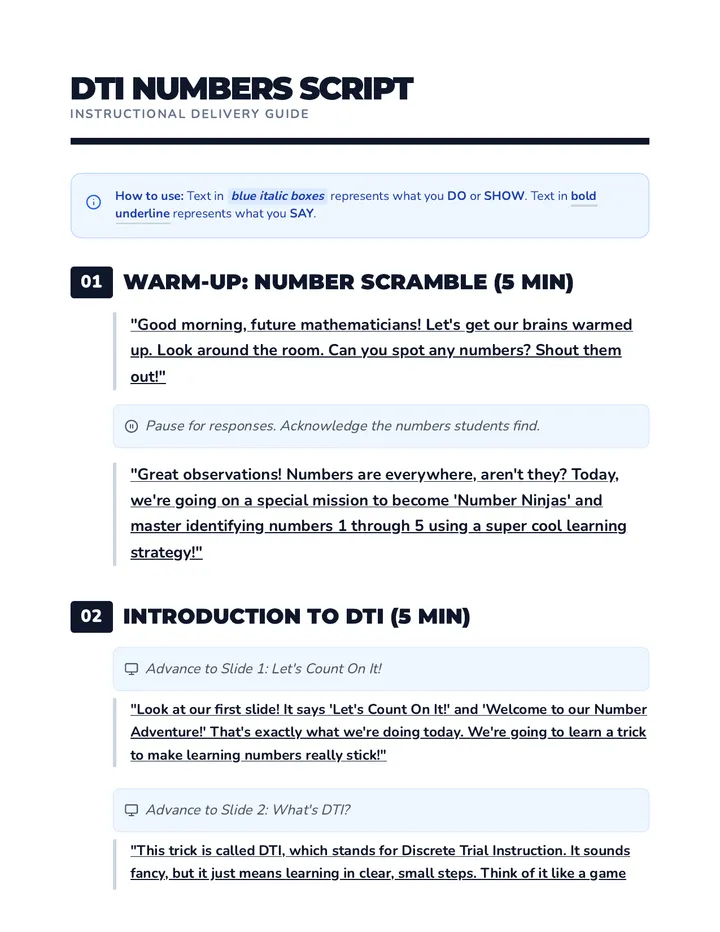
Lenny Avatar
Lenny
1/18
Sequence
Mnemonic Mastermind Guide
Mind Hacks Slides
Mental Movie Maker Worksheet

Mind Palace Architects

A sequence focused on teaching 6th-grade students with working memory challenges how to use visualization and the Method of Loci (Memory Palace) to memorize sequences of information. Students transition from simple visual associations to building and navigating a complex mental environment for academic recall.

Lenny Avatar
Lenny
1/18
Sequence
Mind Movie Slides
Mind Movie Worksheet
Mind Movie Teacher Guide

Mind Eye Mastery

This sequence teaches 5th-grade students with working memory challenges how to use visualization and association techniques. Students progress from basic mental imagery to the 'linking method' and abstract symbolic representation, building a toolkit for more effective information storage and retrieval.

Lenny Avatar
Lenny
1/18
Sequence
Chunking Teacher Guide
Chunking Codebreakers Worksheet
Chunking Codebreakers Slides

Mind Mansion Masters

A 5-lesson sequence for 5th-grade students focusing on working memory support through chunking and the Method of Loci. Students progress from basic data organization to building and navigating mental 'memory palaces' to store and retrieve information.

Lenny Avatar
Lenny
1/18