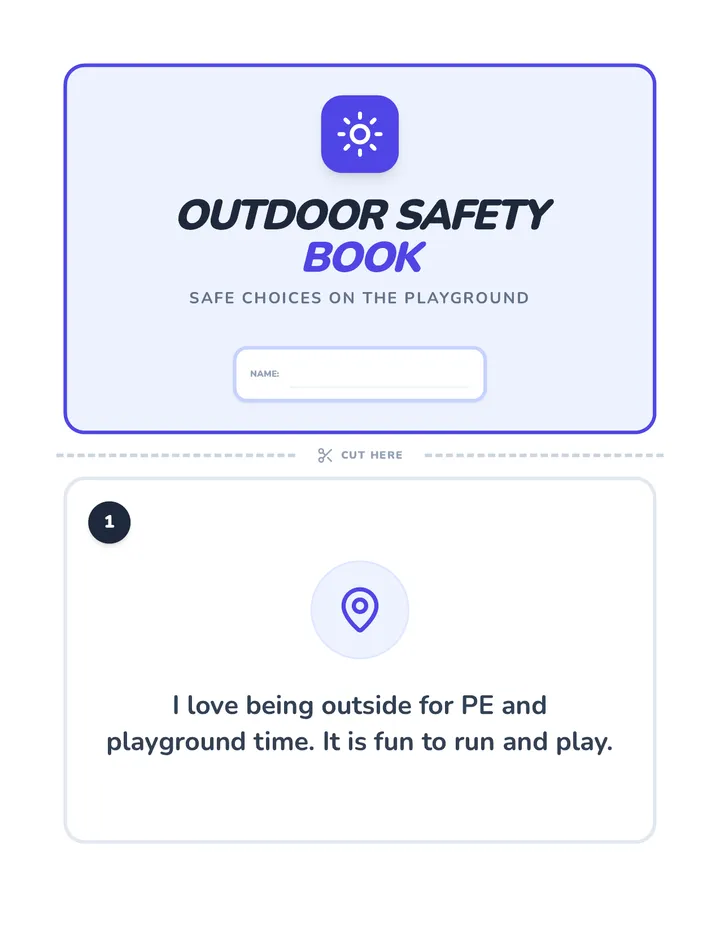
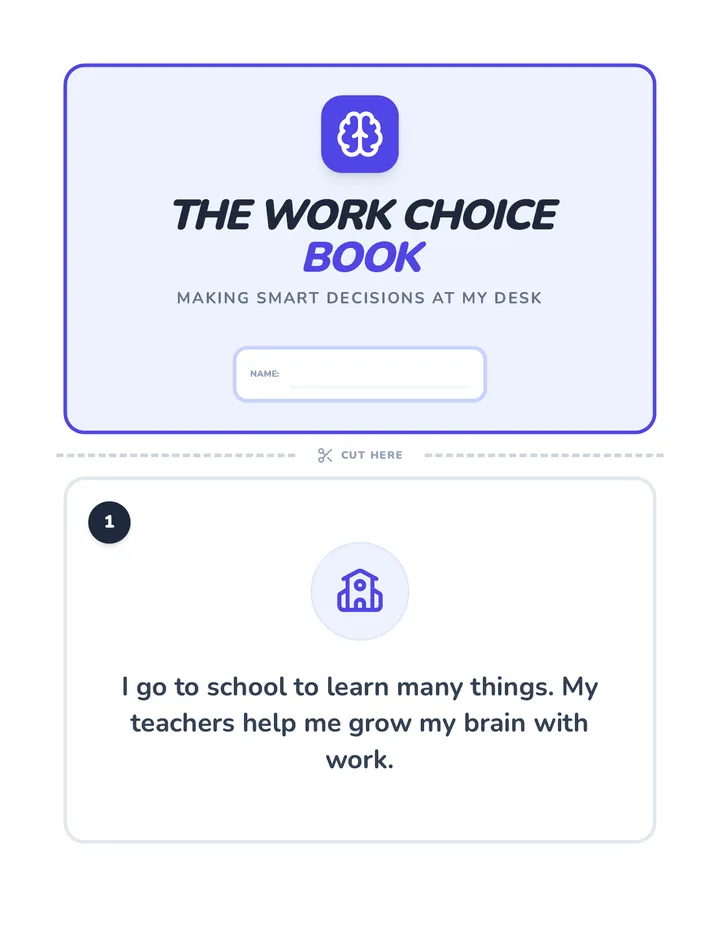
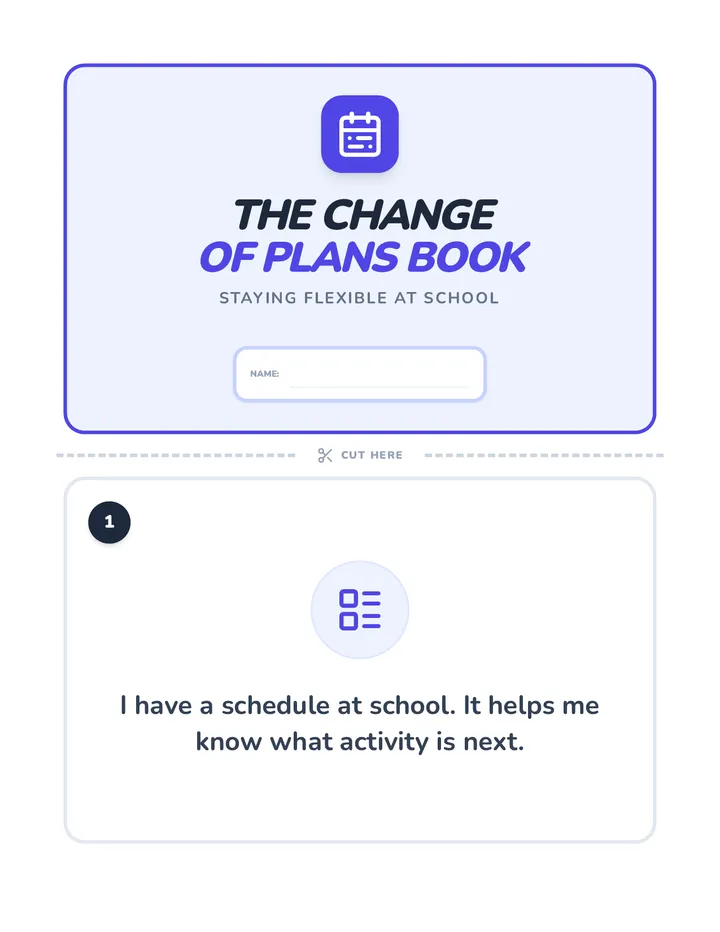
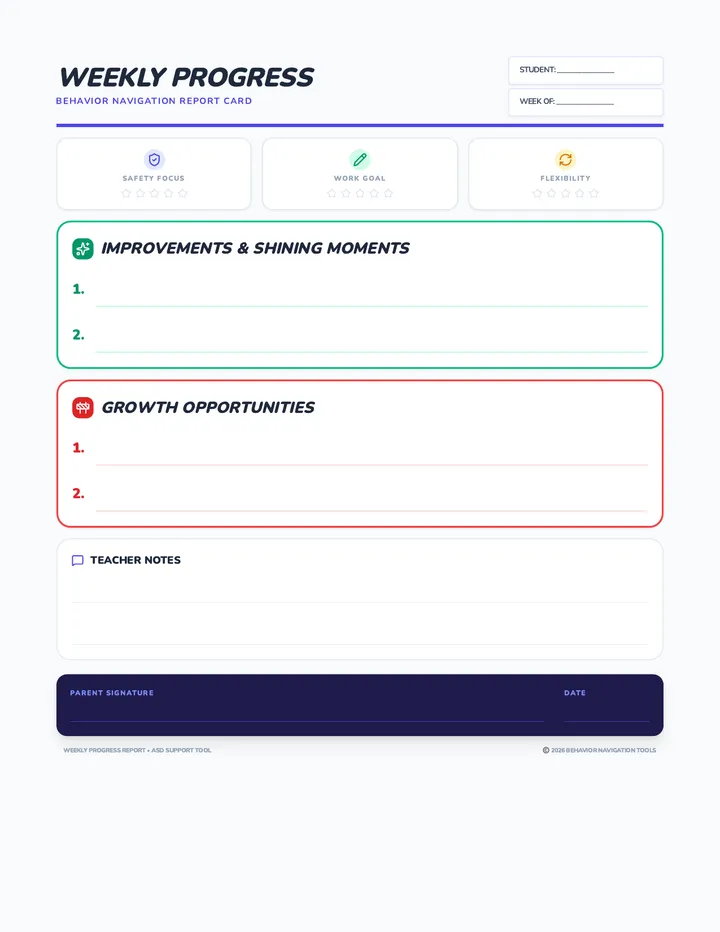
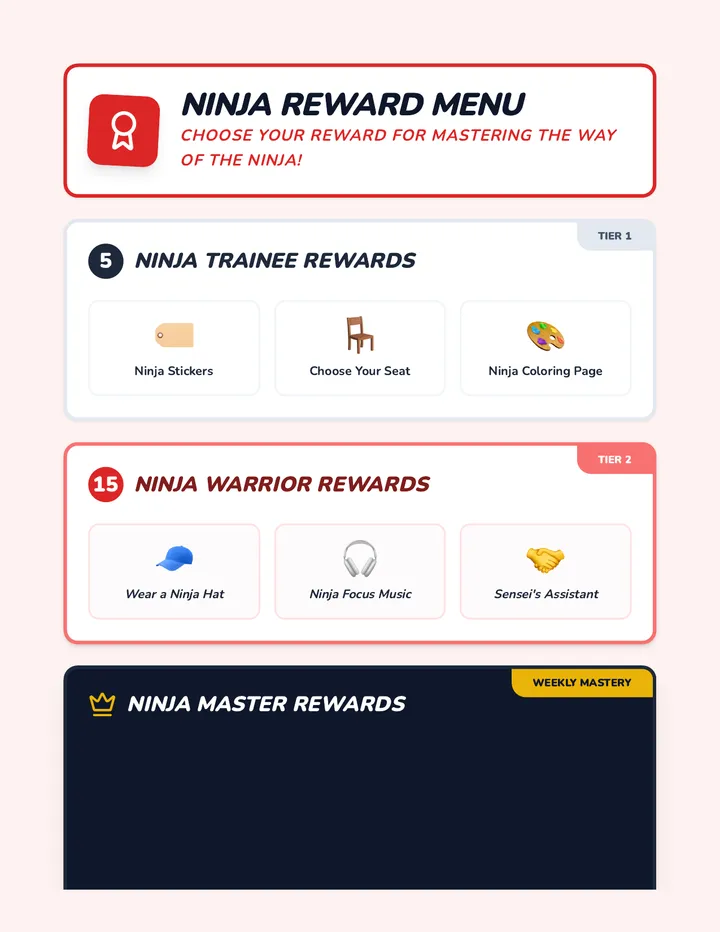
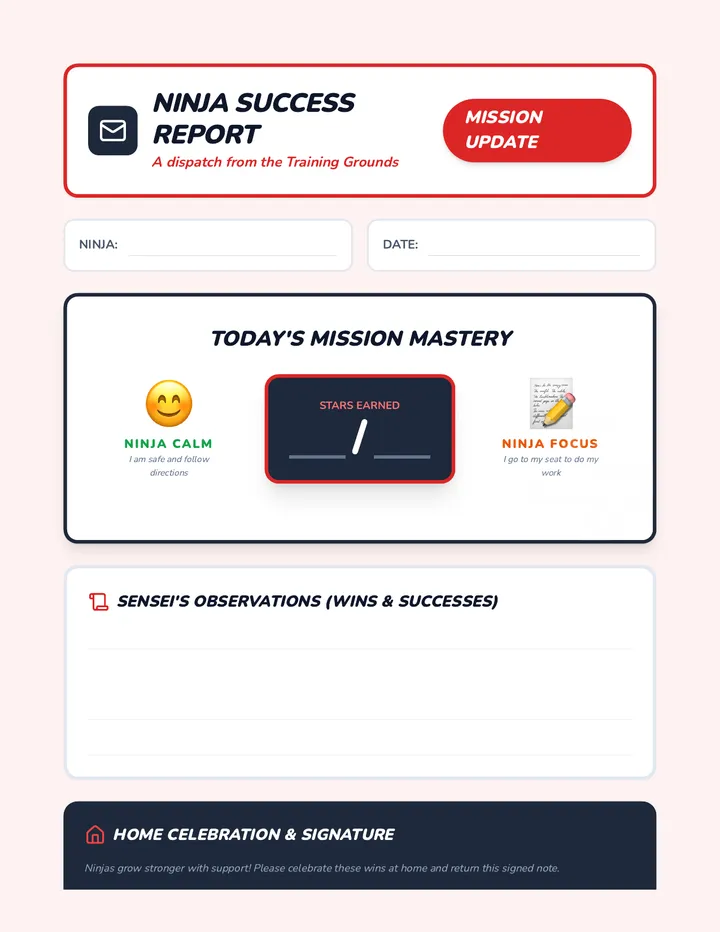
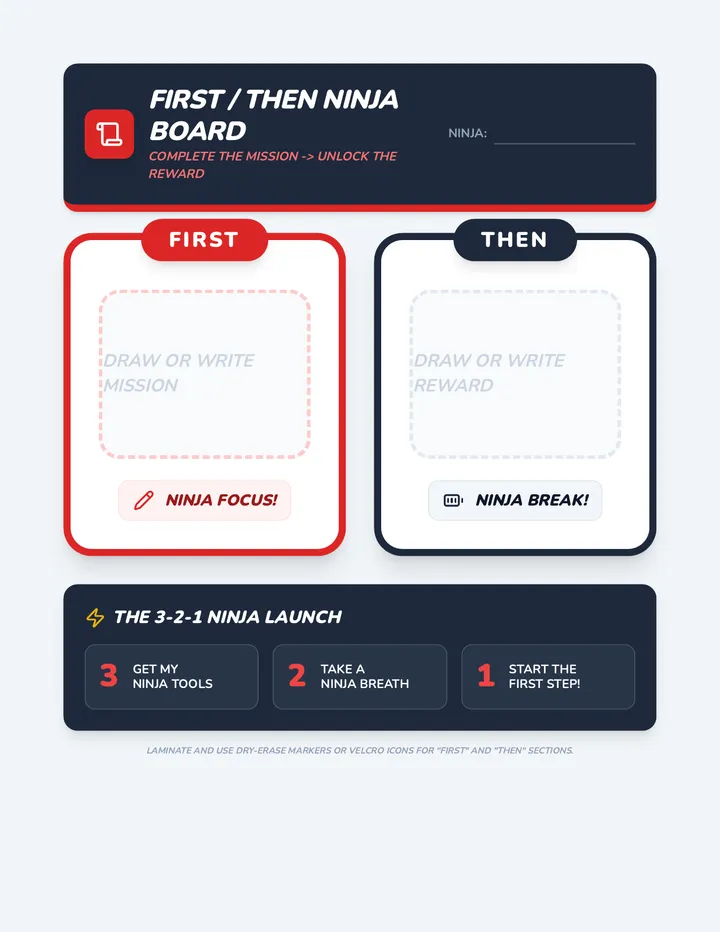
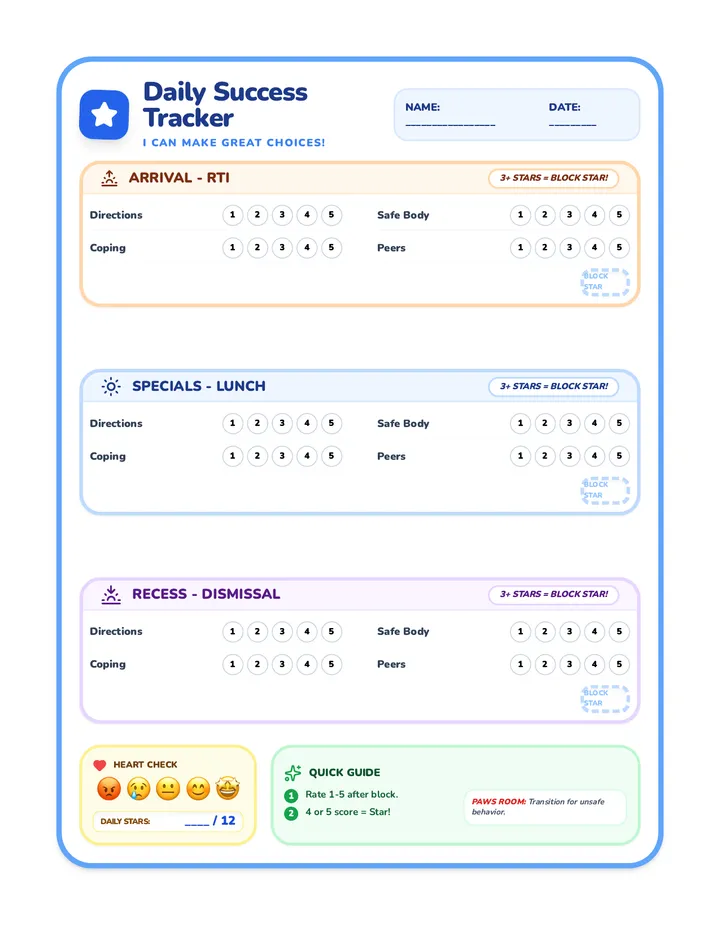
Evaluates student growth through data-driven analysis of IEP goals and behavioral benchmarks. Guides educators in adjusting instructional strategies based on documented performance trends and student self-reflection.
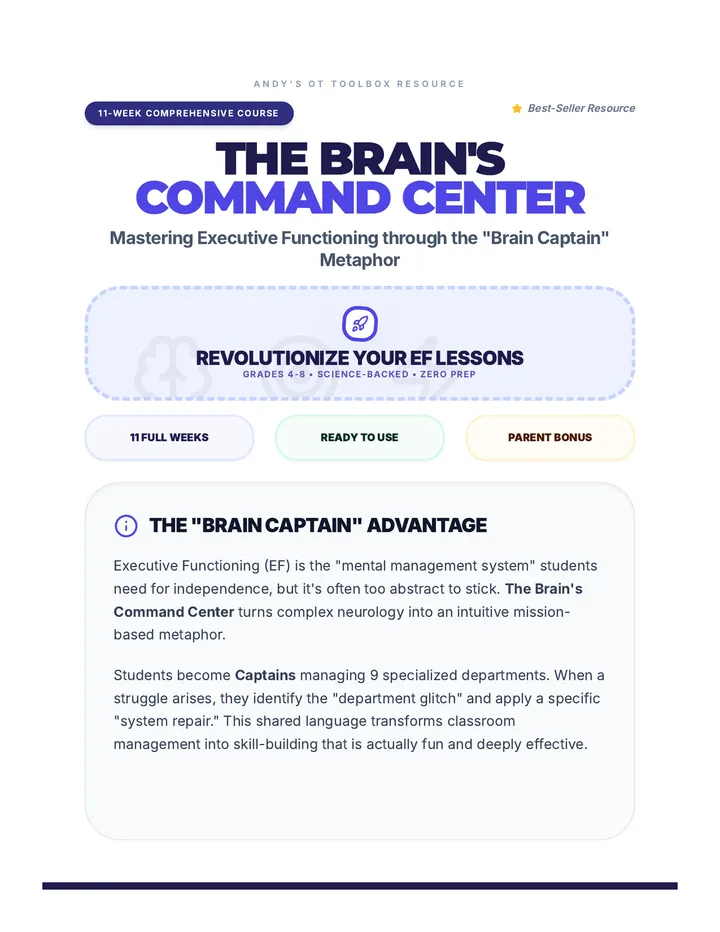
A 5-page Teachers Pay Teachers (TpT) product page for an 11-week Executive Functioning course, featuring a bold 'Command Center' theme, departmental skill highlights, parent guide mockups, and testimonials. Page 4 has been adjusted to ensure the 'missions' text is fully visible without cutoff.
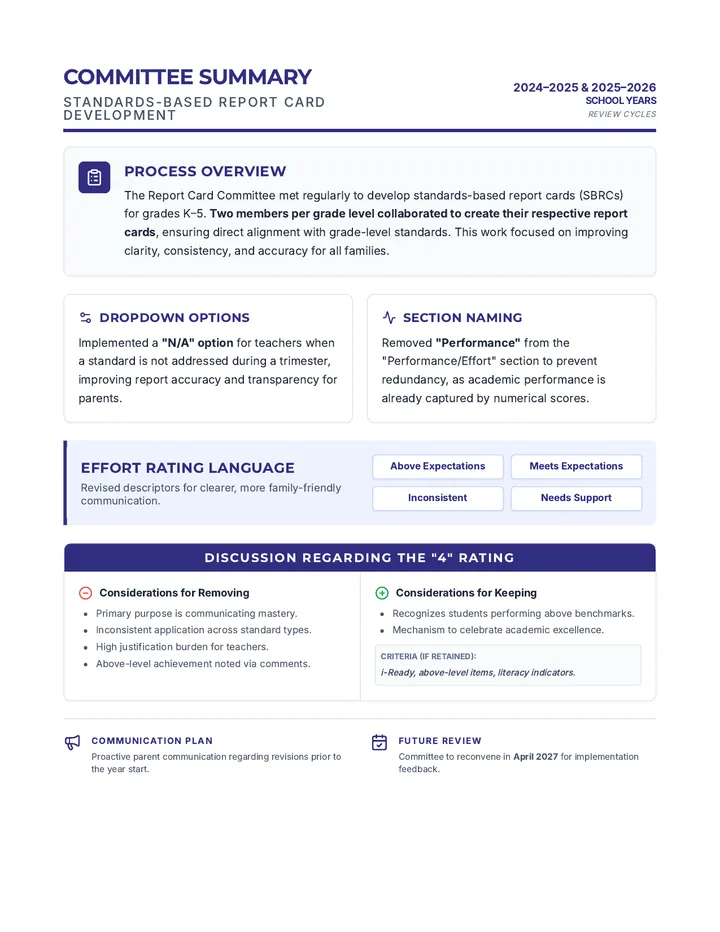
A one-page summary handout for a school committee detailing the work of the Report Card Committee, with the header updated to specify the 2024-2025 and 2025-2026 school years.
A compact weekly behavior tracking sheet designed to fit perfectly on a single printable page. It monitors daily success across five key focus areas including keeping hands to self, listening, following instructions, work completion, and arguing behavior. Features daily parent signature lines, morning and afternoon tracking blocks, and a red/yellow/green rating system (0-3, 4-8, 9+). Date fields feature white backgrounds for handwriting legibility.
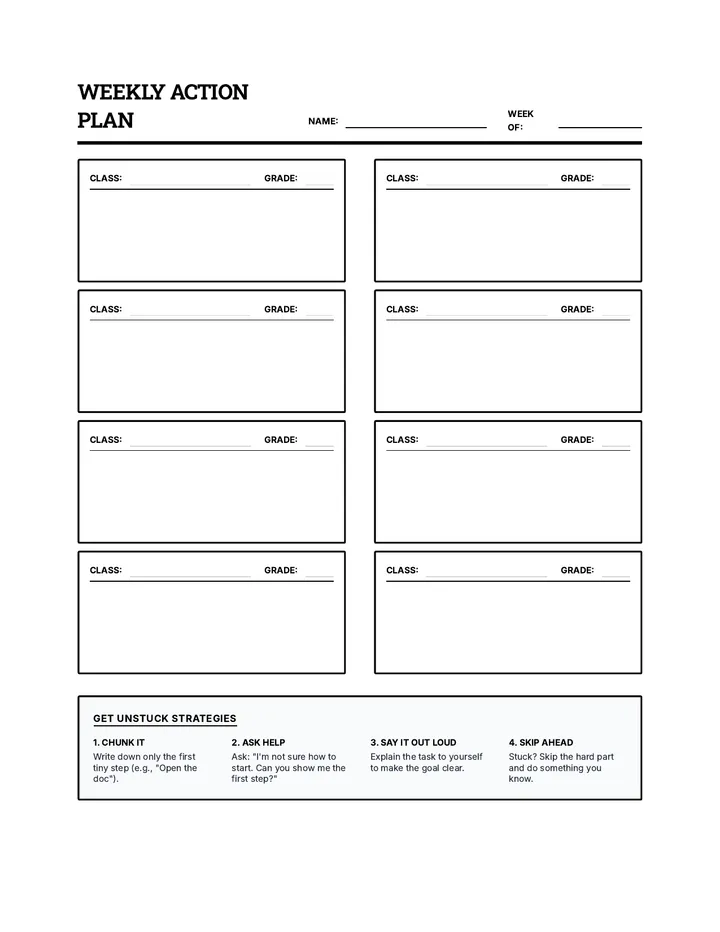
A highly efficient, single-page Weekly Action Plan designed for students with executive functioning needs. It features 8 streamlined class boxes with space for subjects and grades, plus a concise footer with 'Get Unstuck' strategies, all formatted to fit within a single printable page.
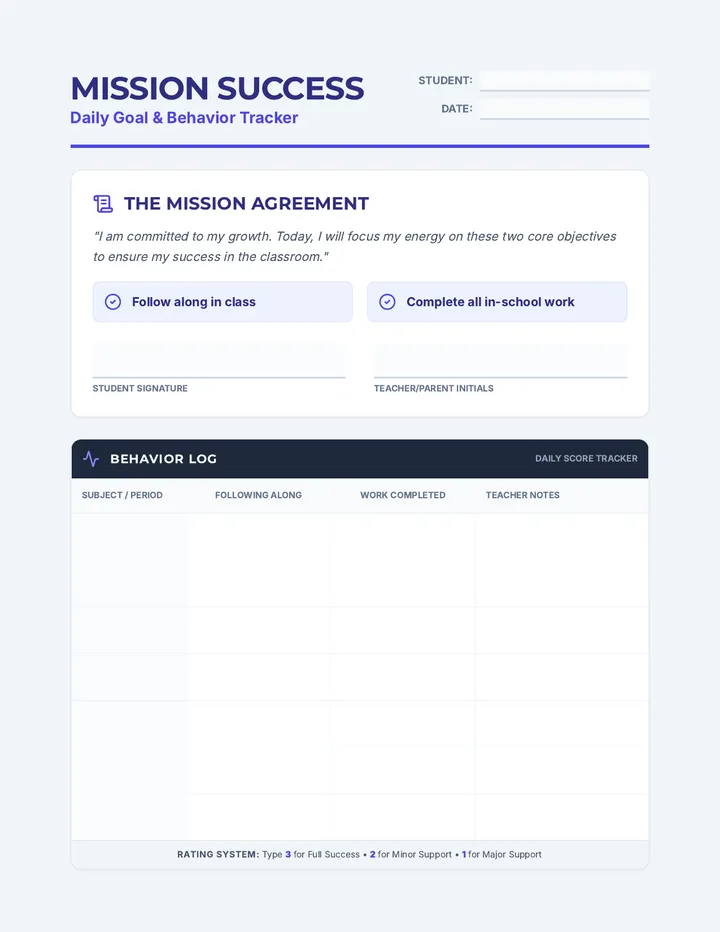
A daily behavior contract and tracker designed for students to monitor their progress. This version is digitally fillable with editable text fields for name, date, tracking scores, and reflections, featuring 7 period rows and an expanded reflection area.
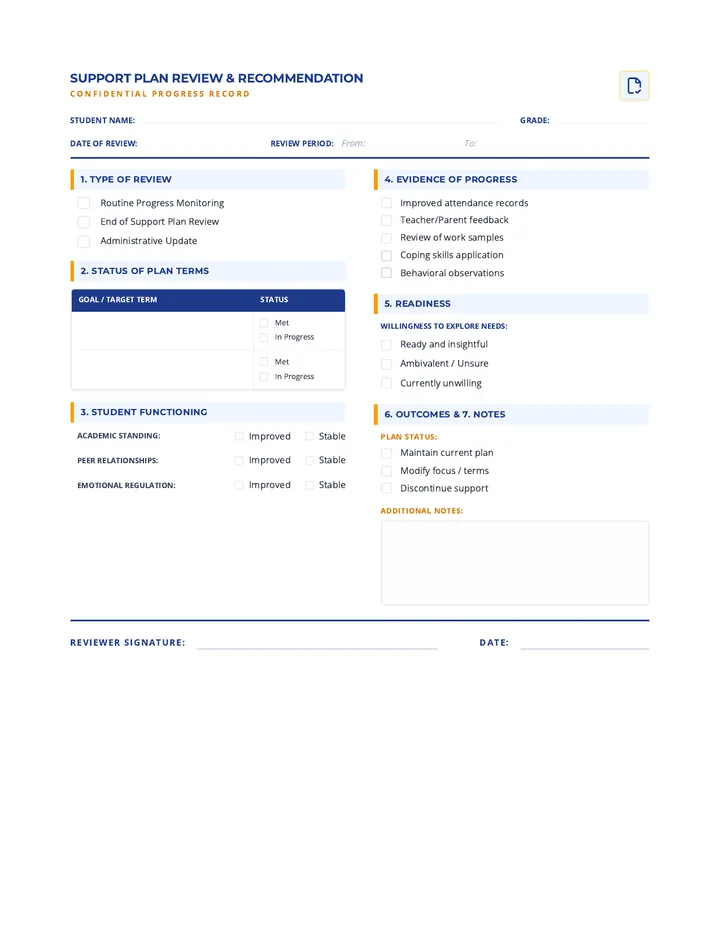
A professional one-page Support Plan Review template with a blue and gold theme. This version features a clean two-column layout, an optimized 14px heading, and carefully tuned spacing to ensure all content fits comfortably on a single page while maintaining professional readability.
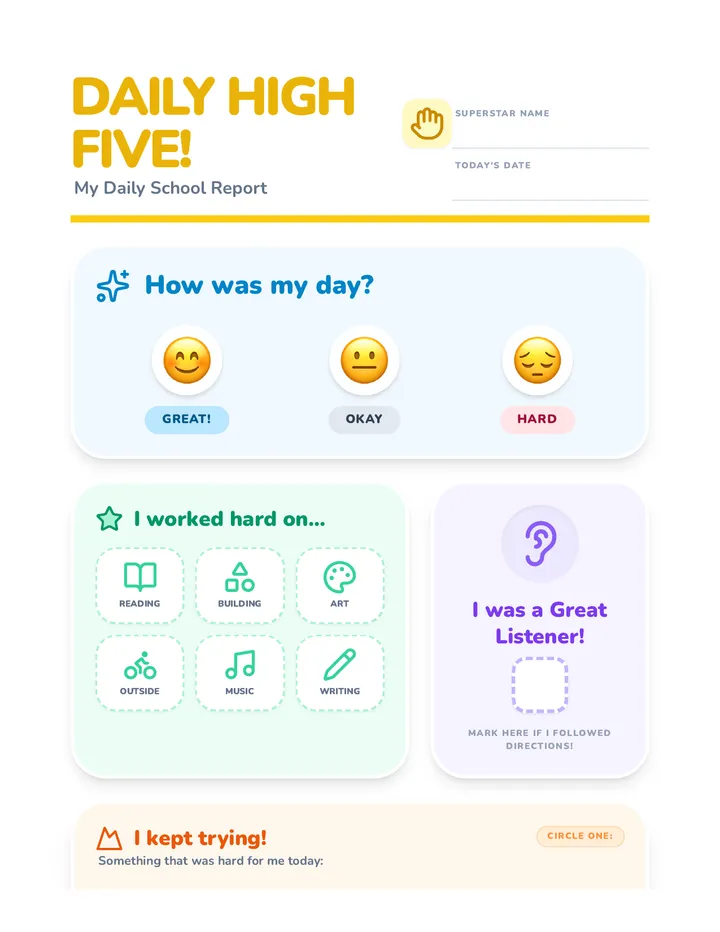
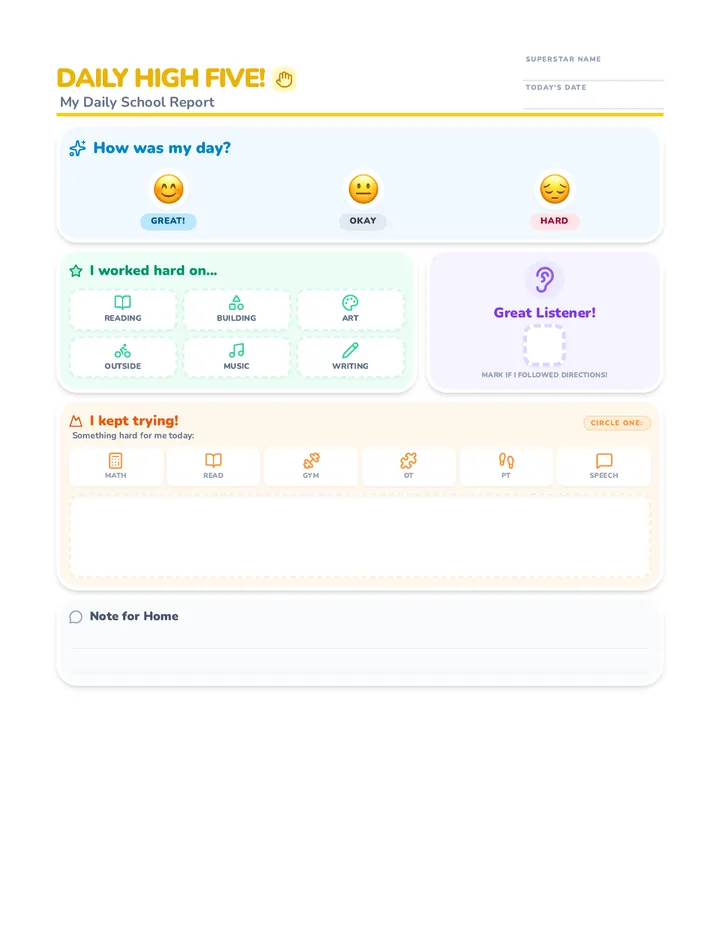
An updated daily communication log for non-readers featuring a "sticker-style" aesthetic. It includes a mood scale, activity icons for hard work, a listener check-box, and a dedicated challenging task section with circle-able icons for Math, Reading, Gym, OT, PT, and Speech, plus a drawing space.
A 2-page behavioral management infographic designed as a professional flowchart. It integrates teacher-managed steps from 'Preventative' to 'Level 3' with a corresponding column for Administrative Actions and required notes. Updated with the exact text from the source PDF for all teacher-managed actions. Fixed layout issues where content overlapped footers, improved text contrast for accessibility, and ensured consistent vertical flow lines.
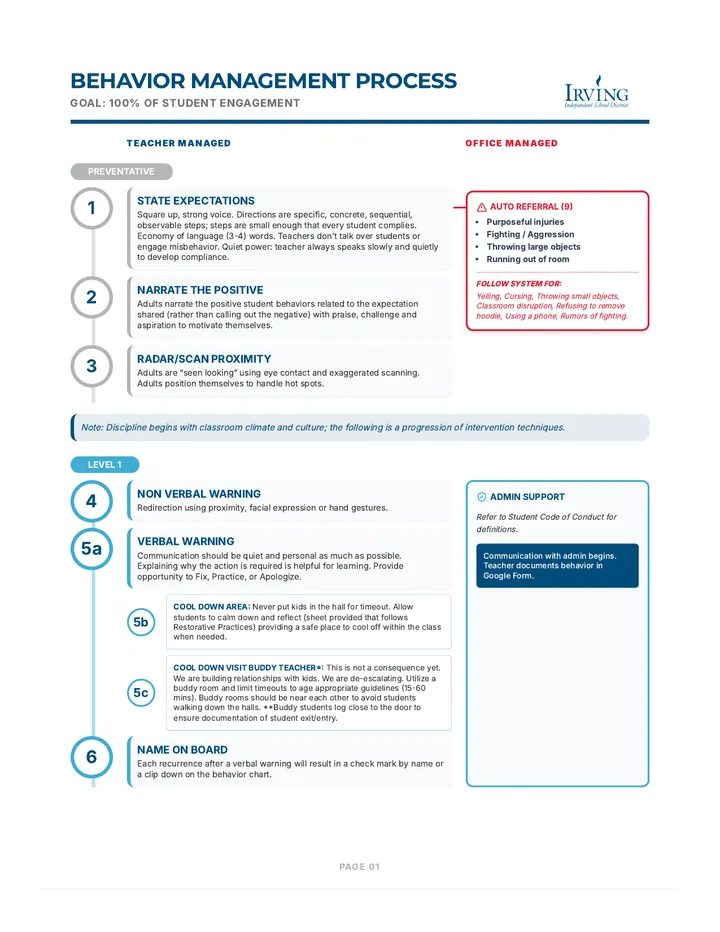
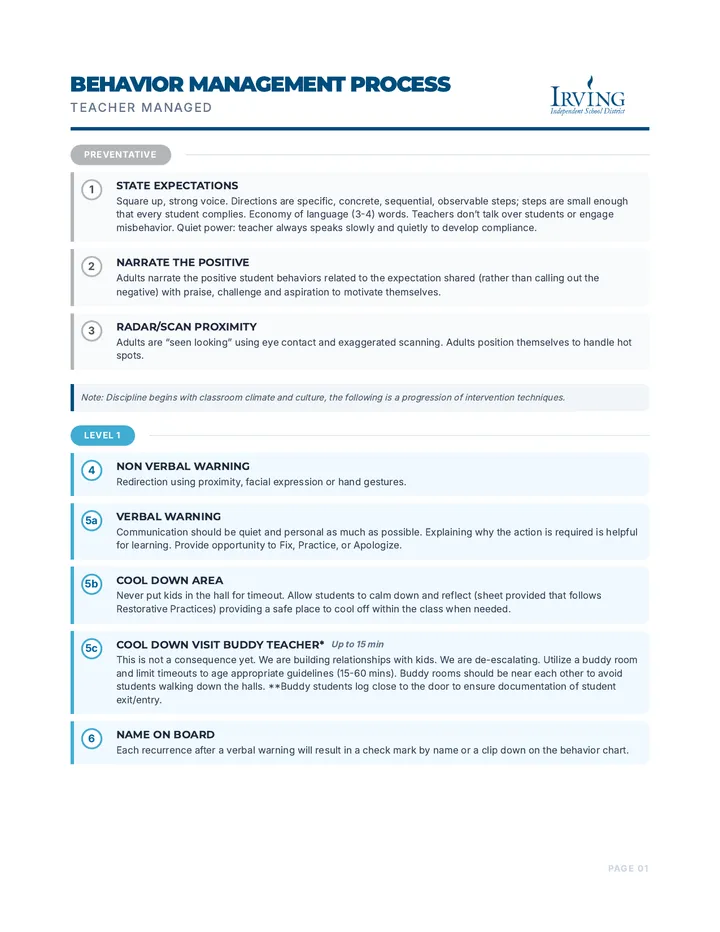
A comprehensive 3-page infographic of the Irving ISD behavior management process. It includes a flowchart of teacher-managed redirection steps and a dedicated third page for administrator-specific actions across all levels of the hierarchy.
A simplified student self-assessment checklist for 7th-grade special education students, based on a writing rubric. It features clear 'Met' and 'Not Yet' categories for central idea, organization, point of view, and tone.
A consolidated version of the Daily High Five Log, optimized to fit perfectly on a single page by reducing vertical padding and component heights while maintaining the "sticker-style" visual appeal and icon legibility.
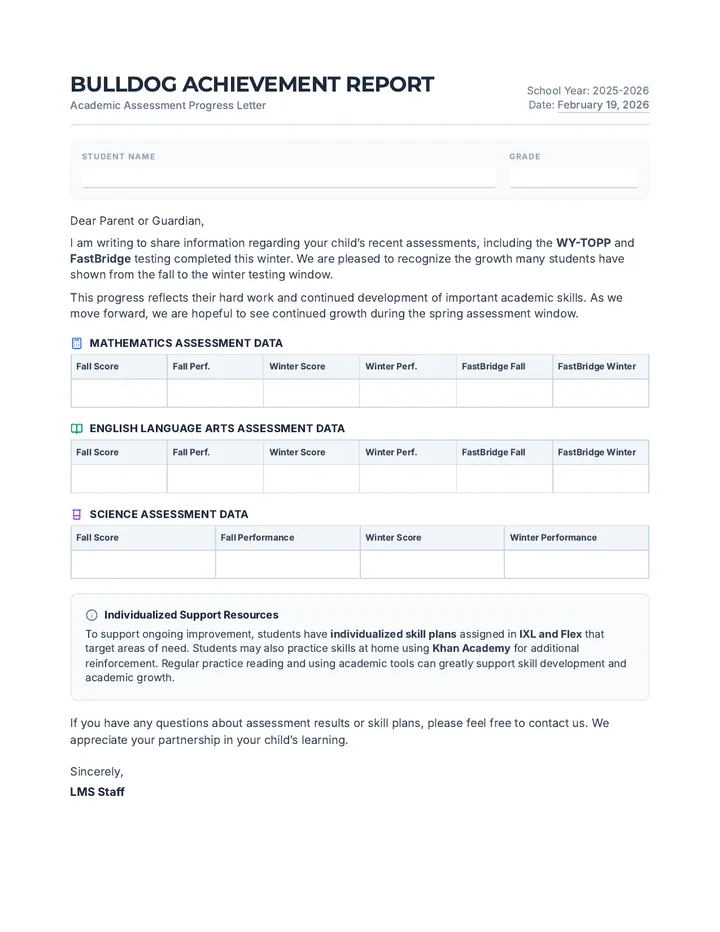
A professional Bulldog achievement report letter designed to fit on a single page by optimizing vertical spacing, table row heights, and font sizes while maintaining readability.
An 8-week deep dive into Kafka's Metamorphosis for special education students, focusing on abstract thinking, social value, and the human condition through high-engagement activities and visual organizers.
A series of four 15-minute lessons designed for first-grade students with learning disabilities, focusing on developing attention skills to follow 1 and 2-step directions independently using kindergarten-level tasks.
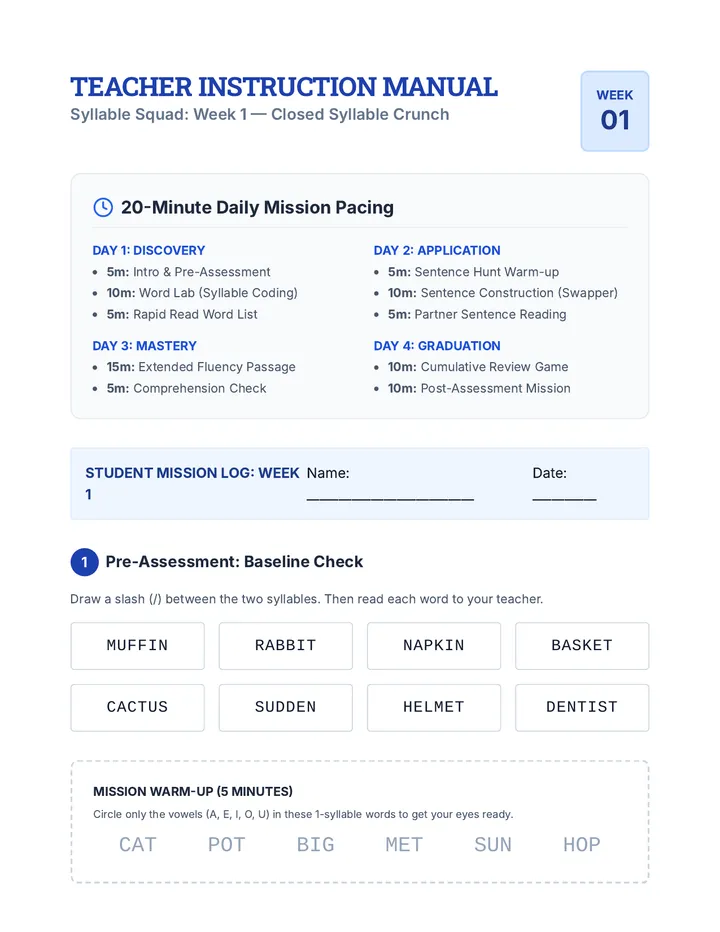
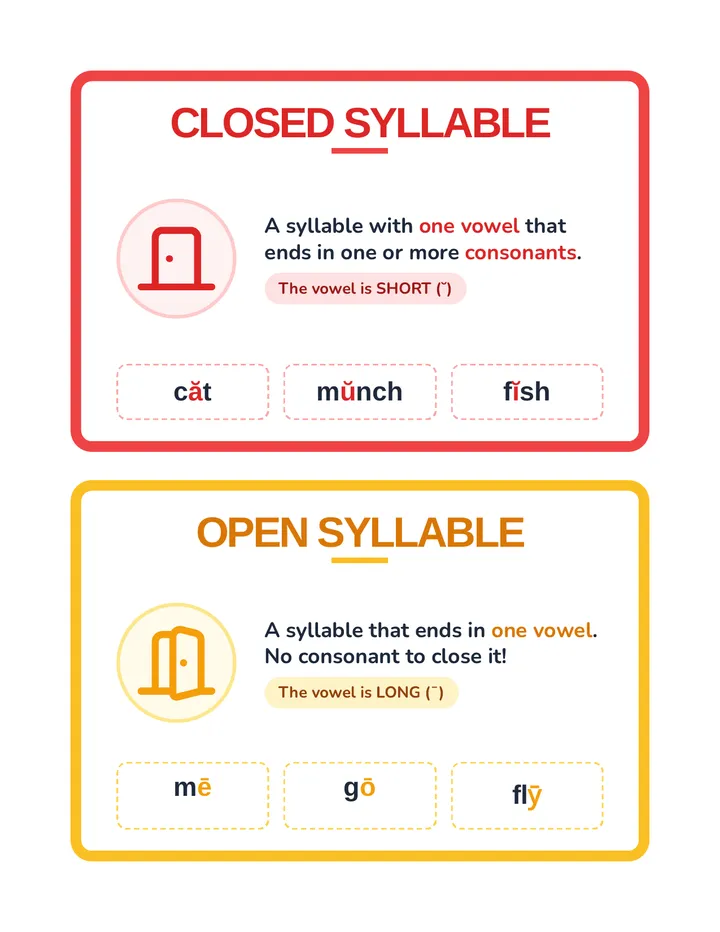
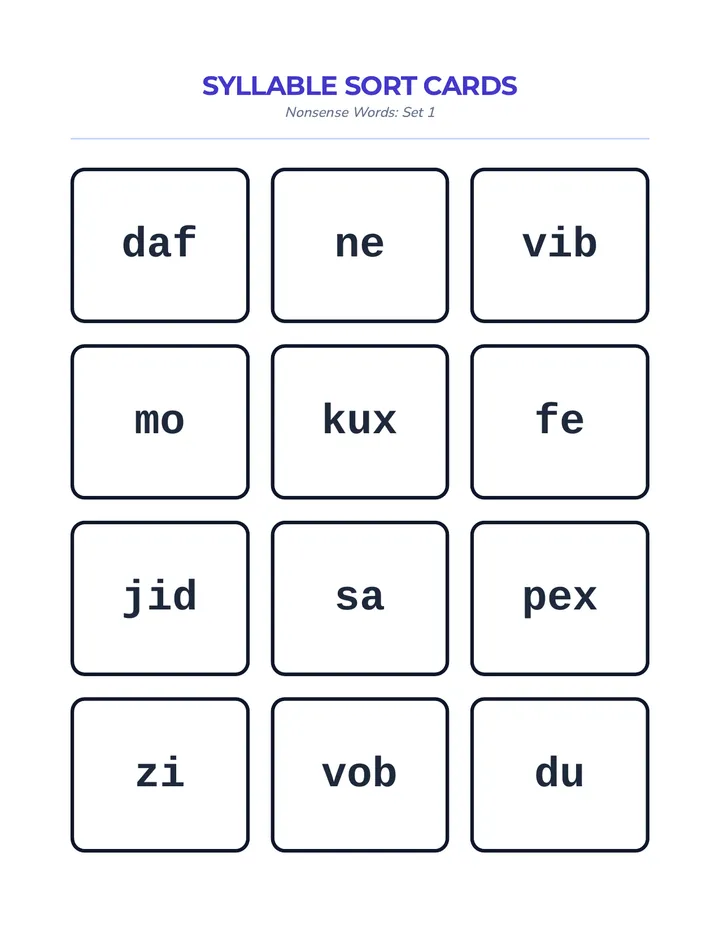
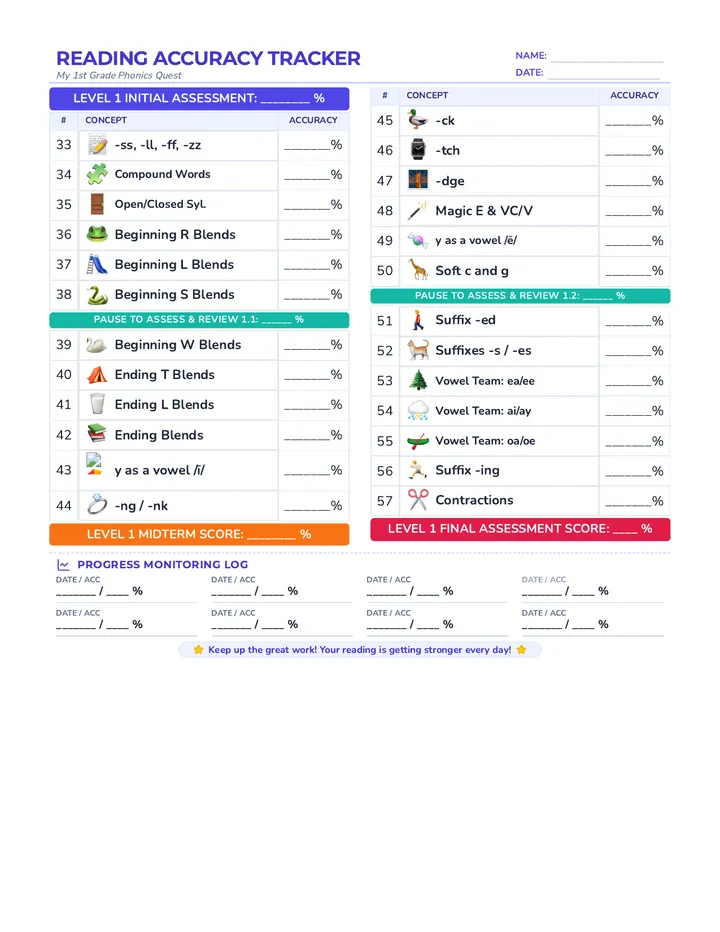
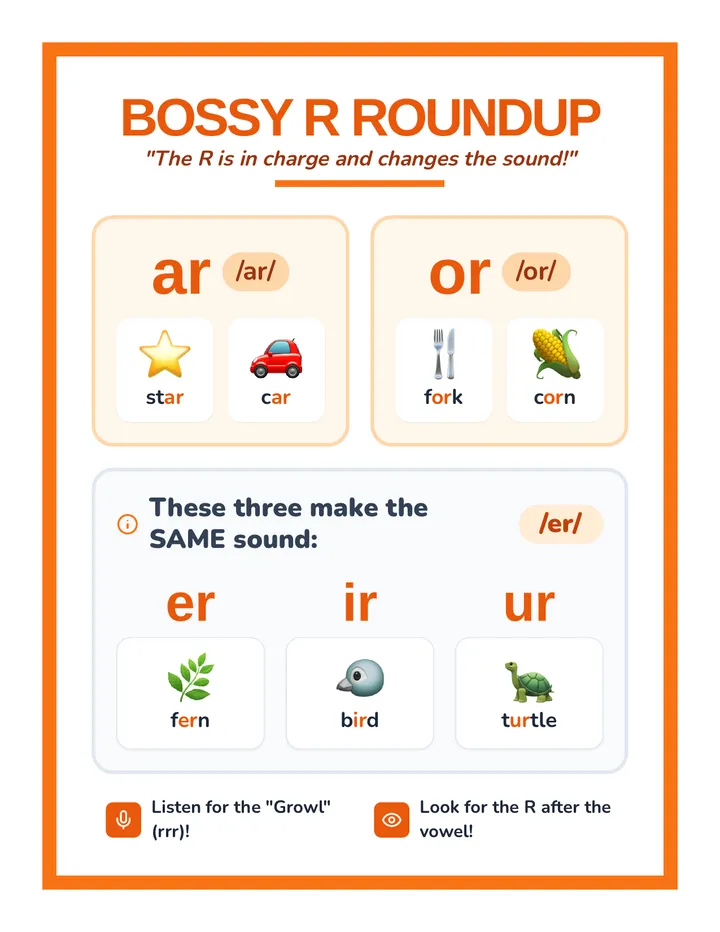
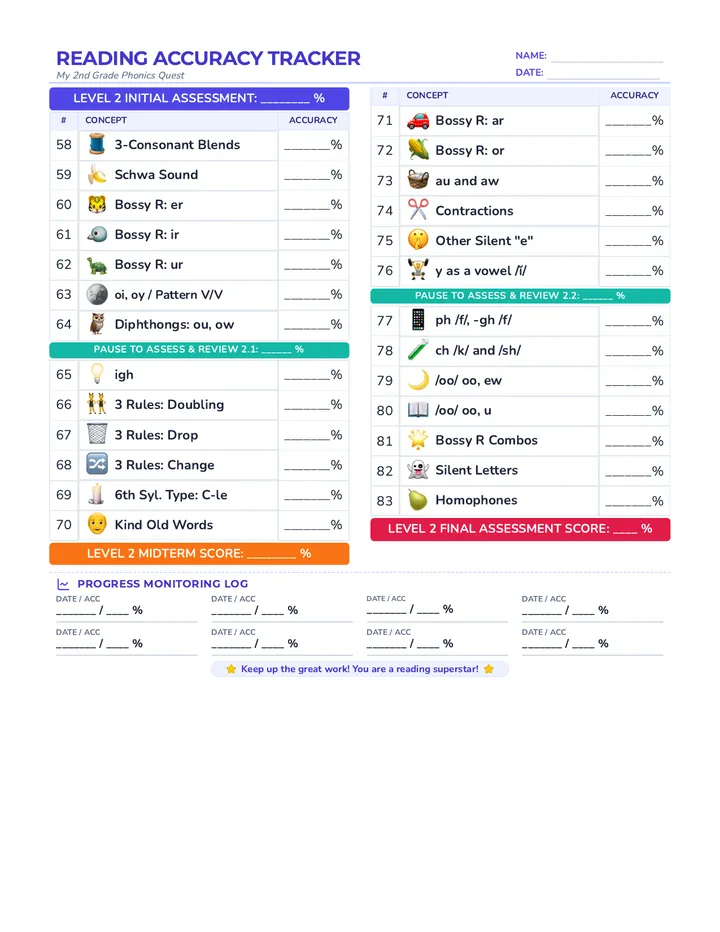
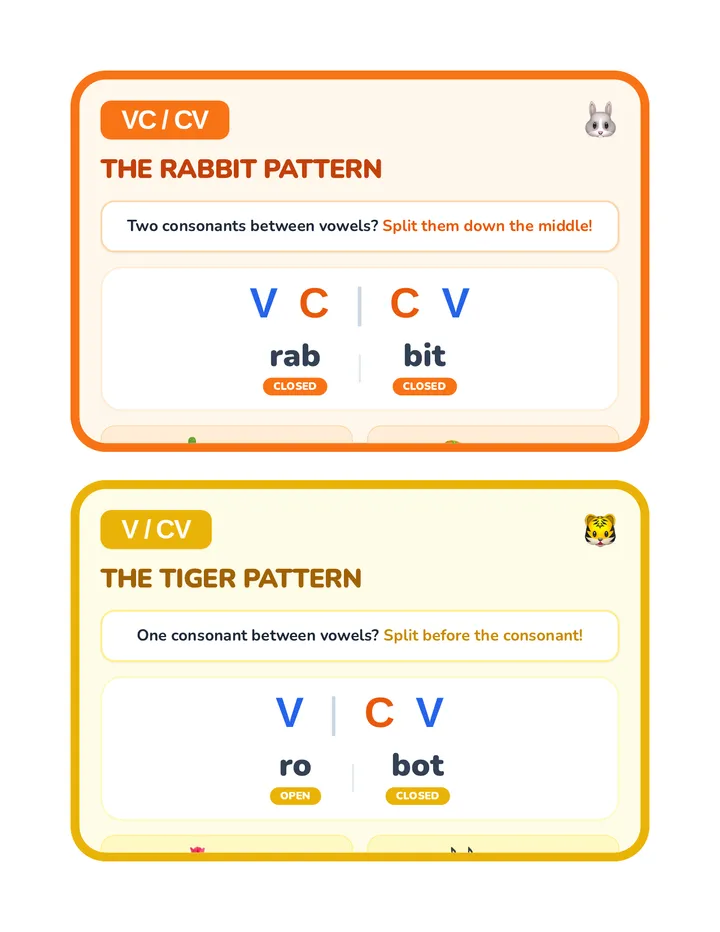
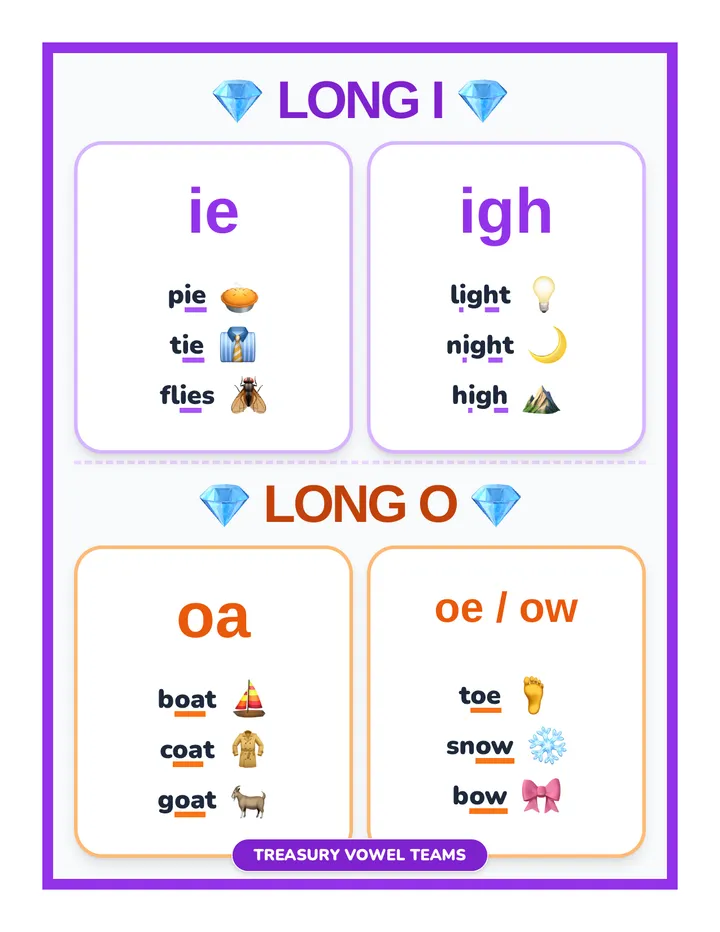
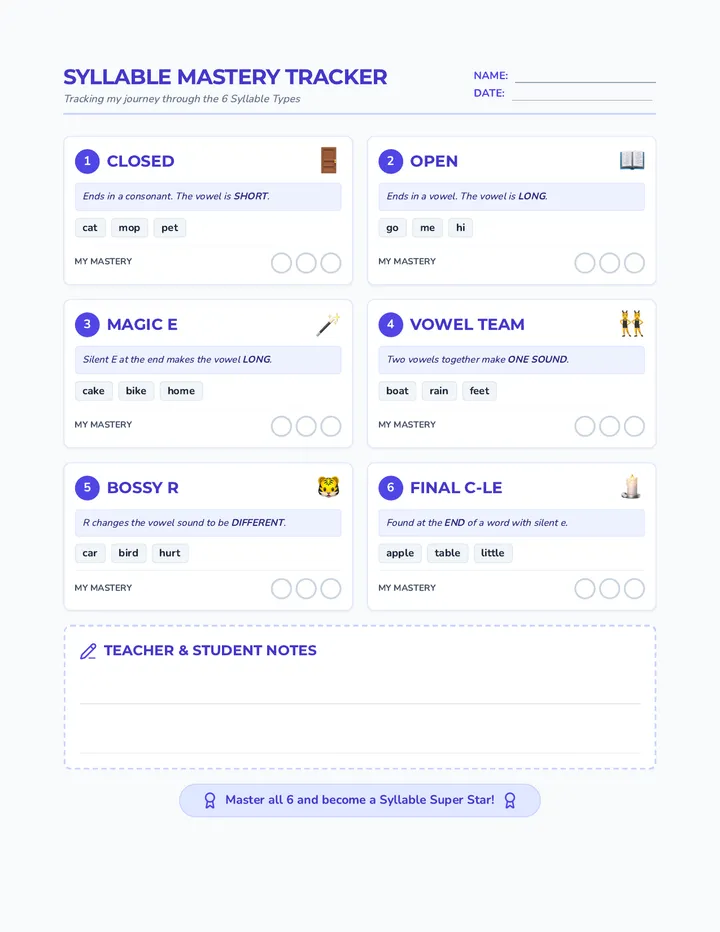
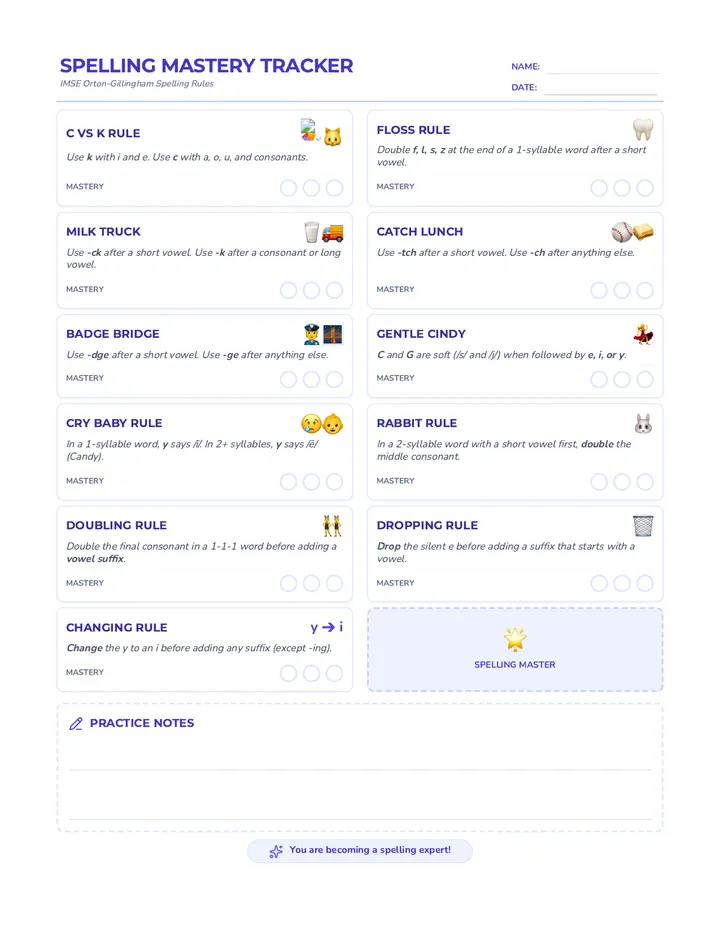
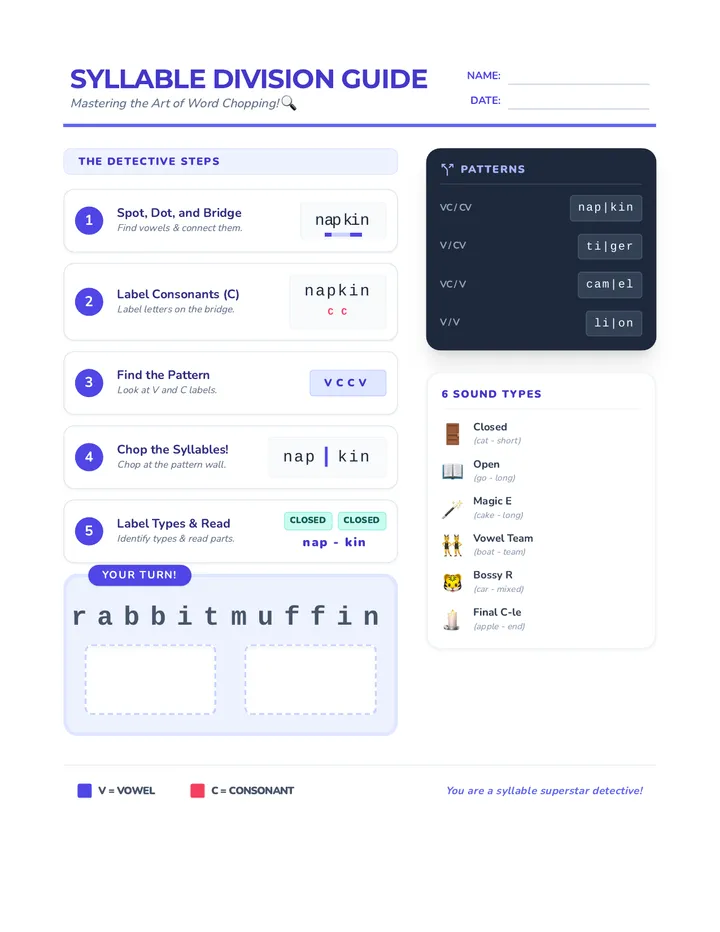
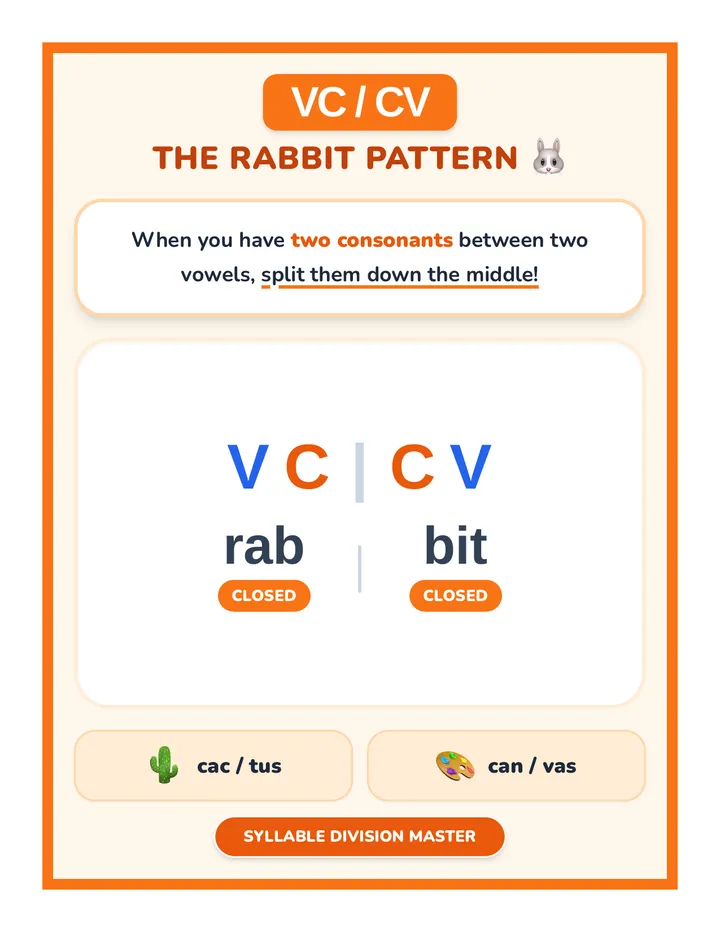
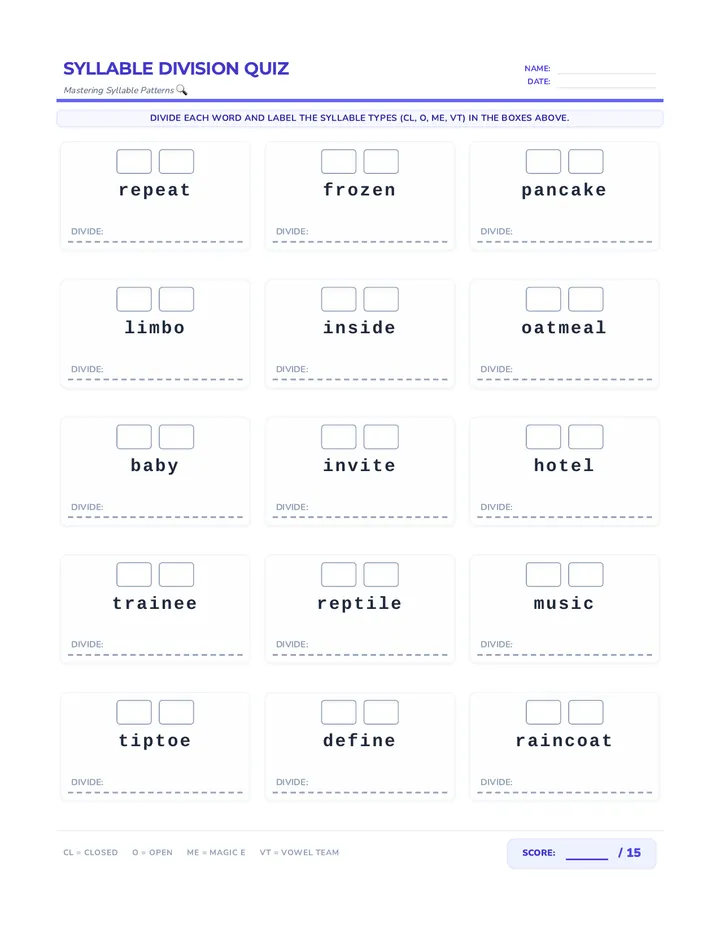
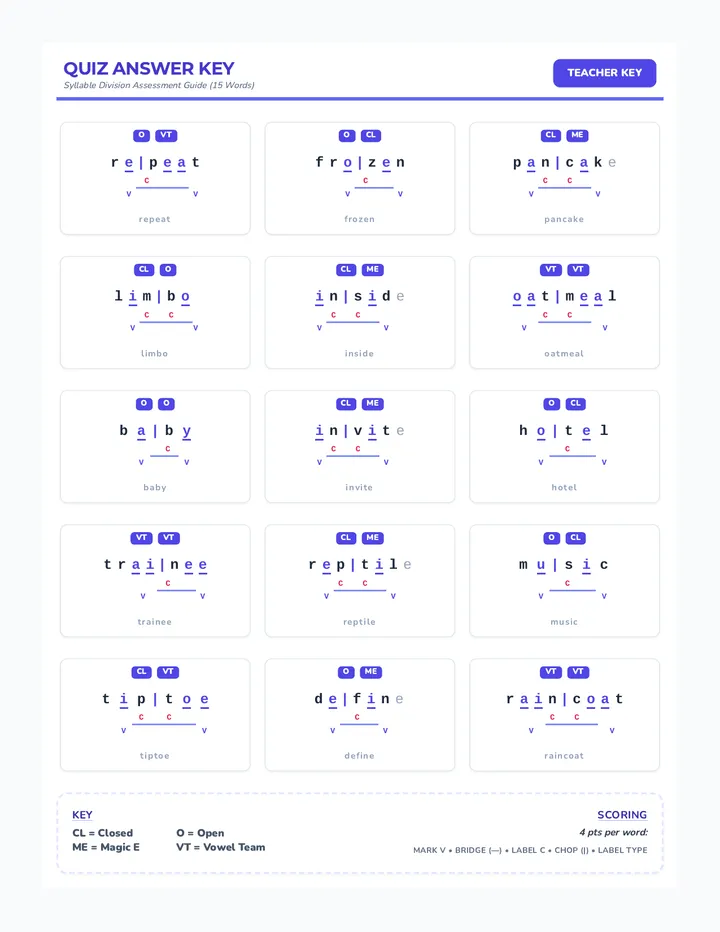
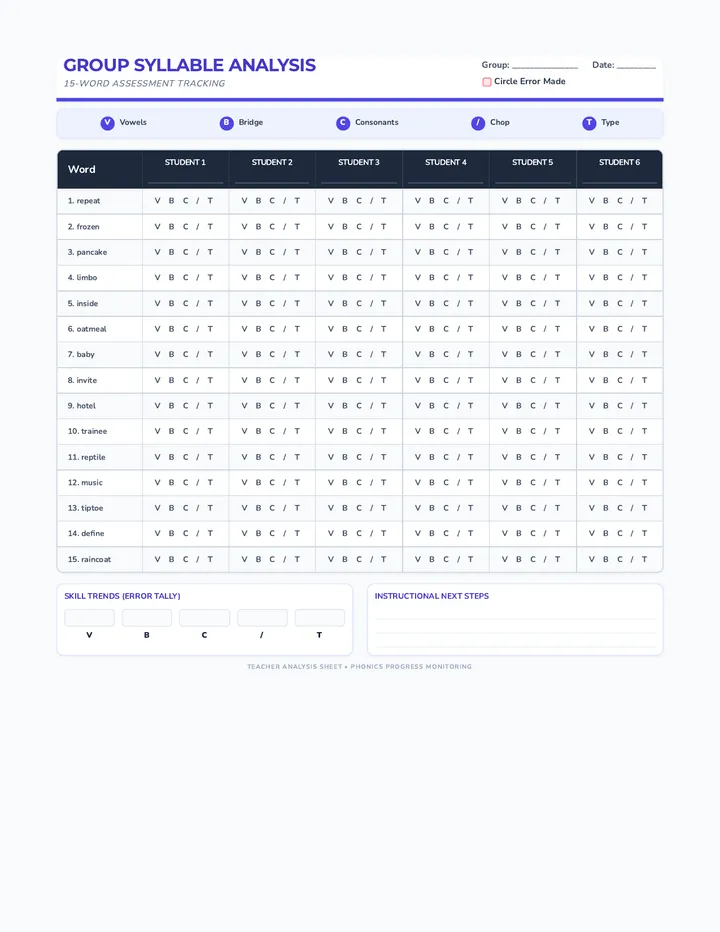
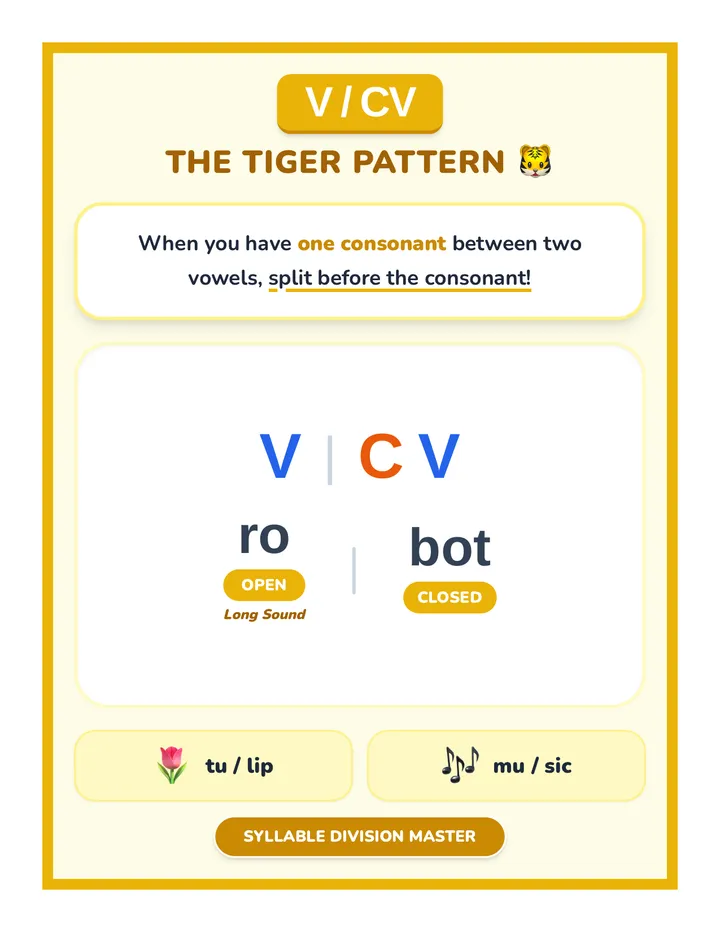
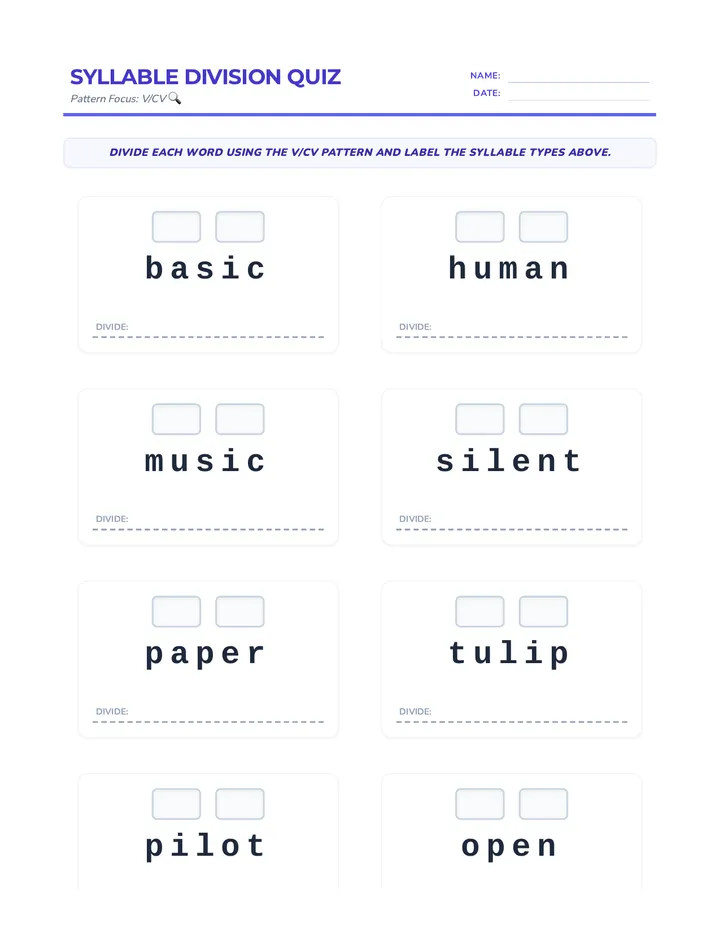
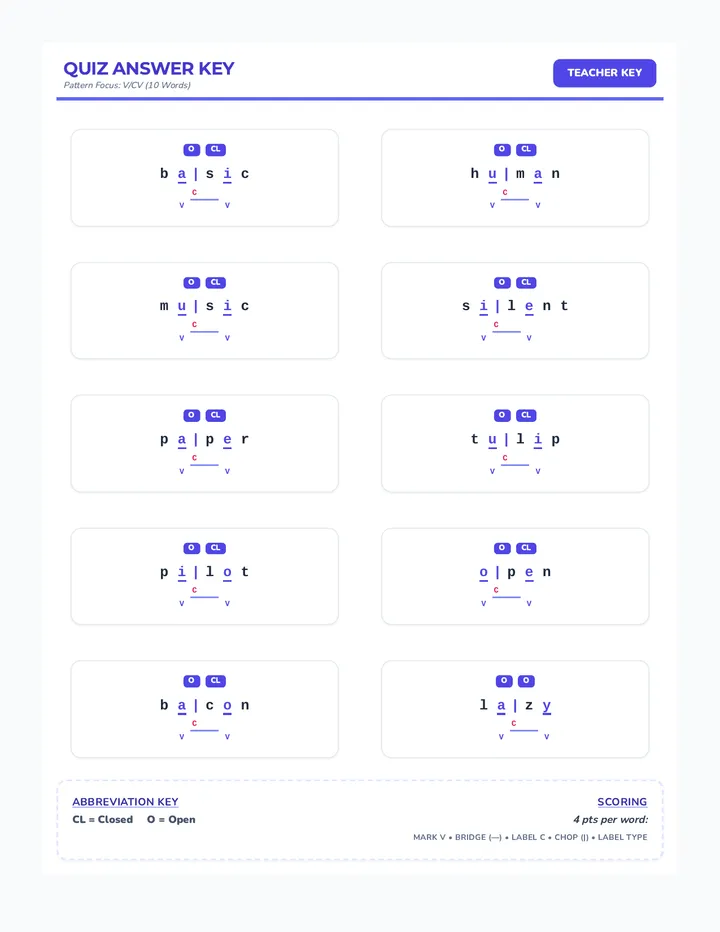
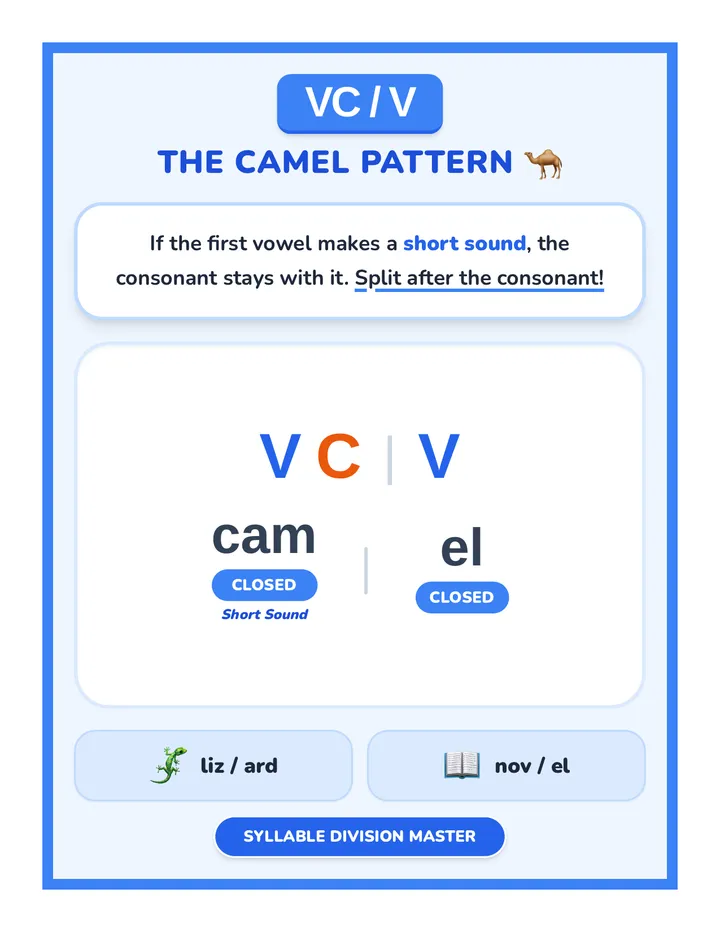
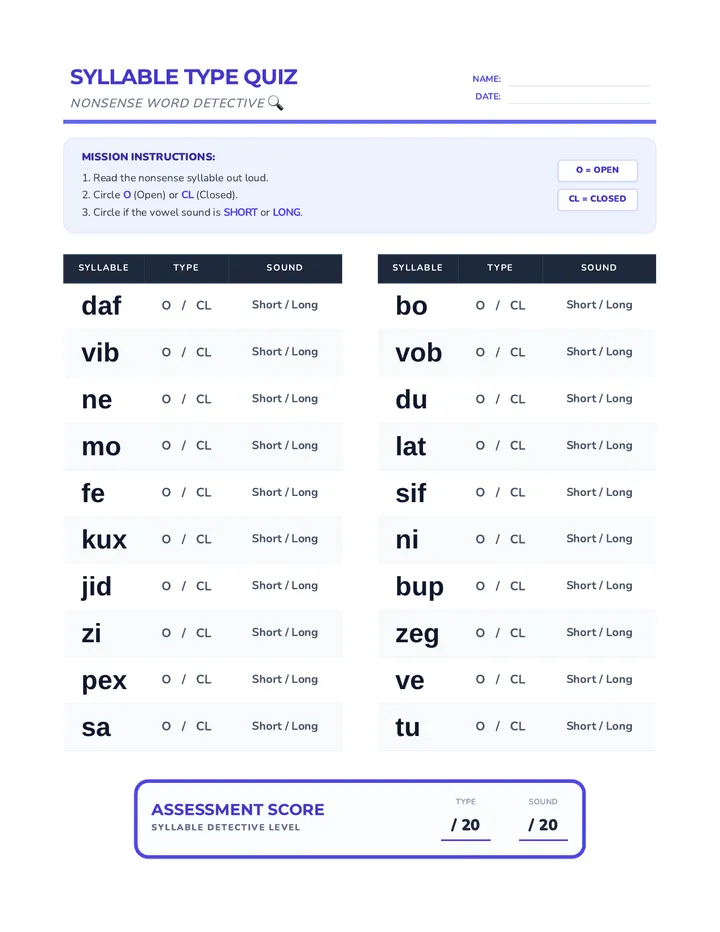
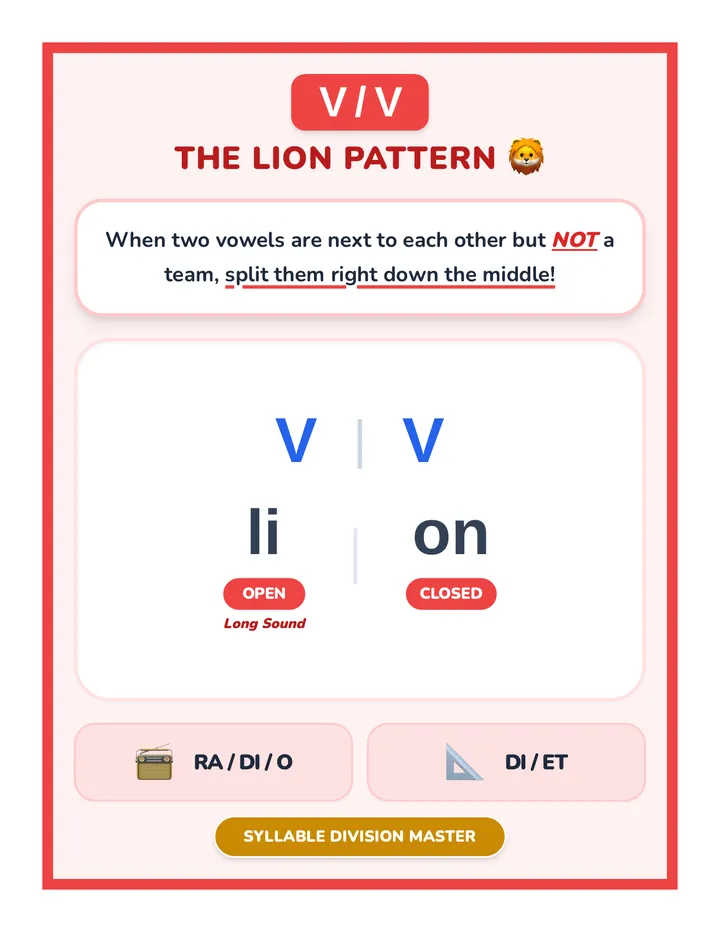
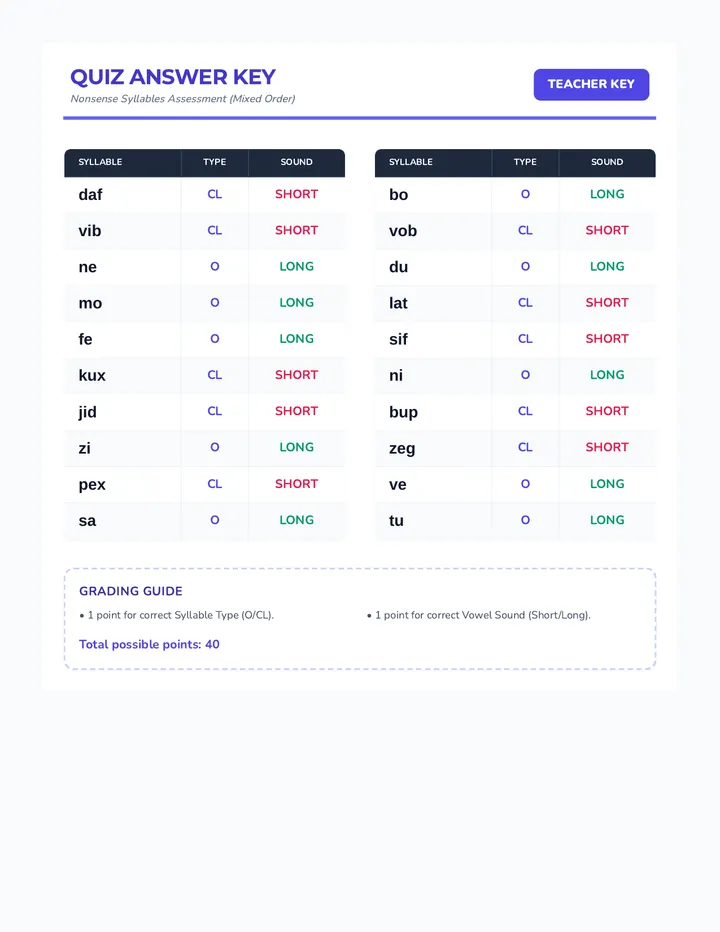
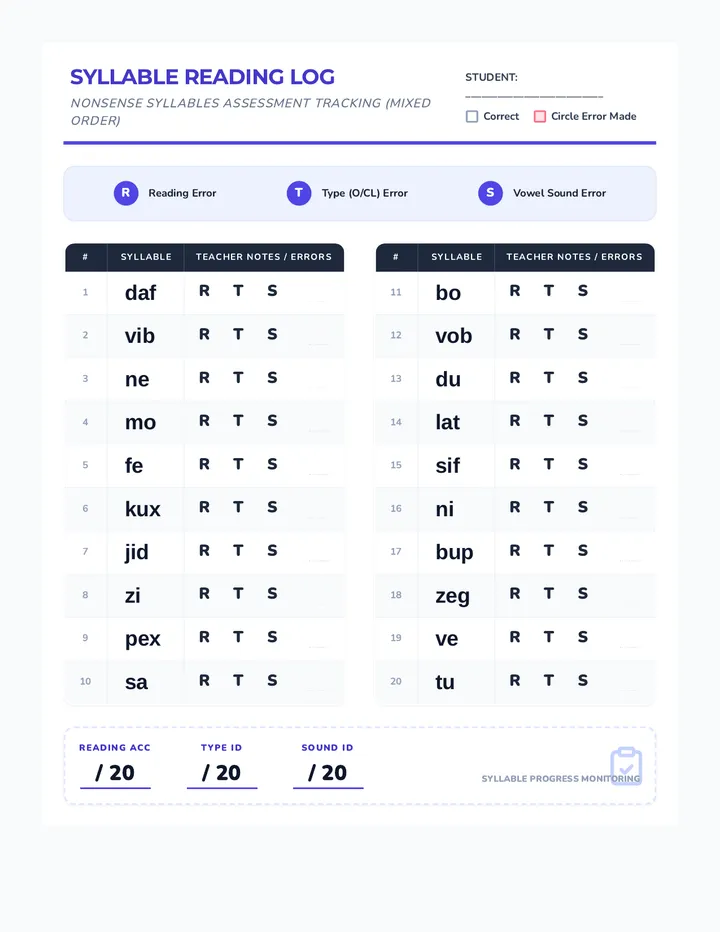
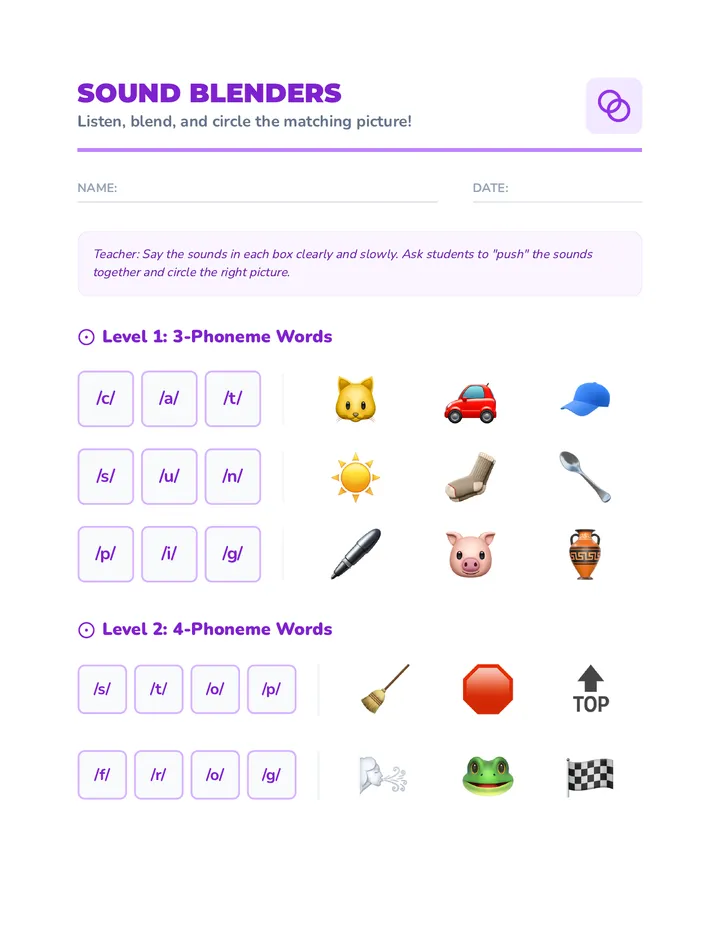
A comprehensive 5-week phonics intervention focused on decoding two-syllable words across five major syllable types. Each week includes a pre-assessment, daily lessons with specific targets, student practice sheets, and a post-assessment.
A comprehensive series of lessons designed for high school special education students to master metacognitive skills. The unit focuses on 'Mind Mechanics'—teaching students how to monitor their own thinking processes and build a personalized 'toolbox' of learning strategies.
A foundational math sequence for special education students (grades 5-6) focusing on algebraic thinking and spatial reasoning through highly visual, themed units.
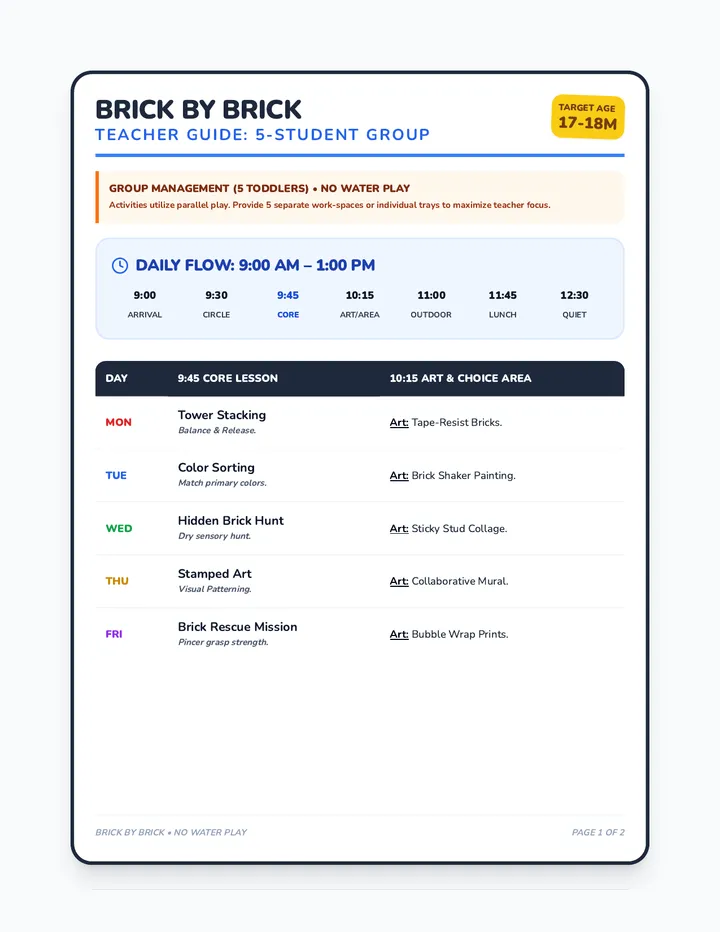
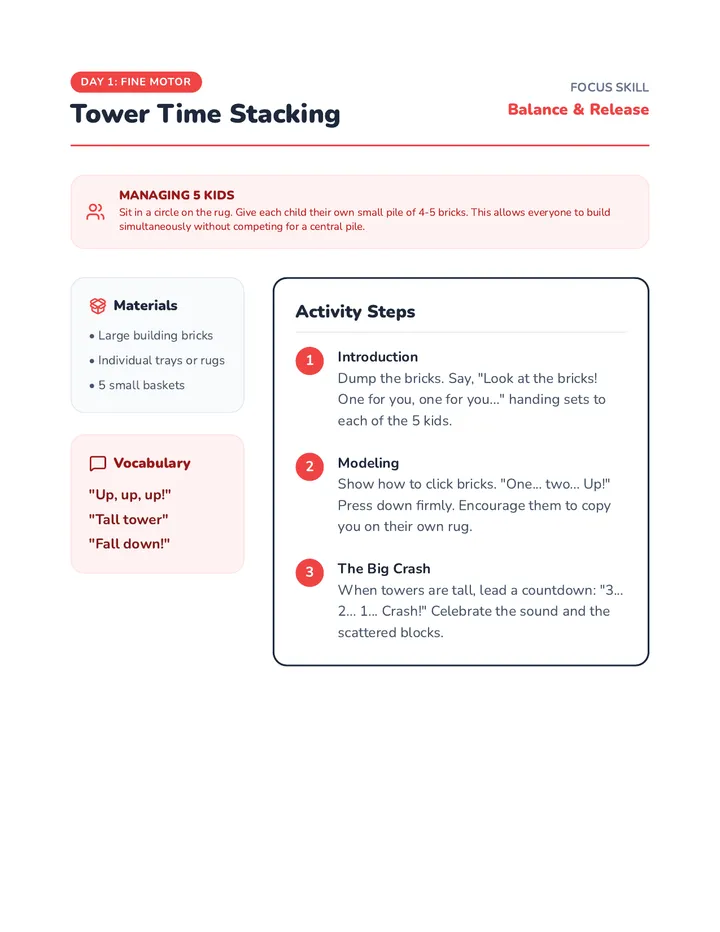
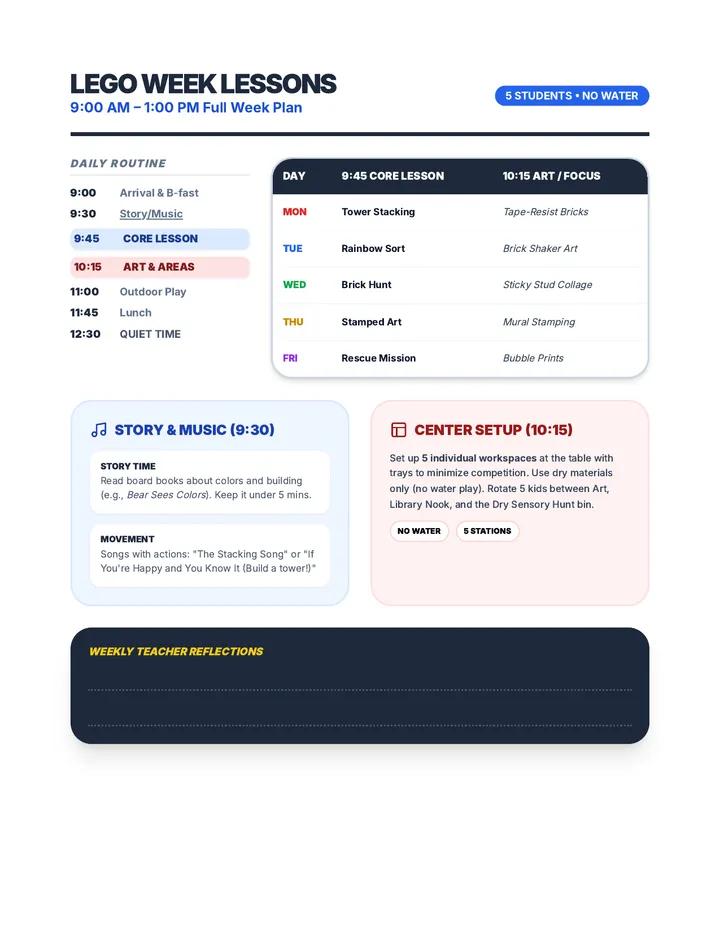
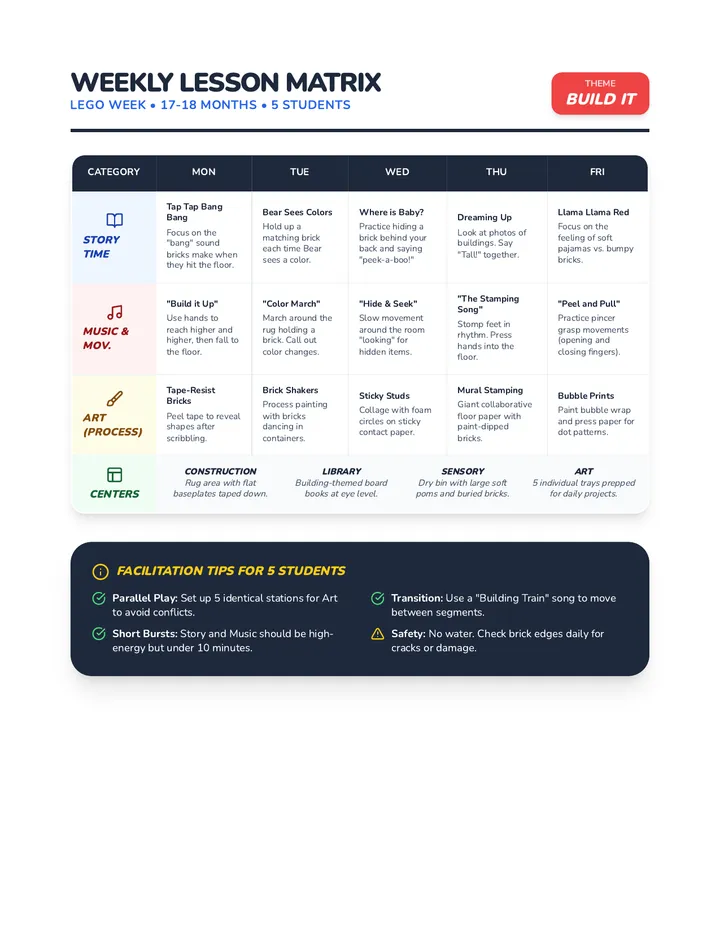
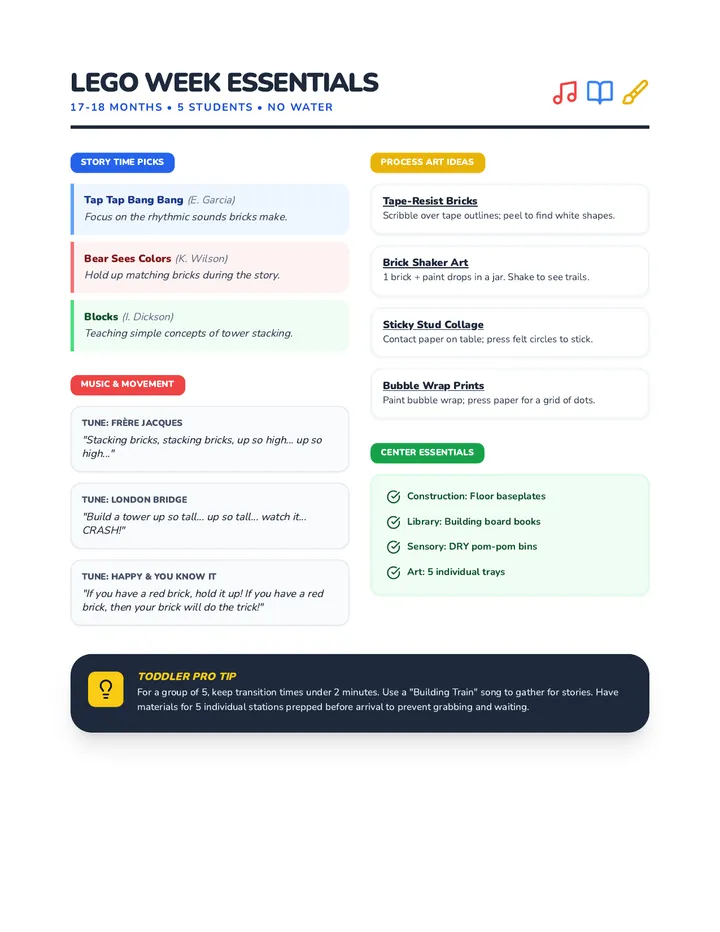
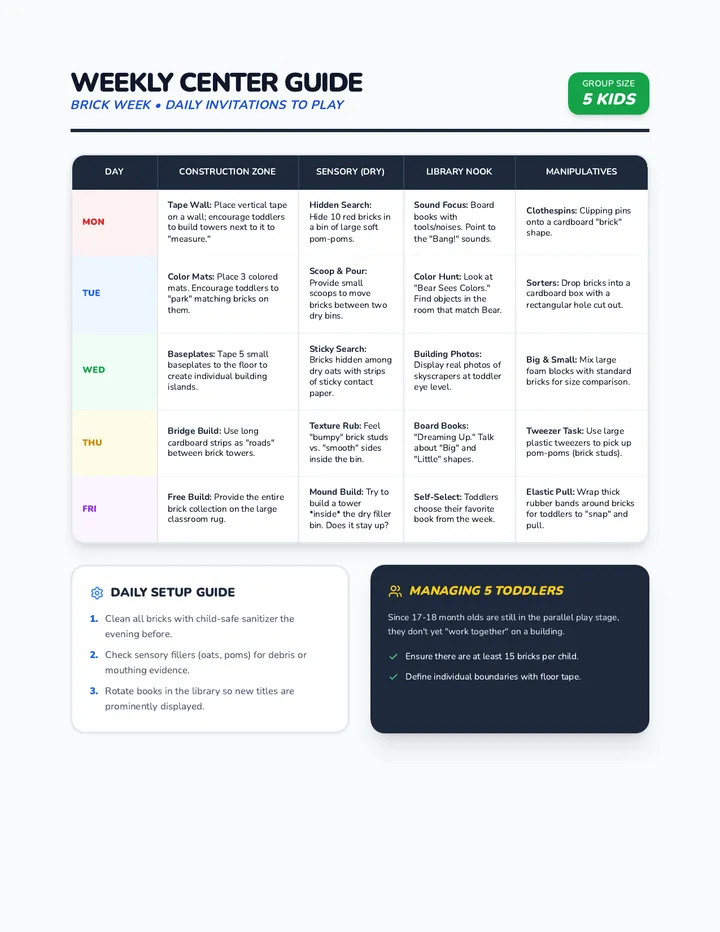
A collection of comprehensive week-long curricula for toddlers aged 17-18 months. Each themed week focuses on developmental play, sensory exploration, and fine motor skills for a group of 5 students with zero water play.
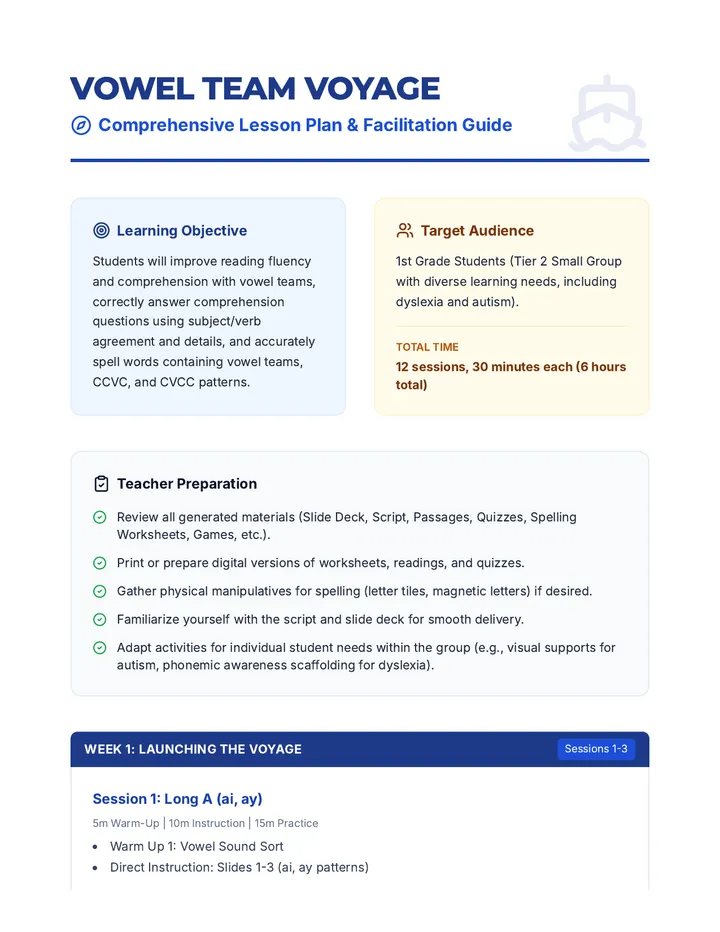
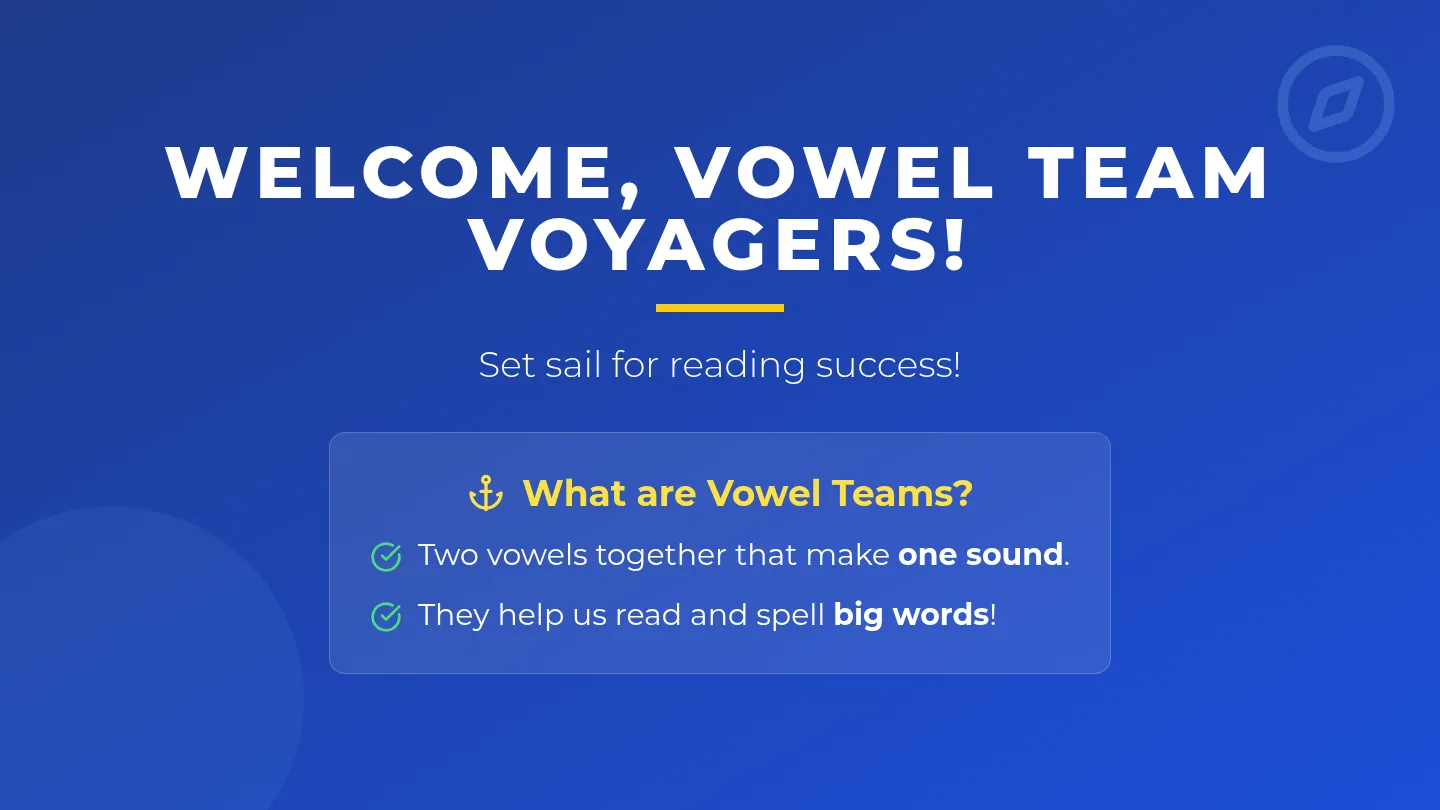
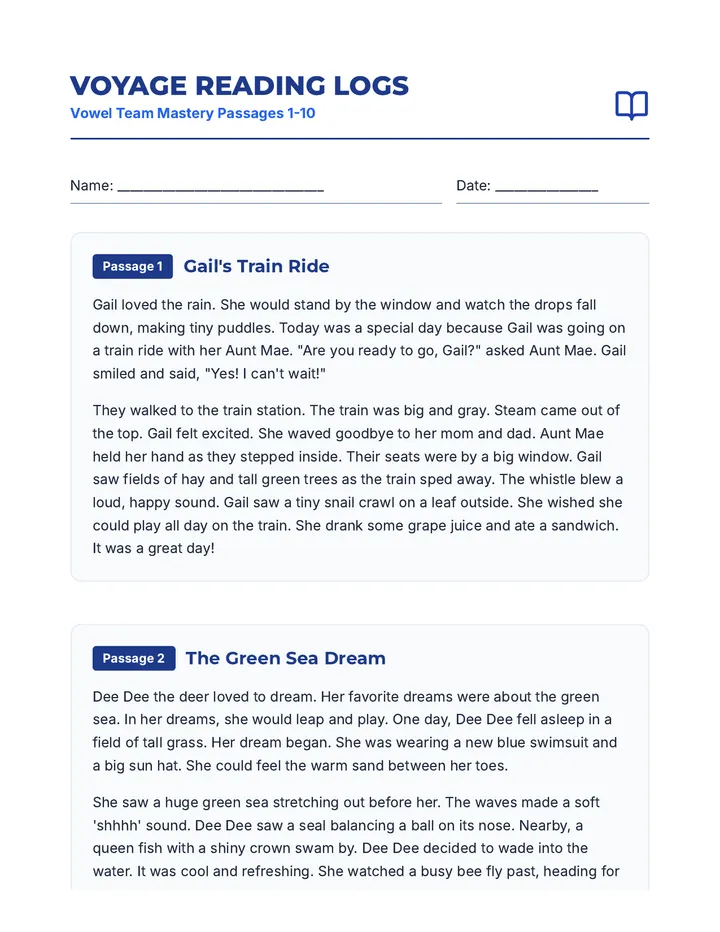
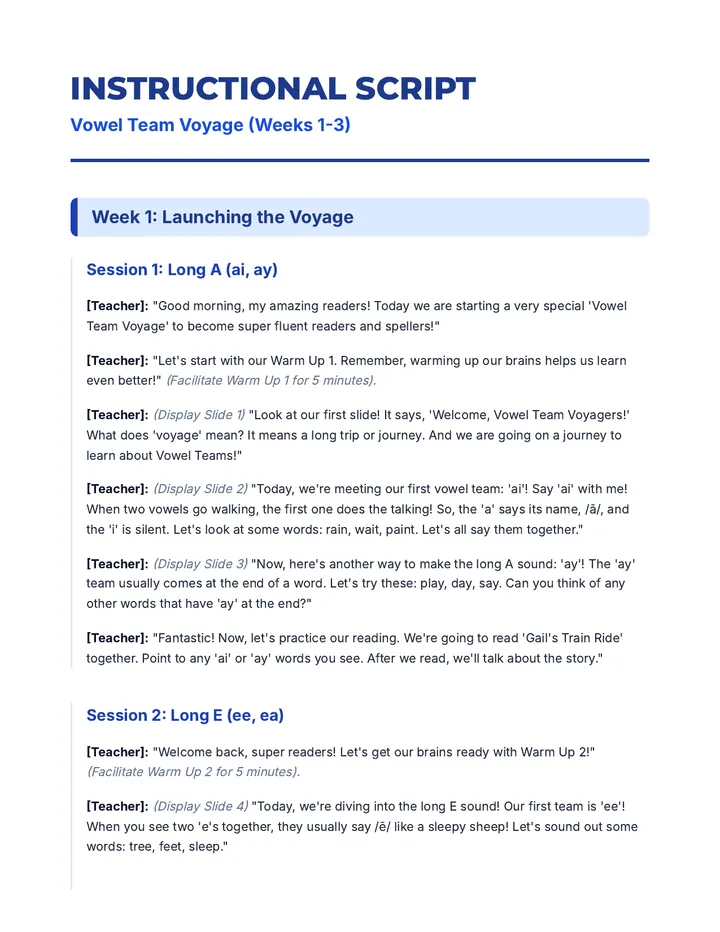
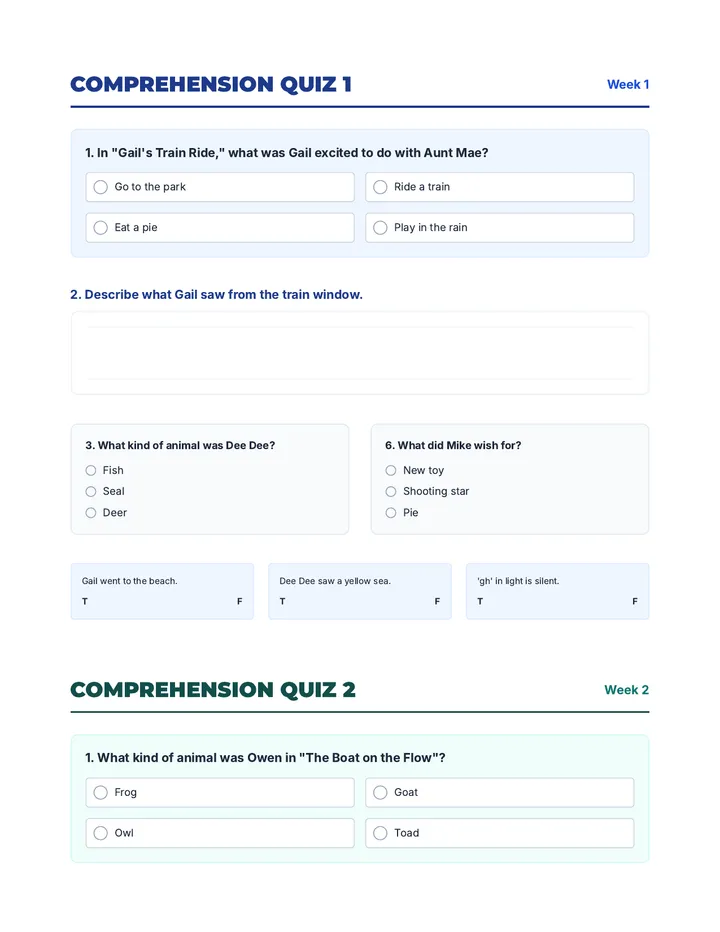
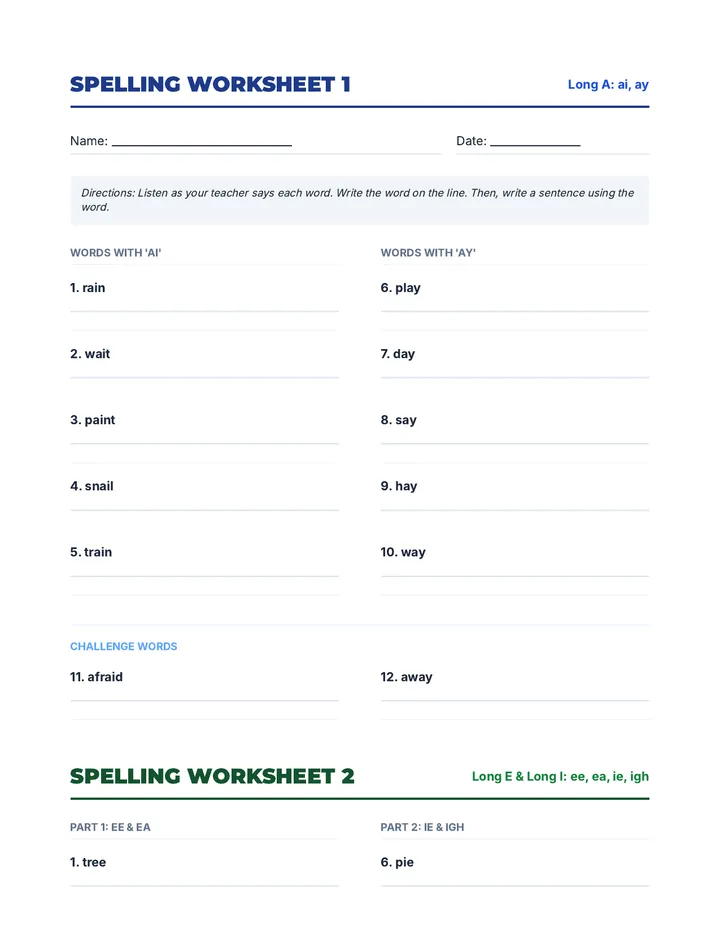
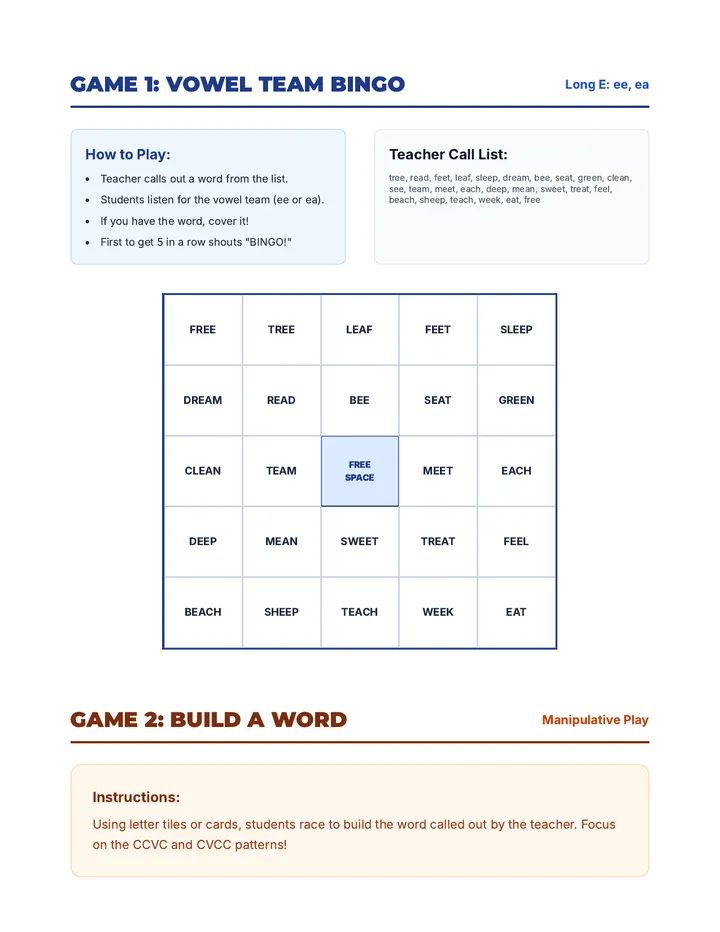
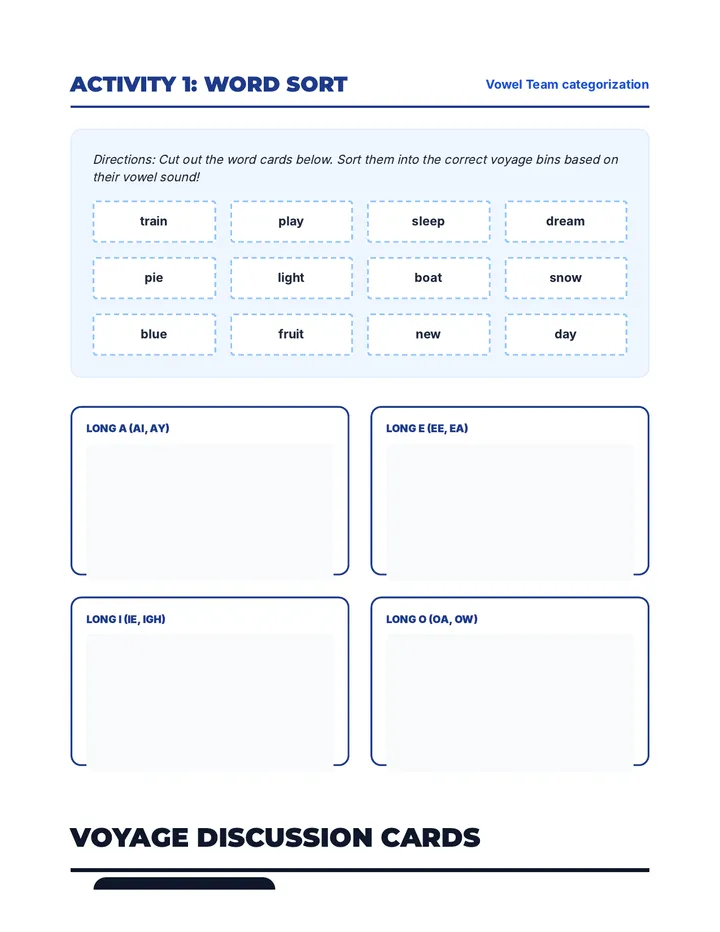
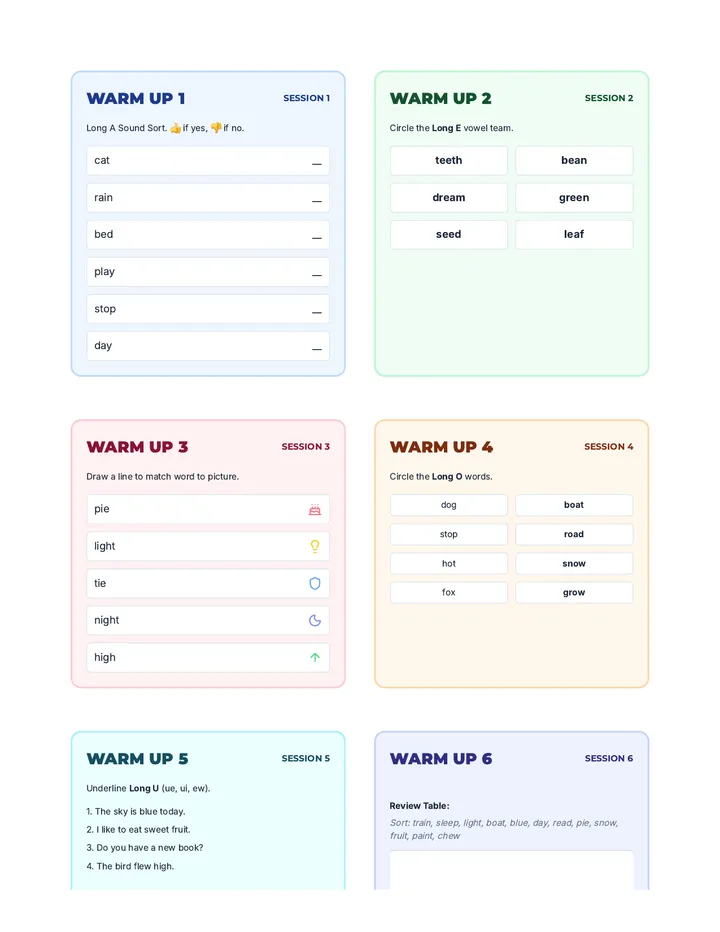
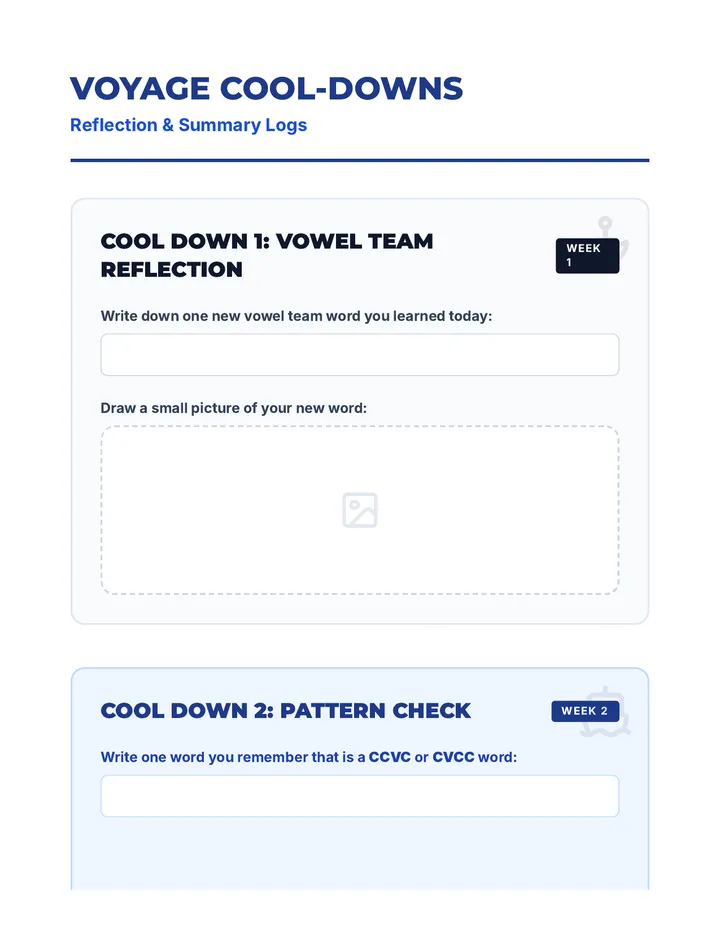
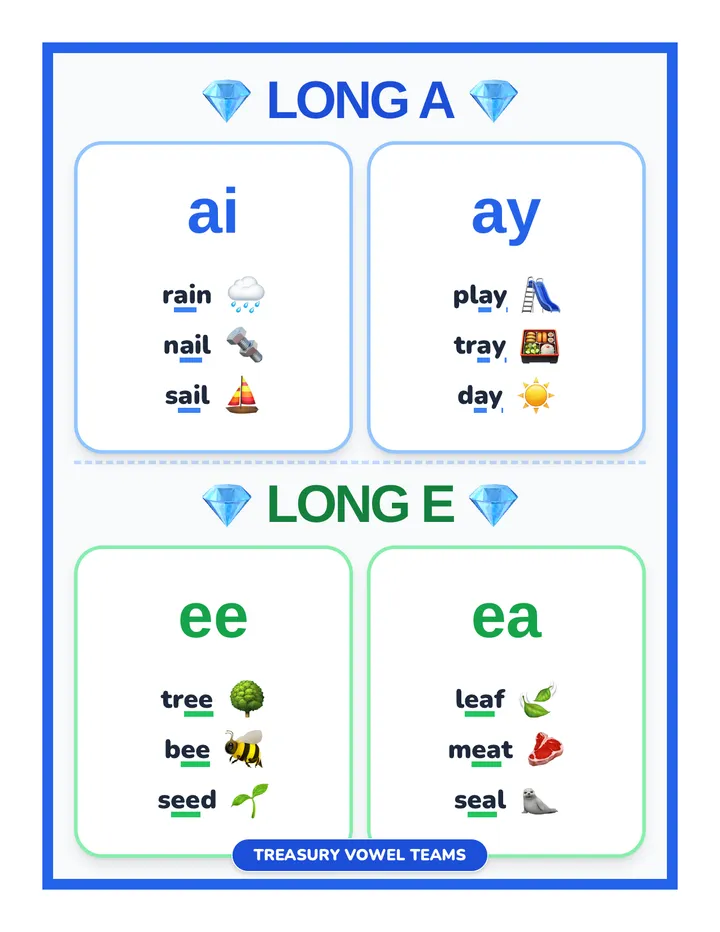
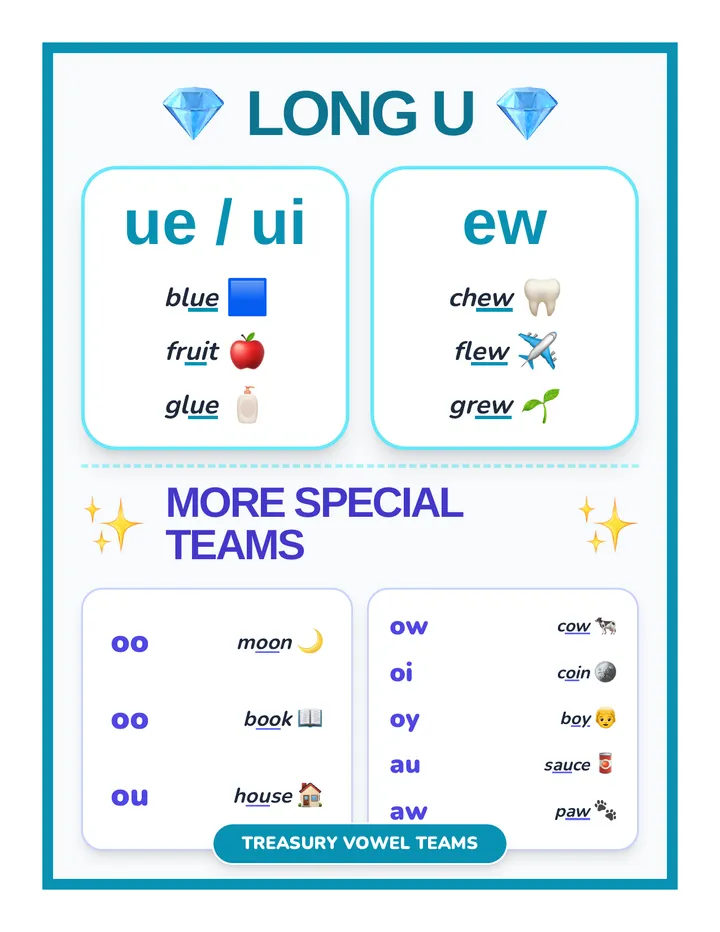
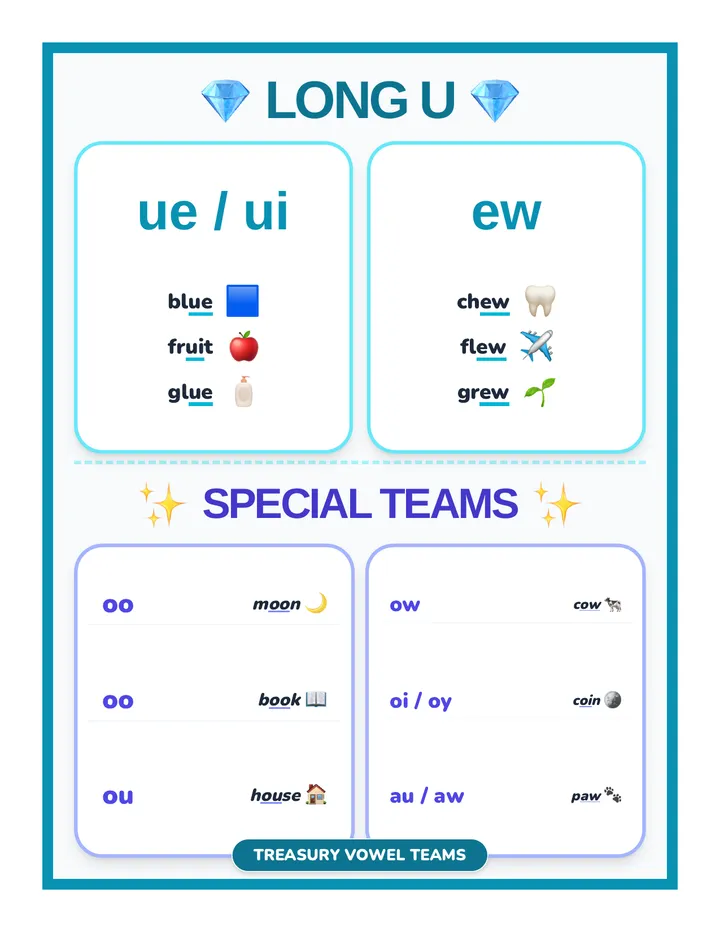
A 3-week Tier 2 intervention program for first-grade students, focusing on vowel teams, CCVC/CVCC patterns, and reading comprehension through a nautical-themed voyage.
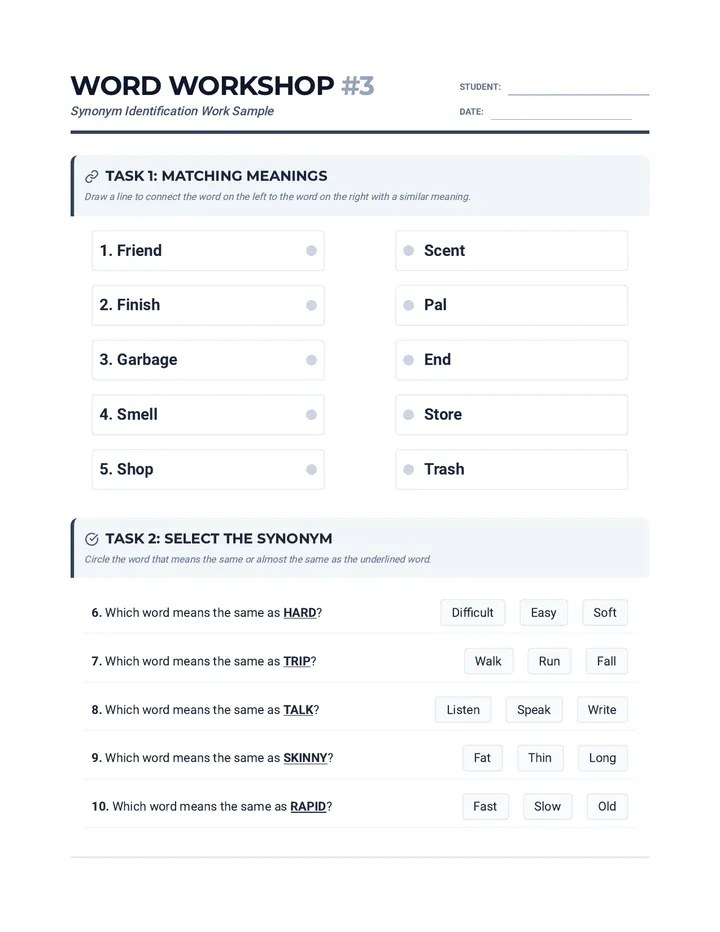
A comprehensive set of 10 evidence-ready work samples for the MCAS-Alt synonym identification strand, featuring consistent formatting for accuracy and independence tracking.
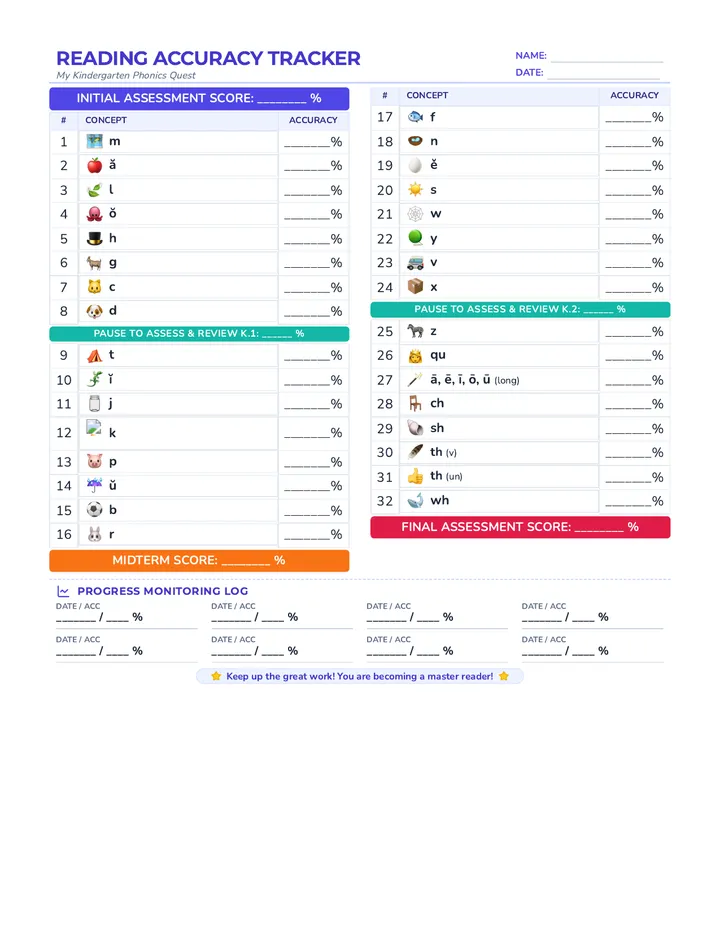
A foundational skills unit covering literacy progress tracking and early numeracy strategies for decomposition and missing addends.
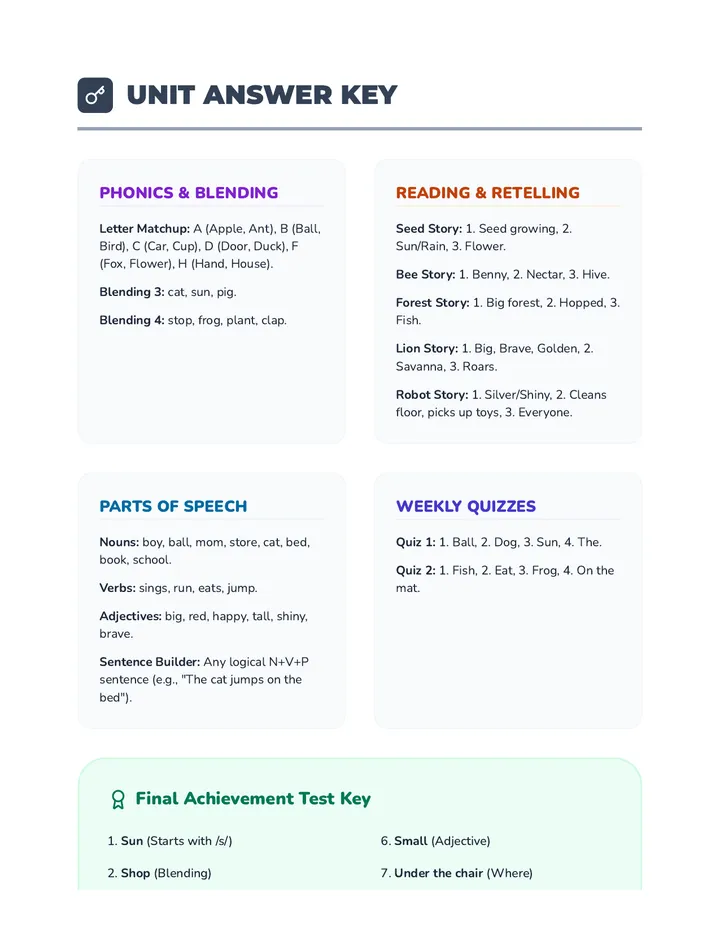
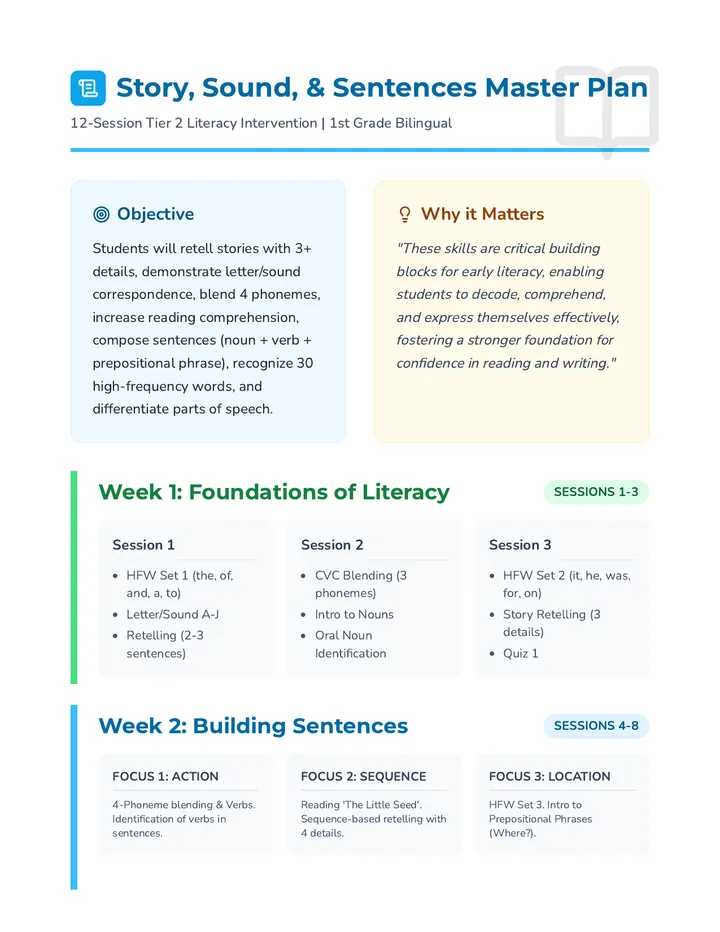
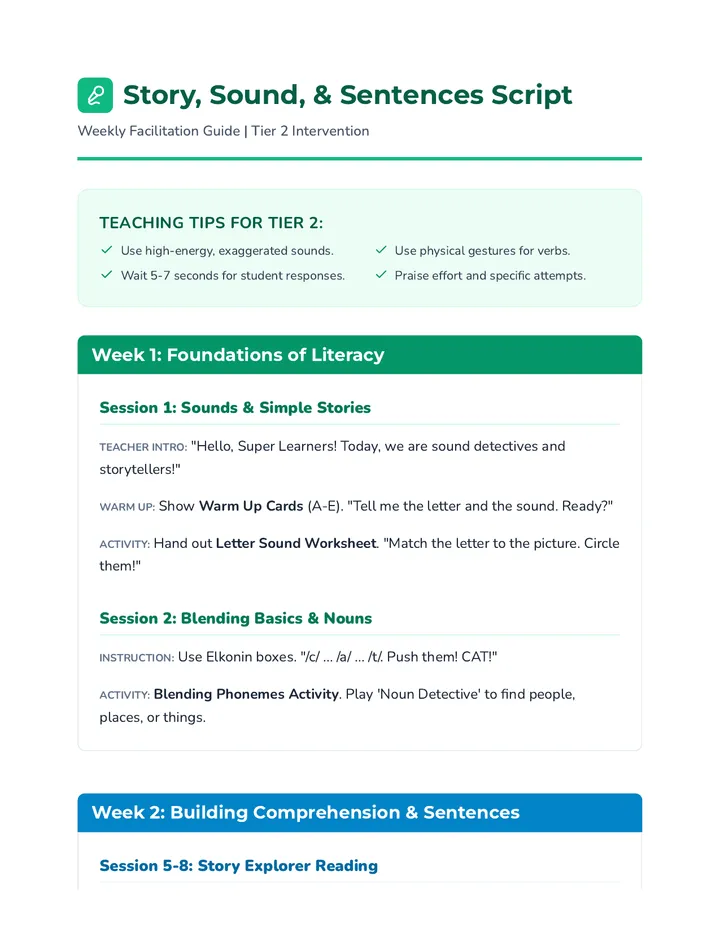
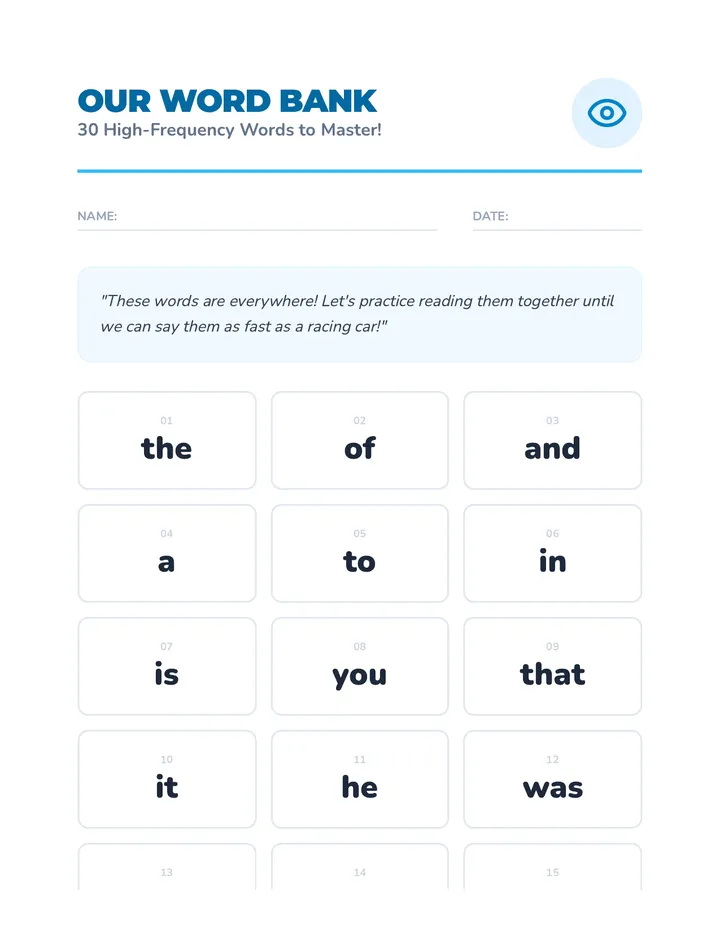
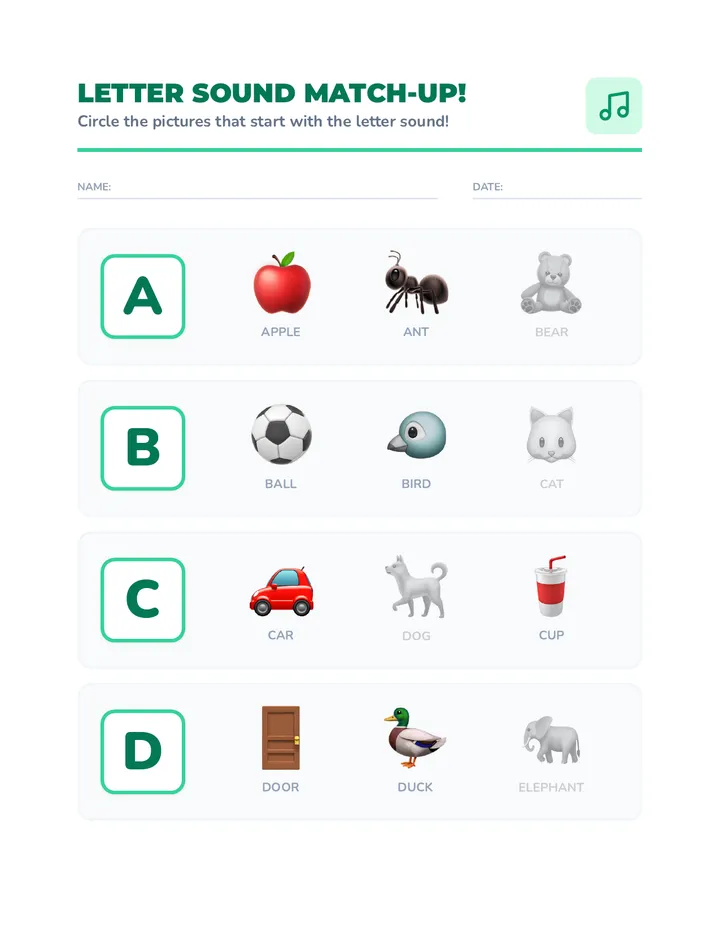
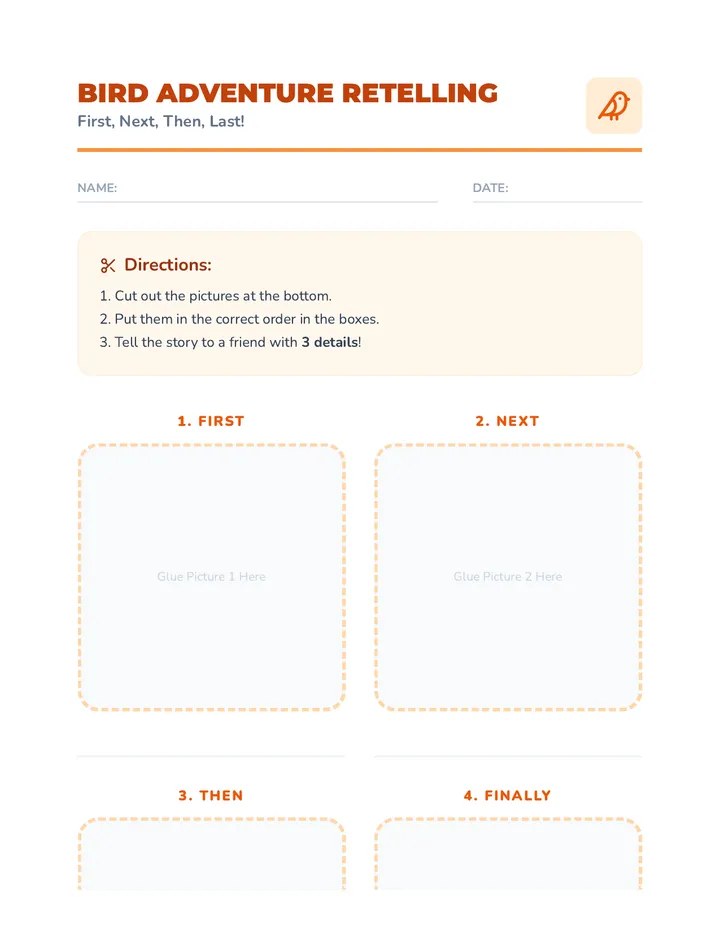
A 12-session, 3-week literacy program for 1st-grade bilingual students with intellectual disabilities, focusing on phonics, retelling, comprehension, and sentence structure.
A multi-lesson unit for 4th-grade students with limited literacy, focusing on mastering and applying foundational academic vocabulary words like fact, information, alike, difference, and topic.
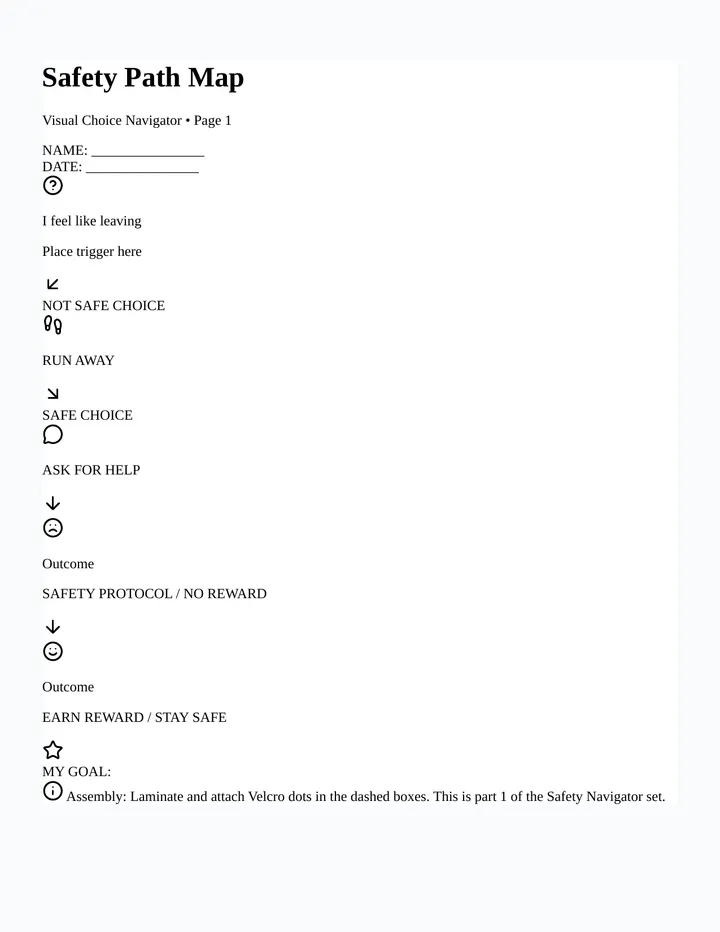
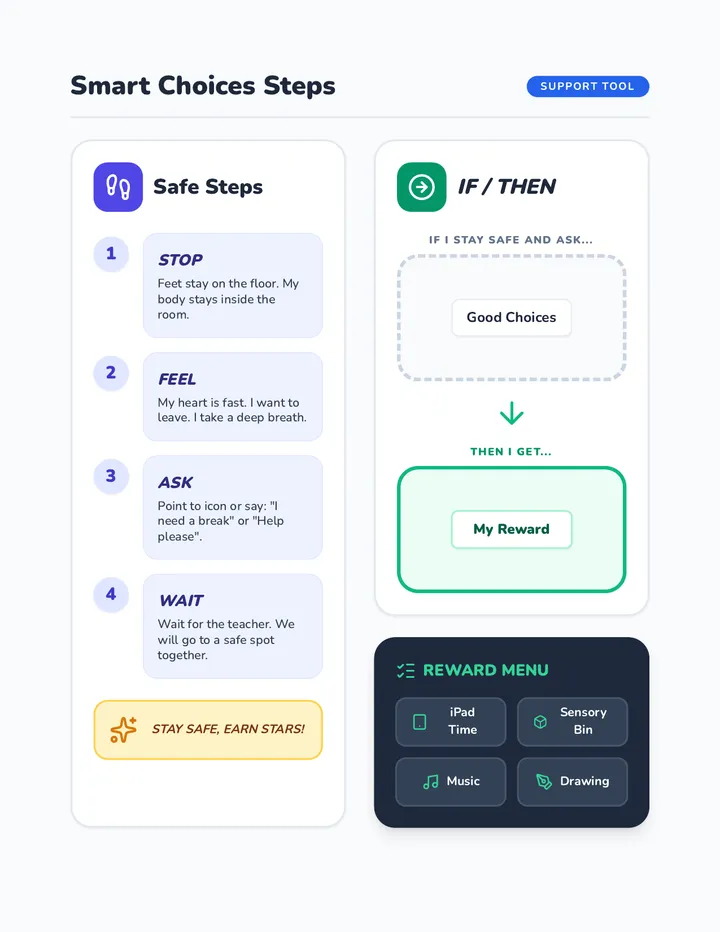
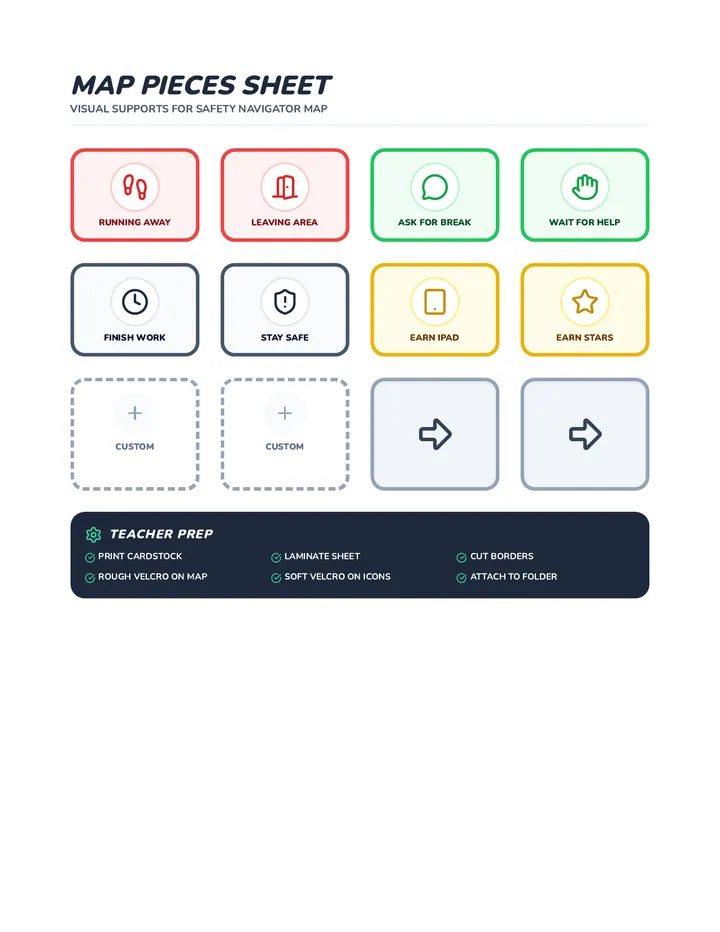
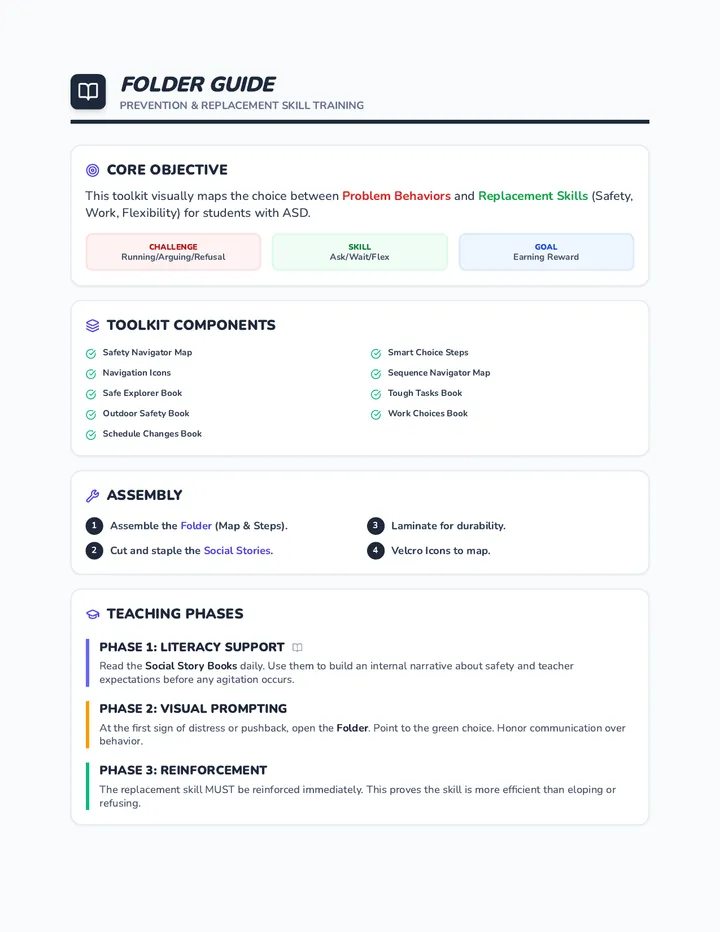
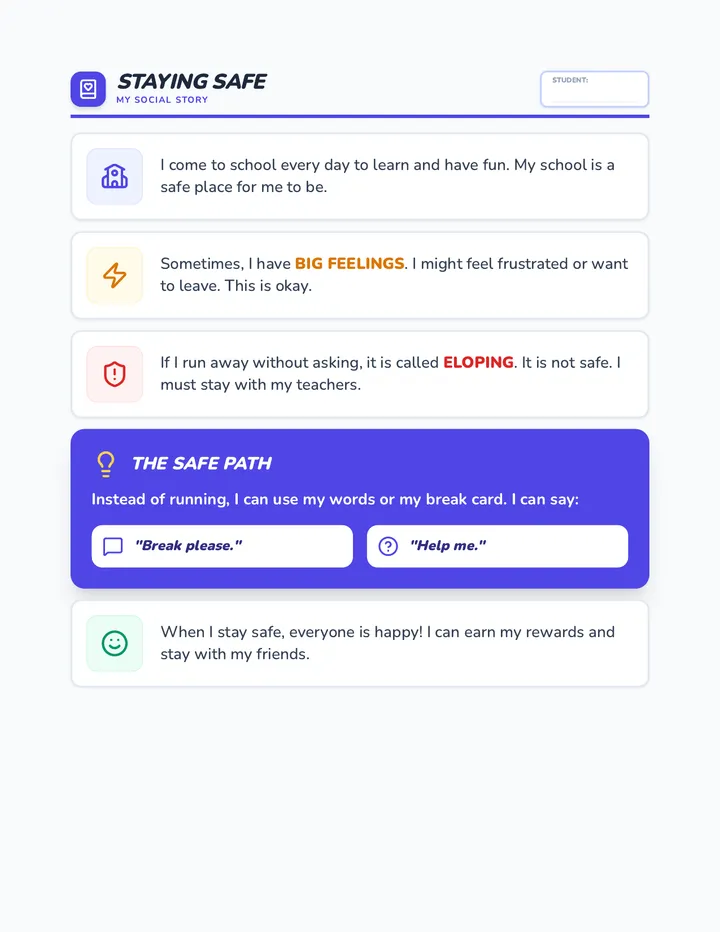
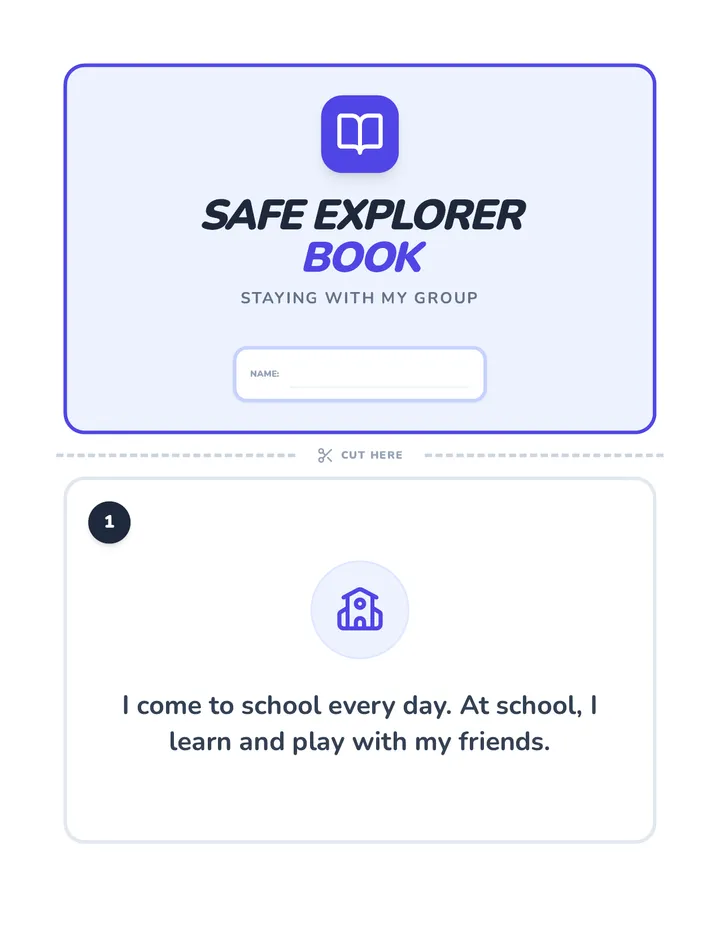
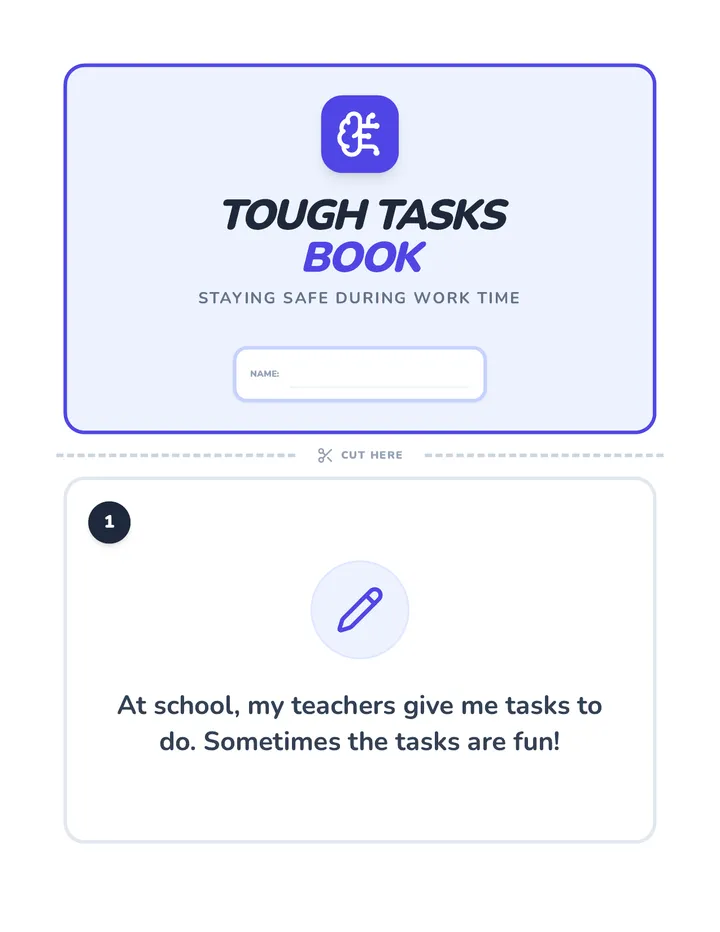
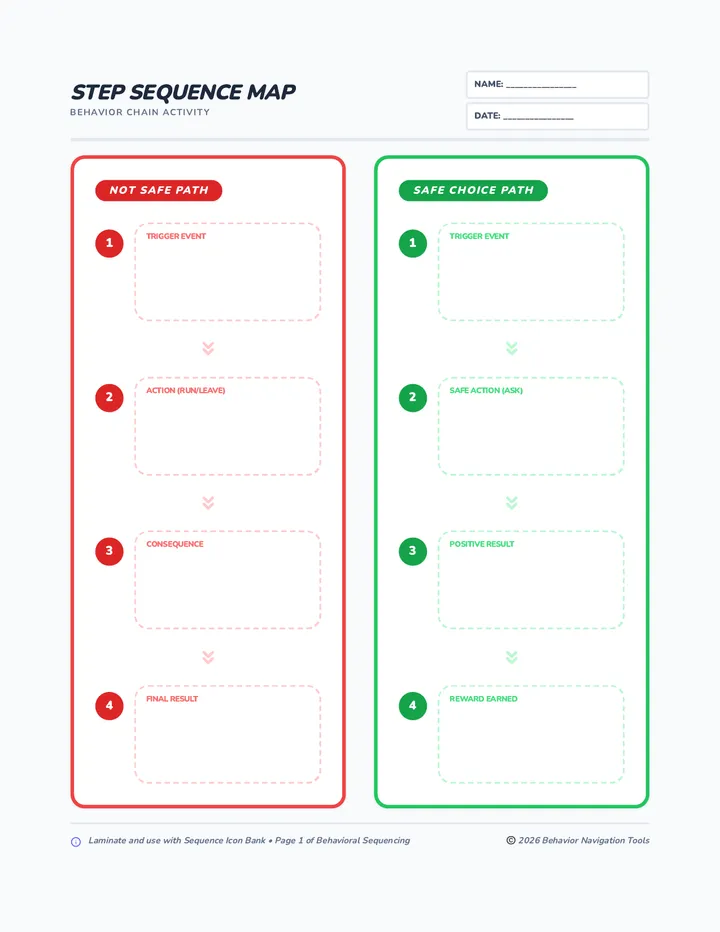
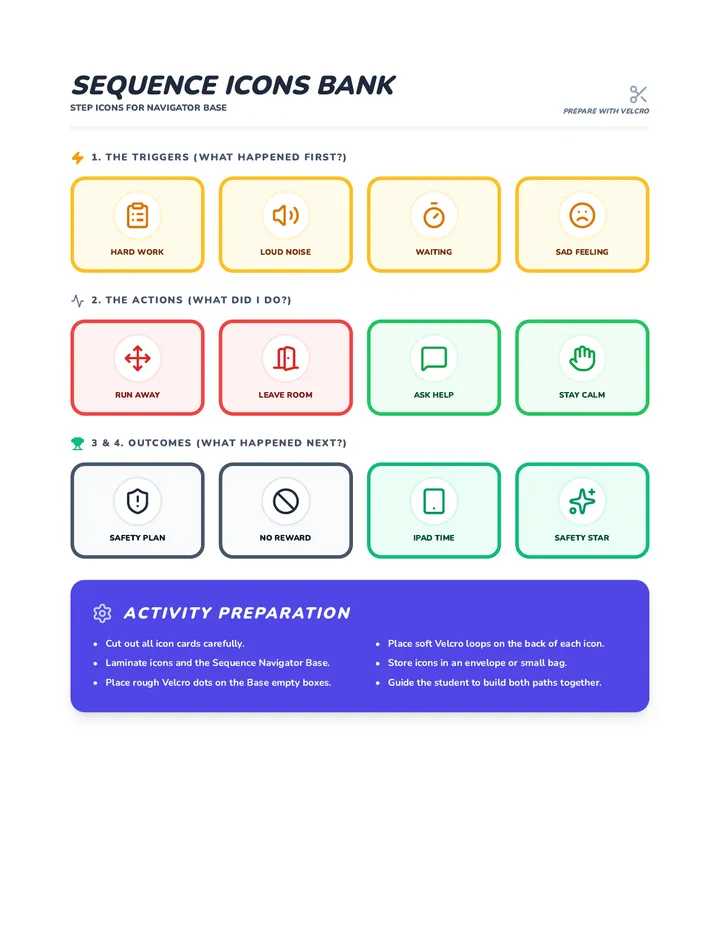
A set of visual supports and interactive activities designed to help students with ASD understand the consequences of elopement and learn safe replacement behaviors.
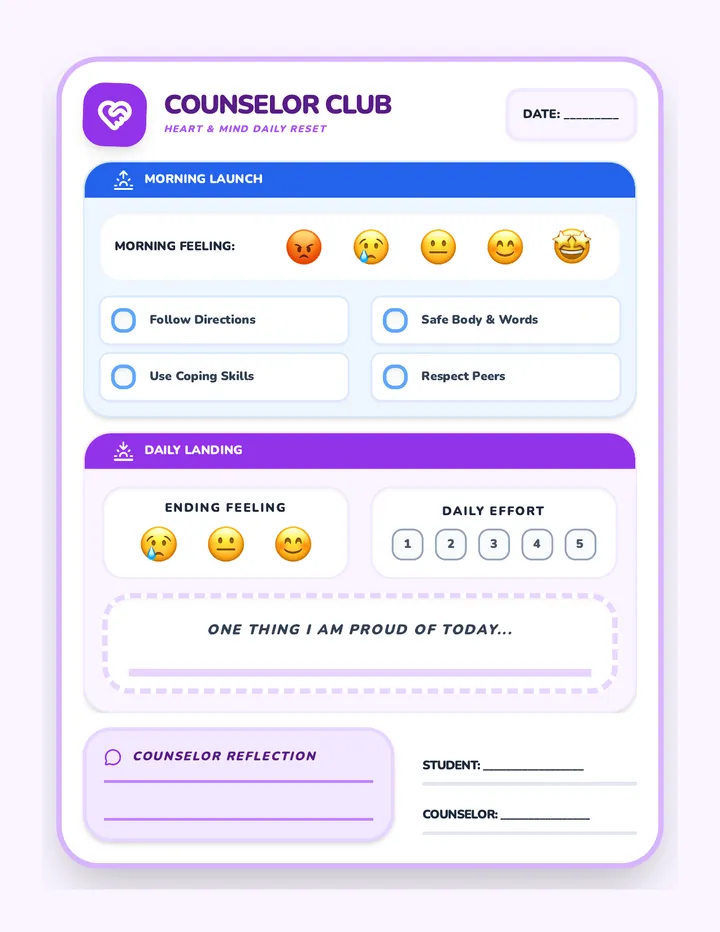
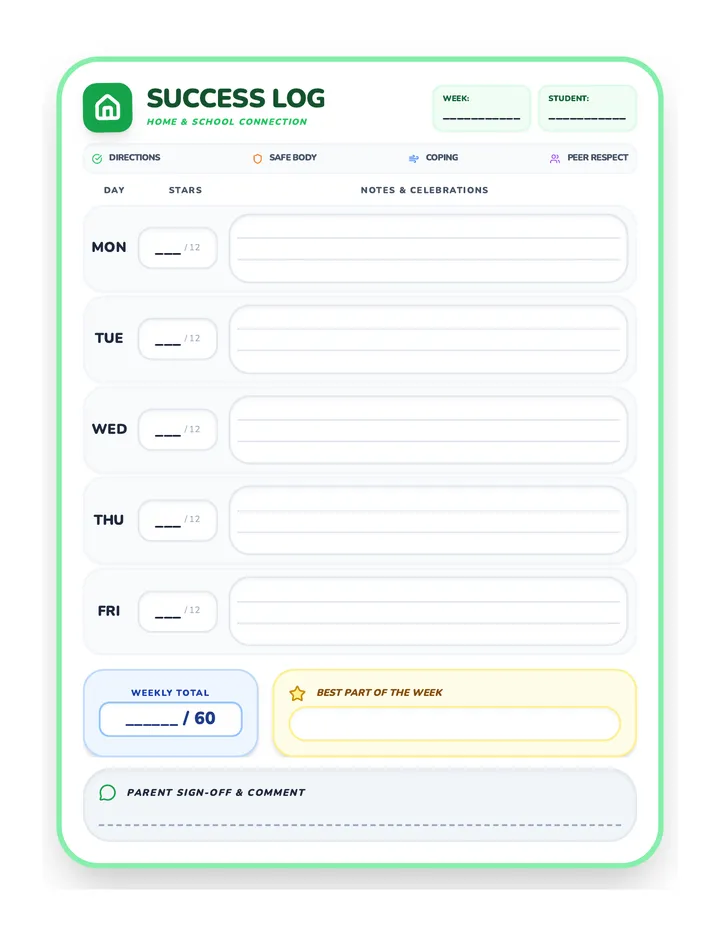
A behavioral tracking system designed to help students manage work completion and social interactions across subjects using daily point sheets and reflections.
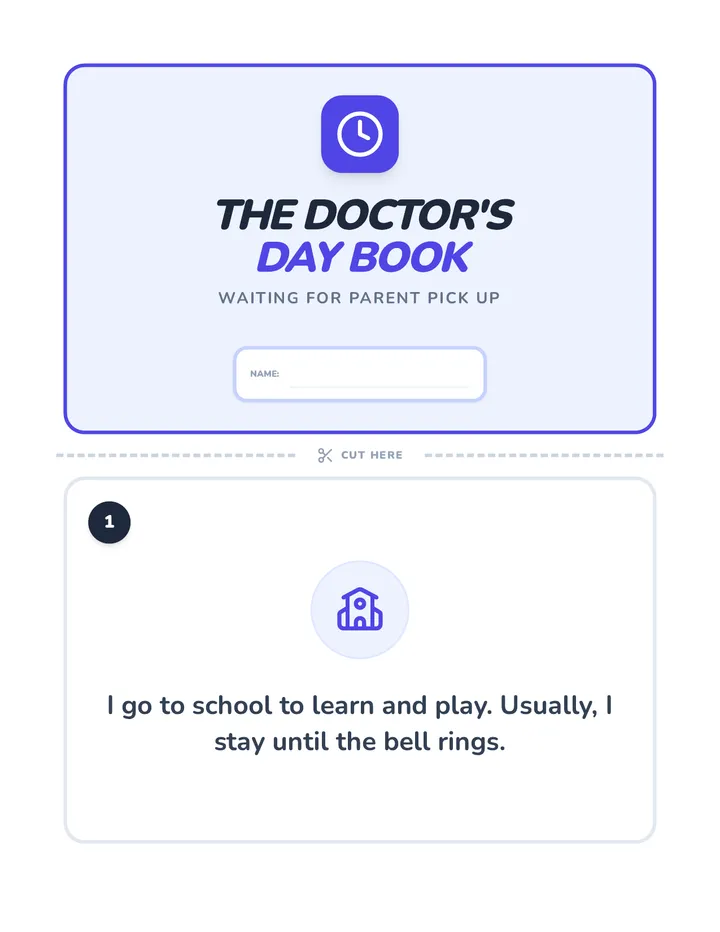
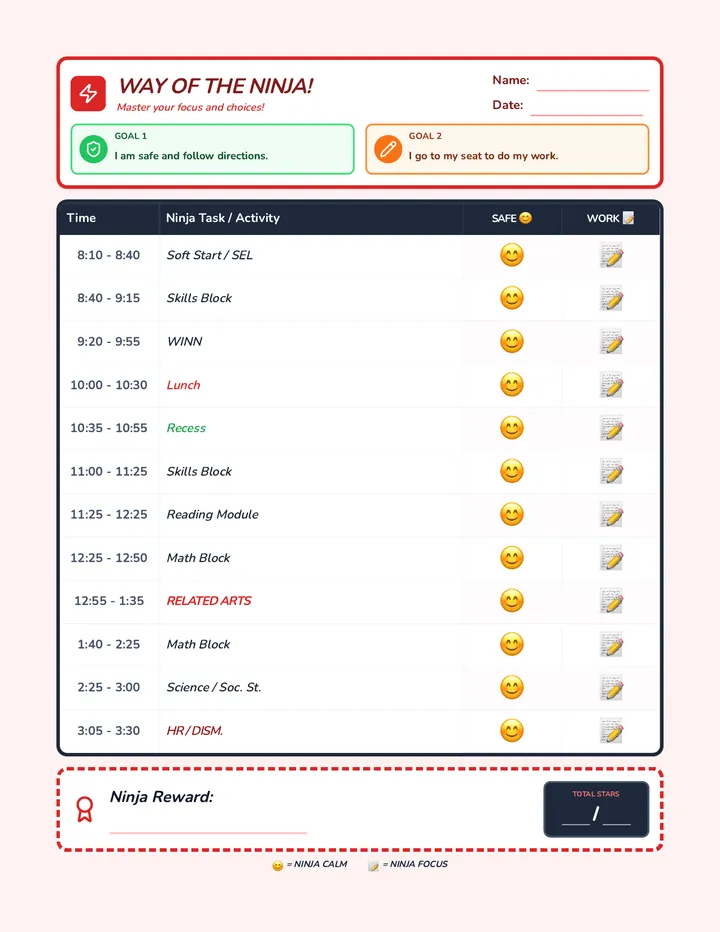
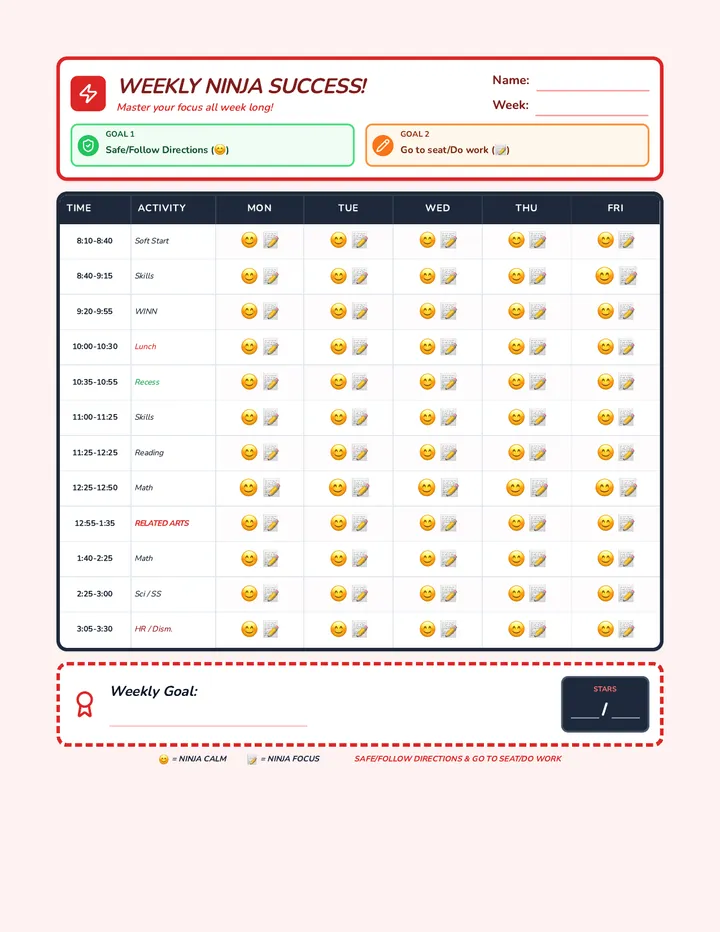
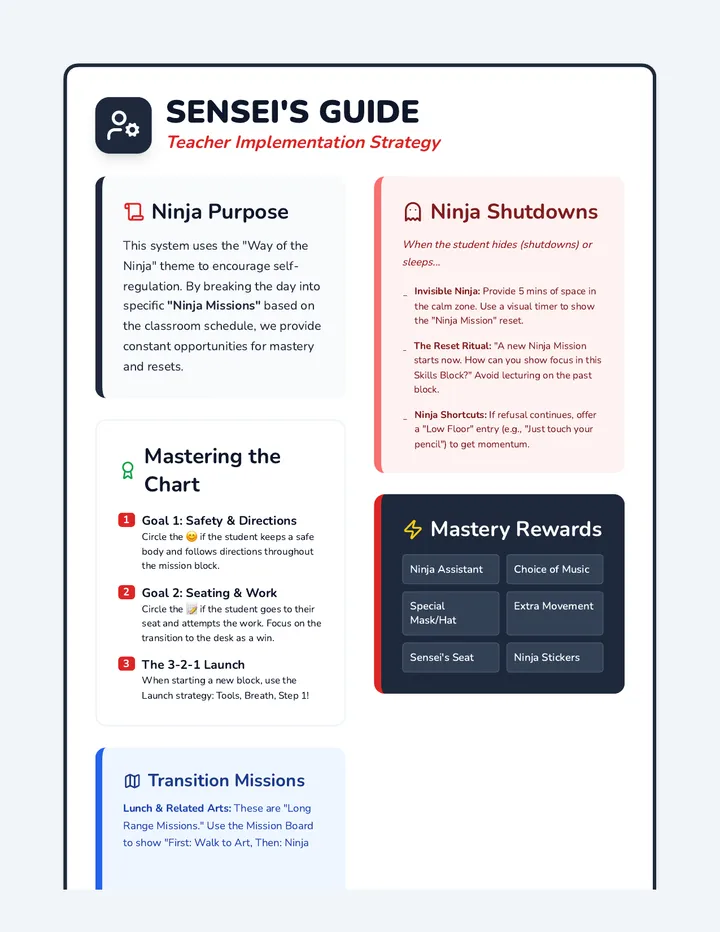
A comprehensive behavior tracking system designed for a 1st-grade student struggling with work refusal and transitions. The system uses a 30-minute incremental tracker, visual desk reminders, and a teacher implementation guide to foster safety and academic engagement.
A comprehensive toolkit for teachers to track, document, and support student English language proficiency growth using TELPAS criteria across all four domains.
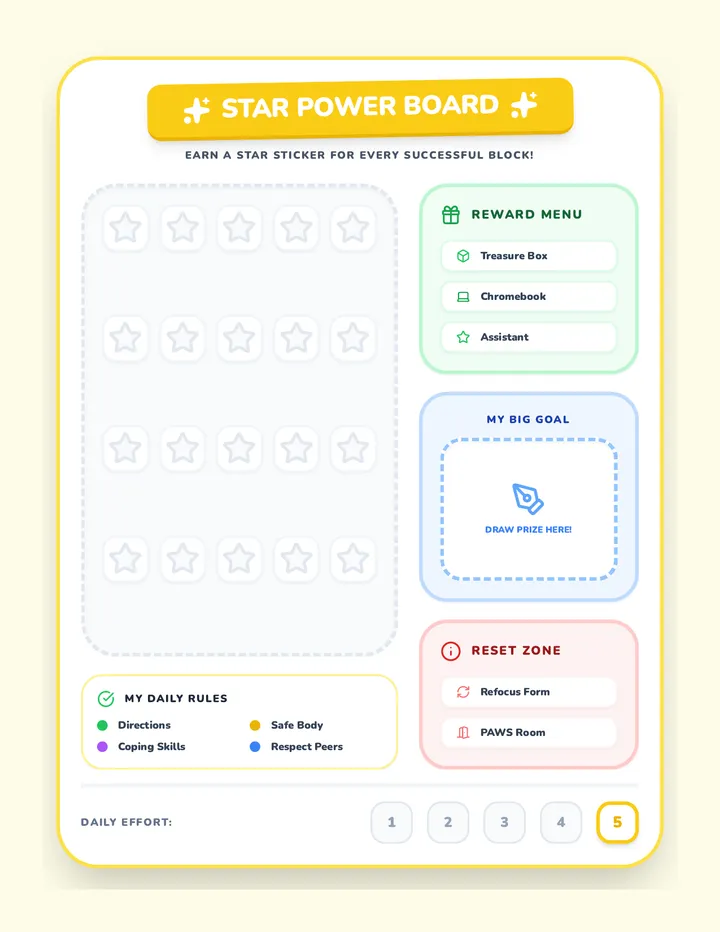
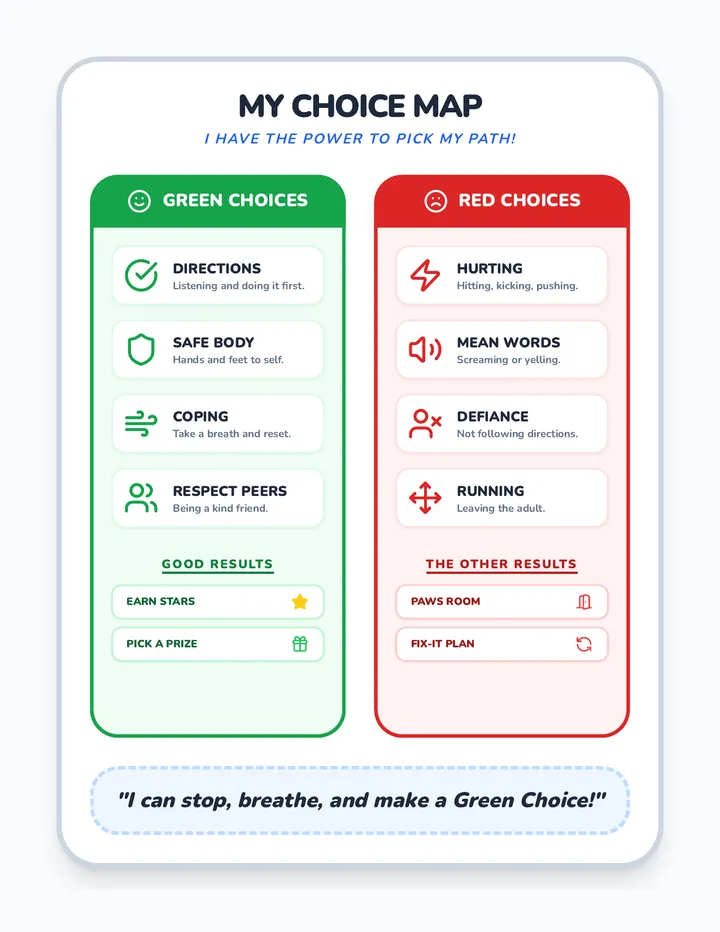
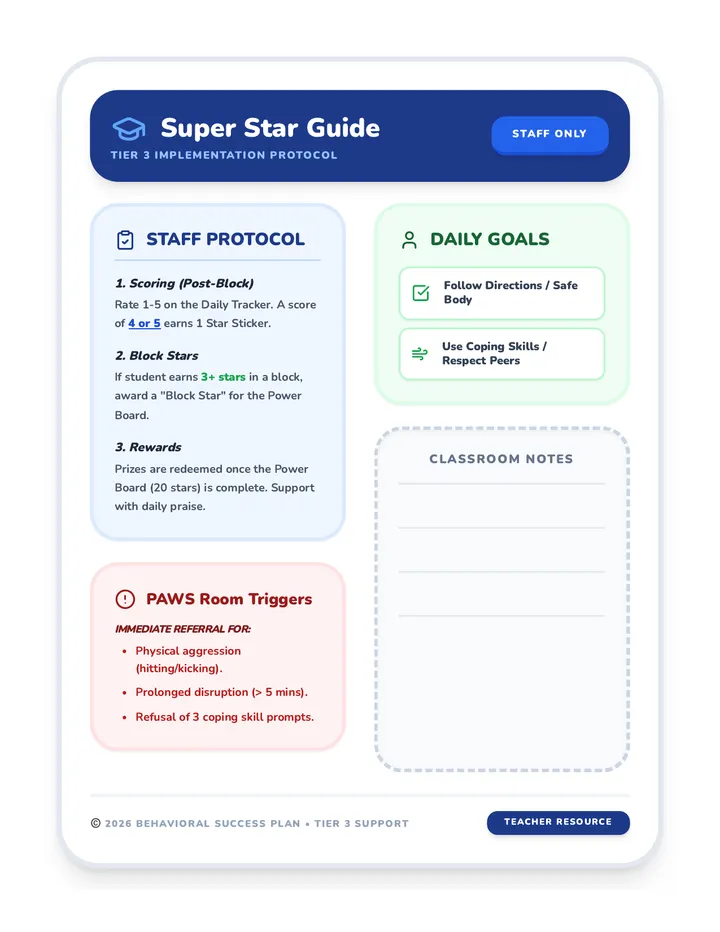
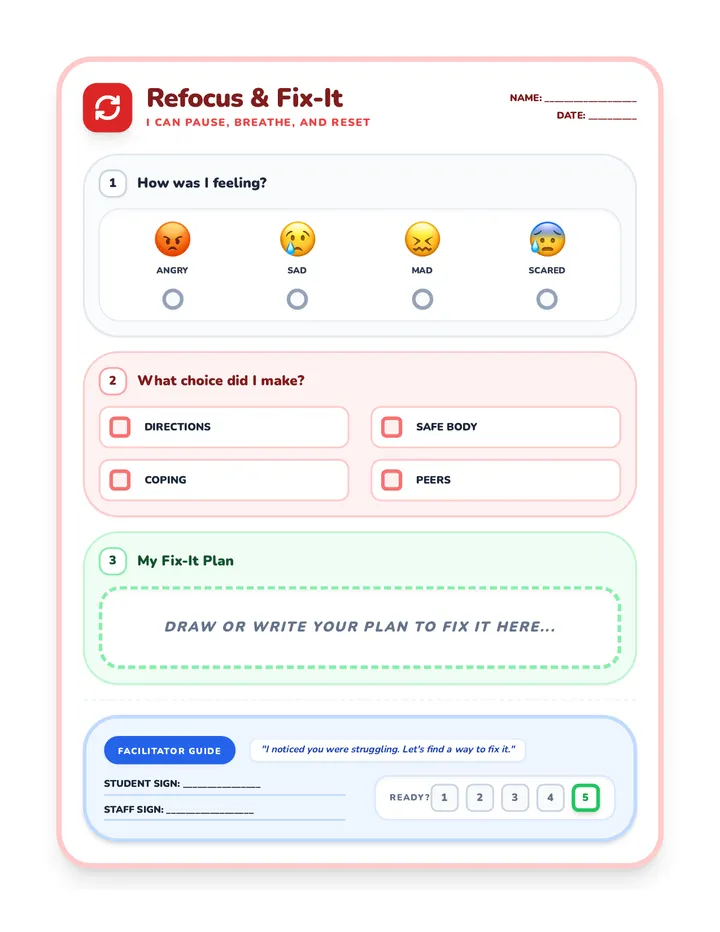
A comprehensive Tier 3 behavior support system for a second-grade student with ADHD, focusing on emotion regulation, safe choices, and positive reinforcement through a structured daily check-in/check-out (CICO) process.
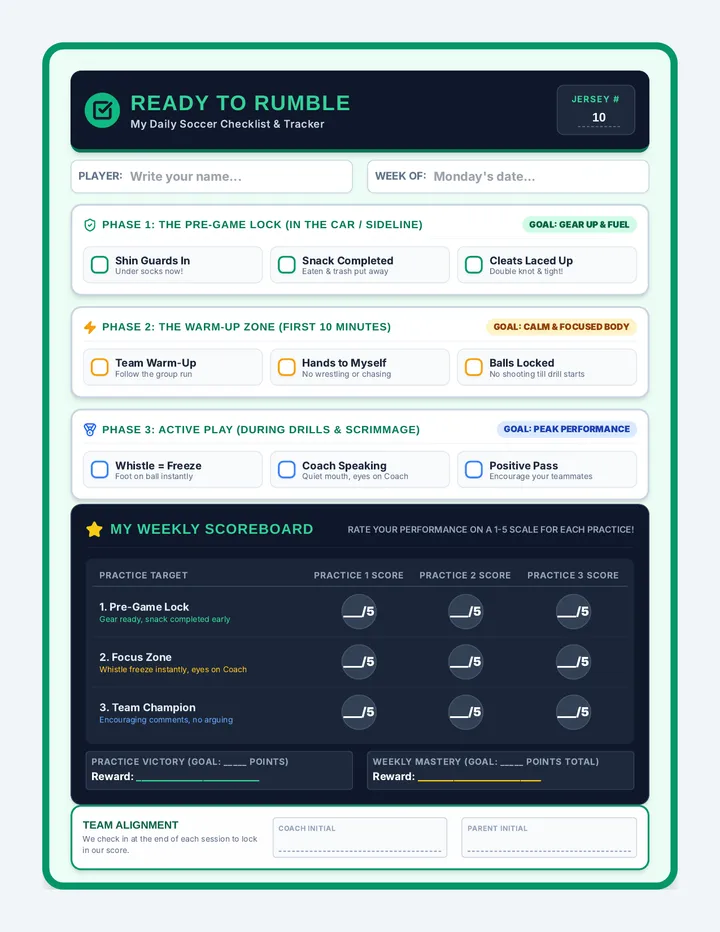
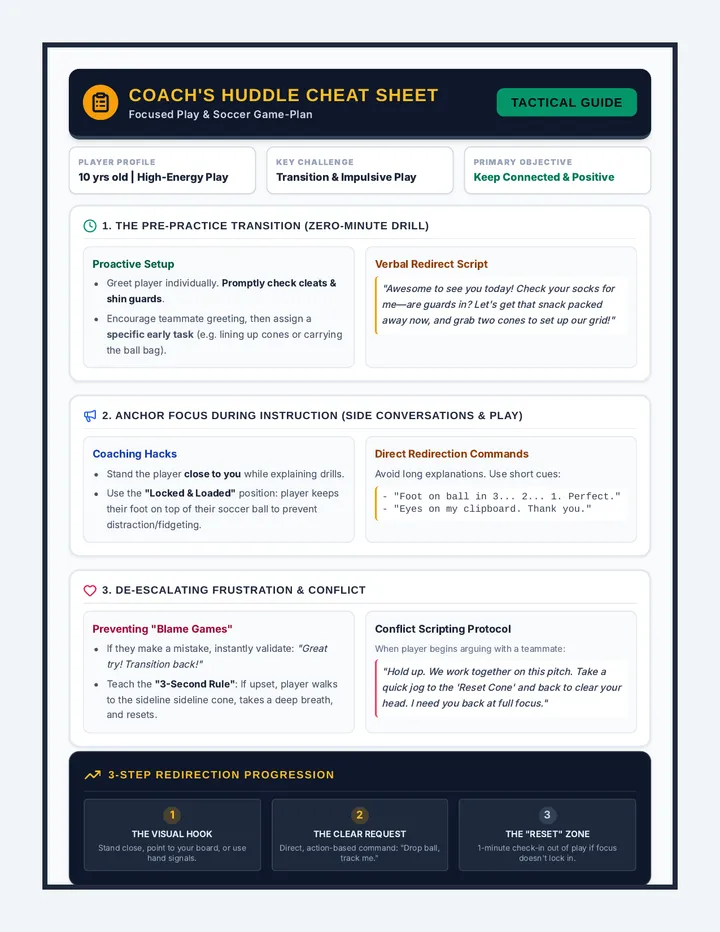
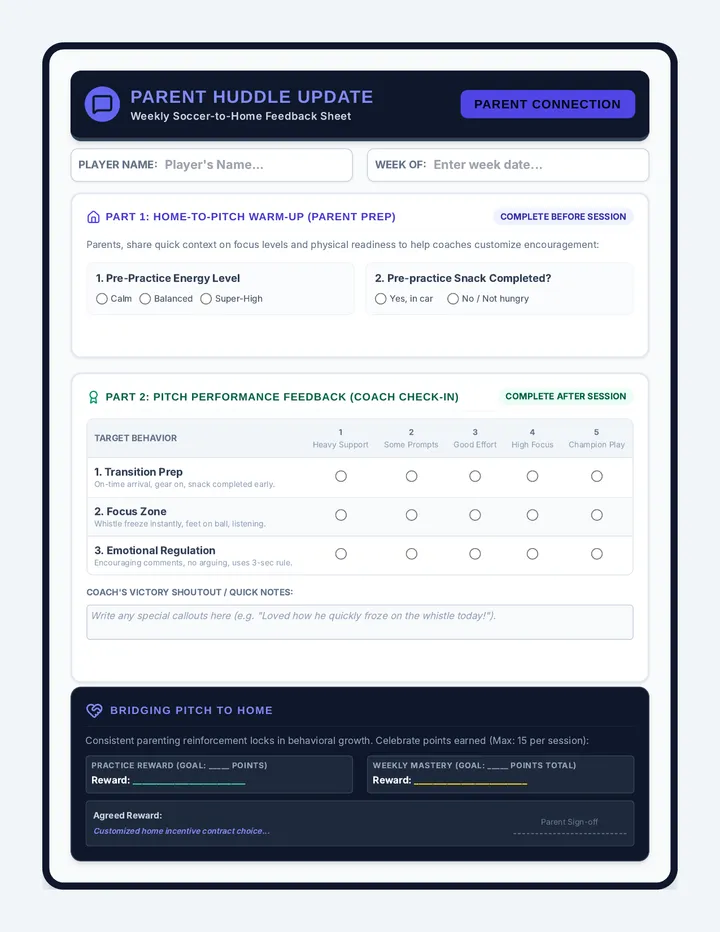
A comprehensive behavior modification support system designed for coaches, parents, and a high-energy 10-year-old player. It targets pre-practice preparation, in-session focus, impulse control, and emotional regulation during soccer practice.
A comprehensive social story and supporting tools designed for an academically advanced 2nd grader to manage non-preferred tasks, transitions, and big emotions using verbal communication and solution-seeking strategies instead of screaming or eloping.
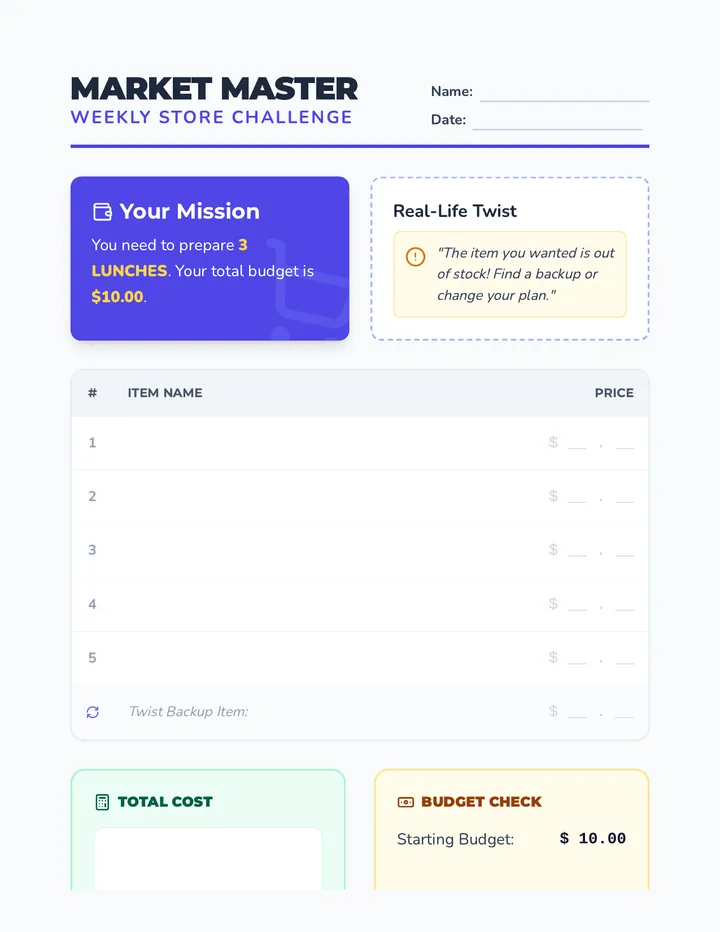
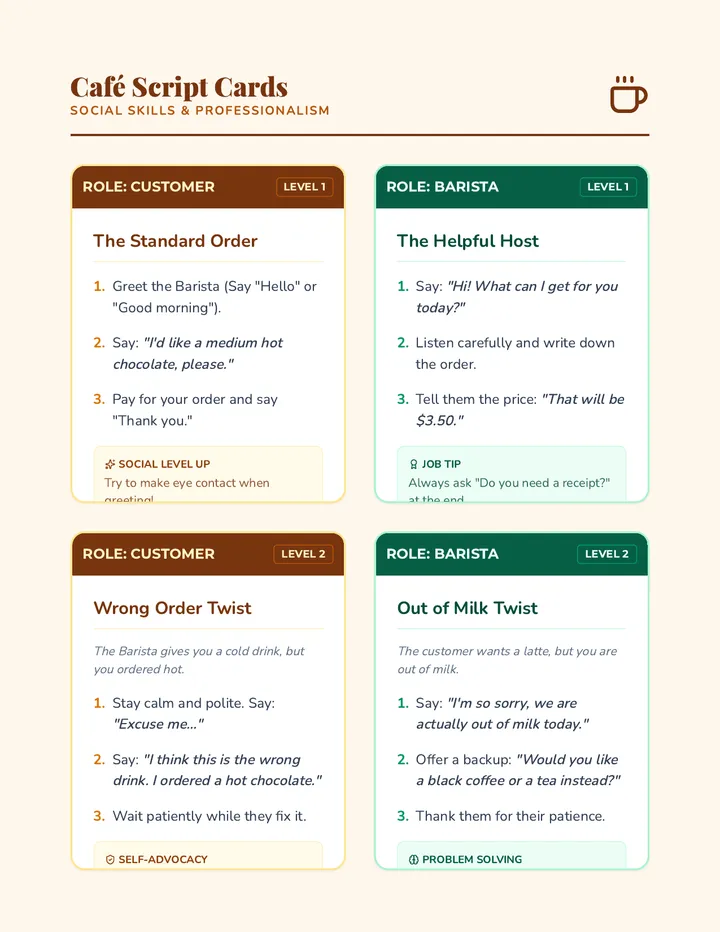
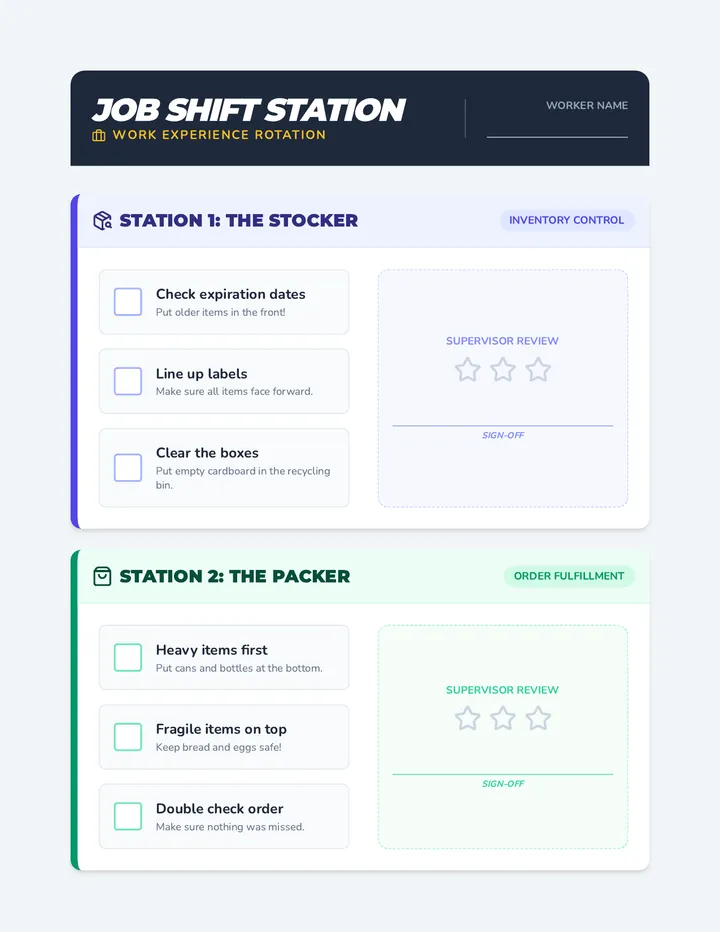
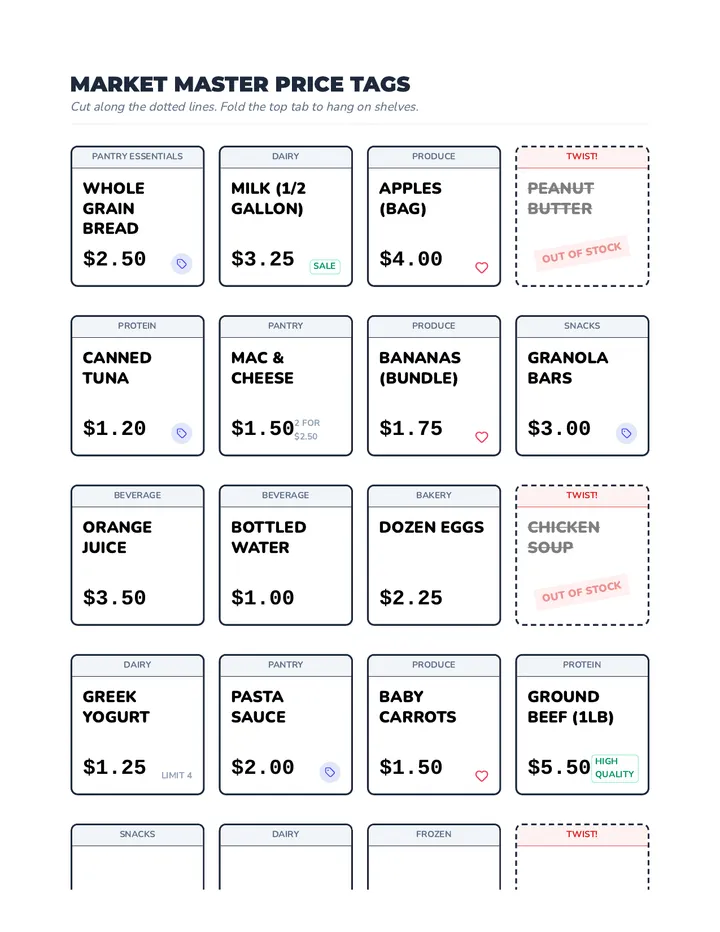
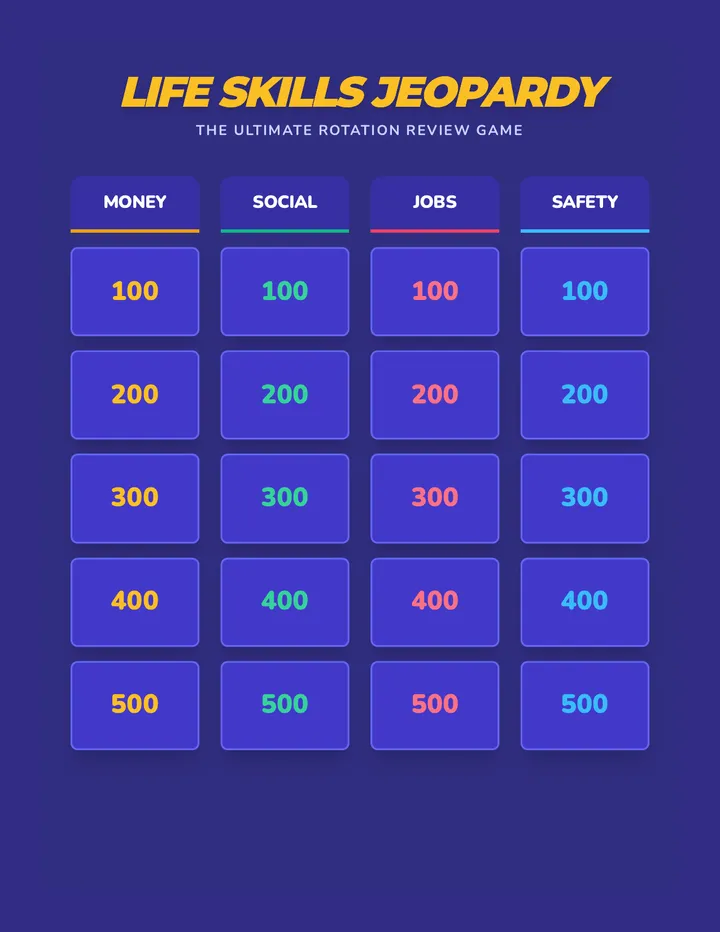
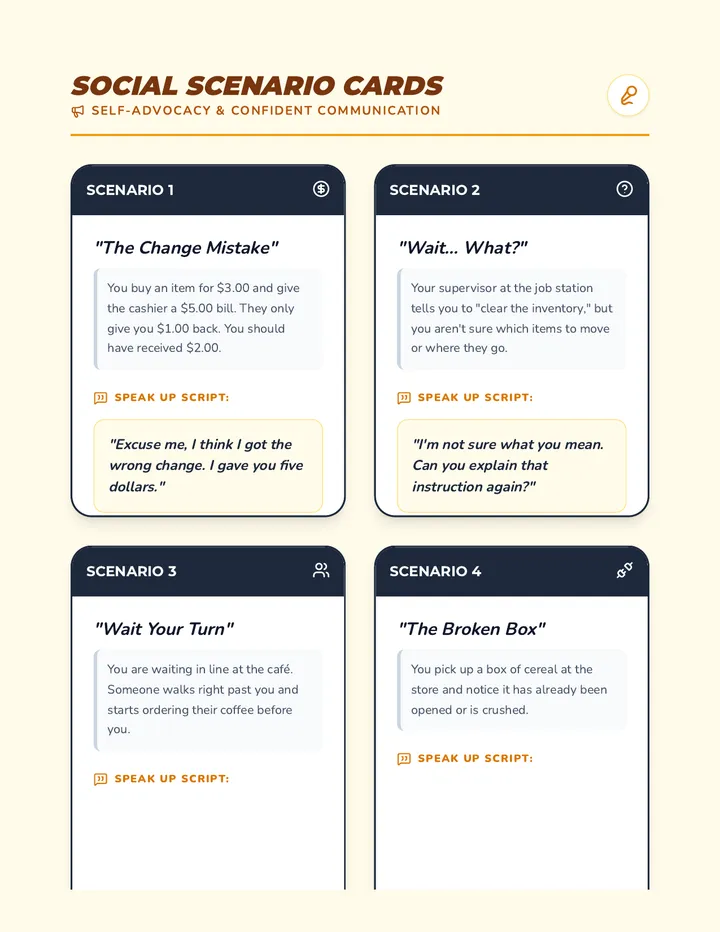
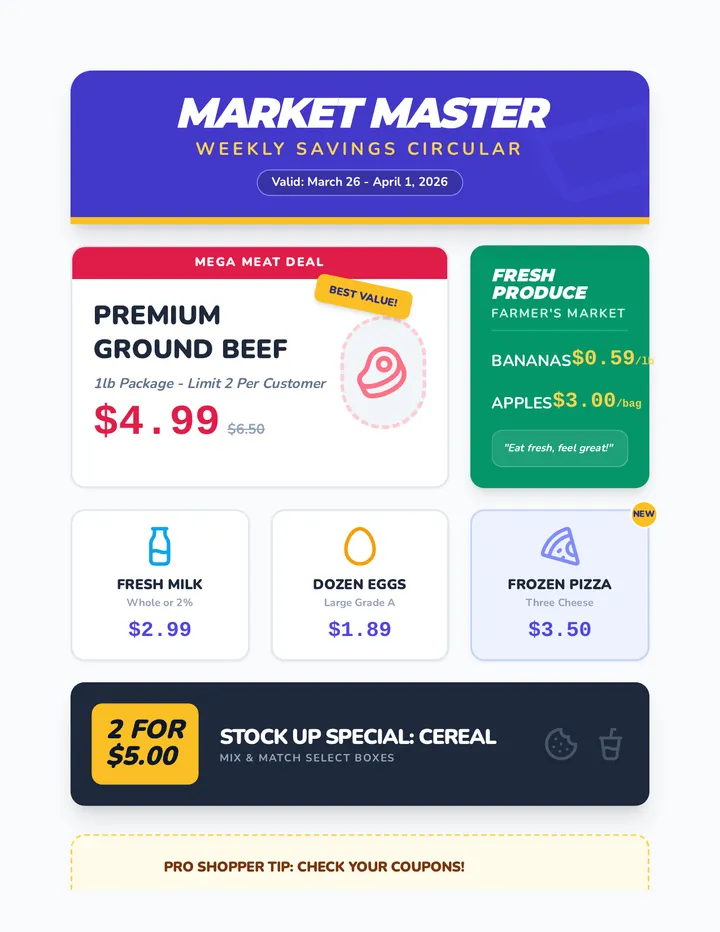
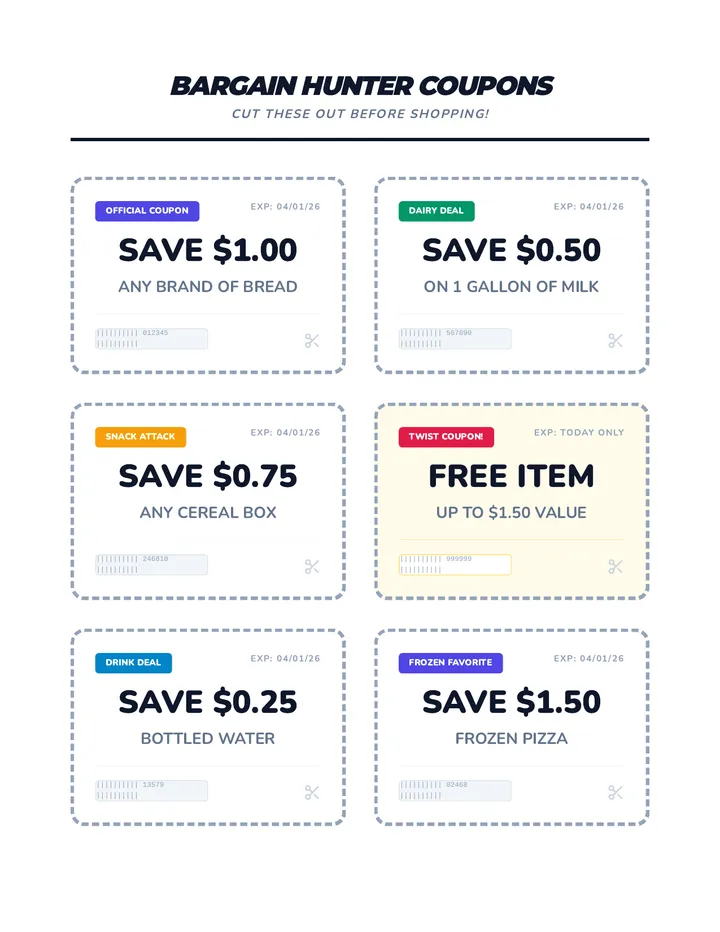
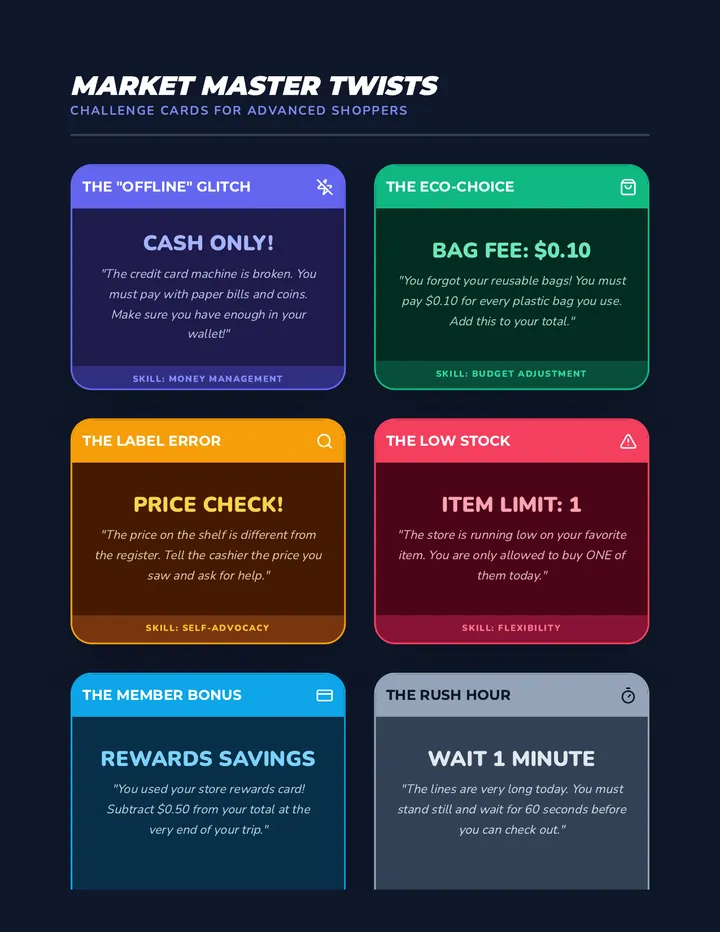
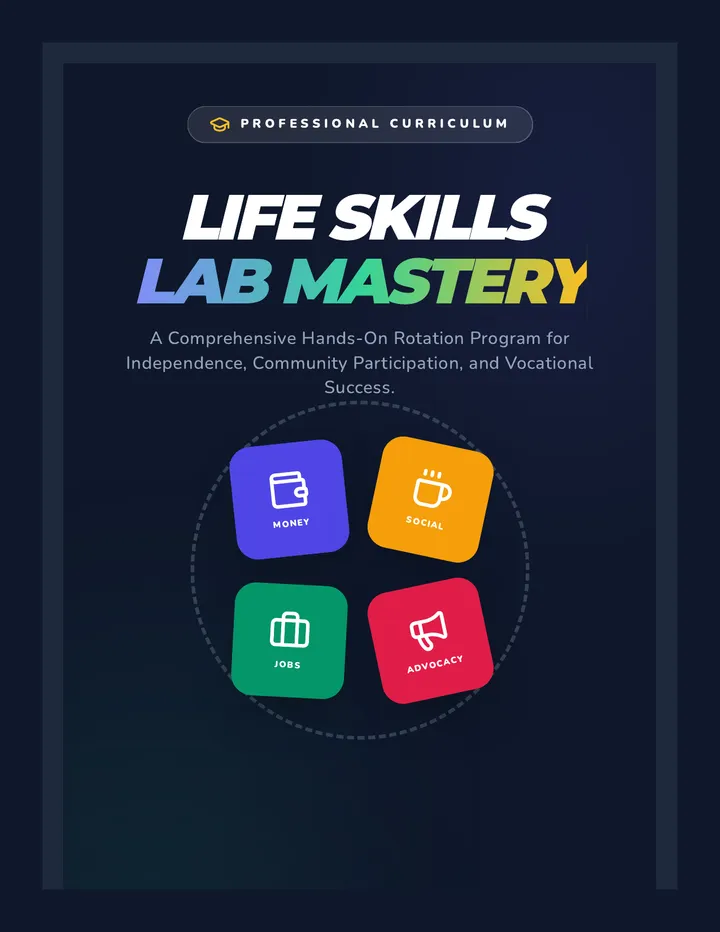
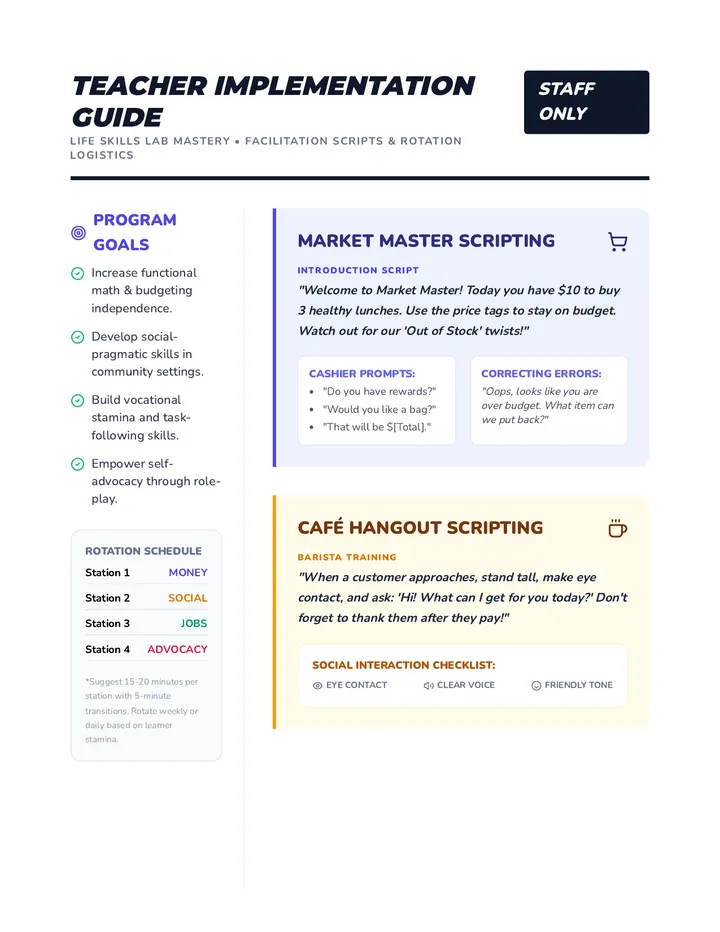
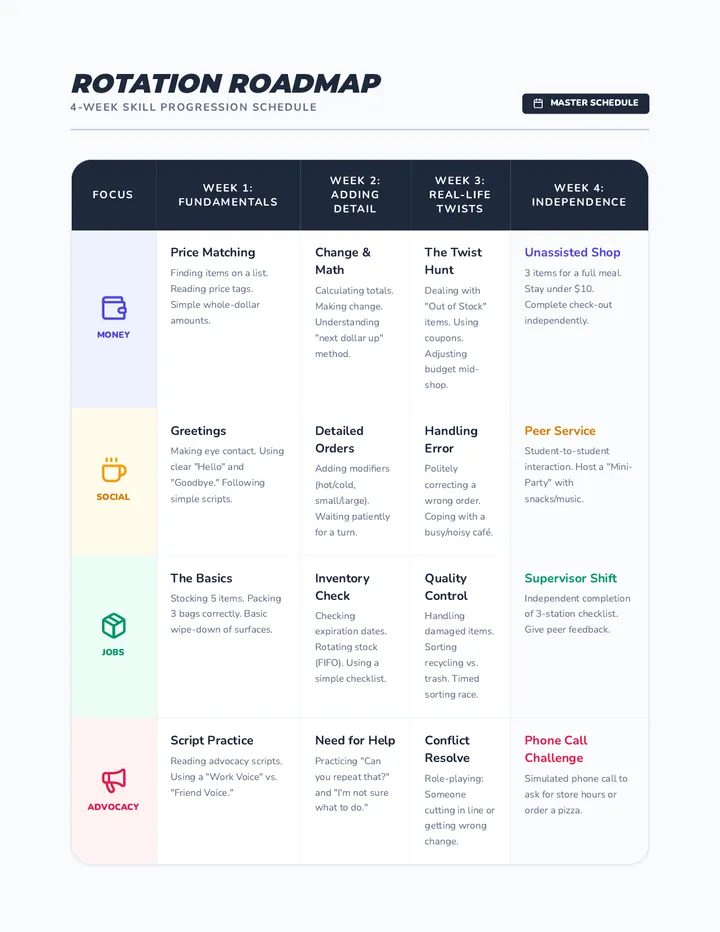
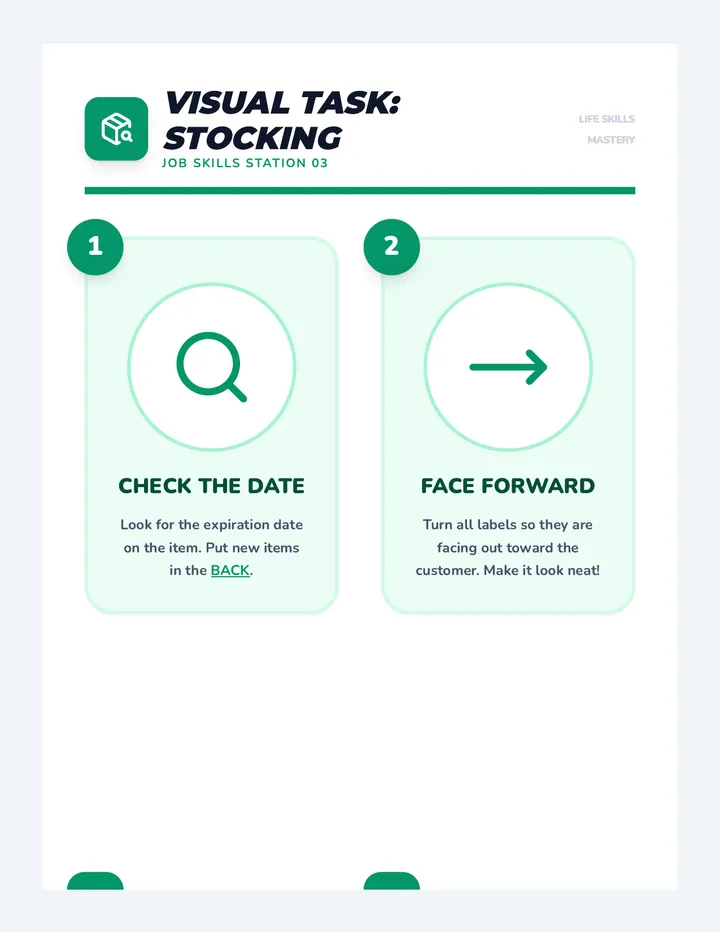
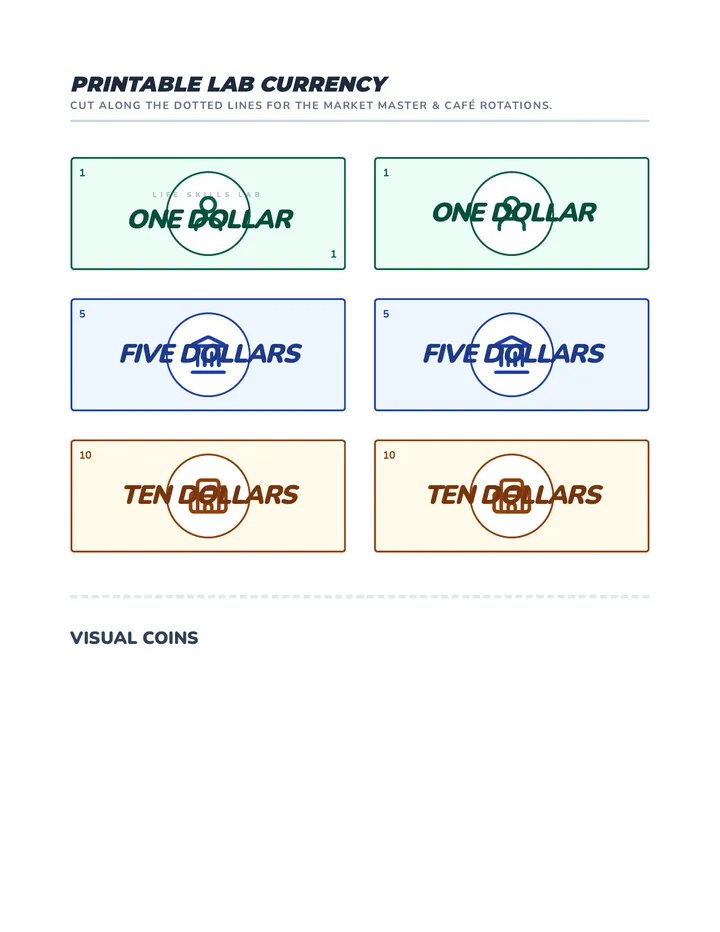
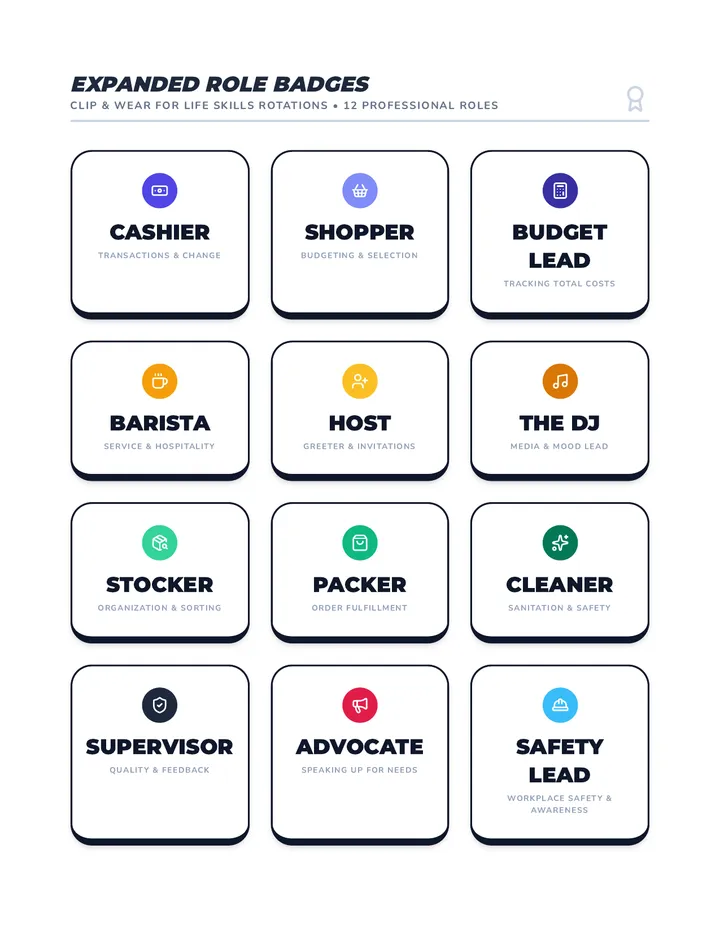
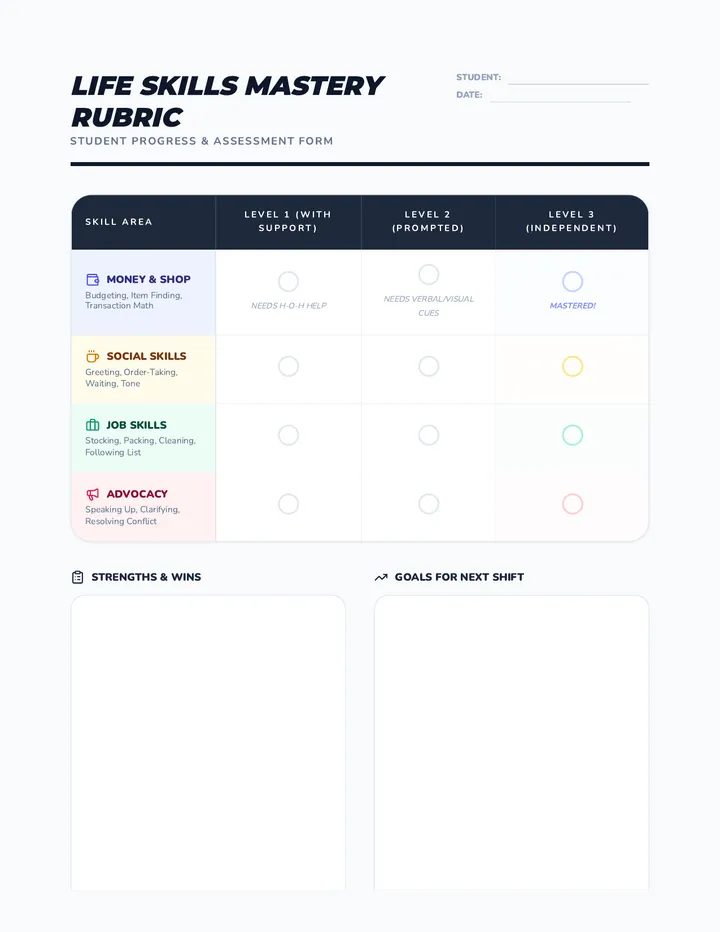
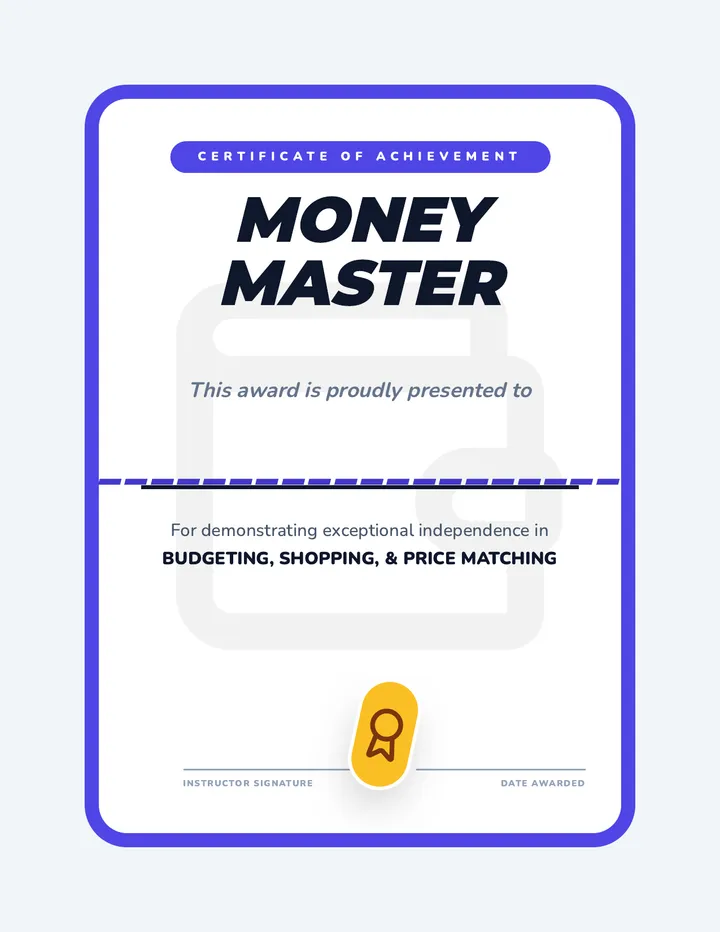
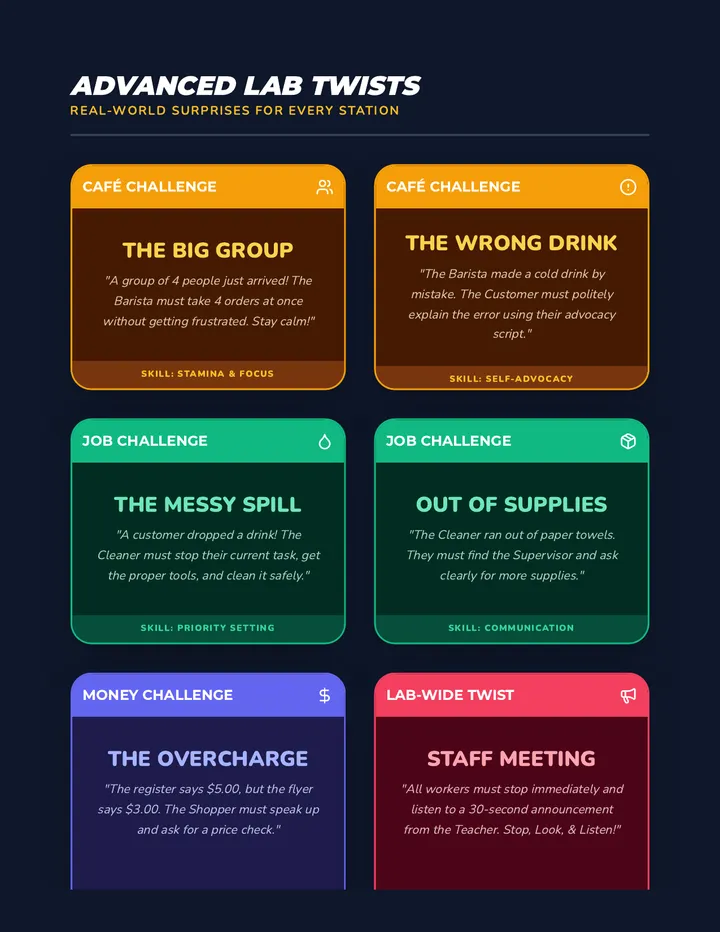
A comprehensive life skills rotation lesson covering budgeting, social interactions at a cafe, job skills (stocking/packing), and self-advocacy through role-play and game-based learning.
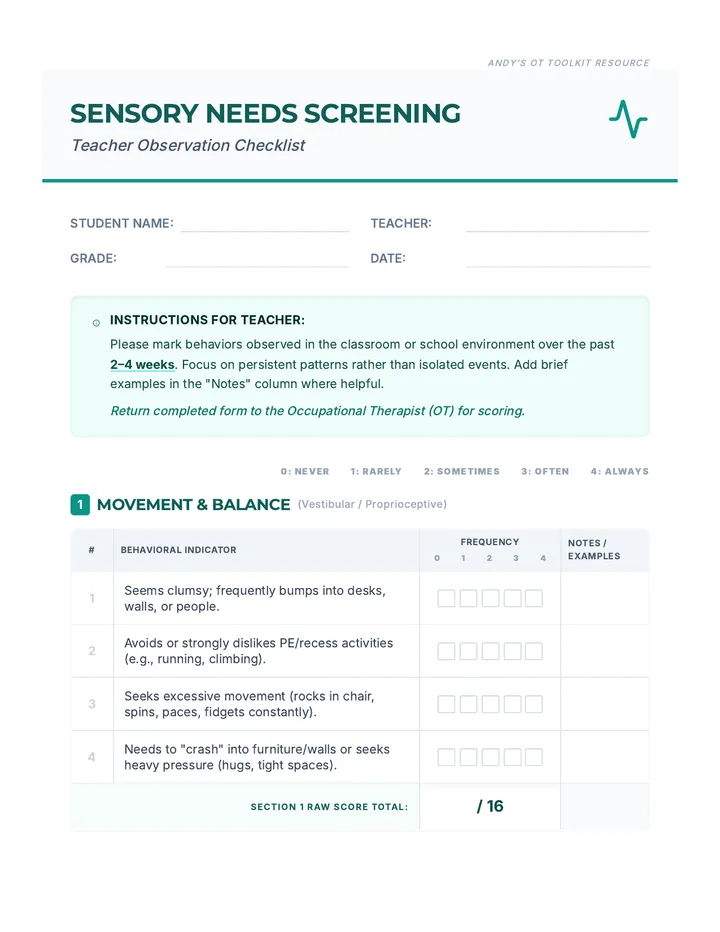
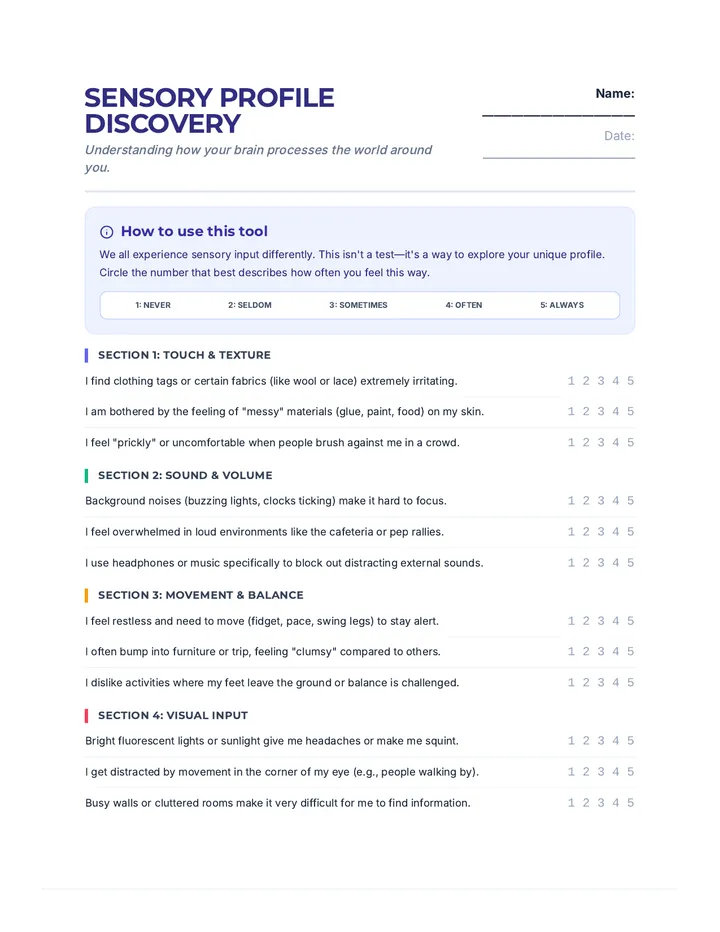
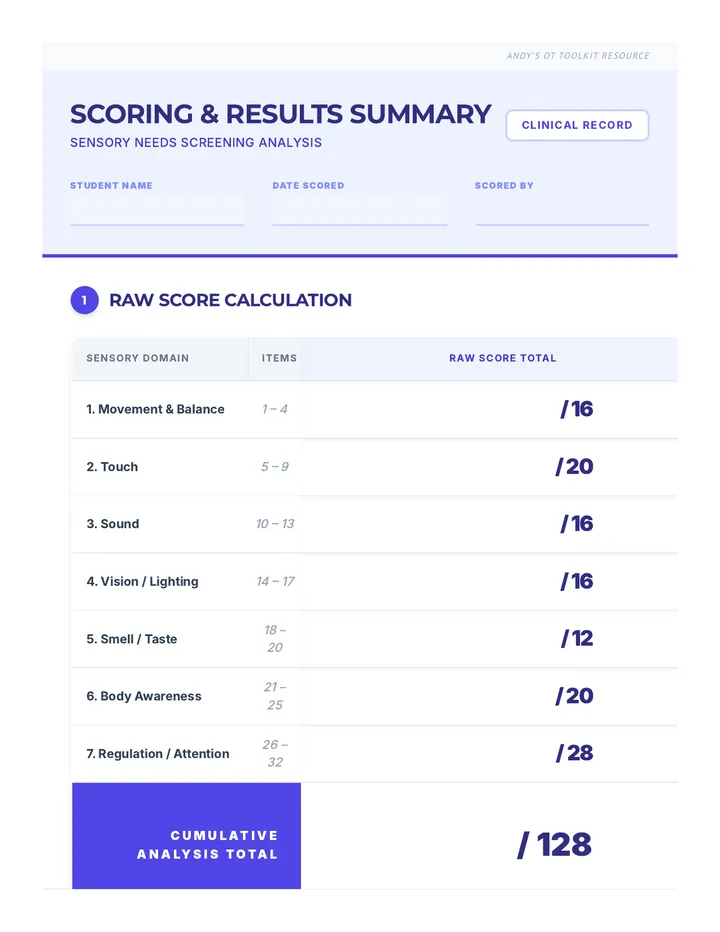
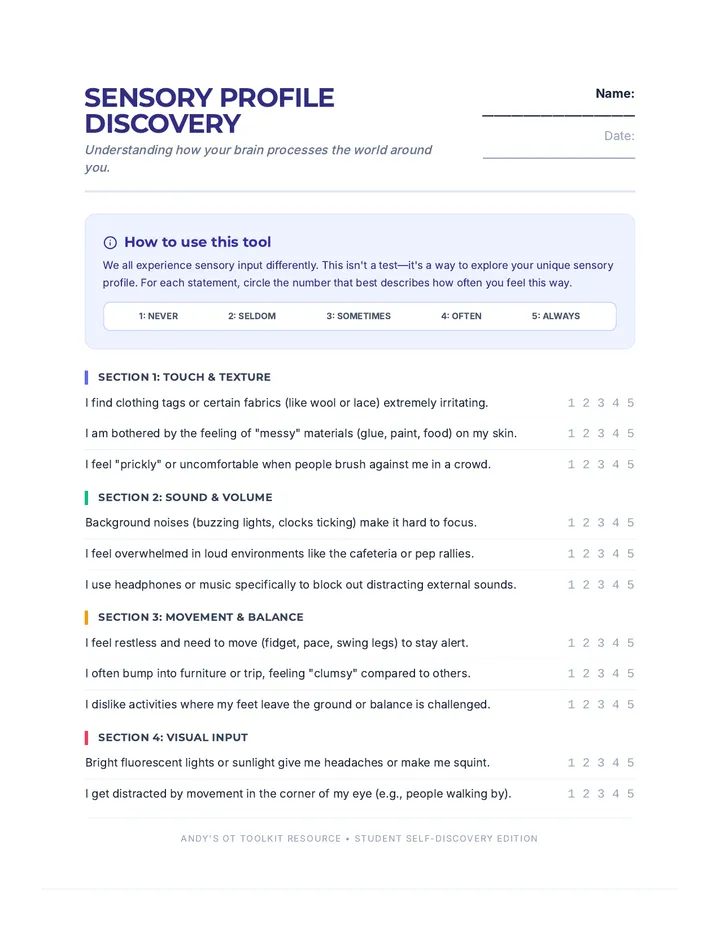
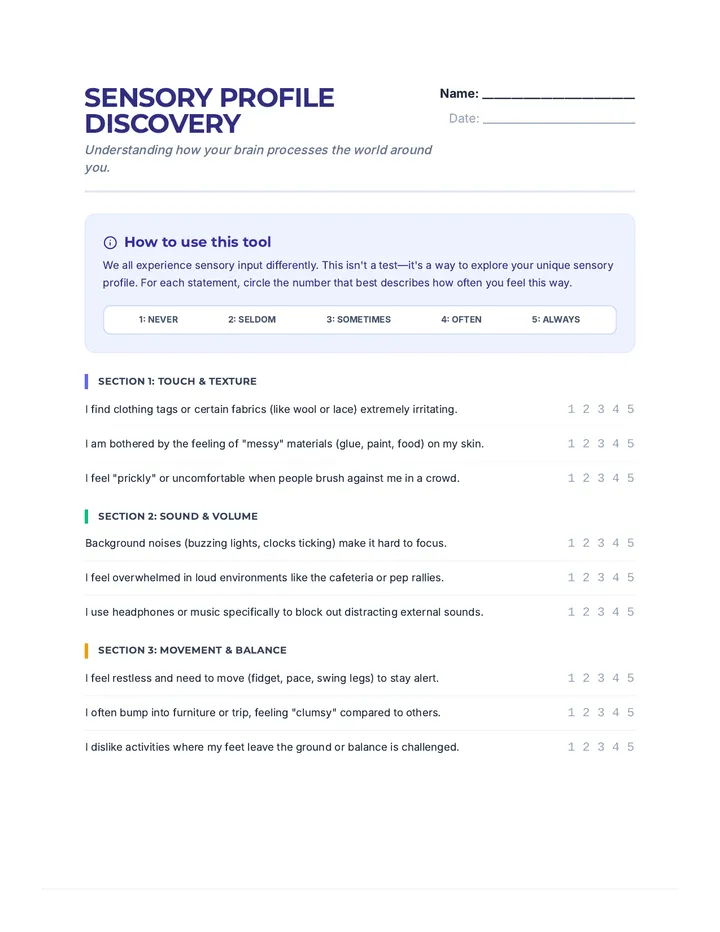
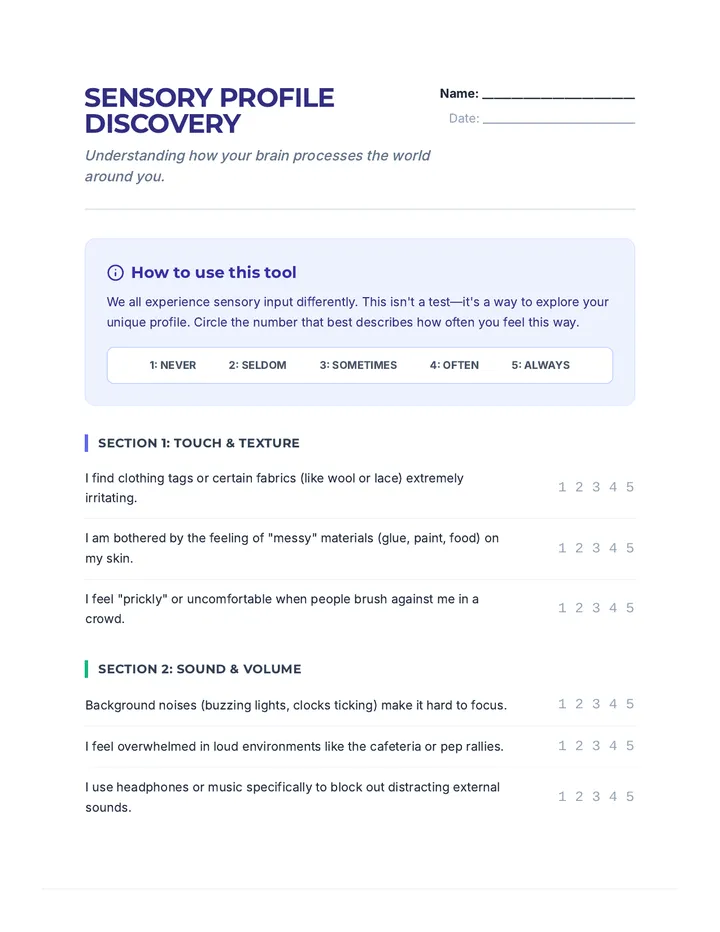
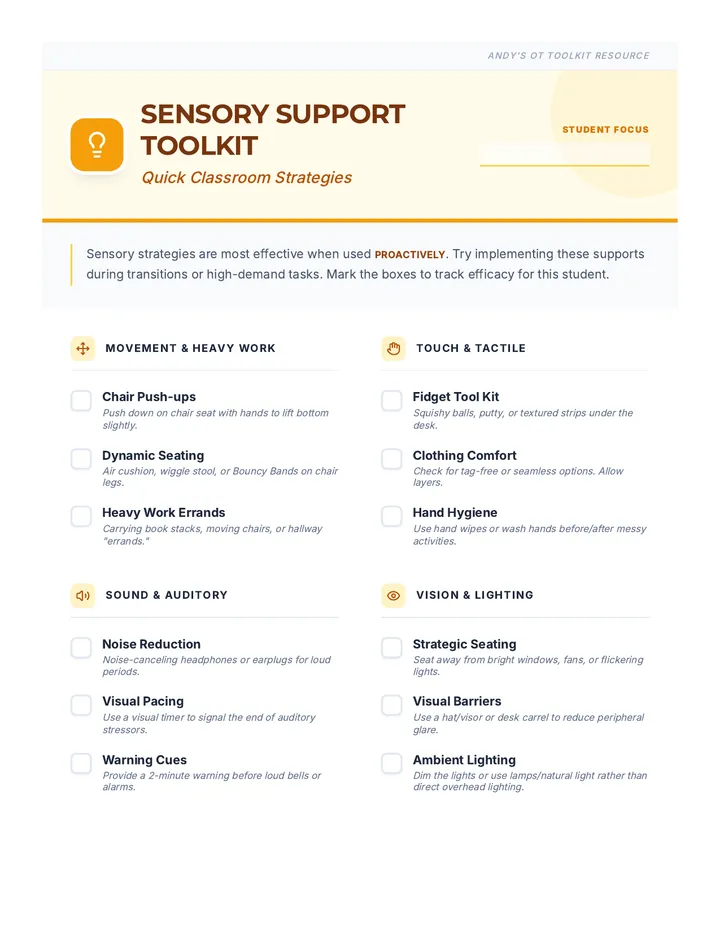
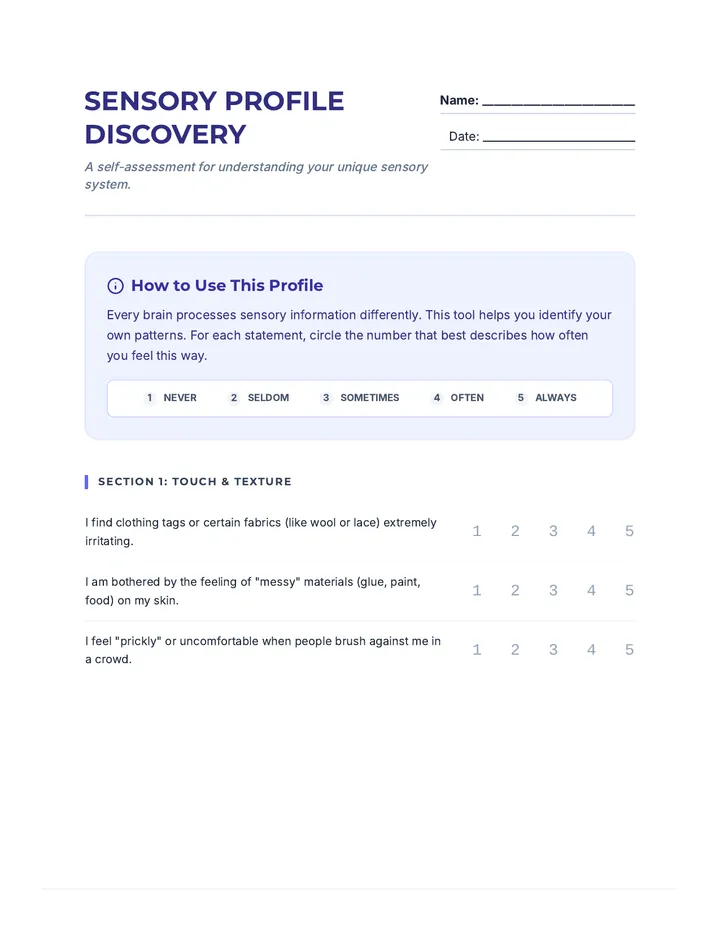
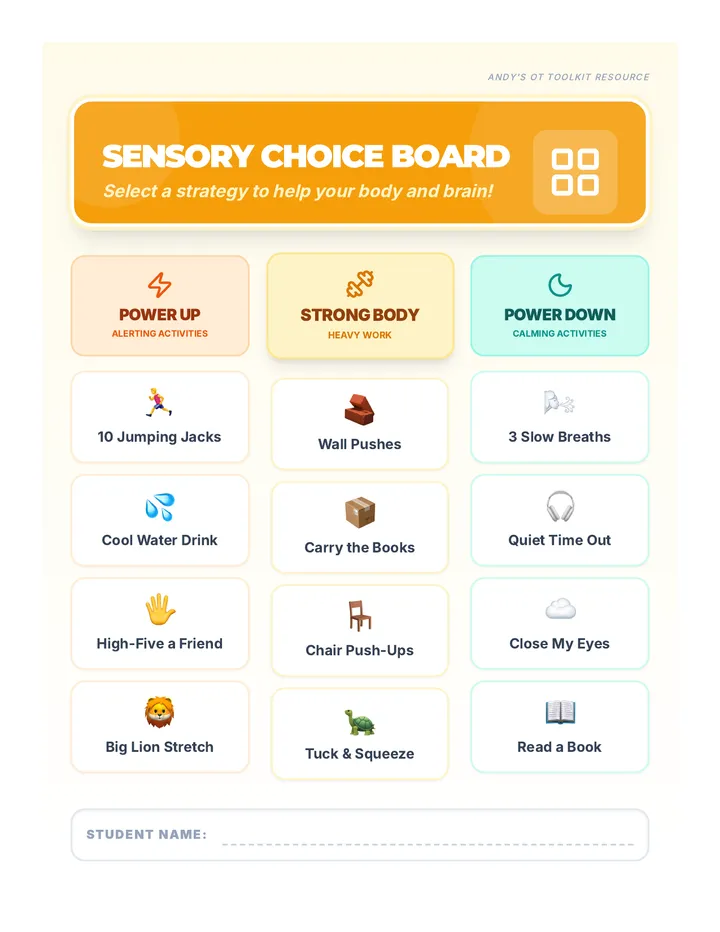
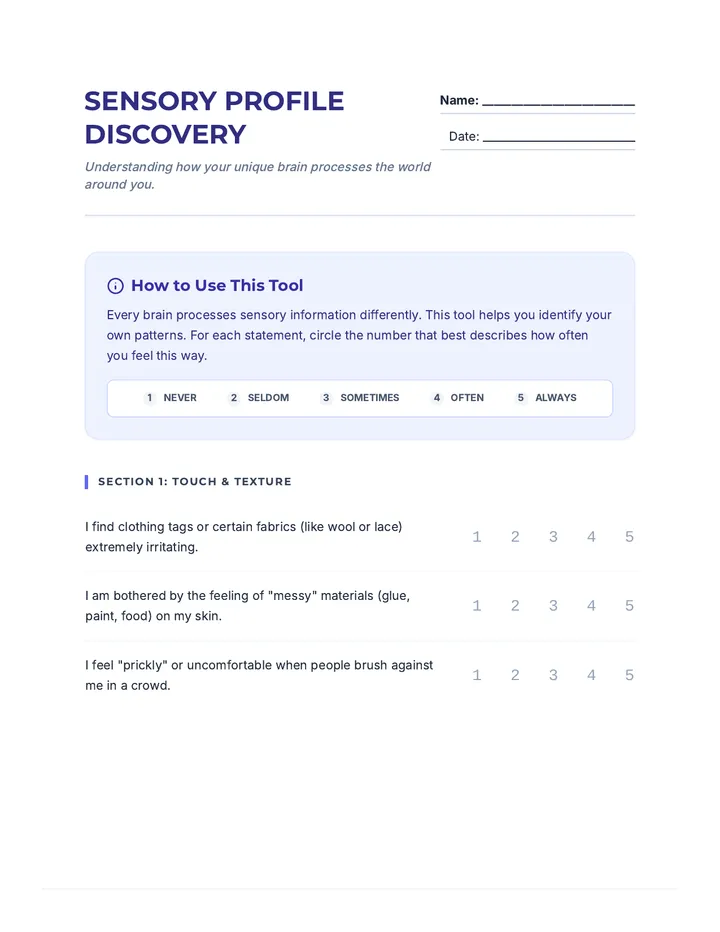
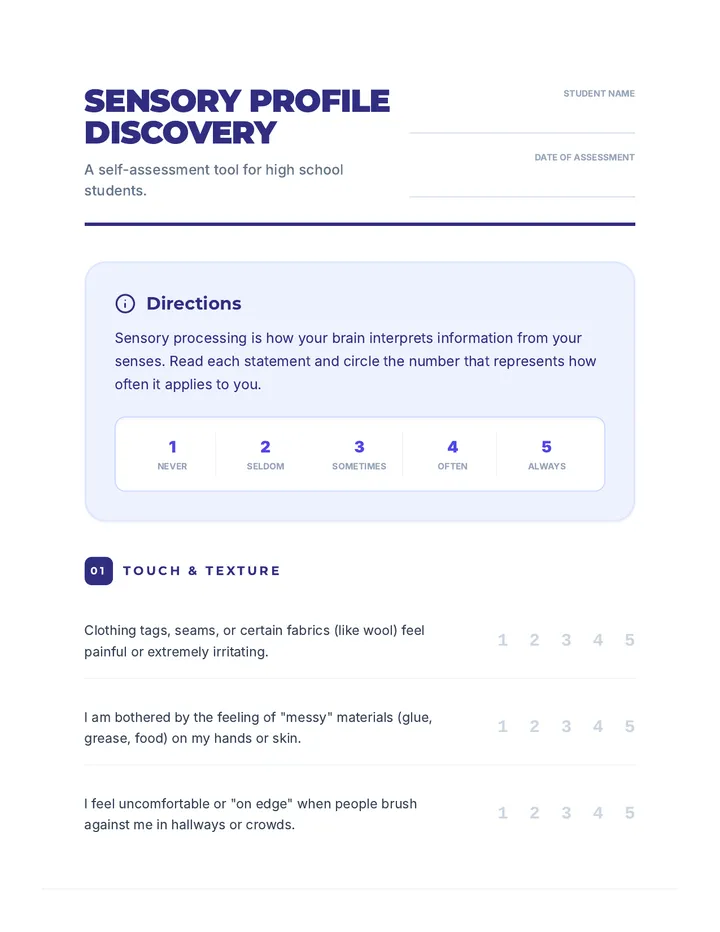
A comprehensive set of tools for teachers and occupational therapists to identify, score, and support students with sensory processing needs. Includes a screening checklist, a simplified scoring guide, and a classroom strategies handout.
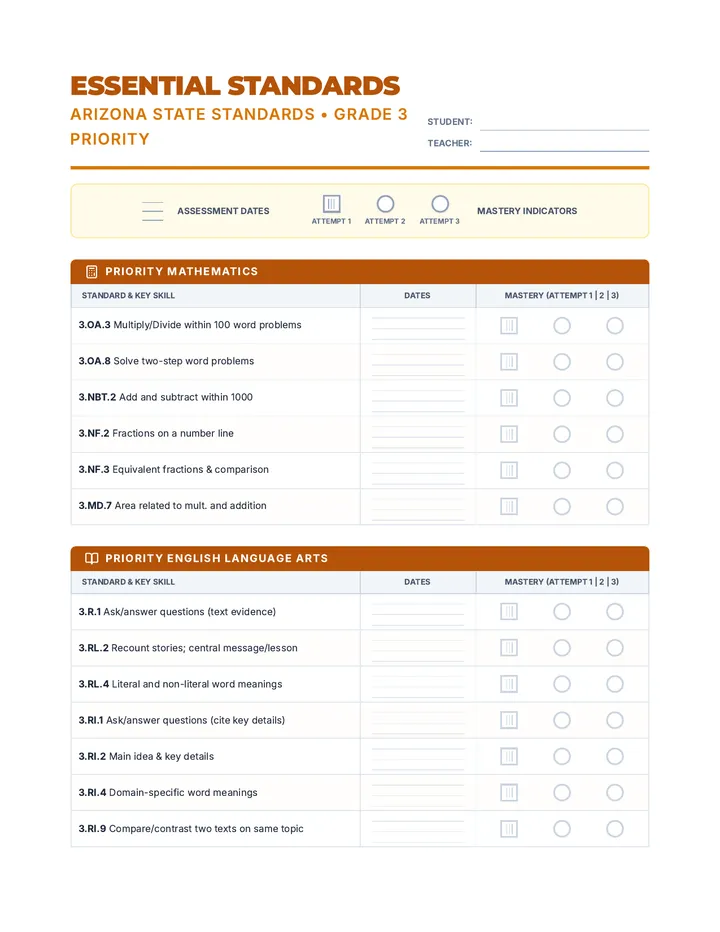
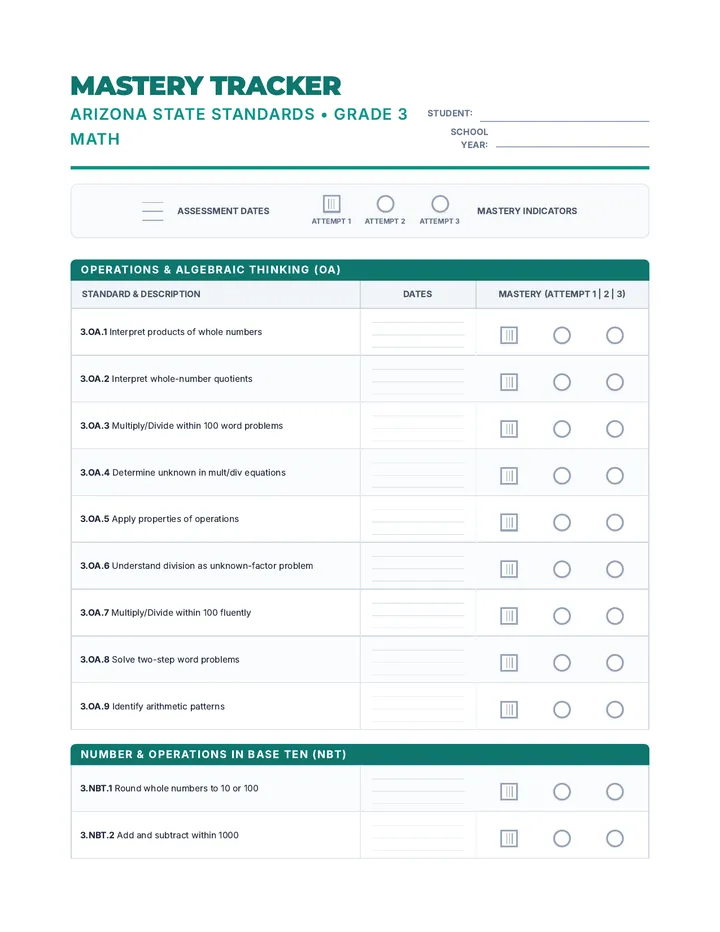
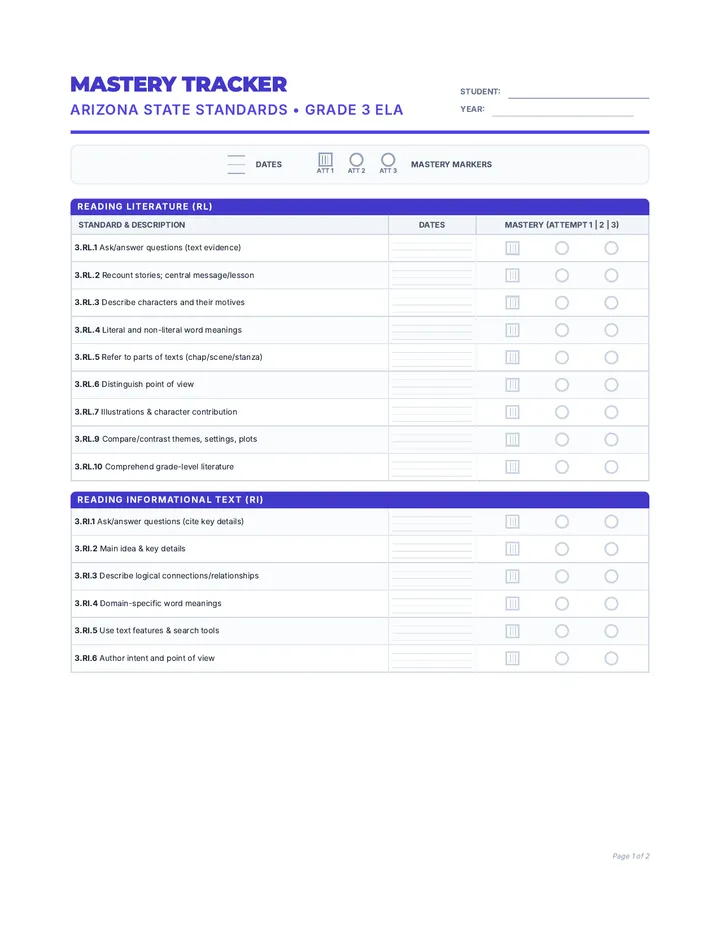
A collection of standards mastery tracking cards for Grade 3 Arizona students, covering Math and ELA with a consistent multi-attempt tracking system.
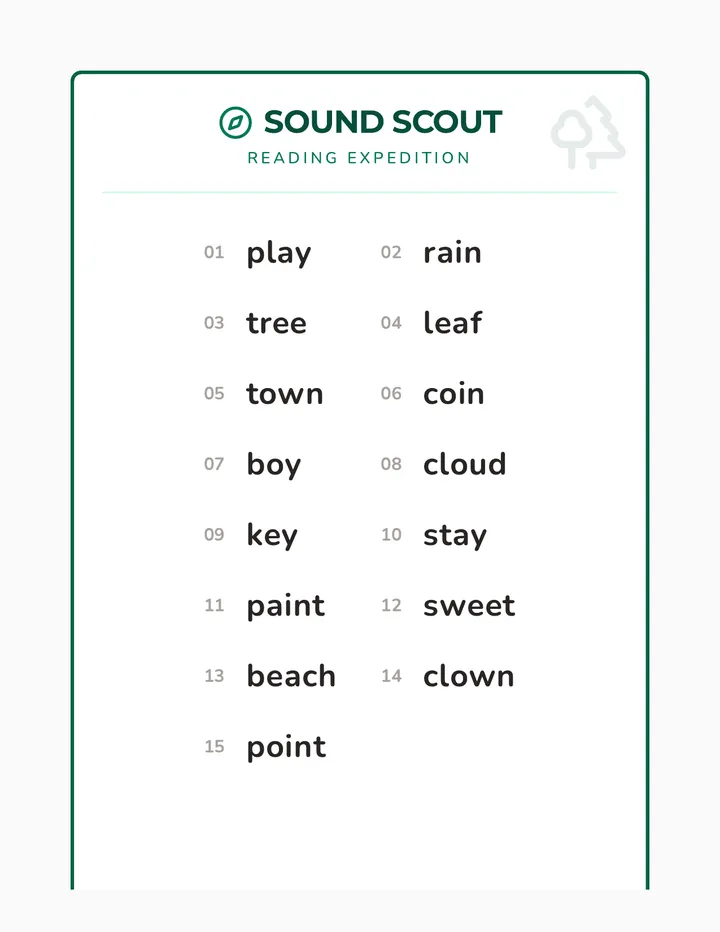
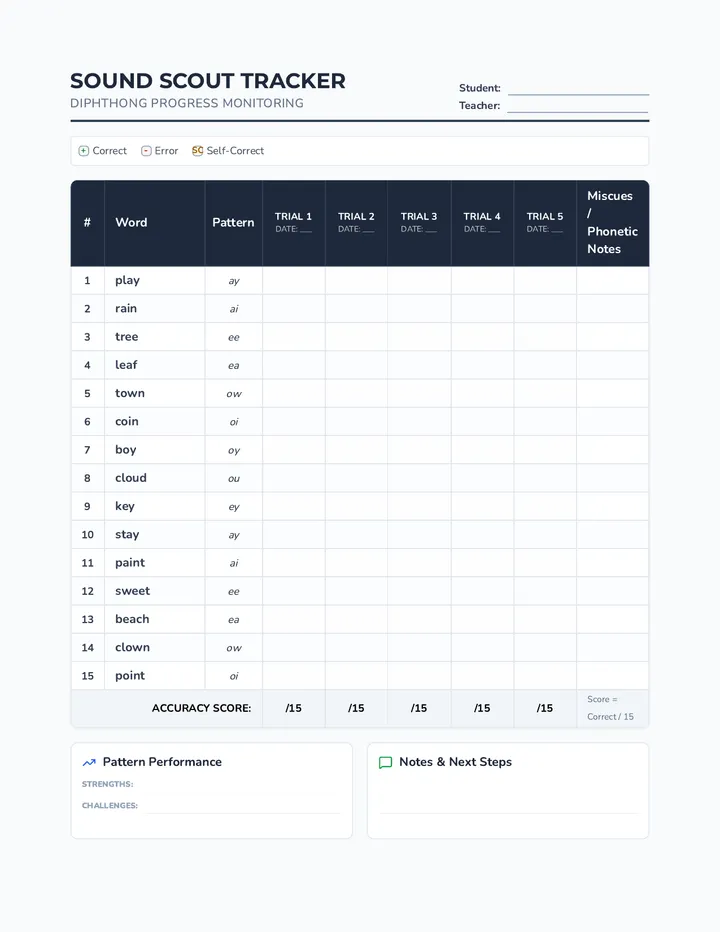
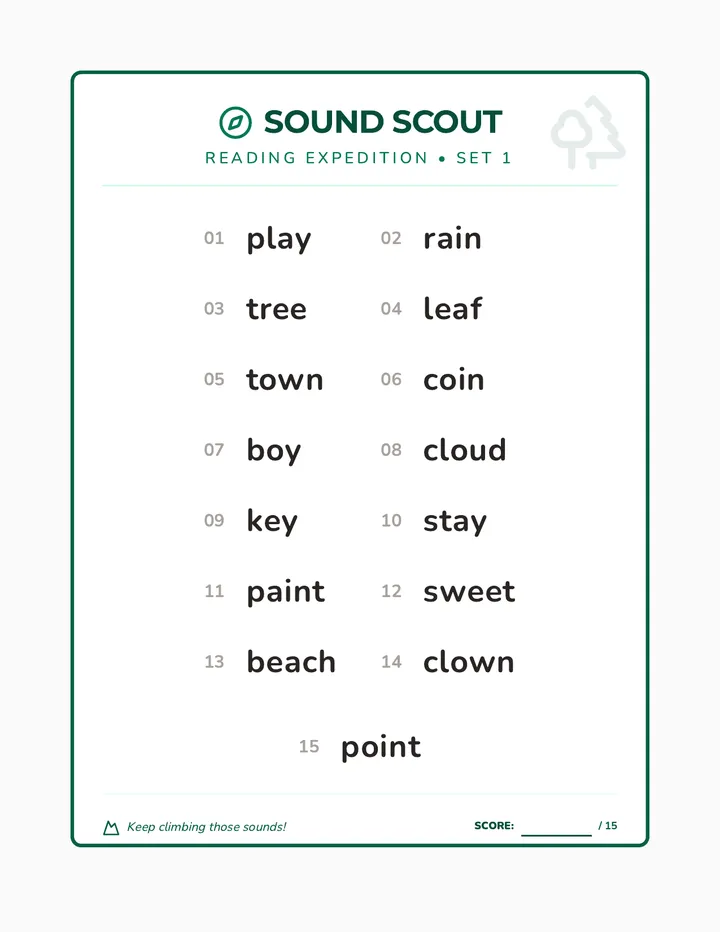
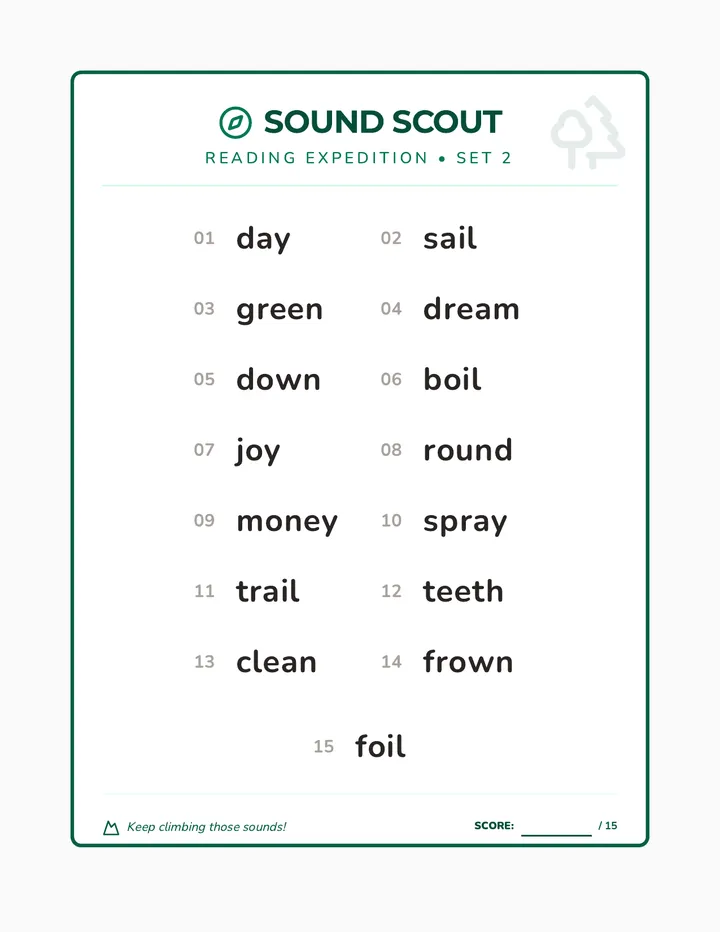
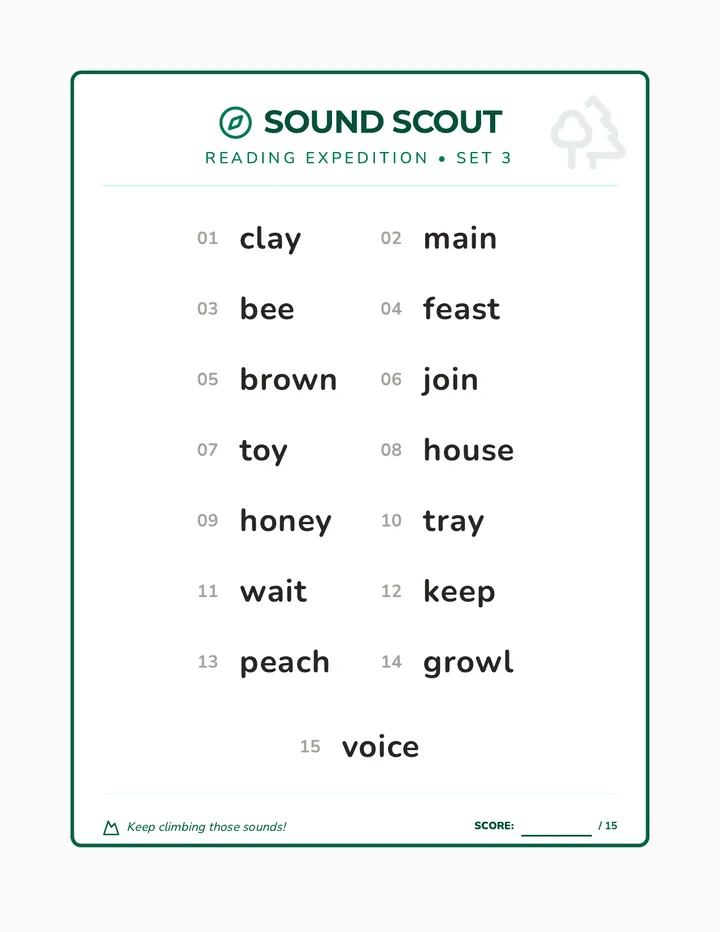
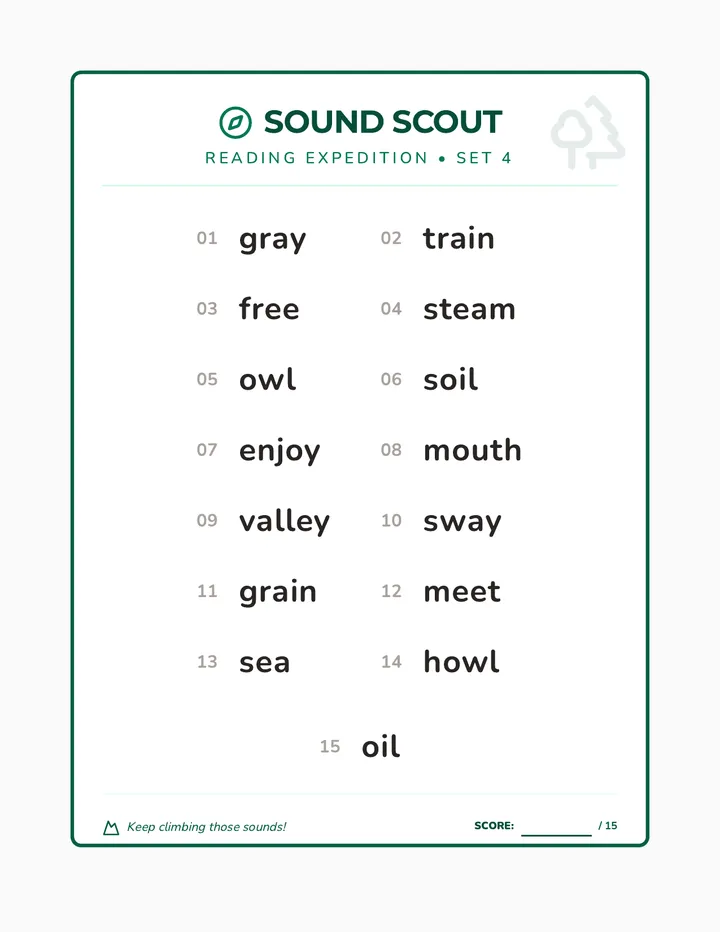
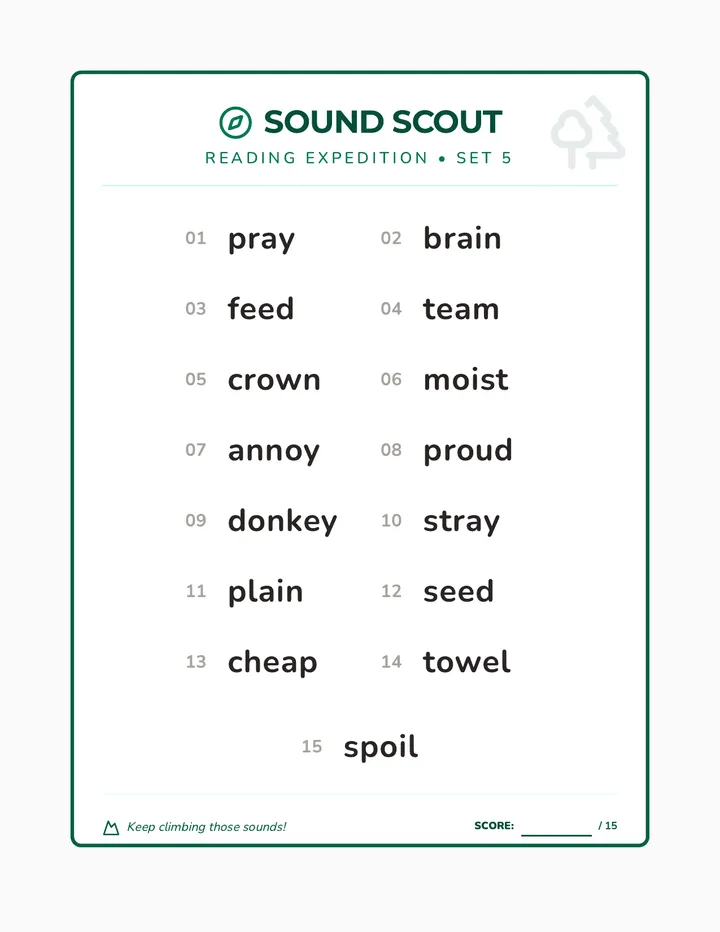
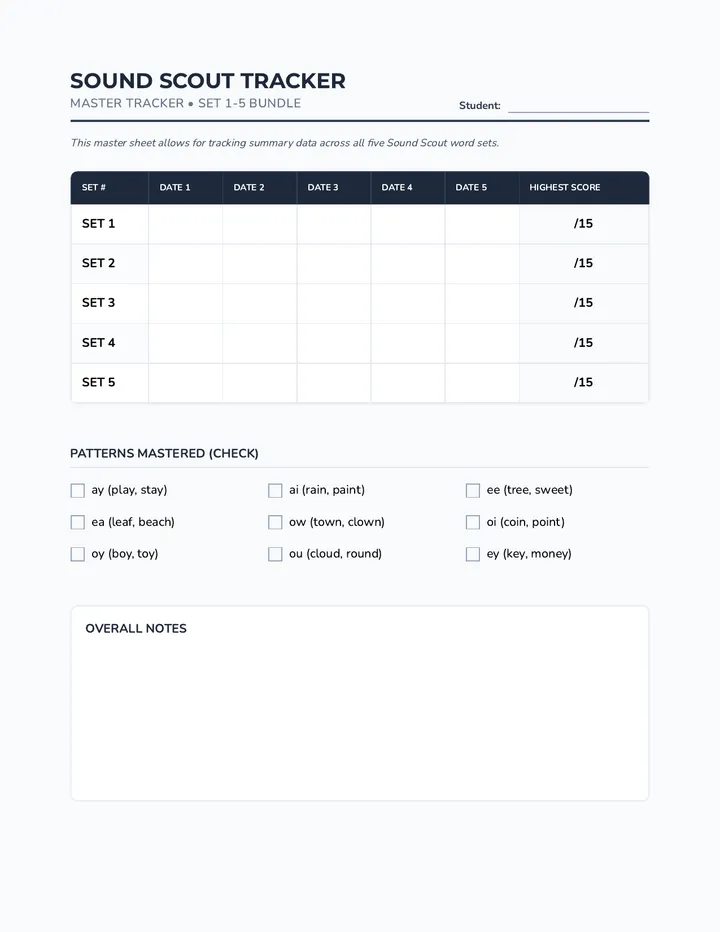
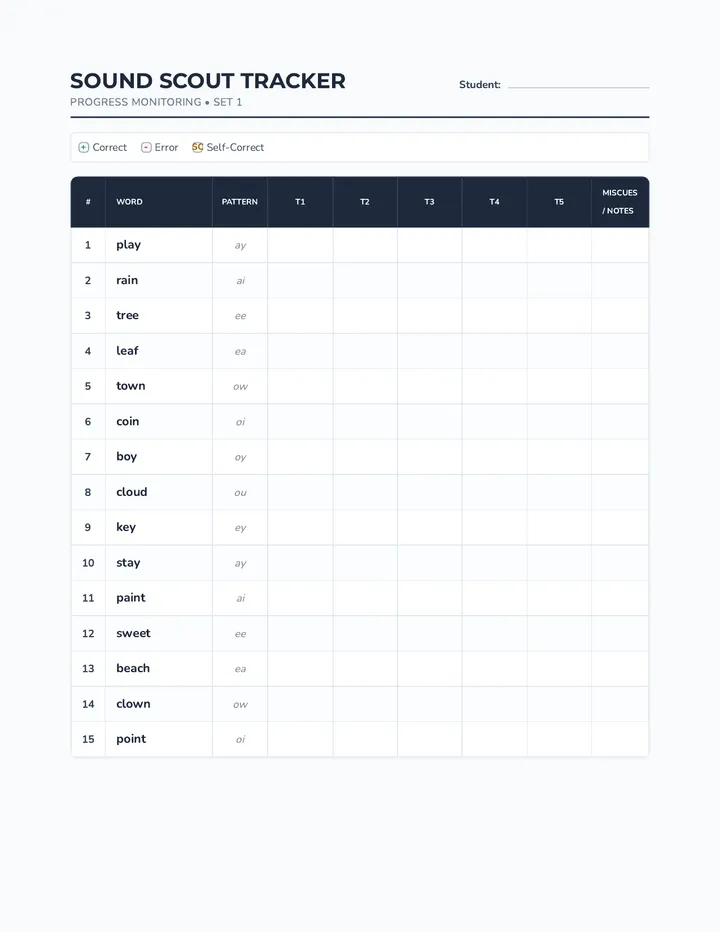
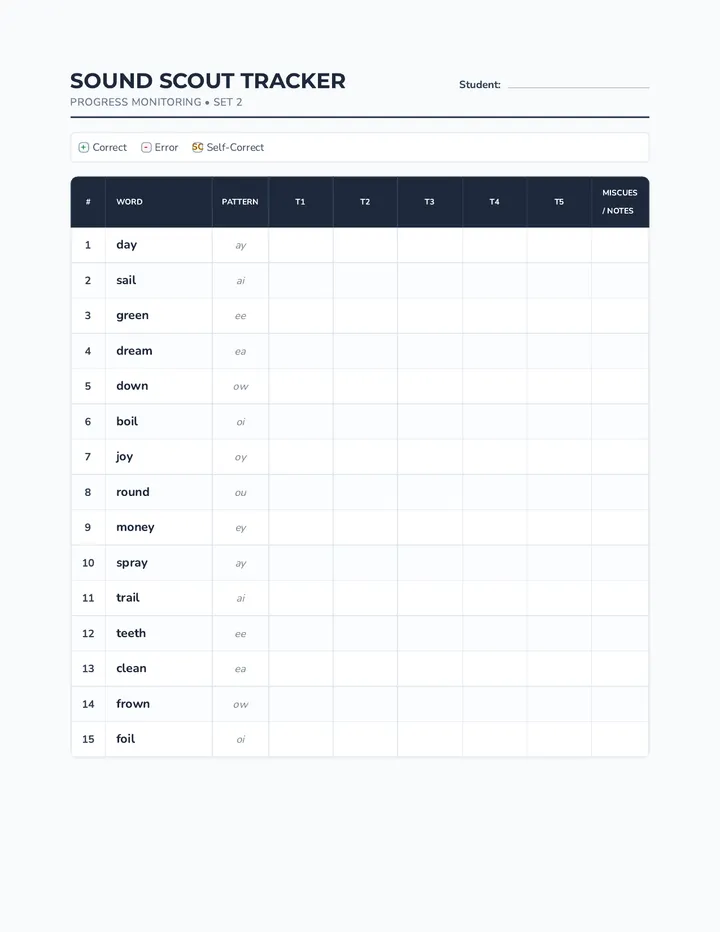
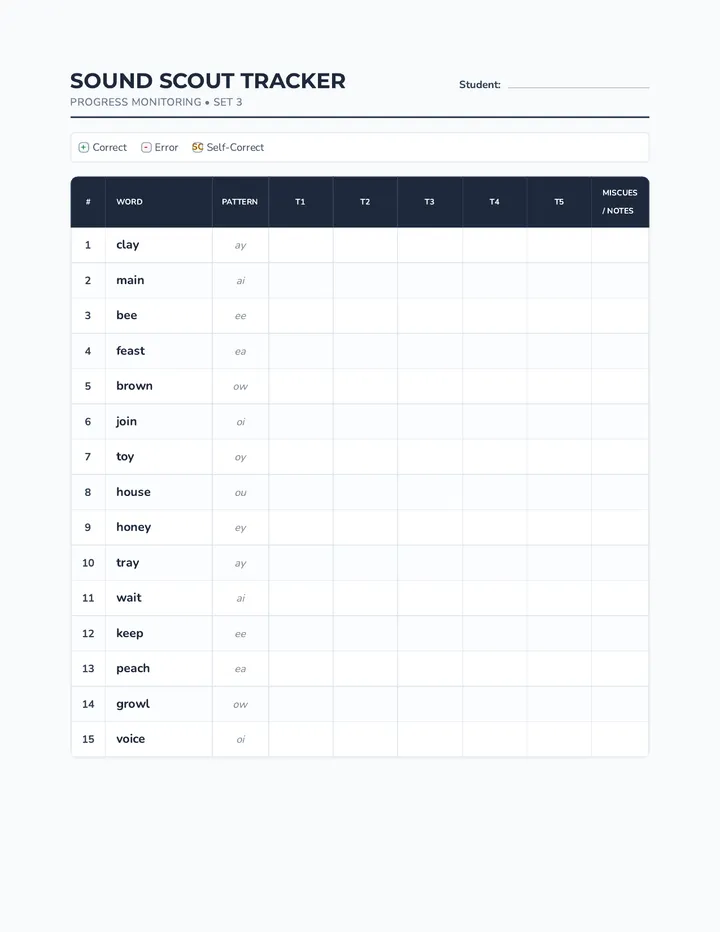
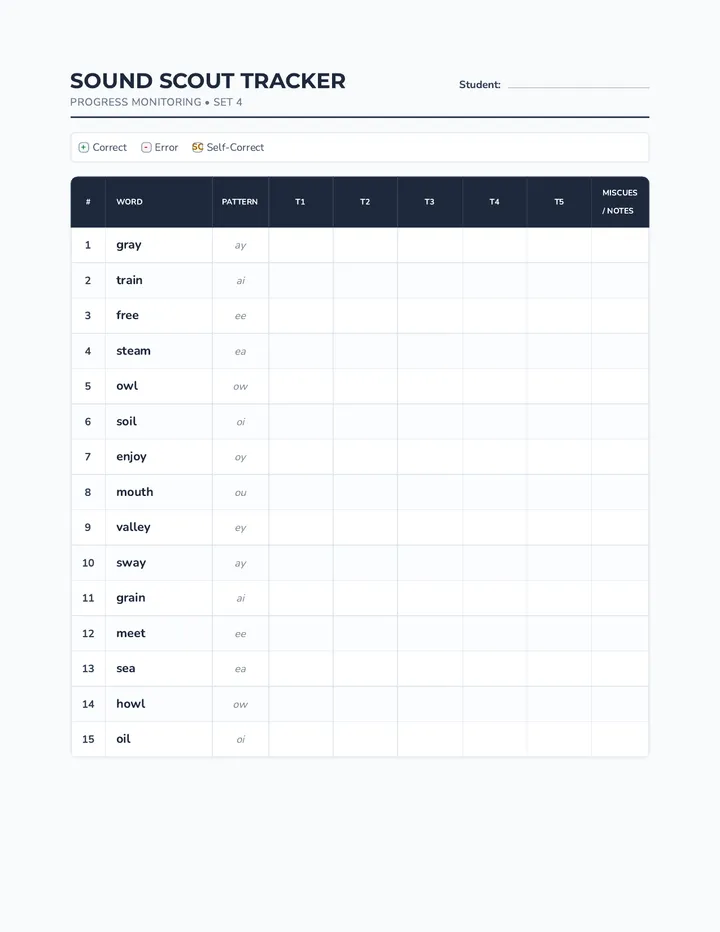
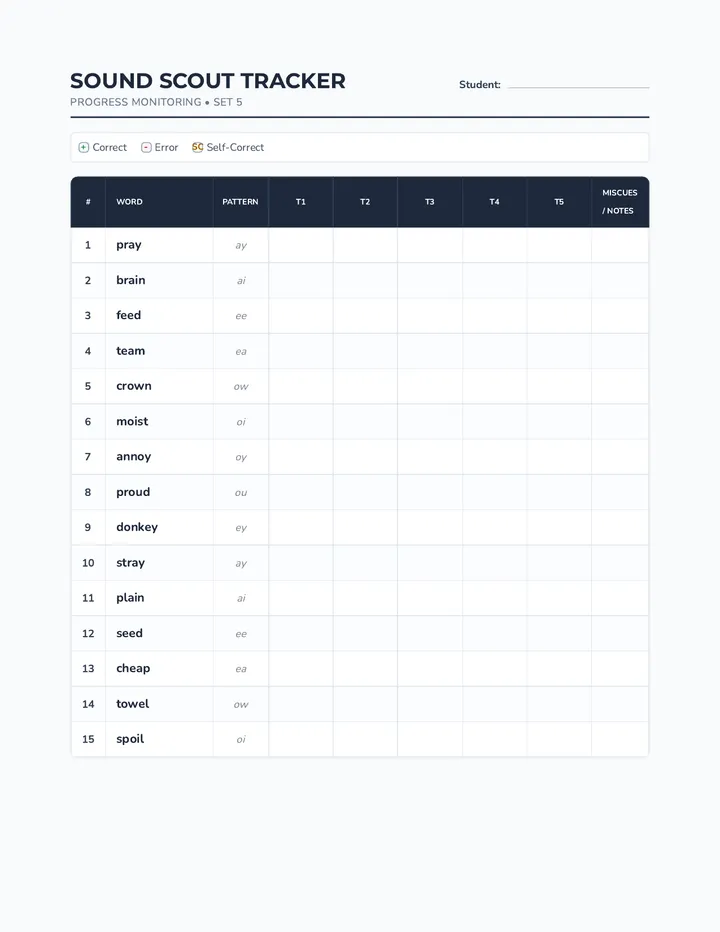
A comprehensive progress monitoring collection featuring 5 distinct word sets (75 words total) for tracking mastery of vowel teams and diphthongs. Each set includes a student reading list and a multi-trial teacher tracking sheet.
A lesson designed for small group settings to practice 'brave talking' with peers using structured activities and gamified prompts.
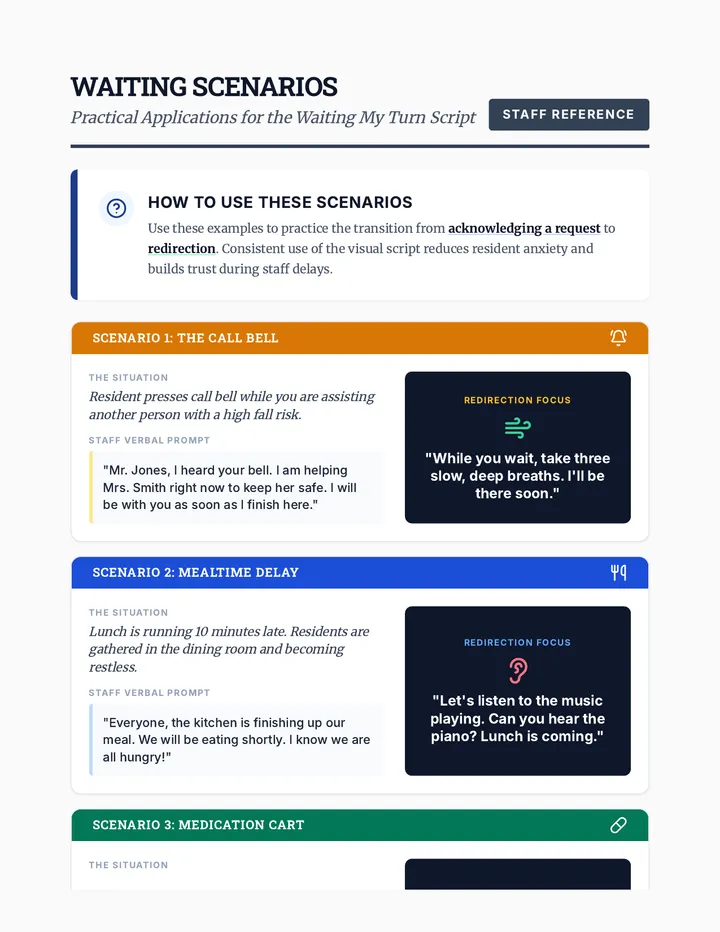
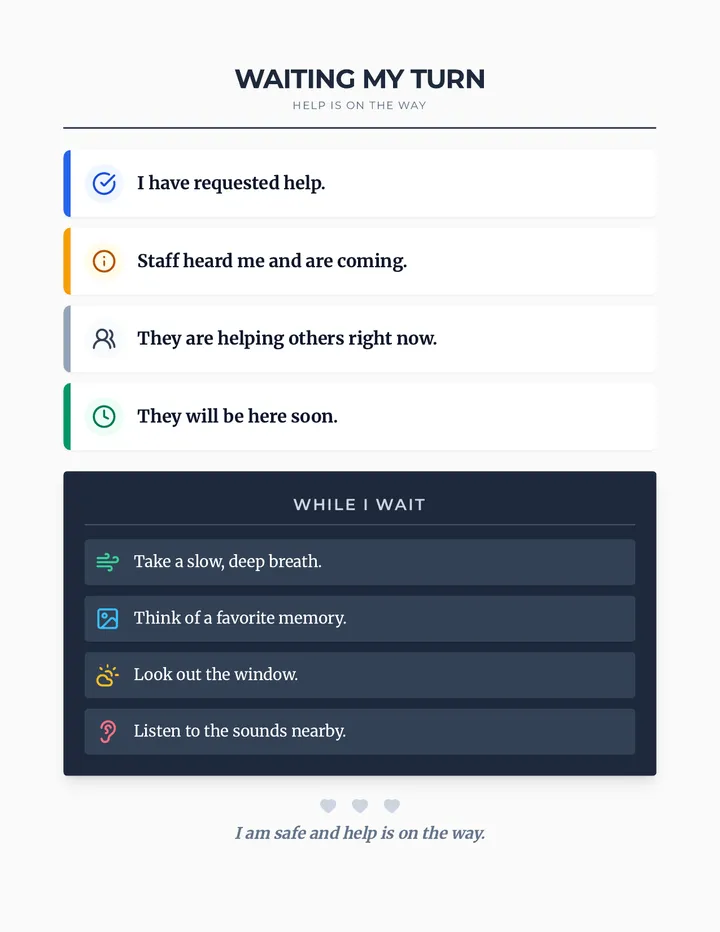
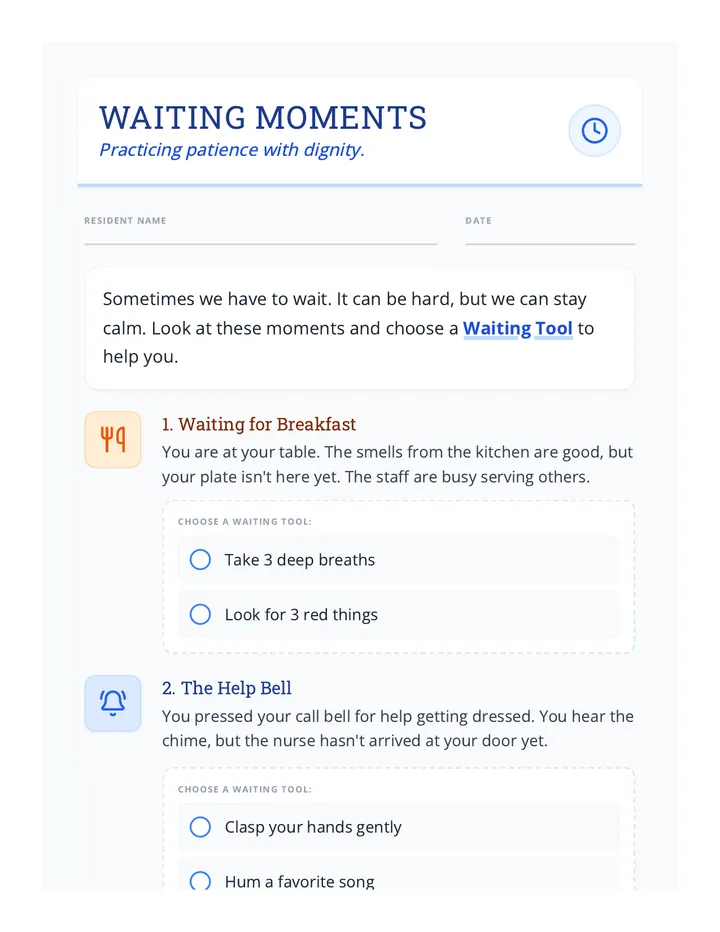
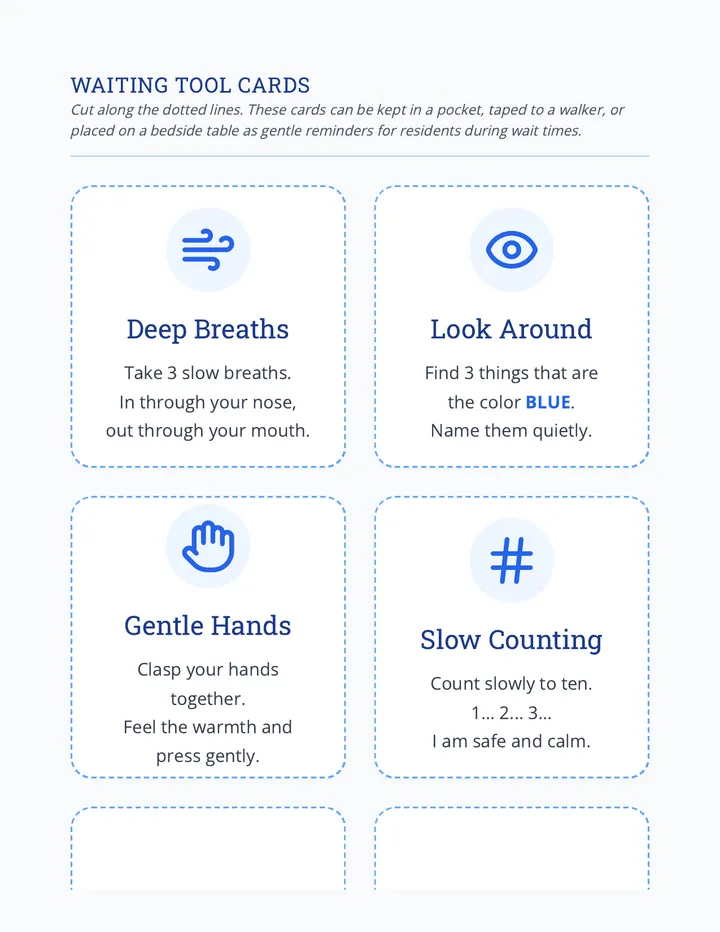
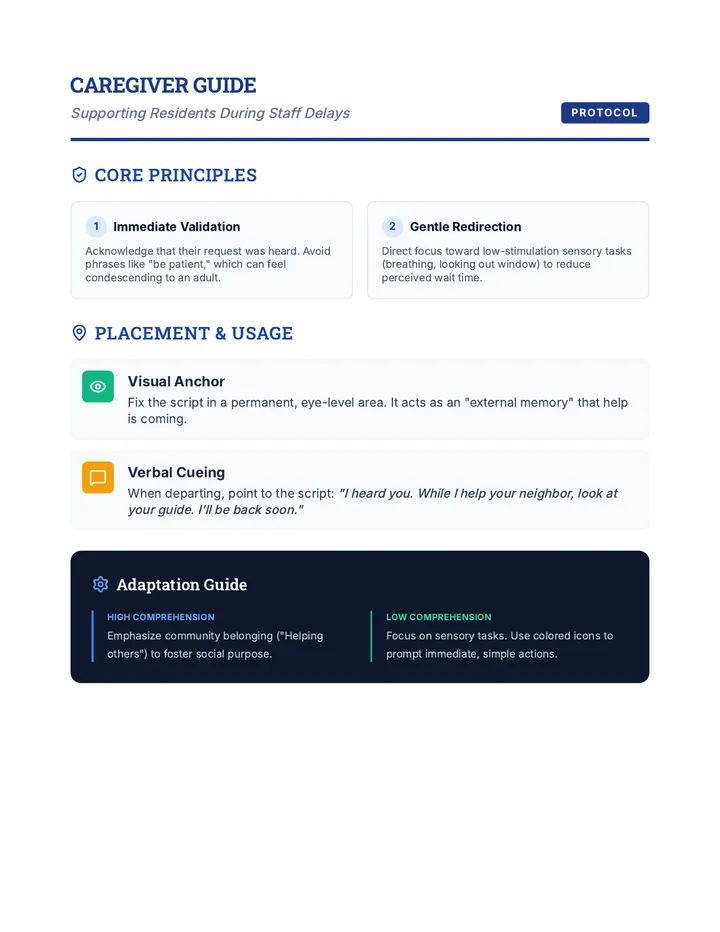
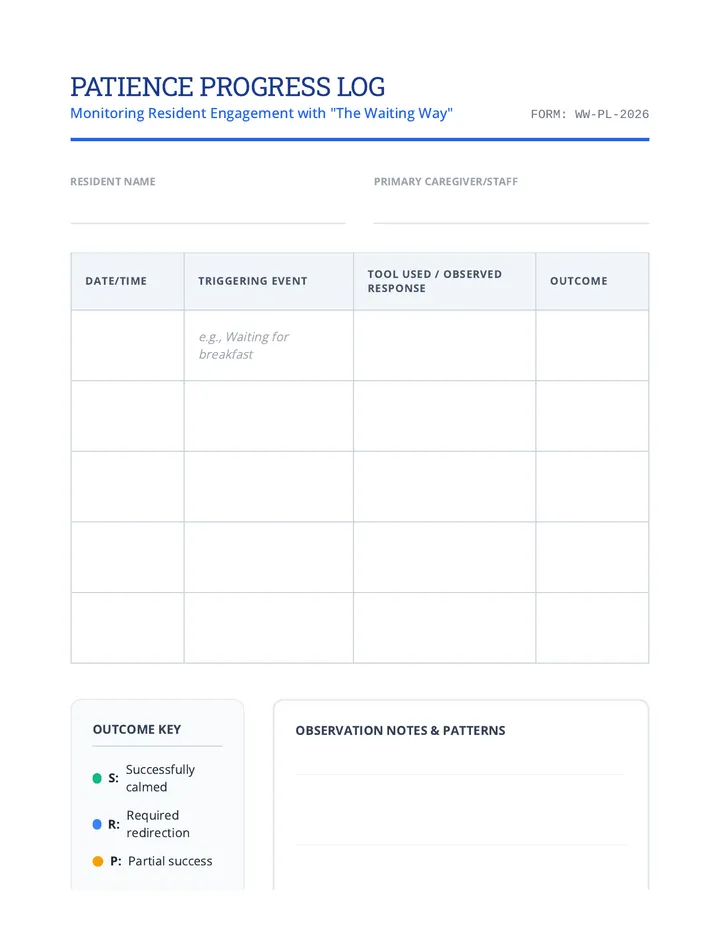
A lesson designed to support adults with cognitive decline in nursing home settings, focusing on the social and emotional skills needed to wait for staff assistance patiently.