A simplified student self-assessment checklist for 7th-grade special education students, based on a writing rubric. It features clear 'Met' and 'Not Yet' categories for central idea, organization, point of view, and tone.
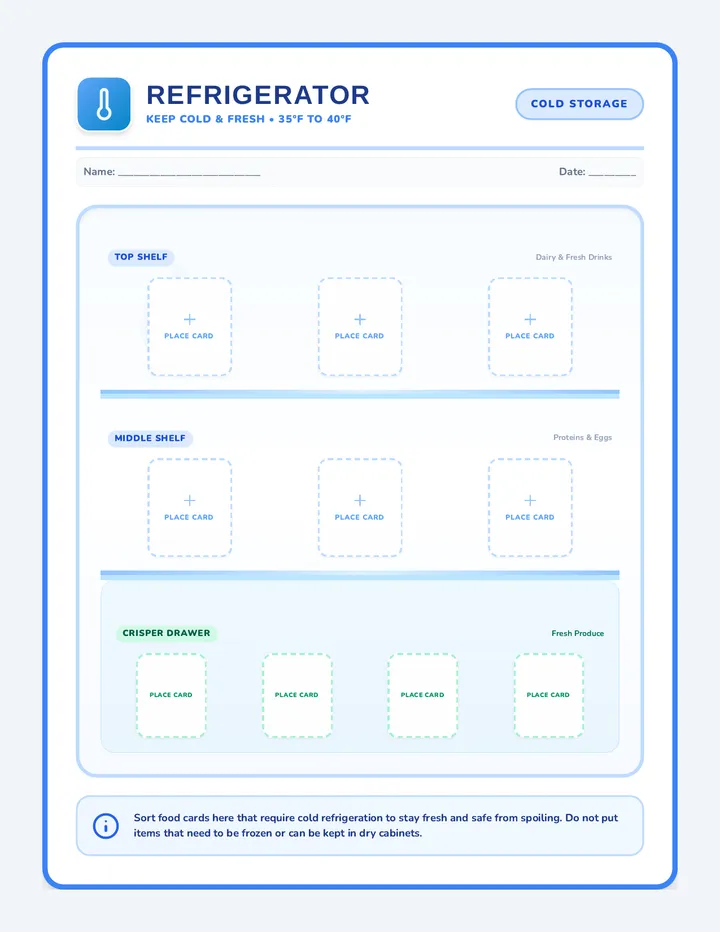
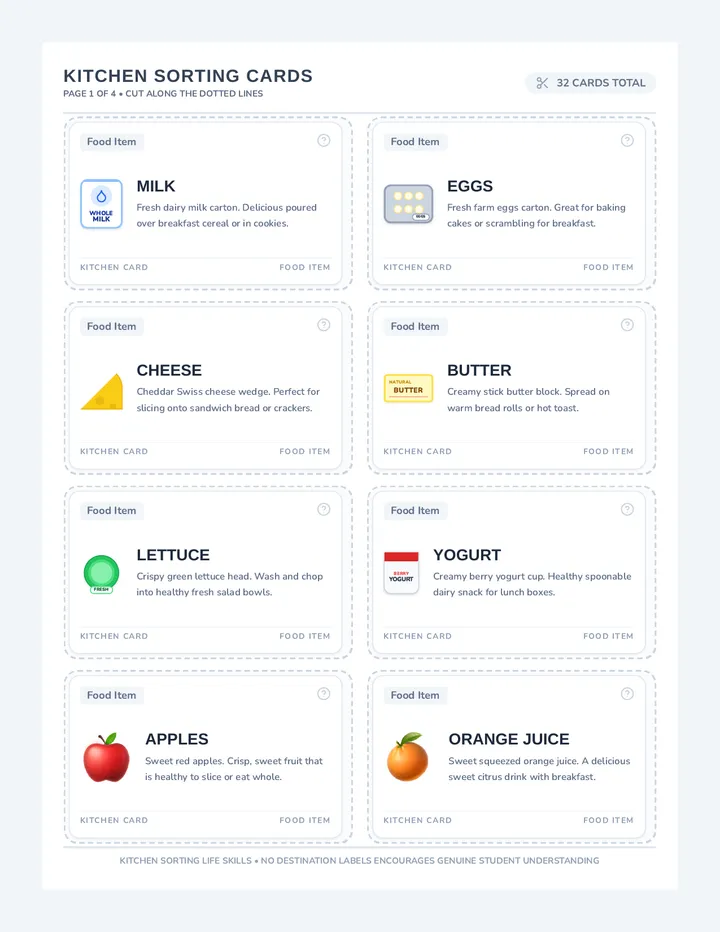
A progressive life-skills curriculum designed to teach students how to identify, categorize, and sort grocery items. Starts with kitchen storage sorting (fridge, freezer, pantry) and advances to sorting by major retail grocery store departments.
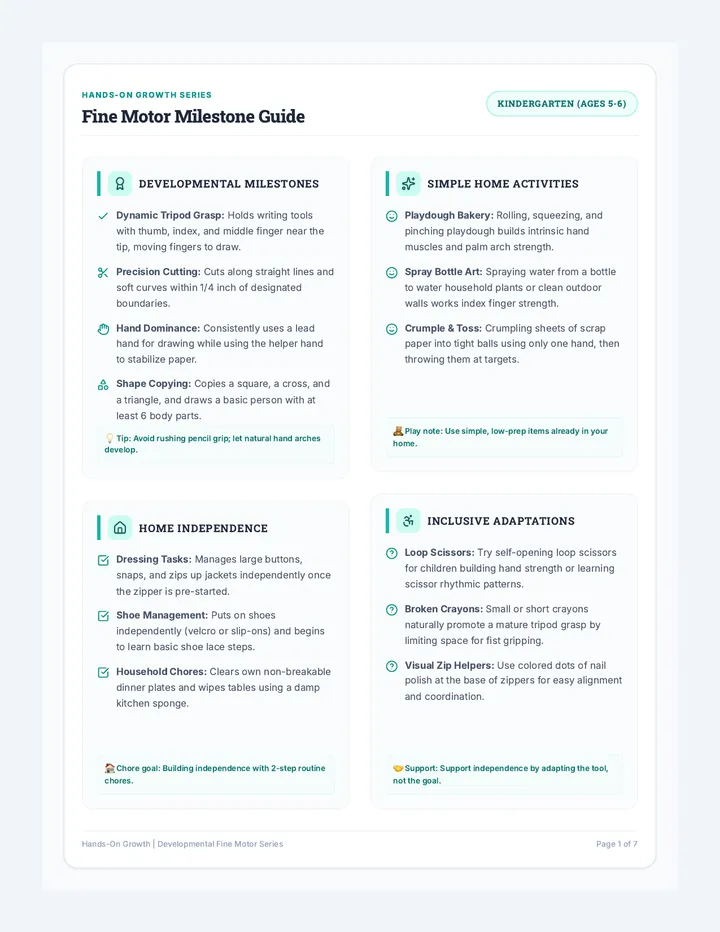
A comprehensive guide for parents outlining fine motor milestones, home self-care/chore expectations, and simple strengthening activities for kindergarten through sixth grade.
A beautifully designed 7-page parent handbook detailing developmental fine motor milestones, home self-care/chore independence guidelines, simple strengthening activities, and accommodations for diverse needs from Kindergarten to 6th Grade, with color fixes and updated 4th-grade printing goals.
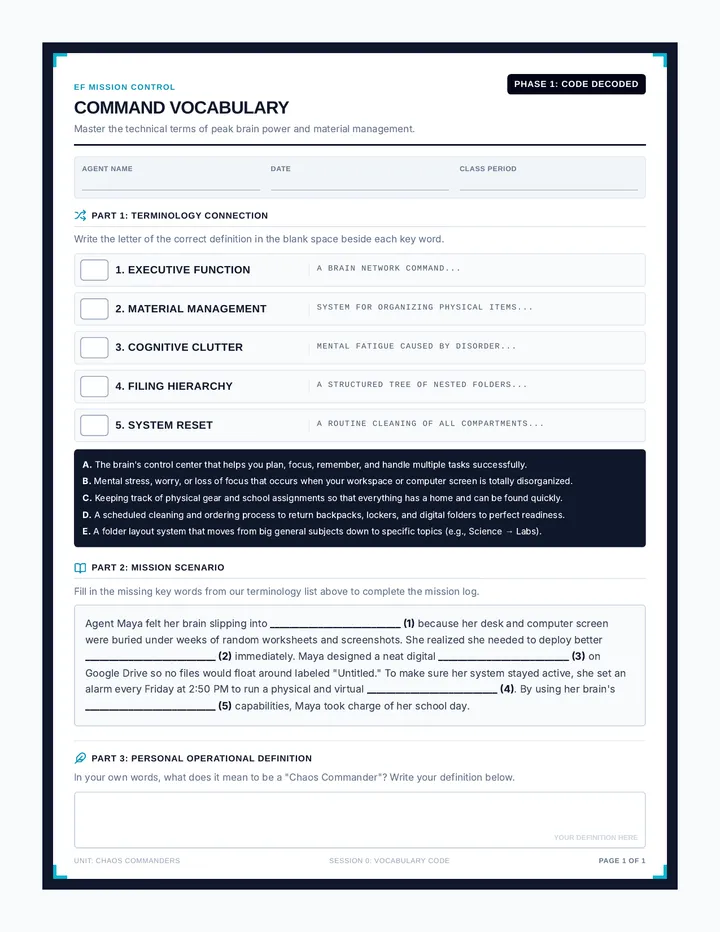
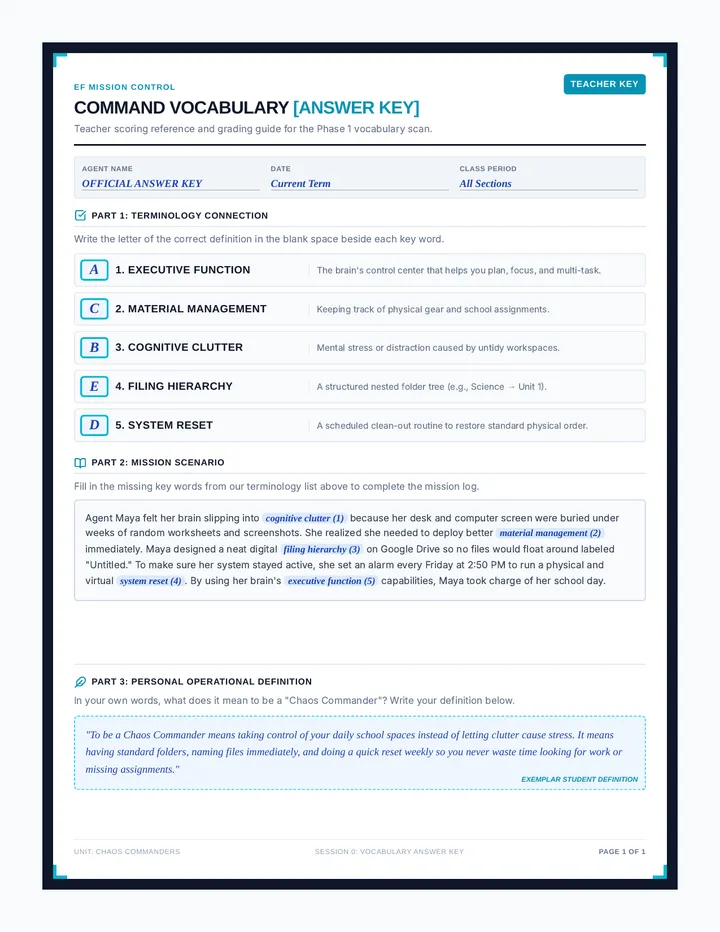
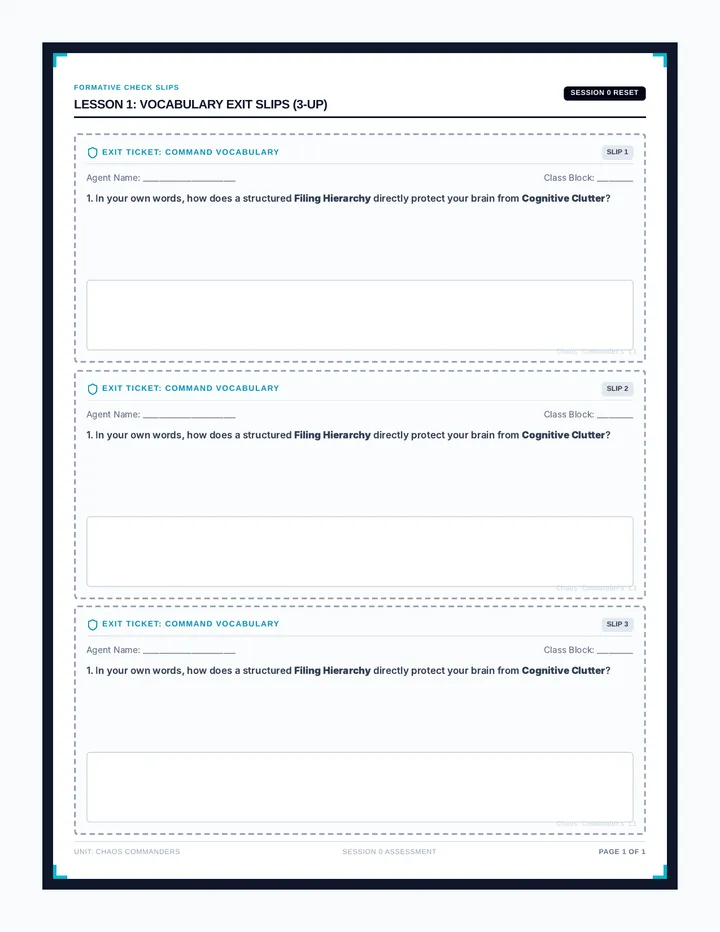
A five-part executive functioning sequence designed for middle schoolers to master foundational vocabulary, physical workspace organization, digital file hierarchies, afternoon time management, and project backward planning. Students self-assess, solve common organization dilemmas, and design concrete systems for schoolwork, lockers, and digital files.
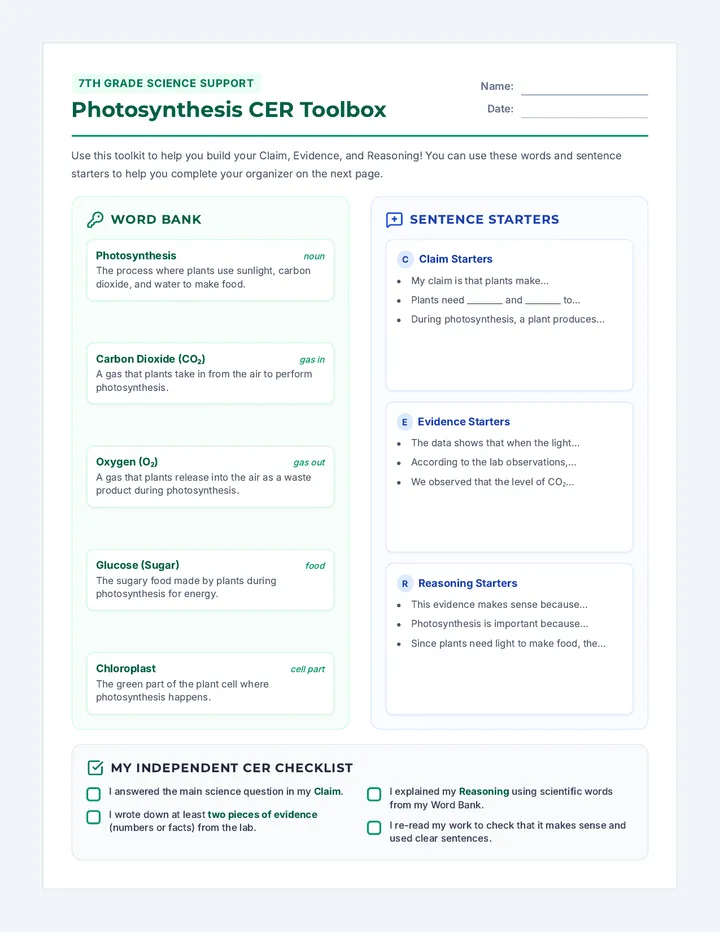
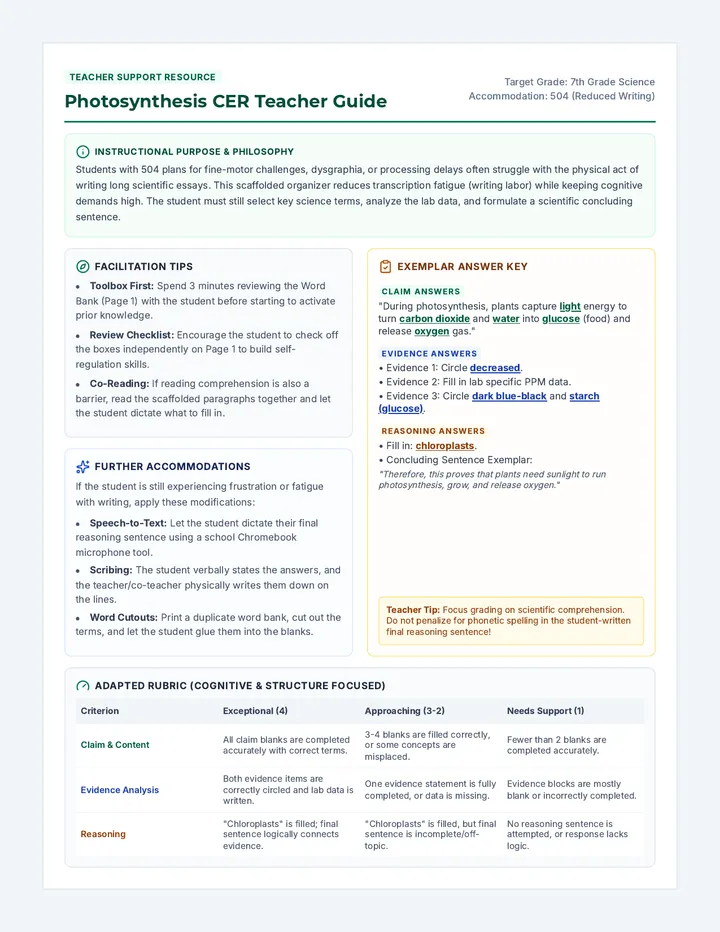
Scaffolded materials and teacher guidance for supporting a 7th-grade student with a 504 plan requiring reduced writing demands during a photosynthesis CER activity.
A comprehensive teacher support guide containing pedagogical strategies for 504 accommodation, a completed exemplar answer key, and an adapted 4-point CER rubric for students with physical writing barriers.
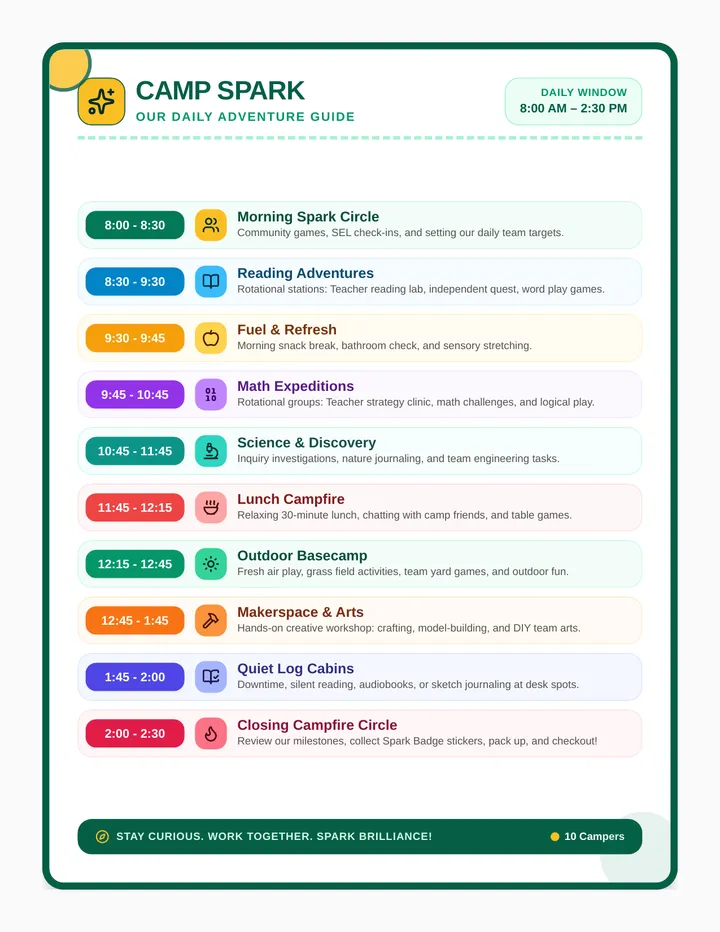
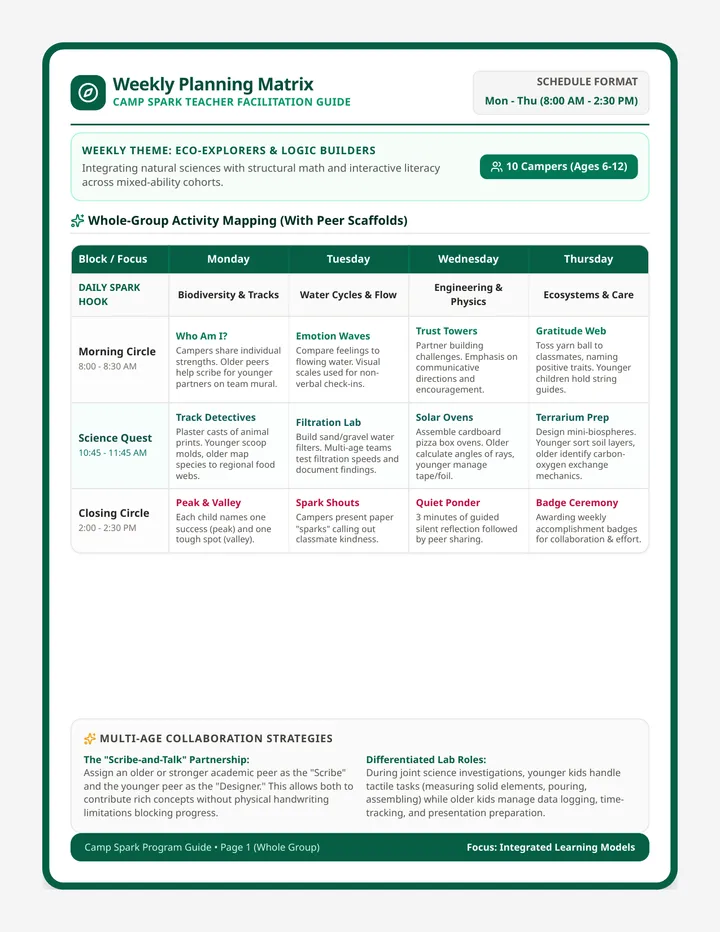
A 4-day summer school hub for a classroom of 10 mixed-age, mixed-ability students. It features a colorful visual schedule poster and a comprehensive weekly planning matrix utilizing a rotational station model.
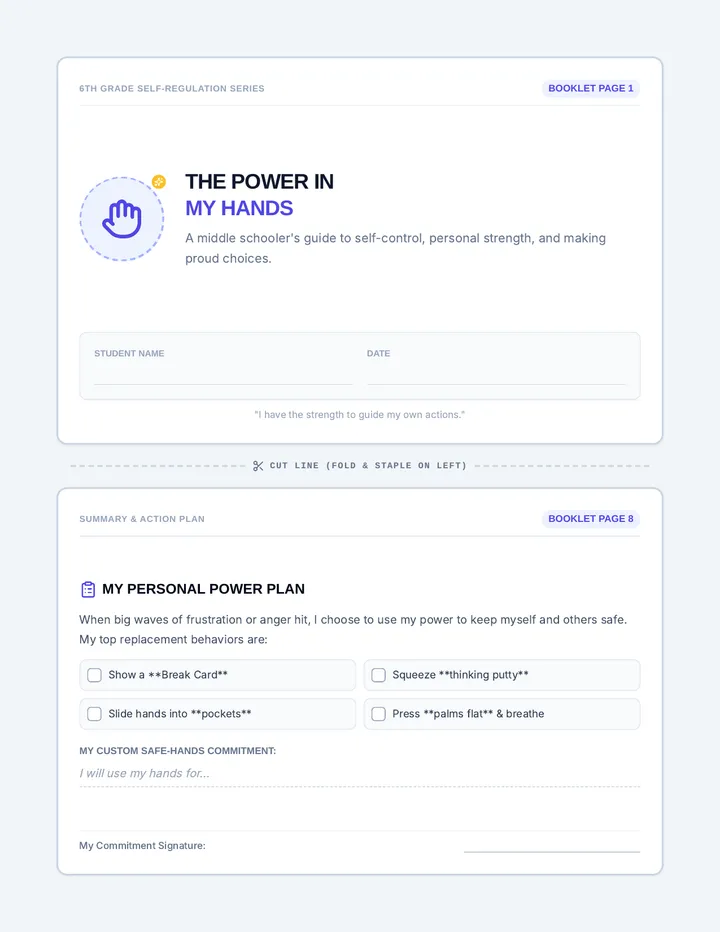
A targeted lesson for 6th-grade students on self-regulation, understanding the purpose of hands, and using replacement behaviors like requesting breaks and sensory tools instead of hitting.
A 2-page scaffolded student document featuring a science CER template, a tailored word bank, sentence starters, and an independent checklist designed to reduce writing demands for a 7th-grade student with a 504 plan.
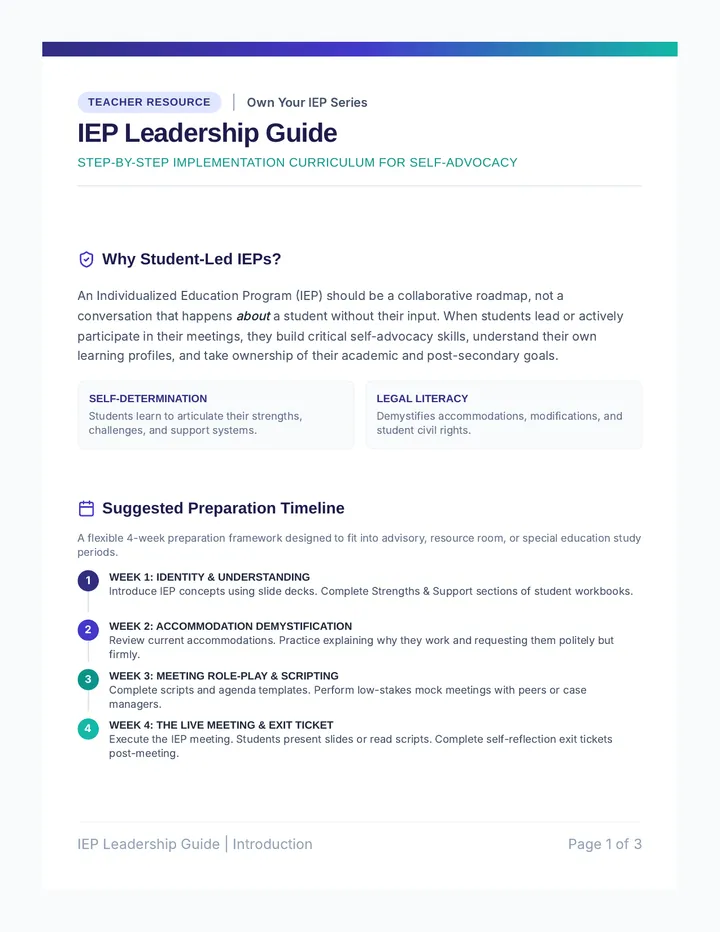
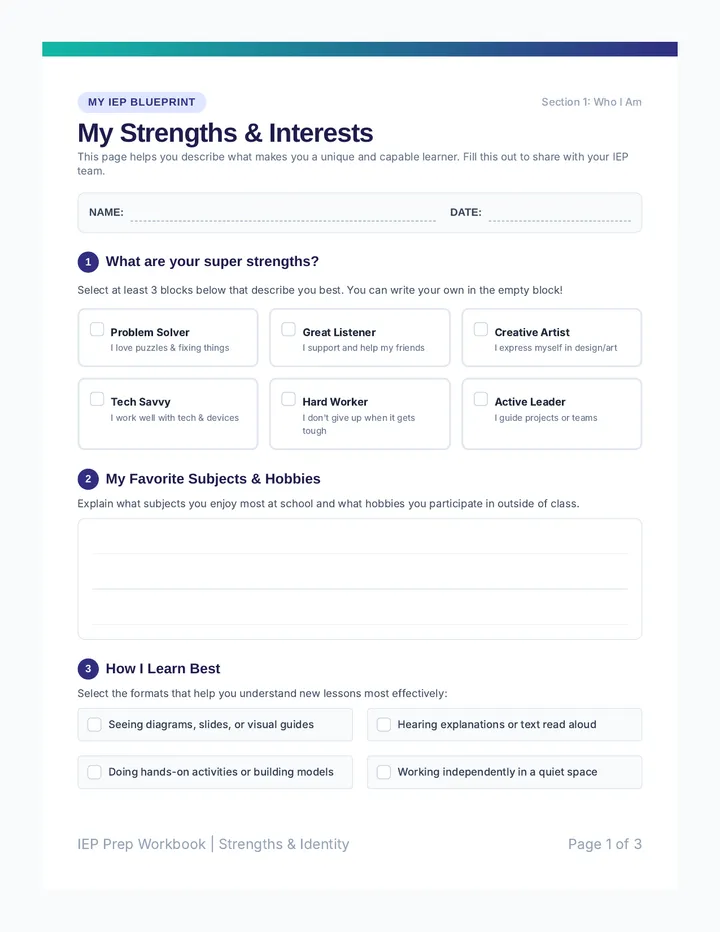
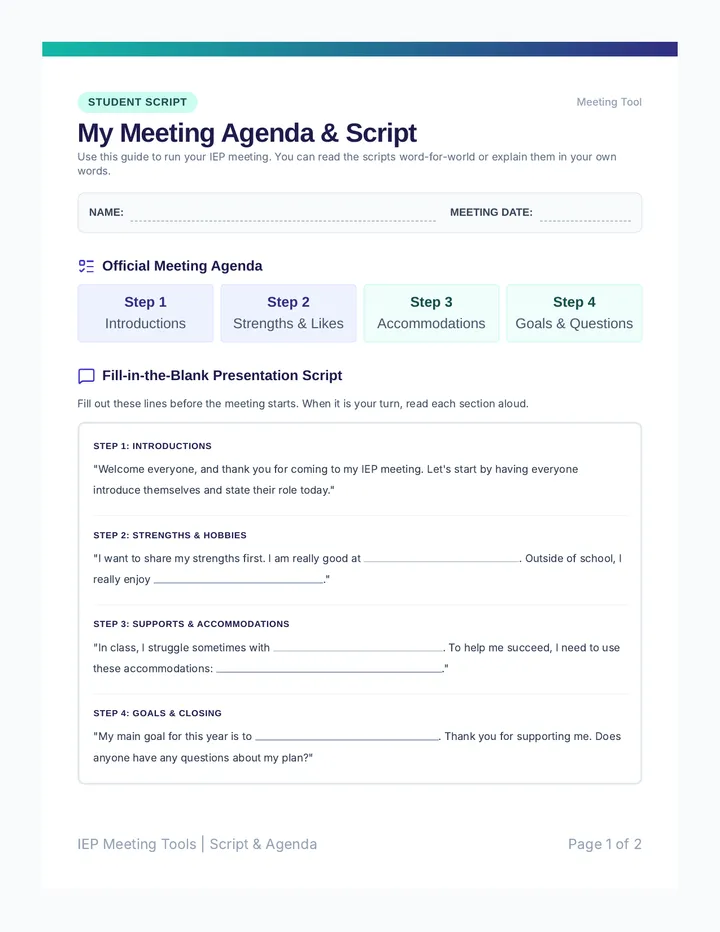
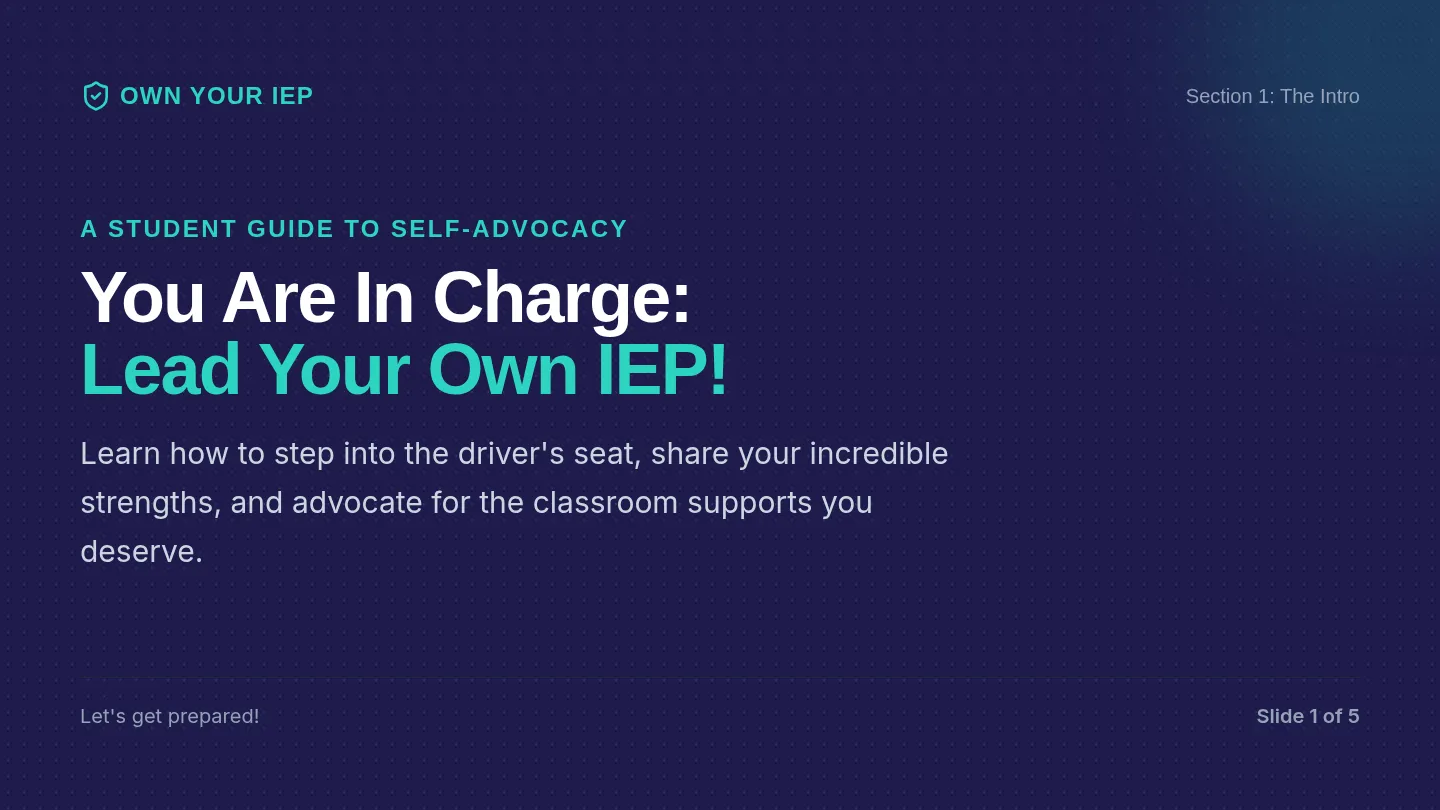
A comprehensive program designed to empower middle and high school students to lead their own IEP meetings. Includes a detailed teacher guide, student preparation workbook, meeting scripts, agenda templates, and interactive presentation slides to scaffold self-advocacy and goal-setting.
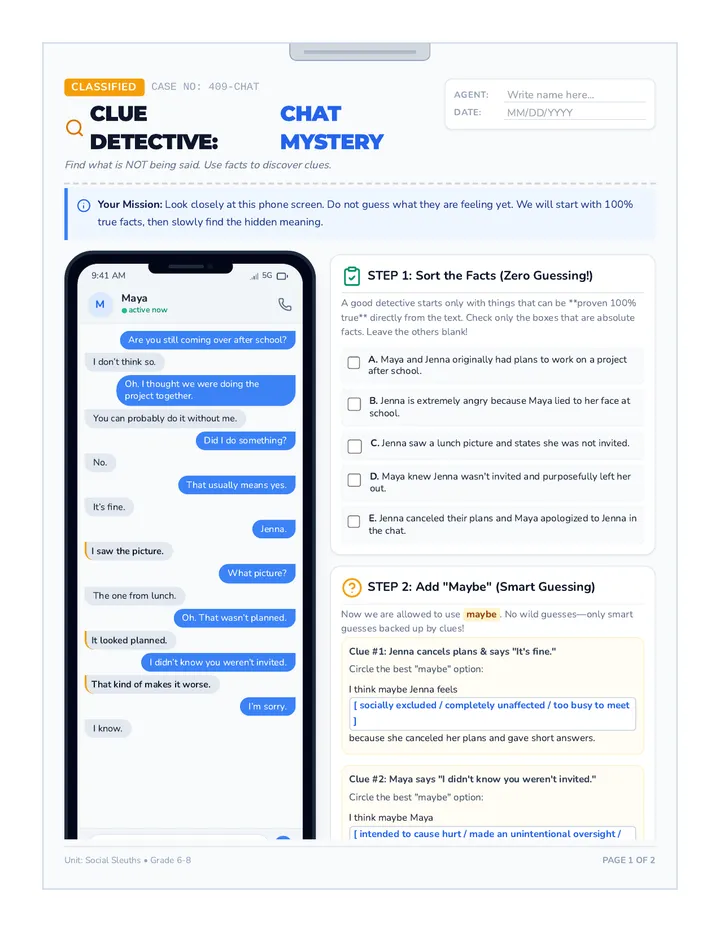
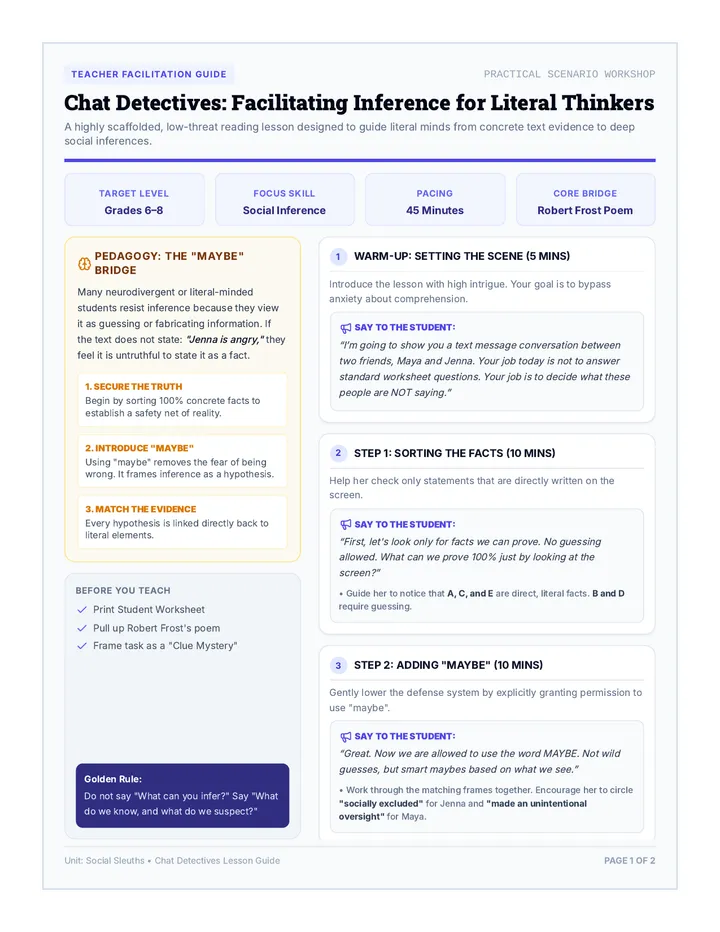
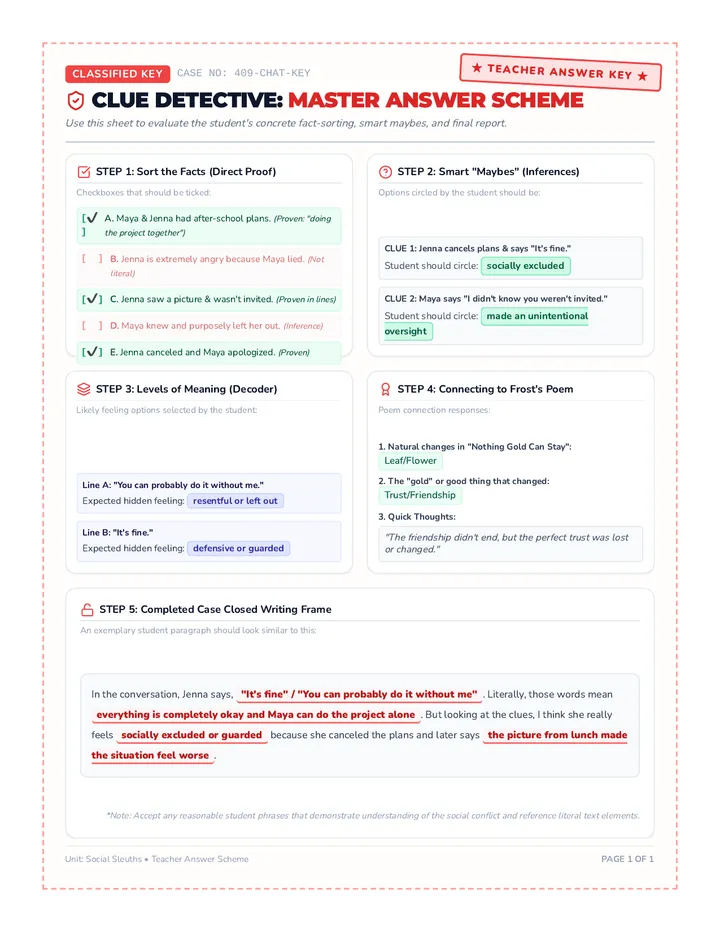
A highly scaffolded reading comprehension lesson designed for literal thinkers to bridge the gap between concrete facts and social inferences. Students analyze a realistic, high-interest text-message exchange to uncover hidden feelings, connect their findings to Robert Frost's 'Nothing Gold Can Stay', and practice evidence-based writing in a non-threatening, game-like format.
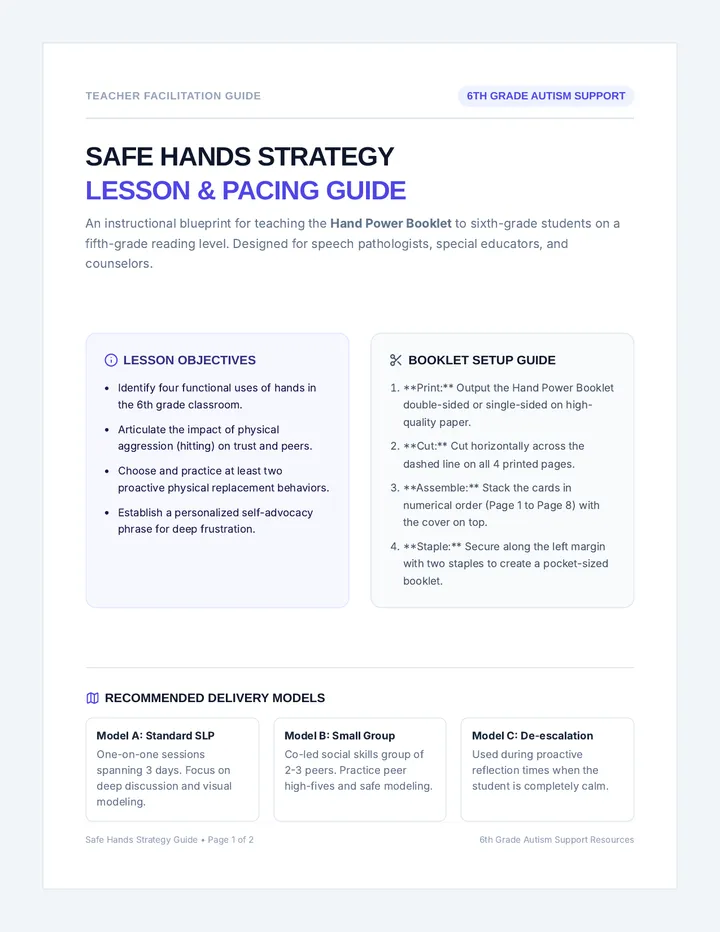
A teacher-facing lesson plan and facilitation guide for introducing the Hand Power Booklet, outlining print and cut setup, daily pacing, check-in prompts, and scaffolding strategies.