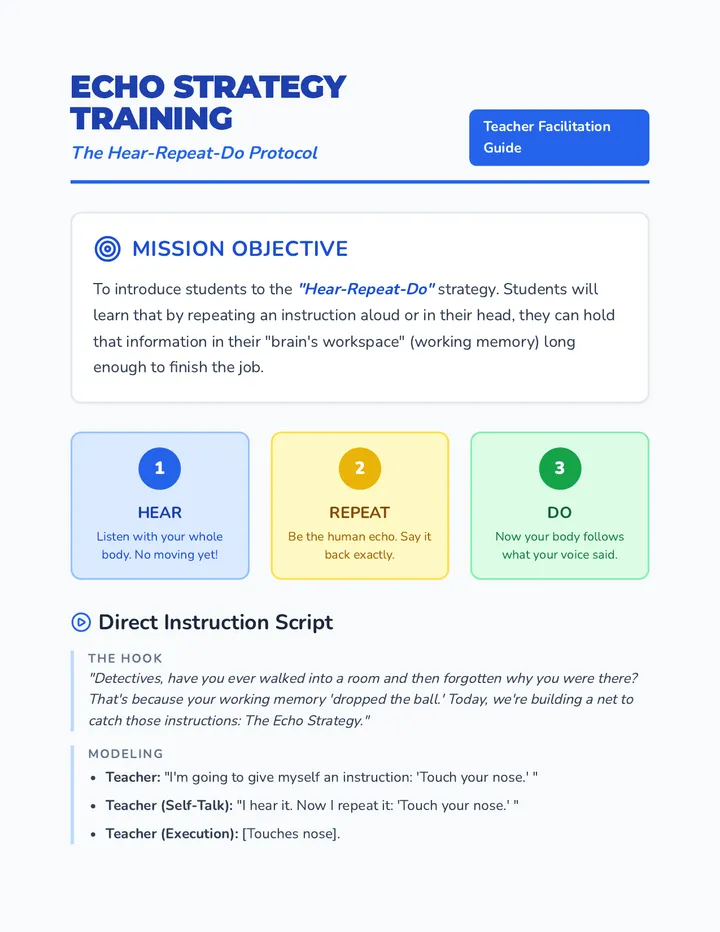
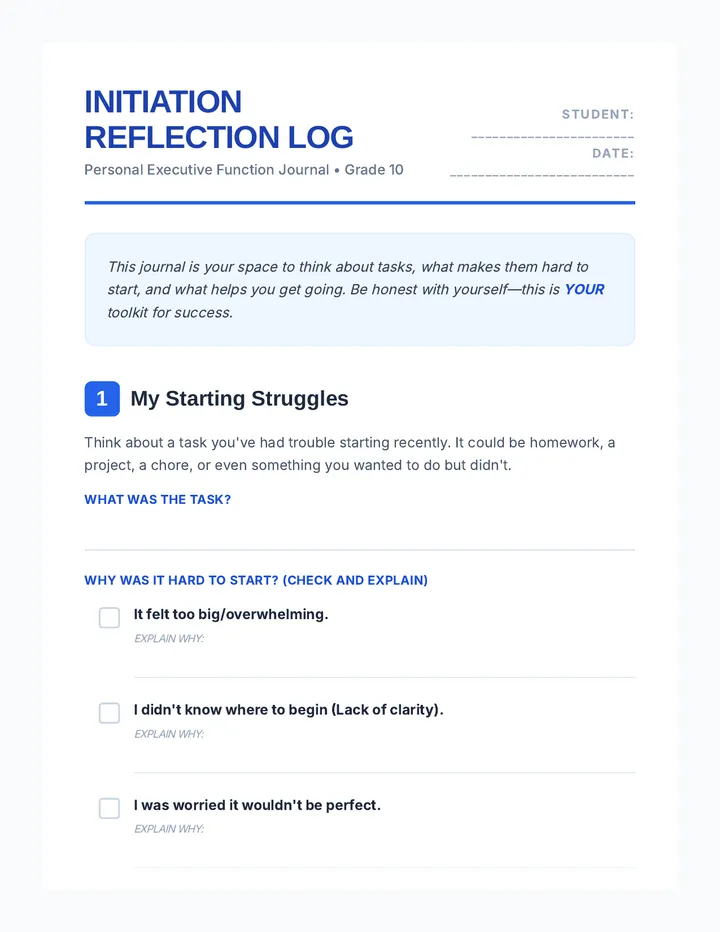
Internalized verbal prompting and cognitive rehearsal strategies to overcome task initiation barriers. Builds executive functioning skills for students struggling to begin independent work.
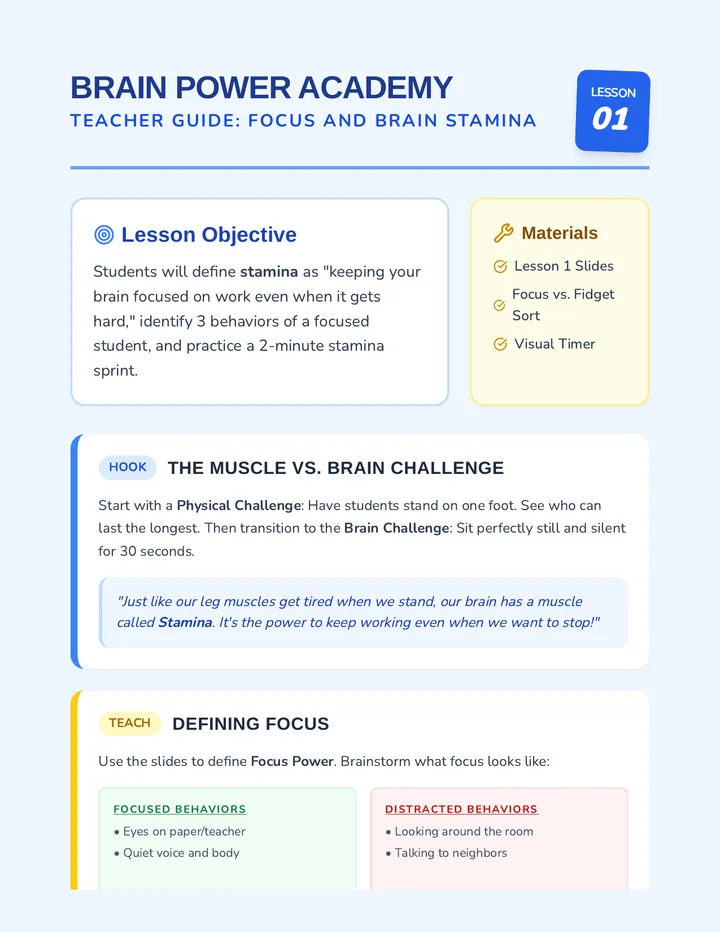
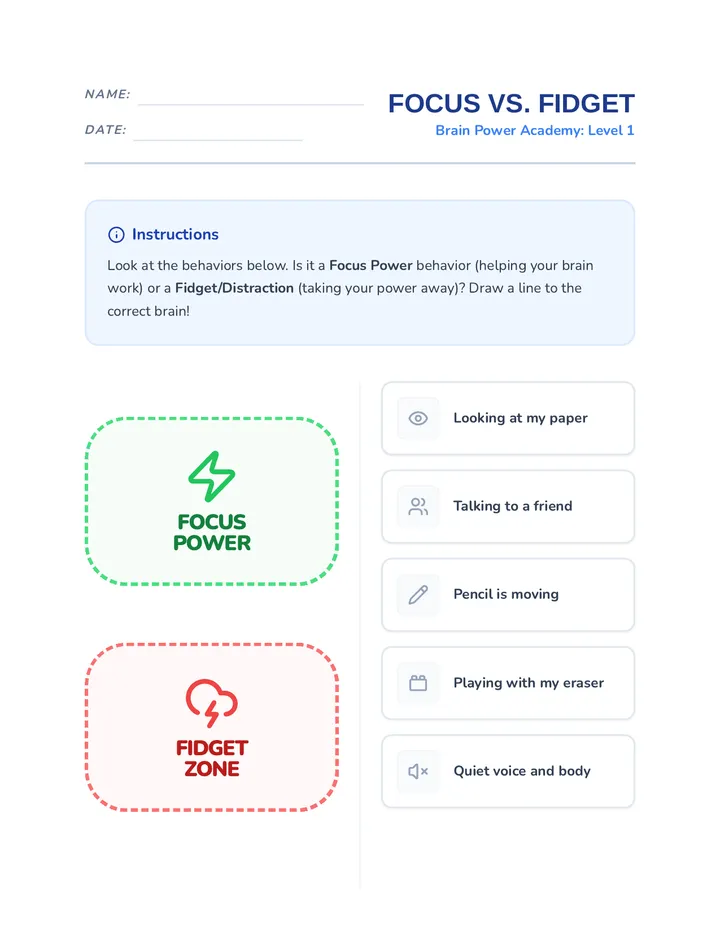
A comprehensive unit designed for 2nd-grade special education students to develop executive functioning skills, focusing on task persistence, stamina, and self-regulation through concrete strategies like chunking and positive self-talk.
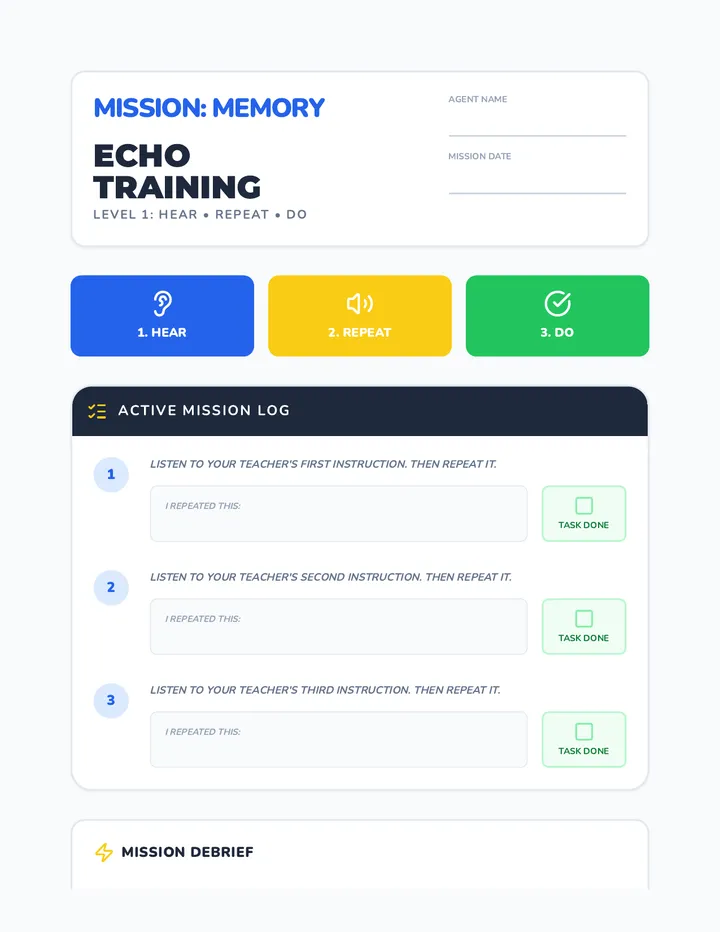
A specialized sequence for 4th-grade students to develop working memory through verbal rehearsal. Students practice the 'Hear-Repeat-Do' strategy, identify action keywords, utilize processing pauses, and verify their work to improve follow-through on single-step directions.
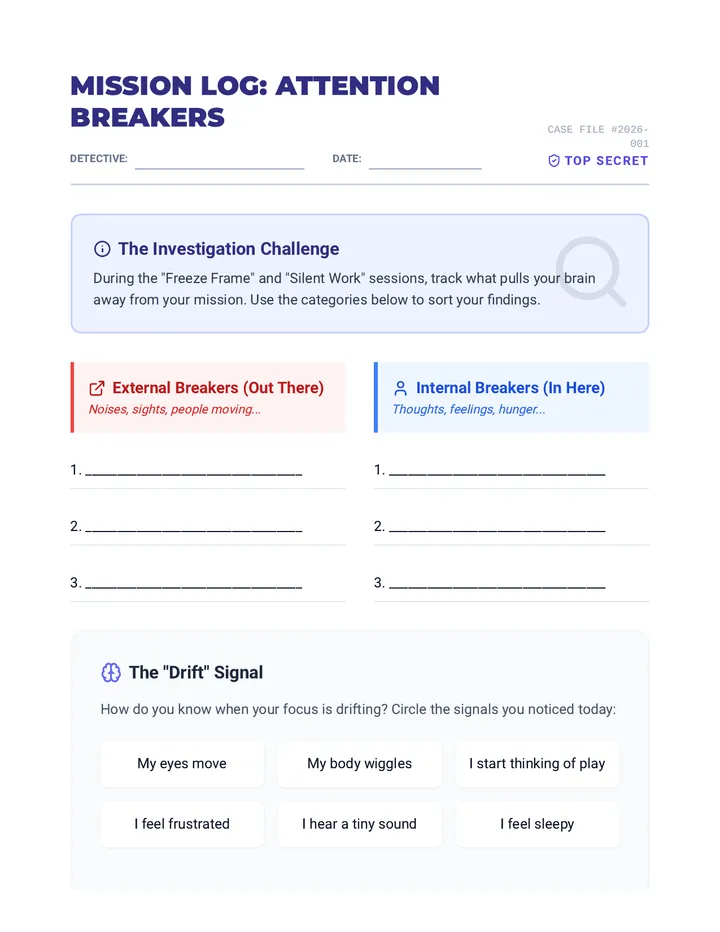
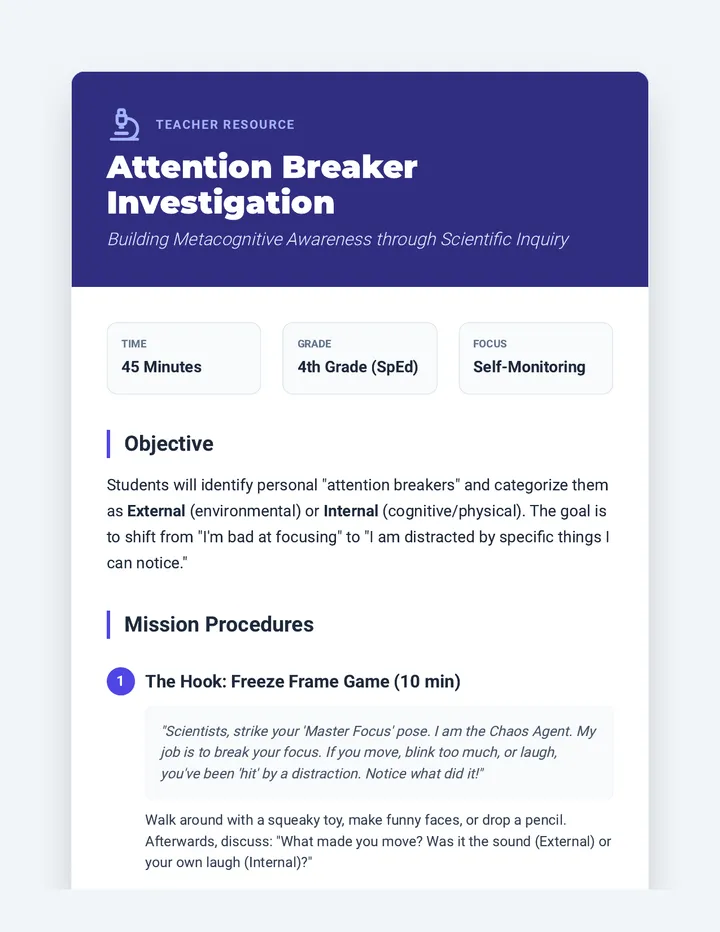
A 5-lesson sequence for 4th Grade students focused on developing metacognitive awareness of attention, utilizing timer techniques, internalizing positive self-talk, and designing supportive environments to sustain focus on complex tasks.
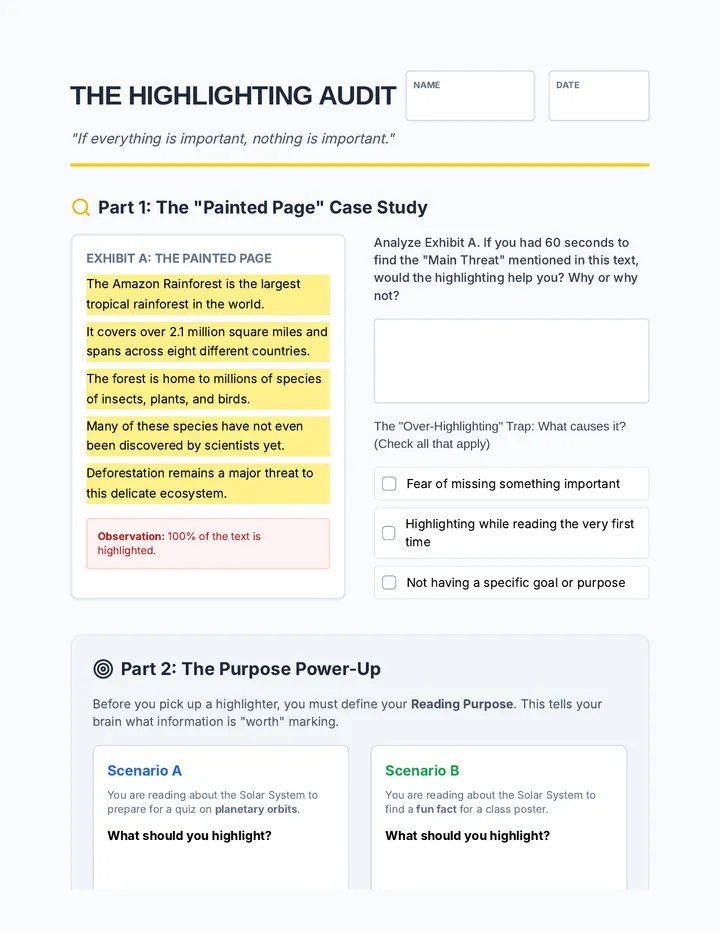
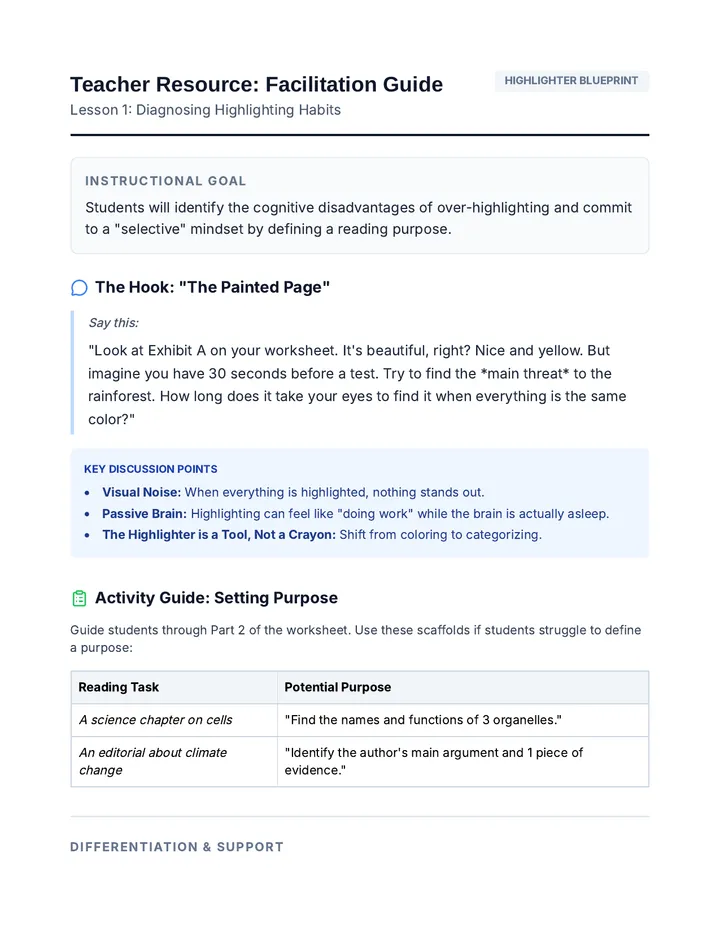
A 5-lesson sequence for 9th-grade students to master a systematic, three-color highlighting strategy, moving from identifying 'over-highlighting' pitfalls to independent application on non-fiction texts.
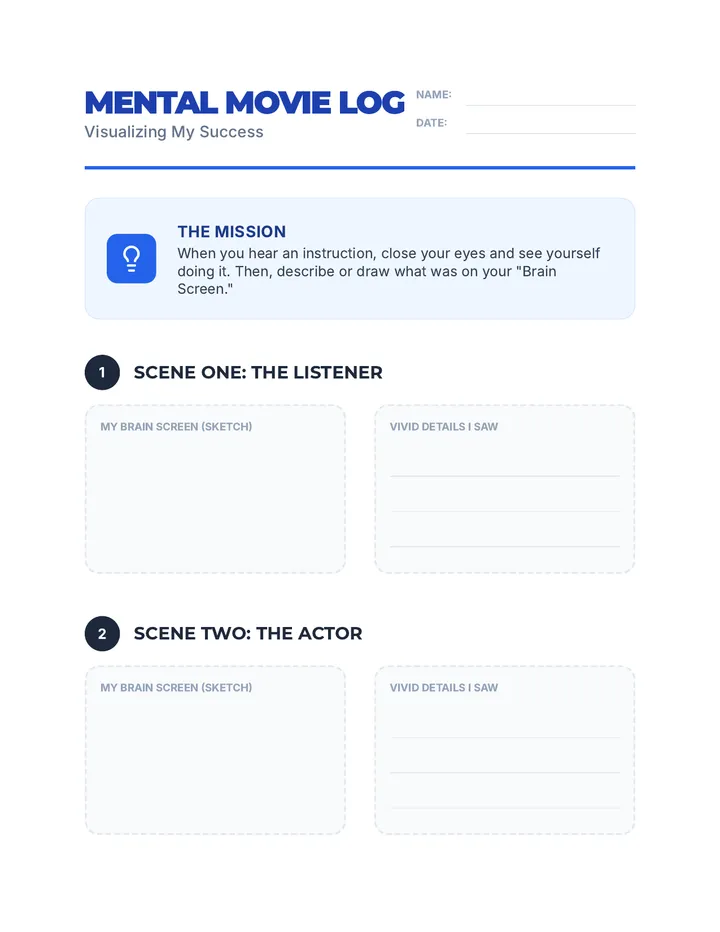
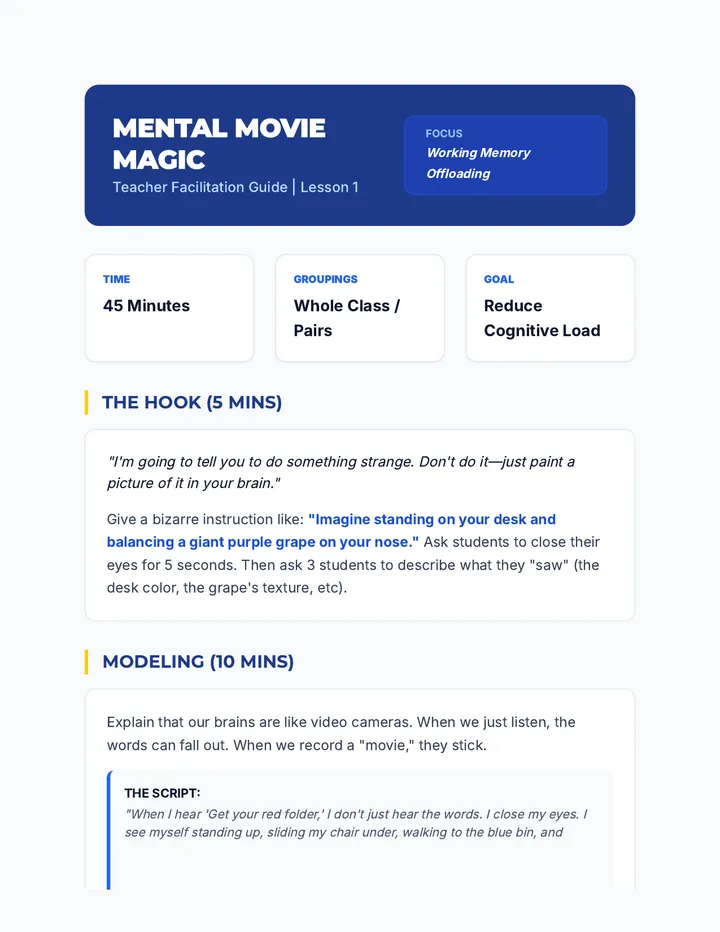
A specialized sequence for 6th-grade students focusing on working memory support through visual encoding. Students learn to transform auditory single-step directions into mental images and physical sketches to improve recall and task execution.
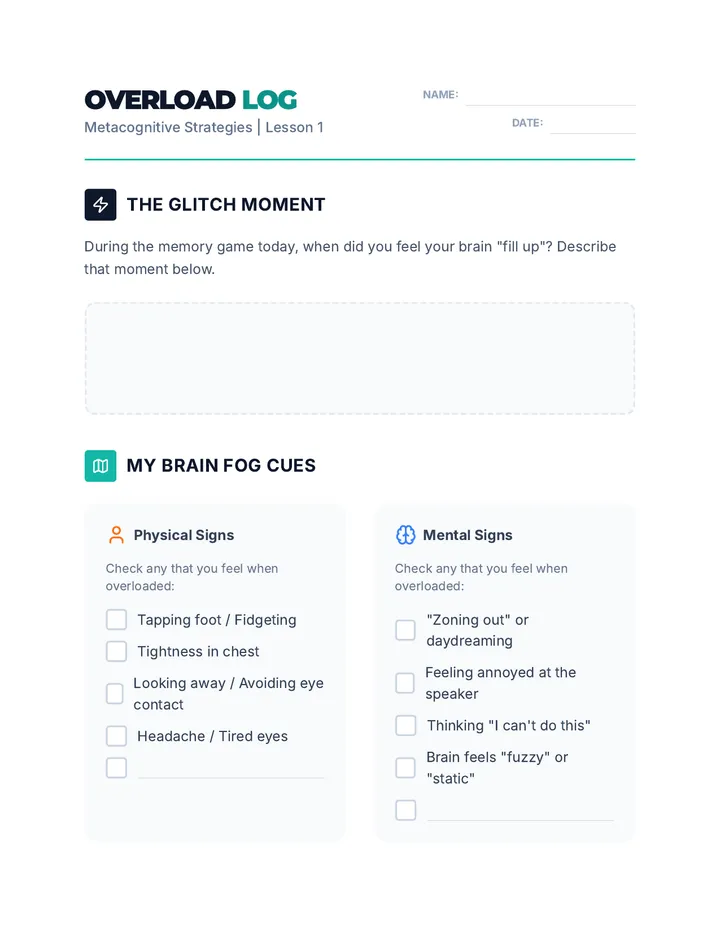
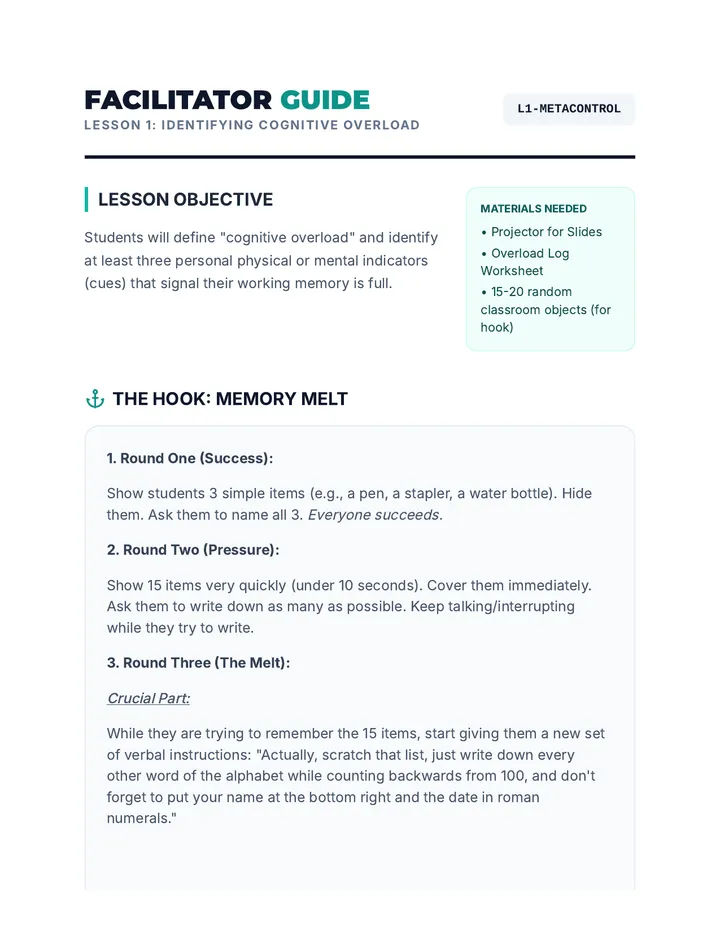
This sequence empowers 8th-grade students with metacognitive strategies to recognize cognitive overload and advocate for single-step directions. It covers identifying personal cues of overload, deconstructing complex instructions, and practicing self-advocacy scripts.
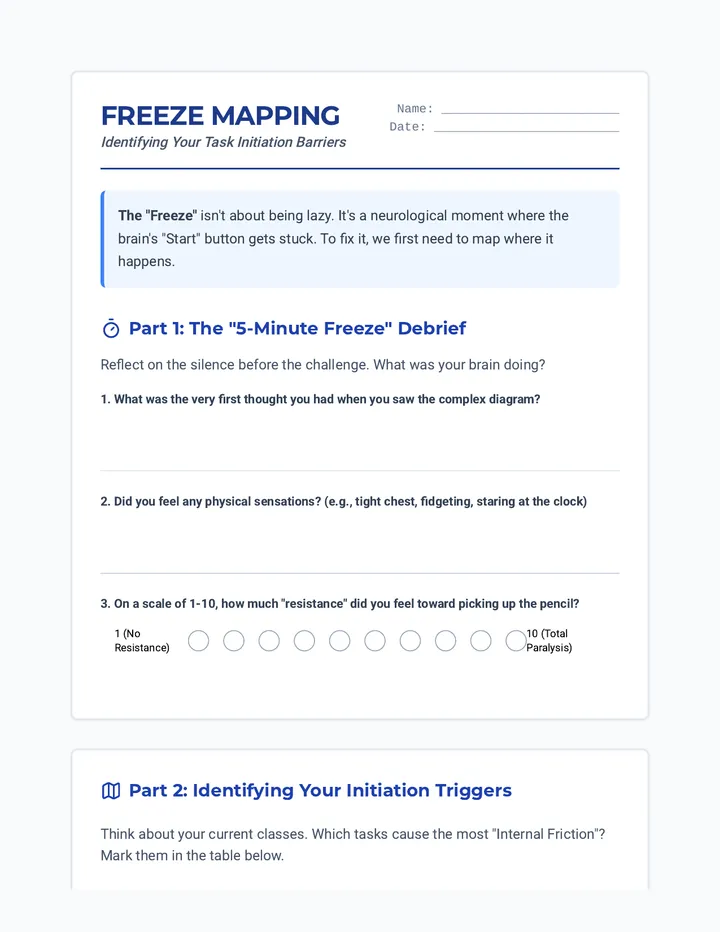
This sequence teaches 11th-grade students with executive functioning needs how to use cognitive rehearsal and self-talk to overcome task initiation barriers. Students move from identifying psychological triggers to building and applying personalized 'starting scripts' for their actual academic workload.
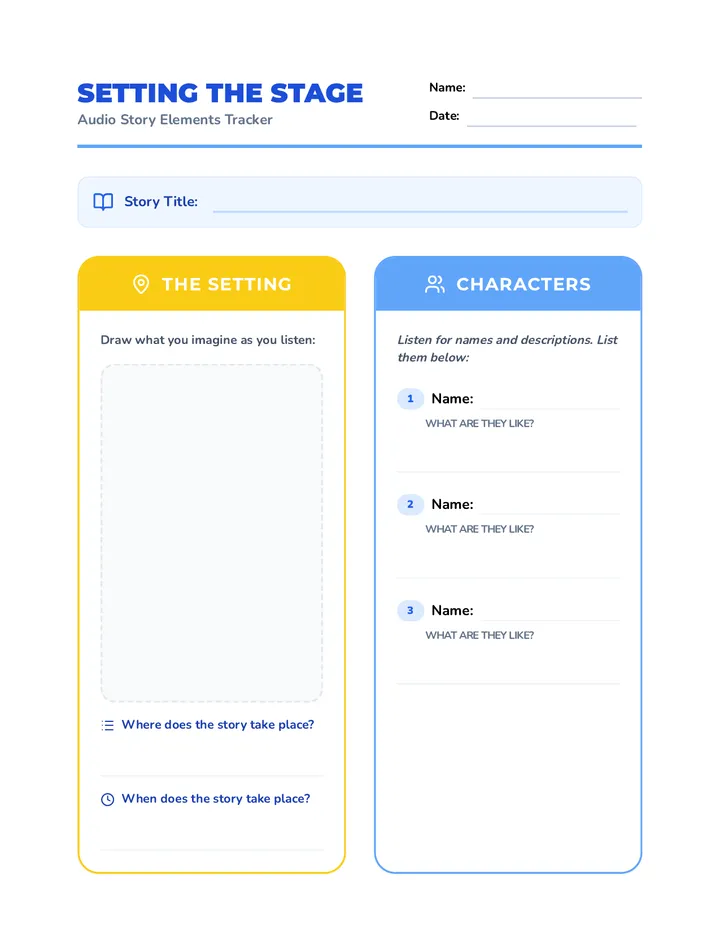
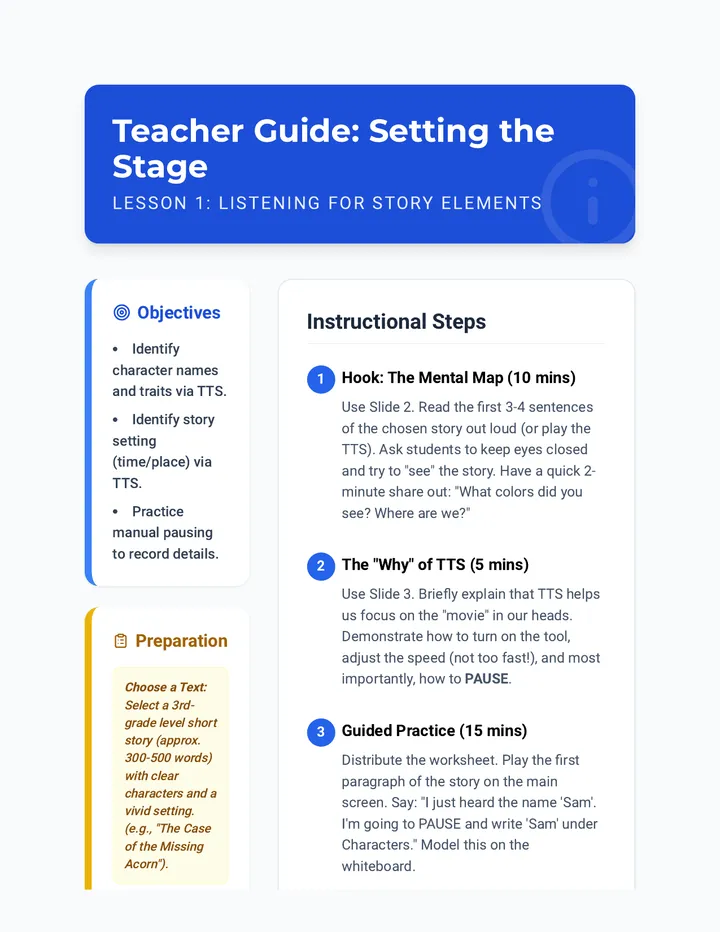
This sequence teaches 3rd-grade students how to use text-to-speech (TTS) as a strategic tool for narrative comprehension. Students learn to use audio for identifying story elements, summarizing via the 'Listen-Stop-Think' routine, citing evidence by re-listening, and visualizing descriptive text.
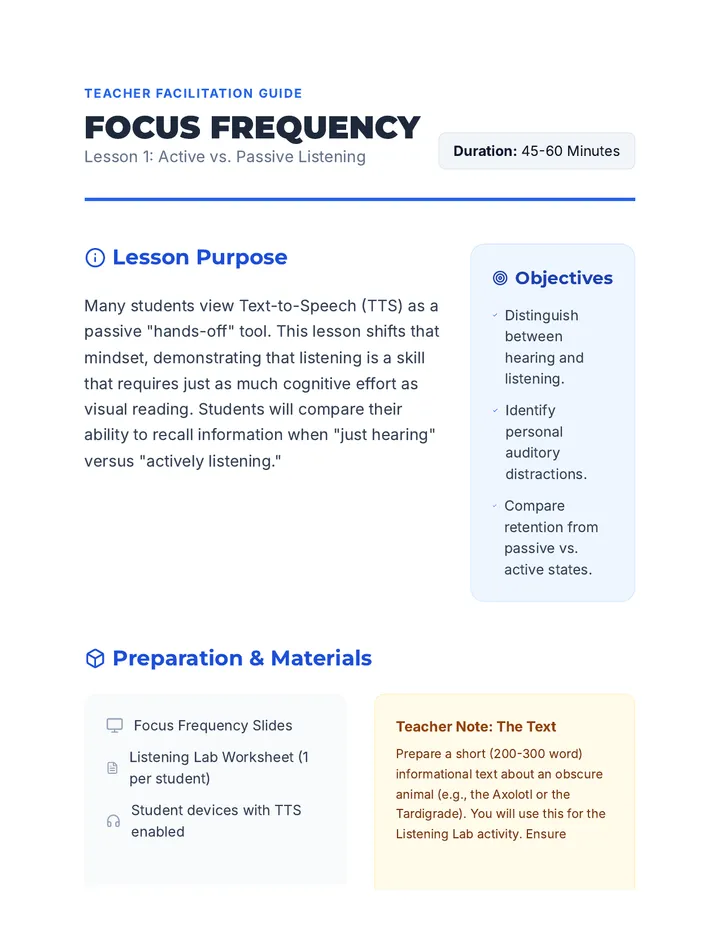
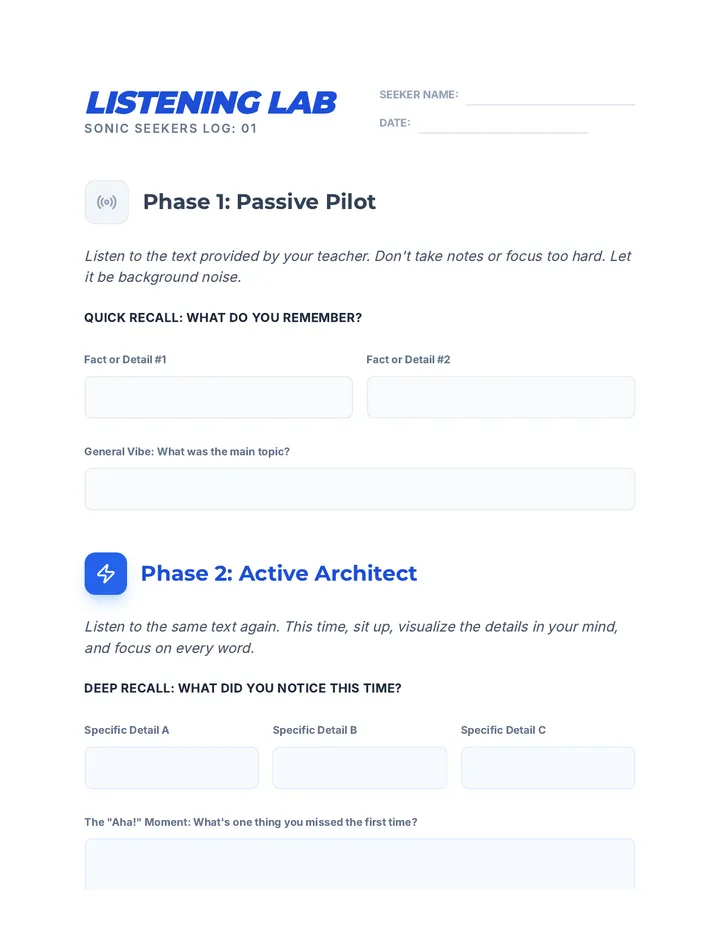
This sequence shifts the focus from assistive technology to the cognitive strategies required for auditory learning. Students engage in inquiry-based activities to distinguish between passive hearing and active listening, applying specific comprehension strategies while using text-to-speech (TTS) to access grade-level texts.
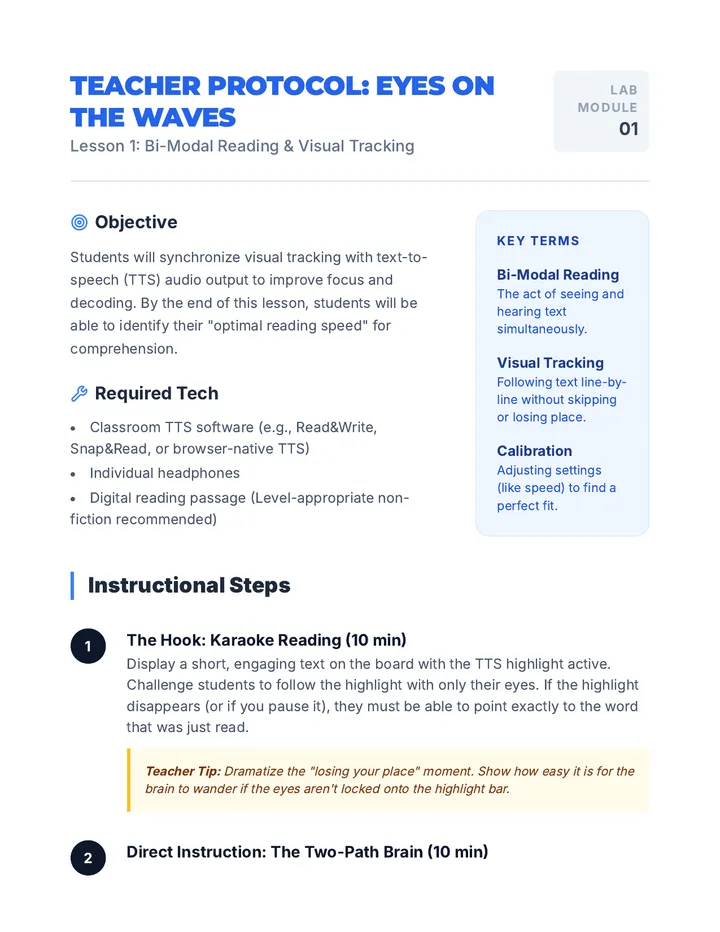
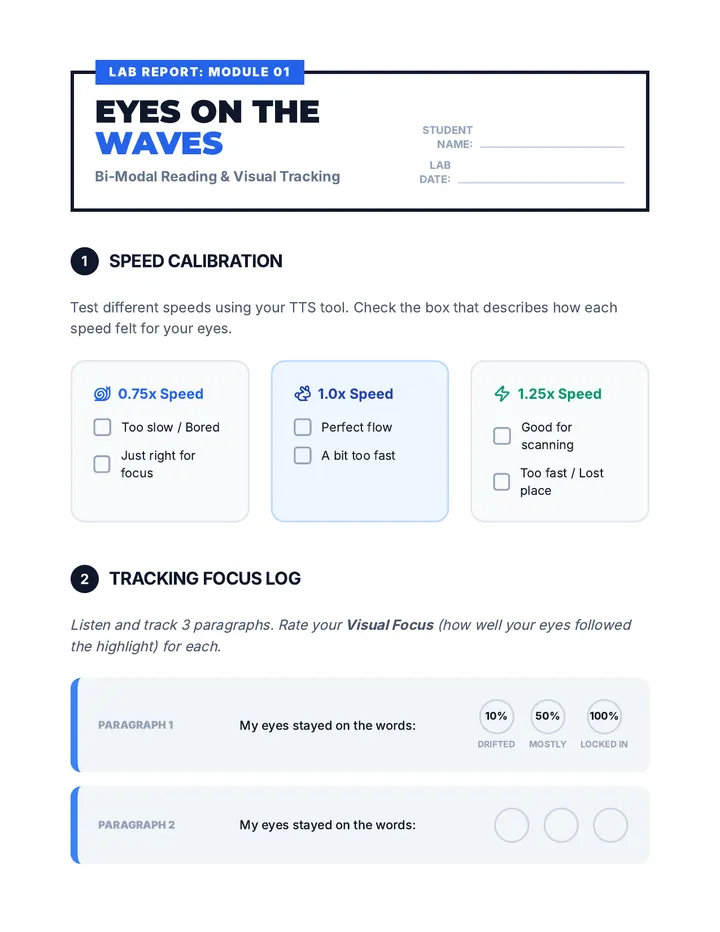
A 5th-grade sequence focused on using Text-to-Speech (TTS) technology as a cognitive strategy for reading comprehension. Students learn bi-modal reading, text chunking, evidence collection, and active annotation to transition from passive listening to active engagement with digital text.
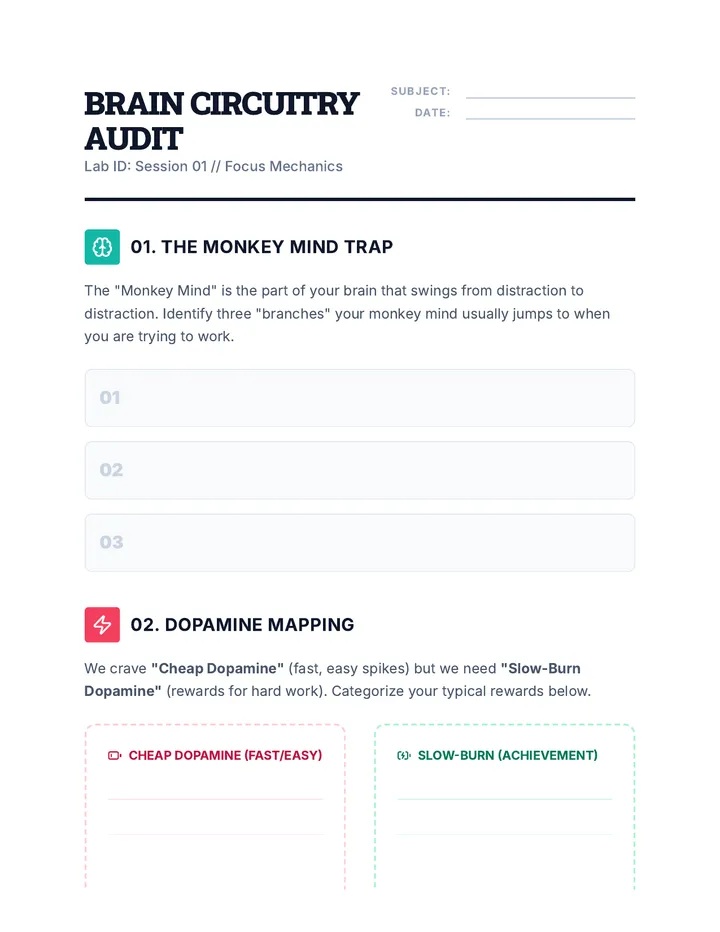
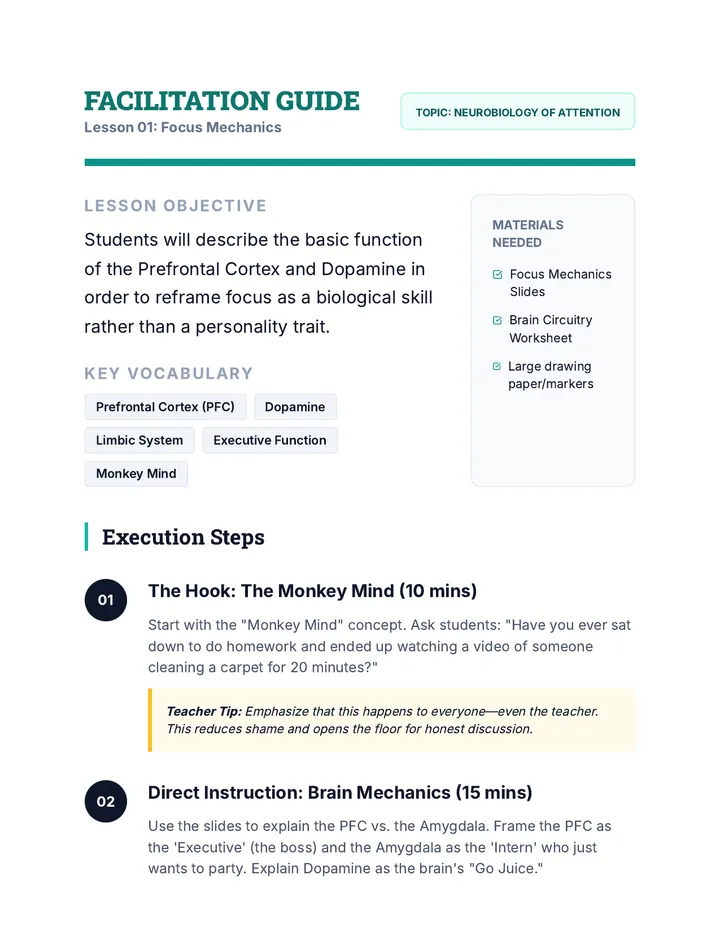
A 5-lesson sequence for 9th Grade Special Education students focused on the neurobiology of attention, interval-based work techniques, environmental management, and energy regulation to improve task execution and self-regulation.
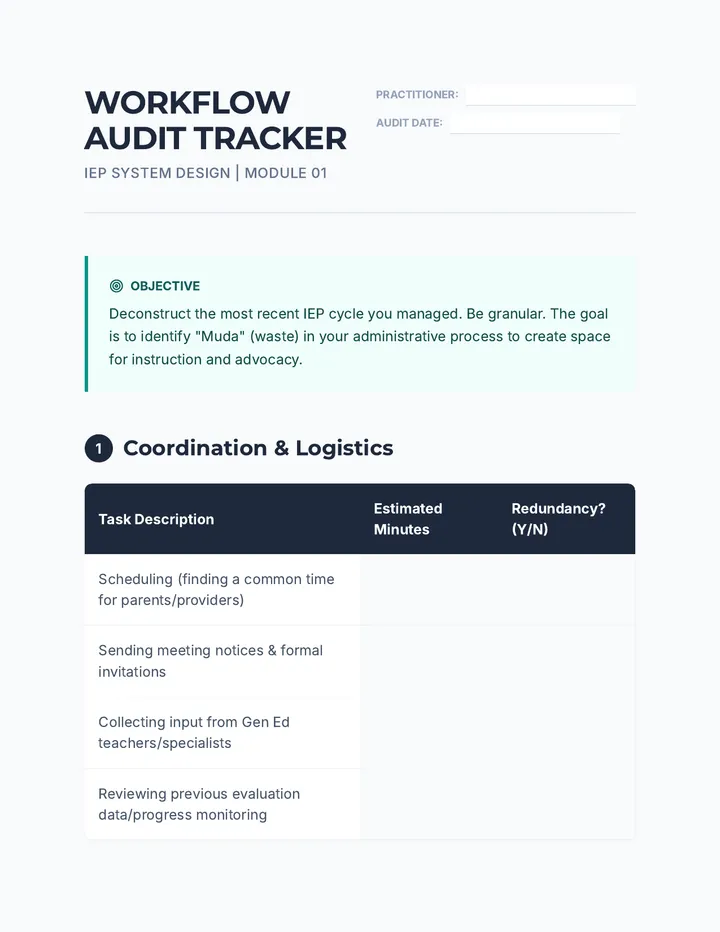
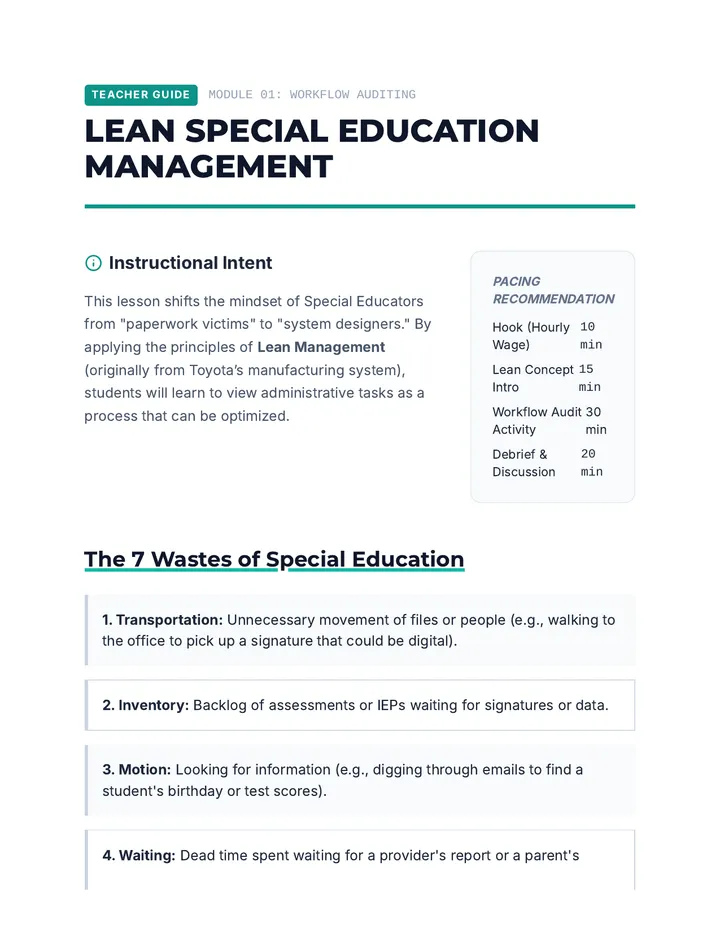
A graduate-level sequence focused on the mechanics of administrative compliance in Special Education. Students will design and implement a comprehensive IEP workflow system using project management principles, automation, and deep work strategies to prevent burnout and ensure 100% legal compliance.
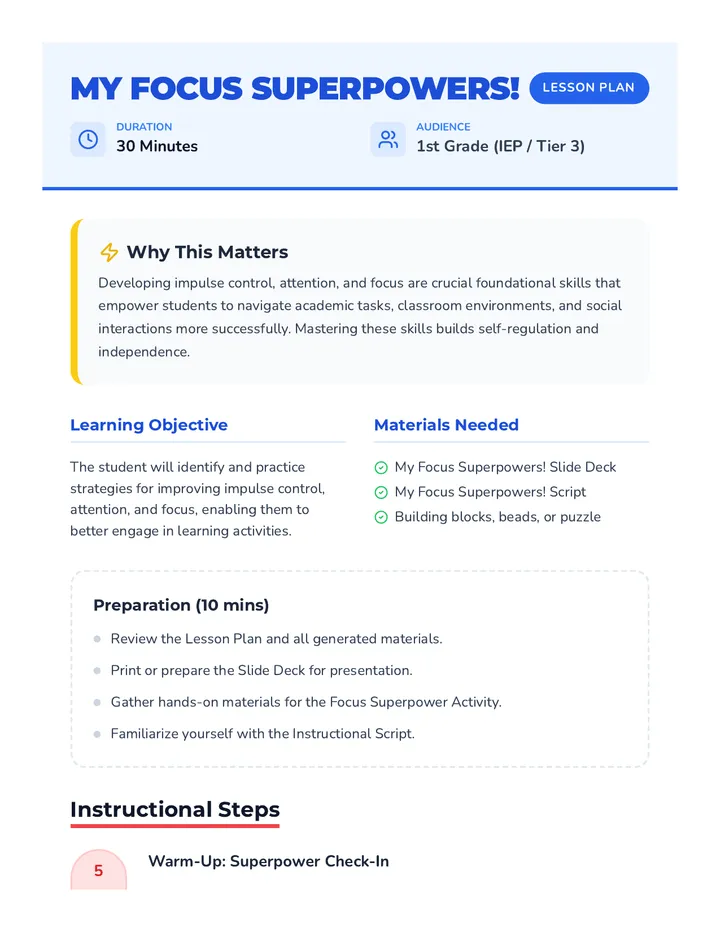
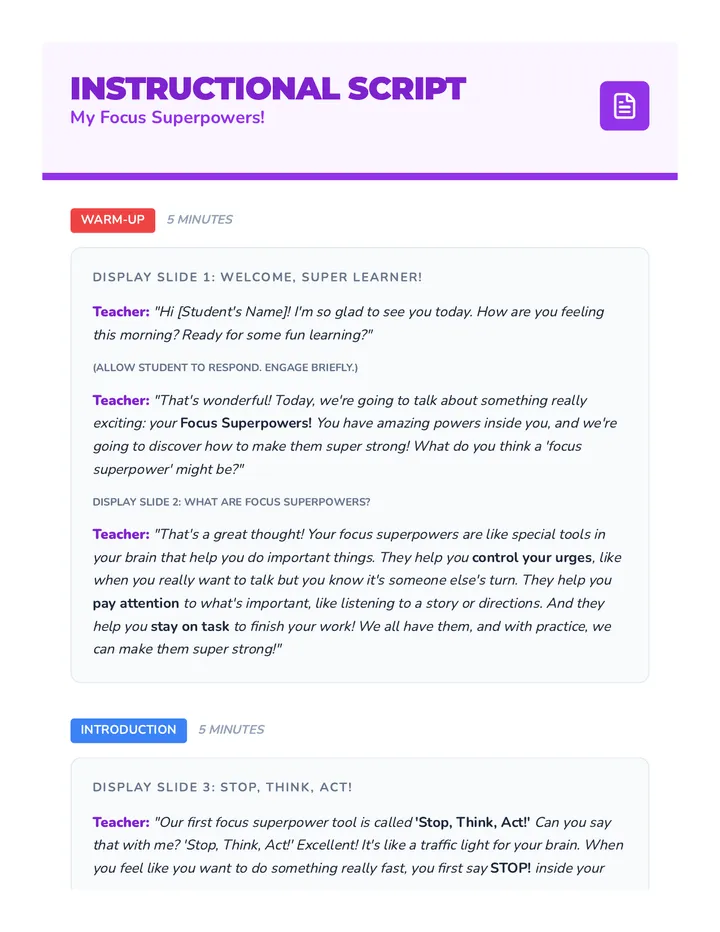
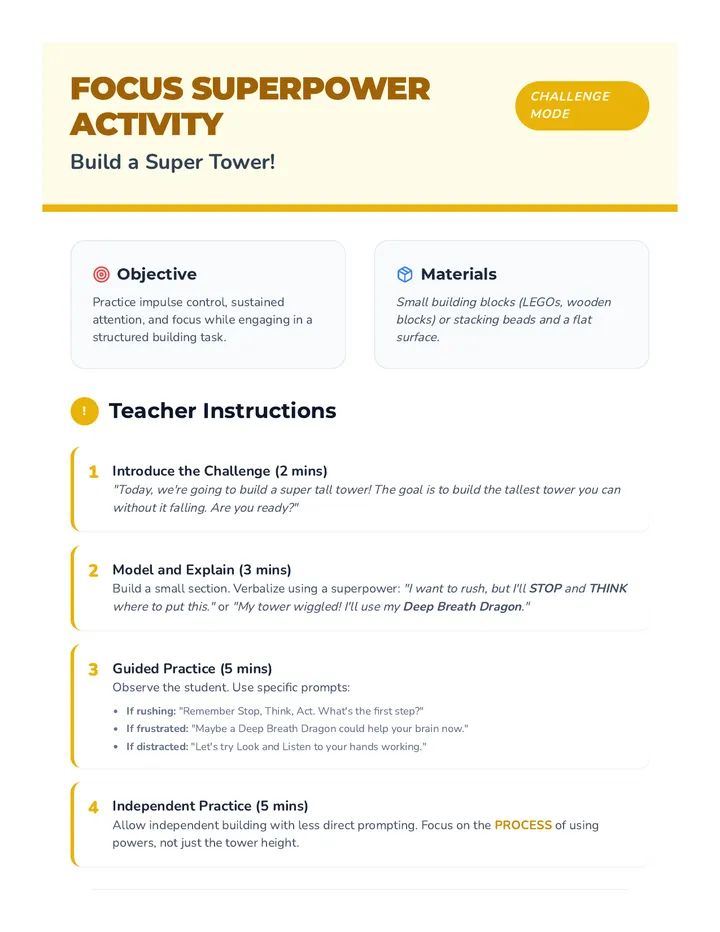
This 30-minute Tier 3 individual lesson for 1st-grade students with IEPs focuses on developing impulse control, attention, and focus through the metaphor of 'Focus Superpowers.' Students learn three specific tools (Stop-Think-Act, Deep Breath Dragon, and Look and Listen) and practice them through a hands-on building activity.
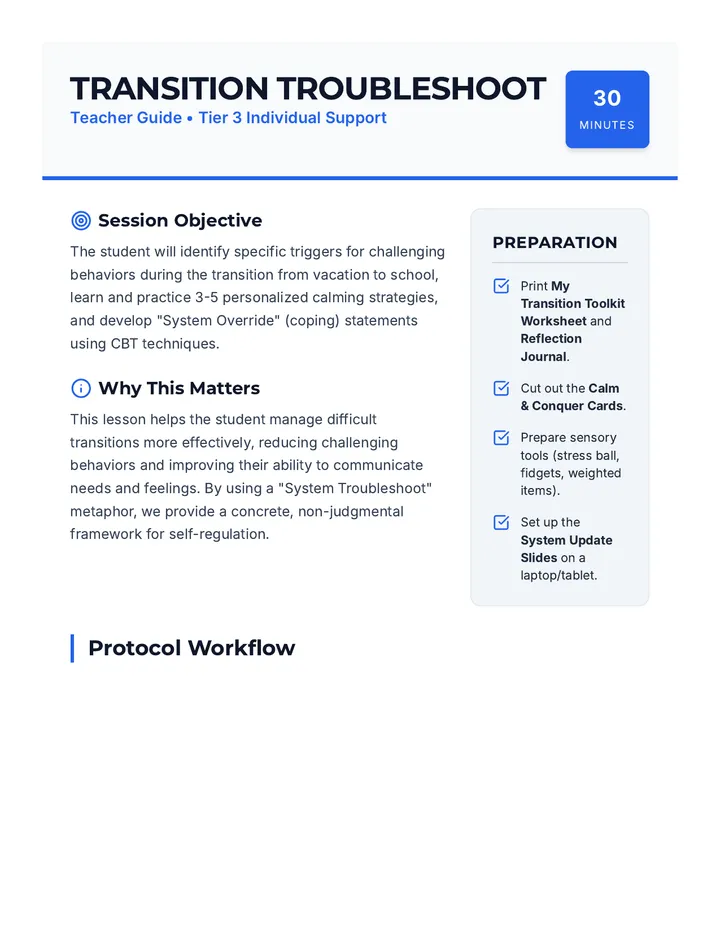
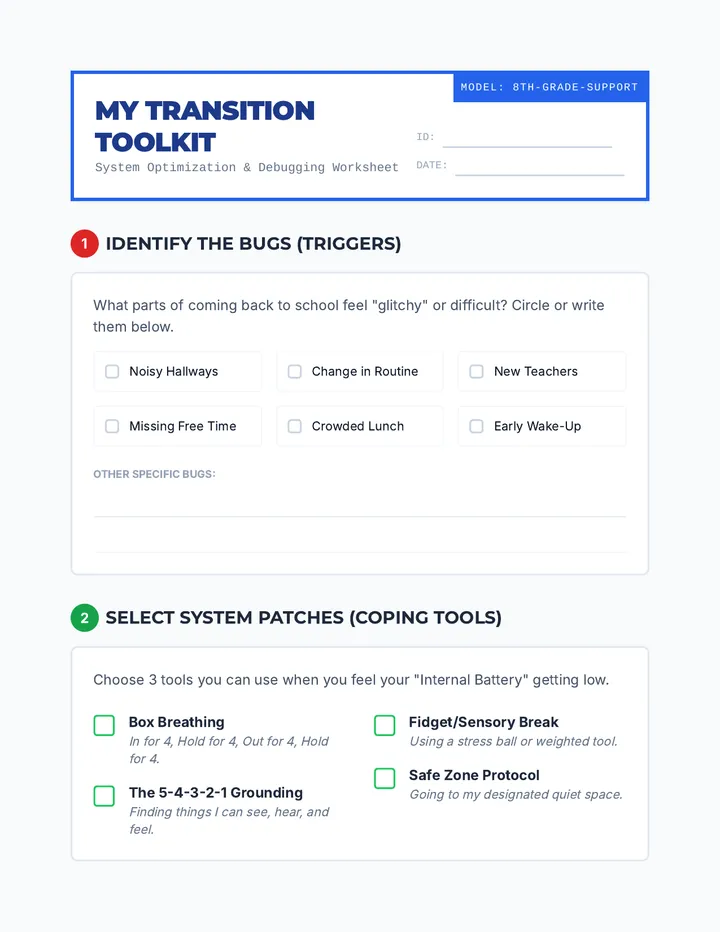
A personalized CBT-focused lesson for an 8th-grade student with autism, addressing challenging behaviors during the transition from vacation to school by identifying triggers, teaching calming strategies, and promoting positive coping mechanisms.
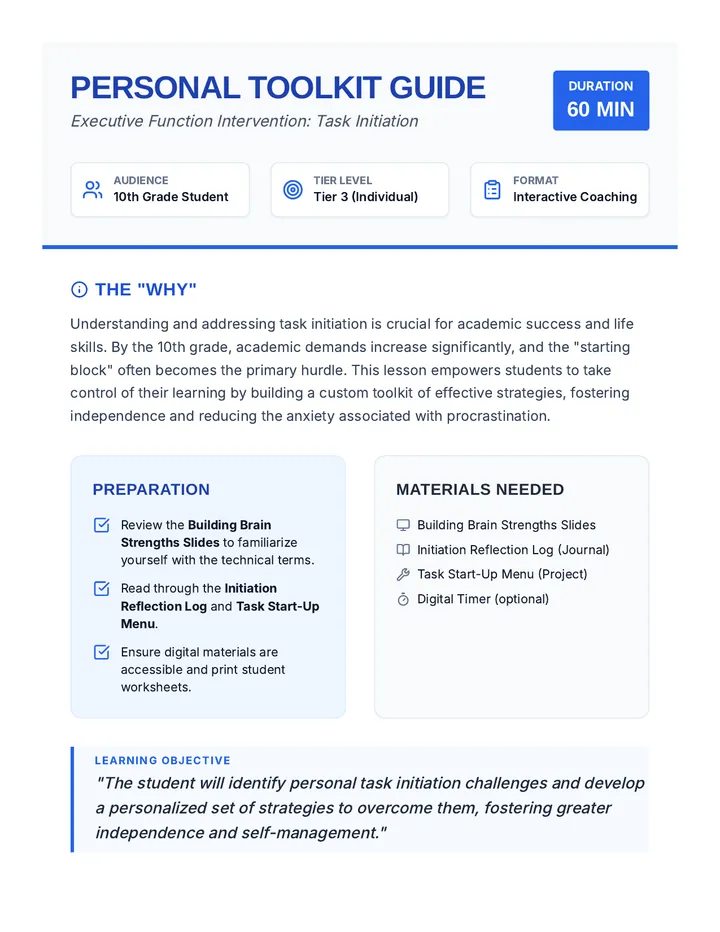
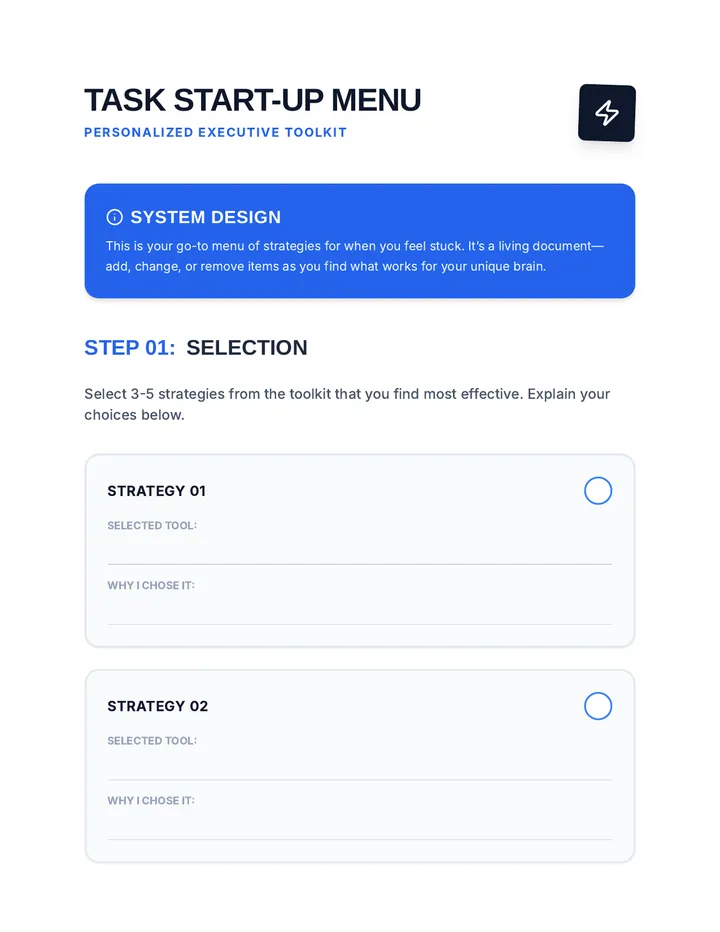
A personalized 60-minute Tier 3 intervention for 10th-grade students to build self-awareness and practical strategies for overcoming task initiation challenges. Students explore executive functions and create a custom 'Start-Up Menu' for academic tasks.
A 20-minute, individualized Tier 3 lesson for a 7th-grade student to understand executive functioning as 'the brain's CEO,' focusing on organization and self-regulation strategies.
A personalized Tier 3 coaching session designed for a 10th-grade student to develop executive function skills including planning, organization, and task initiation through a 'Command Center' framework.
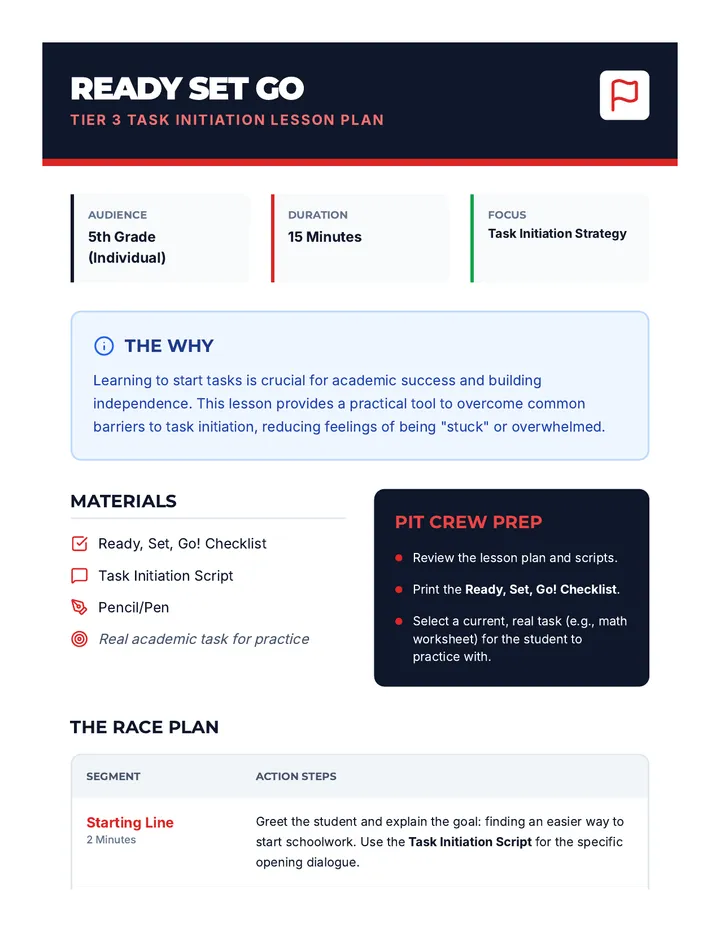
A personalized 15-minute Tier 3 intervention for a 5th-grade student to improve task initiation using a structured checklist strategy.
A 30-minute small-group lesson for 4th graders with executive function challenges. Students learn to 'tame' overwhelming tasks by breaking them into manageable steps, estimating time, and using coping strategies for focus and regulation.
A 30-minute Tier 2 intervention designed for 3rd-grade students with ADHD and learning disabilities to develop executive function skills for organizing thoughts and sequencing ideas into sentences and paragraphs.
A 10-minute individual Tier 3 lesson designed to help students with ADHD create and practice a personalized transition routine to enter the classroom calmly and focused.
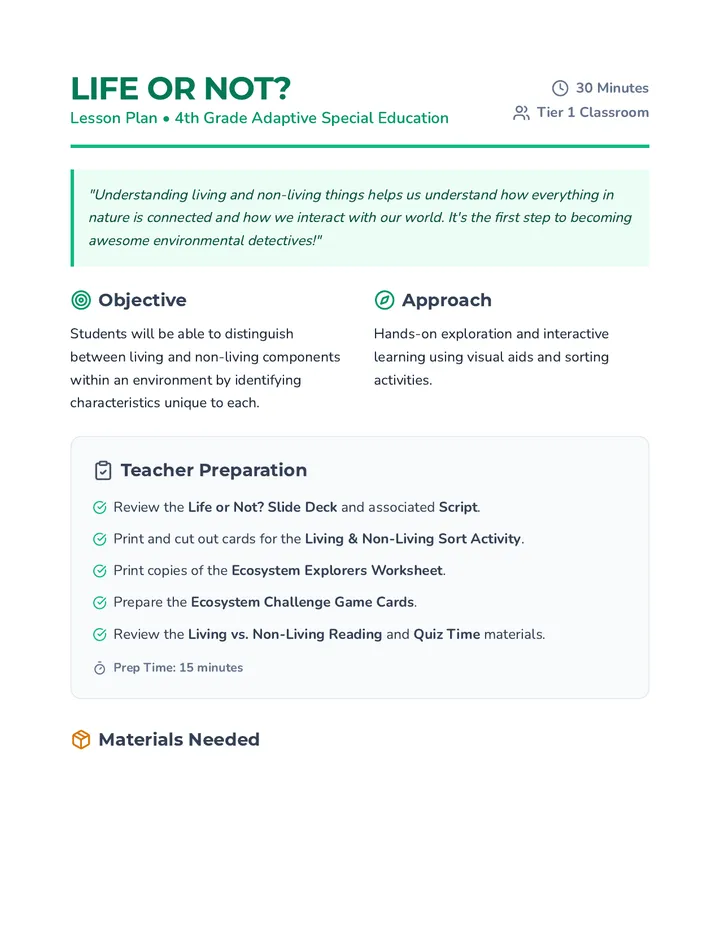
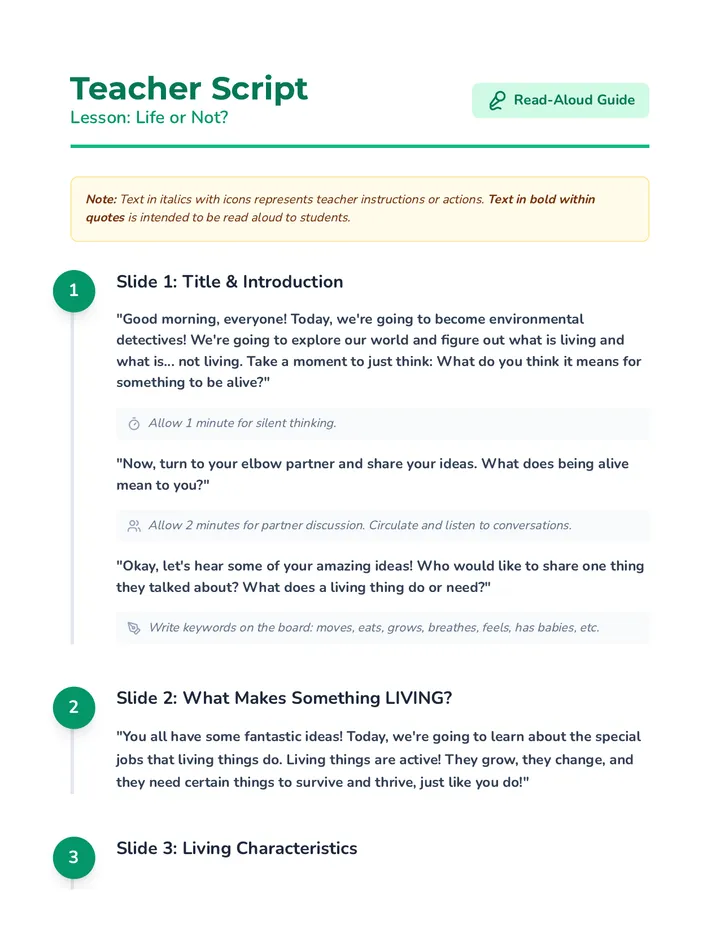
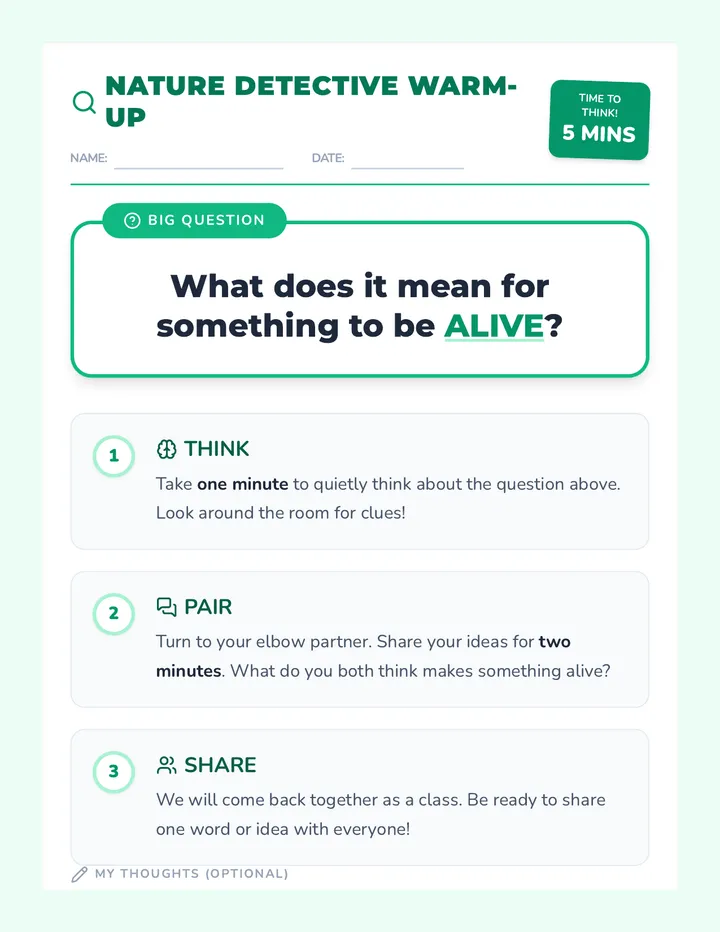
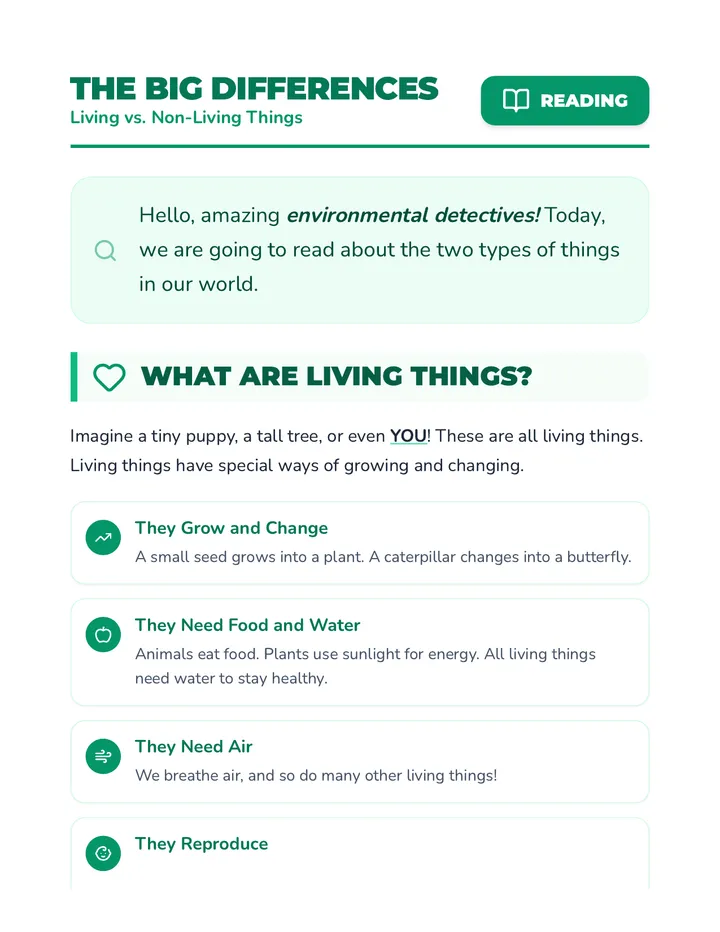
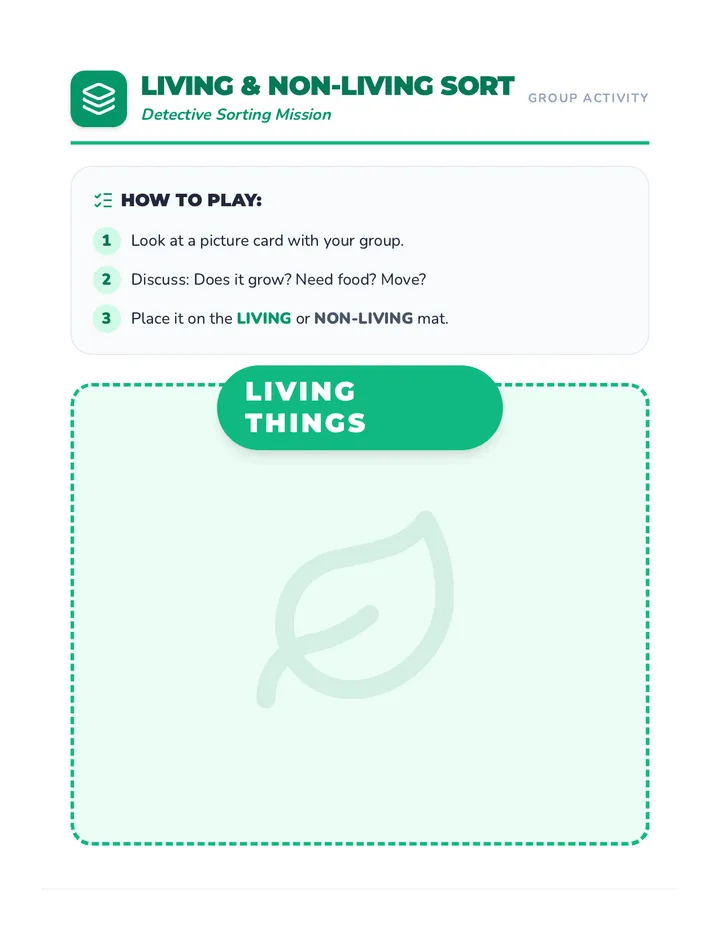
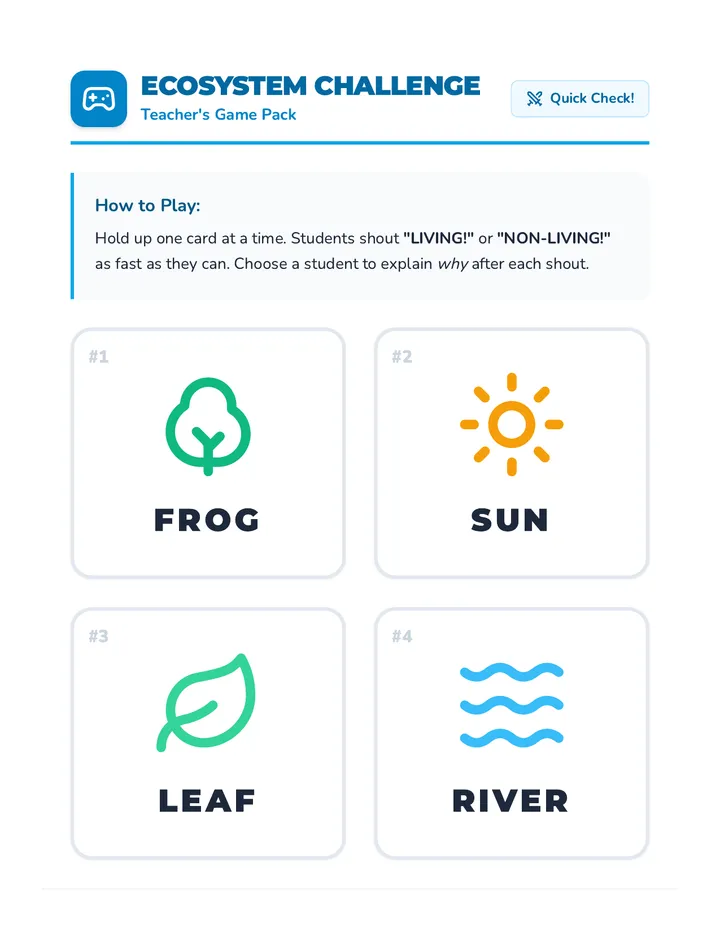
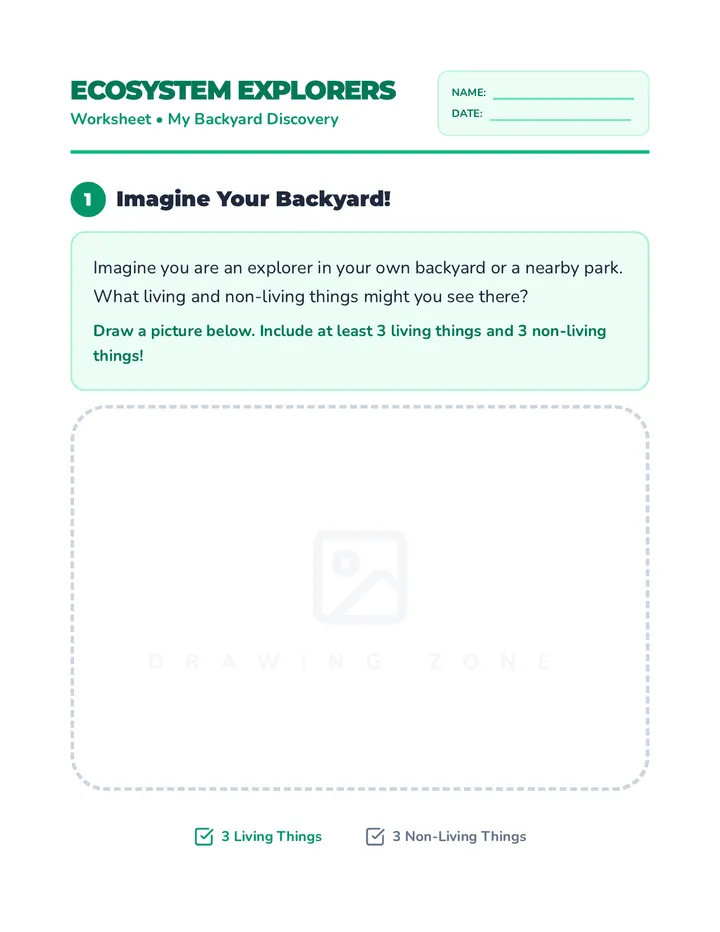
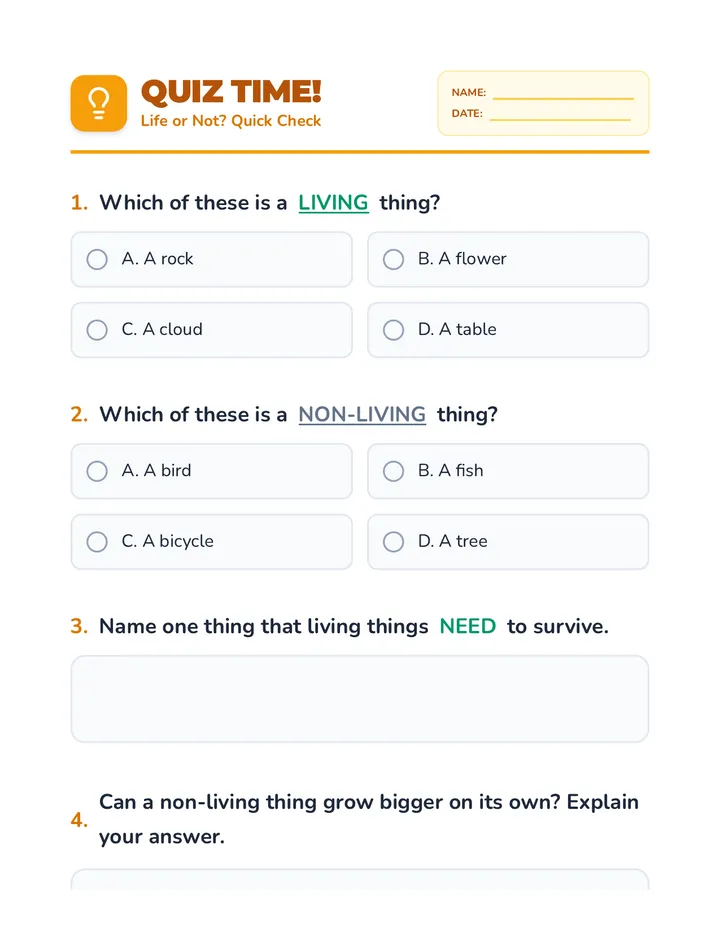
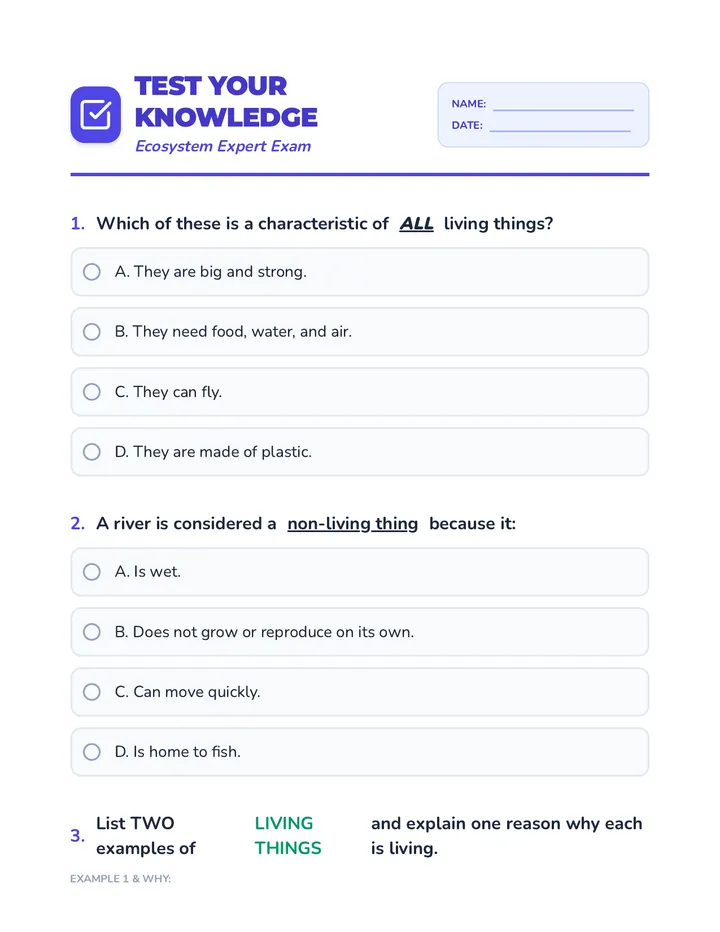
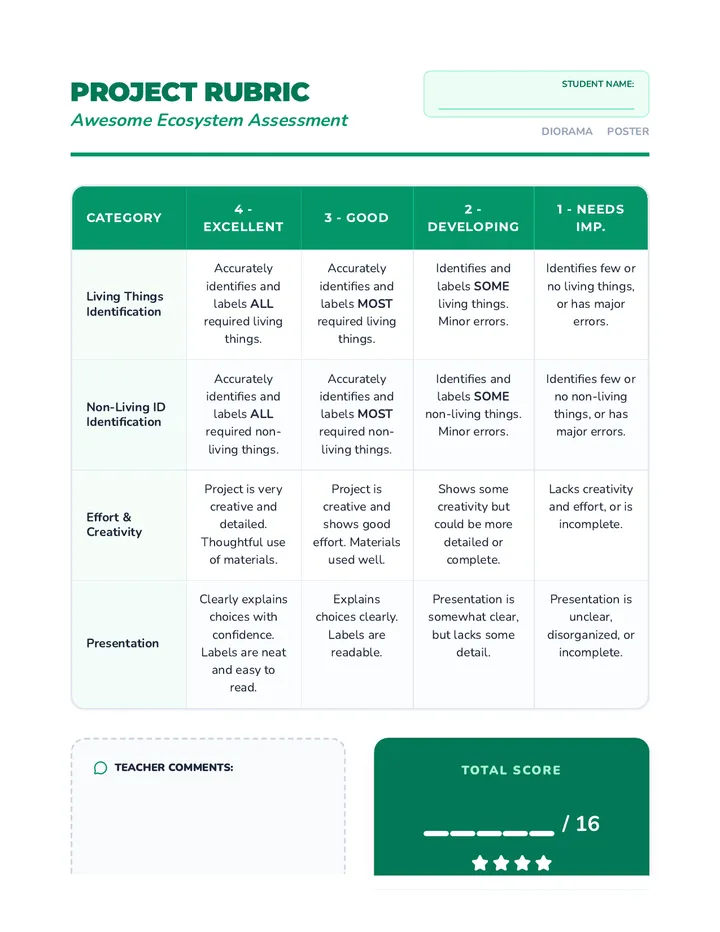
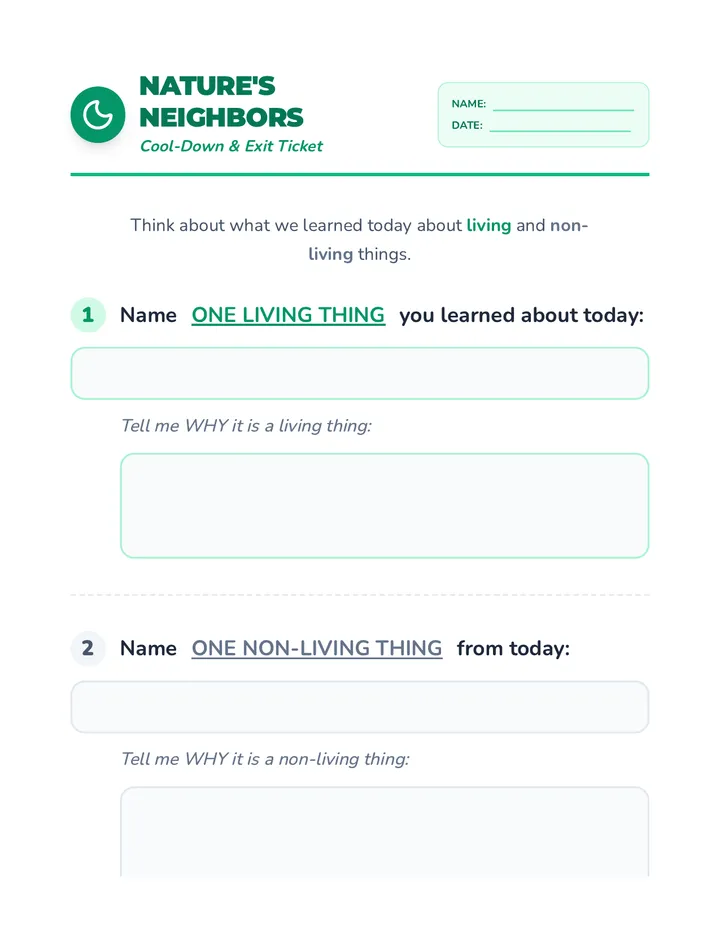
A foundational lesson for 4th-grade adaptive special education students to distinguish between living and non-living components of an environment through hands-on exploration and detective-themed activities.
A personalized, 20-minute Tier 3 intervention for a 2nd-grade student to develop a consistent task-initiation routine. The lesson uses a 'Mission Ready' theme to empower the student with predictable steps for starting academic work.
This 30-minute lesson for 11th-grade students provides practical strategies for managing ADHD symptoms in the classroom, helping students develop self-regulation skills to improve focus and academic performance.