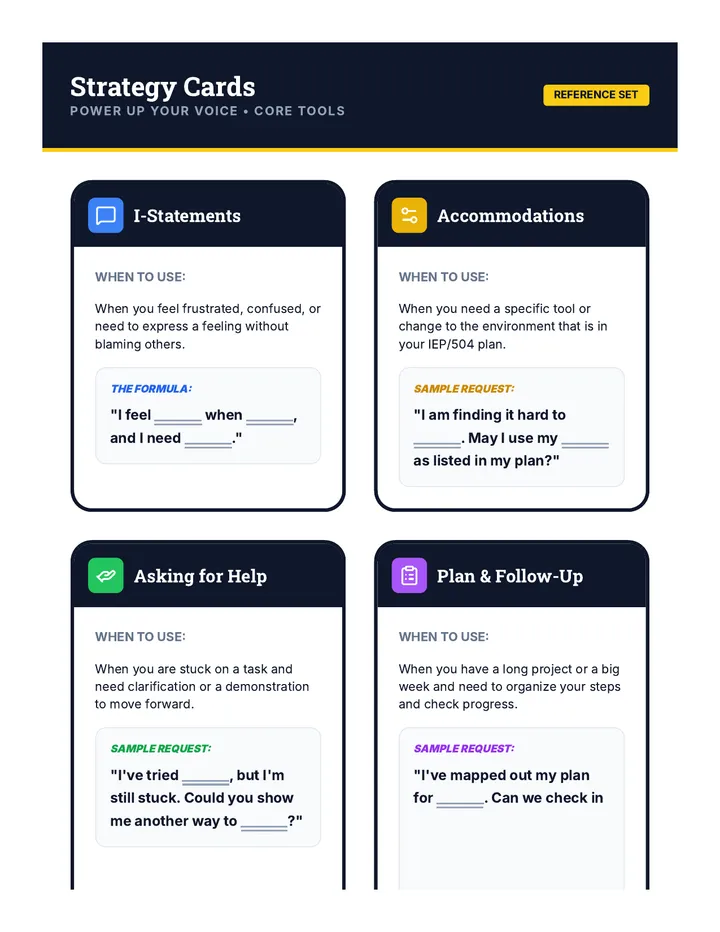
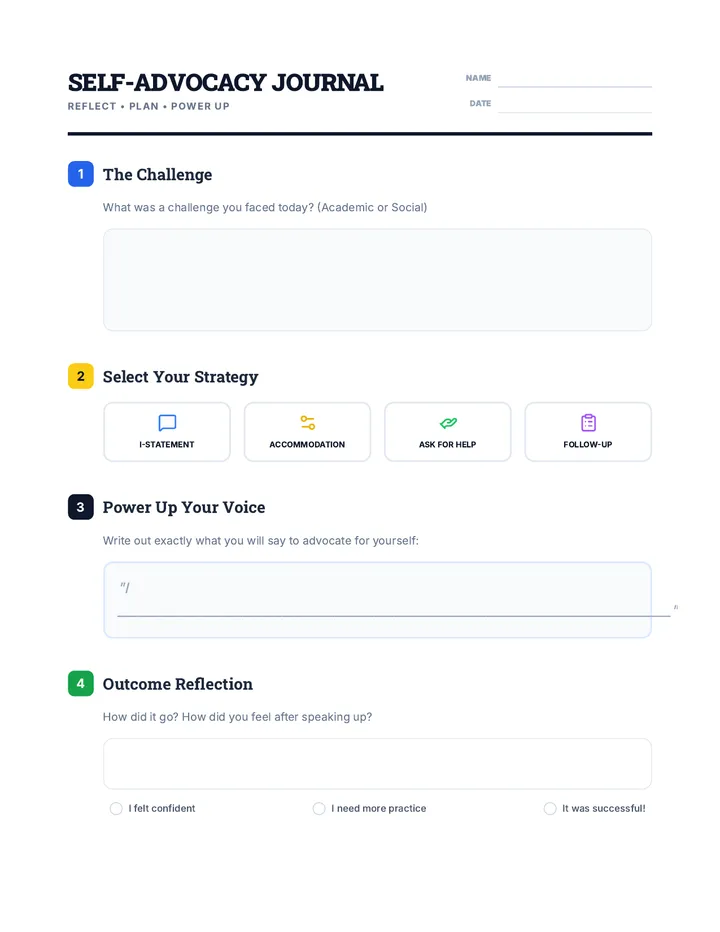
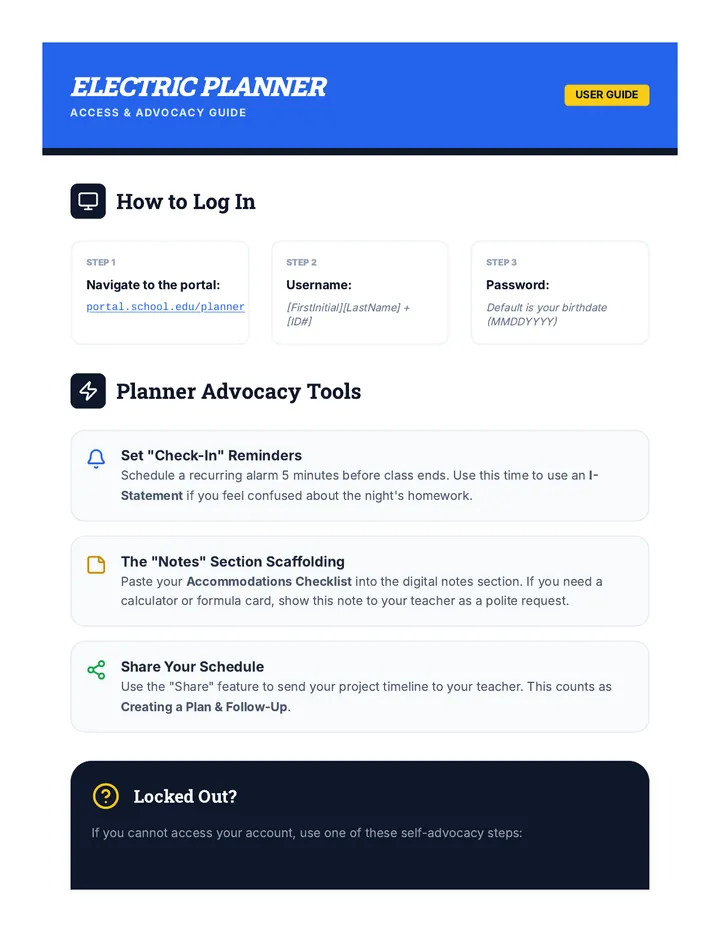
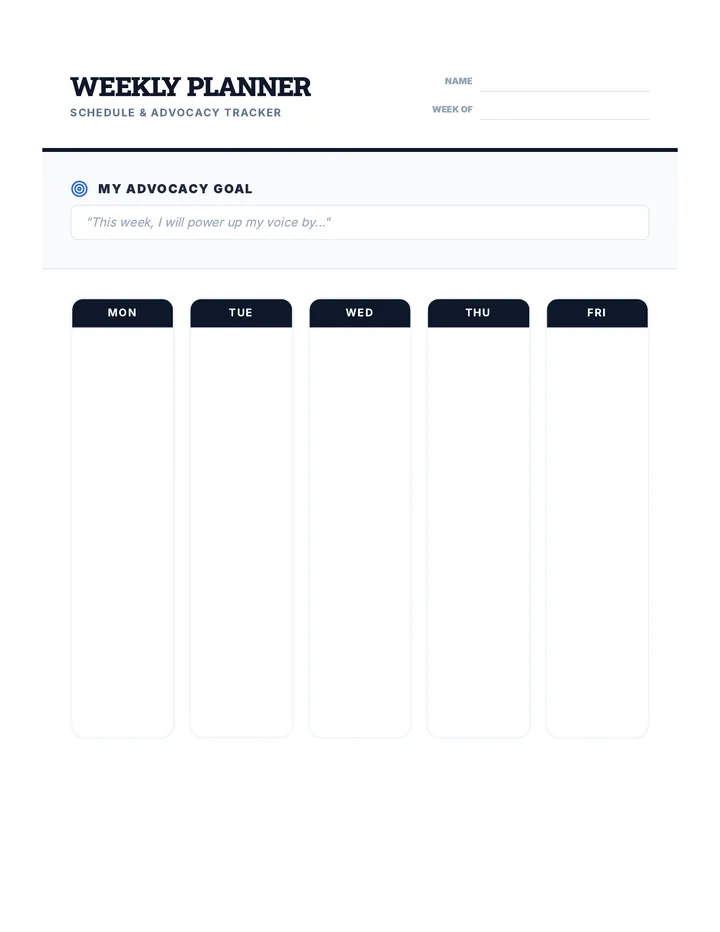
Strategies for identifying specific learning needs and articulating accommodation requests to educators. Equips students with communication skills to advocate for necessary environmental, academic, and social supports.
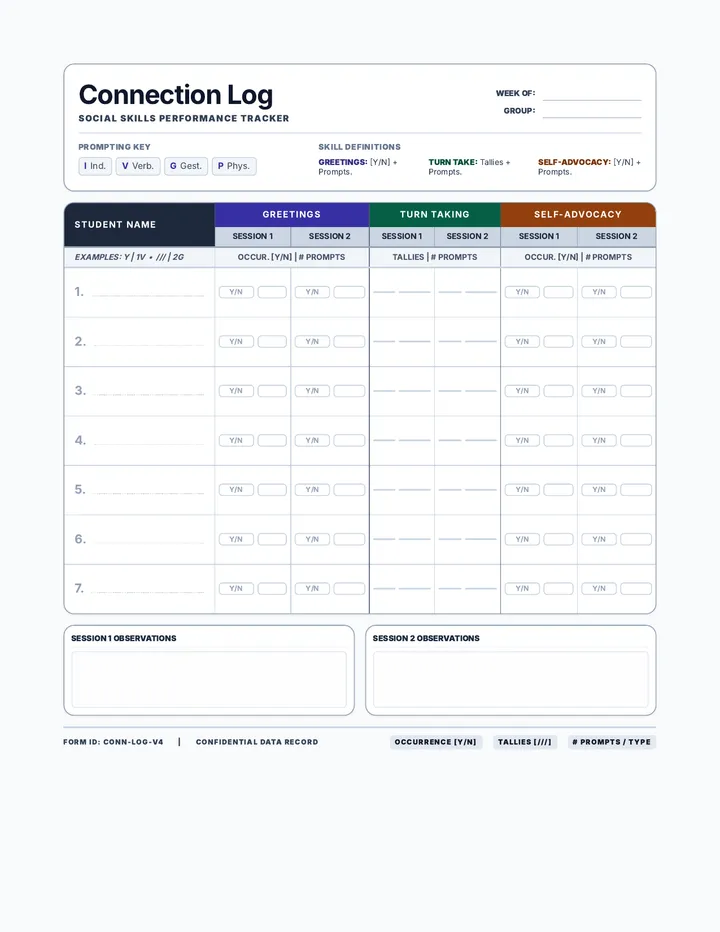
A professional data collection sheet for a 7-student social skills group. It features specific tracking for three skills over two sessions: Y/N and # Prompts for Greetings and Self-Advocacy, and Tallies and # Prompts for Turn Taking.
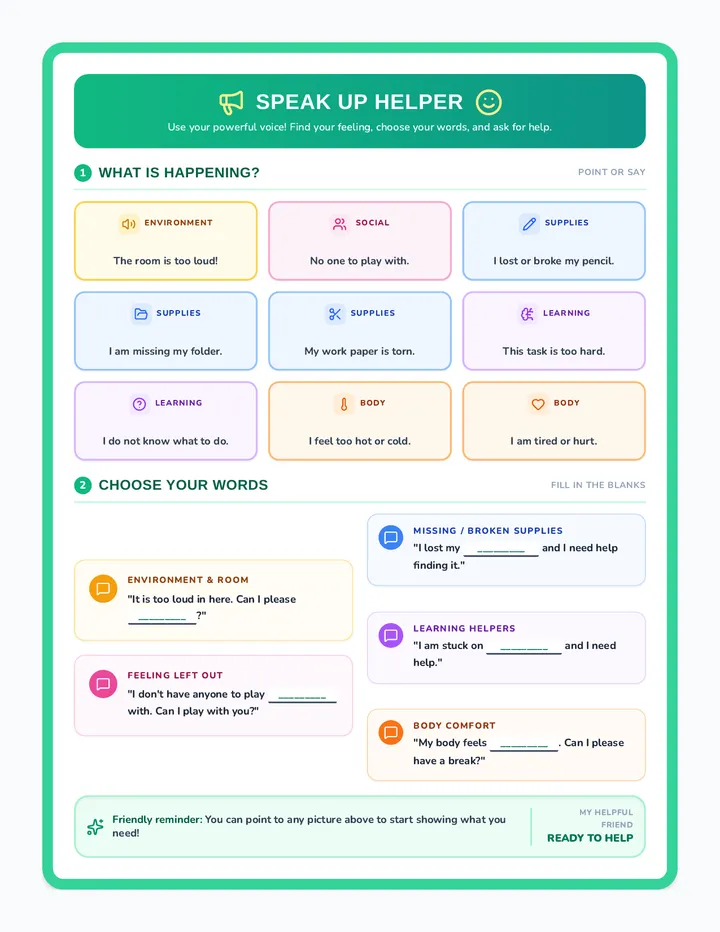
A single-page classroom anchor chart and desk poster formatted for perfect single-page printing. Features a clean 3x3 layout of color-coded school scenarios and 5 structured fill-in-the-blank sentence starters to support student voice and expression.
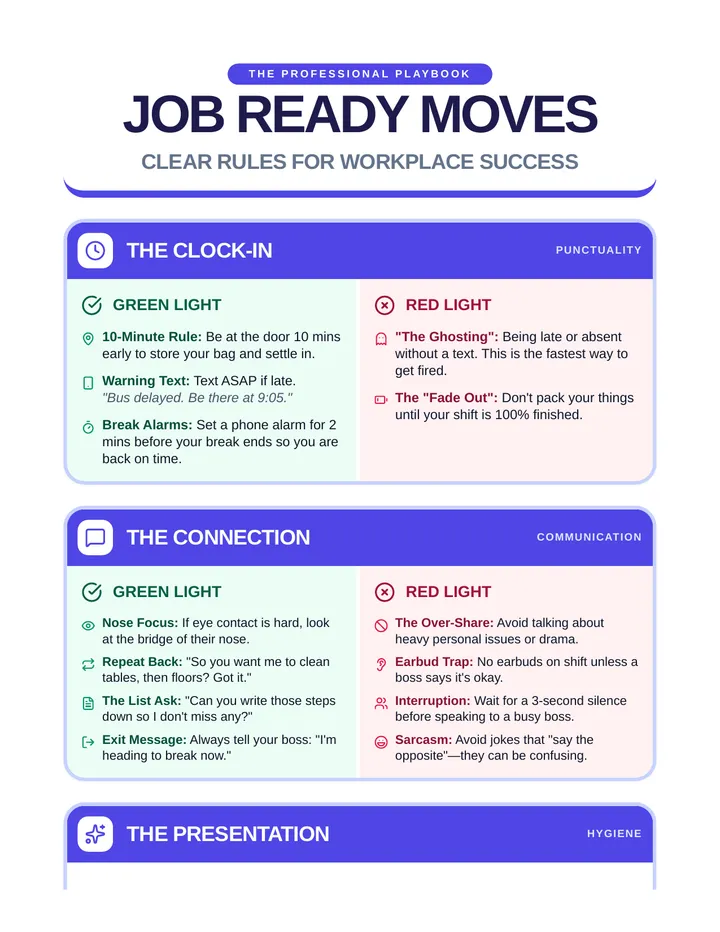
An updated version of the Job Ready Moves Poster with expanded hygiene tips, including specific advice on handwashing, hair grooming, and avoiding common hygiene pitfalls for students facing housing instability.
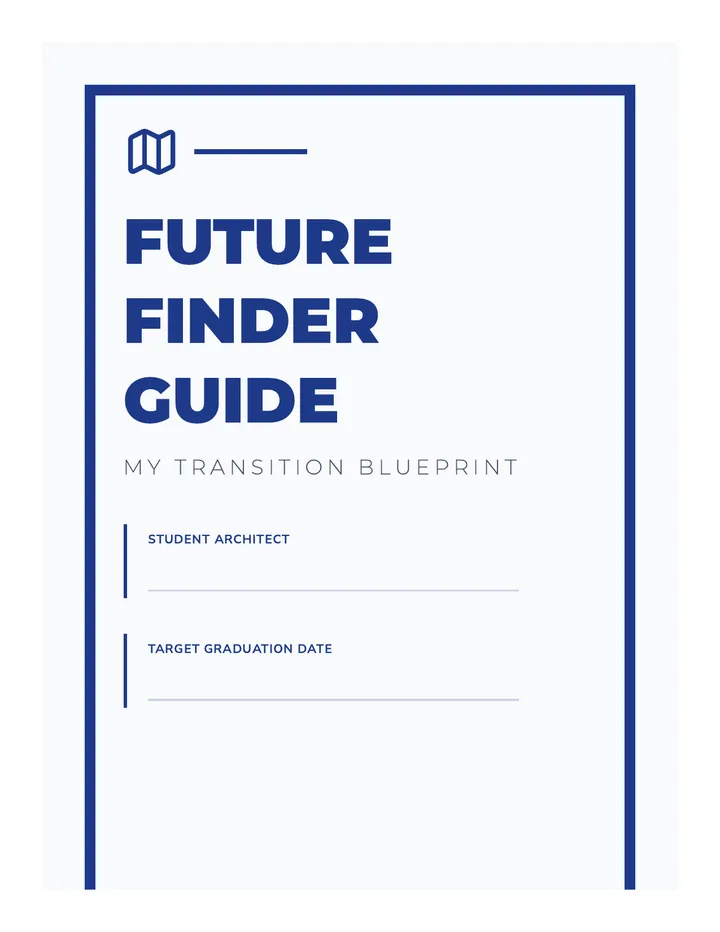
A comprehensive 10-page post-secondary transition plan guide for students with an IEP, featuring updated graduation pathway options: Diploma, Alternative Pathway to a Diploma, and Certificate of completion.
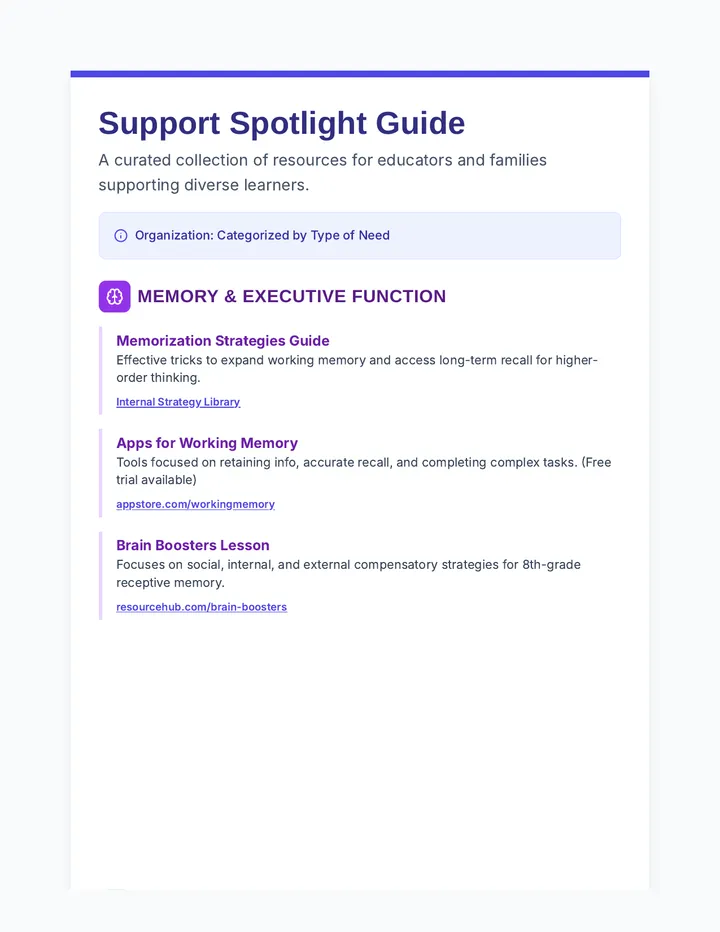
A revised two-page resource guide for special education teachers and parents, organized by type of need. This update fixes page-break issues and ensures all resource entries include relevant links and descriptions.
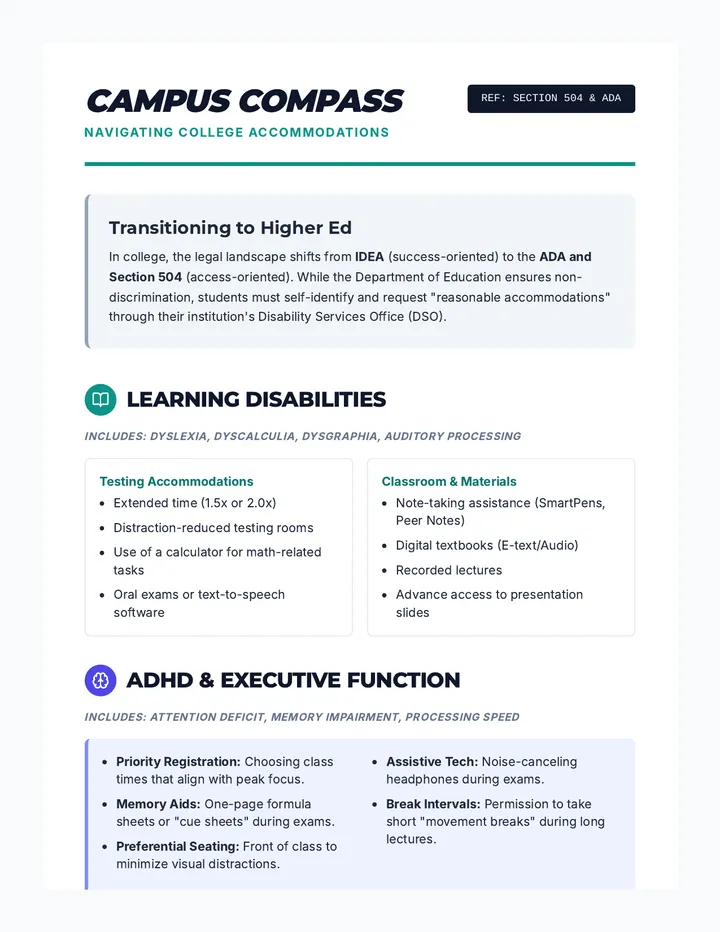
A two-page informational handout titled 'Campus Compass' detailing commonly approved college accommodations categorized by disability. It includes specific examples for learning disabilities, ADHD, physical mobility, sensory impairments, and psychological health, along with transition tips for students.
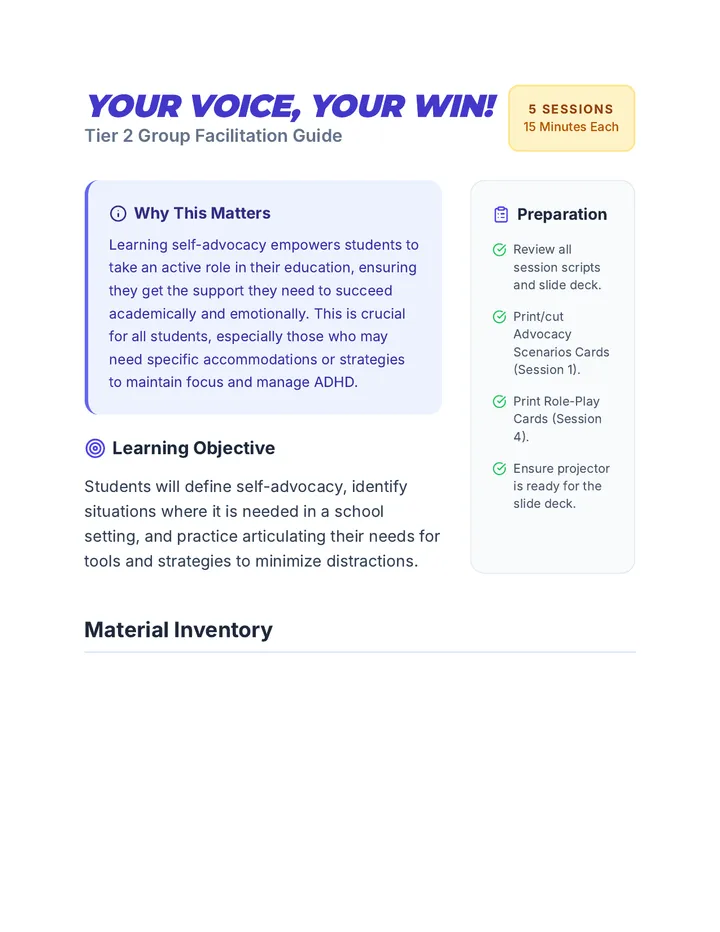
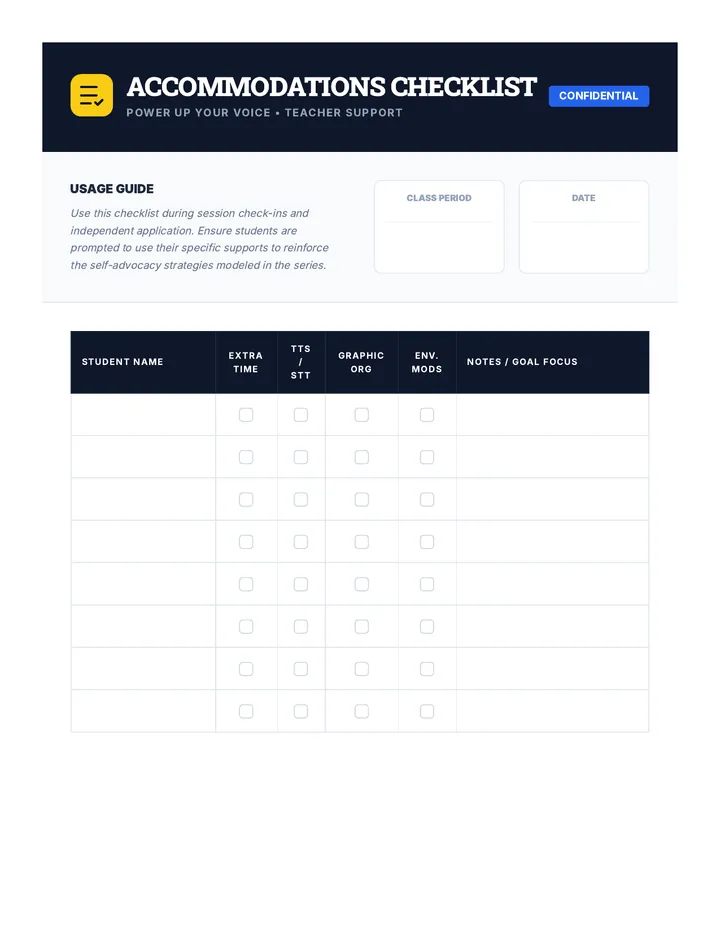
A 5-session self-advocacy sequence for 5th-grade boys, focusing on identifying needs, using learning tools, managing distractions, and practicing clear communication with teachers.
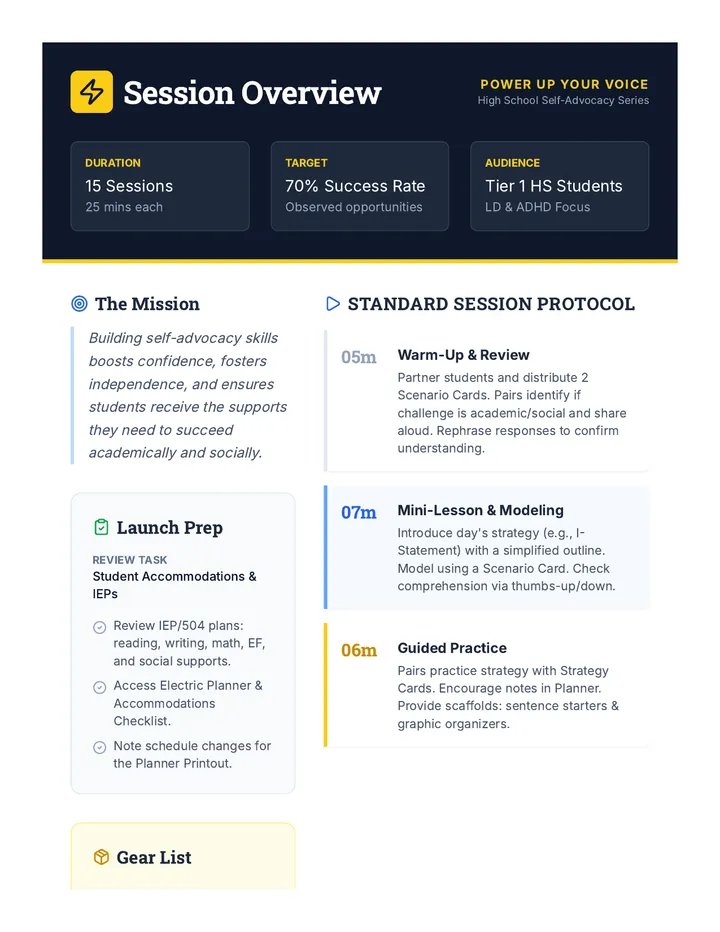
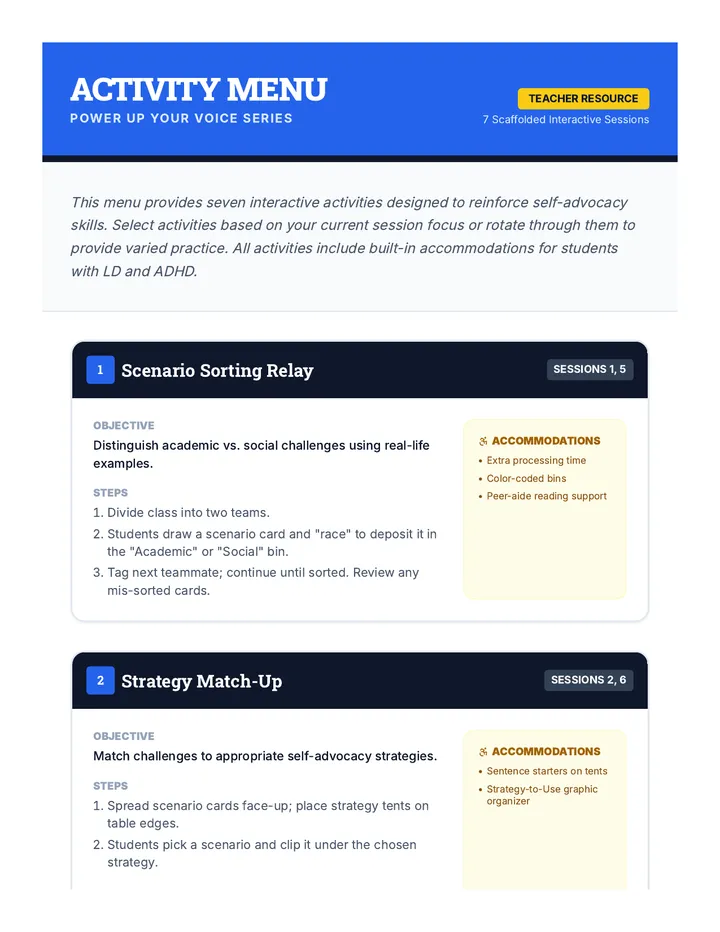
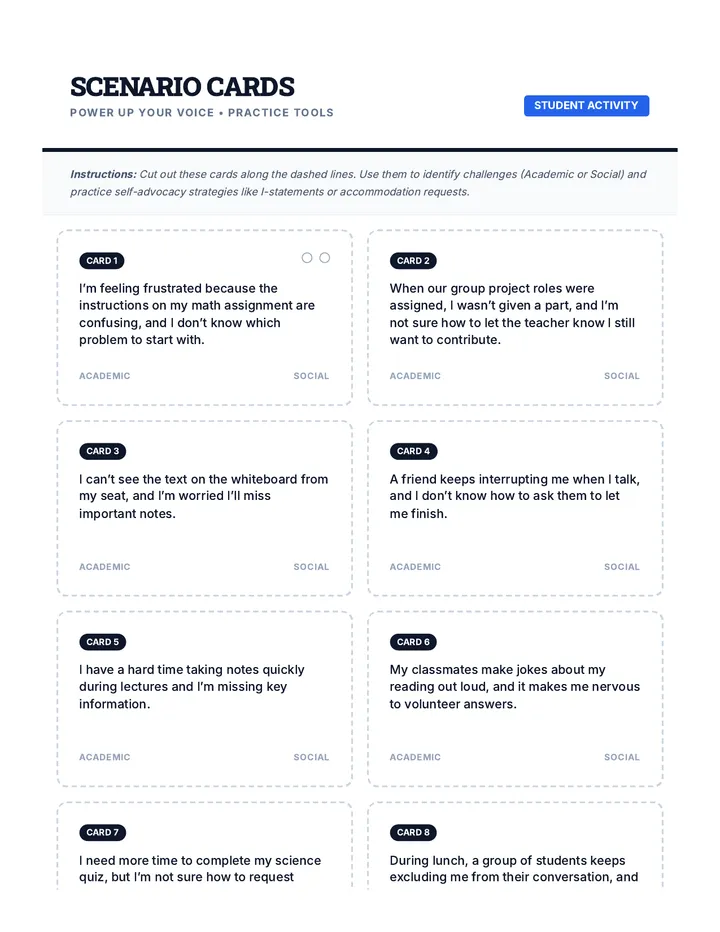
A comprehensive 15-session self-advocacy series designed for high school students with learning disabilities and ADHD, focusing on identifying challenges and requesting supports.
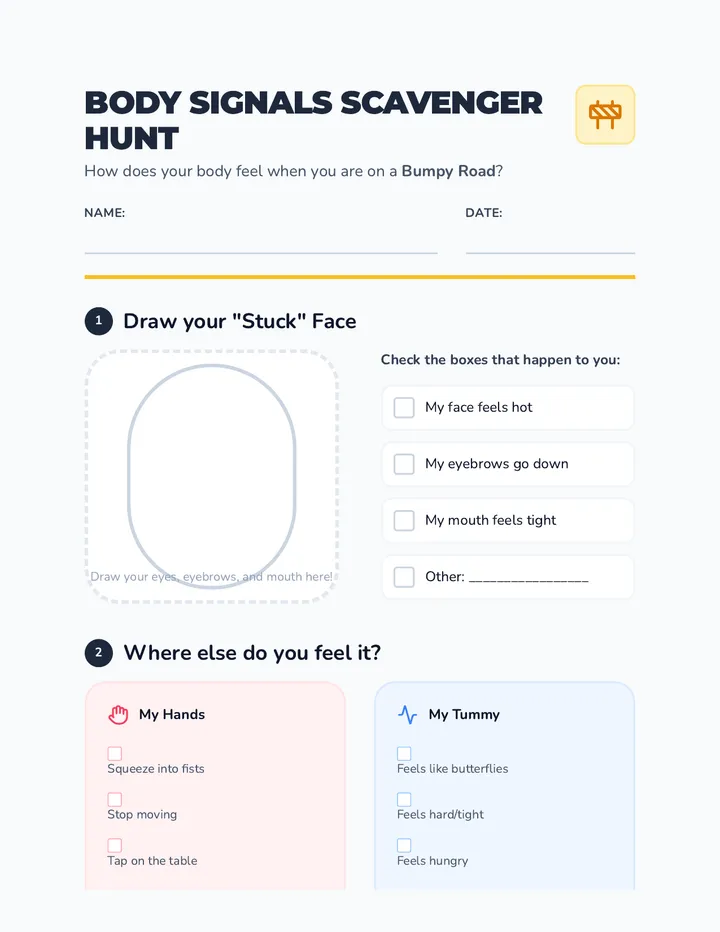
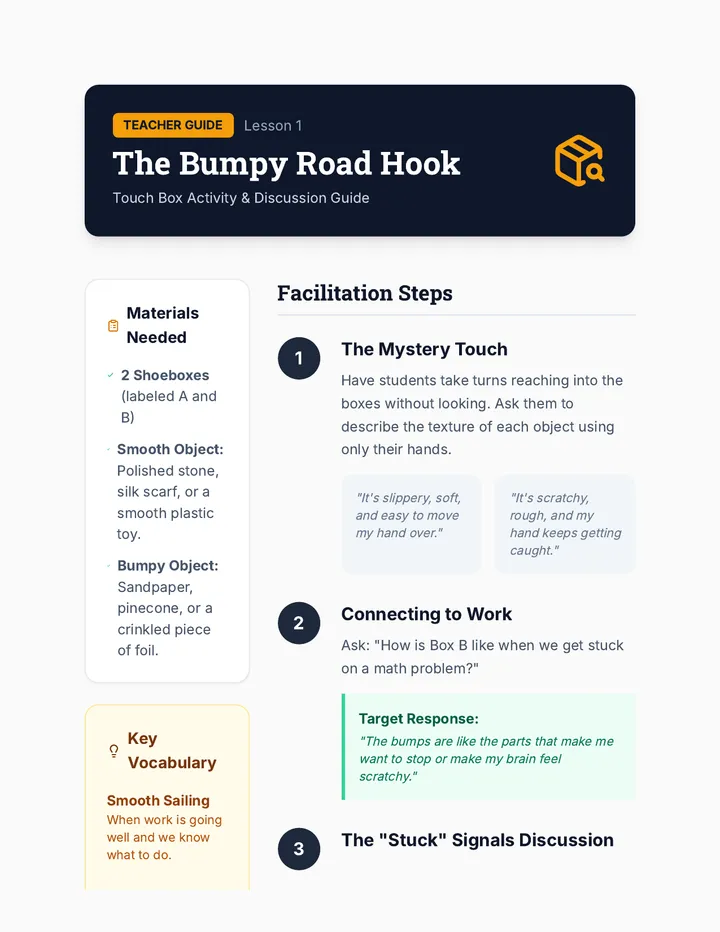
A 2nd-grade special education unit focused on executive function. Students learn to recognize the physical signs of being 'stuck' and categorize barriers into materials, comprehension, and environment.
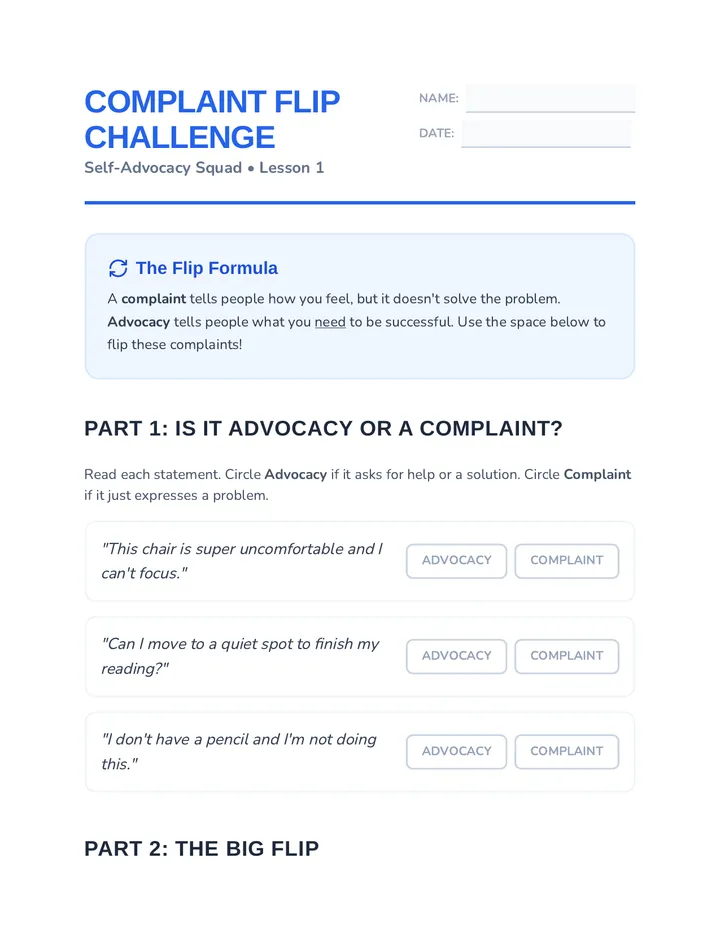
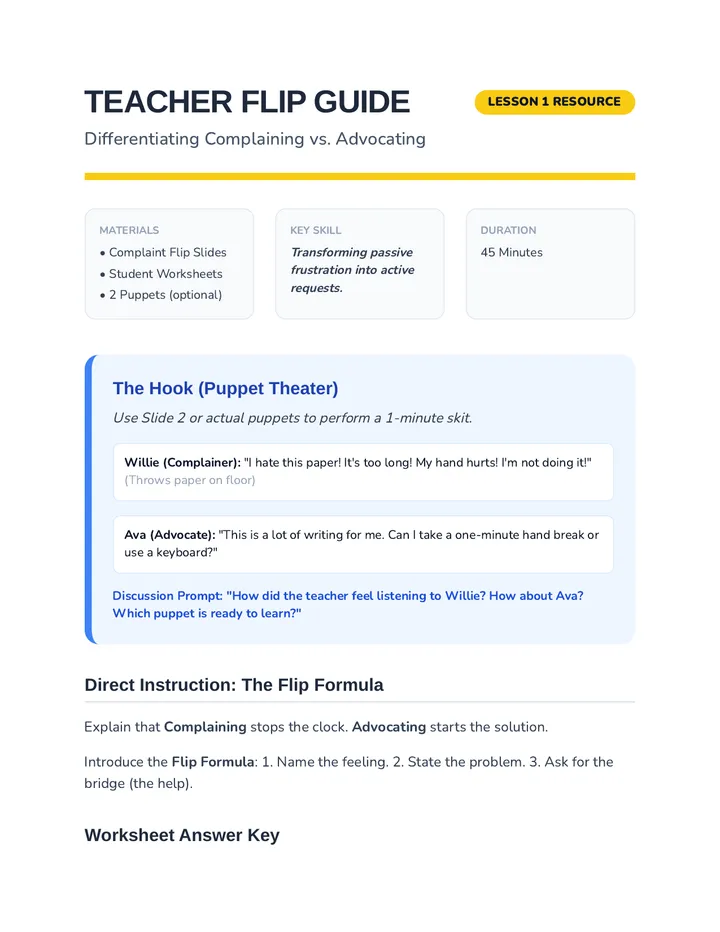
A 5-lesson sequence designed for 3rd-grade students to transition from general problem-solving to self-advocacy. Students learn to distinguish between complaining and advocating, identify appropriate sources of help, draft personal advocacy scripts, and create a physical 'Help Menu' tool for daily use.
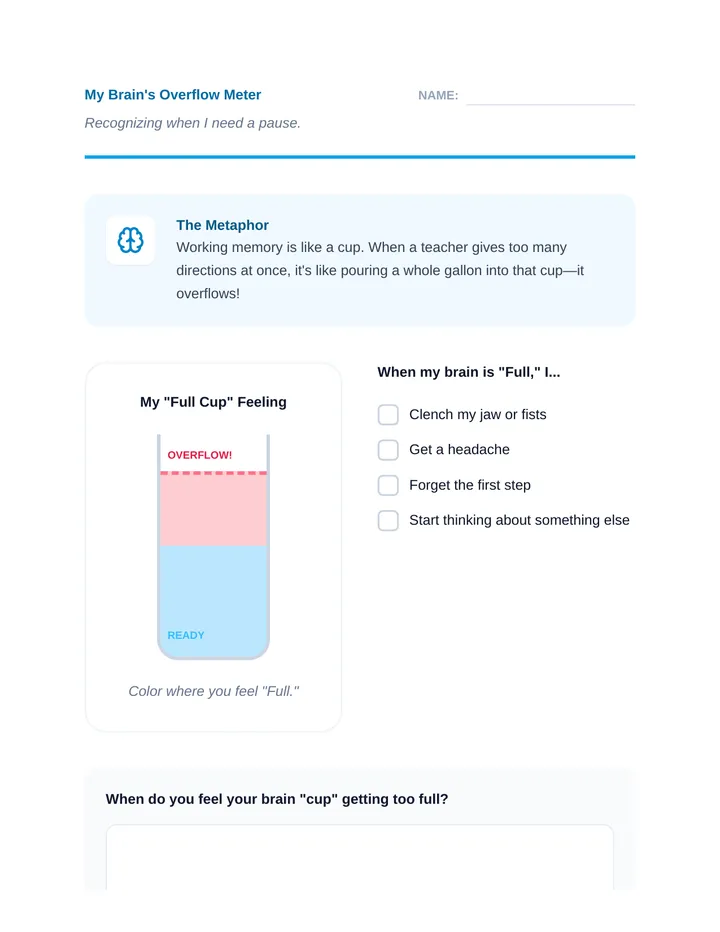
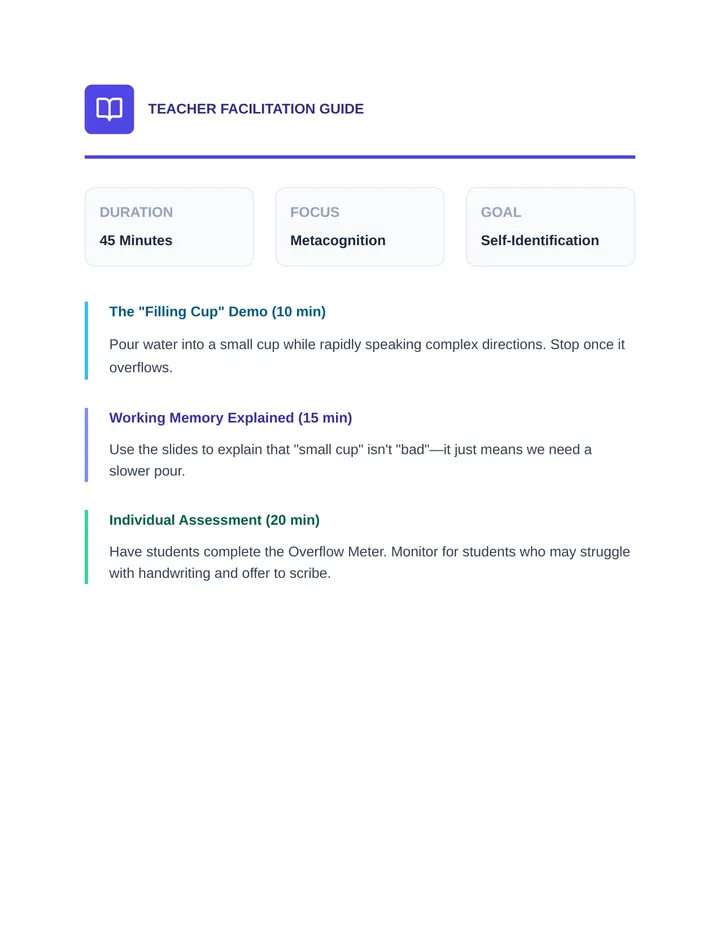
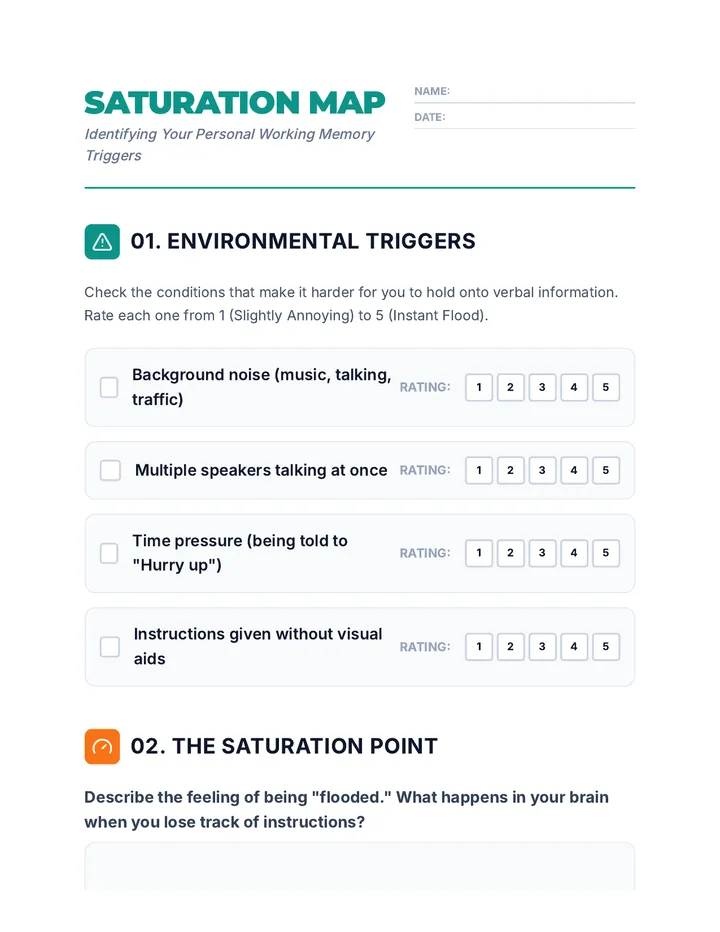
This sequence empowers 6th-grade students with working memory challenges to recognize cognitive overload and advocate for single-step directions. Students develop metacognitive awareness and a practical 'clarification toolkit' to manage learning inputs effectively.
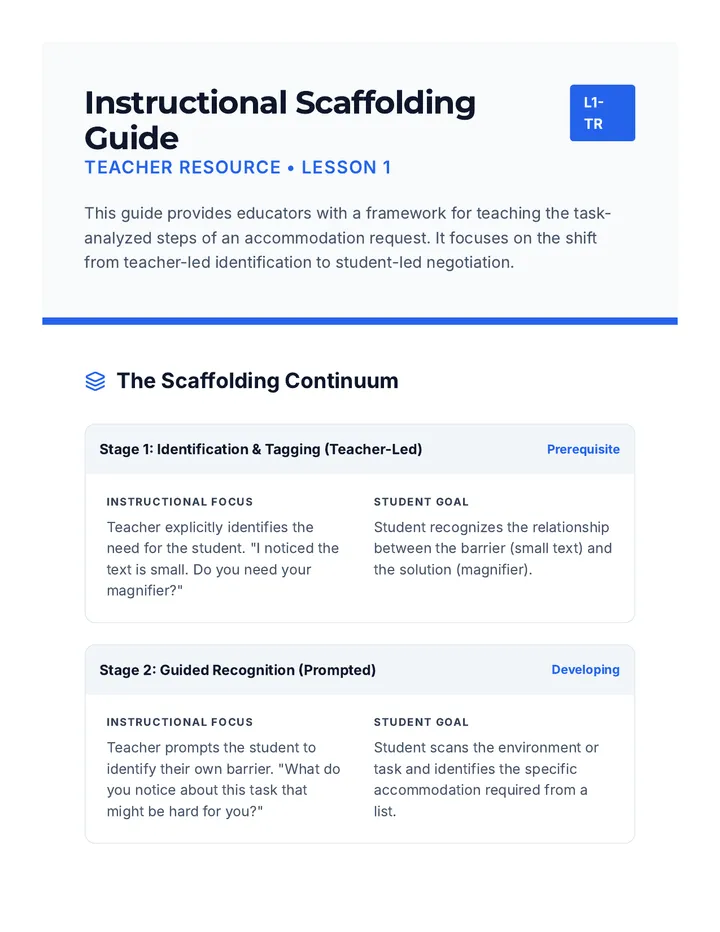
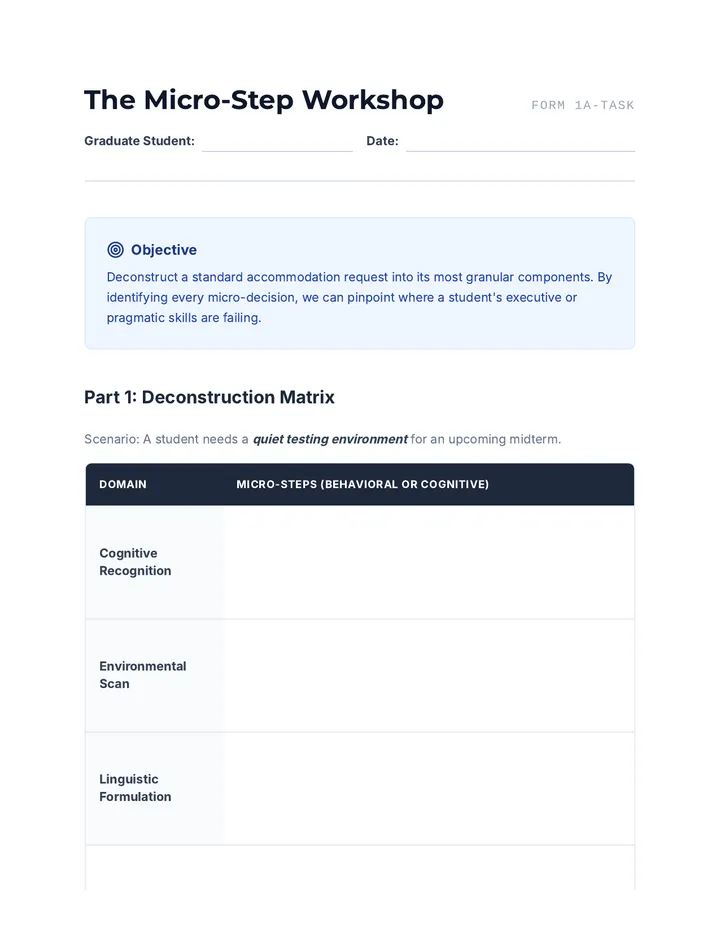
A graduate-level sequence focused on the instructional methodology for teaching self-advocacy skills, specifically requesting accommodations. Graduate students will learn to task-analyze requests, design tiered scripts, facilitate behavioral rehearsals, collect data on advocacy behaviors, and plan for generalization.
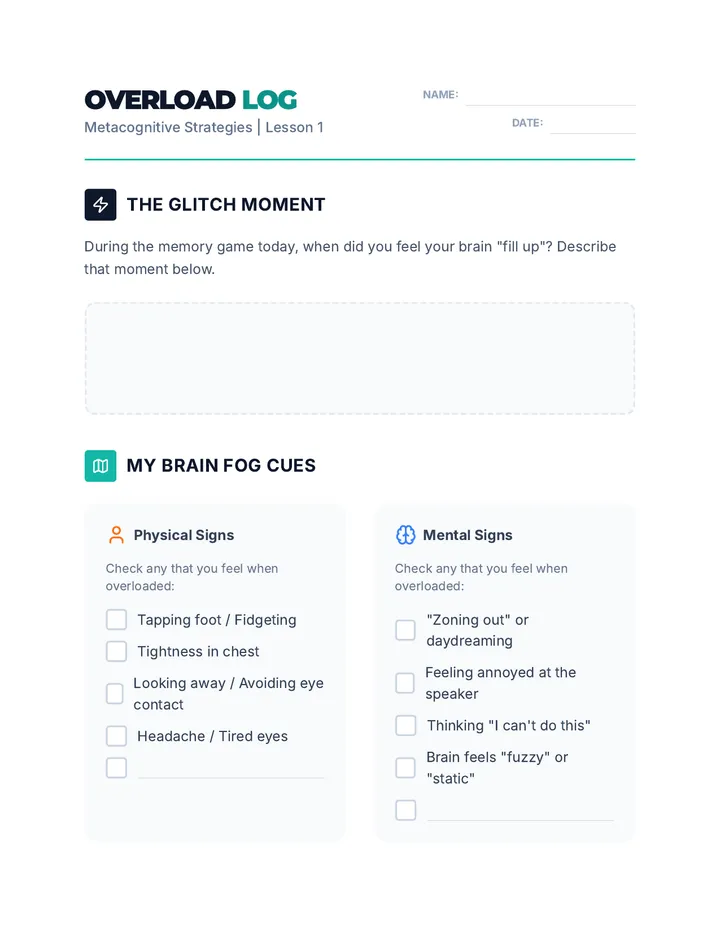
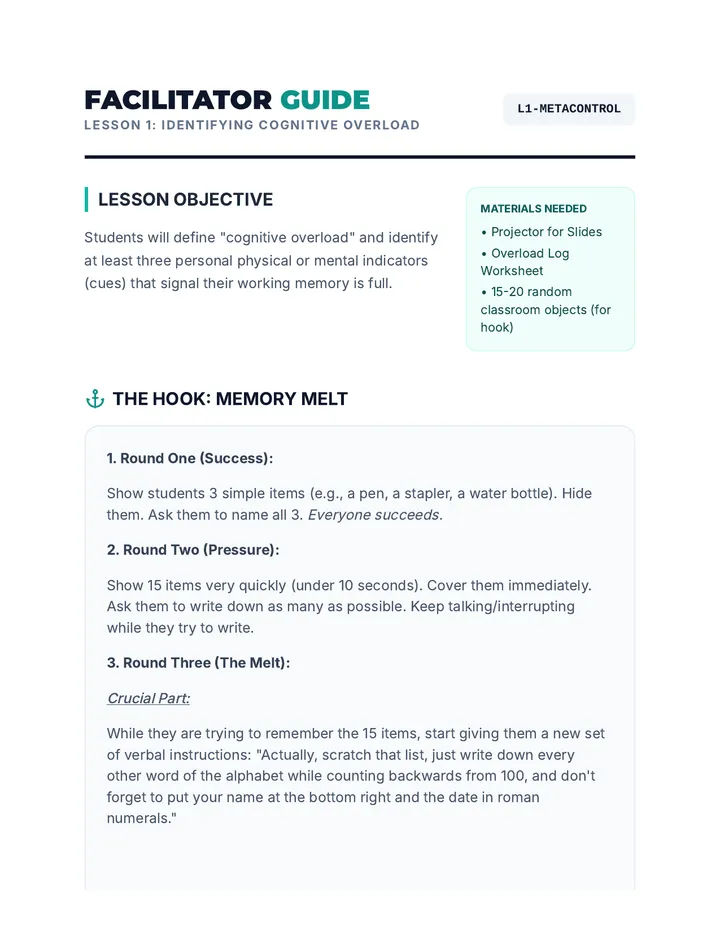
This sequence empowers 8th-grade students with metacognitive strategies to recognize cognitive overload and advocate for single-step directions. It covers identifying personal cues of overload, deconstructing complex instructions, and practicing self-advocacy scripts.
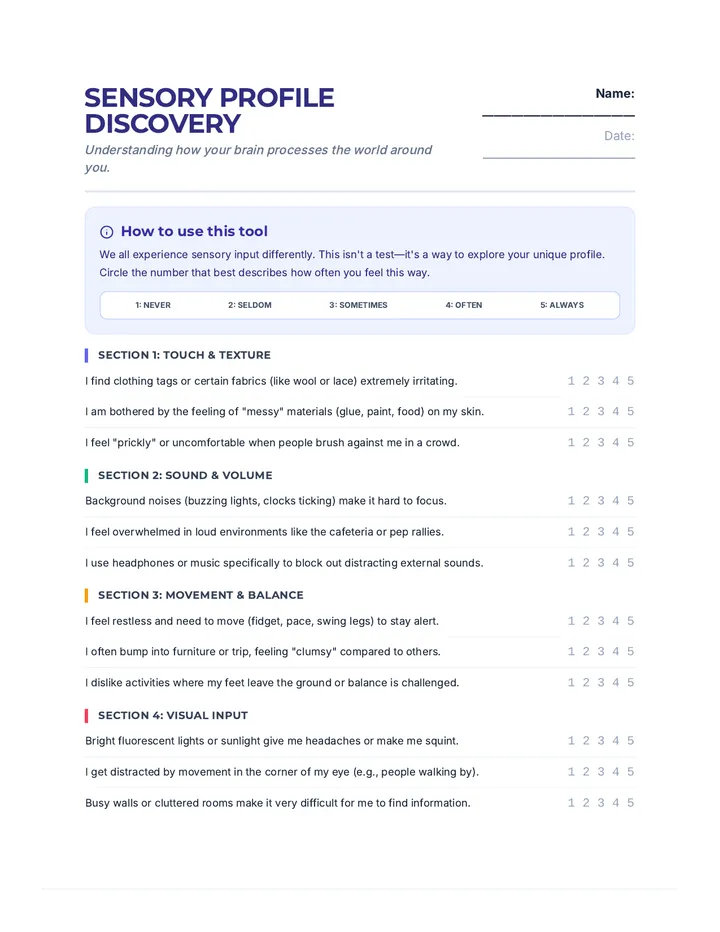
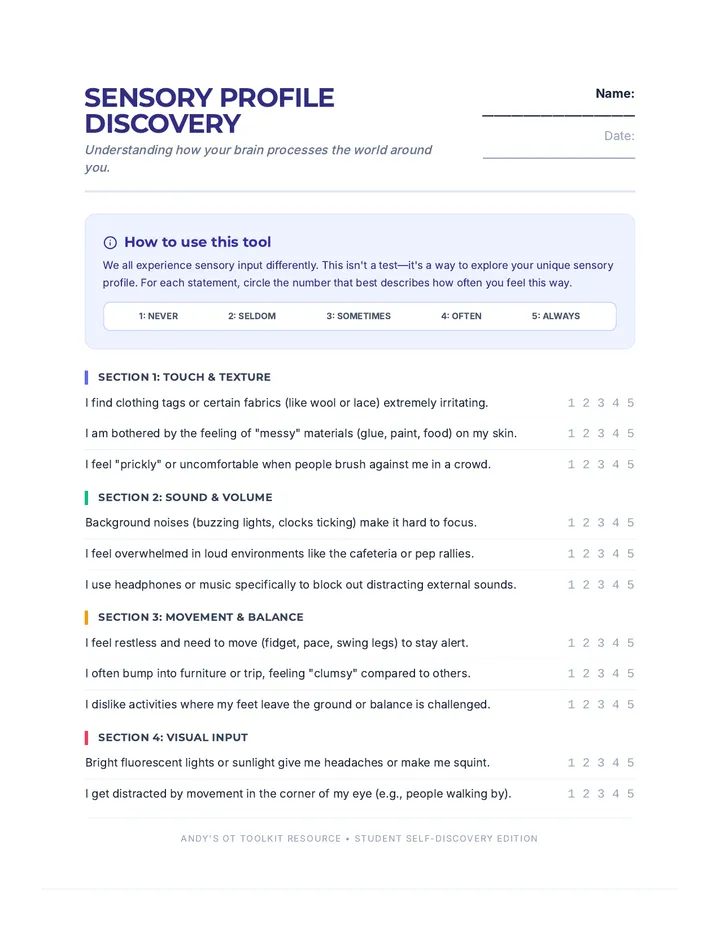
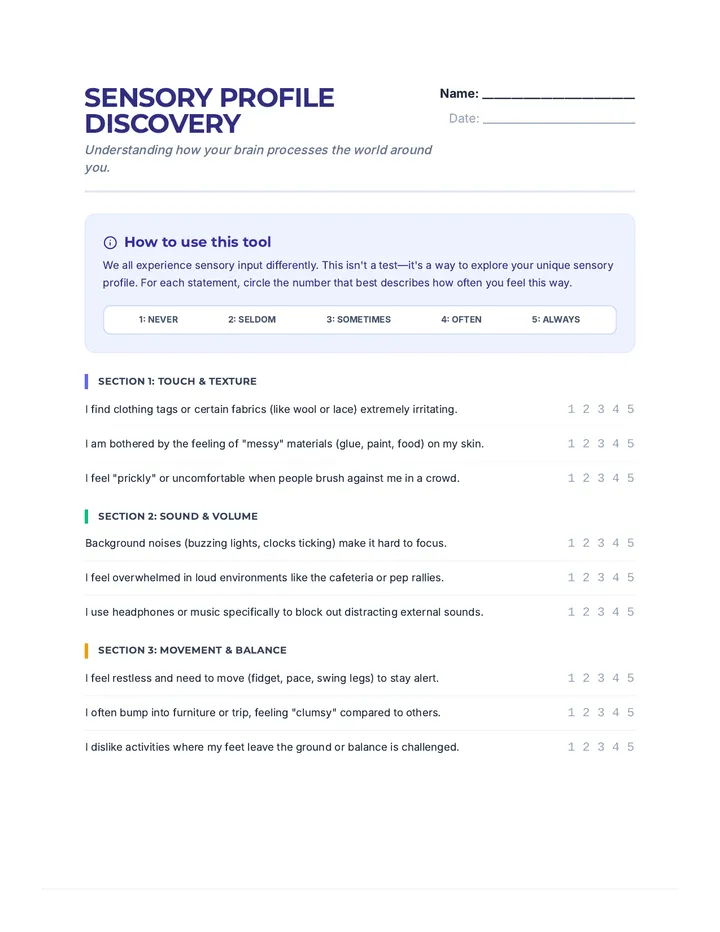
A comprehensive 5-lesson unit where students explore the eight sensory systems, identify their unique sensory processing styles, and create a personal 'User Manual' to advocate for their learning needs.
A self-advocacy sequence for 11th-grade students to manage working memory challenges by requesting single-step directions and professional modifications in fast-paced environments.
This sequence teaches 5th-grade students how to communicate their sensory needs and utilize co-regulation strategies. Students will develop non-verbal signals, practice verbal scripts, and create a formal co-regulation plan to bridge the gap between internal dysregulation and external support.
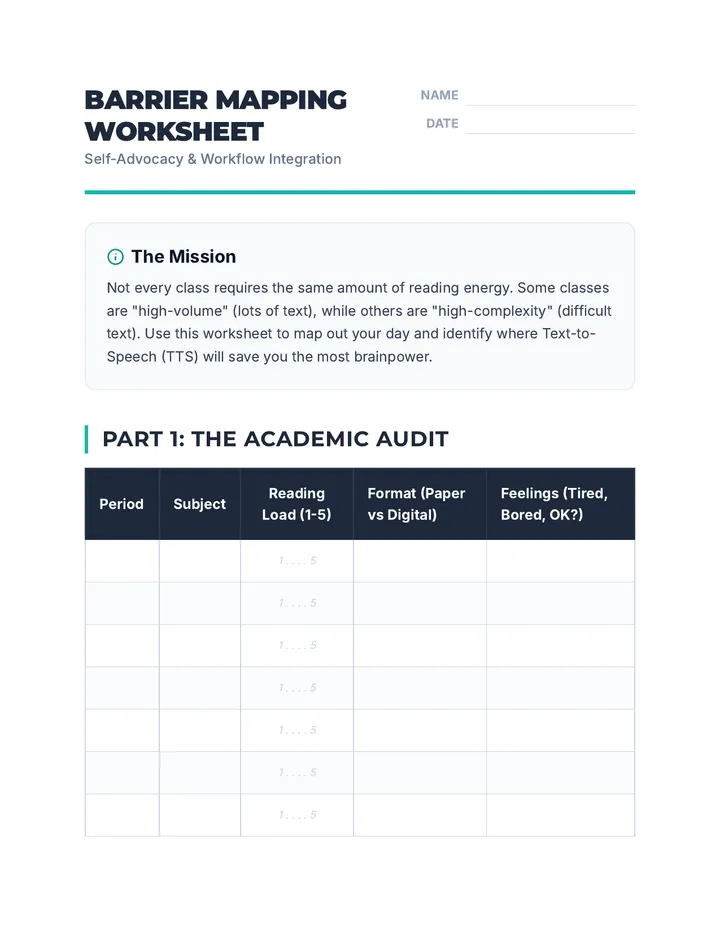
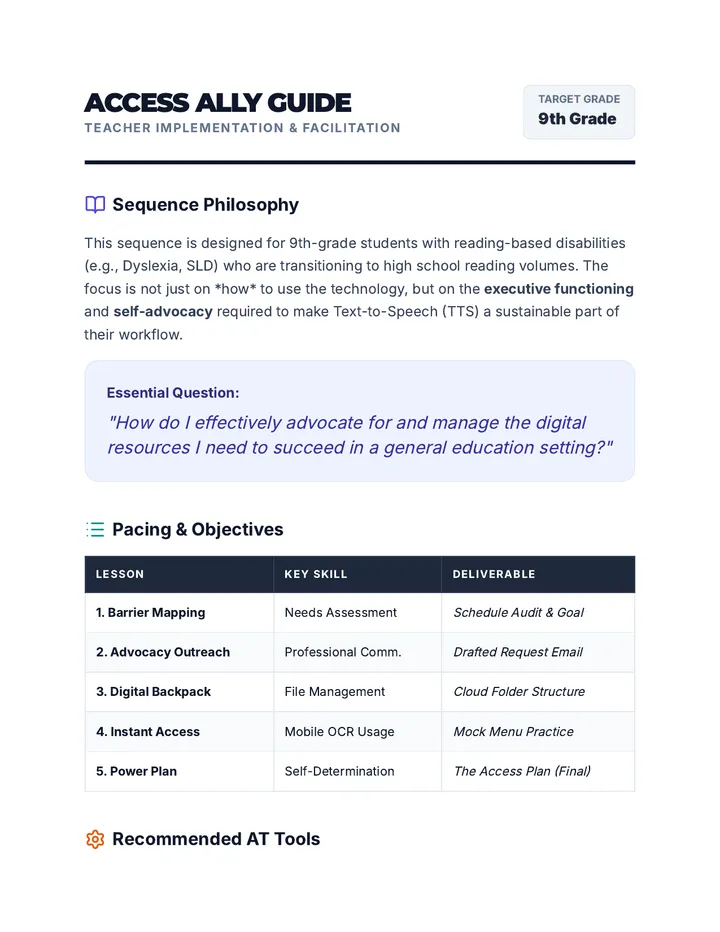
This sequence empowers 9th-grade students to integrate Text-to-Speech (TTS) into their high school workflows through self-advocacy and digital organization. Students move from identifying reading barriers in their schedules to creating a professional Access Plan for their teachers.
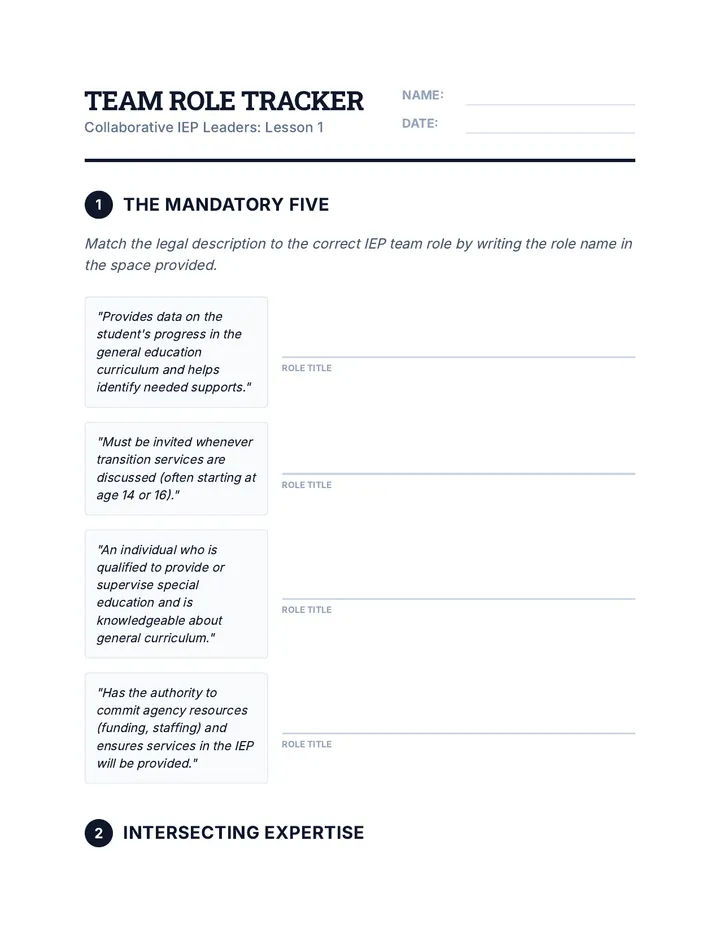
A comprehensive unit for high school students exploring the collaborative nature of IEP meetings. Students will master the roles of team members, the legal timeline of special education, self-advocacy strategies, and conflict resolution techniques, culminating in a professional mock IEP simulation.
A comprehensive 3-hour one-on-one session designed for adults with disabilities, covering pre-interview routines, professional presentation, and effective communication strategies during a job interview.
A comprehensive self-advocacy curriculum designed for young adults to navigate school, home, community, and the workplace with confidence. Focuses on personal identity (pronouns), legal rights (ADA/IDEA), and practical communication strategies.
A comprehensive lesson designed to help a 3rd-grade student recognize and shift from 'stuck thinking' to 'flexible thinking' during transitions and writing tasks. Includes a social story, role-playing, and tangible strategy cards.
A comprehensive social story and supporting tools designed for an academically advanced 2nd grader to manage non-preferred tasks, transitions, and big emotions using verbal communication and solution-seeking strategies instead of screaming or eloping.
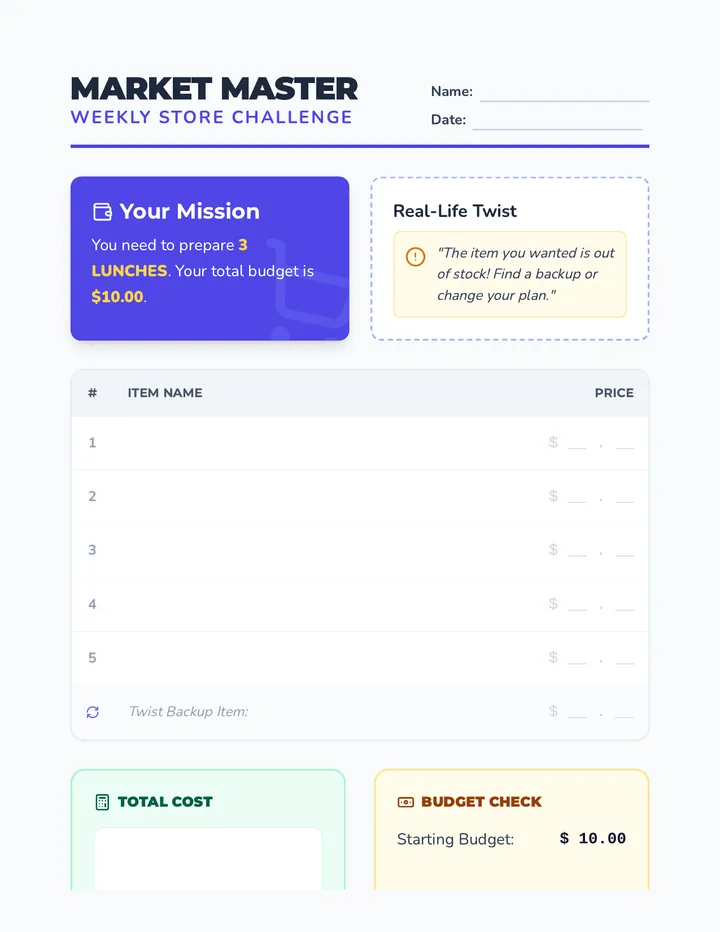
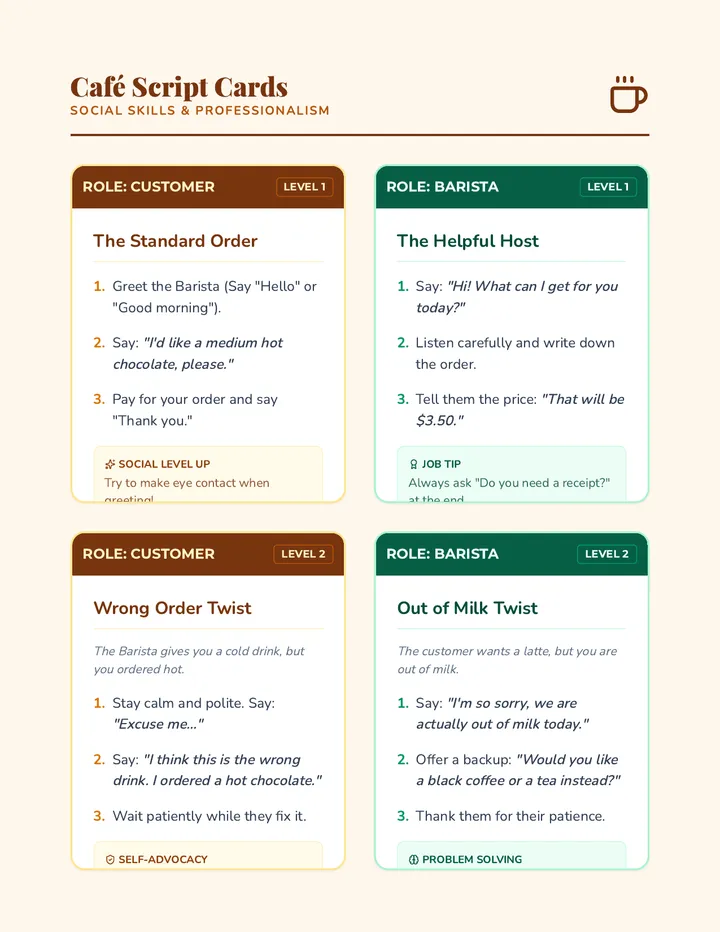
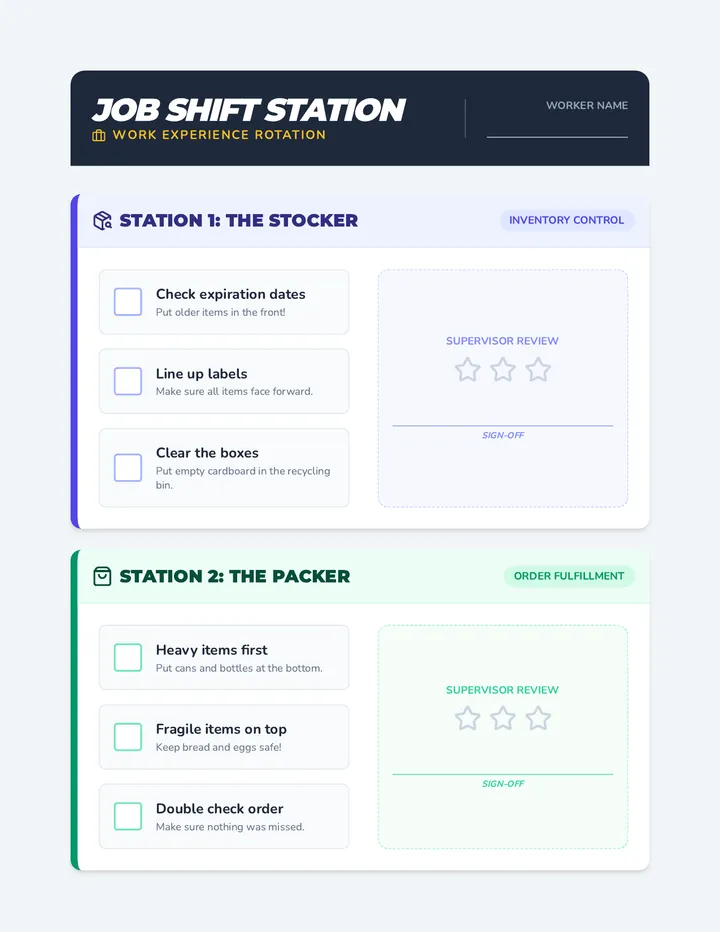
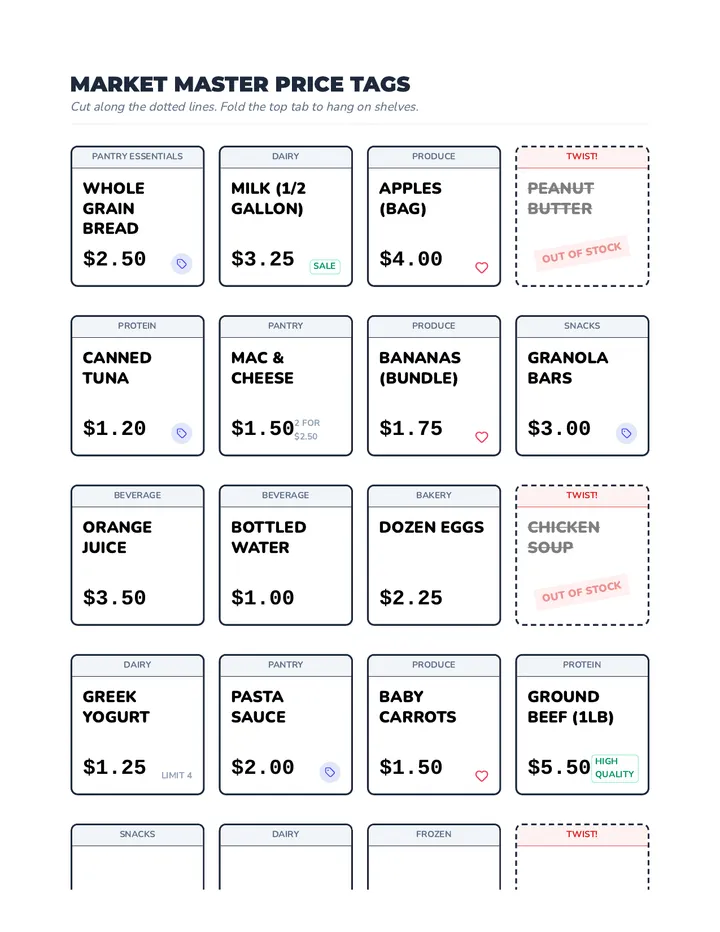
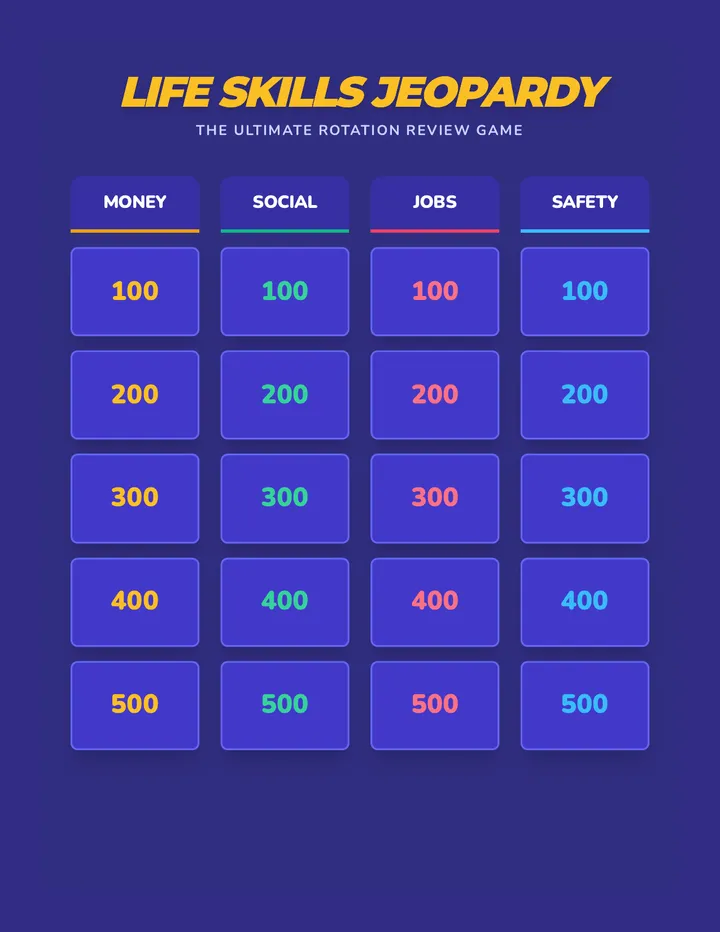
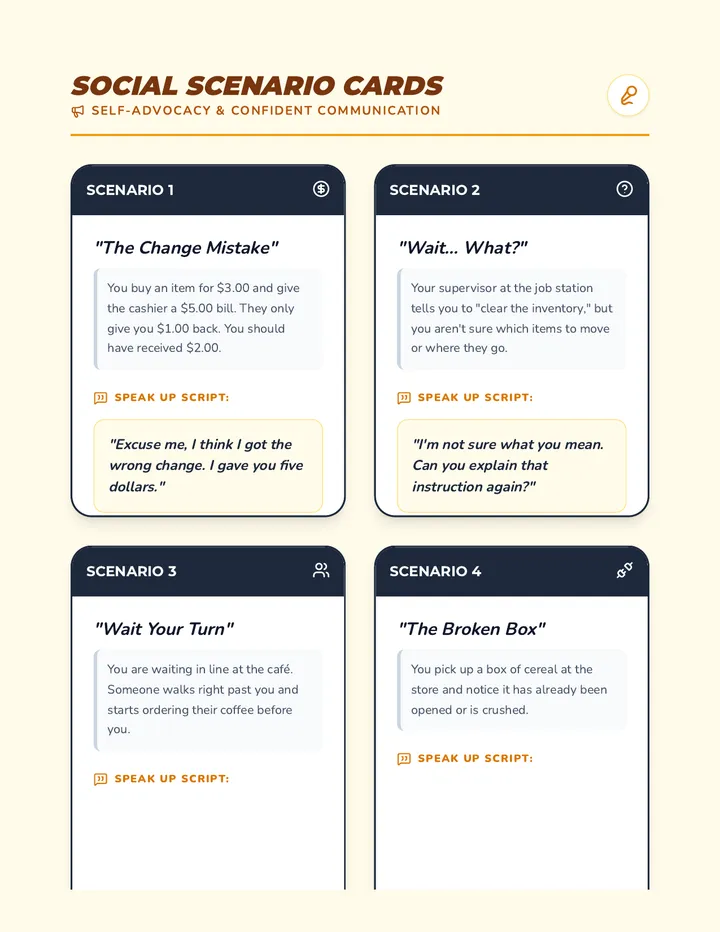
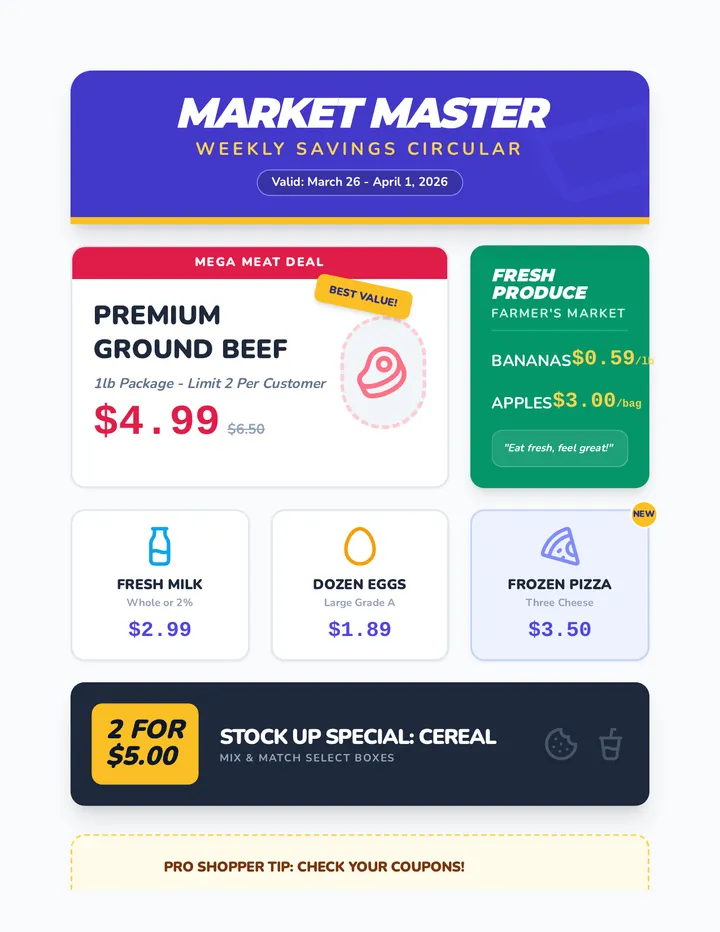
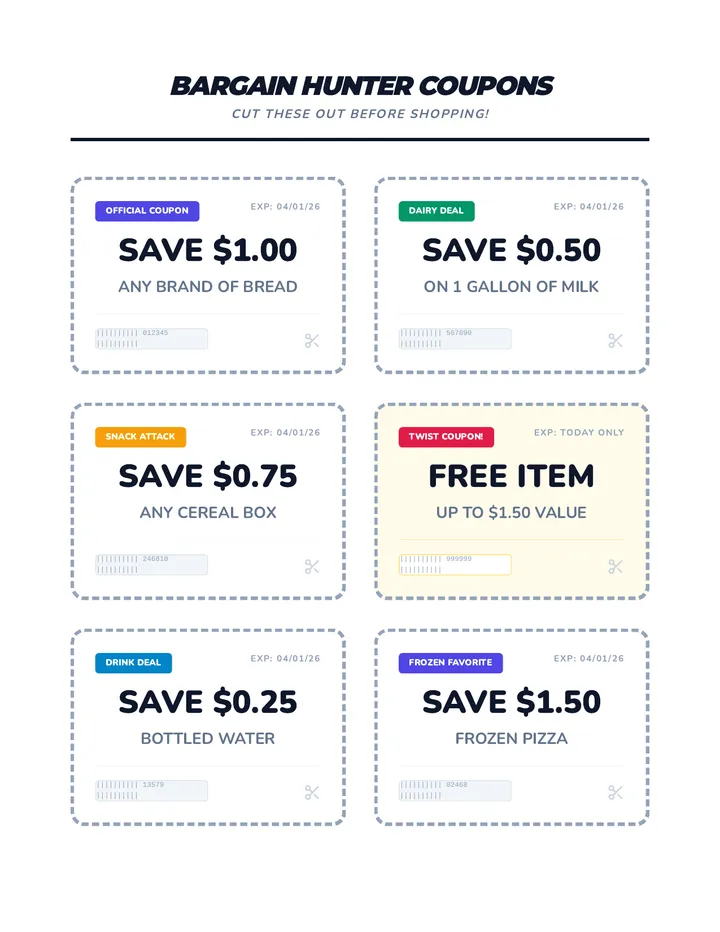
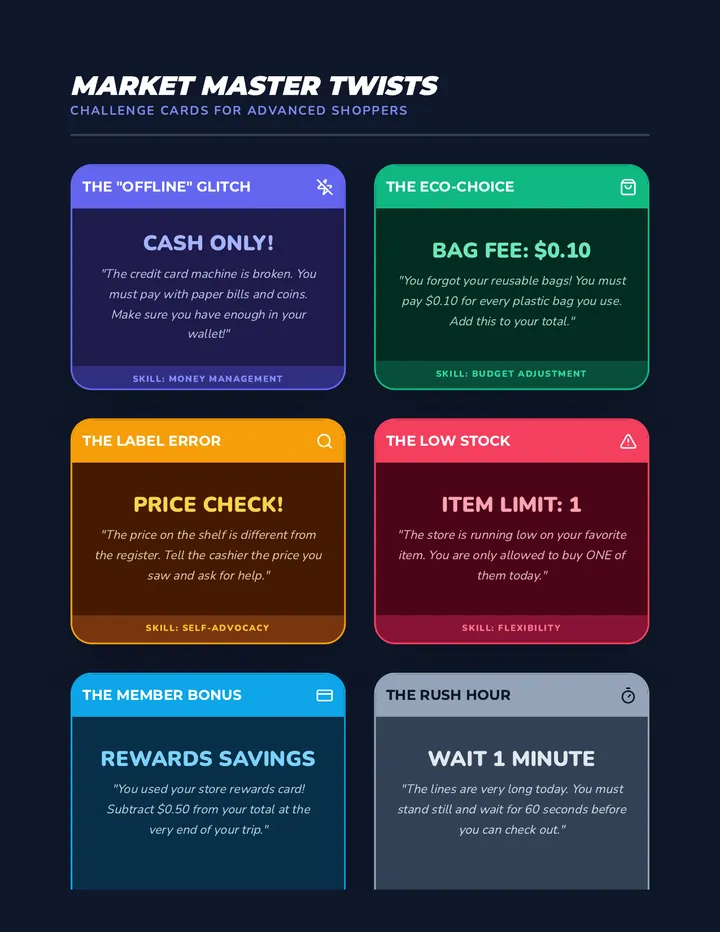
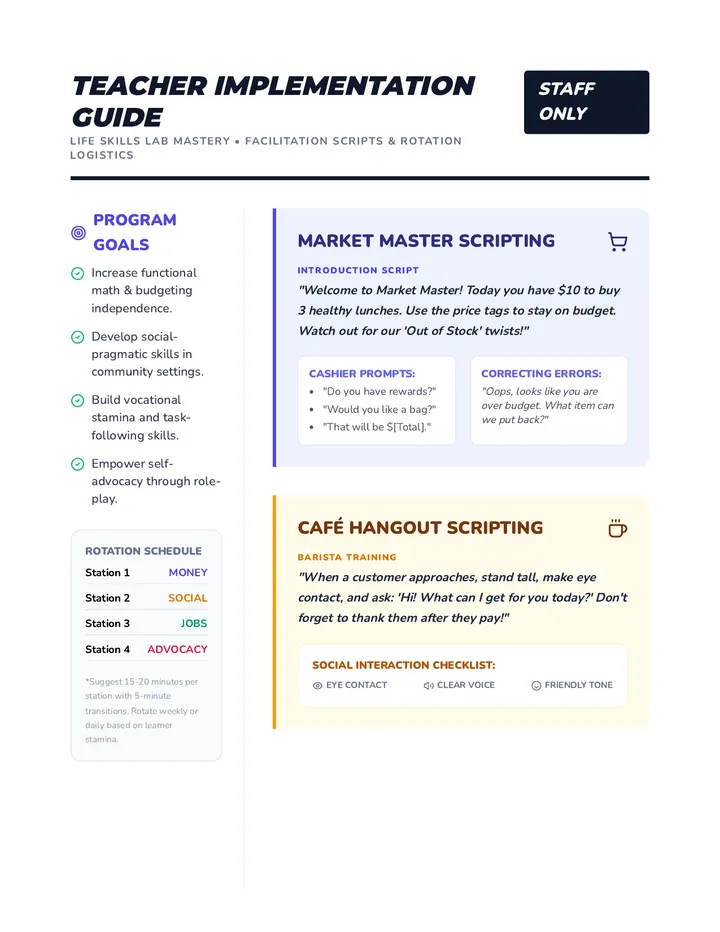
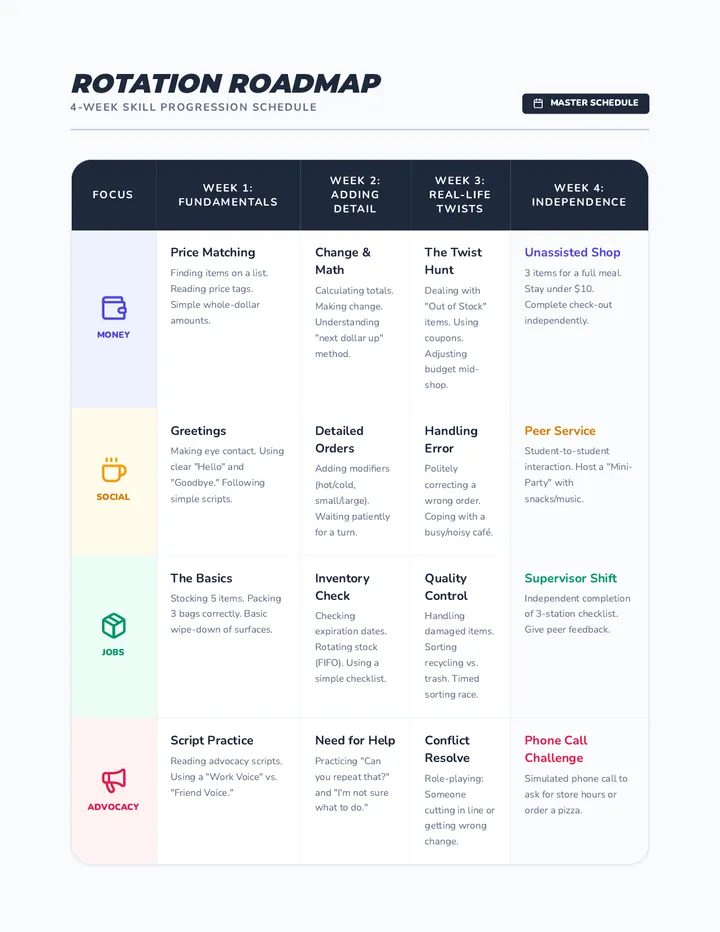
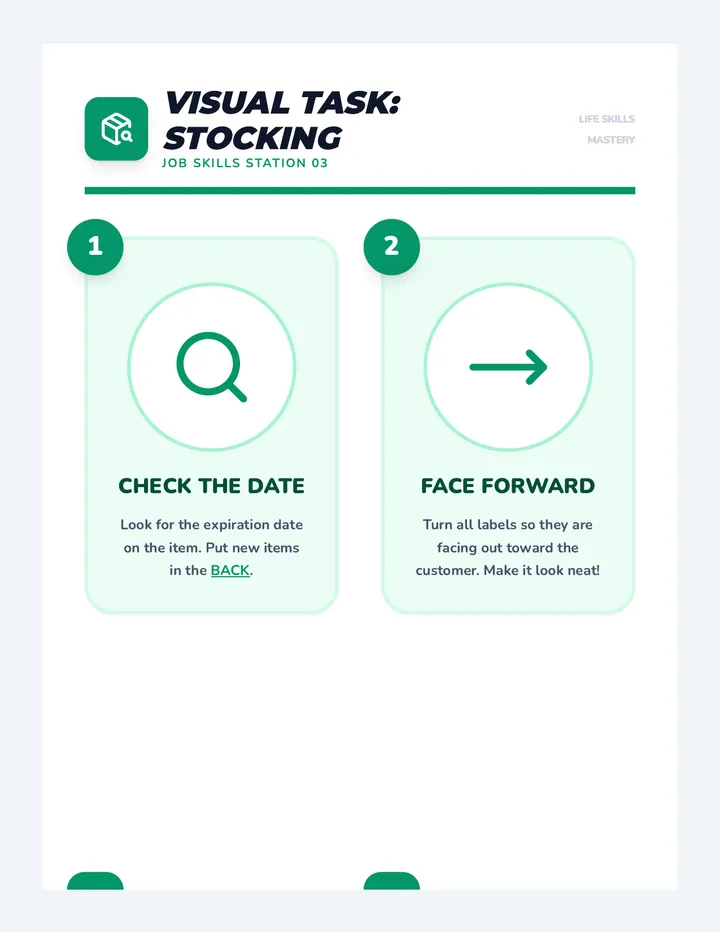
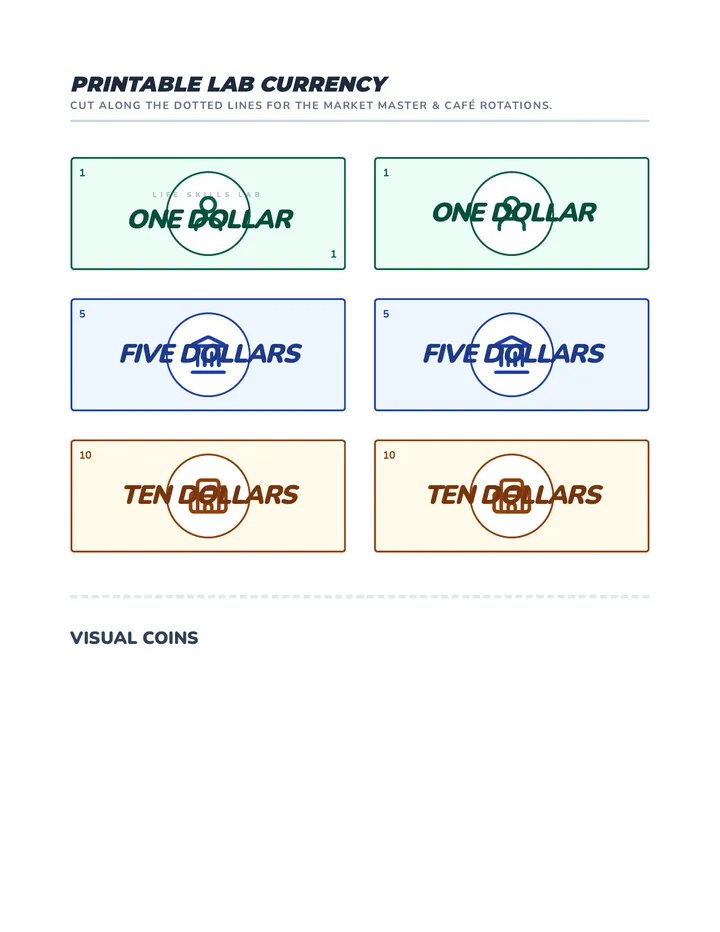
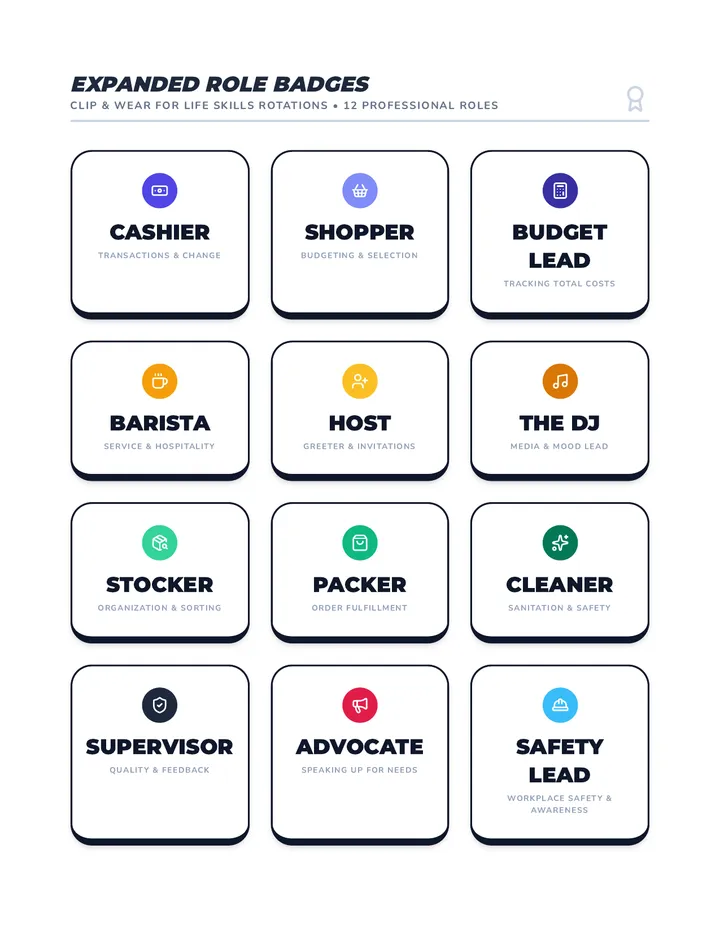
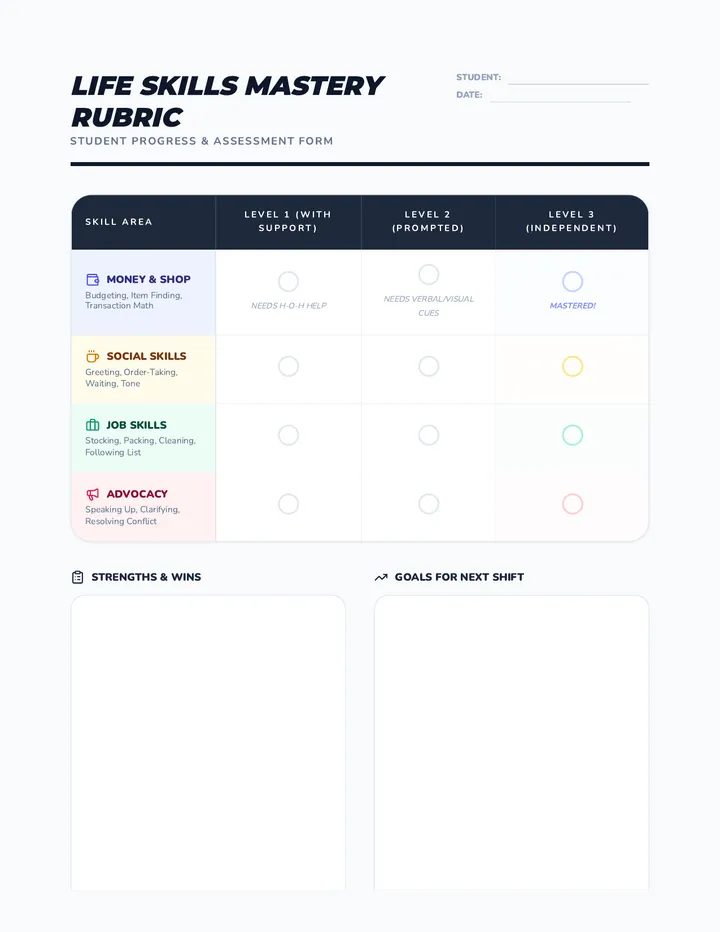
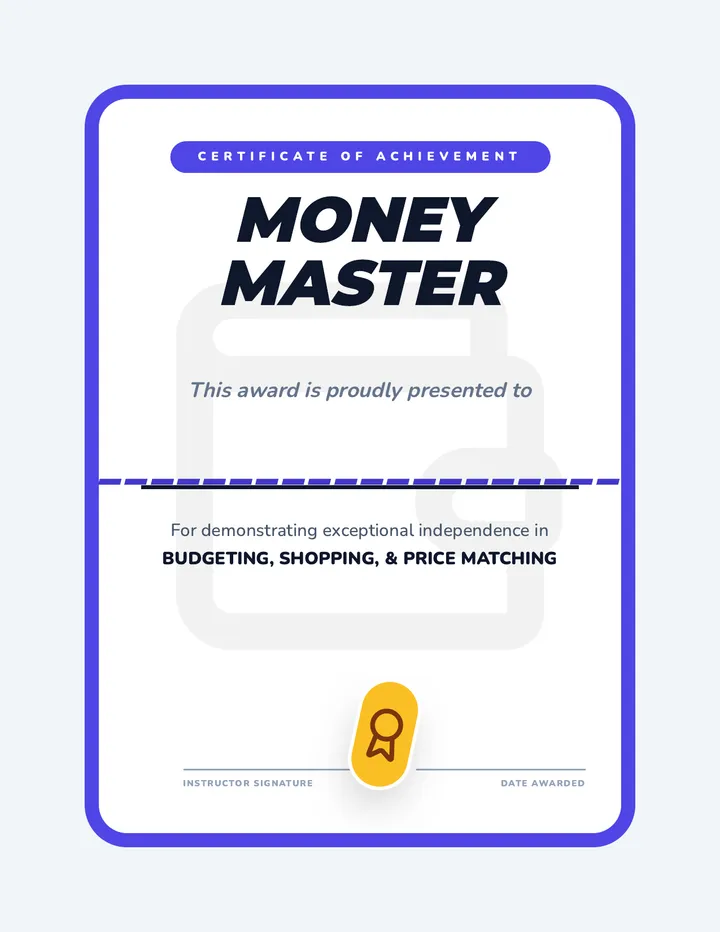
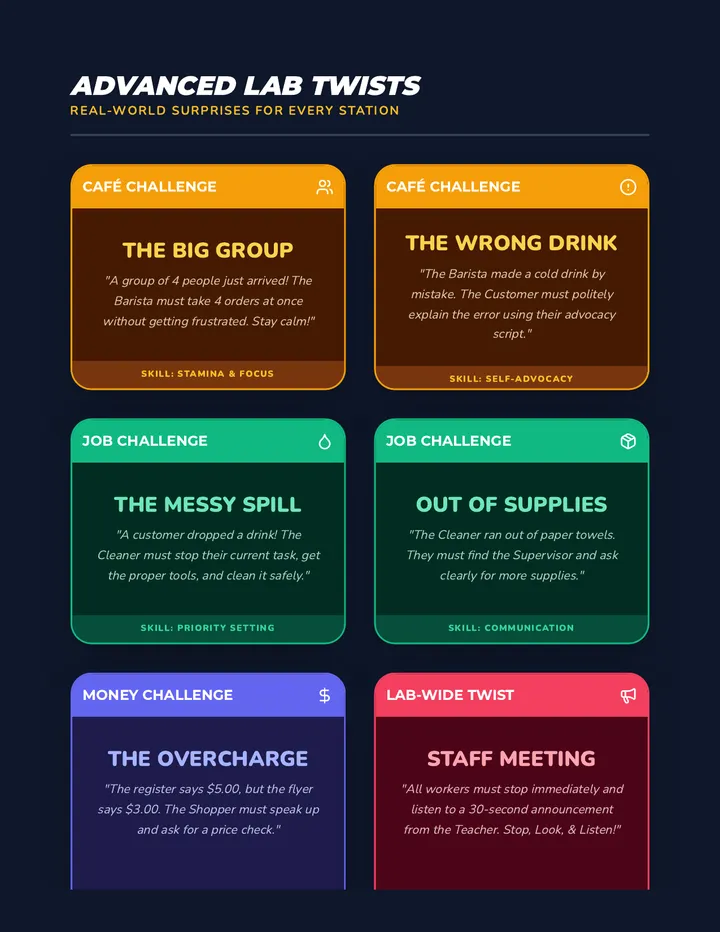
A comprehensive life skills rotation lesson covering budgeting, social interactions at a cafe, job skills (stocking/packing), and self-advocacy through role-play and game-based learning.
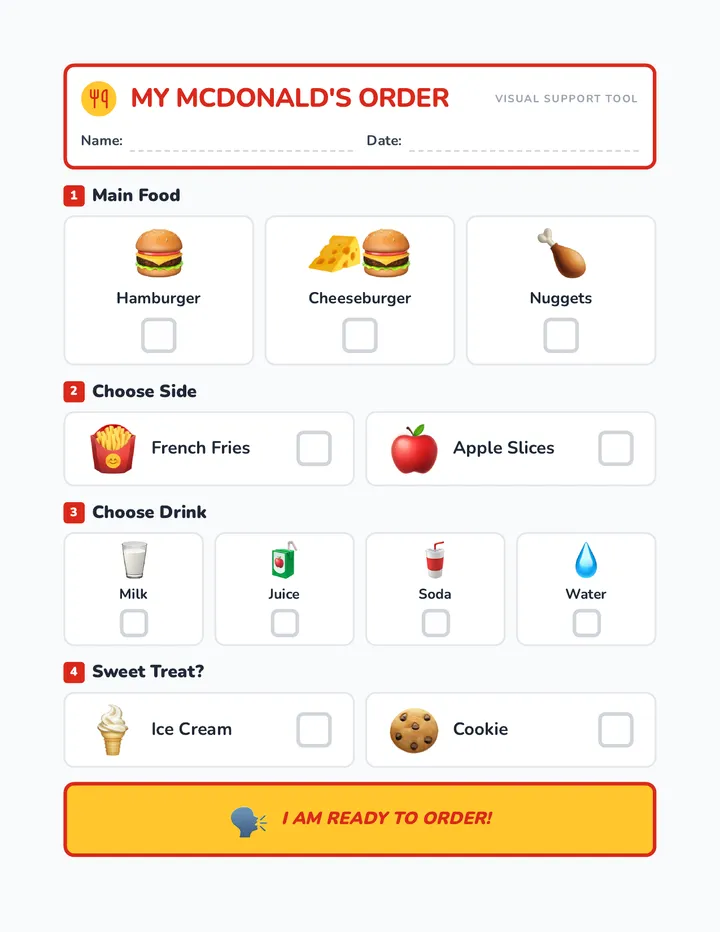
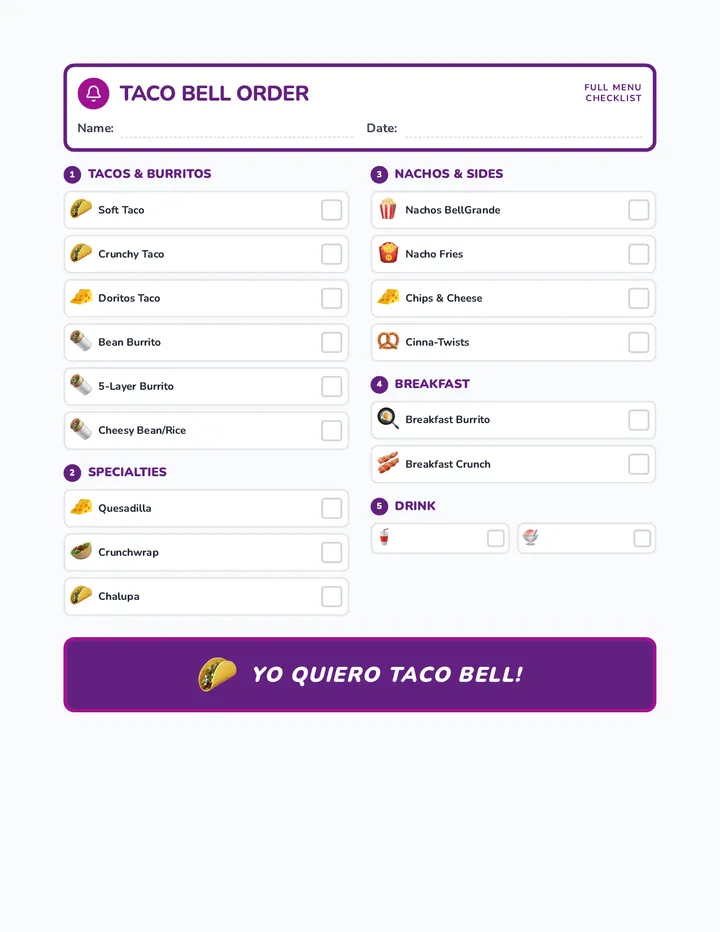
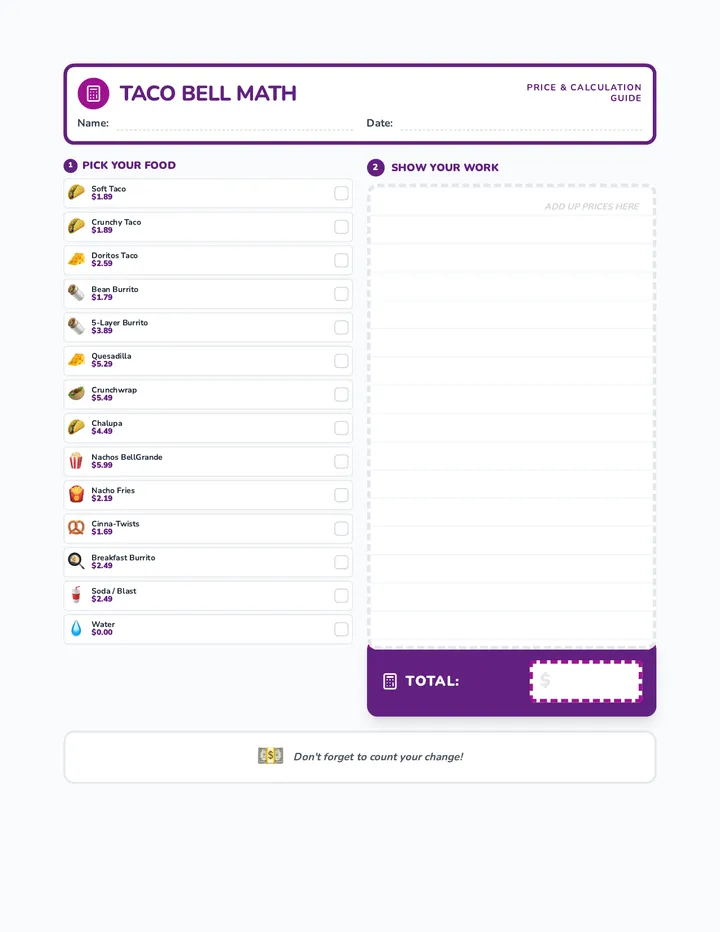
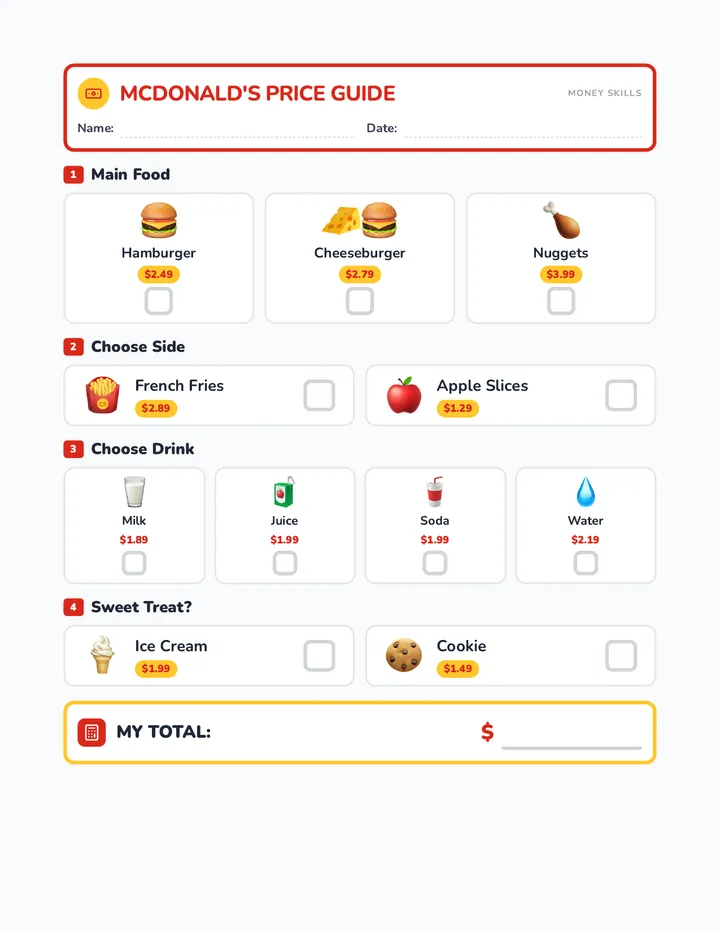
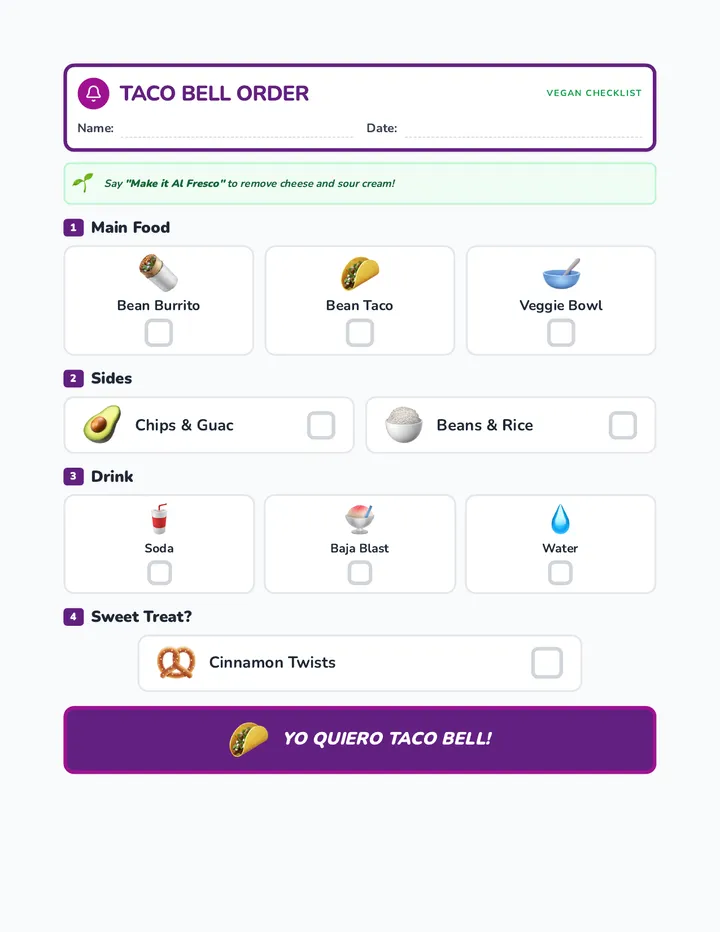
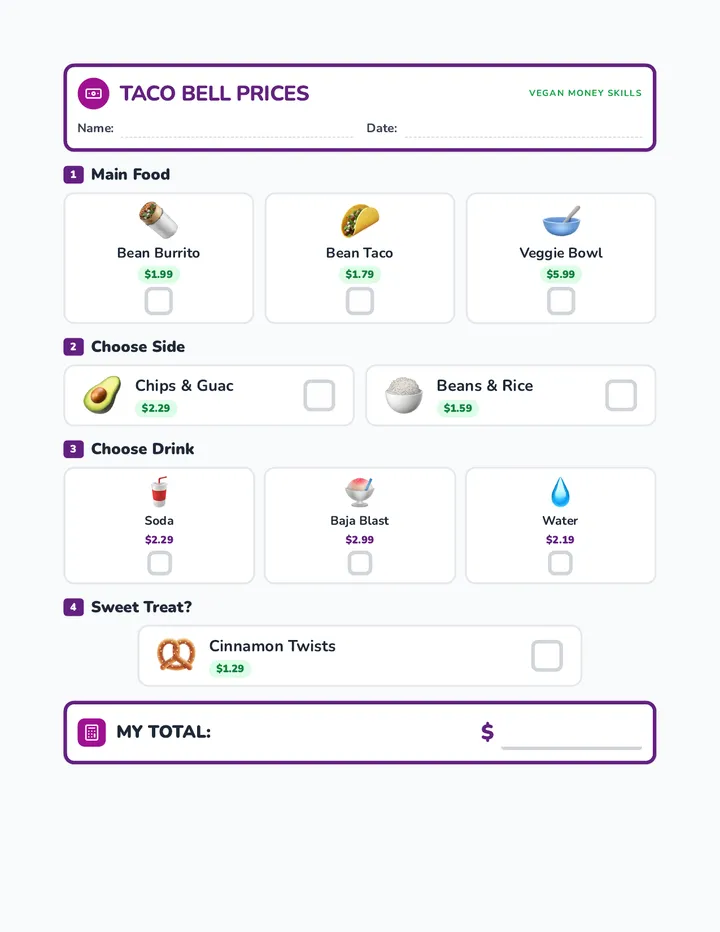
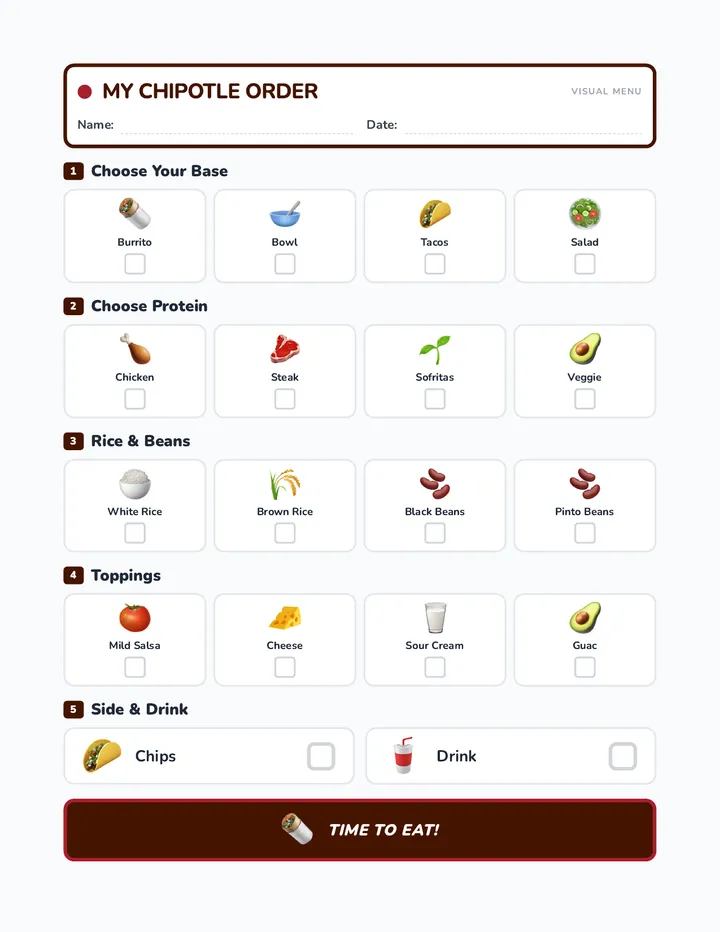
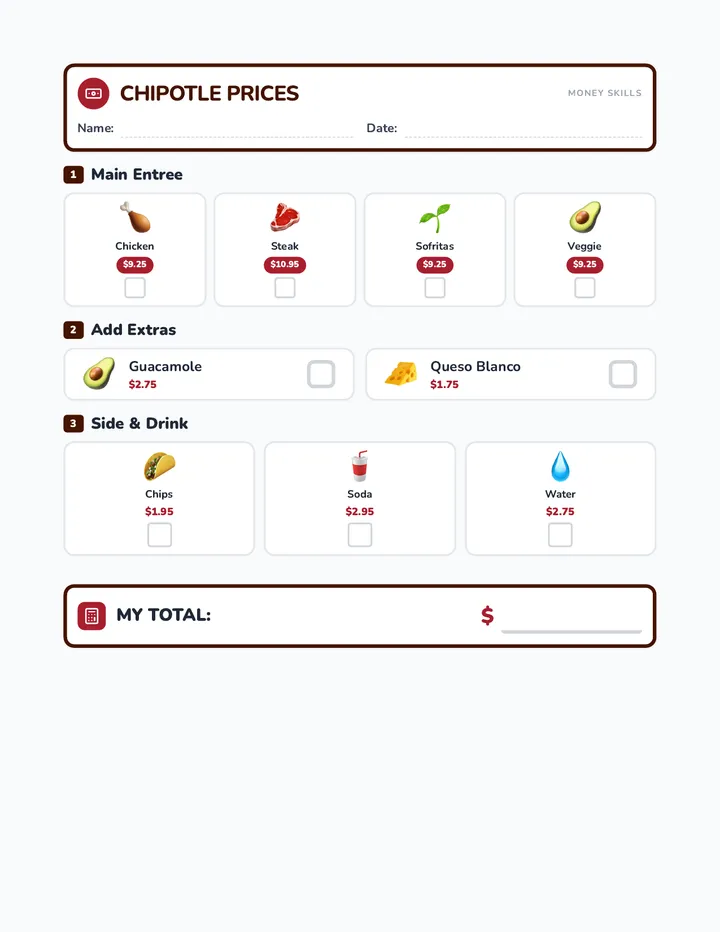
A set of visual supports to help students with special needs practice ordering and money skills at a fast food restaurant.
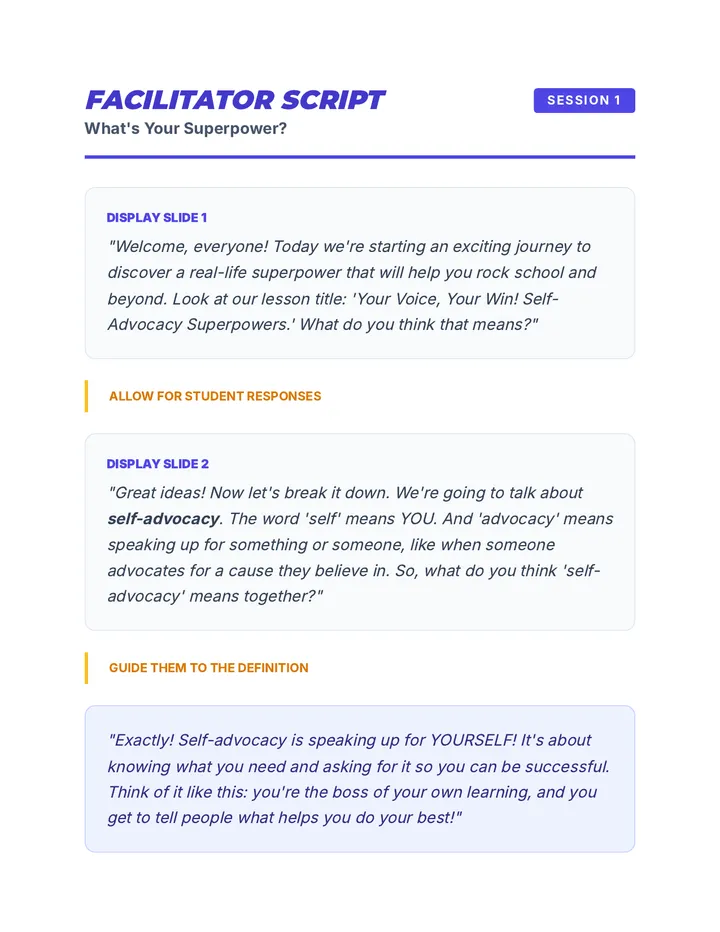
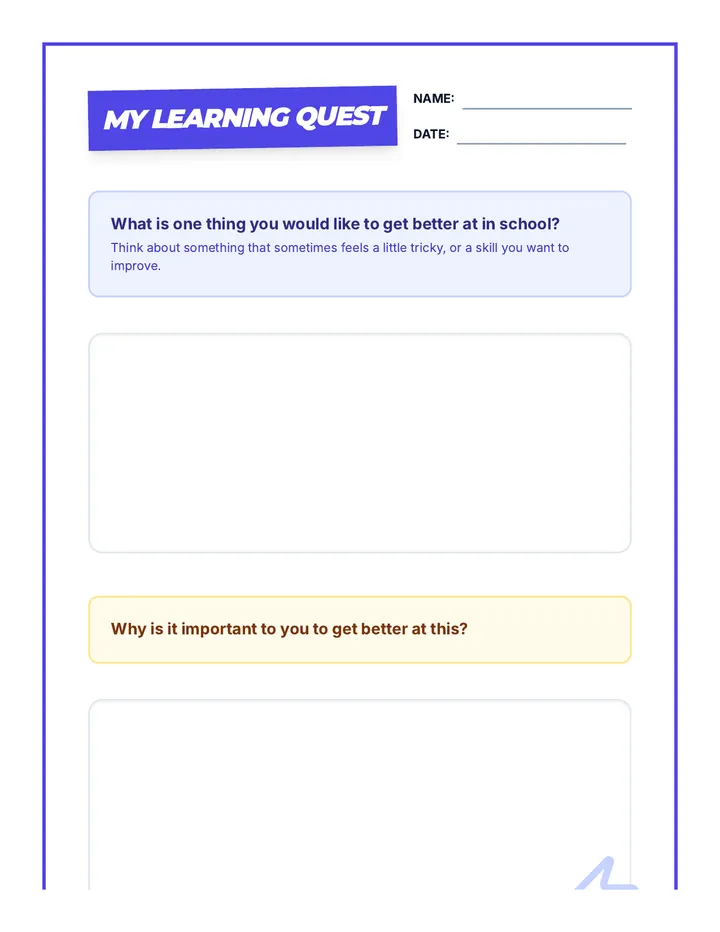
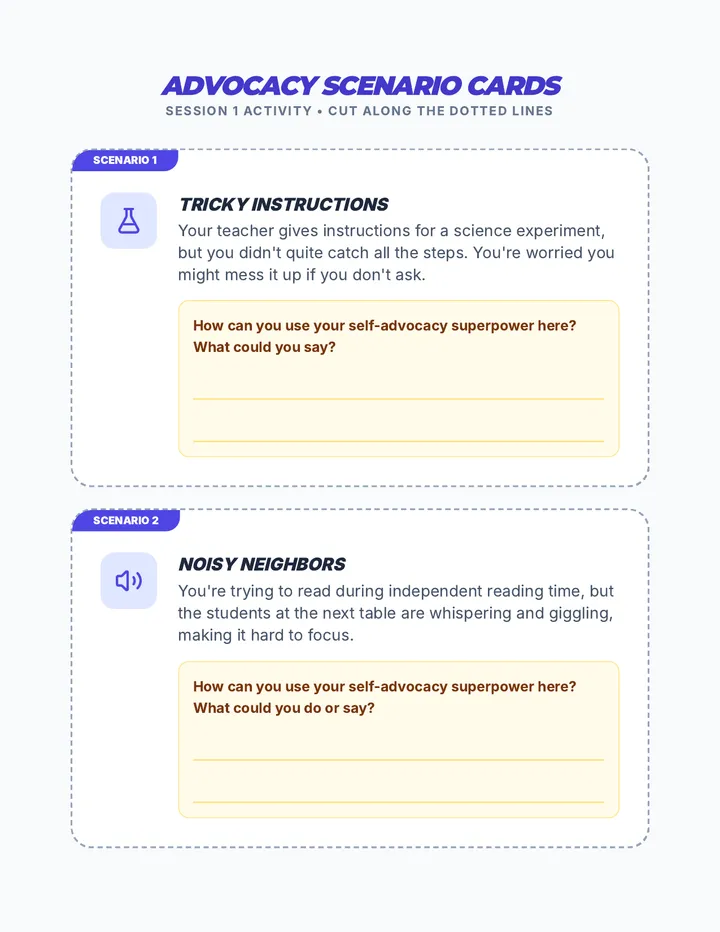
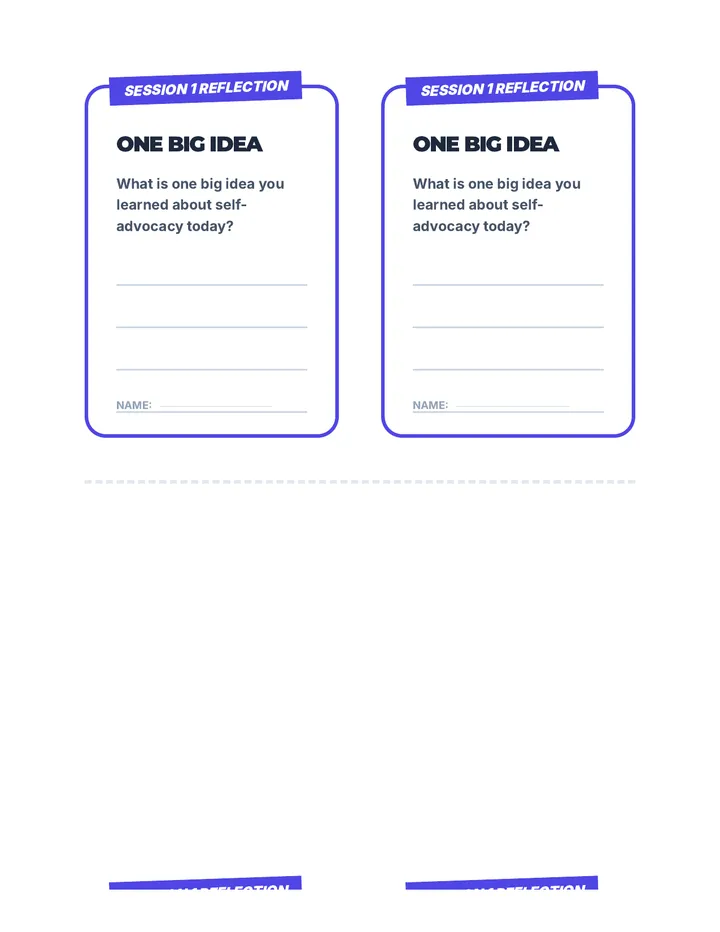
A high-energy, superhero-themed lesson designed for students with autism to learn the 'superpower' of self-advocacy. This lesson covers standing up for oneself at home, school, and in the community through interactive slides, stories, and games.
A focused session on postsecondary self-advocacy, teaching students with learning differences how to communicate their needs to professors and employers. The lesson emphasizes the transition from high school's automatic support to the self-initiated systems of college and the workplace.
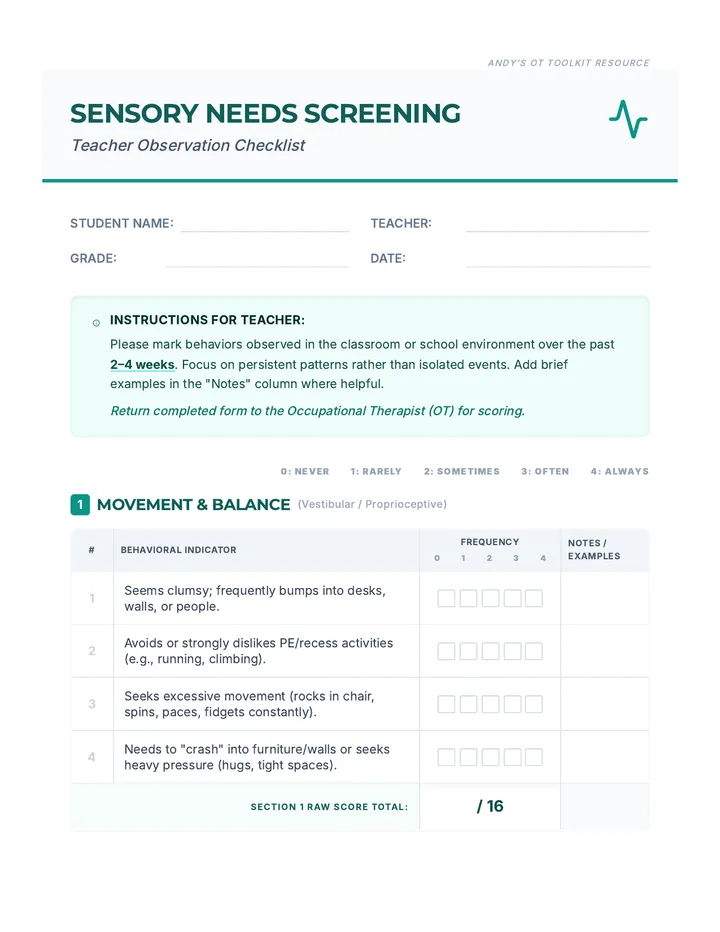
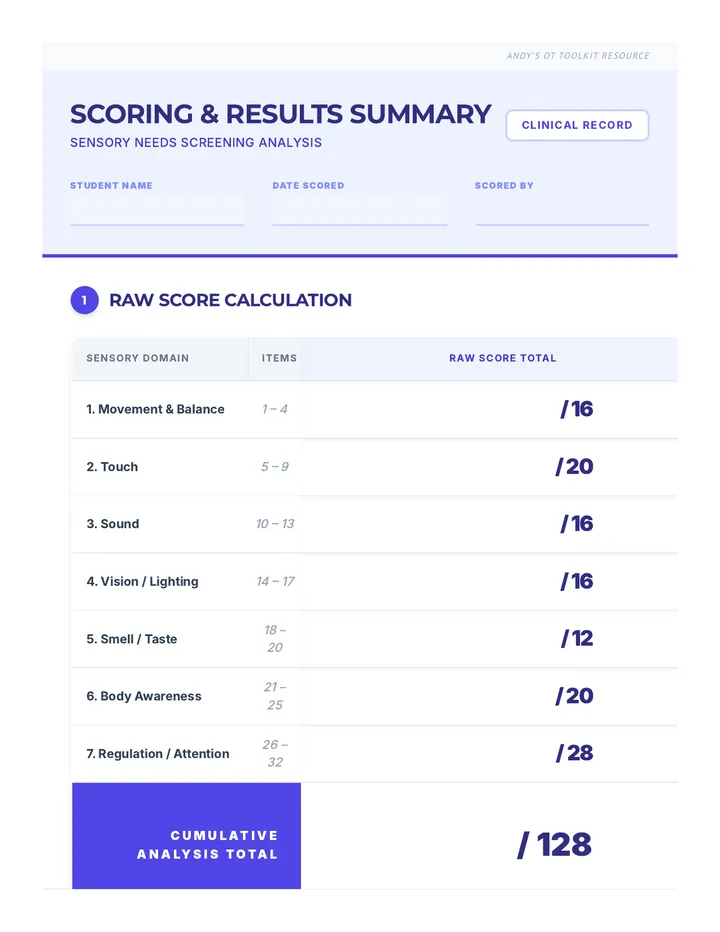
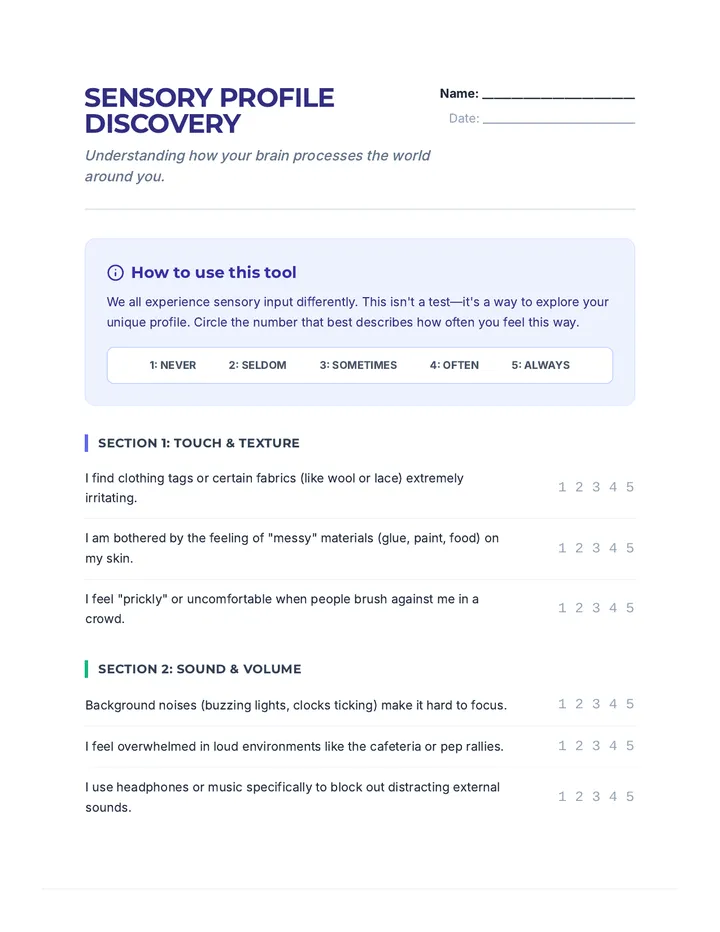
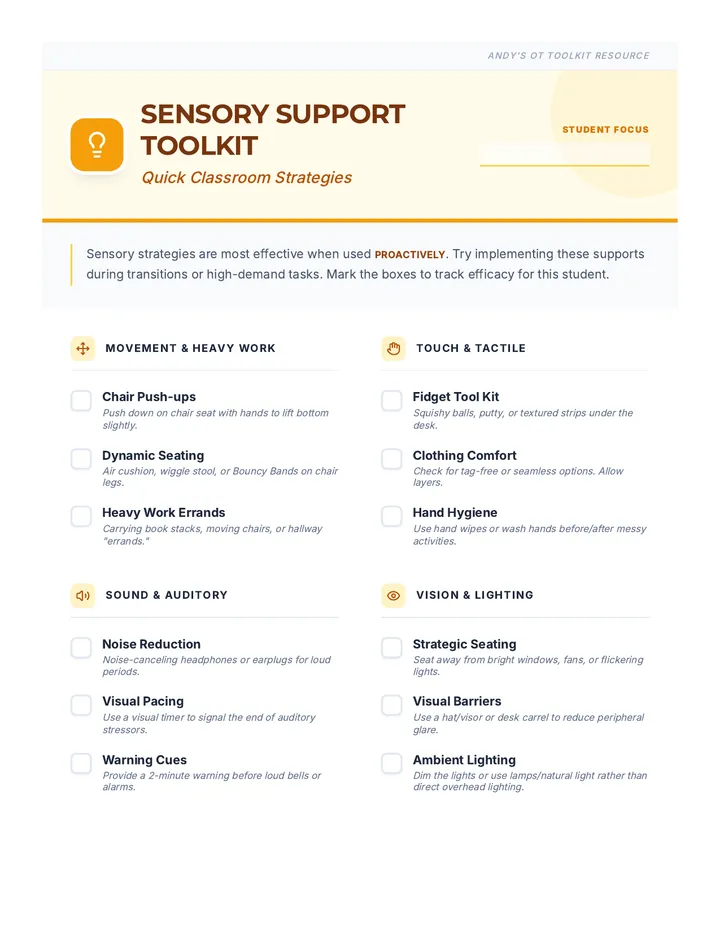
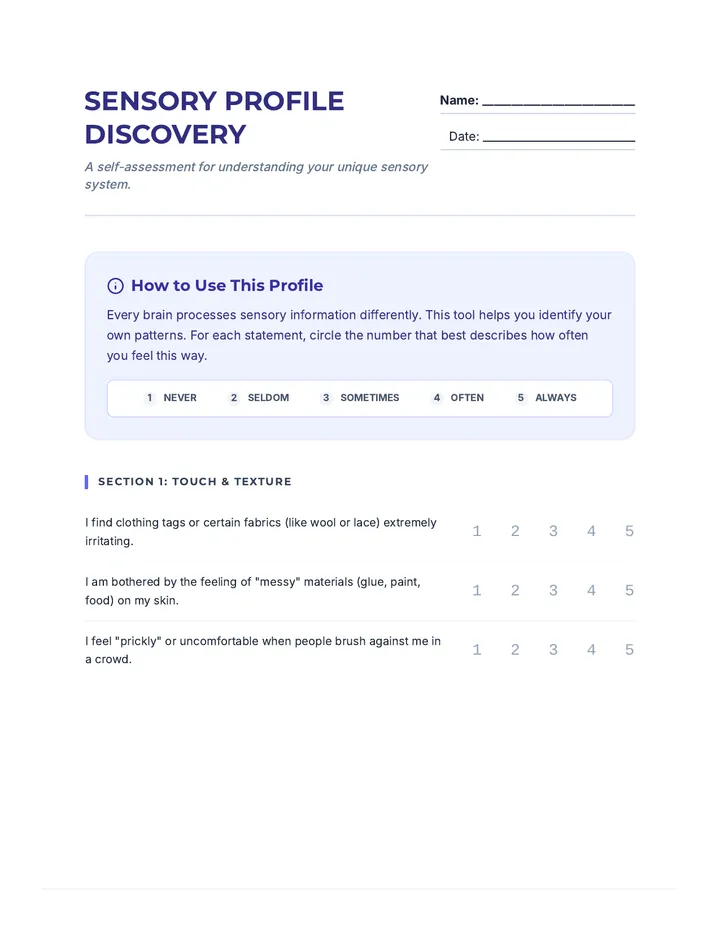
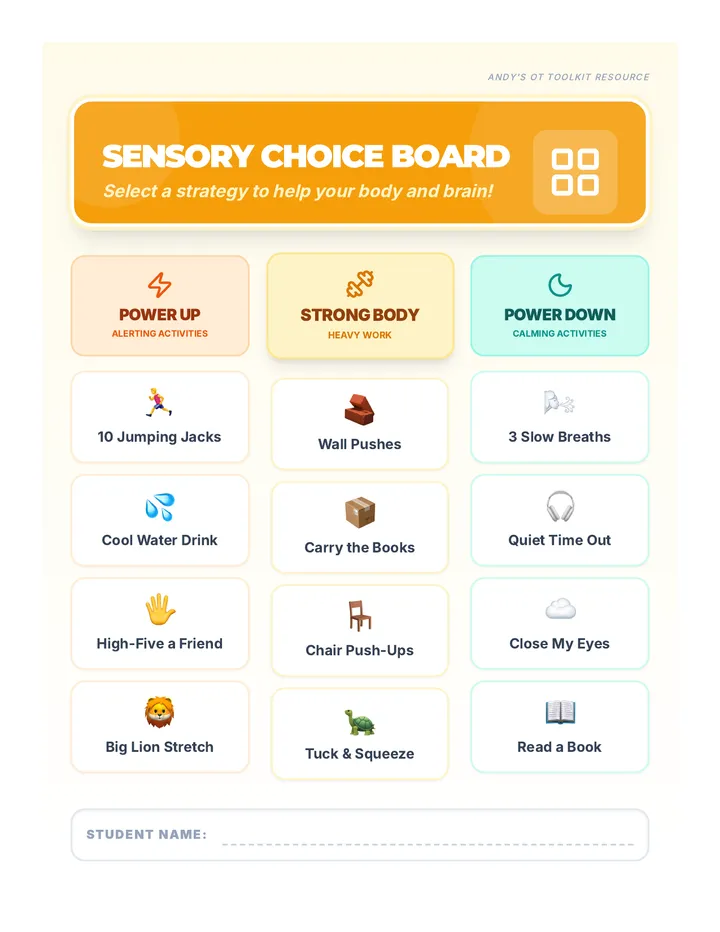
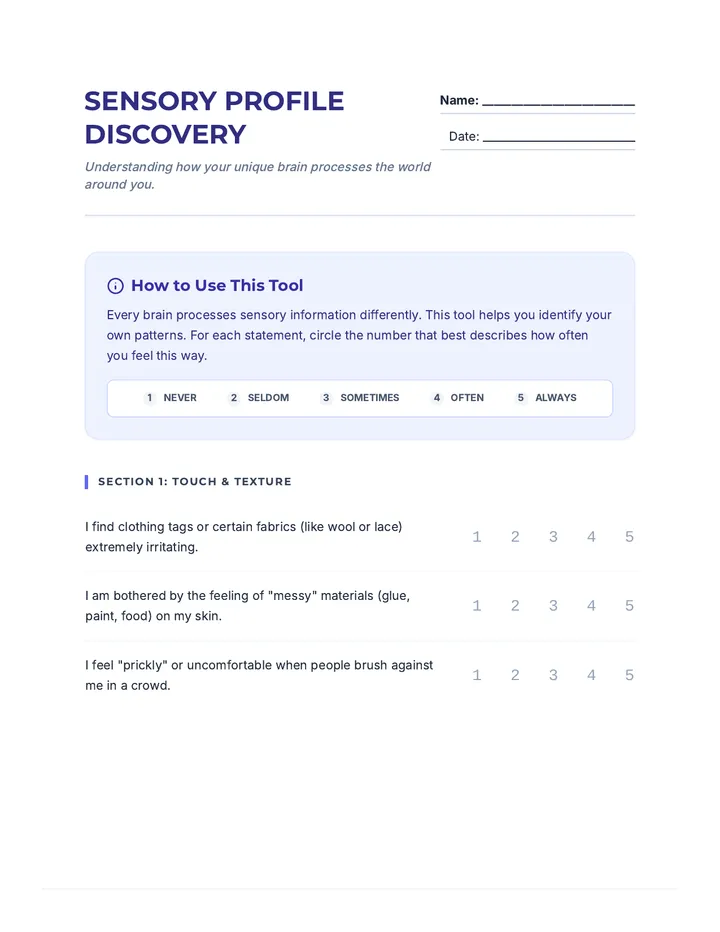
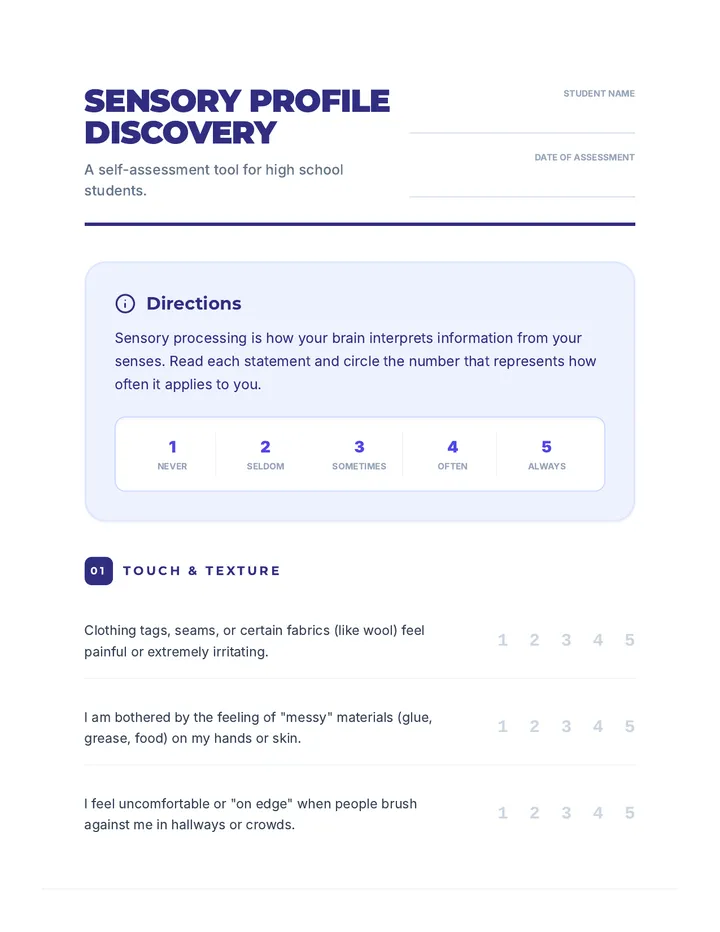
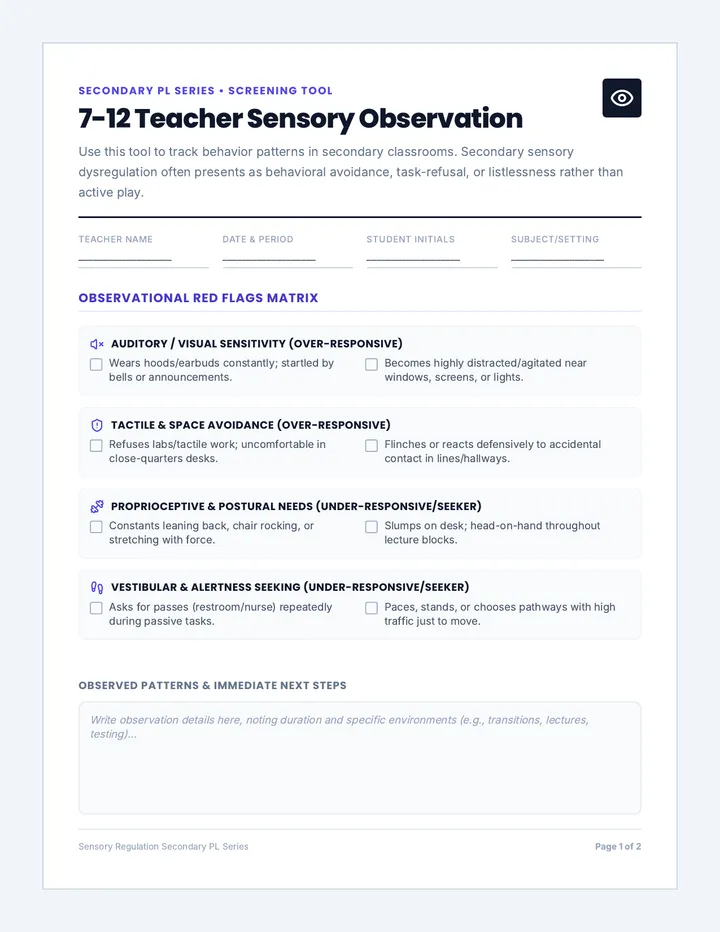
A comprehensive set of tools for teachers and occupational therapists to identify, score, and support students with sensory processing needs. Includes a screening checklist, a simplified scoring guide, and a classroom strategies handout.
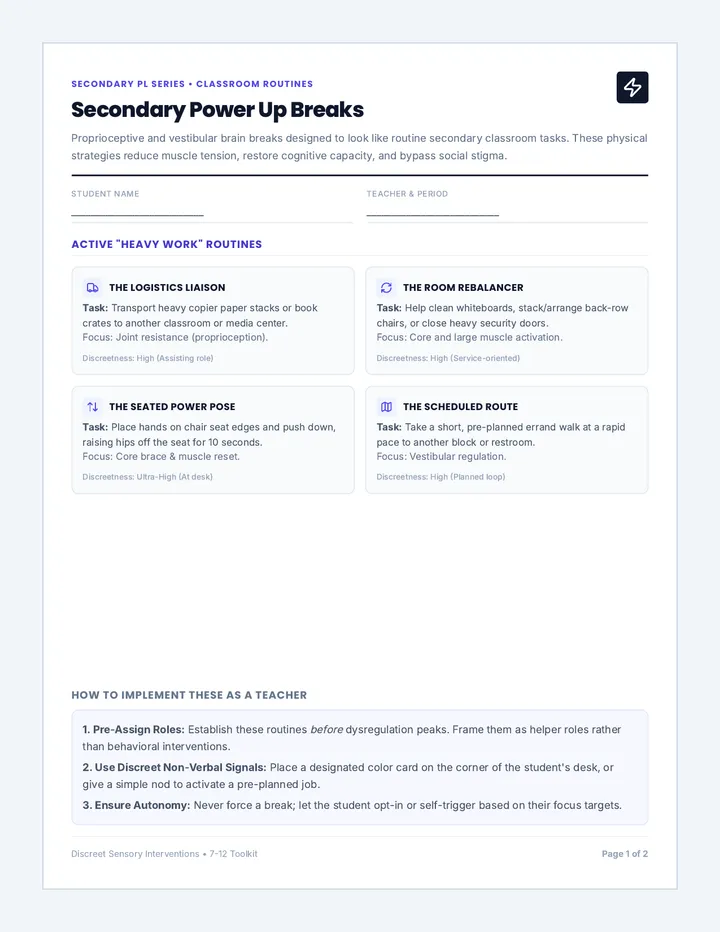
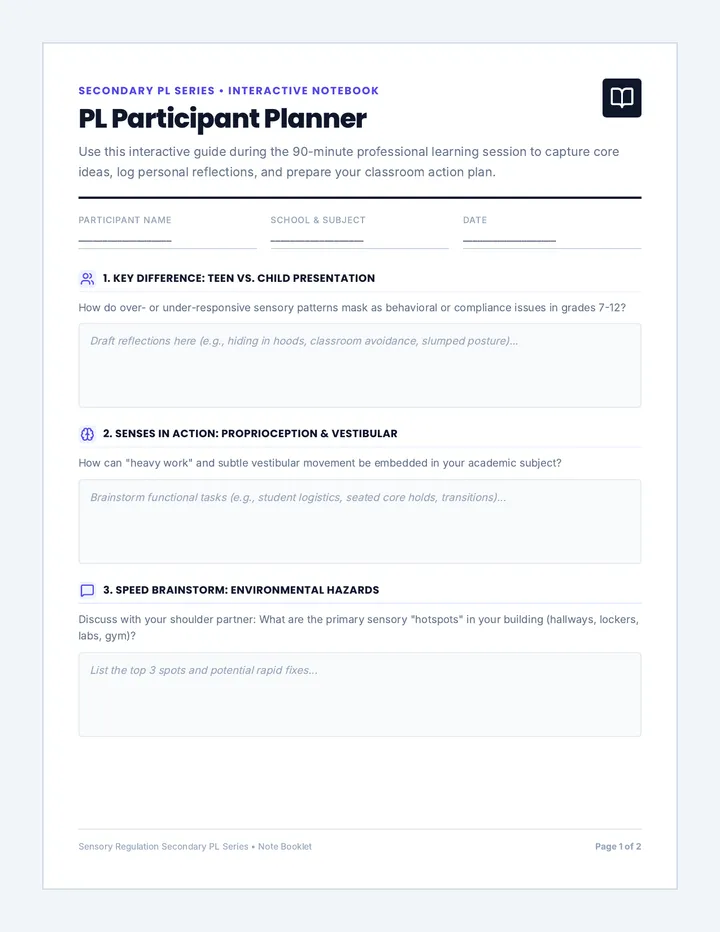
A comprehensive 1.5-hour professional learning session and toolkit package designed for 7-12 educators. It focuses on developmentally appropriate, low-prep, and discreet sensory regulation strategies that respect adolescent autonomy and support academic focus and executive functioning.
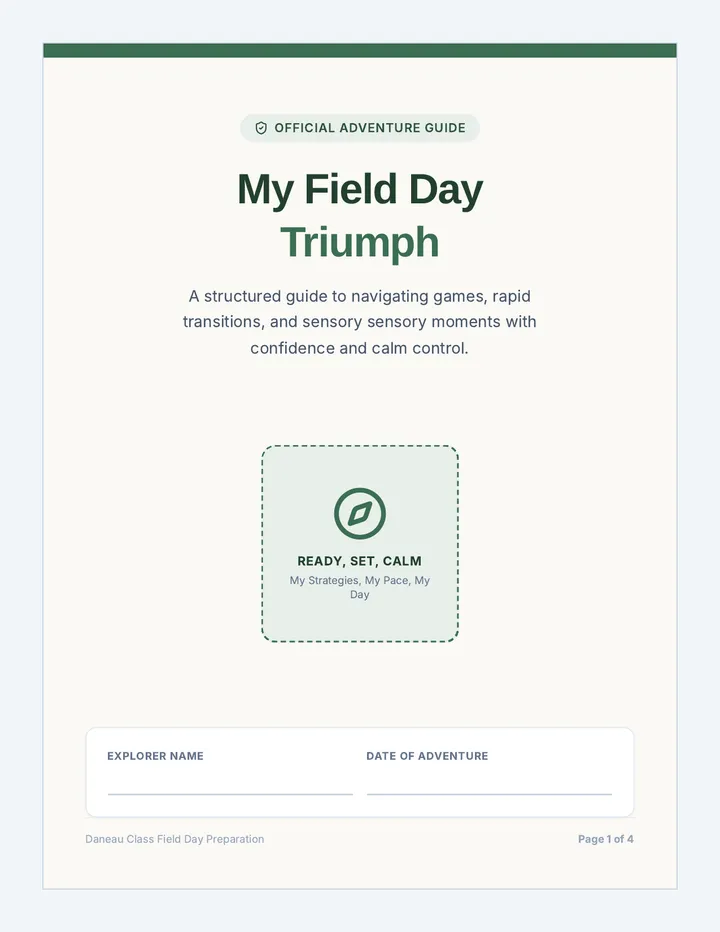
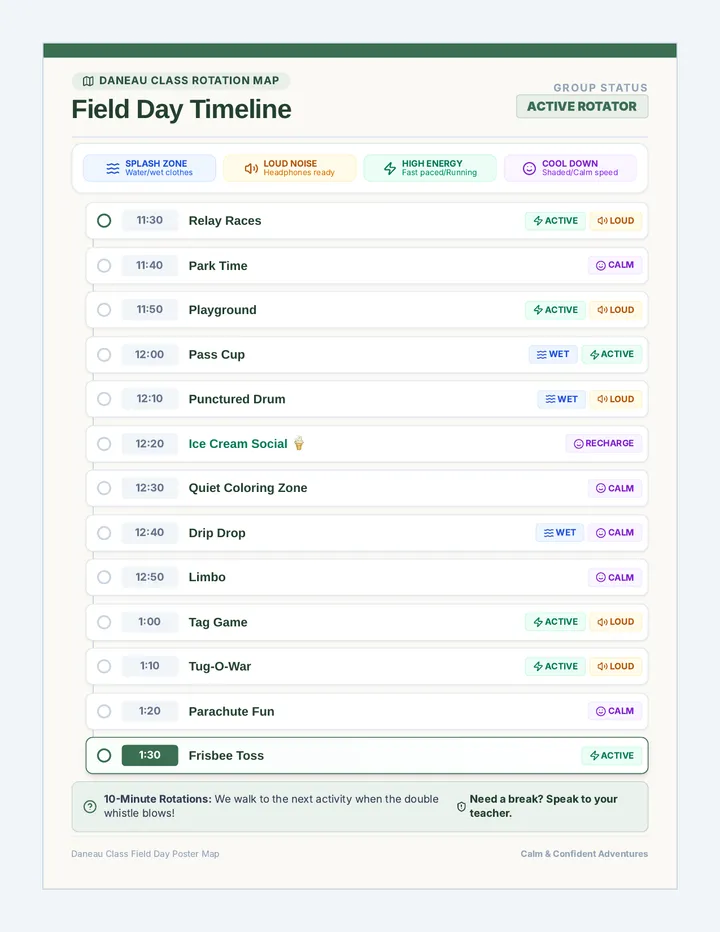
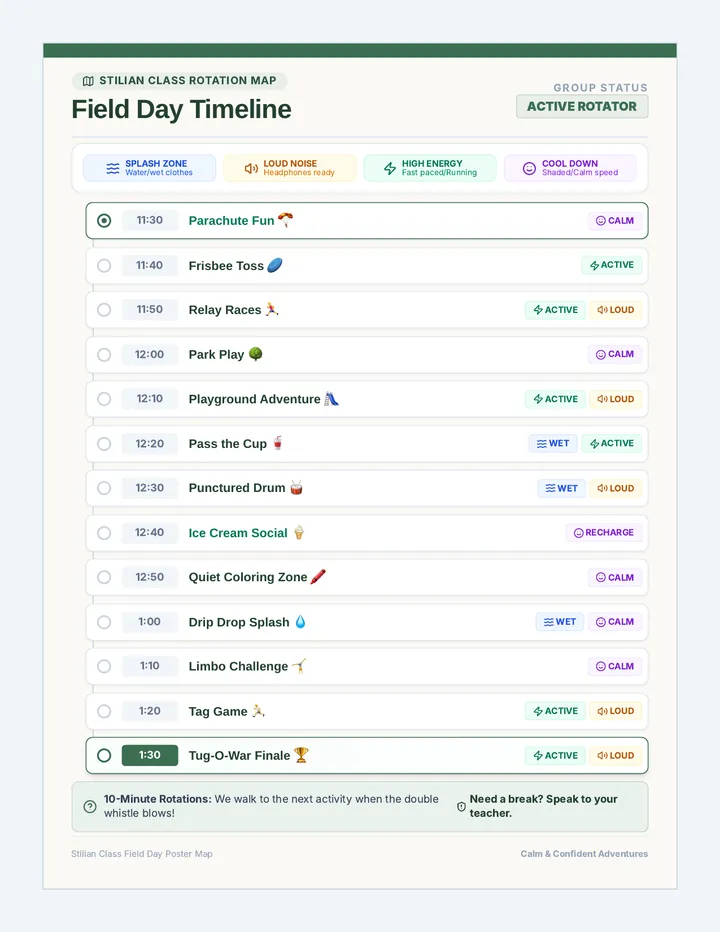
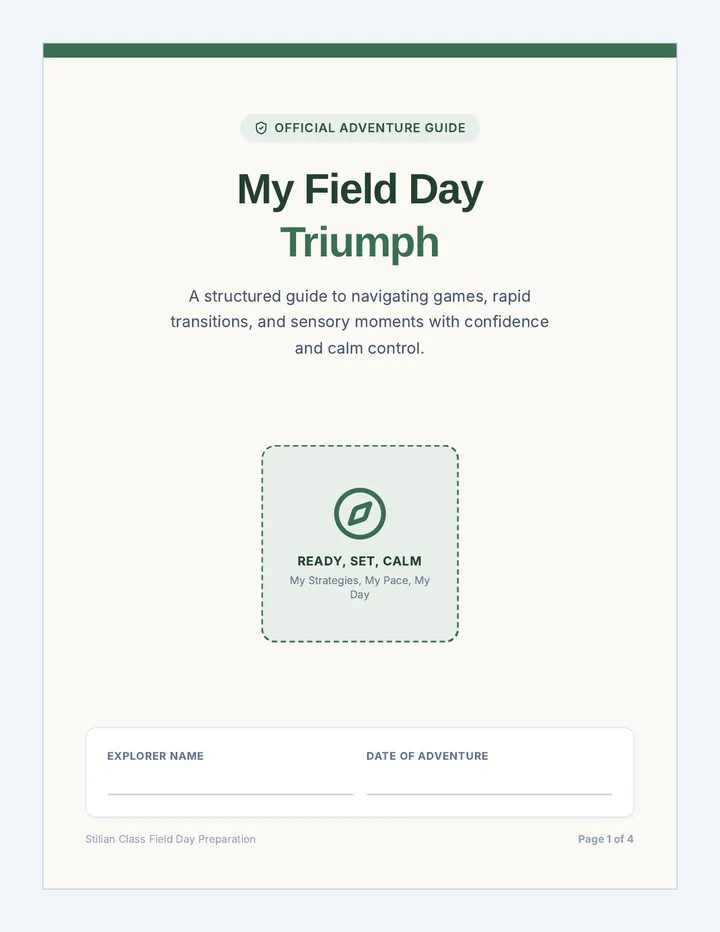
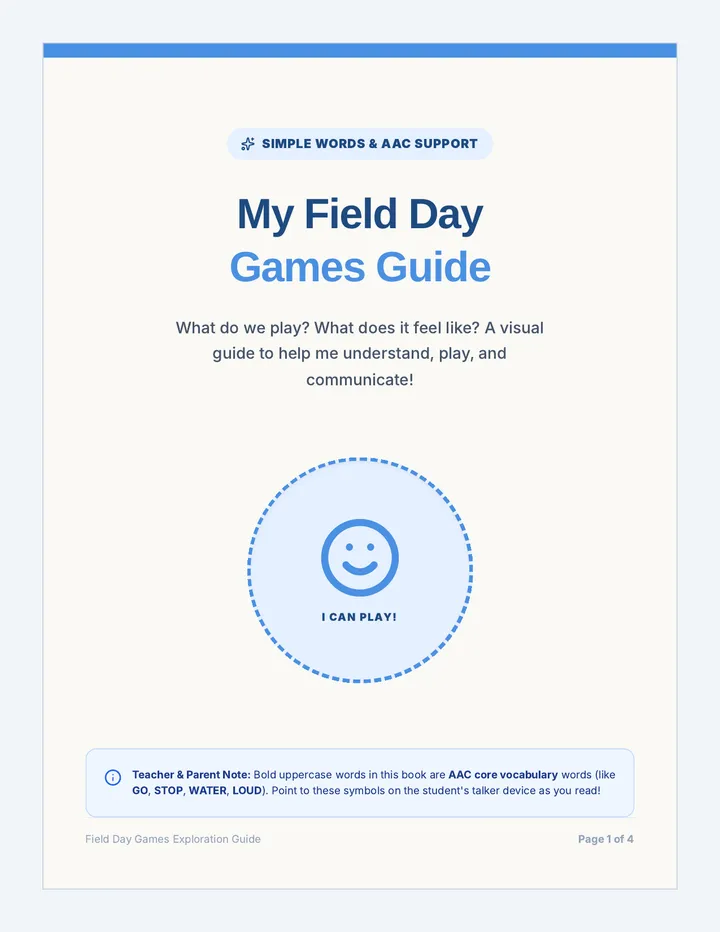
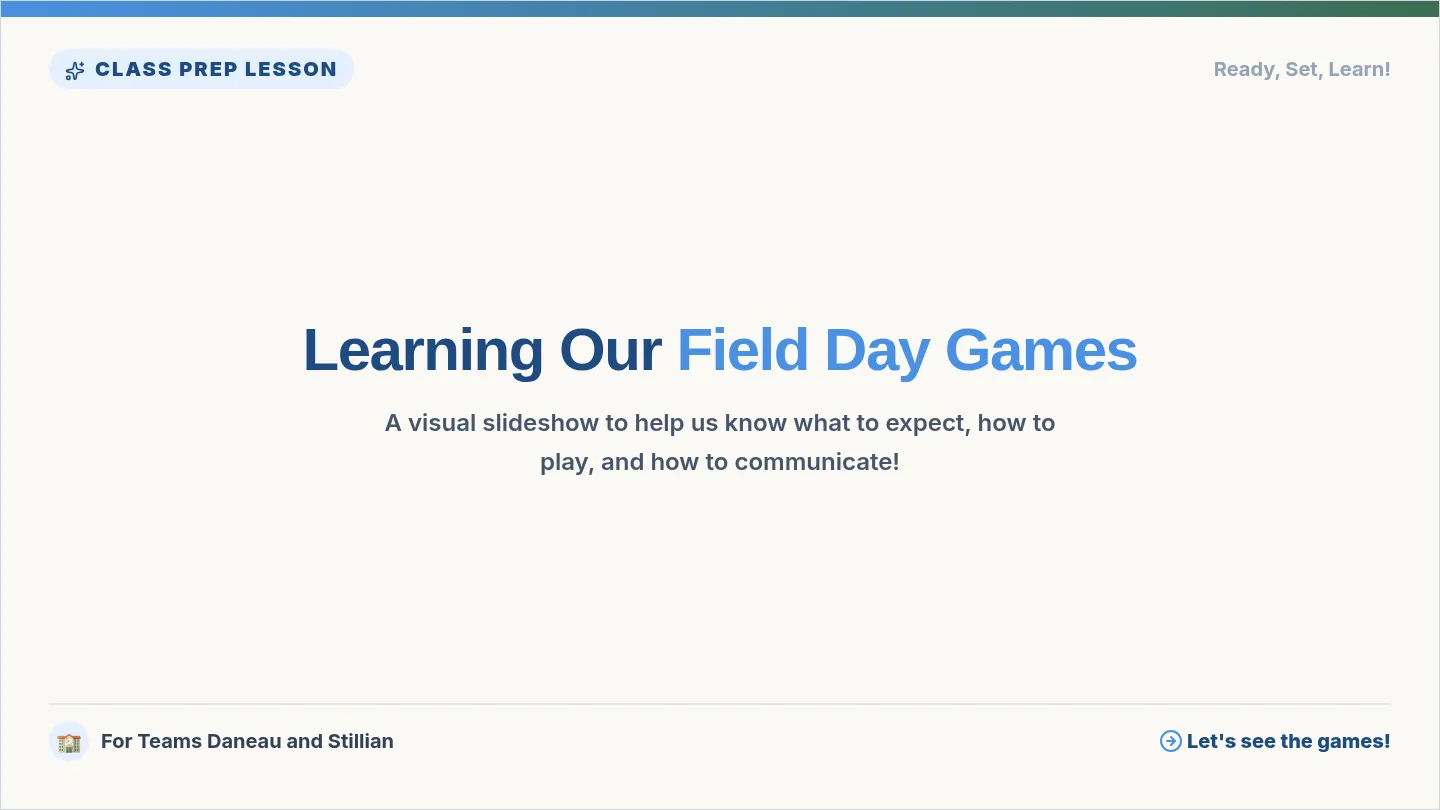
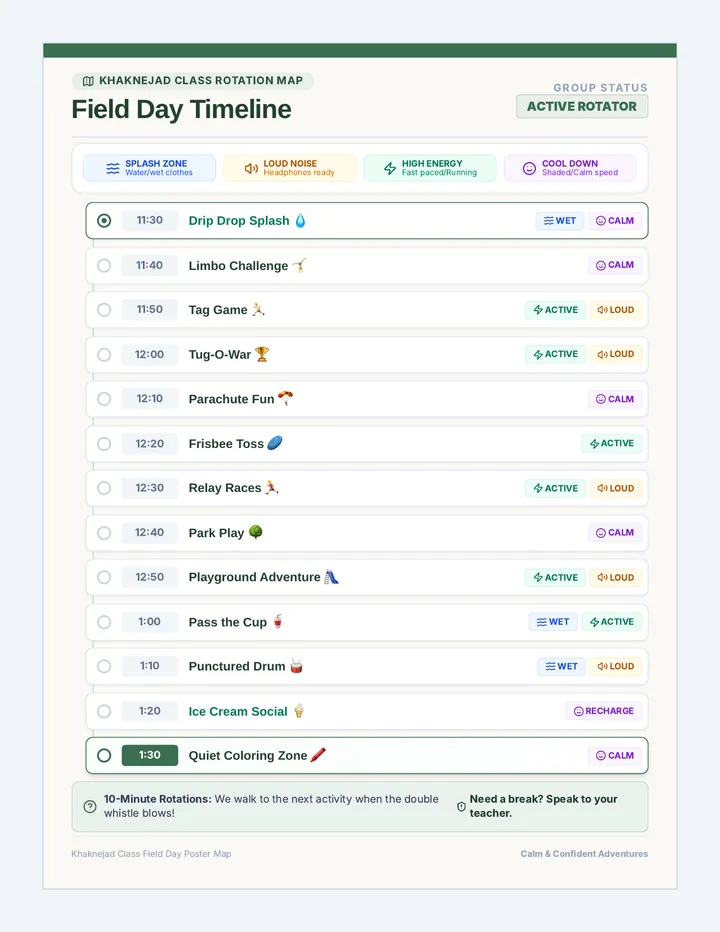
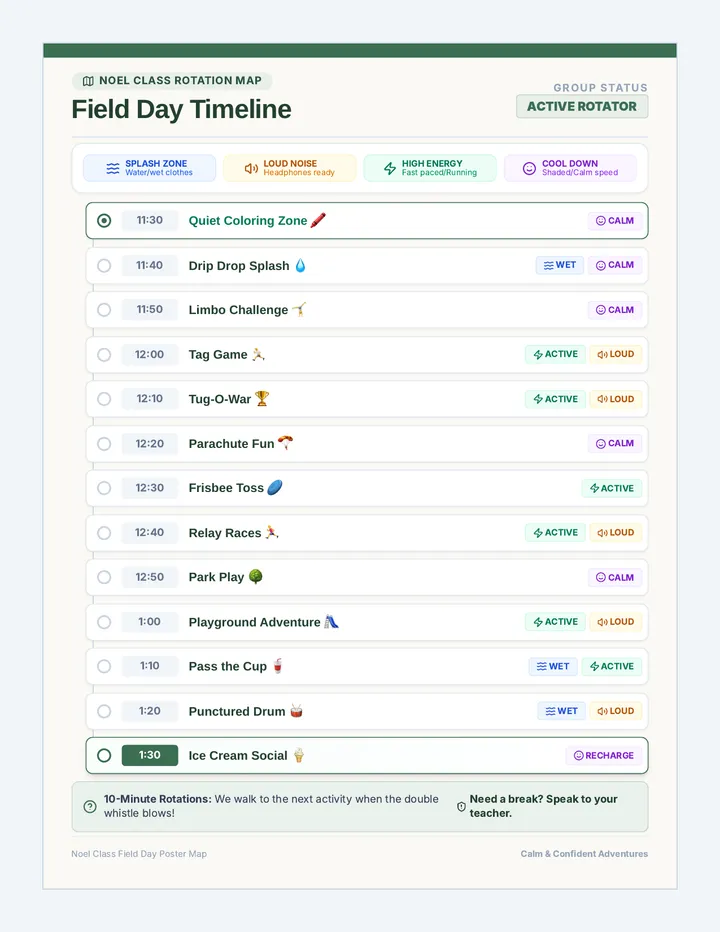
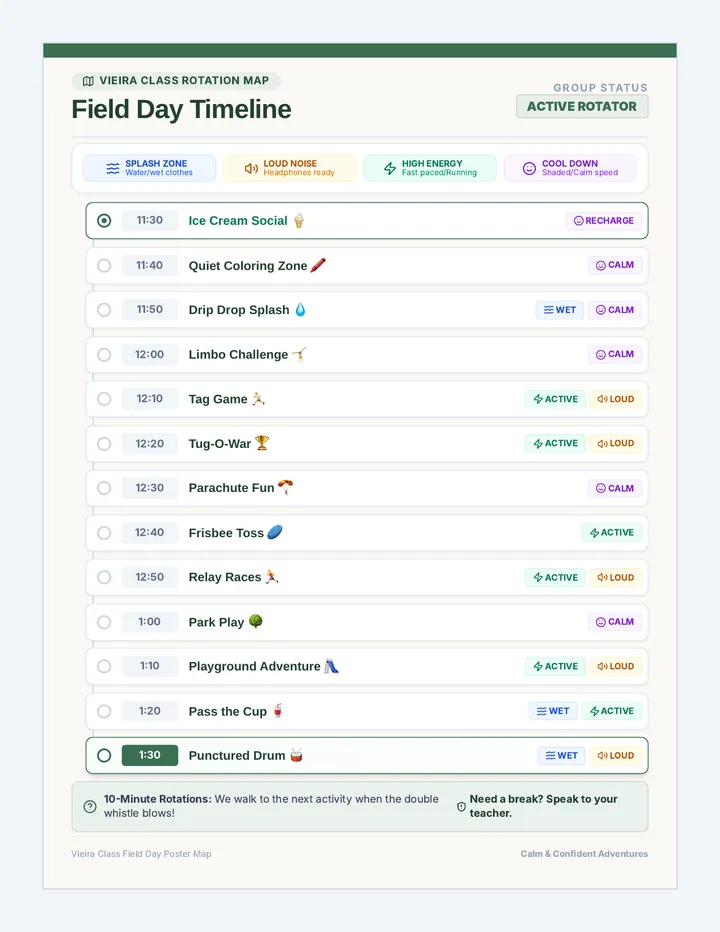
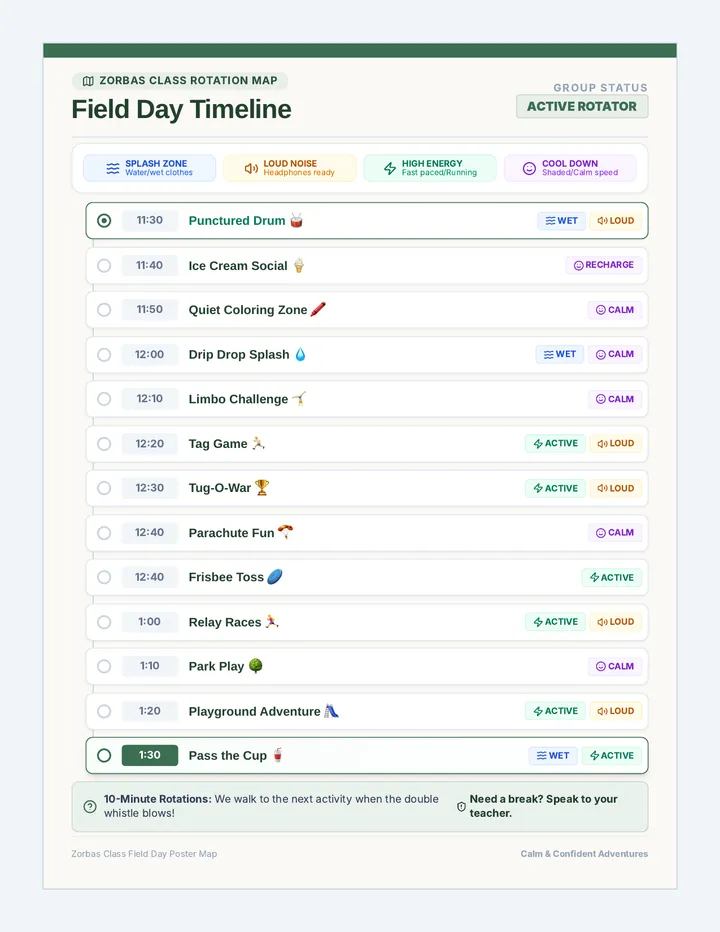
A comprehensive preparation resource set for Field Day, designed for upper elementary and sensory-sensitive students. It includes a structured, coping-strategy-focused social story booklet and a beautifully organized, visual rotation schedule poster to support seamless transitions.
A lesson designed to help a 4th-grade student develop self-advocacy skills, specifically focusing on asking for help and requesting breaks in academic and social contexts.