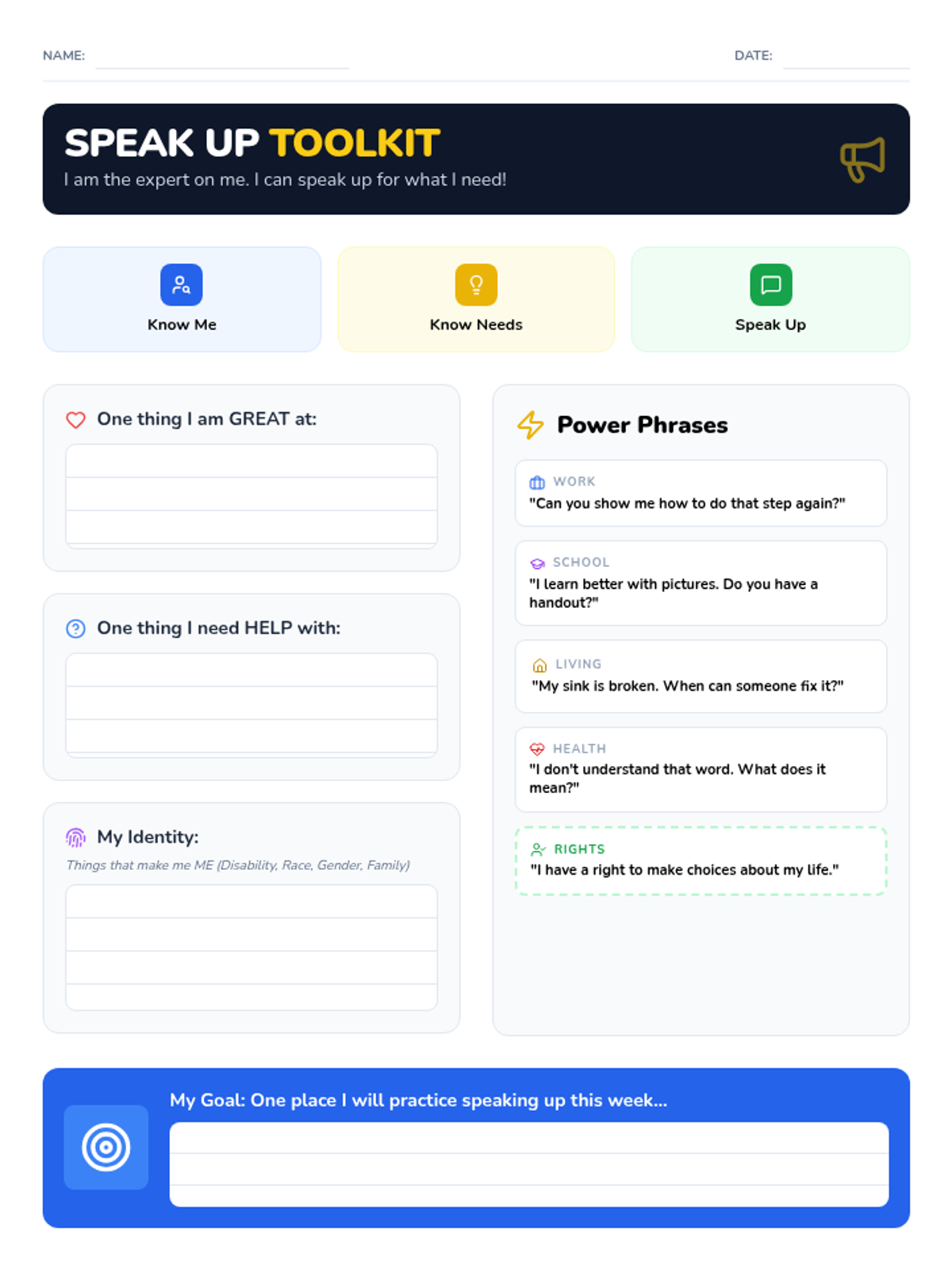
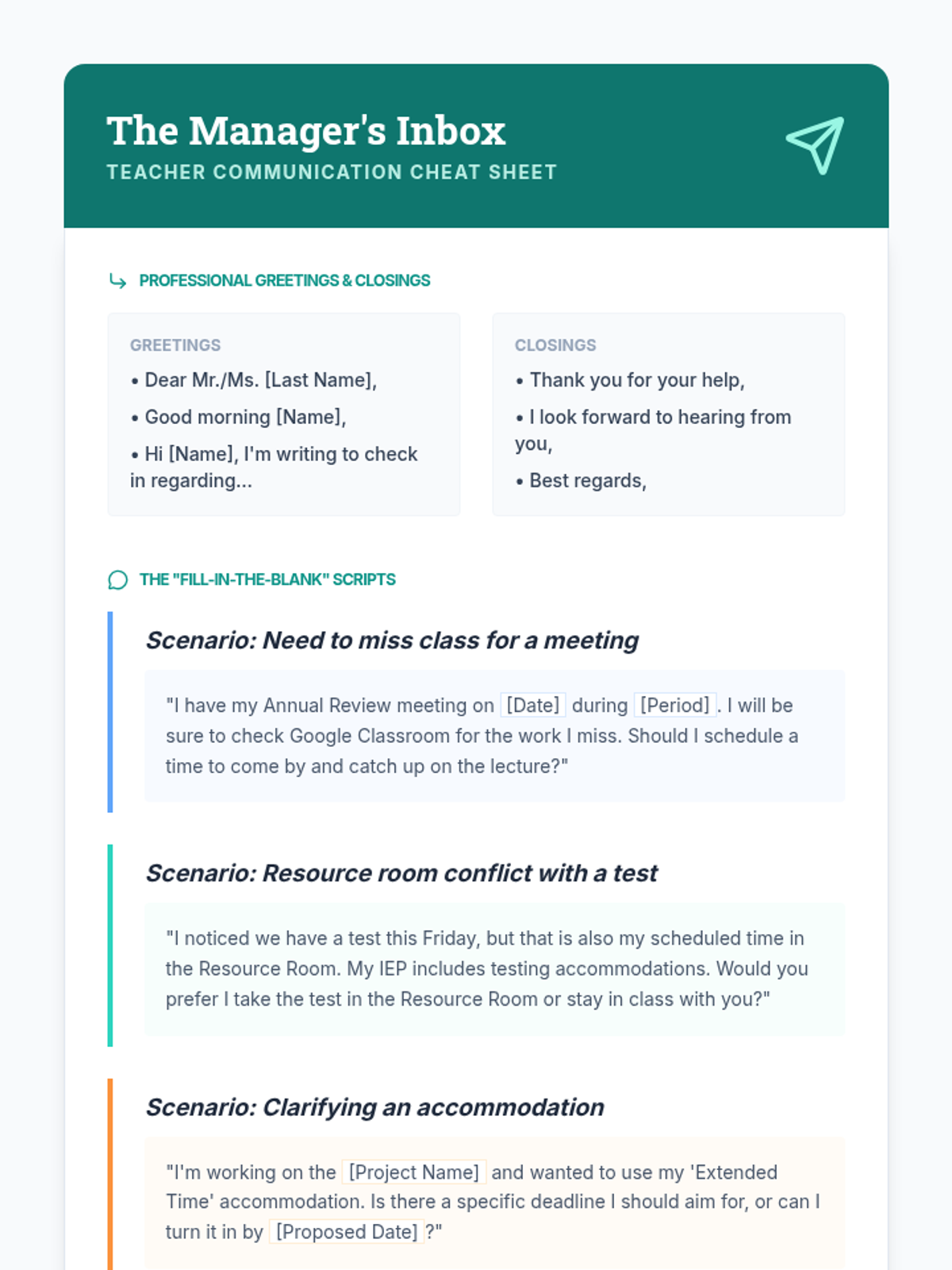
Strategies for identifying specific learning needs and articulating accommodation requests to educators. Equips students with communication skills to advocate for necessary environmental, academic, and social supports.
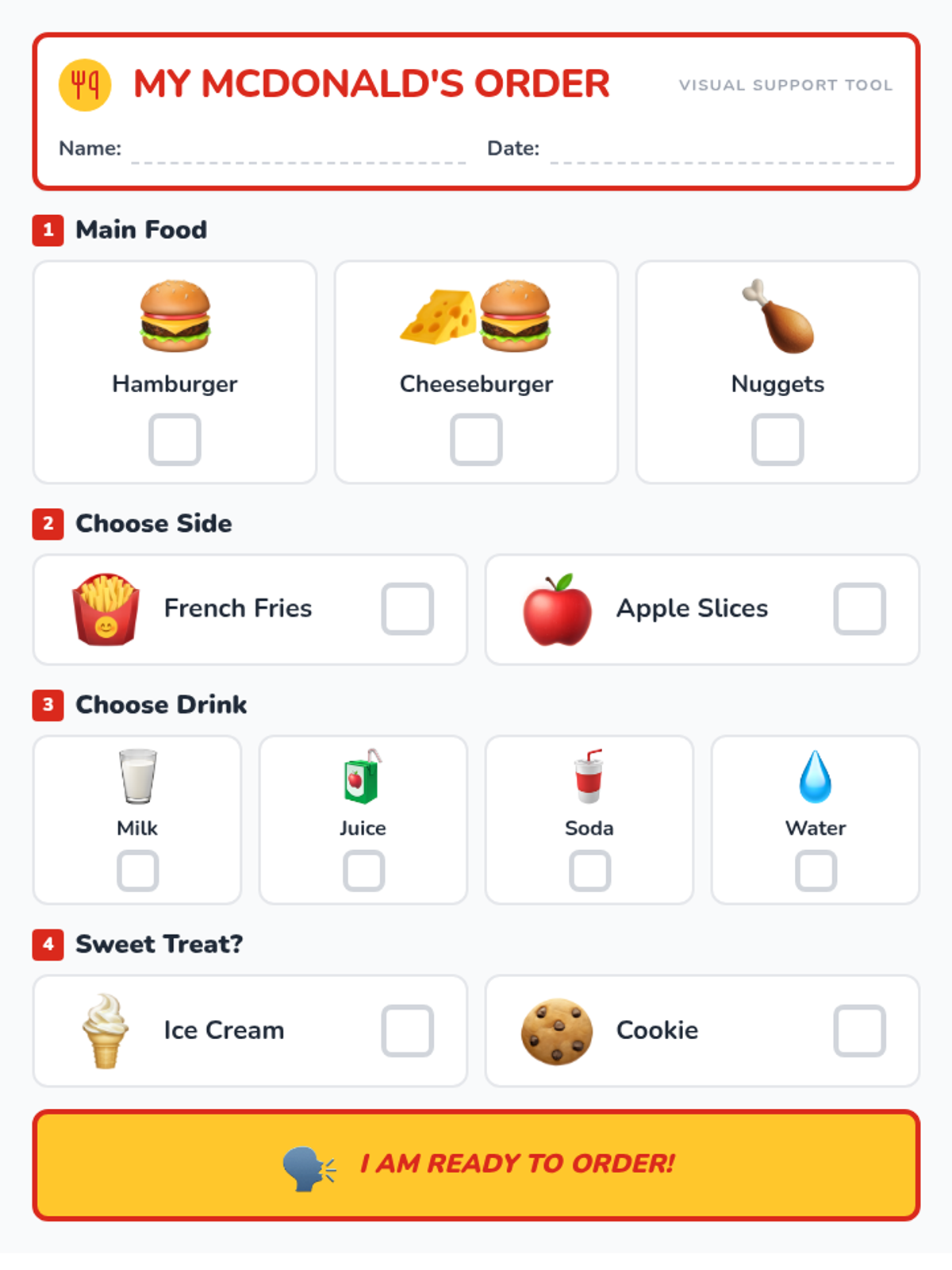
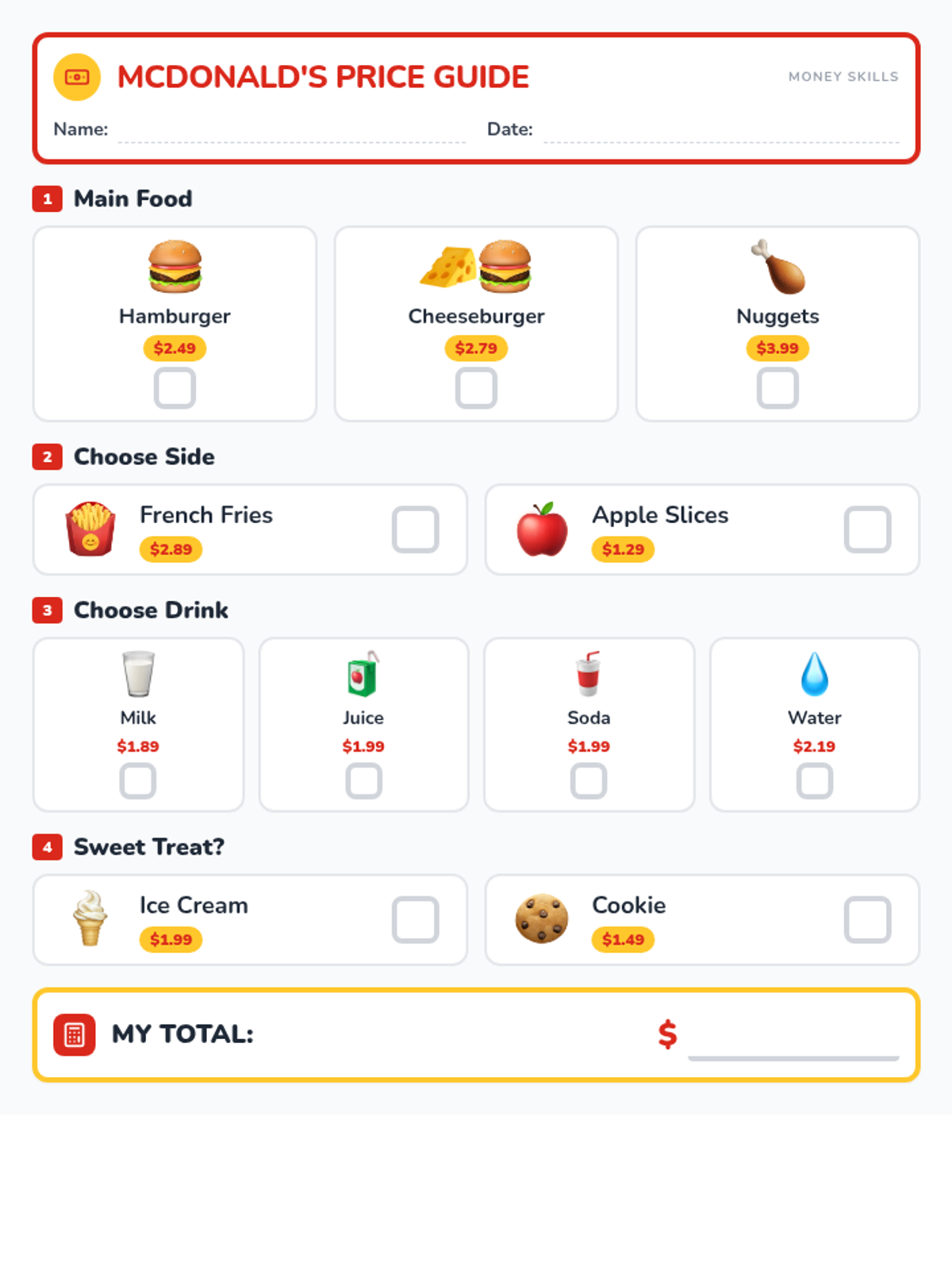
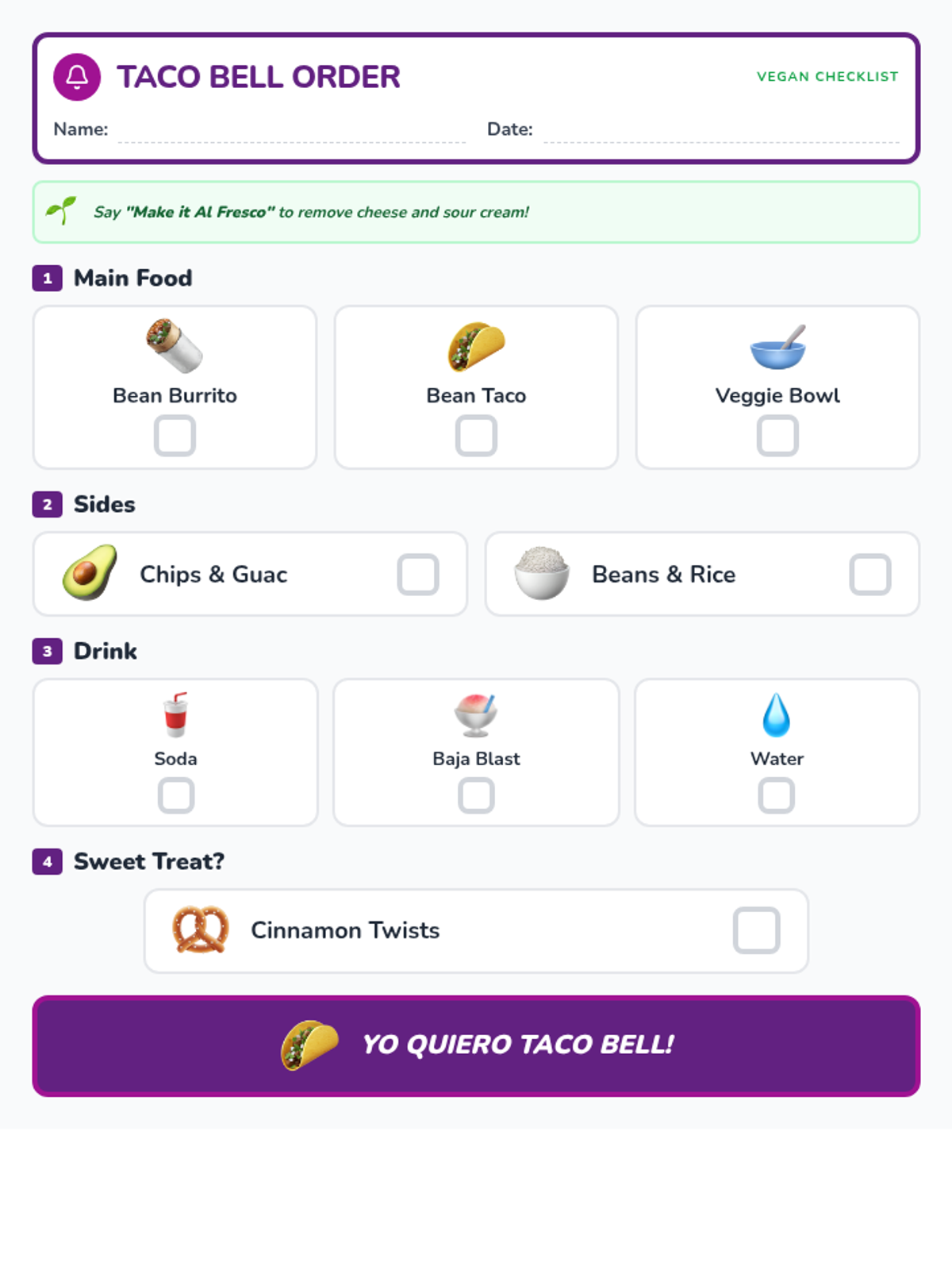
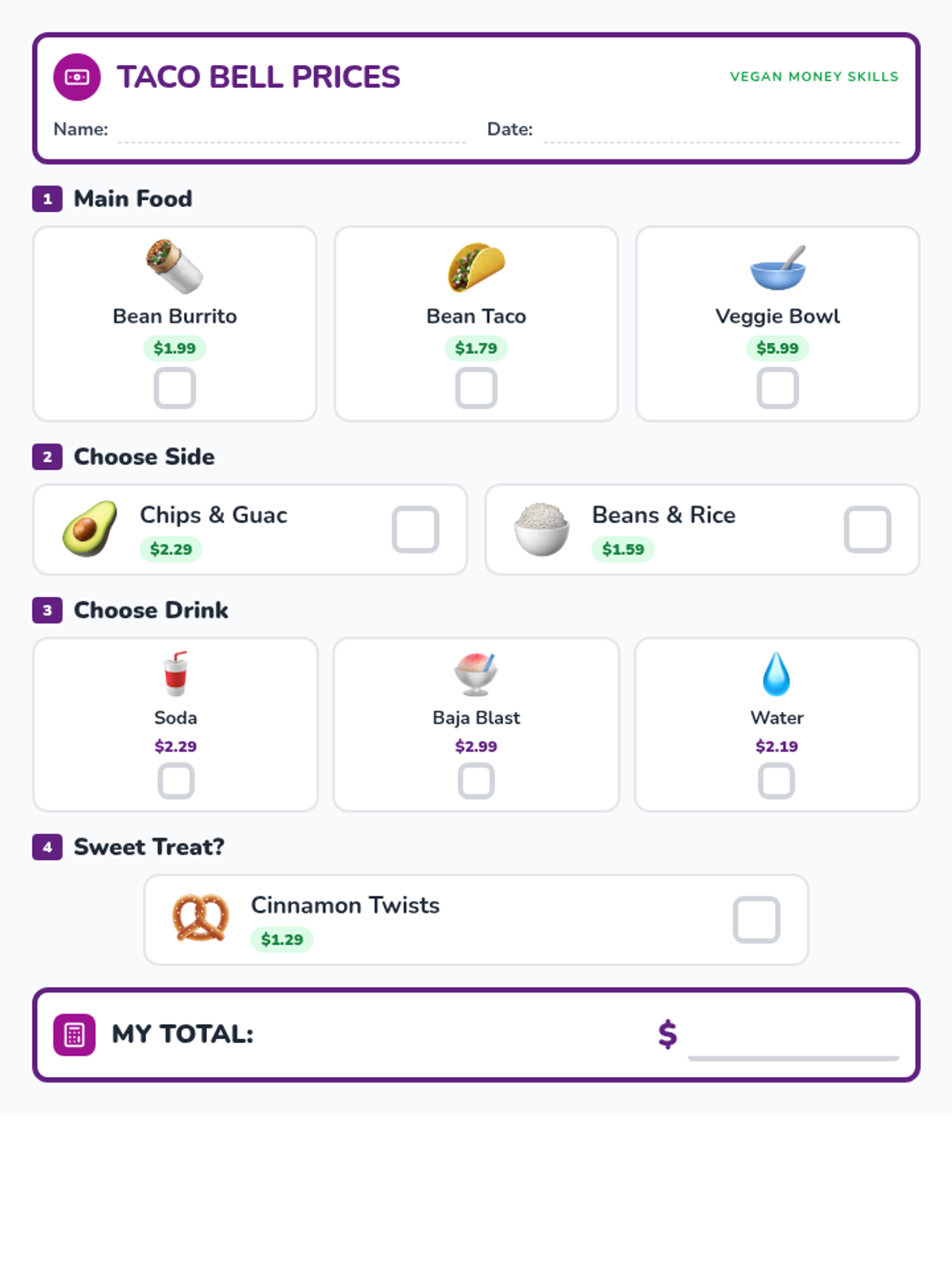
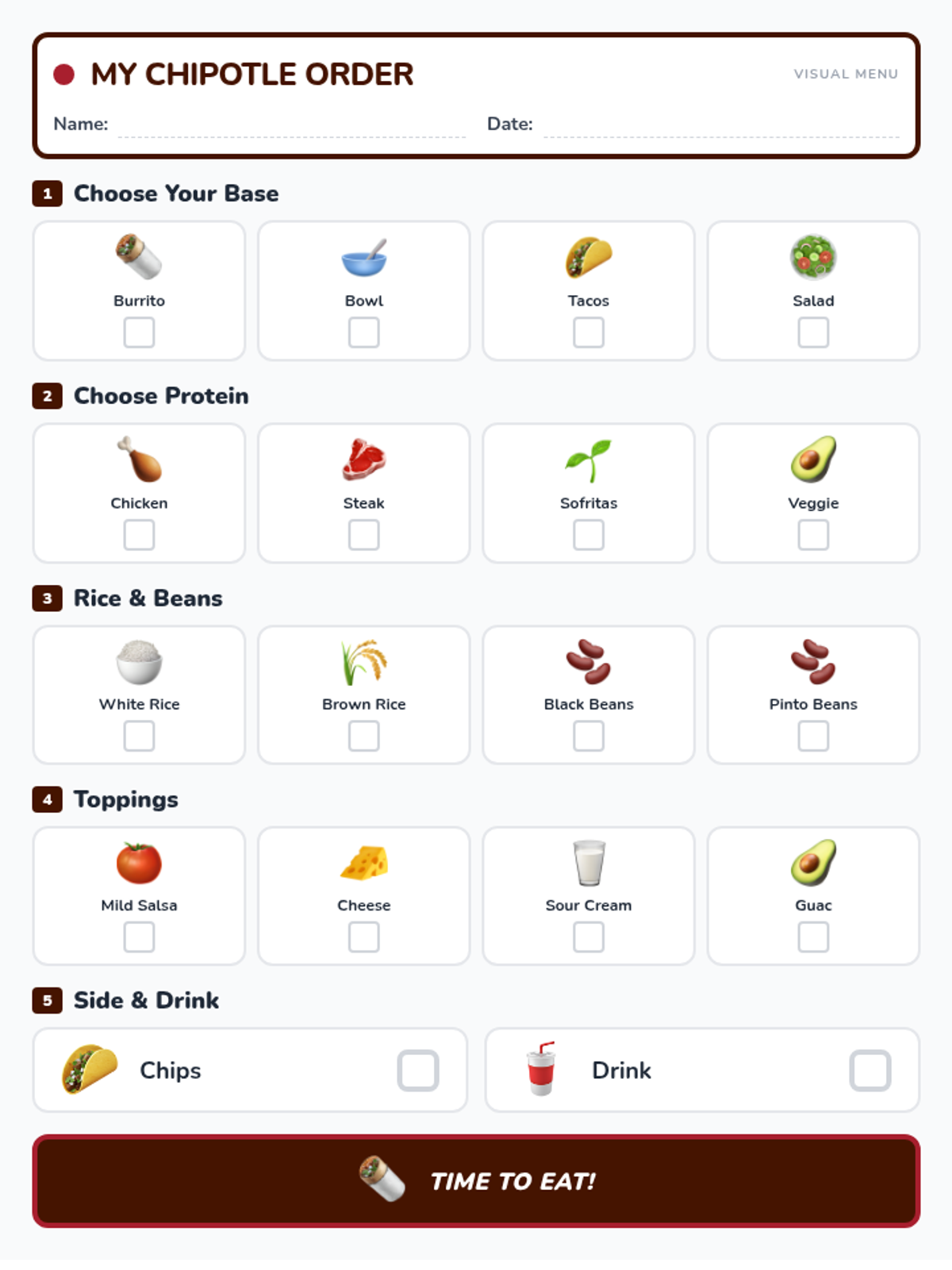
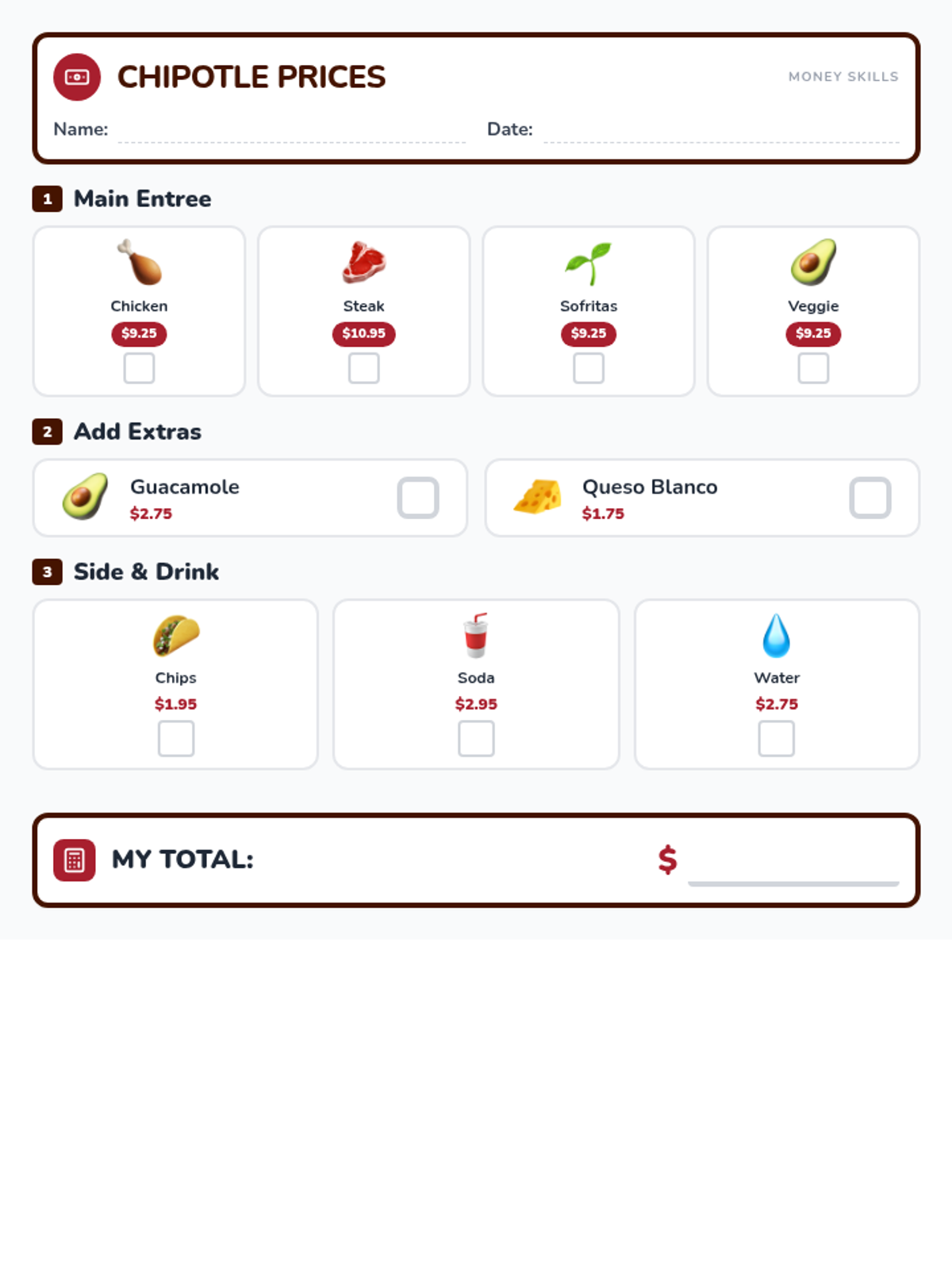
A set of visual supports to help students with special needs practice ordering and money skills at a fast food restaurant.
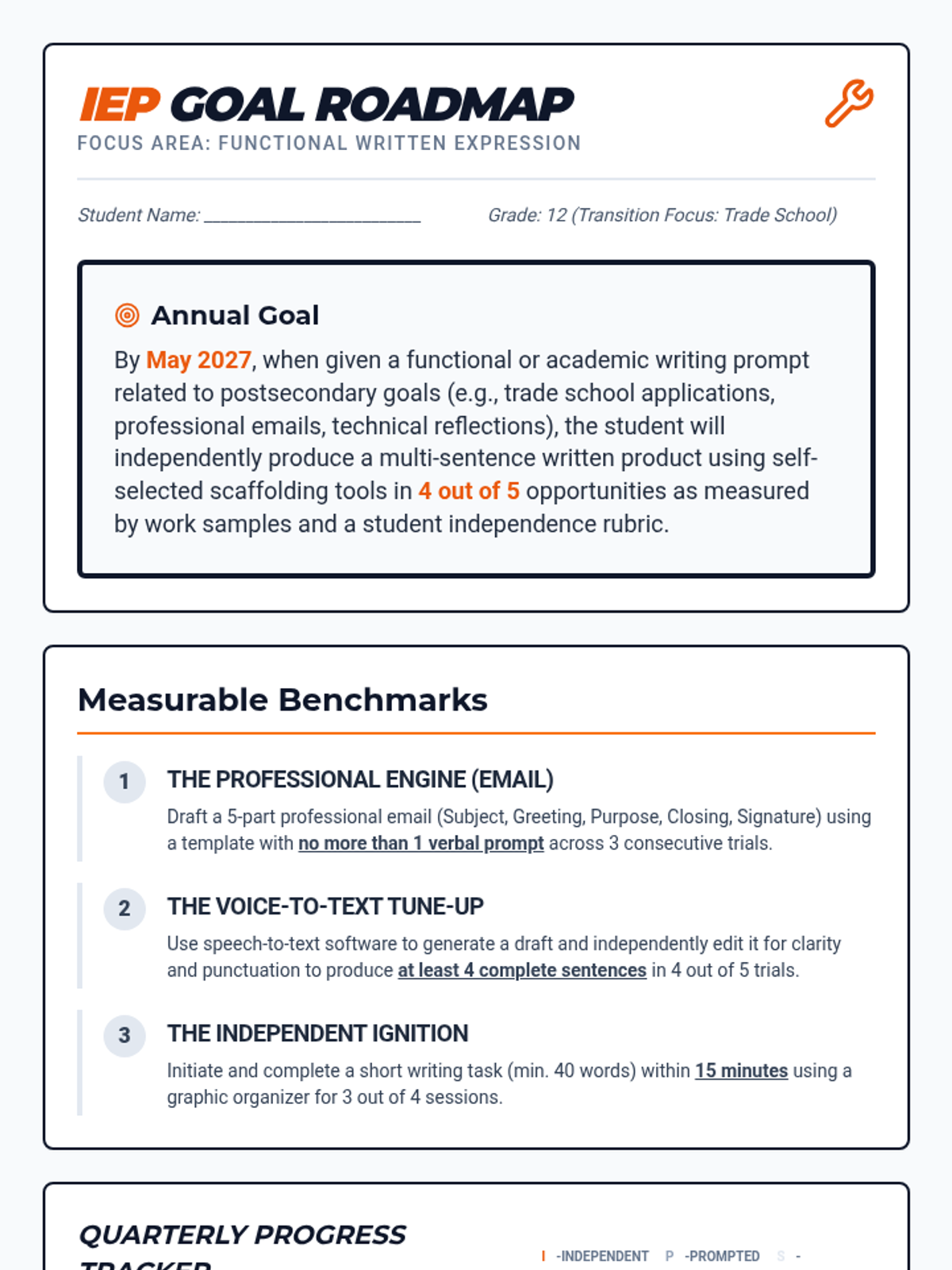
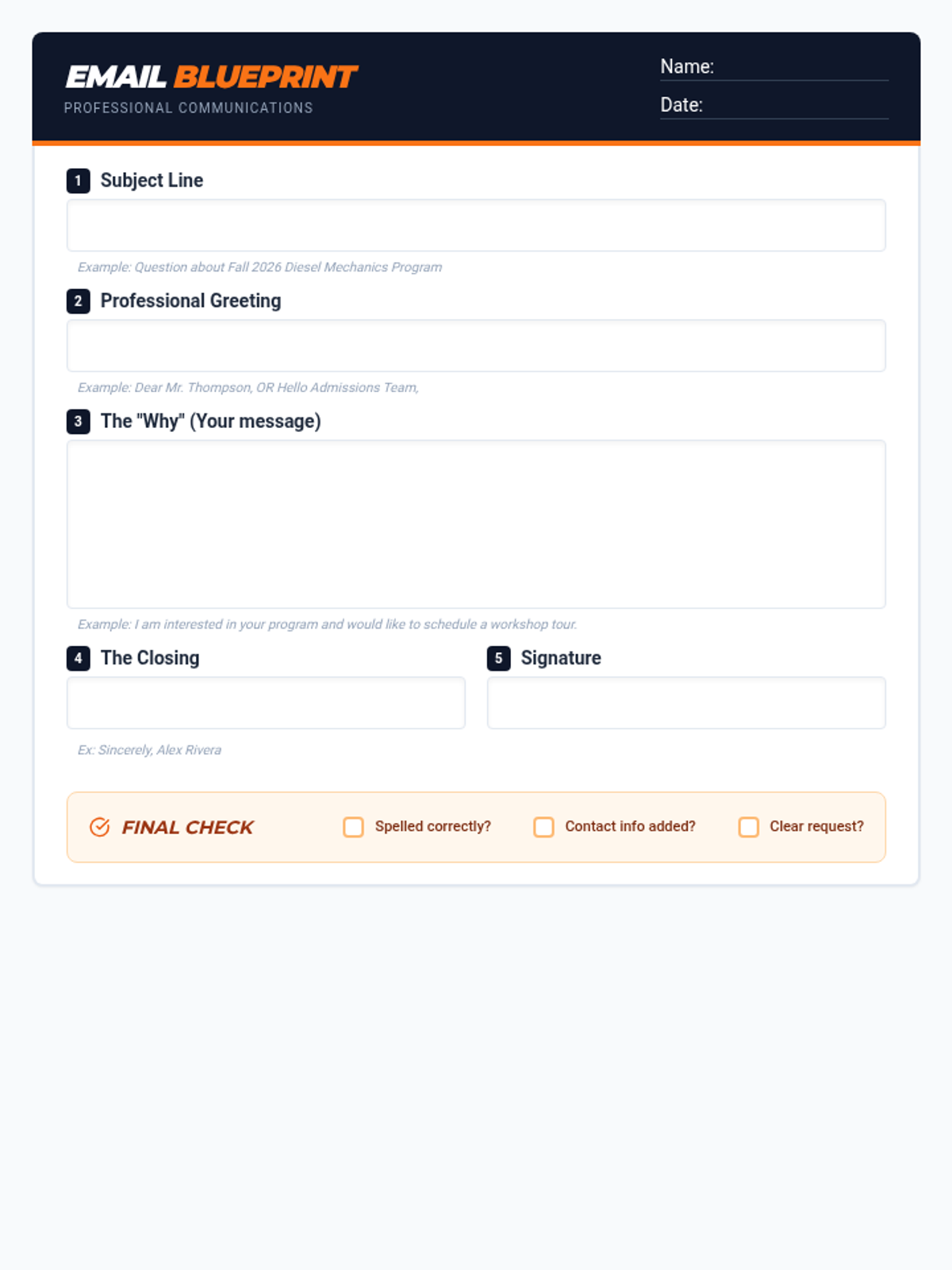
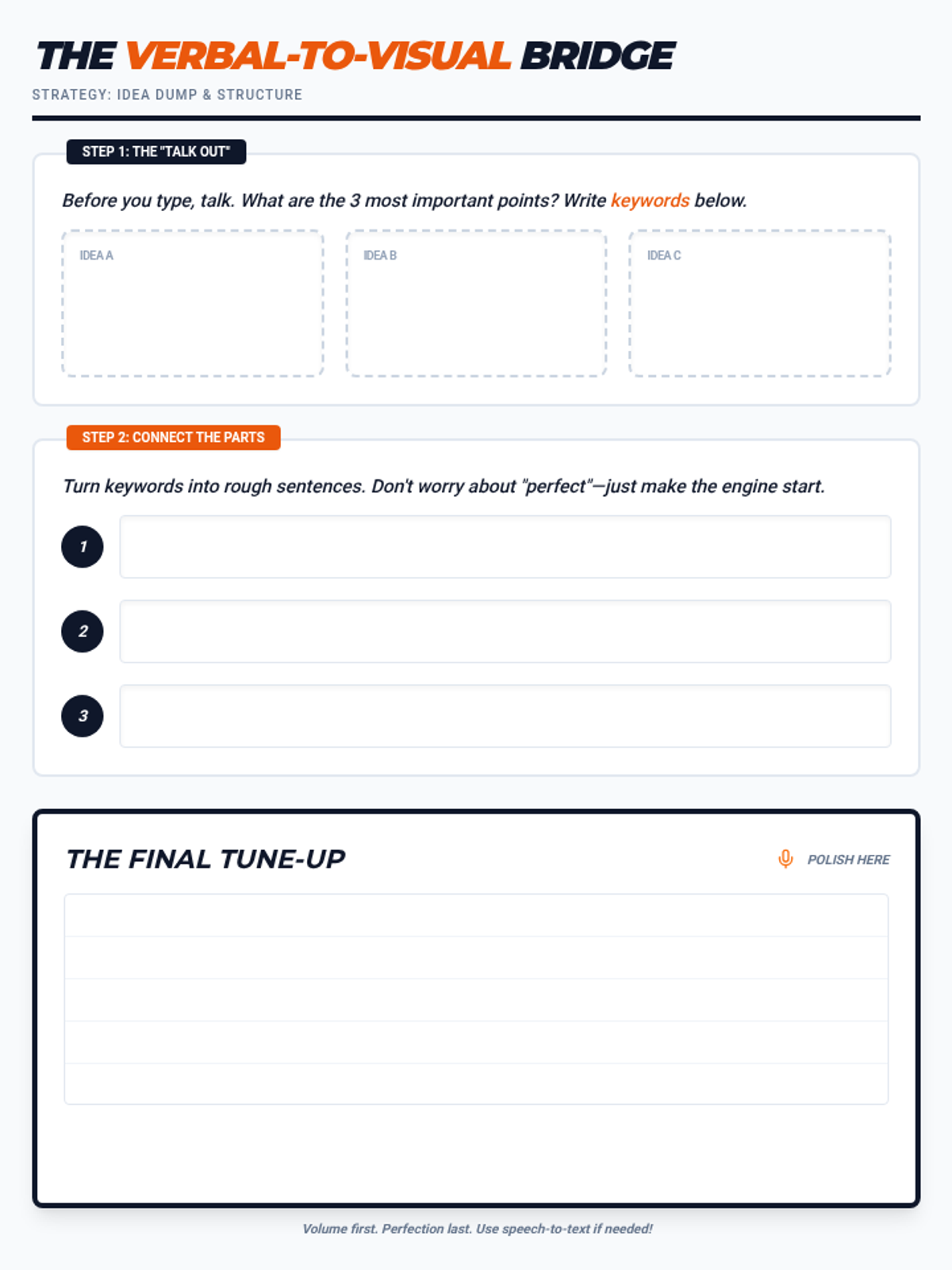
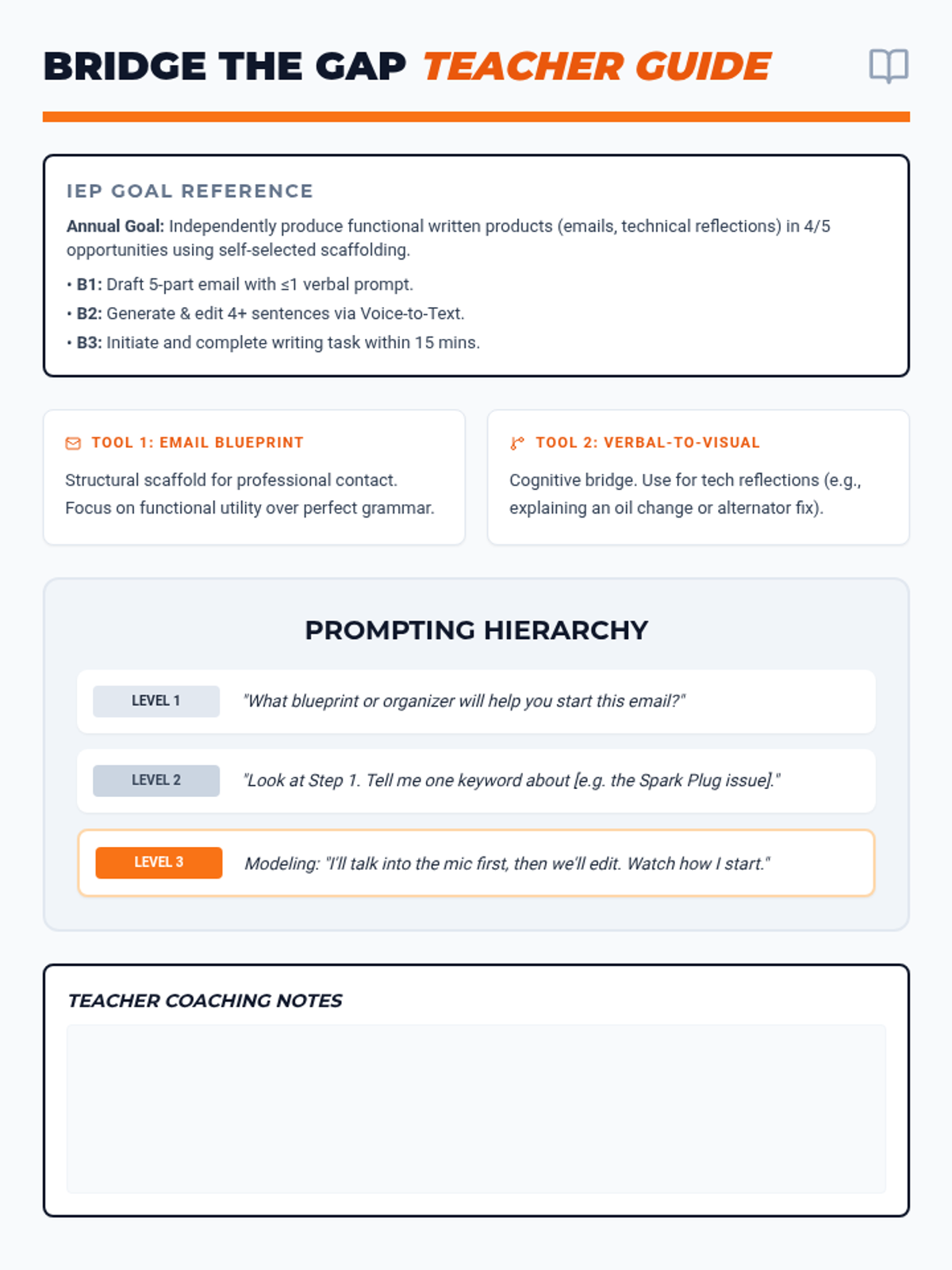
A set of resources designed to help a 12th-grade student interested in automotive trades overcome writing anxiety and develop functional communication skills for postsecondary success.
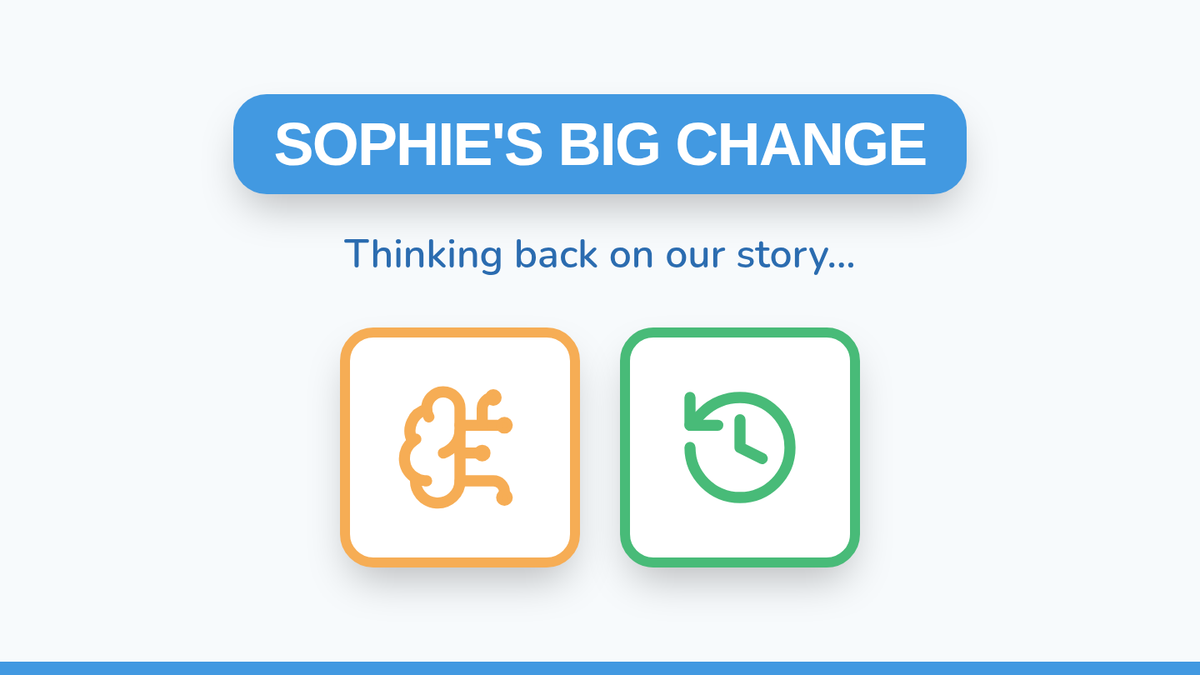
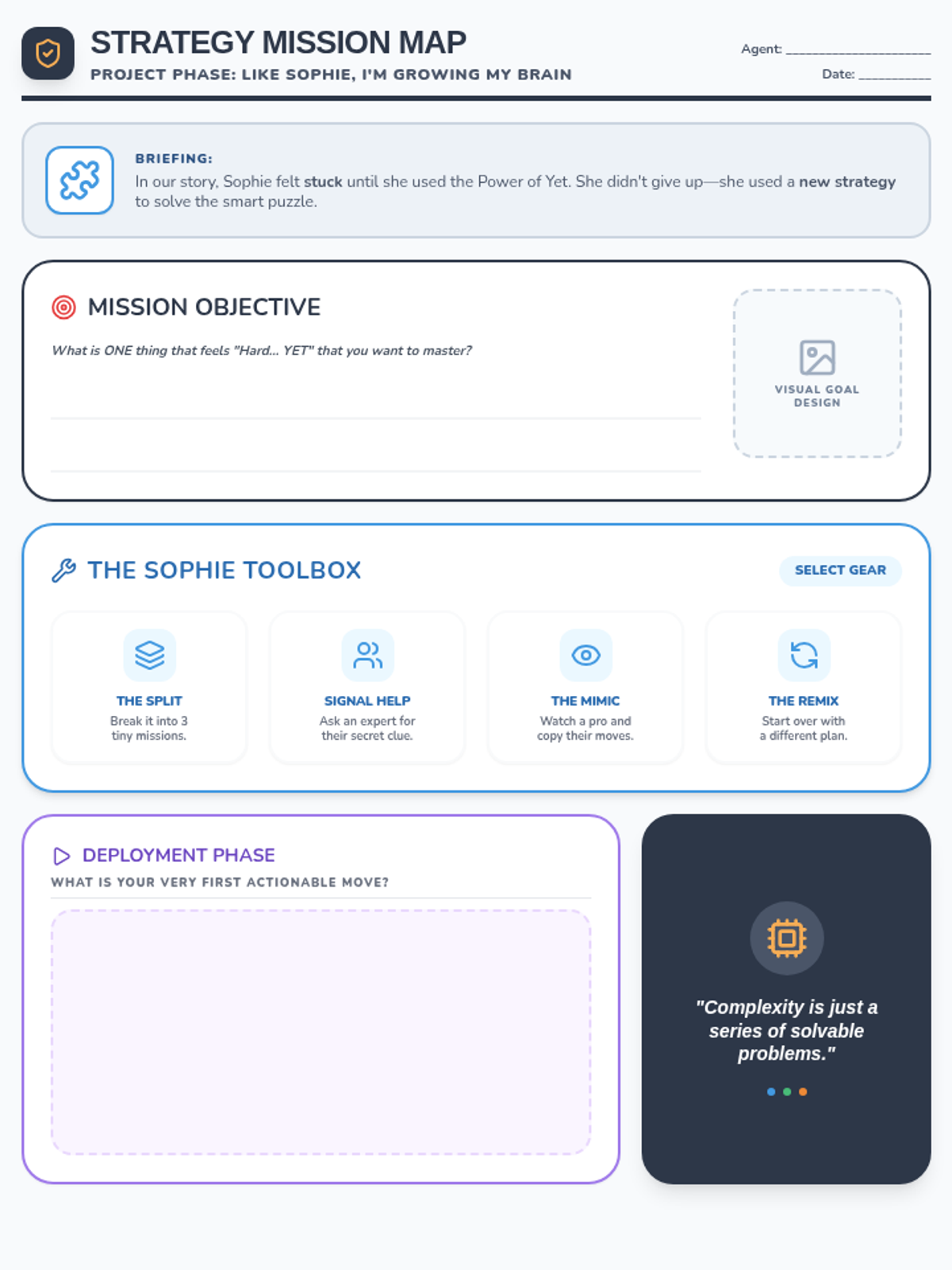
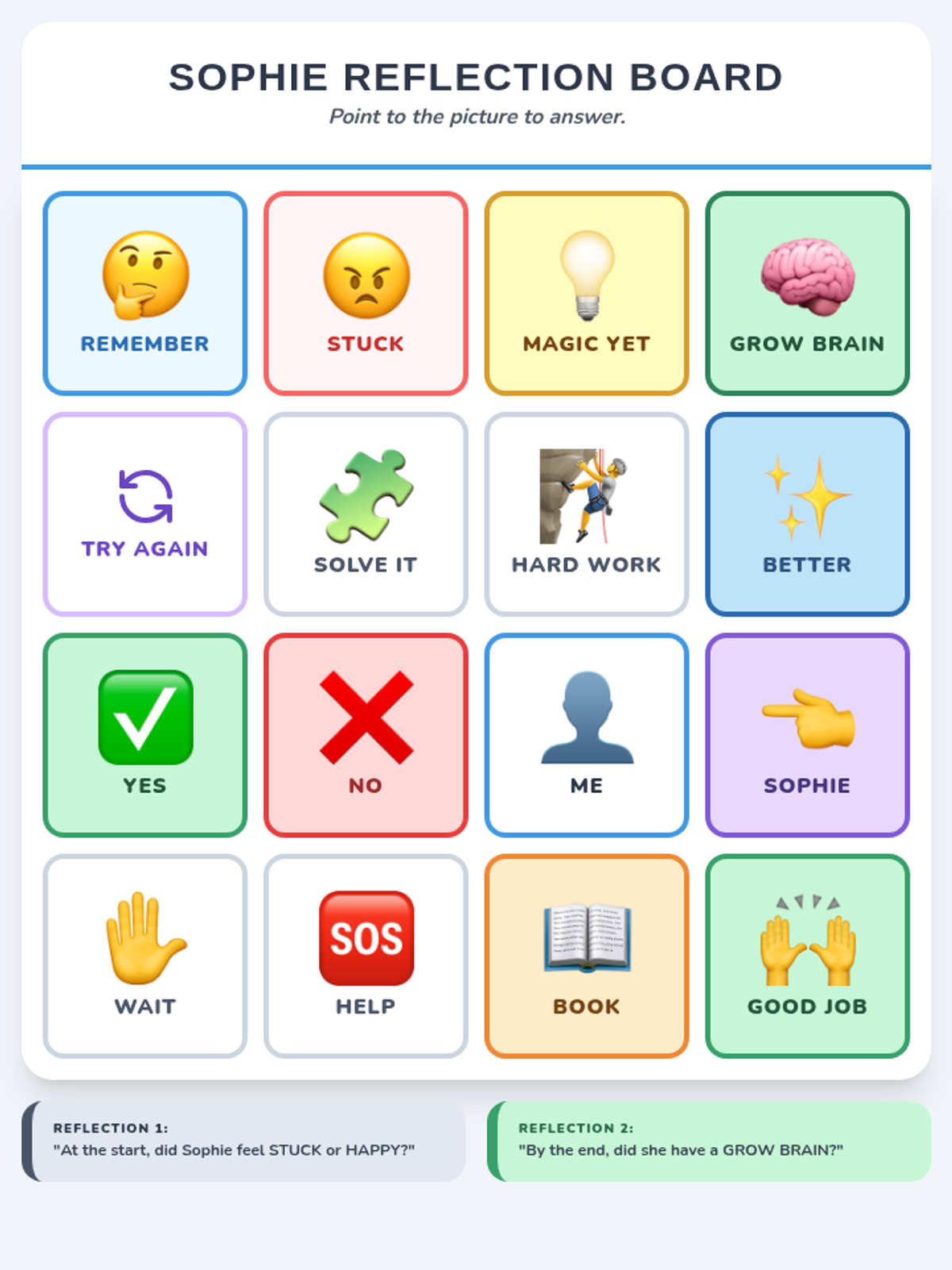
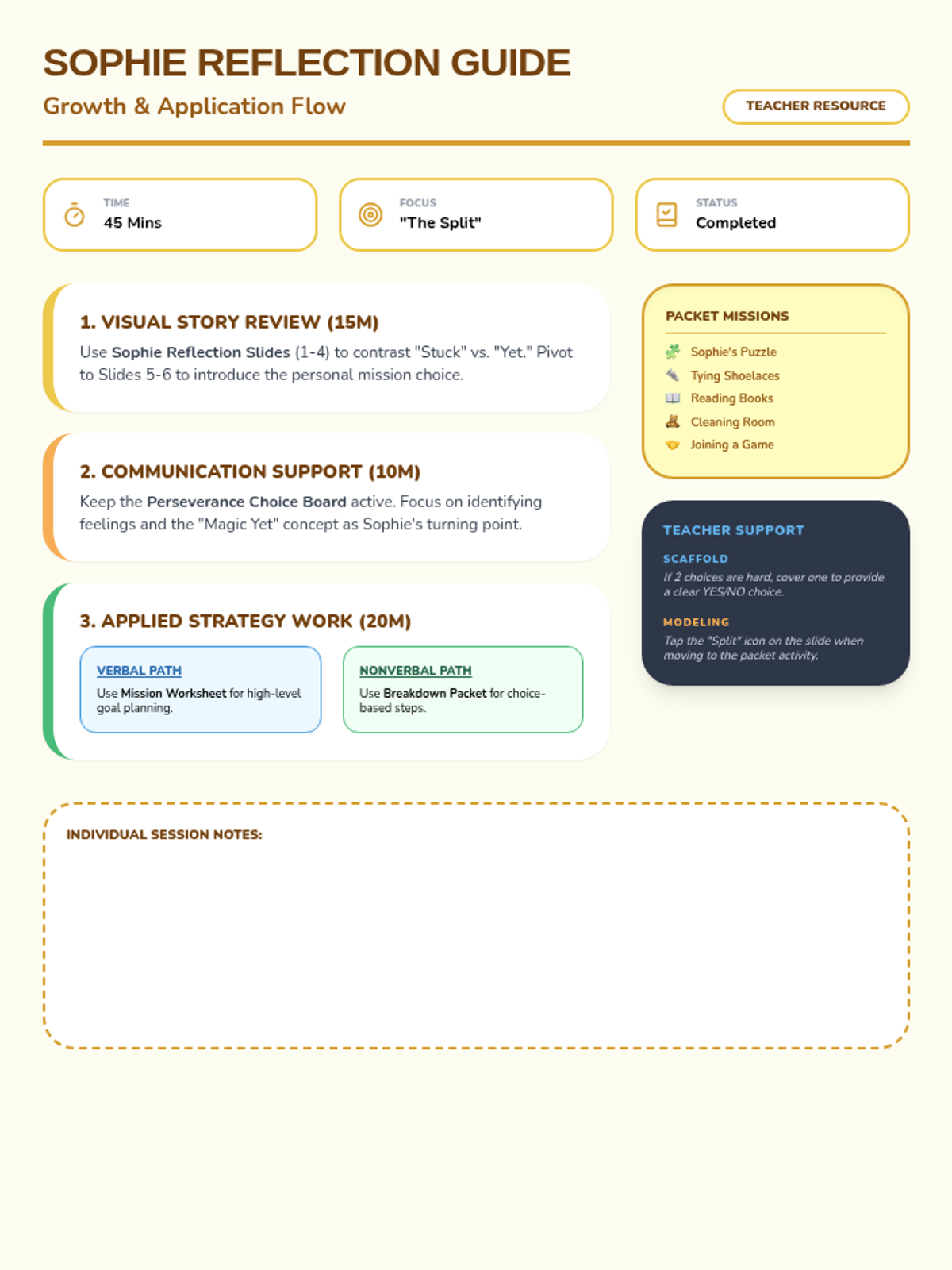
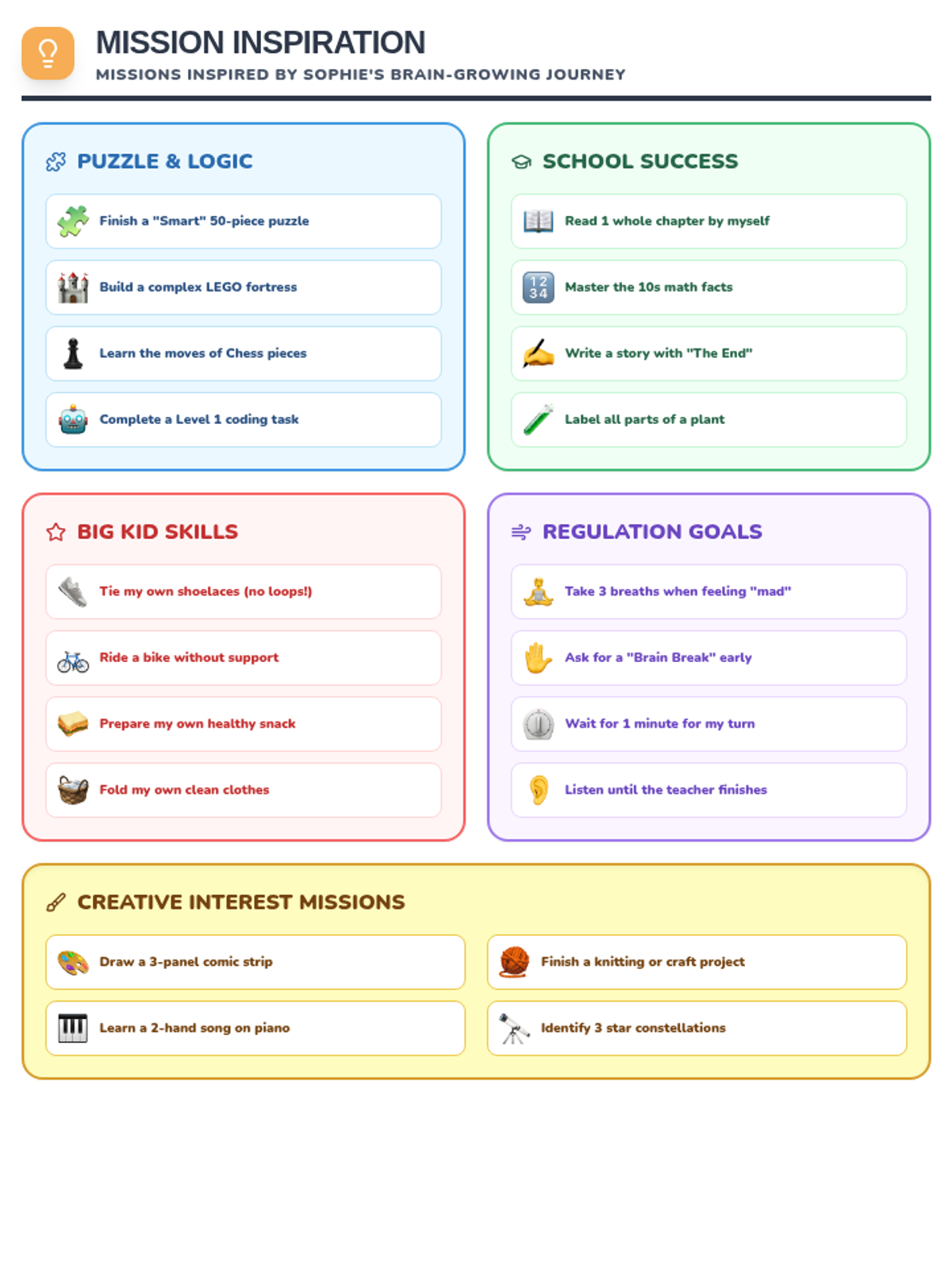
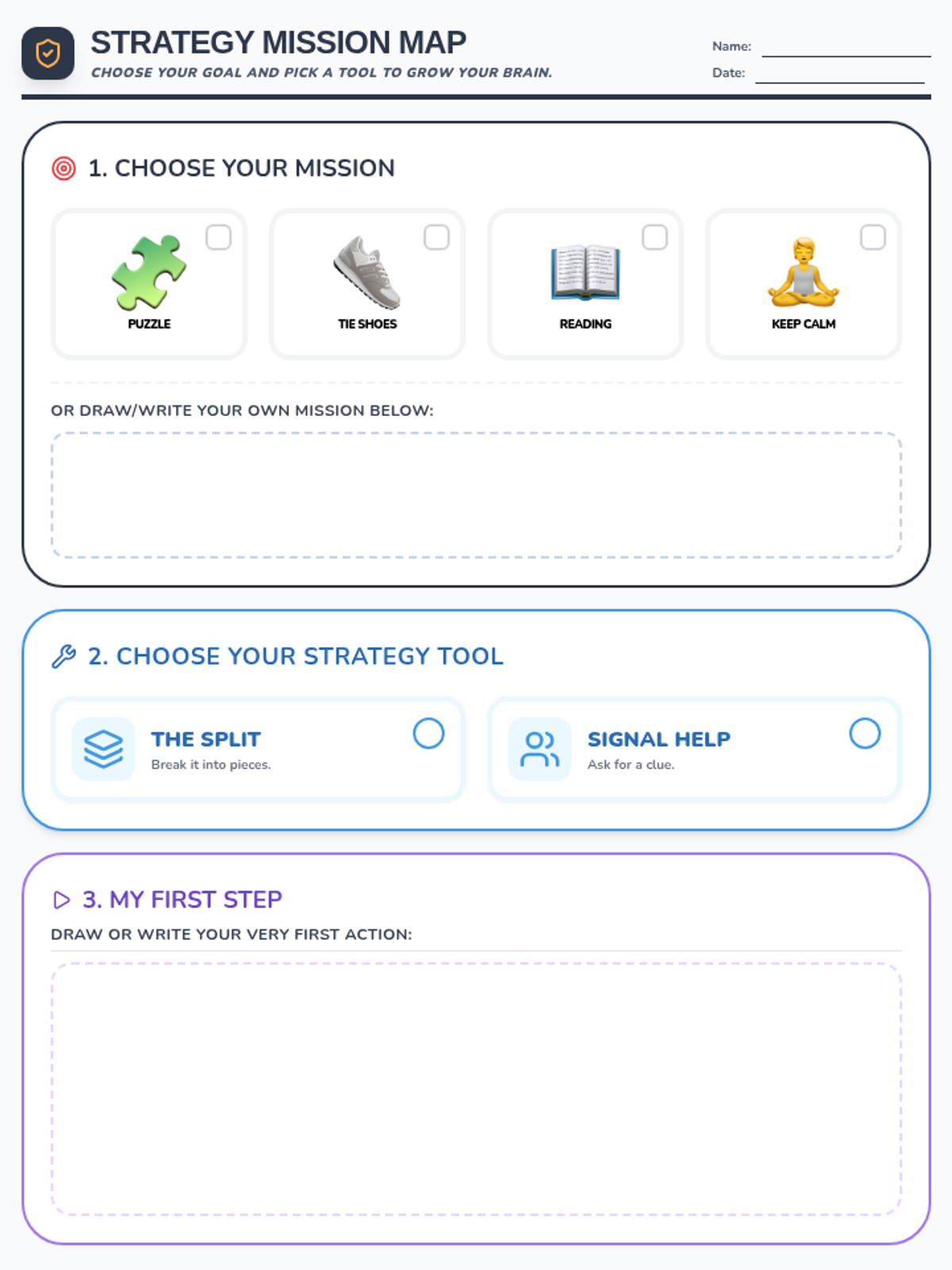
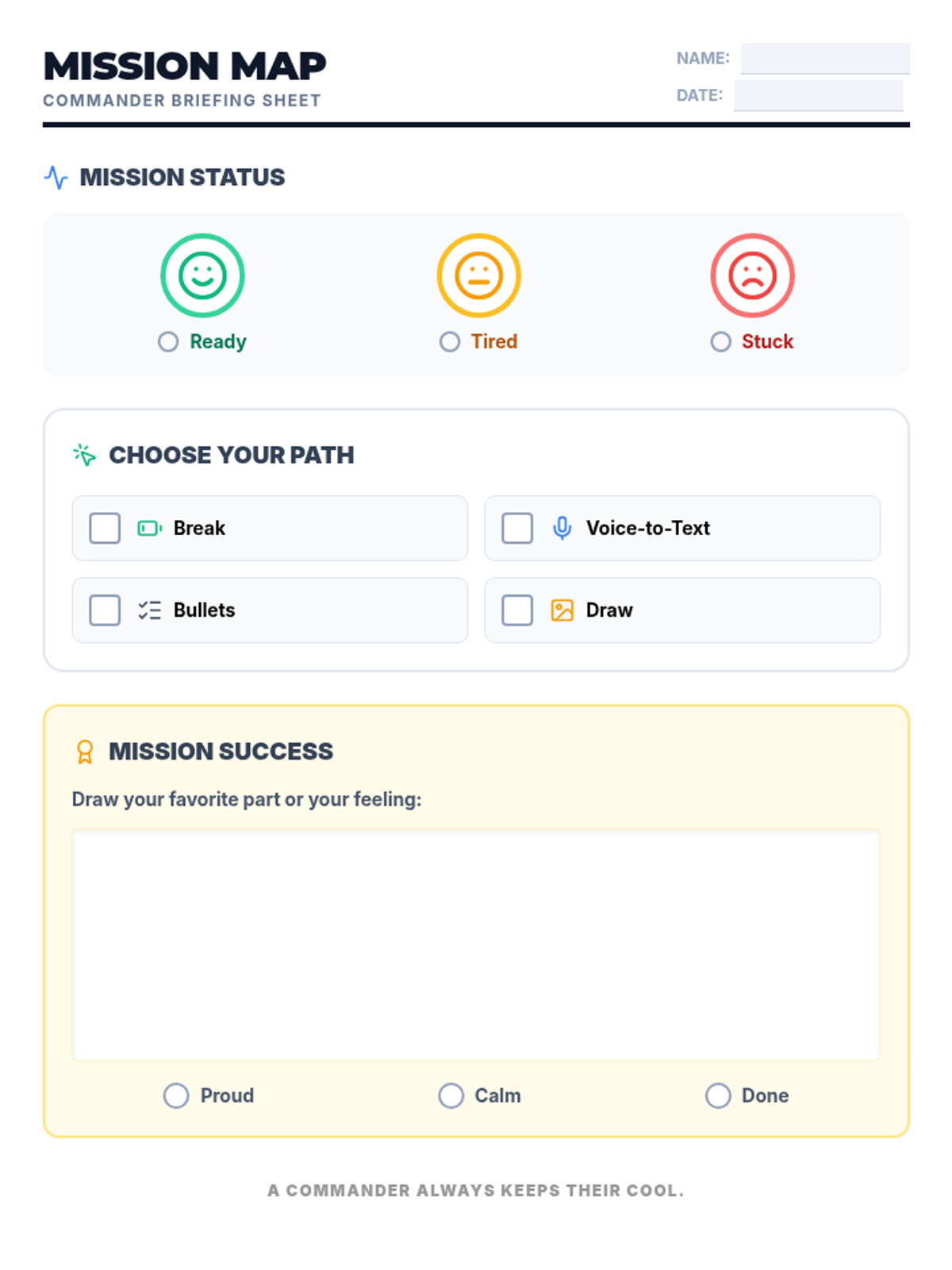
This lesson focuses on reflecting on Sophie's journey in 'When Sophie Thinks She Can't' and applying the concept of 'The Power of Yet' to personal experiences. It includes visual reflection slides, a strategy mission map, and adapted communication tools specifically designed for students with autism to process and apply growth mindset concepts.
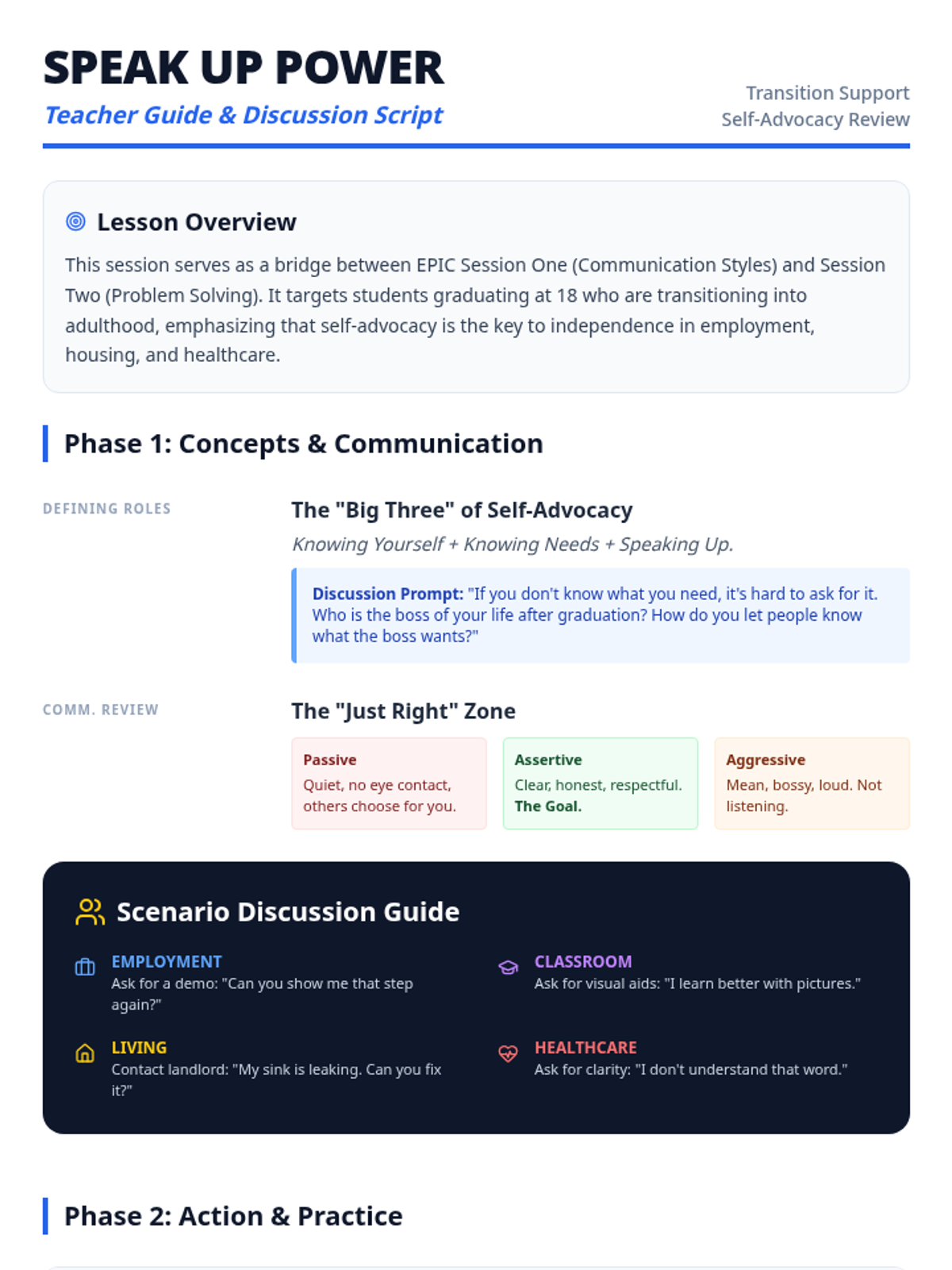
A review-focused lesson on self-advocacy for high school students with intellectual disabilities, focusing on transition skills for employment, living, and education.
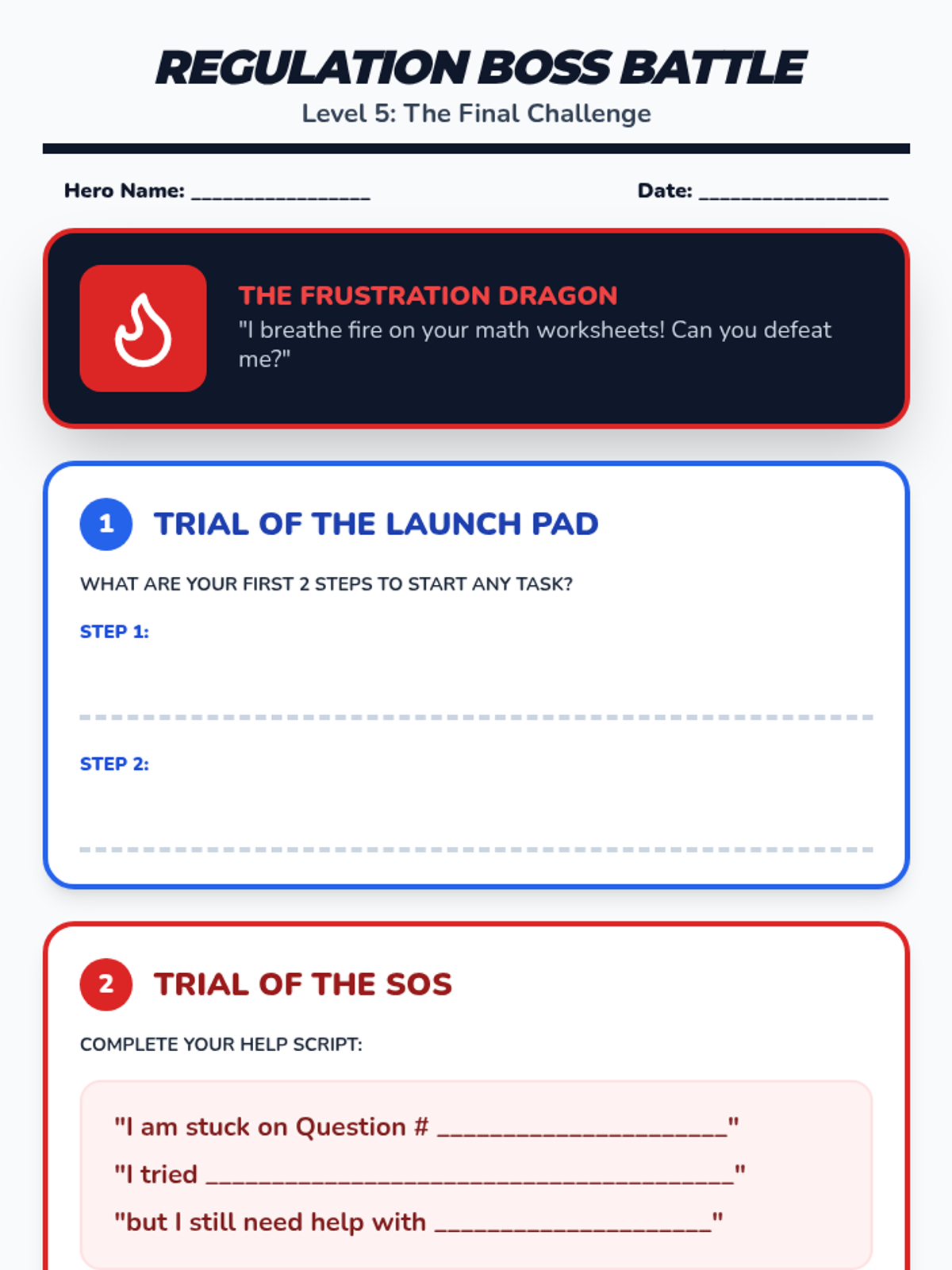
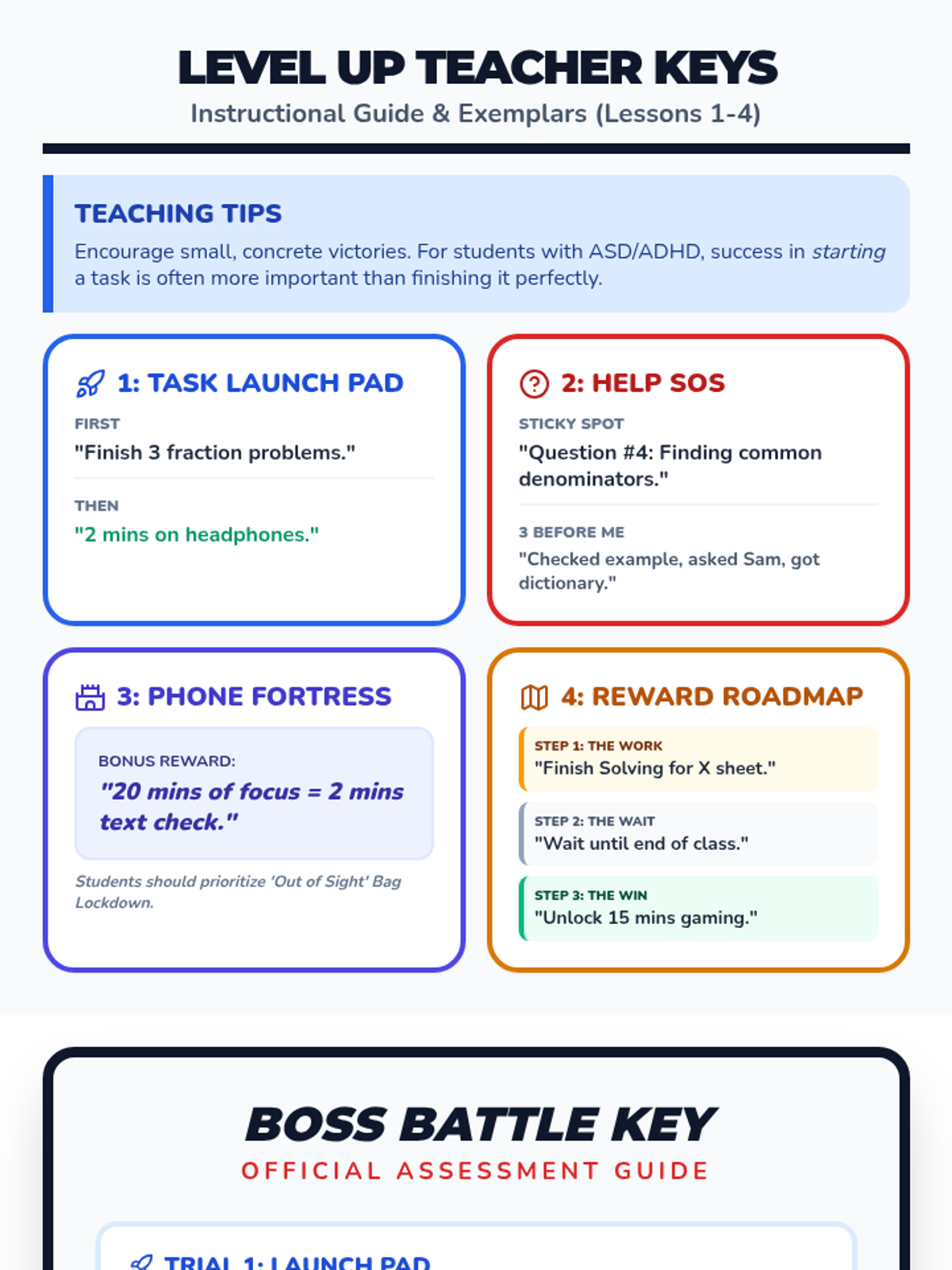
A cumulative 'Boss Battle' review where students use all their regulation tools to solve a series of math-related regulation challenges.
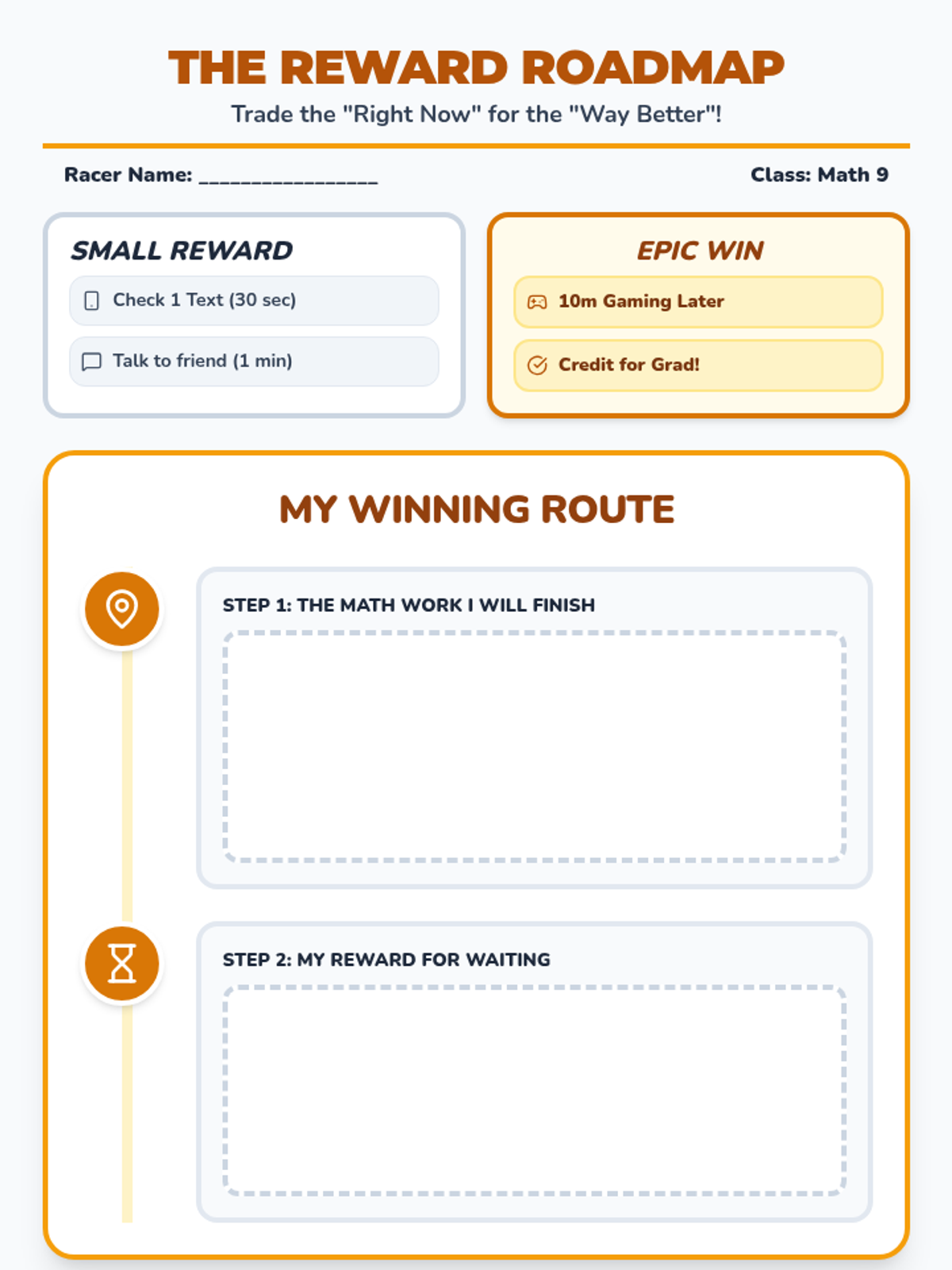
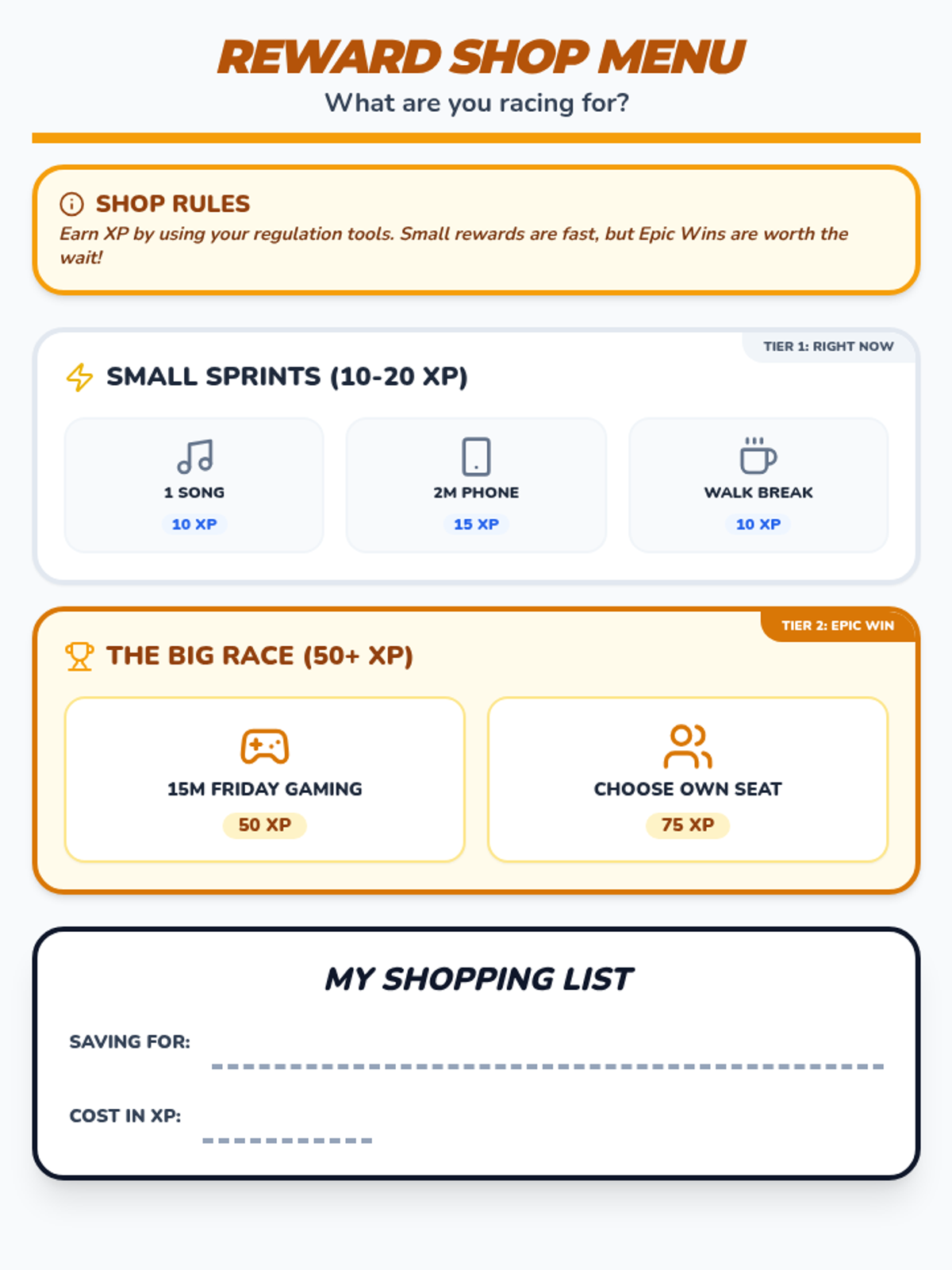
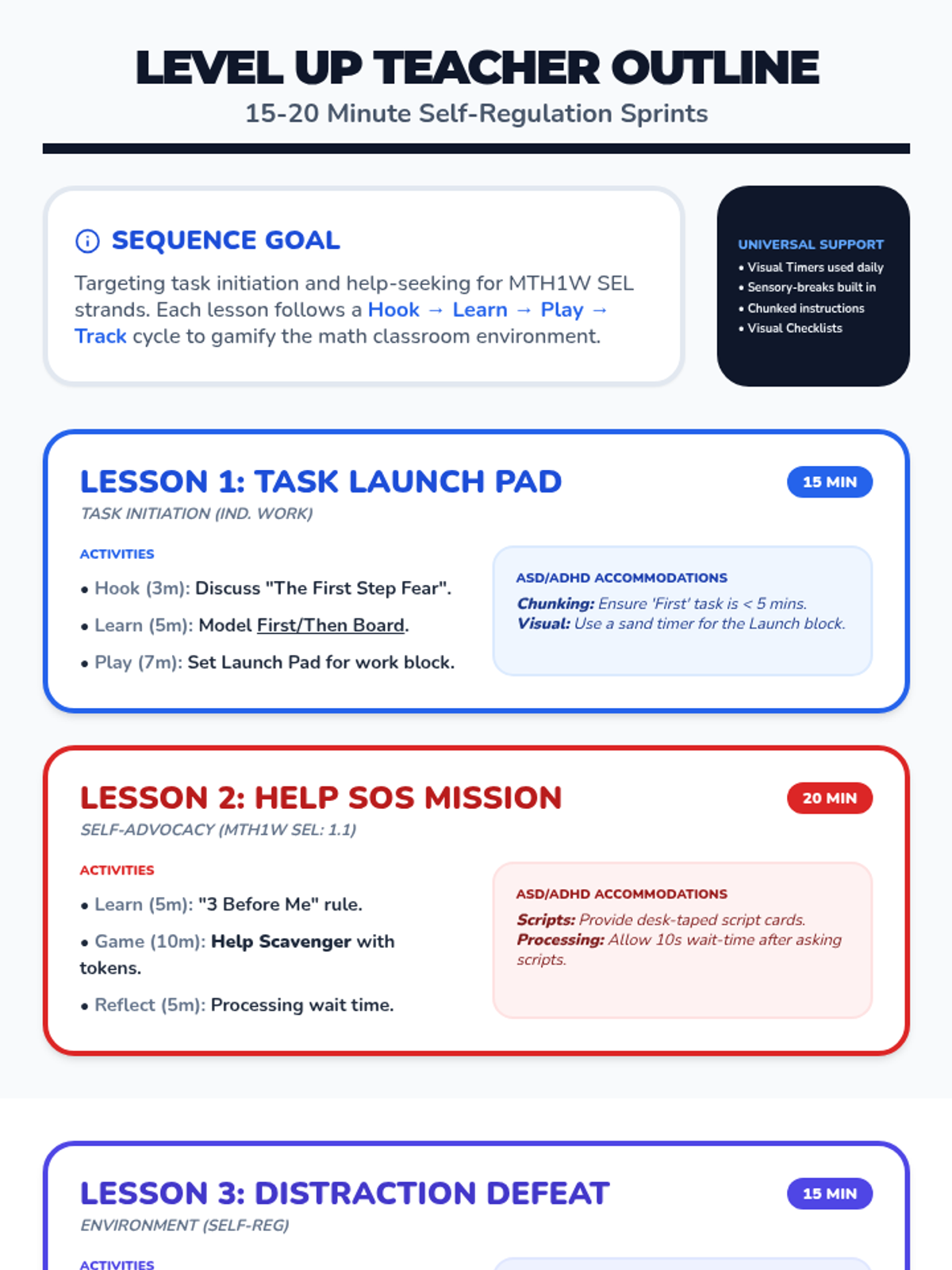
Explores delayed gratification through a 'Reward Roadmap' activity, teaching students to trade immediate distractions for long-term academic success.
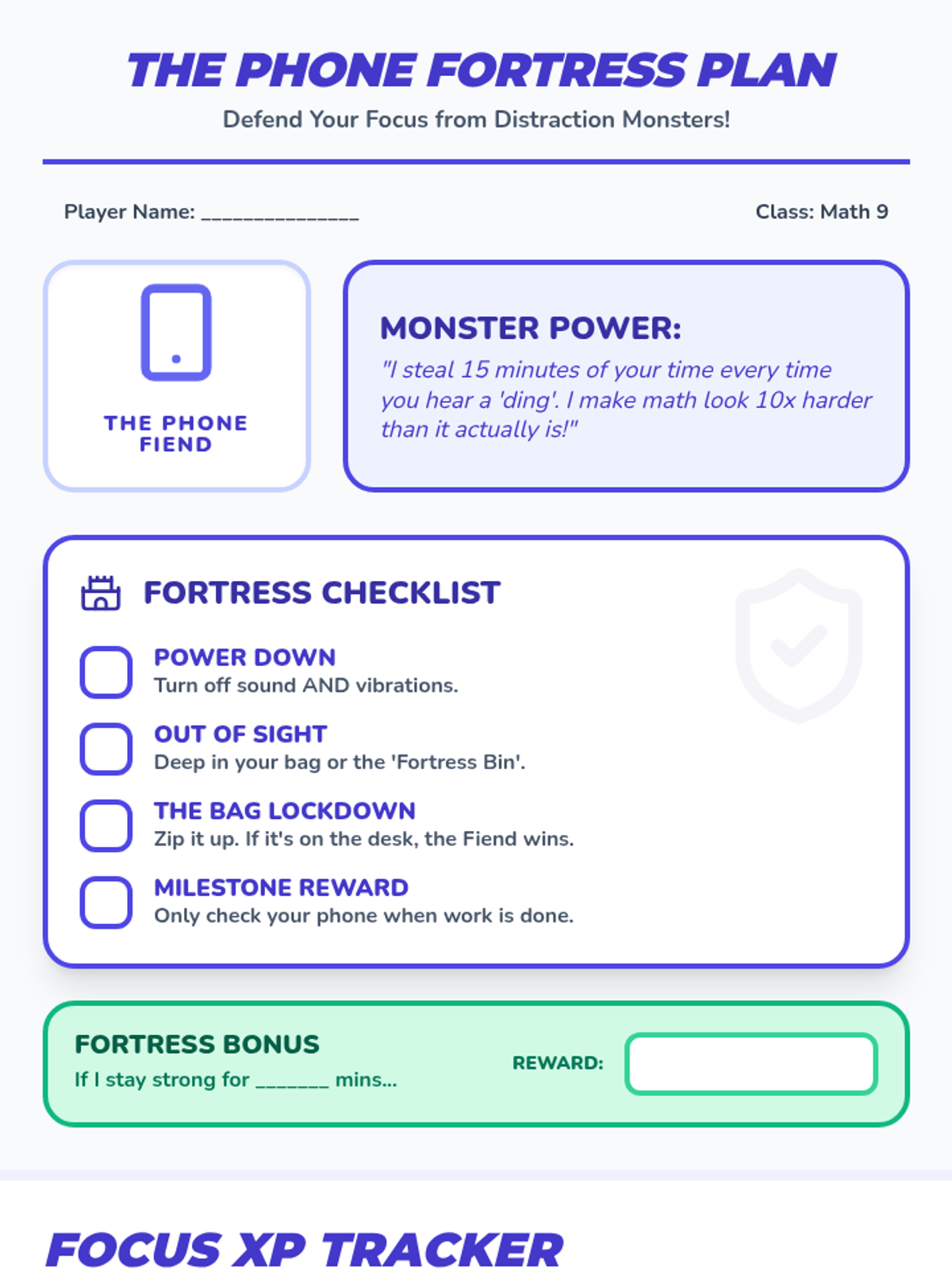
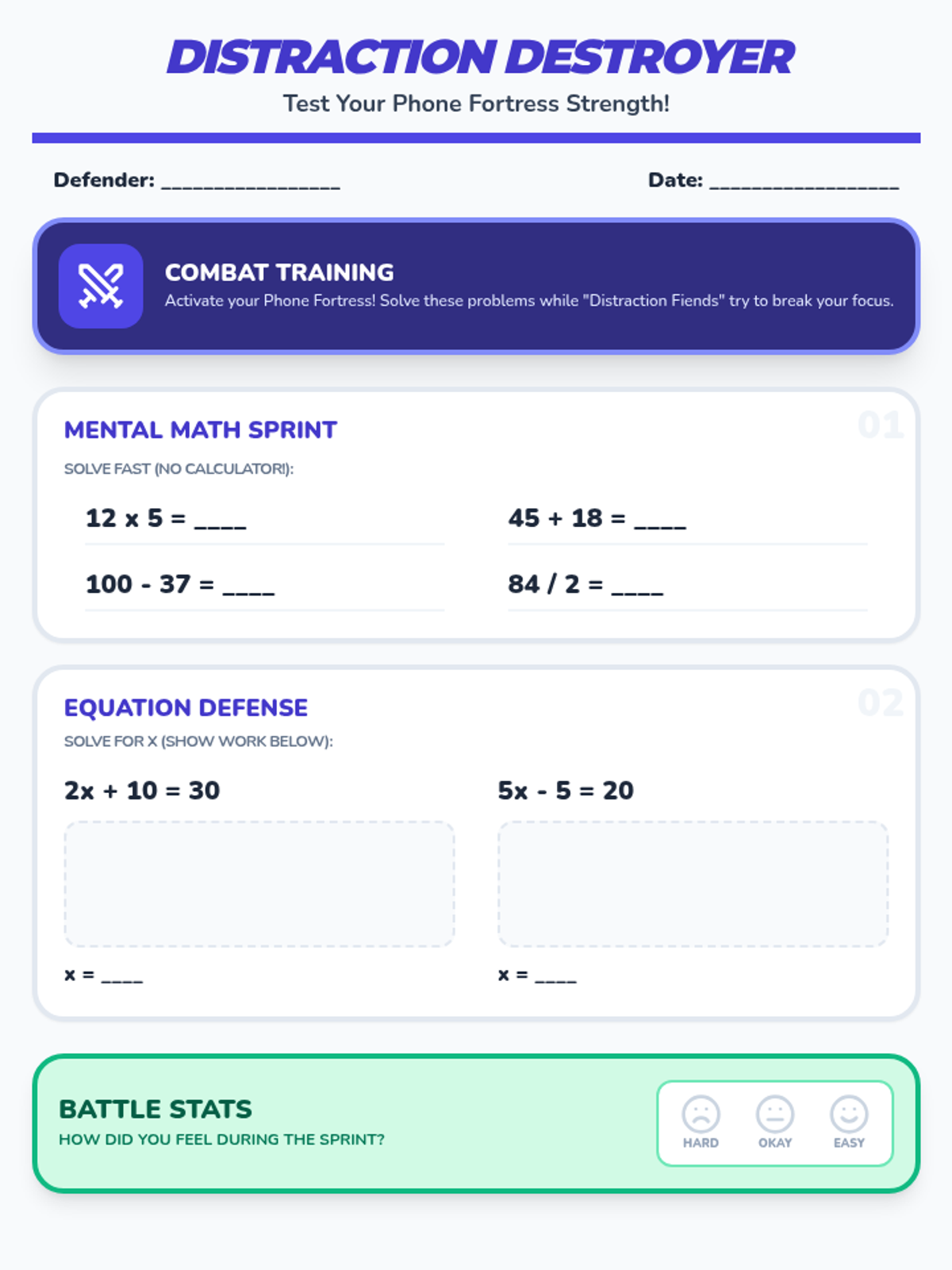
Students identify environmental distractions, specifically phones, and create a 'Phone Fortress' plan using visual checklists to maintain focus.
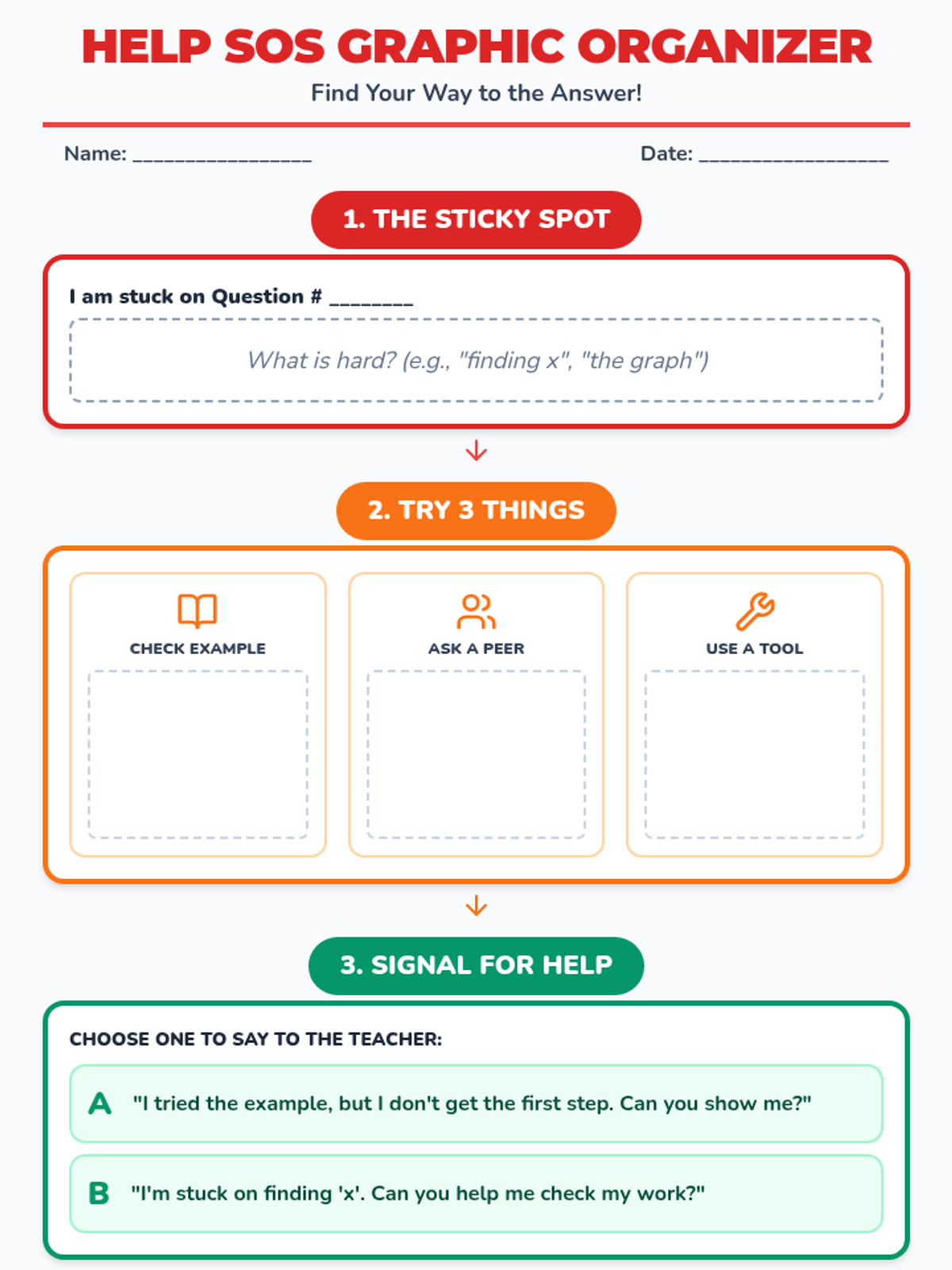
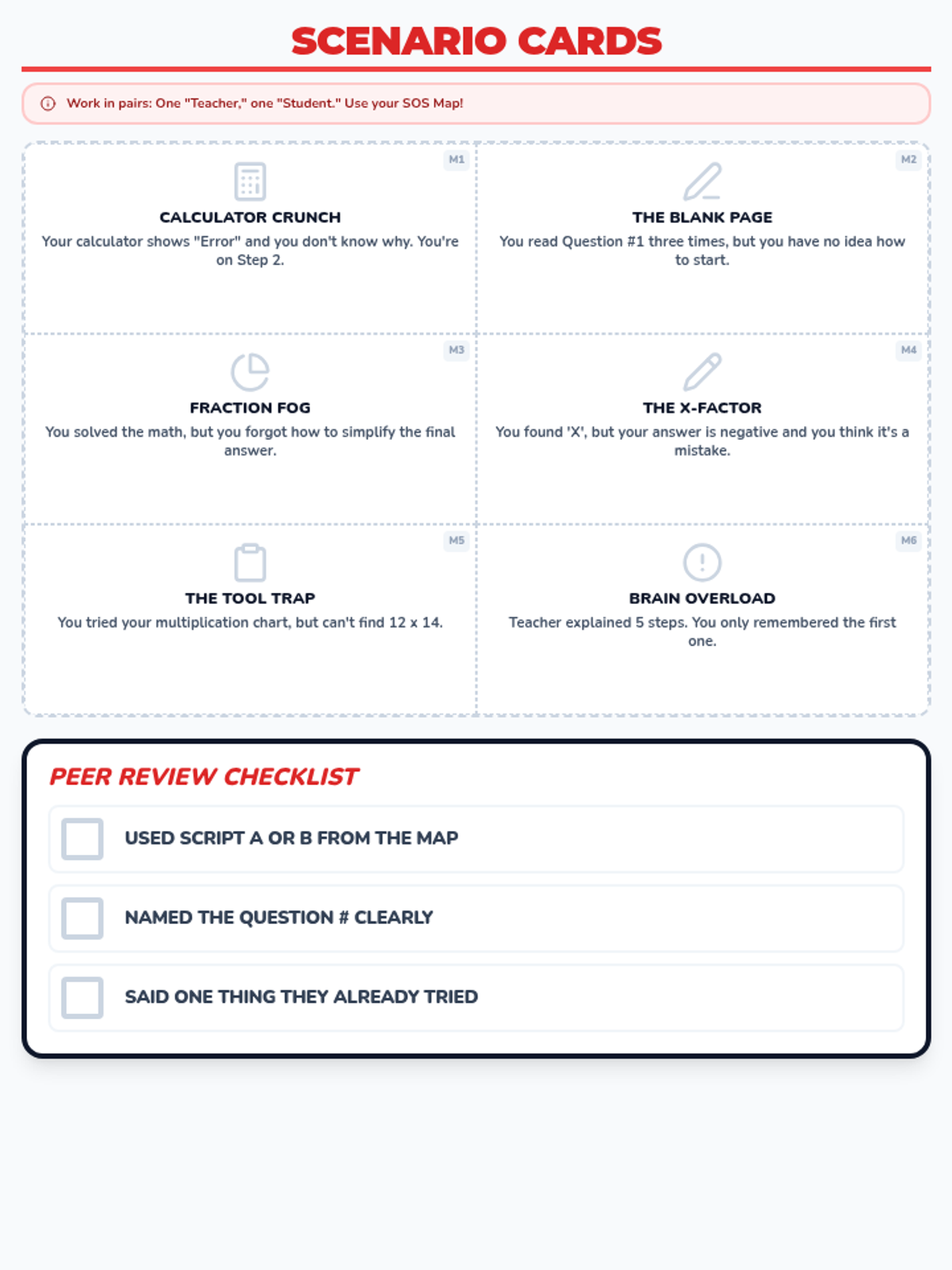
A gamified approach to recognizing when to ask for help and using a structured graphic organizer to communicate specific needs during math problem-solving.
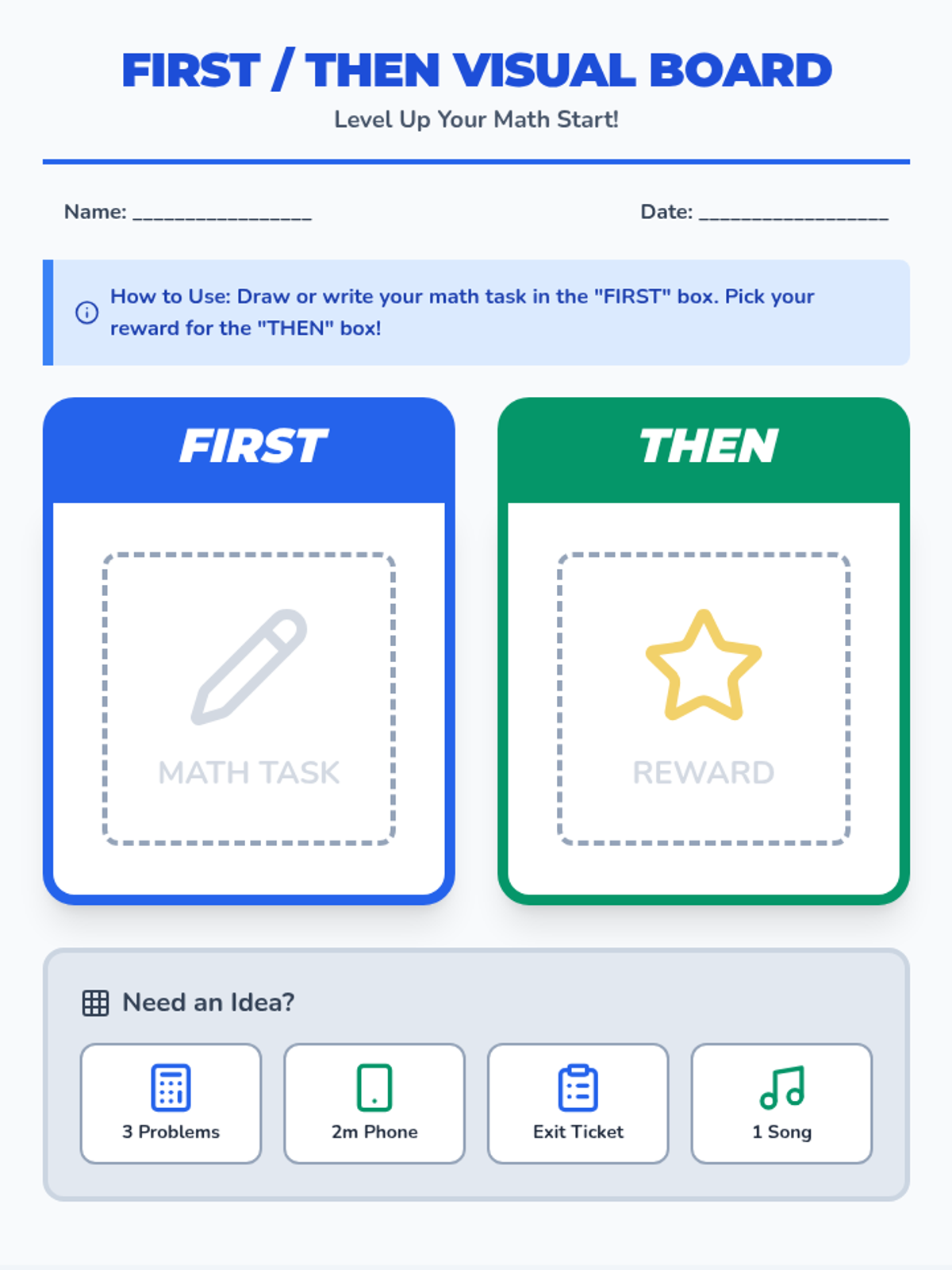
Students learn to use First/Then visual boards and illustrated checklists to overcome task initiation hurdles in math class.
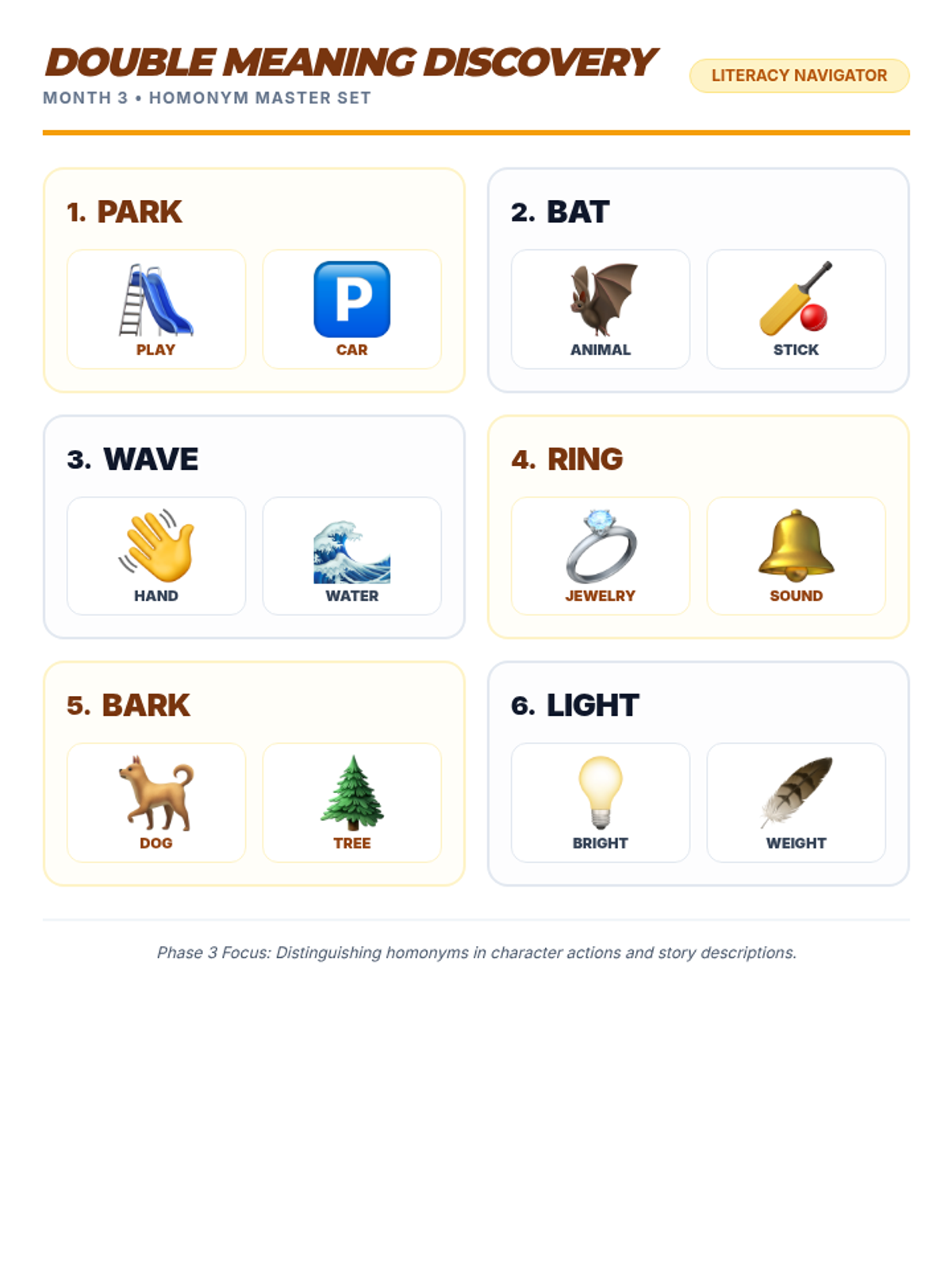
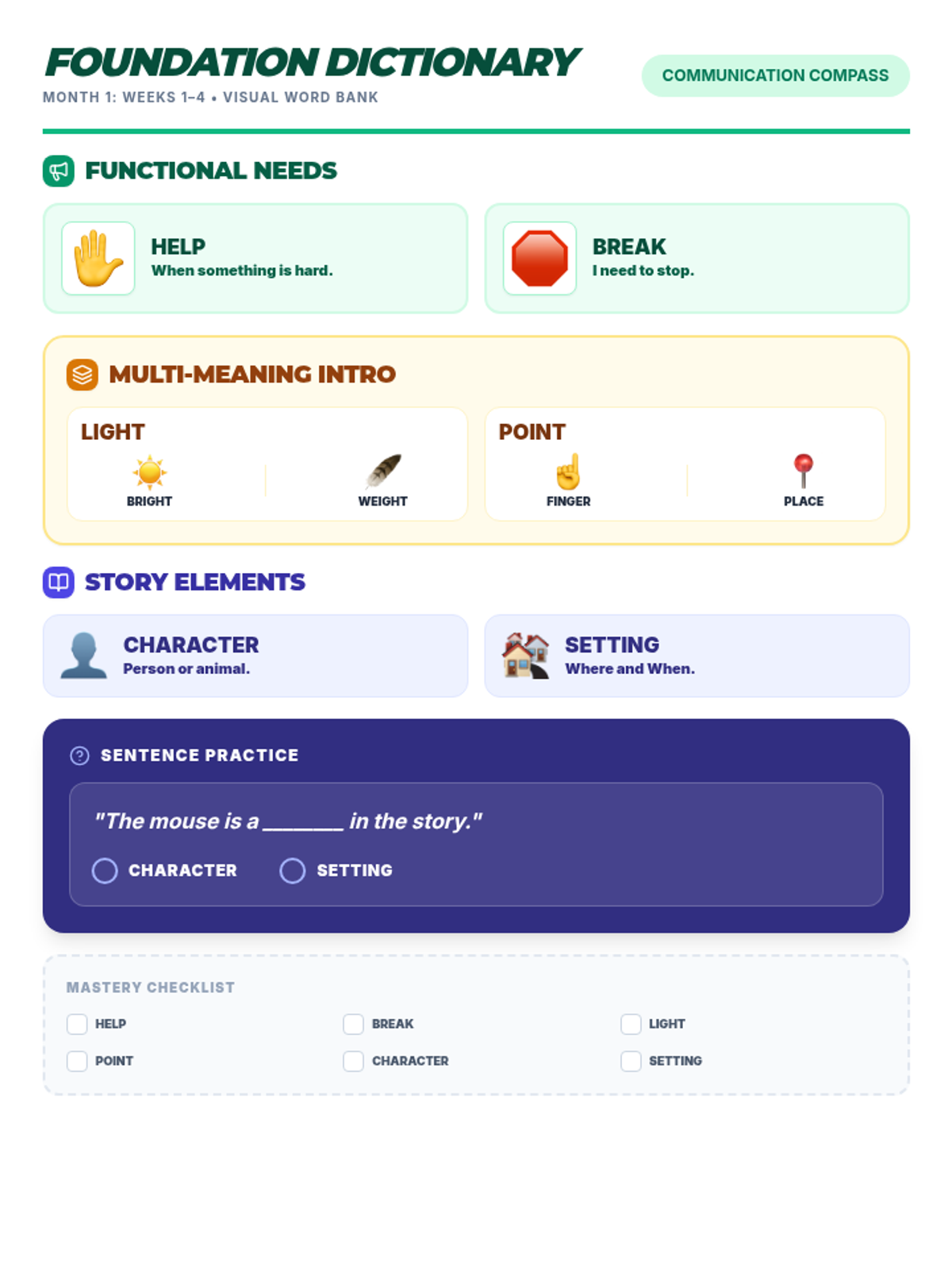
Introduction to high-frequency multiple-meaning words found in 3rd and 4th-grade texts with heavy visual support and functional application.
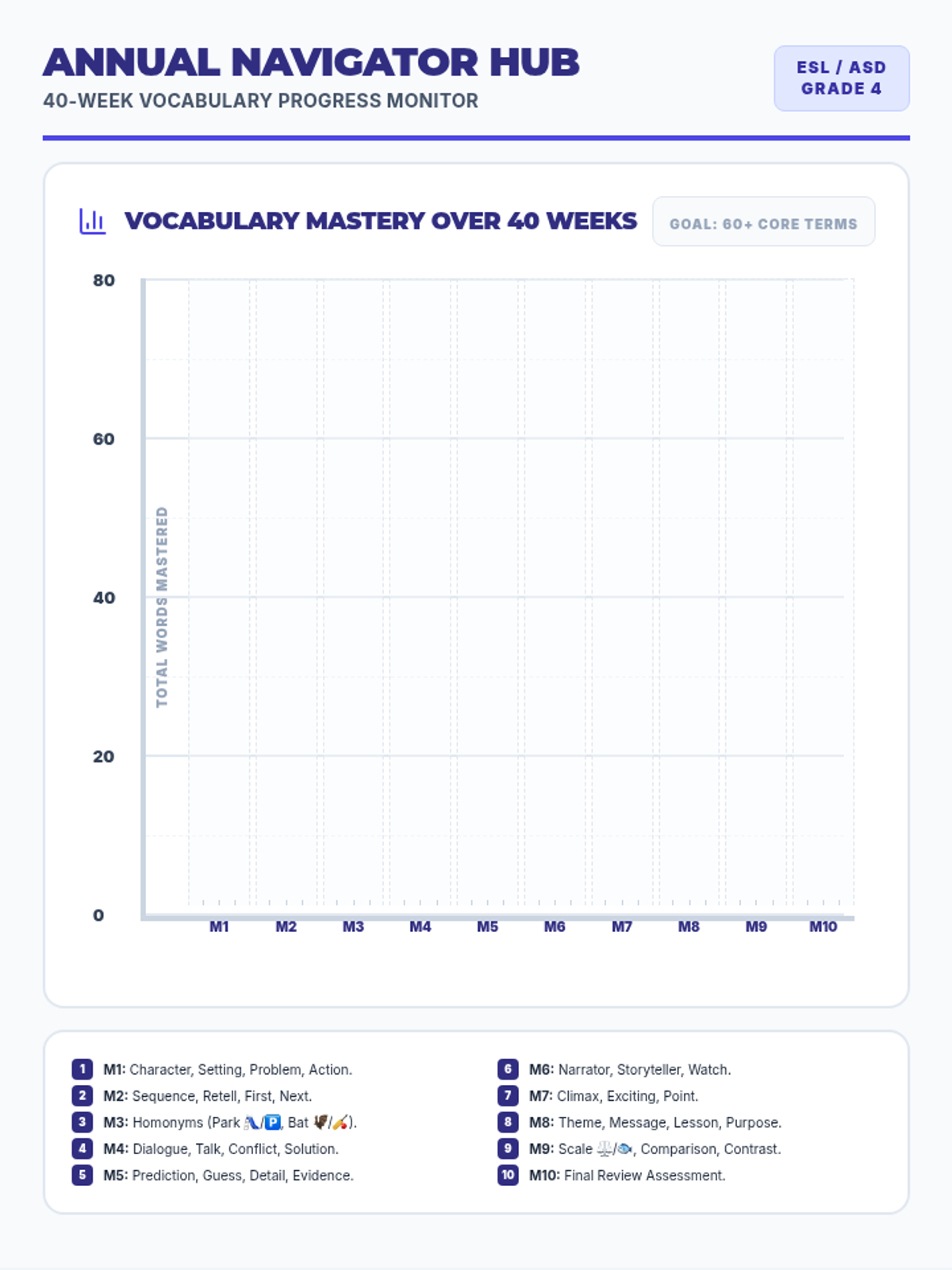
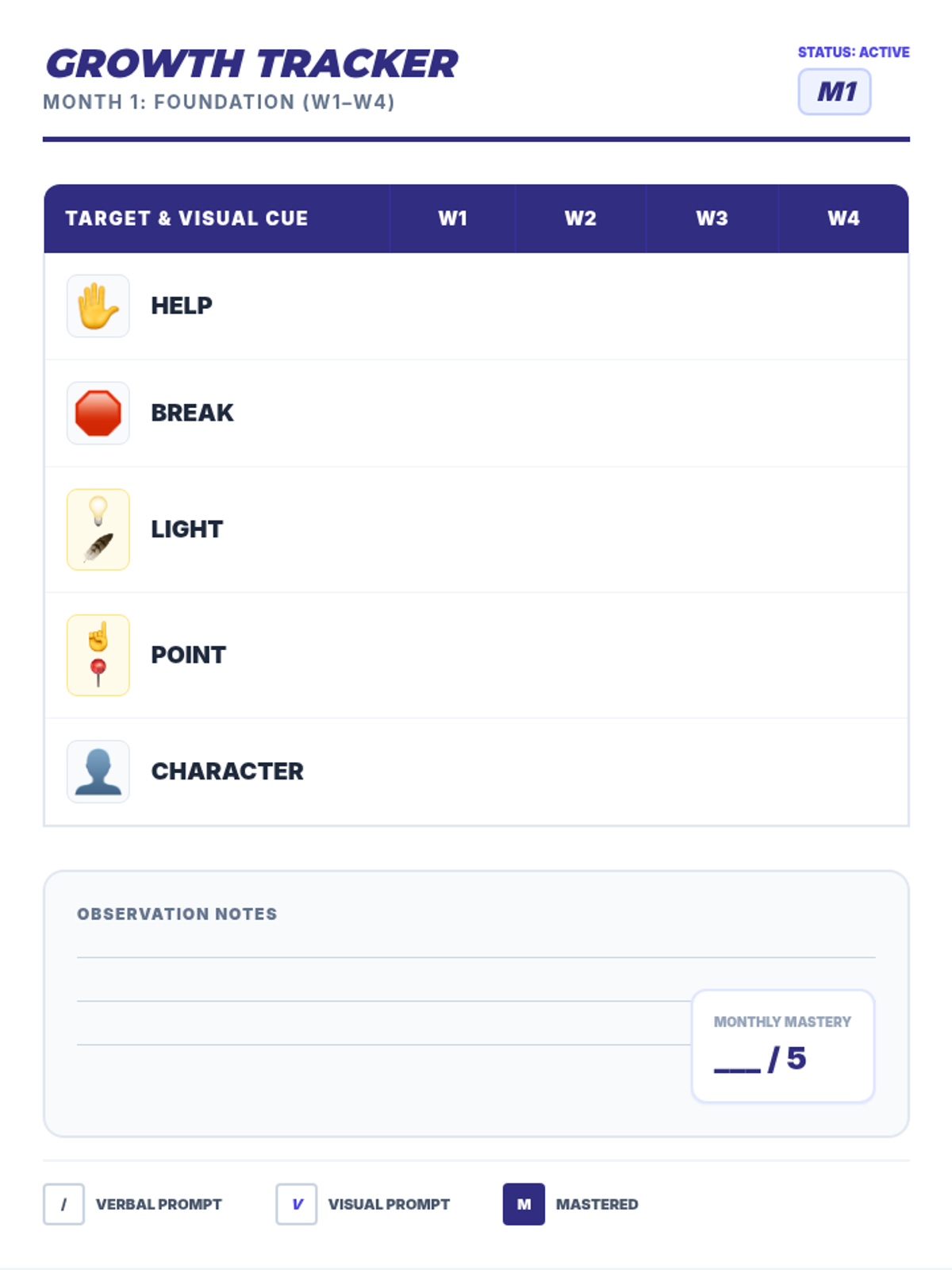
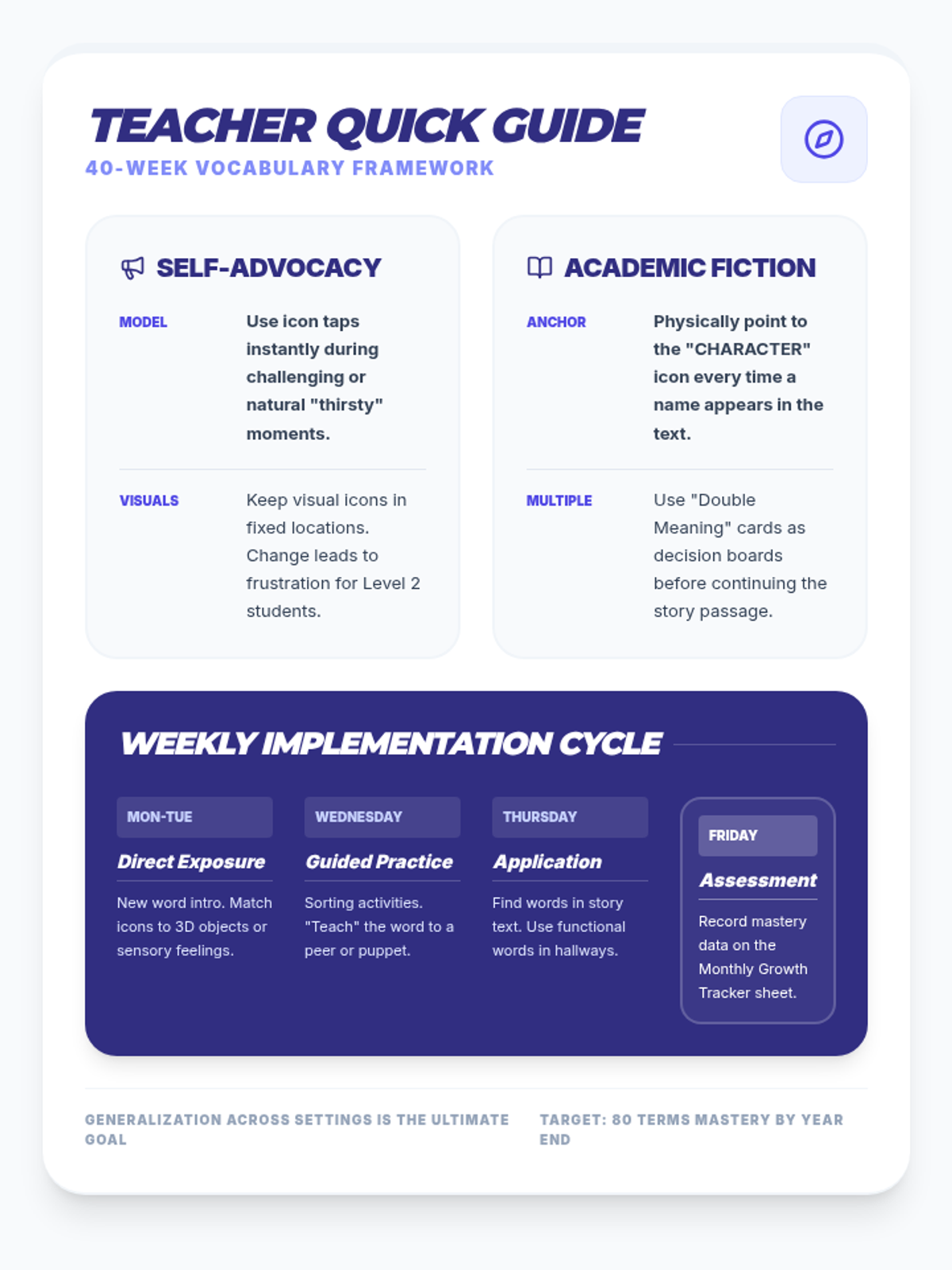
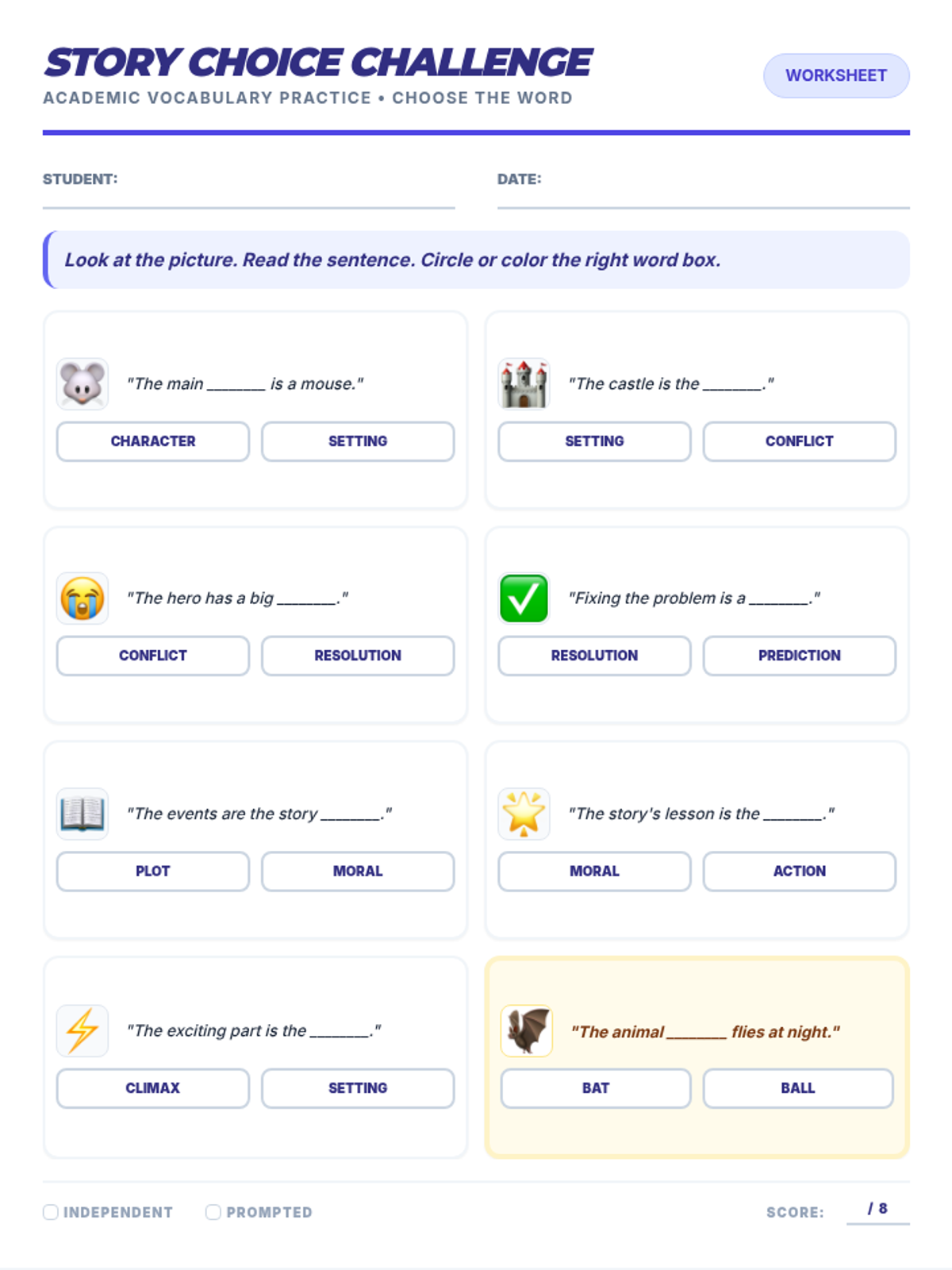
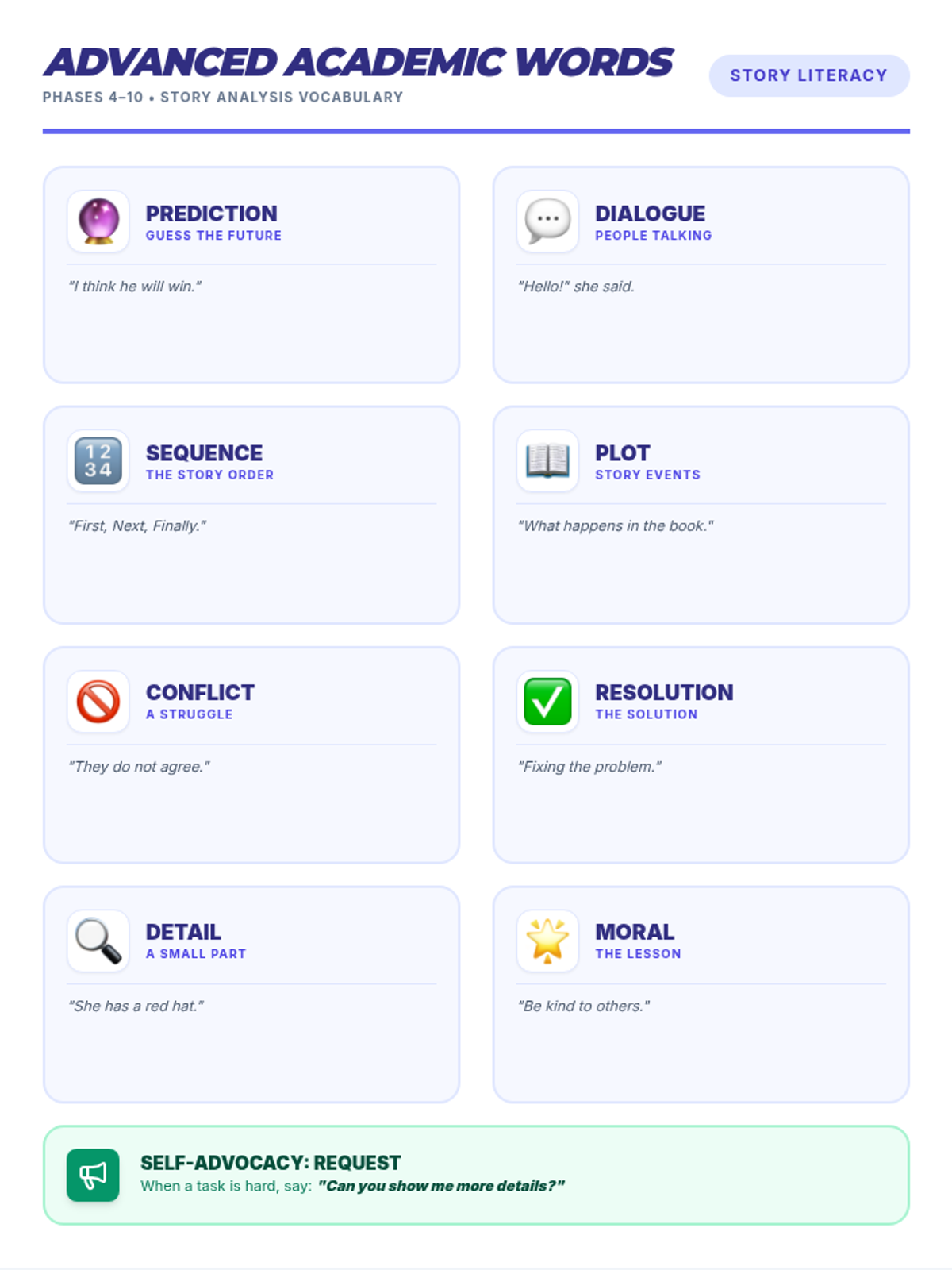
Establishing baseline skills in self-advocacy (needs/wants) and introductory fiction vocabulary (characters/settings) while initiating the 40-week progress monitoring system.
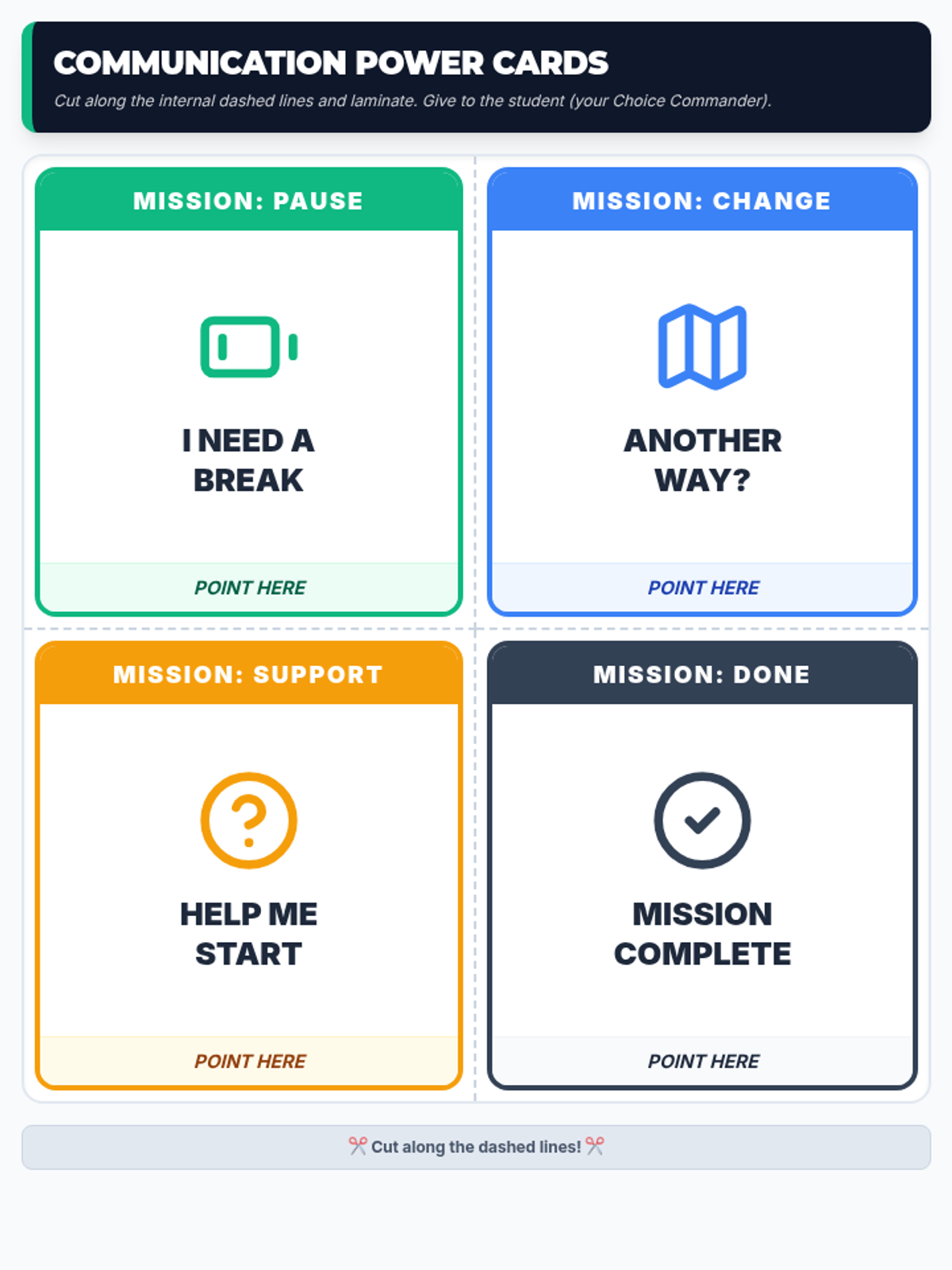
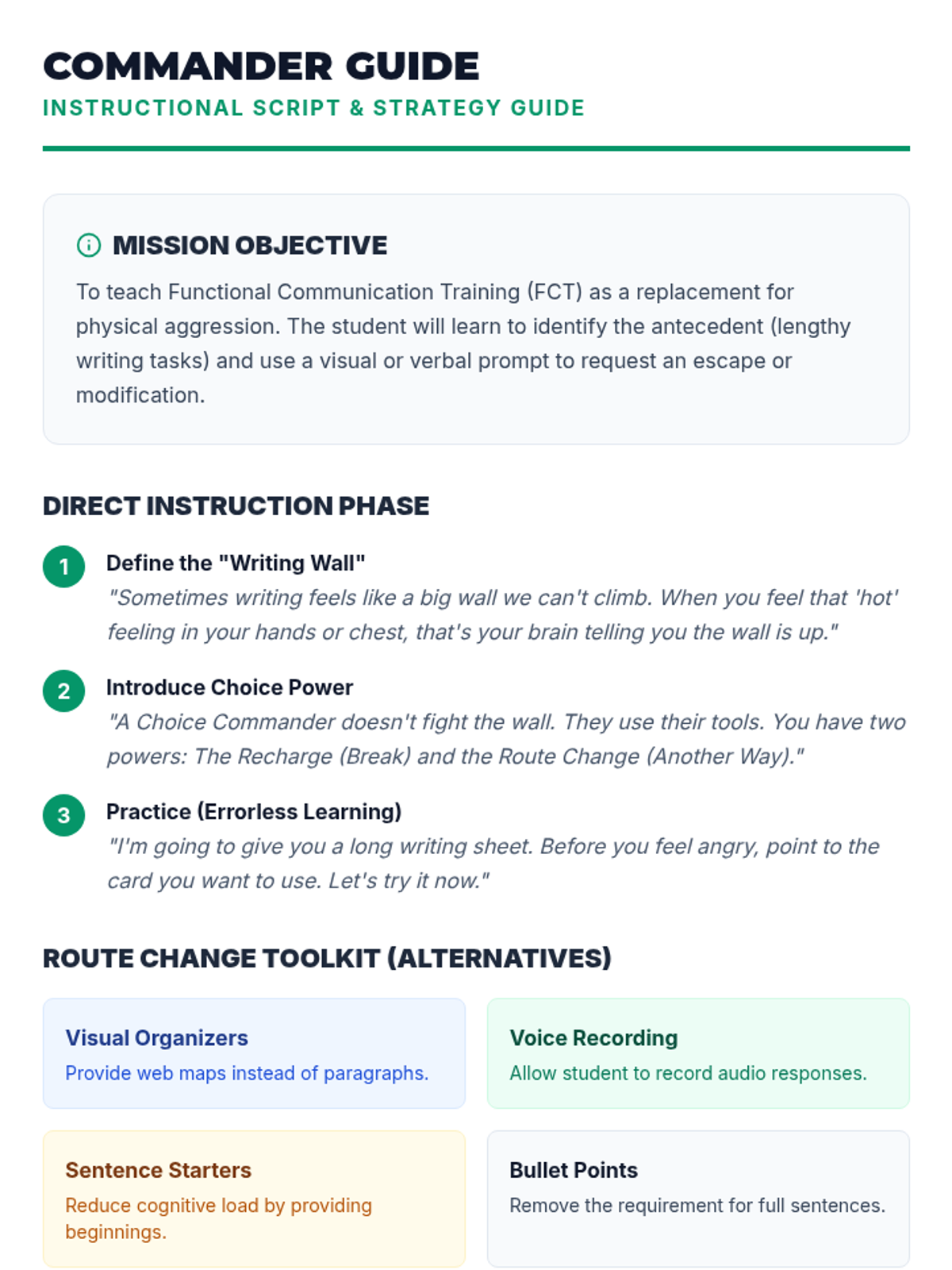
A specialized lesson designed to teach functional communication skills to a student who experiences frustration with writing. The lesson focuses on identifying 'writing walls' and using specific replacement behaviors—requesting a break or an alternative task—to maintain self-regulation.
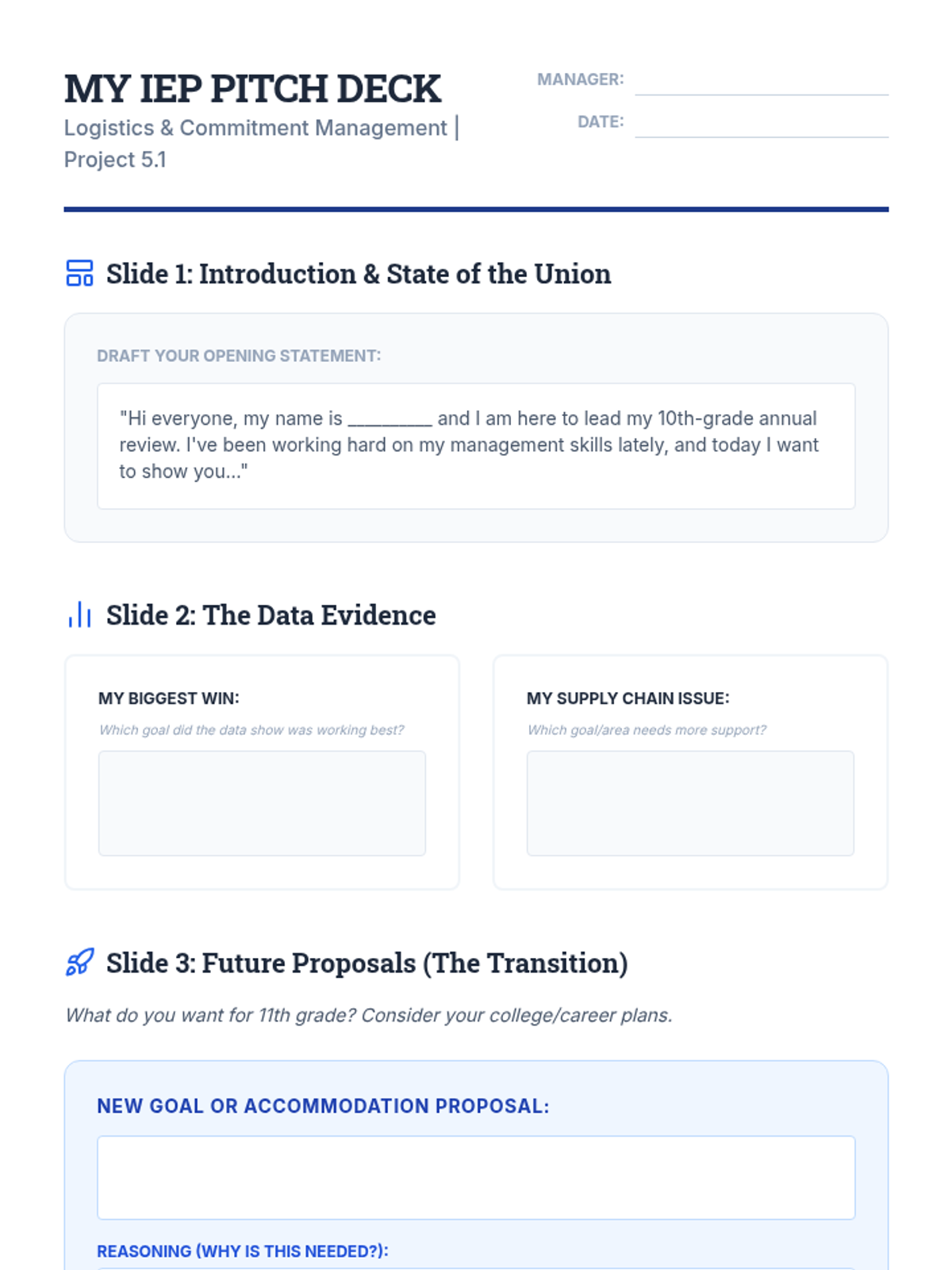
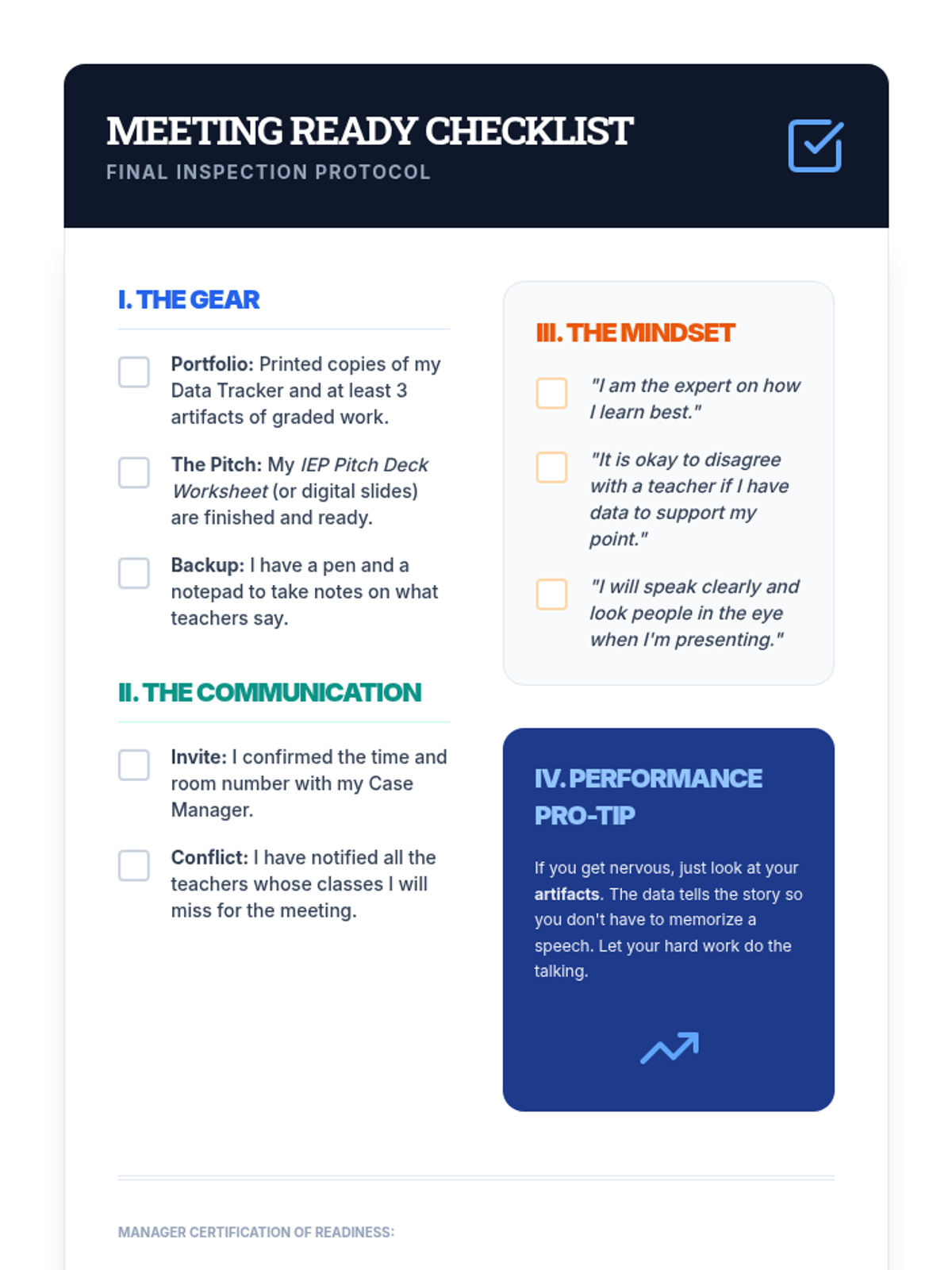
In the capstone lesson, students synthesize their scheduling, organization, and data-tracking efforts to prepare a professional presentation for their next IEP meeting. They practice leading the conversation about their own future.
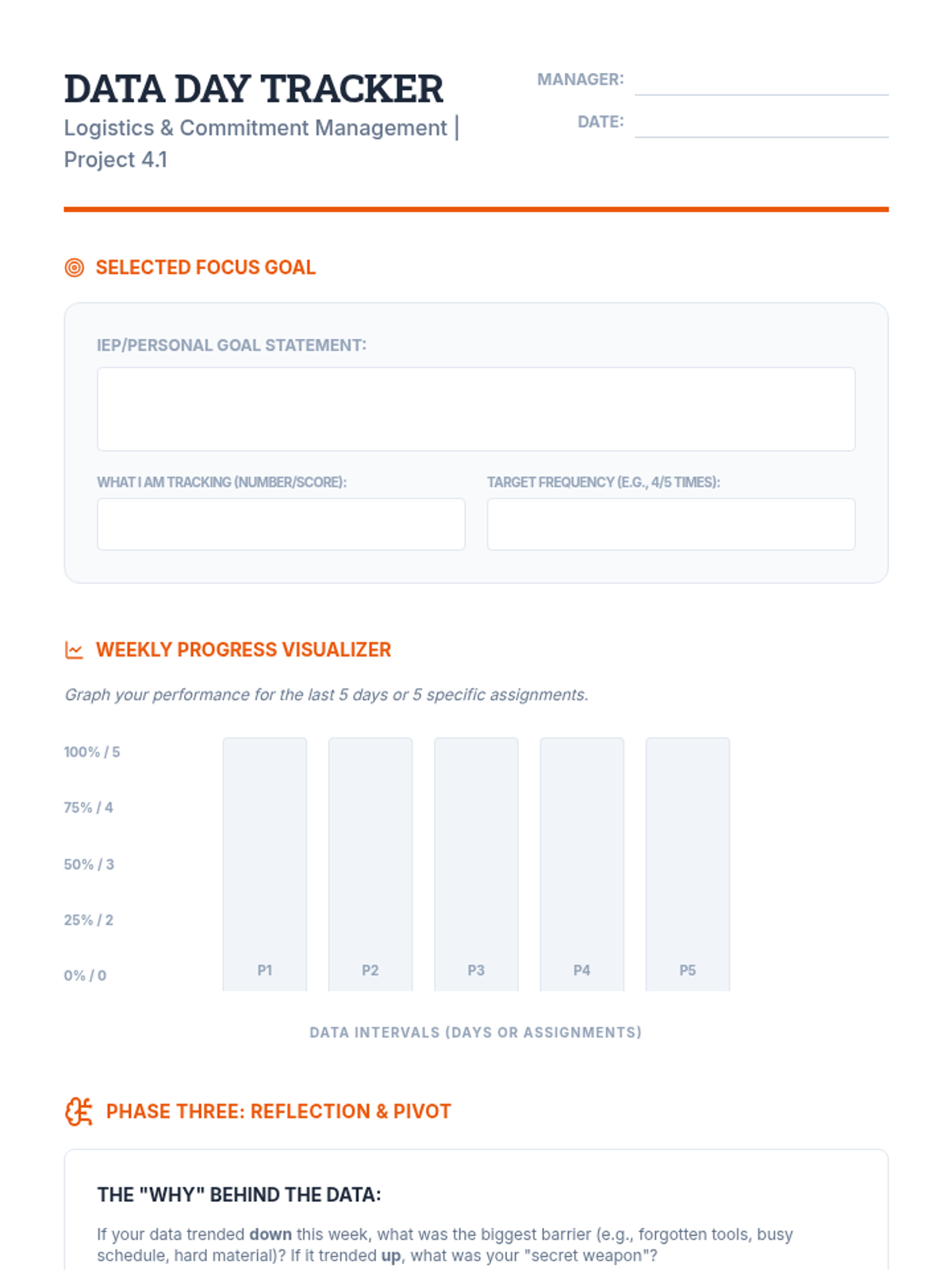
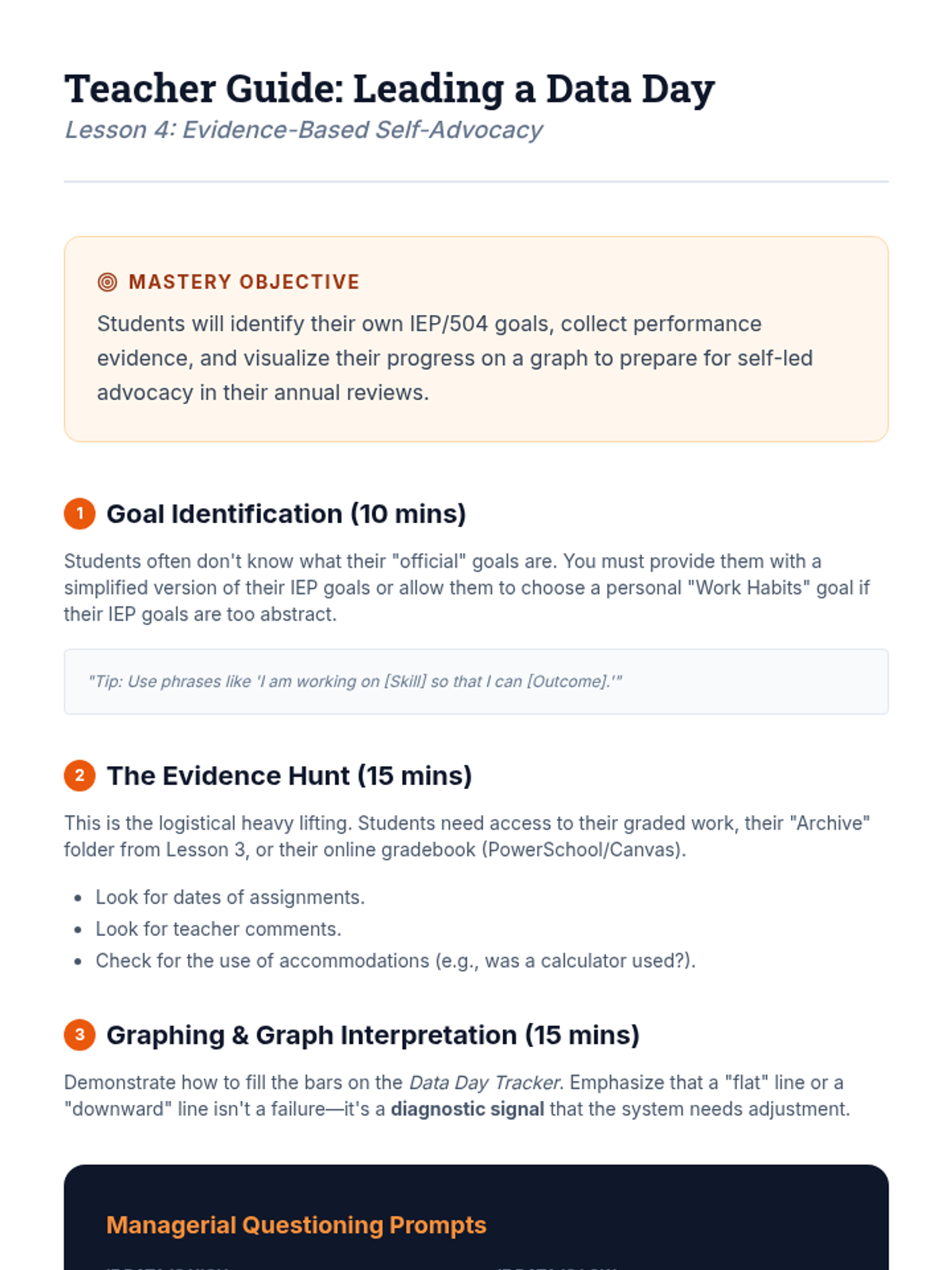
Students take charge of their own progress by learning to track data against their IEP goals. They develop a 'Data Day' routine for self-reflection and objective performance monitoring.
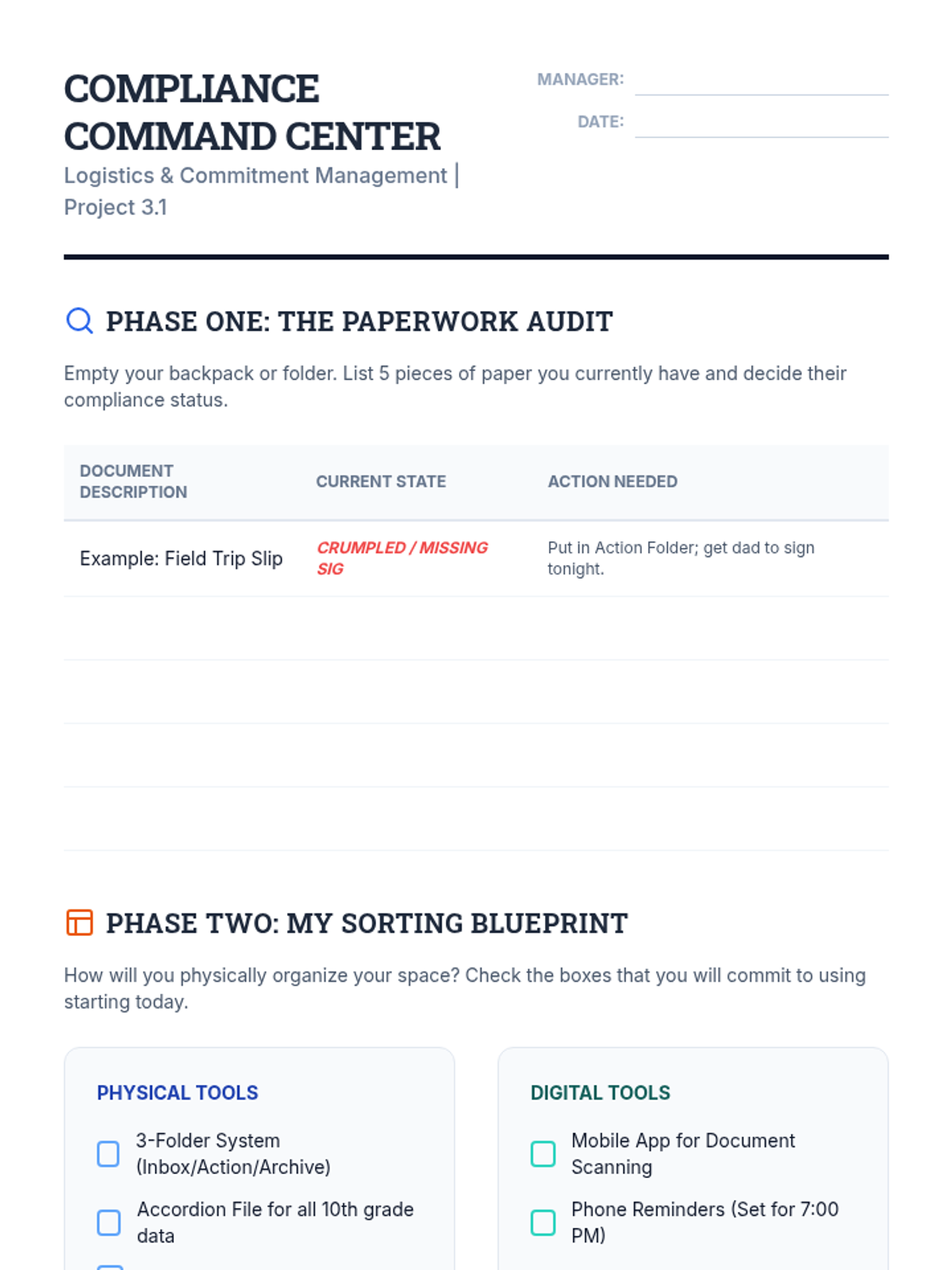
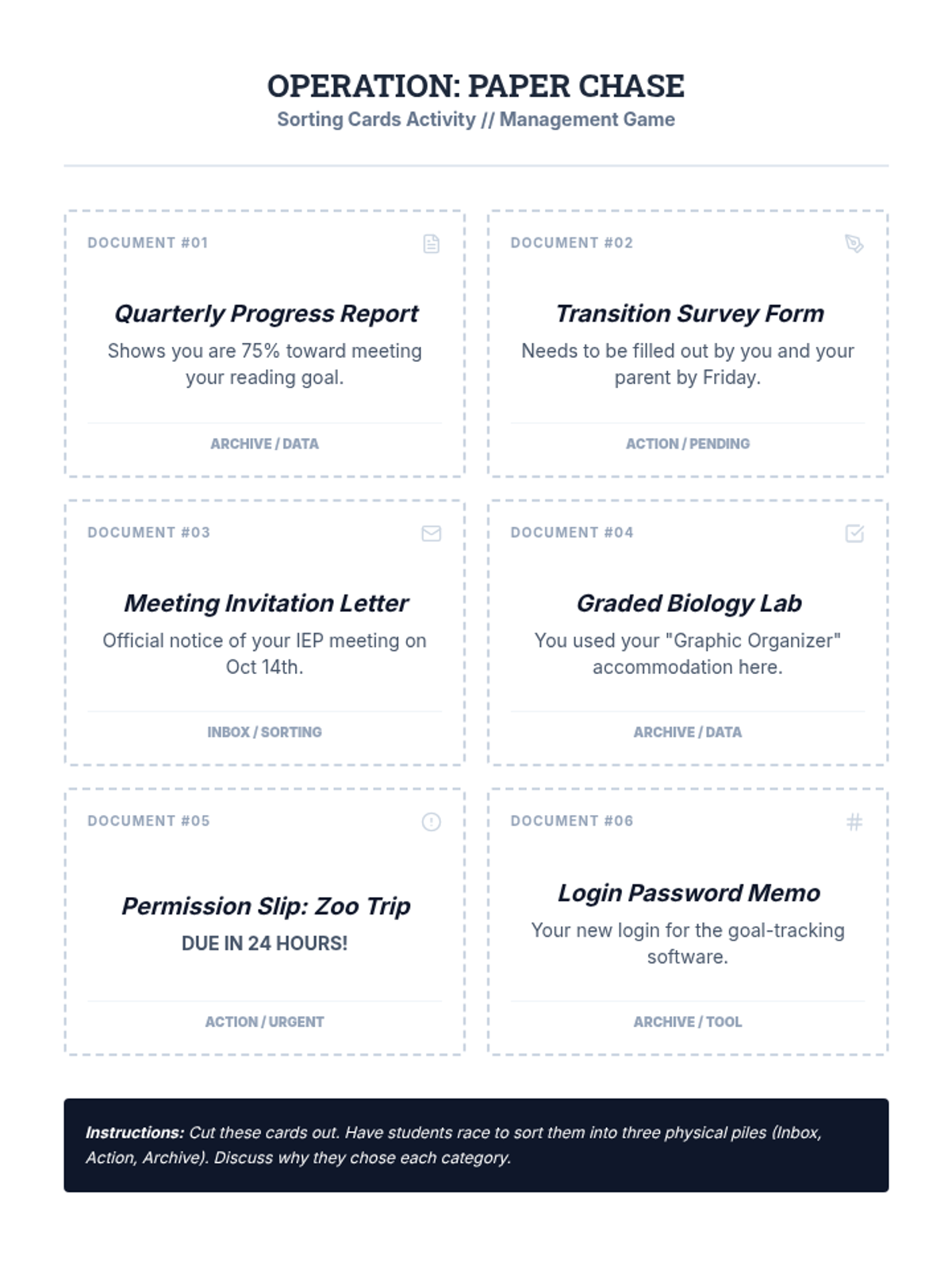
Students tackle the administrative side of education, from permission slips to agenda management. They develop a personal 'compliance system' to stay organized and responsible for their own paperwork.
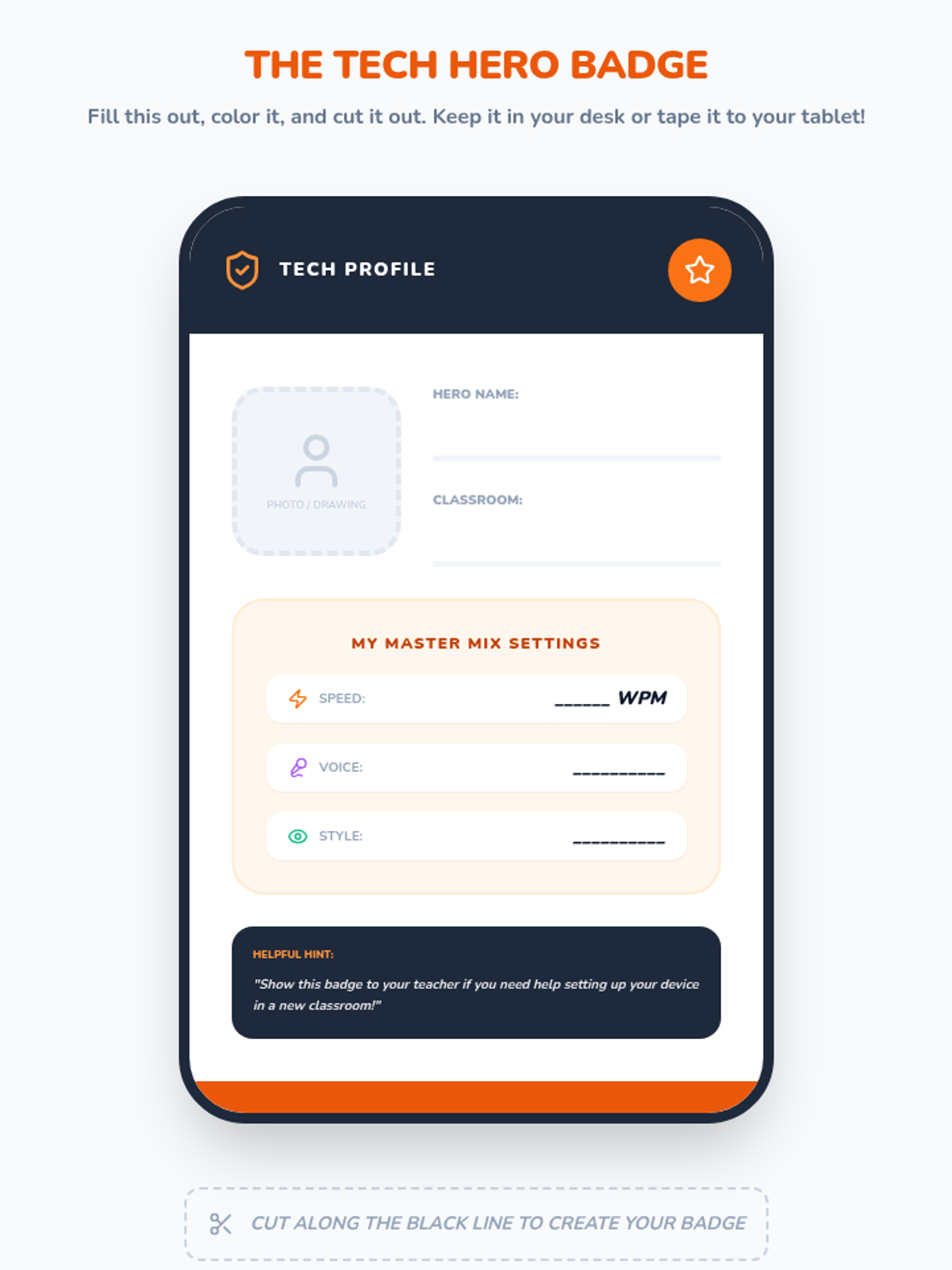
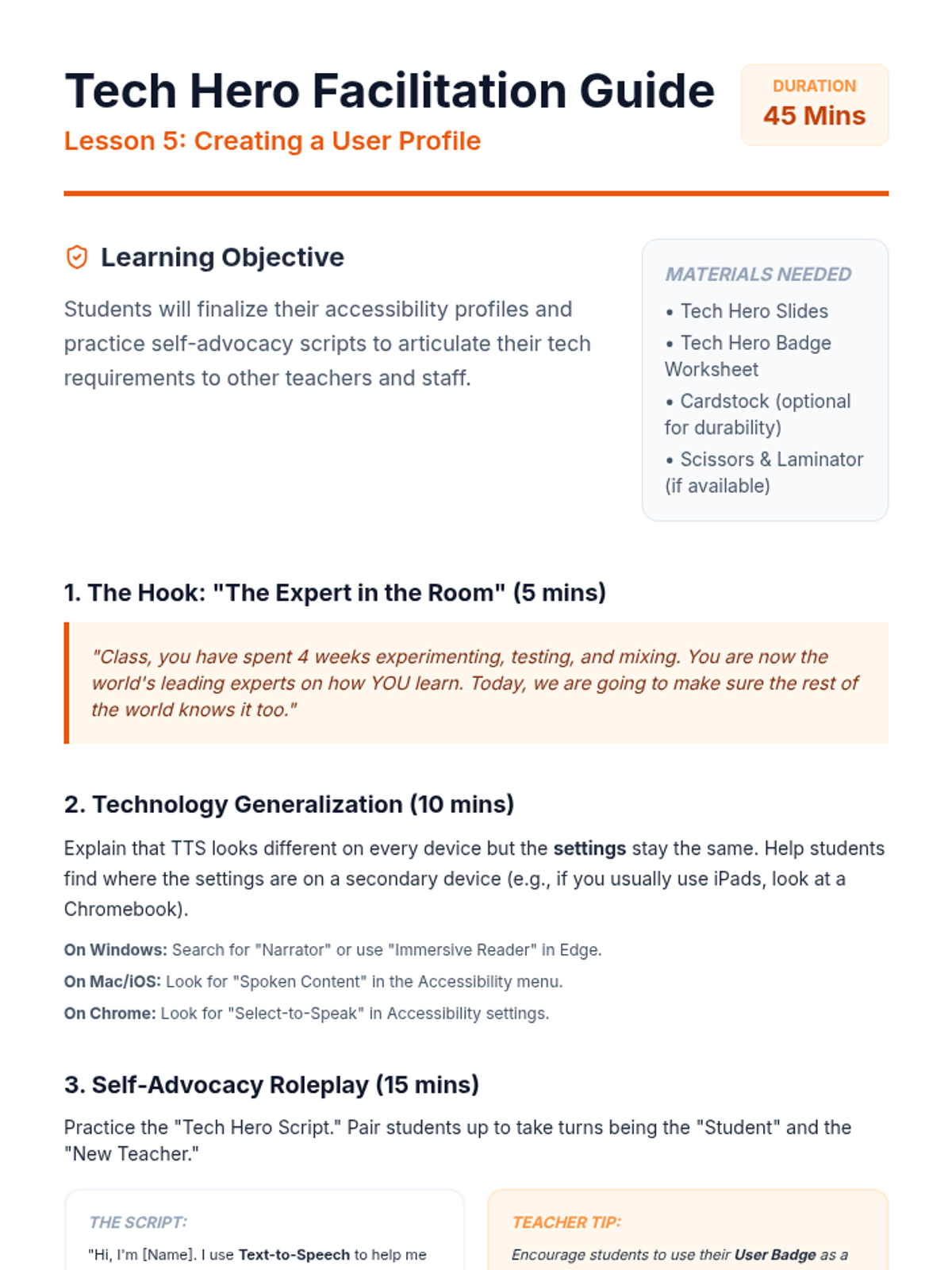
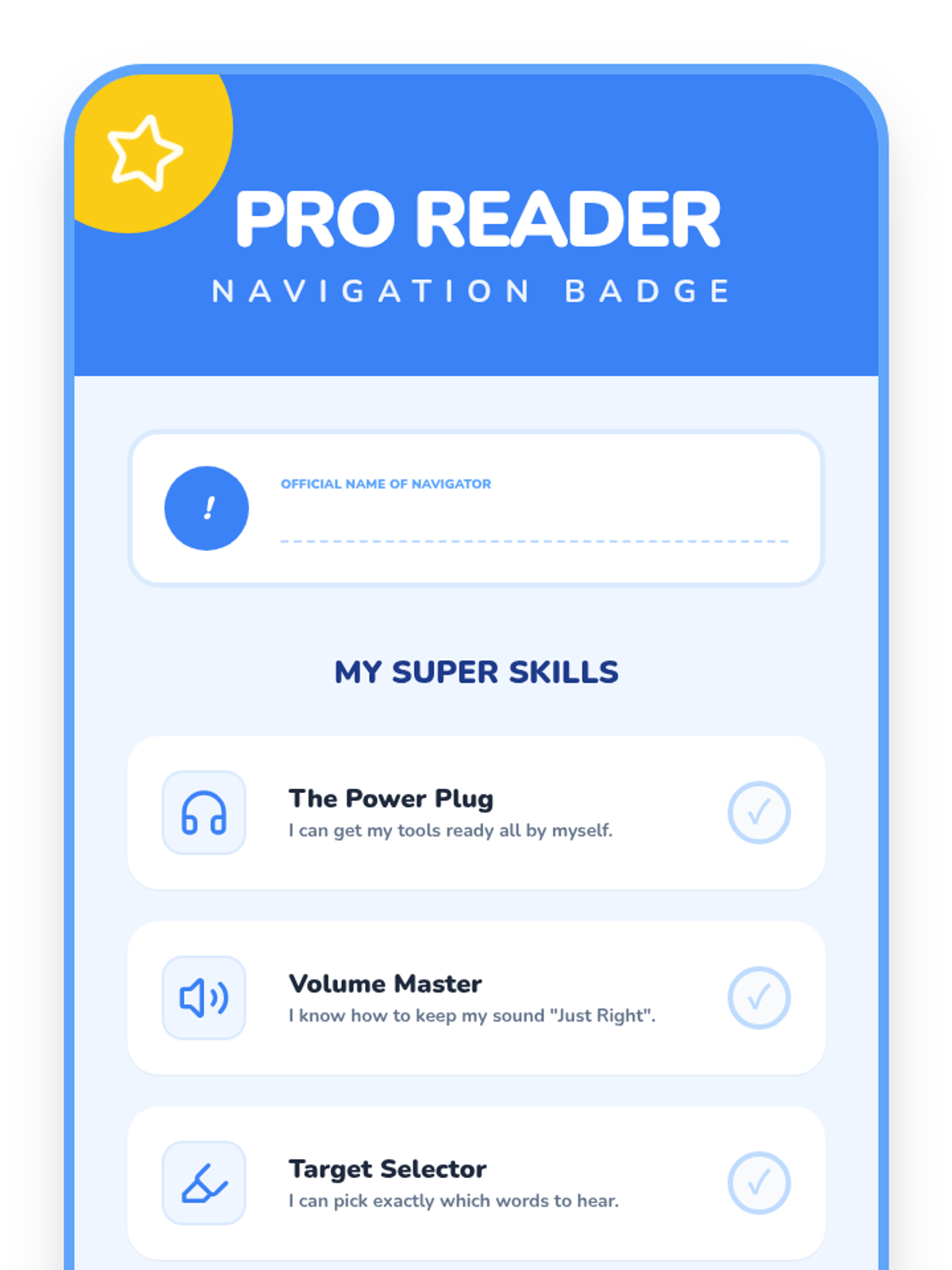
Students finalize their settings and create a portable 'User Badge.' They practice self-advocacy skills to explain their technical needs to teachers across different classrooms and devices.
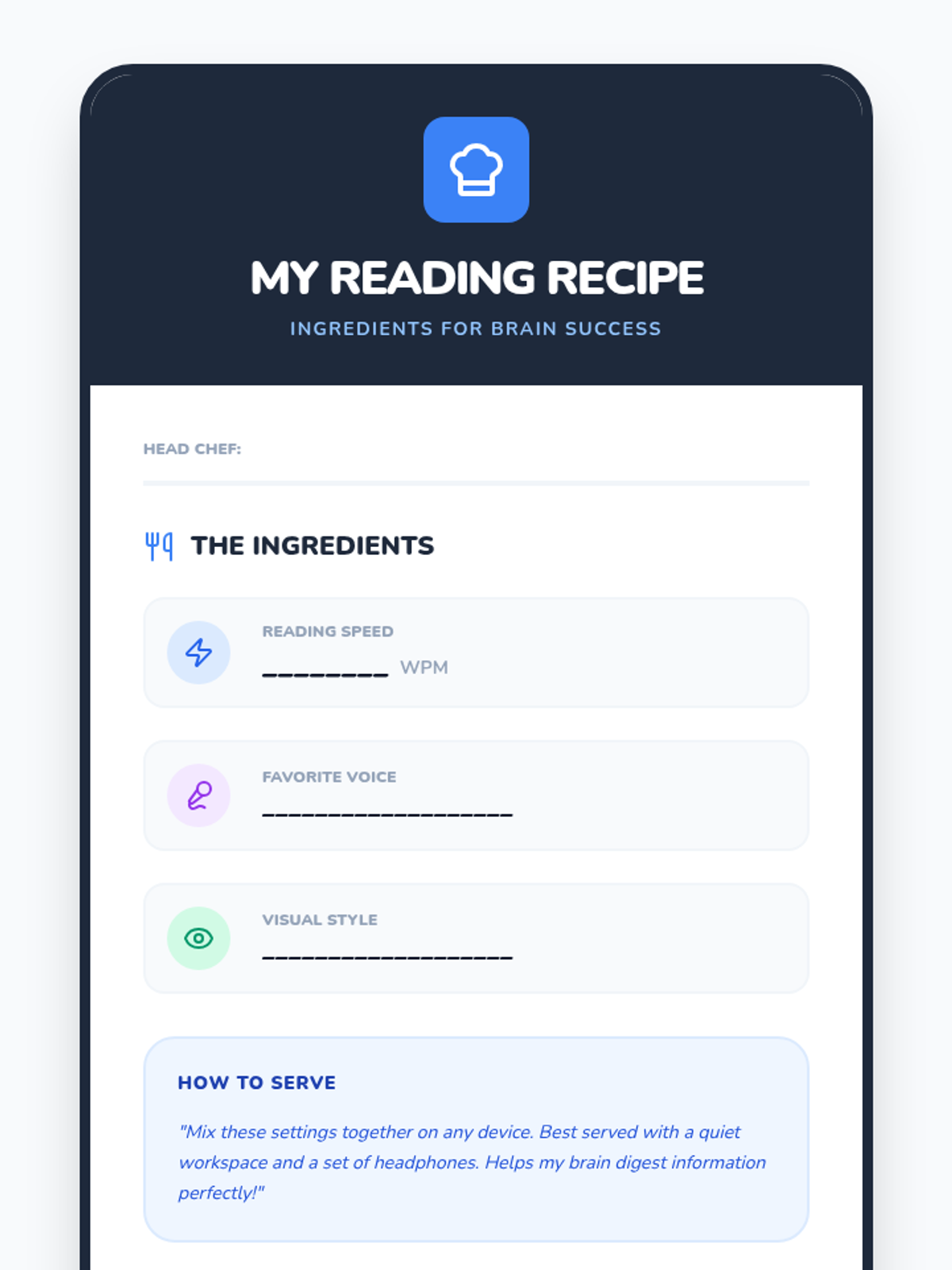
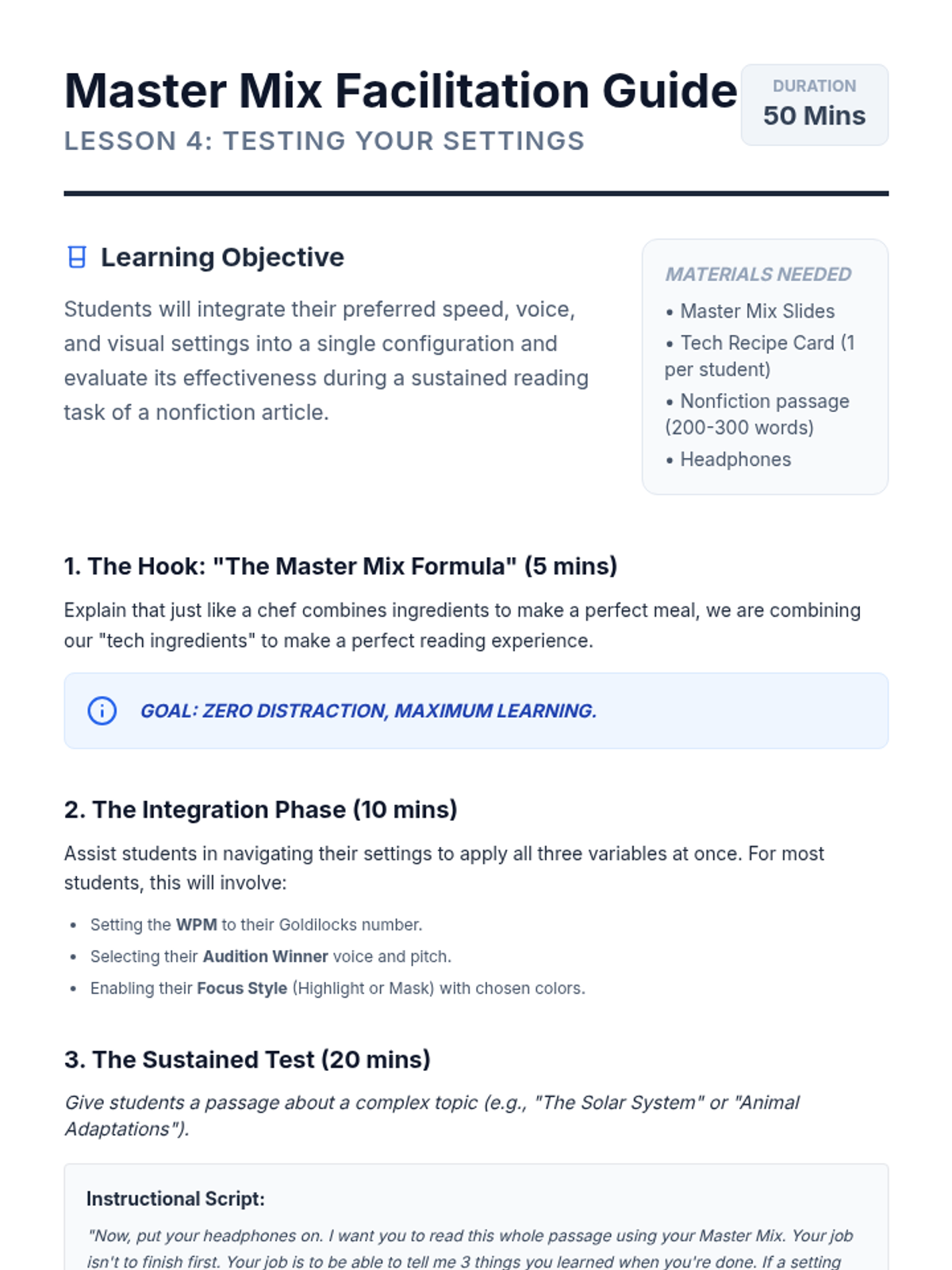
Students combine their chosen speed, voice, and visual settings into a final configuration. They test this 'Master Mix' on a nonfiction article and reflect on their ability to focus and understand.
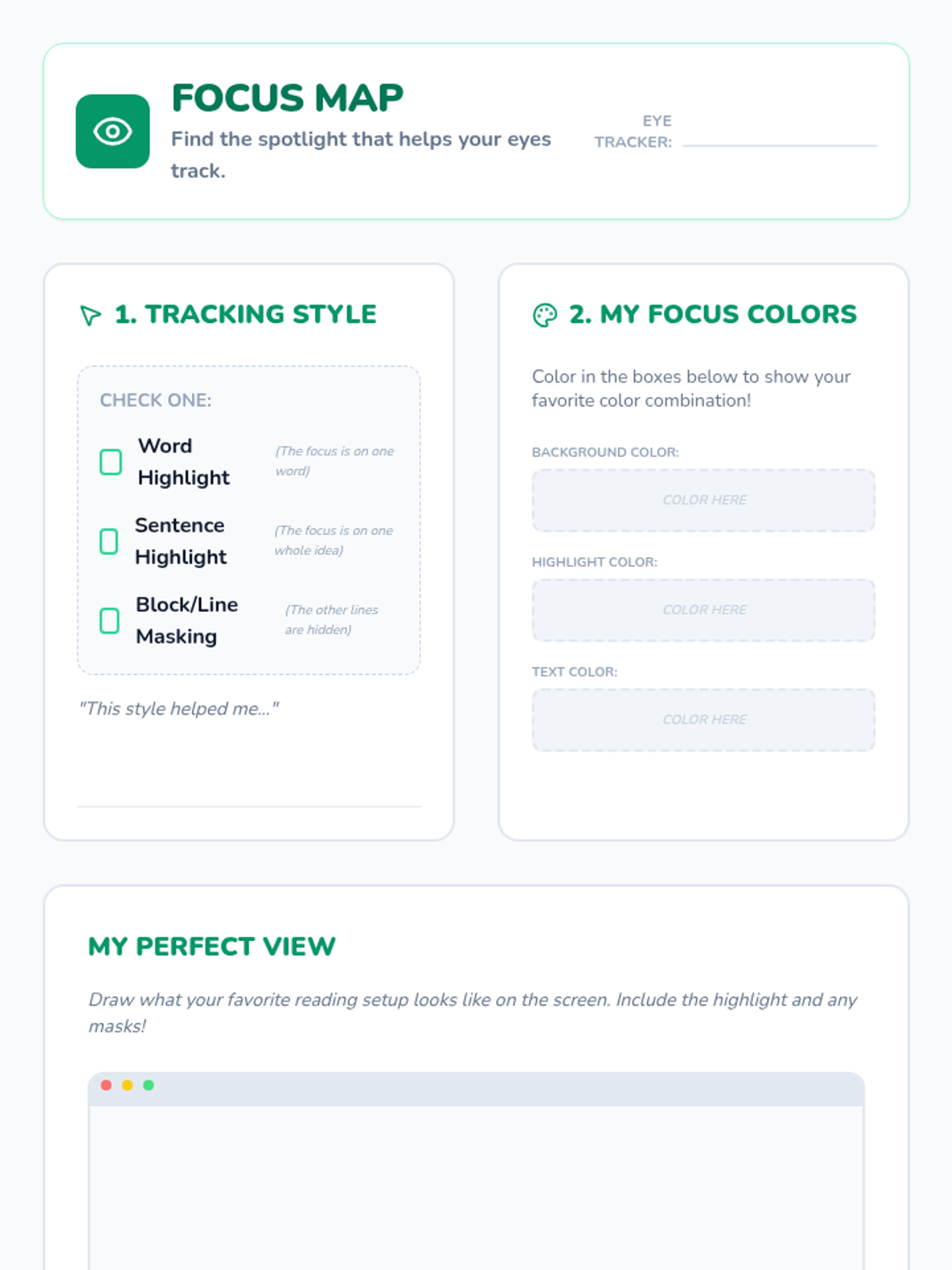
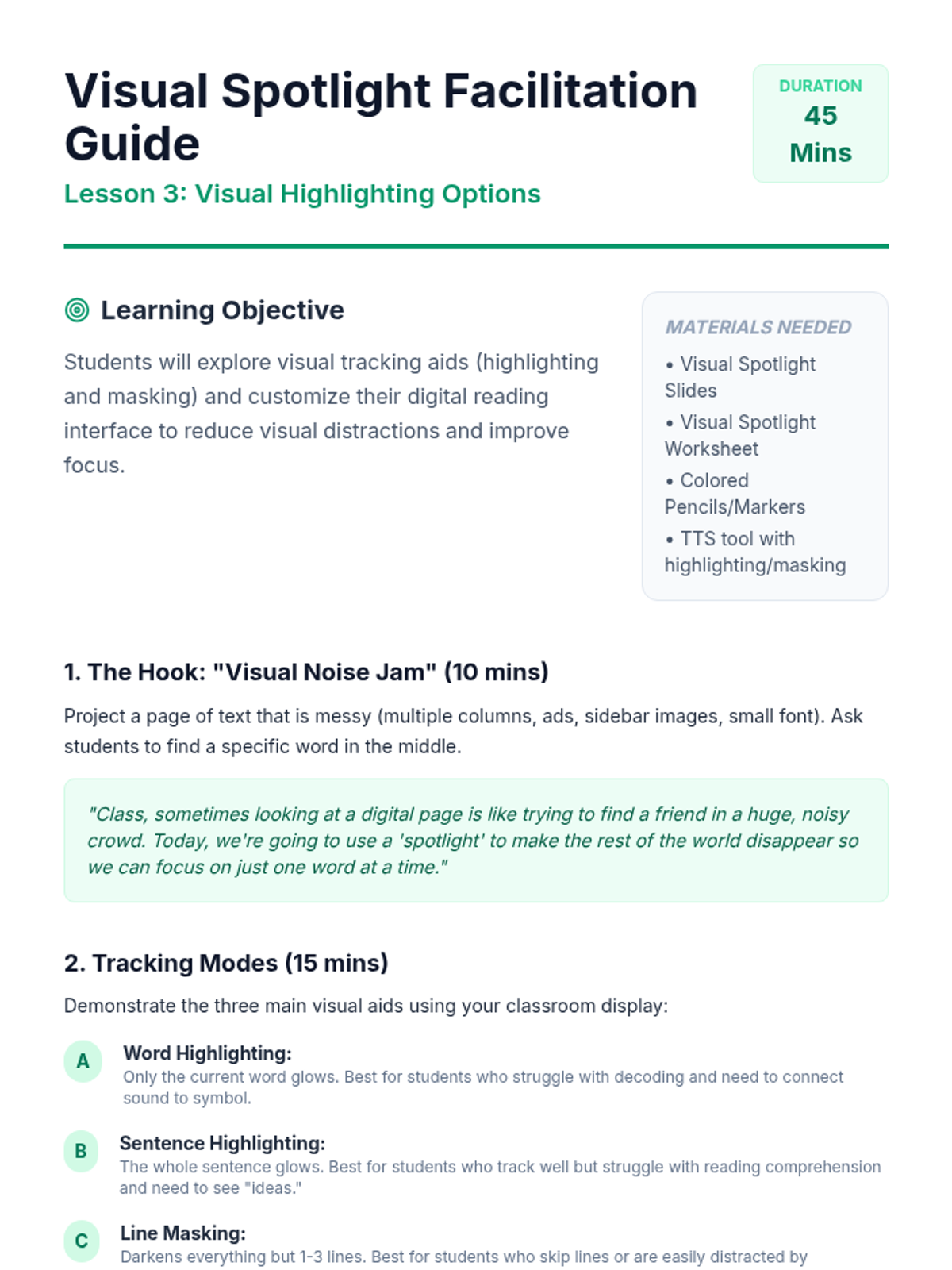
Students investigate visual aids like word-by-word highlighting and masking. They compare reading with 'visual noise' versus a 'spotlight' to find settings that reduce distraction and improve tracking.
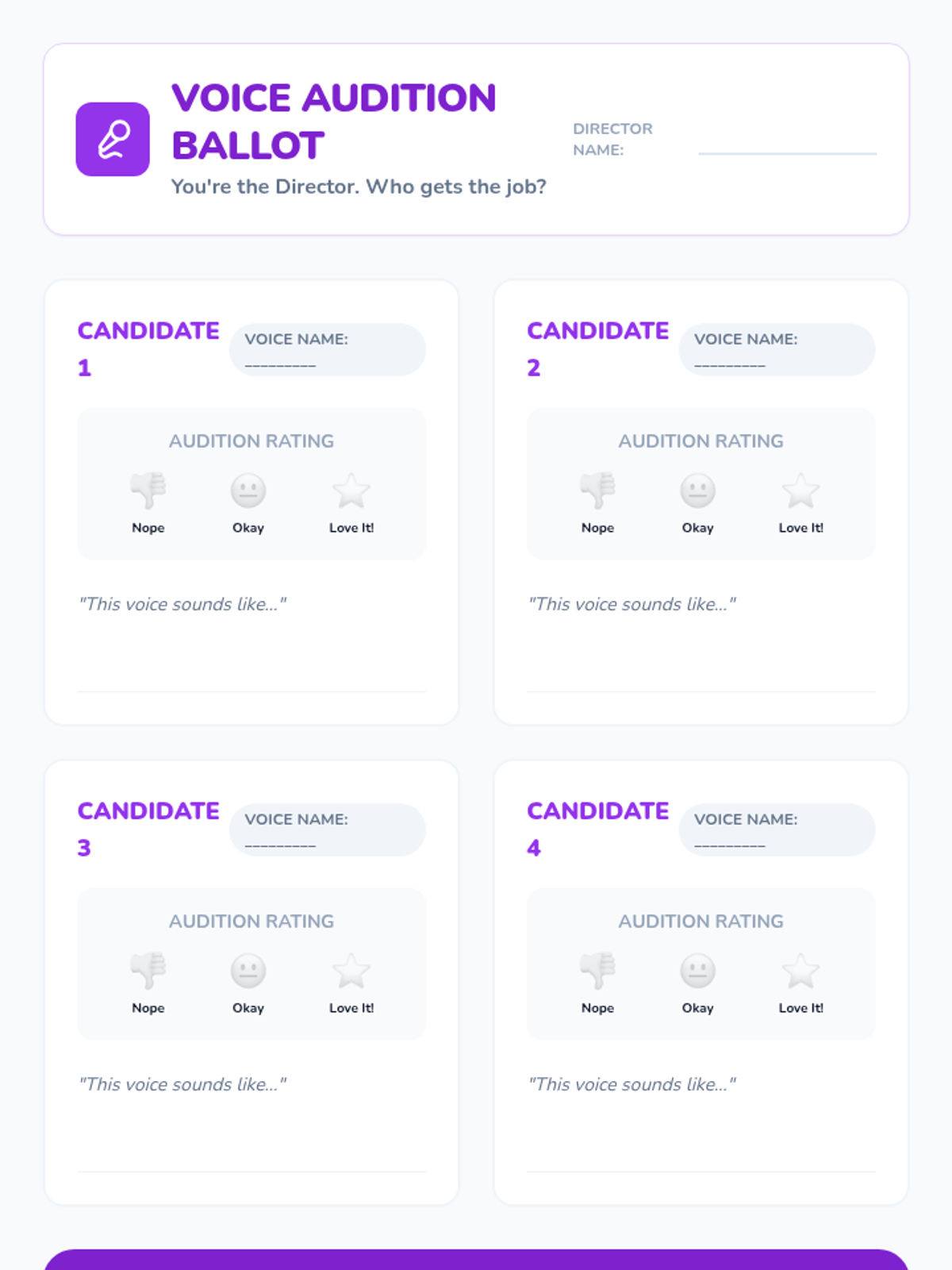
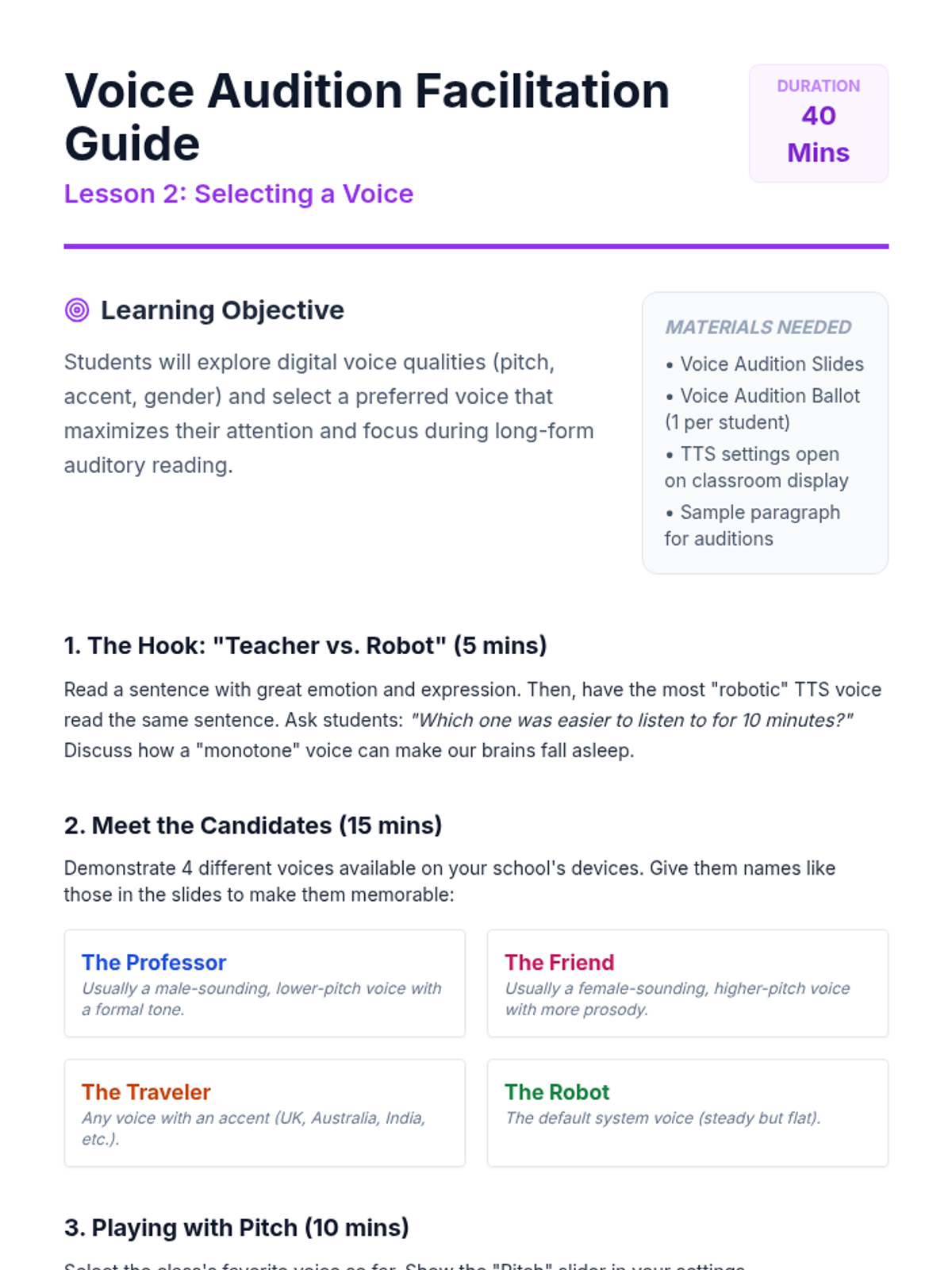
Students explore digital voice options including pitch, accent, and gender. They learn to identify which voices help them stay focused and which feel most natural for long-form reading.
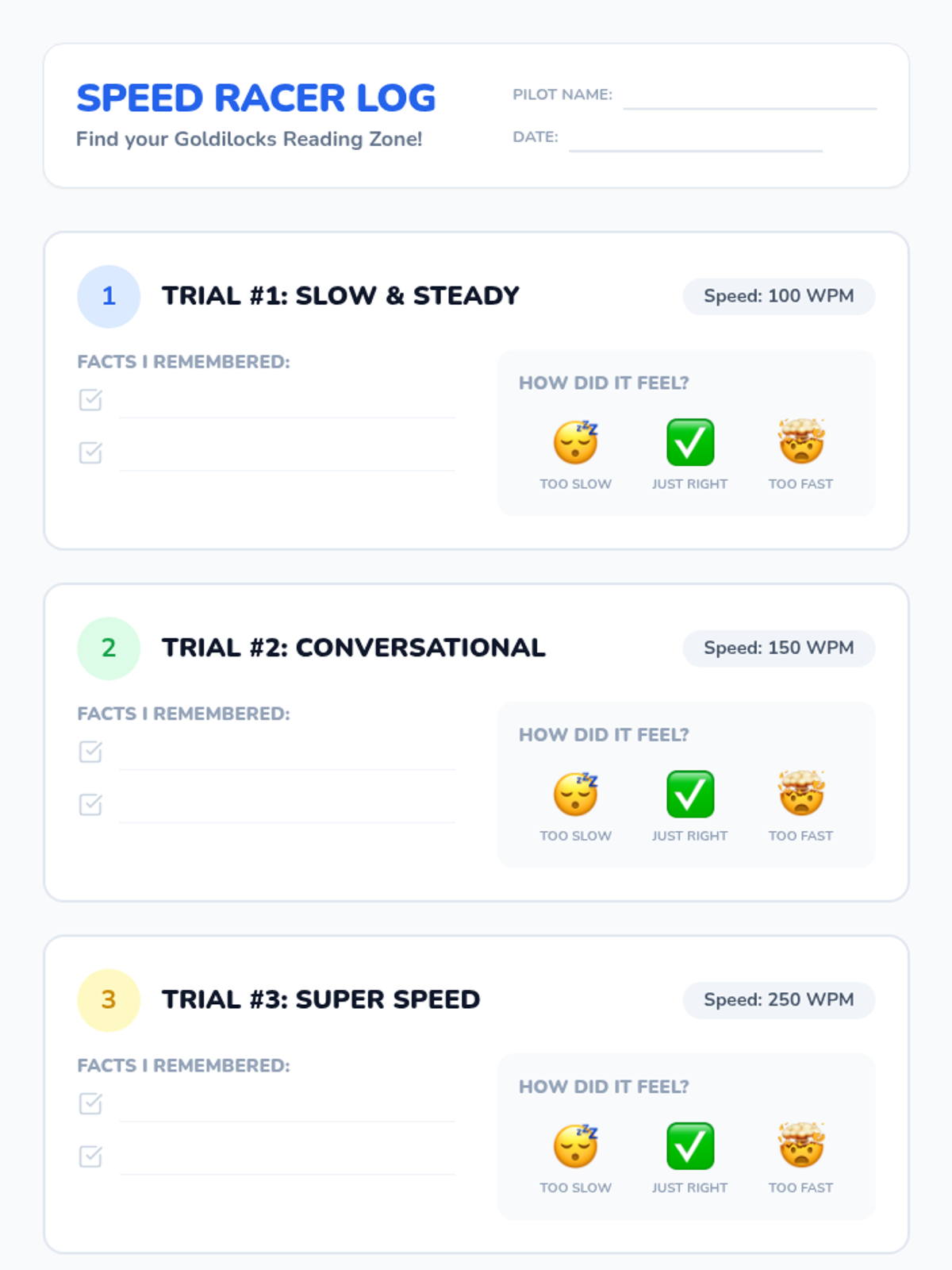
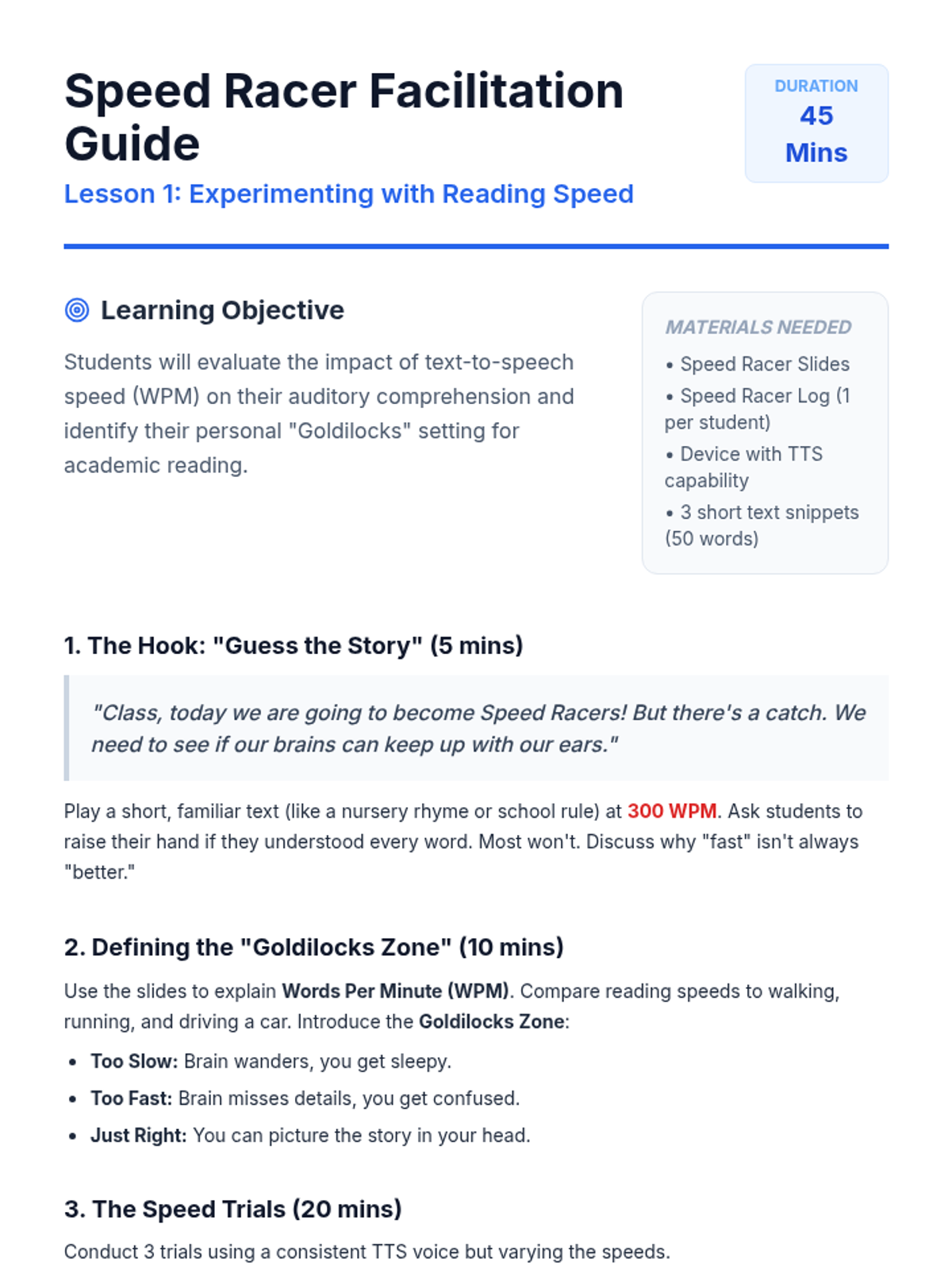
Students test different words-per-minute settings to find their 'Goldilocks' zone. They participate in a Speed Racer challenge to understand how speed impacts their auditory processing and memory.
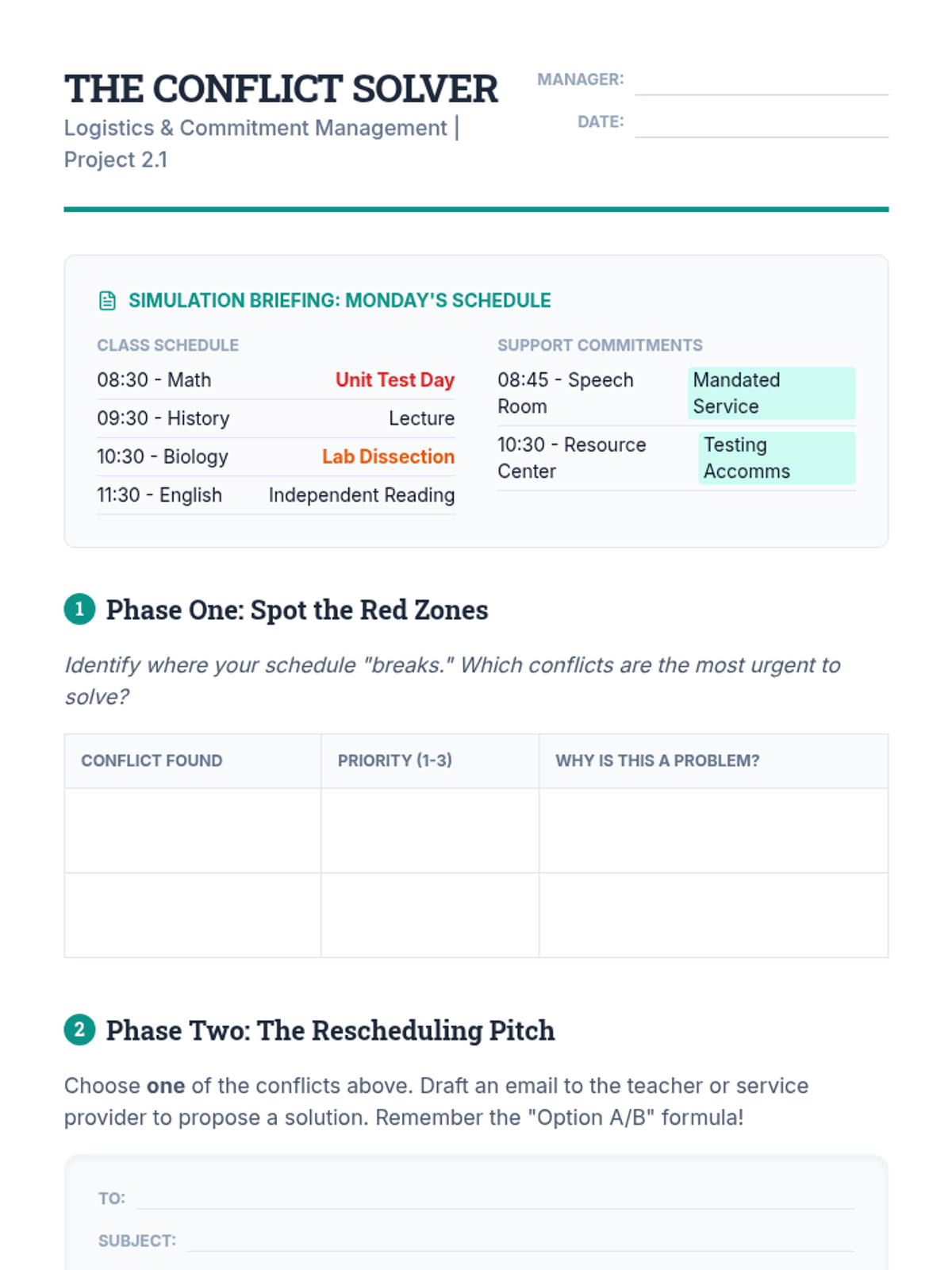
Students learn the art of coordinating conflicting schedules, focusing on the overlap between general education classes and mandated support services. They practice professional communication to resolve these conflicts.
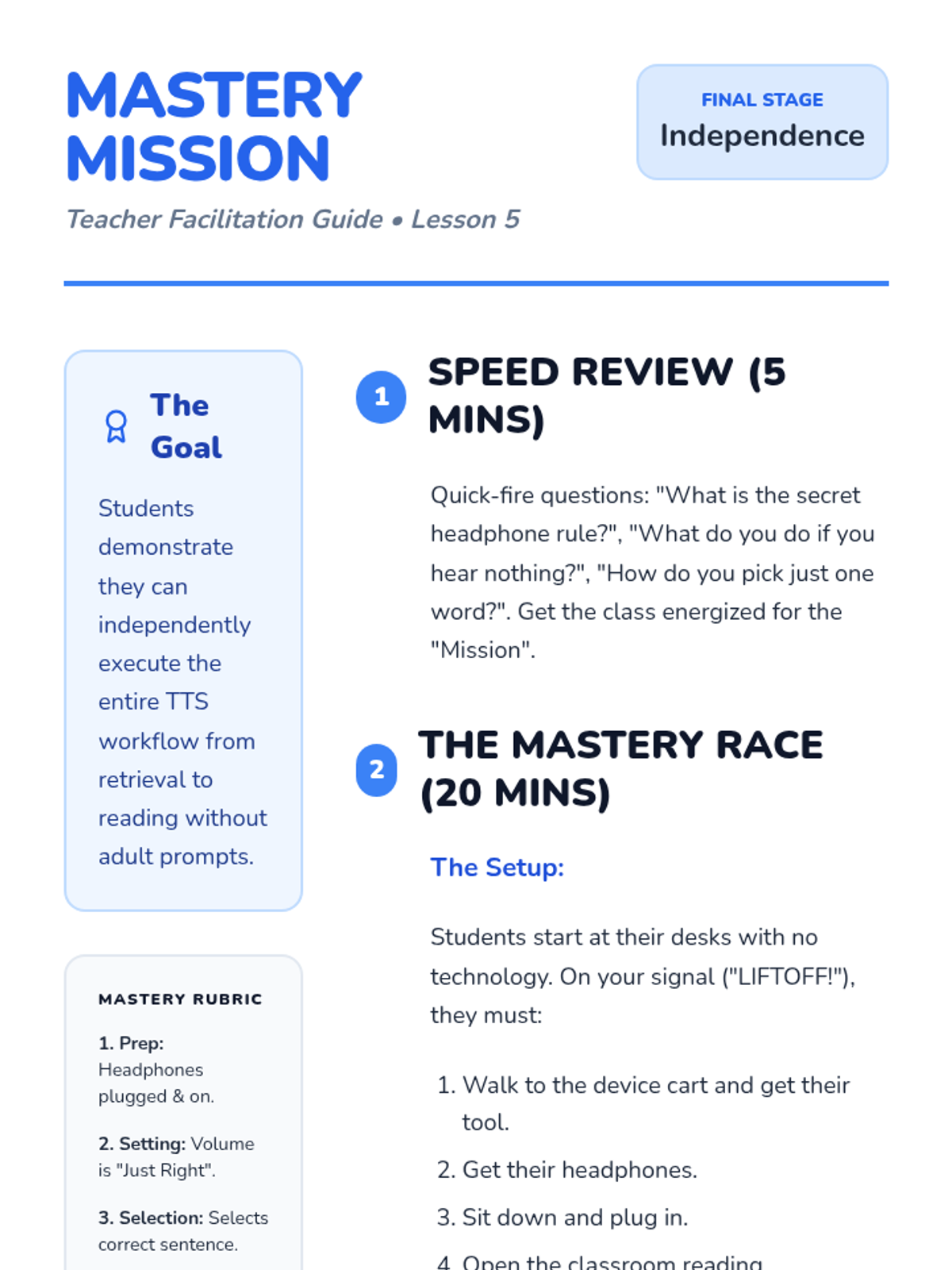
Students demonstrate their independence by setting up their own reading station and using TTS tools without assistance.
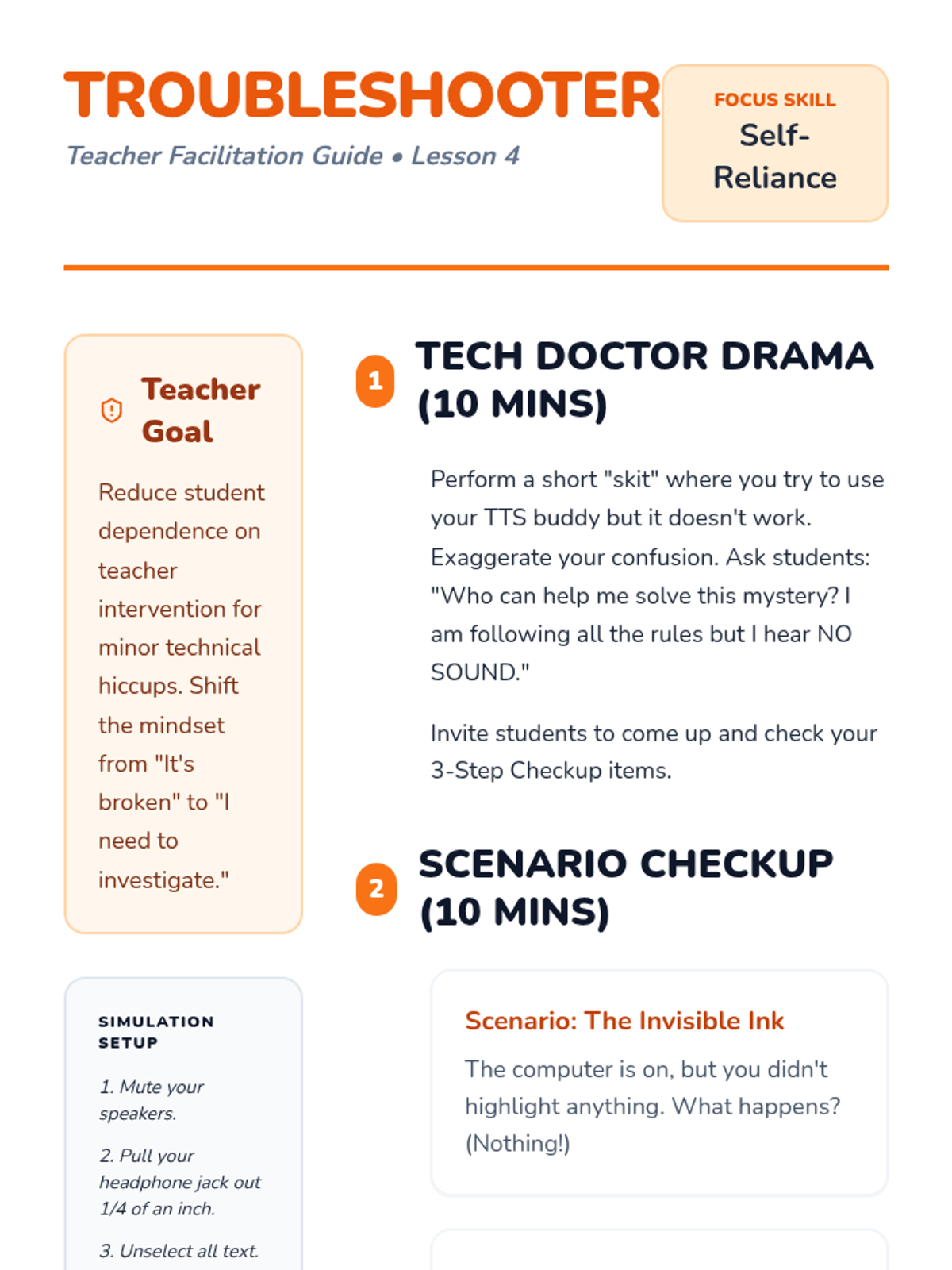
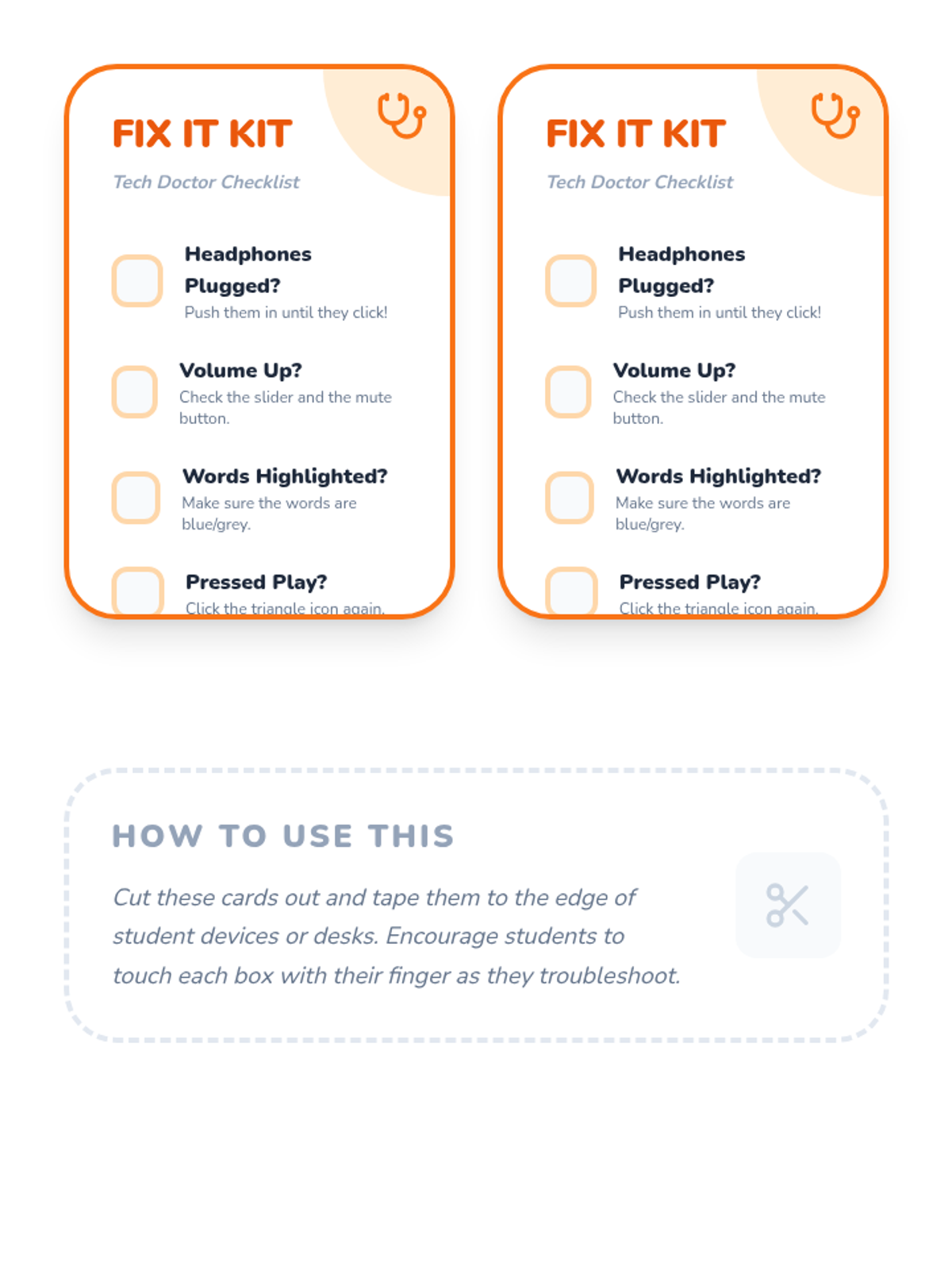
Students learn to solve common technical issues like muted sound or unplugged headphones using a simple checklist.
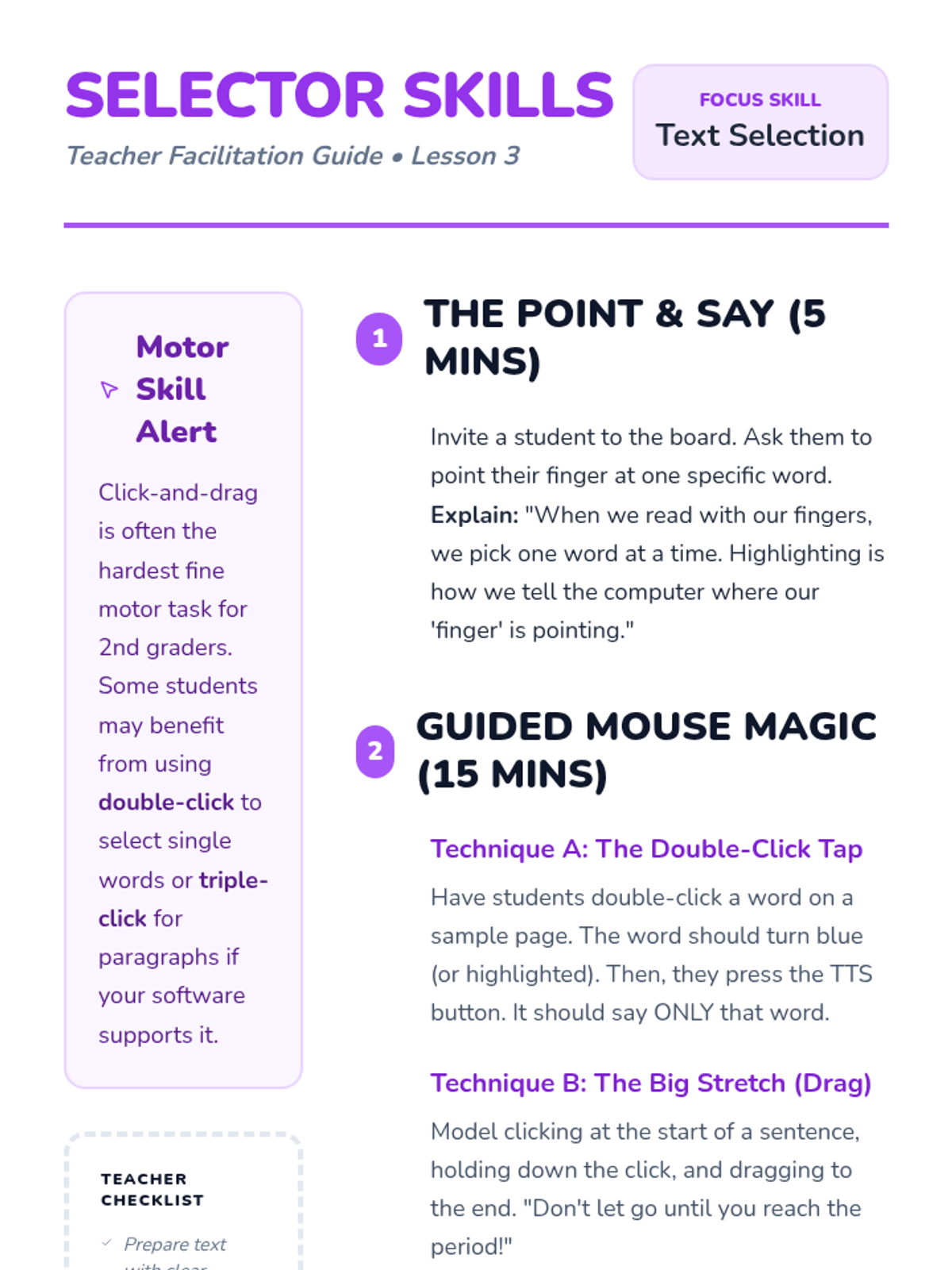
Students learn how to highlight specific words or sentences to be read aloud, moving from single words to full paragraphs.
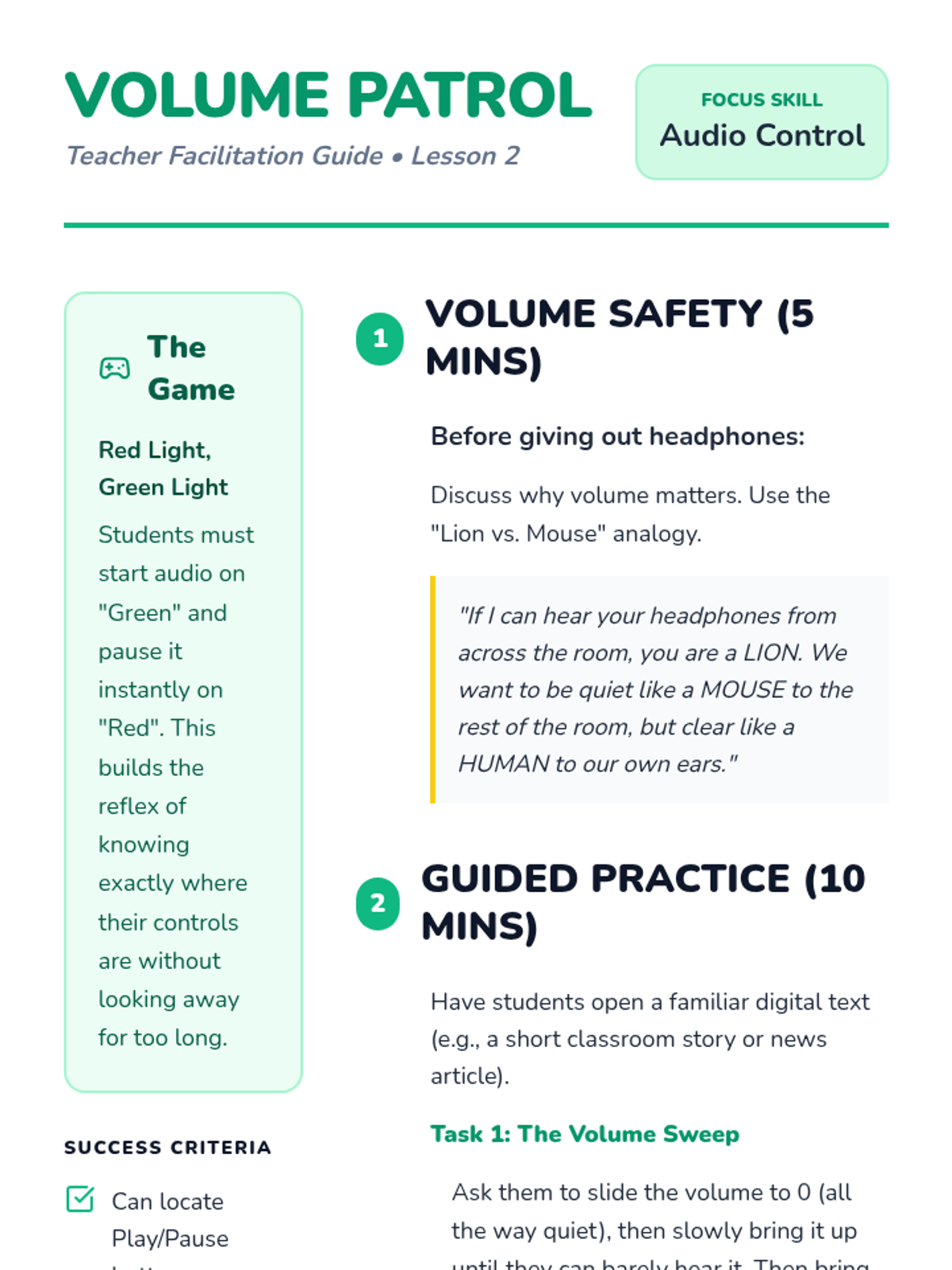
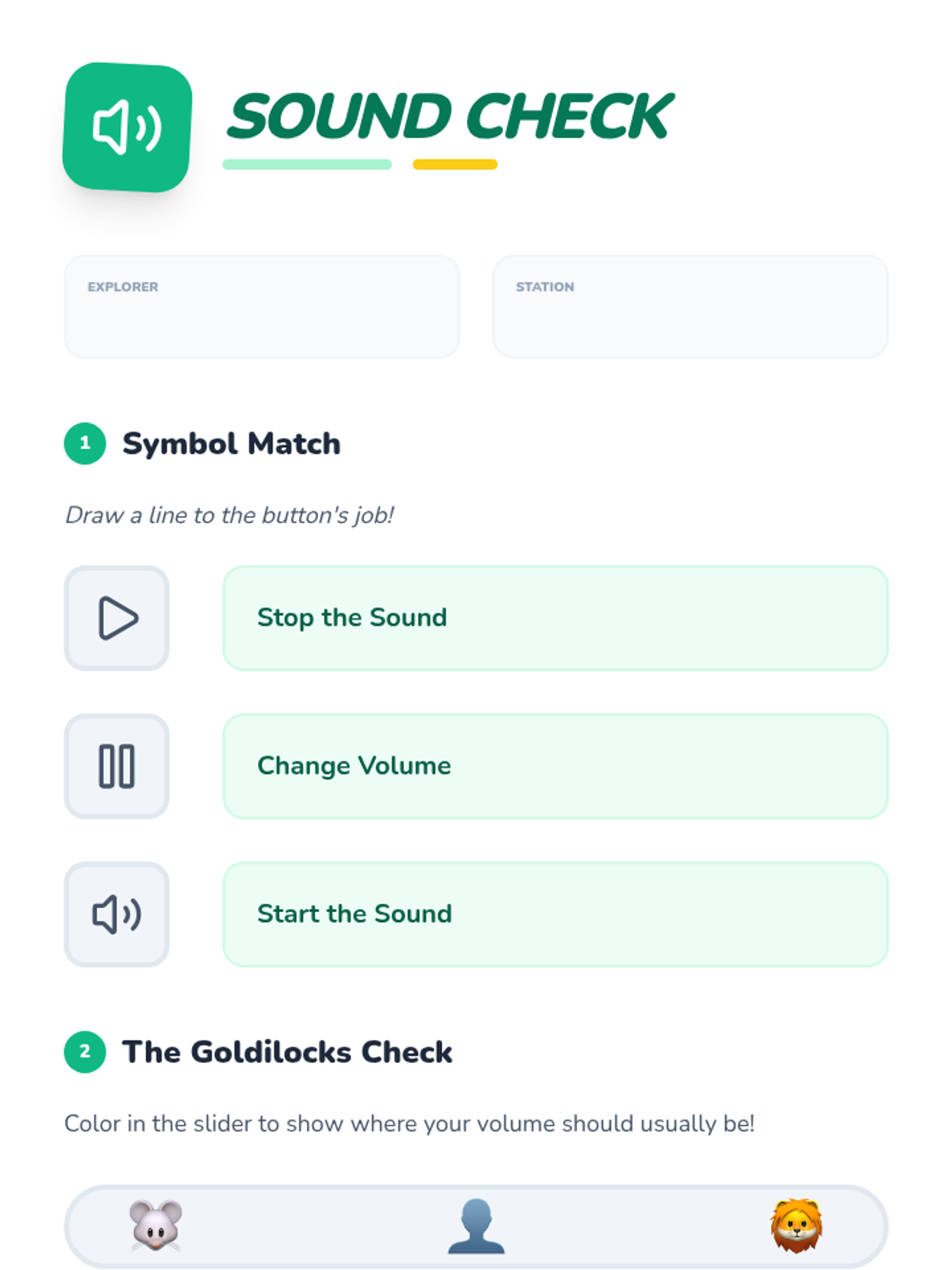
Learners practice the specific motor skills required to start, stop, and pause the audio while managing volume responsibly.
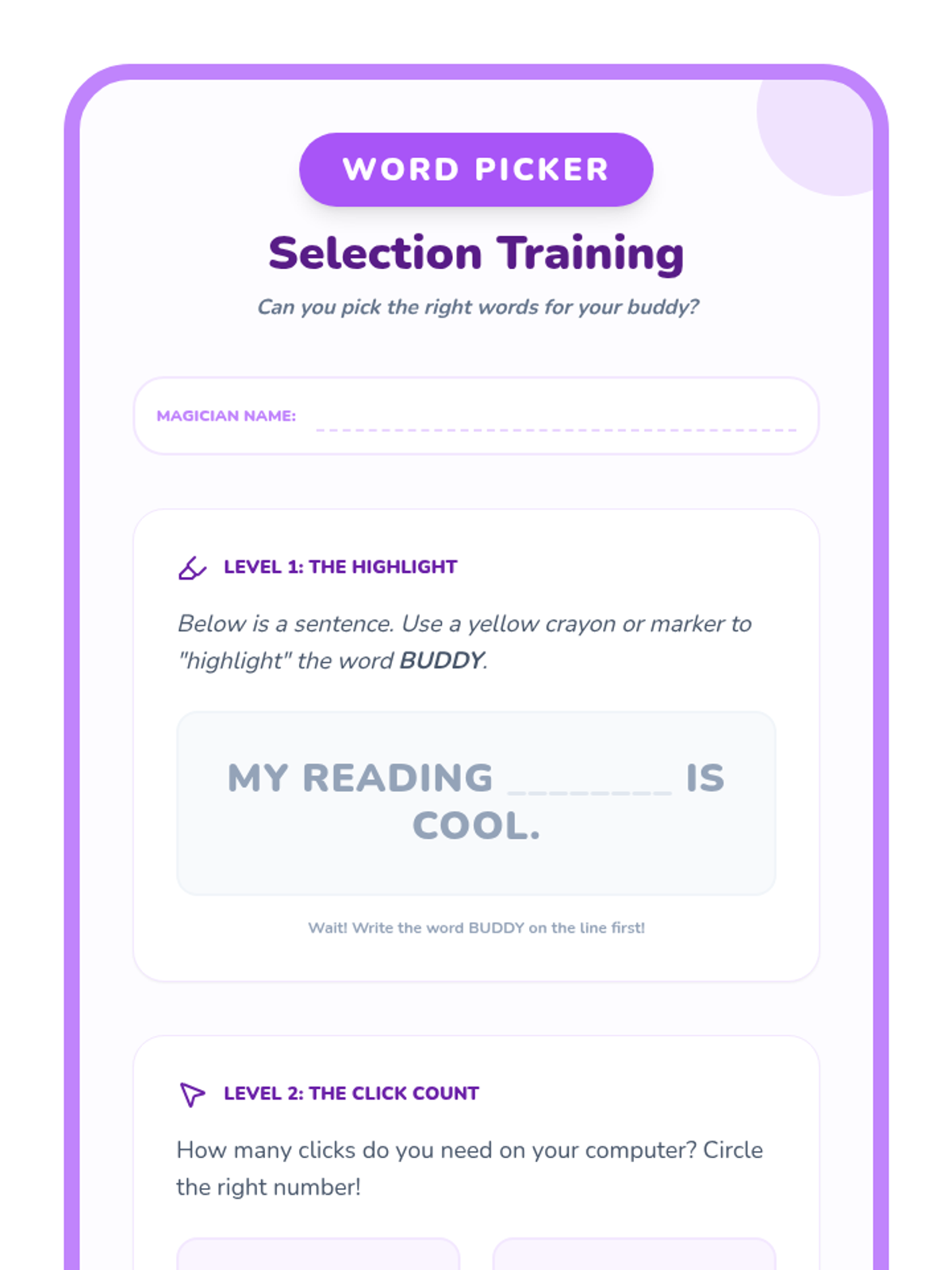
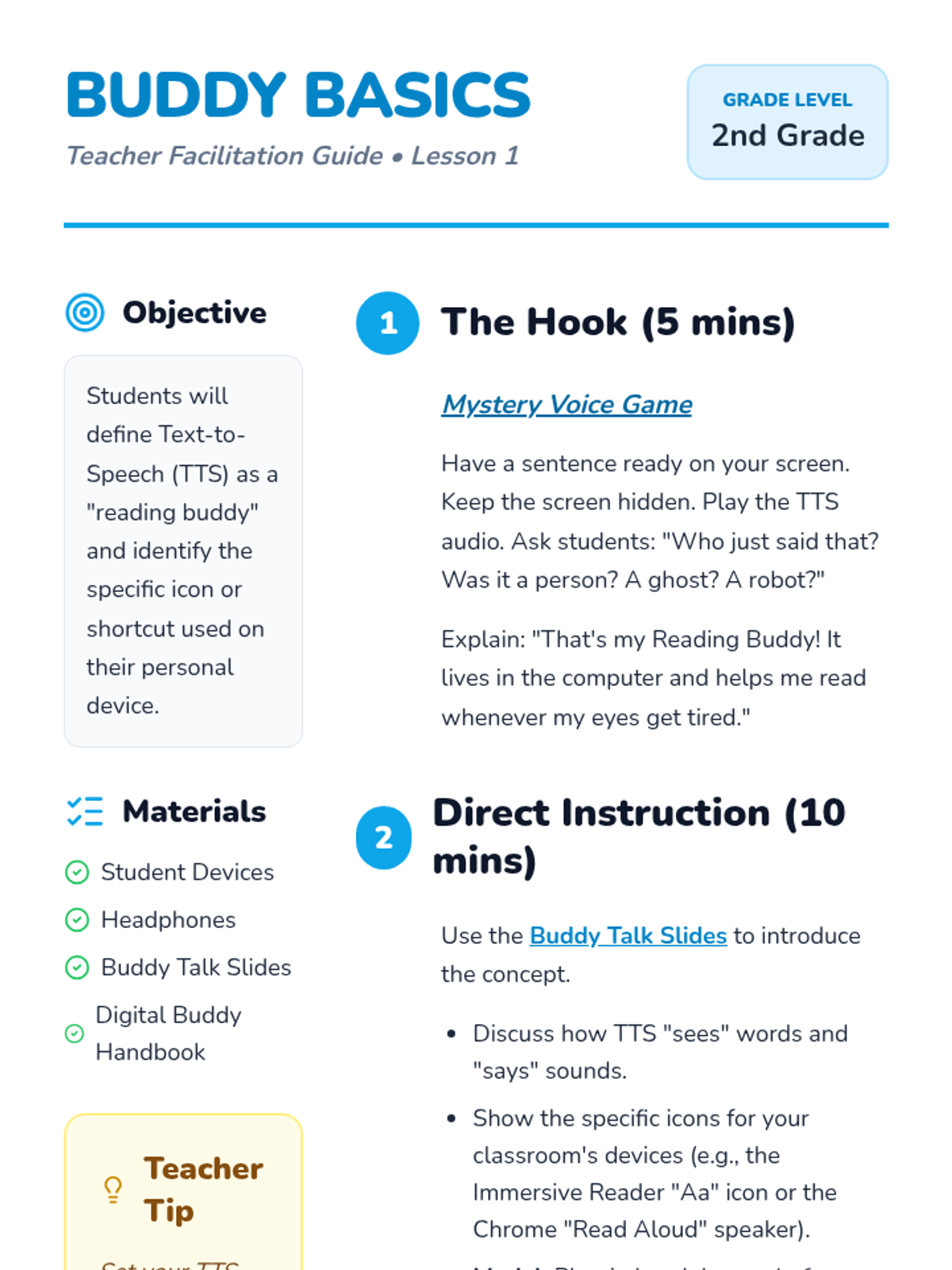
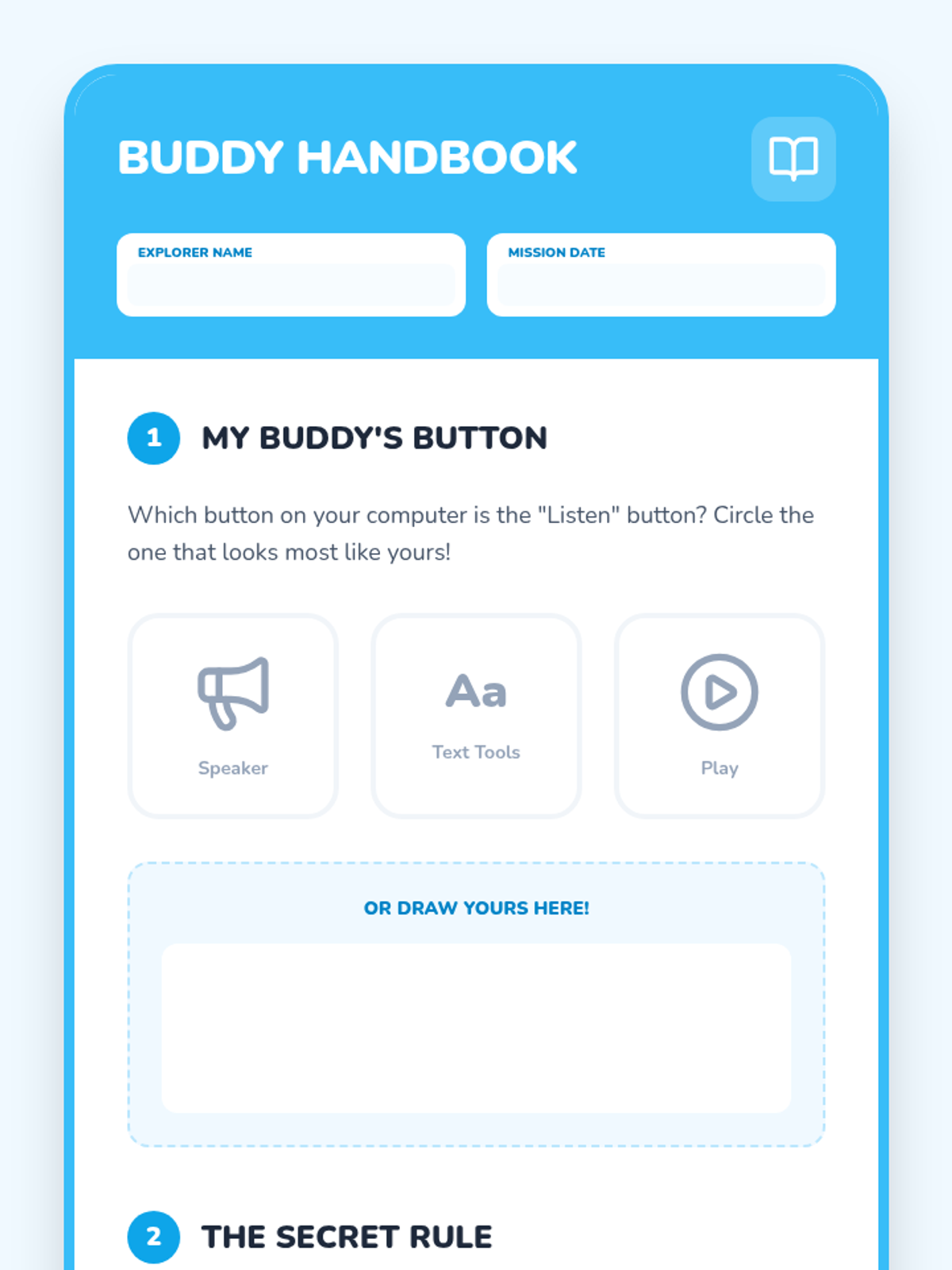
Students explore the concept of a 'digital reading buddy' and identify the TTS icon or shortcut on their devices.
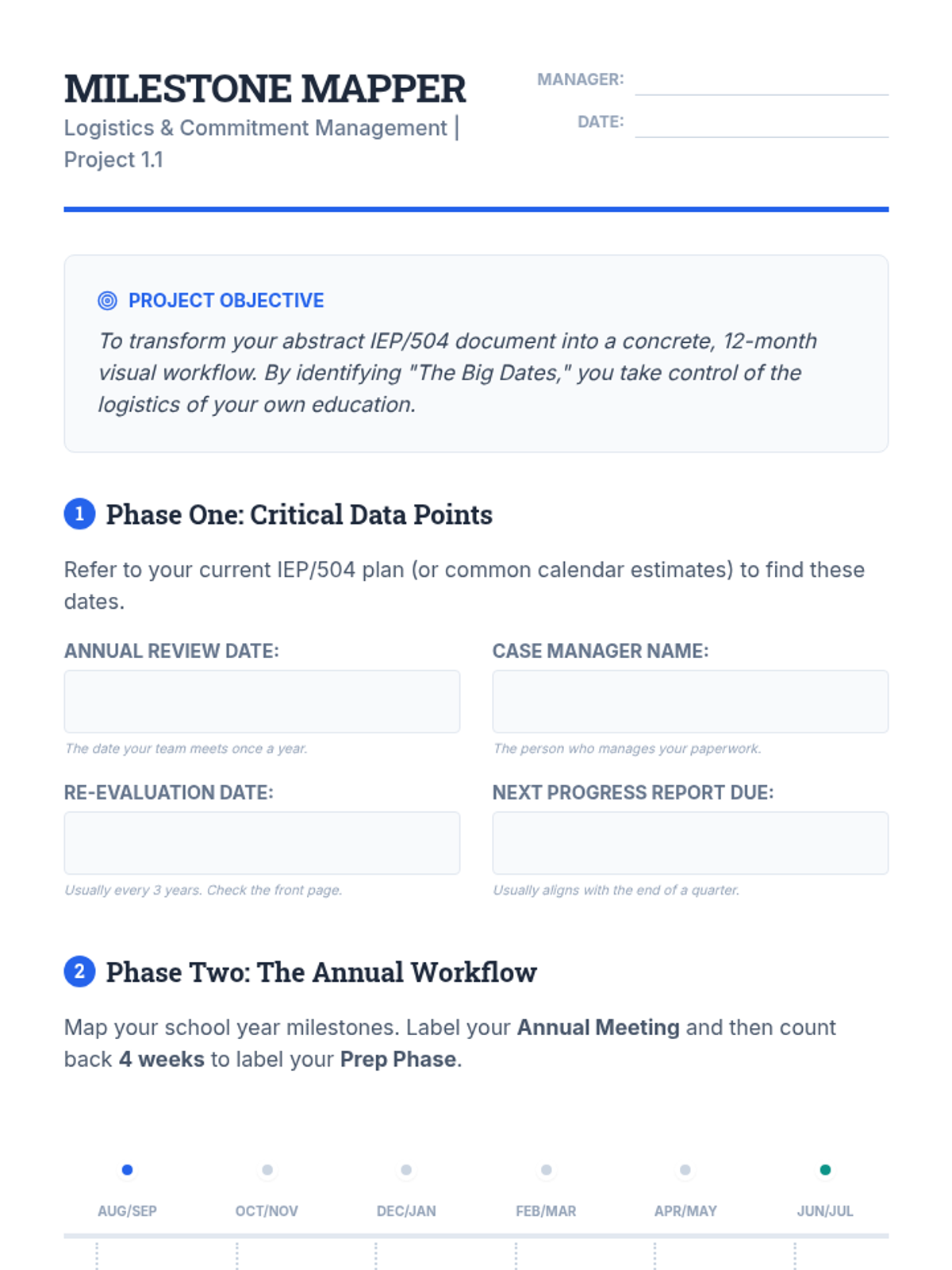
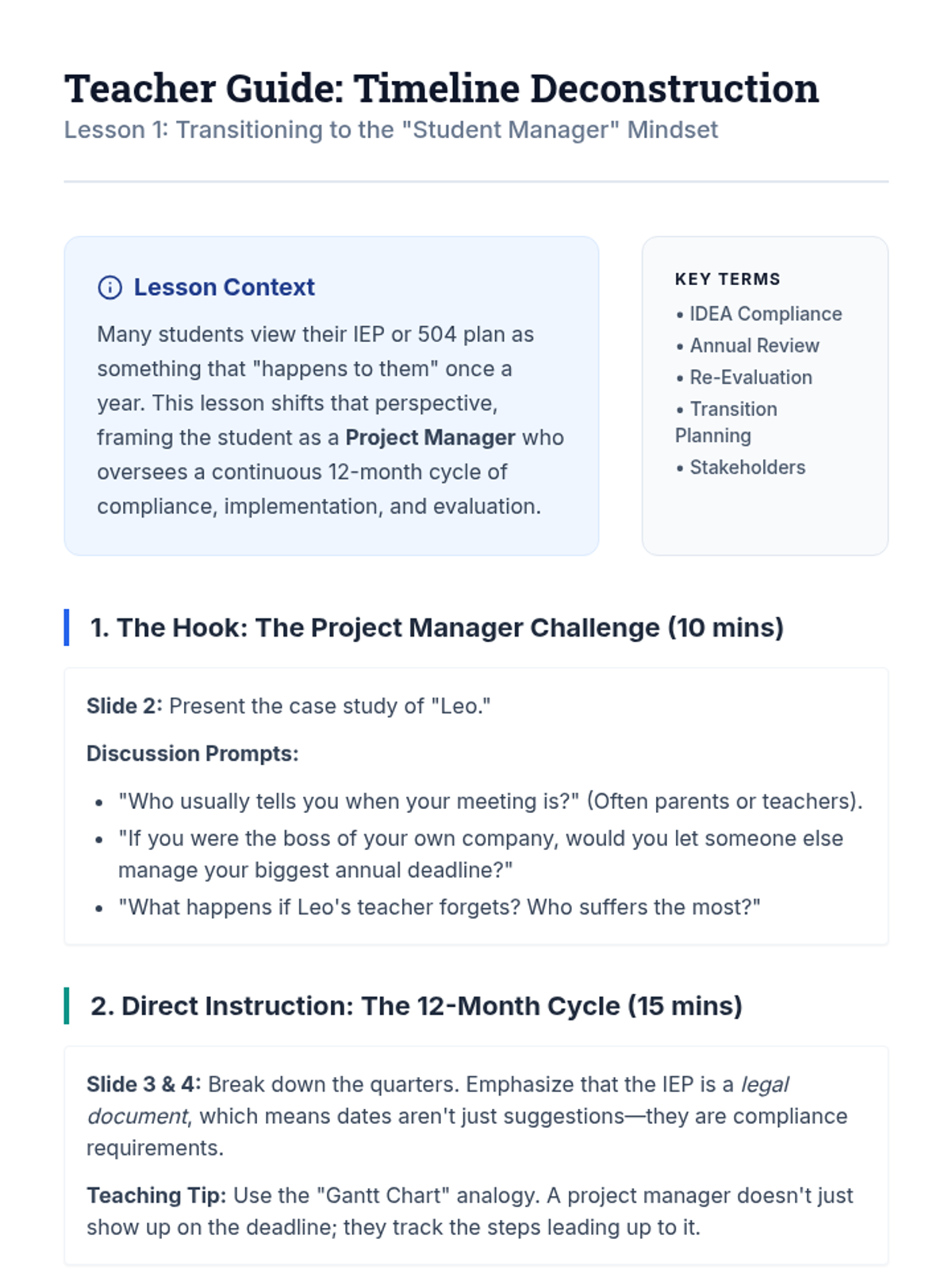
Students act as project managers to deconstruct the annual IEP/504 cycle, identifying critical deadlines and mapping out their own educational timelines.