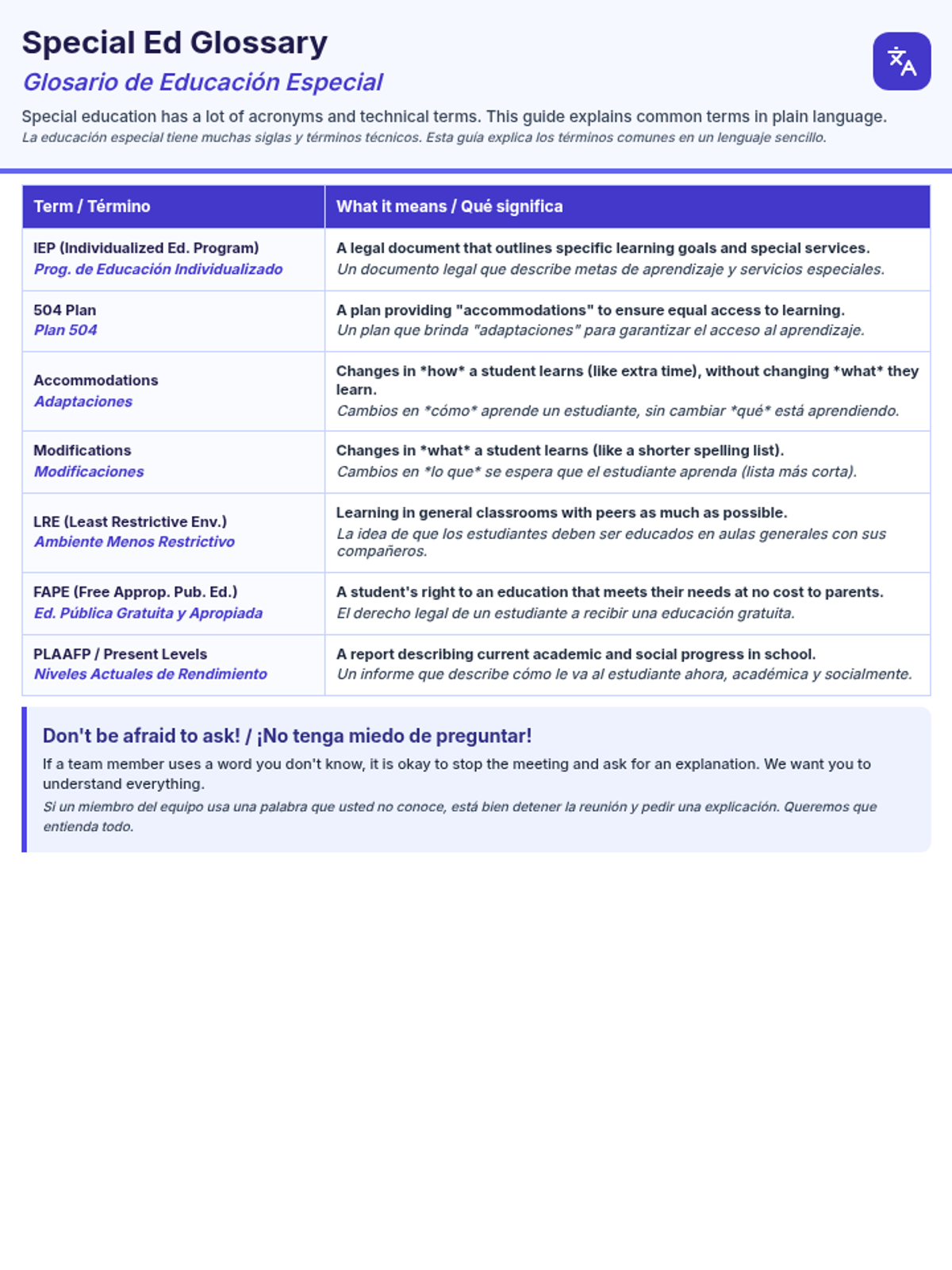
Legal frameworks under IDEA and Section 504 alongside essential IEP components like goals and accommodations. Equips stakeholders for collaborative advocacy and effective participation in IEP meetings.
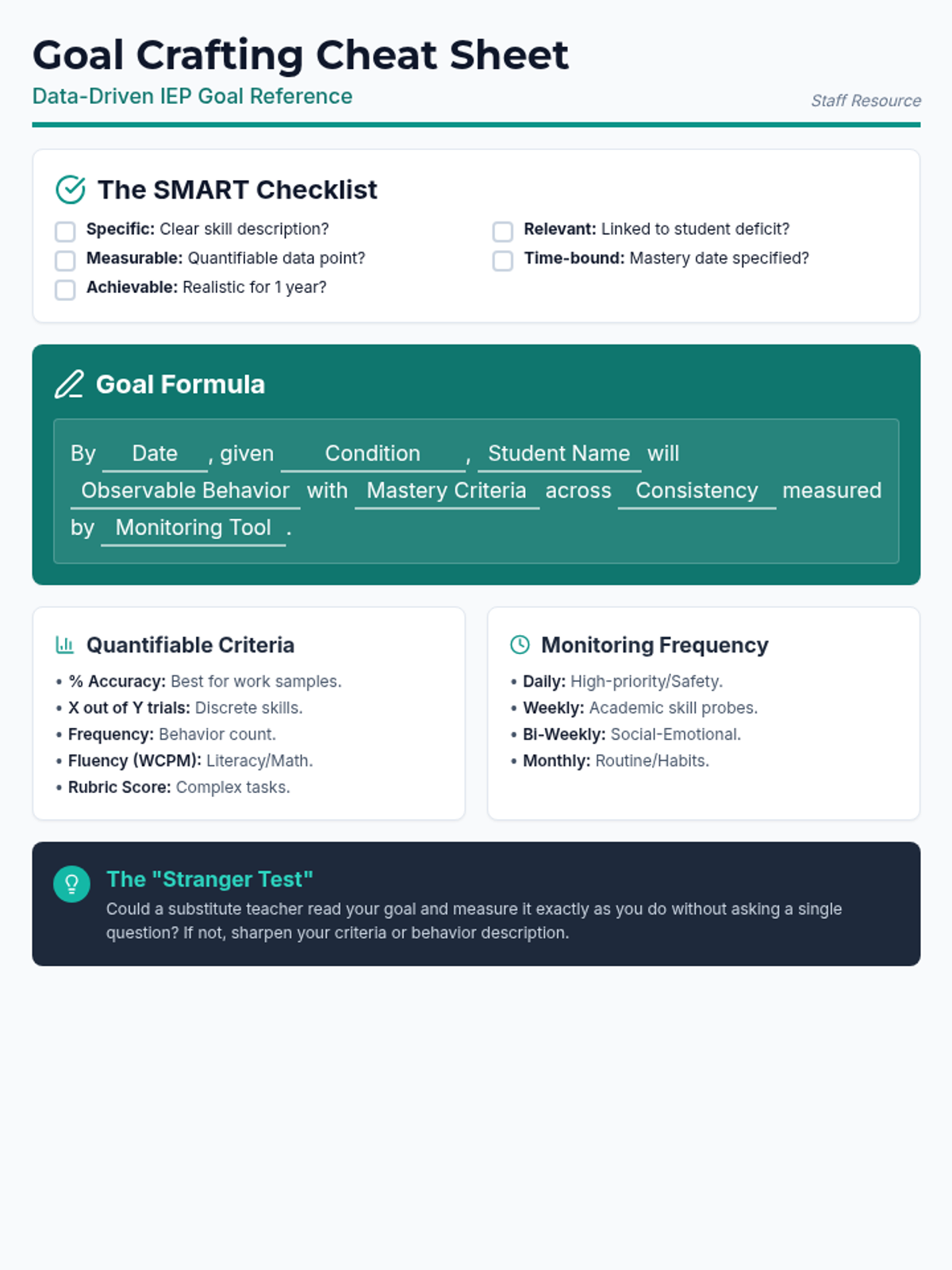
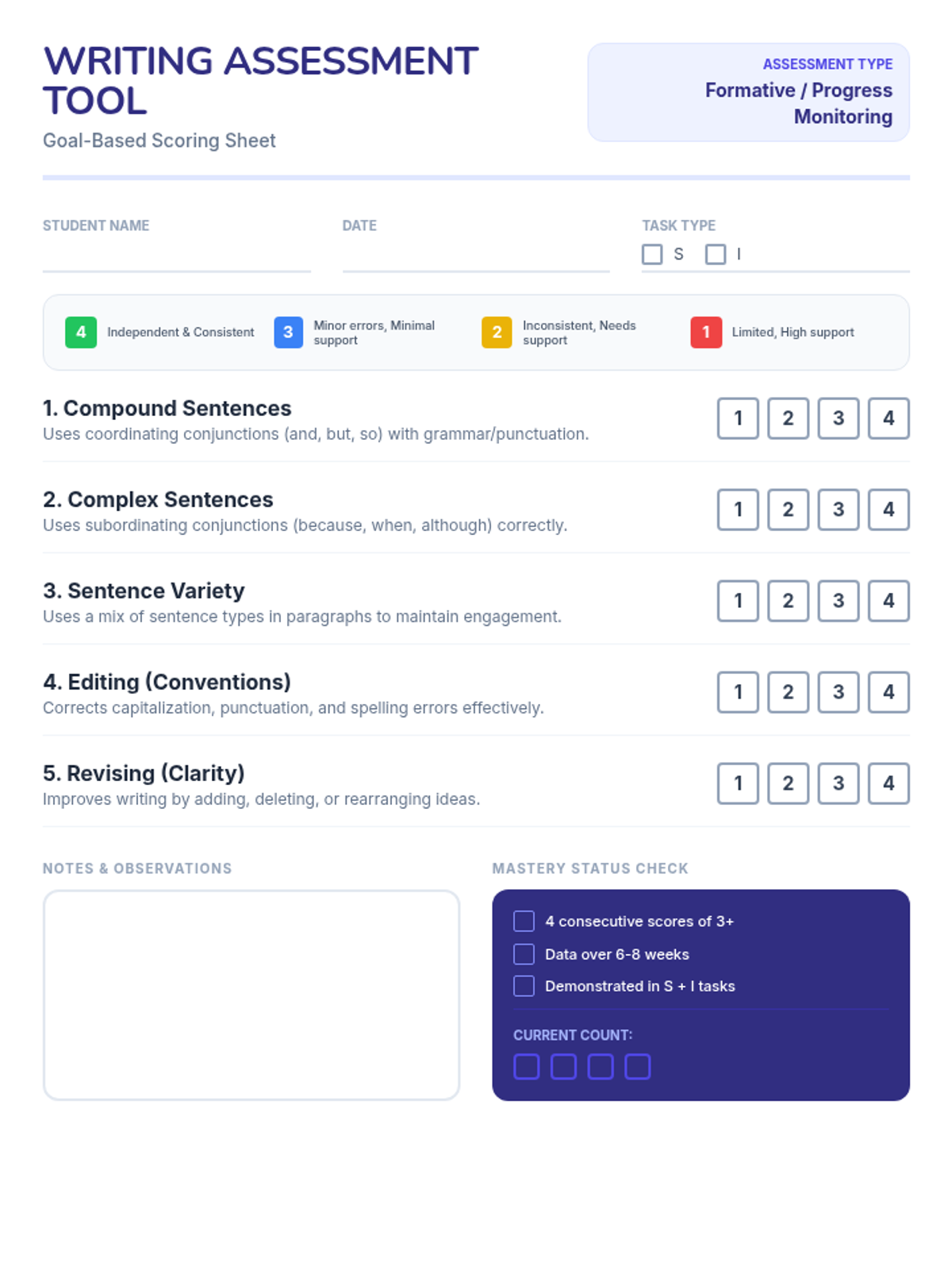
A 5-slide presentation for special education teachers focused on crafting IEP goals that are measurable and rooted in consistent data-driven progress monitoring.
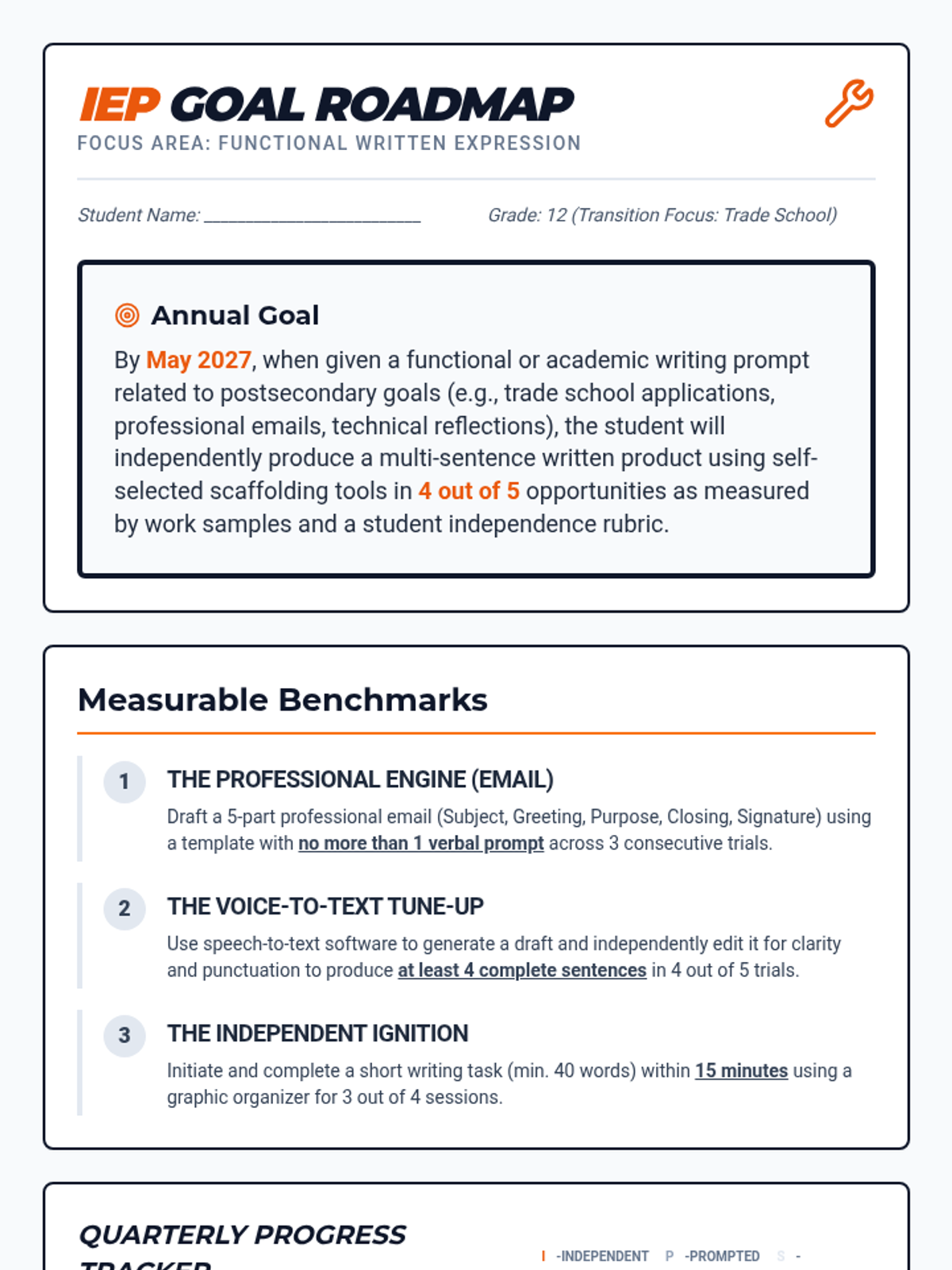
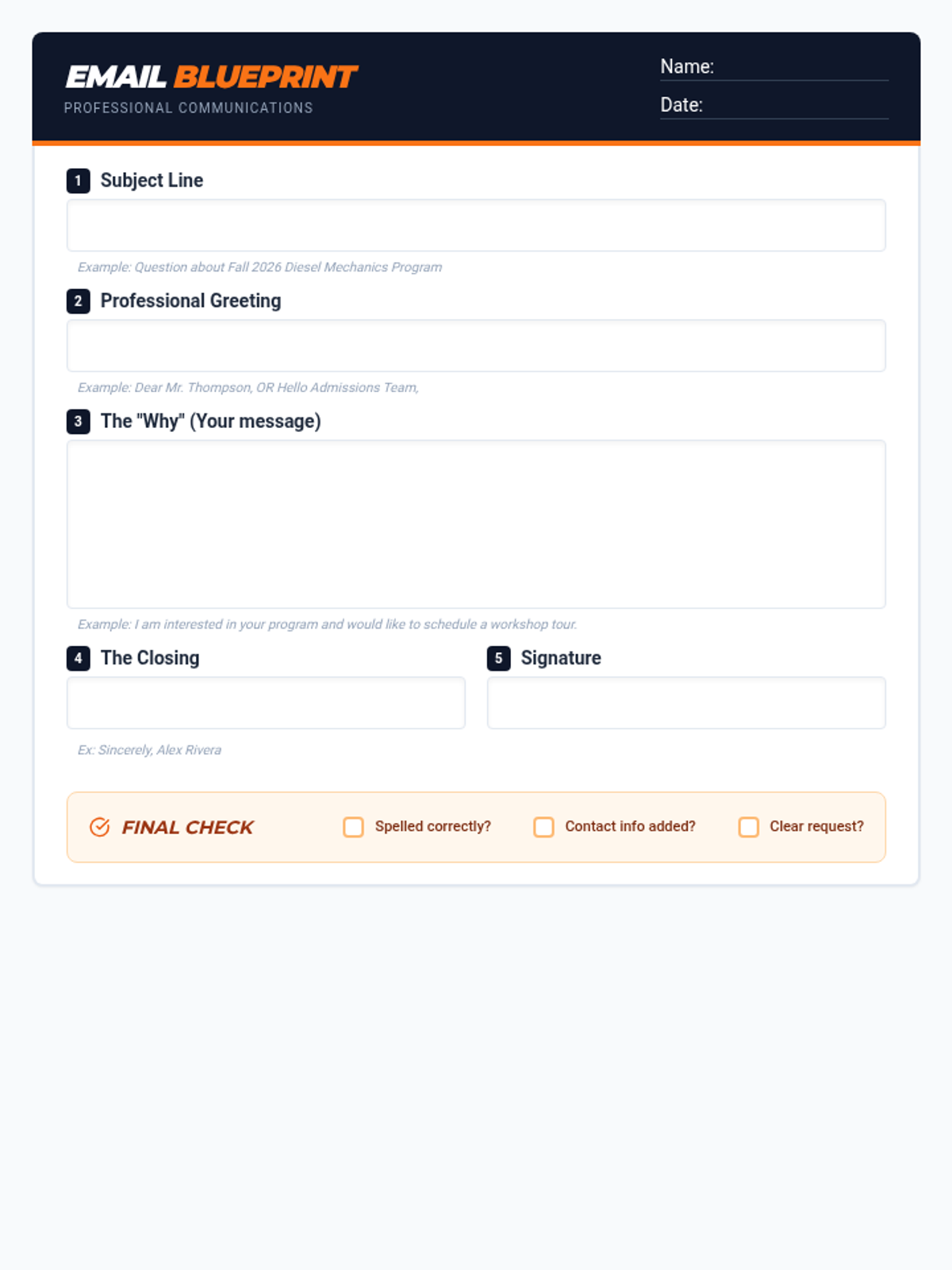
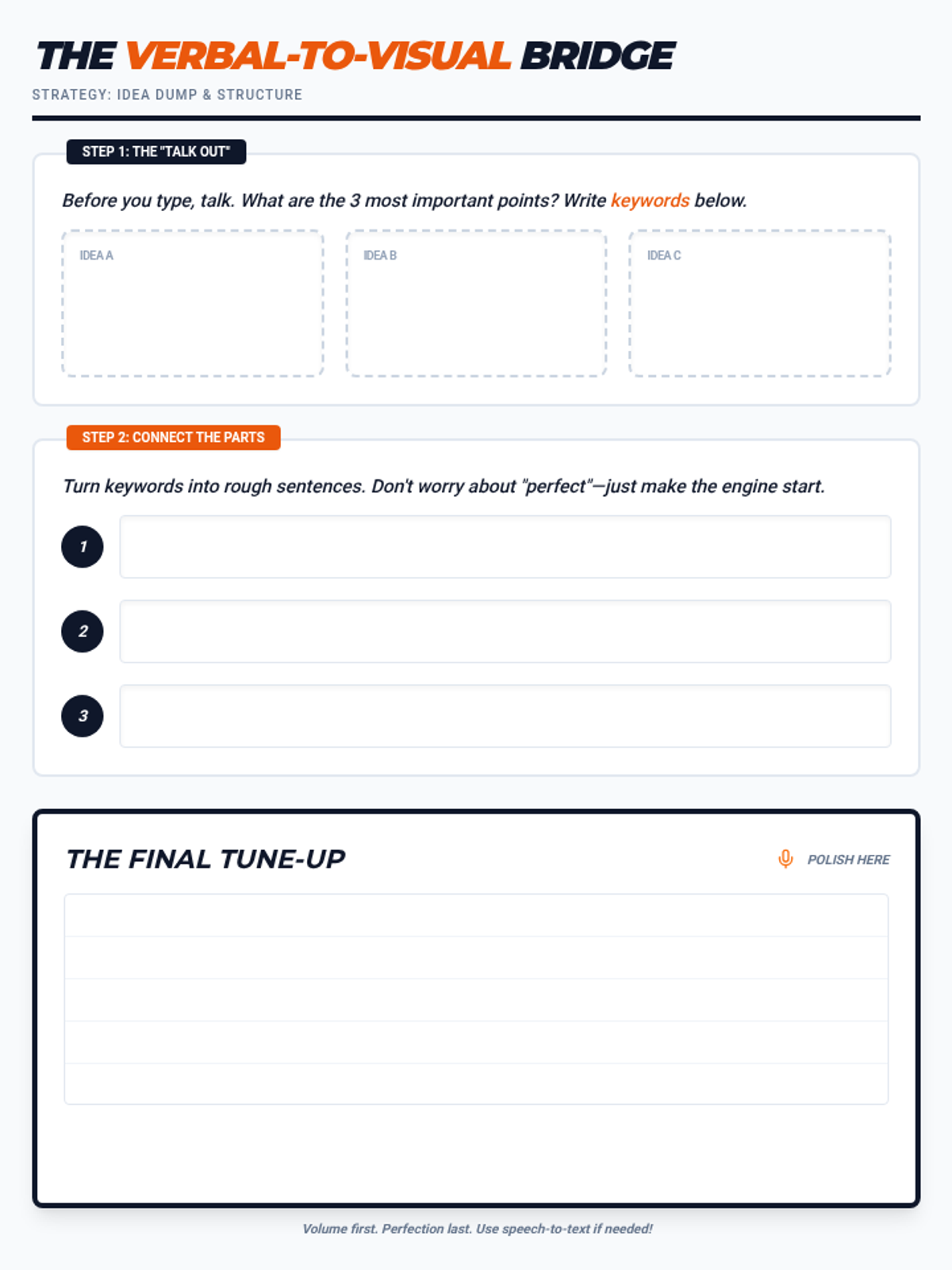
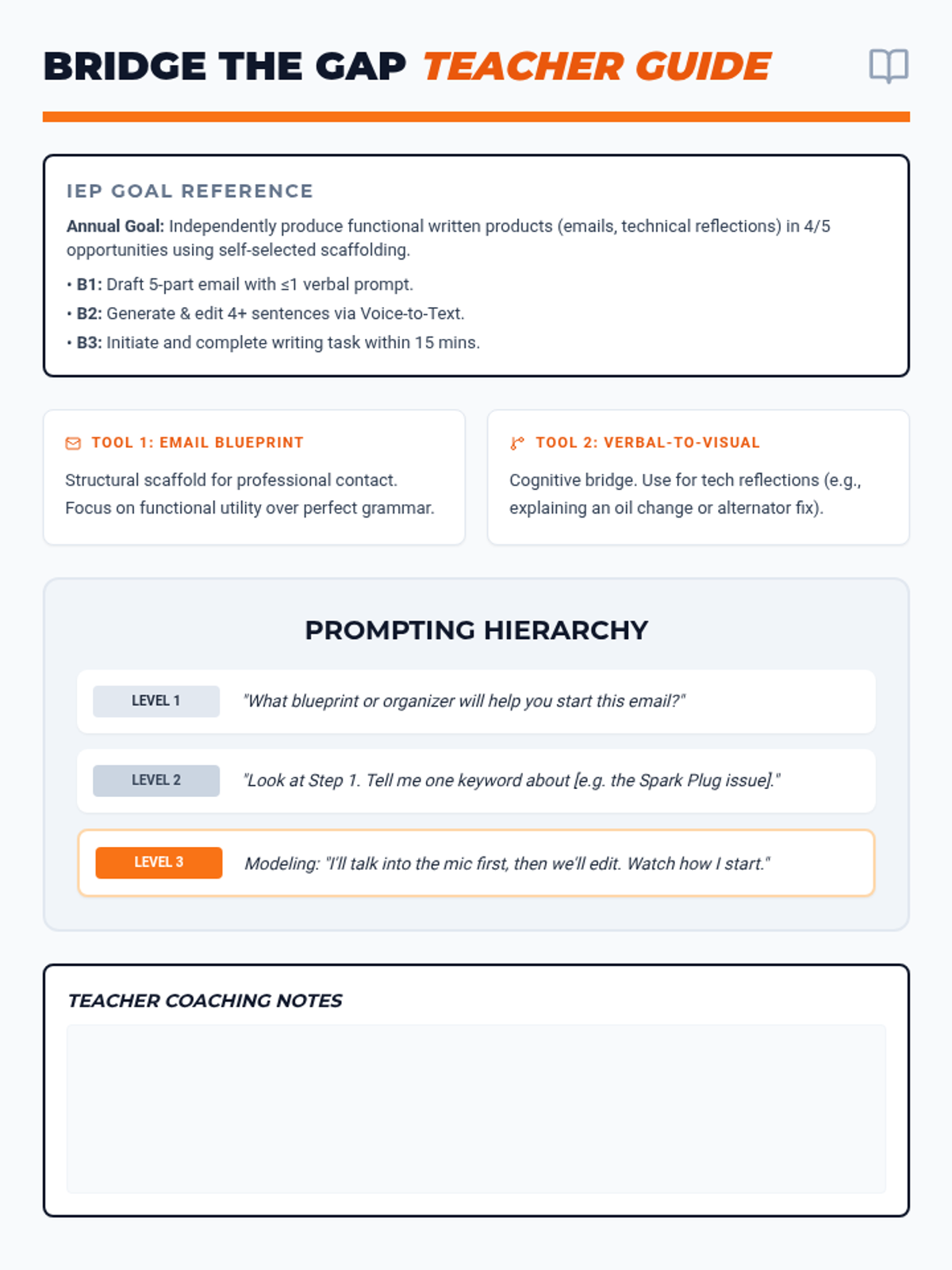
A set of resources designed to help a 12th-grade student interested in automotive trades overcome writing anxiety and develop functional communication skills for postsecondary success.
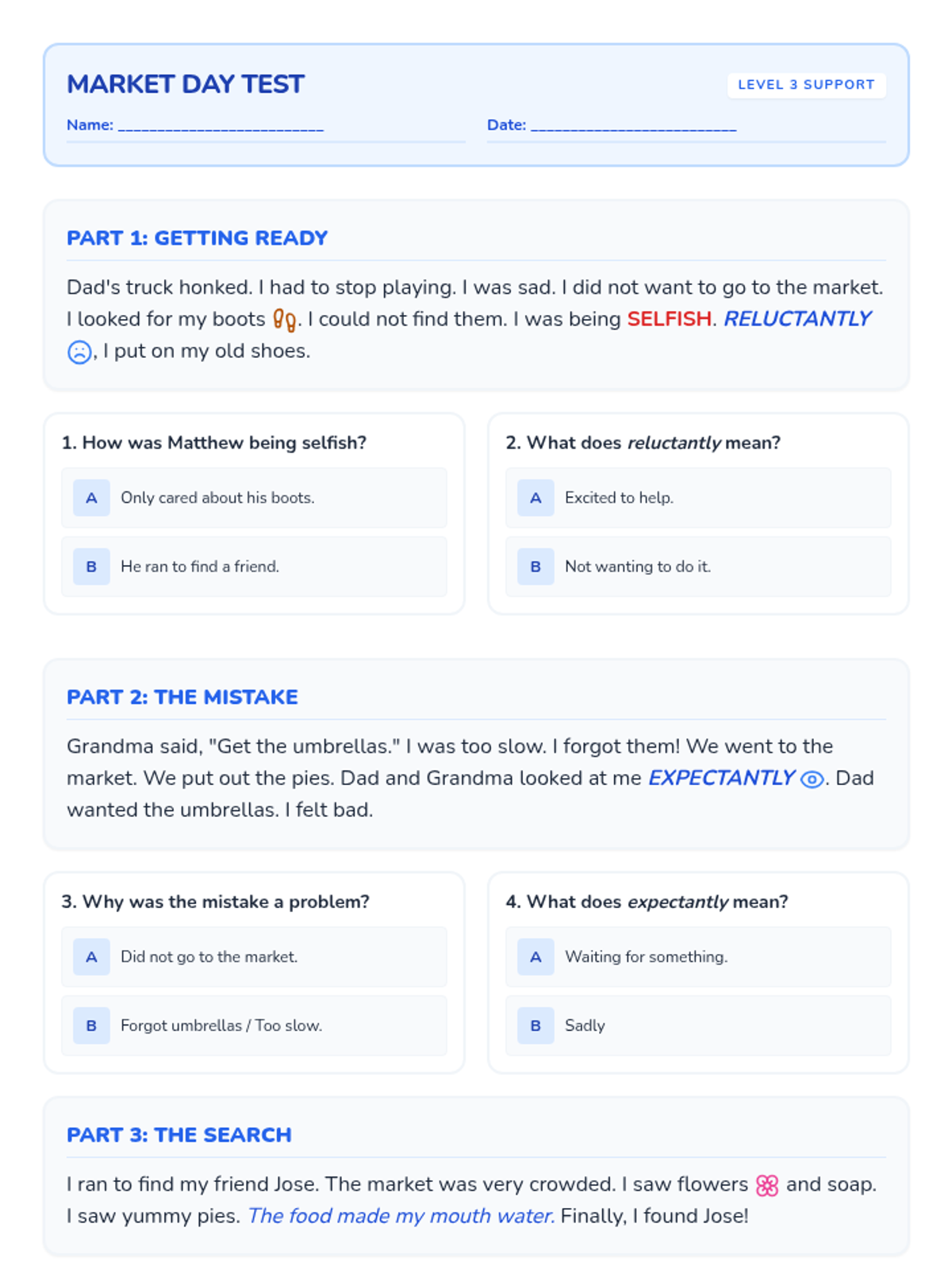
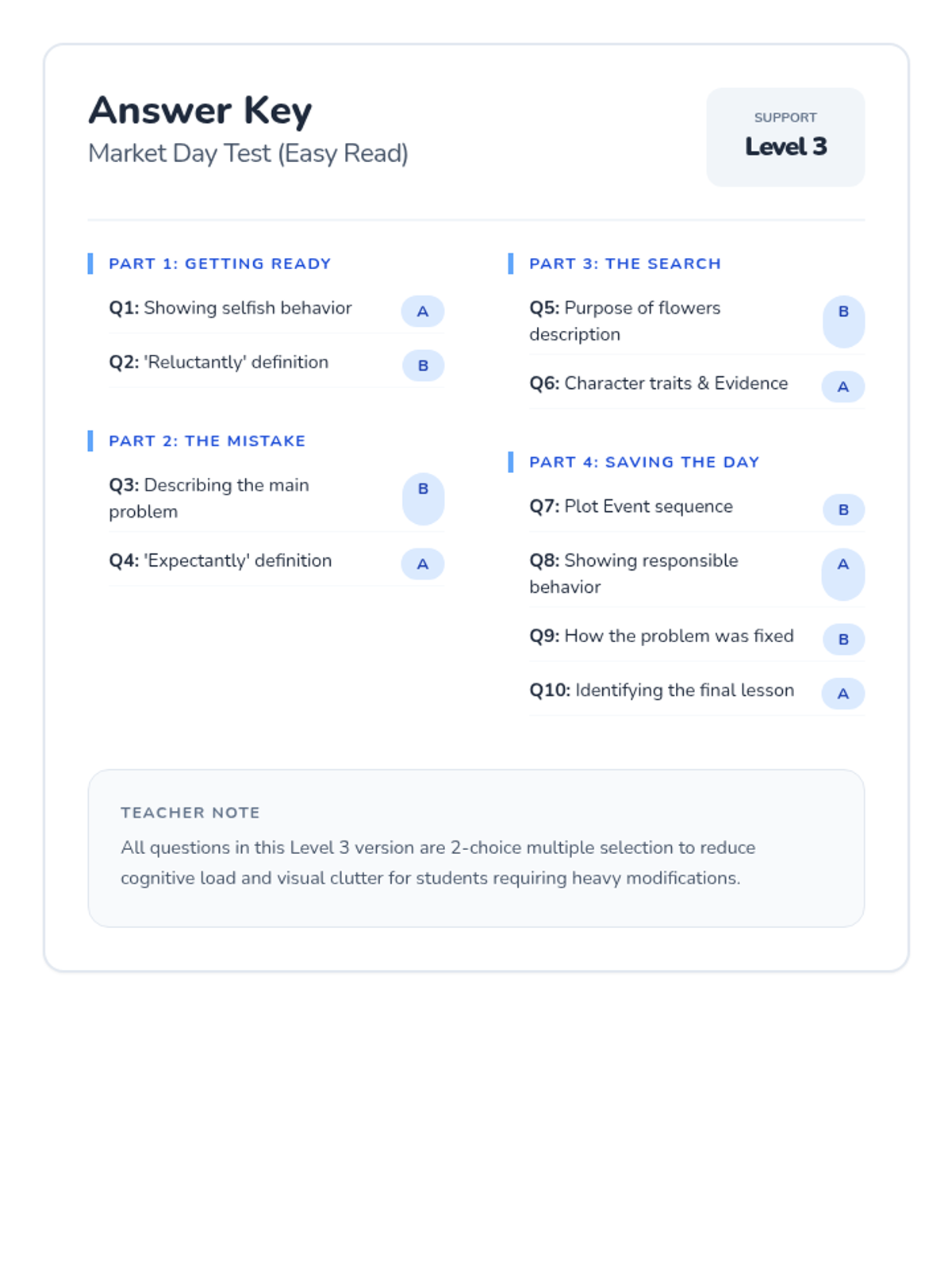
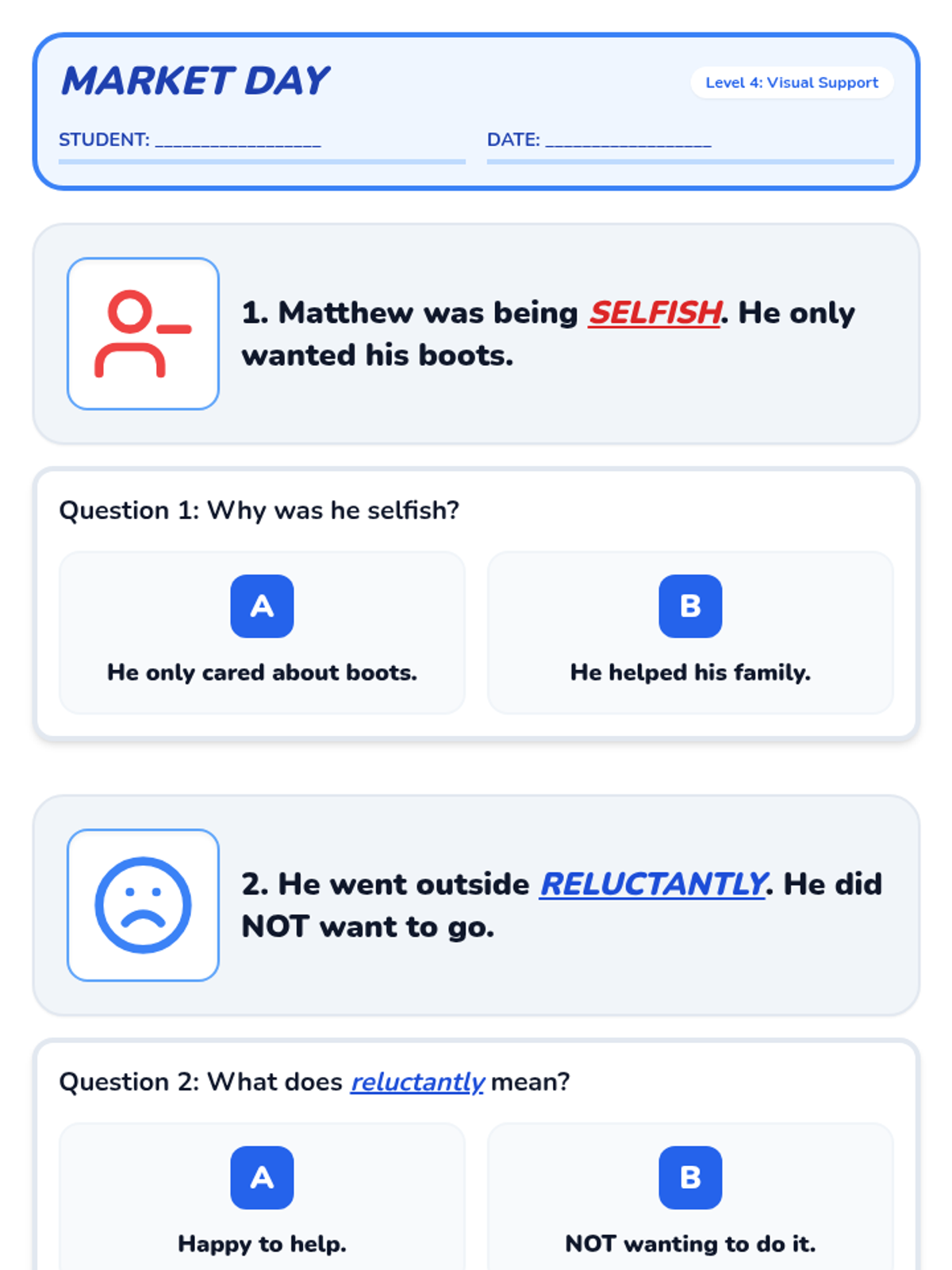
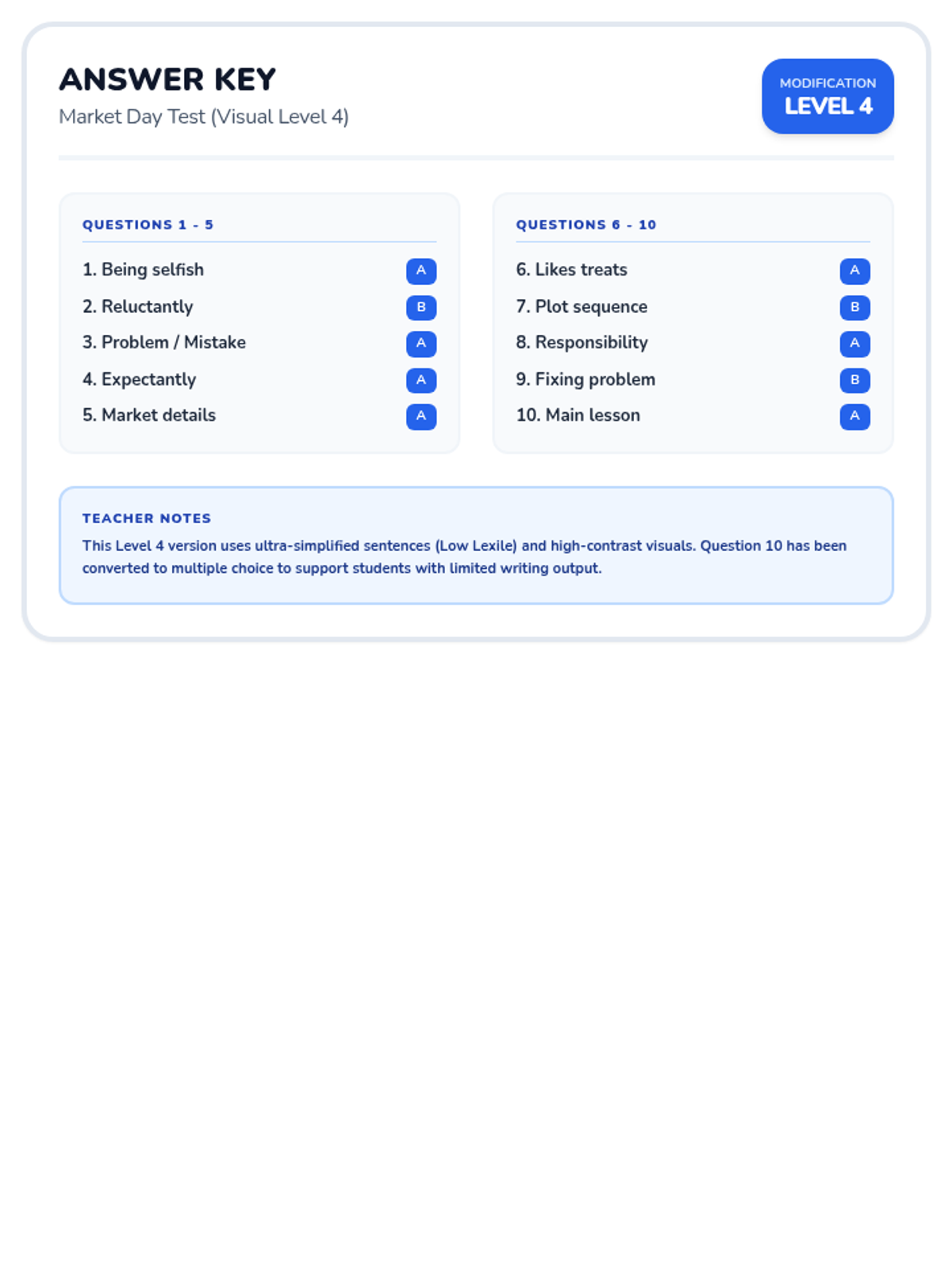
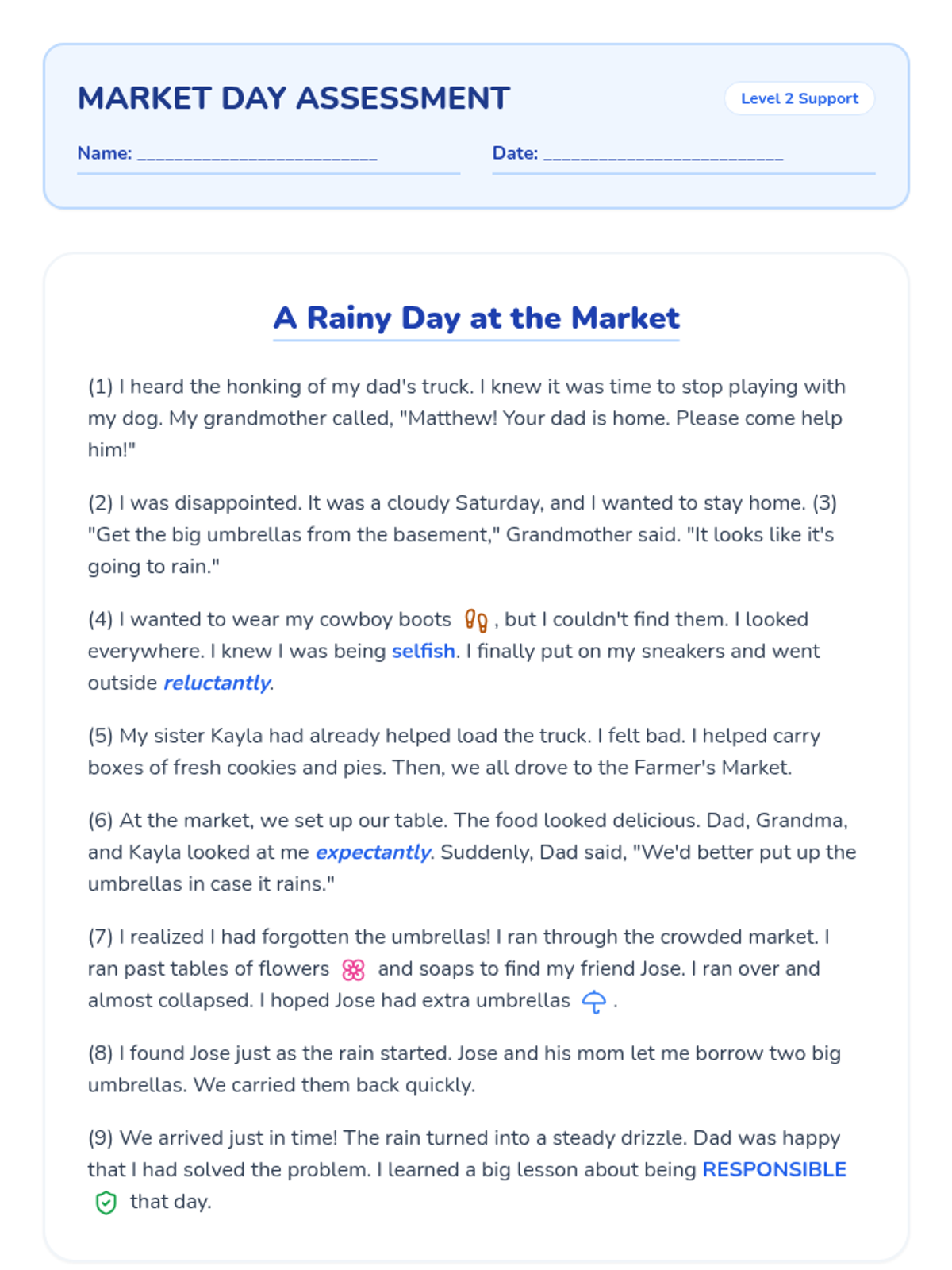
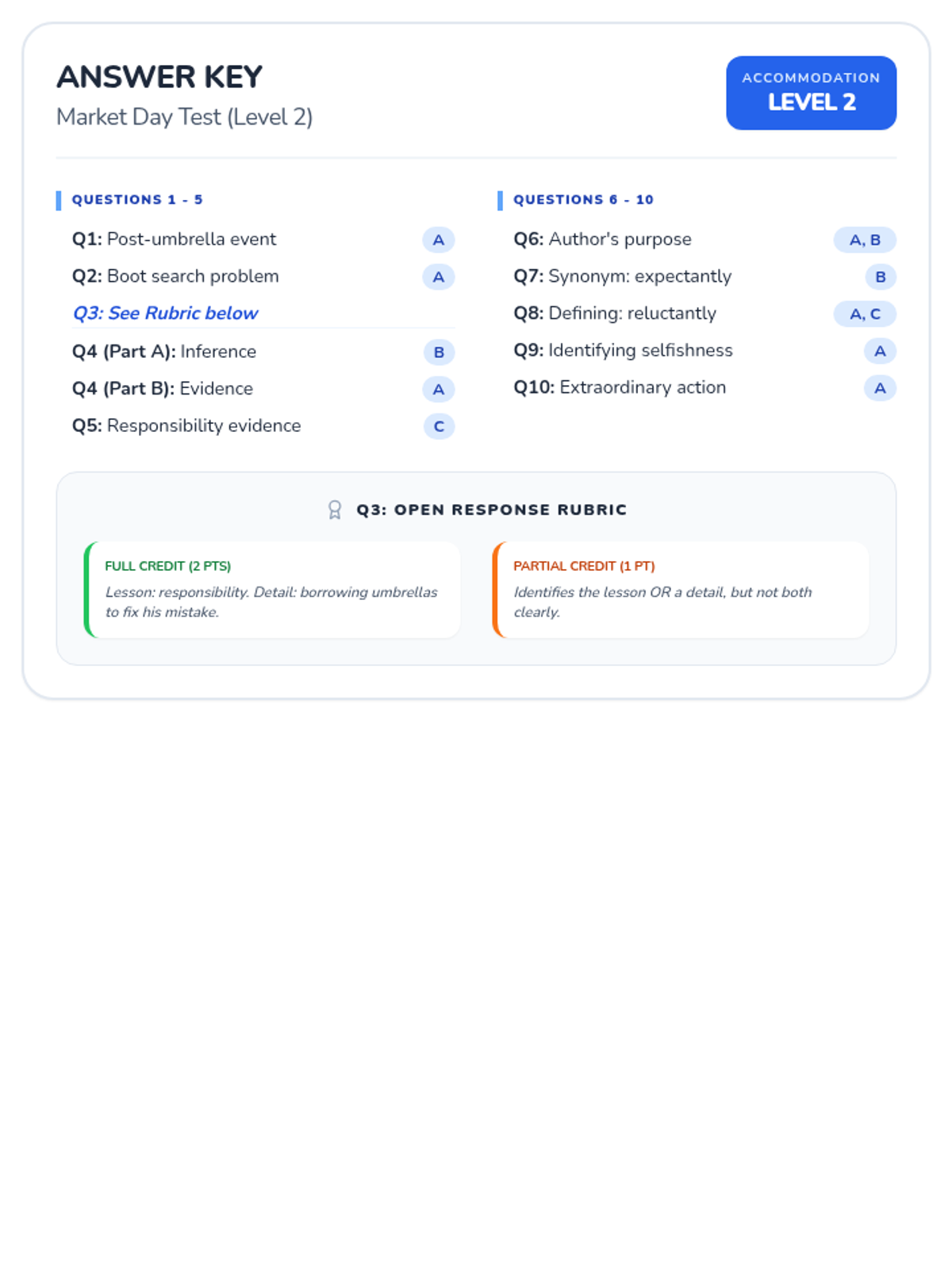
A modified assessment set for the 6th Grade ELA Unit 4 test, specifically designed for students with IEPs. The materials include a simplified reading passage, reduced answer choices, and visual vocabulary supports.
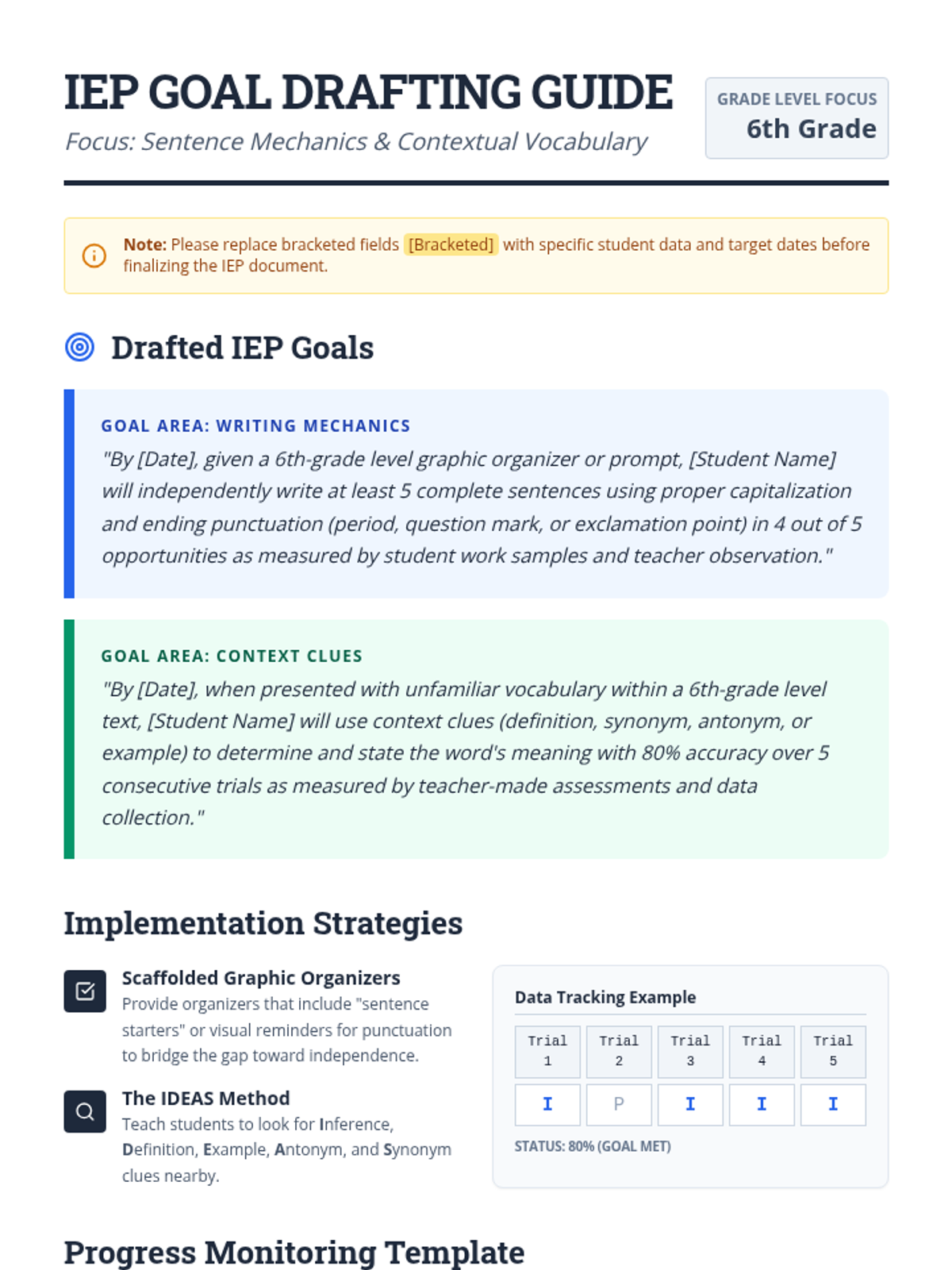
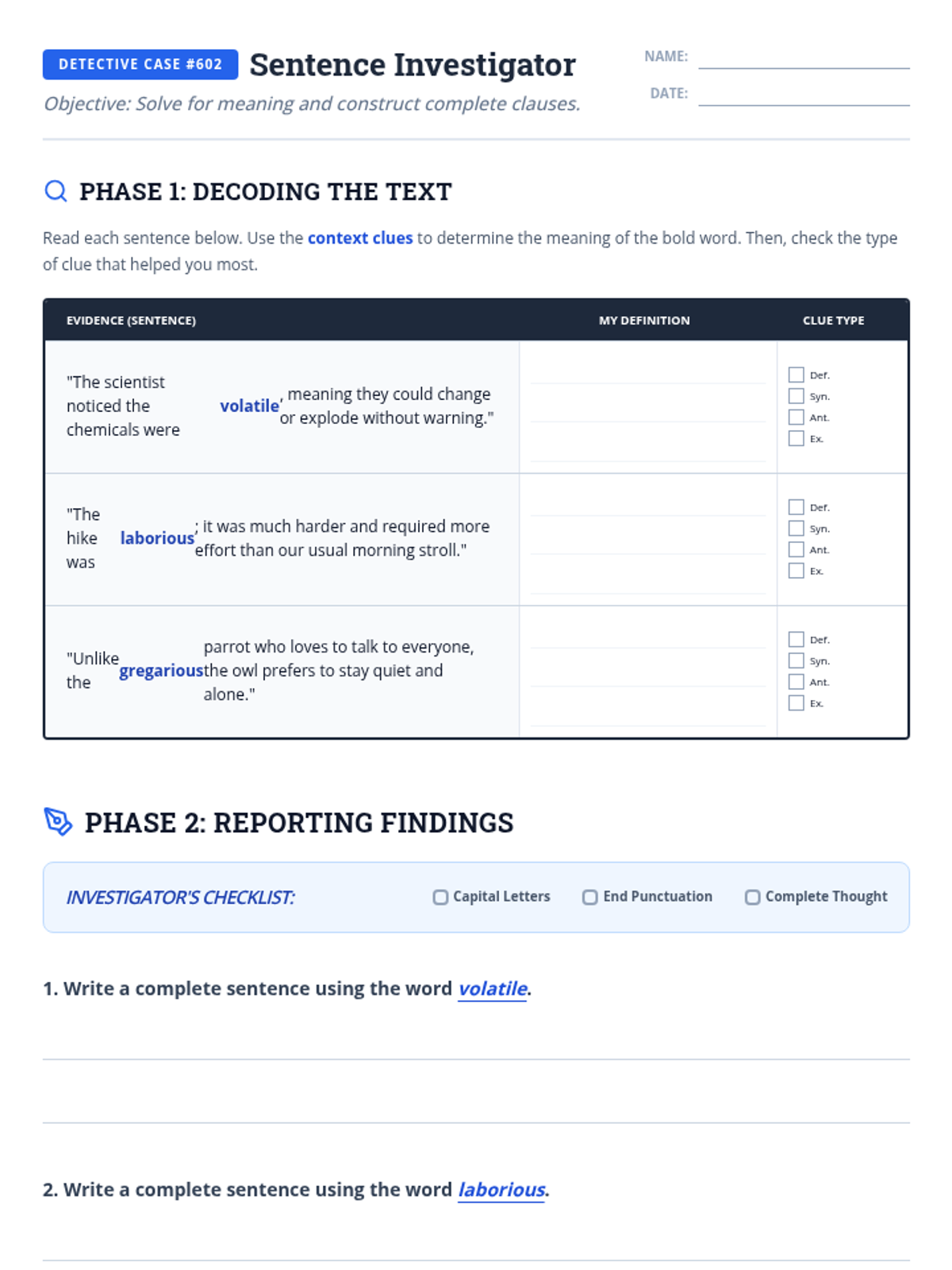
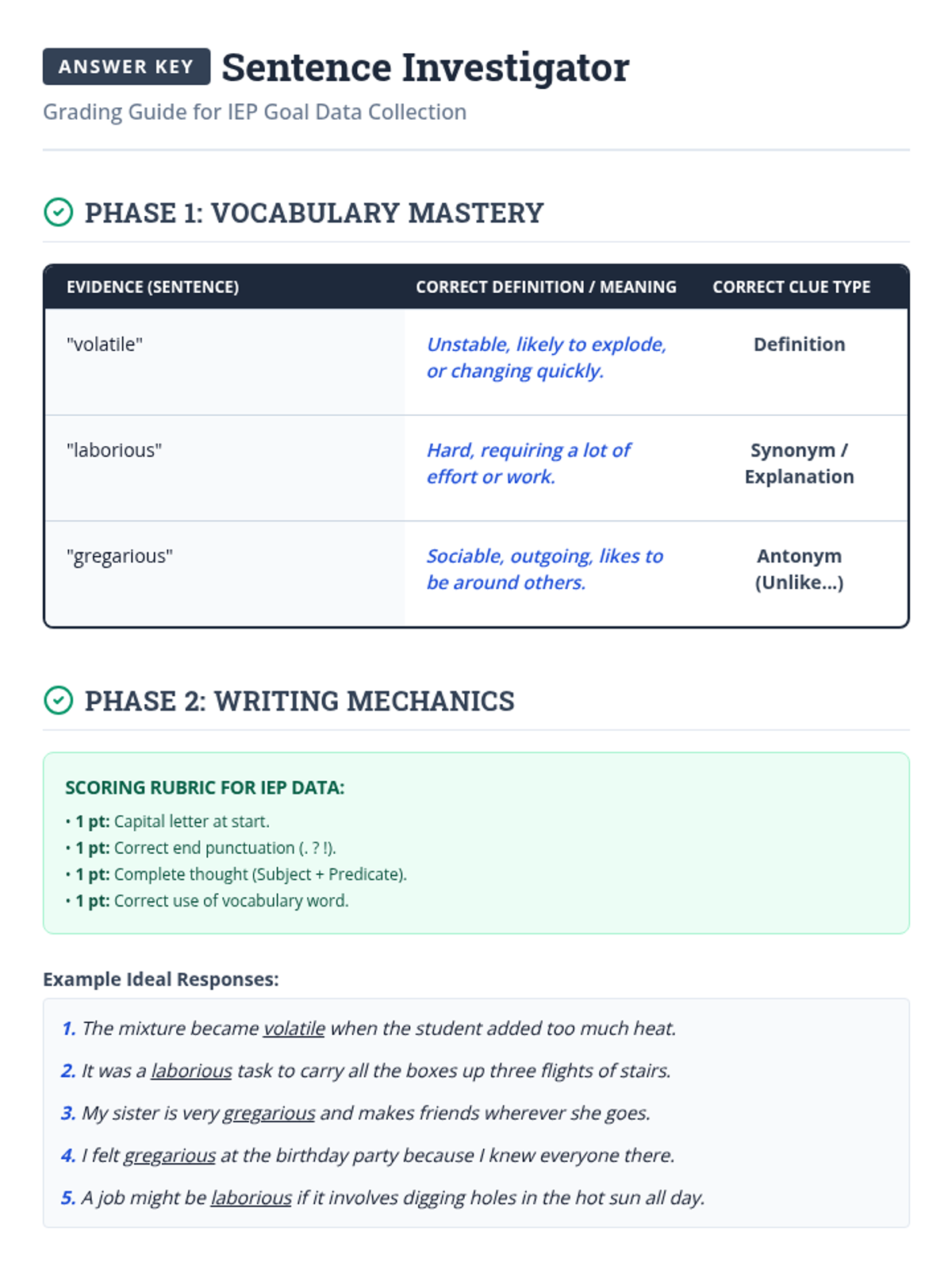
A targeted lesson on using context clues to define academic vocabulary and applying those words in syntactically correct, punctuated sentences.
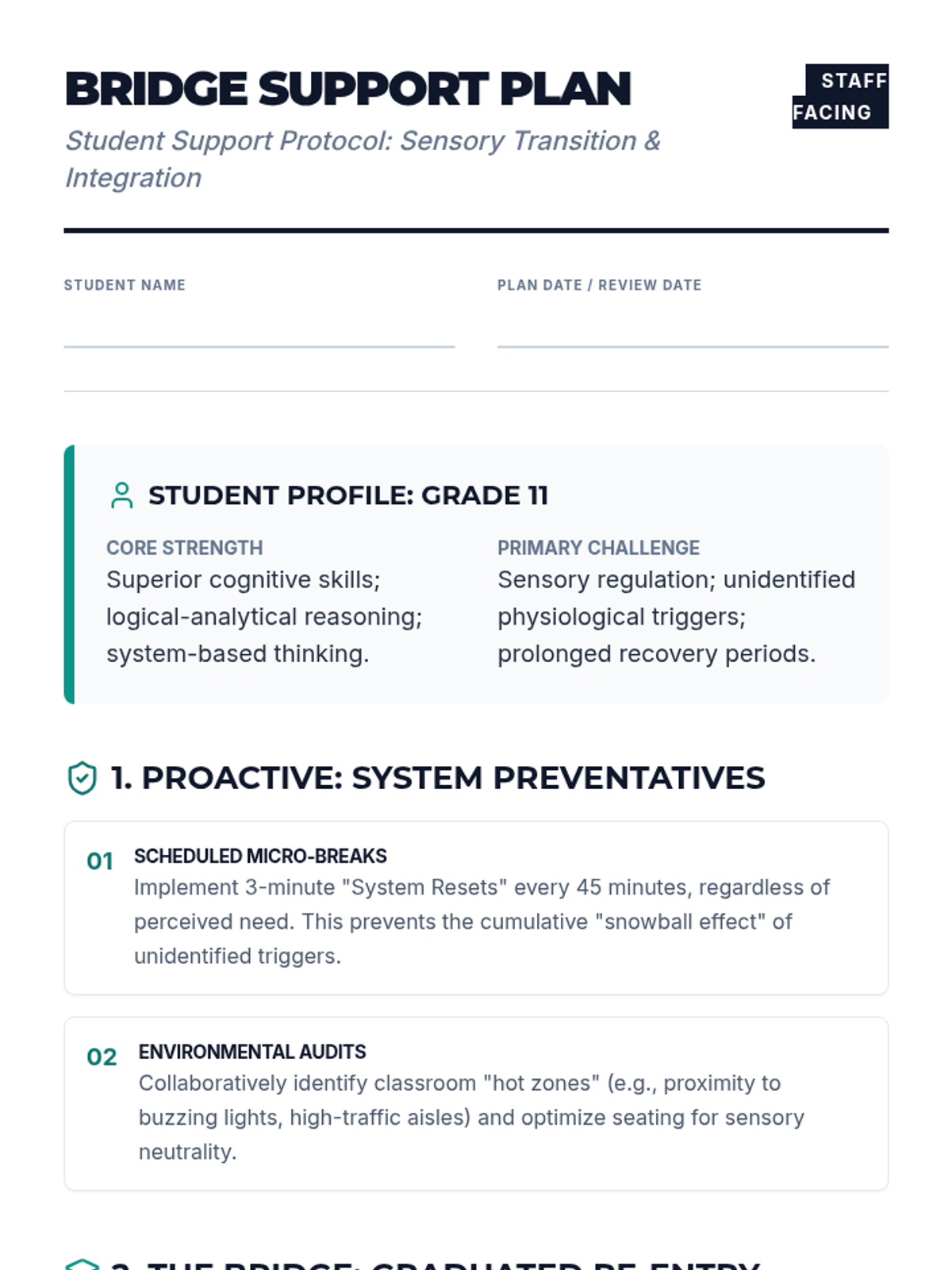
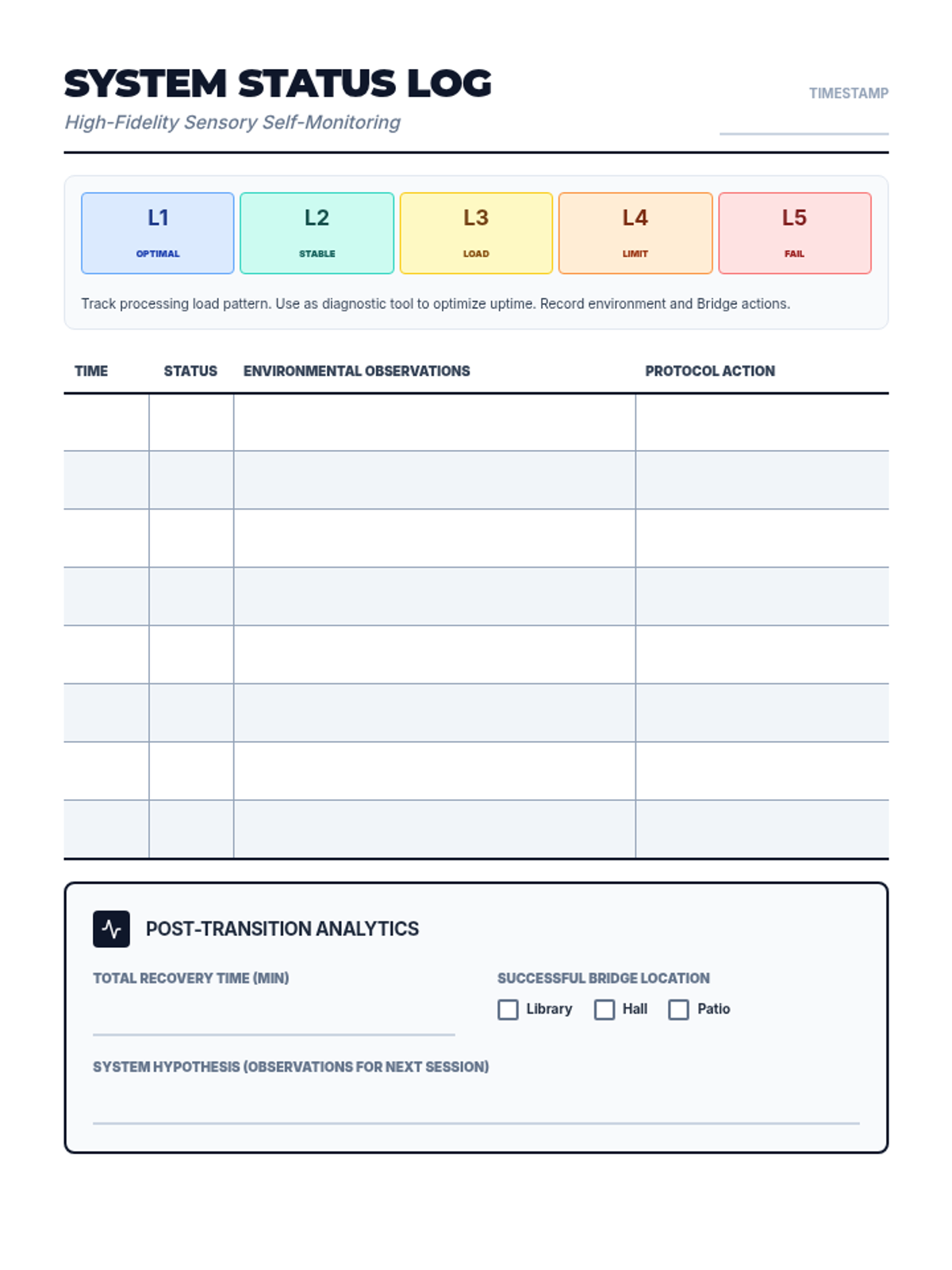
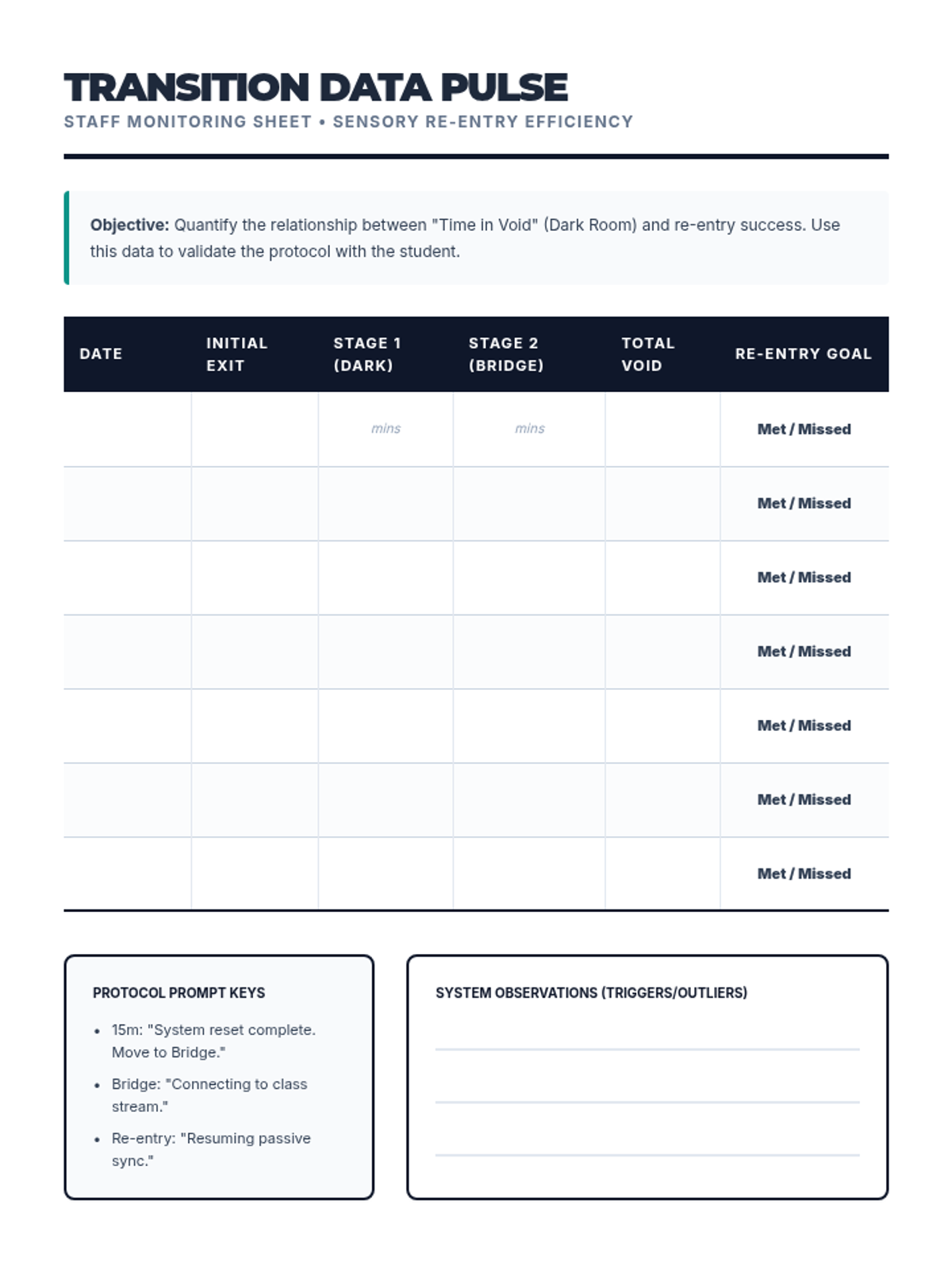
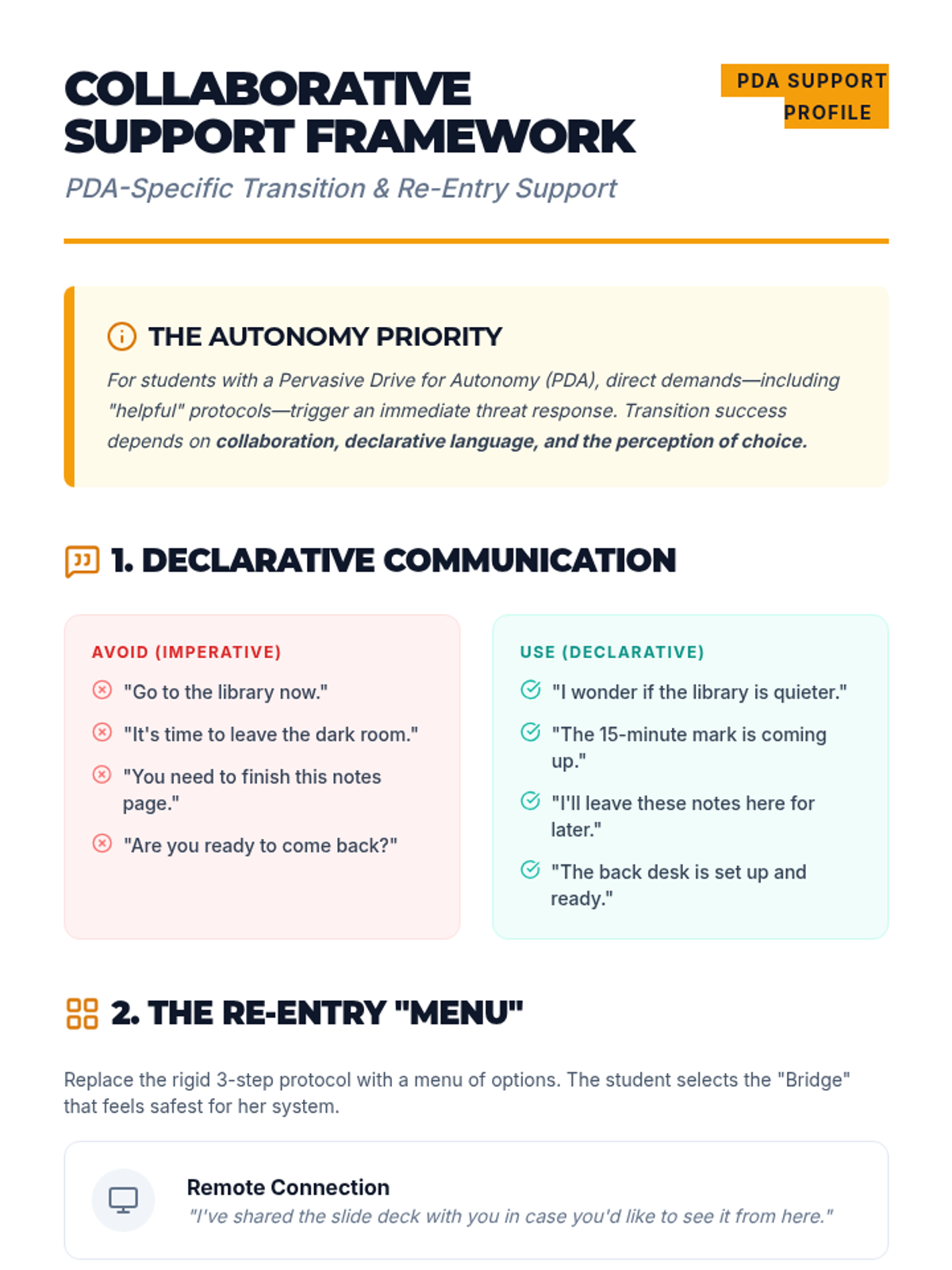
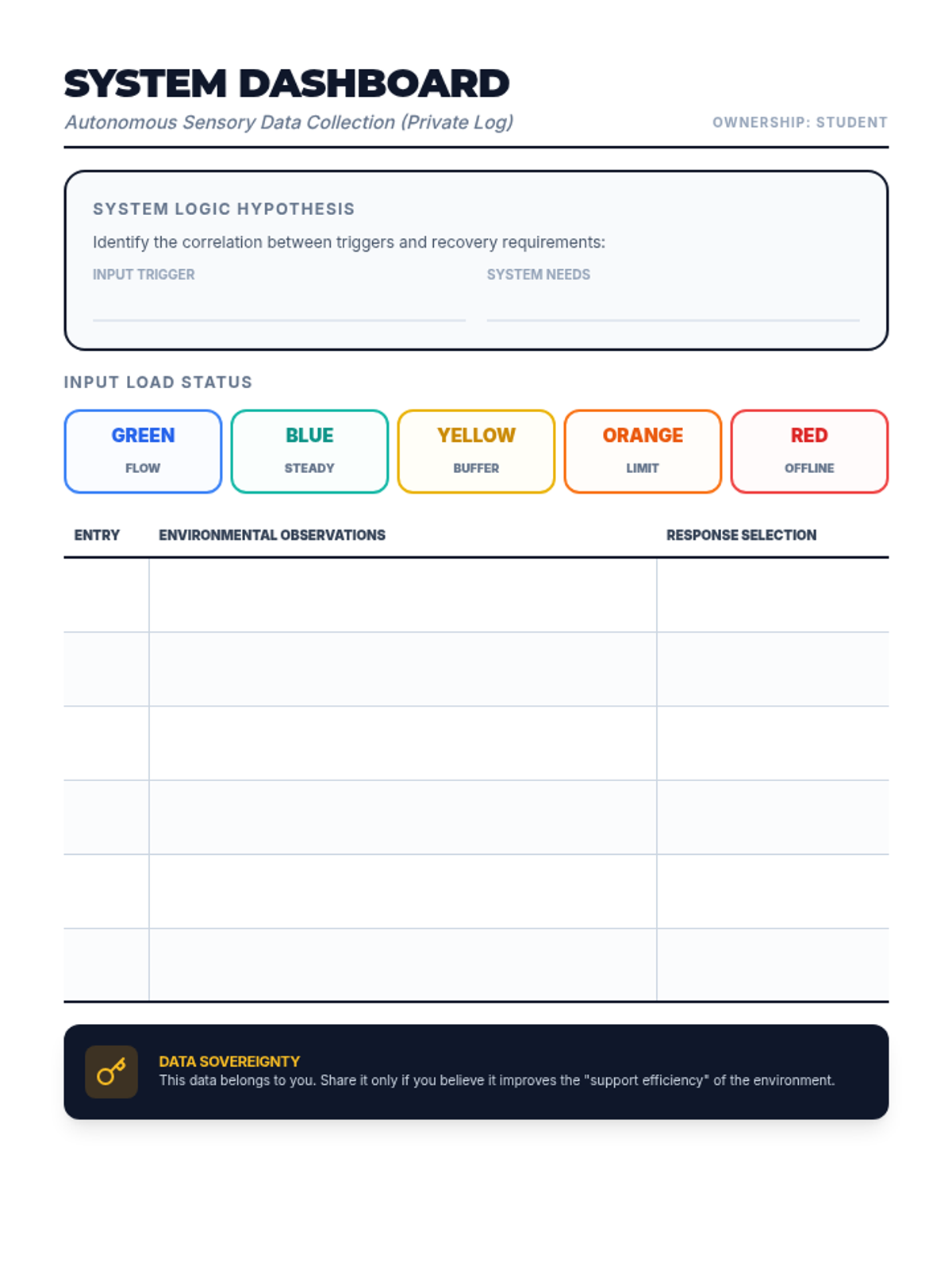
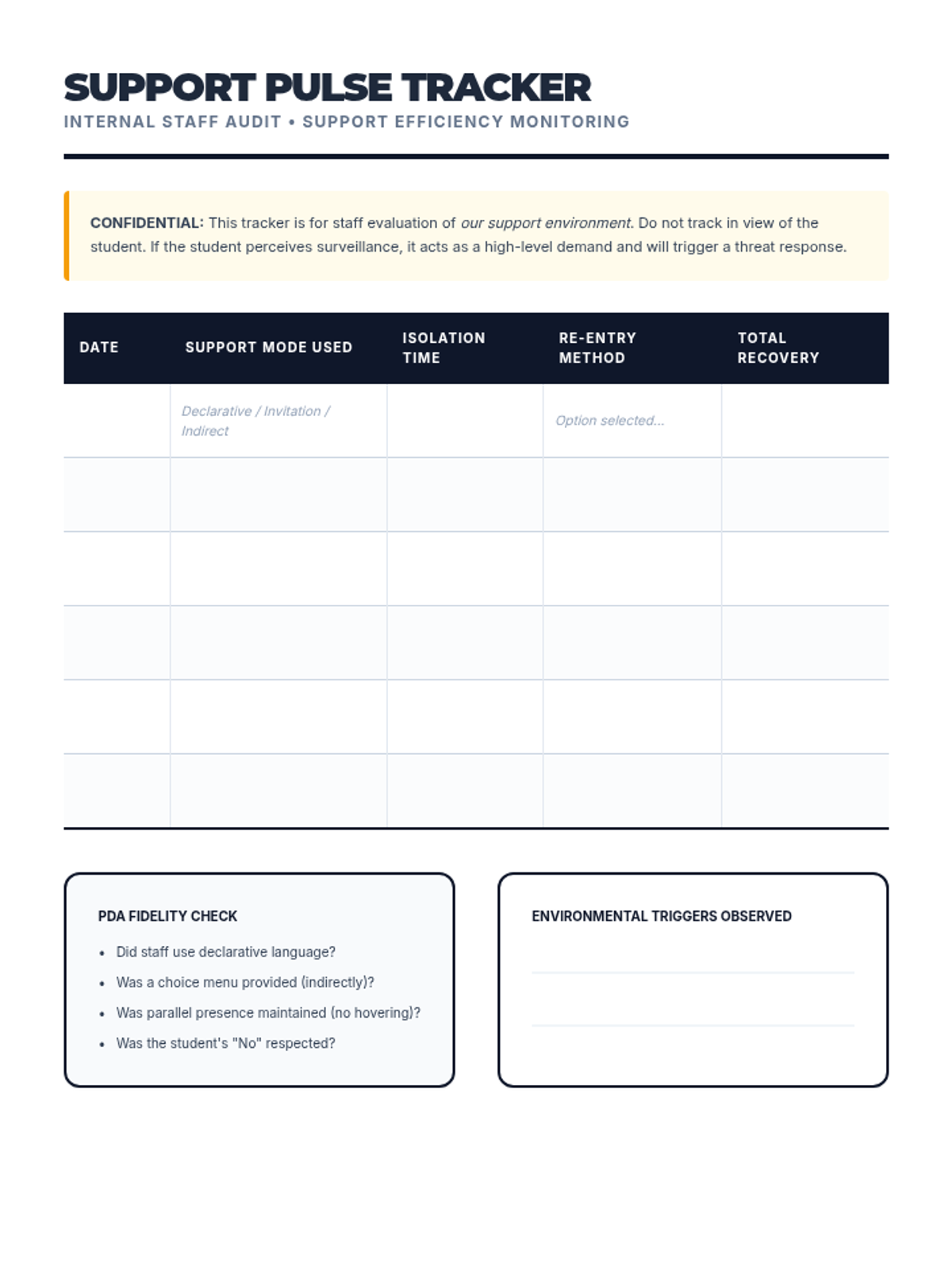
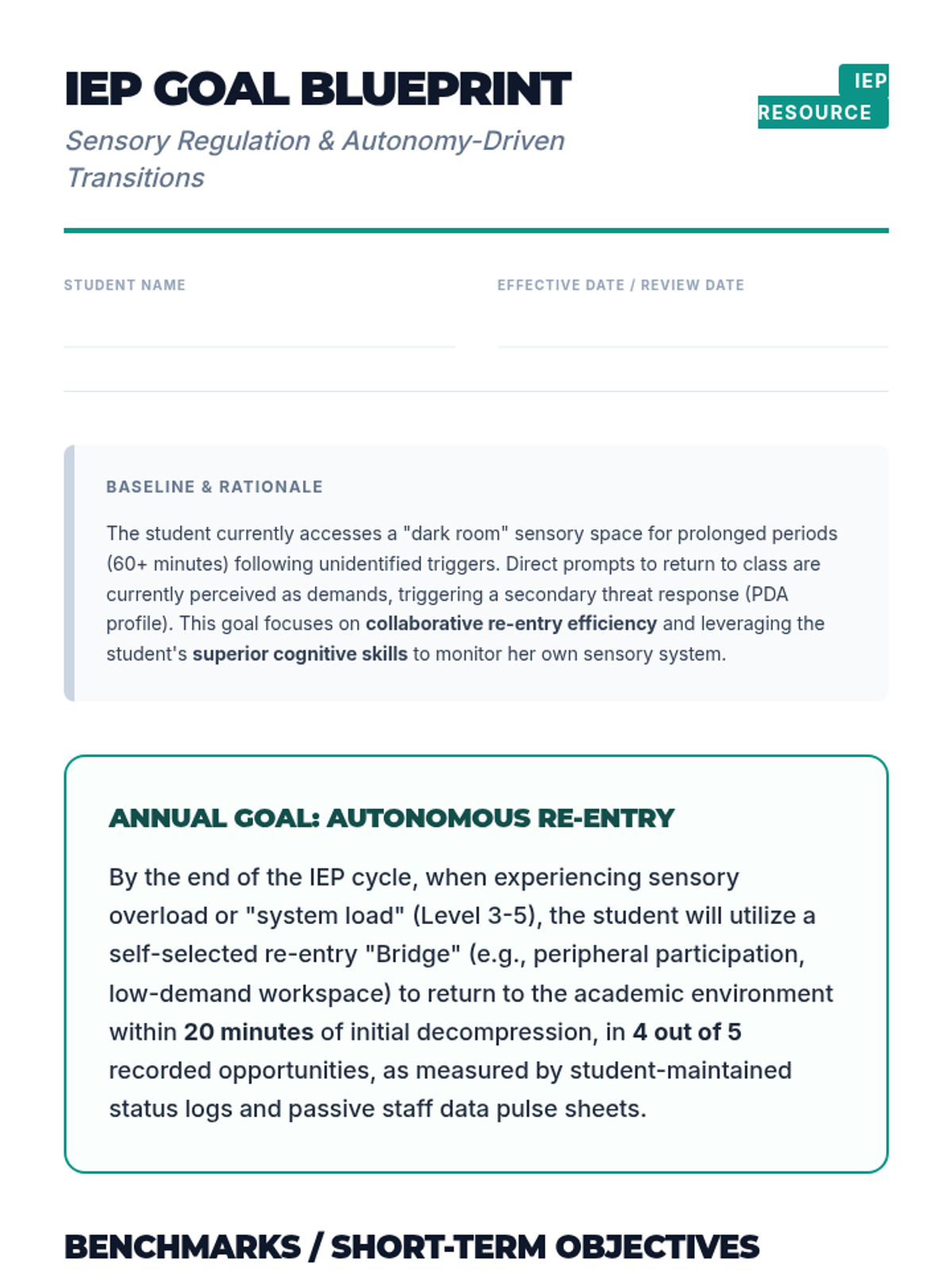
A targeted intervention package designed to help a high-ability 11th-grade student manage sensory overload and transition back to the classroom more efficiently.
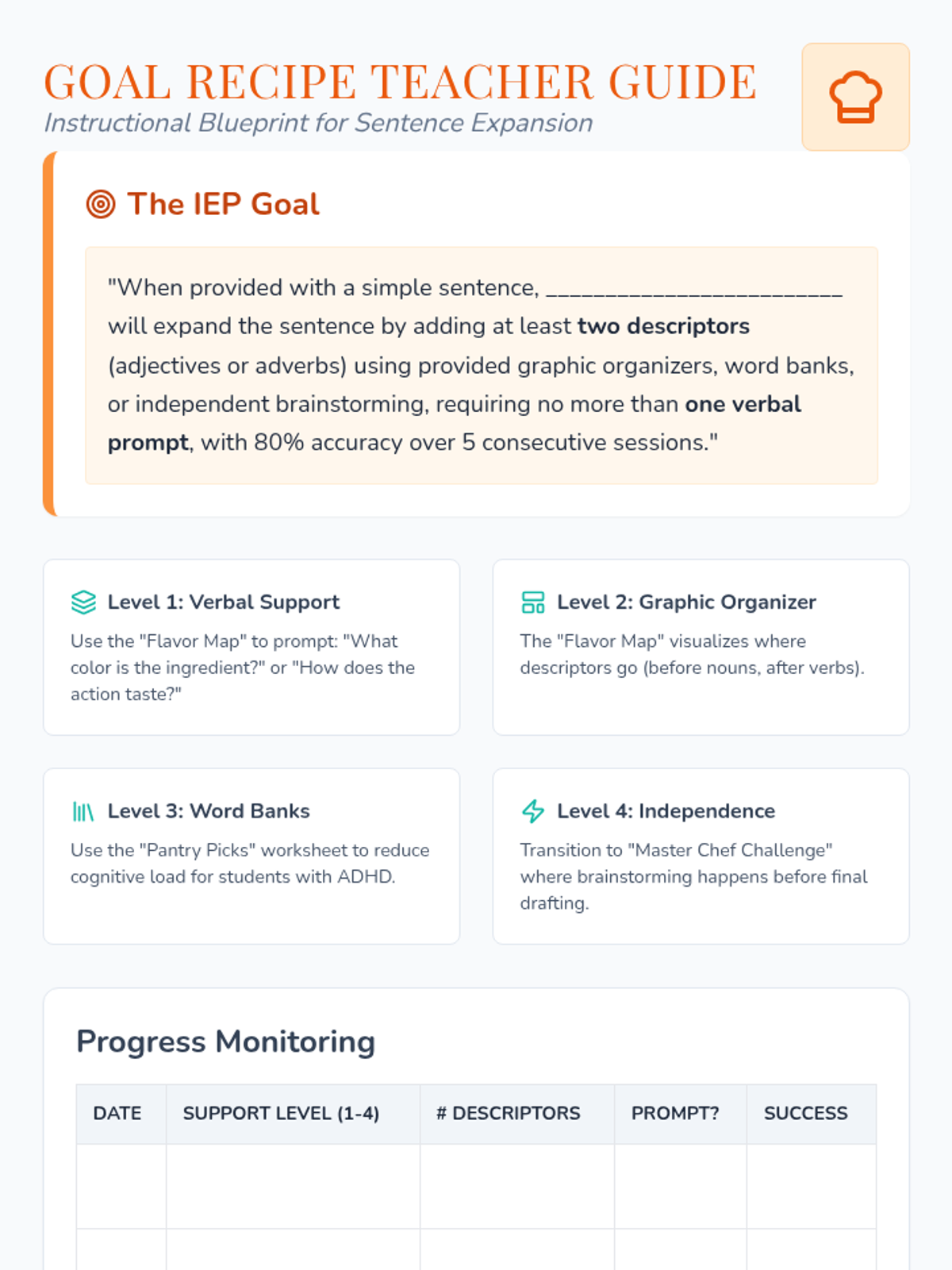
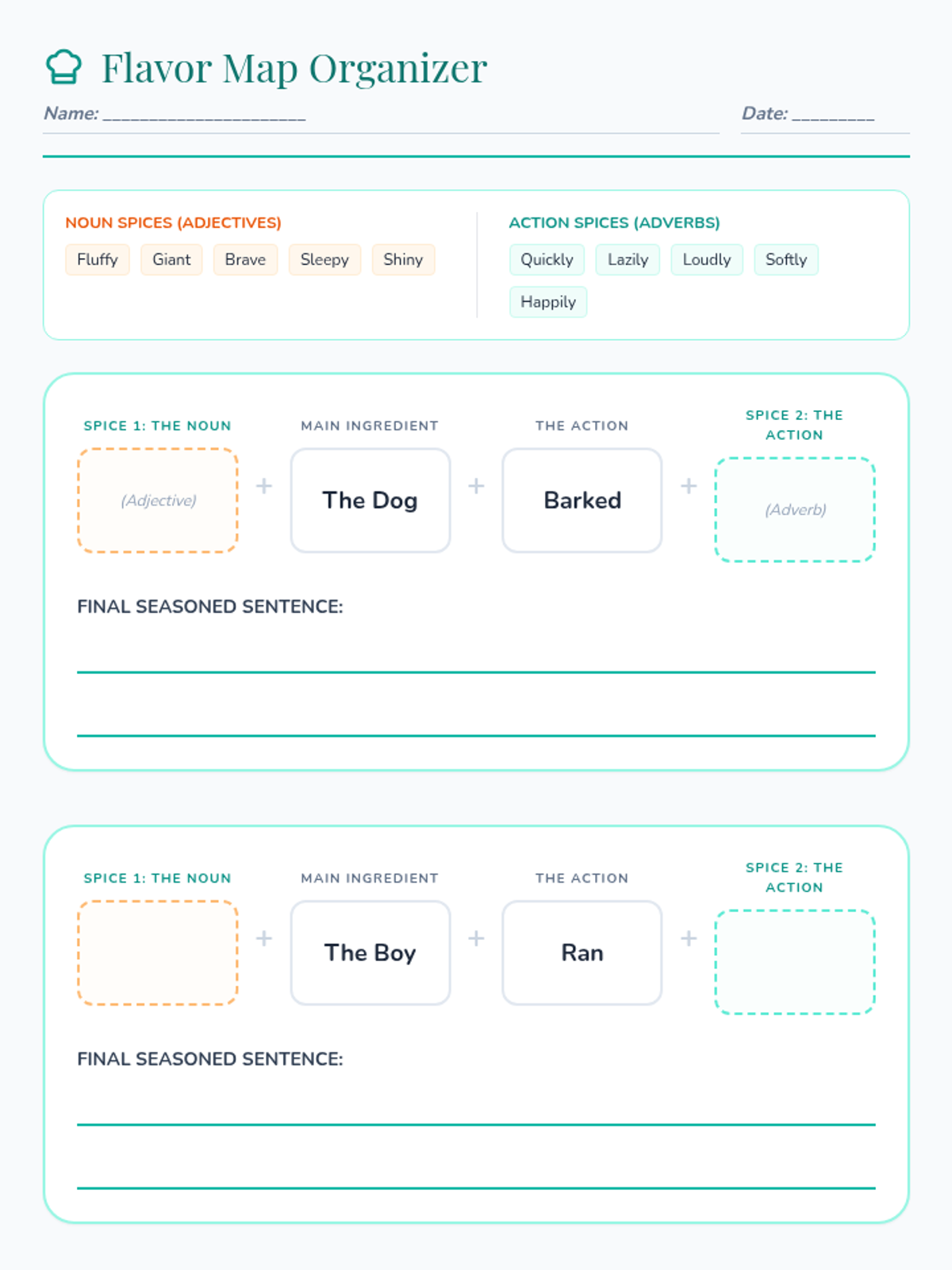
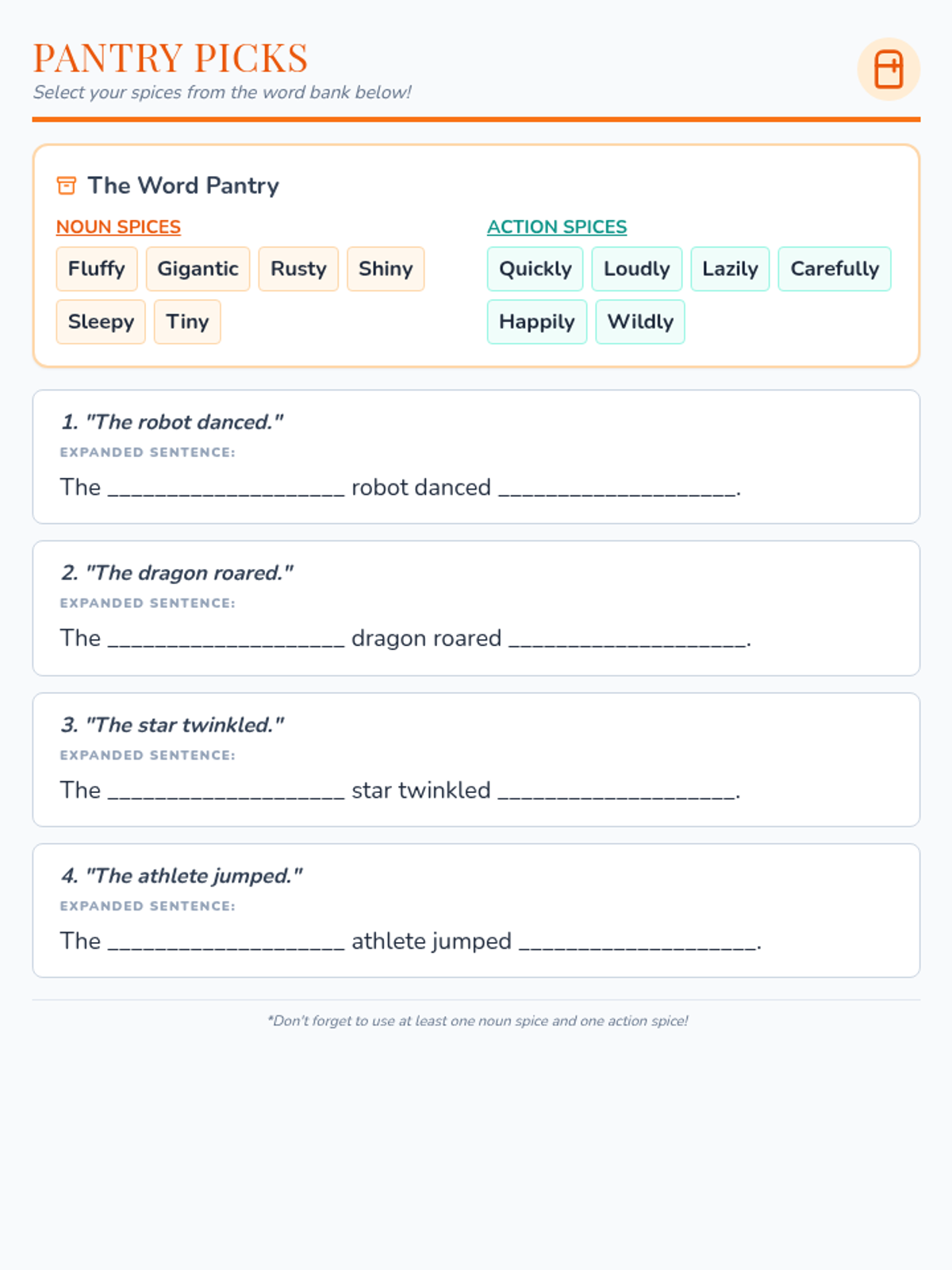
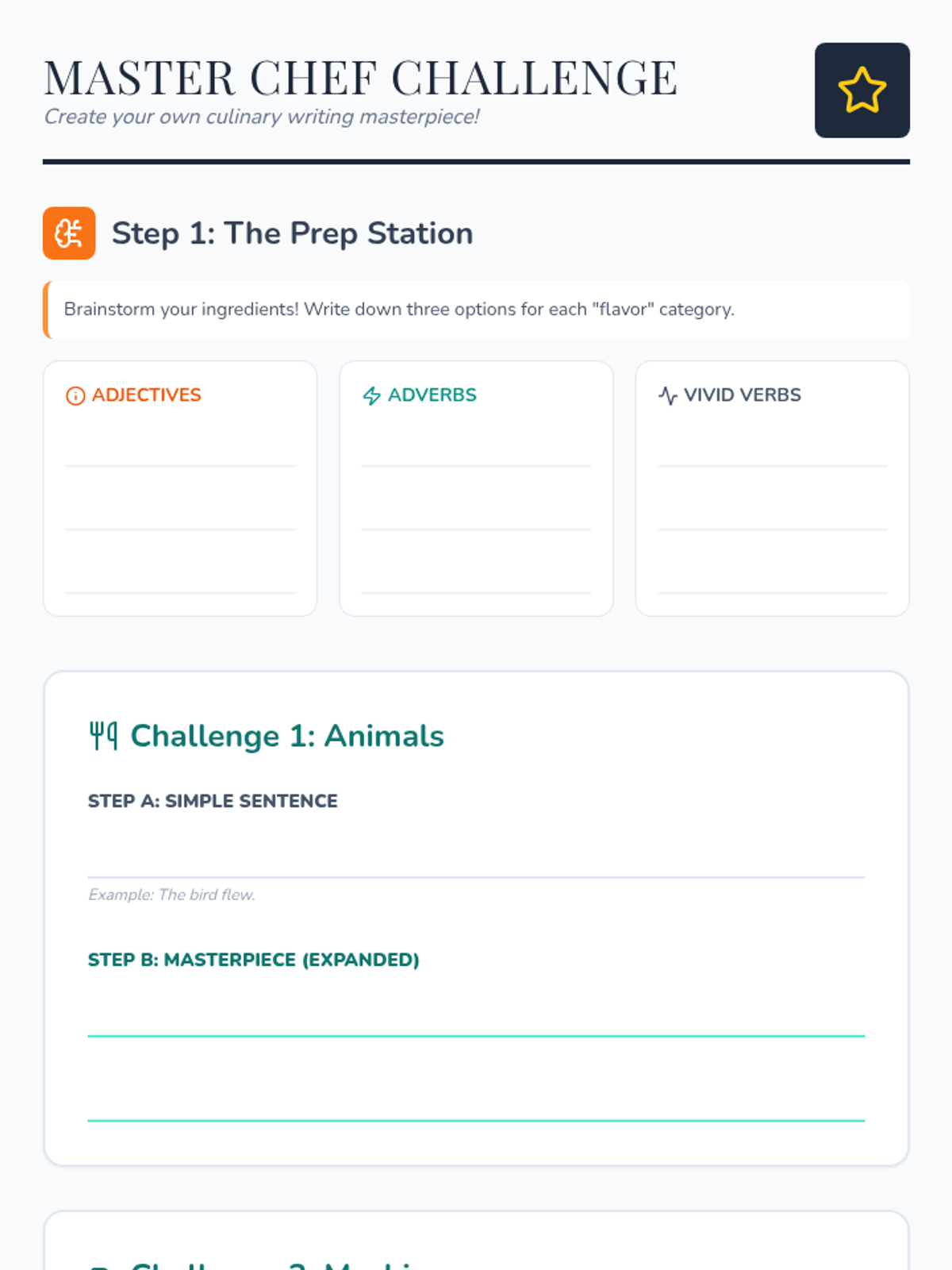
A lesson designed to help students with ADHD expand simple sentences using descriptors (adjectives and adverbs) through a culinary-themed scaffolding approach. Includes visual instruction, graphic organizers, word bank supports, and independent practice.
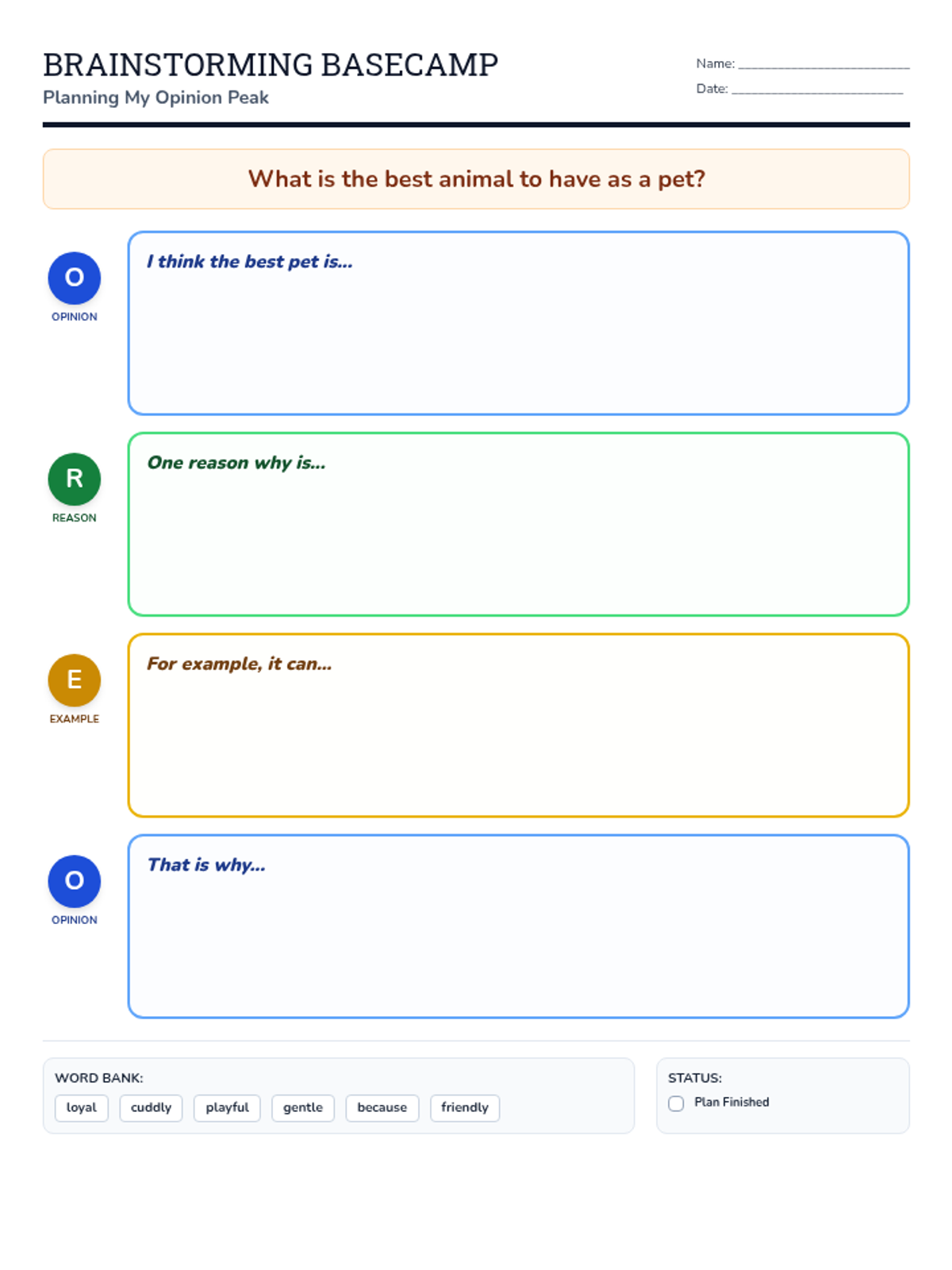
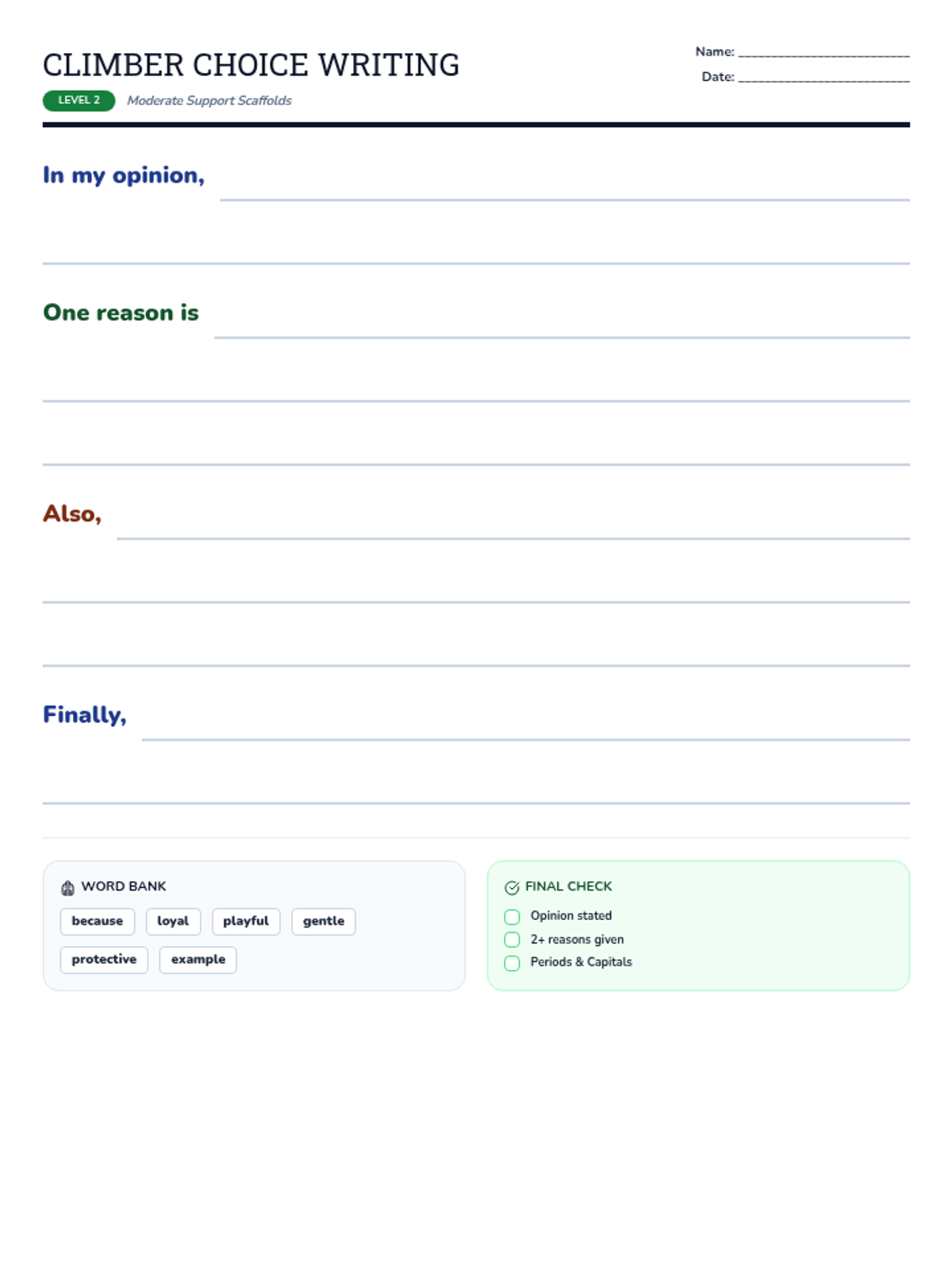
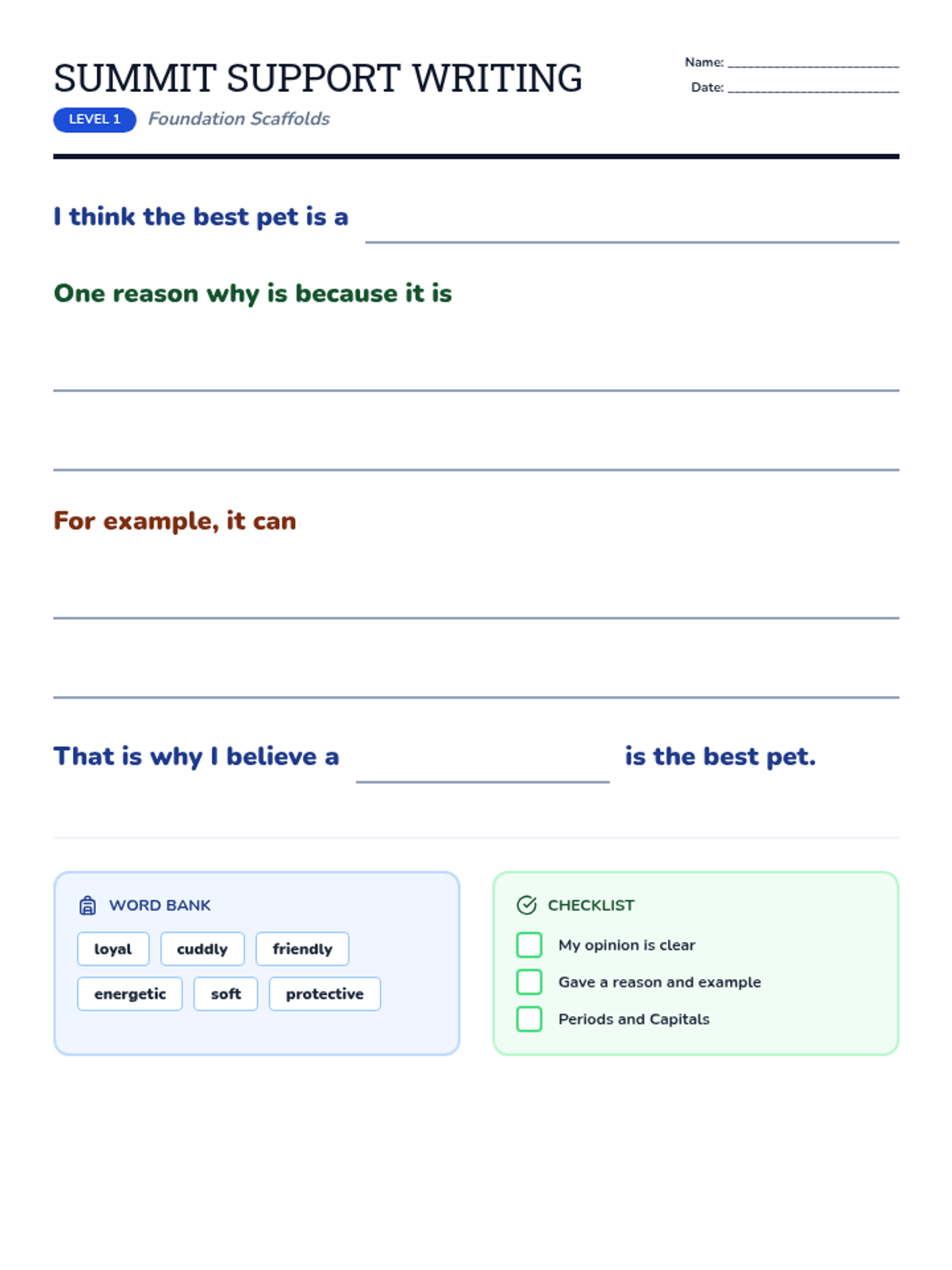
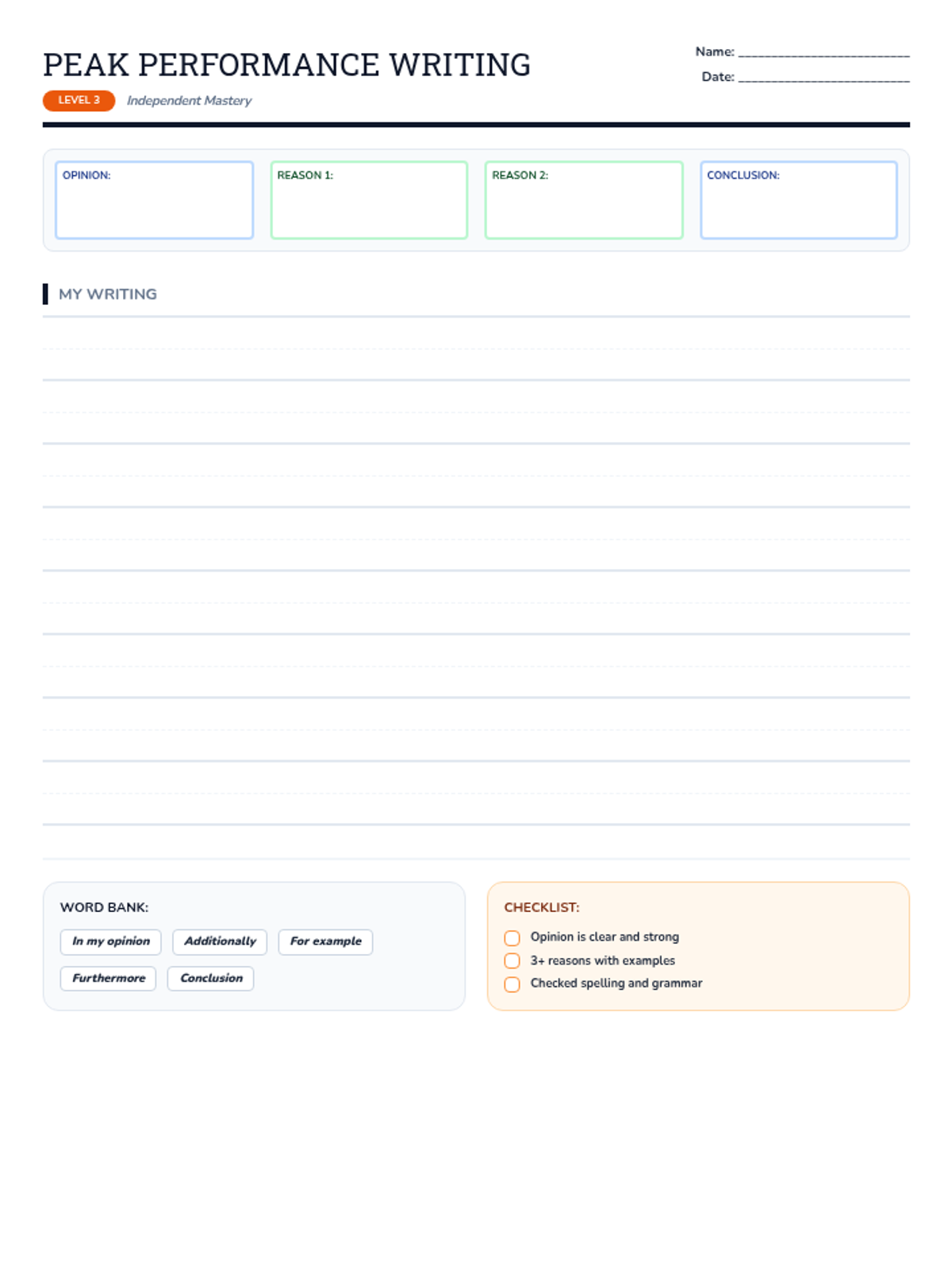
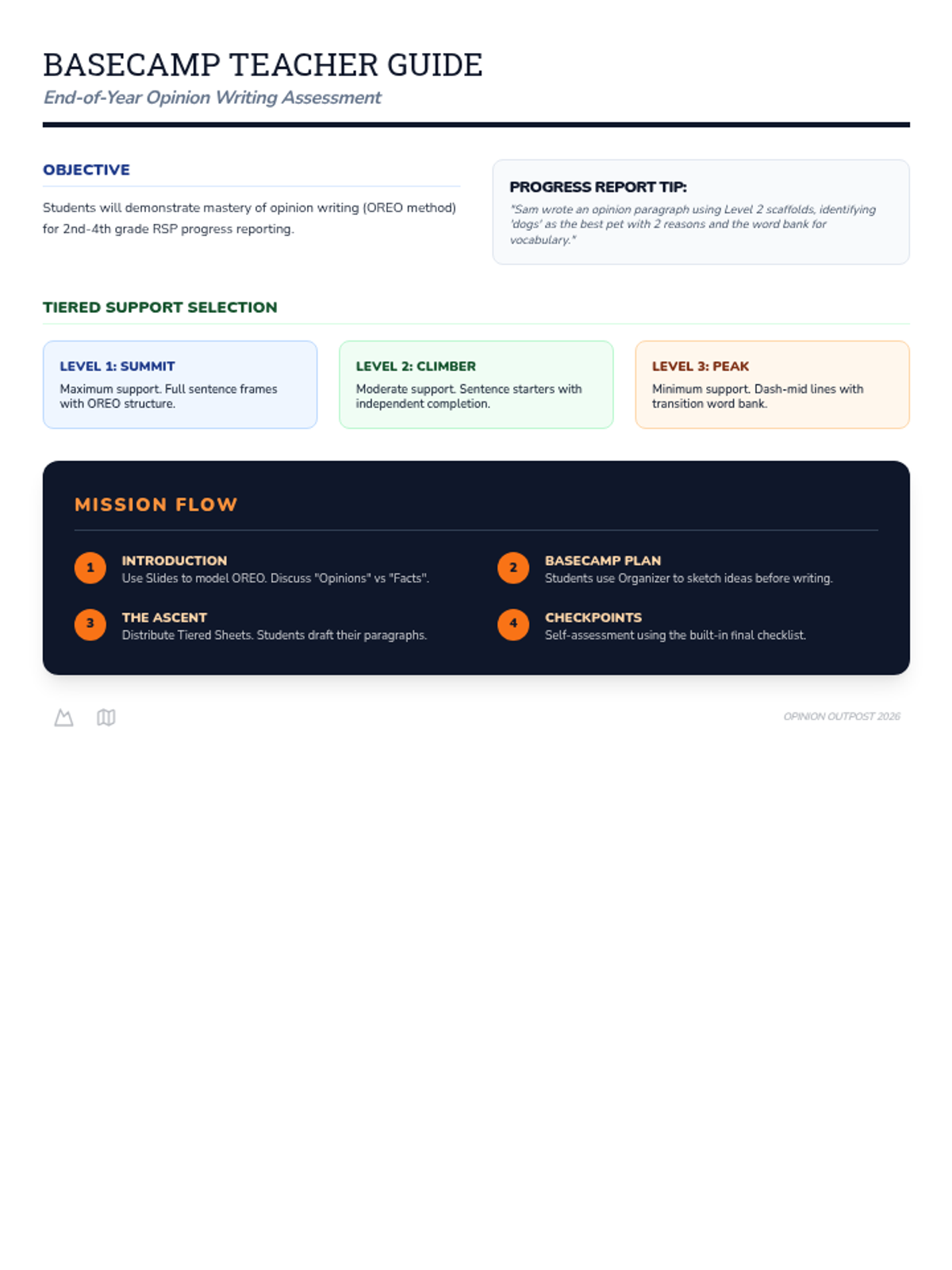
A scaffolded opinion writing lesson focused on 'The Best Pet', designed for 2nd-4th grade RSP students to demonstrate their year-end progress through differentiated writing tasks.
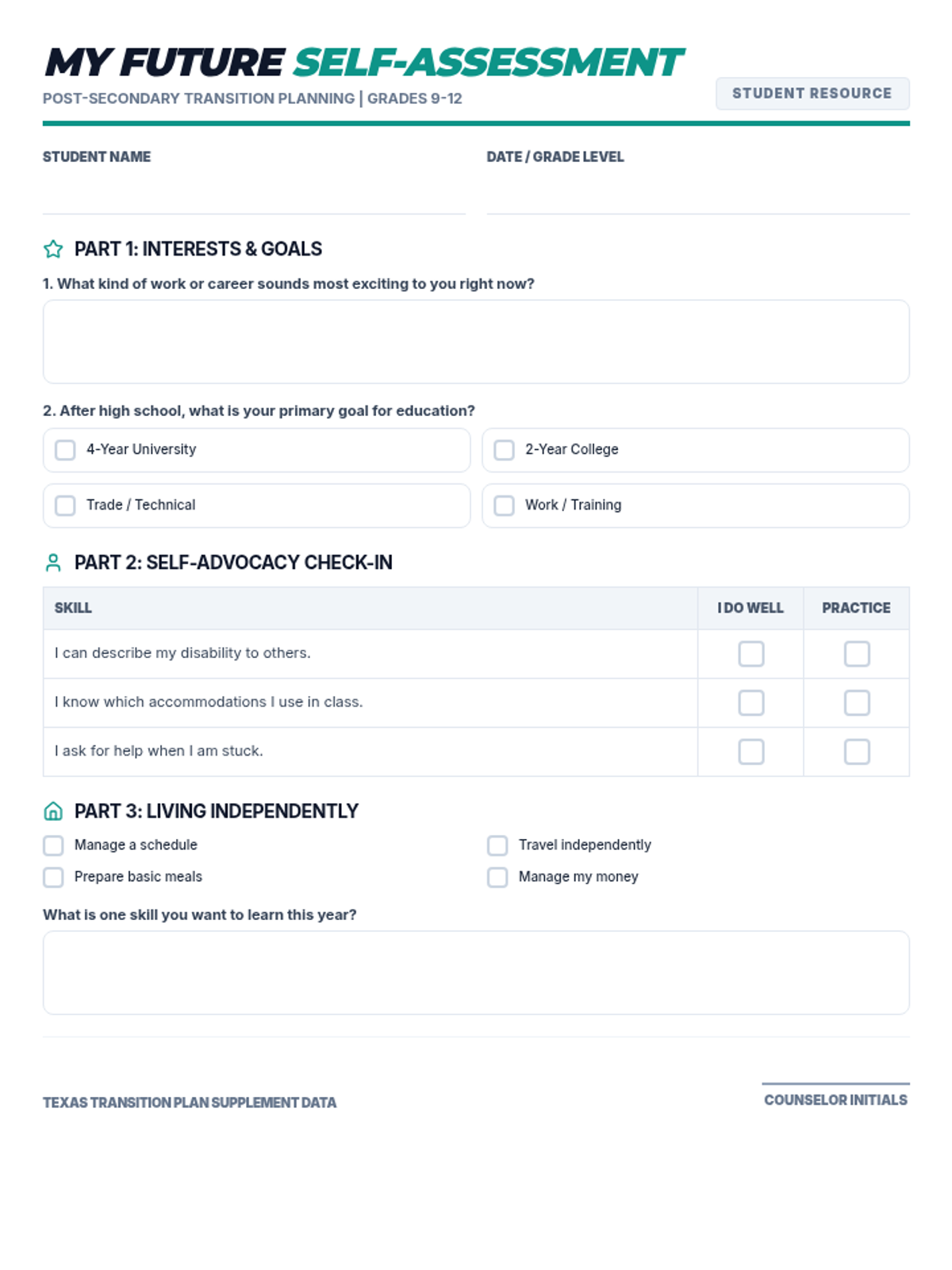
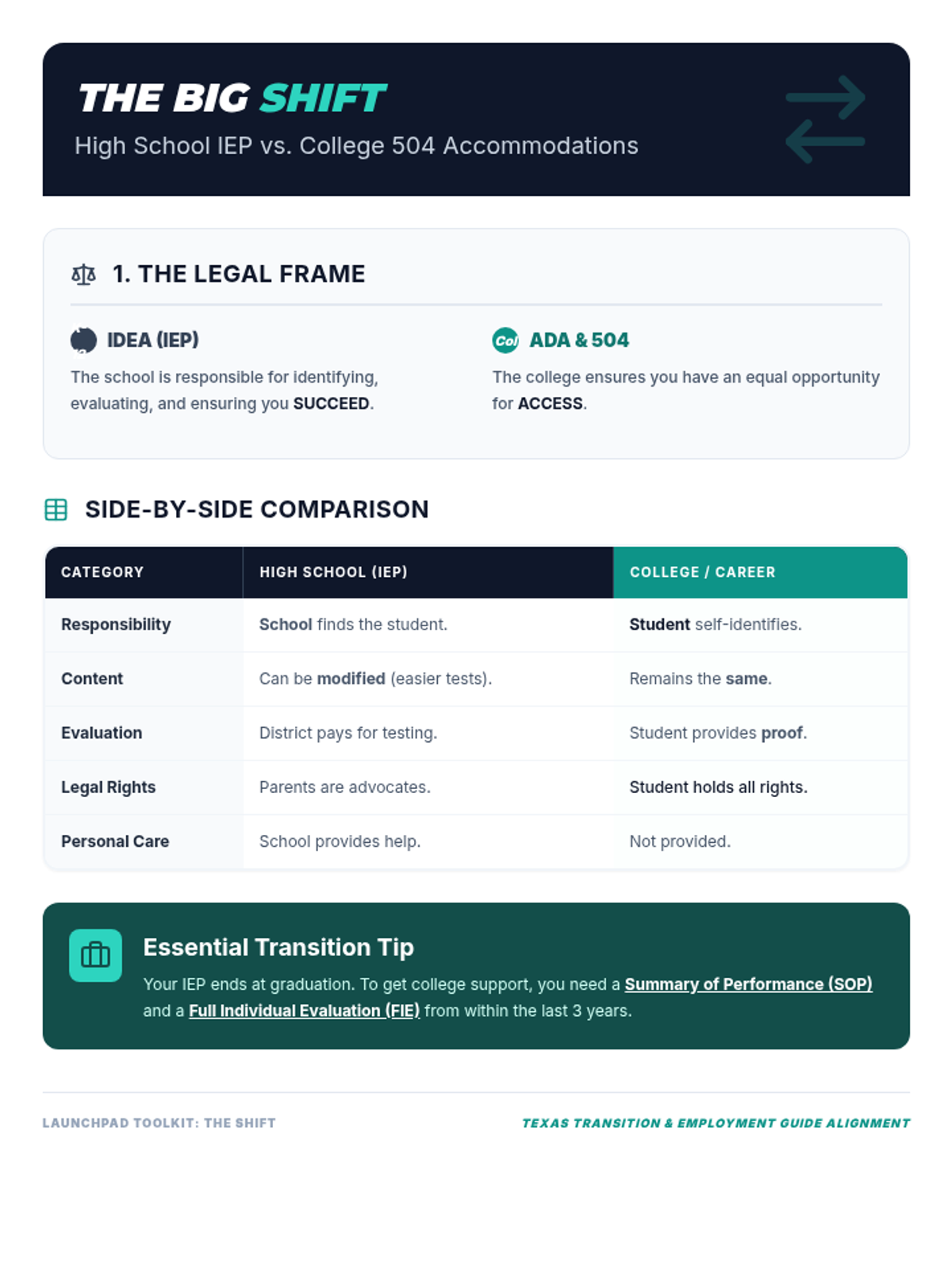
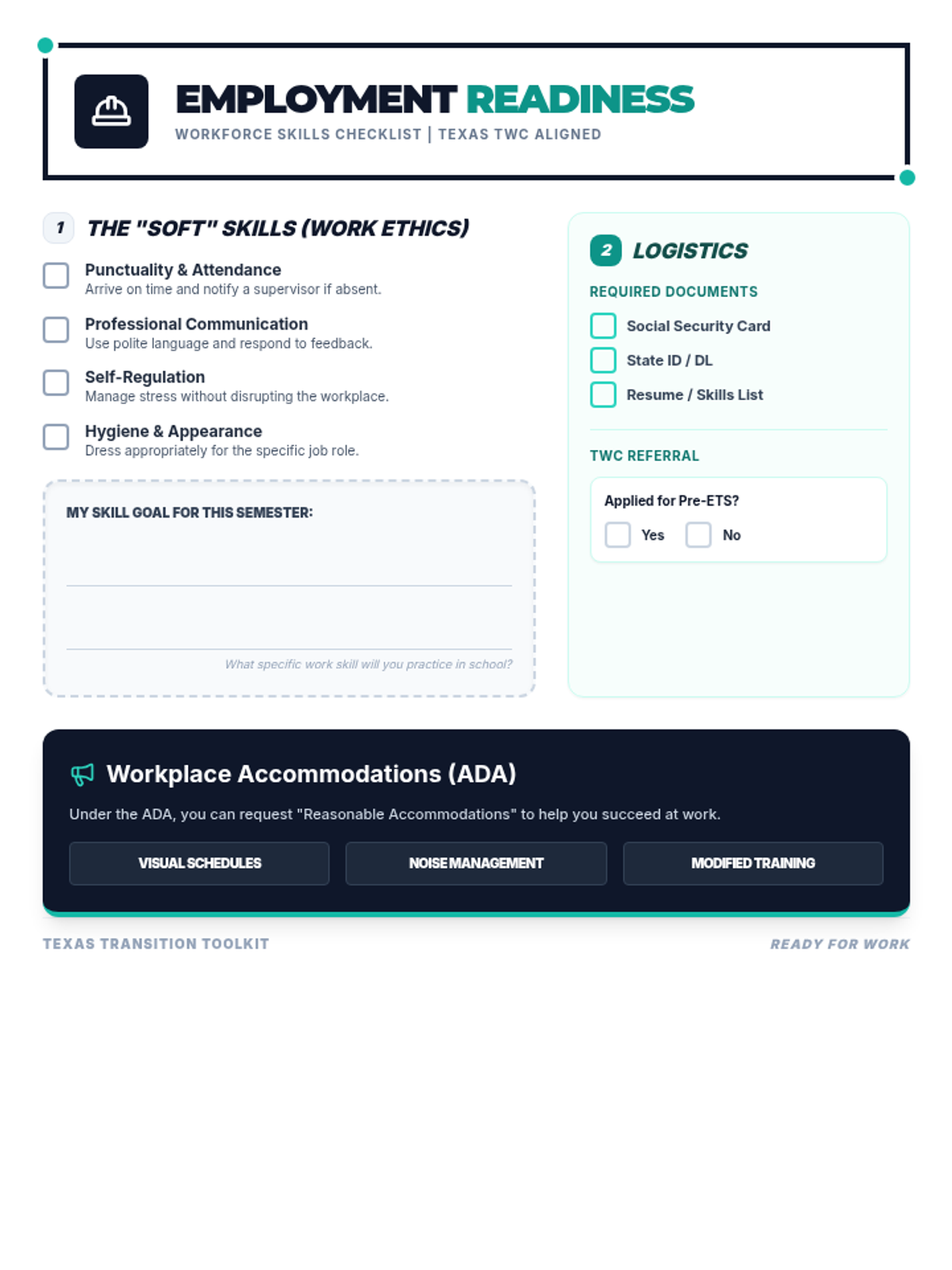
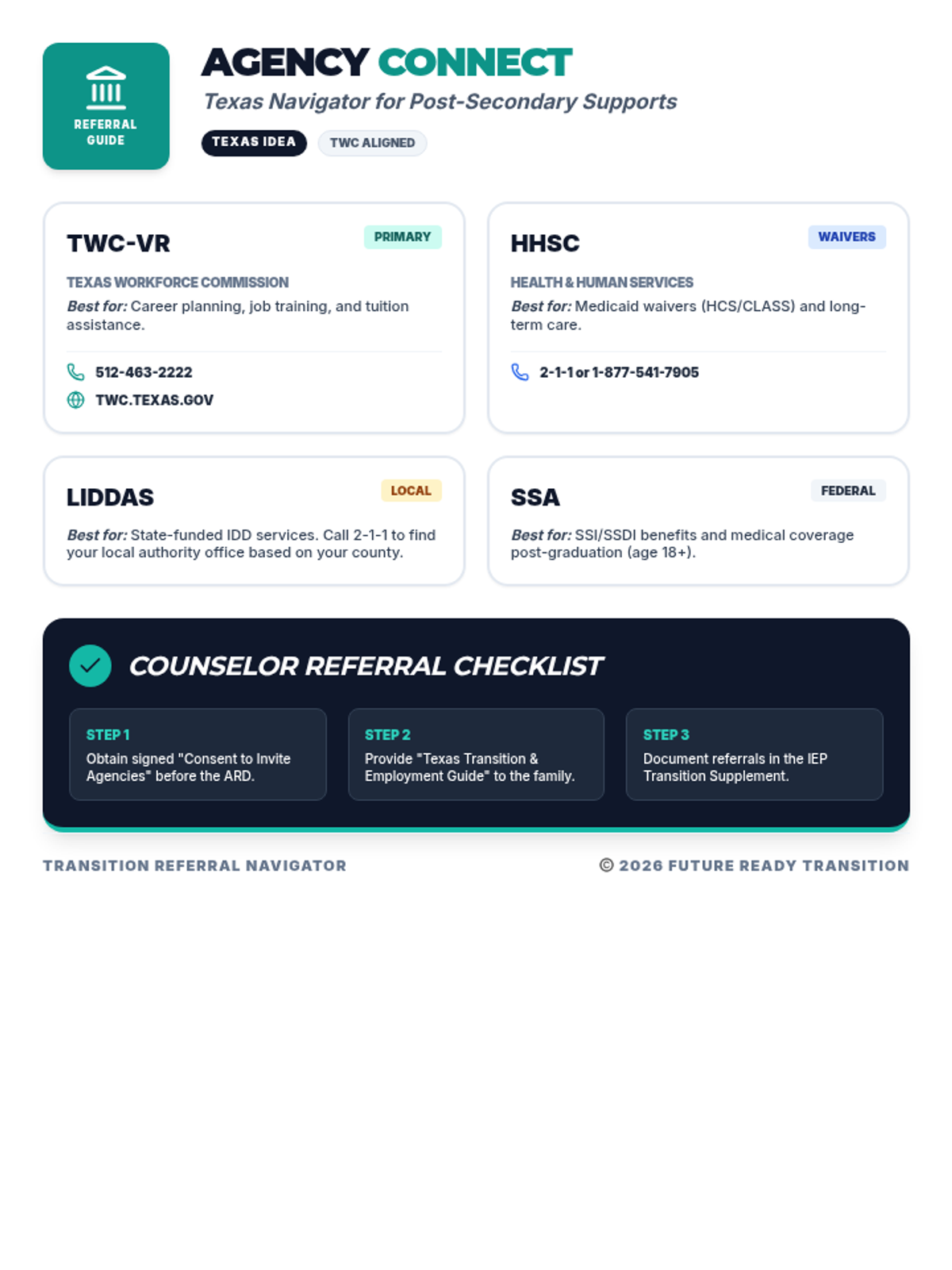
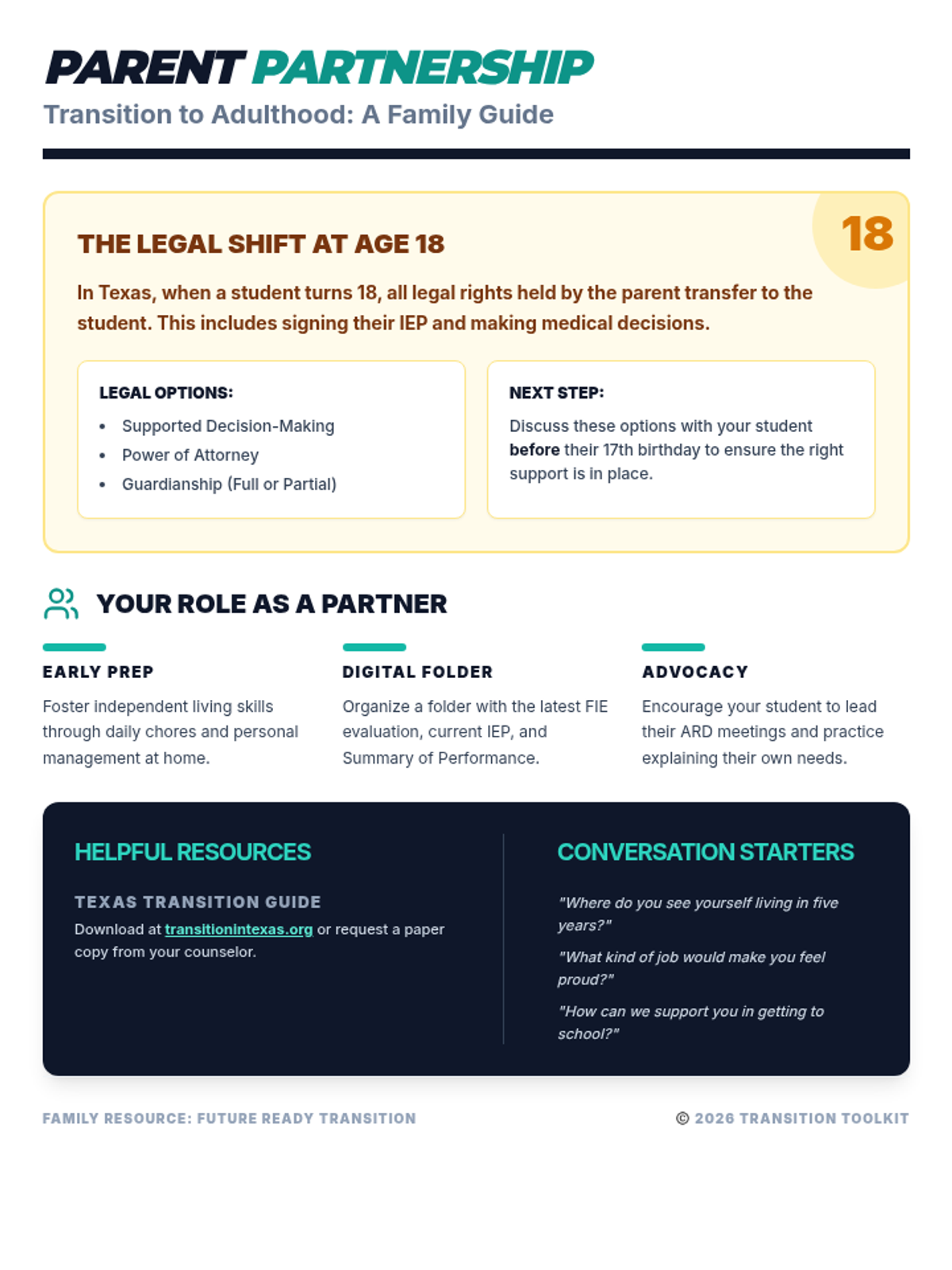
A toolkit for grades 9-12 focusing on self-advocacy, accommodation shifts, employment readiness, and agency connections for post-secondary success.
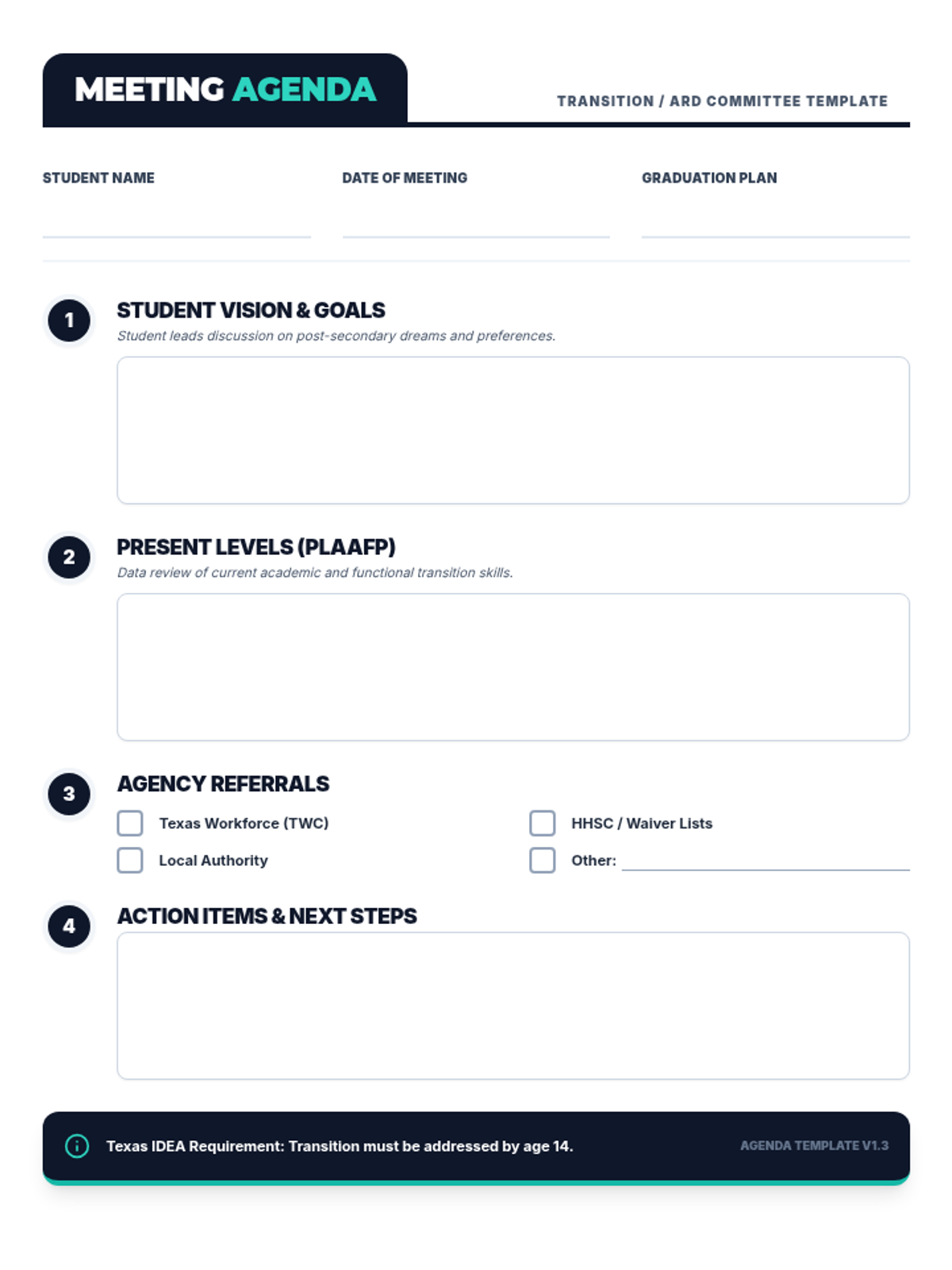
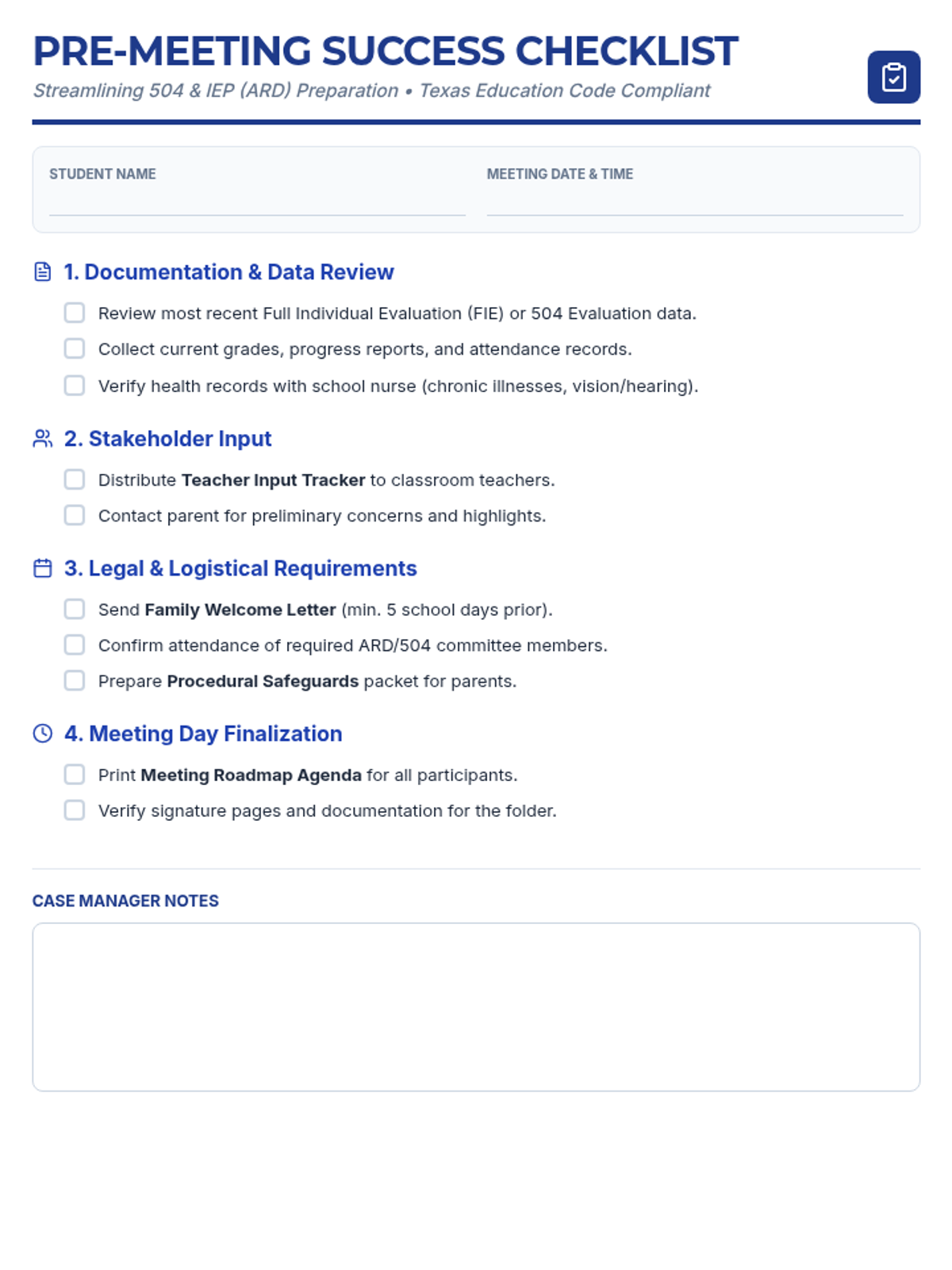
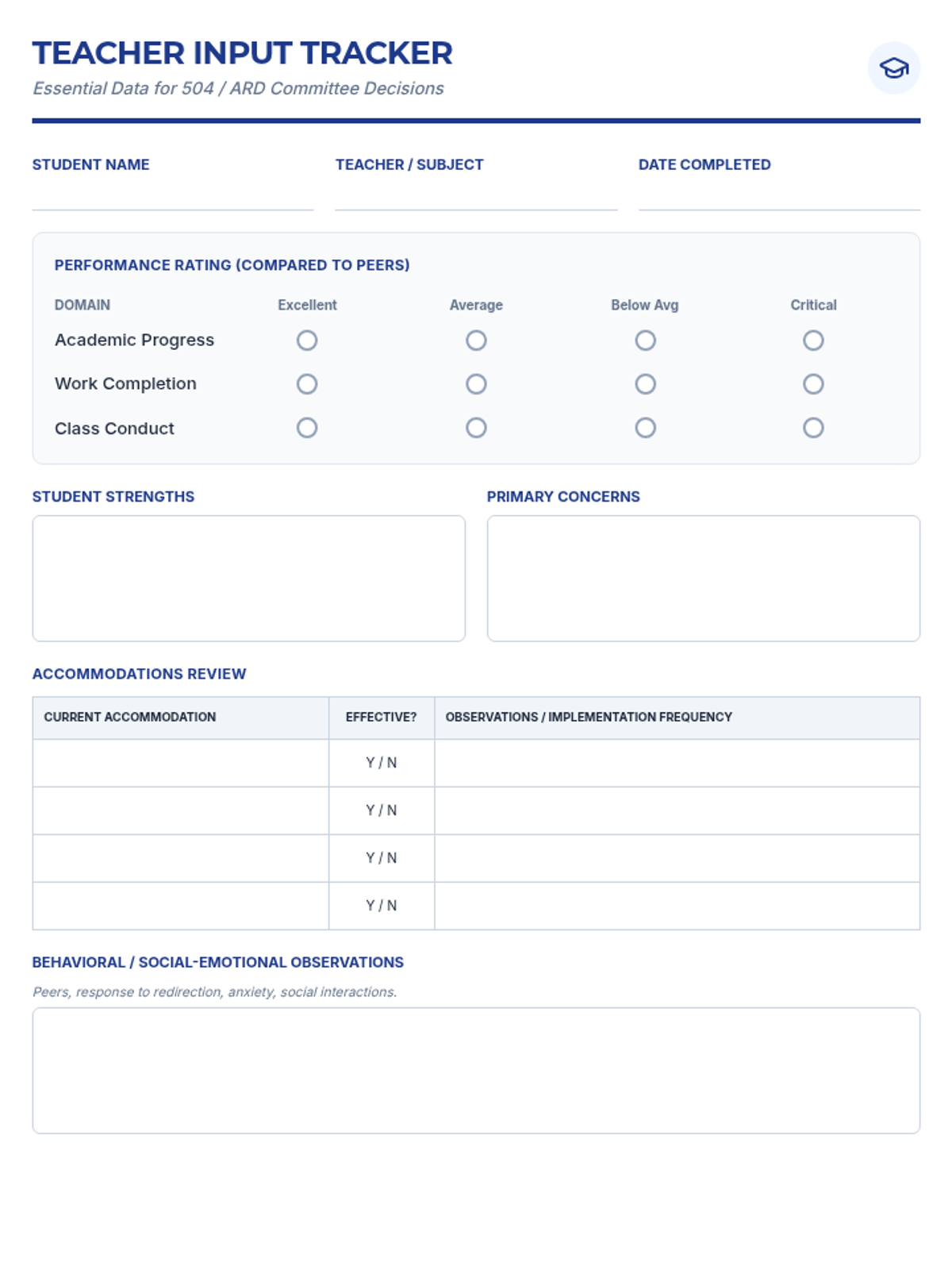
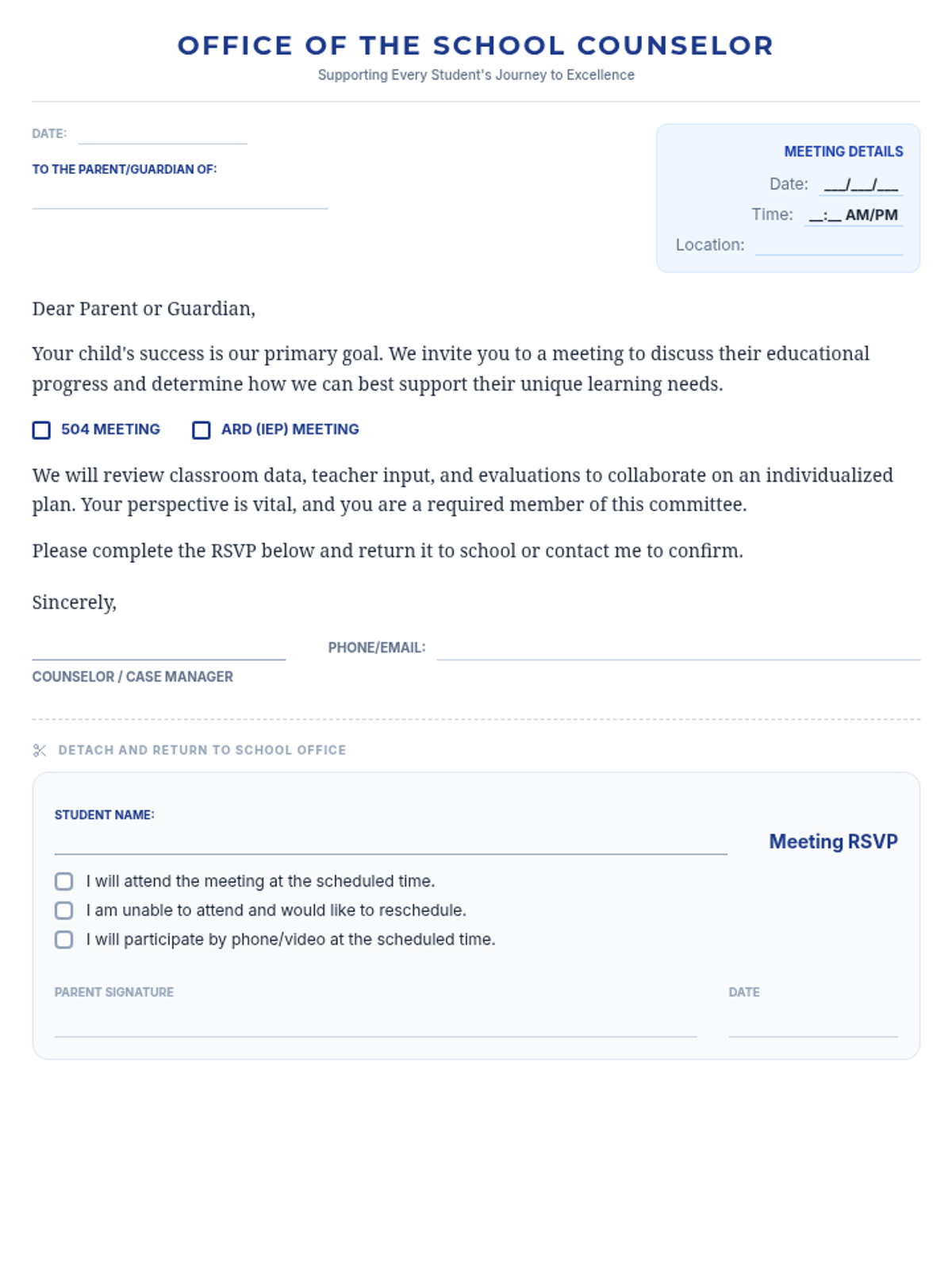
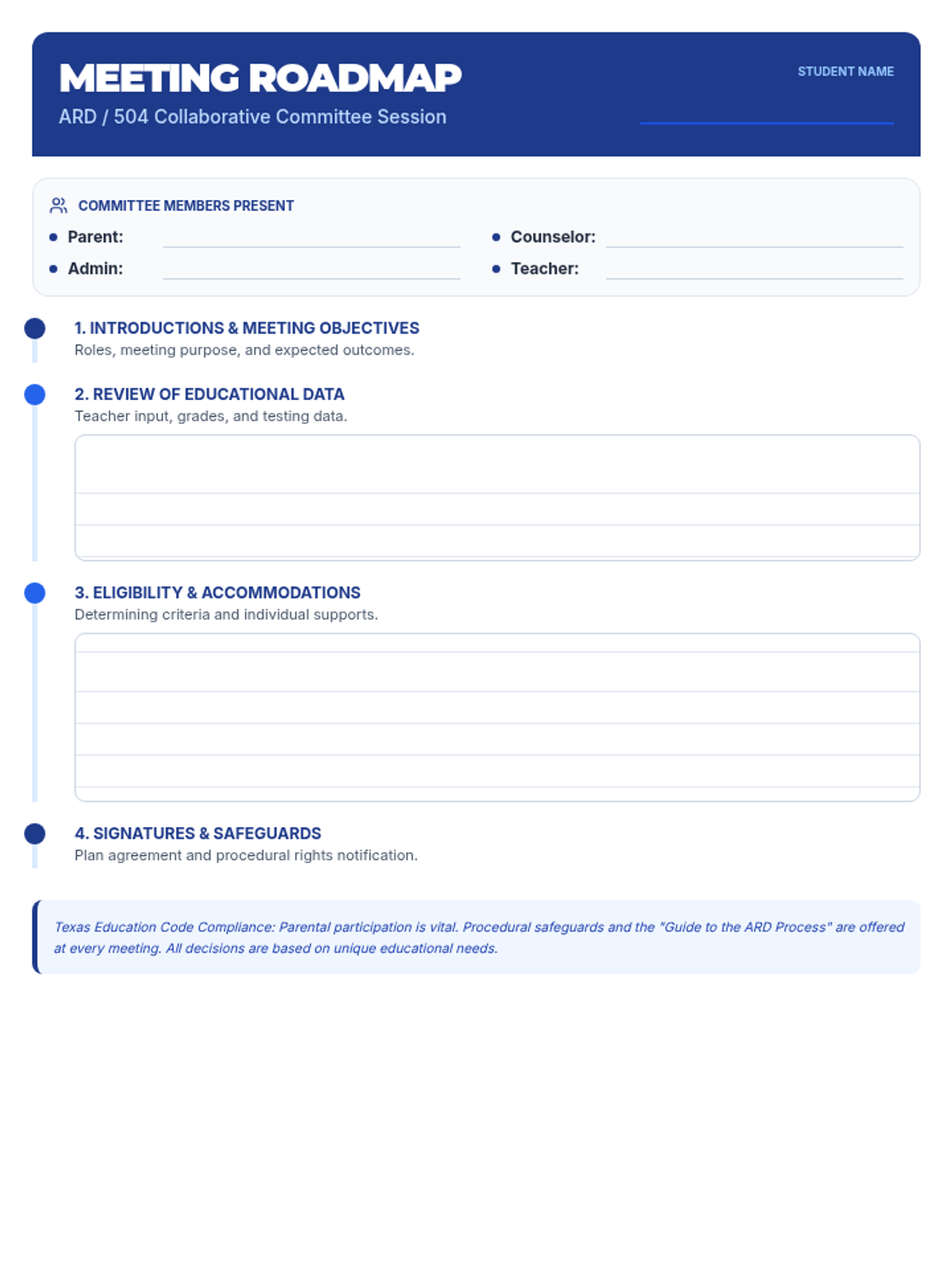
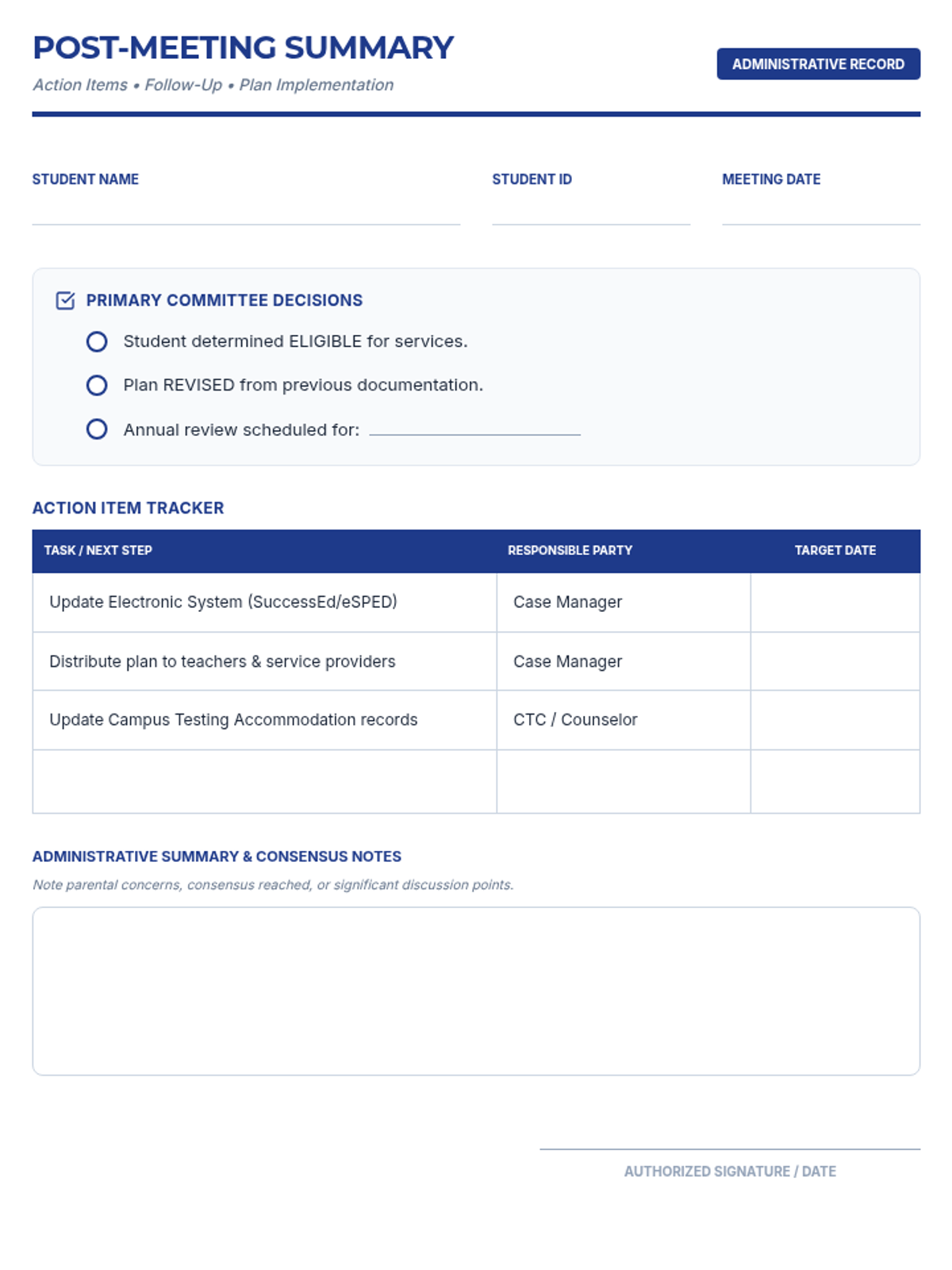
A comprehensive toolkit for elementary school counselors to streamline the 504 and IEP (ARD) process. This bundle includes data collection tools, communication templates, and meeting guides compliant with Texas Education Code standards.
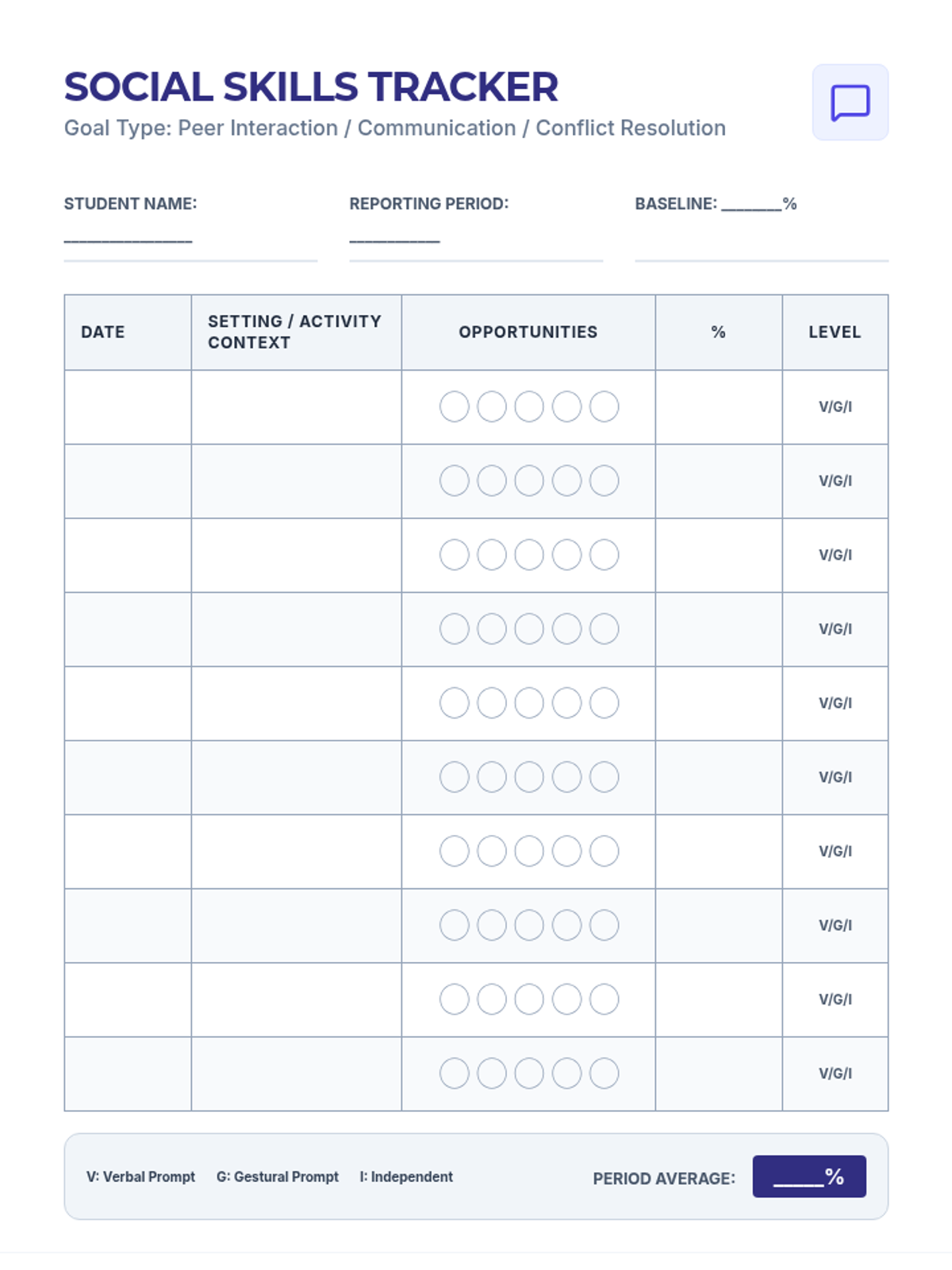
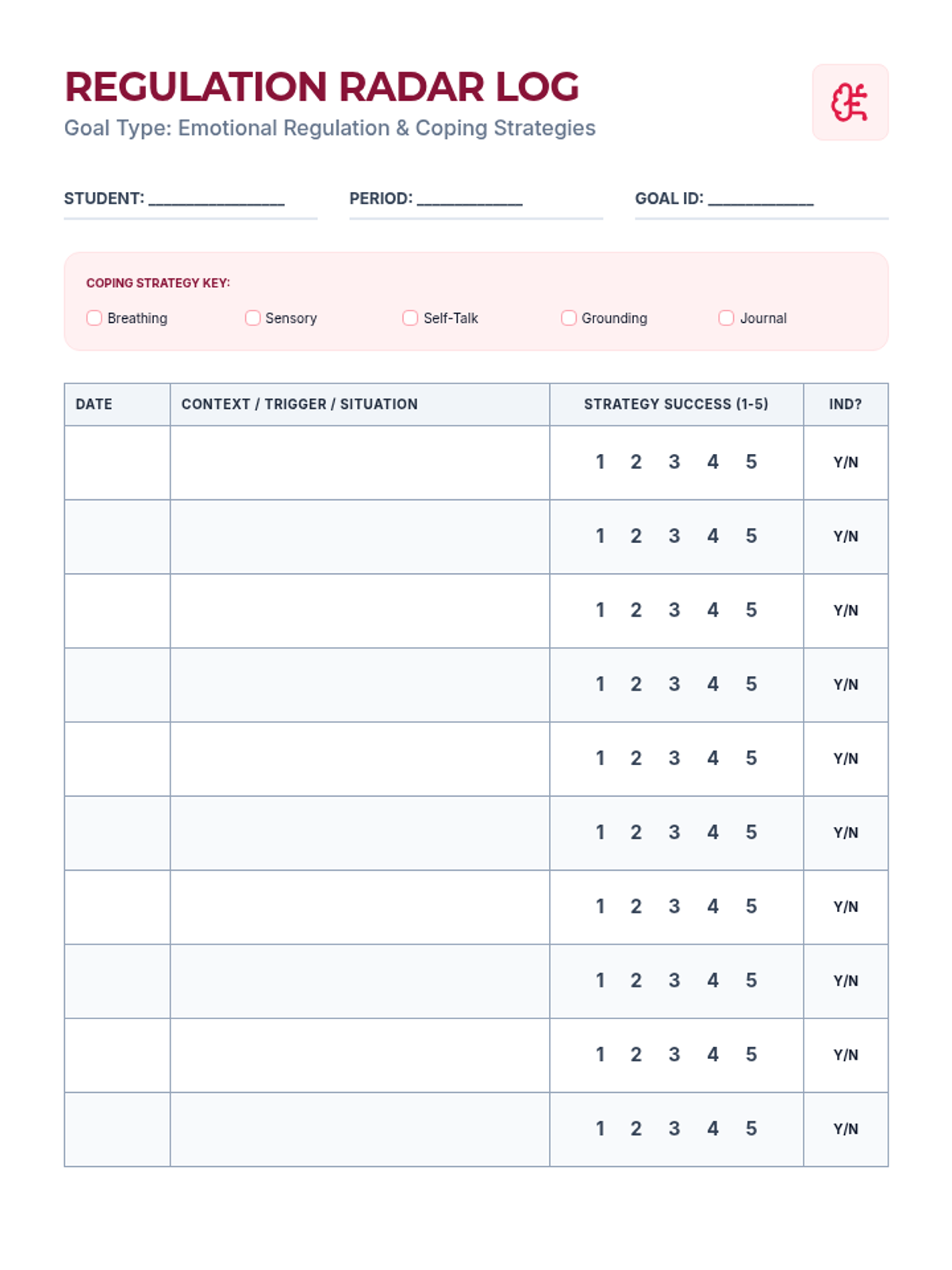
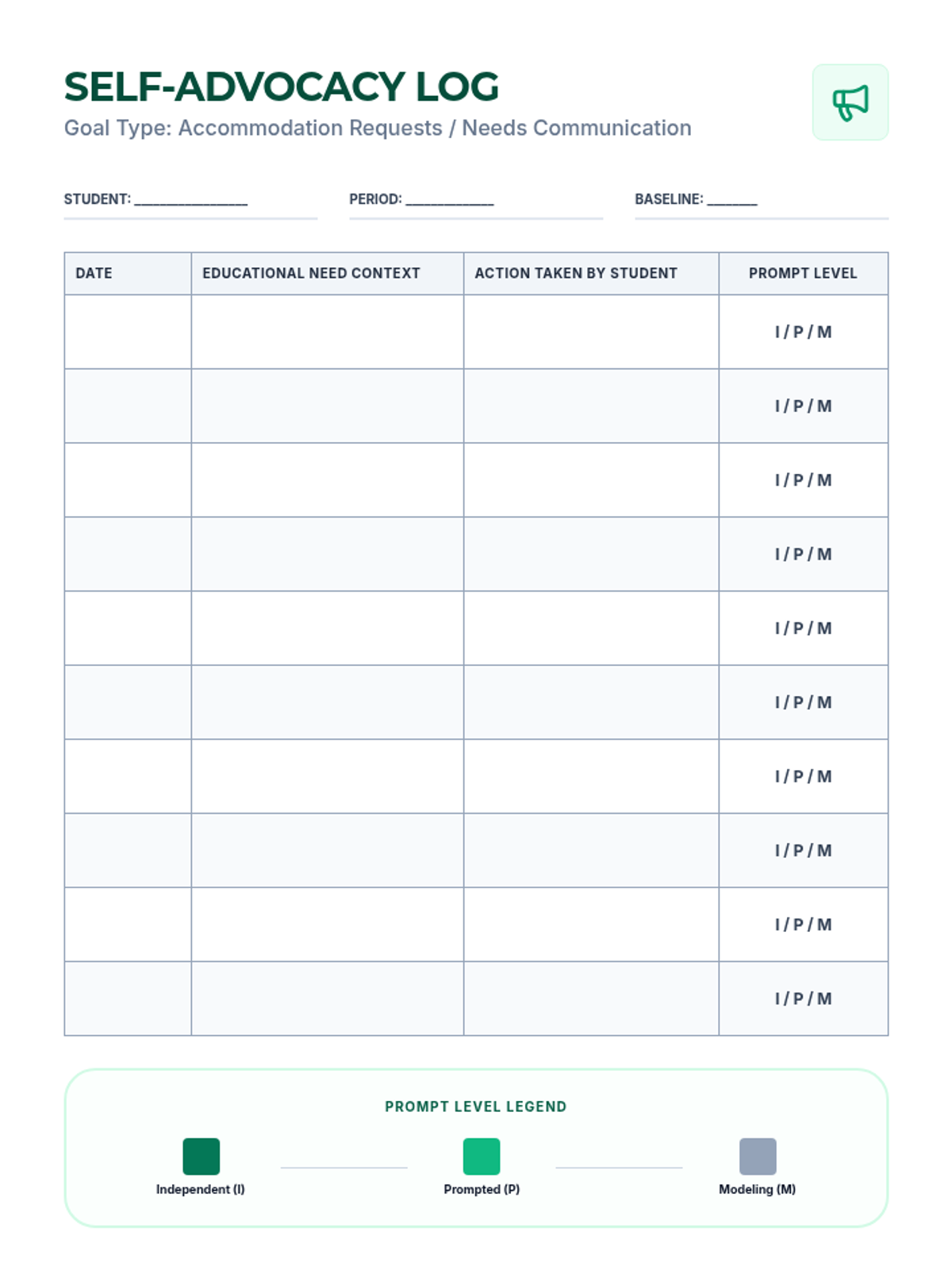
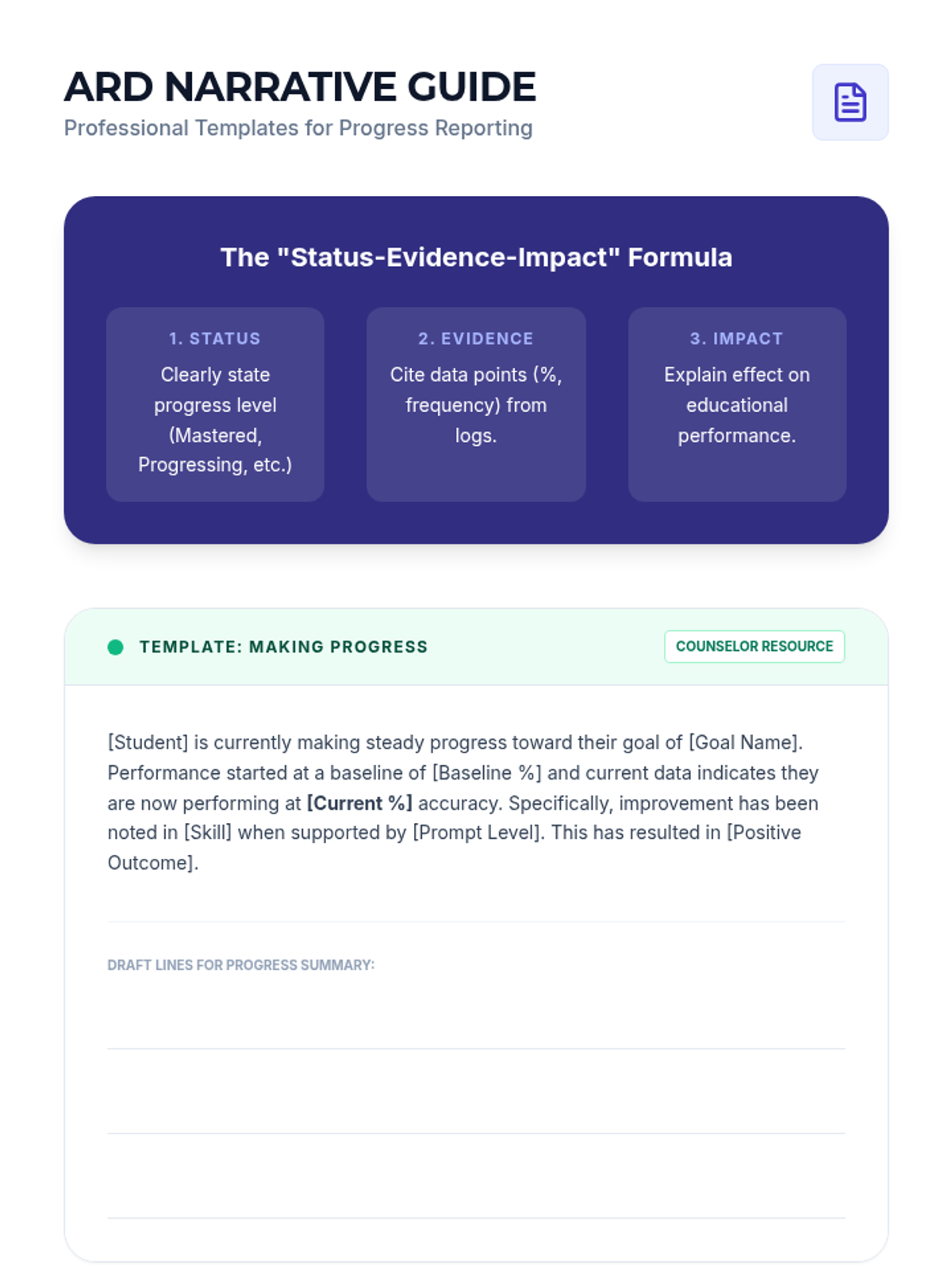
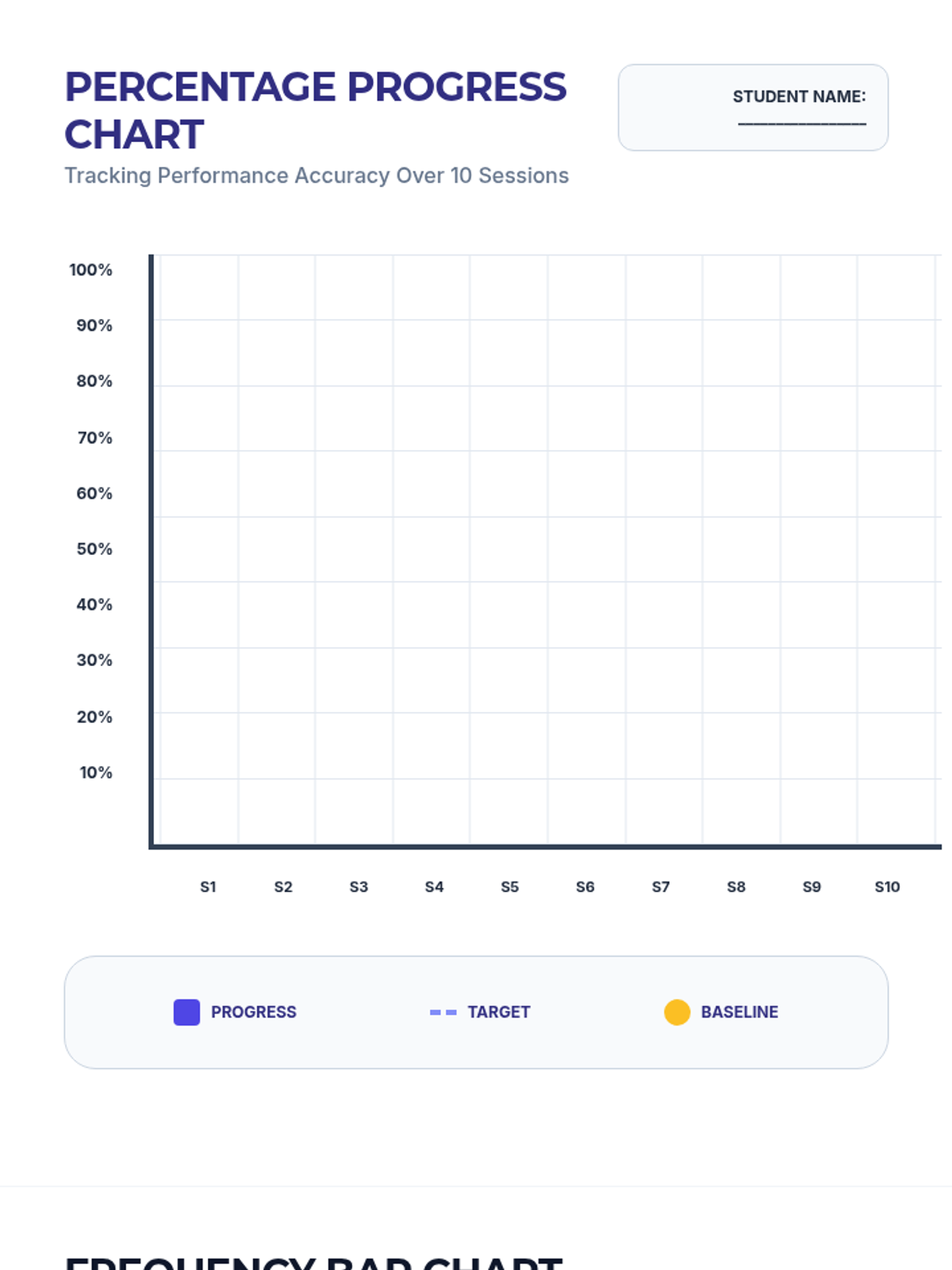
A comprehensive toolkit for high school counselors to efficiently monitor IEP goal progress across large caseloads. Includes data collection logs for social skills, emotional regulation, and self-advocacy, along with ARD narrative templates and visual charts.
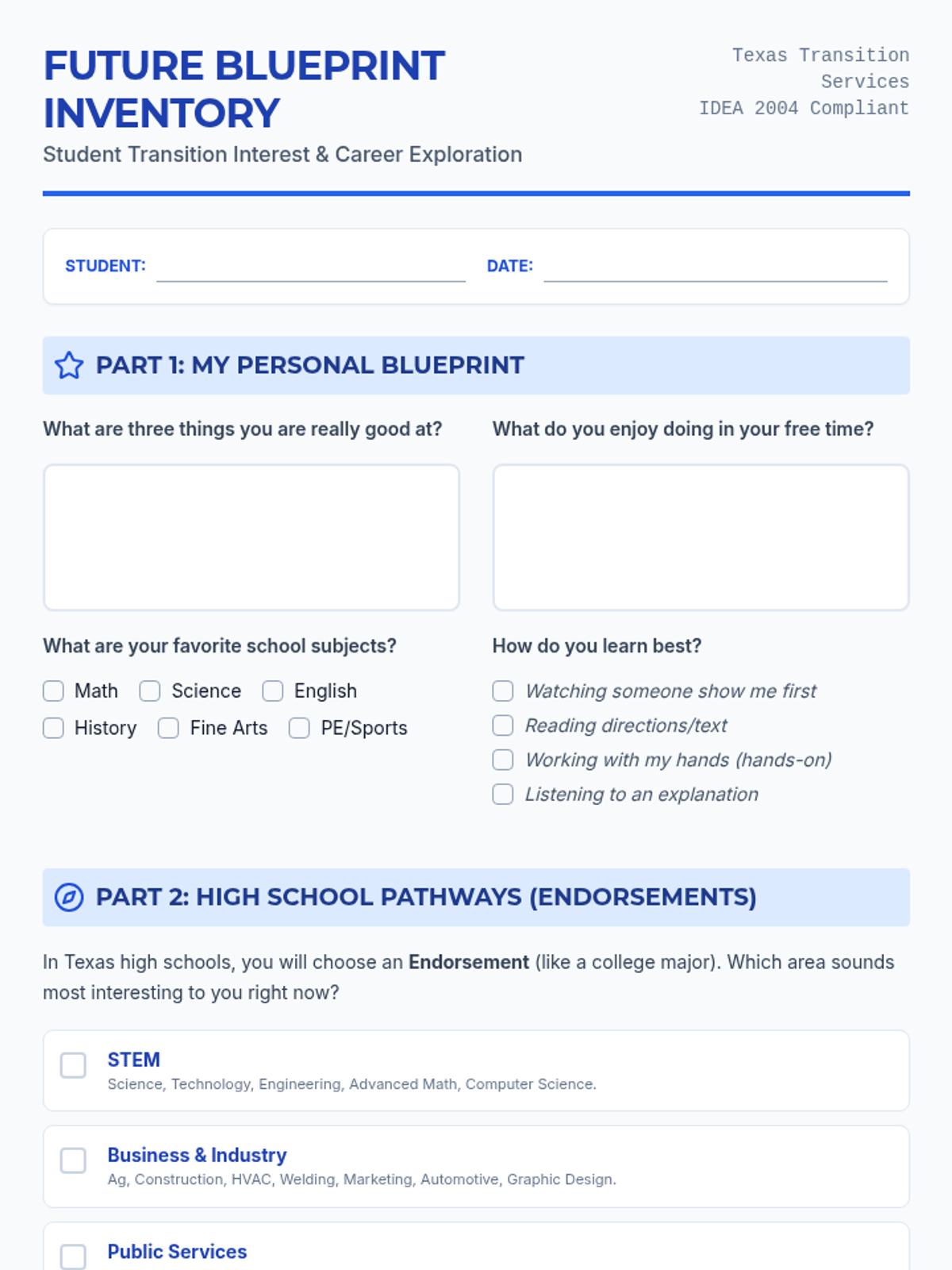
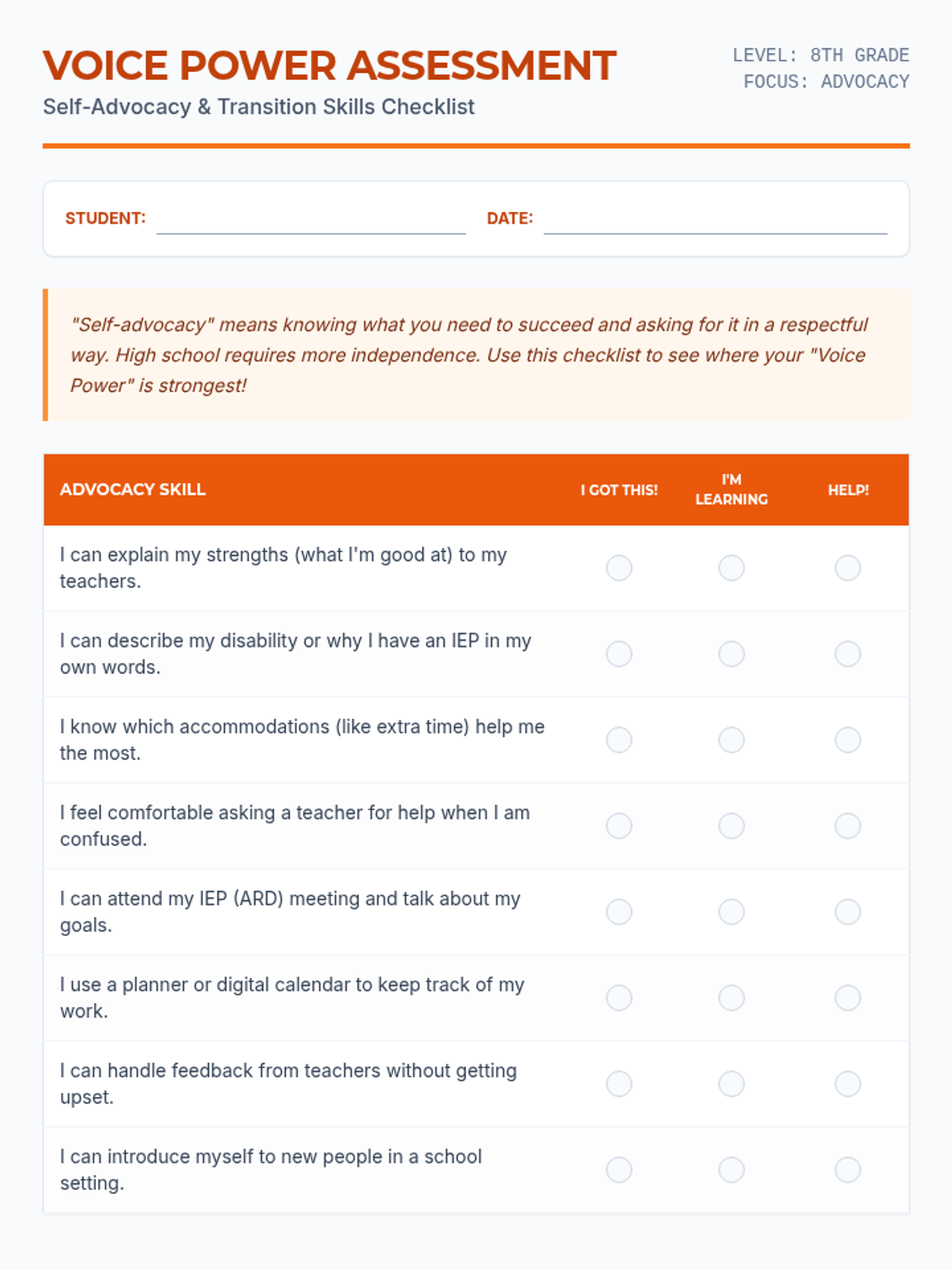
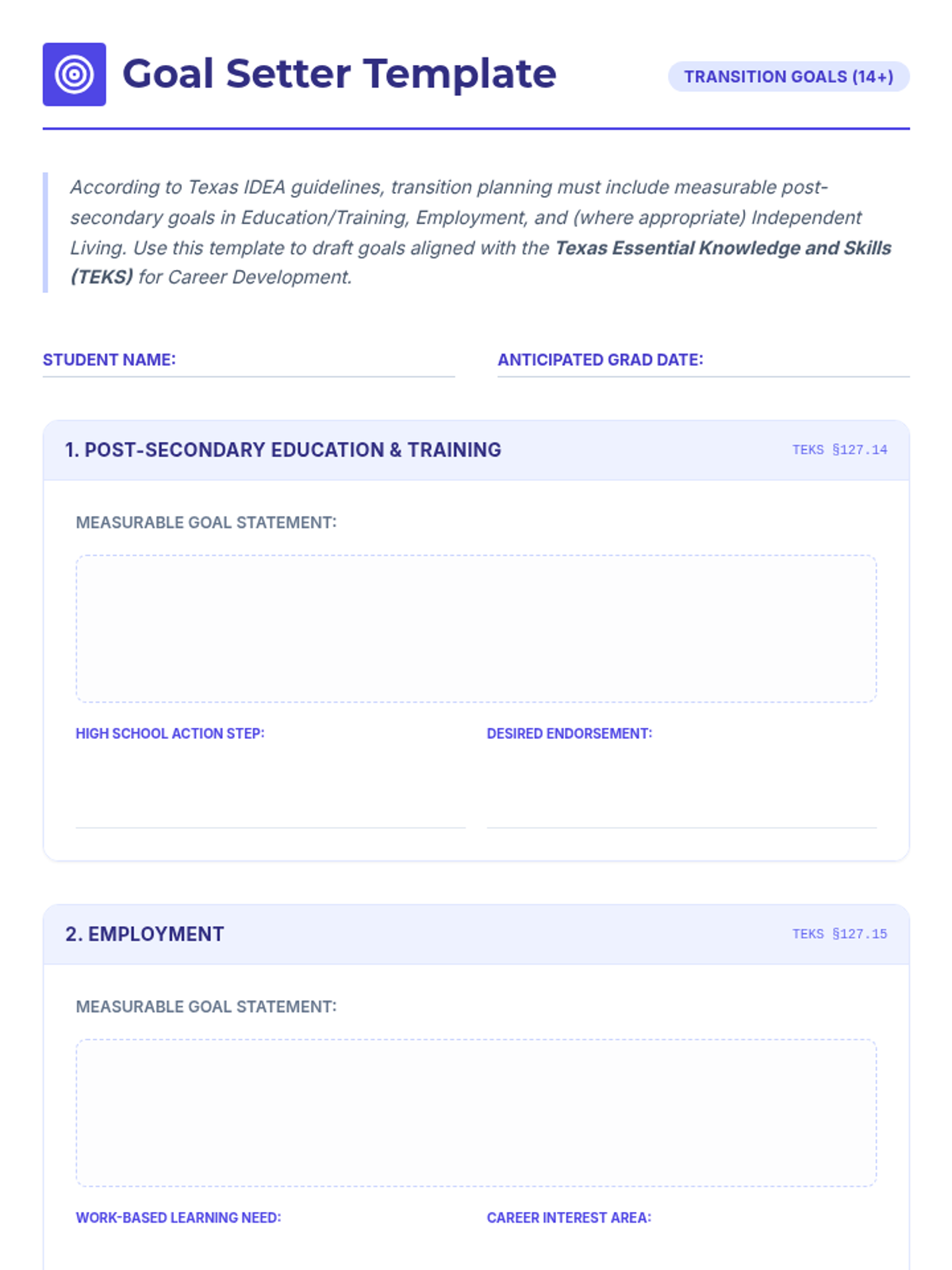
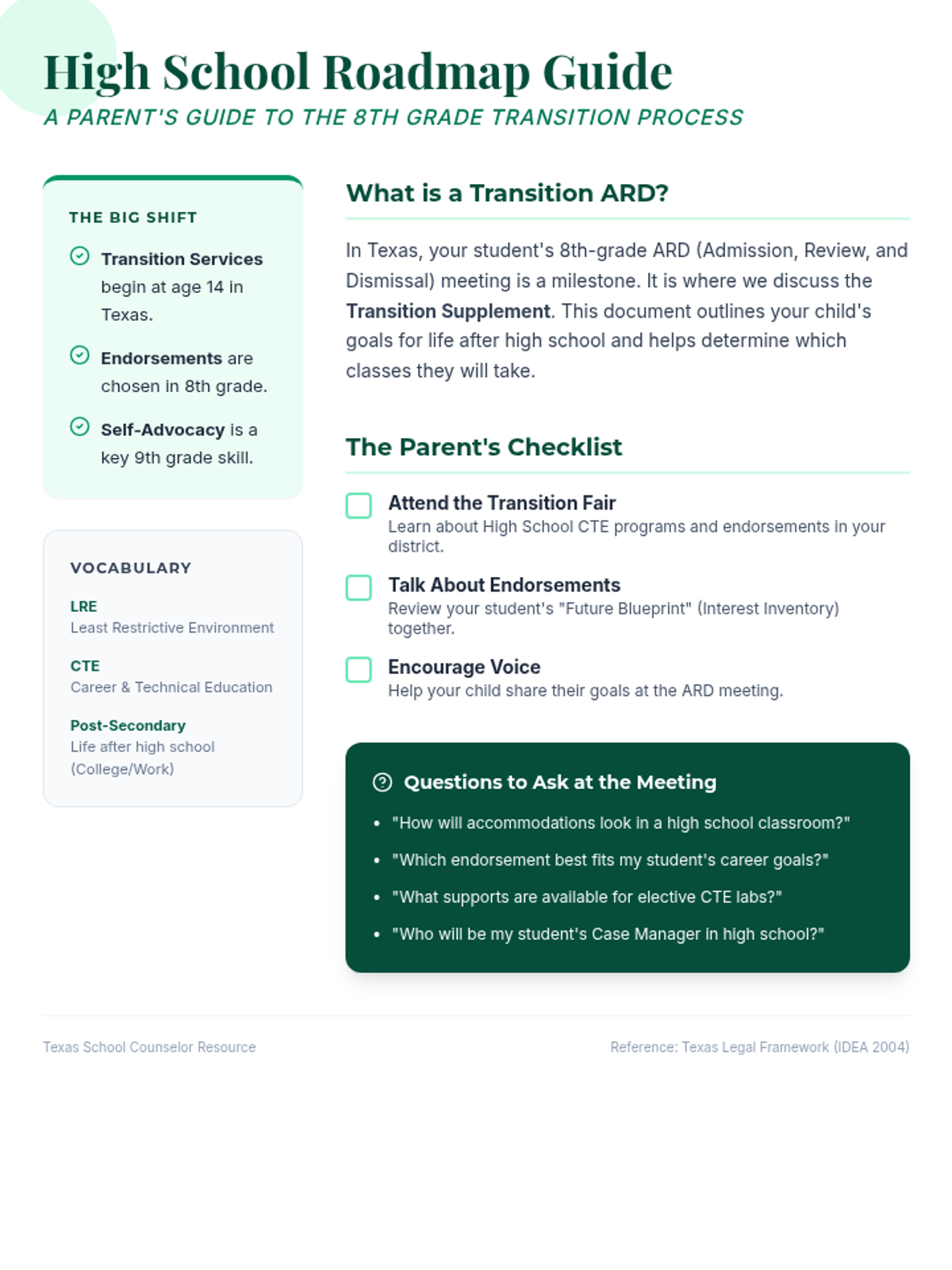
A comprehensive starter kit for 8th-grade students with IEPs as they transition to high school, focusing on self-advocacy, goal setting, and navigating the Texas special education process.
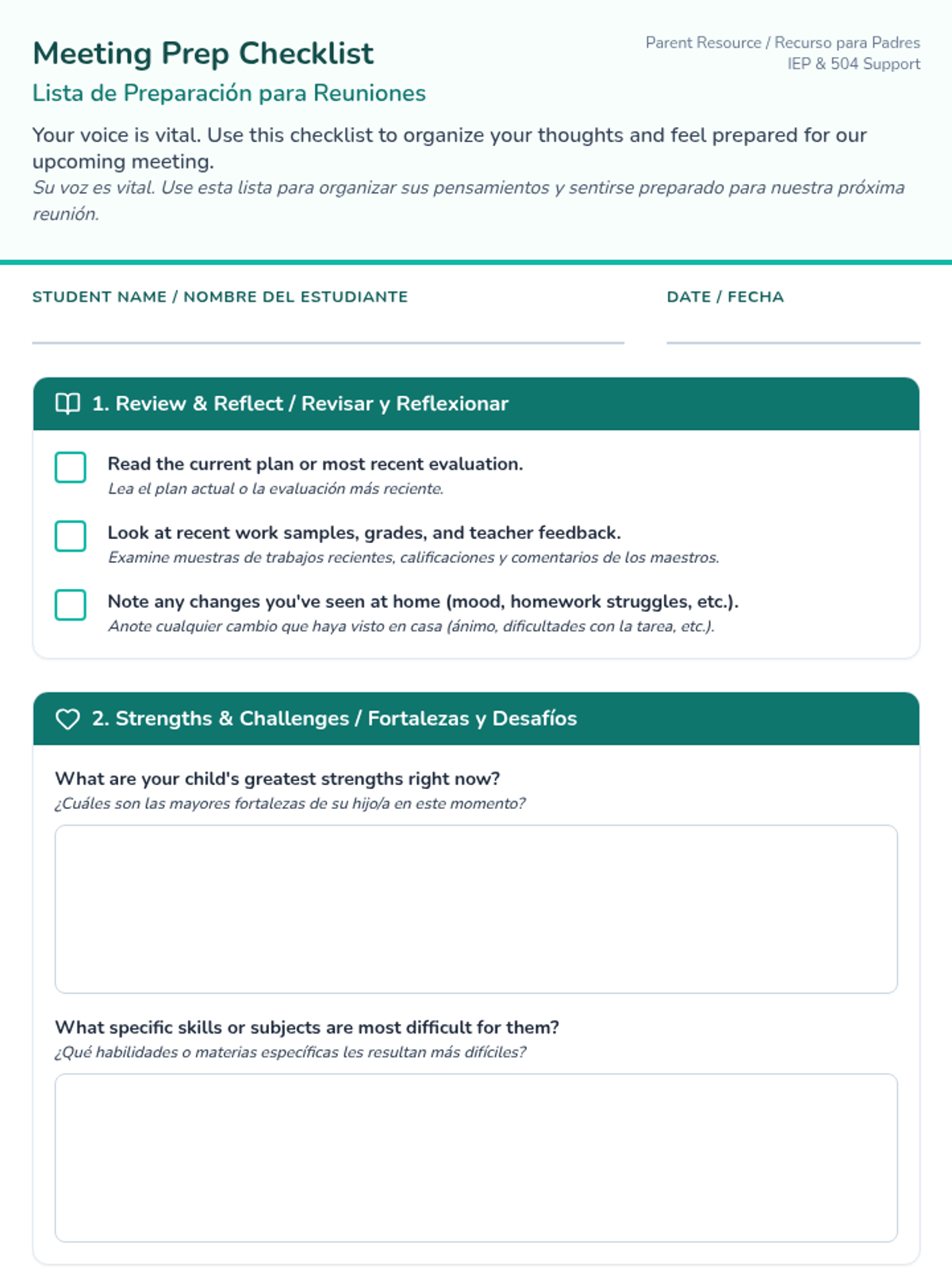
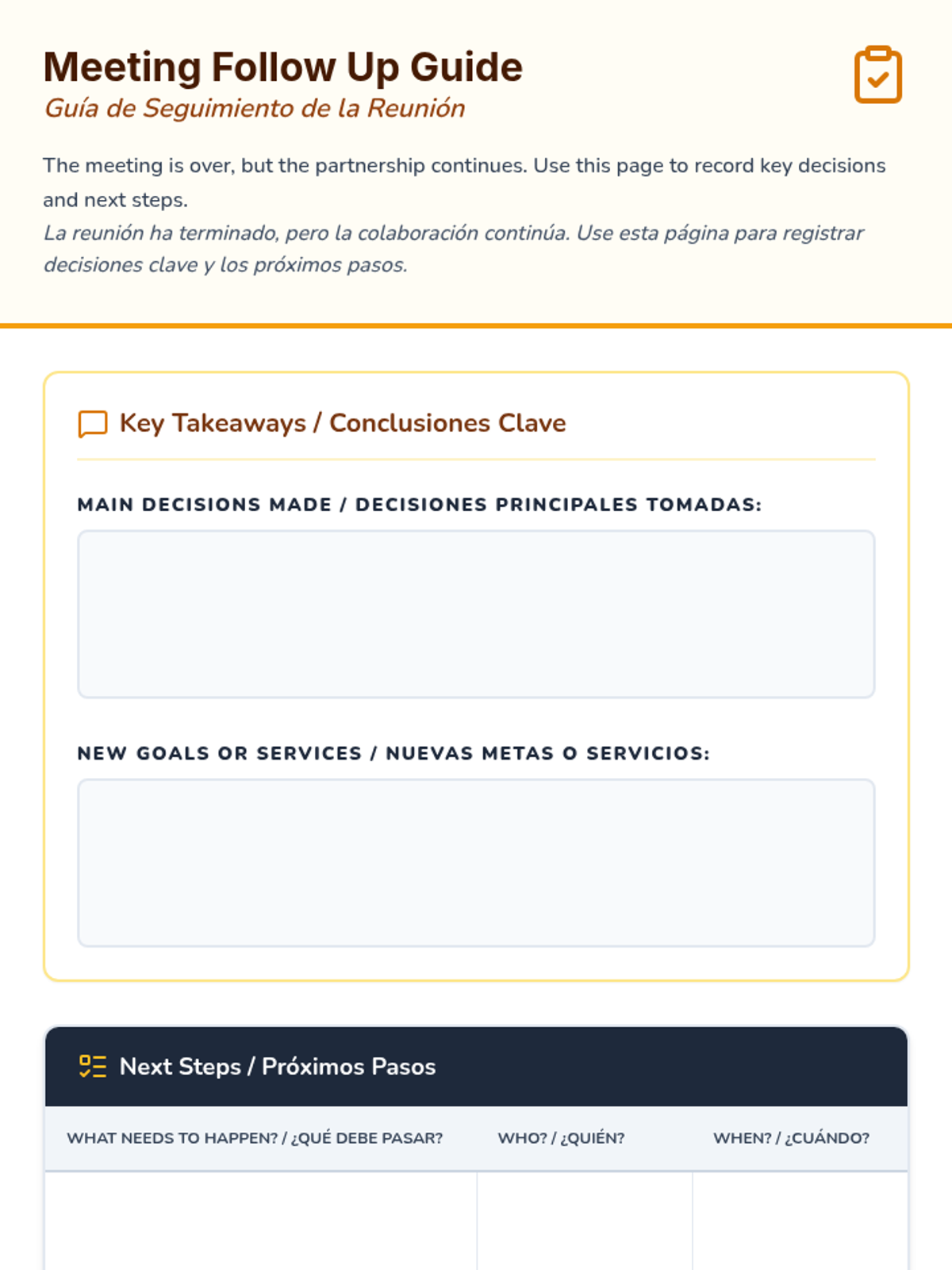
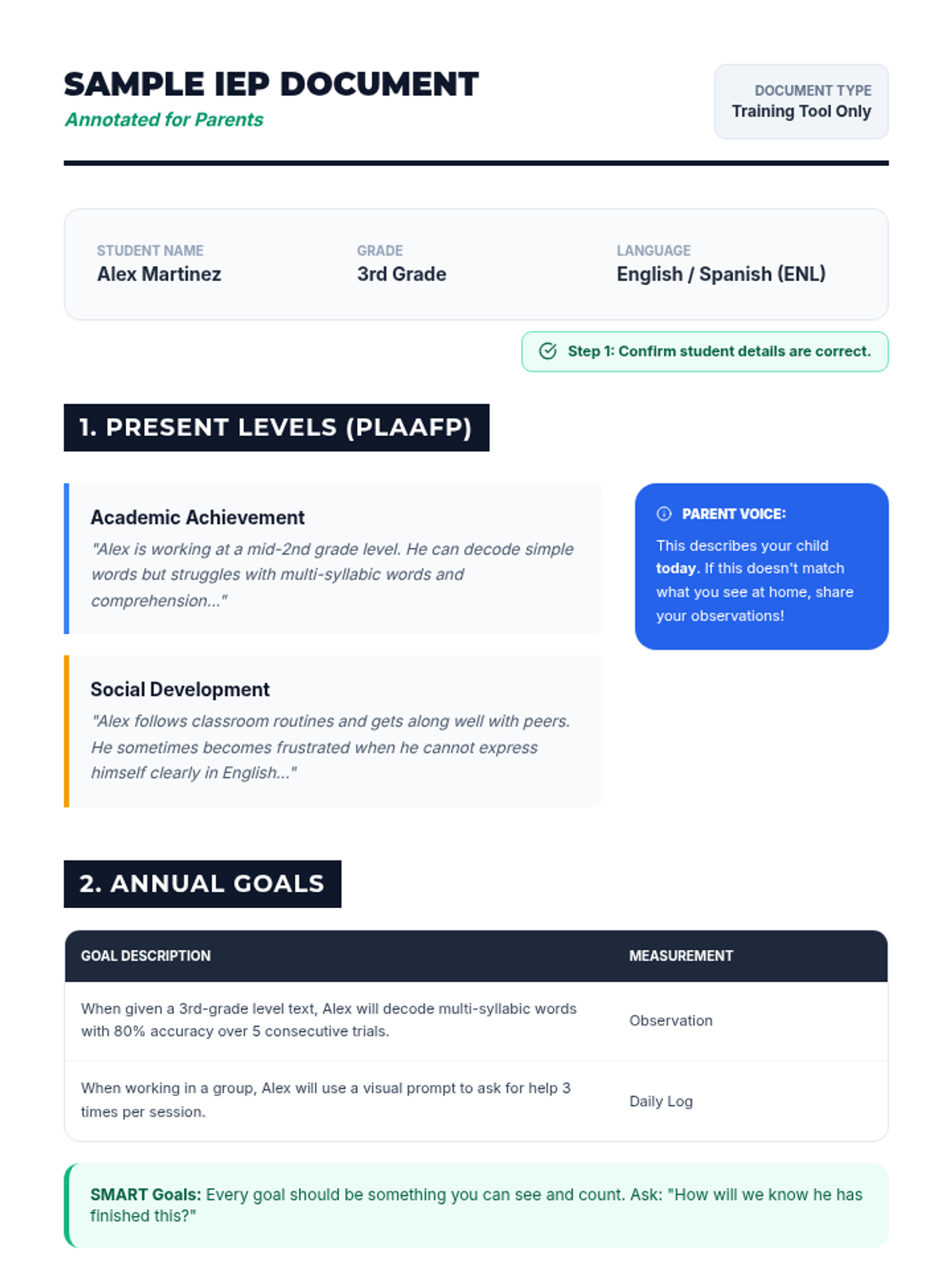
A comprehensive toolkit designed to empower parents during 504 and IEP meetings. It provides clear, bilingual resources to reduce anxiety and facilitate meaningful collaboration between home and school.
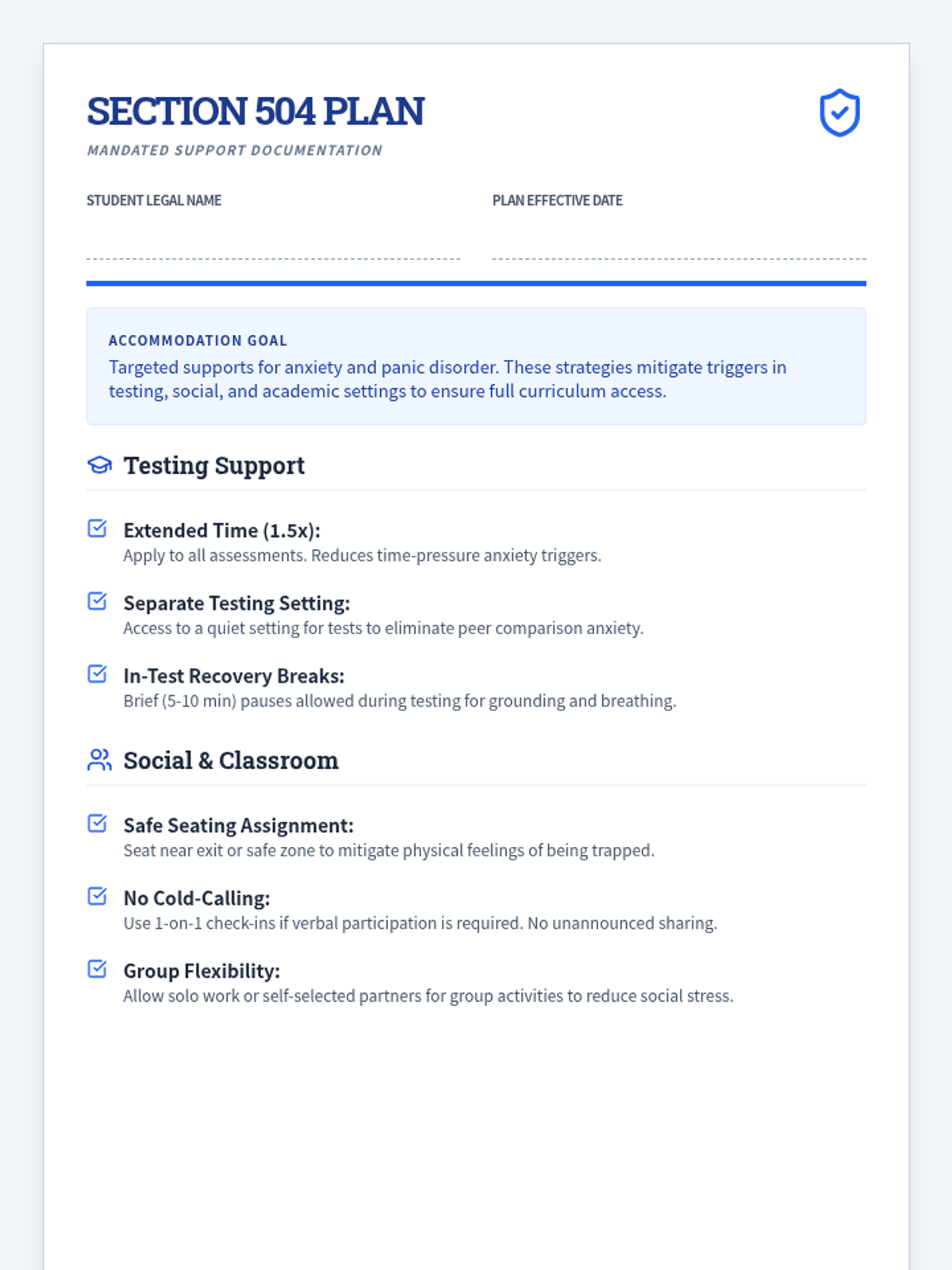
A comprehensive guide and set of formal accommodations designed for middle school students navigating anxiety and panic attacks within the school environment.
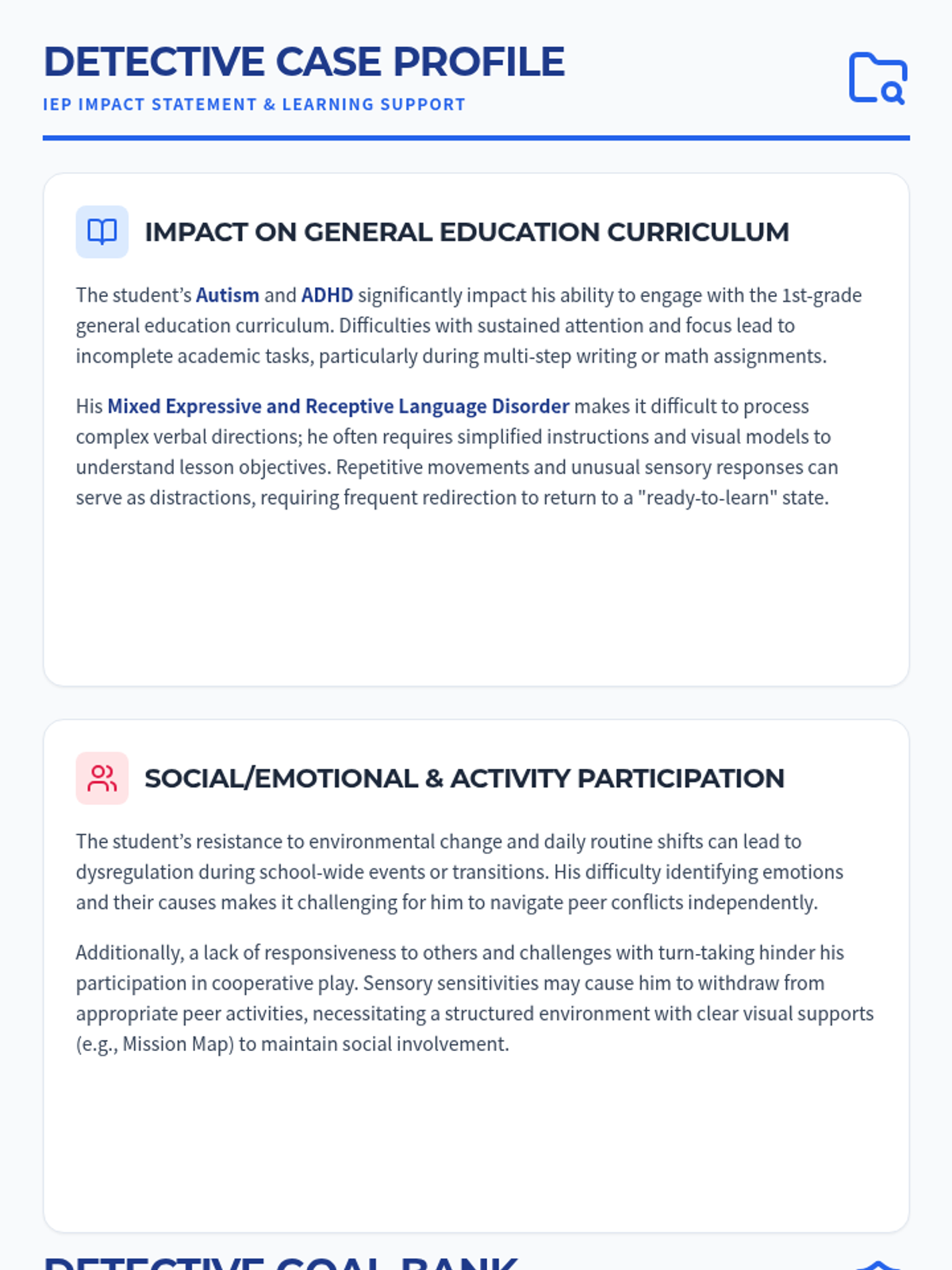
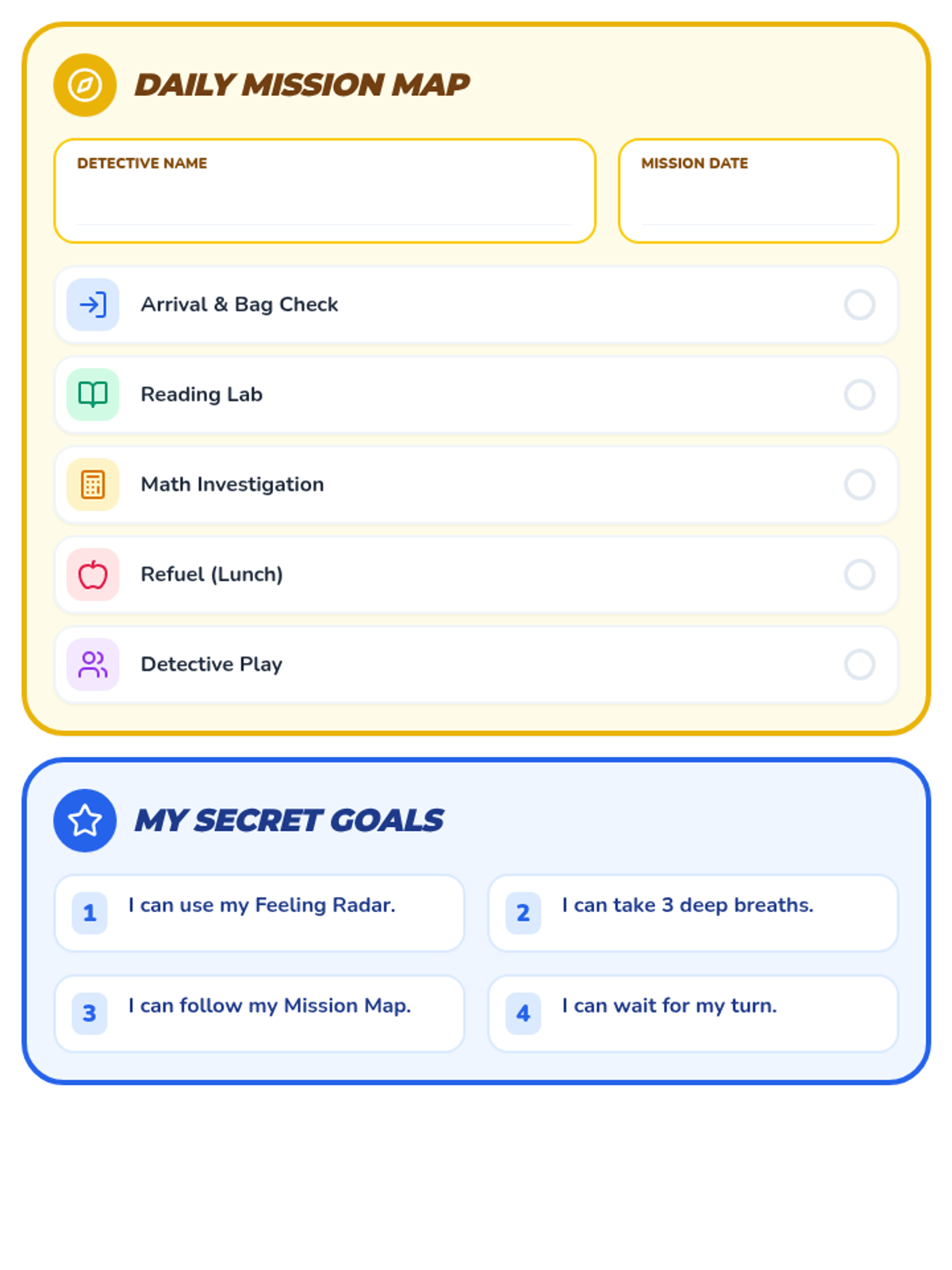
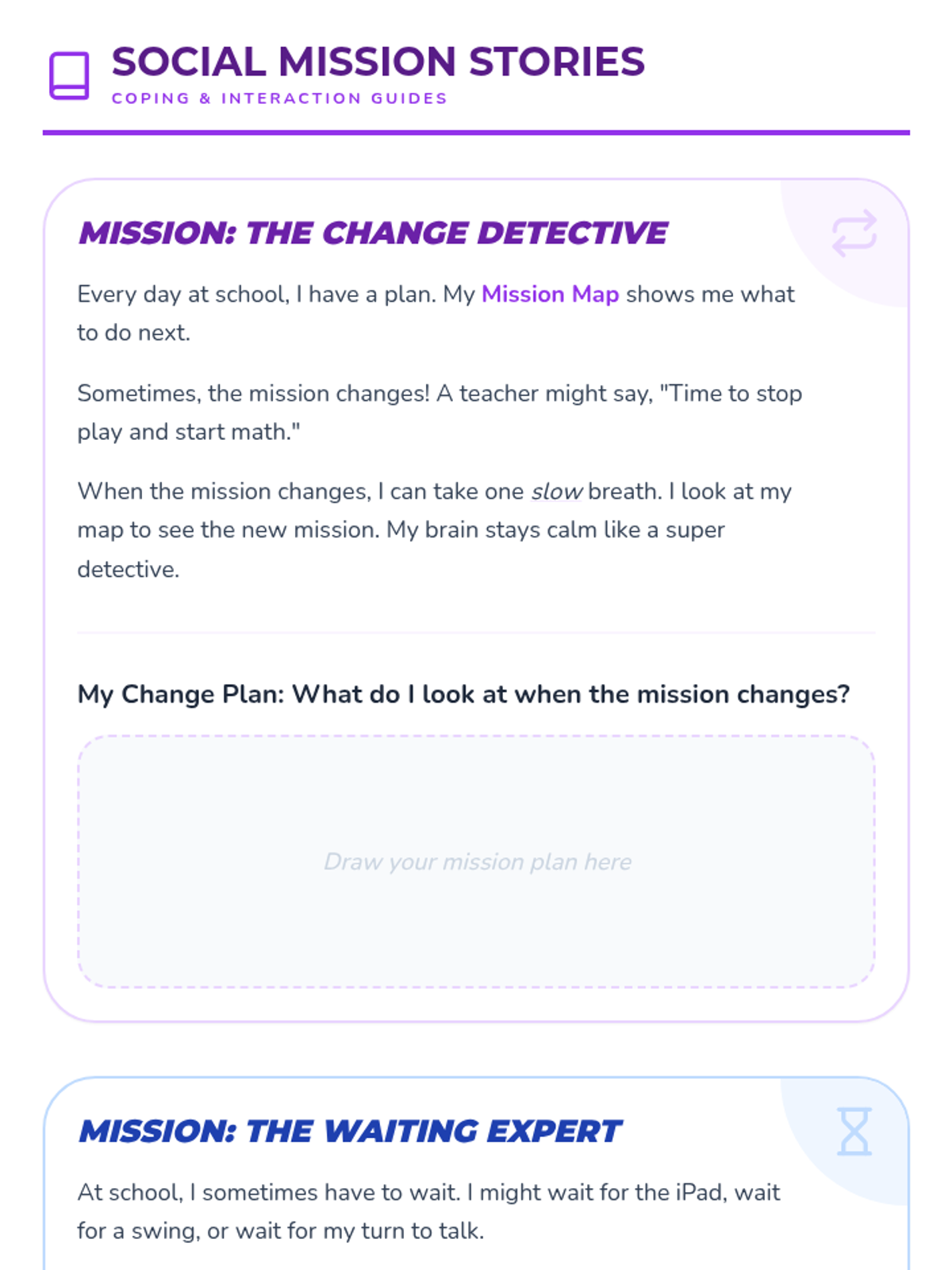
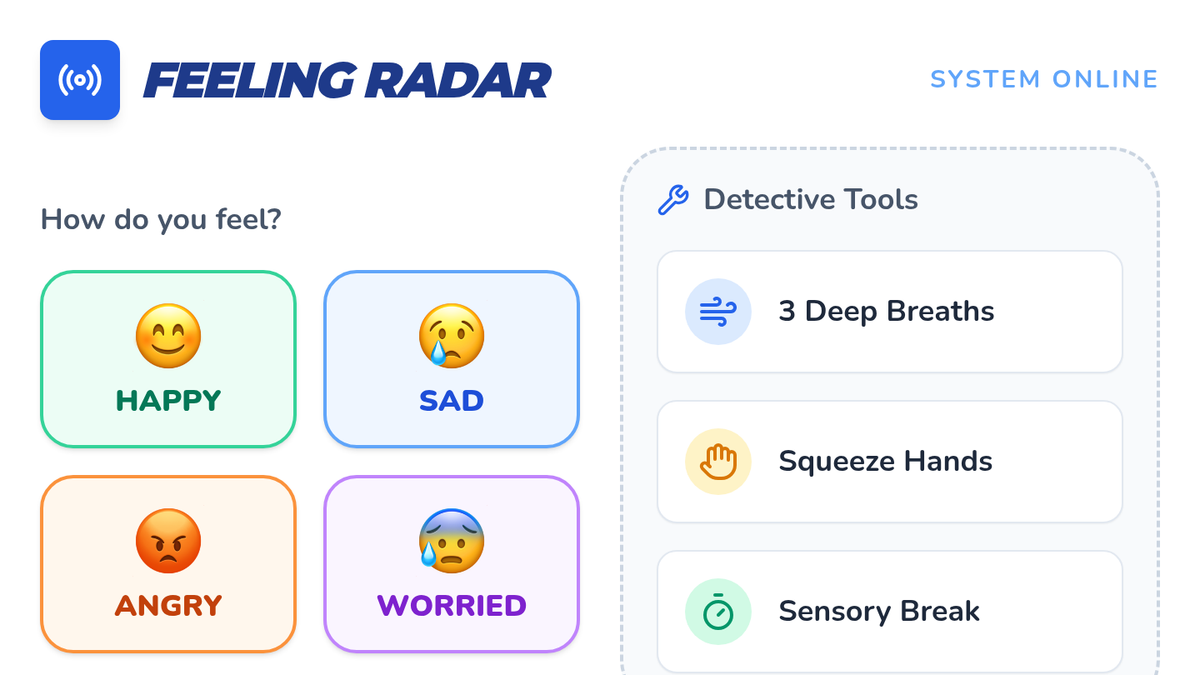
A comprehensive set of resources for a 1st-grade student with Autism and ADHD, focusing on self-regulation, transitions, and social skills through a 'Detective Academy' theme. Includes IEP goals, data tracking, visual supports, and social stories.
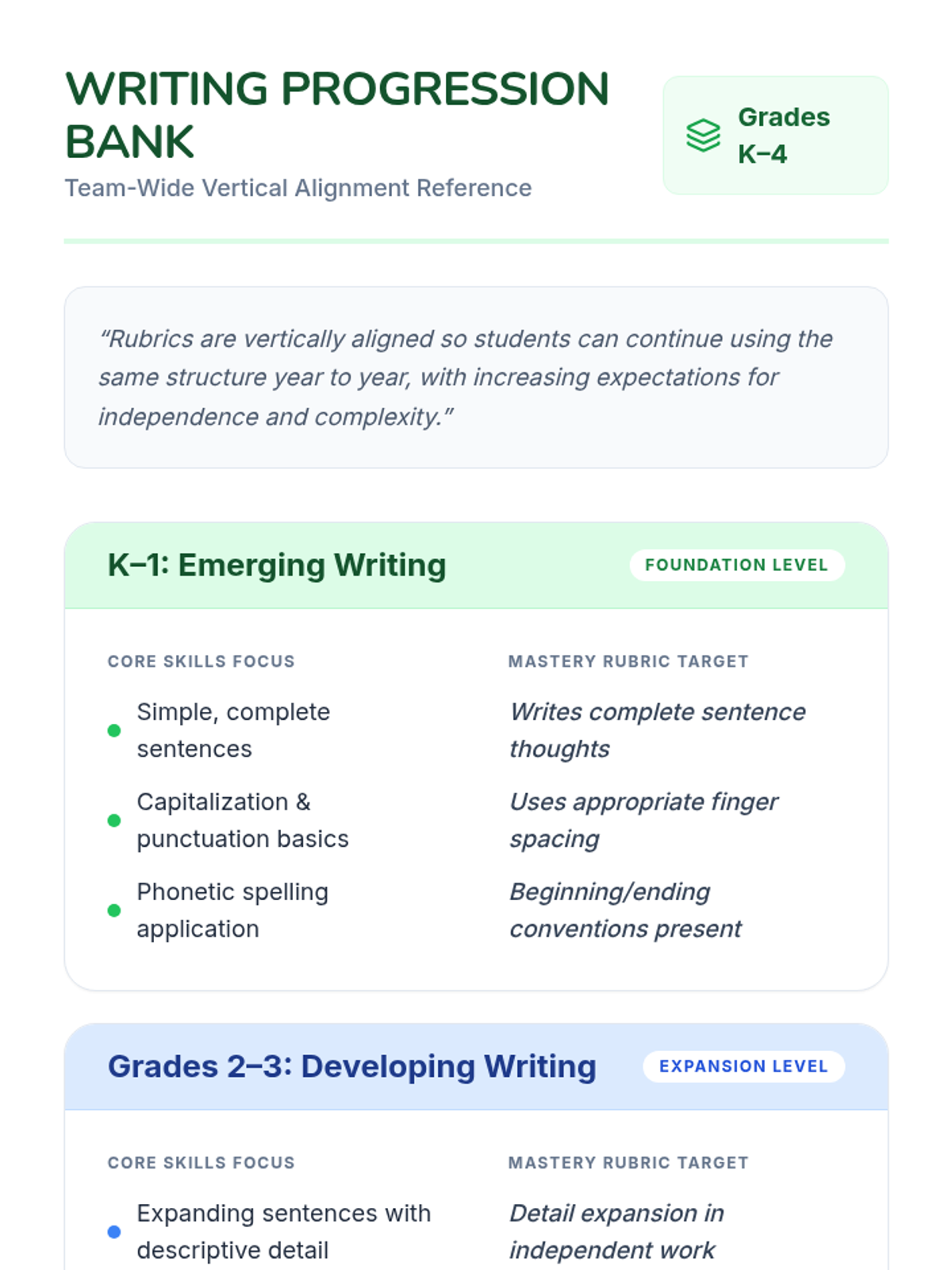
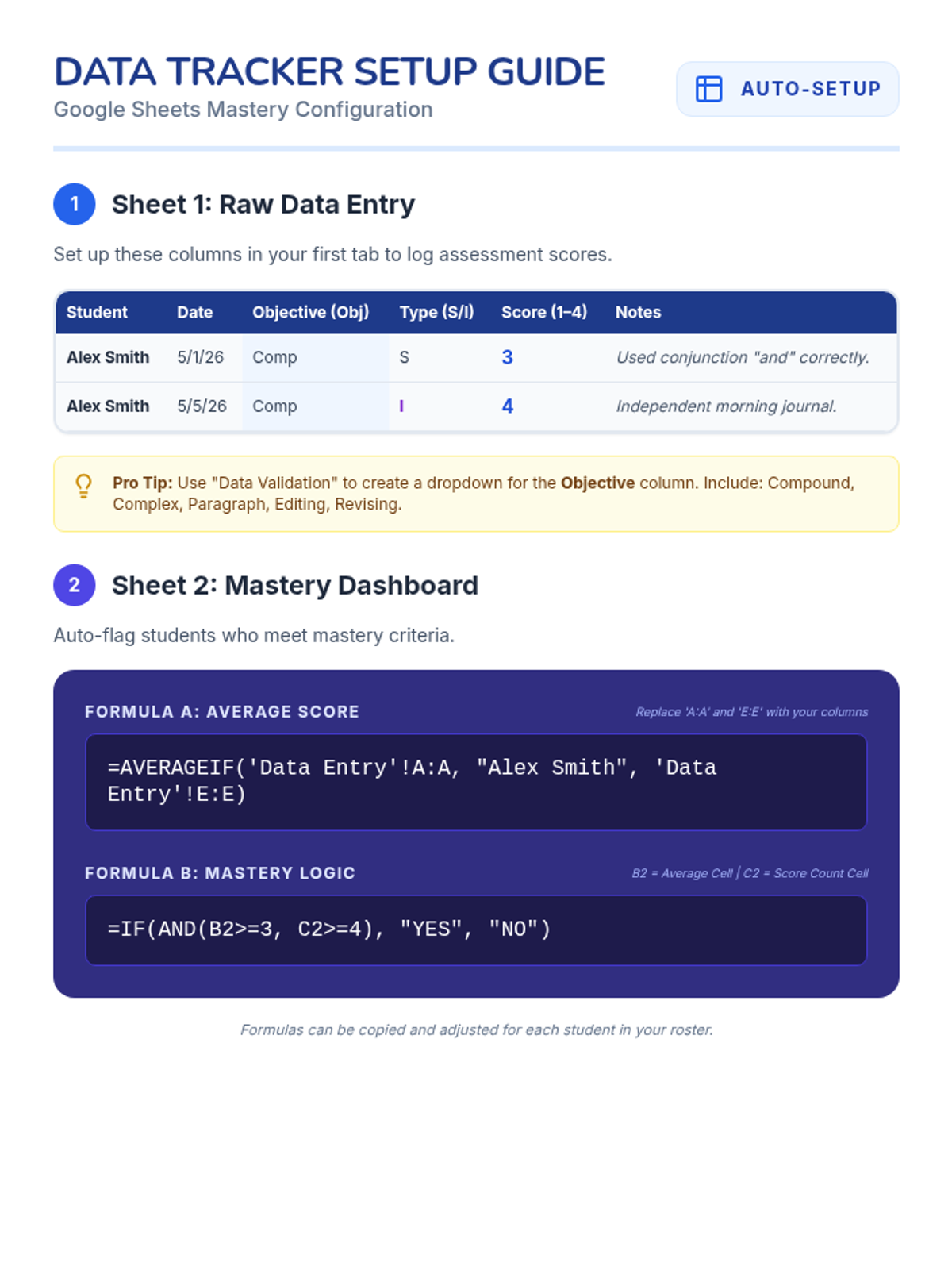
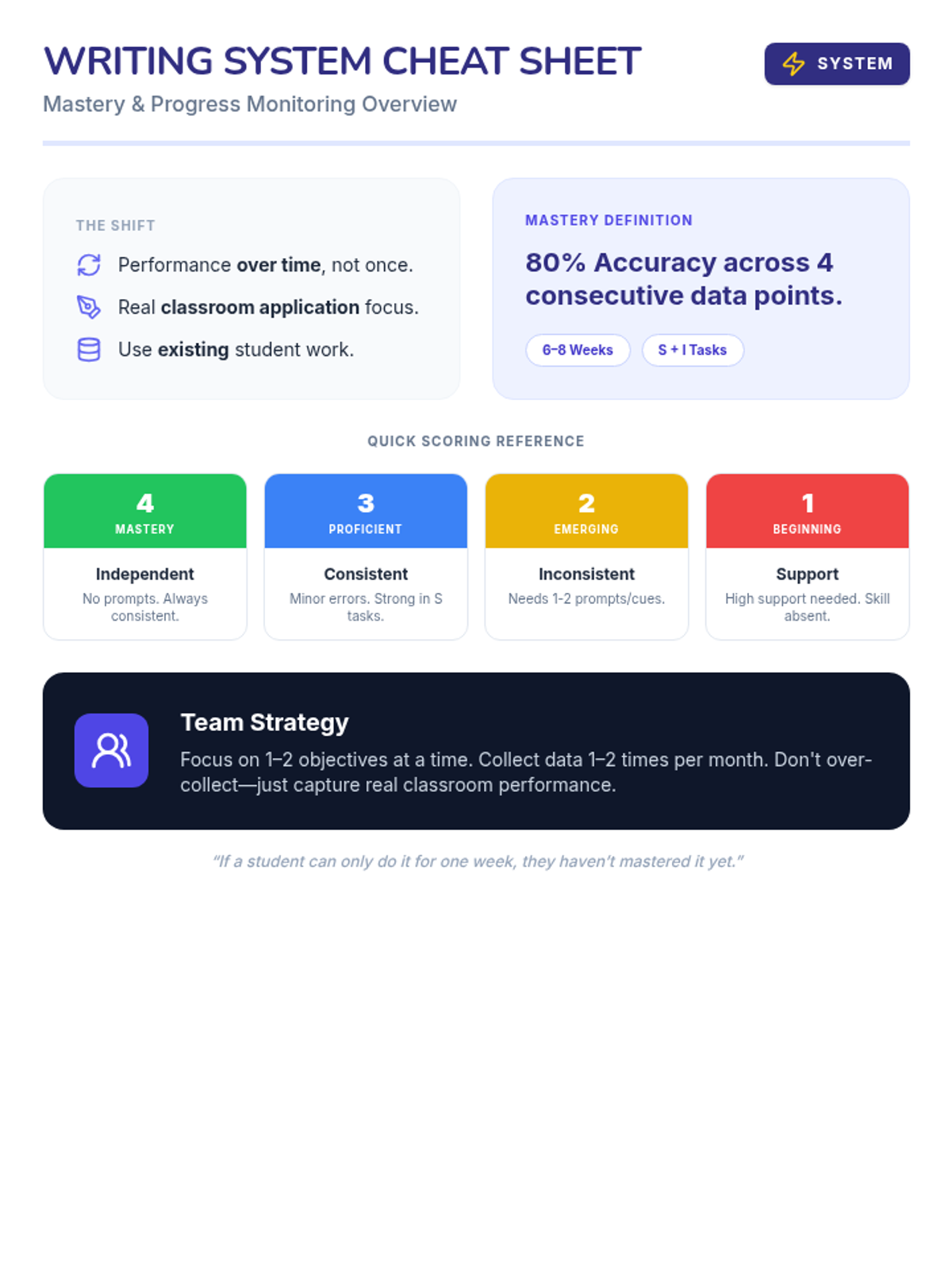
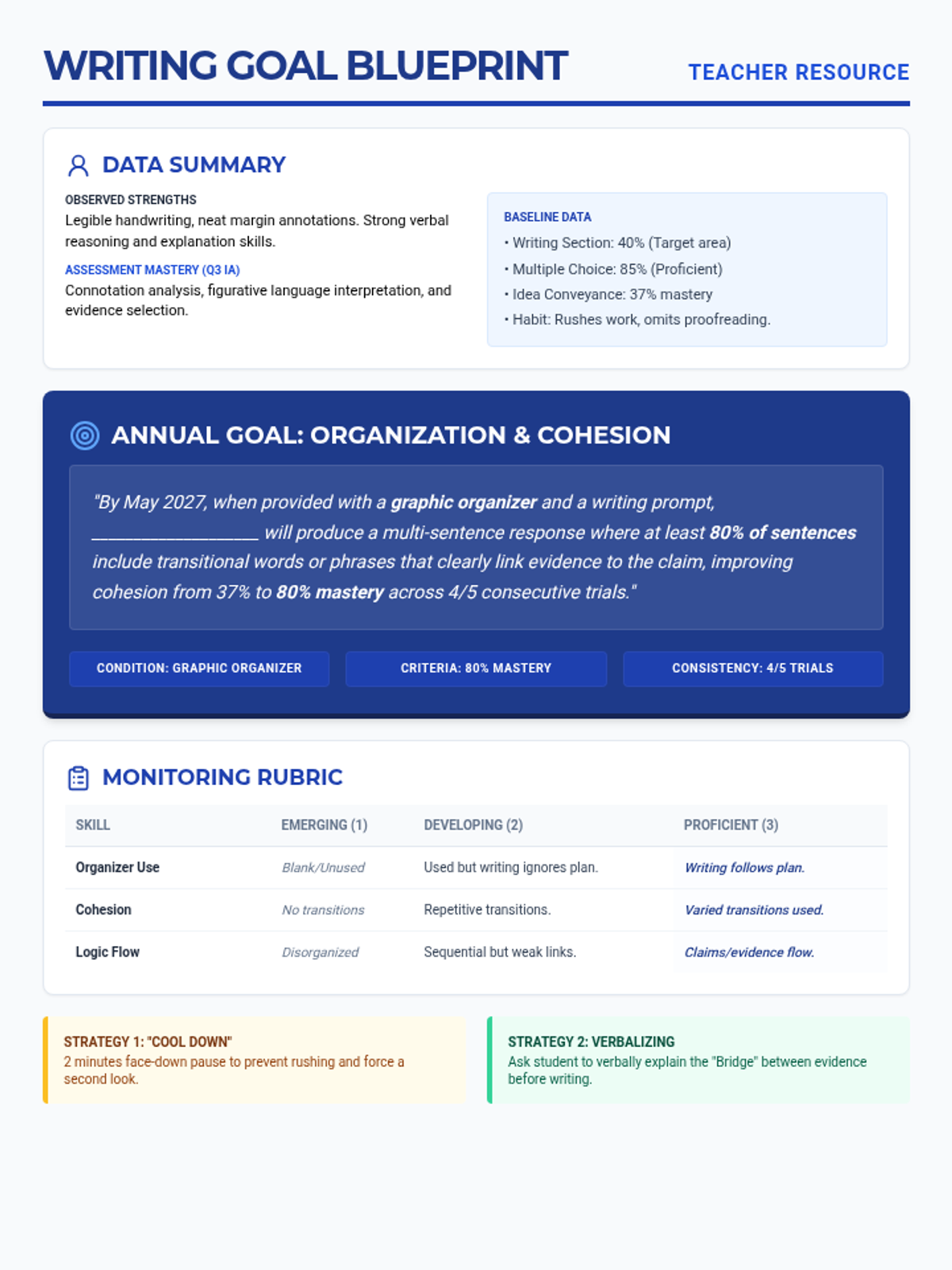
A professional development session focused on shifting how writing goals are written and monitored to ensure mastery and transferability.
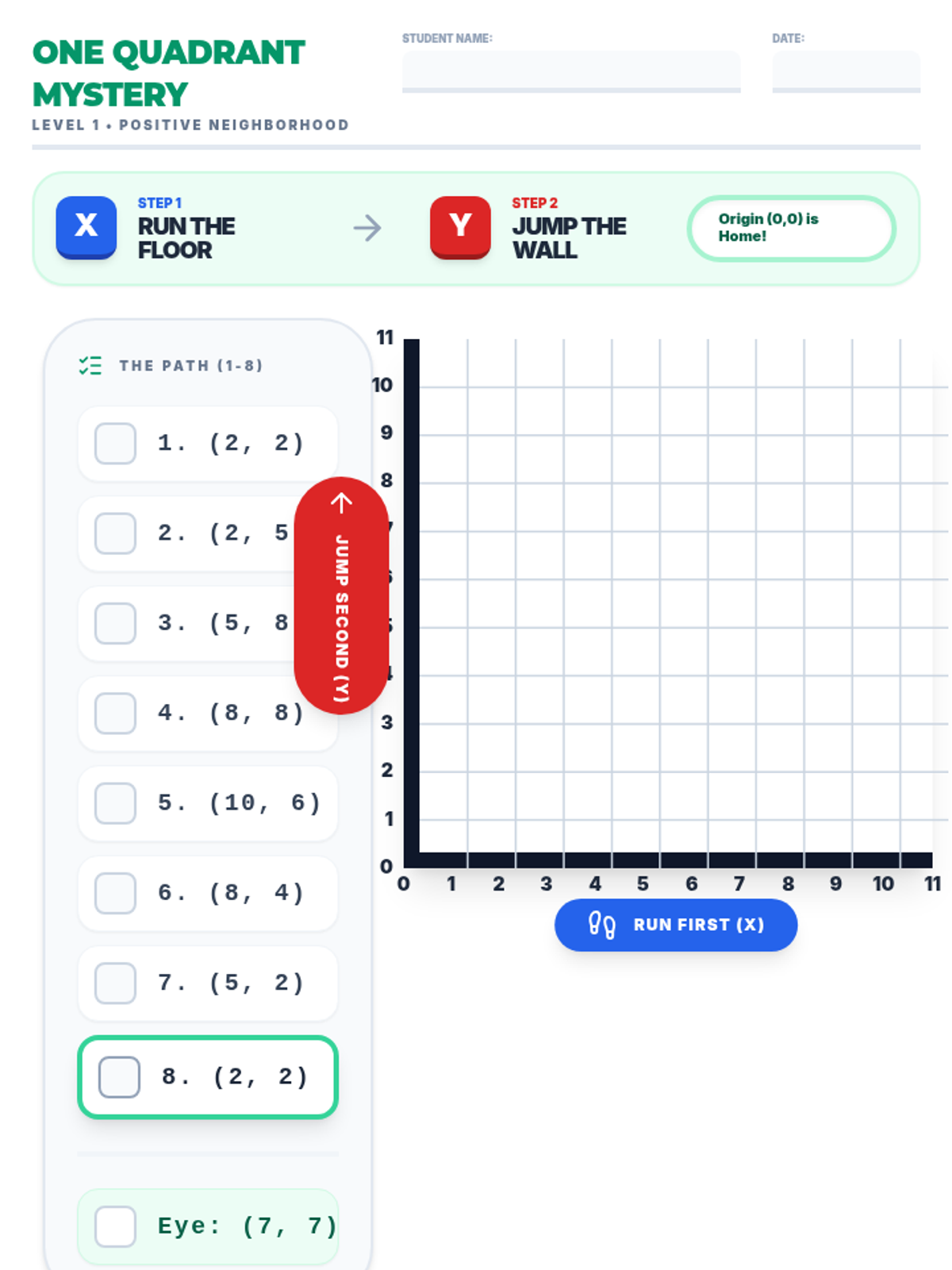
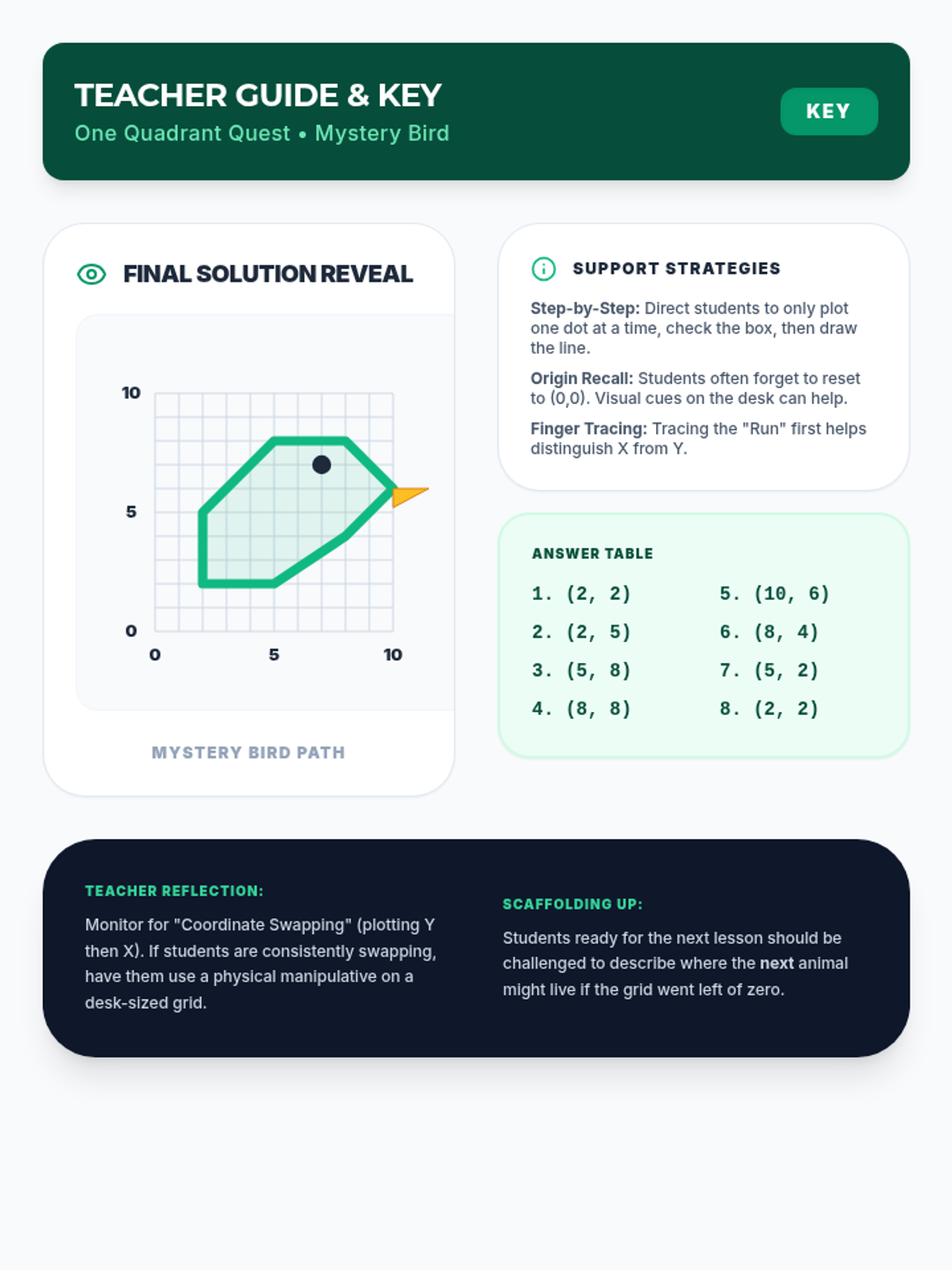
An introductory lesson for IEP students focusing on plotting points in the first quadrant (positive X and Y) to reveal a mystery bird outline.
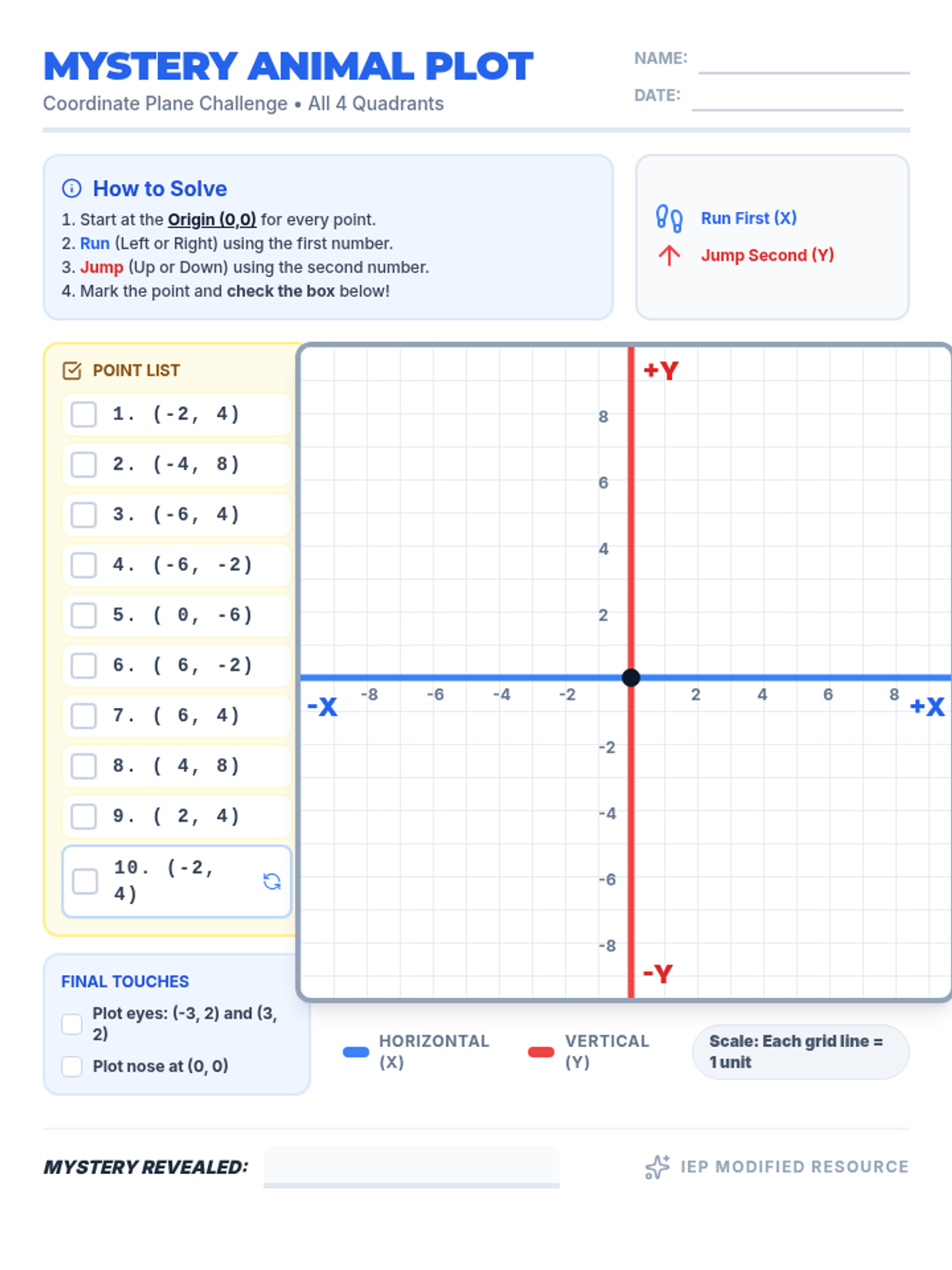
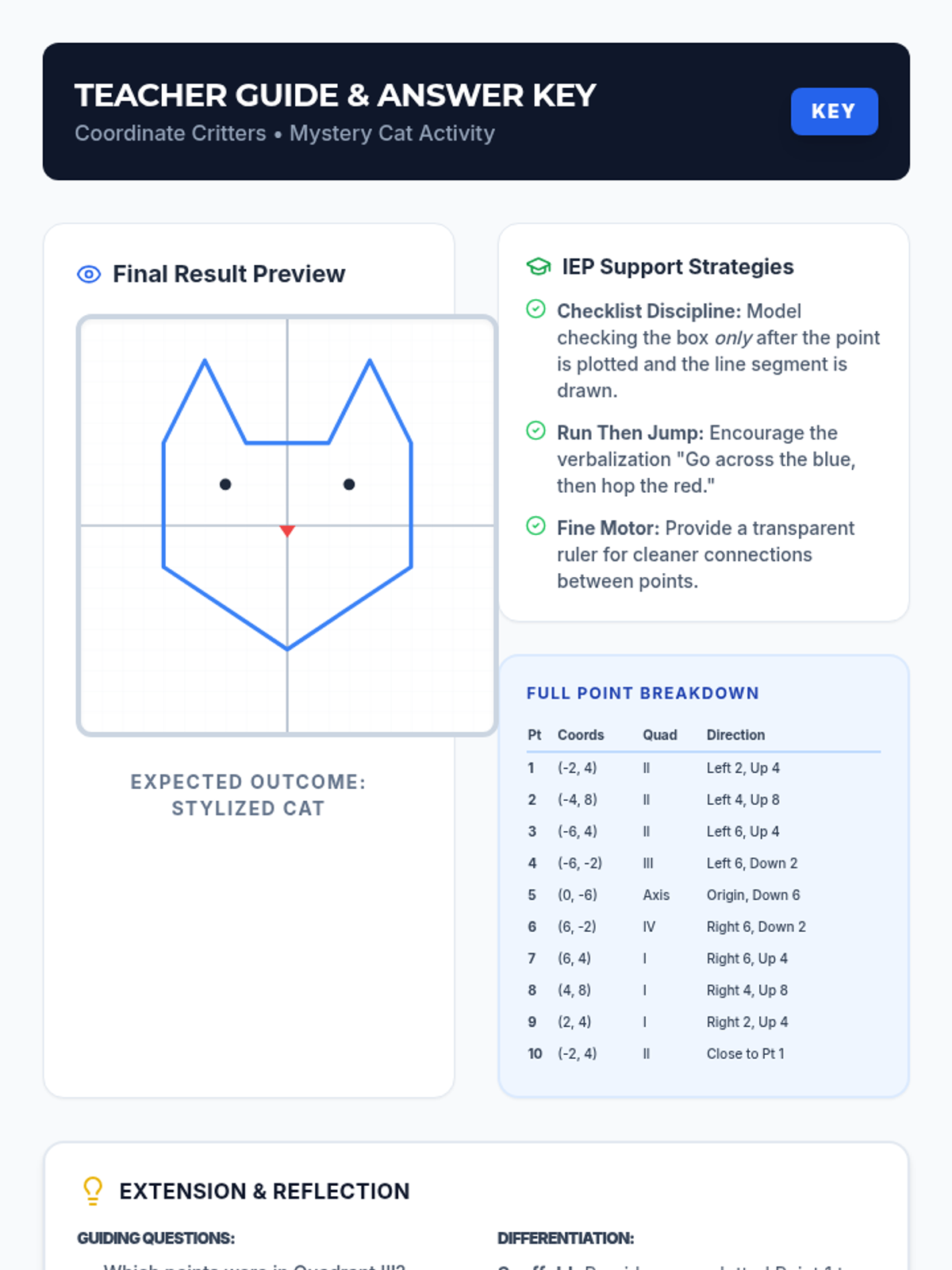
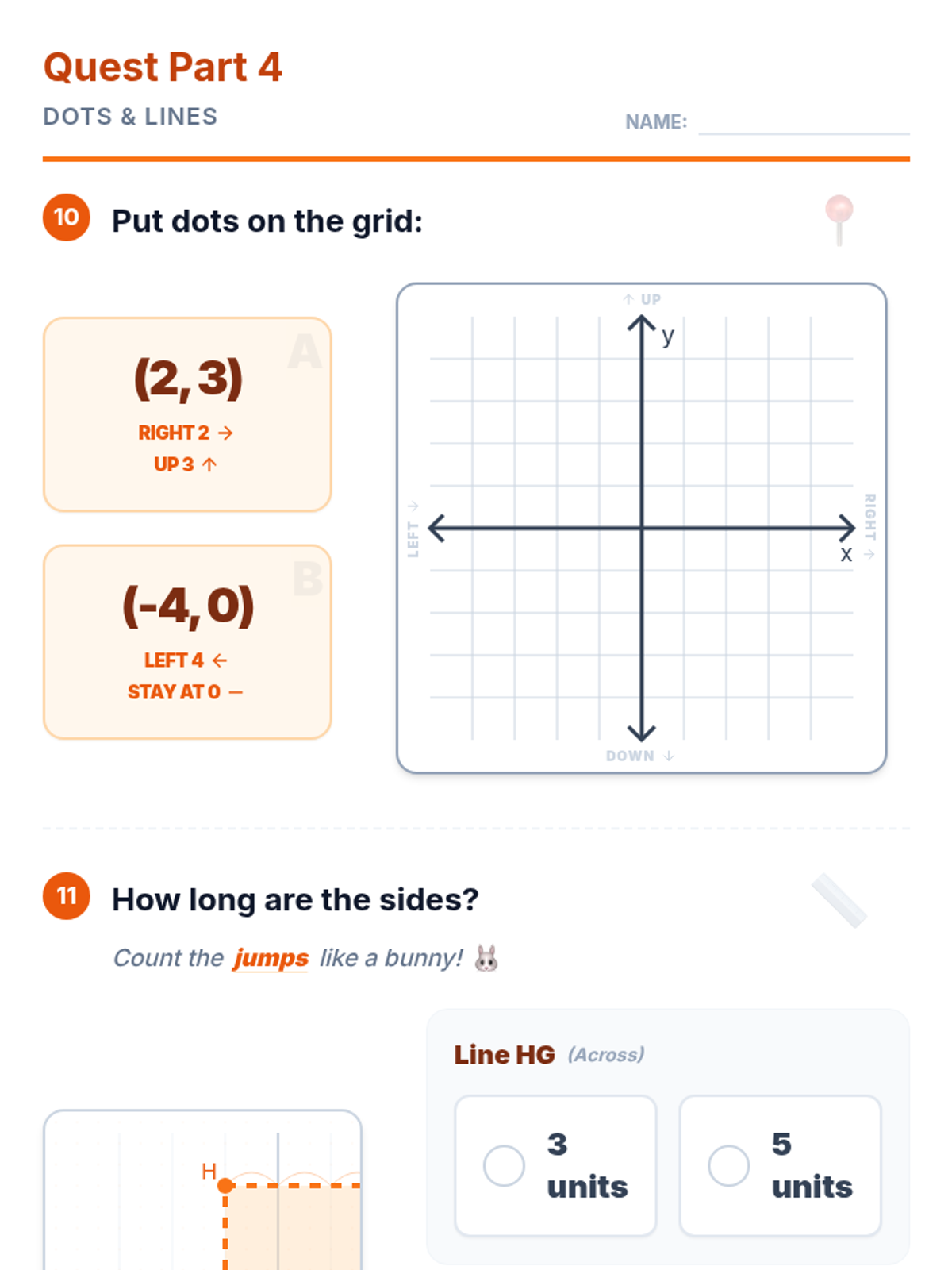
A modified lesson for IEP students to practice plotting points on a four-quadrant coordinate plane to reveal a mystery animal outline. includes visual supports, step-by-step checklists, and color-coded axes.
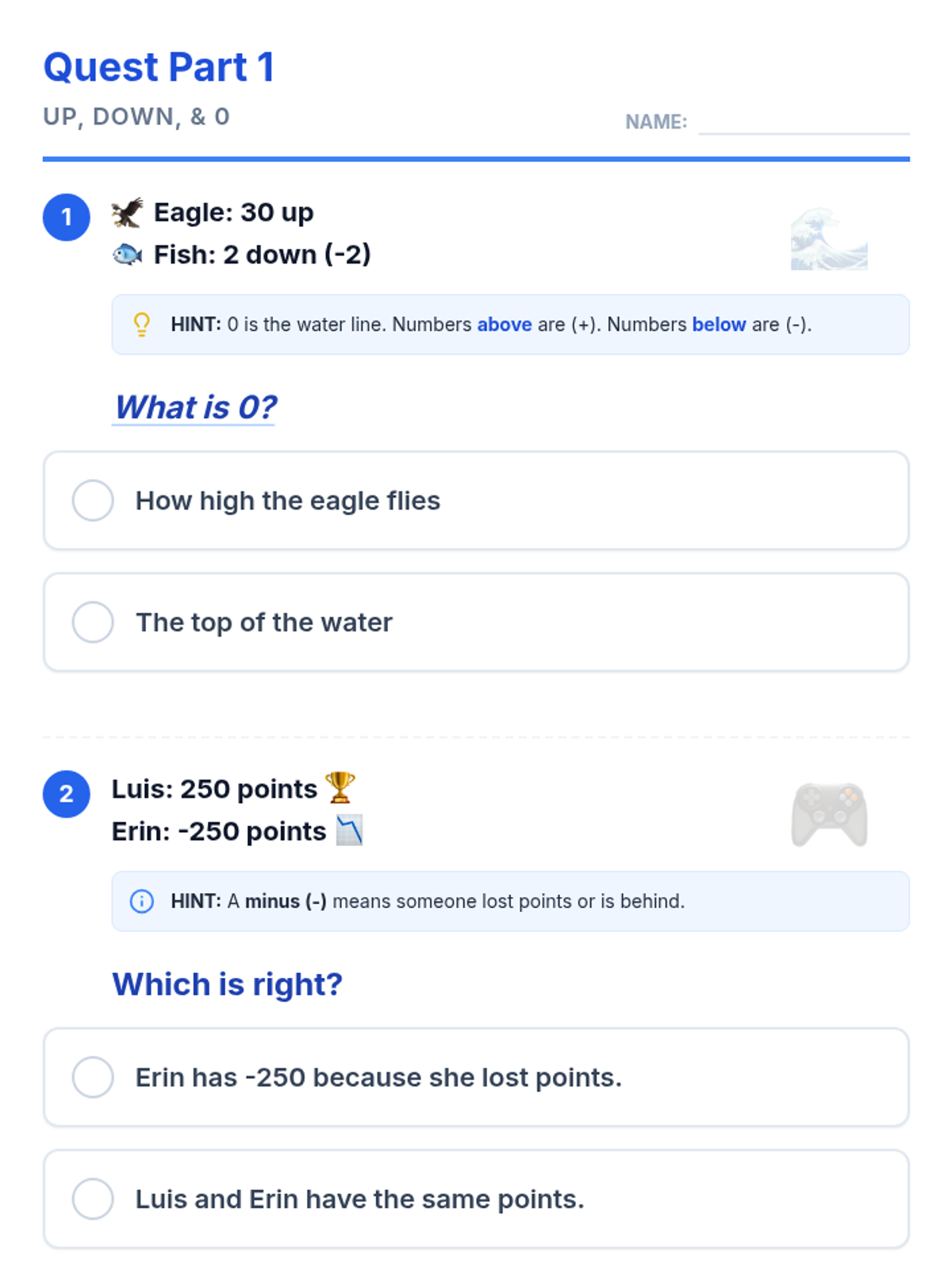
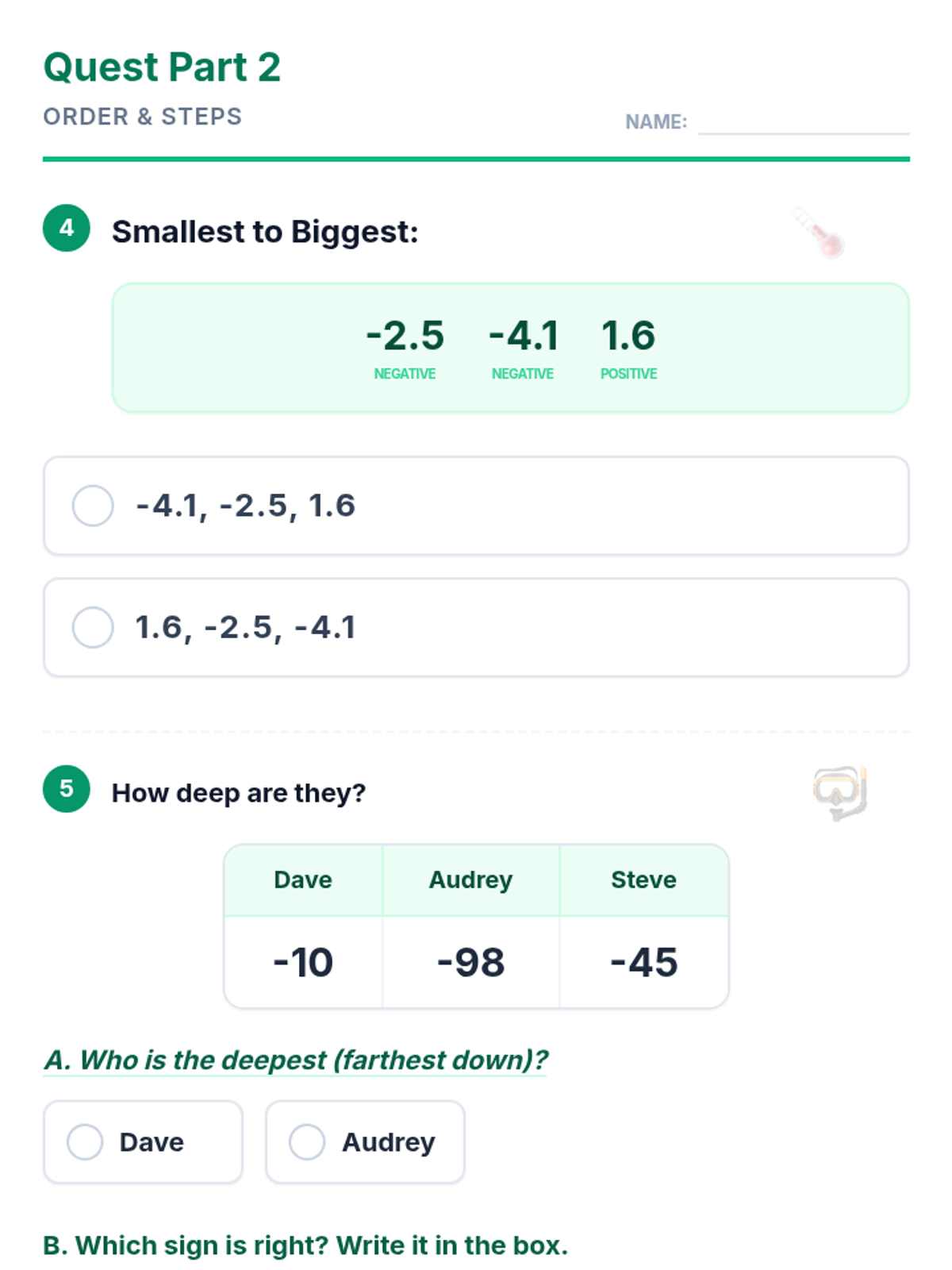
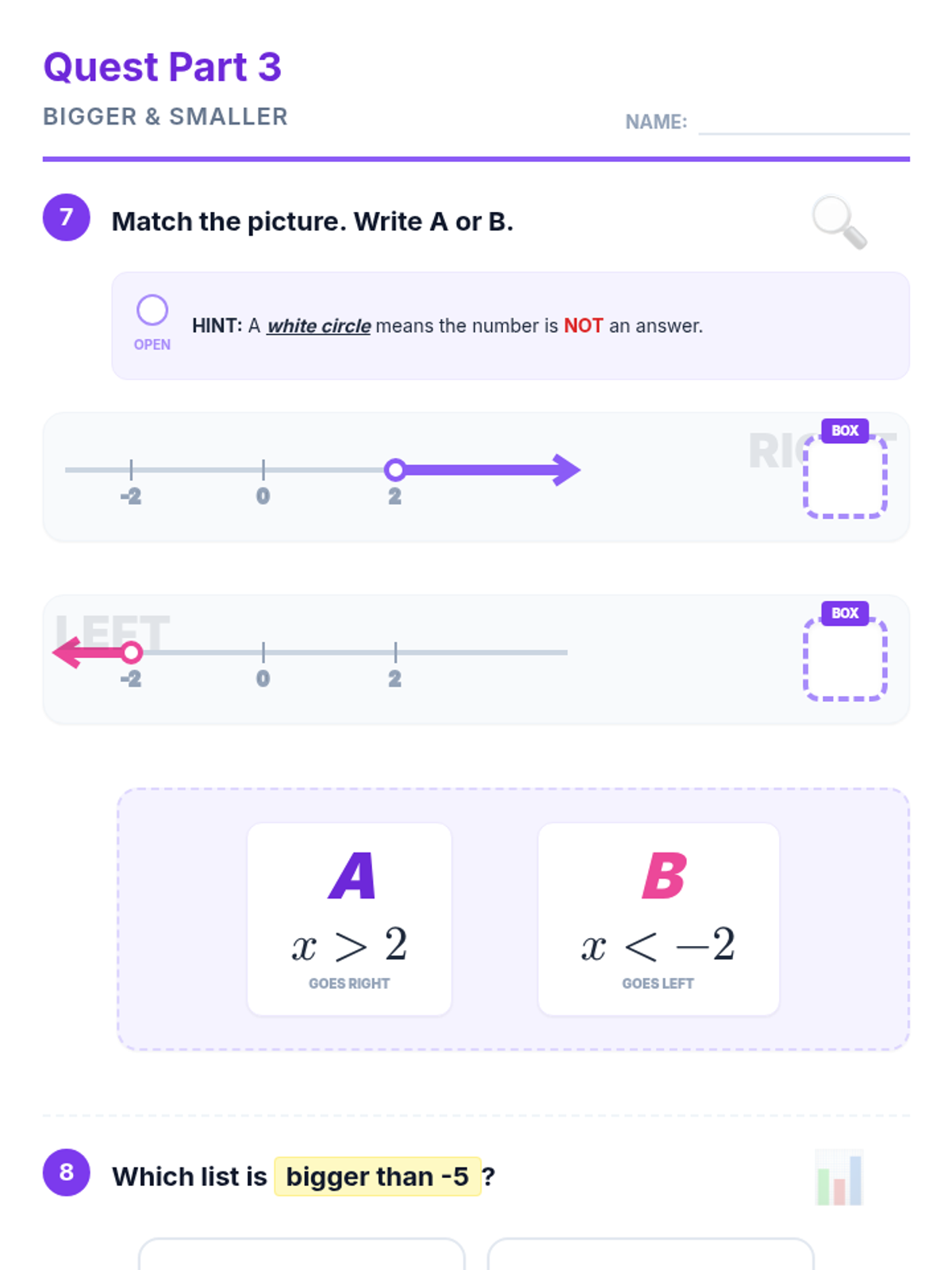
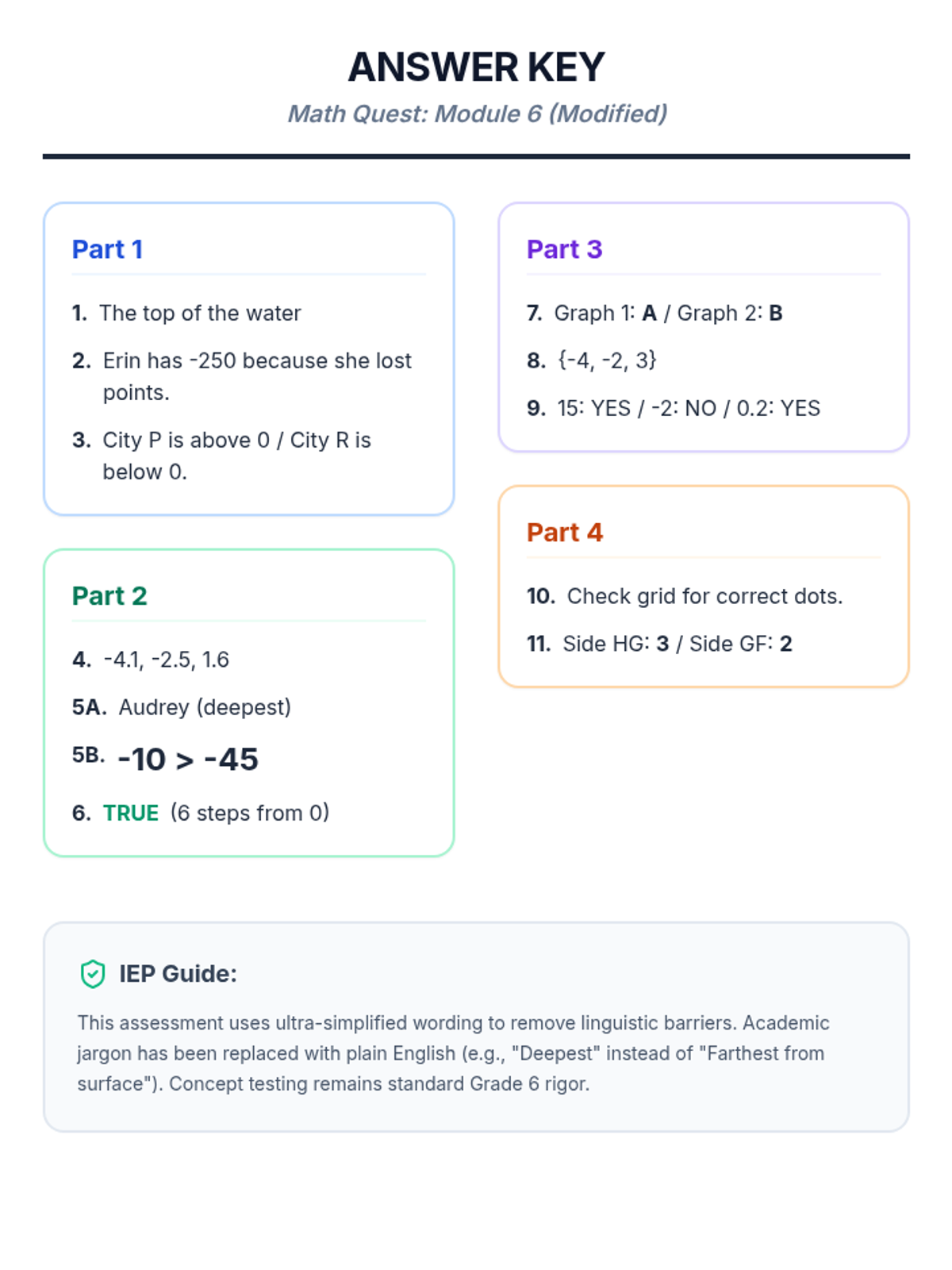
A modified version of the Grade 6 Module 6 Assessment, specifically designed for students with IEPs. The assessment is broken into bite-sized chunks with simplified language, visual supports, and reduced response options to increase accessibility.
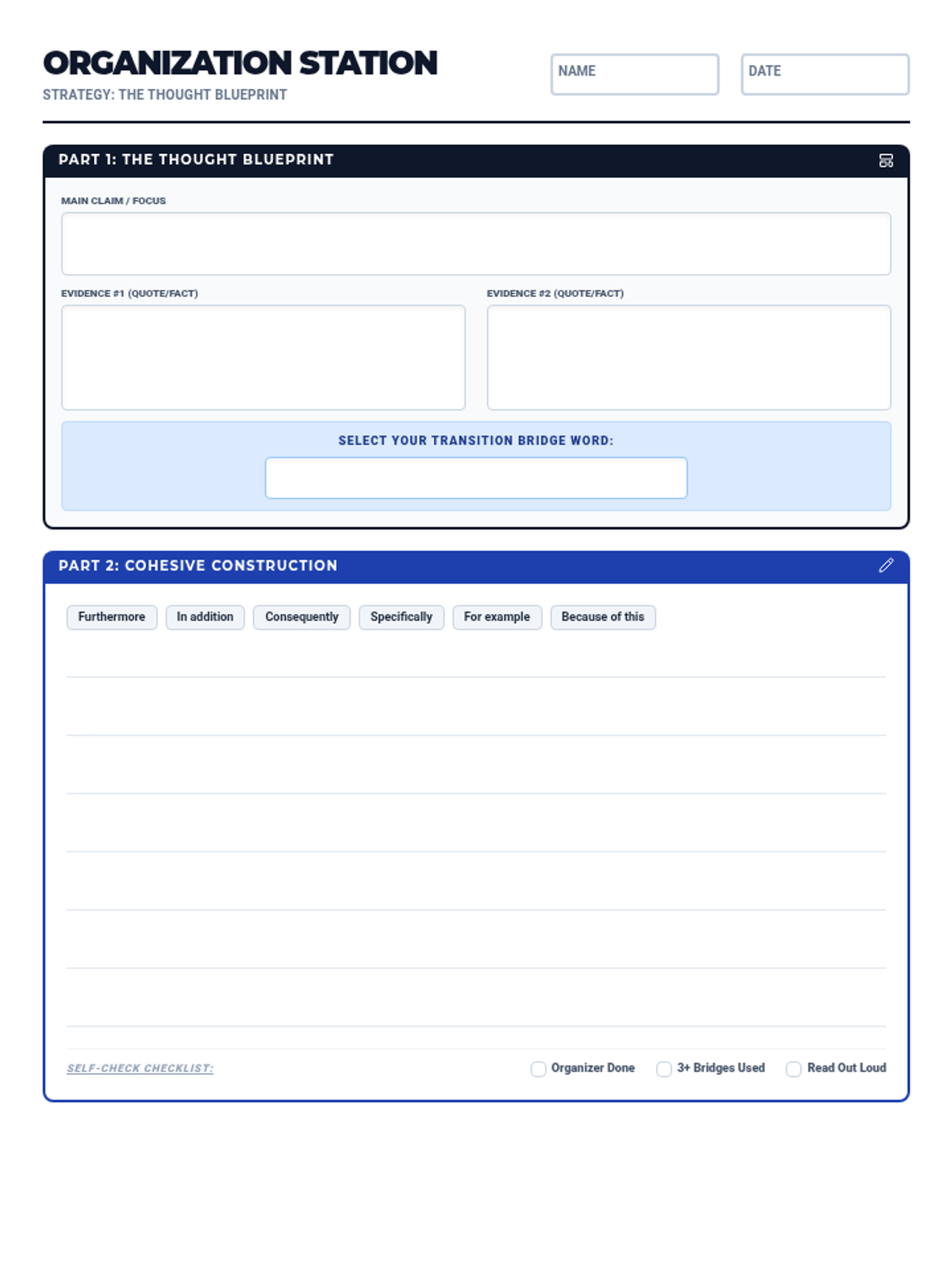
A lesson focused on improving writing organization and cohesion through the use of graphic organizers and transitional phrases to link evidence to claims.
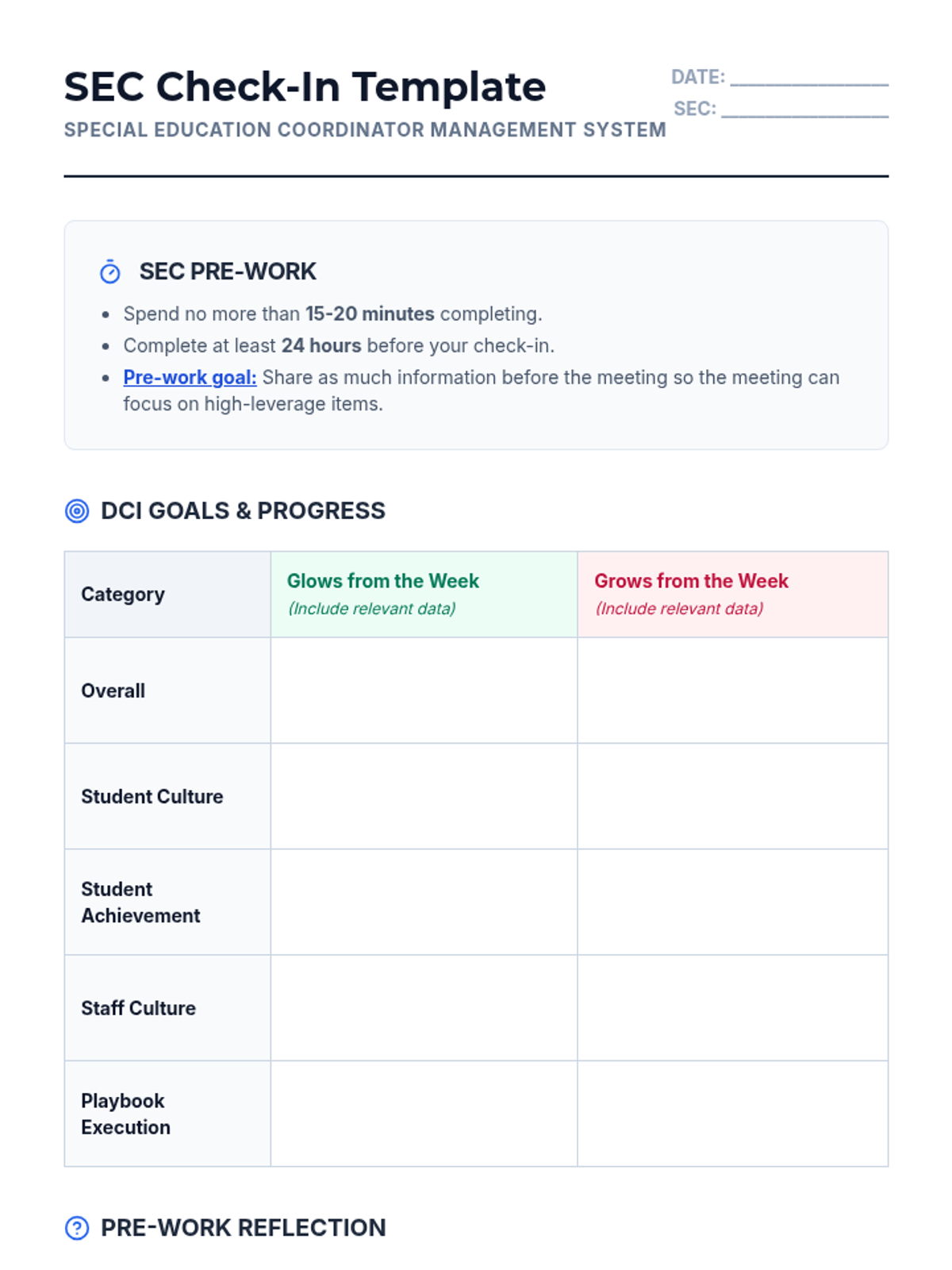
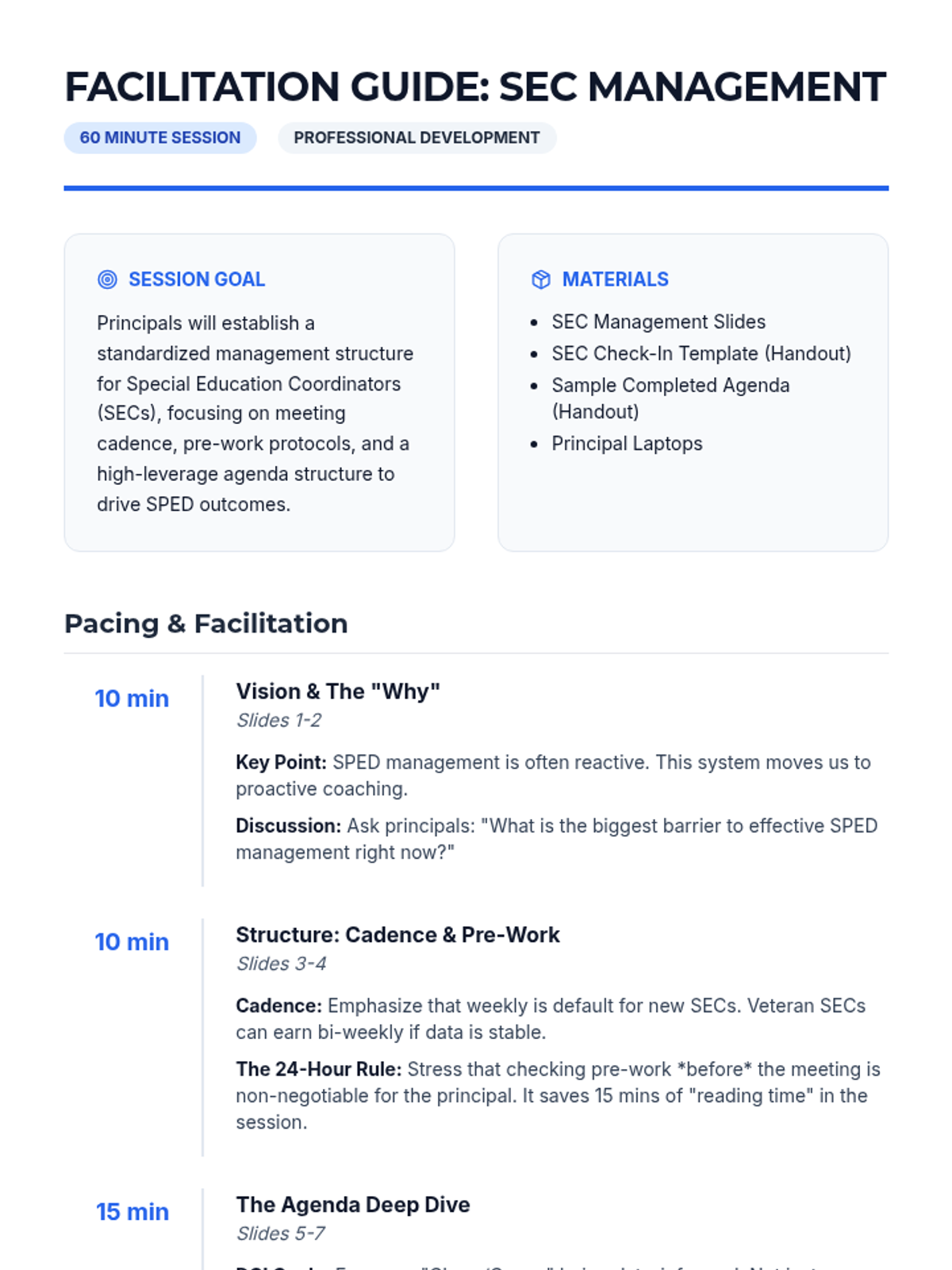
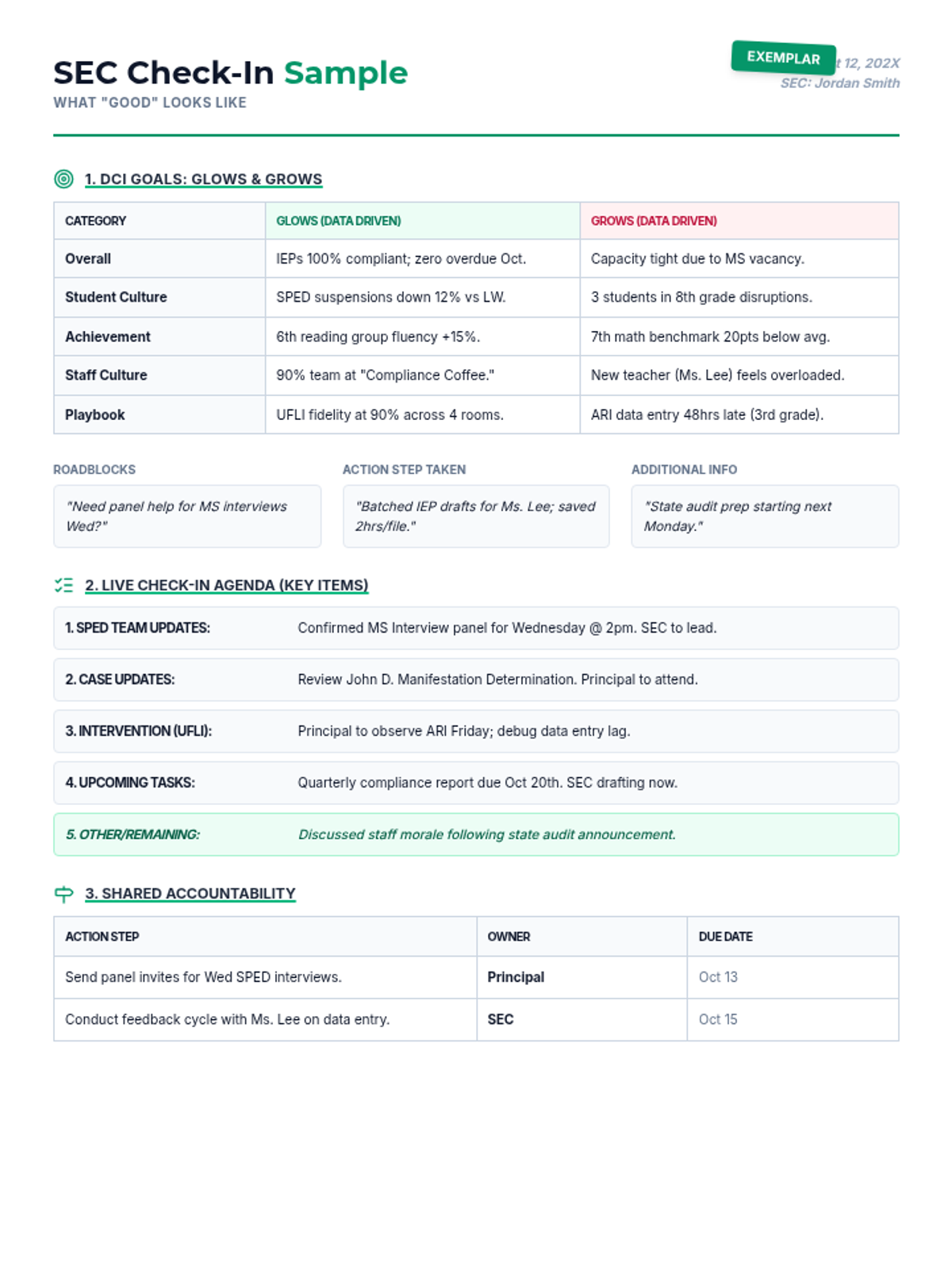
A 60-minute professional development session for school principals focused on establishing effective management structures and check-in protocols for Special Education Coordinators.
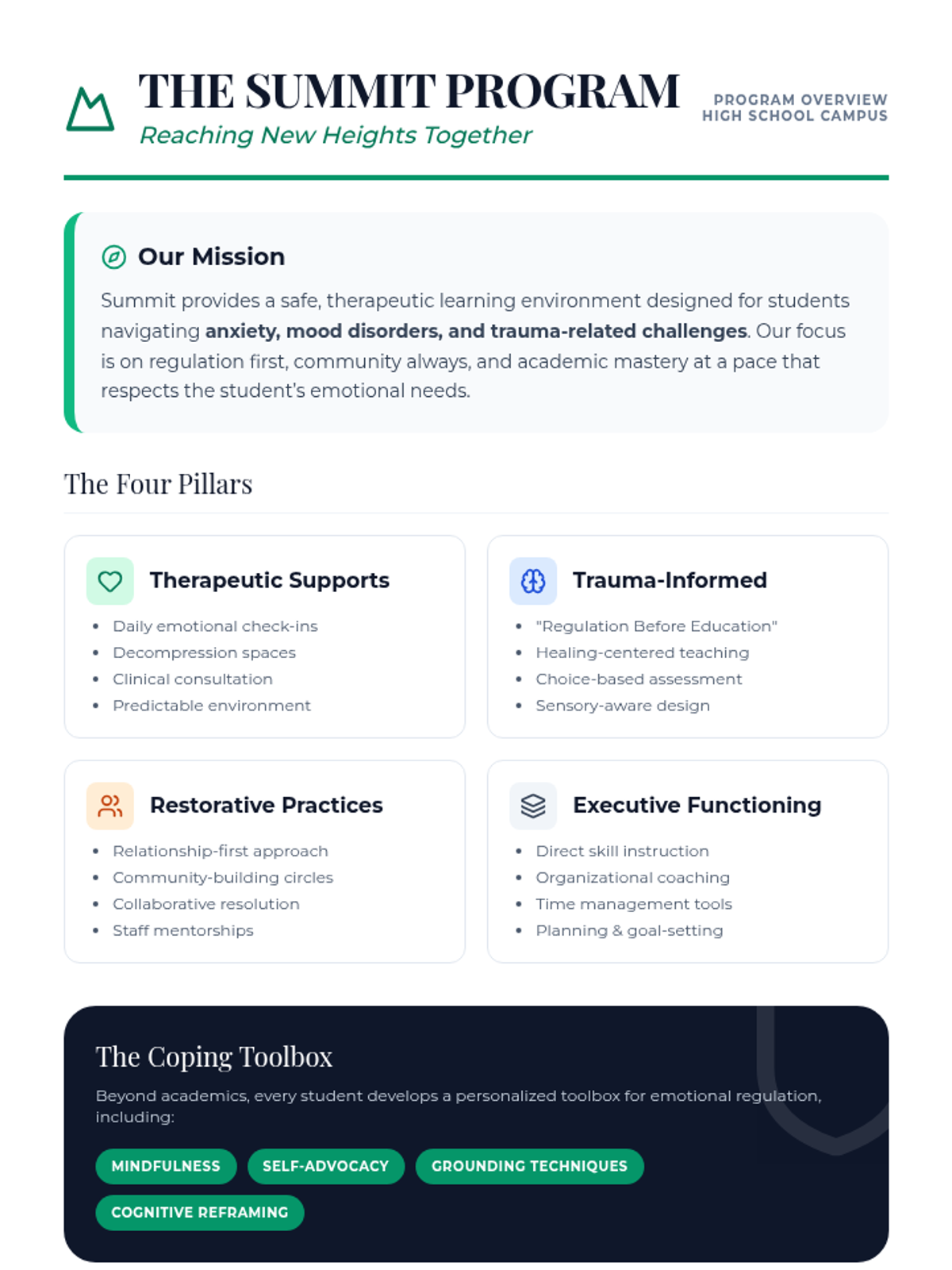
An introductory presentation and reference guide for parents to understand the Summit program's therapeutic and academic supports for students with social-emotional needs.
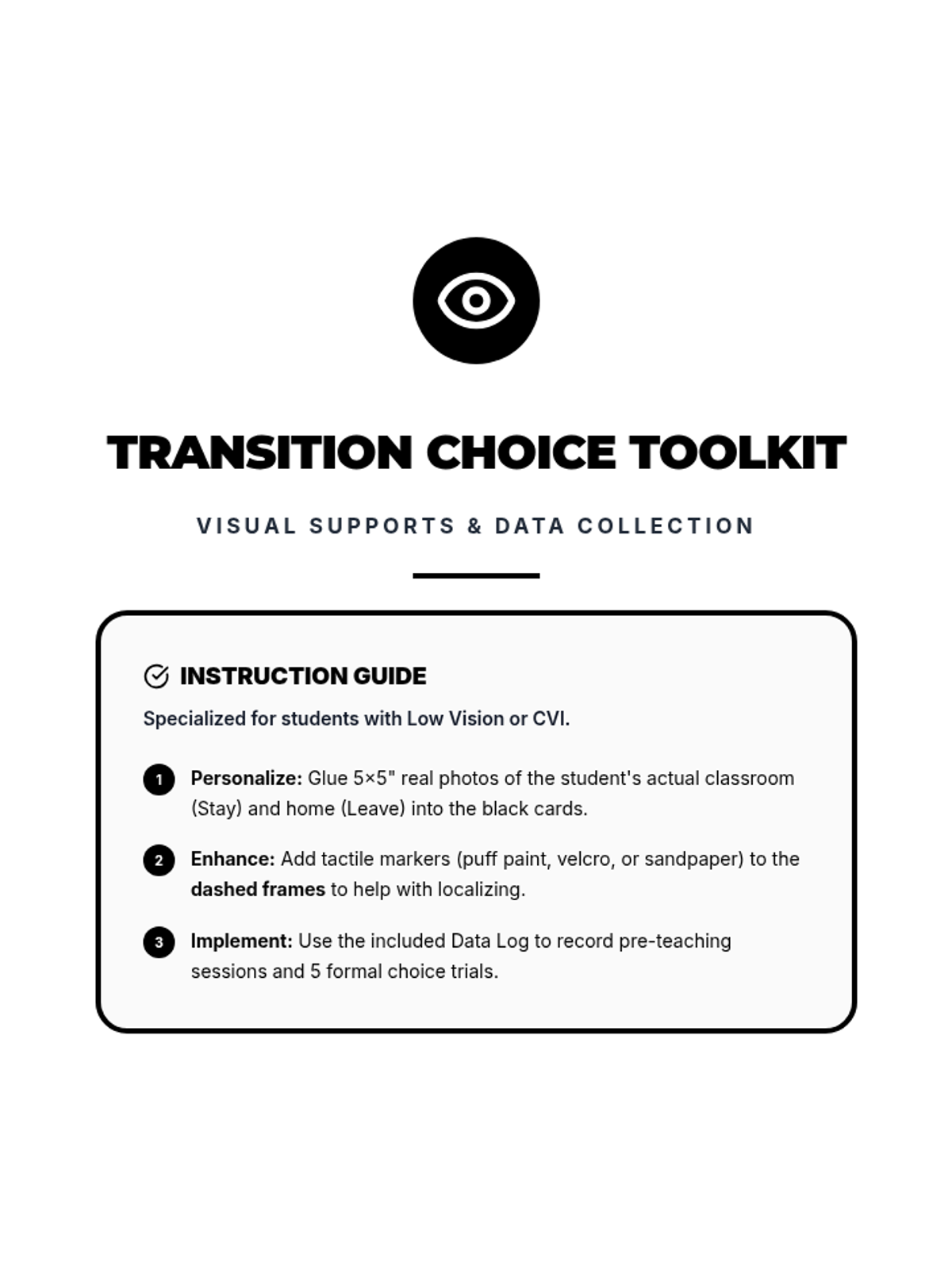
A set of high-contrast visual supports and a structured data log designed to help students with vision needs participate in their 18+ transition decisions.
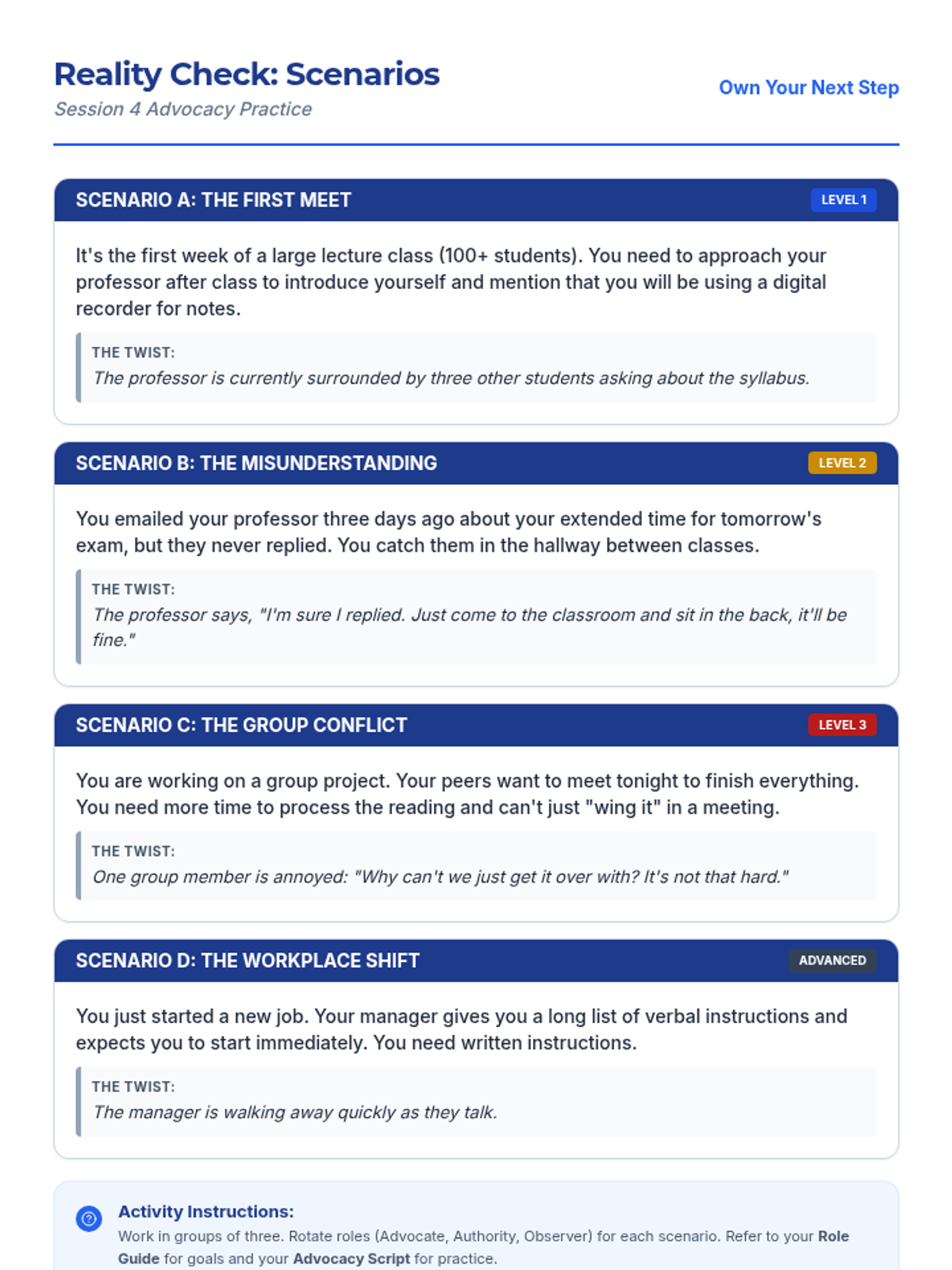
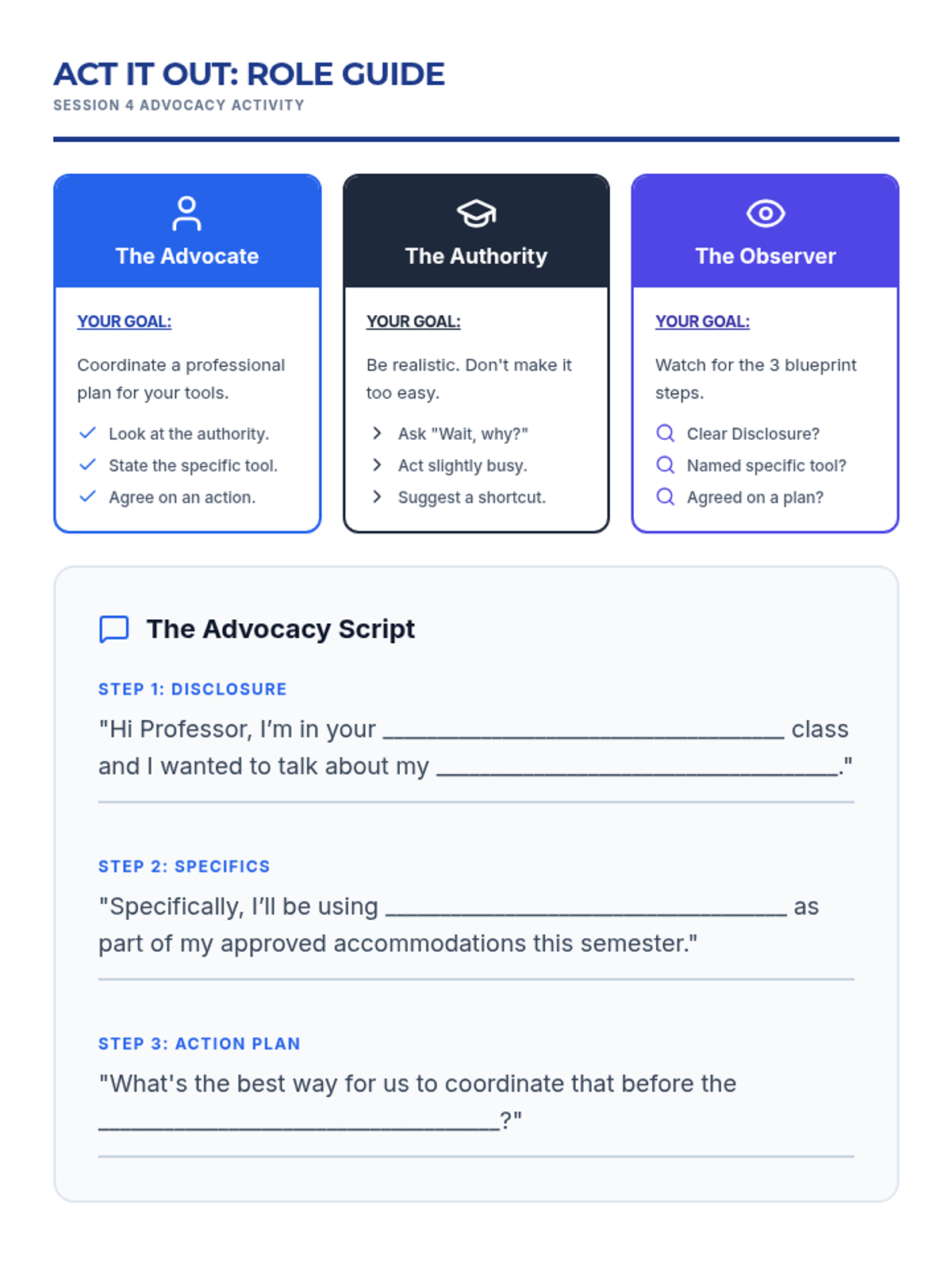
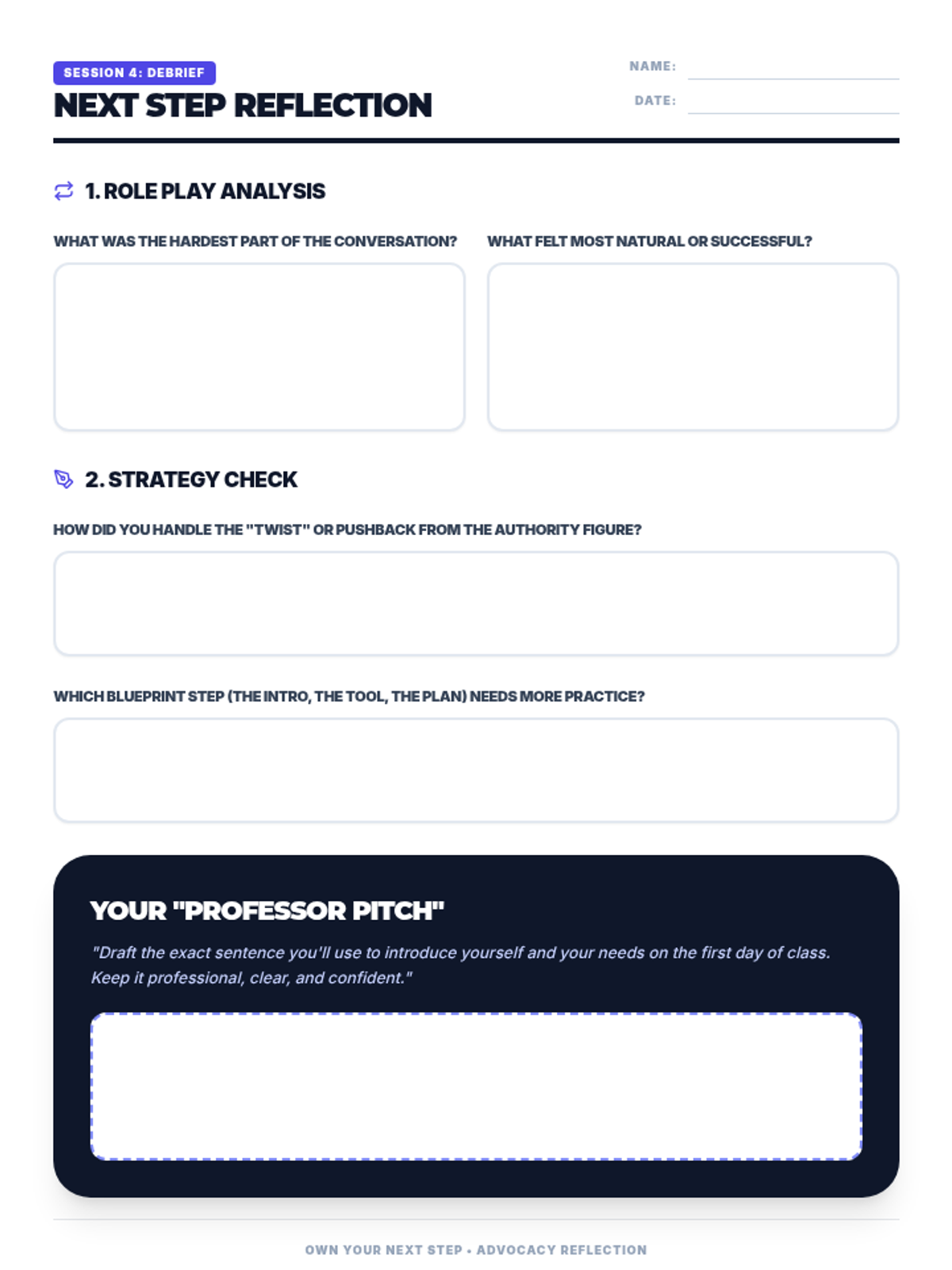
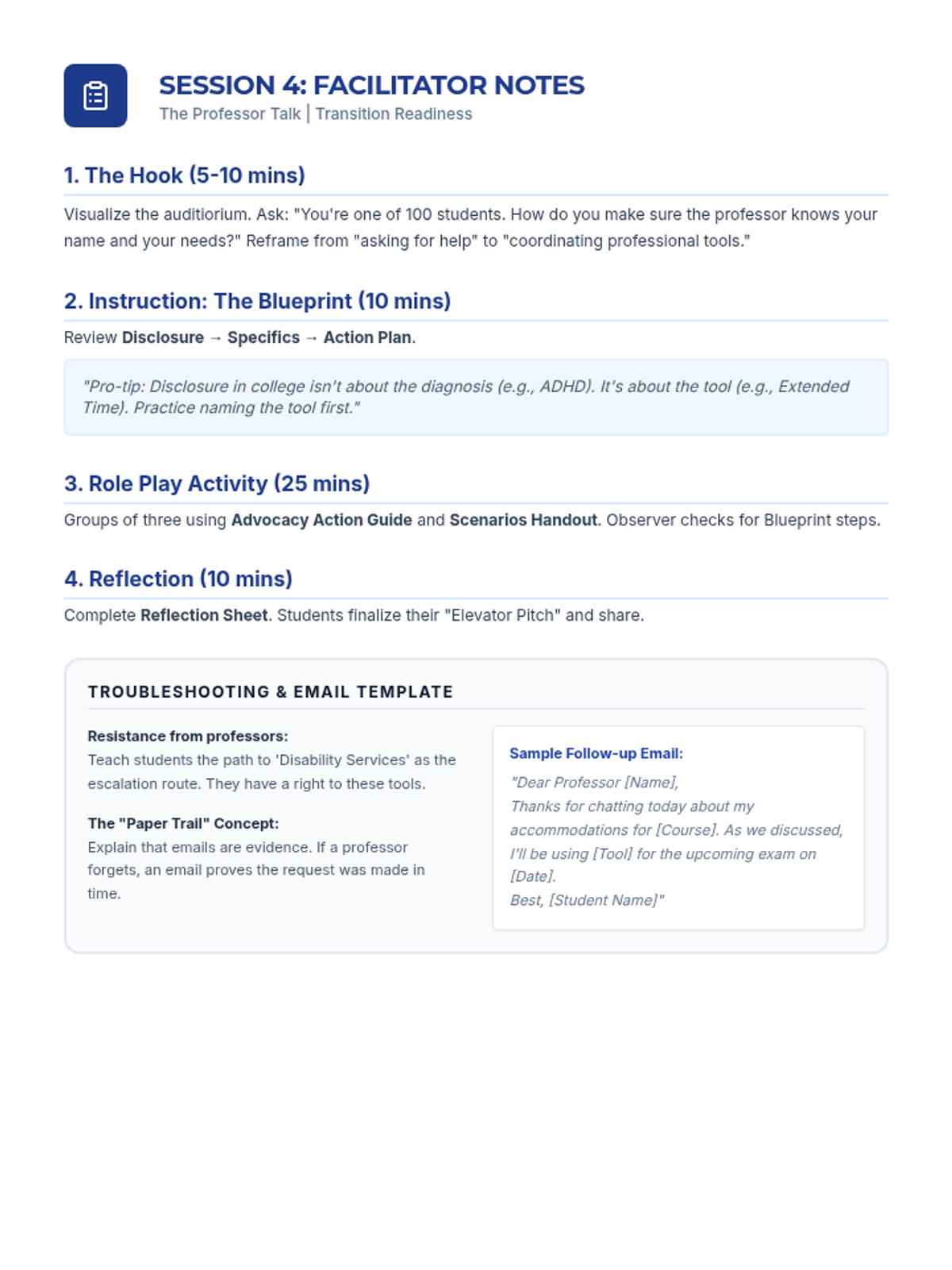
A focused session on postsecondary self-advocacy, teaching students with learning differences how to communicate their needs to professors and employers. The lesson emphasizes the transition from high school's automatic support to the self-initiated systems of college and the workplace.
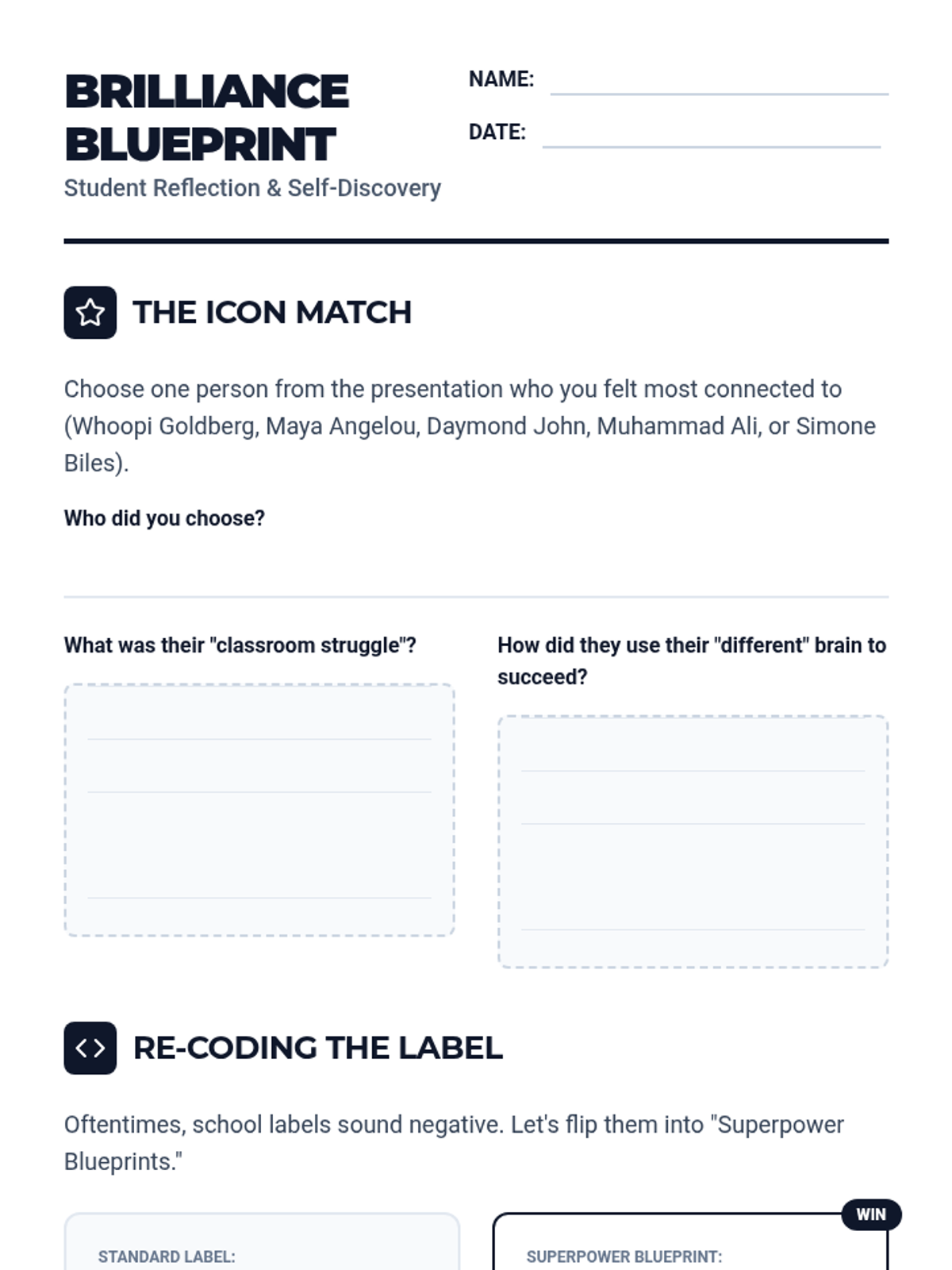
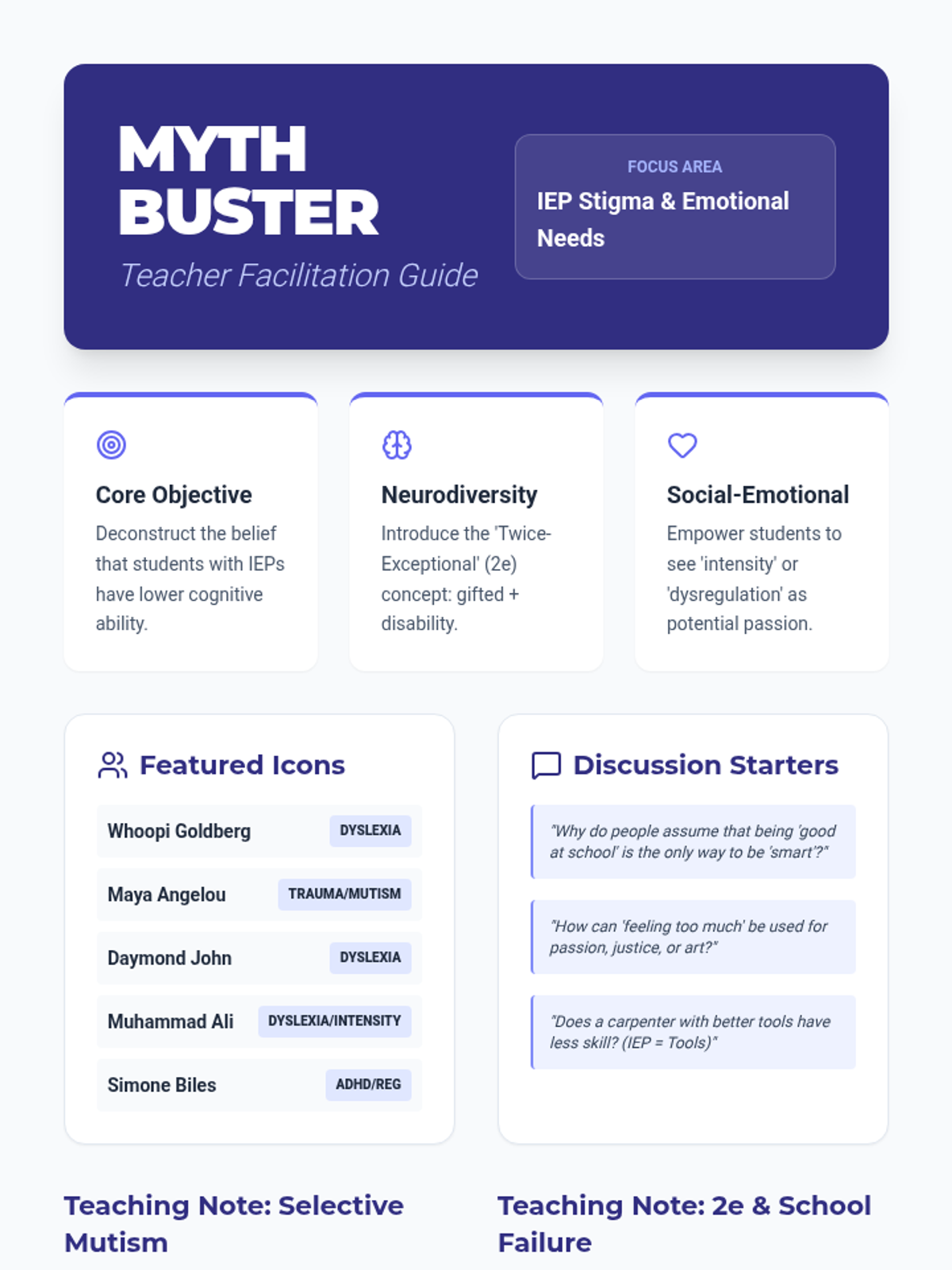
This lesson dismantles the stigma surrounding IEPs and emotional dysregulation by highlighting the 'twice-exceptional' nature of many brilliant minds. It features a slide presentation of successful African Americans who overcame learning and emotional challenges to achieve greatness.
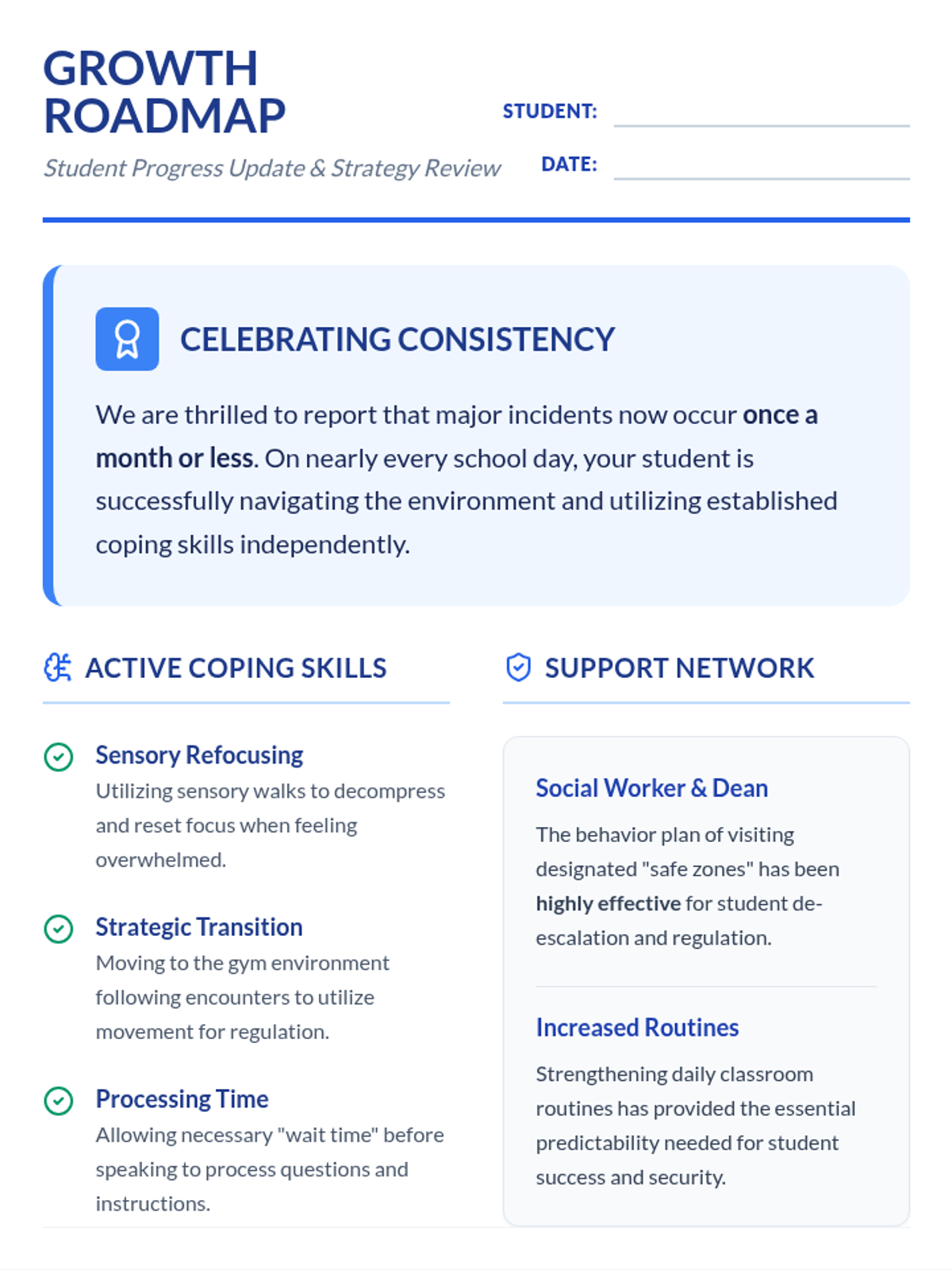
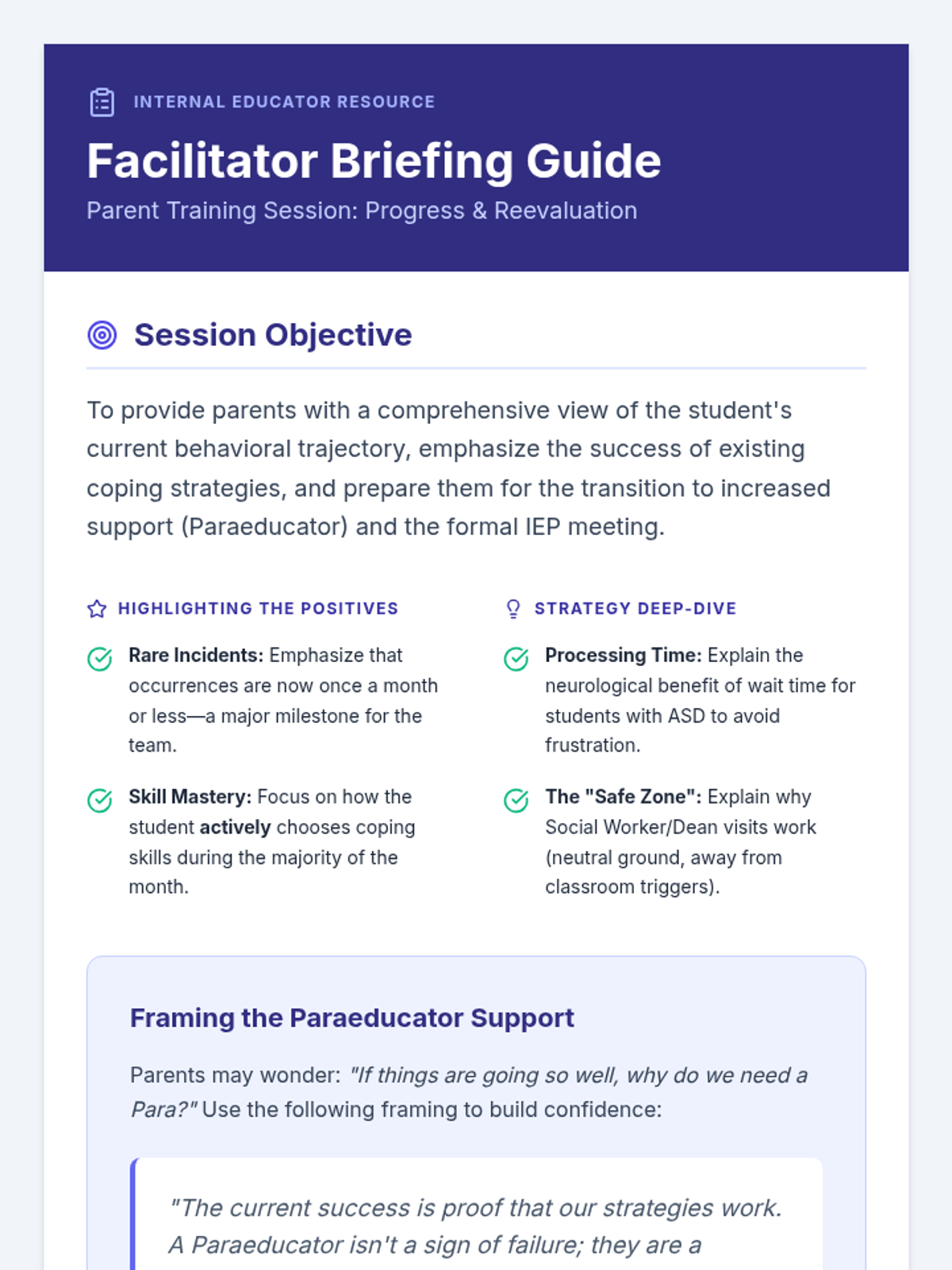
A session designed to update parents on student progress, highlighting successful coping strategies, the effectiveness of behavioral supports, and planning for the upcoming IEP meeting.
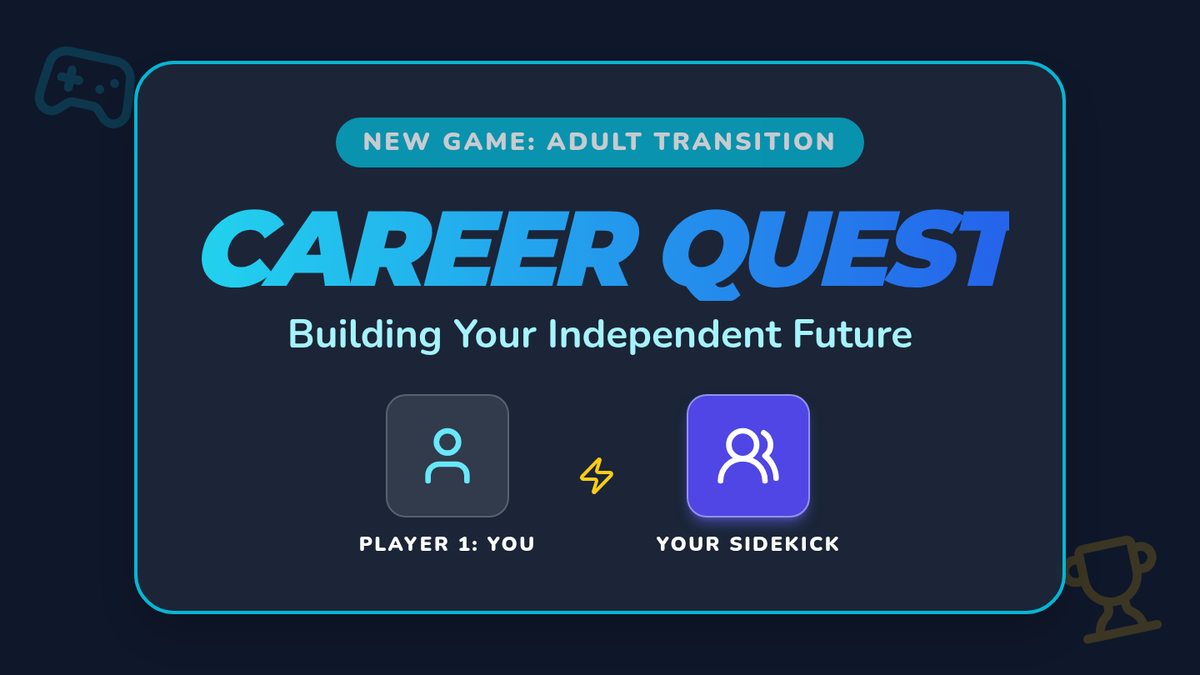
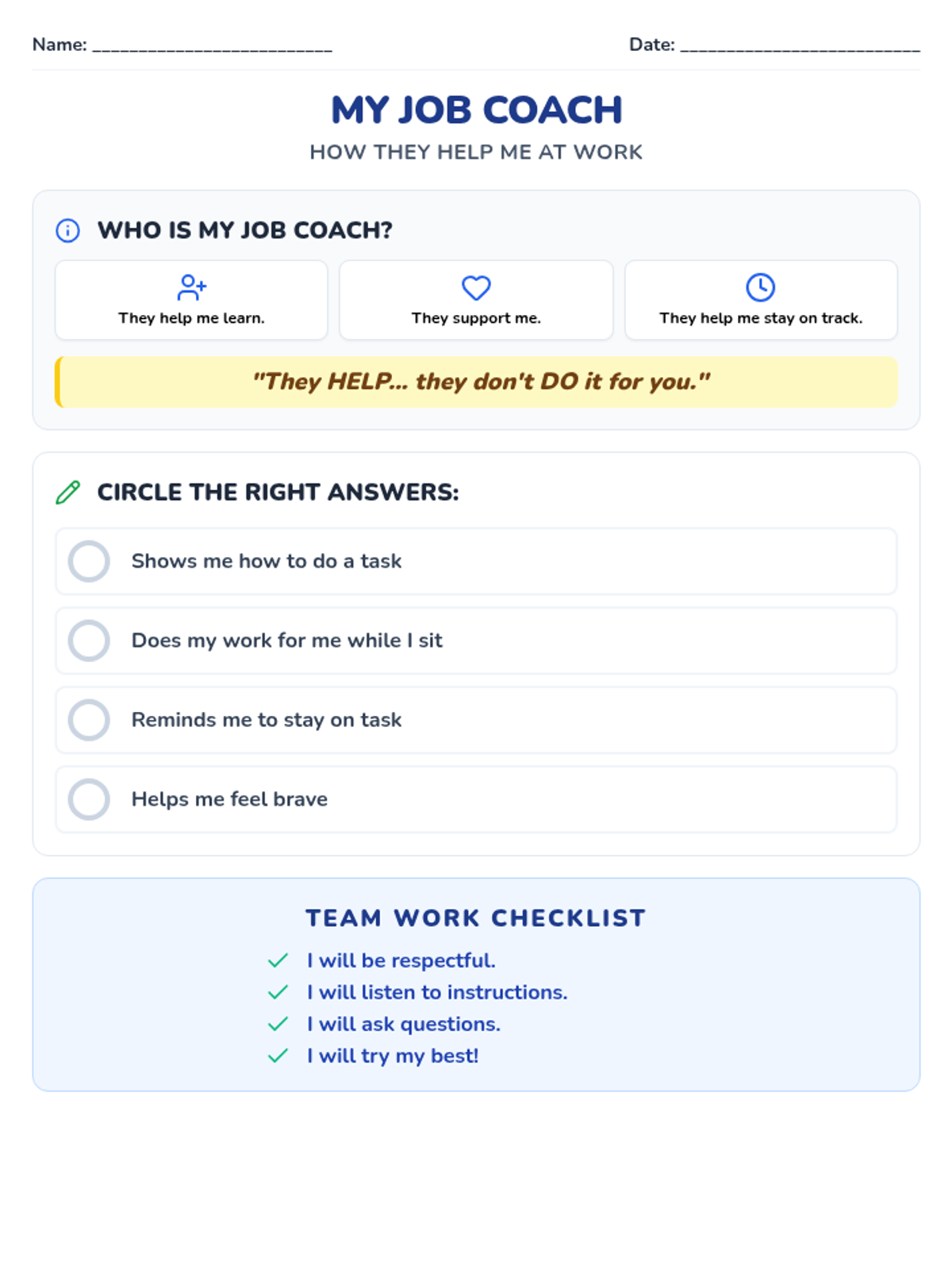
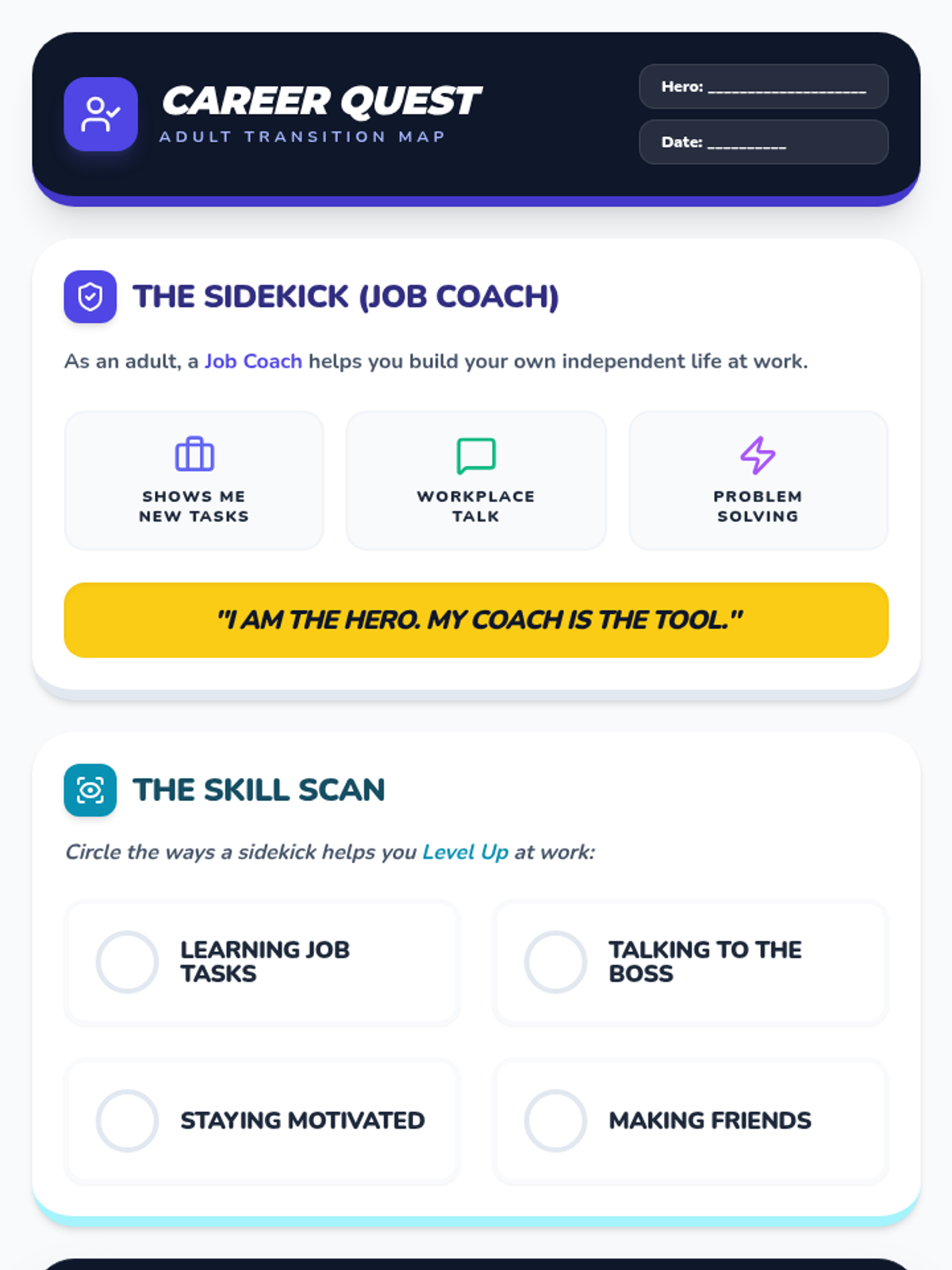
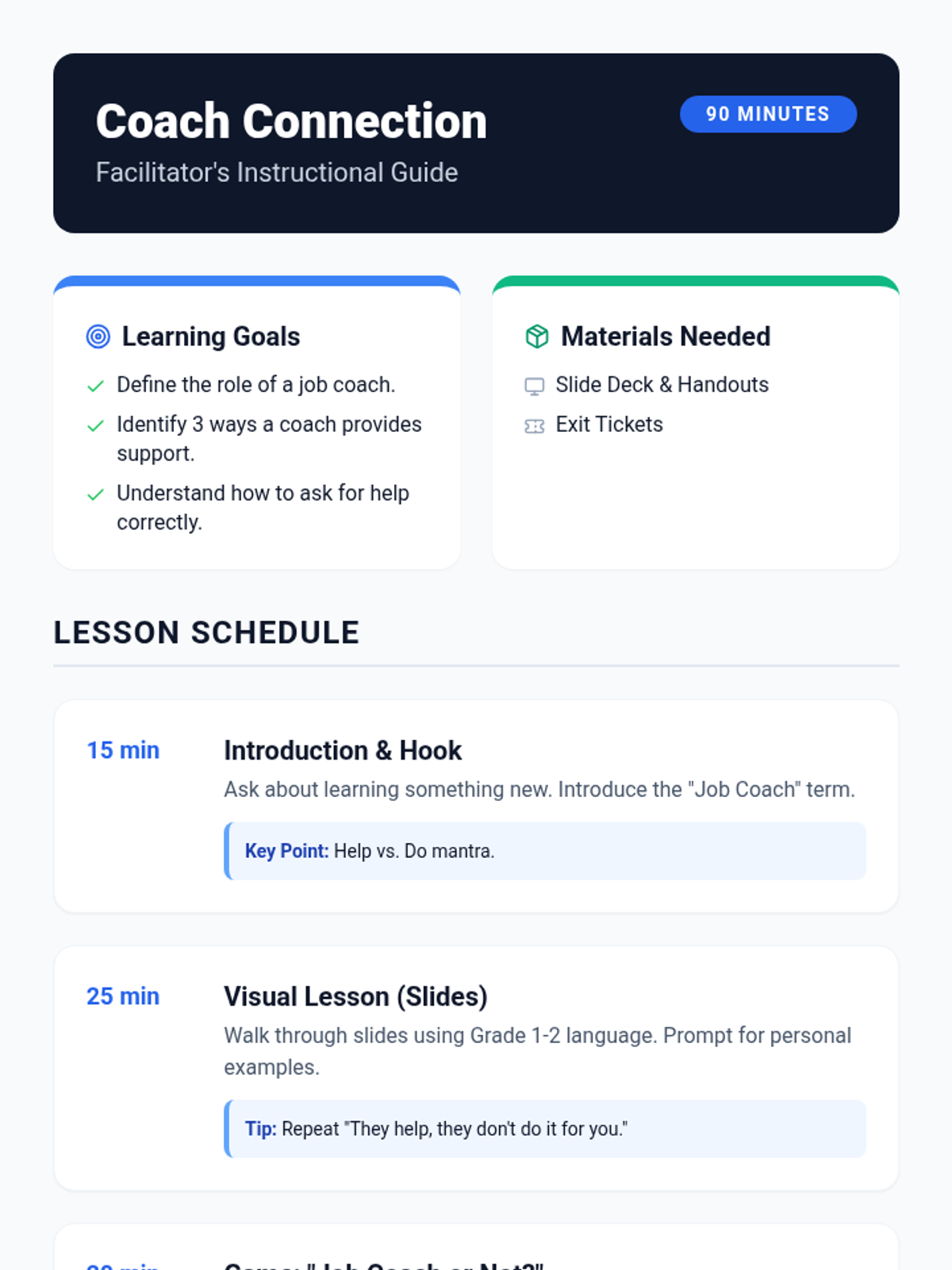
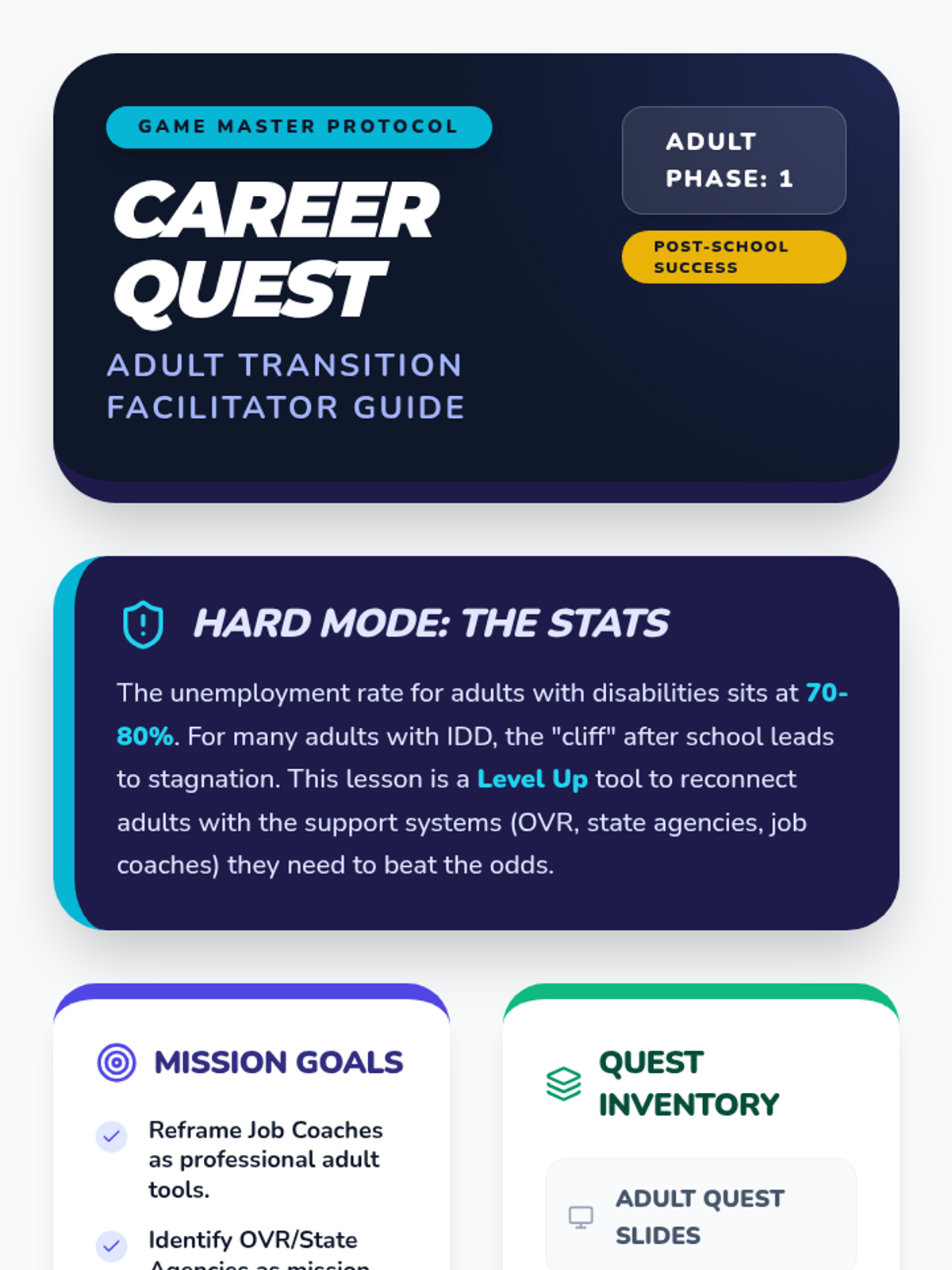
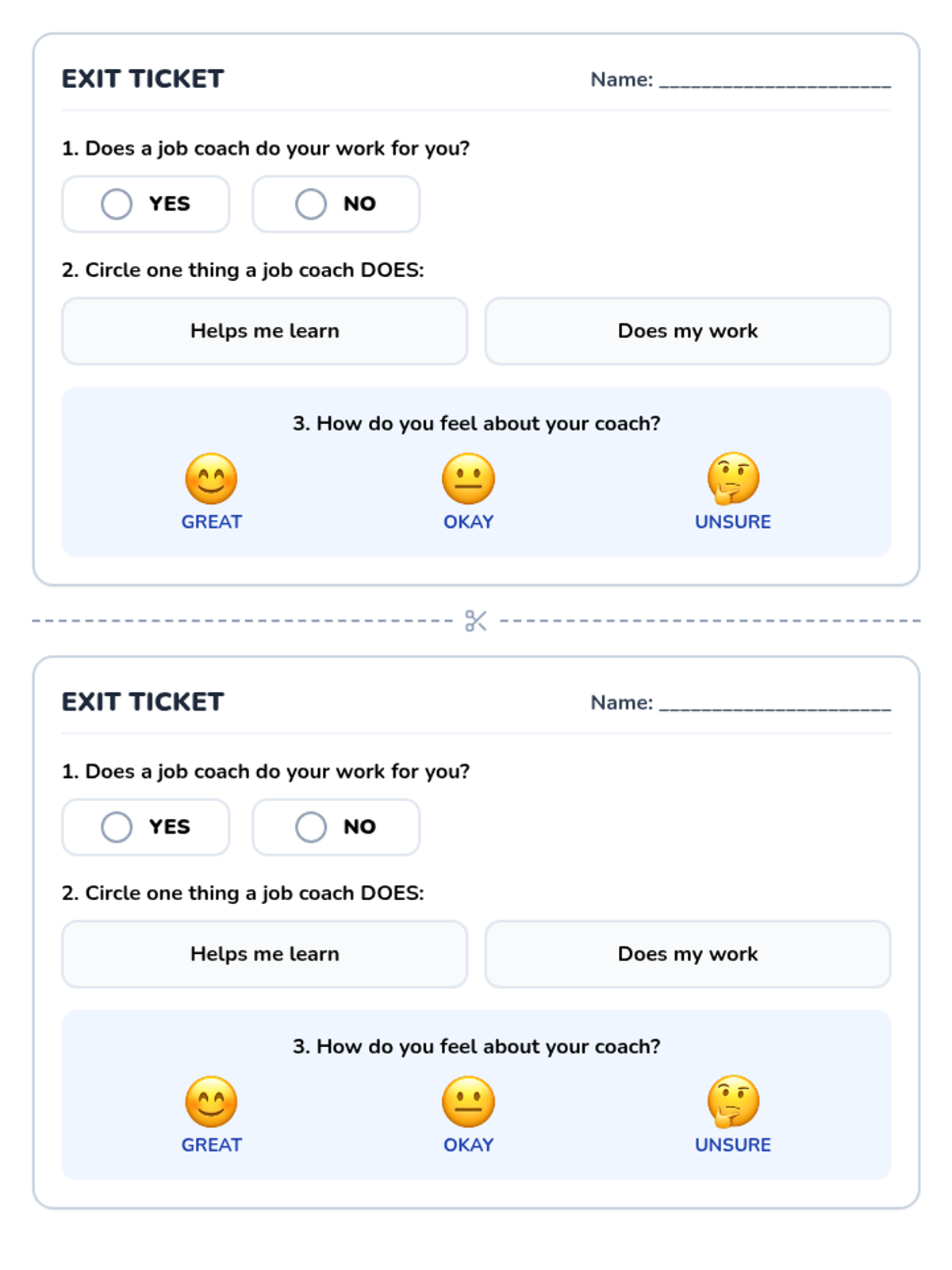
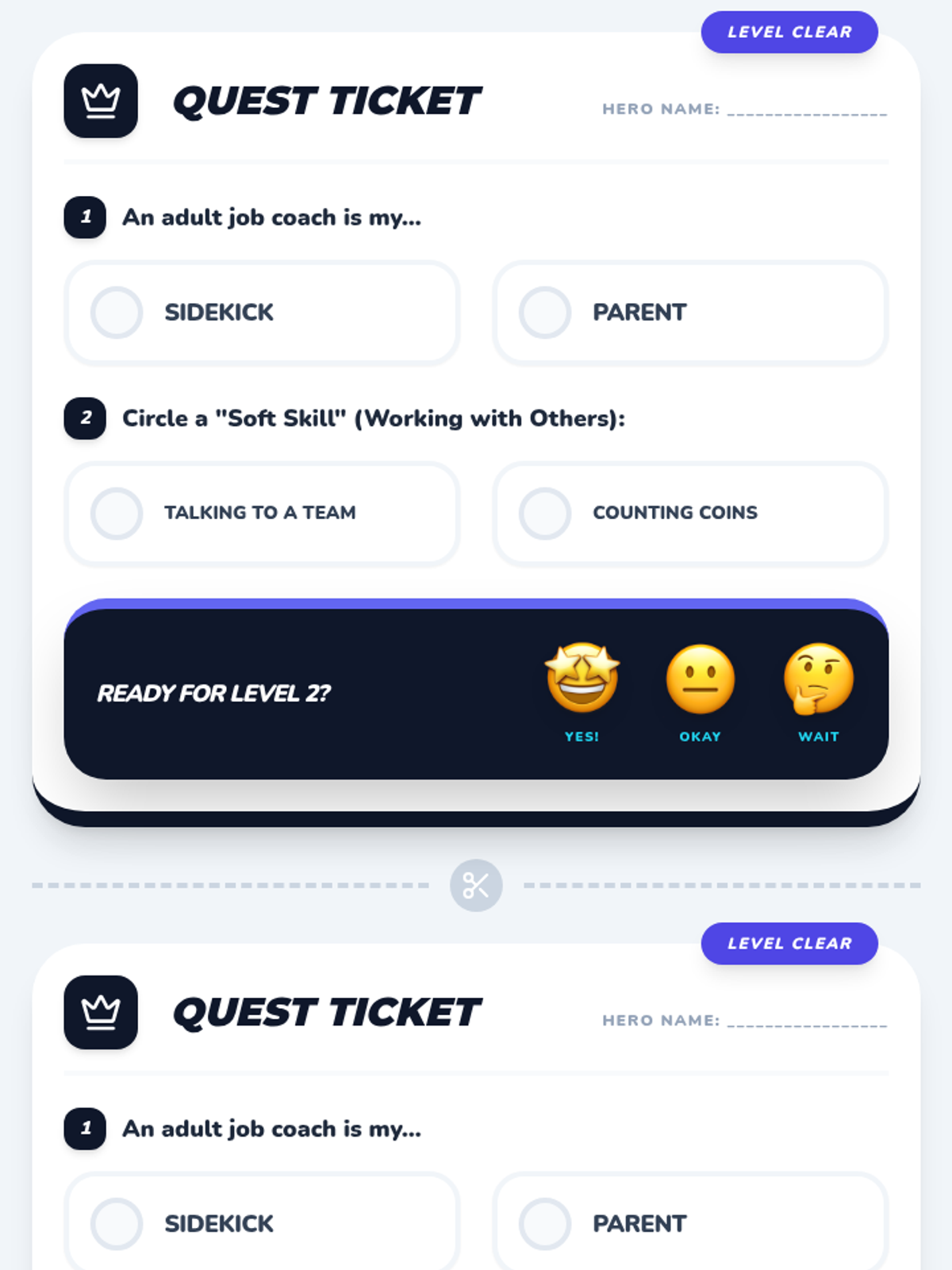
An engaging, video-game themed training session where participants embark on a 'Career Quest' to understand job coaches, IEP transitions, and vocational skills. Based on advocacy-driven research, it covers soft skills, self-advocacy, and how to access support through school plans.
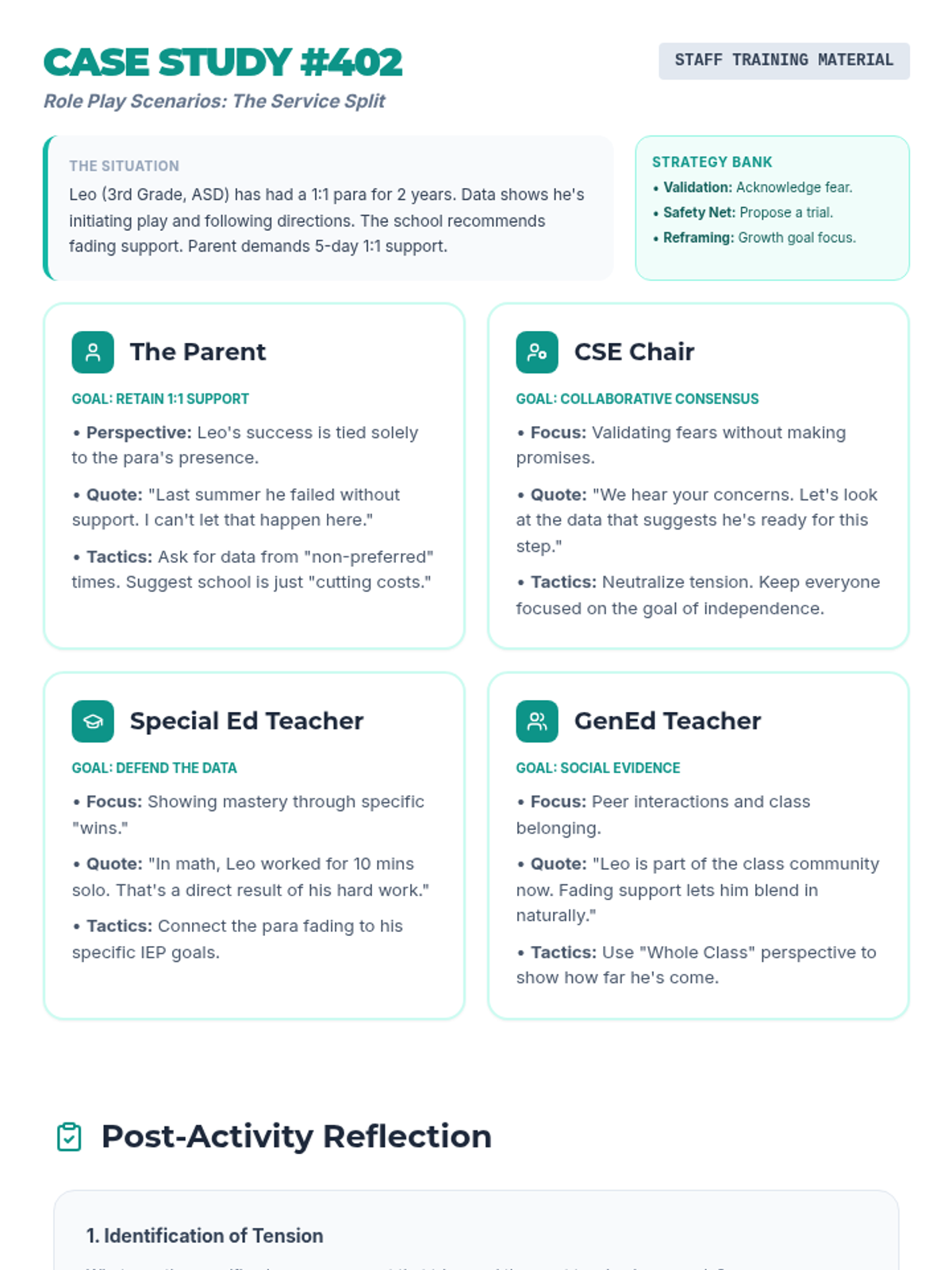
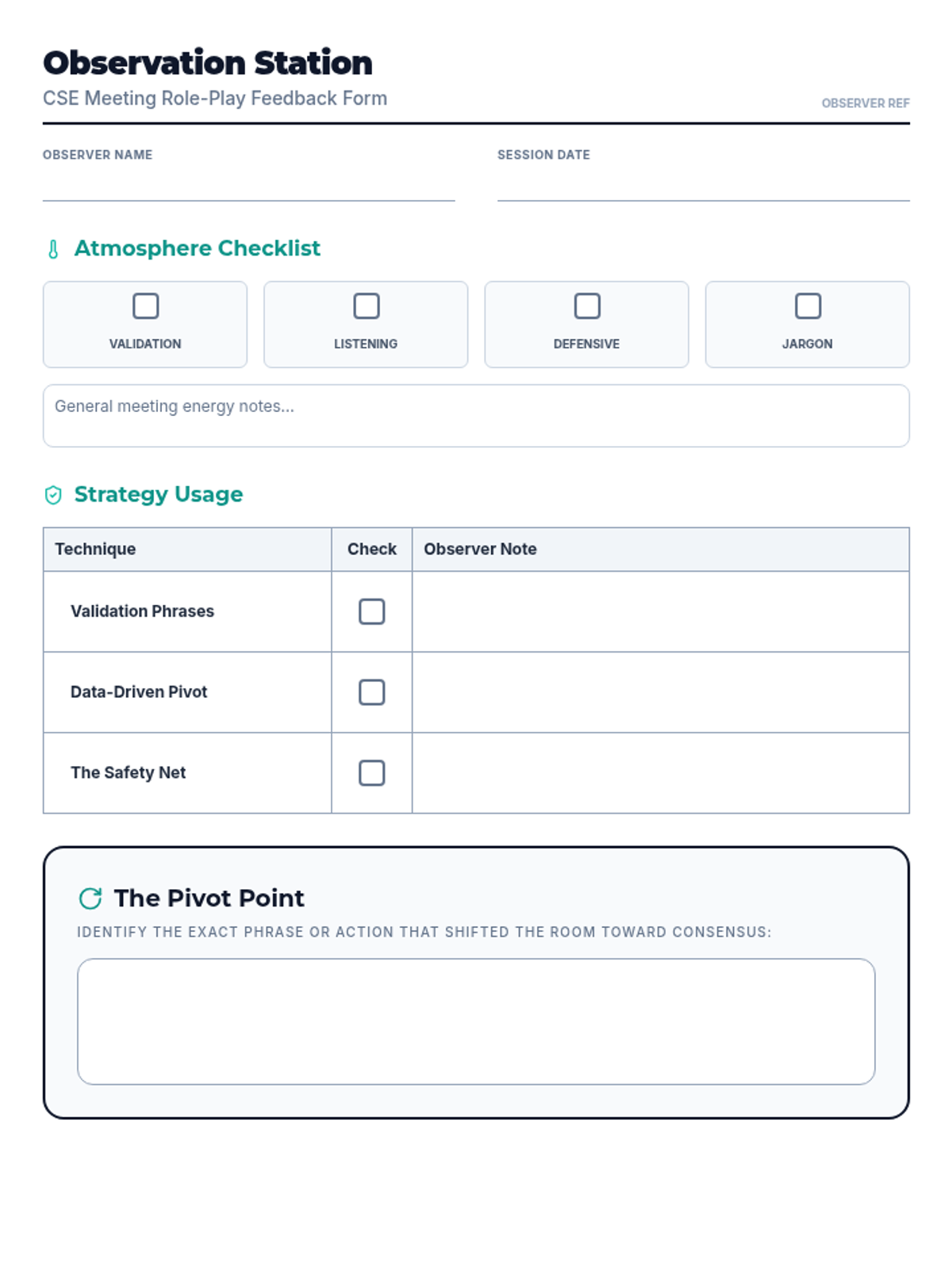
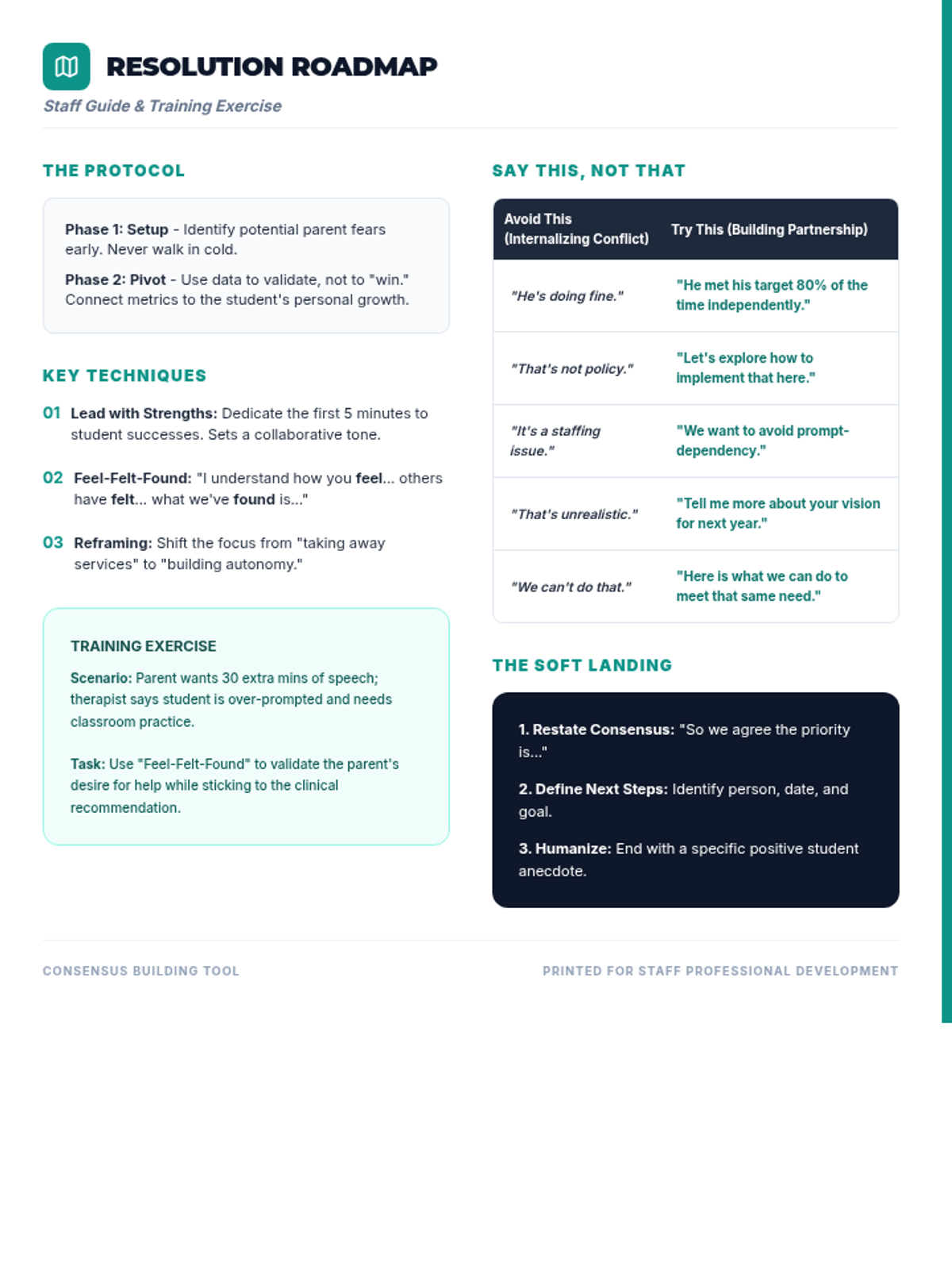
A professional development lesson designed for school staff to practice resolving parent-staff conflicts during Committee on Special Education (CSE) meetings through role-play and structured reflection.
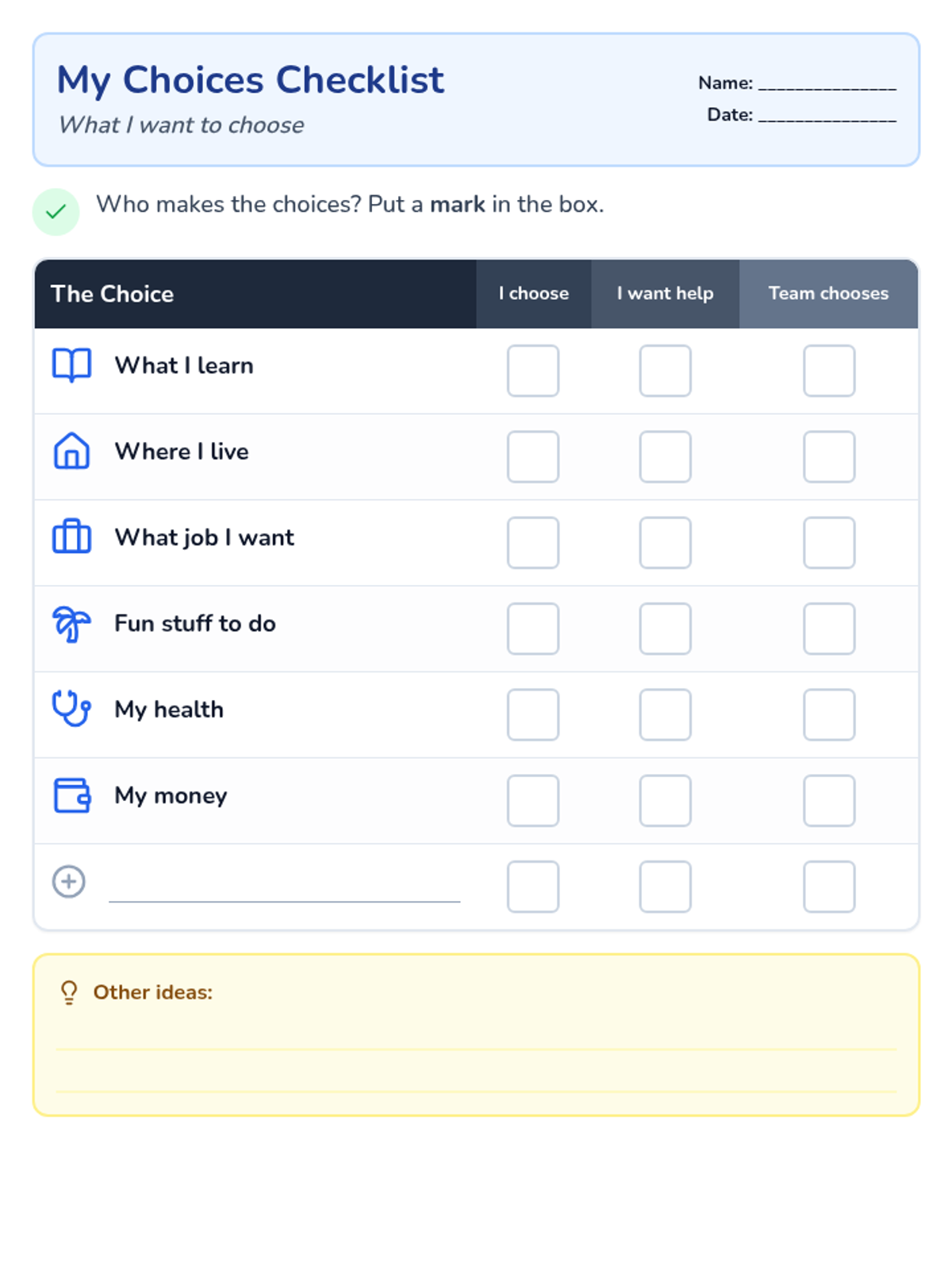
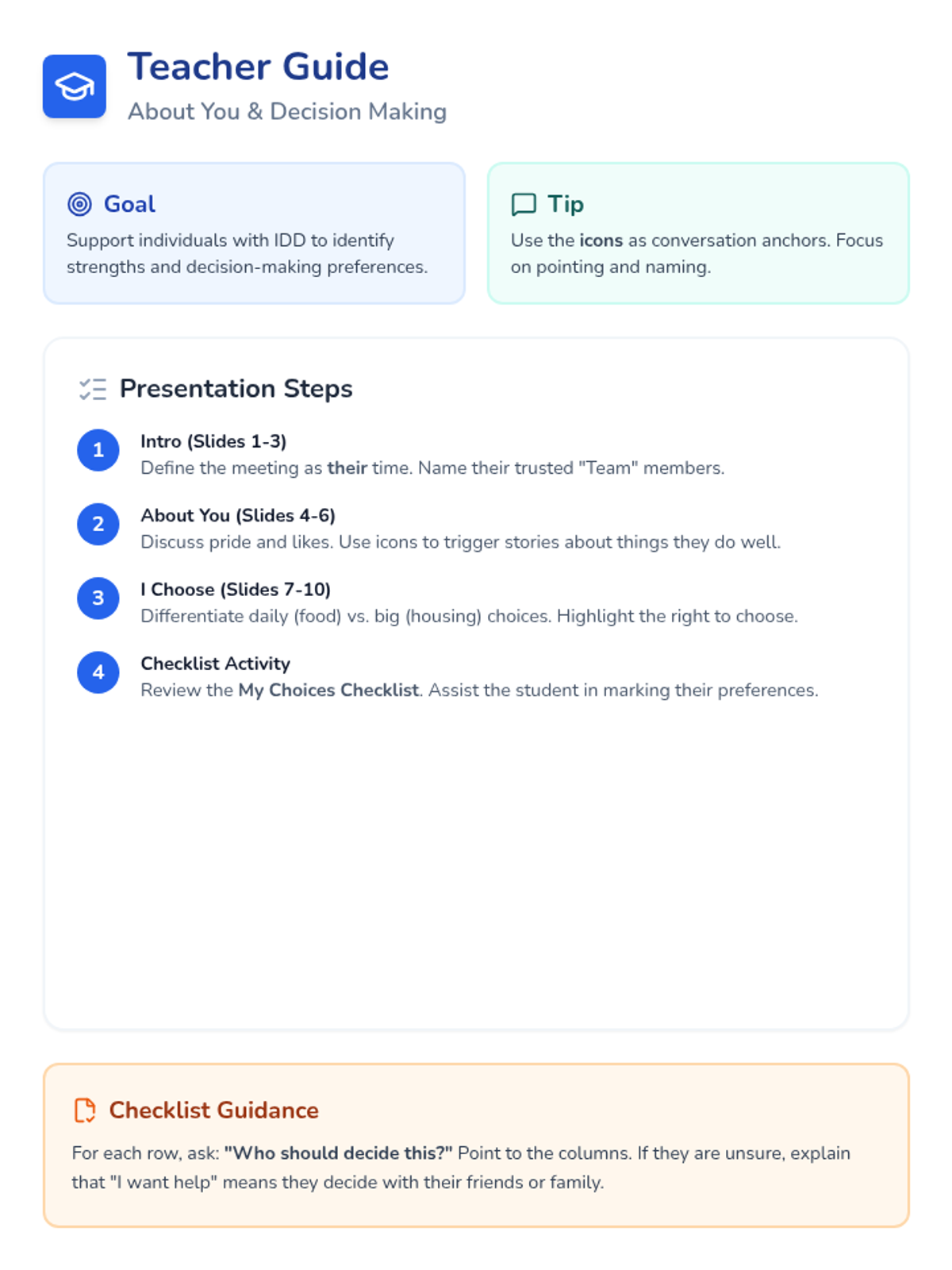
A simplified guide for individuals with intellectual and developmental disabilities to understand their Individual Program Plan (IPP) process, focusing on personal strengths and decision-making.
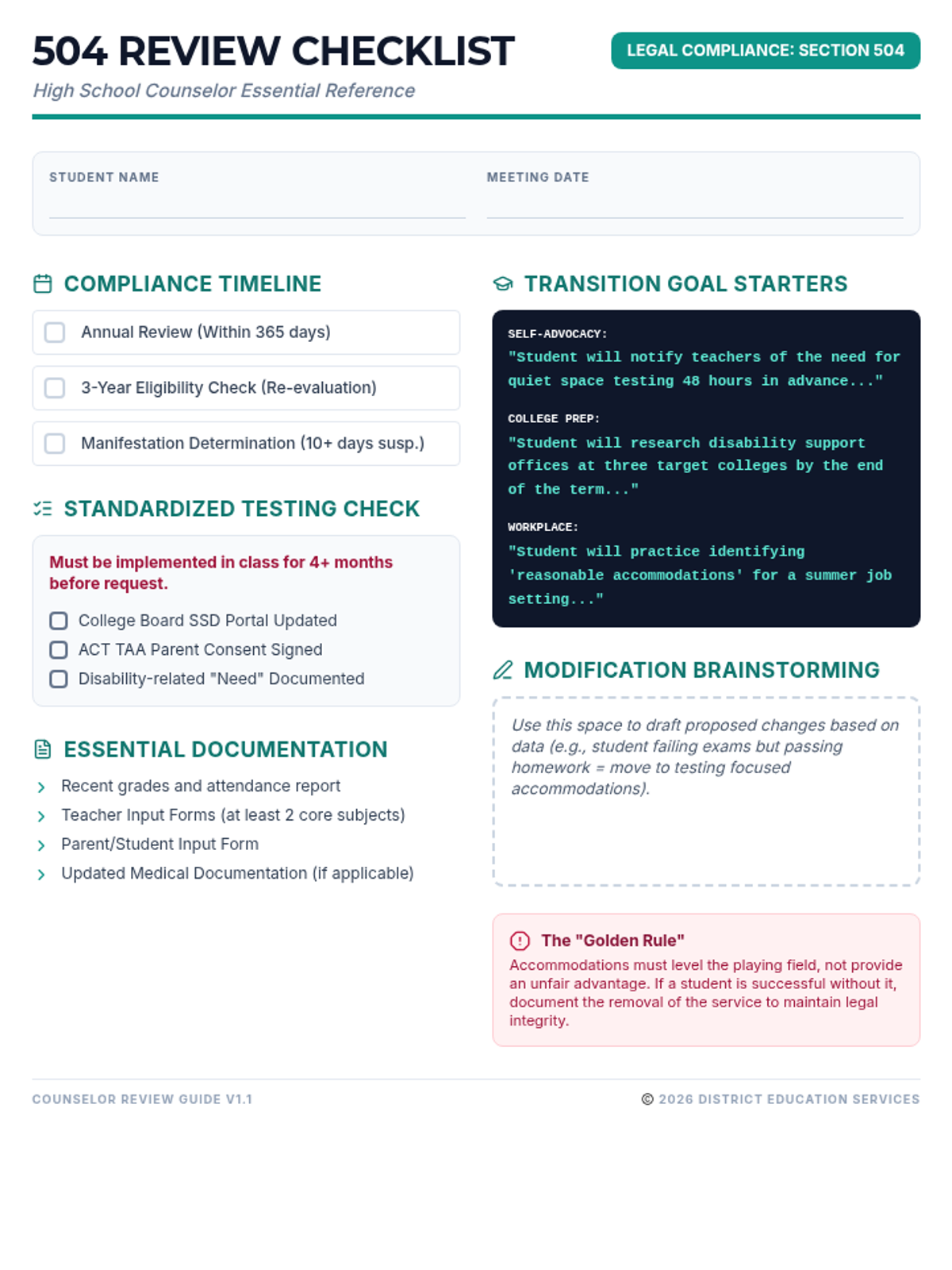
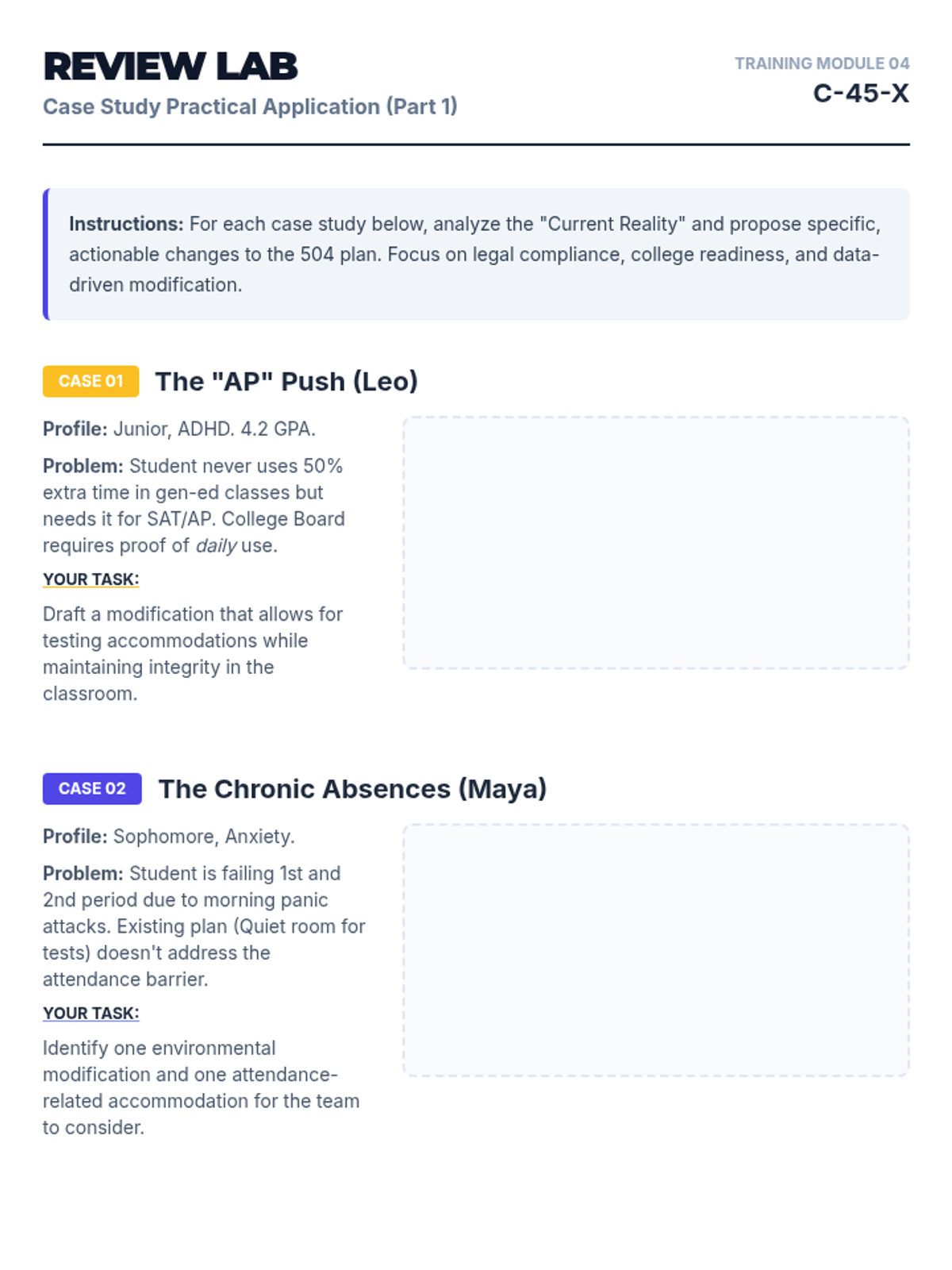
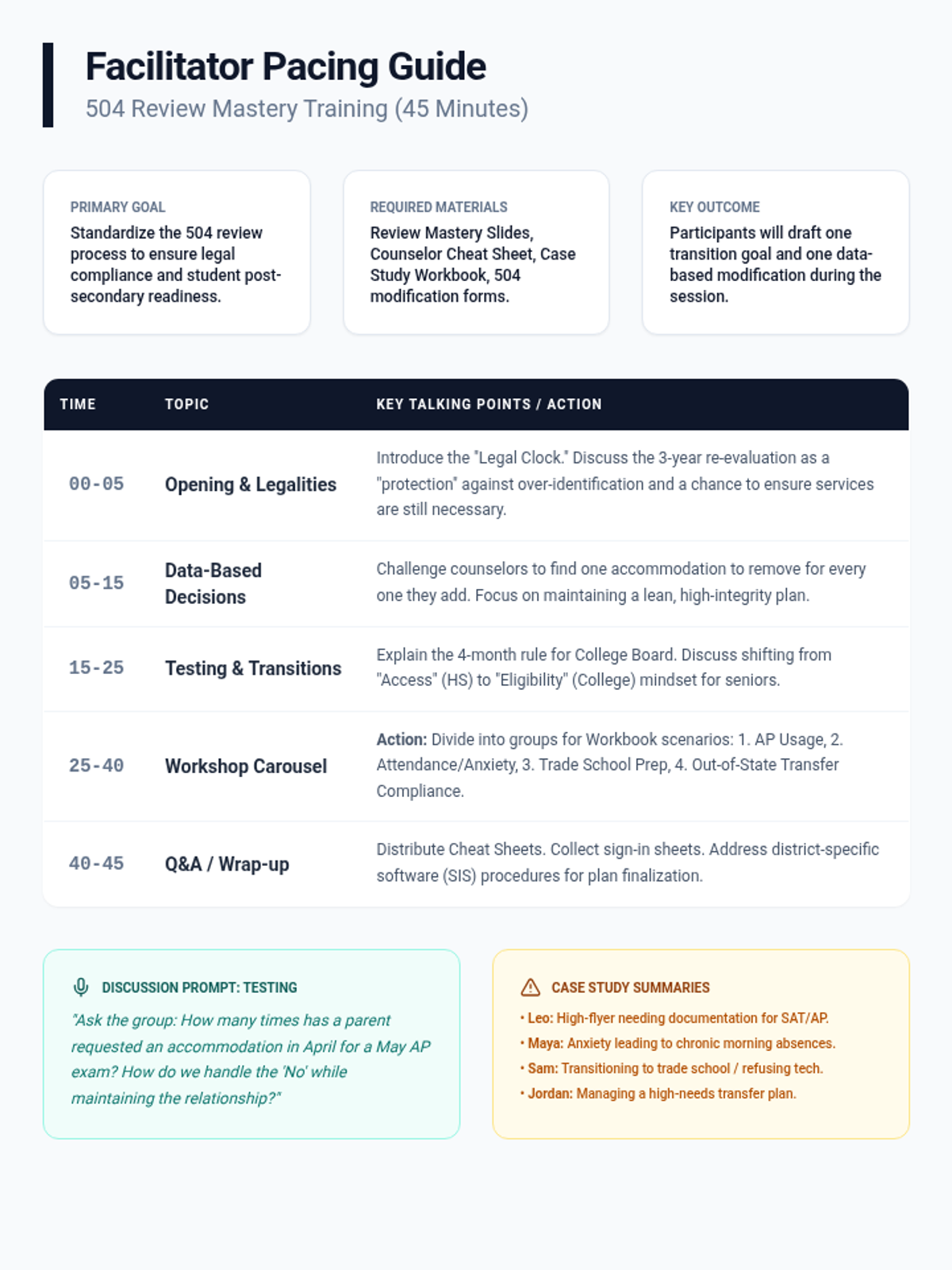
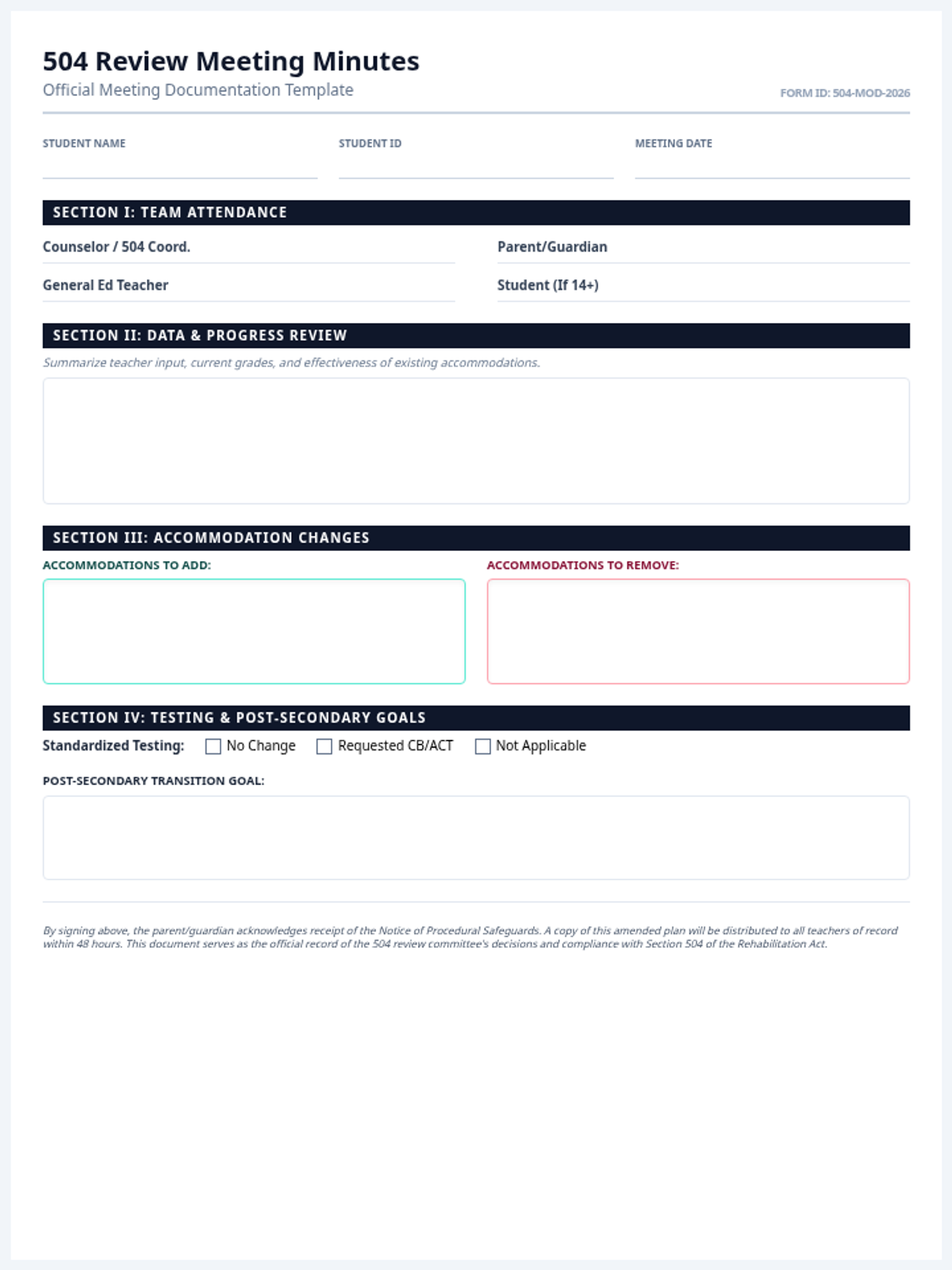
A comprehensive training session for high school counselors on facilitating effective 504 review meetings, focusing on legal compliance, standardized testing, and post-secondary transitions.
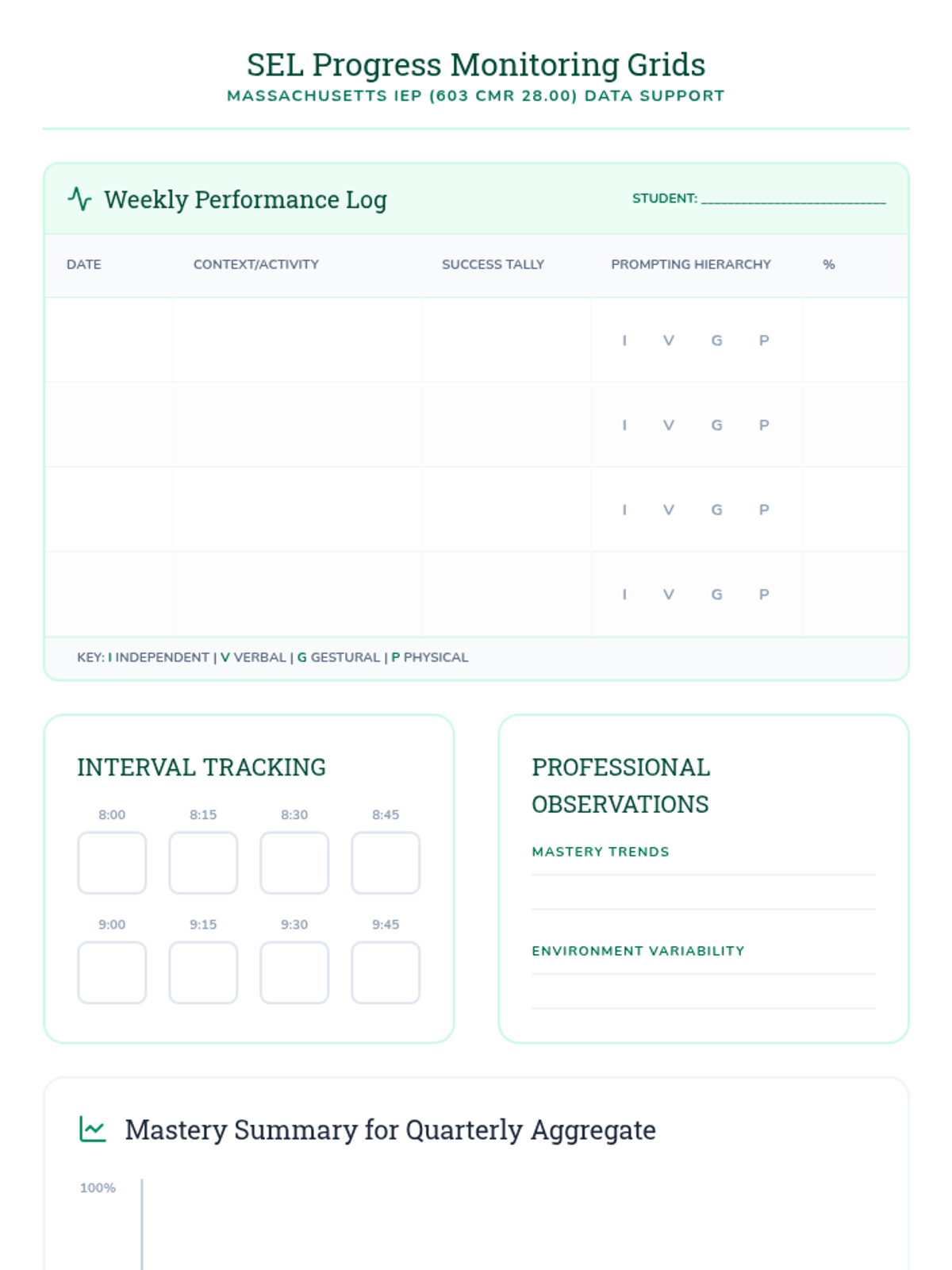
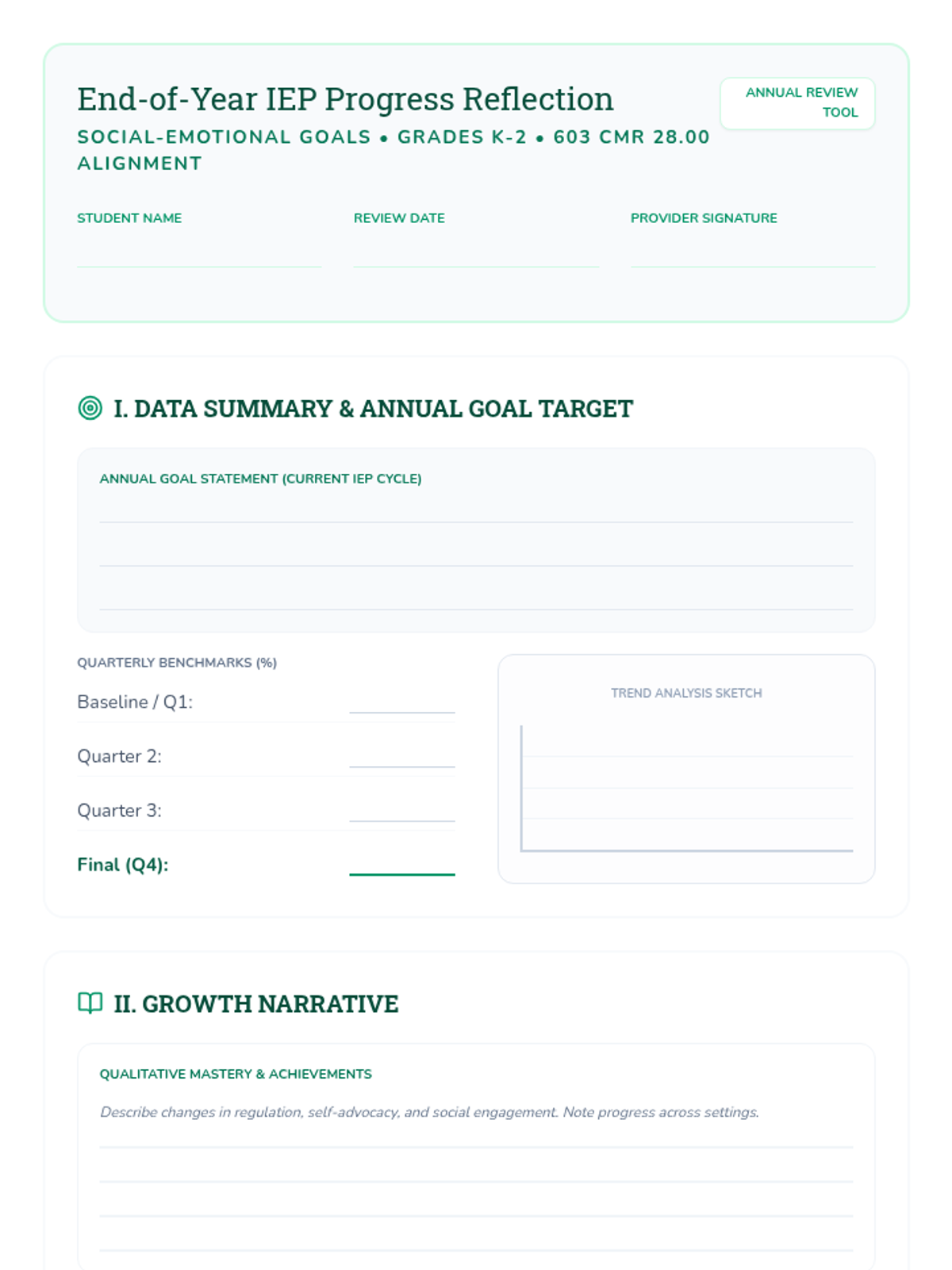
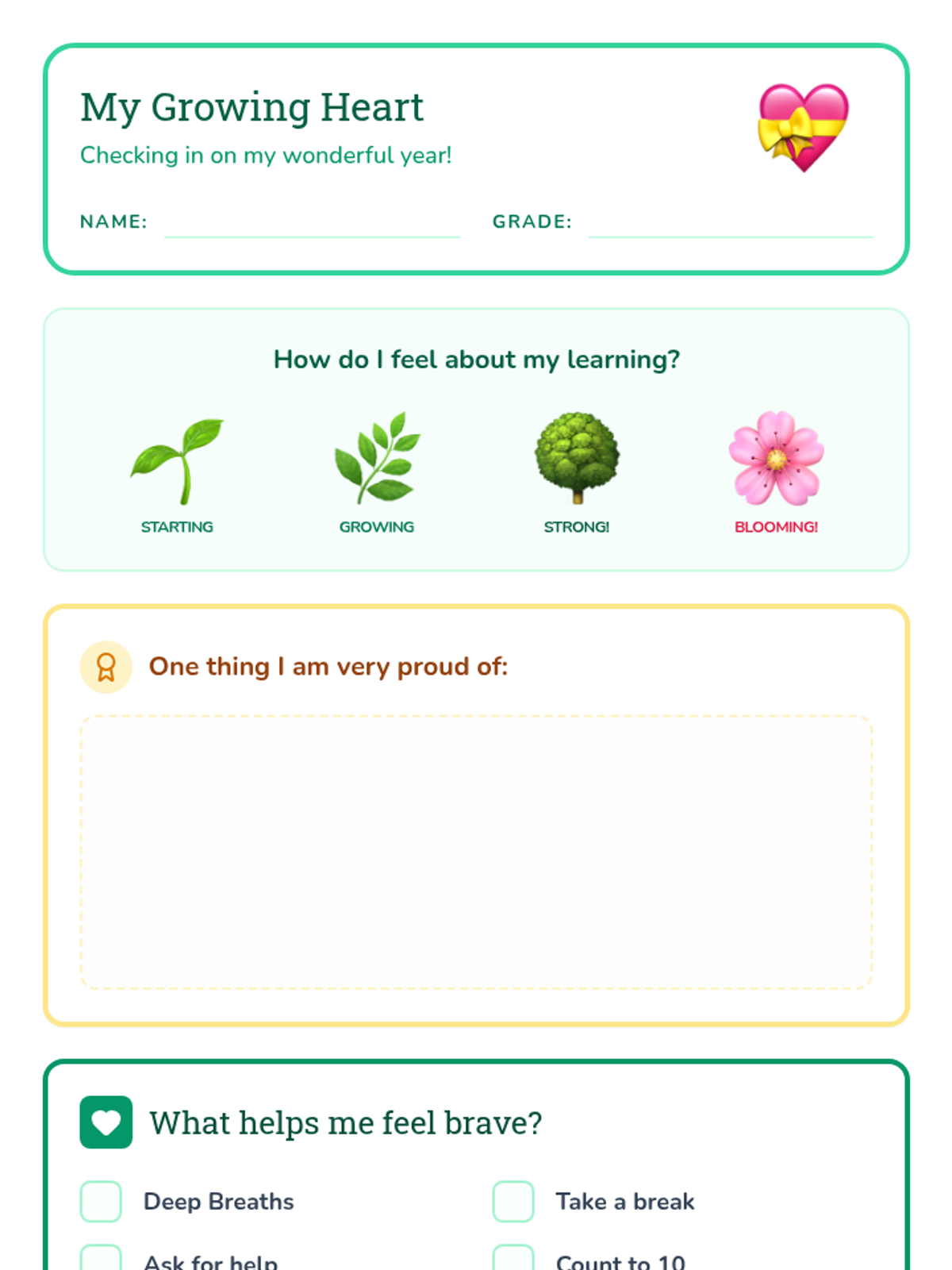
A comprehensive set of professional and student-facing tools for documenting social-emotional progress at the end of the school year. Designed to align with Massachusetts IEP requirements while maintaining a supportive, growth-oriented aesthetic for K-2 environments.
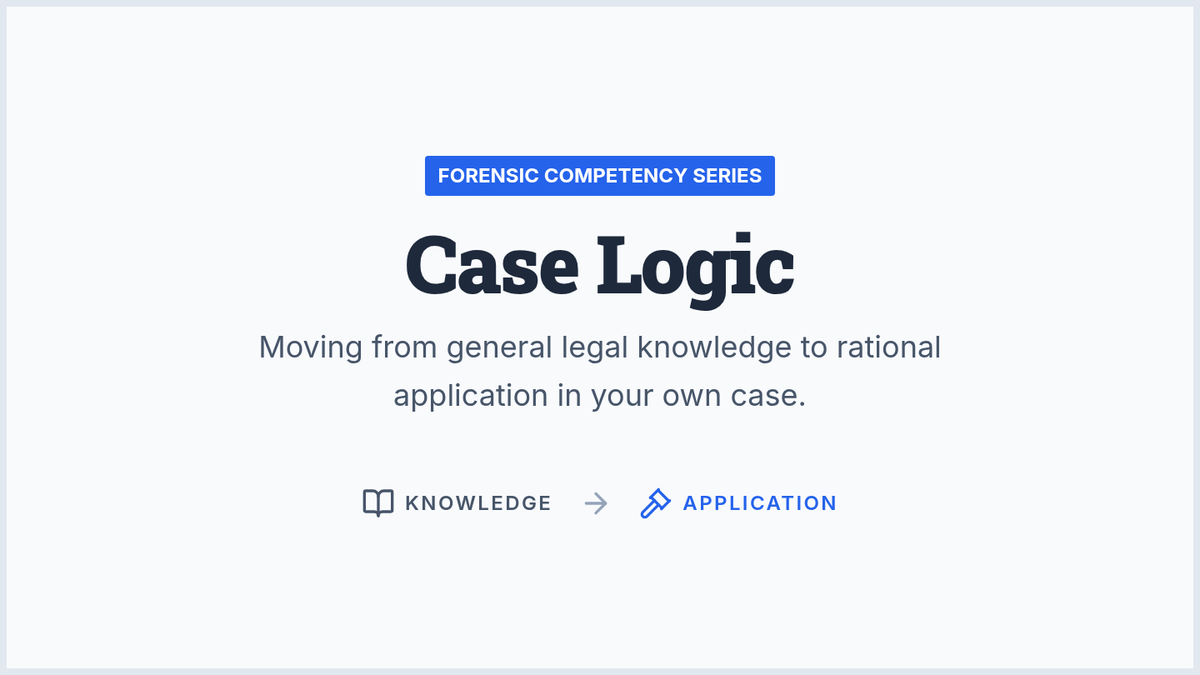
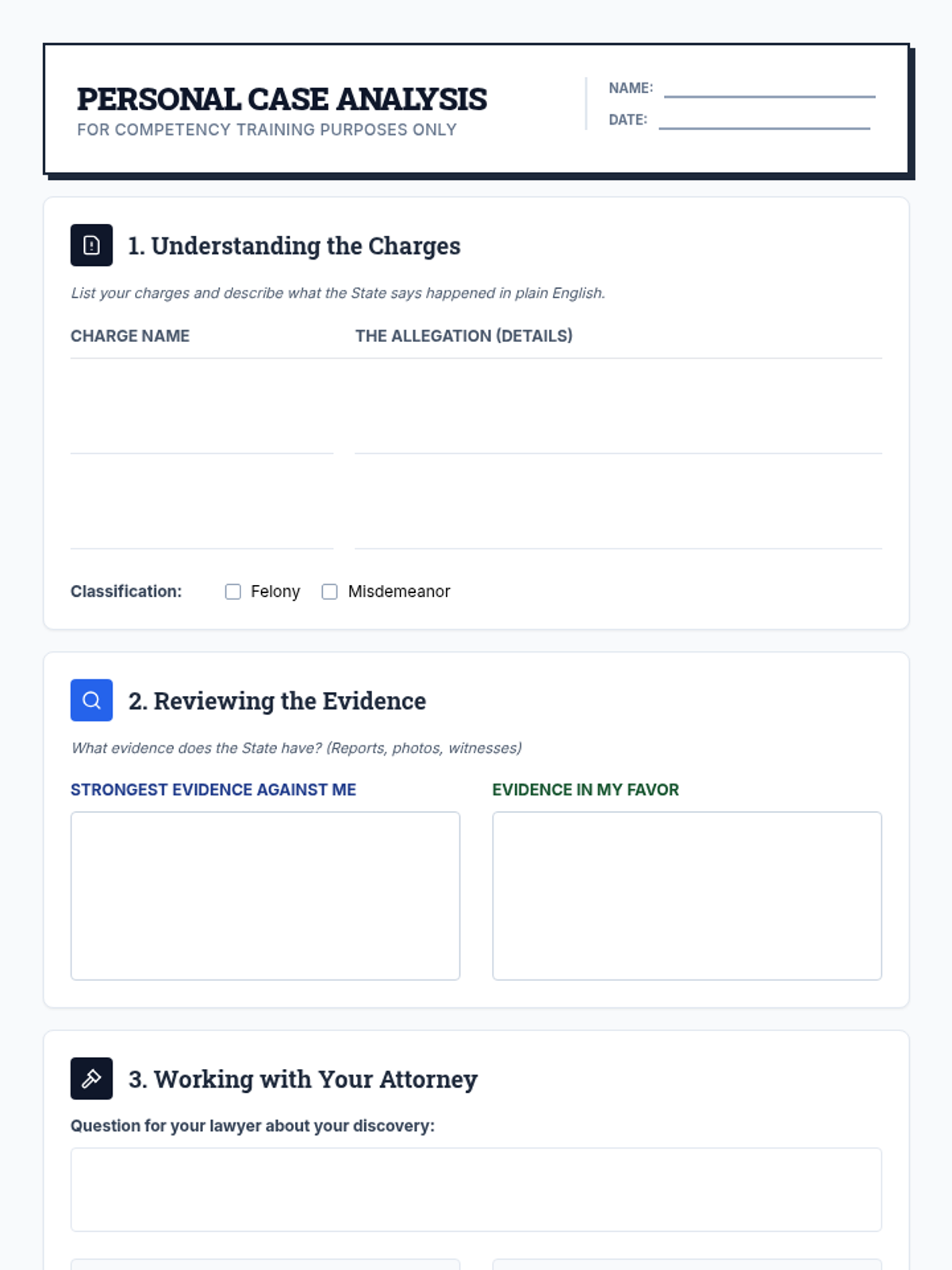
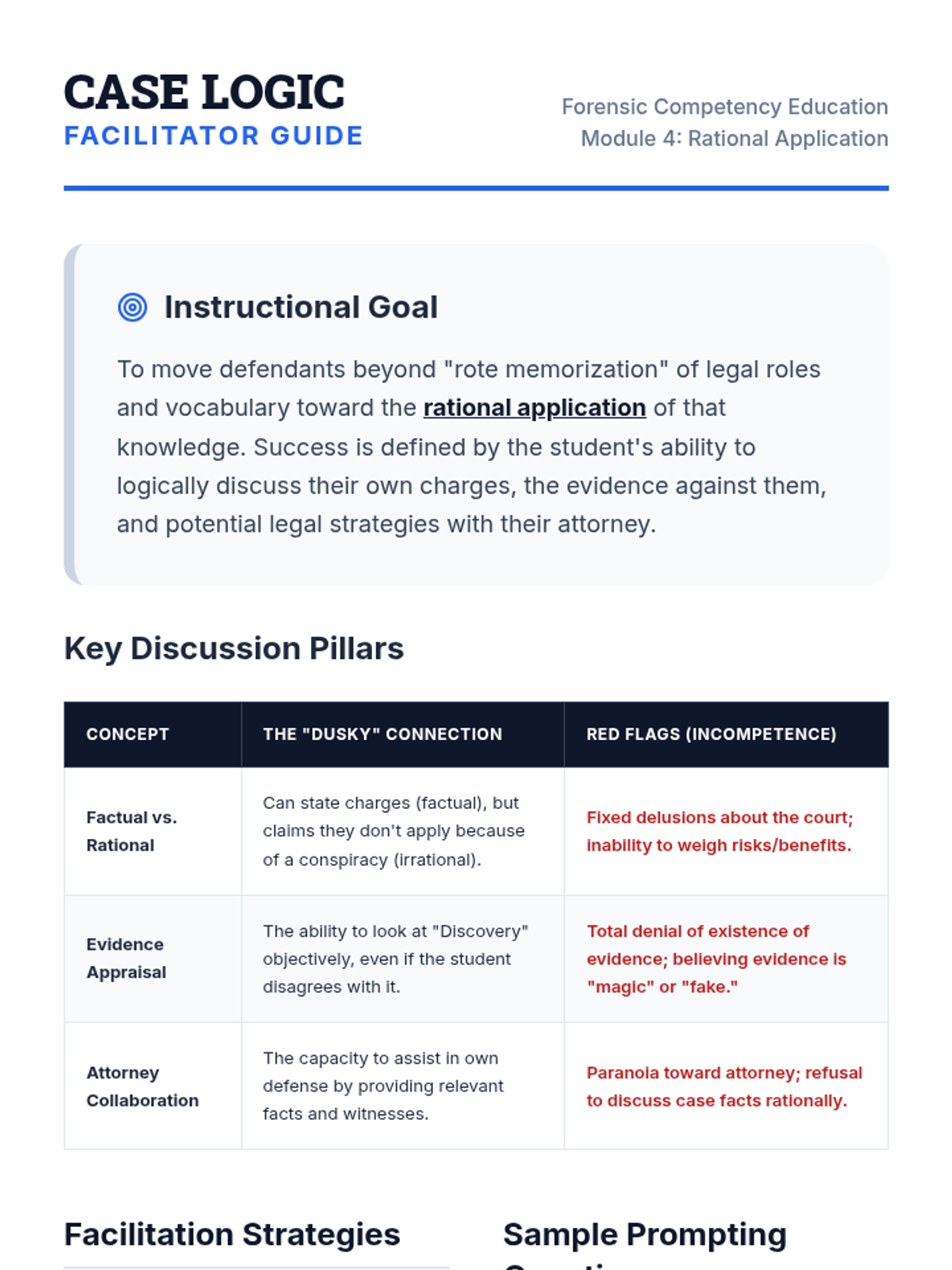
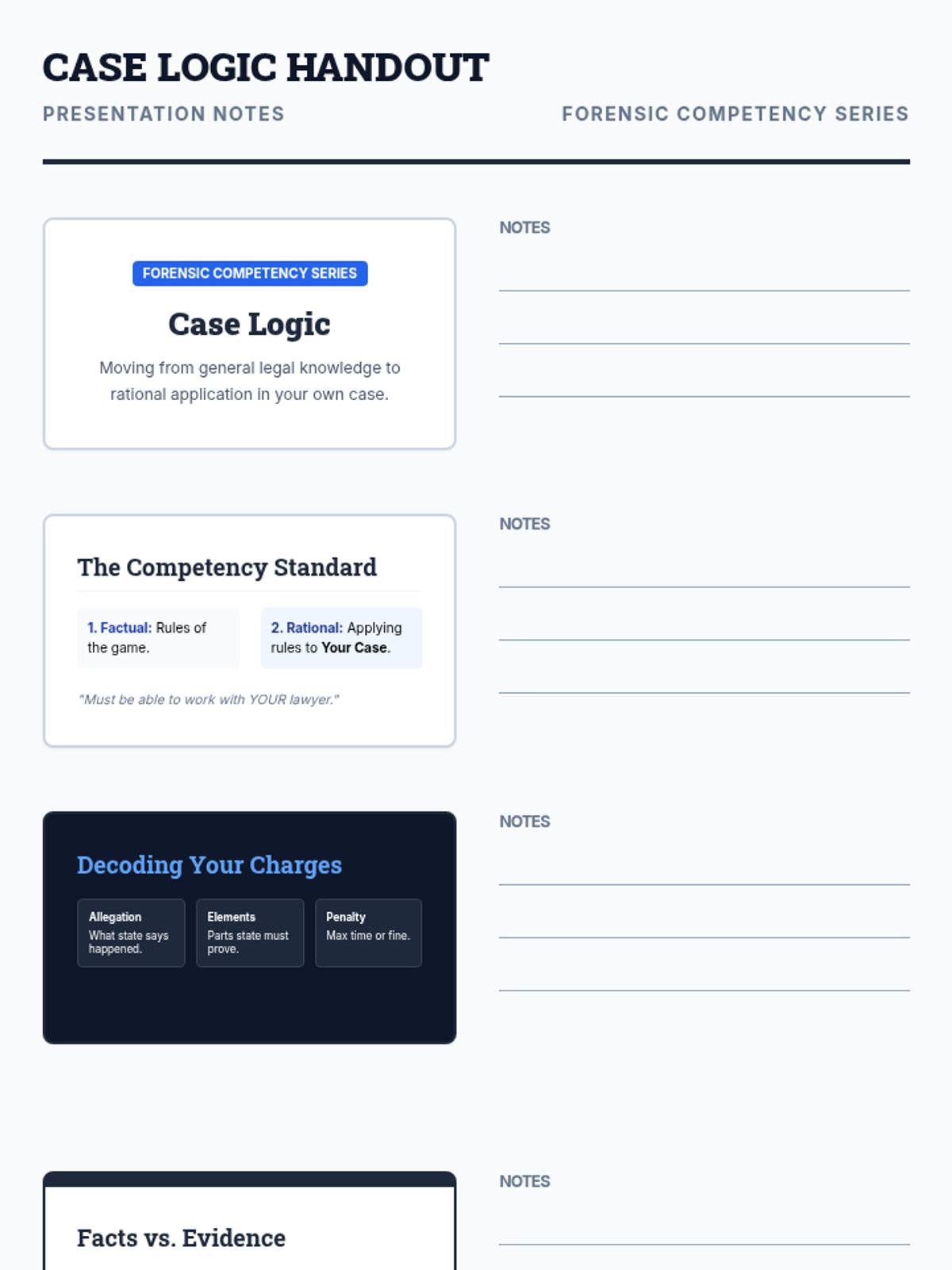
A focused lesson on helping defendants transition from general legal knowledge to rationally applying that information to their specific legal situation. It includes a presentation for group instruction and a structured worksheet for personalized case analysis.
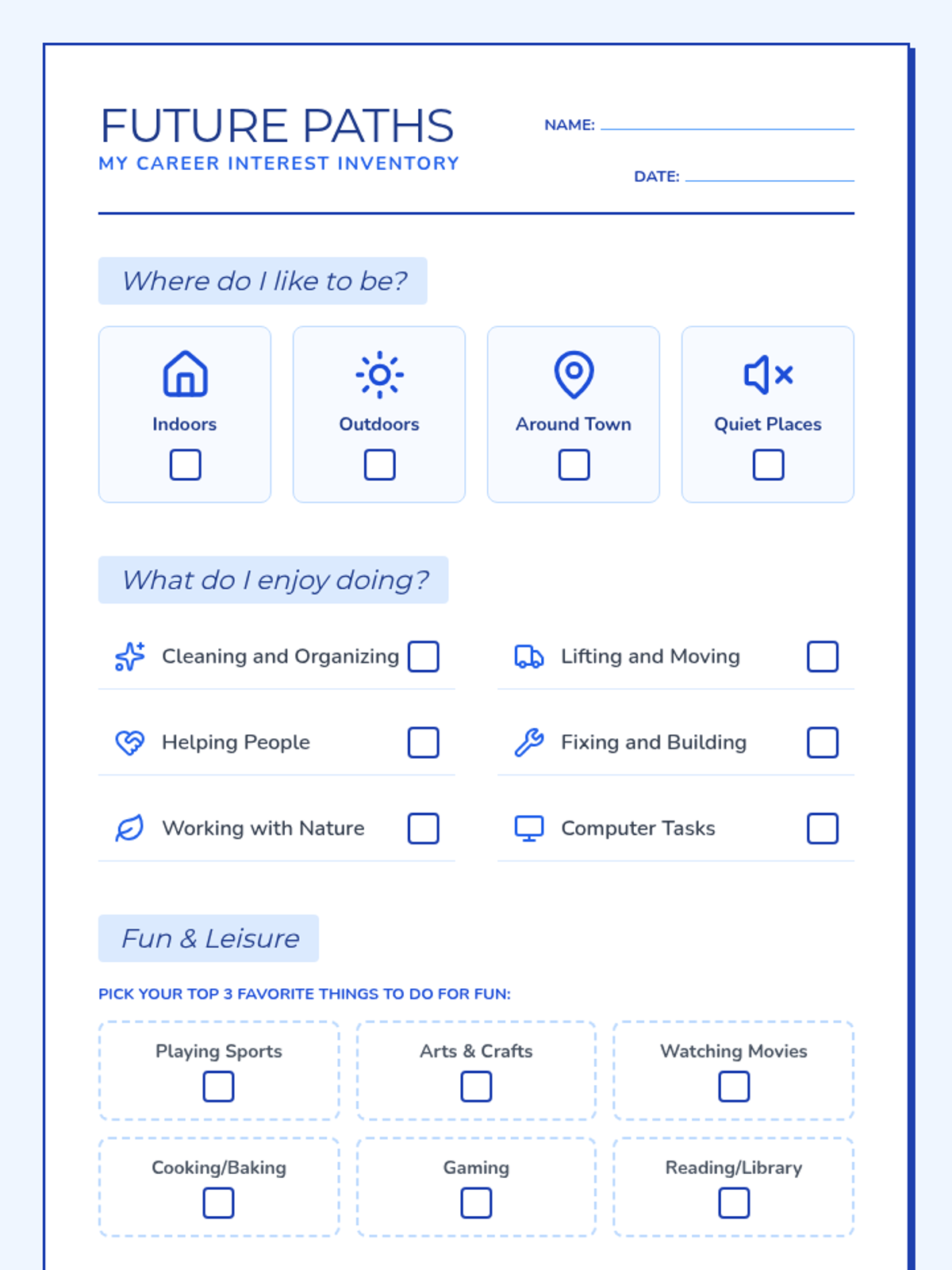
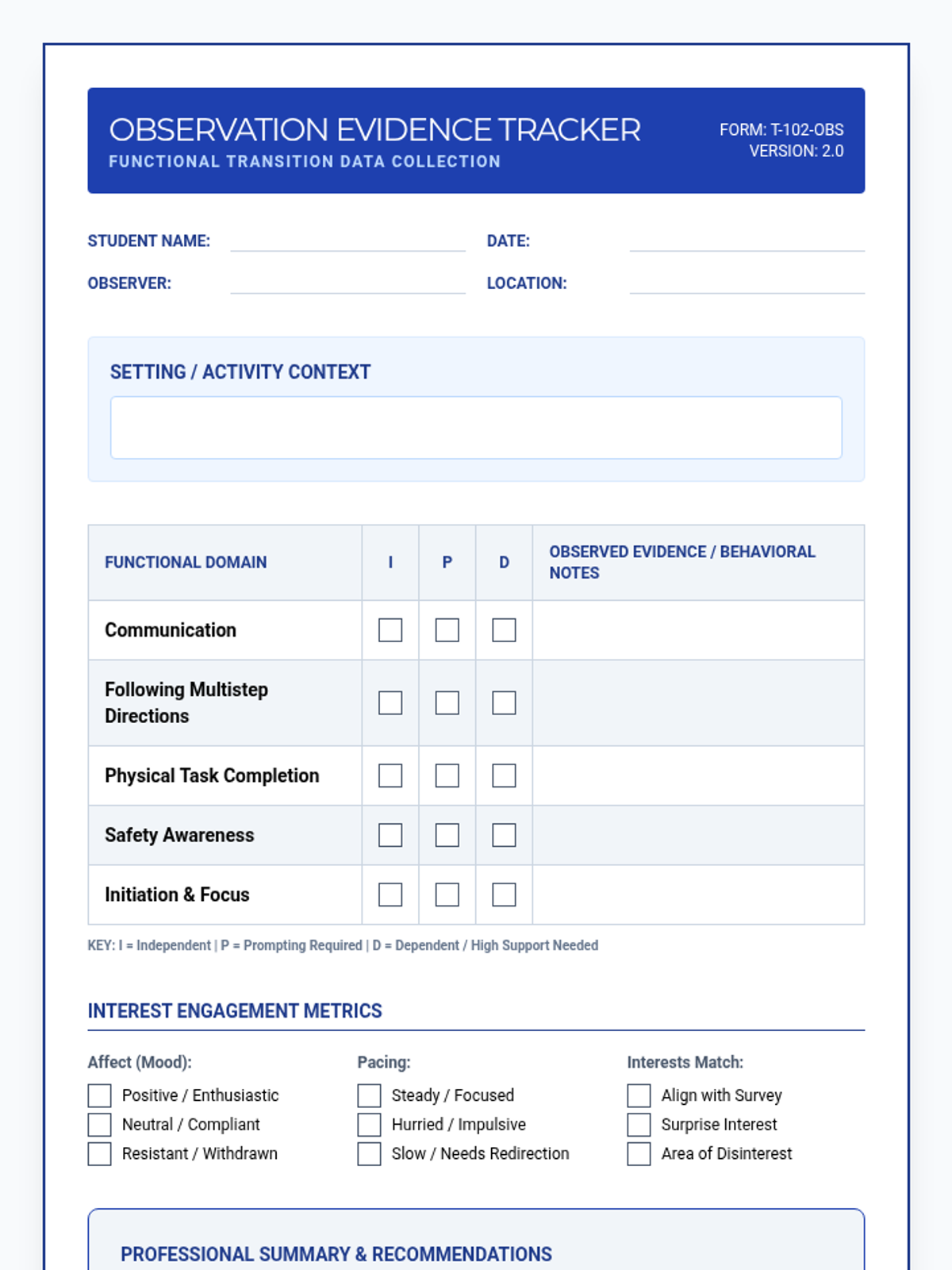
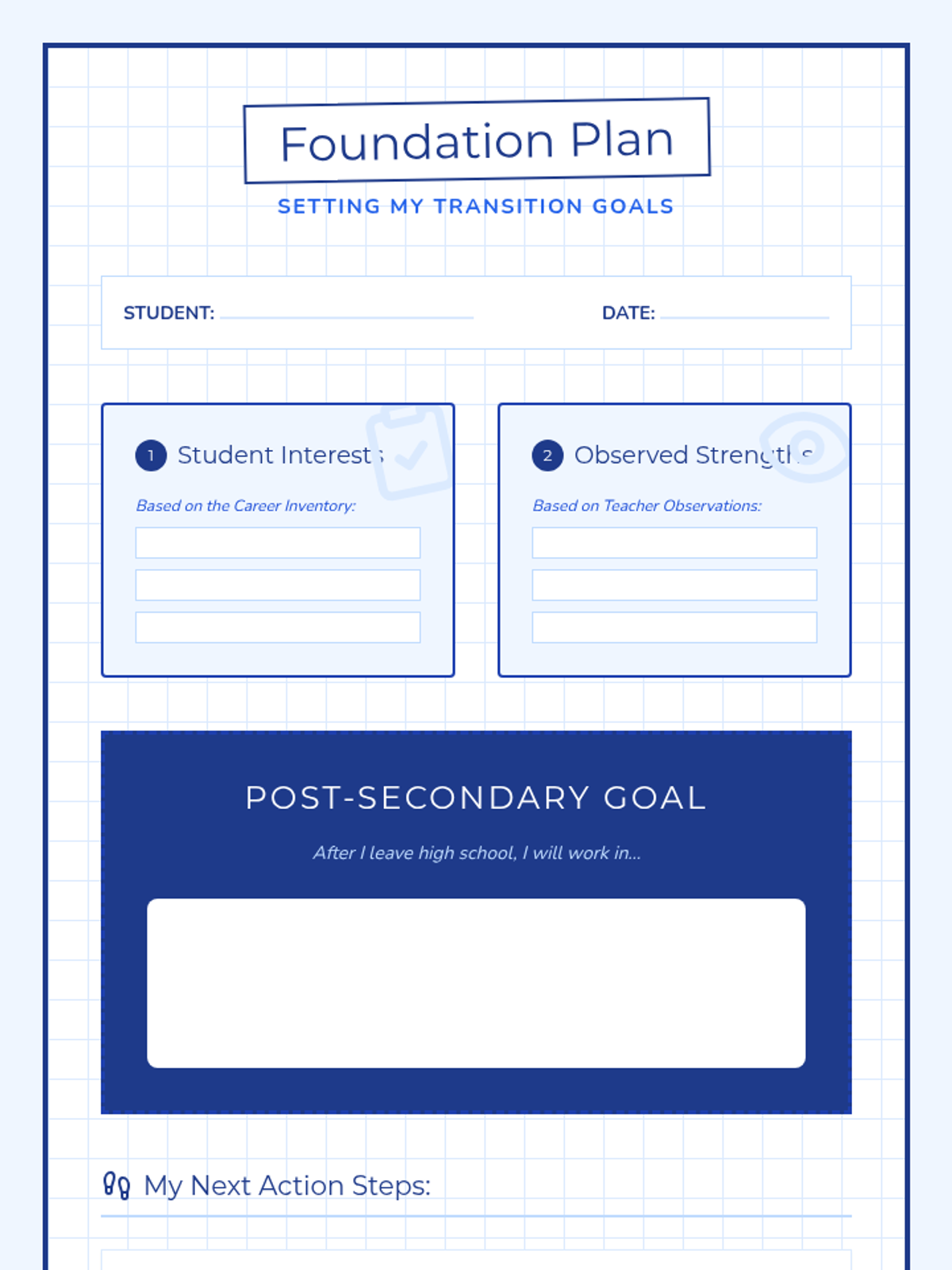
A comprehensive transition planning toolset focused on identifying community-based vocational interests and functional skills through student input and teacher observation.
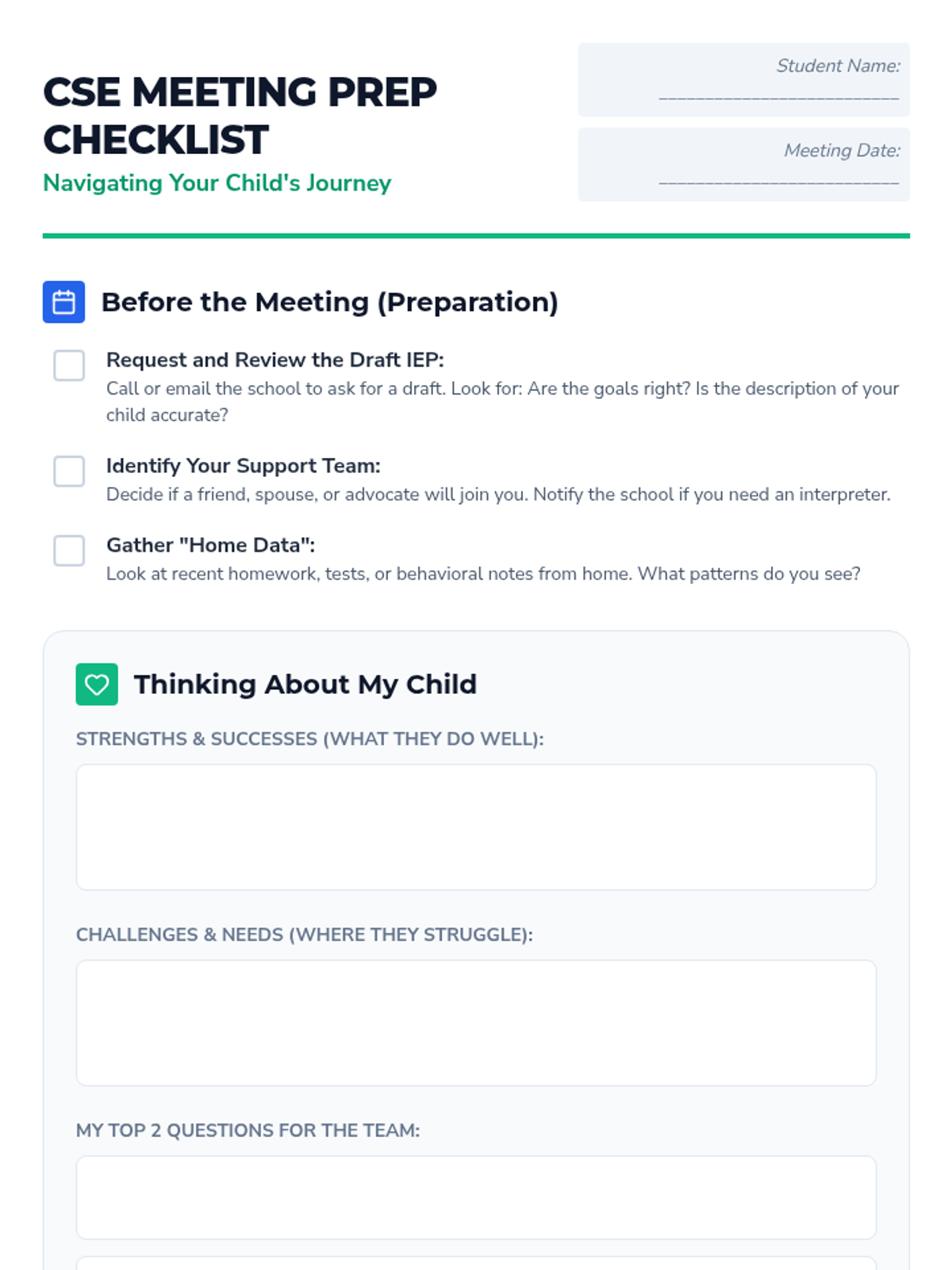
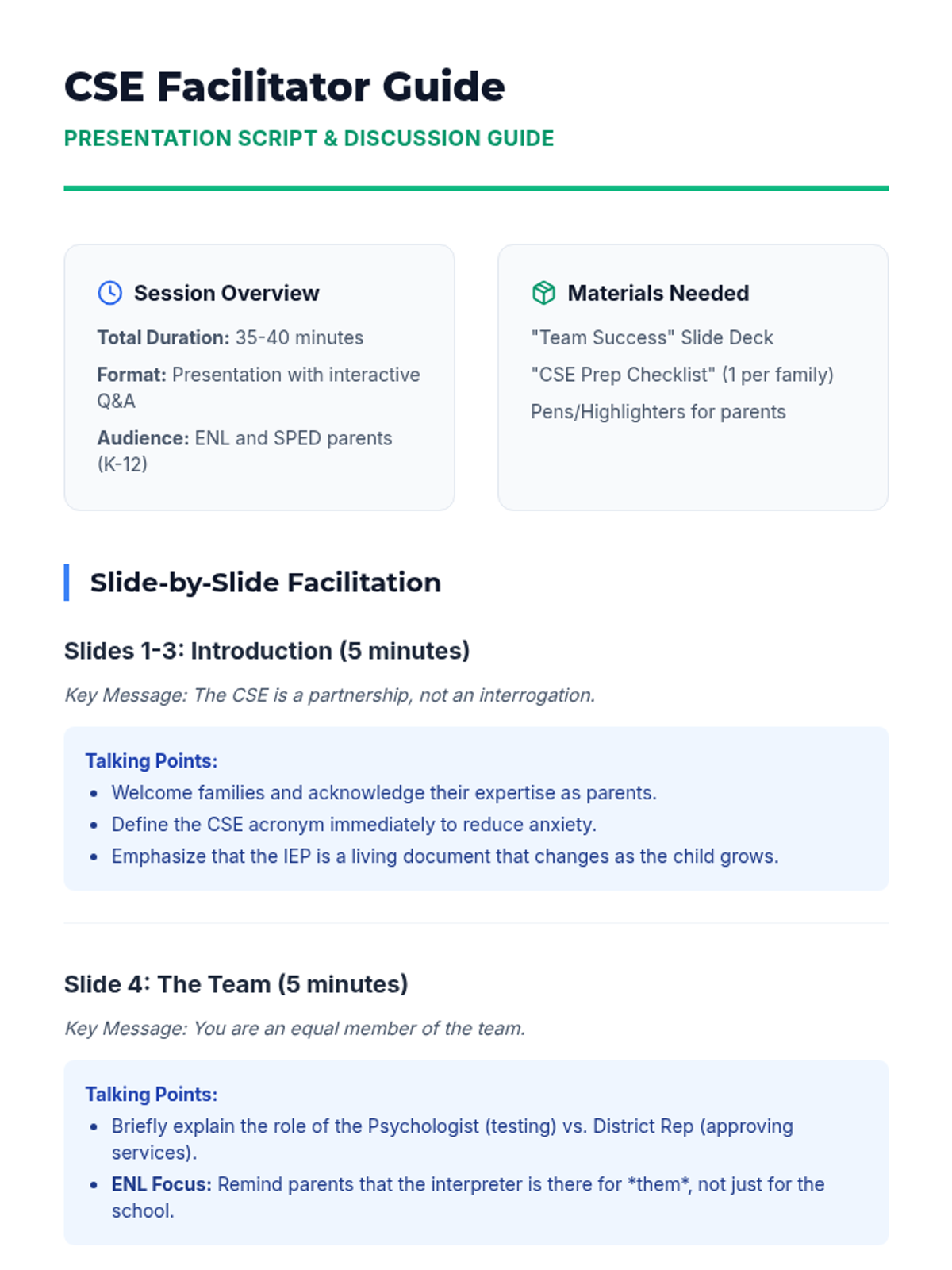
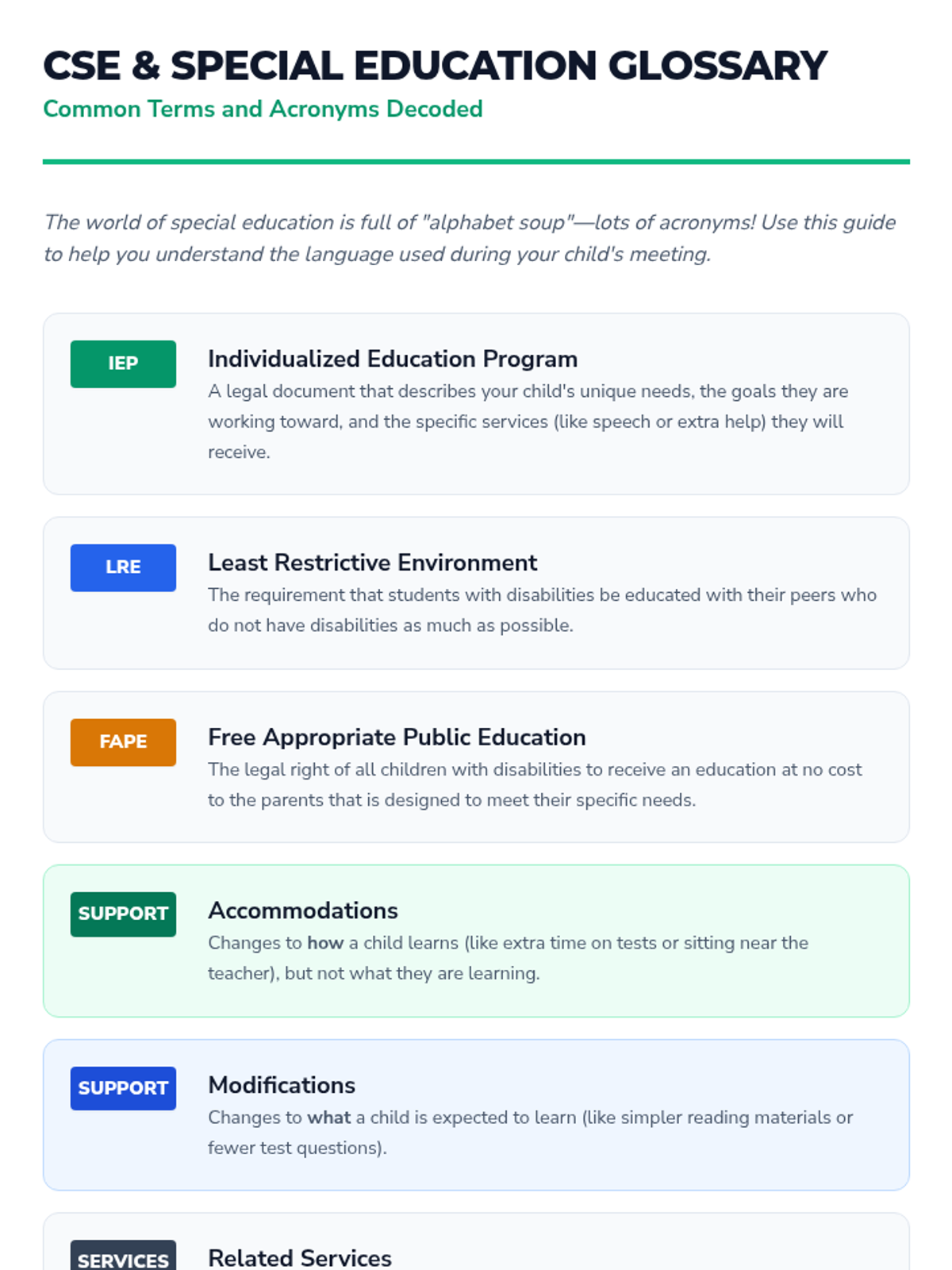
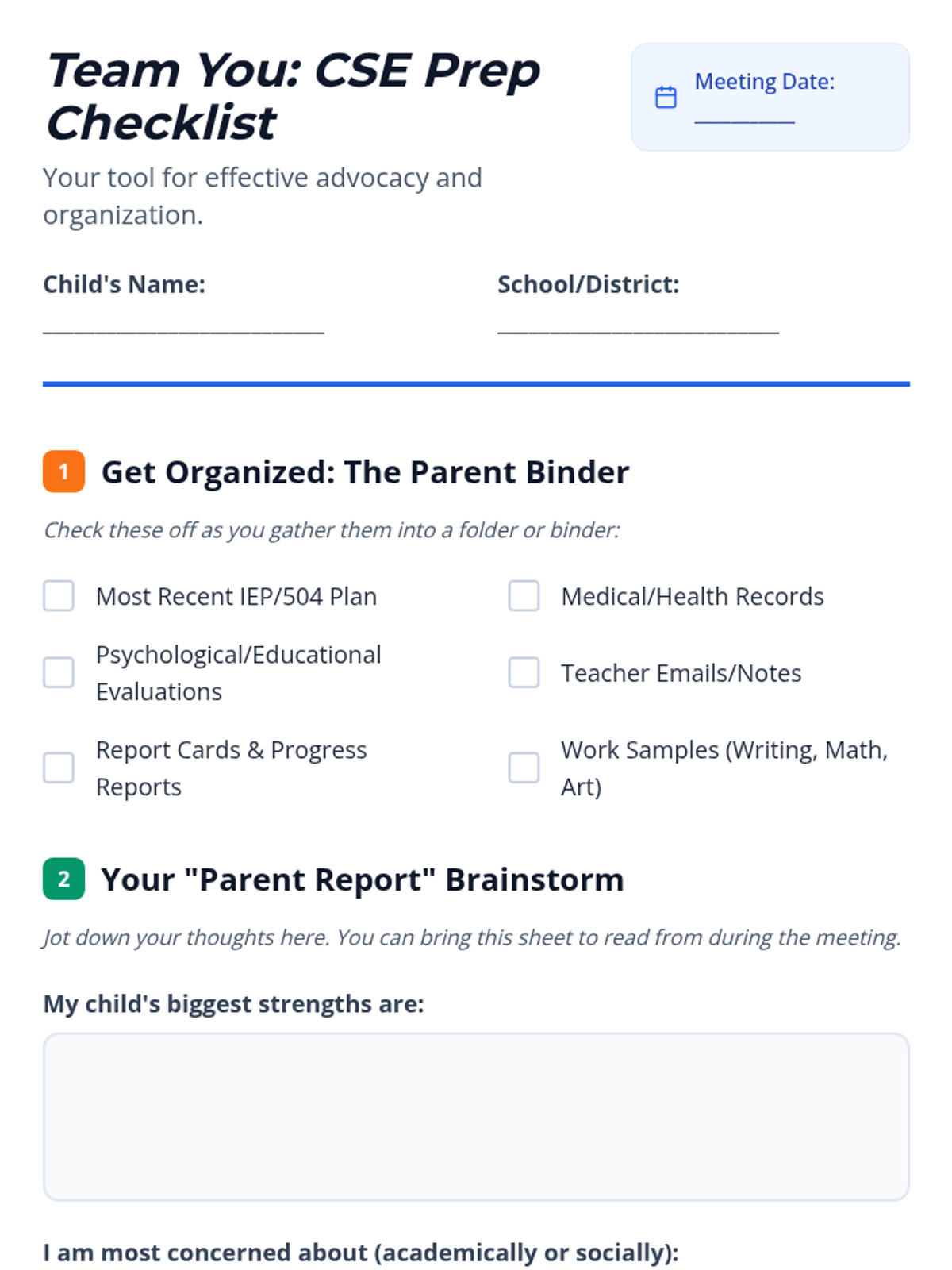
This lesson provides ENL and SPED parents with the knowledge and confidence to participate in their child's Committee on Special Education (CSE) meeting. It includes a comprehensive presentation on the meeting process and a preparation checklist for home use.
This lesson provides parents of Special Education and ENL students with practical tools and strategies to prepare for CSE meetings, focusing on effective advocacy and organizational skills.
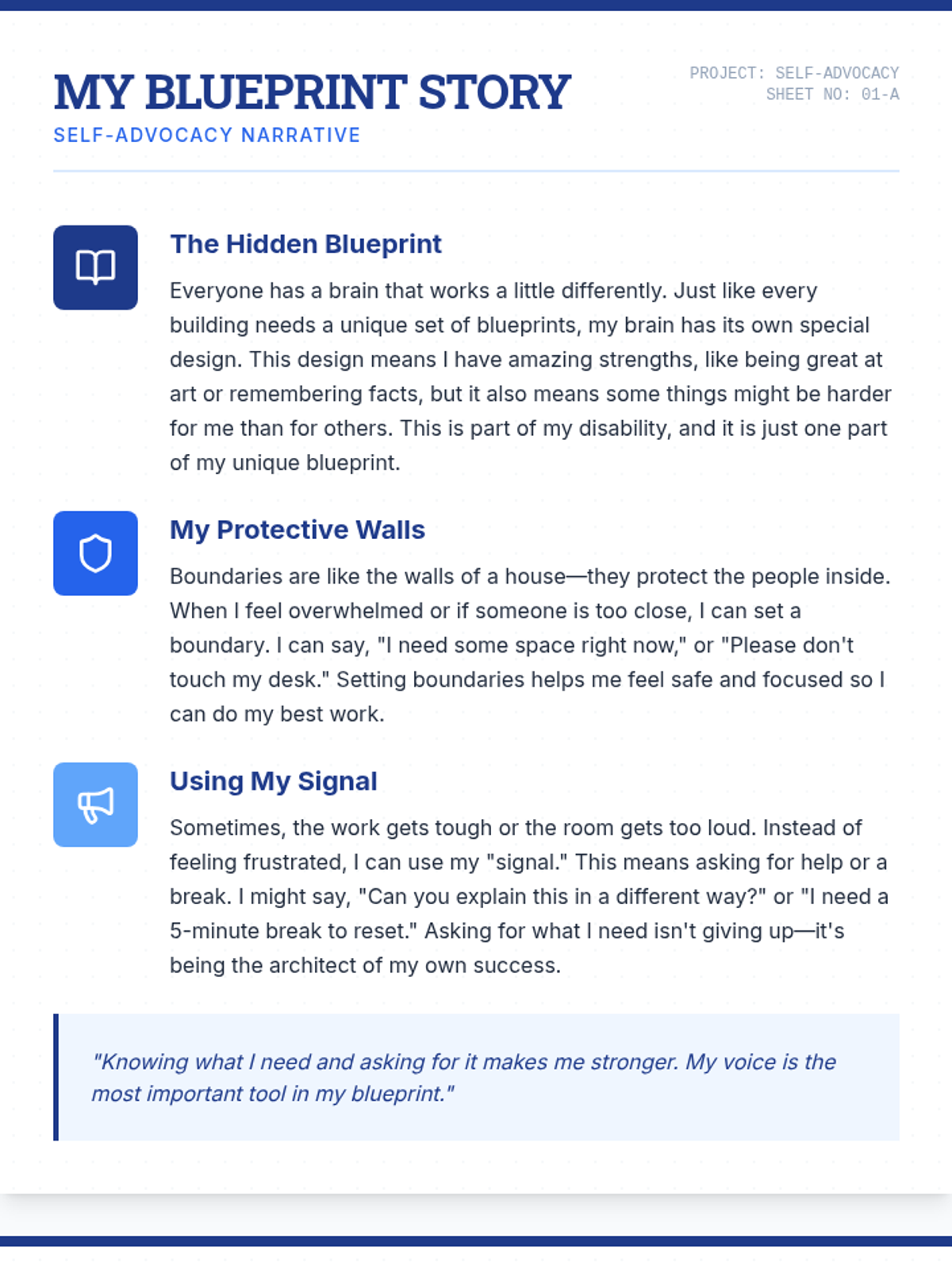
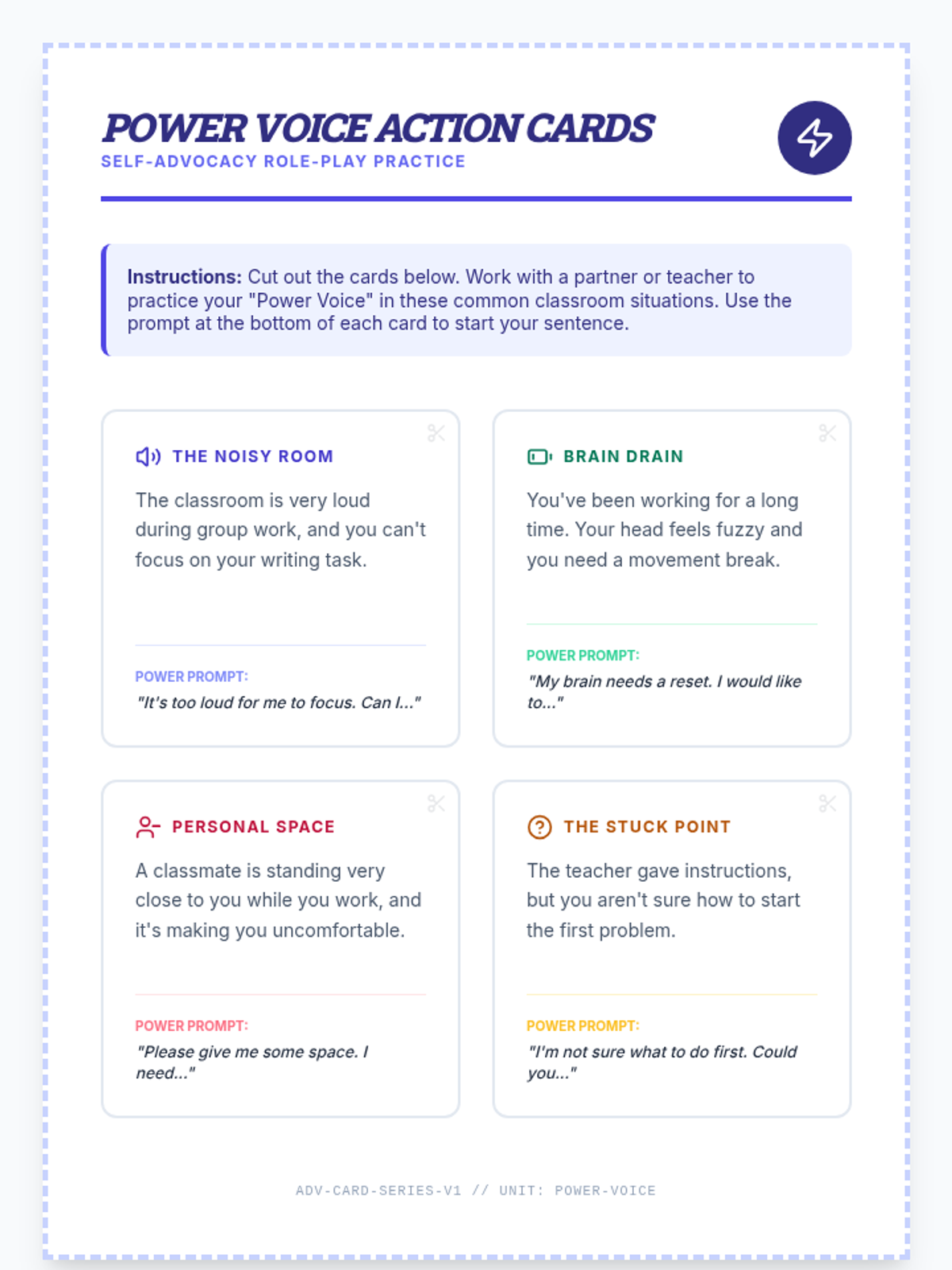
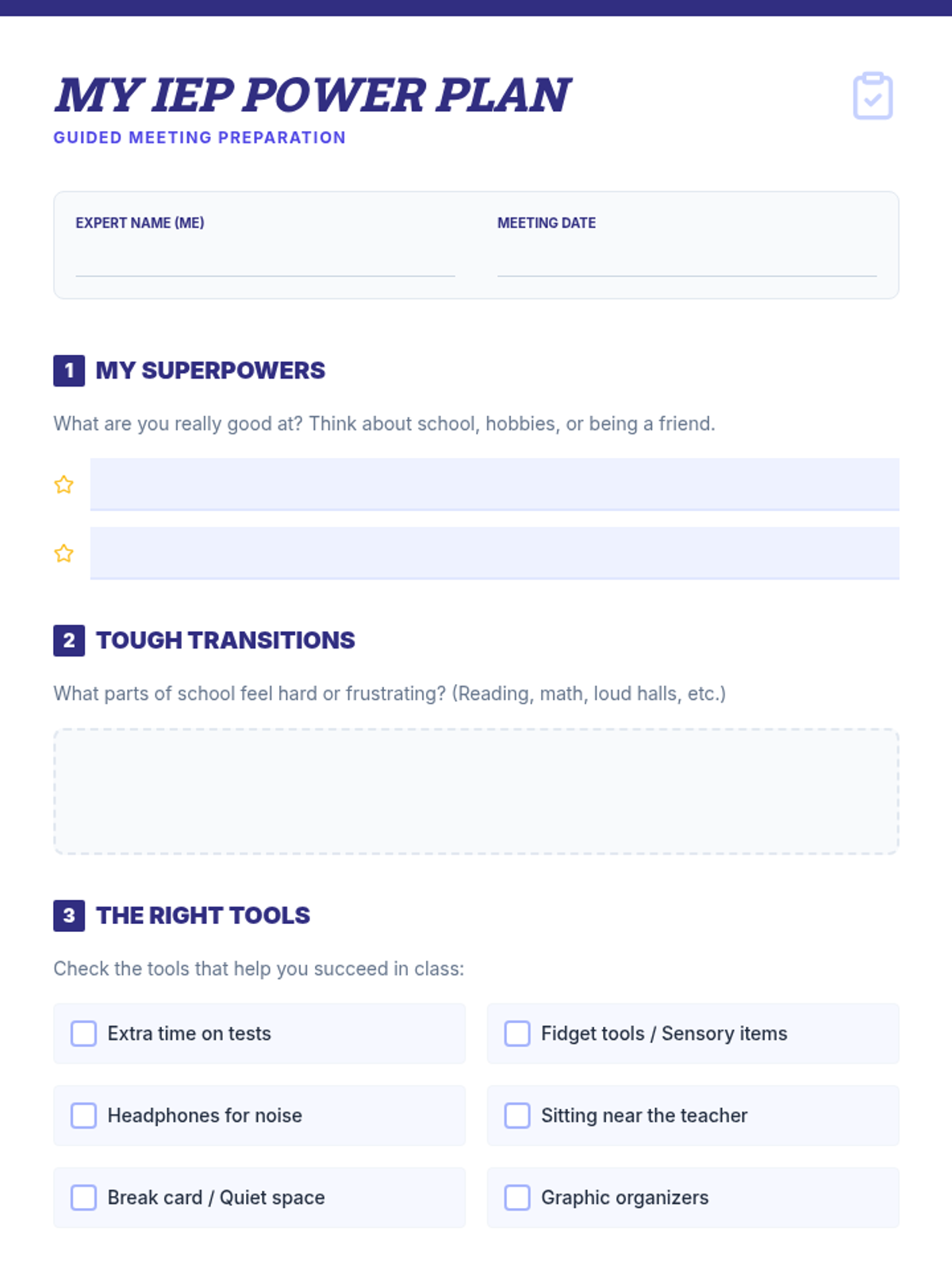
A lesson designed to empower students with self-advocacy skills, focusing on understanding personal needs, setting boundaries, and effectively asking for support.
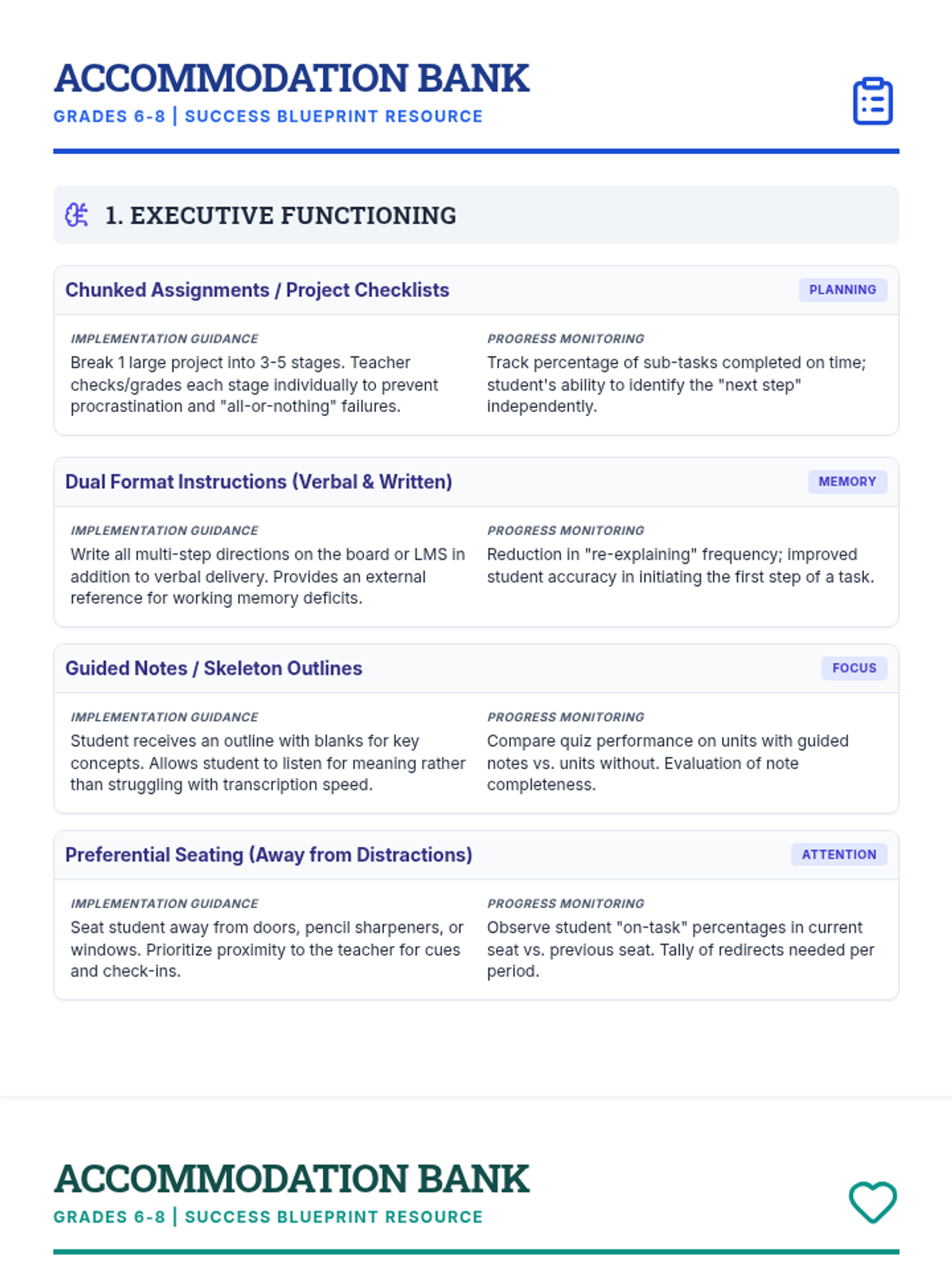
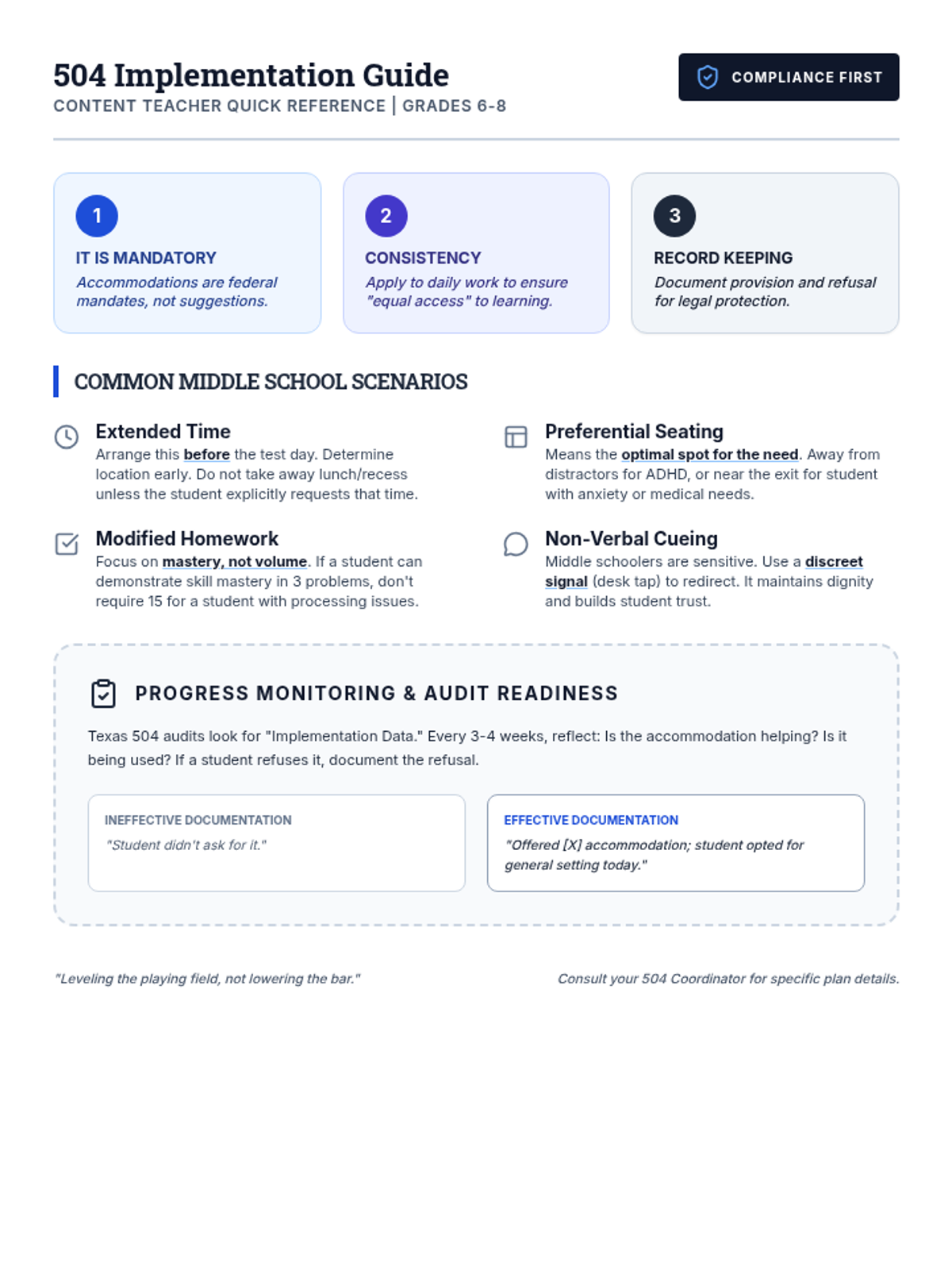
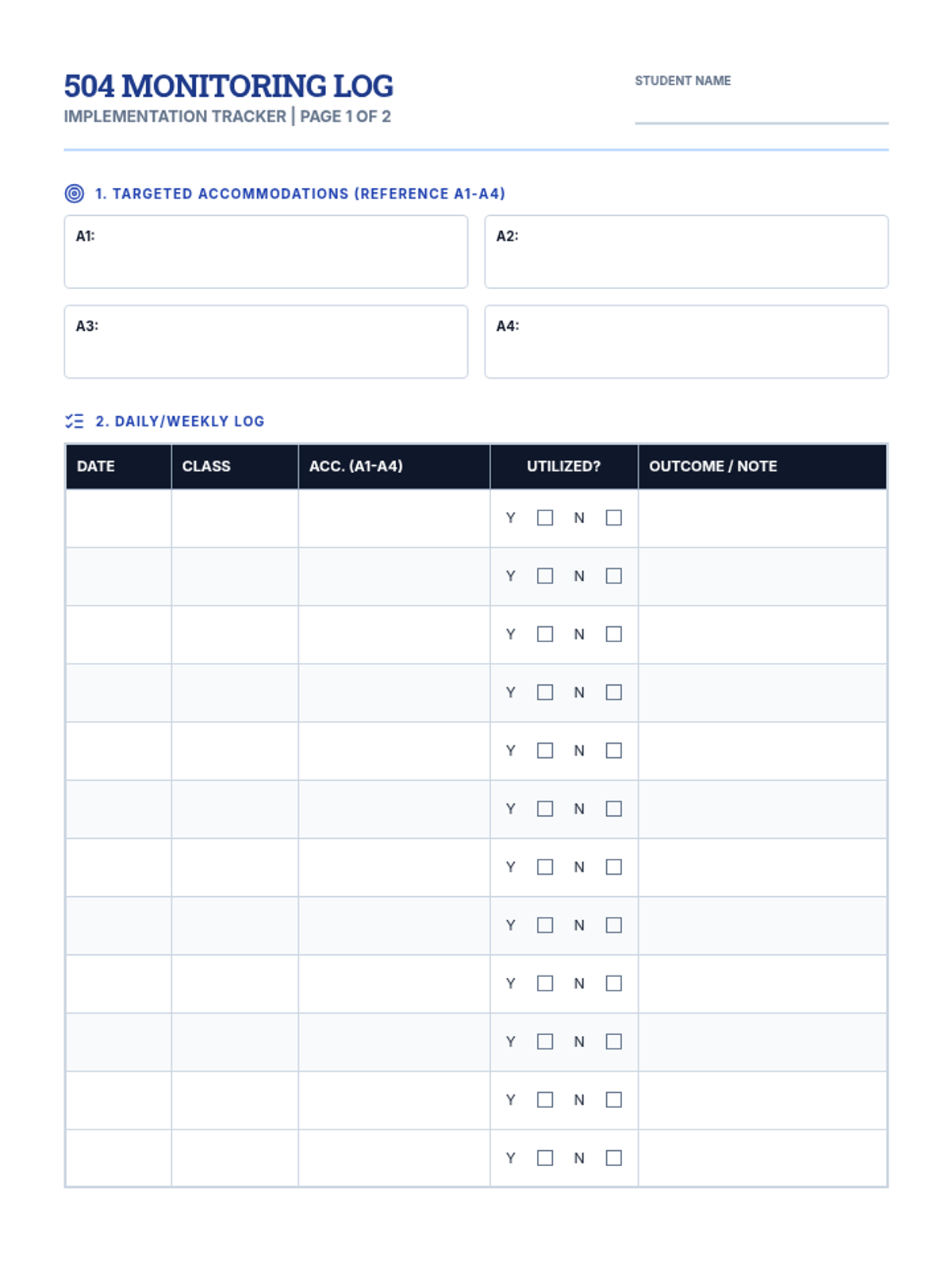
A comprehensive toolkit for middle school counselors to manage 504 accommodations, focusing on Texas-compliant strategies for grades 6-8 across executive functioning, mental health, learning, and medical needs.
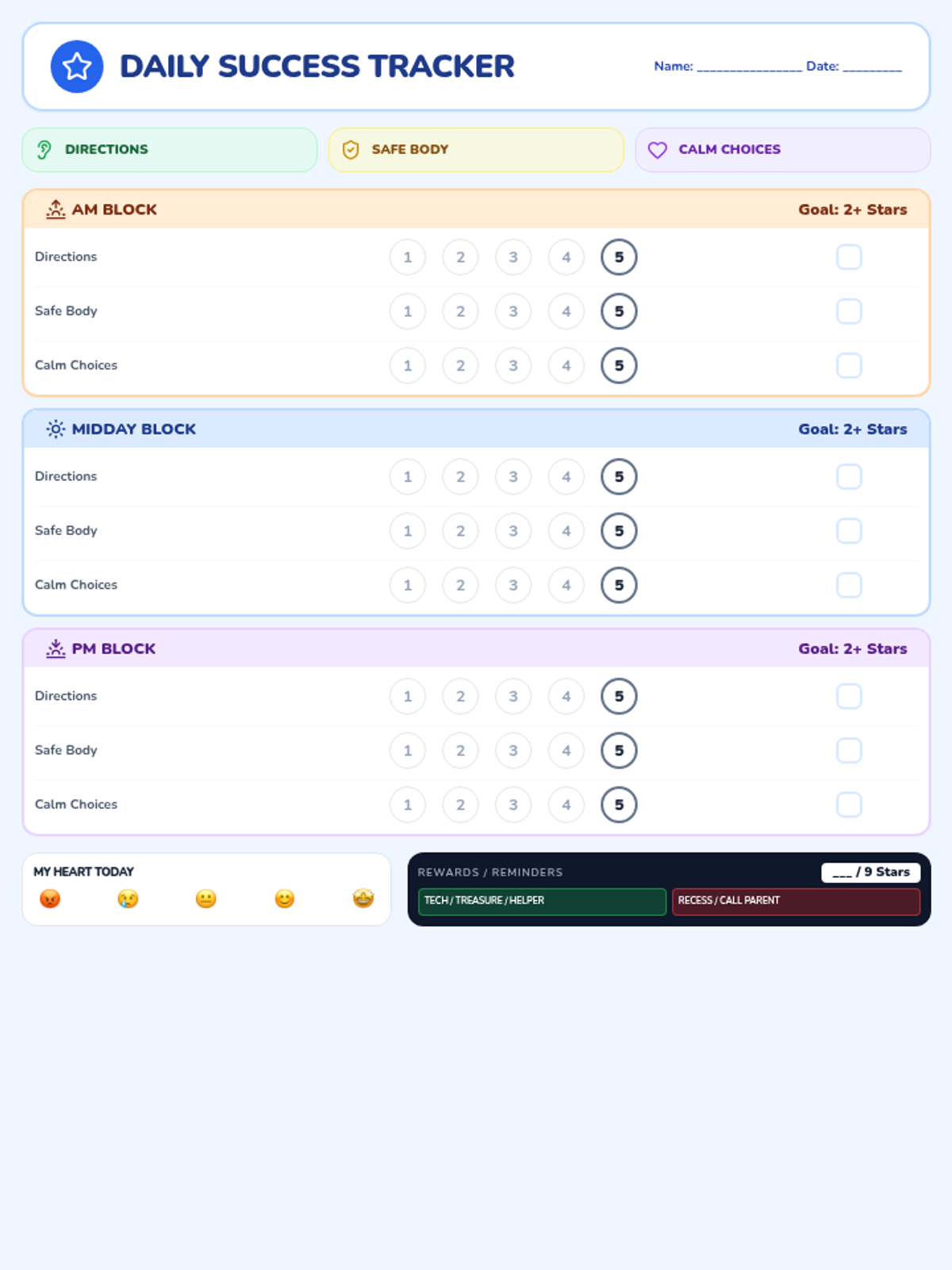
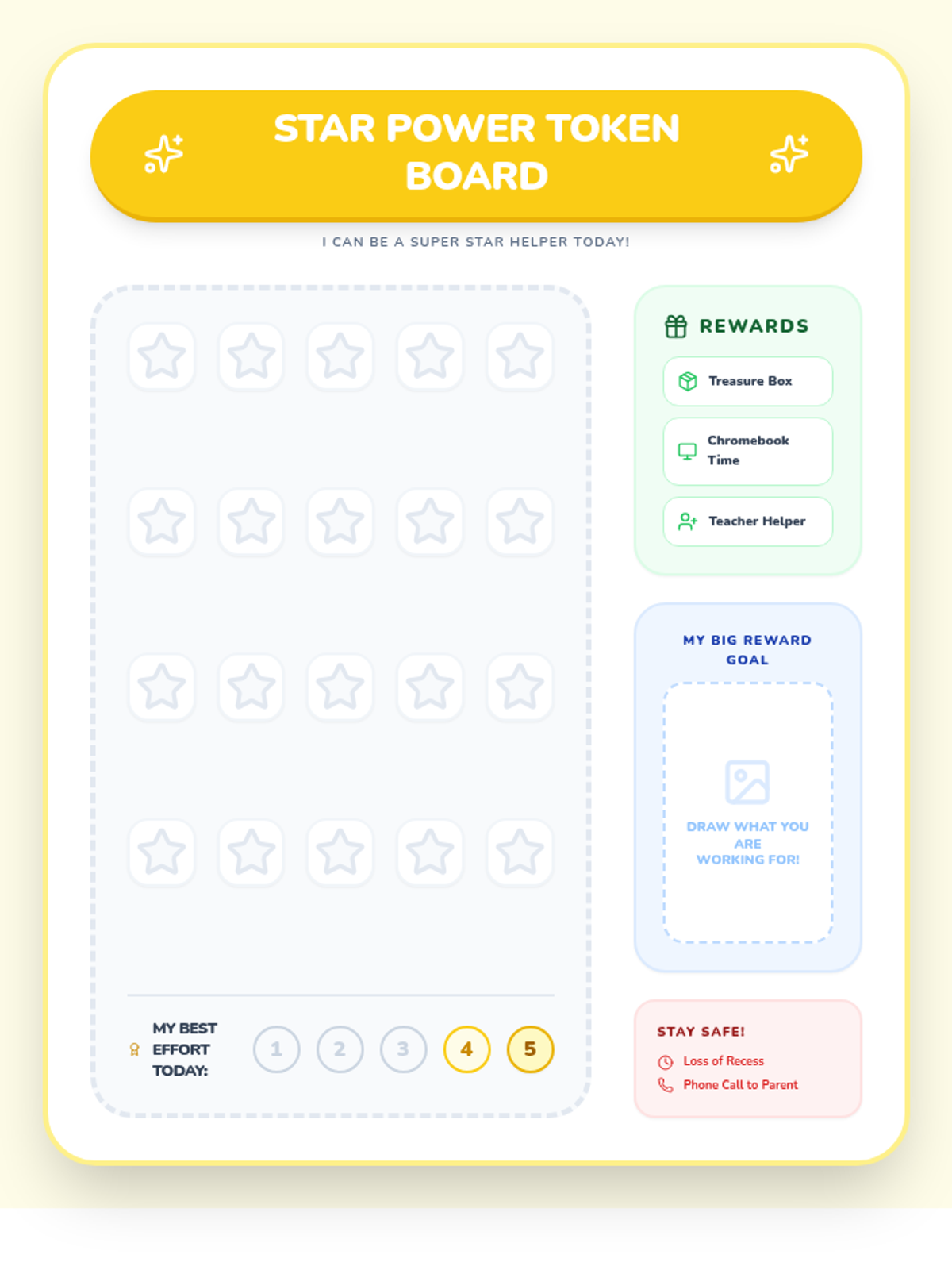
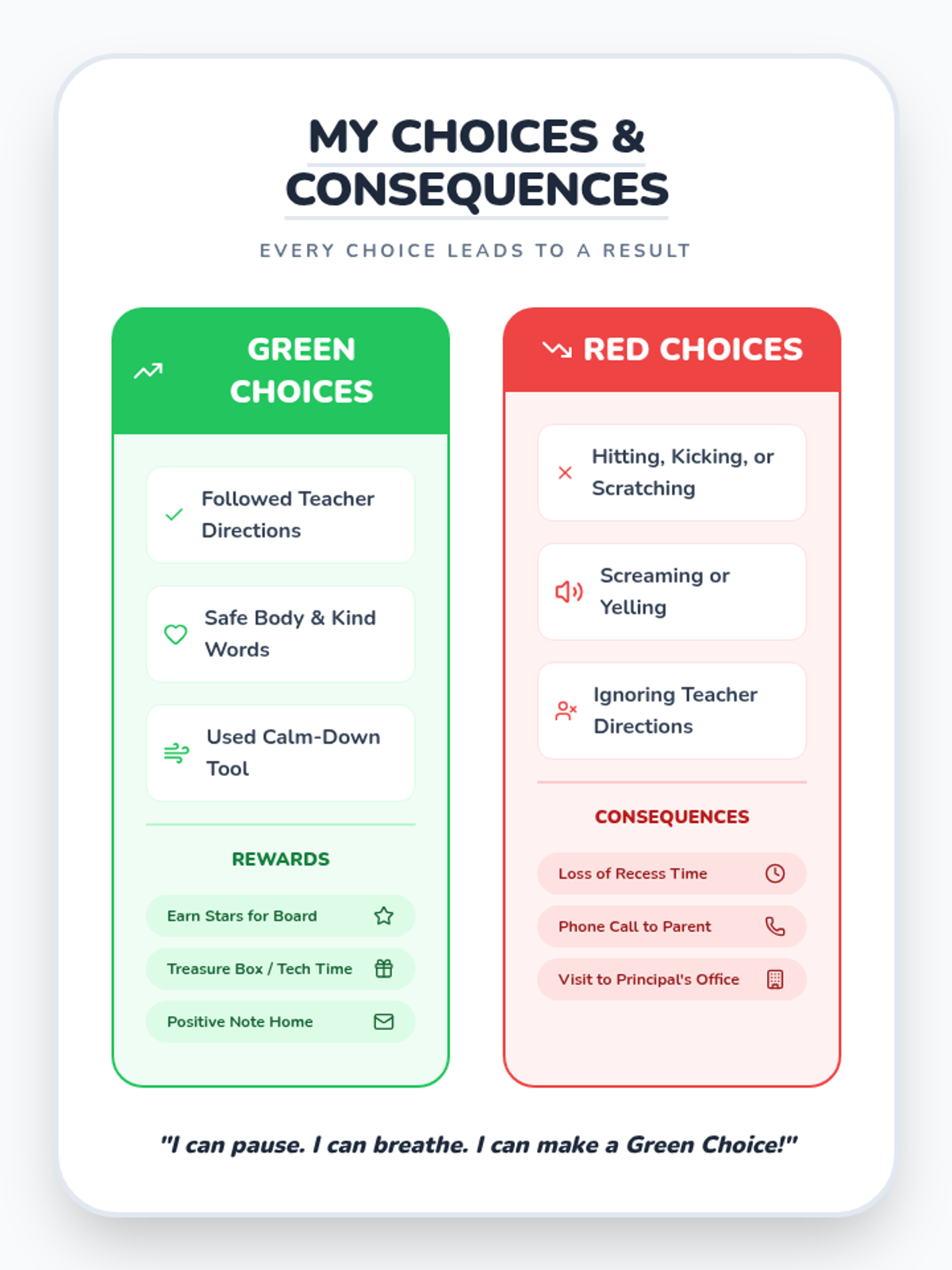
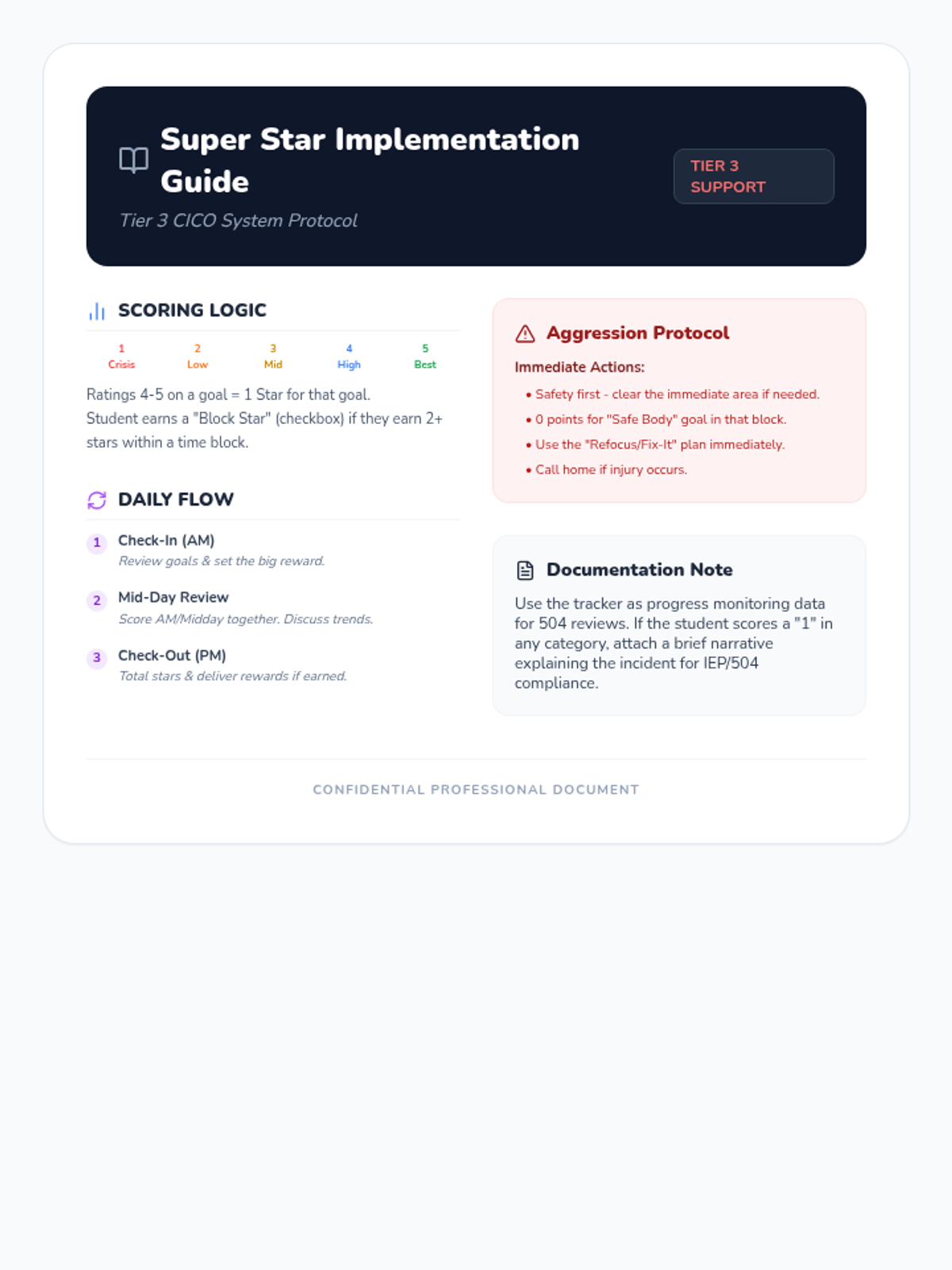
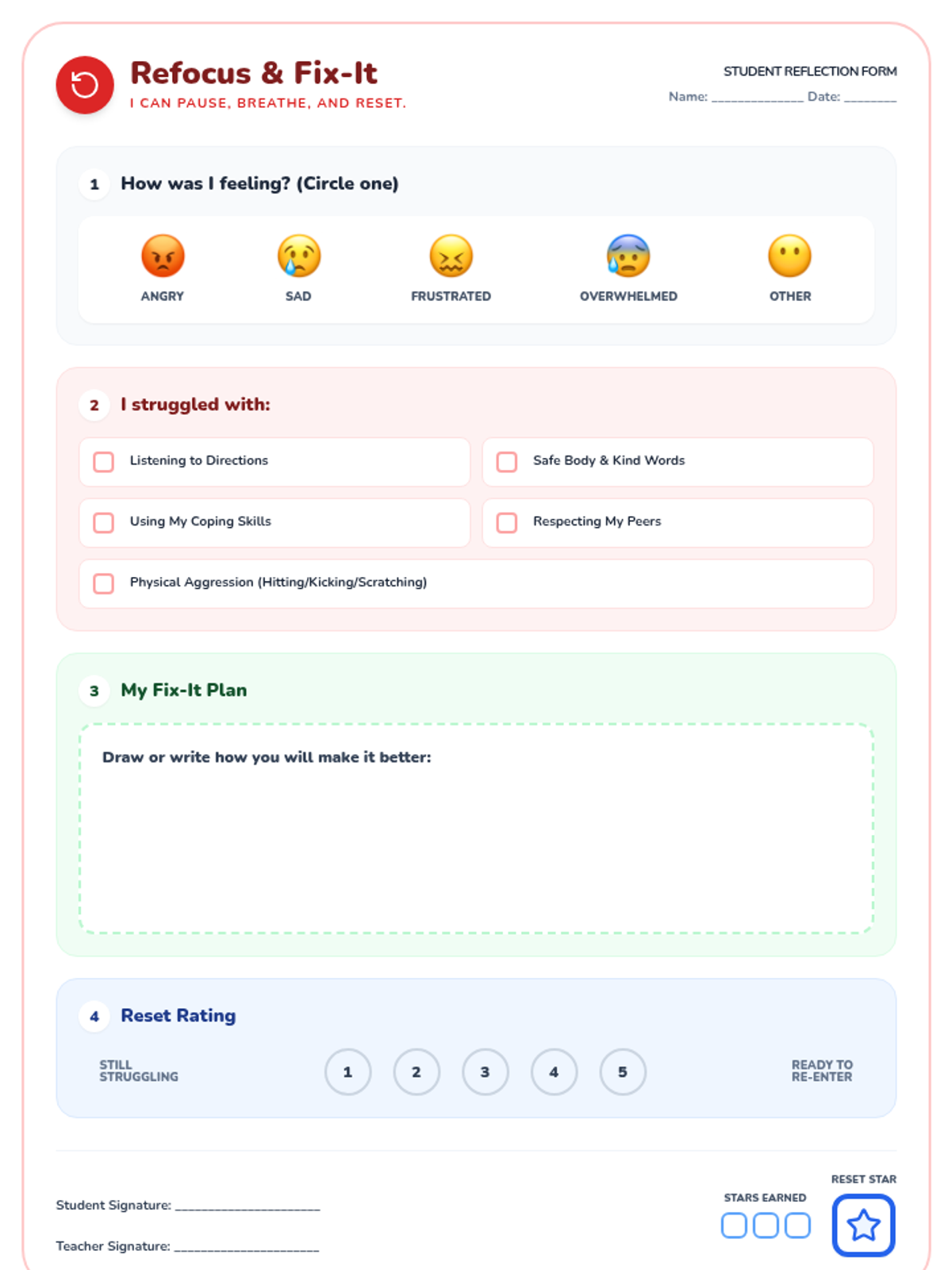
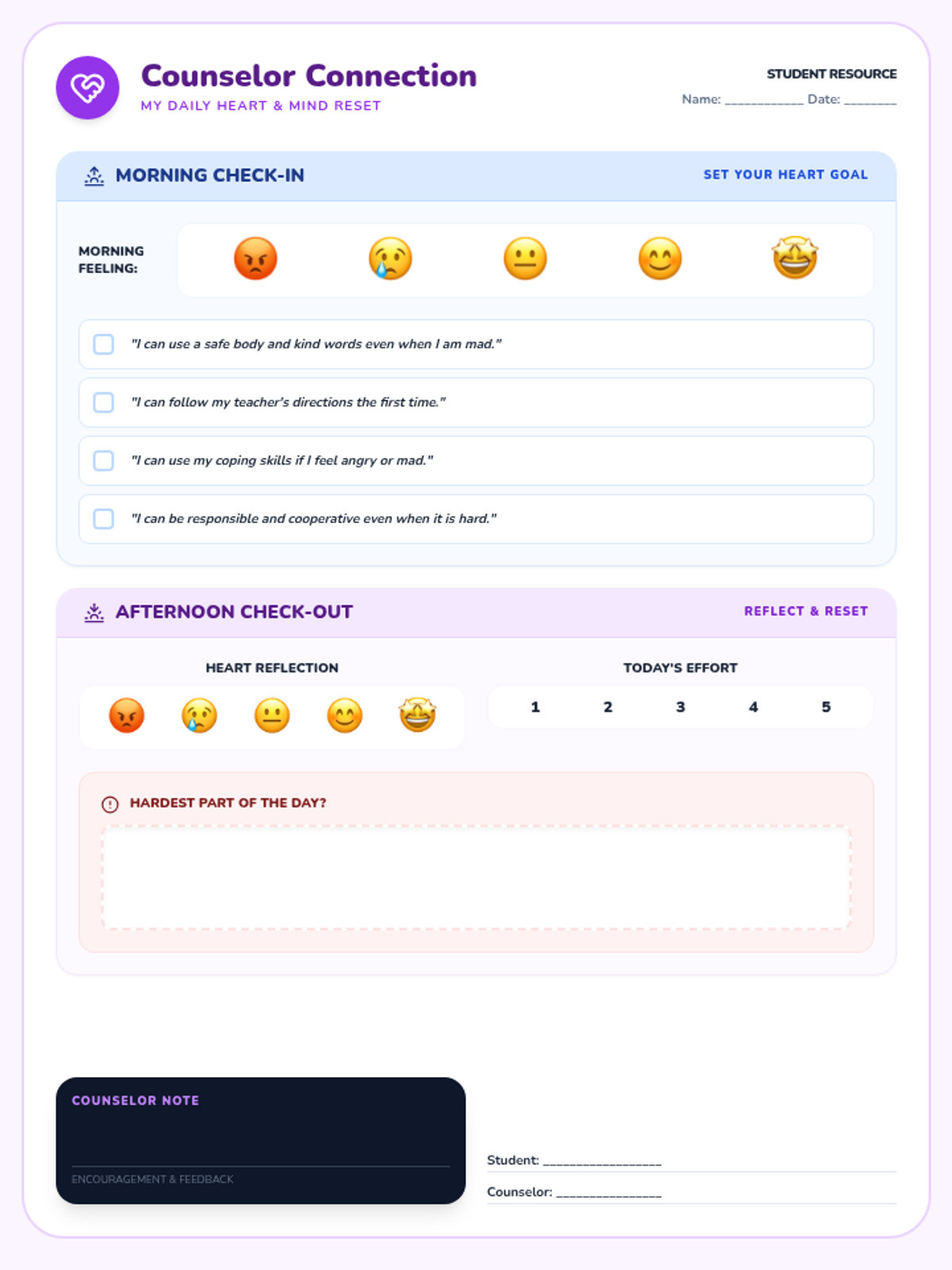
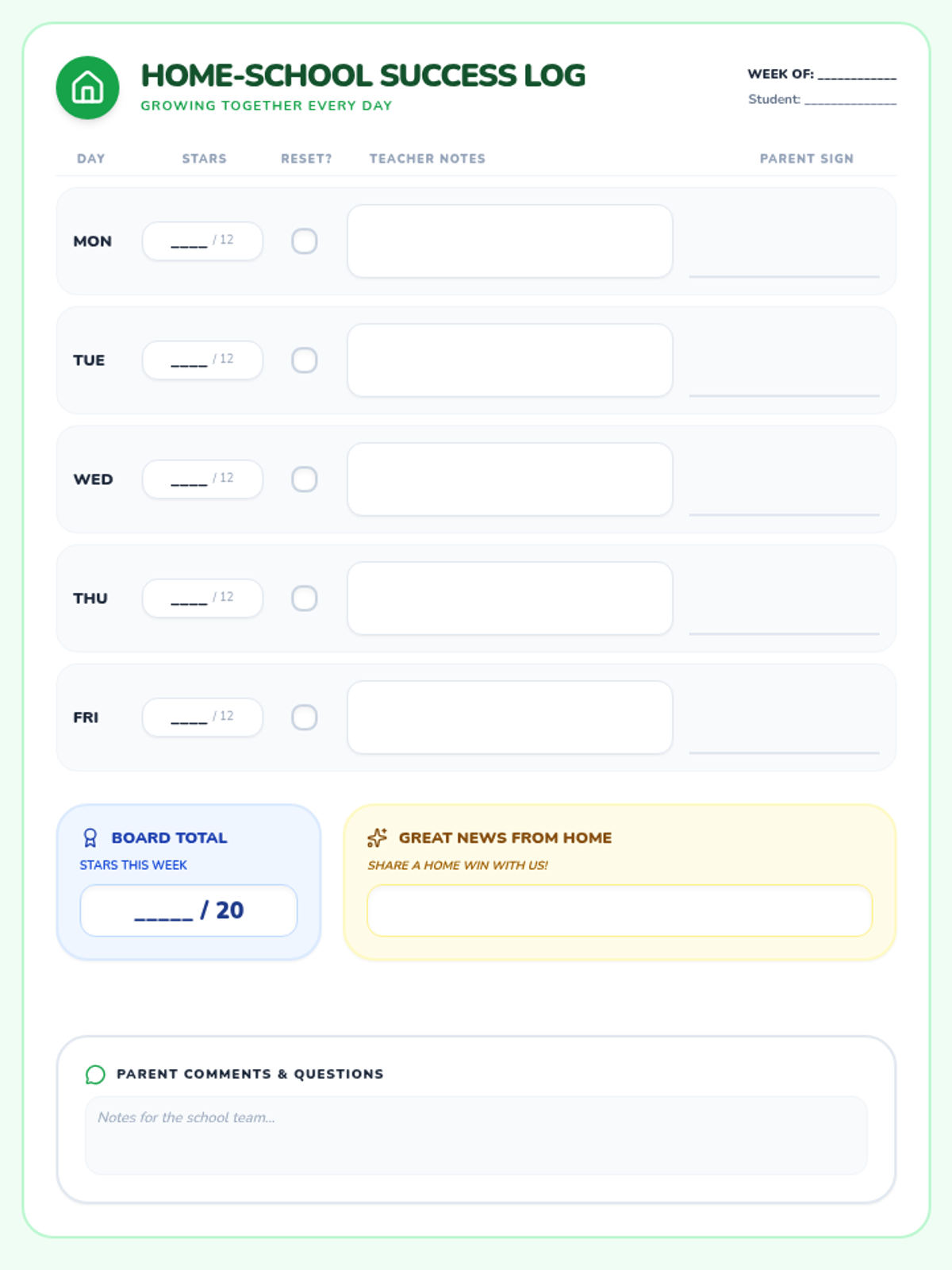
A comprehensive Tier 3 behavior support system for a second-grade student with ADHD, focusing on emotion regulation, safe choices, and positive reinforcement through a structured daily check-in/check-out (CICO) process.
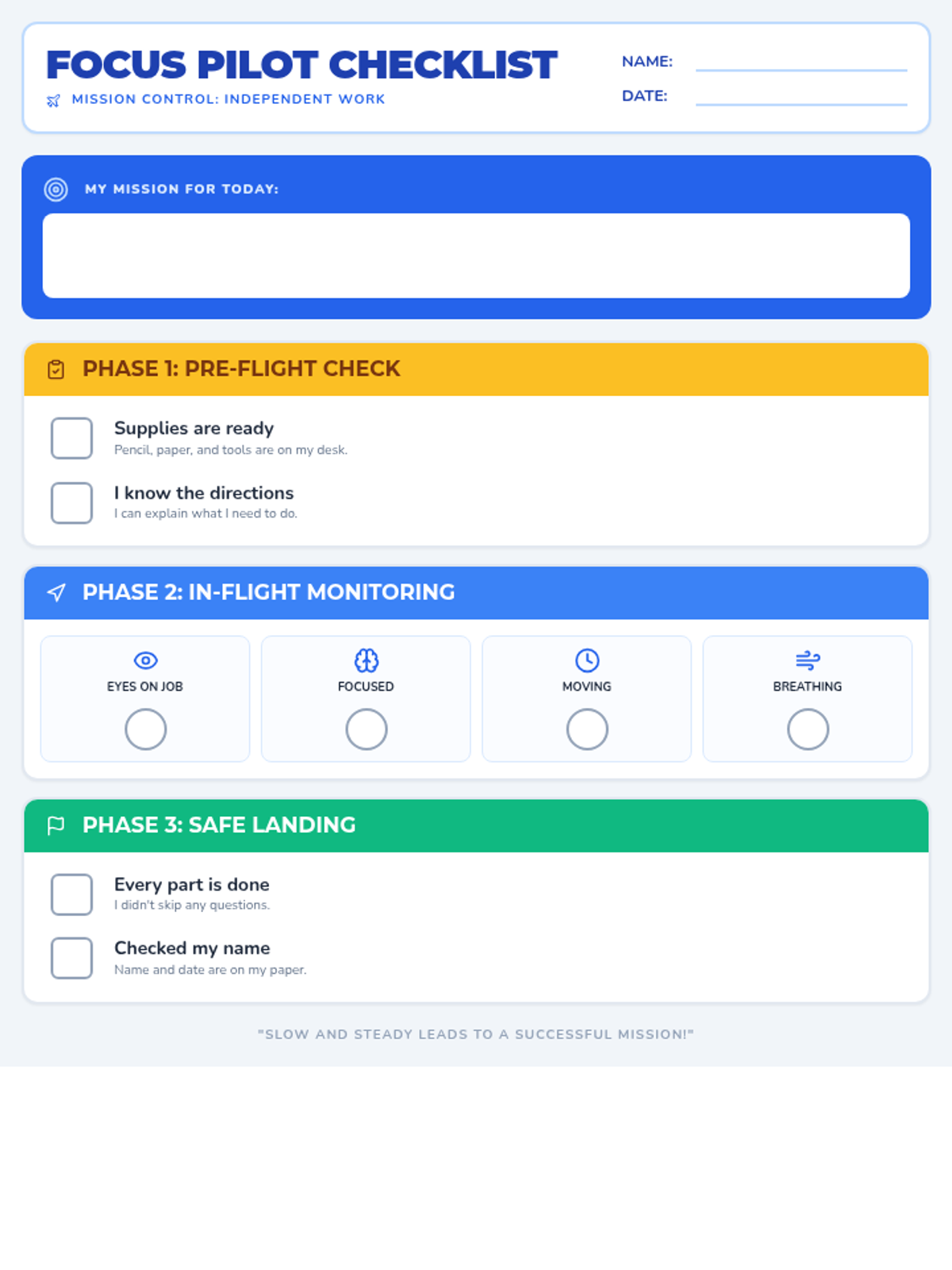
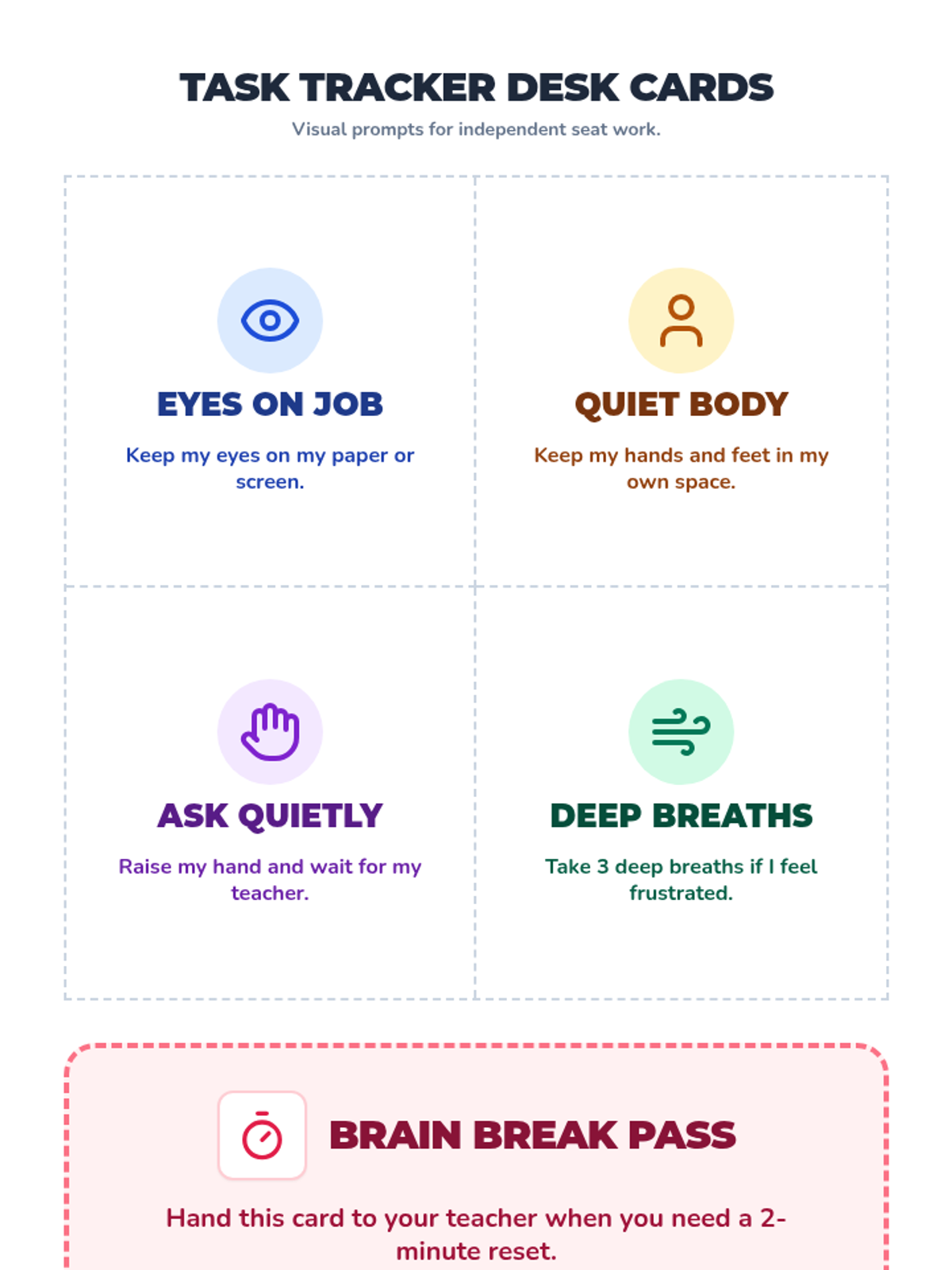
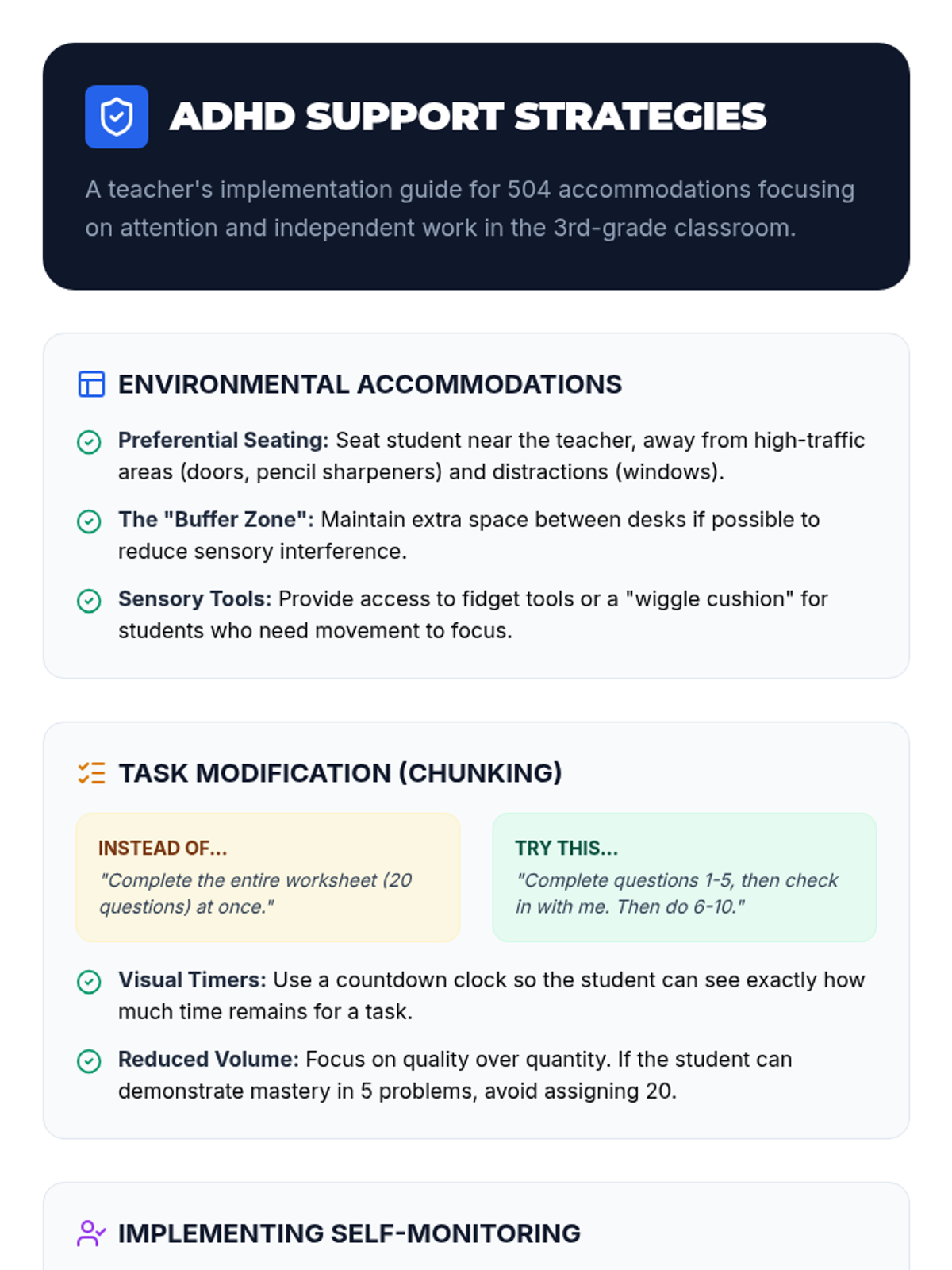
A comprehensive set of tools designed to support 3rd-grade students with ADHD during independent seat work, featuring self-monitoring checklists and visual desk prompts.
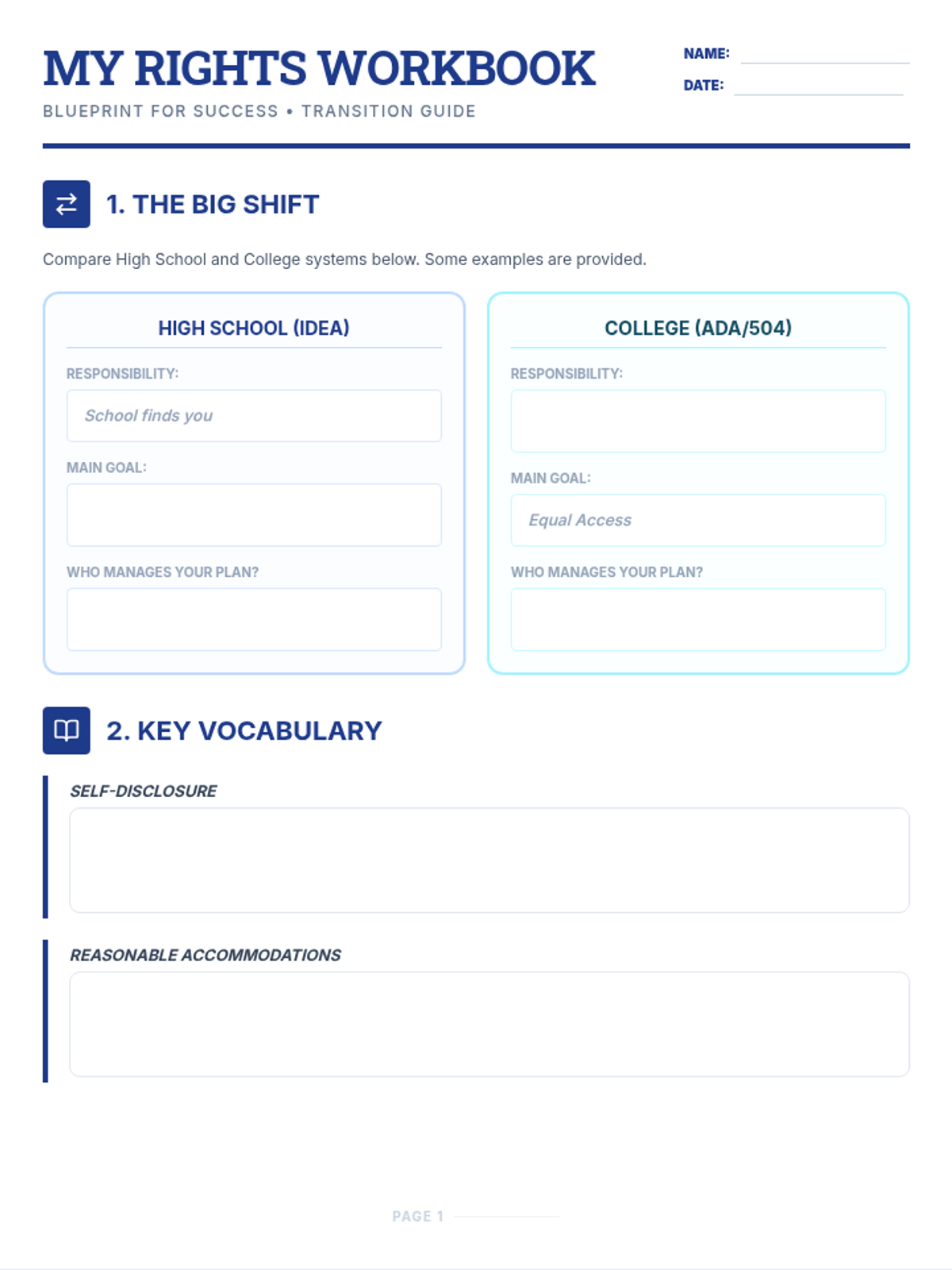
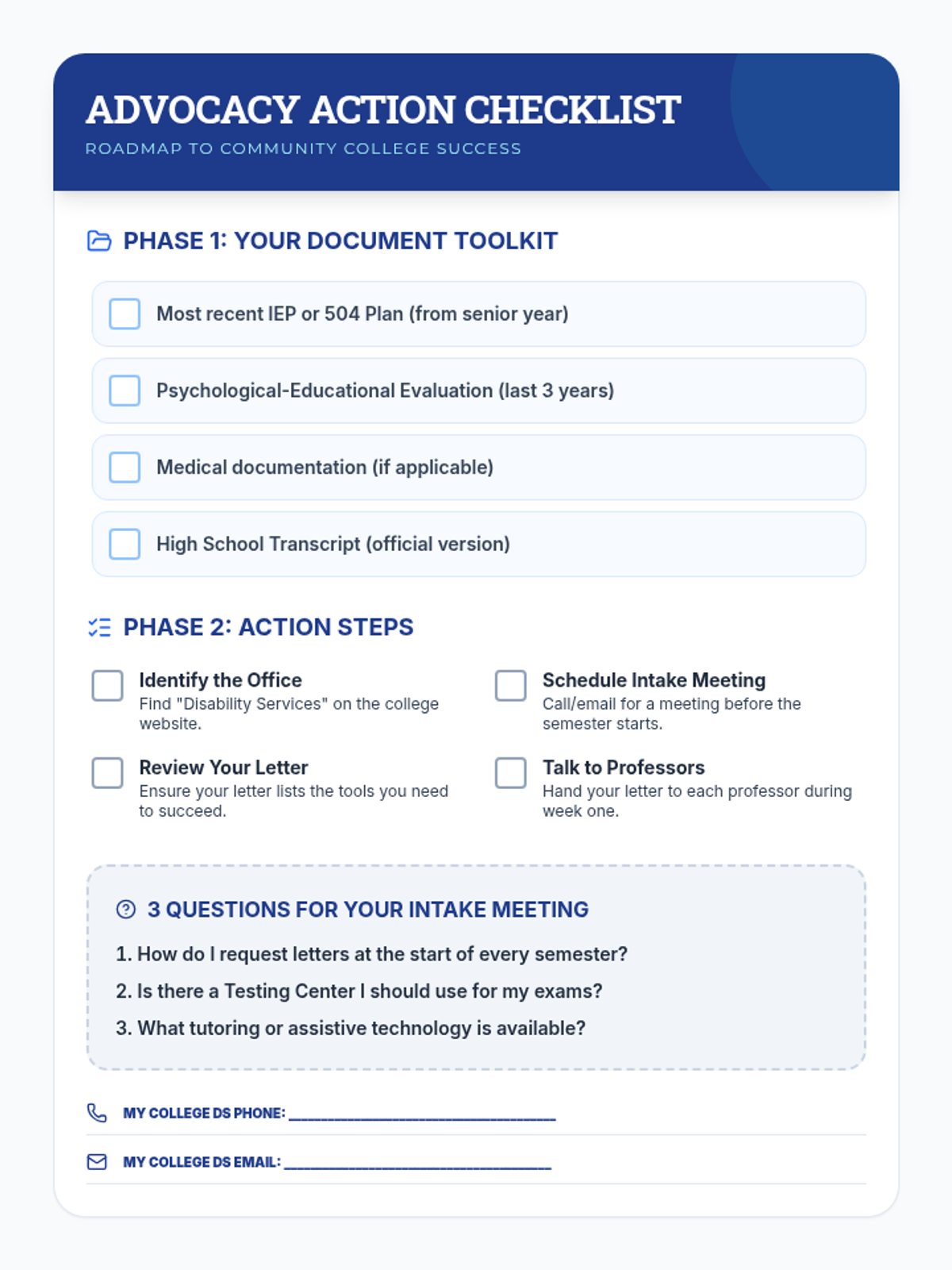
This lesson prepares 12th-grade special education students for the transition to community college by exploring the shift from IDEA to ADA/Section 504. Students will learn the accommodation process, the importance of self-disclosure, and their role as self-advocates in a post-secondary environment.
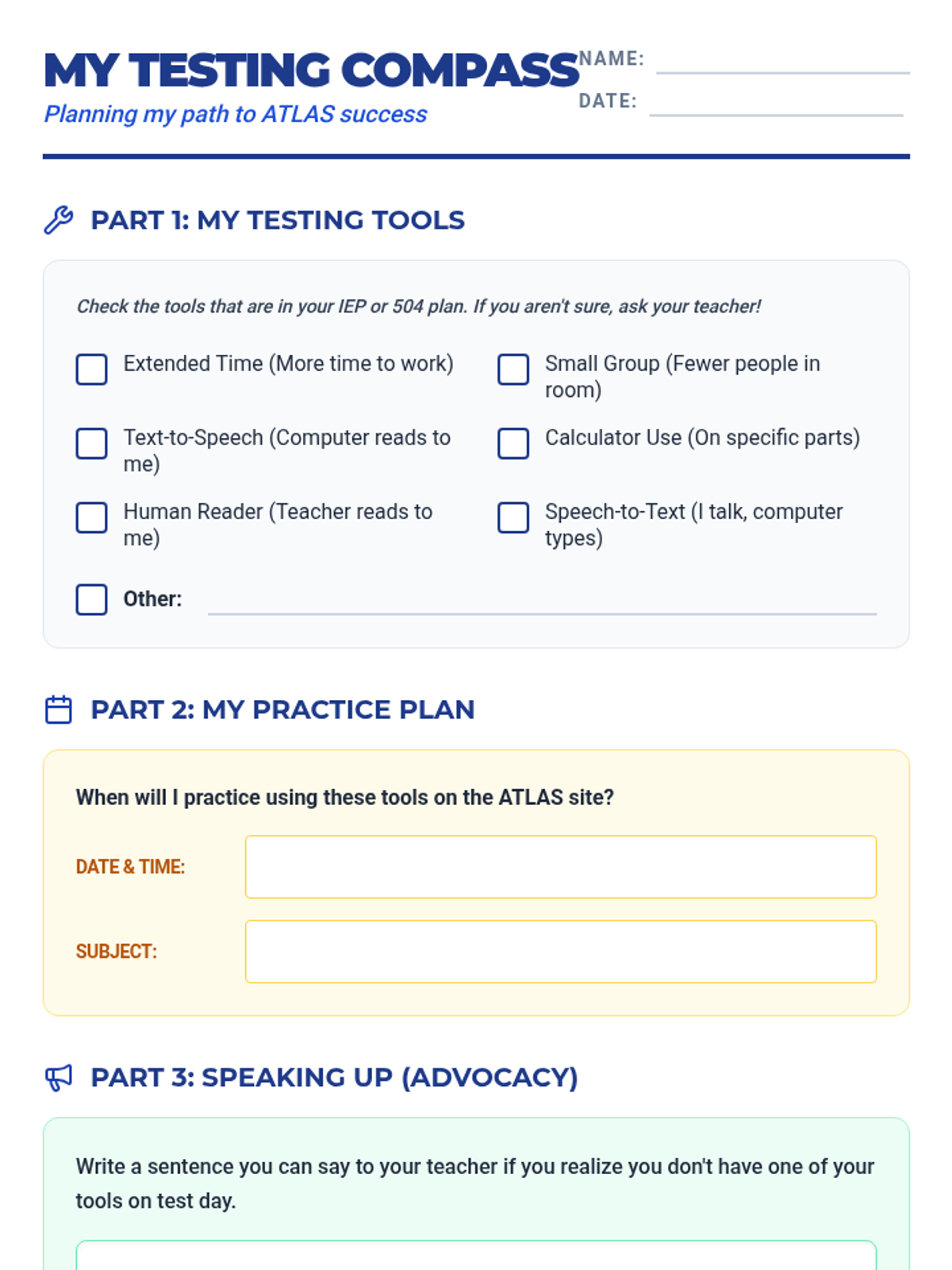
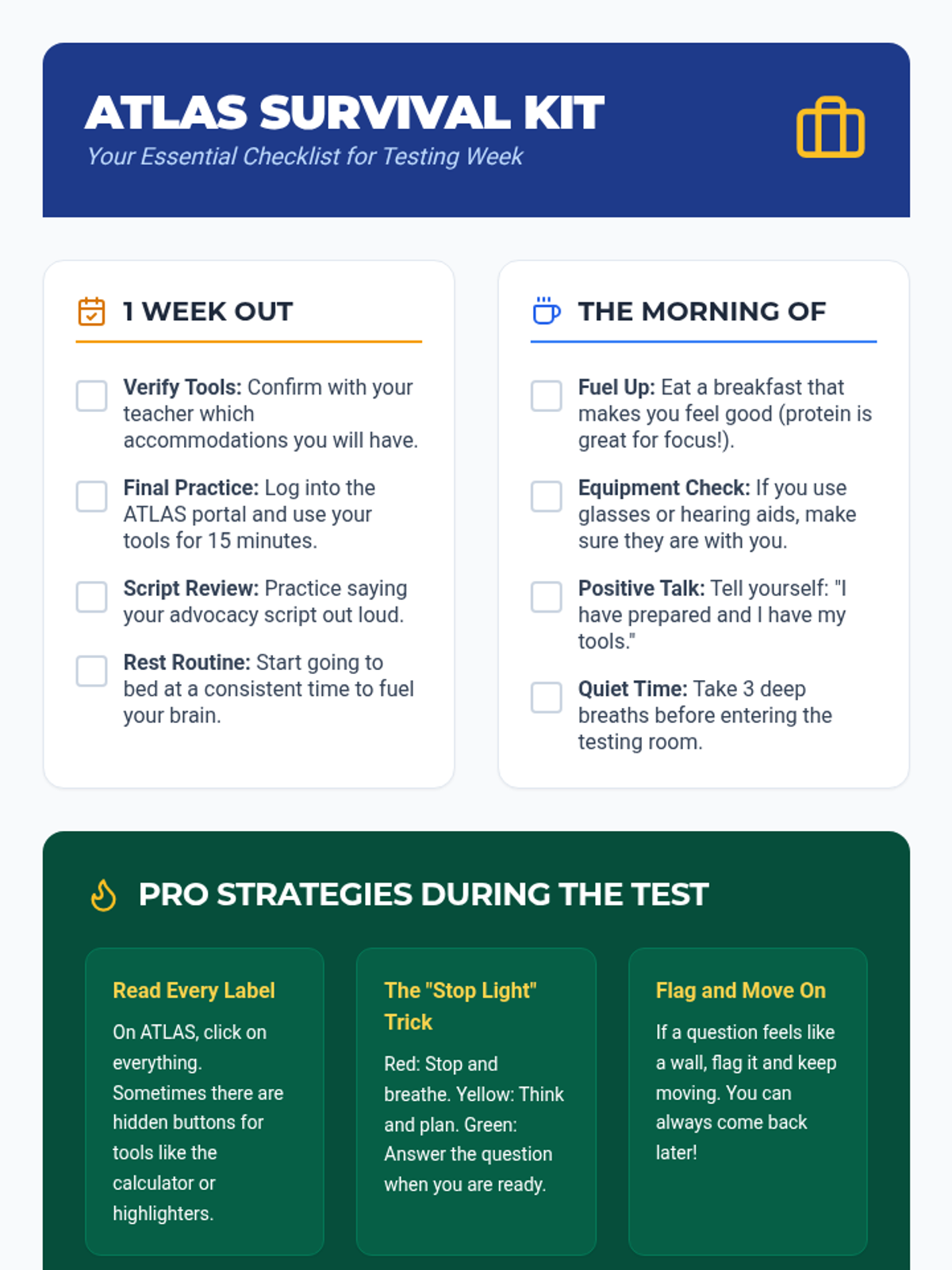
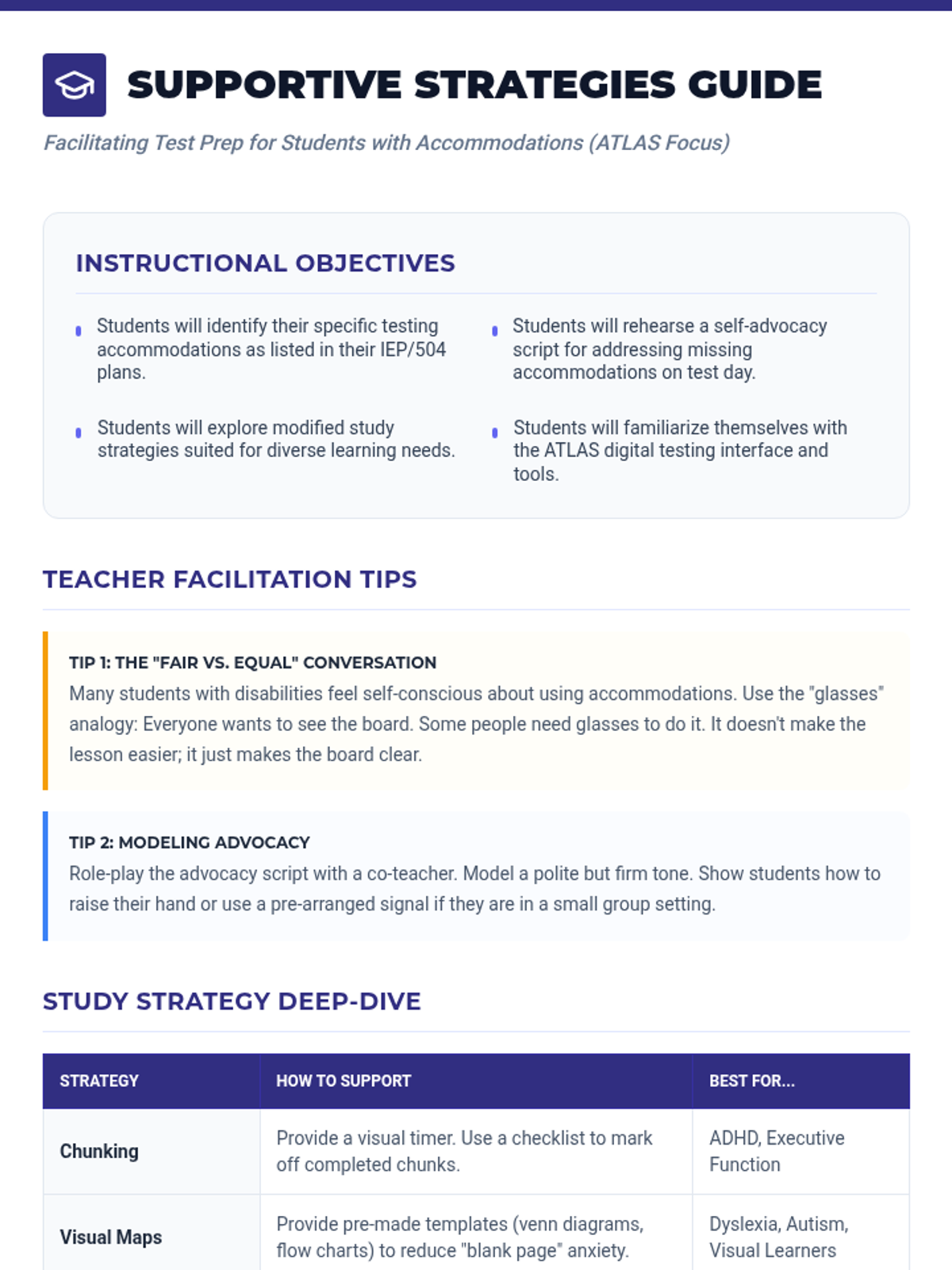
A supportive lesson designed for students with IEPs and 504 plans to navigate the Arkansas ATLAS assessments with confidence, focusing on accommodations, self-advocacy, and practical study strategies.
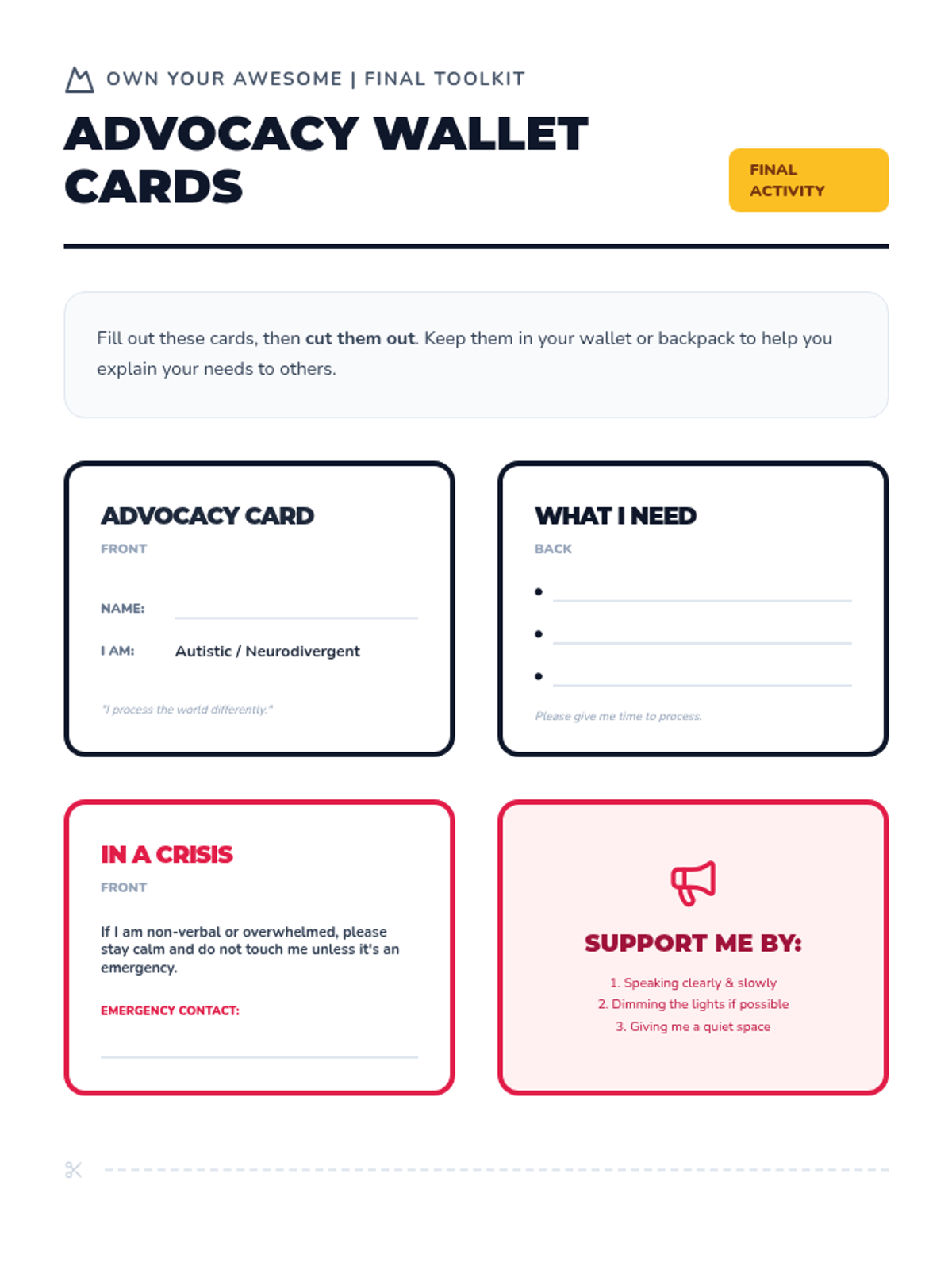
Creating a personalized self-advocacy toolkit and wallet cards for daily use in various environments.
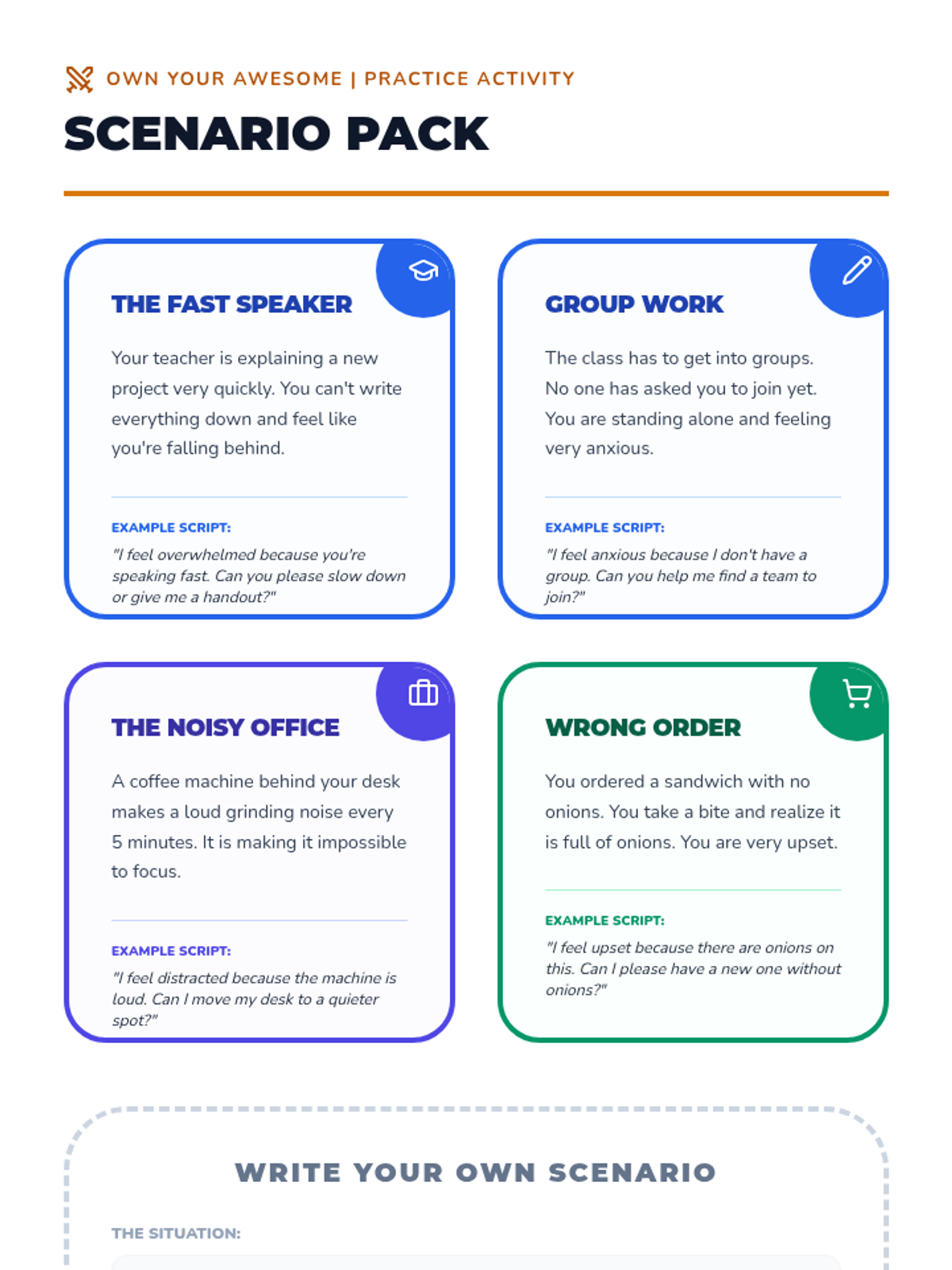
Active practice session with diverse role-play scenarios covering school, work, and community environments.
Navigating public spaces like stores, transit, and libraries with confidence and clear scripts.
Applying advocacy skills to workplace settings, including professional communication and disclosure decisions.
Practicing self-advocacy in the classroom, including asking for accommodations and clarifying instructions.
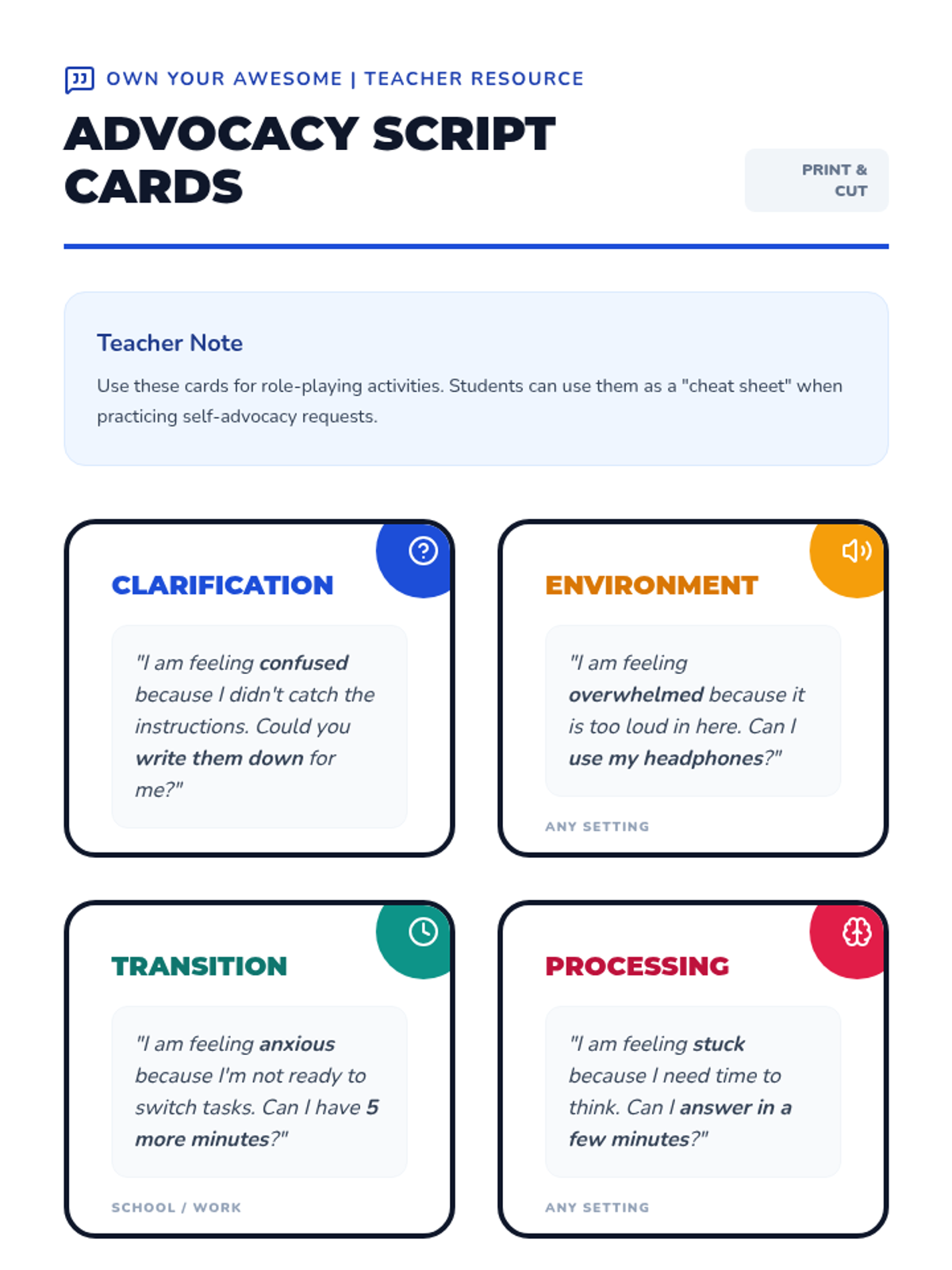
Mastering the structure of a self-advocacy request using clear scripts and communication strategies.
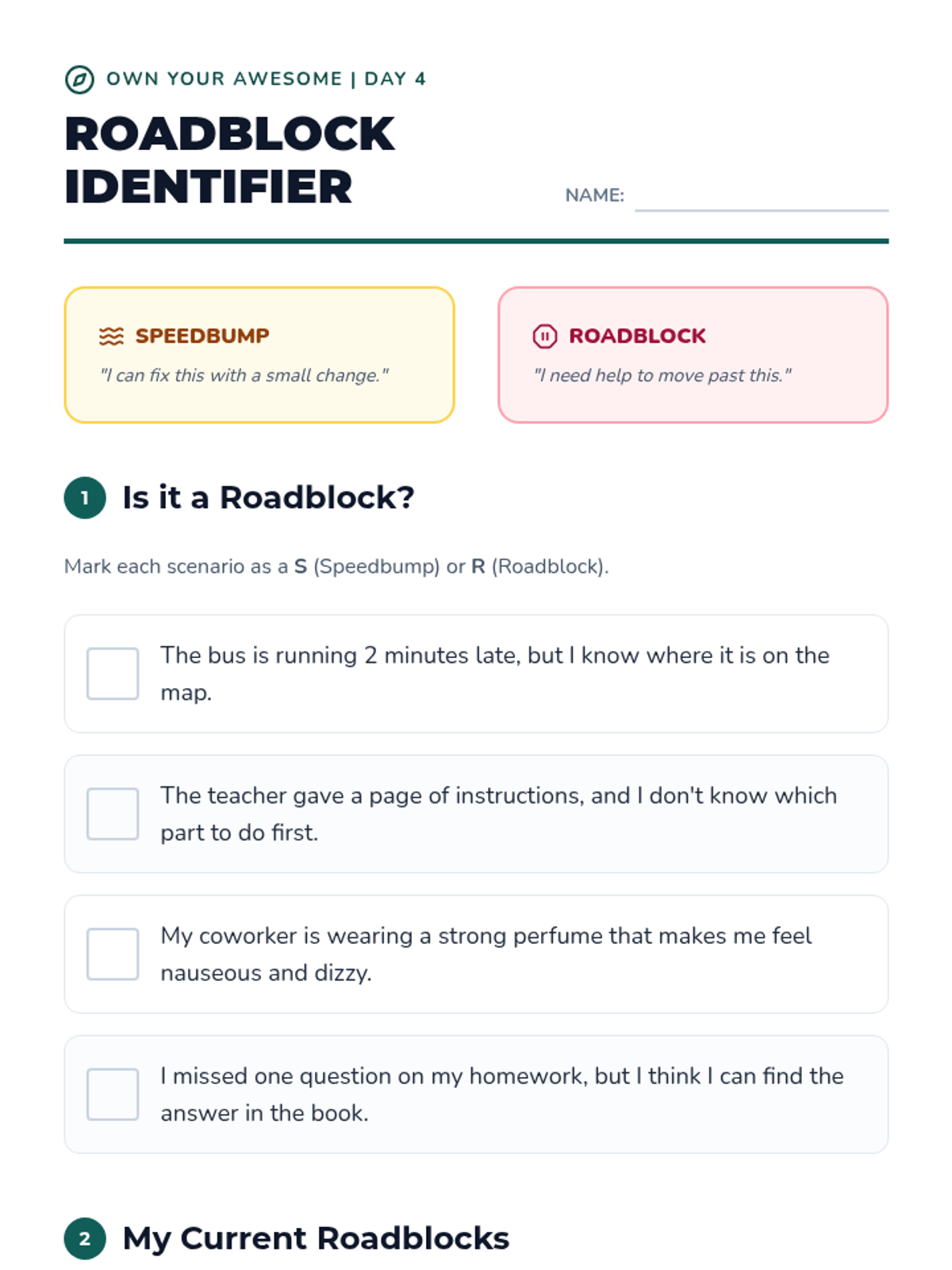
Learning to identify specific roadblocks in real-time and determining what kind of support is required.
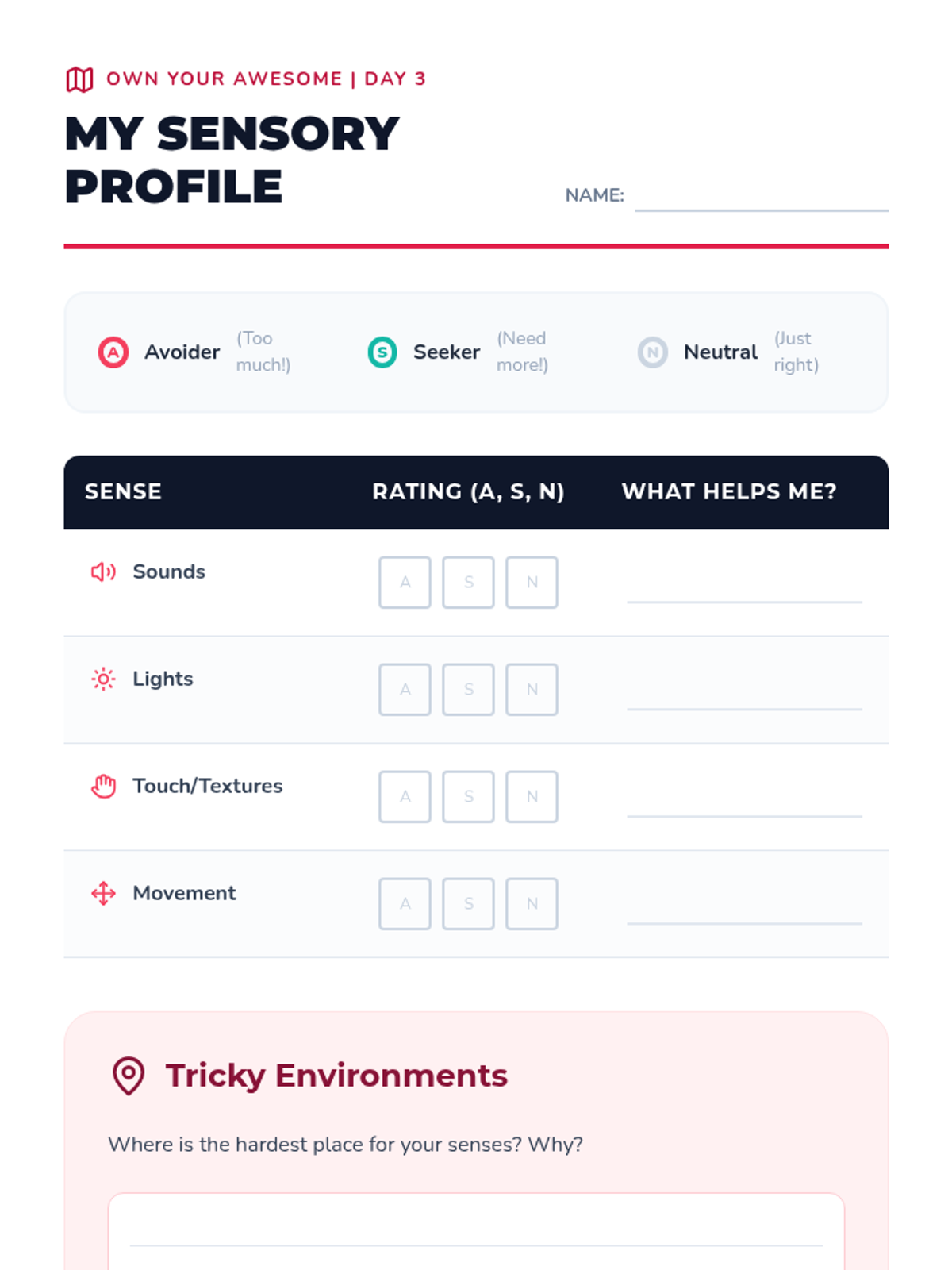
Mapping personal sensory profiles to identify environmental triggers and supportive tools across different settings.
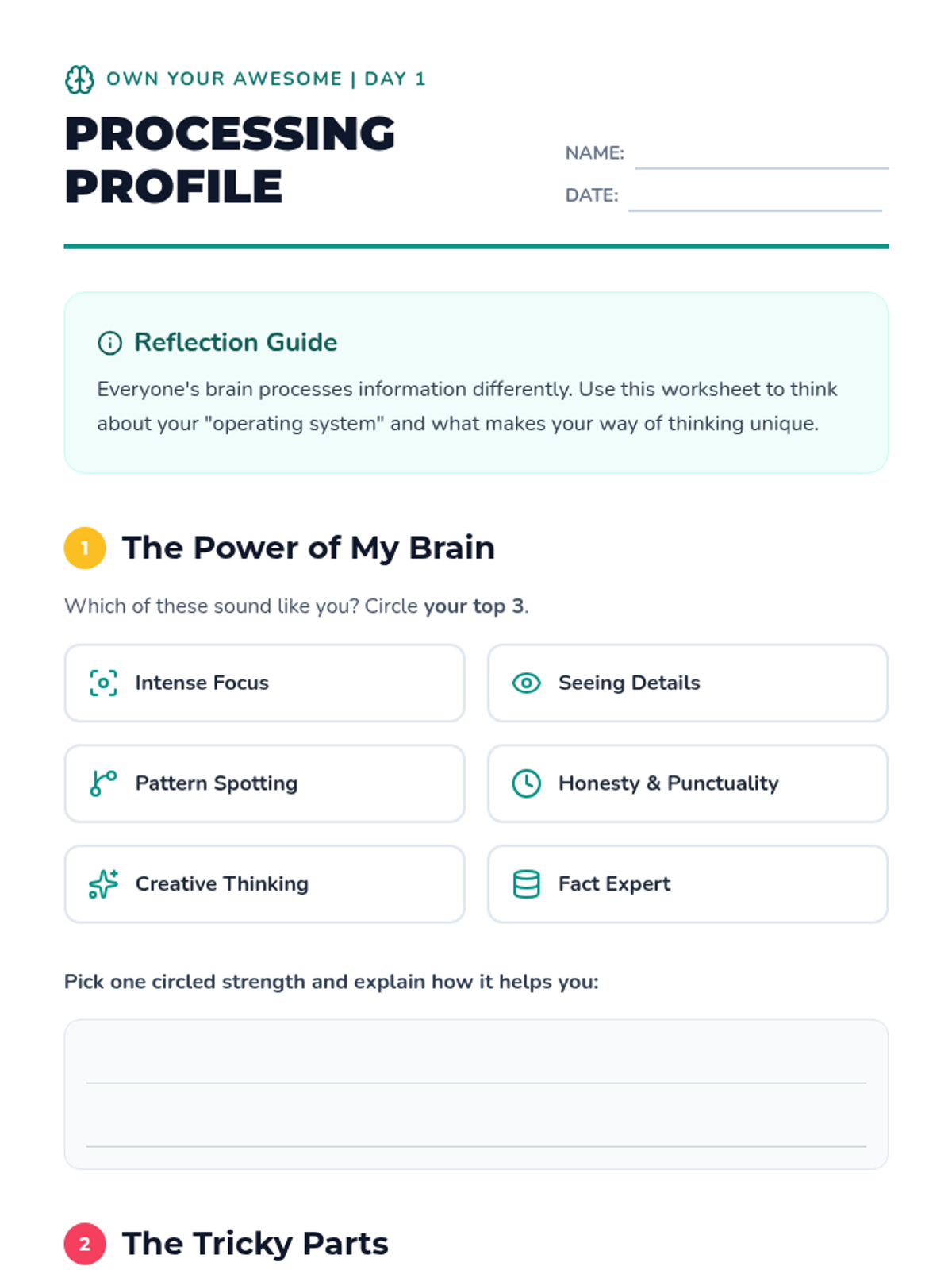
A 30-minute lesson introducing autism through a neurodiversity-affirming lens, focusing on unique processing styles and personal identity.