Legal frameworks under IDEA and Section 504 alongside essential IEP components like goals and accommodations. Equips stakeholders for collaborative advocacy and effective participation in IEP meetings.
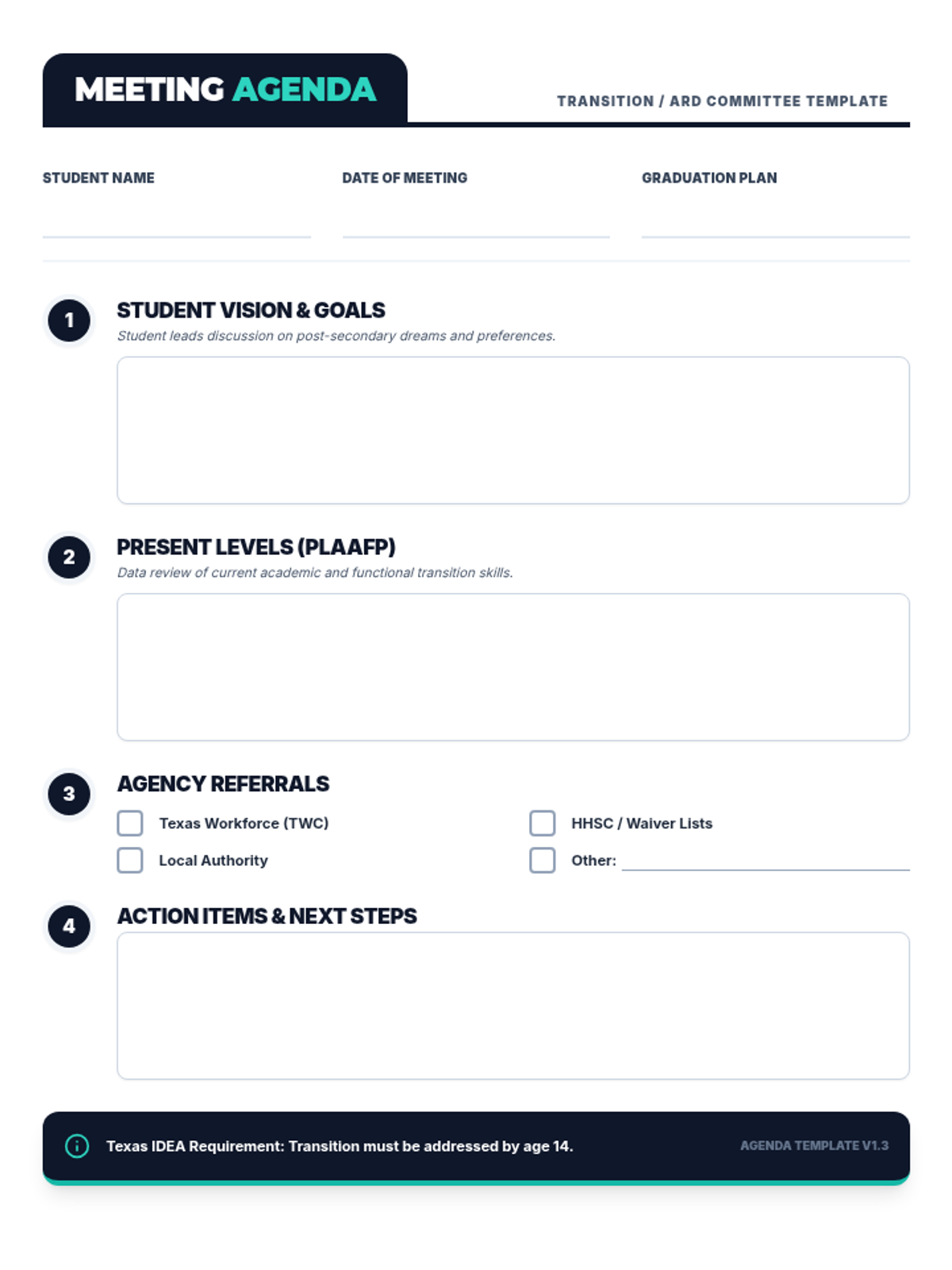
A structured template for transition meetings. Corrected layout to ensure all content fits on one page and improved header visibility.
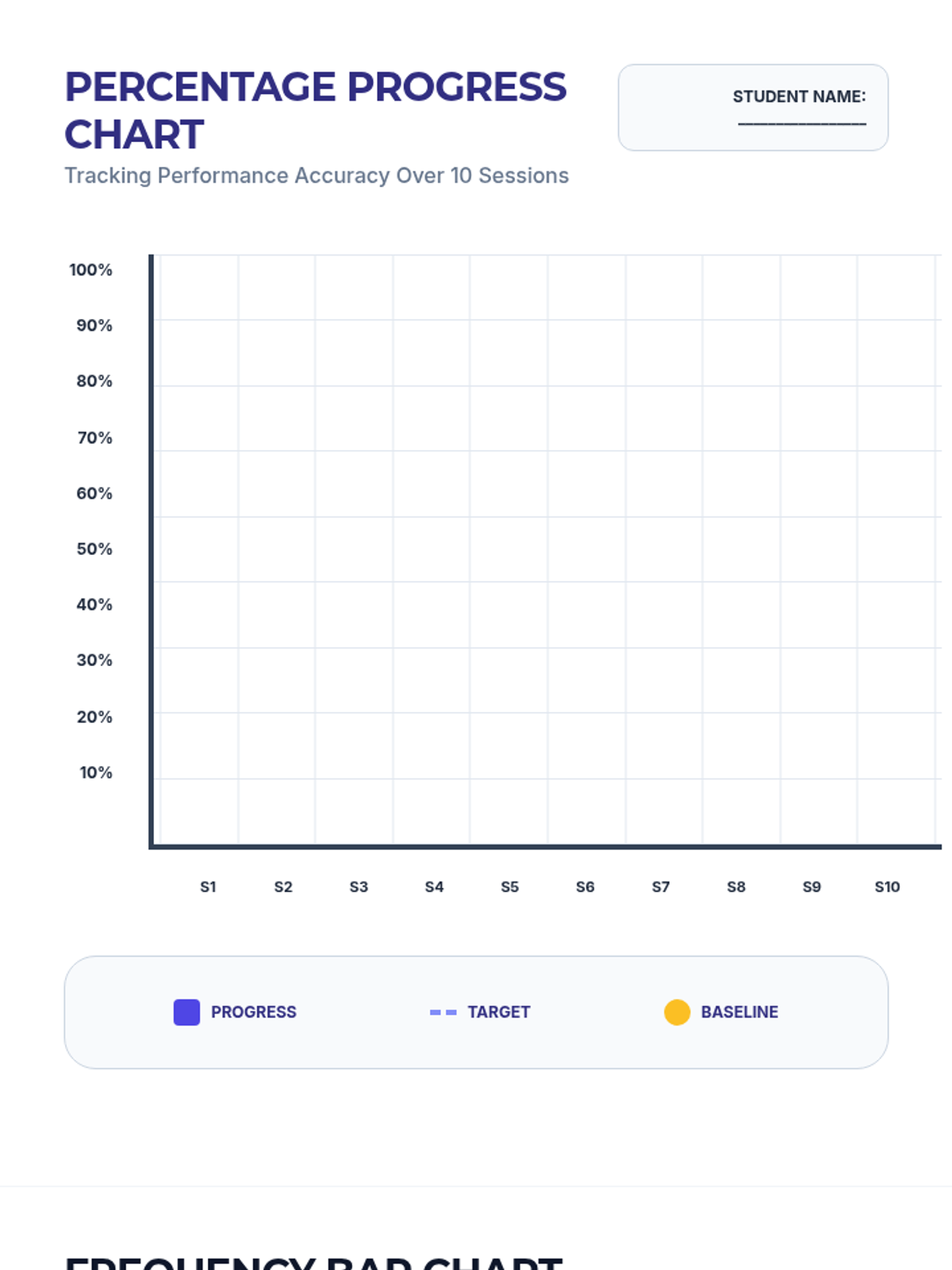
Visual progress monitoring charts for students and counselors. Includes a percentage line graph and a frequency bar chart to visually demonstrate goal growth during ARD meetings or student conferences.
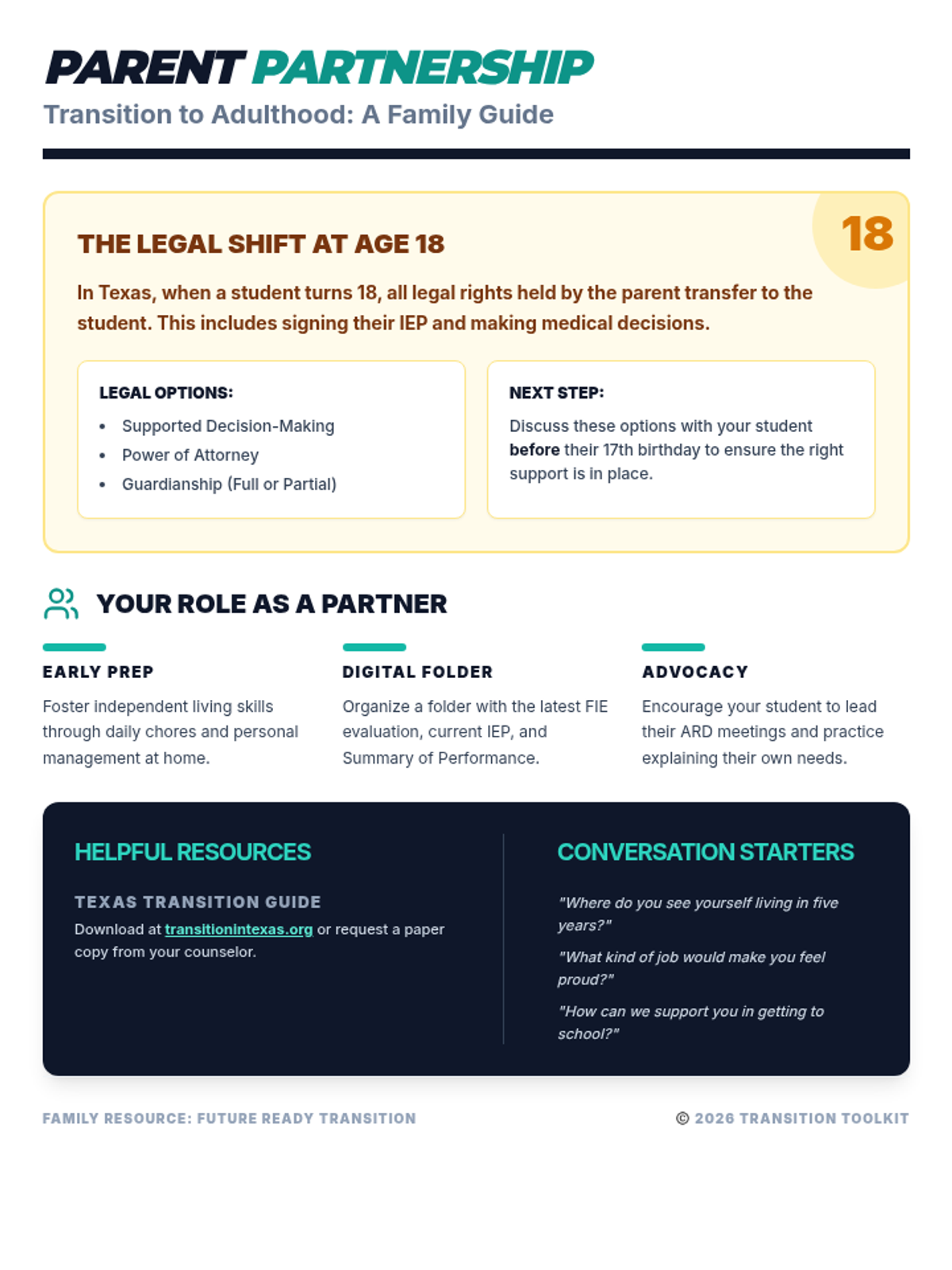
An informational handout for parents. Corrected layout to fit on one page and improved contrast/readability for secondary text.
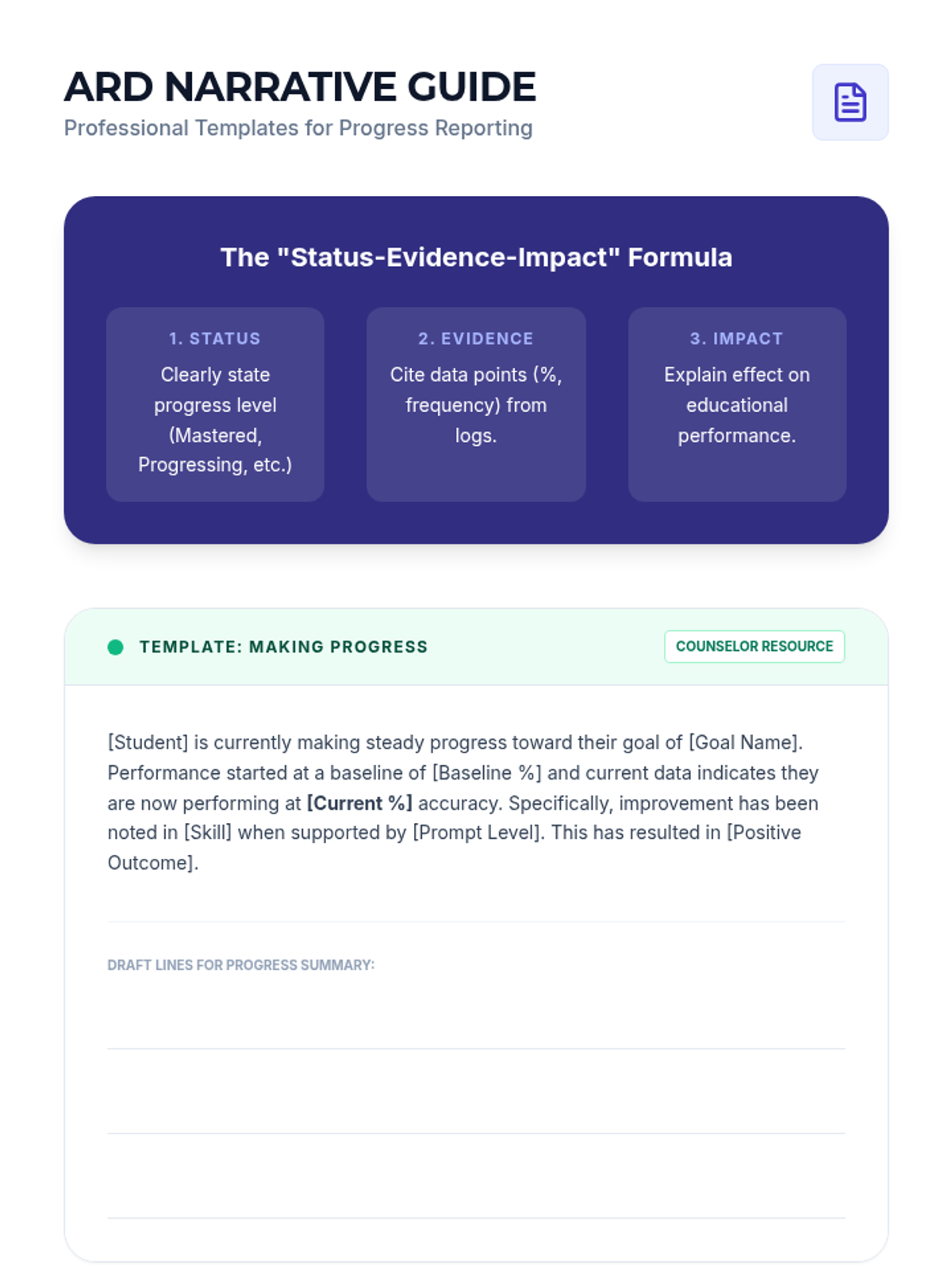
A resource for high school counselors containing Mad-libs style narrative templates for ARD meetings. Includes structures for reporting progress, mastery, and lack of progress, plus qualitative data phrases.
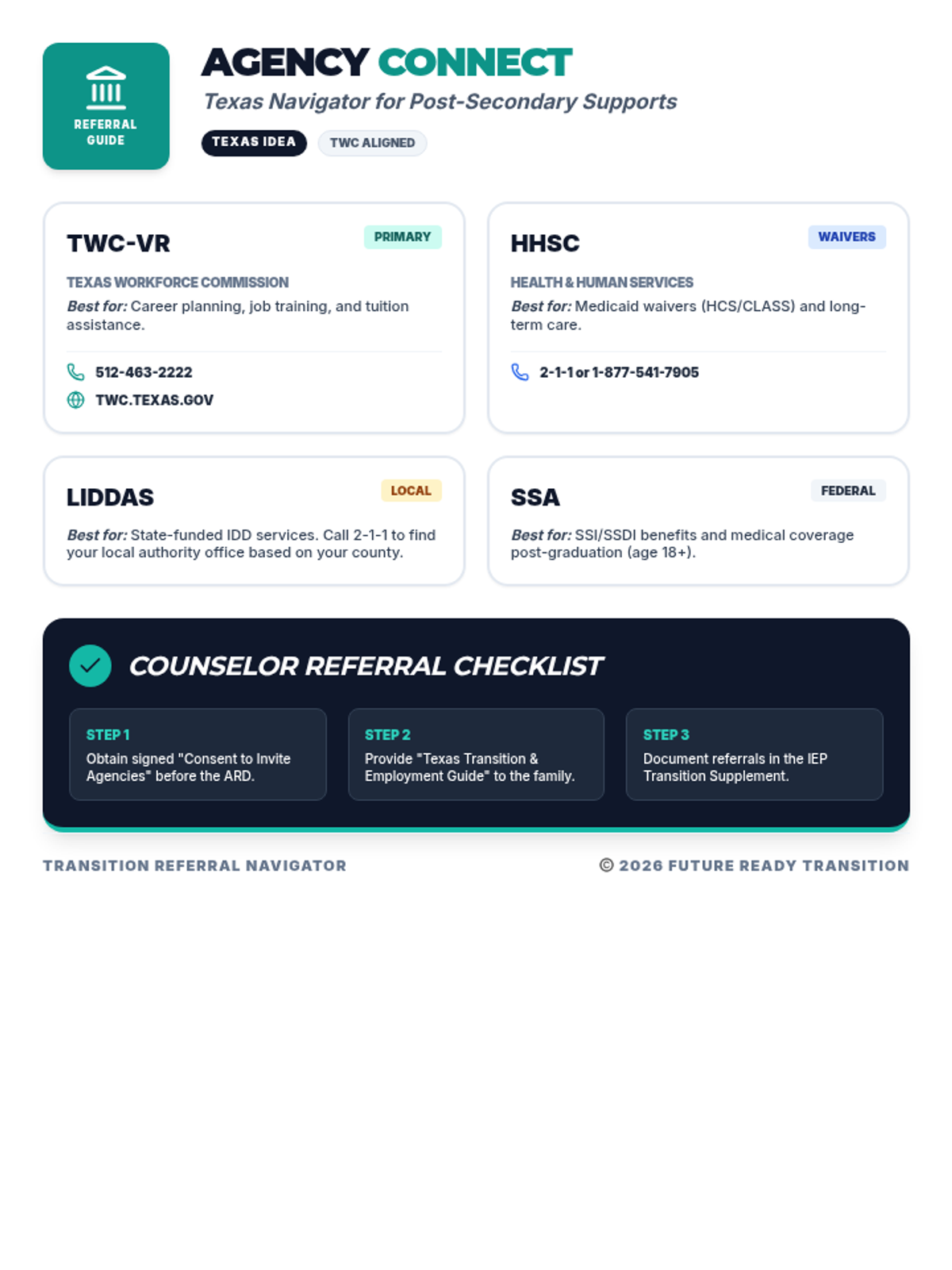
A counselor's reference guide to major Texas agencies. Corrected layout to fit on a single page and improved typography for clarity.
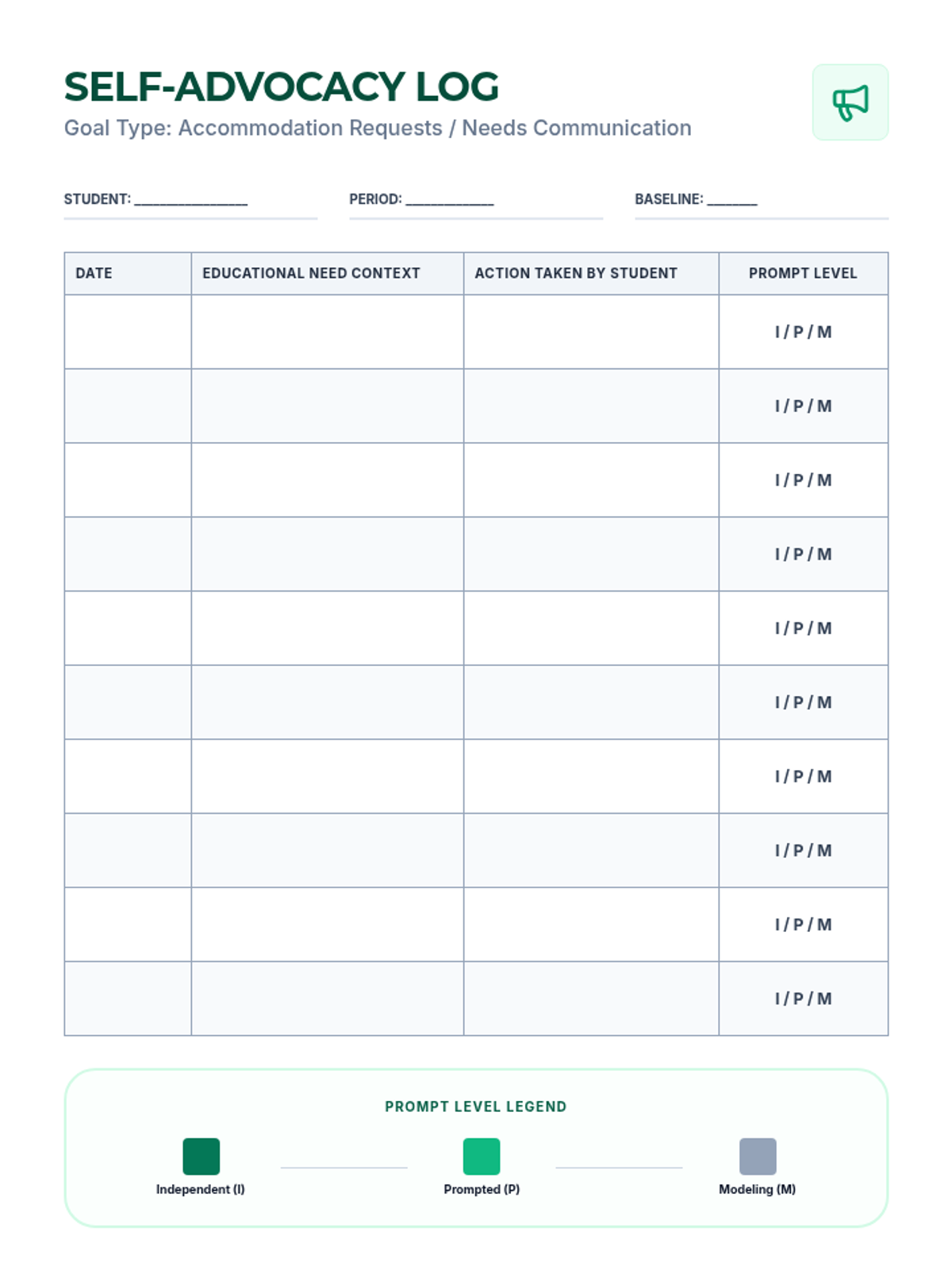
A specialized tracking document for self-advocacy goals, focusing on accommodation requests and student independence. Includes a prompt-level hierarchy and a milestone checklist for transition planning.
A visually engaging slide deck for middle school counselors to present to 8th-grade students and their parents. It covers the importance of transition planning, choosing high school endorsements, self-advocacy, and the ARD meeting process.
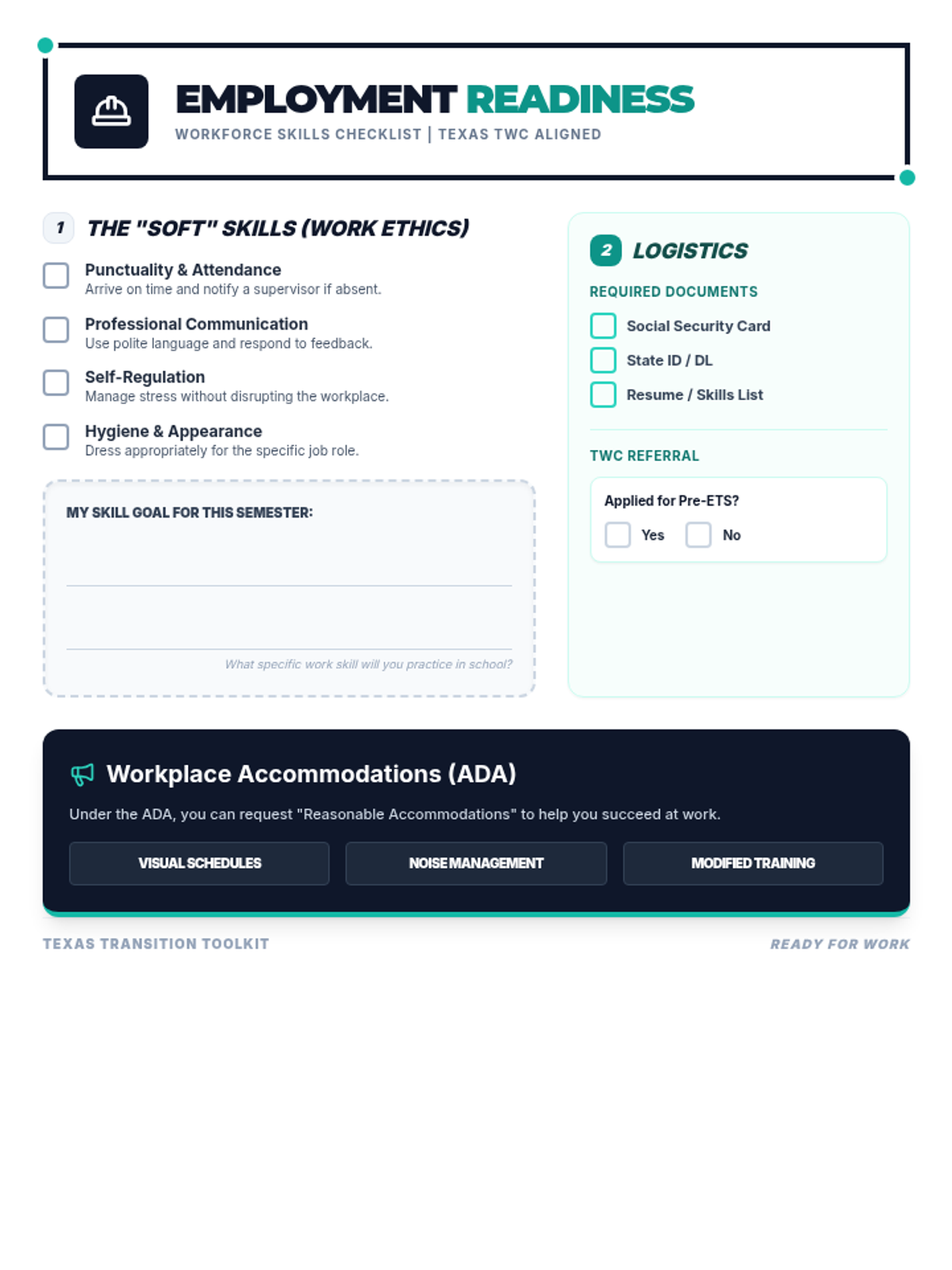
A skills checklist for students to track their employment readiness. Corrected layout to ensure all content fits on one page and improved contrast.
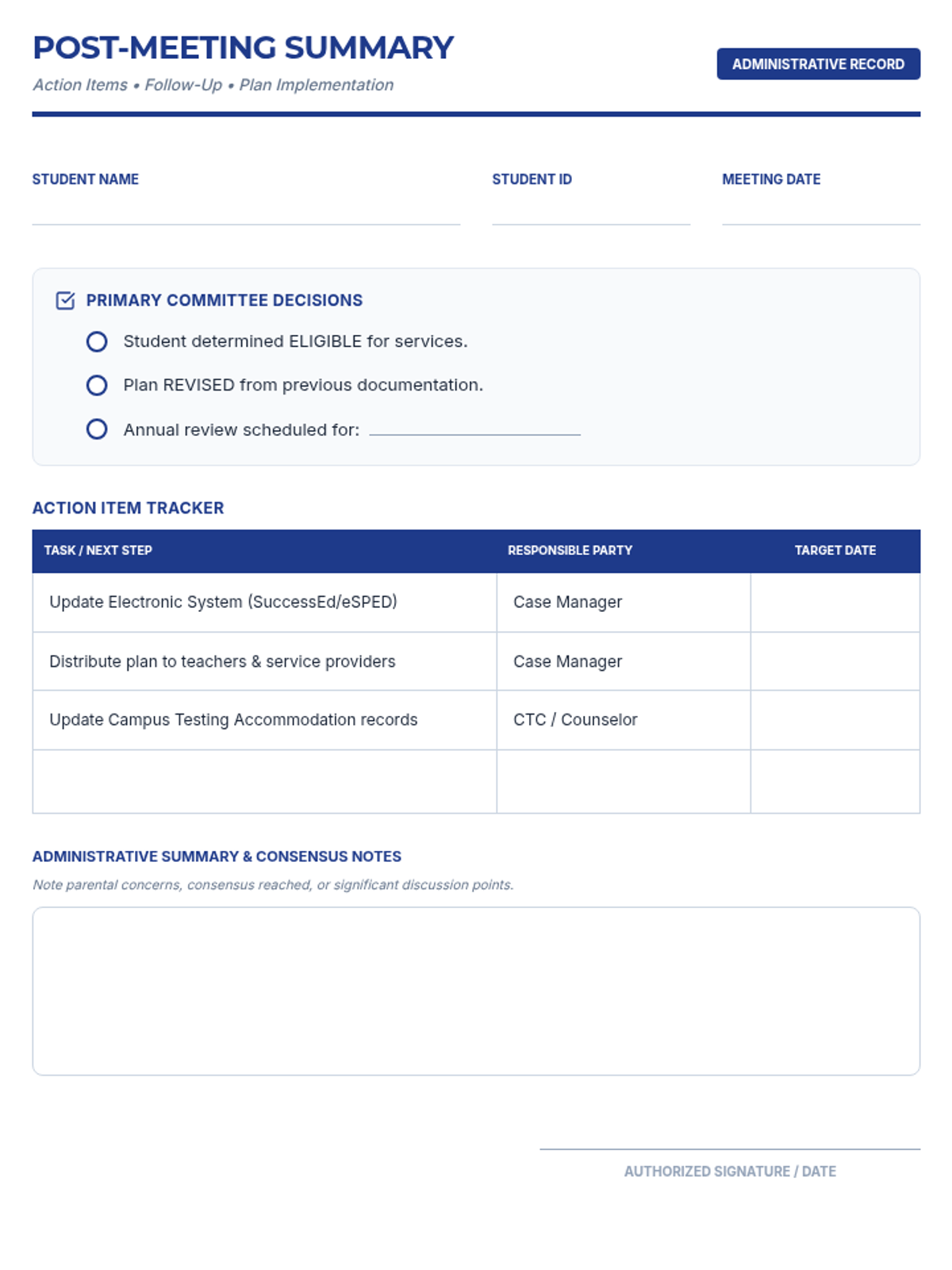
A post-meeting summary form for counselors to document key decisions, track necessary action items, and maintain a summary of the meeting for administrative records.
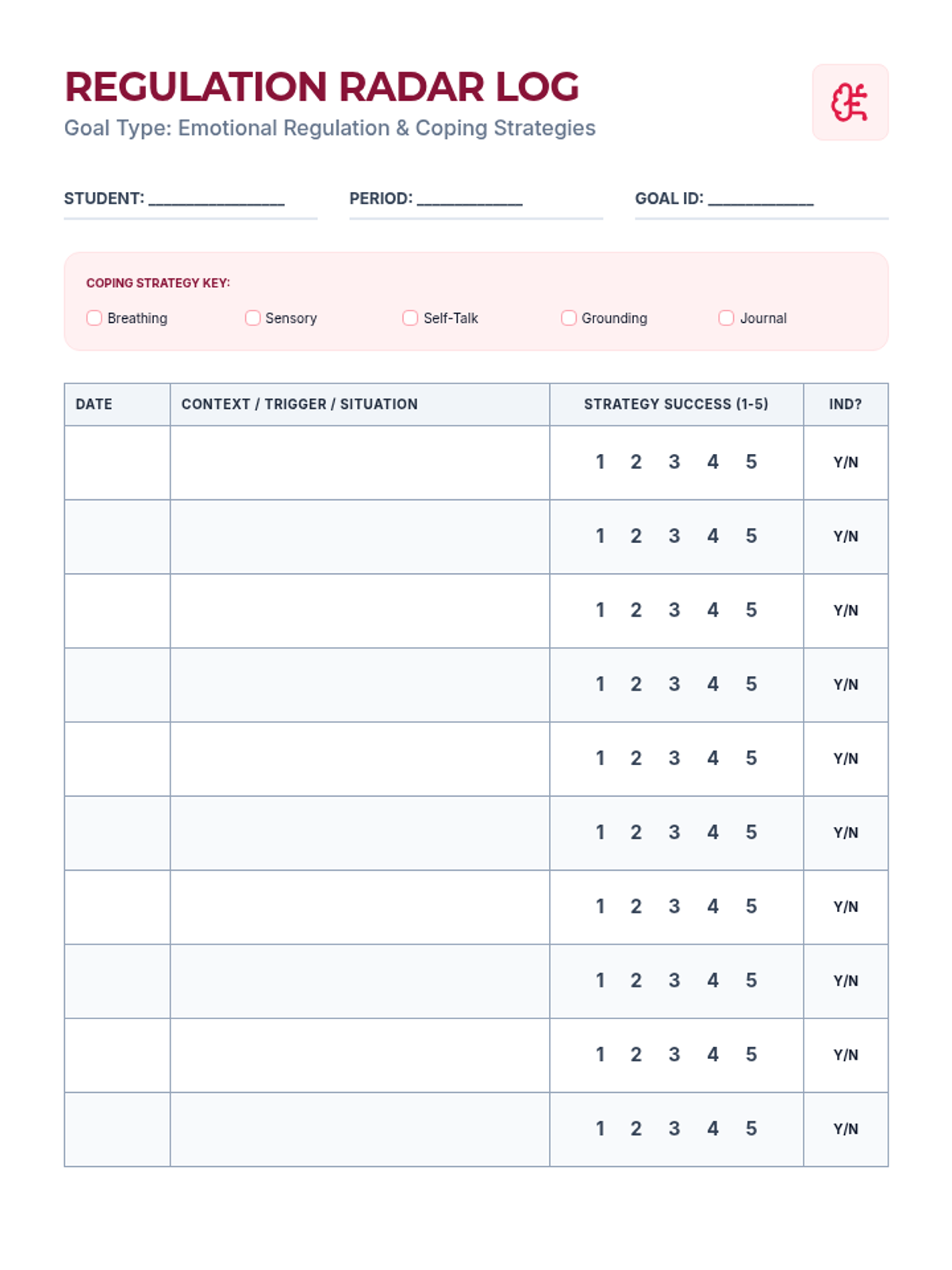
A comprehensive log for tracking emotional regulation goals. Includes strategy checklists, an incident log with a Likert scale for strategy use, and trend analysis sections for ARD preparation.
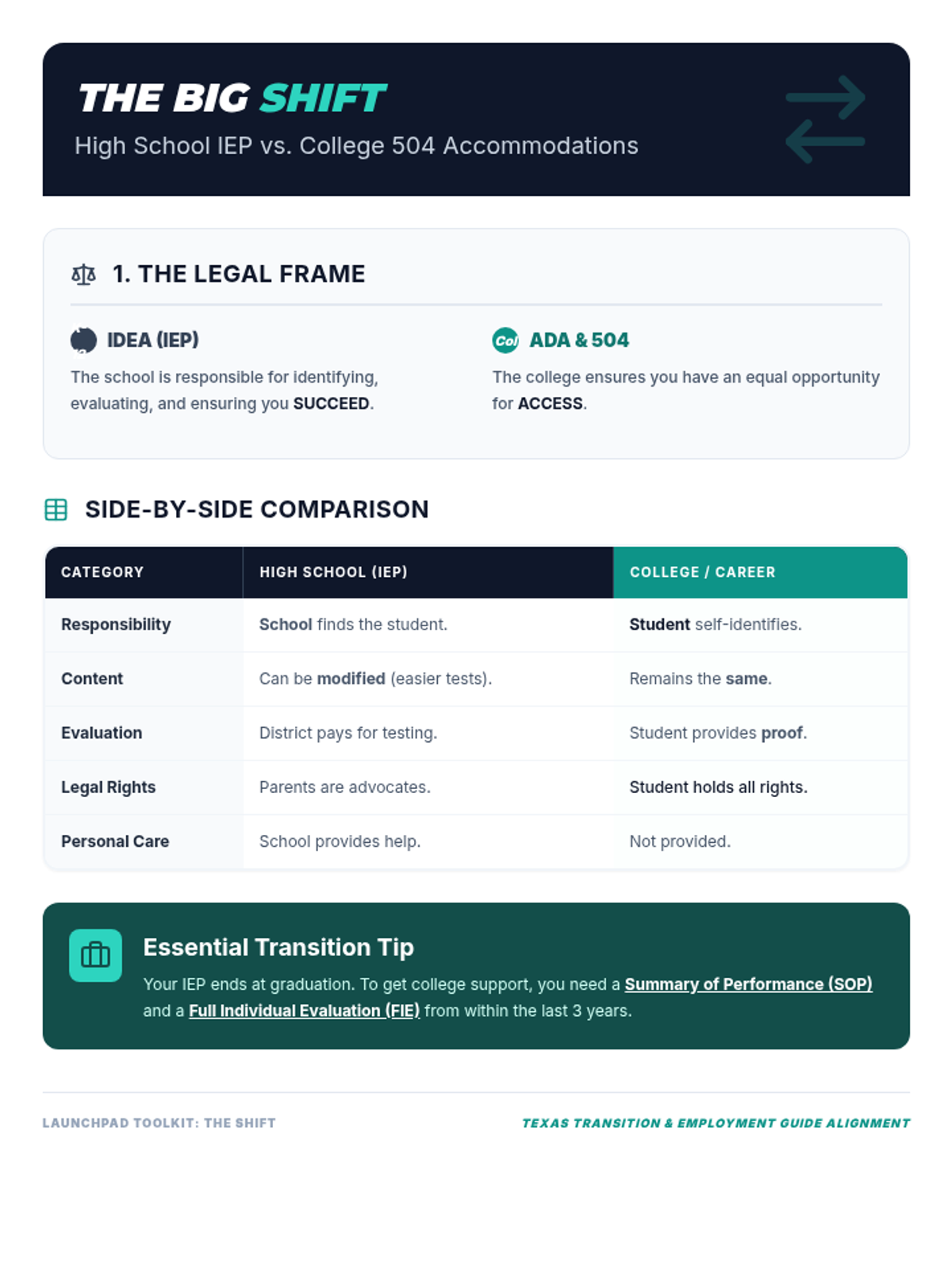
A professional handout comparing high school IDEA/IEP protections with college ADA/504 accessibility. Revised layout to fit on one page.
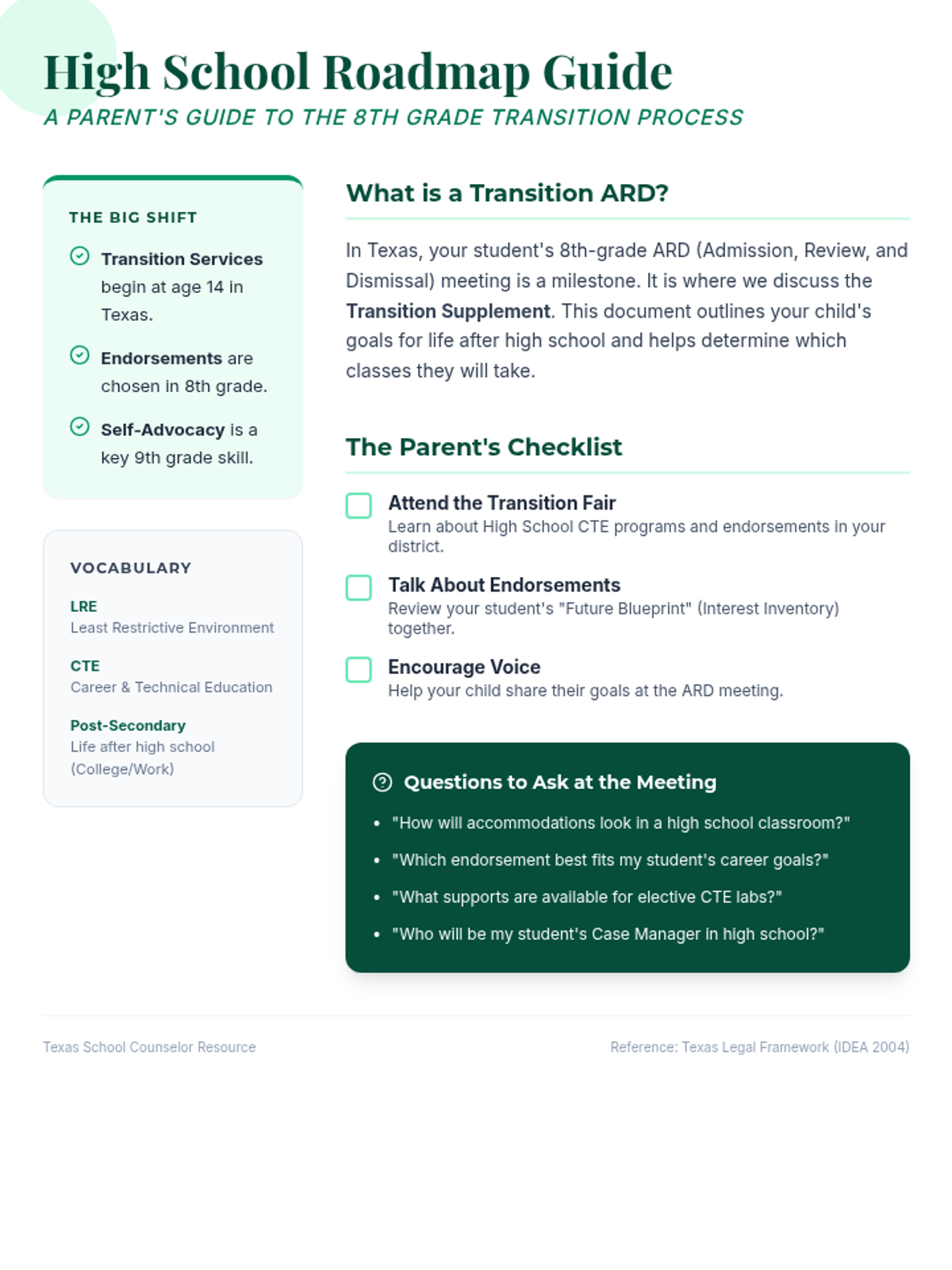
A professional parent guide explaining the 8th-grade transition process for students with IEPs in Texas. Covers transition ARDs, endorsements, and provides a checklist for parents to support their child's high school preparation.
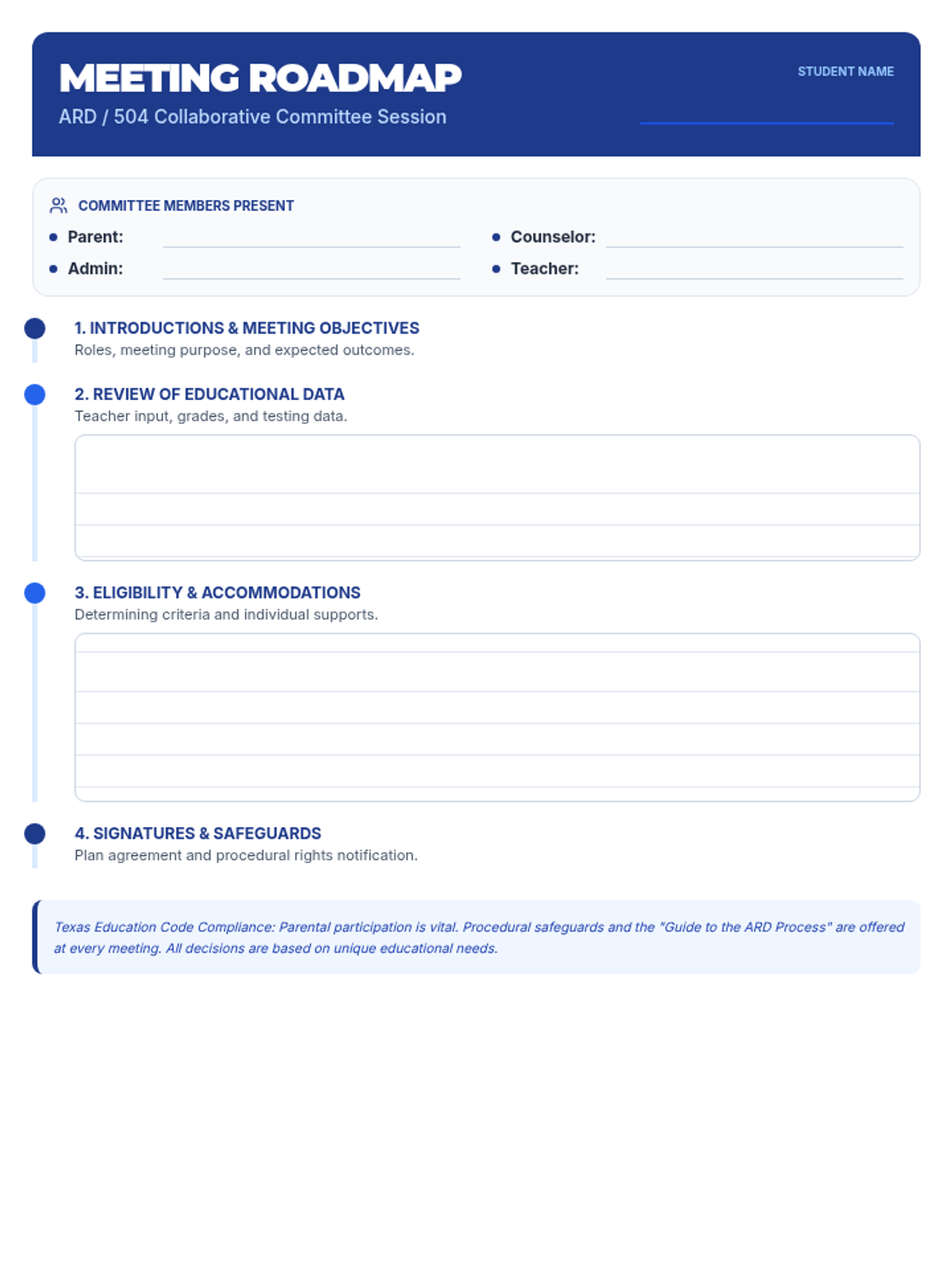
A professional meeting agenda for 504 and ARD (IEP) committees, featuring a "Roadmap" flow to guide participants through the required legal steps of the meeting.
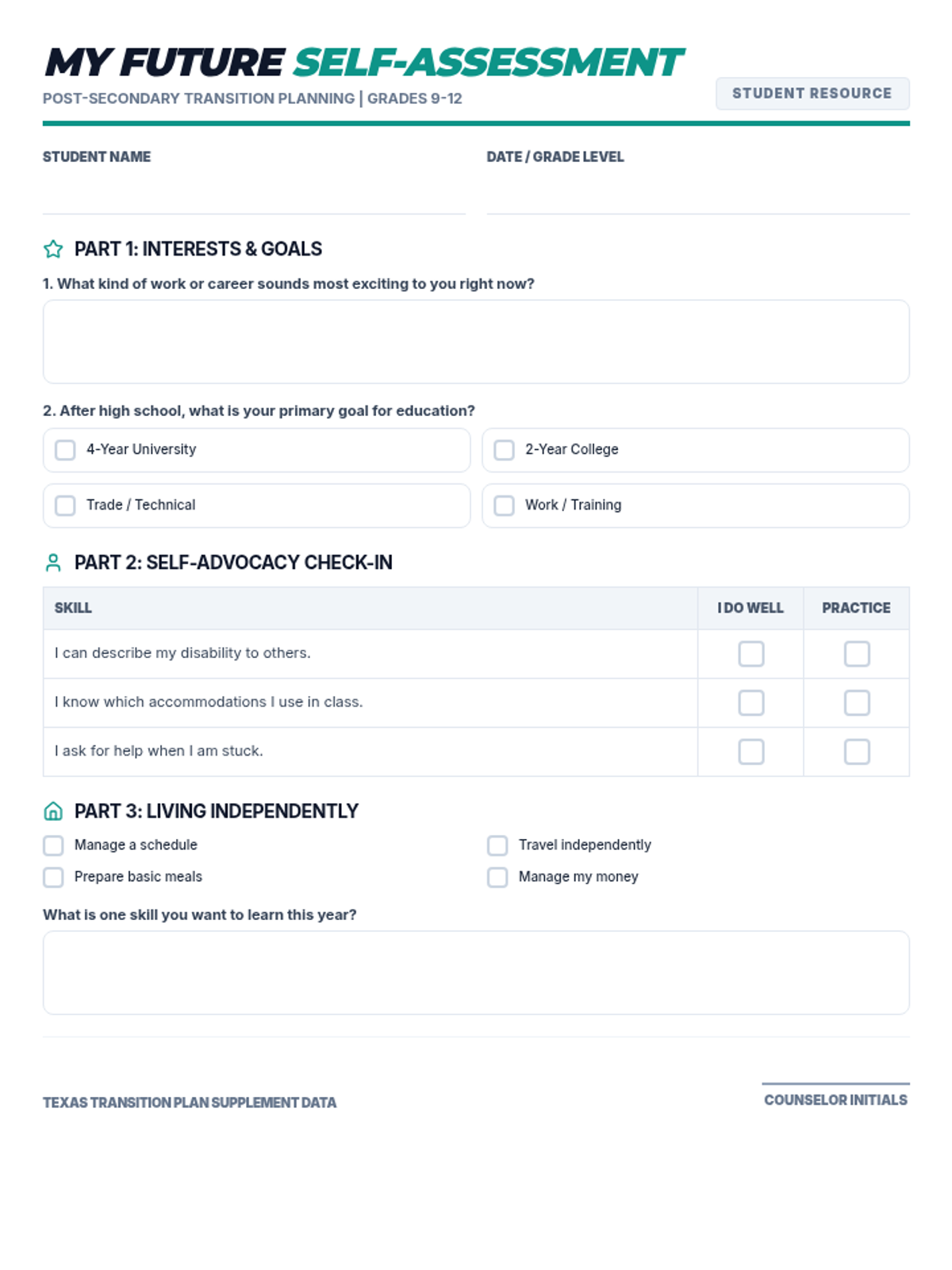
A student-facing self-assessment worksheet used to gather input for the transition planning process, focusing on interests, self-advocacy, and independent living skills. Corrected layout for single-page printing.
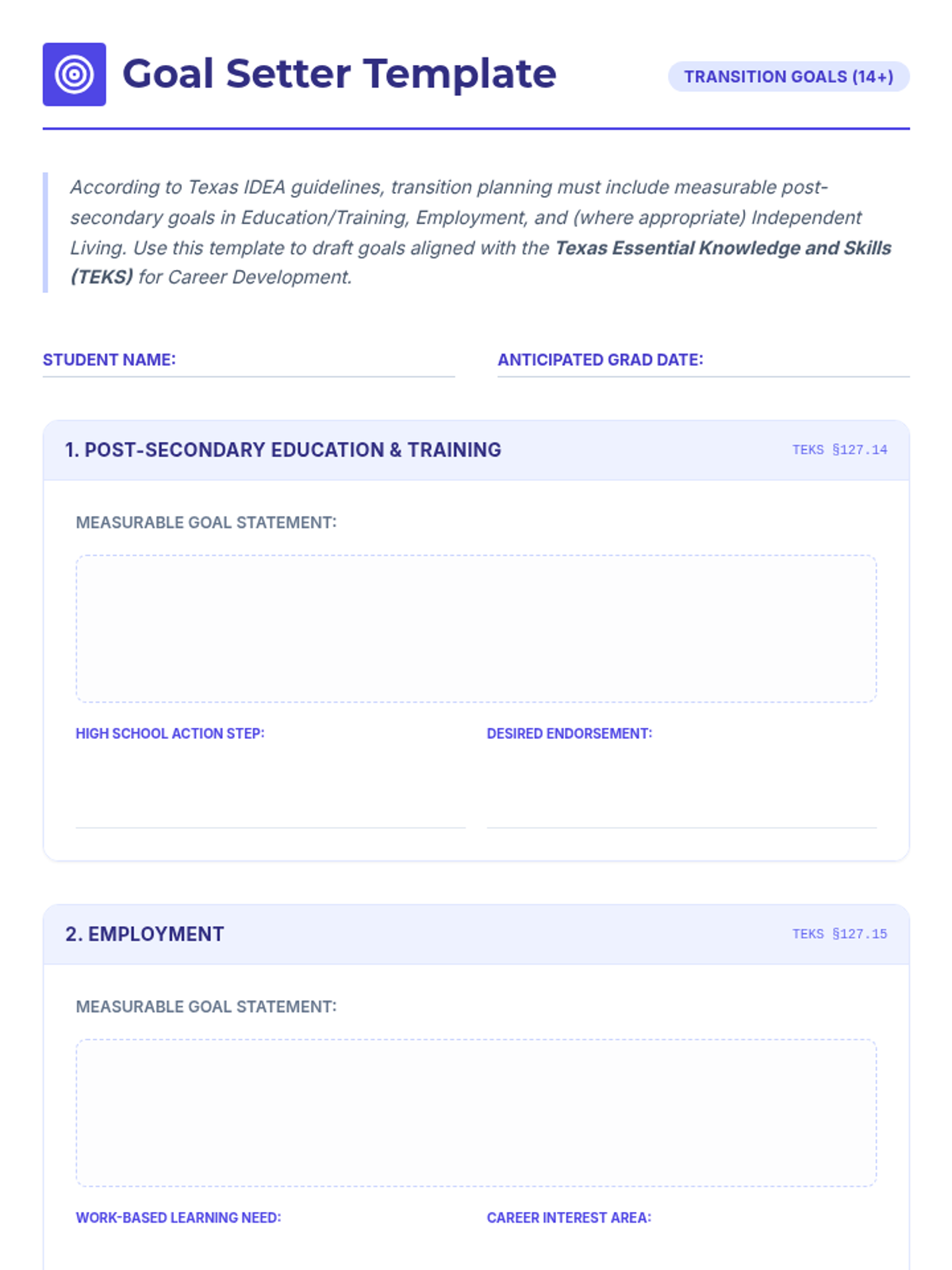
A transition goals template for the IEP process, structured to meet Texas IDEA requirements for students aged 14 and older. Includes sections for Education, Employment, and Independent Living with TEKS alignment references.
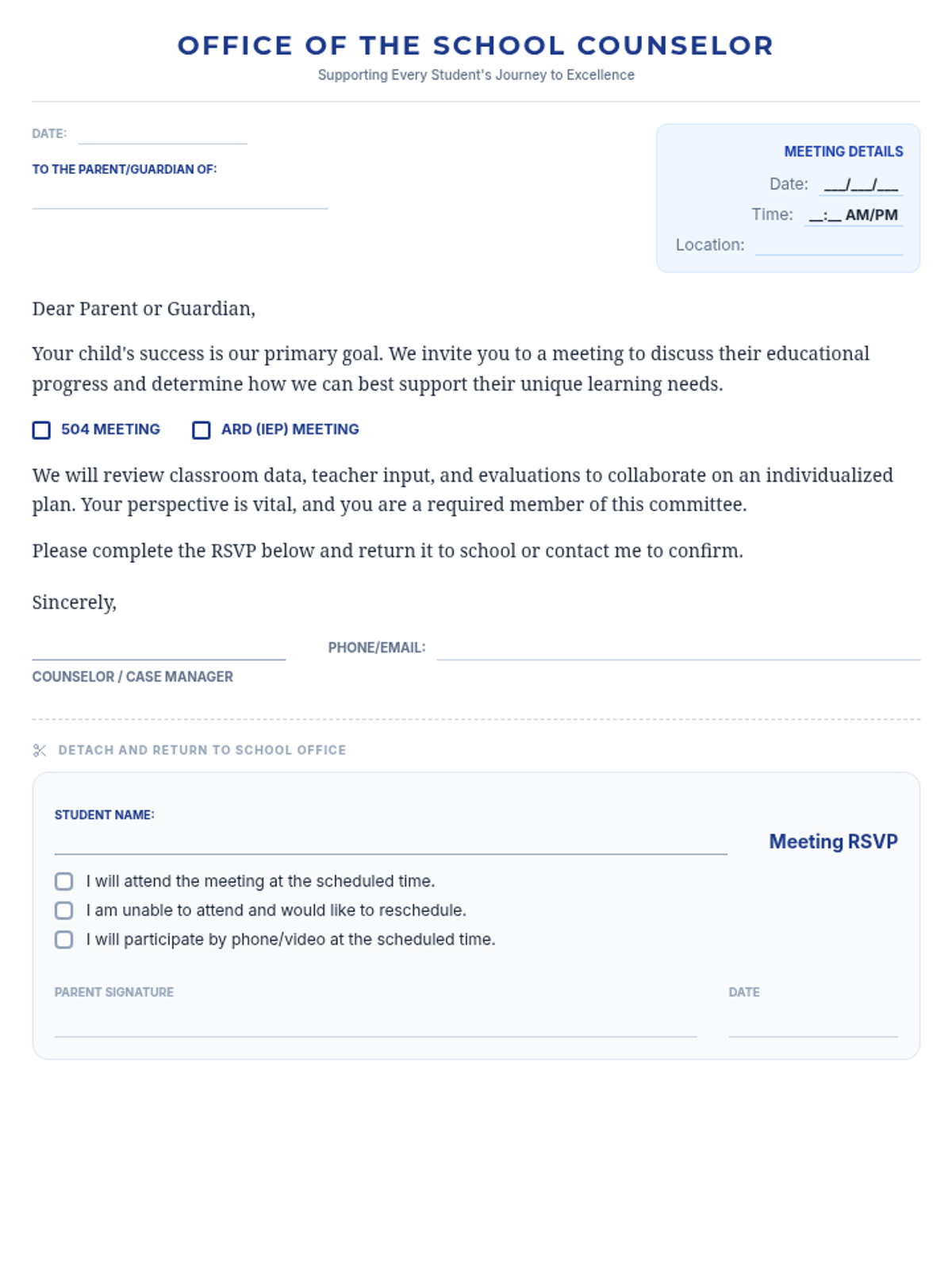
A formal and welcoming parent notification letter for 504 and ARD (IEP) meetings, emphasizing the importance of parent participation and providing a clear RSVP section.
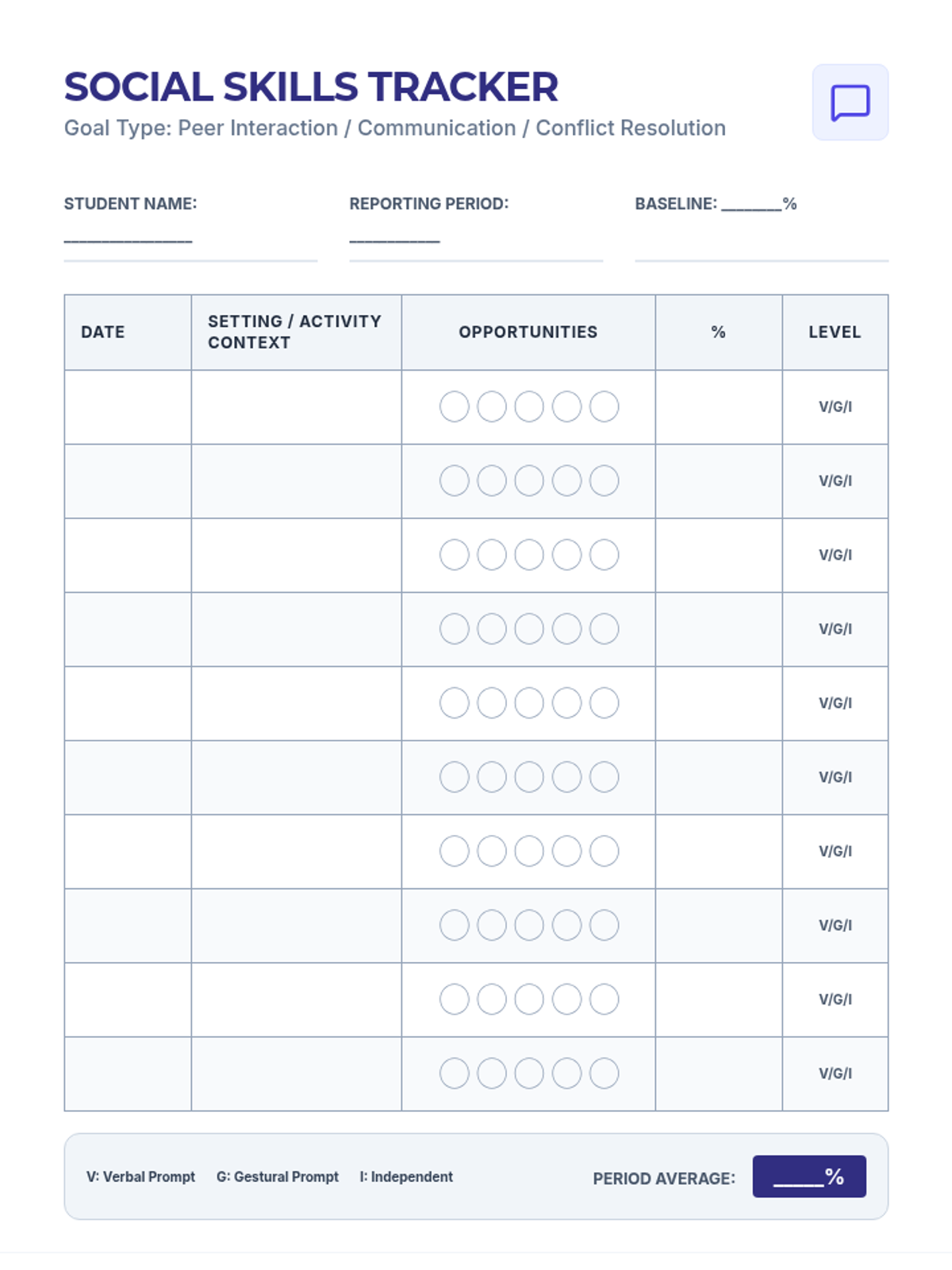
A data collection log for high school counselors to track student social skills goals. Includes a checklist for frequency, percentage calculation, and space for qualitative narrative observations.
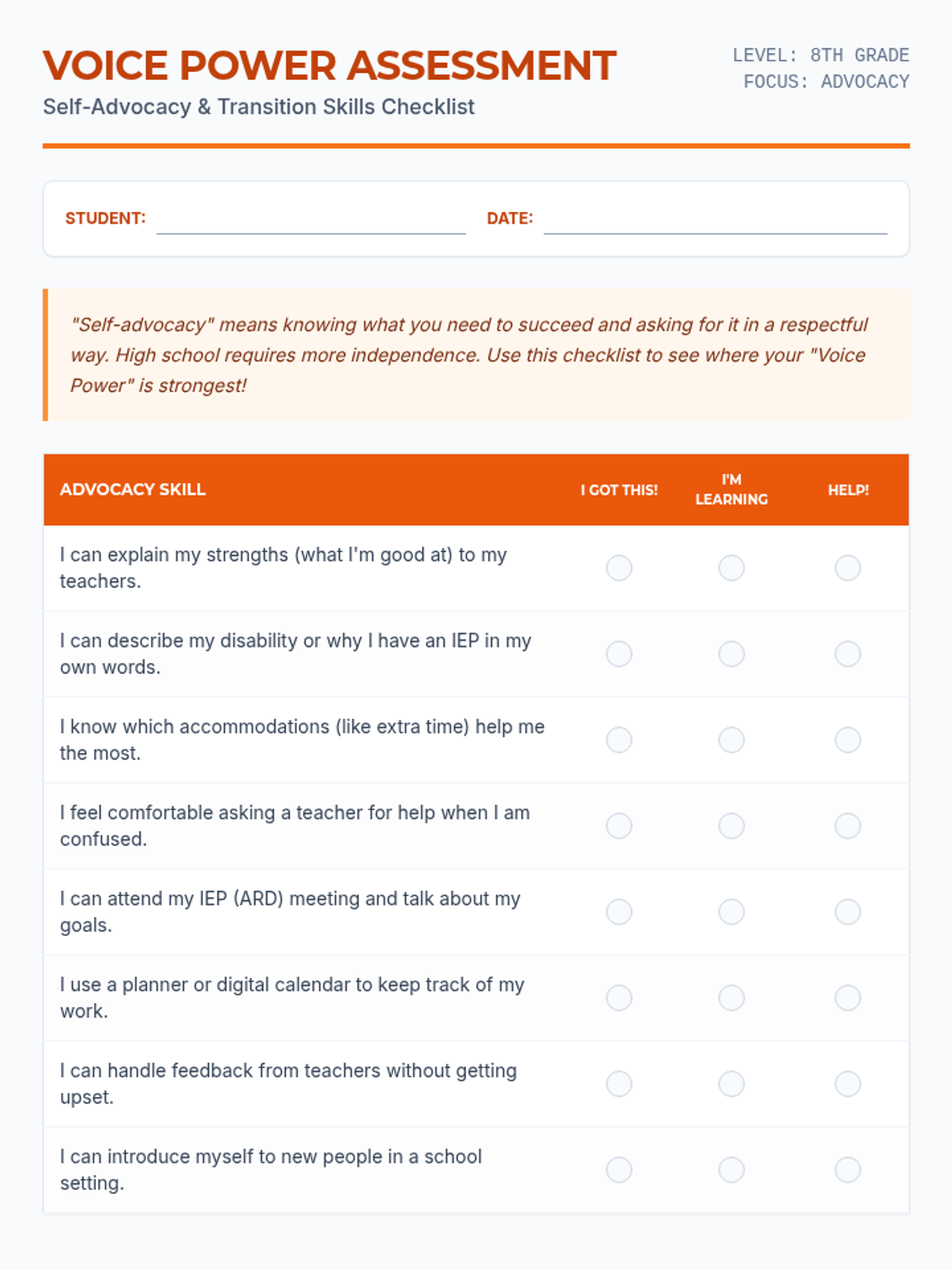
A self-advocacy skills assessment for students to reflect on their ability to communicate their needs, understand their accommodations, and participate in their IEP meetings. Includes a reflection section for goal setting.
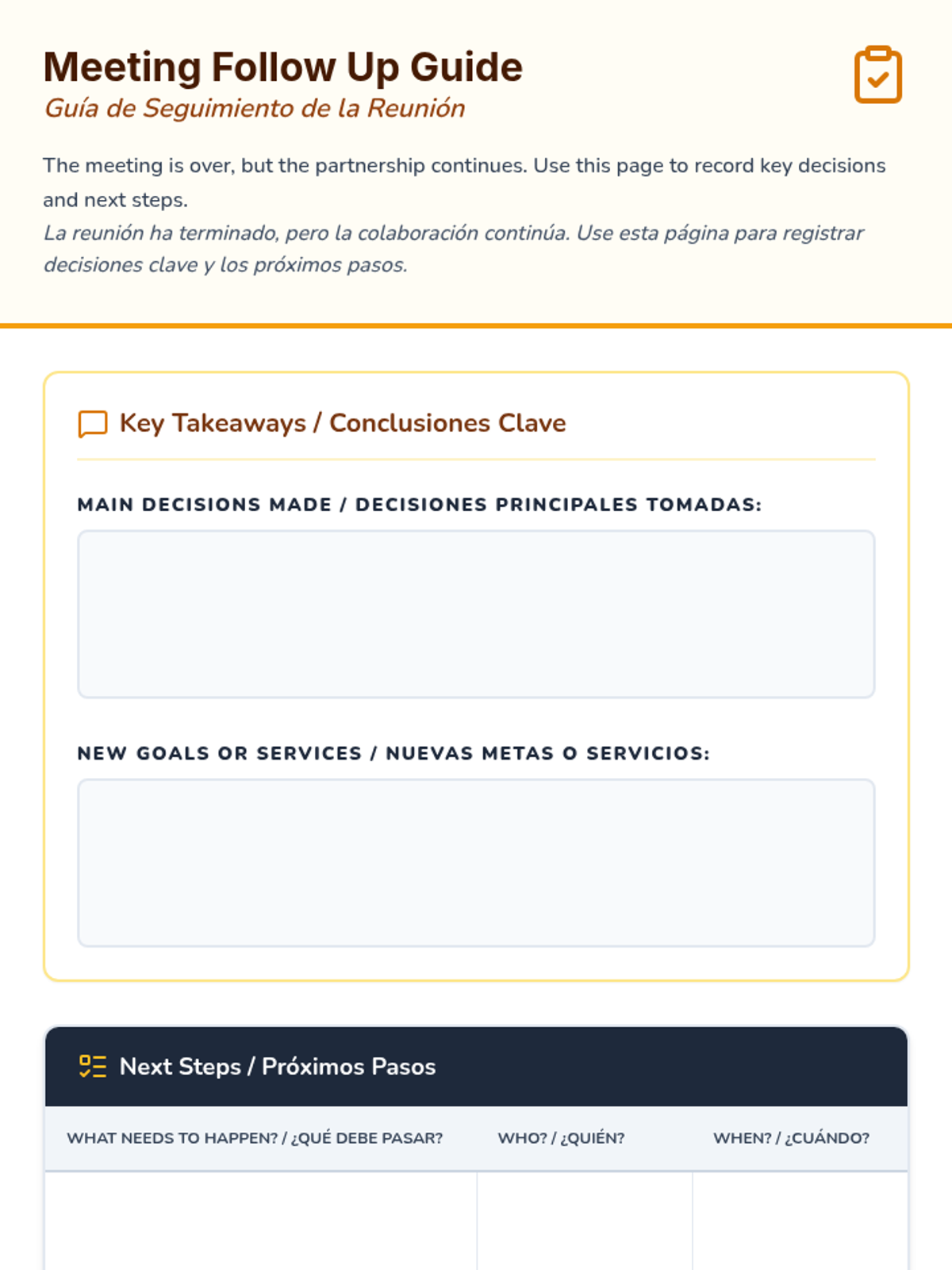
A bilingual post-meeting guide for parents. Revised to ensure logical page breaks, taller handwriting rows, and better space utilization.
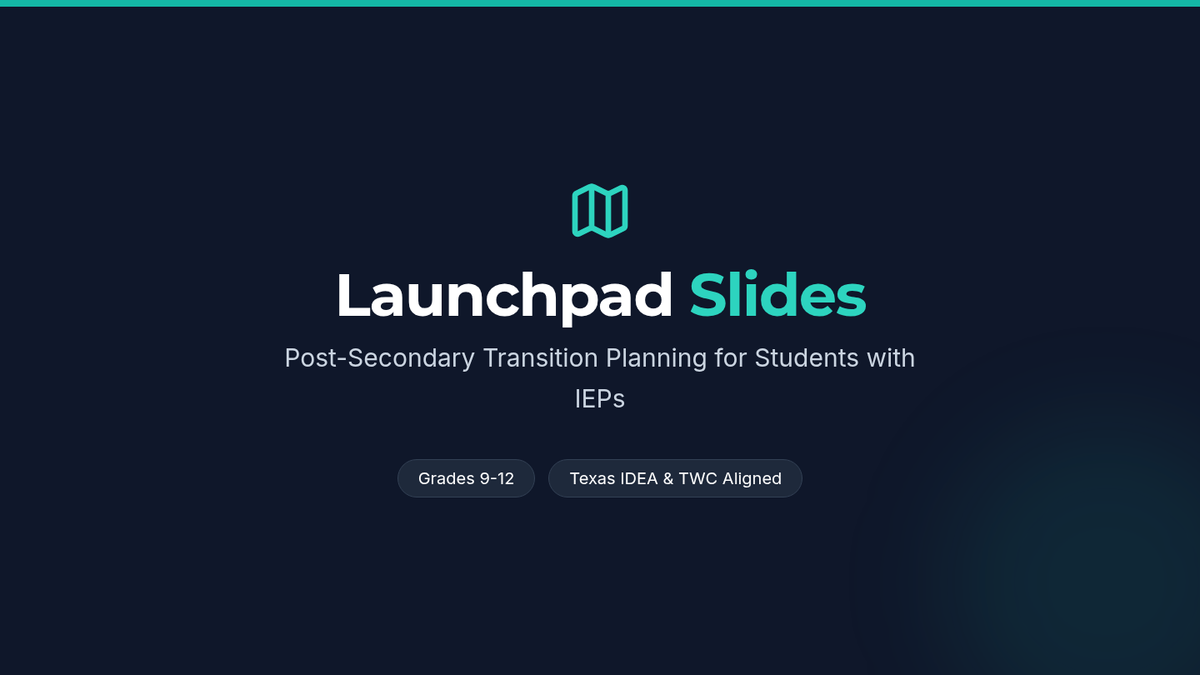
A 6-slide presentation covering transition planning basics, self-advocacy, legal shifts (IDEA vs ADA), and agency support for high school students with IEPs in Texas.
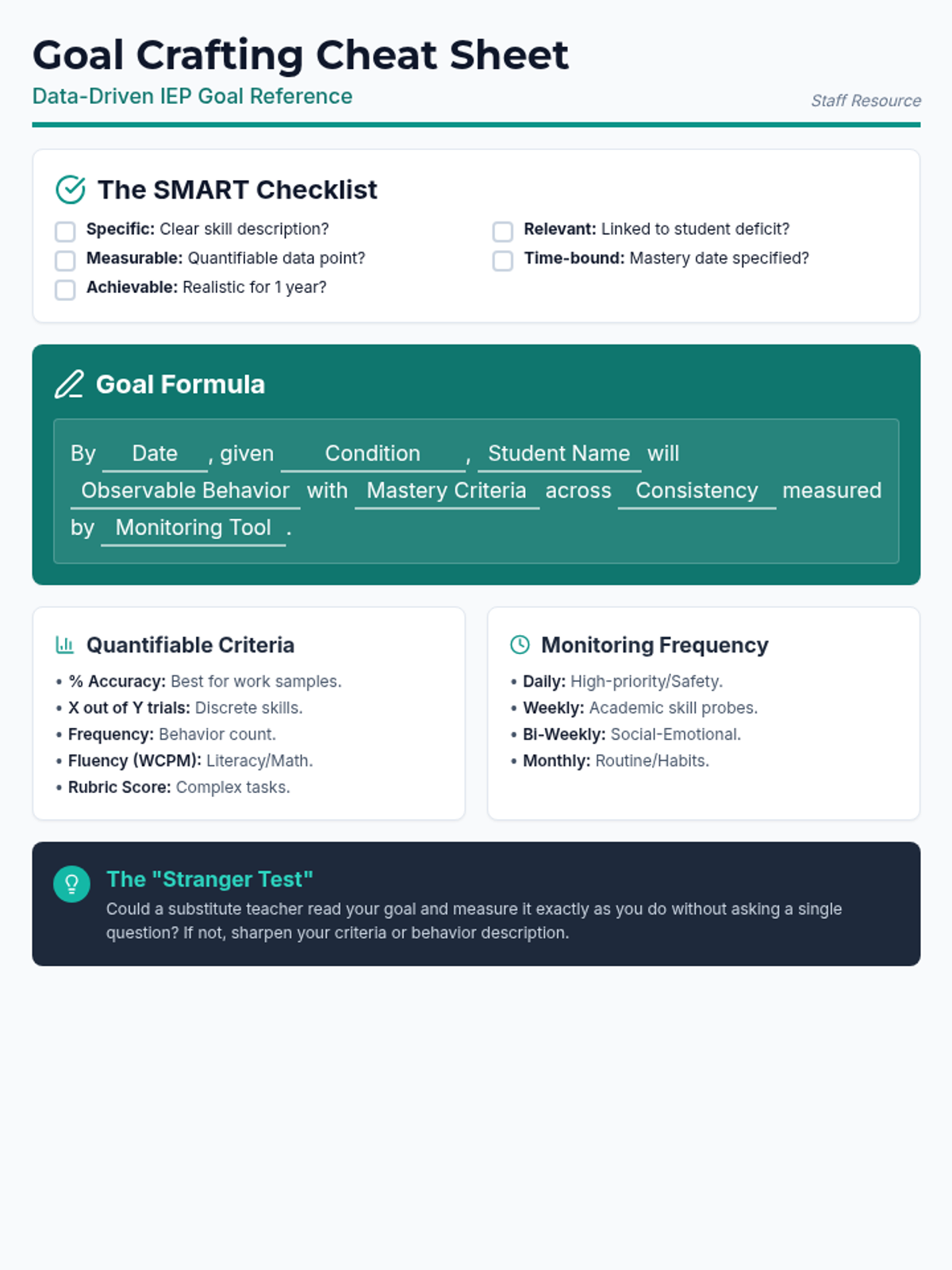
A teacher-facing reference sheet with a SMART goal checklist, a fill-in-the-blank goal formula, and data collection tips for special educators. Updated for one-page print reliability and removed quarterly monitoring.
A 5-slide presentation for special education staff on writing measurable, data-driven IEP goals with a focus on progress monitoring tools and the data-action loop.
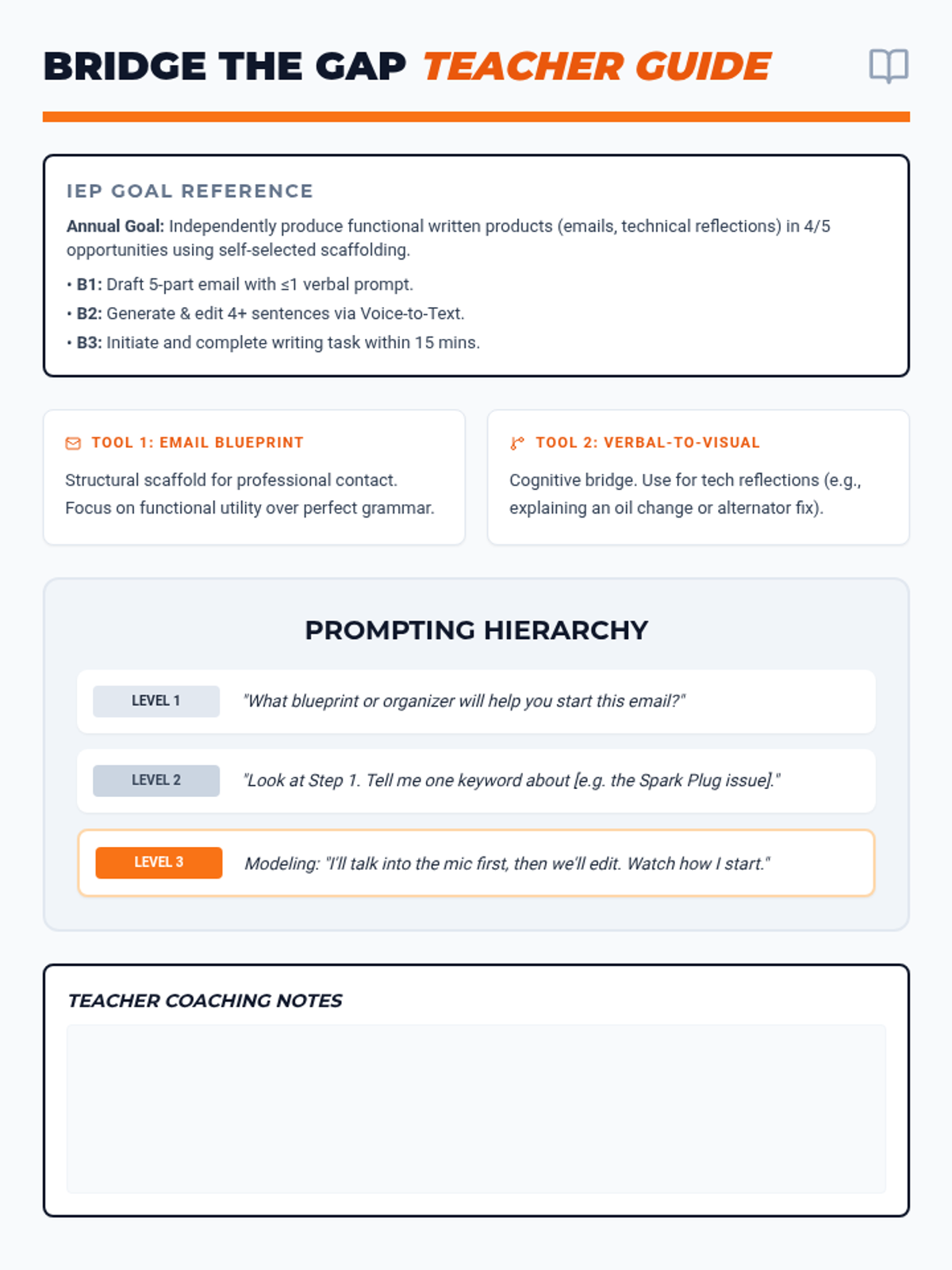
A teacher facilitation guide providing instructional strategies, a prompting hierarchy, and pacing advice for supporting a student's transition to independent writing.
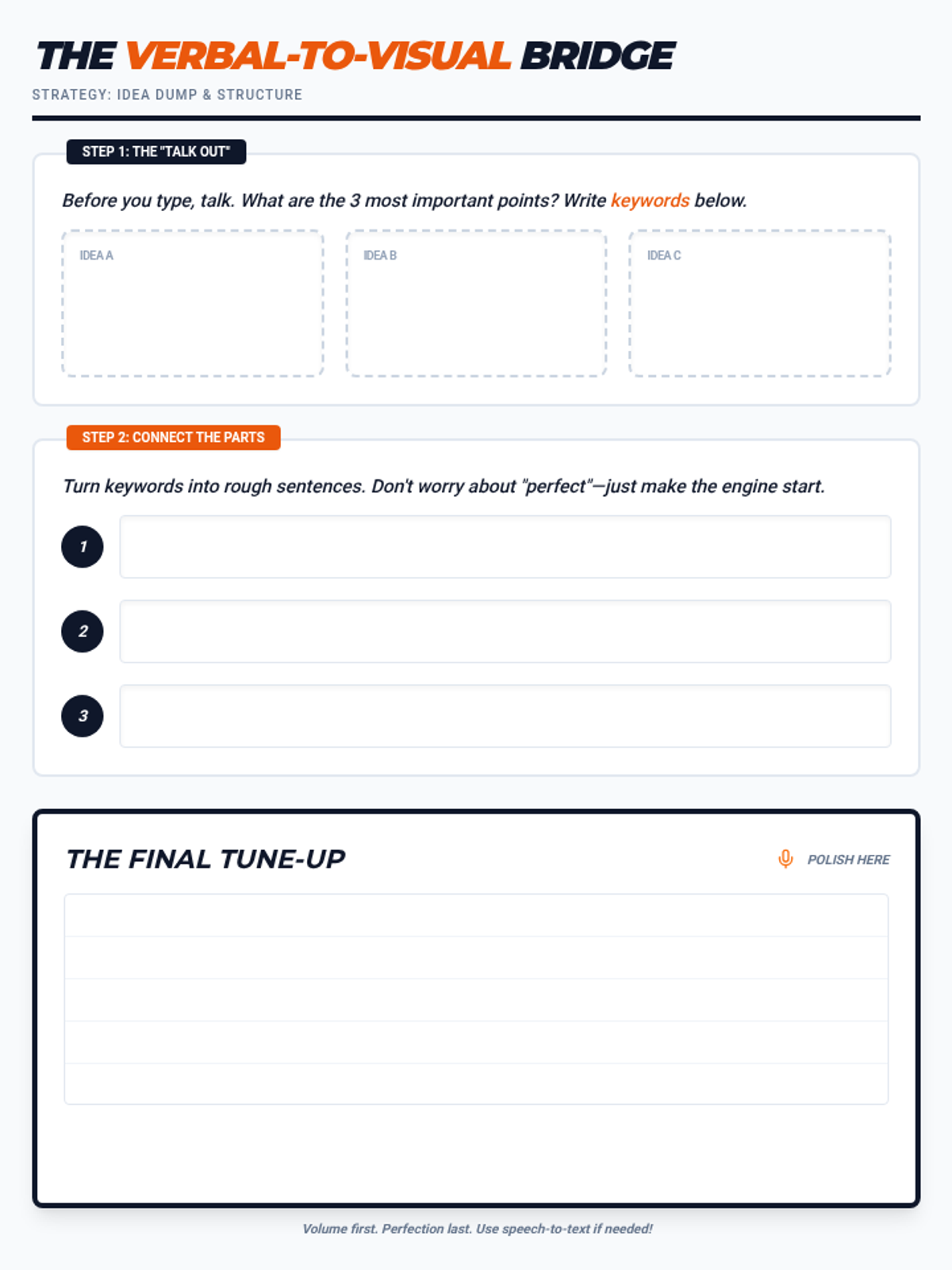
A graphic organizer designed to scaffold the writing process by bridging the gap between verbal ideas and written output through keyword mapping and sentence connection.
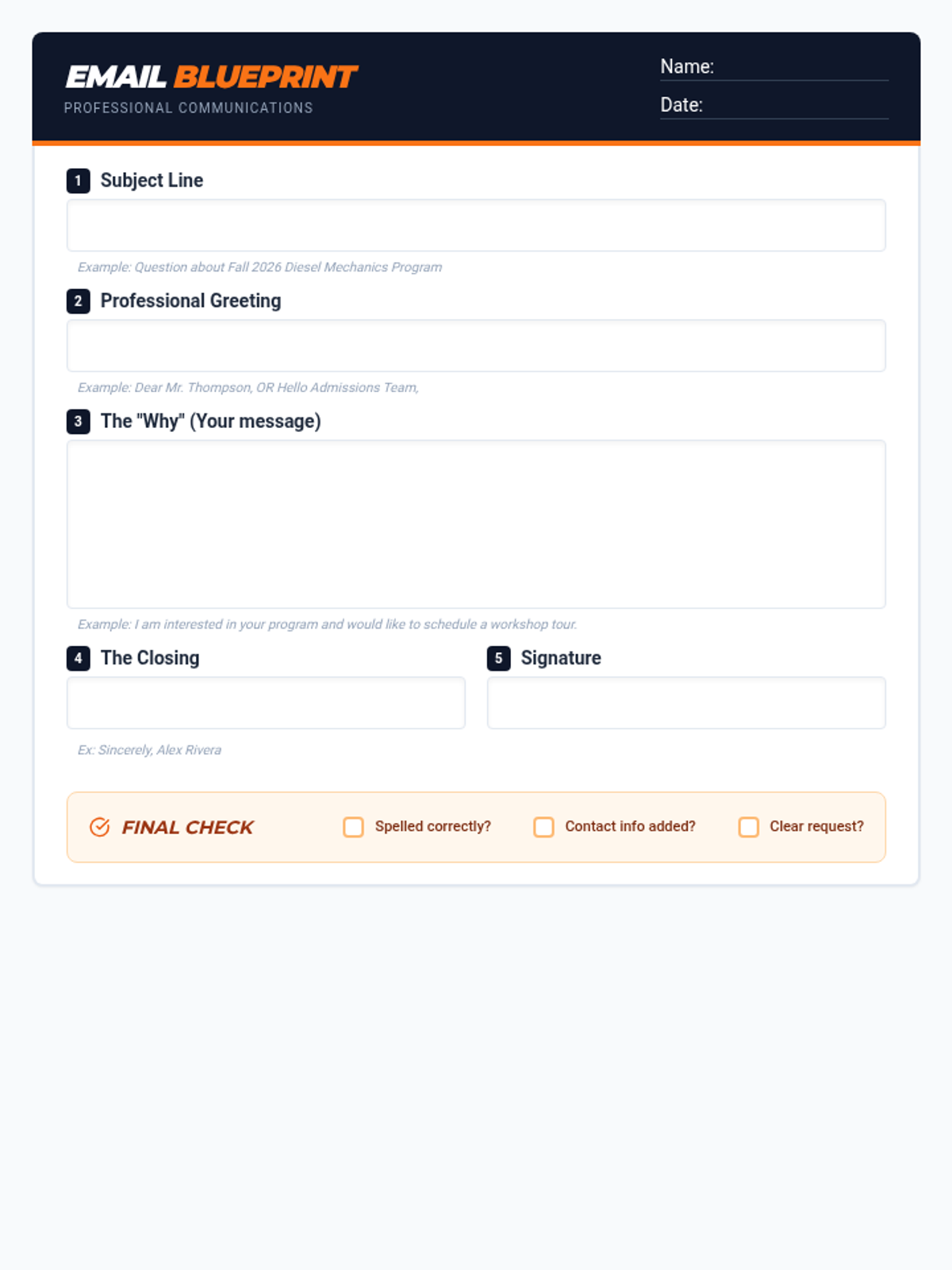
A functional writing template designed to help students draft professional emails by breaking the process down into five manageable parts.
A visual presentation for a 12th-grade student that reframes writing as a technical tool for a career in mechanics, offering strategies like voice-to-text and templates.
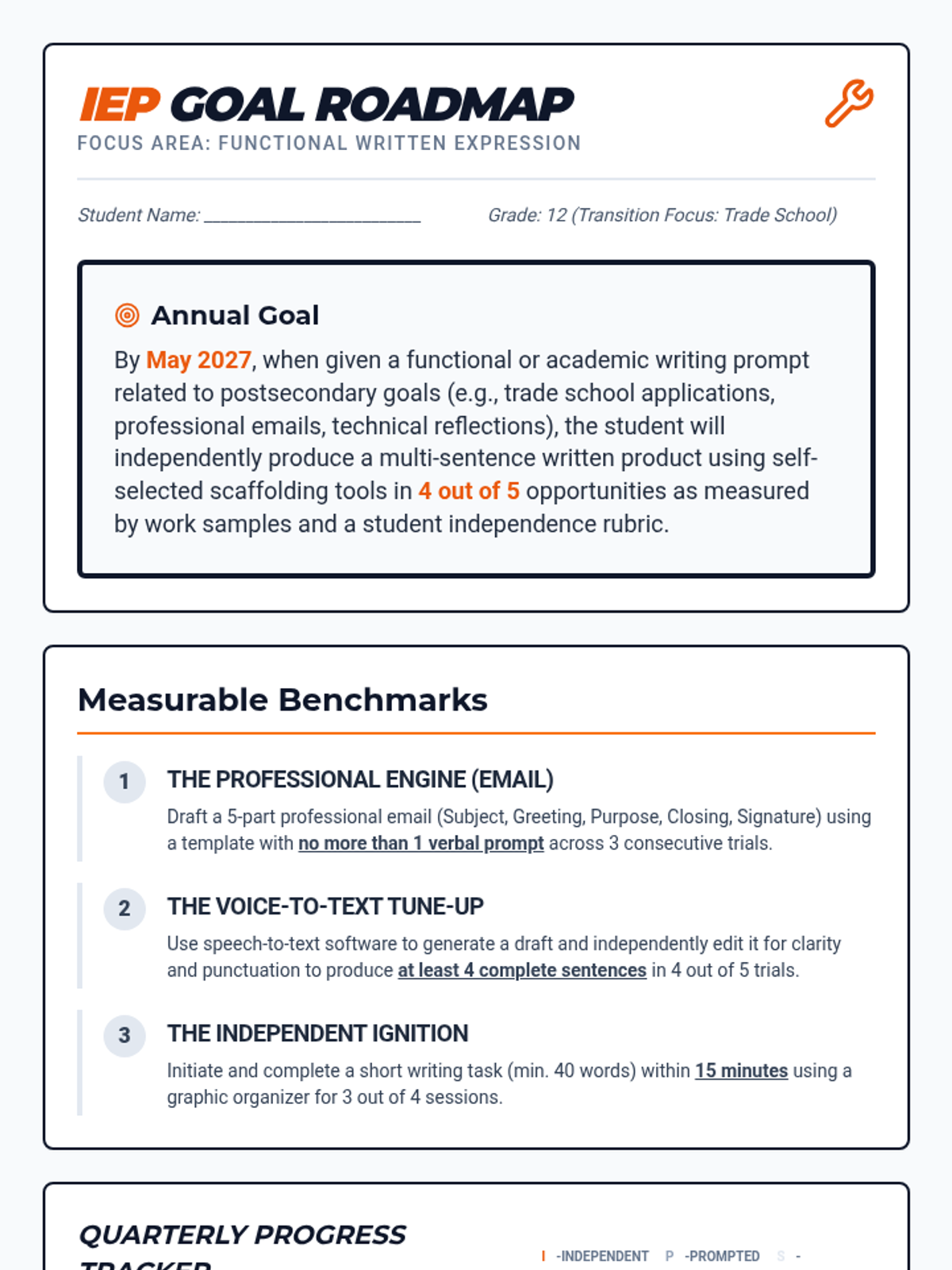
A formal IEP goal sheet outlining a written expression goal and three measurable benchmarks specifically tailored for a student pursuing a career in mechanics.
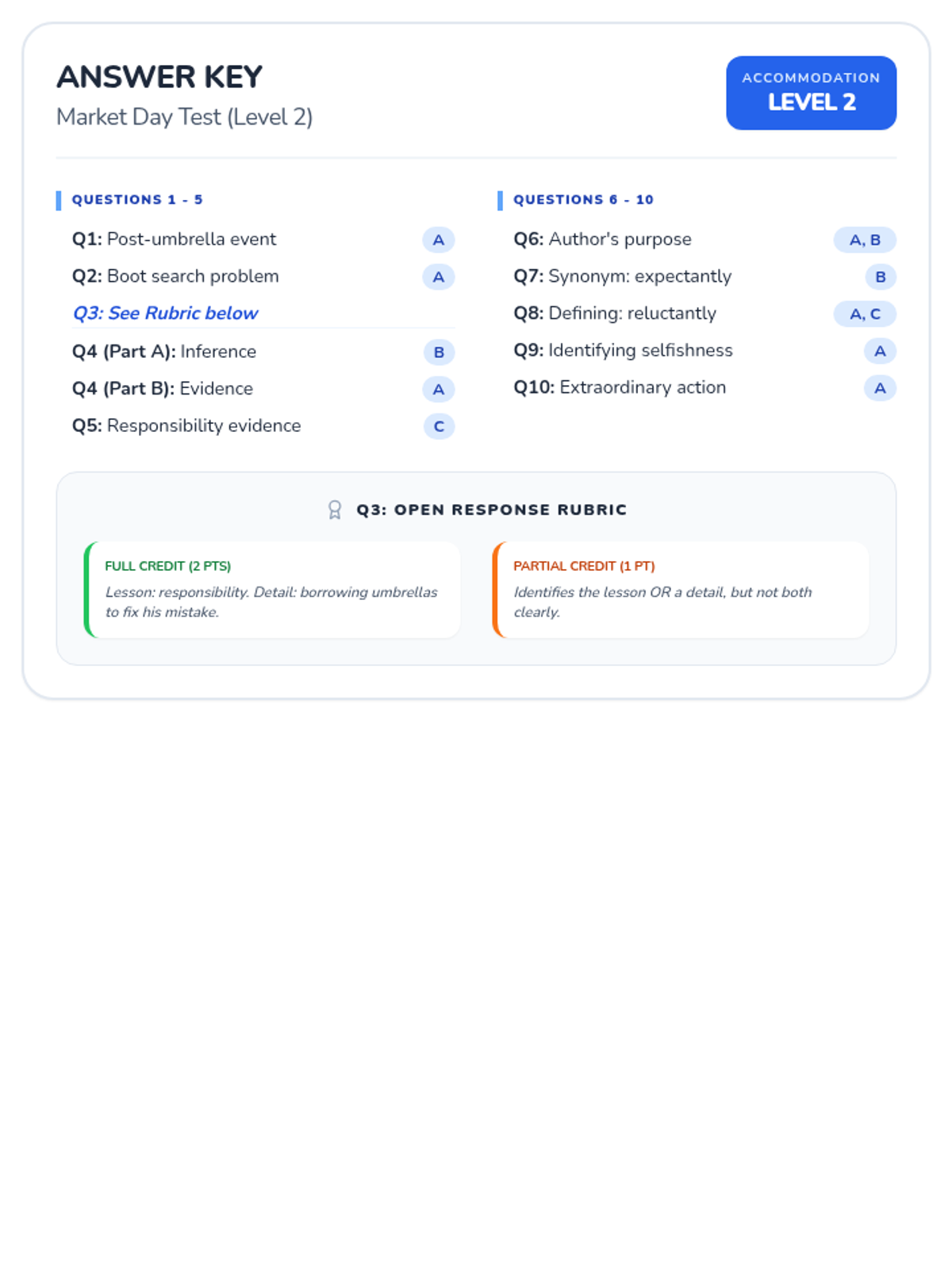
Teacher-facing answer key and grading rubric for the Level 2 modified Market Day ELA test, providing alignment for 10 questions including open-response and multi-select items.
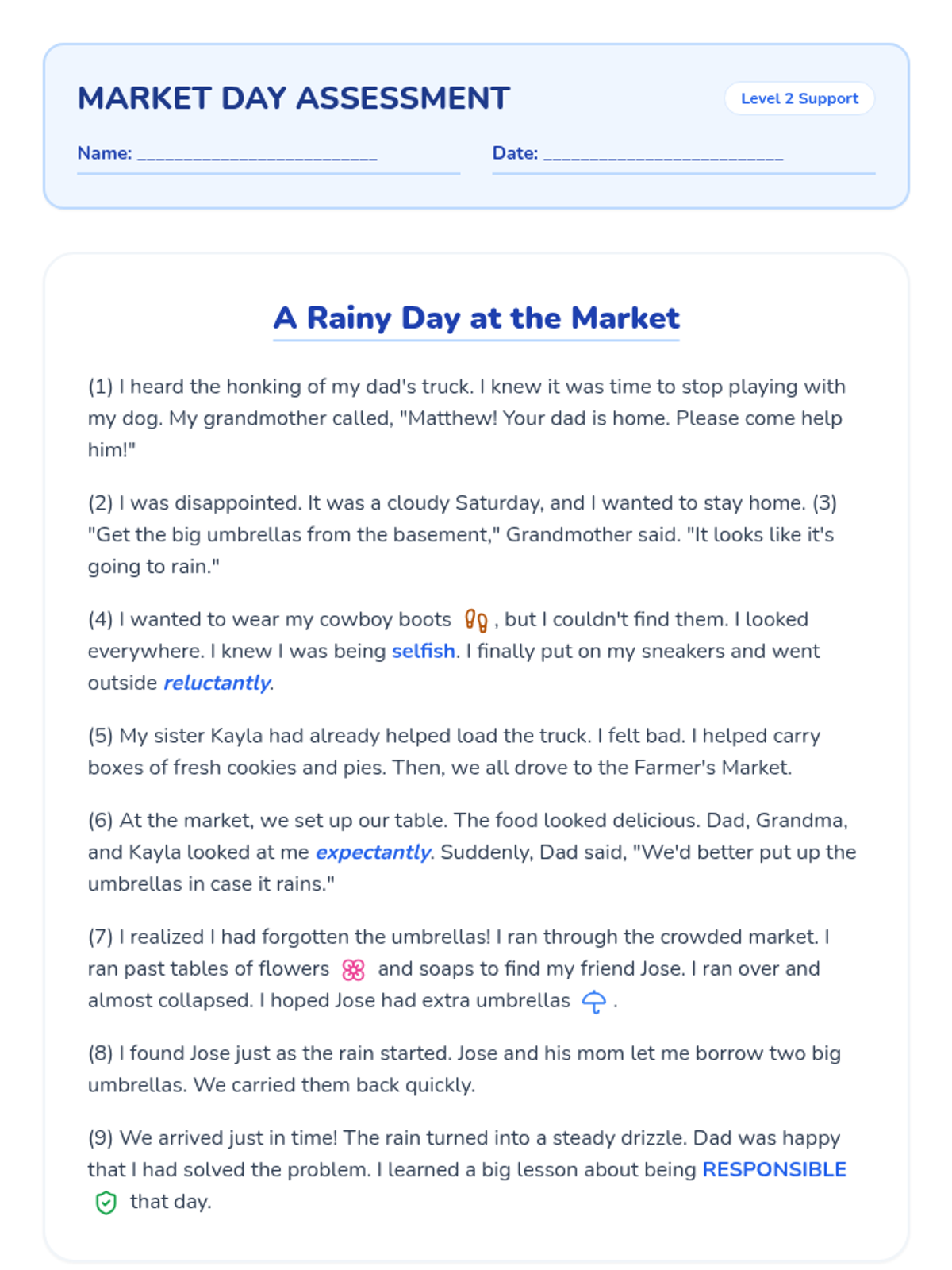
A Level 2 modified ELA assessment featuring a simplified but descriptive reading passage, 3-choice questions, and targeted visual scaffolding for key vocabulary. It maintains higher rigor than the Level 3 version while still supporting IEP accommodations.
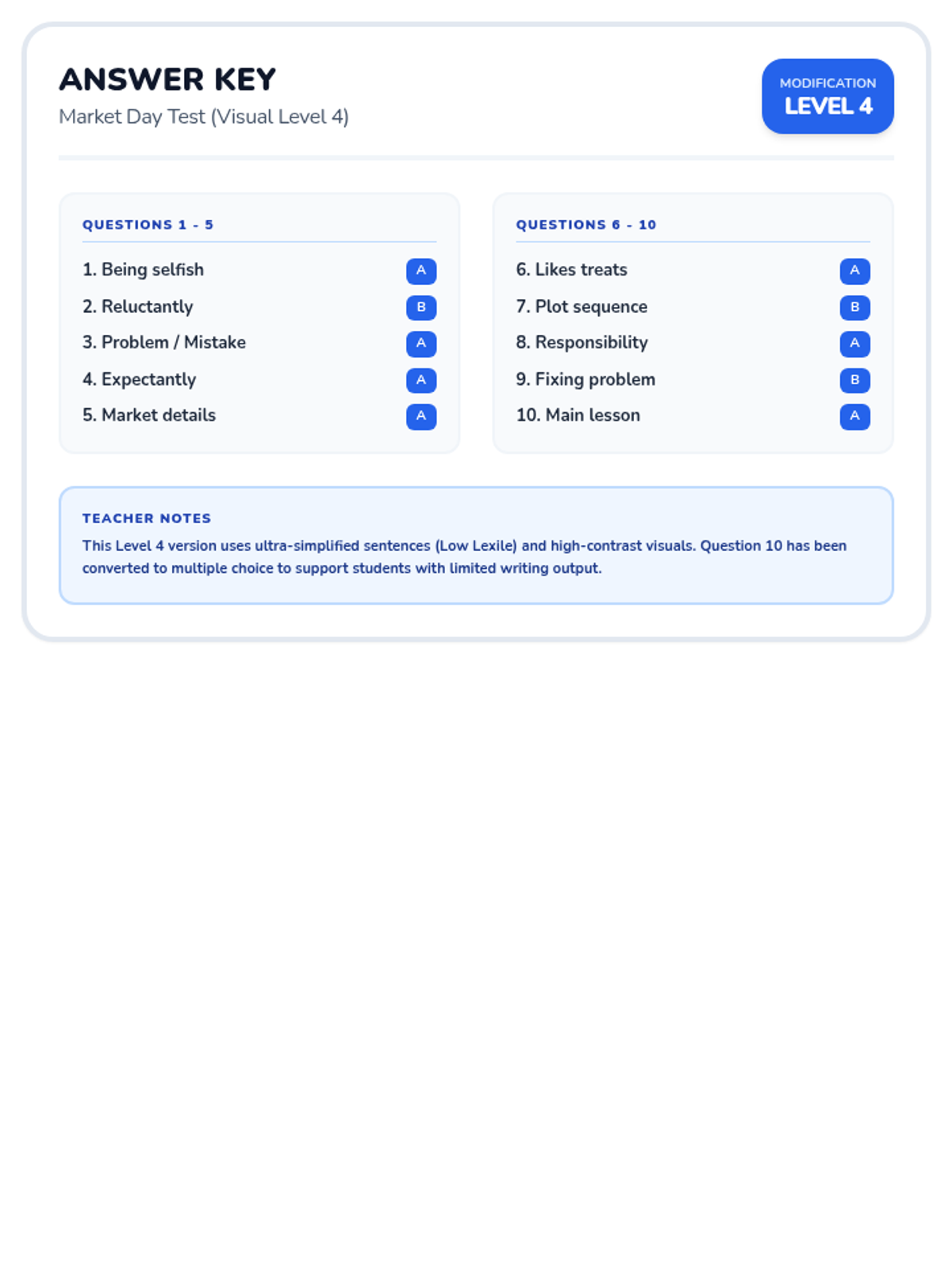
Teacher-facing answer key for the Level 4 visual-modified Market Day ELA test, clearly aligned with the ultra-simplified text segments and updated question format.
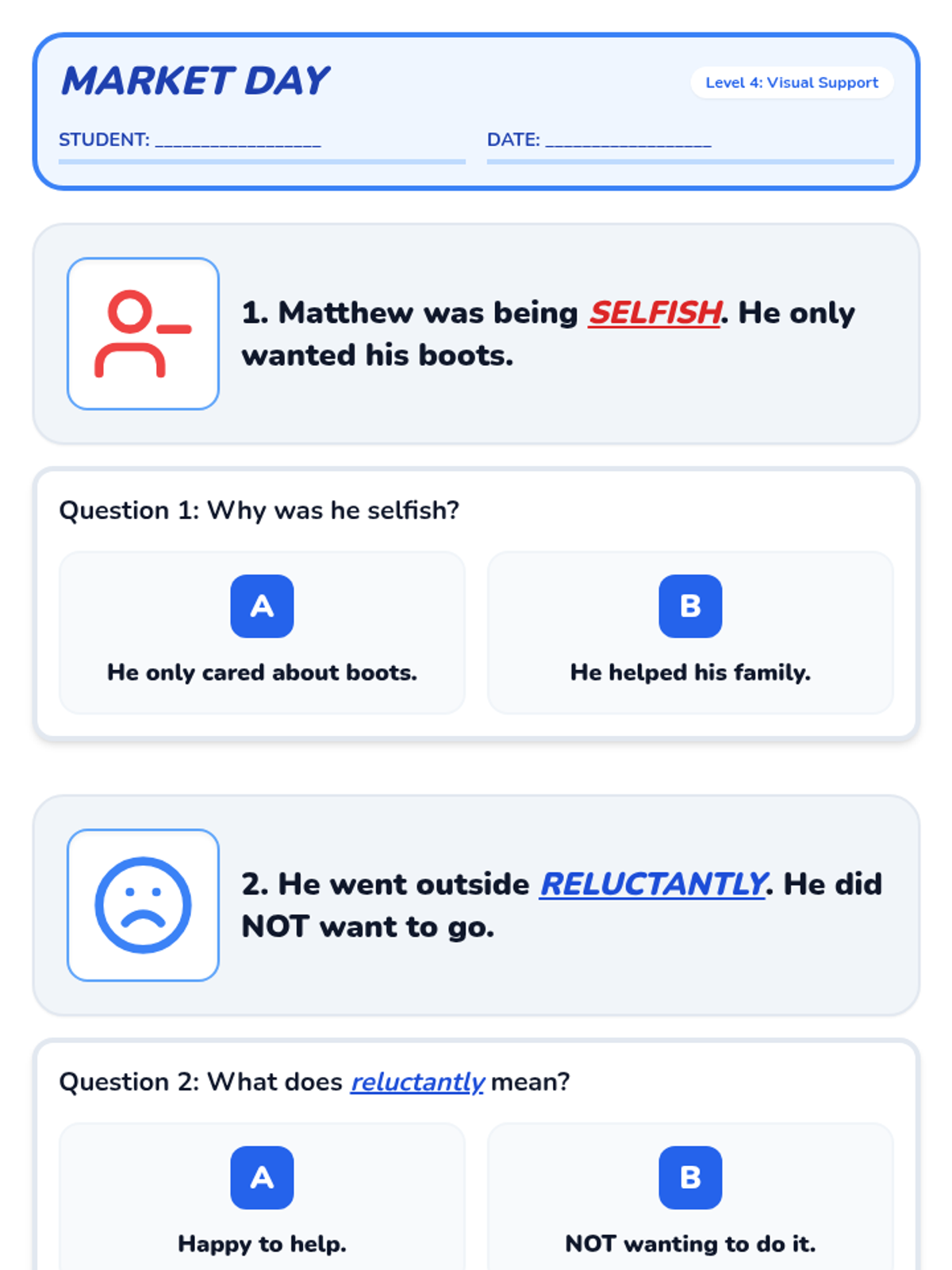
An ultra-simplified ELA assessment for Level 4 IEP support. Each story segment is reduced to one high-impact sentence paired with a large icon. Questions are 2-choice with visual framing and minimal text to ensure maximum comprehension and accessibility.
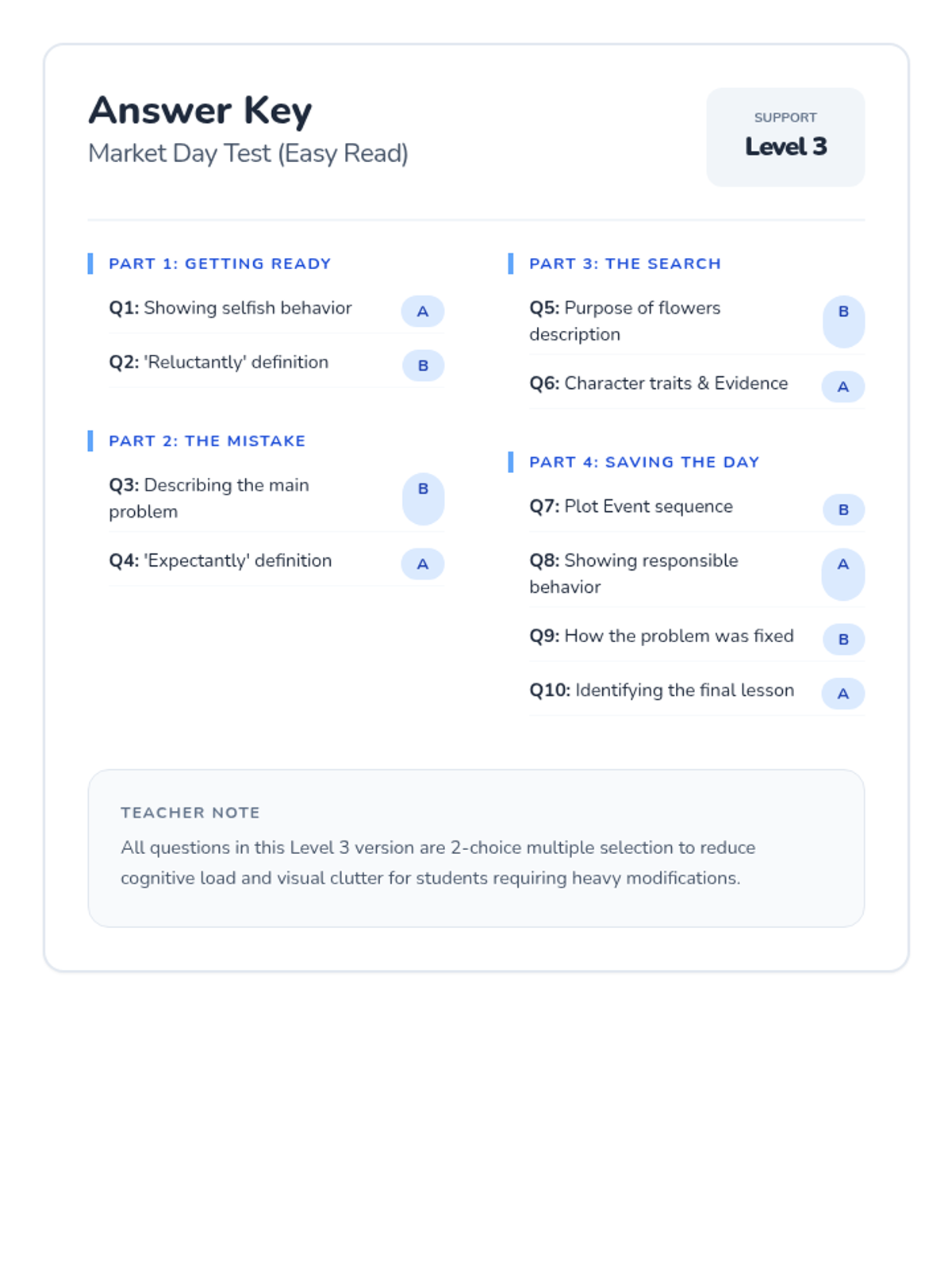
Teacher-facing answer key for the ultra-simplified Market Day ELA test, updated to match shuffled answers and expanded descriptions for teacher ease.
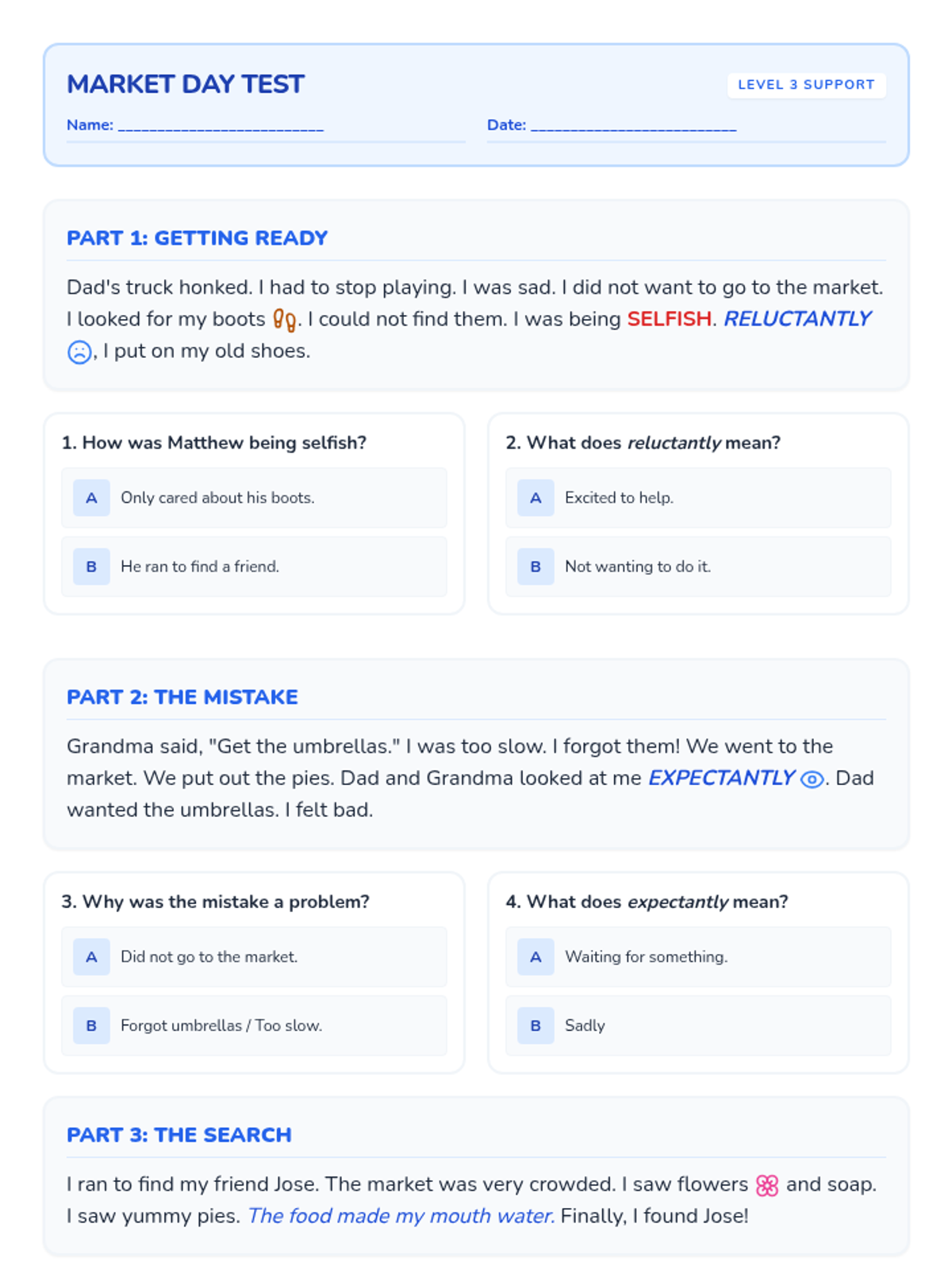
An easy-read version of the Market Day ELA test, using very short sentences, high-frequency words, and 2-choice questions. It maintains the "Read and Answer" structure with heavy visual scaffolding for vocabulary. All choices use uniform styling.
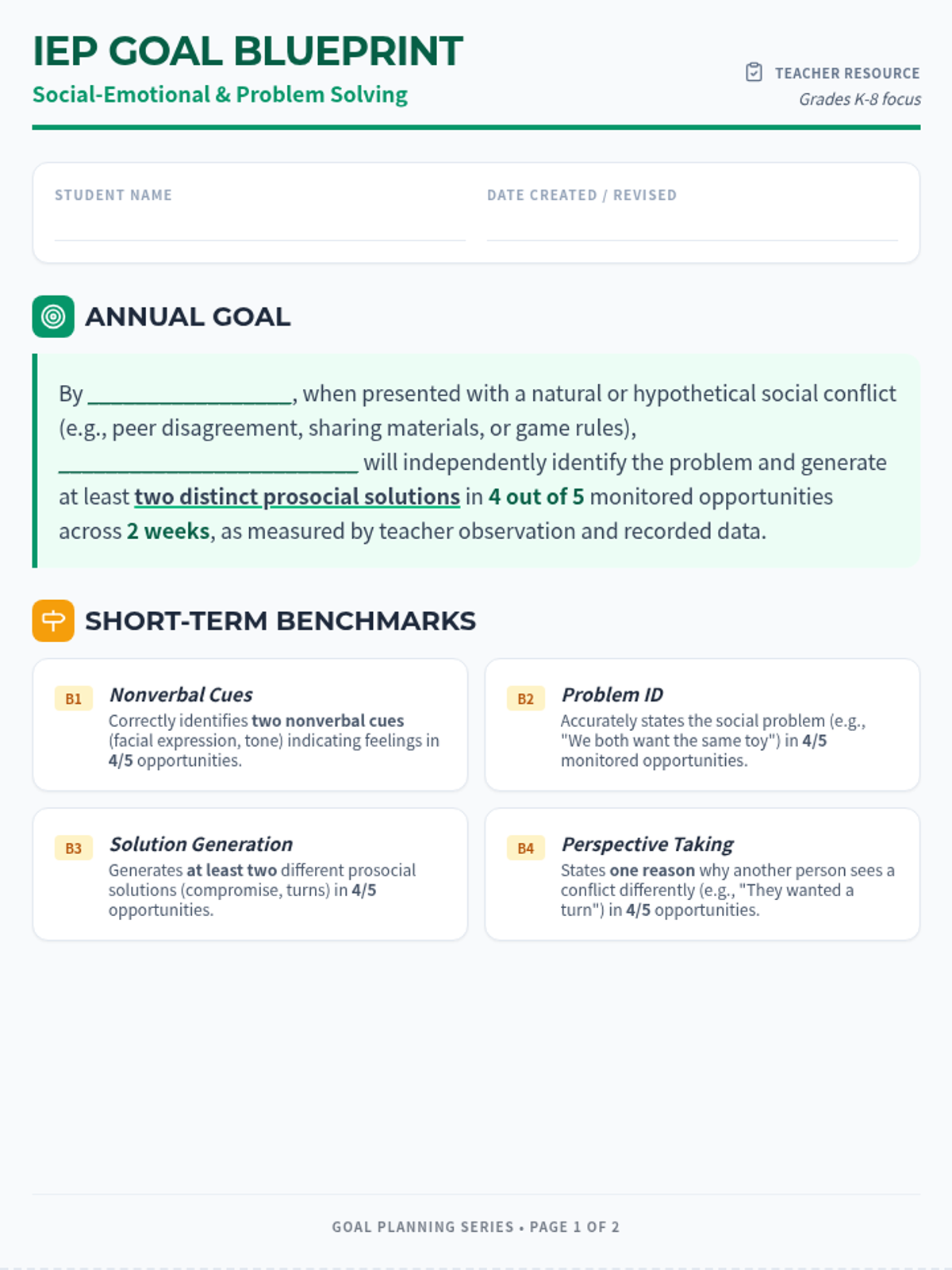
An IEP Goal Blueprint focused on social problem solving. It includes a SMART annual goal with fillable blanks, four scaffolded benchmarks (including nonverbal communication and perspective taking), and a comprehensive data tracking table.
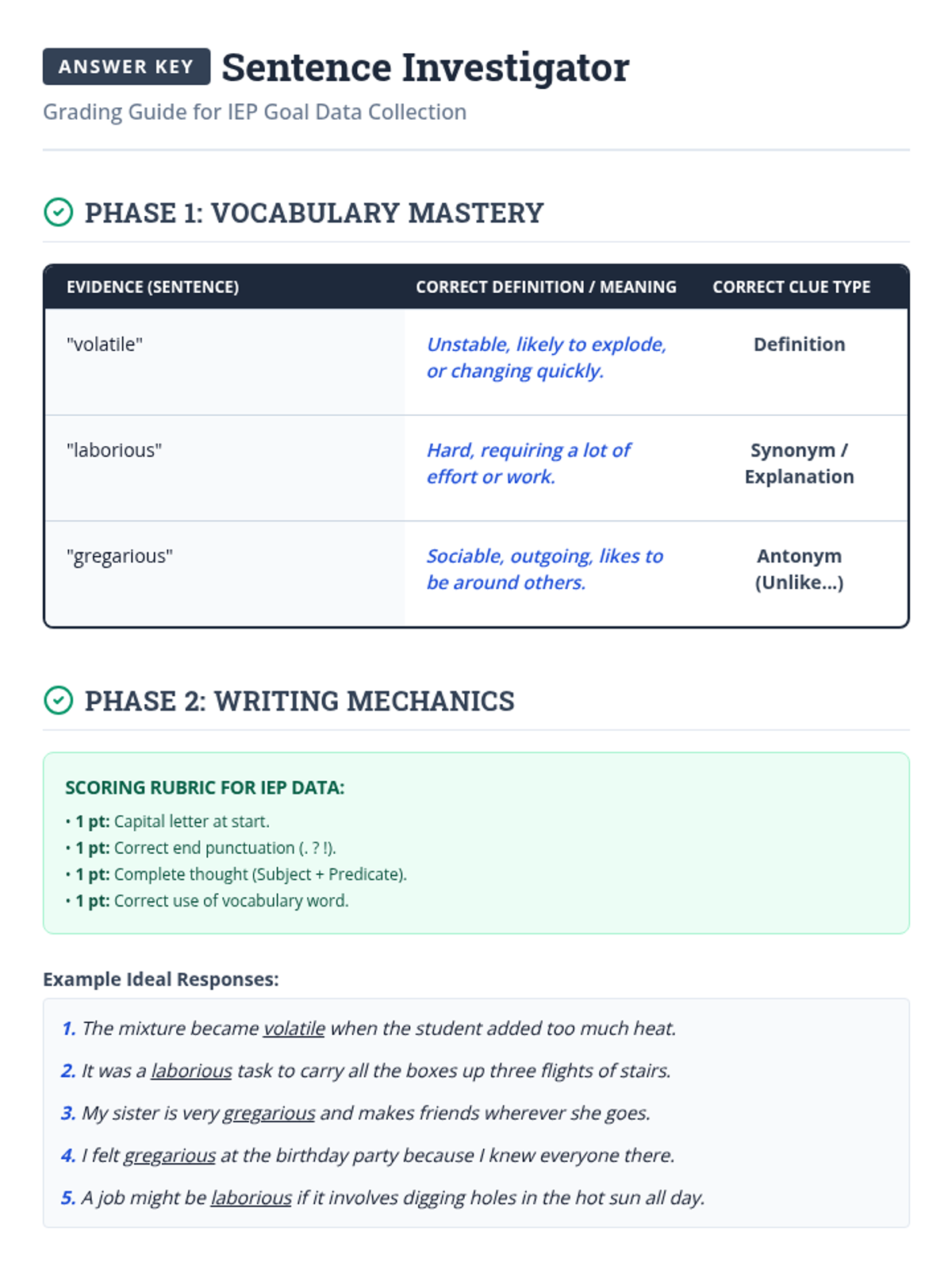
The answer key for the Sentence Investigator worksheet, providing clear criteria for IEP data collection and sample correct responses.
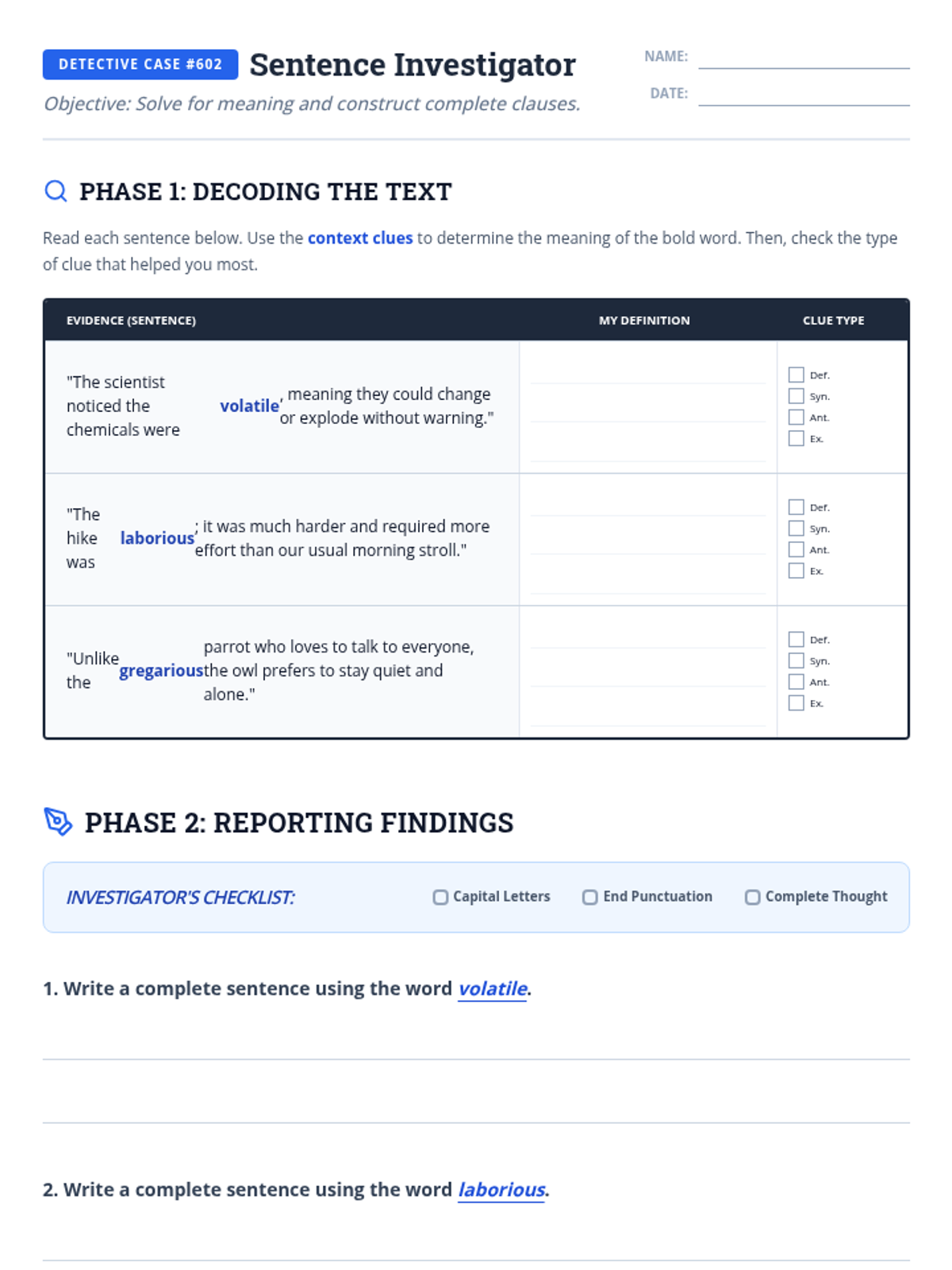
A student worksheet that uses a 6th-grade level graphic organizer to practice context clues and sentence construction with proper punctuation.
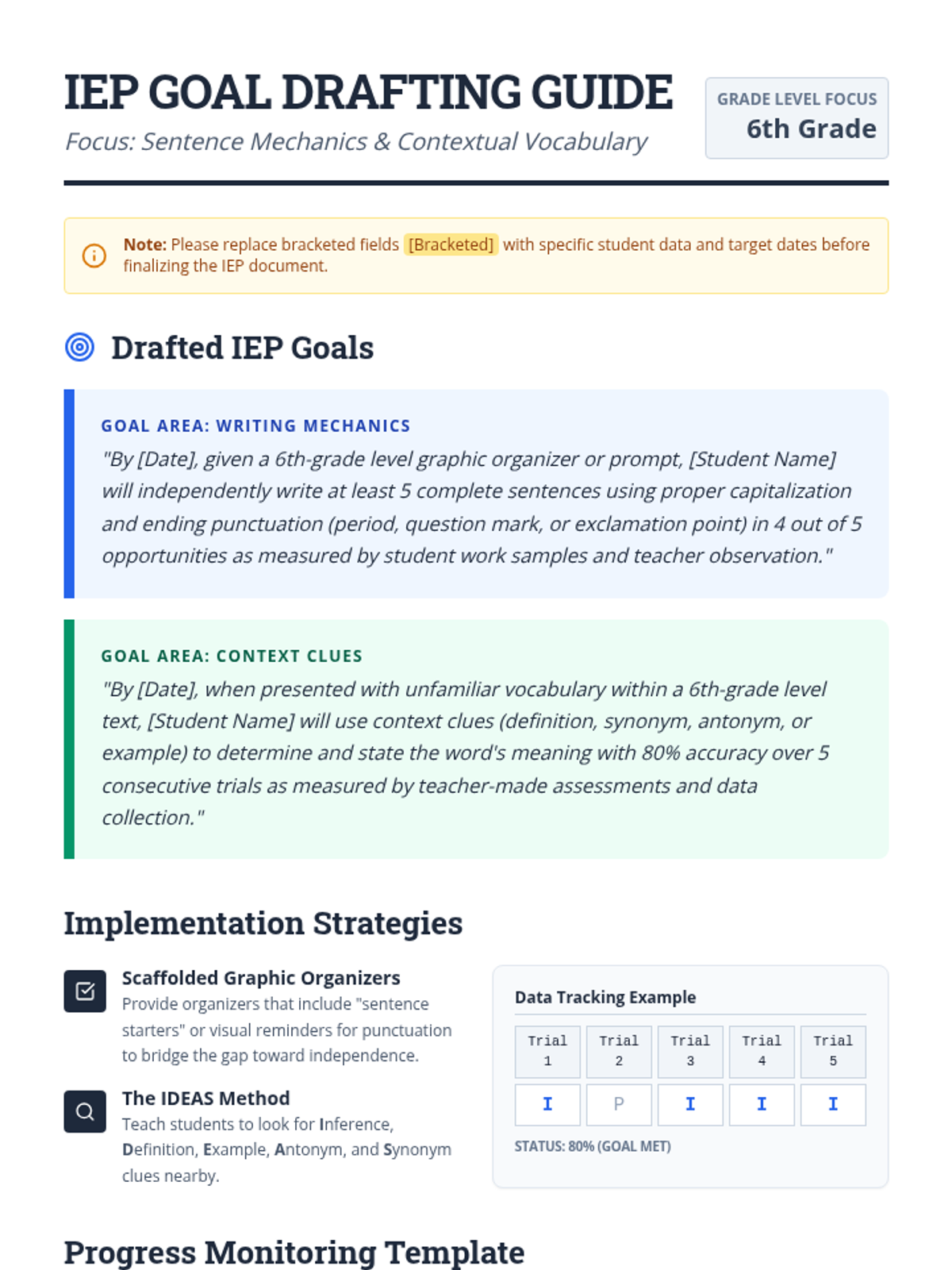
A teacher resource providing drafted IEP goals for 6th-grade writing and vocabulary, along with progress monitoring templates and instructional strategies.
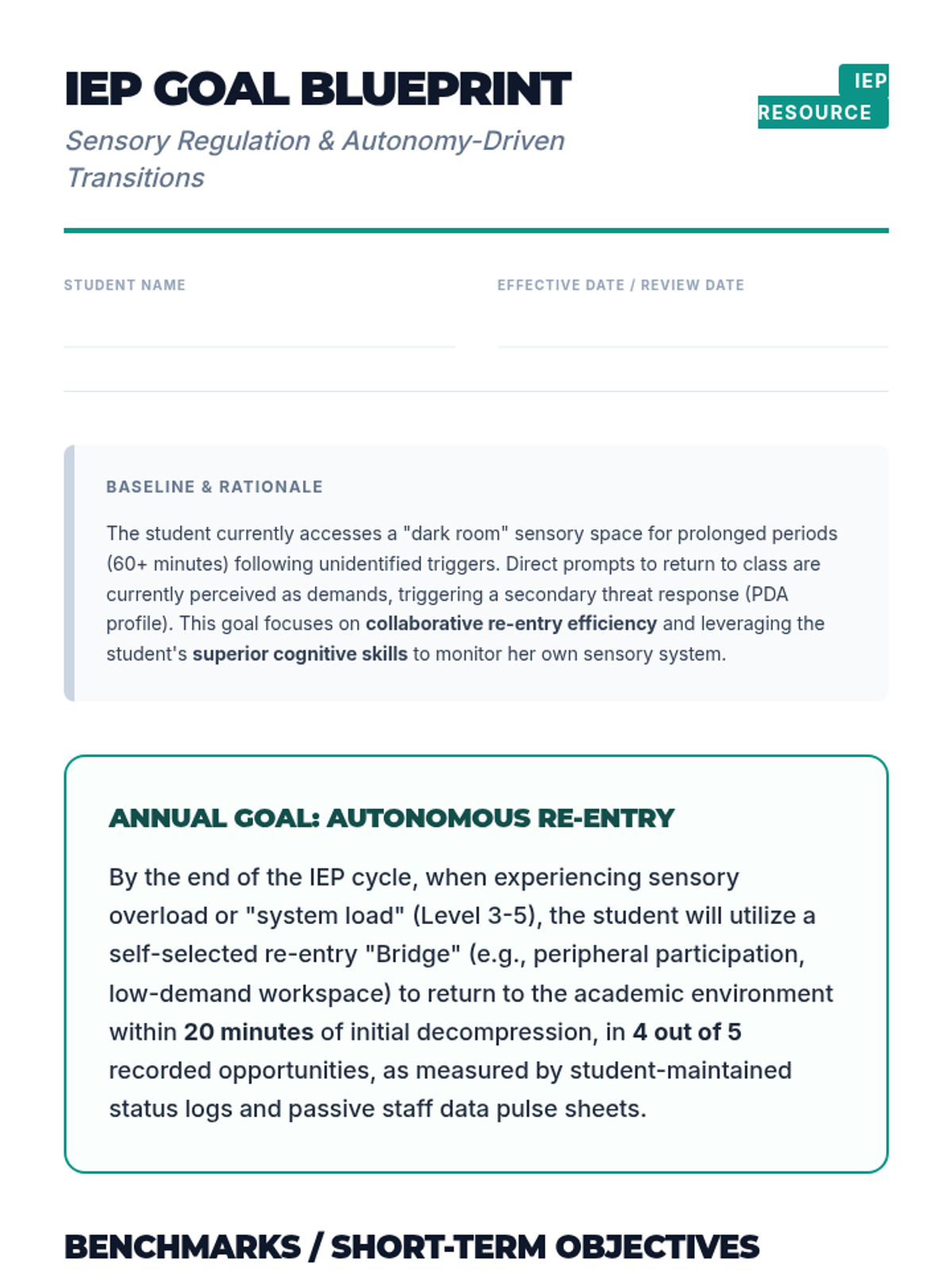
An IEP goal template and set of benchmarks specifically designed for a high-ability 11th-grade student with a PDA profile, focusing on sensory re-entry and autonomy.
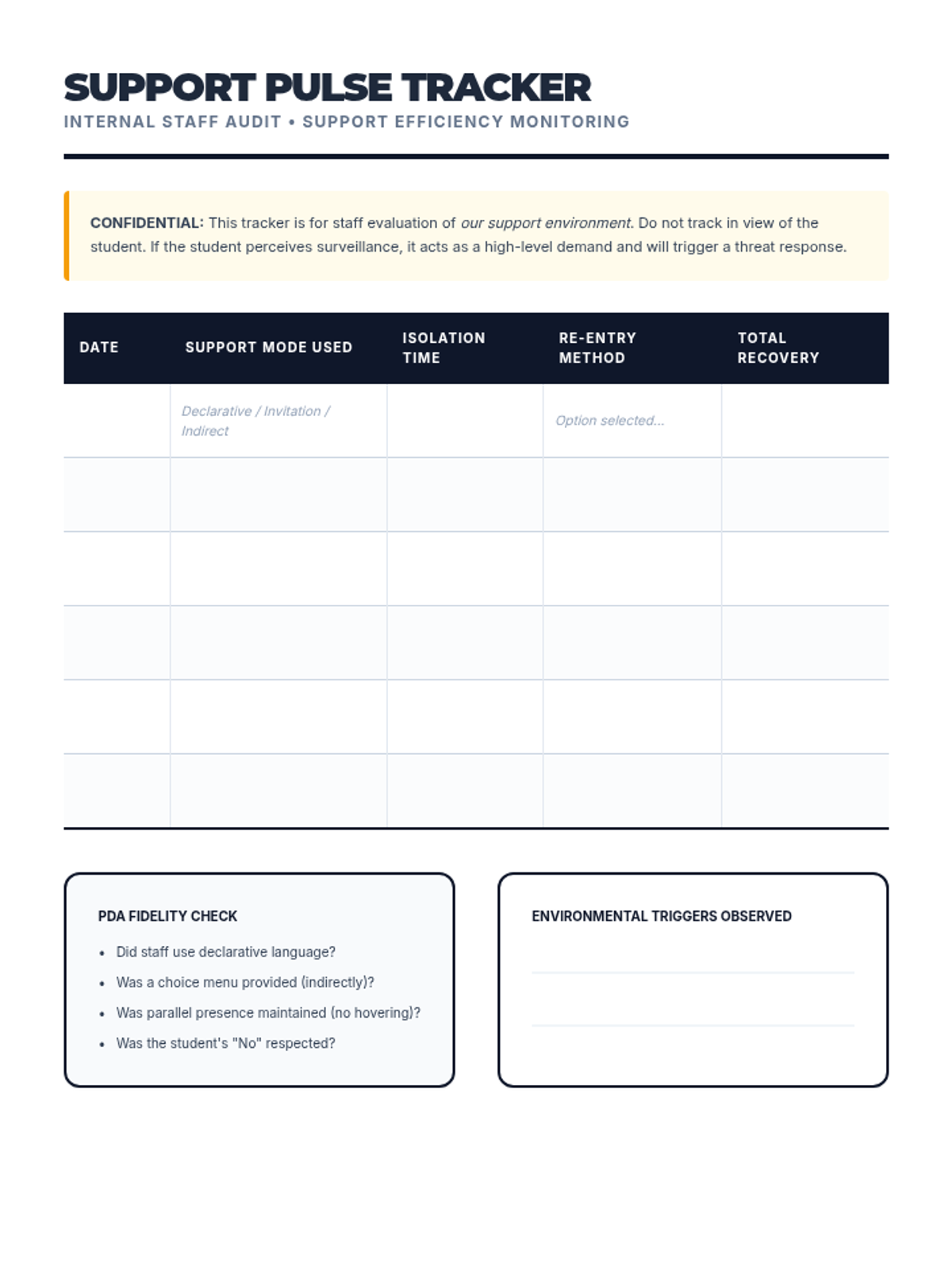
A revised staff tracking sheet for a PDA profile, shifting the focus from monitoring the student's "compliance" to auditing the effectiveness of the adult's support environment.
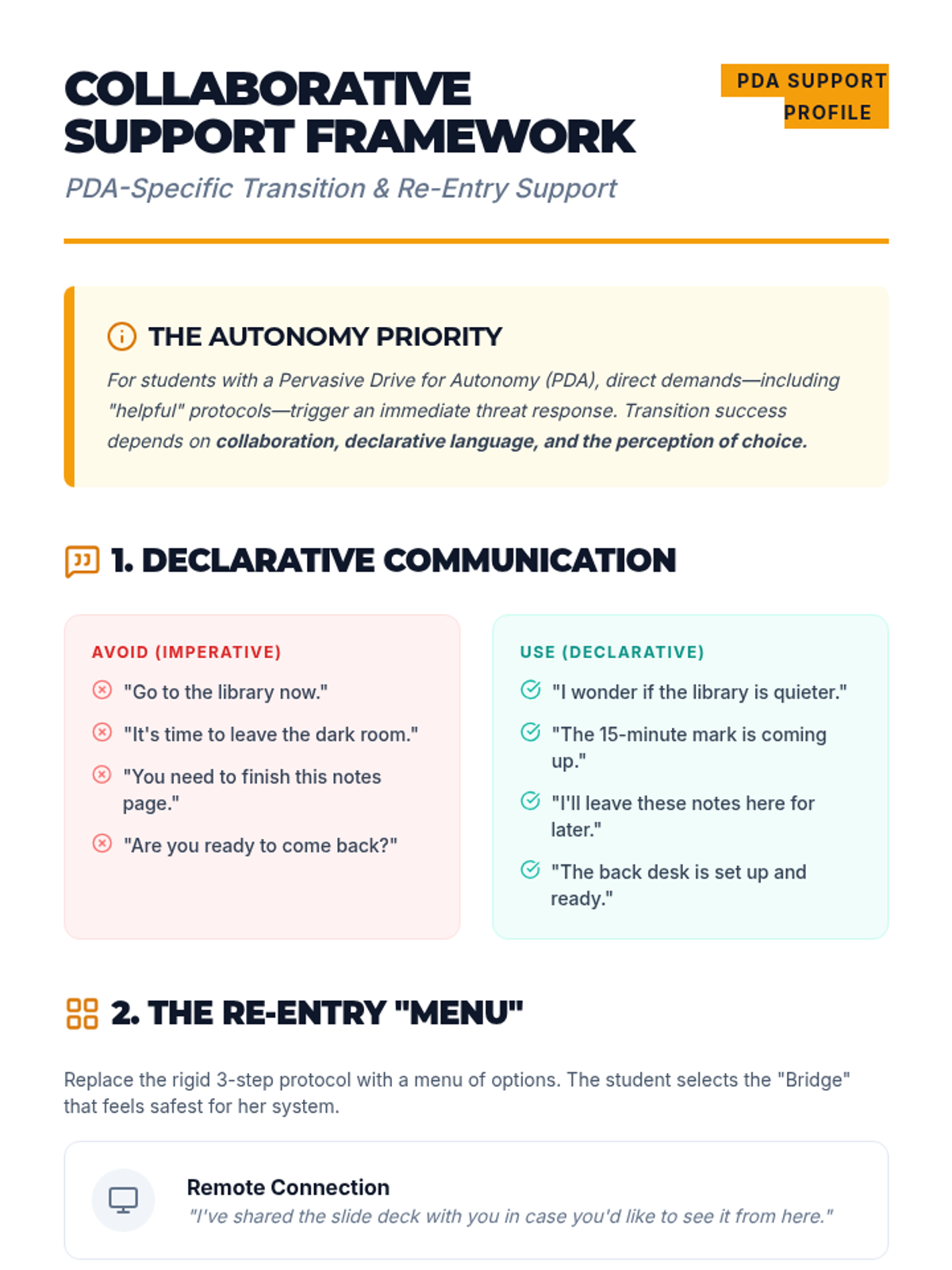
A staff-facing slide deck updated for a PDA profile, emphasizing the importance of declarative language, autonomy, and the "demand-avoidance" threat response.
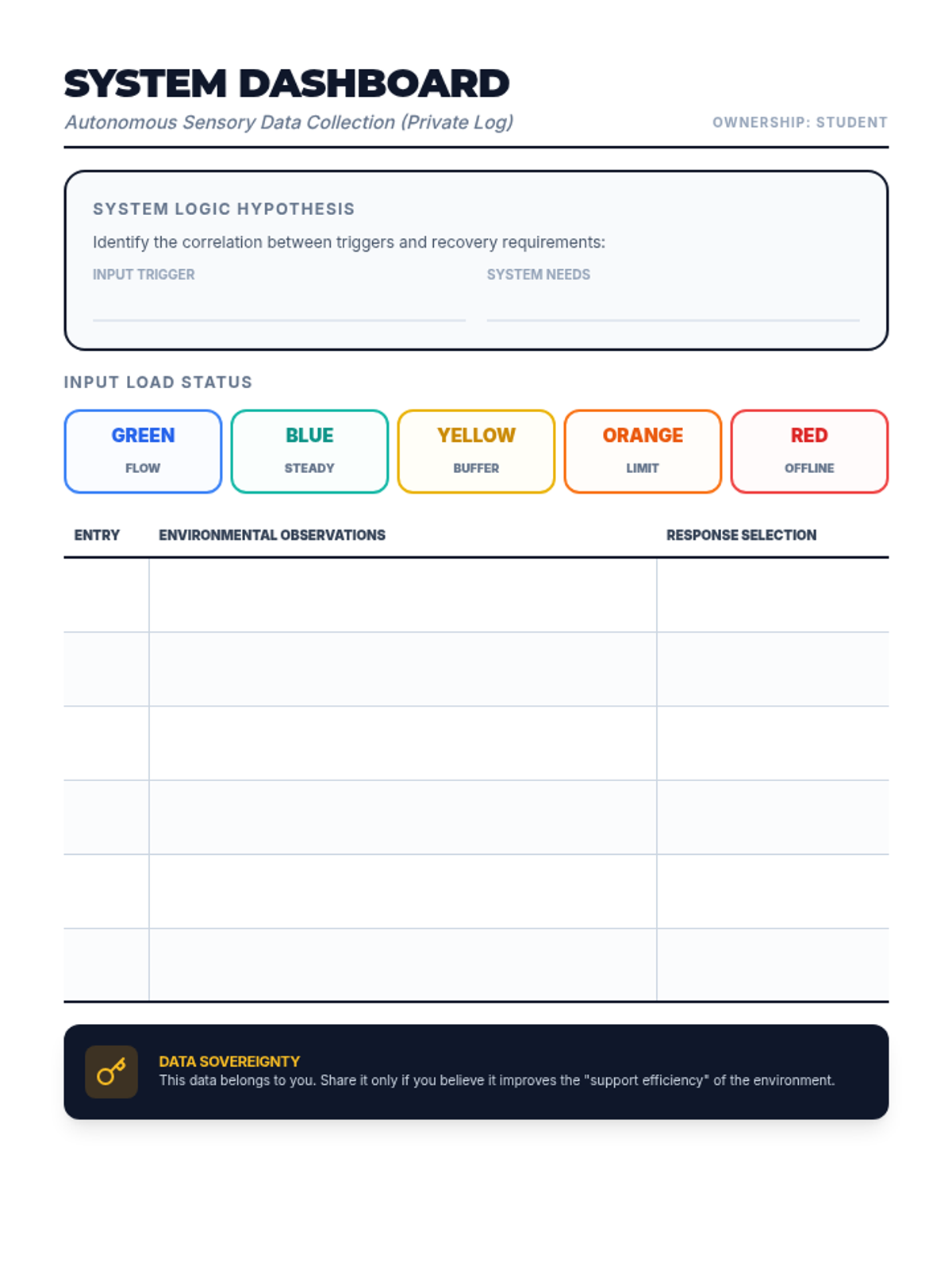
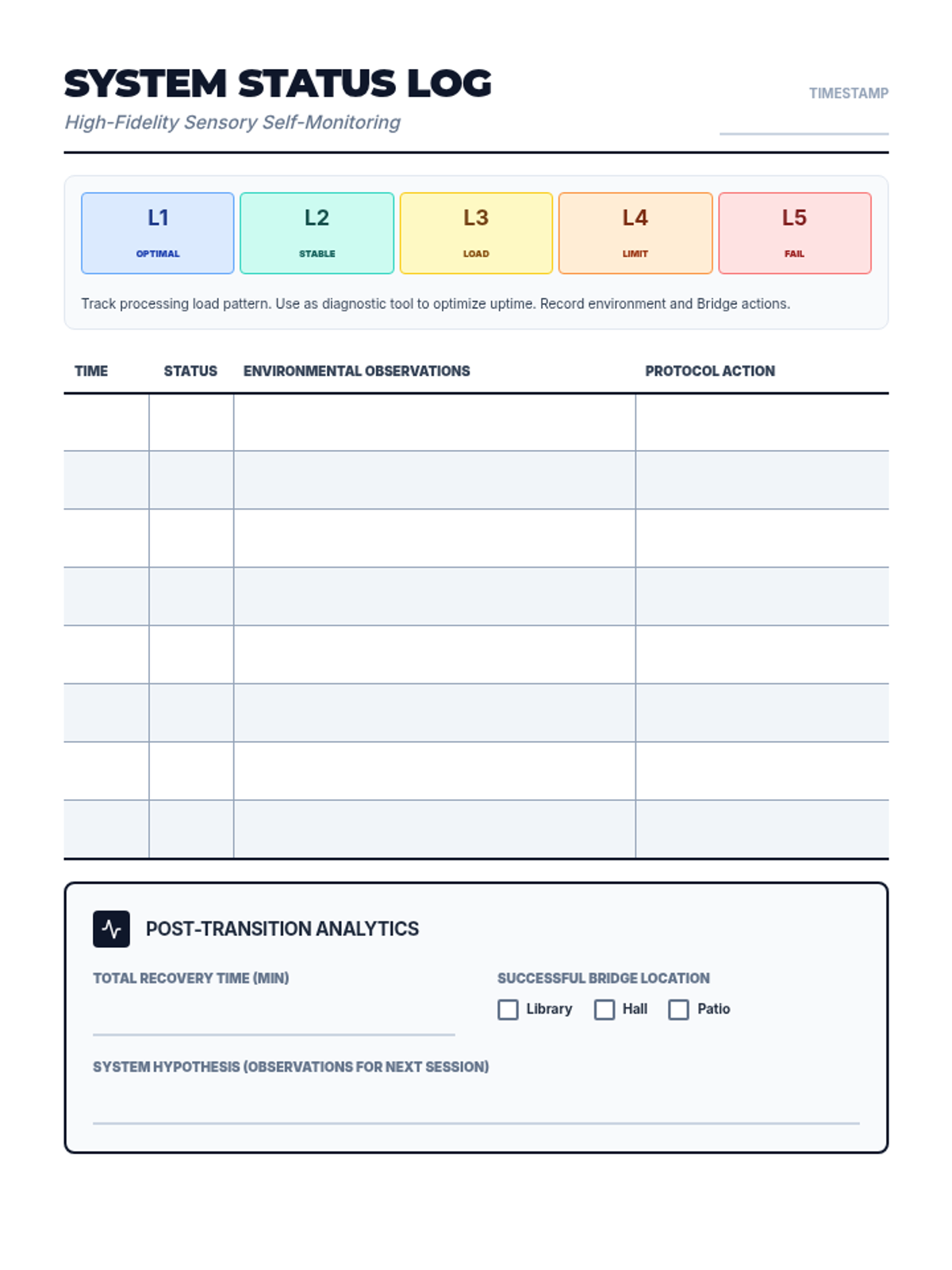
An autonomy-focused sensory log for a PDA profile student, framed as a private "System Dashboard" to emphasize ownership and data sovereignty.
A specialized staff guide for supporting a PDA profile student, focusing on declarative language, indirect support, and maintaining student autonomy during transitions.
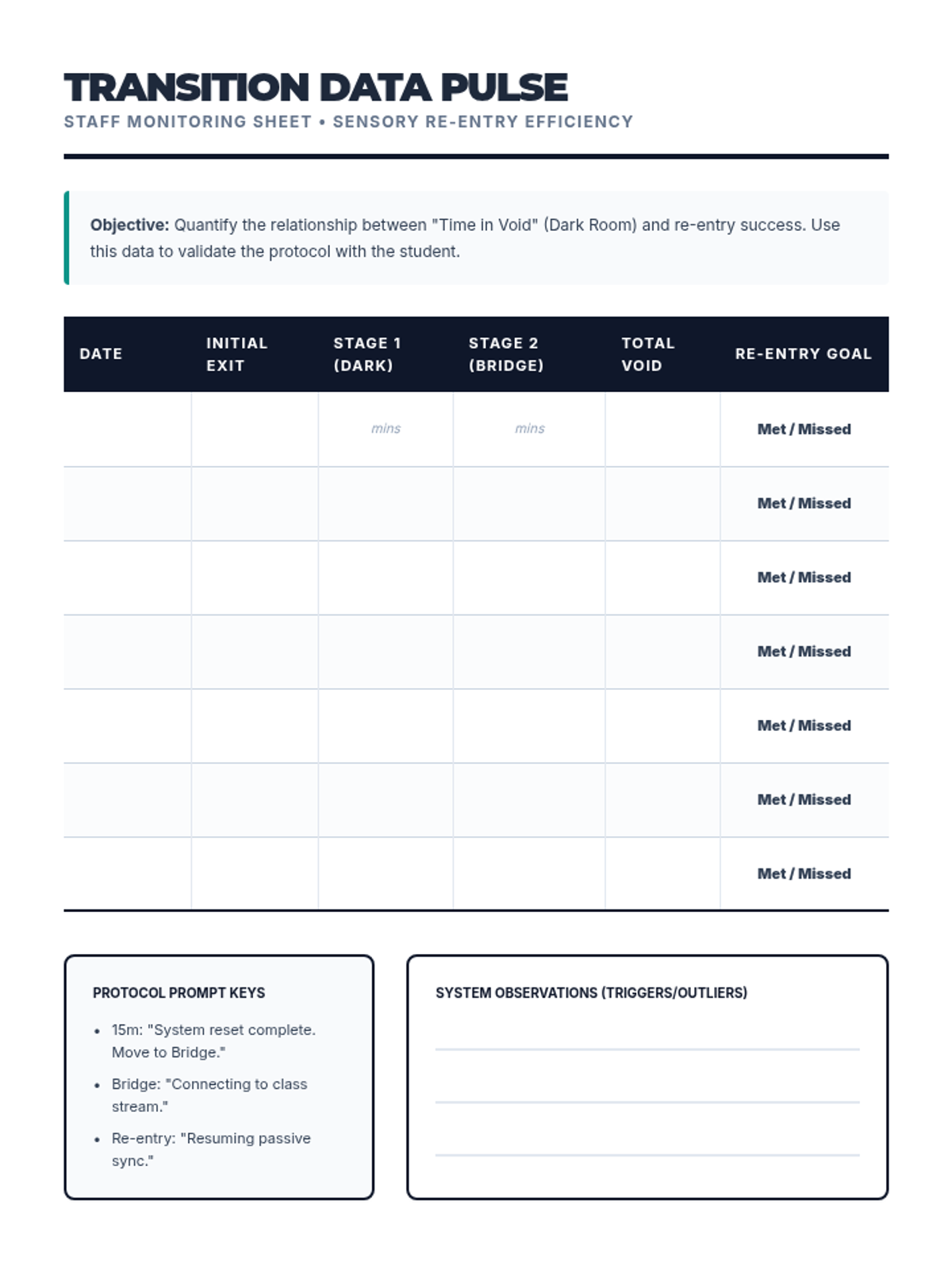
A data-tracking sheet for staff to monitor the efficiency of the Bridge protocol, focusing on reducing time spent in sensory isolation.
A presentation for school staff explaining the 'Bridge' protocol, focusing on a strength-based approach for a high-ability autistic student.
A student-facing log designed to leverage superior cognitive skills by framing sensory regulation as a system diagnostic and data collection task.
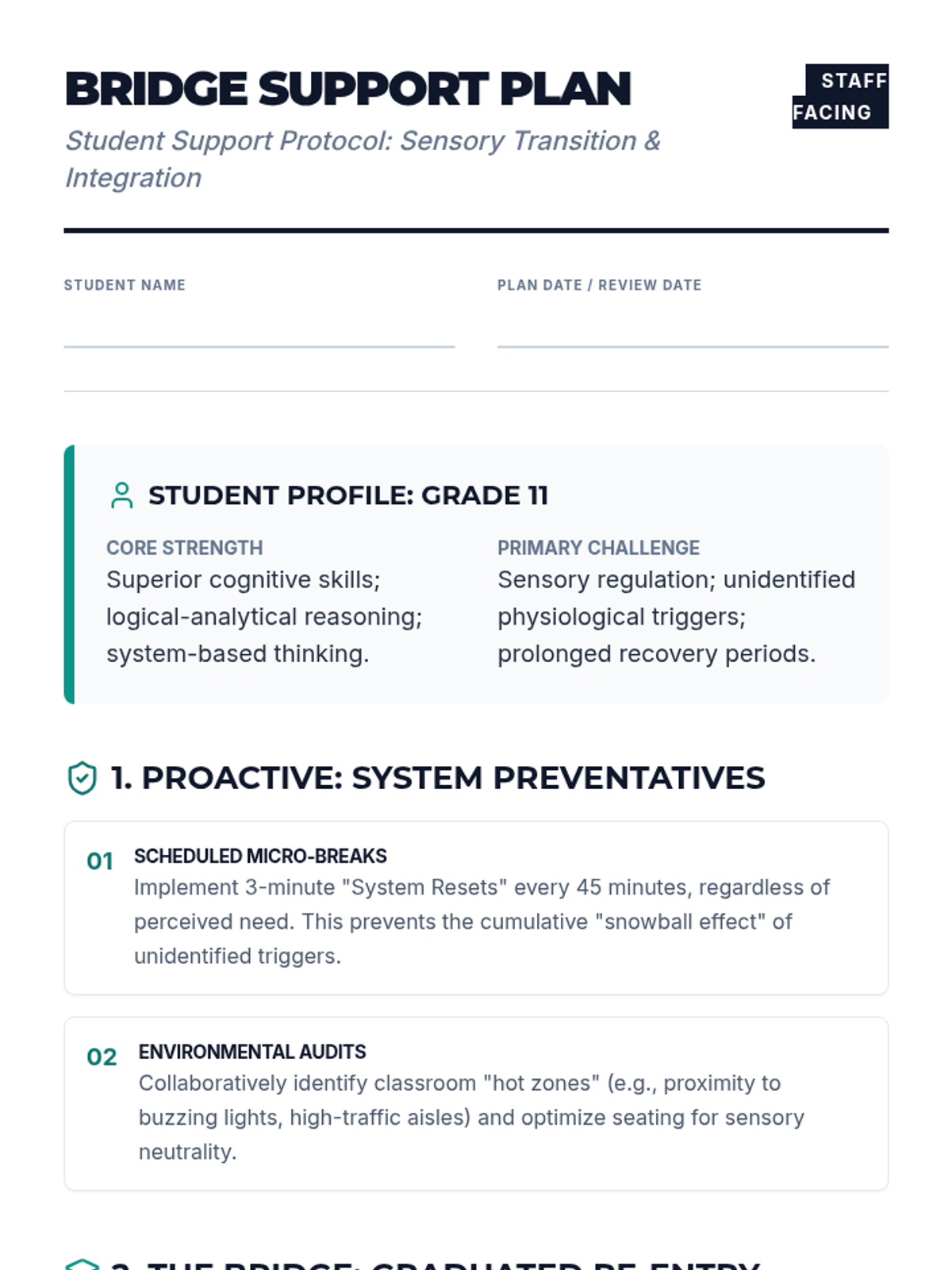
A comprehensive staff-facing guide outlining proactive strategies and a tiered 'Bridge' protocol to help a high-ability autistic student return to class after sensory breaks.
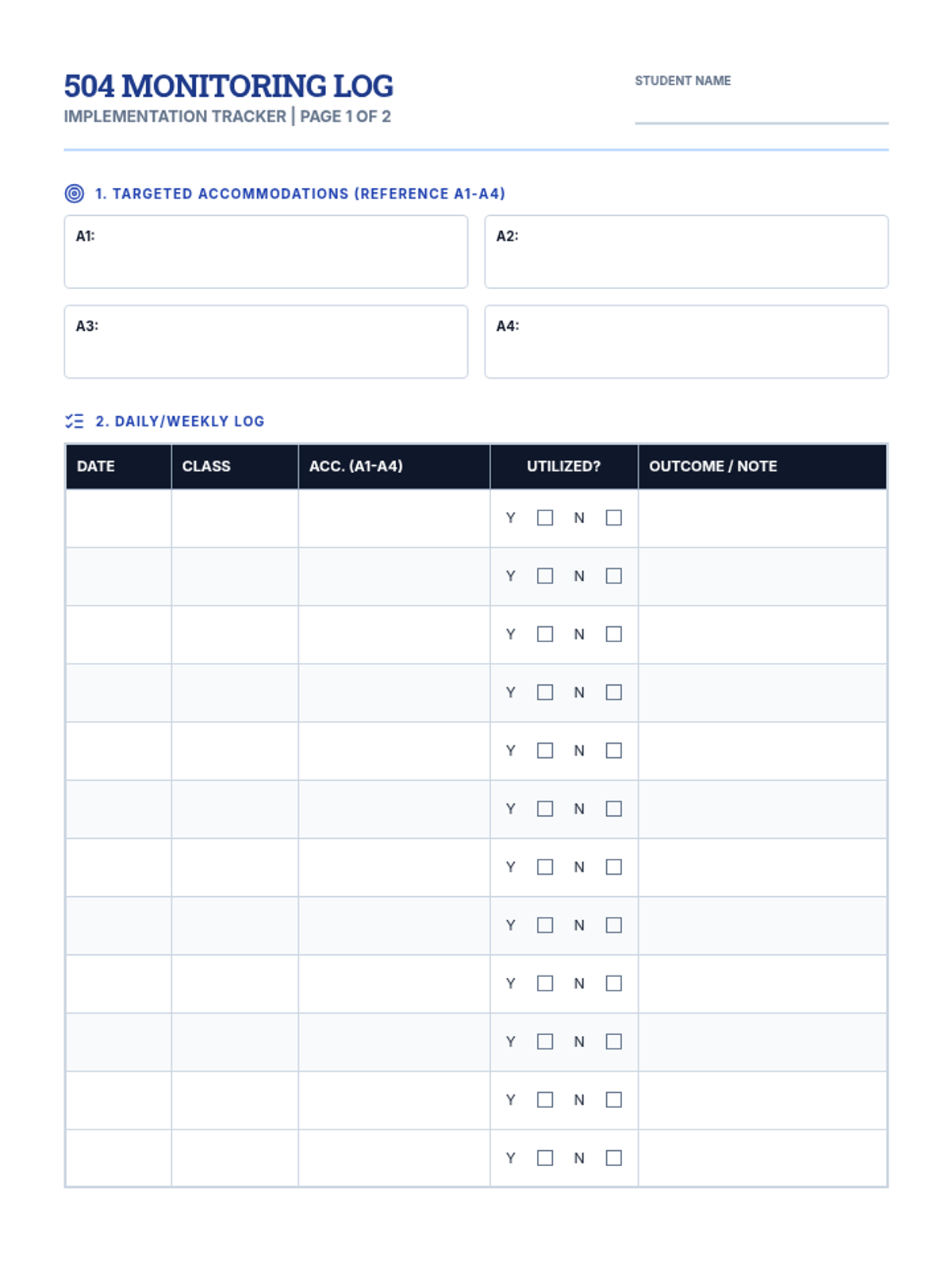
A data-tracking template for teachers and counselors to document the implementation and effectiveness of 504 accommodations, essential for compliance audits and annual reviews.
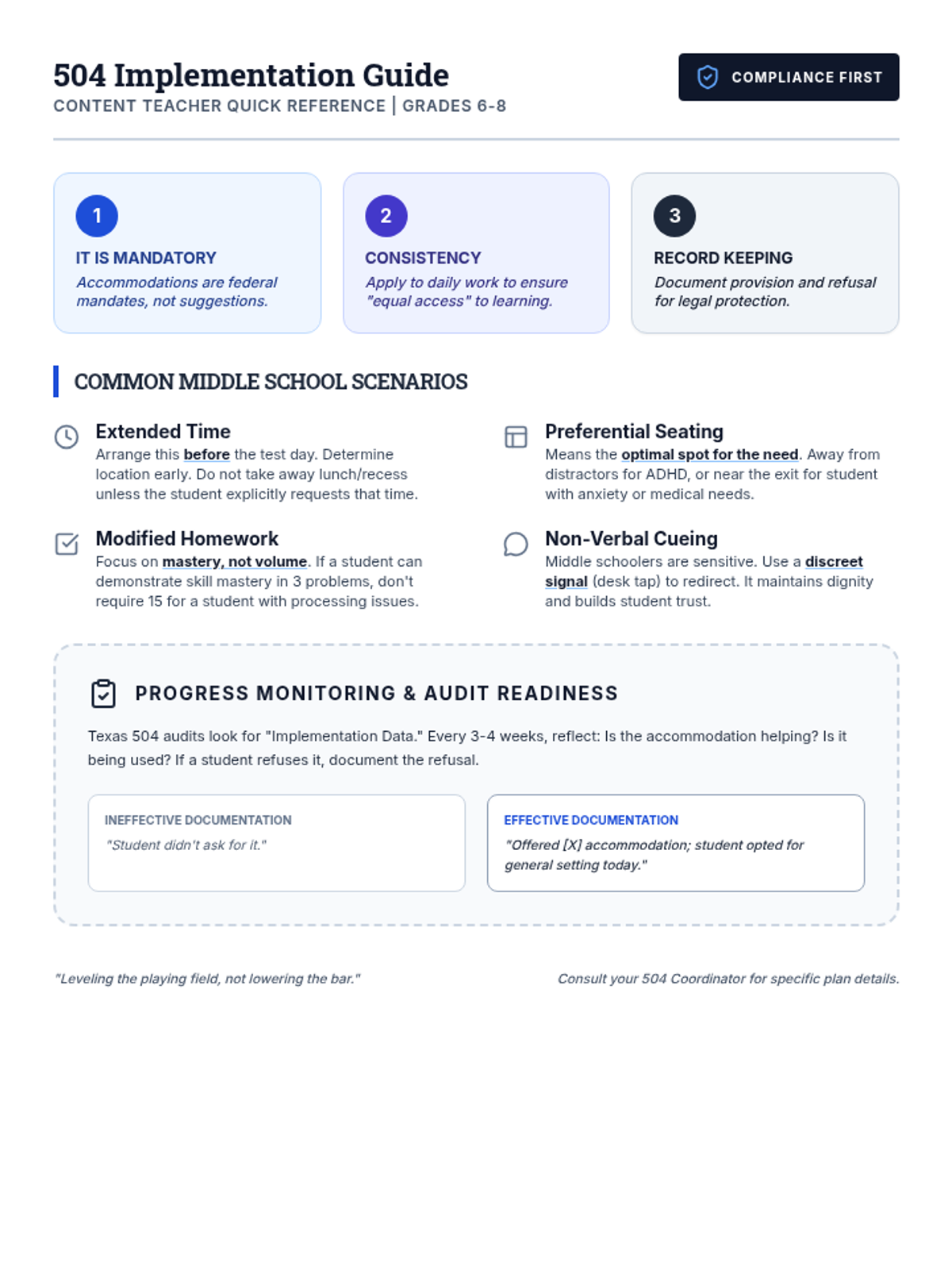
A practical one-page reference guide for content teachers to understand their legal responsibilities and best practices for implementing 504 accommodations in a middle school setting.