Post-secondary education pathways, independent living requirements, and vocational training strategies for students with diverse needs. Targets career goal setting and the development of essential daily life skills for adult independence.
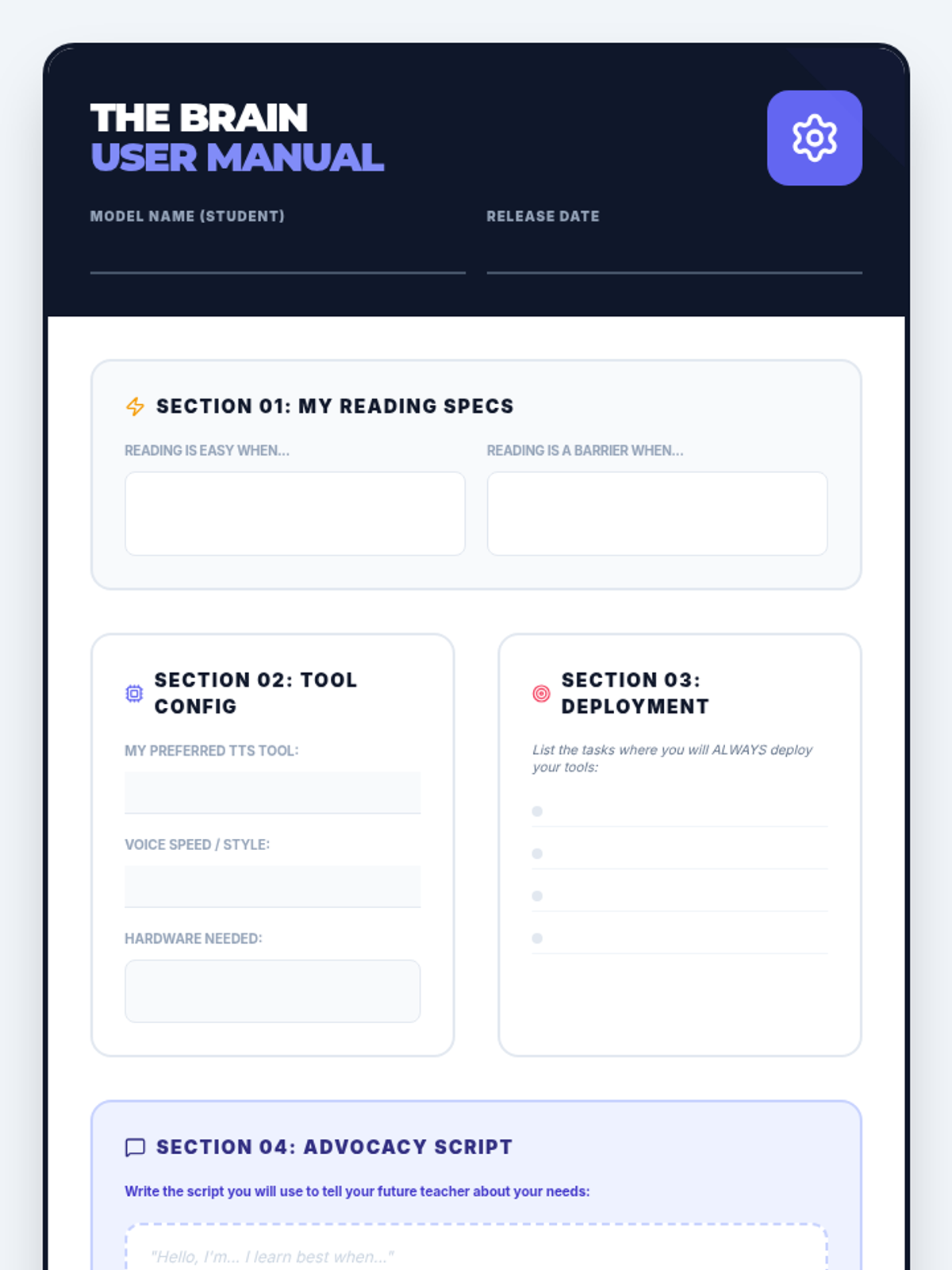
The culminating project template for the sequence—a 'User Manual' that students fill out to document their learning style, AT tools, usage map, and self-advocacy scripts.
A 5-slide presentation for the final lesson, framing the 'User Manual' project as a tool for student independence and future teacher communication.
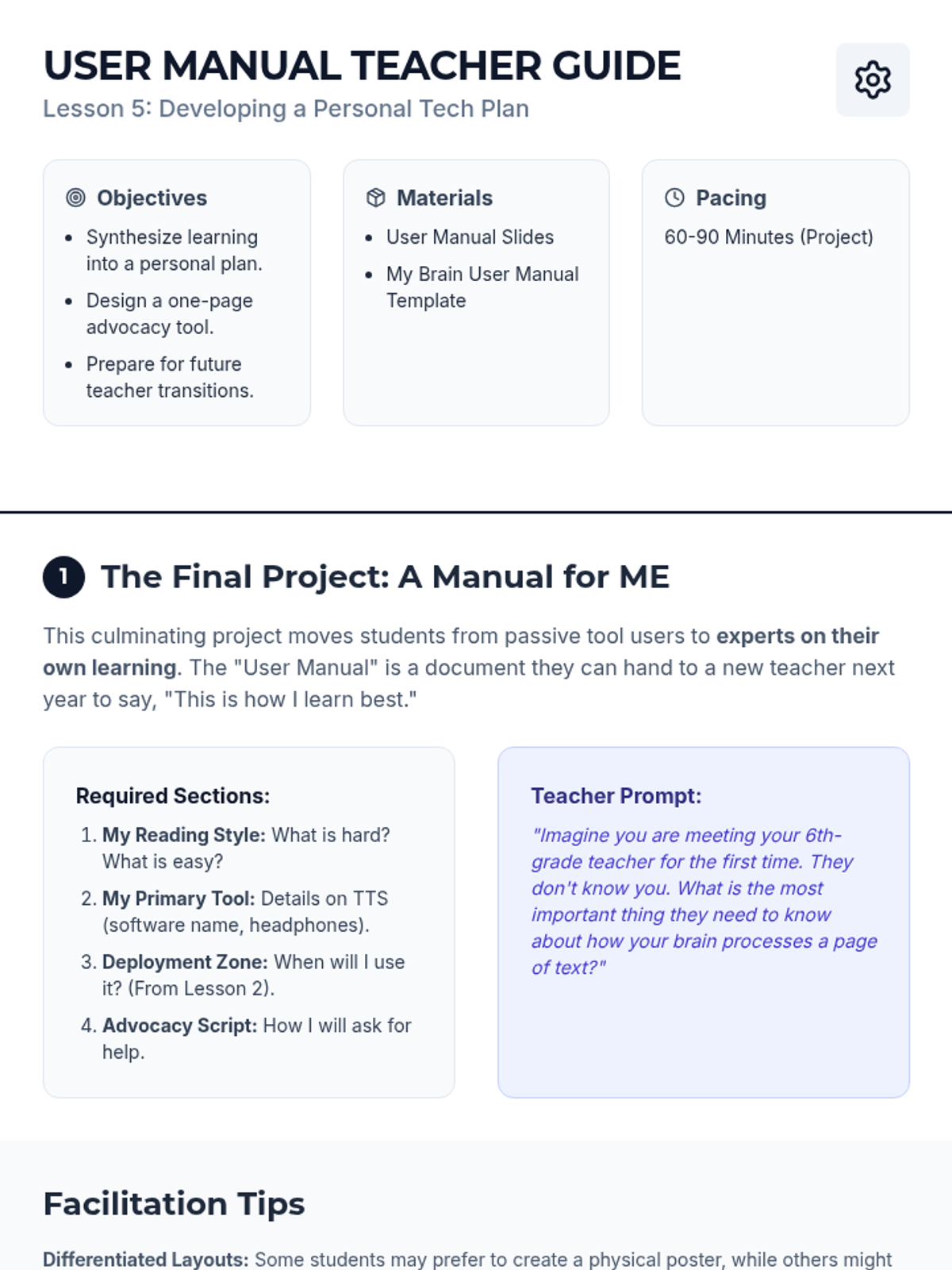
A teacher guide for the final lesson, providing instructions for the 'User Manual' project and a sequence-wide reflection checklist for student independence.
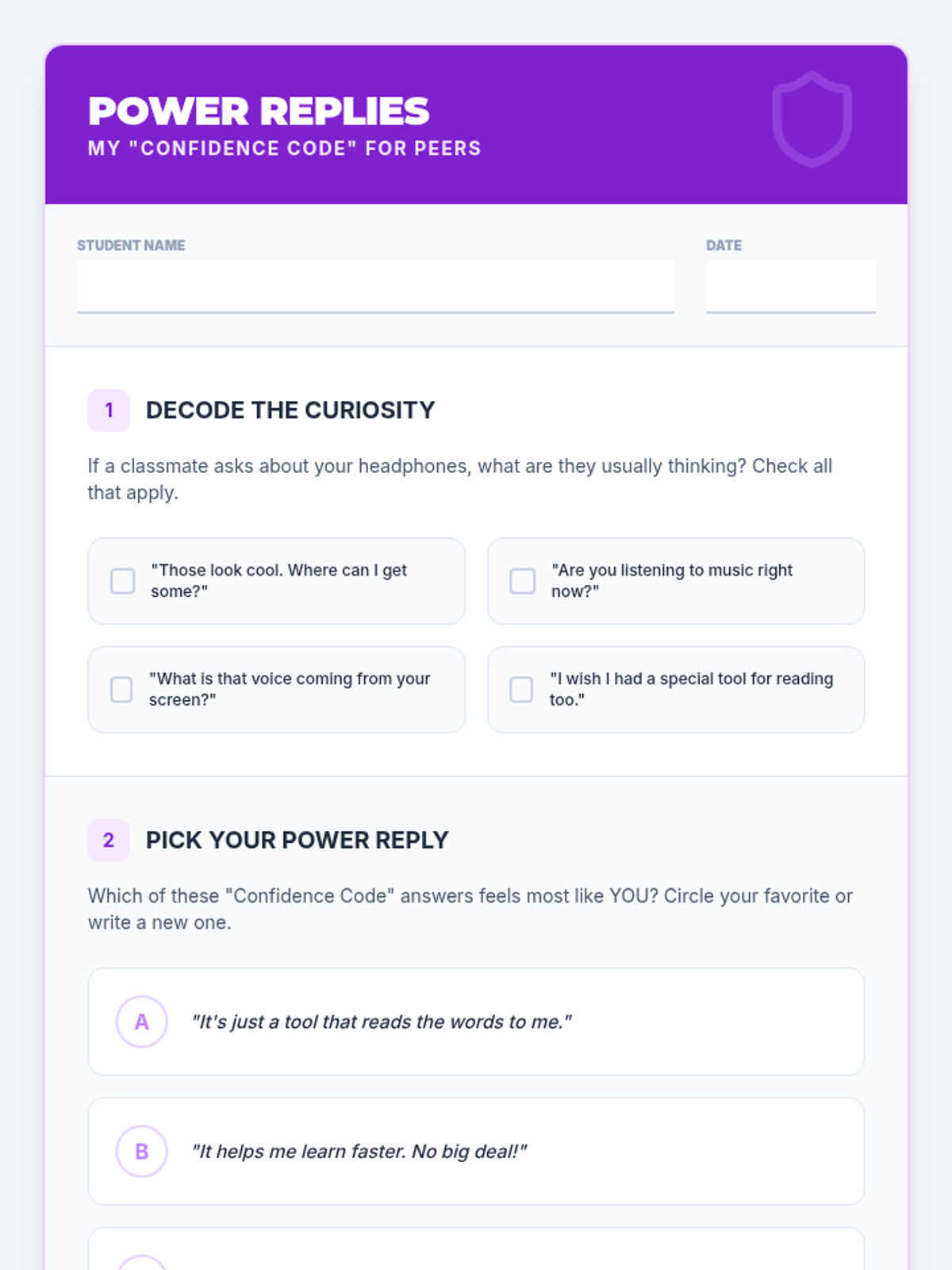
A student activity sheet for Lesson 4 where students decode peer curiosity, select their favorite 'Power Reply', and practice the body language of confidence.
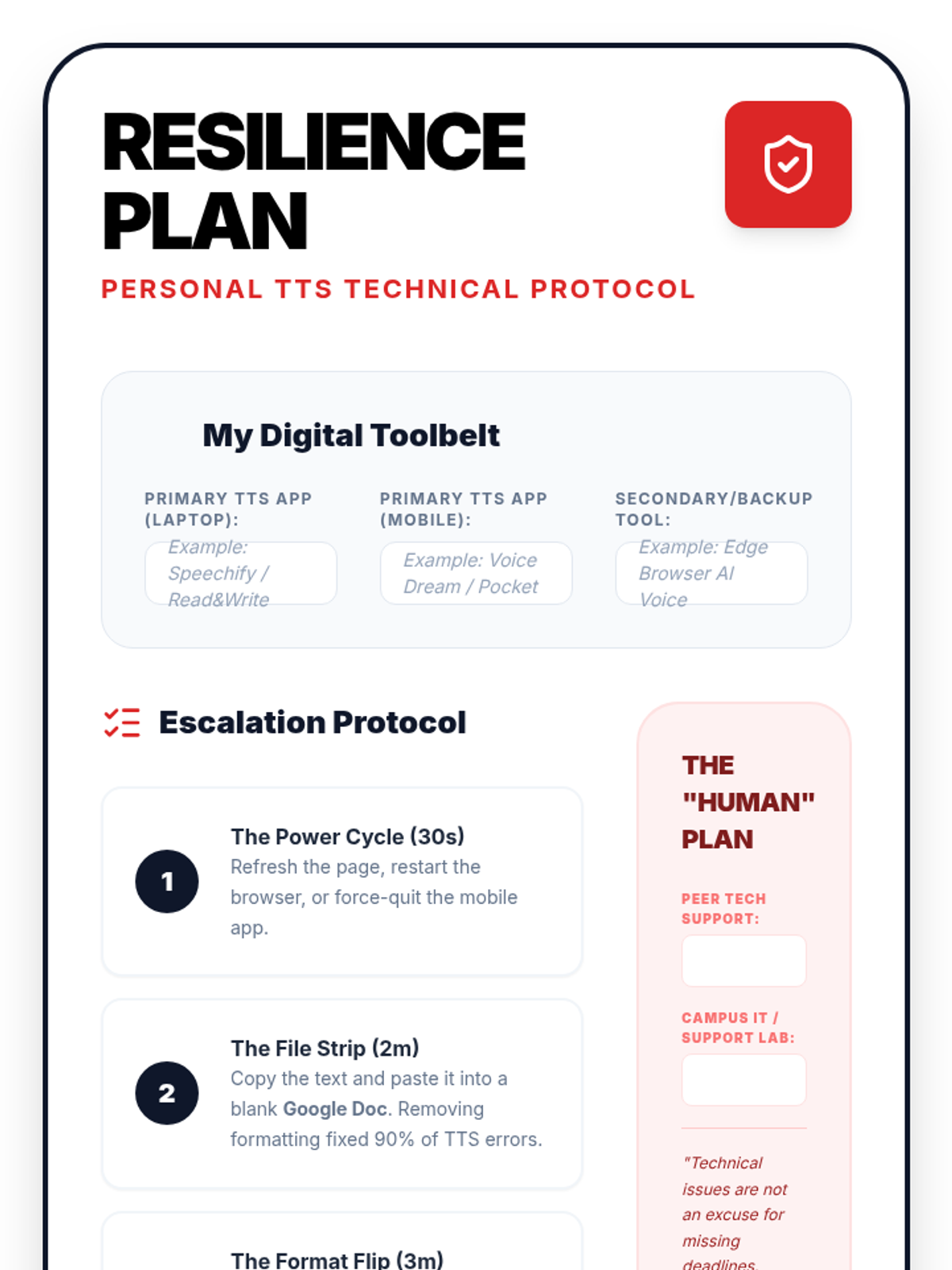
A personal template for Lesson 5. Students fill this out to create their own 'Digital Resilience Plan', documenting their tool arsenal, escalation steps for technical failures, and human support resources.
A 5-slide presentation for Lesson 4 that teaches students how to handle peer curiosity with short, confident 'Power Replies' and a positive attitude.
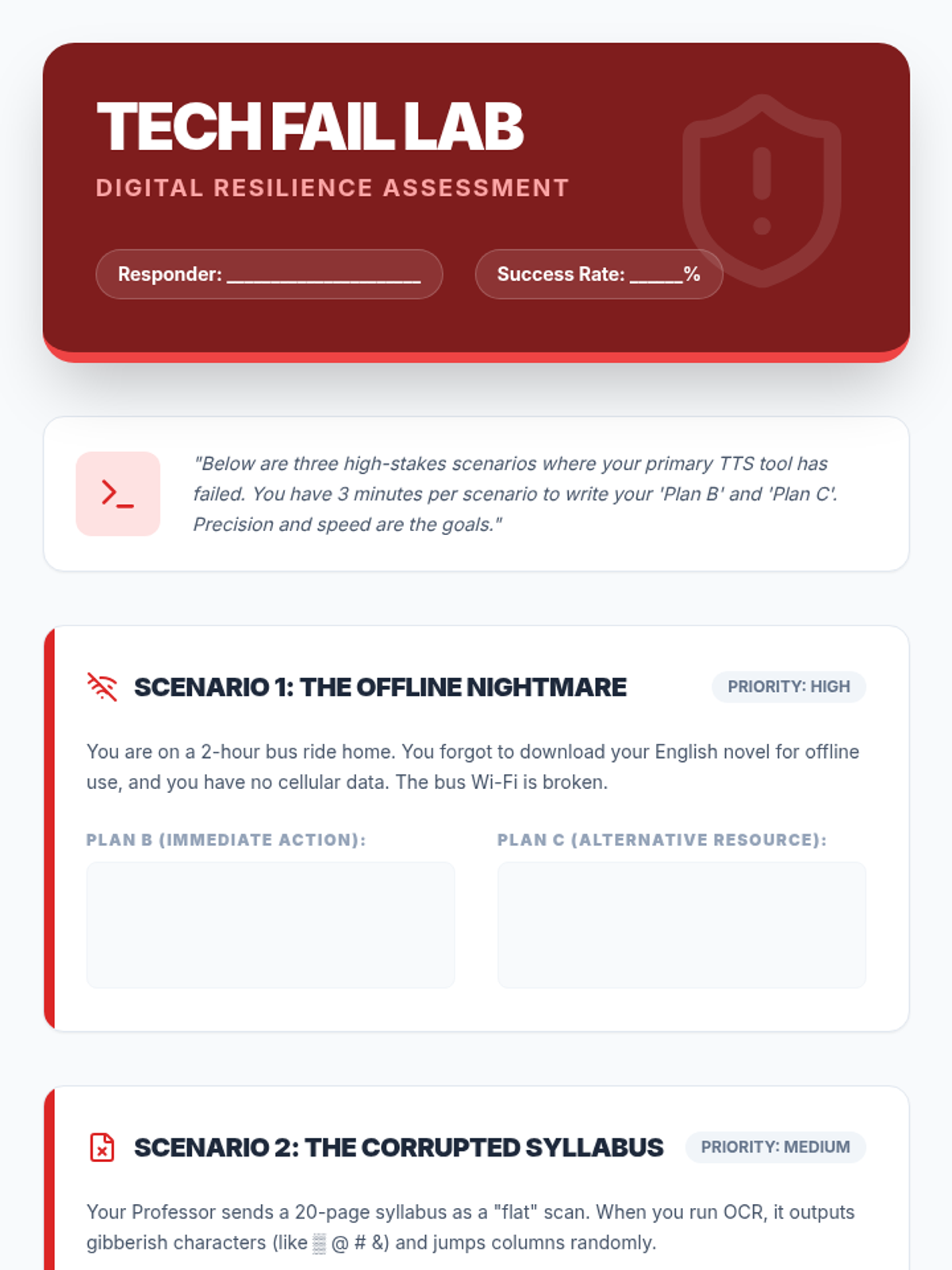
A technical worksheet for Lesson 5. Students are presented with three 'high-stakes' technical failure scenarios and must document their primary and secondary backup plans to ensure reading productivity.
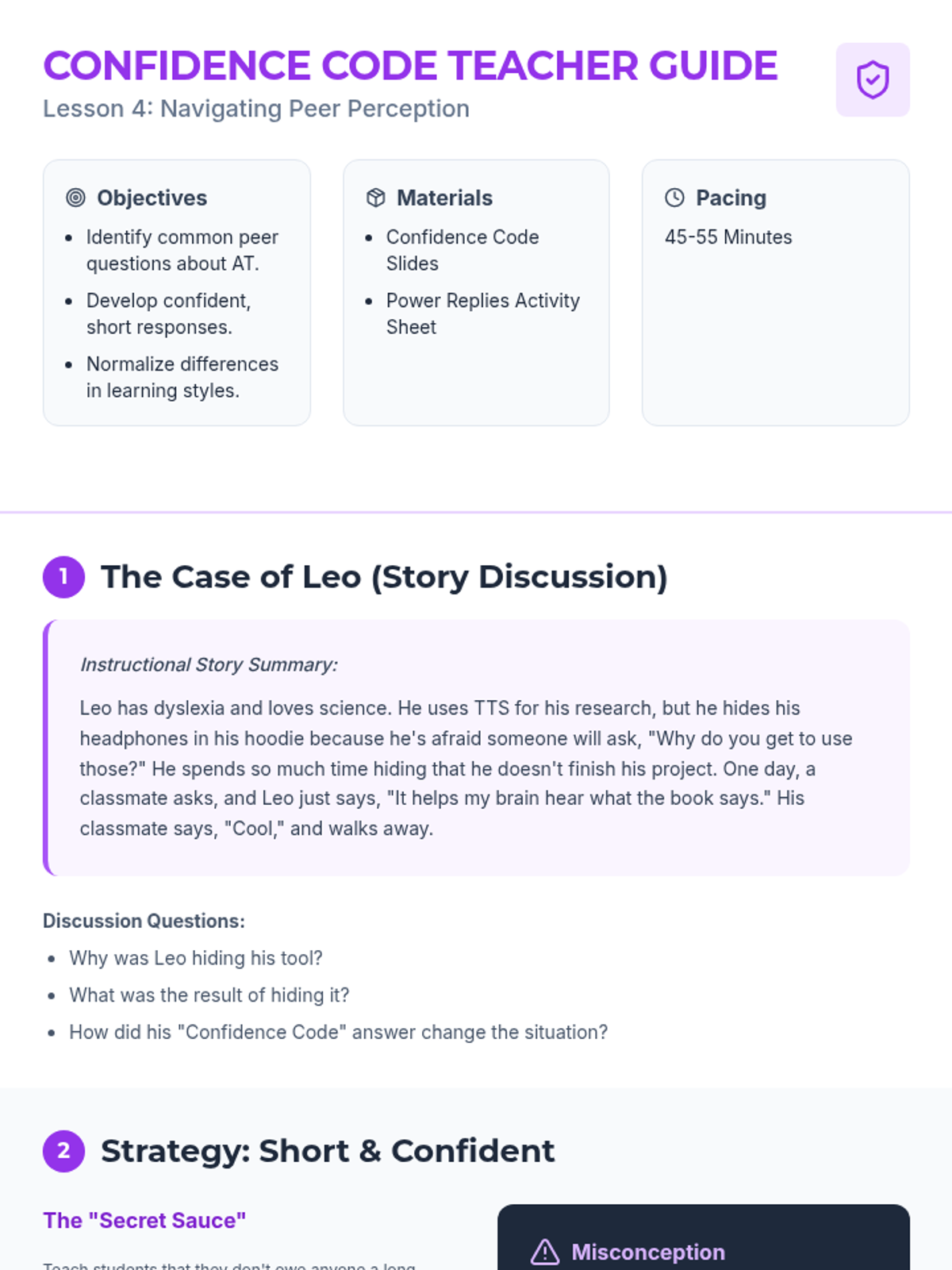
A teacher guide for Lesson 4 that addresses the social-emotional side of AT use, including a case study about hiding tools and strategies for confident, short replies to peer questions.
Slides for Lesson 5 on Digital Resilience. Teaches students how to troubleshoot common TTS failures, establish a 'Plan B' hierarchy, and remain productive during technical high-stakes moments.
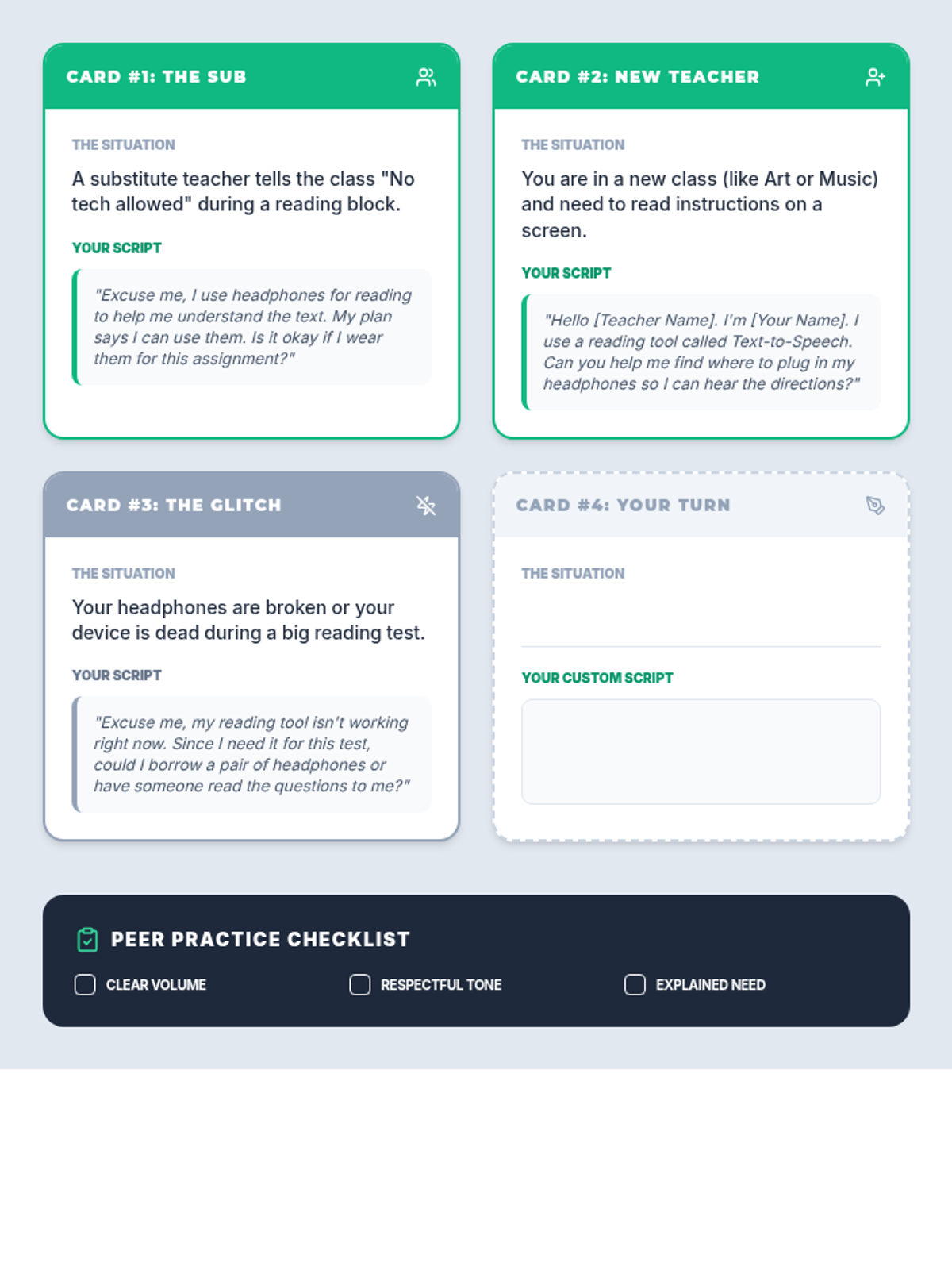
Handy role-play script cards for students to practice self-advocacy in different school scenarios, including a 'create-your-own' card and a peer review checklist.
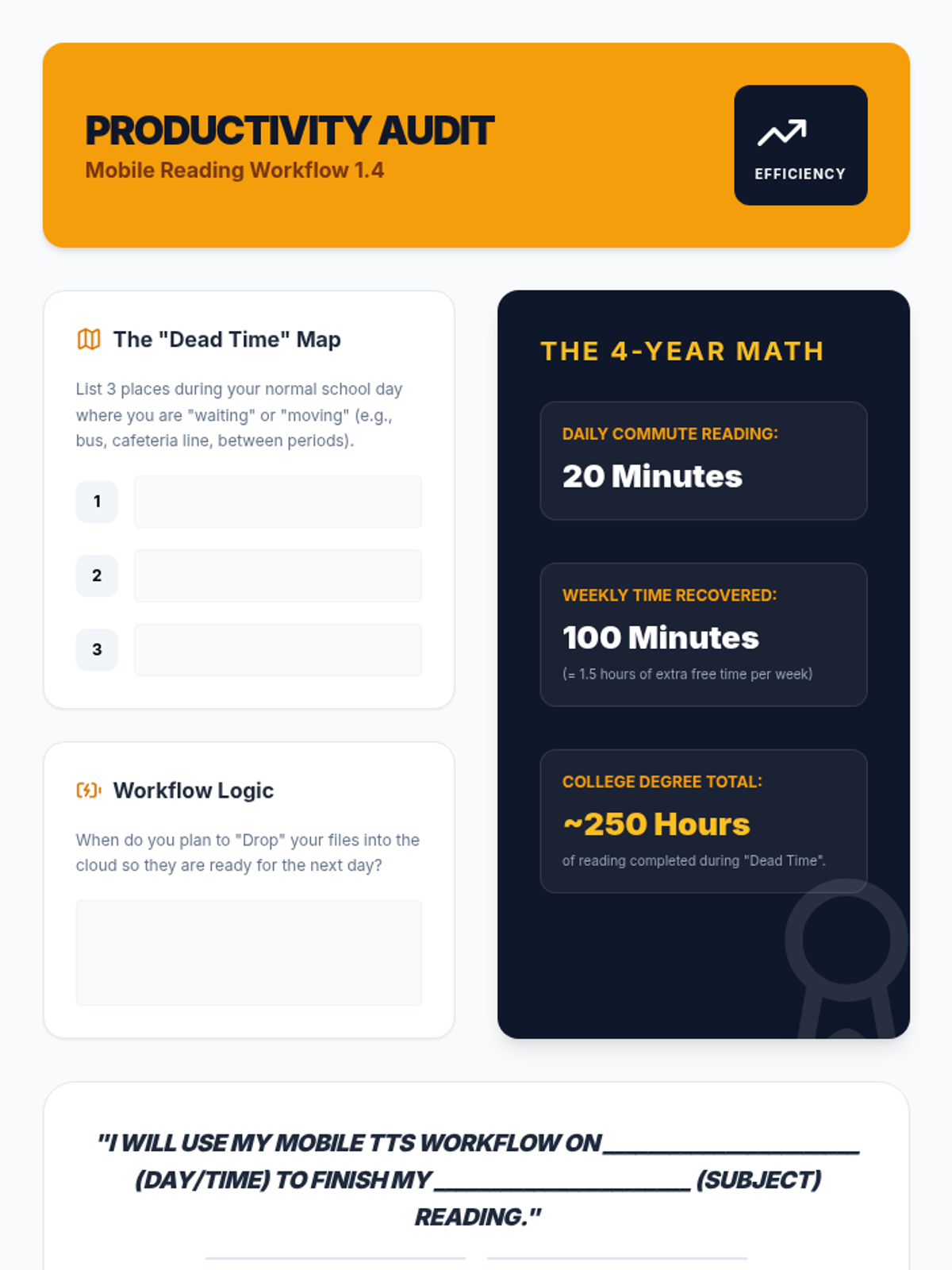
A productivity audit worksheet for Lesson 4. Students identify 'dead time' in their schedules, calculate the time savings over their college career, and make a formal commitment to using their mobile TTS workflow.
A 6-slide presentation for Lesson 3 that defines self-advocacy, breaks down a respectful script template, and provides tips for using a 'Power Voice' during role-play.
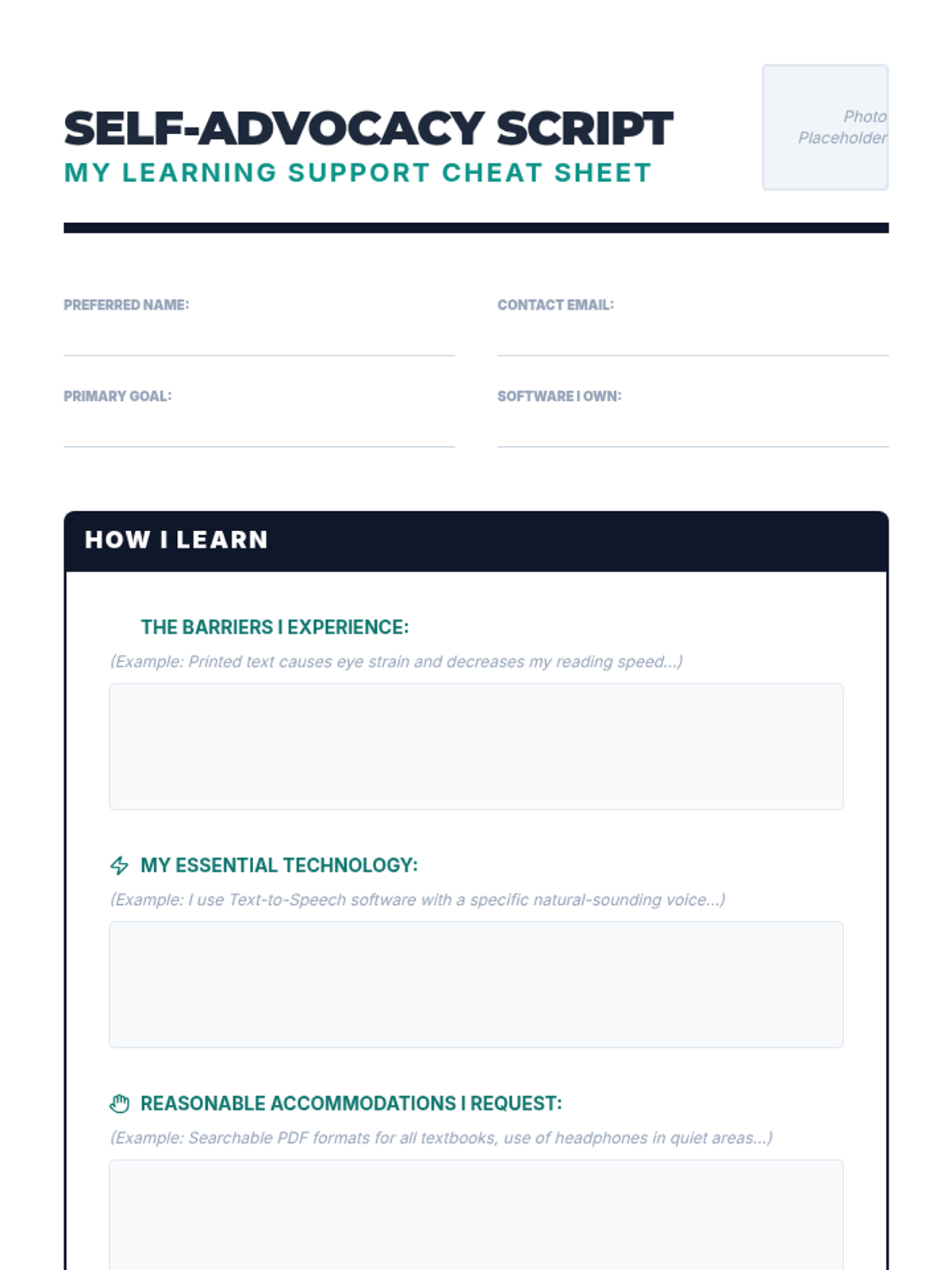
A "Self-Advocacy Cheat Sheet" that summarizes their needs and tools.
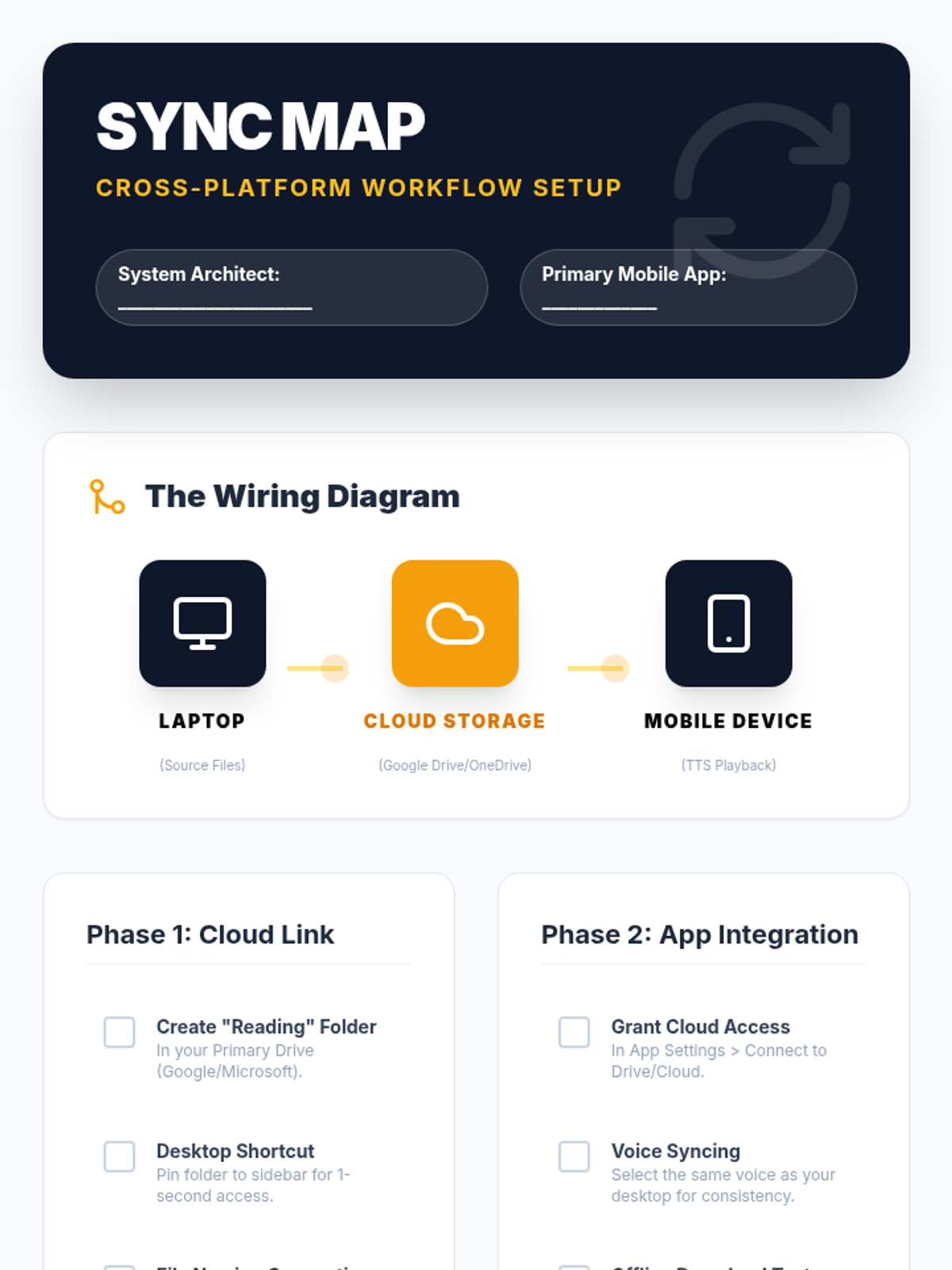
A technical setup checklist for Lesson 4. Guides students through linking their desktop cloud storage to their mobile TTS apps, with verification steps for offline playback and file syncing.
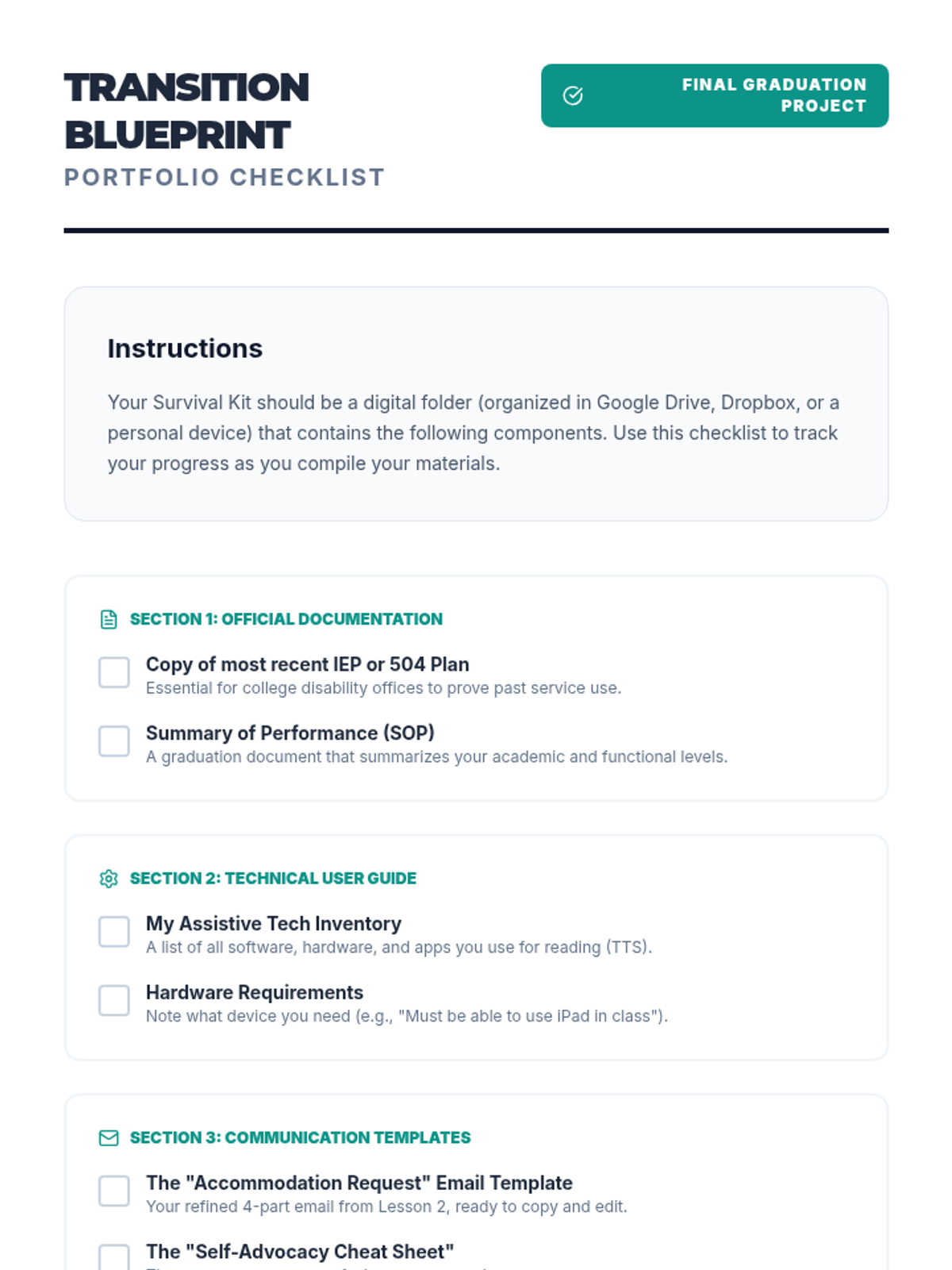
A checklist for what to include in the digital/physical portfolio.
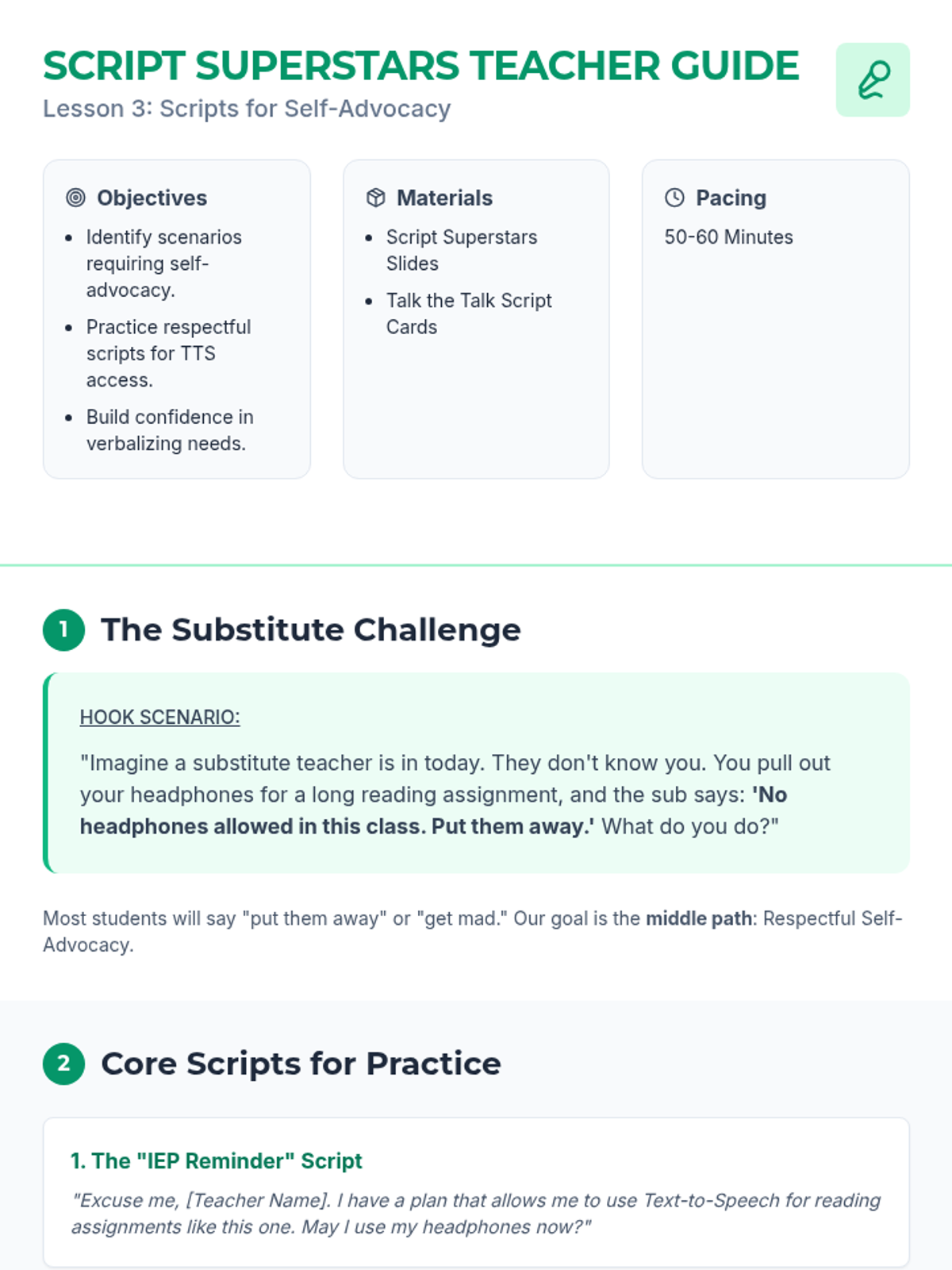
A teacher guide for Lesson 3 detailing how to teach self-advocacy scripts, including role-playing the 'Substitute Challenge' and facilitating peer feedback on communication style.
Slides for Lesson 4 on Mobile TTS Workflows. Focuses on syncing desktop files with mobile devices, cloud integration, and using transit time for academic reading.
Slides for Lesson 5 focusing on organizing and finalizing the digital transition portfolio.
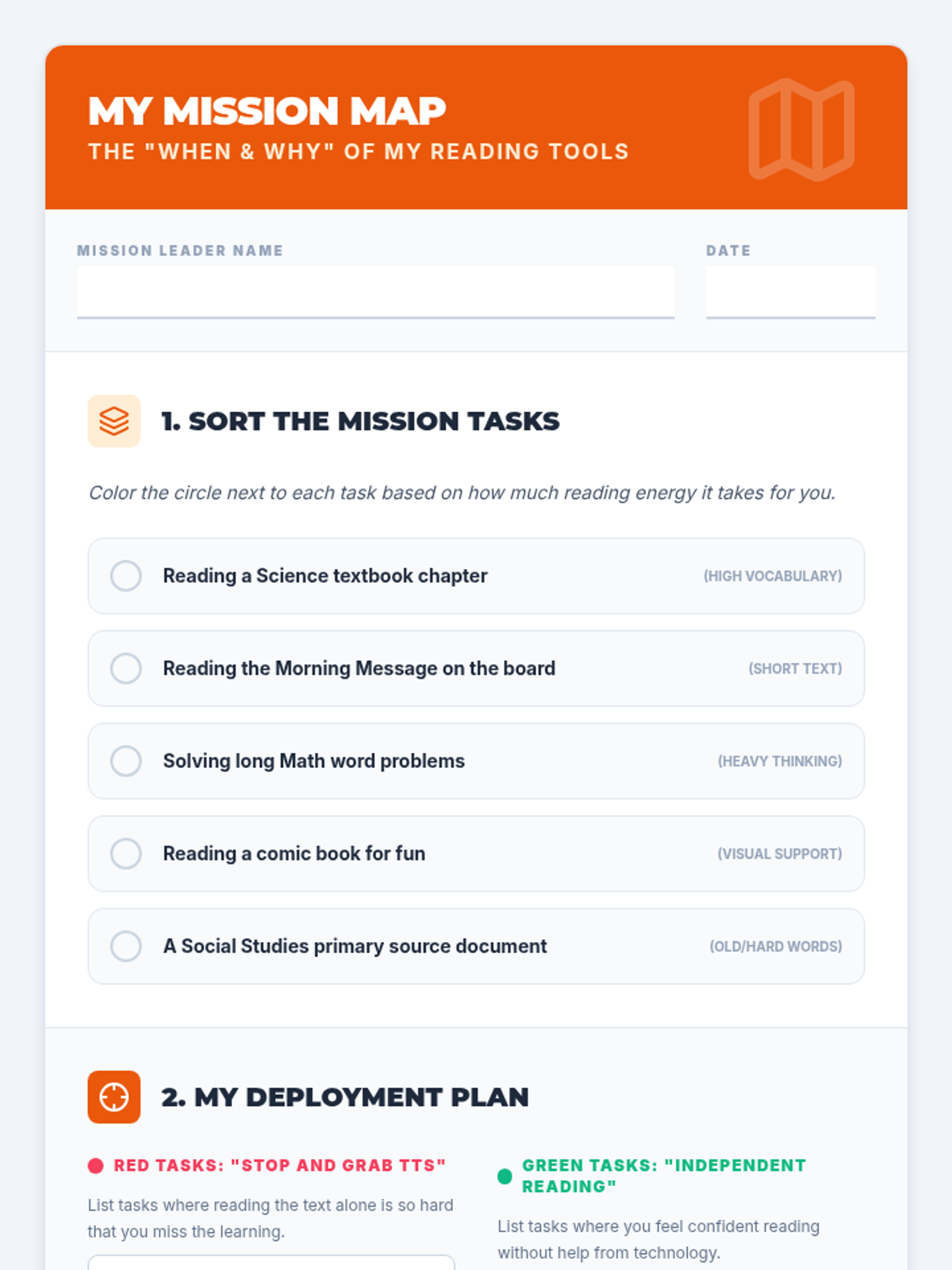
A student activity sheet for Lesson 2 that guides students through sorting school reading tasks into traffic light categories and developing a personal 'deployment plan' for TTS use.
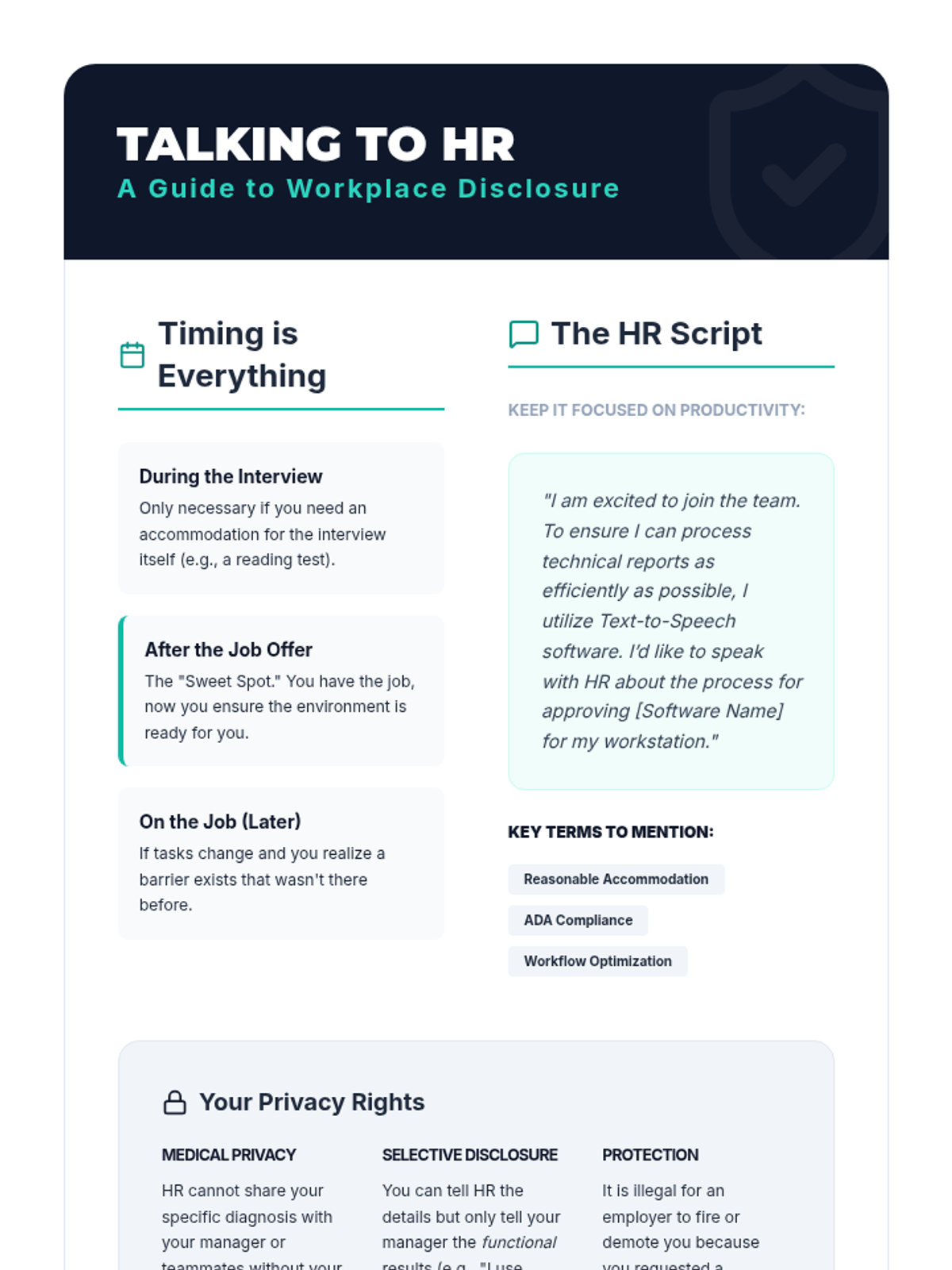
A professional reference sheet for students on when and how to disclose their technology needs to Human Resources in a workplace setting.
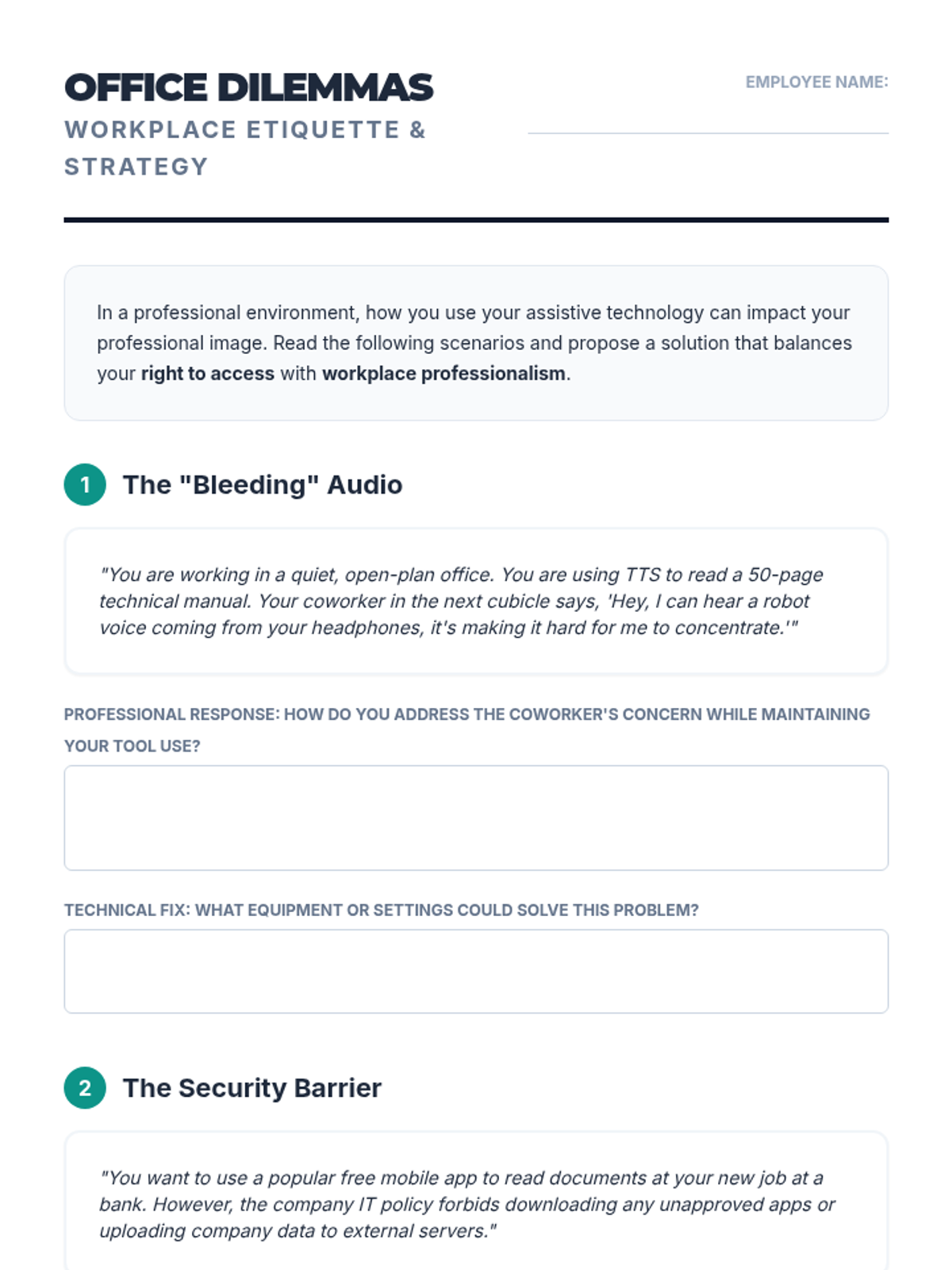
A worksheet containing workplace scenarios for students to analyze, focusing on balancing professional etiquette with assistive technology needs.
Slides for Lesson 4 focusing on how TTS is utilized and perceived in professional corporate environments.
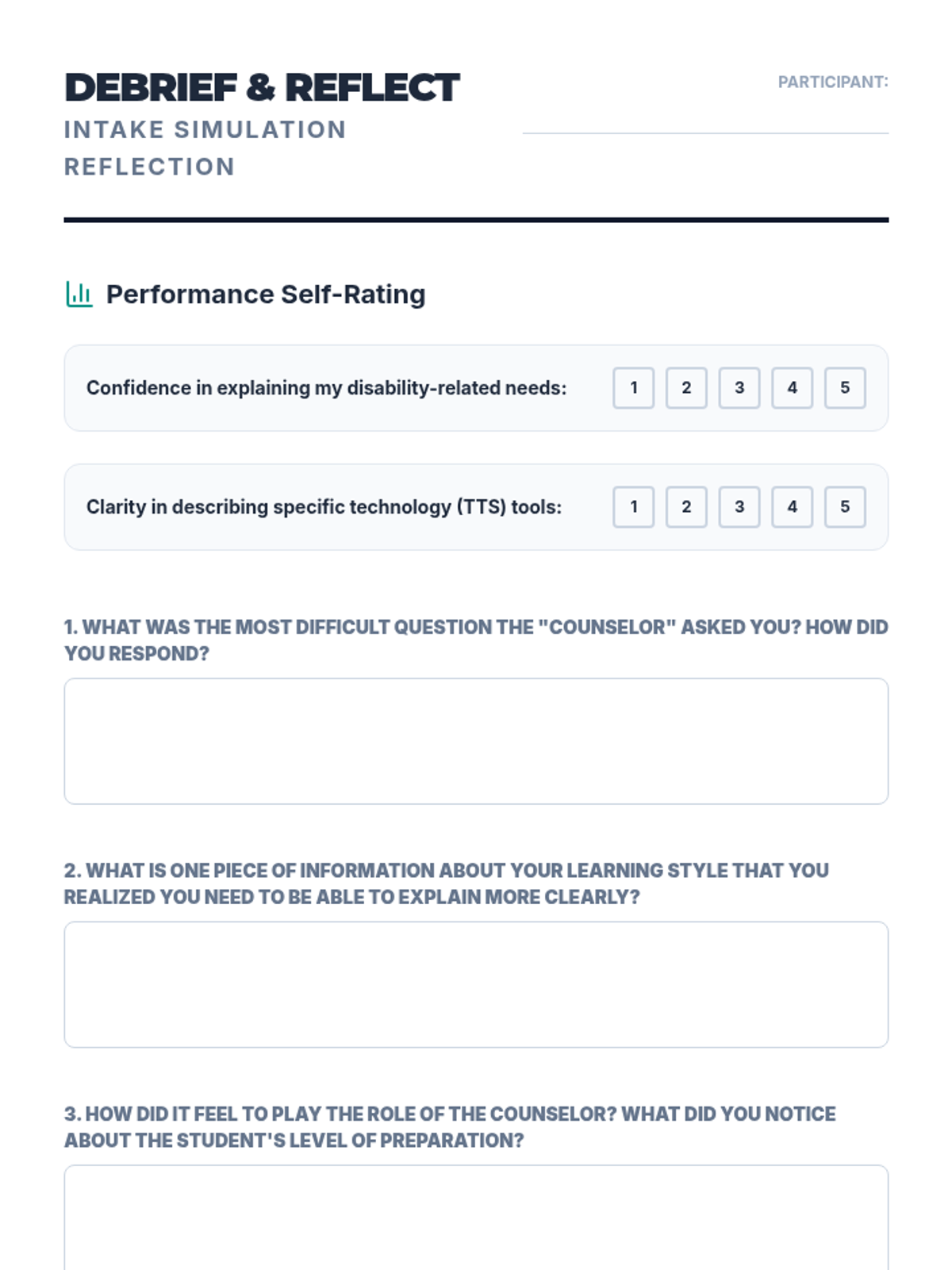
A reflection sheet for students to complete after the intake interview simulation, focusing on self-assessment and future preparation.
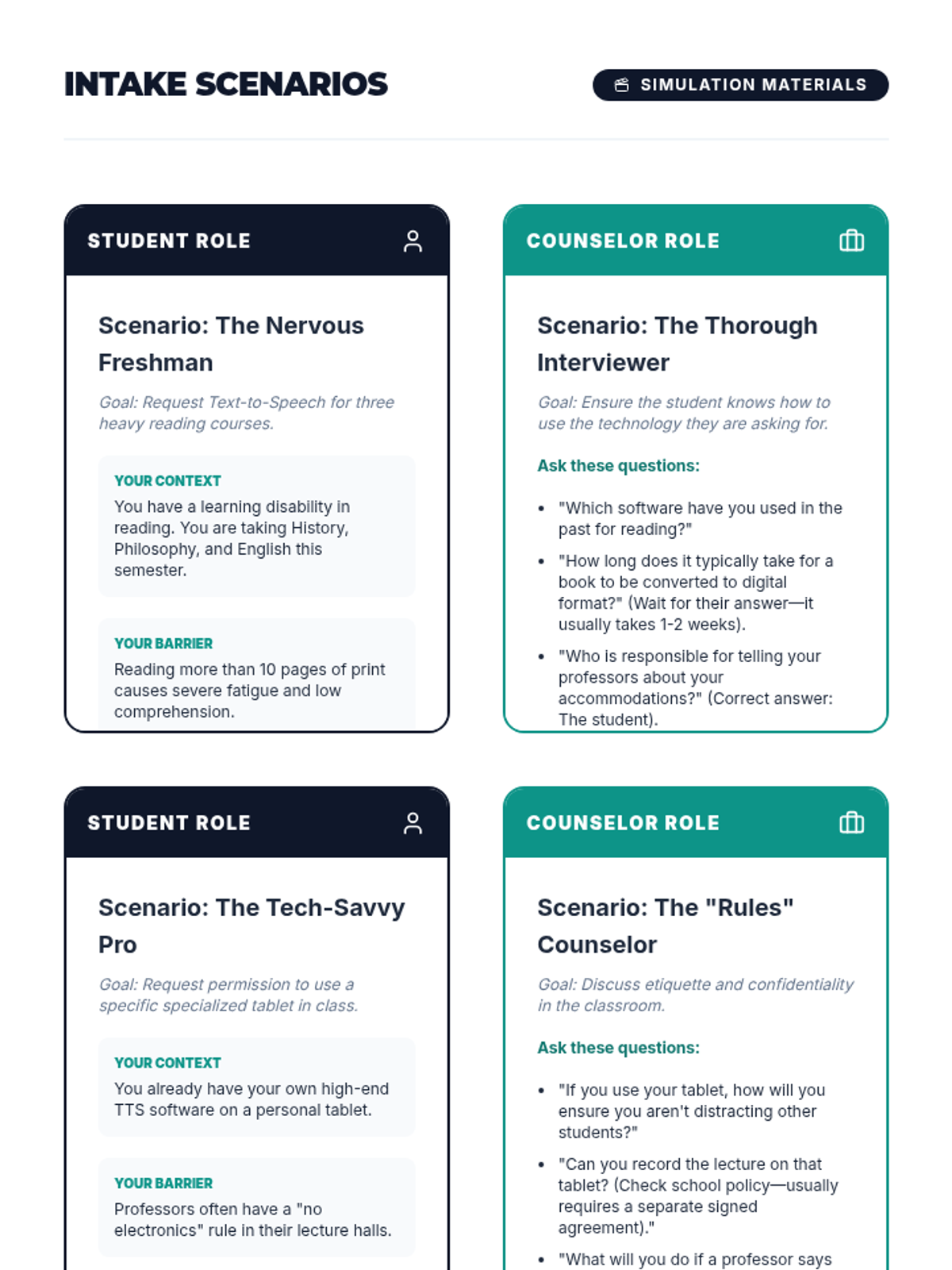
Role-play cards for a simulated disability services intake interview, featuring both student and counselor perspectives with specific scenarios and prompts.
Introductory slides for Lesson 3 focusing on the college disability services intake interview process and self-explanation skills.
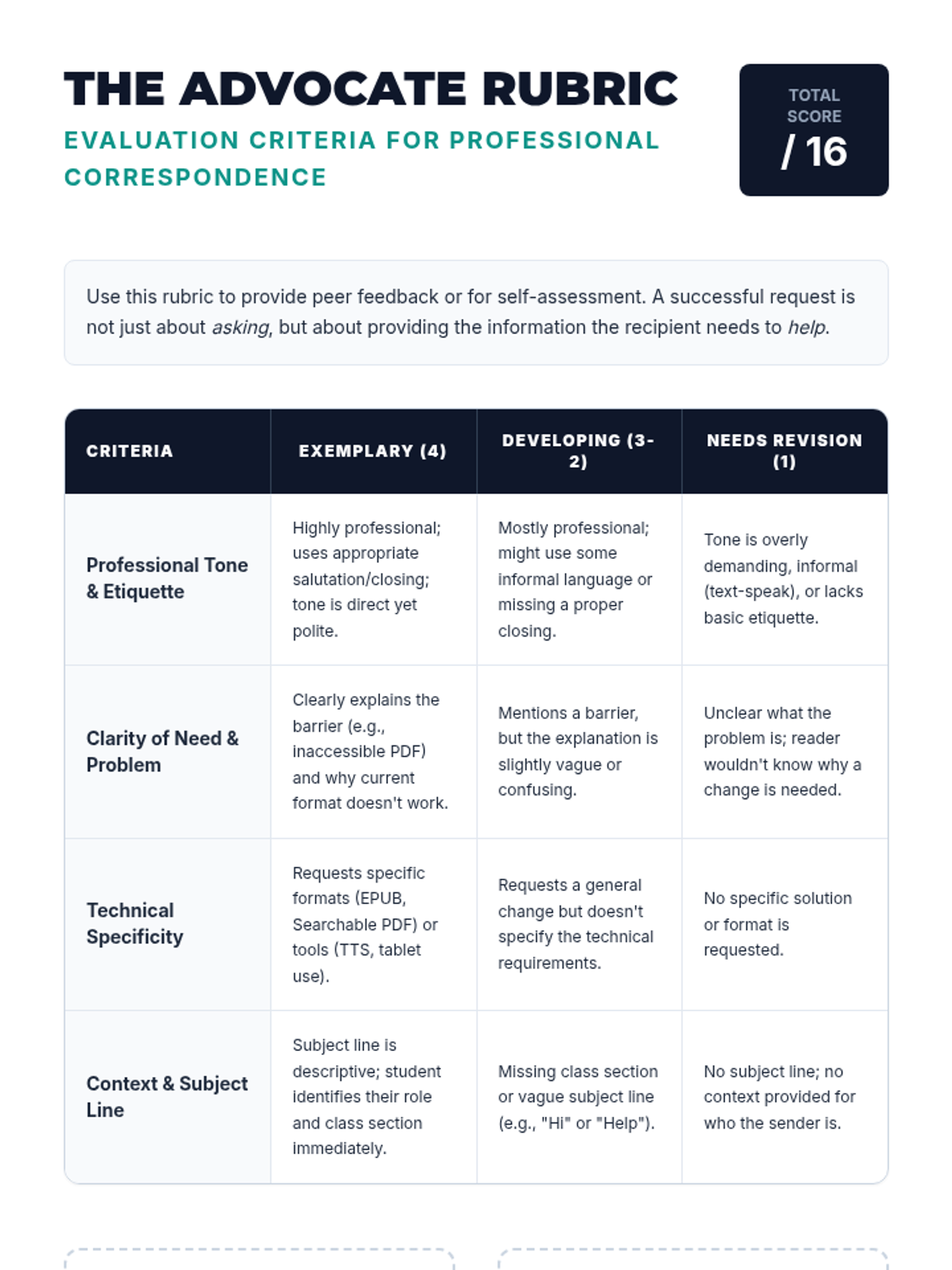
A professional correspondence rubric for peer and self-evaluation of accommodation request drafts.
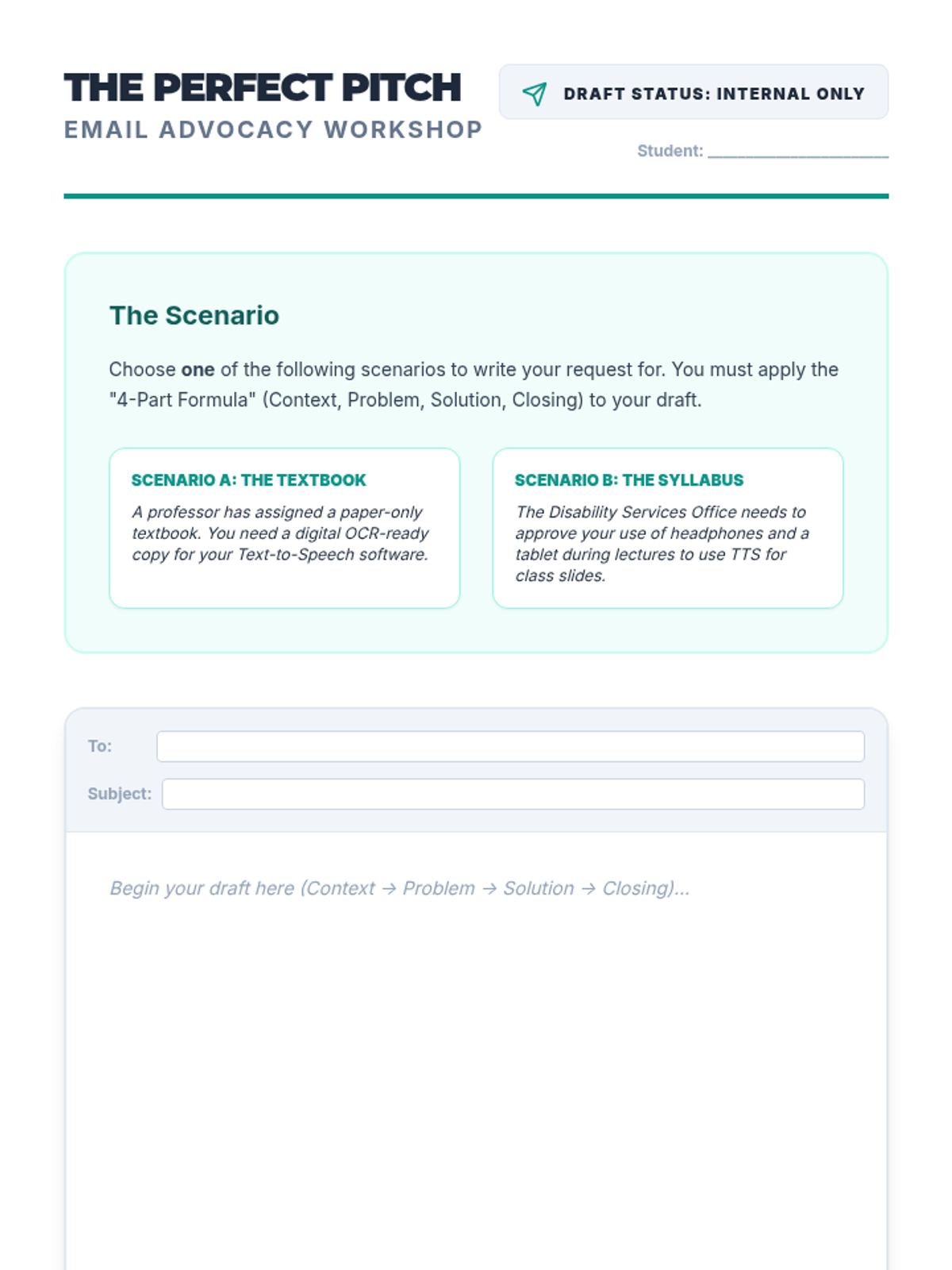
A worksheet for students to draft a professional accommodation request email using a 4-part formula.
Slides for Lesson 2 focusing on professional communication, tone, and the structure of an accommodation request email.
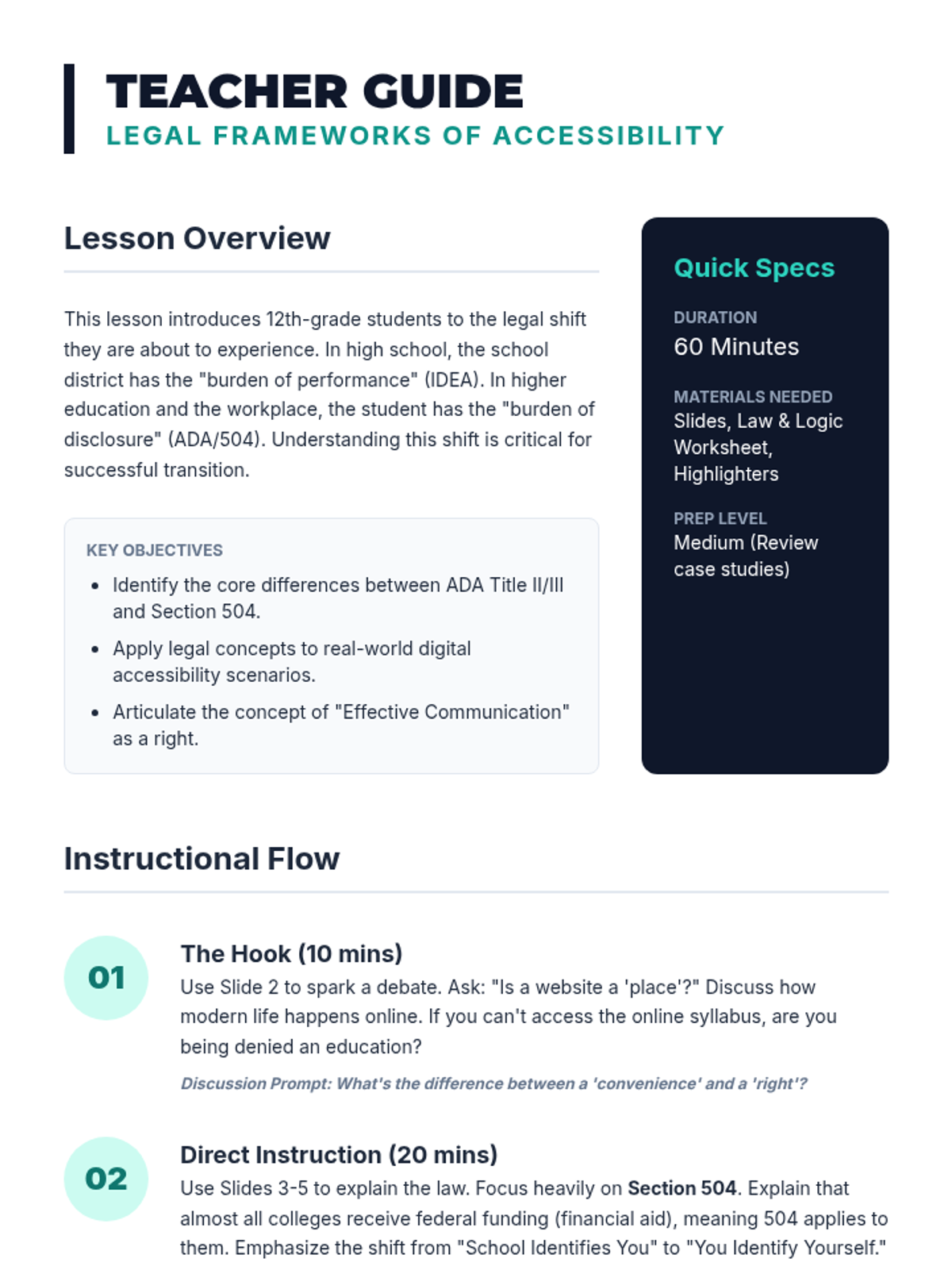
Teacher's guide for Lesson 1, providing instructional flow, discussion prompts, and clarification on key legal concepts.
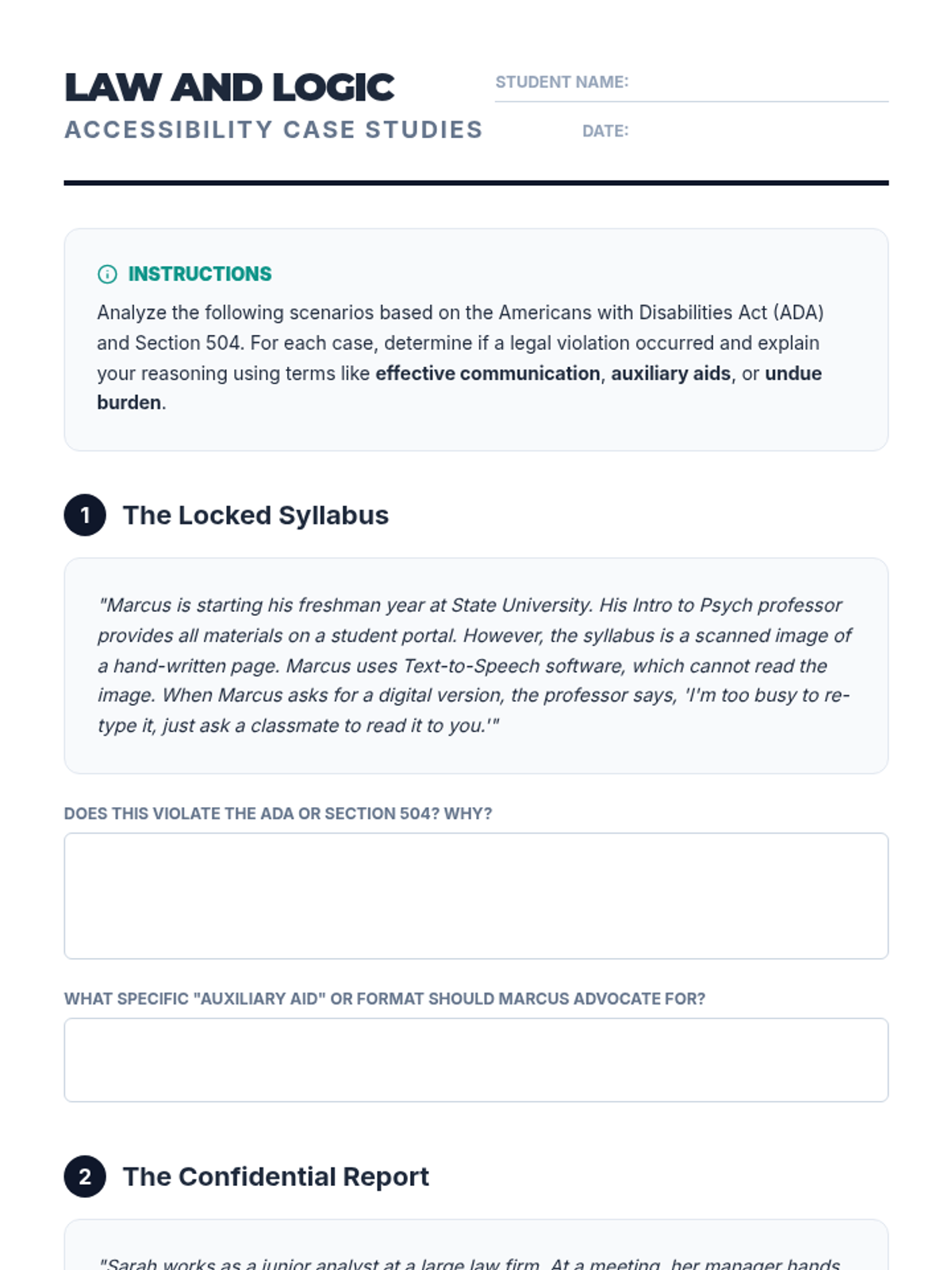
A worksheet containing two legal case studies for students to analyze based on ADA and Section 504 regulations regarding digital accessibility and TTS usage.
Introductory slides for Lesson 1, covering the ADA and Section 504 legal frameworks for digital accessibility.
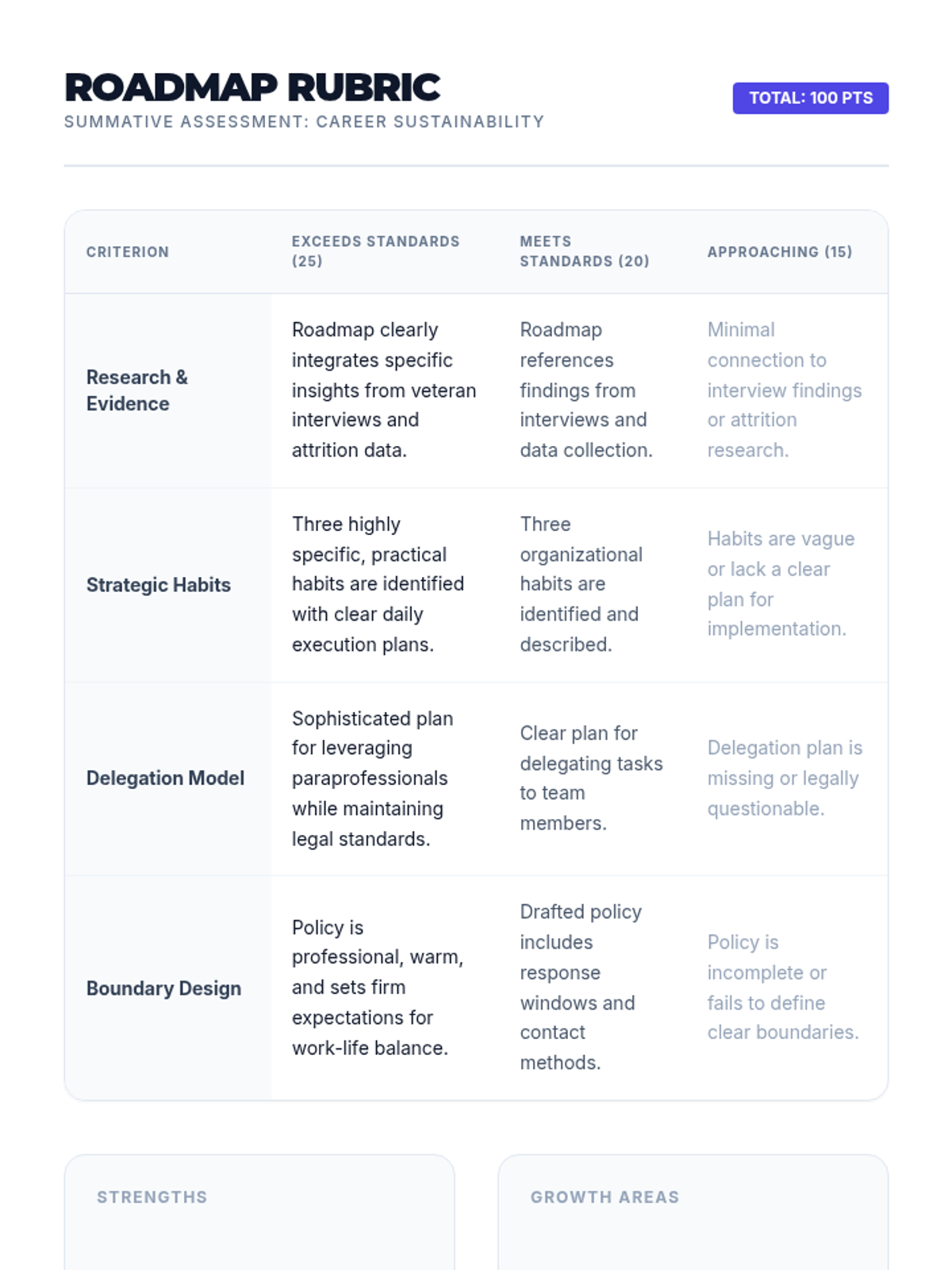
A grading rubric for the Sustainability Roadmap project, evaluating research integration, strategic habits, delegation planning, and boundary design.
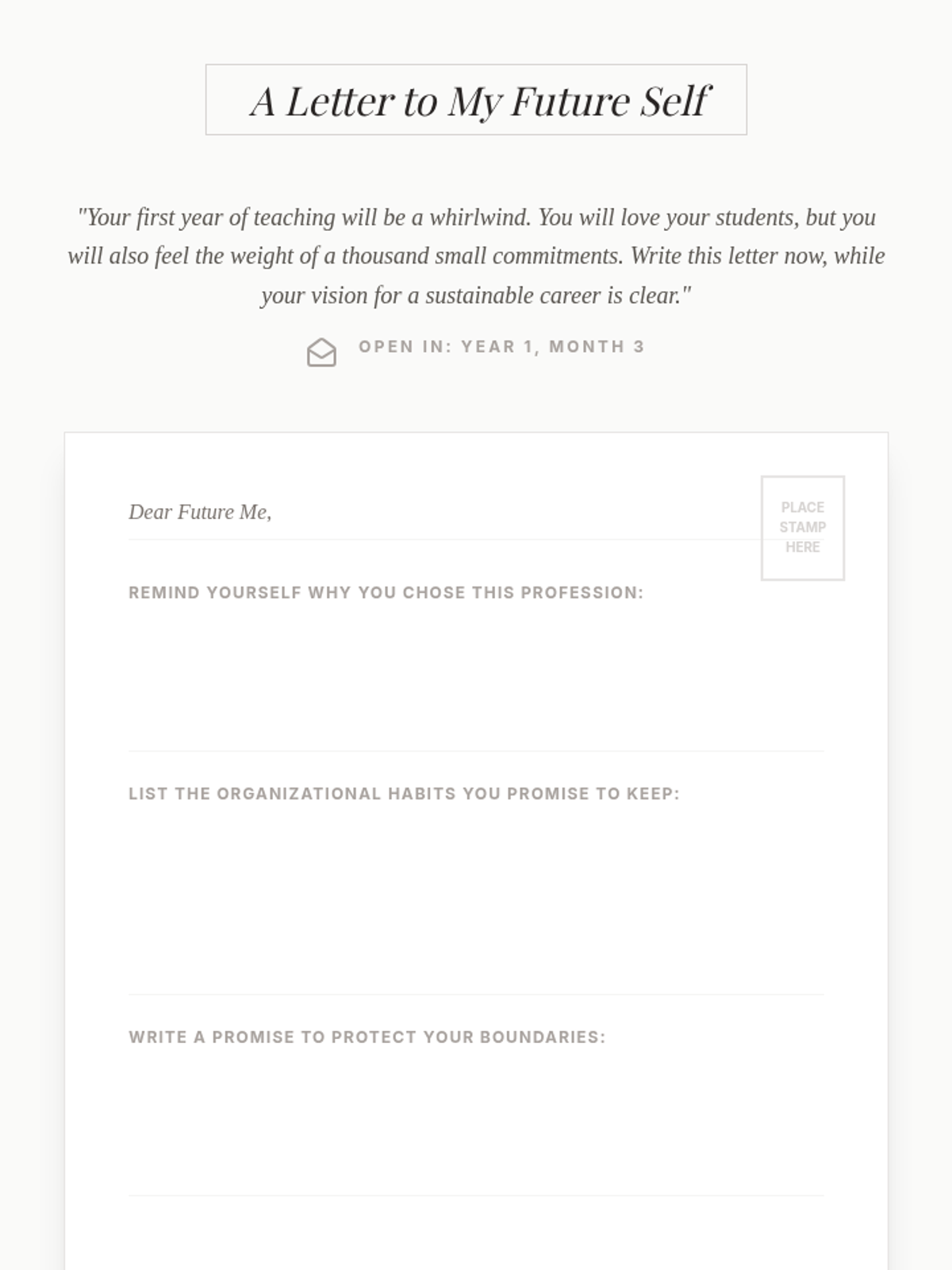
A creative reflection activity where students write a letter to their future selves, committing to the organizational habits and boundaries explored in the unit.
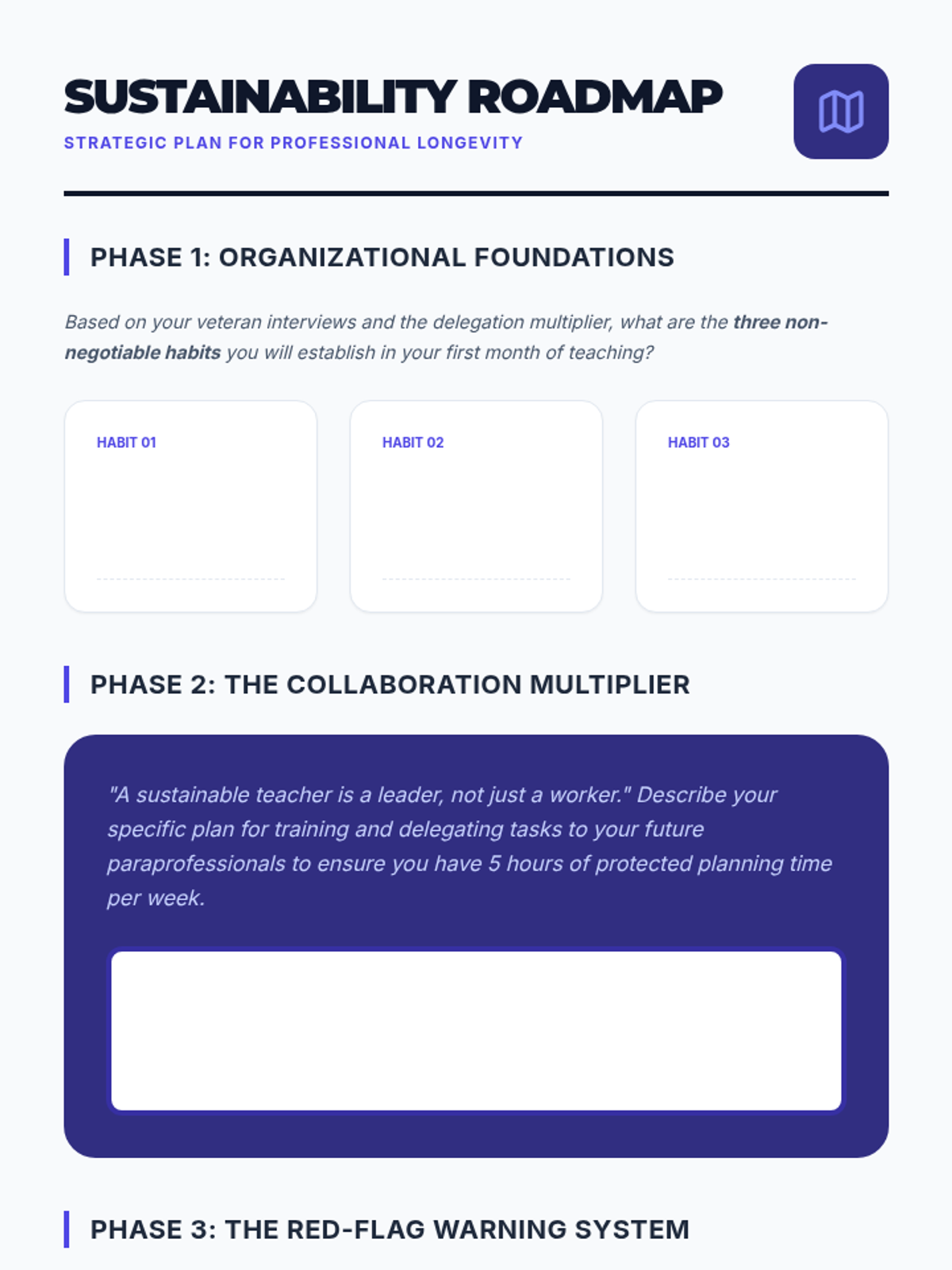
A comprehensive strategic planning document where students synthesize their learning into a personal 'Sustainability Roadmap' for their future teaching career.
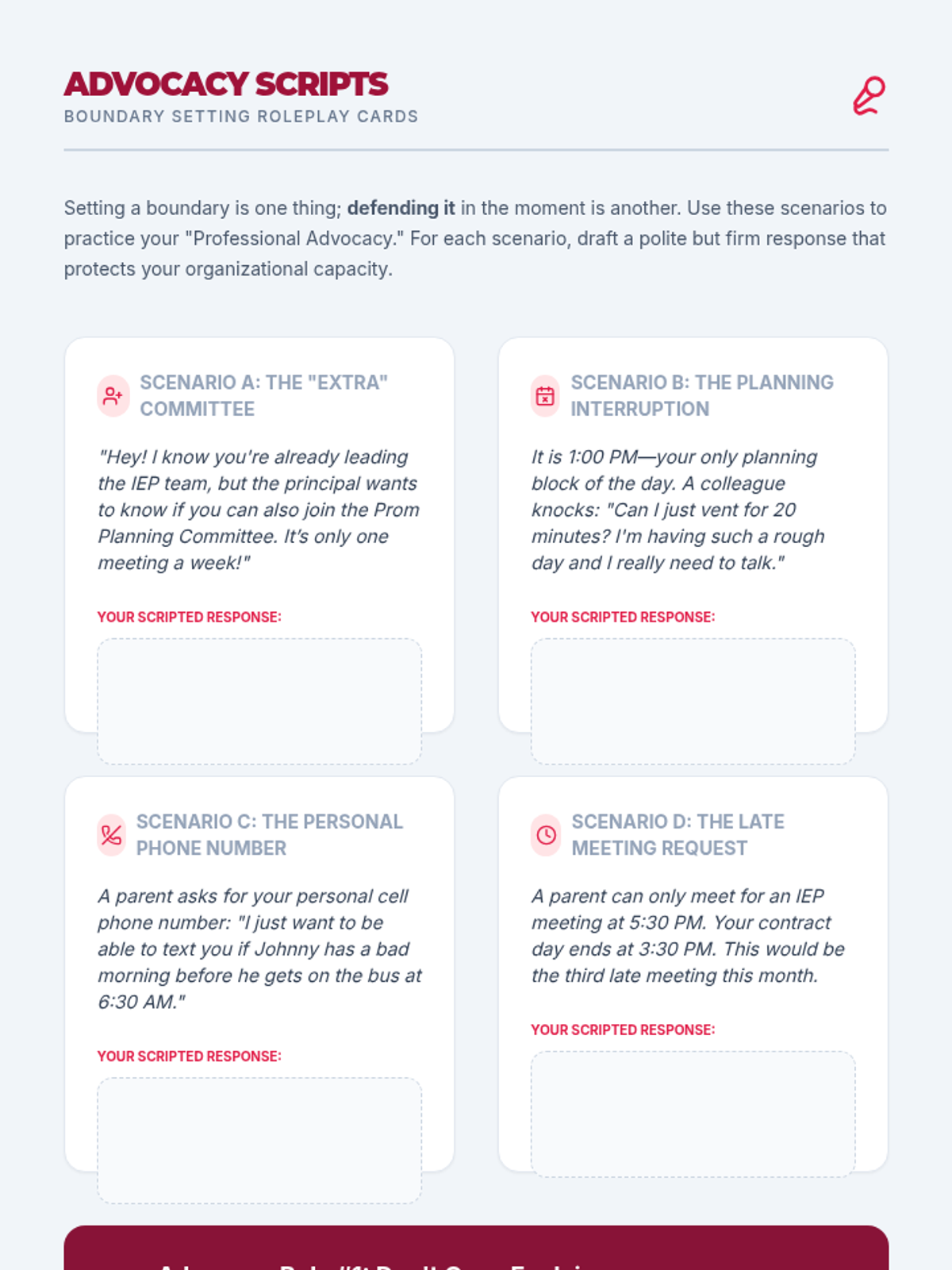
A set of roleplay scenarios and script-drafting exercises to help students practice professional advocacy and boundary-setting in common school situations.
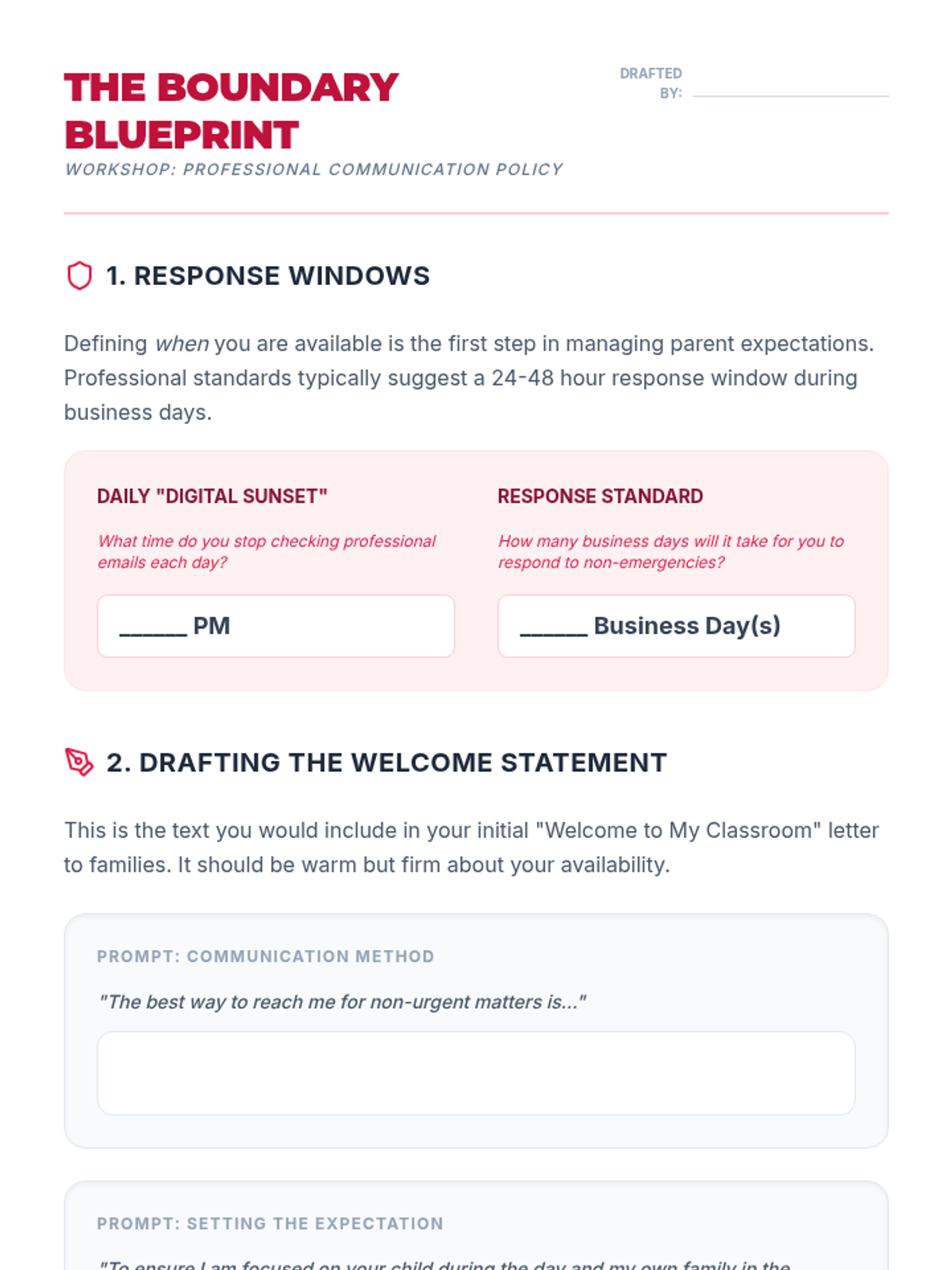
A workshop worksheet where students draft their own professional communication policies and response standards to maintain work-life balance.
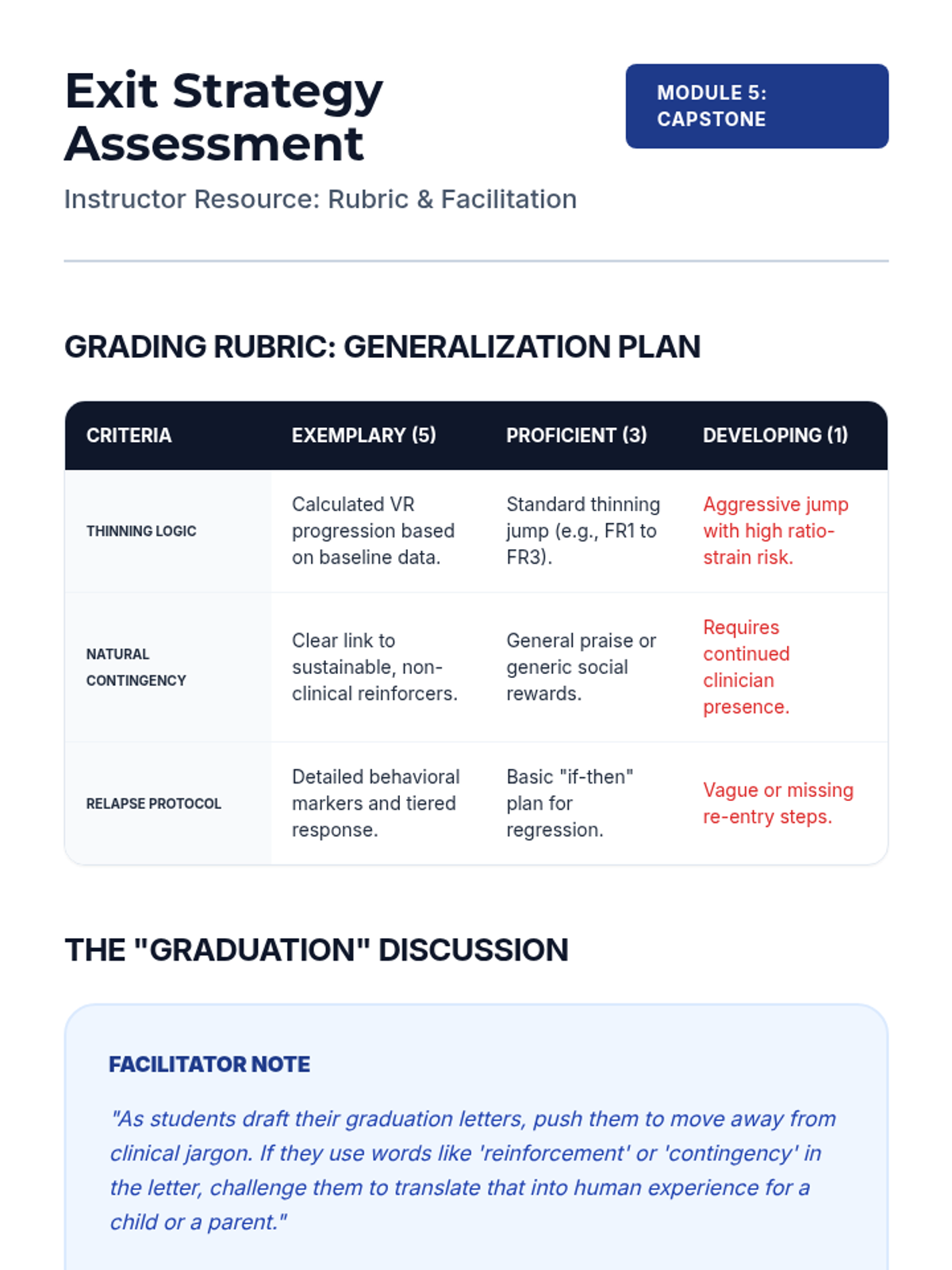
Instructor capstone assessment guide for the exit strategy. Includes a detailed grading rubric for thinning logic and natural contingencies, plus tips for facilitating the "Graduation" letter activity.
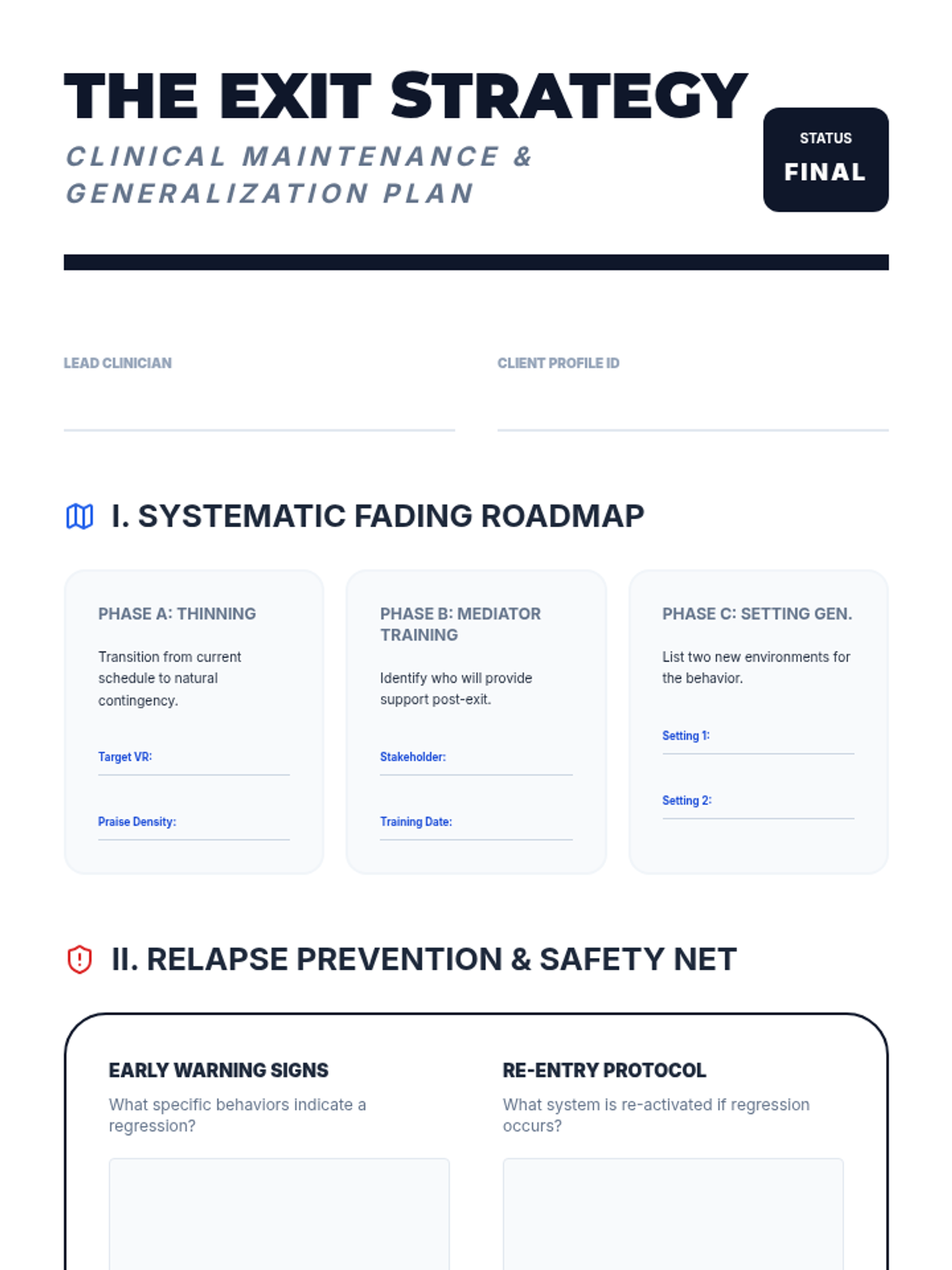
Comprehensive capstone document for graduate students to draft a client exit strategy. Includes sections for fading roadmaps, mediator training, relapse prevention, and a graduation letter narrative.
Graduate capstone slides for generalization and exit strategies in token economies. Covers the graduation letter hook, maintenance strategies, exit checklists, and post-exit monitoring protocols.
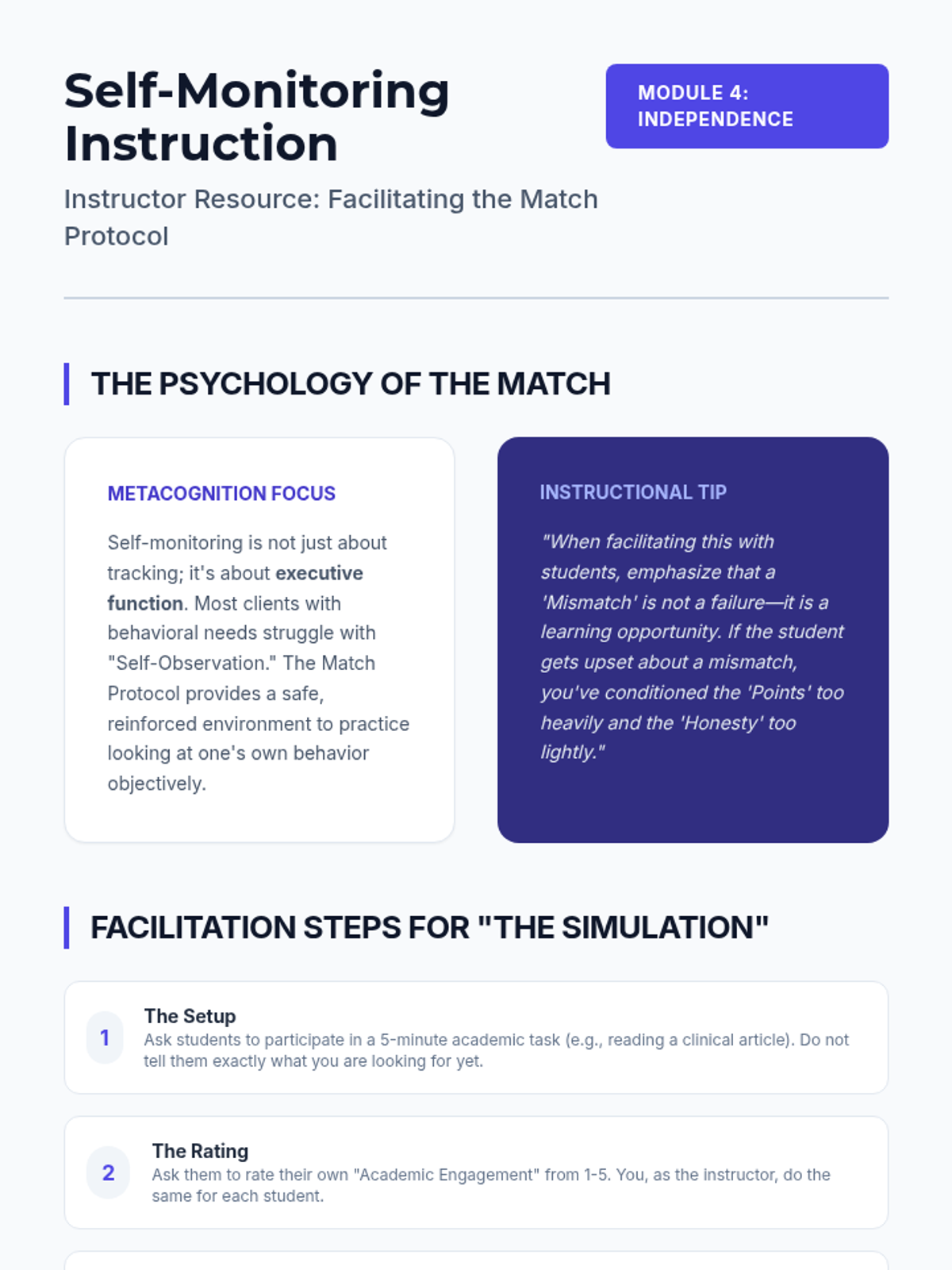
Instructor resource for teaching the Match Protocol of self-monitoring. Includes psychological insights, simulation facilitation steps, and high-level discussion questions for graduate students.
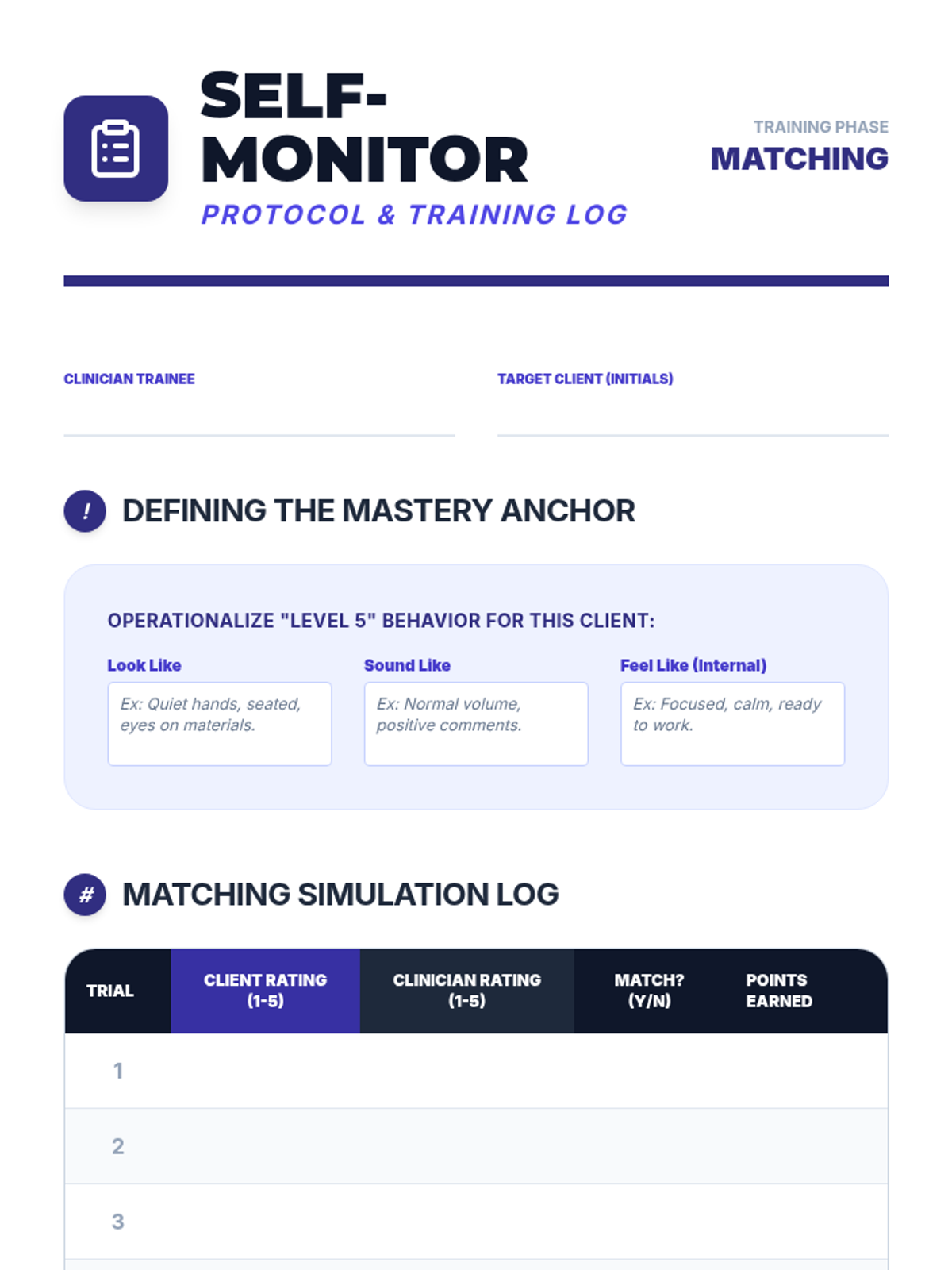
Protocol and training log for teaching client self-monitoring. Includes space for defining behavioral mastery anchors, a matching trial log, and practice for post-mismatch coaching scripts.
Graduate slides on self-monitoring and self-management, focusing on the "Match Protocol" for transferring behavioral responsibility to the client. Covers training steps, matching criteria, and clinical goals.
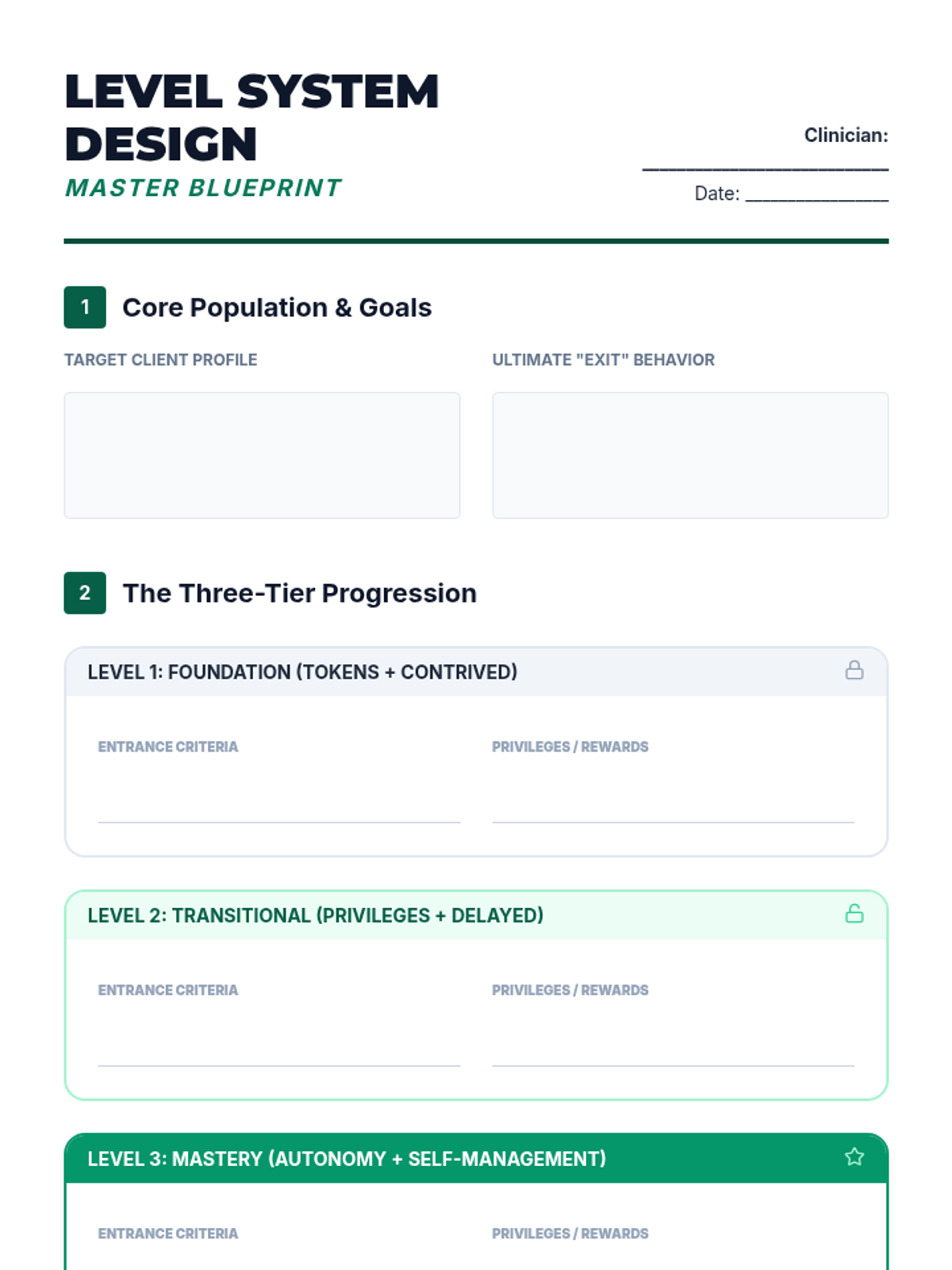
Student design blueprint for creating a three-tier level system. Includes sections for client profile, entrance criteria, privileges for each level, and back-step protocols.
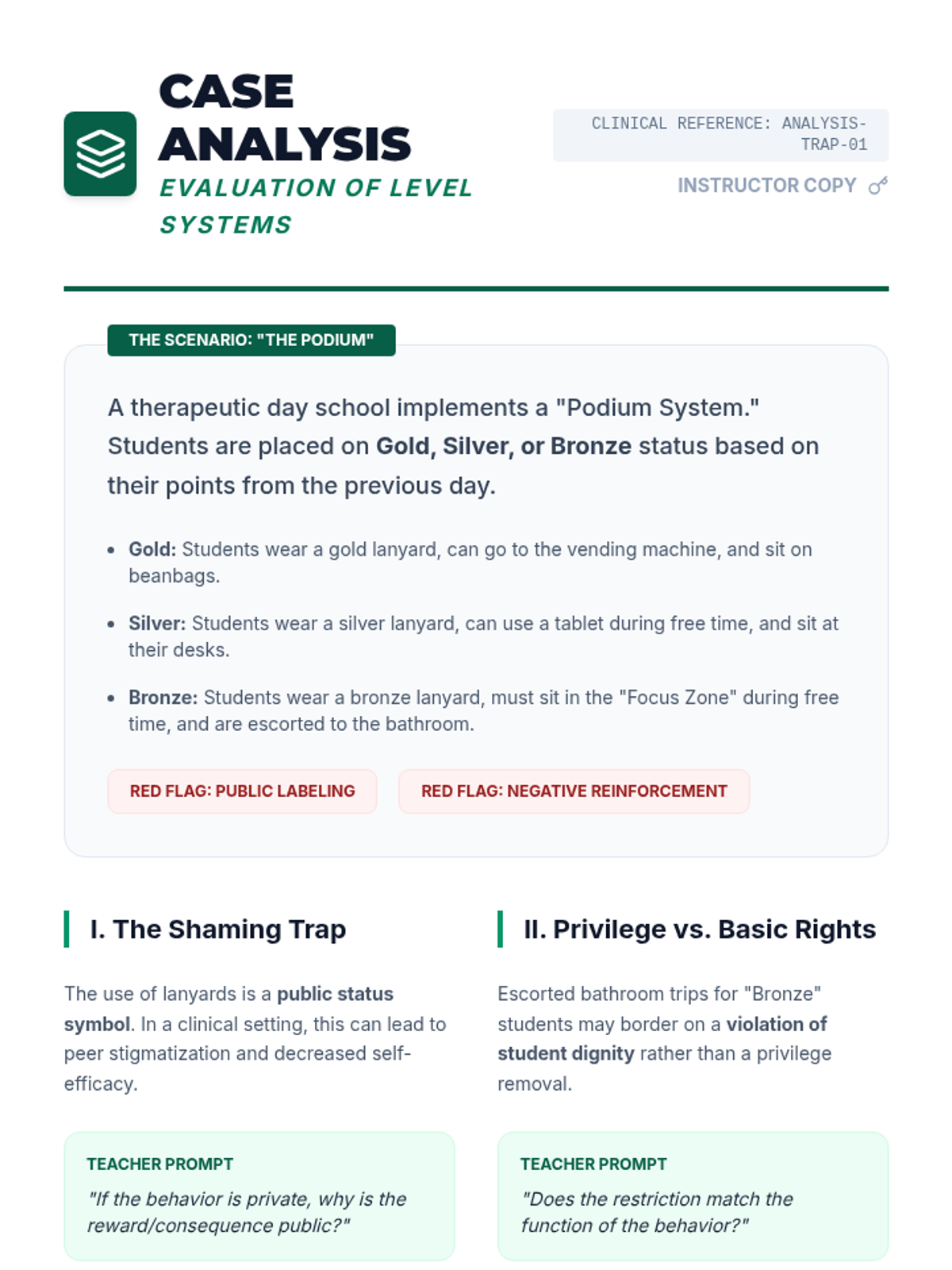
Instructor case study analysis focusing on the "Podium System" trap. Provides red flags for public labeling, negative reinforcement, and a framework for clinical redesign.
Graduate slides on Level System design within token economies, focusing on bridging the gap to natural reinforcement, avoiding shaming traps, and fading contrived rewards.
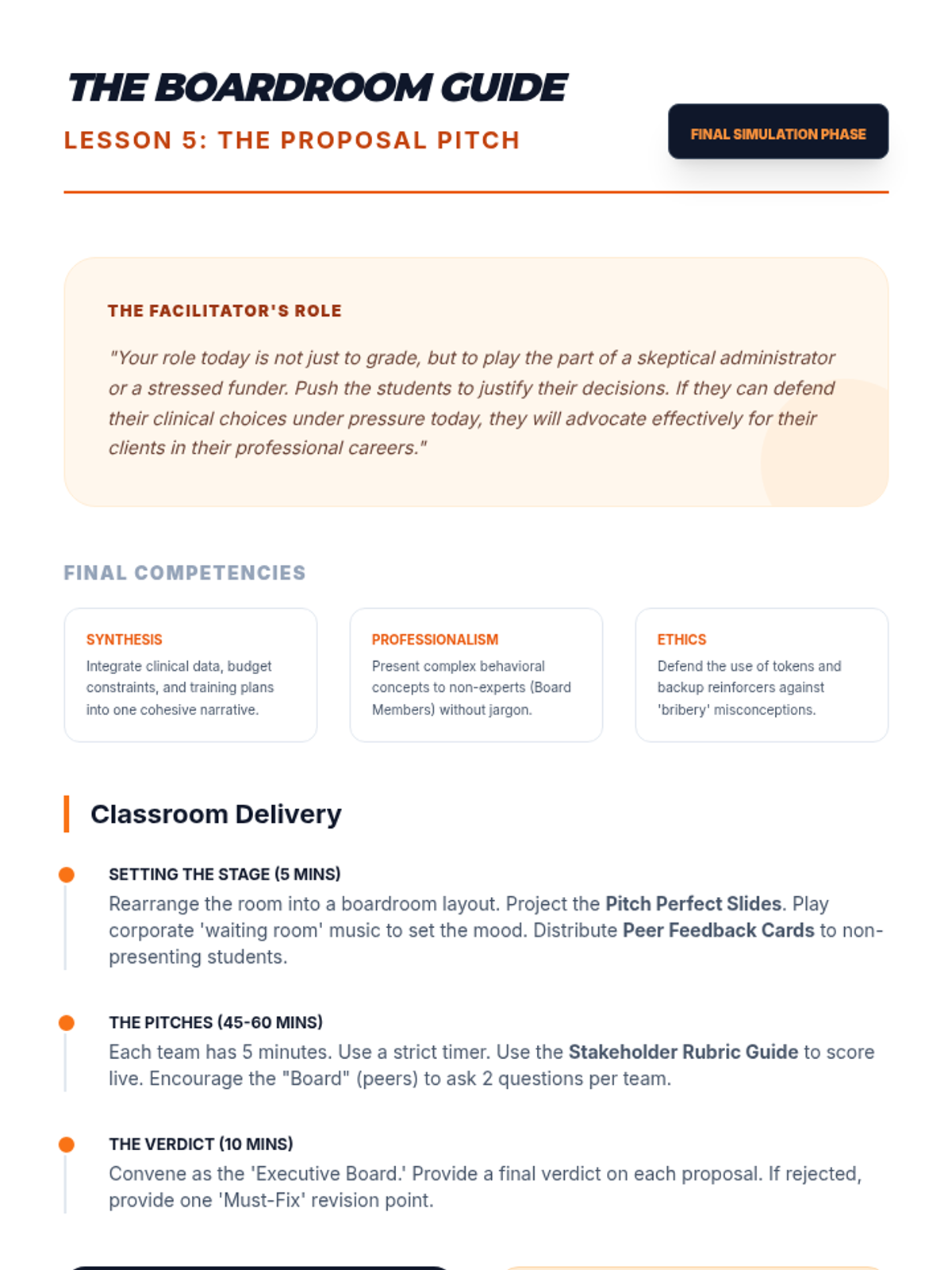
Final teacher facilitation guide for Lesson 5, focusing on simulation management, boardroom Q&A facilitation, and providing professional feedback.
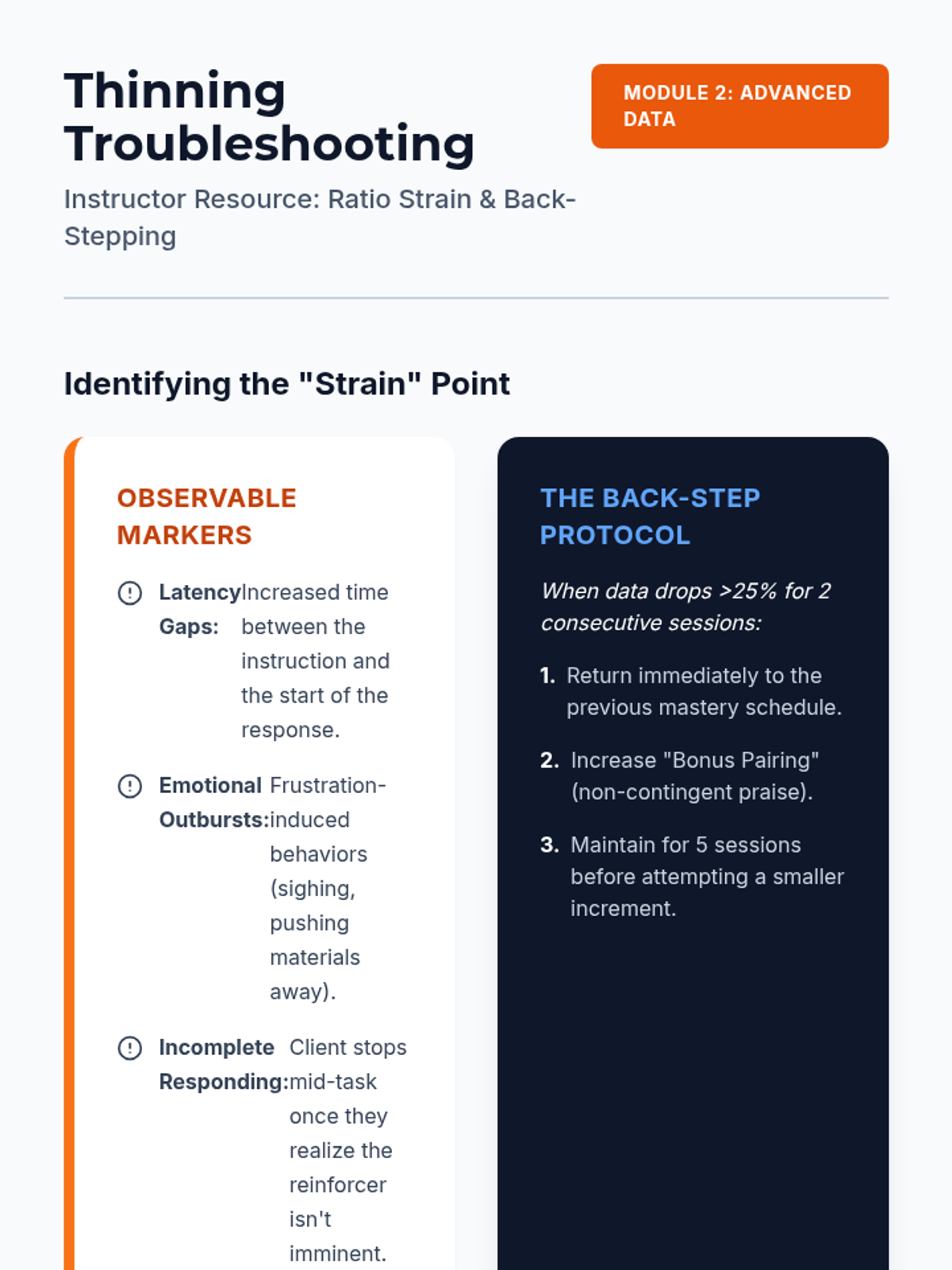
Instructor resource for teaching schedule thinning, including ratio strain indicators, a back-step protocol for regression, and a guide for calculated schedule transitions.
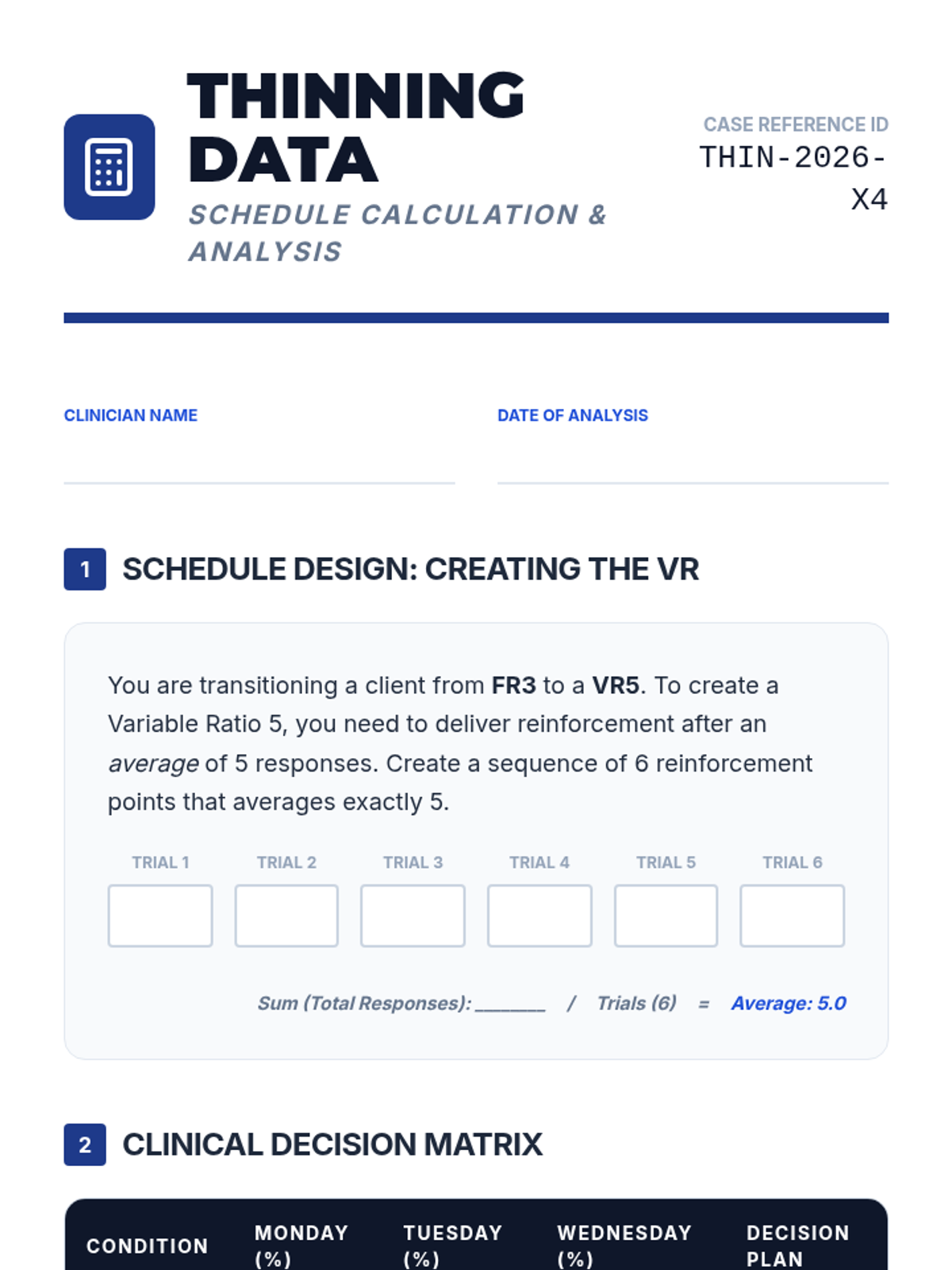
Worksheet for graduate students to practice the mathematical and clinical aspects of schedule thinning. Includes VR schedule design, trend analysis for clinical decision-making, and identifying ratio strain.
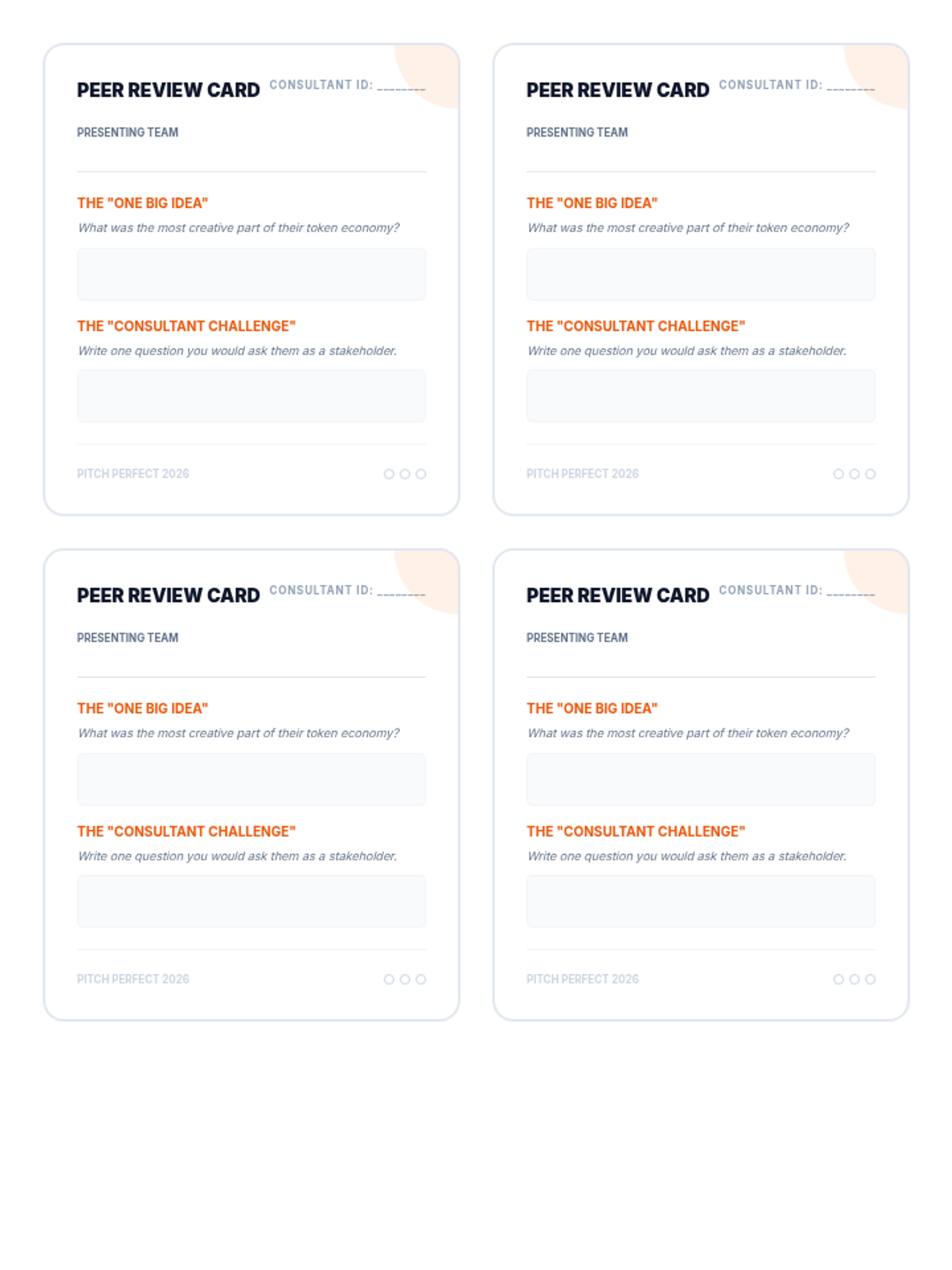
Peers evaluation cards for students to provide structured feedback to their classmates during the final pitch presentations.
Graduate-level slides on systematic schedule thinning, covering ratio strain, fixed vs. variable schedules, and data-driven decision making for fading tokens.
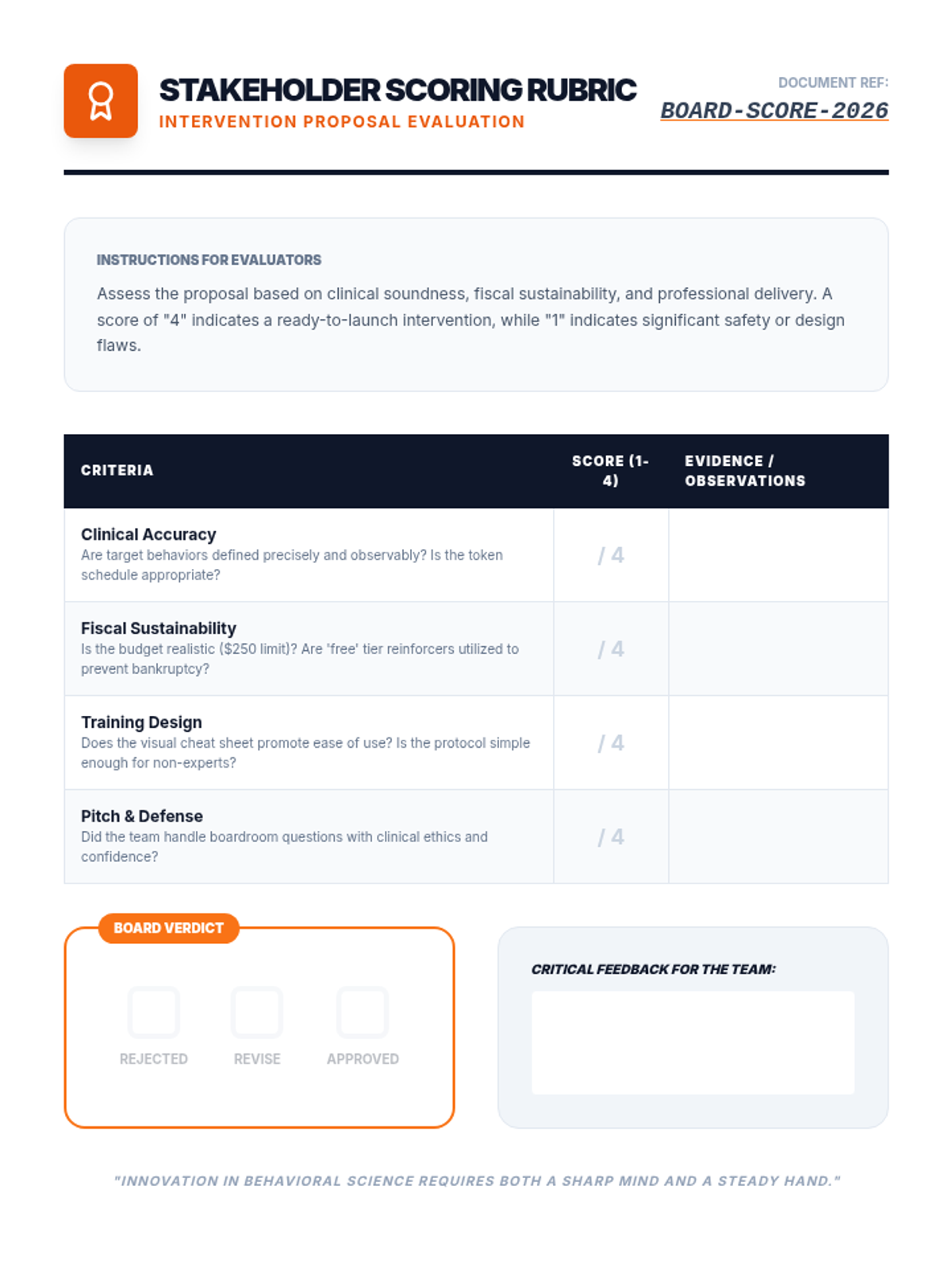
A professional scoring rubric for the 'Board of Directors' to evaluate student proposals based on clinical accuracy, sustainability, and training design.
Final slide deck for Lesson 5, outlining the 'Shark Tank' boardroom simulation rules, pitch structure, and defense strategies.
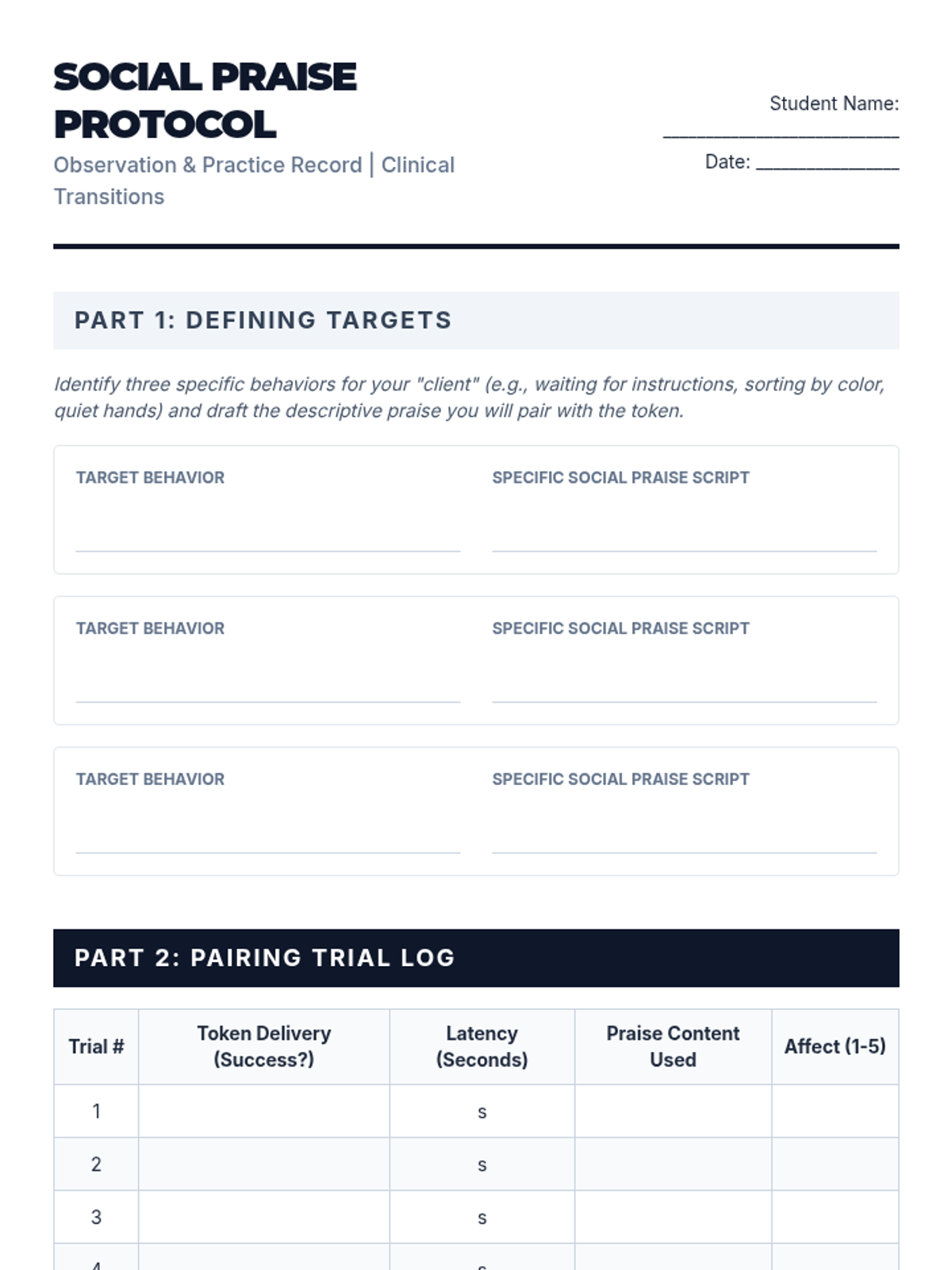
Student worksheet for recording simulation data on social praise conditioning. Includes target behavior planning, a trial log for latency and affect, and clinical reflection questions.
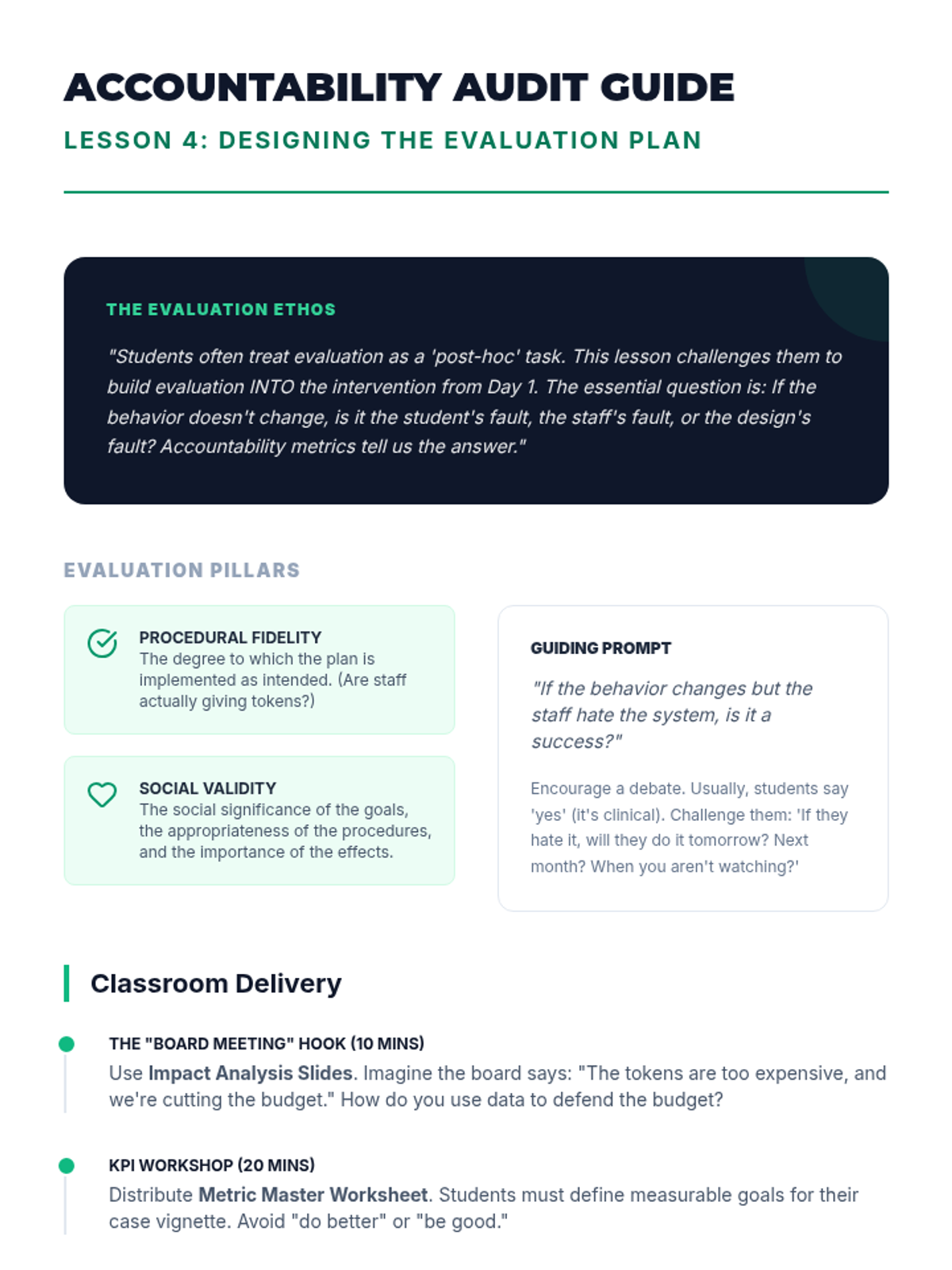
Teacher facilitation guide for Lesson 4, focusing on accountability, social validity, and defining measurable success criteria.
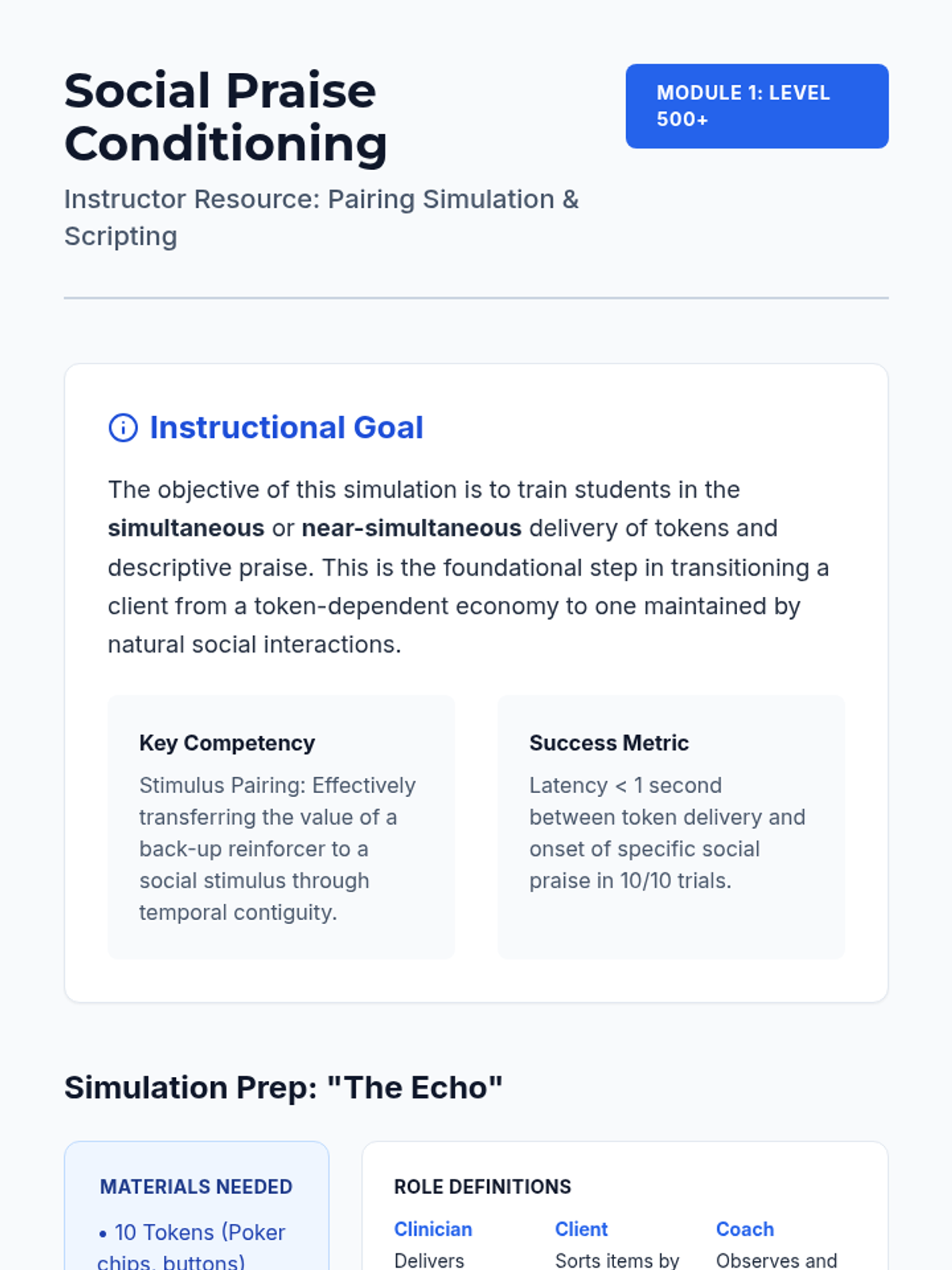
Instructor facilitation guide for the Social Praise Conditioning simulation, including role descriptions, scripting examples, and common pitfalls to observe.
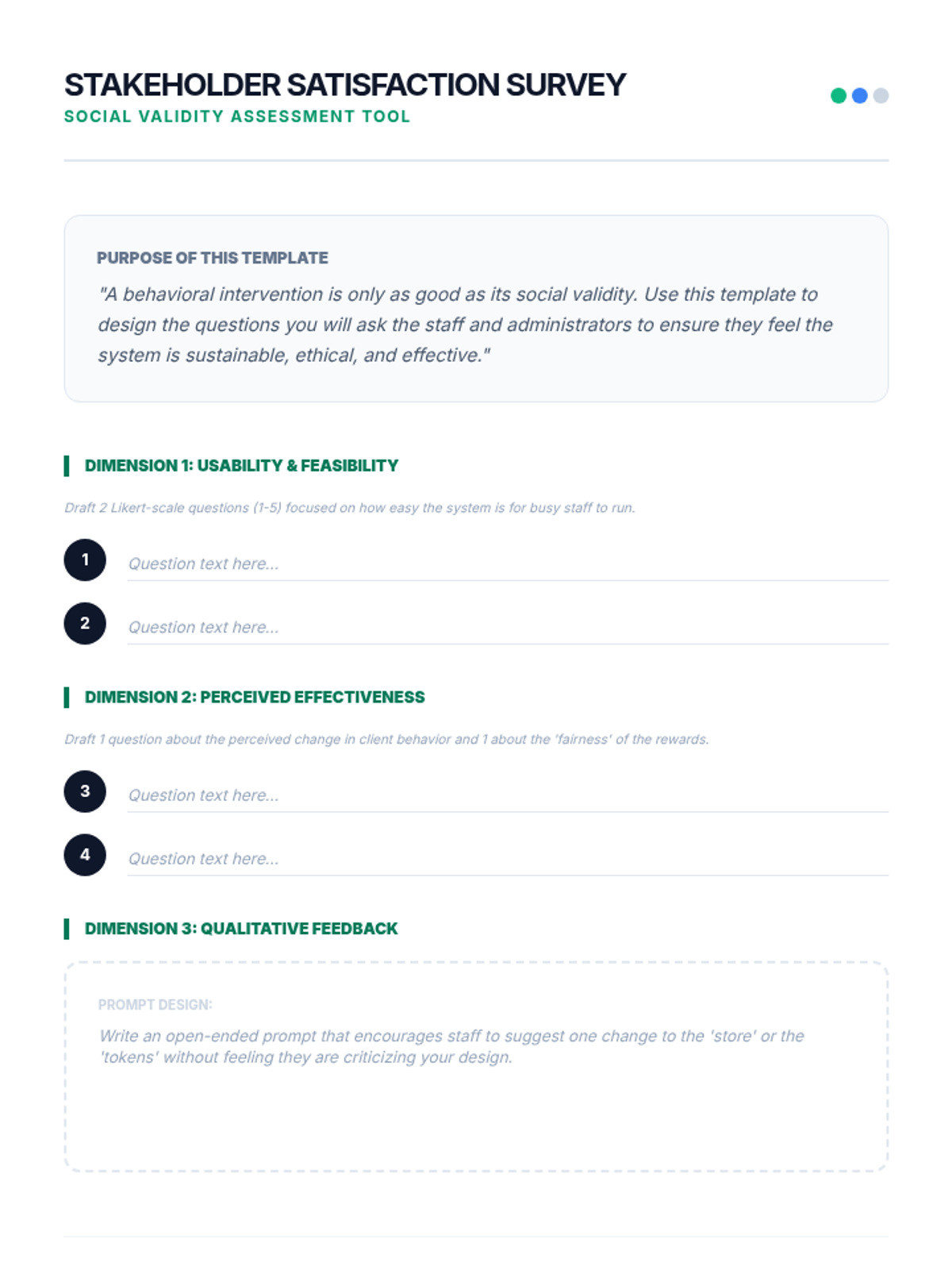
A survey design template for students to create social validity assessments, ensuring stakeholders find the intervention usable, fair, and effective.