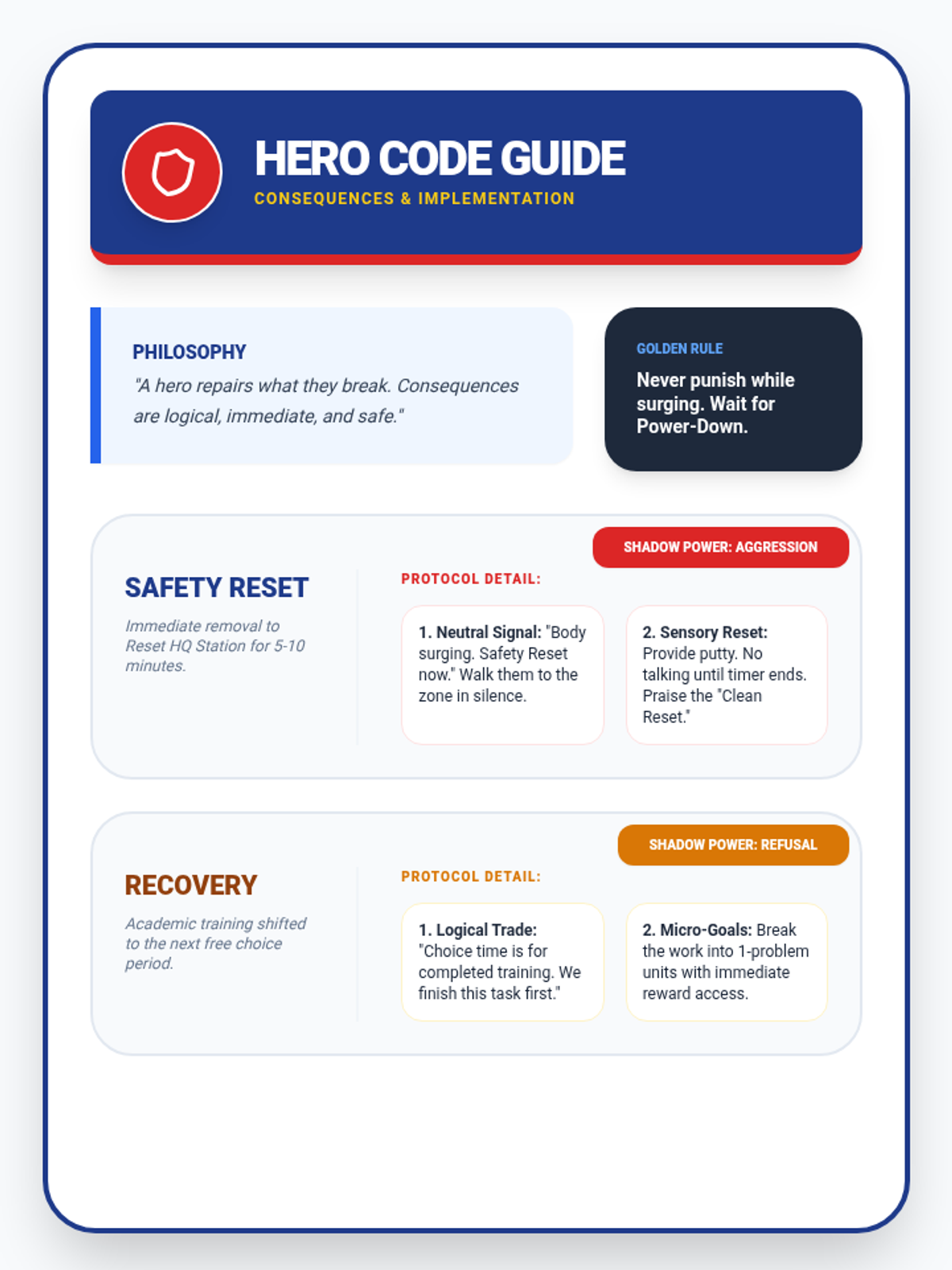
A teacher guide for the final lesson, providing instructions for the 'User Manual' project and a sequence-wide reflection checklist for student independence.
A single-page visual reference poster for a student's desk, combining logic-based reminders, regulation steps, and a dry-erase area for schedule updates. Optimized for 8.5x11 printing.
A professional and visually engaging cover page for the Flexibility Framework instructional resource packet, featuring a prominent name field for student personalization.
A teacher-facing guide with strategies, scripts, and implementation tips for supporting hyperliterate ASD students through any unexpected schedule change.
A social story for a 2nd grade student with ASD, explaining the logic behind schedule changes generally, with an assembly as a specific example.
A full-page anchor chart for the Y to i Rule, illustrating how to change final y to i before adding various suffixes, with a reminder about the -ing exception. Adjusted layout for better fit.
A full-page anchor chart for the 1-1-1 Doubling Rule, showing the three-step checklist for doubling final consonants before adding vowel suffixes. Adjusted layout for better fit.
A full-page anchor chart for the Plural Power rule, explaining the standard -s ending and the -es ending for words with "hissing" sounds. Adjusted layout for better fit.
A full-page anchor chart for the Silent e Drop rule, showing the step-by-step process of removing the silent e before adding vowel suffixes. Adjusted layout for better fit.
A facilitator's script for the Communication Power slide deck, providing specific verbal prompts and physical actions to help teachers deliver the lesson to students with autism.
Answer key for the Help Match Worksheet showing correct pairings between feelings and signals.
Teacher resource with instructional strategies, IEP goal alignment, teaching steps, and data collection tips for implementing communication signals.
An activity worksheet for students to identify specific tasks they find difficult and select a signal (help or break) to use during those times. Includes a drawing space for self-modeling. Removed potentially confusing banners.
A visual matching worksheet for students to pair feelings (stuck, tired, hard work) with the appropriate signal (help, break). Designed for minimal text load.
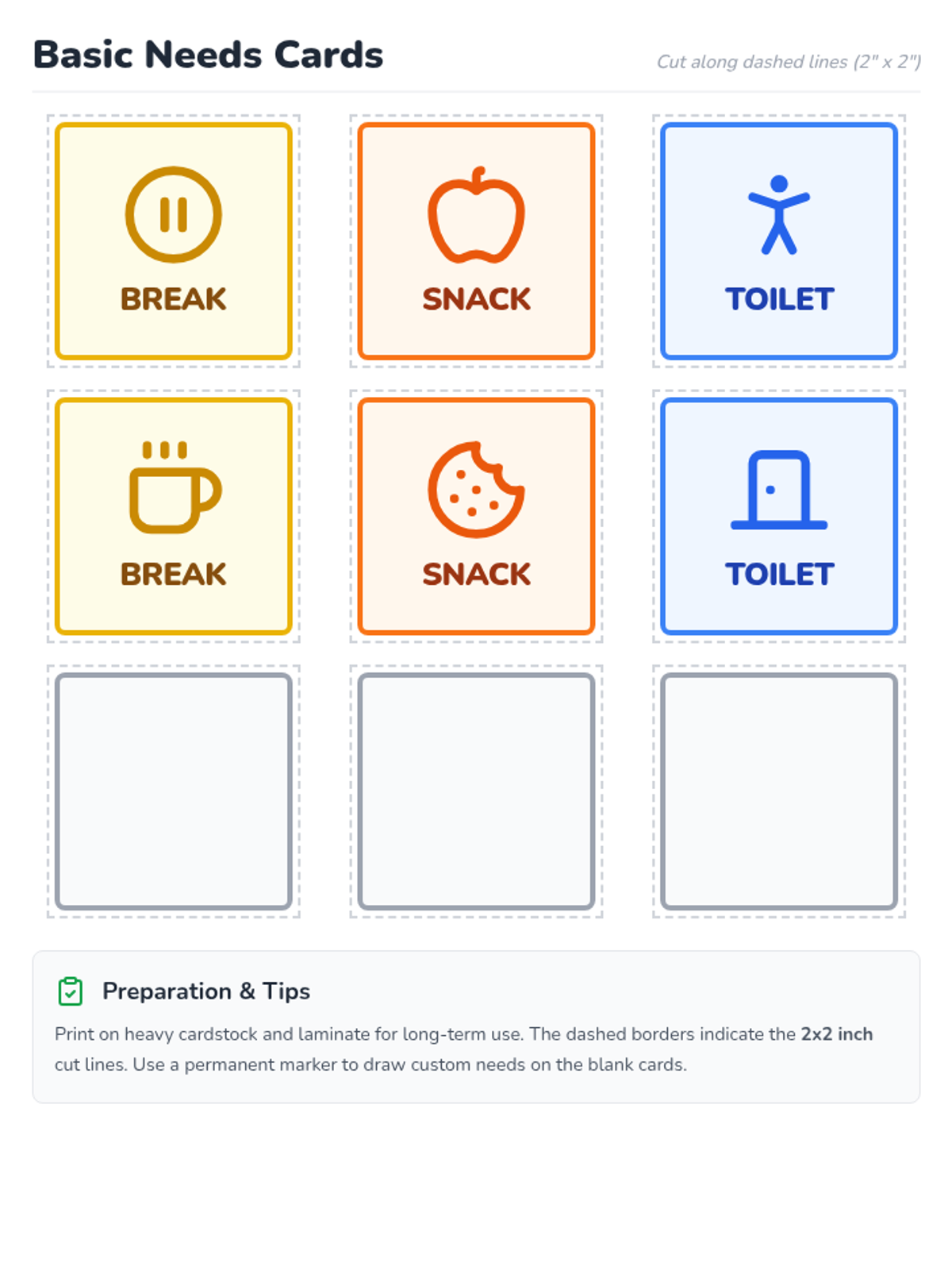
Printable visual communication cards for students to request help or a break. Features high-contrast borders and large icons for clear signaling.
A visual slide deck introducing students to identifying their needs and using signals to request help or a break. Features large text, high-contrast icons, and minimal verbal load.
A refined, compact one-page flyer for neurodiverse students featuring 8 free productivity and regulation apps. Includes specific search/URL instructions for each app and essential tips for managing low data/storage.
A teacher's guide for facilitating the Strategy Squad lesson. Includes a pacing guide, key phrases for encouragement, coaching tips for specific strategies, and advice for integrating IEP accommodations during standardized testing.
A student reference sheet and checklist for tracking test-taking strategies. Features a high-contrast design with MCAS-specific goal prompts and an expanded visual breathing tool for self-regulation. Writing spaces have been increased for student usability.
A set of 10 high-contrast visual anchor charts for classroom display. Each chart features a large icon and clear, simple instruction for a specific test-taking strategy, designed to be easily readable from across the room.
A high-energy, mission-themed slide presentation featuring 10 essential test-taking strategies. Designed for students with disabilities, it emphasizes using time effectively, anxiety regulation, and practical techniques like previewing and elimination. Final slide updated to focus on doing one's best.
A facilitation guide for the Chaos Controller lesson, including learning objectives, facilitation tips, and an answer key for all missions and scenarios.