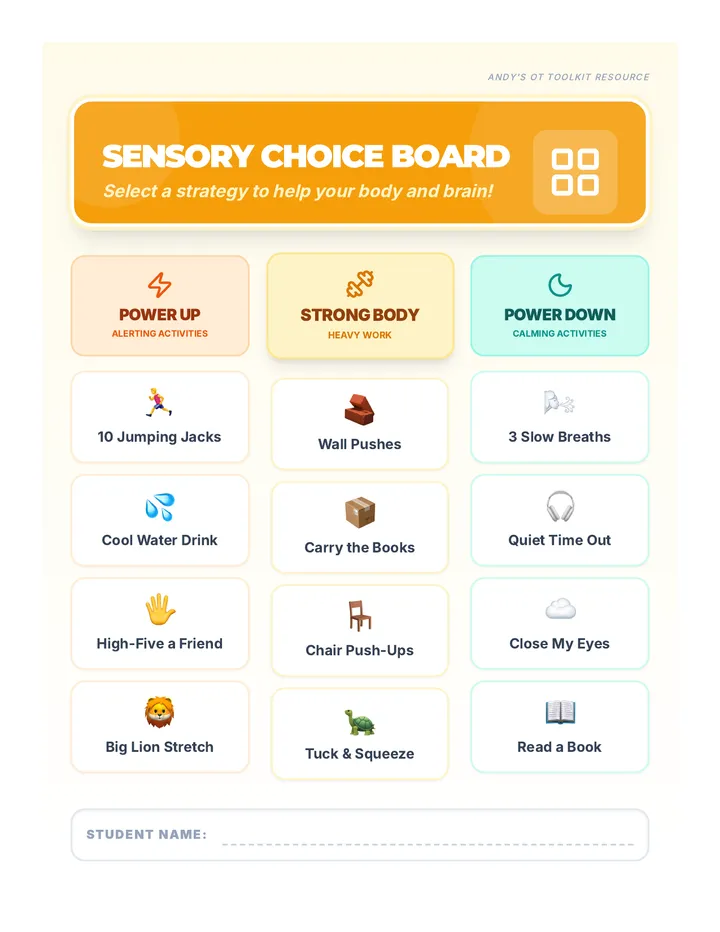
Tactile, vestibular, and proprioceptive tool implementation to support student self-regulation. Guides educators in selecting, monitoring, and adjusting sensory supports like fidgets, weighted items, and noise-canceling equipment.
The ultimate compact version of the Adulting Celebration Chart with ultra-reduced line spacing and minimal vertical gaps. It utilizes tiny icons, condensed font sizes, and tight leading to provide a high-density workplace tracking experience that fits multiple players and comprehensive metrics in a single printable view. It moves metric descriptions inline to save vertical space.
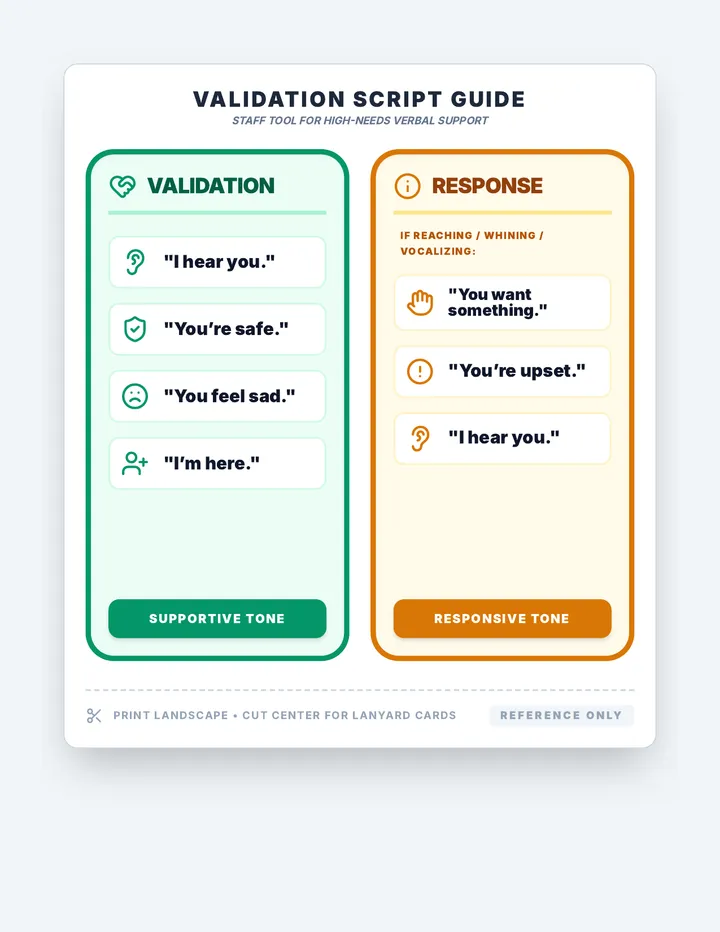
A quick-reference validation guide for staff. Features two color-coded cards with specific empathetic phrases for general validation and reactive behavior responses. Optimized for landscape printing and lanyard use with clear visual cues.
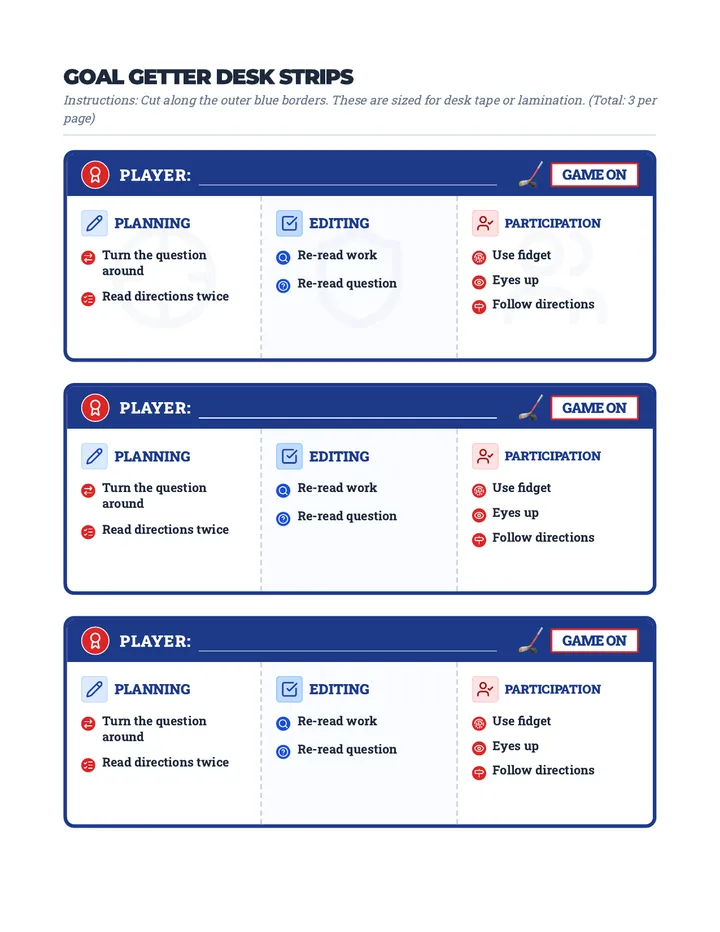
A set of three hockey-themed desk reminder strips for students, featuring sections for planning tools, editing tools, and participation strategies. Each strip is designed to be cut out and adhered to a desk to support self-regulation and executive functioning.
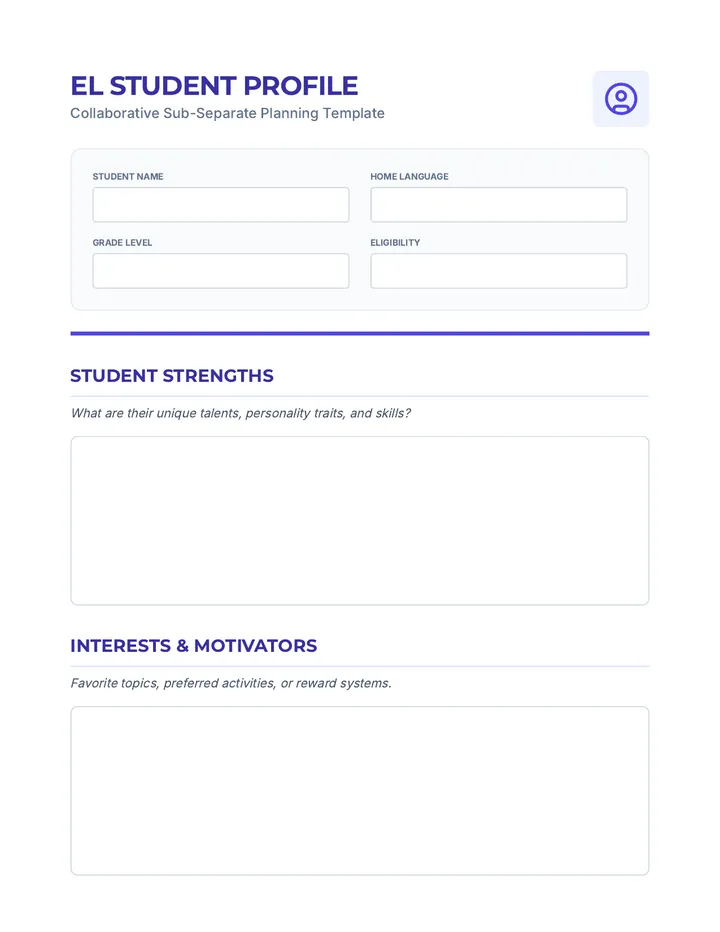
A comprehensive student profile template designed for ESL and Special Education teachers to collaborate on English Learners in sub-separate settings. It features dedicated sections for assistive technology/AAC, detailed home language usage (including family patterns and community context), sensory needs, and academic supports.
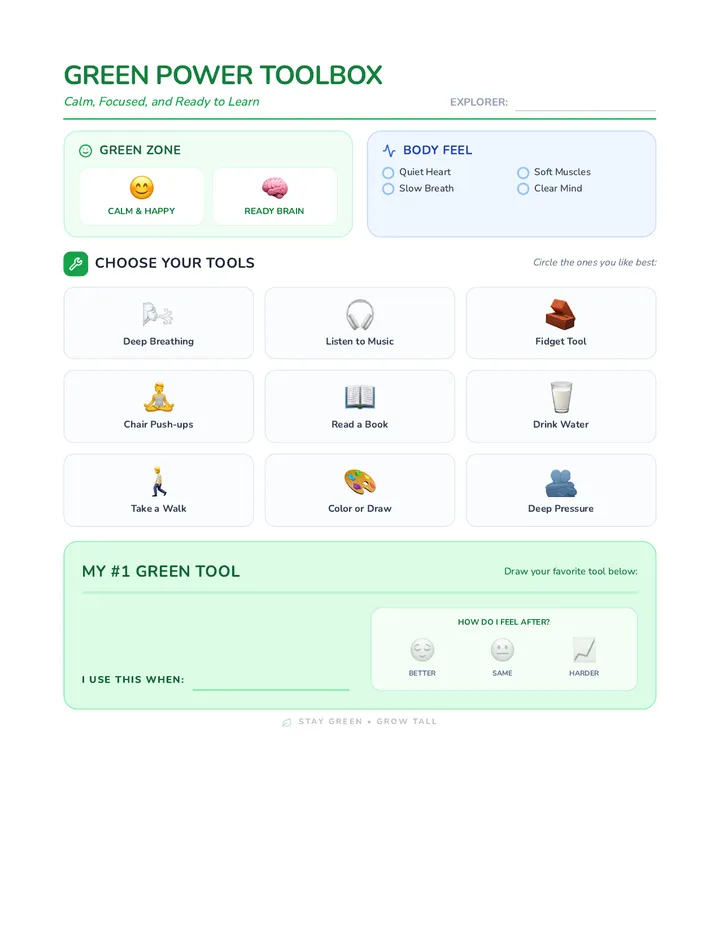
A single-page visual Green Zone strategies worksheet designed for autistic students, featuring concise iconography, simple language, and a large drawing space for tool selection.
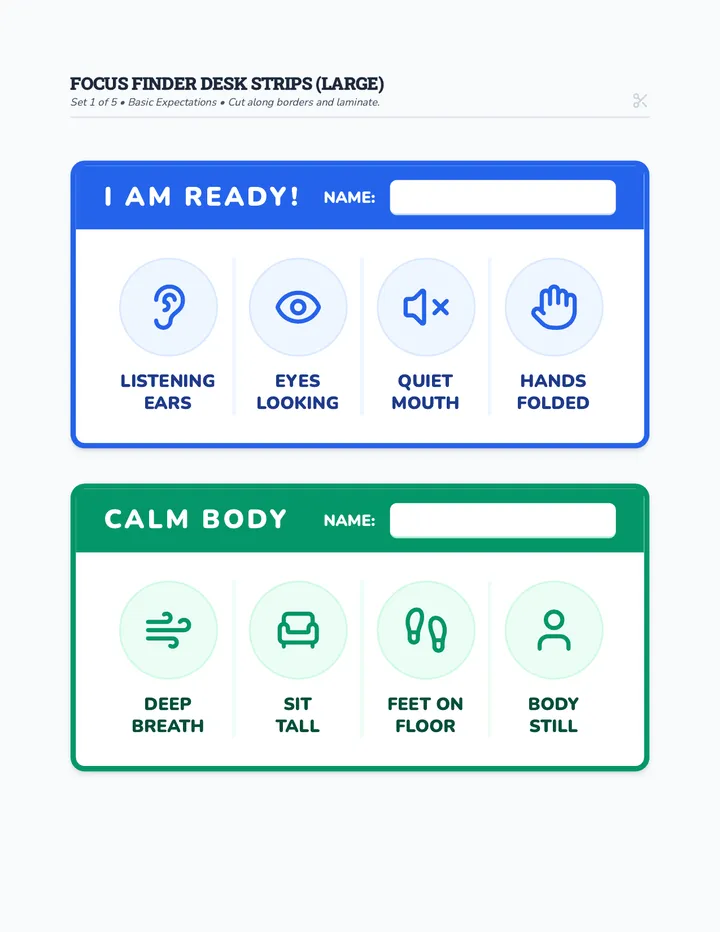
An expanded set of nine large-format printable desk strips with high-contrast visual reminders, including specific calming techniques and a "Safe Choices" strip for unwanted behaviors.
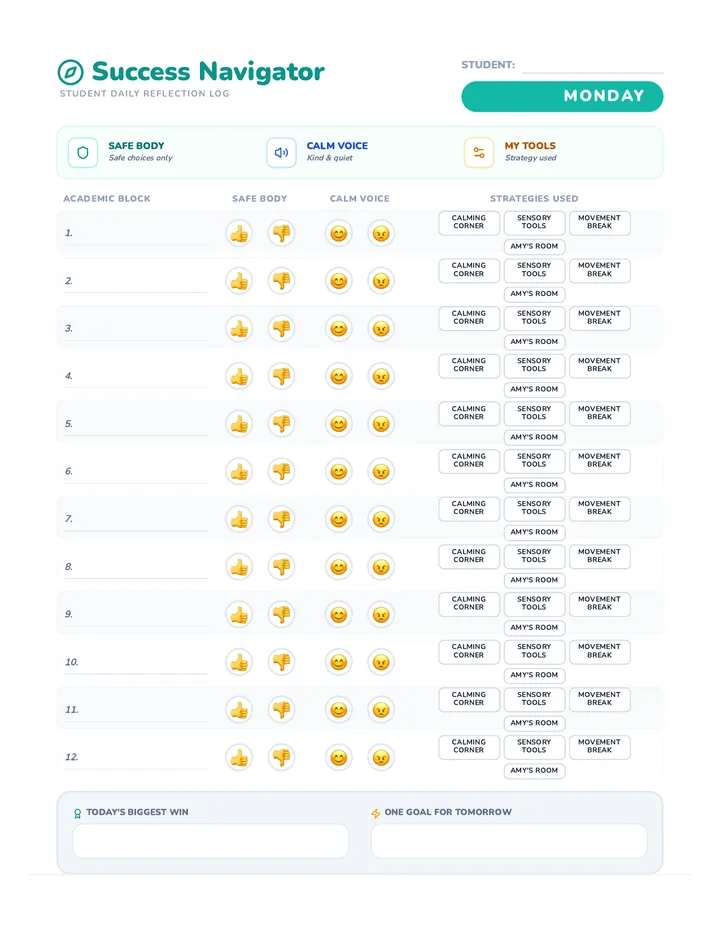
A complete 5-page student daily reflection log (Monday-Friday) broken into 12 academic blocks per day. Students track "Safe Body" and "Calm Voice" using visual rating icons and circle strategies used, including Calming Corner, Sensory Tools, Movement Breaks, and Amy's Room. Each page features a color-coded day badge and reflection footer for daily wins and goals.
An axolotl-themed tactile activity sheet for 7-year-olds designed to strengthen the ulnar side (4th and 5th digits) of the hand using common household supplies.
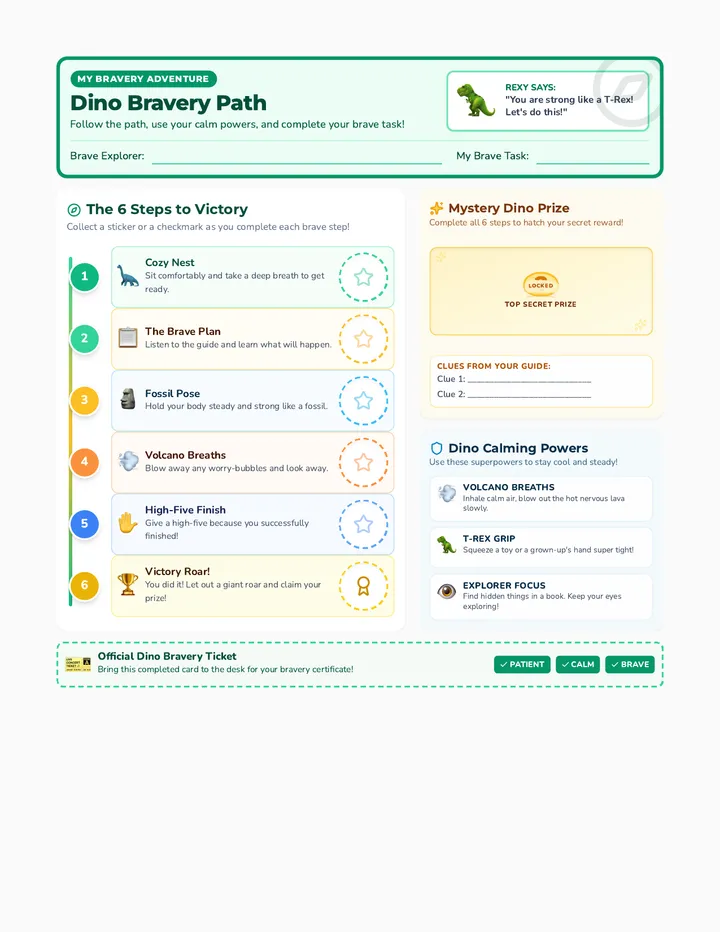
A progressive, dinosaur-themed bravery reward chart for children undergoing medical checkups, school tasks, or other scary activities. Features a step-by-step visual path mapping bravery stages, coping strategy cards, and a designated reward drawing space to make stressful experiences manageable.
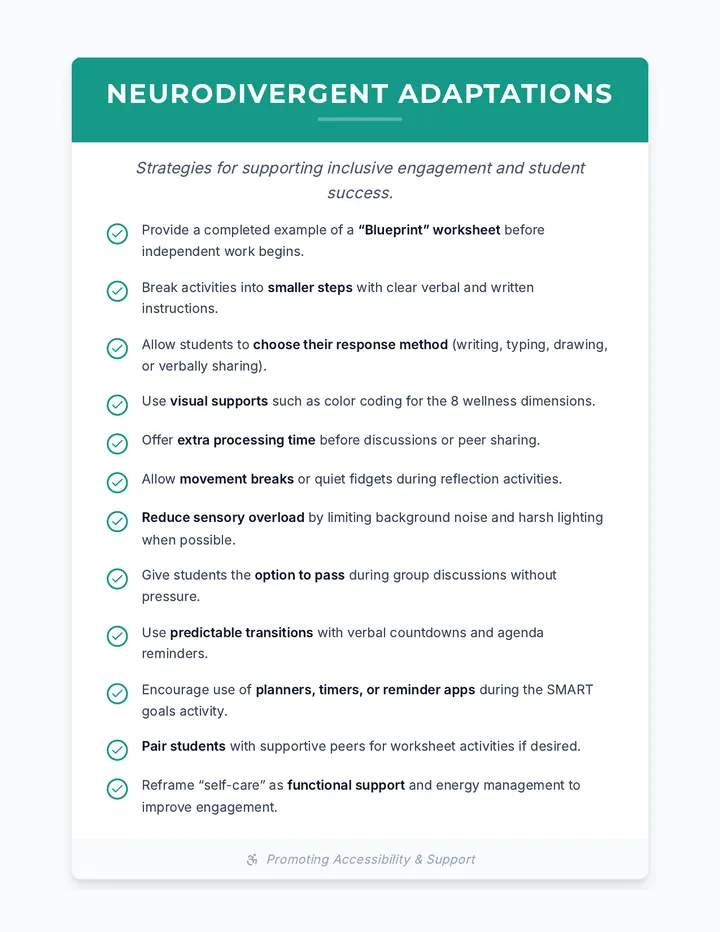
A clean, professional checklist of neurodivergent adaptations for teachers, styled to match the provided attachment with high-contrast teal headers and visual checkmark icons. Adjusted for single-page fit.
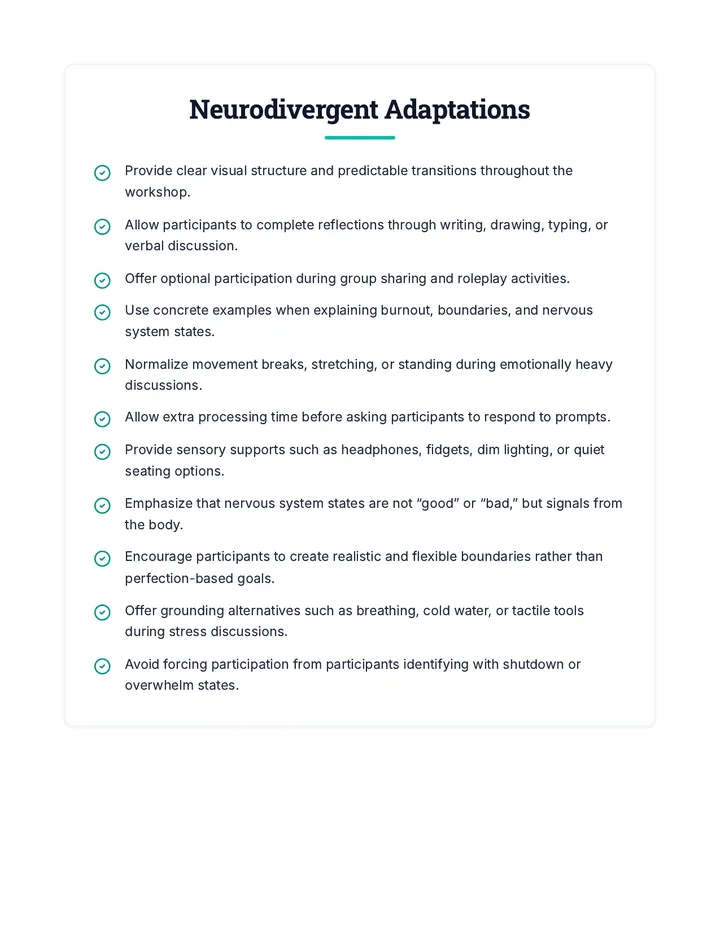
A clean, accessible document listing essential neurodivergent adaptations for workshops, featuring clear visual structure and checkmark icons for readability.
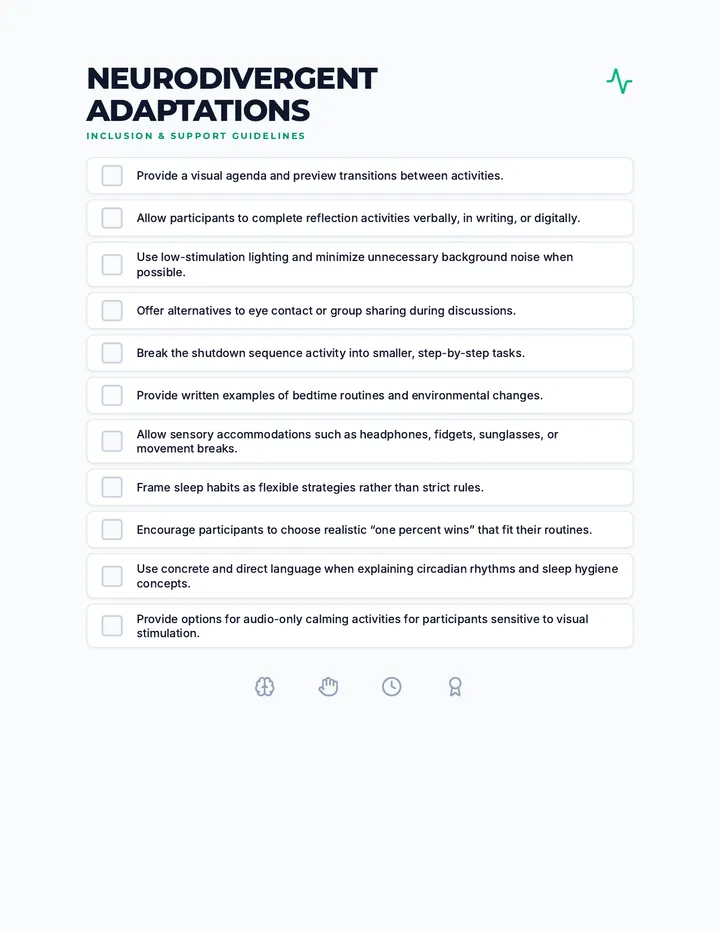
A one-page checklist for neurodivergent adaptations, mirroring the professional aesthetic of a fidelity checklist with structured list items, checkboxes, and minimalist icons.
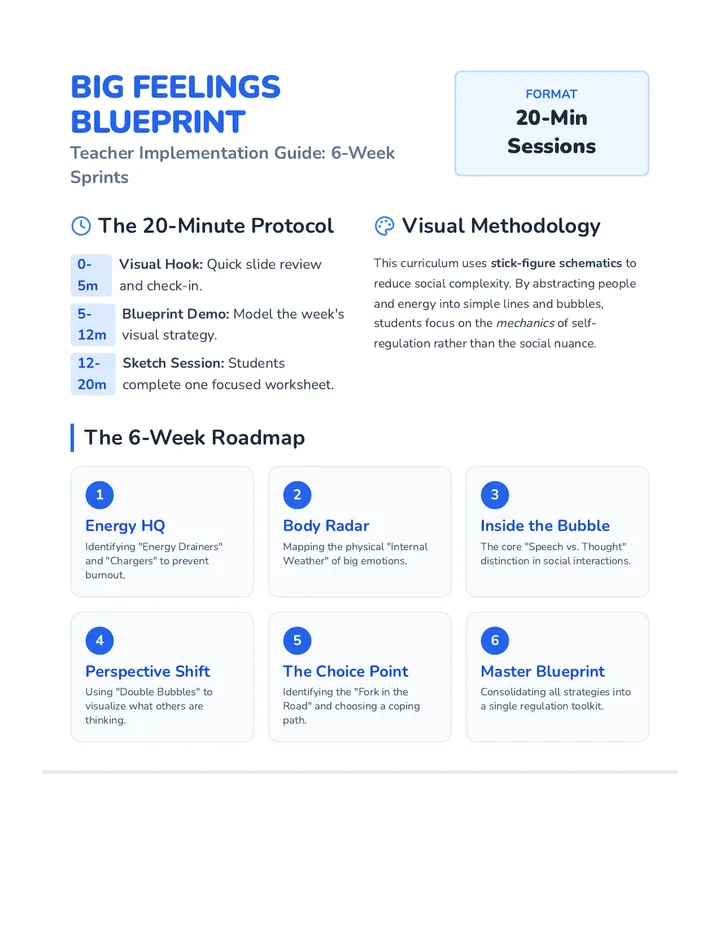
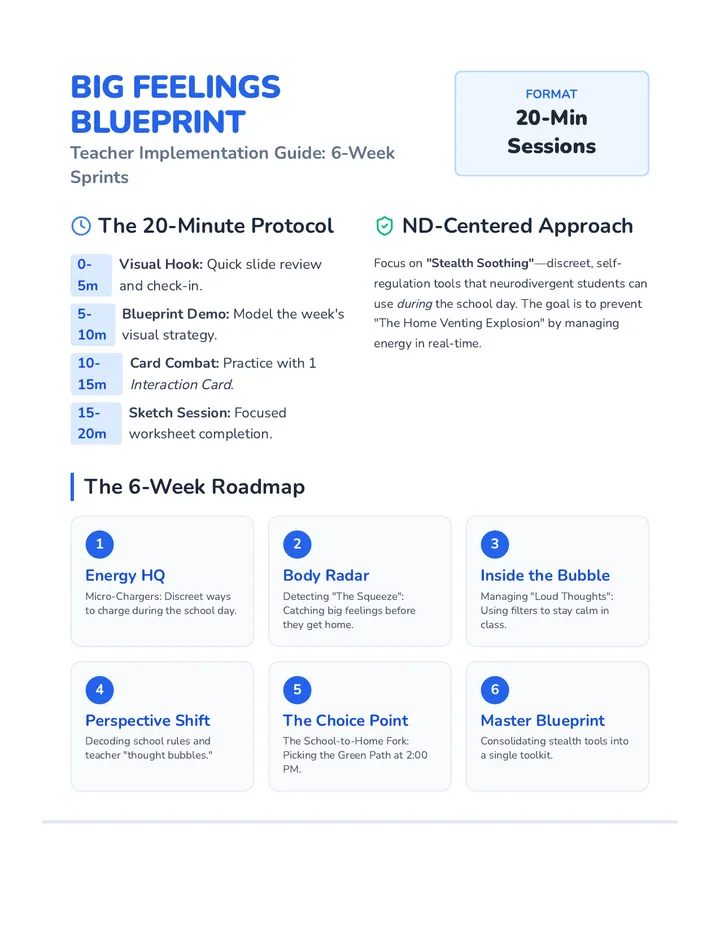
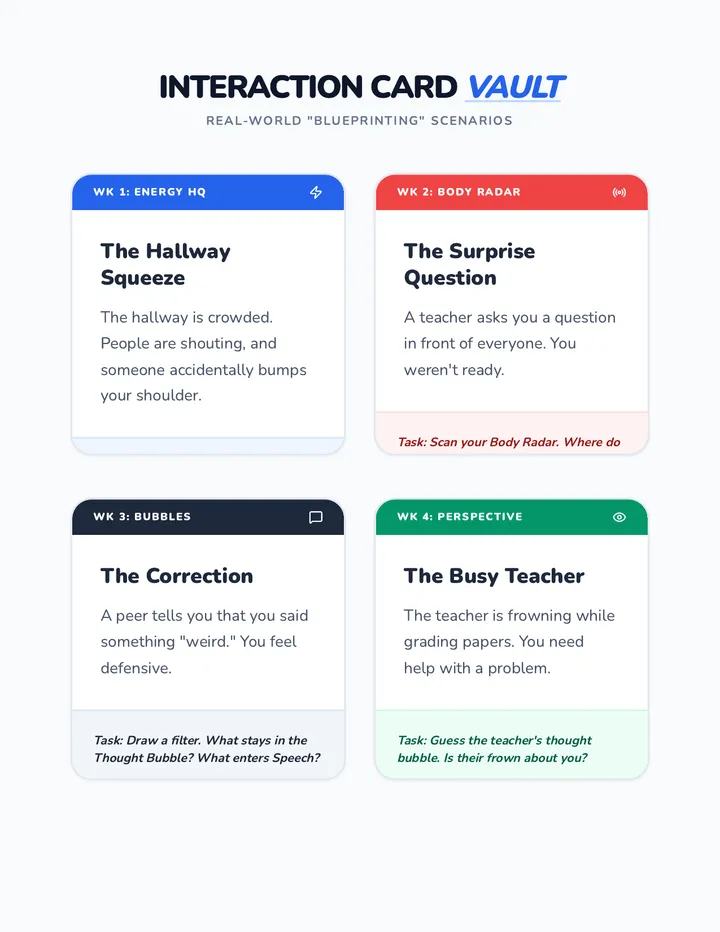
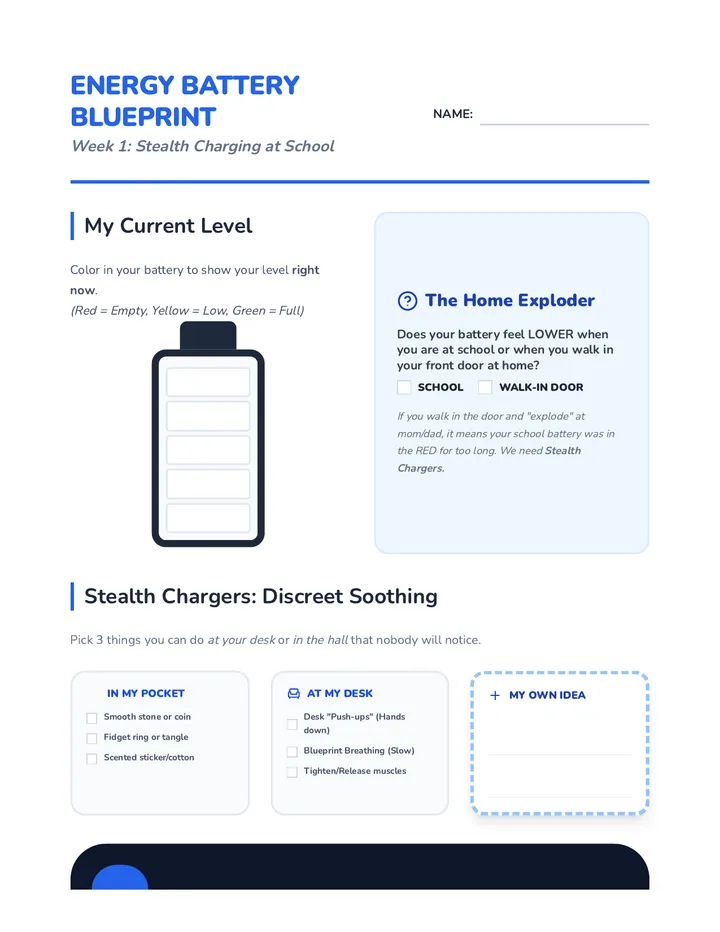
A 6-week social-emotional learning program for teenagers on the autism spectrum, delivered in focused 20-minute sessions. The program uses visual "blueprints" to teach energy management, body awareness, and Comic Strip Conversation techniques for emotional regulation and perspective taking.
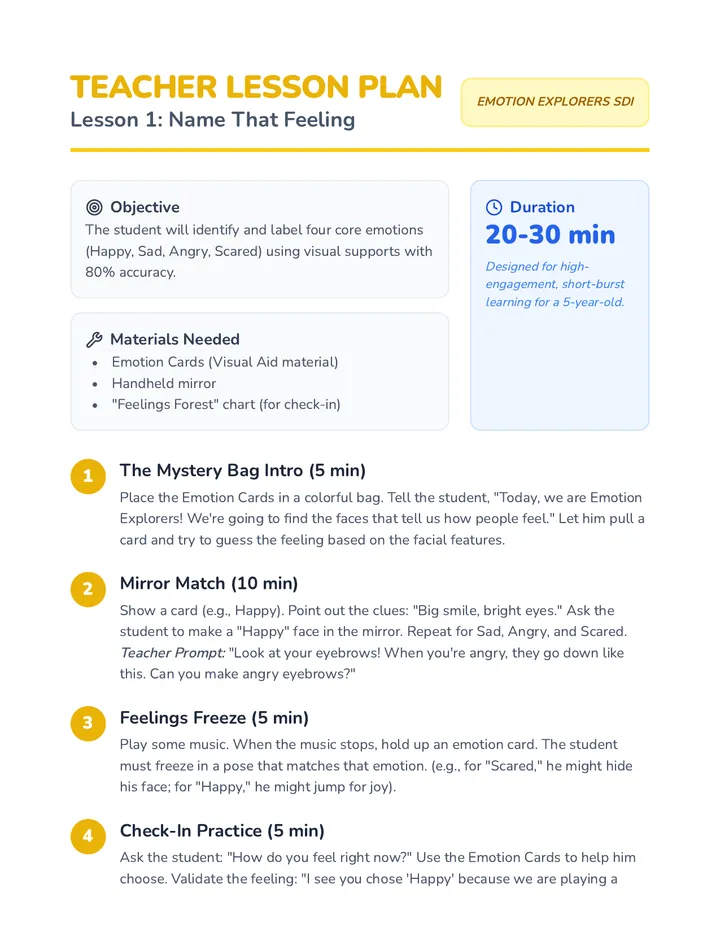
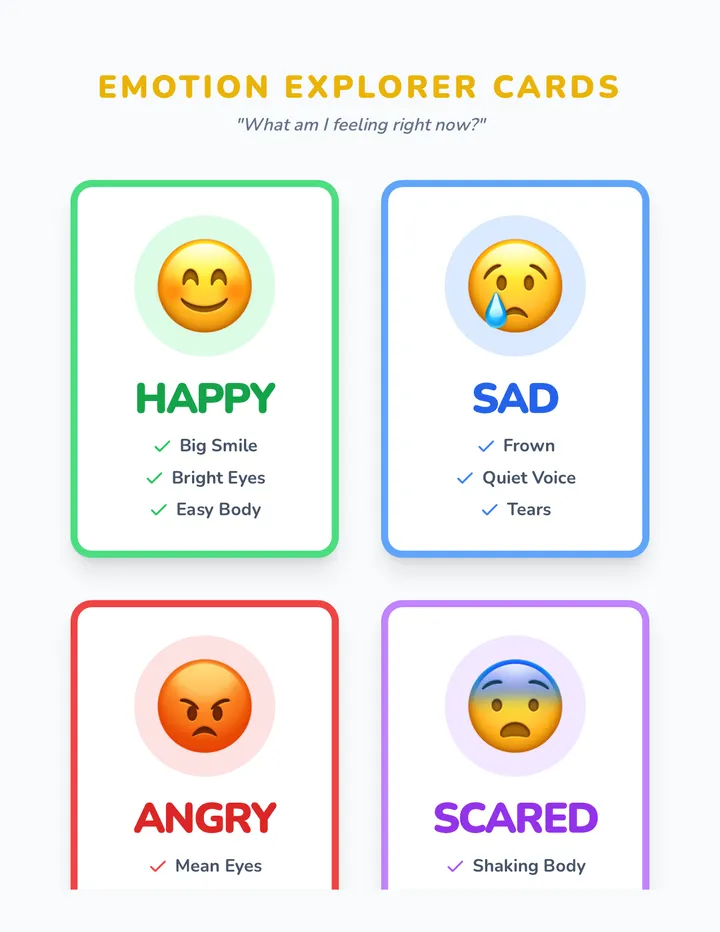
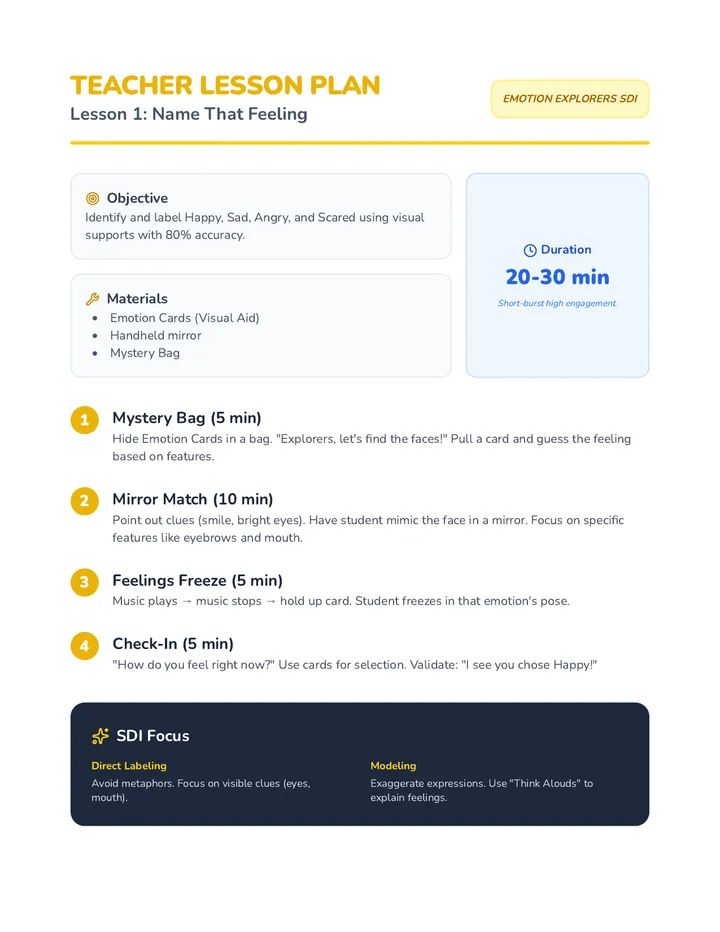
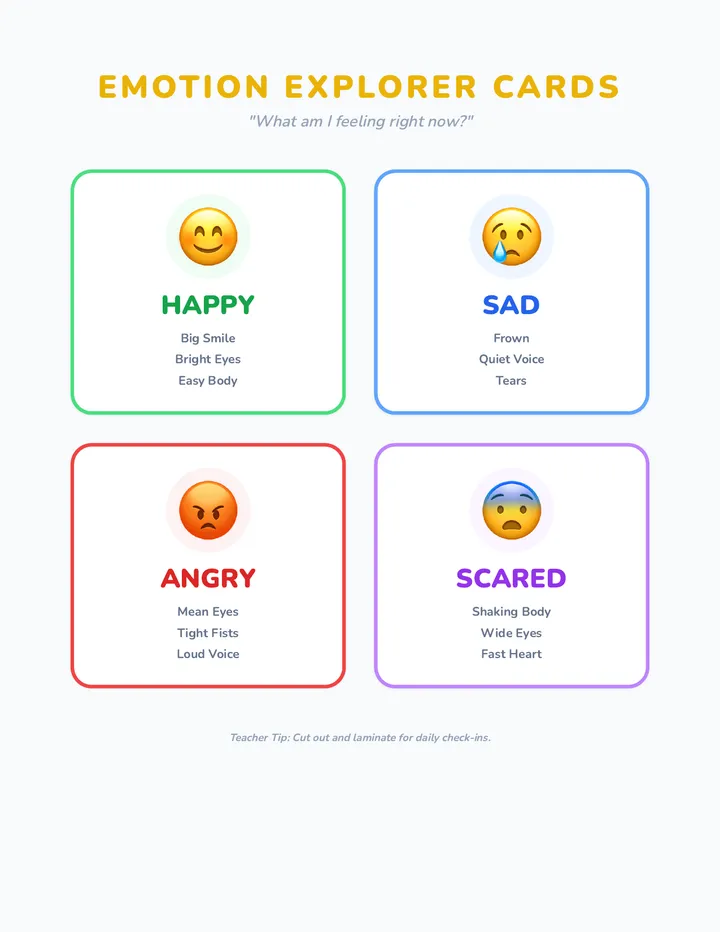
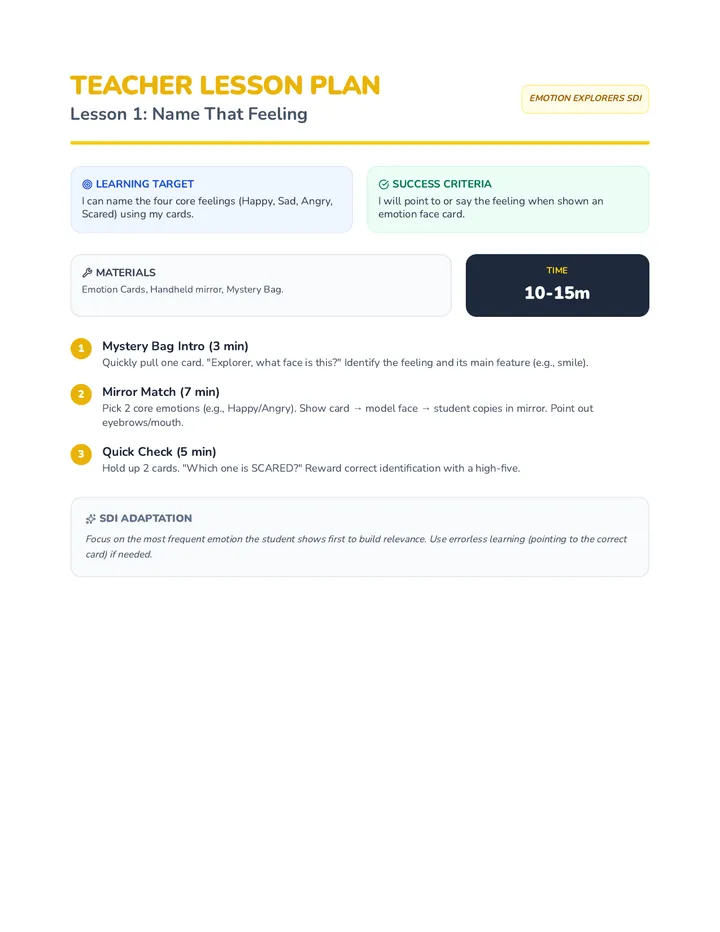
An 8-lesson SDI series designed for a 5-year-old student to develop emotional regulation skills, covering emotion identification, body awareness, and specific calming strategies like breathing and sensory tools.
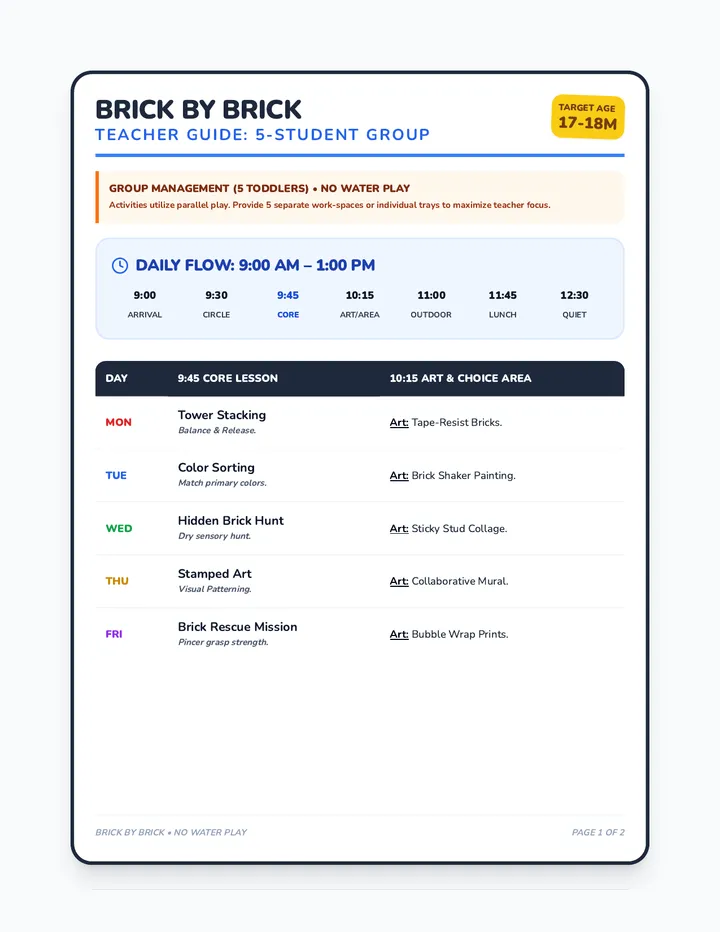
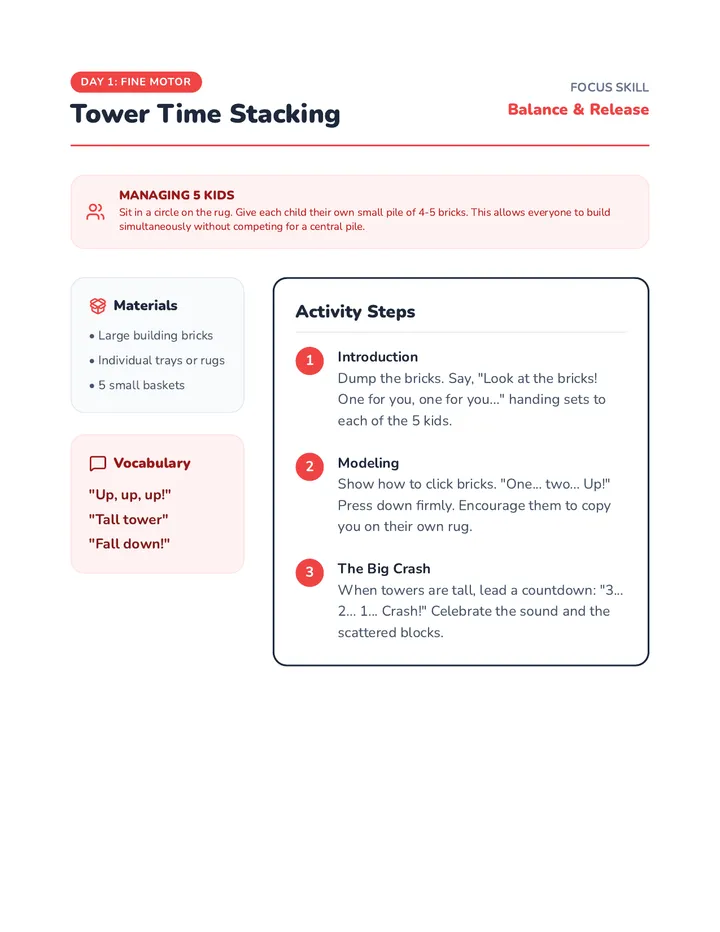
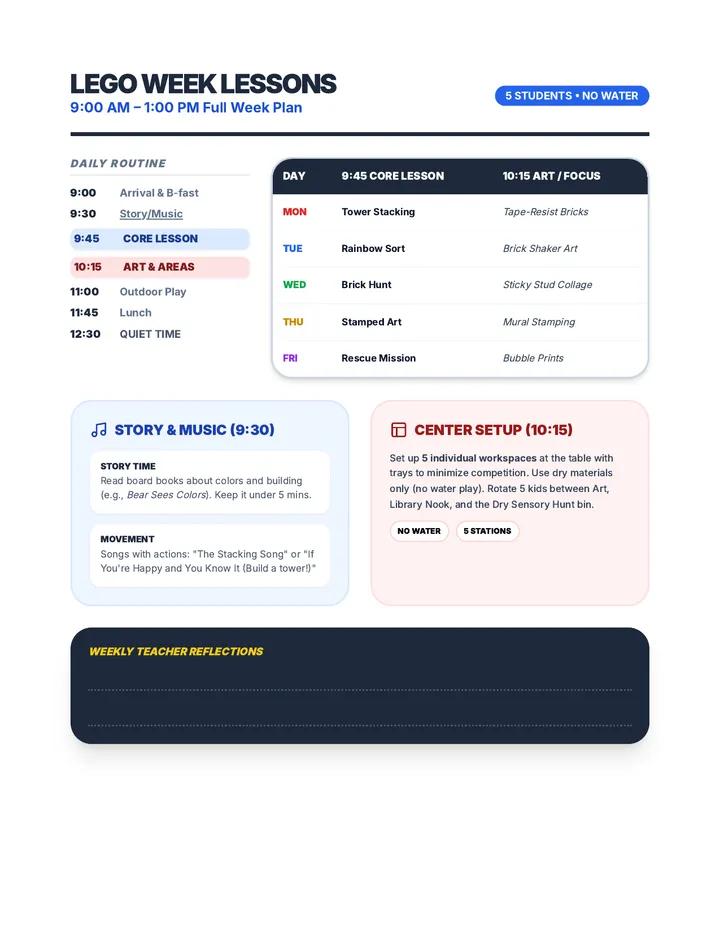
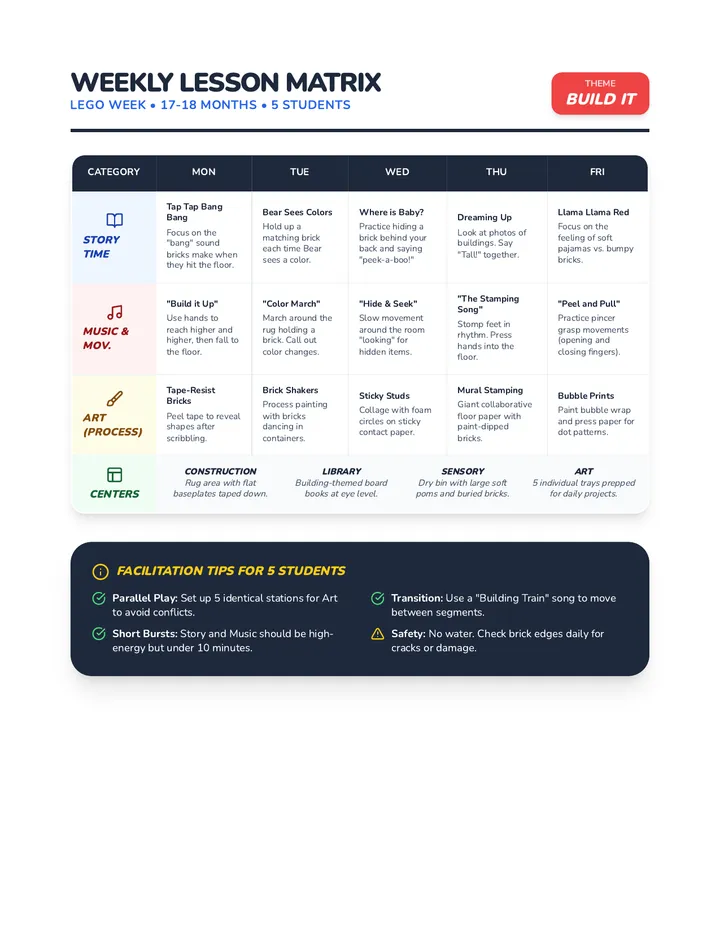
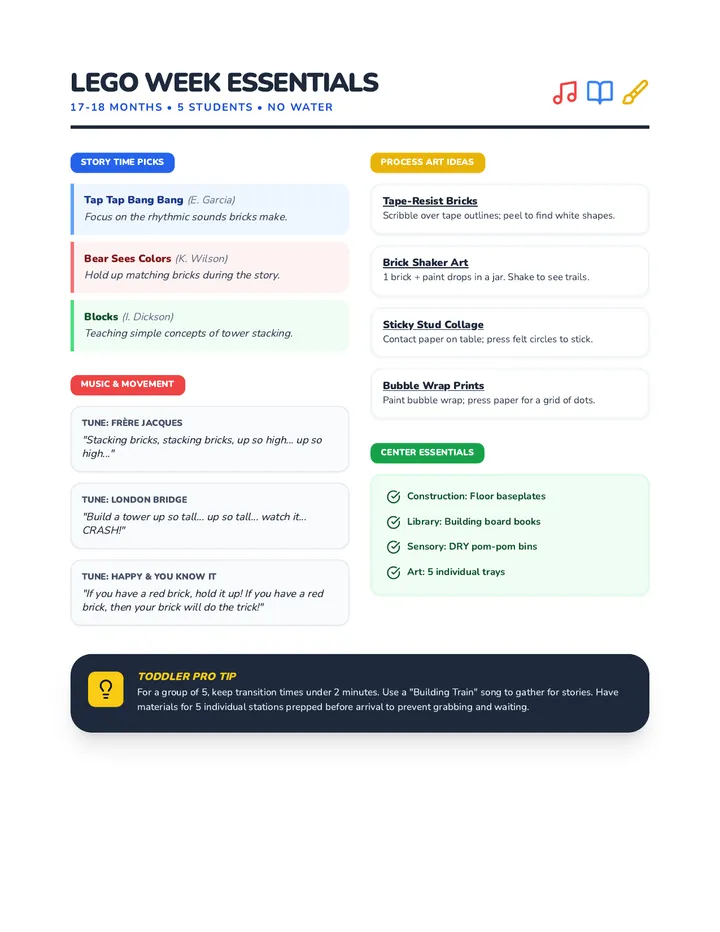
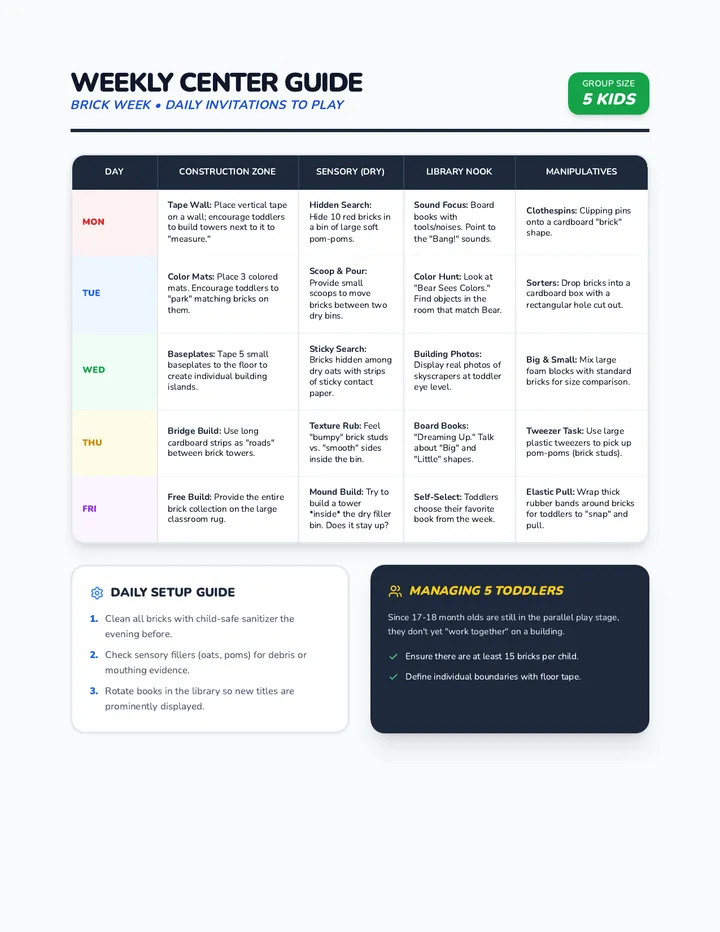
A collection of comprehensive week-long curricula for toddlers aged 17-18 months. Each themed week focuses on developmental play, sensory exploration, and fine motor skills for a group of 5 students with zero water play.
A comprehensive unit on emotional self-regulation, covering the identification of internal states and the application of effective regulation strategies to maintain focus and well-being.
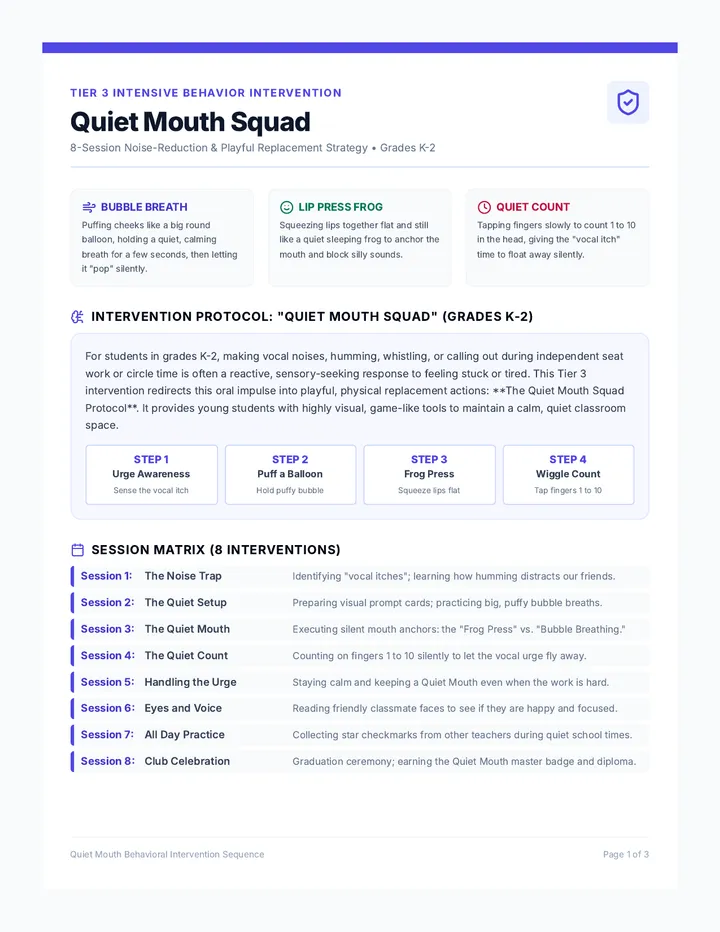
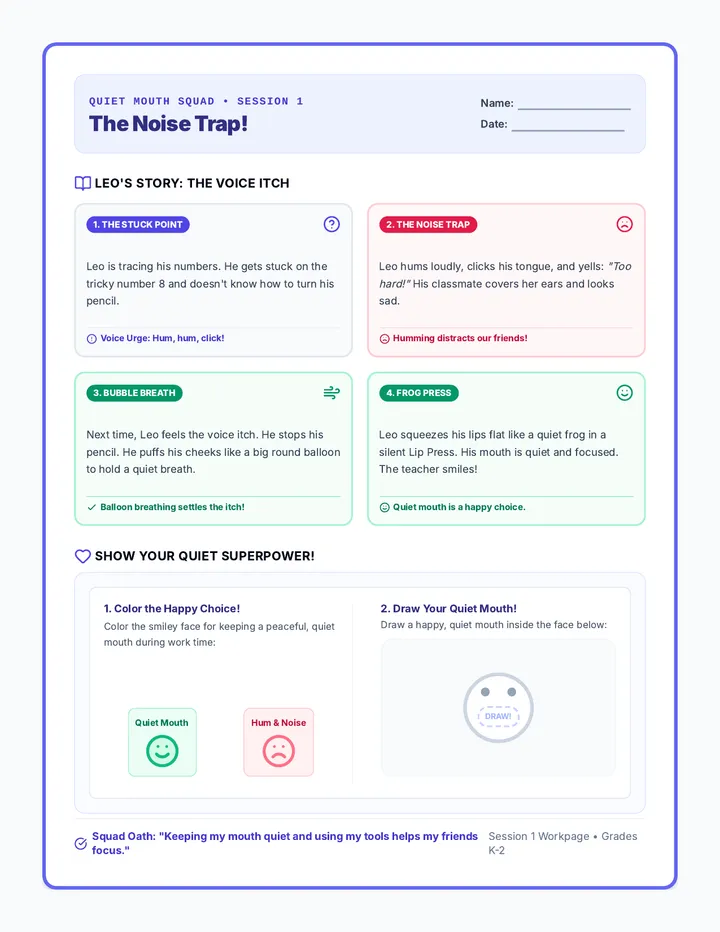
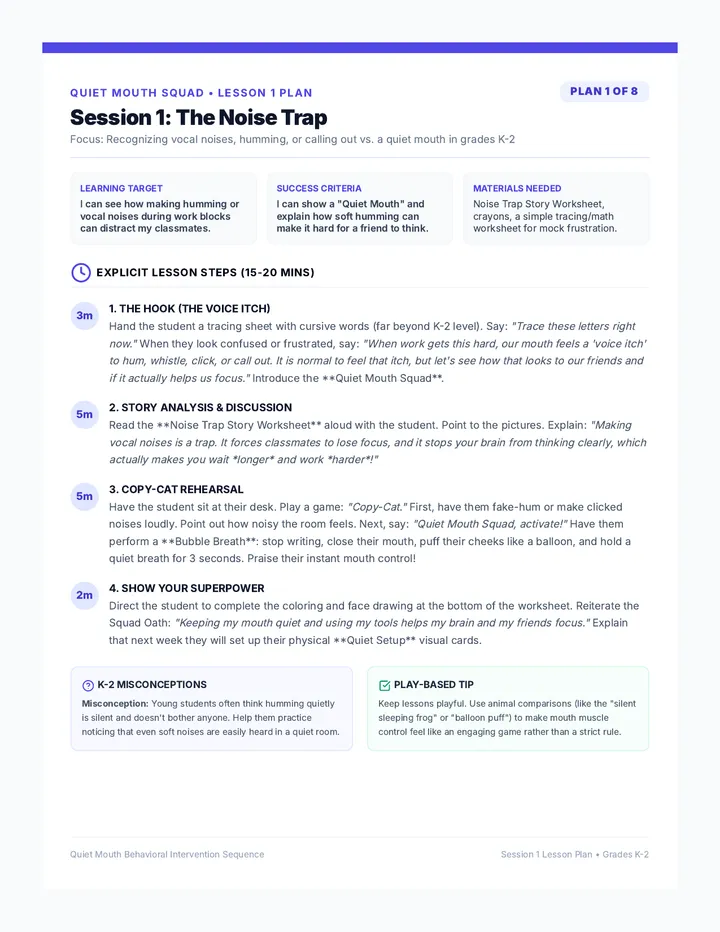
An 8-session intensive behavioral intervention sequence for students in grades K-2 targeting vocal noises, humming, or calling out during independent work. It teaches playful replacement behaviors: holding a quiet, puffy 'Bubble Breath' (like a balloon) or a firm 'Lip Press' (making a flat, silent mouth) to settle urges and maintain classroom focus.
A Tier 3 social-emotional curriculum designed for middle school students on the autism spectrum, focusing on self-regulation, social cues, and conflict resolution through a 'Social Architect' theme.
A 6-8 week intervention program designed for 1st-grade girls, focusing on executive functioning skills, emotional regulation, and academic success strategies through a strengths-based, celestial-themed approach.
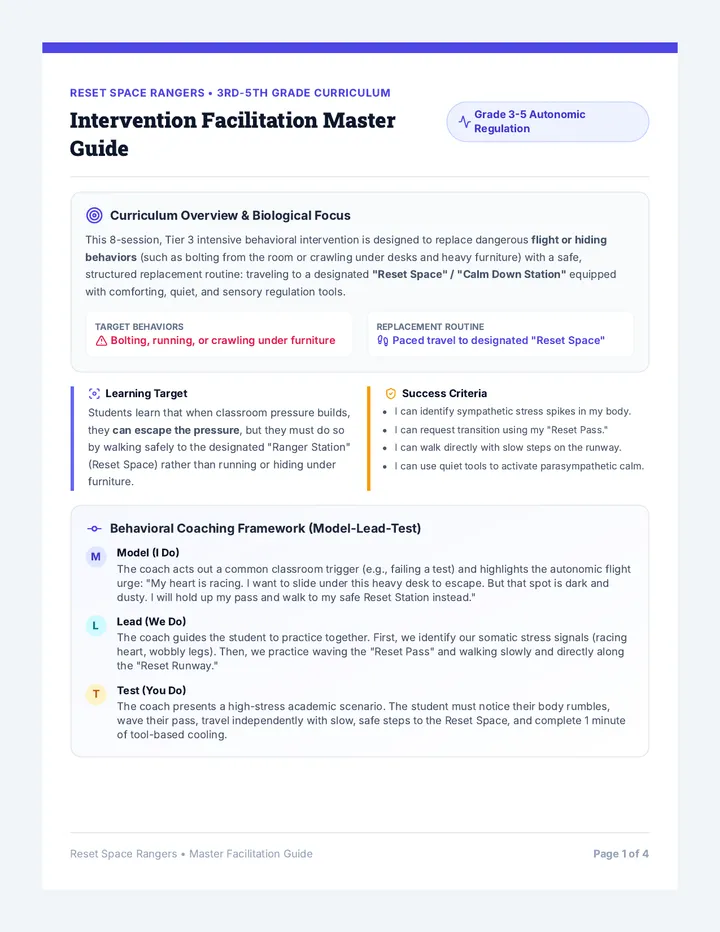
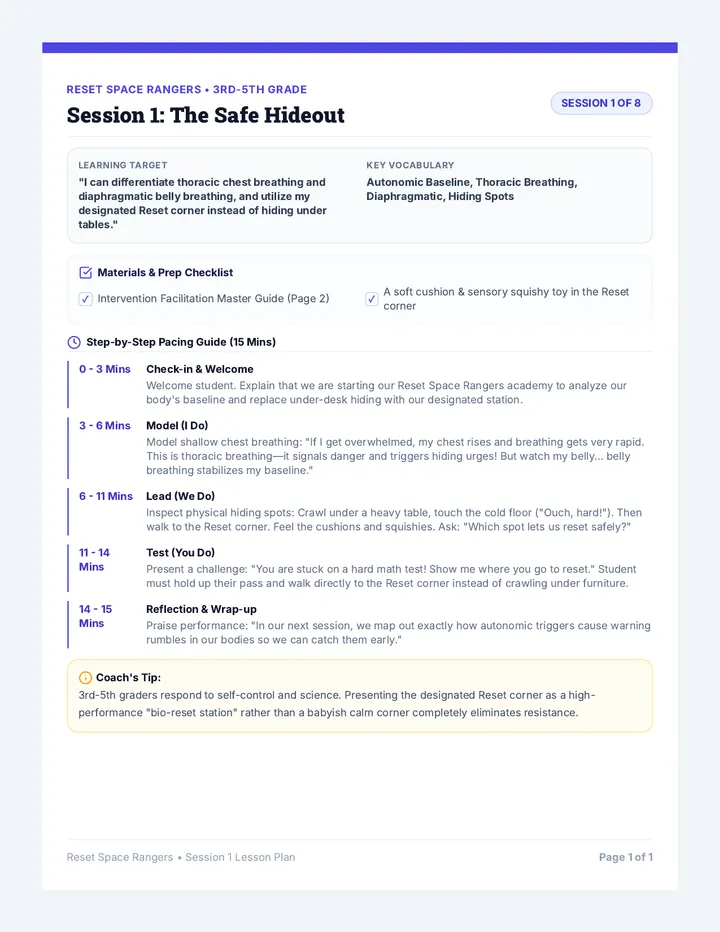
An intensive 8-session autonomic regulation and behavior protocol for 3rd-5th graders designed to replace dangerous flight or hiding behaviors (such as bolting or hiding under desks) with structured travel to a designated safe 'Reset Space' or 'Calm Down Station' equipped with comforting, quiet tools.
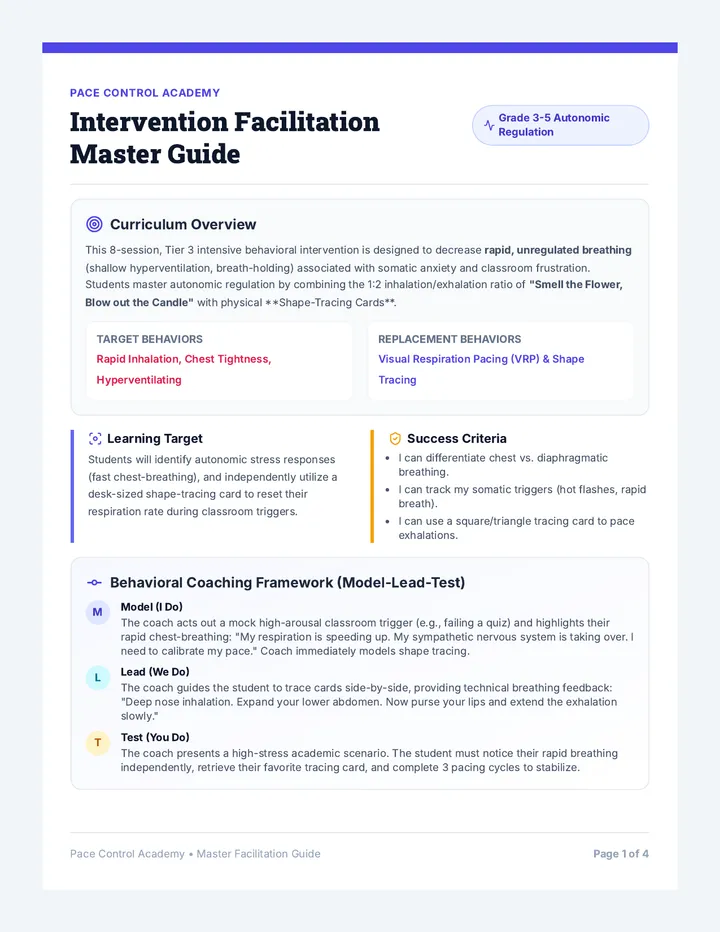
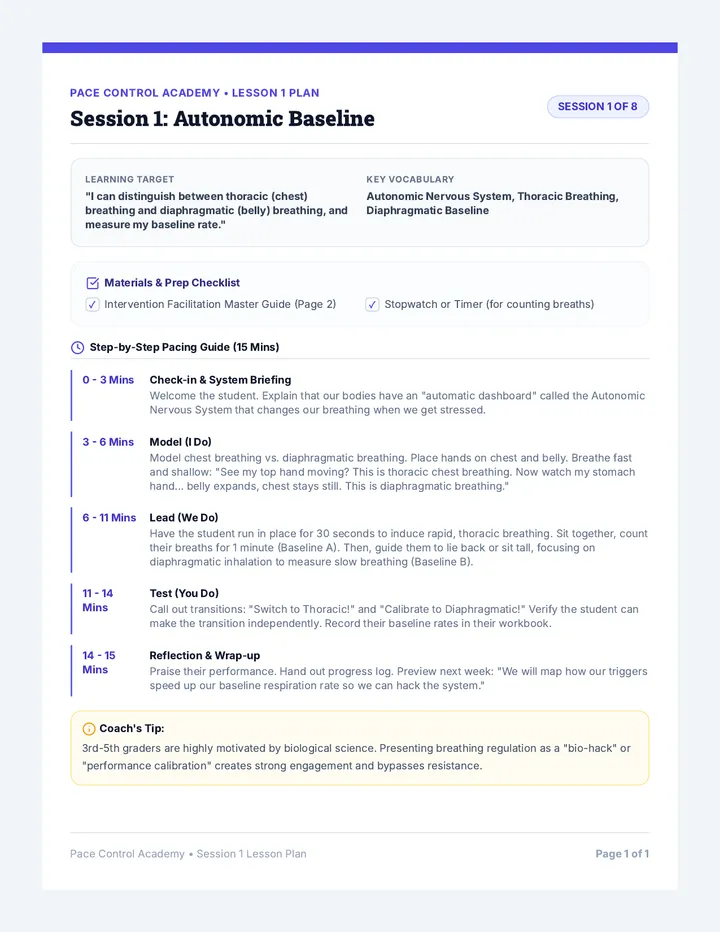
An intensive 8-session autonomic regulation curriculum for 3rd-5th graders to master respiration pacing. Students analyze stress physiology and utilize shape-tracing visual tracking cards to regulate rapid breathing.
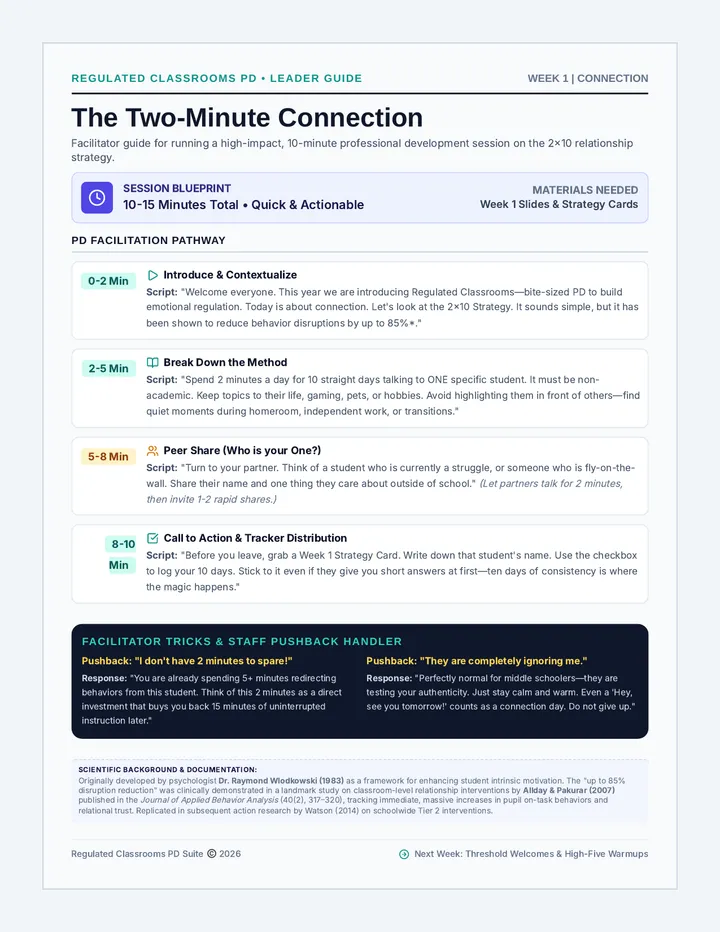
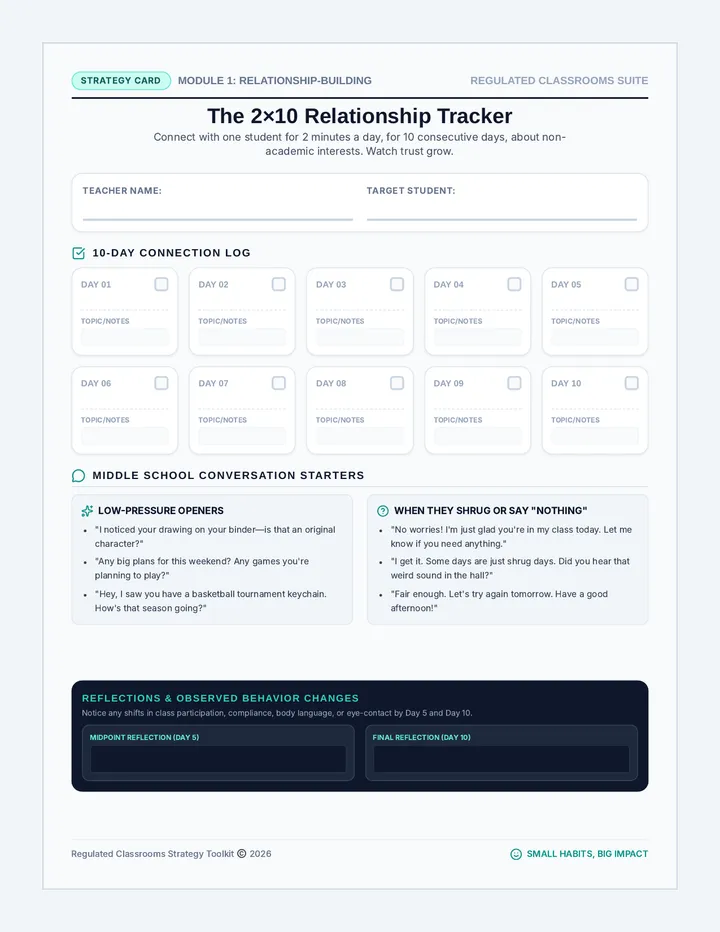
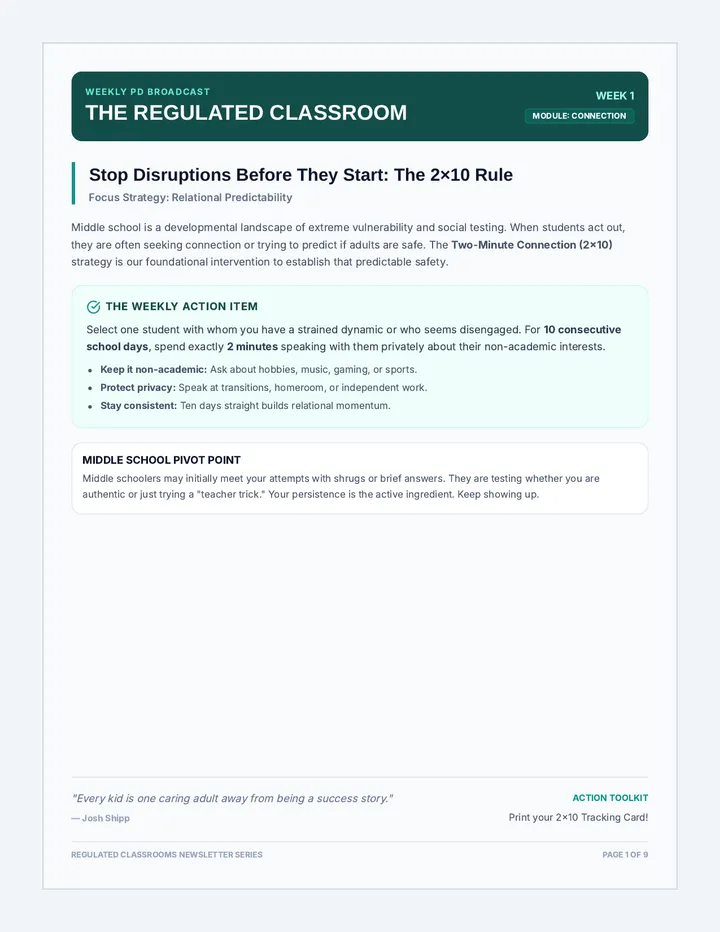
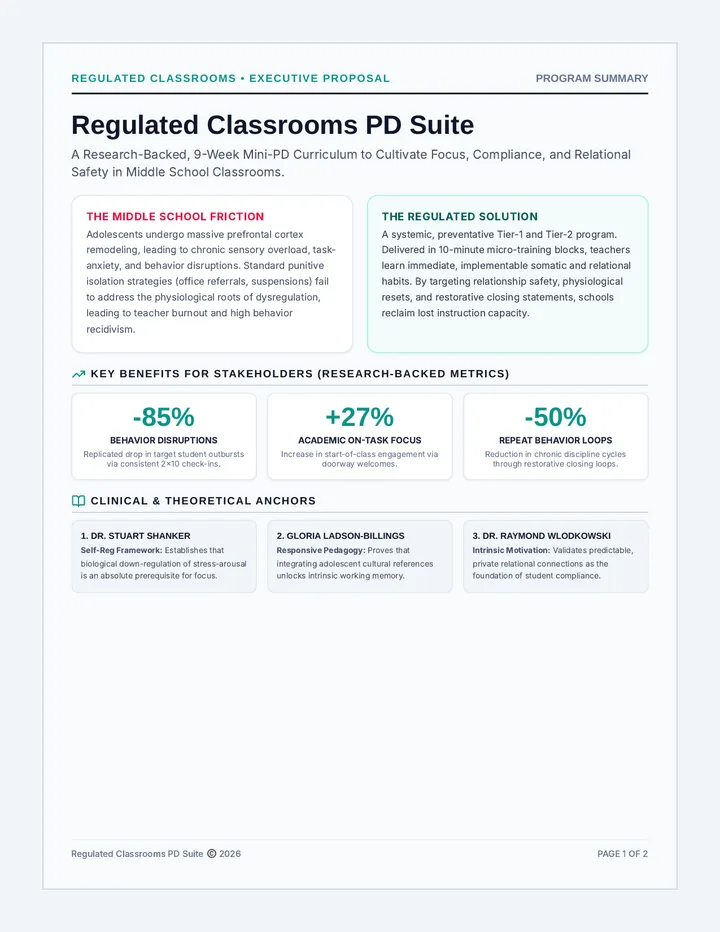
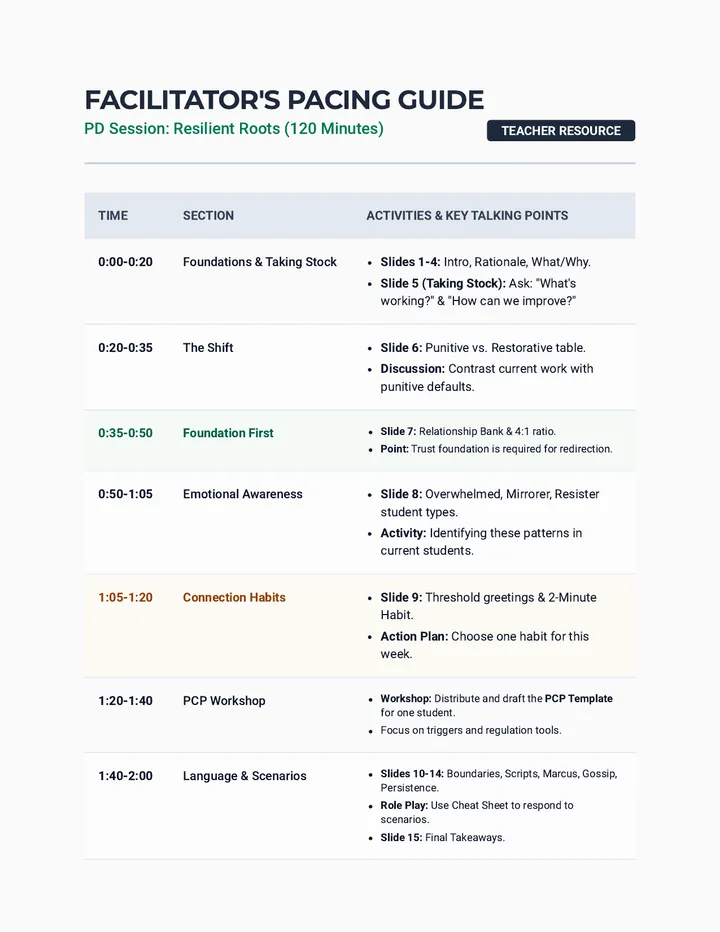
A comprehensive nine-week professional development sequence for middle school staff, delivering 10-15 minute training sessions on relationship-building, mindfulness, and de-escalation strategies. Includes interactive slides, facilitator guides, teacher reference cards, and digital newsletter templates.
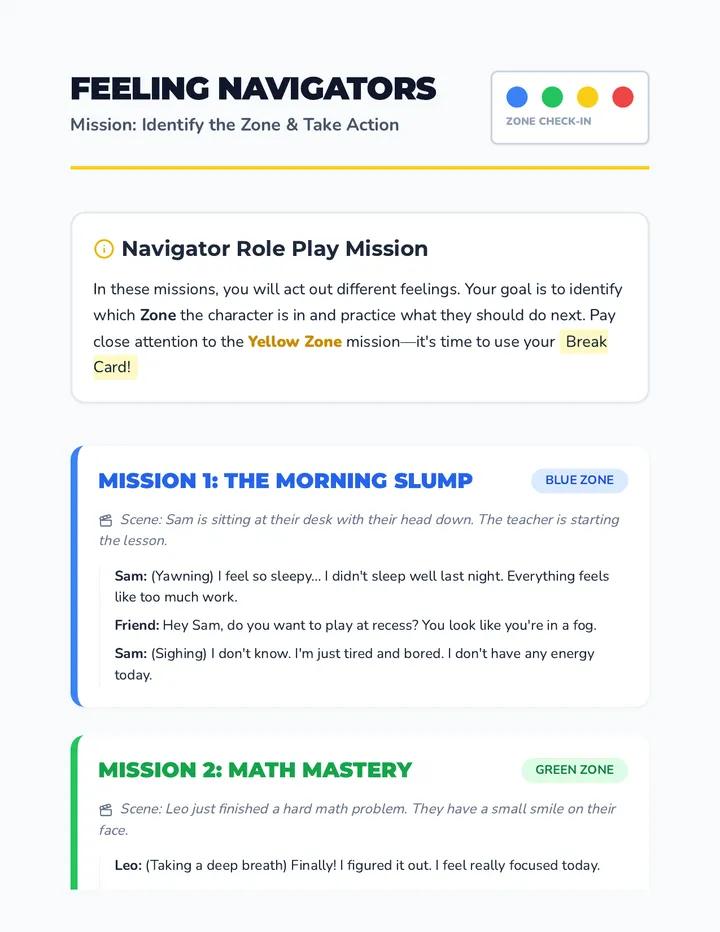
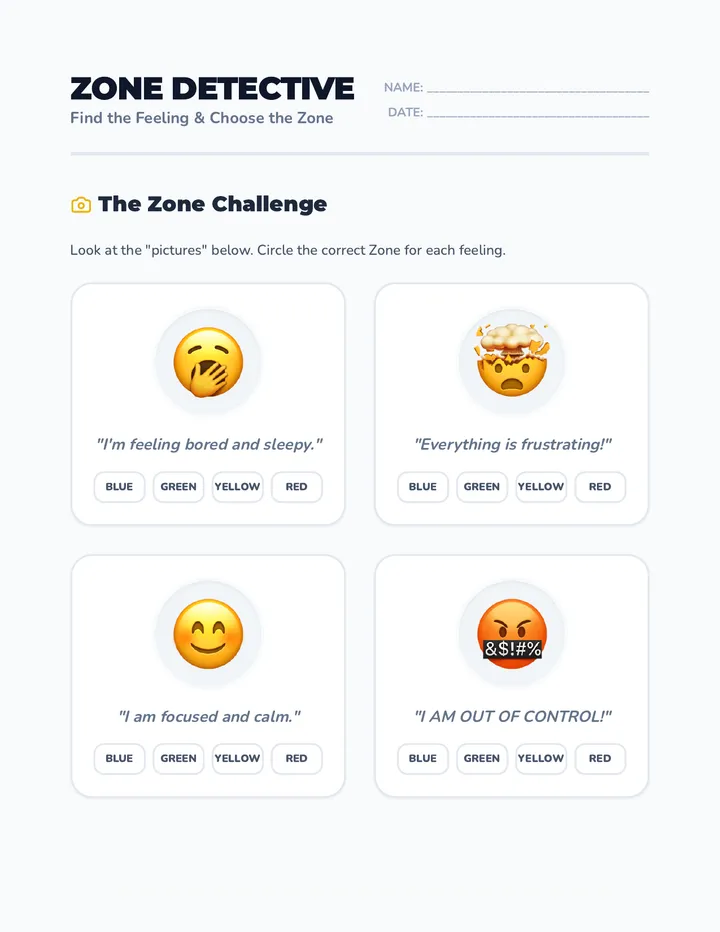
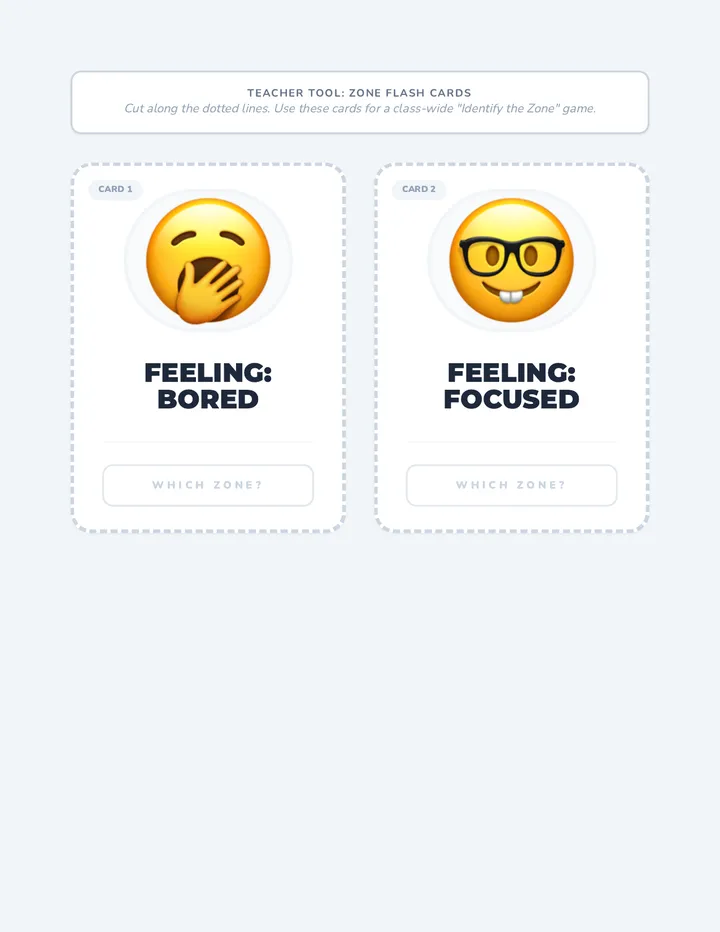
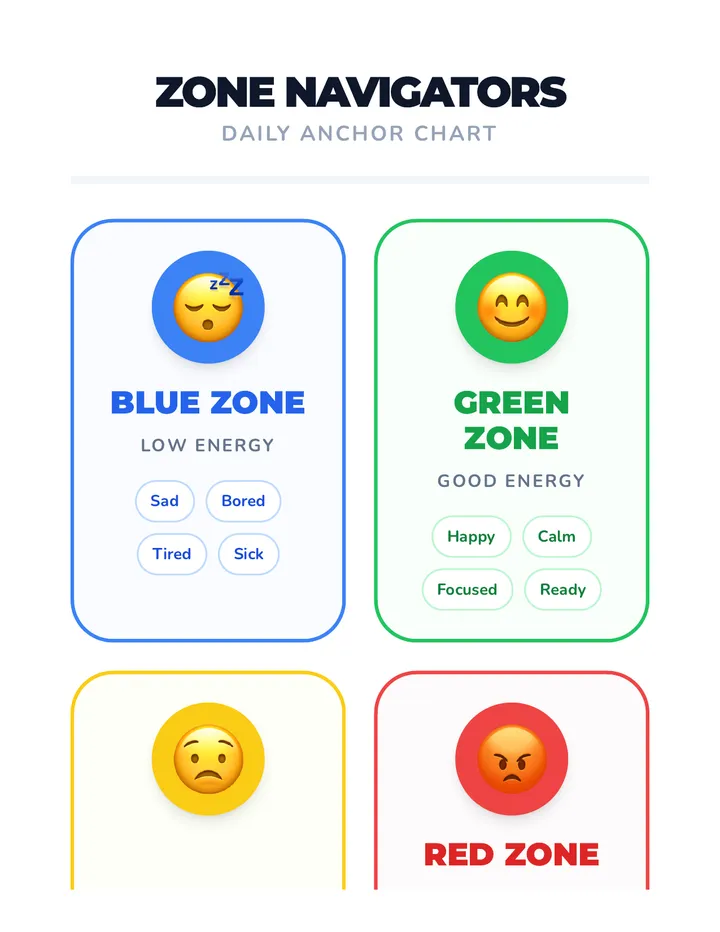
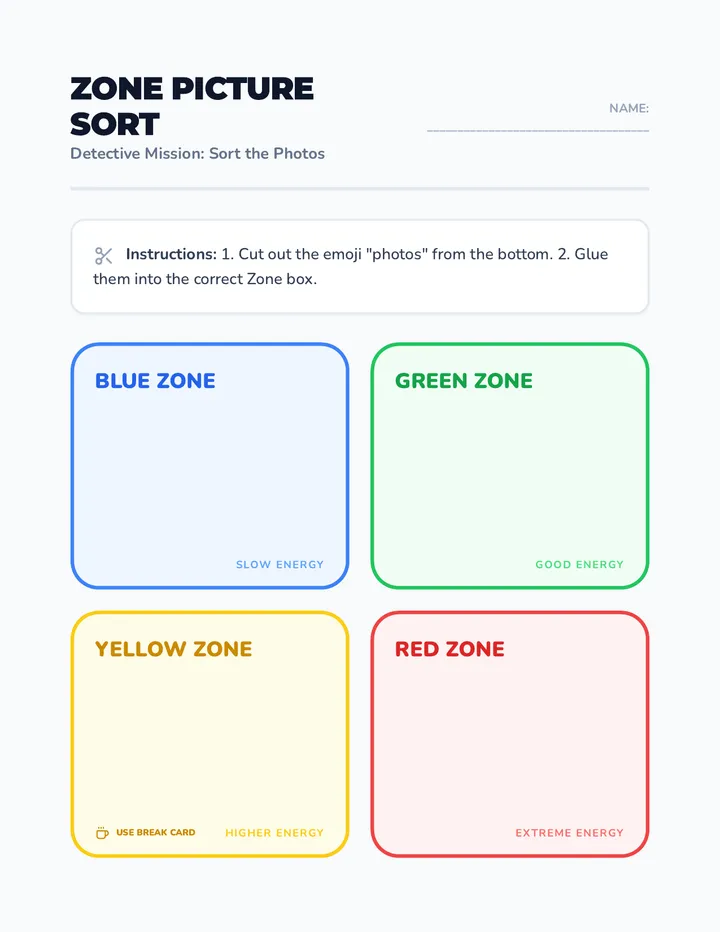
A comprehensive series of lessons for high school students focusing on the four Zones of Regulation. Students will learn to identify internal physical cues, external triggers, and specific coping strategies to manage low-energy (Blue), regulated (Green), elevated (Yellow), and extreme (Red) states.
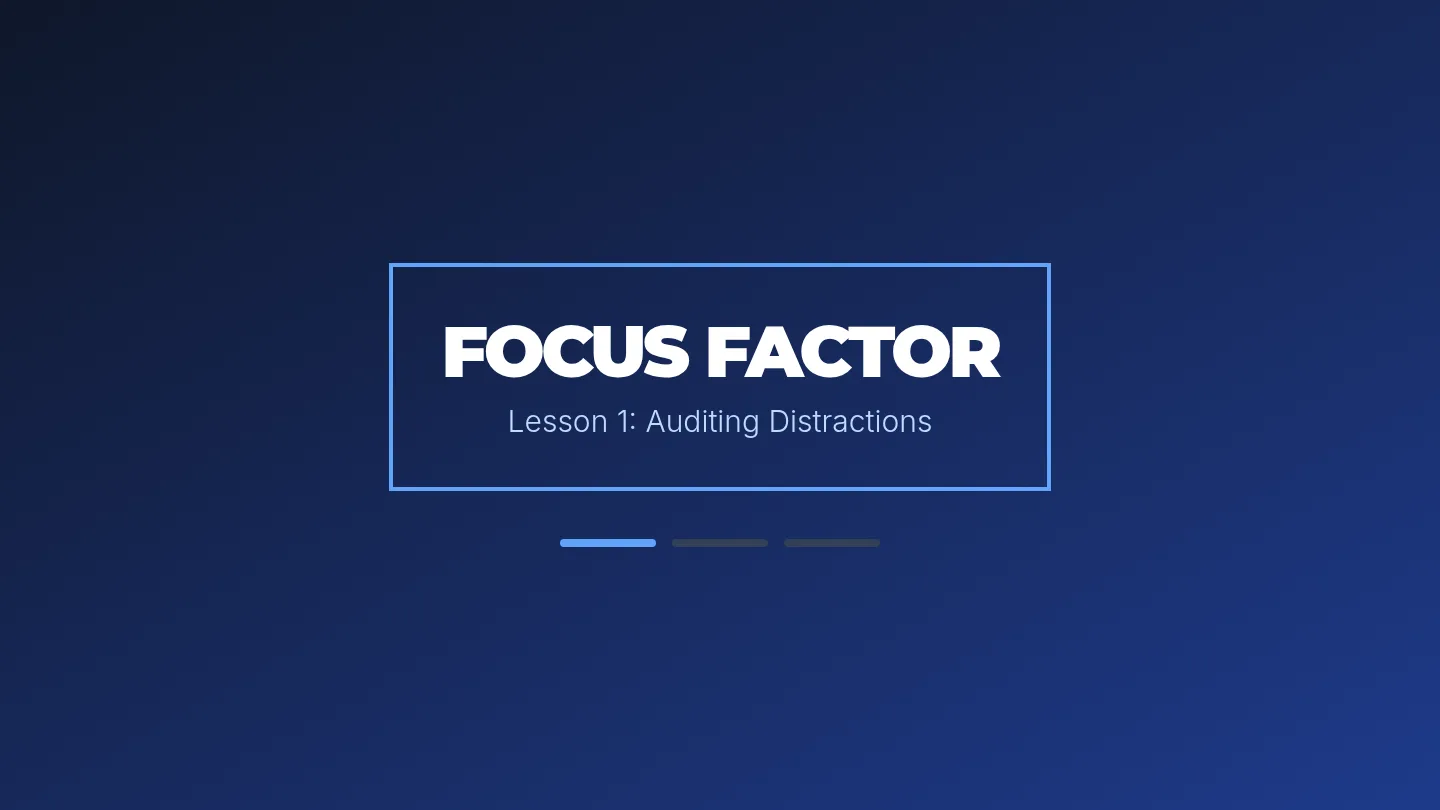
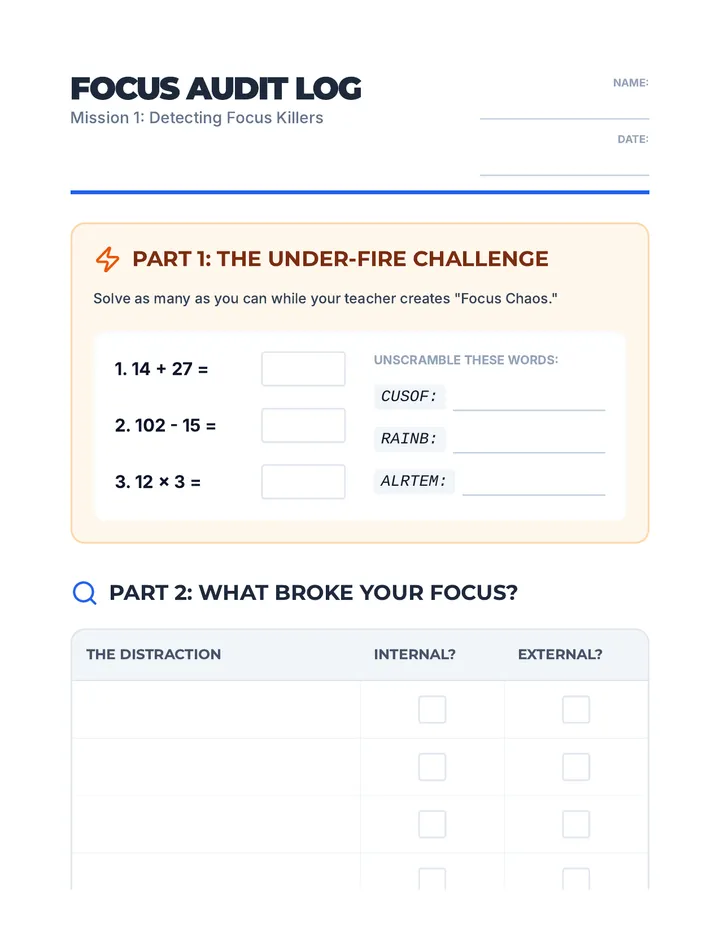
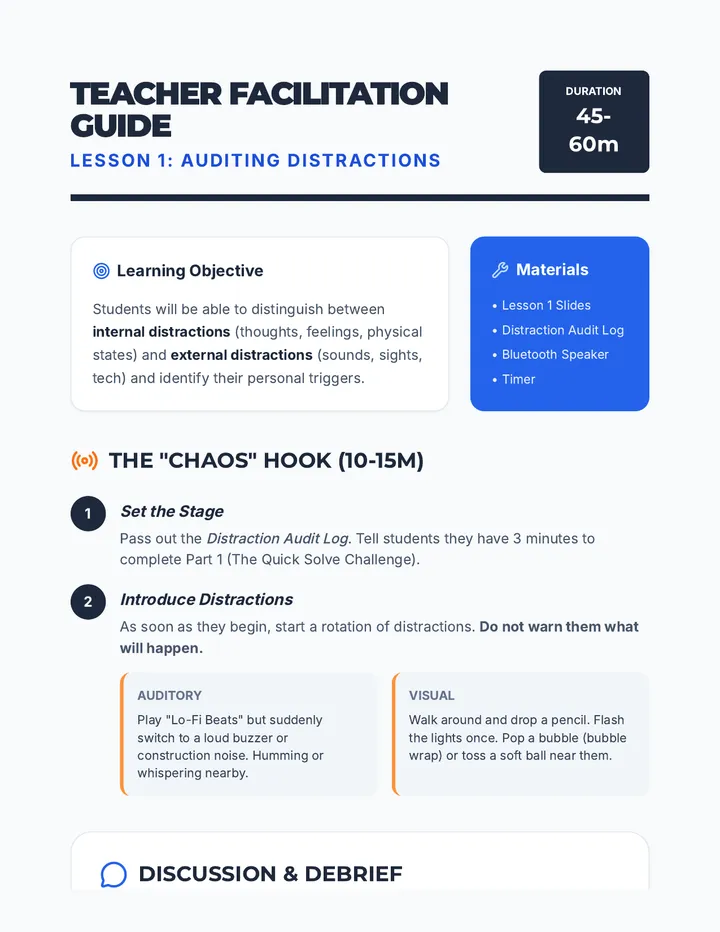
A sequence for 6th-grade students focusing on identifying distractions, designing effective workspaces, and mastering time-management techniques like Pomodoro and single-tasking to improve executive function and focus.
A comprehensive self-advocacy curriculum designed for young adults to navigate school, home, community, and the workplace with confidence. Focuses on personal identity (pronouns), legal rights (ADA/IDEA), and practical communication strategies.
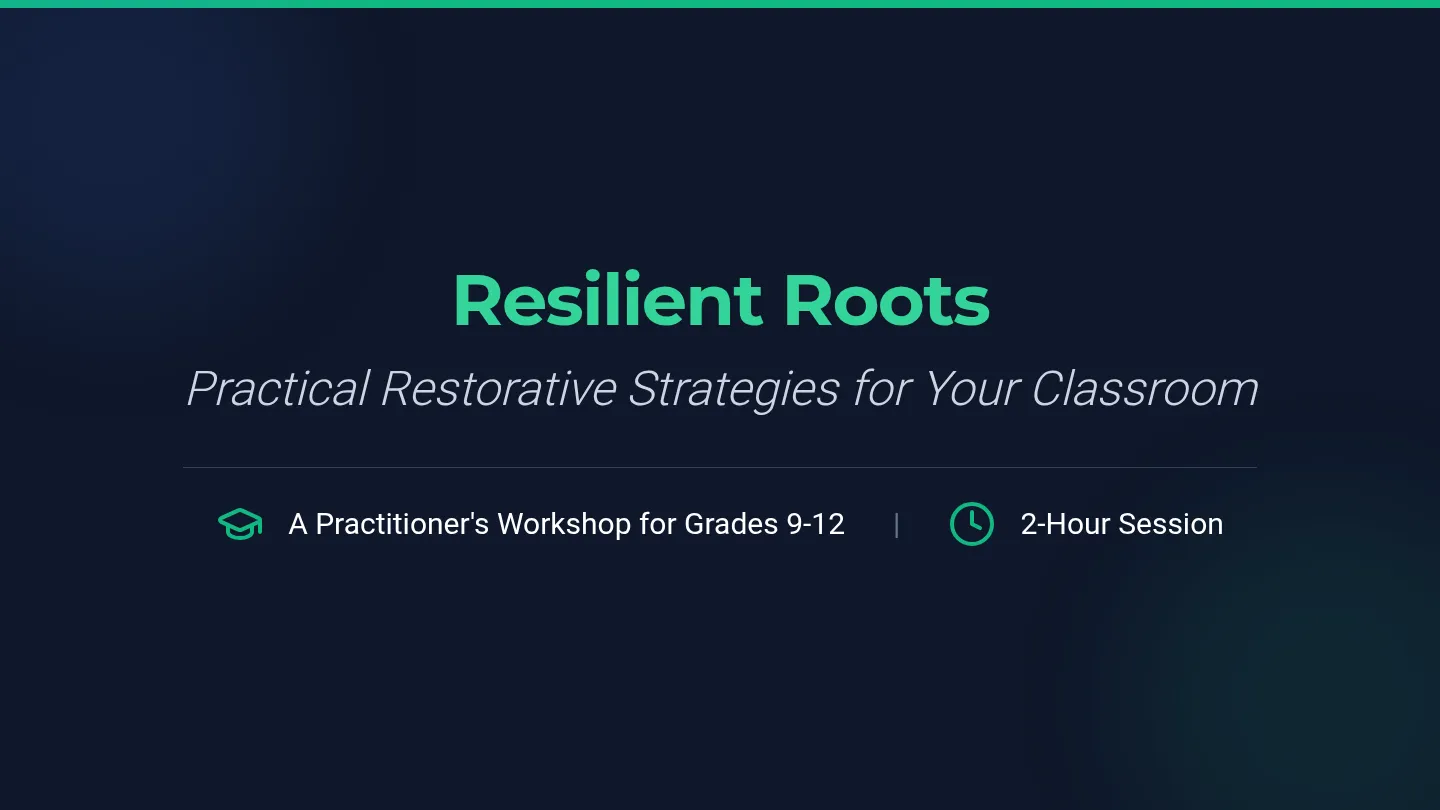
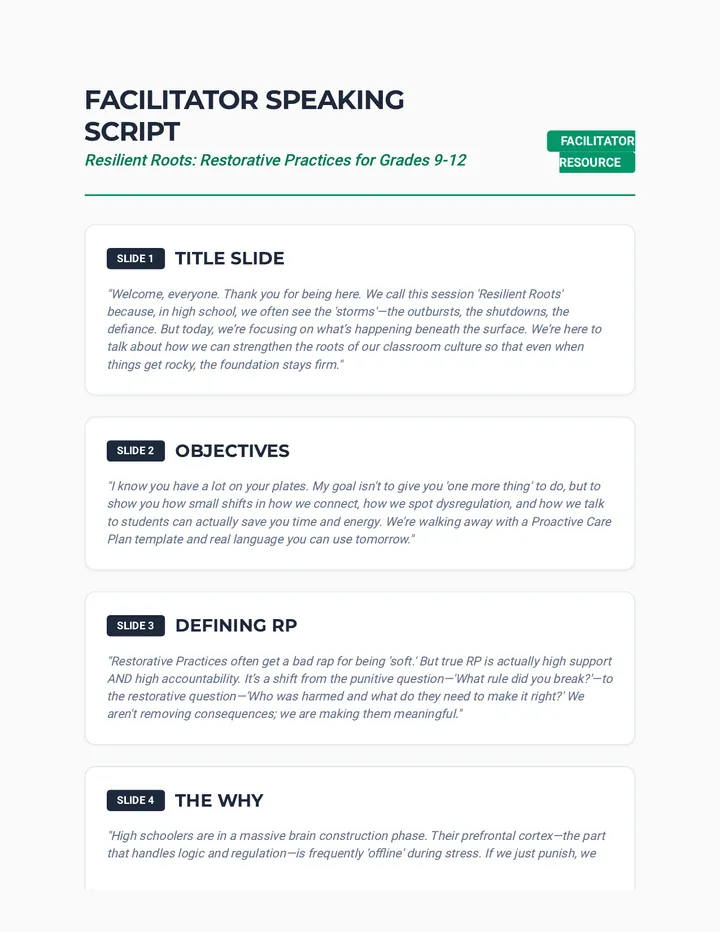
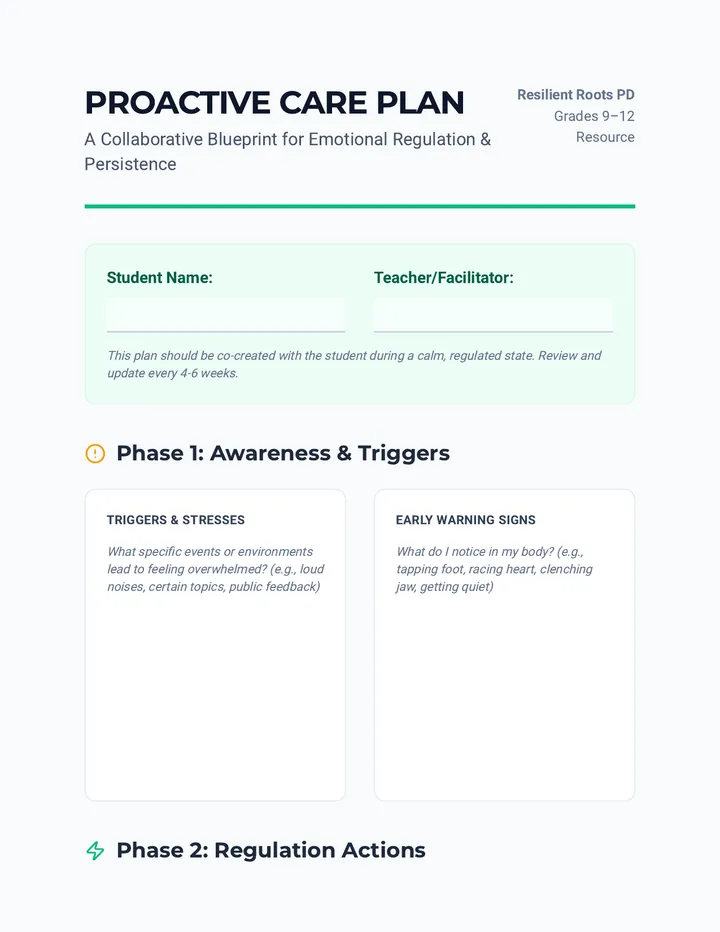
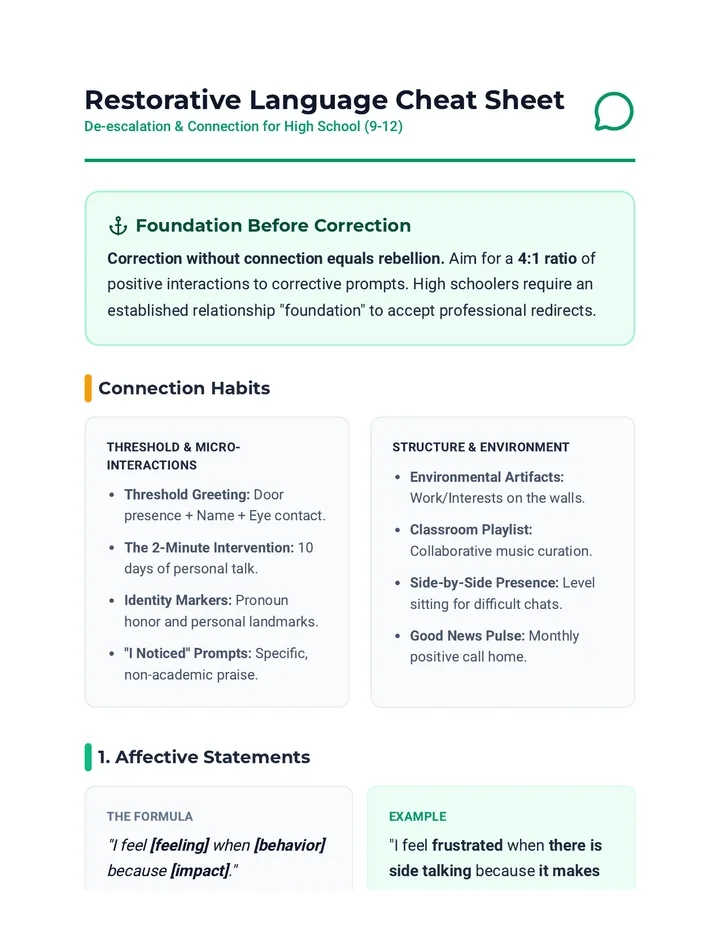
A professional development session for high school teachers focusing on restorative practices, emotional regulation, and the implementation of proactive care plans. This lesson equips educators with the tools to handle chronic emotional challenges and foster deep connection with students in grades 9-12.
A comprehensive lesson designed to help a 3rd-grade student recognize and shift from 'stuck thinking' to 'flexible thinking' during transitions and writing tasks. Includes a social story, role-playing, and tangible strategy cards.
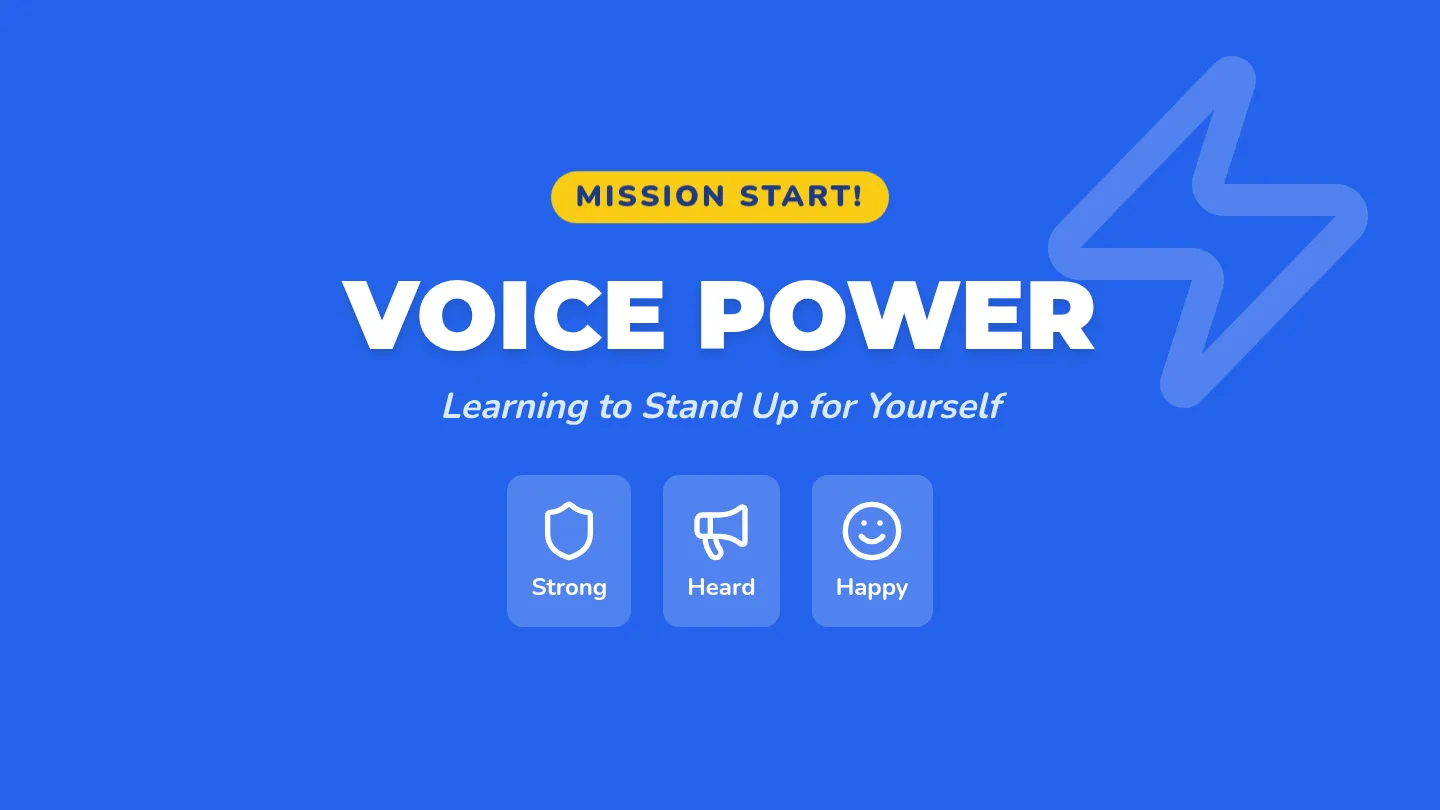
A high-energy, superhero-themed lesson designed for students with autism to learn the 'superpower' of self-advocacy. This lesson covers standing up for oneself at home, school, and in the community through interactive slides, stories, and games.
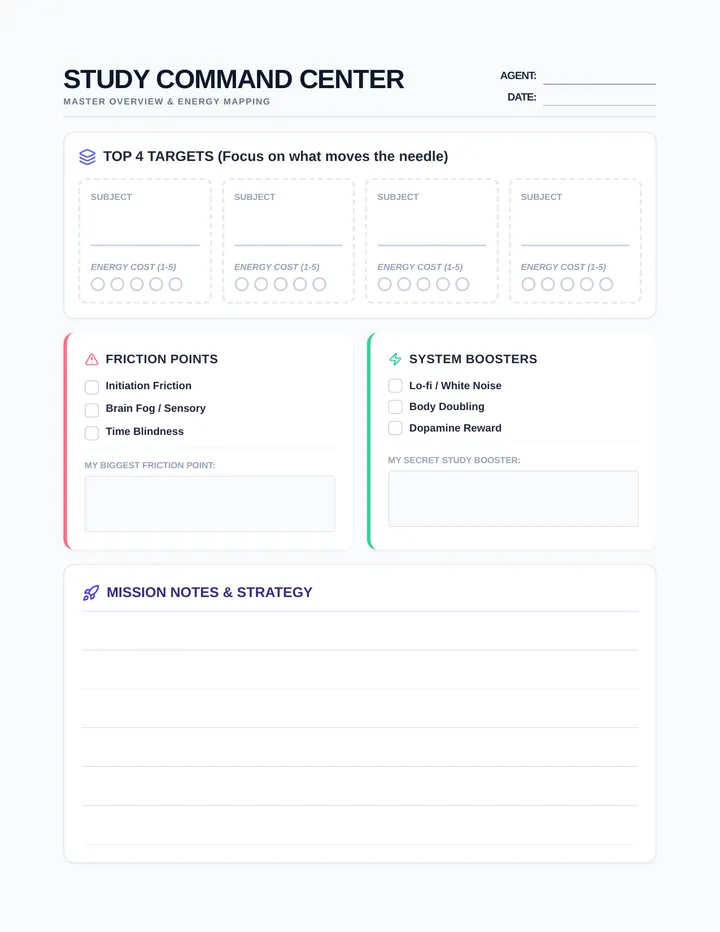
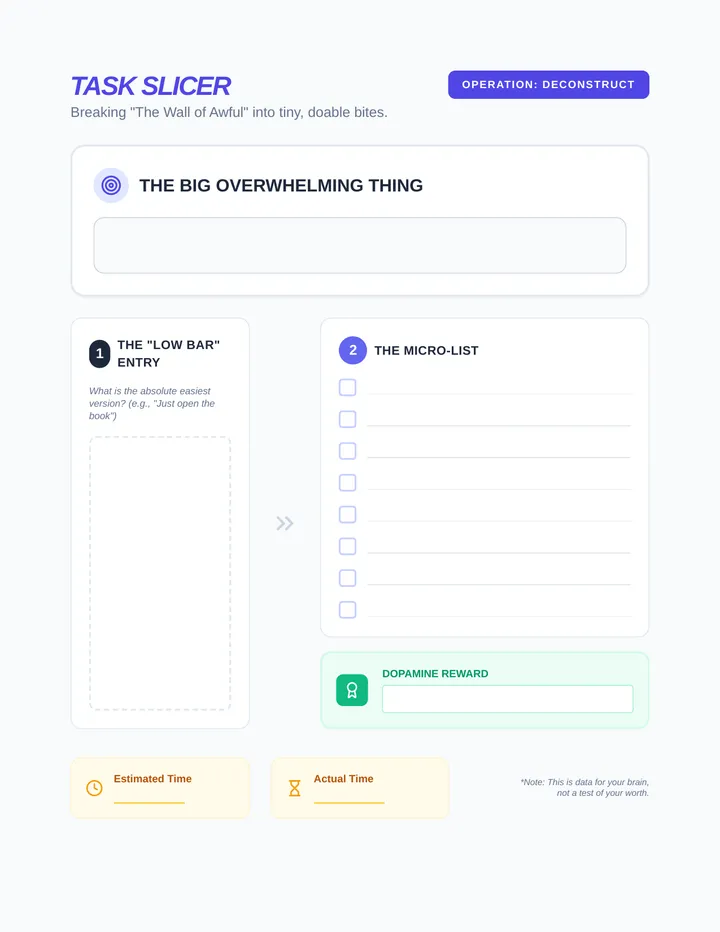
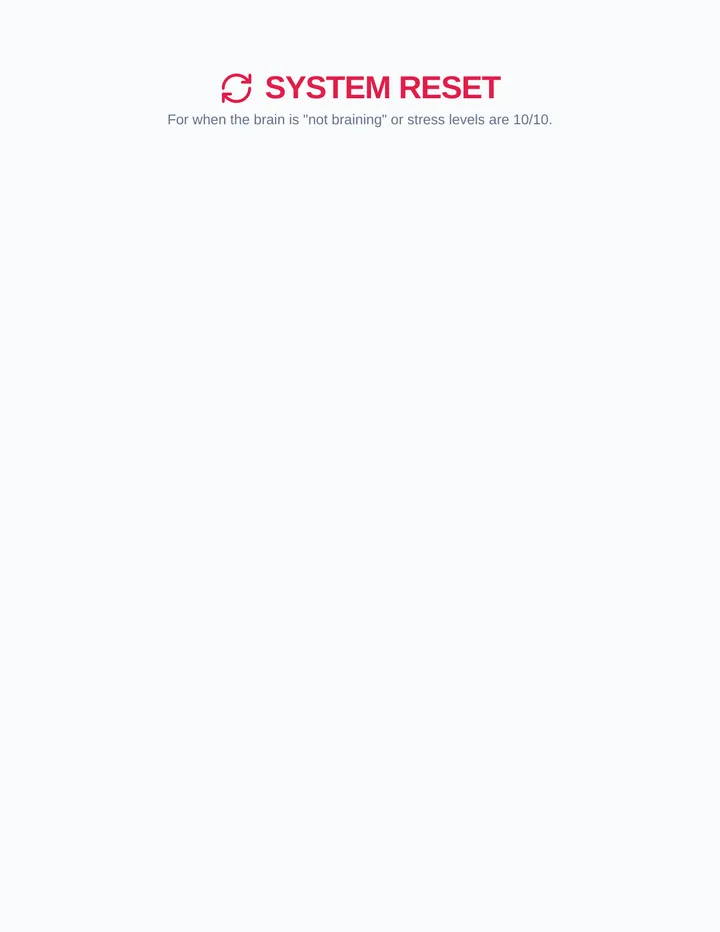
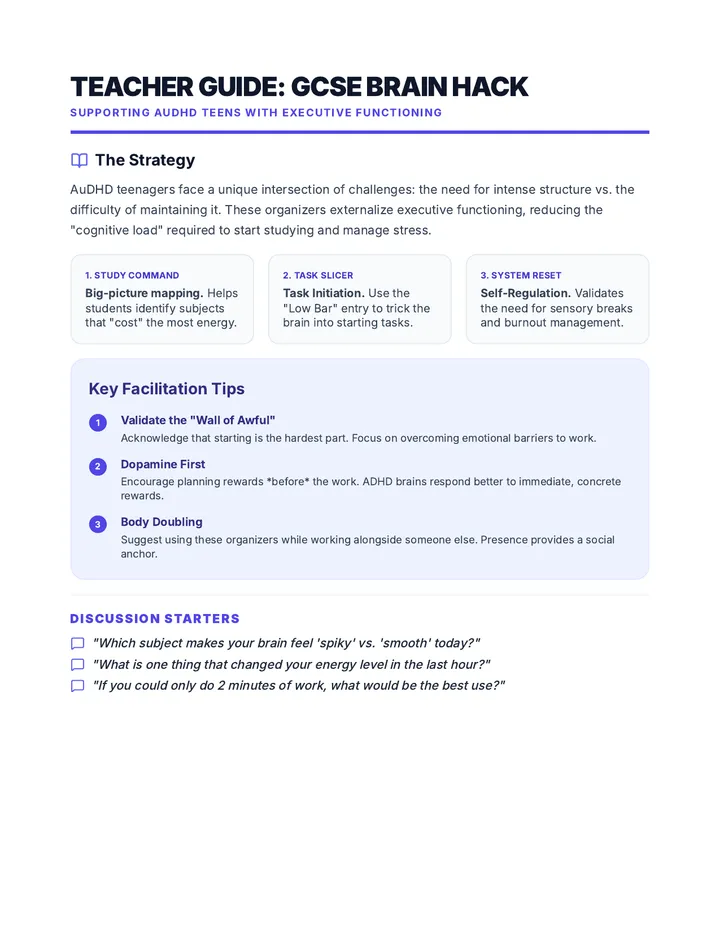
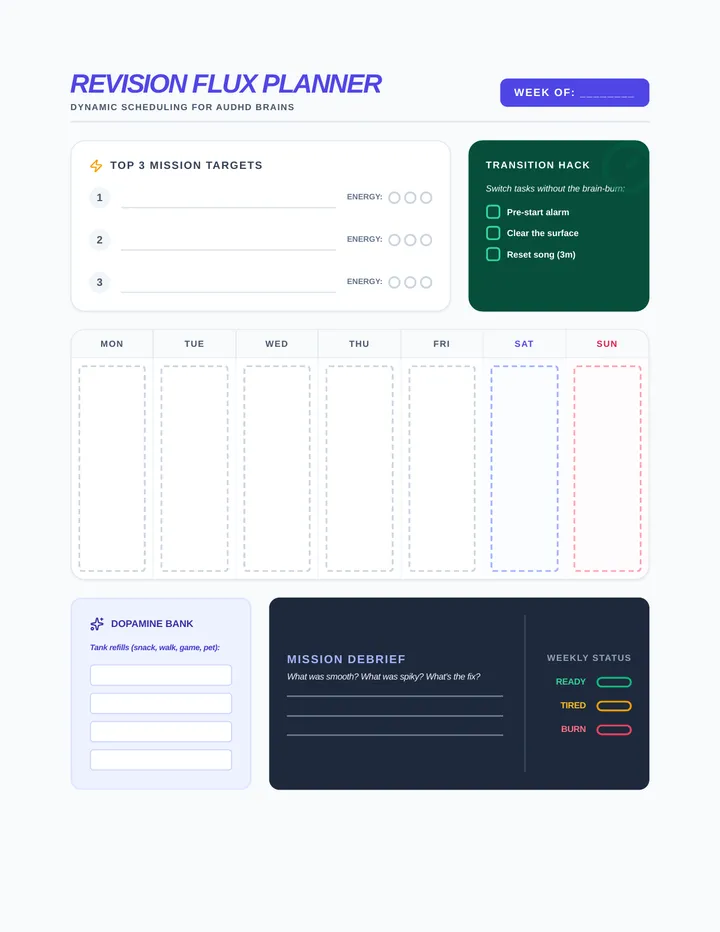
A collection of graphic organizers and strategies designed specifically for AuDHD teenagers to manage executive functioning and stress during GCSE exam preparation.
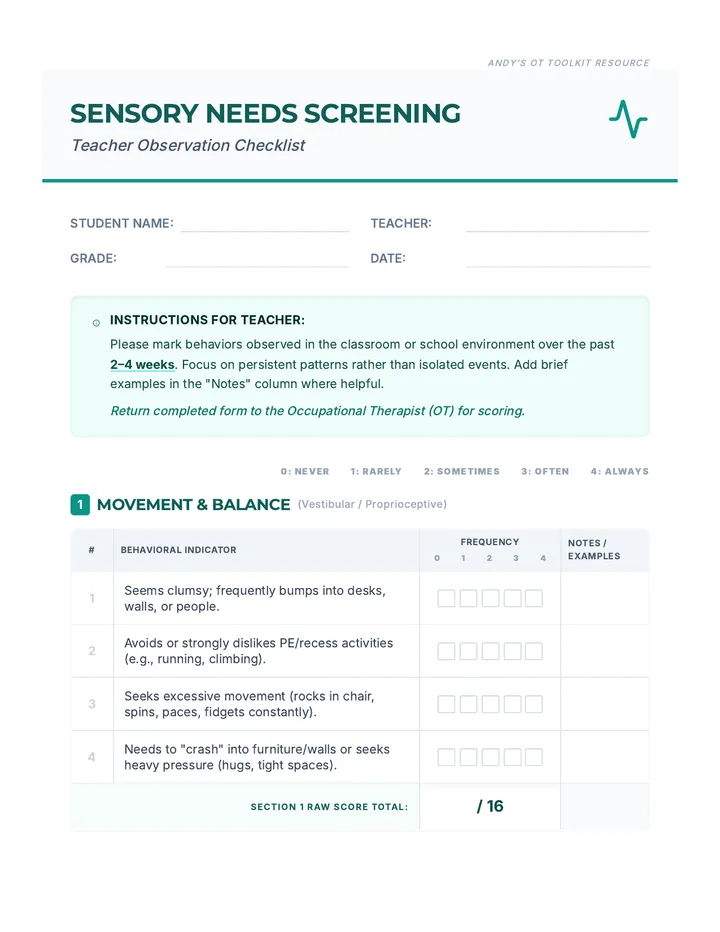
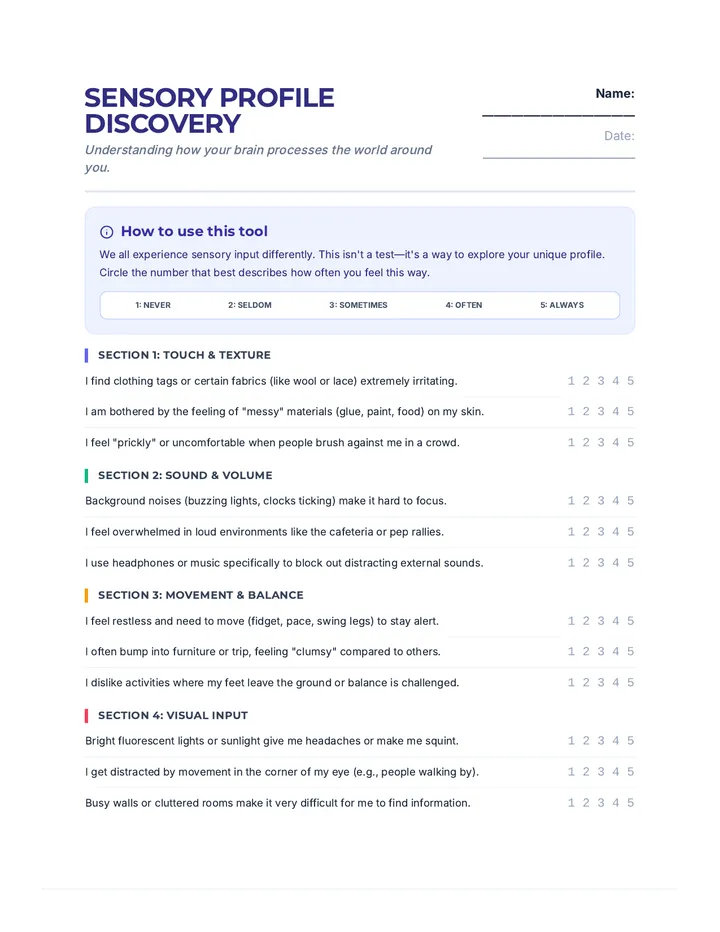
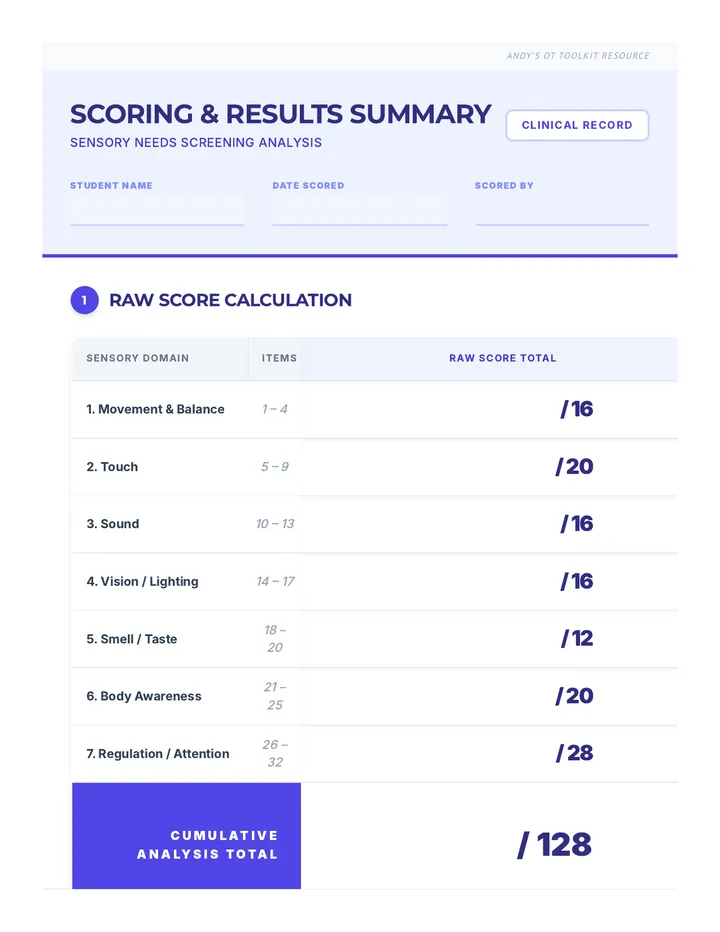
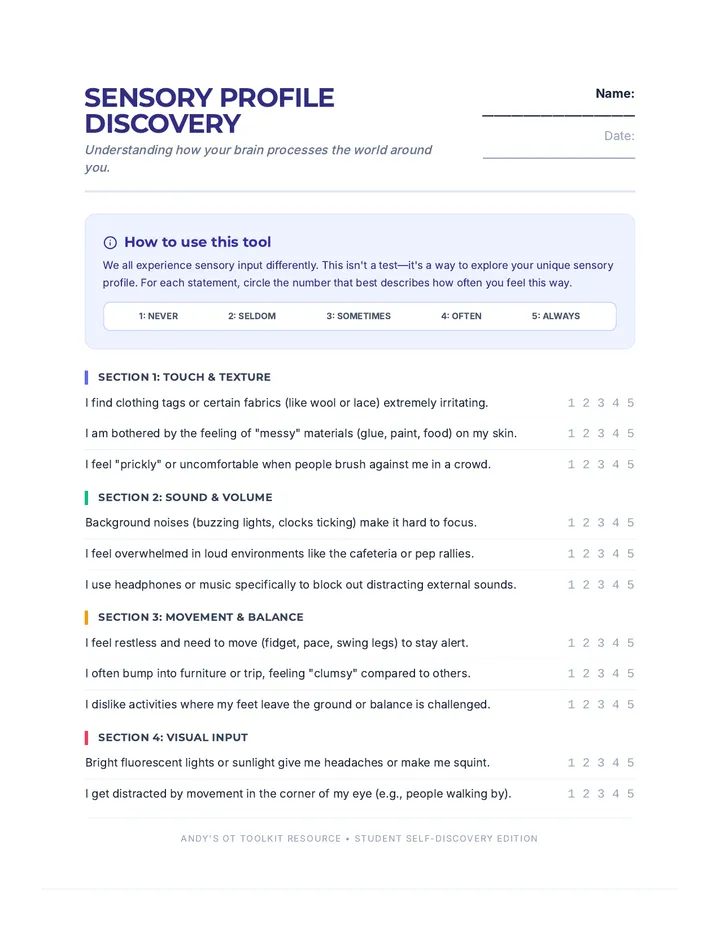
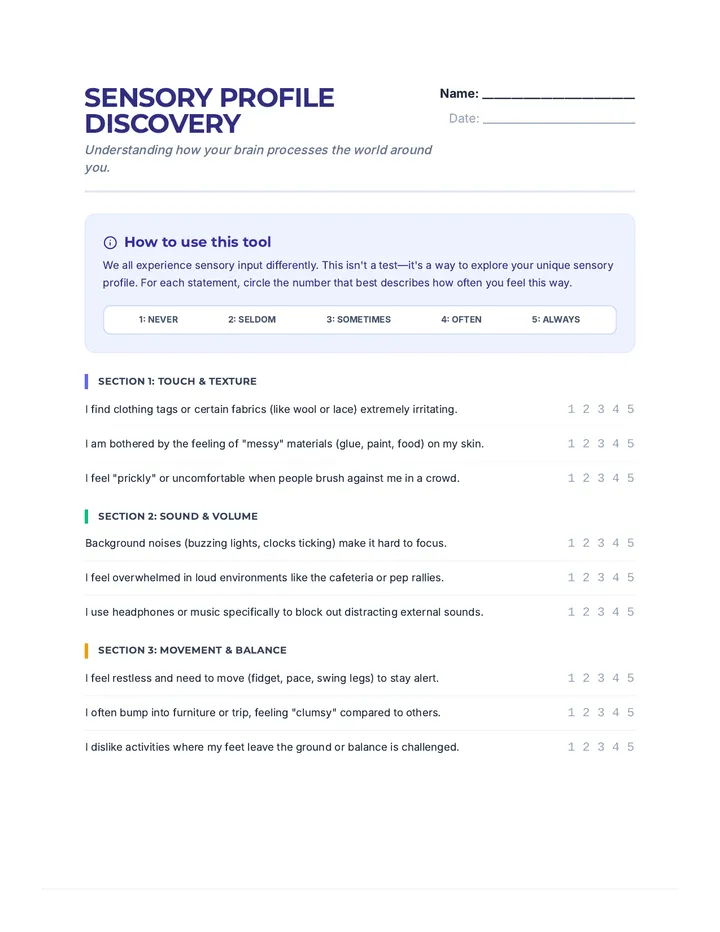
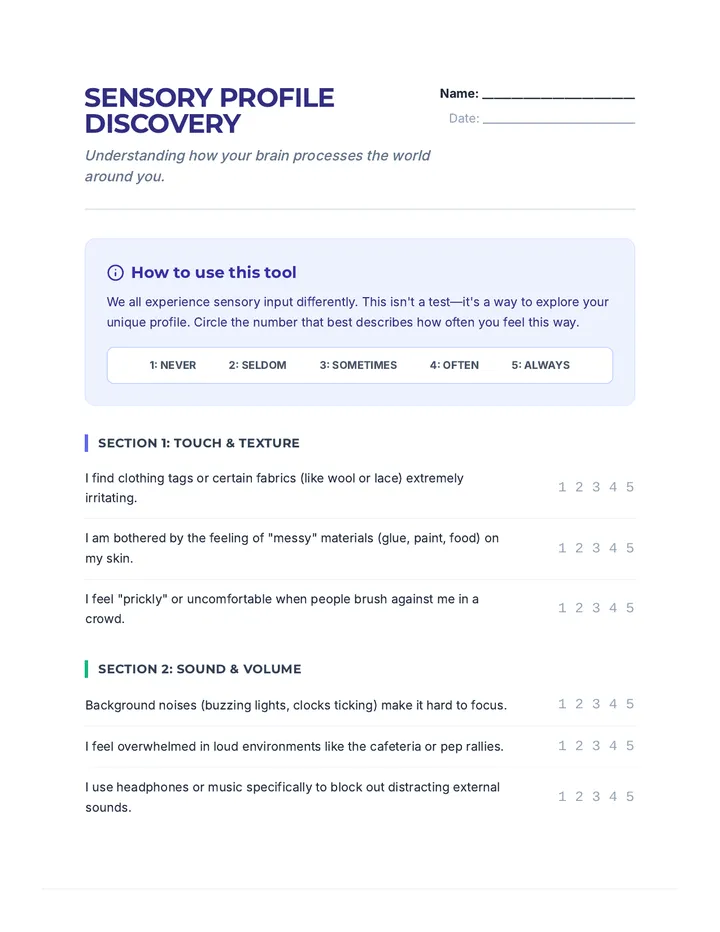
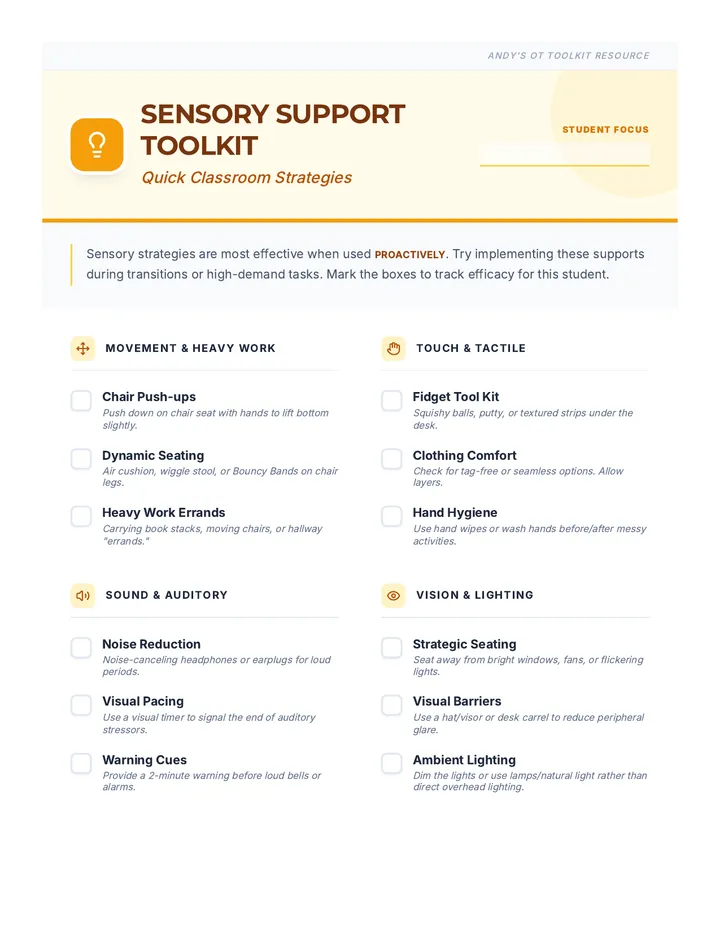
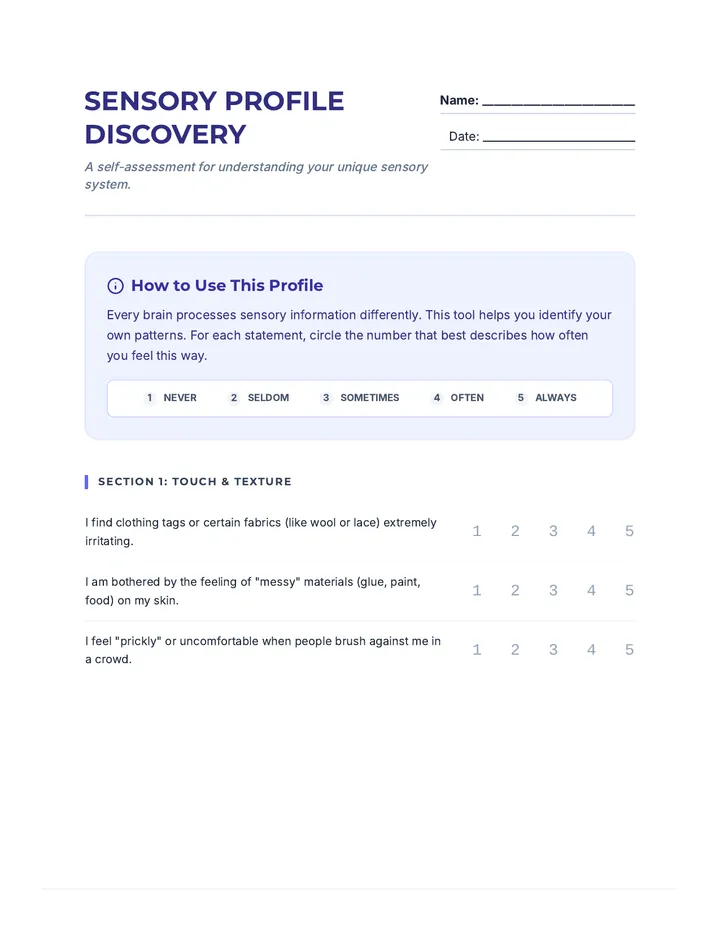
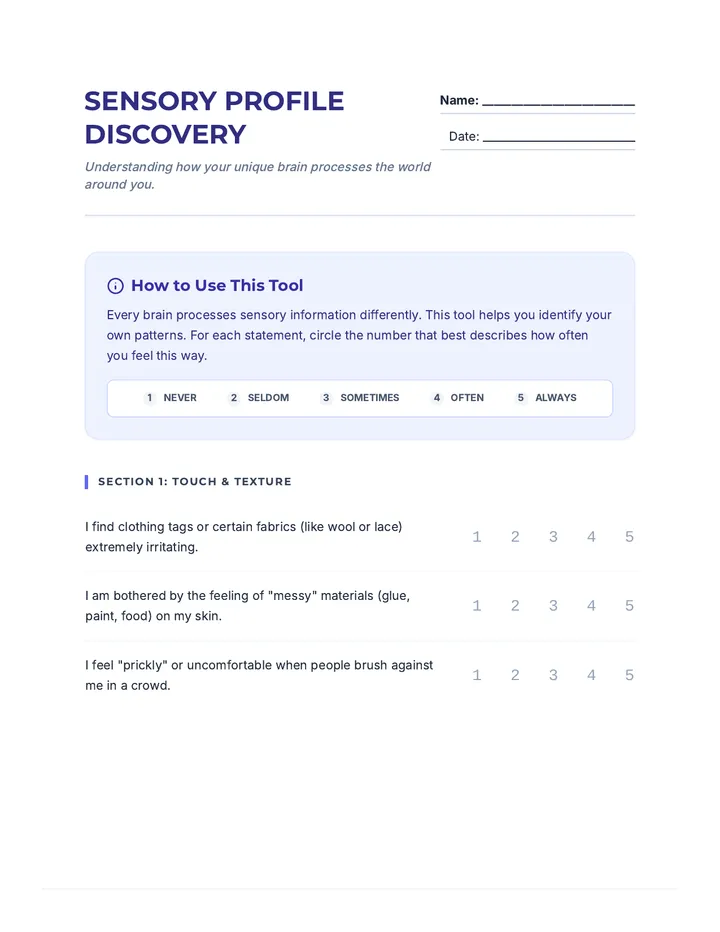
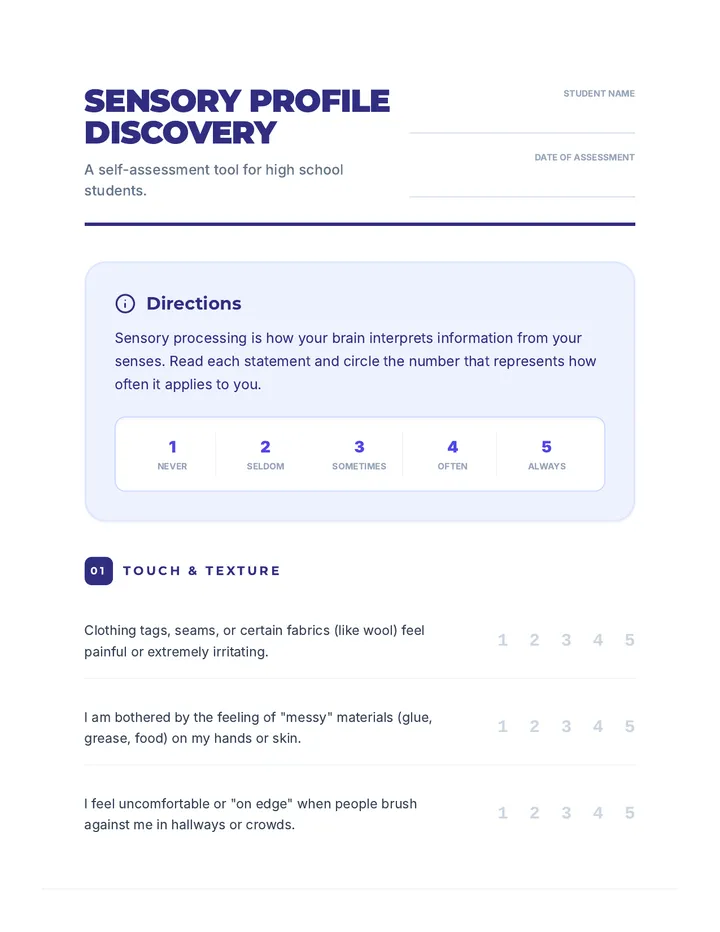
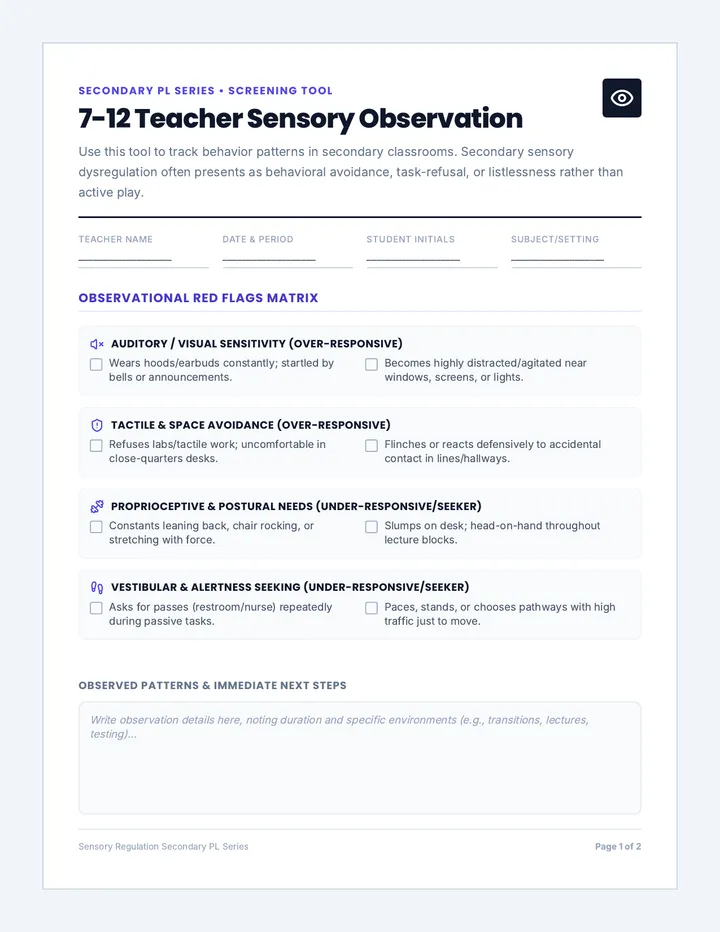
A comprehensive set of tools for teachers and occupational therapists to identify, score, and support students with sensory processing needs. Includes a screening checklist, a simplified scoring guide, and a classroom strategies handout.
A social-emotional learning lesson designed for 1st grade students with ASD to identify and practice five specific coping skills and create a personalized visual toolbox.
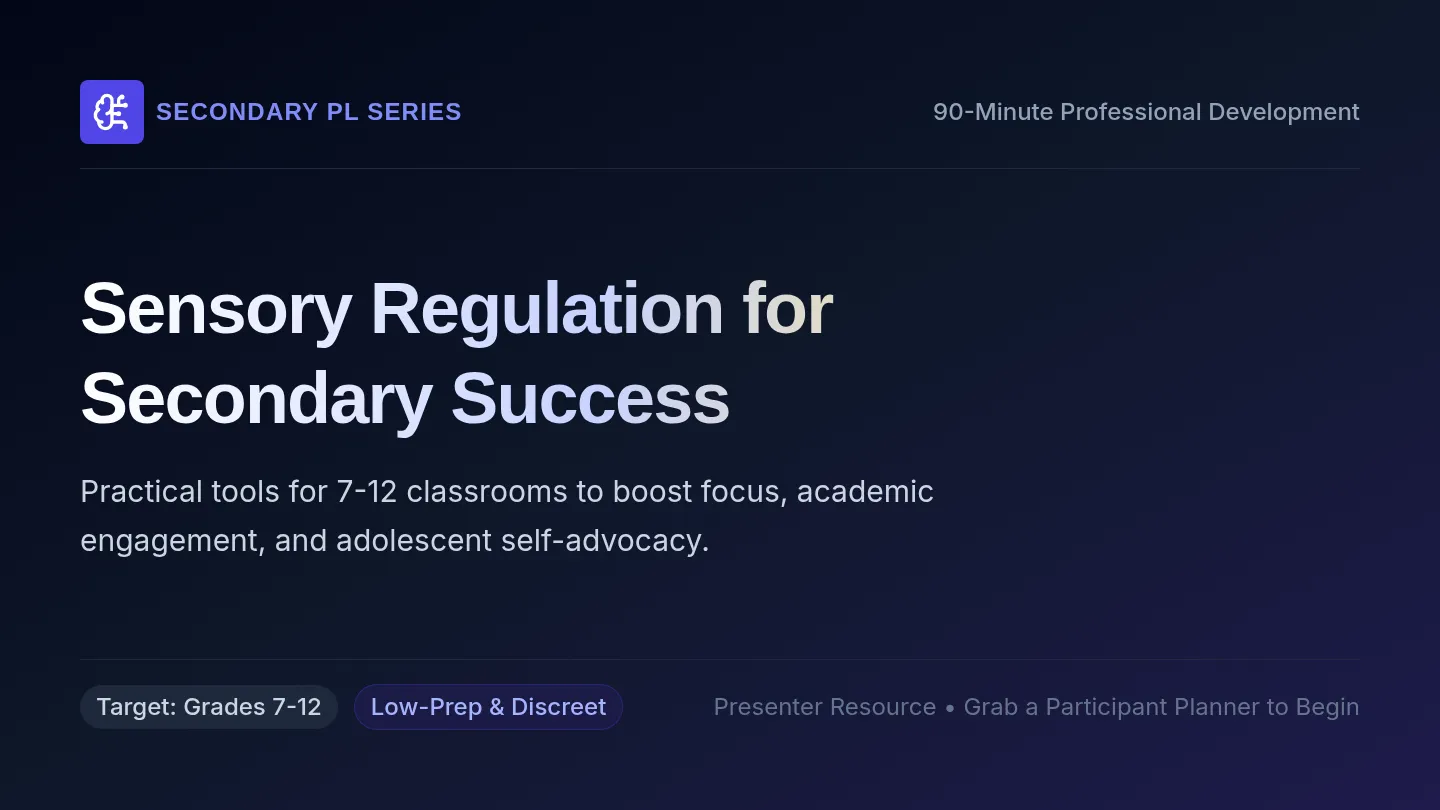
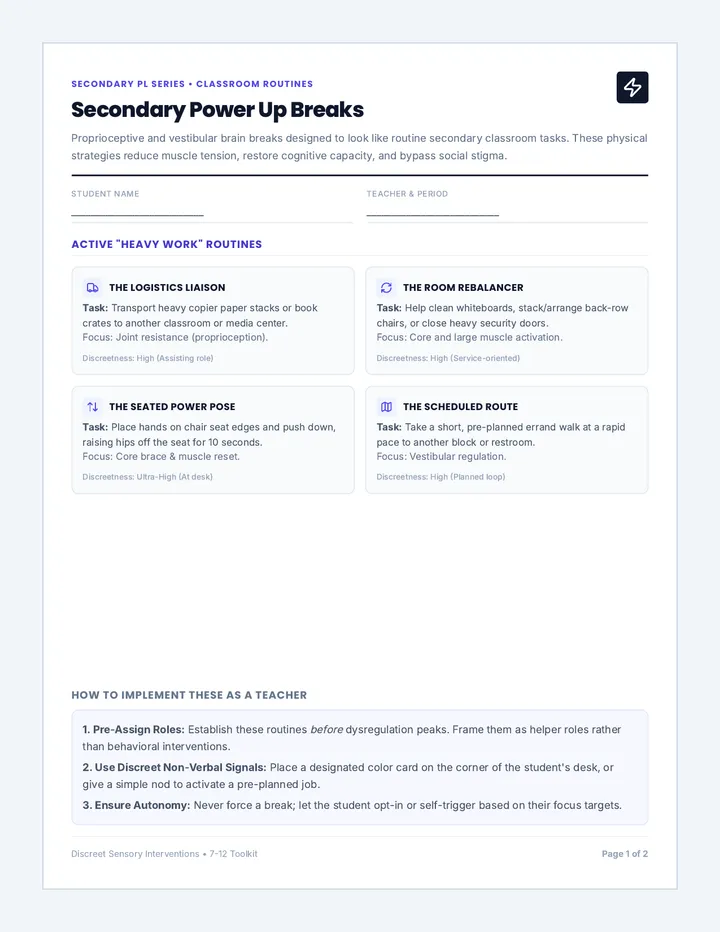
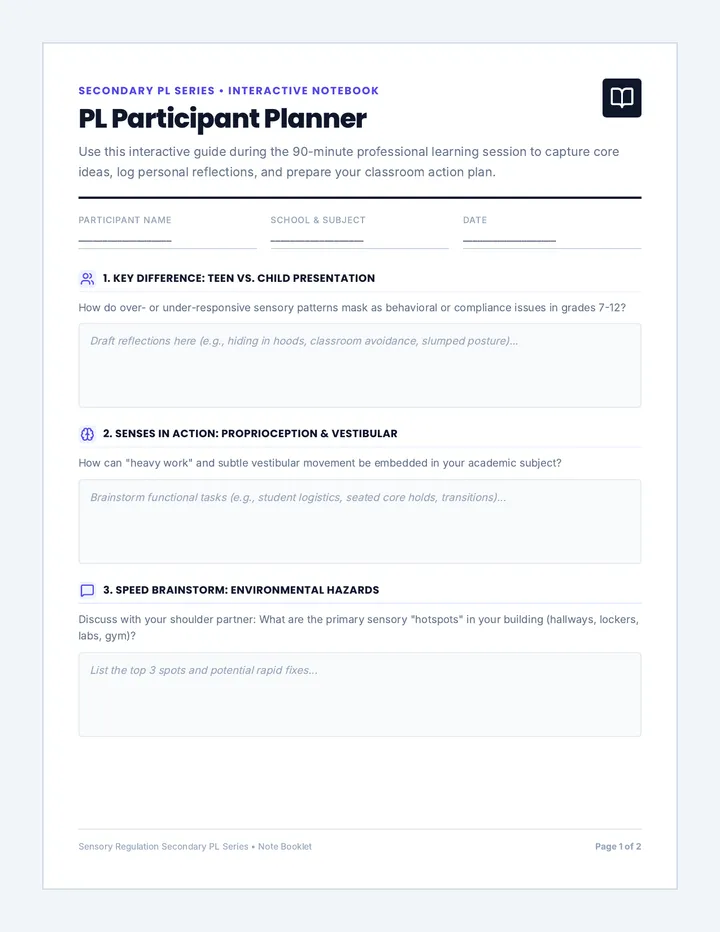
A comprehensive 1.5-hour professional learning session and toolkit package designed for 7-12 educators. It focuses on developmentally appropriate, low-prep, and discreet sensory regulation strategies that respect adolescent autonomy and support academic focus and executive functioning.
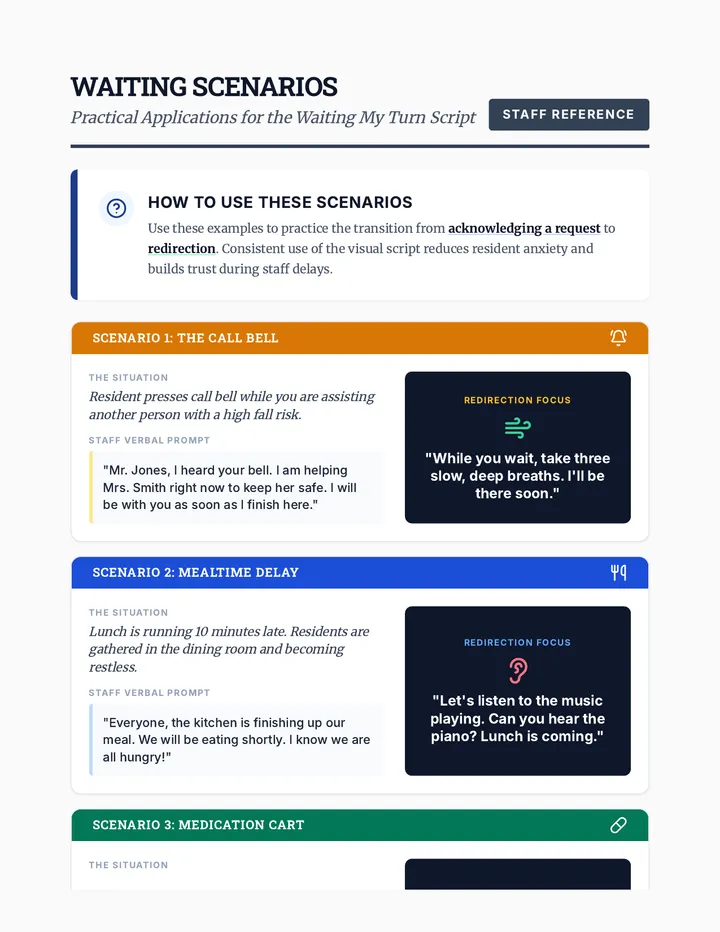
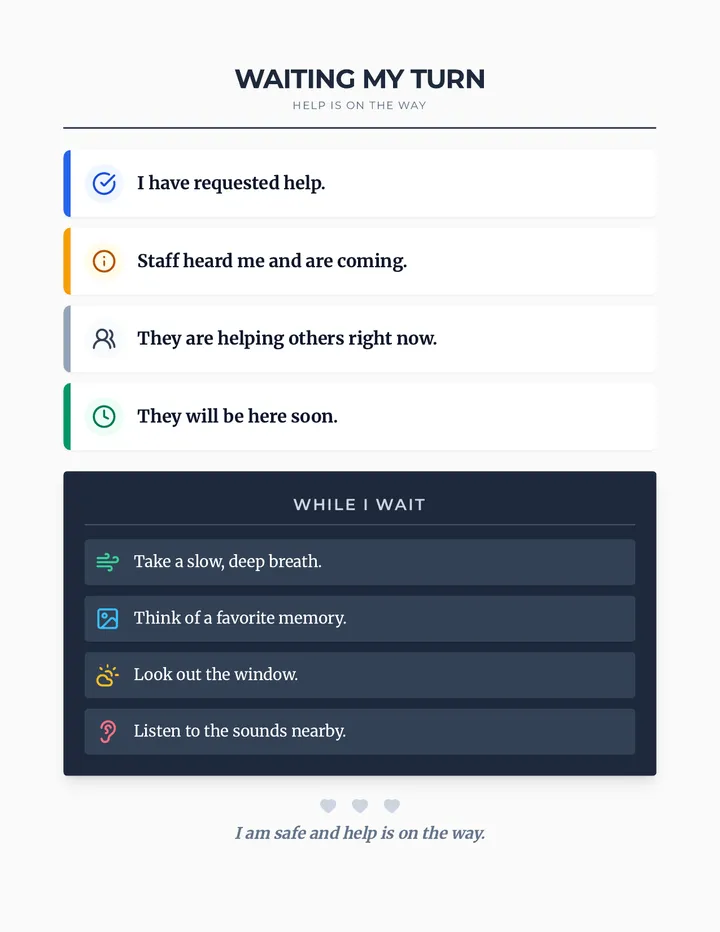
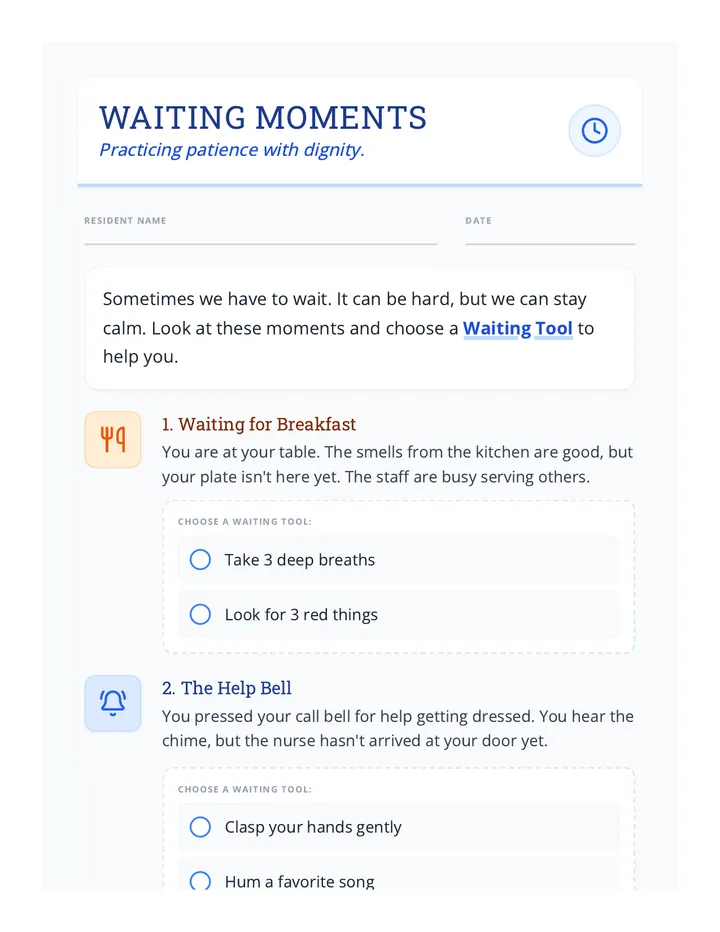
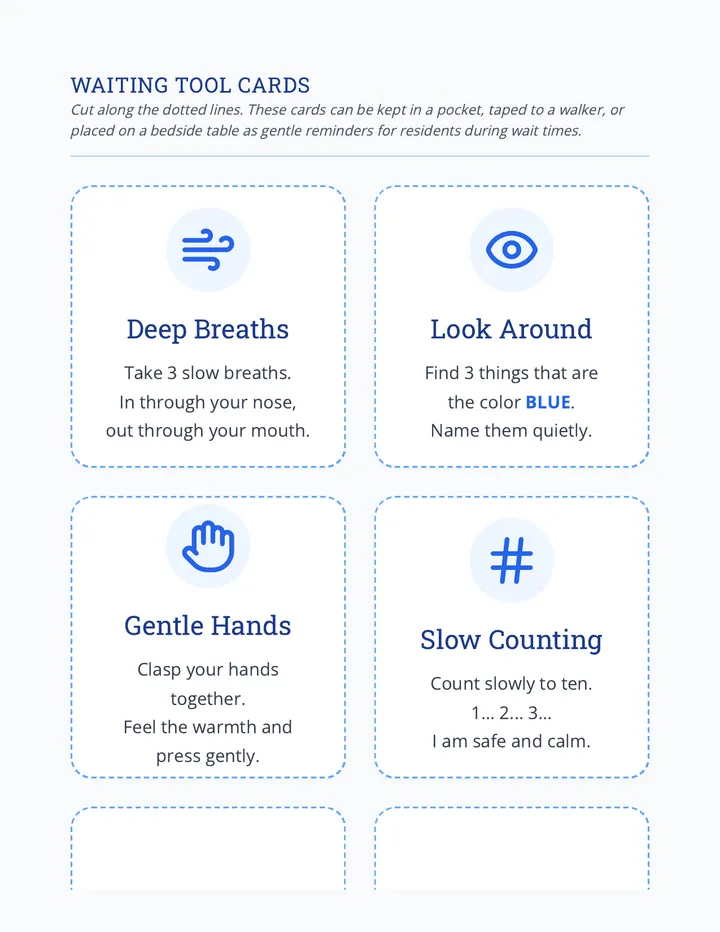
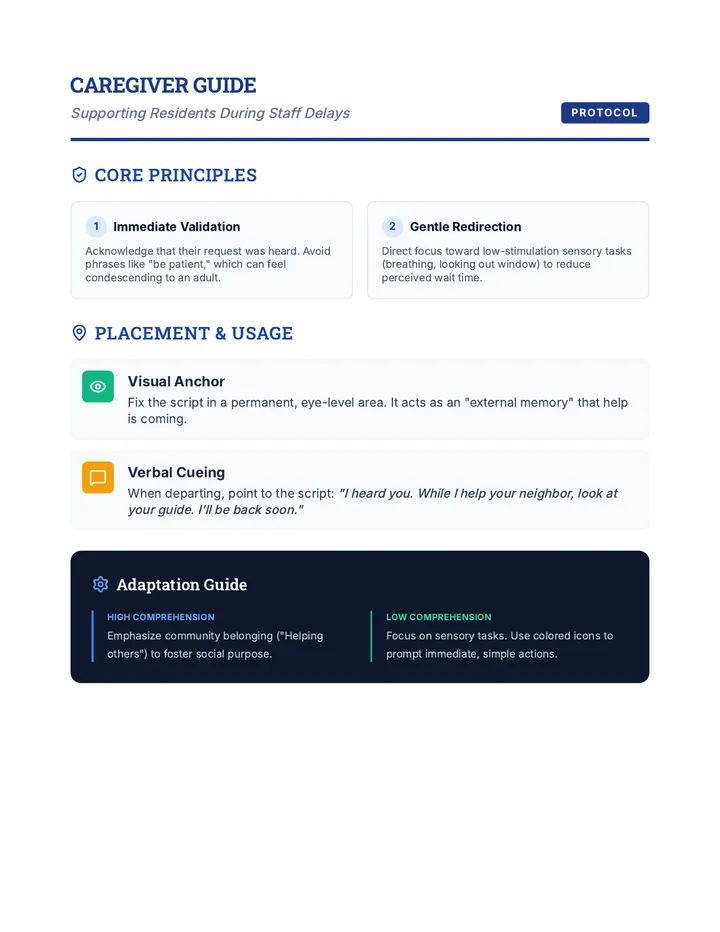
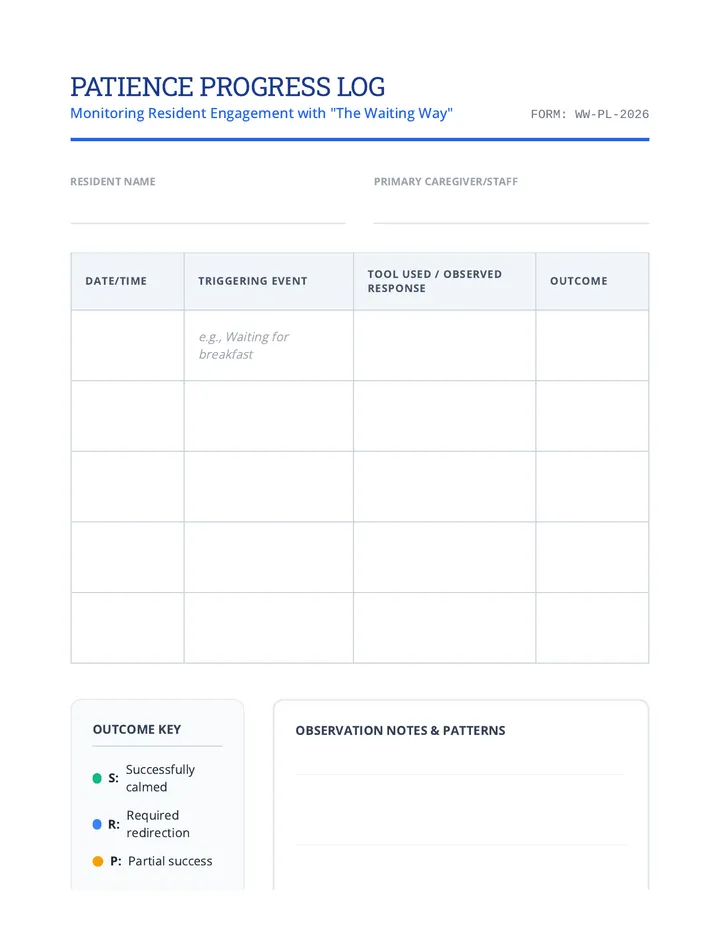
A lesson designed to support adults with cognitive decline in nursing home settings, focusing on the social and emotional skills needed to wait for staff assistance patiently.
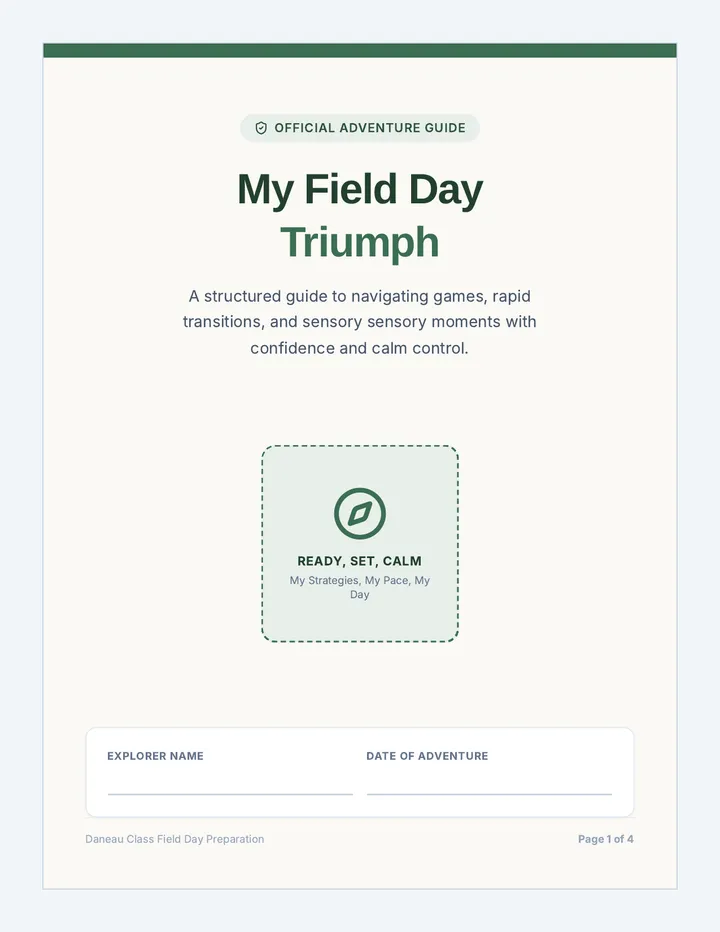
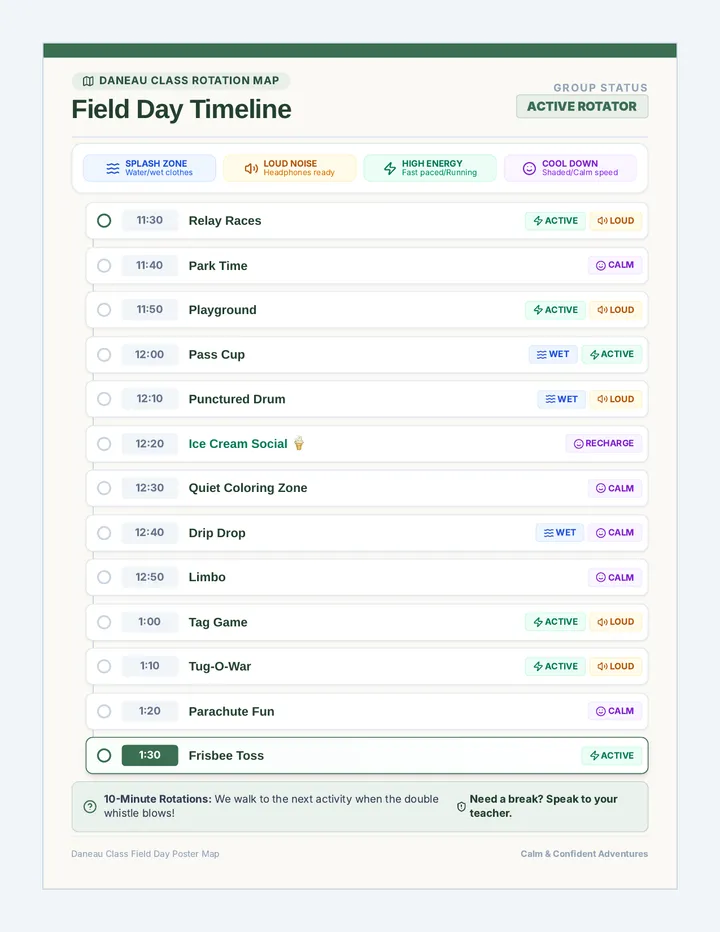
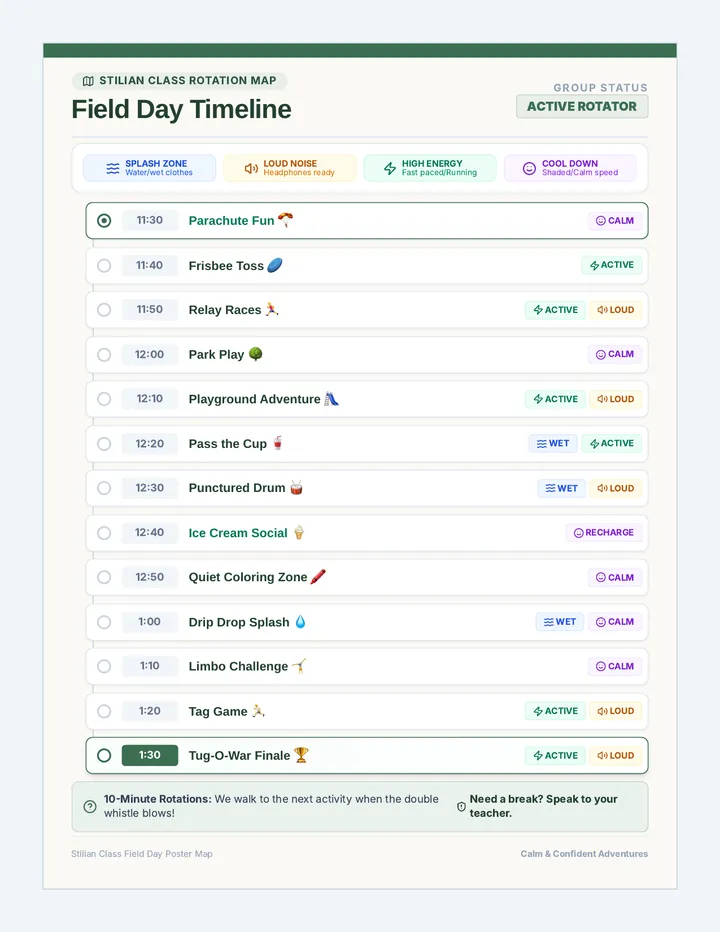
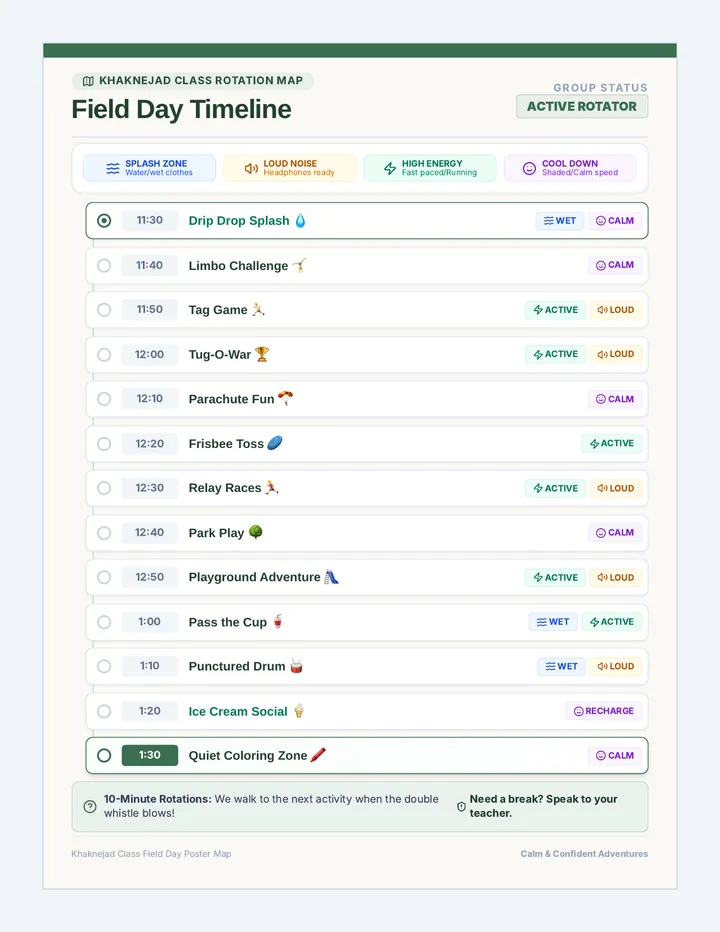
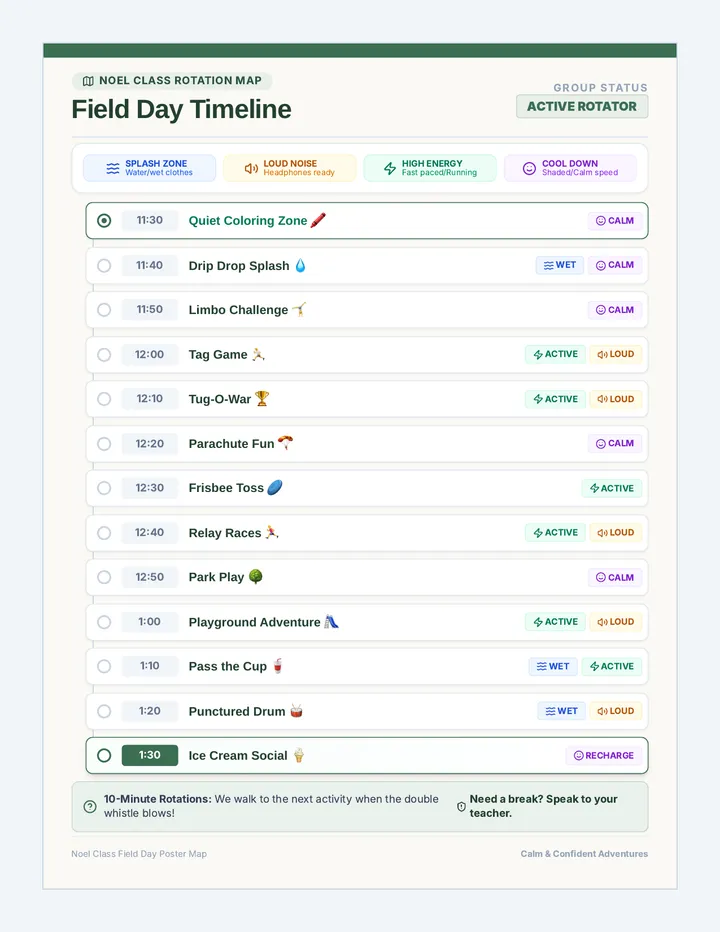
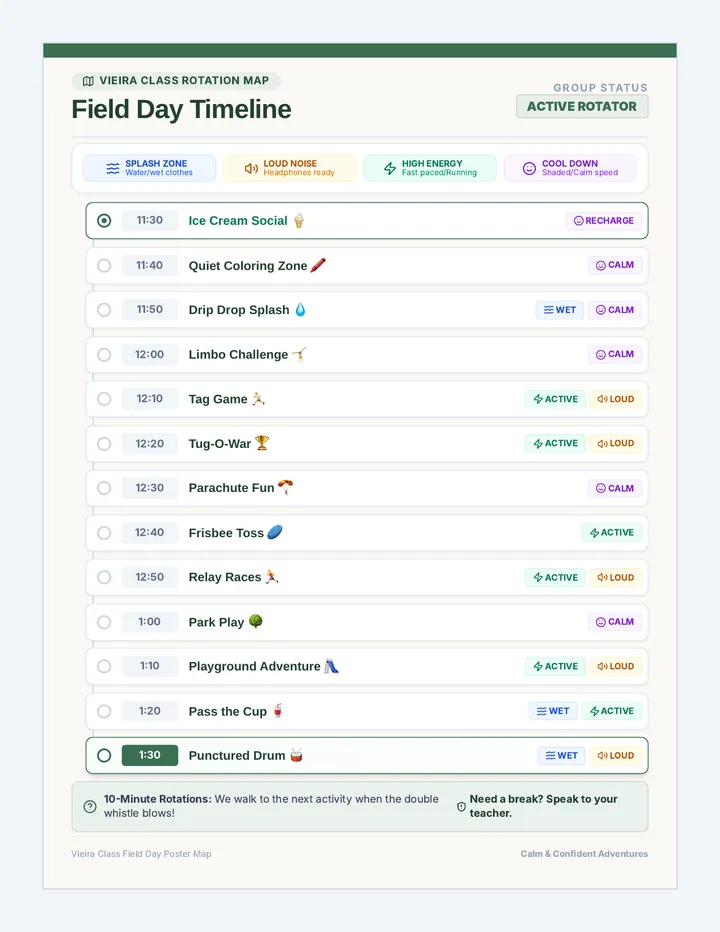
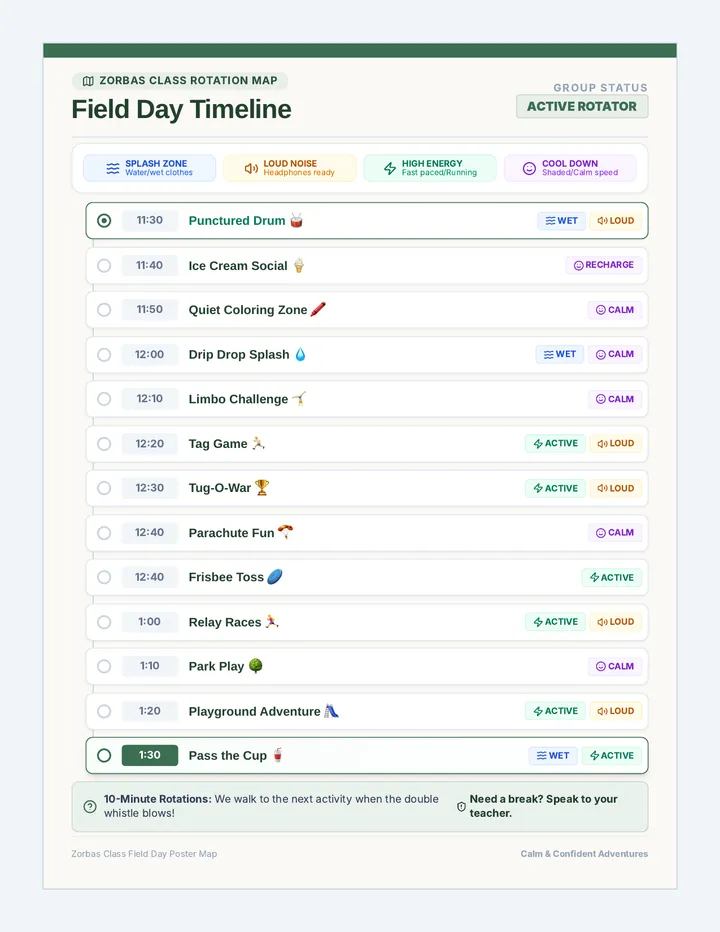
A comprehensive preparation resource set for Field Day, designed for upper elementary and sensory-sensitive students. It includes a structured, coping-strategy-focused social story booklet and a beautifully organized, visual rotation schedule poster to support seamless transitions.
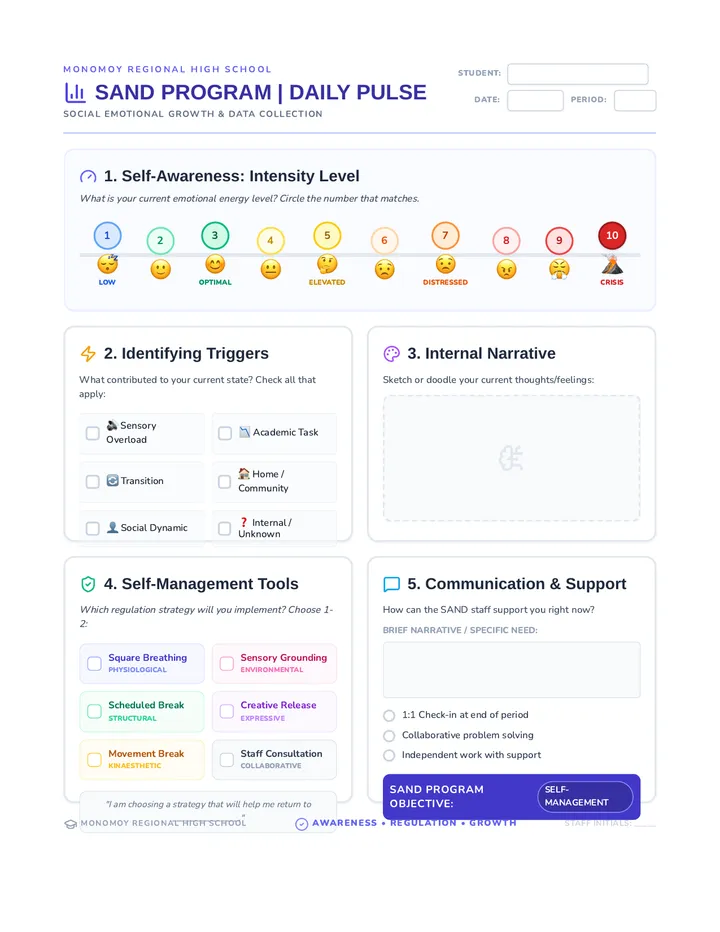
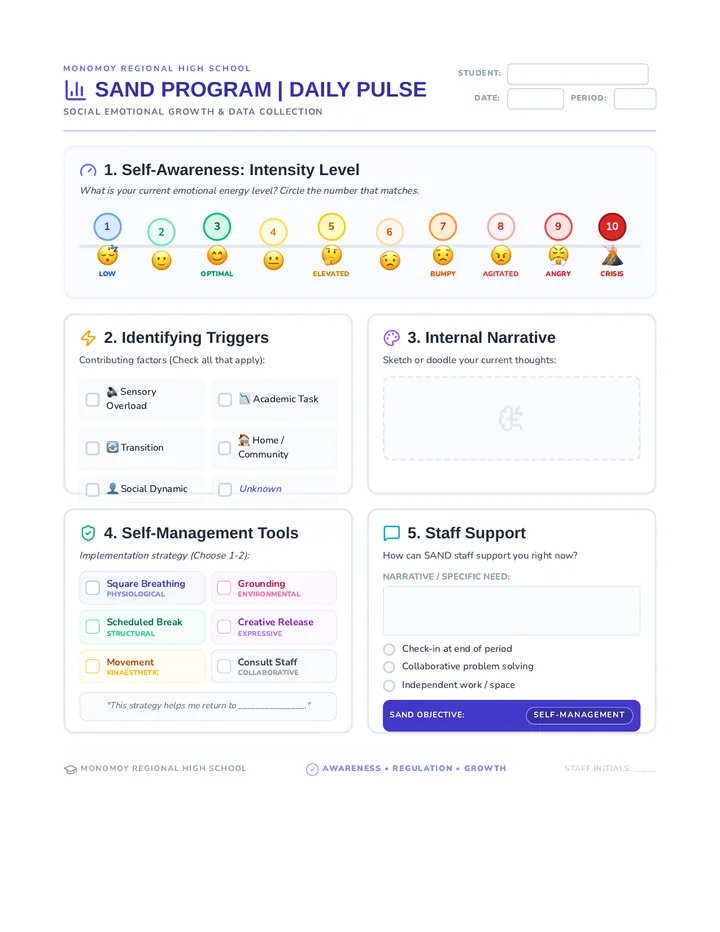
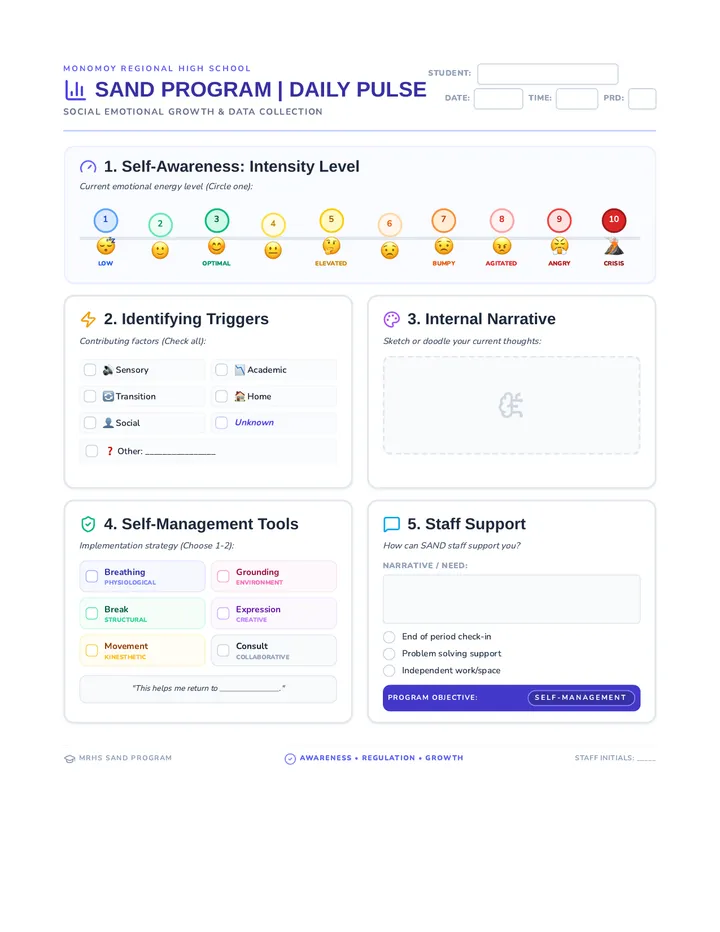
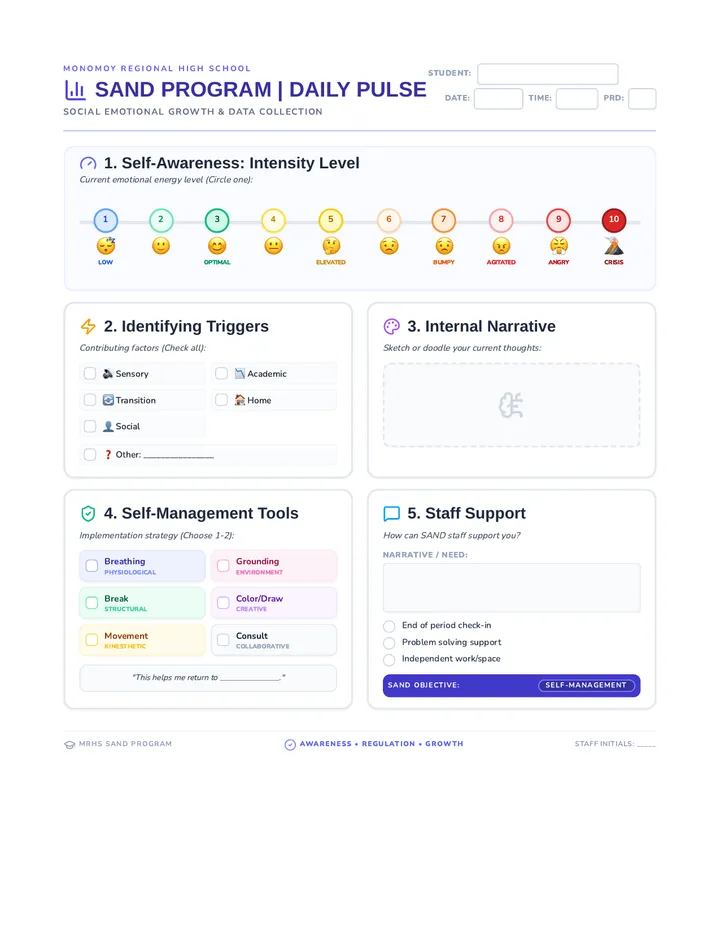
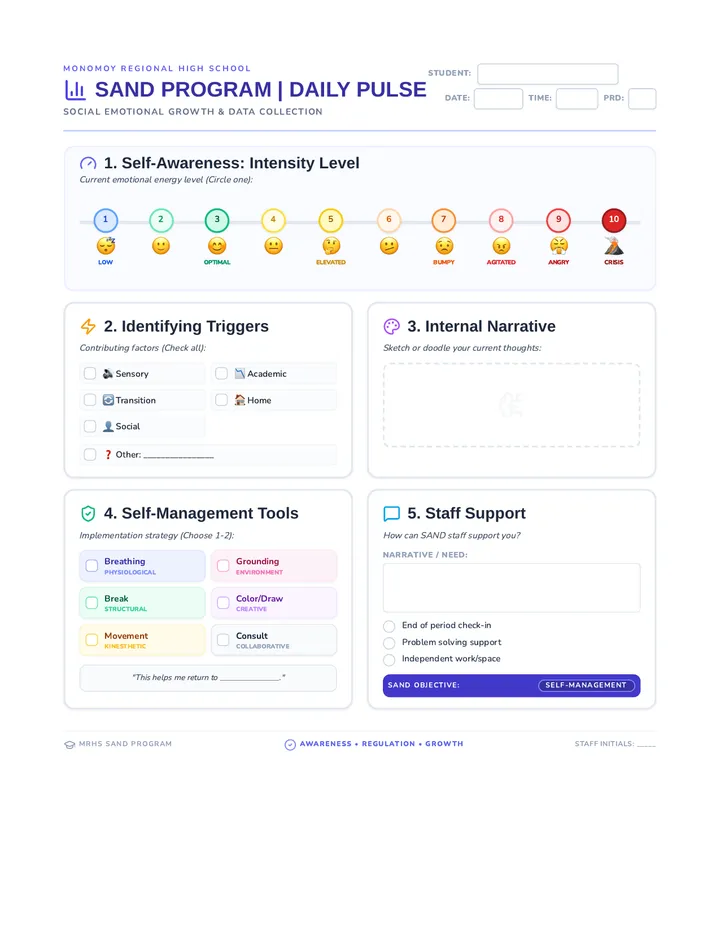
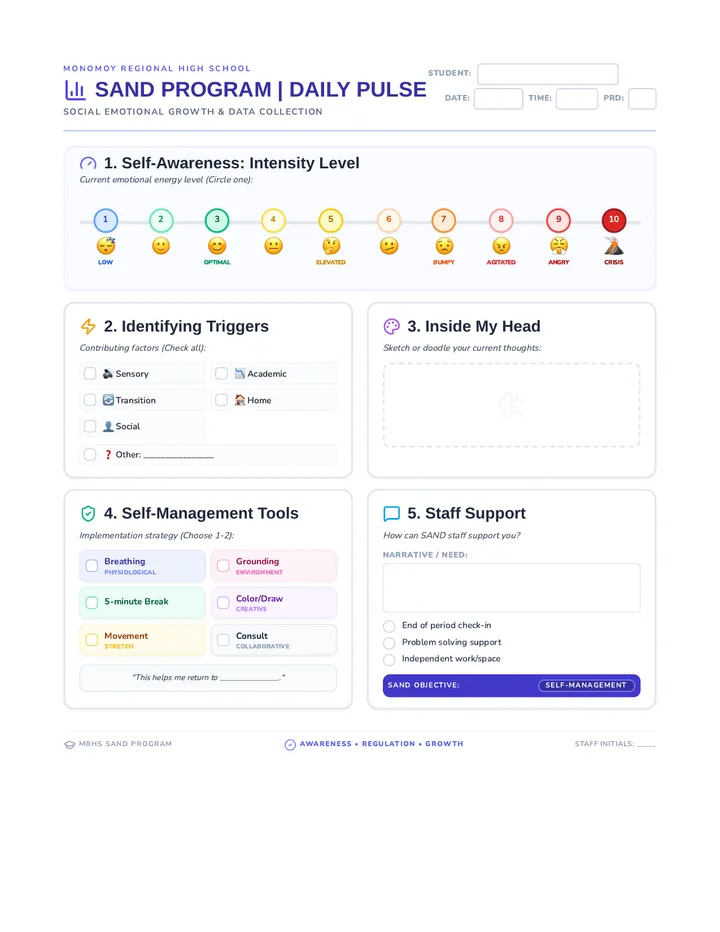
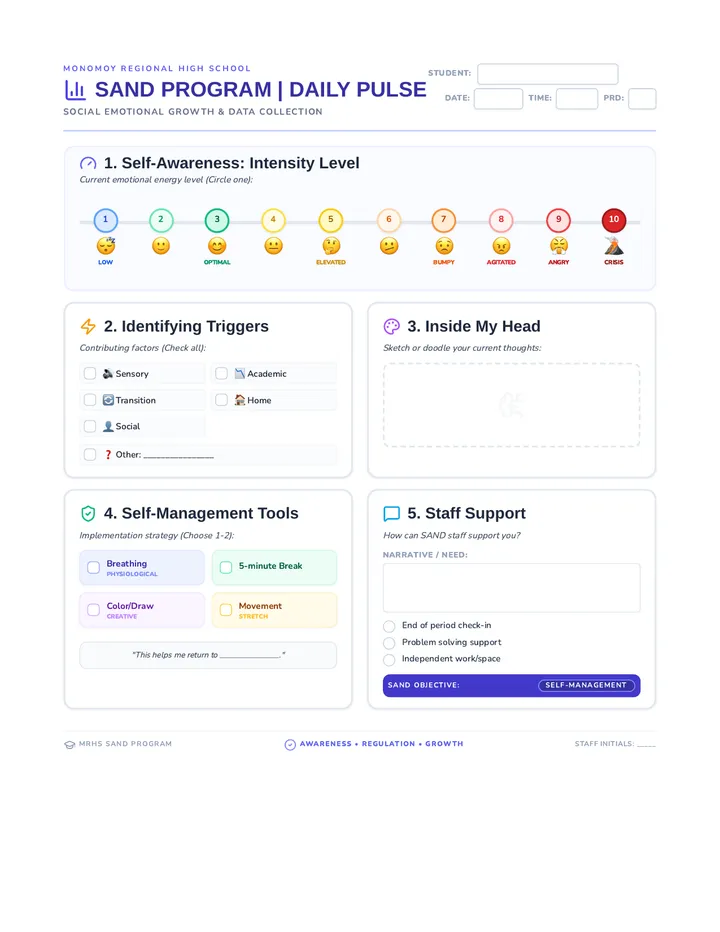
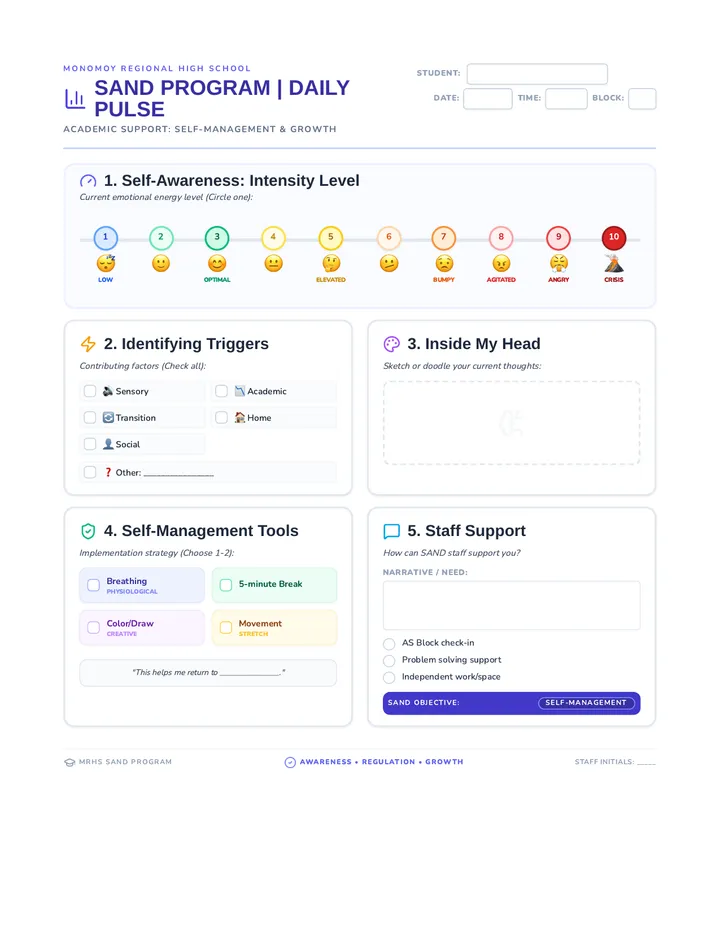
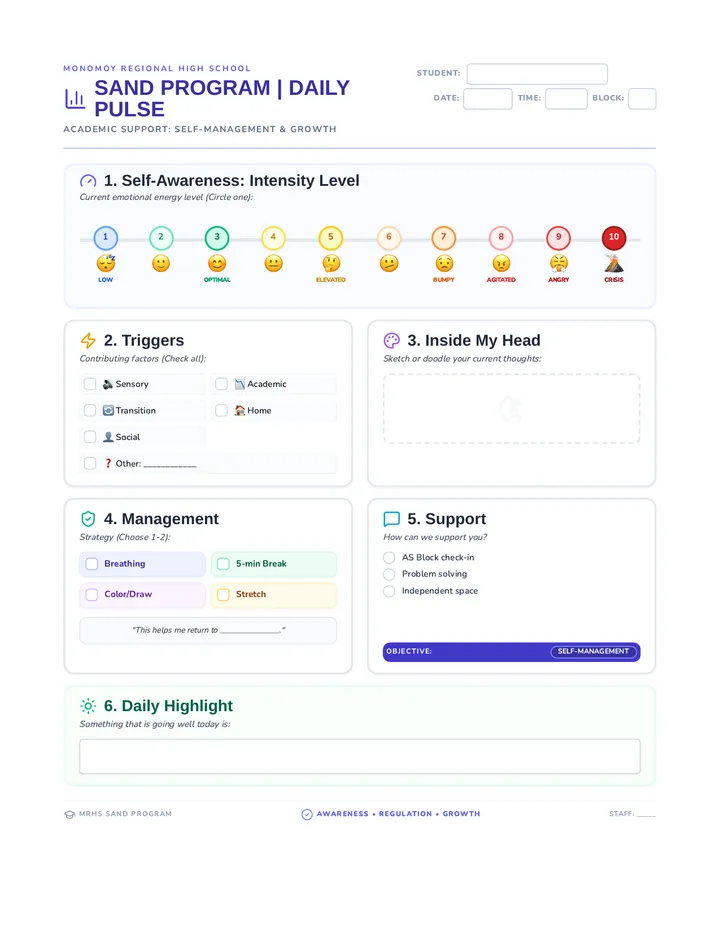
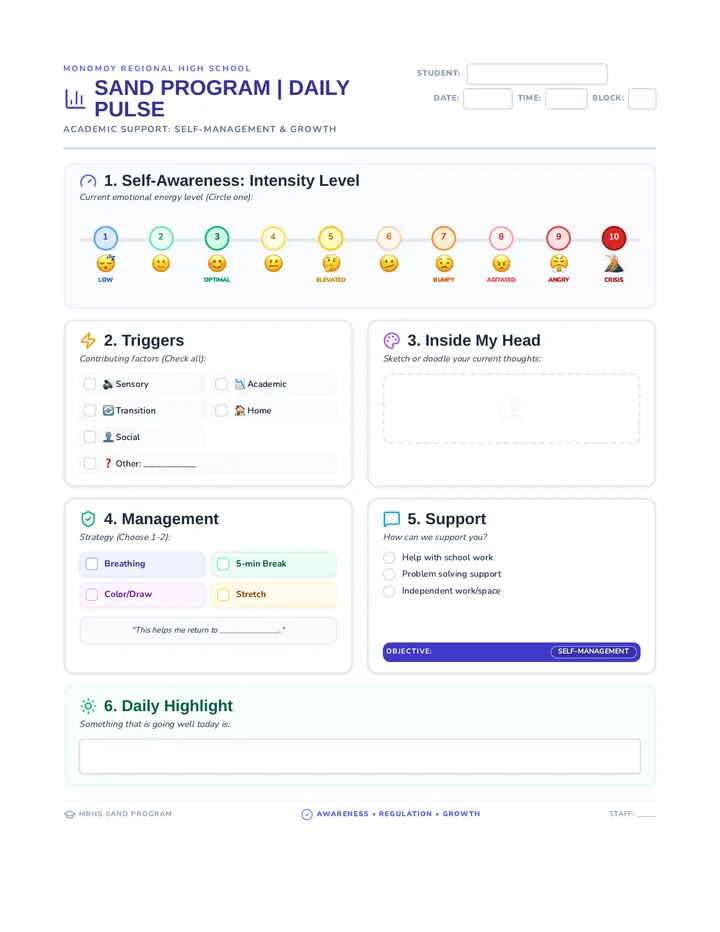
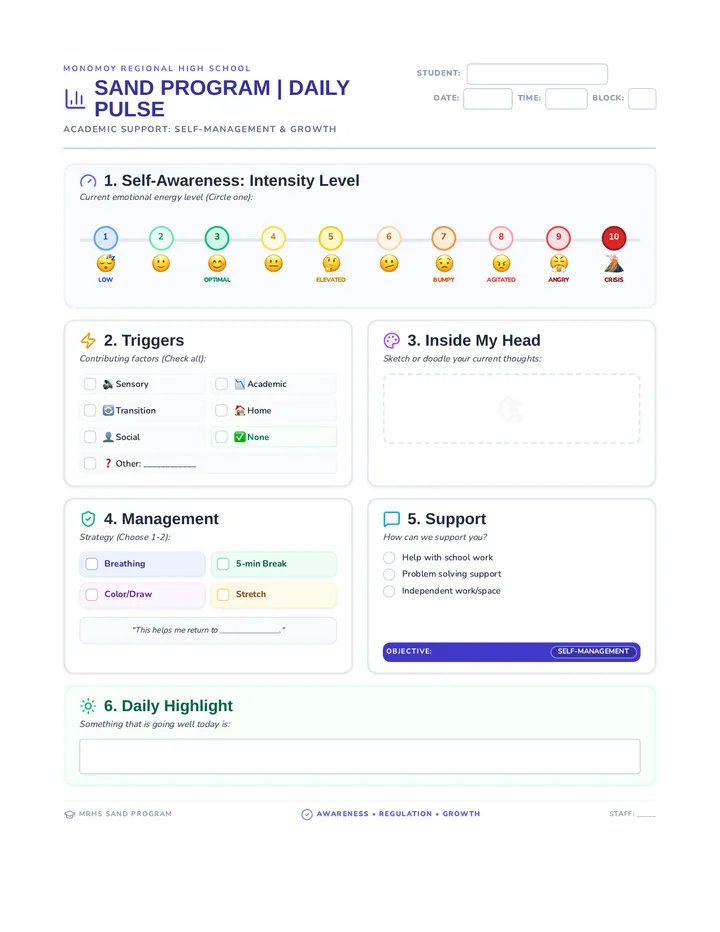
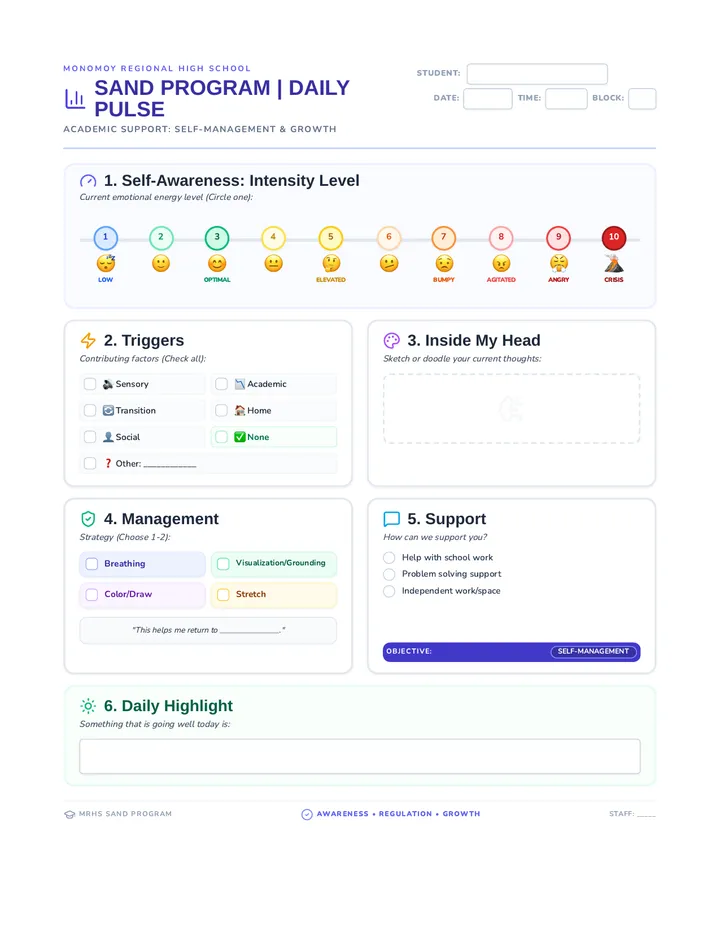
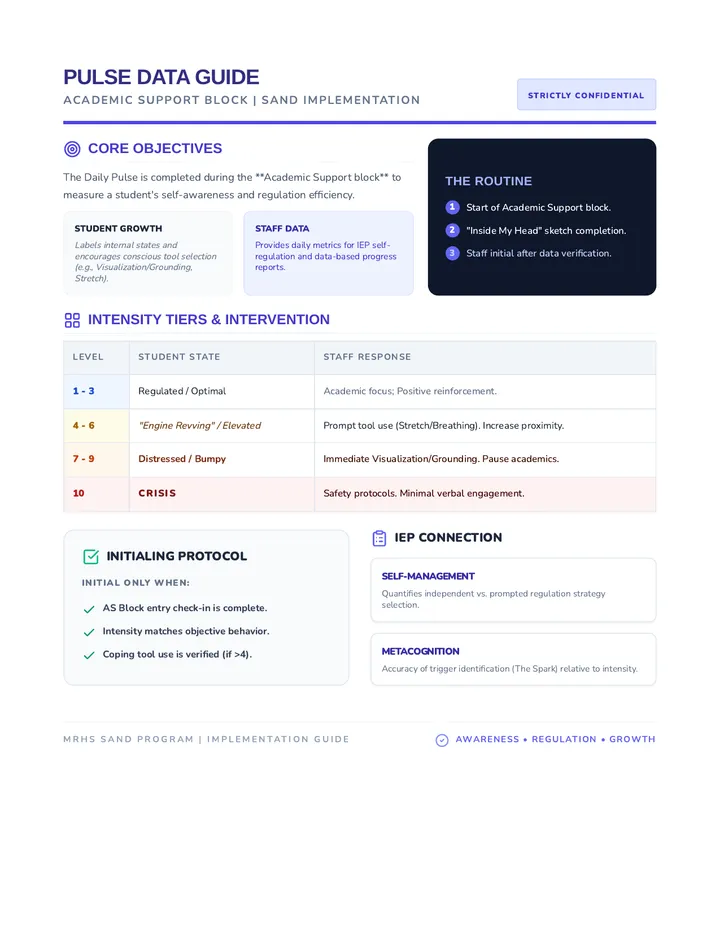
A lesson designed to help students in behavior support programs identify their current emotional state, recognize triggers, and select appropriate coping strategies for self-regulation.
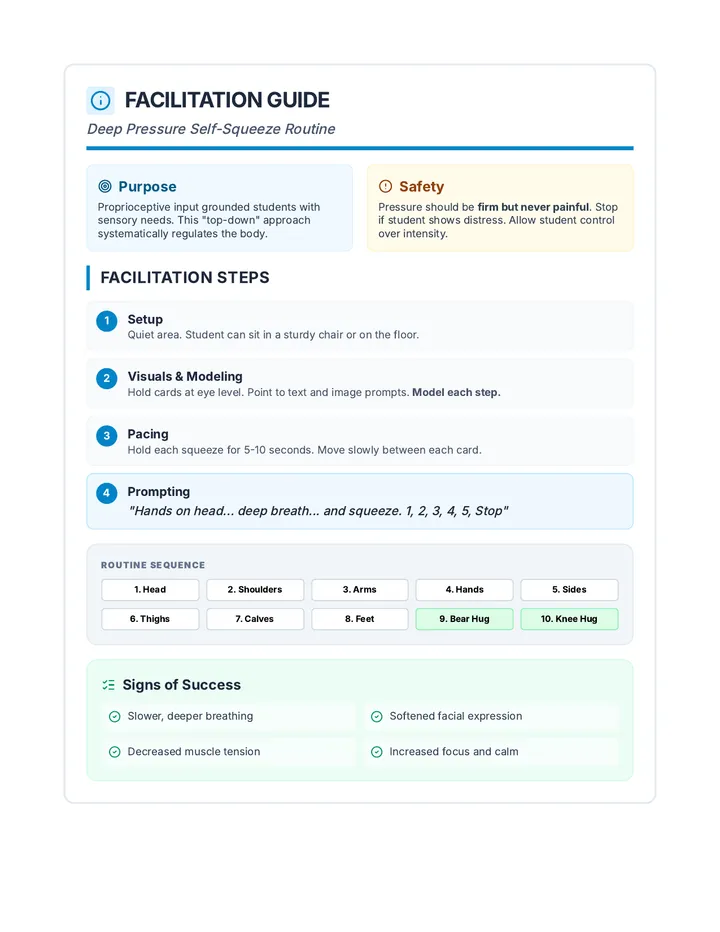
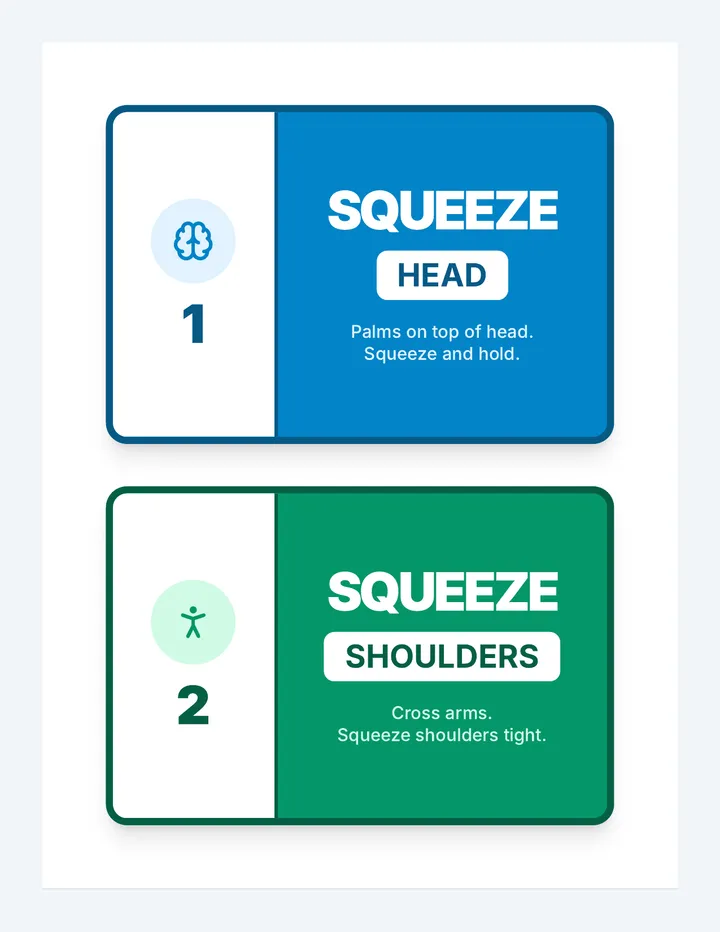
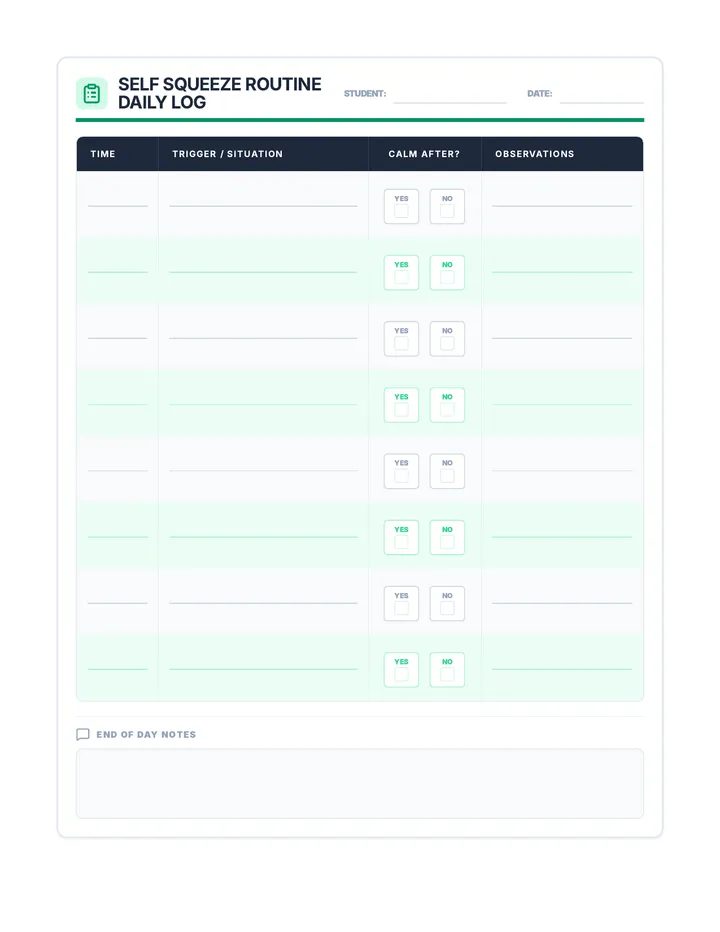
A sensory regulation routine using self-applied deep pressure to help students ground themselves and manage overstimulation. The lesson includes visual squeeze cards for the student and a facilitation guide for the teaching assistant.