A one-page checklist for neurodivergent adaptations, mirroring the professional aesthetic of a fidelity checklist with structured list items, checkboxes, and minimalist icons.
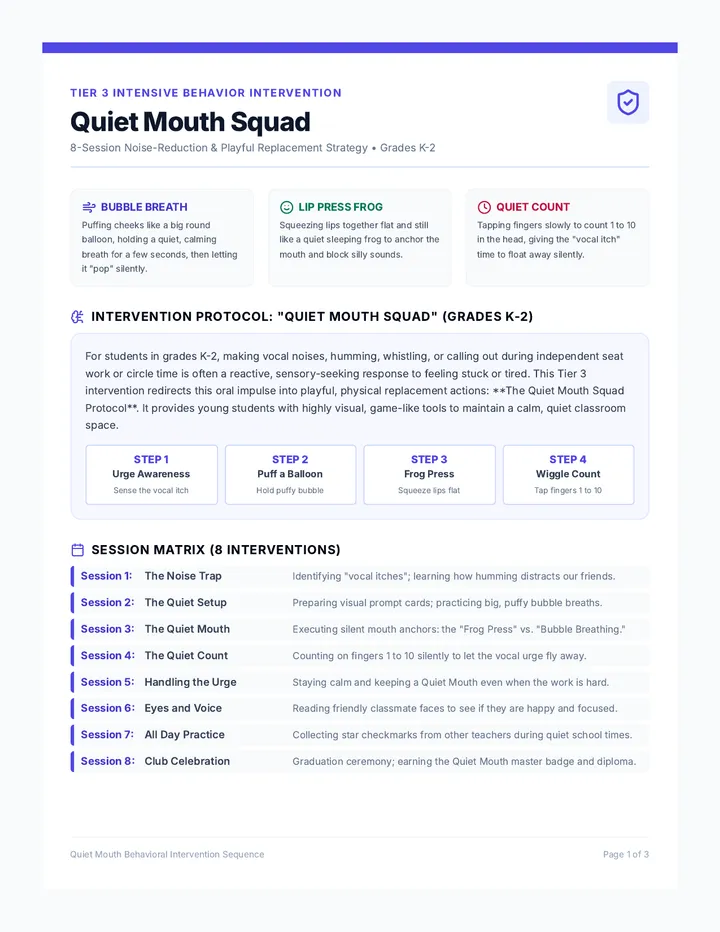
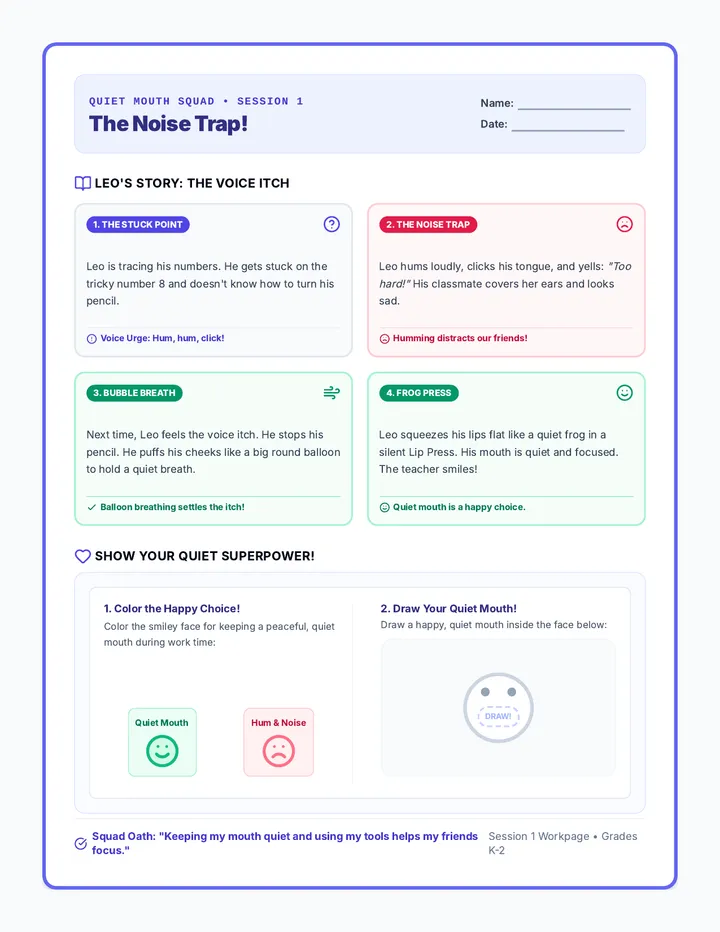
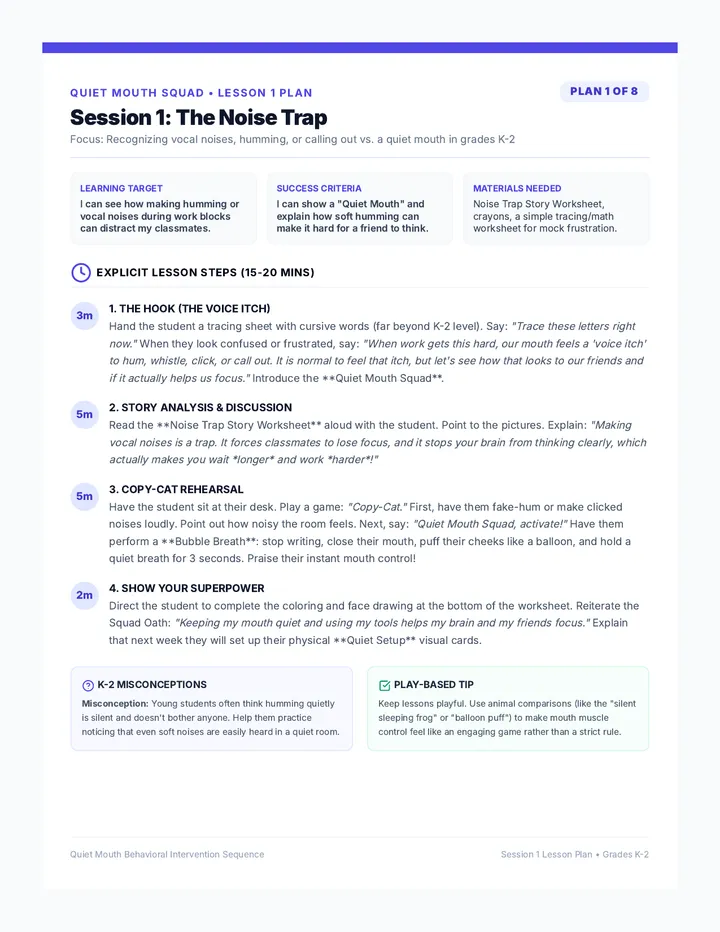
An 8-session intensive behavioral intervention sequence for students in grades K-2 targeting vocal noises, humming, or calling out during independent work. It teaches playful replacement behaviors: holding a quiet, puffy 'Bubble Breath' (like a balloon) or a firm 'Lip Press' (making a flat, silent mouth) to settle urges and maintain classroom focus.
Reviews all skills, celebrates student progress with graduation ceremonies, and sets up maintenance plans for classroom reintegration.
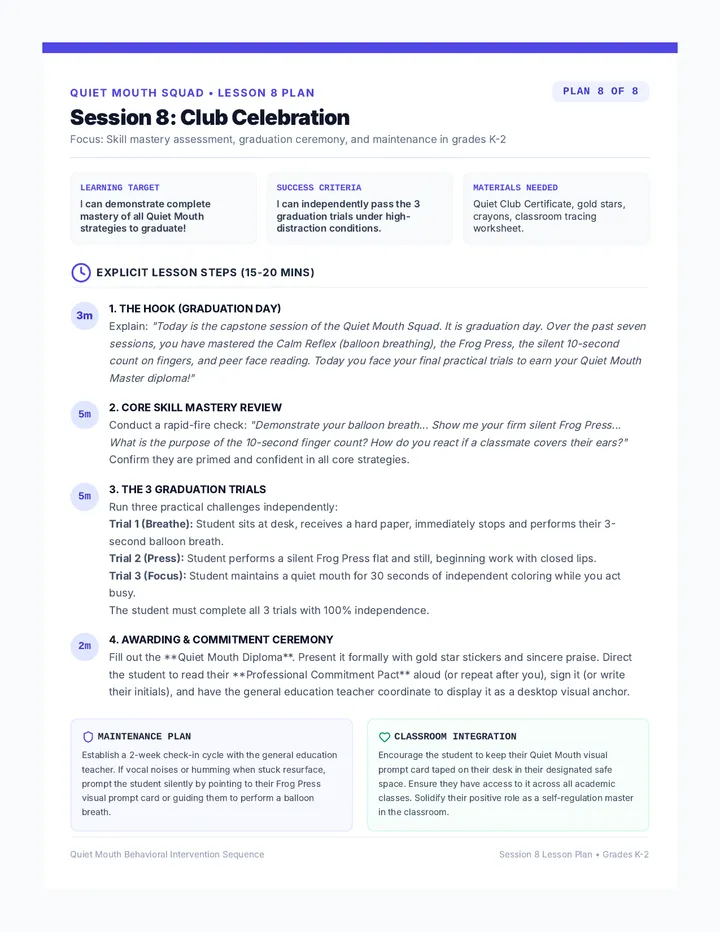
A highly detailed 1-page teacher lesson plan for Session 8, focusing on program review, graduation ceremony execution, and maintenance transitions in Grades K-2.
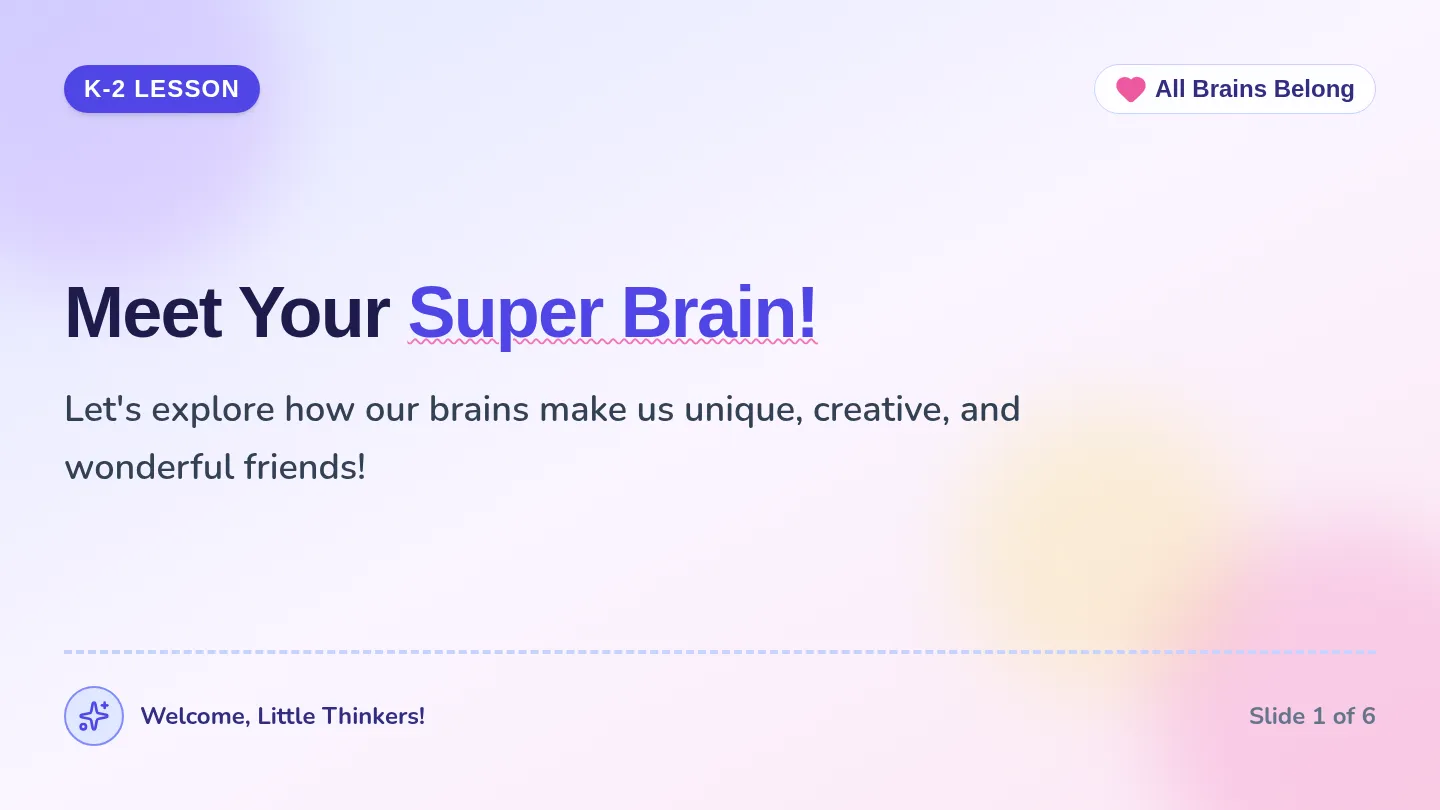
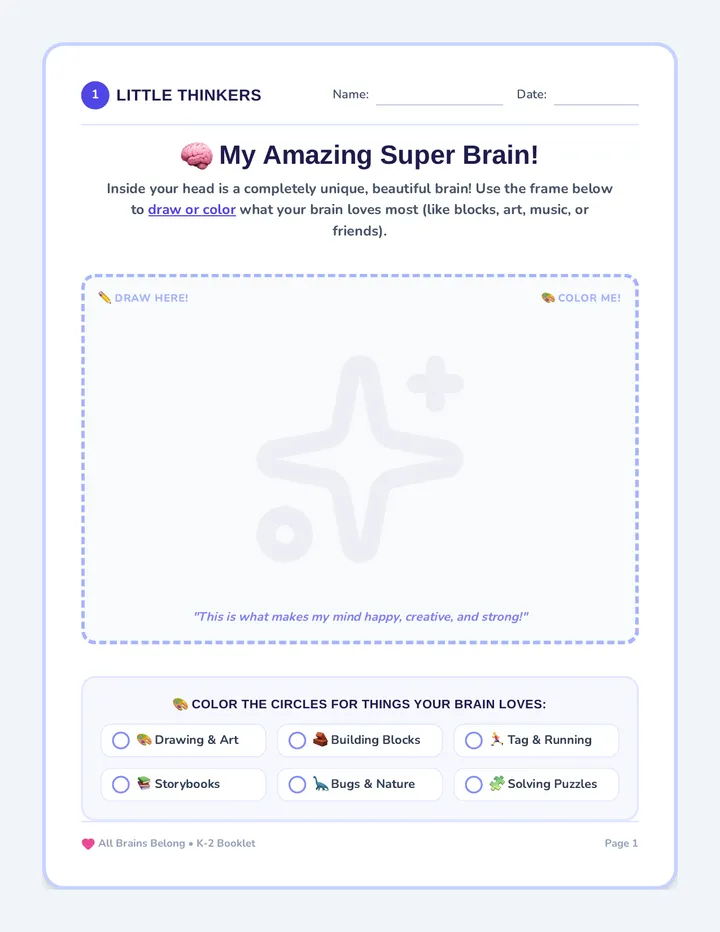
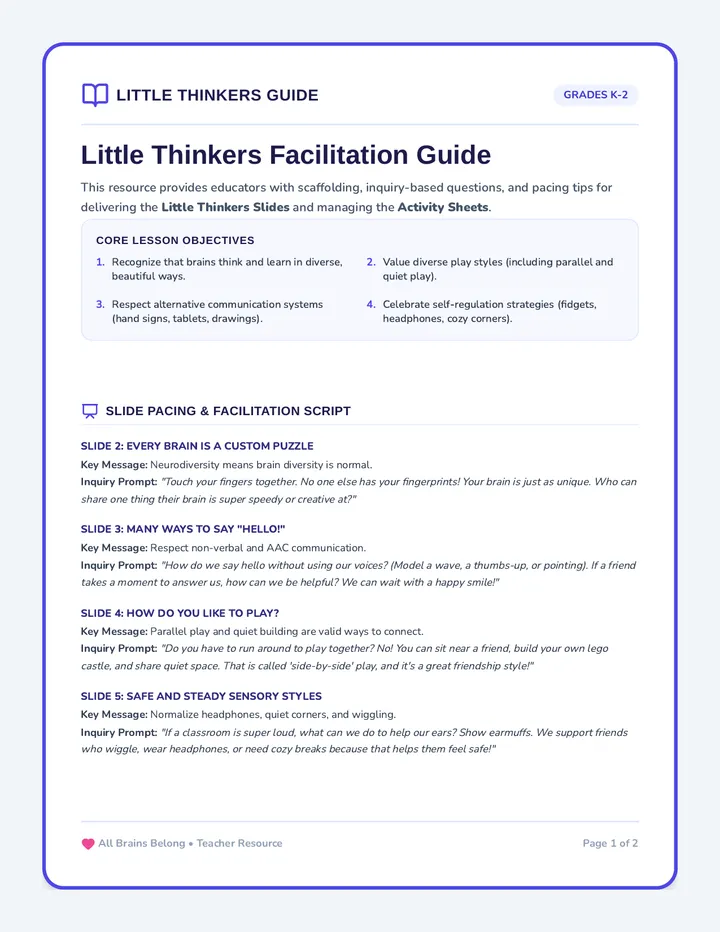
A comprehensive educational unit celebrating neurodiversity, acceptance, and inclusive communication across elementary grades. It equips educators with slide presentations and reflection tools tailored for K-2 and 3-5 students to cultivate empathetic classrooms.
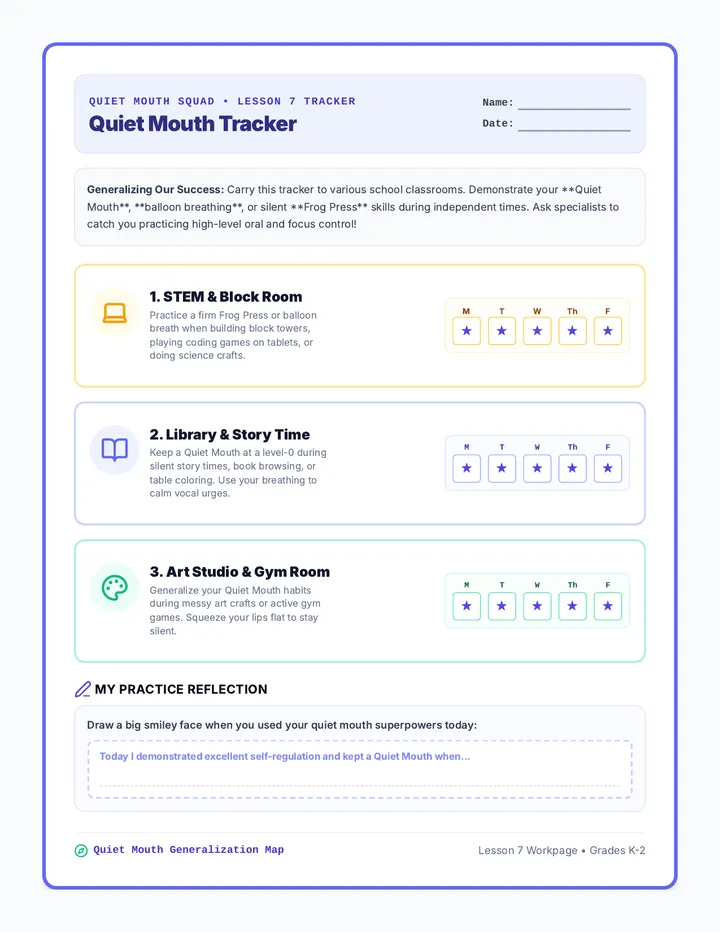
Focuses on generalizing the replacement behavior to other school settings like recess, the cafeteria, and the art room using visual tracker guides.
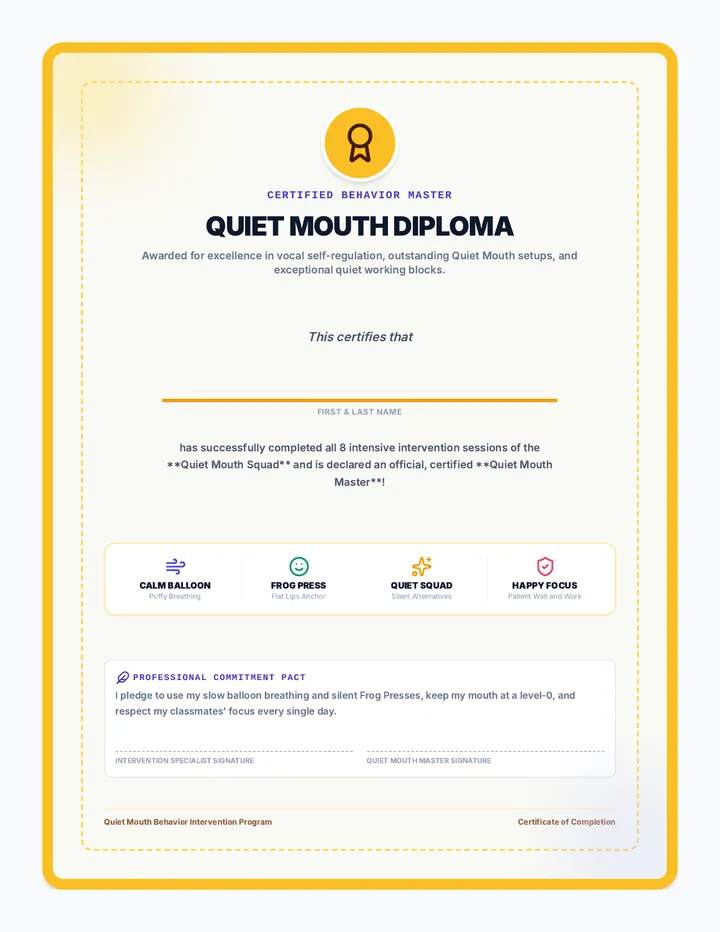
A graduation certificate celebrating the student's entry into the Quiet Mouth Squad as a certified master in Grades K-2.
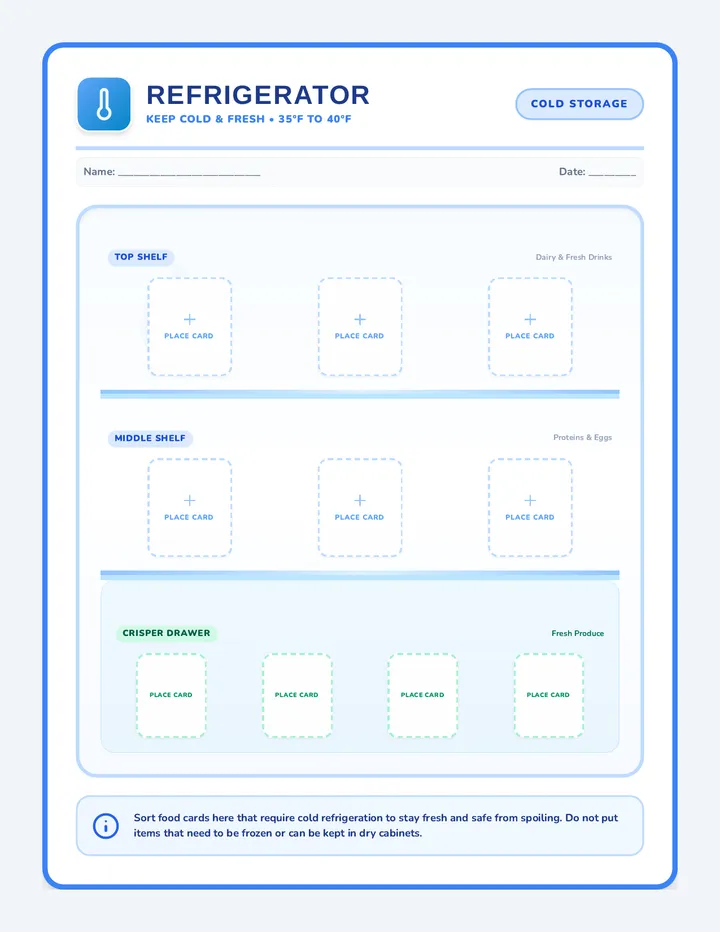
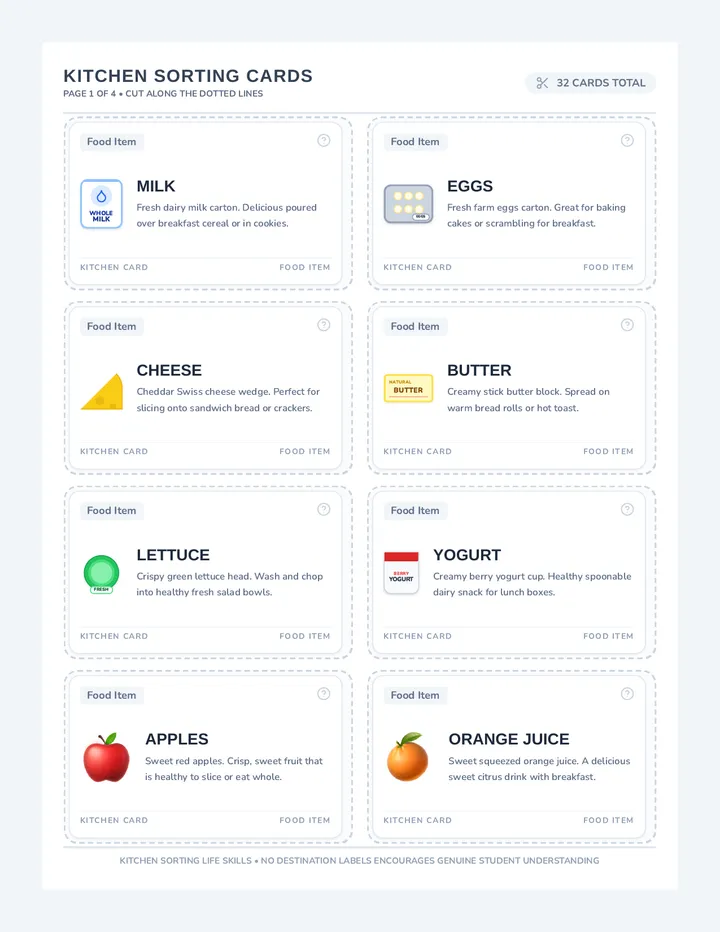
A progressive life-skills curriculum designed to teach students how to identify, categorize, and sort grocery items. Starts with kitchen storage sorting (fridge, freezer, pantry) and advances to sorting by major retail grocery store departments.
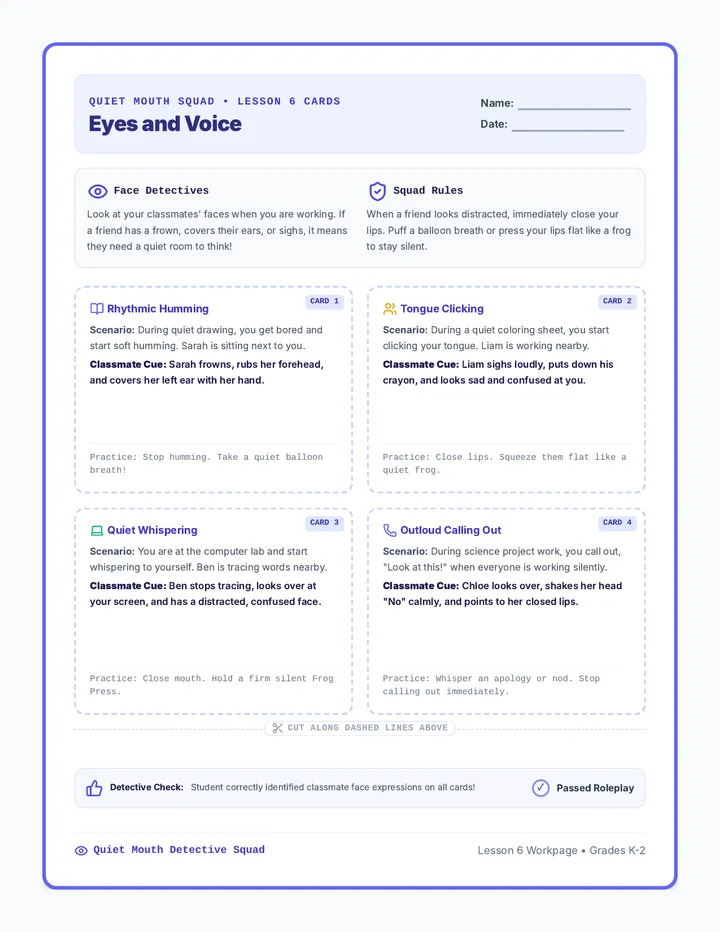
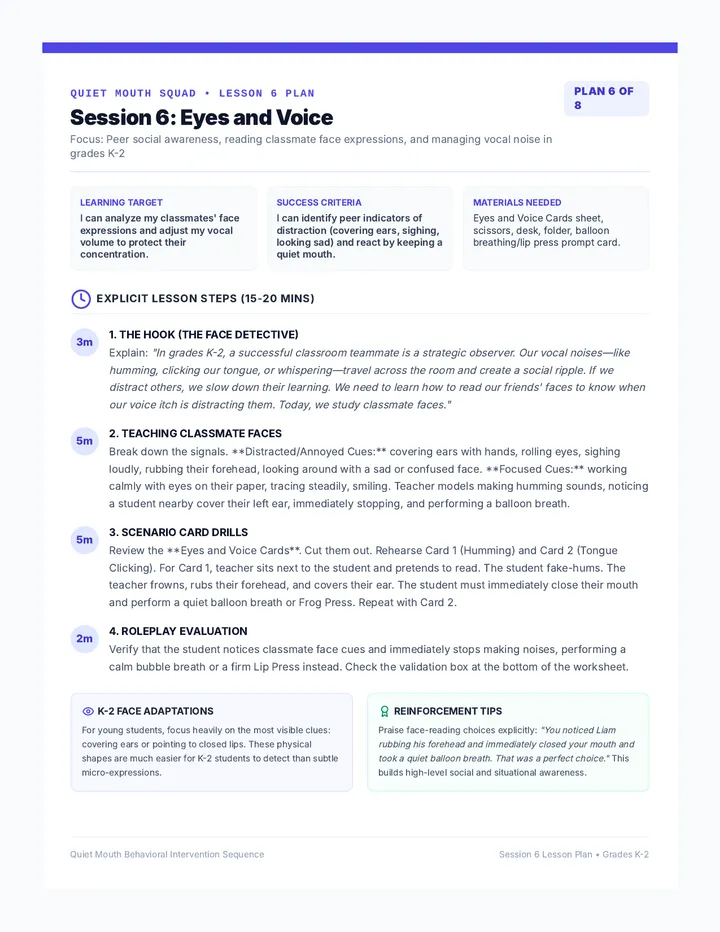
Refines communication skills by training students to read classmate faces and use simple, quiet signals when they need help.
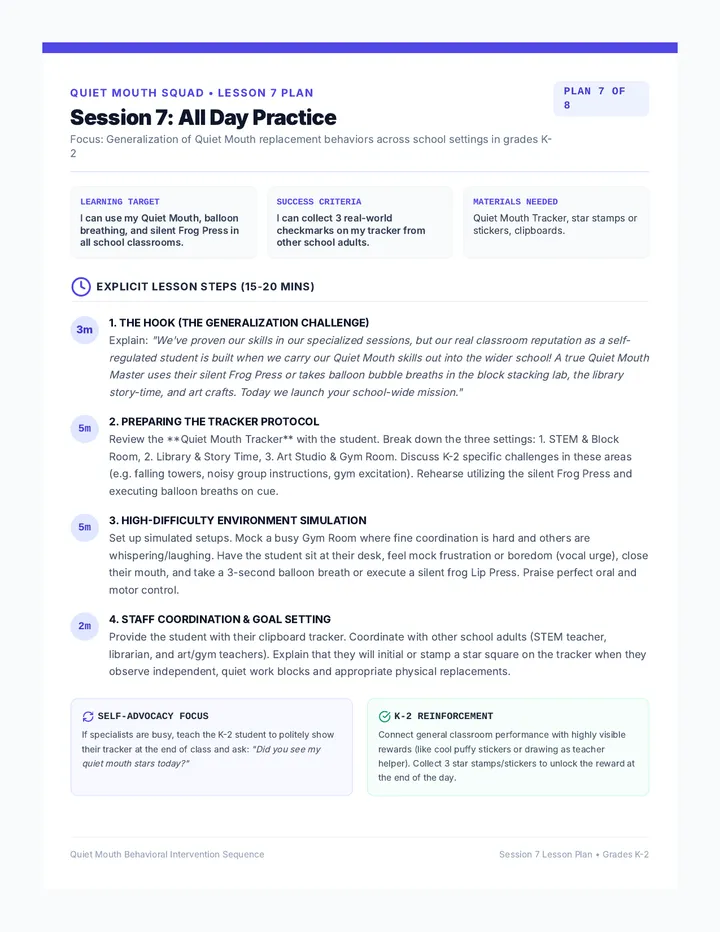
A highly detailed 1-page teacher lesson plan for Session 7, focusing on generalizing the replacement behaviors across various school settings like recess, cafeteria, and art in Grades K-2.
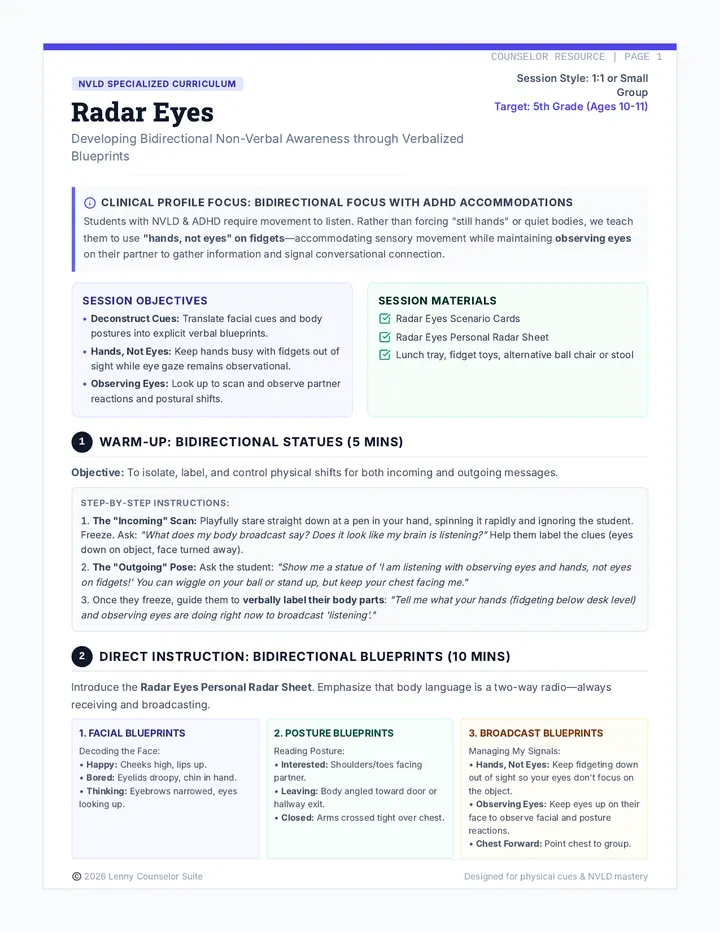
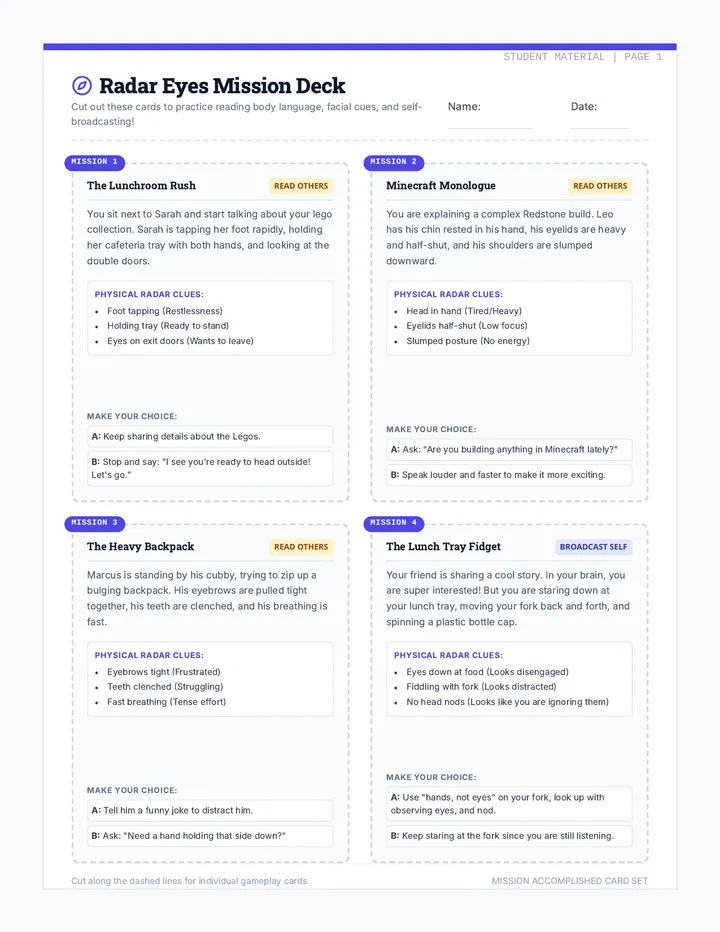
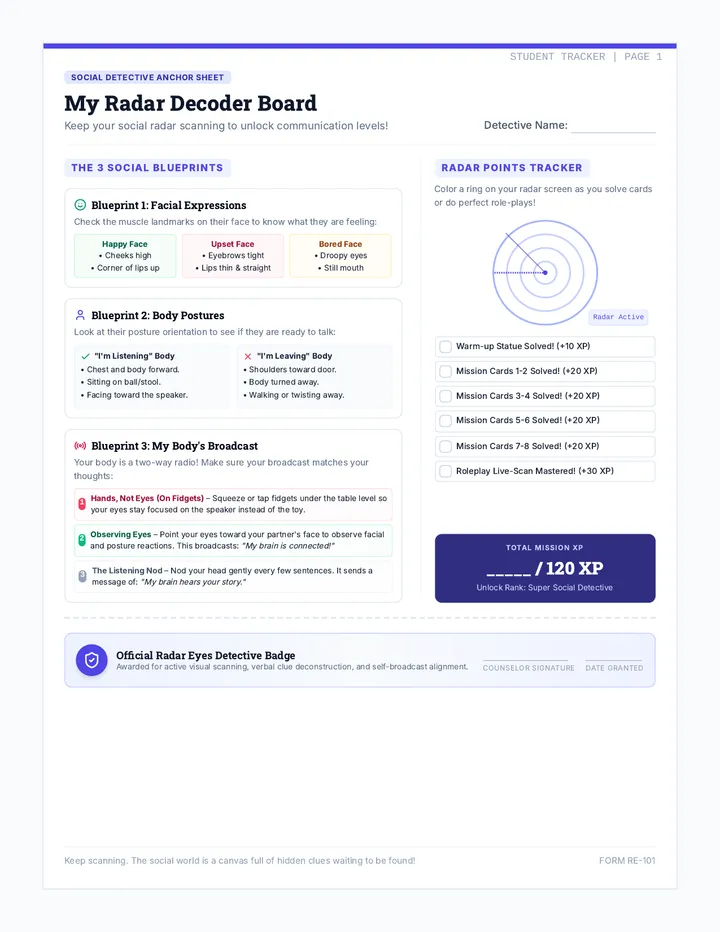
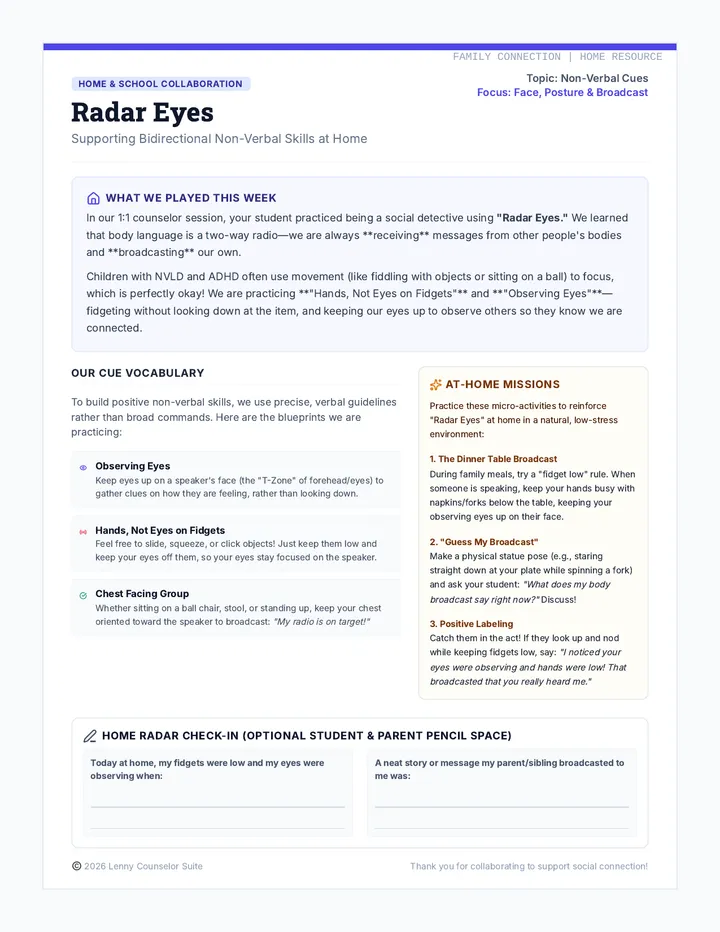
A sequential social skills program designed for 5th-grade students with NVLD. Focuses on bidirectional nonverbal cue decoding, eye gaze alignment, conversation turn-taking, and self-monitoring strategies.
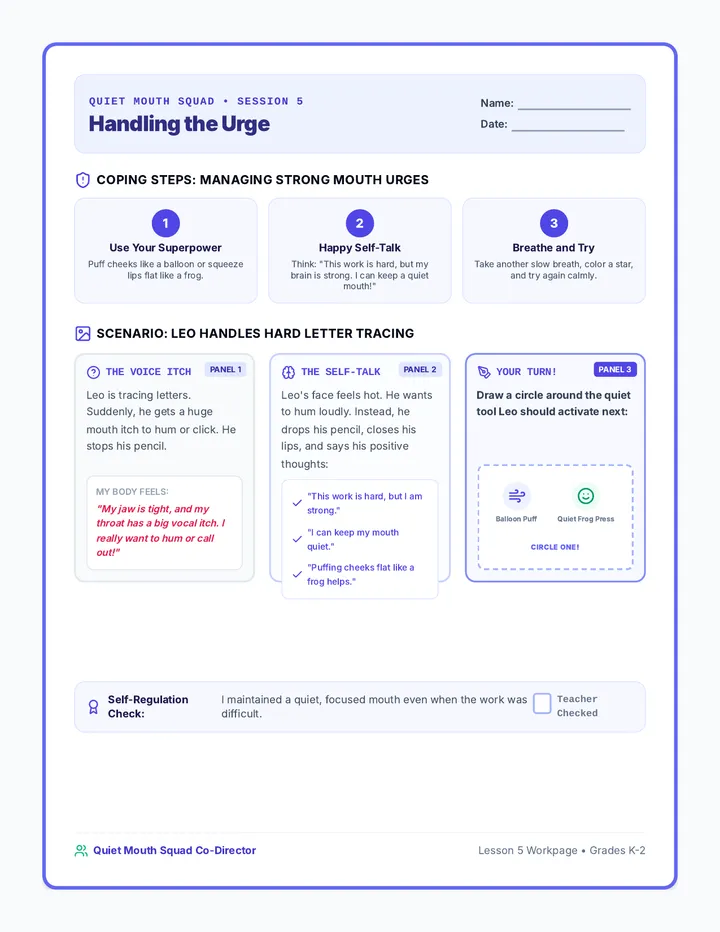
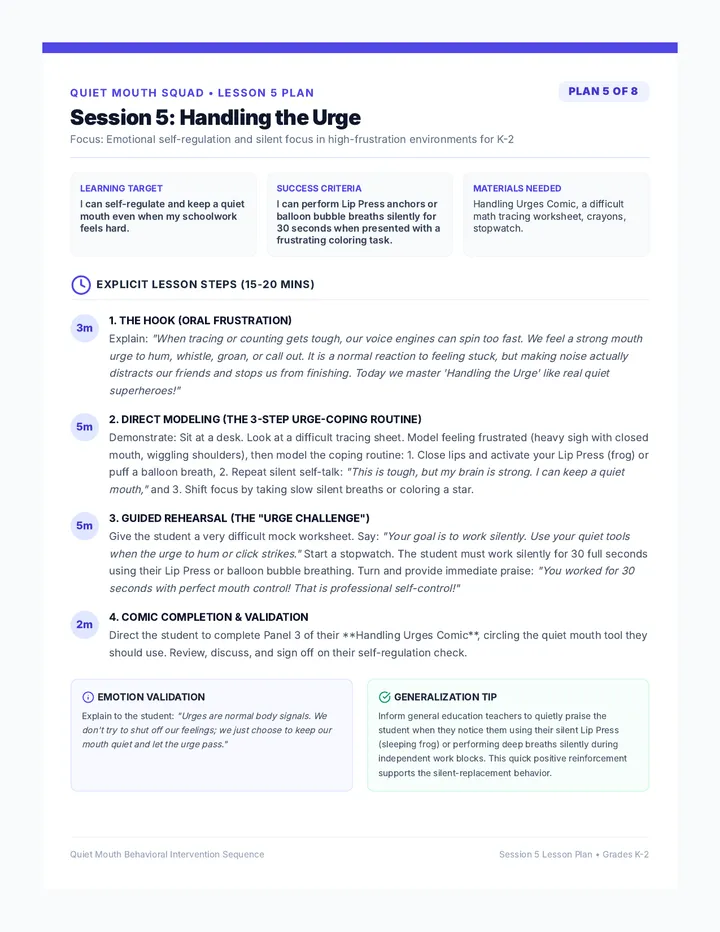
Teaches emotional self-regulation and visual strategies for coping with internal urges to make noises during quiet classroom work blocks.
A school-wide practice tracker document enabling teachers and specialists to monitor and reinforce the 'Can I...' script across various environments in Grades K-2.