Legal frameworks under IDEA and Section 504 alongside essential IEP components like goals and accommodations. Equips stakeholders for collaborative advocacy and effective participation in IEP meetings.
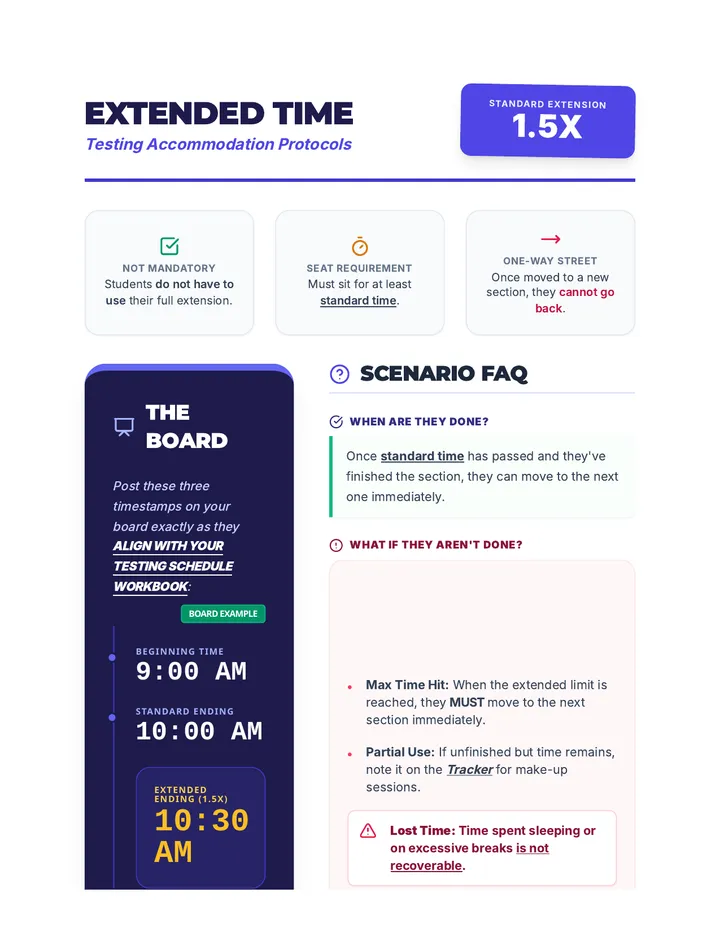
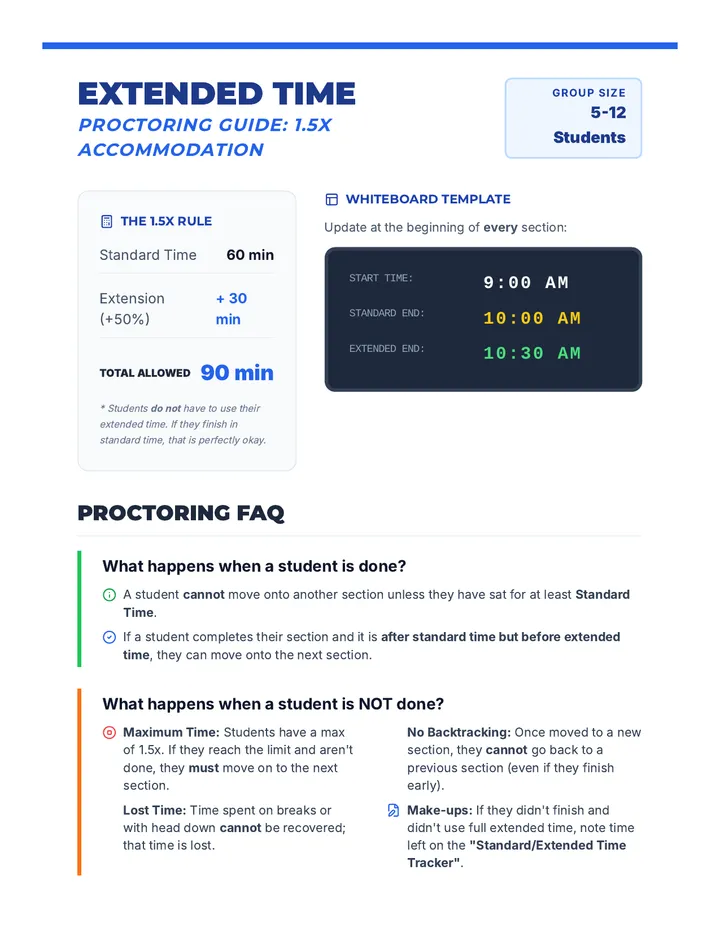
An updated one-page guide for teachers regarding SPED testing accommodations, clarifying that board timestamps must align with the Testing Schedule Workbook and using 9am/10am/10:30am as a concrete example.
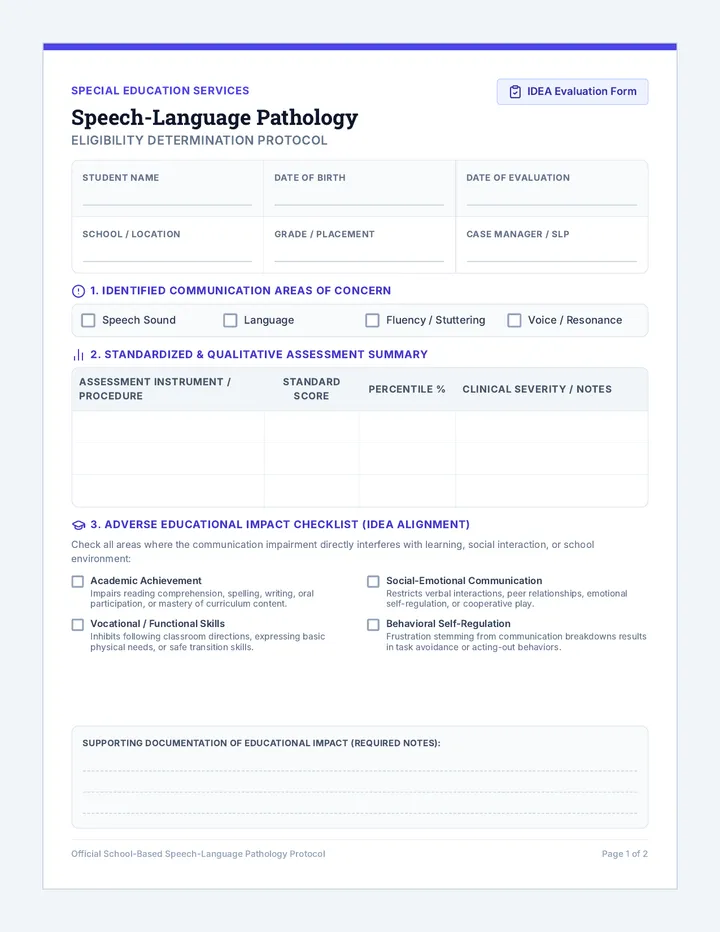
A professional 2-page print-ready Speech-Language Pathology (SLP) eligibility determination protocol. It features comprehensive fields for student information, assessment summaries, educational impact checklists, and a dedicated professional reference section highlighting the ASHA School-Based Eligibility guidelines with the requested URL.
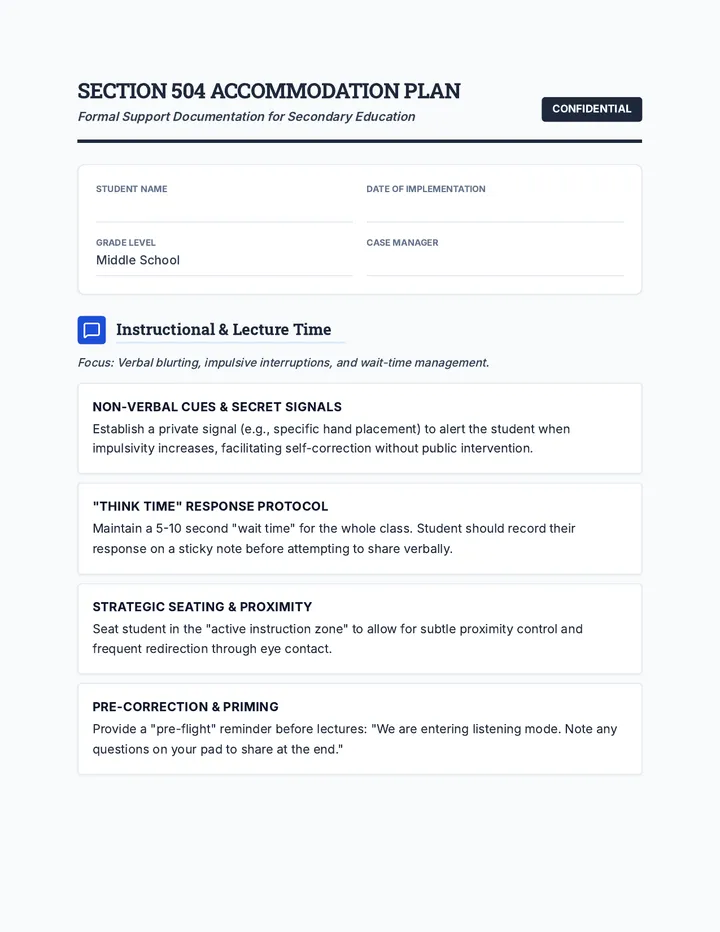
A professionally formatted 504 accommodation list for middle school students, targeting impulsivity and blurting with specific strategies for instruction and testing.
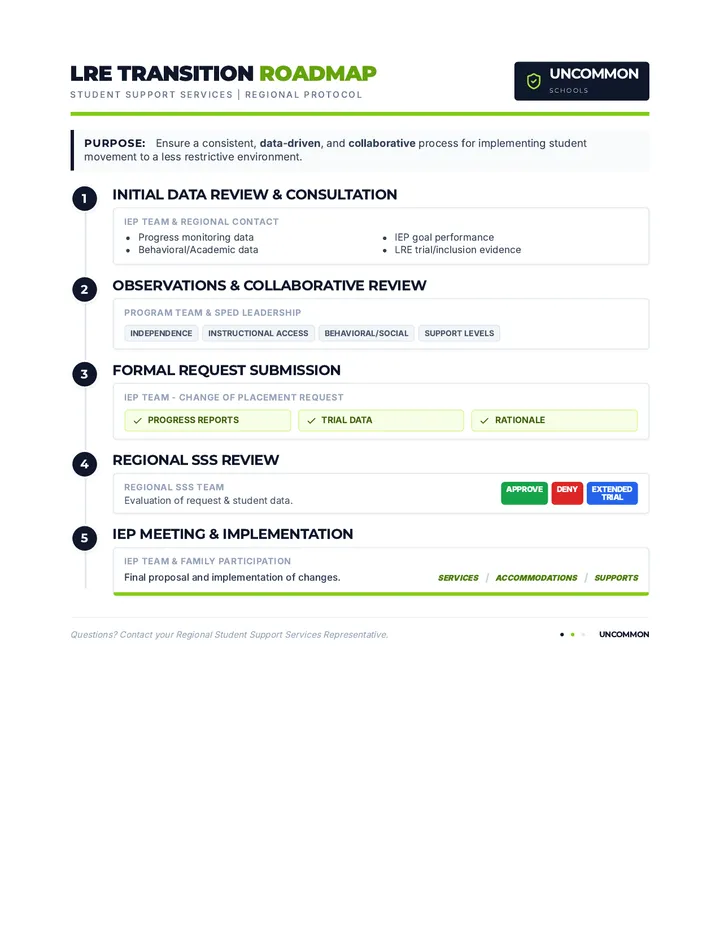
A condensed one-page professional guide for school IEP and CST teams outlining the 5-step process for transitioning students to a less restrictive environment, optimized for single-page printing with Uncommon Schools branding.
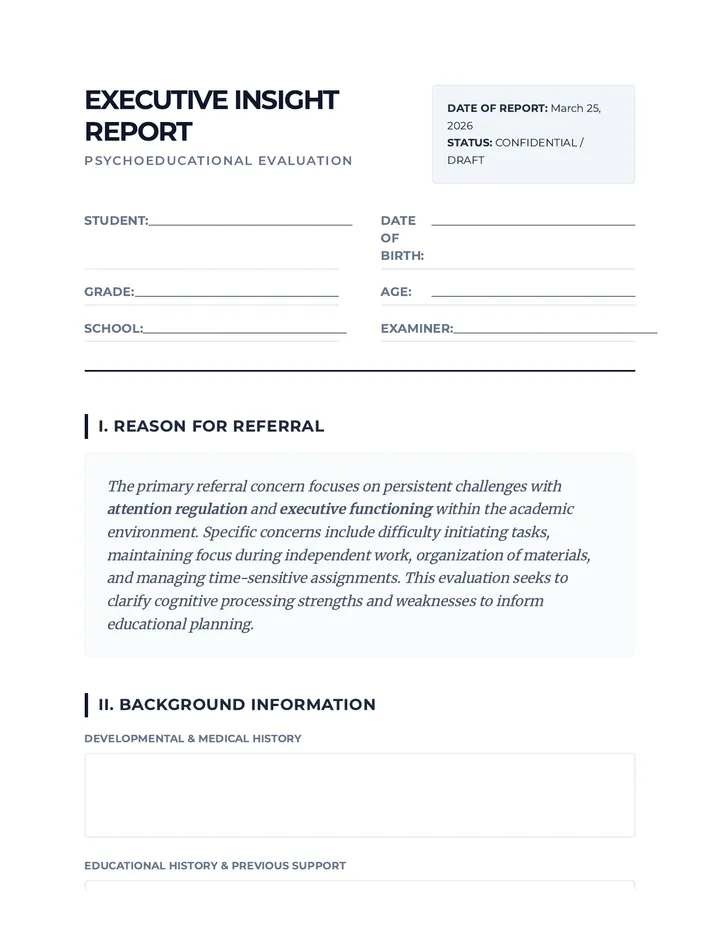
A professional and comprehensive psychoeducational report template specifically designed for evaluations focusing on attention and executive functioning. It includes structured sections for demographics, referral reasons, assessment batteries, behavioral observations, cognitive results, and detailed strategic recommendations.
A clean, professional one-page reference guide for general education teachers proctoring students with 1.5x extended time accommodations. It includes visual timing examples, clear FAQ sections on completion rules, and procedures for late or absent students.
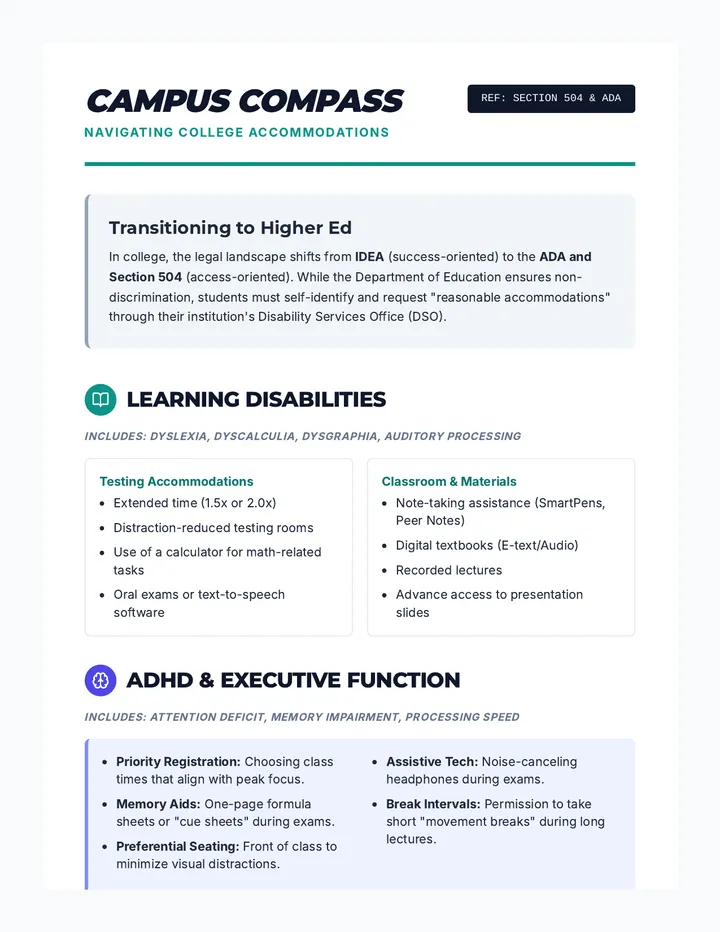
A two-page informational handout titled 'Campus Compass' detailing commonly approved college accommodations categorized by disability. It includes specific examples for learning disabilities, ADHD, physical mobility, sensory impairments, and psychological health, along with transition tips for students.
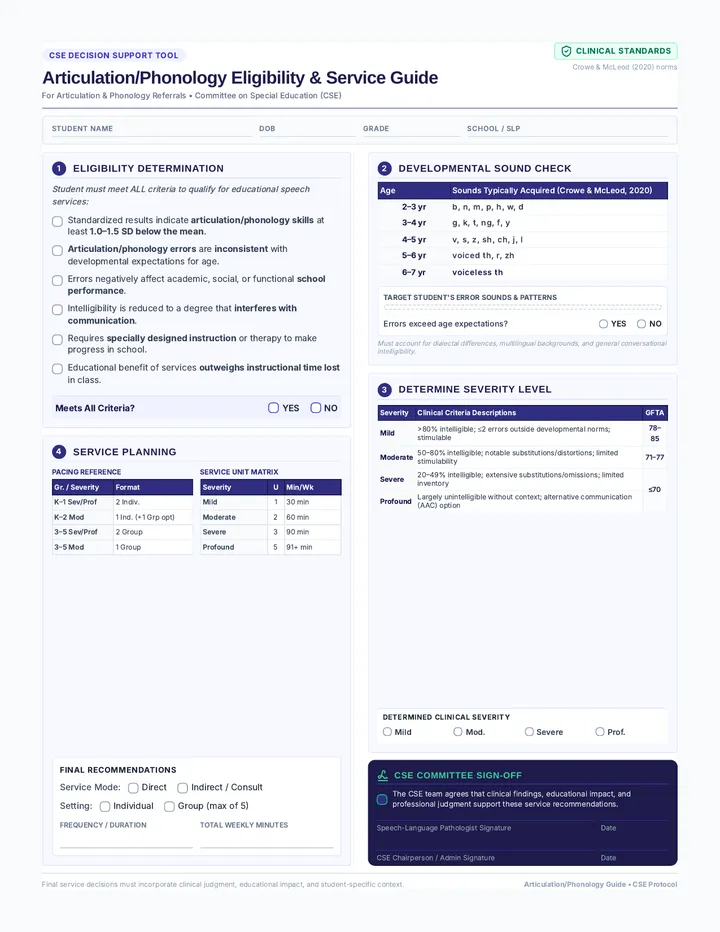
A professional, comprehensive CSE eligibility and service recommendation worksheet designed for Speech-Language Pathologists and CSE committees to determine student qualification for articulation/phonology services. It includes checkboxes for the 6 core criteria, developmental milestones, a severity matrix, and service recommendation guidelines.
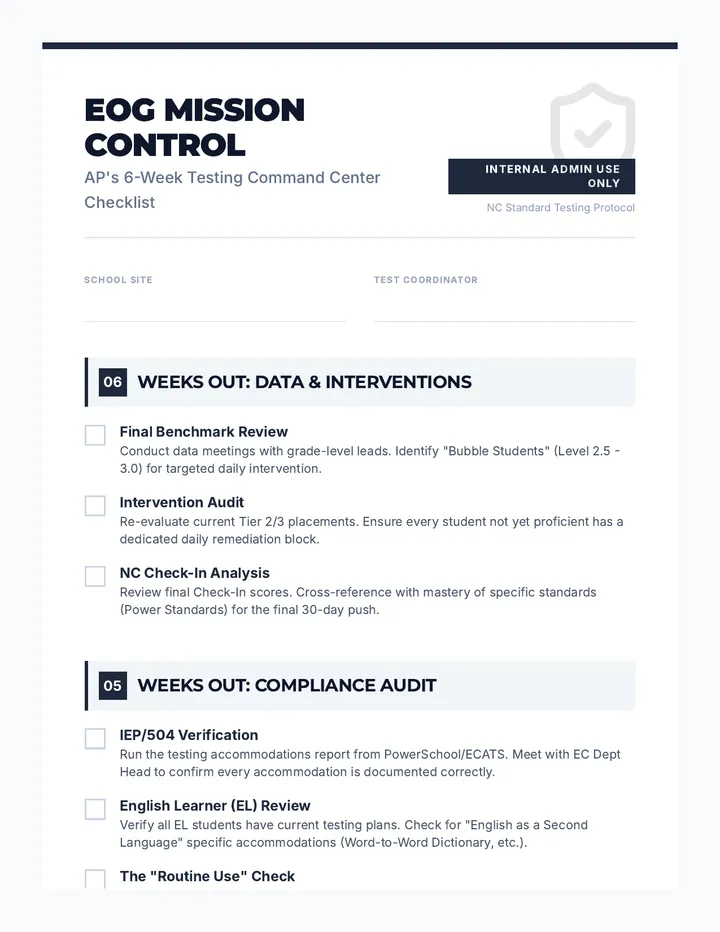
A comprehensive 6-week countdown checklist and mission-control style guide for North Carolina school administrators managing EOG testing. Includes week-by-week tasks for data, compliance, tech, and logistics, along with communication templates and a test-day run-sheet.
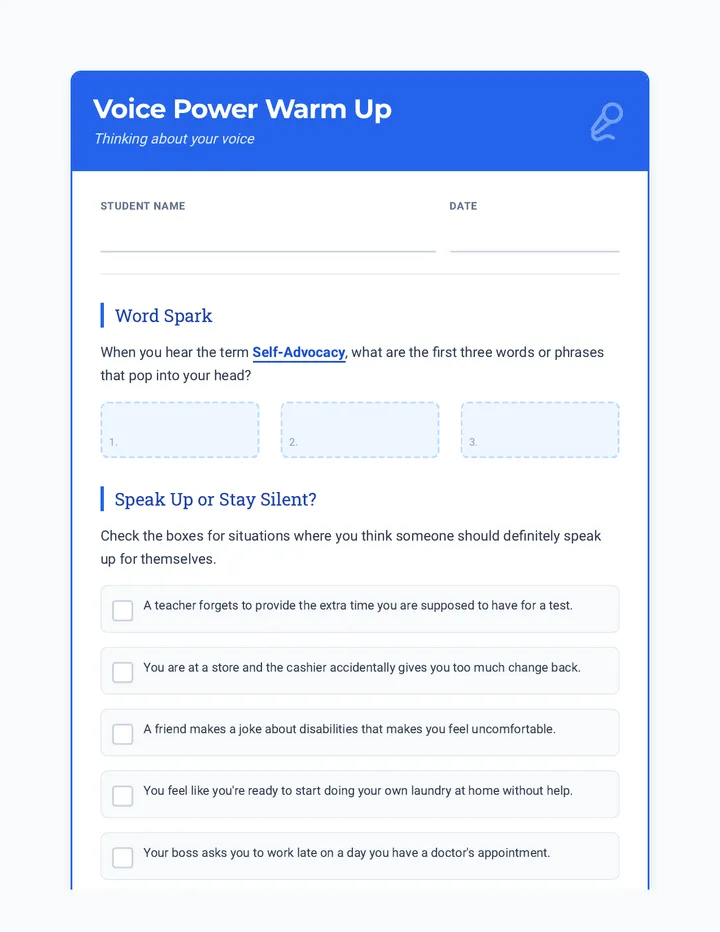
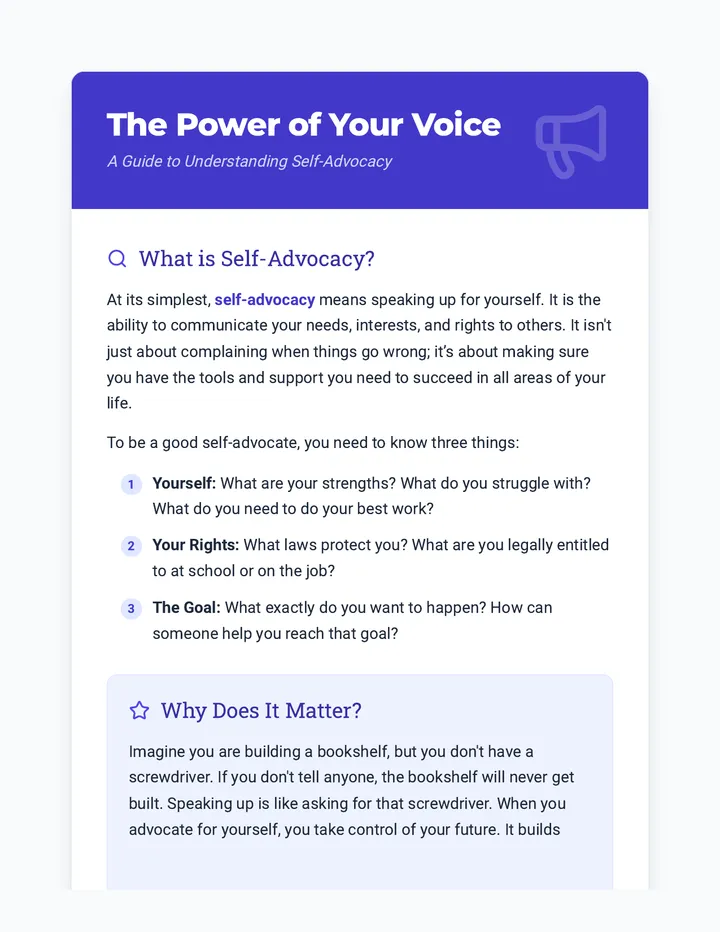
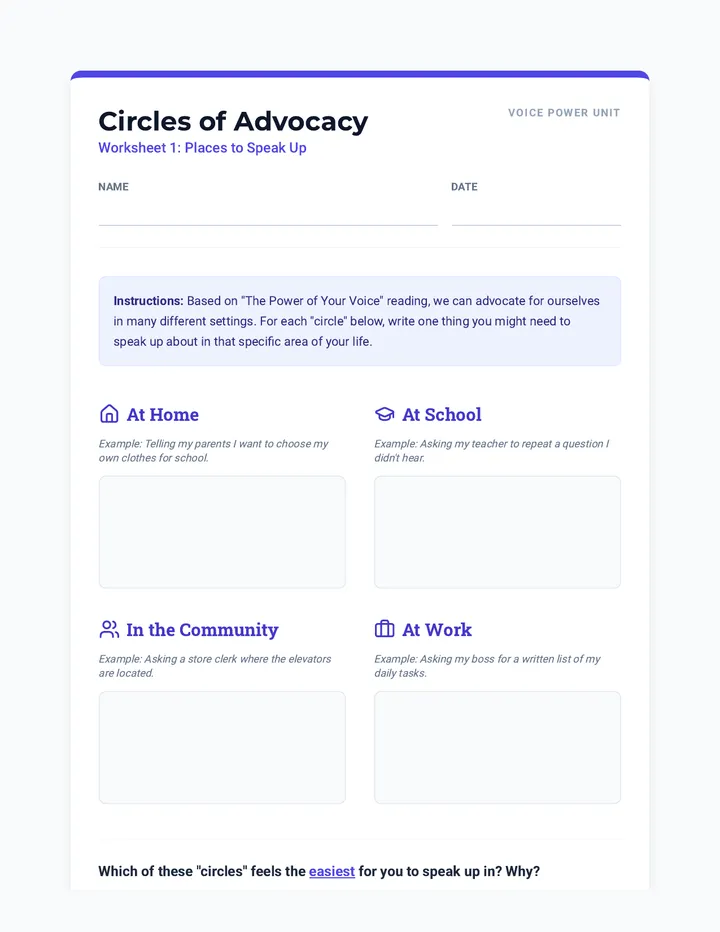
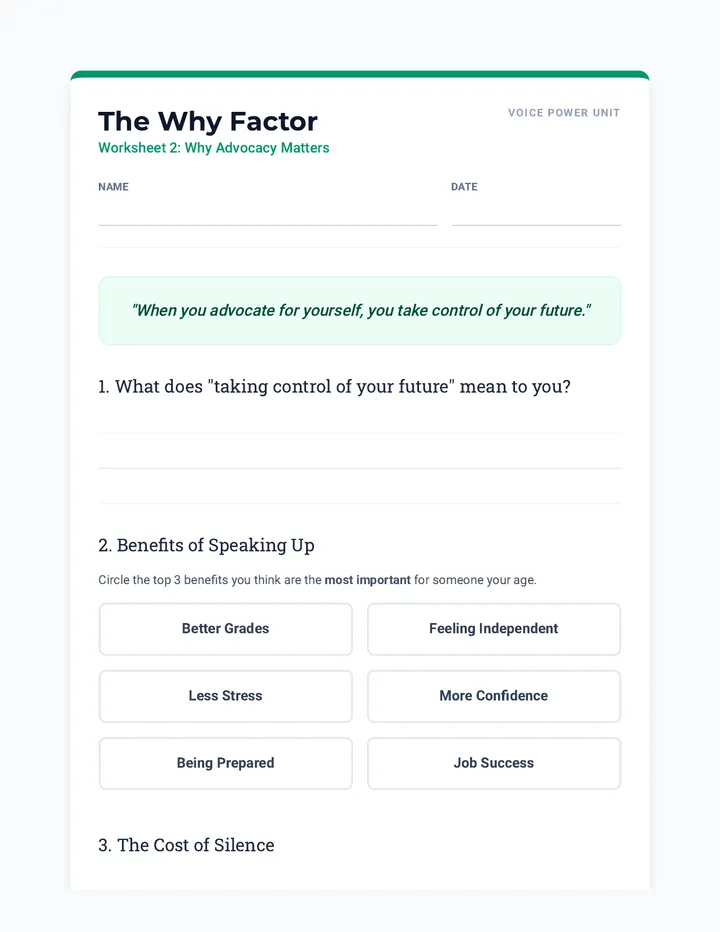
A comprehensive unit on self-advocacy and the ADA, helping students understand their rights in school, at home, and in the workplace. Students will learn how to navigate IEP accommodations, address non-compliance, and build independence.
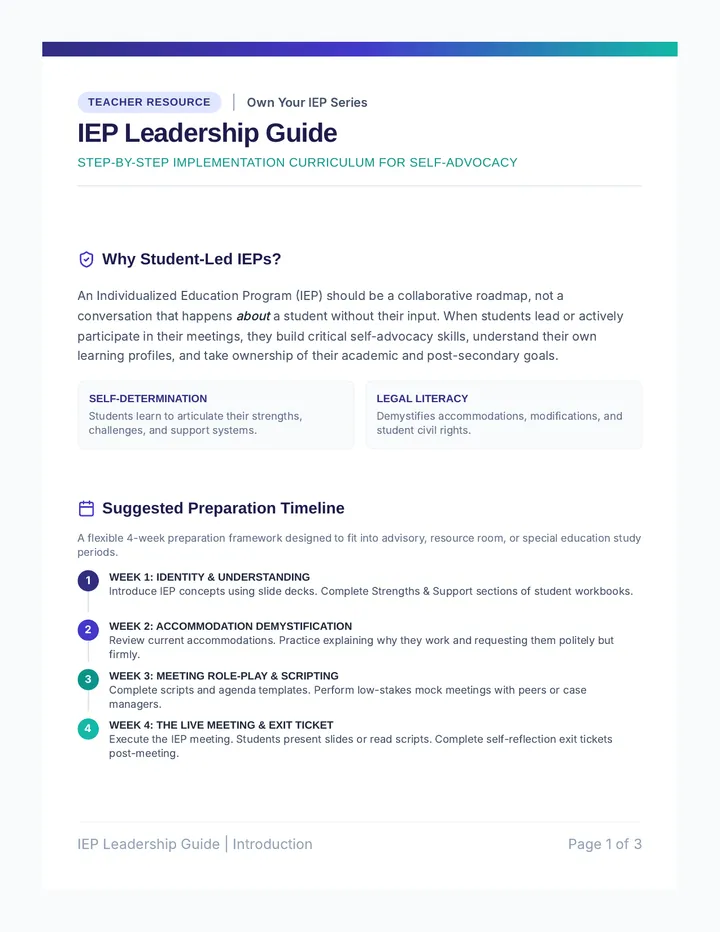
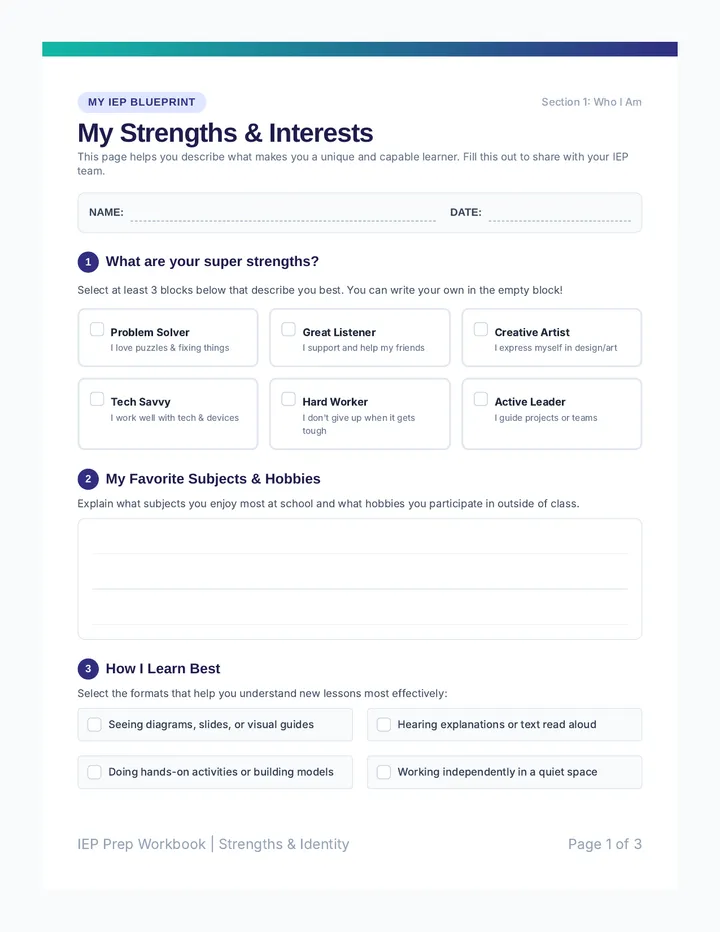
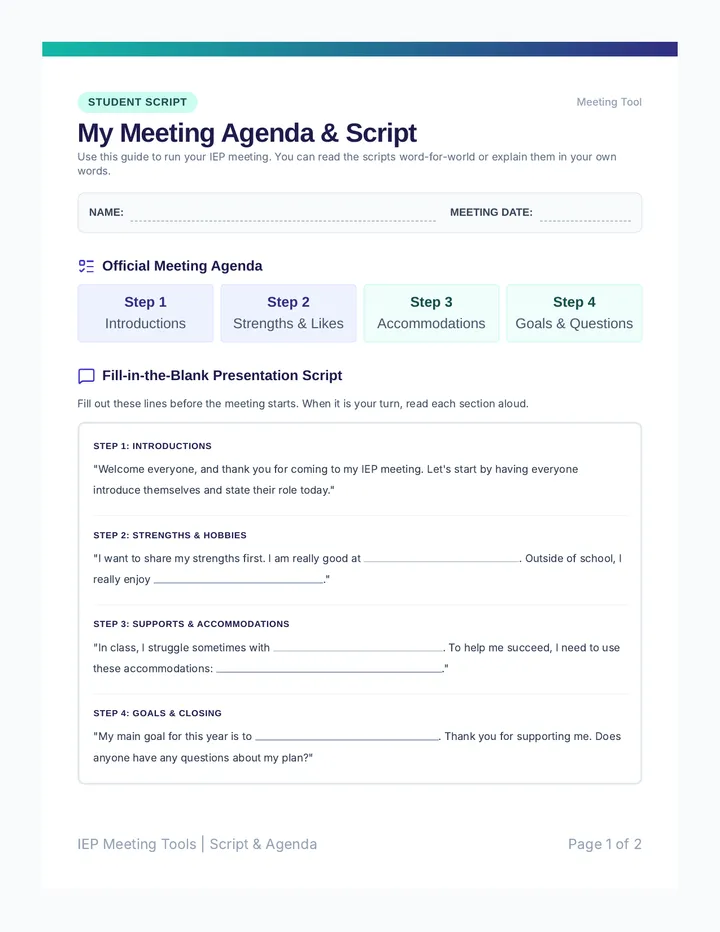
A comprehensive program designed to empower middle and high school students to lead their own IEP meetings. Includes a detailed teacher guide, student preparation workbook, meeting scripts, agenda templates, and interactive presentation slides to scaffold self-advocacy and goal-setting.
A comprehensive suite of resources for high school special education teachers to manage their caseload, internalize IEPs, and establish strong family and co-teaching partnerships during the first month of school.
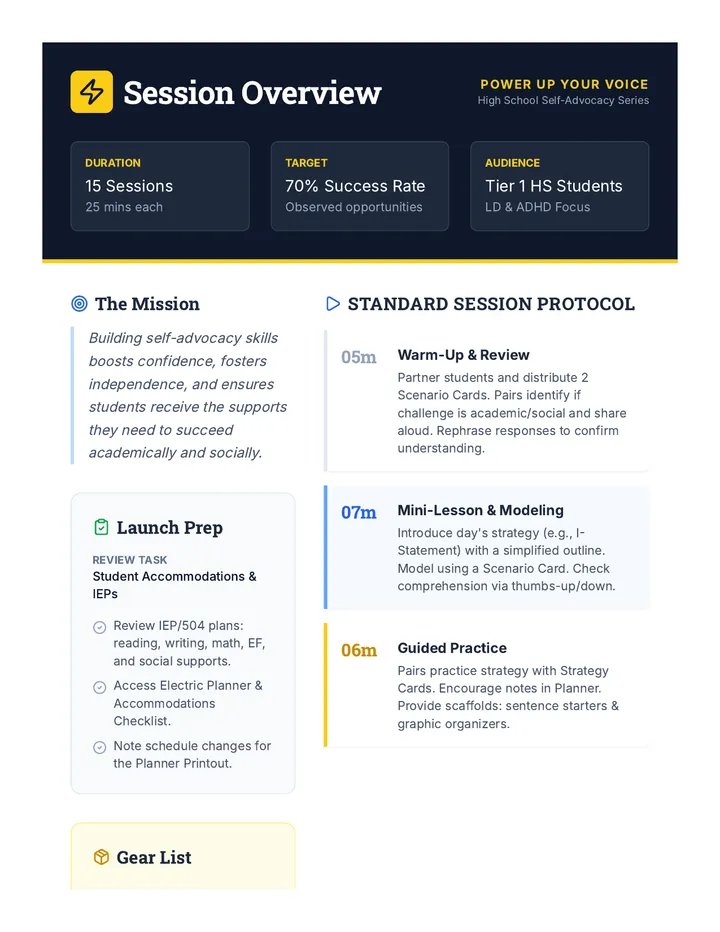
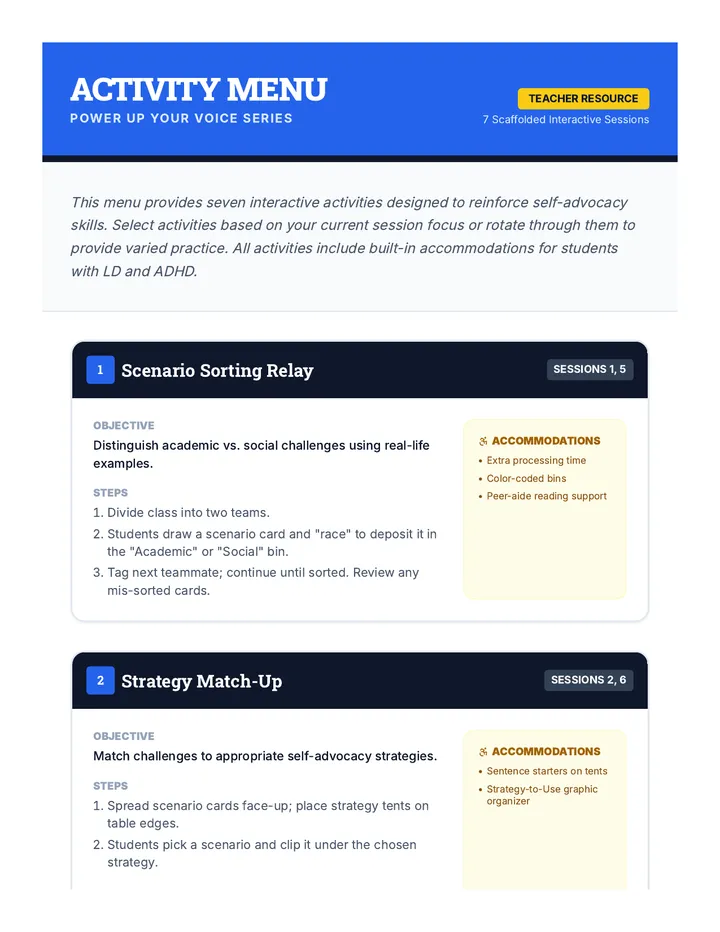
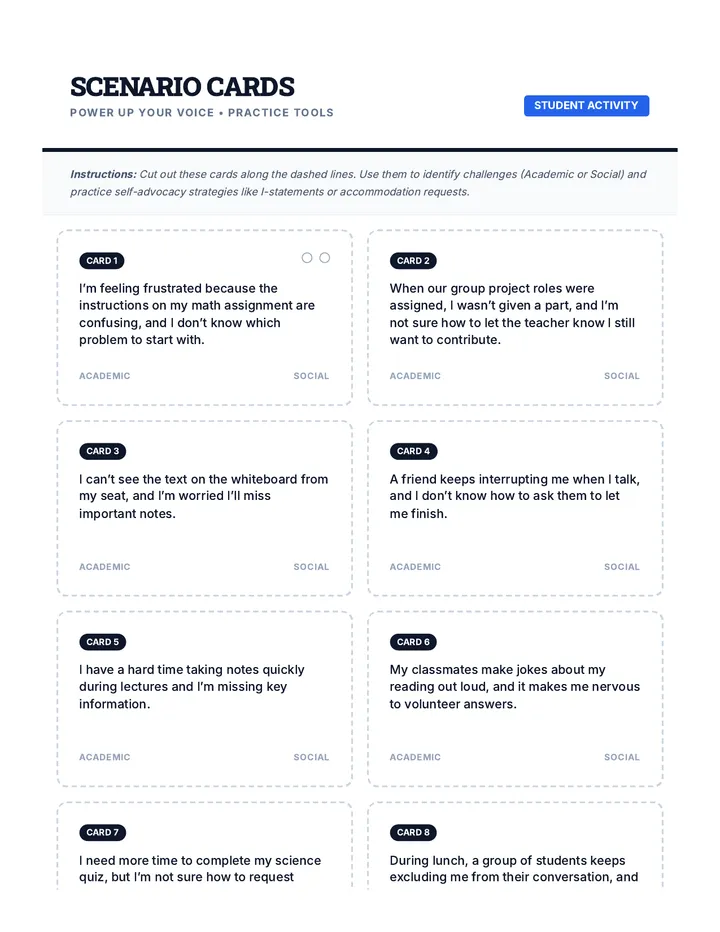
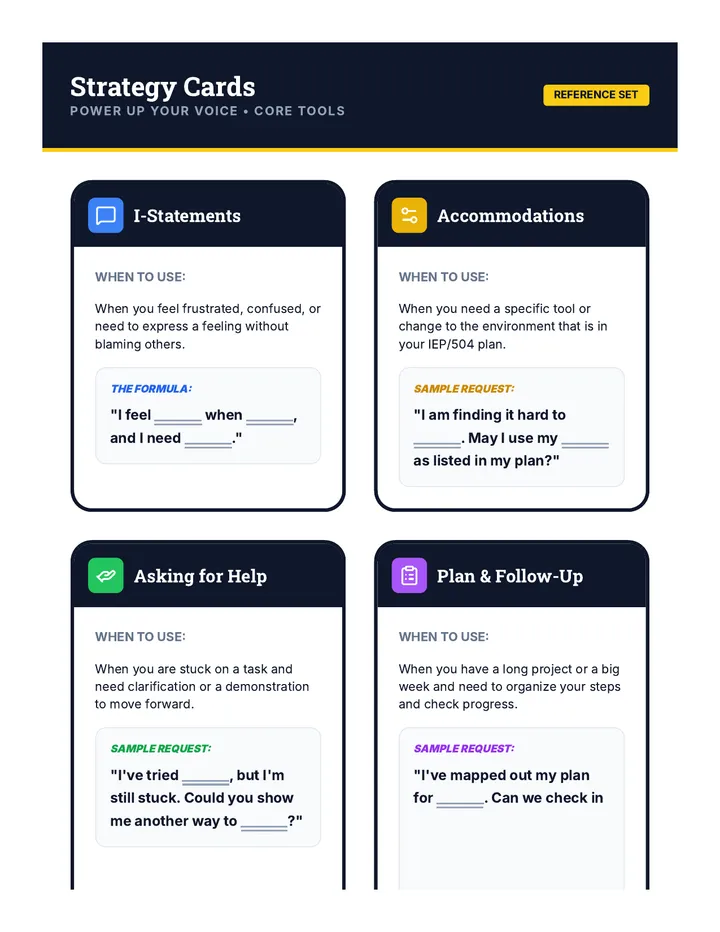
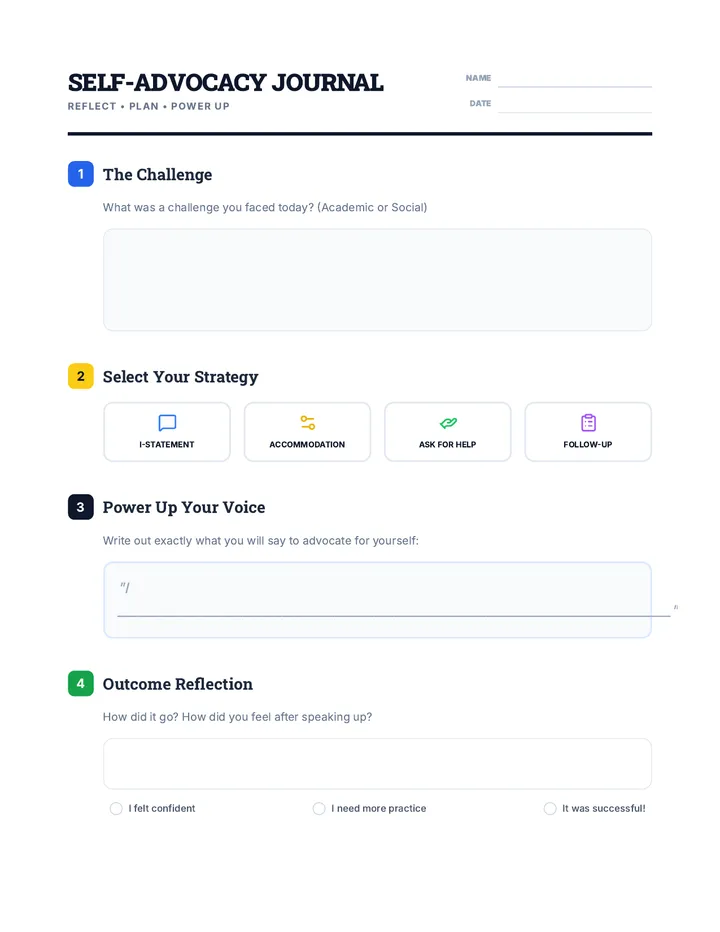
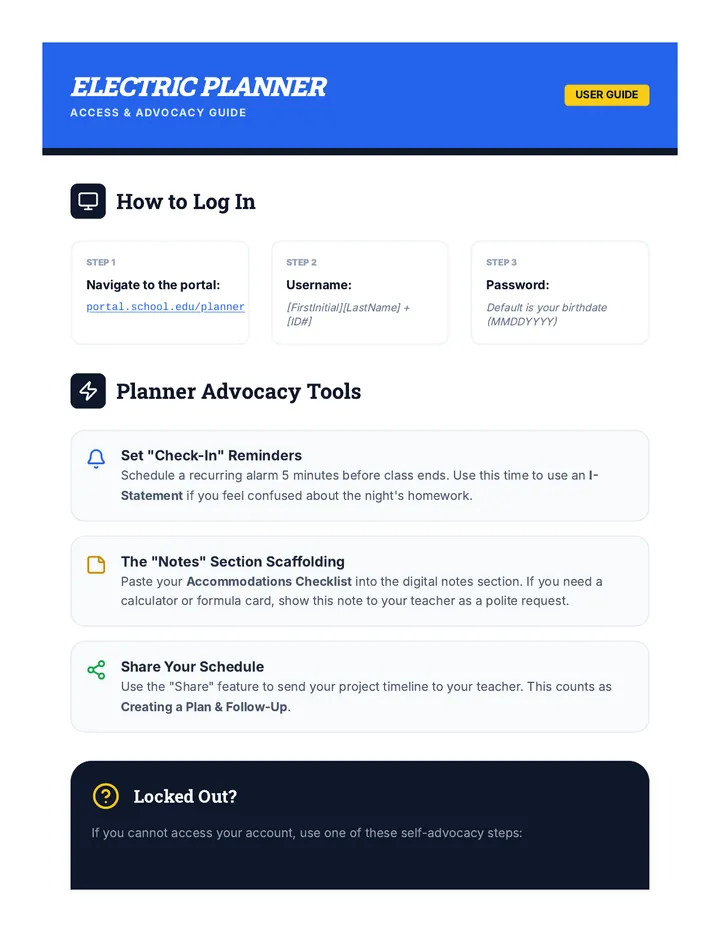
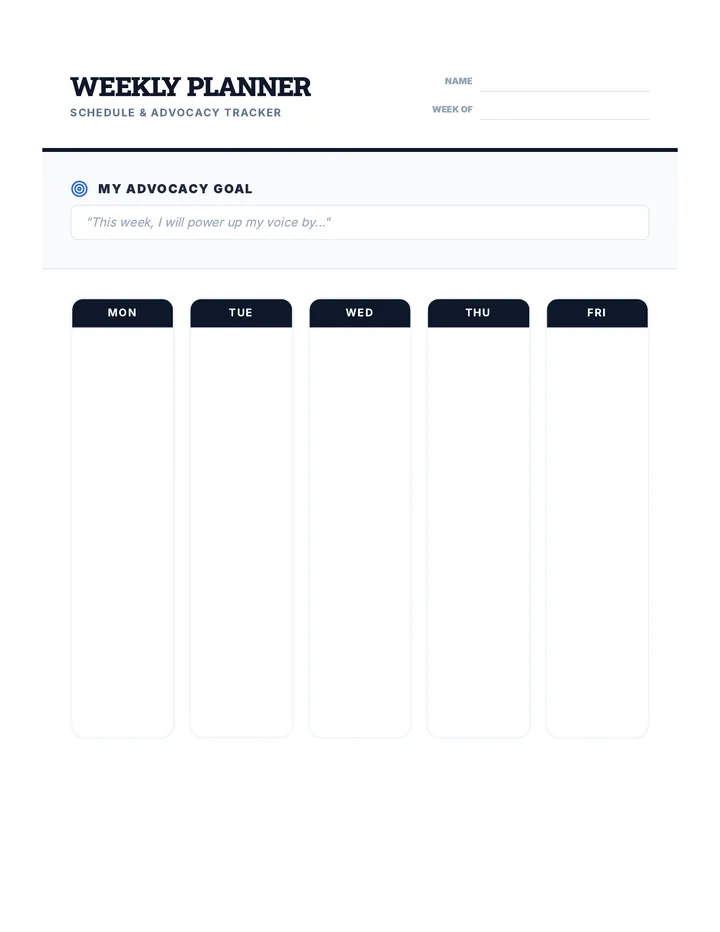
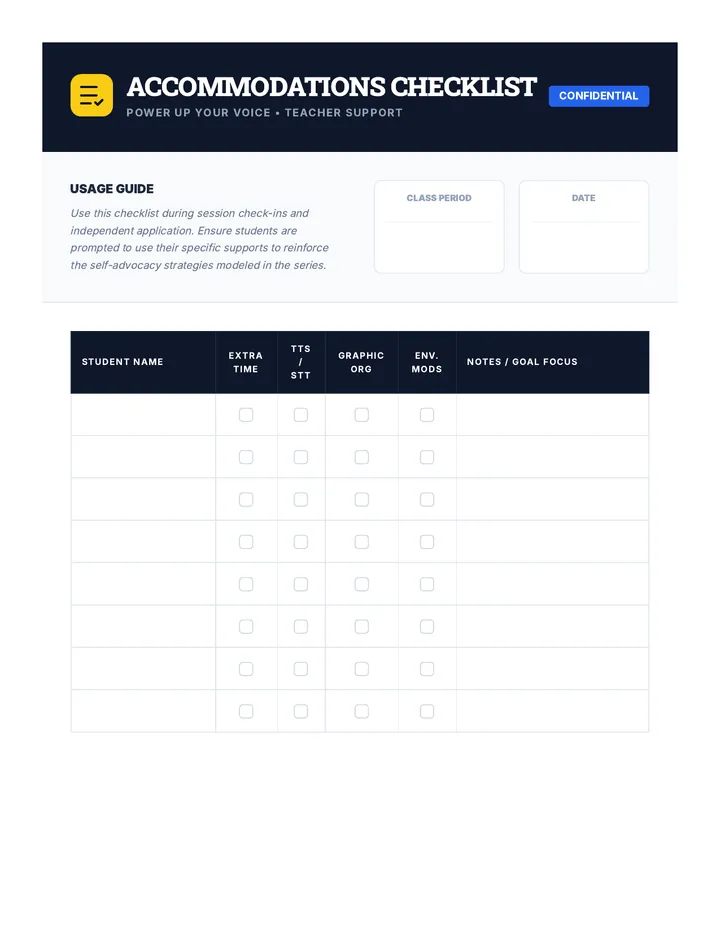
A comprehensive 15-session self-advocacy series designed for high school students with learning disabilities and ADHD, focusing on identifying challenges and requesting supports.
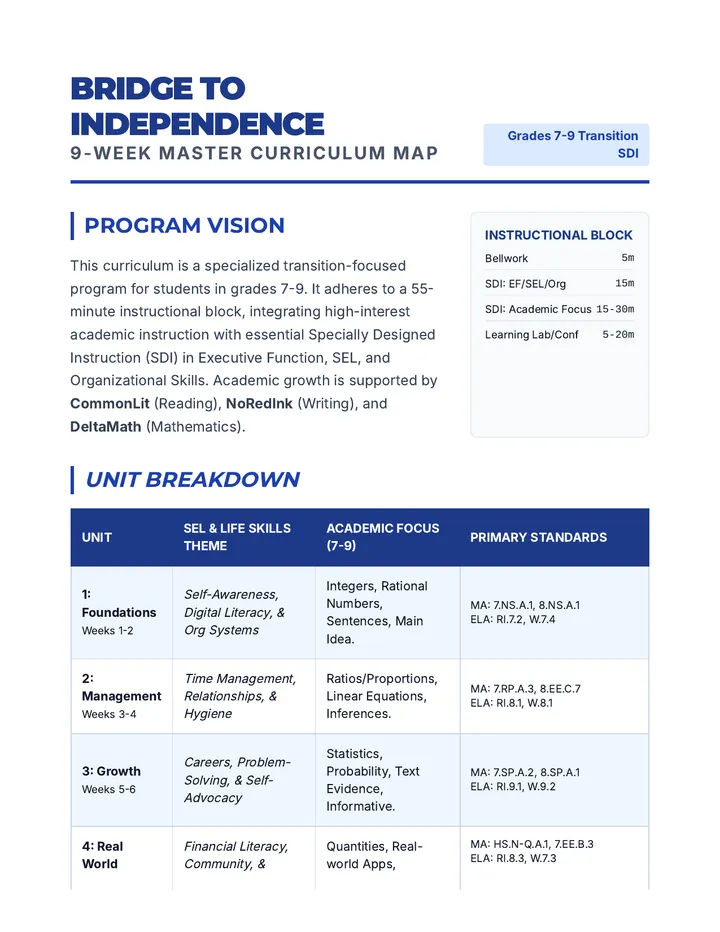
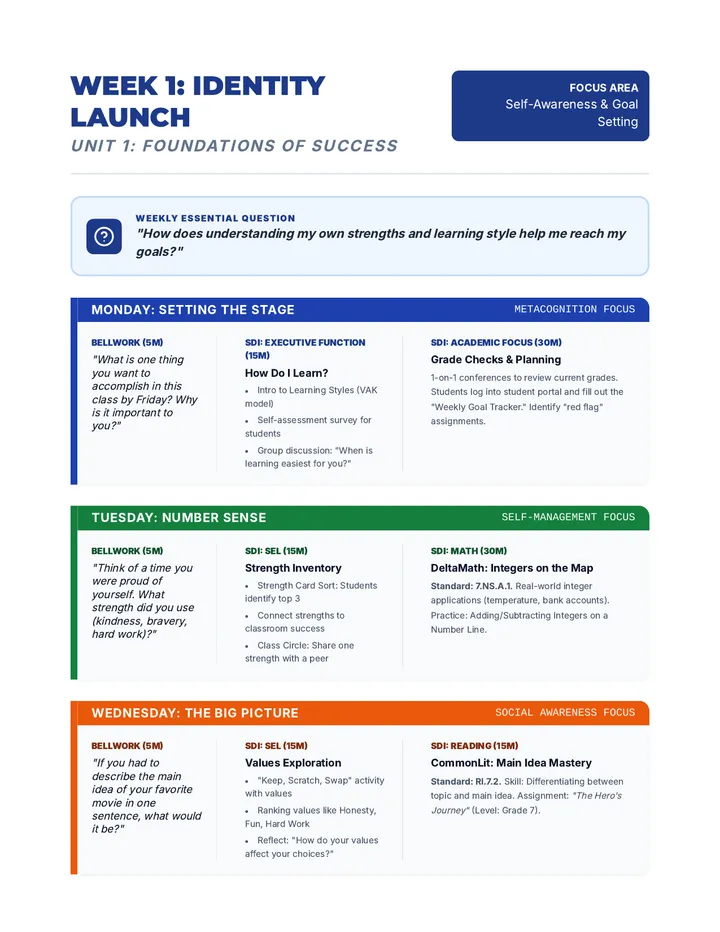
A comprehensive 9-week curriculum designed for special education students (grades 7-9) transitioning to adult life. The course integrates foundational reading, writing, and math skills (supported by CommonLit, NoRedInk, and DeltaMath) with essential SEL, executive function, and organizational training.
A professional development series designed to empower Exceptional Learners Specialists with the communication tools needed to influence and inform school leadership through concise, high-impact presentations.
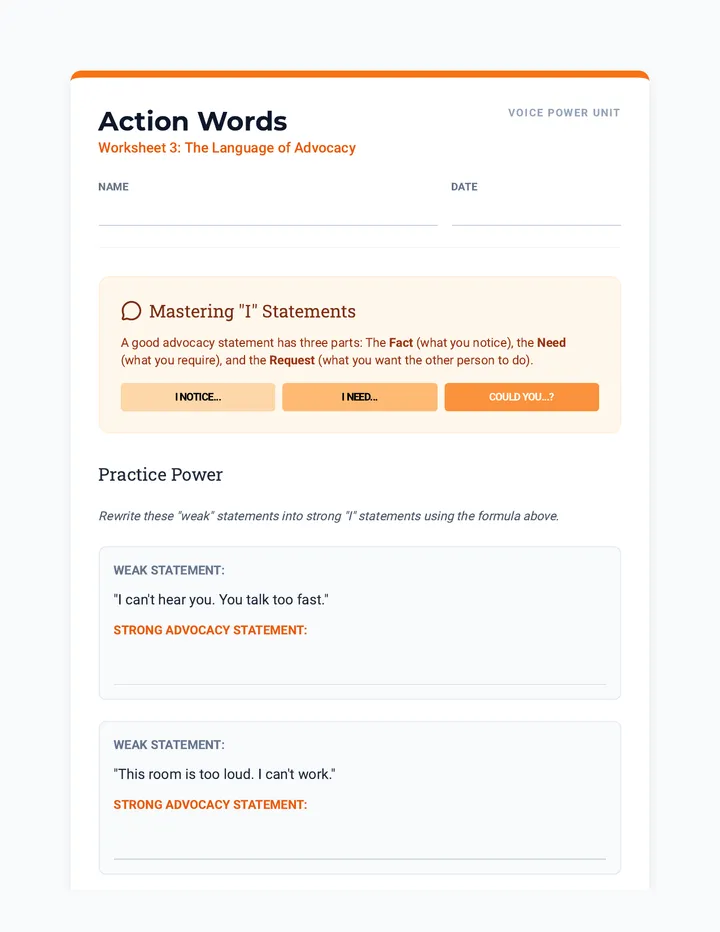
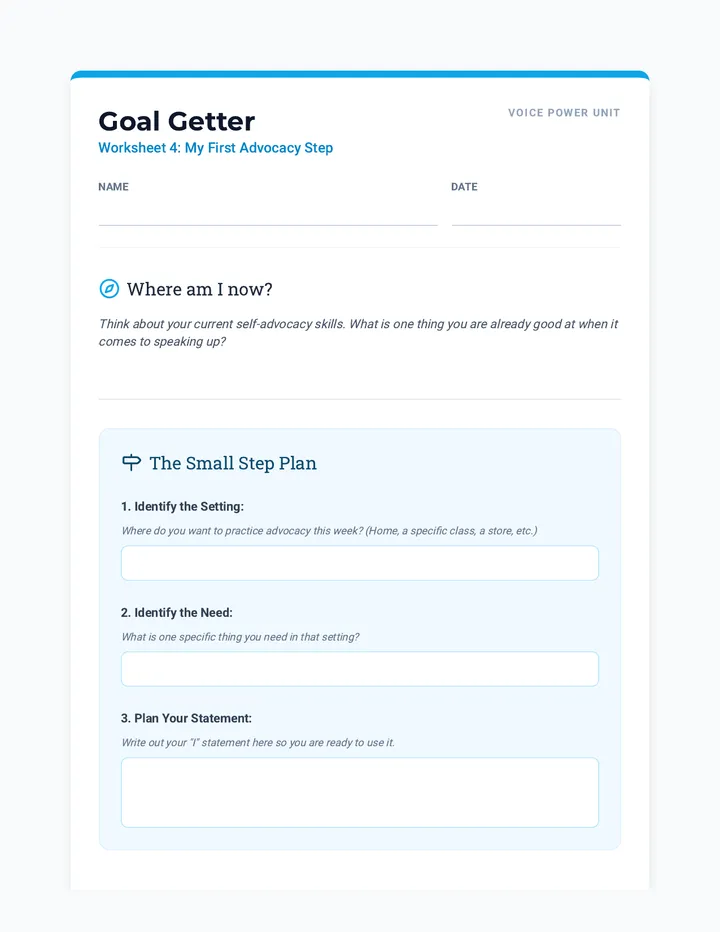
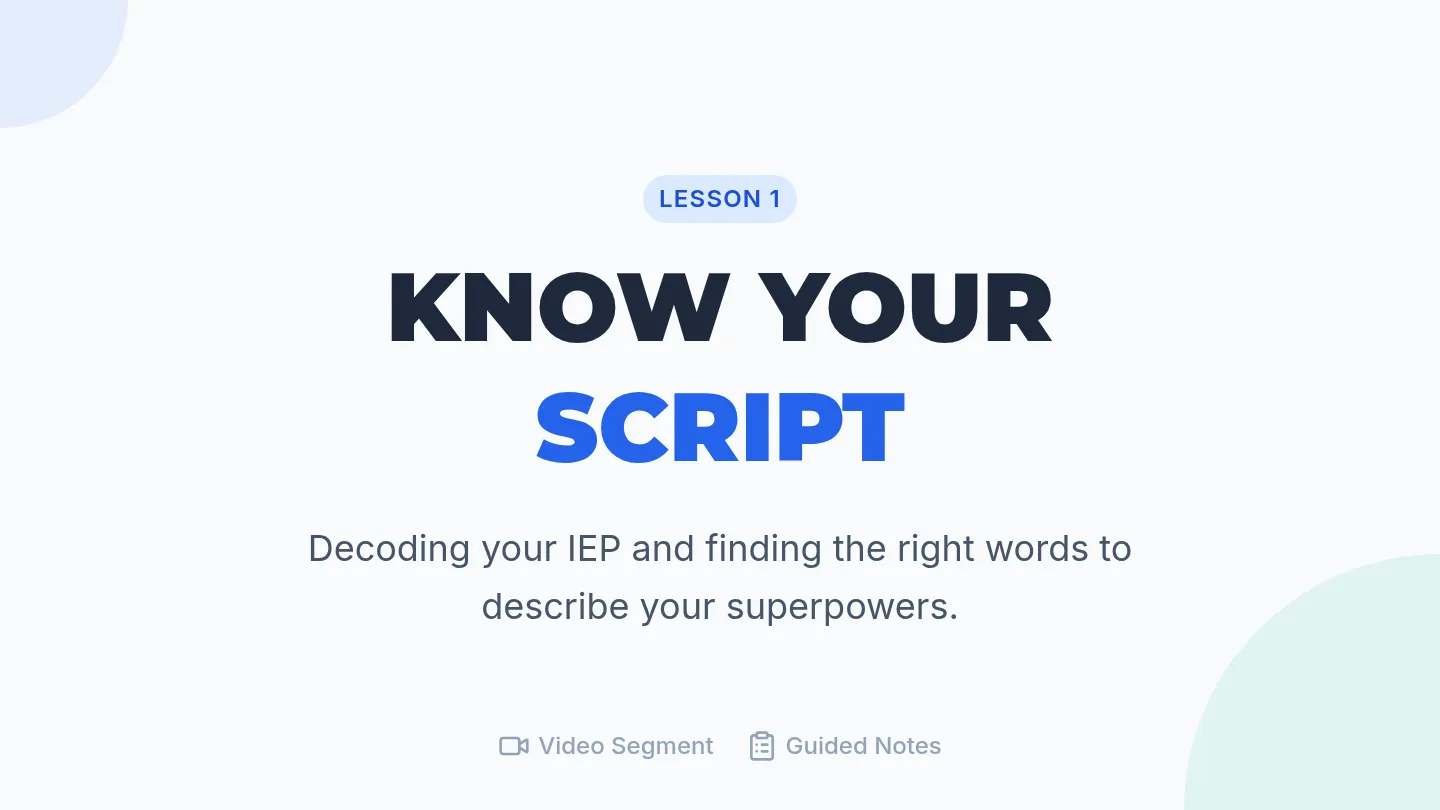
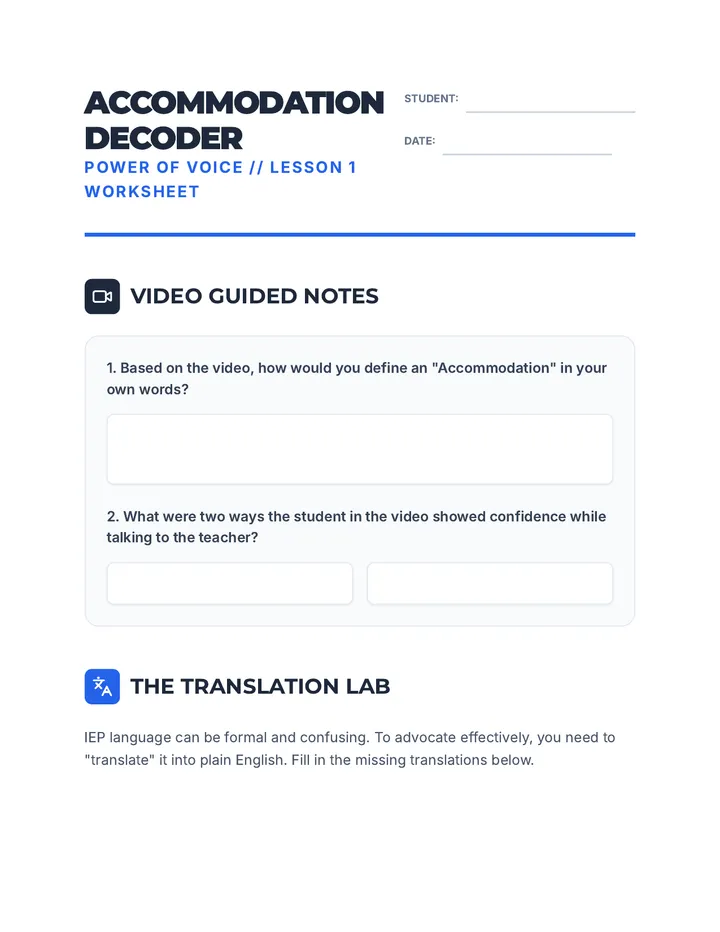
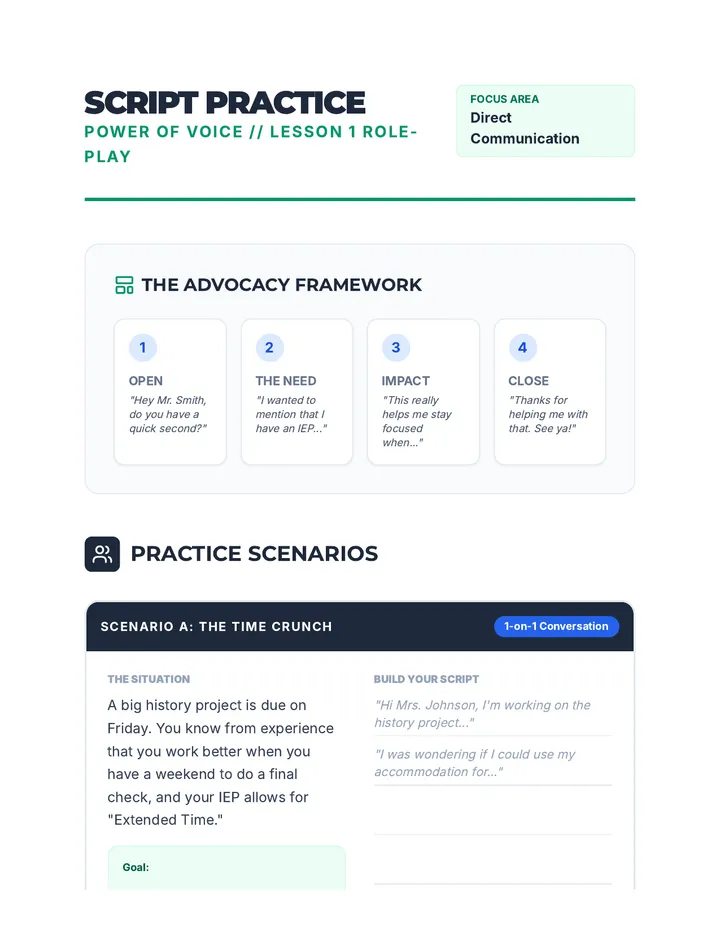
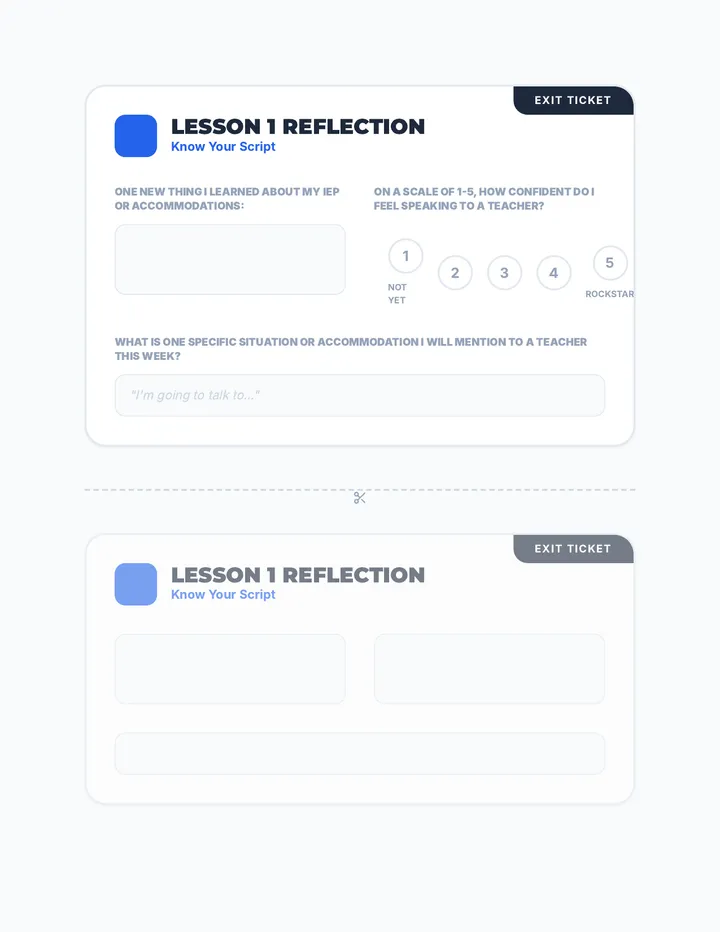
A comprehensive sequence designed to empower high school students on IEPs to communicate their needs, understand their accommodations, and collaborate effectively with teachers and staff.
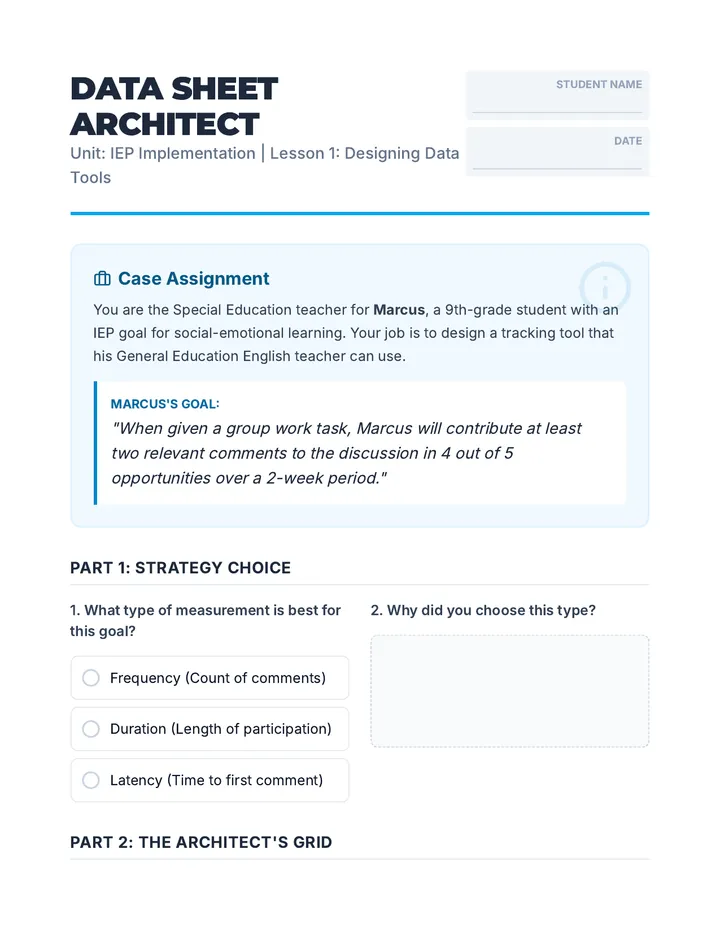
This sequence explores the implementation and monitoring of IEPs for 11th-grade students, focusing on data collection, progress reporting, secondary transition planning (ITP), and the ethical balance between legal compliance and educational quality. Students transition from being passive participants to active designers and evaluators of the IEP process.
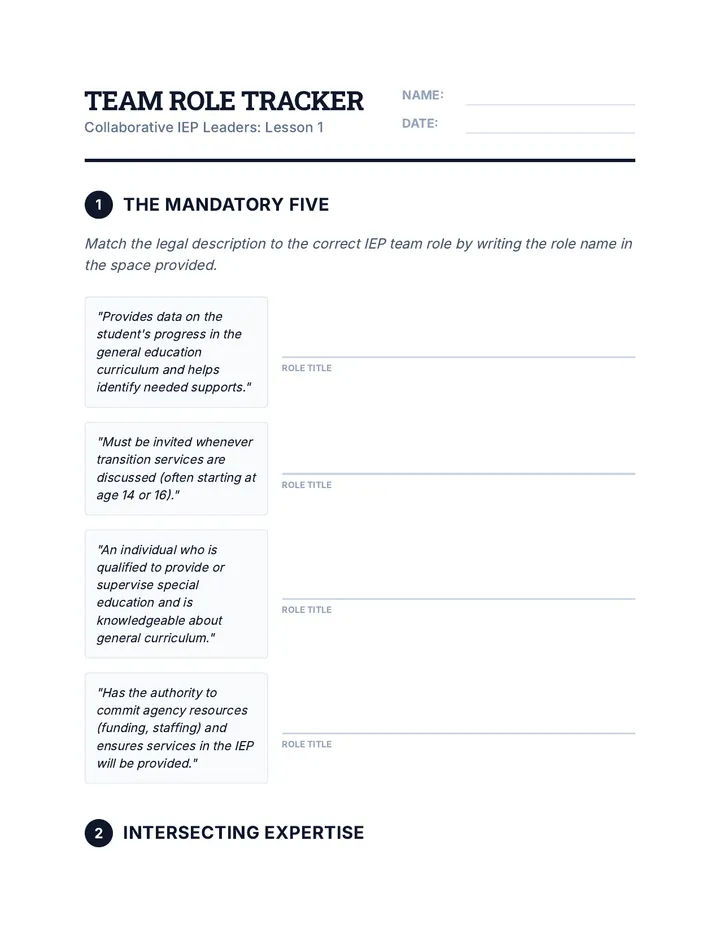
A comprehensive unit for high school students exploring the collaborative nature of IEP meetings. Students will master the roles of team members, the legal timeline of special education, self-advocacy strategies, and conflict resolution techniques, culminating in a professional mock IEP simulation.
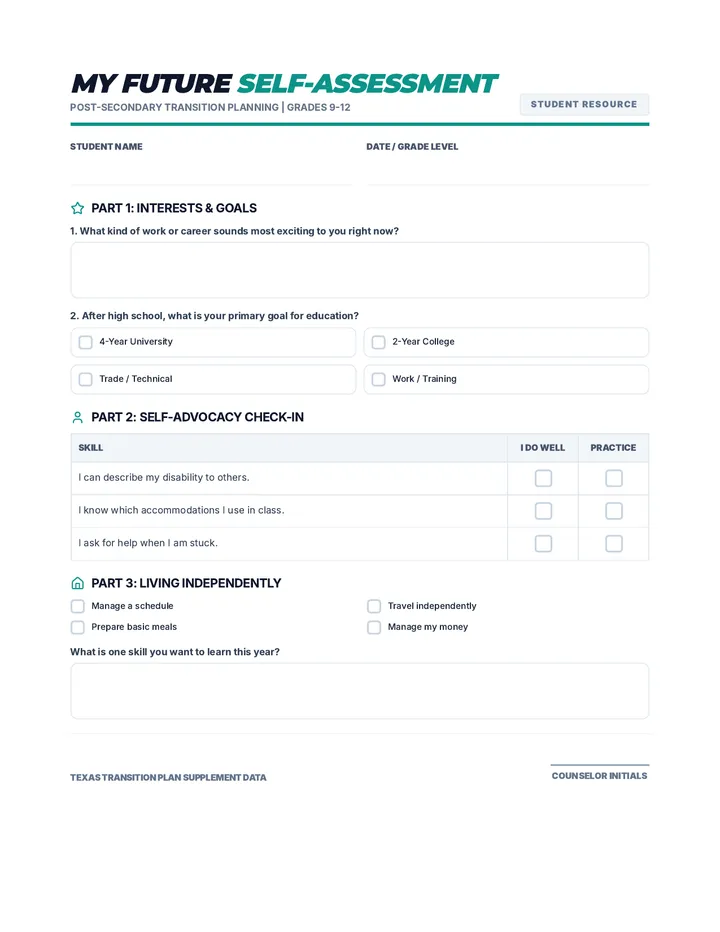
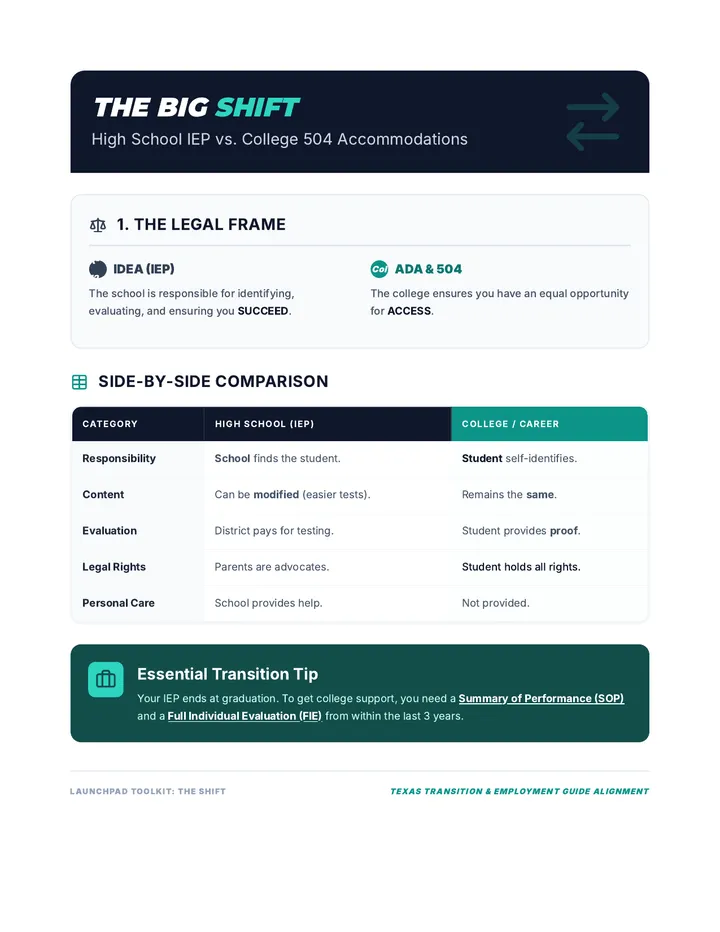
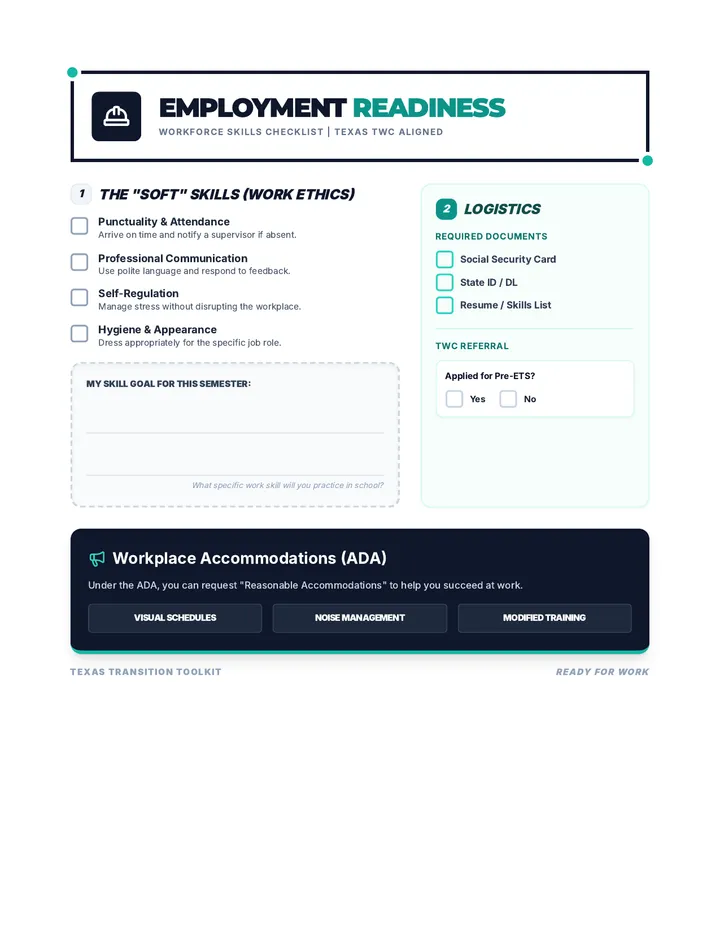
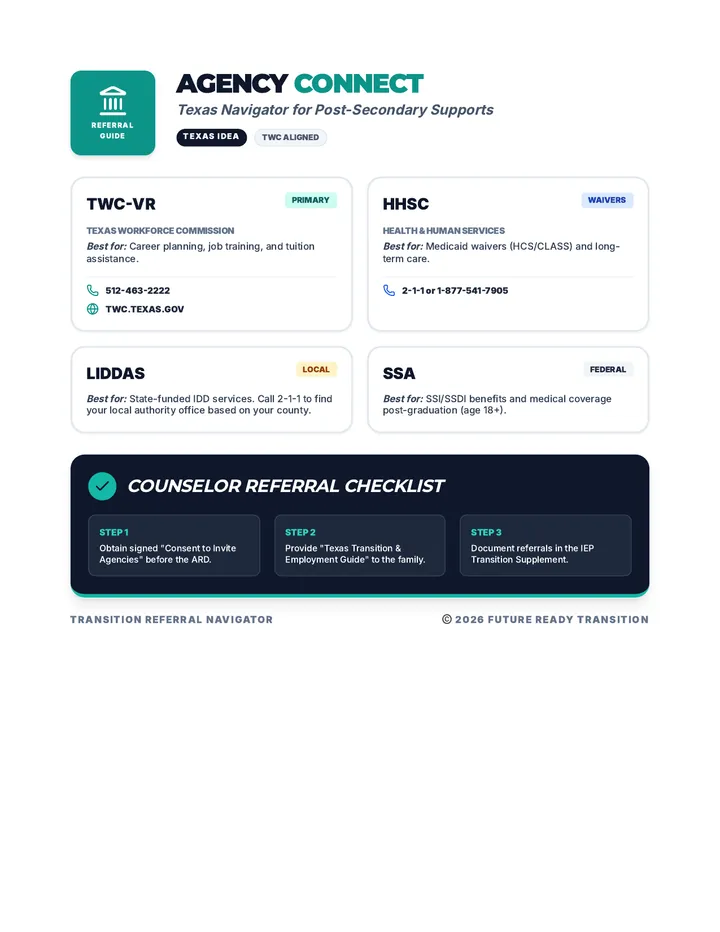
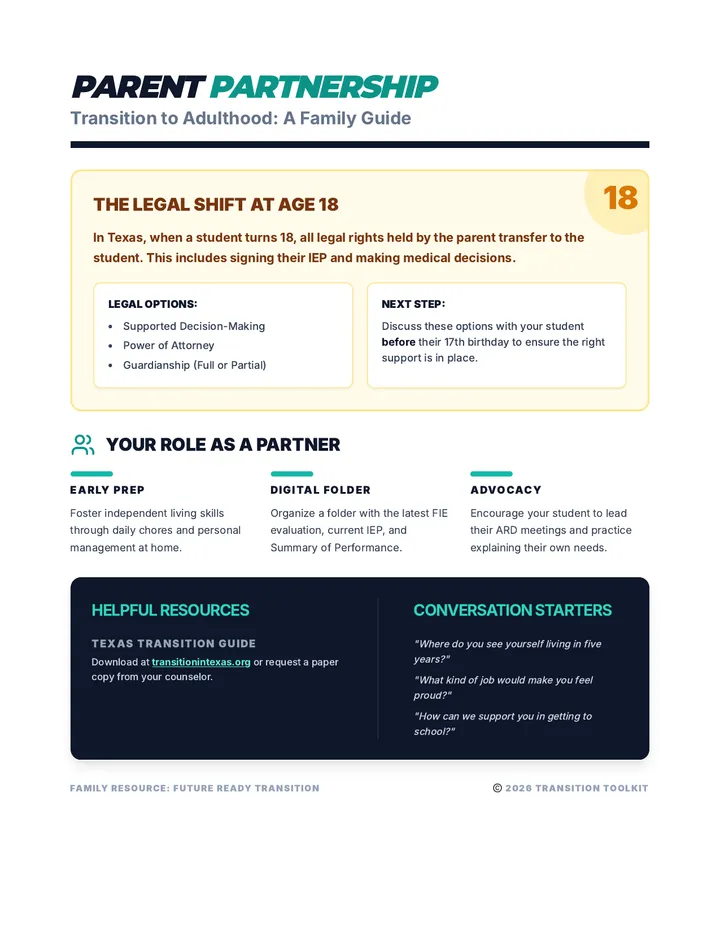
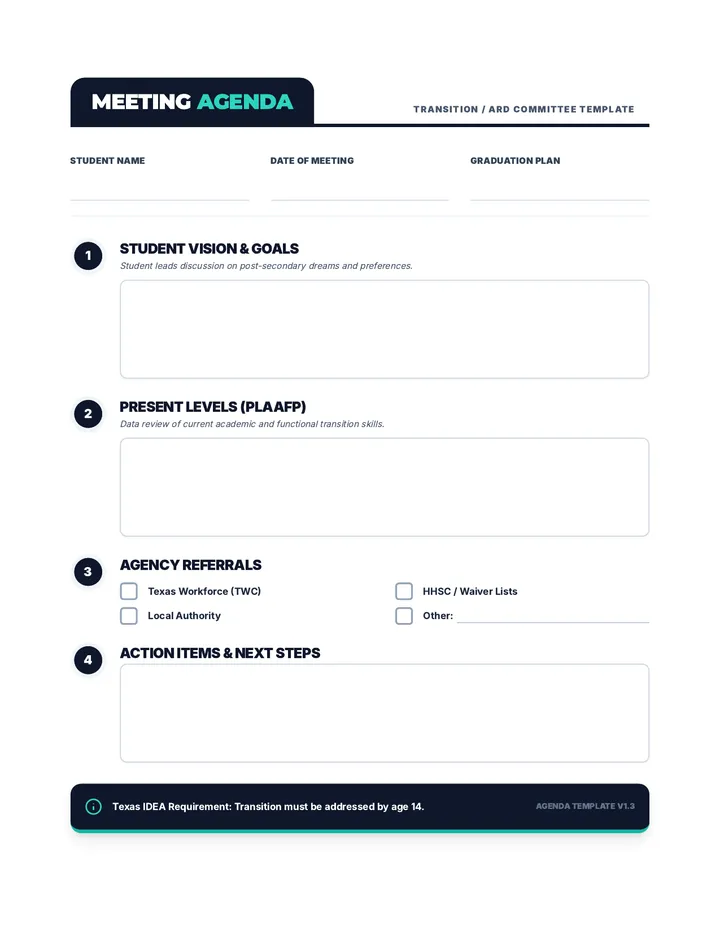
A comprehensive set of resources for high school counselors to guide students with IEPs and their families through the post-secondary transition process, aligned with Texas IDEA and TWC standards.
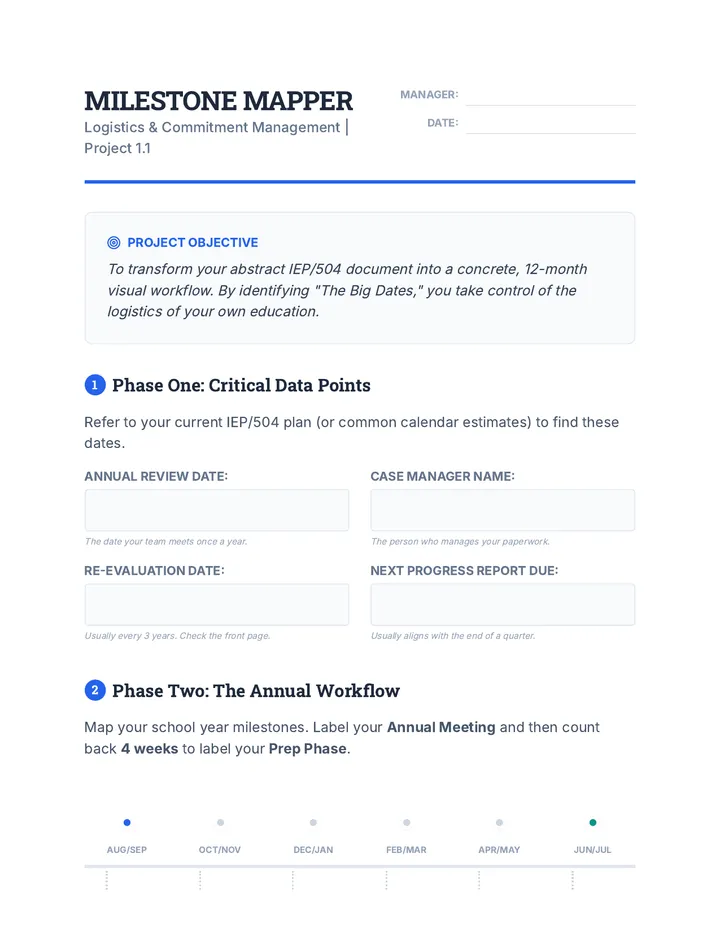
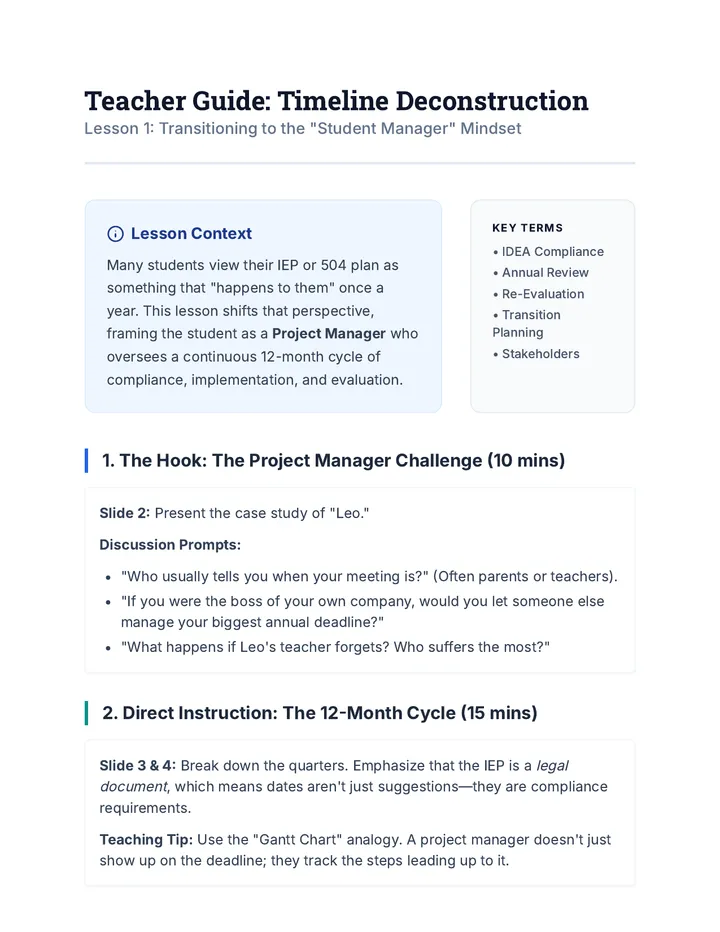
A 10th-grade sequence focused on empowering students to manage their own IEP/504 timelines, accommodations, and administrative responsibilities through the lens of project management. Students transition from passive recipients of services to active managers of their educational milestones.
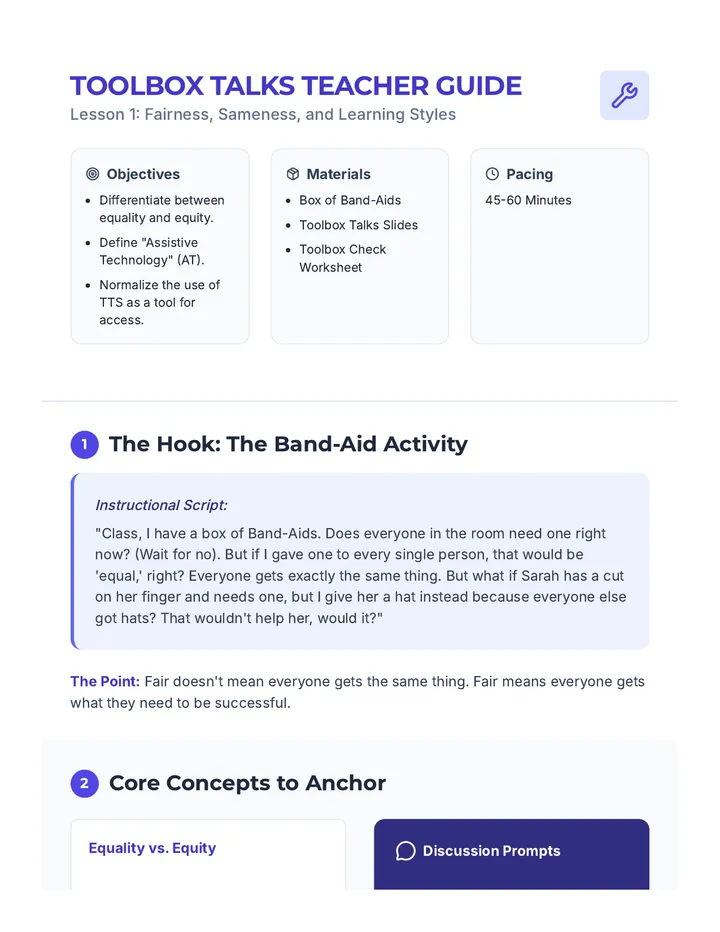
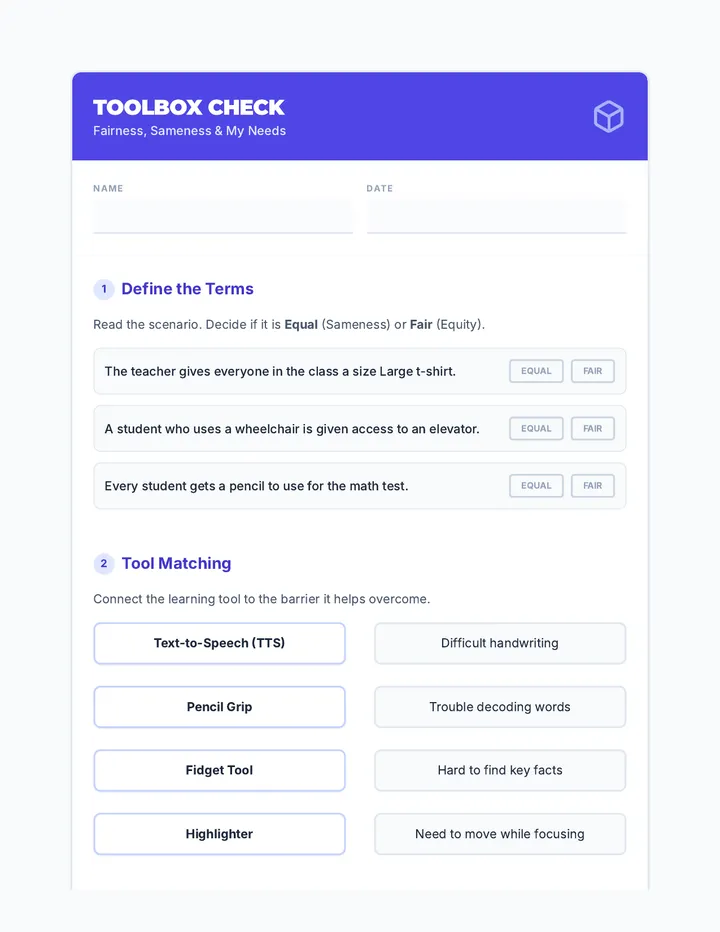
This sequence empowers 5th-grade students to understand, use, and advocate for Text-to-Speech (TTS) as a vital learning tool. It focuses on the distinction between fairness and sameness, identifying specific tasks where TTS is most effective, and building the social-emotional confidence to communicate needs to teachers and peers.
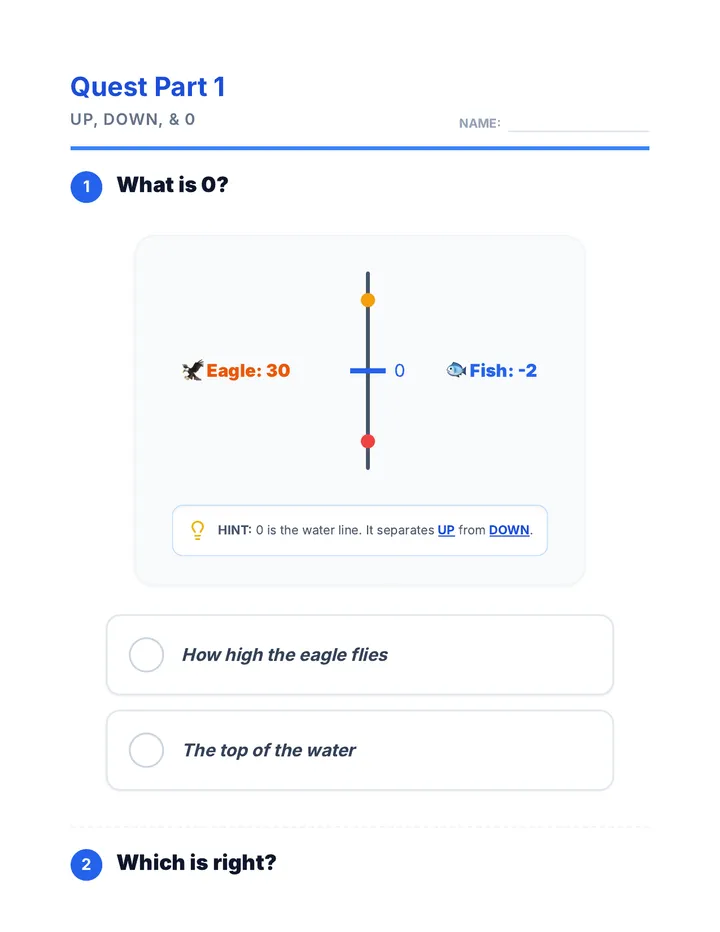
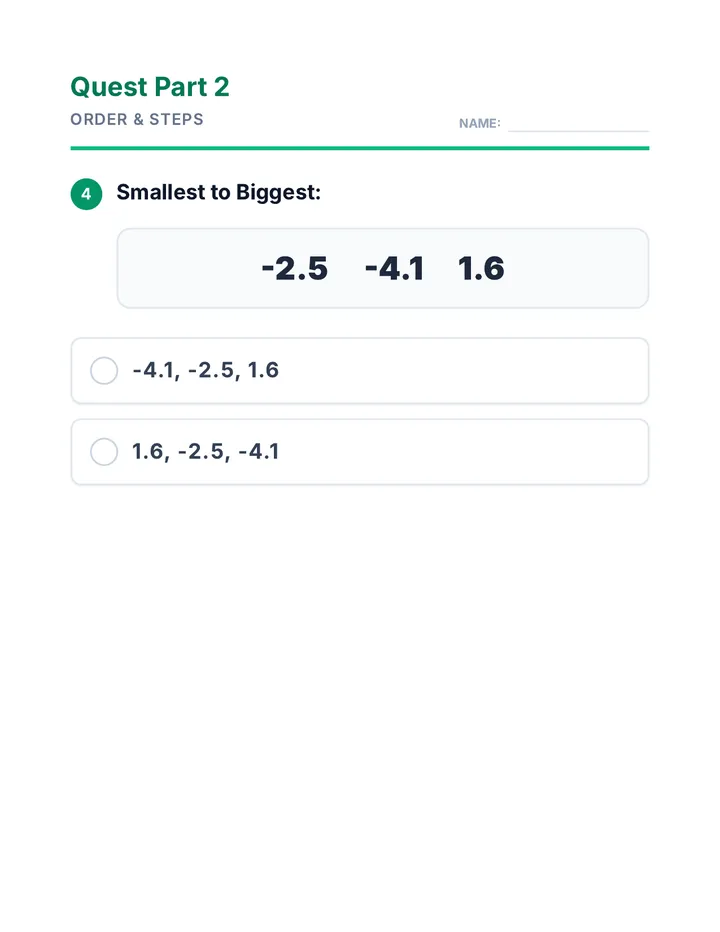
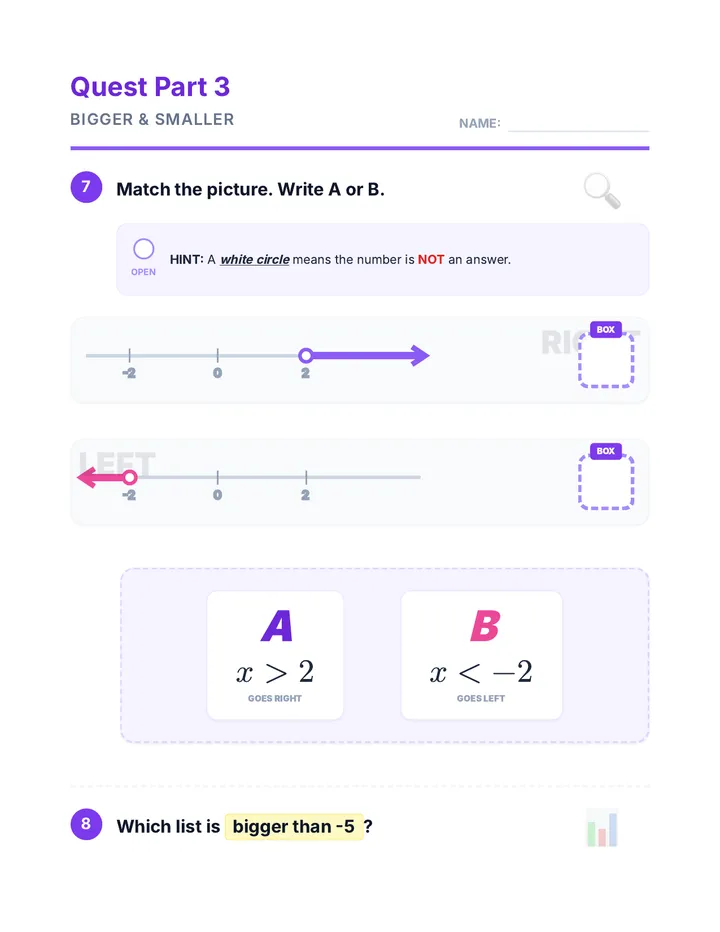
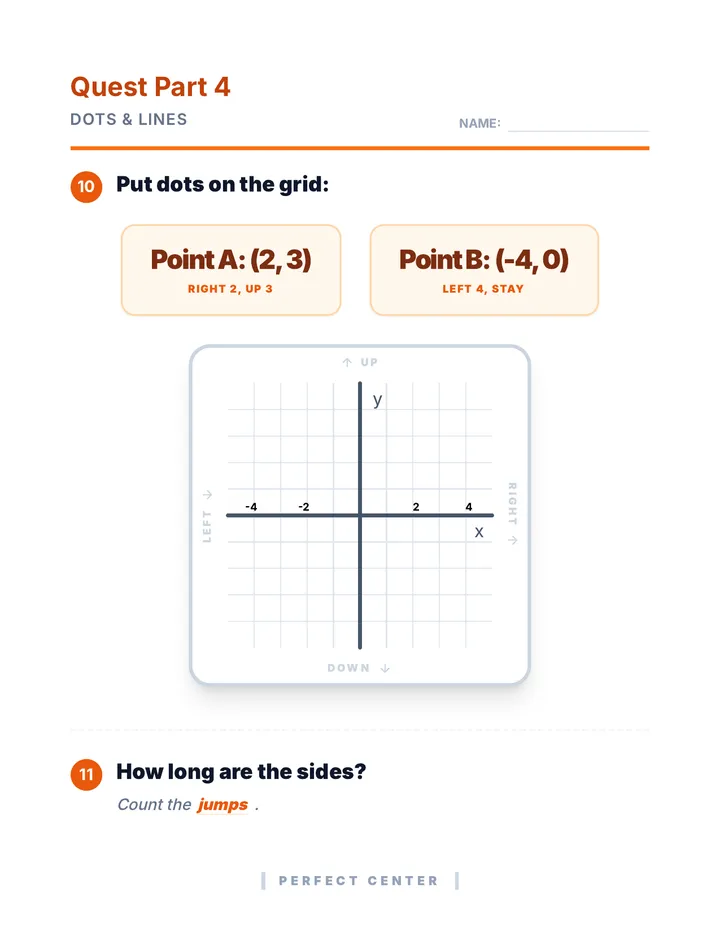
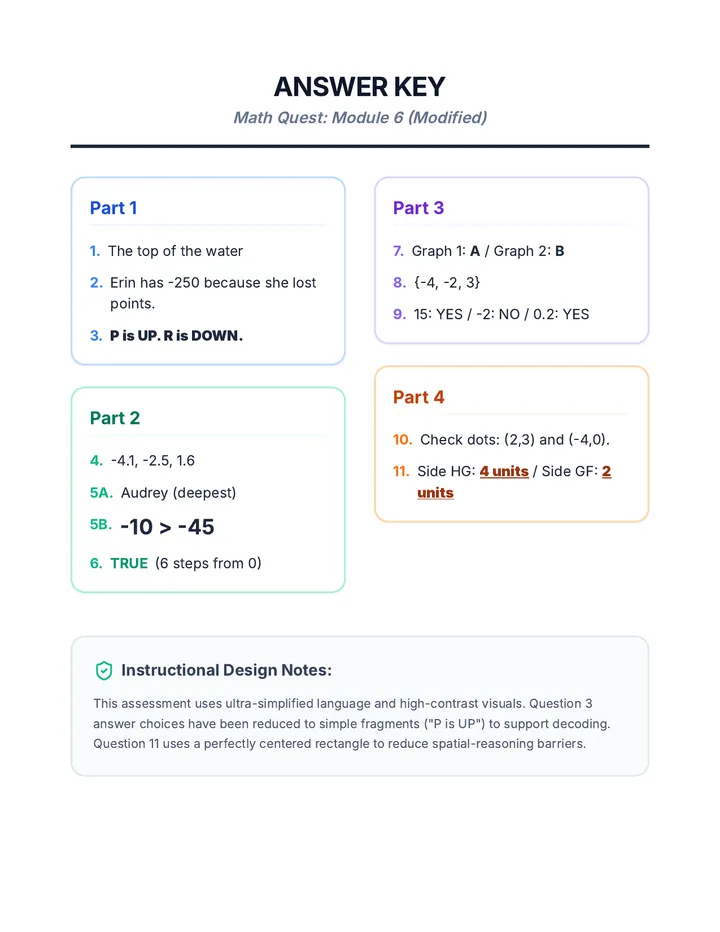
A modified version of the Grade 6 Module 6 Assessment, specifically designed for students with IEPs. The assessment is broken into bite-sized chunks with simplified language, visual supports, and reduced response options to increase accessibility.
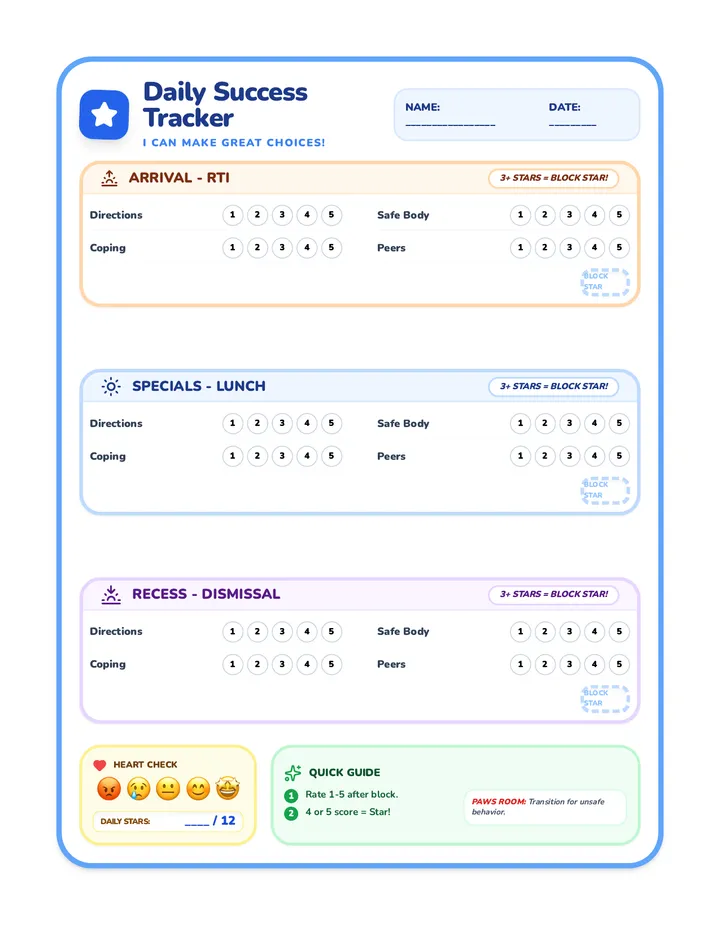
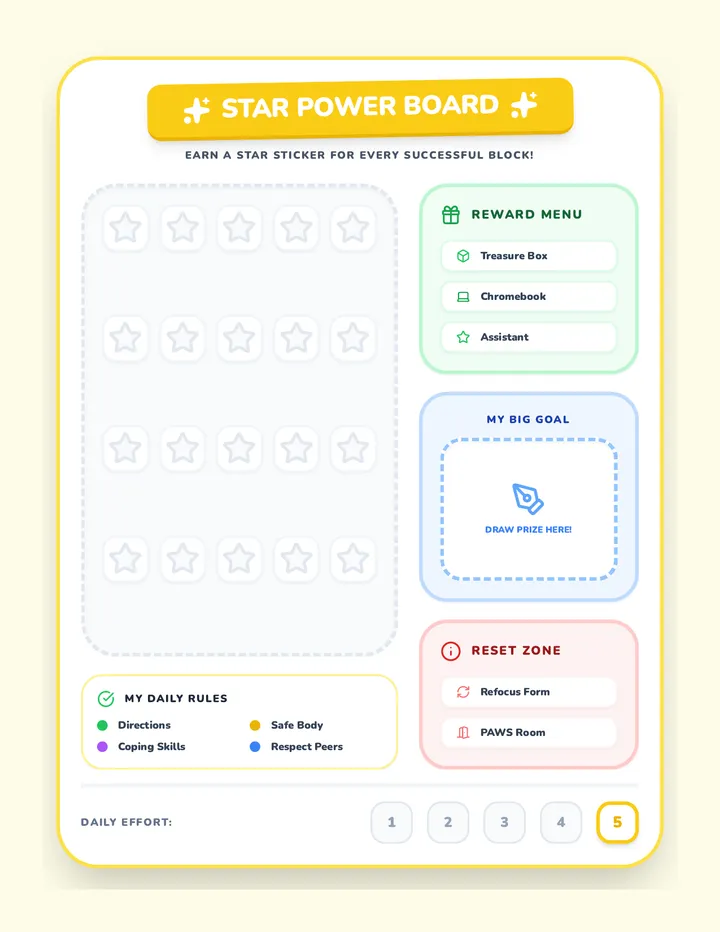
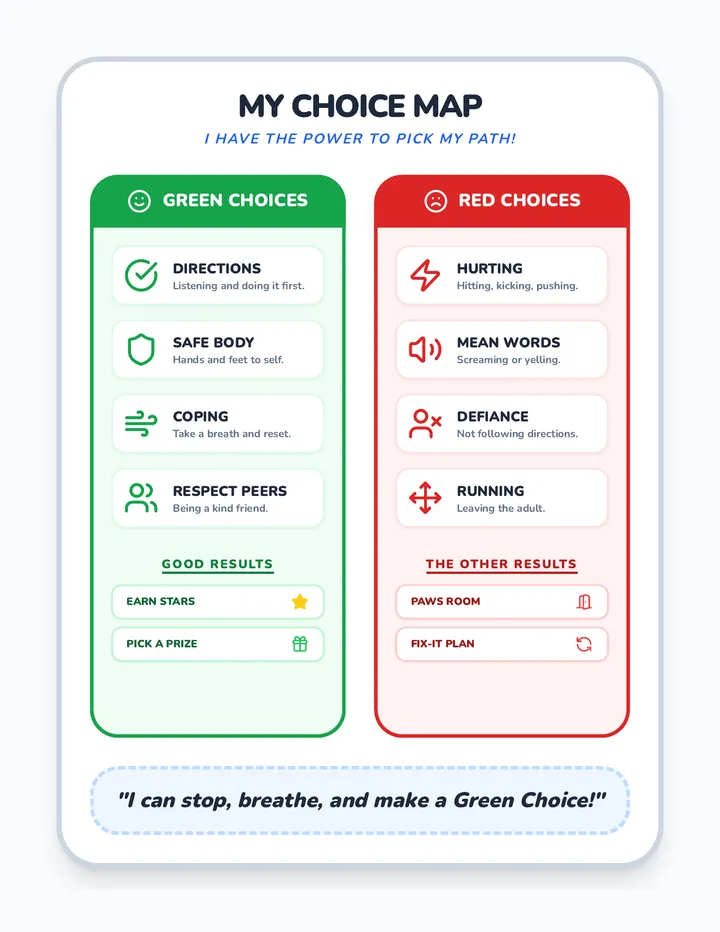
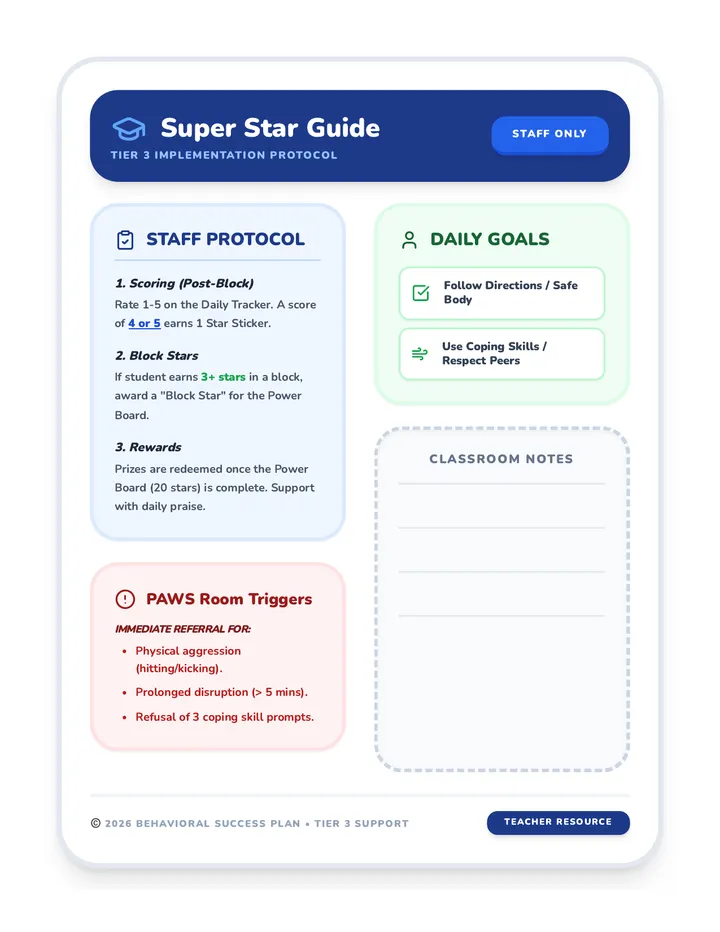
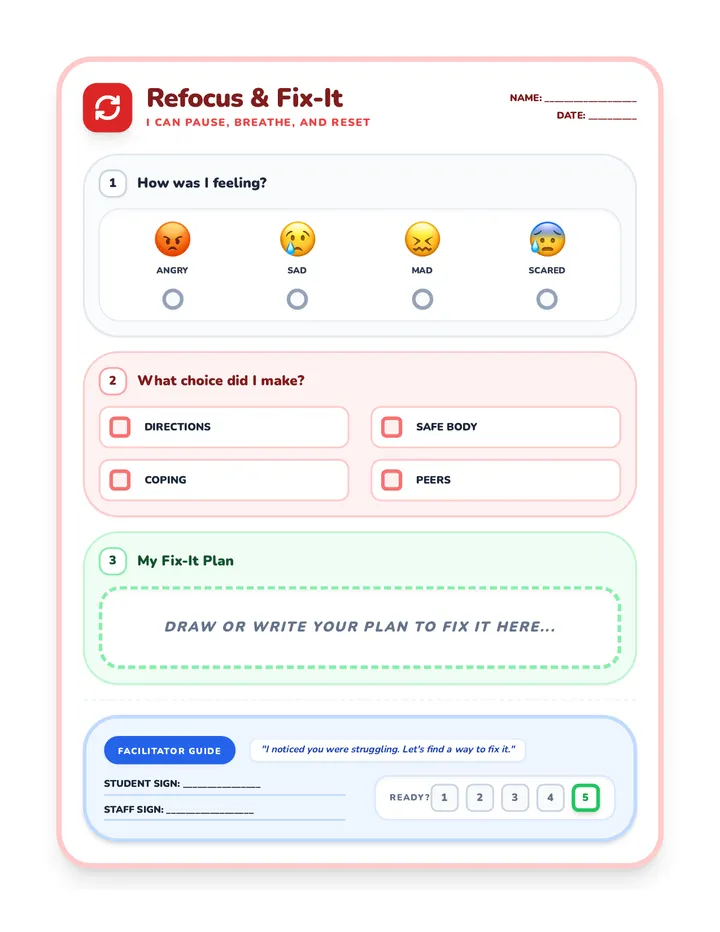
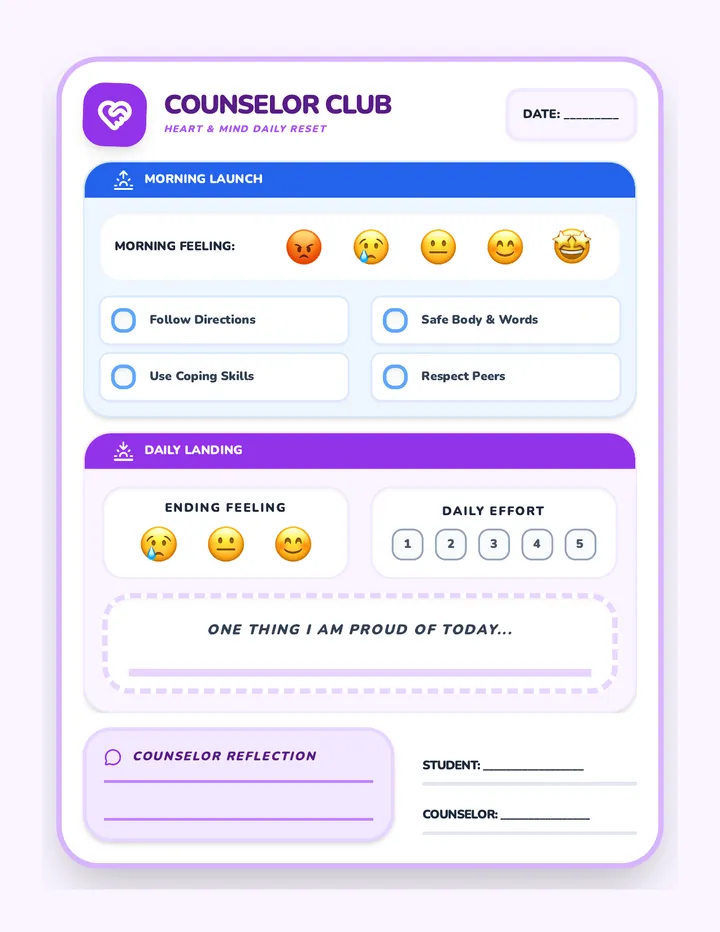
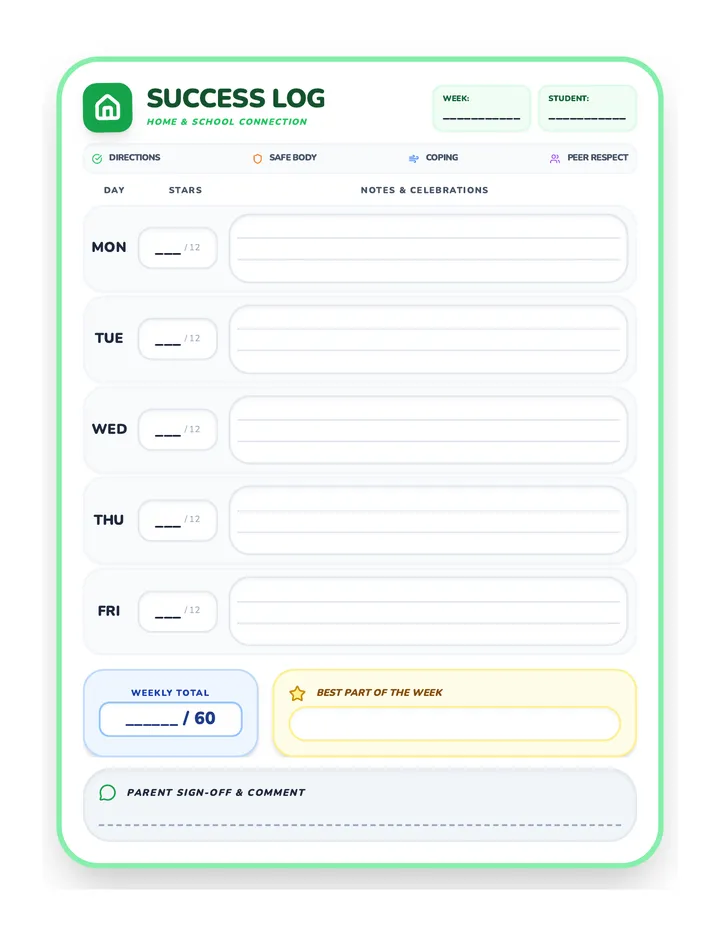
A comprehensive Tier 3 behavior support system for a second-grade student with ADHD, focusing on emotion regulation, safe choices, and positive reinforcement through a structured daily check-in/check-out (CICO) process.
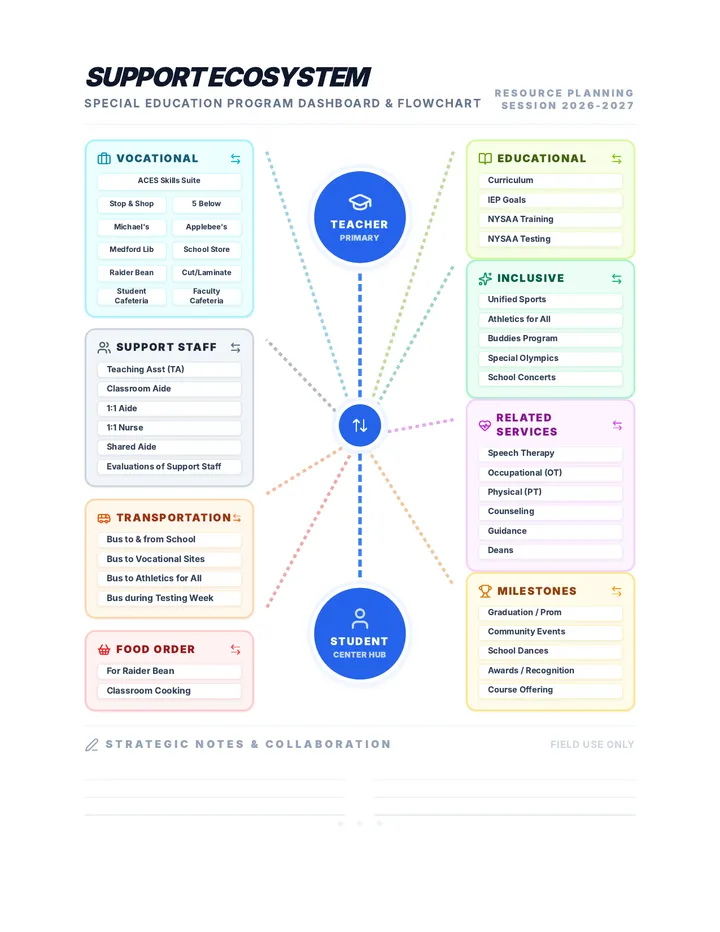
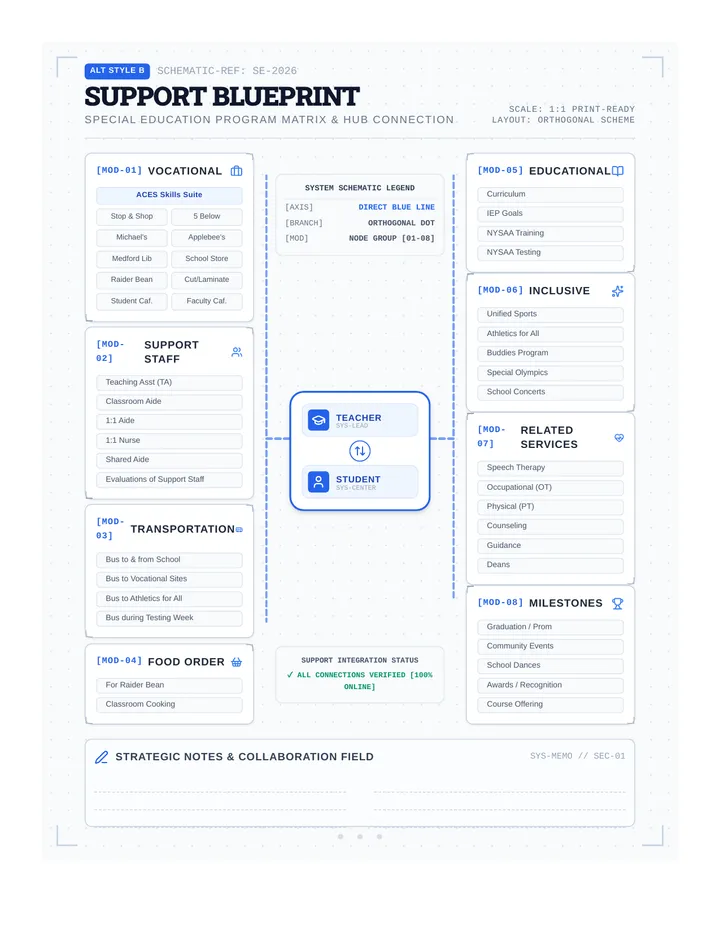
A lesson bundle focusing on the planning and mapping of support networks and educational resources in Special Education programs.
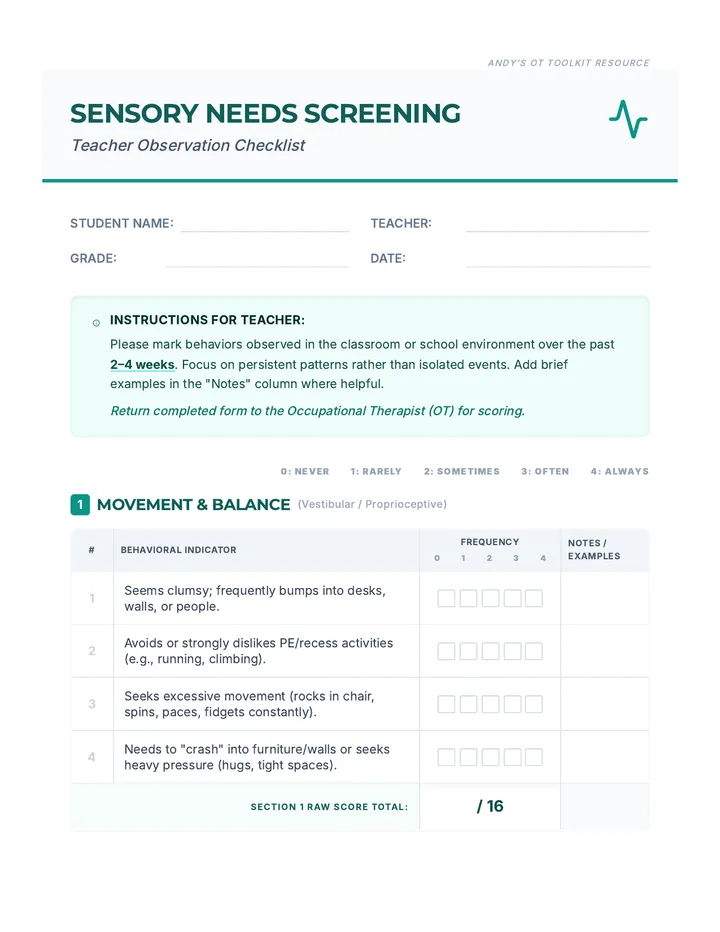
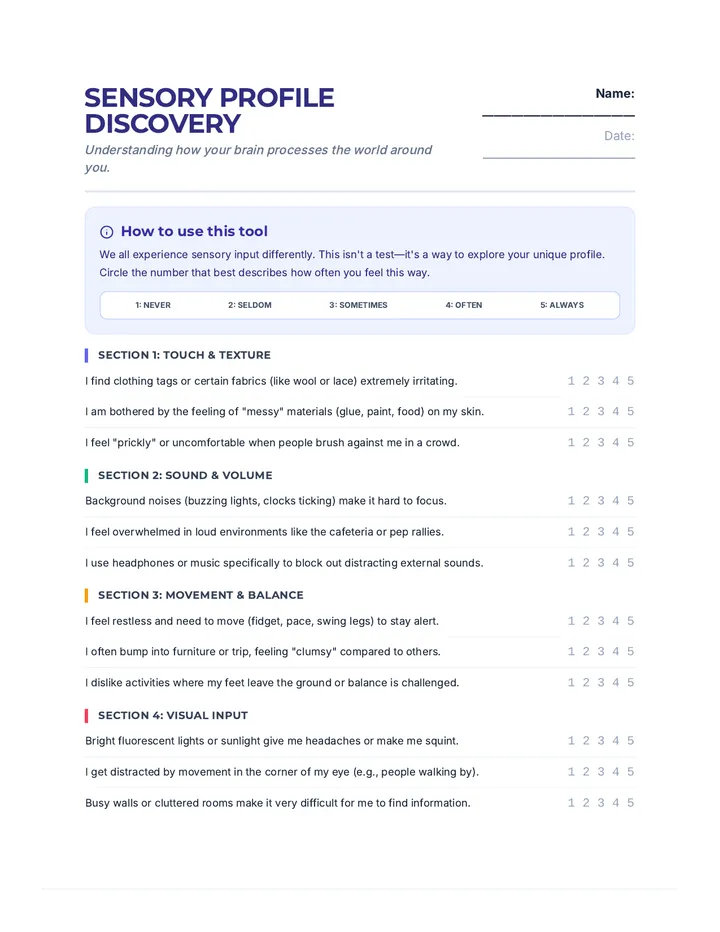
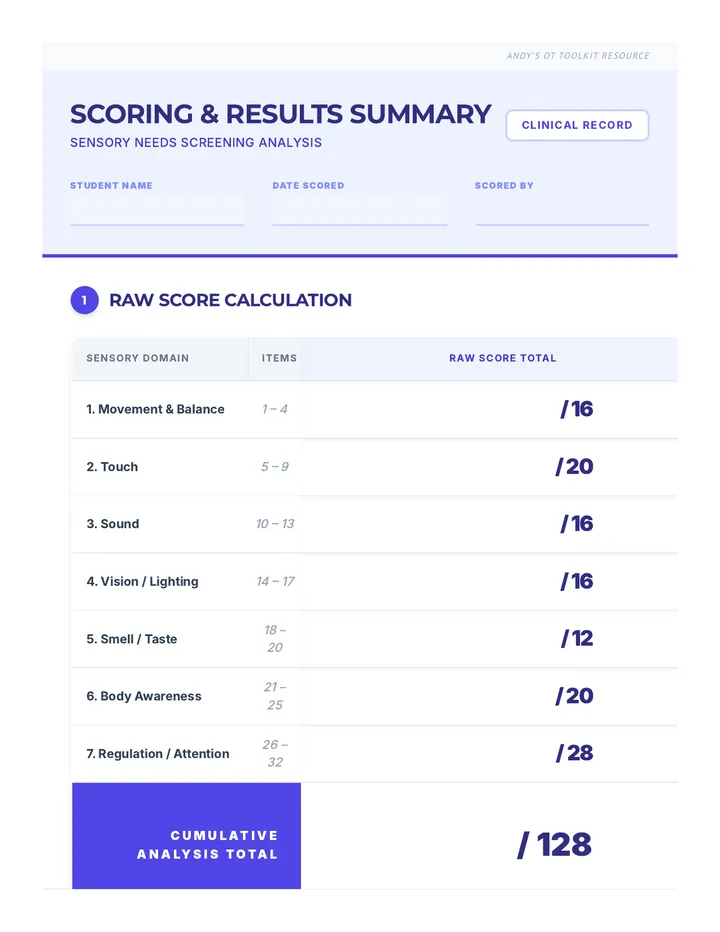
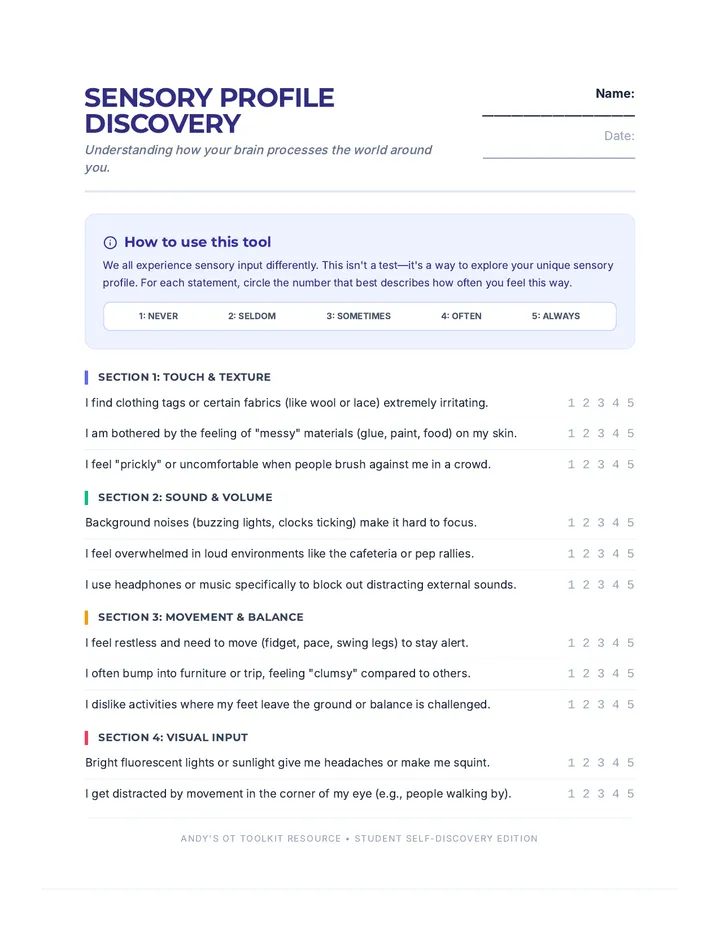
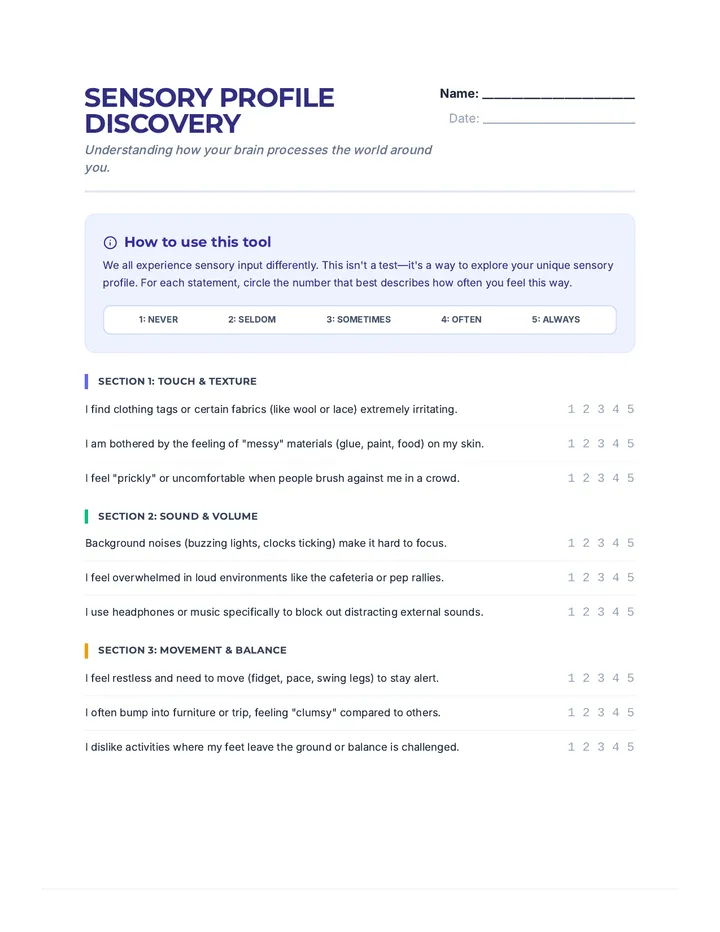
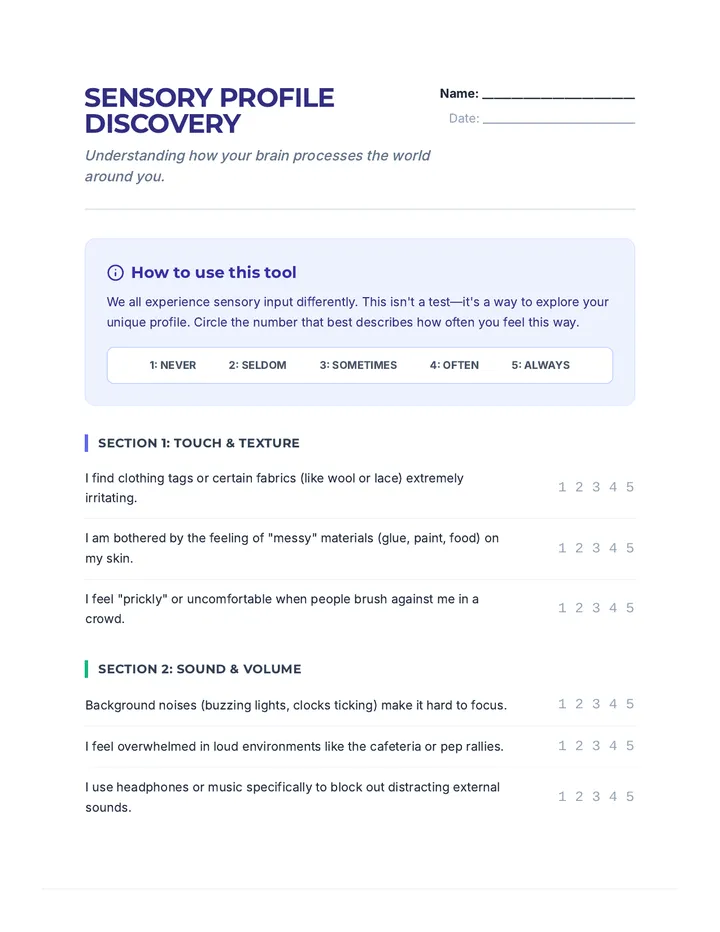
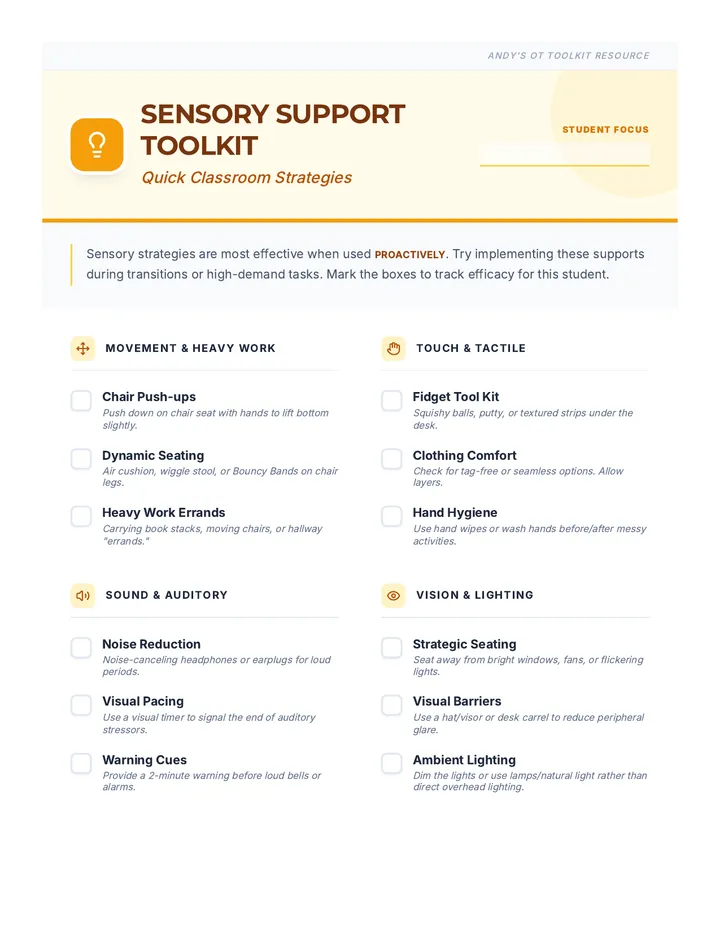
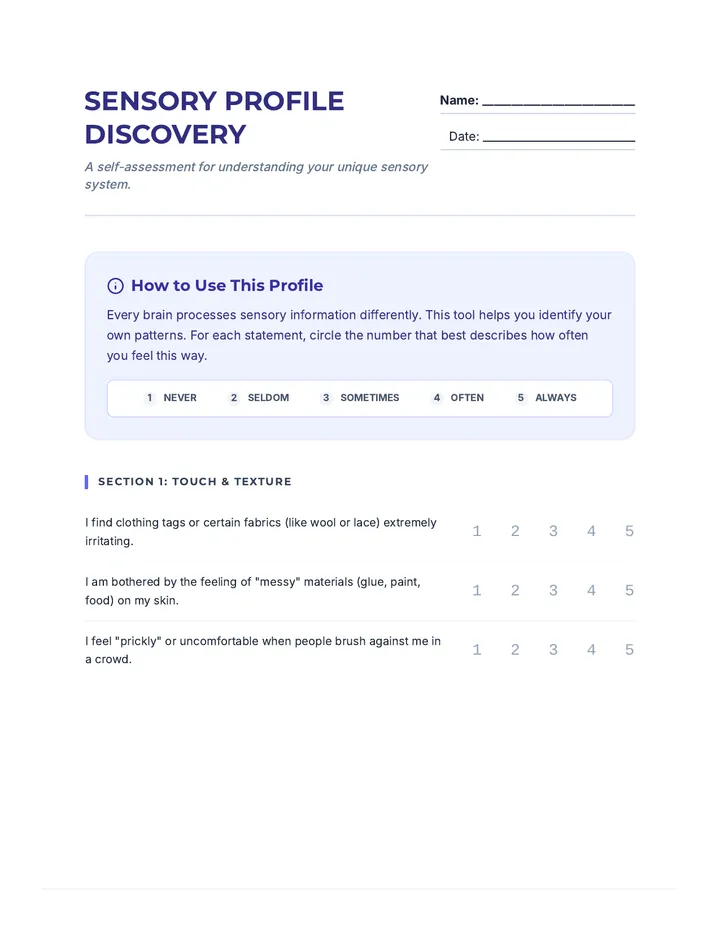
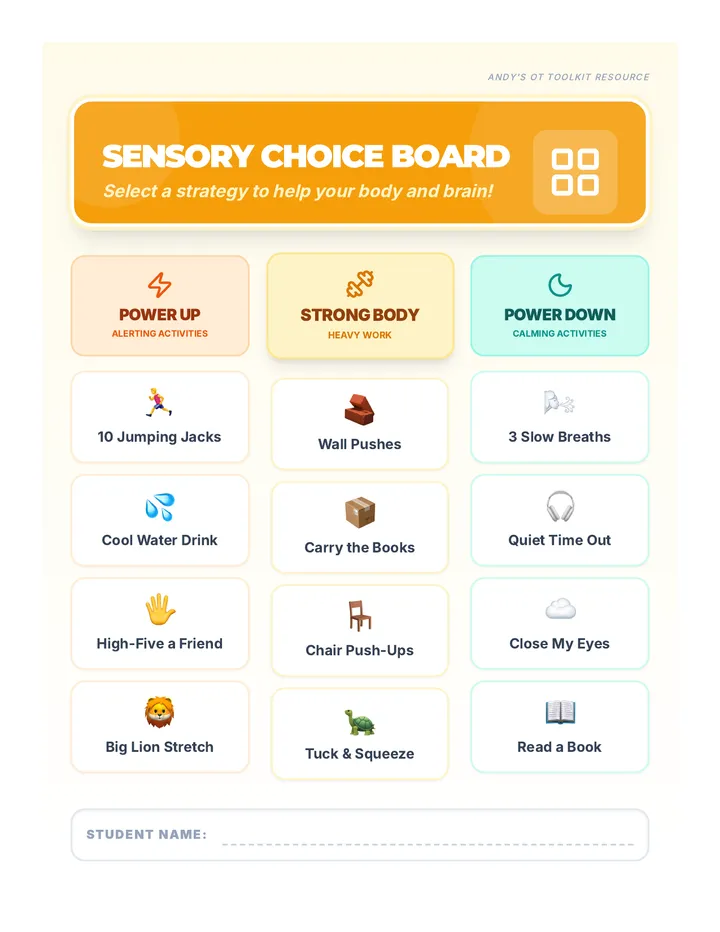
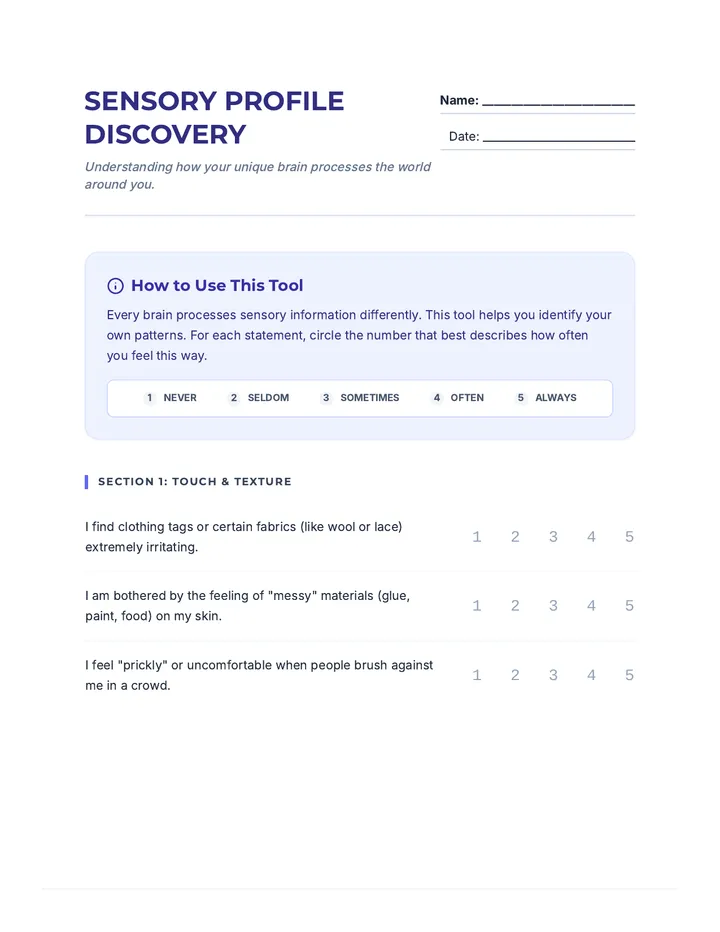
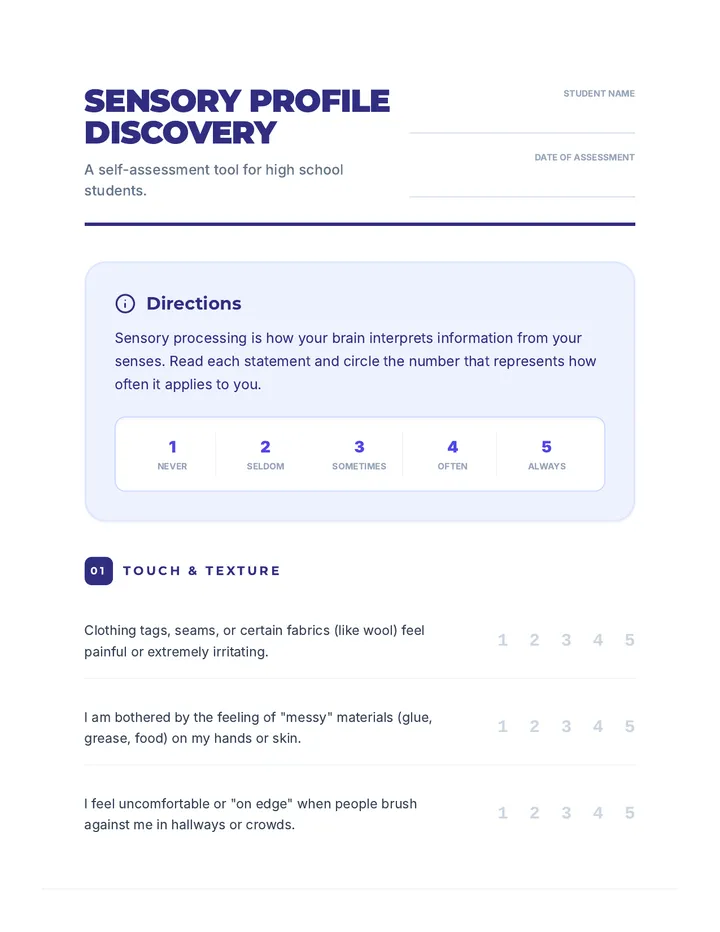
A comprehensive set of tools for teachers and occupational therapists to identify, score, and support students with sensory processing needs. Includes a screening checklist, a simplified scoring guide, and a classroom strategies handout.
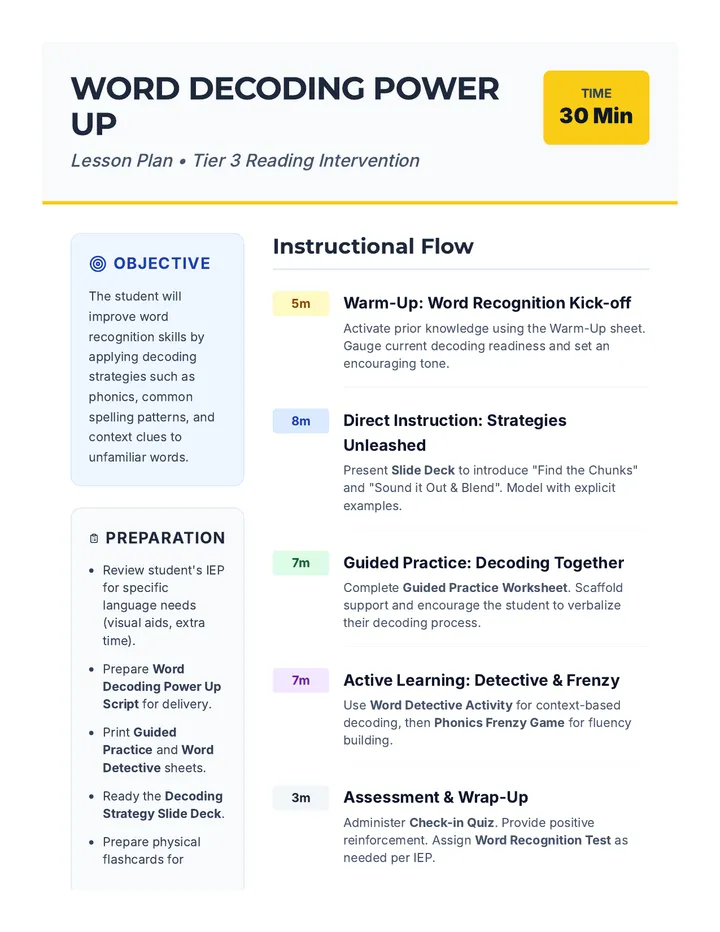
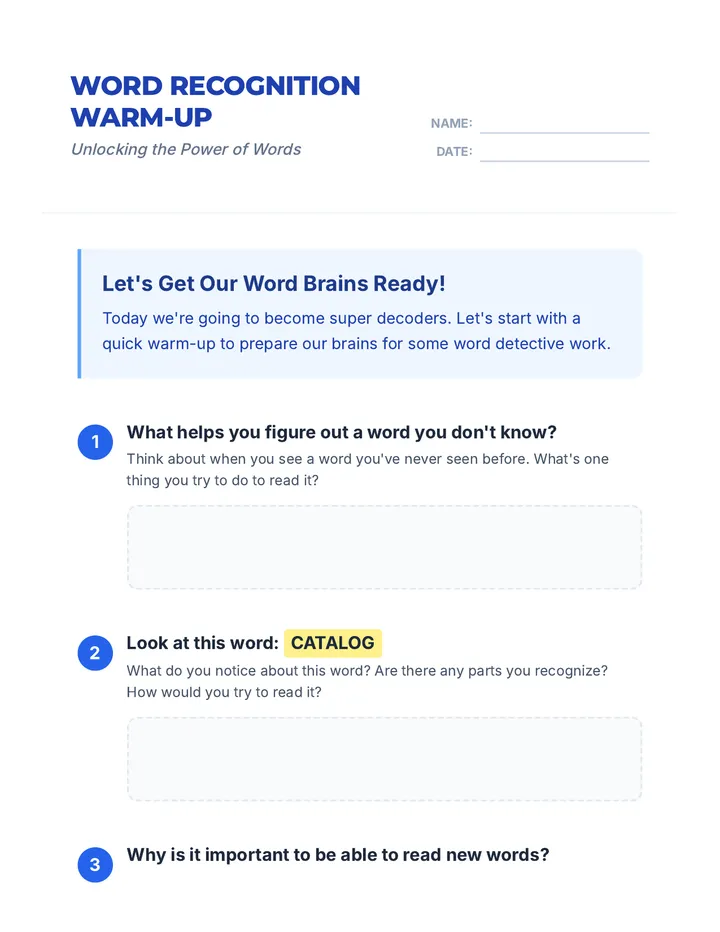
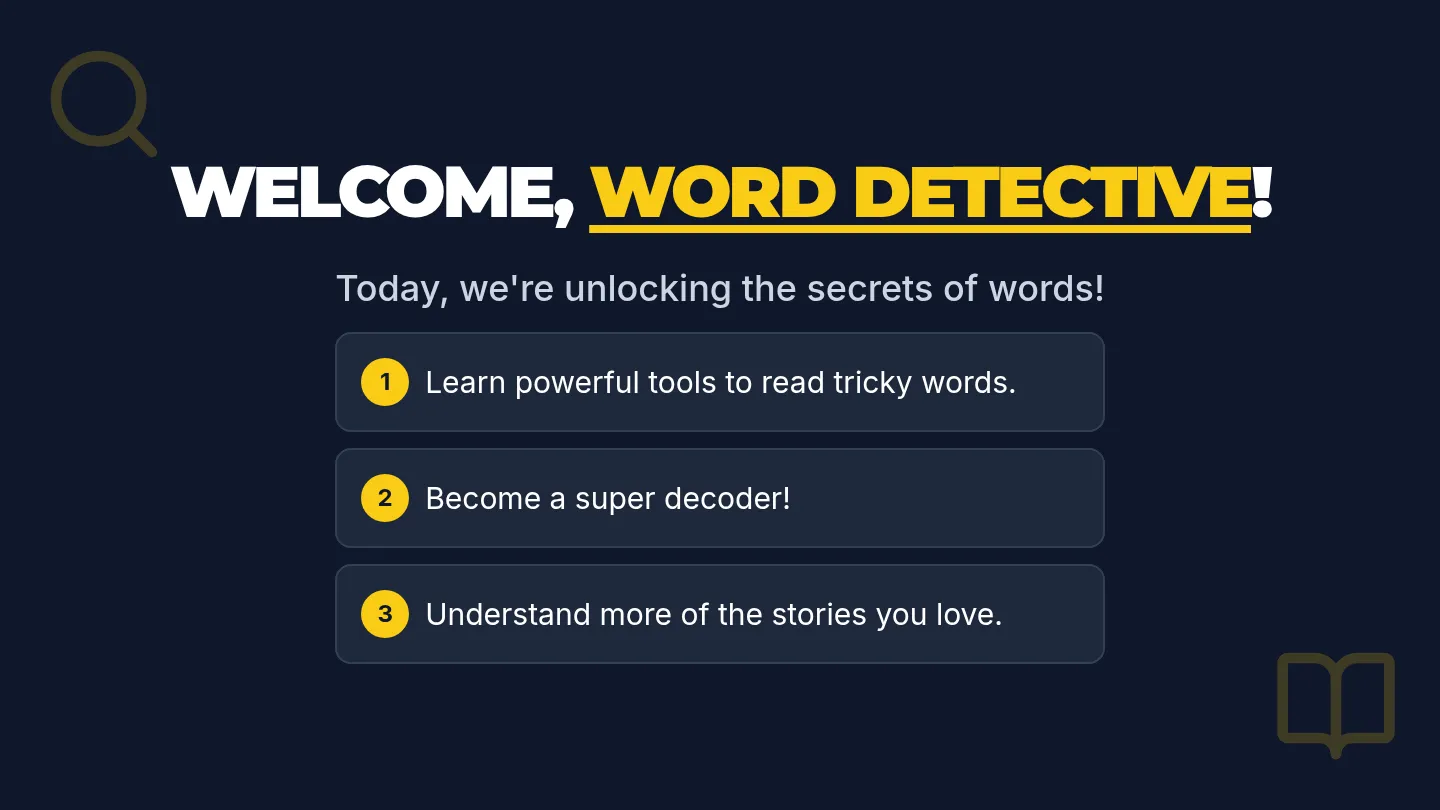
An individualized Tier 3 lesson designed to help students with learning disabilities enhance word recognition through specific decoding strategies like chunking and blending. This 30-minute session aligns with IEP goals, focusing on phonics and building reading confidence.
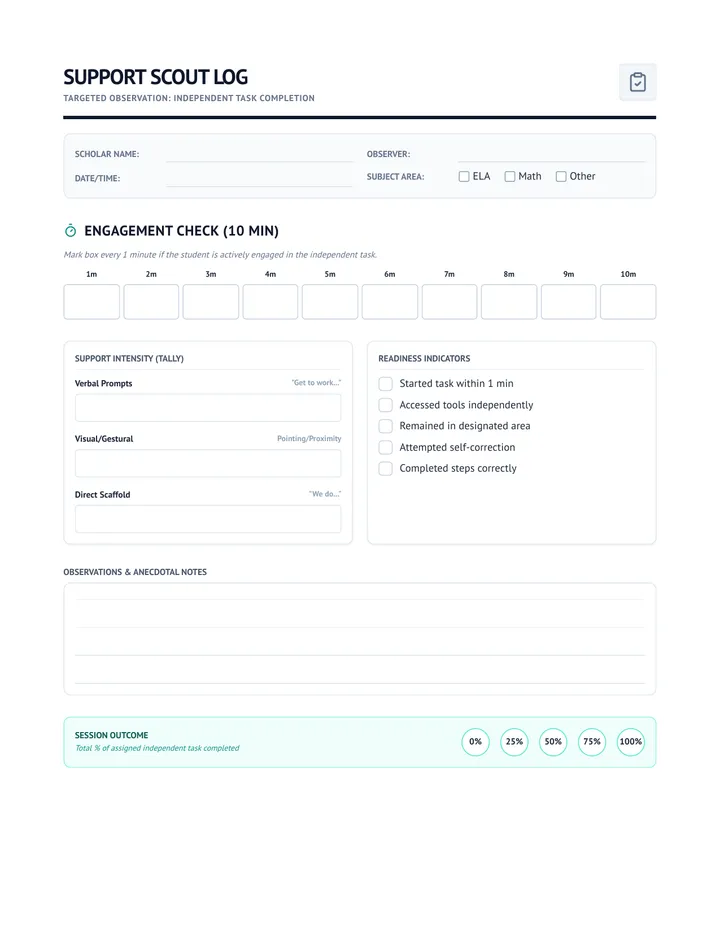
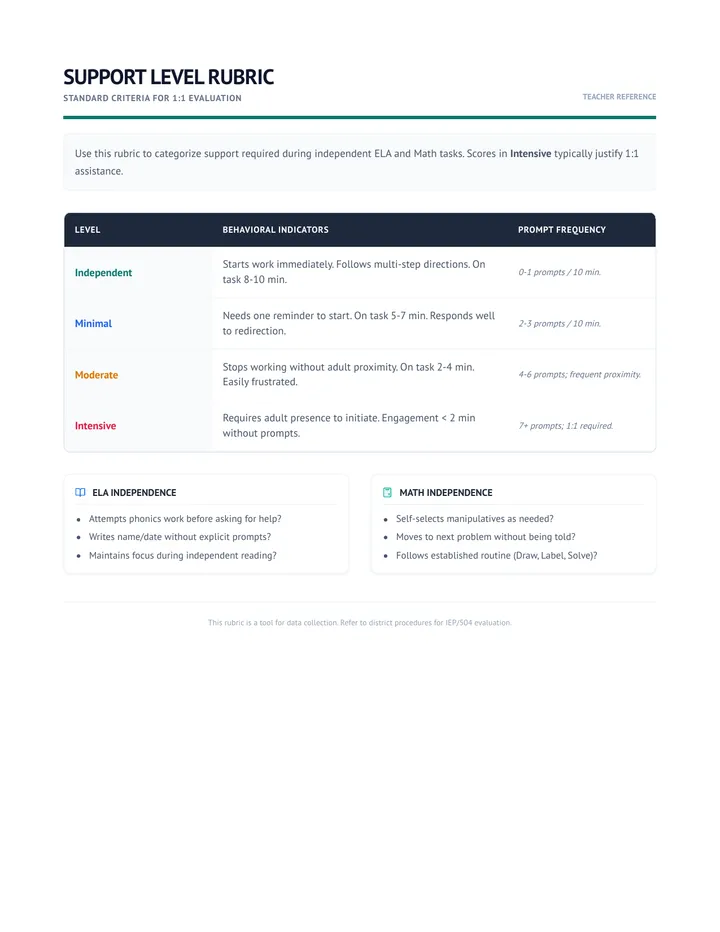
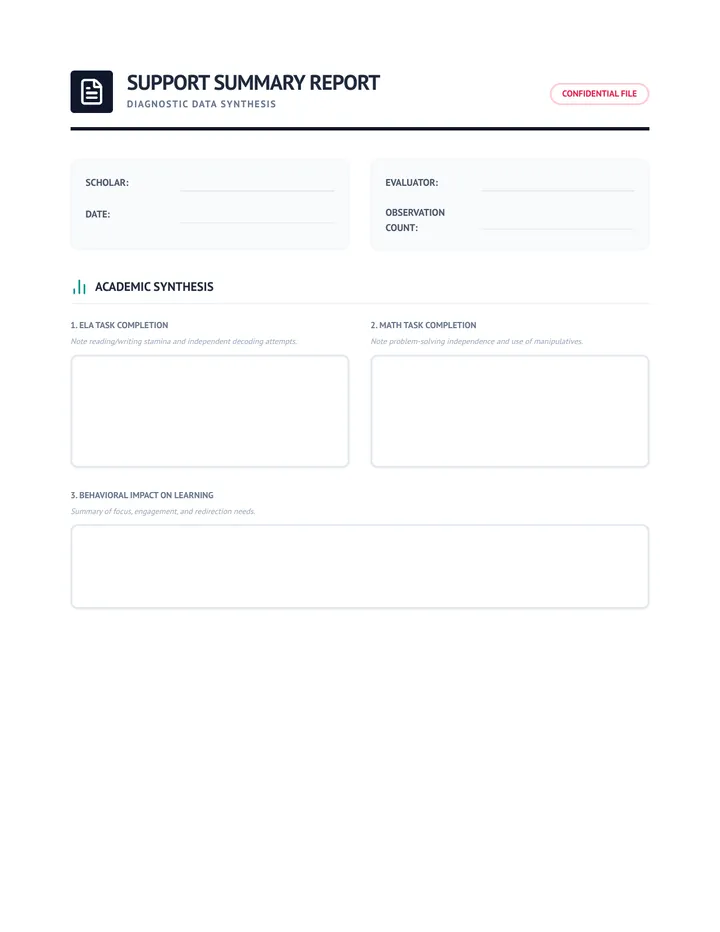
A comprehensive set of tools designed to track, analyze, and justify the need for 1:1 support for a student, focusing on independent task completion in ELA and Math.
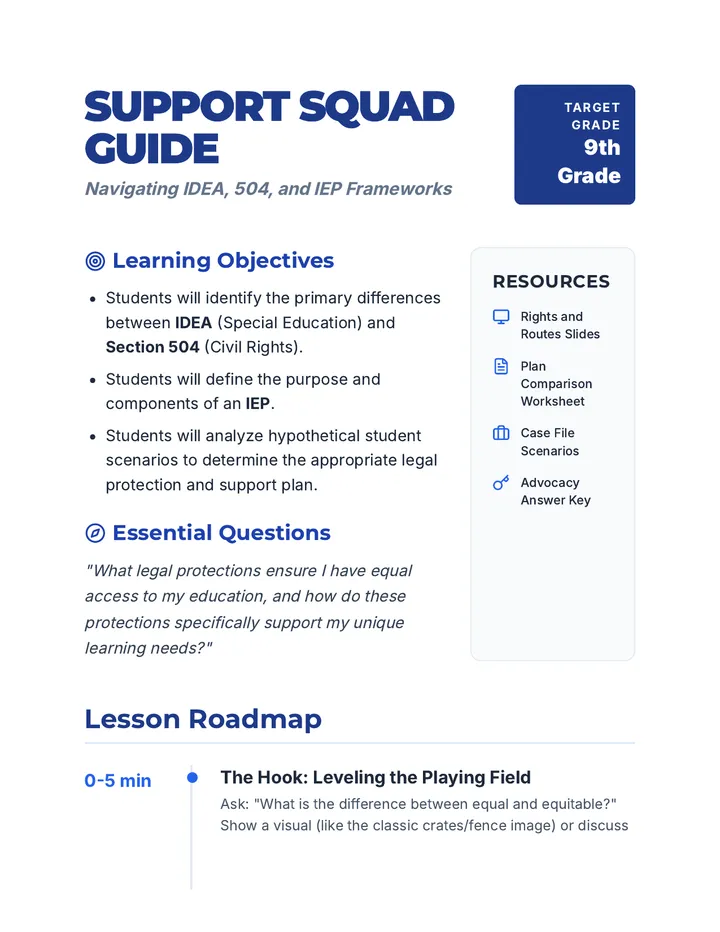
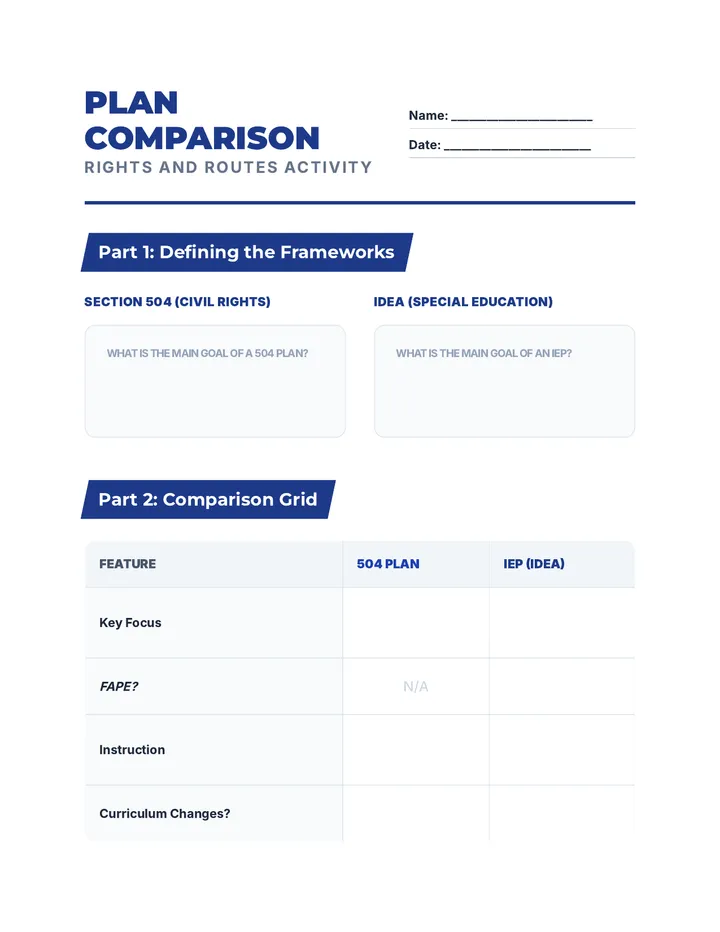
A comprehensive lesson for 9th graders exploring the legal frameworks of IDEA and Section 504, helping students understand their rights and the differences between an IEP and a 504 plan.
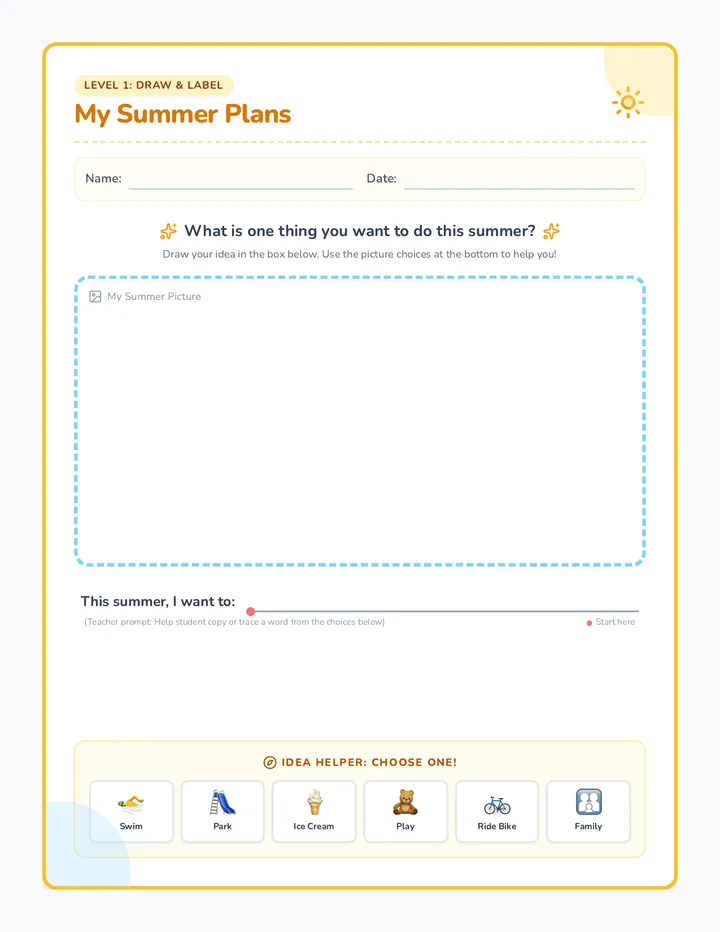
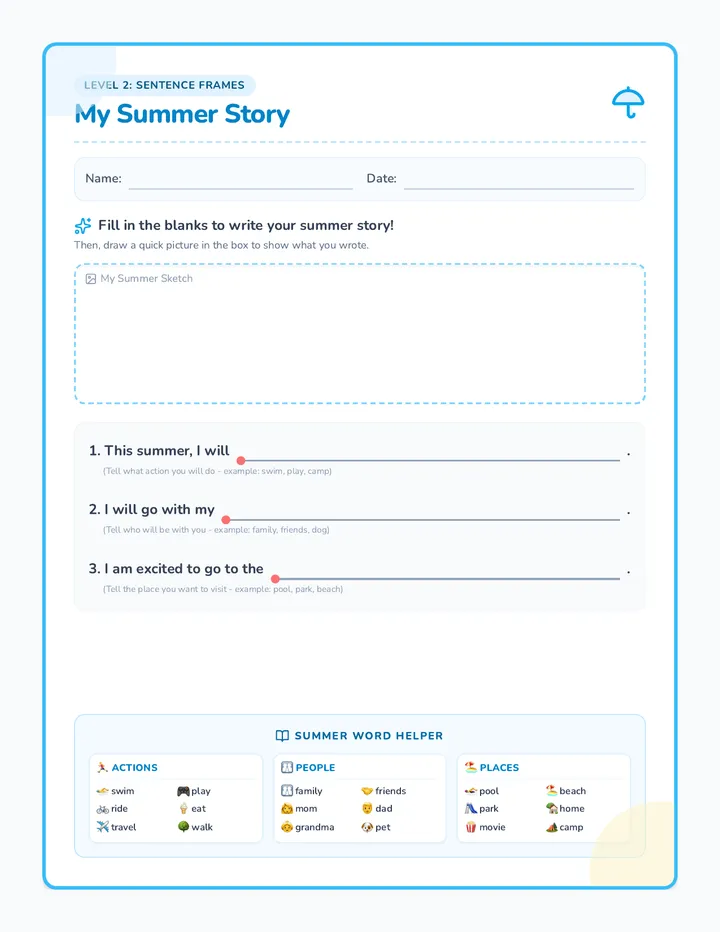
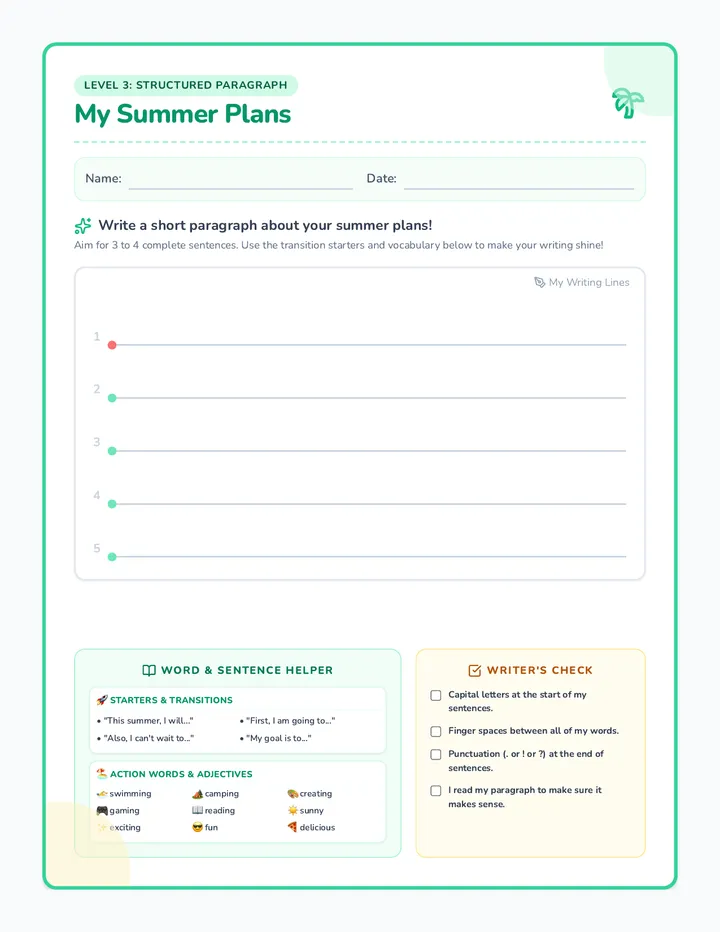
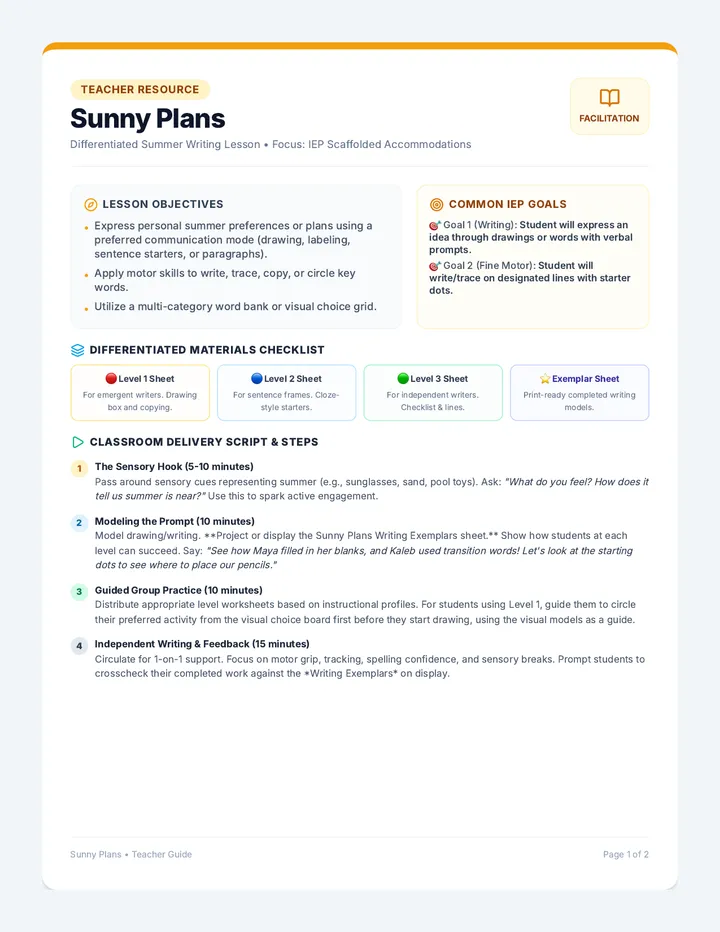
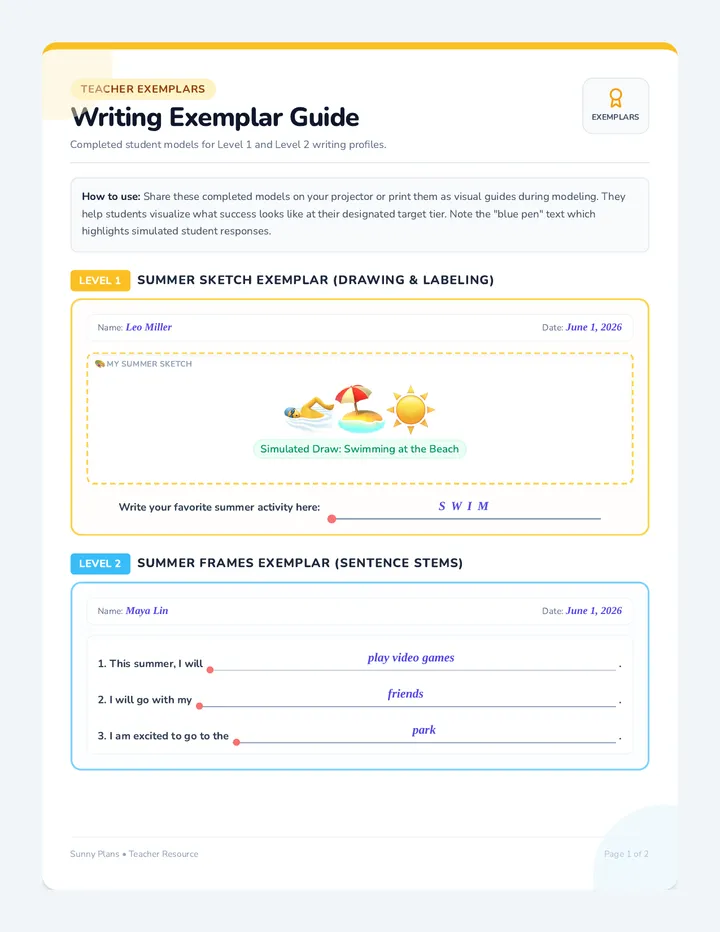
A differentiated writing lesson designed for students with IEPs and diverse learning needs to express their plans for summer break. It features three levels of scaffolded student worksheets (drawing/labeling, sentence frames, and structured writing) alongside a comprehensive teacher facilitation guide.
A lesson focused on identifying and navigating community resources and institutions specifically within Irving, Texas, to support student independence and community engagement.
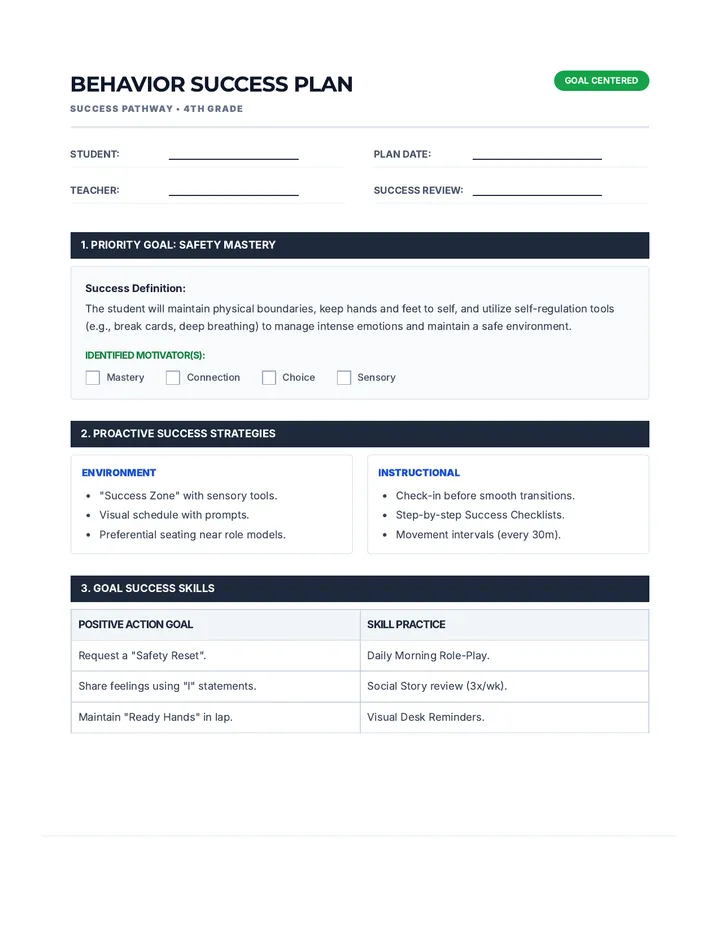
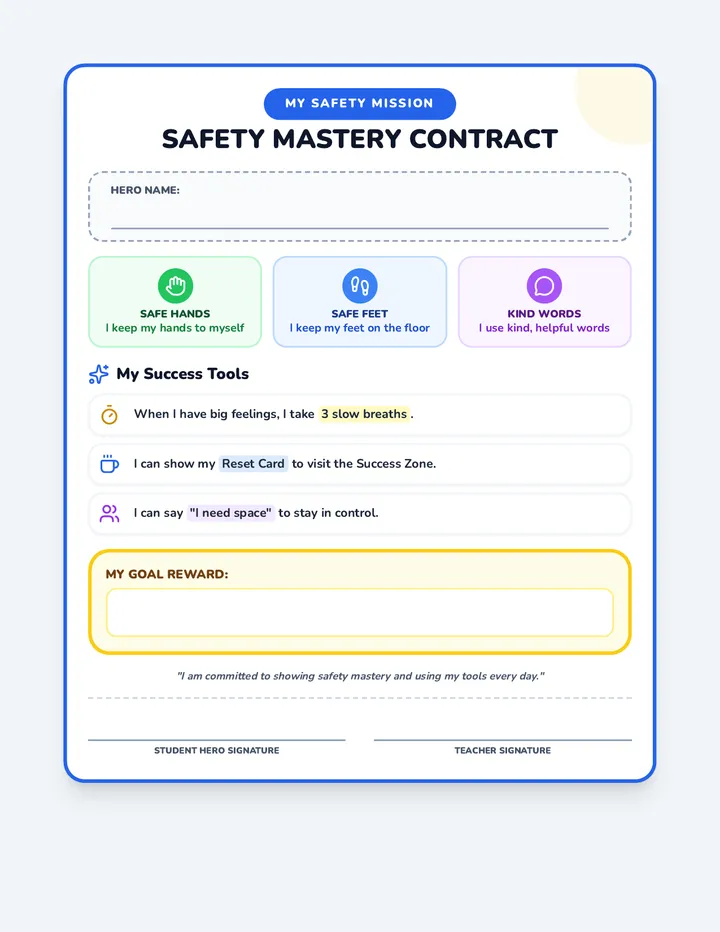
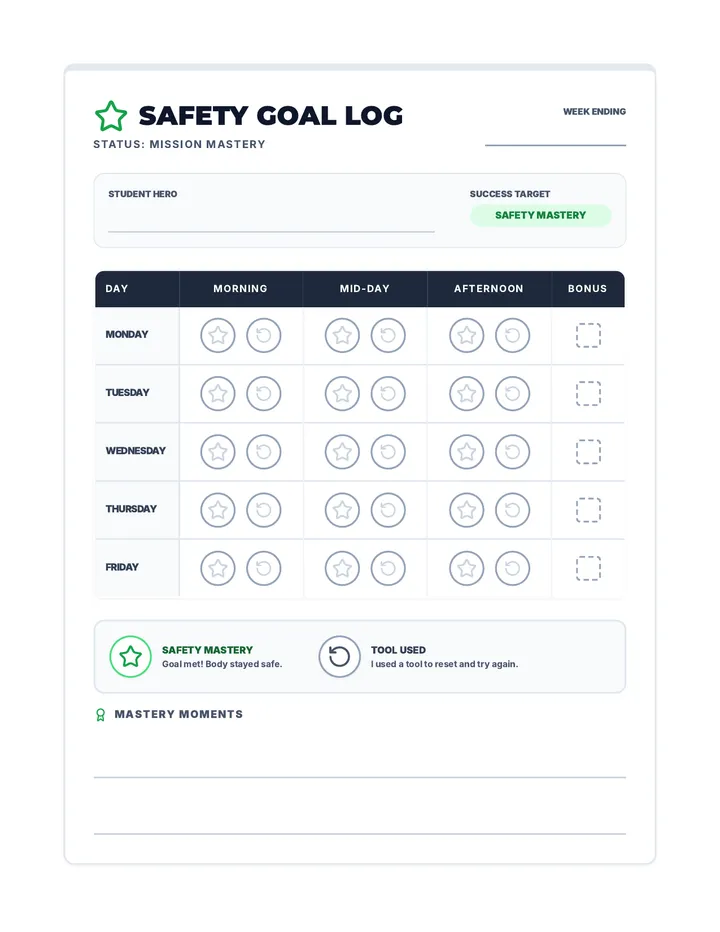
A comprehensive behavior intervention package designed for a 4th-grade student struggling with physical aggression, focusing on 'safe body' replacement behaviors and structured support.
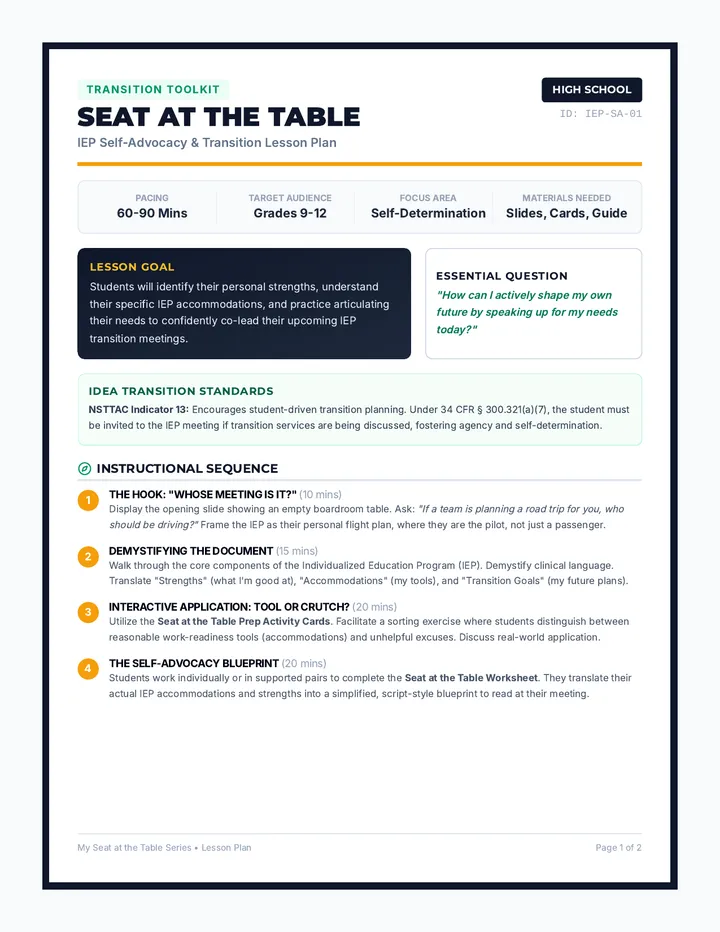
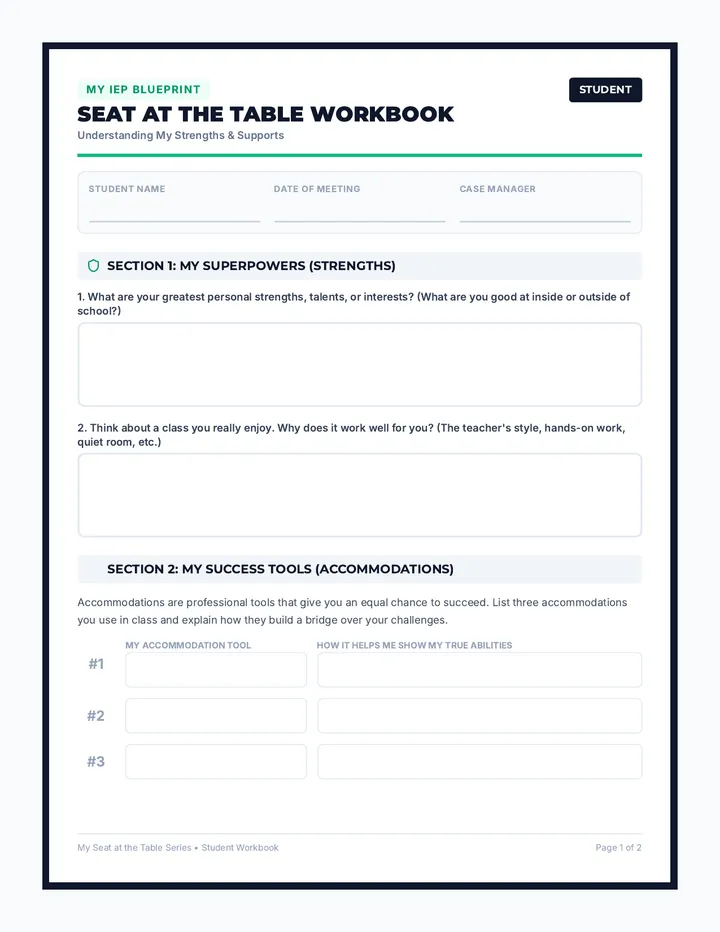
An empowering, transition-focused lesson designed for high school special education students to help them understand their IEP, identify their strengths and accommodations, and prepare to confidently participate in their own IEP meetings.
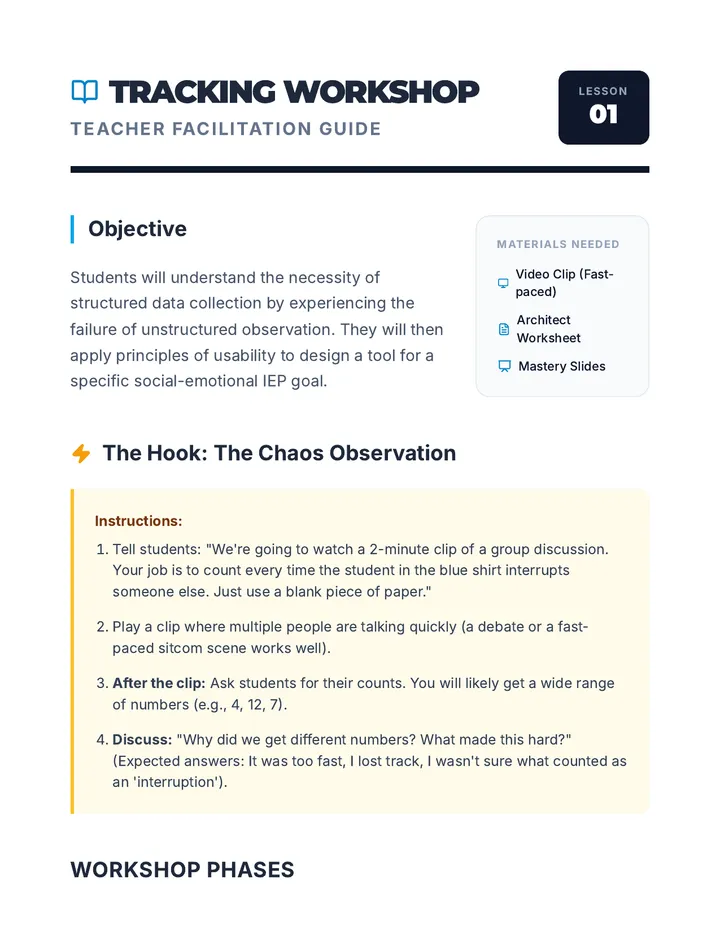
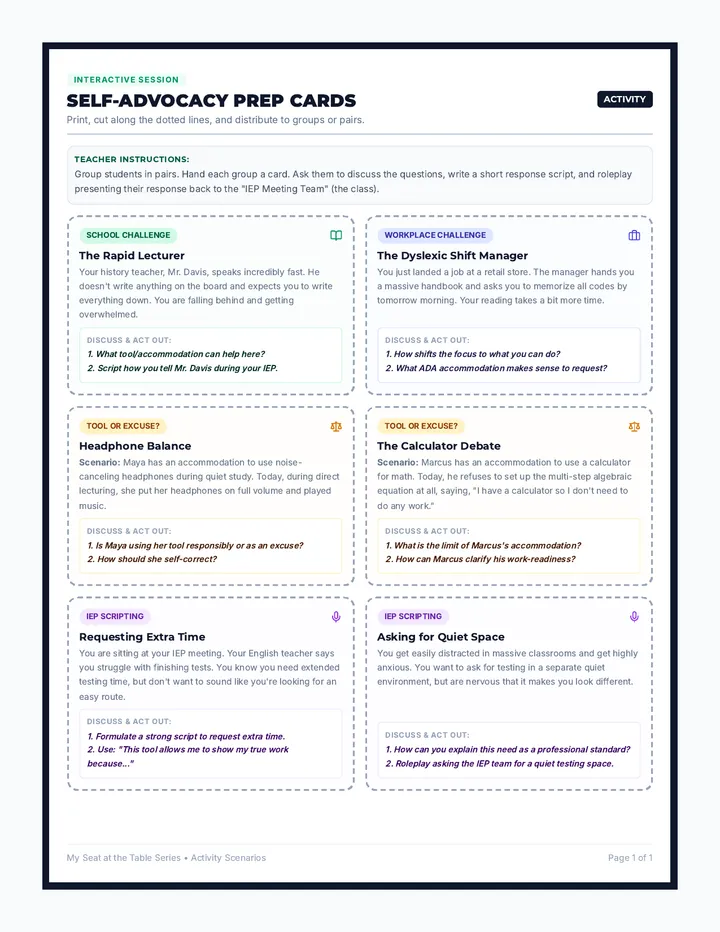
A lesson designed to empower students to understand their IEP goals and practice self-advocacy through scenario-based roleplay. Students will learn the 'Blueprinting' method for communicating their needs effectively to teachers and staff.