Systematic storage of IEP documentation, sensory tools, and student work bins. Addresses classroom efficiency through color-coding, visual labels, and streamlined data collection setups.
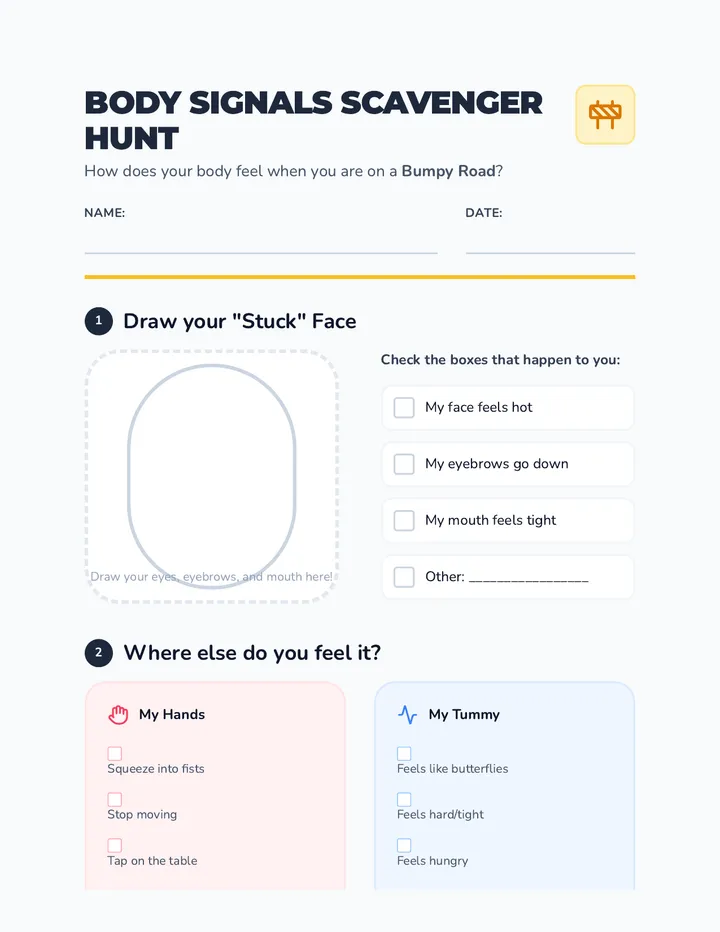
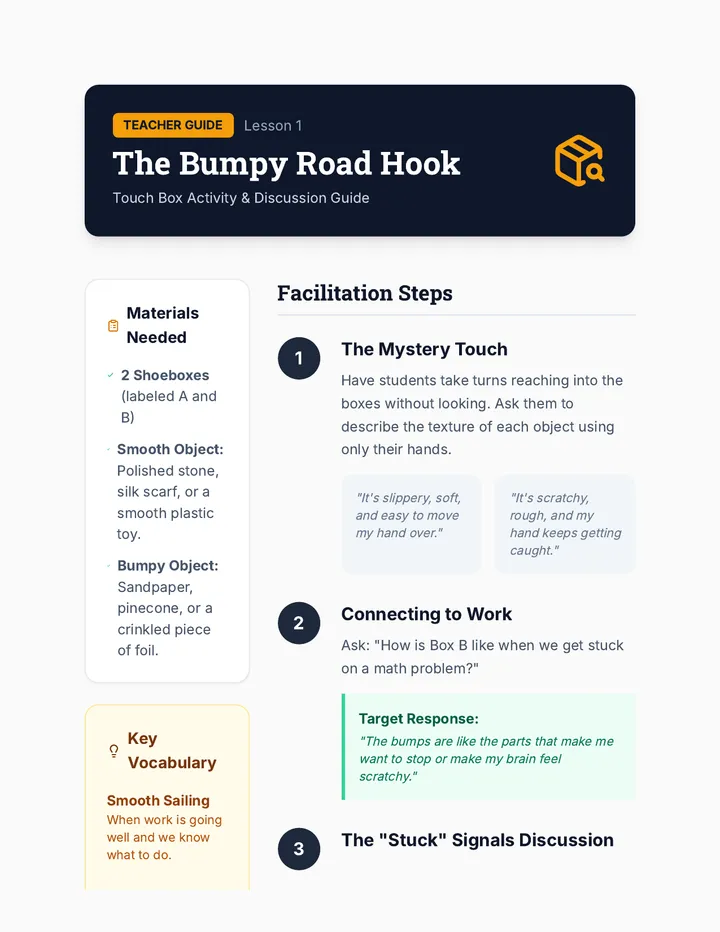
A 2nd-grade special education unit focused on executive function. Students learn to recognize the physical signs of being 'stuck' and categorize barriers into materials, comprehension, and environment.
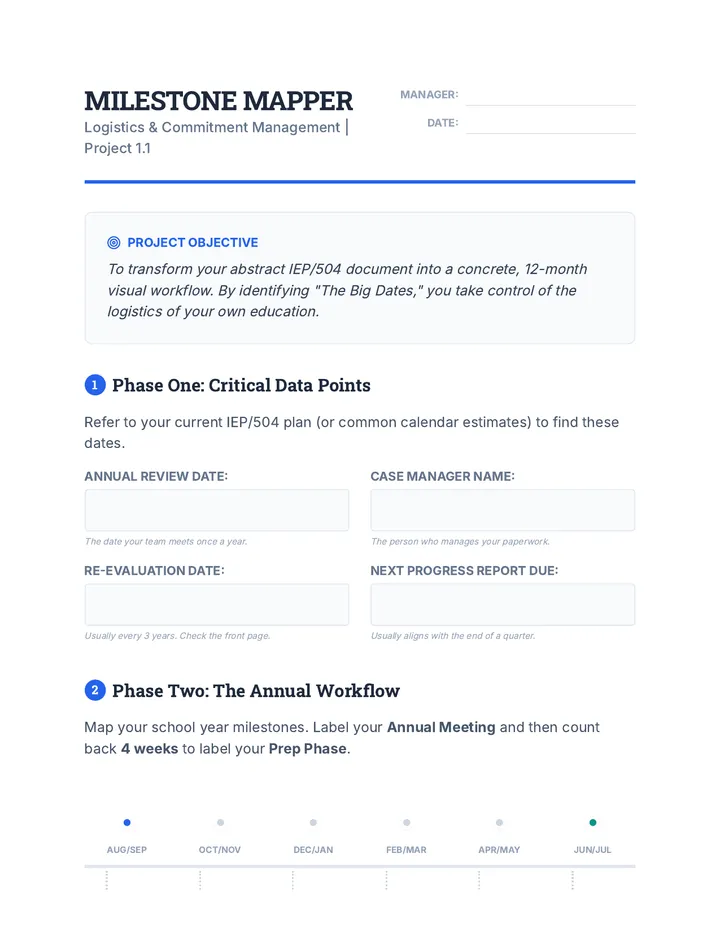
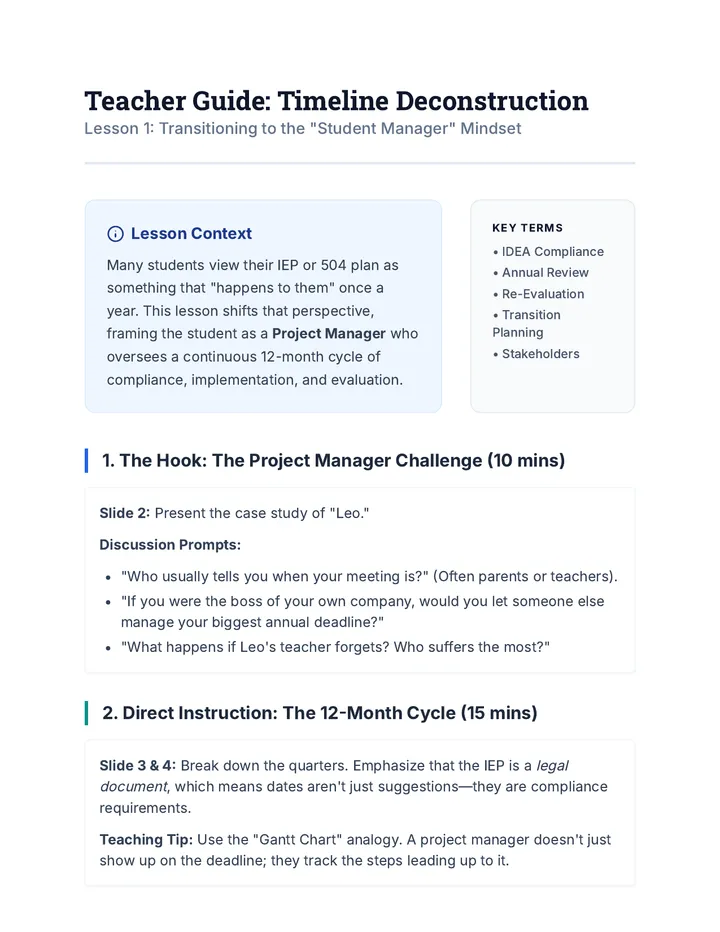
A 10th-grade sequence focused on empowering students to manage their own IEP/504 timelines, accommodations, and administrative responsibilities through the lens of project management. Students transition from passive recipients of services to active managers of their educational milestones.
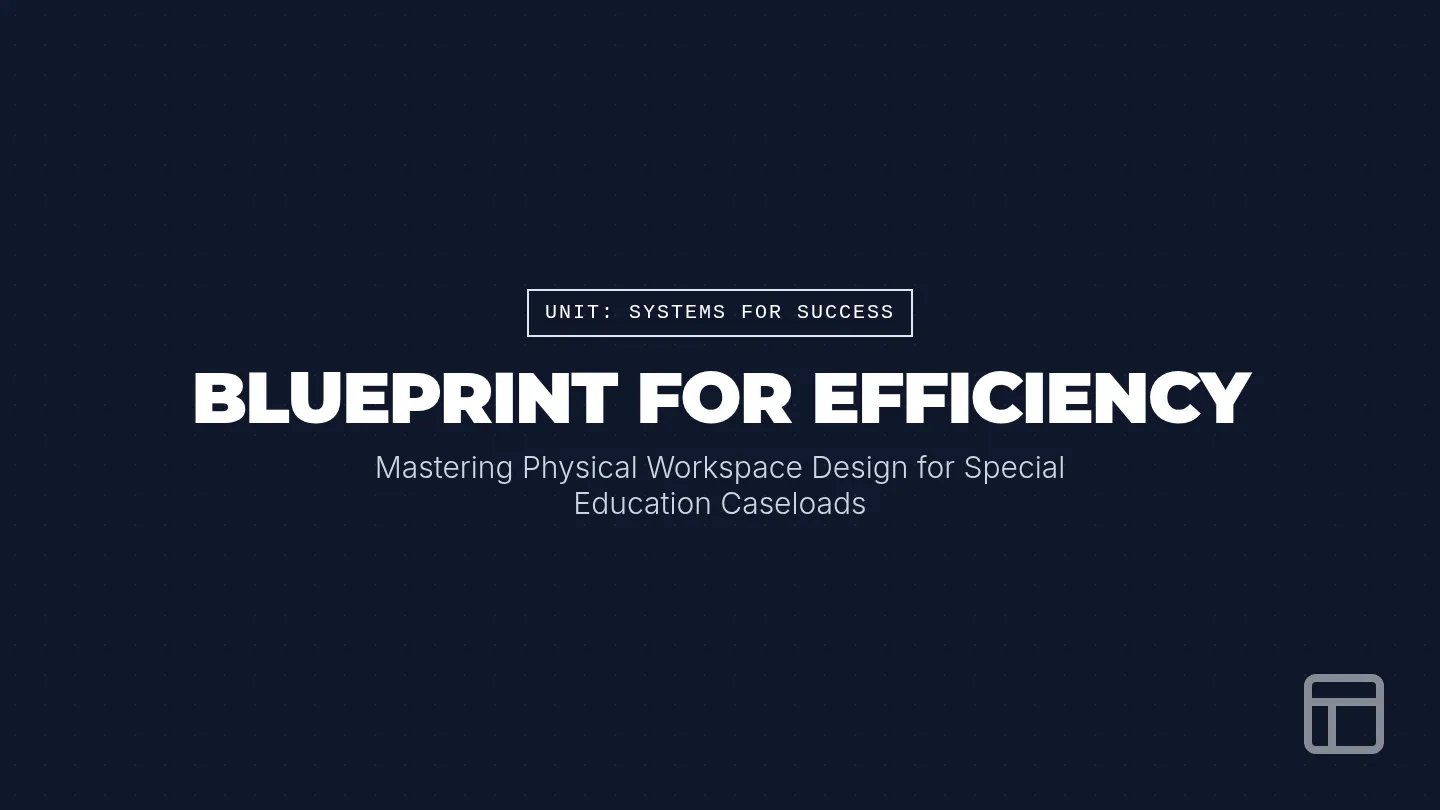
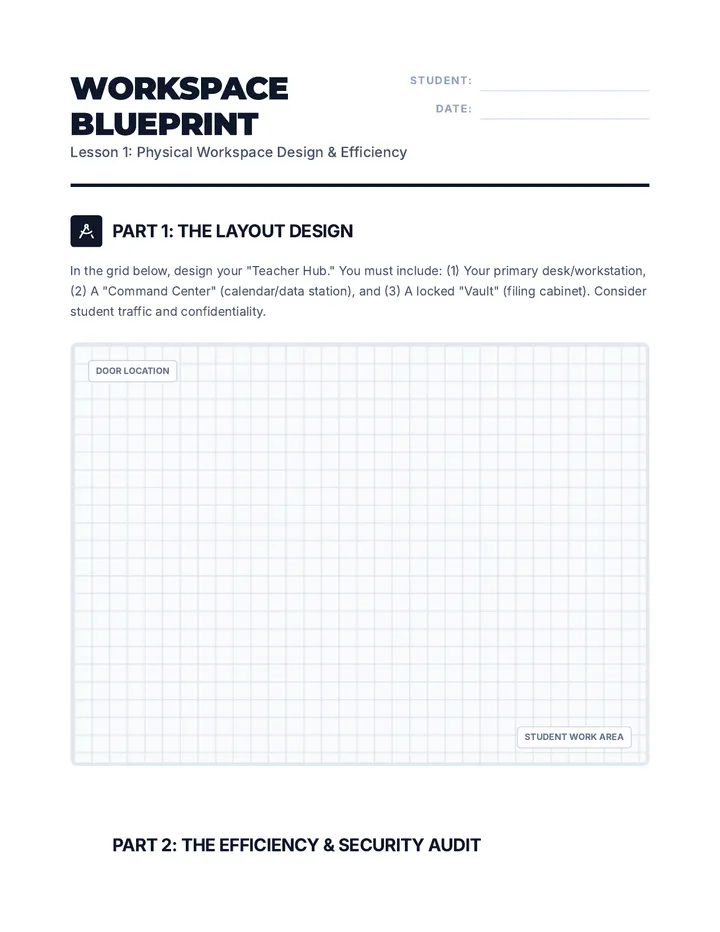
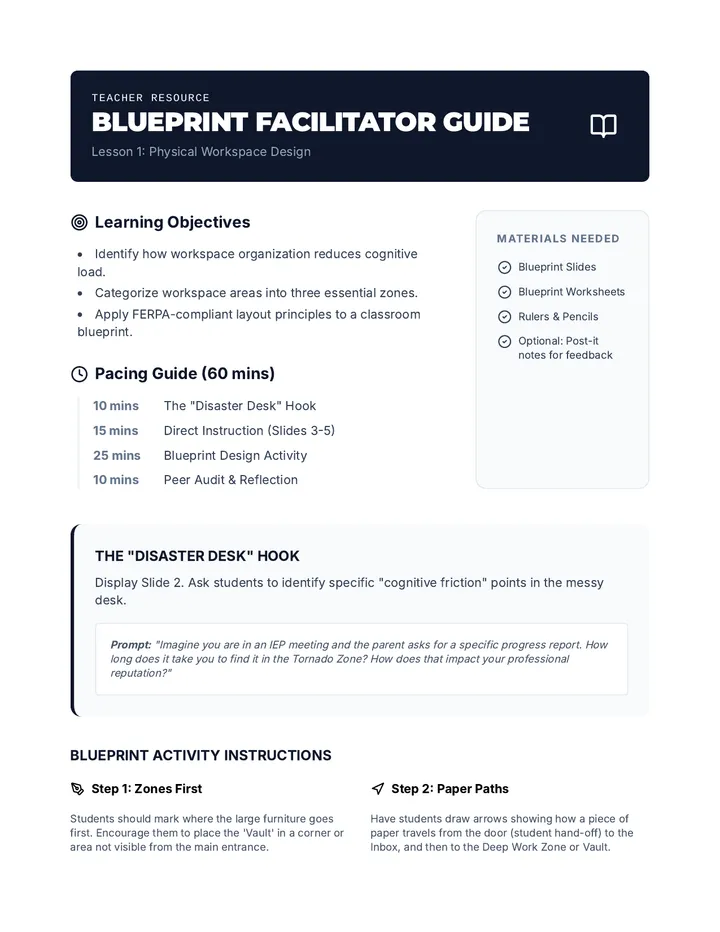
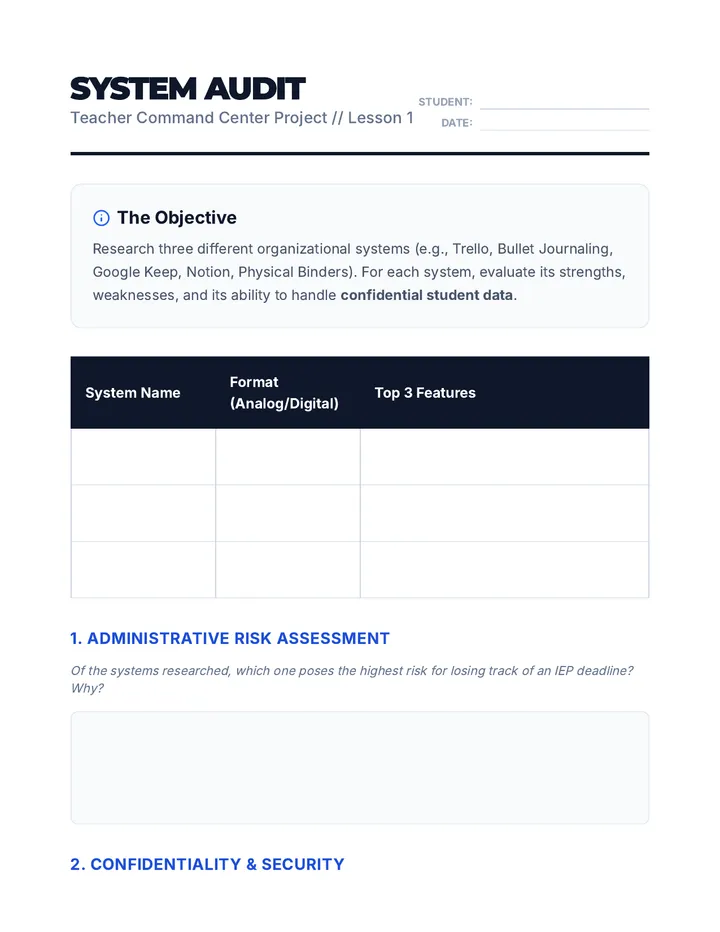
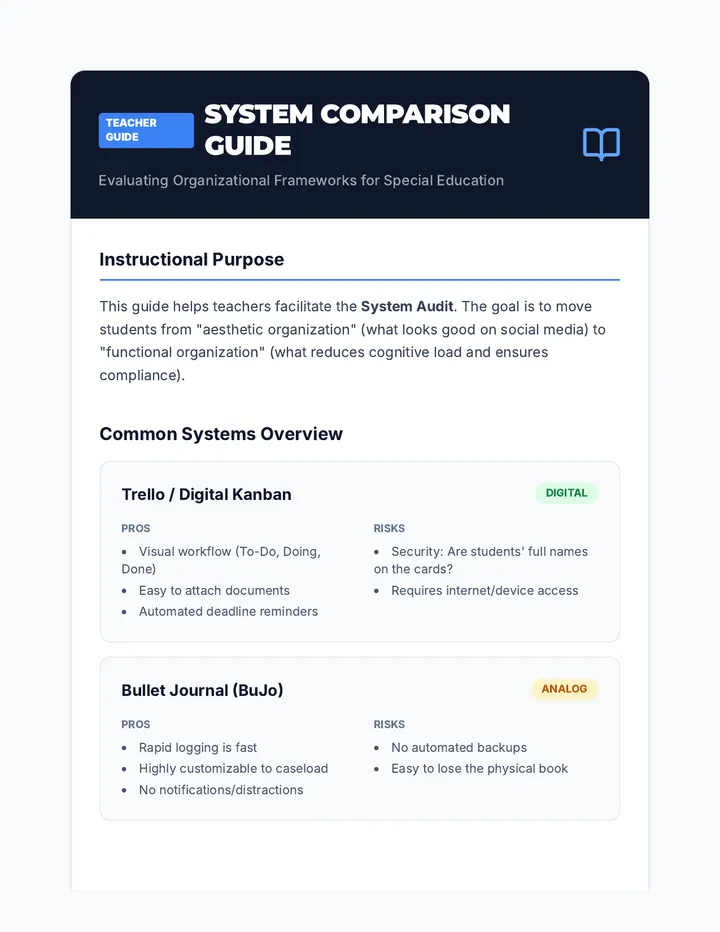
A comprehensive sequence for 11th-grade students focusing on the systems and environmental designs necessary for effective Special Education caseload management. Students explore physical workspace optimization, digital workflow tools, paperwork automation, and legal confidentiality requirements to build a personalized organizational toolkit.
Students design a comprehensive 'Teacher Command Center' for special education case management, focusing on reducing cognitive load through automated systems, checklists, and organized filing.
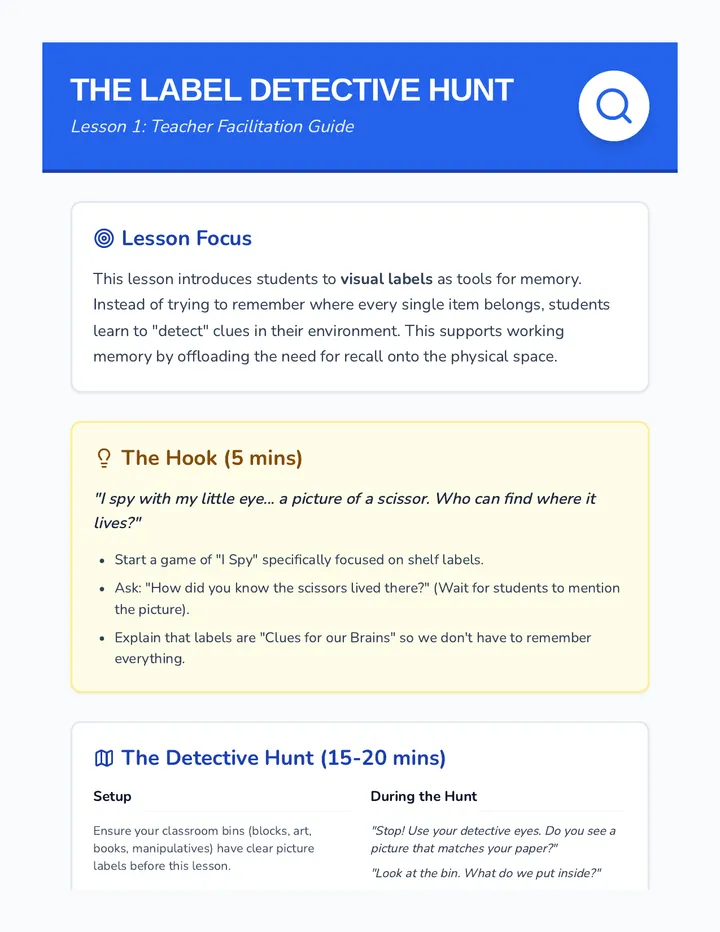
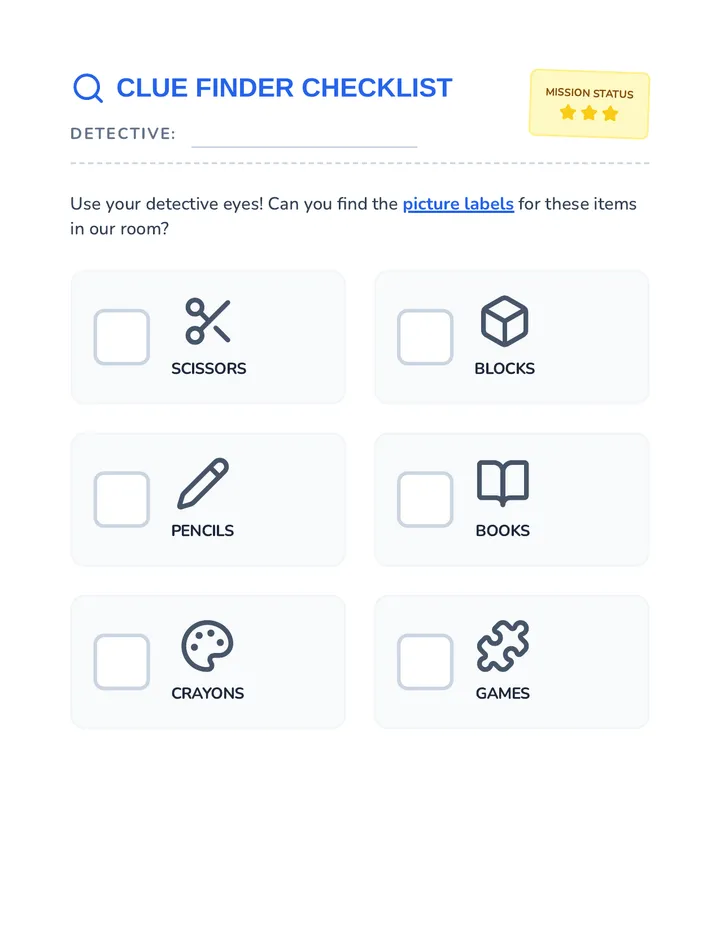
A Kindergarten sequence focused on teaching students to use environmental visual cues as memory aids to support working memory and independence in the classroom. Students learn to recognize labels, match objects to shadows, use color-coding, and create their own organizational systems.
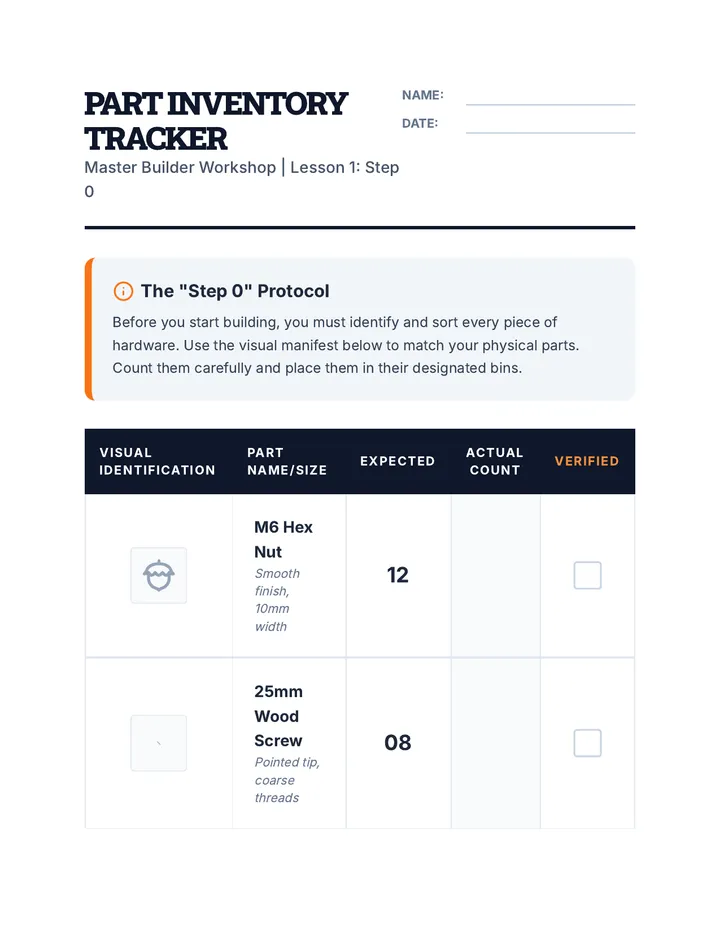
A project-based sequence for 11th-grade special education students focusing on working memory through procedural assembly. Students learn to manage cognitive load by isolating single-step instructions and verifying their work during fabrication tasks.
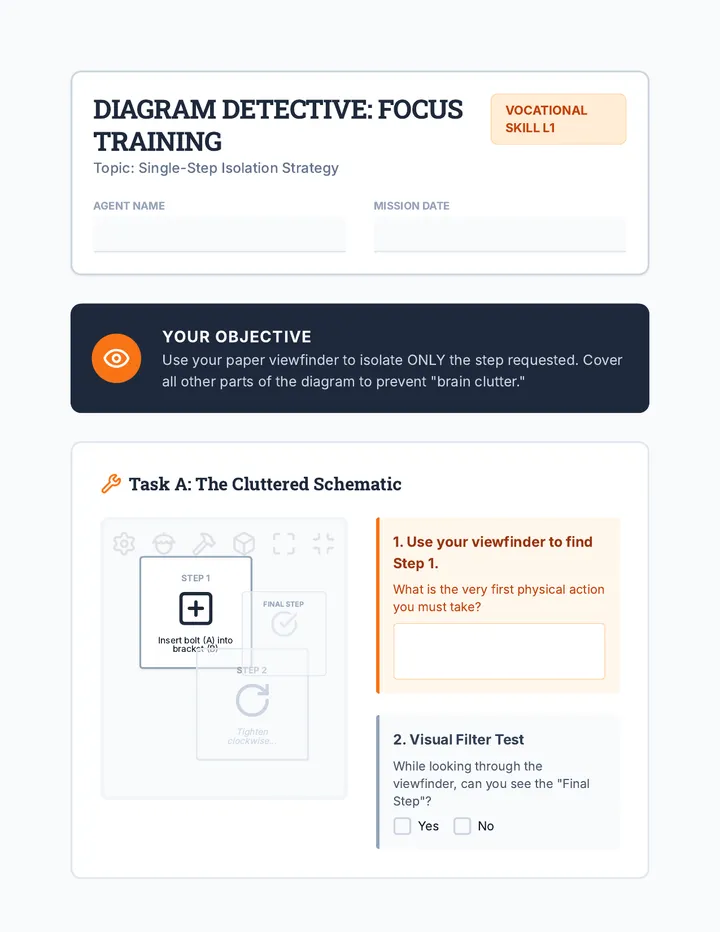
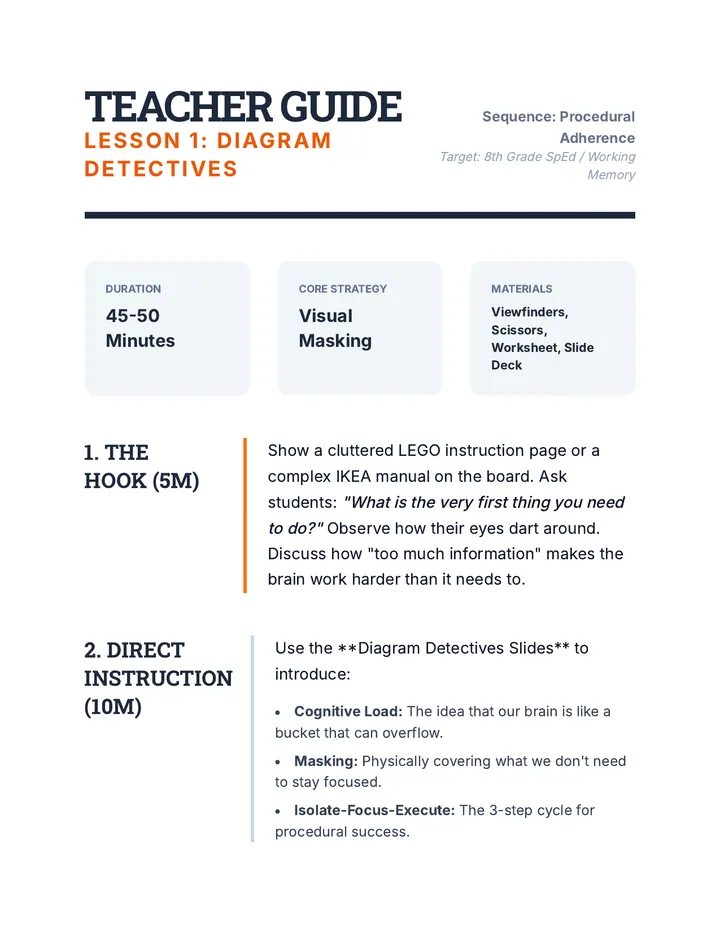
This sequence focuses on vocational and life skills, applying single-step direction following to physical assembly and procedural tasks. Students learn to navigate technical diagrams and standard operating procedures by isolating one action at a time to support working memory.
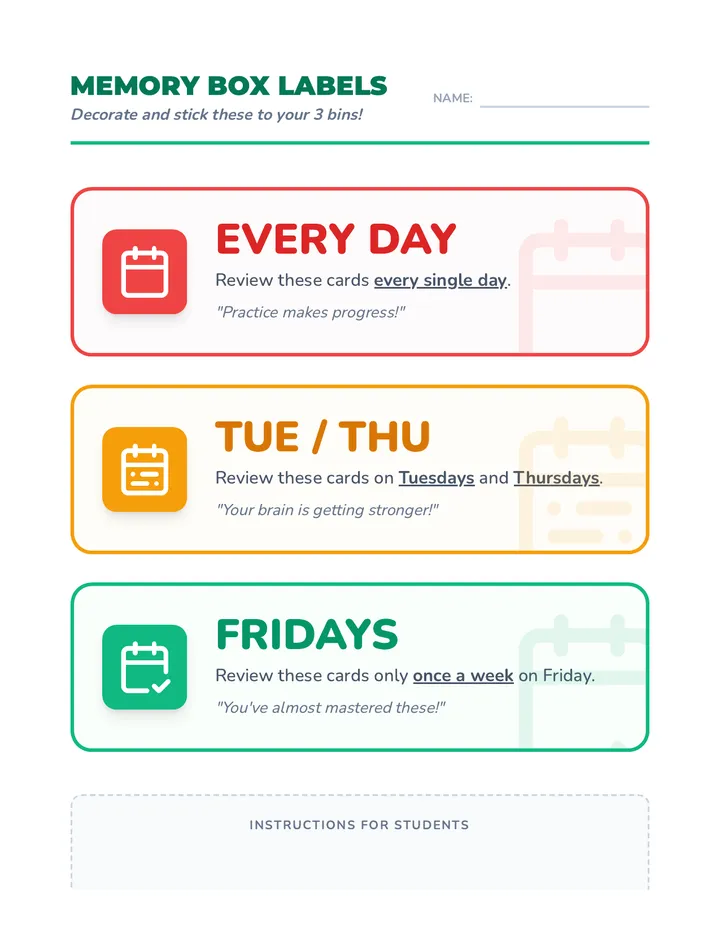
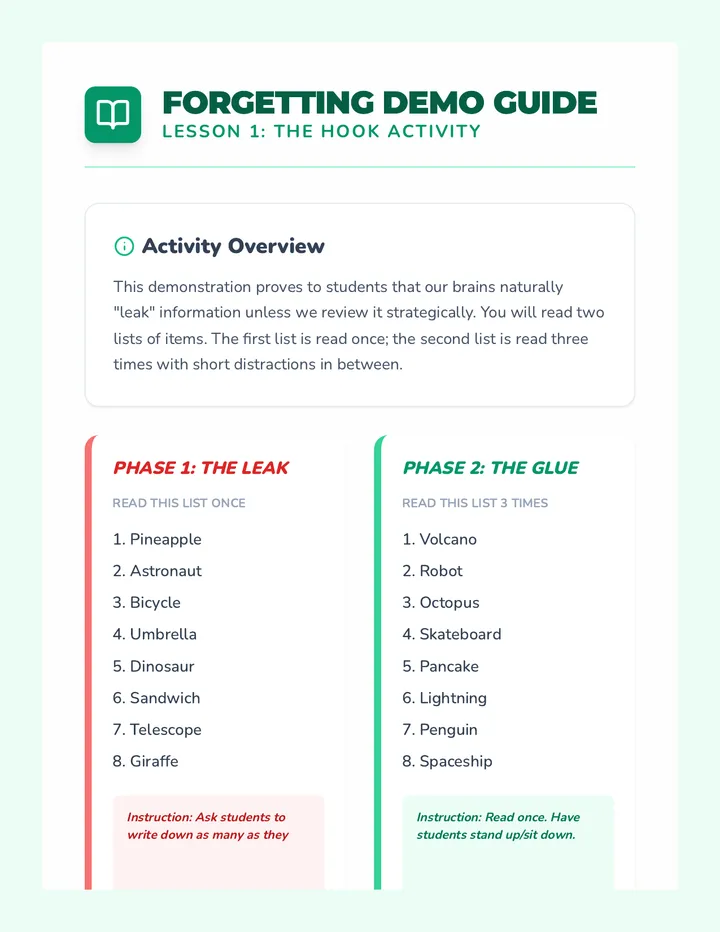
A 5-lesson unit for 3rd graders on mastering memory using the Leitner System of spaced repetition. Students learn to build, manage, and reflect on a physical flashcard system to improve long-term retention of academic facts.
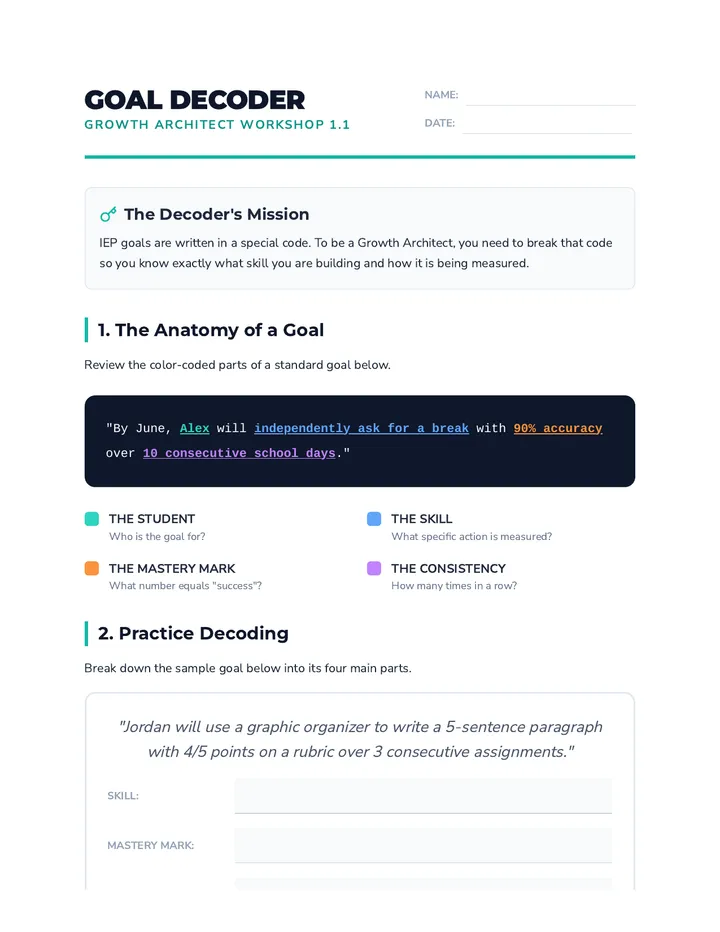
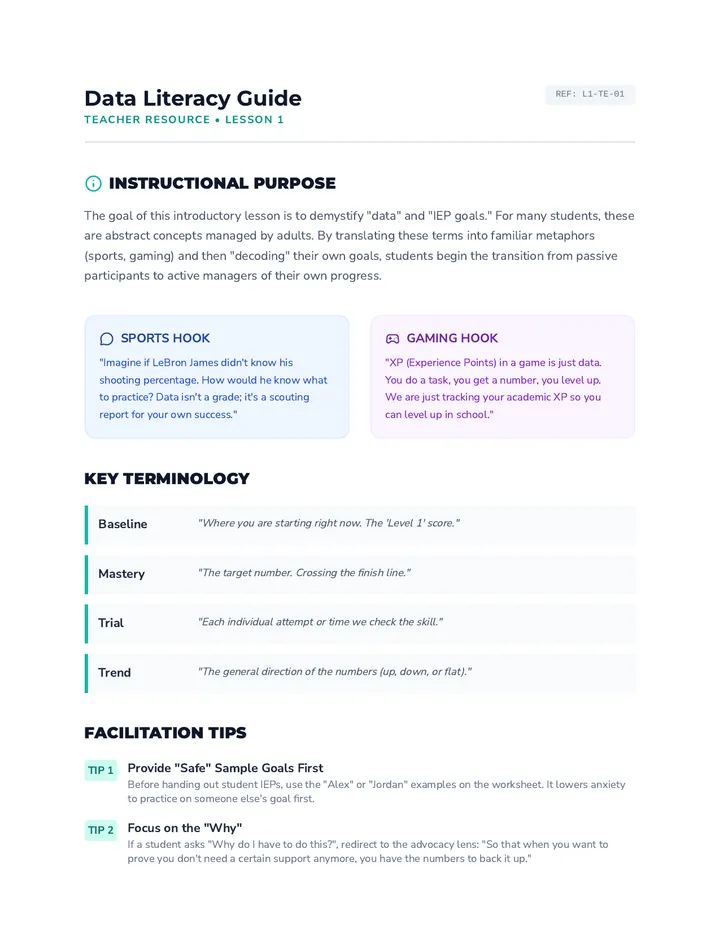
This sequence empowers 8th-grade students to take ownership of their learning by building and maintaining a student-led data binder. Students learn to translate IEP goals, organize physical evidence, graph their own progress, and use their data to advocate for themselves in educational settings.
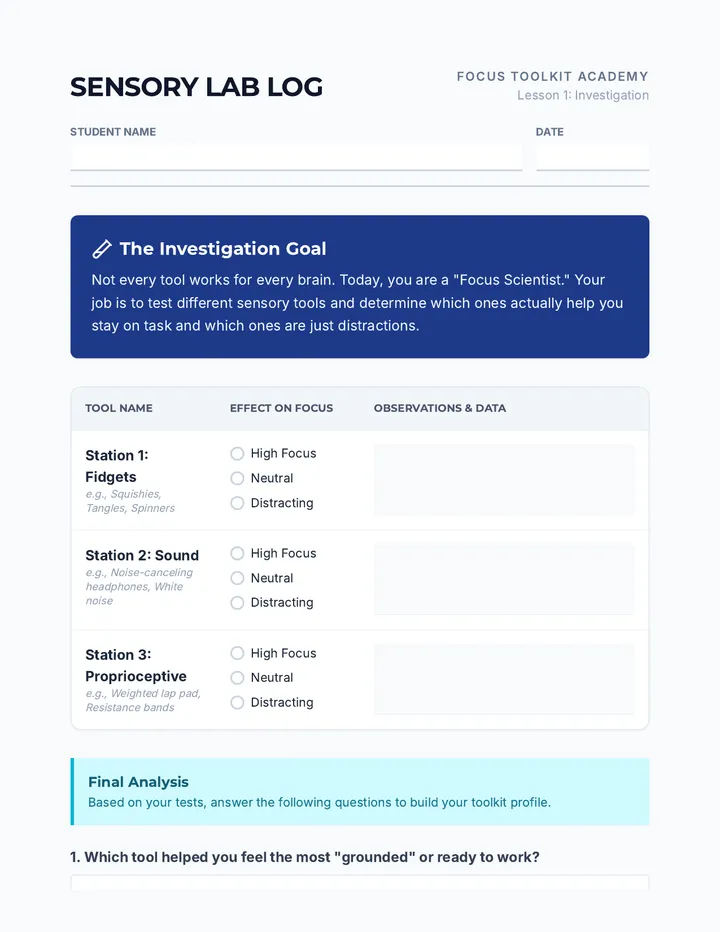
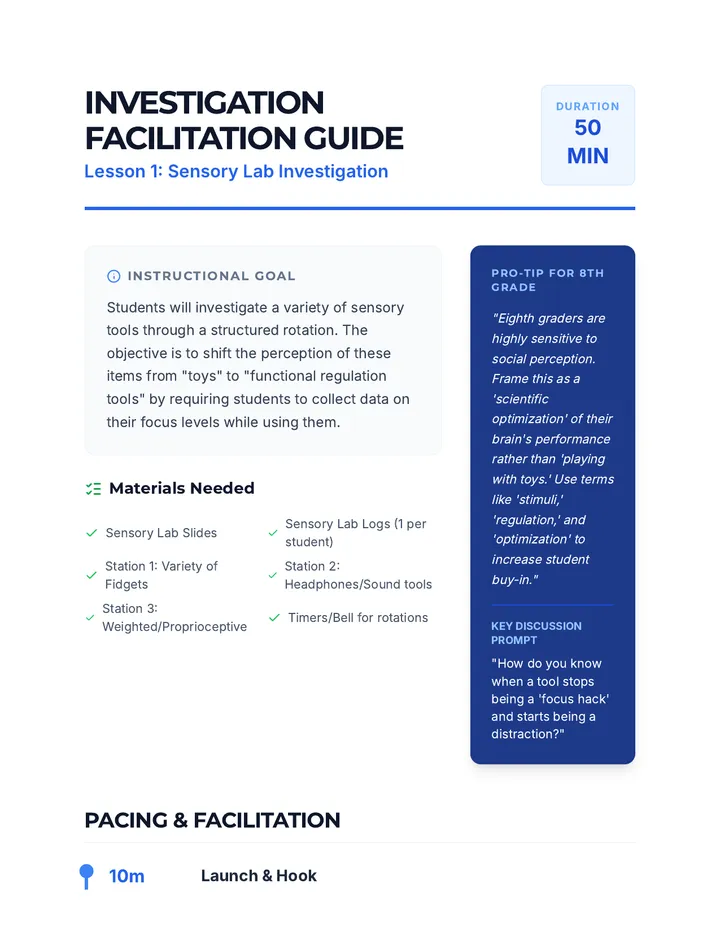
A 5-lesson sequence designed for 8th-grade students to investigate, organize, and manage their personal sensory regulation tools. Students move from exploring sensory needs to designing personal storage systems and establishing protocols for non-disruptive use in the classroom.
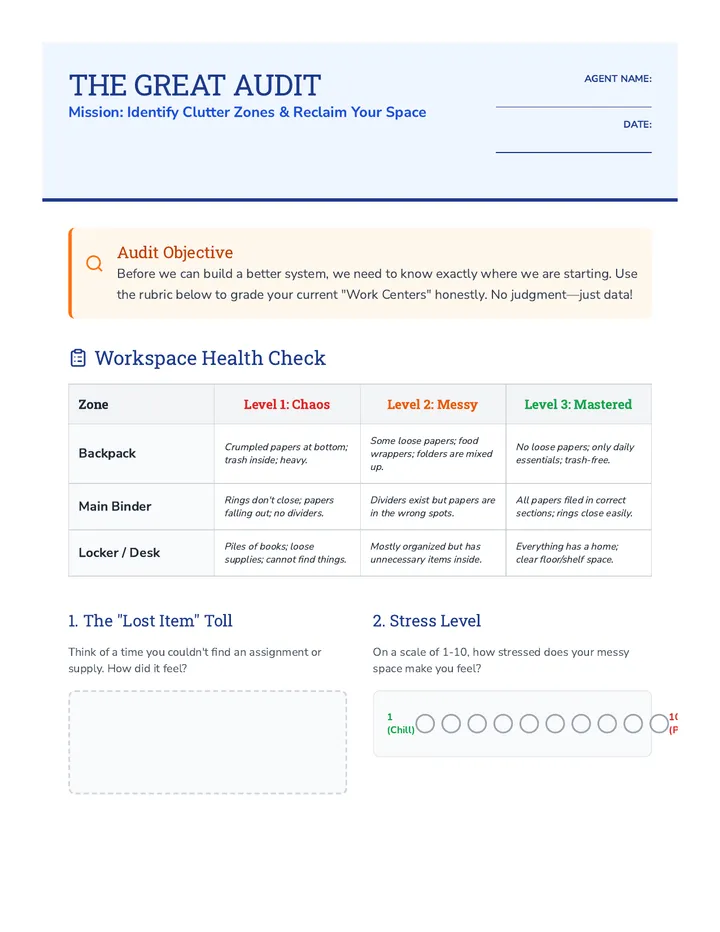
A comprehensive sequence designed for 8th-grade special education students to master physical organization. Through a workshop approach, students audit their current materials, implement color-coded systems, optimize their binders, plan leur storage spaces, and establish sustainable weekly routines.
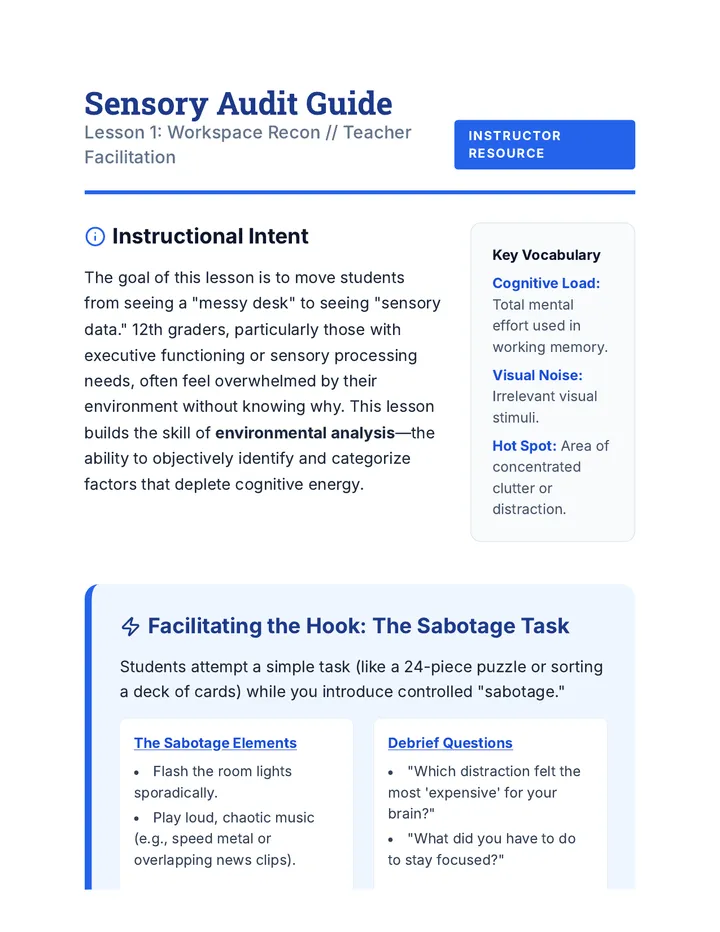
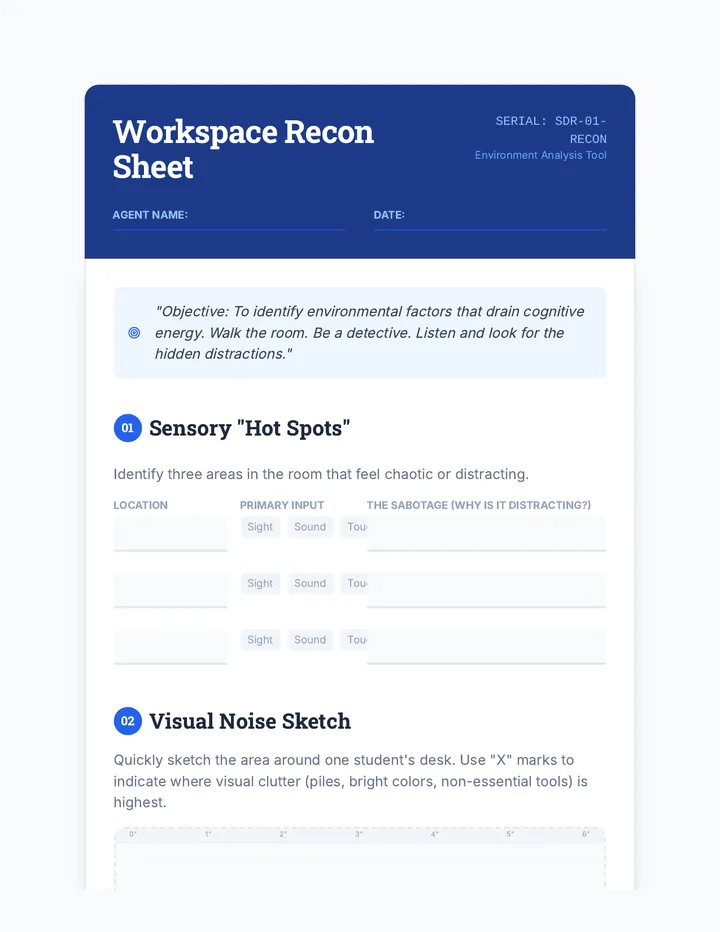
A comprehensive sequence for 12th-grade students focusing on physical material organization through the lens of sensory regulation and universal design. Students learn to analyze environments, zone functional areas, and design accessible workstations for personal and professional success.
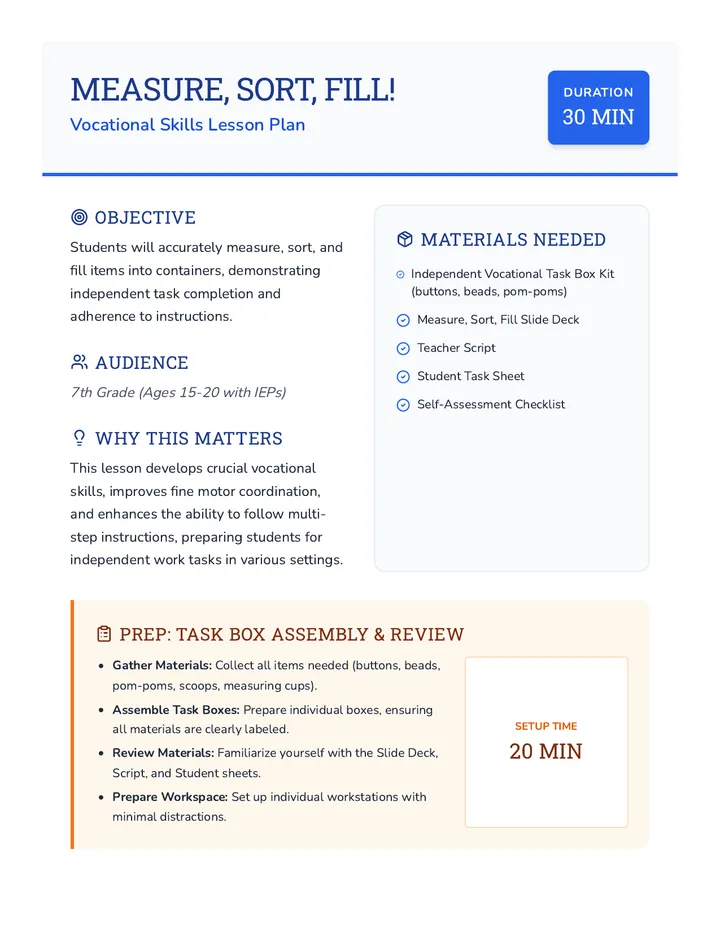
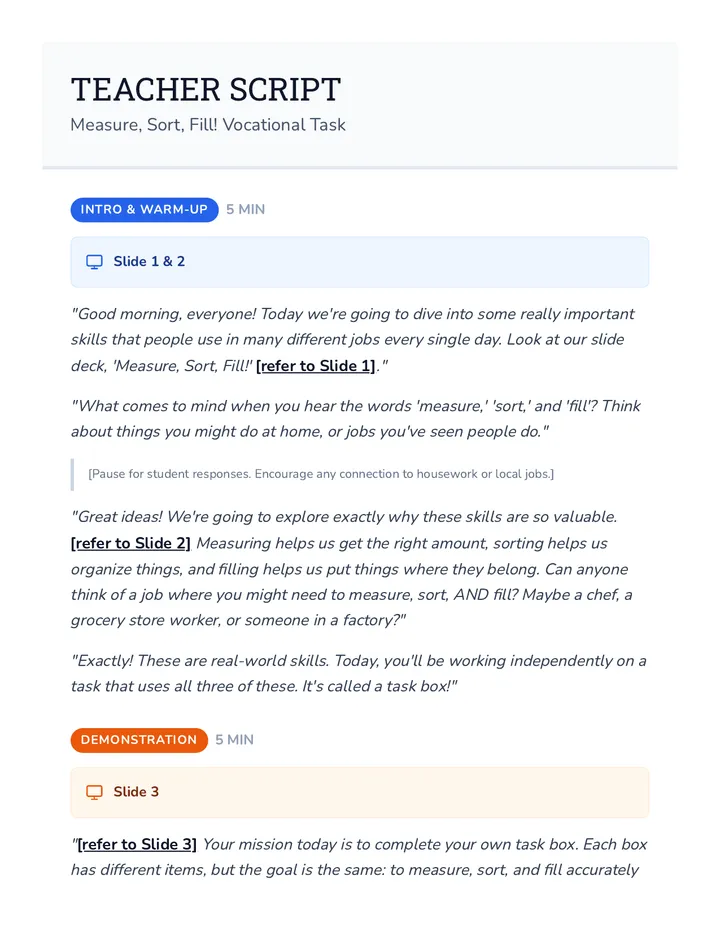
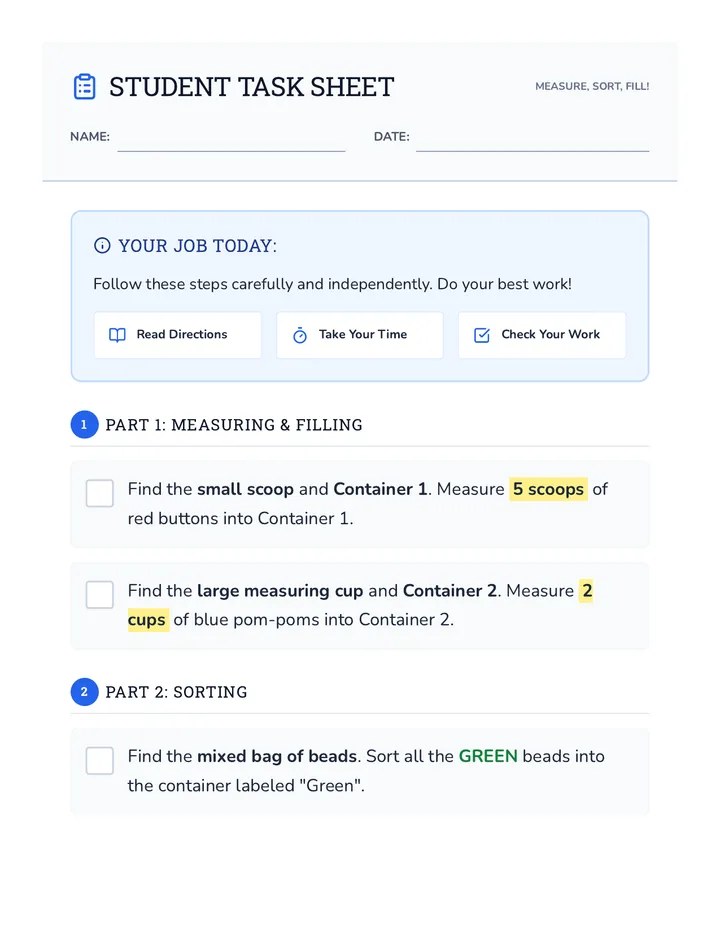
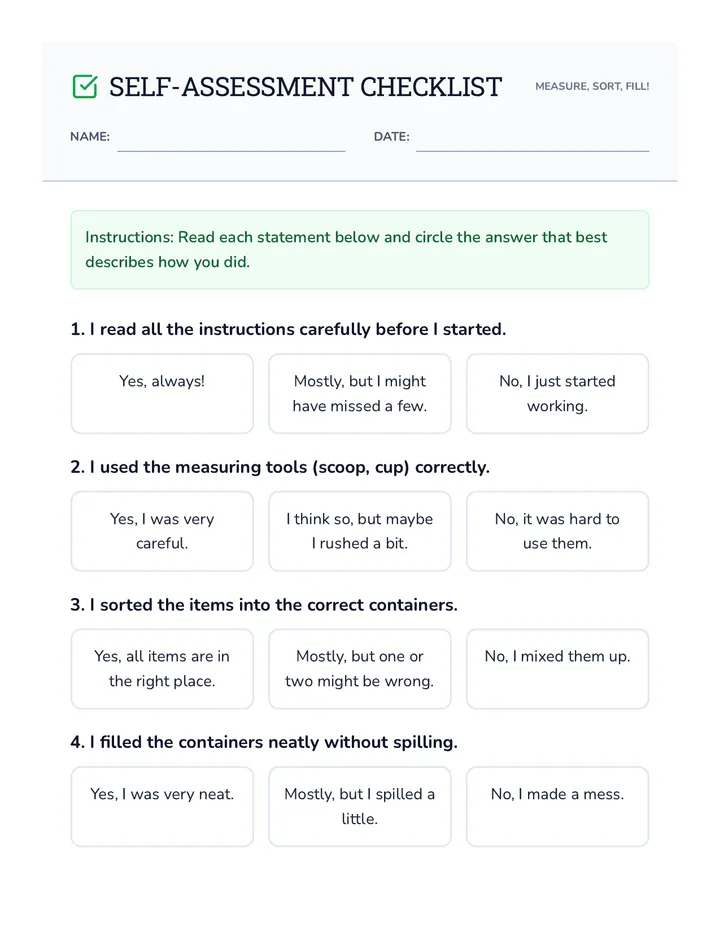
A 30-minute vocational lesson for 7th-grade students with IEPs, focusing on independent task completion through measuring, sorting, and filling activities. Students develop fine motor skills and follow multi-step instructions using a vocational task box.
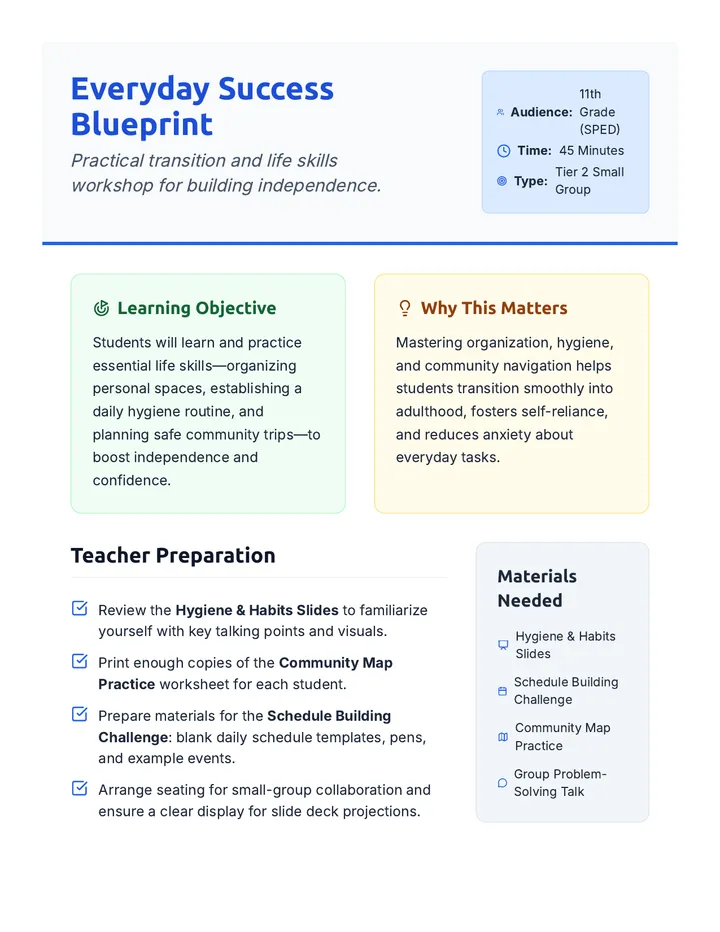
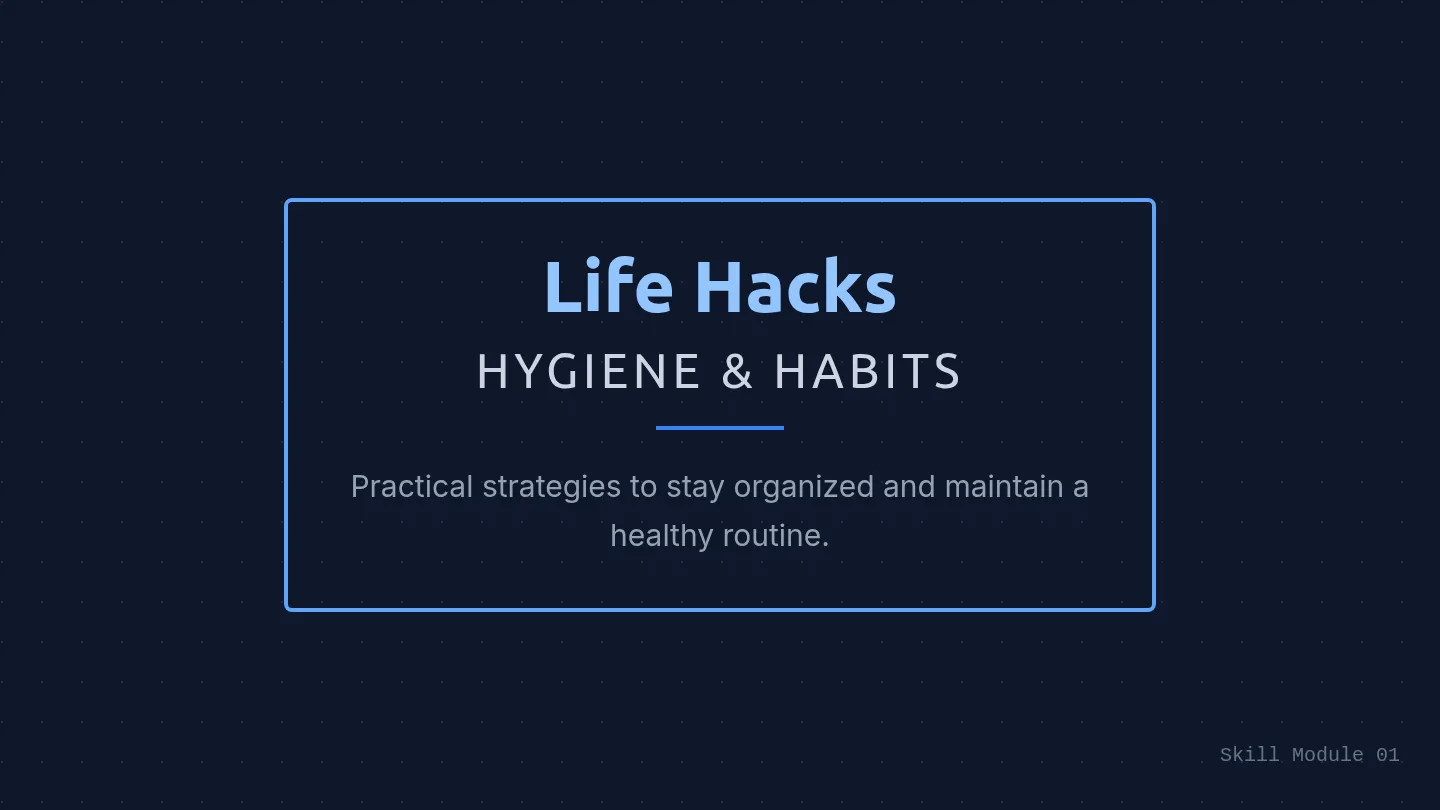
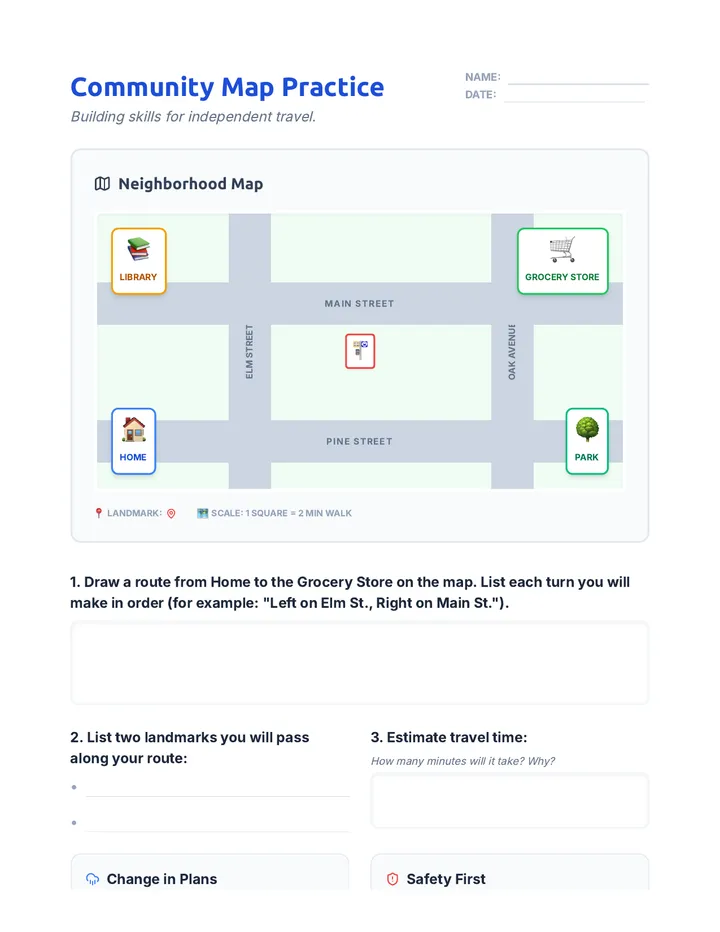
A small-group workshop for 11th-grade special education students focusing on organization, hygiene, and community mobility to build independence and confidence.
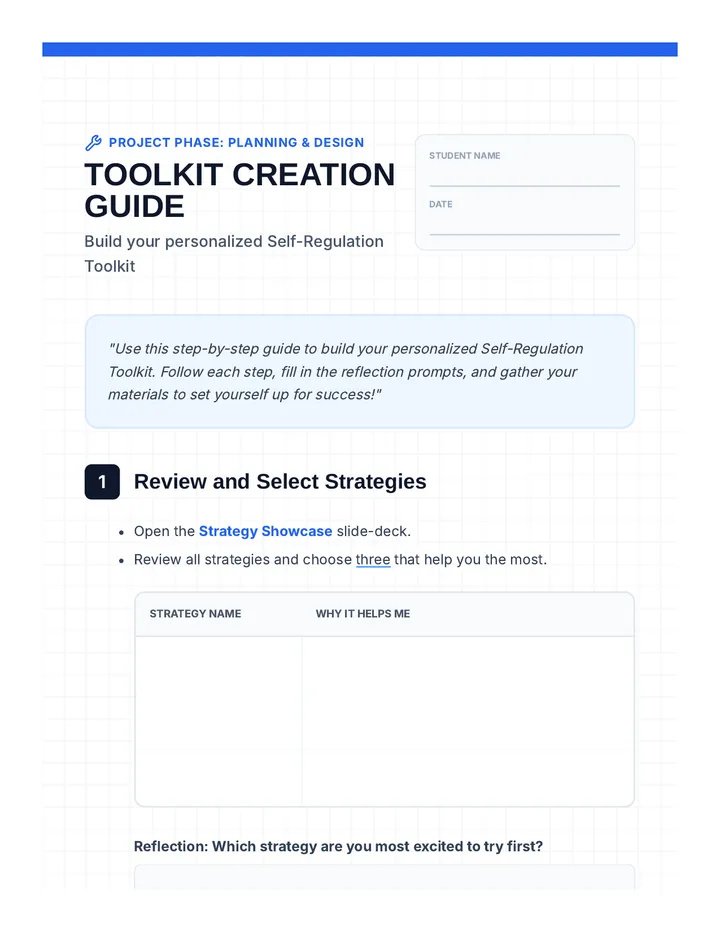
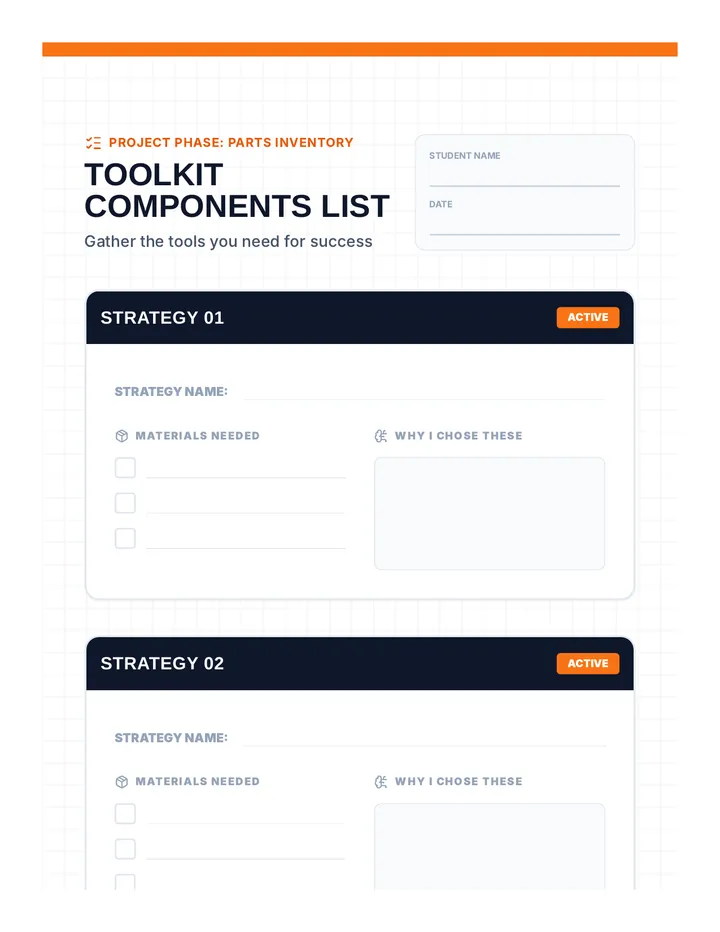
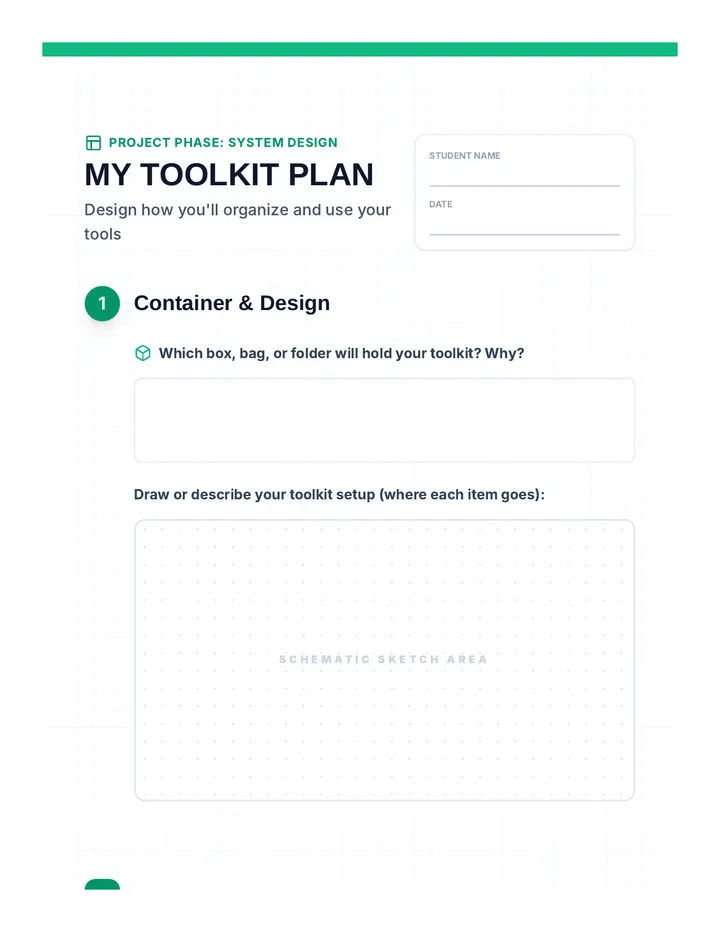
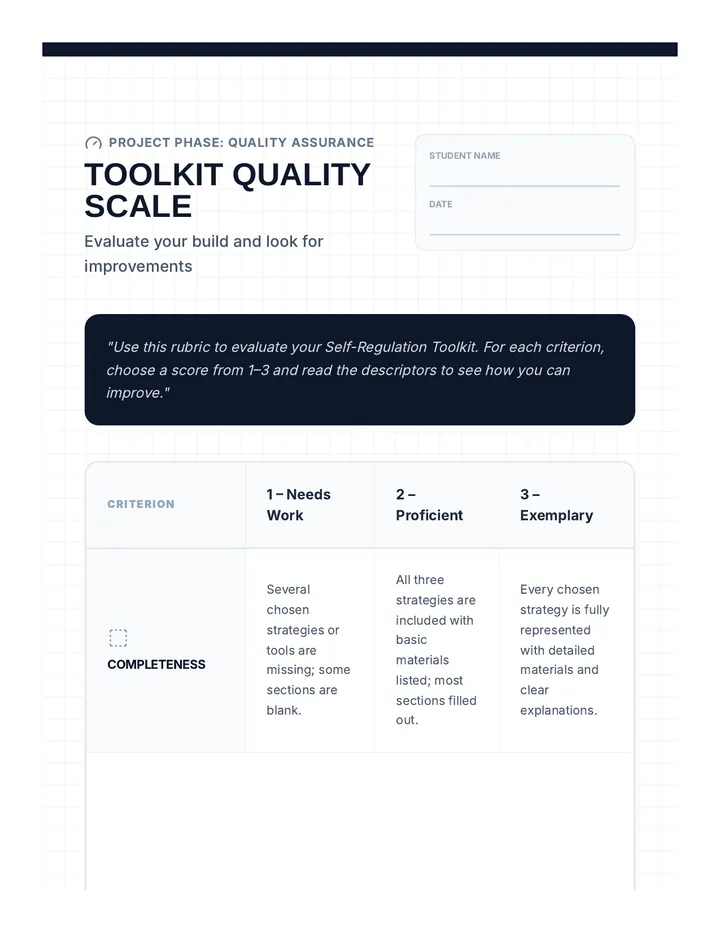
In this individual Tier 3 project for a 5th grade special education student, learners compile personalized sensory and self-regulation strategies into an actionable toolkit. Over one 40-minute session, the student will design and plan their own toolkit to support lasting emotional and behavioral success.
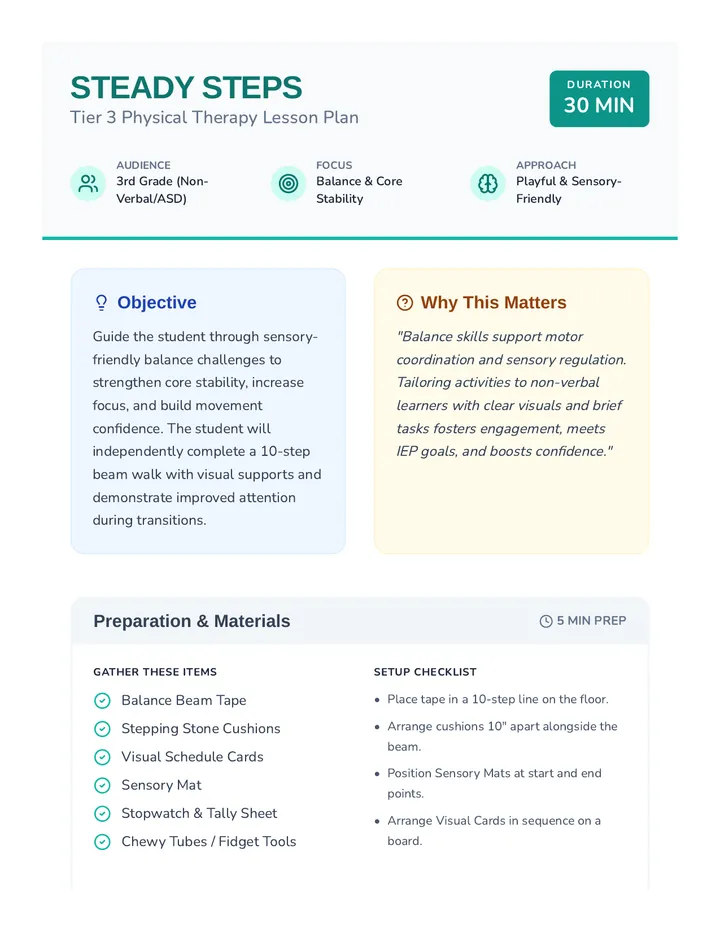
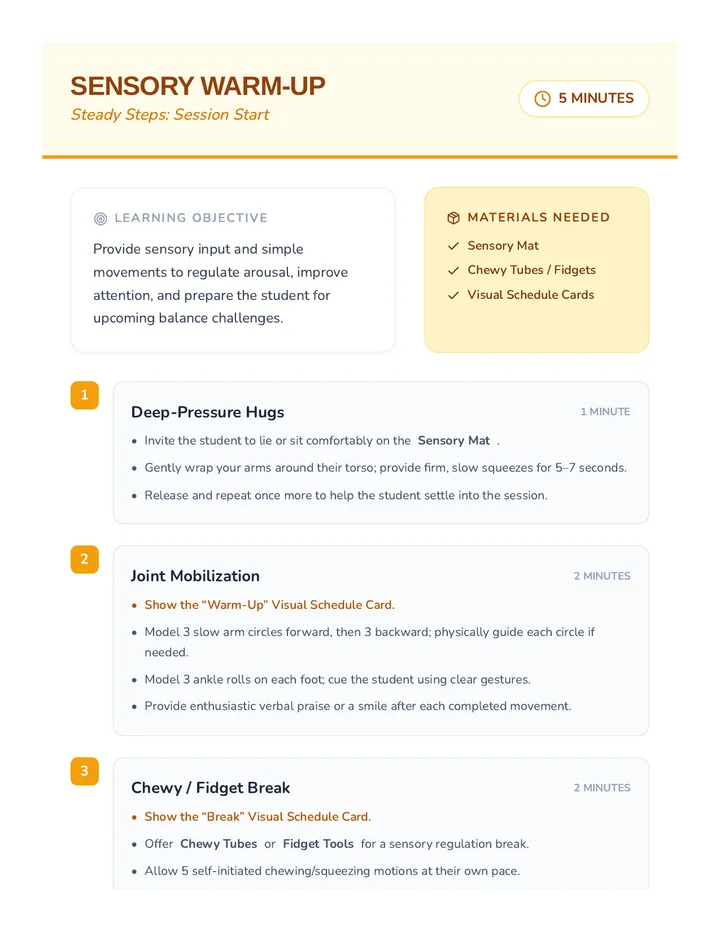
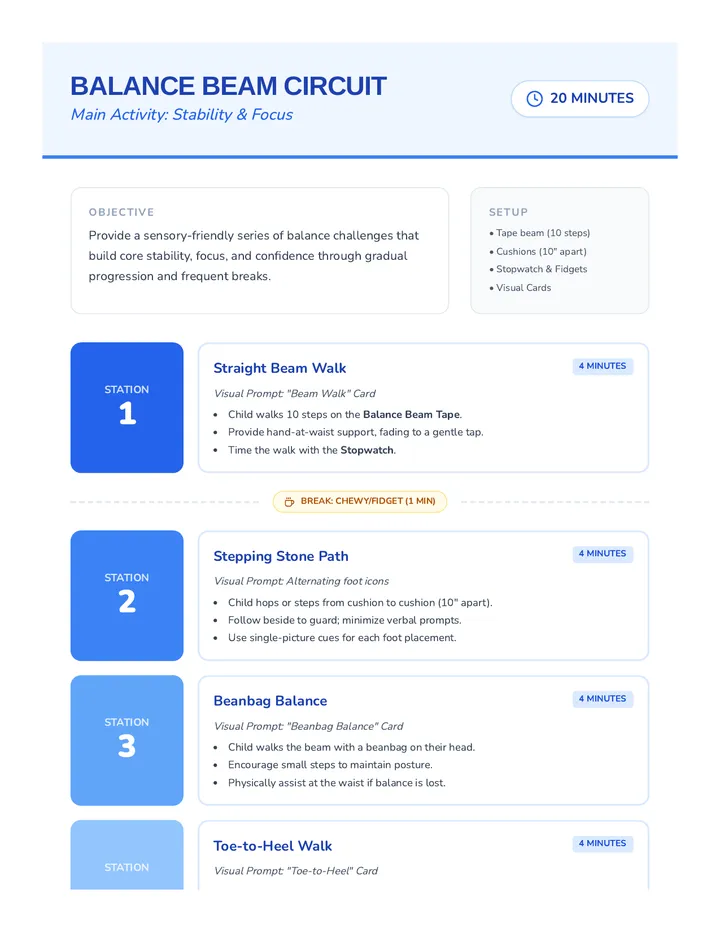
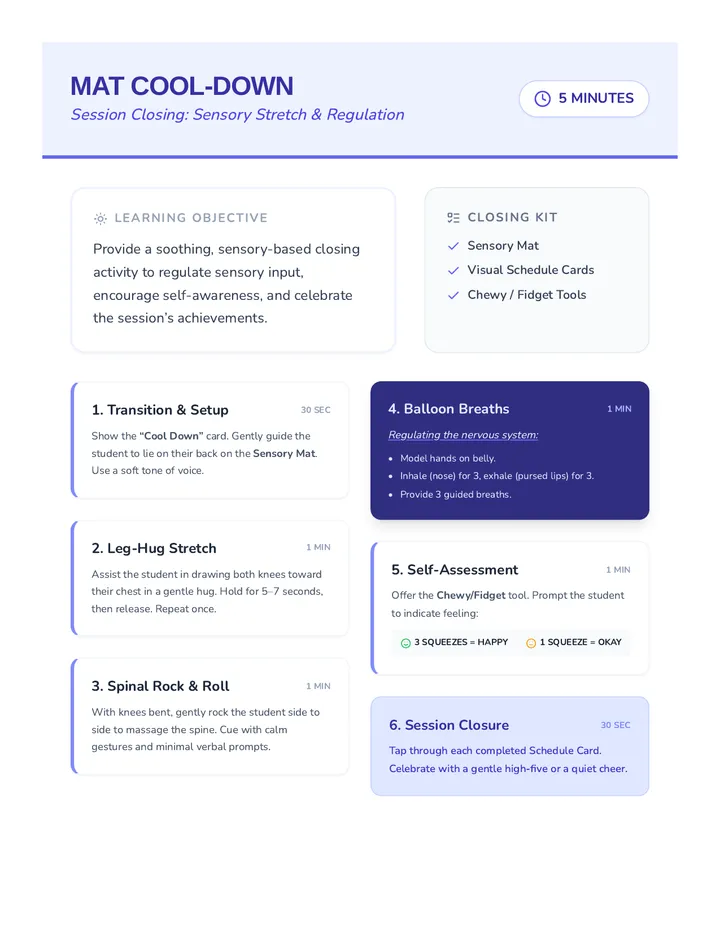
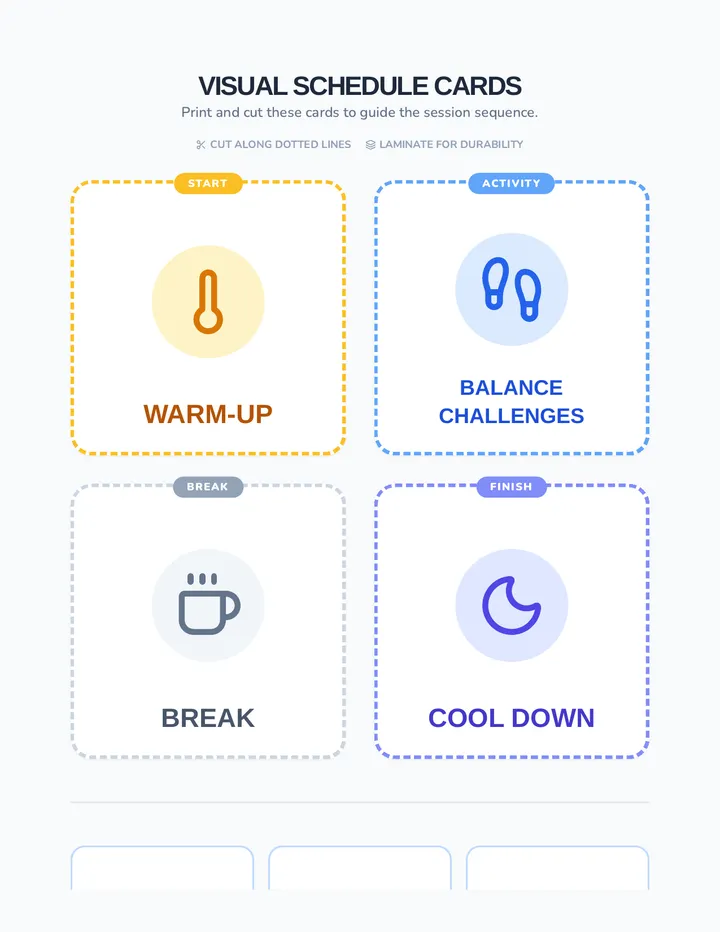
A 30-minute, Tier 3 physical therapy session for non-verbal students with autism, focusing on balance, core stability, and sensory regulation through structured challenges and visual supports.
In this 30-minute Tier 2 lesson for 7th graders, students will learn about the roles, responsibilities, and importance of paraprofessionals in schools. Understanding these key team members empowers students to collaborate better and appreciate diverse supports in their learning environment.
A two-session intensive focus and organization program for high school students with ADHD, centered on binder management and task completion.
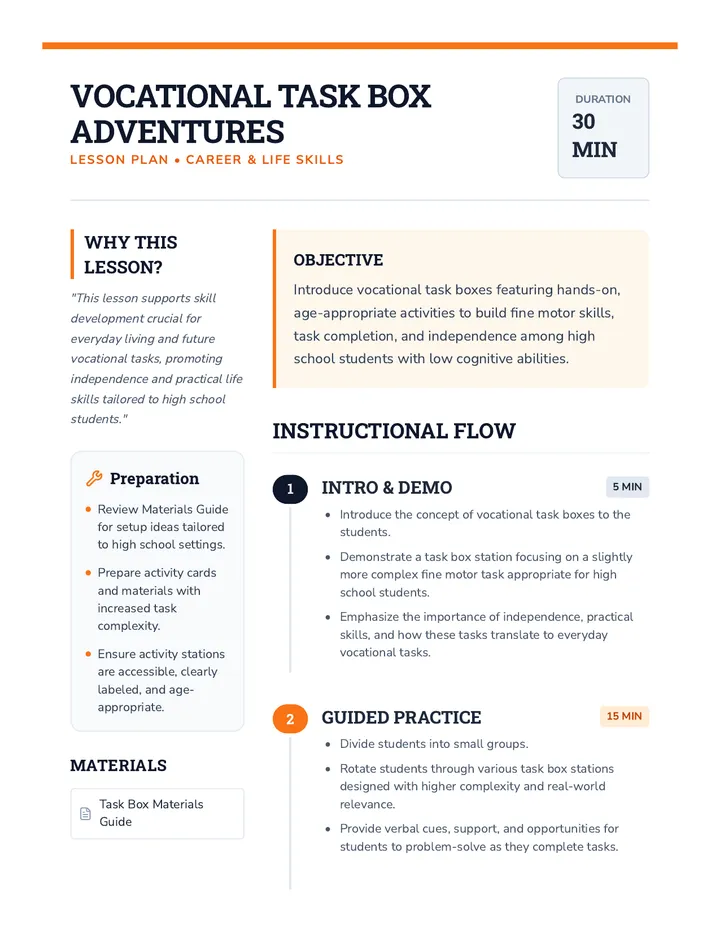
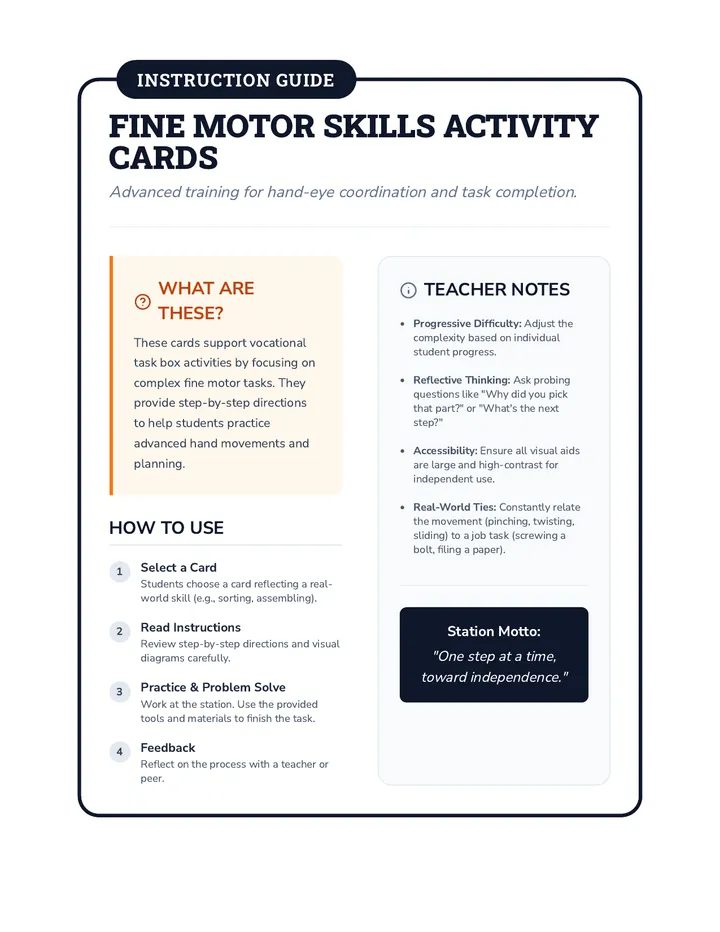
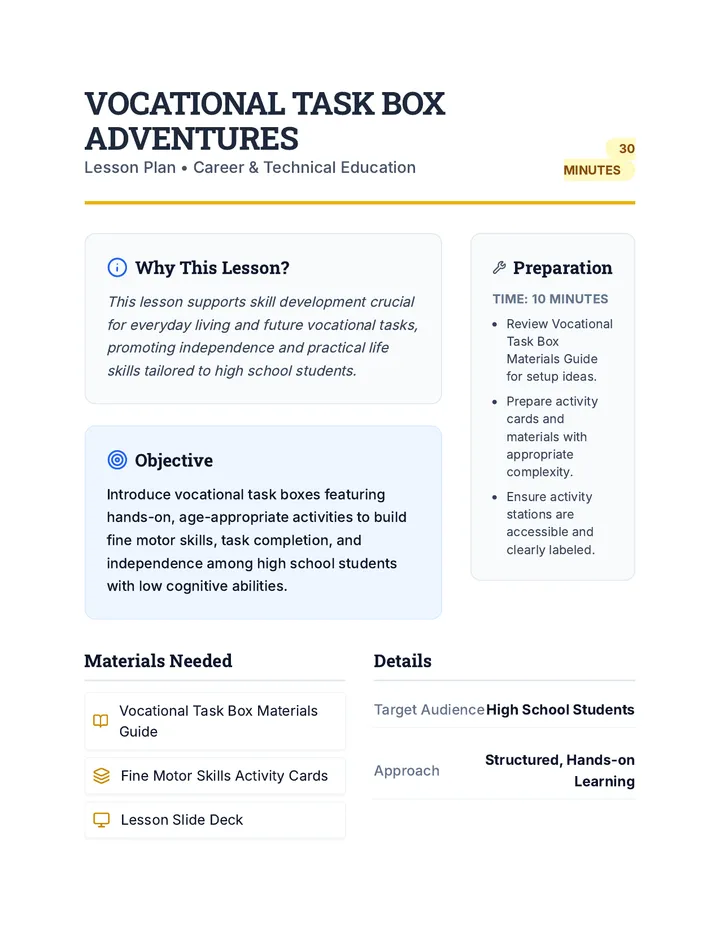
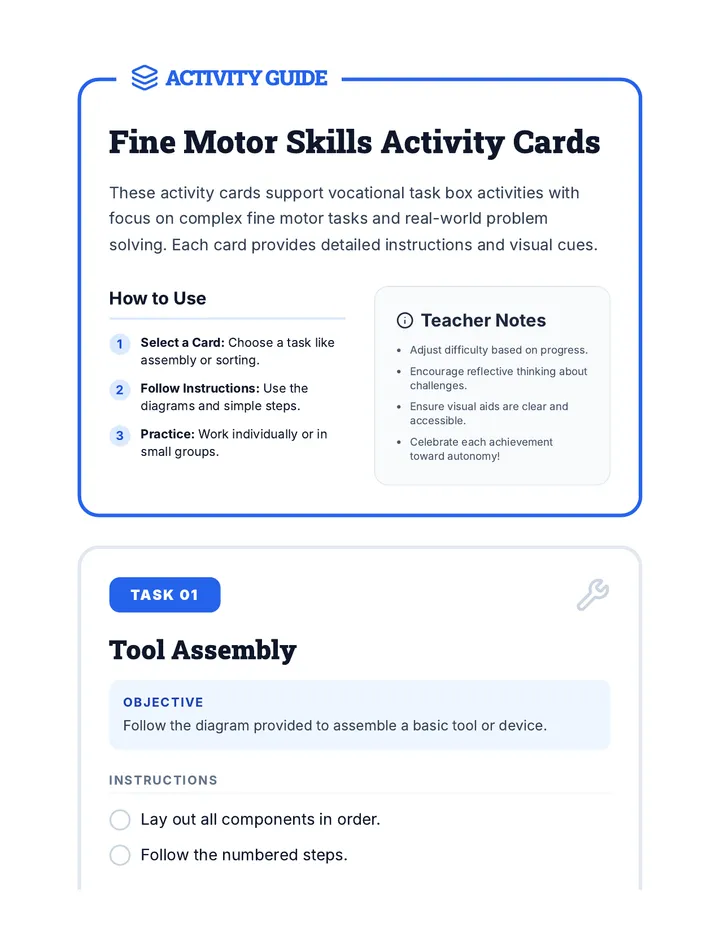
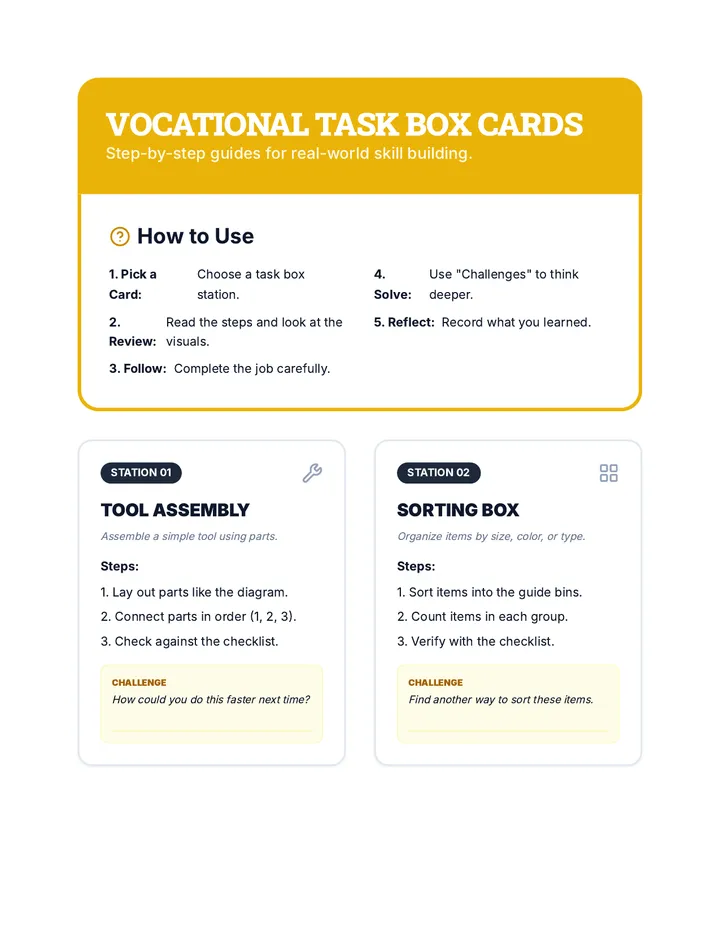
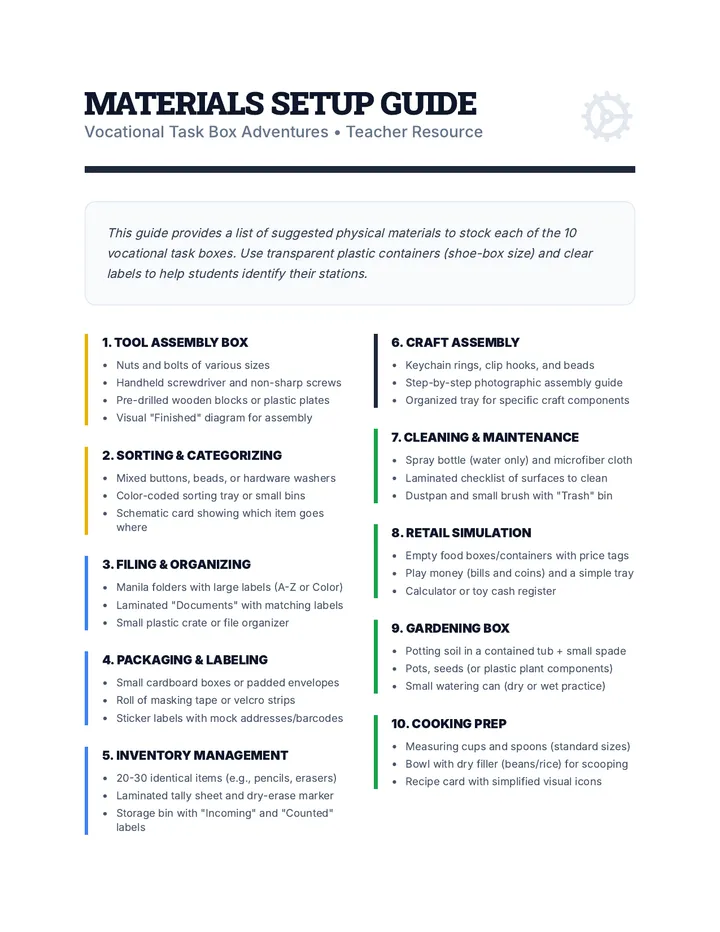
A 30-minute introductory lesson for high school students with low cognitive abilities, focusing on developing fine motor skills and independence through structured vocational task boxes.
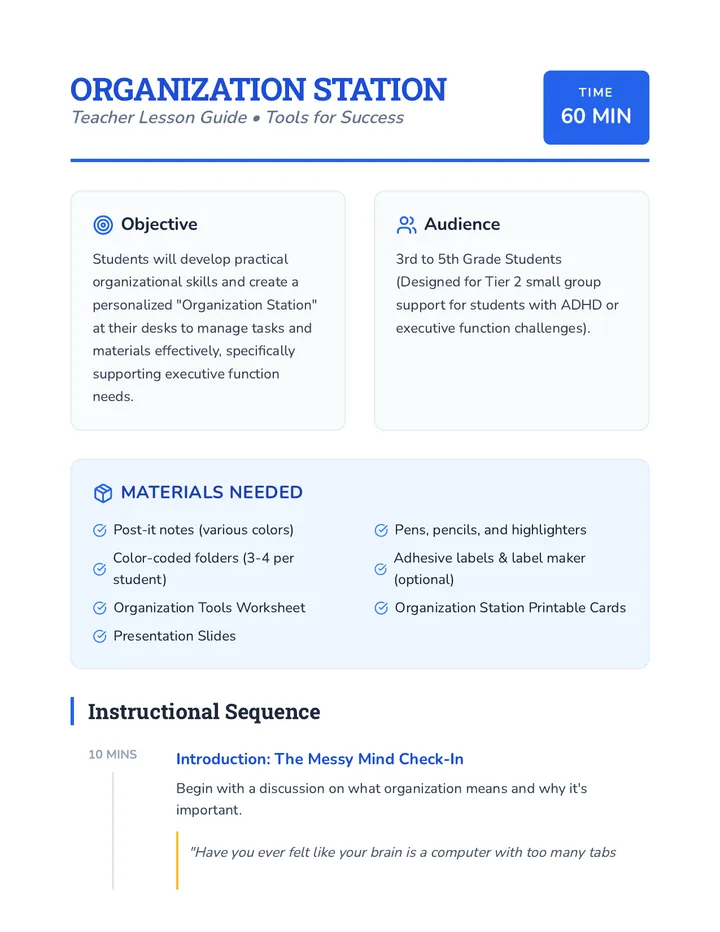
An interactive lesson for 3rd-5th grade students, focusing on practical organizational tools and strategies specifically designed for students with ADHD to manage schoolwork and tasks.
This lesson introduces vocational task boxes for high school students with low cognitive abilities, focusing on hands-on activities that build fine motor skills, task completion, and independence.