Visual schedules, timers, and task prioritization techniques to support executive functioning and independent workflow. Addresses workspace management, time estimation, and sequential task breakdown for diverse learning needs.
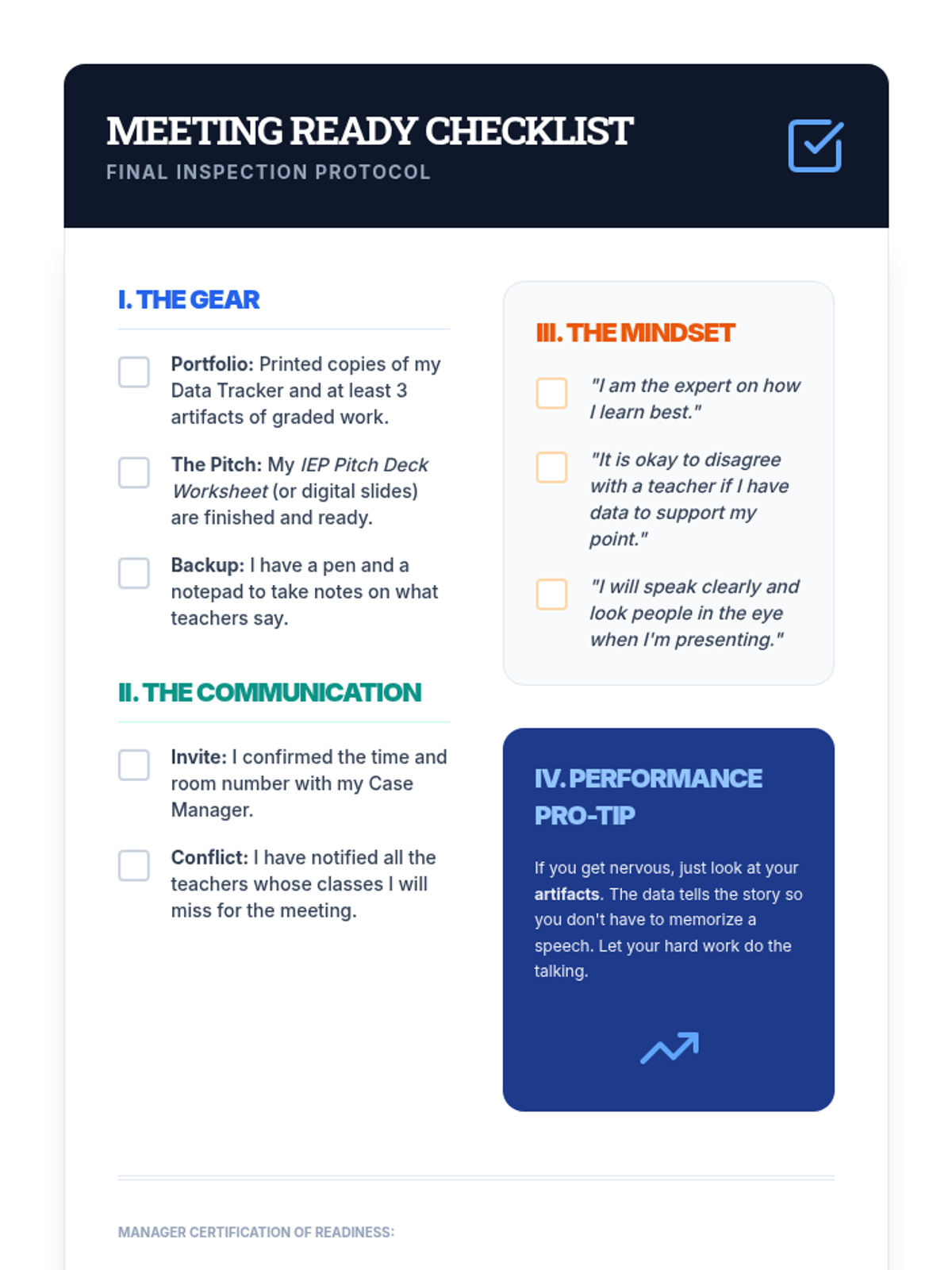
Final checklist for students to ensure they are prepared for their IEP meeting. Covers physical materials (gear), communication logistics, and mental preparation (mindset).
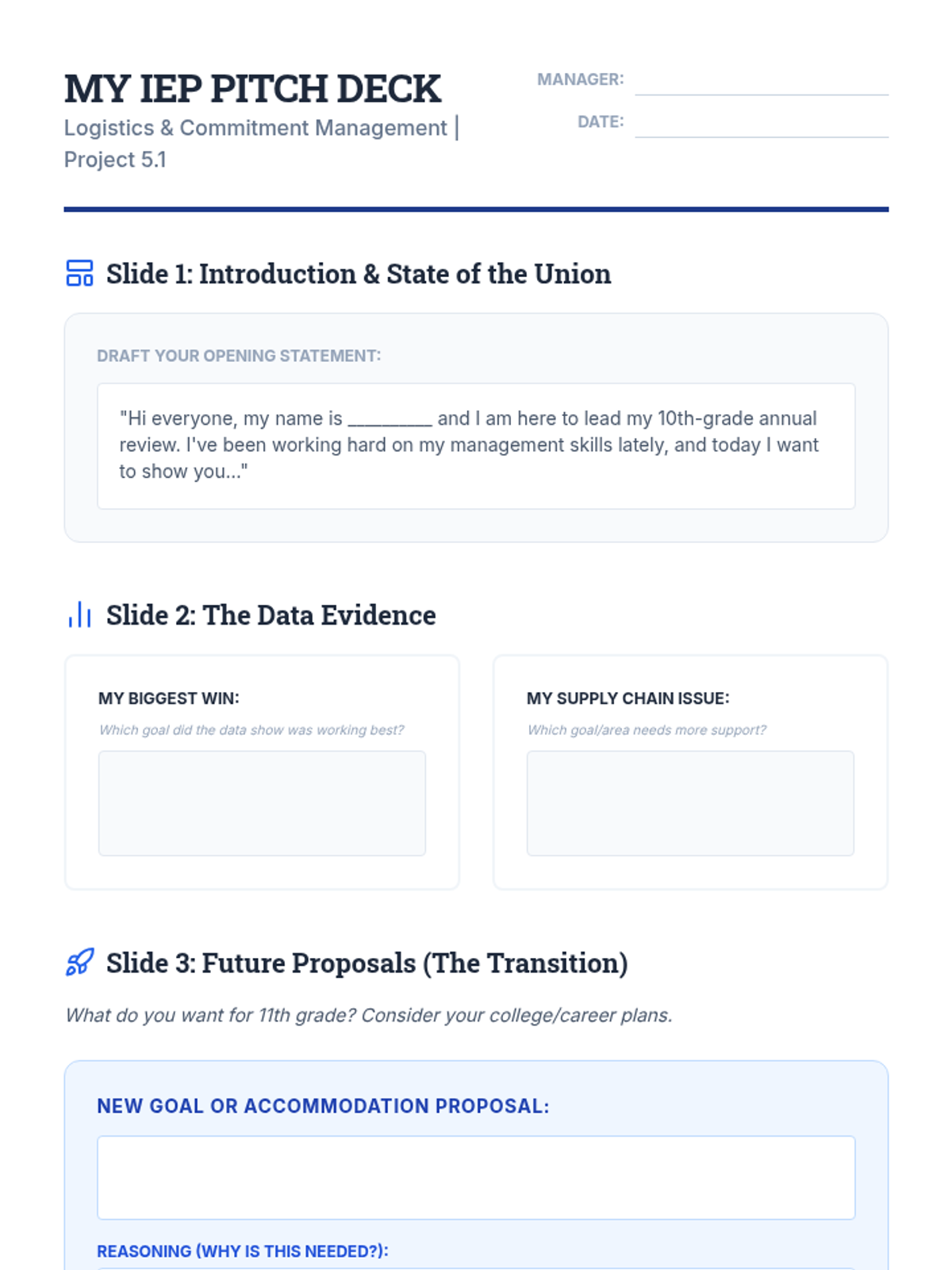
Planning worksheet for a student-led IEP presentation. Guides students through drafting their opening statement, data wins/challenges, and proposals for future accommodations/goals.
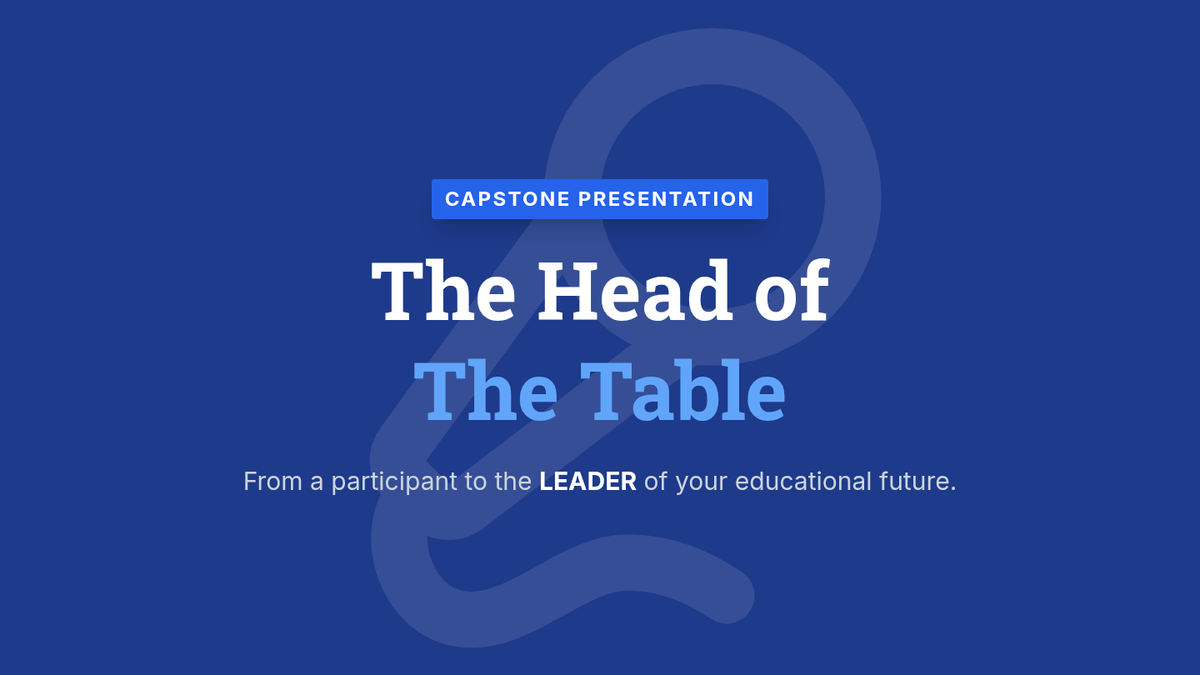
Capstone slides for Lesson 5. Focuses on student-led IEP meeting leadership, including analyzing a student-led meeting, a presentation script formula (Opening, Data, Ask), and the power of artifact evidence.
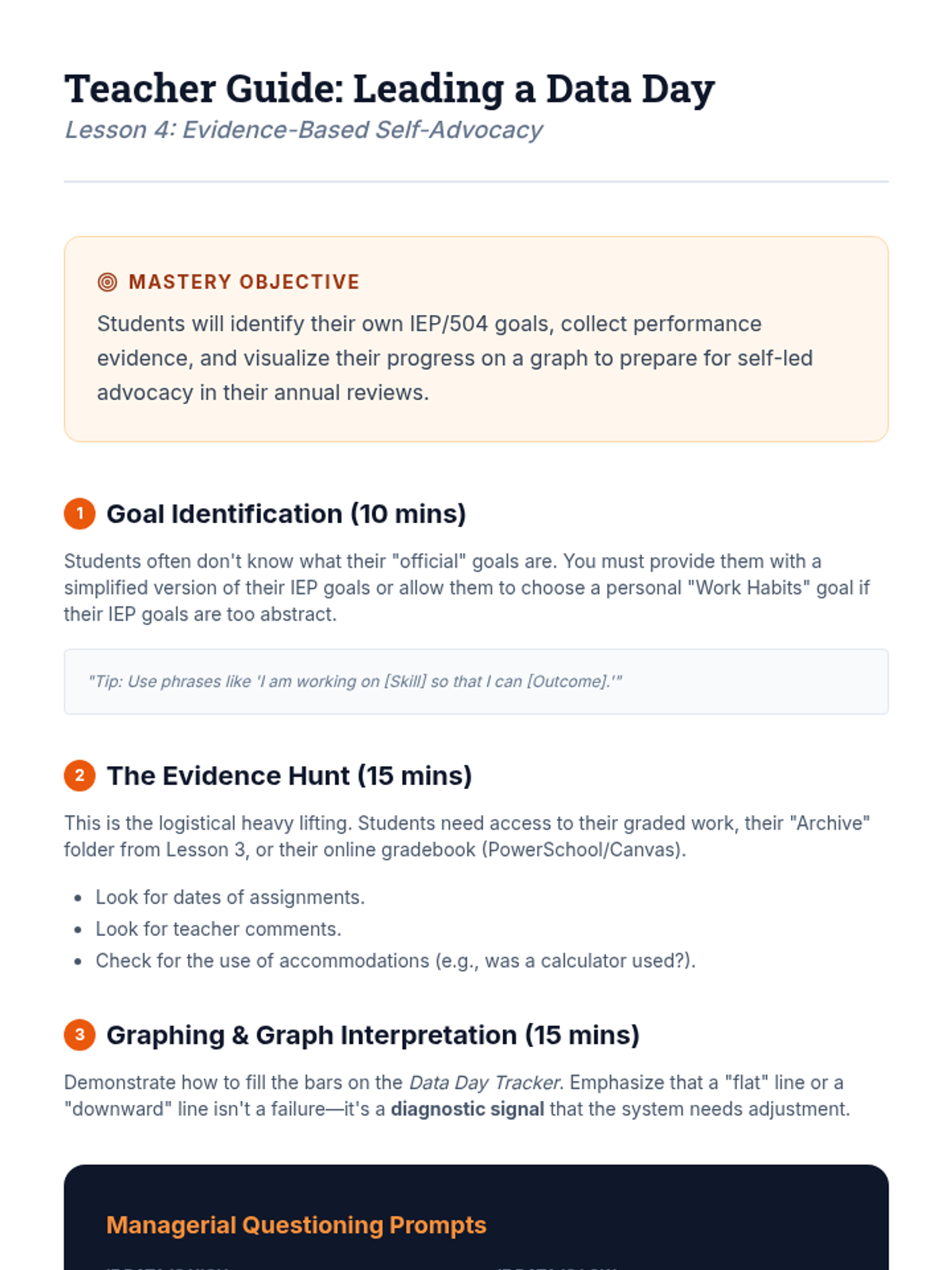
Facilitation guide for Lesson 4, including tips on helping students identify goals, leading an "Evidence Hunt," and using data as a diagnostic signal for adjusting educational supports.
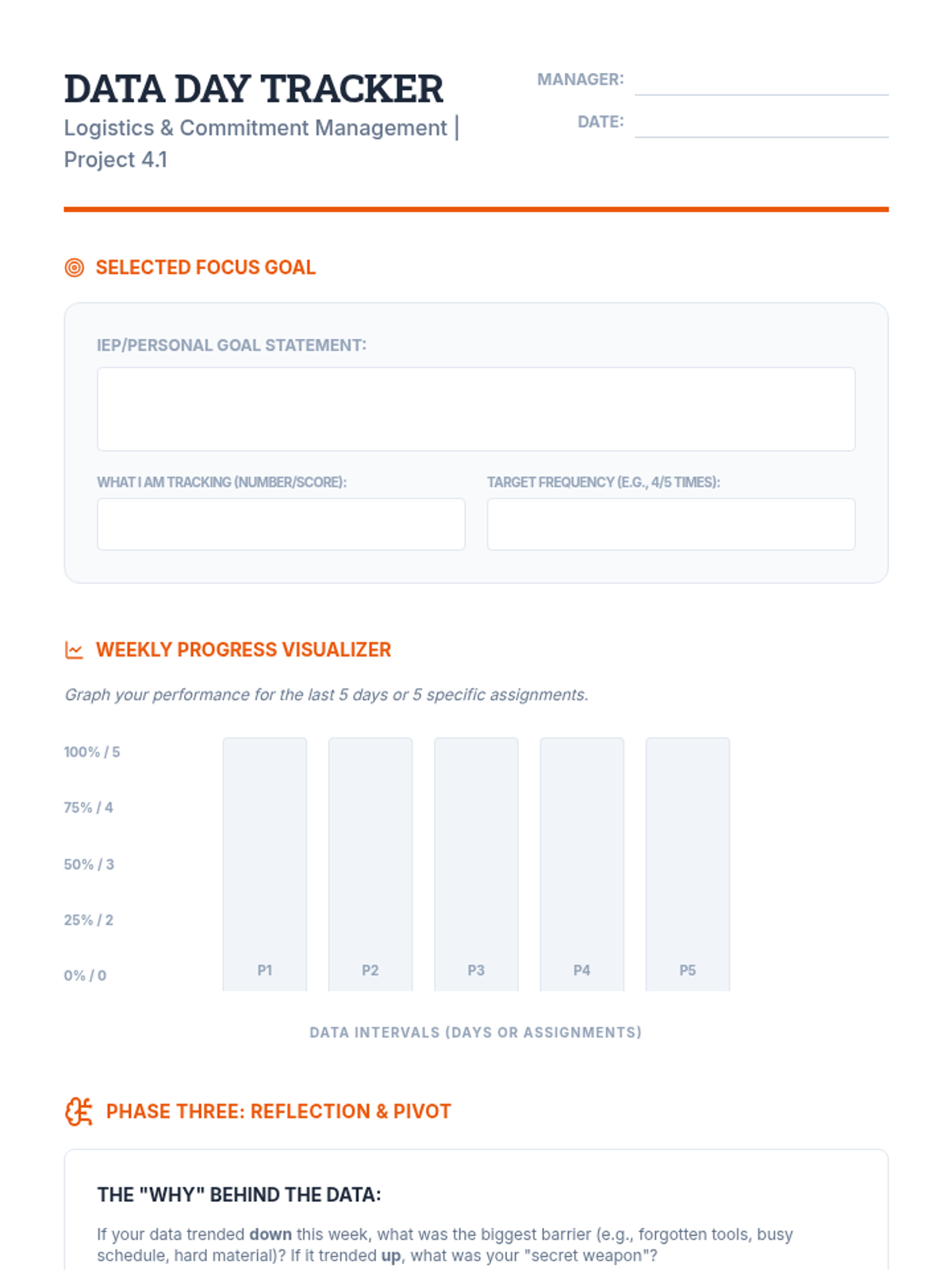
Worksheet for student self-monitoring. Includes a goal selection section, a 5-point bar graph for tracking progress, and reflective questions for "pivoting" based on data results.
Slides for Lesson 4 on goal monitoring. Teaches students how to distinguish between quantitative and qualitative data, establishes a "Data Day" routine, and shows how to turn IEP goals into trackable data points.
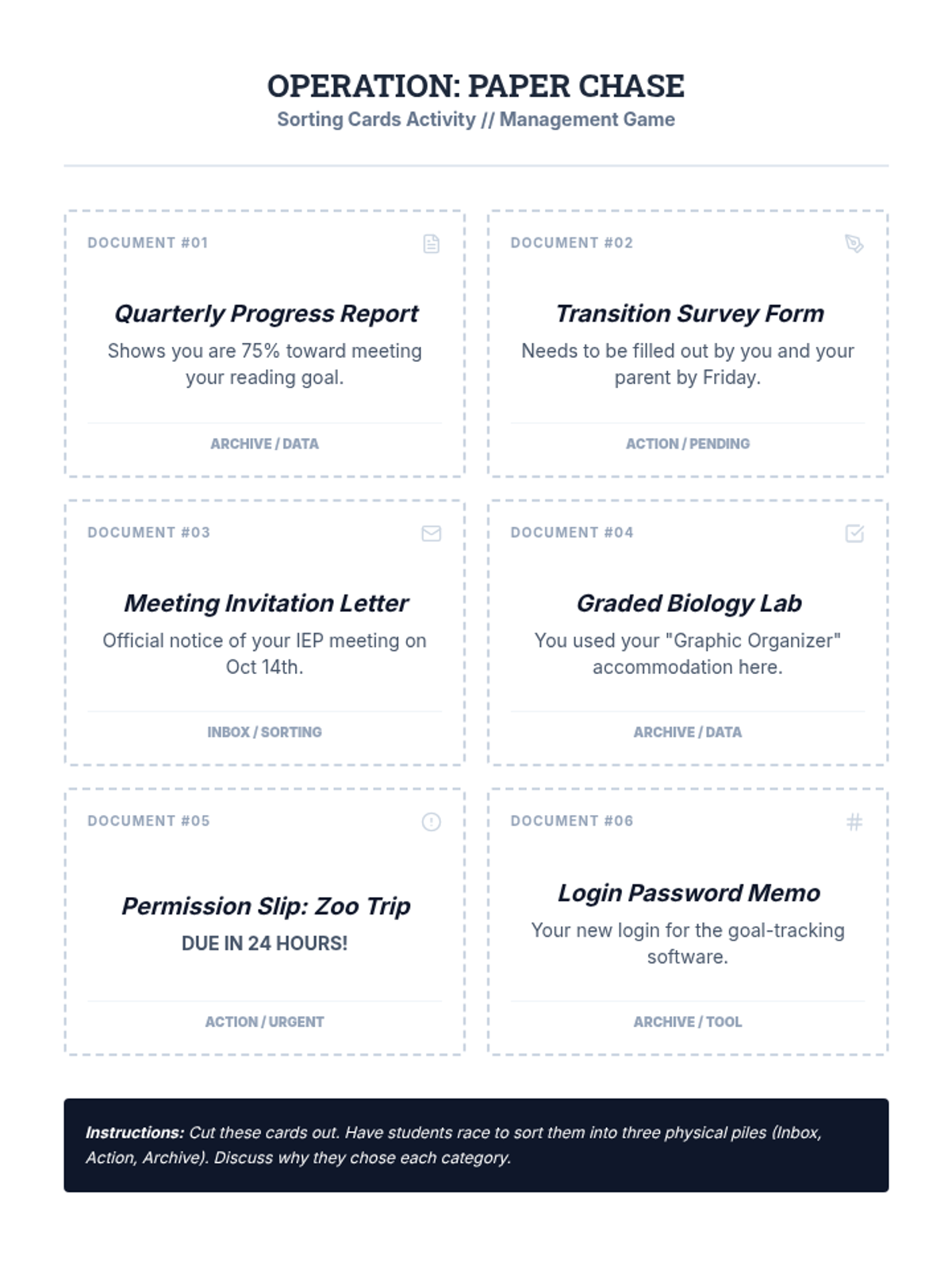
A set of printable sorting cards for the "Paper Chase" activity. Includes various document scenarios (progress reports, invitations, permission slips) for students to categorize.
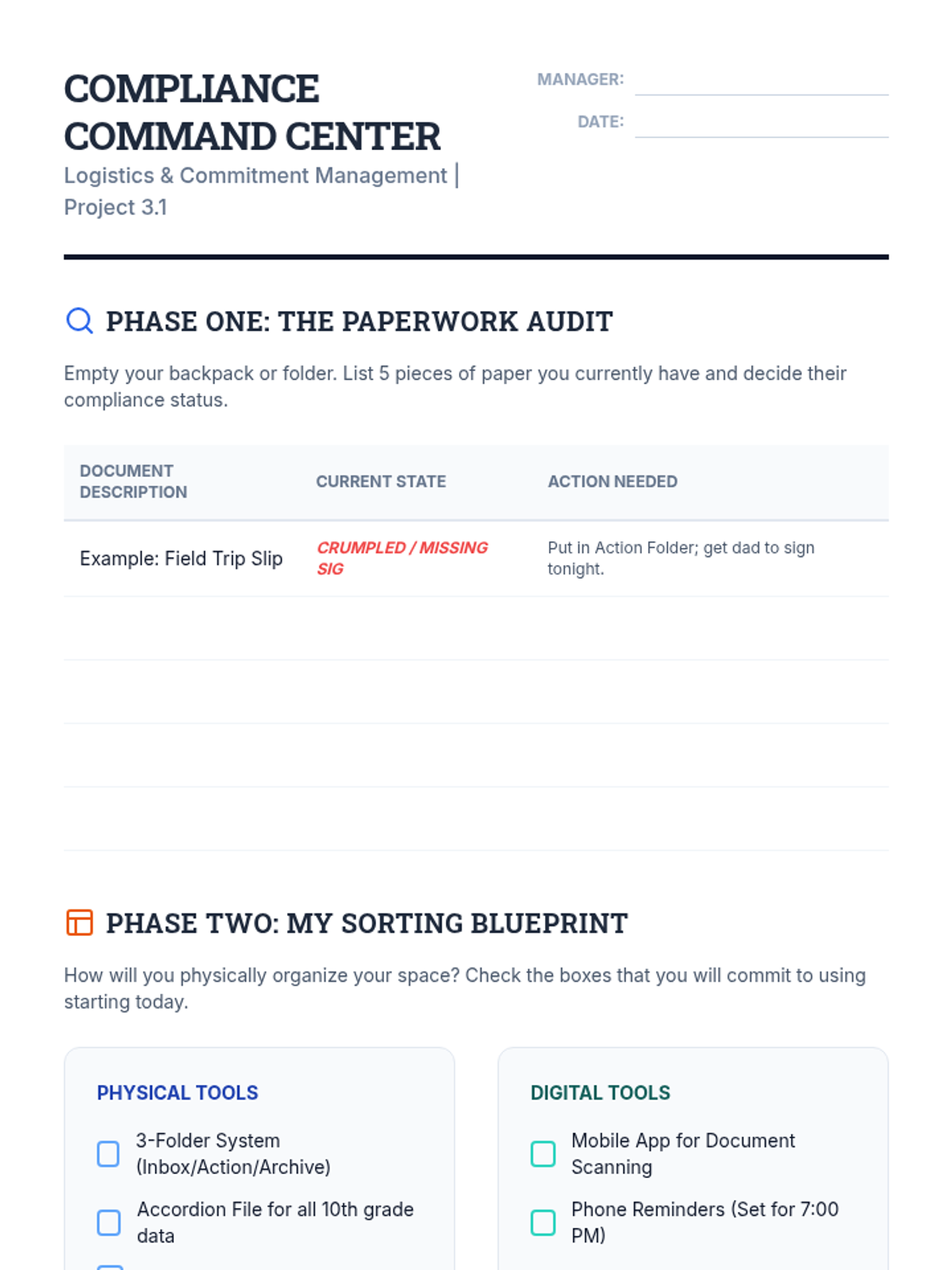
Worksheet for students to audit their current paperwork and design a personal compliance system. Includes sections for a physical/digital tool blueprint and a "Daily Reset" protocol.
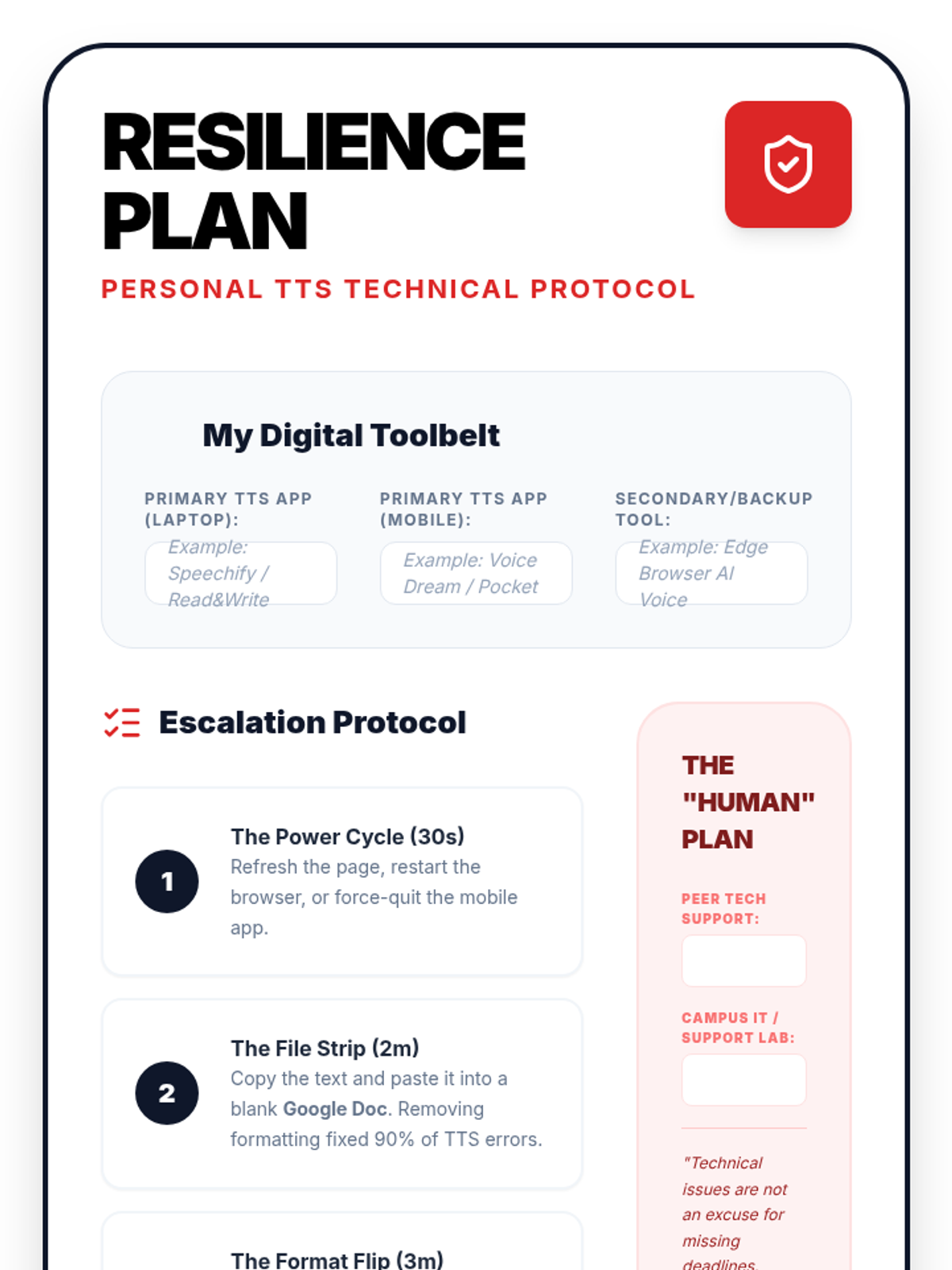
A personal template for Lesson 5. Students fill this out to create their own 'Digital Resilience Plan', documenting their tool arsenal, escalation steps for technical failures, and human support resources.
Slides for Lesson 3 focusing on administrative organization. Introduces the "Backpack Abyss," a 3-folder compliance system (Inbox, Action, Archive), and hybrid digital/analog management strategies.
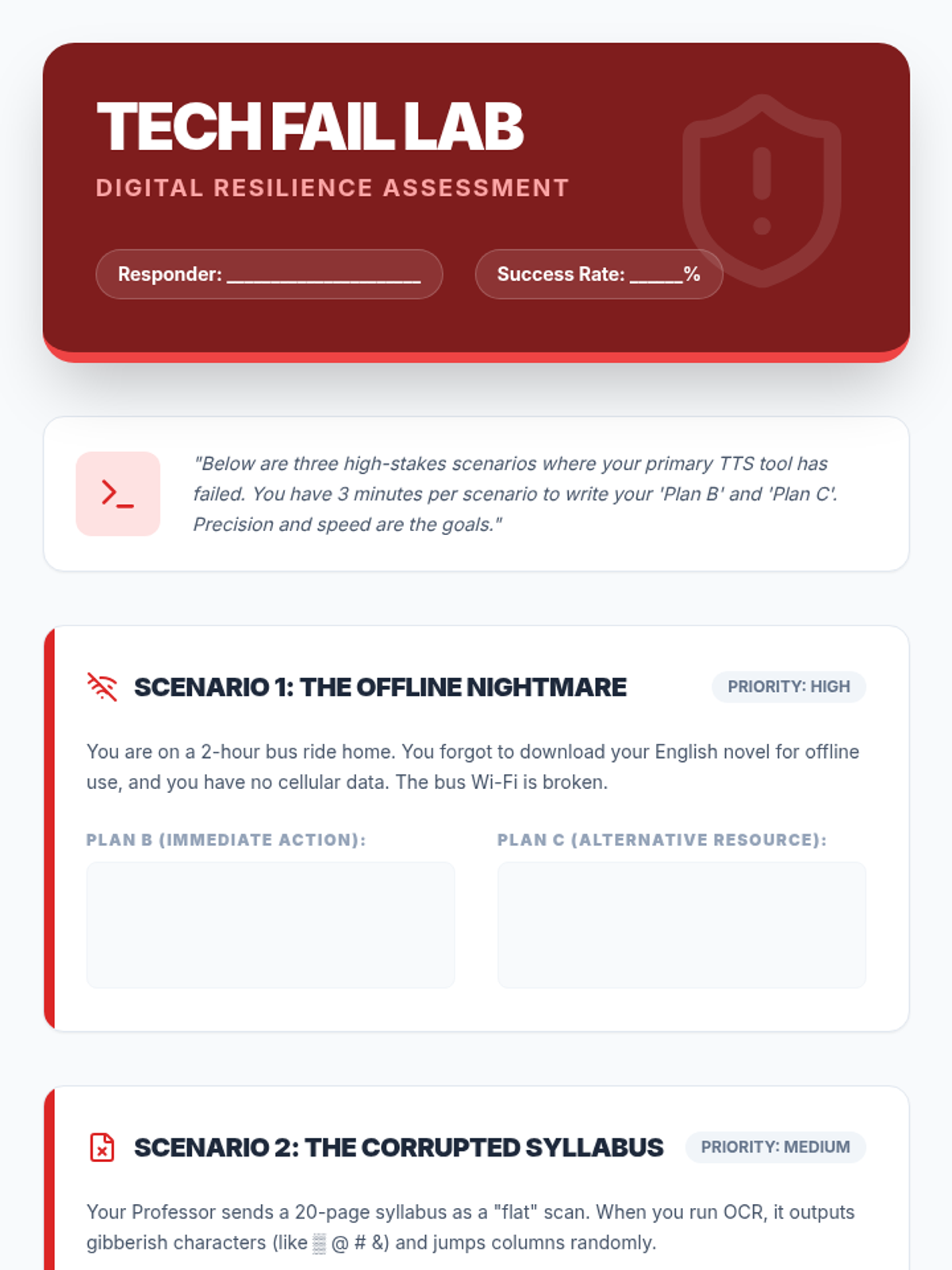
A technical worksheet for Lesson 5. Students are presented with three 'high-stakes' technical failure scenarios and must document their primary and secondary backup plans to ensure reading productivity.
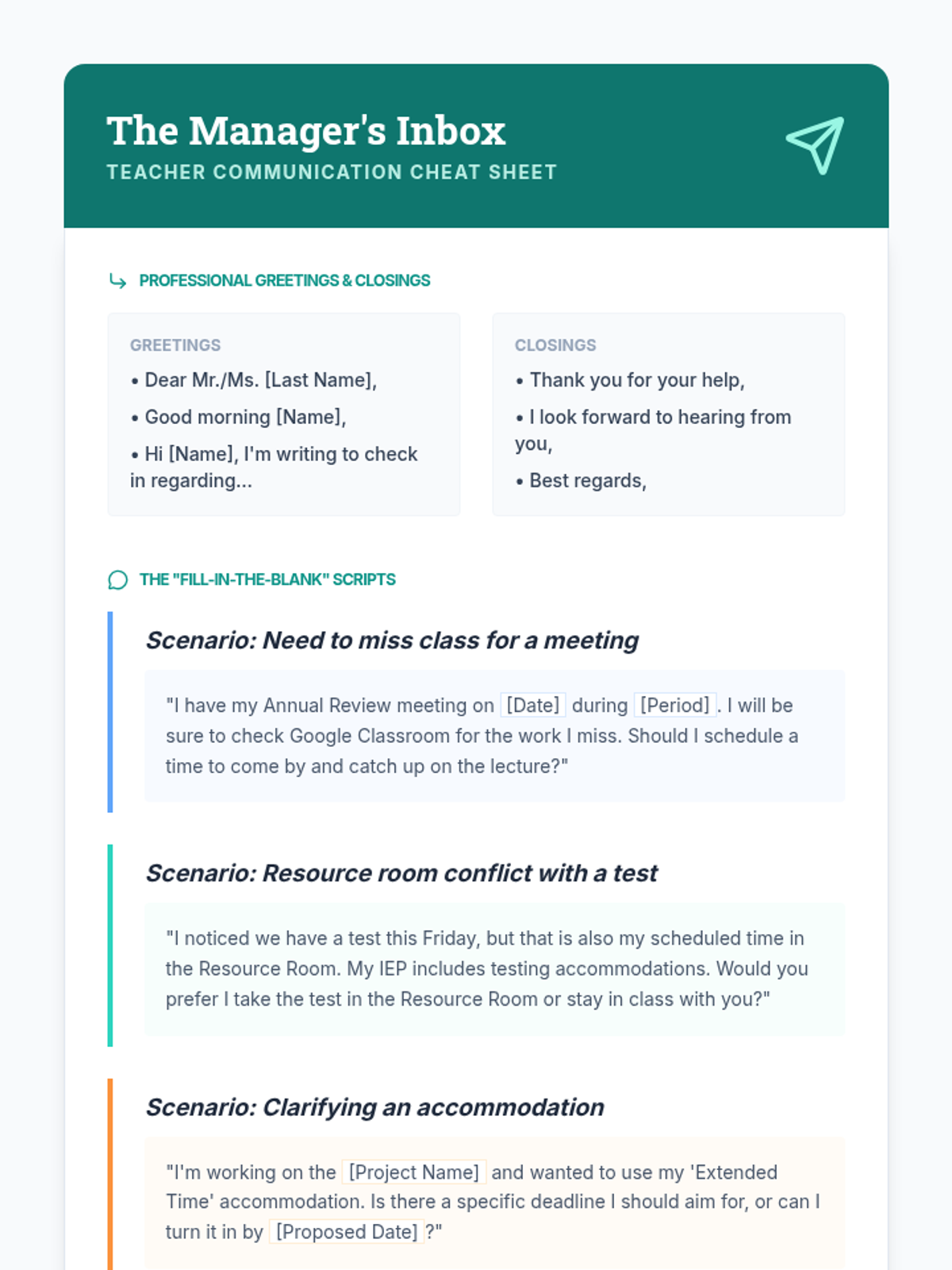
A handy reference sheet for students providing professional greetings/closings, fill-in-the-blank scripts for common IEP-related communication scenarios, and "Golden Rules" for student-teacher interactions.
Slides for Lesson 5 on Digital Resilience. Teaches students how to troubleshoot common TTS failures, establish a 'Plan B' hierarchy, and remain productive during technical high-stakes moments.
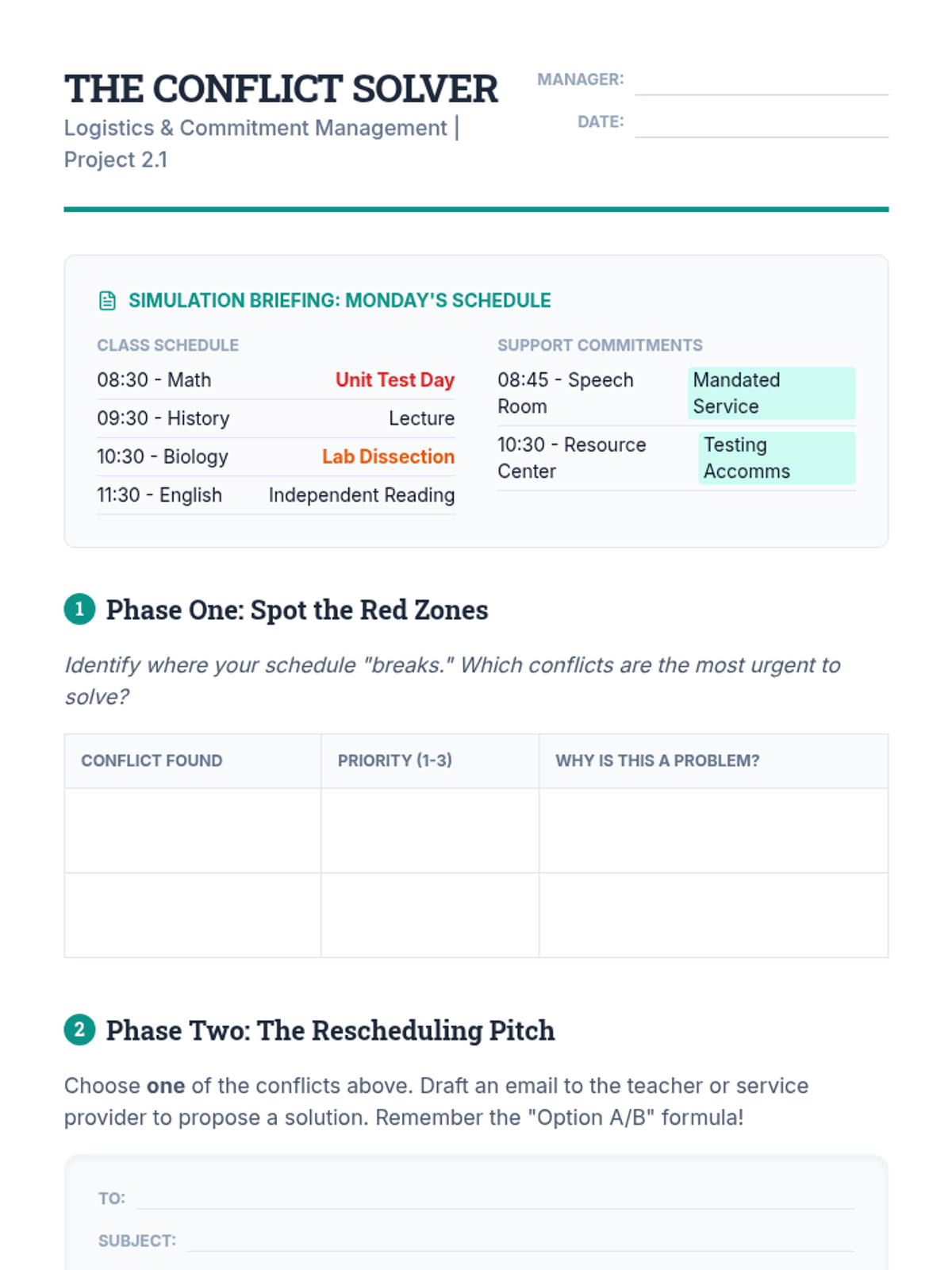
Simulation worksheet where students identify schedule conflicts in a hypothetical Monday schedule and draft professional emails to resolve them using the "Option A/B" formula.
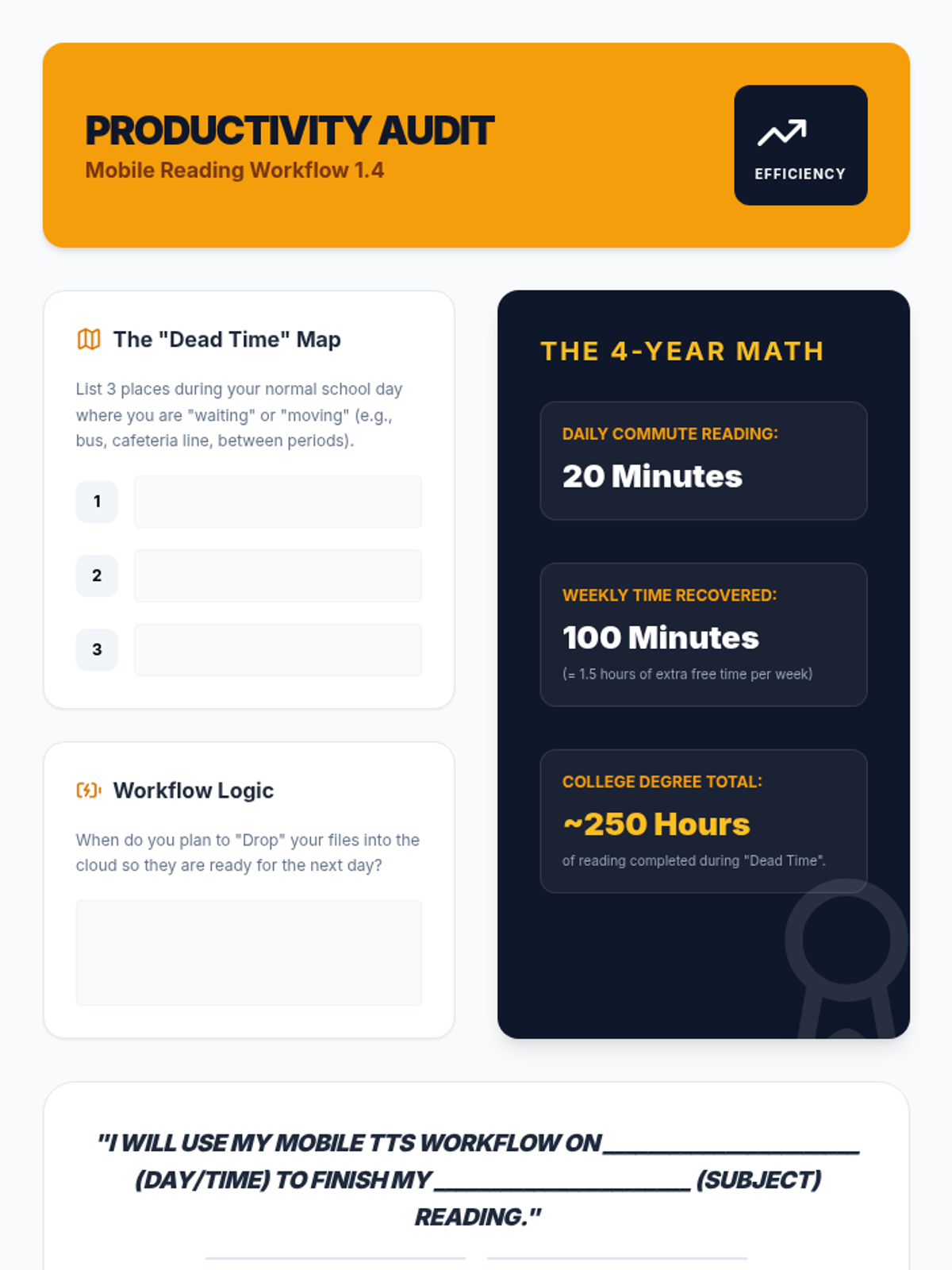
A productivity audit worksheet for Lesson 4. Students identify 'dead time' in their schedules, calculate the time savings over their college career, and make a formal commitment to using their mobile TTS workflow.
Slide deck for Lesson 2 focusing on schedule coordination. Introduces pull-out services, communication strategies for conflicts, and a professional email template for student-teacher coordination.
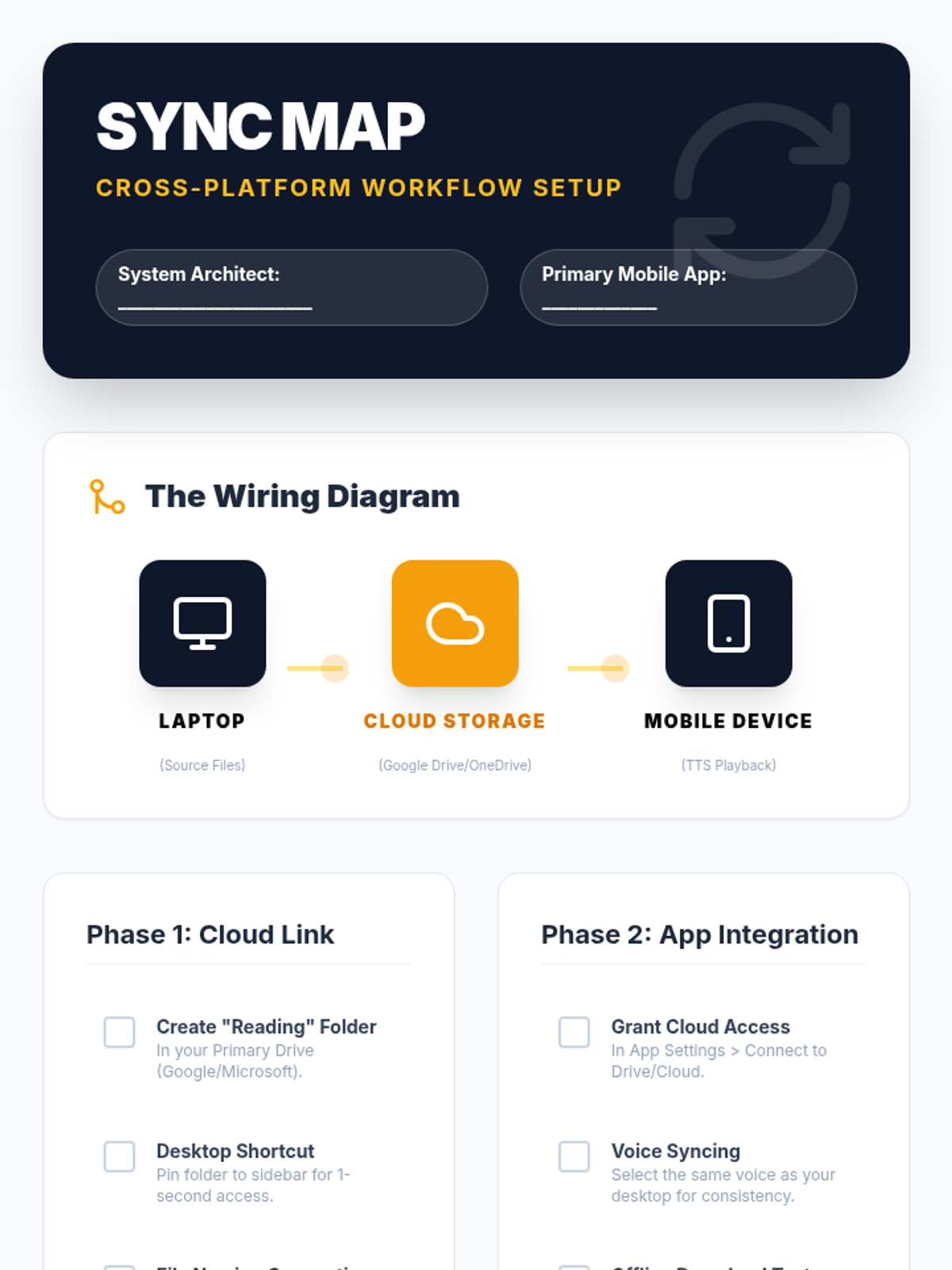
A technical setup checklist for Lesson 4. Guides students through linking their desktop cloud storage to their mobile TTS apps, with verification steps for offline playback and file syncing.
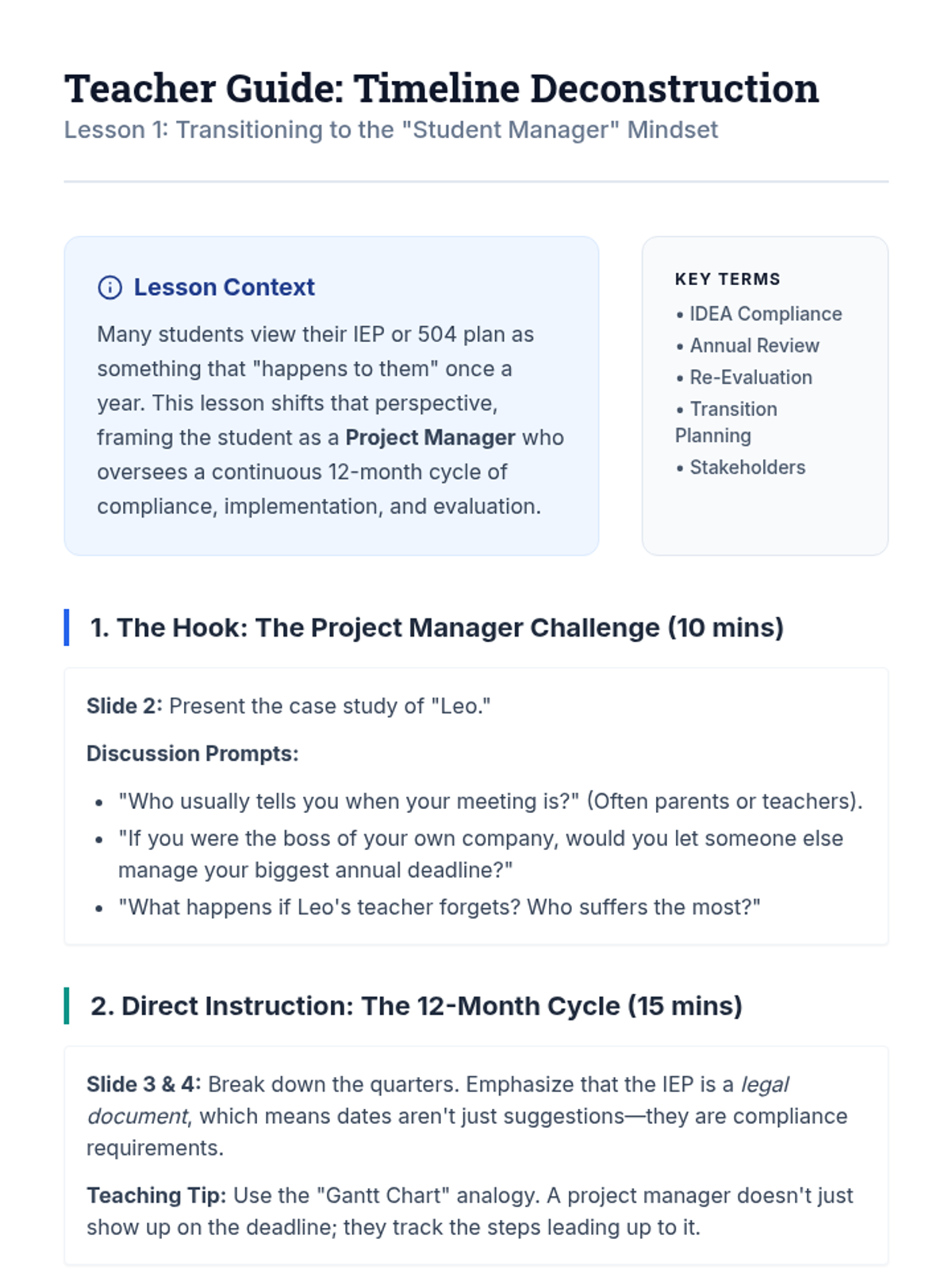
Facilitation guide for Lesson 1, including discussion prompts for the case study, teaching tips for the 12-month cycle, and differentiation strategies for mapping the educational timeline.
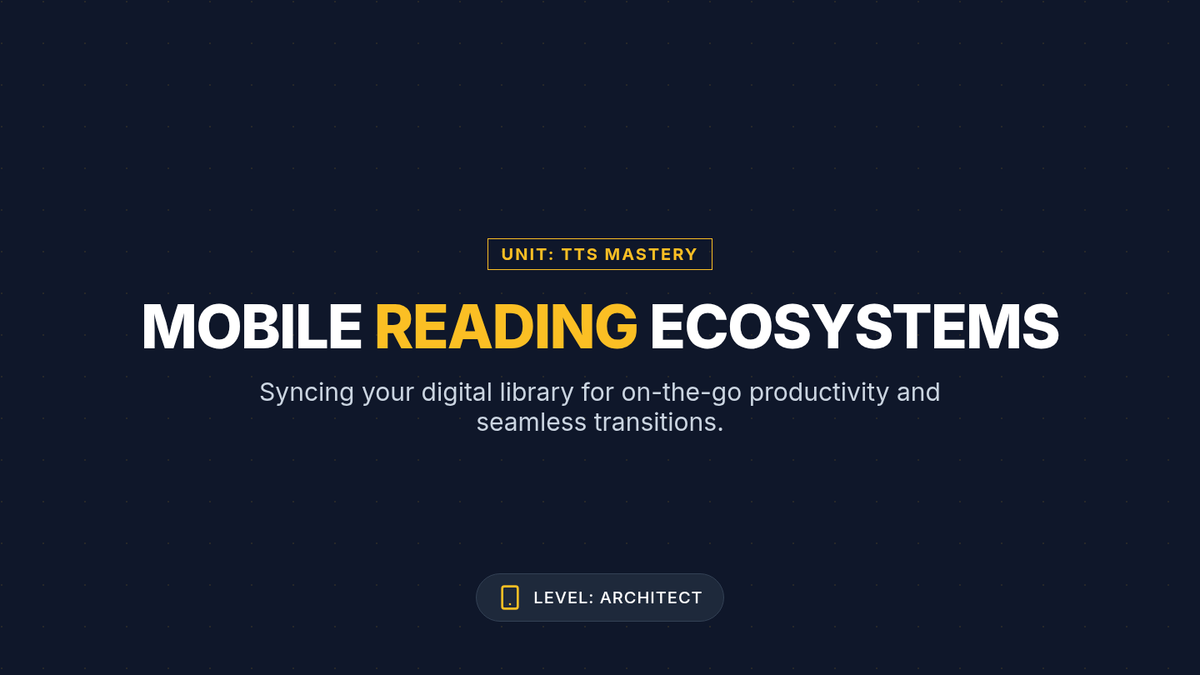
Slides for Lesson 4 on Mobile TTS Workflows. Focuses on syncing desktop files with mobile devices, cloud integration, and using transit time for academic reading.
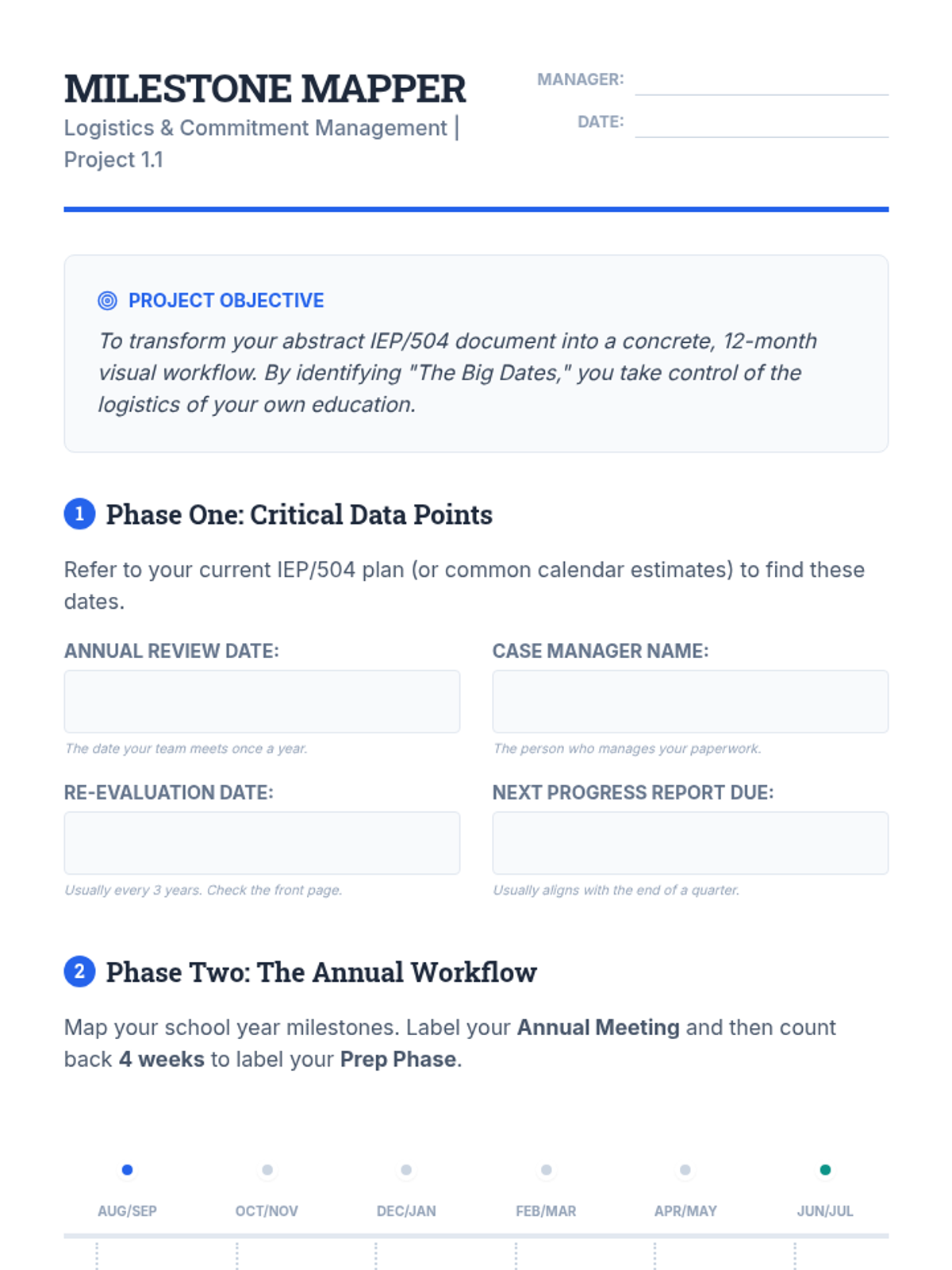
Worksheet for students to map their own IEP/504 timelines. Includes sections for data gathering (dates/contacts), a 12-month visual workflow builder, and reflection questions on meeting preparation.
Visual presentation introducing students to the concept of managing their own IEP/504 timelines using a project management framework. Includes a case study and quarterly workflow breakdown.
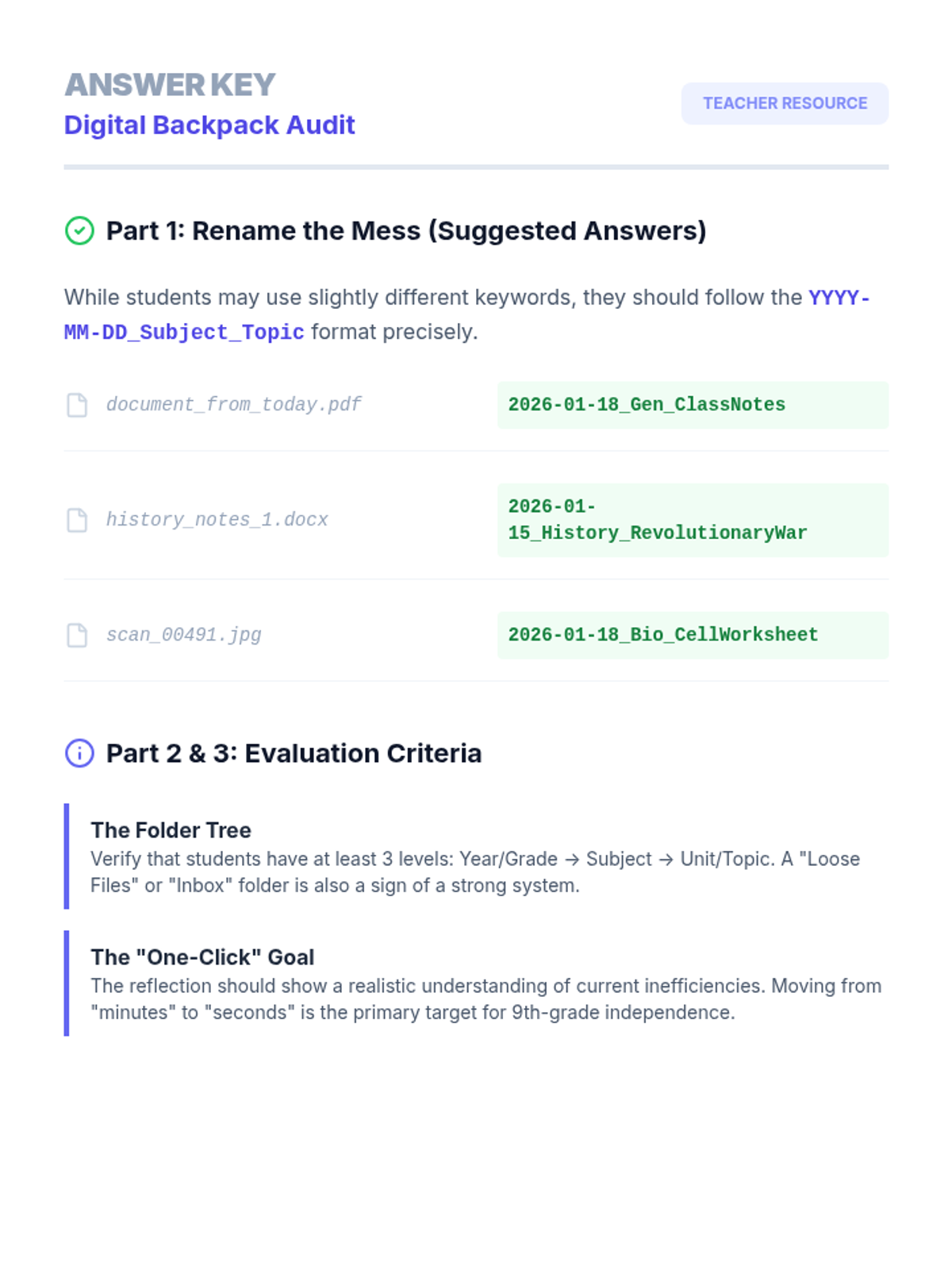
Answer key and evaluation guide for the Digital Backpack Audit worksheet, providing suggested file naming conventions and folder structure criteria.
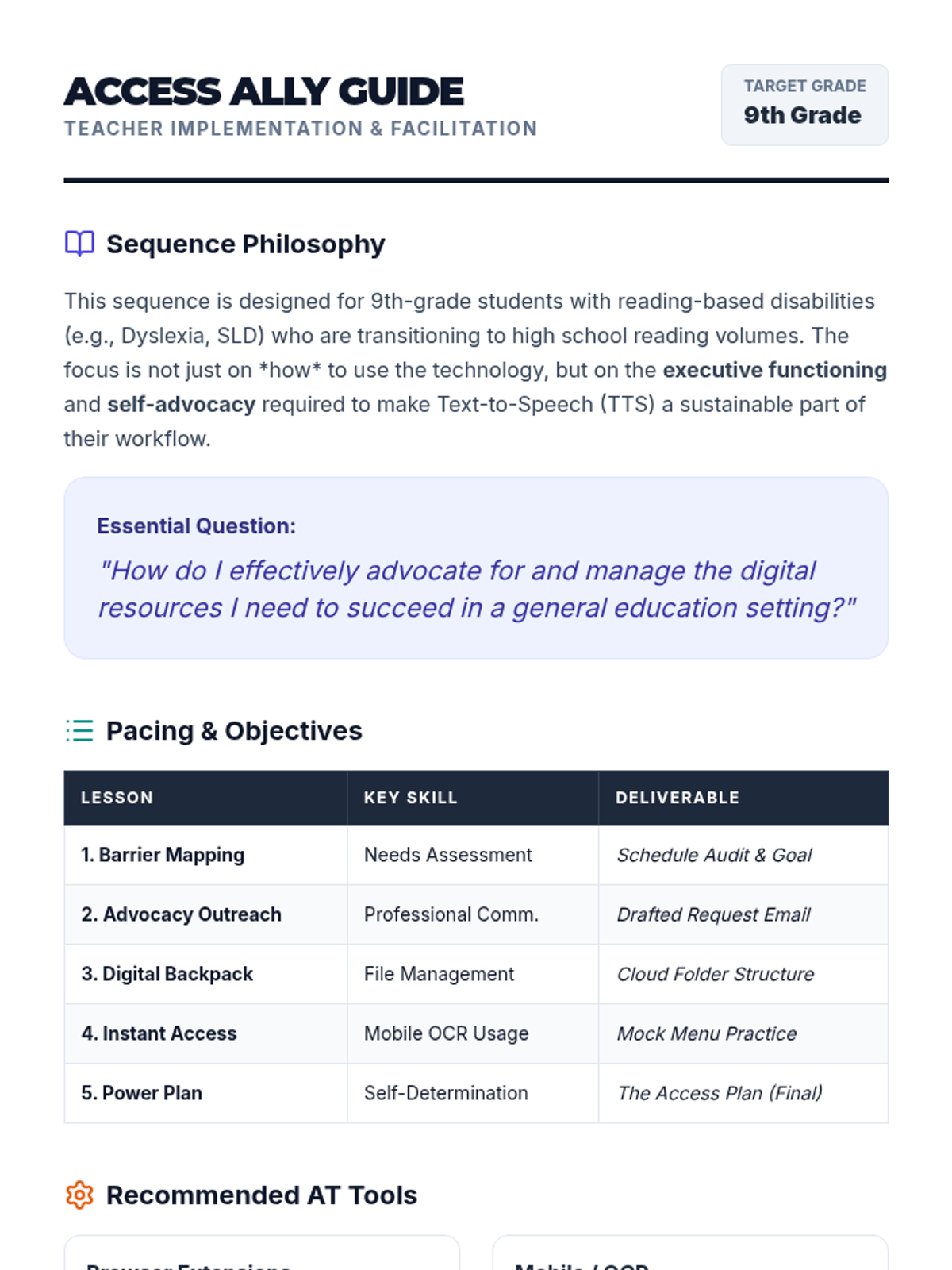
A comprehensive teacher guide for the Access Ally sequence, covering pacing, recommended AT tools, and facilitation strategies for 9th-grade self-advocacy.
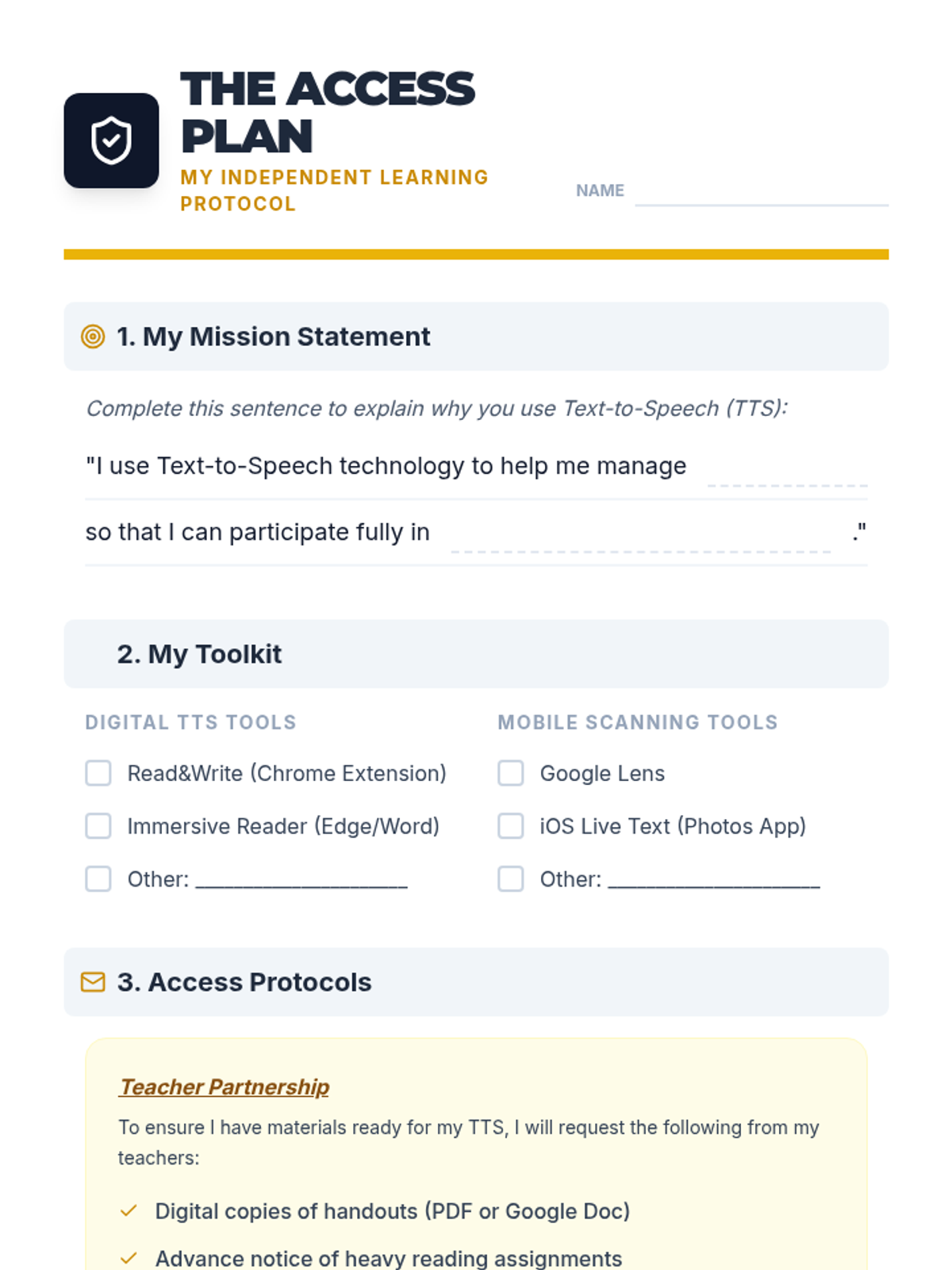
A one-page 'Access Plan' template for students to synthesize their TTS tools, file management strategies, and self-advocacy goals for sharing with teachers.
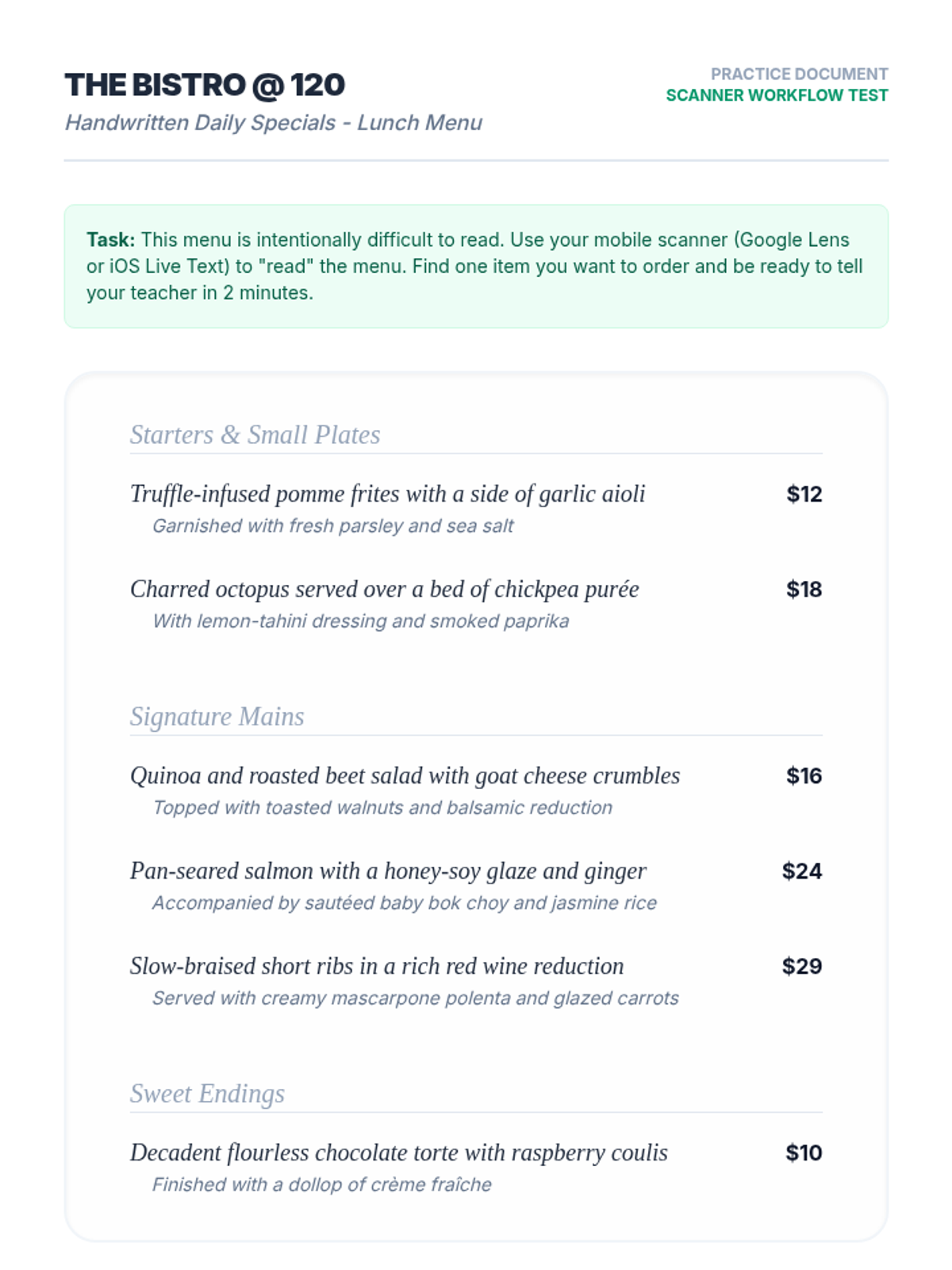
A mock restaurant menu with complex vocabulary and serif fonts, designed for students to practice using mobile OCR/TTS scanning tools.
Final project slides for the Power Plan lesson. Guides students through creating and presenting their one-page 'Access Plan' for teachers, emphasizing professional advocacy and self-determination.
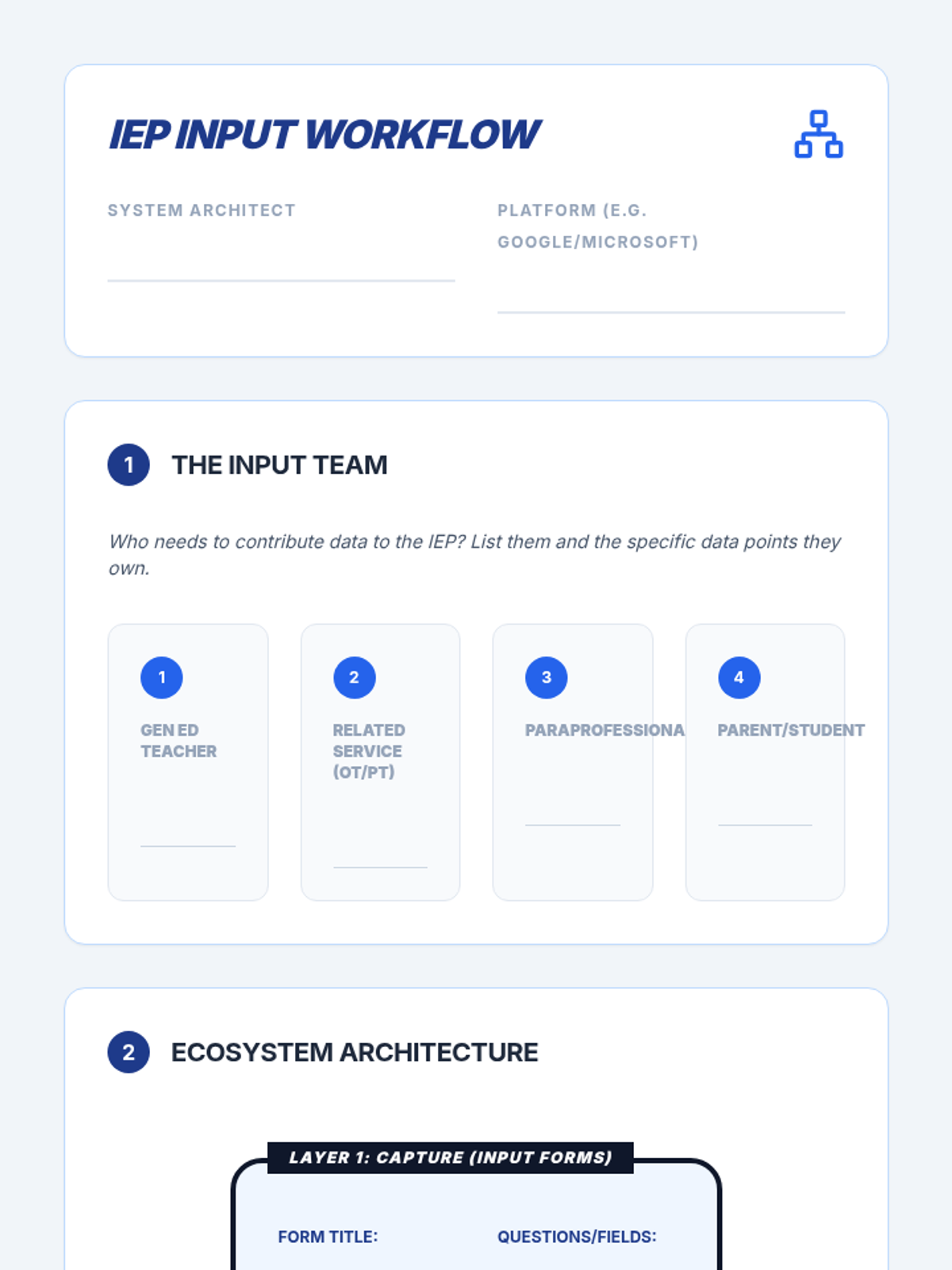
Student worksheet for Lesson 5 focusing on designing digital workflows for collaborative IEP data entry and progress monitoring.
Facilitator guide for Lesson 5 focusing on building efficient communication loops and At-a-Glance tools for general education partners.
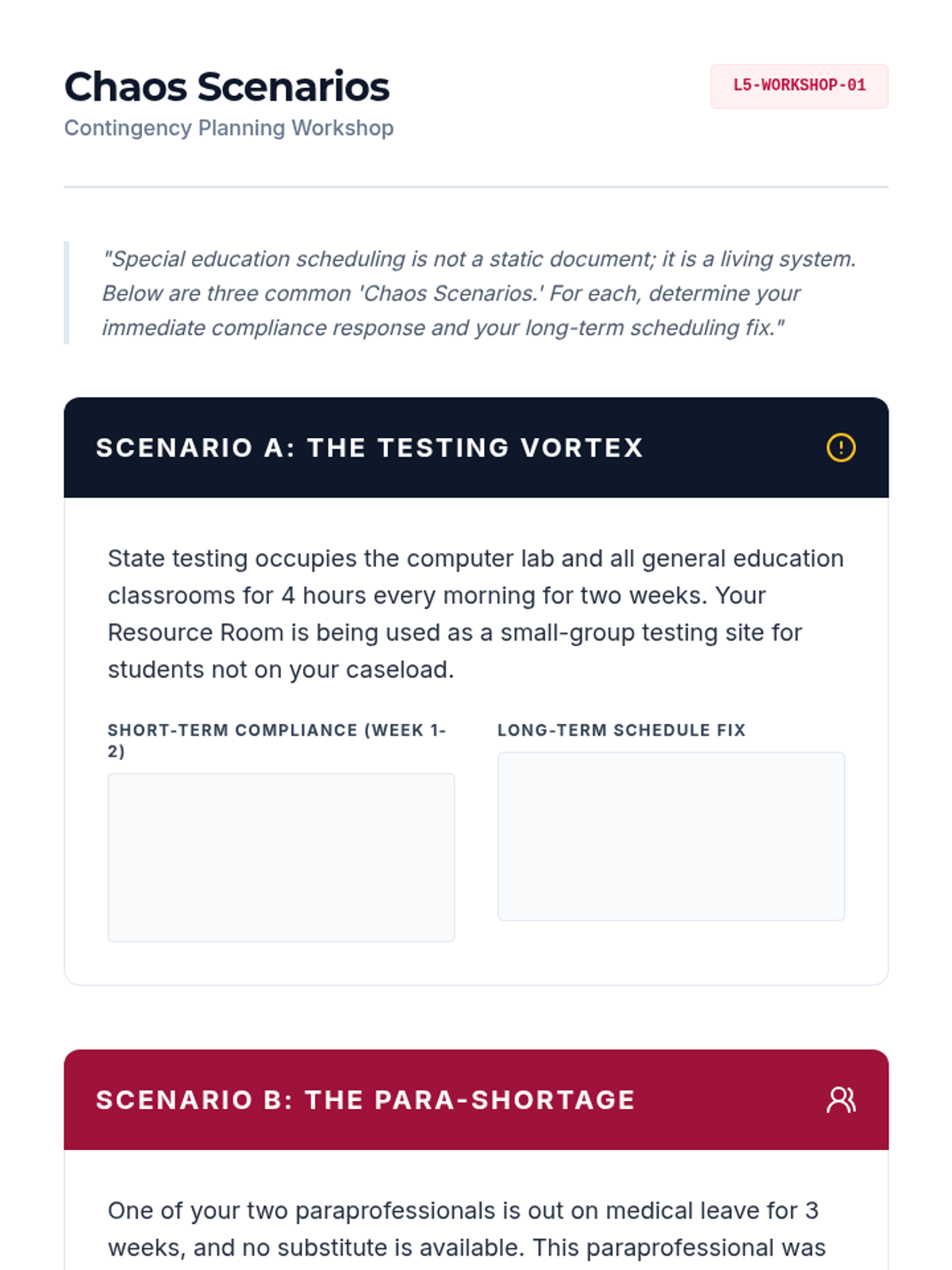
A set of realistic scenarios for graduate students to practice contingency planning and maintain regulatory compliance during common school schedule disruptions.
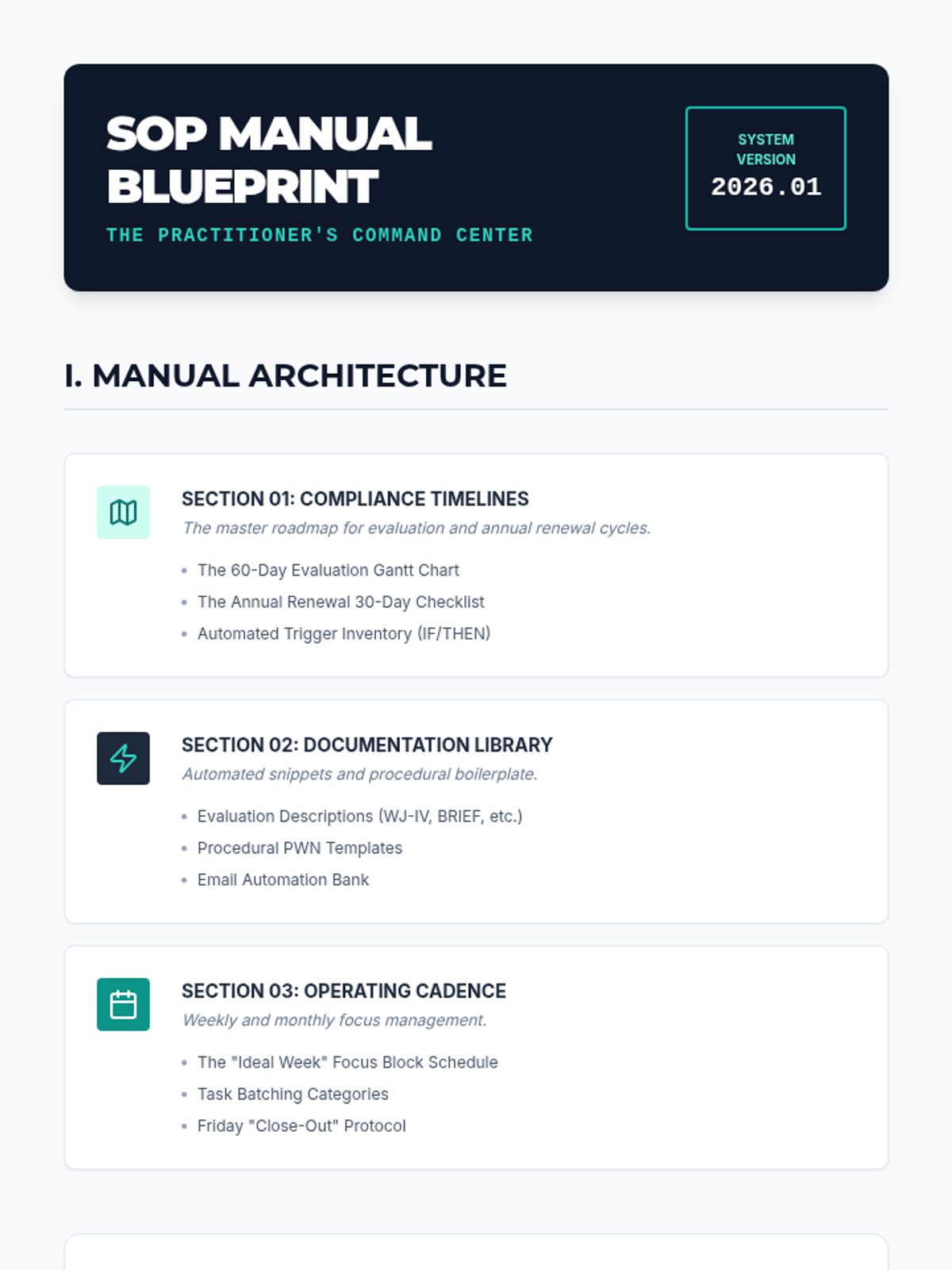
A table of contents and structure guide for students to use when assembling their final Standard Operating Procedure (SOP) manual.
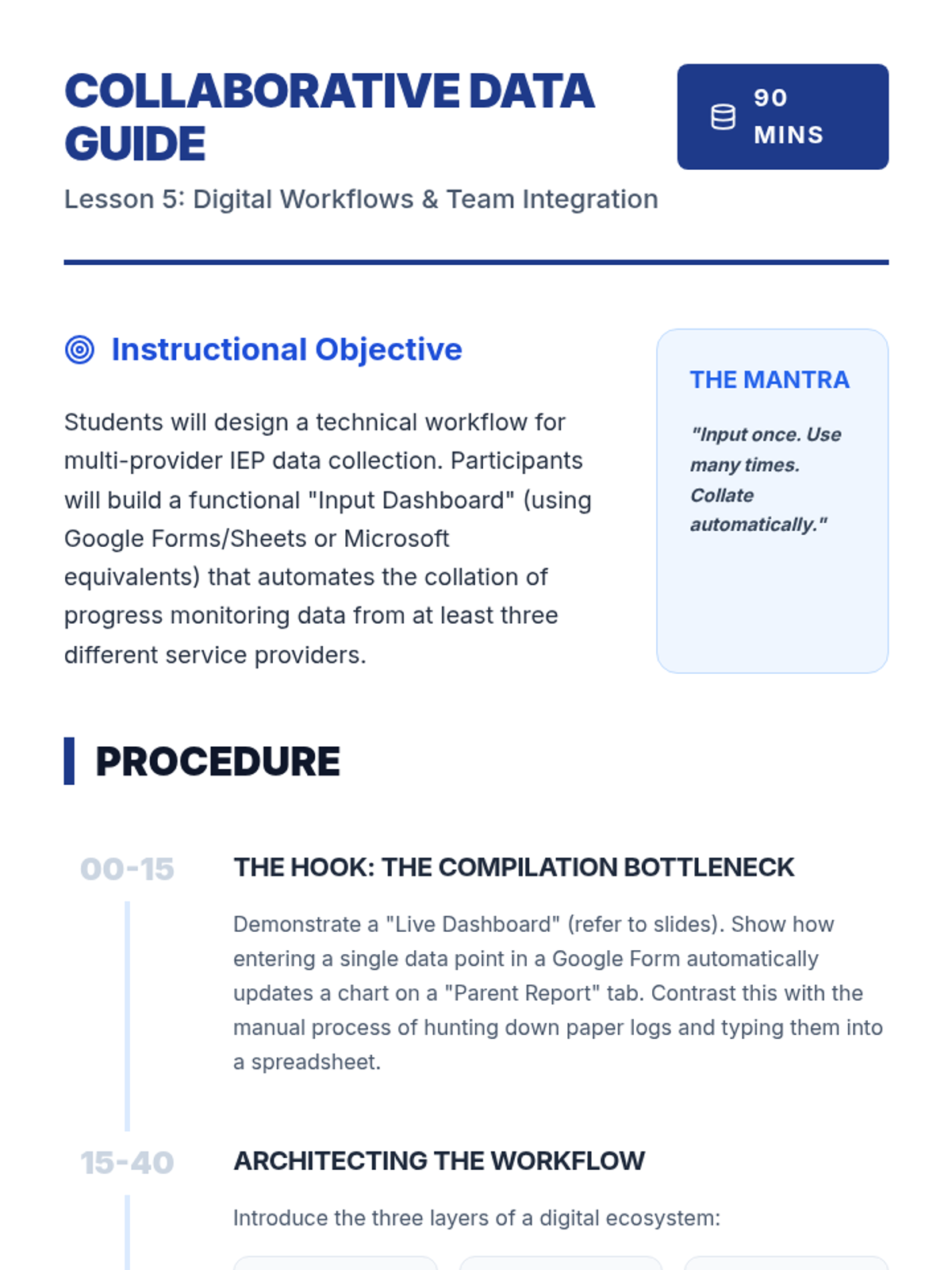
Slides for Lesson 5 focusing on technical workflows for multi-provider IEP data collection and digital organization.
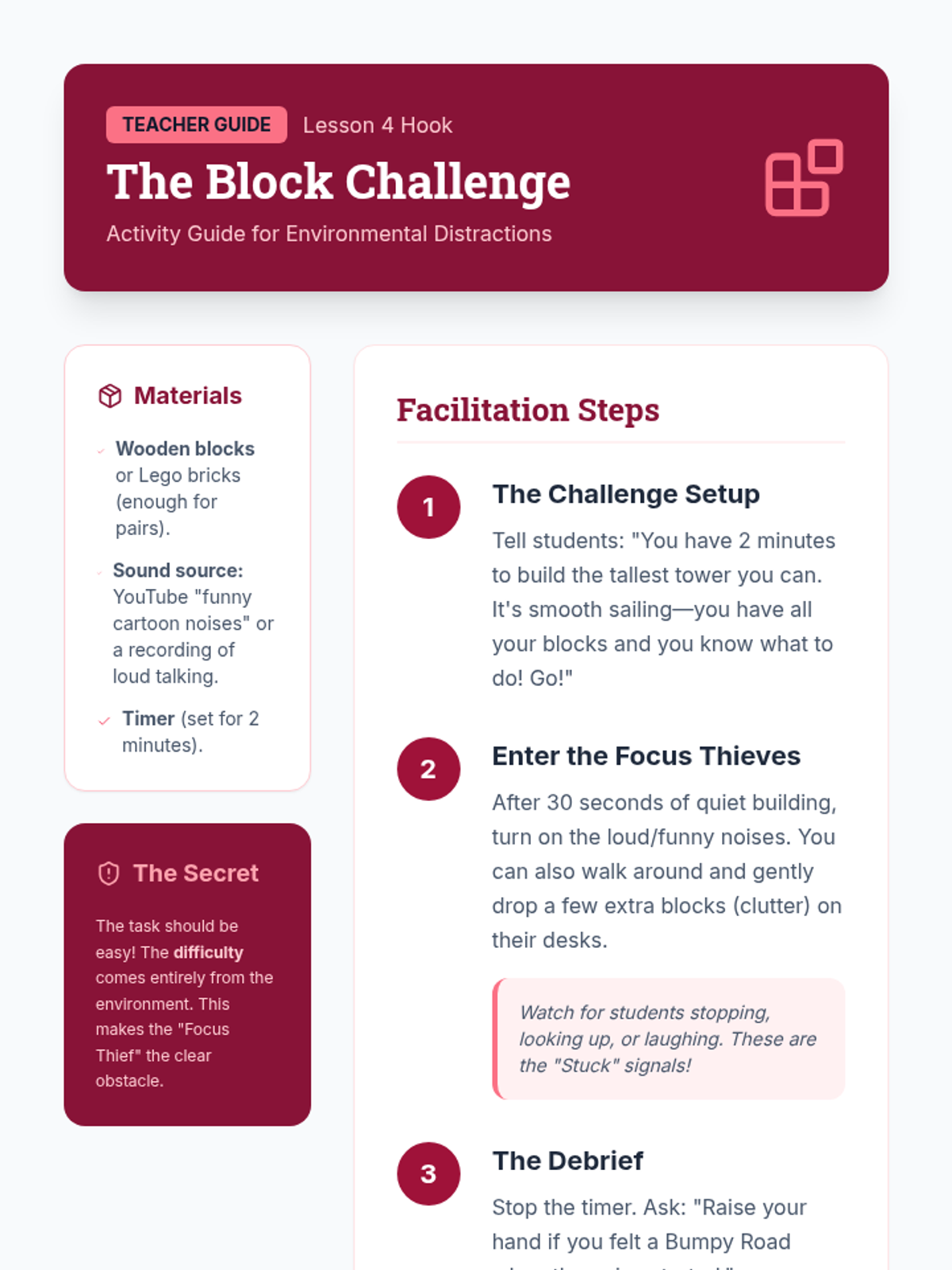
A teacher guide for the Lesson 4 'Block Challenge' activity, focusing on identifying environmental distractions (Focus Thieves).
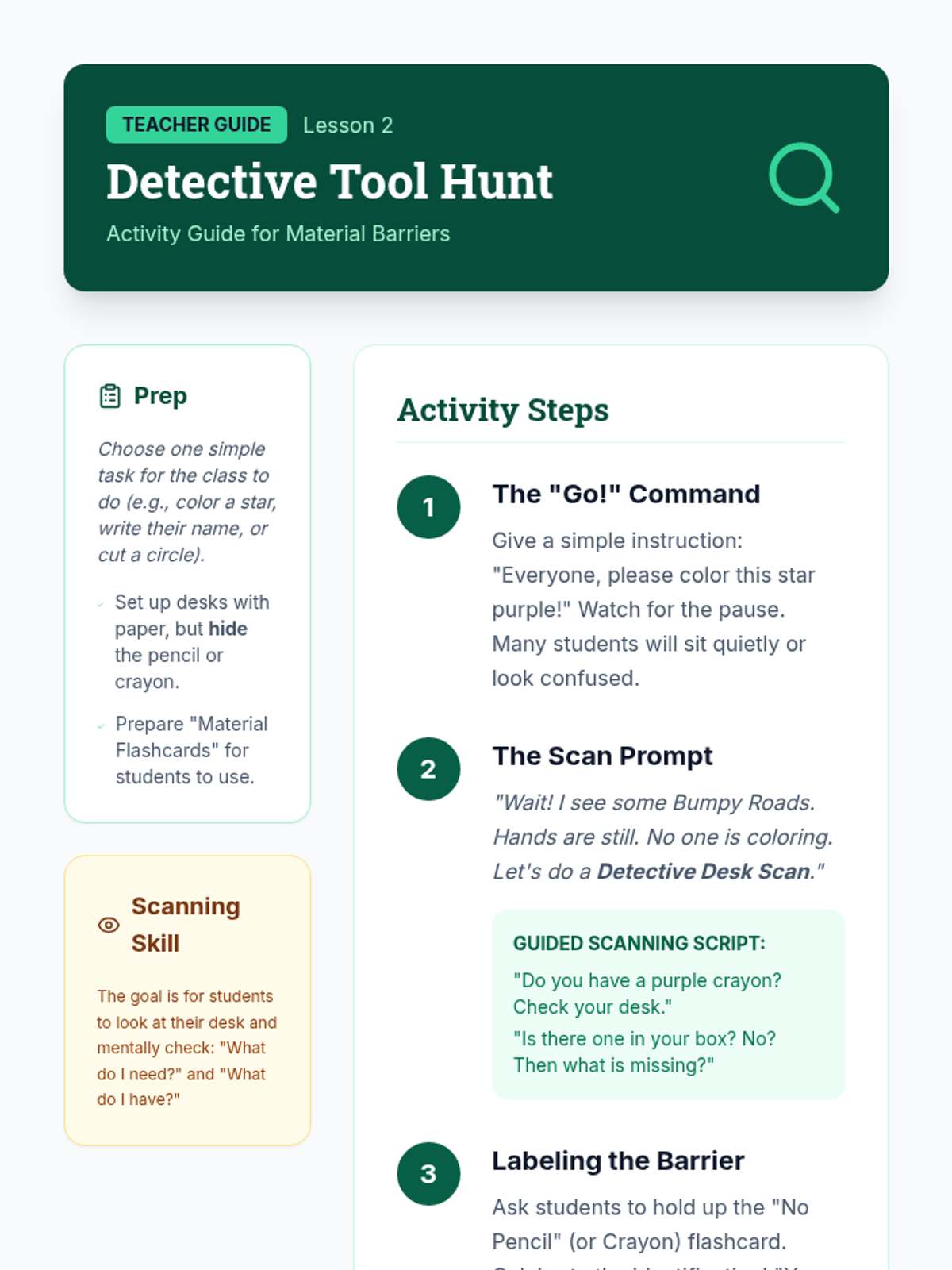
A teacher guide for the Lesson 2 'Detective Hunt' activity, focusing on identifying missing materials to solve task barriers.
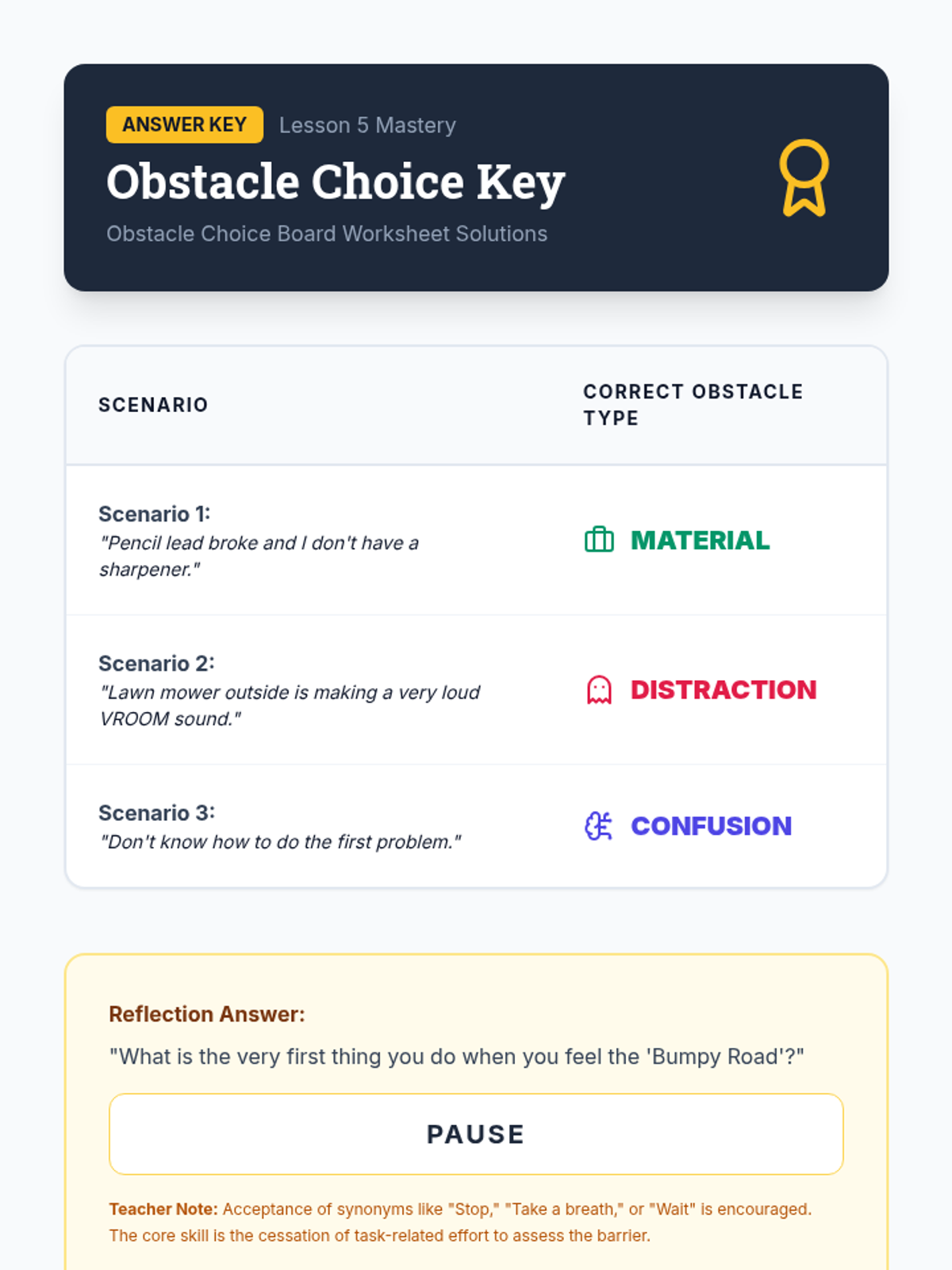
Teacher answer key for the Obstacle Choice Board Worksheet in Lesson 5.
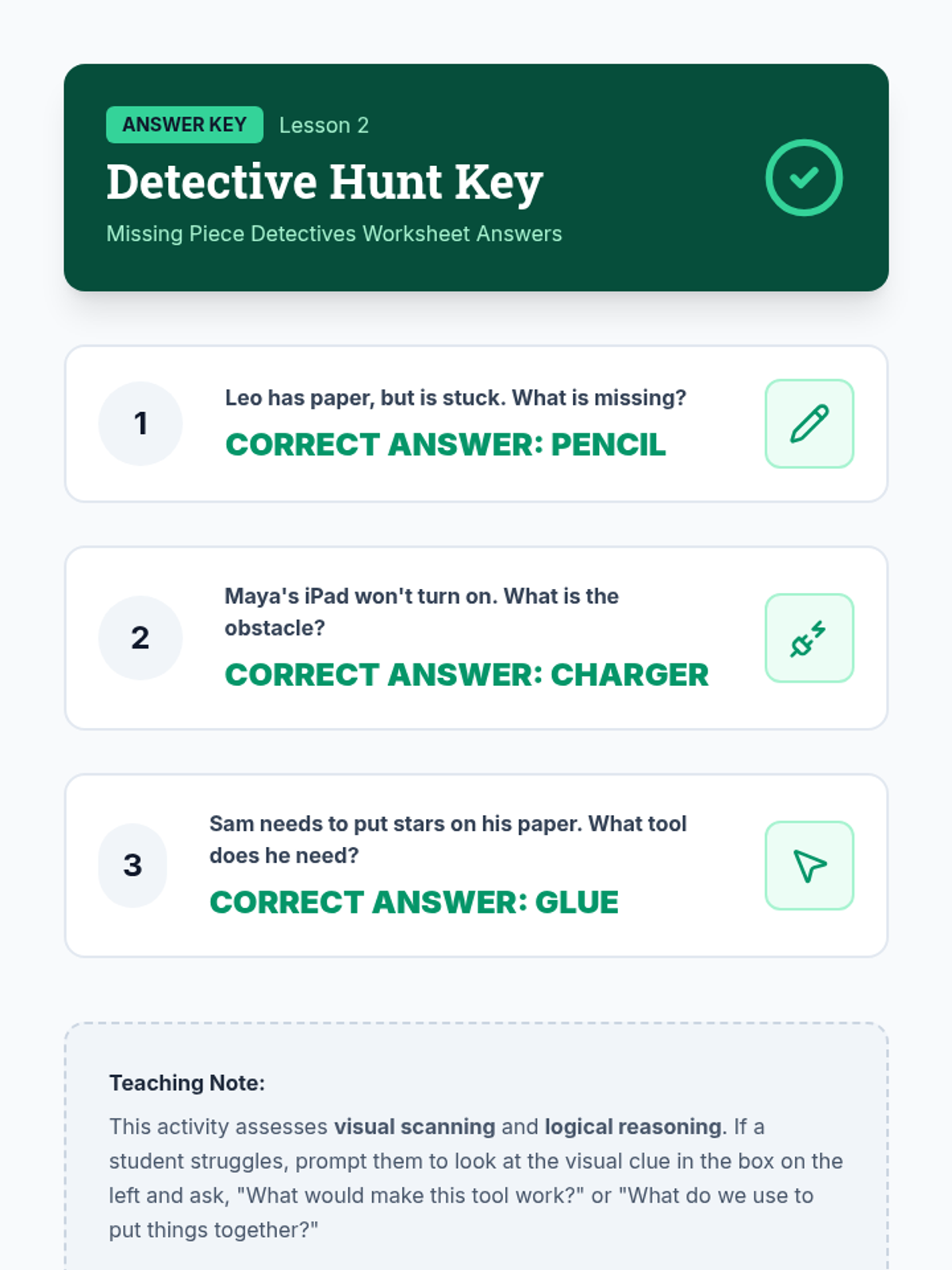
Teacher answer key for the Missing Piece Detectives Worksheet in Lesson 2.
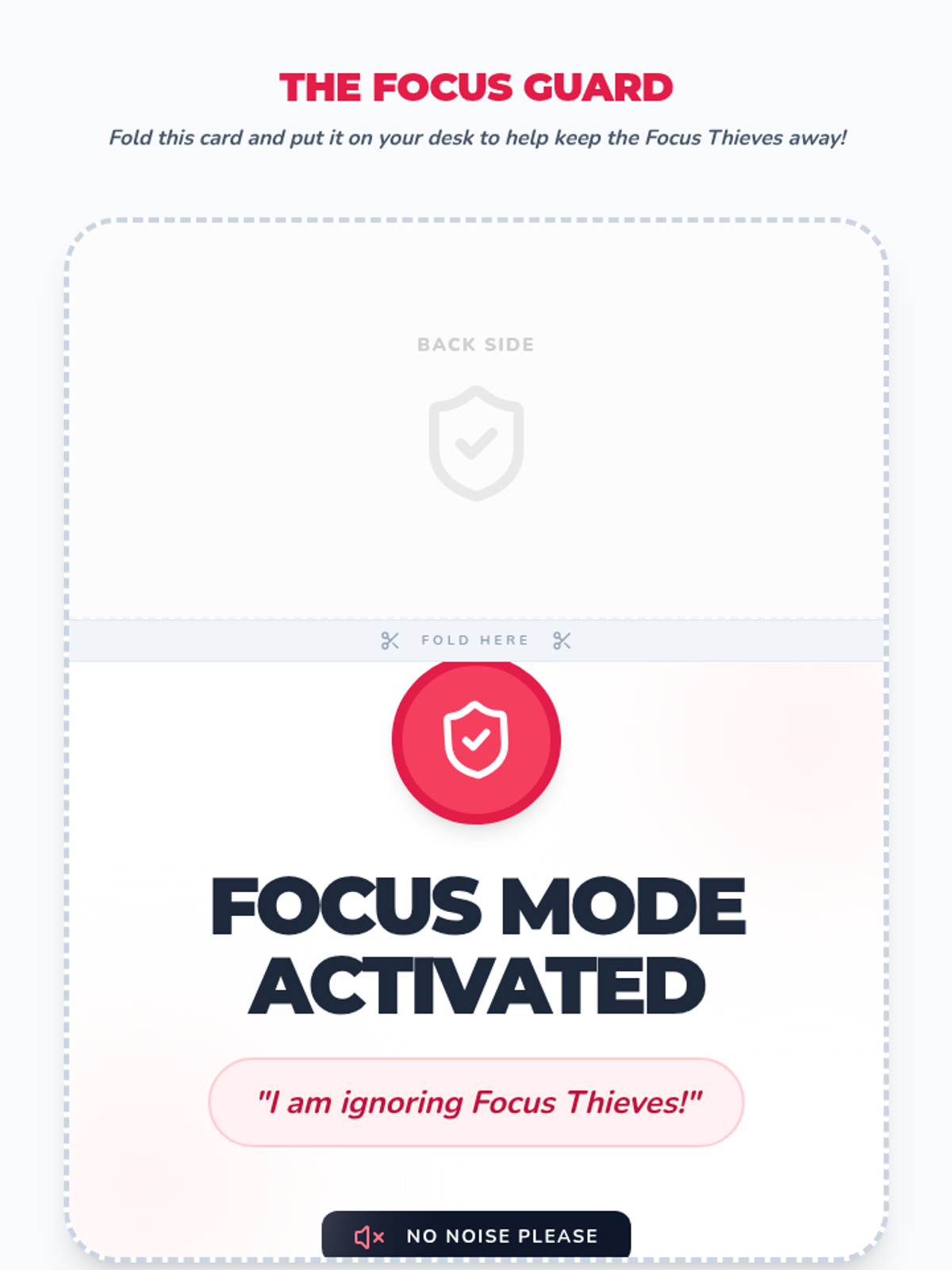
A desktop 'tent' card for students to display when they are focusing, serving as a visual reminder for peers to minimize distractions.
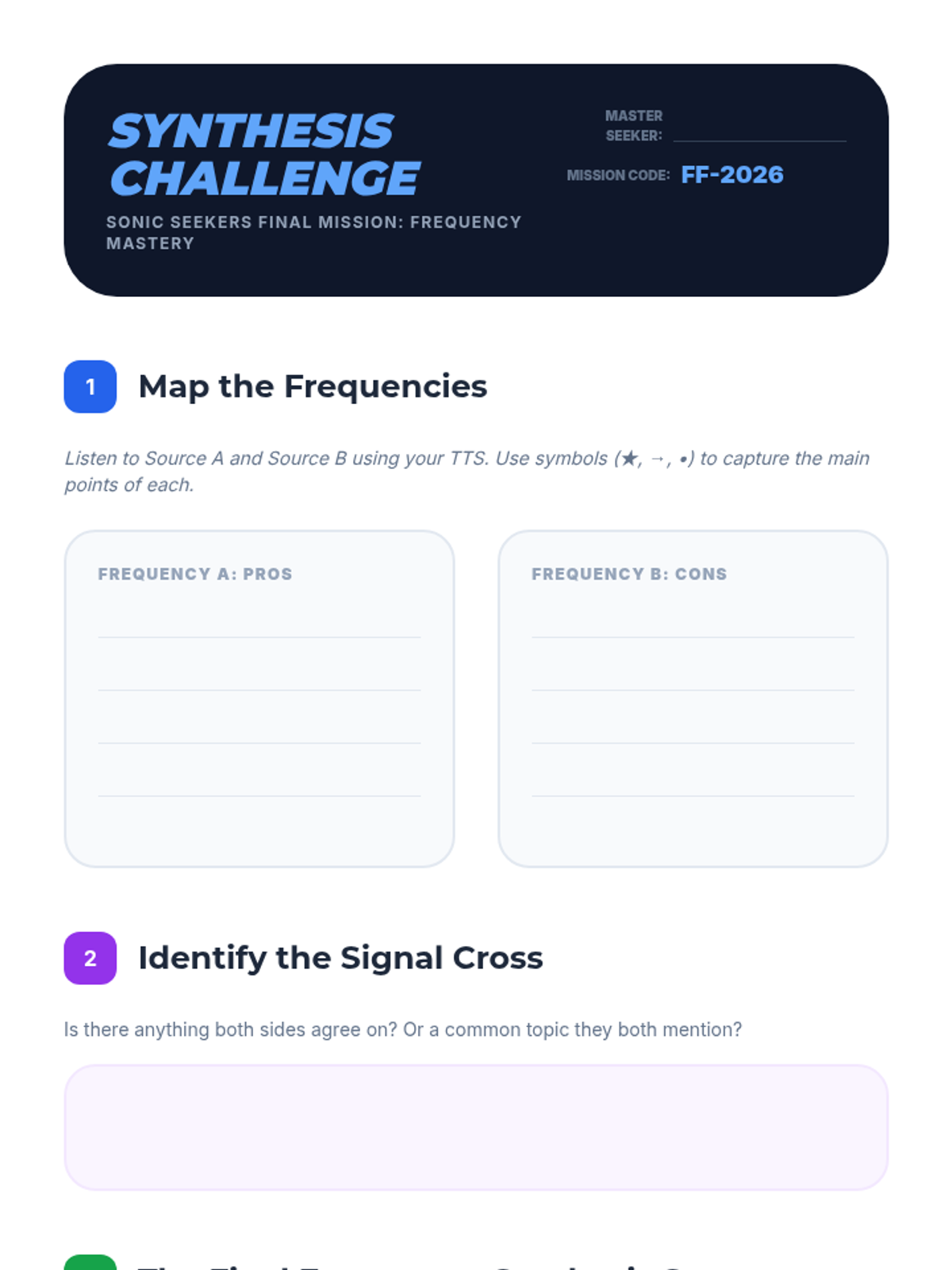
Final assessment worksheet for Lesson 5, challenging students to map two contrasting auditory viewpoints and synthesize them into a coherent written summary.
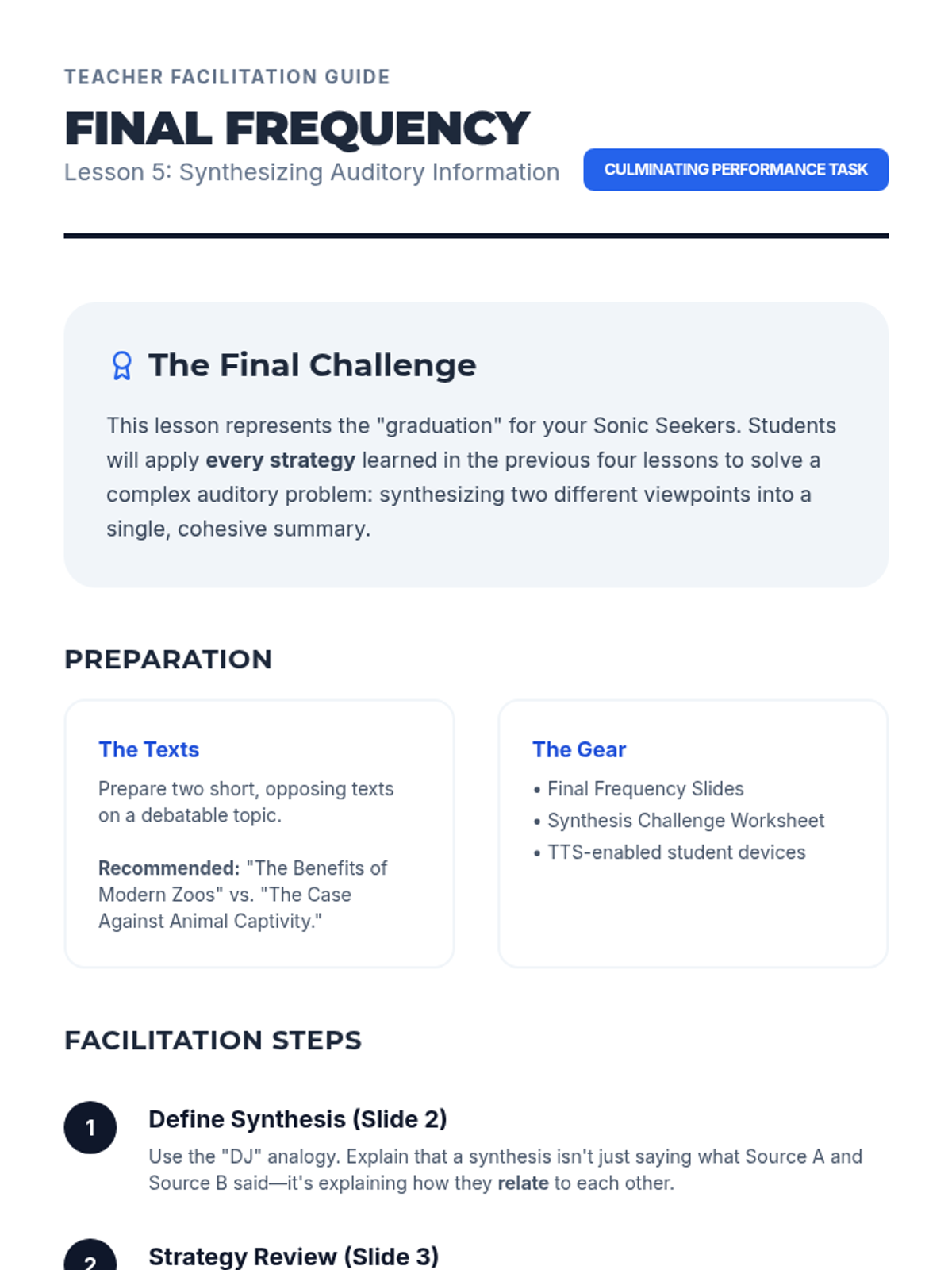
Teacher guide for Lesson 5, outlining the final synthesis task and providing a step-by-step facilitation plan for the culminating lesson.
Slide deck for Lesson 5: Synthesizing Auditory Information, introducing the final challenge of summarizing contrasting viewpoints using all previous auditory strategies.
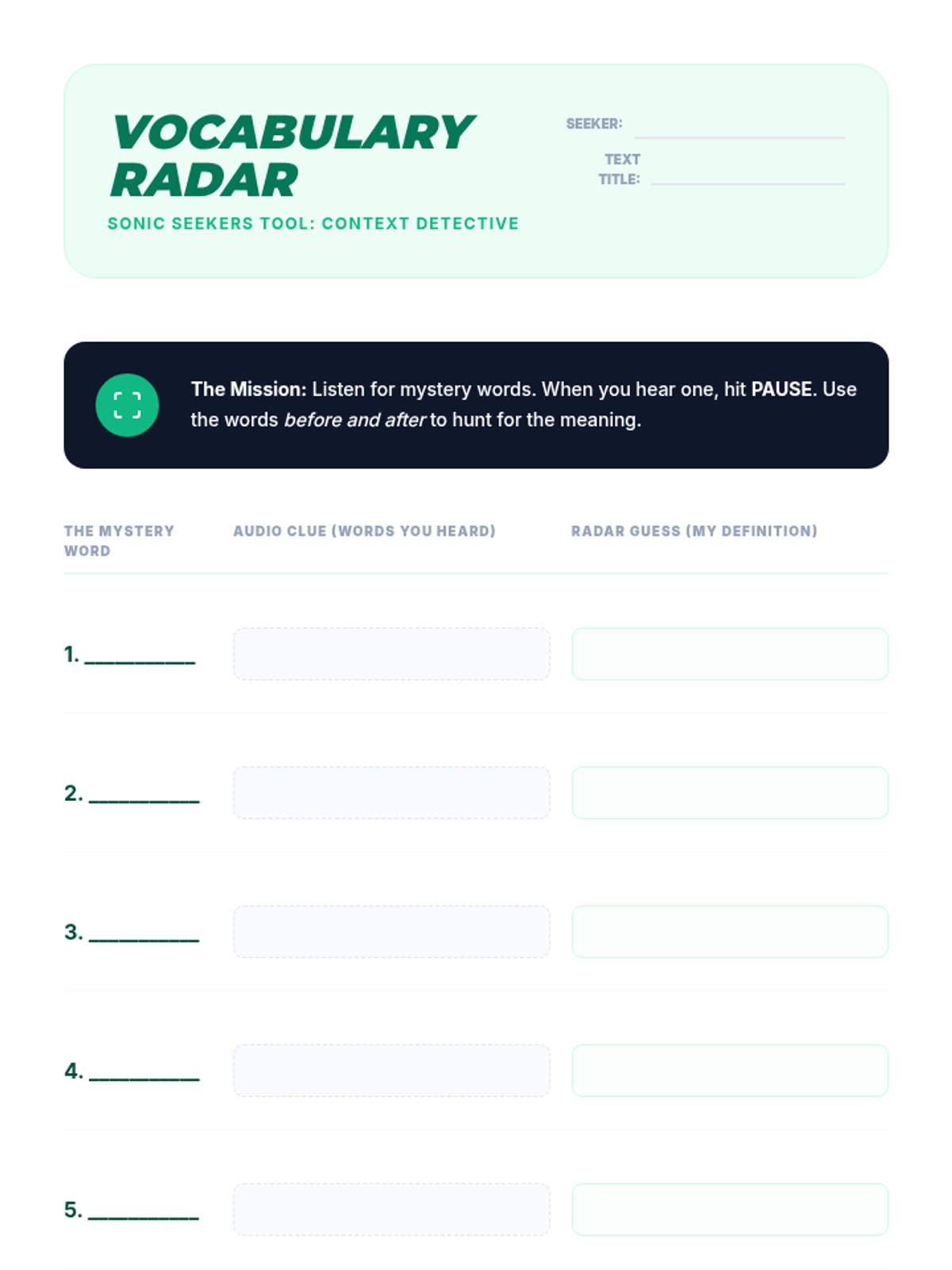
Vocabulary worksheet for Lesson 4, allowing students to record unknown words, auditory context clues, and inferred definitions while using TTS.
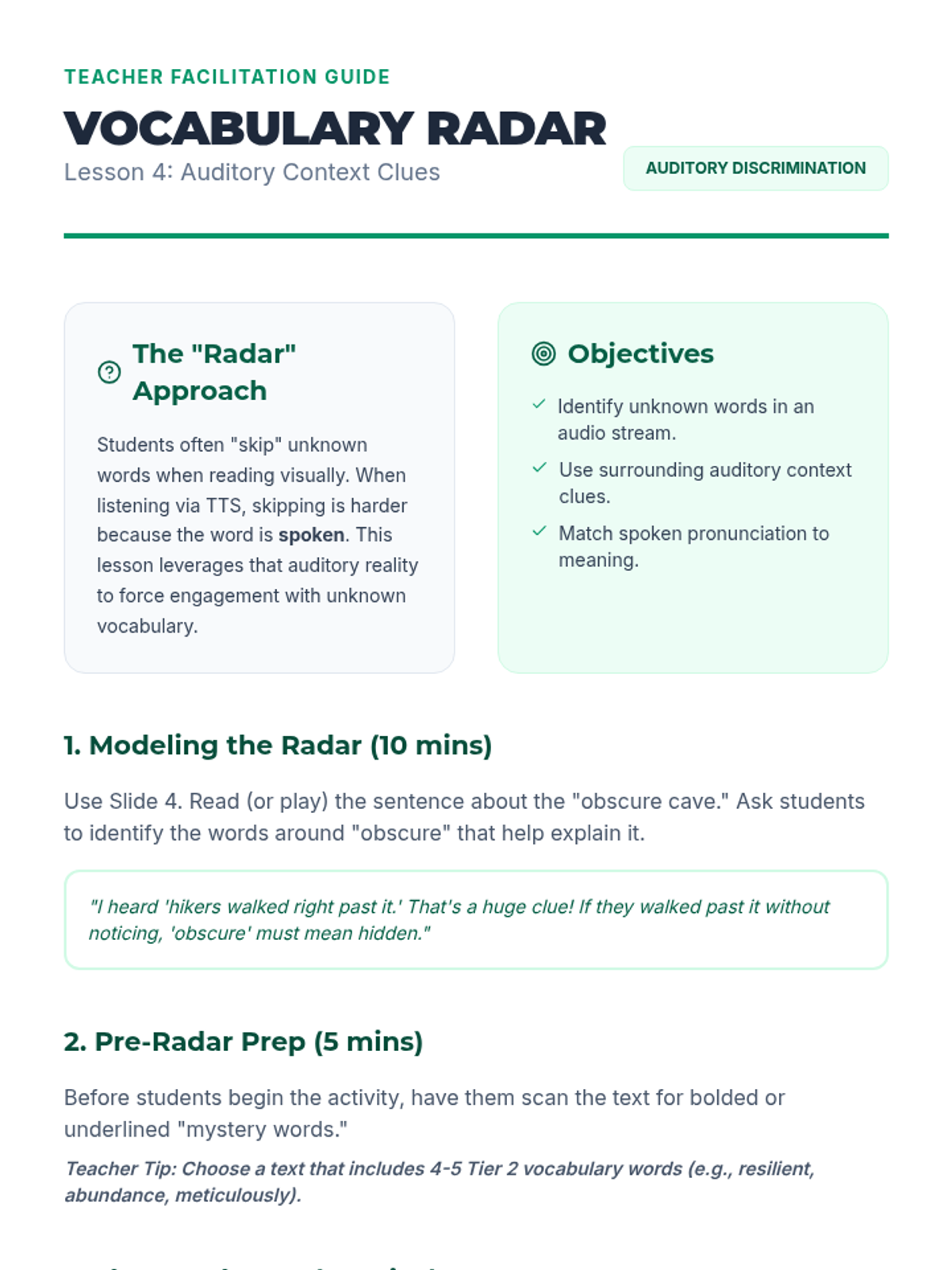
Teacher guide for Lesson 4, providing instructions on using auditory context clues and managing the "Word Hunt" activity.
Slide deck for Lesson 4: Vocabulary Acquisition through Context, explaining how to use auditory context clues to define unknown words while using TTS.
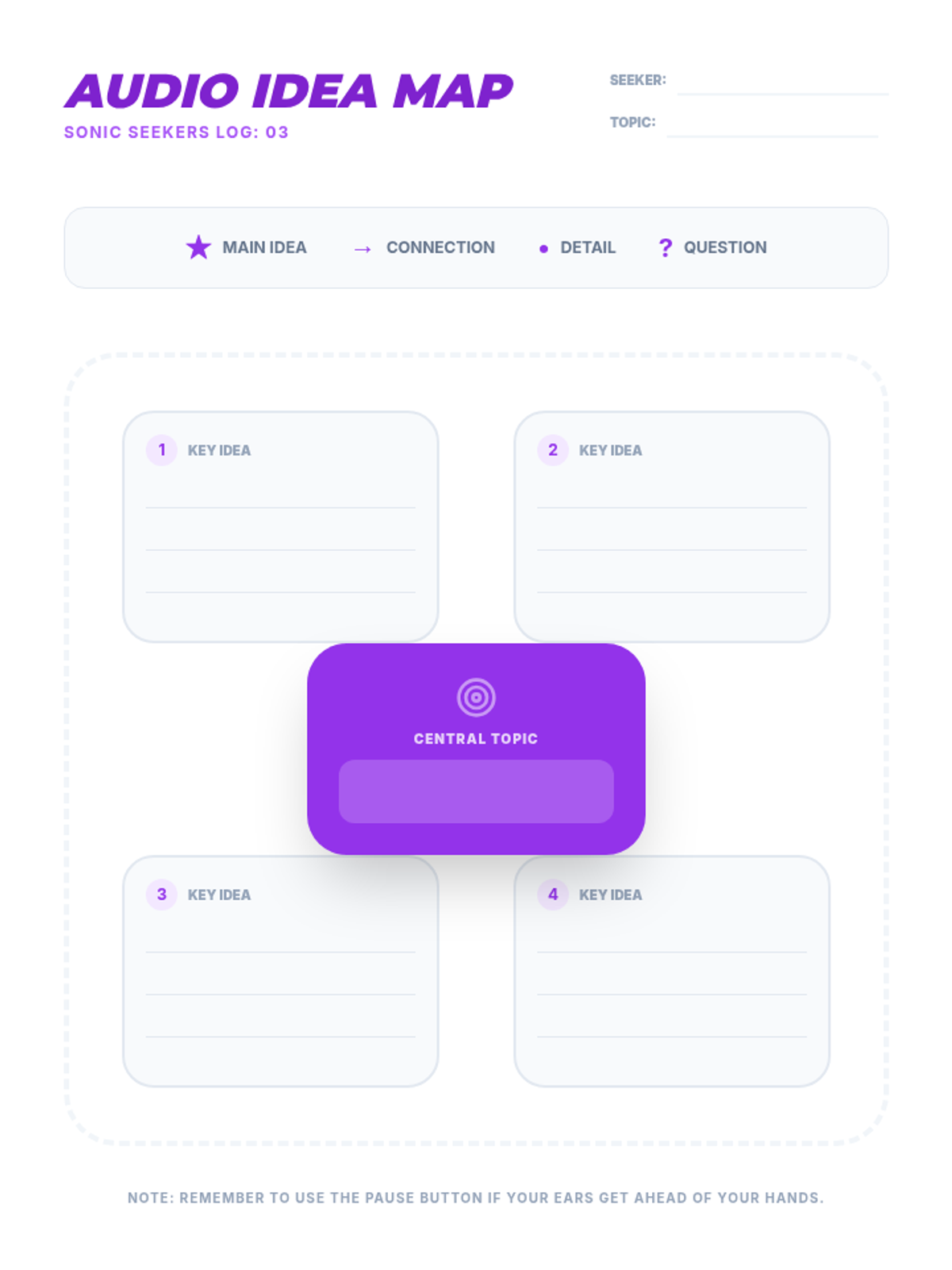
Note-taking graphic organizer for Lesson 3, providing a central topic node and four branches for key ideas and supporting details.
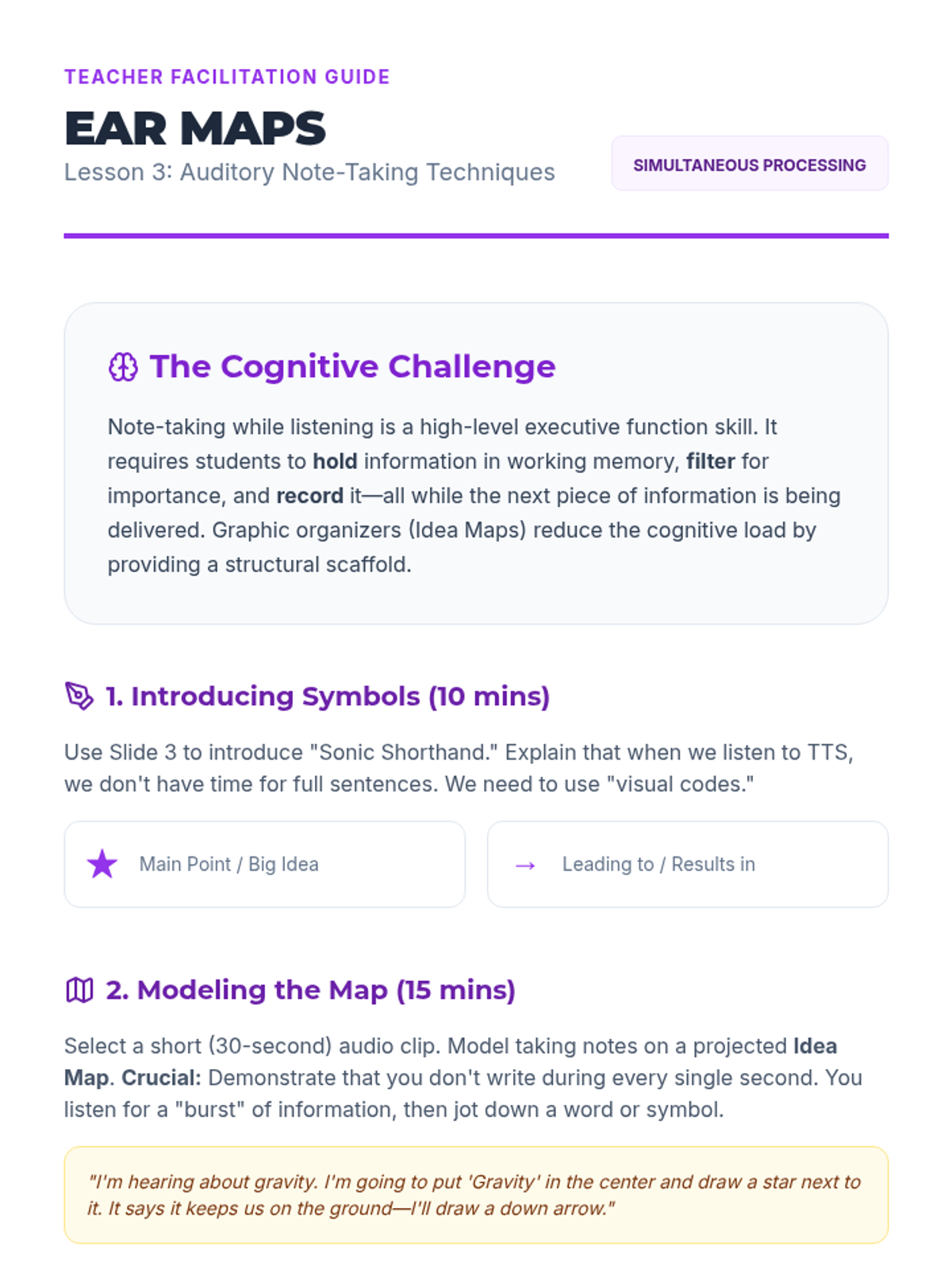
Teacher guide for Lesson 3, providing instructions on teaching auditory shorthand and modeling graphic organizers for auditory input.
Slide deck for Lesson 3: Auditory Note-Taking Techniques, introducing graphic organizers and shorthand for auditory learning.
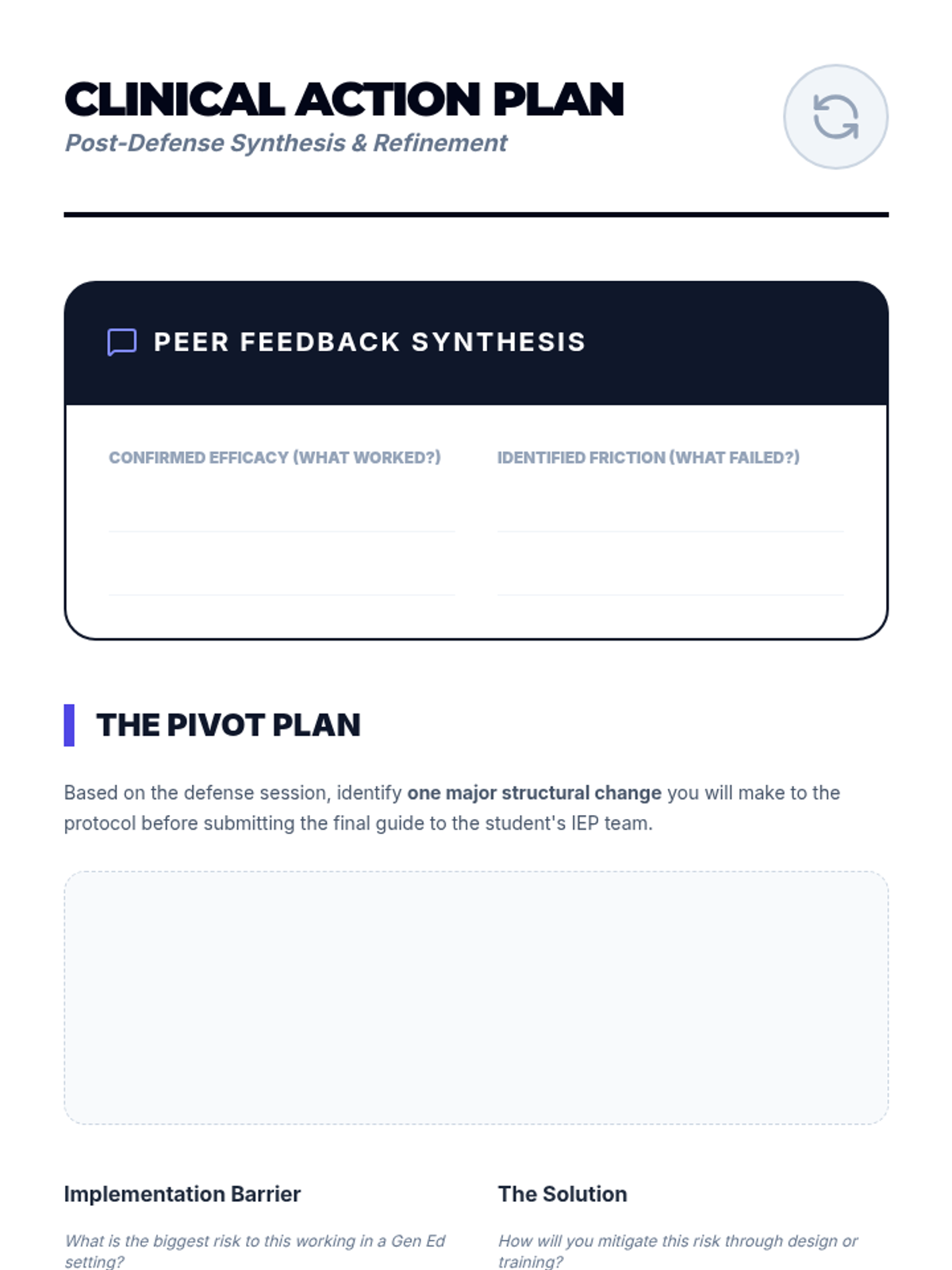
A post-defense reflection and action plan for graduate students to synthesize peer feedback and finalize their annotation protocol for clinical use.
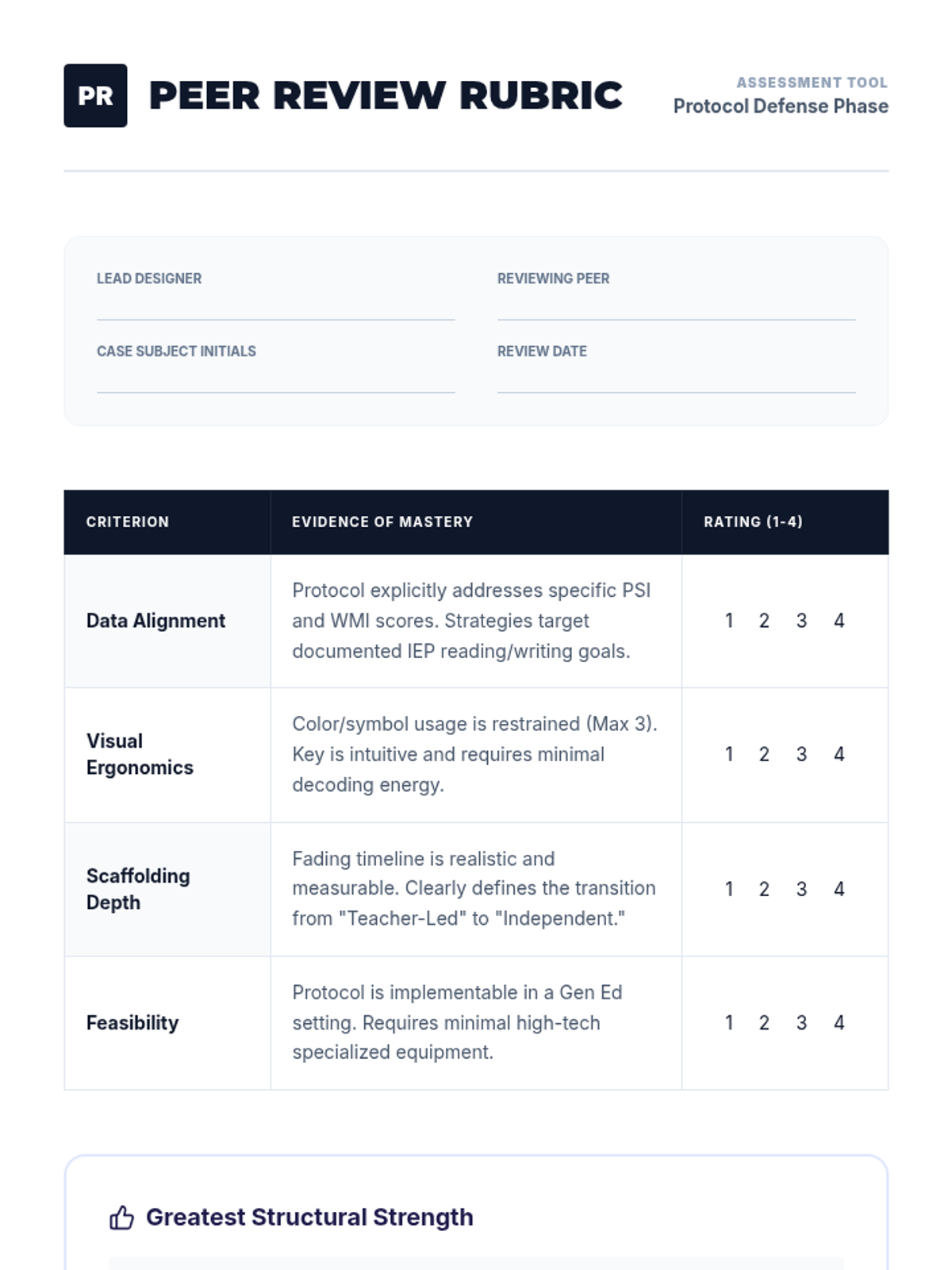
A professional peer review rubric for graduate students to evaluate their peers' designed annotation protocols based on data alignment, visual ergonomics, and feasibility.
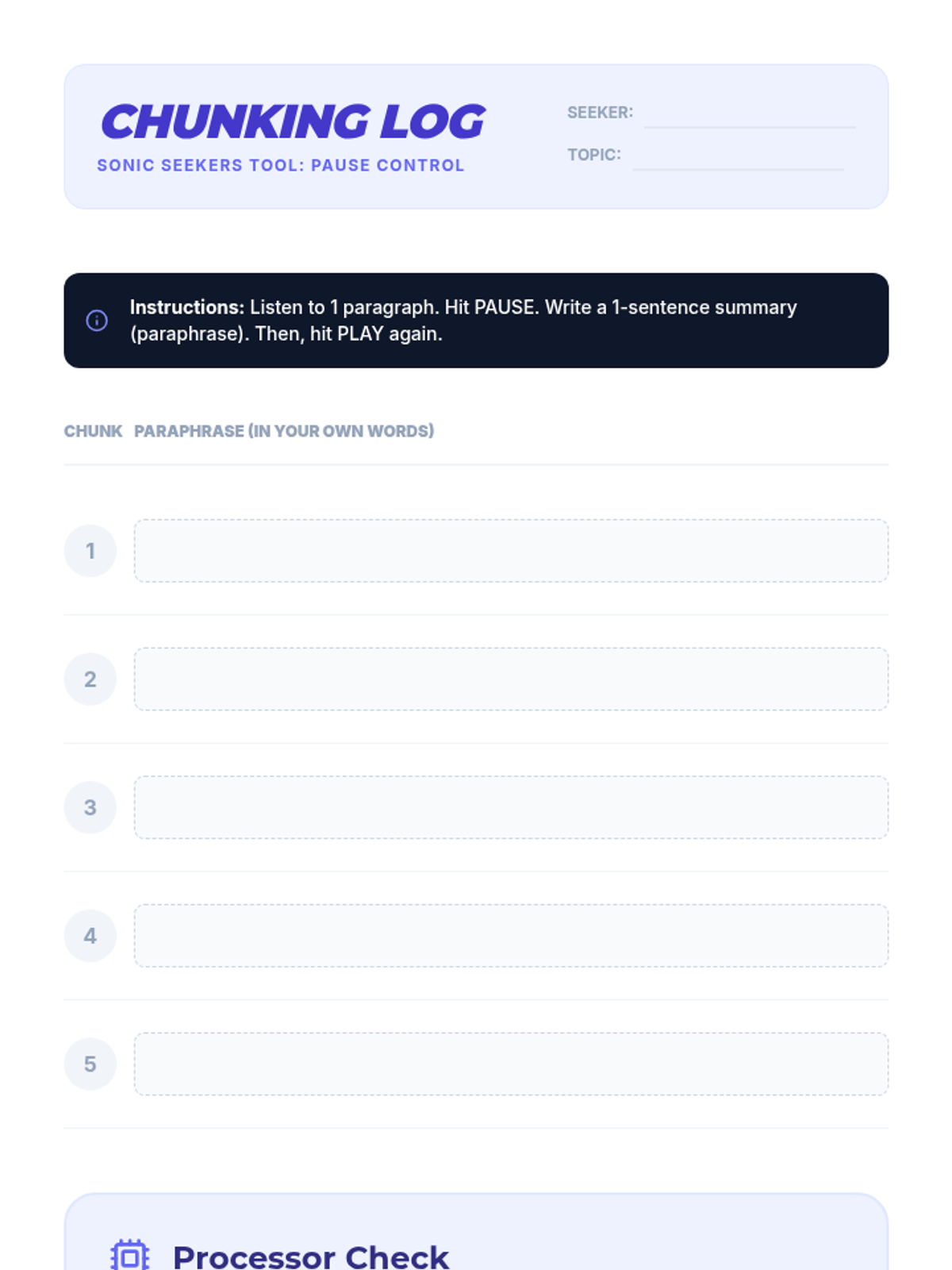
Activity log for Lesson 2, providing a structured way for students to practice chunking and paraphrasing informational text while using TTS.
Slide deck for Lesson 5, outlining the requirements for the final protocol defense and providing guidelines for peer review and critique.
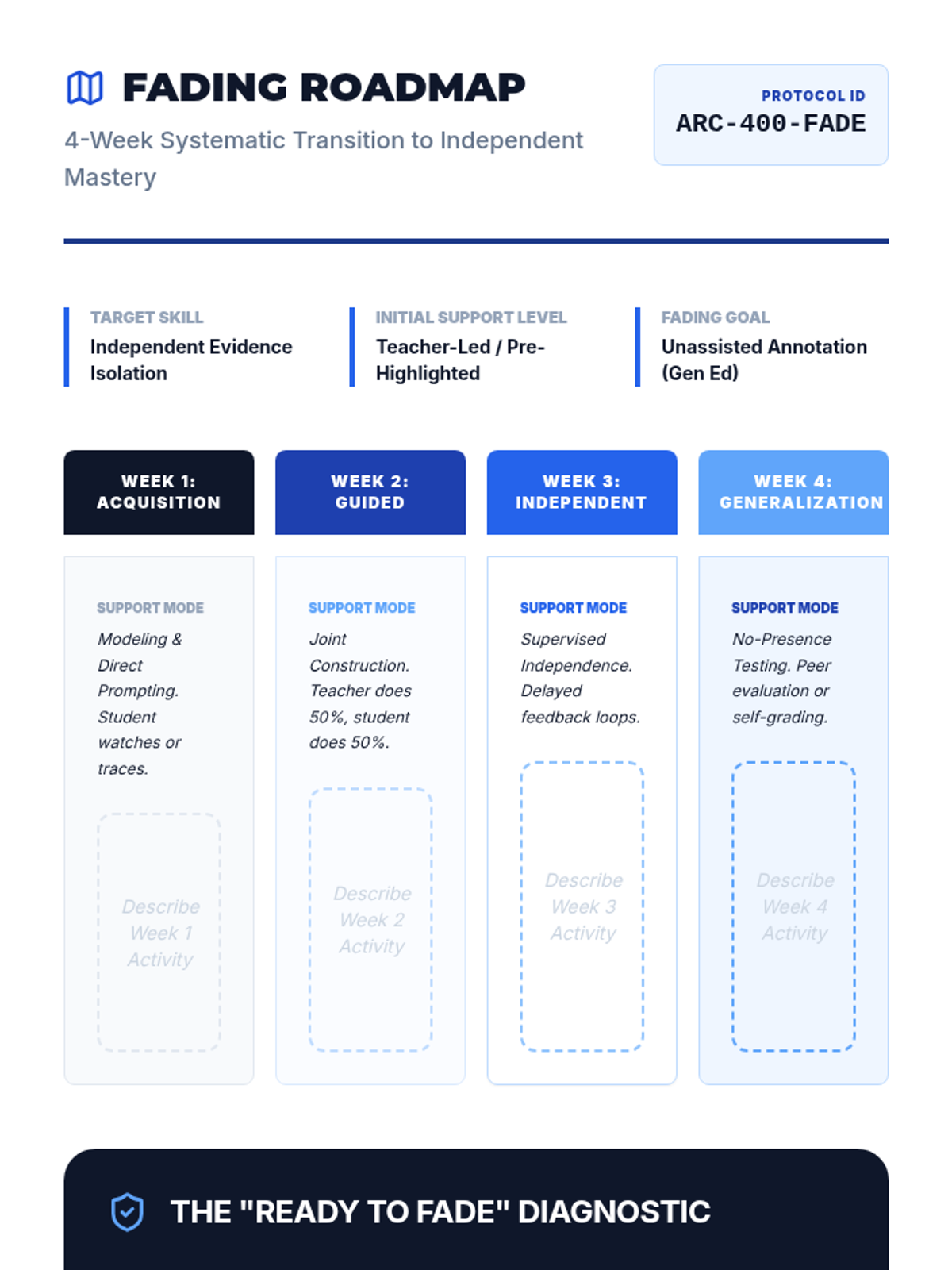
A 4-week transition plan template for graduate students to map the gradual release of responsibility for a student learning an annotation protocol.
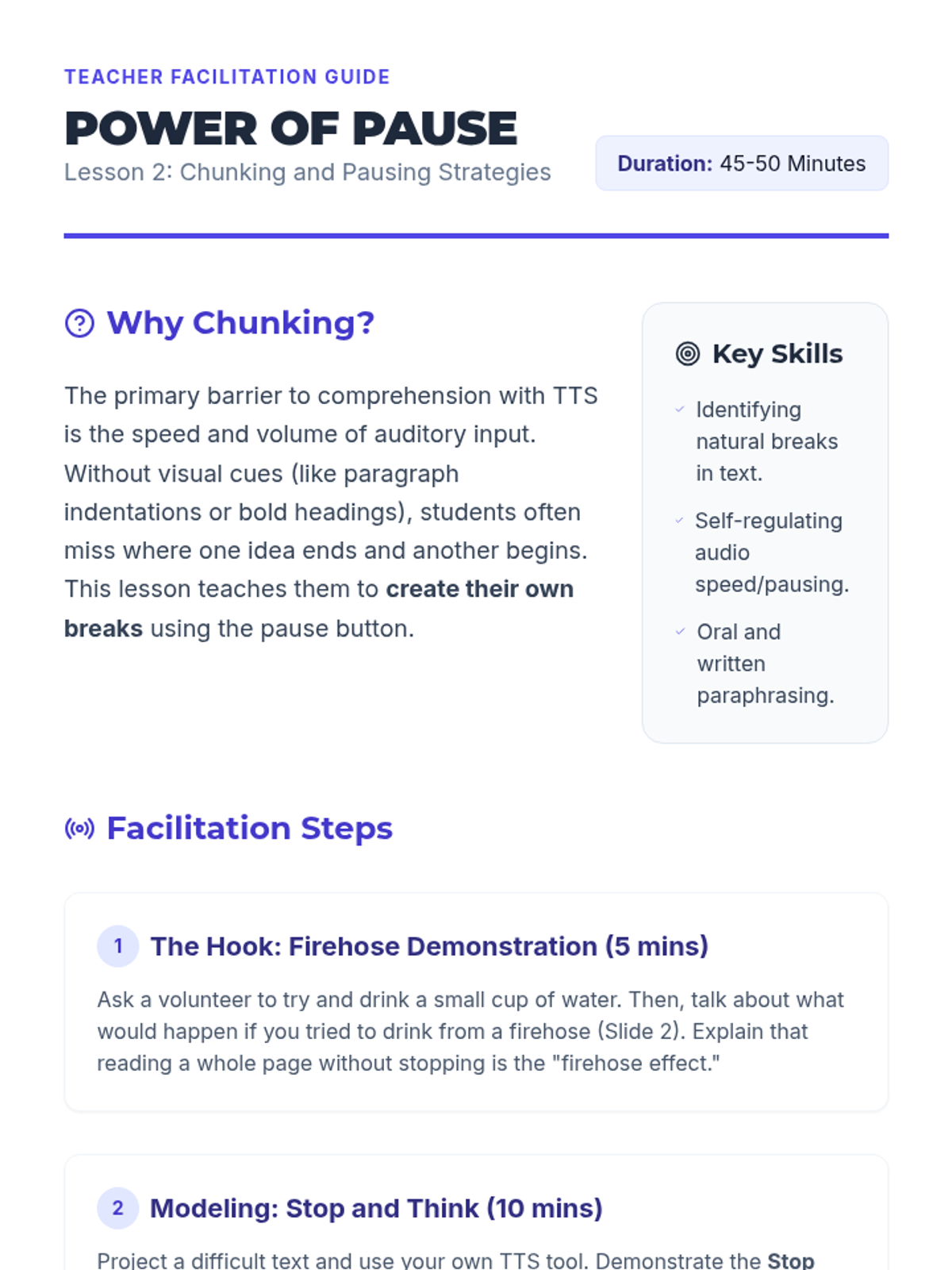
Teacher guide for Lesson 2, outlining the "Firehose Effect" hook and the "Stop and Think" instructional routine.
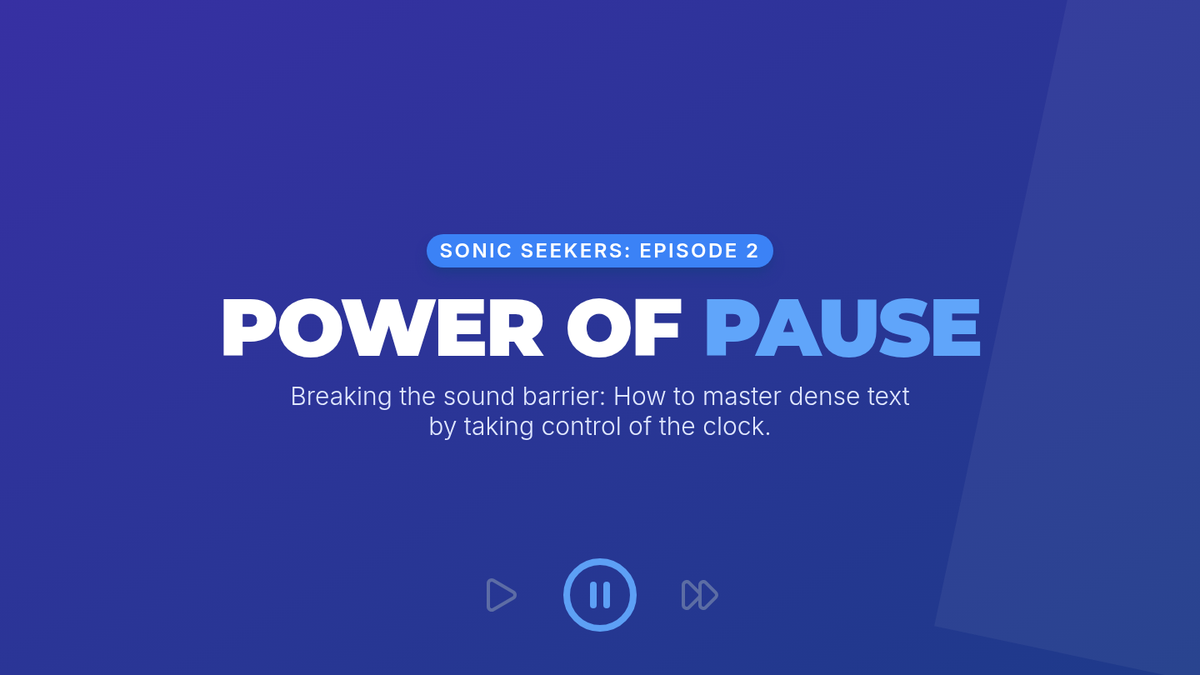
Slide deck for Lesson 2: Chunking and Pausing Skills, introducing the "Stop and Think" routine and the concept of information chunking for TTS.
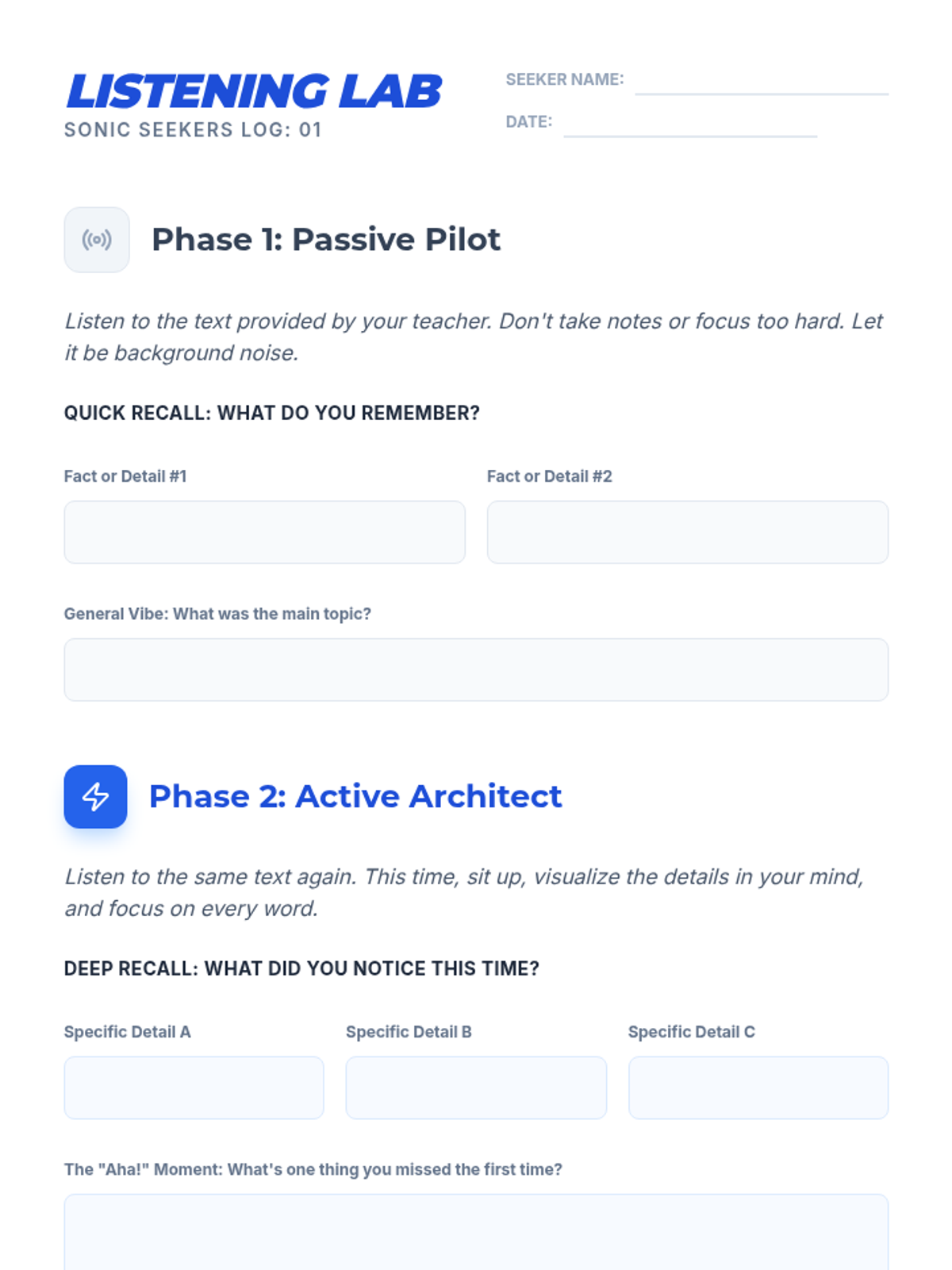
Student worksheet for Lesson 1's "Listening Lab" activity, allowing students to track and compare their recall after passive vs. active listening sessions.
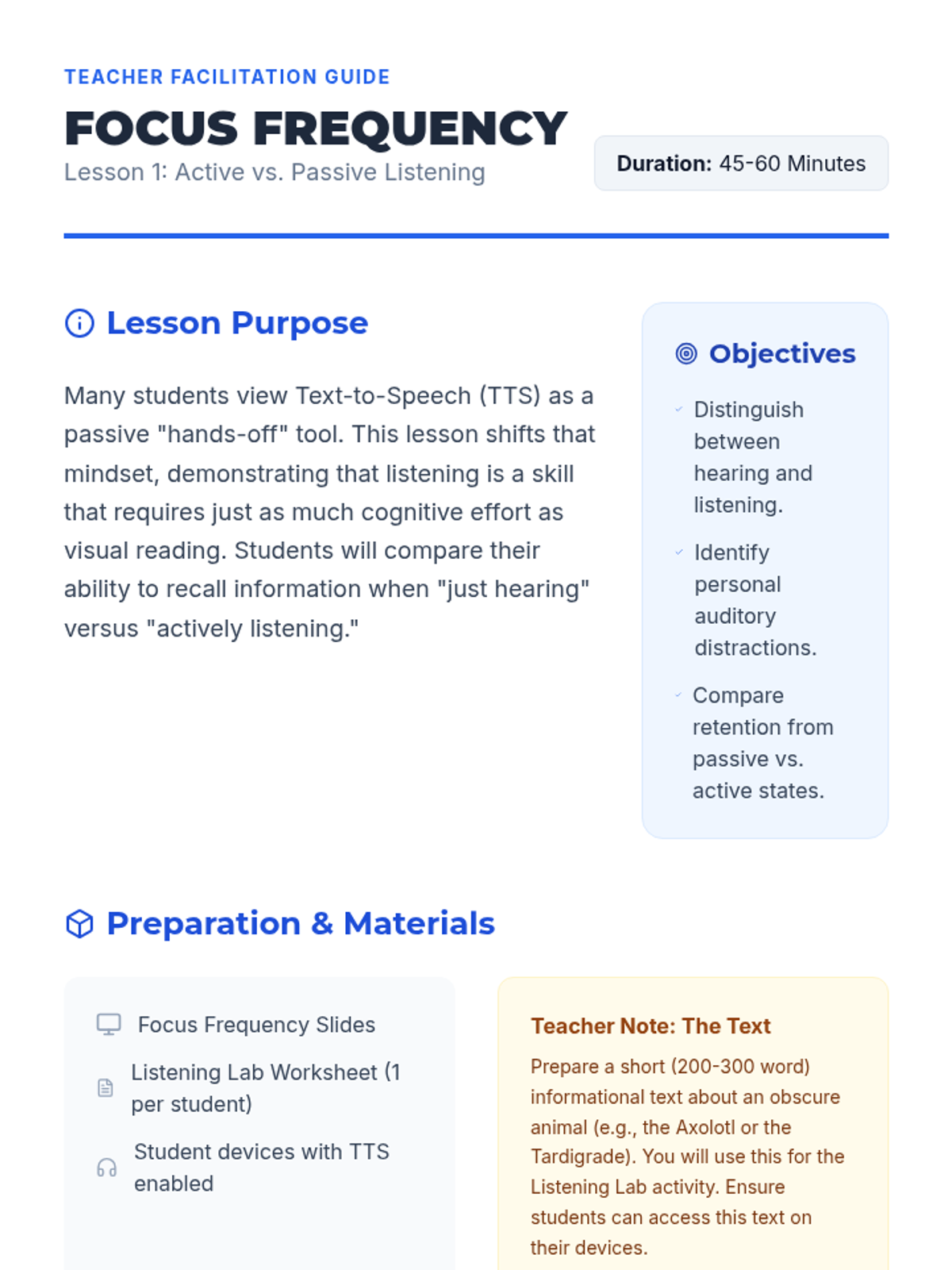
Teacher facilitation guide for Lesson 1, providing step-by-step instructions for the "Listening Lab" activity and pedagogical context.
Introductory slide deck for Lesson 1: Active vs. Passive Listening, defining key terms and setting the stage for the Listening Lab activity.
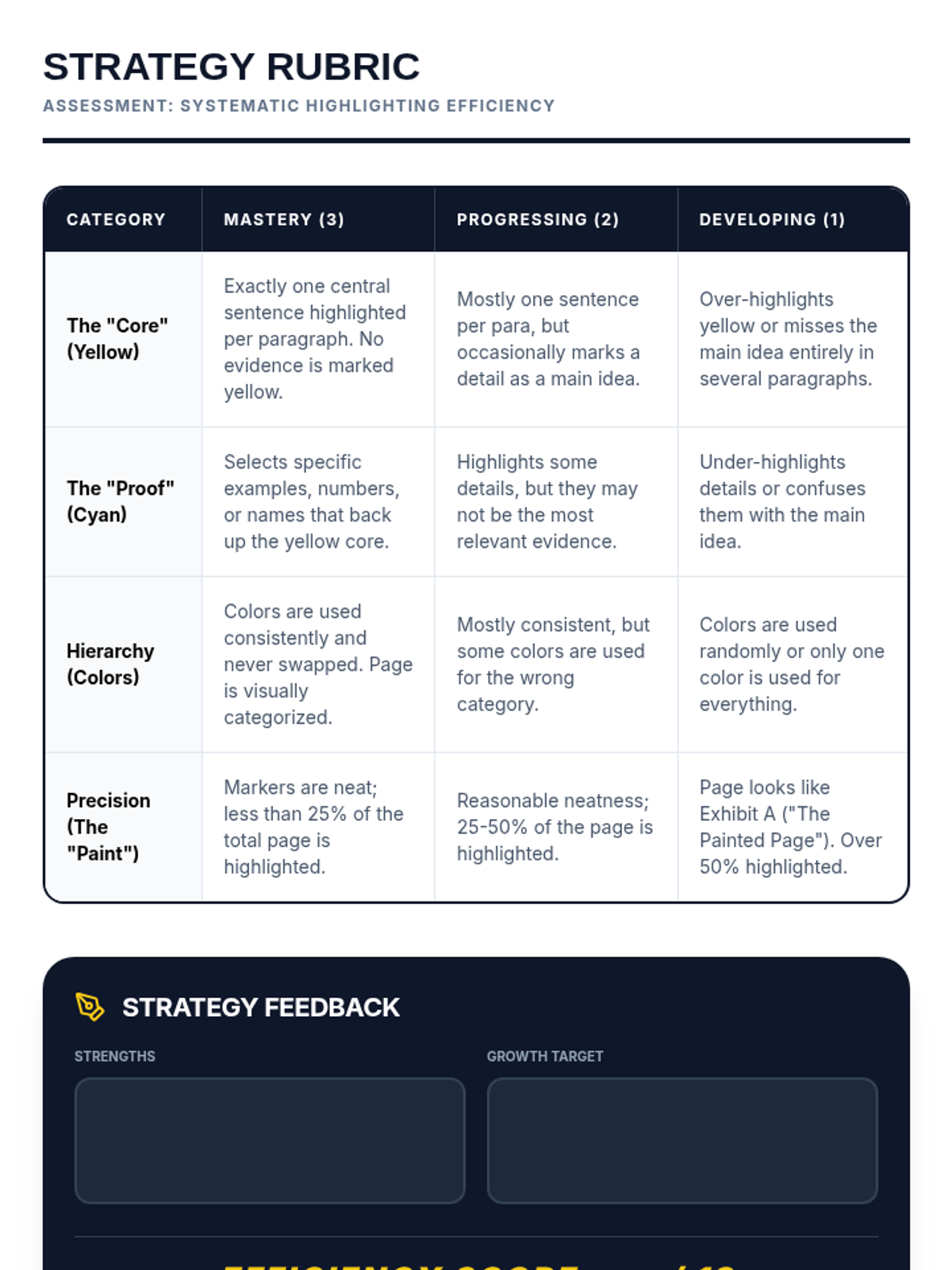
A grading rubric for the final highlighting assessment, focusing on color consistency, information categorization, and avoiding over-highlighting.
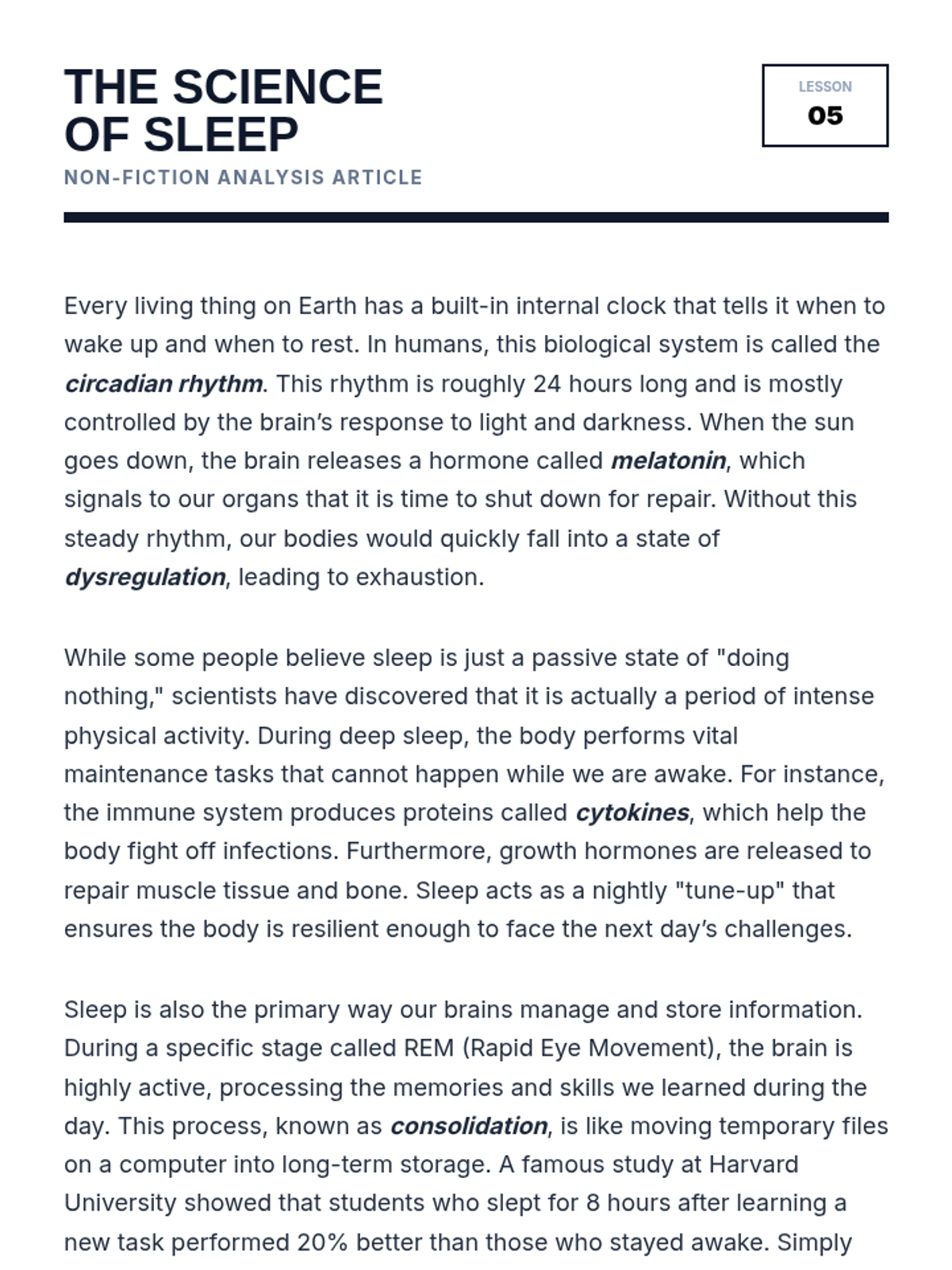
A 2-page non-fiction article on 'The Science of Sleep' designed for students to apply their final three-color highlighting strategy.
Final lesson slides focusing on the multi-page application of the highlighting strategy and the 'Highlighting Detective' peer review activity.
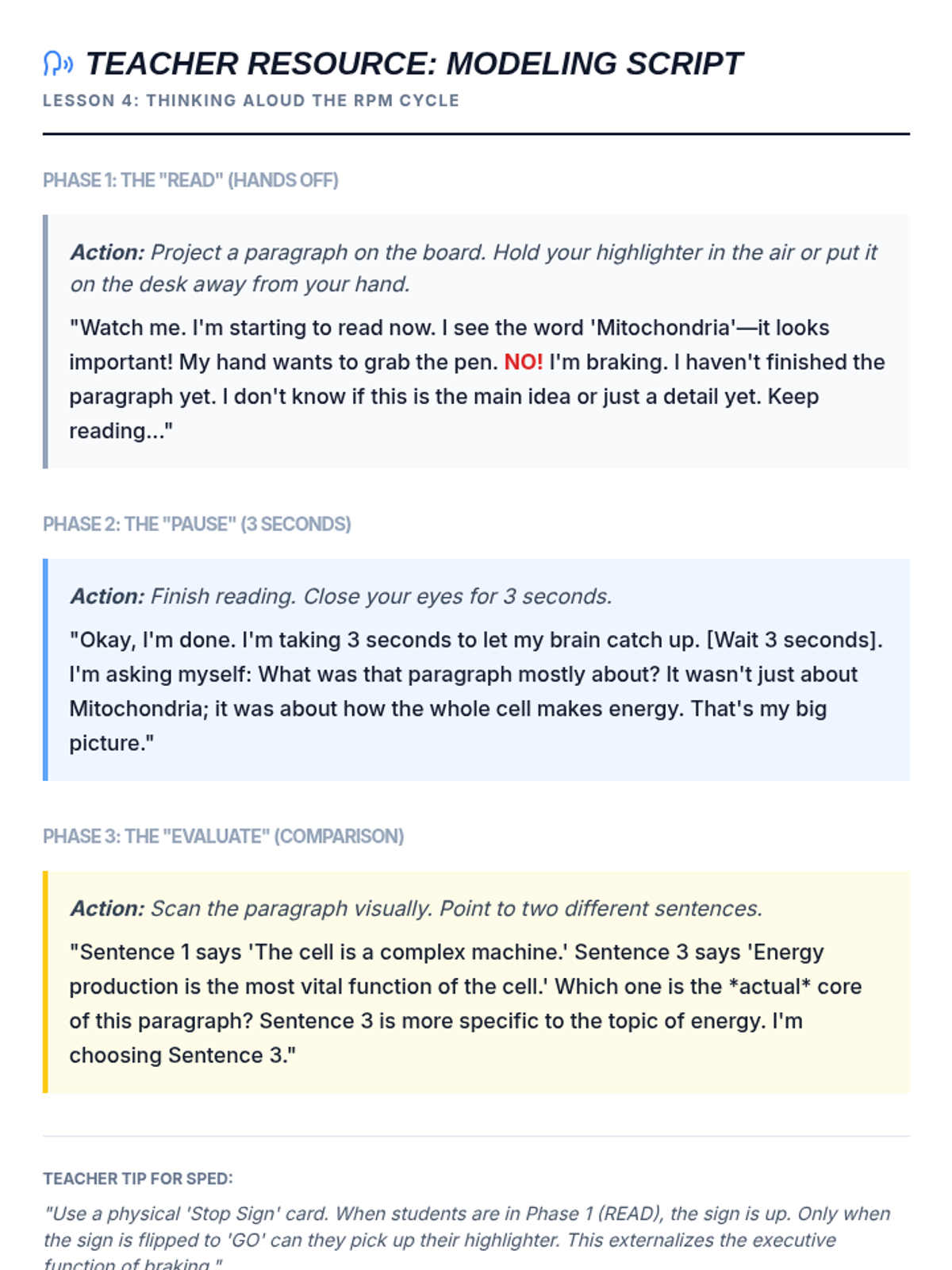
A scripted 'Think Aloud' guide for teachers to model the Read-Pause-Evaluate-Mark cycle, emphasizing the metacognitive process.
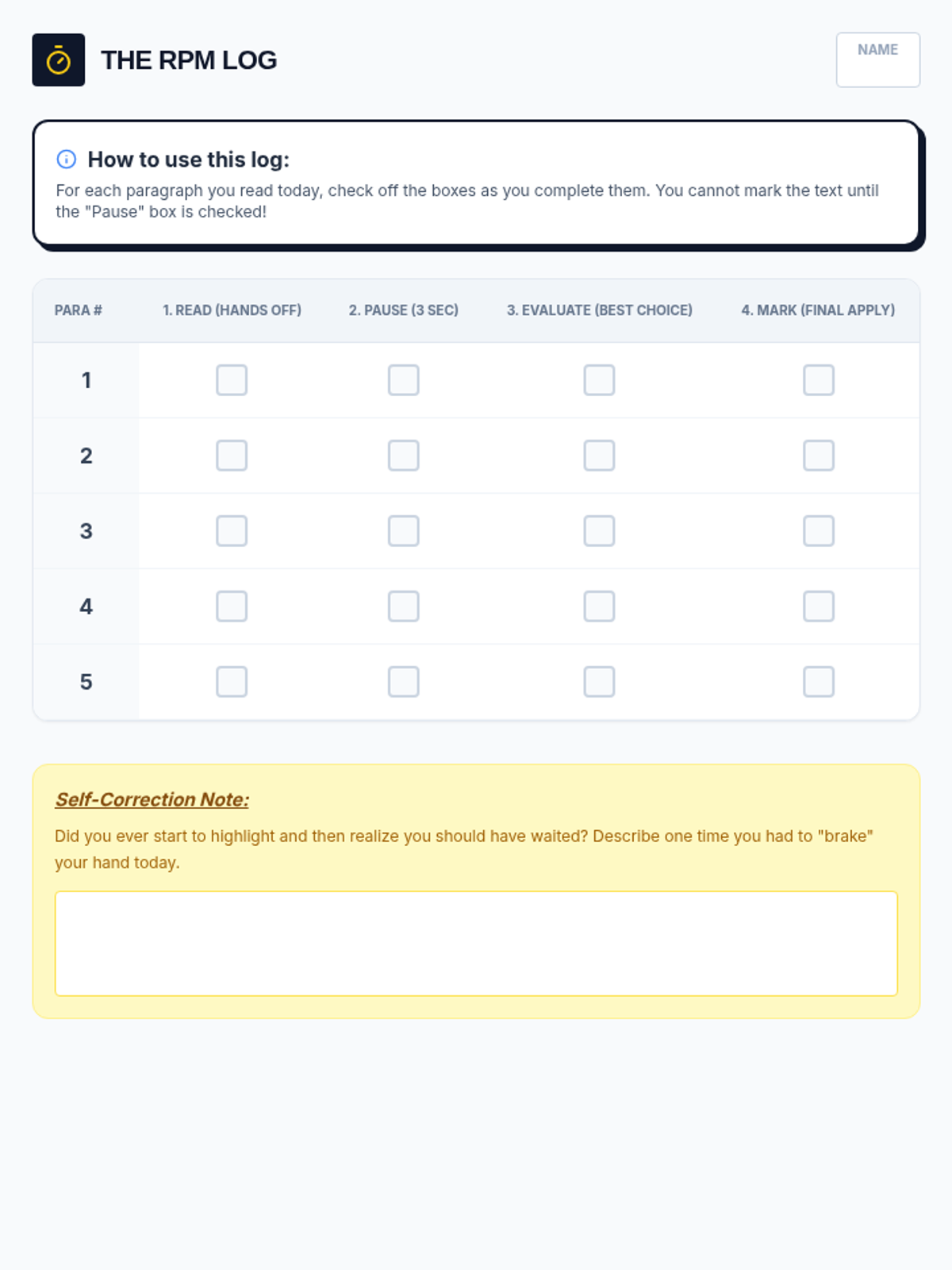
A tracking log for Lesson 4 where students monitor their 'Read, Pause, Evaluate, Mark' cycle for five separate paragraphs.
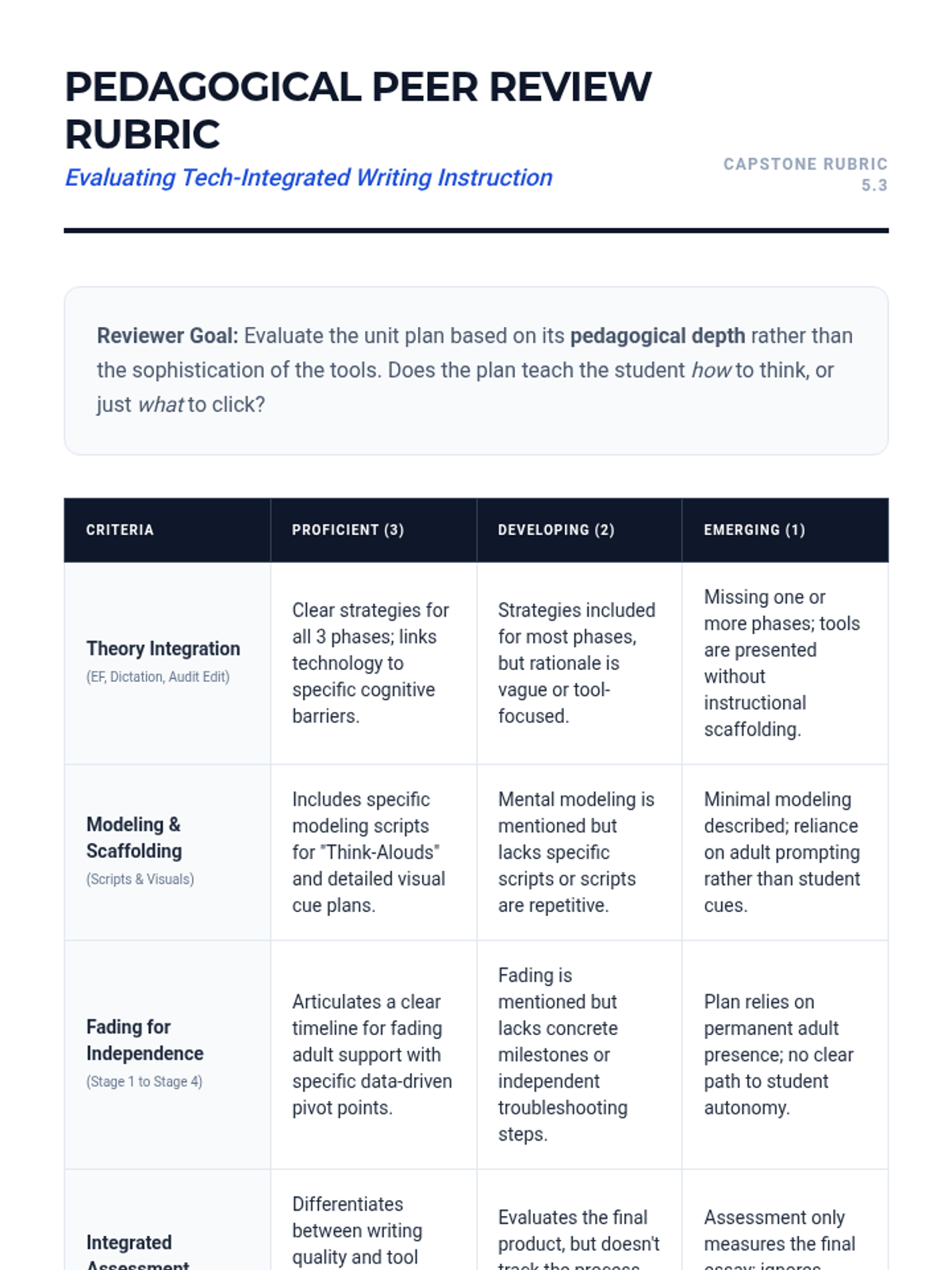
A rubric for peer evaluation of the capstone unit design. Criteria focus on theoretical integration, modeling quality, fading plans, and feasibility.
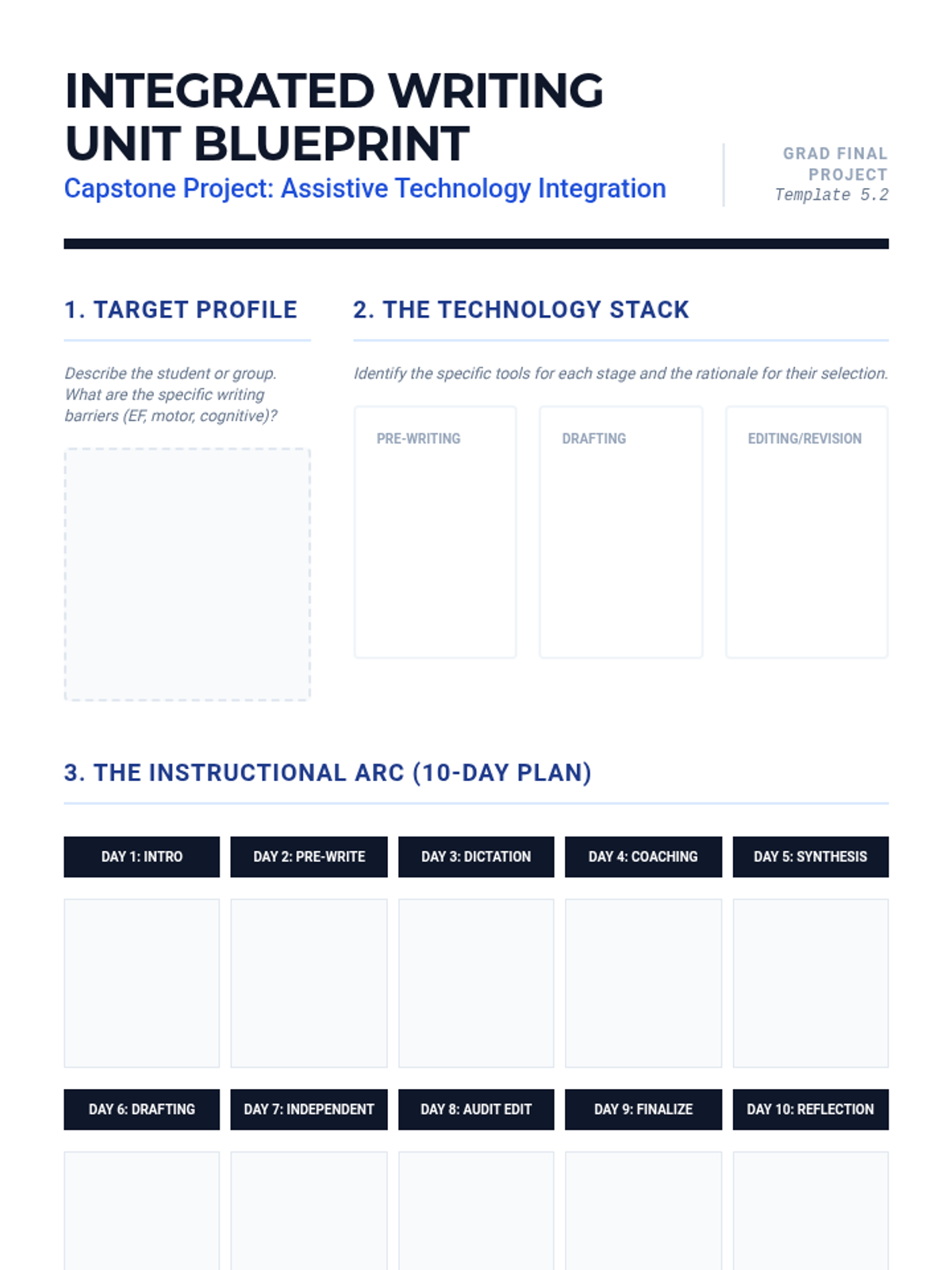
A comprehensive planning template for graduate students to design a 2-week writing unit that integrates assistive technology. Includes sections for student profiling, instructional scaffolding, and fading plans.
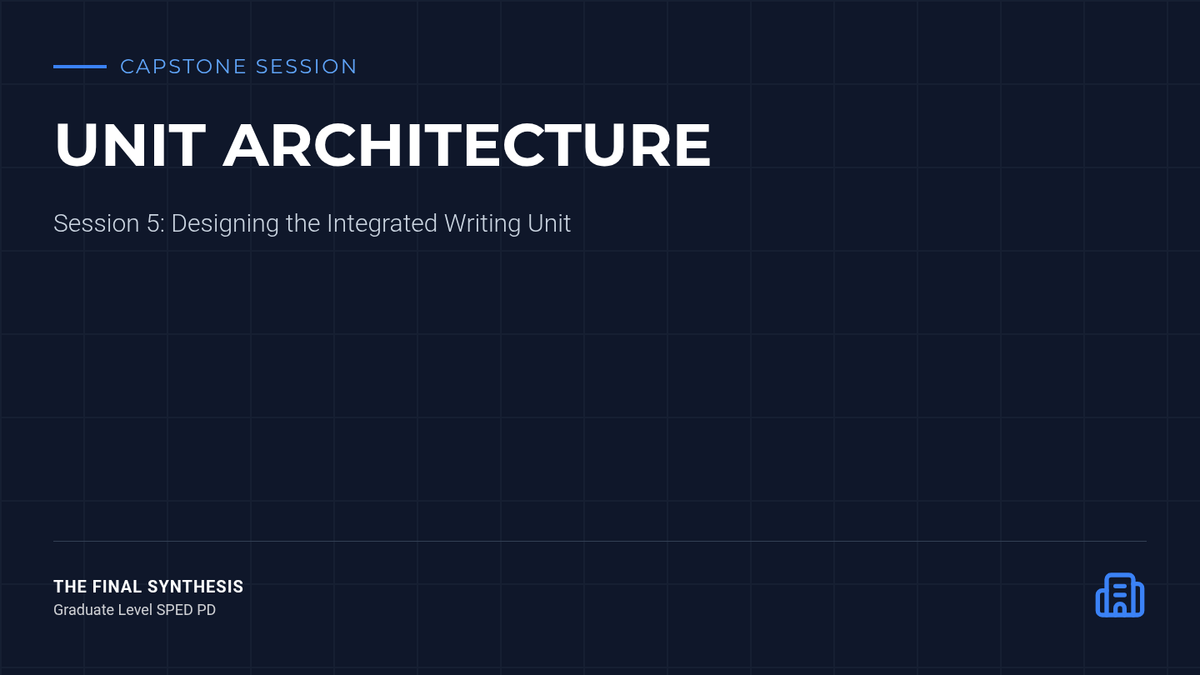
Slides for Lesson 5 focusing on the synthesis of previous lessons into a cohesive 2-week writing unit. Emphasizes pedagogy over tool selection and student autonomy.
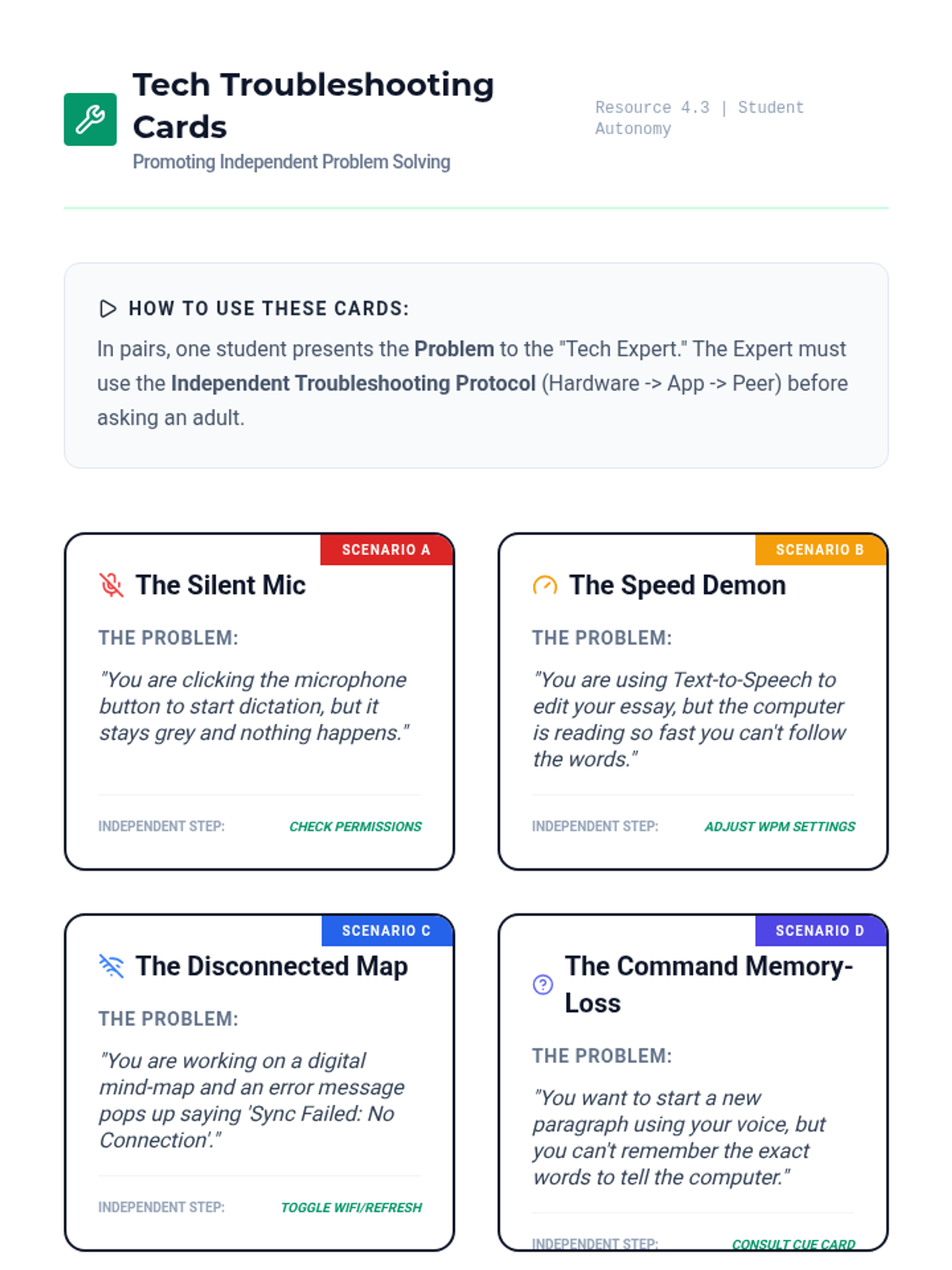
A set of role-play/troubleshooting cards for common assistive technology glitches. Designed to help students practice independent problem-solving before seeking adult help.
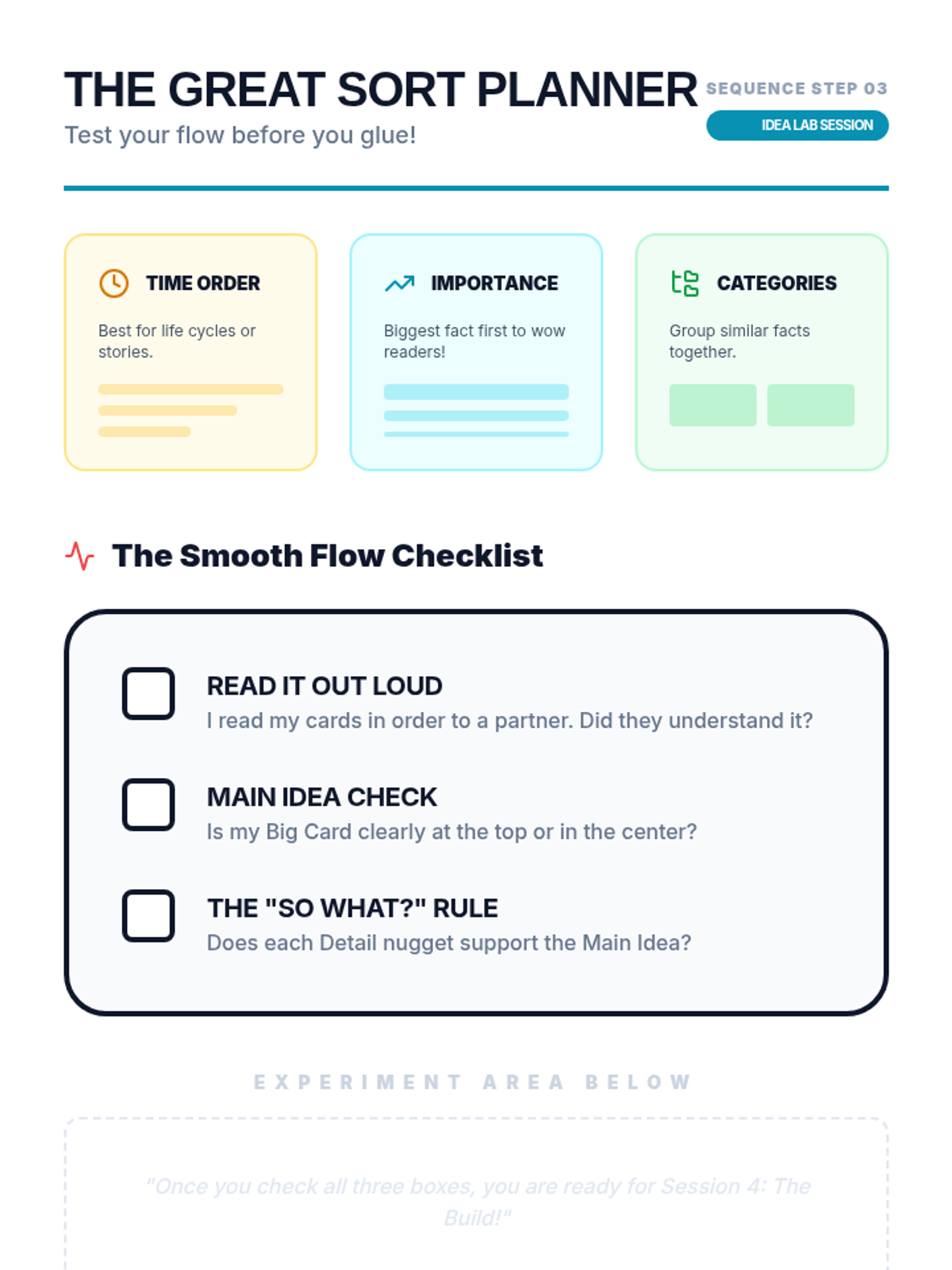
Planning and checklist worksheet for Lesson 3, helping students evaluate their organizational strategy and 'flow' before gluing their Expert Guide.