Systematic tracking of IEP goal progress and analysis of student achievement data. Equips educators to make data-informed instructional adjustments and document growth over time.
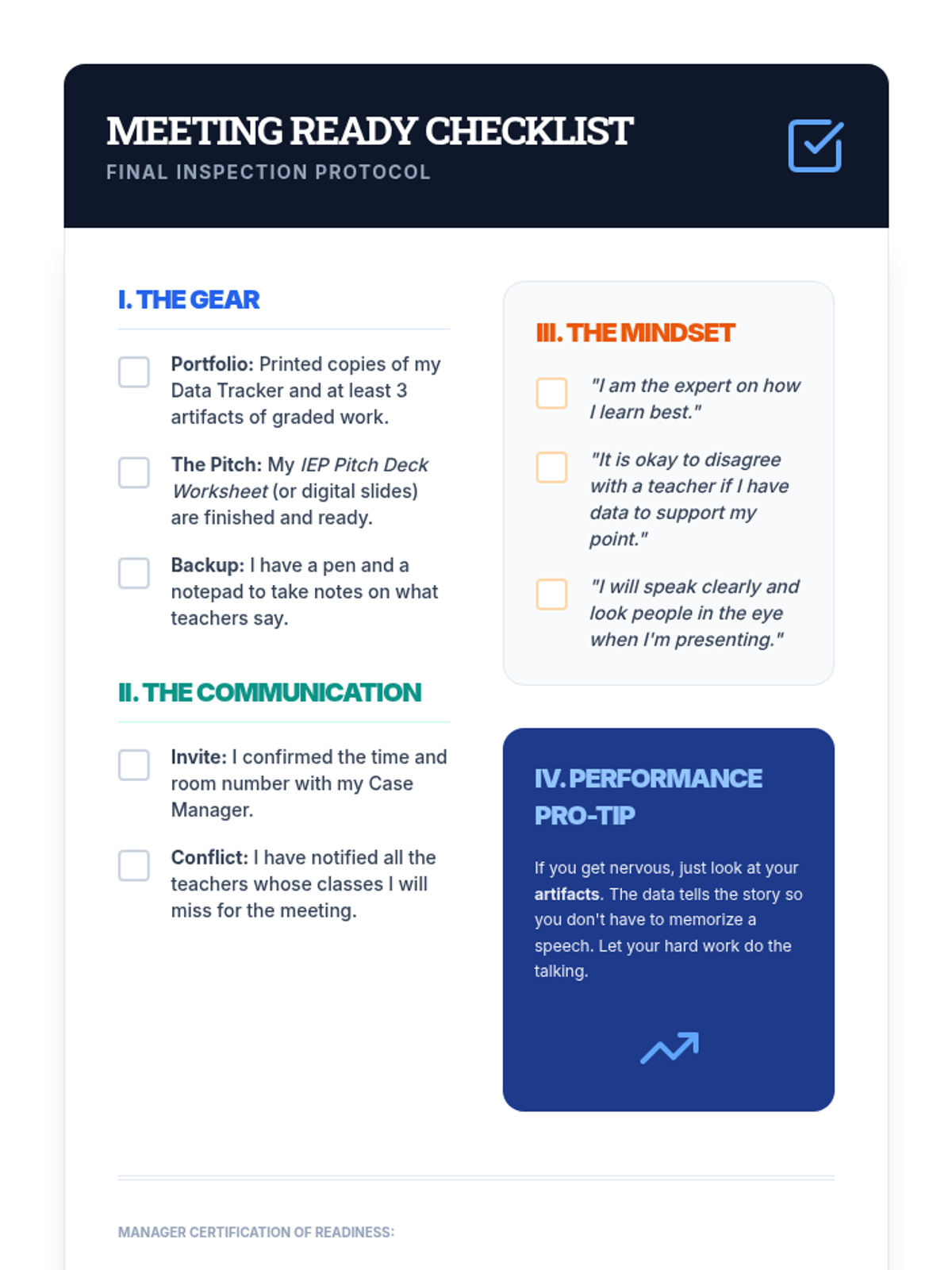
Final checklist for students to ensure they are prepared for their IEP meeting. Covers physical materials (gear), communication logistics, and mental preparation (mindset).
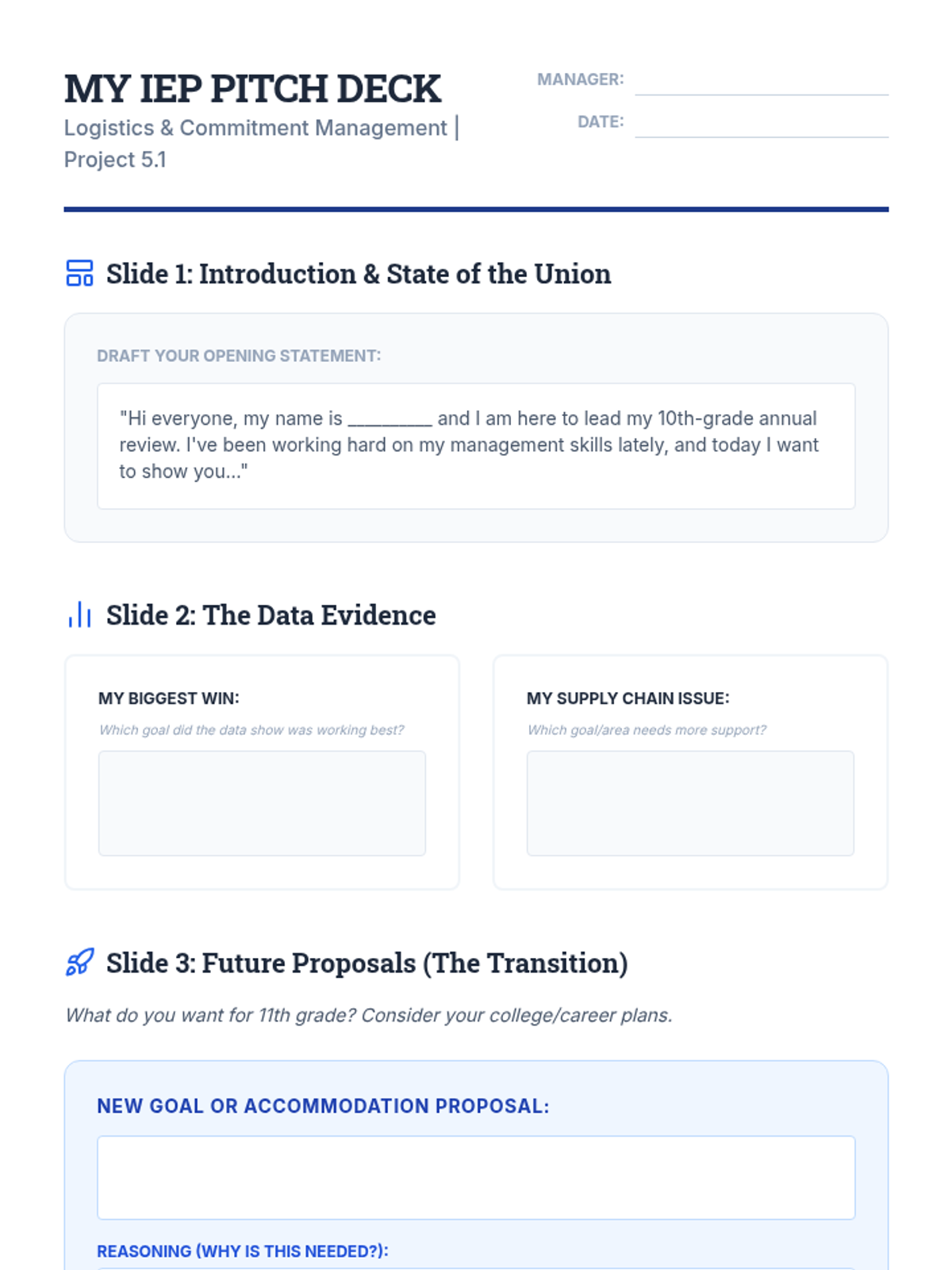
Planning worksheet for a student-led IEP presentation. Guides students through drafting their opening statement, data wins/challenges, and proposals for future accommodations/goals.
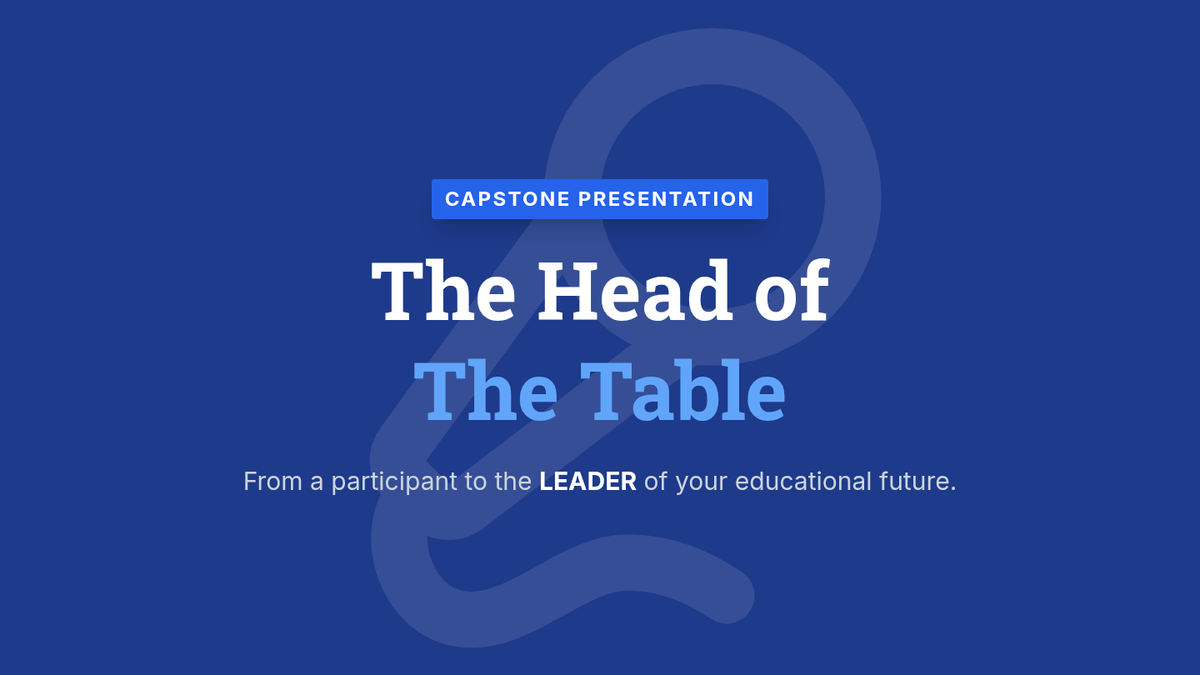
Capstone slides for Lesson 5. Focuses on student-led IEP meeting leadership, including analyzing a student-led meeting, a presentation script formula (Opening, Data, Ask), and the power of artifact evidence.
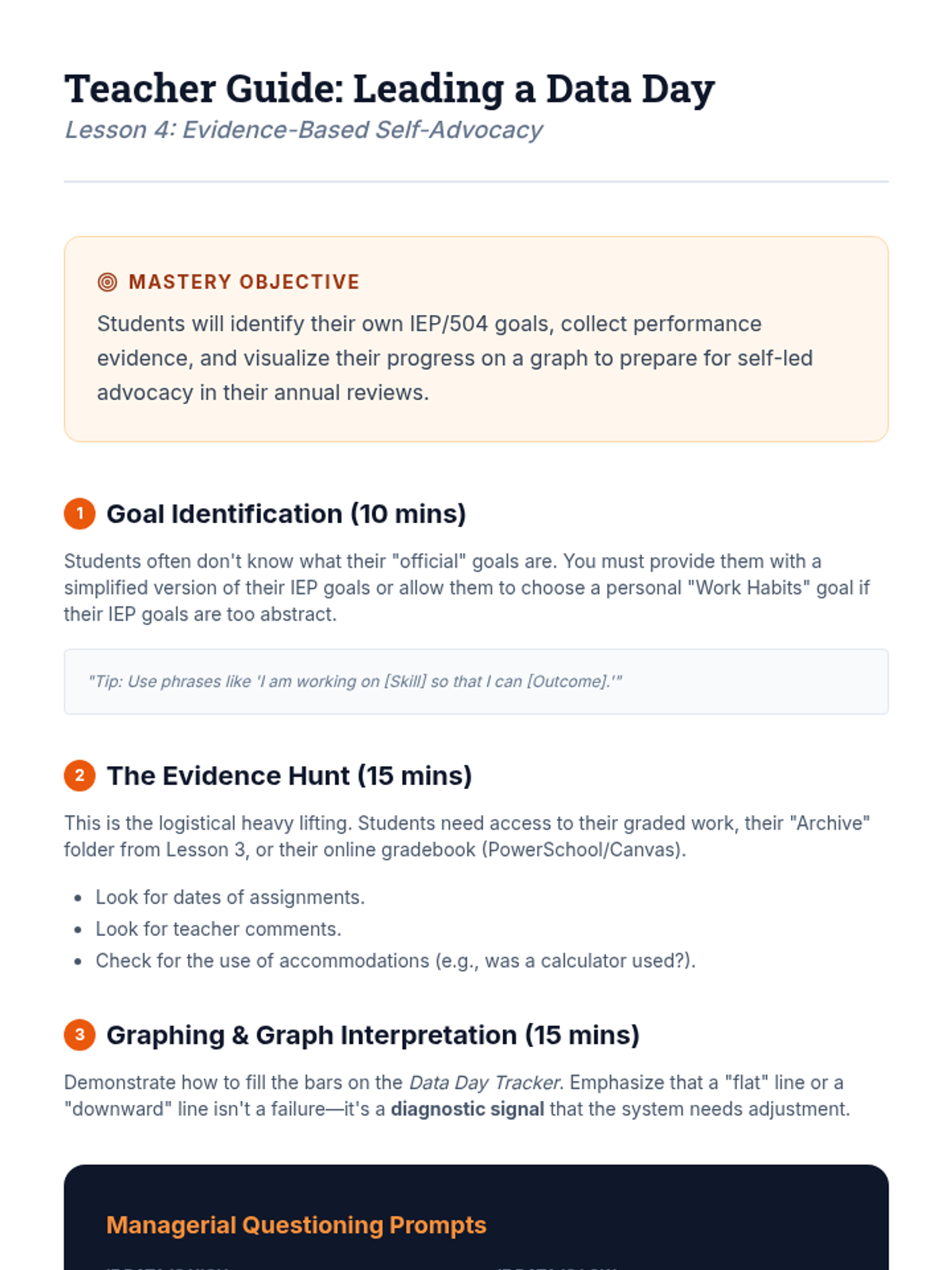
Facilitation guide for Lesson 4, including tips on helping students identify goals, leading an "Evidence Hunt," and using data as a diagnostic signal for adjusting educational supports.
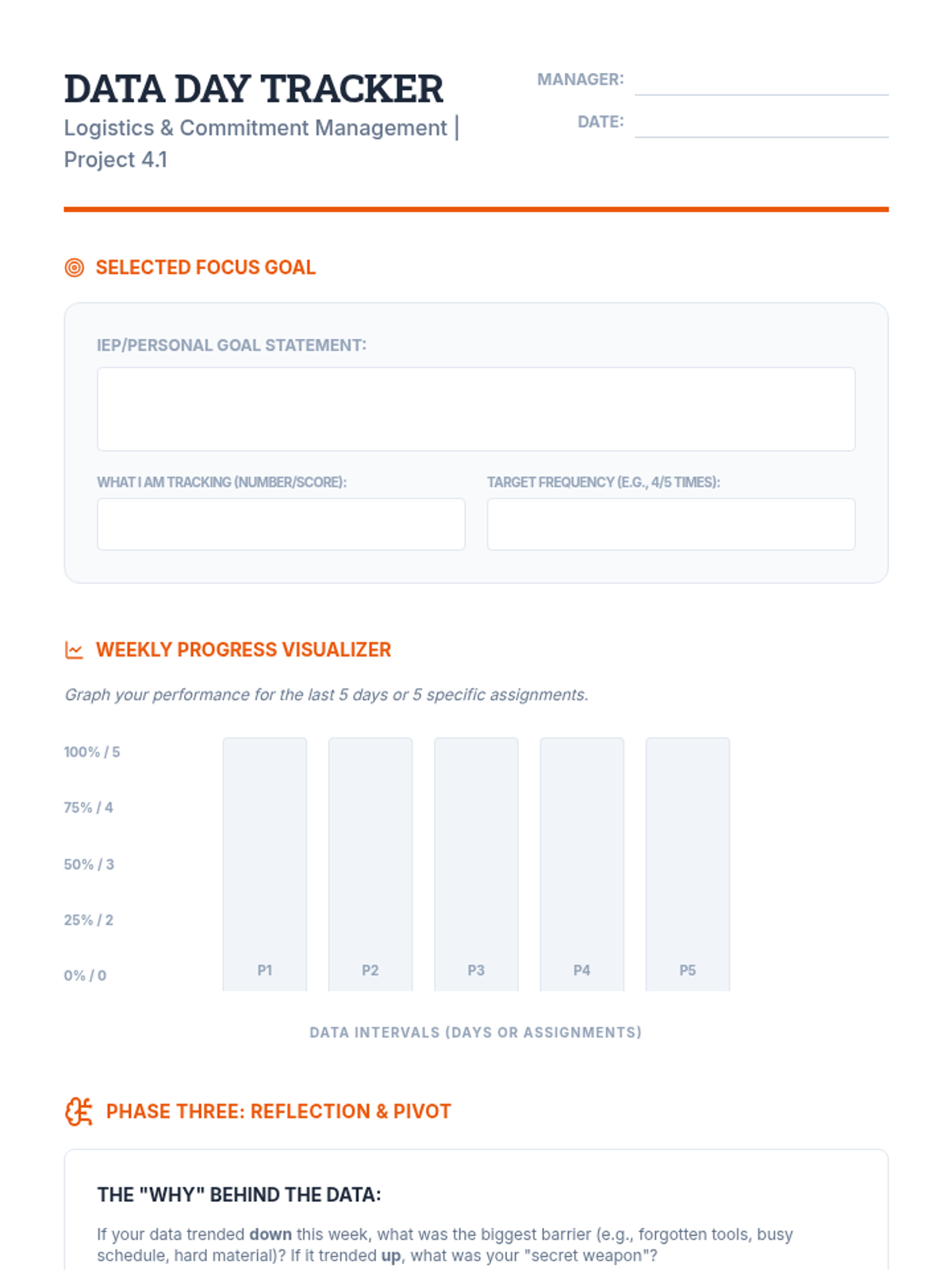
Worksheet for student self-monitoring. Includes a goal selection section, a 5-point bar graph for tracking progress, and reflective questions for "pivoting" based on data results.
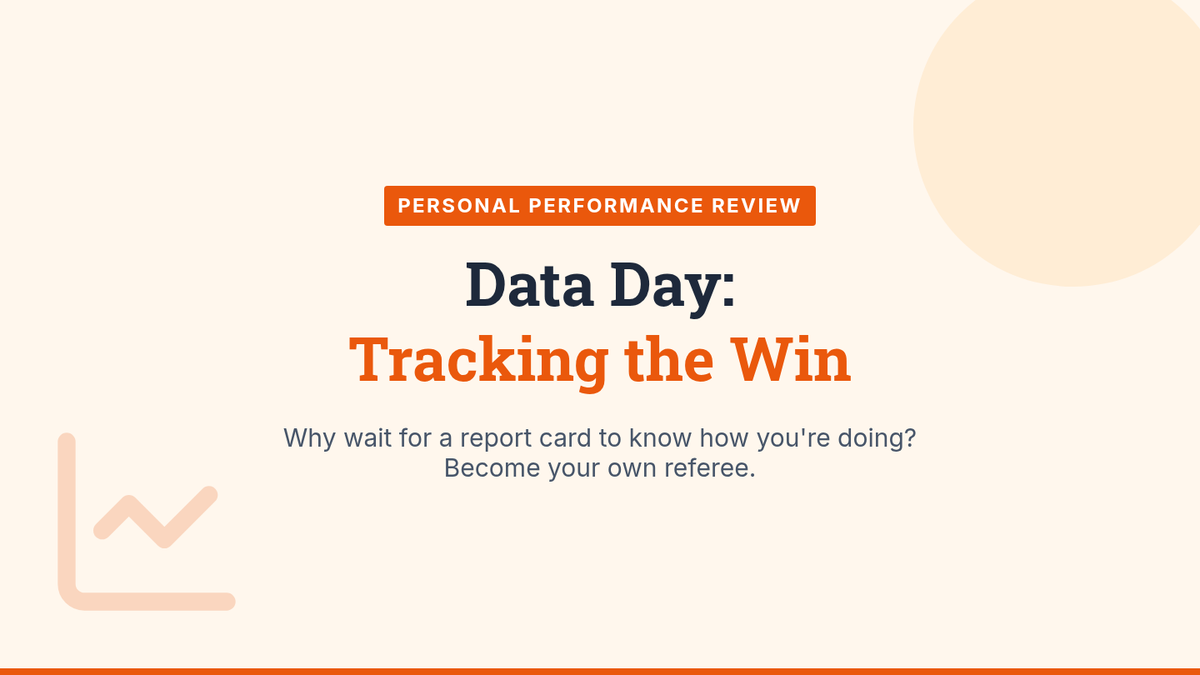
Slides for Lesson 4 on goal monitoring. Teaches students how to distinguish between quantitative and qualitative data, establishes a "Data Day" routine, and shows how to turn IEP goals into trackable data points.
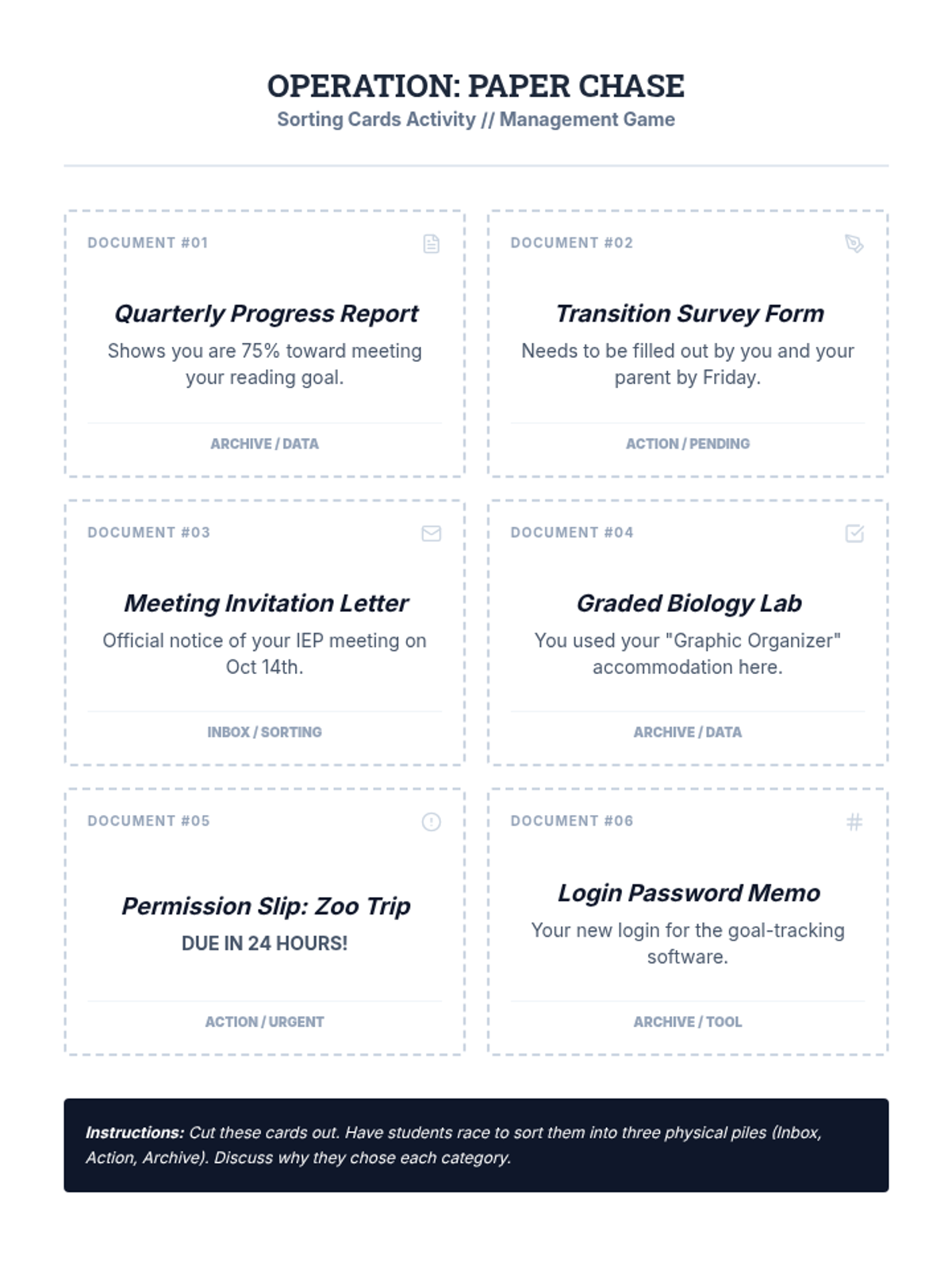
A set of printable sorting cards for the "Paper Chase" activity. Includes various document scenarios (progress reports, invitations, permission slips) for students to categorize.
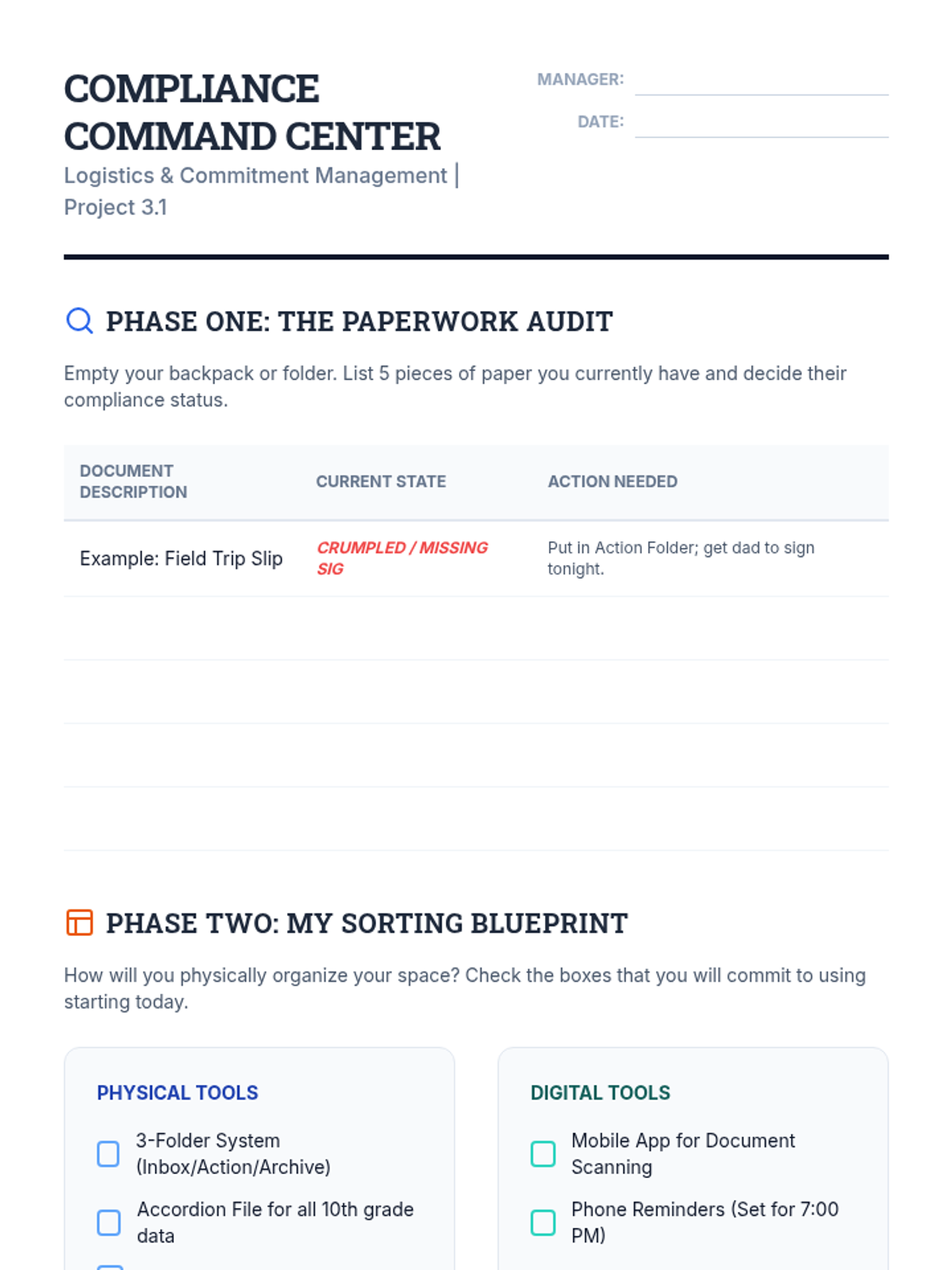
Worksheet for students to audit their current paperwork and design a personal compliance system. Includes sections for a physical/digital tool blueprint and a "Daily Reset" protocol.
Slides for Lesson 3 focusing on administrative organization. Introduces the "Backpack Abyss," a 3-folder compliance system (Inbox, Action, Archive), and hybrid digital/analog management strategies.
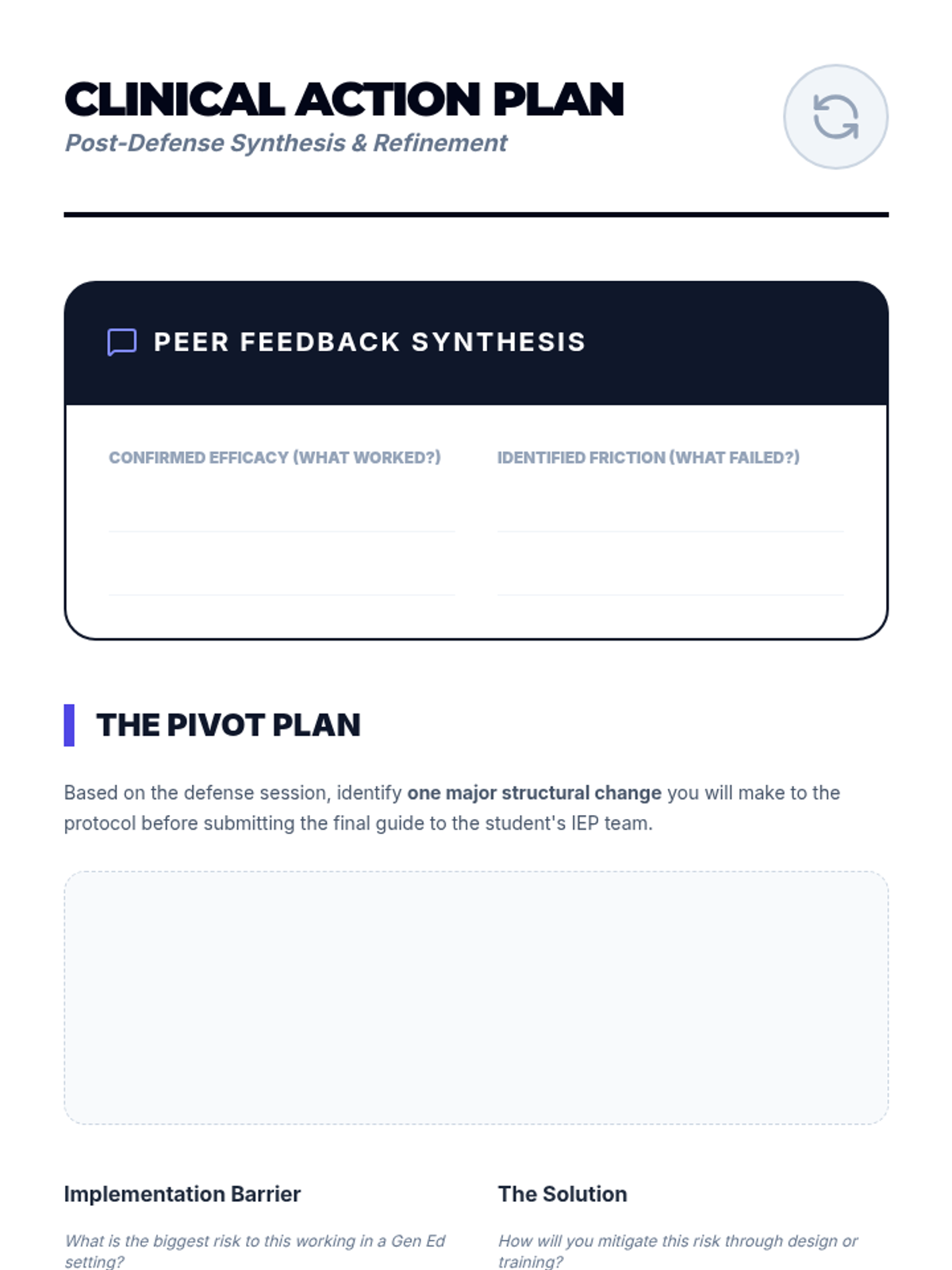
A post-defense reflection and action plan for graduate students to synthesize peer feedback and finalize their annotation protocol for clinical use.
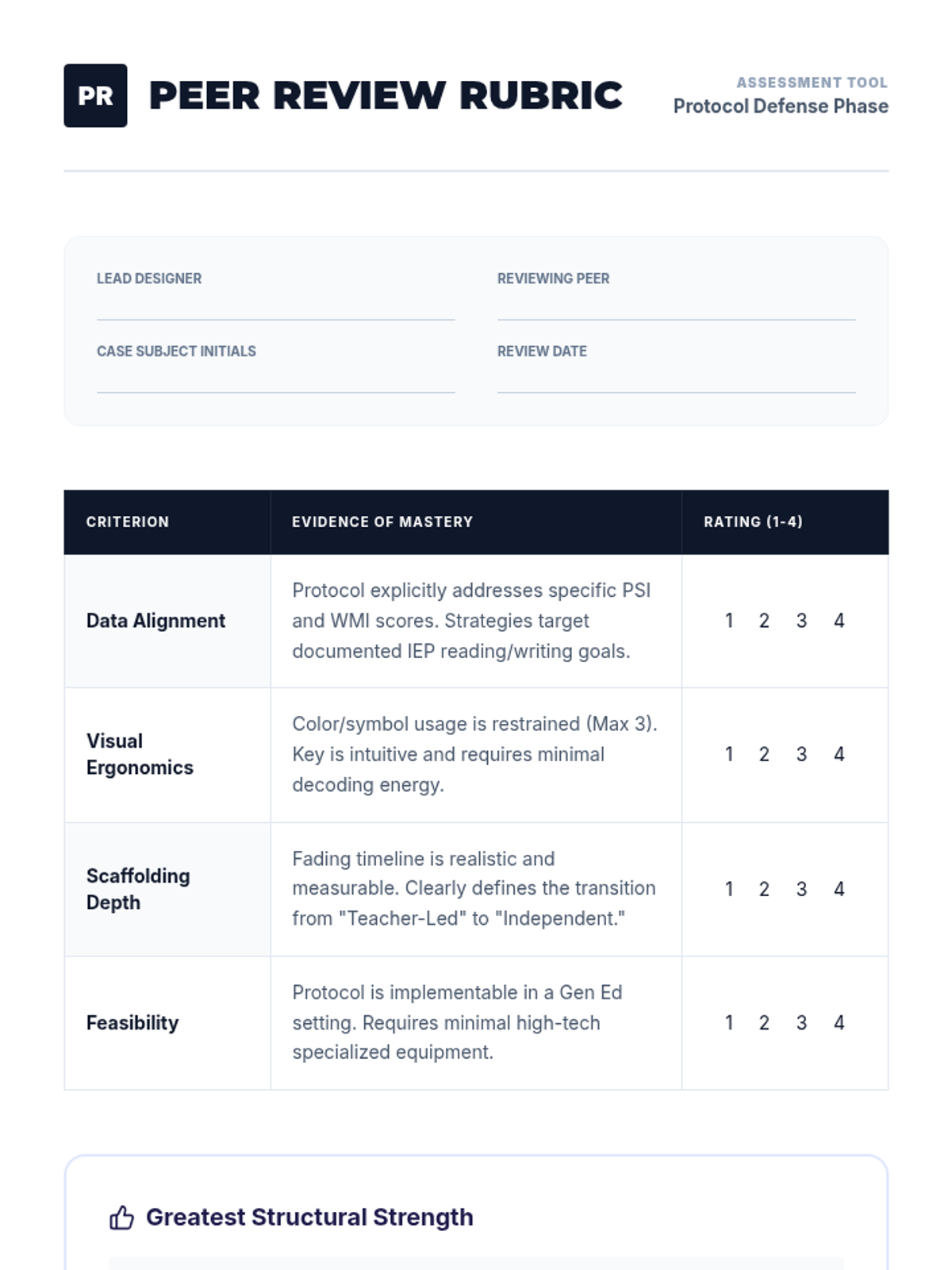
A professional peer review rubric for graduate students to evaluate their peers' designed annotation protocols based on data alignment, visual ergonomics, and feasibility.
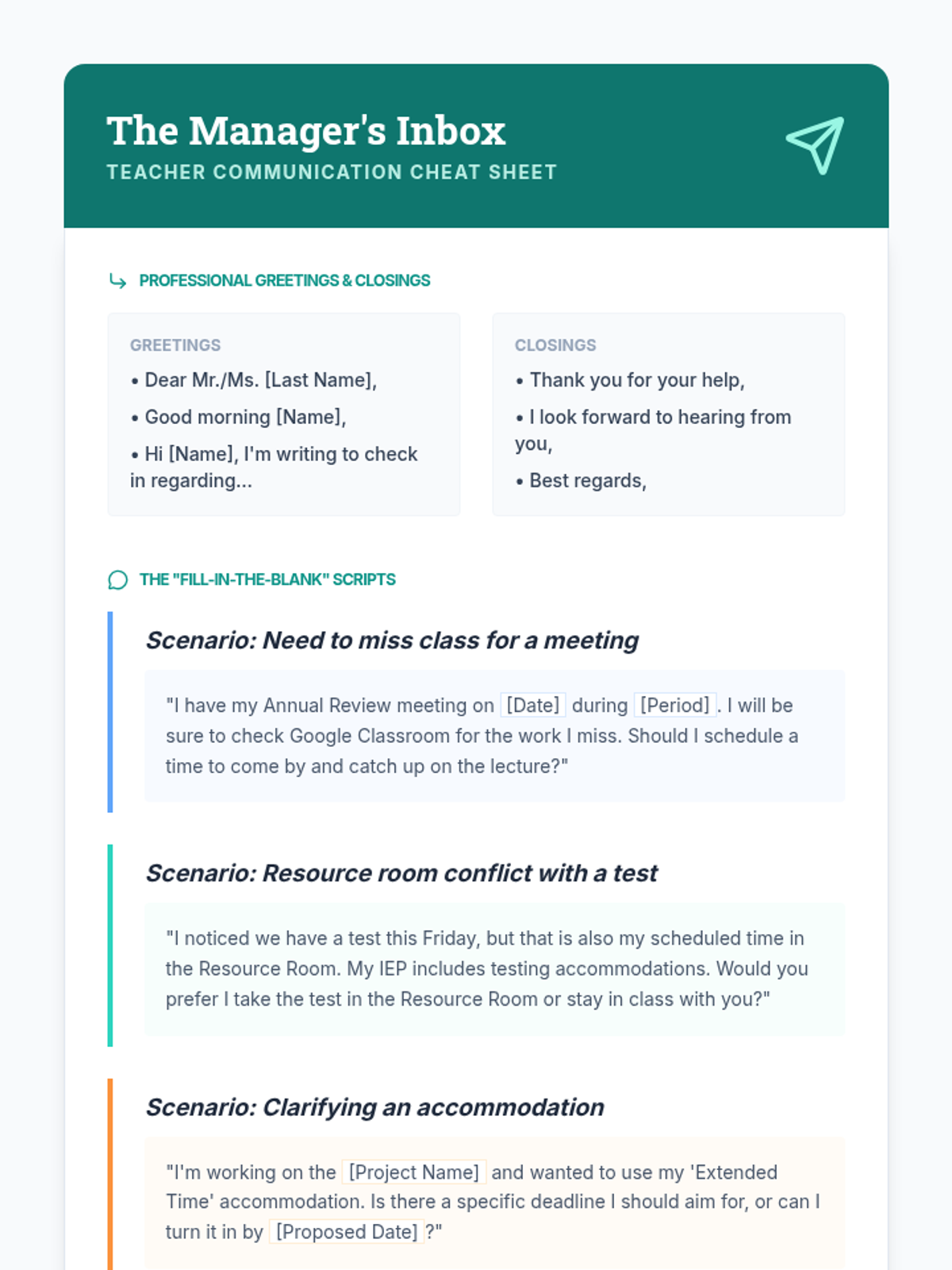
A handy reference sheet for students providing professional greetings/closings, fill-in-the-blank scripts for common IEP-related communication scenarios, and "Golden Rules" for student-teacher interactions.
Slide deck for Lesson 5, outlining the requirements for the final protocol defense and providing guidelines for peer review and critique.
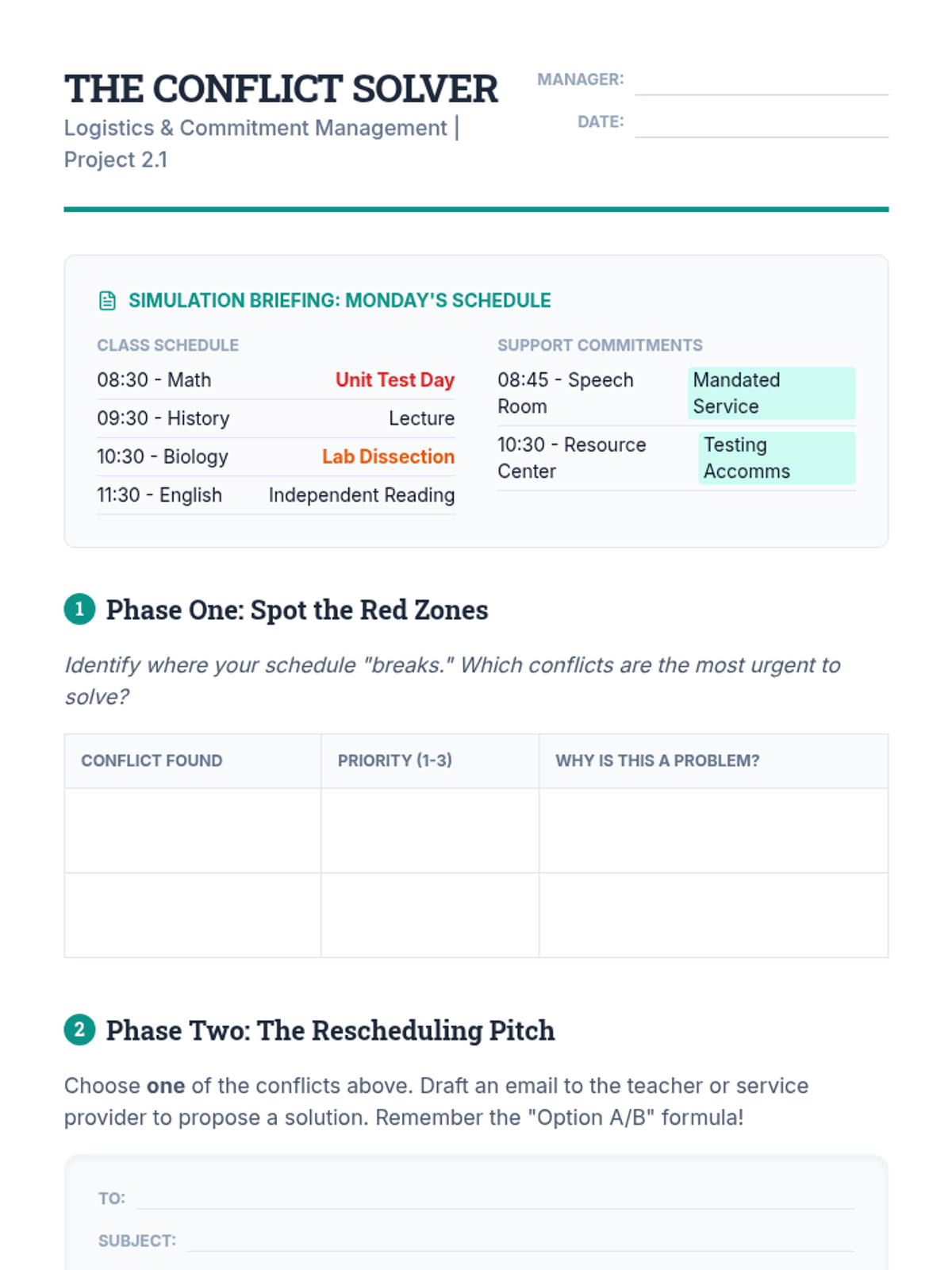
Simulation worksheet where students identify schedule conflicts in a hypothetical Monday schedule and draft professional emails to resolve them using the "Option A/B" formula.
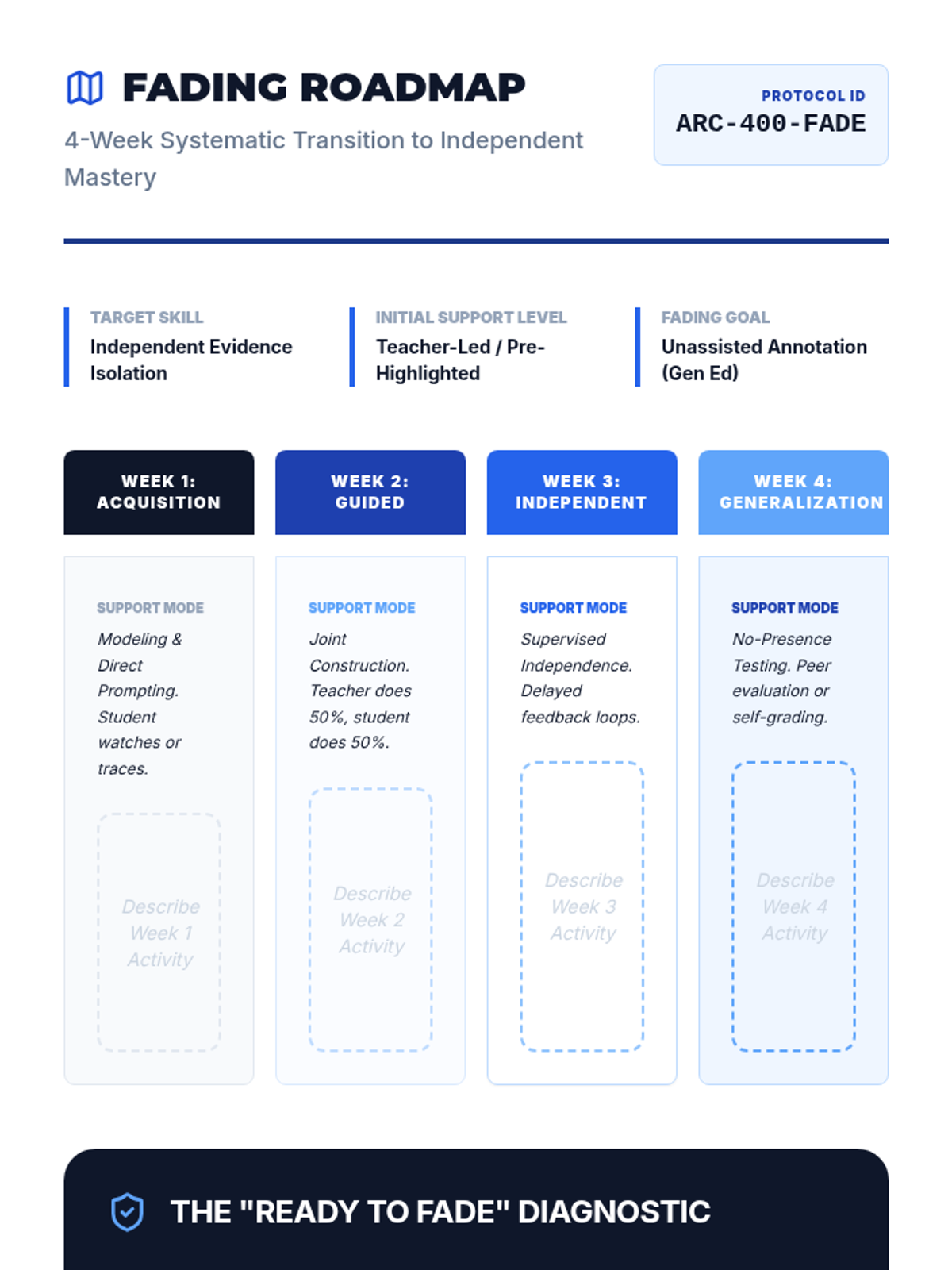
A 4-week transition plan template for graduate students to map the gradual release of responsibility for a student learning an annotation protocol.
Slide deck for Lesson 2 focusing on schedule coordination. Introduces pull-out services, communication strategies for conflicts, and a professional email template for student-teacher coordination.
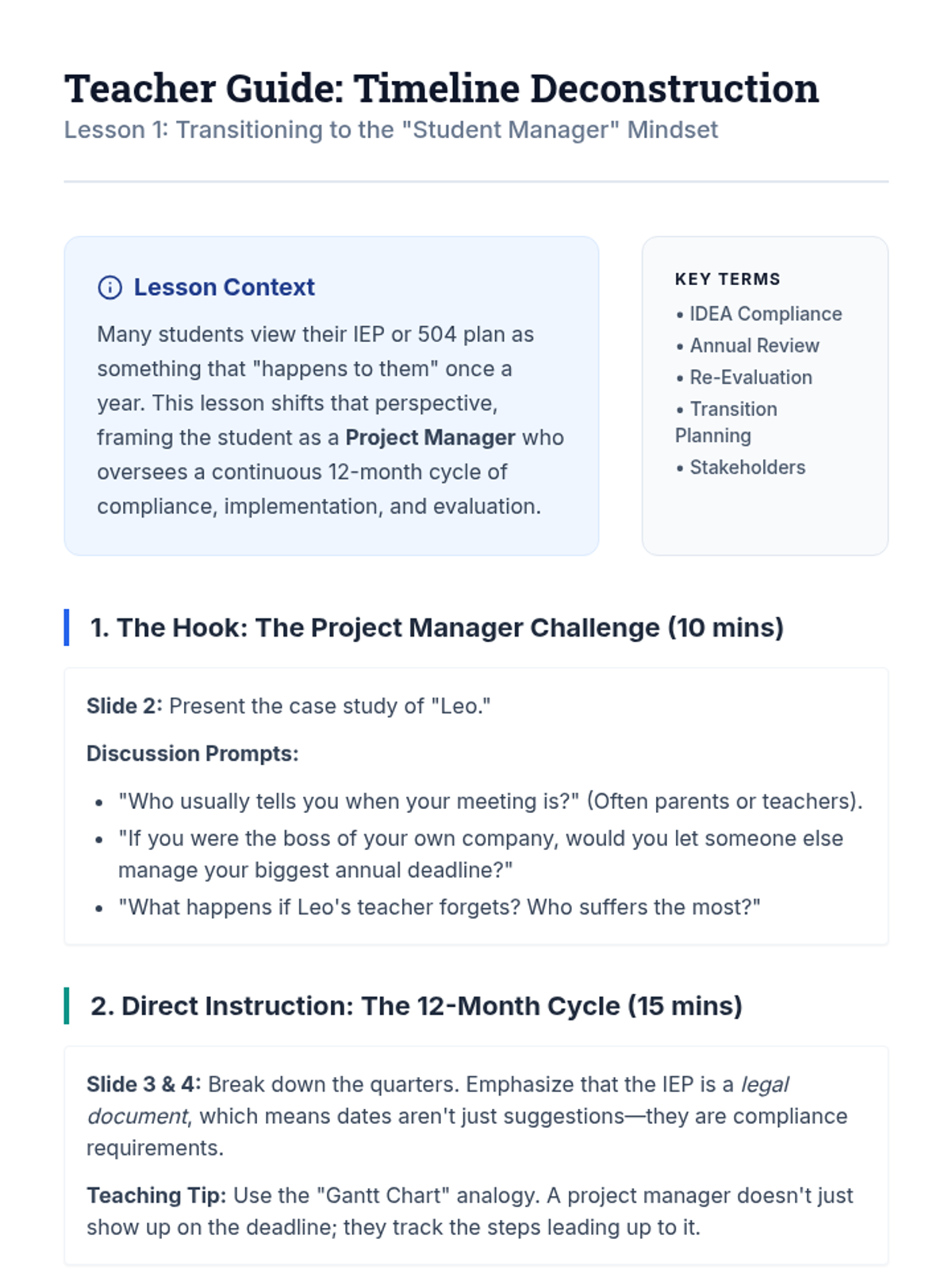
Facilitation guide for Lesson 1, including discussion prompts for the case study, teaching tips for the 12-month cycle, and differentiation strategies for mapping the educational timeline.
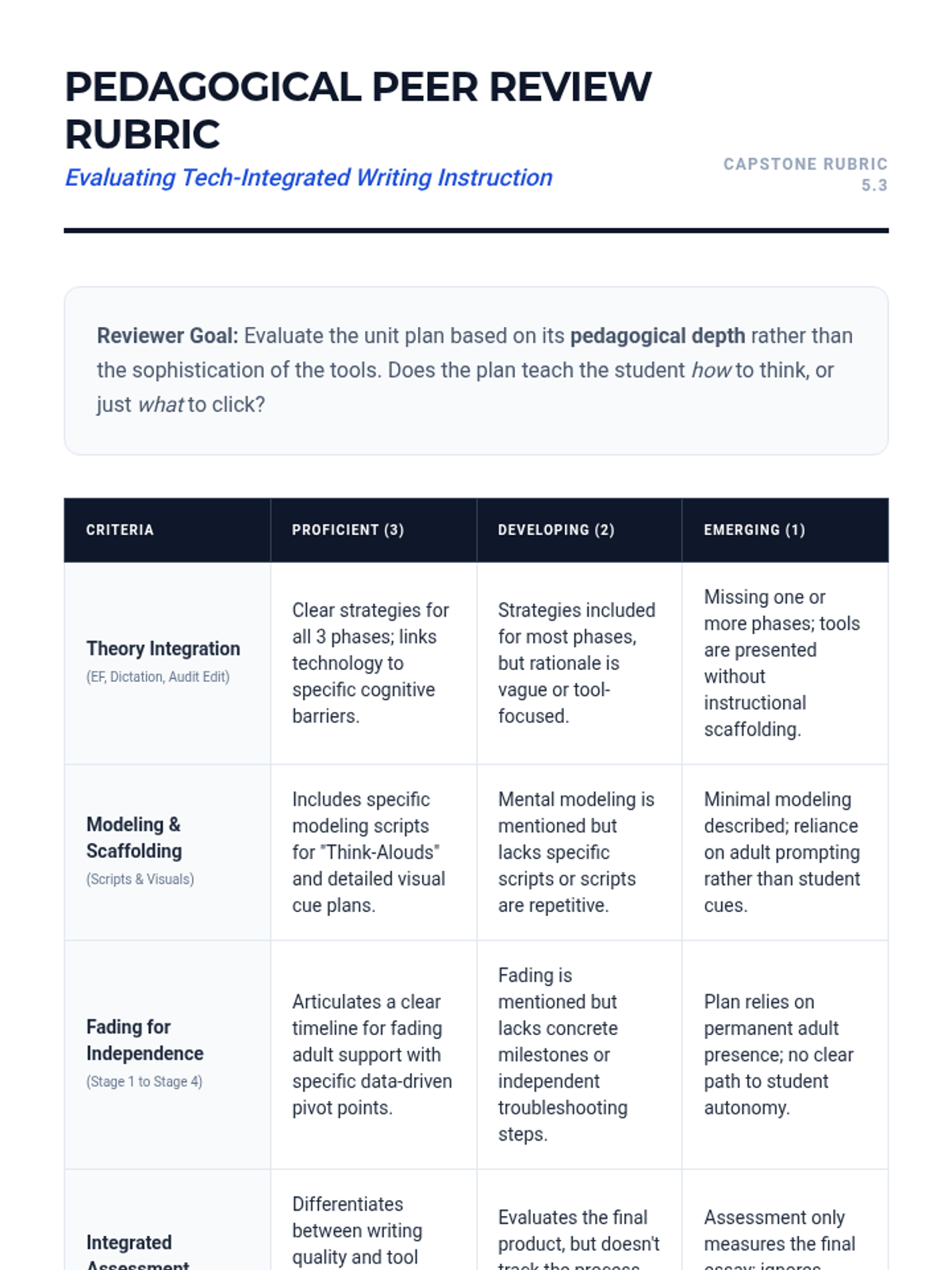
A rubric for peer evaluation of the capstone unit design. Criteria focus on theoretical integration, modeling quality, fading plans, and feasibility.
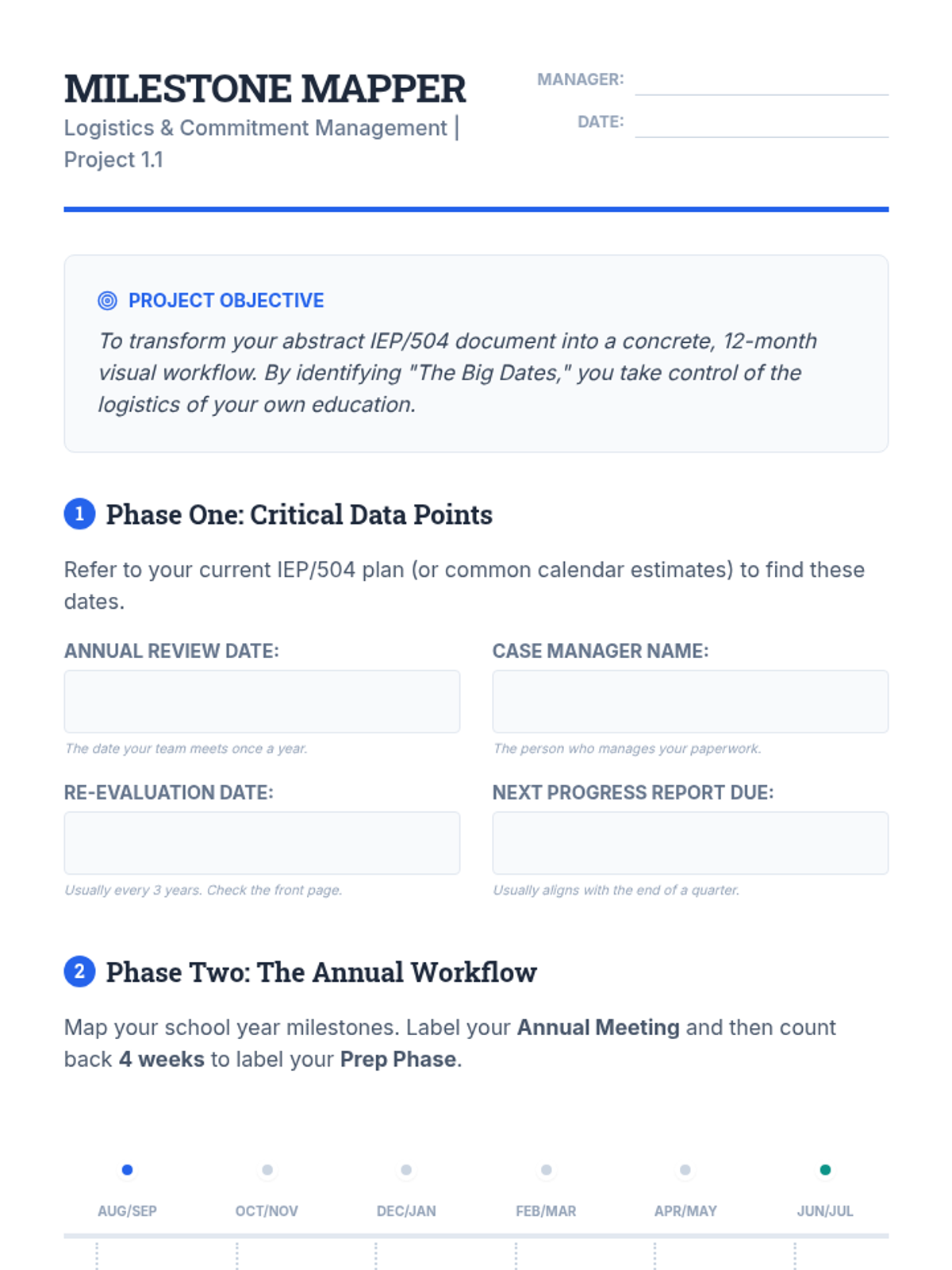
Worksheet for students to map their own IEP/504 timelines. Includes sections for data gathering (dates/contacts), a 12-month visual workflow builder, and reflection questions on meeting preparation.
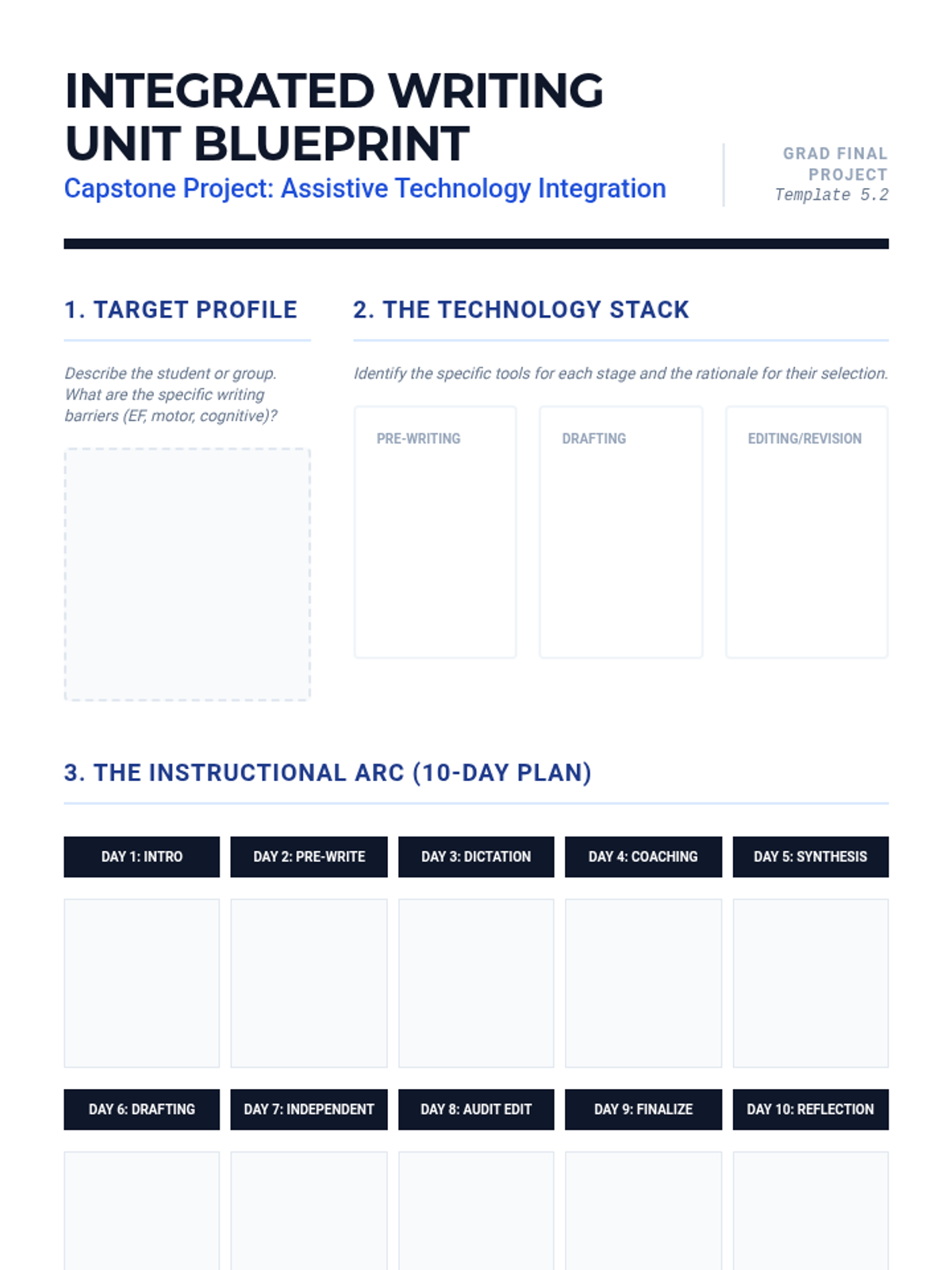
A comprehensive planning template for graduate students to design a 2-week writing unit that integrates assistive technology. Includes sections for student profiling, instructional scaffolding, and fading plans.
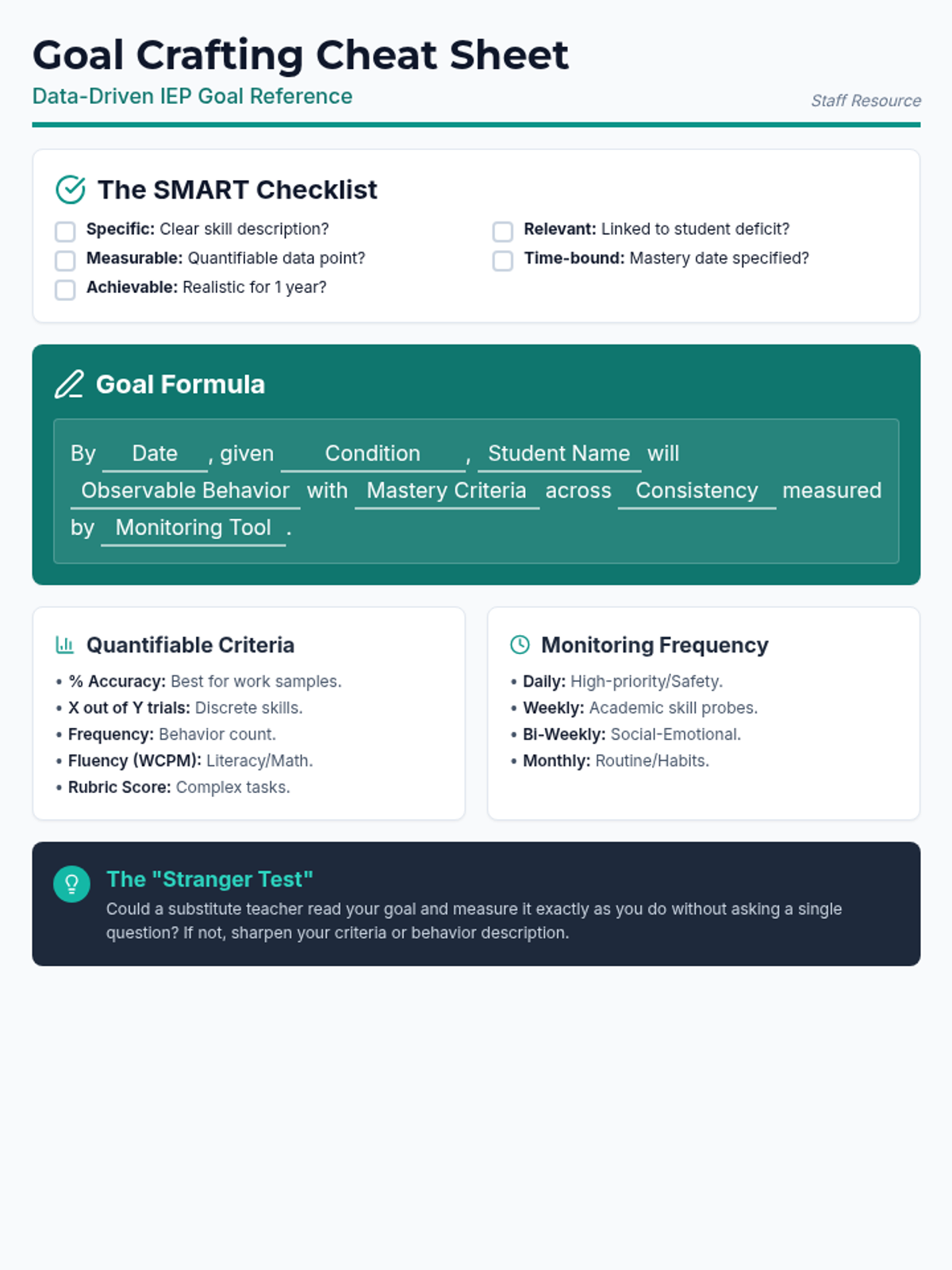
A teacher-facing reference sheet with a SMART goal checklist, a fill-in-the-blank goal formula, and data collection tips for special educators. Updated for one-page print reliability and removed quarterly monitoring.
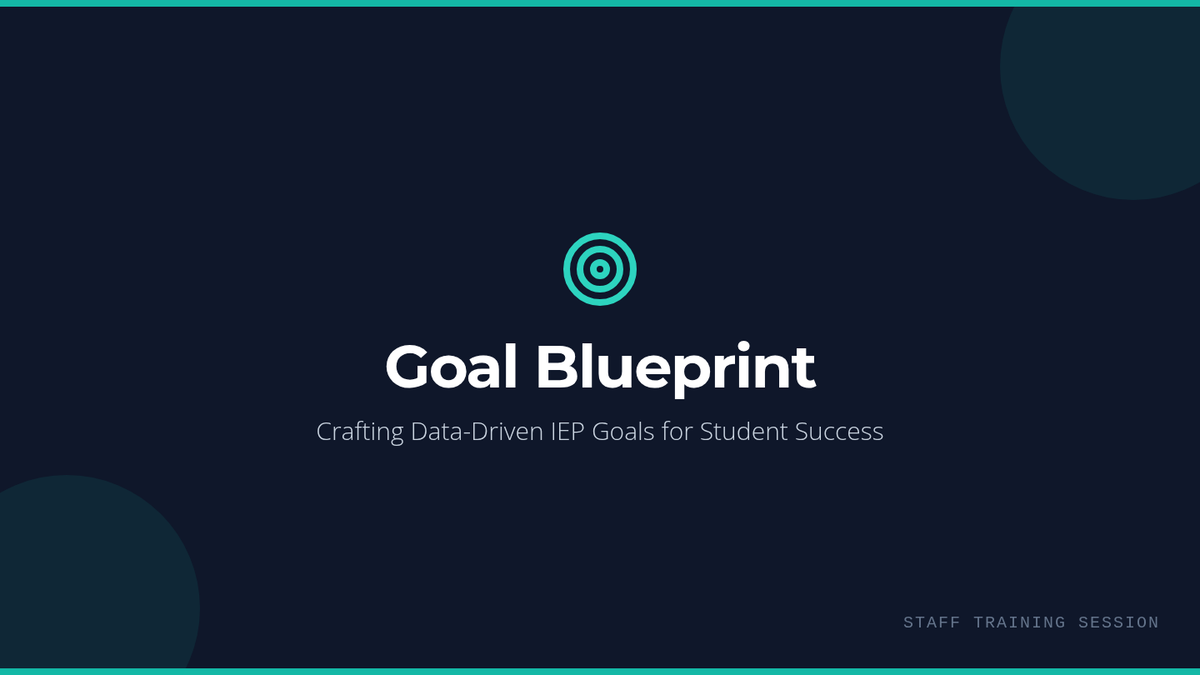
A 5-slide presentation for special education staff on writing measurable, data-driven IEP goals with a focus on progress monitoring tools and the data-action loop.
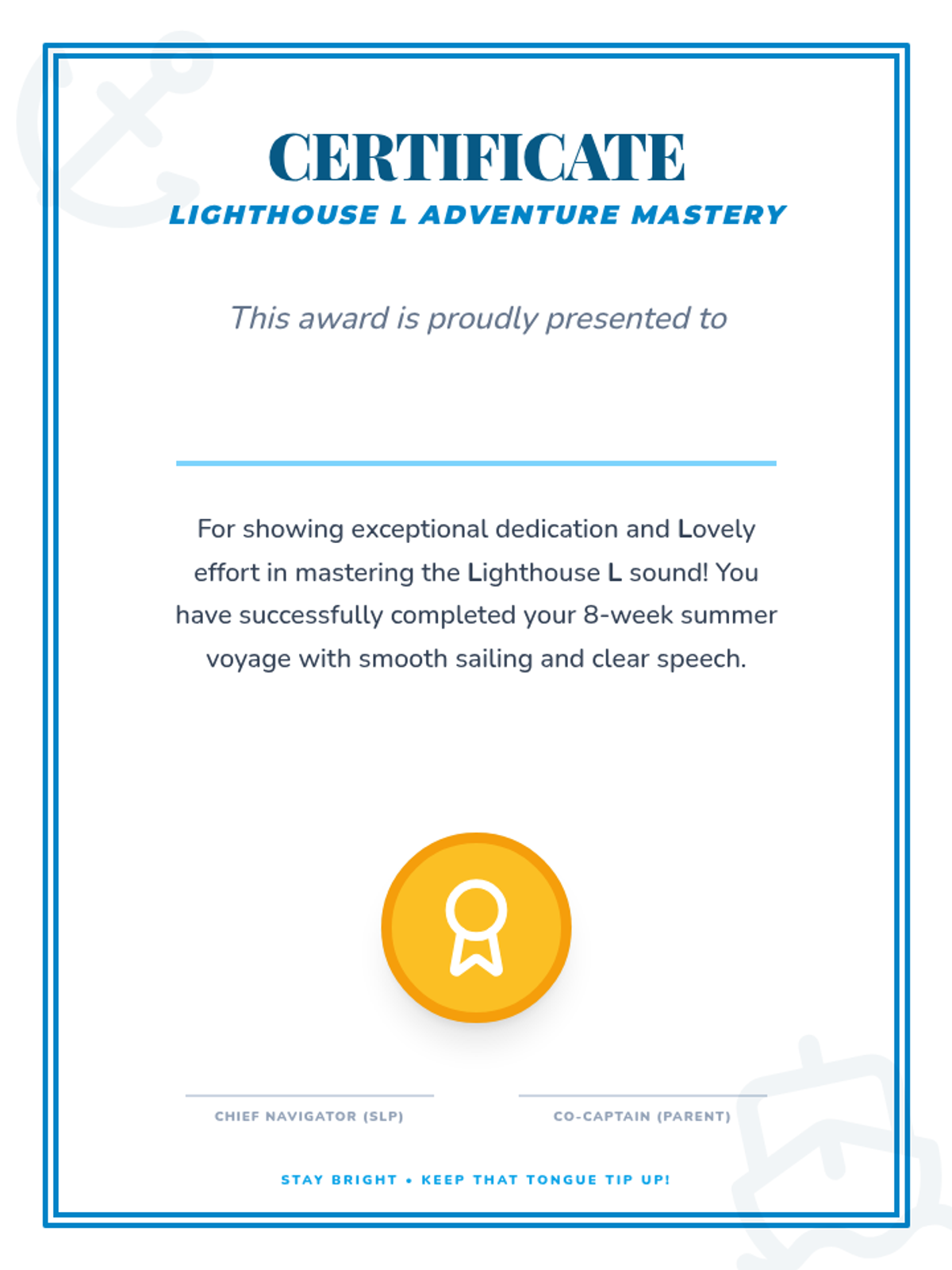
A commemorative certificate for the Lighthouse L Adventure program. Revised to ensure a single-page layout and proper signature area positioning.
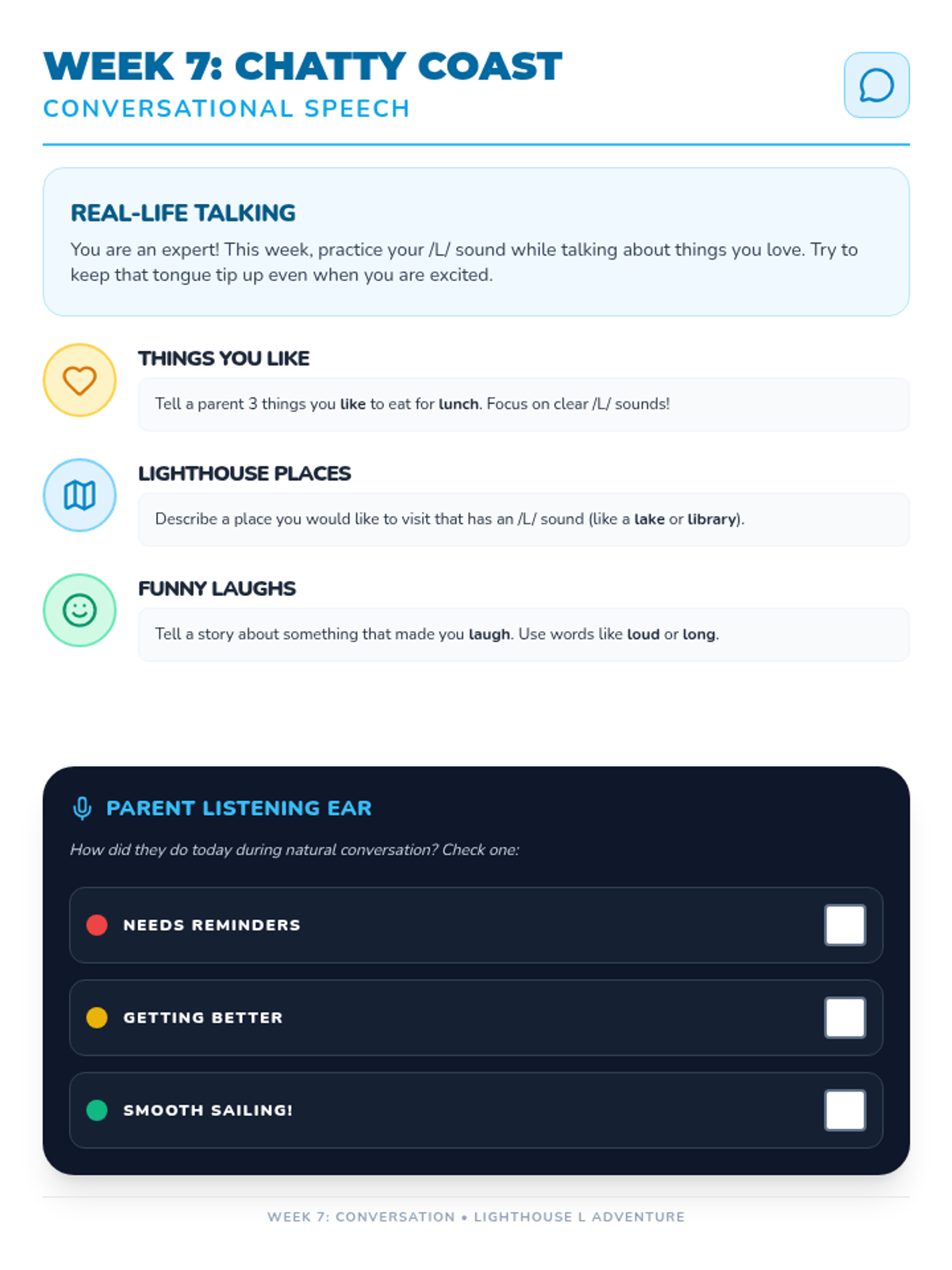
Week 7 practice packet for the Lighthouse L Adventure program. Revised to ensure single-page layout and actionable checkboxes for the parent monitoring section.
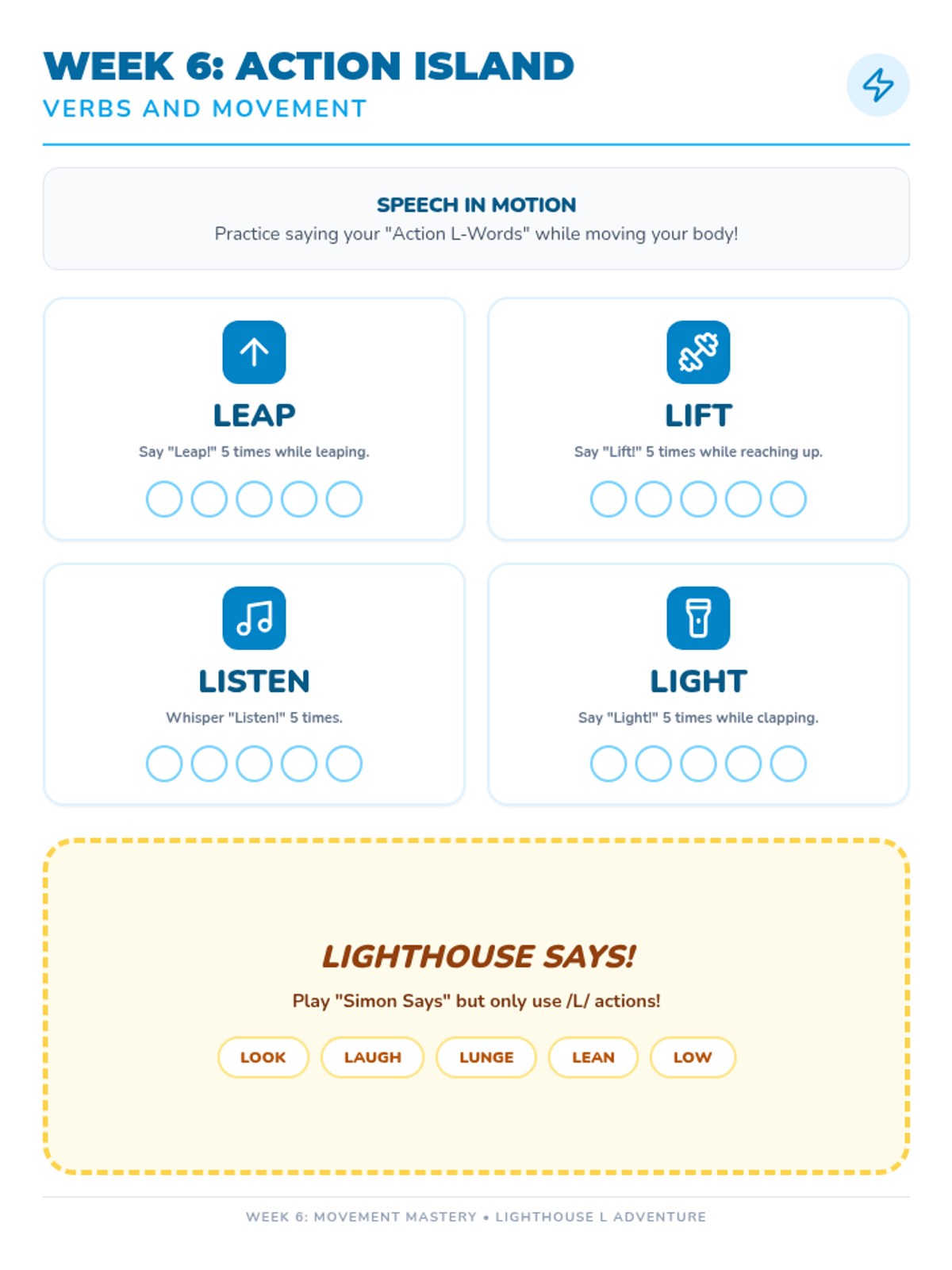
Week 6 practice packet for the Lighthouse L Adventure program. Revised to ensure single-page layout, larger tracking circles, and a consistent 5-repetition count.
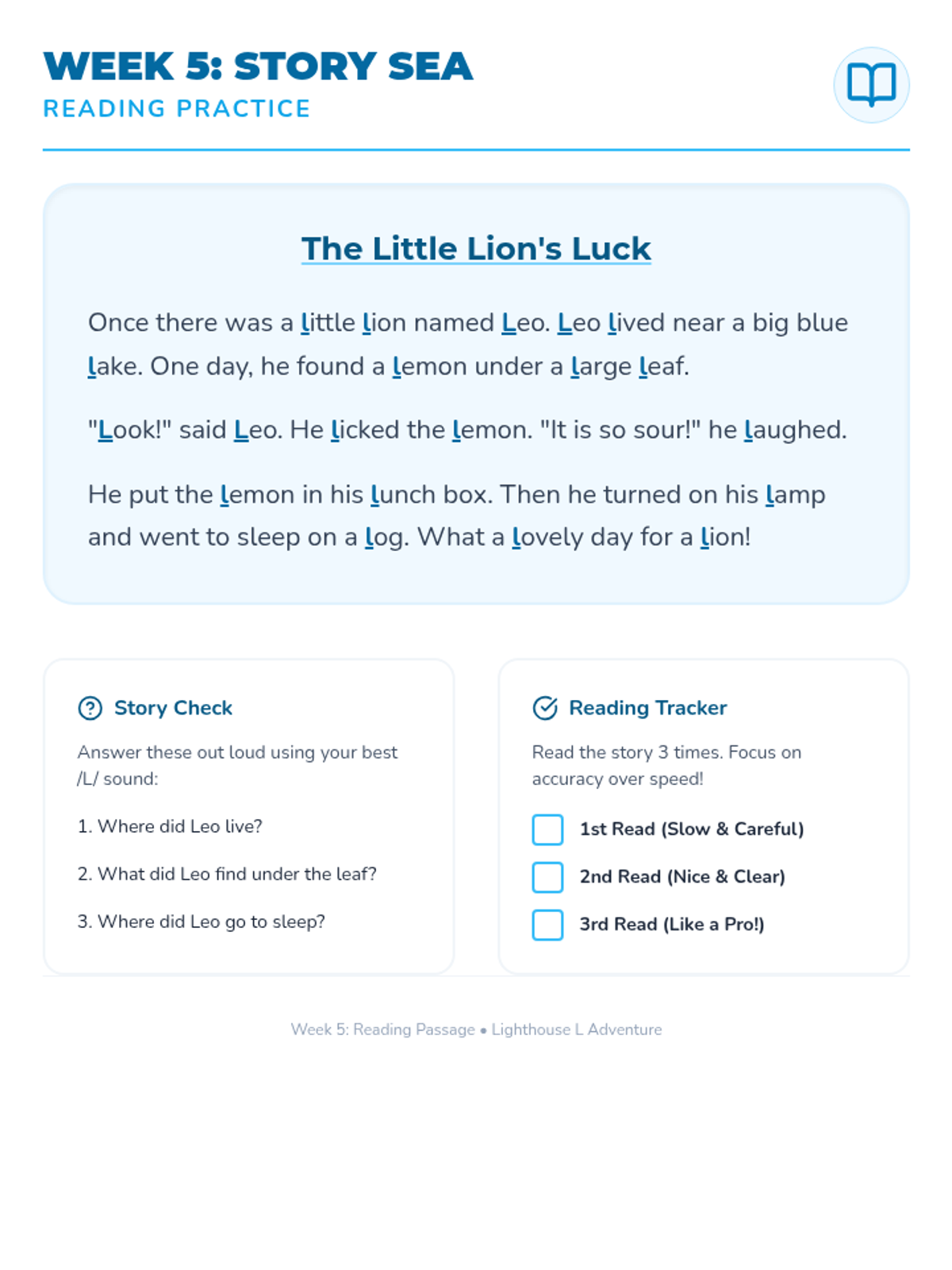
Week 5 practice packet for the Lighthouse L Adventure program, focusing on initial /l/ sound production within a short narrative reading passage.
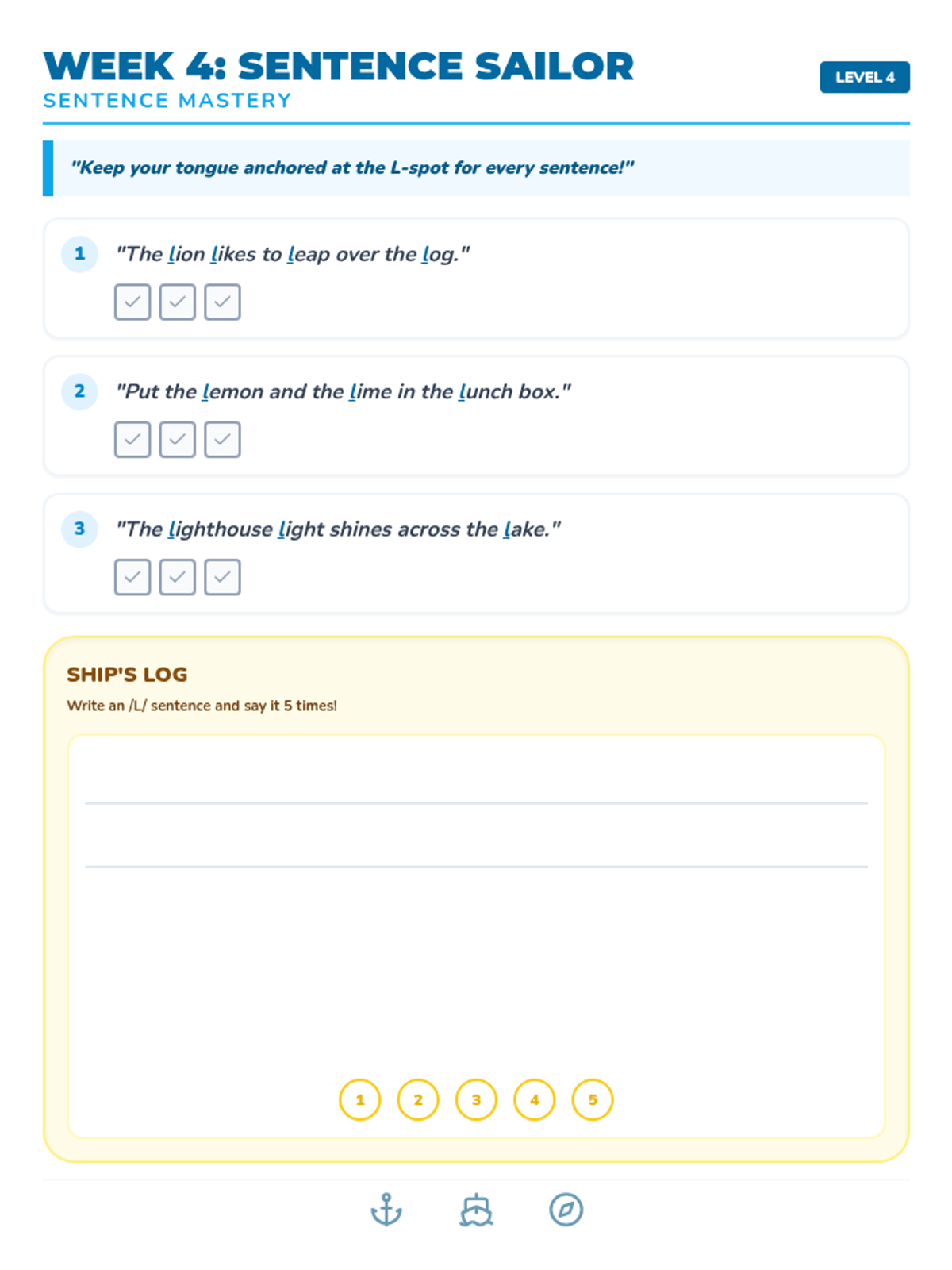
Week 4 practice packet for the Lighthouse L Adventure program. Revised for better page fitting, larger tracking areas, and a more integrated "Ship's Log" section.
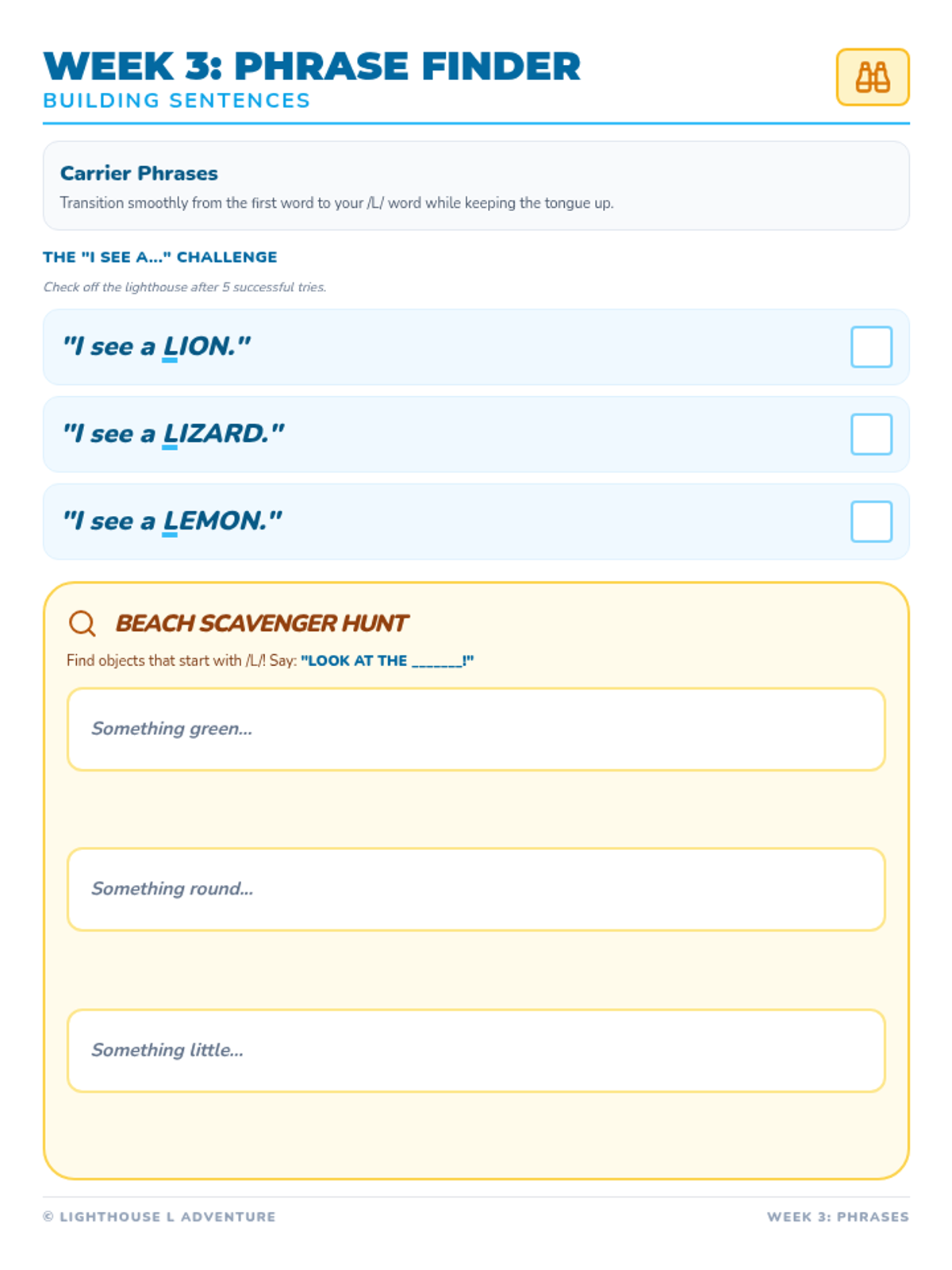
Week 3 practice packet for the Lighthouse L Adventure program. Revised to ensure single-page layout, larger recording areas, and corrected icons.
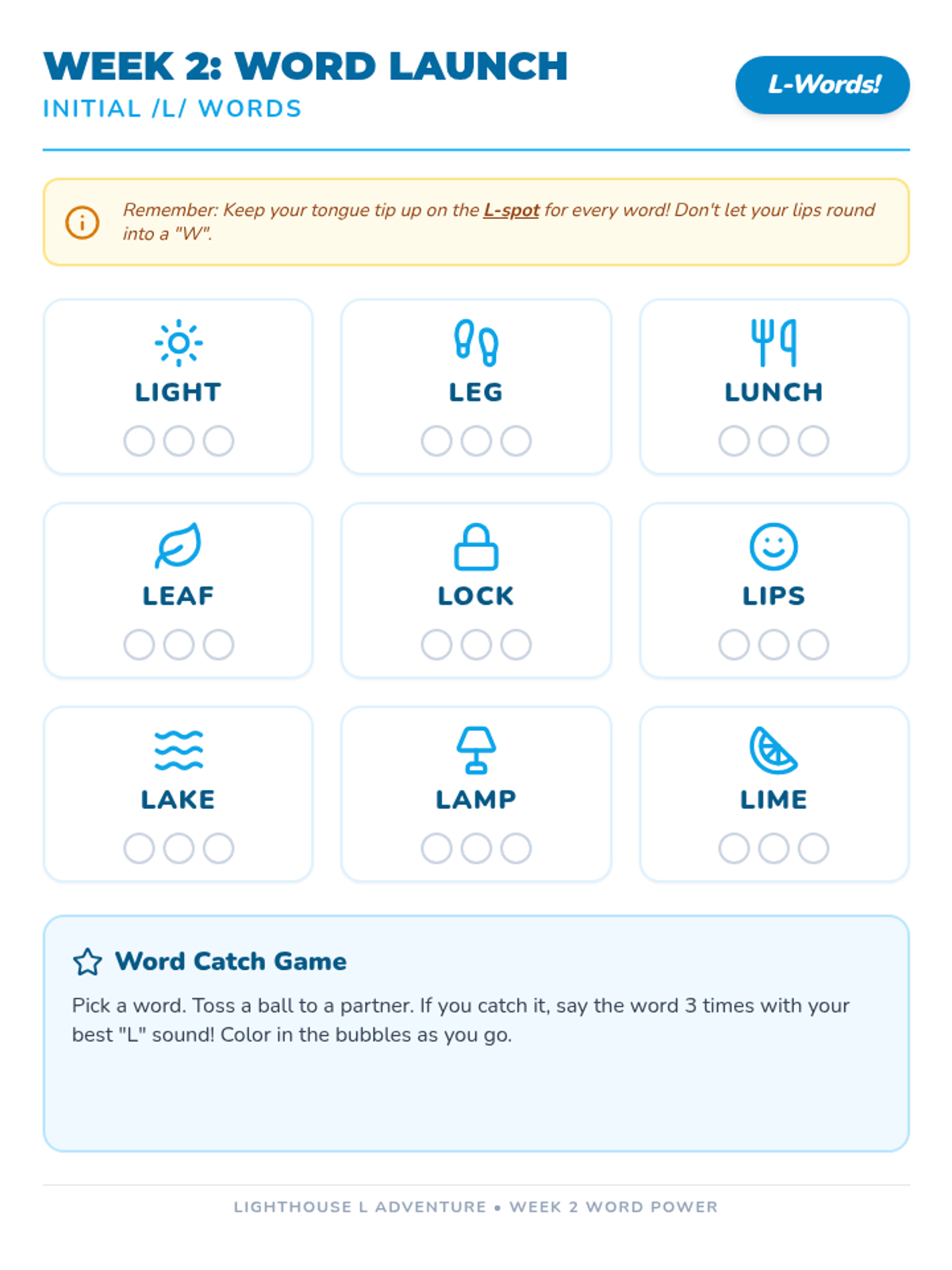
Week 2 practice packet for the Lighthouse L Adventure program. Revised for single-page printing and larger tracking circles for students.
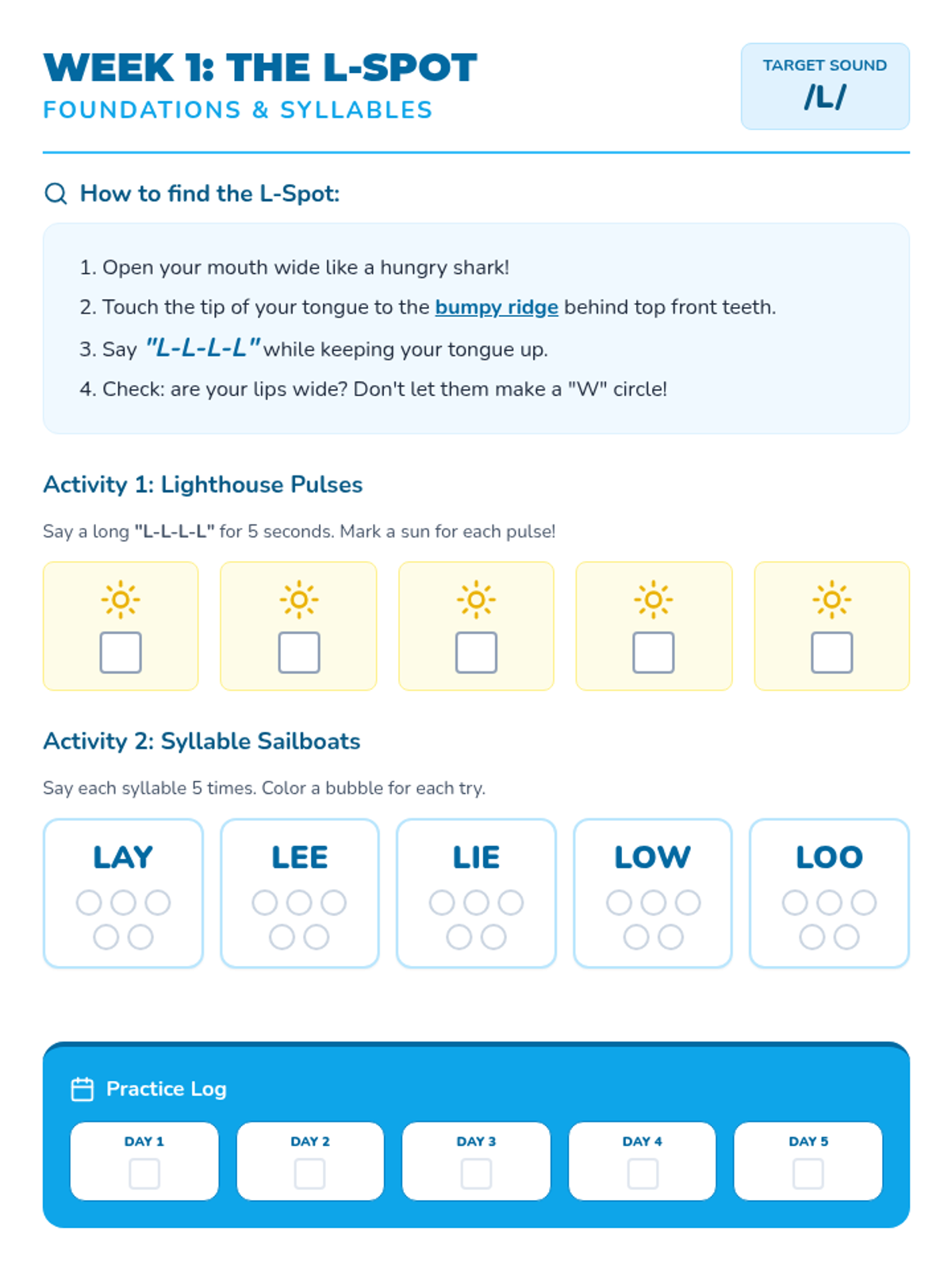
Week 1 practice packet for the Lighthouse L Adventure program. Revised for single-page printing, improved text contrast in the practice log, and larger tracking areas.
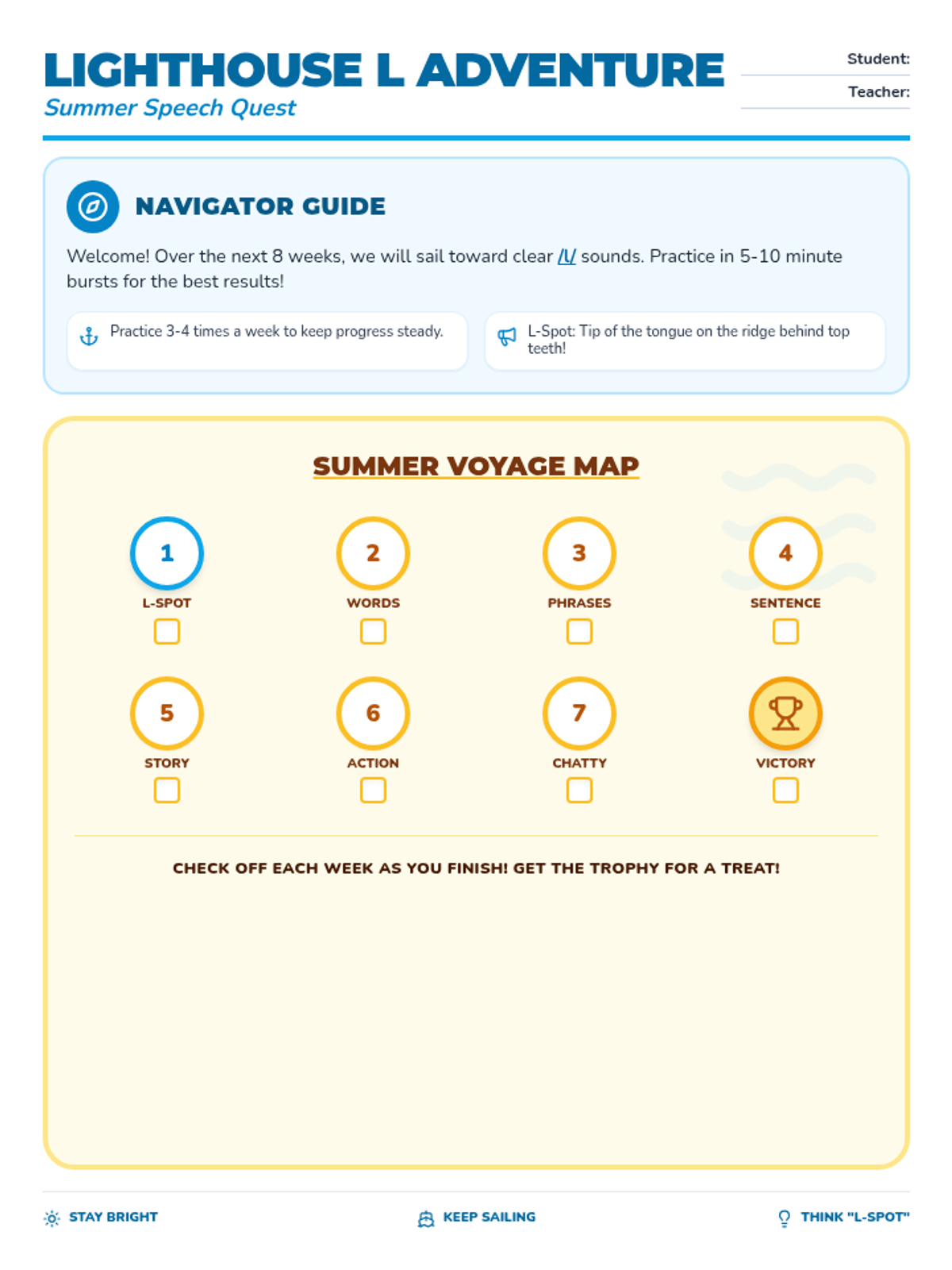
A summer progress tracker and parent guide for the Lighthouse L Adventure program, featuring a 8-week visual roadmap and foundational tips for home practice. Revised for better page-fitting and contrast.
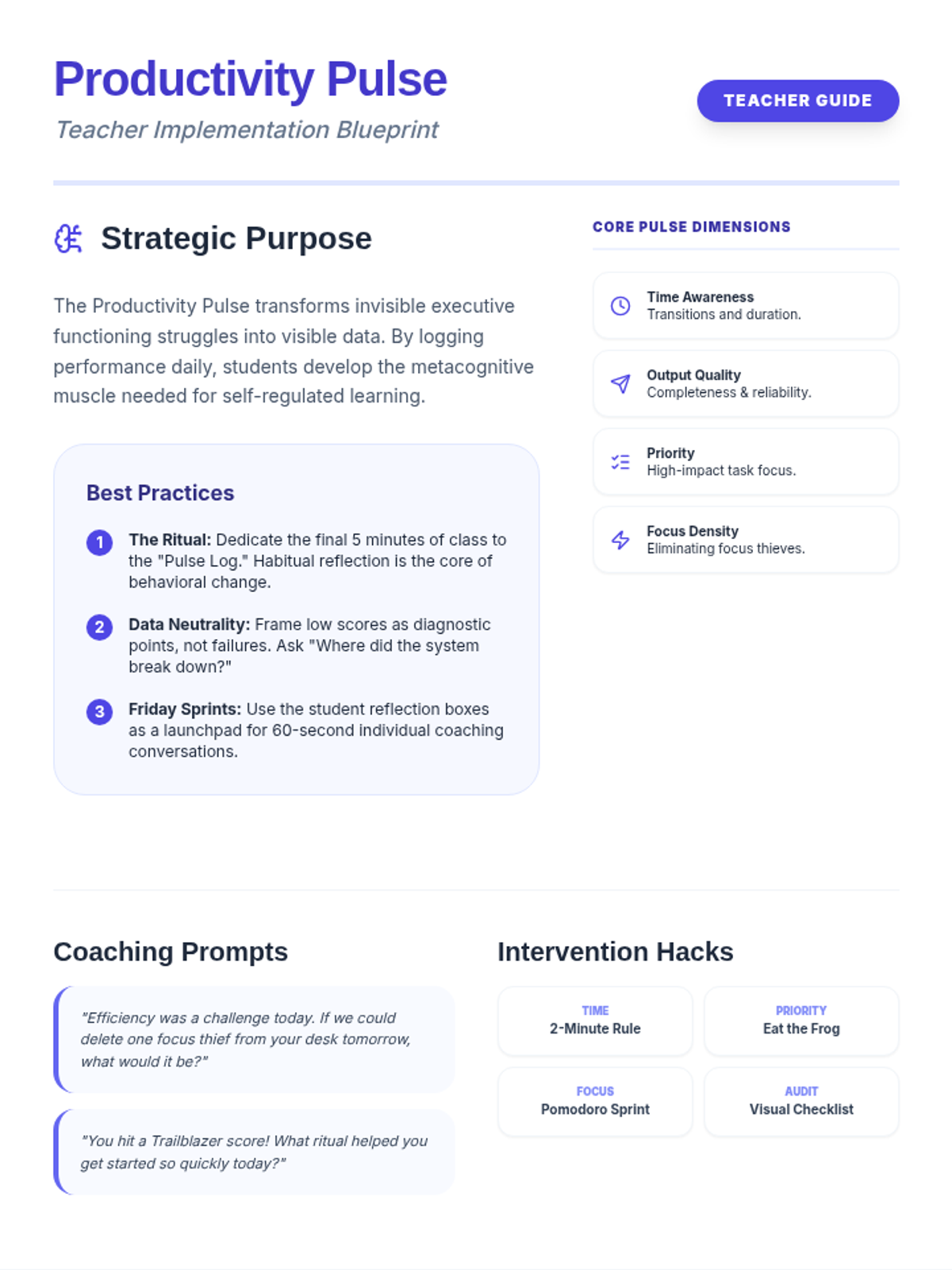
A comprehensive three-page toolkit including a teacher implementation guide, a daily performance log with a visual tracker, and a growth-focused 5-point proficiency rubric for executive functioning skills.
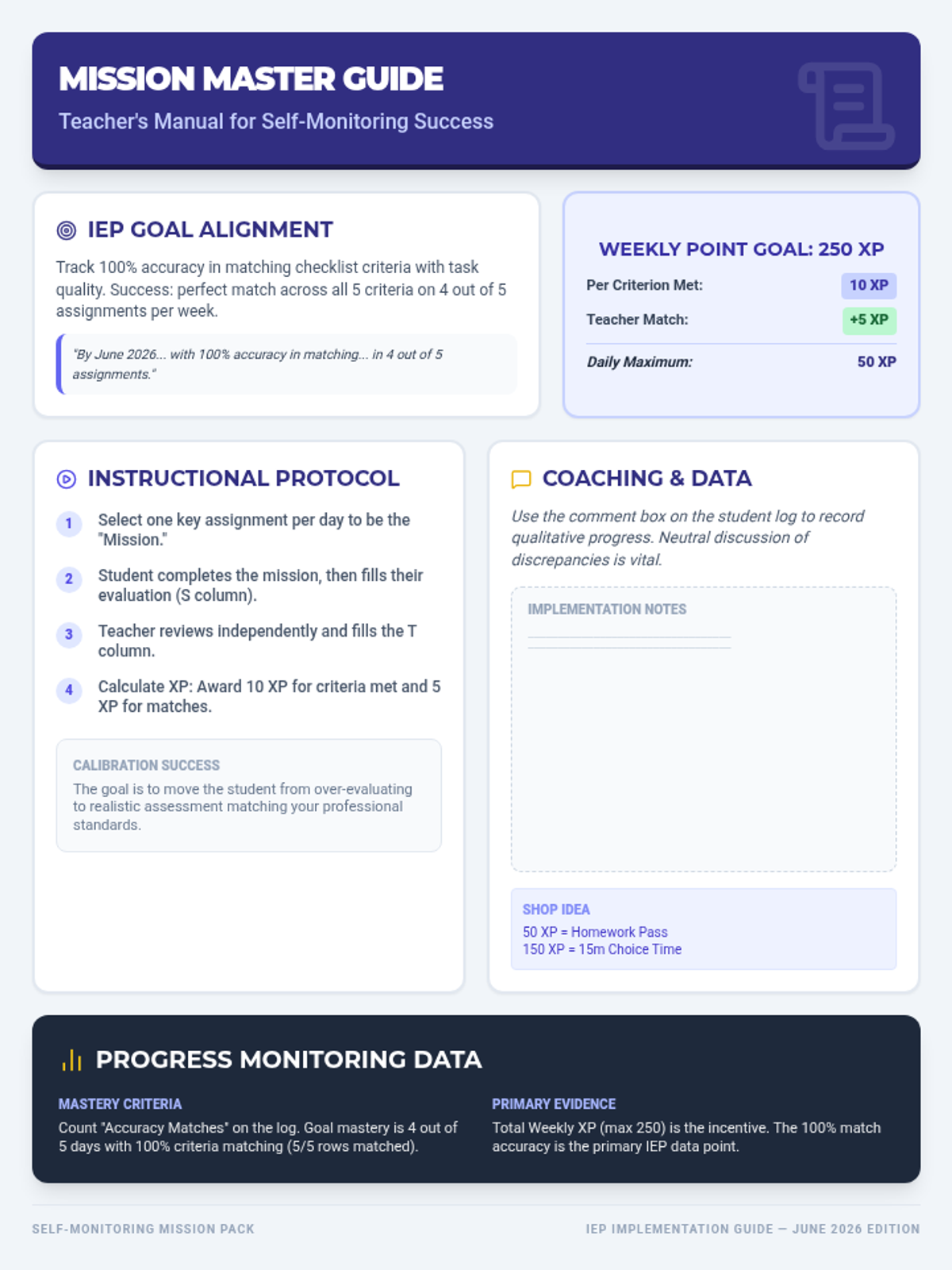
A professional teacher guide for implementing the Weekly Mission Log. It includes instructions for deployment, a detailed breakdown of the point system (XP), calibration tips for accuracy matching, and guidance on using the logs for IEP data collection. Tightened to fit one A4 page.
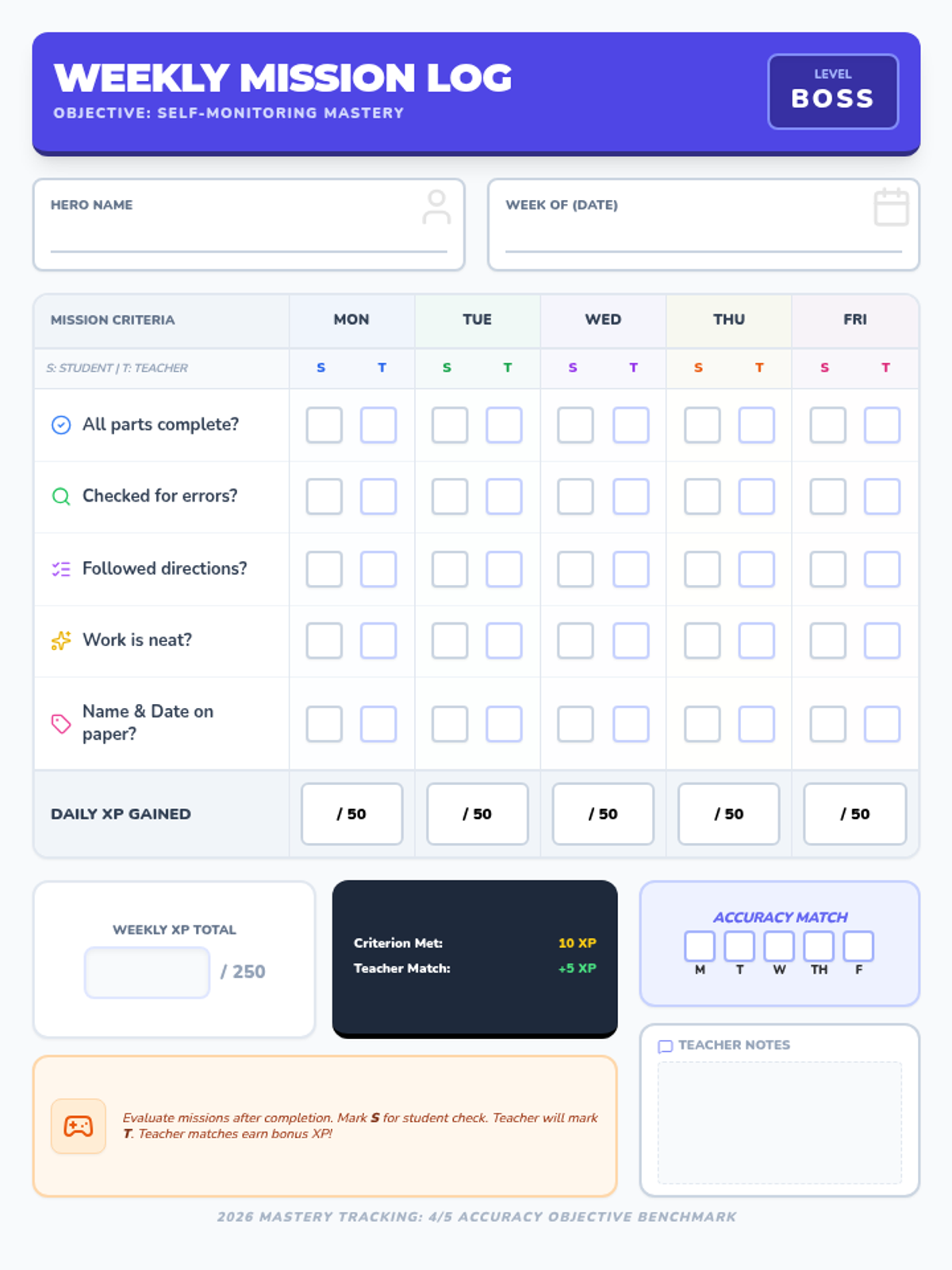
A video game-themed weekly self-monitoring log. It allows a student to track task completion and quality across five days (Monday-Friday) using the five IEP-aligned criteria, featuring a dual-check system for student and teacher accuracy validation. Points are scaled to a weekly total of 250, and a teacher comment area is included.
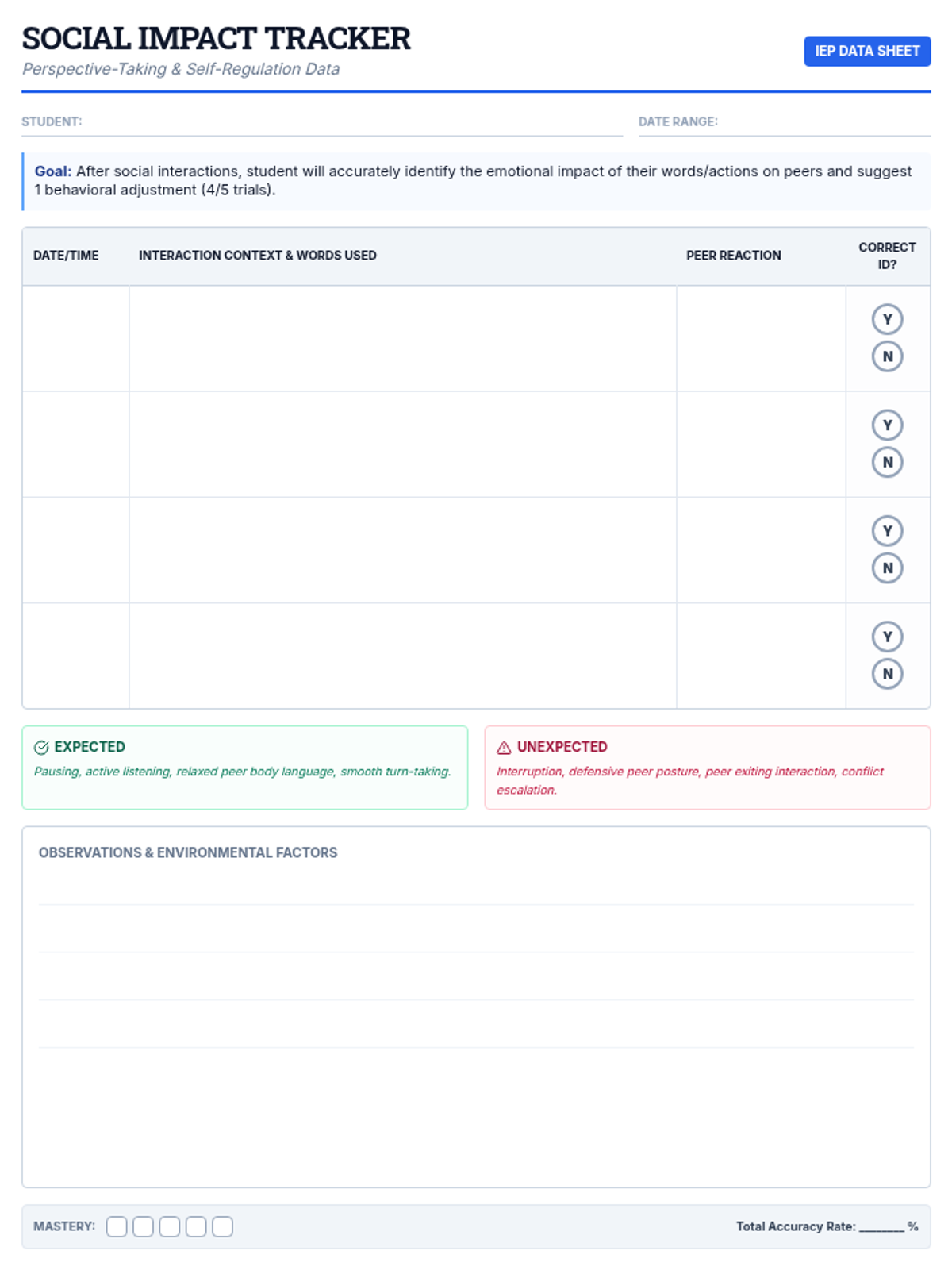
An updated IEP goal data tracking sheet for social-emotional learning. It features a streamlined, single-page layout with a structured data table for tracking perspective-taking, a circling-based accuracy key, and condensed behavior outcome references for easier teacher use.
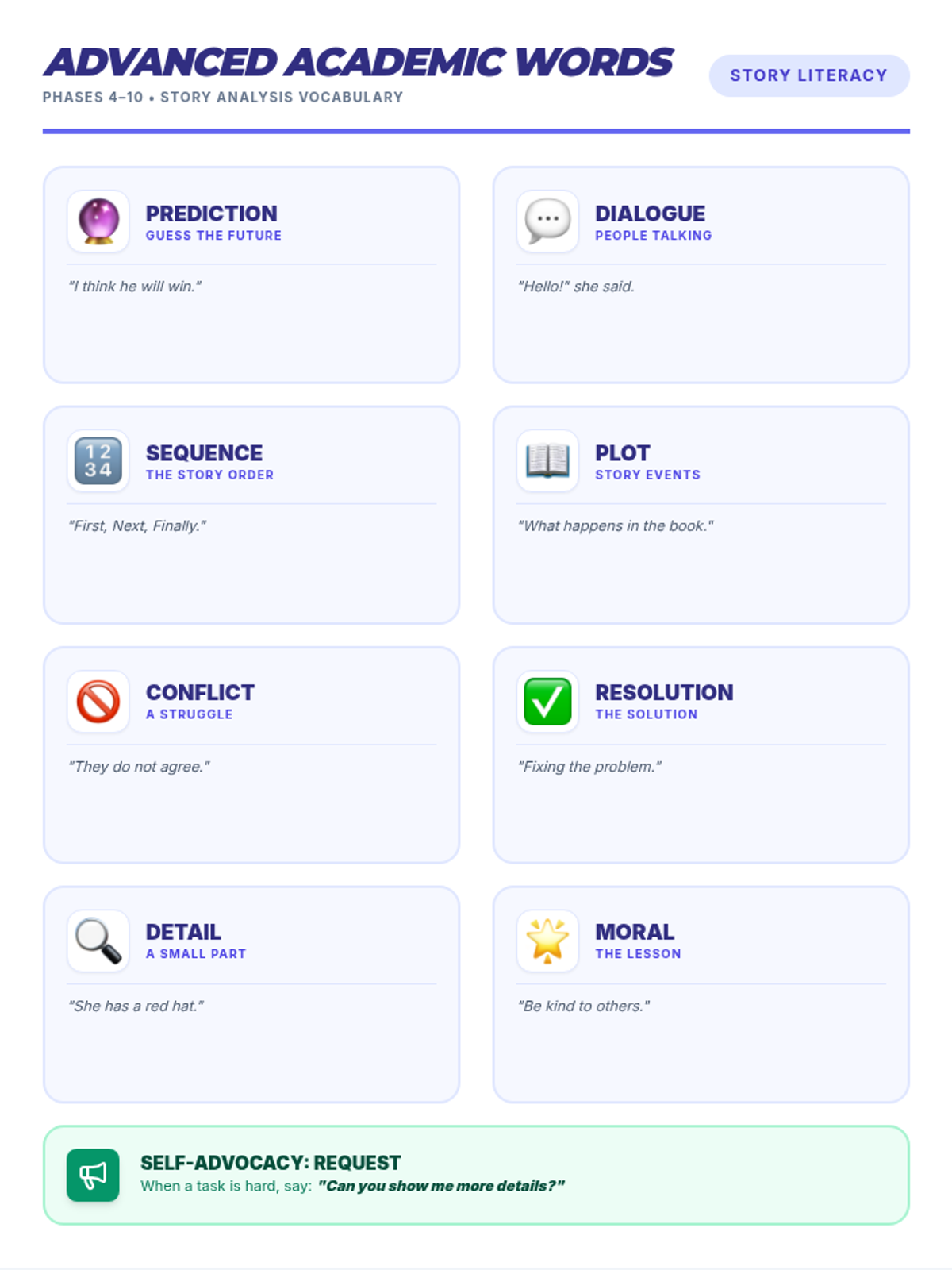
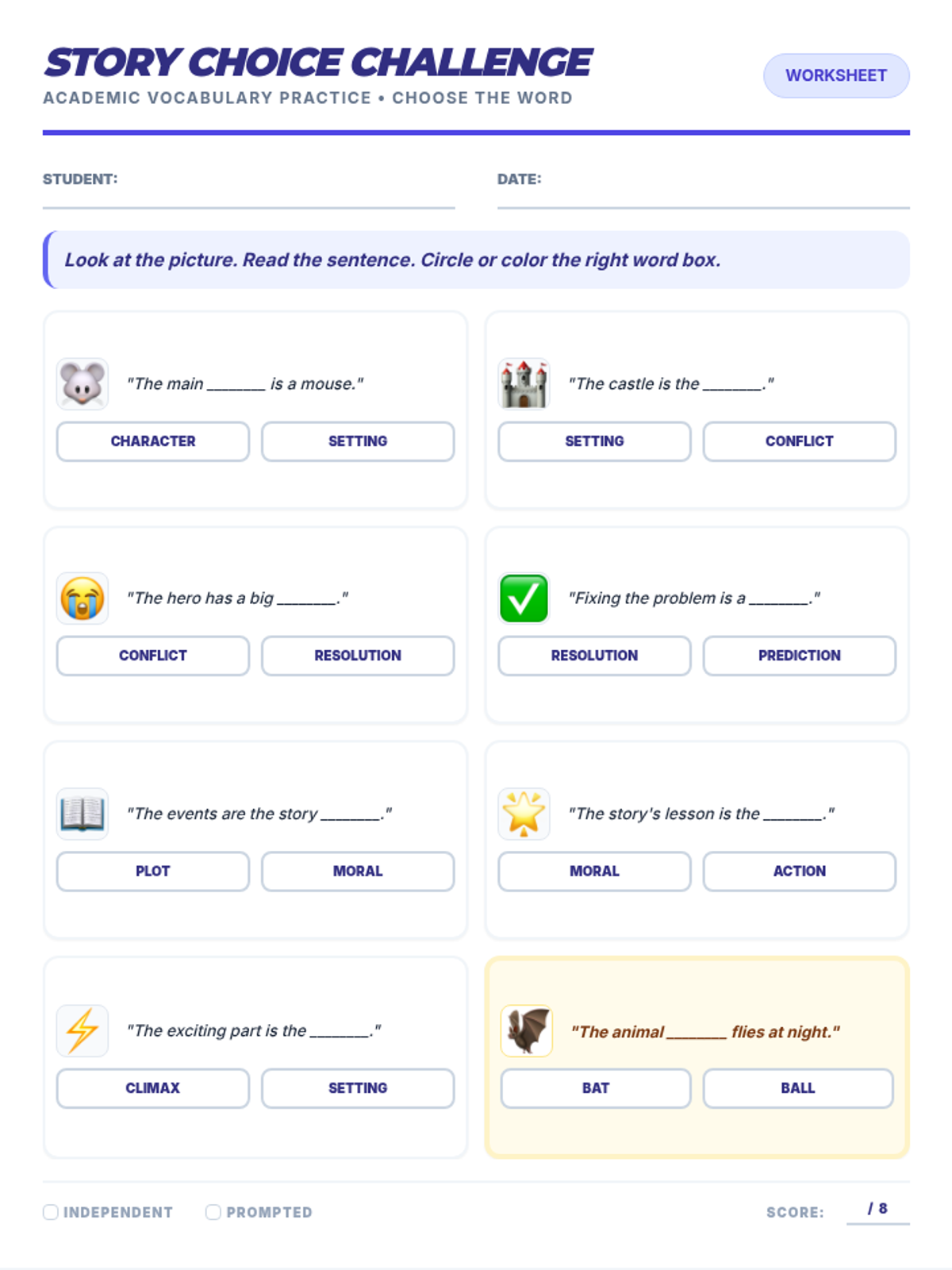
A 2-page advanced academic visuals guide and practice set. Page 1 is a dictionary with icons and definitions; Page 2 features large choice-based sentence completion items for story analysis terms.
An expanded sentence completion worksheet where students choose the correct academic fiction term (character, setting, conflict, resolution, plot, moral, climax, homonyms) based on visual prompts and academic contexts. Includes a dedicated monthly growth chart for teacher logging.
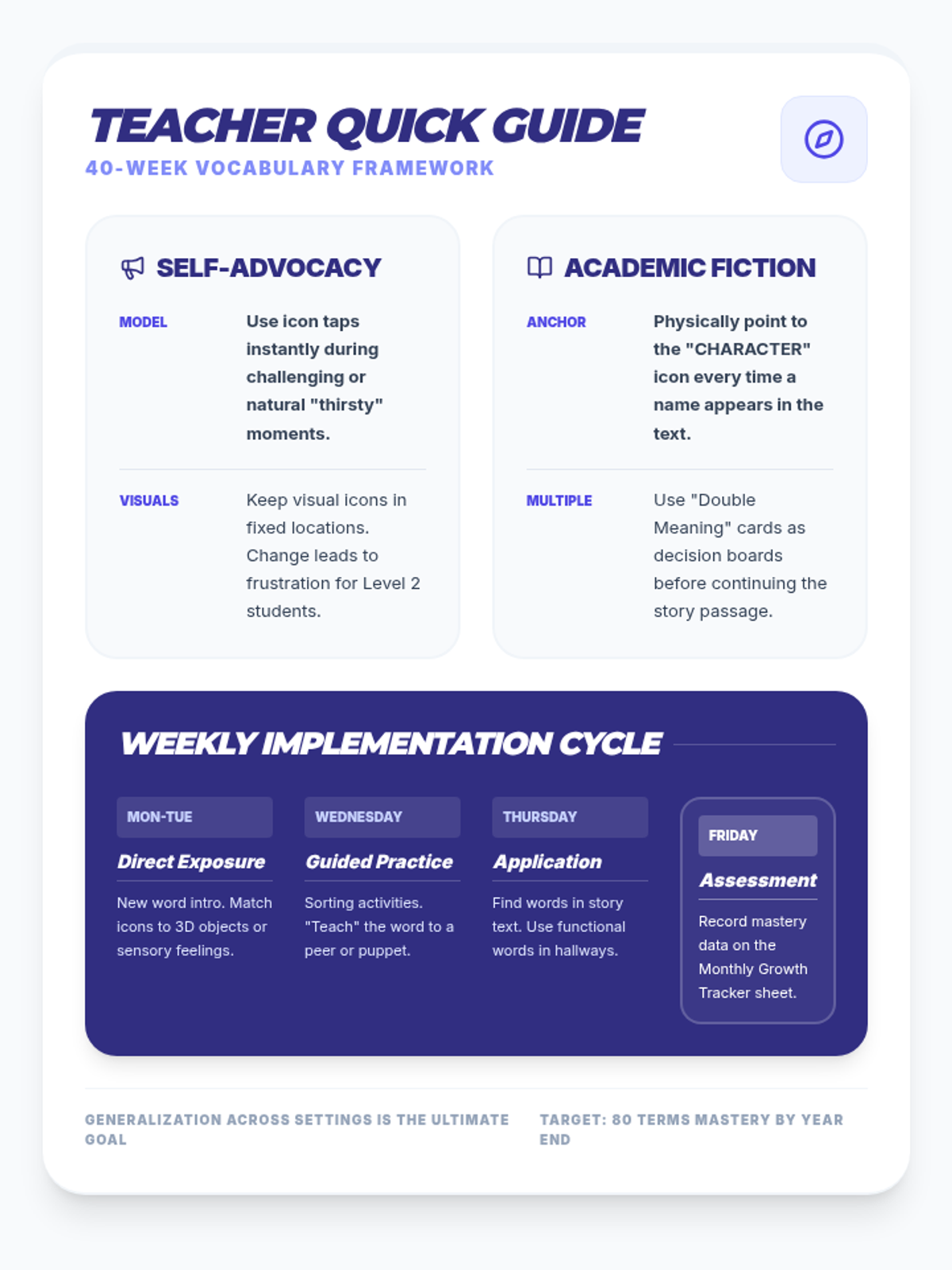
An instructional guide for teachers providing pedagogical strategies and a weekly workflow for implementing the 40-week vocabulary program.
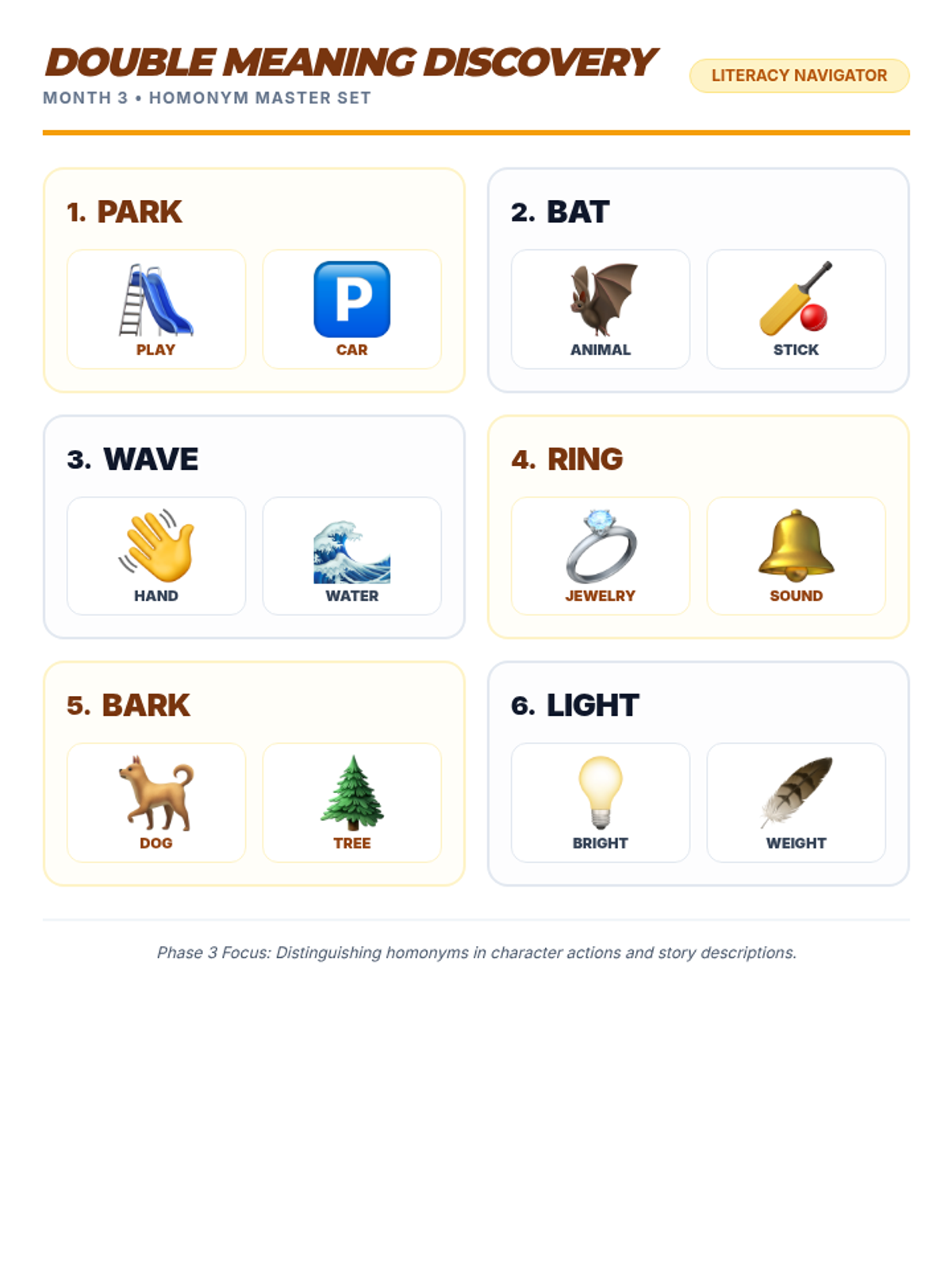
A specialized visual aid for Month 3 focusing on multiple-meaning words (homonyms), using large icons and clear comparative layouts to support a Level 2 Autistic student.
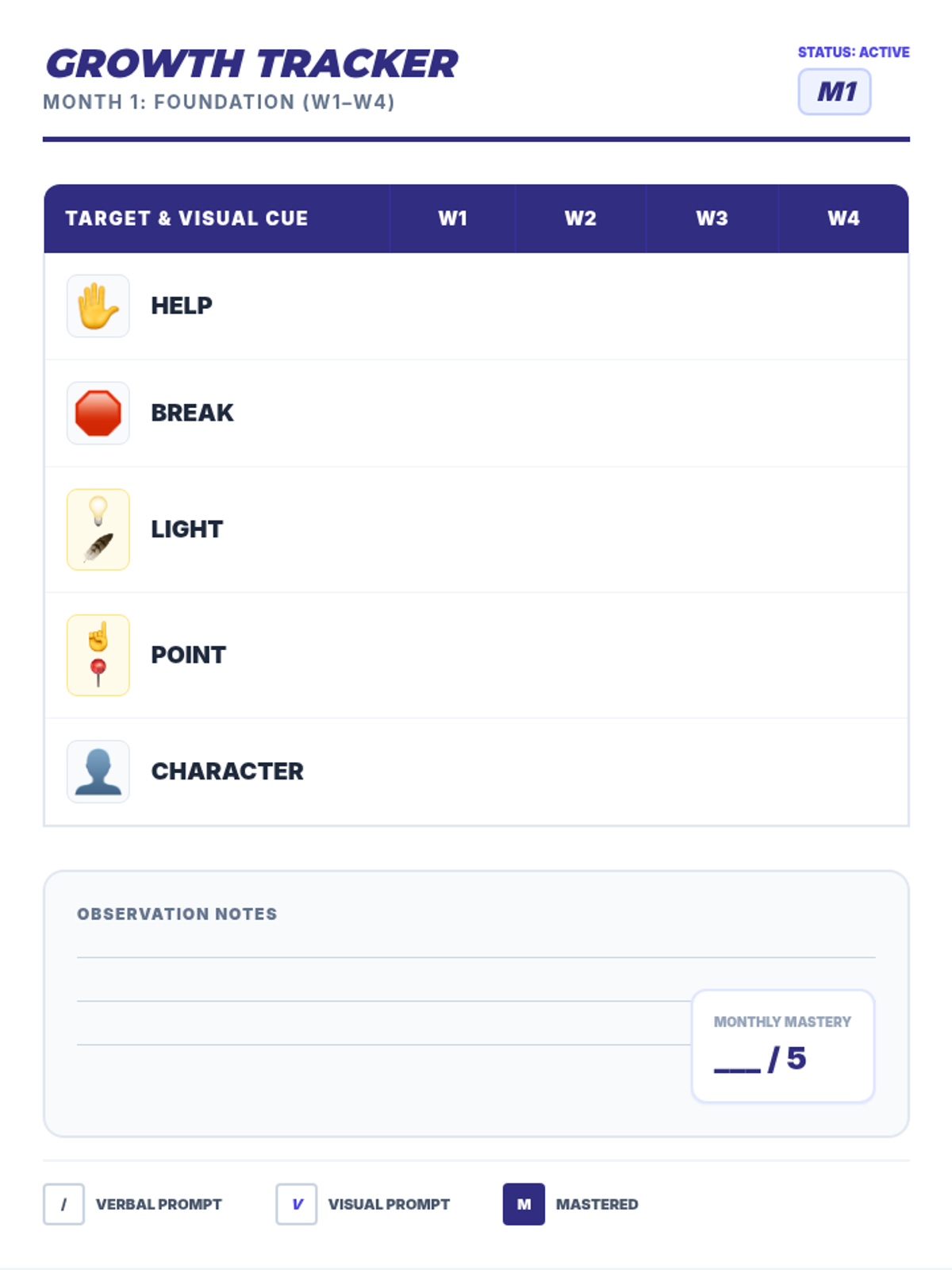
A comprehensive multi-page document designed to track specific vocabulary targets across 40 weeks, providing dedicated monthly tracking sheets with pre-populated words for self-advocacy and fiction comprehension.
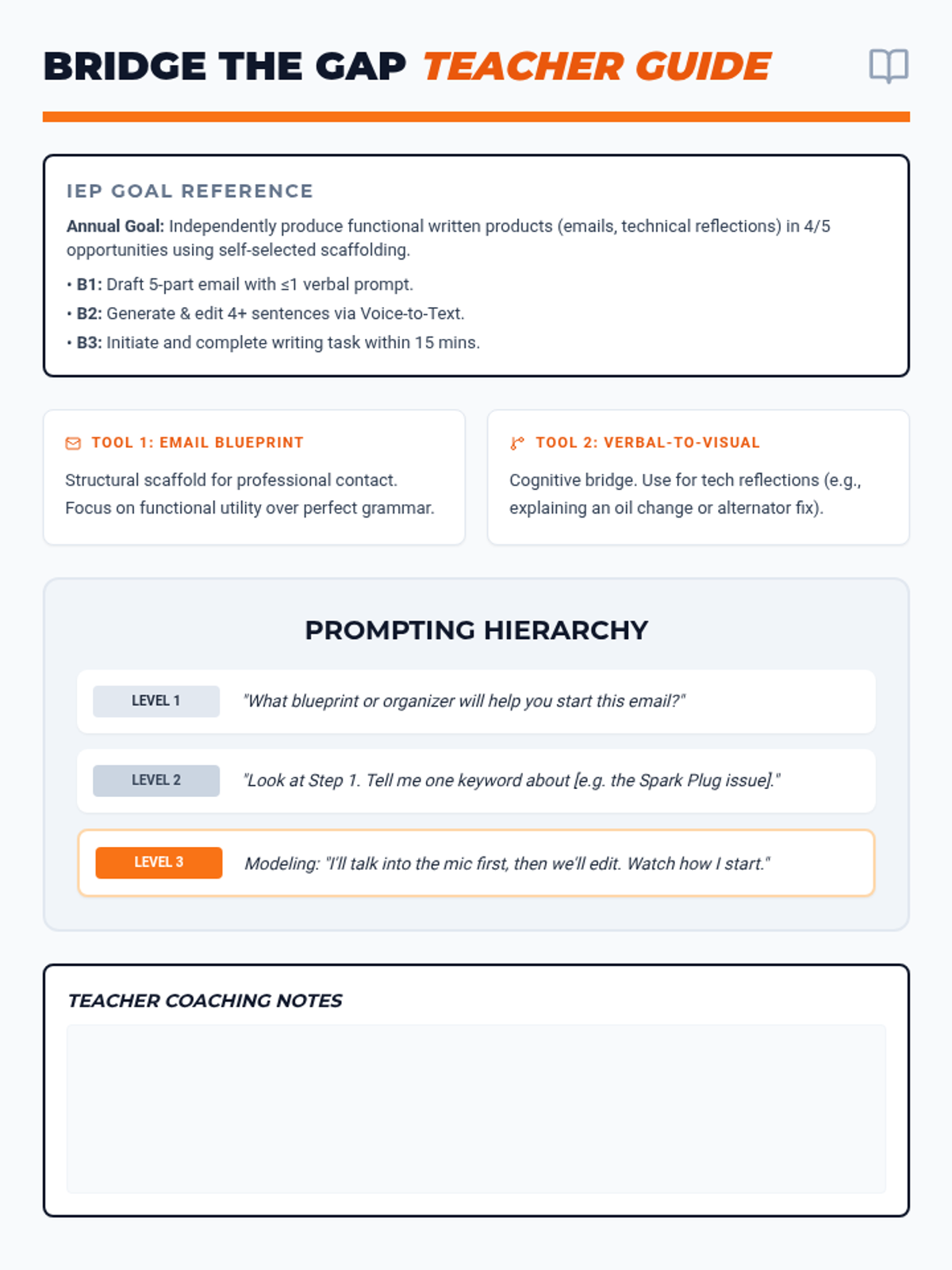
A teacher facilitation guide providing instructional strategies, a prompting hierarchy, and pacing advice for supporting a student's transition to independent writing.
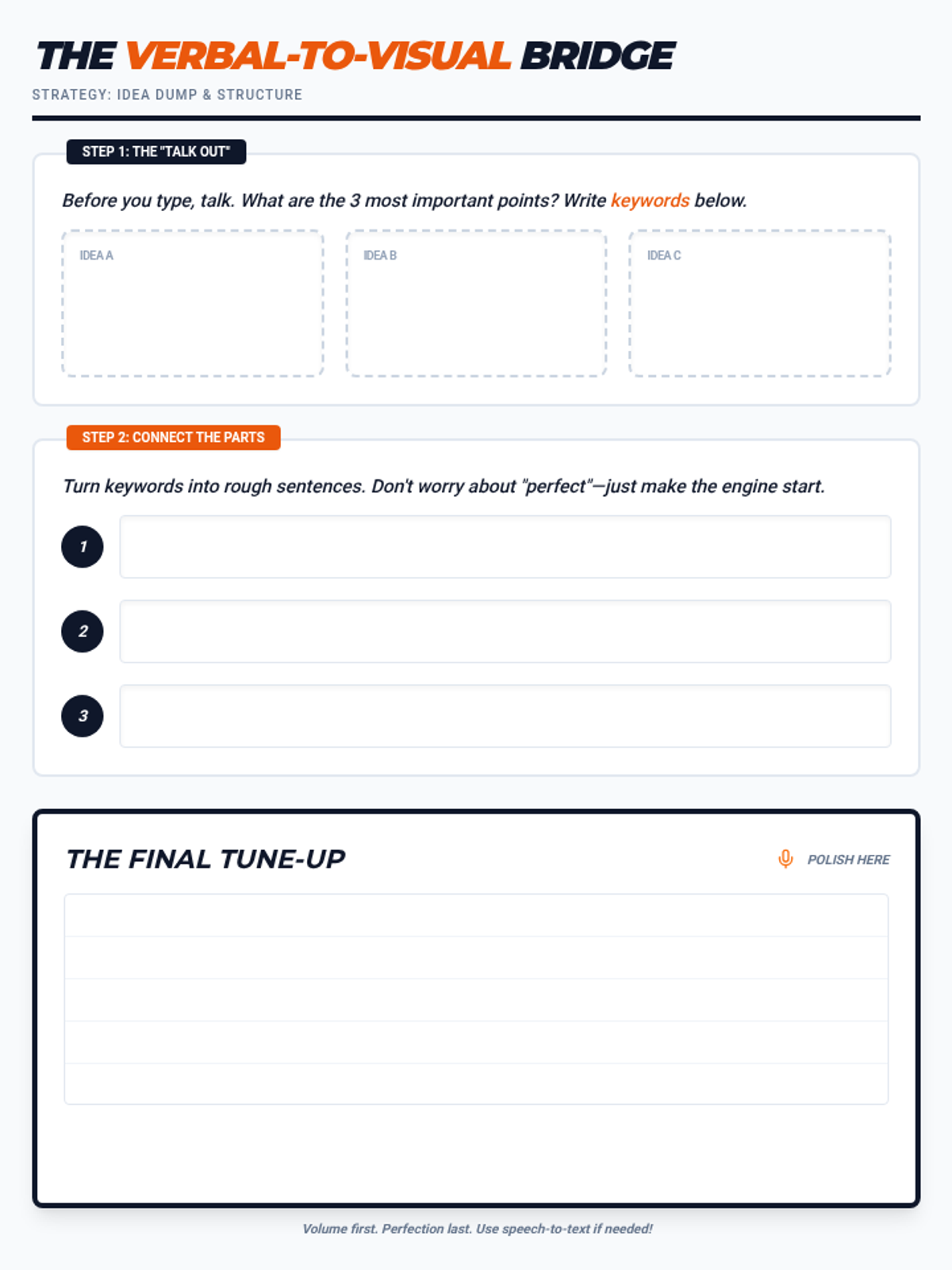
A graphic organizer designed to scaffold the writing process by bridging the gap between verbal ideas and written output through keyword mapping and sentence connection.
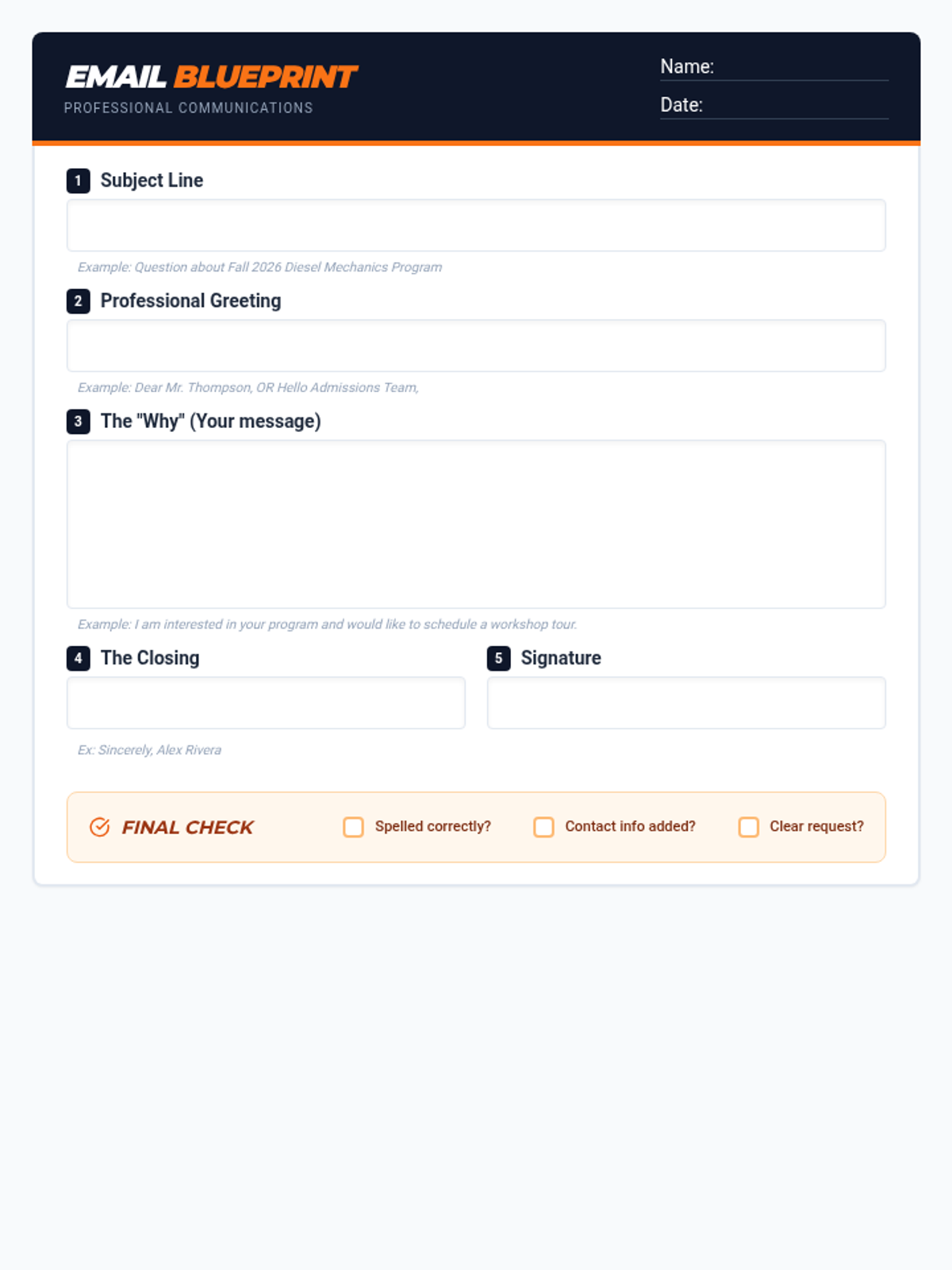
A functional writing template designed to help students draft professional emails by breaking the process down into five manageable parts.
A visual presentation for a 12th-grade student that reframes writing as a technical tool for a career in mechanics, offering strategies like voice-to-text and templates.
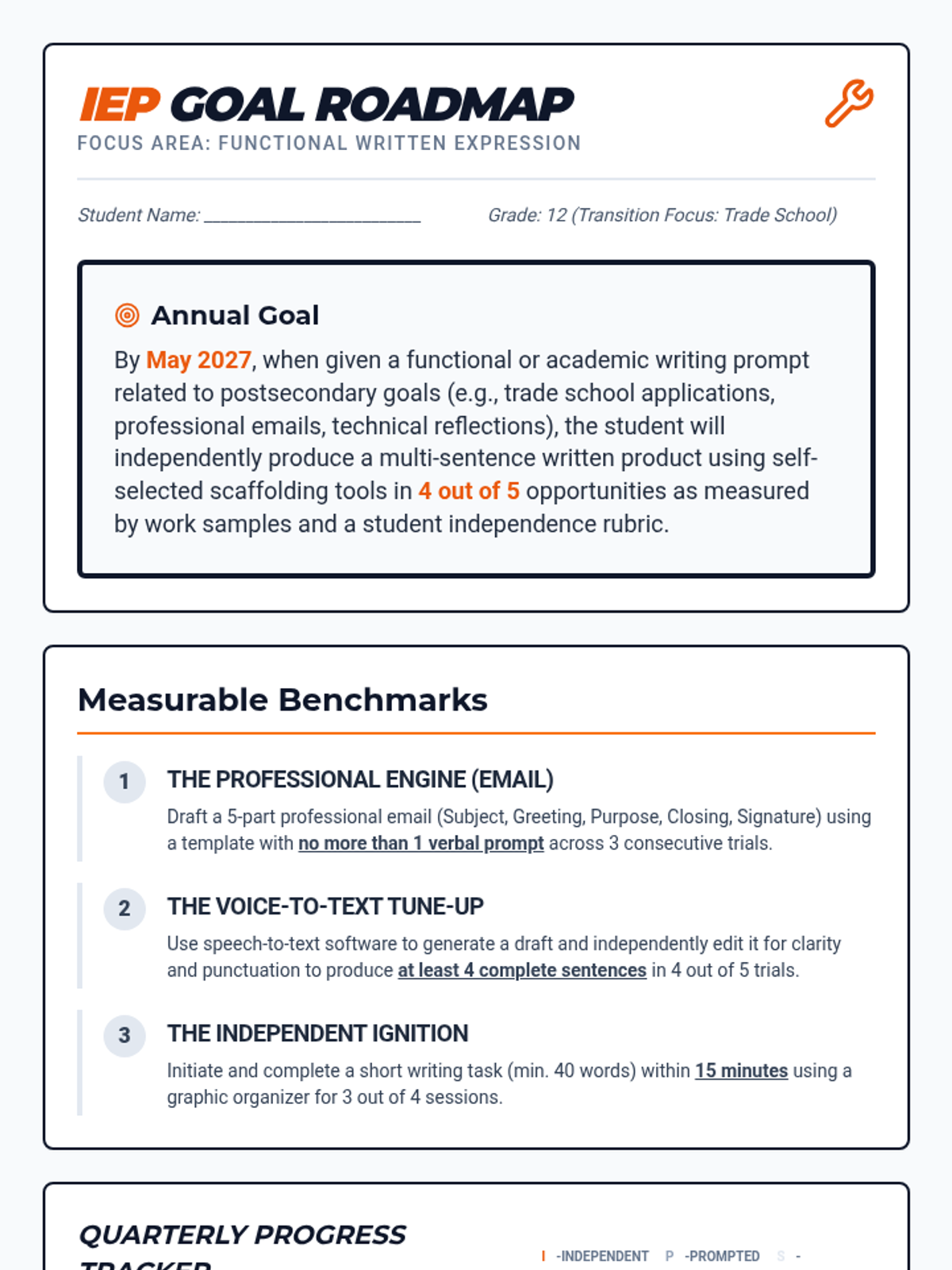
A formal IEP goal sheet outlining a written expression goal and three measurable benchmarks specifically tailored for a student pursuing a career in mechanics.
A social story for a 1st-grade student reimagined with a 'Hero Alliance' theme. It frames self-regulation as 'Power Down' and communication as 'Word Power'. Includes a new 'Retraining' panel detailing logical consequences and a 'Training Schedule' with requested labels. Corrected final page layout. Removed extra pages. Improved text contrast on retraining headers.
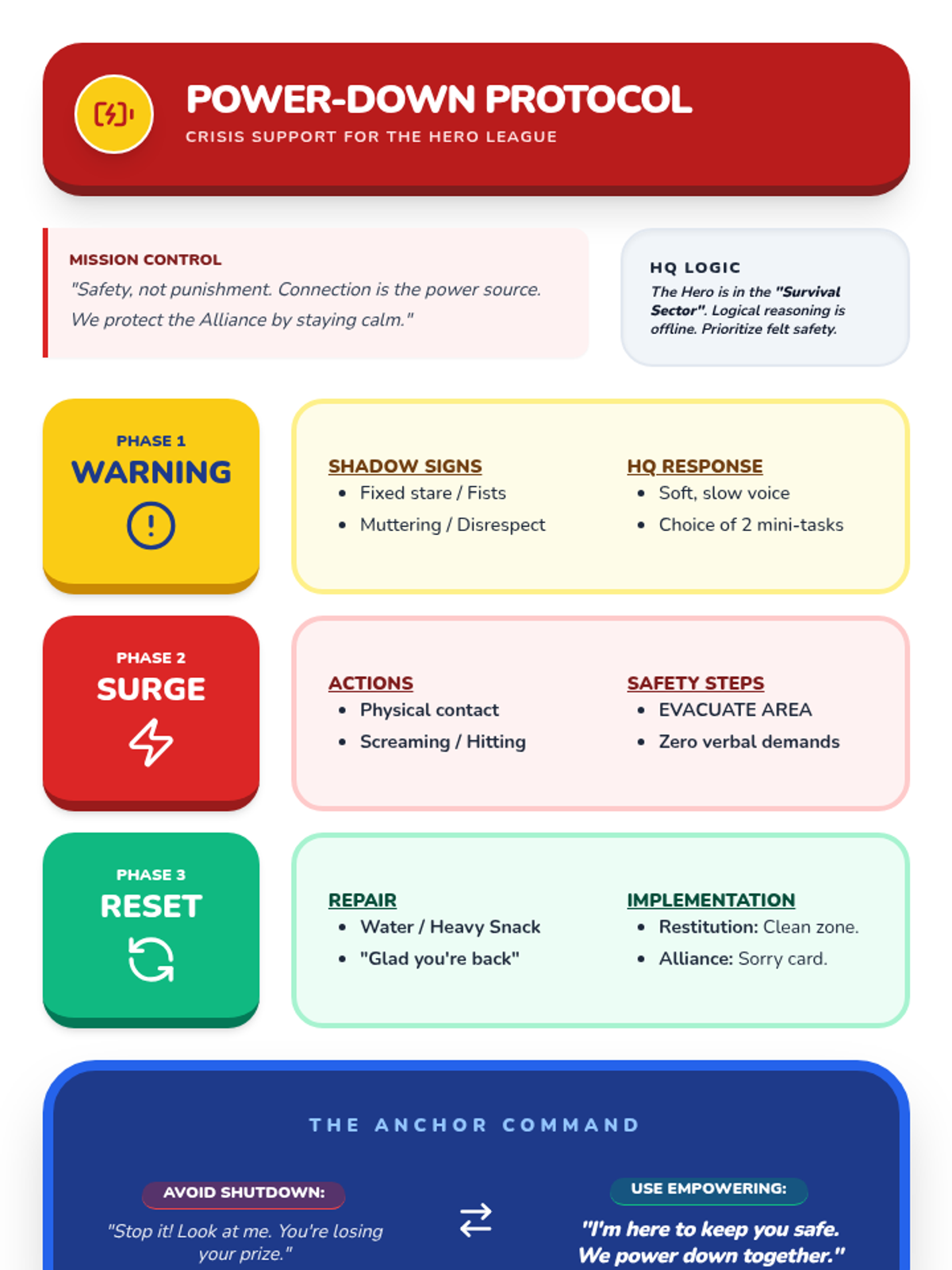
A teacher-facing de-escalation guide reimagined as the 'Power-Down Protocol'. It uses superhero metaphors to describe crisis phases and provides safety-focused staff responses. Corrected page breaks and contrast. Now fits on a single sheet. Increased font sizes for quick reference. Added protocol goals and detailed consequence implementation.
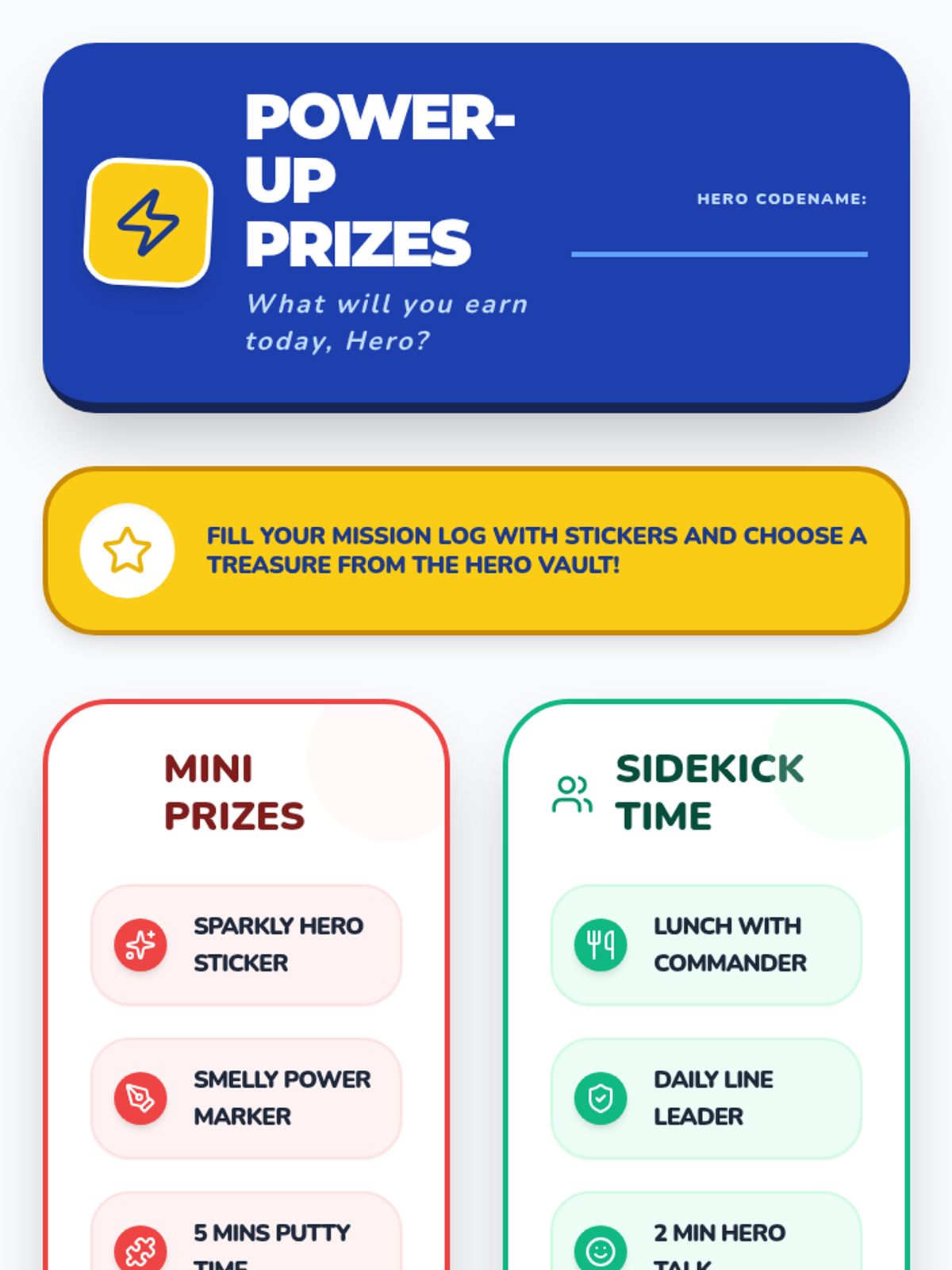
A student-facing visual reward menu themed as 'Power-Up Prizes'. It uses vibrant superhero colors and graphics to present various incentives. Corrected for page breaks and writing area legibility.
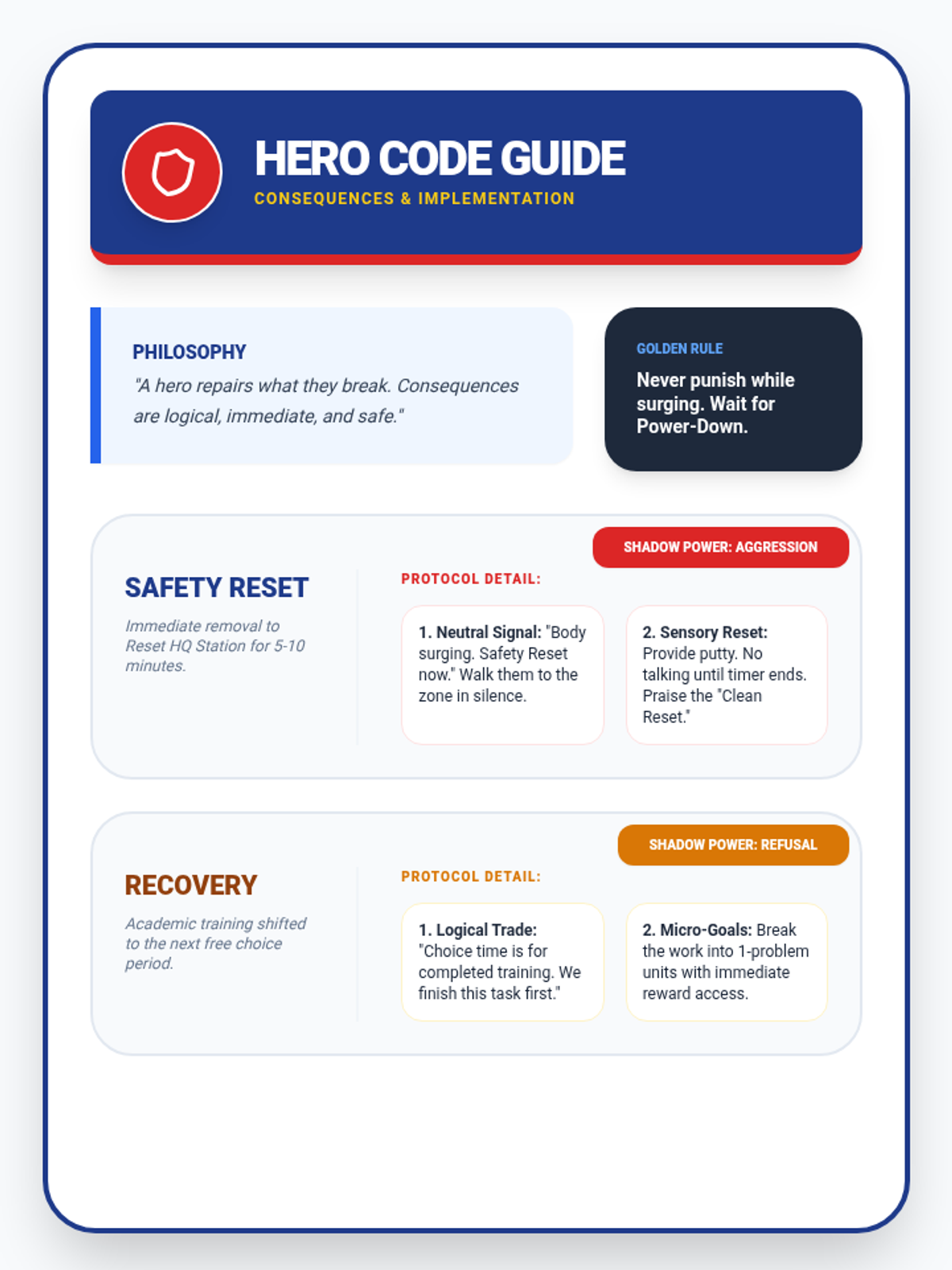
A teacher-facing guide outlining superhero-themed logical consequences and restorative practices. It provides step-by-step implementation notes for physical aggression, refusal, and disrespecting classmates or teachers. Corrected layout to handle multiple pages and overlapping text. Removed fixed height constraints.
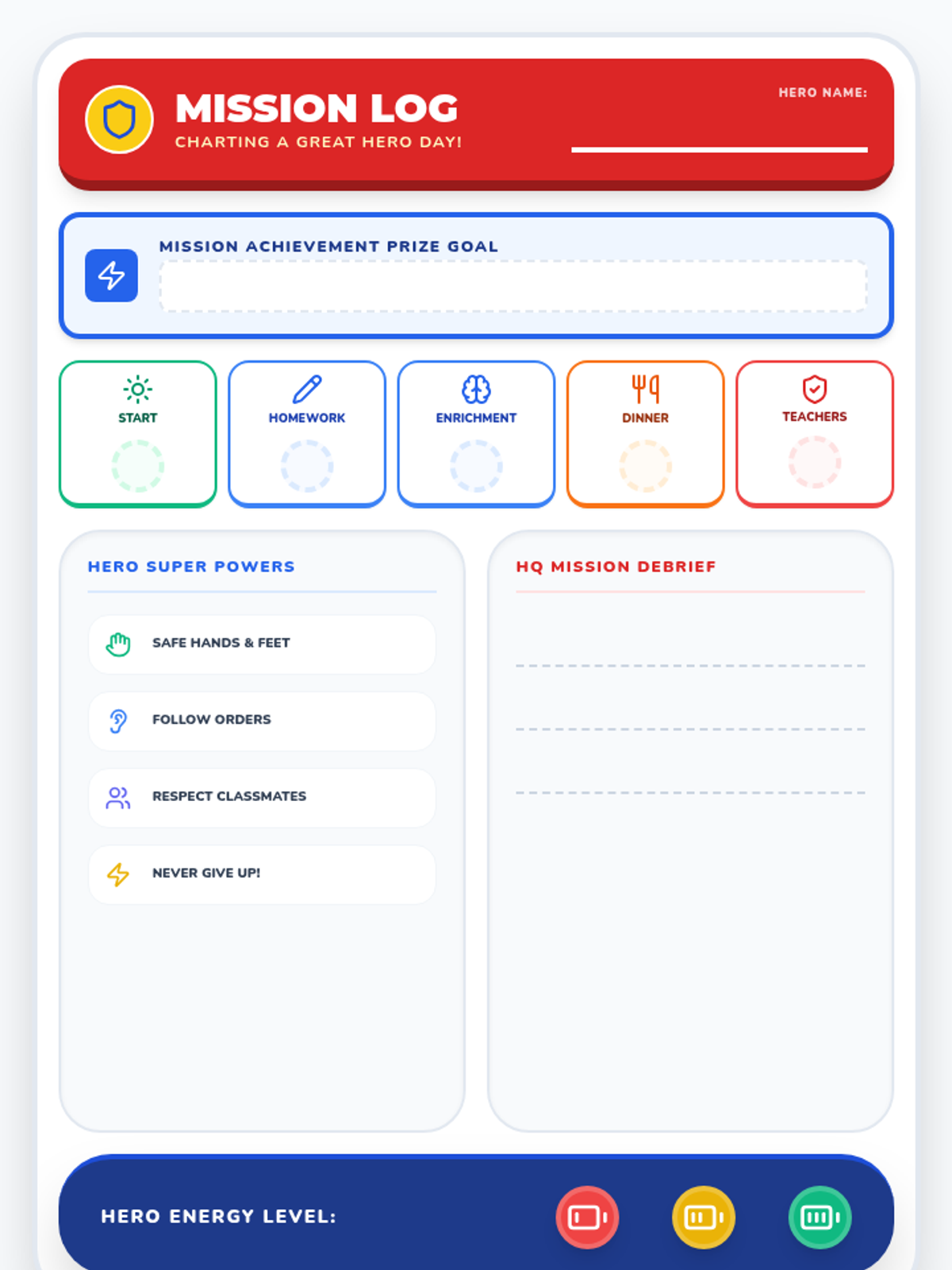
A student-facing daily visual behavior tracker themed as a 'Hero Mission Log'. Features a 5-step daily mission path and integrated Power Meter. Includes a second page for student-facing rules and consequences. Corrected font sizes and layout. Now condensed to ensure all components render properly.
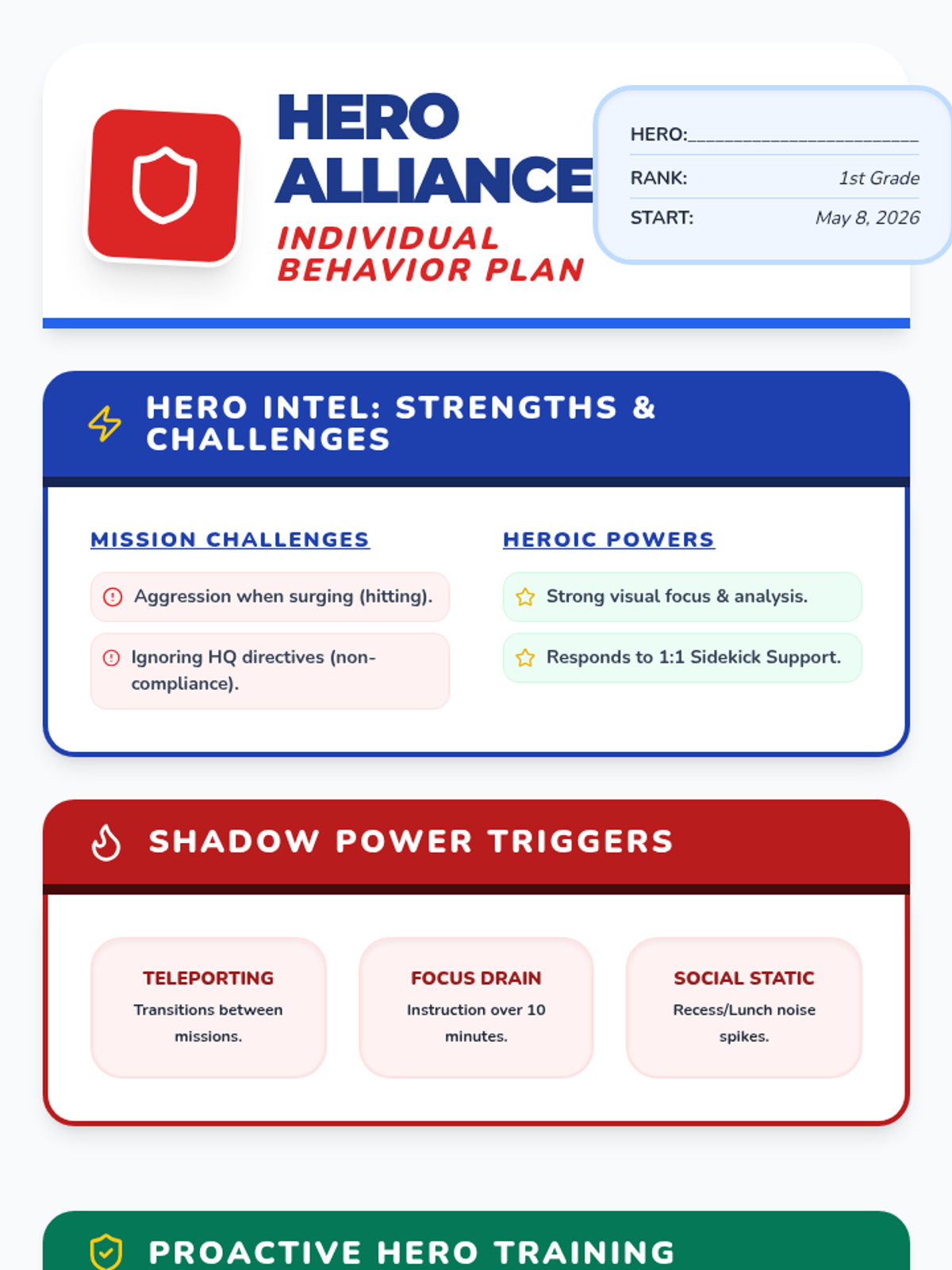
A comprehensive Individualized Behavior Intervention Plan (BIP) updated with a Super Hero 'Hero Alliance' theme. Includes expanded goals for transitions, compliance, on-task behavior, and social repair. Features a dedicated 'Shadow Power Consequences' section with detailed trauma-informed implementation steps. Corrected page breaks and info area. Now includes a simplified data tracking template. Corrected Surge symbol and header consistency.