A targeted sensitivity and de-escalation training for school security personnel focusing on supporting students with special needs using CPI principles.
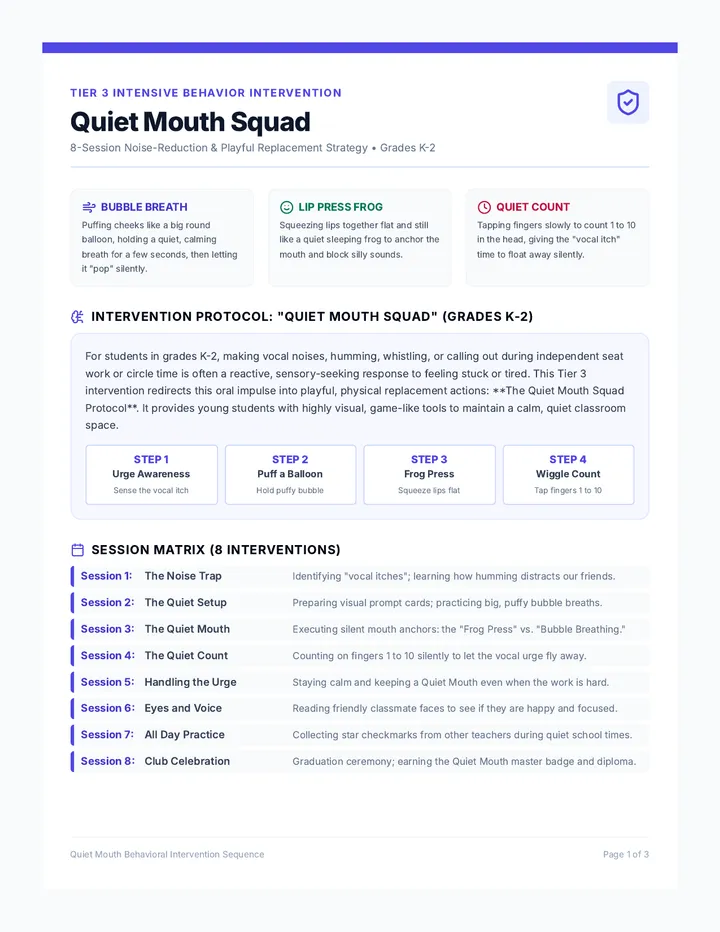
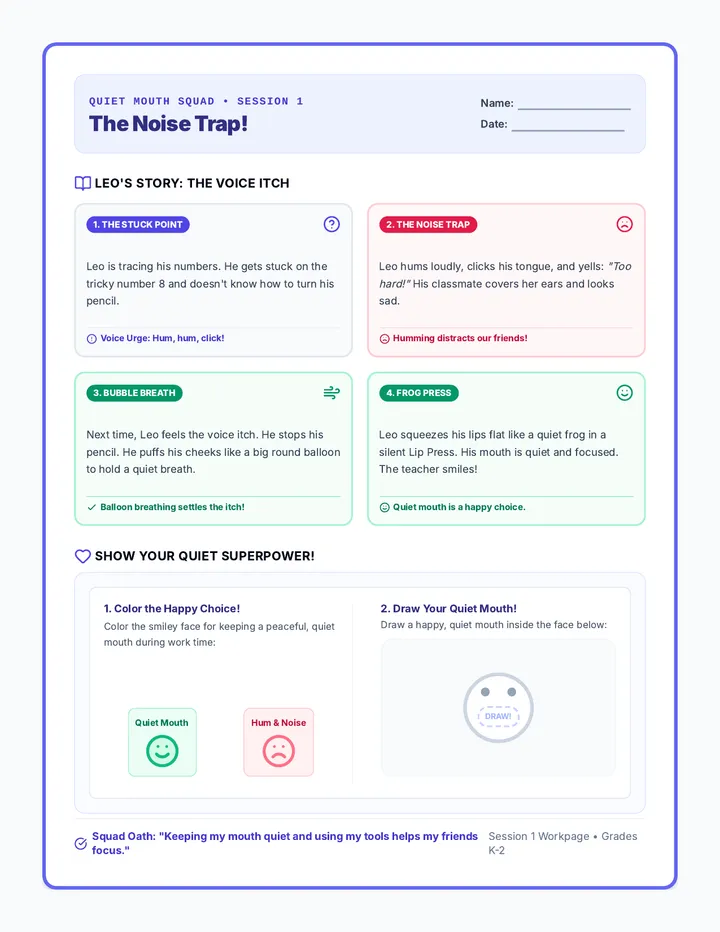
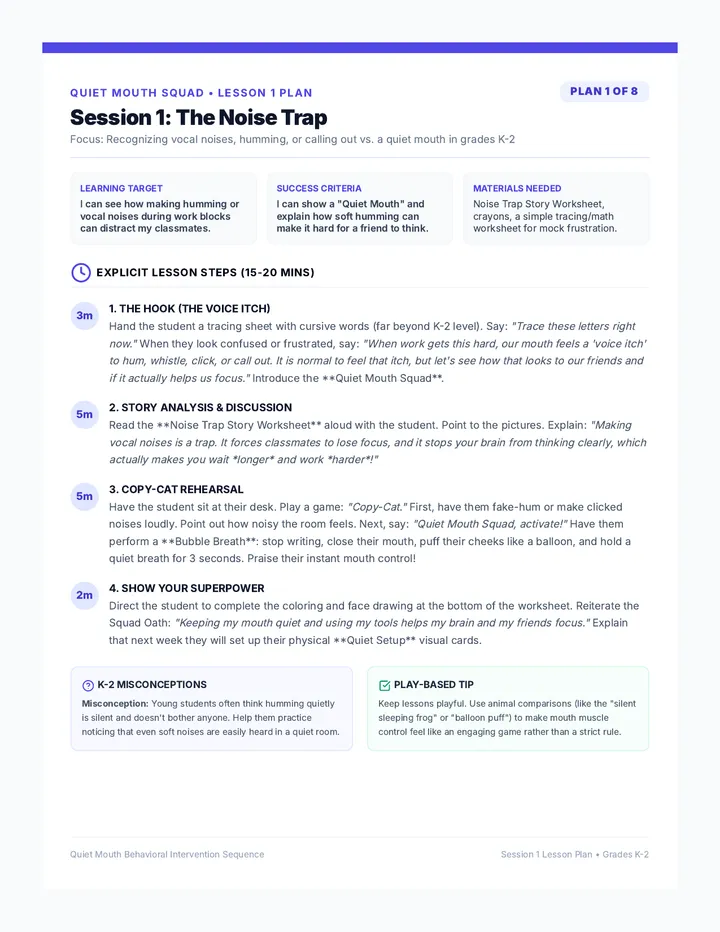
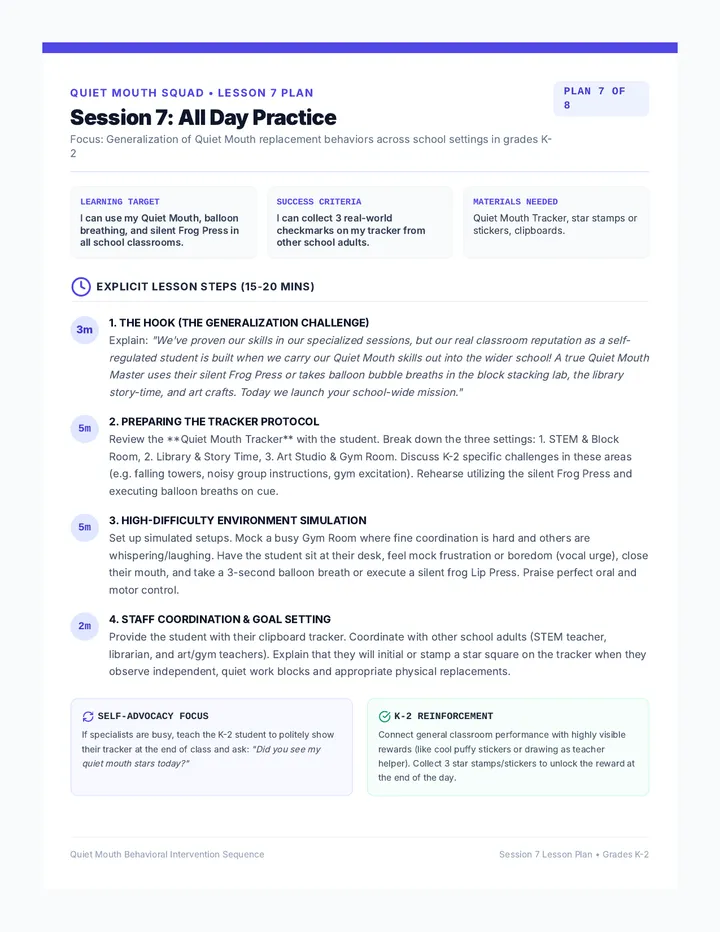
An 8-session intensive behavioral intervention sequence for students in grades K-2 targeting vocal noises, humming, or calling out during independent work. It teaches playful replacement behaviors: holding a quiet, puffy 'Bubble Breath' (like a balloon) or a firm 'Lip Press' (making a flat, silent mouth) to settle urges and maintain classroom focus.
A highly scaffolded reading comprehension lesson designed for literal thinkers to bridge the gap between concrete facts and social inferences. Students analyze a realistic, high-interest text-message exchange to uncover hidden feelings, connect their findings to Robert Frost's 'Nothing Gold Can Stay', and practice evidence-based writing in a non-threatening, game-like format.
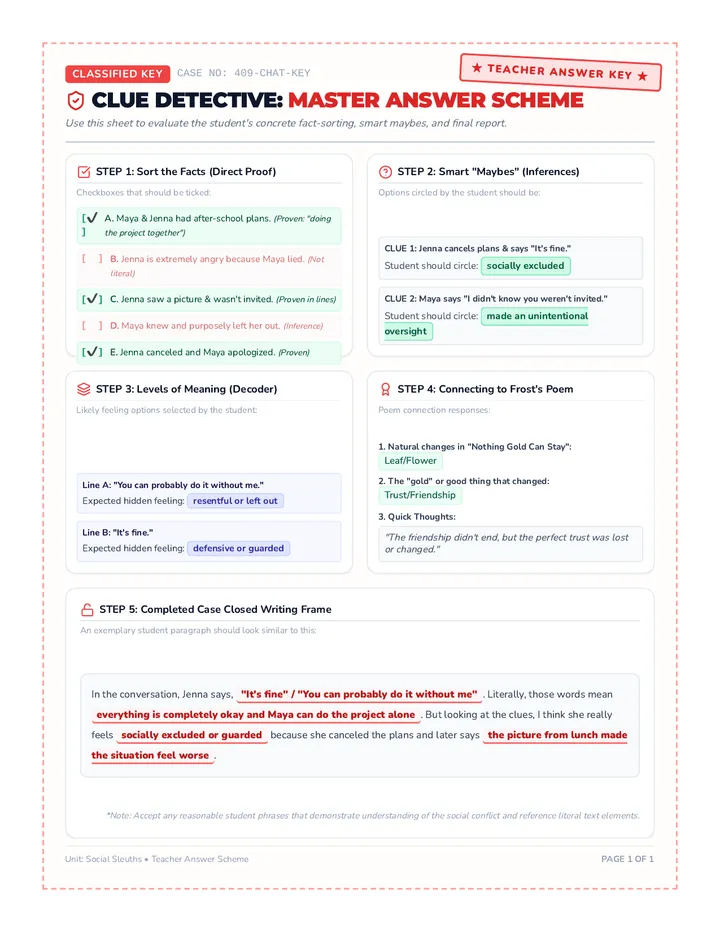
A single-page teacher answer key displaying complete and correct student responses for the Chat Detectives worksheet, including ticked fact boxes, circled maybes, and the completed Case Closed writing frame.
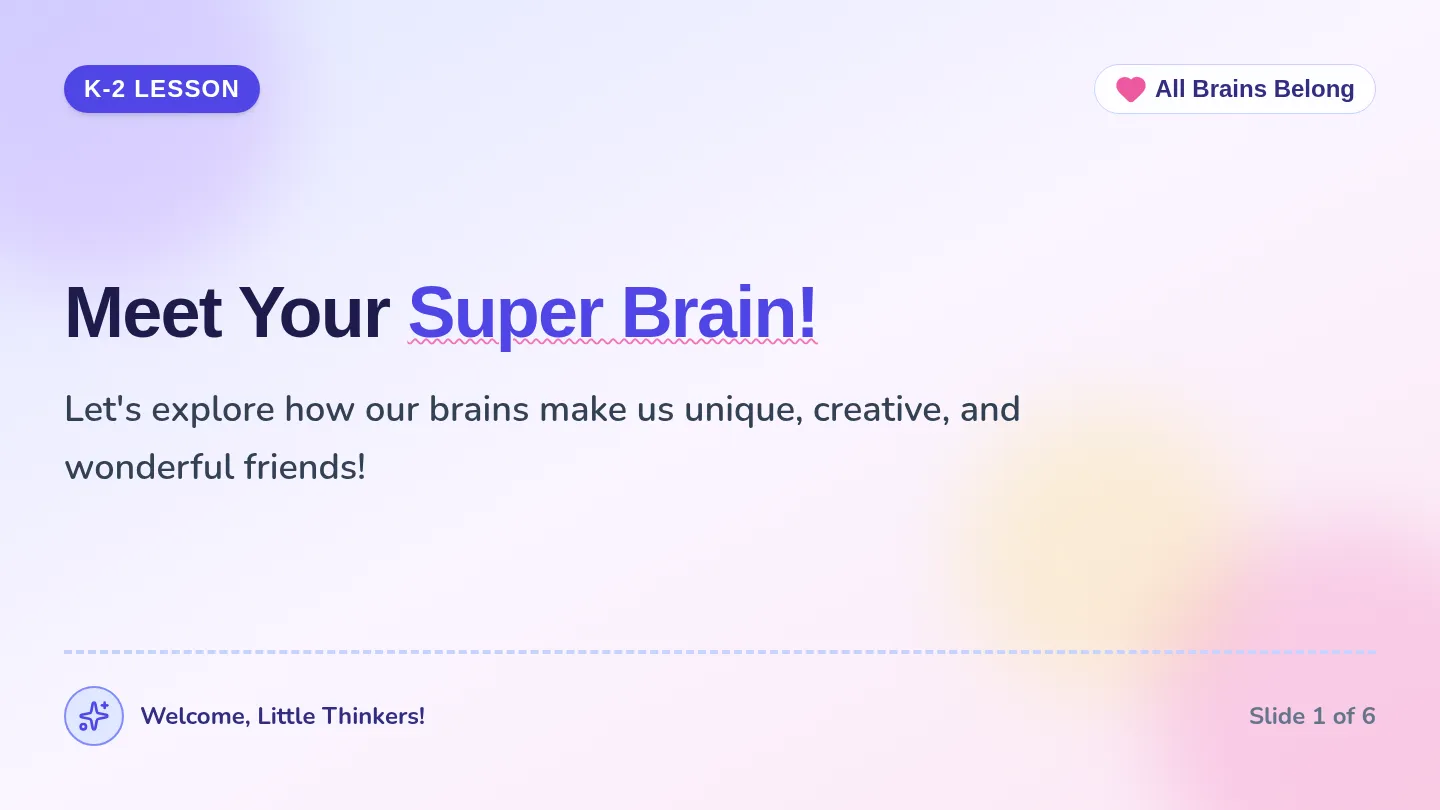
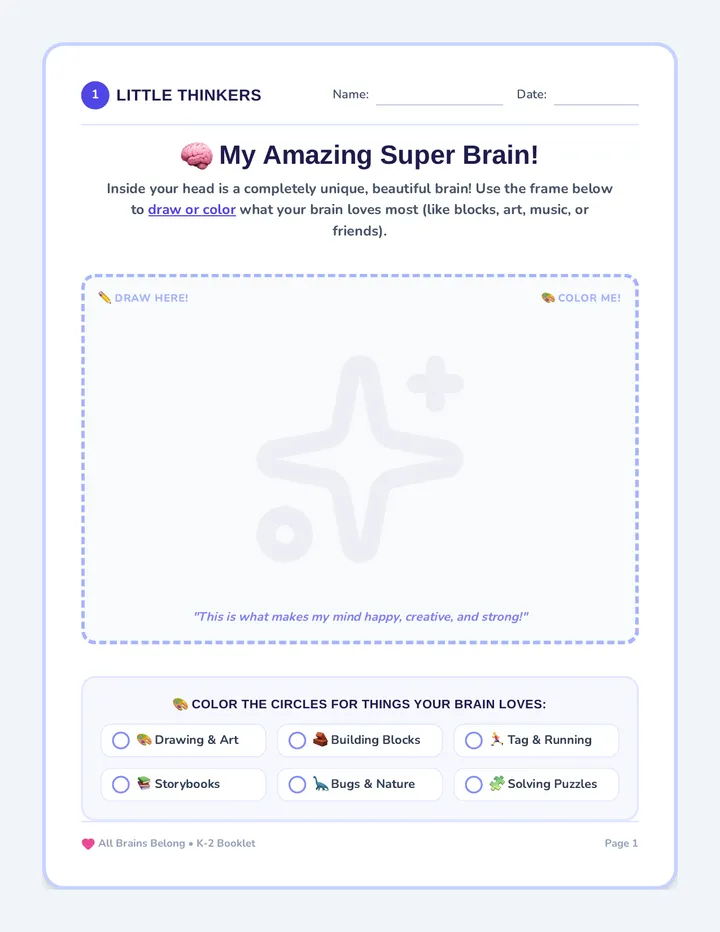
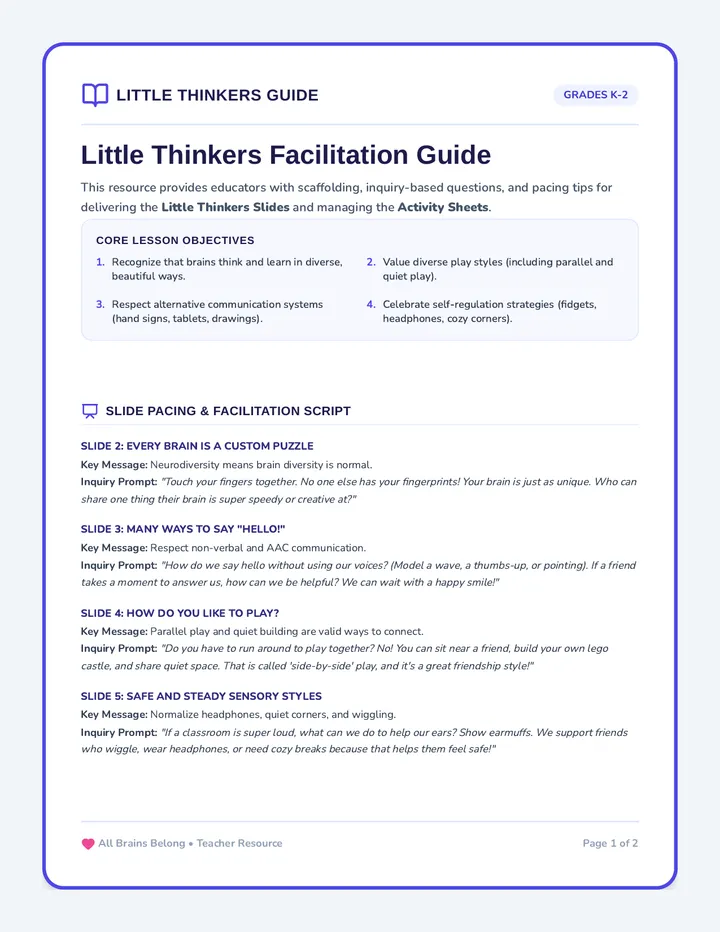
A comprehensive educational unit celebrating neurodiversity, acceptance, and inclusive communication across elementary grades. It equips educators with slide presentations and reflection tools tailored for K-2 and 3-5 students to cultivate empathetic classrooms.
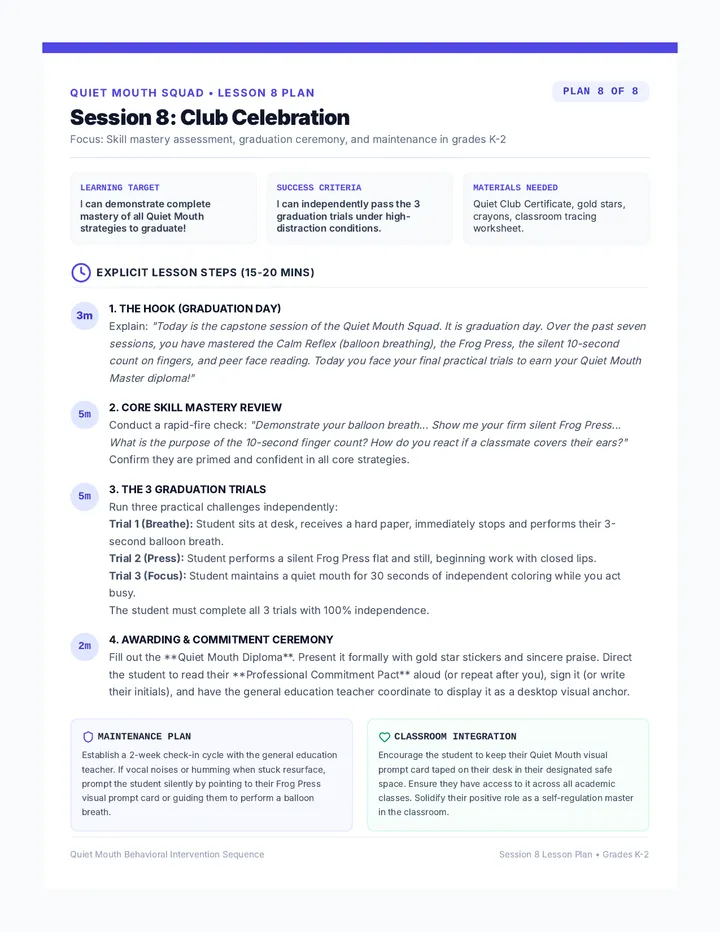
Reviews all skills, celebrates student progress with graduation ceremonies, and sets up maintenance plans for classroom reintegration.
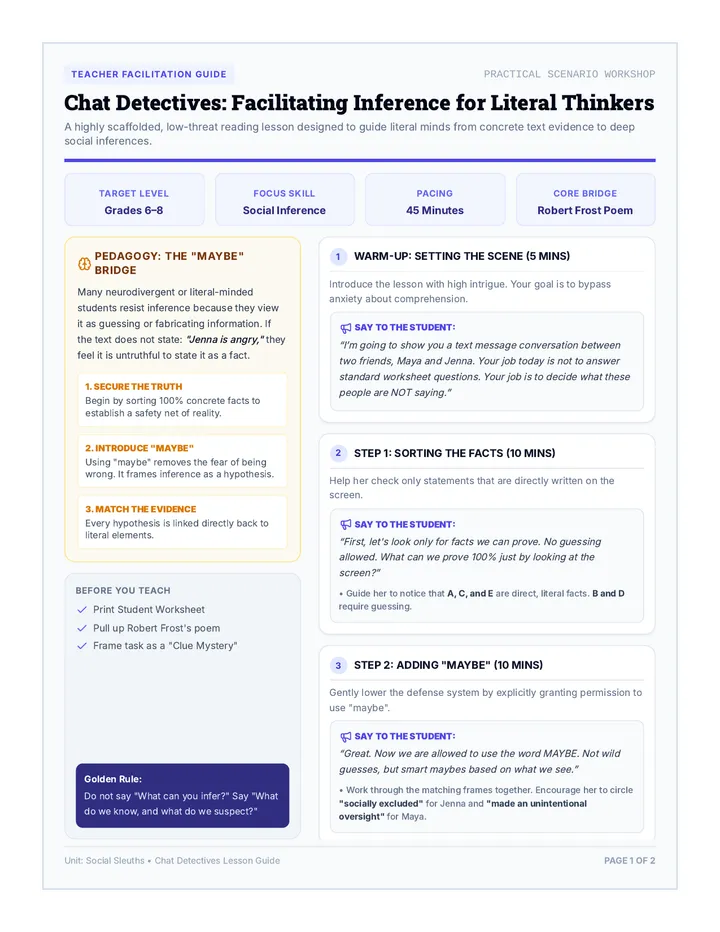
A 2-page professional Teacher Facilitation Guide containing lesson plans, pacing structures, classroom-ready scripts, visual support guides, and specific neurodivergent-friendly pedagogical strategies to bridge literal text to social inference. Updated to align with the new, sophisticated student choices.
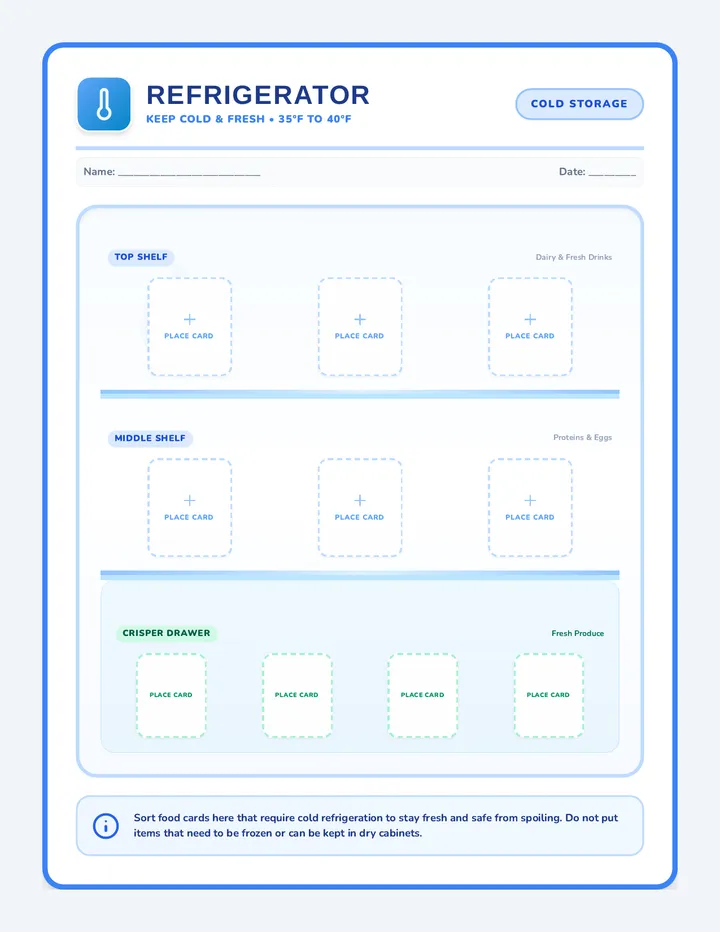
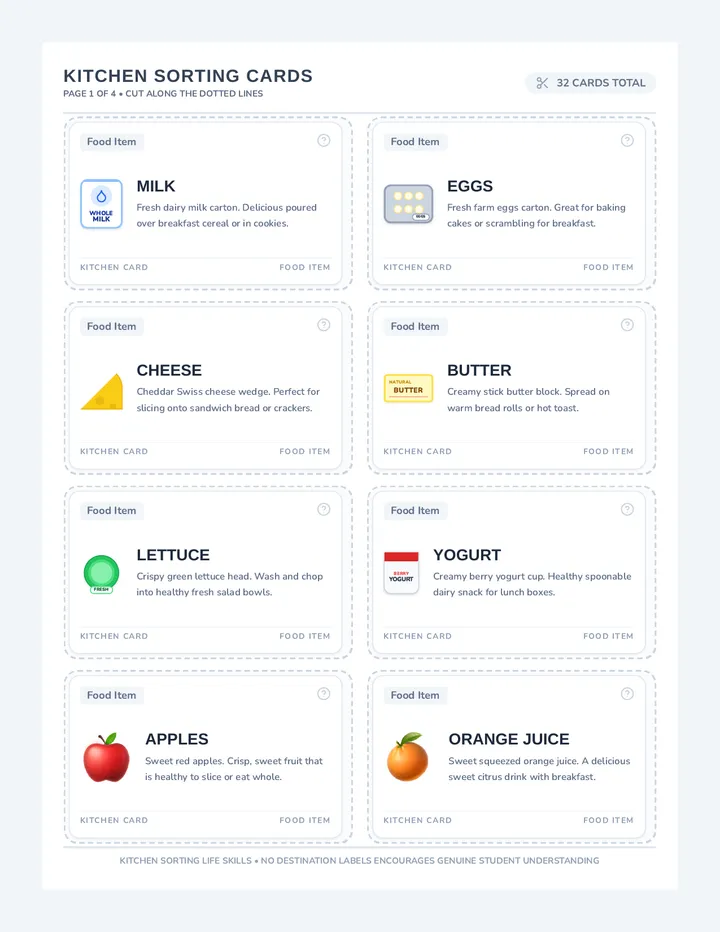
A progressive life-skills curriculum designed to teach students how to identify, categorize, and sort grocery items. Starts with kitchen storage sorting (fridge, freezer, pantry) and advances to sorting by major retail grocery store departments.
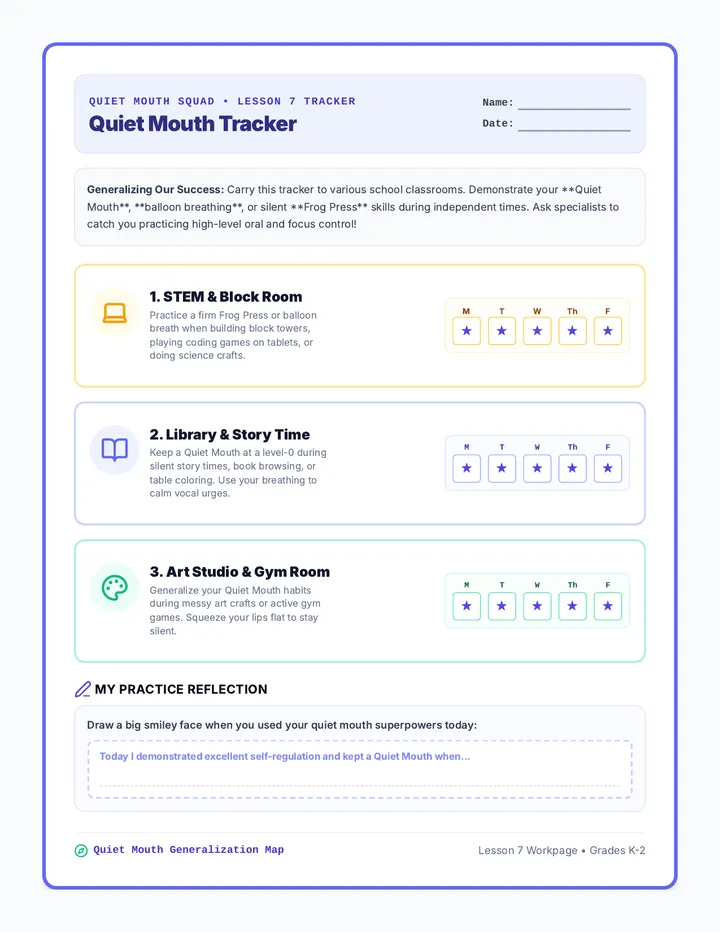
Focuses on generalizing the replacement behavior to other school settings like recess, the cafeteria, and the art room using visual tracker guides.
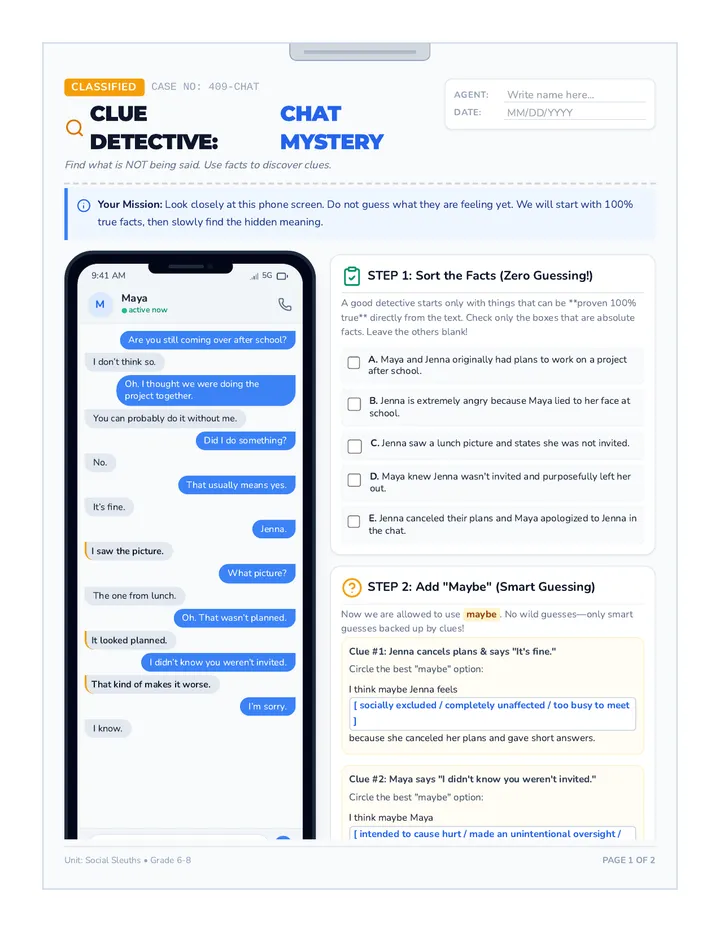
A 2-page highly scaffolded Clue Detective worksheet featuring a text-message conversation layout. Updated with sophisticated, intellectually respectful, and less obvious answer choices that prevent the student from feeling patronized.
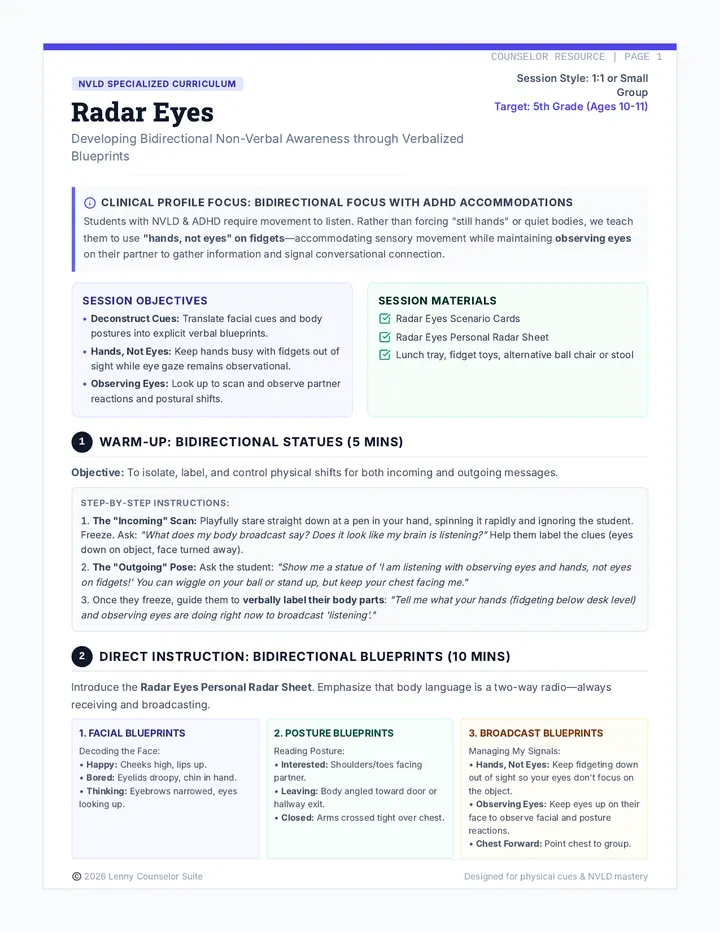
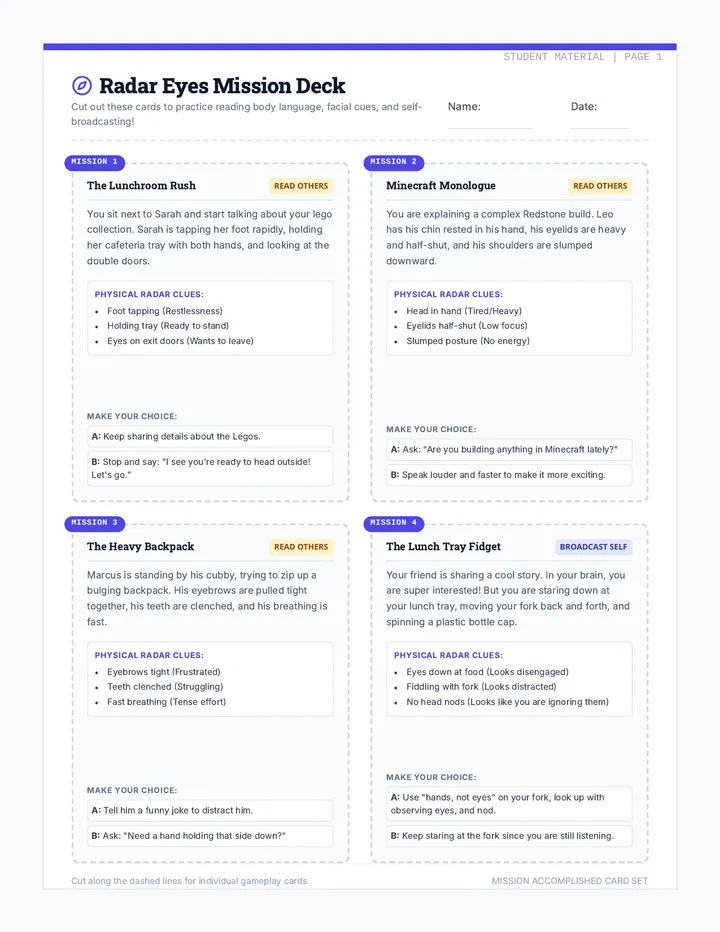
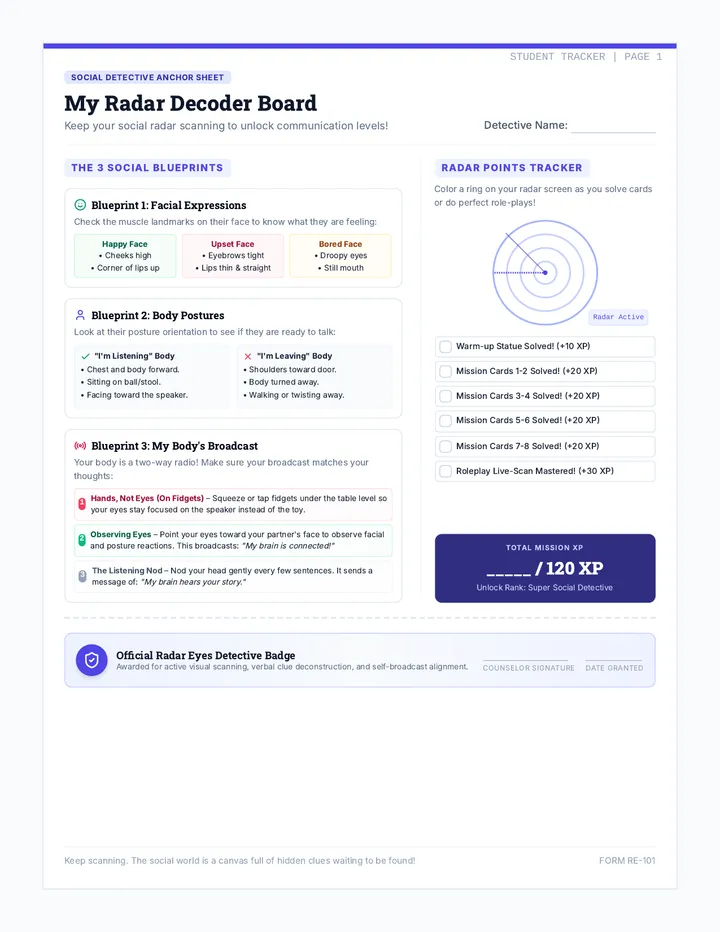
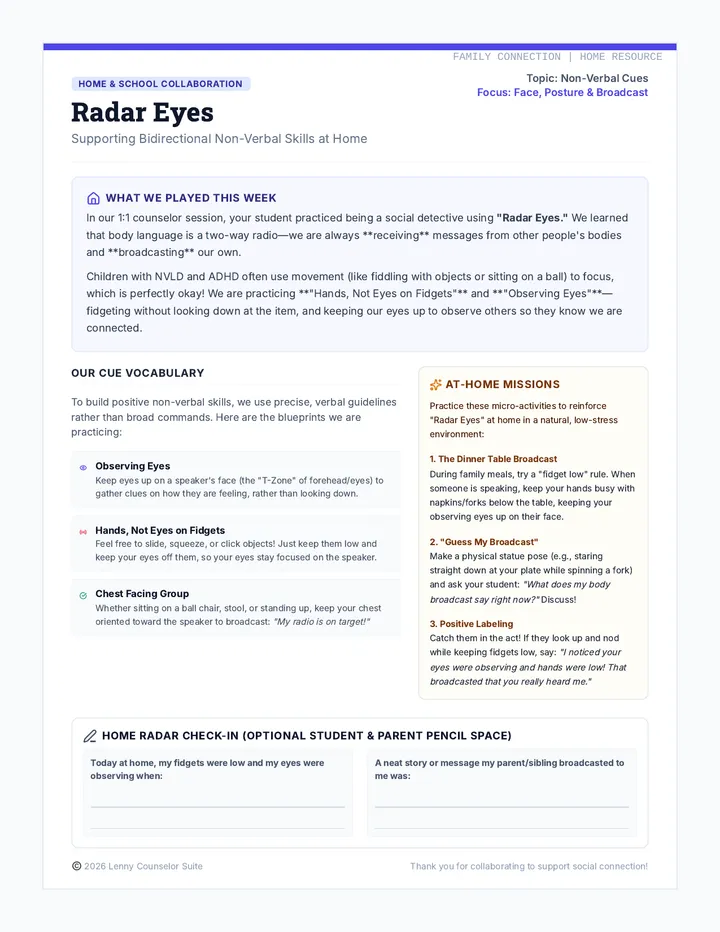
A sequential social skills program designed for 5th-grade students with NVLD. Focuses on bidirectional nonverbal cue decoding, eye gaze alignment, conversation turn-taking, and self-monitoring strategies.
A highly detailed 1-page teacher lesson plan for Session 8, focusing on program review, graduation ceremony execution, and maintenance transitions in Grades K-2.
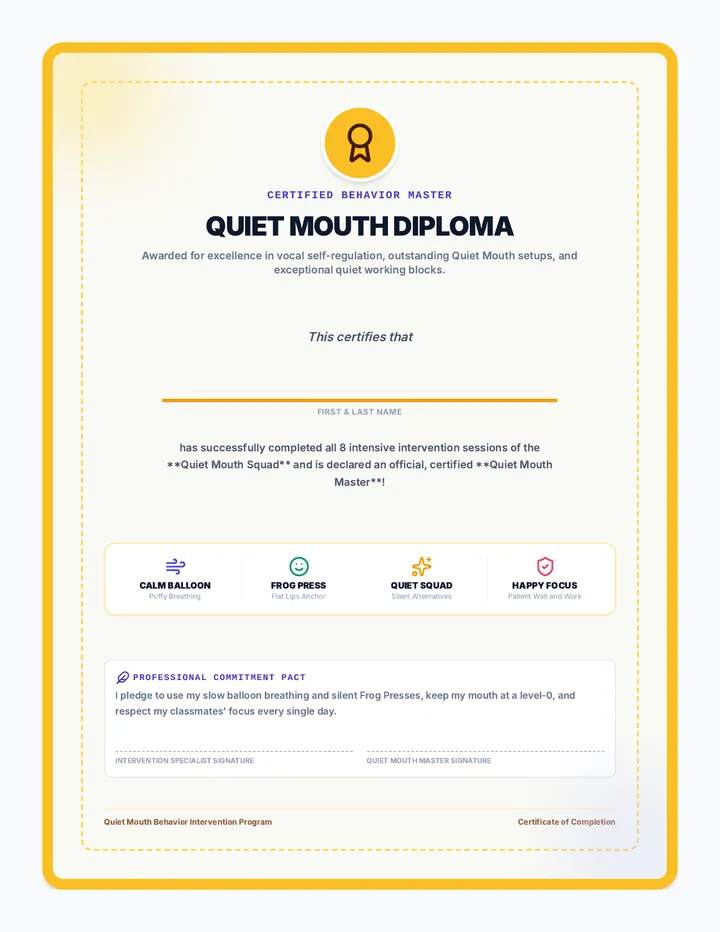
A graduation certificate celebrating the student's entry into the Quiet Mouth Squad as a certified master in Grades K-2.