Lenny.com
Explore
Create
ActivitiesNewMathEnglish Language ArtsScience & EngineeringSocial StudiesGlobal LanguagesHealth & Physical EducationSpecial EducationCounseling & Life SkillsArts & CreativityESL
Lenny.com
Lenny.com
Explore
Create
ActivitiesNewMathEnglish Language ArtsScience & EngineeringSocial StudiesGlobal LanguagesHealth & Physical EducationSpecial EducationCounseling & Life SkillsArts & CreativityESL
Lenny.com
Lenny.com

Solutions

Lenny for EducatorsLenny for SchoolsLenny for Districts

Product

ExploreSign inCreateSupportAbout

Resources

Getting startedMTSS Acceleration Program

© 2026 Lenny Learning Inc.

TermsPrivacyAccessibility
LinkedInInstagramX
Lenny
Special EducationSensory Processing & RegulationSensory Preferences IdentificationSensory Tool UseCommunicating Sensory NeedsSensory Overload RecognitionDeep Breathing PracticeMovement Break UtilizationIndependent Calming Strategy UsePersonalized Calming RoutinePersonal Sensory Diet CreationProactive Sensory BreaksEmotion Intensity RecognitionDysregulation RecoveryPositive Behavior SupportUnderstanding Social StoriesPersonal Social Story CreationEmotional Regulation FrameworksPersonal Trigger IdentificationSelecting Regulation StrategiesReinforcement System ResponseSelf-Monitoring & RewardsLearning Positive AlternativesCross-Setting Skill GeneralizationSocial CommunicationEye Contact & Personal SpaceContext-Appropriate GreetingsAppropriate Volume & ToneConversation Turn-TakingTopic Maintenance in DiscussionEffective Help-SeekingBody Language InterpretationFacial Expression RecognitionIdioms & Figurative LanguageSocial Problem IdentificationSocial Solution GenerationSocial Decision EvaluationTask ManagementMinimal Prompting Task StartSelf-Talk for StartingStarter Strategies for Difficult TasksAge-Appropriate Task PersistenceStrategic Break ManagementSmooth Task TransitionsAdapting to Plan ChangesObstacle Problem-SolvingMulti-Day Project CompletionPlanning & OrganizationPhysical Material OrganizationVisual Schedule & Timer UseSequential Task BreakingTime Estimation SkillsTask PrioritizationDigital & Physical Workspace ManagementPersonalized Organization StrategiesDetailed Project PlanningMultiple Commitment BalancingAcademic Support StrategiesMath Manipulative UseVisual Math Problem RepresentationComplex Math Problem BreakdownText Highlighting & AnnotationVisualization While ReadingPredictions & Inferences from TextText Structure Graphic OrganizersWriting Graphic OrganizersSentence Frames & TemplatesStudy Guide CreationSpaced Repetition for MemoryAssistive Writing TechnologyWorking Memory SupportSingle-Step Direction FocusMulti-Step Direction FollowingInformation Chunking PracticeVisual Support Memory AidsMnemonic Device ApplicationEfficient Note-Taking SystemsGraphic Organizer Note-TakingNote Review & OrganizationSustained Complex Task AttentionAssistive TechnologySymbol-Word CommunicationAAC Device NavigationSpeech Recognition DictationDictation Text EditingText-to-Speech for ReadingDigital Calendar UseKeyboard Shortcuts NavigationProductivity App ManagementSelf-Advocacy SkillsCommunicating Learning NeedsRequesting AccommodationsAdvocating for Appropriate SupportsIEP & Student RightsUnderstanding IEP ComponentsMeaningful IEP Meeting ParticipationIDEA & Section 504 RightsProgress MonitoringTracking IEP Goal ProgressReflecting on AchievementData-Informed Instructional AdjustmentTransition PlanningCareer & Vocational Goal SettingExploring Post-Secondary OptionsIndependent Living Skills Planning

Seasonal Motor Adventures

A comprehensive multi-unit fine and visual motor collection targeting visual scanning, pencil control, bilateral scissor coordination, guided drawing, and handwriting mechanics across seasonal themes.

Hheather.newhart
Barnyard Motor Skills

A dual-level fine and visual motor activity set featuring farm-themed visual scanning, directional path tracing, precision cutting, guided drawing, and handwriting practice. Tailored for elementary learners to build pencil control, visual discrimination, and motor precision.

Autumn Motor Skills

A seasonal fine and visual motor activity set featuring fall-themed visual scanning, directional wind trails, precision leaf cutting, guided autumn drawing, and handwriting instruction. Designed for lower and upper elementary learners.

Seasonal Motor Adventures

A comprehensive multi-unit fine and visual motor collection targeting visual scanning, pencil control, bilateral scissor coordination, guided drawing, and handwriting mechanics across seasonal themes.

Hheather.newhart

START

FINISH

4 Harvester Precision Run (Multi-Apex Hairpins) Complex Serpentine • Level 4

START

FINISH

Performance Criterion: Target zero border collisions. Adjust writing speed dynamically at sharp corner apexes. Activity 2 • Page 2

Barnyard Motor Skills • Level 2 (Grades 3-5) Complex Bilateral Cutting & Rotation

Architectural Cutting: Barn & Windmill

Cut directly on the 1/8" solid black outer boundaries. Pivot paper precisely at corner apexes.

Name: ______________

Date: __________

Cutting Line Calibration: Solid boundary line is exactly 1/8 inch thick (12px). Shapes are 3.5" to 4.5" in size.

Line: 1/8"

Shape 1: Farmstead Windmill (Multi-Blade Angles) Pivot 90° at each blade tip

START CUT

WINDMILL (4.4" × 3.8")

Shape 2: Gambrel Barn & Grain Silo (Compound Silhouette) Smooth dome curve to sharp wall

START CUT

BARN & SILO (4.2" × 3.2")

Pivot Technique: At sharp corners, close scissor blades completely, rotate paper 90 degrees, then continue cutting. Activity 3 • Page 3

Barnyard Motor Skills • Level 2 (Grades 3-5) Visual-Spatial Construction

Guided Drafting: Classic Farm Tractor

Construct the vehicle step-by-step. Notice wheel scale, angular hood geometry, and proportion.

Name: ______________

Date: __________

Step 1

Wheels: Big & Small

Step 2

Chassis & Hood

Step 3

Seat & Steering

Step 4

Fender & Stack

Step 5

Hubs & Grille

Final

Add Detail & Color

Student Drawing Area (Use spatial reference marks for scale): Remember: the rear wheel is roughly 2× the diameter of the front wheel.

Wheel Scale Proportion Chassis Geometry Stack & Steering Shading / Tread

Proportion Note: Position wheels first to establish ground baseline before constructing upper machinery. Activity 4 • Page 4

Barnyard Motor Skills • Level 2 (Grades 3-5) Letter Formations & Baseline Placement

Agricultural Vocabulary: Word Formations

Copy each word from the bank. Maintain consistent letter sizing, vertical ascenders, and ground baseline placement.

Name: ______________

Date: __________

Word Bank: 5 Agricultural Terms Letter Form Focus: Ascenders (h, t, l, b, k) • Midline (a, r, v, e, s, c, o) • Descender (p)

harvest

gathering ripe crops

pasture

grazing grassland

silo

grain storage tower

orchard

fruit tree grove

livestock

farm animals

Guidelines: Top Ascender Line | Dashed Midline | Baseline (ground) | Drop Zone (p)

Copy each word twice on the ruled lines

Term 1 harvest h, t = ascenders

Term 2 pasture p = descender

Term 3 silo l = ascender

Term 4 orchard h, d = ascenders

Term 5 livestock l, t, k = ascenders

Self-Evaluation: Are all lowercase body letters (a, e, o, r, s, c, u) strictly below the dashed midline? Activity 5 • Page 5

Barnyard Motor Skills • Level 2 (Grades 3-5) Syntax, Spacing & Baseline Integration

Sentence Mechanics: Copying & Composition

Copy each 3-5 word model sentence with uniform spacing and baseline control. Then compose your own sentence!

Name: ______________

Date: __________

Sentence Formatting Rules: 1 finger space between words • Capitalize first letter • Baseline contact • Ending punctuation. 3–5 Words

A Part 1: Model Sentence Copying (3 to 5 words each)

Sentence 1 (5 words): Finger spacing after each word

Cows ␣ graze ␣ in ␣ green ␣ pasture.

Sentence 2 (5 words): Notice tall 't' and 'h' ascenders

The ␣ red ␣ tractor ␣ works ␣ hard.

Sentence 3 (4 words): Descender on 'g' drops below baseline

Sweet ␣ corn ␣ grows ␣ tall.

B Part 2: Independent Sentence Writing

Requirement: Exactly 3 to 5 words

Prompt: Write your own original sentence about a farm. Word ideas: sheep, hay, morning, rooster, barn, harvest.

Sentence Self-Audit:

3–5 Words Count Finger Spaces Baseline Grounded Capital & Period

Mastery Focus: Consistent spacing and line anchoring create fluid, legible adult handwriting! Activity 6 • Page 6

Name: ______________

Date: __________

1/8" Cutting Line Spec: Solid border is exactly 1/8 inch thick (12px). Shapes are 3.5" to 4.5" in size.

Line: 1/8"

Shape 1: Autumn Oak Leaf (Curved Lobes & Stem) Start at the scissor notch

START CUT

OAK LEAF (4.2" × 3.0")

Shape 2: Giant Forest Acorn (Cap & Nut Silhouette) Turn smoothly around the nut bottom

START CUT

FOREST ACORN (3.8" × 3.0")

Scissor Rule: Keep your cutting thumb pointing up to the ceiling! Turn paper with your helper hand. Activity 3 • Page 3

Autumn Motor Skills • Level 1 (K-2) Visual-Spatial Integration

Autumn Artist: Draw a Wise Little Owl

Follow the 4 simple steps to draw an owl sitting on an autumn branch! Then color your drawing.

Name: ______________

Date: __________

1

Oval Body & 2 Feather Tuft Ears

2

2 Big Eye Circles & Triangle Beak

3

Pupil Dots & 2 Curved Wings

4

Branch Perch, Feet & Feathers

Student Drawing Space (Draw your autumn owl here!): Bonus: Add autumn leaves falling around your owl!

Body & Ears Eyes & Beak Wings & Branch Colored In!

Artist Hint: Make the eyes extra big! Owls are famous for their giant round night vision eyes. Activity 4 • Page 4

Autumn Motor Skills • Level 1 (K-2) Letter Formations & Baseline Placement

Autumn Word Copy: Size & Baseline Practice

Read the autumn word bank. Copy each word with correct letter height. Rest every letter on the red baseline!

Name: ______________

Date: __________

Word Bank: 5 Autumn Words Tall Letters Touch Top Sky Line • Small Stay Under Fence • Tail Letters Hang Below

leaf

l, f = tall

nut

t = tall

fall

f, l, l = tall

red

d = tall

wind

d = tall

Guide Lines: Sky Line (top) --- Fence Line (middle) --- Ground Line (baseline)

Trace the dotted model, then copy independently!

1 leaf

leaf ____

2 nut

nut ____

3 fall

fall ____

4 red

red ____

5 wind

wind ____

Student Self-Check: Did your tall letters (l, f, t, d) reach all the way up to the blue sky line? Activity 5 • Page 5

You might also like

Spot The Game Activity Sheet

Playground Pals

A structured five-day social communication sequence designed for a third grader to learn how to ask peers to play or join in, featuring visual supports, limited language scripts, and portable recess visual cards.

A

acrisafulli

6
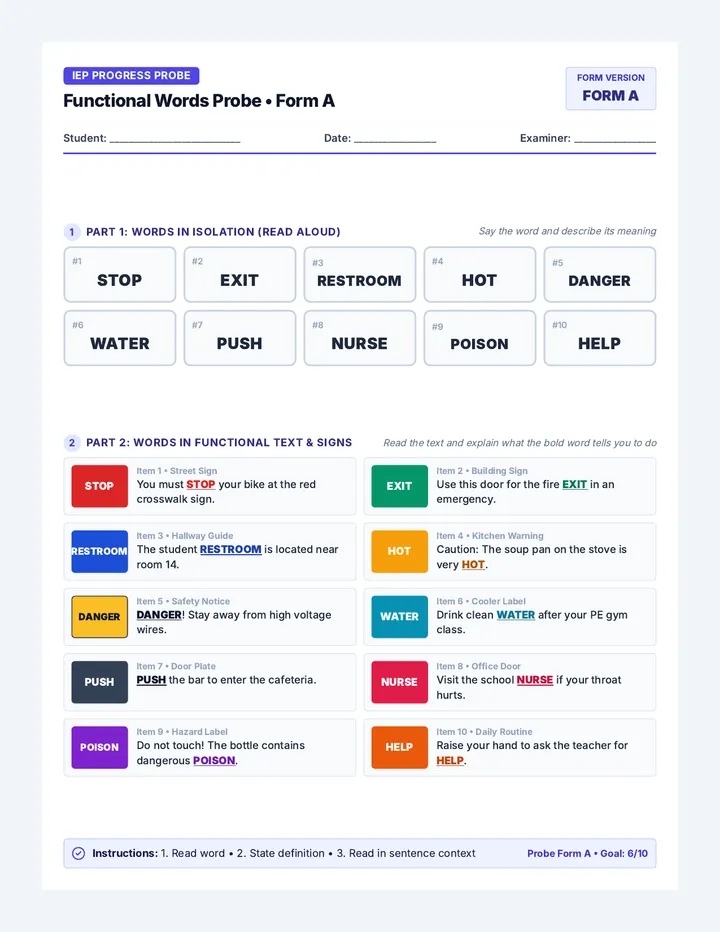
Functional Words Student Probes

Functional Word Navigators

A complete IEP progress monitoring system for functional word recognition and verbal expression, featuring equivalent probe forms, examiner protocols, and cumulative tracking tools.

RC

Roni Coleman

3
ELA Launch Desk Chart

ELA Launch Desk Chart

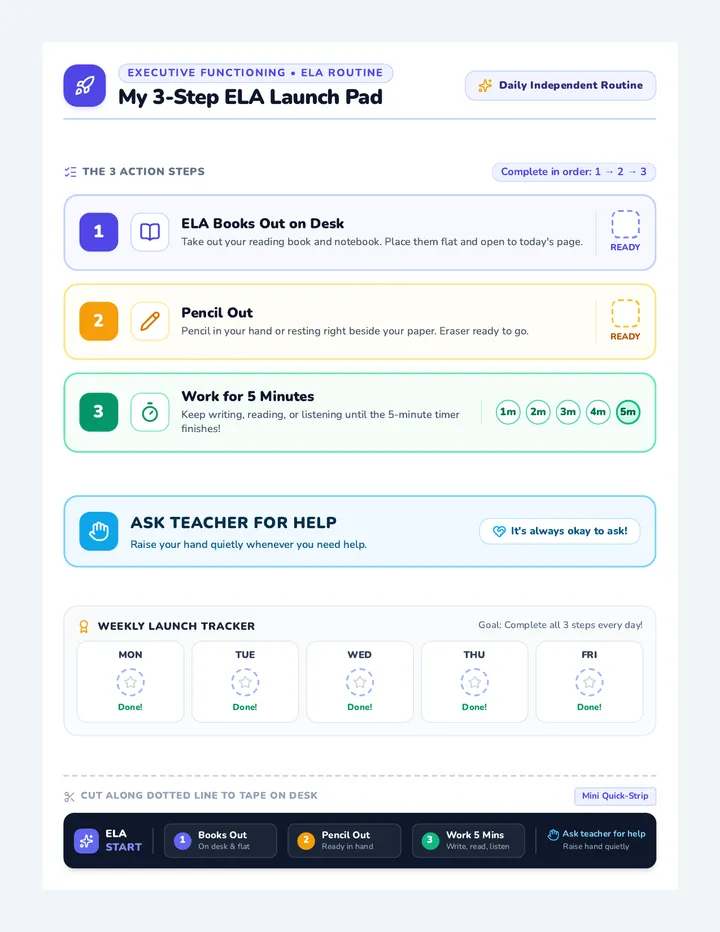
A streamlined 3-step ELA task initiation desk chart for elementary students, featuring simple step cards, 5-minute timer bubbles, a direct 'Ask Teacher for Help' prompt, weekly streak tracker with 'Done!' check-offs, and a cut-out desk reminder strip.

SM

Susannah Malloy

Sixes Sevens Tiered Worksheet

Module Three Math Modifications

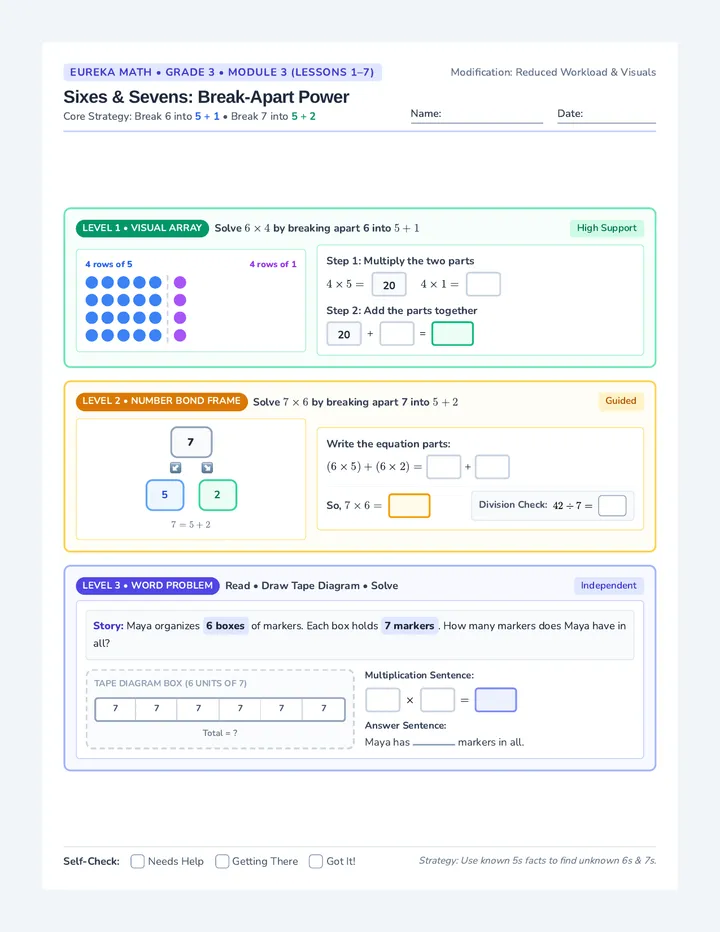
A comprehensive instructional sequence providing differentiated, reduced-workload, and visually scaffolded modifications for Eureka Math Grade 3 Module 3. Covers all 21 lessons organized across four focused mastery clusters with multi-tiered student practice and teacher modification guides.

ML

Michelle Low

8
Clue Finder Worksheet

Main Idea Detectives

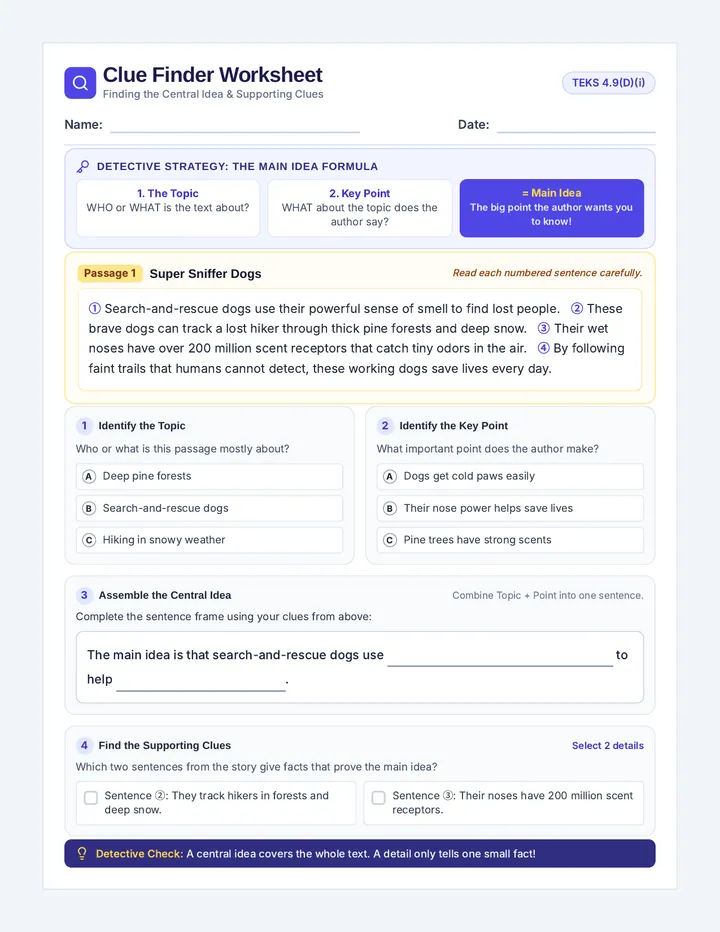
A 4th-grade SPED-focused reading unit targeting TEKS 4.9(D)(i) and TEKS 4.6(G). Guides students through identifying the central idea and supporting evidence using scaffolded visual formulas, chunked high-interest passages, and structured graphic organizers.

G

gonzalezs

4
Focus Reset Desk Poster

Focus Reset Desk Poster

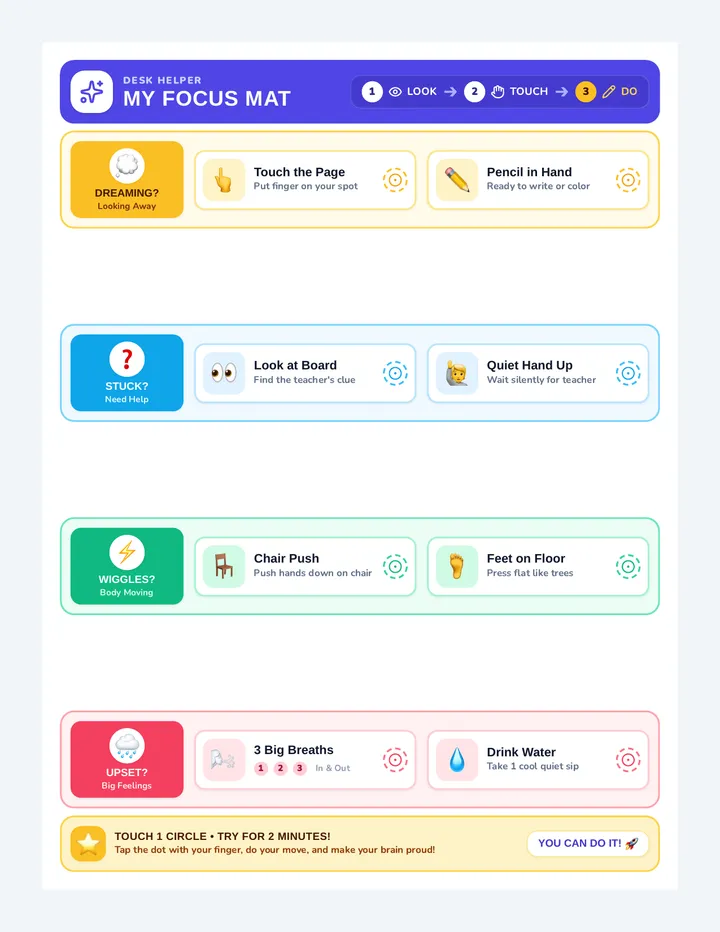
A picture-based desk self-regulation poster designed for non-reading elementary students, featuring large visual strategy cards, color-coded emotion cues, and minimal text to encourage independent refocusing.

CH

Christine Hammer

Mighty Hands Slides

Everyday Superpowers

A comprehensive three-lesson elementary sequence introducing occupational therapy through fine motor skills, sensory processing, and daily routines. Students learn how their bodies, brains, and daily habits work together to build independence and classroom success.

Lenny Avatar
Lenny
6
Comma Catchers Slides

Comma Catchers

A structured 4th-grade SPED lesson introducing three essential comma rules: items in a series, calendar dates, and compound sentences. Features multisensory visual cues, explicit chunking, and scaffolded practice tailored for diverse learning needs.

G

gonzalezs

4
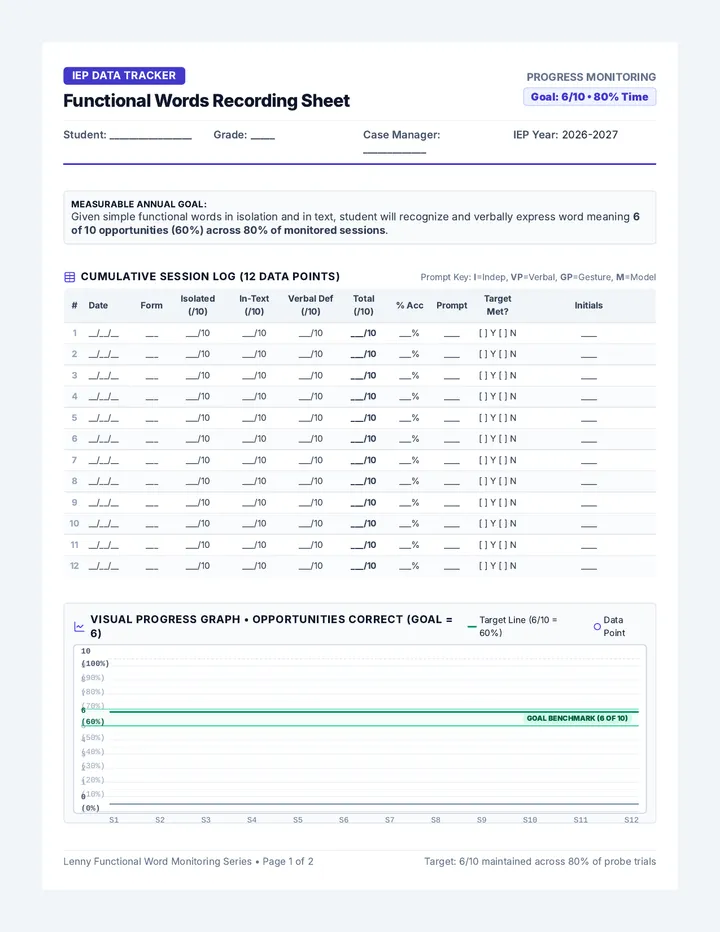
Functional Words Recording Sheet

Functional Words Recording Sheet

Cumulative IEP progress tracking log, session graphing sheet, skill domain breakdown, and quarterly reporting documentation for monitoring functional word recognition and verbal expression.

RC

Roni Coleman

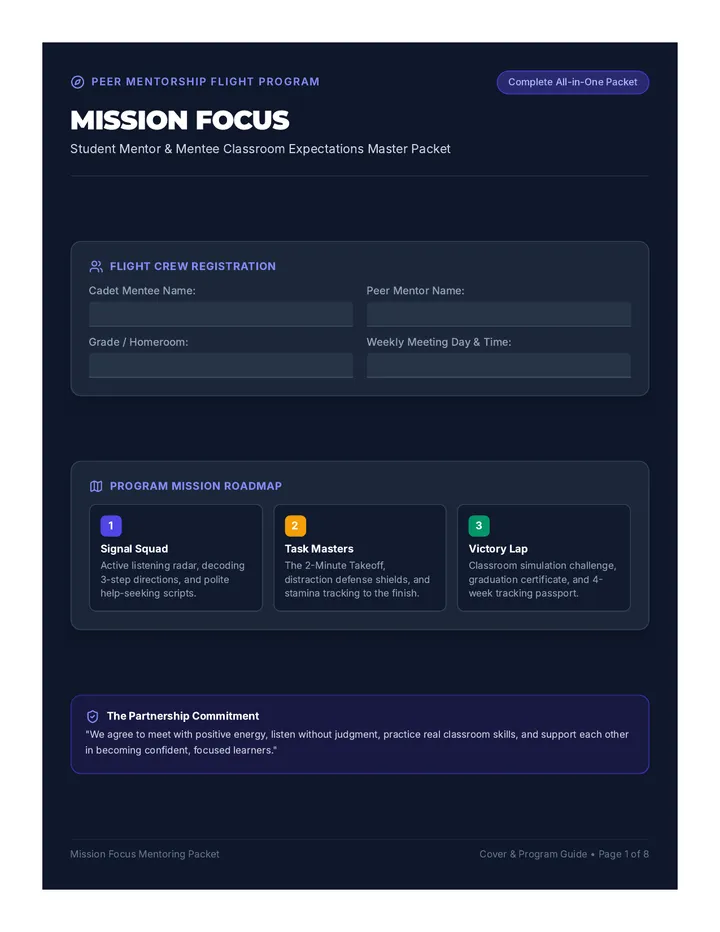
Mission Focus Printable Packet

Mission Focus Mentoring

A three-stage peer-mentoring sequence that equips student mentees with active listening, instruction-following, task initiation, and distraction-management routines through structured mentor coaching.

MP

Melissa Premo

1
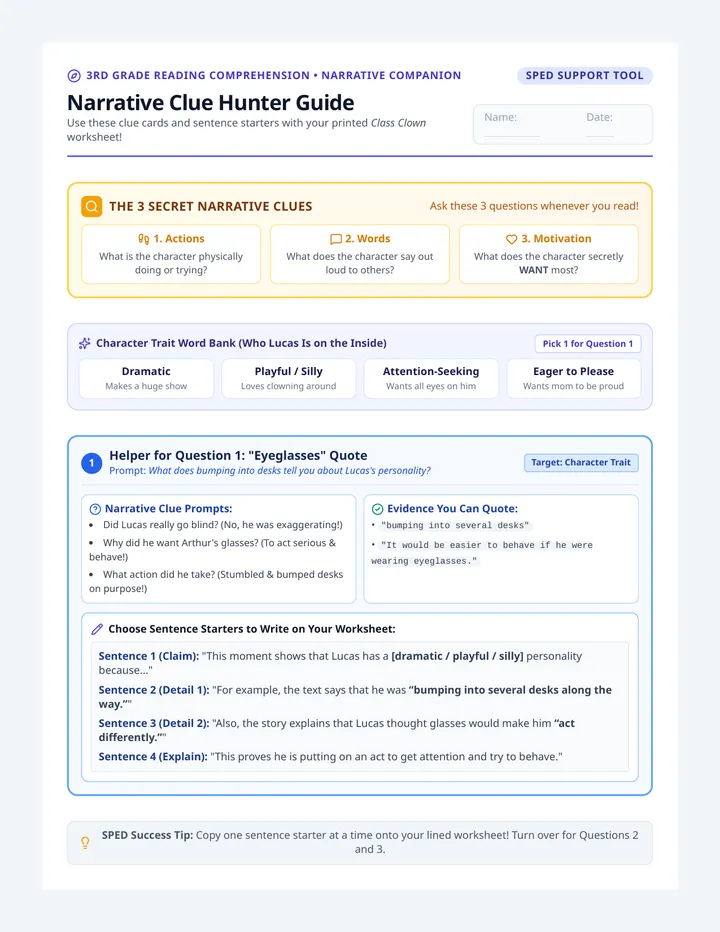
Class Clown Prompting Companion

Character Clue Detectives

A modified 3rd-grade narrative reading comprehension lesson designed for special education students, focusing on question analysis, character traits, and character motivation. Provides targeted narrative prompting routines, scaffolded student companions for Class Clown questions, and a mirrored practice story with differentiated comprehension tasks.

KR

Kenzie Ruthven

3
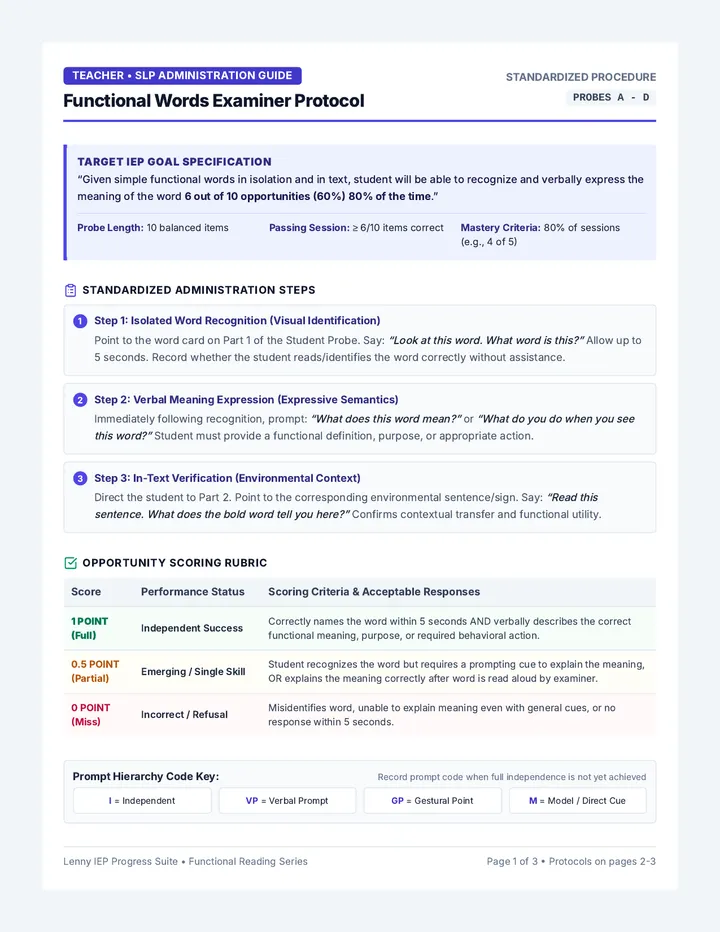
Functional Words Examiner Protocol

Functional Words Examiner Protocol

Examiner administration directions, standardized scoring criteria, acceptable verbal response rubrics, and quick-fill scoring sheets for Forms A through D.

RC

Roni Coleman