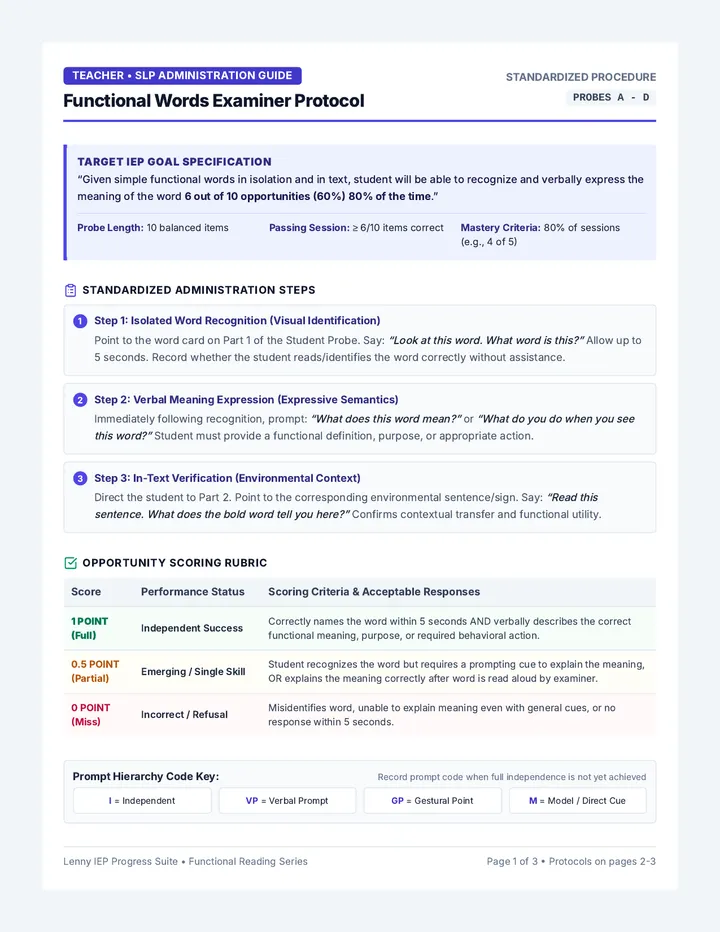
Lenny IEP Progress Suite • Functional Reading Series Page 1 of 3 • Protocols on pages 2-3
Mark recognition, verbal explanation, prompt level, and calculate final opportunities score.
Student: ___________________ Date: _________
FORM A • Scoring Matrix Goal: ≥ 6 of 10 Correct (60%)
| # | Target Word | Target Functional Meaning / Acceptable Expressive Response | Read Word | Verbal Def | Prompt | Score |
|---|---|---|---|---|---|---|
| 1 | STOP | Halt immediately, do not cross, cease movement or action | [ ] | [ ] | ____ | ___/1 |
| 2 | EXIT | Way out of the building, door used to leave safely | [ ] | [ ] | ____ | ___/1 |
| 3 | RESTROOM | Bathroom, toilet room, place to wash hands | [ ] | [ ] | ____ | ___/1 |
| 4 | HOT | High temperature, burns skin, can hurt, do not touch | [ ] | [ ] | ____ | ___/1 |
| 5 | DANGER | Unsafe condition, stay back, hazard that can injure you | [ ] | [ ] | ____ | ___/1 |
| 6 | WATER | Liquid to drink, hydration, wash hands with | [ ] | [ ] | ____ | ___/1 |
| 7 | PUSH | Press body/hands against door forward away from you | [ ] | [ ] | ____ | ___/1 |
| 8 | NURSE | School health helper, medical room, helps when sick/hurt | [ ] | [ ] | ____ | ___/1 |
| 9 | POISON | Toxic chemical, deadly/harmful to drink or eat, do not touch | [ ] | [ ] | ____ | ___/1 |
| 10 | HELP | Ask for assistance, call teacher/adult when in trouble | [ ] | [ ] | ____ | ___/1 |
Form A Total Correct: _____ / 10 Opportunities
Percentage: _____ % Target Met (≥6/10)? [ ] YES [ ] NO
FORM B • Scoring Matrix Goal: ≥ 6 of 10 Correct (60%)
| # | Target Word | Target Functional Meaning / Acceptable Expressive Response | Read Word | Verbal Def | Prompt | Score |
|---|---|---|---|---|---|---|
| 1 | OPEN | Unlocked, ready for business/entry, door is unlatched | [ ] | [ ] | ____ | ___/1 |
| 2 | CLOSED | Locked, cannot enter now, not operating | [ ] | [ ] | ____ | ___/1 |
| 3 | CAUTION | Be careful, slow down, be aware of a possible hazard | [ ] | [ ] | ____ | ___/1 |
| 4 | COLD | Low temperature, chilly, freezing, blue tap on sink | [ ] | [ ] | ____ | ___/1 |
| 5 | CAFETERIA | School lunchroom, where students eat meals together | [ ] | [ ] | ____ | ___/1 |
| 6 | PULL | Grasp handle and draw toward body to open door | [ ] | [ ] | ____ | ___/1 |
| 7 | MEDICINE | Pills or liquid that make sick people better, doctor ordered | [ ] | [ ] | ____ | ___/1 |
| 8 | WALK | Safe to cross street, move on feet, green pedestrian symbol | [ ] | [ ] | ____ | ___/1 |
| 9 | QUIET | Low volume, whisper voice, no loud talking or shouting | [ ] | [ ] | ____ | ___/1 |
| 10 | POLICE | Law enforcement officer, safety protector in community | [ ] | [ ] | ____ | ___/1 |
Form B Total Correct: _____ / 10 Opportunities
Percentage: _____ % Target Met (≥6/10)? [ ] YES [ ] NO
Examiner Qualitative Notes & Error Patterns:
Functional Words Examiner Protocol • Page 2 of 3 Forms C & D on Page 3
Mark recognition, verbal explanation, prompt level, and calculate final opportunities score.
Student: ___________________ Date: _________
FORM C • Scoring Matrix Goal: ≥ 6 of 10 Correct (60%)
| # | Target Word | Target Functional Meaning / Acceptable Expressive Response | Read Word | Verbal Def | Prompt | Score |
|---|---|---|---|---|---|---|
| 1 | ENTRANCE | Way inside a building, door to go in | [ ] | [ ] | ____ | ___/1 |
| 2 | EMERGENCY | Urgent sudden crisis requiring quick help/911 call | [ ] | [ ] | ____ | ___/1 |
| 3 | TRASH | Garbage, waste to be thrown into bin/receptacle | [ ] | [ ] | ____ | ___/1 |
| 4 | OFFICE | Administrative room where principal/secretaries work | [ ] | [ ] | ____ | ___/1 |
| 5 | KEEP OUT | Do not enter, forbidden area, danger/private space | [ ] | [ ] | ____ | ___/1 |
| 6 | ELEVATOR | Machine that carries people up/down between floors | [ ] | [ ] | ____ | ___/1 |
| 7 | DON'T WALK | Wait at the curb, unsafe to cross street now, red hand | [ ] | [ ] | ____ | ___/1 |
| 8 | WASH | Clean with soap and water to remove germs | [ ] | [ ] | ____ | ___/1 |
| 9 | FIRST AID | Basic medical supplies for cuts/injuries (band-aids) | [ ] | [ ] | ____ | ___/1 |
| 10 | WAIT | Pause, stay in place, be patient until your turn | [ ] | [ ] | ____ | ___/1 |
Form C Total Correct: _____ / 10 Opportunities
Percentage: _____ % Target Met (≥6/10)? [ ] YES [ ] NO
FORM D • Scoring Matrix Goal: ≥ 6 of 10 Correct (60%)
| # | Target Word | Target Functional Meaning / Acceptable Expressive Response | Read Word | Verbal Def | Prompt | Score |
|---|---|---|---|---|---|---|
| 1 | FIRE | Flames, burning danger, trigger alarm and exit building | [ ] | [ ] | ____ | ___/1 |
| 2 | STAIRS | Steps to walk between floors, use handrail safely | [ ] | [ ] | ____ | ___/1 |
| 3 | BUS | Large vehicle that transports students to and from school | [ ] | [ ] | ____ | ___/1 |
| 4 | SHARP | Pointed/cutting edge (blades, knife), can cut skin | [ ] | [ ] | ____ | ___/1 |
| 5 | FOOD | Things you eat for energy and health (nutrition) | [ ] | [ ] | ____ | ___/1 |
| 6 | LIBRARY | Room where books are stored and borrowed for reading | [ ] | [ ] | ____ | ___/1 |
| 7 | WET FLOOR | Mopped or spilled liquid on ground, slippery, walk slowly | [ ] | [ ] | ____ | ___/1 |
| 8 | DO NOT TOUCH | Keep hands away, hot/fragile or dangerous object | [ ] | [ ] | ____ | ___/1 |
| 9 | TELEPHONE | Device to dial and speak to emergency services/family | [ ] | [ ] | ____ | ___/1 |
| 10 | IN / OUT | Directions: enter inward vs exit outward through door | [ ] | [ ] | ____ | ___/1 |
Form D Total Correct: _____ / 10 Opportunities
Percentage: _____ % Target Met (≥6/10)? [ ] YES [ ] NO
Examiner Qualitative Notes & Error Patterns:
Functional Words Examiner Protocol • Page 3 of 3 Log session results on Progress Monitoring Sheet
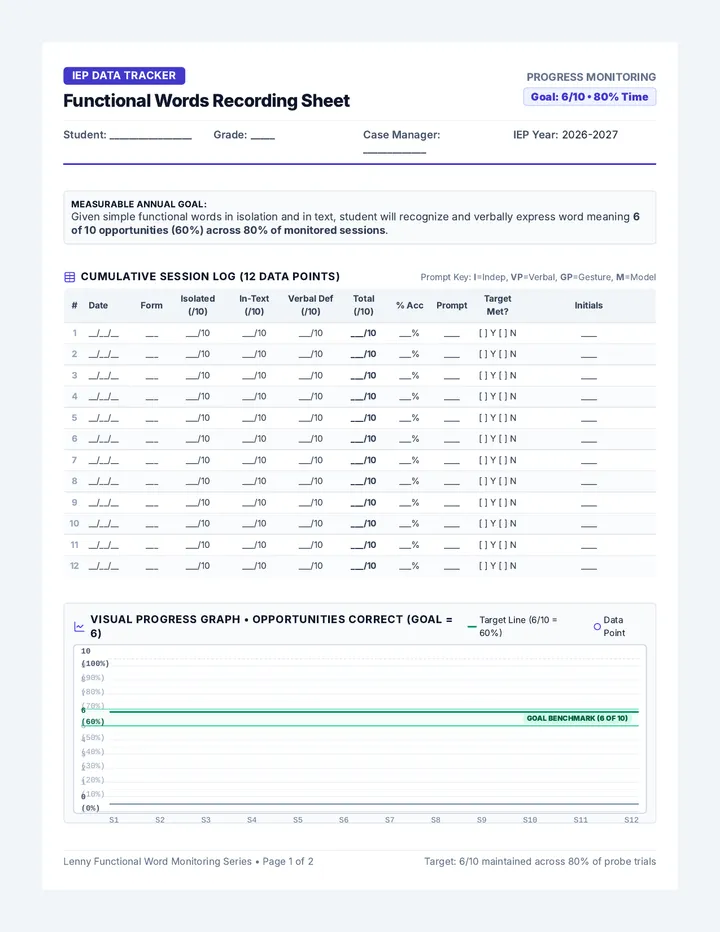
| ___/10 |
| ___/10 |
| ___% |
| ____ |
| [ ] Y [ ] N |
| ____ |
| 8 | __/__/__ | ___ | ___/10 | ___/10 | ___/10 | ___/10 | ___% | ____ | [ ] Y [ ] N | ____ |
| 9 | __/__/__ | ___ | ___/10 | ___/10 | ___/10 | ___/10 | ___% | ____ | [ ] Y [ ] N | ____ |
| 10 | __/__/__ | ___ | ___/10 | ___/10 | ___/10 | ___/10 | ___% | ____ | [ ] Y [ ] N | ____ |
| 11 | __/__/__ | ___ | ___/10 | ___/10 | ___/10 | ___/10 | ___% | ____ | [ ] Y [ ] N | ____ |
| 12 | __/__/__ | ___ | ___/10 | ___/10 | ___/10 | ___/10 | ___% | ____ | [ ] Y [ ] N | ____ |
Target Line (6/10 = 60%) Data Point
10 (100%)
9 (90%)
8 (80%)
7 (70%)
6 (60%)
GOAL BENCHMARK (6 of 10)
5 (50%)
4 (40%)
3 (30%)
2 (20%)
1 (10%)
0 (0%)
S1S2S3S4S5S6S7S8S9S10S11S12
Lenny Functional Word Monitoring Series • Page 1 of 2 Target: 6/10 maintained across 80% of probe trials
Domain breakdown, receptive vs expressive gap analysis, and quarterly reporting documentation.
Page 2 of 2
School Routines Target: 4-5
STOP, RESTROOM, NURSE, CAFETERIA, QUIET, OFFICE, TRASH, LIBRARY, BUS
Known in Isolation: ___/9
Known in Context: ___/9
Verbal Meaning: ___/9
Community & Safety Target: 4-5
EXIT, DANGER, PUSH, PULL, OPEN, CLOSED, CAUTION, WALK, POLICE, FIRE
Known in Isolation: ___/10
Known in Context: ___/10
Verbal Meaning: ___/10
Home & Daily Living Target: 4-5
HOT, COLD, WATER, POISON, HELP, MEDICINE, WASH, FOOD, SHARP, FIRST AID
Known in Isolation: ___/10
Known in Context: ___/10
Verbal Meaning: ___/10
80% = 4 of 5 sessions
Rolling Window 1 (Sessions 1 - 5):
Sessions with ≥ 6/10: ___ of 5 Window Accuracy: ___% [ ] Criteria Met
Rolling Window 2 (Sessions 6 - 10):
Sessions with ≥ 6/10: ___ of 5 Window Accuracy: ___% [ ] Criteria Met
| Period | Date Range | Mean Score | % of Sessions ≥6 | Goal Status & Instructional Next Steps |
|---|---|---|---|---|
| Baseline | __/__ to __/__ | ___/10 | ___% | Baseline established across Form A & Form B. |
| Quarter 1 | __/__ to __/__ | ___/10 | ___% | [ ] Not Met • [ ] Emerging Progress • [ ] On Track |
| Quarter 2 | __/__ to __/__ | ___/10 | ___% | [ ] Not Met • [ ] Emerging Progress • [ ] On Track |
| Quarter 3 | __/__ to __/__ | ___/10 | ___% | [ ] Not Met • [ ] Emerging Progress • [ ] On Track |
| Quarter 4 | __/__ to __/__ | ___/10 | ___% | [ ] Goal Mastered • [ ] Goal Extended for Next IEP Cycle |
Qualitative Error Analysis & Differentiation Accommodations:
• Recognition vs Verbal: Does student decode accurately but struggle to state function? [ ] Yes [ ] No
• Visual Support: Does student require symbol icon support to express meaning? [ ] Yes [ ] No
Special Education Teacher / Evaluator: ___________________________
Date: _______________