Scheduled review intervals and active recall techniques to improve long-term retention for students with learning differences. Targets core academic facts, vocabulary acquisition, and procedural memory through strategic timing.
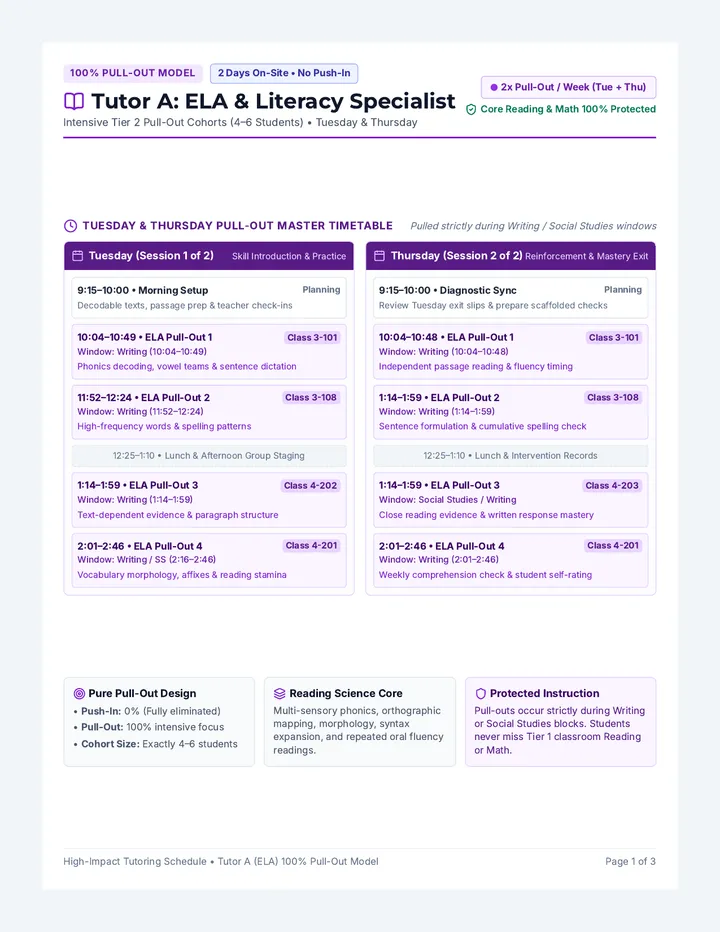
A comprehensive 3-page master weekly tutoring schedule adapted to an exclusive 100% pull-out model (no push-in) 2 days a week (Tuesday & Thursday) for two high-impact tutors (ELA and Math) across all six 3rd and 4th grade classrooms.
A 3-page Massachusetts DESE-aligned IEP accommodations reference document translating ten communication accommodations into polished, implementation-ready IEP language organized across Presentation, Response, Timing/Scheduling, and Setting/Environment with detailed conditions, frequencies, and durations.
A 5-lesson sequence designed for 11th-grade students to master the Cornell Note-Taking System. The curriculum focuses on reducing cognitive load and supporting working memory through structured page formatting, keyword identification, synthesis, and retrieval practice.
A sequence focused on teaching 5th-grade students with academic support needs how to apply spaced repetition and interleaving strategies to master complex procedural skills like multi-step math and grammar. Students learn to diagnose errors, manage practice intervals, and mix problem types to build long-term retention.
A 5-lesson sequence designed for 8th-grade students to improve working memory and auditory processing. Students learn verbal rehearsal, active listening, and self-advocacy strategies to effectively manage and execute single-step instructions.
This mastery-based sequence focuses on the executive functioning required to sustain spaced repetition for academic success. Students move from auditing habits to designing a self-regulated 'Spaced Retrieval Calendar' integrated with their curriculum.
This sequence empowers graduate students to utilize Spaced Repetition Systems (SRS) as robust data generation tools. Students learn to interpret the backend analytics of SRS platforms—viewing retention rates, ease factors, and response times—to diagnose learning bottlenecks and make data-driven instructional adjustments.
This graduate-level sequence examines how to adapt spaced repetition systems (SRS) for students with diverse learning needs, including Dyslexia, ADHD, and Dyscalculia. Students will learn to modify content, timing, and engagement strategies to bypass cognitive barriers and support long-term memory.
A focused lesson for 5th graders on developing and assessing working memory strategies like chunking, visualization, rehearsal, and organization to improve classroom recall and learning.
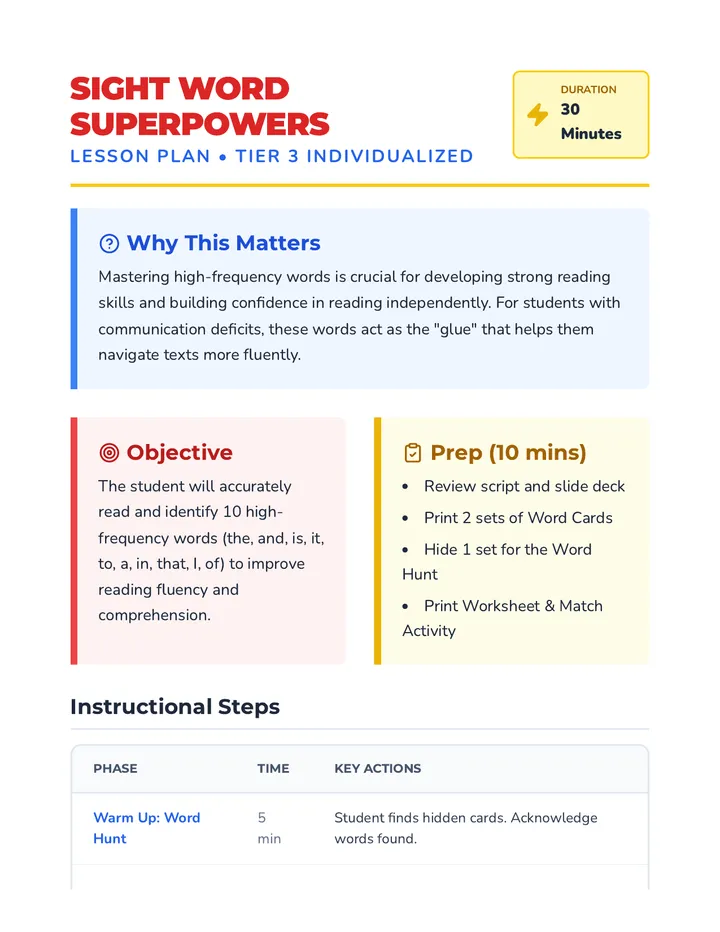
A 30-minute individualized Tier 3 lesson designed for a 3rd-grade student with autism, focusing on mastering 10 high-frequency words through multi-sensory and interactive activities.
A specialized Tier 3 intervention for 10th-grade students focused on building working memory through direct instruction and personalized strategies.
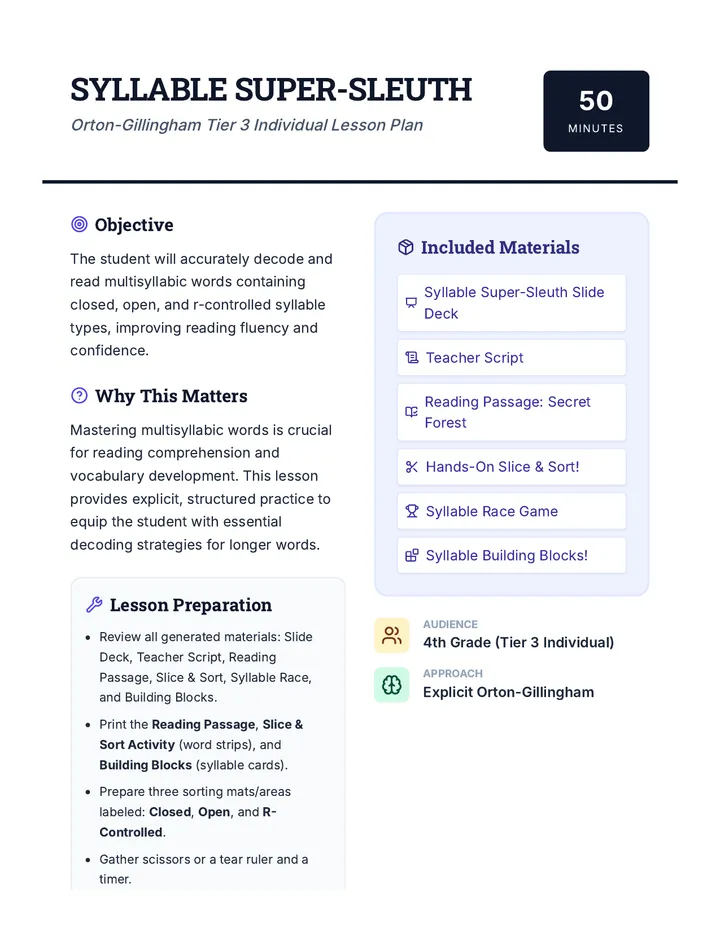
A 50-minute individualized Orton-Gillingham lesson for 4th-grade students with dyslexia, focusing on decoding multisyllabic words through syllable division rules for closed, open, and r-controlled syllables.
A high-energy, fast-paced trivia challenge for 7th-grade academic teams covering Math, ELA, Science, and Social Studies to review key concepts and practice quick recall.
A 4th-grade small group lesson focused on fluency, data collection, and goal-setting through timed tasks. Students learn to track their own progress using a data sheet and set achievable academic targets.