Lenny.com
Explore
Create
ActivitiesNewMathEnglish Language ArtsScience & EngineeringSocial StudiesGlobal LanguagesHealth & Physical EducationSpecial EducationCounseling & Life SkillsArts & CreativityESL
Lenny.com
Lenny.com
Explore
Create
ActivitiesNewMathEnglish Language ArtsScience & EngineeringSocial StudiesGlobal LanguagesHealth & Physical EducationSpecial EducationCounseling & Life SkillsArts & CreativityESL
Lenny.com
Lenny.com

Solutions

Lenny for EducatorsLenny for SchoolsLenny for Districts

Product

ExploreSign inCreateSupportAbout

Resources

Getting startedMTSS Acceleration Program

© 2026 Lenny Learning Inc.

TermsPrivacyAccessibility
LinkedInInstagramX
Lenny
Special EducationSensory Processing & RegulationSensory Preferences IdentificationSensory Tool UseCommunicating Sensory NeedsSensory Overload RecognitionDeep Breathing PracticeMovement Break UtilizationIndependent Calming Strategy UsePersonalized Calming RoutinePersonal Sensory Diet CreationProactive Sensory BreaksEmotion Intensity RecognitionDysregulation RecoveryPositive Behavior SupportUnderstanding Social StoriesPersonal Social Story CreationEmotional Regulation FrameworksPersonal Trigger IdentificationSelecting Regulation StrategiesReinforcement System ResponseSelf-Monitoring & RewardsLearning Positive AlternativesCross-Setting Skill GeneralizationSocial CommunicationEye Contact & Personal SpaceContext-Appropriate GreetingsAppropriate Volume & ToneConversation Turn-TakingTopic Maintenance in DiscussionEffective Help-SeekingBody Language InterpretationFacial Expression RecognitionIdioms & Figurative LanguageSocial Problem IdentificationSocial Solution GenerationSocial Decision EvaluationTask ManagementMinimal Prompting Task StartSelf-Talk for StartingStarter Strategies for Difficult TasksAge-Appropriate Task PersistenceStrategic Break ManagementSmooth Task TransitionsAdapting to Plan ChangesObstacle Problem-SolvingMulti-Day Project CompletionPlanning & OrganizationPhysical Material OrganizationVisual Schedule & Timer UseSequential Task BreakingTime Estimation SkillsTask PrioritizationDigital & Physical Workspace ManagementPersonalized Organization StrategiesDetailed Project PlanningMultiple Commitment BalancingAcademic Support StrategiesMath Manipulative UseVisual Math Problem RepresentationComplex Math Problem BreakdownText Highlighting & AnnotationVisualization While ReadingPredictions & Inferences from TextText Structure Graphic OrganizersWriting Graphic OrganizersSentence Frames & TemplatesStudy Guide CreationSpaced Repetition for MemoryAssistive Writing TechnologyWorking Memory SupportSingle-Step Direction FocusMulti-Step Direction FollowingInformation Chunking PracticeVisual Support Memory AidsMnemonic Device ApplicationEfficient Note-Taking SystemsGraphic Organizer Note-TakingNote Review & OrganizationSustained Complex Task AttentionAssistive TechnologySymbol-Word CommunicationAAC Device NavigationSpeech Recognition DictationDictation Text EditingText-to-Speech for ReadingDigital Calendar UseKeyboard Shortcuts NavigationProductivity App ManagementSelf-Advocacy SkillsCommunicating Learning NeedsRequesting AccommodationsAdvocating for Appropriate SupportsIEP & Student RightsUnderstanding IEP ComponentsMeaningful IEP Meeting ParticipationIDEA & Section 504 RightsProgress MonitoringTracking IEP Goal ProgressReflecting on AchievementData-Informed Instructional AdjustmentTransition PlanningCareer & Vocational Goal SettingExploring Post-Secondary OptionsIndependent Living Skills Planning

Special Ed Launchpad

A comprehensive suite of resources for high school special education teachers to manage their caseload, internalize IEPs, and establish strong family and co-teaching partnerships during the first month of school.

APAlexis Paolini
The First Thirty Days

A strategic weekly timeline and set of tools for the first four weeks of the school year, focusing on caseload management, IEP compliance, ELL support, and collaborative teaching.

Special Ed Launchpad

A comprehensive suite of resources for high school special education teachers to manage their caseload, internalize IEPs, and establish strong family and co-teaching partnerships during the first month of school.

APAlexis Paolini
  • 03 What is our preferred way to give/receive feedback to each other?
  • 04 How will we specifically scaffold for our ELL/SpEd students in this unit?
  • Review initial student work samples for ELL supports.
  • Assess efficacy of current Resource Room groupings.
  • Cross-check service logs with official attendance.
  • 05

    Days 21-30: Full System Check

    • Month-end Service Log audit & signature collection.
    • 5-minute sync with co-teacher on 30-day student goals.
    • Iterate on classroom zones based on student flow.
    • Organize caseload master binder for Quarter 1.

    Post-Launch Reflection

    Compliance Check Complete

    Baseline Data Recorded

    Family Partnership Established

  • Analyze 5 ELL WIDA profiles. Prep visual scaffolds for ICT.
  • Finalize master Testing Accommodation Registry.
  • 03

    Week 3: Outreach & Synergy

    • Execute 30 positive family outreach touchpoints (Est: 7.5 hrs).
    • First ICT "Parity Sync": Review roles and grading.
    • Baseline Check: Start collecting first data points in RR.
    • Prepare input packets for families for October reviews.

    Part II Continued: The Road to Day 30

    04

    Week 4: The Baseline Dash

    • Complete 100% of baseline data collection (Est: 5 hrs).
    • Record first data entry on IEP Goal Tracking sheets.
    • Audit service logs for all IEP students for weeks 1-4.
    • Review ELL student performance with language scaffolds.

    05

    Weeks 5-6: Integration Check

    • Month-end Service Log finalization & signatures.
    • Adjust RR groups based on 30 days of data.
    • Case Conference: 5-min sync with co-teacher on wins.
    • Archive all Quarter 1 compliance artifacts.

    Post-Launch Reflections

  • ELL Scaffolding Kits: For your 5 ELL students, provide Gen-Ed teachers with a 1-page "Language Anchor" specific to that student's WIDA level (e.g., "Student X needs visual sentence starters").
  • Part II: The First 30 Days

    01

    Days 1-5: Execution

    • Start recording **Service Provision Logs** on Day 1.
    • Send **Family Partnership Letters** (Digital/Backpack).

    02

    Days 6-10: Analysis

    • Complete remaining **IEP Snapshots** for full caseload.
    • Complete all 10 **504 Compliance Reviews**.

    03

    Days 11-15: Connection

    • Execute 30 positive family outreach touchpoints.
    • Baseline Check: Start collecting first data points in RR.

    End of Pre-Season Milestone

    By the morning of Day 1, you should have: 100% rosters verified, all ICT partners aligned on management, and a master accommodation cheatsheet ready in your pocket.

    Synergy Discussion Starters

    Pet Peeves & Flow

    "What classroom behavior bothers you the most? How do we signal to each other when one of us needs to take lead on a management issue?"

    Feedback Loop

    "How do we want to give each other feedback on lessons? Are we okay with 'live' suggestions during instruction?"

    Ownership

    "How will we ensure students see us as equal authorities from Day 1? What if a student asks to go to the nurse while one is teaching?"

    Fluidity

    "For which units do you feel most comfortable taking lead instruction? For which units should I take the lead?"

    The Synergy Alignment Talk

    Pet Peeves & Authority

    "What is your #1 classroom pet peeve? How will we handle it if it happens while the other is teaching?"

    Live Feedback

    "Are you okay with 'tag-team' teaching (jumping in with a comment)? Or do we wait for a break?"

    Dynamic Switching

    "For which upcoming units do you feel most/least comfortable leading? Let's rotate lead instruction."

    ELL/SpEd Ownership

    "How will we ensure the Gen-Ed teacher is also seen as a support for SpEd students, and vice versa?"

    The Synergy Alignment Talk

    Instructional Comfort Zones

    "Which parts of this unit are you most comfortable leading? Where should I take the lead to ensure balance?"

    Real-Time Course Correction

    "How do we signal to each other if a lesson isn't landing? Are we okay with 'live' interruptions or tags?"

    Grading & Parity

    "How will we split the grading load this unit to ensure SpEd modifications are meaningful but the volume is shared?"

    Emergency Protocols

    "Who leads during a behavioral crisis vs. who stays with the whole group? Does this change based on the student involved?"

    High School ICT Synergy • Dynamic Parity • Collaborative Success

    Testing Accommodation Registry

    Instructional Access • Page 3 of 4

    Student NameExtended TimeSmall GroupScribe / ReadBilingual GlossRoom / Special Notes

    Testing Accommodation Registry

    Instructional Access • Page 4 of 4

    Student NameExtended TimeSmall GroupScribe / ReadBilingual GlossRoom / Special Notes

    Confidential Case Record (FERPA)

    Authorized Access Only • Protect Student Privacy

    Visual Vocab

    Pairing key terms with images (Crucial for ELLs).

    ELL & Language Access

    Supporting Language Acquisition alongside Content

    The "Can-Do" Approach

    Language proficiency (WIDA levels 1-6) describes what a student can do in English right now. For our 5 ELL students, please consider these tiered scaffolds:

    Levels 1-2: Visual & Verbal

    • Provide word banks with pictures.
    • Allow responses in native language (if translator is available).
    • Use 1-2 step oral directions only.

    Levels 3-4: Sentence Frames

    • Use sentence starters (e.g., "The author's main point is... because...").
    • Group with a language peer (same L1) for peer-to-peer discussion.
    • Provide bilingual glossaries for technical content terms.

    Level 5+: Academic Fluency

    • Focus on academic nuances (e.g., metaphors, idioms).
    • Self-assessment checklists for writing.

    The 5-Second Scaffold

    If you see an ELL student disengaged, try "Pointing & Prompting". Point to the visual anchor on the wall or on their page and ask a "Point-to" question (e.g., "Where is the evidence?"). This builds confidence before they have to produce complex English sentences.

    Teacher Insight Form

    Quarterly Data for IEP Meetings & Progress Reports

    Student Name

    Subject Area

    Current Performance & Engagement

    Behavior / HabitNeverSometimesAlways
    Student initiates tasks independently

    |

    | | Student uses provided accommodations |

    |

    |

    | | Student advocates for help when stuck |

    |

    |

    |

    Strengths observed in your class

    Barriers or challenges currently faced

    Specific strategies that worked well

    Return to SpEd Office by: ________________

    Teacher Signature

    Monthly Analysis & Scaffolding Audit

    ELL Support Reflection

    Scaffolds Most Effective this Month:

    Visual Glossaries

    Sentence Frames

    Native Lang. Sync

    Graphic Orgs

    Language Acquisition Observations:

    Record observations on WIDA-level specific progress here...

    Goal 01 Progress Narrative

    Overall Performance: Mtg Obj / Progressing / No Progress

    Goal 02 Progress Narrative

    Overall Performance: Mtg Obj / Progressing / No Progress

    Monthly Breakthroughs & Wins

    Confidential Case Data • FERPA Protected

    Authorized Educational Access Only

    You might also like

    Task Tracker Data Sheet

    Task Master

    A multi-day progress-monitoring system designed to assess and track IEP goals for following multi-step functional reading instructions. It includes 10-trial combined-measure data sheets, realistic vocational and project task cards, and assessment administration protocols.

    RC

    Roni Coleman

    4
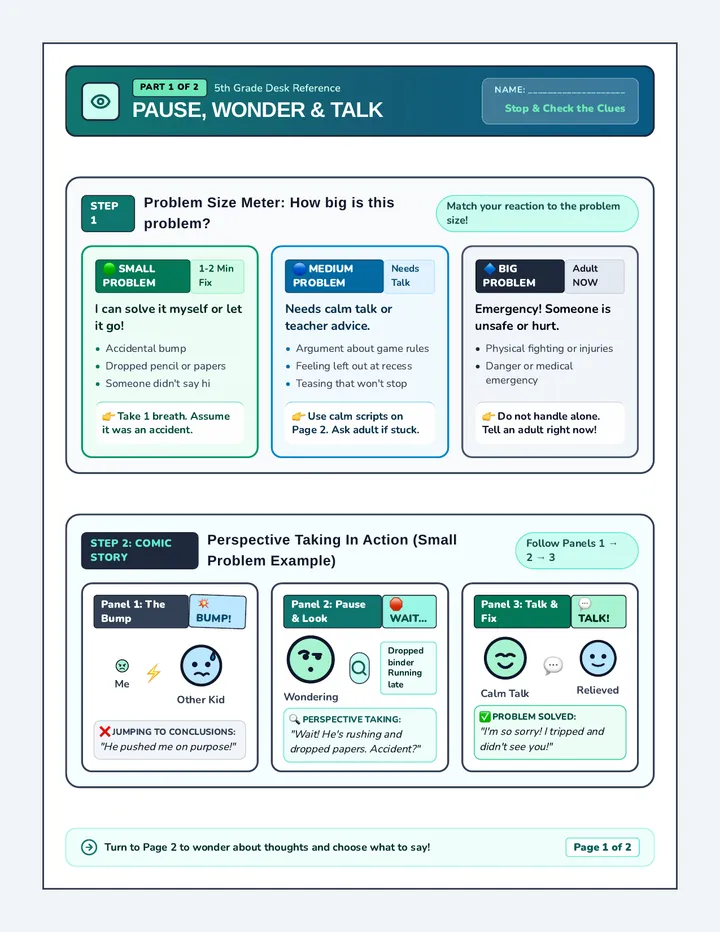
    Pause Wonder Keyring Guide

    Pause And Wonder

    A social-emotional and perspective-taking toolkit for 5th graders with communication disabilities, featuring visual supports for problem sizing, empathy clues, communication scripts, and self-regulation.

    AM

    Alyssa Miller

    2
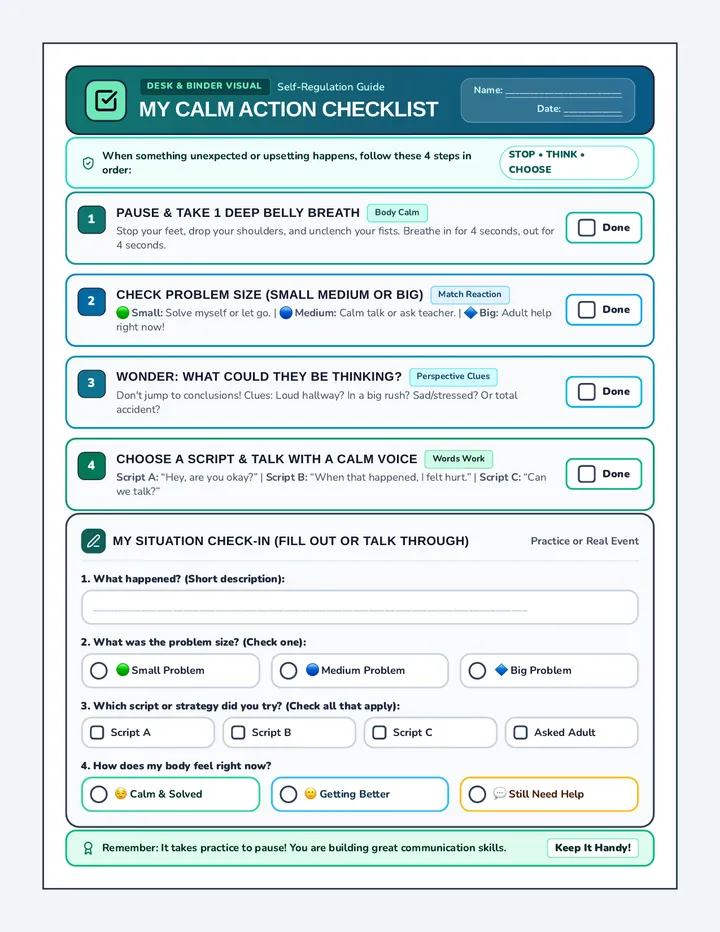
    Calm Action Checklist Visual

    Calm Action Checklist Visual

    A one-page student-facing visual checklist and reflection sheet for 5th graders with communication disabilities, guiding them through four calm action steps and a self-regulation check-in.

    AM

    Alyssa Miller

    Sixes Sevens Tiered Worksheet

    Module Three Math Modifications

    A comprehensive instructional sequence providing differentiated, reduced-workload, and visually scaffolded modifications for Eureka Math Grade 3 Module 3. Covers all 21 lessons organized across four focused mastery clusters with multi-tiered student practice and teacher modification guides.

    ML

    Michelle Low

    8
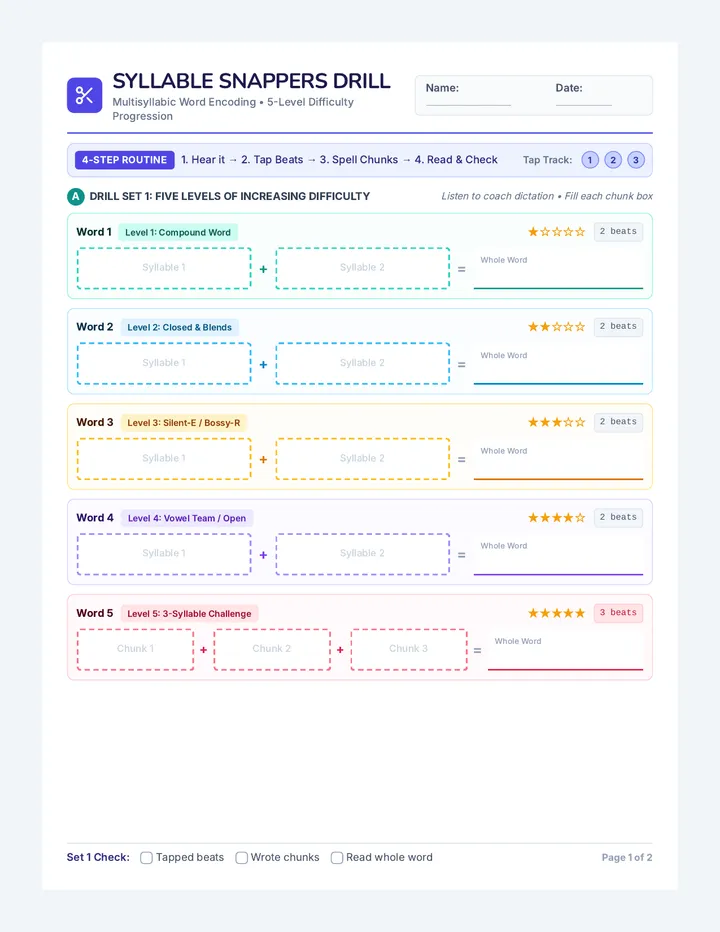
    Syllable Snappers Student Drill

    Syllable Snappers

    A targeted multisyllabic encoding intervention designed for third-grade learners mastering syllable division and phoneme-grapheme mapping. Features a student-facing practice drill and an explicit step-by-step facilitation script for paraprofessionals.

    SW

    Stephanie Wooten

    14
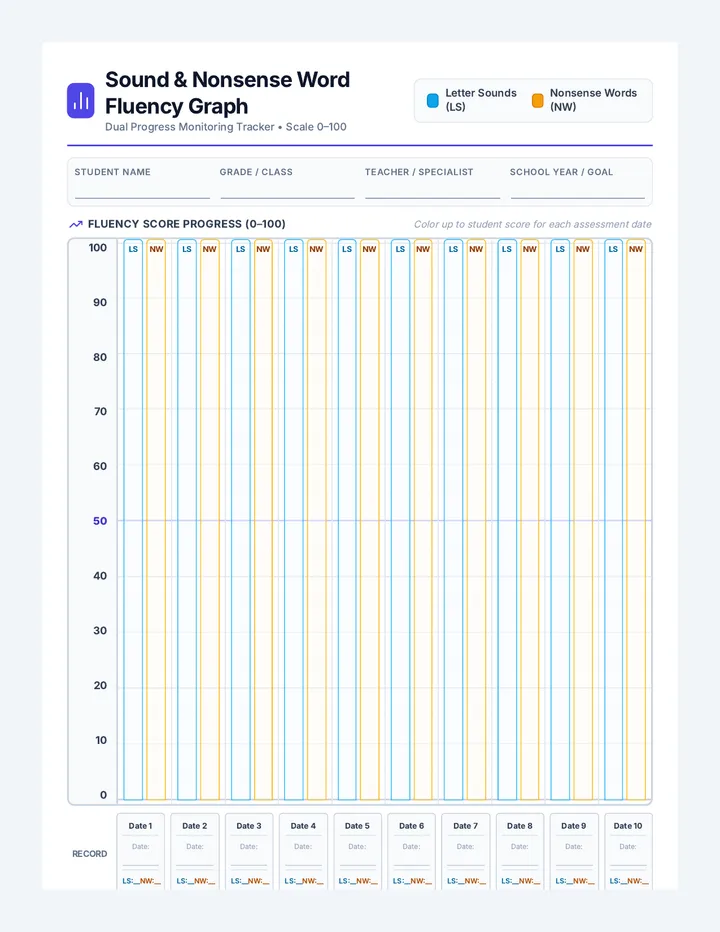
    Sound Tracker Bar Graph

    Sound Tracker Bar Graph

    A full-page, maximized progress monitoring bar graph dedicated exclusively to tracking paired Letter Sound and Nonsense Word Fluency data up to a scale of 100 across 10 assessment recording dates.

    JH

    Jessica Hogan

    Mighty Hands Slides

    Everyday Superpowers

    A comprehensive three-lesson elementary sequence introducing occupational therapy through fine motor skills, sensory processing, and daily routines. Students learn how their bodies, brains, and daily habits work together to build independence and classroom success.

    Lenny Avatar
    Lenny
    6
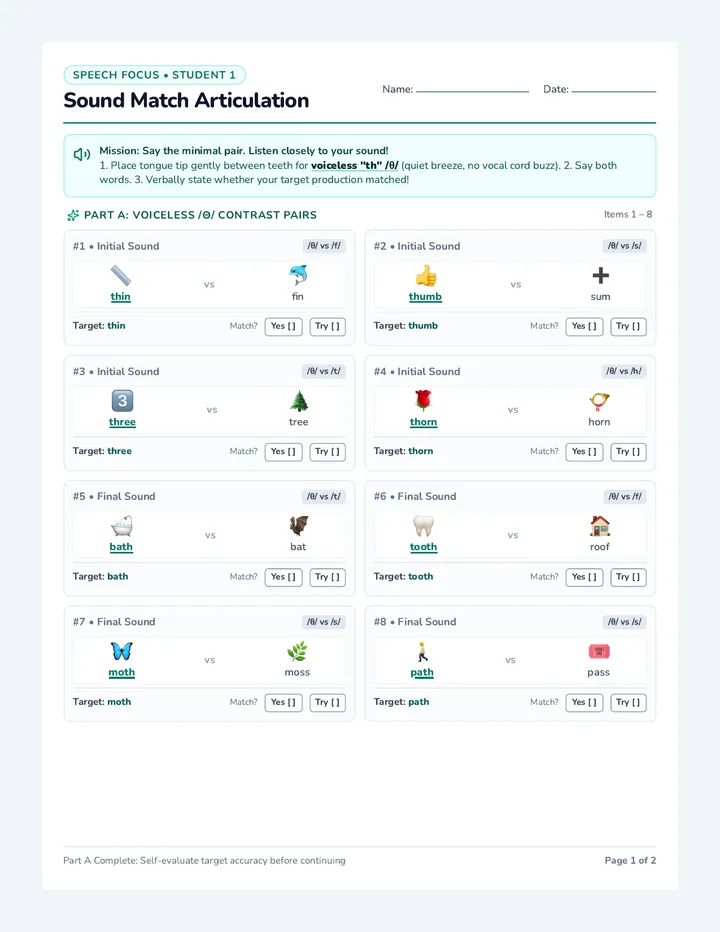
    Sound Match Articulation Worksheet

    Speech Trio Stations

    A differentiated small-group speech and language intervention lesson targeting minimal pair articulation with self-monitoring, semantic vocabulary relationships, and complex sentence formulation with subordinate clauses.

    TK

    T K

    4
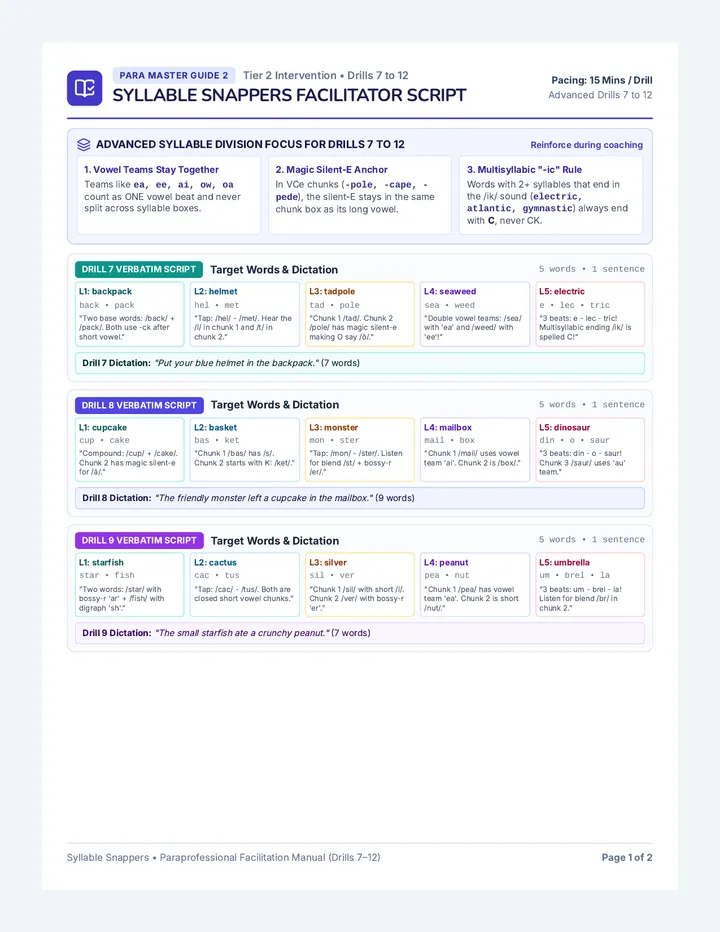
    Syllable Snappers Paraprofessional Guide Two

    Syllable Snappers Paraprofessional Guide Two

    A comprehensive 2-page coaching guide and verbatim facilitation script for paraprofessionals delivering Drills 7 through 12. Features advanced syllable division rules, verbatim coaching scripts for Drills 7 to 12, error correction protocols, and a 6-session cumulative progress tracking log for Drills 7-12.

    SW

    Stephanie Wooten

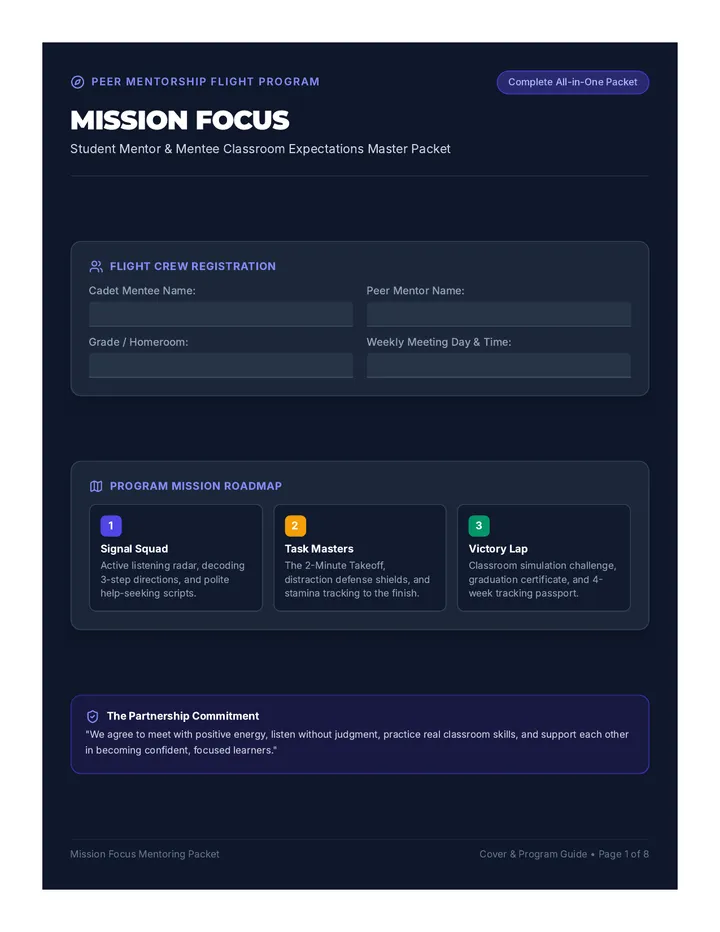
    Mission Focus Printable Packet

    Mission Focus Mentoring

    A three-stage peer-mentoring sequence that equips student mentees with active listening, instruction-following, task initiation, and distraction-management routines through structured mentor coaching.

    MP

    Melissa Premo

    1
    Paw Print Teacher Guide

    Wilson Claw and Paw

    A 10-part Wilson Reading System (WRS) literacy lesson targeting the vowel team 'aw' in Double Vowel (D) syllables. Features 3-block structure, finger tapping routines, magnetic tile tracking, dictation book grids, D-syllable marking, and pencil scooping.

    KW

    Kellie Walsh

    6
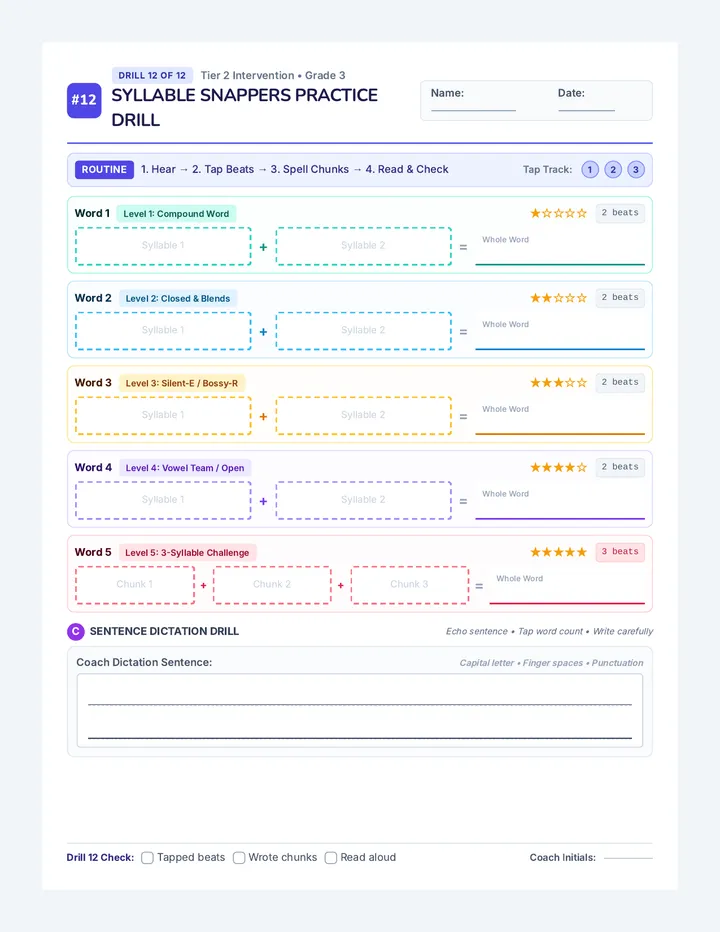
    Syllable Snappers Drill Twelve

    Syllable Snappers Drill Twelve

    A printable 1-page multisyllabic spelling practice drill (Drill 12) for third grade students featuring 5 progressive difficulty levels from compound words to a 3-syllable challenge, blank chunk boxes, tap track, and sentence dictation.

    SW

    Stephanie Wooten