Lenny.com
Explore
Create
ActivitiesNewMathEnglish Language ArtsScience & EngineeringSocial StudiesGlobal LanguagesHealth & Physical EducationSpecial EducationCounseling & Life SkillsArts & CreativityESL
Lenny.com
Lenny.com
Explore
Create
ActivitiesNewMathEnglish Language ArtsScience & EngineeringSocial StudiesGlobal LanguagesHealth & Physical EducationSpecial EducationCounseling & Life SkillsArts & CreativityESL
Lenny.com
Lenny.com

Solutions

Lenny for EducatorsLenny for SchoolsLenny for Districts

Product

ExploreSign inCreateSupportAbout

Resources

Getting startedMTSS Acceleration Program

© 2026 Lenny Learning Inc.

TermsPrivacyAccessibility
LinkedInInstagramX
Lenny
Special EducationSensory Processing & RegulationSensory Preferences IdentificationSensory Tool UseCommunicating Sensory NeedsSensory Overload RecognitionDeep Breathing PracticeMovement Break UtilizationIndependent Calming Strategy UsePersonalized Calming RoutinePersonal Sensory Diet CreationProactive Sensory BreaksEmotion Intensity RecognitionDysregulation RecoveryPositive Behavior SupportUnderstanding Social StoriesPersonal Social Story CreationEmotional Regulation FrameworksPersonal Trigger IdentificationSelecting Regulation StrategiesReinforcement System ResponseSelf-Monitoring & RewardsLearning Positive AlternativesCross-Setting Skill GeneralizationSocial CommunicationEye Contact & Personal SpaceContext-Appropriate GreetingsAppropriate Volume & ToneConversation Turn-TakingTopic Maintenance in DiscussionEffective Help-SeekingBody Language InterpretationFacial Expression RecognitionIdioms & Figurative LanguageSocial Problem IdentificationSocial Solution GenerationSocial Decision EvaluationTask ManagementMinimal Prompting Task StartSelf-Talk for StartingStarter Strategies for Difficult TasksAge-Appropriate Task PersistenceStrategic Break ManagementSmooth Task TransitionsAdapting to Plan ChangesObstacle Problem-SolvingMulti-Day Project CompletionPlanning & OrganizationPhysical Material OrganizationVisual Schedule & Timer UseSequential Task BreakingTime Estimation SkillsTask PrioritizationDigital & Physical Workspace ManagementPersonalized Organization StrategiesDetailed Project PlanningMultiple Commitment BalancingAcademic Support StrategiesMath Manipulative UseVisual Math Problem RepresentationComplex Math Problem BreakdownText Highlighting & AnnotationVisualization While ReadingPredictions & Inferences from TextText Structure Graphic OrganizersWriting Graphic OrganizersSentence Frames & TemplatesStudy Guide CreationSpaced Repetition for MemoryAssistive Writing TechnologyWorking Memory SupportSingle-Step Direction FocusMulti-Step Direction FollowingInformation Chunking PracticeVisual Support Memory AidsMnemonic Device ApplicationEfficient Note-Taking SystemsGraphic Organizer Note-TakingNote Review & OrganizationSustained Complex Task AttentionAssistive TechnologySymbol-Word CommunicationAAC Device NavigationSpeech Recognition DictationDictation Text EditingText-to-Speech for ReadingDigital Calendar UseKeyboard Shortcuts NavigationProductivity App ManagementSelf-Advocacy SkillsCommunicating Learning NeedsRequesting AccommodationsAdvocating for Appropriate SupportsIEP & Student RightsUnderstanding IEP ComponentsMeaningful IEP Meeting ParticipationIDEA & Section 504 RightsProgress MonitoringTracking IEP Goal ProgressReflecting on AchievementData-Informed Instructional AdjustmentTransition PlanningCareer & Vocational Goal SettingExploring Post-Secondary OptionsIndependent Living Skills Planning

IEP Self Advocacy Blueprint

A differentiated student self-advocacy workbook package designed to help high school students take ownership of their IEP. It features a Tier 1 (Standard) version and a Tier 2 (Scaffolded) version containing simplified reading text, a common accommodations word bank, and integrated sentence stems to support all learners during self-reflection.

Ddfleisch
I use this in class when:

| I will ask the teacher by saying:

| | My accommodation is:

| I use this in class when:

| I will ask the teacher by saying:

|

The Self-Advocate's Script (Practice with a Partner!)

If your teacher forgets to give you an accommodation, practice reading this simple script to them:

"Excuse me, Mr./Ms. ________, can I please use my accommodation for ________ on this task?"

SELF-ADVOCACY WORKBOOK (TIER 2) PAGE 2 OF 3

PROJECT: GOALS & FUTURE PLANS

Part 02

GOAL MONITORING & FUTURE VISION

"My roadmap to independence."

Task: Write down your current goals. Rate how confident you feel about each goal (1 is hard, 5 is mastered).

My IEP Goal (Skill to Practice)How Am I Doing? (Circle One)
My Goal is to get better at:

1 2 3 4 5

1: Hard | 5: Easy

| | My Goal is to get better at:

|

1 2 3 4 5

1: Hard | 5: Easy

|

IEP Evaluation: What's Working & What Isn't?

Reflect on your current accommodations and IEP support in your classes. Fill in the blanks:

One tool/accommodation that really helps me succeed is

Something that is currently hard or not working in class is

I would learn even better if teachers would help me by

SELF-ADVOCACY WORKBOOK (TIER 2) PAGE 3 OF 3

3

Goal Mapping & Future Connections (20-30 Mins)

Guide students through Page 3 of the workbook. Help them extract their yearly IEP goals and conduct a realistic self-rating of progress (1 to 5 scale). Emphasize how mastering these academic or social goals connects directly to their career, trade, or independent living dreams.

Recommended Discussion Prompts

  • • "If a teacher is busy and forgets your extended time, what is the best way to remind them respectfully and confidently?"
  • • "Why do colleges and jobs care about self-advocacy instead of having your parents speak on your behalf?"
  • • "If you realize an accommodation in your IEP isn't actually helping you, what can you do about it?"

Student Transition Self-Advocacy Milestones

Can state their diagnosis & learning style.

Knows 3 key accommodations on their IEP.

Can explain the difference between IDEA and ADA.

Practiced asking for help using the template script.

IEP SELF-ADVOCACY FACILITATOR GUIDE PAGE 2 OF 2

Task: Circle what your goals are about, and show how confident you feel about them!

Goal 1 category:

Reading 📚 Math 🧮 Writing ✍️

How confident do you feel?

☹️ Hard 😐 Okay 🙂 Easy

Goal 2 category:

Focusing 🎯 Organizing 📁 Social 🤝

How confident do you feel?

☹️ Hard 😐 Okay 🙂 Easy

My IEP Checklist: What Works?

Think about your classes. What helps you learn and what is hard? Fill in the blanks with short words:
1. My favorite tool that helps me learn is:

2. Class is hard when:

3. I need my teachers to help me with:

SELF-ADVOCACY WORKBOOK (TIER 3) PAGE 3 OF 3

You might also like

Task Tracker Data Sheet

Task Master

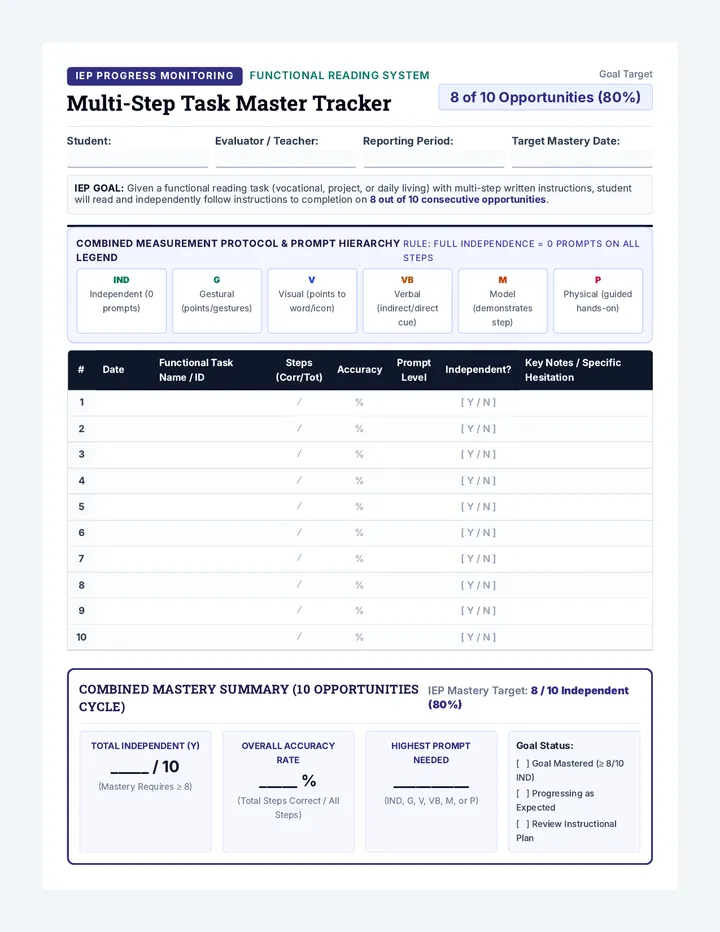
A multi-day progress-monitoring system designed to assess and track IEP goals for following multi-step functional reading instructions. It includes 10-trial combined-measure data sheets, realistic vocational and project task cards, and assessment administration protocols.

RC

Roni Coleman

4
Pause Wonder Keyring Guide

Pause And Wonder

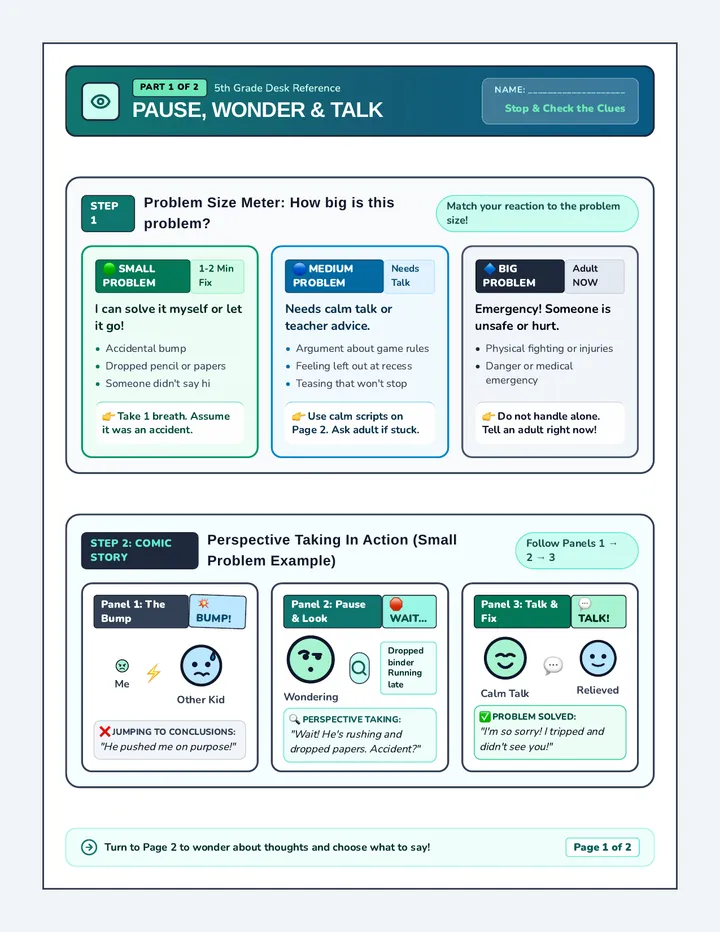
A social-emotional and perspective-taking toolkit for 5th graders with communication disabilities, featuring visual supports for problem sizing, empathy clues, communication scripts, and self-regulation.

AM

Alyssa Miller

2
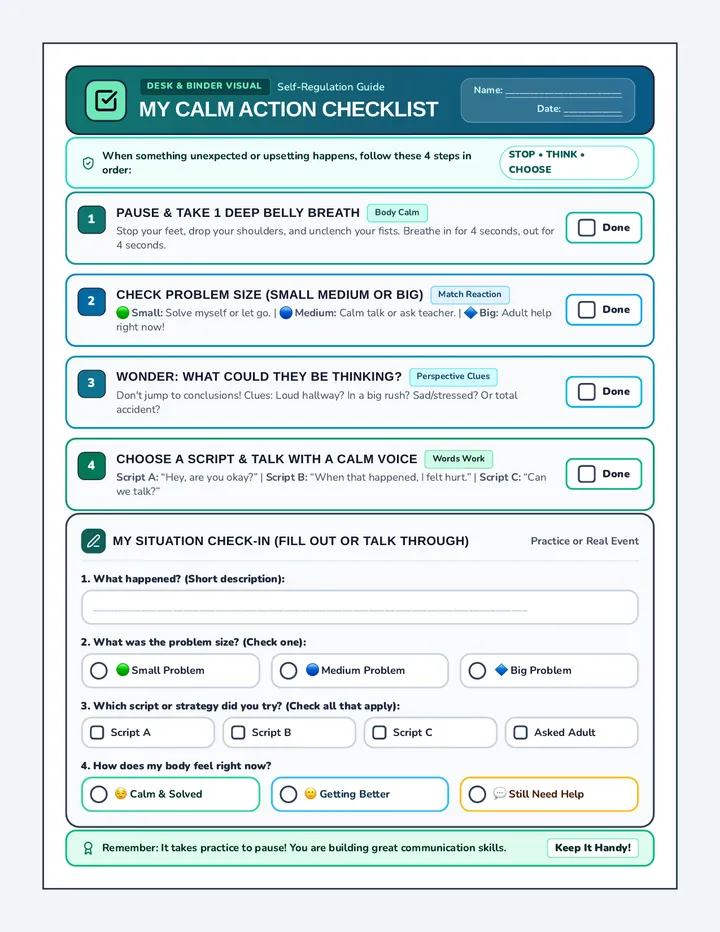
Calm Action Checklist Visual

Calm Action Checklist Visual

A one-page student-facing visual checklist and reflection sheet for 5th graders with communication disabilities, guiding them through four calm action steps and a self-regulation check-in.

AM

Alyssa Miller

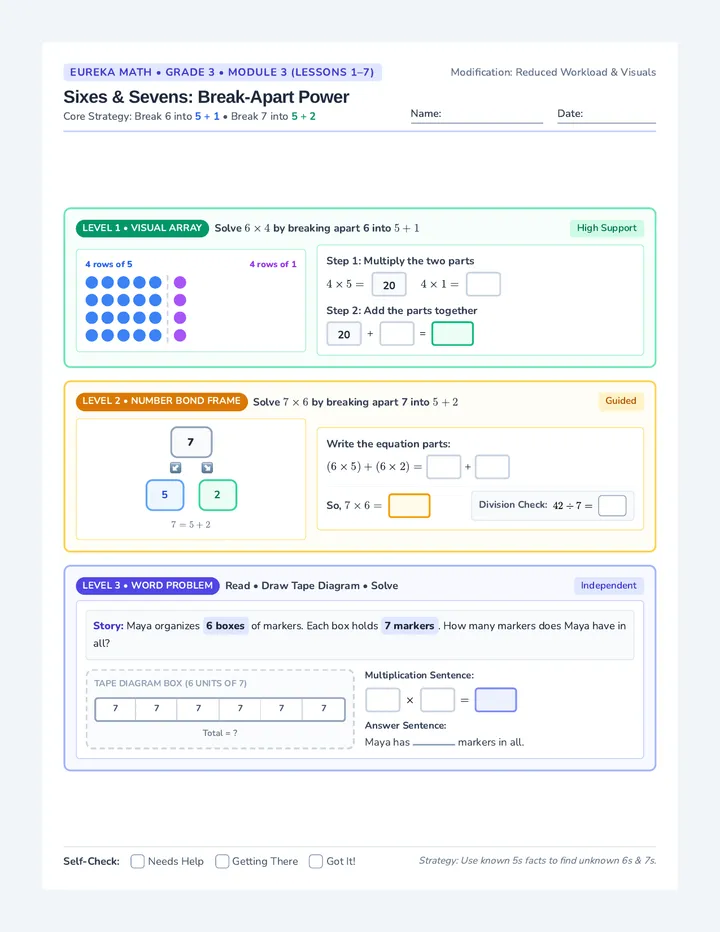
Sixes Sevens Tiered Worksheet

Module Three Math Modifications

A comprehensive instructional sequence providing differentiated, reduced-workload, and visually scaffolded modifications for Eureka Math Grade 3 Module 3. Covers all 21 lessons organized across four focused mastery clusters with multi-tiered student practice and teacher modification guides.

ML

Michelle Low

8
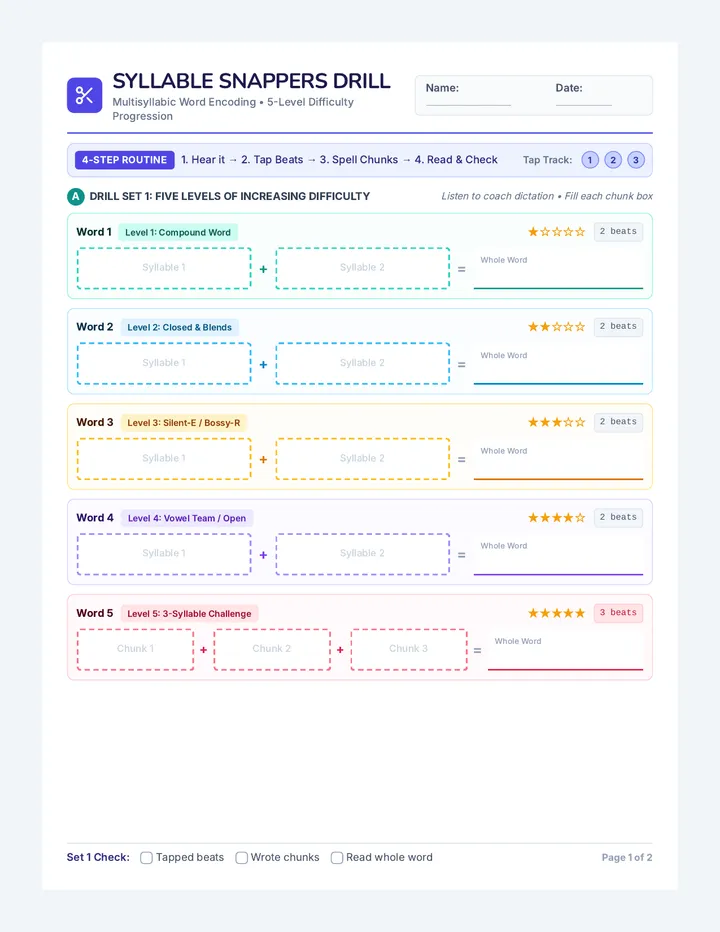
Syllable Snappers Student Drill

Syllable Snappers

A targeted multisyllabic encoding intervention designed for third-grade learners mastering syllable division and phoneme-grapheme mapping. Features a student-facing practice drill and an explicit step-by-step facilitation script for paraprofessionals.

SW

Stephanie Wooten

14
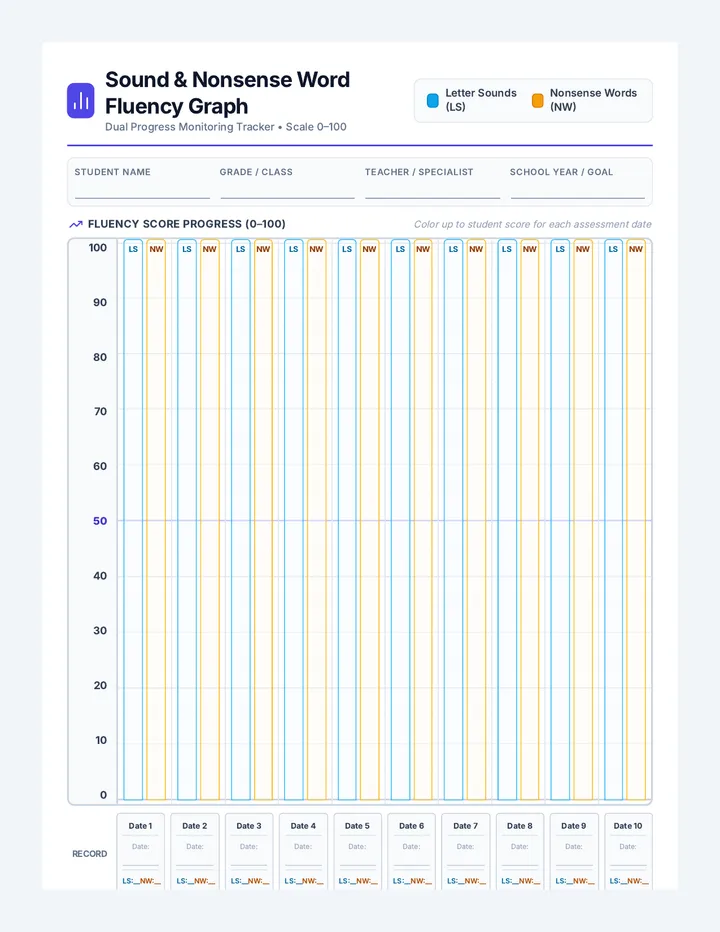
Sound Tracker Bar Graph

Sound Tracker Bar Graph

A full-page, maximized progress monitoring bar graph dedicated exclusively to tracking paired Letter Sound and Nonsense Word Fluency data up to a scale of 100 across 10 assessment recording dates.

JH

Jessica Hogan

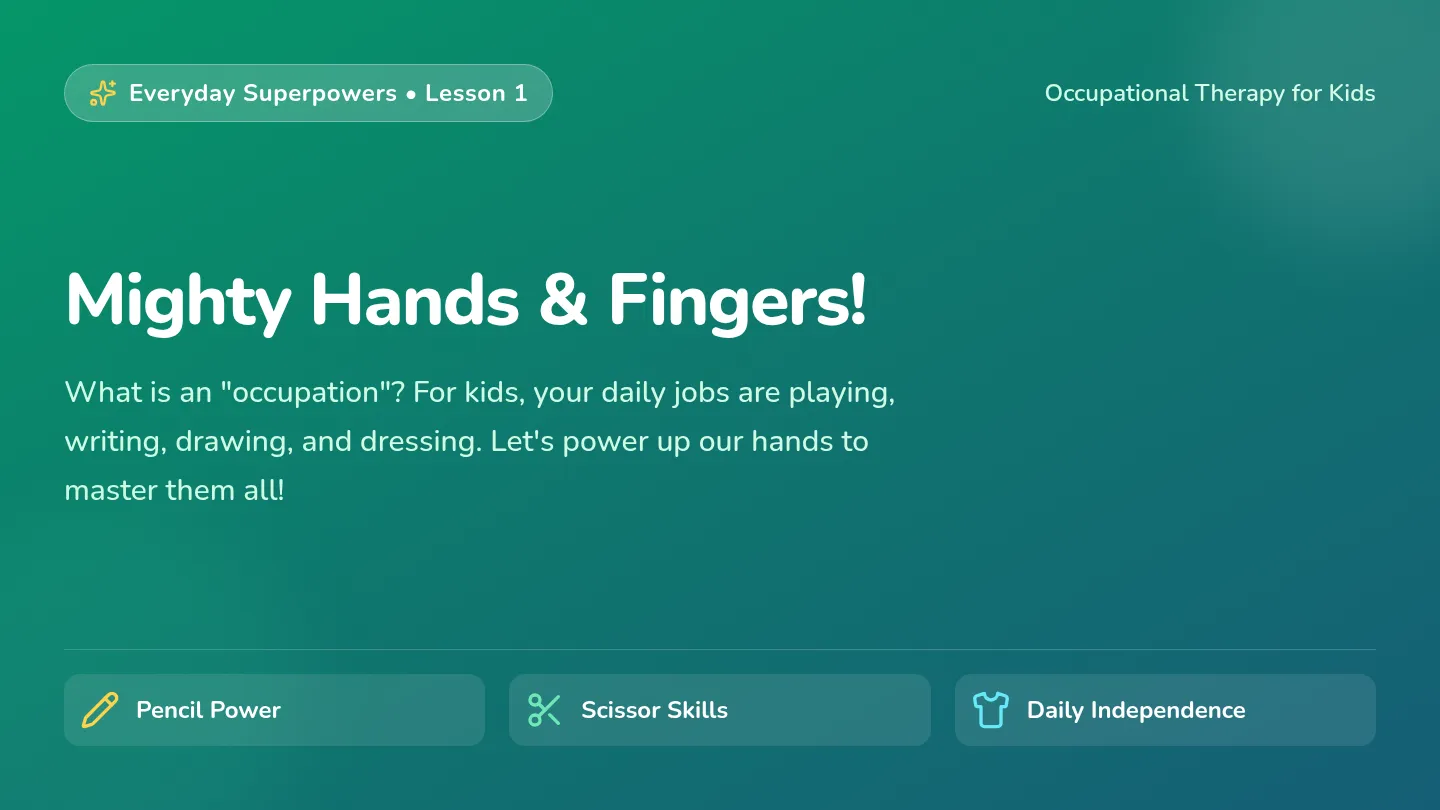
Mighty Hands Slides

Everyday Superpowers

A comprehensive three-lesson elementary sequence introducing occupational therapy through fine motor skills, sensory processing, and daily routines. Students learn how their bodies, brains, and daily habits work together to build independence and classroom success.

Lenny Avatar
Lenny
6
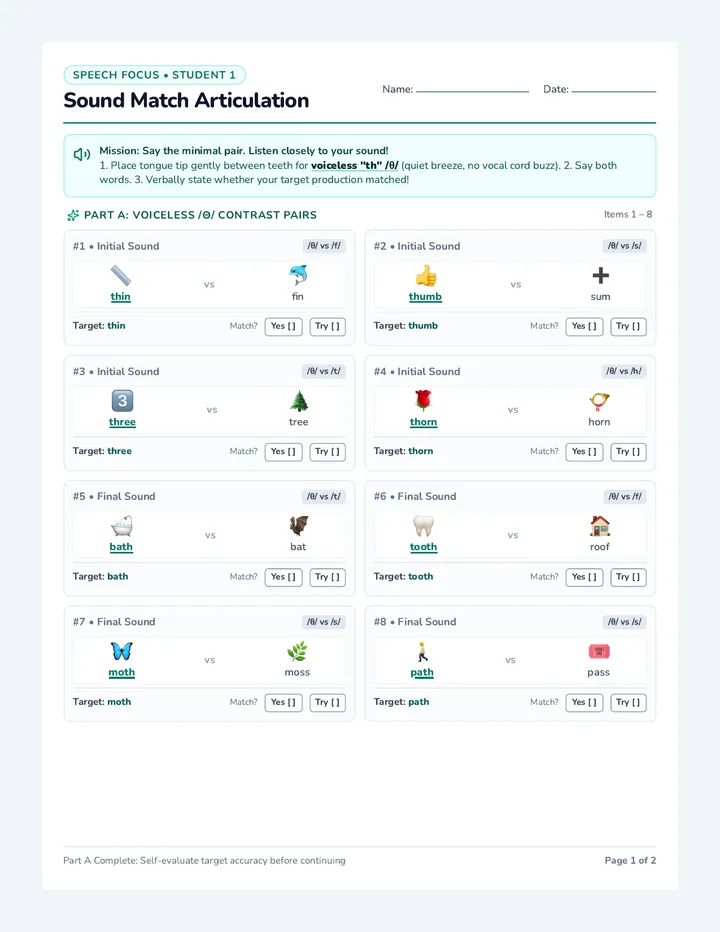
Sound Match Articulation Worksheet

Speech Trio Stations

A differentiated small-group speech and language intervention lesson targeting minimal pair articulation with self-monitoring, semantic vocabulary relationships, and complex sentence formulation with subordinate clauses.

TK

T K

4
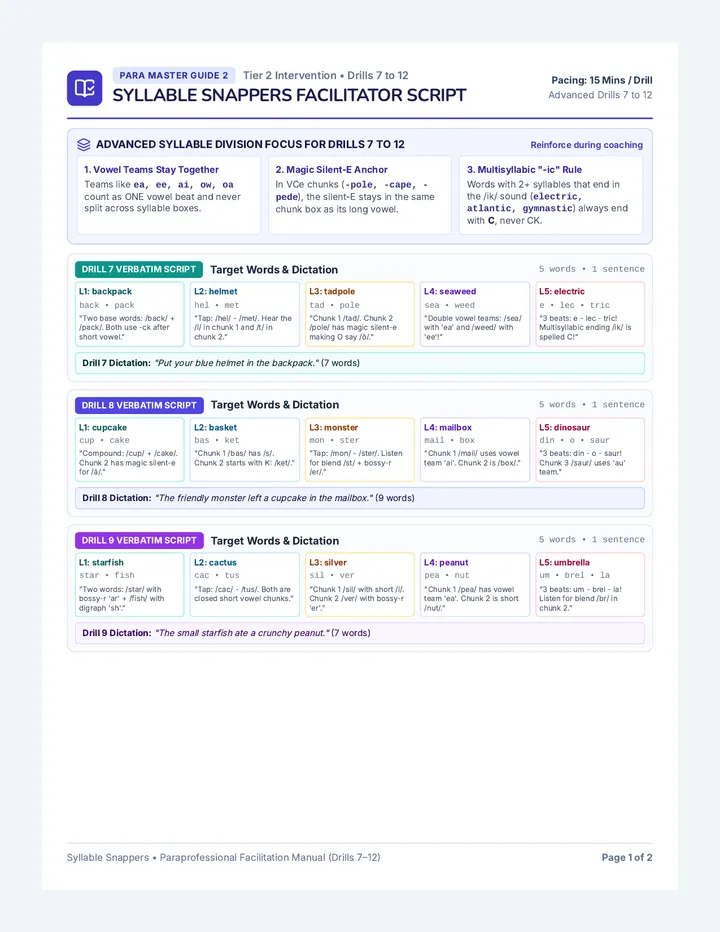
Syllable Snappers Paraprofessional Guide Two

Syllable Snappers Paraprofessional Guide Two

A comprehensive 2-page coaching guide and verbatim facilitation script for paraprofessionals delivering Drills 7 through 12. Features advanced syllable division rules, verbatim coaching scripts for Drills 7 to 12, error correction protocols, and a 6-session cumulative progress tracking log for Drills 7-12.

SW

Stephanie Wooten

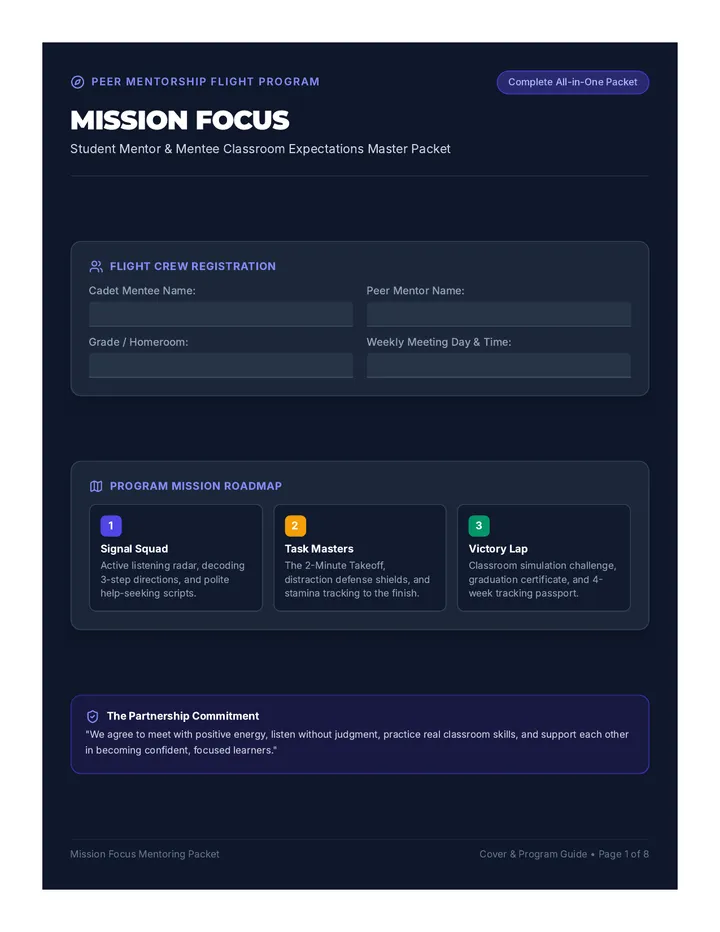
Mission Focus Printable Packet

Mission Focus Mentoring

A three-stage peer-mentoring sequence that equips student mentees with active listening, instruction-following, task initiation, and distraction-management routines through structured mentor coaching.

MP

Melissa Premo

1
Paw Print Teacher Guide

Wilson Claw and Paw

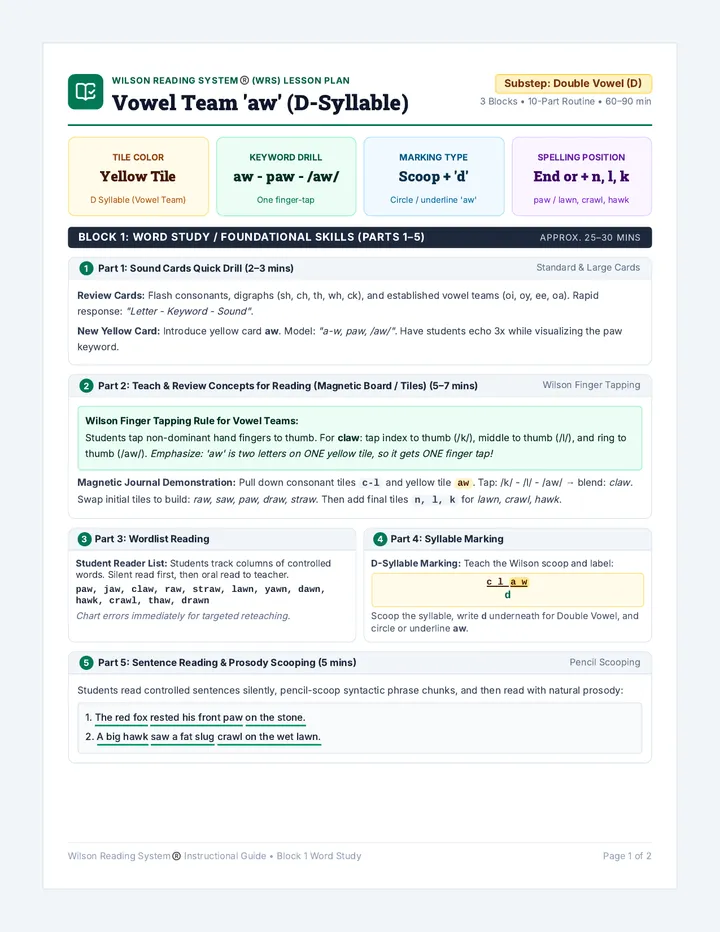
A 10-part Wilson Reading System (WRS) literacy lesson targeting the vowel team 'aw' in Double Vowel (D) syllables. Features 3-block structure, finger tapping routines, magnetic tile tracking, dictation book grids, D-syllable marking, and pencil scooping.

KW

Kellie Walsh

6
Syllable Snappers Drill Twelve

Syllable Snappers Drill Twelve

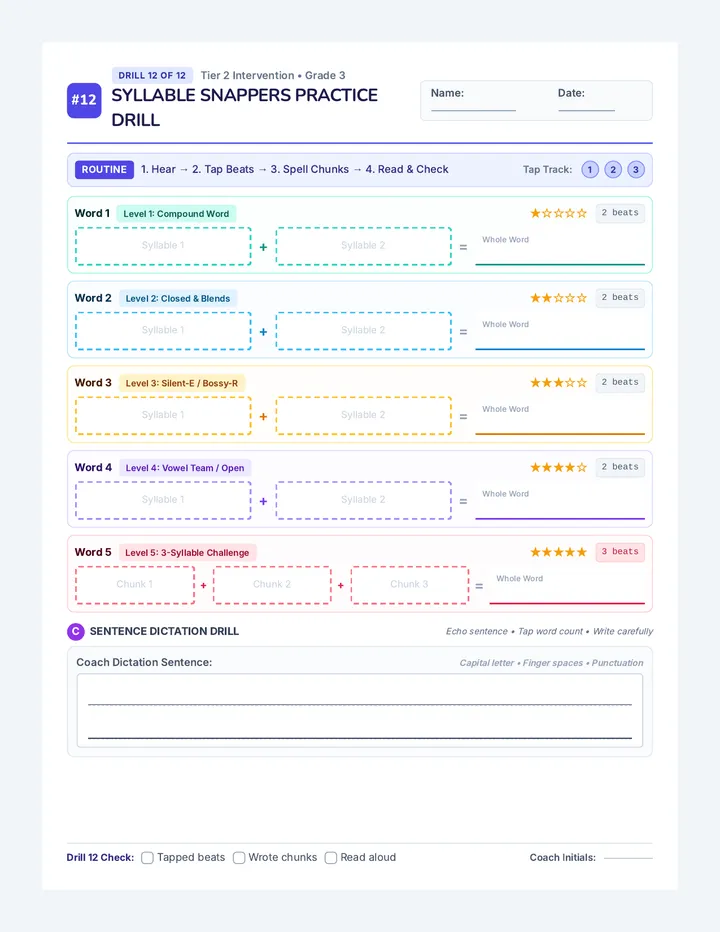
A printable 1-page multisyllabic spelling practice drill (Drill 12) for third grade students featuring 5 progressive difficulty levels from compound words to a 3-syllable challenge, blank chunk boxes, tap track, and sentence dictation.

SW

Stephanie Wooten