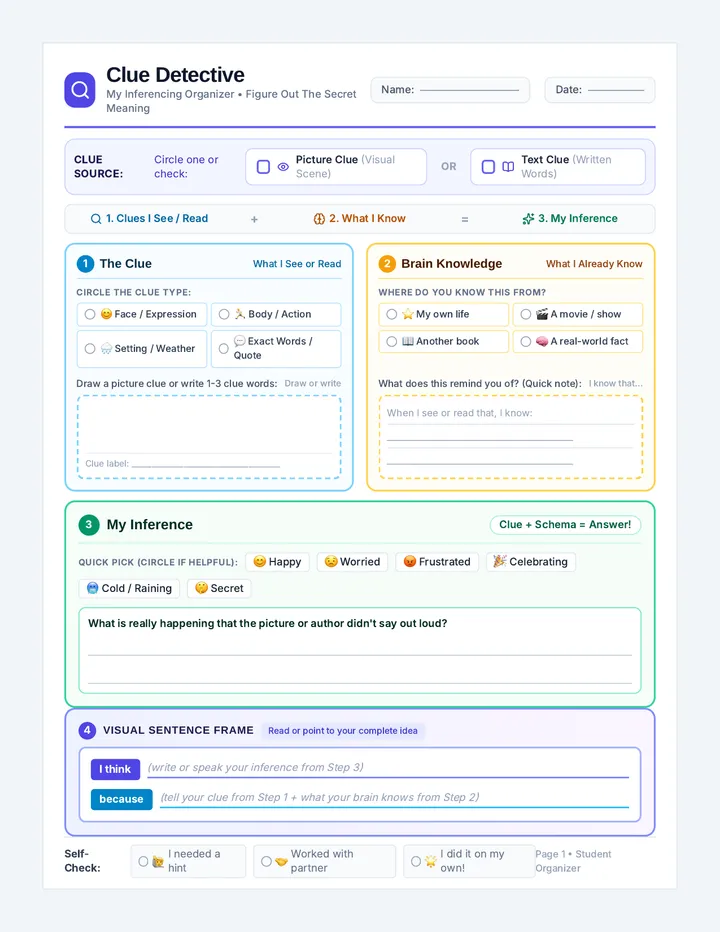
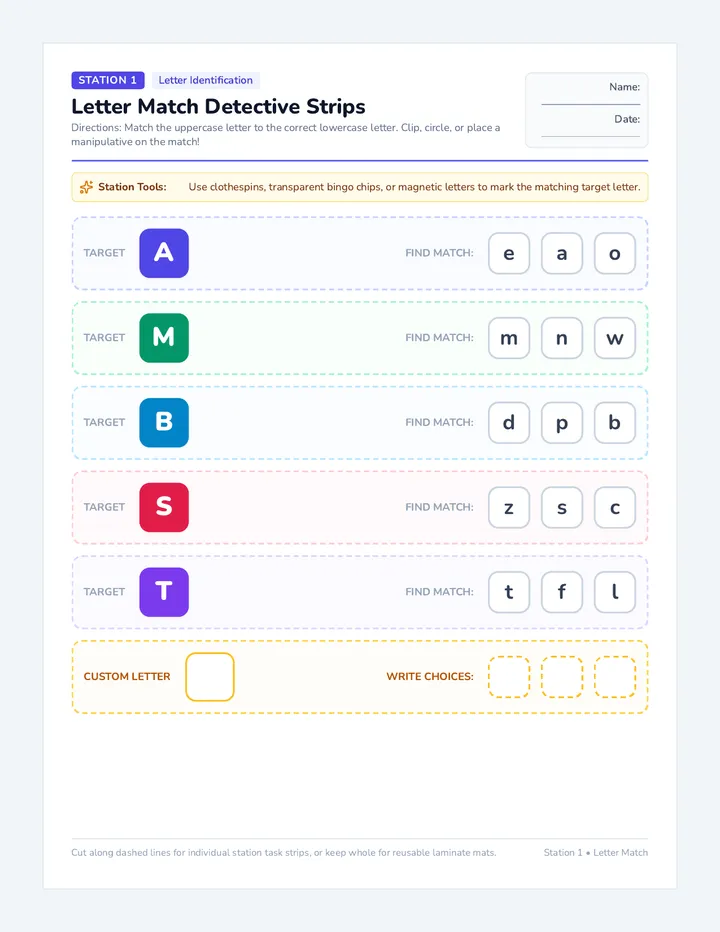
Lesson Blueprint Slides
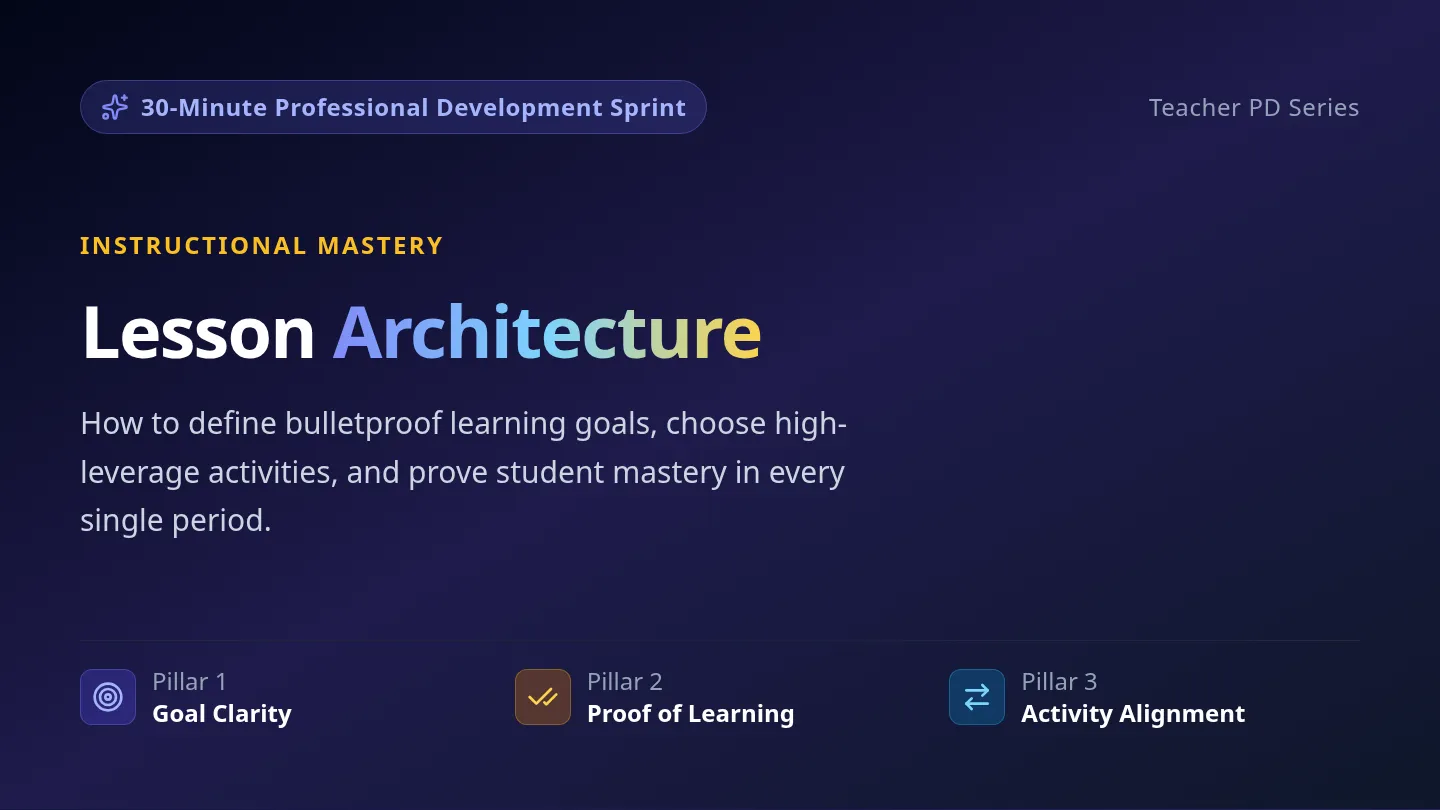
30-Minute Educator Workshop
Instructional Mastery Series
The Backward Lesson Blueprint
Stop planning activities first. Design high-impact instruction by aligning clear targets, evidence of learning, and purposeful practice.
1
Define the Target
2
Design the Proof
3
Choose the Route
Session Roadmap
Our 30-Minute Sprint
Pacing & Focus
00-05m
The Alignment Trap
Why engaging activities fall flat without clear endpoints, and the backward design solution.
05-12m
Step 1: Measurable Goals
Transforming fuzzy intentions into concrete, observable learner actions.
12-19m
Step 2: Formative Checks
Collecting rapid, reliable evidence mid-lesson before it is too late to intervene.
19-30m
Step 3 & Practice Lab
Aligning learning activities, drafting a mini-blueprint, and peer audit.
Goal: Leave with one fully aligned lesson blueprint ready for tomorrow's classroom.
The Foundation
Start at the Finish Line
Wiggins & McTighe Framework
1
Identify Desired Results
What must students know, understand, and do by the end of 45-60 minutes?
Key Question: Where are we going?
2
Determine Evidence
How will you and the student prove mastery before they leave the room?
Key Question: What counts as proof?
3
Plan Experiences
Only now select tasks and practice that equip students to succeed on the proof.
Key Question: What builds that skill?
The Common Pitfall: Jumping straight to Stage 3 because an activity looks fun on Pinterest or social media.
Step 1 • Learning Target
Crafting Measurable Objectives
Action-Oriented
Vague / Non-Measurable
"Students will understand photosynthesis."
• What does "understand" look like physically?
• Cannot assess mastery without observable action.
• Masks gaps until test day arrives.
Trap: Passive verbs hide confusion.
Sharp & Measurable
"Students will trace the inputs and outputs of photosynthesis by labeling a chloroplast diagram."
• Action verb: Trace & Label
• Specific content: Inputs and Outputs
• Visible product: Chloroplast diagram
Test: Can you photograph a student doing it?
The SWBAT Formula: SWBAT + [Active Verb] + [Target Knowledge] + by [Visible Demonstration]
Step 2 • Checking Understanding
Collecting Instant Evidence
Formative Toolkit
The Hinge Question
A single diagnostic question mid-lesson where each wrong answer reveals a specific misunderstanding.
60 Seconds • Reteach or advance immediately.
Whiteboard Blitz
All students raise dry-erase responses simultaneously. Zero students hiding behind vocal volunteers.
100% Active • Scan the room in 5 seconds.
Targeted Exit Ticket
1-2 items strictly mirroring the target. Sort answers into 3 piles: Mastered, Partial, and Needs Support.
Final 5 Min • Directly shapes tomorrow's warmup.
Rule of Thumb: Never ask "Does everyone understand?" Ask prompts that compel every student to think.
Step 3 • Instructional Activities
Choosing Aligned Practice
Function Over Novelty
The 3-Point Alignment Audit
Does the task require the exact cognitive verb from the goal?
Is student time spent thinking rather than decorating or formatting?
Does the activity directly rehearse the exit ticket format?
If it fails any point, simplify or replace the task.
High-Yield Architecture
I Do (7-10m): Explicit modeling with think-aloud.
We Do (10-15m): Guided rehearsal with paired CFU.
You Do (15-20m): Independent practice with teacher coaching.
Gradual release guarantees independence.
Core Principle: Engagement is active cognitive processing, not merely compliance or entertainment.
Practice Lab • 10 Minutes
Design Your Micro-Blueprint
6m Solo + 4m Partner Audit
Part A: Solo Build
6 Minutes
Use Page 2 of your Participant Guide to draft:
1 Sharpen 1 Target: Observable SWBAT objective.
2 Design Proof: 1 hinge item or exit ticket prompt.
3 Select 1 Core Activity: Practice that prepares for proof.
Tip: Pick a real lesson you are teaching within 48 hours.
Part B: Peer Audit
4 Minutes
Swap with a colleague and audit with two questions:
Audit 1: Action Verb "Is the verb truly measurable, or can a student fake it?"
Audit 2: Strict Alignment "Does the activity directly rehearse what the proof requires?"
Share 1 Glow (strength) and 1 Push (refinement).
Turn to Participant Guide Page 2 now. Chime rings at 6 minutes.
Session Wrap-Up
Tomorrow's Shift
Takeaway & Commitment
01
Targets First
Never choose activities until you have written an active, observable learning target.
Replace "understand" with action.
02
Checks Before Tasks
Write your exit ticket or hinge question immediately after your goal. Know what proof looks like.
No more guessing who got it.
03
Rigorous Practice
Ensure students spend at least 50% of the period doing the intellectual work, not watching you.
Cognitive load on the learner.
Final Reflection: Which of these three shifts will you implement in tomorrow's first period?
Thank You!
Lesson Blueprint Practice Handout
Lesson Blueprint Reference Guide
30-Minute Professional Development Toolkit
Backward Design Framework
The 3 Core Inquiries: 1. Desired Outcome (Target) → 2. Verifiable Evidence (Proof) → 3. Learning Experience (Route)
1
Crafting Sharp Learning Targets
The SWBAT Formula
Formula: Students Will Be Able To + [Observable Action Verb] + [Specific Concept/Skill] + by [Visible Evidence/Product]
Vague / Non-Observable Verbs (Avoid)
Understand, learn, appreciate, know, explore, comprehend, familiarize with, grasp.
Measurable Action Verbs (Use)
Analyze, calculate, contrast, draft, justify, categorize, solve, defend, formulate.
2
Designing Instant Formative Checks
Pre-Plan the Proof
The Hinge Question
1 diagnostic multiple-choice item mid-lesson. Every distractor links directly to a specific misconception.
Timing: 60-90 sec checkpoint
Whiteboard Blitz
Every student writes a rapid response and reveals on the count of 3. Zero hiding; 100% visible data.
Timing: 15-30 sec glance
Targeted Exit Ticket
1-2 problems identical in rigor to the target. Sort responses into: Got it / Partially got it / Needs reteach.
Timing: Final 4-5 minutes
3
The 3-Point Activity Alignment Audit
Cognitive Match
1. Verb Congruence
If the goal says "evaluate," are students evaluating or merely copying notes? Keep cognitive demand identical.
2. Active Cognitive Time
Are students doing the intellectual heavy lifting for at least 50% of the class time, or is the teacher talking?
3. Rehearsal Fidelity
Does the practice activity explicitly rehearse the exact cognitive performance required on the exit ticket?
Lesson Blueprint Framework • Part 1: Reference Toolkit Turn to Page 2 for Practice Lab
Micro-Lesson Planning Lab
10-Minute Hands-On Application & Peer Audit
6m Solo Build • 4m Colleague Audit
Teacher Name:
Grade & Subject:
Topic / Date of Lesson:
1
Step 1: Your Measurable Target (SWBAT)
Action verb + concept + demonstration
Write a tight, observable learning objective for an upcoming lesson:
2
Step 2: Formative Proof (Exit Ticket or Hinge Item)
Lesson Blueprint Facilitator Guide
Facilitator Delivery Guide
Backward Lesson Blueprint • 30-Minute PD Session
Instructional Coach Edition
Target Audience K-12 Teachers (All Subjects)
Total Duration 30 Minutes Strict
Key Materials Slide Deck, Handouts, Timers
Room Arrangement Paired Seating (Tables of 2-4)
Minute-by-Minute Pacing Framework
00:00 - 05:00
Opening Hook & Paradox
Slides 1-3. Contrast traditional "activity-first" trap with backward design. Set high expectations.
05:00 - 12:00
Step 1: Sharp Targets
Slide 4. The SWBAT formula. Contrast "understand" with observable actions. Practice the photograph test.
12:00 - 17:00
Step 2: Instant CFU
Slide 5. Plan proof before activities. Introduce hinge questions, whiteboard blitz, and exit tickets.
17:00 - 20:00
Step 3: Aligned Activities
Slide 6. The 3-point audit test. Cognitive demand matching; I Do, We Do, You Do structure.
20:00 - 26:00
Practice Lab (Solo)
Slide 7 & Handout Page 2. Teachers draft 1 target, 1 proof question, and 1 activity sequence.
26:00 - 29:00
Peer Audit & Feedback
Handout Page 2 Step 4. Partners swap sheets and run the 2-point audit. 1 glow and 1 push.
29:00 - 30:00
Commitment & Wrap-Up
Slide 8. Verbal call-and-response: "What is your single shift for tomorrow's first class?"
Key Facilitator Talk Tracks
The Hook (Min 01:00):
"How many times have you found an incredible, Pinterest-worthy lesson activity, spent two hours prepping materials, had students smiling and busy the whole period, only to grade their Friday quiz and realize they didn't learn the core skill? That is the Activity Trap. Today, we cure it forever in 30 minutes."
The 'Understand' Rule (Min 07:00):
"If your learning goal says 'students will understand,' delete it. You cannot observe 'understanding' in a student's brain. If a photo camera or audio recorder in the room can't capture the student doing it, it is not an instructional target—it's an aspiration. Turn 'understand' into 'defend,' 'categorize,' or 'calculate.'"
The Evidence Rule (Min 13:00):
"Never plan what you will do until you have written the exact question that proves whether they got it. Once your exit ticket is drafted, every minute of your lesson is measured against one standard: Does this prepare them to crush that ticket?"
Lesson Blueprint Facilitator Guide • Section 1: Overview & Script Turn to Page 2 for Coaching & Misconceptions