Communication techniques and legal rights training for requesting classroom accommodations. Develops the ability to articulate specific learning needs and negotiate for necessary modifications during IEP or 504 meetings.
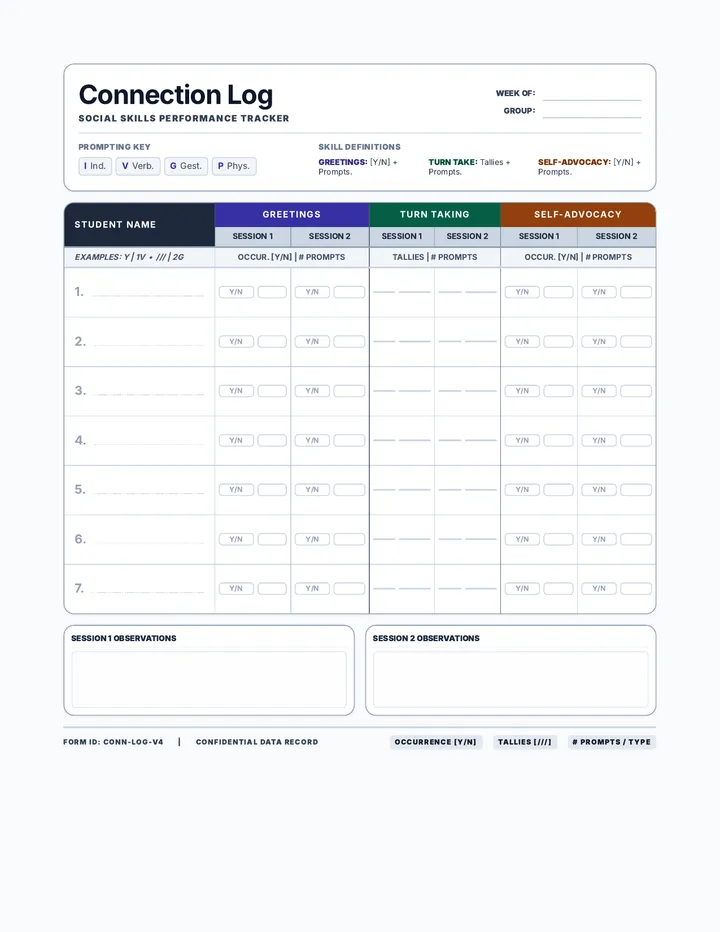
A professional data collection sheet for a 7-student social skills group. It features specific tracking for three skills over two sessions: Y/N and # Prompts for Greetings and Self-Advocacy, and Tallies and # Prompts for Turn Taking.
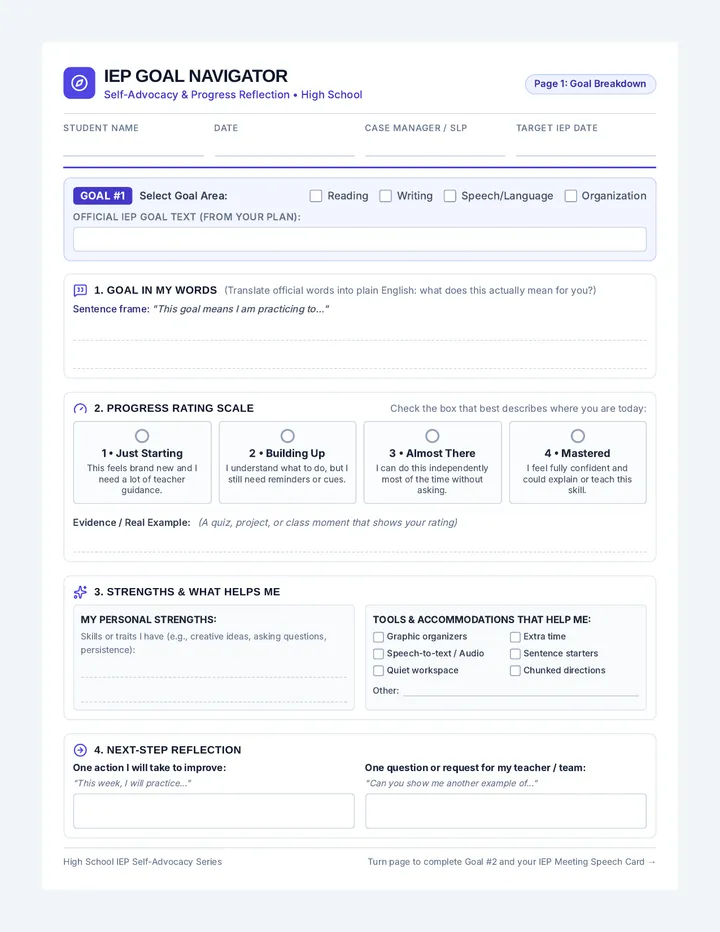
A high school IEP self-advocacy worksheet designed for students with language disorders to translate IEP goals into plain language, rate their current progress, identify strengths and accommodations, and prepare next steps for their IEP meeting.
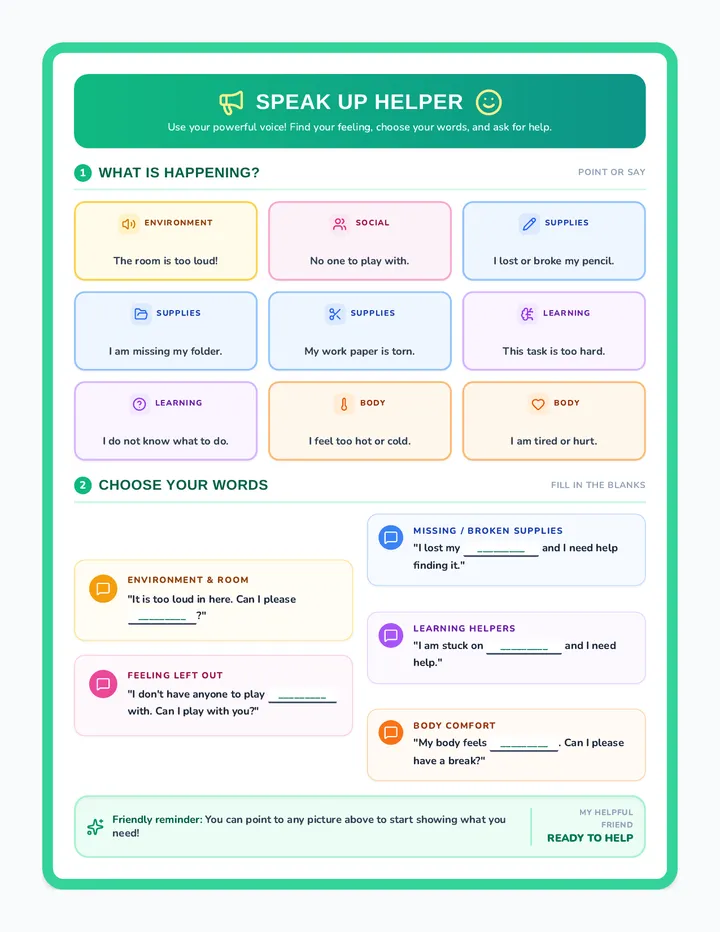
A single-page classroom anchor chart and desk poster formatted for perfect single-page printing. Features a clean 3x3 layout of color-coded school scenarios and 5 structured fill-in-the-blank sentence starters to support student voice and expression.
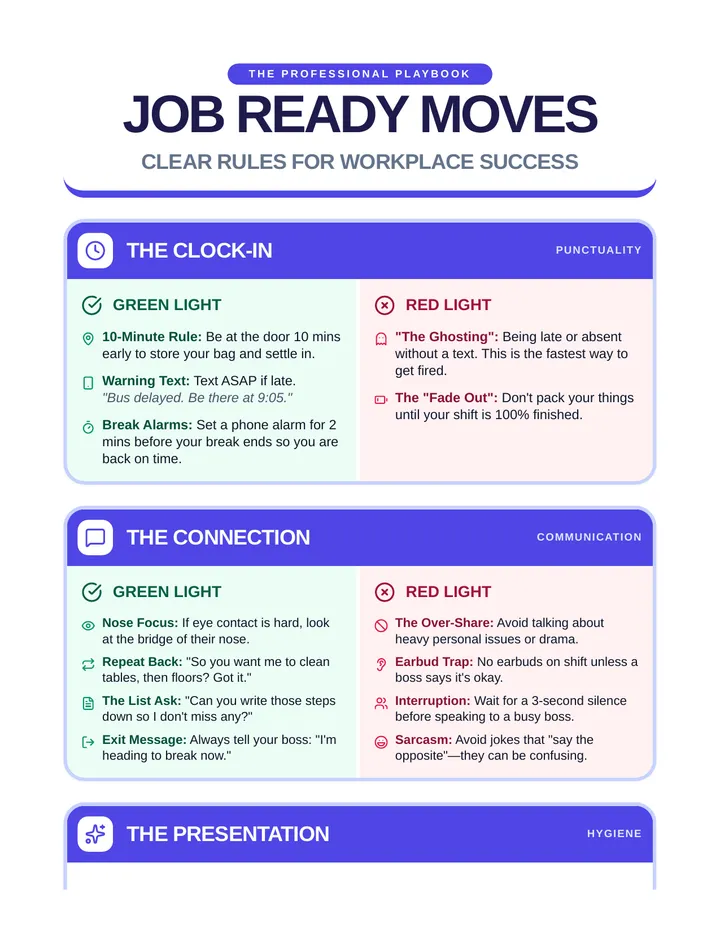
An updated version of the Job Ready Moves Poster with expanded hygiene tips, including specific advice on handwashing, hair grooming, and avoiding common hygiene pitfalls for students facing housing instability.
A comprehensive 10-page post-secondary transition plan guide for students with an IEP, featuring updated graduation pathway options: Diploma, Alternative Pathway to a Diploma, and Certificate of completion.
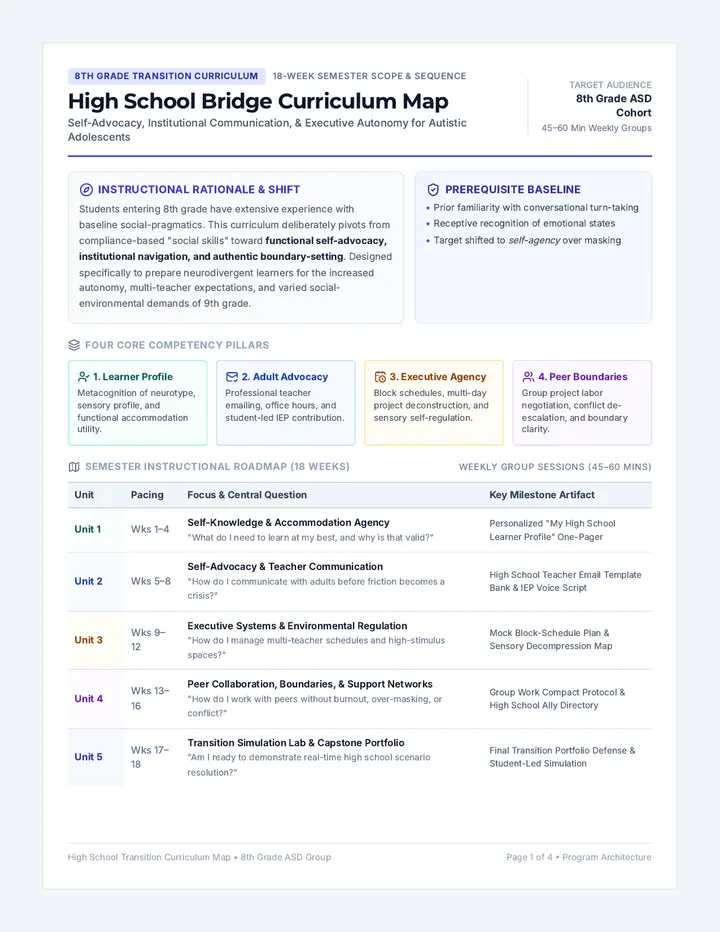
A comprehensive 18-week semester curriculum map designed for 8th-grade autistic students preparing for high school transition. Focuses on neurodiversity-affirming self-advocacy, professional teacher communication, executive navigation, and peer dynamics with pacing, weekly lesson objectives, and progress monitoring rubrics.
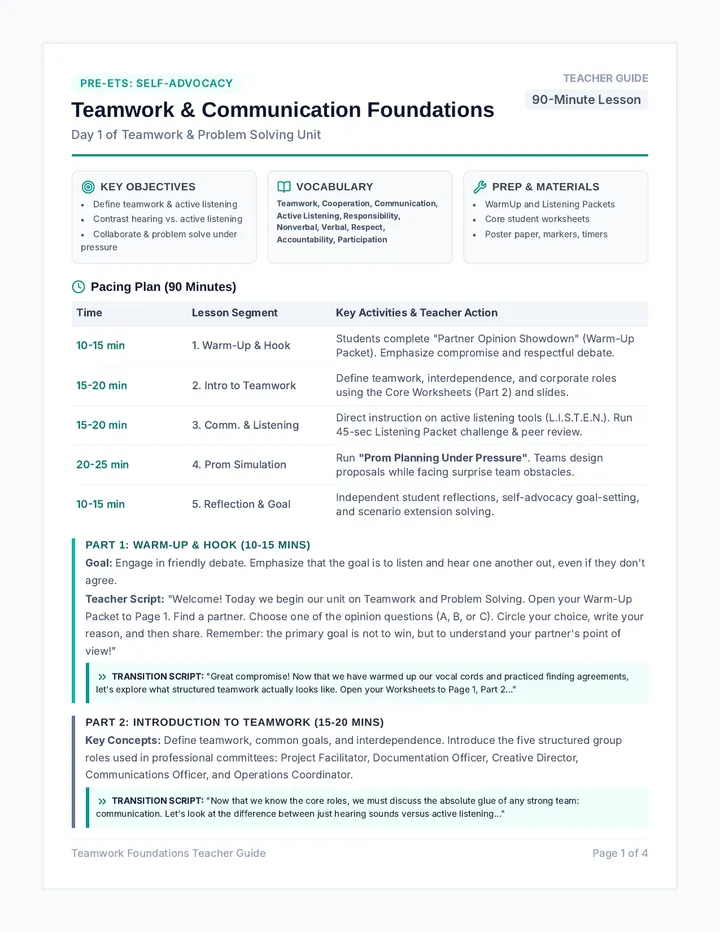
A unit introducing high school students to essential teamwork, communication, and problem-solving skills, focusing on workplace readiness, self-advocacy, and Pre-ETS skills.
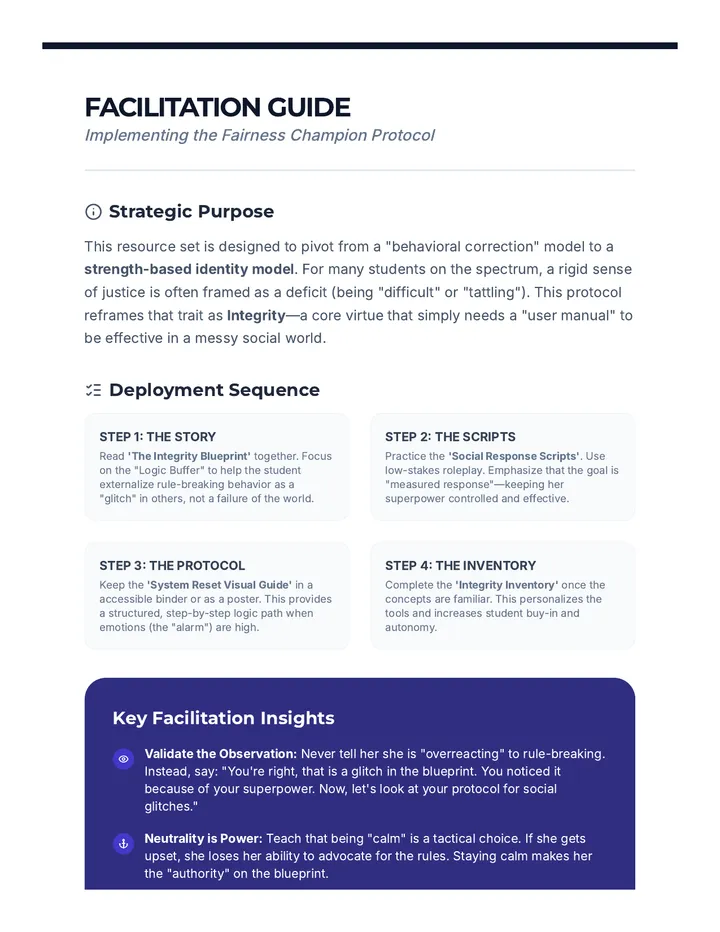
A 6-week social-emotional learning curriculum for a 13-year-old girl on the autism spectrum, focusing on managing specific triggers through a strength-based "Integrity Blueprint" lens.
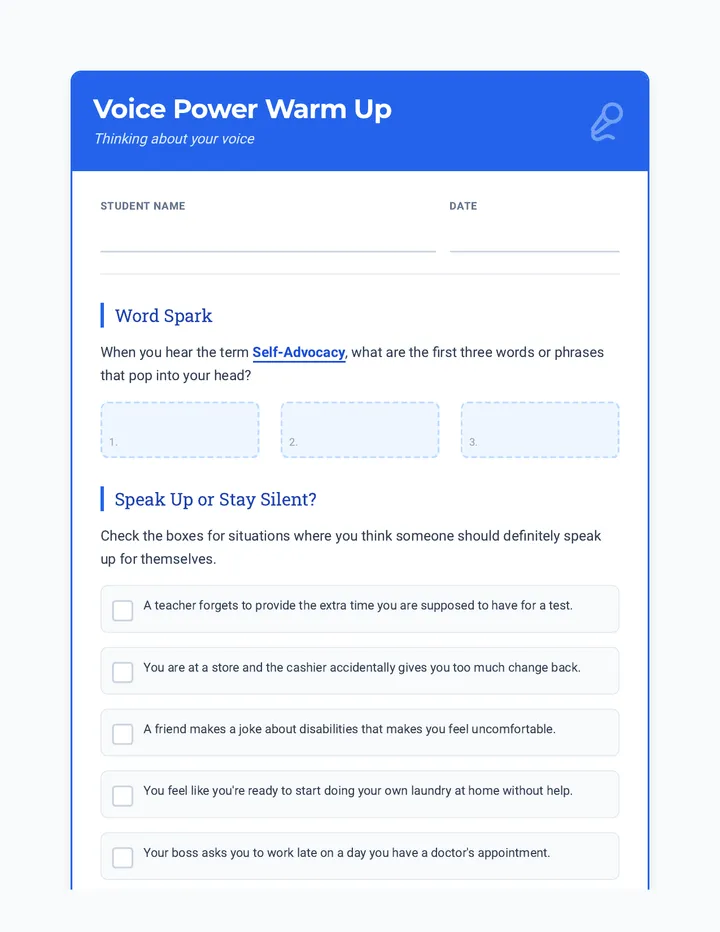
A comprehensive unit on self-advocacy and the ADA, helping students understand their rights in school, at home, and in the workplace. Students will learn how to navigate IEP accommodations, address non-compliance, and build independence.
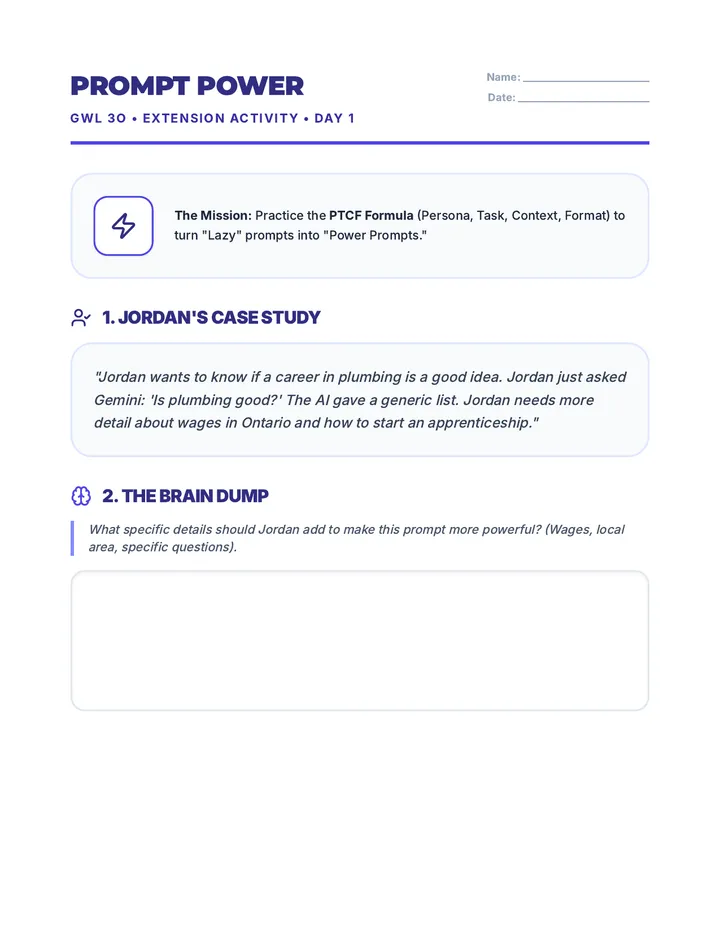
A comprehensive 7-day unit for Grade 11/12 Designing Your Future students, focusing on leveraging AI tools like Gemini for workplace and college success. Designed for special education contexts, it emphasizes self-advocacy, professional communication, research, and project management through visual and digital tasks.
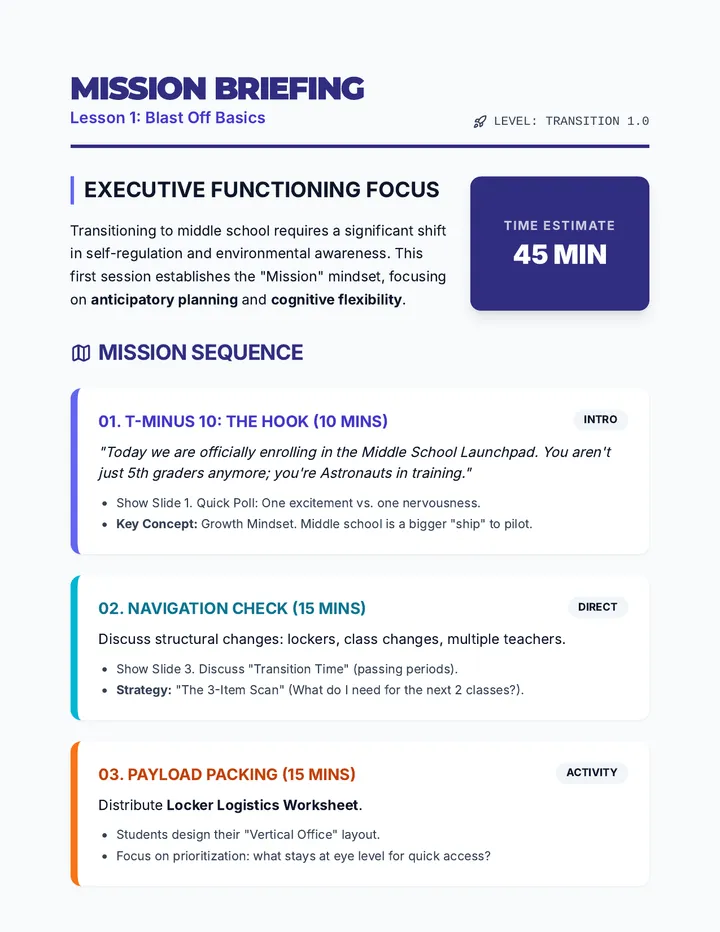
A 6-session transition bootcamp for 5th graders moving to middle school, focusing on executive functioning skills like planning, task initiation, and independence within a 'Mission to Middle School' space theme.
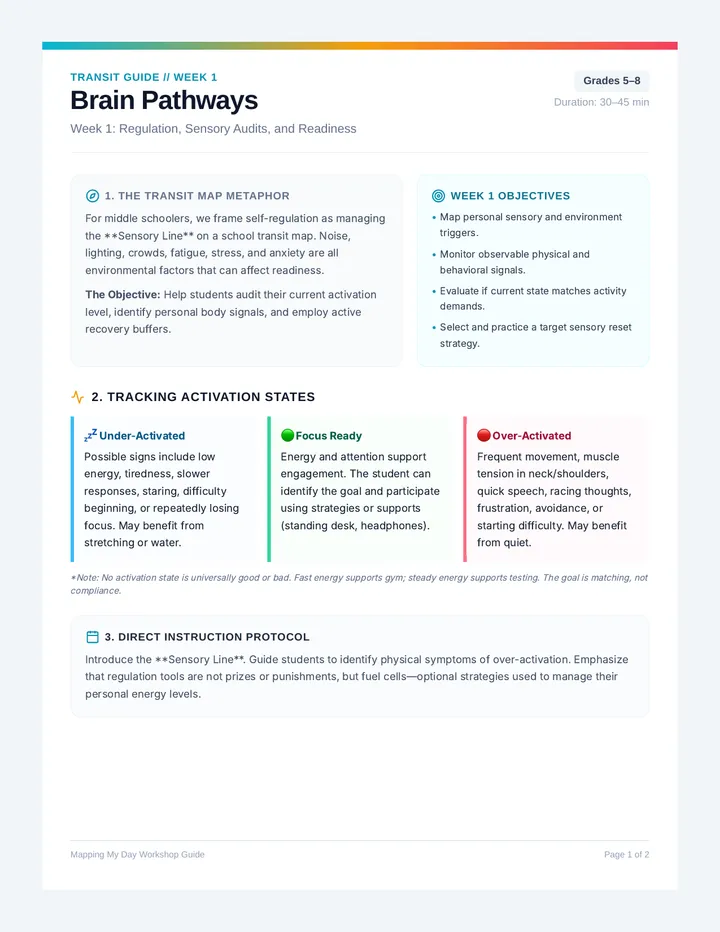
A developmentally scaffolded executive functioning workshop sequence designed to help neurodiverse students across elementary, middle, and high school map and optimize sensory, physical, and cognitive routines.
A comprehensive self-advocacy curriculum designed for young adults to navigate school, home, community, and the workplace with confidence. Focuses on personal identity (pronouns), legal rights (ADA/IDEA), and practical communication strategies.
A comprehensive lesson designed to help a 3rd-grade student recognize and shift from 'stuck thinking' to 'flexible thinking' during transitions and writing tasks. Includes a social story, role-playing, and tangible strategy cards.
A high-energy, superhero-themed lesson designed for students with autism to learn the 'superpower' of self-advocacy. This lesson covers standing up for oneself at home, school, and in the community through interactive slides, stories, and games.
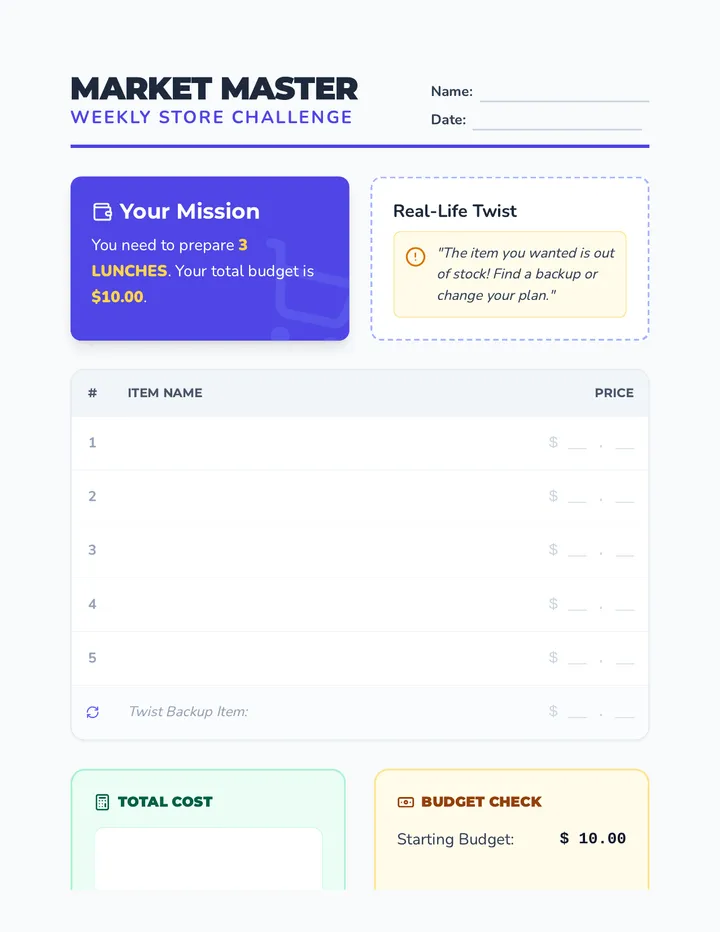
A comprehensive life skills rotation lesson covering budgeting, social interactions at a cafe, job skills (stocking/packing), and self-advocacy through role-play and game-based learning.
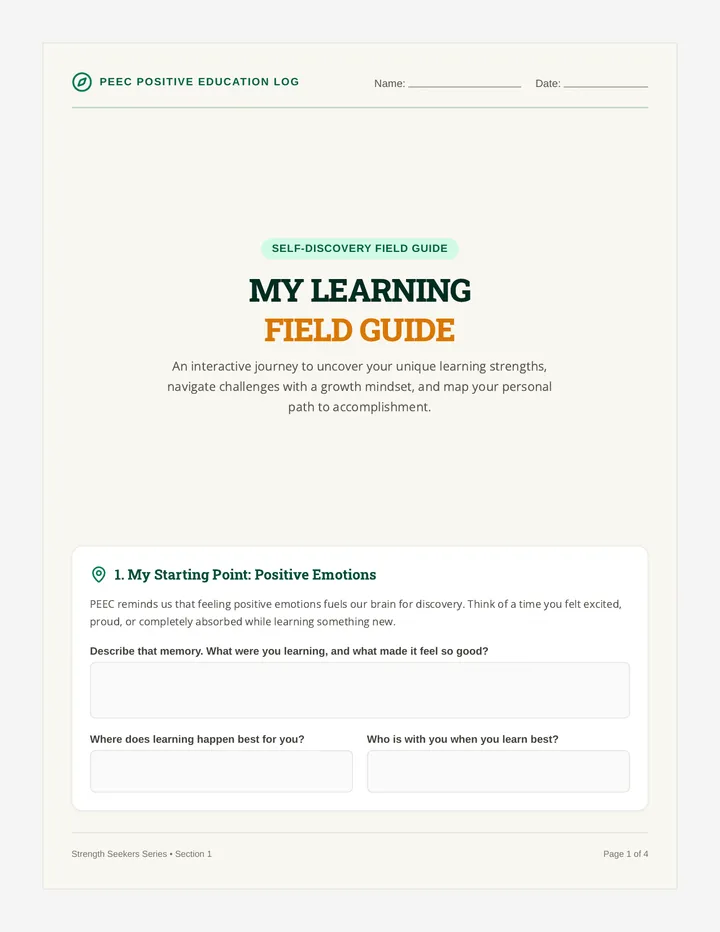
A PEEC-aligned self-discovery lesson designed to help students identify their learning strengths and growth areas. Through interactive reflections, character strength mapping, and a personal profiling activity, students construct a physical blueprint of how they learn best.
A focused session on postsecondary self-advocacy, teaching students with learning differences how to communicate their needs to professors and employers. The lesson emphasizes the transition from high school's automatic support to the self-initiated systems of college and the workplace.