A phonics lesson focusing on distinguishing between similar r-controlled word pairs (ar, er, ir, or, ur) in context, using OG-aligned vocabulary including closed and VCE syllables.
A comprehensive set of visual tools and scaffolds designed to help students with IEPs master rounding to the nearest 10, 100, and whole number using number lines and visual cues.
A set of visual supports and instructional strategies designed to help second-grade students, particularly those with language impairments, understand and implement whole-body listening and focusing behaviors.
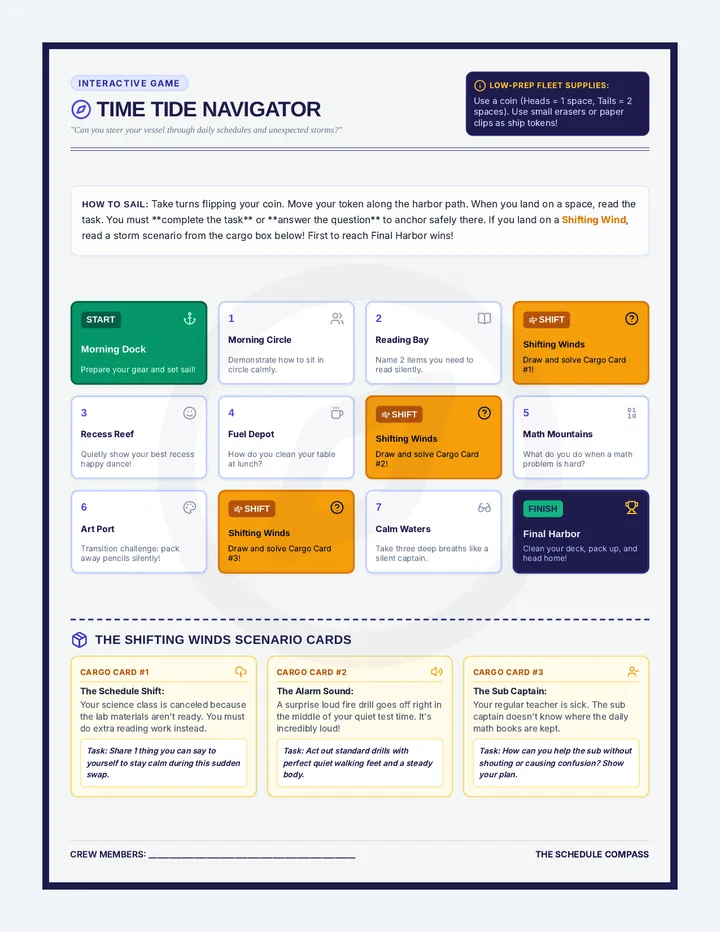
An intensive session where students explore neurodiverse communication styles and practice specific strategies for when their 'signal' isn't being received by friends.
Focuses on foundational phonics skills for the letters H, I, C, and F, including letter recognition, sounds, and CVC word building with a detective theme.
Focuses on centers of learning and nature, including the Museum of Fine Arts, Museum of Science, and Franklin Park. Students engage with visual matching and word recognition activities.
Explores the historical roots of Boston through the Boston Common, Faneuil Hall, and the USS Constitution. Students practice reading simple sentences about the city's past.
Focuses on the engineering and athletic landmarks of Boston, introducing the Zakim Bridge, TD Garden, and Fenway Park. Students learn to define a landmark and identify these specific modern icons.
A comprehensive set of assessments designed to track student progress on place value IEP goals up to the thousands place. Includes three distinct trials for data collection, an answer key, and a progress tracker.
A foundational literacy lesson focusing on initial sounds /p/ and /b/, the -at word family, and high-frequency words 'the', 'to', and 'is'. Designed for students requiring visual cues and errorless learning opportunities through cut-and-paste activities.
A social skills and job exploration lesson for students on the spectrum, focusing on self-advocacy, collaboration, and identifying career interests through visual-supported activities.
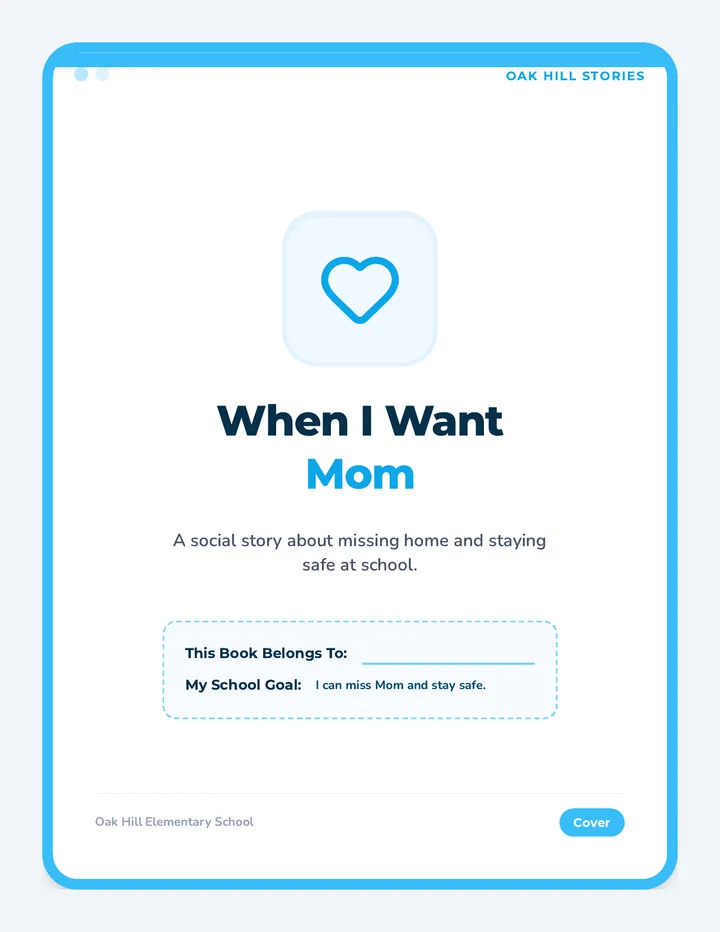
A collection of visual supports and a social story designed to help students manage separation anxiety and replace screaming with functional communication (asking for a break).
A structured 30-minute daily routine for Tier 3 reading intervention focusing on the Three-Part Drill, new concept introduction, and multisensory application.
A foundational lesson on answering 'why' questions using visual cause-and-effect scenarios, designed for non-reading students.
A focused, 5-minute multi-sensory intervention to help students distinguish between the letter forms and sounds of 'n' and 'e' using visual cues (nose and egg).
A comprehensive set of visual schedule icons with a vibrant rainbow theme to help students navigate their daily routines. Includes printable schedule cards, a display board, and a teacher guide for implementation.
A targeted reading intervention lesson focused on increasing reading rate (WPM) and improving phrasing through 'scooping' techniques and repeated readings.
A foundational lesson on identifying US currency and counting mixed coins and bills up to $10, designed with visual scaffolds for students with IEPs.
A specialized lesson for 2-digit by 2-digit multiplication using high-scaffold visual blueprints, color-coded arrow guides, and regrouping boxes designed for IEP support.
A LEGO-themed lesson designed for an autistic 5th grader to learn about personal space and self-regulation techniques for keeping hands to himself. The lesson uses high-interest visuals and low-writing activities to engage the student.
A supportive end-of-year reflection lesson designed for 3rd-grade special education students to process school year memories and navigate the transition to summer through visual storytelling and curation.
Teaches perspective-taking by 'scanning' others for thoughts and feelings. Students practice predicting reactions and next steps based on social cues, much like predicting NPC behavior in a game.
Explores the mechanics of conversation using the 'dialogue tree' metaphor found in RPGs. Focuses on using conversation drivers like follow-up questions and on-topic comments to unlock better social outcomes.
Introduces Social Thinking concepts through the lens of a gaming console. Students learn to manage 'system glitches' (problems) and use 'flexible processing' (thinking) to keep the 'social game' running smoothly.
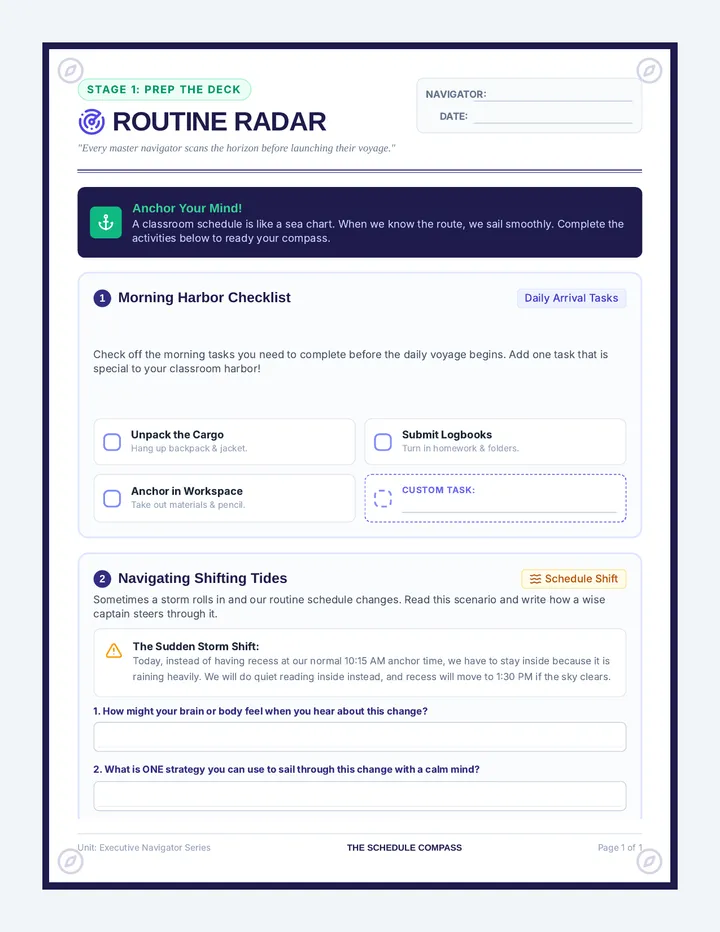
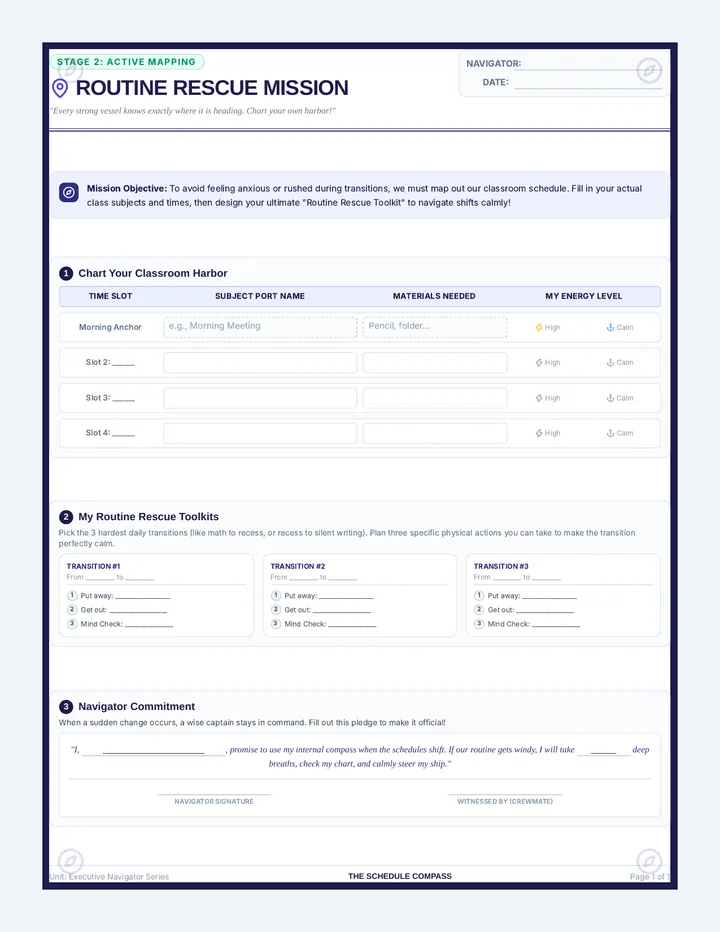
A comprehensive set of resources designed to help a 3rd-grade student navigate big emotions using a 'Navigator' metaphor, including a personalized social story and visual strategy cards.
A neuroaffirming 10-minute session designed for a Grade 2 student to explore volume control and replacement behaviors for screaming. The lesson uses a 'Voice Explorer' theme to teach about personal volume levels and sensory tools.
A simplified current events lesson for special education students about a local teacher in a contest, featuring high-visual support and simple sentence structures.
A comprehensive set of visual resources designed to help a student with severe autism recognize anger cues and select appropriate coping strategies. The materials include a social story, structured worksheets, a choice board, and communication cards.
A set of current events resources about a Long Island teacher nominated for America's Favorite Teacher, including differentiated worksheets for various reading levels.
A current events lesson for special education students focusing on a local teacher's recognition in a national contest, featuring symbol-supported text and comprehension activities.
A lesson on deer-resistant gardening techniques, featuring leveled reading materials and visual literacy supports for diverse learners.
A set of early literacy screening tools for assessing sight word recognition and decoding skills using nonsense words.
A lesson focusing on visualizing and verbalizing skills through a life skills scenario of attending a concert. Designed for a 4th-grade reading level, it helps students create mental images to improve comprehension and communication.
A set of visual supports to help students with special needs practice ordering and money skills at a fast food restaurant.