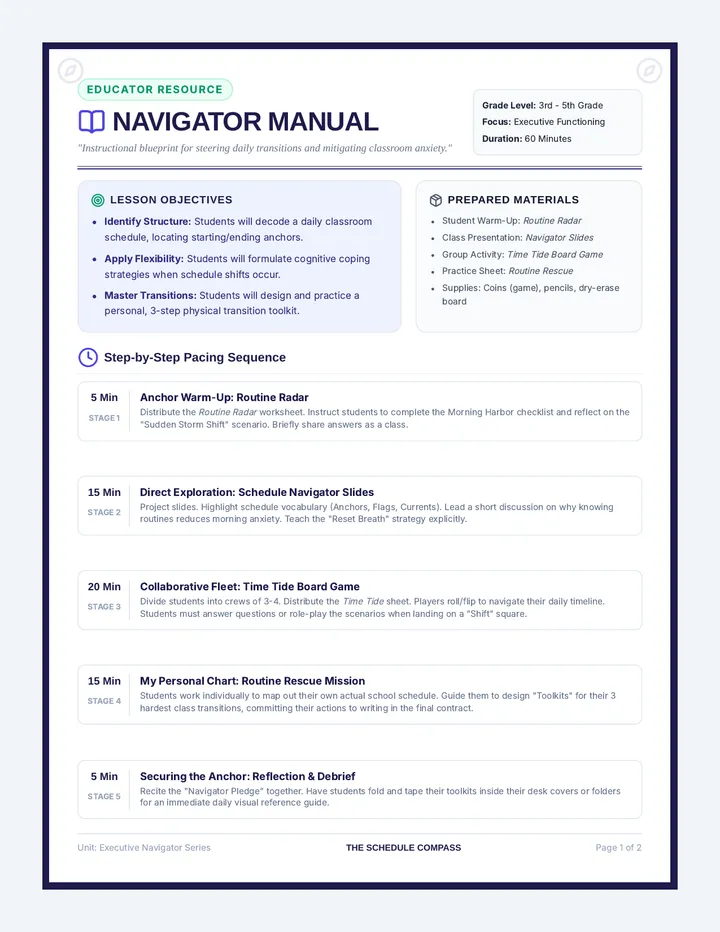
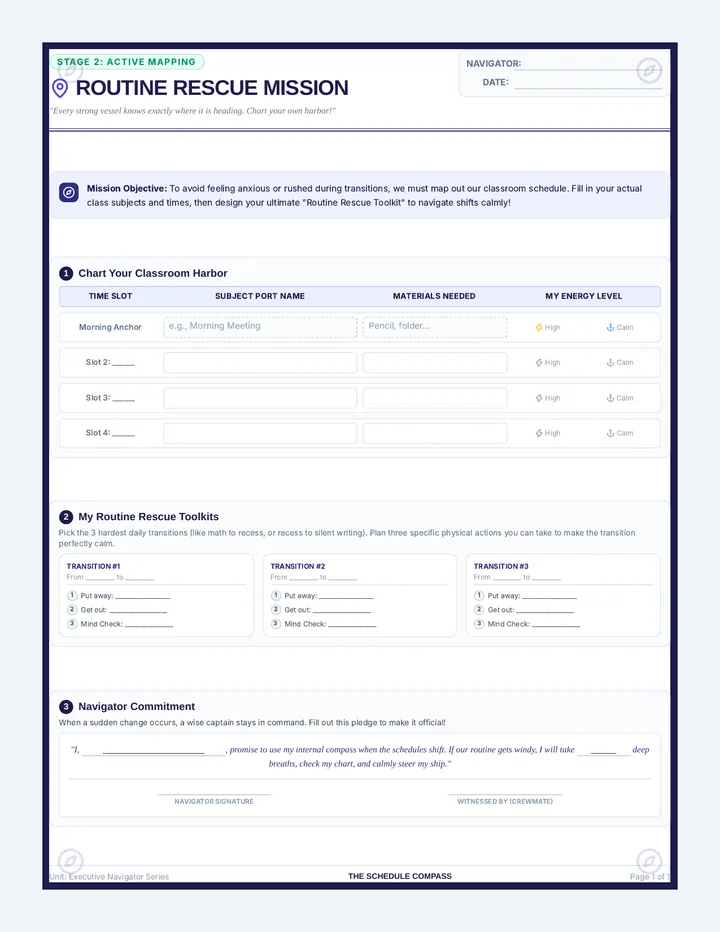
An executive functioning lesson designed for 3rd-5th grade students to master the daily classroom schedule, build predictability, and reduce anxiety. Through maritime exploration-themed activities, students practice reading schedules, predicting shifts, and role-playing transitions.
CREW MEMBERS: __________________________________________________ THE SCHEDULE COMPASS
FACILITATION GUIDE
"Evidence-based cognitive structures and scripted intervention resources."
SECTION II
Executive Function Alignment Details
Cognitive Flexibility
Prepares neural pathways to switch tasks smoothly by visualizing changes beforehand, reducing adrenaline spikes.
Working Memory
The customized "Transition Toolkit" acts as an external scaffolding memory, reminding students of precise sequencing.
Emotional Regulation
Reframing random scheduling storms into predictable maritime scenarios grounds anxious feelings into logical actions.
Transition Scripts & Coping Prompts
Script: Signaling a Transition Tide (Verbal Anchor)
"Navigators, look at our daily sea chart. We are currently anchored at ELA Port, but the tide is beginning to change. We have exactly three minutes before we set sail for Math Mountains. Check your toolkit: what are the three cargo items you need to pack up and store?"
Script: Co-Steering a Sudden Routine Storm
"Crews, a sudden shift in winds has rolled in! The computer lab is temporarily blocked by high seas, so we must anchor in our homeroom port for quiet writing instead. Let's practice a collective reset breath together: inhale the cool air, hold your wheel steady, and exhale the stress. Now let's adjust our sails!"
Metacognitive Reflection Prompts
"When you feel rushed moving between subjects, what physical signs does your engine give you?"
"How does preparing your materials ahead of time make your mind feel lighter?"
Accommodations
Sensory Respite: Allow highly anxious students to begin transitions 1-2 minutes before the remaining class.
Visual Scaffolding: Tape a minimized copy of their personalized Routine Rescue timeline directly onto the top-left of their desk.
Common Misconceptions
"Rigid is Safe": Students often think schedules can never bend. Teach that a healthy routine is designed to stretch, not snap.
"Transition = Play": Emphasize that transitioning is an active learning state requiring quiet focus, not free play.
Unit: Executive Navigator Series THE SCHEDULE COMPASS Page 2 of 2