Sign Scouts Teacher Guide Life Skills Literacy
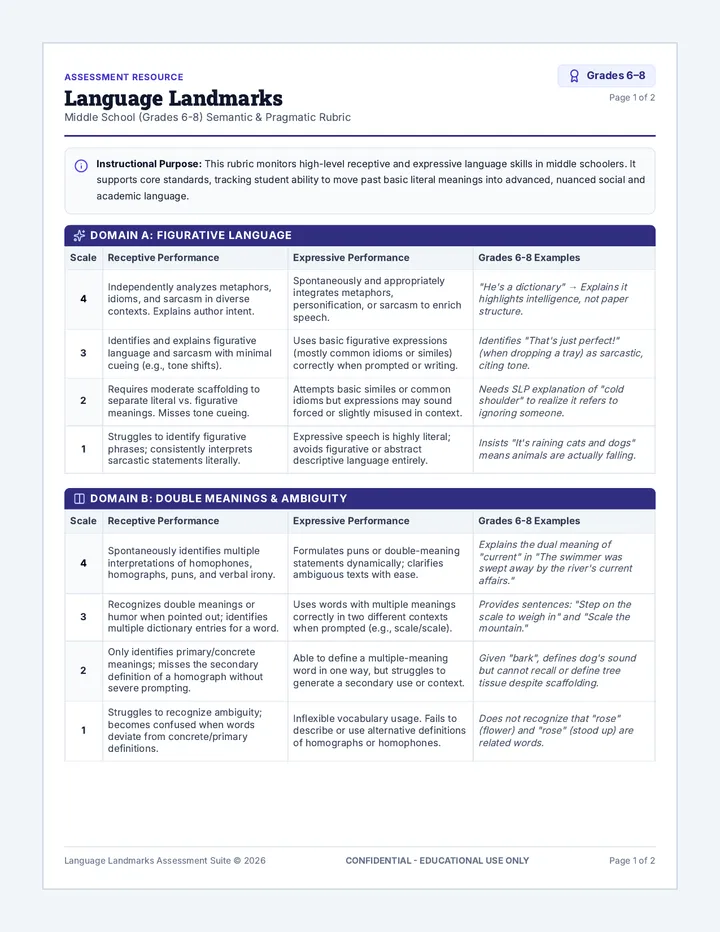
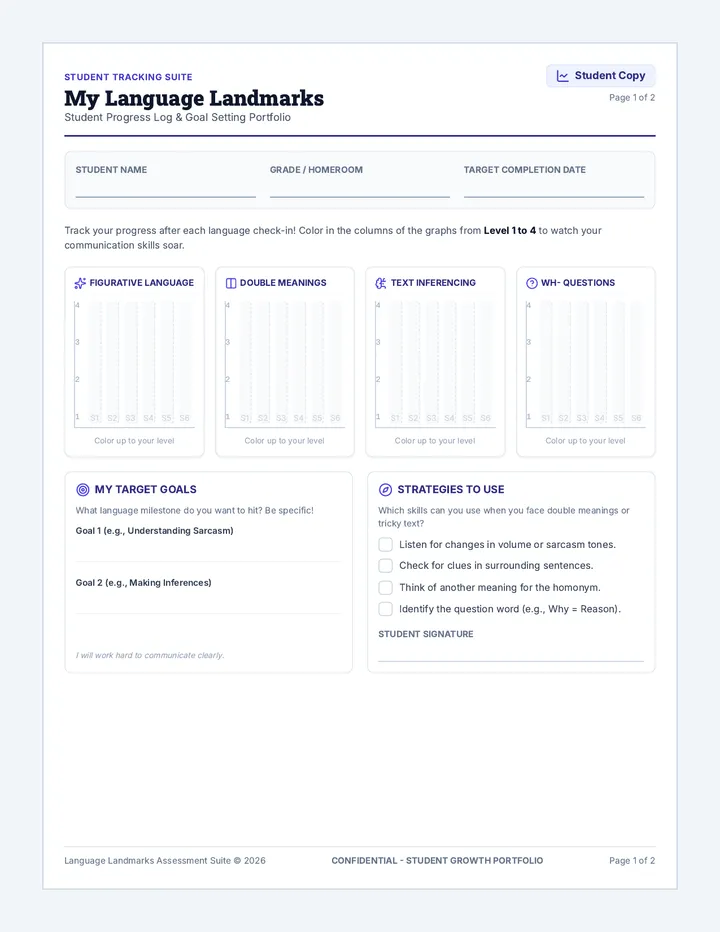
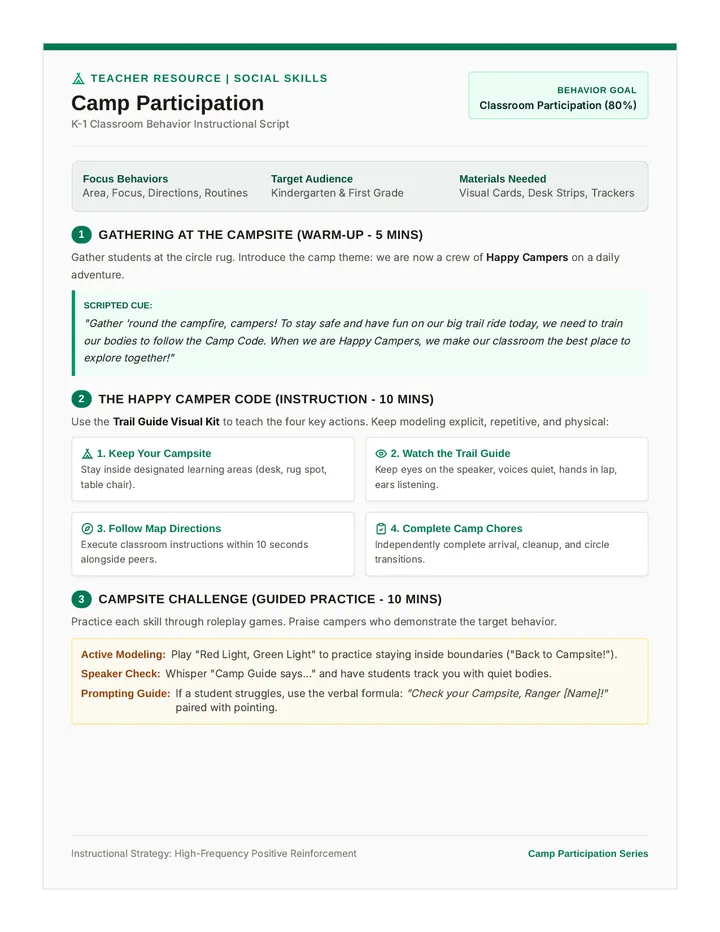
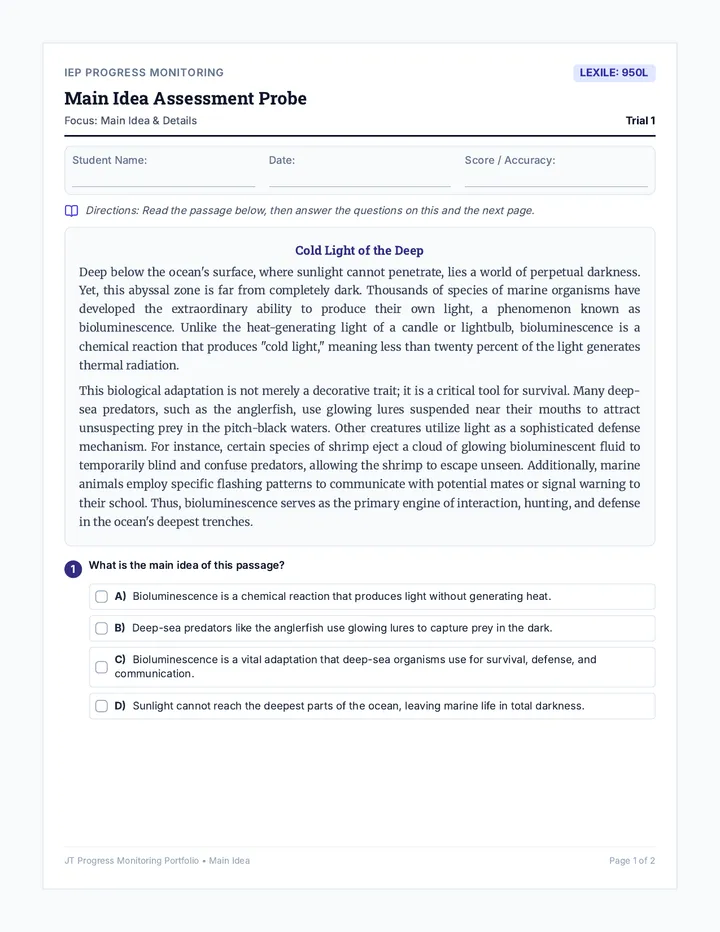
Sign Scouts
Teacher Facilitation & Lesson Guide
Guide
Lesson Objectives
Identify and categorize 12 essential community safety and warning signs by color and shape.Interpret realistic environmental print, warning labels, and transit map layouts to make safety-conscious decisions.Apply functional reading skills to navigate realistic community scenarios independently.
Critical Life Connections
Environmental reading is the foundation of community independence. Students with cognitive differences or English learners rely heavily on sign recognition (colors, shapes, icons) and simple warning texts to safely traverse pedestrian zones, public buildings, and transit networks.
Lesson Bundle Materials
Visual Anchor Charts: Quick-reference guides of sign classifications & shapes.Leveled Reading Passages: Dual-tier reading tasks & map interpretation.Matchup Worksheet: Scenario matching & sign vocabulary work.Exit Ticket: Independent check-out assessment.
Recommended Level: Transition, Life Skills, or Middle/High School Special Ed.
Lesson Flow & Pacing
Time Phase Description & Active Student Tasks 10 Mins Warm-Up & Symbol Hunt Introduce high-frequency signs. Project the Anchor Chart and play "I Spy" by describing colors/shapes ("I see a red octagon..."). 15 Mins Direct Instruction Teach the four core categories: Regulatory , Warning , Information , and Transit . Emphasize standard color meanings. 20 Mins Guided & Group Practice Deliver the Sign Matchup Challenge . Model connecting sign functions to real-life situations (e.g., "Where would I look to find a train?"). 25 Mins Independent Work Assign the Leveled Reading Passages . Level A focuses on basic sign matching/comprehension; Level B focuses on map reading & multi-step problems. 10 Mins Exit Ticket & Wrap Administer the 3-question Exit Ticket . Conduct a closing verbal circle summarizing one key warning sign learned.
Unit: Functional Literacy & Independence Page 1 of 2
Life Skills Literacy
Instructional Delivery & Keys
Scaffolding, Differentiation & Solutions
Discussion Prompts & Scripts
Prompt 1 (Regulatory): "Why do you think some signs are red and octagonal while others are round or rectangular? What happens if someone doesn't follow a regulatory sign?"
Prompt 2 (Warning): "If you see a bright yellow diamond-shaped sign while walking, what action should your body take? Why are warning signs yellow?"
Prompt 3 (Transit): "Imagine you're lost in a city and need to find a subway line. Where on a sign or map would you look first?"
Common Misconceptions
Shape-Color Confusion: Students may ignore a yellow warning sign because it has an icon they don't recognize. Emphasize that yellow always means slow down and look for danger, regardless of the symbol.
Map Cardinal Directions: Public transit maps can be overwhelming. Teach students to find the color-coded lines and track stations like a connect-the-dots game before teaching cardinal directions.
Differentiation Guide
For Struggling Readers: Pair students up with peers to complete Level A. Focus on tracing sign shapes and associating colors (Red = Stop/Danger, Yellow = Caution, Green/Blue = Safe/Info).
For Advanced Readers: Challenge them with Level B map-reading and require them to draft their own hypothetical "warning" sign using standard shapes and symbols.
Master Answer Key
Sign Matchup Challenge
Scenario 1: Do Not Enter signScenario 2: Wet Floor cone/signScenario 3: Wheelchair Access signScenario 4: Pedestrian Crossing sign
Leveled Activity - Level A
Do Not Enter: Red circle, white line. Means cannot go inside.Pedestrian Crossing: Yellow diamond. Slow down, look for people walking.Danger Hot Surface: To prevent hand burns or injuries.
Leveled Activity - Level B
Westside Station: Yellow Line (Circle Line/Yellow Transit Line).Grand Avenue: Blue Line (Express Line/Blue Line).Transfer Station: Central Hub / Civic Center.Hazard: Authorized Personnel Only (keeps untrained people away from high voltage).
Exit Ticket
Choice (b): Yellow, Diamond.Choice (a): Stop walking and do not cross.Response: Red indicates prohibition (Do Not Enter, Stop); blue indicates useful community information or accessibility.
Instructional Support Team © 2026 Sign Scouts
Unit: Functional Literacy & Independence Page 2 of 2
Sign Scouts Anchor Chart Visual Reference Guide
Sign Scouts Field Guide
Learn the colors, shapes, and meanings of community signs!
Map
STOP
RED Stop or Prohibition
!
YELLOW Warning or Hazard
BLUE Help & Accessibility
GREEN Information & Directions
1
Regulatory Signs
These signs tell you what the laws are. You MUST obey them to stay safe.
Do Not Enter
Do not walk or ride past this point.
NO
No Pedestrians
It is dangerous to walk in this area.
Red = Stop immediately / Do not proceed
2
Warning Signs
These signs alert you of danger ahead. Slow down and look around.
Danger High Voltage
Very dangerous electrical equipment.
Wet Floor / Slippery
Walk slowly. Risk of slipping and falling.
Yellow = Look, listen, and pay attention
3
Information & Access
These signs show services, helpful locations, or accessible facilities.
Accessible Route
Wheelchair ramps and open pathways.
Information Desk
Find help or directions here.
Blue = Help, support, and utility areas
4
Public Transit & Stops
These show subway stations, bus lanes, train lines, and map guides.
Bus Station
Wait safely behind the line for public bus.
Subway/Train Transit
Boarding platform for railway cars.
Green = Paths, transits, and exits
Unit: Functional Literacy & Independence Reference Sheet
Sign Scouts Reading Activity Level A (Scaffolded)
Sign Scouts: Scenario Reading
Name
Date
Mission Instructions
Read each real-world story below. Look at the description of each sign and write the correct safety decision in the blank spaces. Use clean, clear handwriting!
Case 1: The Staff Hallway Regulatory
Maya is walking in the community center to find the restrooms. She spots a long hallway, but at the entrance, there is a round red sign with a horizontal white stripe across the center.
1. What is the name of this sign, and what should Maya do next?
Case 2: Crossing Grand Street Warning
Marcus is walking his dog and wants to cross a busy road. He reaches a corner and notices a bright yellow diamond-shaped sign showing a black icon of a person walking across two lines.
2. What does this yellow diamond sign tell Marcus to do before stepping off the curb?
Case 3: Public Laundromat Hazard Label
Tina is drying her laundry at the local laundromat. Near the exhaust pipe of the dryer machine, she notices a small silver sticker with a bright yellow warning triangle that says: "DANGER: HOT SURFACE."
3. Why is this sticker placed on the laundry equipment? What could happen if Tina ignores it?
Unit: Functional Literacy & Independence Page 1 of 2
Level B (Advanced)
Sign Scouts: Transit Map Reading
Name
Date
Local Subway & Transit Network Map
Westside
Civic Center (Hub)
East Terminal
North Plaza
Grand Avenue
SCOUT MAP
Yellow Line (West to East)
Blue Line (North to South)
Transfer Station (Change Lines)
1. Jacob is standing at Westside Station. He needs to travel east to Civic Center. Which colored line map should he read and ride?
The Yellow Line
The Blue Line
2. Jacob has reached Civic Center. He wants to visit Grand Avenue on the Blue Line. Explain what he should do at the station to switch trains.
3. Near the tracks at Grand Avenue, Jacob spots a sign that says "AUTHORIZED PERSONNEL ONLY." Jacob wants to take a shortcut through that door. What does this warning print mean, and what will happen if Jacob walks inside?
Unit: Functional Literacy & Independence Page 2 of 2
Sign Matchup Challenge Practice & Match
Sign Matchup Challenge
Name
Date
Matching Directions
Read the scenarios on the right. Find the community sign on the left that belongs in that situation. Draw a straight line to connect them! Then, write the matching letter in the small circle.
1
Do Not Enter
Scenario A: You see a puddle of soapy water on the supermarket floor. You must slow down to avoid a slip.
2
Wet Floor Caution
Scenario B: You want to cross a wide street at a busy intersection and look for a marked zebra crossing.
3
Accessible Route
Scenario C: You want to explore a staff breakroom, but the door is marked with a restricted safety icon.
4
Pedestrian Cross
Scenario D: You are guiding an older relative in a wheelchair and need to find a ramp entryway.
Safety Label Reading: House Rules
Warning prints aren't just outdoors; they are inside your home too! Look closely at the safety warning label from a bottle of laundry bleach:
Caution Label
⚠️ DANGER: KEEP OUT OF REACH OF CHILDREN
First Aid: If swallowed, drink a large glass of water. Call poison control immediately. Do not mix with other kitchen household cleaners.
5. Why does the label warn you not to mix bleach with other household kitchen cleaners?
Unit: Functional Literacy & Independence Sign Matchup Challenge
Sign Scouts Exit Ticket Independent Check-Out
Sign Scouts Exit Ticket
Name
Date
Check-Out Mission
Show what you have learned today! Answer these three fast-check questions on your own. Remember to look for keywords and think about sign colors.
1
What color and shape represent a standard Warning Sign?
(a) Red and Hexagonal (6 sides)
(b) Yellow and Diamond (4 sides)
(c) Blue and Round (Circle)
(d) Green and Triangular (3 sides)
2
You are standing at a sidewalk crossing and see a flashing red or orange Hand Symbol. What should you do?
(a) Stop walking and do not cross.
(b) Run quickly across the street.
(c) Stop and tie your shoes on the curb.
(d) Wave hello to oncoming traffic.
3
Explain why safety and community signs use highly specific colors (like red, blue, or yellow) instead of just writing sentences.
Teacher Verification Box To be completed by the instructor.
Got It! Almost There Let's Review
Unit: Functional Literacy & Independence Exit Ticket