Lenny.com
Explore
Create
ActivitiesNewCurriculumNewMathEnglish Language ArtsScience & EngineeringSocial StudiesGlobal LanguagesHealth & Physical EducationSpecial EducationCounseling & Life SkillsArts & CreativityESL
Lenny.com
Lenny.com
Explore
Create
ActivitiesNewCurriculumNewMathEnglish Language ArtsScience & EngineeringSocial StudiesGlobal LanguagesHealth & Physical EducationSpecial EducationCounseling & Life SkillsArts & CreativityESL
Lenny.com
Lenny.com

Solutions

Lenny for EducatorsLenny for SchoolsLenny for Districts

Product

ExploreSign inCreateSupportAbout

Resources

Getting startedMTSS Acceleration Program

Newsletters

School Funding Newsletter

© 2026 Lenny Learning Inc.

TermsPrivacyAccessibility
LinkedInInstagramX
Lenny
Special EducationSensory Processing & RegulationSensory Preferences IdentificationSensory Tool UseCommunicating Sensory NeedsSensory Overload RecognitionDeep Breathing PracticeMovement Break UtilizationIndependent Calming Strategy UsePersonalized Calming RoutinePersonal Sensory Diet CreationProactive Sensory BreaksEmotion Intensity RecognitionDysregulation RecoveryPositive Behavior SupportUnderstanding Social StoriesPersonal Social Story CreationEmotional Regulation FrameworksPersonal Trigger IdentificationSelecting Regulation StrategiesReinforcement System ResponseSelf-Monitoring & RewardsLearning Positive AlternativesCross-Setting Skill GeneralizationSocial CommunicationEye Contact & Personal SpaceContext-Appropriate GreetingsAppropriate Volume & ToneConversation Turn-TakingTopic Maintenance in DiscussionEffective Help-SeekingBody Language InterpretationFacial Expression RecognitionIdioms & Figurative LanguageSocial Problem IdentificationSocial Solution GenerationSocial Decision EvaluationTask ManagementMinimal Prompting Task StartSelf-Talk for StartingStarter Strategies for Difficult TasksAge-Appropriate Task PersistenceStrategic Break ManagementSmooth Task TransitionsAdapting to Plan ChangesObstacle Problem-SolvingMulti-Day Project CompletionPlanning & OrganizationPhysical Material OrganizationVisual Schedule & Timer UseSequential Task BreakingTime Estimation SkillsTask PrioritizationDigital & Physical Workspace ManagementPersonalized Organization StrategiesDetailed Project PlanningMultiple Commitment BalancingAcademic Support StrategiesMath Manipulative UseVisual Math Problem RepresentationComplex Math Problem BreakdownText Highlighting & AnnotationVisualization While ReadingPredictions & Inferences from TextText Structure Graphic OrganizersWriting Graphic OrganizersSentence Frames & TemplatesStudy Guide CreationSpaced Repetition for MemoryAssistive Writing TechnologyWorking Memory SupportSingle-Step Direction FocusMulti-Step Direction FollowingInformation Chunking PracticeVisual Support Memory AidsMnemonic Device ApplicationEfficient Note-Taking SystemsGraphic Organizer Note-TakingNote Review & OrganizationSustained Complex Task AttentionAssistive TechnologySymbol-Word CommunicationAAC Device NavigationSpeech Recognition DictationDictation Text EditingText-to-Speech for ReadingDigital Calendar UseKeyboard Shortcuts NavigationProductivity App ManagementSelf-Advocacy SkillsCommunicating Learning NeedsRequesting AccommodationsAdvocating for Appropriate SupportsIEP & Student RightsUnderstanding IEP ComponentsMeaningful IEP Meeting ParticipationIDEA & Section 504 RightsProgress MonitoringTracking IEP Goal ProgressReflecting on AchievementData-Informed Instructional AdjustmentTransition PlanningCareer & Vocational Goal SettingExploring Post-Secondary OptionsIndependent Living Skills Planning

Inclusion ECR Observation Form

A two-page spot observation form tailored for observing a 3rd-grade special education inclusion teacher supporting students with an extended constructed response using clue words and sentence stems. Includes a pre-built lesson objective, student success criteria, observable look-fors, scripting space, and coaching feedback sections.

AOAlexis Ortega

You might also like

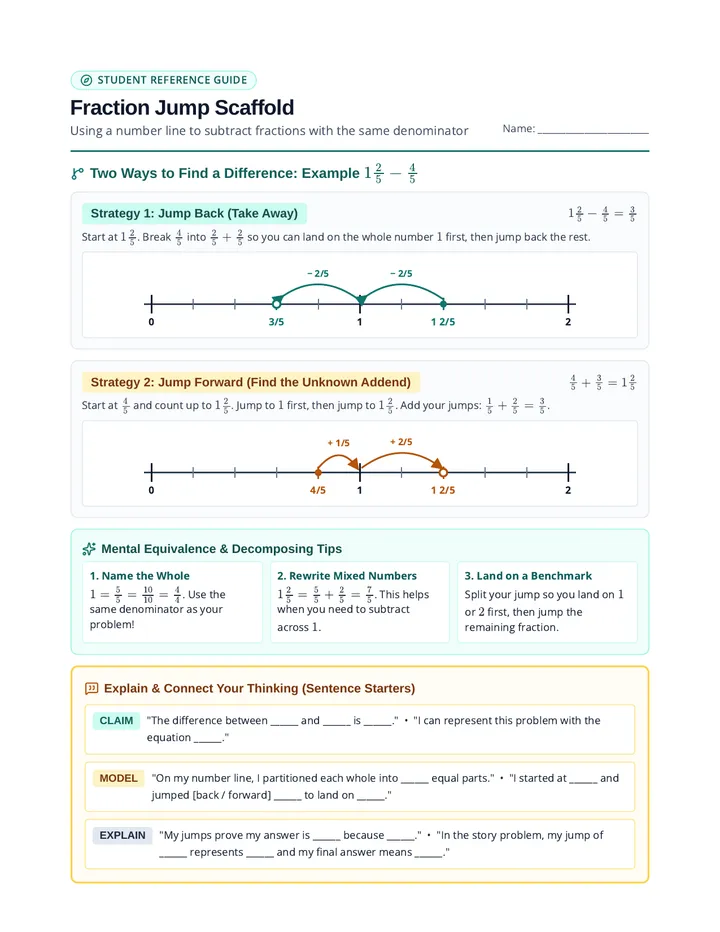
Fraction Jump Scaffold

IM Grade 4 Support Kit

Accommodations, scaffolds, graphic organizers, and planning templates aligned to Illustrative Mathematics Grade 4 Units 3 and 4, designed to support students with communication and executive functioning needs.

K

kthompson

17
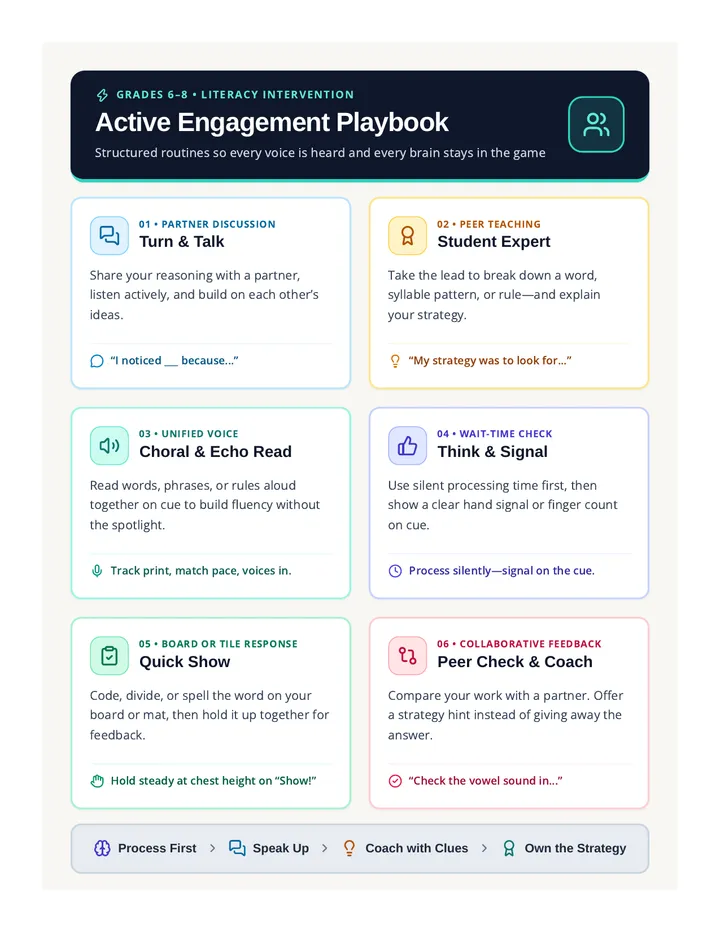
Active Brain Moves Poster

Active Engagement Playbook

A middle school (grades 6-8) dyslexia intervention resource set featuring a student-facing classroom poster and a teacher facilitation guide for six structured active engagement routines.

EC

Elaina Cockerham

2
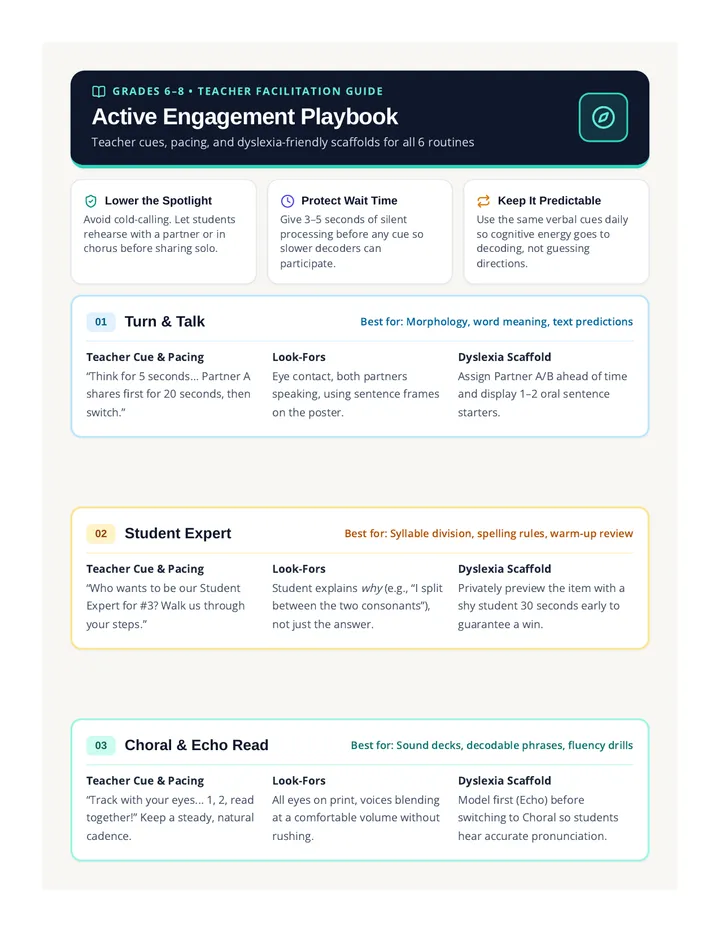
Active Engagement Teacher Guide

Active Engagement Teacher Guide

A two-page teacher facilitation guide for grades 6-8 dyslexia intervention that pairs with the Active Brain Moves Poster. Provides exact teacher cues, pacing, best-fit lesson moments, dyslexia-specific scaffolds, and troubleshooting tips for all six active engagement routines.

EC

Elaina Cockerham

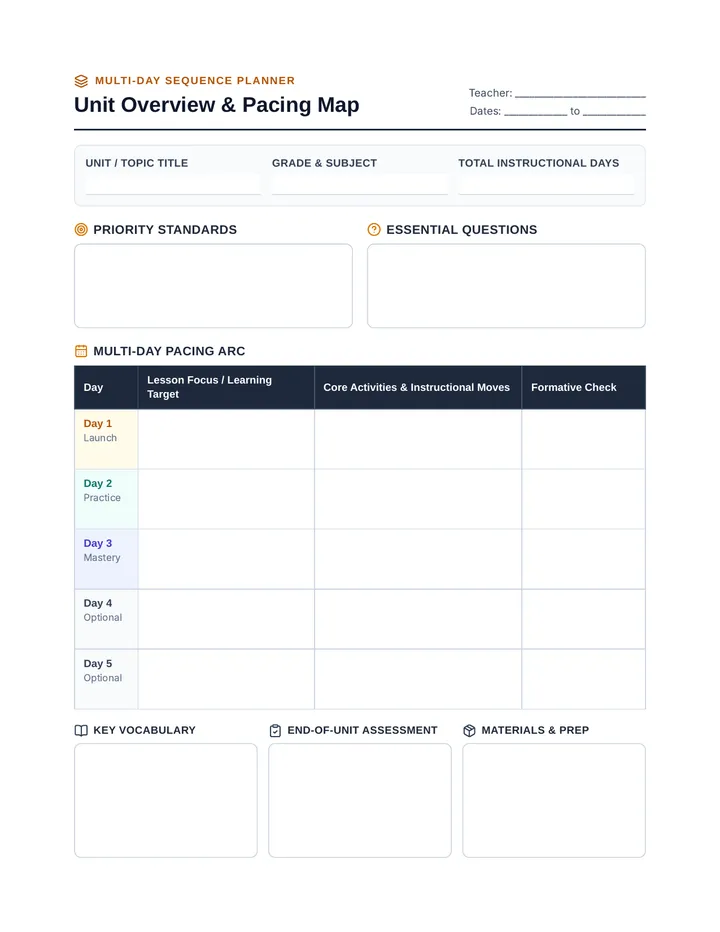
Unit Overview Template

Multi Day Planner

A reusable multi-day lesson planning sequence designed to organize connected instruction across launch, practice, and mastery days. Includes a unit pacing overview and structured daily lesson plan templates with space for objectives, differentiation, and reflection.

Lenny Avatar
Lenny
4
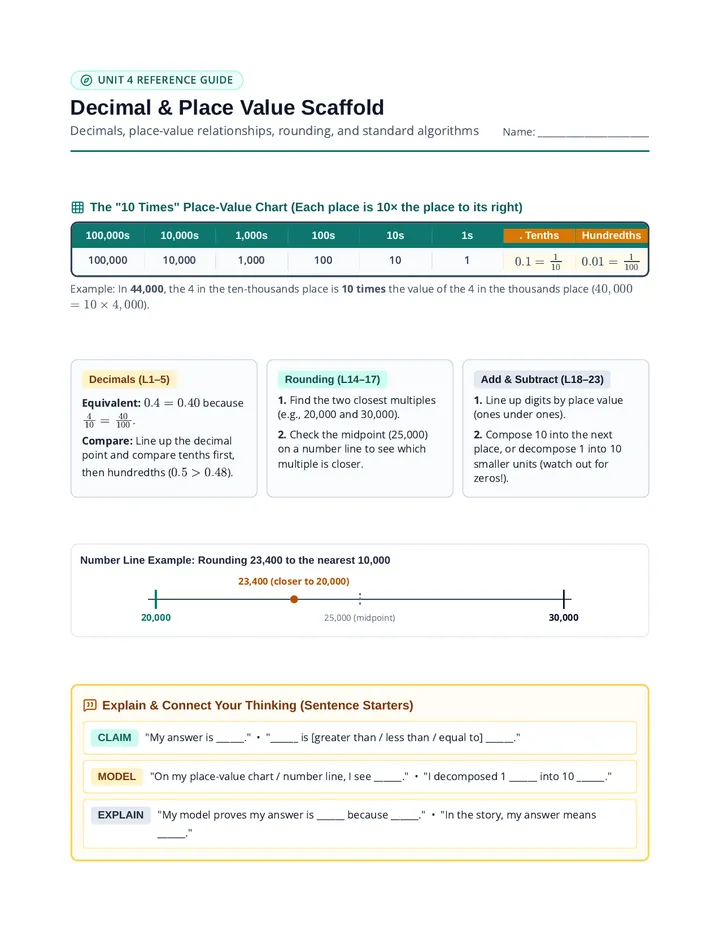
Decimal & Place Value Scaffold

Place Value & Decimals

A Unit 4 (From Hundredths to Hundred-Thousands) set of scaffolds, graphic organizers, partner mats, and accommodation planning templates supporting students with communication and executive functioning needs across Lessons 1–23.

K

kthompson

6
Active Brain Moves Poster

Active Brain Moves Poster

A middle school (grades 6-8) printable classroom poster featuring six active student engagement routines tailored for dyslexia intervention—including Turn and Talk, Student Expert, Choral and Echo Read, Think and Signal, Quick Show, and Peer Check and Coach—with mature, respectful language and dyslexia-friendly formatting.

EC

Elaina Cockerham

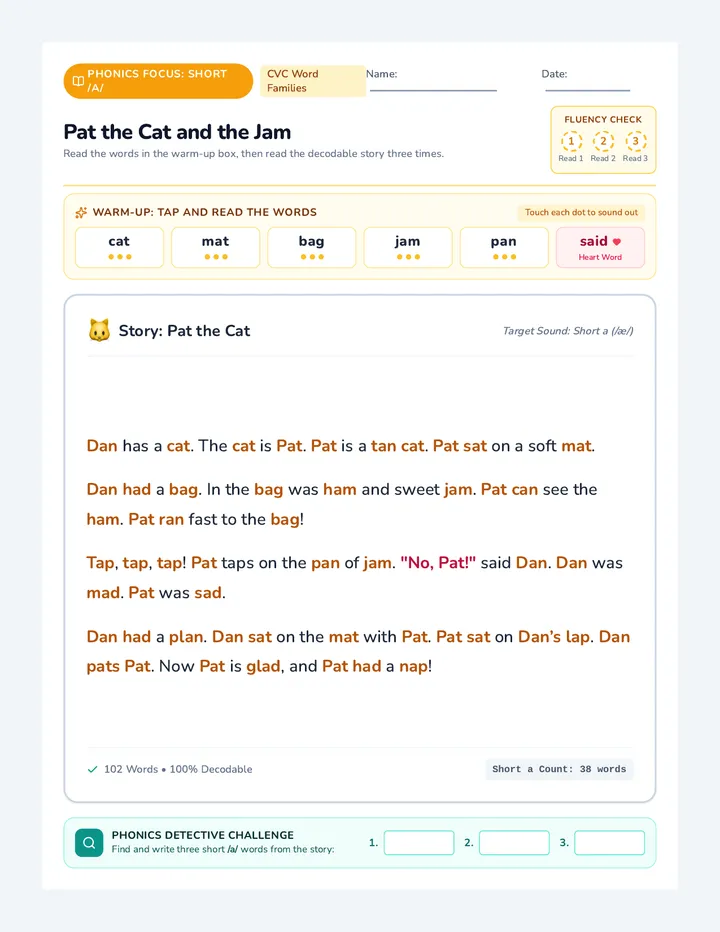
Cat Jam Decodable Passage

Elementary Intervention Hub

A comprehensive special education and foundational skills sequence featuring decodable phonics readers and structured, manipulative-rich mathematics worksheets for elementary intervention.

AO

Alexis Ortega

4
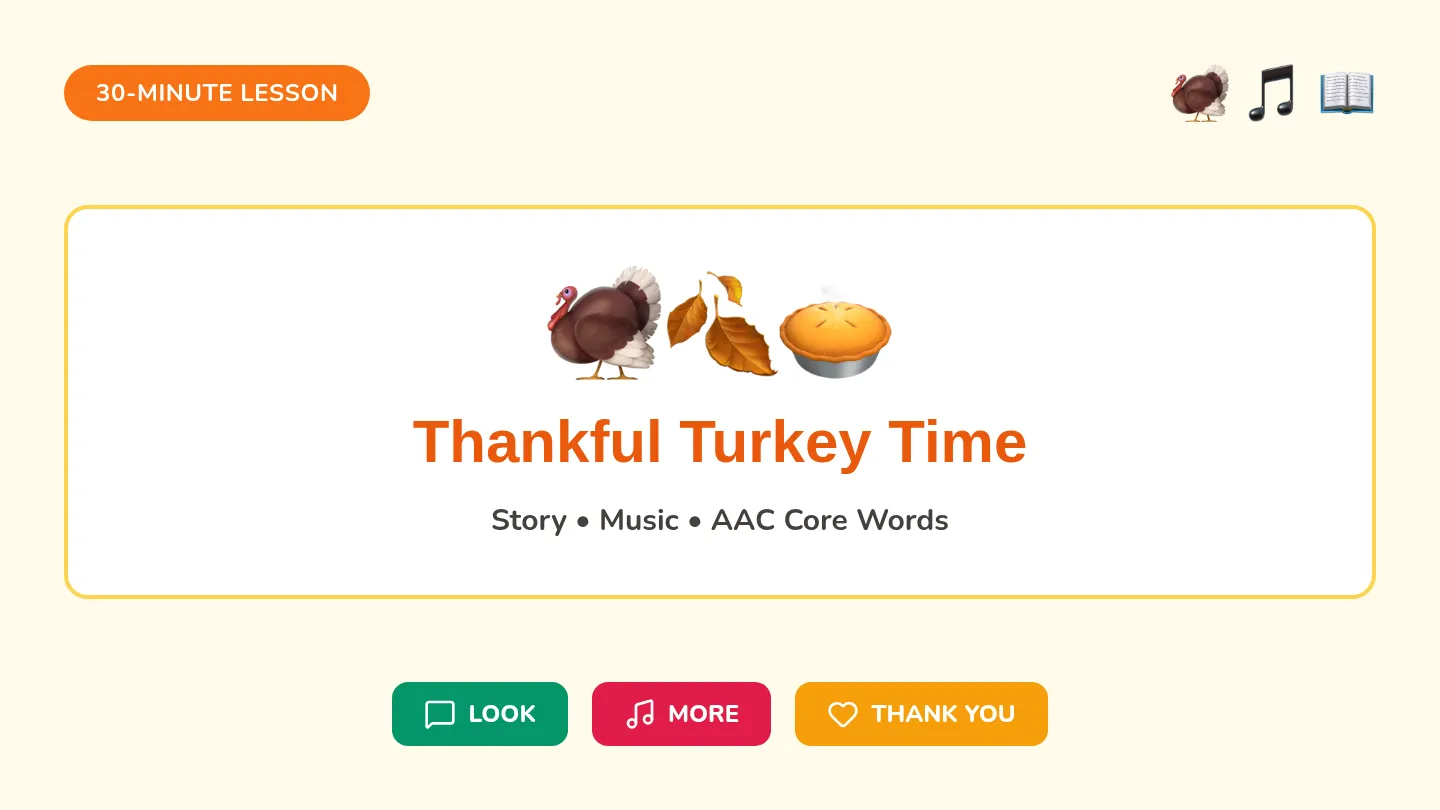
Thankful Turkey Slides

Thankful Turkey Time

A 30-minute, AAC-friendly Thanksgiving lesson for students with autism featuring an original AI-style story with a clear beginning, middle, and end, plus music, movement, and visual supports.

Lenny Avatar
Lenny
3
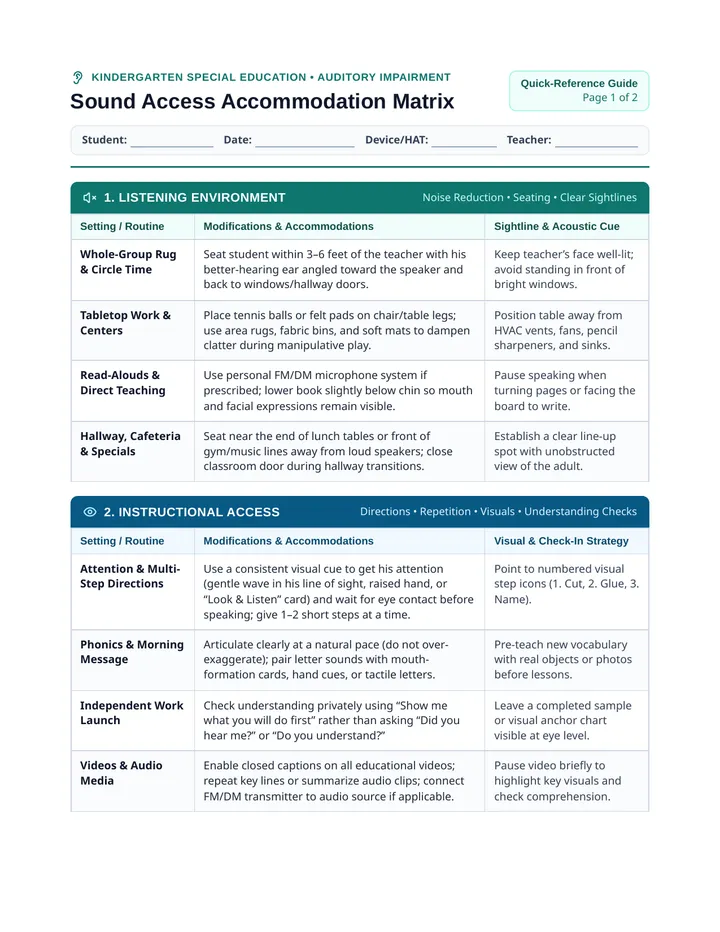
Sound Access Accommodation Matrix

Sound Access Accommodation Matrix

A two-page printable Kindergarten Special Education Accommodation Matrix organized by classroom setting and routine across four core auditory support areas: Listening Environment, Instructional Access, Broad Classroom Support, and Peer Interaction. Includes visual attention-getting cues, a student device info header, and a daily access check for classroom teams.

JE

jenn edwards

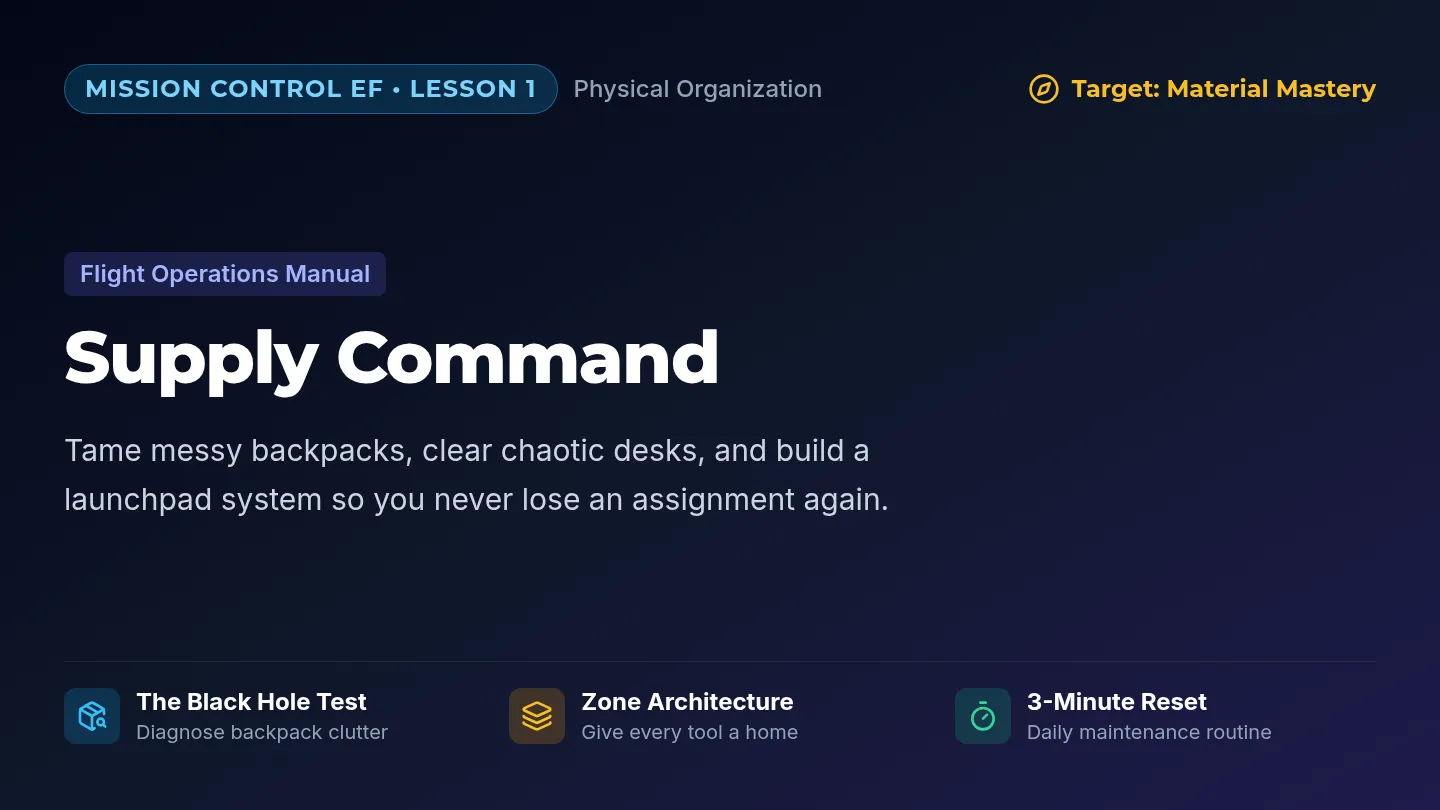
Supply Command Slides

Mission Organization

A comprehensive three-lesson executive functioning intervention unit for upper elementary students. Grounded in research-backed cognitive strategies, it systematically builds foundational habits for organizing physical supplies, deconstructing multi-step assignments, and executing daily tracking routines.

DH

Danielle Healy

7
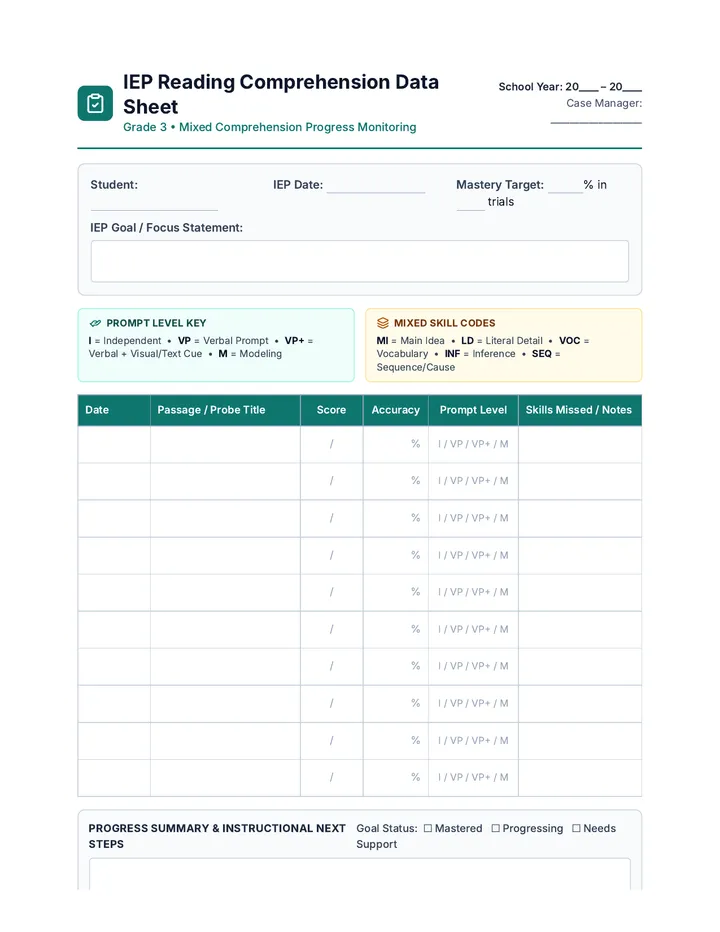
Comprehension Goal Data Sheet

Third Grade Reading Probes

A 3rd-grade IEP progress-monitoring kit for mixed reading comprehension, featuring a goal-aligned data tracking sheet, a printable reading probe worksheet with a built-in scoring record, and a teacher answer key.

RC

Robin Cronin

13
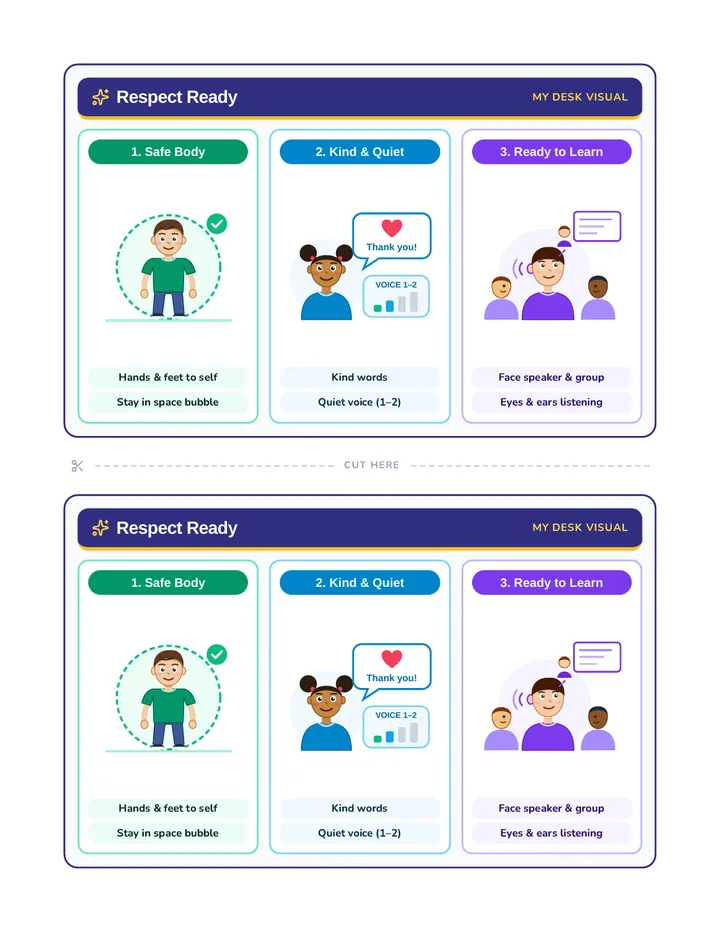
Respect Ready Desk Visual

Respect Ready Desk Visual

A printable sheet featuring two identical cut-out desk visual cards for third-grade students. Each card pairs realistic, child-centered illustrations with minimal labels to remind students of three respectful behaviors: keeping a safe body in their space bubble, using kind words with a level 1-2 quiet voice, and facing the speaker with the group while listening.

LM

Lindsey Mora