Social Skills Mastery Lesson Plan Social Skills Mastery
Tier 2 Social Skills Lesson Plan
30 Minutes
3rd Grade (Autism Focus)
Learning Objective
Students will develop empathy, respect, and communication skills by exploring social interactions through video analysis and collaborative discussion.
Instructional Approach
Experiential Active Collaborative
Materials Needed
Video: Animation About Autism
Social Skills Practice Worksheet
Discussion Guide
Drawing supplies (crayons/markers)
Lesson Flow
5 Mins
Introduction
Begin with a brief introduction about the importance of social skills.
Explain that today's lesson will include watching a video, discussing it, and completing a worksheet.
5 Mins
Video Viewing
Show the video "Animation About Autism".
Ask students to pay attention to how Dave interacts with others and what makes him unique.
10 Mins
Guided Discussion
Facilitate a discussion using the prepared questions in the Discussion Guide.
Encourage students to share their thoughts and relate the video to their own experiences.
7 Mins
Worksheet Activity
Distribute the "Social Skills Practice" worksheet.
Guide students through the questions, providing support as needed.
Encourage students to think about how they can apply these skills in real-life situations.
3 Mins
Closure
Recap the key points discussed and learned during the lesson.
Encourage students to practice these skills outside the classroom.
Thank students for their participation and effort.
Differentiation & Support Tips
For Students with Autism
Provide visual timers for each section. Use a calm, predictable tone. Allow for sensory breaks if needed during discussion.
Scaffolding
For the writing portion, offer sentence starters or allow students to dictate their answers to an adult.
Social Interaction Discussion Guide Social Interaction Guide
Facilitation Prompts & Reflection
This discussion will help students reflect on the video and explore their understanding of social interactions. It aims to encourage empathy and respect among peers.
1
What did you learn about Dave from the video?
Teacher Tip
Encourage students to mention specific traits or actions of Dave that stood out to them (e.g., how he experiences things differently, his unique interests).
2
How can we show respect and understanding to our friends?
Teacher Tip
Guide students to think about actions like listening when others speak, sharing toys or ideas, and using kind words even when they disagree.
3
Why is it important to understand and accept differences in others?
Teacher Tip
Discuss the value of diversity—how different perspectives make games more fun, solving problems easier, and life more interesting.
The Big Takeaway
Remind students that everyone's brain works a little differently, and that is what makes us special. By being kind and curious about our friends, we build a stronger classroom community.
Social Skills Practice Worksheet Social Skills Practice
Let's practice being a great friend!
Name
Date
1. Draw a picture of you and a friend doing something fun together.
Think about activities you enjoy with your friends...
2. Write one way you can show kindness to someone at school.
3. List two things you learned about being a good friend from the video.
Social Skills Presentation Slides Social Skills Mastery
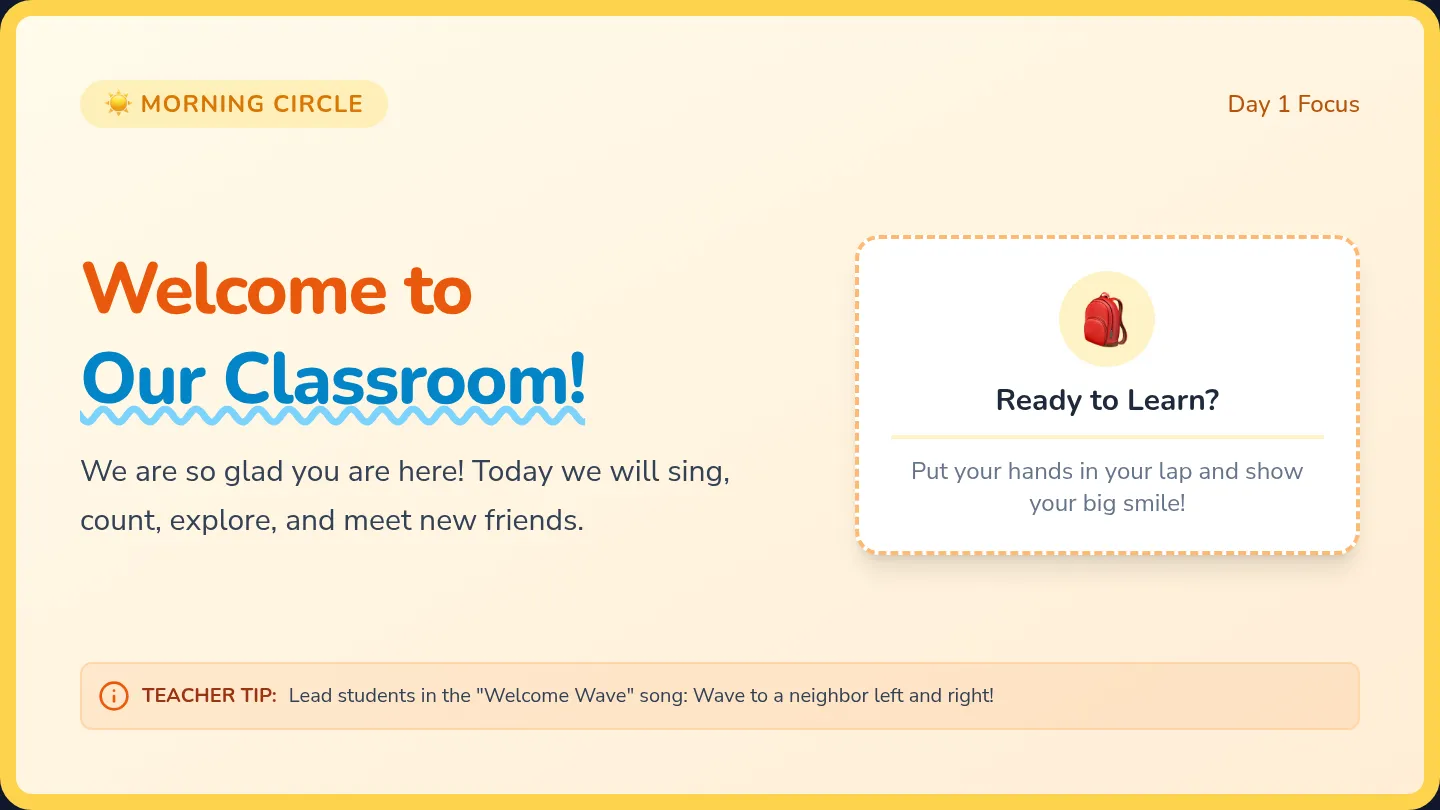
Learning to connect with empathy and respect
Today's Journey
1
Introduction: Why Social Skills?
2
Video: Animation About Autism
3
Discussion & Practice
What are Social Skills?
Empathy
Understanding how others feel.
Respect
Being kind to everyone.
Connect
Sharing and talking together.
Video Time
Animation About Autism
Watch & Observe Dave
Let's Talk!
"What did you learn about Dave from the video?"
Think about: What makes him unique? What does he enjoy?
Showing Respect
"How can we show respect and understanding to our friends?"
Listening
Sharing
Kindness
Being Patient
Awesome Work!
Remember: Everyone's brain is a little different, and that's what makes us a great team!
Time for our Worksheet!