Self-advocacy strategies, visual supports, and functional language for identifying and expressing sensory preferences. Guides students in requesting environmental modifications and communicating internal states to caregivers or educators.
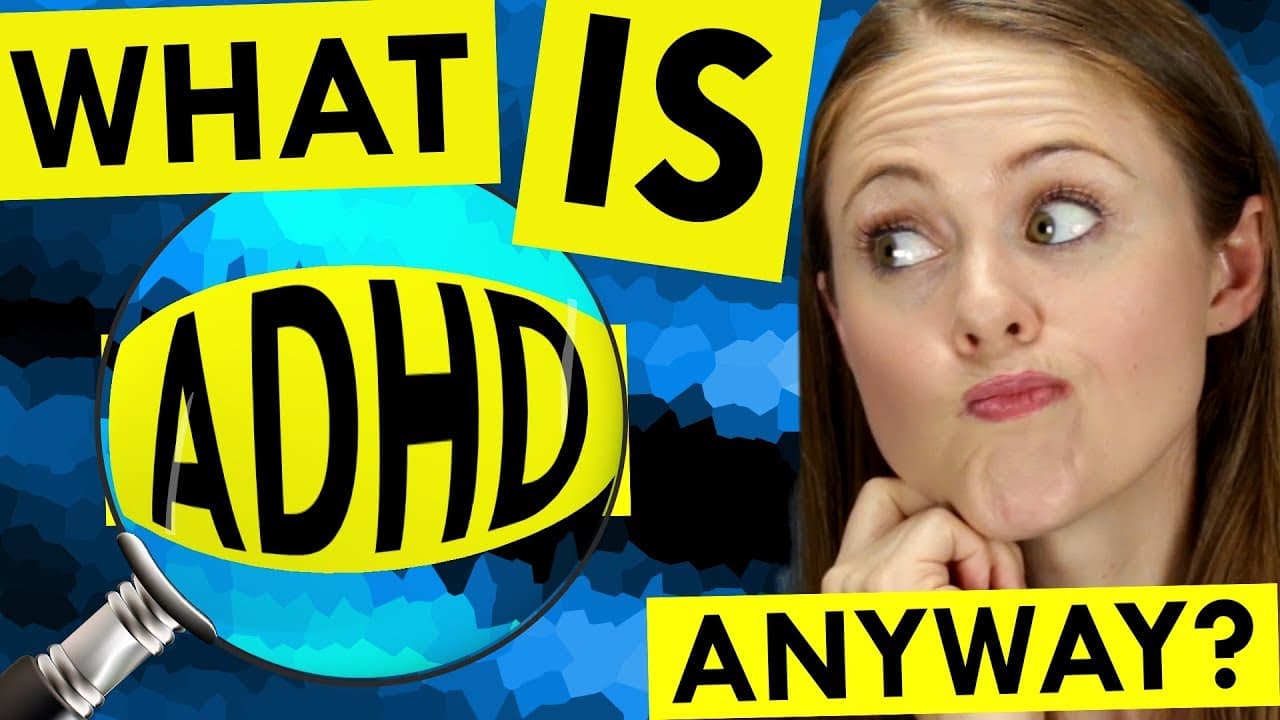
This educational video demystifies Attention Deficit Hyperactivity Disorder (ADHD) by exploring the internal experience of living with the condition. Hosted by Jessica McCabe, the video moves beyond clinical definitions to offer relatable, concrete metaphors that describe executive dysfunction, working memory challenges, and emotional dysregulation. It emphasizes that ADHD behaviors are not character flaws but rather neurological differences in how the brain regulates attention and emotion. The content breaks down complex neurological concepts into accessible analogies, such as comparing the brain to a CEO with a bad secretary, working memory to a whiteboard that constantly needs erasing, and emotional regulation to a severe sunburn. The video addresses key themes including the myth of "attention deficit" (versus attention regulation), the invisibility of the struggle, and the strengths that often accompany ADHD brains, such as creativity and out-of-the-box thinking. For educators, this resource is invaluable for fostering empathy and understanding in the classroom. It provides a shared language for teachers and students to discuss learning differences without stigma. By framing ADHD through mechanical and situational metaphors—like a race car with bicycle brakes—it offers students with ADHD a way to articulate their experiences and helps neurotypical peers understand why certain tasks are more challenging for their classmates.
7mins 39s
The ultimate compact version of the Adulting Celebration Chart with ultra-reduced line spacing and minimal vertical gaps. It utilizes tiny icons, condensed font sizes, and tight leading to provide a high-density workplace tracking experience that fits multiple players and comprehensive metrics in a single printable view. It moves metric descriptions inline to save vertical space.
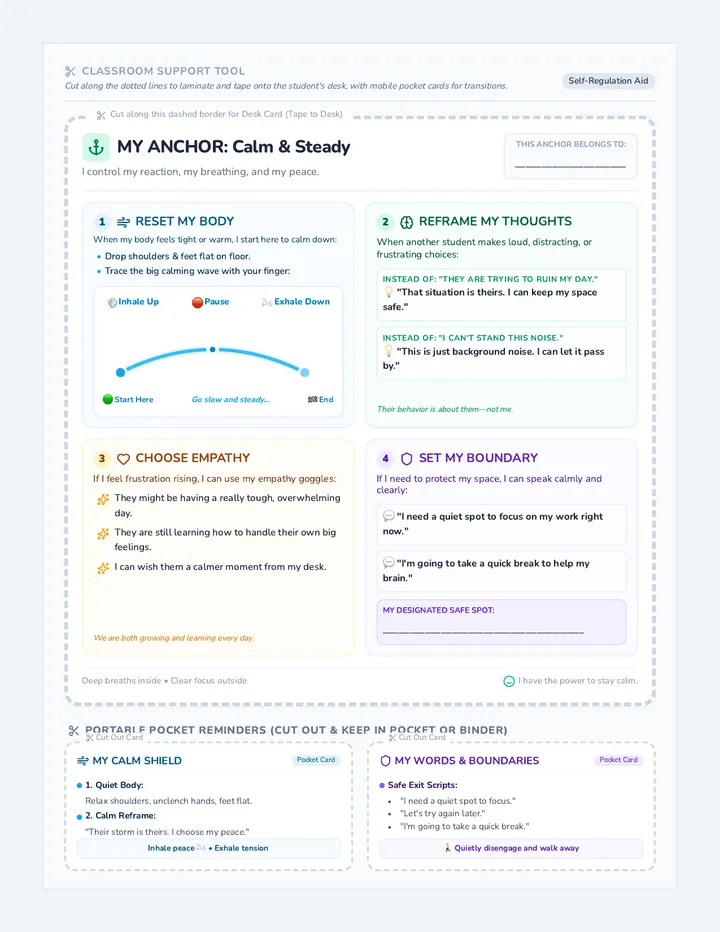
An updated desk-sized anchor chart featuring a much larger, visually prominent finger-tracing wave graphic for physical grounding, paired with neutral reframing scripts, empathy tools, and boundary phrases.
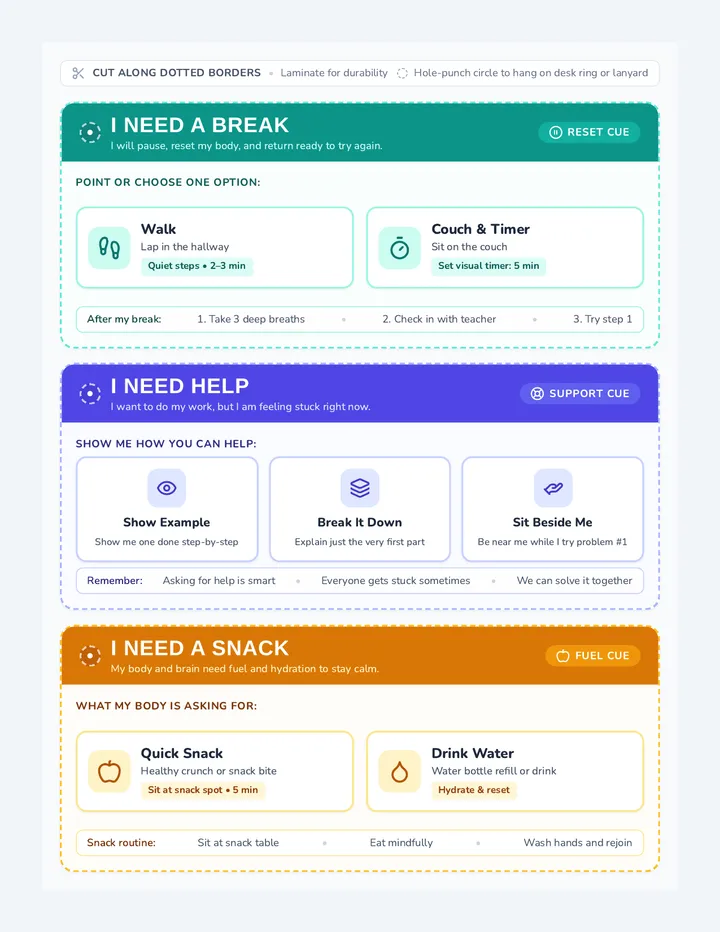
A printable sheet of three color-coded visual cue cards for students who need to communicate when frustrated. Features updated options: a walk lap in the hallway or couch with timer for breaks, three support choices for help, and simplified snack and water options.
A comprehensive, autism-friendly visual choice board inspired by "What Would Danny Do?" for a third-grade student. It breaks the school day into six key settings with concrete "Power Choices" and calming "Power Resets" to support positive behavior and self-regulation.
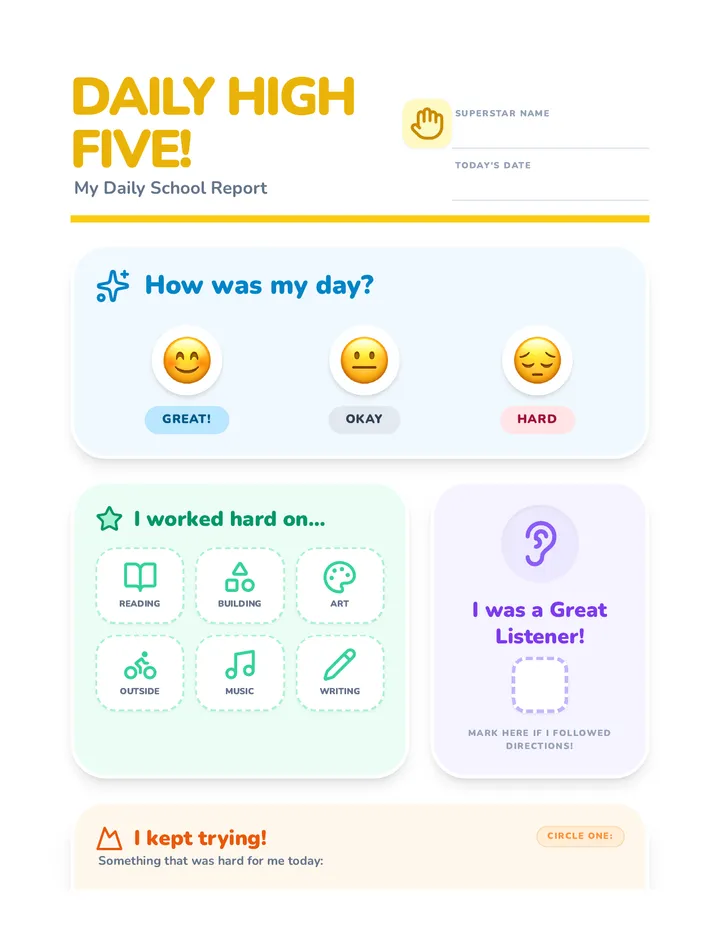
An updated daily communication log for non-readers featuring a "sticker-style" aesthetic. It includes a mood scale, activity icons for hard work, a listener check-box, and a dedicated challenging task section with circle-able icons for Math, Reading, Gym, OT, PT, and Speech, plus a drawing space.
A comprehensive 5-page School-Based Occupational Therapy Progress Monitoring and Attendance Tracking Kit with maximum-contrast deep black fonts and bold reinforced lines across all documentation forms, rubrics, and logs.
A 6-week social-emotional learning program for teenagers on the autism spectrum, delivered in focused 20-minute sessions. The program uses visual "blueprints" to teach energy management, body awareness, and Comic Strip Conversation techniques for emotional regulation and perspective taking.
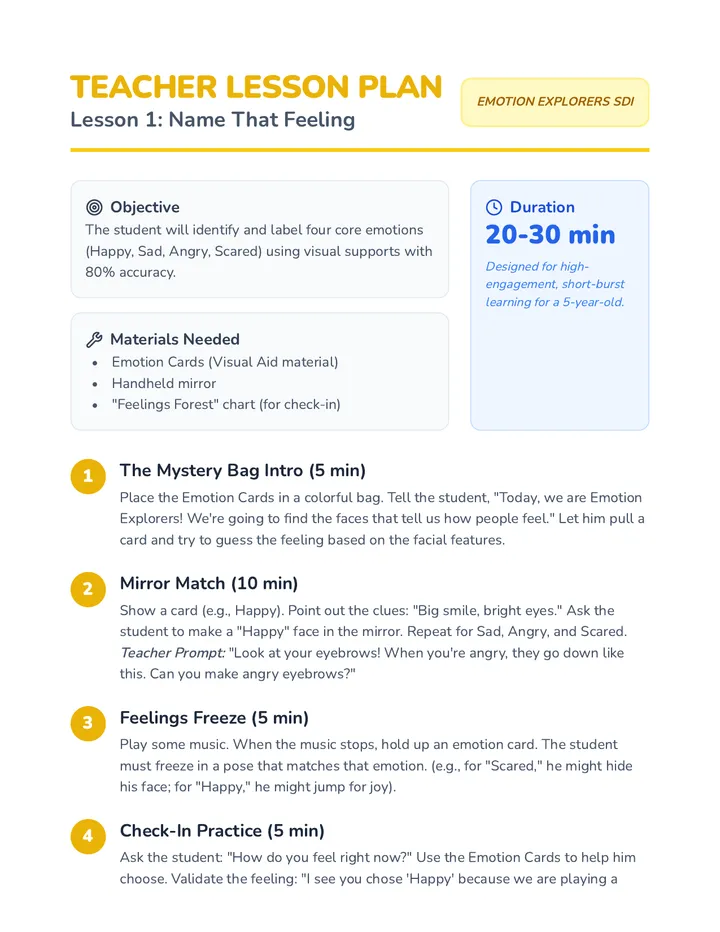
An 8-lesson SDI series designed for a 5-year-old student to develop emotional regulation skills, covering emotion identification, body awareness, and specific calming strategies like breathing and sensory tools.
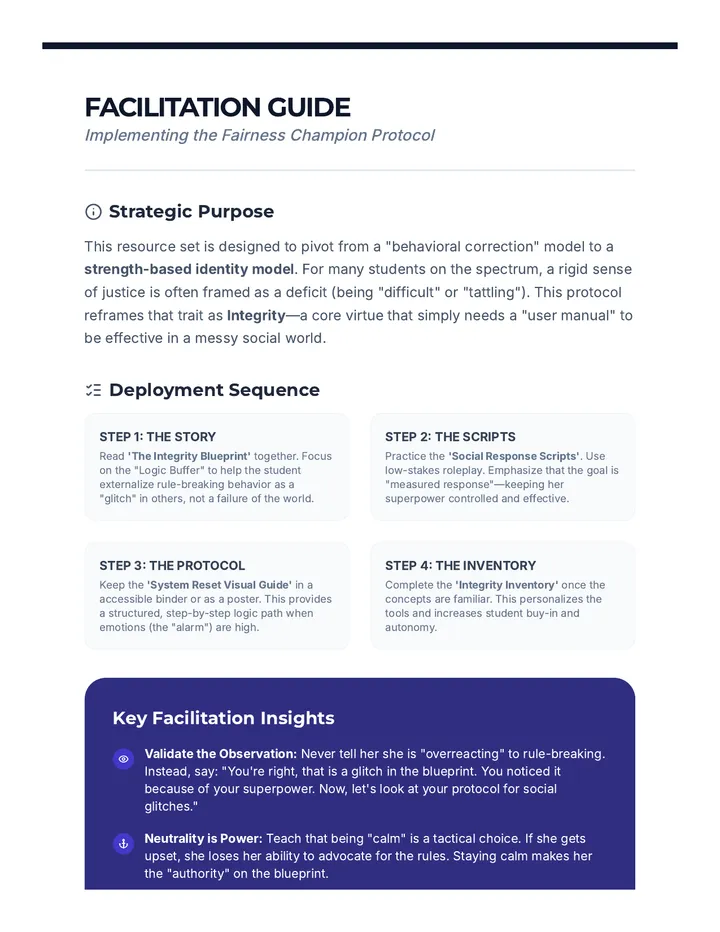
A 6-week social-emotional learning curriculum for a 13-year-old girl on the autism spectrum, focusing on managing specific triggers through a strength-based "Integrity Blueprint" lens.
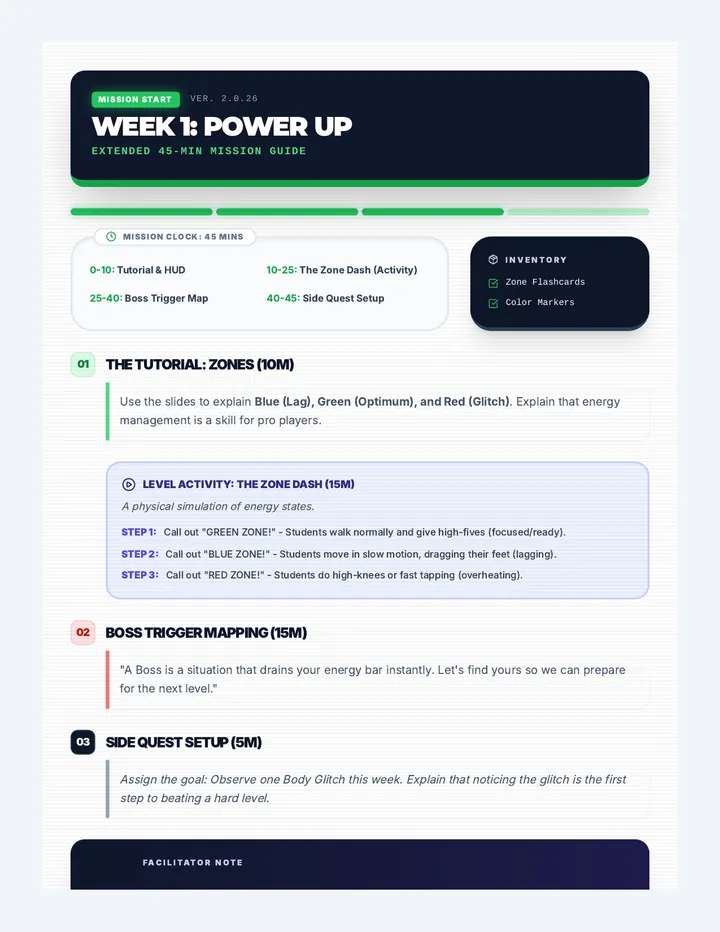
A 6-week social-emotional learning curriculum designed for 4th-grade students with ADHD, focusing on self-regulation, flexible thinking, and respectful communication through a high-engagement 'Level Up' video game theme.
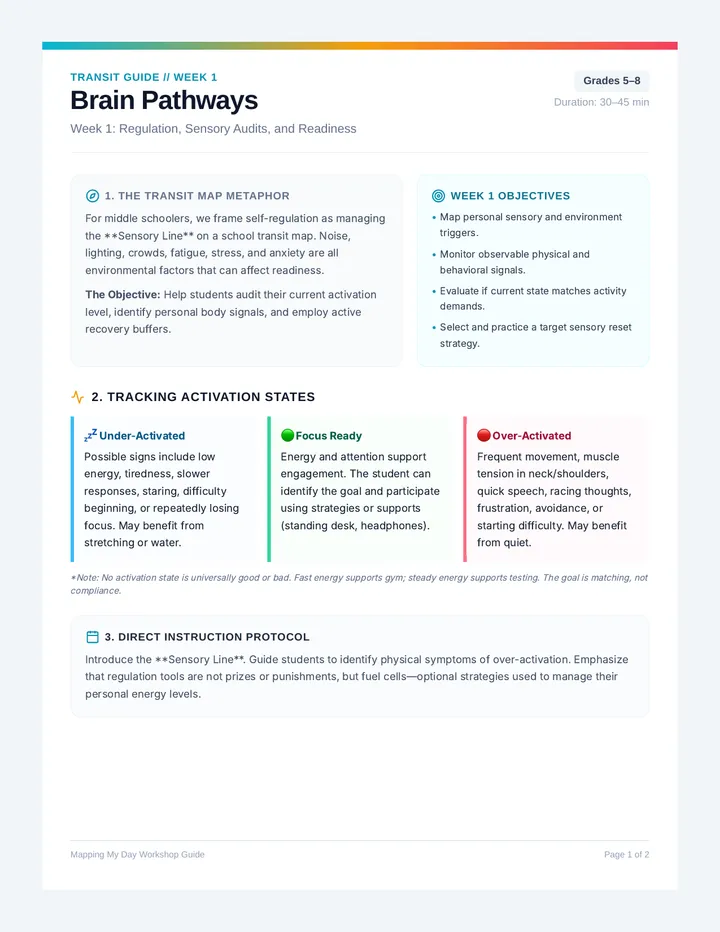
A developmentally scaffolded executive functioning workshop sequence designed to help neurodiverse students across elementary, middle, and high school map and optimize sensory, physical, and cognitive routines.
A comprehensive 6-week social skills and problem-solving program designed specifically for 2nd-grade students with ASD. The sequence uses a 'Social Detective' theme to teach self-regulation, perspective taking, empathy, and social problem-solving through visual supports and concrete activities.