Visual schedules, timers, and task prioritization techniques to support executive functioning and independent workflow. Addresses workspace management, time estimation, and sequential task breakdown for diverse learning needs.
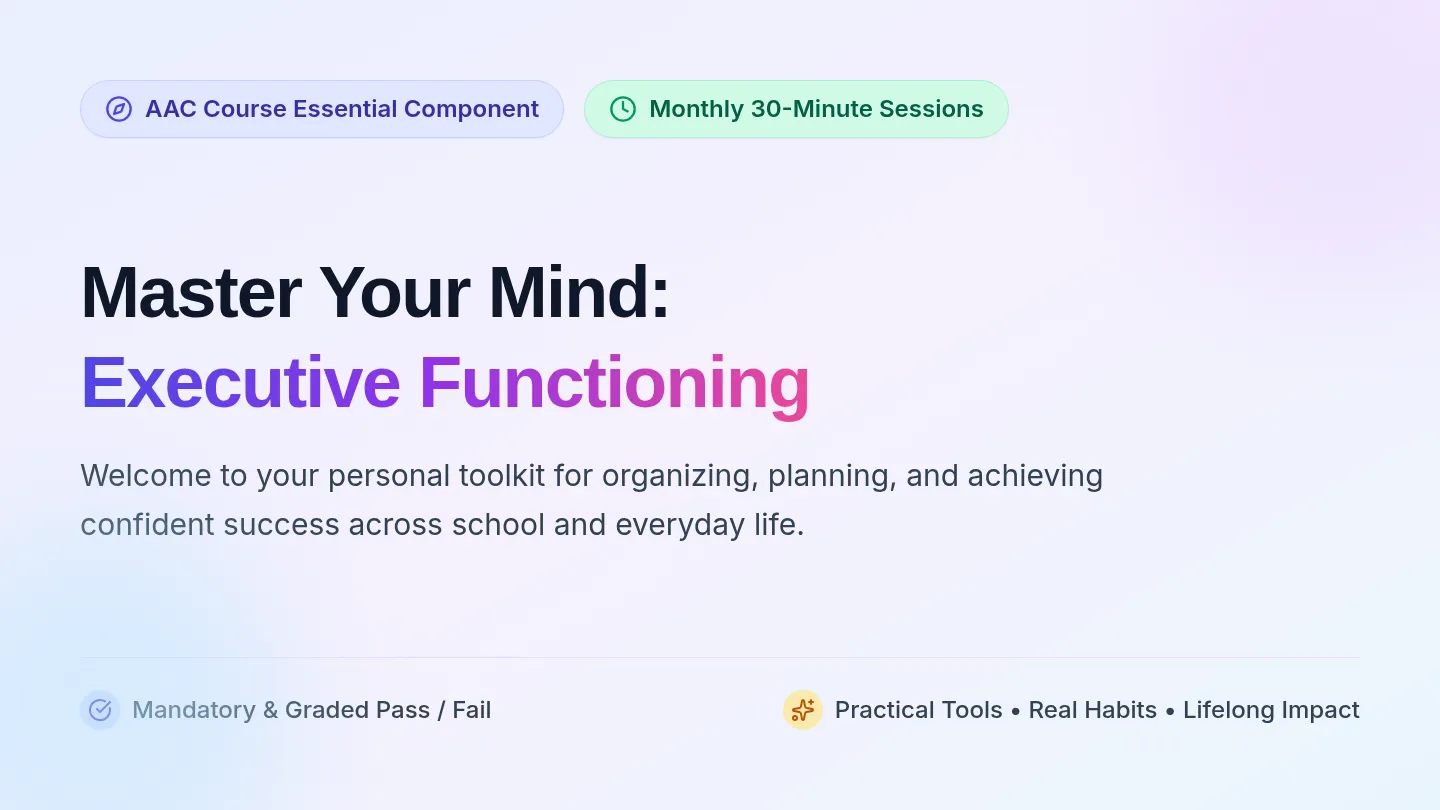
A 6-slide introductory deck in a calming, friendly pastel palette for the mandatory AAC Executive Functioning sessions, covering core skills, course grading, practical scenarios, and student expectations.
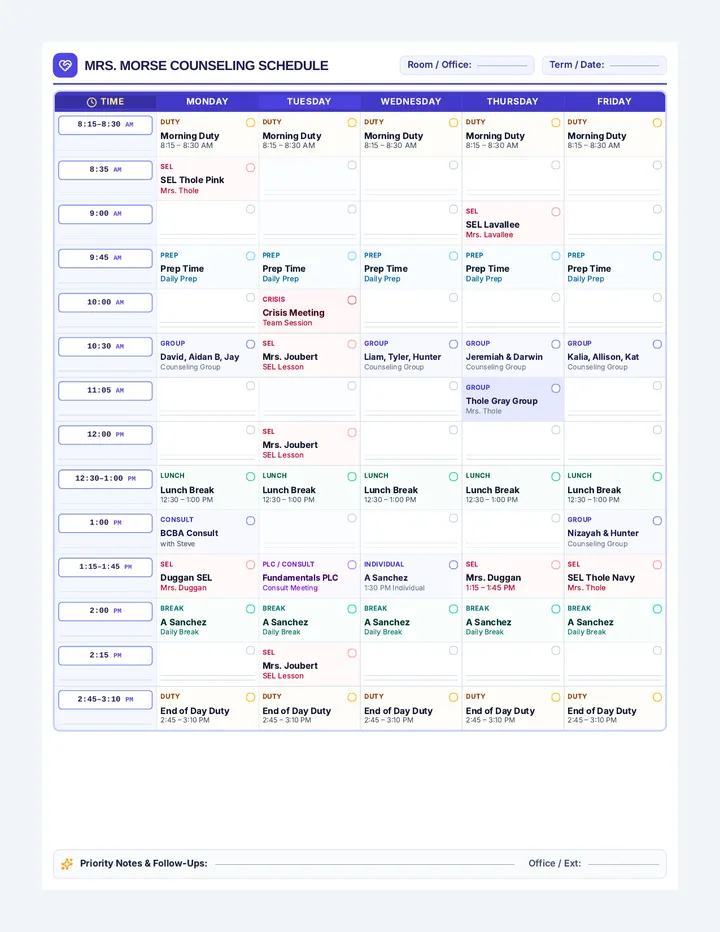
A clean, printable Monday through Friday weekly counseling schedule for Mrs. Morse featuring daily duty blocks, daily 9:45 AM prep, Tuesday 10:00 AM crisis meeting, Tuesday 1:15 PM Fundamentals PLC consult meeting, daily 12:30 PM lunch, daily 2:00 PM break for A Sanchez, SEL lessons with Mrs. Joubert, Thole Pink, Thole Navy, Duggan, and Lavallee, counseling groups, BCBA consult, and customizable write-in slots.
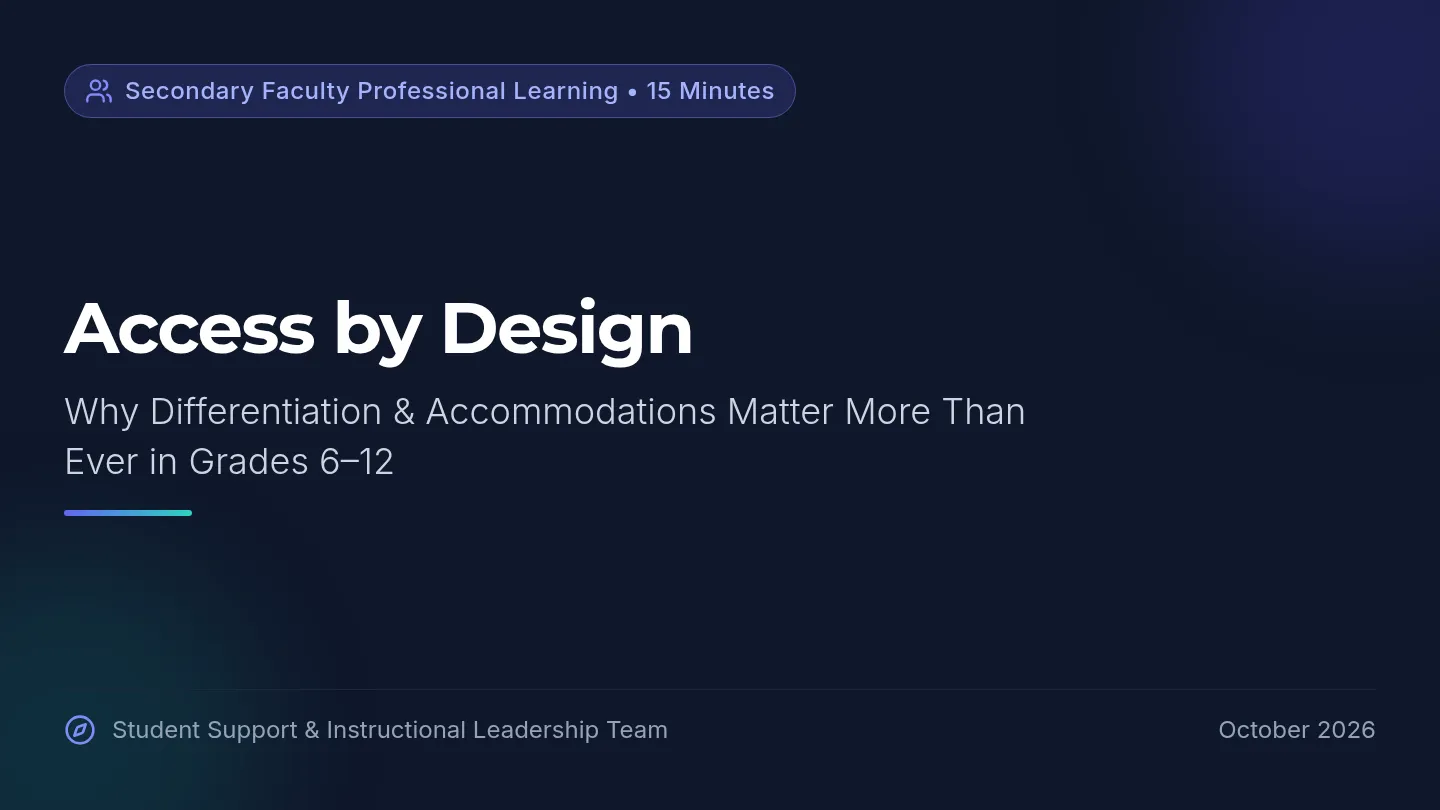
A 7-slide faculty presentation exploring the necessity and practical implementation of differentiation and accommodations for secondary students (grades 6-12) with learning differences.
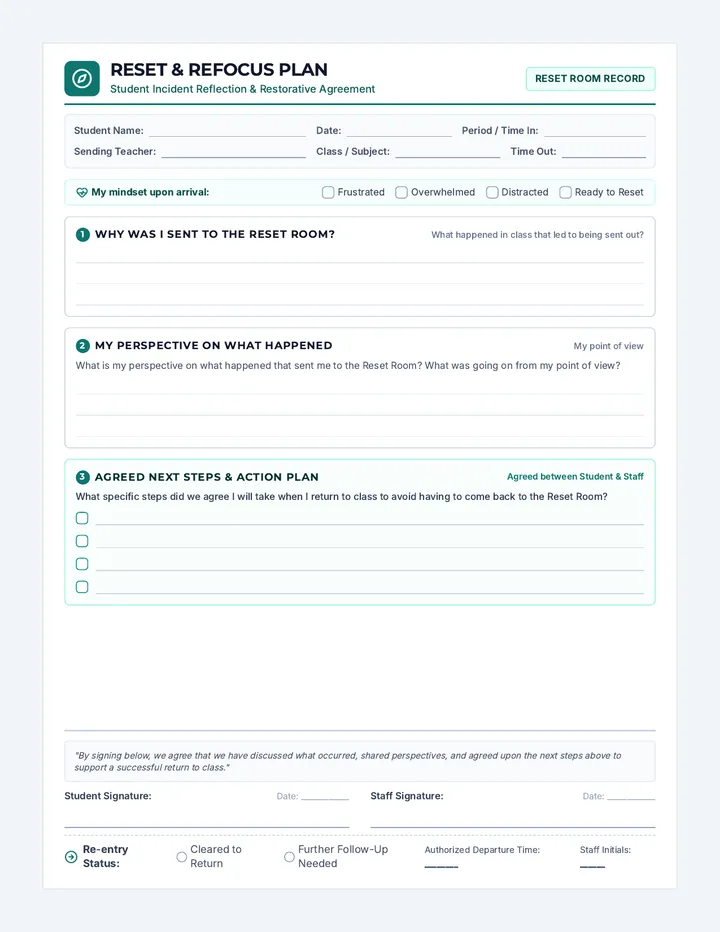
A restorative reset room reflection form with intake data, incident reason, a dedicated student perspective section, custom agreed-upon next steps, and dual student-staff signatures.
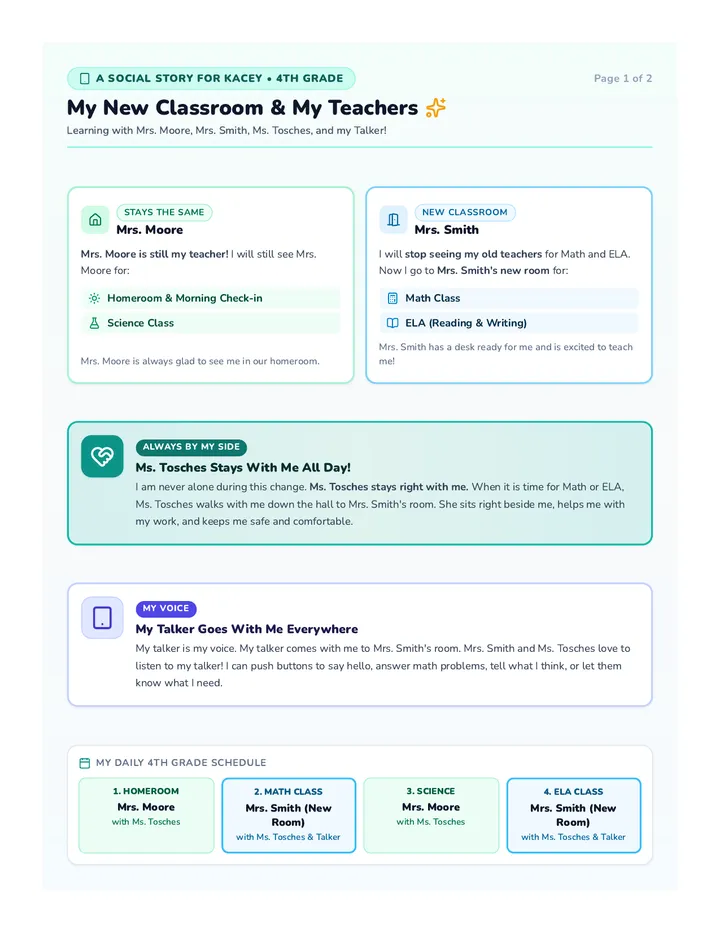
A highly concrete, visual 2-page social story customized for Kacey, a nonverbal fourth grader with intensive needs who uses an AAC talker. It clearly explains stopping with old Math/ELA teachers, starting in a new room with Mrs. Smith, keeping Mrs. Moore for Homeroom and Science, and having Ms. Tosches and her talker present at all times.
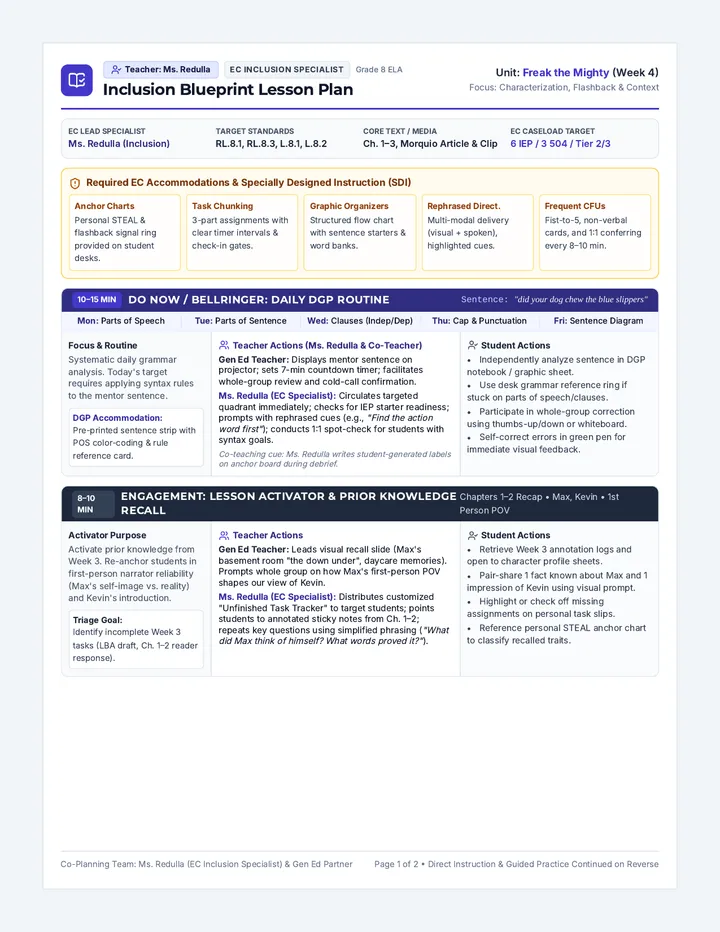
A comprehensive two-page co-teaching inclusion lesson plan designed for Ms. Redulla (EC Inclusion Specialist) and General Education ELA partner. It details the five-day DGP bellringer routine, novel study integration with *Freak the Mighty*, Morquio syndrome background reading, and explicit specially designed instruction (SDI) accommodations throughout each instructional framework phase.
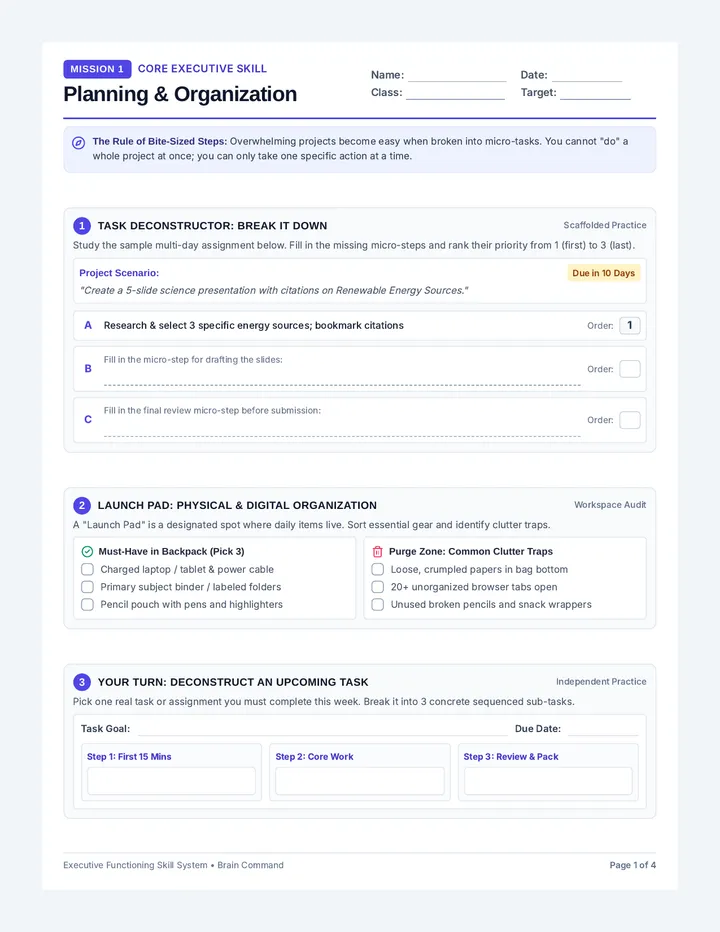
A comprehensive 4-page executive functioning printable worksheet packet targeting planning and organization, time management, focus and self-monitoring, and working memory and cognitive flexibility. Scaffolded activities guide students through task deconstruction, time estimation, distraction radar, and adaptive pivot strategies.
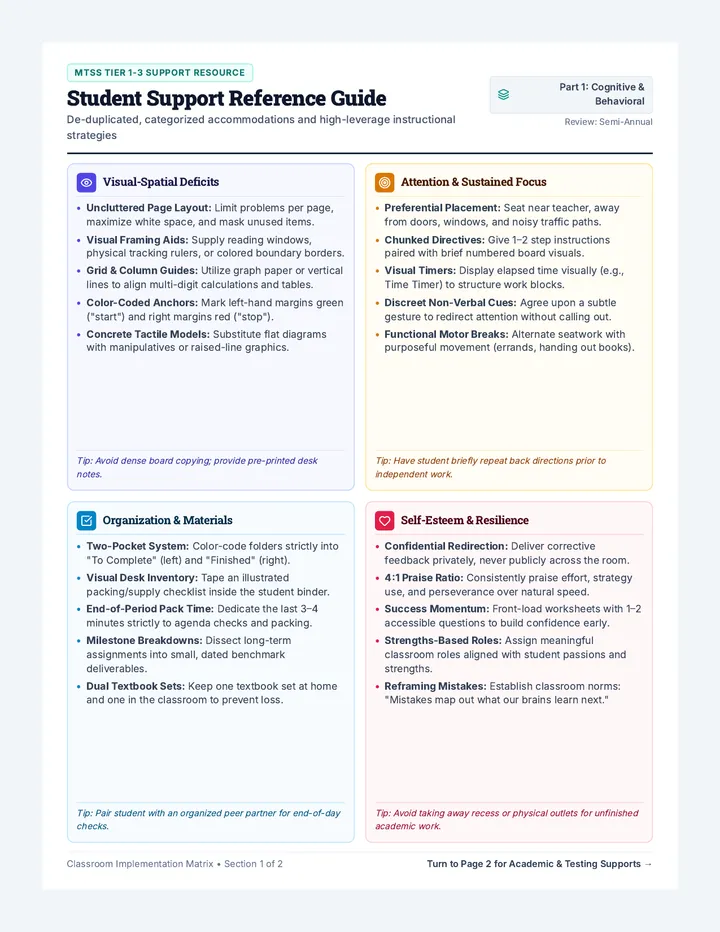
A comprehensive, de-duplicated reference guide for educators organizing evidence-based accommodations across seven core domains: visual-spatial deficits, attention, organization, self-esteem, writing, math, and testing/environmental accommodations.
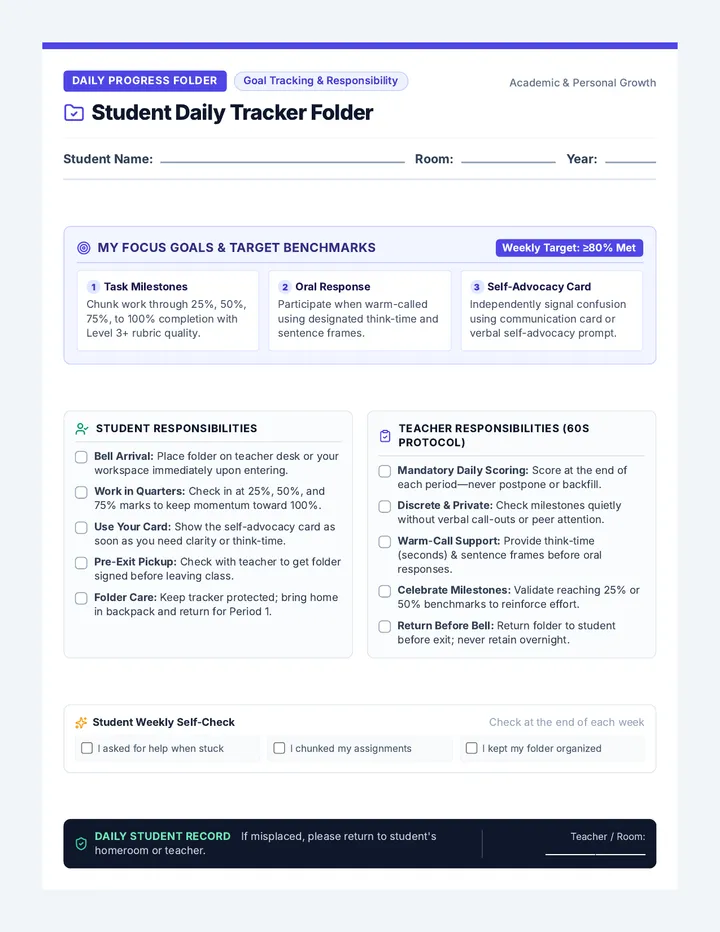
A peer-private 9-page set of printable Daily Tracker Folder Covers for students. All diagnostic labels, disability codes, and support profiles have been removed from the top header to ensure complete peer privacy, while retaining individual focus goals, blank name lines, student daily checklists, and teacher 60-second scoring protocols.
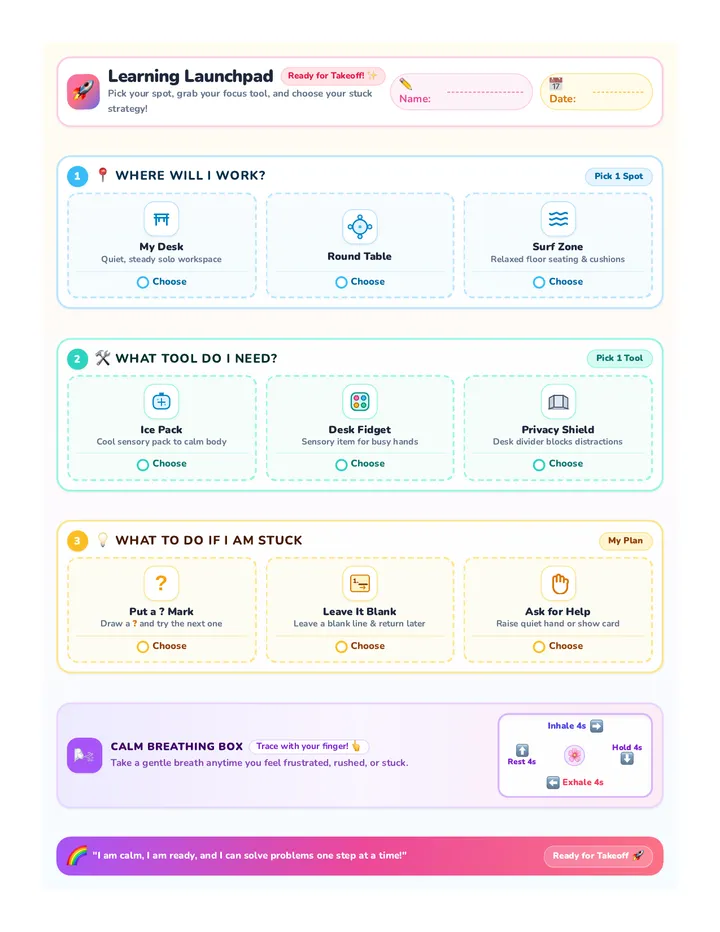
A 2-page complete student regulation and teacher facilitation resource: Page 1 is the cute student Learning Launchpad choice chart (with Round Table updated), and Page 2 is the verbatim Teacher Delivery Script and Assessment Hand-off Protocol.
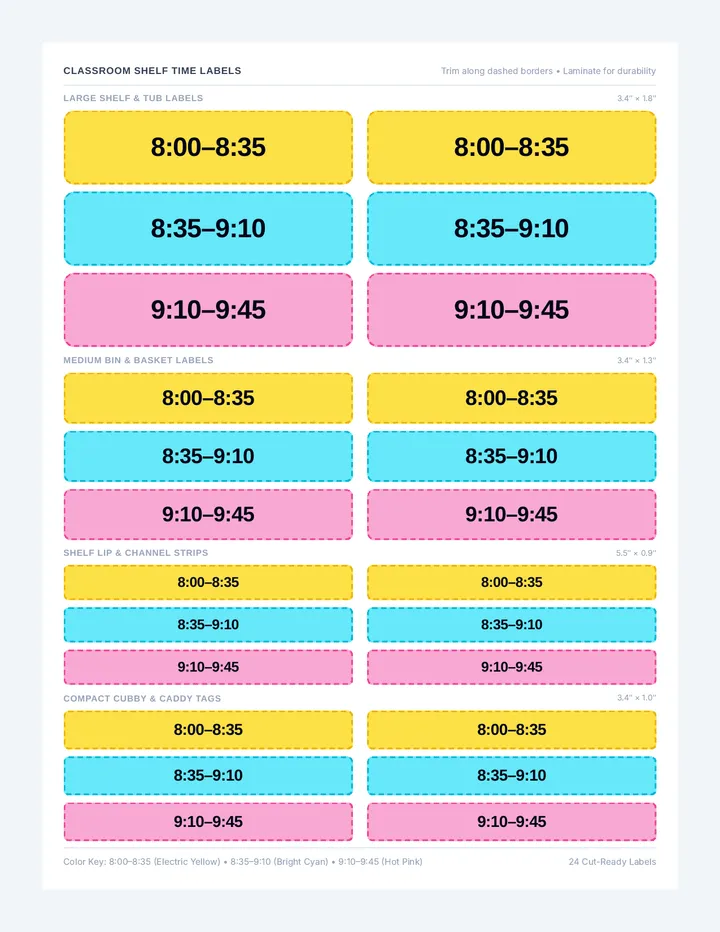
Printable color-coded classroom shelf and bin labels displaying only the scheduled time blocks in bright, high-contrast hues. Sized across four functional formats—large shelf tags, bin labels, ticket channel strips, and compact cubby tags—with dashed cut guidelines.
A comprehensive 9-session curriculum for 6th-grade students to master executive functioning skills like organization, planning, self-control, and emotional regulation through the metaphor of becoming their own 'Brain CEO'.
A comprehensive 8-session course for 9th graders with IEPs to build essential life skills including organization, accountability, time management, emotional regulation, and focus.
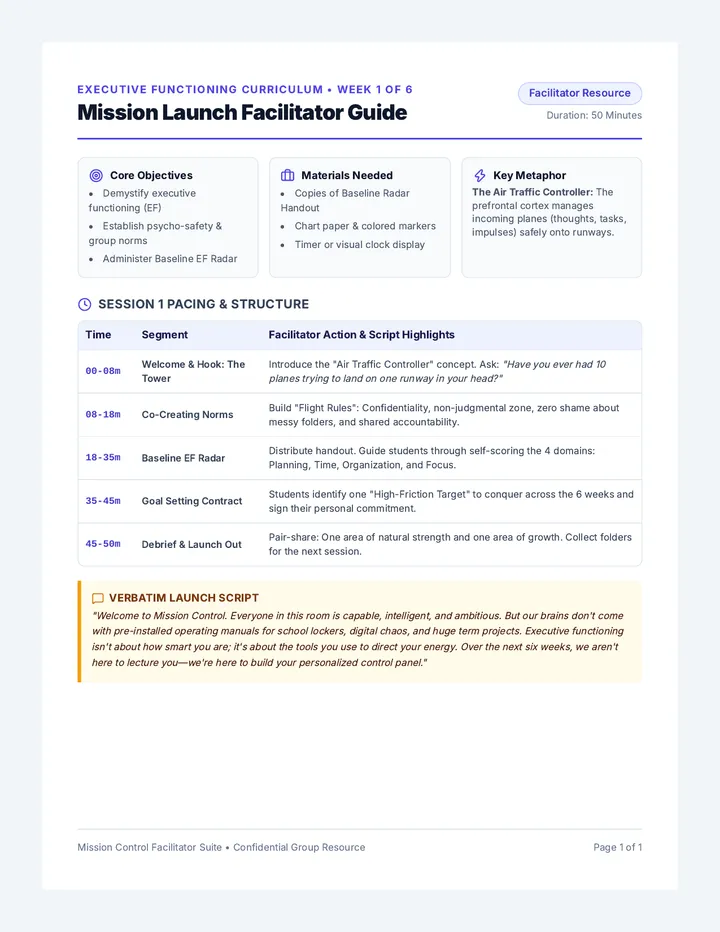
A comprehensive 6-week small-group curriculum targeting executive functioning development for adolescents. Emphasizes planning, prioritizing, time estimation, physical and digital organization, task initiation, and self-regulation.
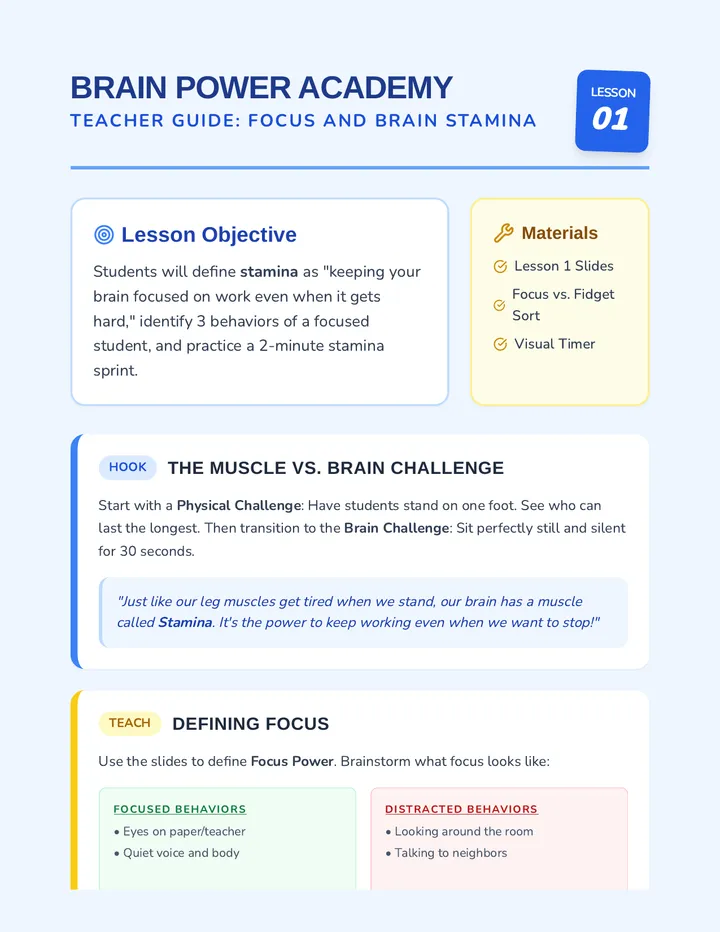
A comprehensive unit designed for 2nd-grade special education students to develop executive functioning skills, focusing on task persistence, stamina, and self-regulation through concrete strategies like chunking and positive self-talk.
A specialized sequence for 5th-grade students focusing on working memory support through task segmentation. Students learn to break complex tasks into single steps, using digital pacing and physical checklists to manage cognitive load and reduce anxiety.
A 5th-grade Special Education sequence focused on externalizing executive functions through visual schedules, checklists, planners, and environmental cues to build independence and reduce anxiety.
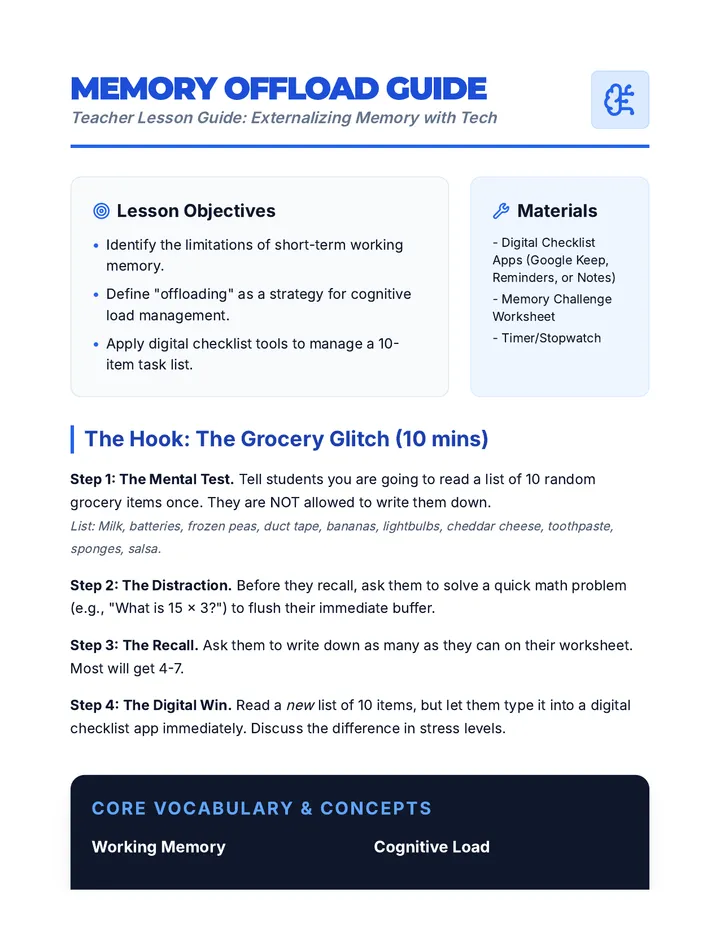
A 5-lesson unit for 8th-grade students focusing on using digital tools to offload working memory and manage cognitive load. Students learn to use task managers, focus modes, sequential reminders, and assistive speech technologies to create a personalized digital workflow for school success.
A sequence for 6th-grade students focusing on identifying distractions, designing effective workspaces, and mastering time-management techniques like Pomodoro and single-tasking to improve executive function and focus.
A Kindergarten sequence focused on building cognitive flexibility and emotional regulation when visual schedules change. Students learn to use specific visuals like 'Oops' cards, substitution icons, and 'Surprise' markers to navigate transitions and unexpected events calmly.
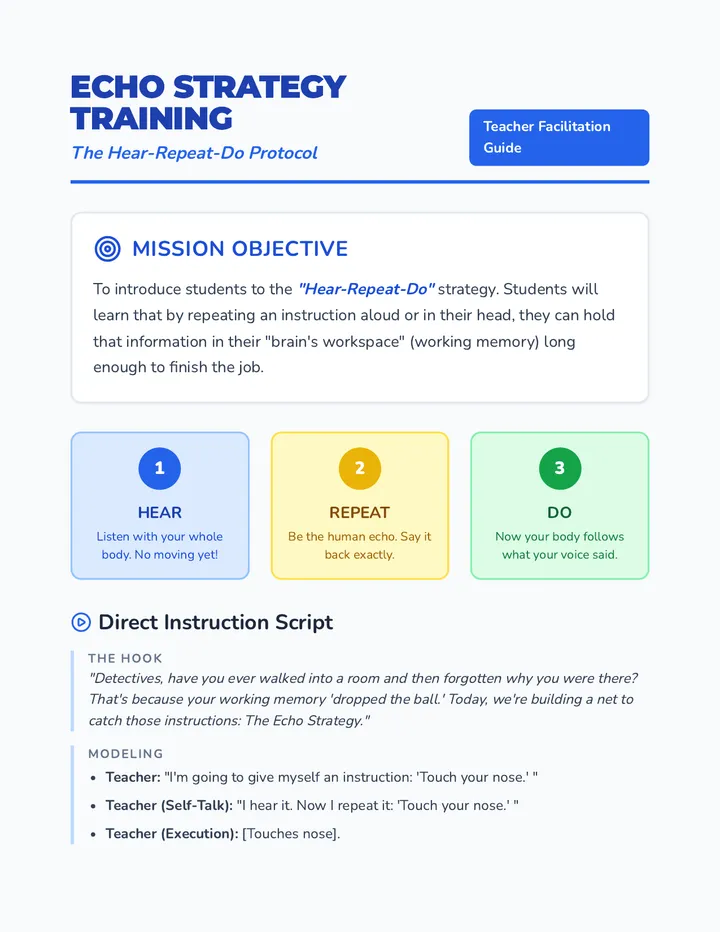
A specialized sequence for 4th-grade students to develop working memory through verbal rehearsal. Students practice the 'Hear-Repeat-Do' strategy, identify action keywords, utilize processing pauses, and verify their work to improve follow-through on single-step directions.
A 2nd-grade Special Education sequence focused on cognitive flexibility, emotional regulation during transitions, and problem-solving when routines change. Students learn to transition from 'rigid' to 'flexible' thinking using the 'Plan B' detour metaphor.