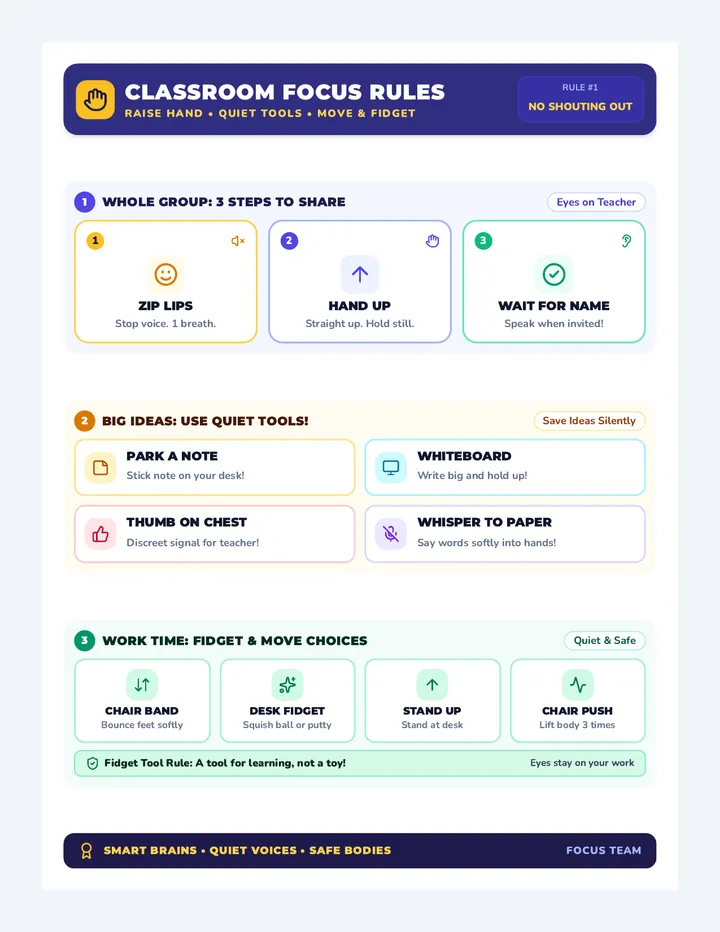
A concise, 20-minute social skills lesson designed for K-2 students with learning disorders, focusing on the core steps of following classroom directions through visual cues and sequencing.
A collection of resources to help teachers and students navigate the technical aspects of virtual learning, with a focus on accessibility features like closed captioning.
A highly visual, 15-minute activity designed for non-verbal students to practice turn-taking and sharing using concrete manipulatives and visual supports.
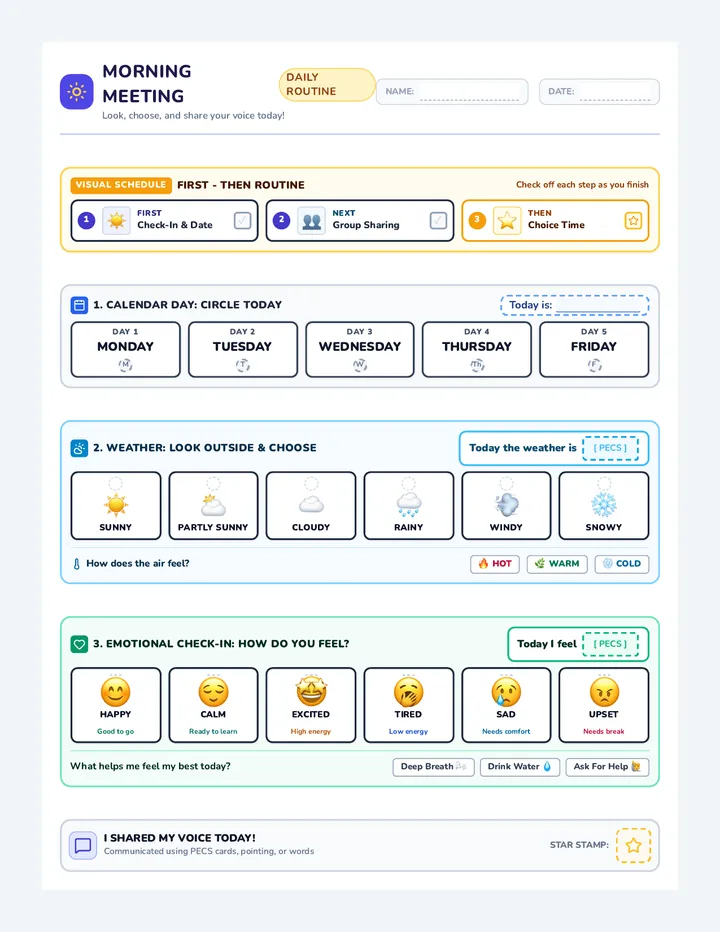
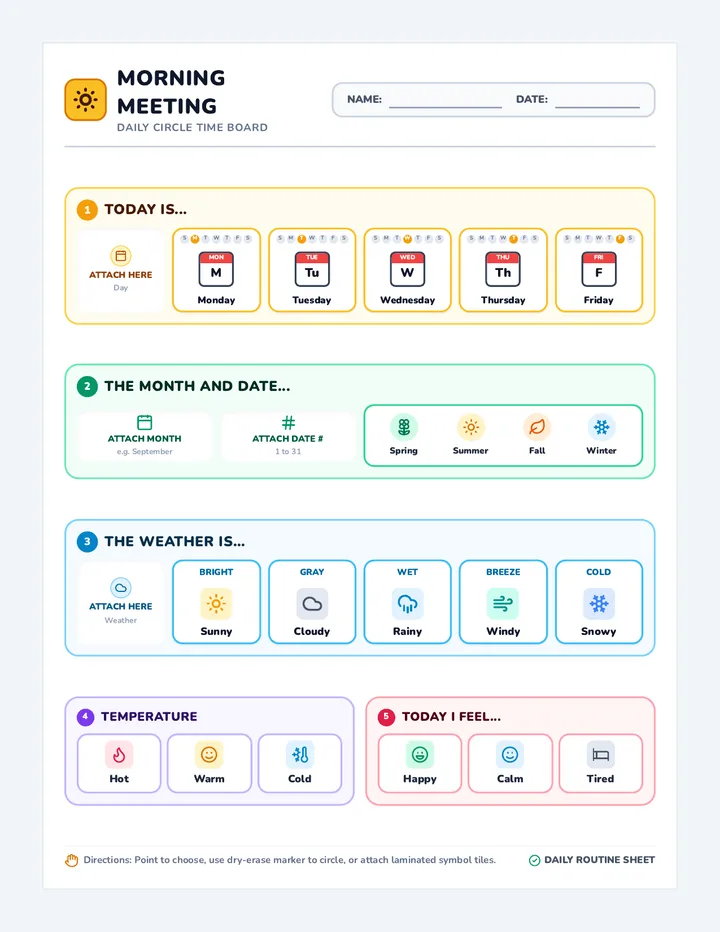
A 10-15 minute daily check-in routine designed to help students build self-awareness regarding disruptive noises and expressions, focusing on 'signals' and 'impact'.
This lesson introduces the concept of emotions as 'inner weather,' focusing specifically on identifying the physical 'warning signs' of stress and anxiety and introducing initial grounding techniques.
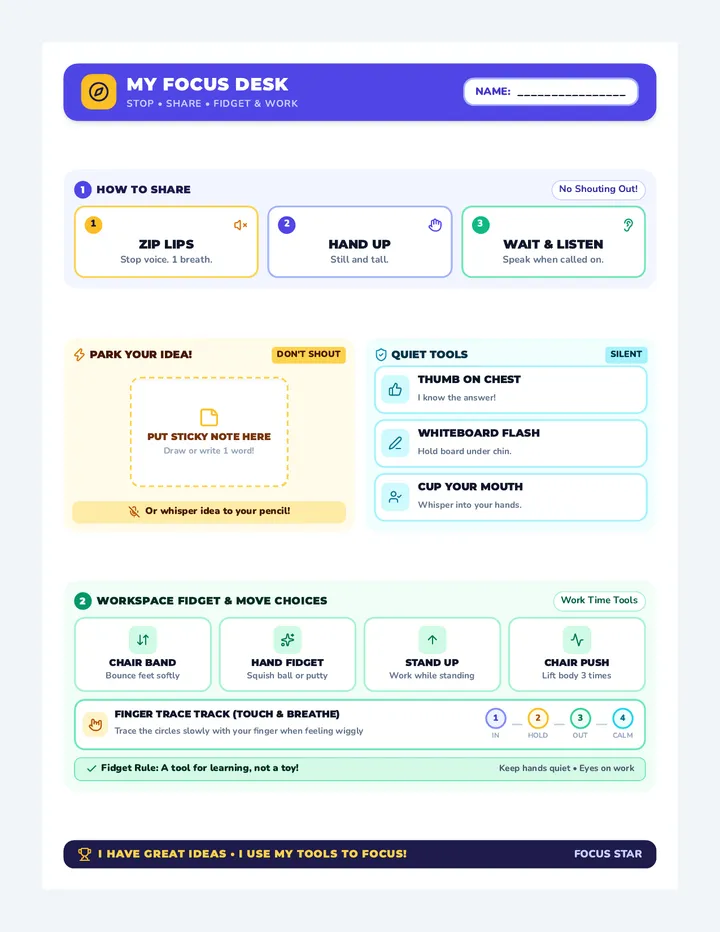
A collection of self-regulation tools for a student to improve focus, impulse control, and task completion. These resources help the student visualize their behavior choices and track daily progress through child-friendly rubrics and check-ins.
A full day's worth of activities reviewing letters T, B, F, M, N and the number 12, tailored for students with diverse learning needs and fine motor challenges.
A follow-up lesson focusing on transitioning from individual expression to low-pressure shared activities and collaborative play.
A targeted lesson designed to help students identify emotional tone in social interactions by analyzing verbal keywords and non-verbal vocal cues. Includes scripted scenarios for practice and a data tracking system for IEP goal monitoring.
A high-energy, superhero-themed lesson designed for students with autism to learn the 'superpower' of self-advocacy. This lesson covers standing up for oneself at home, school, and in the community through interactive slides, stories, and games.
A focused lesson for Year 1 students struggling with phonics, focusing on continuous blending strategies to transition from choppy decoding to smooth word reading. Includes a 'Word Road Trip' theme to make sound manipulation engaging and visual.
Developing speed and accuracy with multiplication facts 0-12 through drills and logic puzzles.
Engaging reading passages designed to build comprehension, identify main ideas, and master sequencing for early readers.
Focused practice on high-frequency Dolch and Fountas & Pinnell sight words through tracing, identifying, and sentence building.
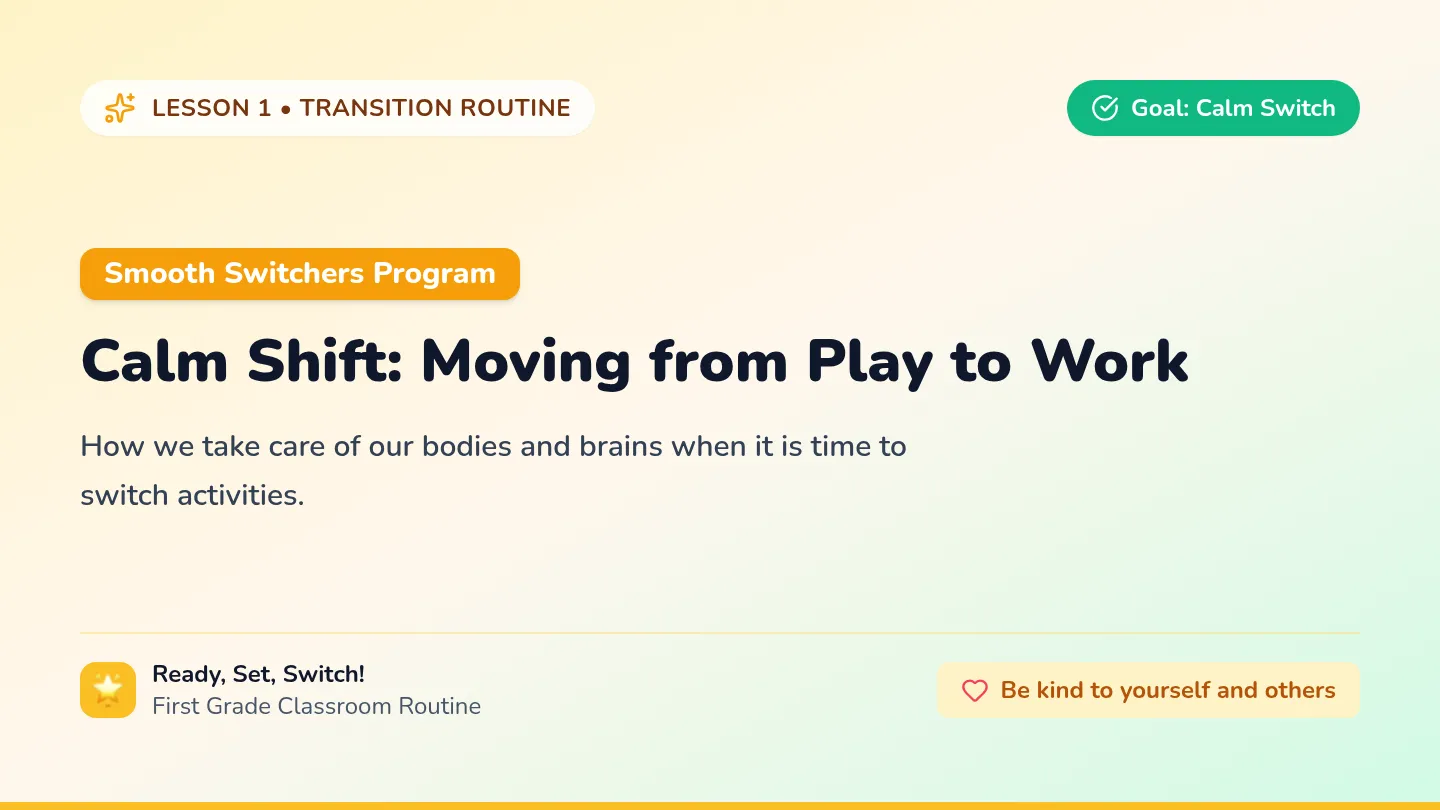
A lesson focusing on executive function and sustained attention using movement rituals and the 'Mental Spotlight' strategy to reset and refocus.
A comprehensive resource pack designed to help neurodivergent students understand and practice eye contact in a comfortable, low-pressure way. It includes a visual social story, a printable workbook, and teacher strategies.
A comprehensive sensory diet protocol designed for a first-grade student to improve body awareness, reduce postural slumping, and minimize floor-throwing behaviors through targeted heavy work and movement breaks.
A structured set of materials for implementing and tracking Discrete Trial Instruction (DTI) for counting 1-20, including a teacher data sheet and a student practice worksheet.
A foundational lesson for students with moderate to severe disabilities to recognize and match digital time to the hour and half-hour using high-visual supports and repetitive practice.
A festive St. Patrick's Day writing and communication activity where students identify things they are 'lucky' to have using AAC-style visual icons. This lesson supports students with diverse communication needs in participating in seasonal writing crafts.
A highly visual lesson designed for non-verbal learners to master digital time (whole and half hours) through matching, sequencing, and sensory-friendly communication.
A series of Rapid Automatized Naming (RAN) exercises designed to improve letter recognition fluency and processing speed through targeted practice drills.
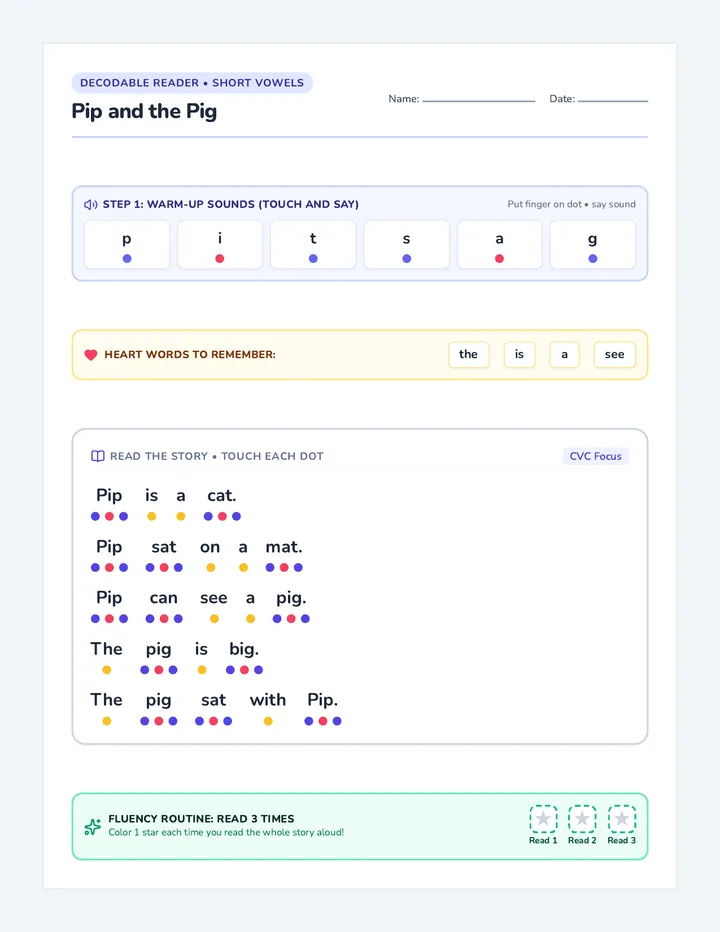
A focused lesson on building reading automaticity for short vowel words with beginning and ending consonant blends. Students will identify, decode, and read blends in isolation and in context to improve fluency.
A quick, engaging introduction to rhyming words designed for special education students, focusing on auditory identification and simple visual patterns through a repetitive poem.