Brain Builders Parent Slides
SFA Presents


Inside the Den
A Closer Look at How Our Children Learn
Special Session Focus: Executive Functioning
"Be who you are and be that well."
30-Minute Parent Workshop
Workshop Roadmap
Brain Builders
Empowering Executive Functioning at Home and School
Understanding how your child's brain plans, organizes, remembers, and manages emotions—with practical tools that turn daily battles into teamwork.
Core Brain Skills
Home Systems
School Partnership
Foundation
What Is Executive Functioning?
The Brain's Control Tower
Air Traffic Control
It coordinates incoming information, filters distractions, prioritizes tasks, and directs mental traffic.
Under Construction
The frontal lobe continues developing until age 25. Expecting adult consistency sets everyone up for frustration.
Skill, Not Will
When kids struggle with follow-through, it is rarely defiance. It is usually an underdeveloped cognitive skill.
"Kids do well if they can. When they can't, our job is to scaffold the missing skill."
Brain Science Spotlight
How Brains Build Executive Skills
Video Demonstration
Embedded media
What to Watch For:
- Brains are not born with executive skills, but with the capacity to build them.
- Supportive adult relationships serve as the scaffolding that strengthens neural pathways.
Parent Reflection Prompt:
"When your child's control tower is overwhelmed, what calming cue helps them regain control?"
Key Understanding: Executive function is a muscle trained through daily practice, not an innate personality trait.
Core Skills • Part 1
Planning & Organization
Mapping & Managing
Planning Ahead
Visualizing the destination
The ability to set a goal, think backwards, and break a big project or chore into manageable mini-steps.
Family Strategy: "Backward Design"
Ask: "What does done look like?" Snap a picture of a clean desk to make the goal tangible.
Organization
Managing stuff and time
Keeping track of materials, papers, sports gear, and mental steps without losing momentum.
Family Strategy: "Homes for Things"
Color-coded bins and open baskets with labels. If putting it away takes >2 steps, it won't happen.
Shift from: "Go clean your messy room" Shift to: "First, put all 5 books on the shelf."
Core Skills • Working Memory
Working Memory: The Mental Whiteboard
Holding & Processing
Embedded media
Watch the mental whiteboard fill up and drop instructions when overloaded.
What Is Working Memory?
Holding information in mind while using it. Unlike adults, children can usually only retain 1 to 2 steps before the mental whiteboard erases.
Home Supports That Work:
- Externalize Memory: Write sticky notes, checklists, or sketch simple icons.
- Say & Echo: Have your child repeat directions back before they begin.
Memory Golden Rule: Don't store it in their head if you can store it in the room!
Core Skills • Self-Control
Inhibition: The Mental Pause Button
Pumping the Brakes
The Brain's Brakes
Resisting first impulses
Inhibition allows us to stop and think before acting, resist tempting distractions, and control strong emotional impulses.
Developmental Truth:
A child's accelerator is fully developed, but their brakes are still being wired. They need adult co-regulation.
Coaching Self-Control
Building pause rituals
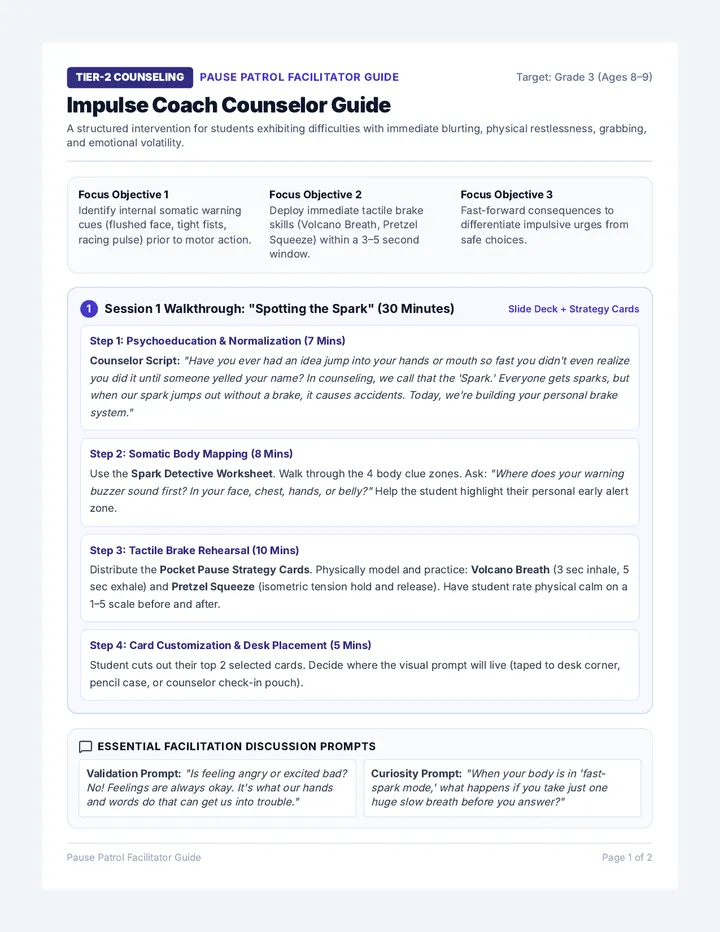
- Model the Pause: "I'm feeling annoyed, so I'm waiting 5 seconds before speaking."
- Physical Stop Signs: A hands-on-belly breath or count-to-three game.
Key Phrase:
"Press your pause button for three seconds with me."
Parent Mindset: Co-regulation comes first: Calm adults produce calm kids.
Specific Challenges
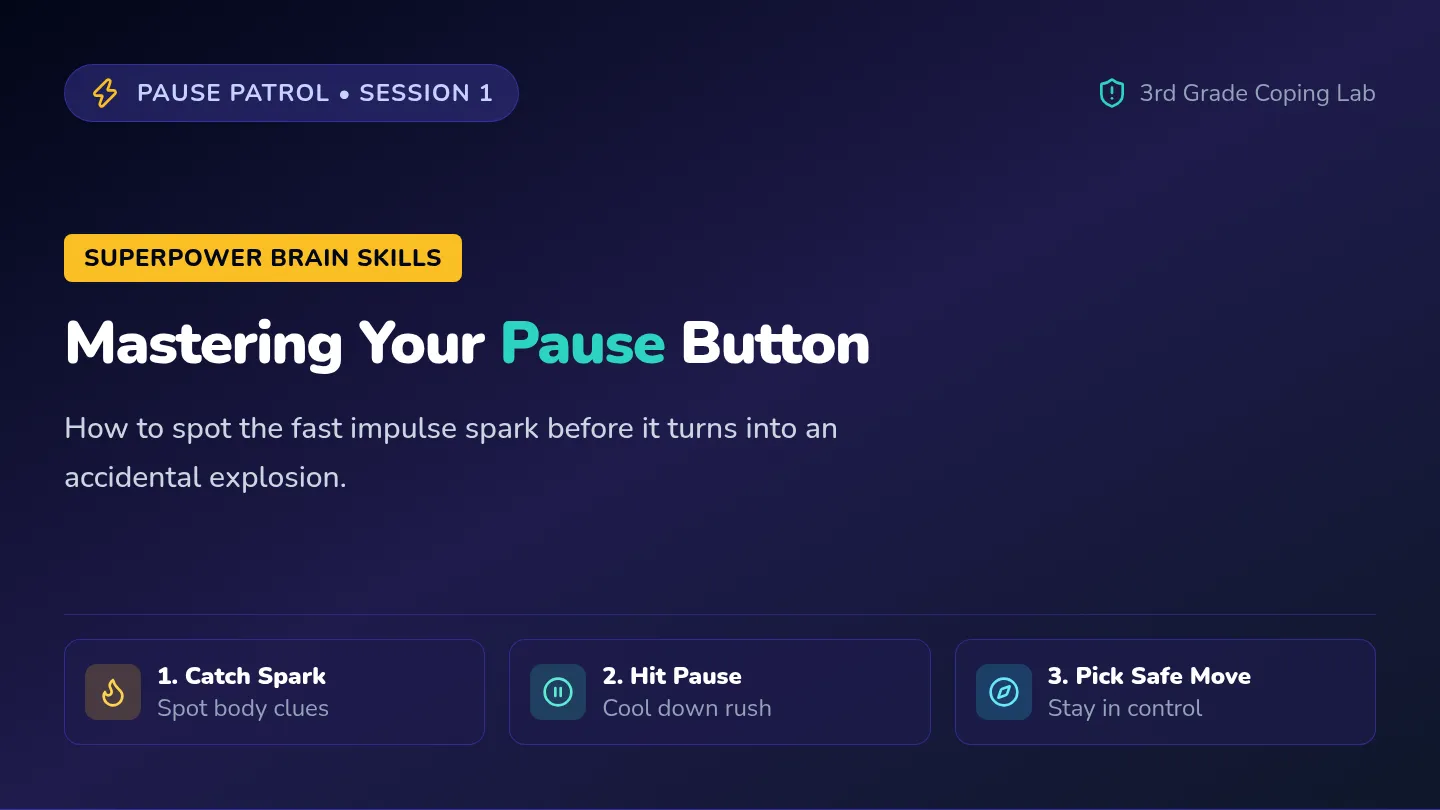
Mastering Transitions & Focus
Daily Friction Points
Smooth Transitions
Switching from high-dopamine activities (screens, gaming) to low-dopamine tasks (dinner, homework) causes meltdowns.
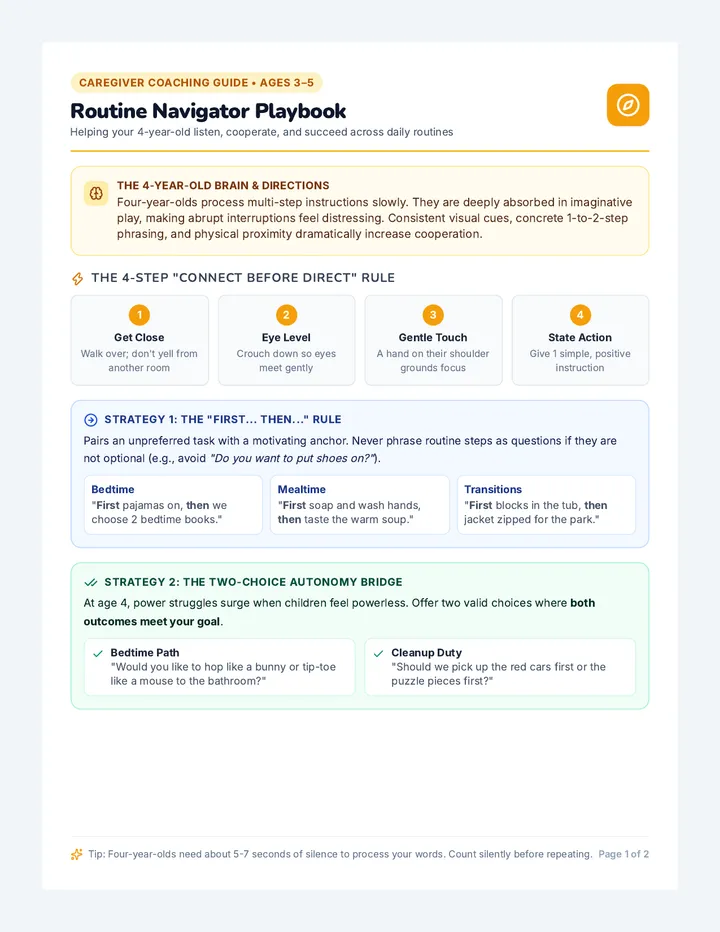
- Visual Timers: Let them see time disappearing instead of shouting "5 minutes!"
- Bridge Activities: A 2-minute snack, song, or stretch between screen and study.
Sustaining Attention
Attention is like a flashlight. Kids with EF hurdles struggle to aim the beam and keep it pointed at one spot.
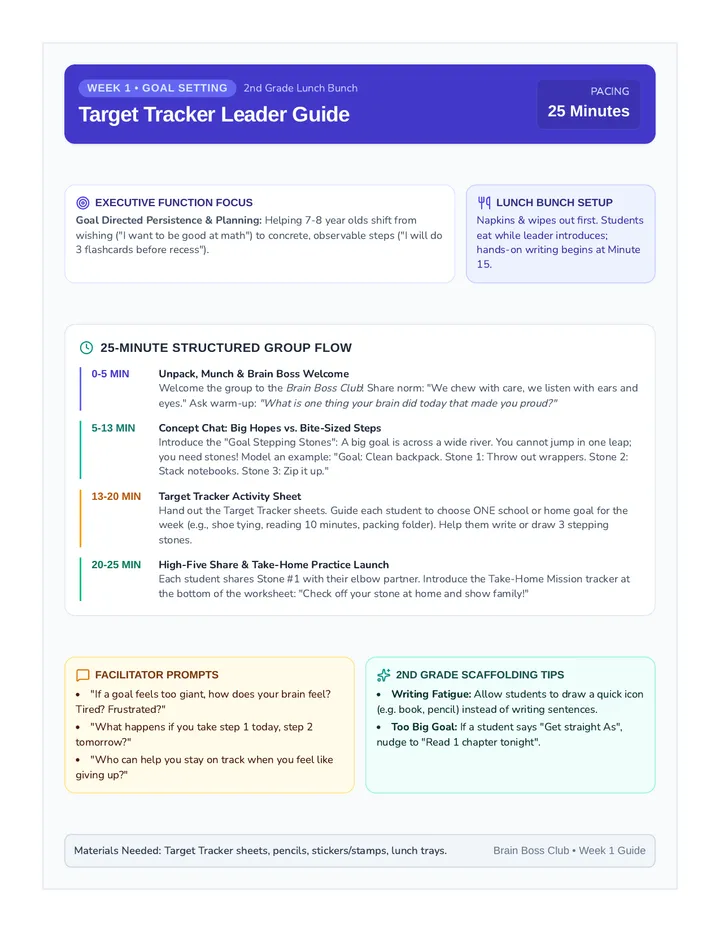
- Work Sprints: 15-minute focused bursts followed by a 3-minute movement reset.
- Body Doubling: Sit quietly nearby folding laundry while they tackle homework.
Pro-Tip: Give transition warnings with physical touch—a gentle hand on the shoulder gets through faster than words across the room.
Specific Challenges
Emotions & Task Initiation
Overcoming the Freeze
Emotional Regulation
When the brain feels flooded, logic shuts down. You cannot teach or reason with an overwhelmed amygdala.
Connect Before You Correct:
1. Validate ("Math feels huge right now").
2. Lower sensory load (quiet, dim lights).
3. Problem-solve only when breathing returns to normal.
Beating Task Paralysis
Starting is often the hardest part. The brain sees an overwhelming mountain and chooses freezing or avoidance.
The "2-Minute Launch" Rule:
Make the starting bar impossibly low: "Let's just open the binder and write your name." Momentum does the rest.
Remember: Procrastination is not laziness; it is anxiety and overwhelm in disguise.
Home Strategies
Routines & Supports That Stick
Low-Stress Habits
The "Launch Pad"
One single basket by the front door. Backpack, shoes, and water bottle sleep here every night.
Morning Win: Zero frantic searches at 7:45 AM.
Visual Checklists
Replace repeated verbal commands with a whiteboard list. Let the board be the "boss" instead of your voice.
Key Phrase: "What does your list say is next?"
Evening Pre-Game
Pack bags, pick clothes, and stage devices before bedtime. Tomorrow's ease starts the evening before.
Brain Benefit: Protects limited morning mental energy.
Key Takeaway: Build the system into the physical space, not into their memory.
School & Home
Teaming Up With Educators
Collaborative Success
Effective Classroom Supports
Ask teachers what universal executive supports are already in place:
- Visual schedules and posted homework agendas
- Chunked rubrics for multi-week projects
- Designated desk buddies and check-in / check-out passes
How Families Can Collaborate
Open, proactive communication changes everything:
- Share what works at home: "A visual timer helps him start math without tears."
- Align vocabulary: Use identical phrasing for study steps and backpack packing.
- Assume positive intent: Approach teachers as co-investigators, not adversaries.
The Shared Goal: Fostering lifelong independence, one scaffolded step at a time.
Wrap-Up & Action
Your 30-Minute Takeaways
Start Small Tonight
1
Be Their Frontal Lobe
Provide external structure, visual reminders, and patience while their internal control center matures.
2
Pick ONE Routine
Don't overhaul your whole house today. Pick the "Launch Pad" or a visual timer and practice for two weeks.
3
Celebrate Micro-Wins
Notice effort over perfection. "You hung up your backpack on the first try—that's great organization!"
Questions & Discussion
What is one daily routine you'd love to make smoother this week?
Brain Builders Family Handout

Lupo Learning Program • Inside the Den
Executive Functioning at Home


Executive function acts as the brain's control tower. Children build these skills through supportive routines and daily practice.
"Be who you are and be that well."
1. The Four Core Skills Decoded
Planning & Prioritizing
Seeing the end result and mapping backwards to determine what steps must come first.
Family Shift: Ask: "What does done look like?" Take a photo of an organized room or binder.
Physical & Mental Organization
Keeping track of materials, papers, books, and sports gear without getting lost or overwhelmed.
Family Shift: The 2-Step Rule: If putting an item away takes more than two steps, simplify the system.
Working Memory
Holding directions in mind while carrying out the action. Kids typically hold only 1–2 verbal steps.
Family Shift: Externalize memory! Write checklists on whiteboards so directions stay visible.
Self-Control & Inhibition
Hitting the mental pause button before speaking, blurting out, or reacting impulsively.
Family Shift: Model the pause out loud: "I'm feeling frustrated, so I'm taking 3 breaths first."
2. Three Systems That Eliminate Daily Battles
1
The Entryway "Launch Pad"
Set one designated basket or shelf right next to the entrance door. Backpacks, jackets, sports bottles, and signed permission slips sleep here each night. No morning searching permitted!
2
Checklists Over Nagging
Replace your repeating voice with a dry-erase morning or bedtime board. Instead of nagging "Did you brush your teeth?", point to the board and ask: "What does your list say is next?"
3
The 10-Minute Evening Pre-Game
Stage tomorrow before bed. Pack the bag, pick out clothes down to the socks, and plug in tablets or laptops. Conserves crucial executive energy for the morning rush.
St. Francis of Assisi Catholic School • Lupo Learning Program • Inside the Den Page 1 of 2 • Turn Over for Action Plan
St. Francis of Assisi • Lupo Learning Program
Daily Friction Busters & Collaboration
3. Solutions for Common Pressure Points
Transitions
Use visual timers showing disappearing red discs. Pair with a 2-minute physical stretch or snack as a bridge before homework.
Starting Tasks
The 2-Minute Rule: Make the starting step tiny. "Let's just open the notebook and write your name." Action creates motivation.
Big Feelings
Connect Before Correct: When the amygdala is flooded, logic is offline. Validate feelings first; problem-solve only when calm.
4. Three Questions to Ask Your Child's Teacher
Q1
"What organizational or visual tools work well for my child in class that we can duplicate at home?"
Q2
"Can you share how multi-week assignments are chunked so we can map out check-in milestones together?"
Q3
"What common cues or phrases do you use when redirecting focus, so we can use consistent language?"
5. Our Family 14-Day Commitment
Choose just ONE system to practice this week
1. The specific routine or friction point we will focus on:
2. The visual or physical support we will create (e.g., launch pad bin, visual timer, checklist):
3. Check-in Date (after 14 days):
4. How we will celebrate our team effort:
"Be your child's external frontal lobe while theirs is growing." St. Francis of Assisi • Lupo Program
Brain Builders Reflection Worksheet

Lupo Learning Program • Inside the Den
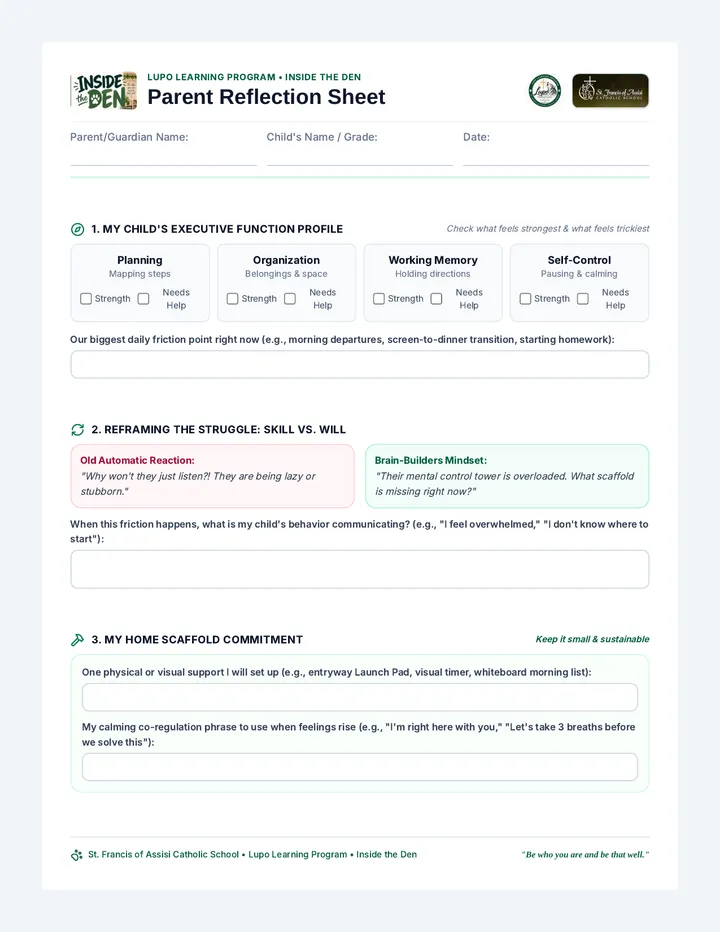
Parent Reflection Sheet


Parent/Guardian Name:
Child's Name / Grade:
Date:
1. My Child's Executive Function Profile
Check what feels strongest & what feels trickiest
Planning Mapping steps
Strength Needs Help
Organization Belongings & space
Strength Needs Help
Working Memory Holding directions
Strength Needs Help
Self-Control Pausing & calming
Strength Needs Help
Our biggest daily friction point right now (e.g., morning departures, screen-to-dinner transition, starting homework):
2. Reframing the Struggle: Skill vs. Will
Old Automatic Reaction: "Why won't they just listen?! They are being lazy or stubborn."
Brain-Builders Mindset: "Their mental control tower is overloaded. What scaffold is missing right now?"
When this friction happens, what is my child's behavior communicating? (e.g., "I feel overwhelmed," "I don't know where to start"):
3. My Home Scaffold Commitment
Keep it small & sustainable
One physical or visual support I will set up (e.g., entryway Launch Pad, visual timer, whiteboard morning list):
My calming co-regulation phrase to use when feelings rise (e.g., "I'm right here with you," "Let's take 3 breaths before we solve this"):
St. Francis of Assisi Catholic School • Lupo Learning Program • Inside the Den "Be who you are and be that well."