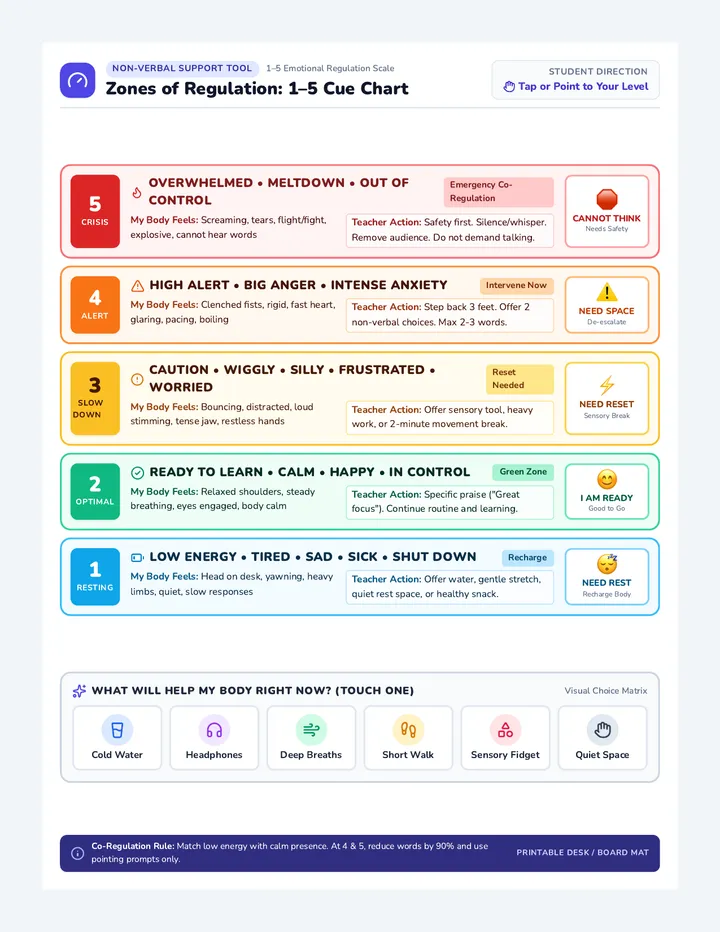
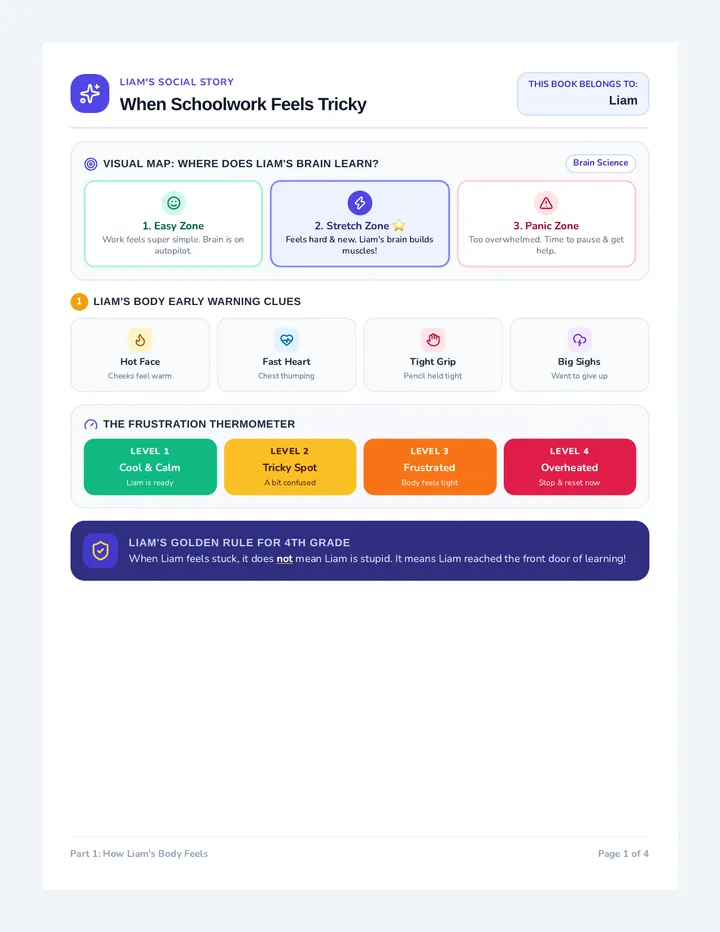
Identification of emotional magnitude using visual scales and physiological cues. Differentiates between mild, moderate, and extreme reactions to help students match their coping strategies to the level of intensity.
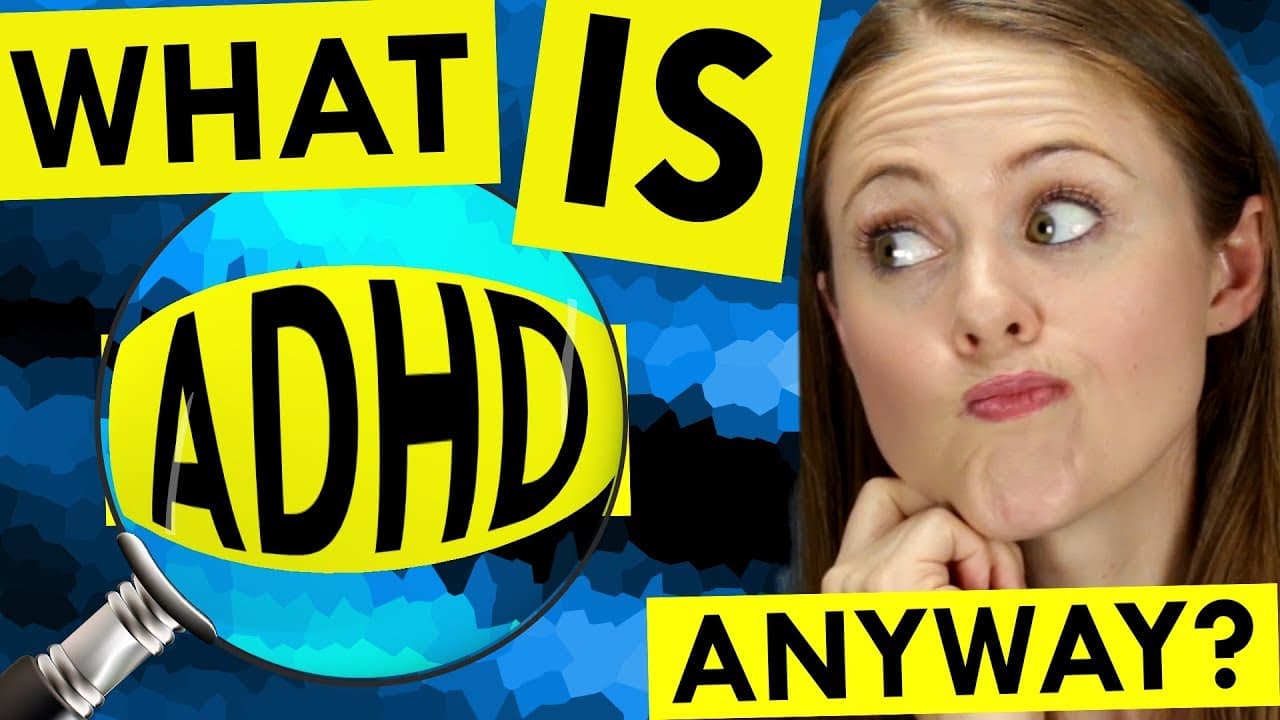
This educational video demystifies Attention Deficit Hyperactivity Disorder (ADHD) by exploring the internal experience of living with the condition. Hosted by Jessica McCabe, the video moves beyond clinical definitions to offer relatable, concrete metaphors that describe executive dysfunction, working memory challenges, and emotional dysregulation. It emphasizes that ADHD behaviors are not character flaws but rather neurological differences in how the brain regulates attention and emotion. The content breaks down complex neurological concepts into accessible analogies, such as comparing the brain to a CEO with a bad secretary, working memory to a whiteboard that constantly needs erasing, and emotional regulation to a severe sunburn. The video addresses key themes including the myth of "attention deficit" (versus attention regulation), the invisibility of the struggle, and the strengths that often accompany ADHD brains, such as creativity and out-of-the-box thinking. For educators, this resource is invaluable for fostering empathy and understanding in the classroom. It provides a shared language for teachers and students to discuss learning differences without stigma. By framing ADHD through mechanical and situational metaphors—like a race car with bicycle brakes—it offers students with ADHD a way to articulate their experiences and helps neurotypical peers understand why certain tasks are more challenging for their classmates.
7mins 39s
A structured 1-page Zones of Regulation daily check-in worksheet for a 4th-grade student with autism, featuring zone identification, body signal awareness, a 1-5 intensity scale, tool selection, and a post-regulation reflection check-out.
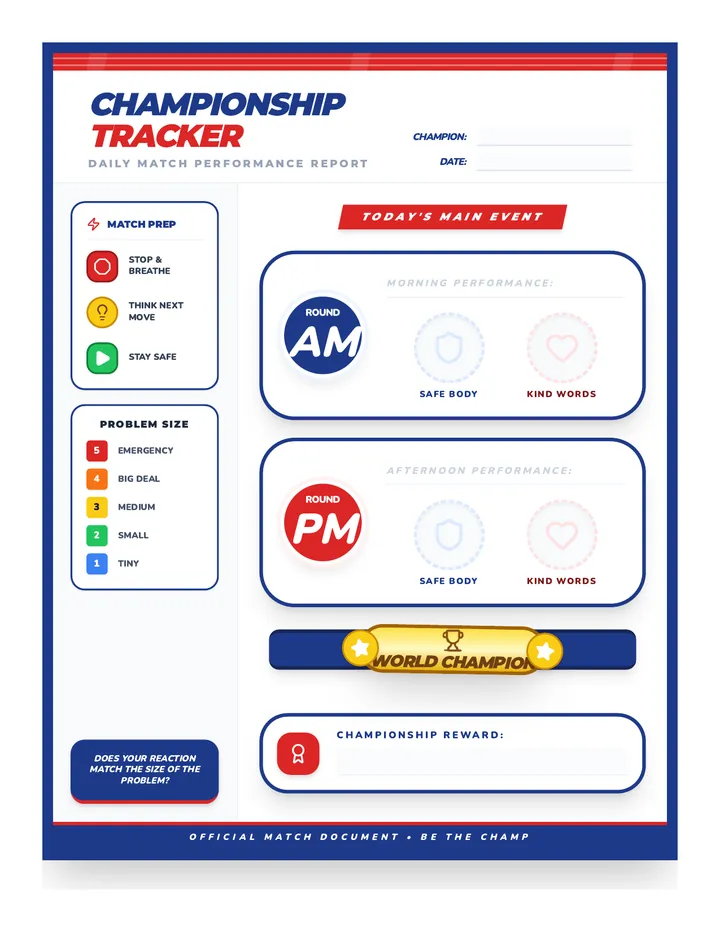
A wrestling-themed behavior tracker optimized for a single 8.5x11 page. It includes AM/PM match rounds with sticker spots for Safe Body and Kind Words, a sidebar with strategy tips and problem levels, and a World Champion title belt section for rewards. All elements are scaled and positioned to ensure a perfect fit without overflow.
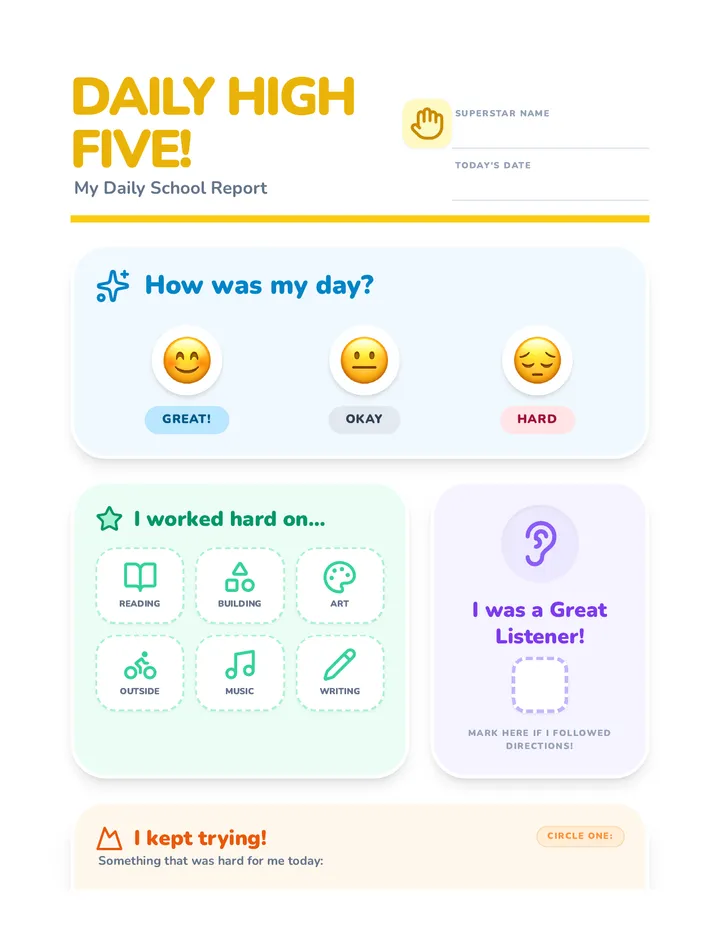
An updated daily communication log for non-readers featuring a "sticker-style" aesthetic. It includes a mood scale, activity icons for hard work, a listener check-box, and a dedicated challenging task section with circle-able icons for Math, Reading, Gym, OT, PT, and Speech, plus a drawing space.
A comprehensive 1-to-5 emotional regulation visual cue chart and lanyard-ready pocket card set designed for teachers supporting non-verbal students. Features a full-size classroom desk/clipboard scale with tap targets and calming choice options, plus cut-and-laminate portable teacher cue cards.
A 7-slide morning meeting presentation designed for middle school special education, featuring structured greetings, mood check-ins with sentence stems, share prompts, a daily warm-up puzzle, mindfulness breathing, and daily schedule previews.
A 4-page personalized visual social story and coping booklet for Liam, a 4th grader with autism. Features Liam's name throughout, along with the Frustration Thermometer, Learning Zones diagram, Finger-Trace Box Breathing, thought-flipping visual panels, and desk help signals.
A 6-week social-emotional learning program for teenagers on the autism spectrum, delivered in focused 20-minute sessions. The program uses visual "blueprints" to teach energy management, body awareness, and Comic Strip Conversation techniques for emotional regulation and perspective taking.
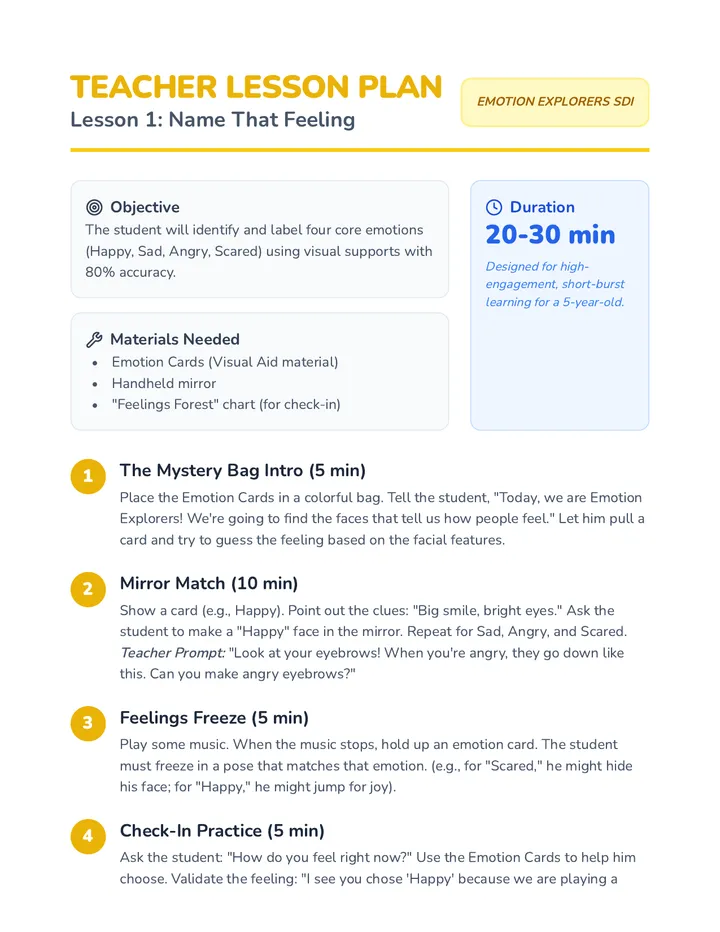
An 8-lesson SDI series designed for a 5-year-old student to develop emotional regulation skills, covering emotion identification, body awareness, and specific calming strategies like breathing and sensory tools.
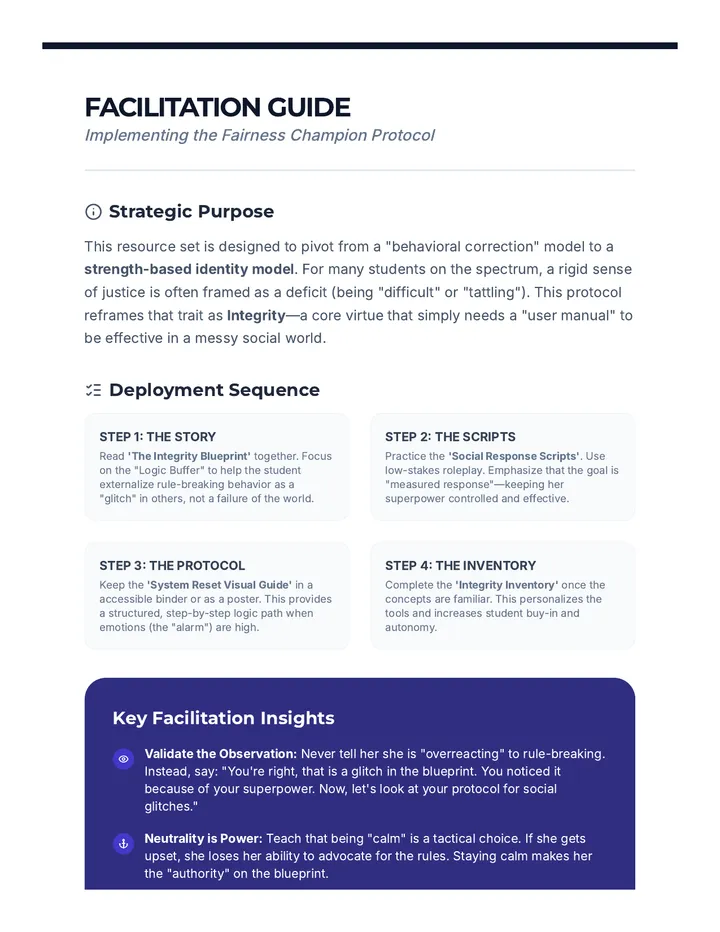
A 6-week social-emotional learning curriculum for a 13-year-old girl on the autism spectrum, focusing on managing specific triggers through a strength-based "Integrity Blueprint" lens.
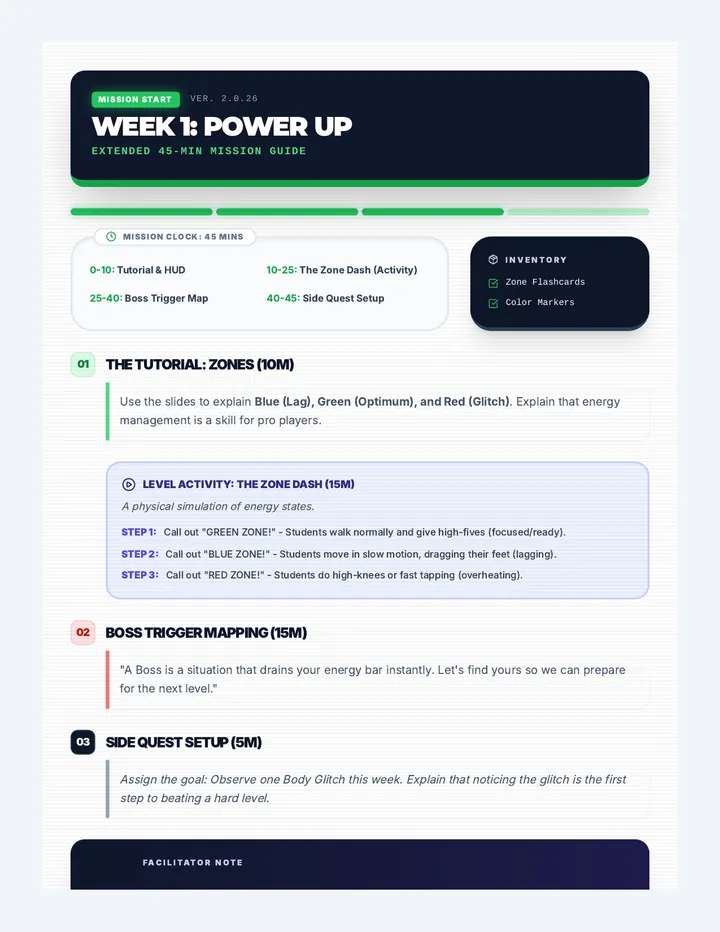
A 6-week social-emotional learning curriculum designed for 4th-grade students with ADHD, focusing on self-regulation, flexible thinking, and respectful communication through a high-engagement 'Level Up' video game theme.
A ten-part progressive behavior intervention sequence designed for 7th and 8th-grade students who disrupt classroom environments. Each independent lesson contains a visual instructional slide deck and a reflective worksheet that guide the student through self-regulation, empathy, and accountability.
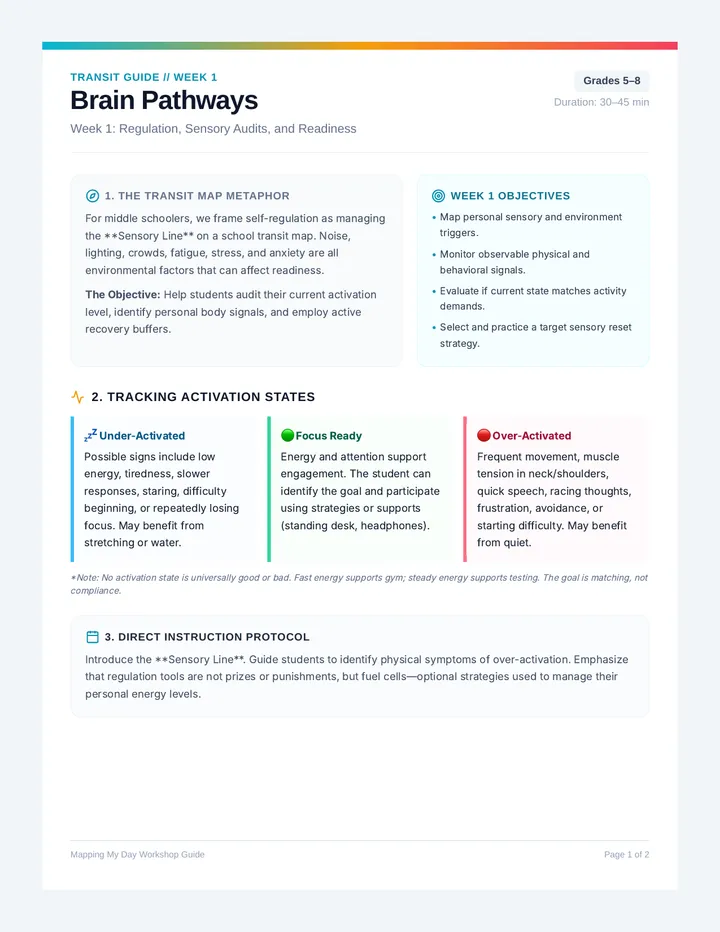
A developmentally scaffolded executive functioning workshop sequence designed to help neurodiverse students across elementary, middle, and high school map and optimize sensory, physical, and cognitive routines.