Lenny.com
Explore
Create
ActivitiesNewMathEnglish Language ArtsScience & EngineeringSocial StudiesGlobal LanguagesHealth & Physical EducationSpecial EducationCounseling & Life SkillsArts & CreativityESL
Lenny.com
Lenny.com
Explore
Create
ActivitiesNewMathEnglish Language ArtsScience & EngineeringSocial StudiesGlobal LanguagesHealth & Physical EducationSpecial EducationCounseling & Life SkillsArts & CreativityESL
Lenny.com
Lenny.com

Solutions

Lenny for EducatorsLenny for SchoolsLenny for Districts

Product

ExploreSign inCreateSupportAbout

Resources

Getting startedMTSS Acceleration Program

© 2026 Lenny Learning Inc.

TermsPrivacyAccessibility
LinkedInInstagramX
Lenny

Physical Material Organization

Systematic storage of IEP documentation, sensory tools, and student work bins. Addresses classroom efficiency through color-coding, visual labels, and streamlined data collection setups.

Special EducationSensory Processing & RegulationSensory Preferences IdentificationSensory Tool UseCommunicating Sensory NeedsSensory Overload RecognitionDeep Breathing PracticeMovement Break UtilizationIndependent Calming Strategy UsePersonalized Calming RoutinePersonal Sensory Diet CreationProactive Sensory BreaksEmotion Intensity RecognitionDysregulation RecoveryPositive Behavior SupportUnderstanding Social StoriesPersonal Social Story CreationEmotional Regulation FrameworksPersonal Trigger IdentificationSelecting Regulation StrategiesReinforcement System ResponseSelf-Monitoring & RewardsLearning Positive AlternativesCross-Setting Skill GeneralizationSocial CommunicationEye Contact & Personal SpaceContext-Appropriate GreetingsAppropriate Volume & ToneConversation Turn-TakingTopic Maintenance in DiscussionEffective Help-SeekingBody Language InterpretationFacial Expression RecognitionIdioms & Figurative LanguageSocial Problem IdentificationSocial Solution GenerationSocial Decision EvaluationTask ManagementMinimal Prompting Task StartSelf-Talk for StartingStarter Strategies for Difficult TasksAge-Appropriate Task PersistenceStrategic Break ManagementSmooth Task TransitionsAdapting to Plan ChangesObstacle Problem-SolvingMulti-Day Project CompletionPlanning & OrganizationPhysical Material OrganizationVisual Schedule & Timer UseSequential Task BreakingTime Estimation SkillsTask PrioritizationDigital & Physical Workspace ManagementPersonalized Organization StrategiesDetailed Project PlanningMultiple Commitment BalancingAcademic Support StrategiesMath Manipulative UseVisual Math Problem RepresentationComplex Math Problem BreakdownText Highlighting & AnnotationVisualization While ReadingPredictions & Inferences from TextText Structure Graphic OrganizersWriting Graphic OrganizersSentence Frames & TemplatesStudy Guide CreationSpaced Repetition for MemoryAssistive Writing TechnologyWorking Memory SupportSingle-Step Direction FocusMulti-Step Direction FollowingInformation Chunking PracticeVisual Support Memory AidsMnemonic Device ApplicationEfficient Note-Taking SystemsGraphic Organizer Note-TakingNote Review & OrganizationSustained Complex Task AttentionAssistive TechnologySymbol-Word CommunicationAAC Device NavigationSpeech Recognition DictationDictation Text EditingText-to-Speech for ReadingDigital Calendar UseKeyboard Shortcuts NavigationProductivity App ManagementSelf-Advocacy SkillsCommunicating Learning NeedsRequesting AccommodationsAdvocating for Appropriate SupportsIEP & Student RightsUnderstanding IEP ComponentsMeaningful IEP Meeting ParticipationIDEA & Section 504 RightsProgress MonitoringTracking IEP Goal ProgressReflecting on AchievementData-Informed Instructional AdjustmentTransition PlanningCareer & Vocational Goal SettingExploring Post-Secondary OptionsIndependent Living Skills Planning

Materials

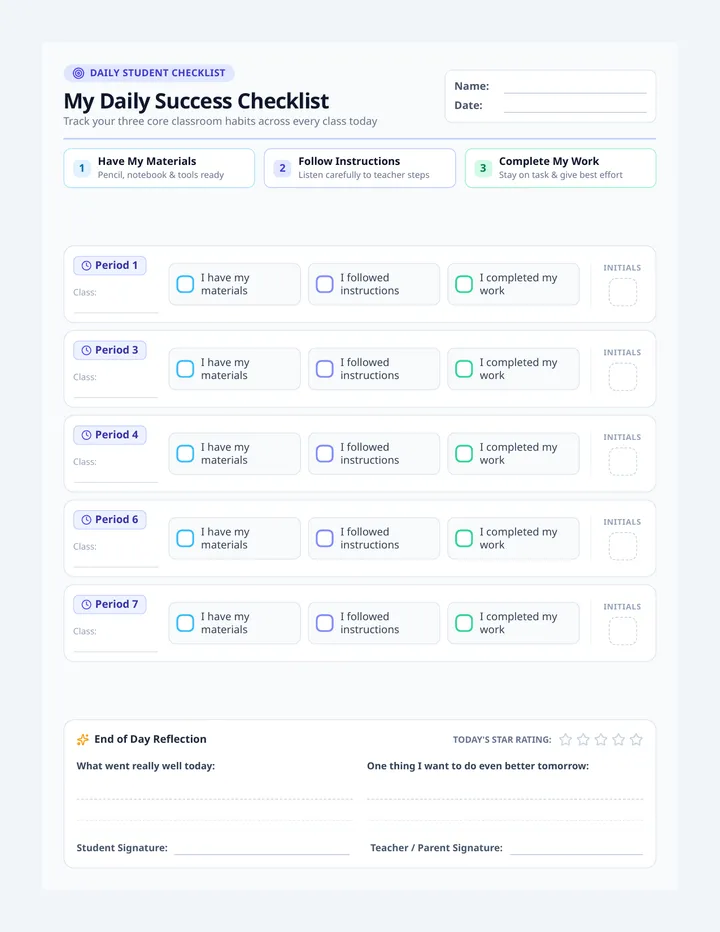
Daily Success Checklist

Daily Success Checklist

A single-day student self-monitoring checklist organized by class periods (1, 3, 4, 6, and 7). Each period features dedicated checkboxes for having materials ready, following teacher instructions, completing work, and teacher initials, followed by an end-of-day reflection.

SD

Sarah DeGeeter- Wieber

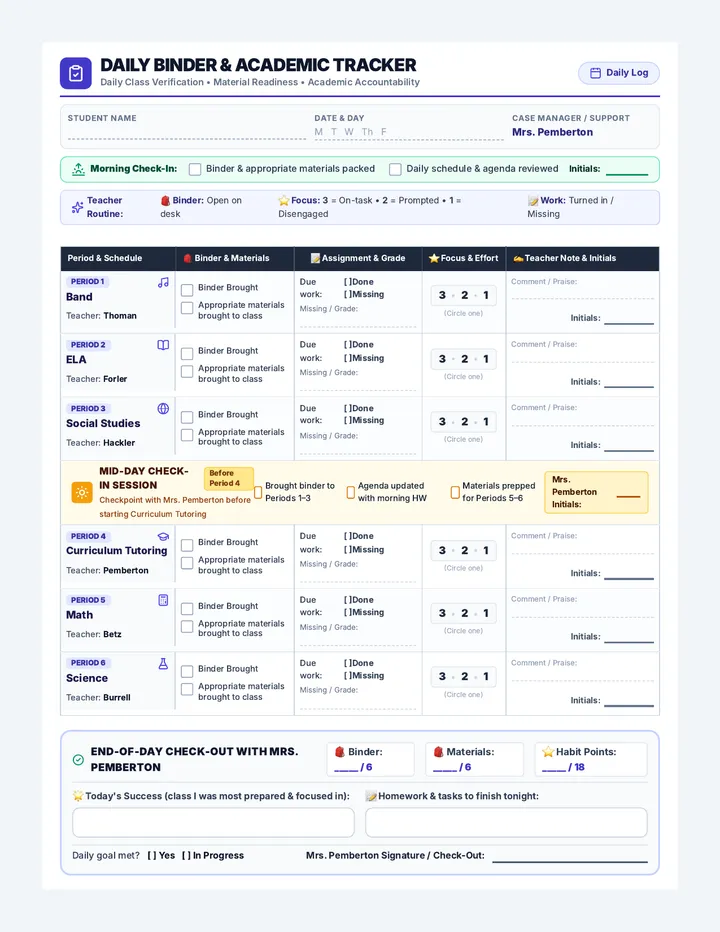
Daily Binder Accountability Chart

Daily Binder Accountability Chart

A 1-page daily behavior and academic accountability chart optimized to fill the printable page cleanly without overflow. Features a unified table with a colspan Mid-Day Check-In row before Period 4, larger font sizes, expanded writing boxes, and an End-of-Day Check-Out with Mrs. Pemberton.

A

Alyssa.Steckbeck

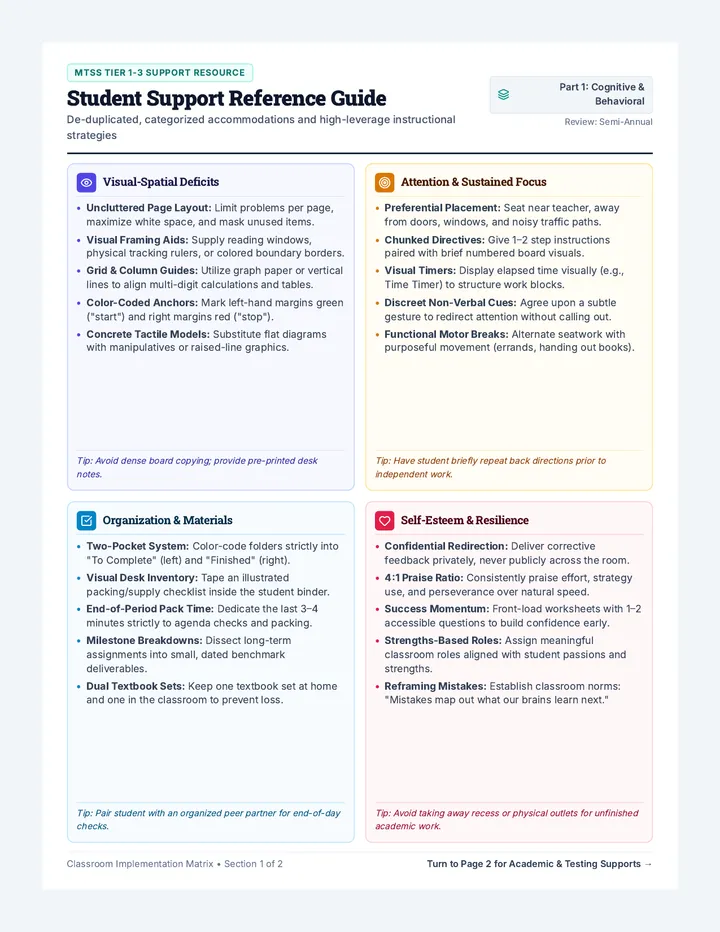
Student Support Reference Guide

Student Support Reference Guide

A comprehensive, de-duplicated reference guide for educators organizing evidence-based accommodations across seven core domains: visual-spatial deficits, attention, organization, self-esteem, writing, math, and testing/environmental accommodations.

CL

Christina Lorenzoni

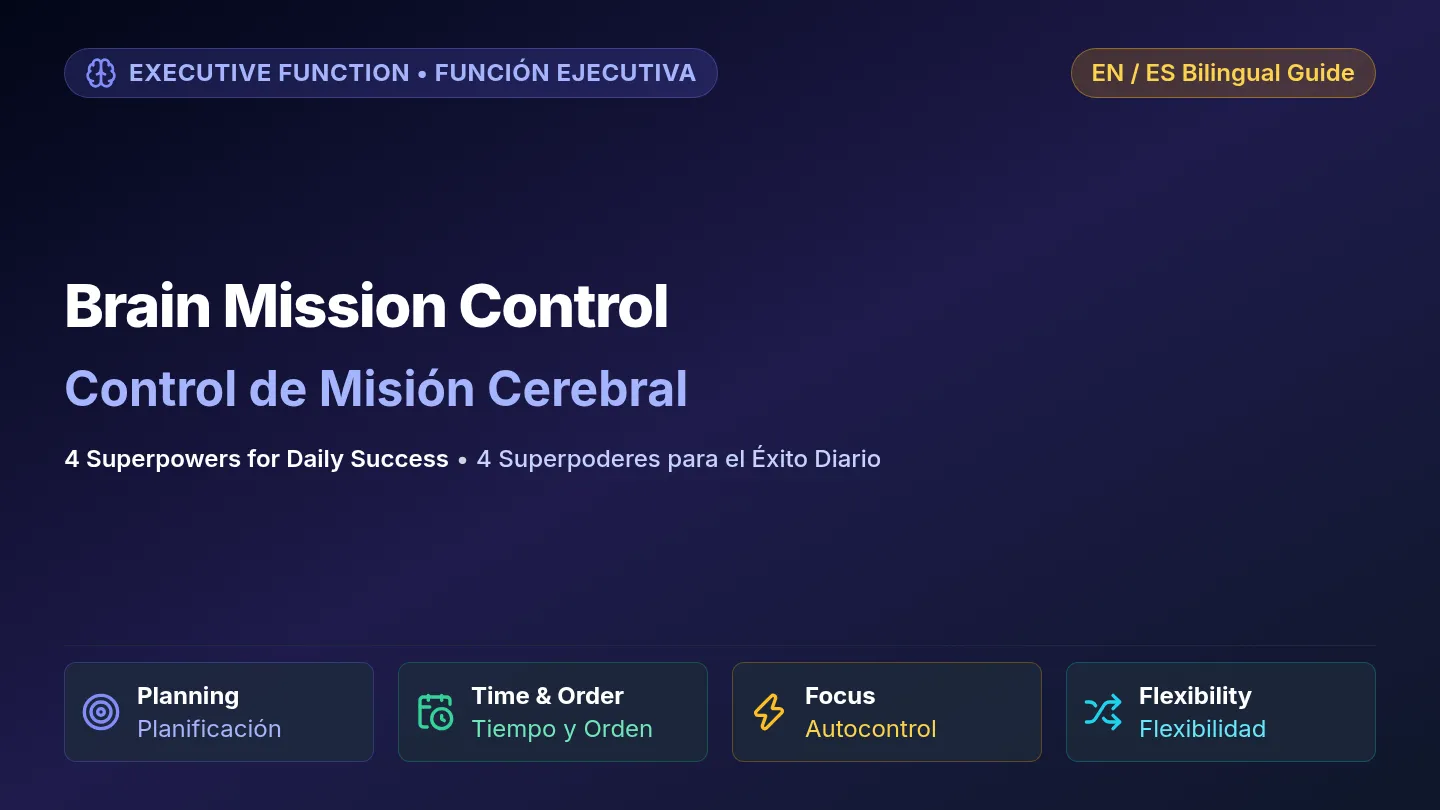
Executive Control Slides

Executive Control Slides

A comprehensive 10-slide bilingual English and Spanish presentation introducing core executive function skills. Guides students through planning, organization, focus, self-control, and flexible problem-solving with concrete visual strategies.

GM

Gabriella Moreschi

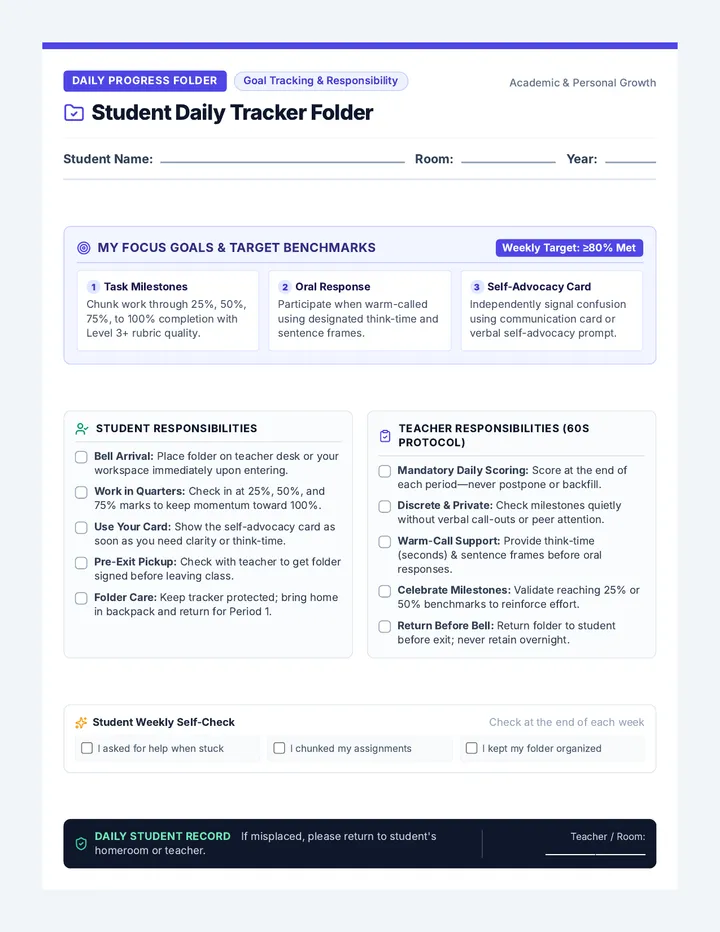
Student Tracker Folder Covers

Student Tracker Folder Covers

A peer-private 9-page set of printable Daily Tracker Folder Covers for students. All diagnostic labels, disability codes, and support profiles have been removed from the top header to ensure complete peer privacy, while retaining individual focus goals, blank name lines, student daily checklists, and teacher 60-second scoring protocols.

DB

Danny Brooks

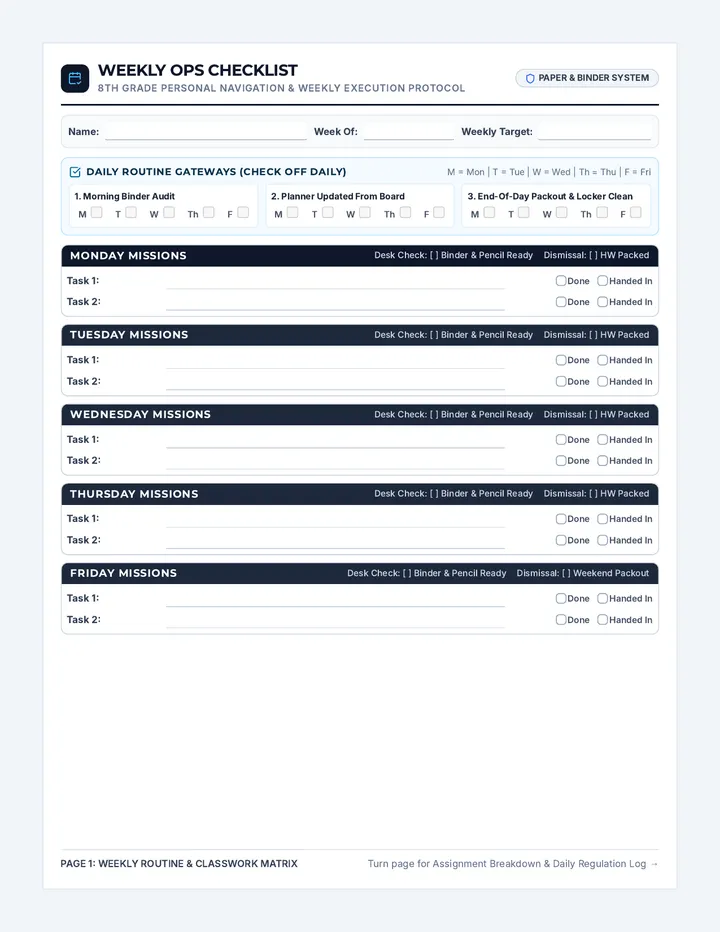
Weekly Ops Checklist

Weekly Ops Checklist

A comprehensive two-page weekly task checklist and execution toolkit designed for an 8th-grade student without tech access, covering Monday-through-Friday classwork routines, assignment completion, self-regulation tracking, and communication scripts.

JP

Julisa Pender

Sequences

Smooth Start Slides

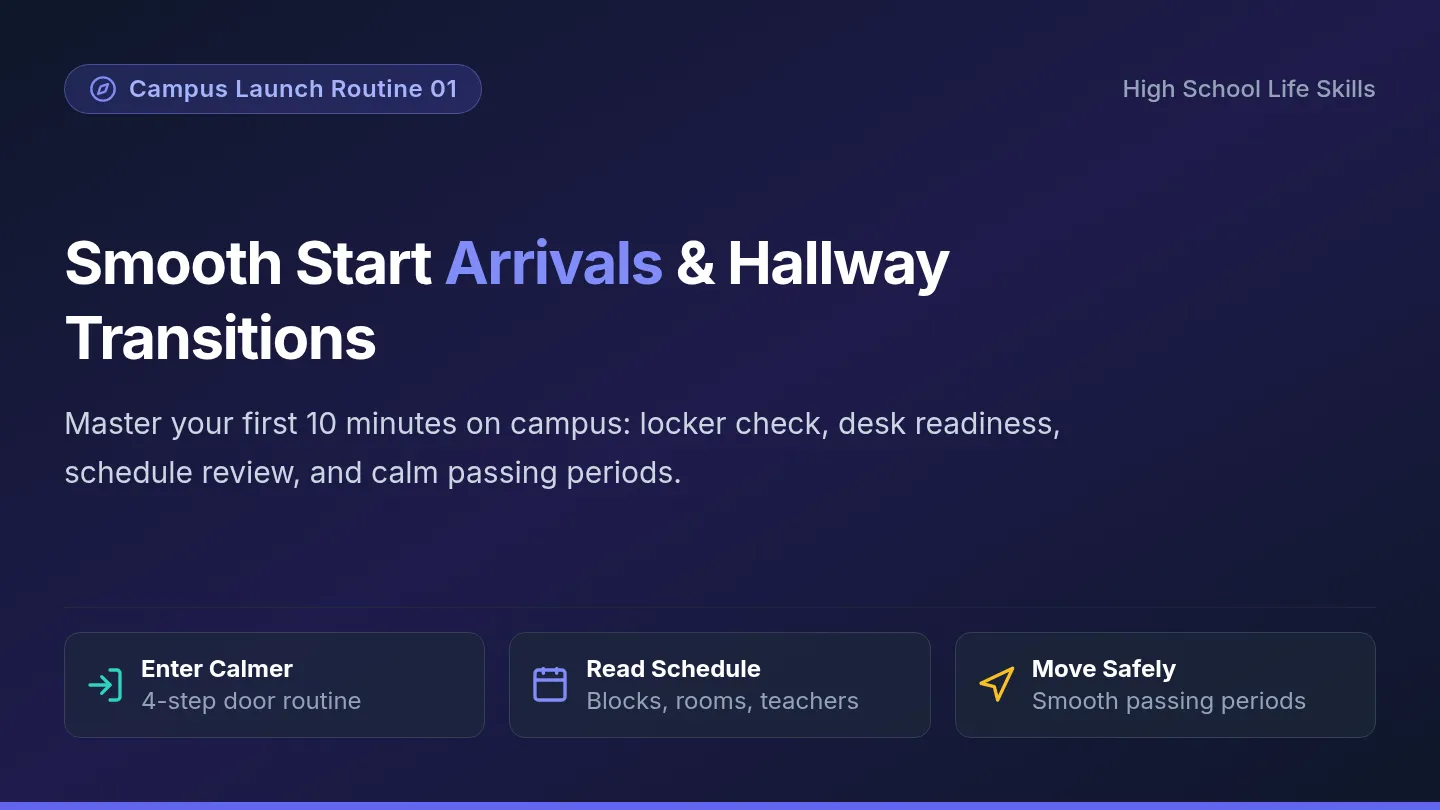
Campus Launch Routines

A comprehensive life skills and executive function sequence tailored for high school special education classrooms. Students learn and practice daily arrival, classroom participation, organization, and social safety routines to build independence throughout the school year.

GM

Gabriella Moreschi

8
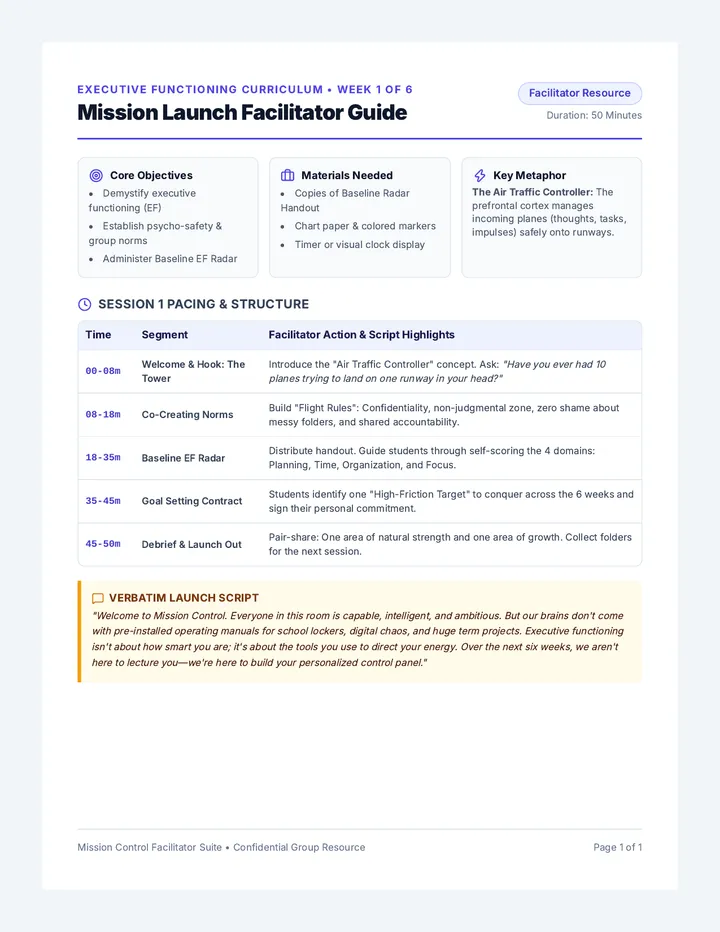
Mission Launch Facilitator Guide

Mission Control

A comprehensive 6-week small-group curriculum targeting executive functioning development for adolescents. Emphasizes planning, prioritizing, time estimation, physical and digital organization, task initiation, and self-regulation.

GC

Georgia Chute

12
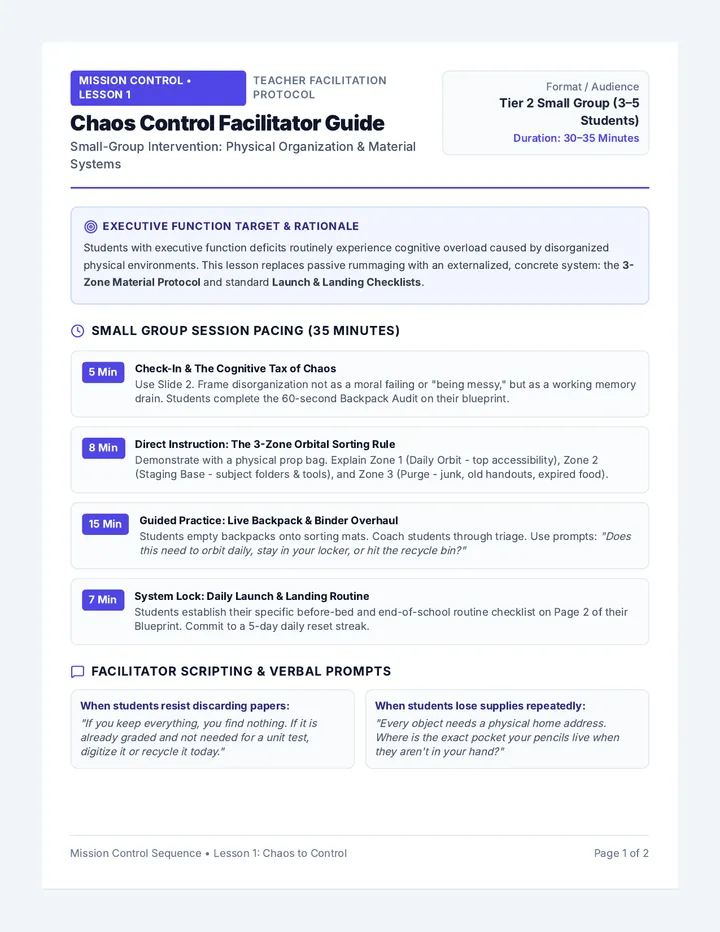
Chaos Control Facilitator Guide

Mission Control

A targeted executive functioning small-group intervention sequence designed to build lifelong academic and self-regulation habits. Students systematically learn to organize physical spaces, track responsibilities, apply cognitive brakes, and defend against distractions.

ND

Nancy DeFilippo

6
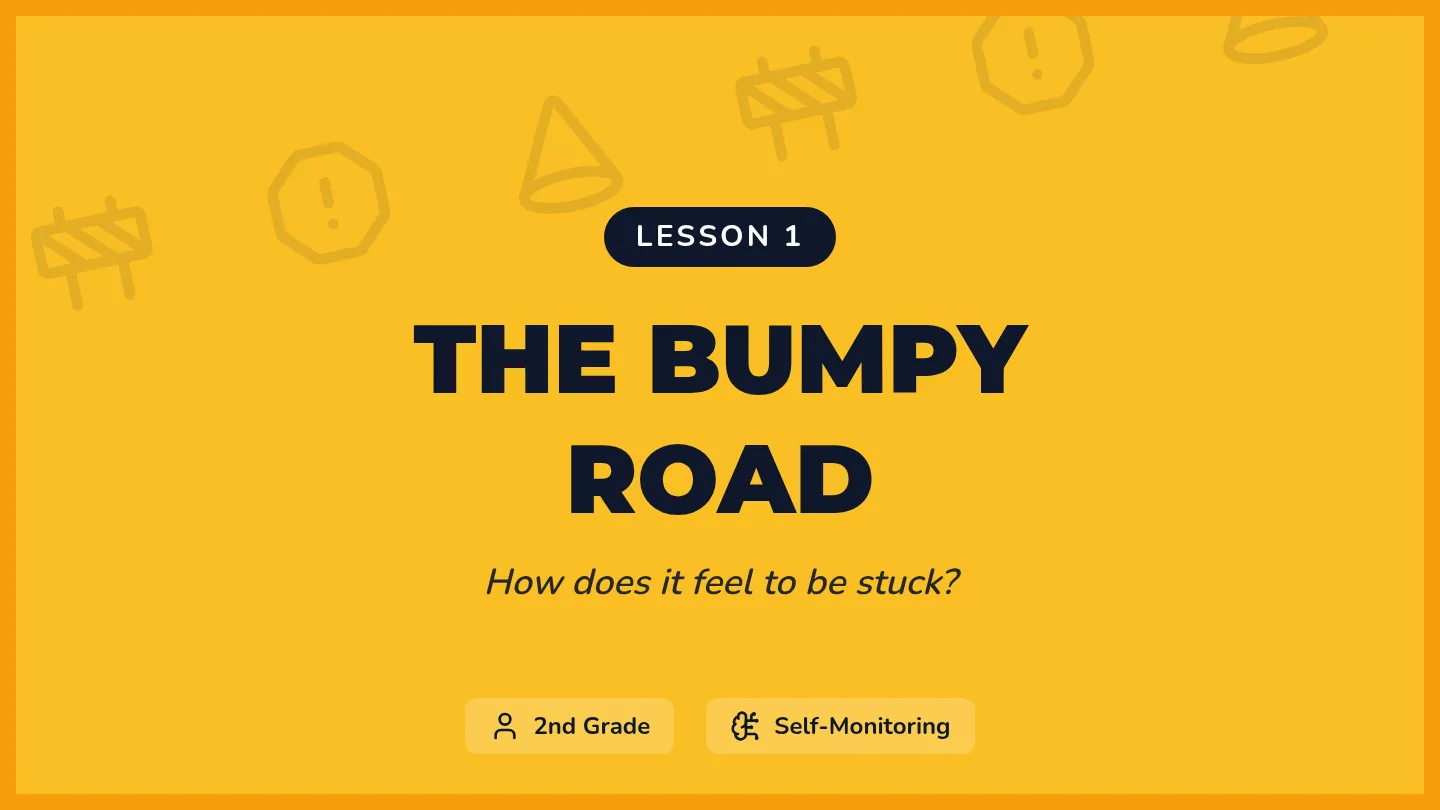
Bumpy Road Slides

Obstacle Detectives

A 2nd-grade special education unit focused on executive function. Students learn to recognize the physical signs of being 'stuck' and categorize barriers into materials, comprehension, and environment.

19
Timeline Deconstruction Slides

Managing Education Milestones

A 10th-grade sequence focused on empowering students to manage their own IEP/504 timelines, accommodations, and administrative responsibilities through the lens of project management. Students transition from passive recipients of services to active managers of their educational milestones.

15
Blueprint Slides

Systems for Success

A comprehensive sequence for 11th-grade students focusing on the systems and environmental designs necessary for effective Special Education caseload management. Students explore physical workspace optimization, digital workflow tools, paperwork automation, and legal confidentiality requirements to build a personalized organizational toolkit.
12