Implementation of AAC device navigation, symbol-word communication, and speech recognition for text editing. Builds proficiency in keyboard shortcuts, text-to-speech reading supports, and digital organization through productivity apps and calendars.
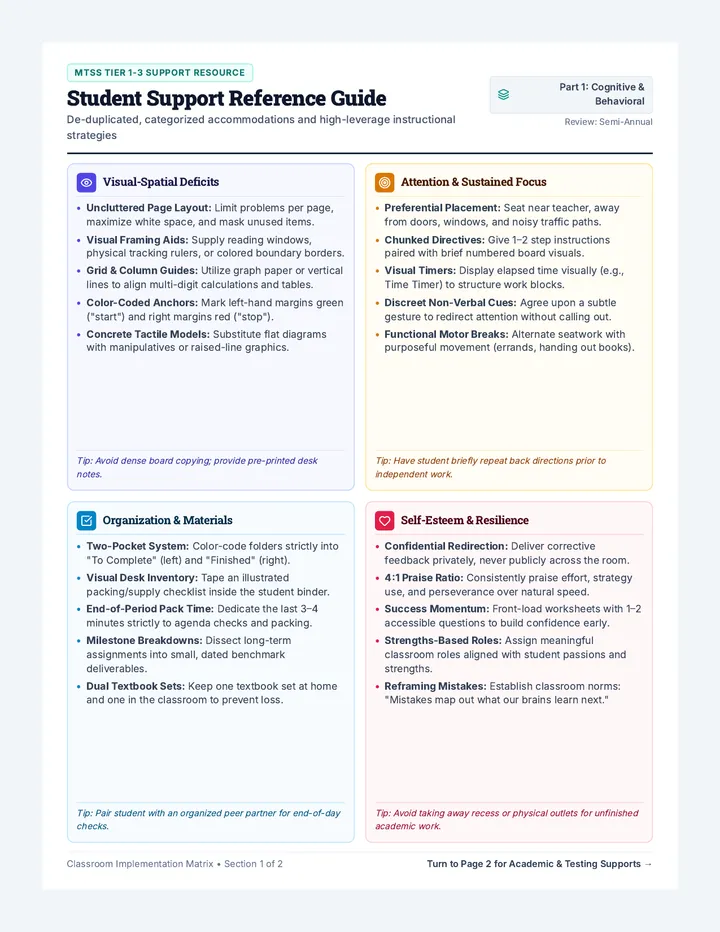
A comprehensive, de-duplicated reference guide for educators organizing evidence-based accommodations across seven core domains: visual-spatial deficits, attention, organization, self-esteem, writing, math, and testing/environmental accommodations.
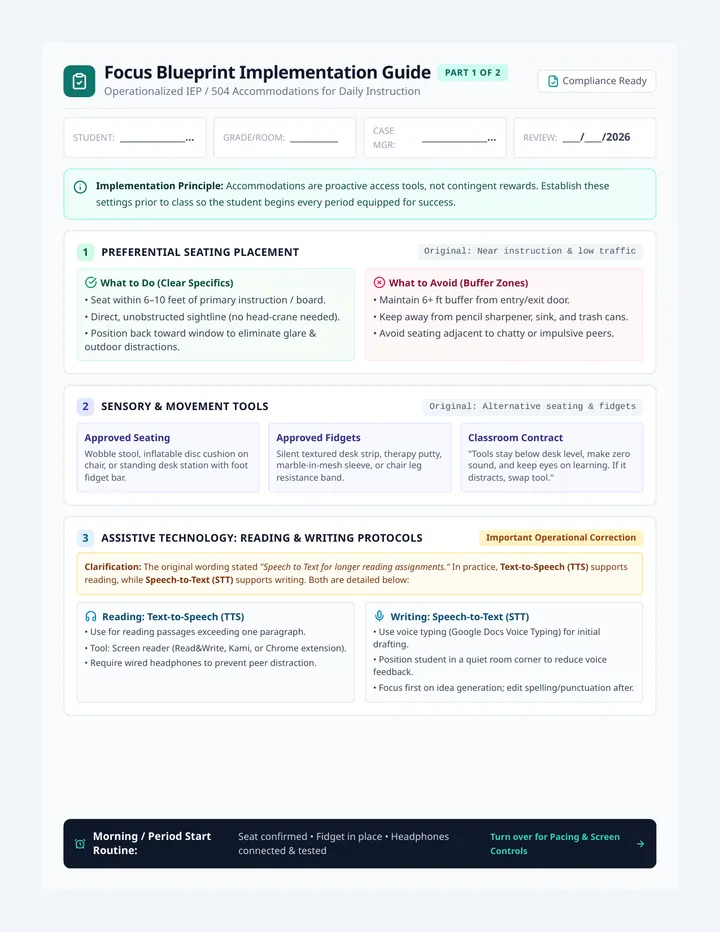
A comprehensive, 2-page operationalized classroom guide translating 6 IEP/504 accommodations into concrete, teacher-ready classroom practices, complete with environment setups, assistive tech rules, digital distraction pivots, and a weekly fidelity tracking log.
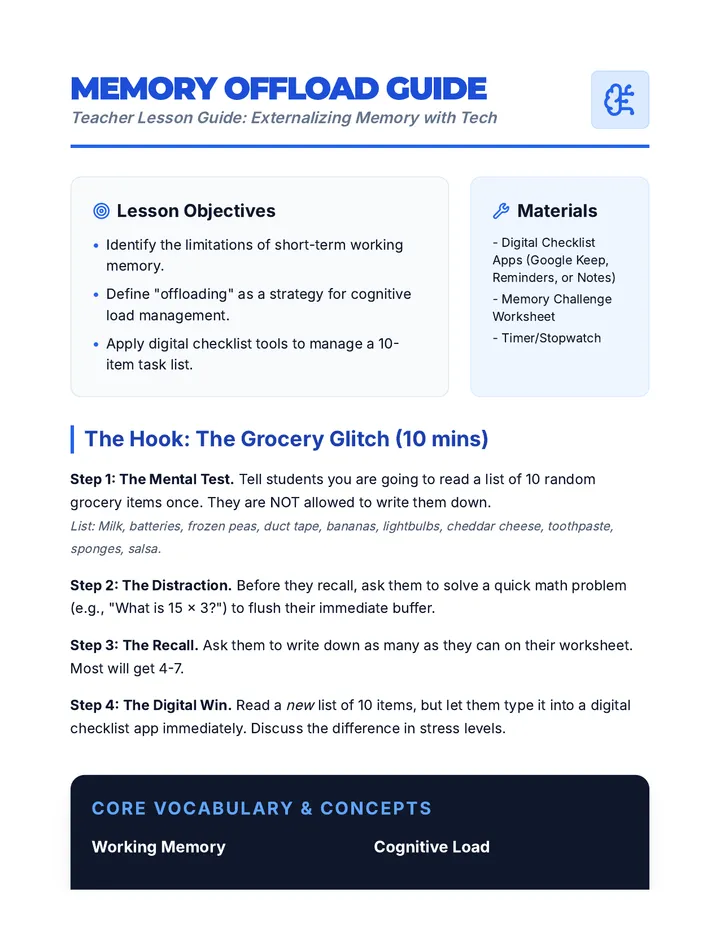
A 5-lesson unit for 8th-grade students focusing on using digital tools to offload working memory and manage cognitive load. Students learn to use task managers, focus modes, sequential reminders, and assistive speech technologies to create a personalized digital workflow for school success.
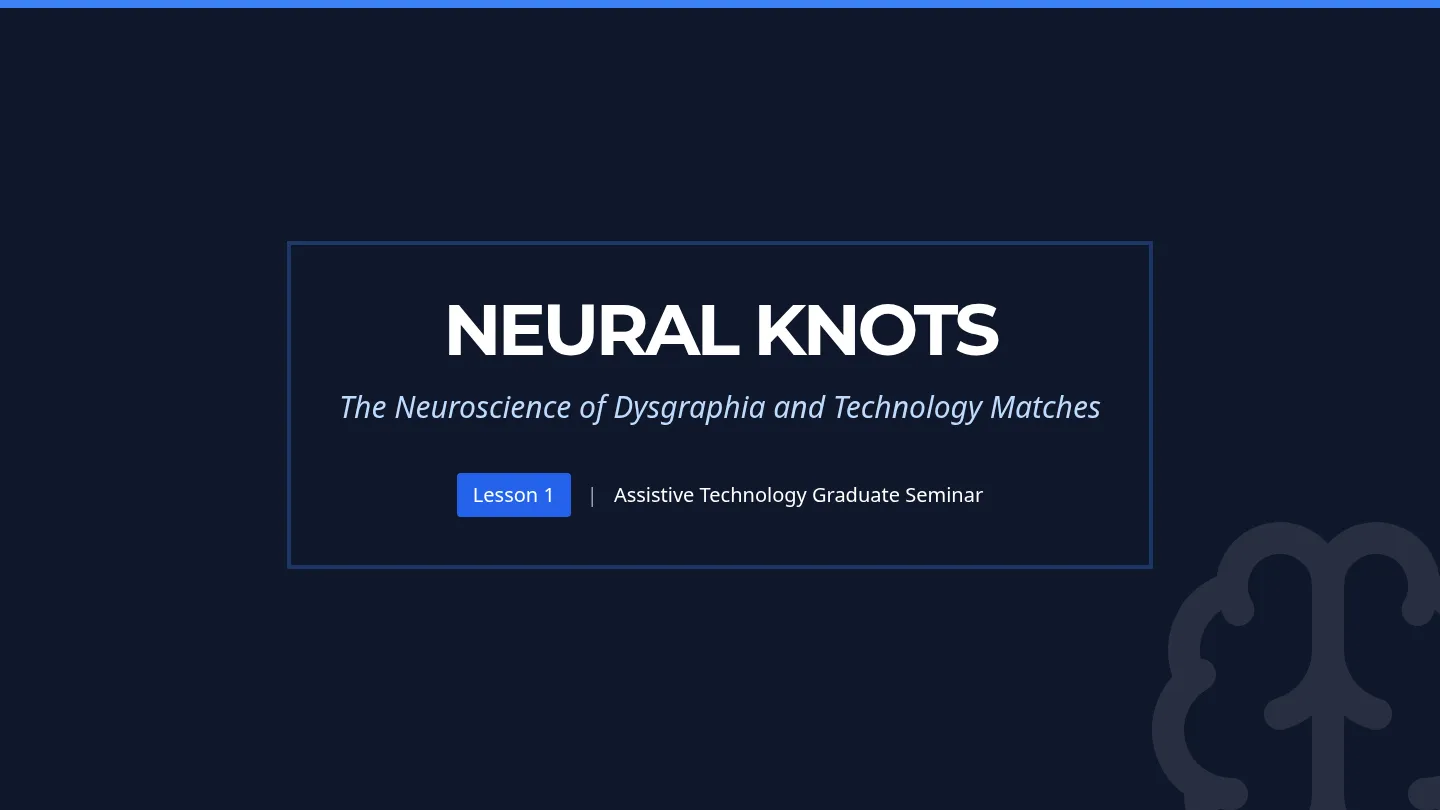
This graduate-level sequence prepares educators to evaluate and select assistive writing technologies using evidence-based frameworks like SETT. It covers the neurology of dysgraphia, technical analysis of speech-to-text and word prediction, and the legal requirements for IEP implementation.
A comprehensive 2nd-grade sequence focused on mastering Text-to-Speech (TTS) tools. Students learn to synchronize visual tracking with audio, adjust speech rates for optimal processing, and use digital tools to support decoding and fluency.
This sequence empowers 9th-grade students to integrate Text-to-Speech (TTS) into their high school workflows through self-advocacy and digital organization. Students move from identifying reading barriers in their schedules to creating a professional Access Plan for their teachers.
A 5-lesson sequence designed for 3rd-grade students to master the use of text-to-speech (TTS) technology for decoding informational texts, academic vocabulary, and non-linear text features like captions and sidebars. Students progress from decoding individual words to synthesizing information from multiple sources for research and presentation.
A sequence focused on empowering 3rd-grade students to customize their text-to-speech settings. Students experiment with speed, voice, and visual highlighting to create a personalized 'Assistive Tech Profile' for better reading retention and comfort.
A comprehensive 4-week self-awareness and self-advocacy curriculum for high school students with significant support needs, covering neurodiversity, sensory profiles, interoception, and communication toolboxes.
A three-part AAC instructional sequence designed to expand communicative autonomy during peer interactions. Learners progress from spontaneous social reactions and commenting to sharing strong opinions and combining requests with social remarks during peer games.
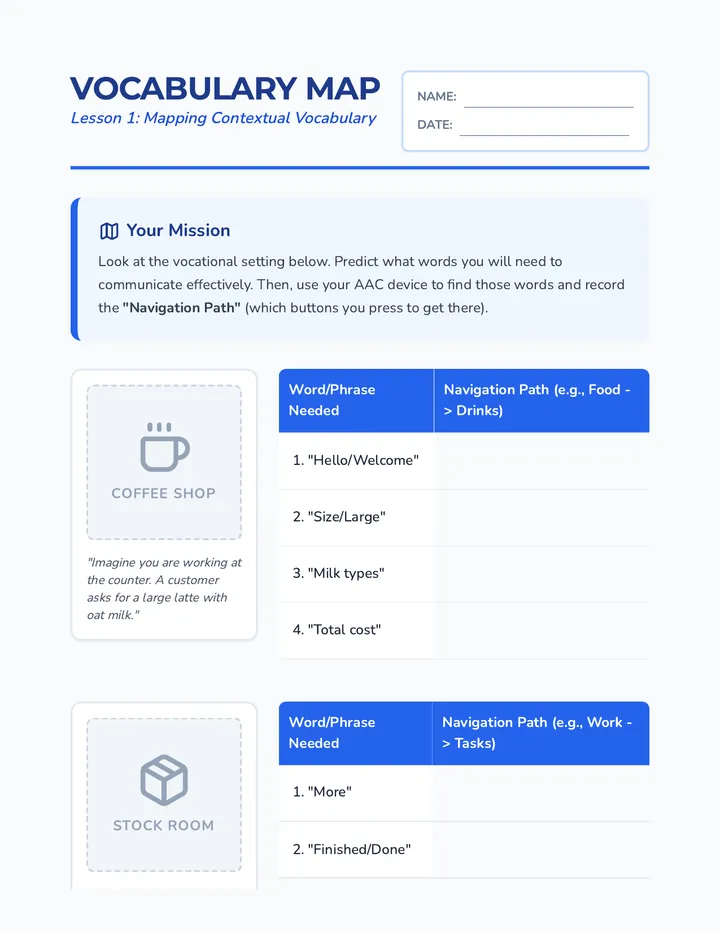
This sequence prepares 10th-grade students for the transition to community and vocational life by mastering the navigation of Augmentative and Alternative Communication (AAC) devices. Students progress from identifying context-specific vocabulary to navigating complex, multi-folder social and professional interactions.
A comprehensive 5-lesson sequence designed for 11th-grade AAC users to master device navigation within vocational settings. Students progress from vocabulary mapping to high-stakes workplace simulations, focusing on speed, accuracy, and professional communication strategies.
An advanced graduate-level course exploring the intersectional barriers to student self-advocacy. This sequence critiques traditional advocacy models through the lenses of Critical Race Theory and Disability Studies to develop culturally responsive strategies.
A comprehensive graduate-level sequence on implementing digital assistive technology for note-taking. It covers the transition from traditional methods to audio-synchronization, AI-driven summarization, and executive function-focused organization, concluding with IEP documentation.