Storm Watcher Slides Storm Watcher
Identifying & Processing Our Inner Weather
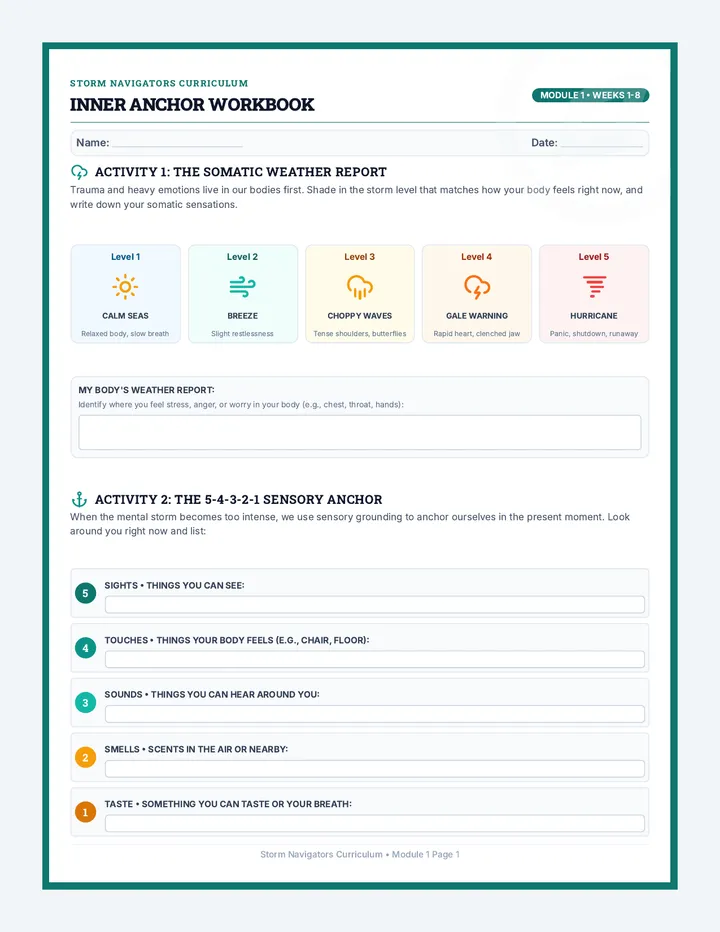
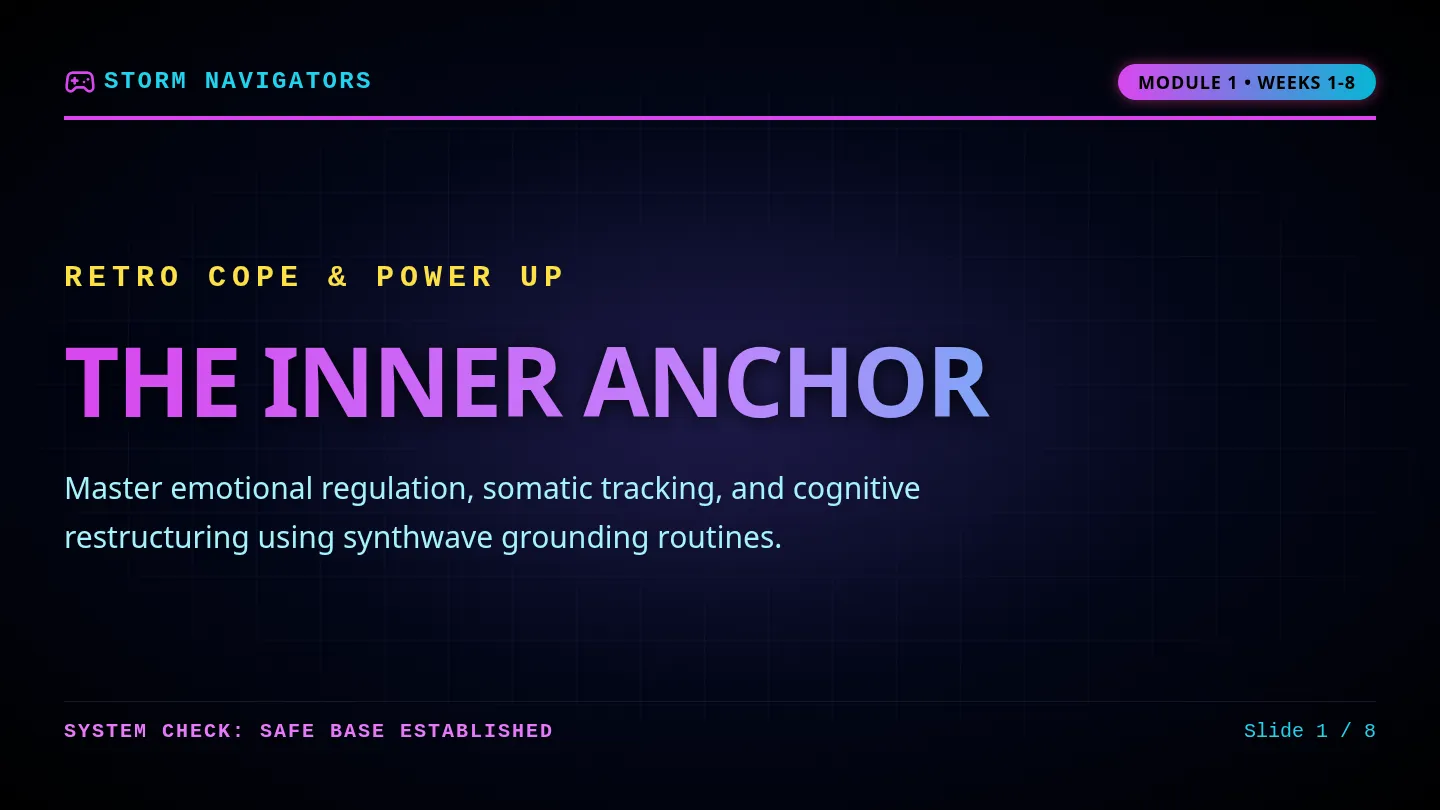
Your Inner Weather
What is it?
Just like the weather outside changes, our feelings change inside too! This is called our Inner Weather .
It's okay to have all kinds of weather.
Storms (stress) happen to everyone.
Clear Skies
Calm, happy, or focused.
The Storm
Stress, anxiety, or worry.
Storm Warning Signs
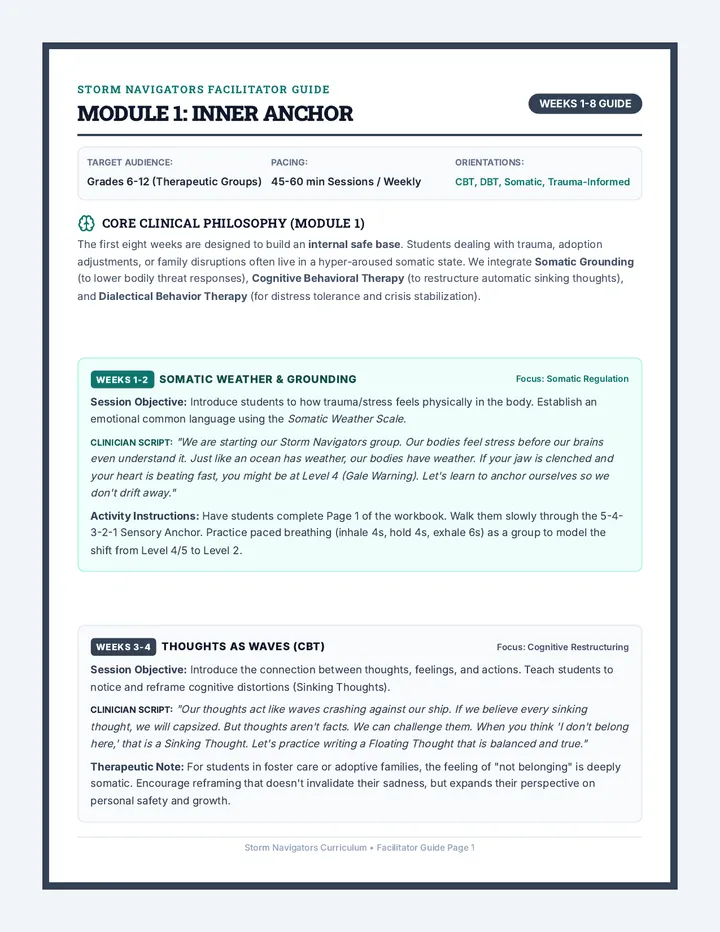
How does your body tell you a storm is coming?
Fast Heartbeat
Your heart might feel like it's racing or thumping.
Quick Breathing
Taking short, shallow breaths very quickly.
Tense Muscles
Shoulders up to your ears or tight, balled-up fists.
"When I'm anxious, I feel it in my _________."
Your Storm Shelter
When the storm hits, we need a plan to process it. We don't ignore it—we wait it out safely.
01
Name the Storm
02
Slow Your Breath
03
Check Your Body
The Cycle of Calm
Ready to Report?
Today, we're going to map out our own Inner Weather and create a forecast for when things get stormy.
Map It Out
Take Action
My Weather Map Worksheet My Weather Map
Tracing my inner weather for a better forecast
Name:
Date:
1. Where is the storm?
When you feel stress or anxiety, where do you feel it in your body? Draw symbols like lightning or clouds on the map below.
Body Signals
Tense muscles
Fast breathing
Heart thumping
Feeling hot
2. Storm Triggers
What "activates" your storm? (Ex: tests, loud noises, change in plans)
3. How it Feels
If your stress was a weather report, what would it say?
Tornado (Scary)
Lightning (Quick)
Drizzle (Pest)
Fog (Confusing)
4. The Calm Forecast
What are two things you can do to bring the "sun" back out when you feel the storm starting?
STRATEGY 1
STRATEGY 2
Calm Forecast Cards Calm Forecast Cards
Cut these cards out and keep them in your "Storm Shelter" (desk, binder, or pocket) for when the weather gets rough.
Windy Breaths
1 Inhale like a cool breeze.
Breathe in slowly through your nose for 4 seconds.
2 Exhale like a gale.
Blow the "clouds" away through your mouth for 6 seconds.
Repeat 3 Times
Radar Check
Spot these items around the room:
5 Blue things
4 Soft things
3 Noises
2 Smells
Focus your sensors
Lightning Rod
Tense Everything!
Squeeze your toes, hands, and shoulders tight. Hold for 5 seconds.
Let it Flow Out
Release all the "energy" into the floor. Feel your muscles go floppy.
Release the tension
Sunlight Talk
Whisper these to yourself:
"The storm will pass."
"I am in a safe shelter."
"I can handle this weather."
Positive Forecasts
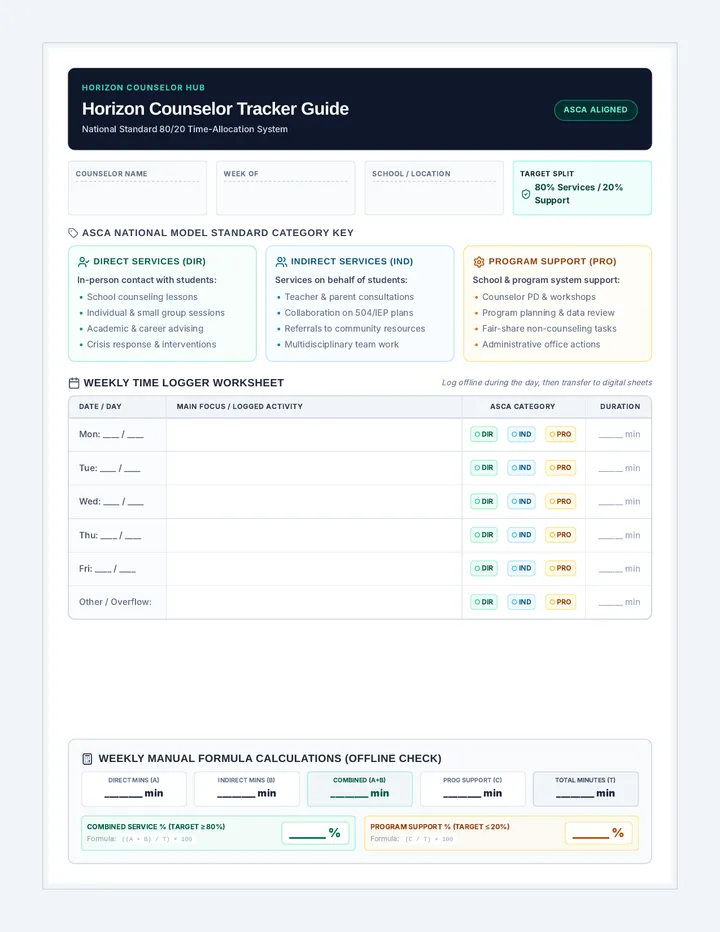
Goal Tracker Guide Goal Tracker Guide
IEP Progress Monitoring: Emotional Identification & Processing
Observation Period
Student Name
Primary Goal Area
Self-Regulation (Direct Awareness)
Master Goal
"By [Date], [Student] will demonstrate increased emotional self-awareness by identifying their current emotional state and independently implementing an appropriate coping strategy in 3 out of 4 opportunities."
Progress Log (3/4 Criteria)
Independent Prompted Not Observed
Date / Setting Identified Physiological Signs Coping Strategy Used Level of Support
|
| | | |
|
| | | |
|
Identification Milestones
Identifies physiological sensations
Labels emotion (e.g., anxious)
Recognizes triggers in setting
Processing Milestones
Accesses regulation toolkit
Implements deep breathing/grounding
Returns to task independently
Data Log: Self-Regulation Criteria Met: 3/4 Opportunities
IEP Goal Bank Resource Emotional Awareness Goal Bank
Teacher Resource: Direct IEP Goals & Objectives for Stress and Anxiety
Professional Edition
Master Awareness Goal
"By [Date], [Student] will demonstrate increased emotional self-awareness by identifying their current emotional state and independently implementing an appropriate coping strategy in 3 out of 4 observed opportunities."
Measurable Objectives
Skill: Physiological Identification Criteria: 3/4 Opportunities
"During periods of heightened anxiety or stress, [Student] will identify at least two physiological symptoms (e.g., increased heart rate, muscle tension, shallow breathing) using a visual aid or verbal report in 3 out of 4 opportunities."
Skill: Verbal Labeling Criteria: 3/4 Opportunities
"When experiencing an emotional shift, [Student] will accurately label their current emotional state (e.g., 'I feel anxious', 'I feel overwhelmed', 'I feel frustrated') to a staff member in 3 out of 4 opportunities."
Skill: Self-Regulation Criteria: 3/4 Opportunities
"Upon identifying a physical or emotional sign of stress, [Student] will independently implement one learned coping strategy (e.g., deep breathing, grounding exercise, progressive muscle relaxation) to regulate their emotional state in 3 out of 4 opportunities."
Skill: Self-Advocacy Criteria: 3/4 Opportunities
"When identifying a need for self-regulation, [Student] will independently request a sensory break or access to a regulation toolkit to manage their anxiety in 3 out of 4 opportunities."
Implementation Note
Data for these objectives should be collected through direct observation during naturally occurring classroom stressors or structured check-ins. Consistent use of a regulation toolkit and visual support is recommended to facilitate the transition from prompted to independent identification.
Professional Resource Bank Self-Regulation Series