Action Map Guide
A high-visual graphic organizer featuring socialization periods, crate training rules, conditioning types, and restraint positions. Designed with large fonts, icons, and color-coding to support a student with Traumatic Brain Injury.
Term Matcher Activity
An ultra-simplified matching activity with large text and 2-3 word definitions. Uses clear icons and high-contrast boxes to help a student with TBI and reading difficulties.
Behavior Recall Flashcards
Memory-boosting flashcards for Chapter 4 key terms. Each card features a bold term, a supportive icon, and a simplified definition, designed to be cut out and used for daily repetition.
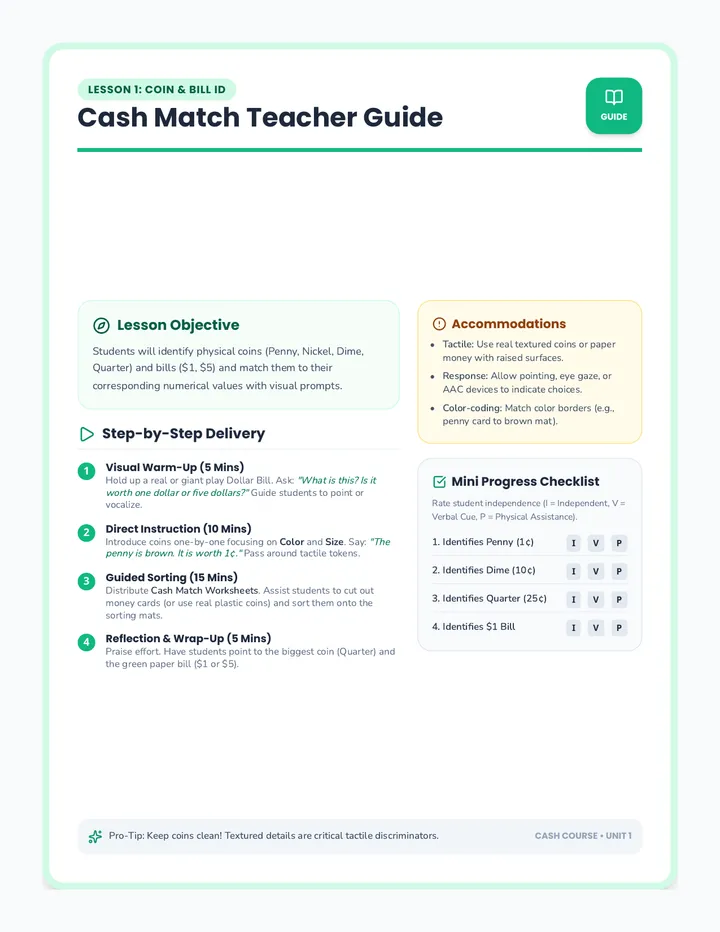
Study Session Script Teacher Resource
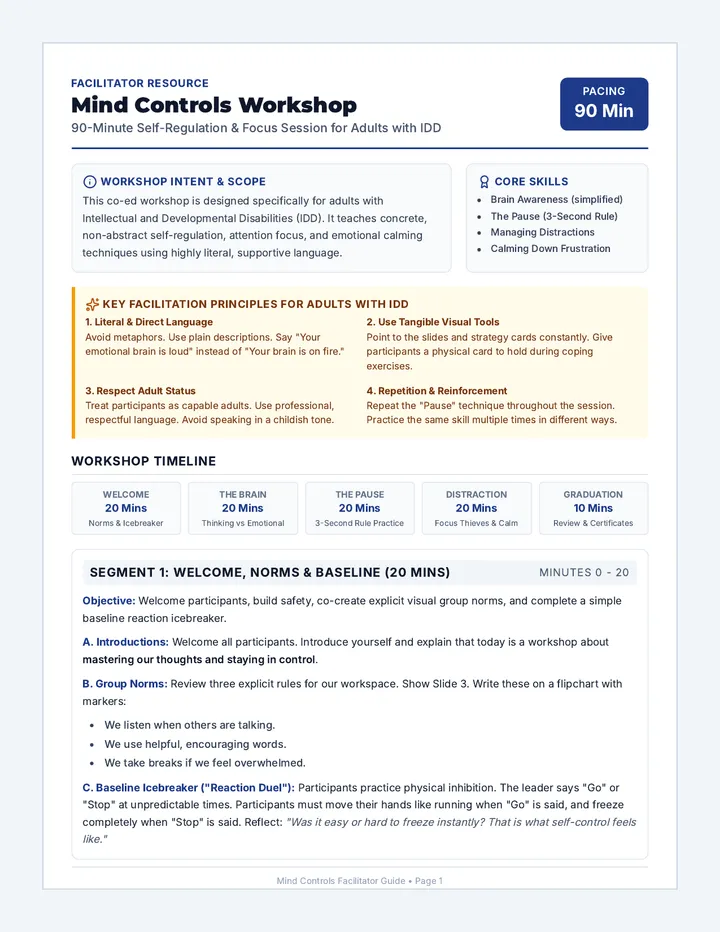
A specialized facilitator guide for conducting 30-minute daily study sessions. Includes instructional strategies for TBI support, a timed routine, and tips for memory repetition using the provided materials.
Behavior Spotter Guide
A visual reference guide for identifying fear signs in dogs, litter box maintenance schedules, and key animal definitions like 'Queen' and 'Substrate'. Uses emojis and high-contrast boxes to support short-term memory.
Restraint Training Matcher Activity
A specialized vocabulary matching activity focused on restraint positions (Dorsal, Lateral, Sternal) and advanced behavioral concepts. Features large text and simplified definitions for high-contrast reading support.
Action Map Guide Simple
An ultra-simplified graphic organizer featuring socialization periods, crate training, and restraint positions. Uses large fonts, 1-2 word labels, and high-contrast visuals for a student with significant reading and memory challenges.
Term Matcher Activity Ultra Simple
An ultra-simplified matching activity with large text and 2-word definitions. Uses clear icons and high-contrast boxes to help a student with TBI and reading difficulties.
Action Map Guide Simple V2
An ultra-simplified graphic organizer with minimal text and oversized fonts. Focuses on core concepts (Socialization Weeks, Training, and Restraint) using 1-2 word labels and high-contrast visuals for extreme readability support.
Behavior Recall Flashcards Ultra Simple
Memory-boosting flashcards with ultra-simplified text (1-2 word definitions) and oversized fonts. Designed specifically for high-frequency repetition with a TBI student.
Behavior Spotter Guide Simple V2
An ultra-simplified version of the Behavior Spotter Guide. Uses 1-2 word labels, large emojis, and high-contrast word pairs (e.g., Queen = Girl Cat) for a student with significant TBI-related reading challenges.
Action Map Guide Core V3
The most simplified version of the Growth Map. Uses single-word labels, oversized fonts (72pt+), and bold high-contrast visuals for a student with extreme reading and cognitive challenges.
Restraint Matcher Ultra Simple
An ultra-simplified matching activity for restraint positions and basic terms. Uses massive fonts (60pt+), 1-2 word labels, and high-contrast visuals for extreme cognitive support.
Behavior Spotter Core V3
The most simplified version of the Behavior Spotter. Uses massive fonts (72pt+), single-word labels, and high-contrast word pairs for extreme cognitive support.
Action Map Guide Core V3 Simple
The most simplified version of the Growth Map. Uses single-word labels, oversized fonts (72pt+), and bold high-contrast visuals for a student with extreme reading and cognitive challenges.
Term Matcher Extreme Support
The most simplified matching activity possible. Uses 90pt+ fonts and single-word meanings to minimize cognitive and reading load for a student with TBI.
Behavior Recall Flashcards Core V3 Simple
Memory-boosting flashcards with the absolute minimum text (single-word definitions) and massive fonts for extreme cognitive support. Covers all core terms and positions.
Action Map Guide Core V3 Simple V2
The most simplified version of the Growth Map. Uses single-word labels, oversized fonts (72pt+), and bold high-contrast visuals for a student with extreme reading and cognitive challenges.
Behavior Action Steps Guide
A visual step-by-step flowchart guide breaking down the behavior management process from Chapter 4. Uses oversized icons, numbering, and 1-word labels to create a memorable narrative for students with TBI.