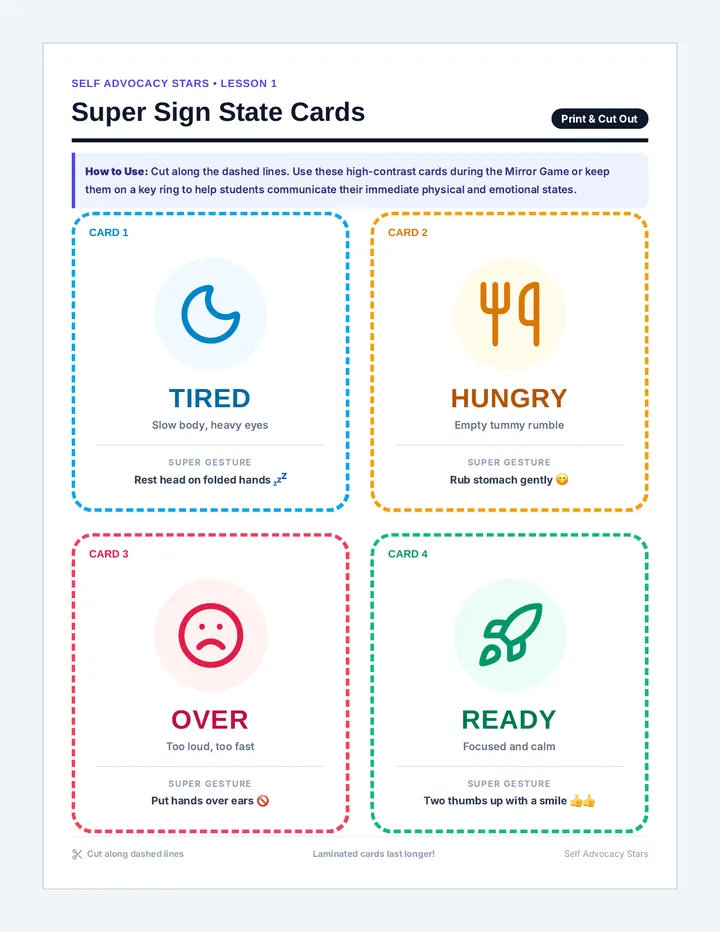
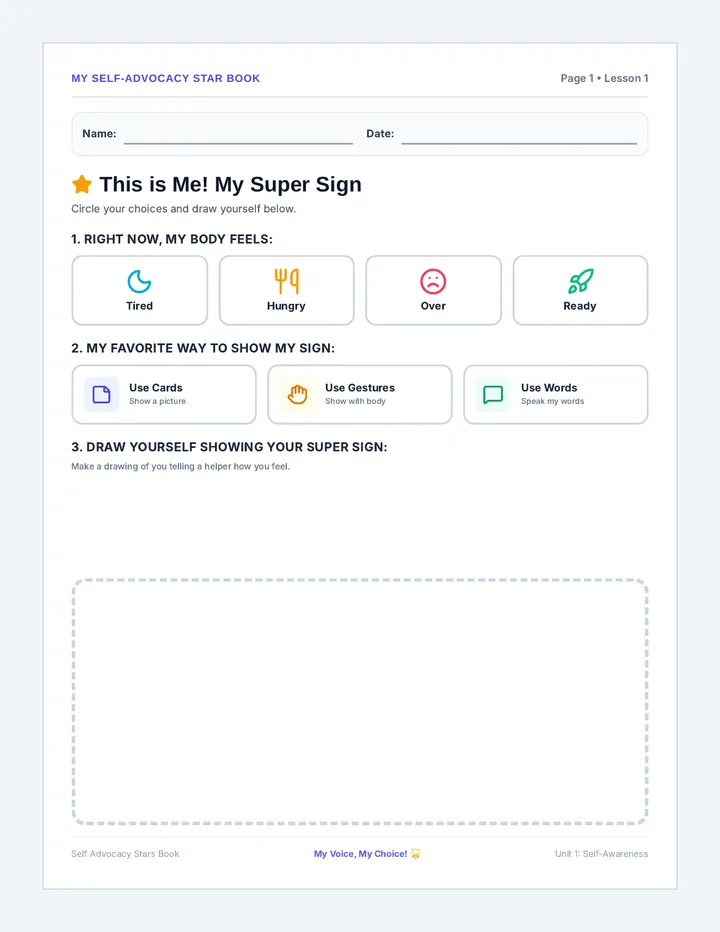
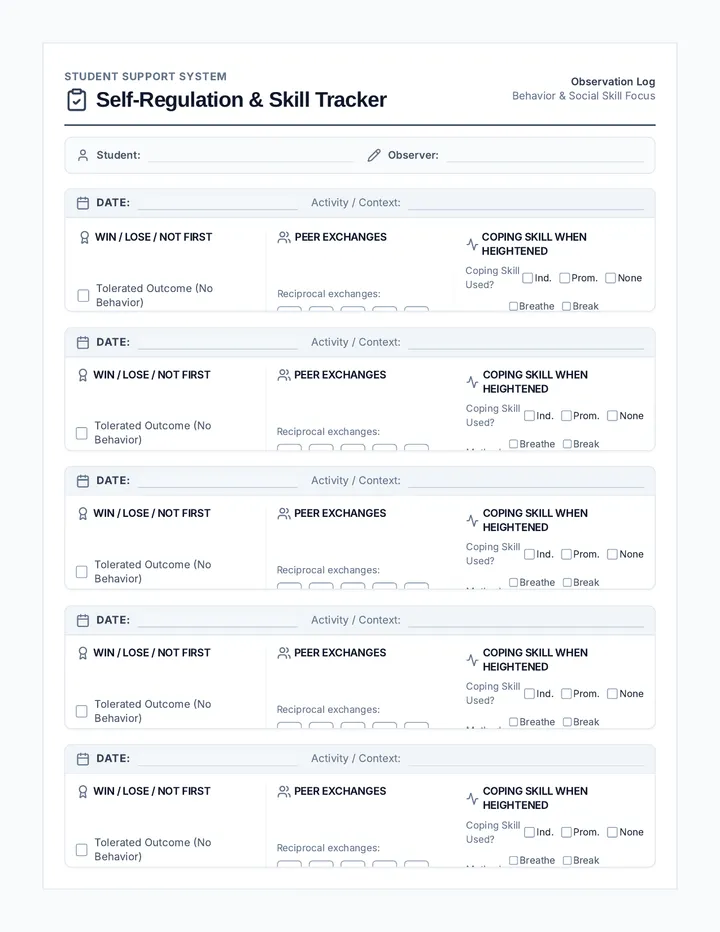
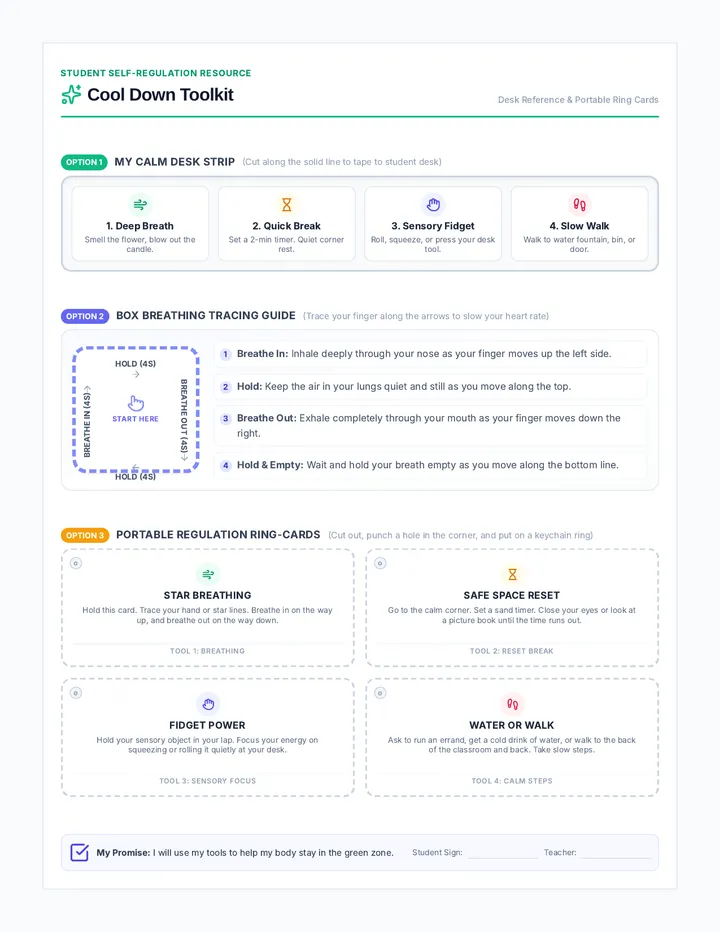
A visual introduction to graphing inequalities on a number line. It covers the four symbols, the difference between open and closed circles, and determining arrow direction with large, clear visuals suitable for students with IEPs.
Teacher answer key for the Matchup Master worksheet, including identifying features of each graph and instructional tips for modifying the lesson further.
A modified matching worksheet for students to identify inequalities on pre-drawn number lines. Features large glue-target boxes and clear, high-contrast number line visuals. Includes a second page with cutout tiles.
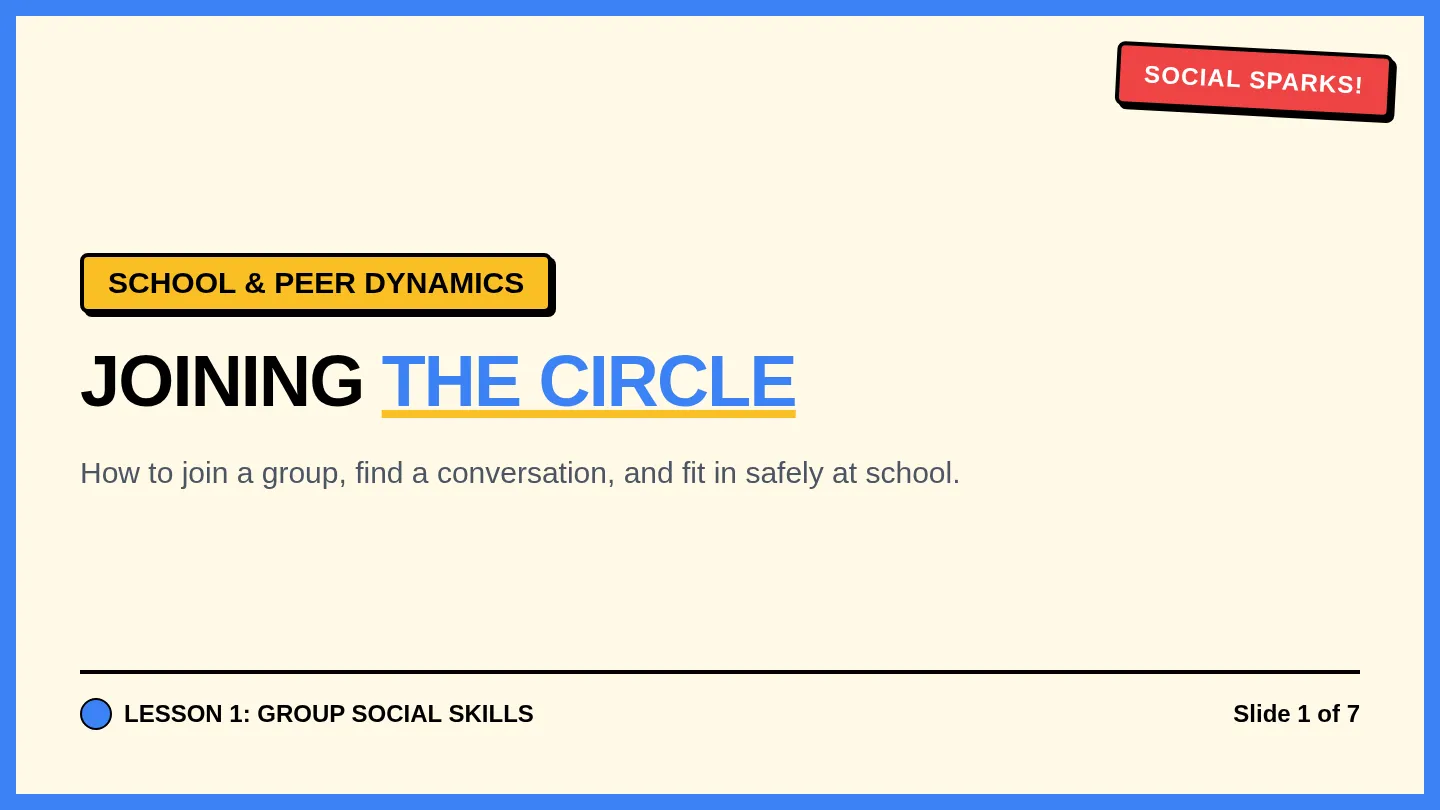
A graphic organizer designed to help students with autism observe peers and identify shared interests ("hooks") to use as conversation starters.
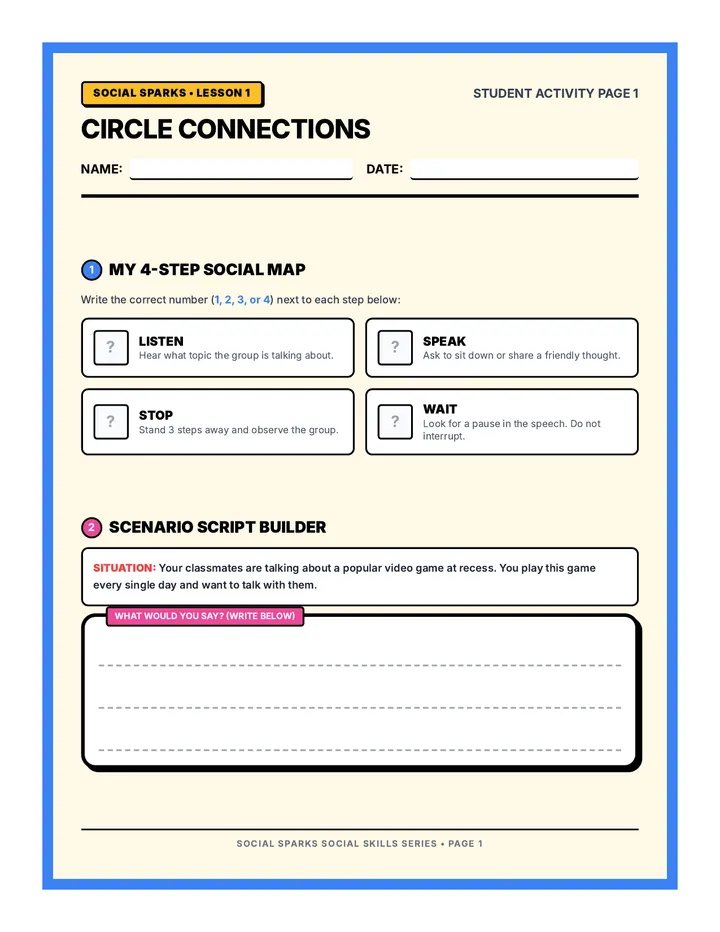
A structured roleplay script for 7th graders to practice the first 30 seconds of an interaction, including greetings, compliments, and self-introductions.
Interactive task cards presenting common middle school scenarios and suggested "spark" questions to help students initiate conversations.
A visual social story for 7th-grade students using a "Blueprint" theme to explain the social logic and concrete steps of starting a conversation.
A quarterly student progress monitoring sheet featuring sections for Academic Performance, Behavioral Targets, Professional Standards, and Attendance & Participation, with specialized data collection fields for each.
A professional, high-utility IEP quarterly progress monitoring document. It features sections for four goals, with tracking for percentages, trial counts, and a 1-4 rubric scale across four data points per quarter, including space for narrative observations.
A teacher-facing instructional guide for delivering phoneme-grapheme mapping SDI. Includes instructional scripts, a hierarchy of prompts, grade-level vocabulary word lists for practice, and a structured data collection table for tracking IEP goal progress.
A student practice worksheet with Elkonin boxes (sound boxes) designed for phoneme-grapheme mapping. Includes four mapping areas with space for chips, grapheme writing, and whole-word transcription, plus a quick reference guide for digraphs and vowel teams.
A 11-slide direct instruction presentation for phoneme-grapheme mapping. It includes visual guides for the say-it-tap-it-map-it-graph-it protocol, practice examples for single and multi-syllabic words, and special rules for digraphs and silent letters.
A data collection log for Functional Life Skills IEP goals, focusing on independence percentages, task analysis, and generalization across community, vocational, and daily routine settings.
A detailed data log for monitoring Social-Emotional IEP goals, including qualitative tracking of antecedents and responses, intensity ratings (1-5), and quarterly synthesis of social interaction patterns.
A progress monitoring log specifically designed for Executive Functioning IEP goals, featuring prompt level tracking (Independent to Physical) and setting analysis for lagging skills like planning and organization.
A specialized data collection log for Academic (Reading/Math) IEP goals, allowing for detailed tracking of four trials per quarter including accommodations, observations, and visual trend graphing.
A high-level summary tracker for a single student to monitor progress across four main skill areas (Academic, Executive Functioning, Social-Emotional, and Functional Life Skills) with four data points per quarter.
A teacher resource guide providing instructions on how to facilitate the 'Student Behavior Contract' meeting, managing consequences, and coordinating with Specials teachers.
A daily behavior tracking sheet for students to monitor their adherence to the Student Behavior Contract across all learning environments. Fits on a single page.
A formal student behavior contract for a student to agree on physical boundaries, arm's-length personal space, and consequences for verbal or physical aggression. Includes student initialing for each special environment. Fits on a single page.
A teacher-facing answer key for the PEMDAS Blueprints worksheet, providing step-by-step solutions and a guide for common student errors.
A practice worksheet for students to apply PEMDAS rules to increasingly complex expressions, featuring a clear reference header and dedicated workspaces for showing steps.
A progress tracker for monitoring student performance on IEP math goals, featuring a data collection table and a visual success chart for graphing accuracy over time.
A comprehensive IEP goal bank for teachers, featuring specific, measurable goals for Order of Operations and fraction mastery, complete with instructional strategies.
A facilitator guide for teachers or therapists to deliver the Signal Navigators lesson. Includes lesson pacing, student learning targets, materials list, and sample answers/guidance for social scenarios.
A student reflection and recording sheet to accompany the social skills lesson. It includes sections for identifying non-verbal cues, sensory regulation strategies, and practicing the 3-step conflict resolution method.
A set of scenario cards for a social skills 'game'. Scenarios focus on non-verbal cues (Signal Scan), sensory regulation (Volume Alert), and conflict management (System Crash). Designed to be printed and cut.