A modified lesson on graphing inequalities specifically designed for students with IEPs, focusing on symbol identification and visual matching. The lesson includes instructional slides, a hands-on cut-and-paste activity, and a teacher answer key.
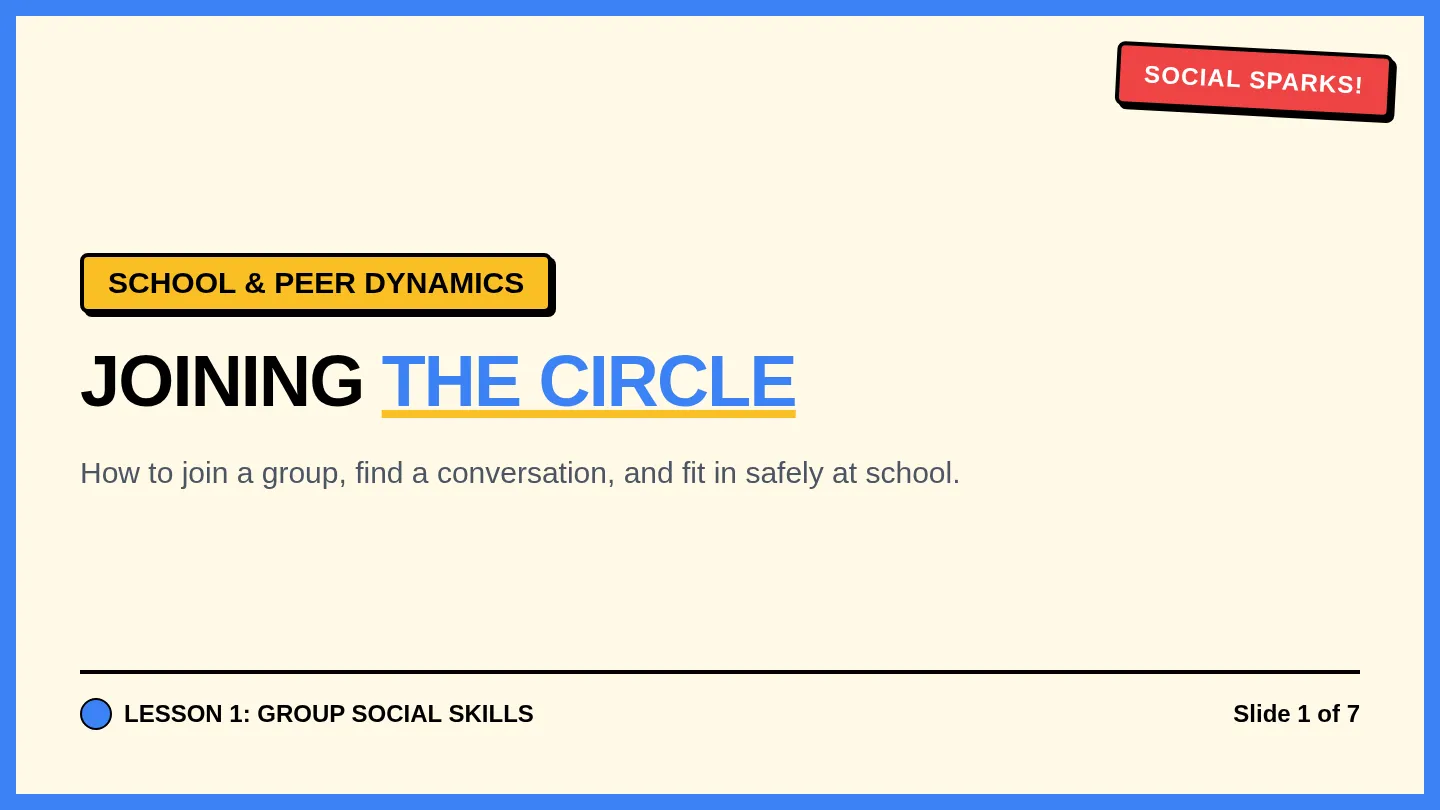
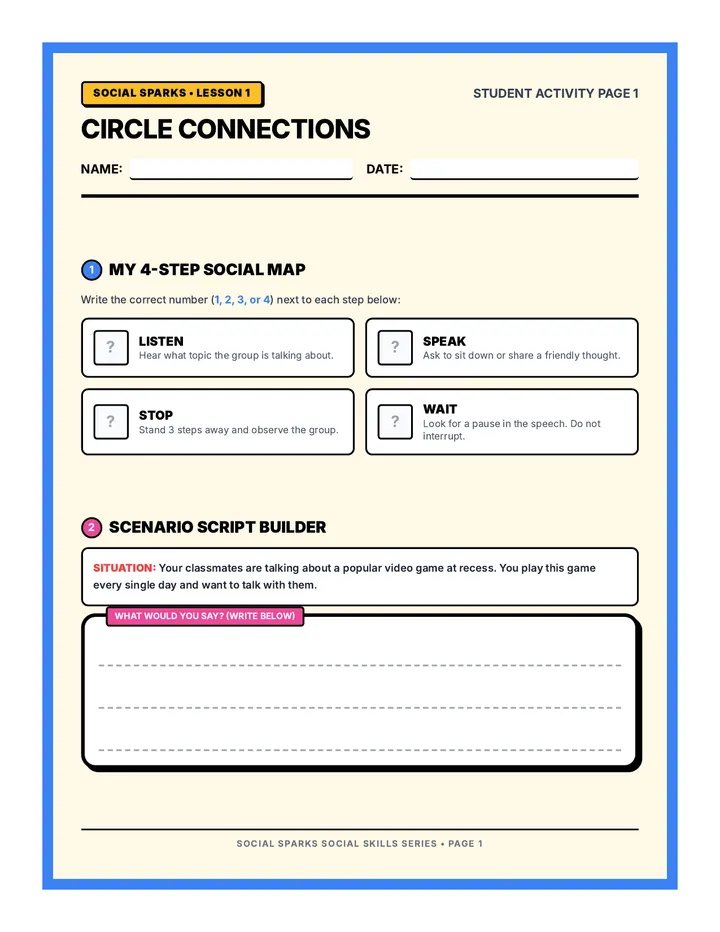
A comprehensive 15-lesson social skills curriculum designed specifically for middle and high school students with intellectual disabilities. It uses highly structured, visual-heavy layouts to teach conversational skills, peer dynamics, self-advocacy, and community safety through concrete social scenarios.
A comprehensive lesson package designed to teach students how to recognize initiation blocks, launch tasks using structured strategies, and self-monitor their focus independently. includes presentation slides, a teacher facilitation guide, and a student self-monitoring workbook.
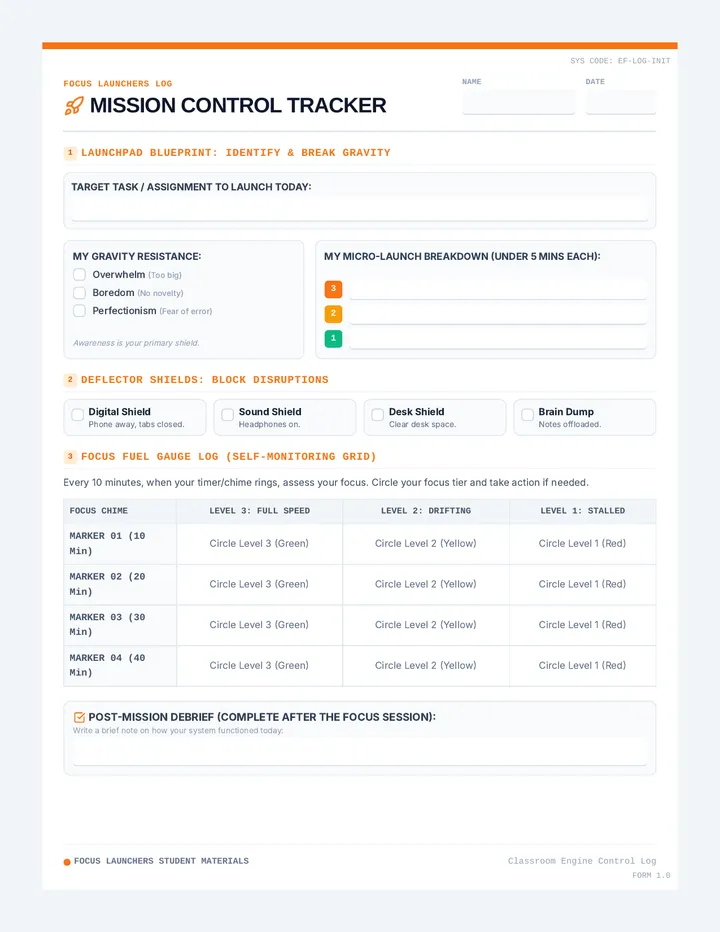
A stylized student worksheet modeled as a 'Mission Control Flight Log' to guide students in breaking down a hard task into micro-steps, preparing their distraction shields, and logging focus levels.
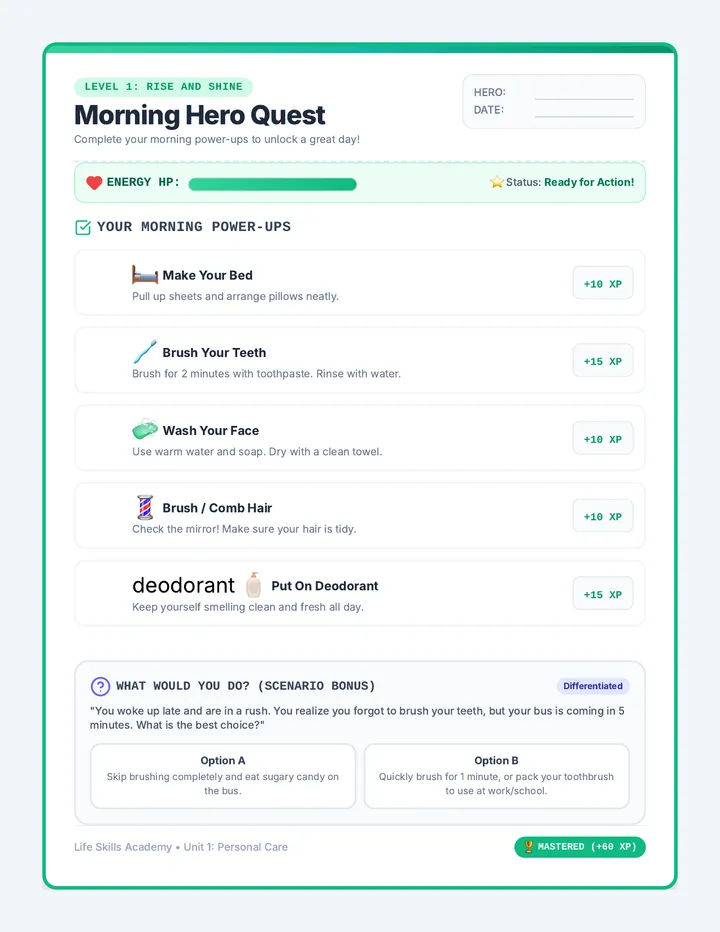
A comprehensive 15-lesson training sequence designed for students with intellectual disabilities to master independent living. Covers personal care, household management, functional budgeting, and workplace readiness through interactive scenarios and gamified board games.
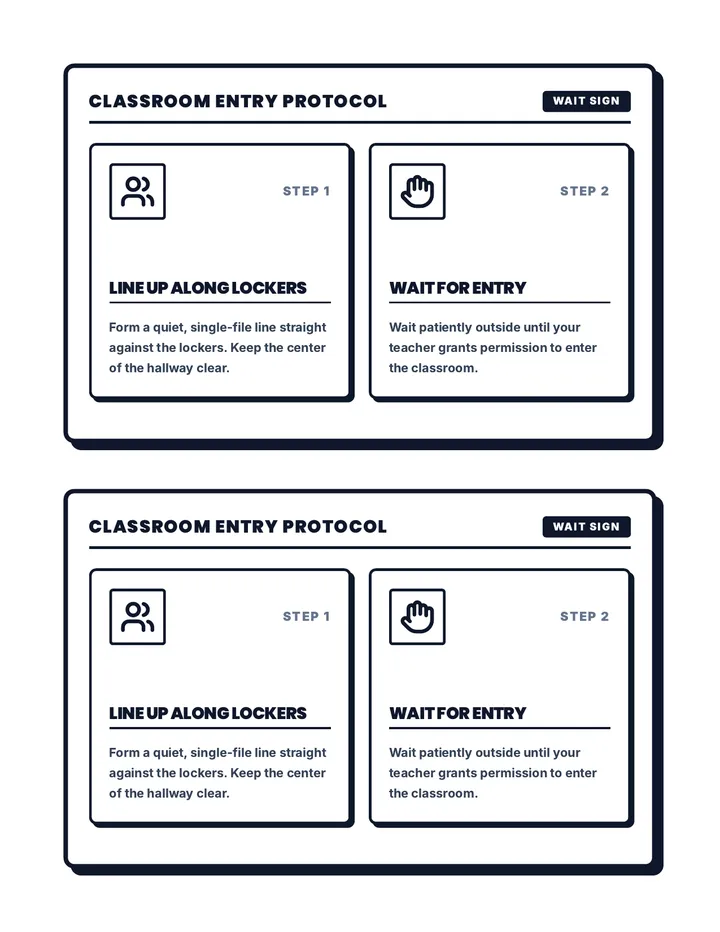
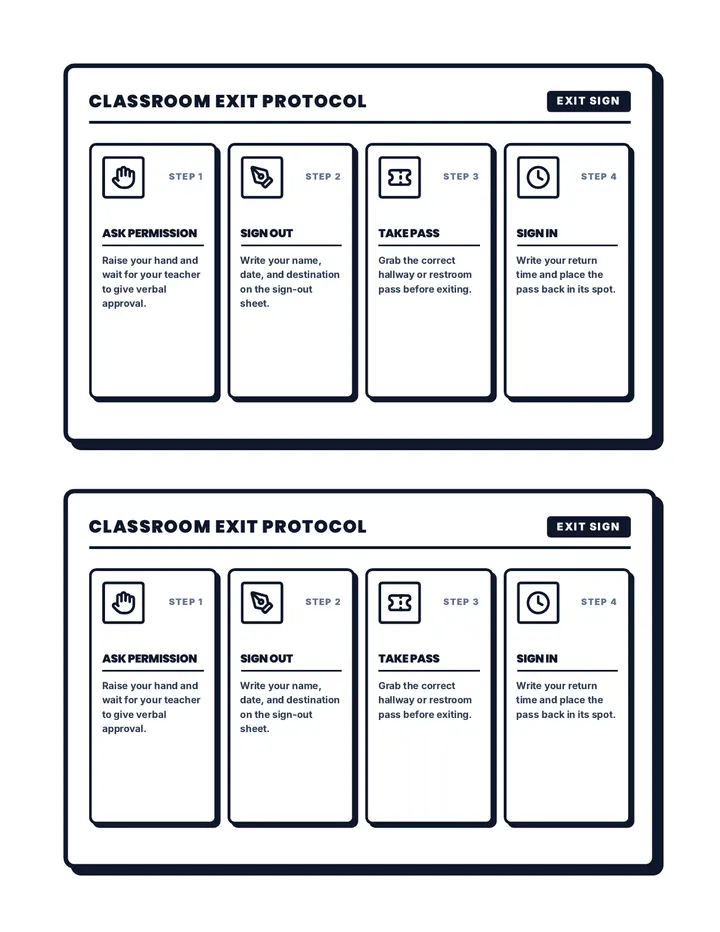
A collection of matching visual aids and signs to help manage classroom routines and expectations, including entry and exit procedures.
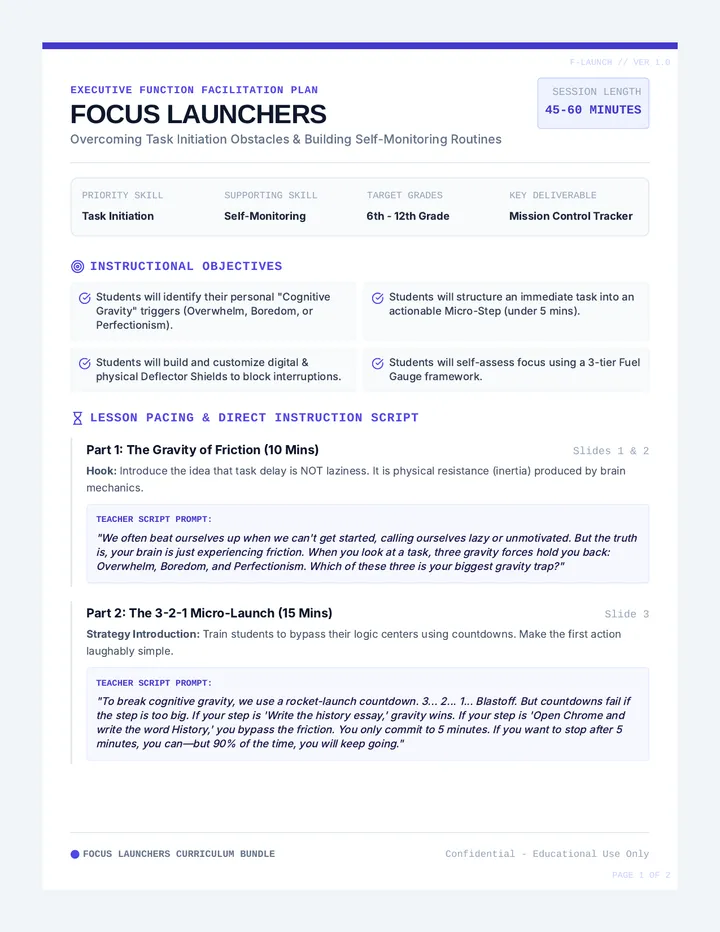
Comprehensive teacher facilitation and lesson pacing guide featuring scripted prompts, slide alignments, and troubleshooting strategies to deliver the Focus Launchers curriculum.
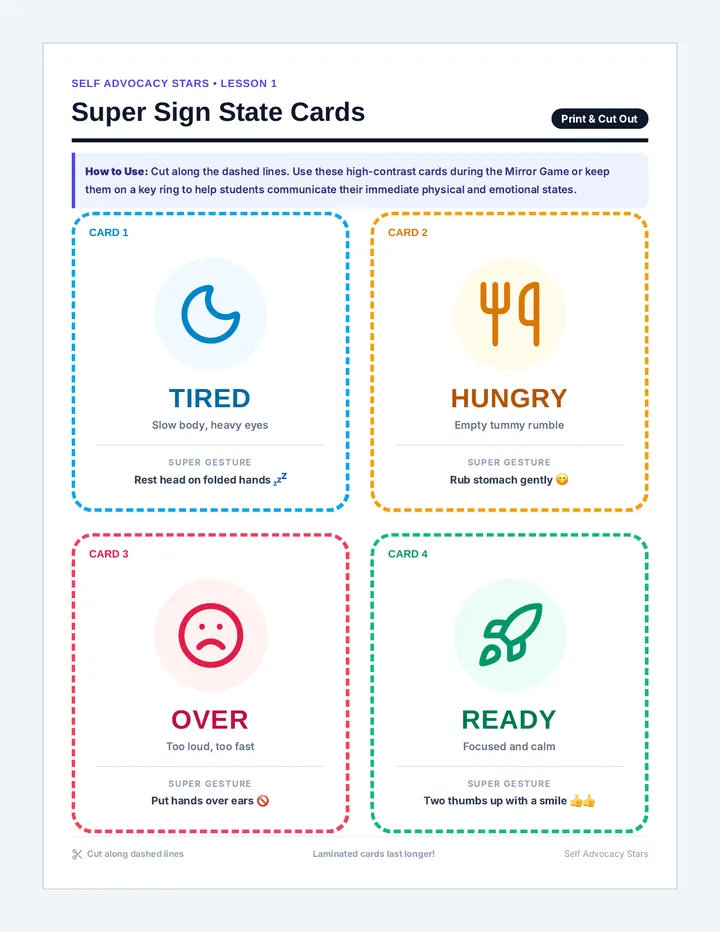
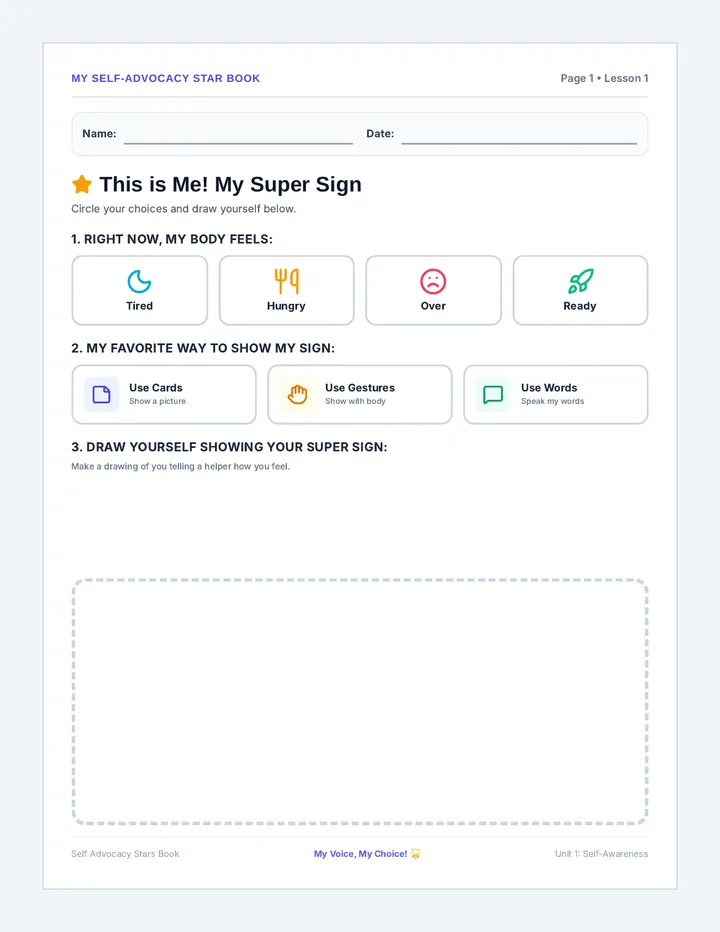
A visual and interactive self-advocacy curriculum designed specifically for students with intellectual disabilities and diverse communication styles. This foundational series empowers students to express feelings, request assistance, and make independent choices through highly structured group games, partner interactions, and individual visual communication books.
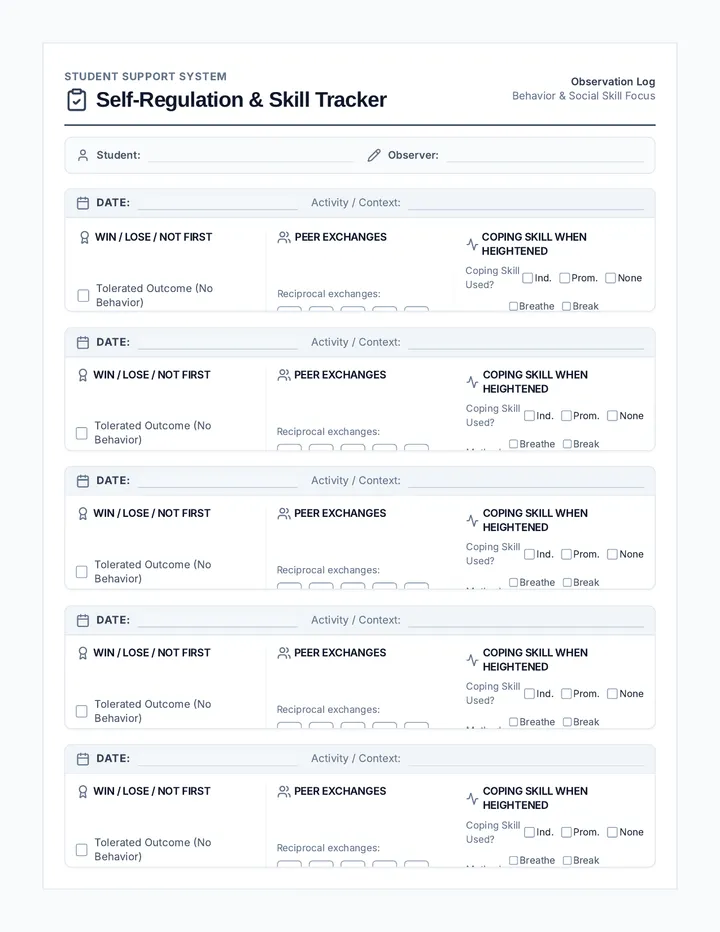
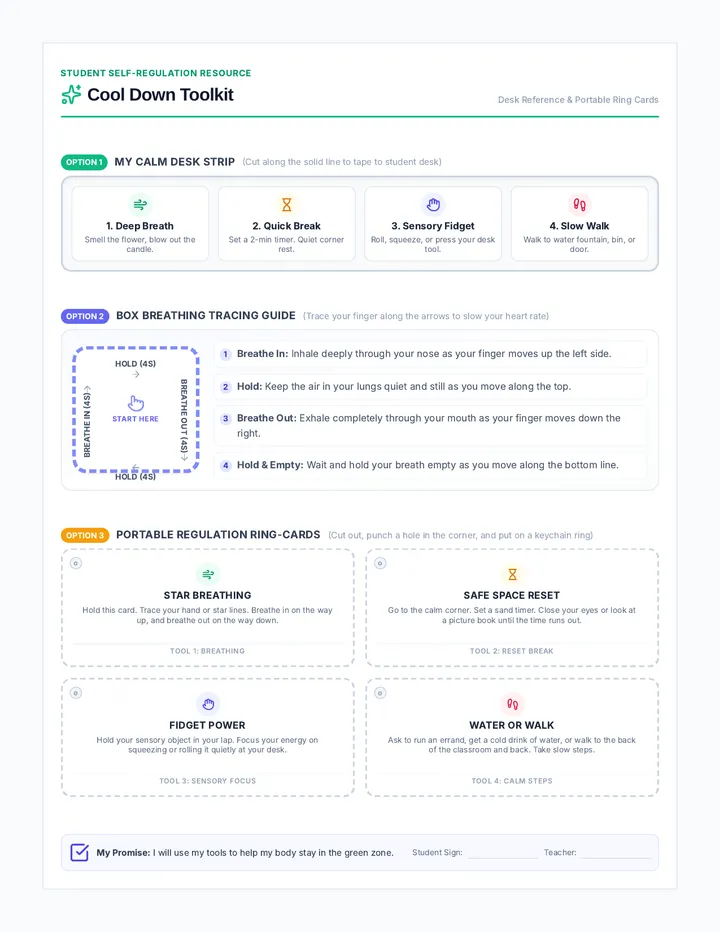
A comprehensive behavioral tracking and self-regulation kit focused on competitive grit, cooperative peer play, and calming strategies. This lesson contains a high-density daily data tracking sheet and a portable visual coping menu for desk-side student support.
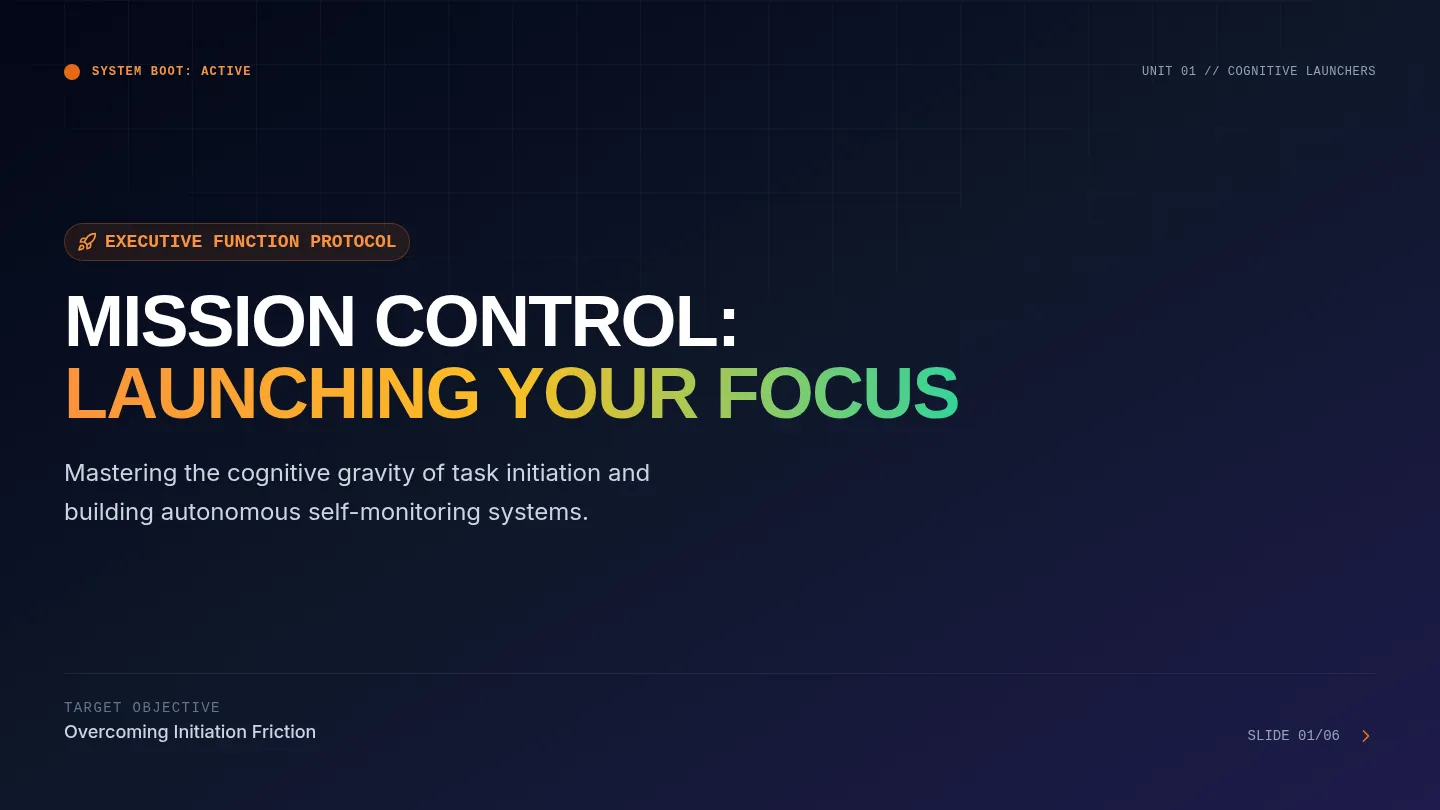
Interactive, high-impact instructional slides styled as a 'Mission Control Dashboard' to teach students task initiation (Micro-Launches, Deflector Shields, and Fuel Gauges) for self-monitoring.
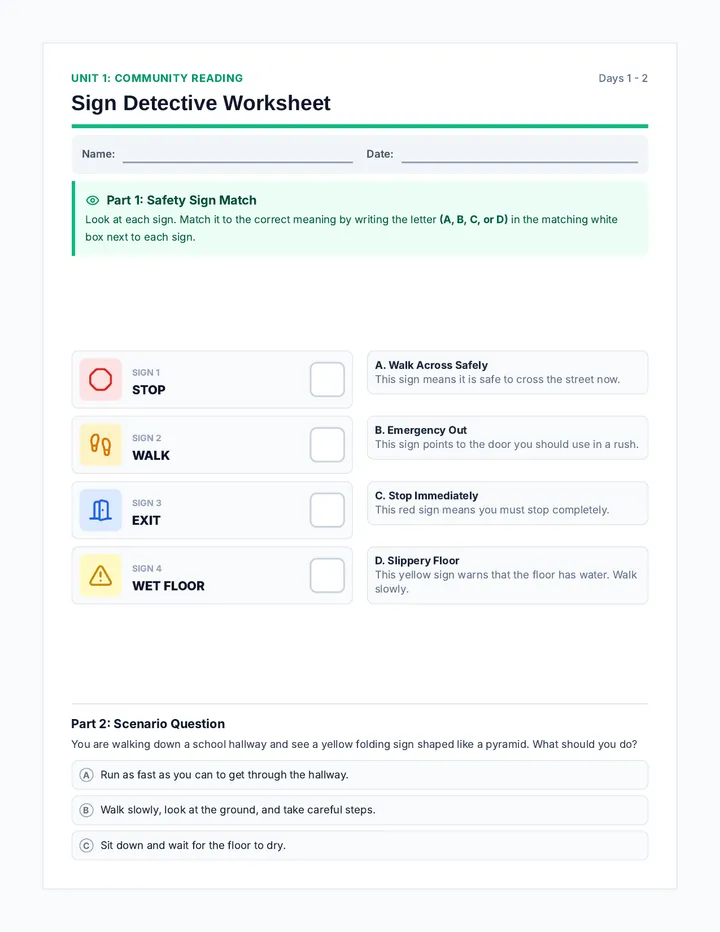
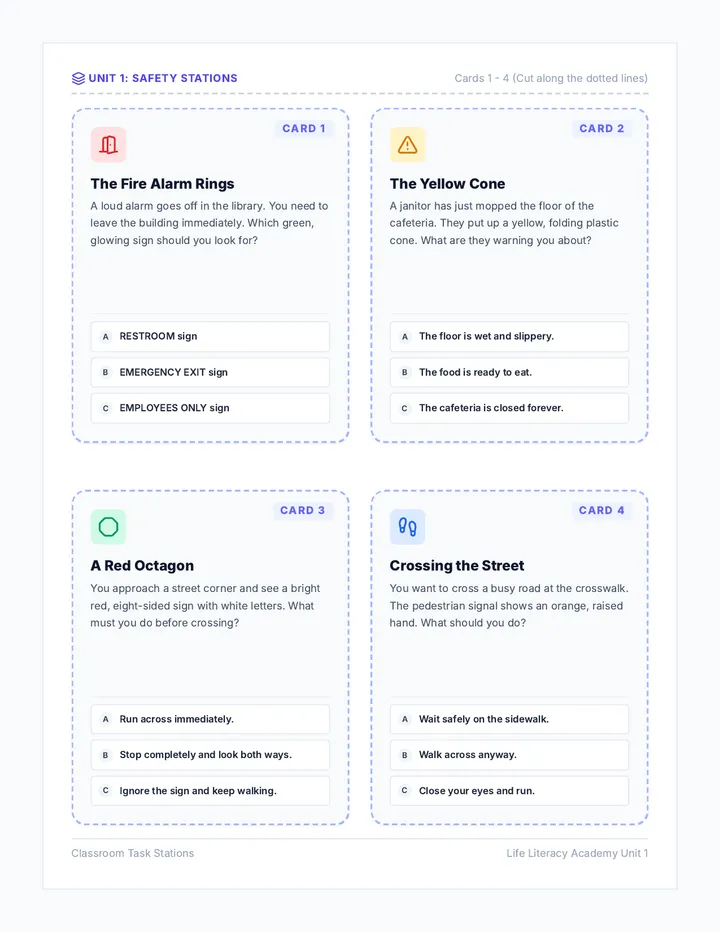
A comprehensive 15-day reading and functional life skills program designed for late elementary through high school students with intellectual disabilities. This unit integrates functional community texts (safety signs, schedules, menus, job applications) with core academic standards (WH questions, highlighting, inferencing, sequencing, and theme) through highly structured slides, worksheets, task cards, and assessment guides.
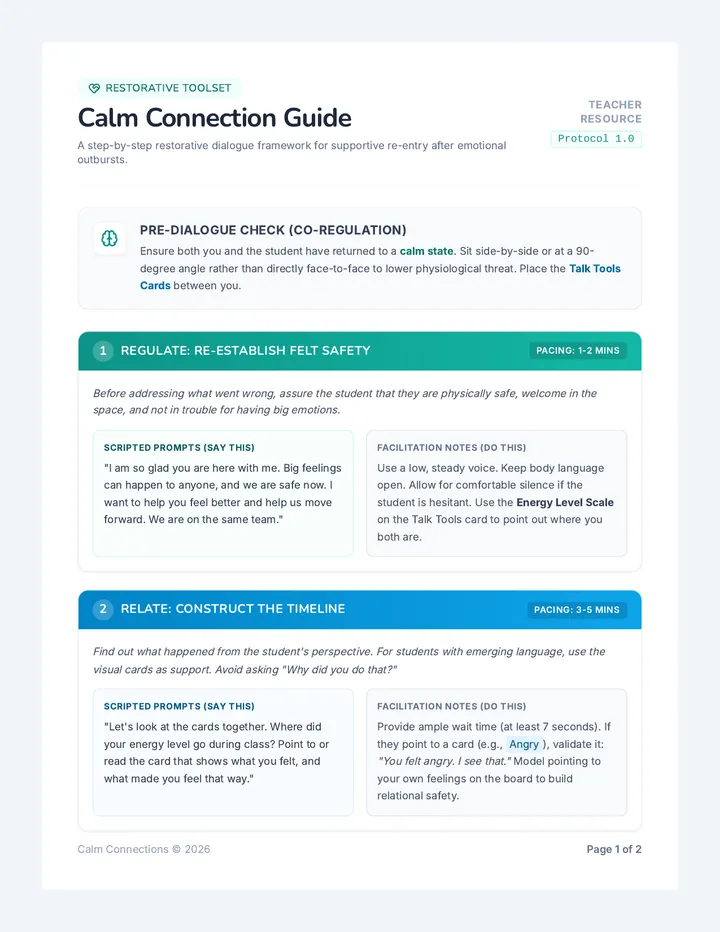
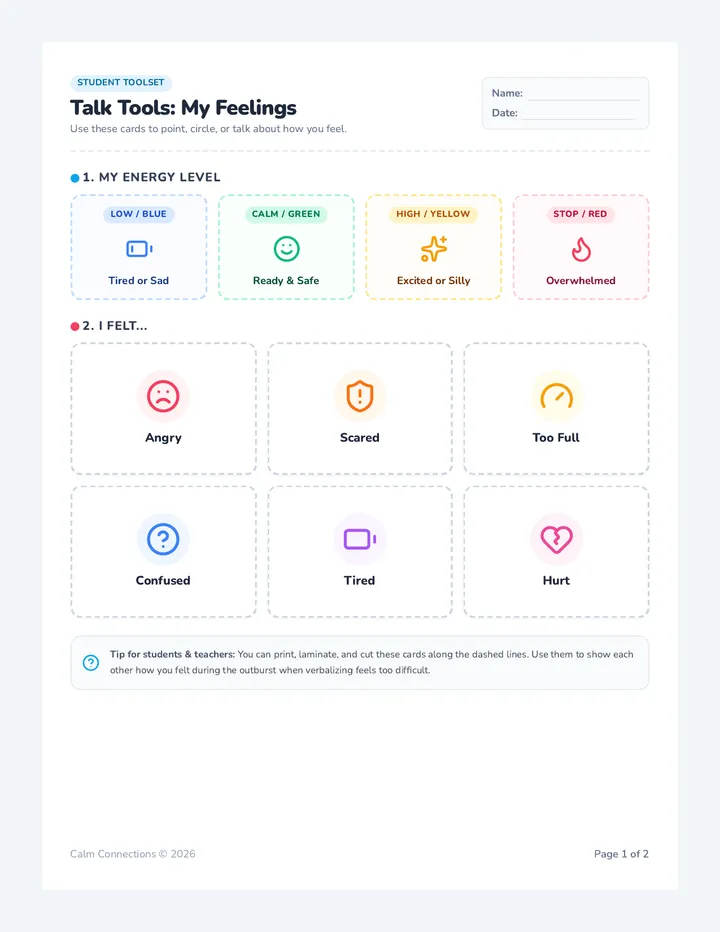
A comprehensive restorative dialogue system designed to repair relationships and re-integrate students after emotional outbursts, featuring a teacher scripting guide and highly visual student communication support cards.
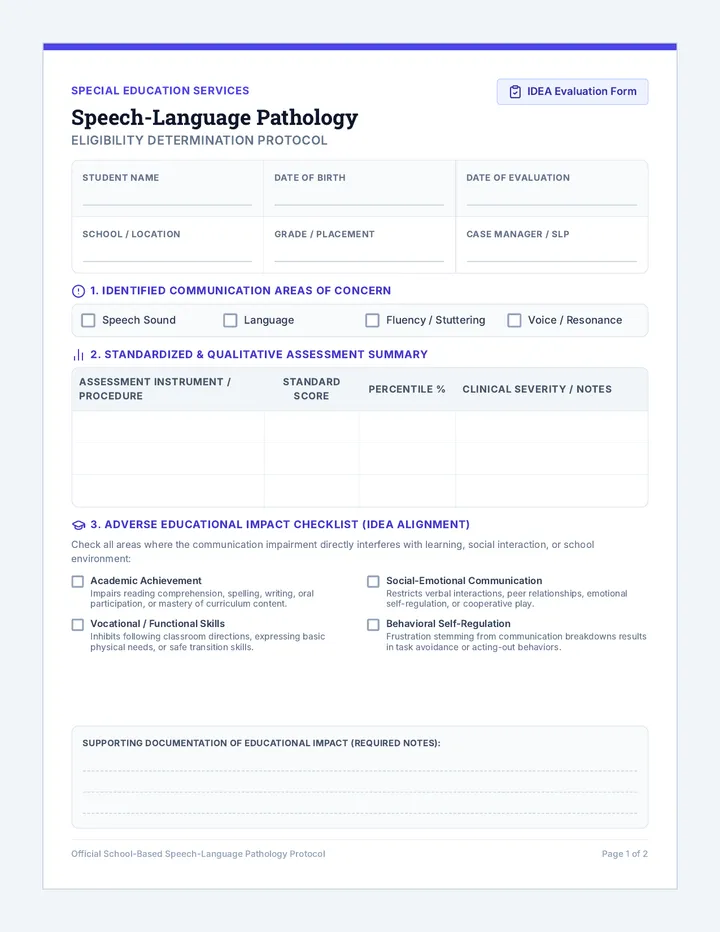
A professional 2-page print-ready Speech-Language Pathology (SLP) eligibility determination protocol. It features comprehensive fields for student information, assessment summaries, educational impact checklists, and a dedicated professional reference section highlighting the ASHA School-Based Eligibility guidelines with the requested URL.