A lesson focused on self-advocacy strategies for high school life skills students when encountering unexpected behaviors from others. It introduces three primary responses: asking to stop, moving away, and telling a trusted adult.
A 6-week small group curriculum designed to build executive functioning skills in transitioning 6th graders. Covers organization, time management, planning, distraction management, goal setting, and stress coping using a highly engaging space-mission theme.
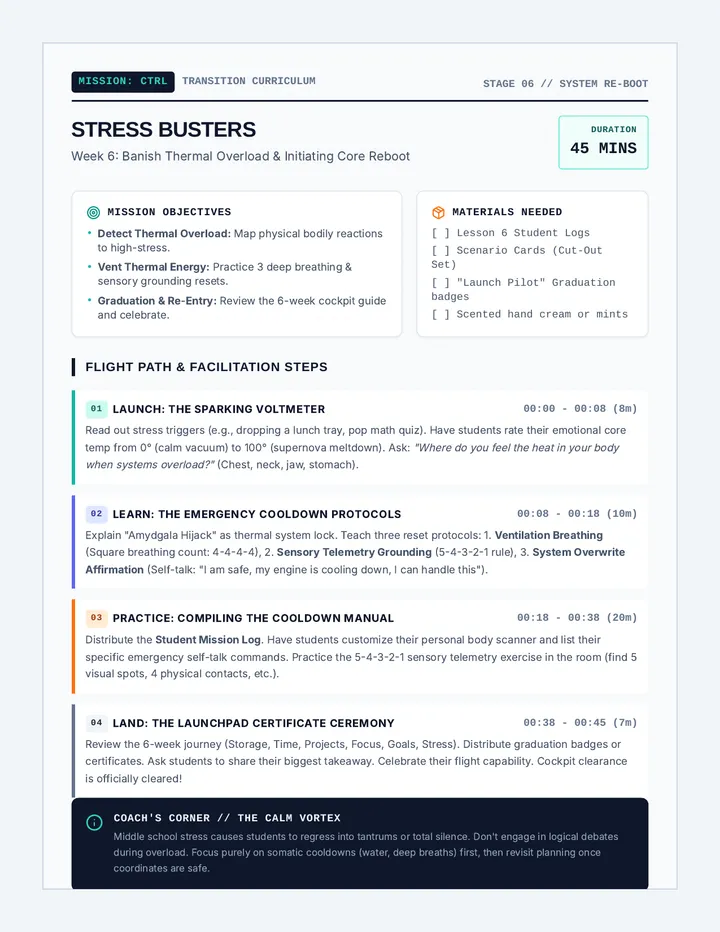
Navigating middle school stress with system checks. Students identify emotional triggers, build a cooldown manual, and create a resilient coping strategy deck.
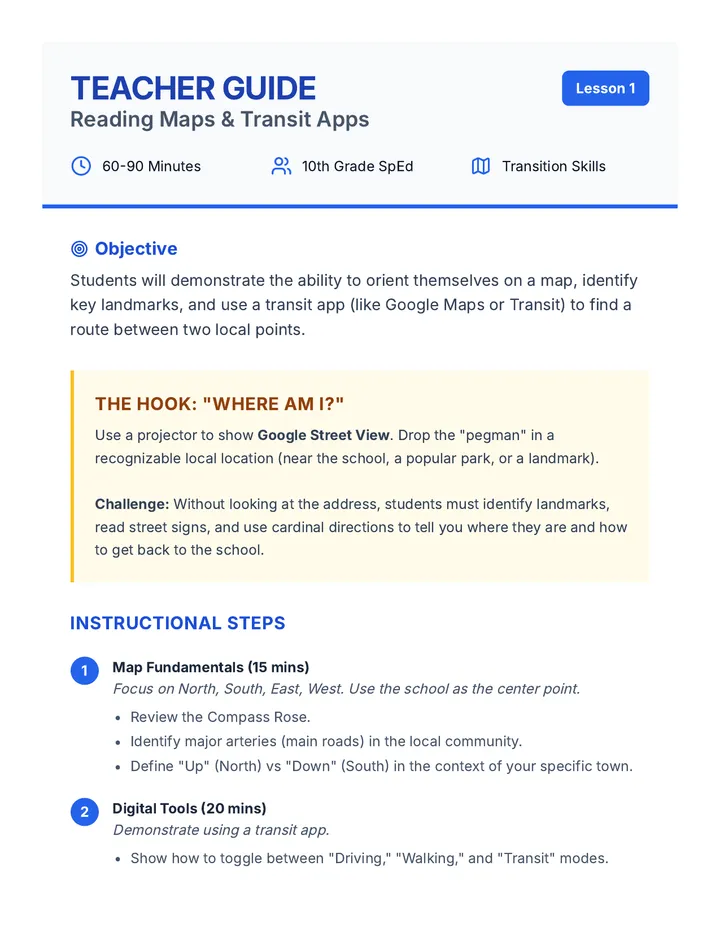
A comprehensive 10th-grade transition planning sequence focused on developing independent living skills through community navigation and transportation mastery. Students progress from basic map reading and app usage to planning complex trips and identifying essential community resources.
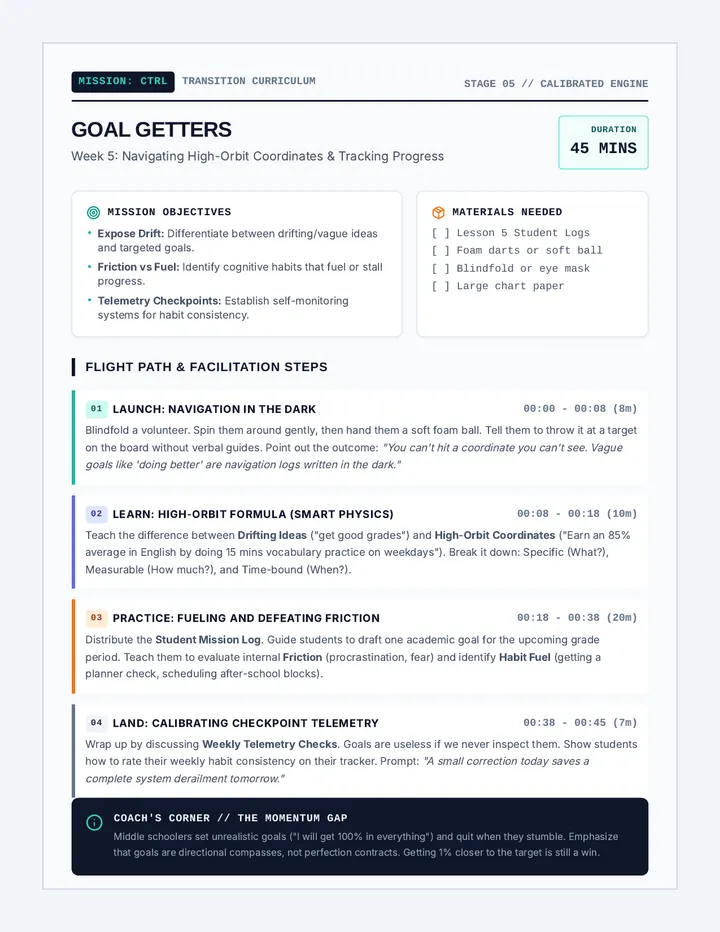
Setting high-orbit goals and tracking progress. Students learn the science of friction and fuel in achievement, drafting actionable goals and creating a self-monitoring checkpoint system.
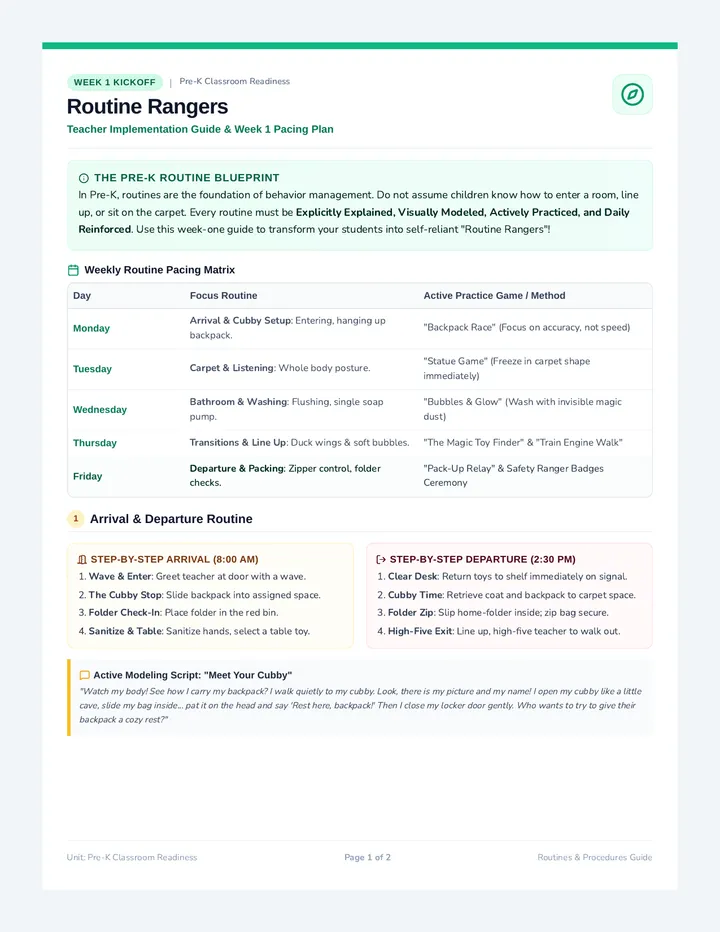
A foundational unit designed to establish essential routines, behavioral expectations, and self-regulation skills in Pre-K students during the critical first weeks of school. Features visual supports, structured practice, and school-to-home partnership resources.
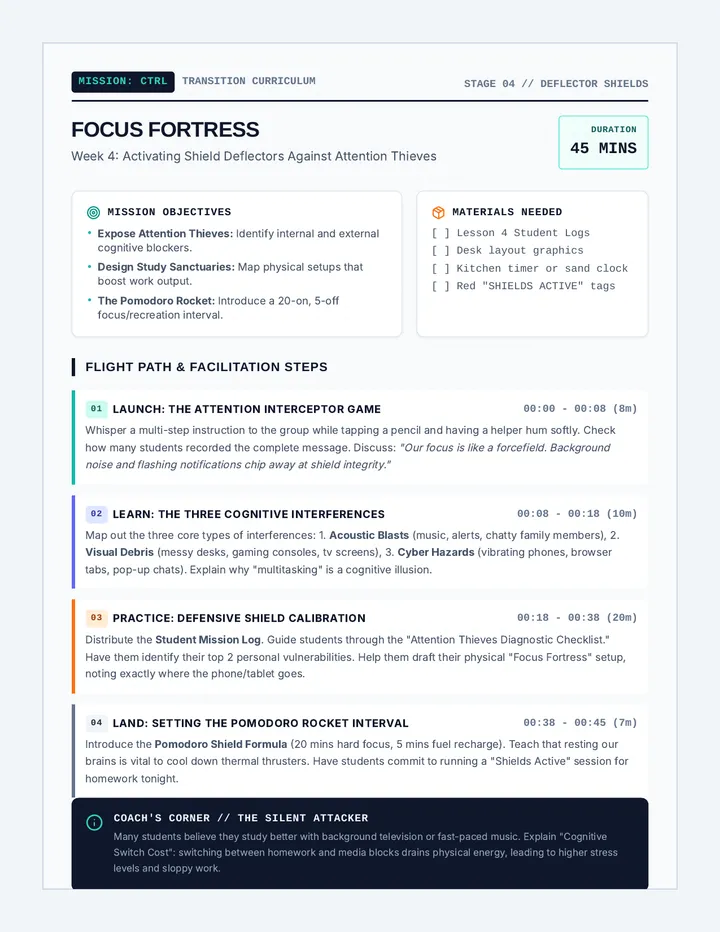
Shielding against attention thieves. Students identify personal visual, auditory, and digital distractions, design a study sanctuary, and practice self-monitoring techniques.
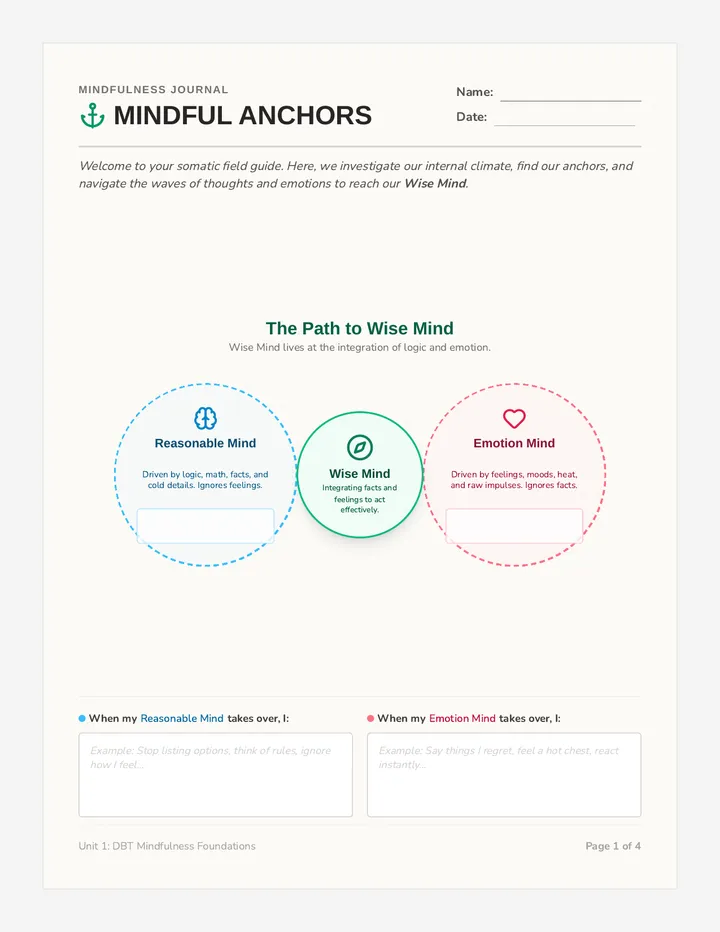
A comprehensive unit on Dialectical Behavior Therapy (DBT) mindfulness skills, taking students from somatic anchoring and cognitive understanding to collaborative, station-based performances that demonstrate 'What' and 'How' skills.
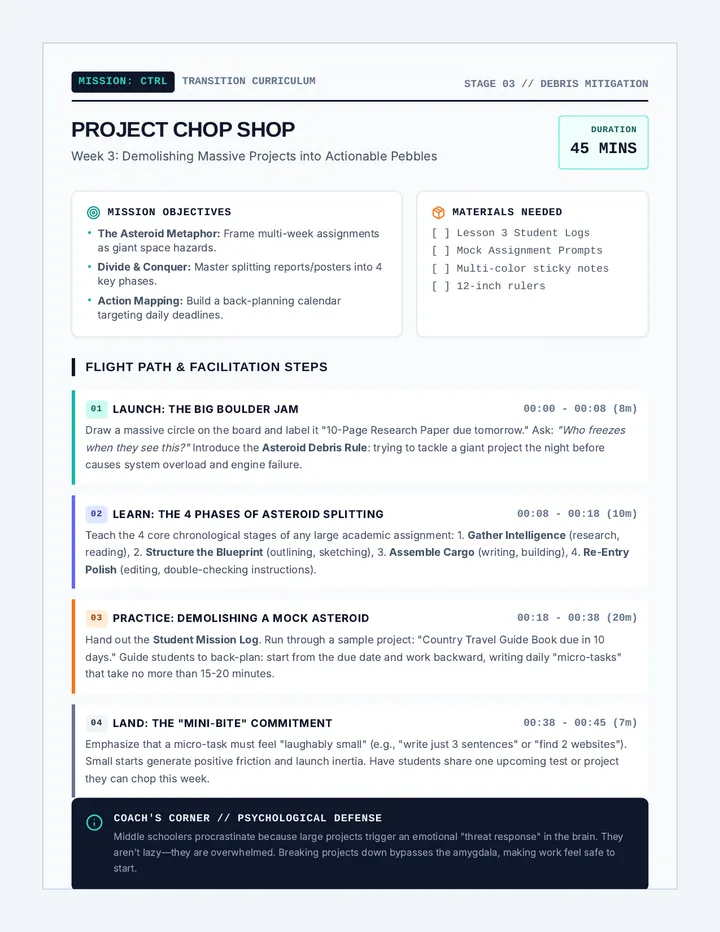
Demolishing overwhelming assignments. Students learn to take a massive multi-week research project, book report, or science poster and chop it into bite-sized daily action steps.
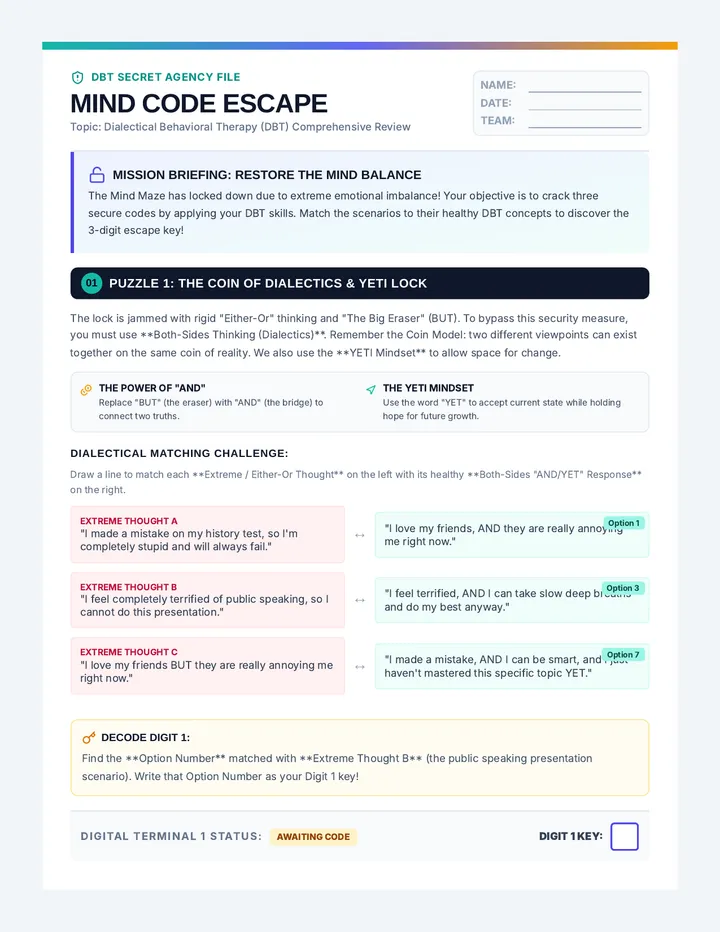
A hands-on sequence designed to empower teens with Dialectical Behavioral Therapy (DBT) concepts. Through engaging escape rooms, creative drama challenges, and real-life scenarios, students master dialectics and emotional regulation.
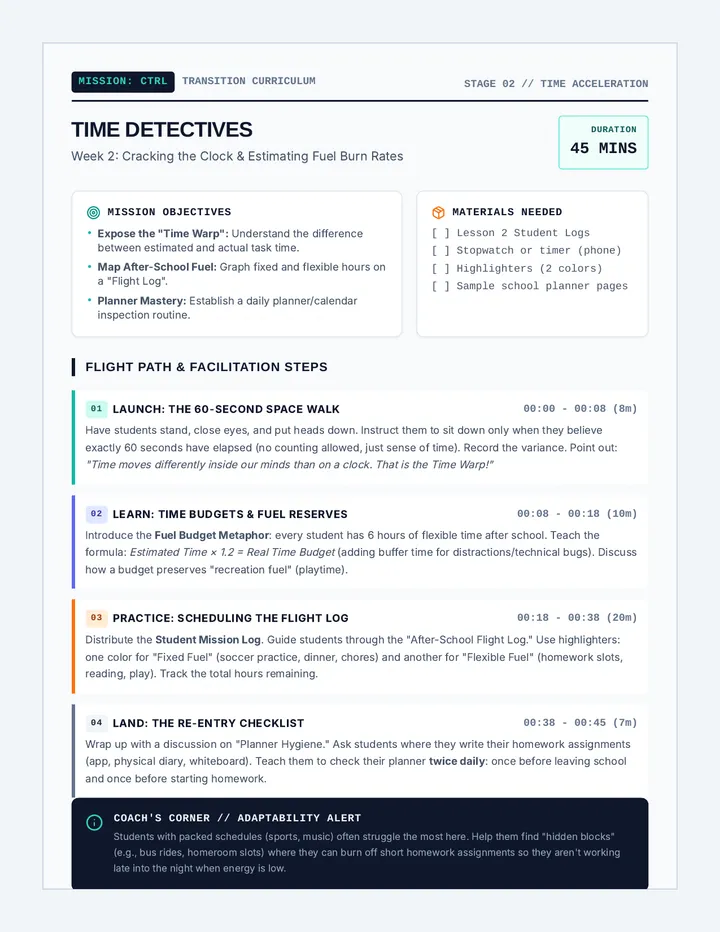
Cracking the clock and mastering time estimation. Students learn to budget their after-school hours, estimate homework duration, and maintain a digital/physical weekly planner.
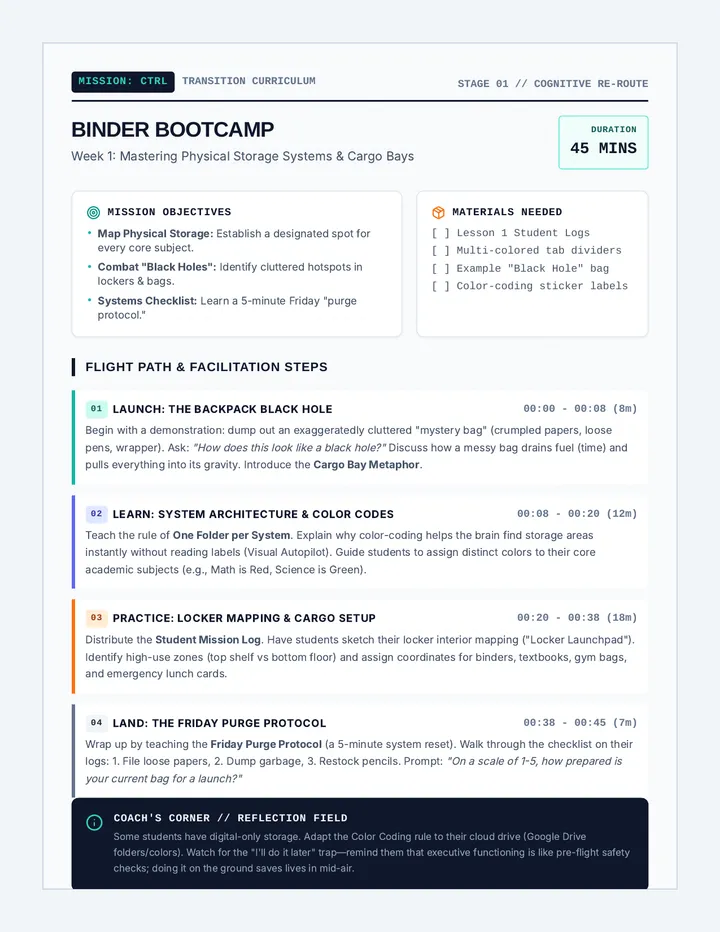
Mastering physical and digital storage systems. Students learn to map their lockers, color-code binders, and declutter materials to prevent the 'backpack black hole' and start middle school with structural confidence.