Lenny.com
Explore
Create
ActivitiesNewMathEnglish Language ArtsScience & EngineeringSocial StudiesGlobal LanguagesHealth & Physical EducationSpecial EducationCounseling & Life SkillsArts & CreativityESL
Lenny.com
Lenny.com
Explore
Create
ActivitiesNewMathEnglish Language ArtsScience & EngineeringSocial StudiesGlobal LanguagesHealth & Physical EducationSpecial EducationCounseling & Life SkillsArts & CreativityESL
Lenny.com
Lenny.com

Solutions

Lenny for EducatorsLenny for SchoolsLenny for Districts

Product

ExploreSign inCreateSupportAbout

Resources

Getting startedMTSS Acceleration Program

© 2026 Lenny Learning Inc.

TermsPrivacyAccessibility
LinkedInInstagramX
Lenny
Special EducationSensory Processing & RegulationSensory Preferences IdentificationSensory Tool UseCommunicating Sensory NeedsSensory Overload RecognitionDeep Breathing PracticeMovement Break UtilizationIndependent Calming Strategy UsePersonalized Calming RoutinePersonal Sensory Diet CreationProactive Sensory BreaksEmotion Intensity RecognitionDysregulation RecoveryPositive Behavior SupportUnderstanding Social StoriesPersonal Social Story CreationEmotional Regulation FrameworksPersonal Trigger IdentificationSelecting Regulation StrategiesReinforcement System ResponseSelf-Monitoring & RewardsLearning Positive AlternativesCross-Setting Skill GeneralizationSocial CommunicationEye Contact & Personal SpaceContext-Appropriate GreetingsAppropriate Volume & ToneConversation Turn-TakingTopic Maintenance in DiscussionEffective Help-SeekingBody Language InterpretationFacial Expression RecognitionIdioms & Figurative LanguageSocial Problem IdentificationSocial Solution GenerationSocial Decision EvaluationTask ManagementMinimal Prompting Task StartSelf-Talk for StartingStarter Strategies for Difficult TasksAge-Appropriate Task PersistenceStrategic Break ManagementSmooth Task TransitionsAdapting to Plan ChangesObstacle Problem-SolvingMulti-Day Project CompletionPlanning & OrganizationPhysical Material OrganizationVisual Schedule & Timer UseSequential Task BreakingTime Estimation SkillsTask PrioritizationDigital & Physical Workspace ManagementPersonalized Organization StrategiesDetailed Project PlanningMultiple Commitment BalancingAcademic Support StrategiesMath Manipulative UseVisual Math Problem RepresentationComplex Math Problem BreakdownText Highlighting & AnnotationVisualization While ReadingPredictions & Inferences from TextText Structure Graphic OrganizersWriting Graphic OrganizersSentence Frames & TemplatesStudy Guide CreationSpaced Repetition for MemoryAssistive Writing TechnologyWorking Memory SupportSingle-Step Direction FocusMulti-Step Direction FollowingInformation Chunking PracticeVisual Support Memory AidsMnemonic Device ApplicationEfficient Note-Taking SystemsGraphic Organizer Note-TakingNote Review & OrganizationSustained Complex Task AttentionAssistive TechnologySymbol-Word CommunicationAAC Device NavigationSpeech Recognition DictationDictation Text EditingText-to-Speech for ReadingDigital Calendar UseKeyboard Shortcuts NavigationProductivity App ManagementSelf-Advocacy SkillsCommunicating Learning NeedsRequesting AccommodationsAdvocating for Appropriate SupportsIEP & Student RightsUnderstanding IEP ComponentsMeaningful IEP Meeting ParticipationIDEA & Section 504 RightsProgress MonitoringTracking IEP Goal ProgressReflecting on AchievementData-Informed Instructional AdjustmentTransition PlanningCareer & Vocational Goal SettingExploring Post-Secondary OptionsIndependent Living Skills Planning

Math 7th Grade Scope and Sequence

A collection of modified 7th-grade math scope and sequence documents tailored for Tier 2 and Tier 3 student support.

ETEmma Thorpe

Math 7th Grade Scope and Sequence

A collection of modified 7th-grade math scope and sequence documents tailored for Tier 2 and Tier 3 student support.

ETEmma Thorpe
(Slope) (7.RP.2)
Planning time ("How long until we arrive?").
Simplify slope to "Up or Down." Eliminate complex ratios. Use visual trend lines with light boxes or backlit screens for high contrast. Visual aids.
Shopping Math
(Percents) (7.RP.3)Comparison shopping (Flyers vs store).Comparison of physical grocery store flyers. Digital Support: Use calculators with a dedicated "Percent" button for discounts. Visual receipt checklists.
Shapes & Space
(7.G.4, 7.G.6)Home repair and measuring furniture.Use real measuring tapes. Focus on "Big vs. Small" and "Fitting into space." Eliminate abstract formulas; focus on volume by filling containers with sand/water.

Phase 3: Space & Patterns

Priority Learning GoalFunctional Life Skill ConnectionModifications & Sensory Supports
Transformations
(7.G.2)Following directions (Turn left, flip over).Kinesthetic Learning: Students physically move their bodies to "slide" (translate) or "turn" (rotate). Use large tape grids on floor. Directional visuals.
Similar Shapes
(7.G.1)Understanding scale (Map to reality).Matching identical vs. similar items. Focus on "Magnifying" and "Shrinking" using actual magnifying glasses and flashlight shadows. Map exploration.
Probability & Sorting
(7.SP.5 - 7.SP.8)Predicting the weather or game outcomes.Sort physical objects by traits (color, size) to show likelihood. Visual probability wheel (colored segments) instead of fractions. Visual tally charts.
Big/Small Numbers
(7.NS.3)Understanding "Huge" vs "Tiny" quantities.Limit to powers of 10. Use physical stacks of items (1, 10, 100) to show magnitude visually and by weight comparison. Tactile sorting.

Intensive Accommodations

Physical & Sensory

  • • Sensory Seating: Wiggle cushions or standing desks for those with high physical needs.
  • • Enlarged Text: Minimum 18pt font on all handouts to reduce visual processing load.
  • • Fidget Friendly Tools: Use manipulative-based math (unifix cubes) to keep hands occupied.

Social-Emotional (Older Learners)

  • • Age-Appropriate Content: Avoid "kiddie" graphics. Use real-life photos of workplace math and daily tasks.
  • • Success Logs: Focus on mastered functional tasks (e.g., "I can measure distance").
  • • Social Integration: Collaborative group work focusing on "The Helper" and peer-support roles.
Percents & Real World
(7.RP.3)Decimal to percent conversions.Standardized "Percent Map" template. Color-code parts (green) and wholes (yellow) in word problems. Tape diagrams.
Circumference
(7.G.4)Radius vs diameter, decimal mult.Calculator allowed for all pi calculations. Provide "Formula Key Card" with visual prompts and pi simplified to 3.14.

Universal Tier 2 Supports

Social-Emotional

  • • Brain Breaks: Built-in 2-minute movement breaks during independent work.
  • • Growth Mindset: Weekly reflection on a "mistake I learned from."
  • • Choice Boards: Provide options for showing mastery (verbal explanation vs written).

Physical / Organizational

  • • Slant Boards: Available for students with handwriting/posture fatigue.
  • • Color Coding: All materials for a specific unit share a consistent color palette.
  • • Guided Notes: Fill-in-the-blank notes provided for all 7th grade lectures.
Percents & Real World
(7.RP.3)Decimal to percent conversions.Standardized "Percent Map" template. Color-code parts (green) and wholes (yellow) in word problems. Tape diagrams provided.
Circumference
(7.G.4)Radius vs diameter, decimal mult.Calculator allowed for all pi calculations. Provide "Formula Key Card" with visual prompts and pi simplified to 3.14 initially.

TRIMESTER 3: GEOMETRY & STATISTICS

7th Grade TopicPre-requisite "Bridge" SkillsModifications & Accommodations
Angles & Triangles
(7.G.2)Angle classification, sum of 180°.Use patty paper or transparencies for rotations. Simplify proofs to "fill-in-the-blank" logic puzzles. Physical protractor practice.
3D Figures & Surface Area (7.G.3, 7.G.6)Spatial reasoning, identifying nets.Folding physical nets. Visual place value chart with "Power of 10" labels for volume. High-contrast diagrams for cross sections.
Probability & Data
(7.SP.1 - 7.SP.8)Fraction fluency, sorting data.Explicit checklist for data sets. Use Desmos to verify statistical calculations. "Chance Meter" visual for probability scale.

Universal Tier 2 Supports

SOCIAL-EMOTIONAL

  • • Brain Breaks: Built-in 2-minute movement breaks during independent work.
  • • Growth Mindset: Weekly reflection on a "mistake I learned from."
  • • Choice Boards: Provide options for showing mastery (verbal vs written).

PHYSICAL / ORGANIZATIONAL

  • • Slant Boards: Available for students with handwriting/posture fatigue.
  • • Color Coding: Materials for a specific unit share a consistent color palette.
  • • Guided Notes: Fill-in-the-blank notes provided for all 7th grade lectures.
(5.2.1)Comparison shopping (Store A vs Store B).Comparison of two physical menus or flyers. Digital Support: Simple drag-and-drop activities to find the "meeting point."
Shapes & Sizes
(9.2.2)Home repair and measuring furniture.Use real measuring tapes. Focus on "Big vs. Small" and "Fitting into space" rather than the \(a^2 + b^2 = c^2\) formula.

PHASE 3: SPACE & PATTERNS

Priority Learning GoalFunctional Life Skill ConnectionModifications & Sensory Supports
Transformations
(6.1.1 - 6.1.4)Following directions (Turn left, flip over).Kinesthetic Learning: Students physically move their bodies to "slide" (translate) or "turn" (rotate). Use large floor grids.
Similar Shapes
(6.2.1 - 6.2.6)Understanding scale (Map to reality).Matching identical vs. similar items. Focus on "Magnifying" and "Shrinking" using actual magnifying glasses.
Big/Small Numbers
(8.2.1)Understanding "Huge" vs "Tiny" quantities.Limit to powers of 10. Use physical stacks of items (1, 10, 100, 1000) to show magnitude visually and by weight.

Intensive Accommodations

PHYSICAL & SENSORY

  • • Sensory Seating: Wiggle cushions or standing desks for those with high physical needs.
  • • Enlarged Text: Minimum 18pt font on all handouts to reduce visual processing load.
  • • Fidget Friendly: Use manipulative-based math (unifix cubes) to keep hands occupied.

SOCIAL-EMOTIONAL (OLDER)

  • • Age-Appropriate: Avoid "kiddie" graphics. Use real-life photos of workplace math.
  • • Success Logs: Focus on mastered functional tasks (e.g., "I can measure a desk").
  • • Social Integration: Collaborative group work focusing on "The Helper" roles.
You might also like

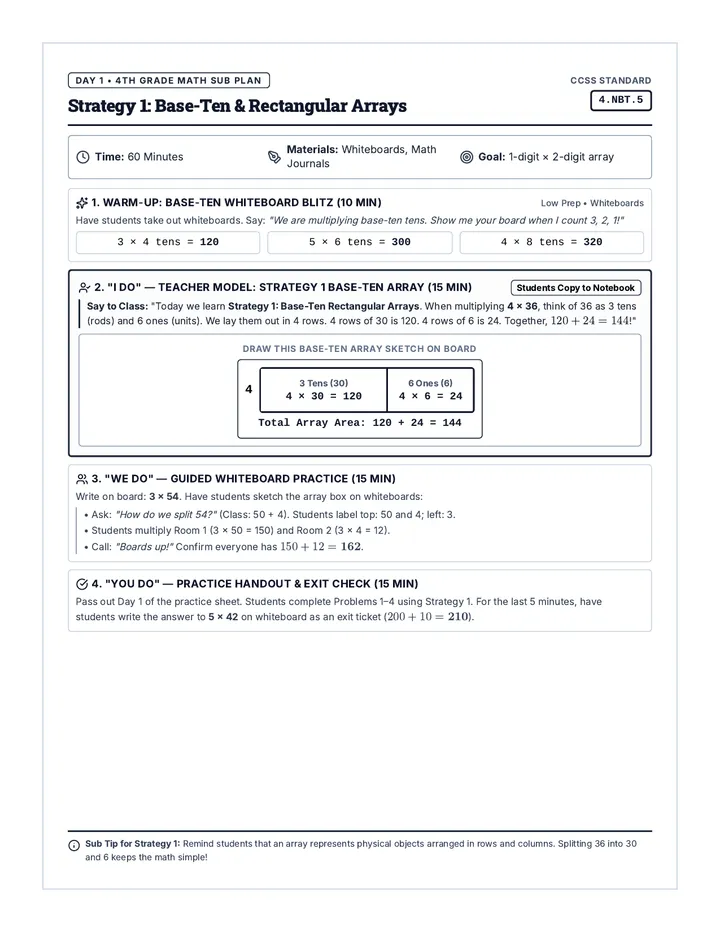
Single Digit Sub Guide

Multiplication Mastery Week

A comprehensive 5-day math curriculum sequence for 4th Grade standard 4.NBT.5, featuring scripted sub plans with gradual release, low-prep whiteboard and manipulative routines, student notebook guides, and a spiraled weekly homework packet.

RM

Rodnesha Minor

7
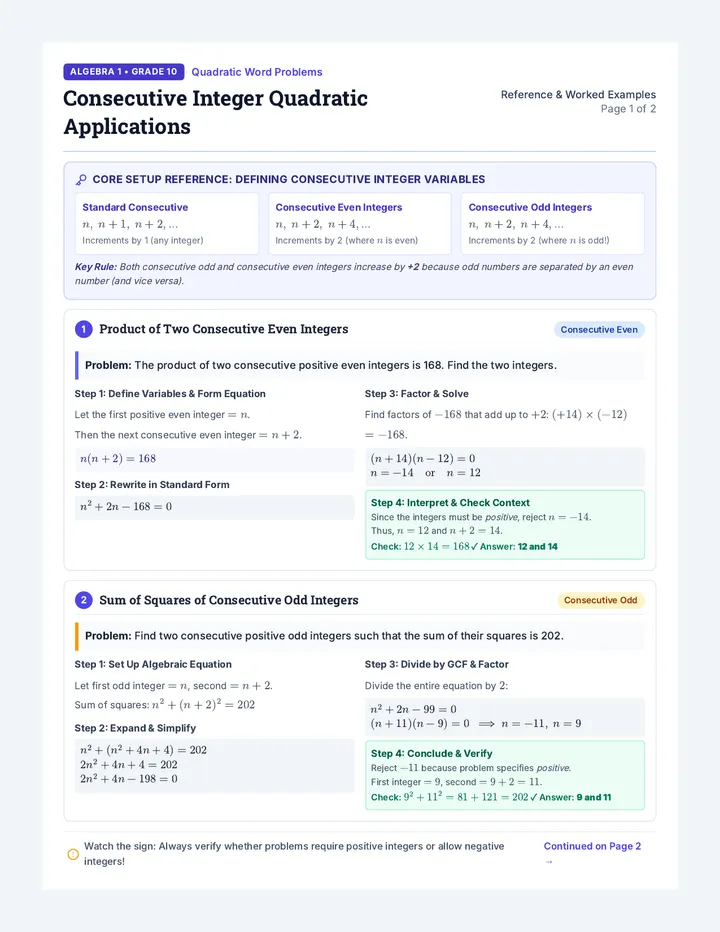
Consecutive Quadratics Practice Guide

Consecutive Integer Quadratics

A focused 10th-grade algebra lesson on modeling real-world and algebraic relationships using quadratic equations with consecutive odd and even integers. Features structured reference materials and an in-depth teacher solutions key.

AR

Angie Rice

4
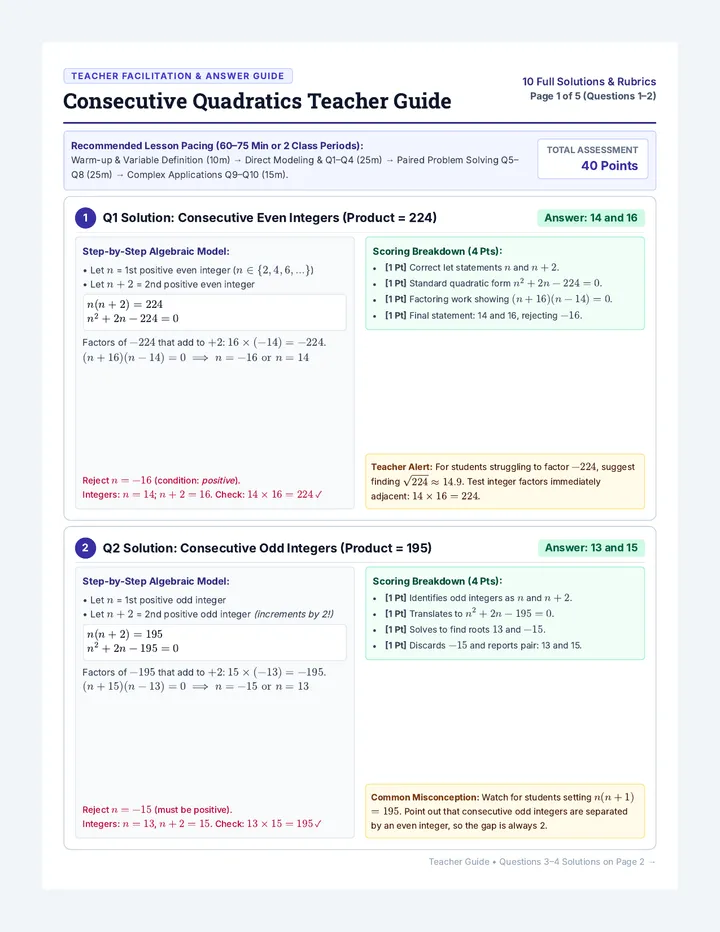
Consecutive Quadratics Teacher Guide

Consecutive Quadratics Teacher Guide

A five-page comprehensive teacher guide and solutions manual matching the ten-problem student worksheet. Provides detailed step-by-step algebraic solutions, 4-point grading rubrics for all 10 problems, pedagogical notes, error diagnostics, and differentiation strategies.

AR

Angie Rice

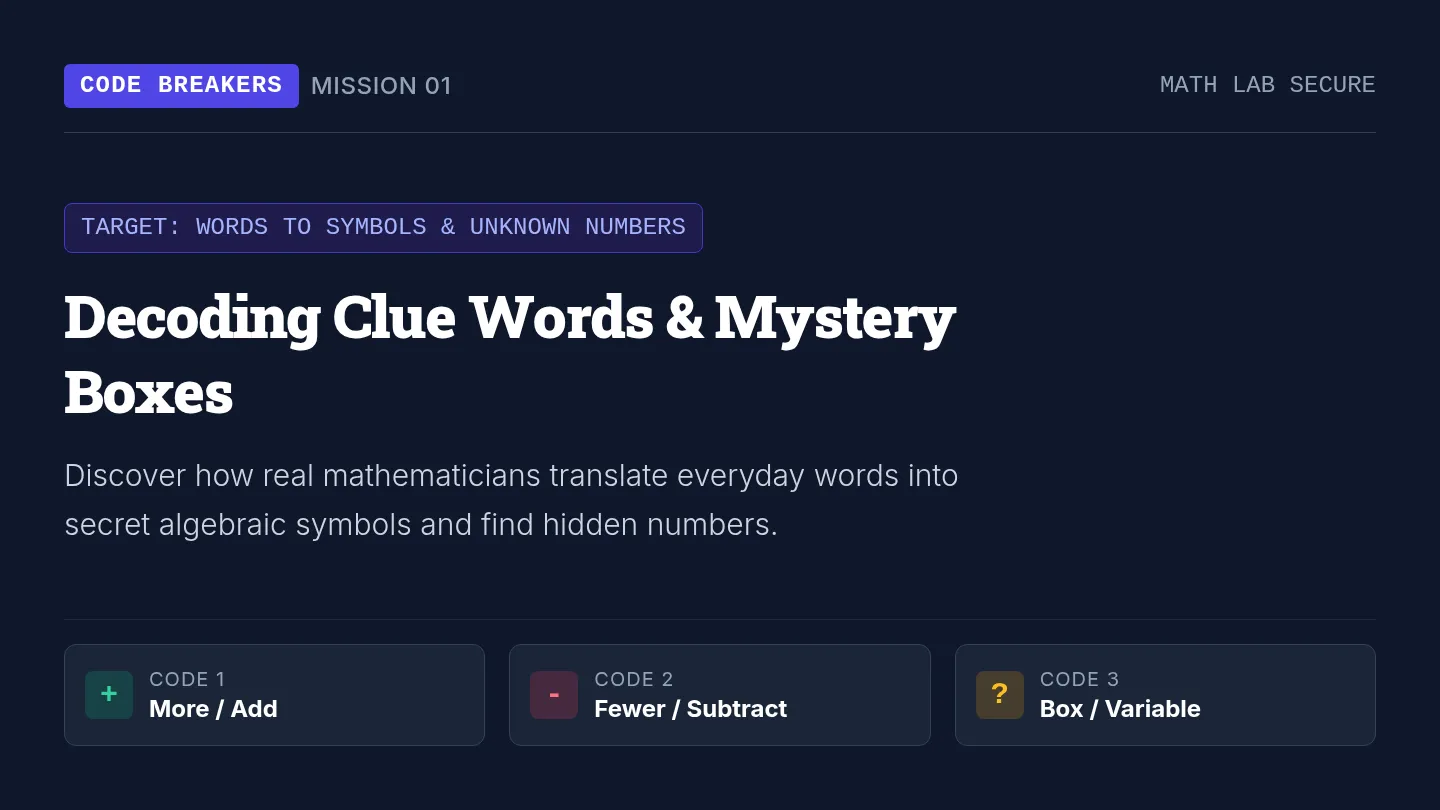
Clue Words Presentation

Code Breakers Squad

A scaffolded pre-algebra sequence designed for sixth graders building confidence from second-grade arithmetic foundations. Students use code-breaking visual models, mystery boxes, number swaps, and equal-group arrays to master algebraic concepts without cognitive overload. Each lesson bridges concrete representations to symbolic expressions with age-respectful styling and supportive pacing.

MJ

Meg Jones

9
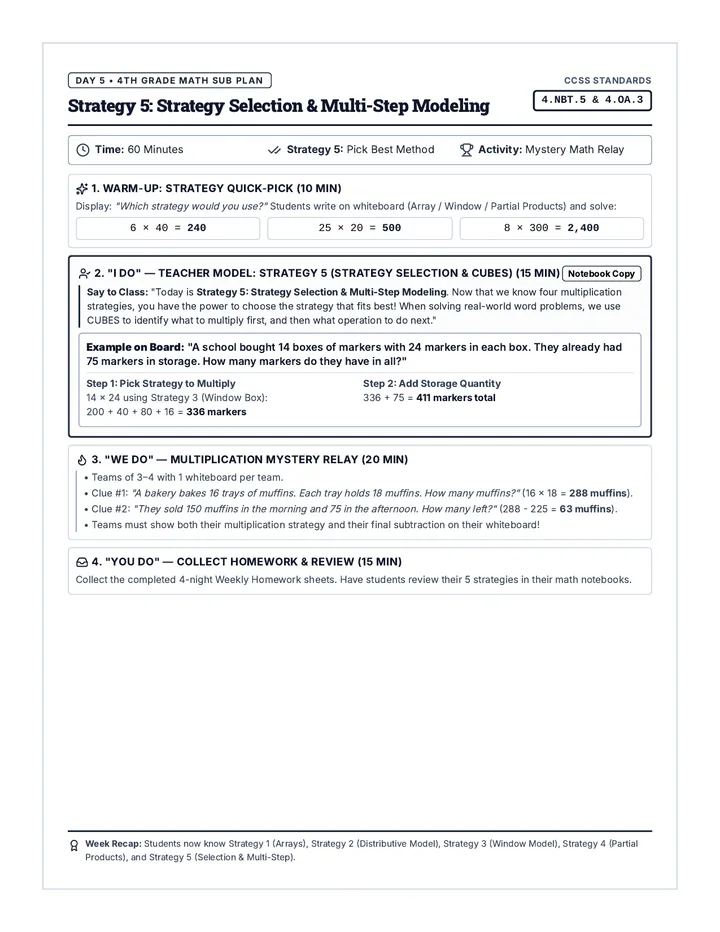
Problem Solving Sub Guide

Spiral And Problem Solving

Day 5 synthesizes multiplication strategies with multi-step word problems, error analysis, and includes the complete 4-night spiraled weekly homework packet and full answer keys.

RM

Rodnesha Minor

3
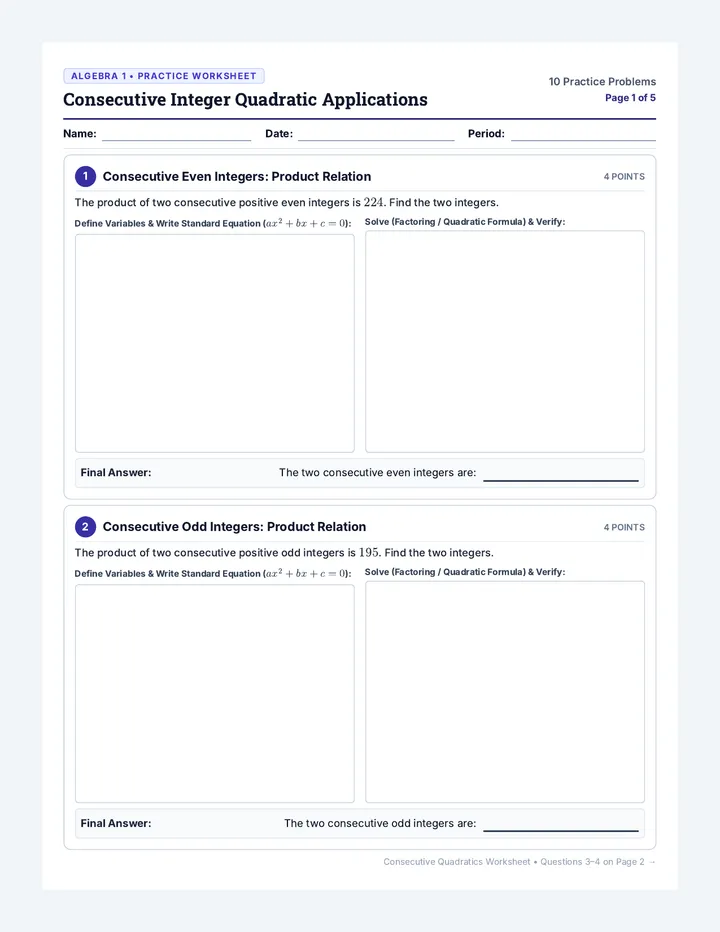
Consecutive Quadratics Worksheet

Consecutive Quadratics Worksheet

A five-page student worksheet containing ten comprehensive quadratic application word problems involving consecutive odd and even integers. Features expanded, extra-large partitioned blank work areas for defining variables, setting up standard-form equations, factoring, and contextual checks.

AR

Angie Rice

Task Tracker Data Sheet

Task Master

A multi-day progress-monitoring system designed to assess and track IEP goals for following multi-step functional reading instructions. It includes 10-trial combined-measure data sheets, realistic vocational and project task cards, and assessment administration protocols.

RC

Roni Coleman

4
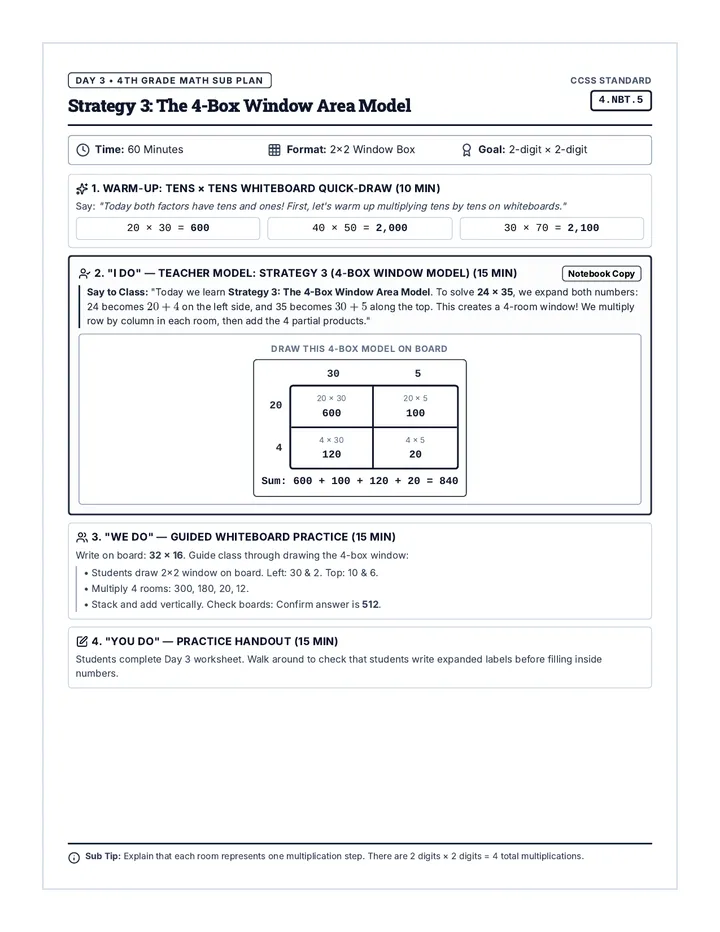
Double Digit Sub Guide

Double Digit Models

Days 3 and 4 tackle multiplying two two-digit numbers using 4-part rectangular area models and partial products, featuring turnkey scripts, whiteboard showdown routines, and student notebook organizers.

RM

Rodnesha Minor

2