A 5-lesson sequence for 3rd graders to master text-to-speech (TTS) technology. Students progress from identifying basic controls to independent 'ear reading' with grade-level digital texts.
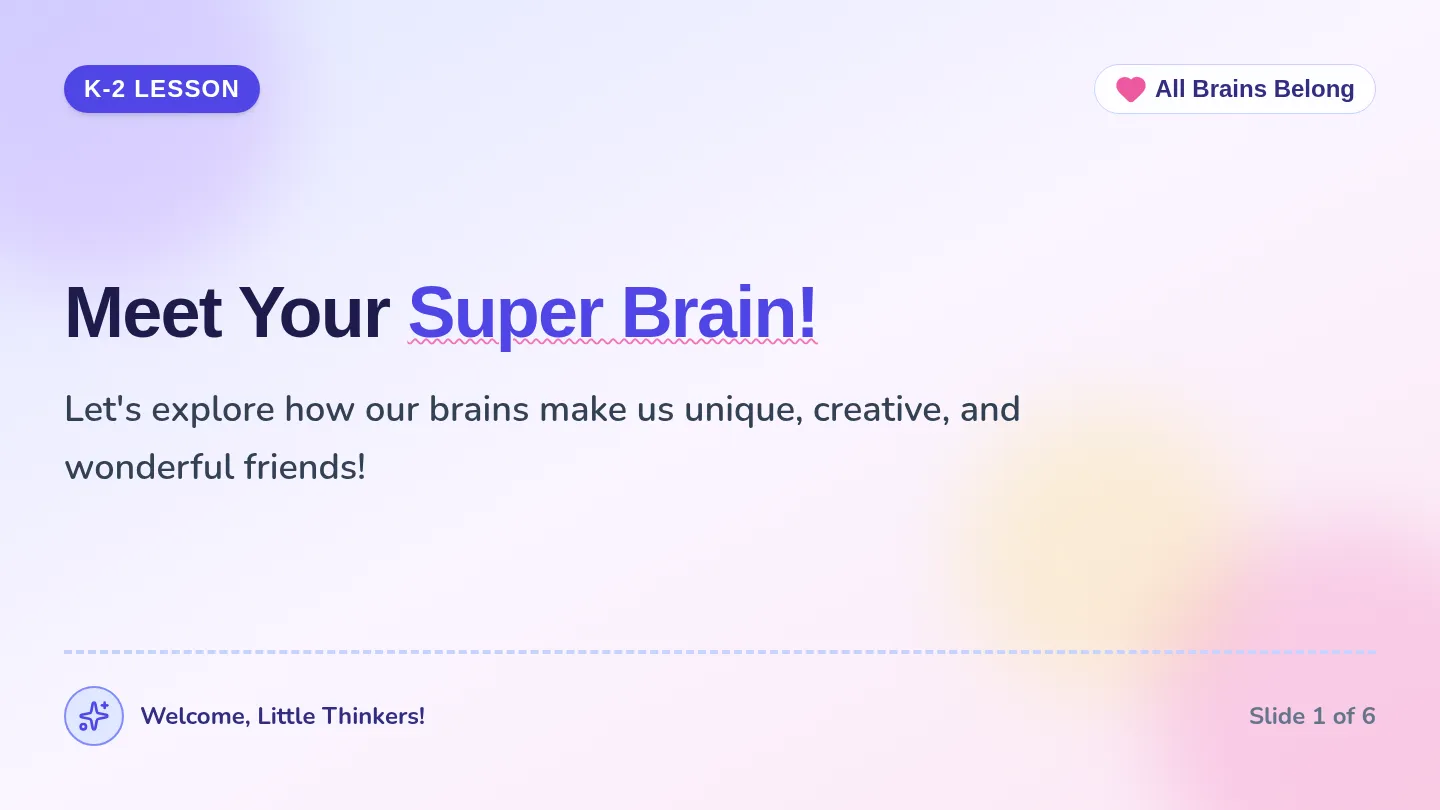
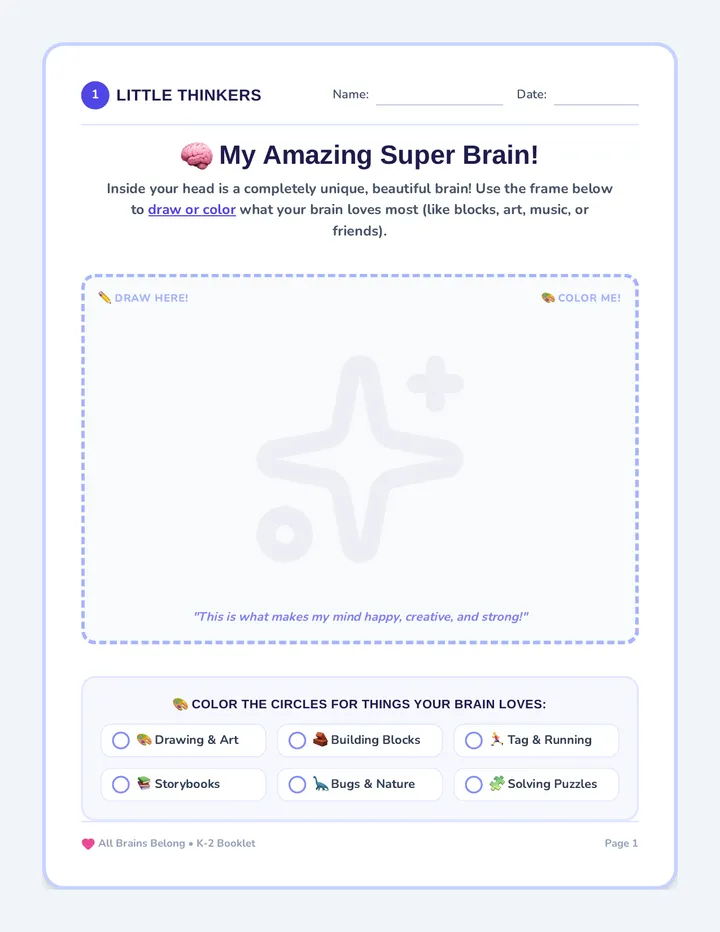
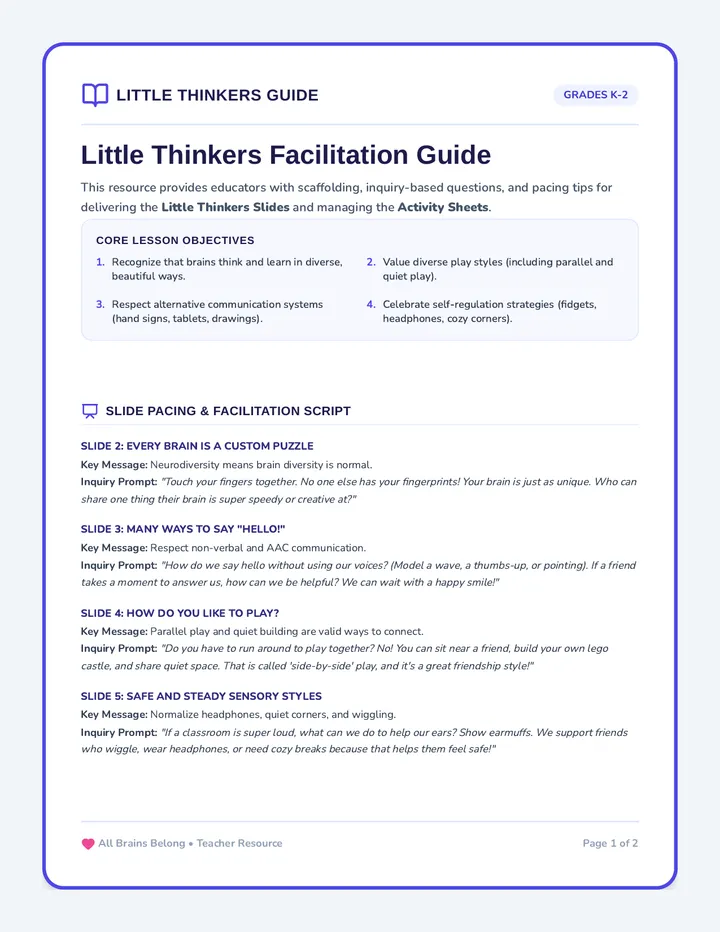
A comprehensive educational unit celebrating neurodiversity, acceptance, and inclusive communication across elementary grades. It equips educators with slide presentations and reflection tools tailored for K-2 and 3-5 students to cultivate empathetic classrooms.
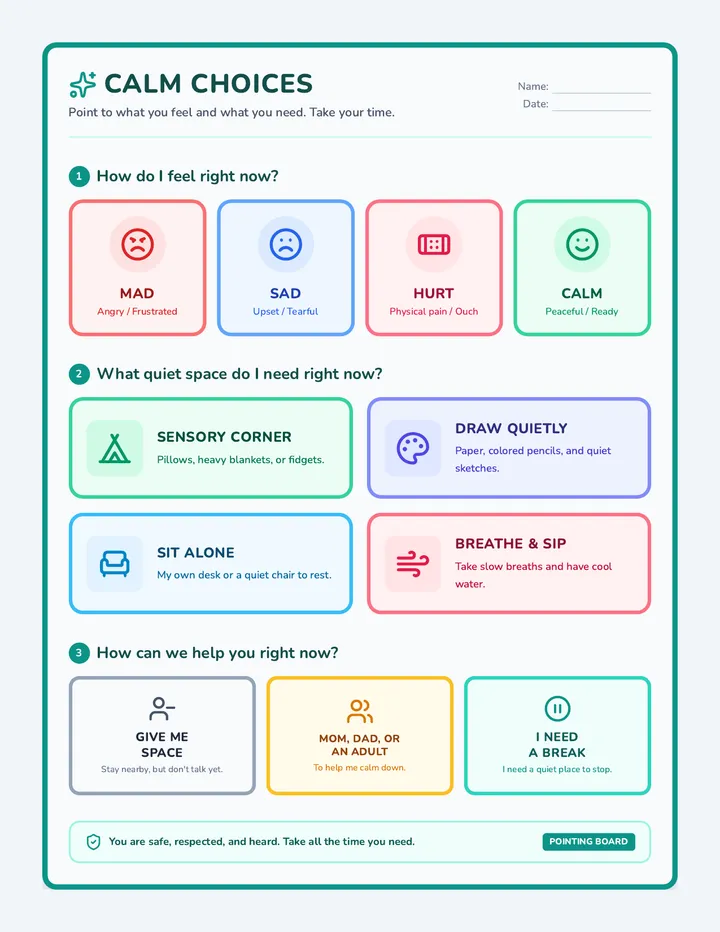
A lesson focusing on visual communication and calming strategies for students recovering from midday peer conflicts.
An updated visual choice board for student conflict resolution, featuring modernized sections for feelings (Mad, Sad, Hurt for physical pain, Calm) and immediate communication needs (Give Me Space, I Need Mom, Dad, or an Adult to help me calm down, I Need a Break).
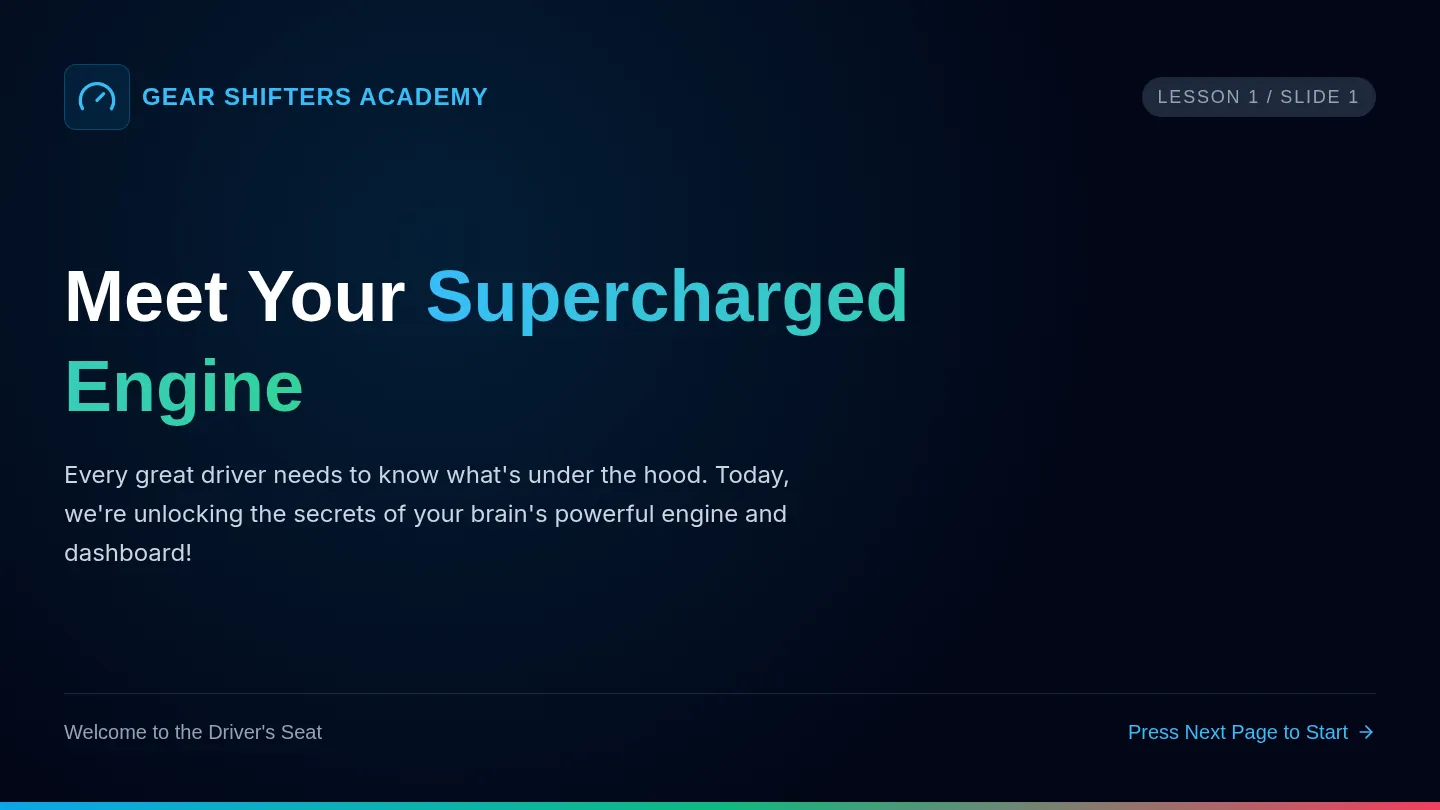
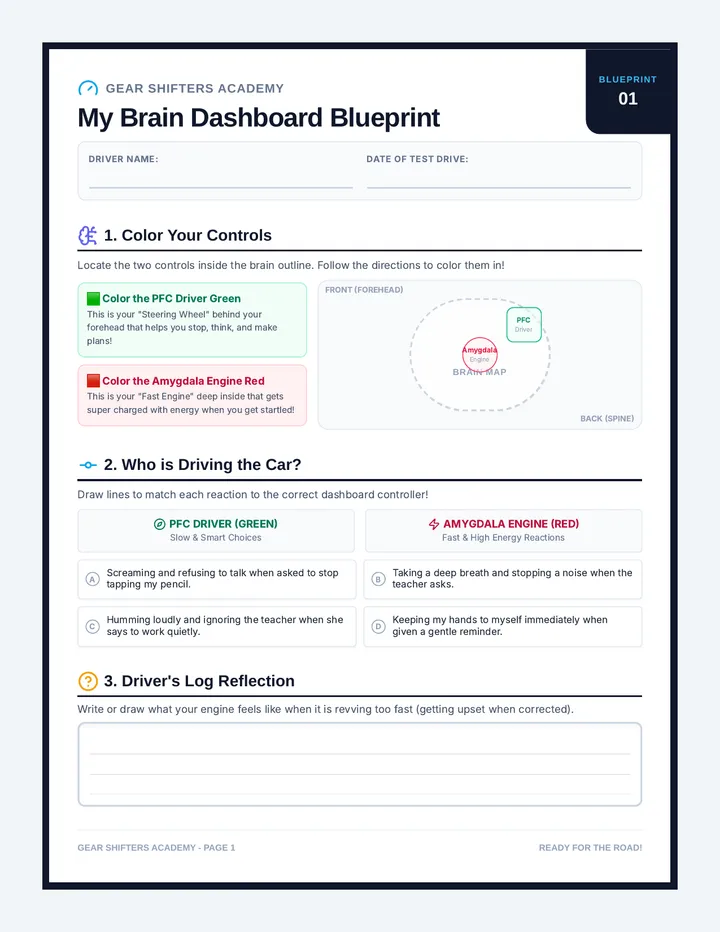
An automotive-themed emotional regulation curriculum designed for elementary students (specifically those with ADHD/Rejection Sensitivity) to reframe feedback triggers as engine RPM revs and coping strategies as downshifting gears.
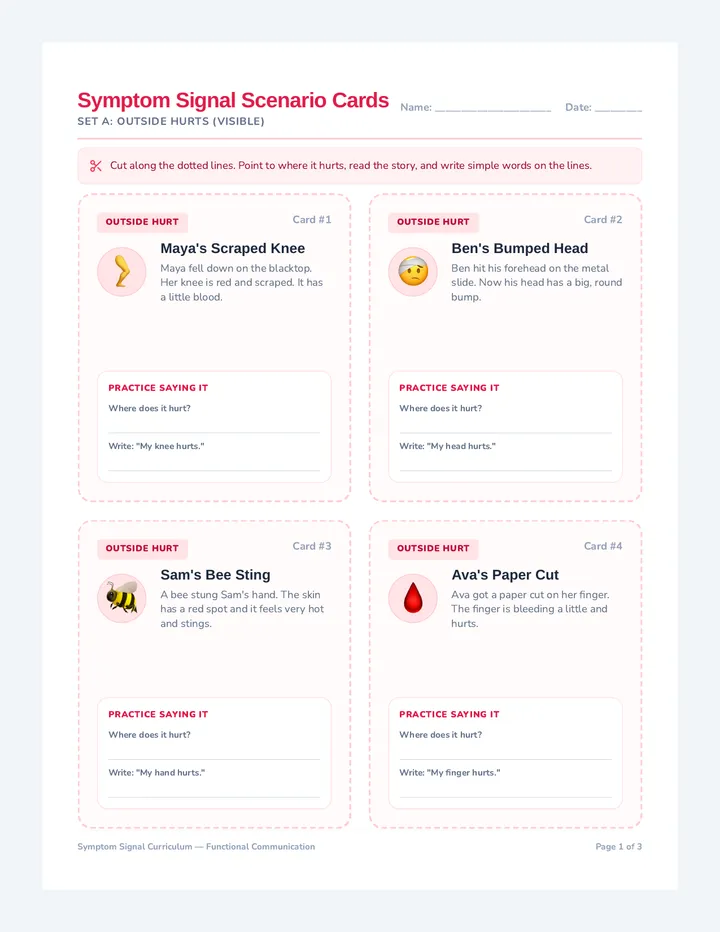
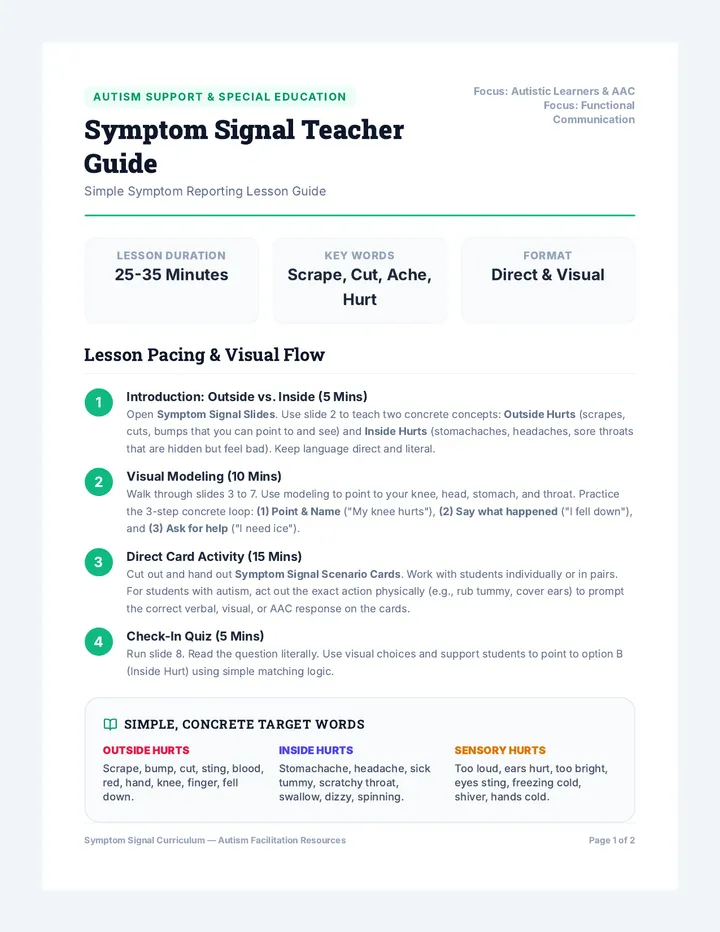
A functional communication lesson designed to help students expressively label visible and non-visible pain, injuries, and discomfort. Students practice reporting playground injuries, internal illnesses, and sensory sensitivities.
A 2-page teacher facilitation and implementation guide. Includes lesson pacing, target vocabulary, a tiered differentiation framework for verbal/non-verbal/AAC students, and concrete questioning scripts.
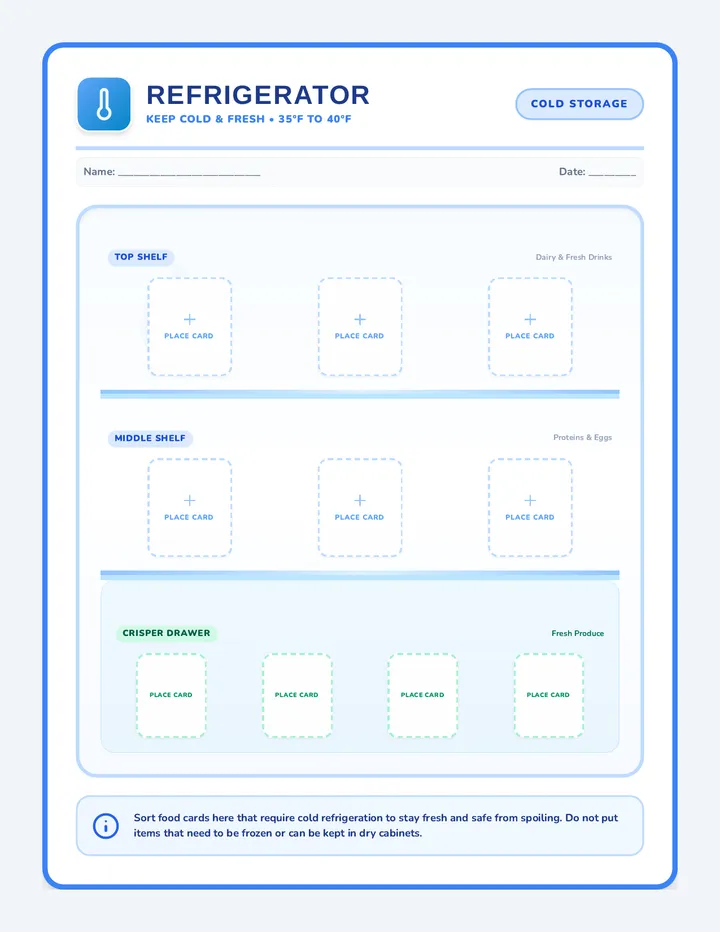
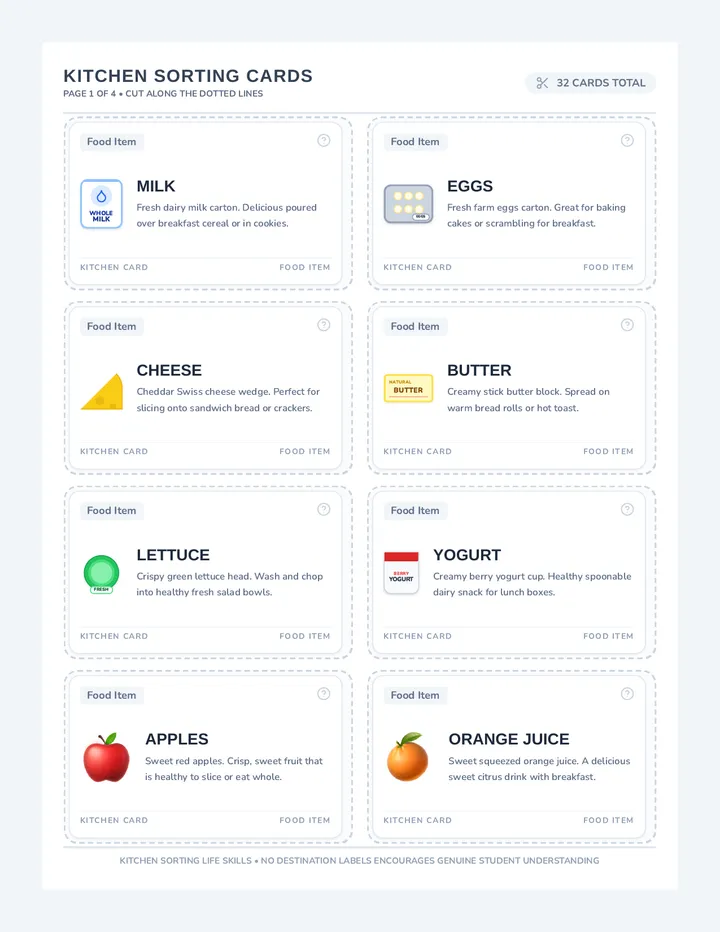
A progressive life-skills curriculum designed to teach students how to identify, categorize, and sort grocery items. Starts with kitchen storage sorting (fridge, freezer, pantry) and advances to sorting by major retail grocery store departments.
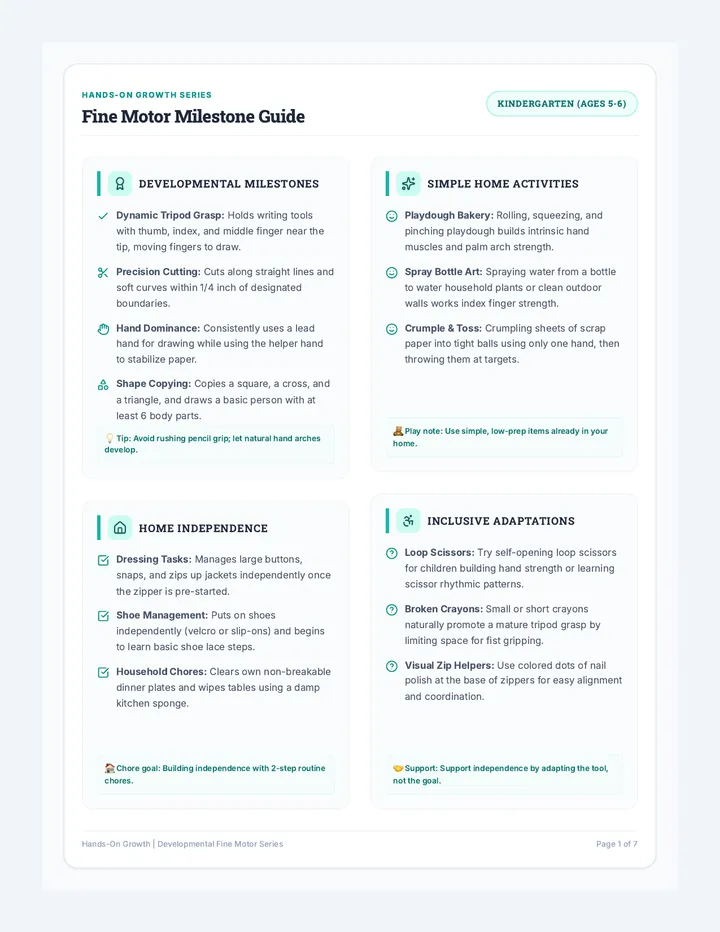
A comprehensive guide for parents outlining fine motor milestones, home self-care/chore expectations, and simple strengthening activities for kindergarten through sixth grade.
A 3-page printable card deck containing 12 distinct visual scenario cards. Each card features a kid-friendly situation, high-contrast illustration, and clear writing lines for students to label the pain type and practice expressive sentence starters. Set C features sensory discomforts (Sound, Light, Cold, and Hot).
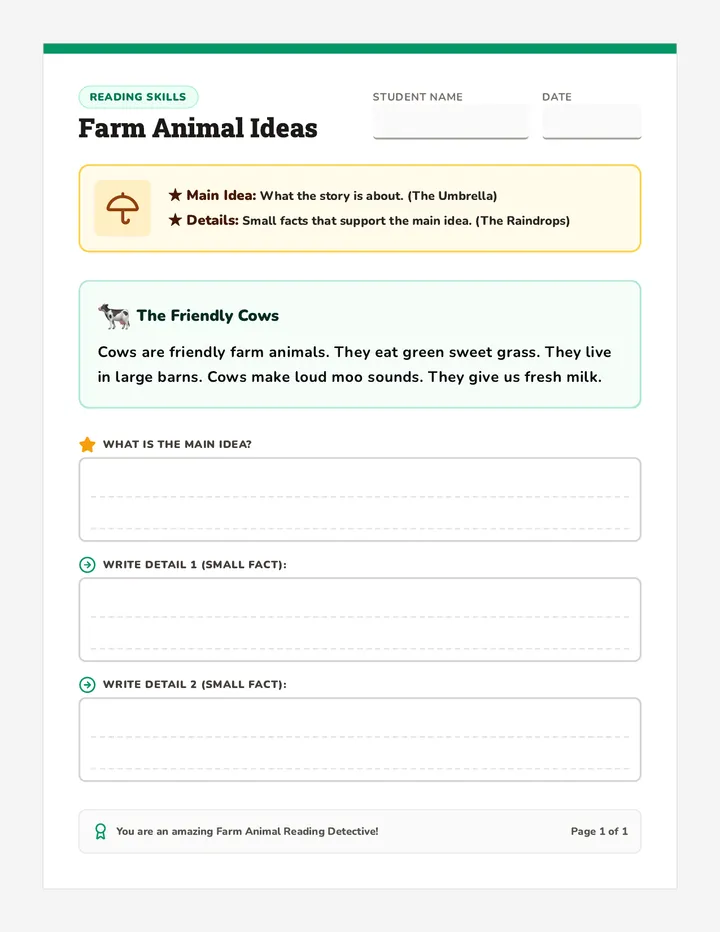
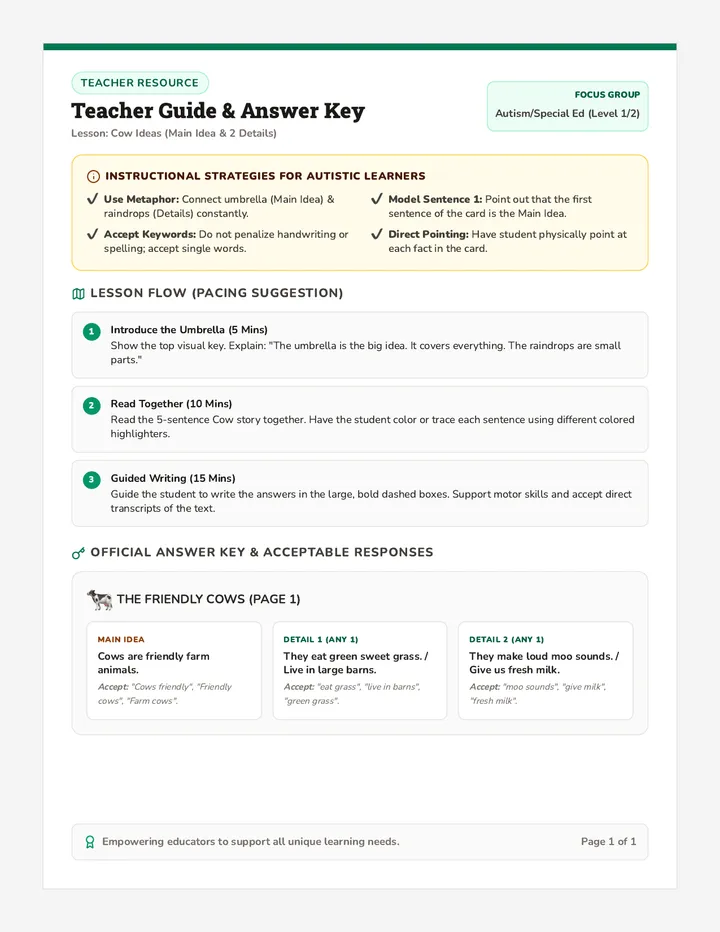
A structured reading comprehension sequence designed for students with autism to practice identifying the main idea and supporting details using highly recognizable farm animals like cows, pigs, and chickens. Each lesson focuses on a single animal to keep cognitive load low and handwriting spaces large.
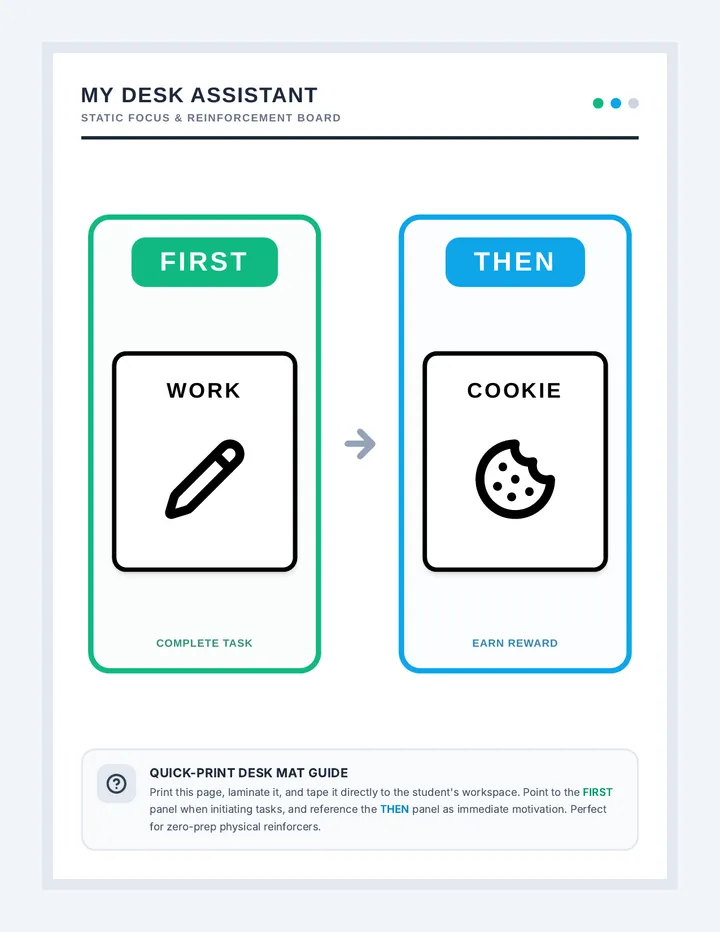
A collection of clean, high-contrast visual supports and desk mats to assist neurodiverse students with transitions, task focus, and reinforcement.
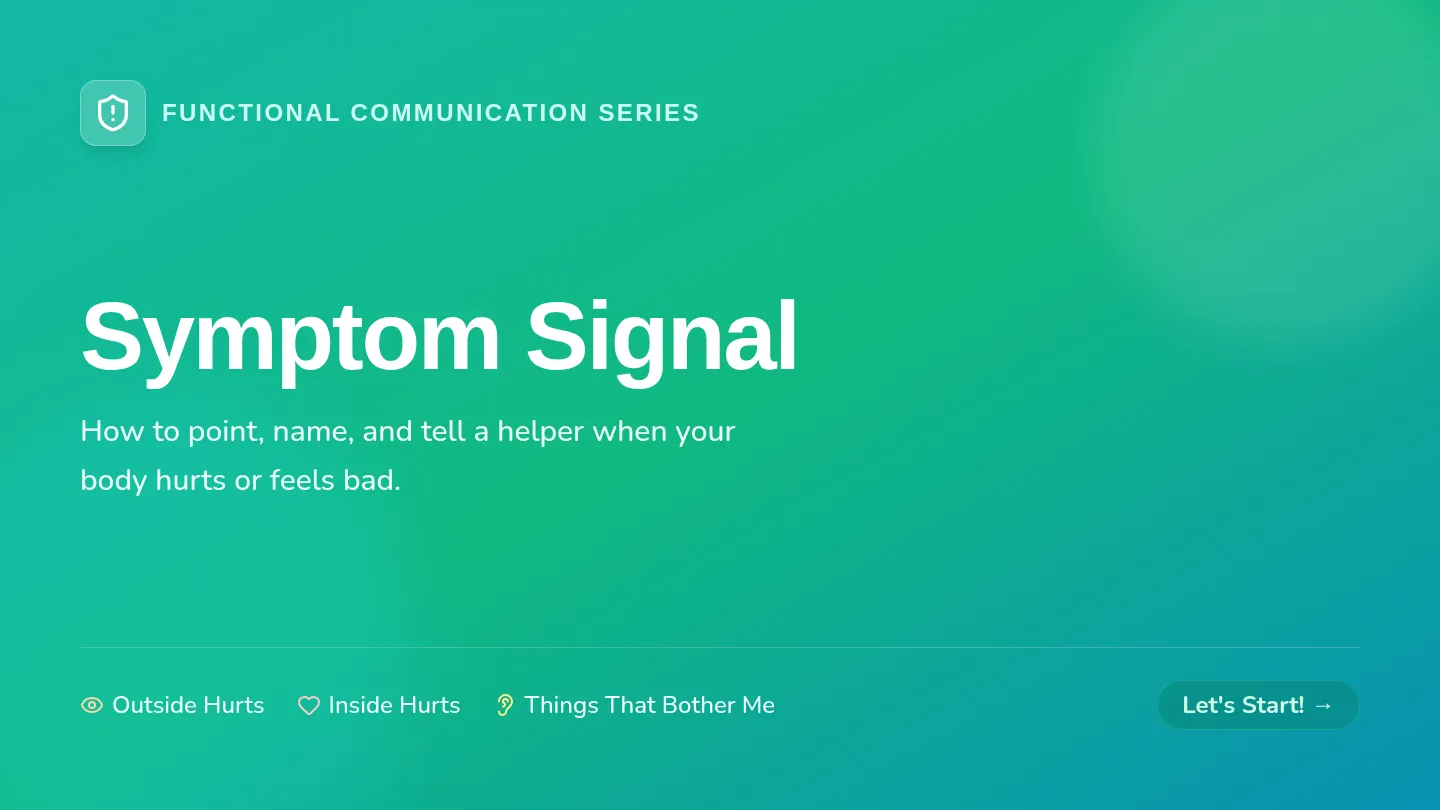
A structured 15-slide presentation for the 'Symptom Signal' lesson. It is organized into three distinct categories: Outside Hurts (visible skin injuries), Inside Hurts (non-visible illnesses), and 'Things That Bother Me' (sensory discomforts including sound, light, hot, and cold examples) with guided kid-friendly practice scenarios.