Mental imagery techniques and sensory mapping to bridge the gap between decoding and comprehension. Supports memory retention through sketching, verbalizing scenes, and identifying descriptive language.
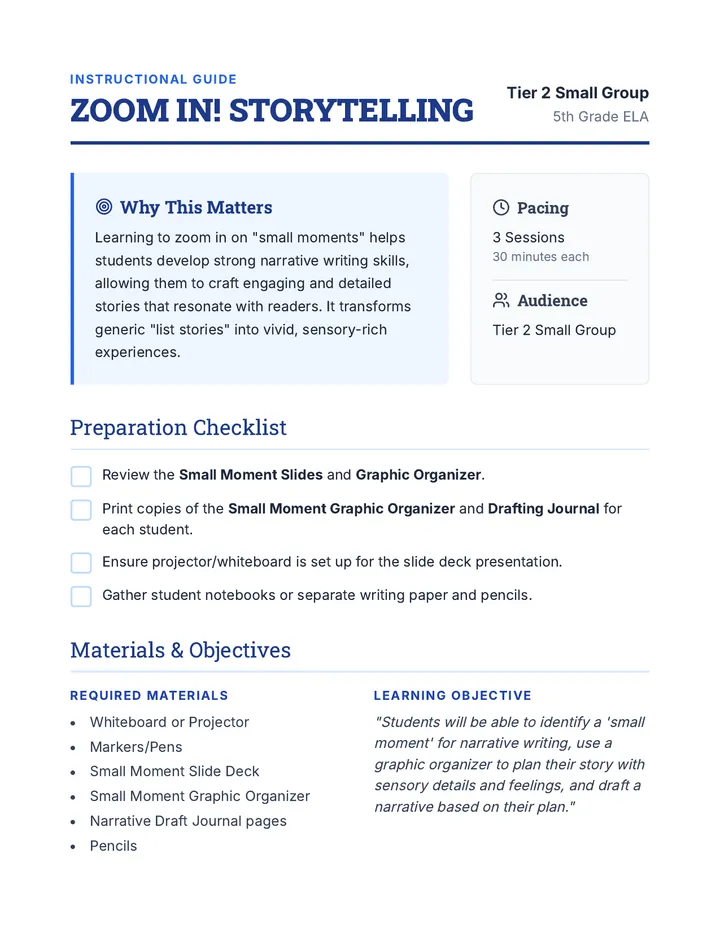
This instructional sequence provides targeted Tier 2 and Tier 3 supports for 5th-grade students, focusing on narrative writing skills and individual behavioral self-regulation strategies using a 'blueprint' thematic approach.
A 5-session comprehension program for 7th and 8th grade special education students using animated shorts to teach sequencing, inference, and perspective-taking. Students use "detective" tools and movement breaks to stay engaged and build critical thinking skills.
A specialized sequence for 6th-grade students focusing on working memory support through visual encoding. Students learn to transform auditory single-step directions into mental images and physical sketches to improve recall and task execution.
This sequence introduces 3rd-grade students to mental imagery and the 'Link Method' mnemonic device. Students progress from visualizing simple nouns to constructing complex 'mental movies' and applying these skills to retain informational text and lists of up to 10 items.
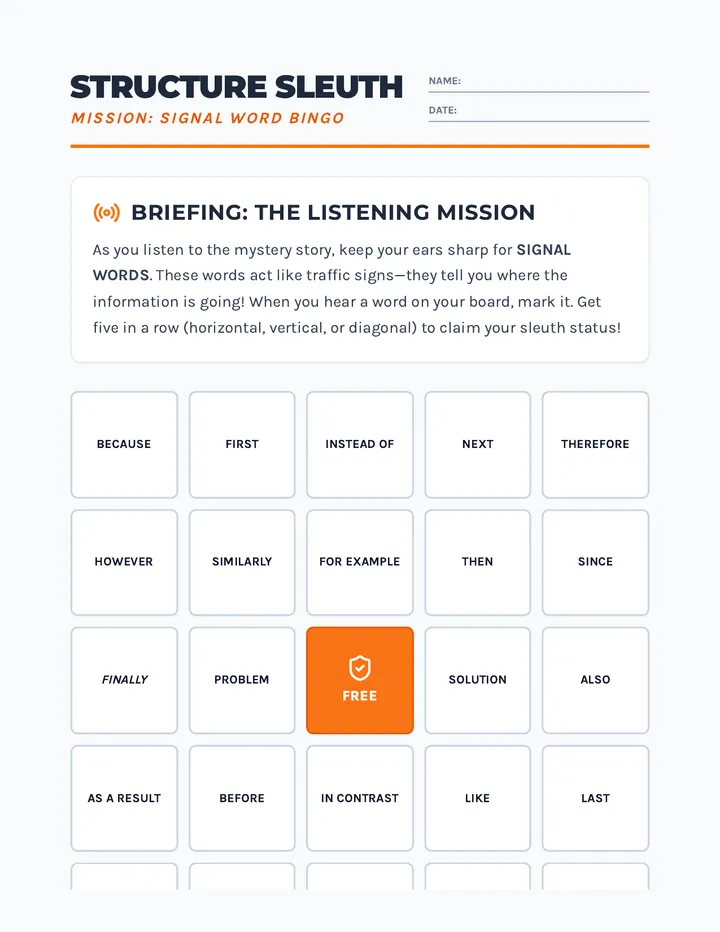
A specialized sequence for 6th-grade students with working memory challenges, focusing on transforming linear information into visual maps. Students learn to identify text structures through signal words, develop personal iconography, and master non-linear note-taking techniques to improve comprehension and recall.
A structured 5-lesson sequence for 8th-grade special education students to master inferencing. Moving from visual analysis to textual evidence, students learn to combine explicit clues with prior knowledge using the formula: Text Clues + Schema = Inference.