This inquiry-based sequence helps 6th-grade AAC users understand the underlying logic of their communication devices, including color coding (Fitzgerald Key), semantic associations, and category hierarchies, to build navigation independence.
A 10-session executive functioning therapy group for 6th graders designed to build core skills in planning, organization, and self-regulation. Each 30-minute session uses a 'Command Center' theme to engage middle schoolers in becoming the 'Boss' of their own brains.
A comprehensive social skills unit focused on personal boundaries, responding to rejection, and understanding social cues for middle school students with autism.
A collection of practical resources and evidence-based strategies for teachers to manage challenging behaviors, refocus students, and maintain a positive classroom environment.
A collection of parent-facing resources for supporting sensory processing and proprioception at home for students across all age ranges, from elementary to high school.
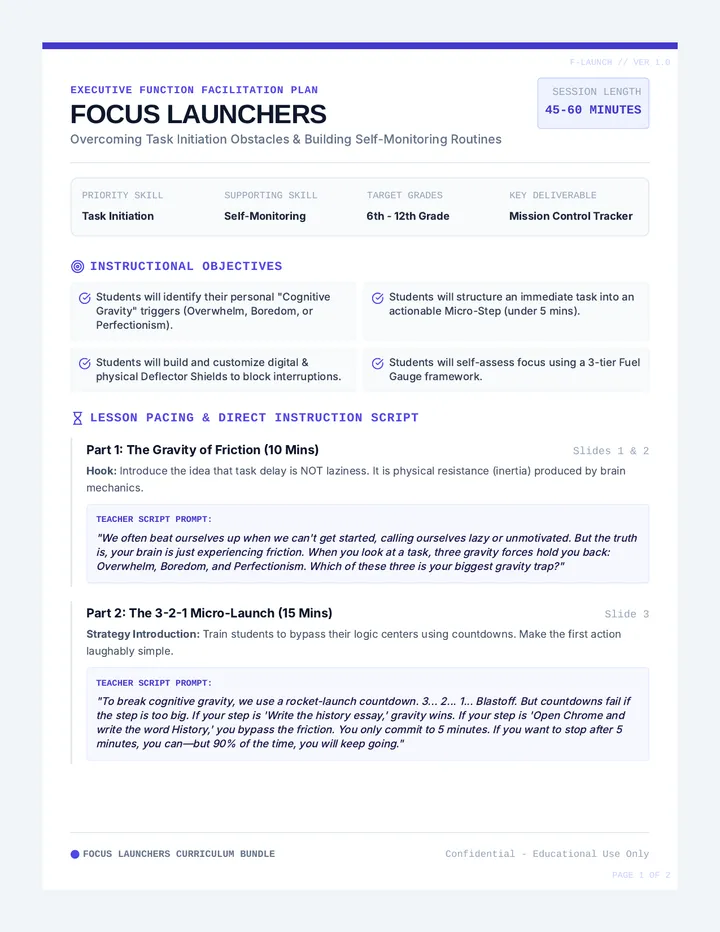
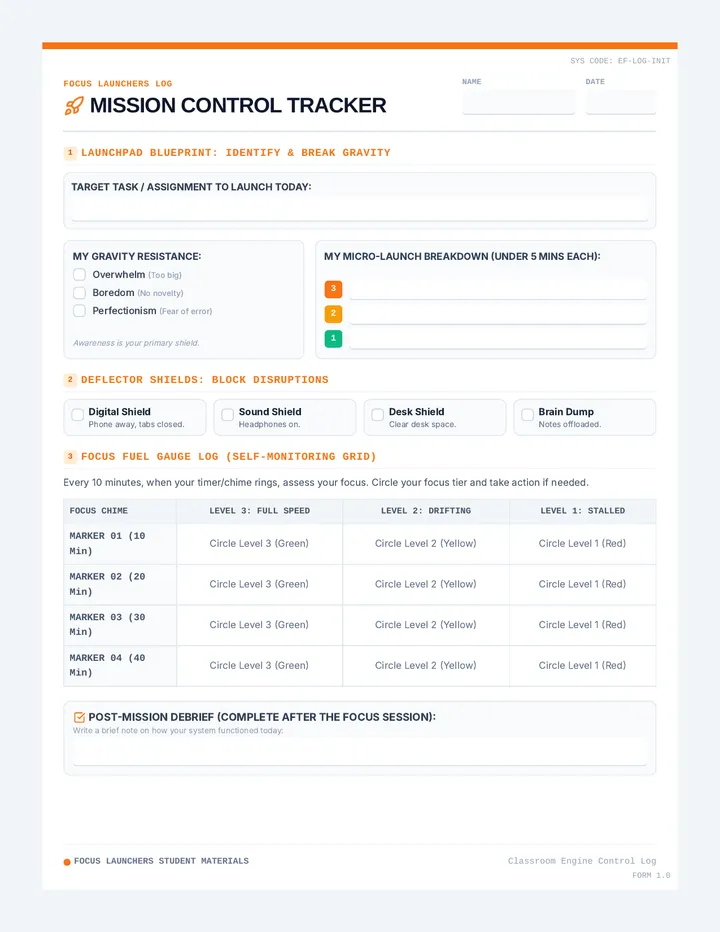
A 4-lesson transition program designed for 6th graders with ADHD, focusing on executive functioning, social-emotional learning, and academic strategies using a NASA-inspired 'Mission Control' theme.
A series of three progressive lessons for special education students to master money word problems, from basic change-making to multi-step calculations with tax. Includes visual aids and simplified vocabulary to support diverse learners.
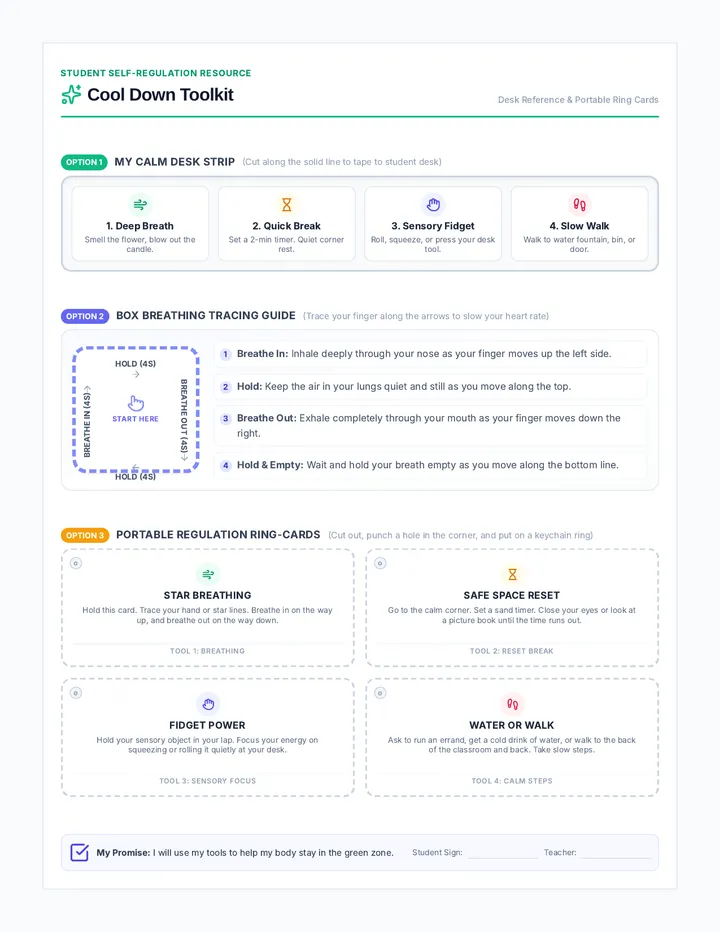
A sequence focused on transitioning a student from prompted to independent use of a self-regulation routine (breathing, timing, and sensory tools) across various real-world environments.
A series of lessons designed to help ADHD and AuDHD students understand their unique brain 'operating systems,' develop self-advocacy, and build resilience through growth mindset strategies.
A 36-week social communication curriculum for children with Level 1 autism and ADHD, focusing on the nuances of the Emotion Wheel through 15-minute weekly lessons.
A series of highly visual, low-reading-level microwave recipes designed to build independent living skills through simple mug-based snacks.
A comprehensive 20-day phonics and decoding sequence designed for middle school students with IEPs, focusing on short vowels, complex consonant blends, and multisyllabic word strategies. Using a 'Decoding Lab' theme, this unit provides explicit instruction, teacher scripts, and age-appropriate practice to build reading fluency and confidence.
A comprehensive unit for The Giver tailored for students with high cognitive abilities but low decoding levels, focusing on visual storytelling and deep conceptual discussion.
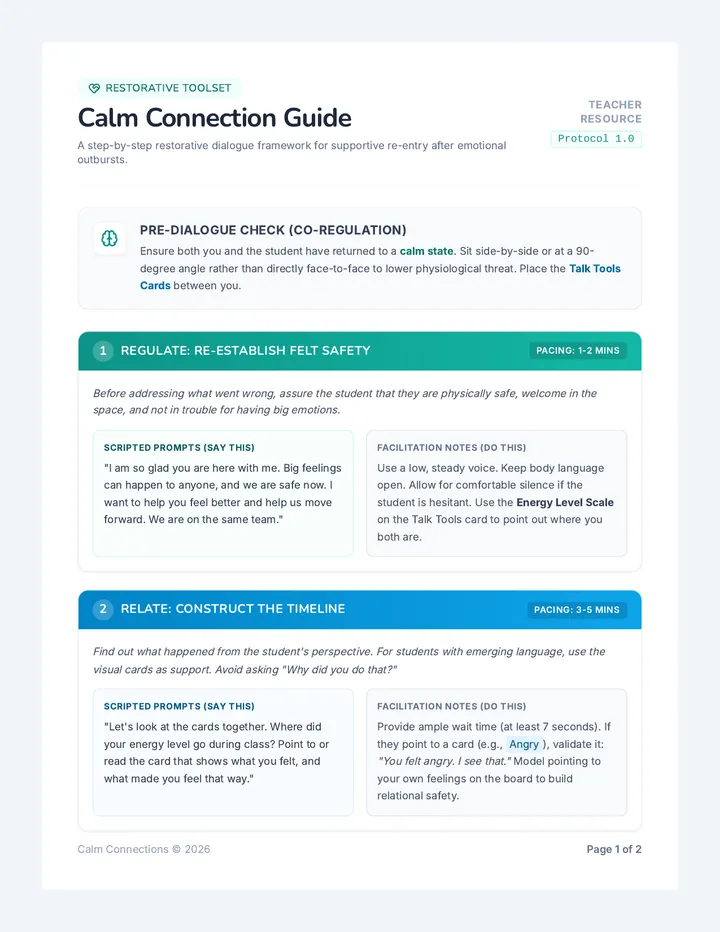
A series of resources and protocols designed to foster a restorative culture within a school environment, prioritizing accountability and relationship repair over punishment.
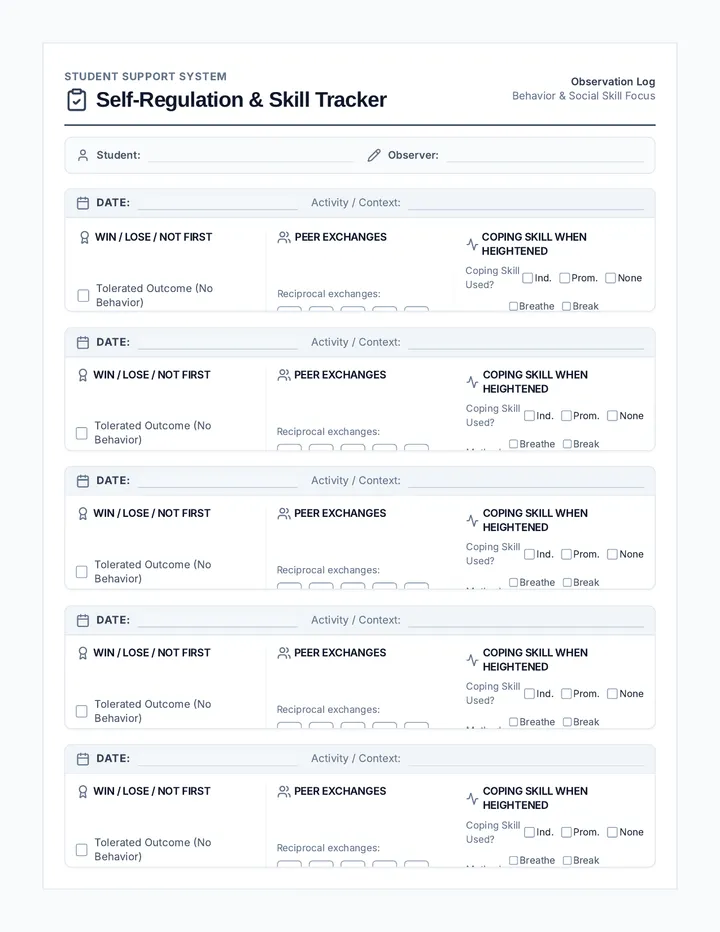
A collection of tools and guides for educators to monitor student behavior and progress, facilitating clear communication between school and home.
A set of four intensive intervention lessons based on the 'Burger Battles' article. Two lessons focus on prefix fluency (re-, in-, pro-) and timed readings, while two lessons focus on comprehension through author's purpose and text response.
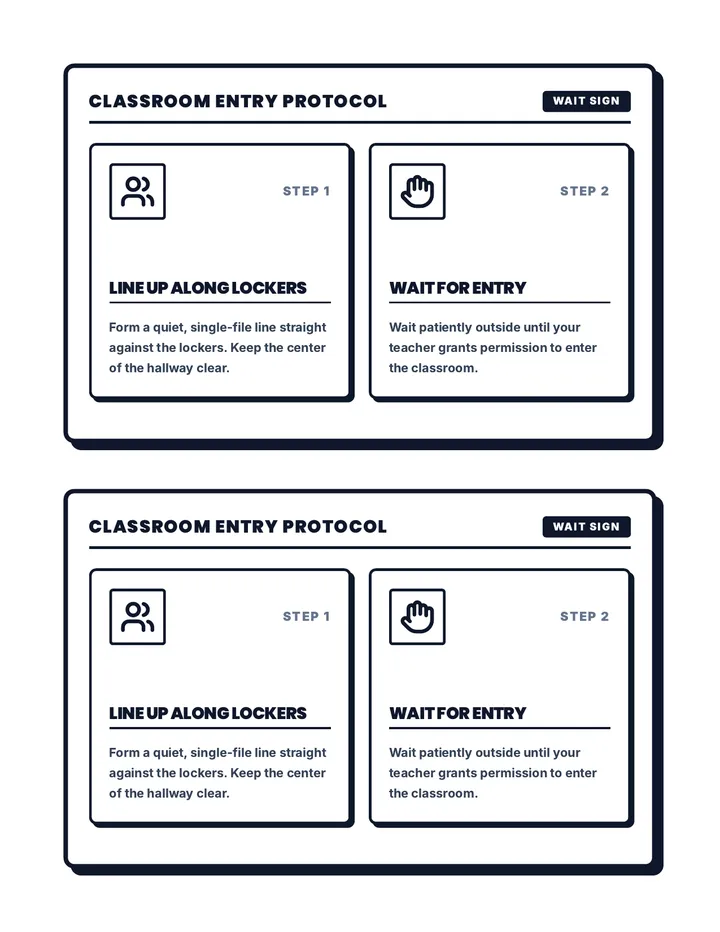
A sequence designed for a 13-year-old student with ADHD, OCD, and anxiety to build patience and manage impulsivity in high-stress classroom situations. Focuses on waiting for permission during overstimulation and navigating the delay when requesting help after a period of refusal.
A comprehensive sequence designed to refine and align school-wide PBIS systems, featuring facilitation materials for staff workshops and practical implementation tools for teachers and students.
A multi-part speech-language therapy unit for middle schoolers focused on vocabulary development through the lens of NASA's Artemis II mission. Students use context clues strategies (IDEAS) to master mission-specific terminology.
A collection of fast-paced, high-engagement speech-language therapy lessons for middle schoolers. Each mission targets Tier 2 academic vocabulary and multiple meaning words, integrated with executive function 'brain hacks' to improve impulse control and working memory in academic settings.
A comprehensive suite of progress tracking templates designed for students with ASD who are English Learners, aligned with the five WIDA Alternate ELD Standards. This set includes narrative logs, frequency tallies, and goal-setting sheets to simplify documentation and data-driven instruction.
A multi-themed word study sequence that explores suffixes and base words through diverse real-world contexts, from the African savanna to the professional basketball court.
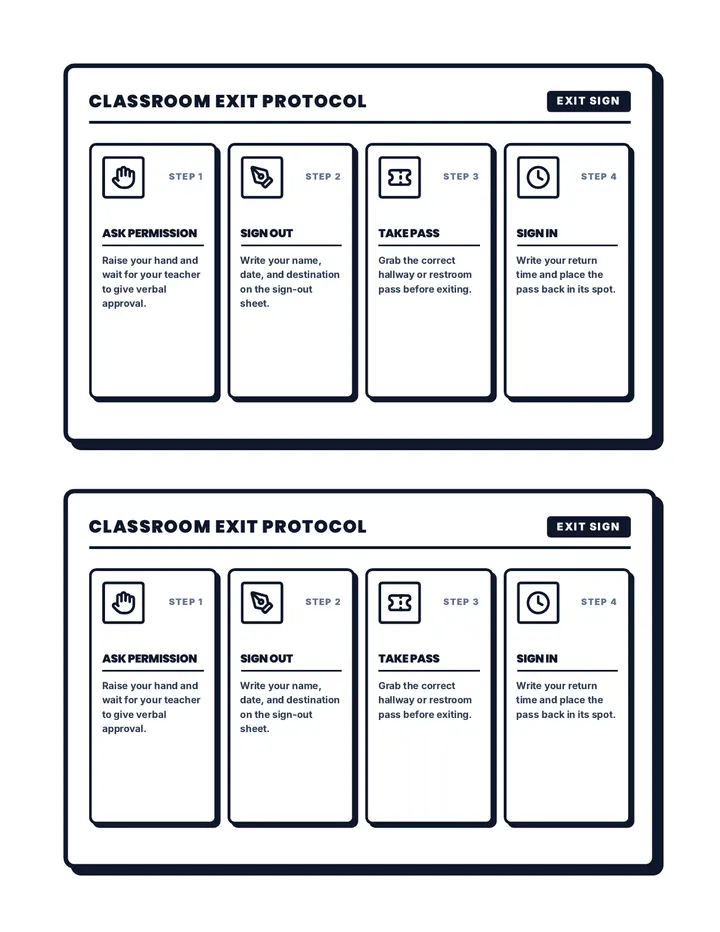
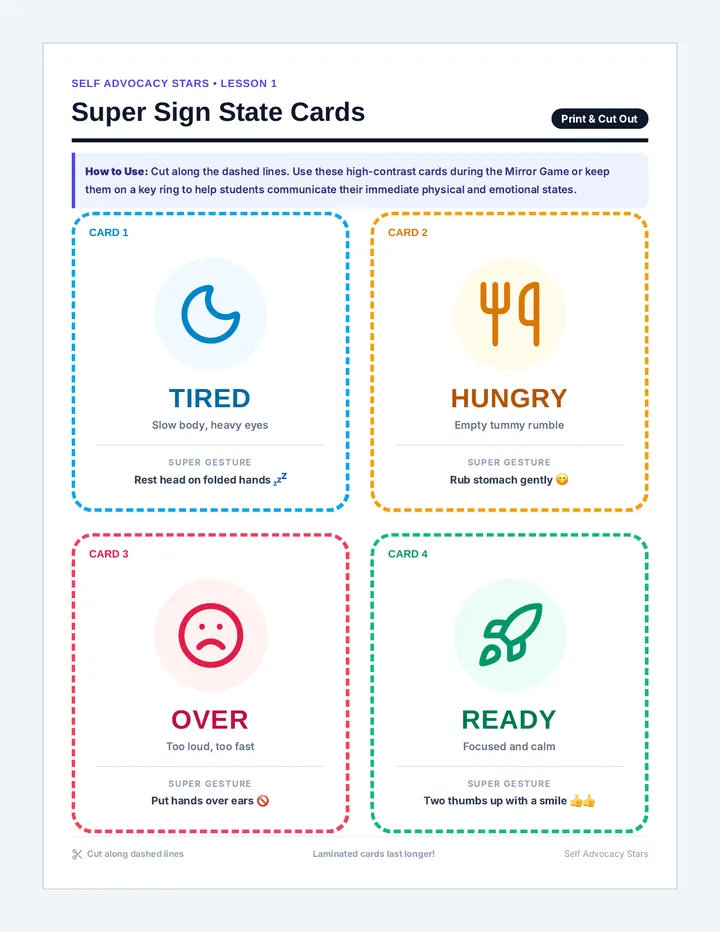
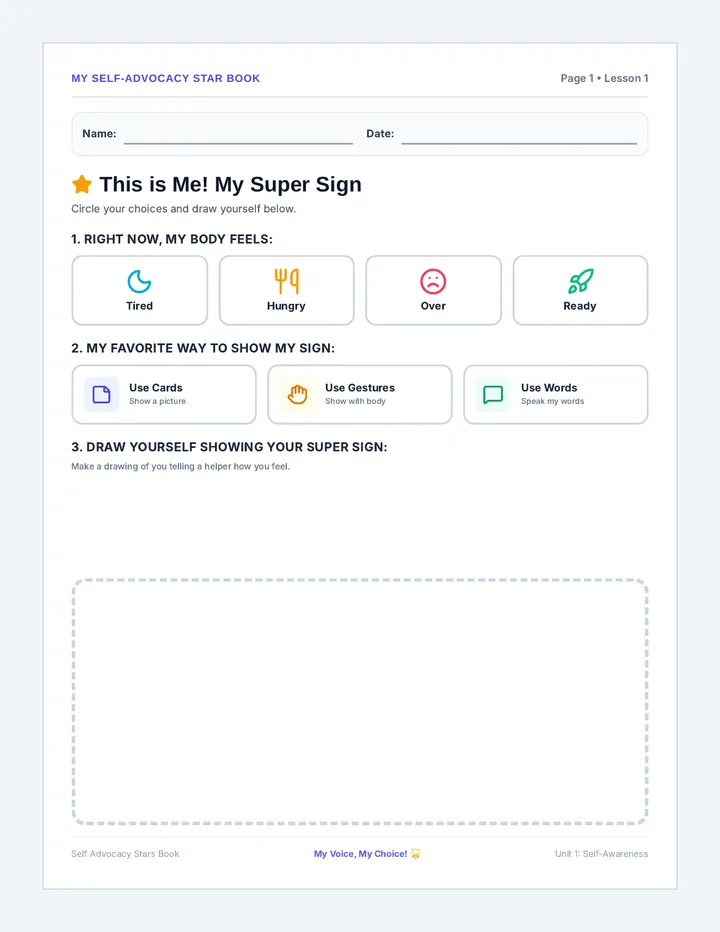
A series of lessons designed for middle school students with intellectual disabilities to develop social communication and self-advocacy skills. The unit focuses on the 'Social Filter' (knowing when to speak) and the 'Help Signal' (knowing when and how to ask for teacher assistance).
A collection of lessons designed to build a neurodiversity-affirming classroom culture. Students explore different ways of thinking and learning, such as ADHD and Anxiety, through relatable analogies and practical allyship strategies.
A structured social skills sequence designed for middle schoolers with autism, focusing on physical presence, mental engagement, and cooperative task completion in group settings. The sequence uses a 'Technical Blueprint' theme to provide concrete, visual frameworks for abstract social concepts.
A comprehensive program designed to help students with ADHD understand their brain, develop self-regulation strategies, and implement behavioral systems for success. The sequence provides both instructional content for students and strategic guidance for educators.
A comprehensive 2-week unit designed for autistic students to explore their identity, identify personal strengths and needs, and master self-advocacy skills in school, work, and community settings.
A series of functional math lessons focusing on essential life skills for independent living, starting with the Next Dollar Up method for purchasing items.
A dual-unit intervention sequence for 6th grade Tier 2 decoding. Unit 1 focuses on Morphology (Lessons 1-15). Unit 2 focuses on Syllable Types and Division Patterns (Lessons 16-30) through an architectural blueprint theme.
A comprehensive program for students receiving paraprofessional support to build independence through work completion strategies and academic organizational habits.
A comprehensive series of 30-minute lessons tailored for different grade levels (K-10) to foster understanding, empathy, and advocacy regarding autism and neurodiversity. Each lesson uses age-appropriate literature to ground the conversation.
A comprehensive training module for paraprofessionals to support K-8 students in sensory regulation. It focuses on identifying internal states, building sensory menus, and implementing proactive breaks to maintain a 'ready to learn' zone.
A 5-day ELA test prep intensive for 6th-7th grade special education students, themed around outdoor survival. This sequence focuses on WVDE ELA standards for citing textual evidence using the RACE strategy and daily morpheme work.
A series of thematic handwriting programs designed to improve fine motor skills and penmanship through daily practice sessions centered around fascinating educational topics like biology and history.
A comprehensive year-long curriculum designed to empower students with essential life skills for independence, focusing on financial literacy, social communication, and real-world simulations.
A full-month curriculum focused on developing independence through real-world simulations, role-playing, and practical application of functional life skills.
A unit focused on group collaboration skills for students in Autistic Support settings, covering body positioning, focus, and cooperation.
A 6-lesson sequence for middle schoolers to master executive functioning skills, focusing on task management, physical and digital organization, and building sustainable routines.
An 8-session executive functioning group for middle schoolers covering planning, organization, and time management. Each session is designed for a 20-minute small group format, providing practical tools and reflective practices.
A sequence of lessons teaching students with intellectual disabilities how to master elapsed time by working backwards. Starting with 30/60 minute chunks and progressing to exact minute calculations for real-world independence.
A comprehensive suite of executive functioning and organizational tools designed specifically for middle school students to manage their academic workload and develop sustainable study habits.
A comprehensive collection of resources for K-12 educators and staff focusing on trauma-informed care, social-emotional learning, neurodiversity, and crisis intervention. Includes training slides, student worksheets, clinical templates, and parent guides.
A professional development series designed to equip educational support staff with practical, grade-appropriate strategies for improving student independence and executive skills.
A 3-week comprehensive unit for Lifeskills and Resource ELA students focused on functional reading skills through everyday labels, medicine instructions, grocery store navigation, and menus. Includes an ongoing semester-long Label Journal project.
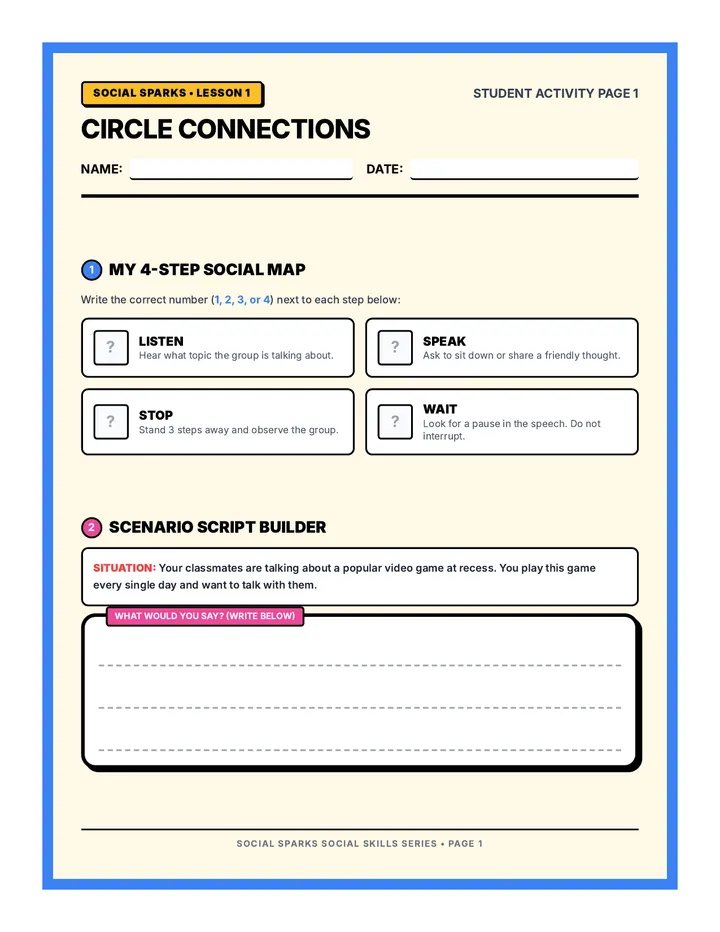
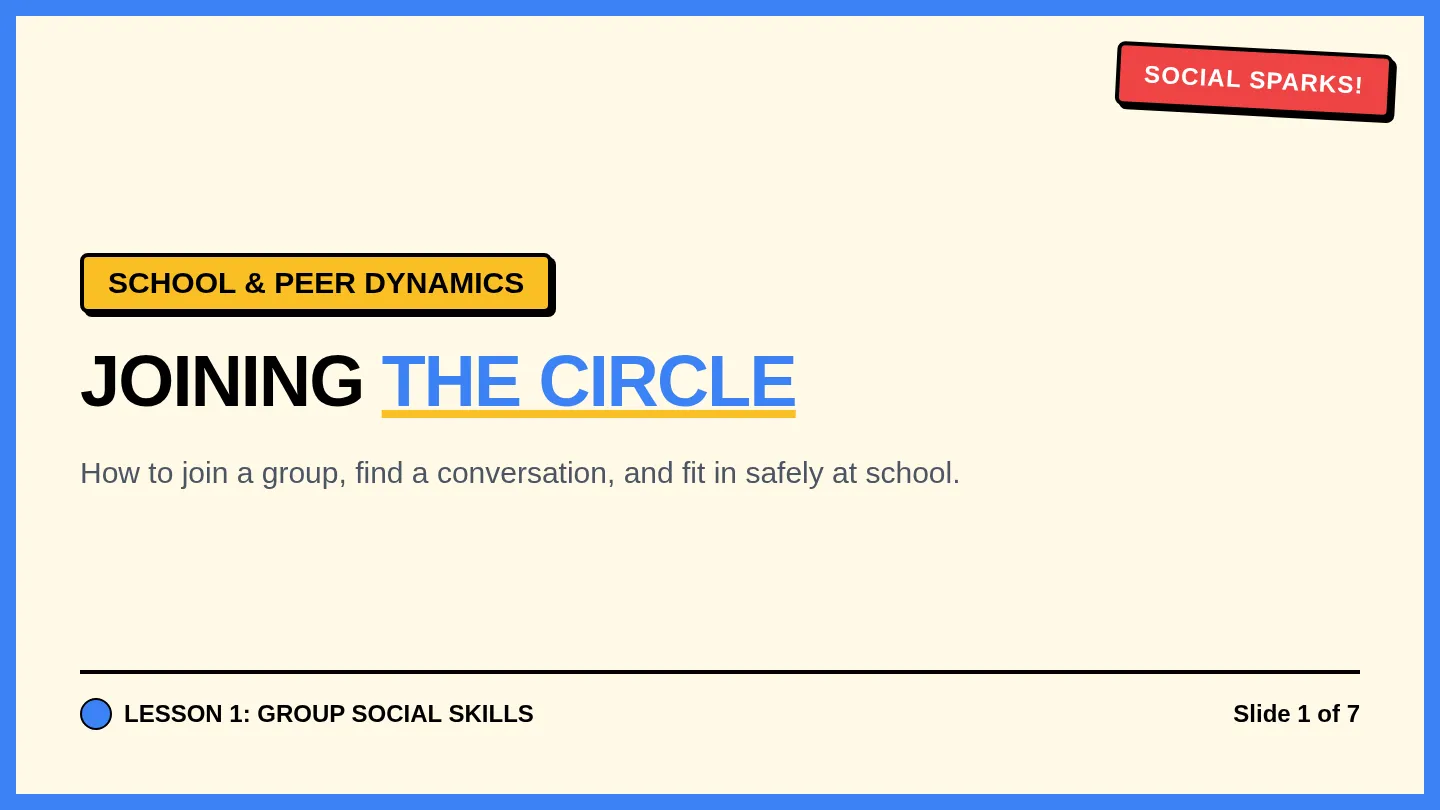
A comprehensive social boundaries curriculum designed for students with intellectual and developmental disabilities, based on the Circles model of intimacy and relationship levels.
A collection of adapted literary resources for classic texts, specifically designed for students with dyslexia and learning disabilities. Features simplified language, high-visual graphic organizers, and structured reading guides.
A comprehensive unit providing modified resources for four foundational literary works, specifically designed for students with dyslexia and learning disabilities through visual aids, graphic organizers, and shortened reading passages.
A week-long writing journey for Special Education students to reflect on past experiences, growth, and future goals. This sequence emphasizes logical organization and structured brainstorming to help students produce a cohesive short essay.
A module designed to help students master temporal processing and visual sequencing through the lens of time travel and detective work. Students learn to organize daily routines and understand cause-and-effect relationships using visual prompts.