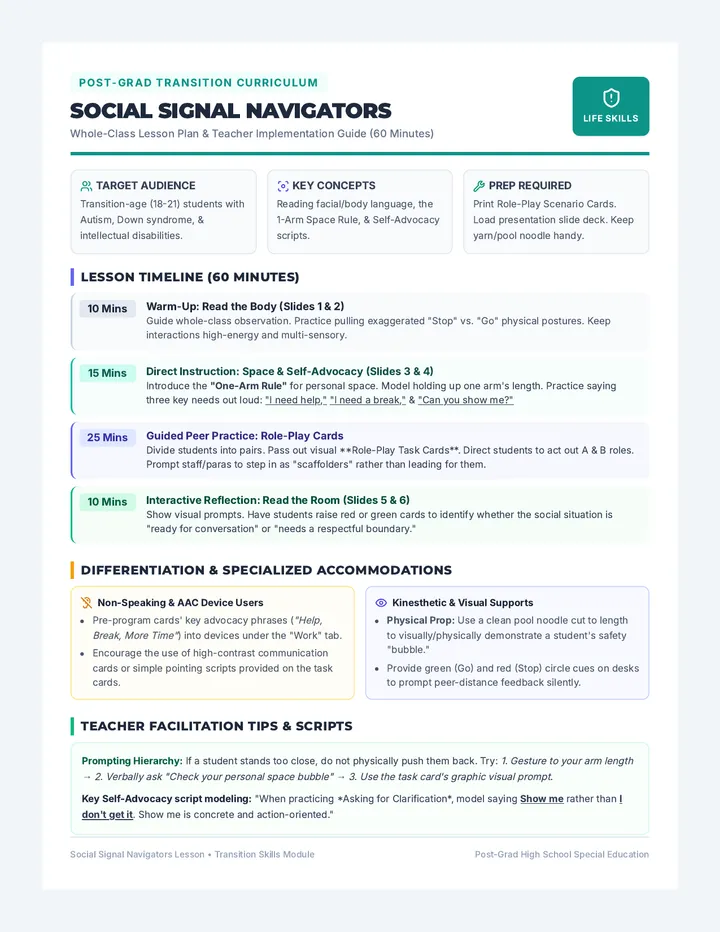
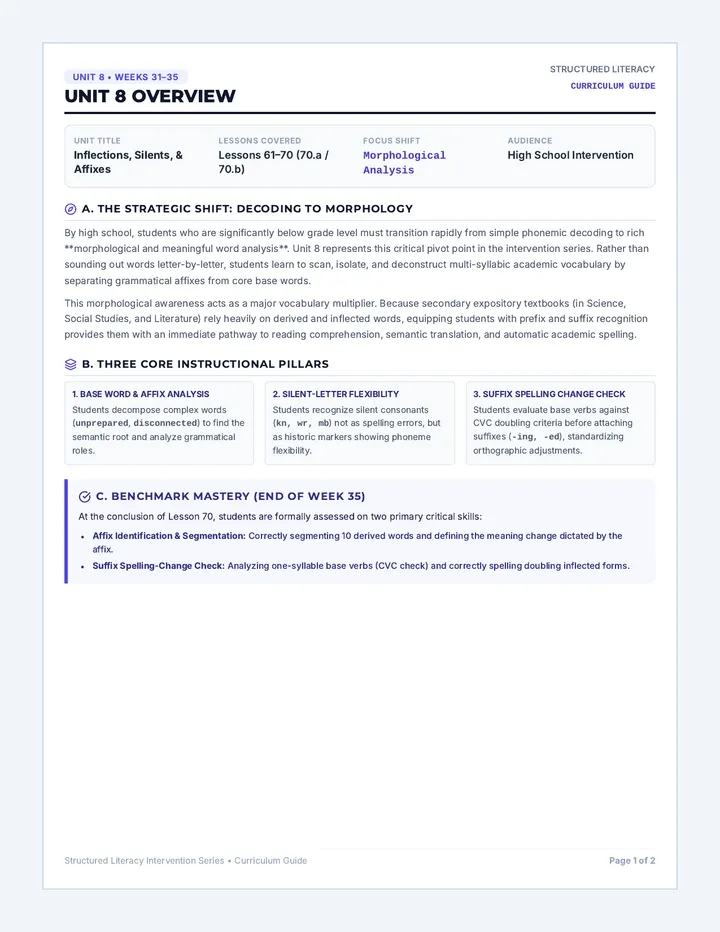
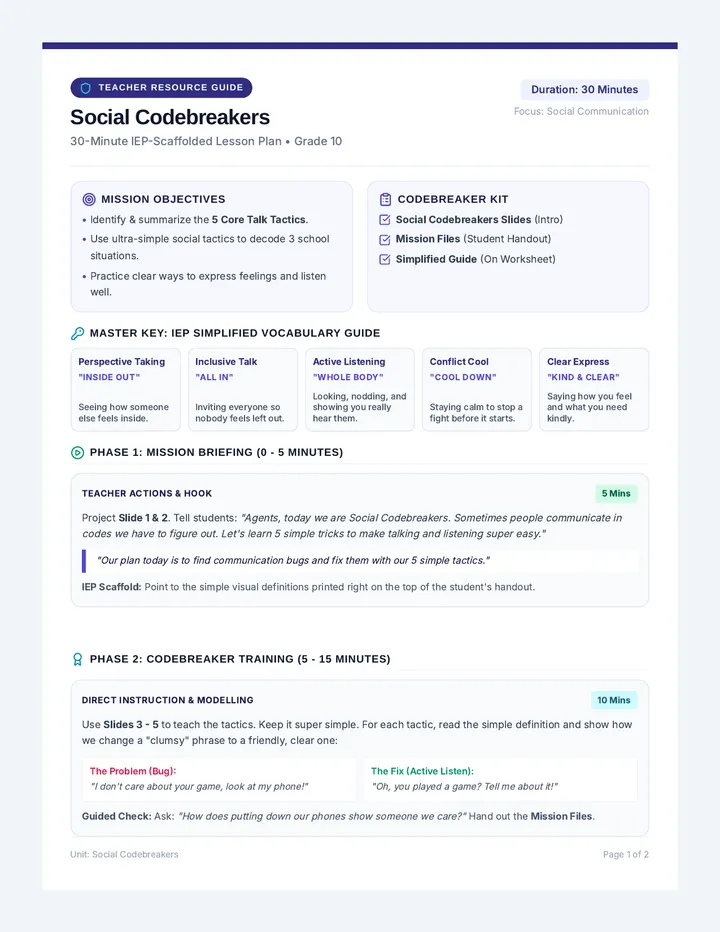
Dual-coded vocabulary cards for high-frequency veterinary terms, featuring simplified definitions and dedicated spaces for student-drawn icons to support memory retention. Expansion: includes all 26 terms from the student's current list.
A teacher's reference guide providing specific ecological and management data for four common regional invasive species in the US. Supports the Local Invader Field Report.
A flexible research worksheet that allows students to investigate and report on an invasive species specific to their region or a provided list of common US invaders. Focuses on carrying capacity and trophic impacts.
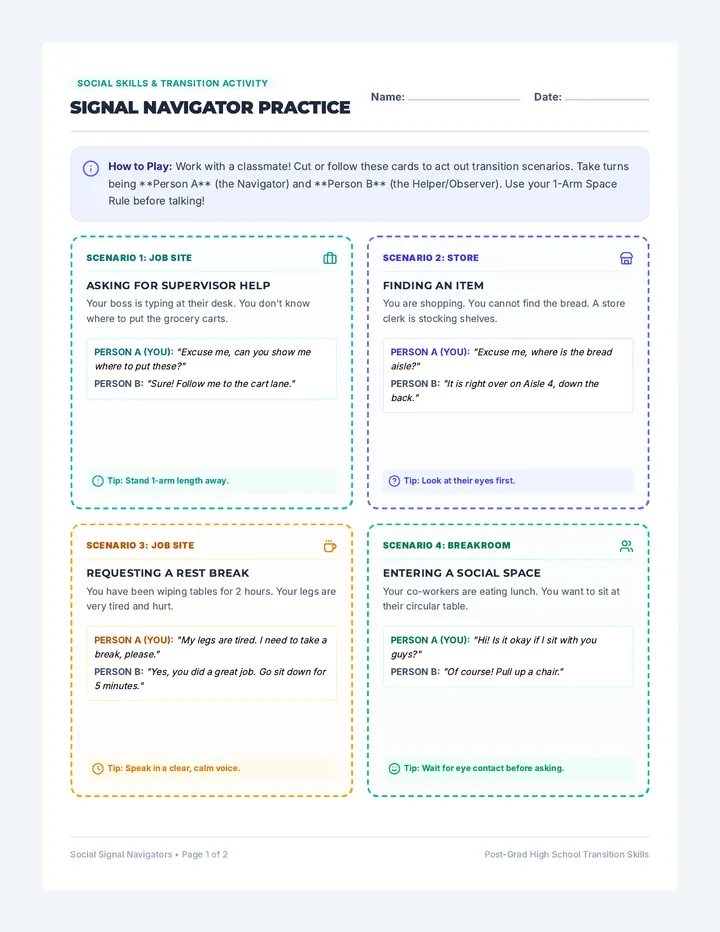
A professional data collection sheet for a 7-student social skills group. It features specific tracking for three skills over two sessions: Y/N and # Prompts for Greetings and Self-Advocacy, and Tallies and # Prompts for Turn Taking.
The answer key and instructional guide for the Eco Decoder Worksheet, explaining the math and ecological logic behind the secret code. Revised to fit on a single page with improved visual summary.
A specialized decryption worksheet that challenges students to solve ecological math and logic problems to reveal a secret code about carrying capacity and resources. Revised for improved task clarity and layout.
A teacher's guide and answer key for the Invader Impact Worksheet. Revised for better page breaks, consistent alignment, and improved checklist formatting.
A comprehensive worksheet for students to analyze the population impacts of invasive species. Revised for improved layout, page breaks, and a fully functional graphing area with accurate labeling and grids.
Introductory presentation for the Invader Impact lesson, featuring case studies on Zebra Mussels, Burmese Pythons, Cane Toads, and the Spotted Lanternfly with a focus on population dynamics. Revised for content completeness and layout consistency. Added regional examples including Emerald Ash Borer and Lionfish.
Un document de bienvenue et une feuille de route pour l'étudiant, expliquant comment utiliser les différents types de supports (guides, slides, exercices) pour apprendre SQL en autonomie. Version révisée pour une meilleure mise en page.
Un document de bienvenue et une feuille de route pour l'étudiant, expliquant comment utiliser les différents types de supports (guides, slides, exercices) pour apprendre SQL en autonomie.
A professional slide deck for parent presentations, covering the neurobiology of dyslexia, reading impact areas, and myth-busting with a focus on Chapter 2 of the MA Guidelines.
A visually engaging infographic summarizing the core concepts of dyslexia, including brain processing, reading impact areas, and debunking common myths for parents.
A professional 3-page white paper for parents, detailing the neurobiology of dyslexia, areas of reading impact, and debunking common myths using evidence from the Massachusetts Dyslexia Guidelines.
A finalized teacher answer key with a randomized multiple-choice key (to match the student worksheet) and specific exemplar responses for short-answer questions. Optimized for a single-page layout.
A revised set of question cards with sequential numbering, integrated writing lines, and a decorative 'back-side' template for double-sided printing. Optimized to align perfectly for double-sided document production.
A finalized student worksheet with randomized multiple-choice answer positions to ensure assessment validity. Features scientific diagrams, the Gloria's Garden story, and reflection questions.
A teacher answer key for the Equation Equilibrium worksheet, providing correct coefficients for all 15 chemical equations. Fixed spacing and alignment issues.
A drill-style worksheet for practicing balancing chemical equations, featuring basic and moderate complexity levels with clear coefficient lines. Fixed spacing issues and improved student writing areas.
Combined station worksheet for Zone 3: Biotech Lab. Integrates instructions, gel electrophoresis evidence, and student response areas into a single-page document. Focuses on fragment size analysis and molecular separation principles. Fixes layout cutoff issues and expands work areas.